



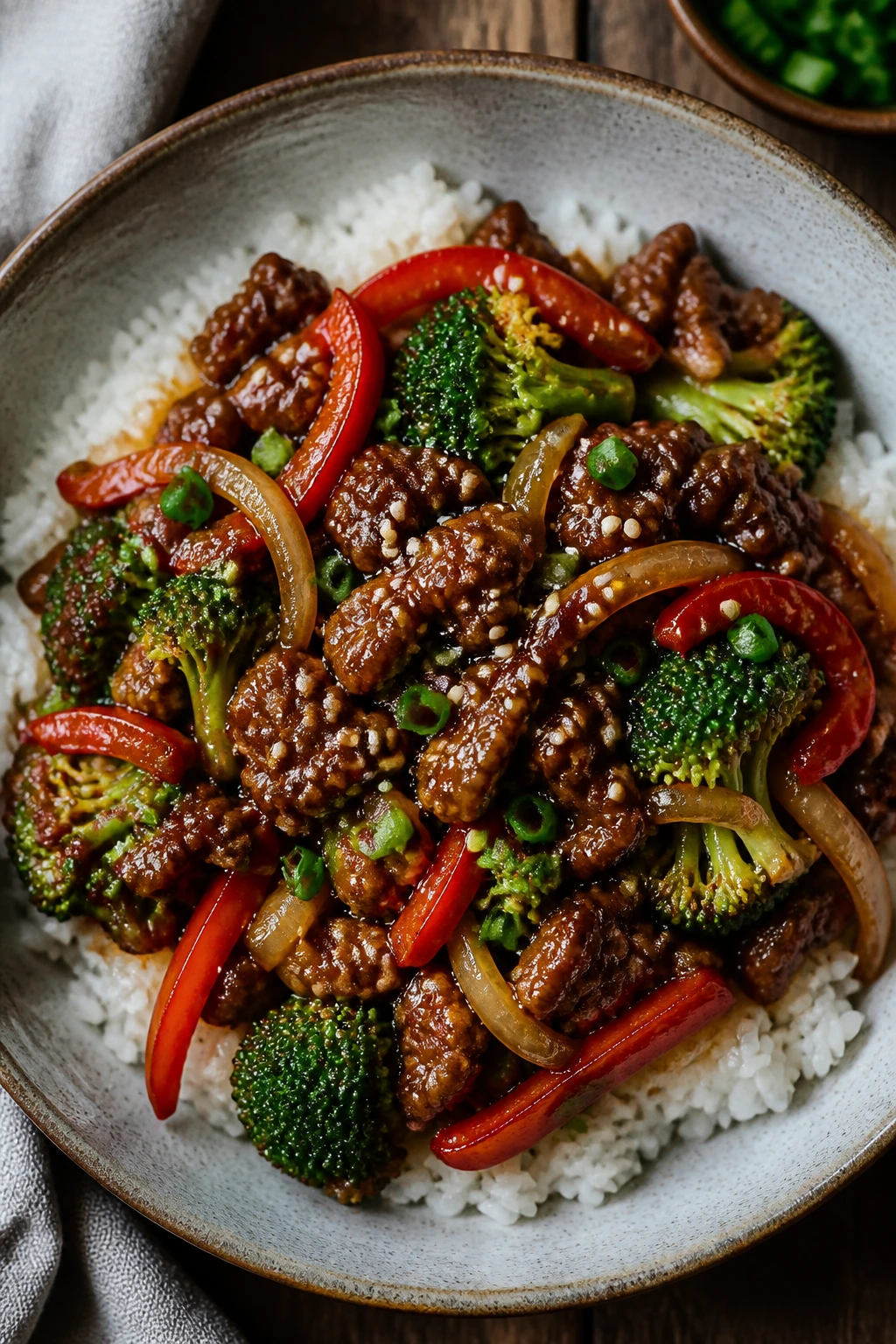
Ground beef turns into sesame beef more gracefully than most people expect. Give it a hot skillet, a few browned edges, and a sauce built on soy, ginger, garlic, and toasted sesame oil, and it stops tasting like ordinary meat and starts tasting like something you’d want ladled over rice in a big, shallow bowl.
What makes this version worth making is the balance. The sauce is glossy, not syrupy. The beef stays savory and a little crisp around the edges instead of collapsing into a gray tangle. Broccoli and bell pepper bring enough bite to keep each forkful moving, and the sesame seeds at the end are not decoration — they add tiny pops of toastiness that wake the whole pan up.
I like ground beef for this more than sliced steak, and I won’t pretend that’s just sentiment. Ground beef gives you more browned surface area, which means more of the sauce clings to the meat instead of sliding off. When you stir that into hot rice, the sauce sinks into the grains and the beef keeps its texture. That’s the kind of comfort food move I trust.
Why You’ll Want to Make This Sesame Beef
- Fast Browning: Ground beef cooks quickly, but the real win is the browned bits stuck to the pan, because those bits turn into the base of the sauce.
- Deep Savory Flavor: Soy sauce, ginger, garlic, and toasted sesame oil create a salty-nutty-sweet balance that tastes layered without needing a long simmer.
- Dinner-Size Portions: Broccoli, bell pepper, and rice stretch the skillet into a full meal, not just a meat topping.
- Leftovers Hold Up Well: The sauce settles into the beef overnight, so the next-day bowl tastes even more integrated after a quick reheat.
- Flexible Heat Level: A pinch of red pepper flakes keeps the flavor lively, but the dish stays comfortable enough for kids or spice-shy eaters if you leave them out.
- Pantry-Friendly: Soy sauce, rice vinegar, sesame oil, brown sugar, and cornstarch are the kind of ingredients that sit around waiting for a good job.
Timing, Yield, and the Practical Details
Yield: Serves 4 to 6
Prep Time: 15 minutes
Cook Time: 20 minutes
Total Time: 35 minutes
Difficulty: Beginner — the technique is mostly browning, whisking, and simmering until the sauce turns glossy.
Best Served: Hot, over rice, with scallions and sesame seeds scattered on top
Chill/Rest Time: 5 minutes of resting makes the sauce settle and the rice less fussy to serve
Ingredients That Build the Bowl
For the Sesame Beef:
- 1 1/2 pounds 85/15 ground beef
- 1 tablespoon neutral oil, only if the beef is very lean
- 1 medium yellow onion, finely diced
- 1 red bell pepper, thinly sliced
- 2 cups broccoli florets, cut into bite-size pieces
- 3 cloves garlic, minced
- 1 tablespoon fresh ginger, grated or very finely minced
For the Sauce:
- 1/3 cup low-sodium soy sauce
- 1/4 cup water or low-sodium beef broth
- 2 tablespoons packed light brown sugar
- 1 tablespoon honey
- 1 tablespoon rice vinegar
- 1 tablespoon toasted sesame oil
- 1 tablespoon cornstarch
- 2 tablespoons cold water, for the cornstarch slurry
- 1/2 teaspoon black pepper
- 1/4 teaspoon crushed red pepper flakes
For Serving:
- 3 cups hot cooked jasmine rice
- 2 tablespoons toasted sesame seeds
- 3 scallions, thinly sliced
Why Each Ingredient Matters in This Skillet
Ground Beef
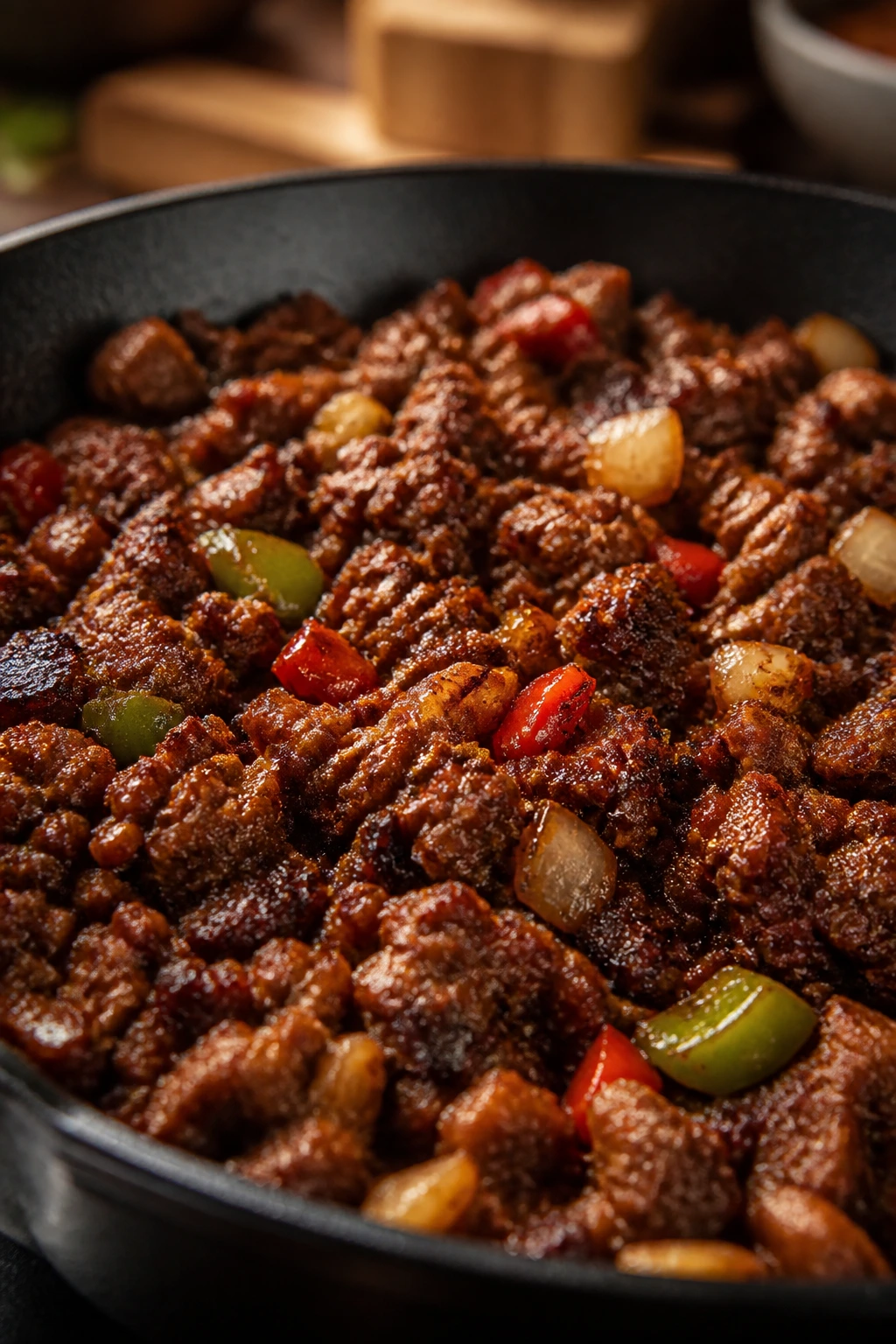
What to use: 1 1/2 pounds of 85/15 ground beef is the sweet spot here. It has enough fat to brown well without flooding the pan.
Preparation: Break it into loose chunks before it hits the skillet, then keep breaking it up as it cooks so you get small crags and browned edges instead of one dense slab.
Substitutions: Ground turkey works if you want something lighter, and ground chicken works too, though both need a little extra oil. Plant-based crumbles can stand in if you cook them long enough to pick up some color.
Tips: If your beef is 93/7 or leaner, add the tablespoon of neutral oil at the start. Lean beef can taste dry if you push it too hard, and this recipe gets much of its comfort from a little fat carrying the sauce.
Sauce Ingredients
What to use: Low-sodium soy sauce, rice vinegar, brown sugar, honey, toasted sesame oil, black pepper, and a little red pepper flakes make the sauce taste rounded rather than sharp.
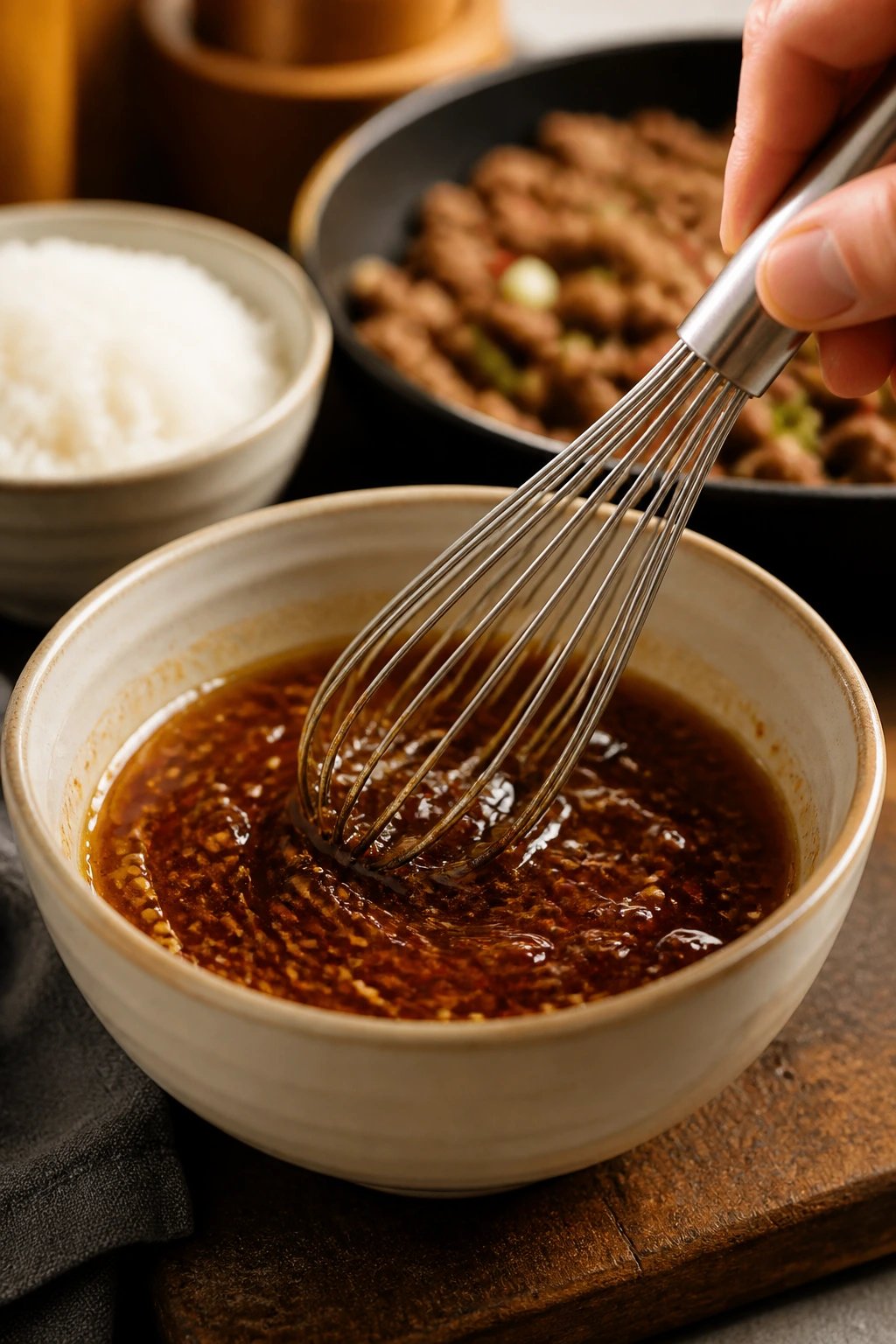
Preparation: Whisk everything except the cornstarch slurry in a bowl before you start cooking. Mix the cornstarch with cold water in a separate cup so it dissolves cleanly.
Substitutions: Tamari works for a gluten-free version. Coconut aminos can work too, but it brings a sweeter, softer flavor, so you may want to cut back the honey.
Tips: Toasted sesame oil is not a frying oil. It’s the perfume in the room, not the burner under the room, so keep it in the sauce and don’t drench the pan with it.
Vegetables and Aromatics
What to use: One onion, one red bell pepper, two cups of broccoli florets, garlic, and fresh ginger give the skillet color and bite.
Preparation: Dice the onion small so it melts into the beef. Slice the bell pepper thin enough to soften quickly, and cut the broccoli into bite-size florets so it cooks through before the sauce finishes.
Substitutions: Shredded cabbage, snow peas, mushrooms, or carrots all fit here. Cabbage gives the most value by volume, while mushrooms add a meaty note if you want even more savoriness.
Tips: Add garlic and ginger after the beef and vegetables have already started to soften. Garlic burns fast, and burned garlic will bully the whole pan.
Rice and Finishes
What to use: Hot jasmine rice gives you a soft, fragrant base, though basmati or short-grain rice can work too. Sesame seeds and scallions finish the bowl with crunch and a sharp green edge.
Preparation: Cook the rice so it’s fluffy and separate, not wet. Thinly slice the scallions and toast the sesame seeds if they aren’t already toasted.
Substitutions: Brown rice adds chew, cauliflower rice keeps the bowl lighter, and noodles turn the whole thing into a stir-fry. None of those are wrong; they just change the mood of the meal.
Tips: The sesame seeds are not garnish in the flimsy sense. They give the first few bites a tiny roast-nut crunch that makes the dish feel finished, and you notice the difference the moment you leave them off.
The Tools That Keep the Pan Moving
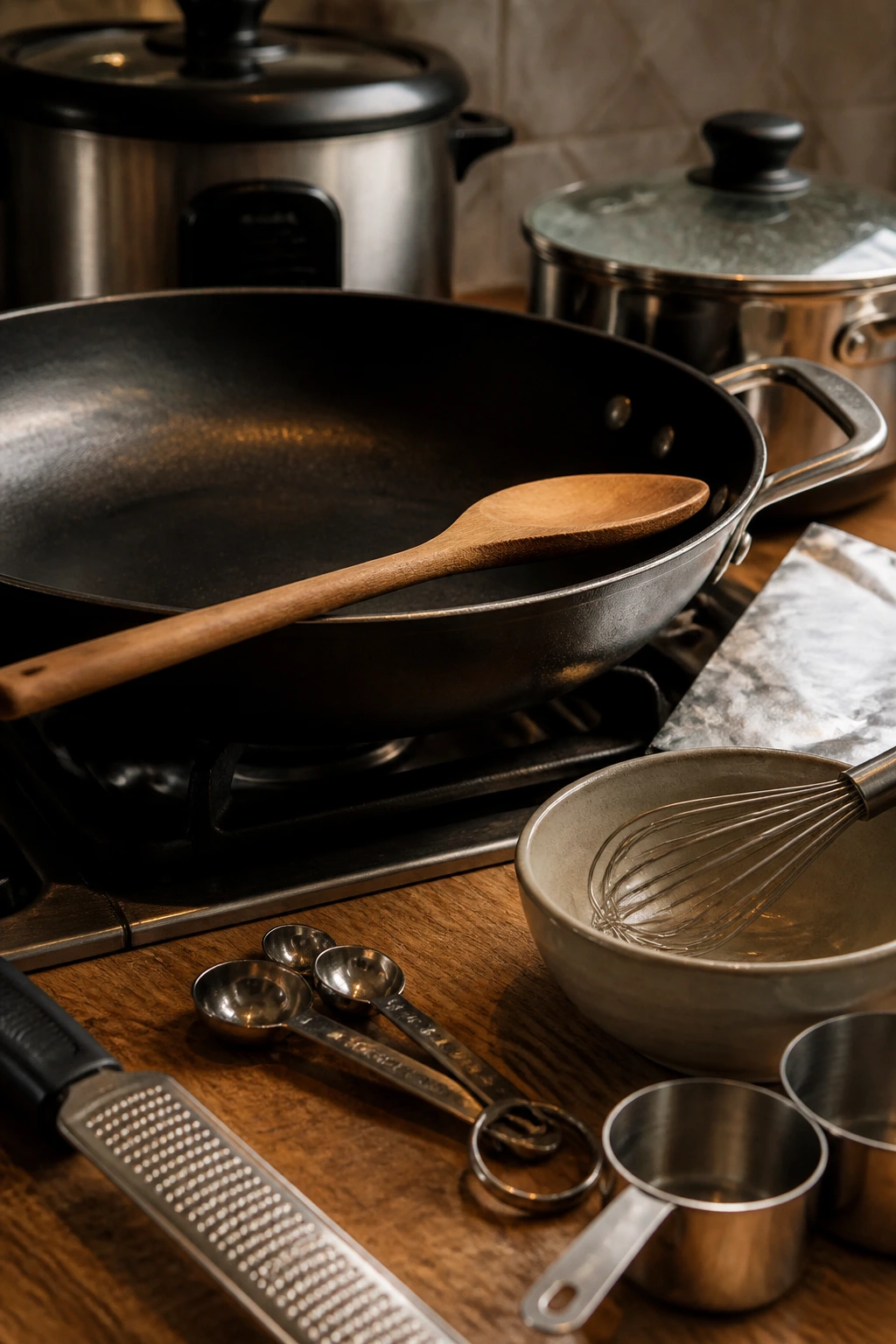
- 12-inch skillet or sauté pan: Wide enough to brown the beef without crowding it. A cramped pan steams meat, and steamed meat tastes tired.
- Wooden spoon or firm spatula: You need something sturdy enough to break up the beef and scrape browned bits off the pan.
- Small bowl and whisk: The sauce comes together better when you whisk it before it hits the heat.
- Measuring spoons and cups: Sesame oil and cornstarch are small players here, and guessing them is a fast way to flatten the flavor.
- Microplane or fine grater: Fresh ginger disappears more evenly when it’s grated instead of chopped.
- Lid or sheet of foil, optional: If your broccoli needs a minute of steam to soften, a loose cover helps without turning the skillet soggy.
- Rice cooker or saucepan with lid, optional: Either one works for the rice. A rice cooker just removes one more thing from the stove.
How to Build the Sesame Beef Without Guessing
Make the Sauce and Start the Rice:
-
Whisk together the soy sauce, water or broth, brown sugar, honey, rice vinegar, toasted sesame oil, black pepper, and red pepper flakes in a medium bowl until the sugar mostly dissolves. In a separate small cup, stir the cornstarch and cold water until the mixture looks smooth and milky with no dry lumps.
-
Start the rice if it isn’t already cooked. Jasmine rice needs about 15 to 18 minutes on the stove, and you want it fluffy, not wet. If you’re using leftover rice, break up any clumps with your fingers before reheating so it doesn’t sit in one dense block under the beef.
Brown the Beef and Build the Base:
-
Set a 12-inch skillet over medium-high heat. Add the ground beef and the diced onion, then cook for 6 to 8 minutes, breaking the meat apart as it cooks, until the beef is browned and the onion looks translucent and a little golden at the edges. If there’s more than about 1 tablespoon of fat in the pan, spoon off the excess. You want richness, not grease.
-
Add the sliced bell pepper and broccoli florets. Cook for 3 to 4 minutes, stirring often, until the bell pepper starts to soften and the broccoli turns bright green with just a bit of bite left in the stem. If the pan looks dry, a splash of water can help the vegetables steam for a minute.
-
Stir in the garlic and grated ginger and cook for 30 seconds, just until the garlic smells sweet and sharp at the same time. Do not let it brown. Burnt garlic turns the whole skillet bitter, and there is no polite way to rescue that.
Glaze and Finish:
-
Pour in the sauce and stir, scraping up every browned bit from the bottom of the skillet. Bring the mixture to a lively simmer, then add the cornstarch slurry and keep stirring for 1 to 2 minutes, until the sauce turns glossy and clings to the beef and vegetables instead of pooling at the bottom. If the sauce thickens too fast, add 1 to 2 tablespoons of water.
-
Taste the skillet and adjust if needed. A tiny splash of rice vinegar brightens the flavor, while a teaspoon more honey softens it if your soy sauce tastes sharper than you wanted. Turn off the heat, let the skillet sit for 2 minutes, then scatter the scallions and sesame seeds over the top.
-
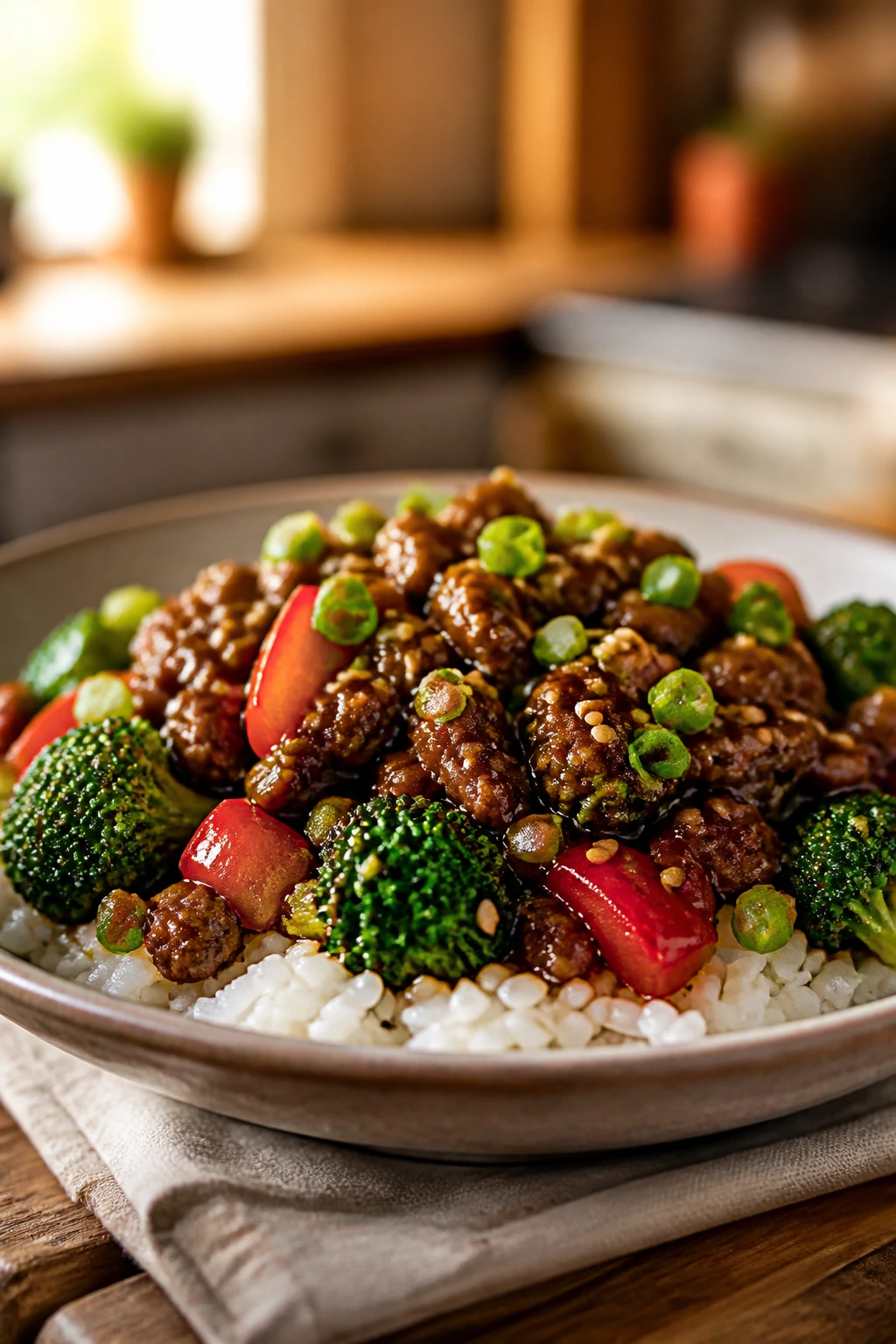
Spoon the sesame beef over hot rice and serve while the sauce is still shiny. The first scoop should look saucy, not soupy, with the rice catching the edges of the glaze and the broccoli still keeping its shape.
How to Serve It So the Bowl Eats Like Dinner
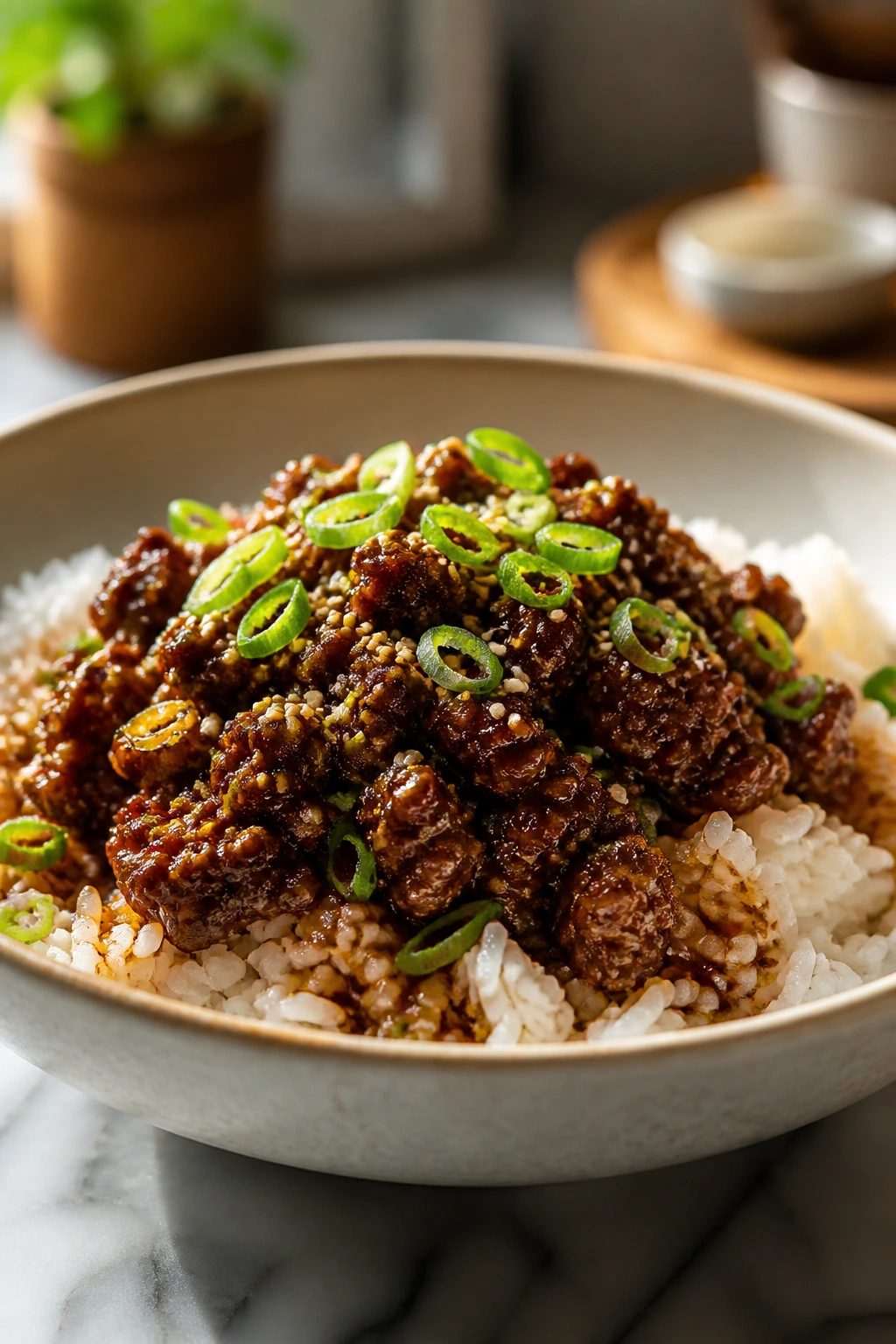
Presentation: Spoon the rice into shallow bowls first, then mound the sesame beef in the center so the sauce runs slightly into the rice instead of disappearing under it. A scatter of scallions on one side and sesame seeds on the other makes the bowl look deliberate, even if you’re serving it on a Tuesday and the kitchen already looks lived in.
Accompaniments: I like a crisp cucumber salad or quick-pickled carrots beside this because the cool crunch cuts through the savory sauce. Steamed snap peas, a fried egg, or even a pile of shredded cabbage all make sense here. If you want a louder plate, a spoonful of kimchi on the side works better than a heavy sauce.
Portions: Plan on about 1/2 to 3/4 cup cooked rice and a generous scoop of the beef mixture per person. That lands as 4 large servings or 6 more moderate ones, depending on how many other dishes are on the table. If you’re feeding bigger appetites, add an extra cup of broccoli and another half cup of rice rather than stretching the beef too thin.
Beverage Pairing: Cold jasmine tea keeps things clean and calm. A crisp lager or a dry riesling also works if you want something with enough bite to stand up to the soy-sesame glaze.
Small Upgrades That Make the Flavor Pop
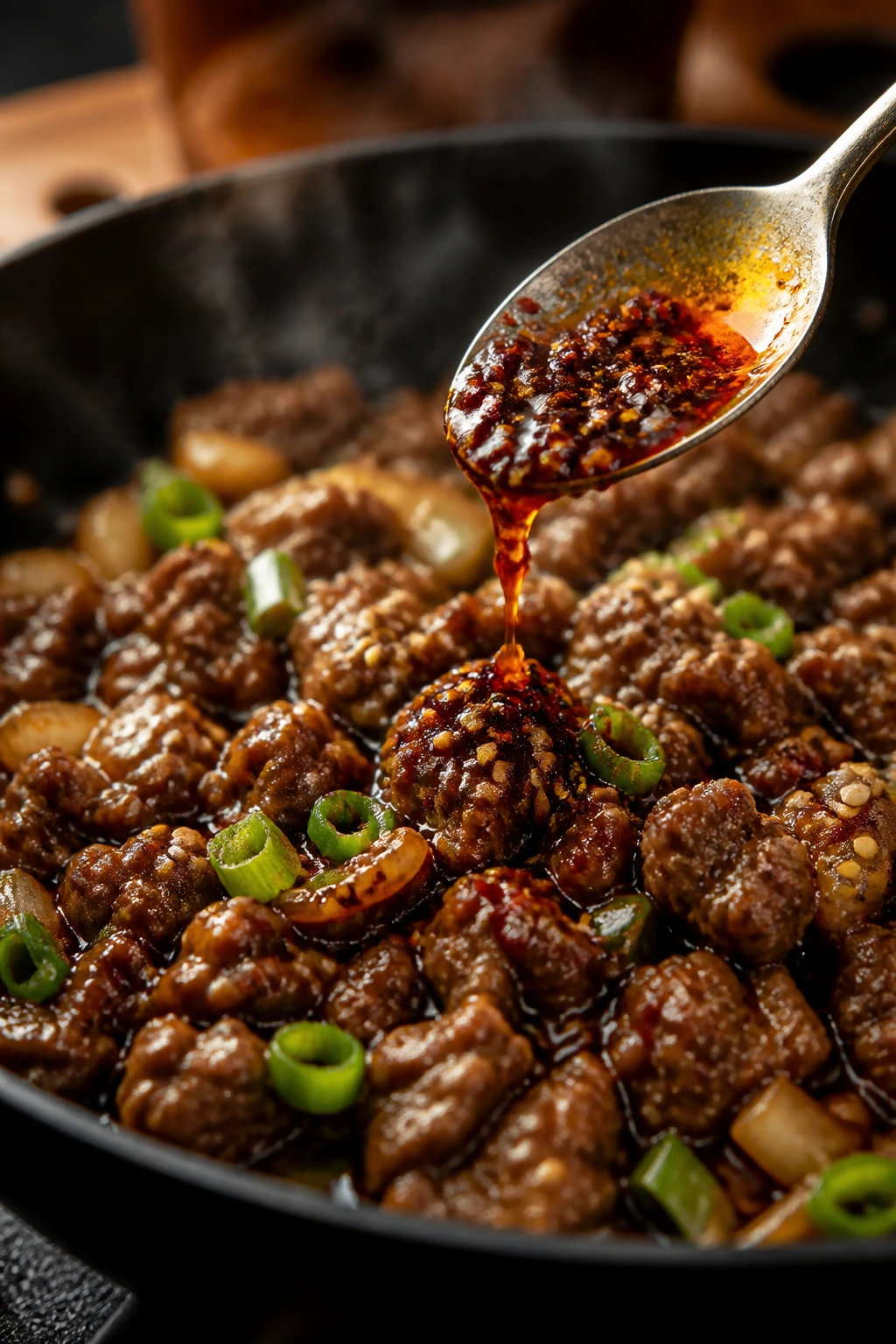
Flavor Enhancement: A teaspoon of chili crisp stirred in at the end adds heat, oil, and crunchy little bits of pepper that cling to the beef. If you want a deeper savory note, a tablespoon of oyster sauce can join the soy sauce in the bowl before simmering. It makes the skillet taste darker and rounder, which is useful when you want the dish to feel a little more takeout-style.
Customization: Swap the broccoli for shredded cabbage if you want a softer, more economical bowl. Mushrooms, snow peas, and thin carrots all play nicely here, too. I also like adding a handful of baby spinach right at the end, which wilts into the sauce in about 30 seconds and makes the pan feel bigger without tasting heavy.
Serving Suggestions: Fresh scallions matter. So do sesame seeds. If you have crispy fried onions or a few drops of extra toasted sesame oil left, they make a plain bowl feel finished. A little pile of sliced cucumber on the side is useful when the sauce is on the sweeter side because it cleans the palate between bites.
Make-It-Yours: For a gluten-free bowl, use tamari instead of soy sauce and check that any bottled condiment you add is gluten-free. For lower sugar, cut the honey back to 1 teaspoon and keep the brown sugar at 2 tablespoons; the sesame oil and ginger still give the dish enough warmth. For a dairy-free meal, you do not need to change anything, which is one of the nicer things about this skillet.
The Mistakes That Leave Sesame Beef Flat or Greasy
-
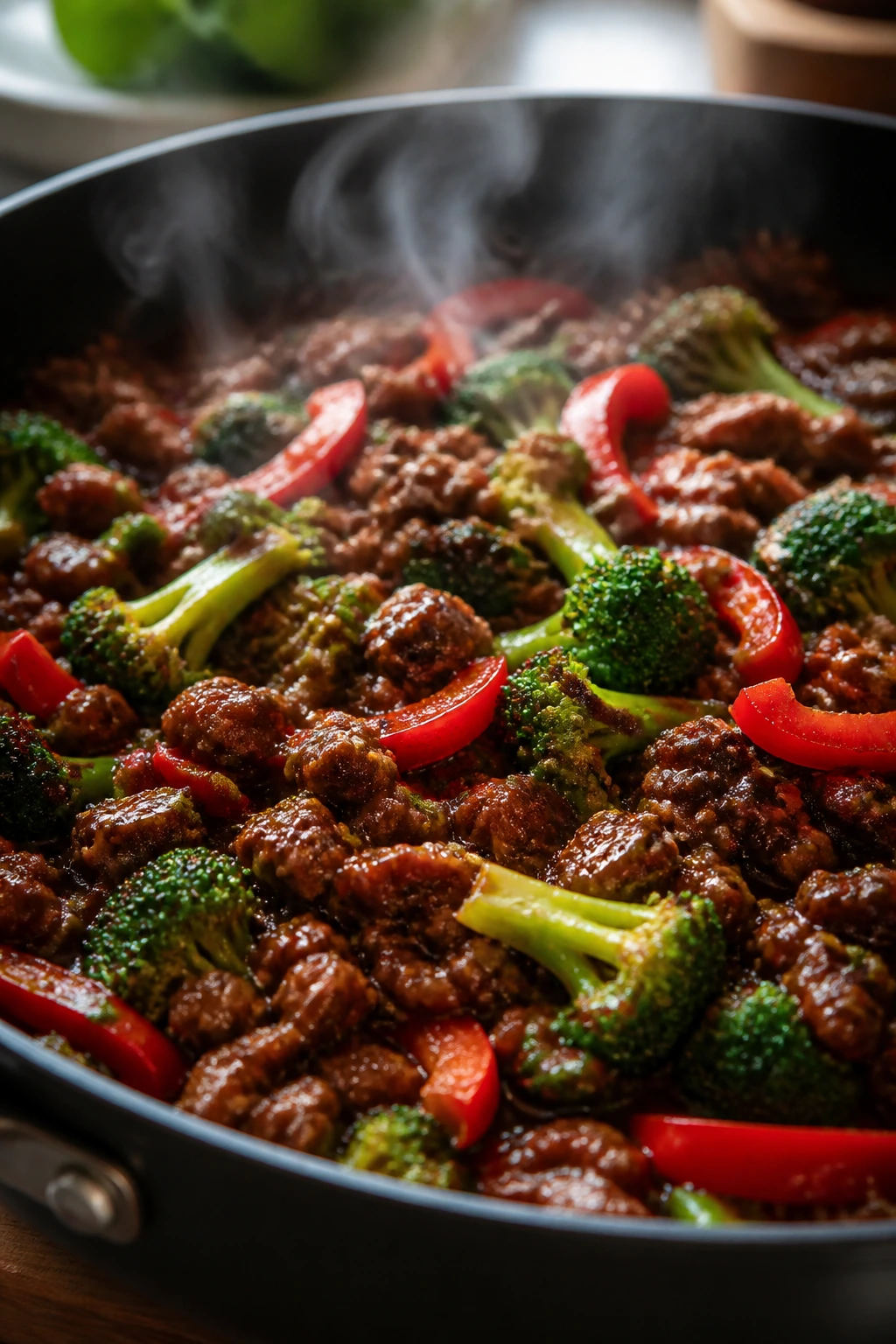
Crowding the pan from the start: The beef starts releasing liquid, the onion turns soft in a pool, and you lose the browned edges that make the dish taste like dinner. Use a wide skillet and spread the meat out so it can actually brown.
-
Adding garlic too early: Garlic burns long before the beef finishes cooking, especially in a dry skillet. If it goes in too soon, the whole pan can taste bitter and sharp; wait until the beef and vegetables have some color, then stir it in for only 30 seconds.
-
Letting the sauce simmer too hard after the cornstarch goes in: A violent boil can make the sauce go from glossy to gluey. Keep it at a controlled simmer and stop as soon as it coats a spoon in a thin, shiny layer.
-
Using full-sodium soy sauce without adjusting anything else: Once the sauce reduces, salt can hit hard. Low-sodium soy gives you room to taste and adjust with honey or vinegar instead of trying to fix a pan that’s already too salty.
-
Skipping the final taste test: The skillet will never tell you in advance whether it needs a little more vinegar, a touch of sweetness, or a pinch more pepper. Taste at the end, while the sauce is still hot, and make the small correction then.
Variations Worth Trying
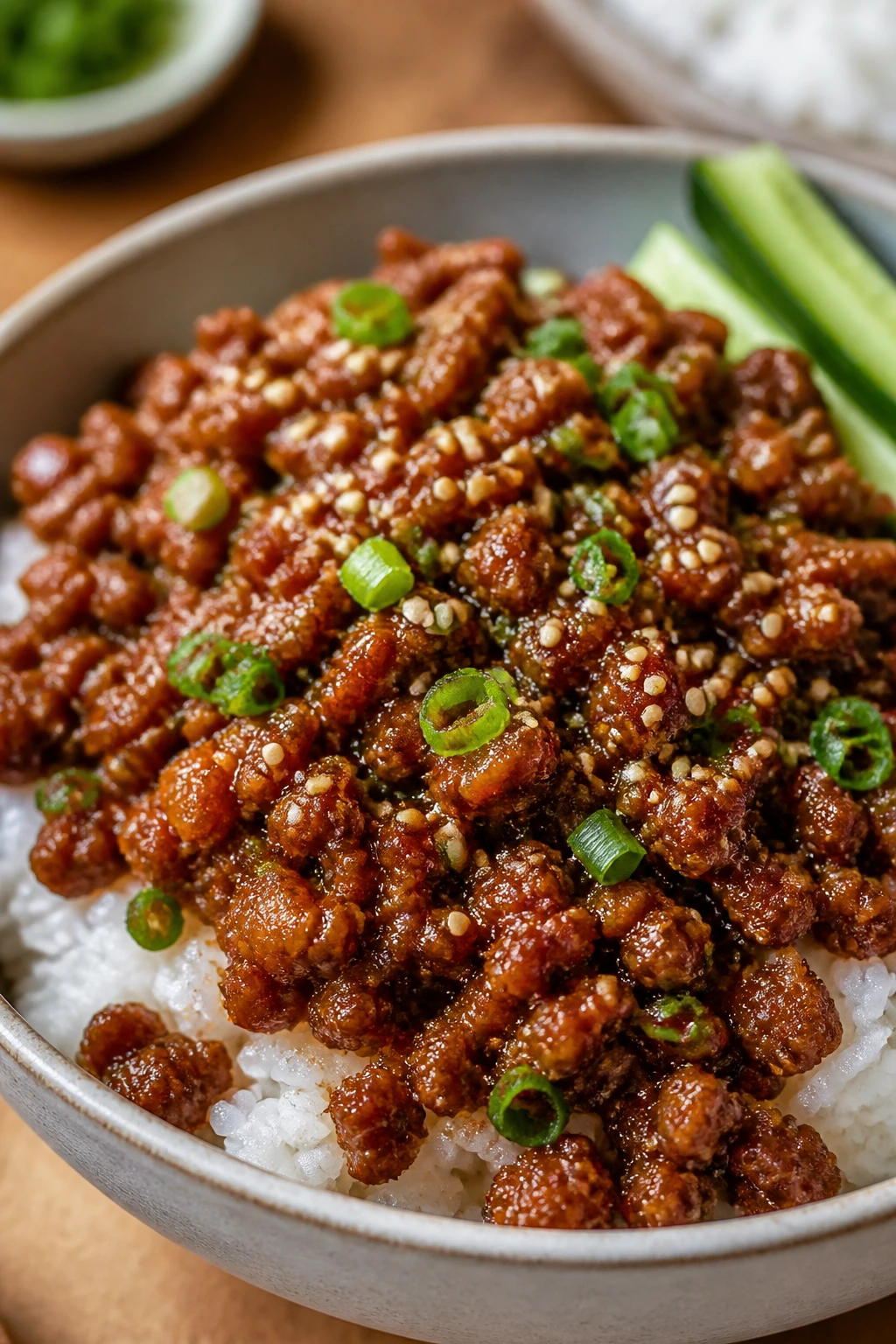
Gochujang Heat Bowl: Stir 1 to 2 teaspoons of gochujang into the sauce before it hits the pan, and keep the red pepper flakes light. Gochujang adds heat plus a fermented depth that feels richer than plain chili flakes, and it works especially well if you’re serving the beef over rice with cucumber on the side.
Sesame Beef and Cabbage Skillet: Swap the broccoli for 4 cups of shredded napa cabbage. Cabbage wilts fast and soaks up sauce like a sponge, so cook it only until it softens and loses its raw crunch. This version is a little softer and a little cheaper, and it makes a lot of food without feeling bulky.
Ground Turkey Sesame Bowl: Use 1 1/2 pounds of ground turkey and add the tablespoon of neutral oil at the start, since turkey can stick and dry out faster than beef. The flavor stays in the sauce, which means the soy, ginger, and sesame still carry the bowl even though the meat itself is leaner.
Noodle Night Sesame Beef: Serve the finished skillet over 8 ounces of cooked udon, lo mein noodles, or even spaghetti in a pinch. You may want an extra 2 to 3 tablespoons of sauce because noodles drink more than rice, and I’d keep the vegetables a little firmer so the bowl doesn’t go soft.
Gluten-Free Tamari Version: Swap the soy sauce for tamari and check any bottled additions if you use them. Tamari tends to taste slightly rounder than soy sauce, so the final bowl can feel softer and a touch less sharp, which some people prefer with sesame oil.
Make-Ahead, Storage, and Reheating Without a Sad Leftover Bowl
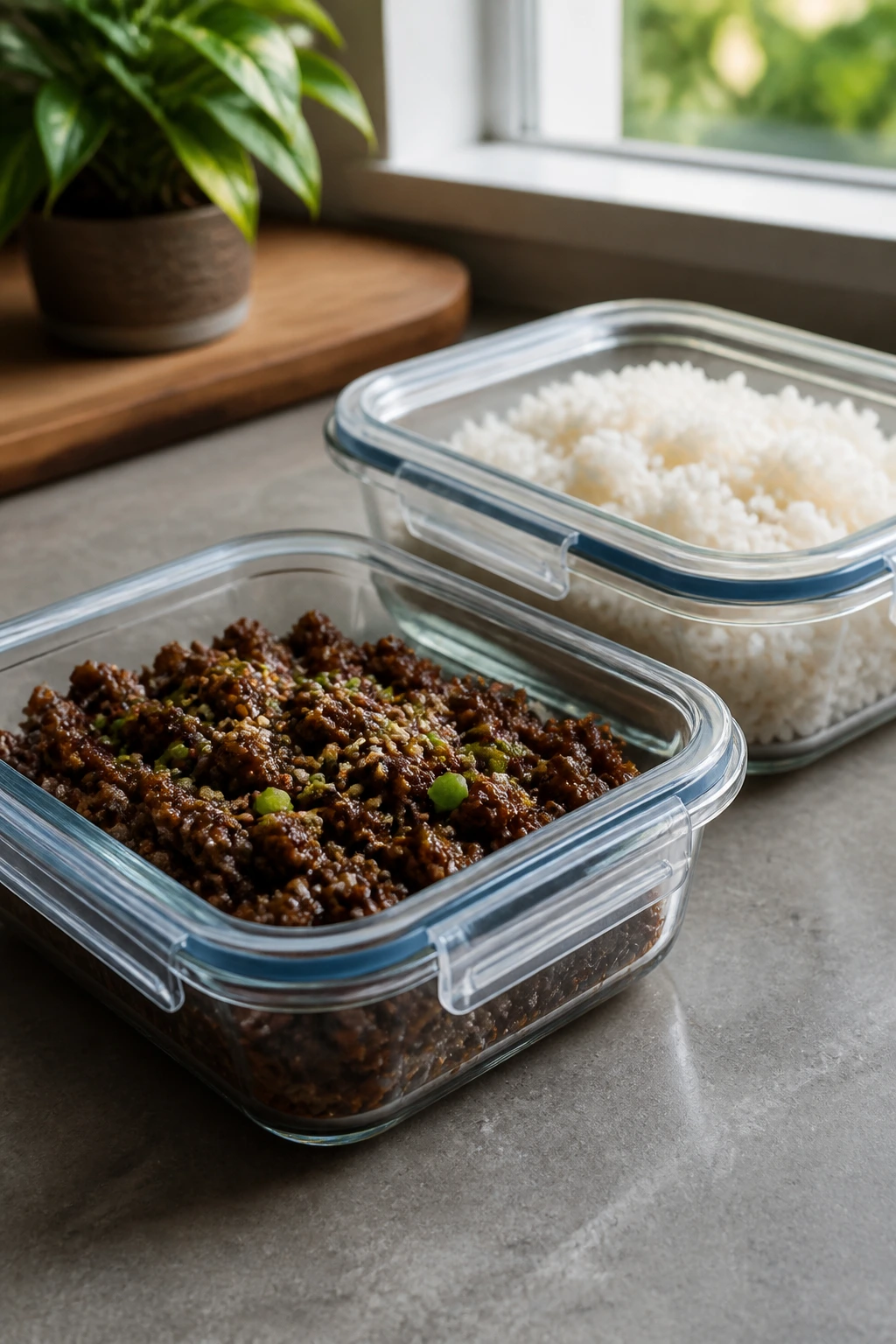
Sesame beef keeps well in the fridge for 3 to 4 days if you cool it quickly and store it in a sealed container. If you can, keep the rice in a separate container from the beef. Rice and sauce together are fine for a day, but separated leftovers reheat with better texture, and the rice does not get as sticky.
For freezing, the beef mixture holds up for up to 2 months. Broccoli softens after freezing, so if you know you’re freezing a batch, pull the broccoli off the heat a minute earlier than usual so it keeps a little structure. Freeze it flat in a zip-top bag or in a shallow container, and press out as much air as you can before sealing.
Reheat the beef in a skillet over medium heat with 1 to 2 tablespoons of water or broth to loosen the sauce. Stir often and stop as soon as it’s hot and glossy again. The microwave works too; cover the bowl loosely, heat in 45-second bursts, and stir between bursts so the sauce warms evenly instead of scorching at the edges.
If you want to make part of it ahead, whisk the sauce up to 3 days in advance and keep it in the fridge. You can also chop the onion, pepper, and broccoli the day before. That one small bit of prep makes the actual cooking feel almost unfairly short, which is exactly what a skillet dinner should do.
Questions People Ask Before Making Sesame Beef
Can I use ground turkey instead of beef?
Yes, and it works well if you add the tablespoon of neutral oil at the start. Turkey is leaner, so it needs a little help browning and a sauce that carries more of the flavor. Keep the rest of the recipe the same, then taste at the end and add a touch more sesame oil if the bowl tastes too lean.
Is this dish spicy?
Not as written. The red pepper flakes add a warm hum more than real heat, and you can leave them out completely if you want a milder skillet. If you like heat, add chili crisp or a spoonful of gochujang at the end instead of loading the pan with flakes.
Can I make sesame beef without rice?
Absolutely. Noodles, cauliflower rice, lettuce cups, or shredded cabbage all work, though each one changes the feel of the bowl. If you skip rice, keep the sauce a little looser so it still coats the other base instead of drying on contact.
What if my sauce turns out too thin?
Let it simmer for another minute before you touch the cornstarch again. If it still looks runny, stir together 1 teaspoon cornstarch and 1 tablespoon cold water, then add that slurry a little at a time until the sauce coats the beef and vegetables in a shiny layer.
What if the sauce tastes too salty?
Add a splash of water or unsalted broth and let it simmer for 30 seconds, then taste again. You can also fold in a bit more broccoli or a few spoonfuls of rice, which spreads the salt out across more food instead of trying to fight it with sugar.
Can I freeze the leftovers with rice?
You can, but the rice texture suffers more than the beef does. If you know you’re freezing a batch, freeze the sesame beef on its own and make fresh rice later. That way the reheated bowl still has separate grains instead of a soft block.
Can I double this recipe for a bigger crowd?
Yes, but brown the beef in two batches if your skillet is not huge. Crowding the pan ruins the browning, and the sauce depends on those browned bits for depth. Double the sauce, too, and give it an extra minute or two on the heat so it can thicken properly.
One More Bowl, Then Another
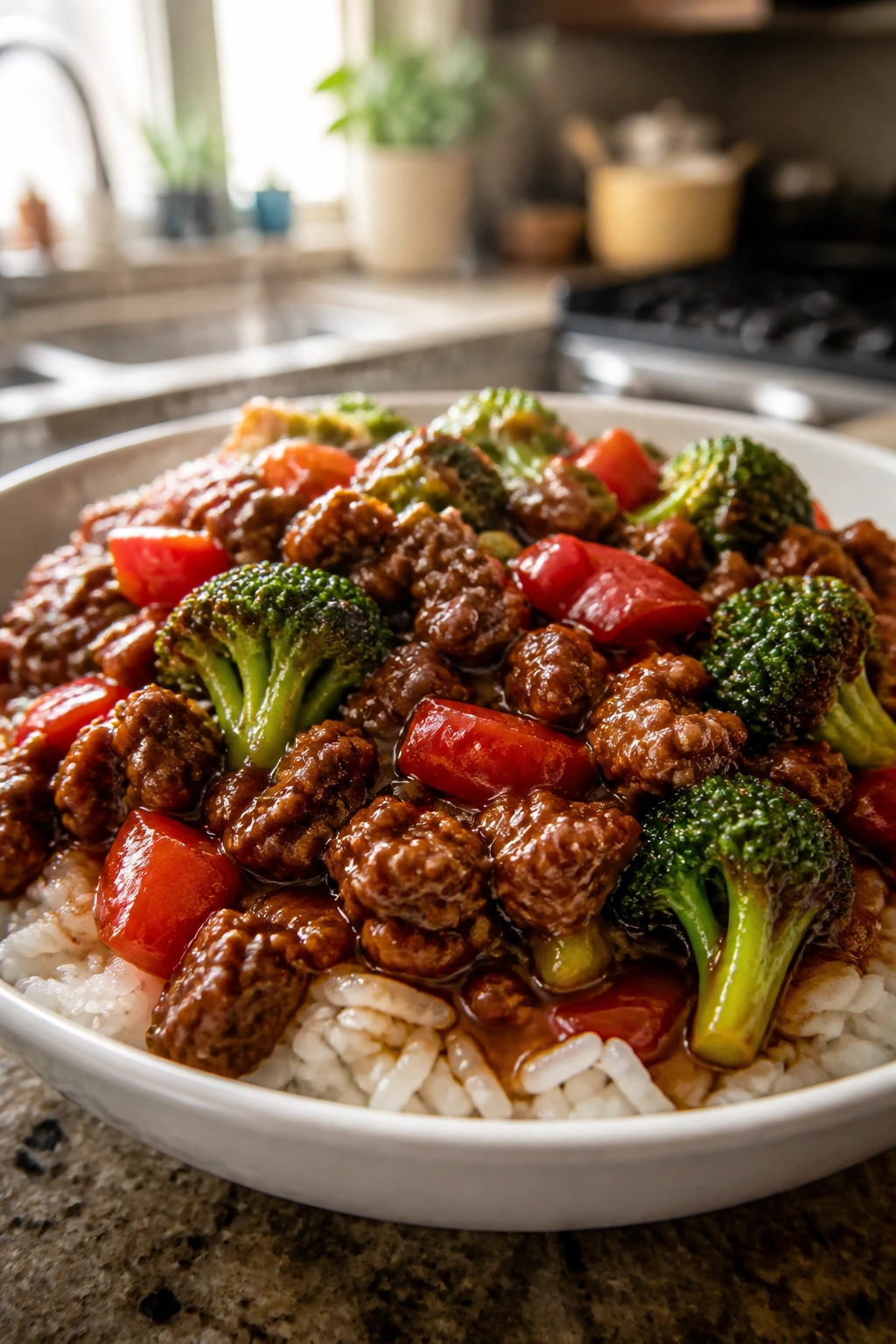
There’s a reason this kind of sesame beef keeps showing up in home kitchens. It doesn’t need a long simmer, it doesn’t ask for a long shopping list, and it tastes like more than the sum of its parts once the sauce hits the hot pan. That’s a useful trick to have tucked away.
Make it once with rice. Make it again with noodles or cabbage. After that, you’ll probably start keeping the sauce ingredients on hand, because the skillet has a habit of earning a repeat spot once the first glossy bowl hits the table.
Comforting Sesame Beef — Recipe Card
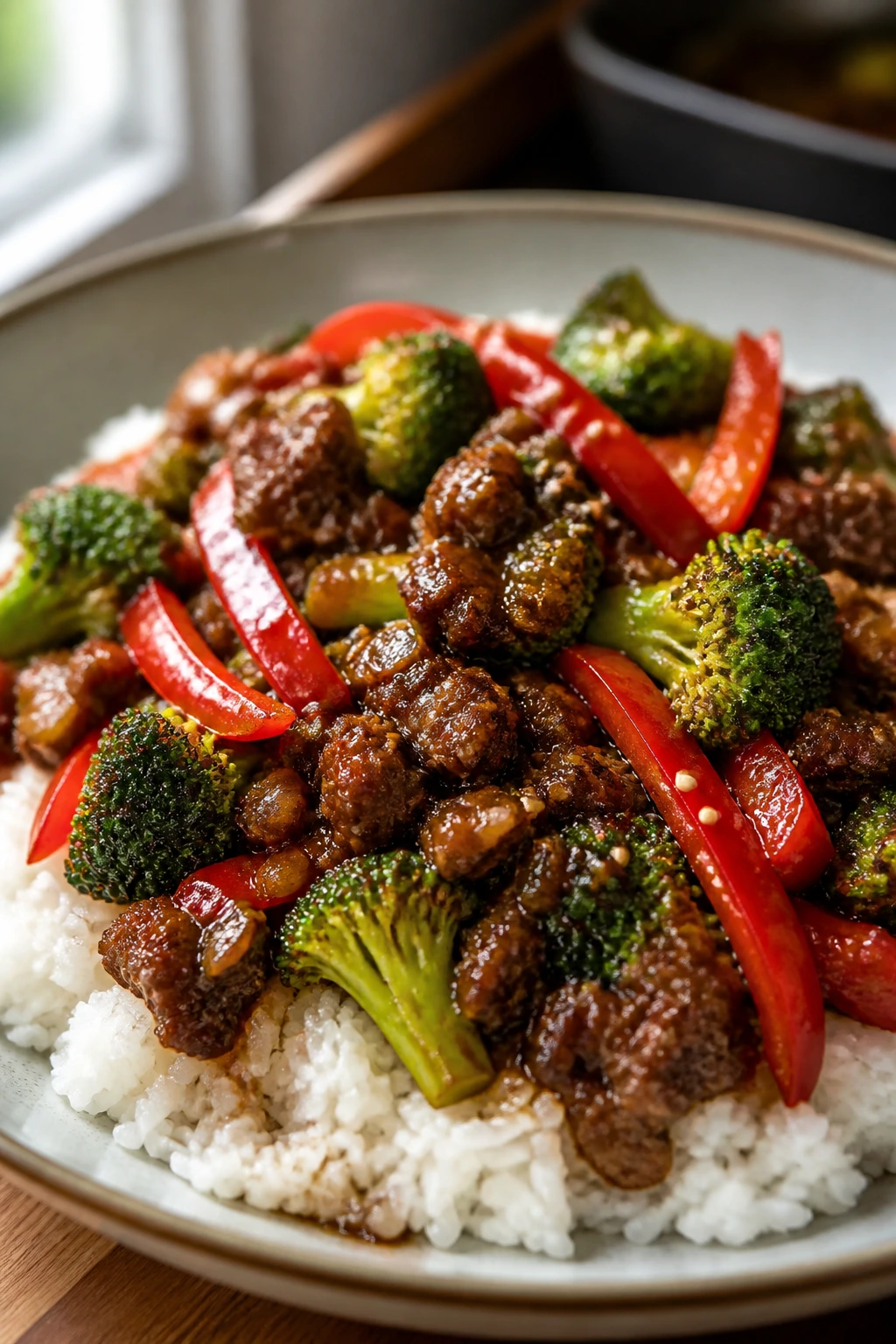
Recipe Name: Comforting Sesame Beef
Description: A savory ground beef skillet with broccoli, bell pepper, and a glossy soy-sesame sauce served over hot rice. It’s hearty, balanced, and built for a satisfying dinner bowl.
Prep Time: 15 minutes
Cook Time: 20 minutes
Total Time: 35 minutes
Course: Dinner, Main Course
Cuisine: Asian-Inspired, American Home-Style
Servings: 6 servings
Calories: About 400 kcal per serving
Ingredients
For the Sesame Beef:
- 1 1/2 pounds 85/15 ground beef
- 1 tablespoon neutral oil, if needed
- 1 medium yellow onion, finely diced
- 1 red bell pepper, thinly sliced
- 2 cups broccoli florets, cut into bite-size pieces
- 3 cloves garlic, minced
- 1 tablespoon fresh ginger, grated
For the Sauce:
- 1/3 cup low-sodium soy sauce
- 1/4 cup water or low-sodium beef broth
- 2 tablespoons packed light brown sugar
- 1 tablespoon honey
- 1 tablespoon rice vinegar
- 1 tablespoon toasted sesame oil
- 1/2 teaspoon black pepper
- 1/4 teaspoon crushed red pepper flakes
- 1 tablespoon cornstarch
- 2 tablespoons cold water
For Serving:
- 3 cups hot cooked jasmine rice
- 2 tablespoons toasted sesame seeds
- 3 scallions, thinly sliced
Instructions
-
Whisk the soy sauce, water or broth, brown sugar, honey, rice vinegar, toasted sesame oil, black pepper, and red pepper flakes in a bowl. Stir the cornstarch with cold water in a separate cup until smooth.
-
Cook the rice if needed and set it aside hot.
-
Brown the ground beef and onion in a 12-inch skillet over medium-high heat for 6 to 8 minutes, breaking up the meat, until browned and translucent. Drain excess fat if needed.
-
Add the bell pepper and broccoli and cook for 3 to 4 minutes until the vegetables begin to soften.
-
Stir in the garlic and ginger and cook for 30 seconds.
-
Pour in the sauce, bring it to a simmer, and stir in the cornstarch slurry. Cook 1 to 2 minutes until glossy and thickened.
-
Taste and adjust with a little more vinegar or honey if needed. Turn off the heat and top with scallions and sesame seeds.
-
Serve hot over rice.
Notes: Use tamari for a gluten-free version. Add a teaspoon of chili crisp at the table if you want more heat. Store leftovers separately from rice when possible for the best texture.