



The first thing this dish asks of you is patience. Tender beef and potatoes do not happen because you toss everything into a pot and hope for mercy; they happen when the beef gets a hard brown crust, the onions soak up the drippings, and the potatoes join late enough to keep their shape.
A chuck roast is full of connective tissue, which sounds unglamorous until you cook it properly. Give it time and gentle heat, and that tough-looking meat turns silky, while Yukon Gold potatoes stay creamy in the center and hold their edges instead of collapsing into mash.
When this is done right, the pot smells deep and savory: browned beef, tomato paste cooked until it darkens, thyme, garlic, and a little wine that has simmered down to something round and glossy. The broth should cling to the meat, not flood the bowl. The potatoes should look intact when you lift them with a spoon. That balance is the whole point.
Why This Beef and Potatoes Dinner Earns Its Spot at the Table
-
The sauce tastes built, not dumped: Browning the beef first and cooking the tomato paste for a full minute gives the braising liquid a darker, meatier edge that plain simmering never delivers.
-
The potatoes keep their shape: Yukon Golds are waxy enough to survive the braise, so you get chunks that still look like potatoes at the end instead of starchy rubble.
-
Chuck roast gets better with time: This cut has enough connective tissue to become spoon-tender after a long, gentle oven braise, which is exactly why it works here.
-
You can make it in one heavy pot: A Dutch oven does most of the work, and the browned bits from the bottom become the backbone of the sauce.
-
Leftovers reheat with real dignity: The beef gets even softer overnight, and the sauce settles into the potatoes instead of drying out the way a lean roast often does.
-
It feels like a full meal without extra fuss: Meat, starch, vegetables, and gravy all end up in the same pot, which means the plate looks generous before you even think about a side dish.
Yield: Serves 6
Prep Time: 25 minutes
Cook Time: 2 hours 15 minutes
Total Time: 2 hours 40 minutes
Difficulty: Intermediate — the steps are straightforward, but the sear, braise, and final texture check all matter.
Rest Time: 10 minutes
Best Served: Warm, after a short rest, straight from the pot or spooned into shallow bowls.
What to Buy for Better Flavor and Better Texture
For the Beef and Vegetables:
- 2 1/2 lb beef chuck roast, trimmed and cut into 1 1/2-inch cubes
- 1 1/2 teaspoons kosher salt, plus more to taste
- 1 teaspoon black pepper
- 3 tablespoons all-purpose flour
- 2 tablespoons neutral oil, such as avocado or canola
- 1 large yellow onion, diced
- 3 medium carrots, cut into 1-inch chunks
- 4 cloves garlic, minced
For the Braising Liquid:
- 2 tablespoons tomato paste
- 1 cup dry red wine, or 1 cup additional beef broth
- 3 cups low-sodium beef broth
- 1 tablespoon Worcestershire sauce
- 2 teaspoons fresh thyme leaves, or 1 teaspoon dried thyme
- 1 bay leaf
For the Potatoes and Finish:
- 1 1/2 lb Yukon Gold potatoes, halved if small or cut into 1 1/2-inch pieces
- 1 tablespoon unsalted butter
- 2 tablespoons chopped fresh parsley
Choosing Beef That Turns Silky, Not Dry
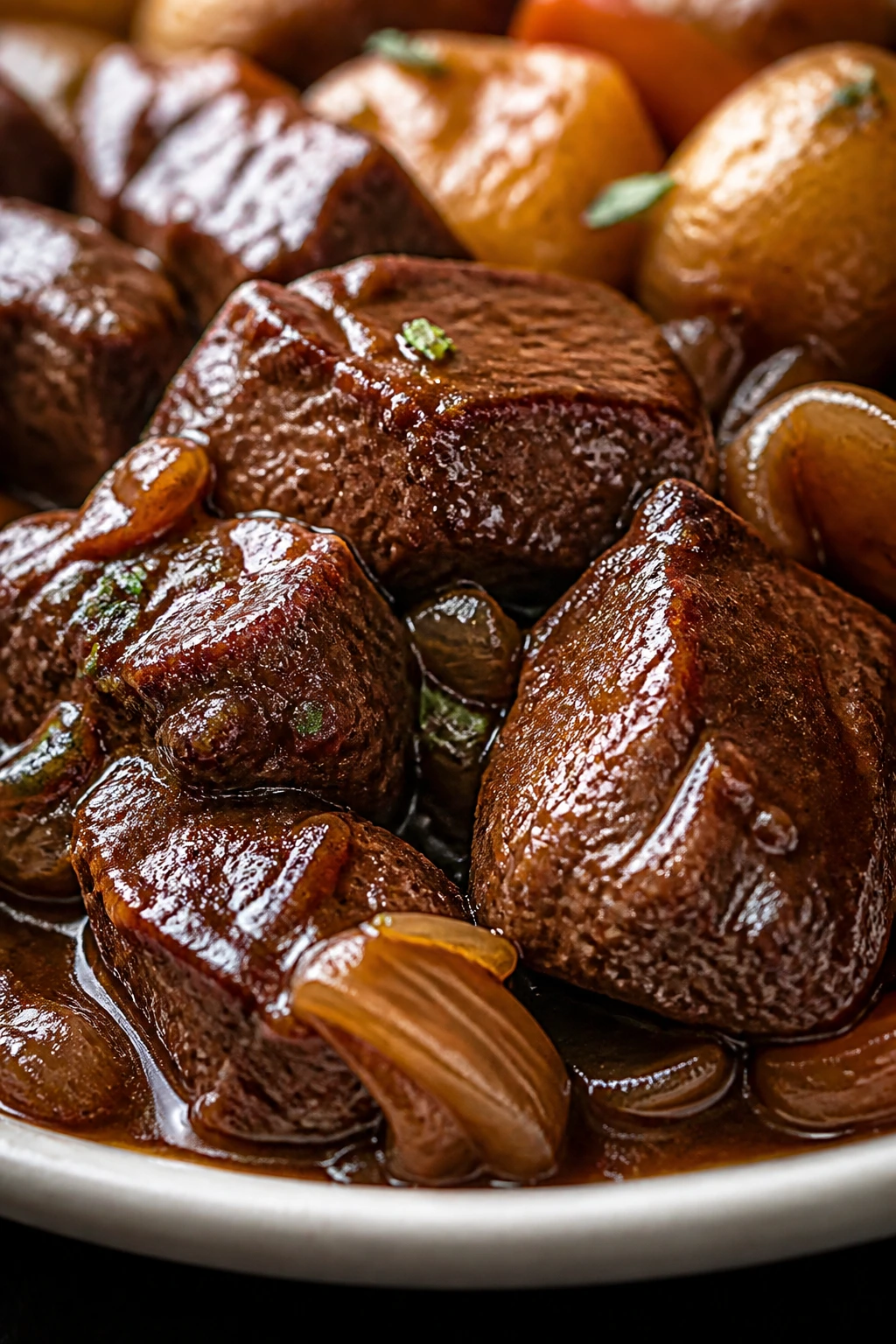
Beef Chuck Roast
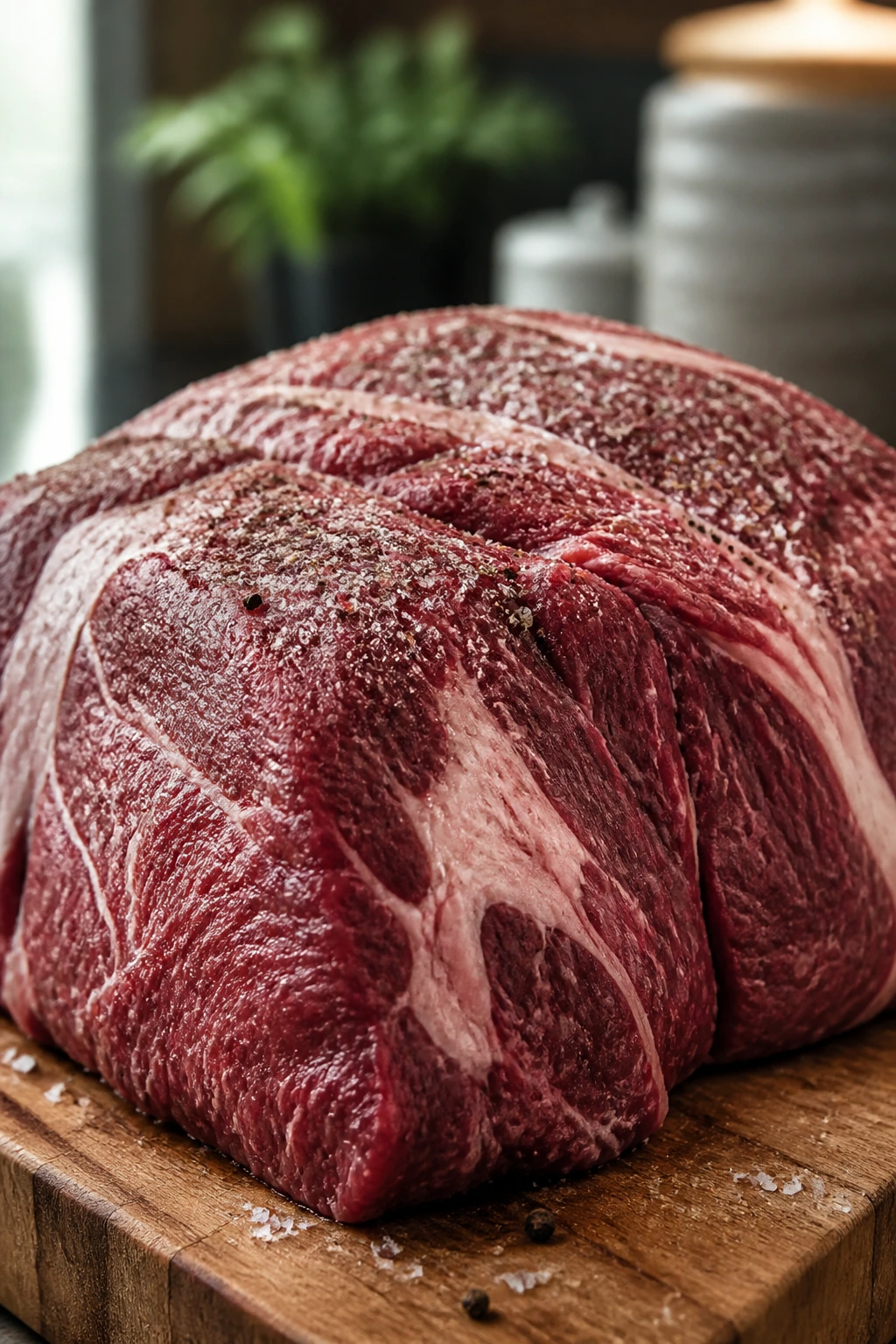
- What to use: 2 1/2 lb beef chuck roast, trimmed of thick surface fat and cut into 1 1/2-inch cubes.
- Preparation: Pat the cubes very dry before seasoning; moisture on the surface blocks browning and gives you gray, steamy meat instead of a deep crust.
- Substitutions: Beef brisket works if you cut it into similar chunks, and boneless short ribs are excellent if you want even more richness.
- Tips: Chuck roast is the right call because its connective tissue melts slowly during braising. Leaner cuts like sirloin stay stringy here and will not give you the same fork-tender bite.
Yukon Gold Potatoes
- What to use: 1 1/2 lb Yukon Gold potatoes, cut into even pieces if they are larger than a golf ball.
- Preparation: Leave baby potatoes whole or halve them; for full-size potatoes, cut them into 1 1/2-inch chunks so they cook at the same rate as the beef’s final hour.
- Substitutions: Red potatoes are the closest swap. Russets will work in a pinch, but they shed starch fast and can turn crumbly if you stir too hard.
- Tips: Yukon Golds hold their shape and stay creamy in the middle, which makes them my first choice here. They soak up the beefy sauce without going past the line into mush.
Aromatics and Vegetables
- What to use: 1 large yellow onion, 3 medium carrots, and 4 cloves garlic.
- Preparation: Dice the onion fairly small so it nearly disappears into the sauce, and keep the carrots in chunky pieces so they do not vanish after a long braise.
- Substitutions: Shallots give a sweeter base, parsnips can replace some of the carrots, and pearl onions add a more old-fashioned look if you have them.
- Tips: The onion should soften and turn translucent before the garlic goes in. If the garlic hits the pot too early, it can scorch during the deglazing step and turn bitter.
Braising Liquid and Seasoning
- What to use: 2 tablespoons tomato paste, 1 cup dry red wine, 3 cups low-sodium beef broth, 1 tablespoon Worcestershire sauce, 2 teaspoons fresh thyme or 1 teaspoon dried, and 1 bay leaf.
- Preparation: Measure everything before you start searing. Once the beef is browned, the pot moves fast, and you do not want to be rummaging through a cabinet while the onions sit there getting too dark.
- Substitutions: Replace the wine with extra broth and a teaspoon of red wine vinegar if you do not cook with alcohol. If you only have dried herbs, use half the amount and add them early so they soften in the liquid.
- Tips: Tomato paste needs heat; let it darken in the pot for a minute so it loses the raw tinny edge. Worcestershire is small but important — it adds that savory, slightly fermented note that makes the sauce taste finished.
Finishing Ingredients
- What to use: 1 tablespoon unsalted butter and 2 tablespoons chopped fresh parsley.
- Preparation: Chop the parsley right before serving so it stays bright and does not slump in the bowl.
- Substitutions: A small splash of olive oil can stand in for the butter, and chives work if parsley is missing from the fridge.
- Tips: Butter at the end smooths the sauce and gives it a soft sheen. Do not add it while the pot is boiling hard; let the liquid calm down first.
The Dutch Oven and Other Tools That Make This Easy
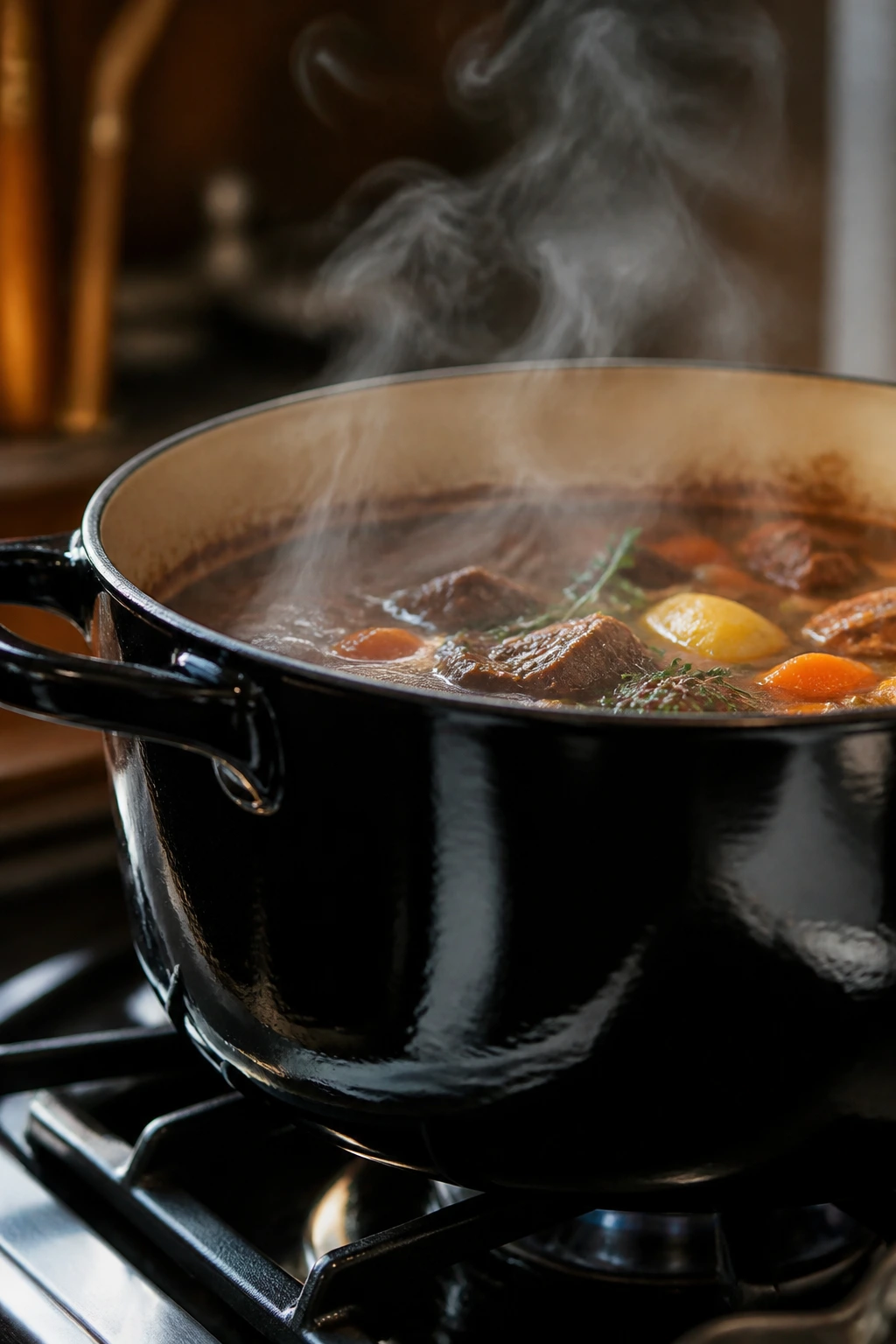
- 5- to 6-quart Dutch oven or heavy oven-safe pot: This is the main tool; cast iron holds heat evenly and keeps the braise from scorching on the bottom.
- Tongs: Useful for turning the beef cubes without tearing the crust off before they have a chance to brown.
- Wooden spoon or flat spatula: You need something sturdy enough to scrape up the browned bits after the wine goes in.
- Chef’s knife and cutting board: A sharp knife makes the beef cubes cleaner and the potatoes easier to cut into even pieces.
- Measuring cups and spoons: This recipe depends on balanced liquid, and eyeballing the broth usually leads to a thin sauce.
- Ladle or large serving spoon: Handy when you want to get beef, potatoes, and sauce into each bowl in one pass.
Browning the Beef Without Crowding the Pot
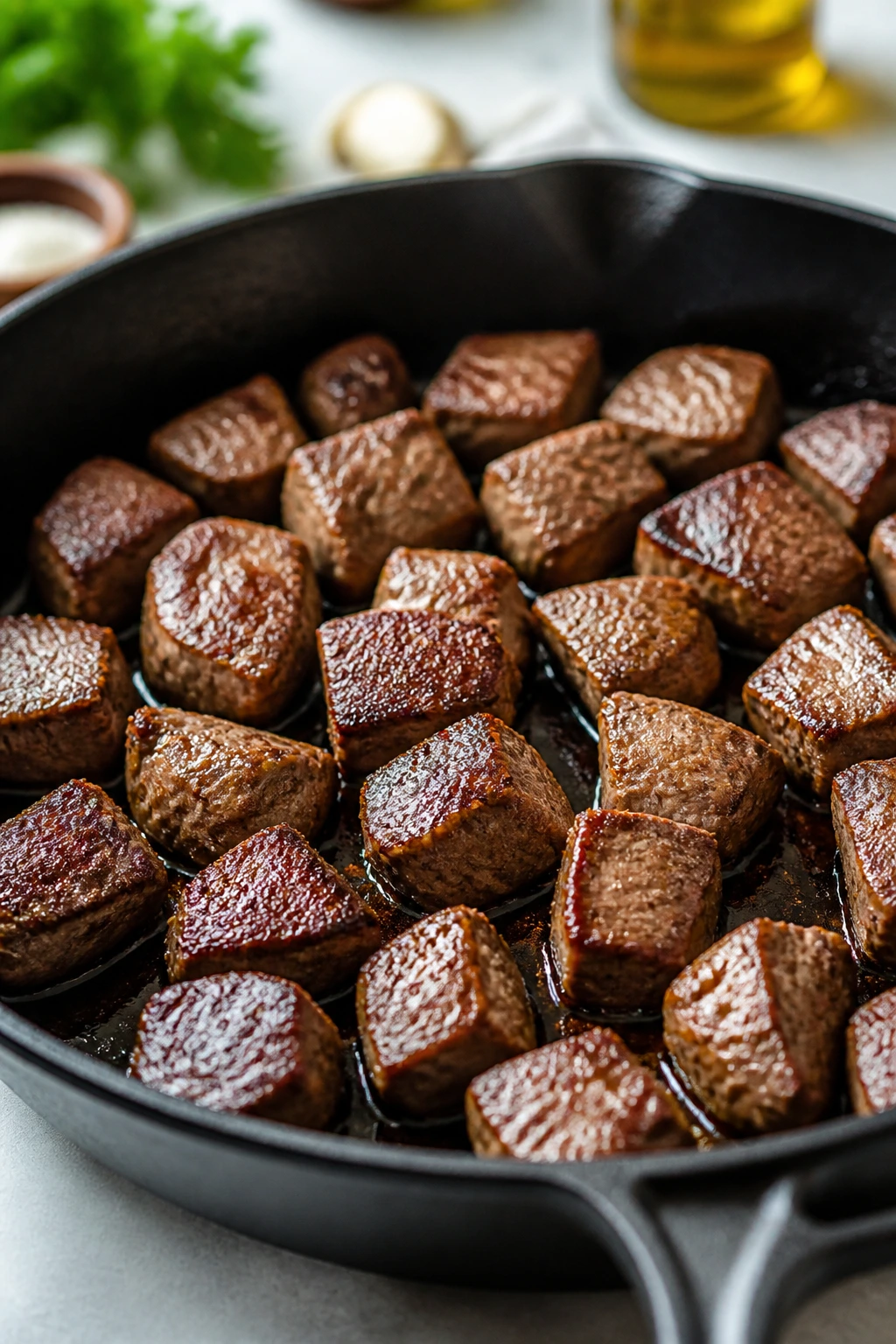
Preheat and season first.
-
Heat the oven to 325°F (165°C) and set a rack in the center. Pat the beef cubes dry with paper towels, then toss them with the salt, pepper, and flour until every side has a light dusting.
-
Set a 5- to 6-quart Dutch oven over medium-high heat and add the oil. When the oil shimmers and slides easily across the bottom, add the beef in a single layer, working in batches if needed. Do not crowd the pot; crowded beef steams, and steamed beef does not taste like much of anything.
-
Sear the cubes for 2 to 3 minutes per side, letting each one sit until a deep brown crust forms before turning. Transfer the browned beef to a plate and repeat with the remaining pieces. You want dark edges, not gray meat with a few gold spots.
Build the base in the same pot.
4. Lower the heat to medium and add the onion and carrots. Cook for 5 to 6 minutes, stirring once or twice, until the onion turns translucent and the carrots start to pick up a glossy edge. If the pot looks dry, add a splash of broth, not more oil.
- Stir in the garlic and tomato paste and cook for 1 minute, scraping the paste across the bottom so it darkens from brick red to a deeper rust color. If the garlic smells sharp or starts to brown fast, move on immediately; garlic can turn bitter in a hurry.
Building the Braising Liquid
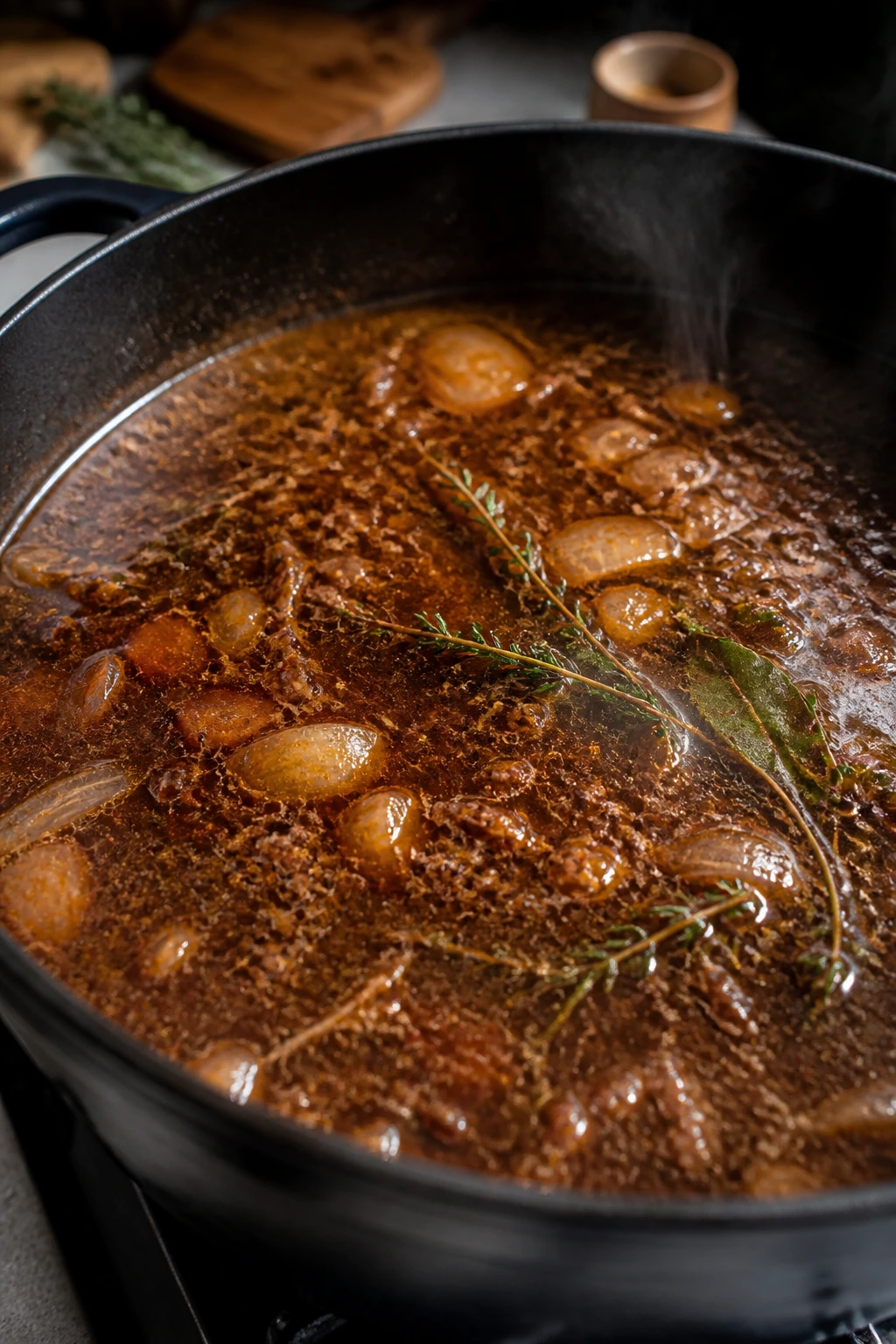
A braise lives or dies here. The liquid does not need to drown the beef. It just needs enough body to carry flavor around the pot while the lid traps steam and the oven does the long, quiet work.
-
Pour in the wine and stir with a wooden spoon, scraping firmly along the bottom to release every browned bit. Let the wine simmer for 2 to 3 minutes until it drops by about half and smells less sharp, more rounded.
-
Add the beef broth, Worcestershire sauce, thyme, and bay leaf. Return the beef and any juices from the plate to the pot, nestling the cubes down into the liquid. The meat should be mostly submerged but not floating like soup. Bring the pot to a gentle simmer on the stove, then cover with the lid.
-
Transfer the covered pot to the oven and braise for 1 hour 15 minutes. At that point the beef will be starting to relax, but it will not yet be tender enough to eat without effort. That middle stretch is where the collagen starts to break down.
When the Potatoes Go In
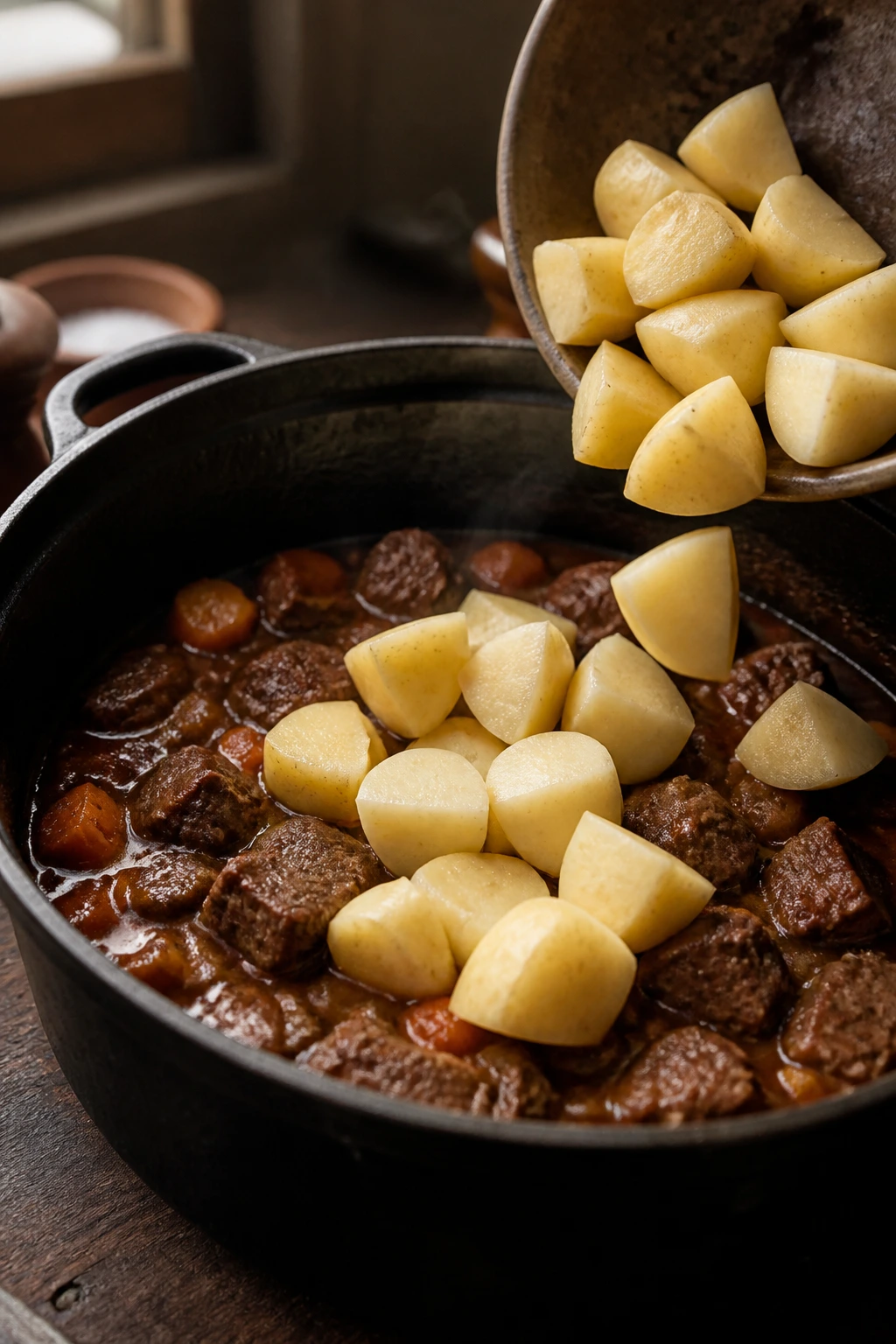
This is the part a lot of people rush. They add the potatoes at the start and then wonder why half of them disappear by dinner. Potatoes do not need the full braise. They need the last stretch, when the beef has already started to soften and the liquid has picked up body.
-
Remove the pot from the oven and stir in the potatoes, making sure they are tucked into the liquid. If the pot looks too dry, add up to 1/2 cup more broth. The potatoes should sit in sauce, not on a dry island at the top.
-
Cover the pot again and return it to the oven for 45 to 60 minutes, until the beef gives way easily when pressed with a fork and the potatoes are tender all the way through. A knife should slide into a potato with almost no resistance, but the pieces should still hold their edges.
-
Remove the pot from the oven and place it over low heat on the stove. If the sauce looks thin, uncover and simmer for 8 to 12 minutes, stirring gently once or twice, until it lightly coats the back of a spoon. Stir in the butter, remove the bay leaf, and taste for salt and pepper.
-
Let the pot rest for 10 minutes before serving. Scatter the parsley over the top. The sauce will settle, the beef will stop moving around so much, and the bowl will taste better for that short pause.
How to Know the Beef Is Tender Enough
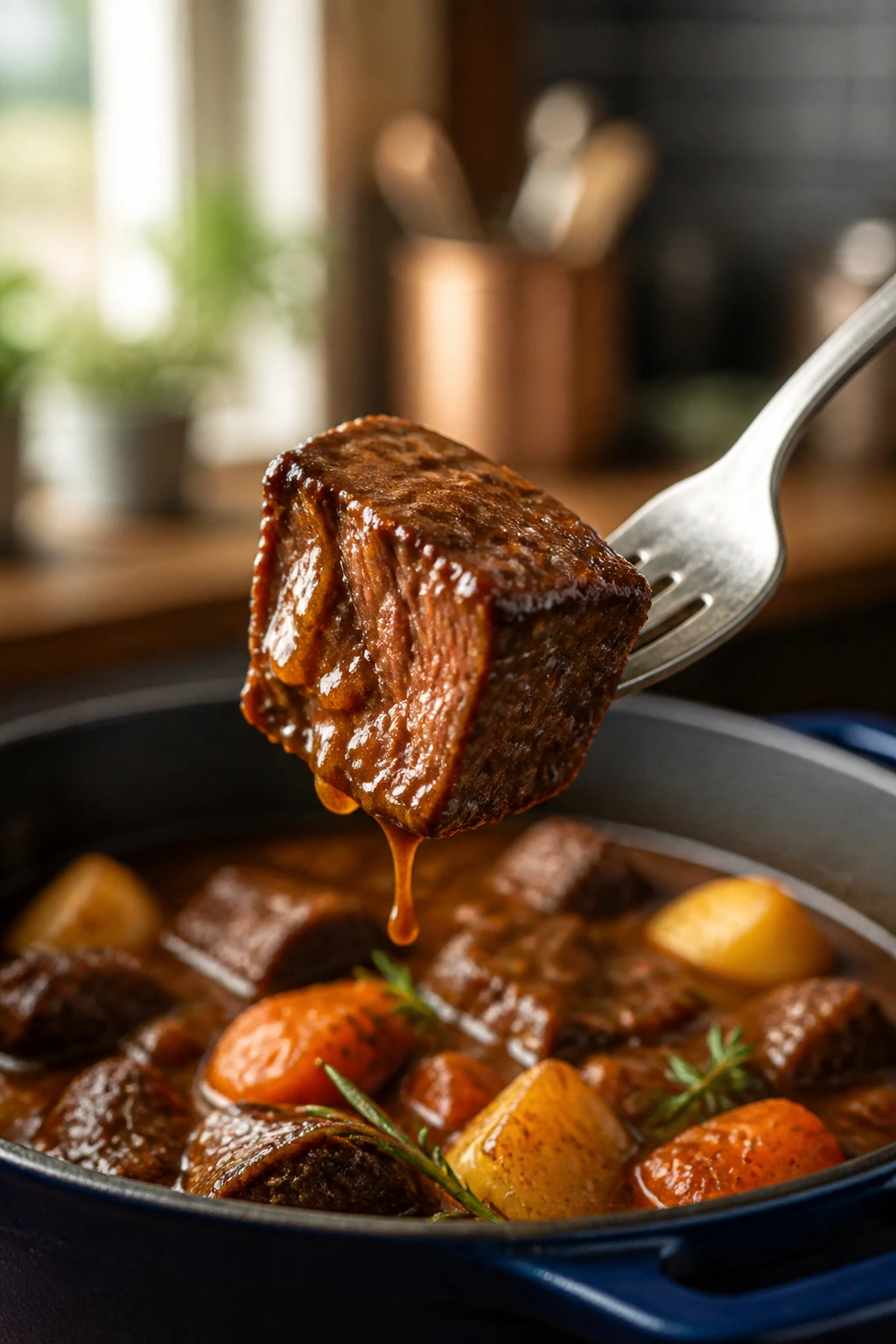
The beef should not feel firm in the center, and it should not fall apart the second you poke it. You want that narrow sweet spot where a fork slides in with almost no resistance but the cubes still hold together when you lift them.
If you are unsure, take one piece out and press the tines of a fork into it. If the meat springs back or feels chewy, it needs more time. If it shreds when you breathe on it, you have gone a little far — still edible, still good, but not as neat in the bowl.
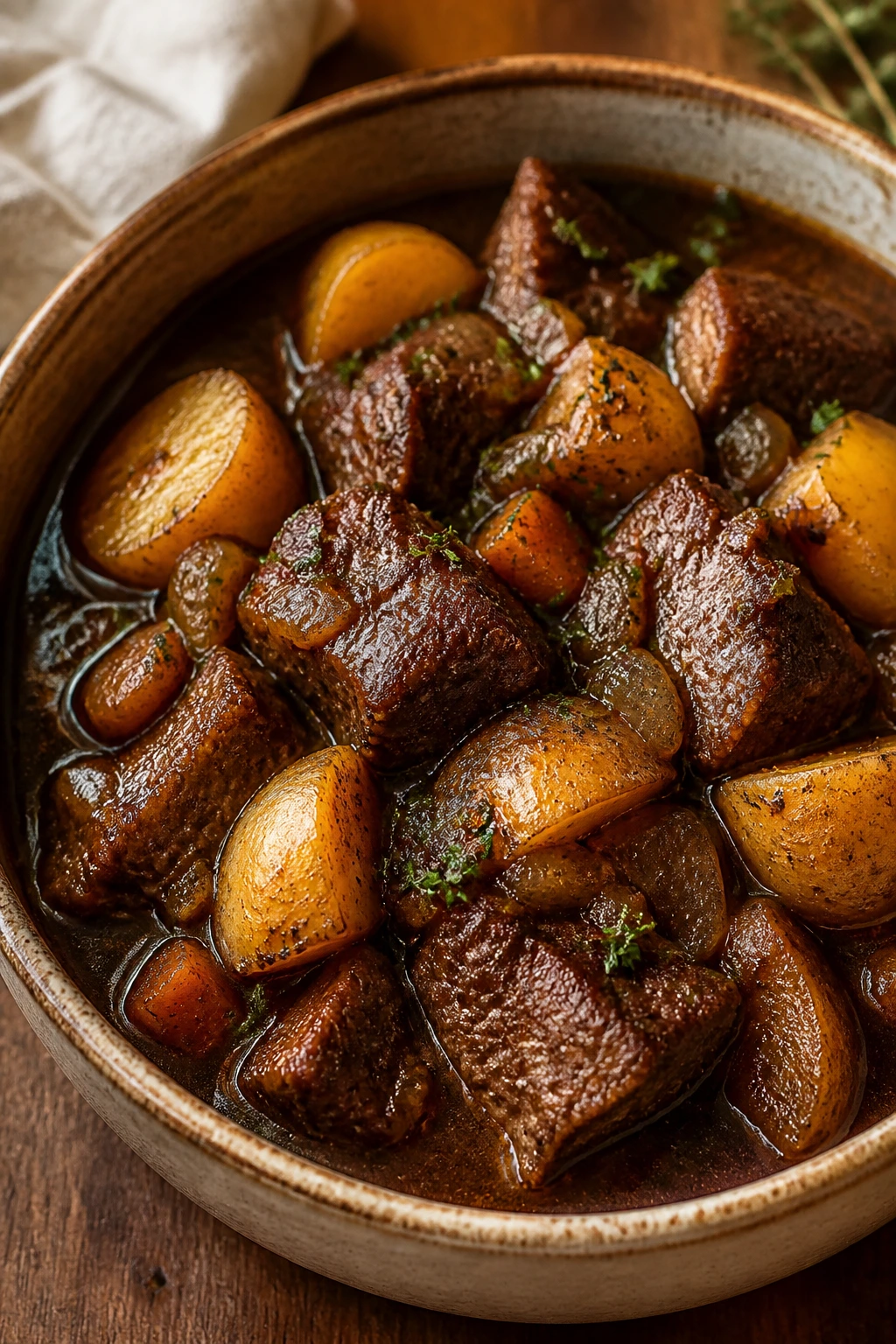
The potatoes give you a second clue. When they are ready, the skins may look slightly wrinkled and the edges will have absorbed some of the sauce, but the pieces should not have split into white fluff. That is your signal to stop.
Serving a Bowl That Feels Generous
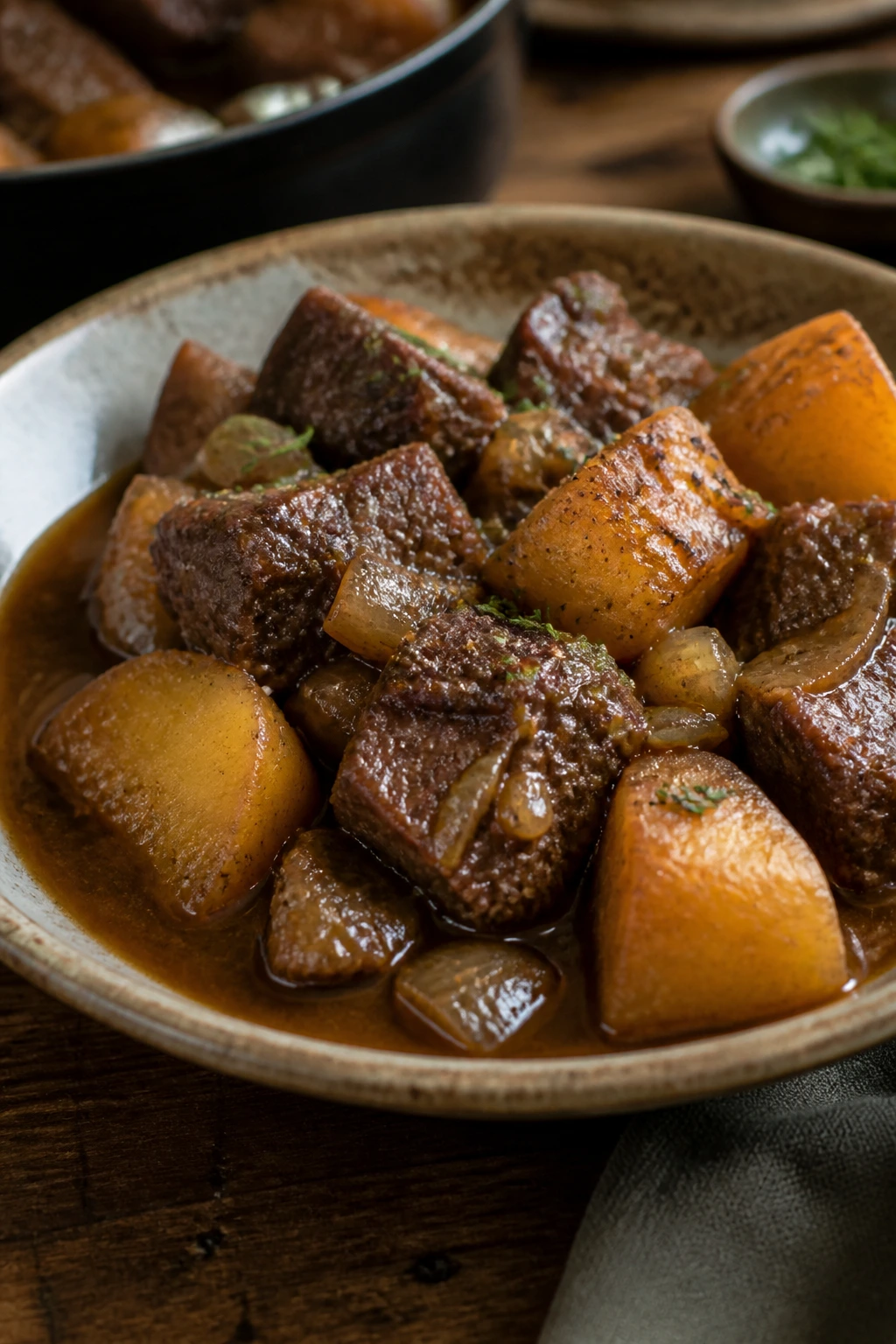
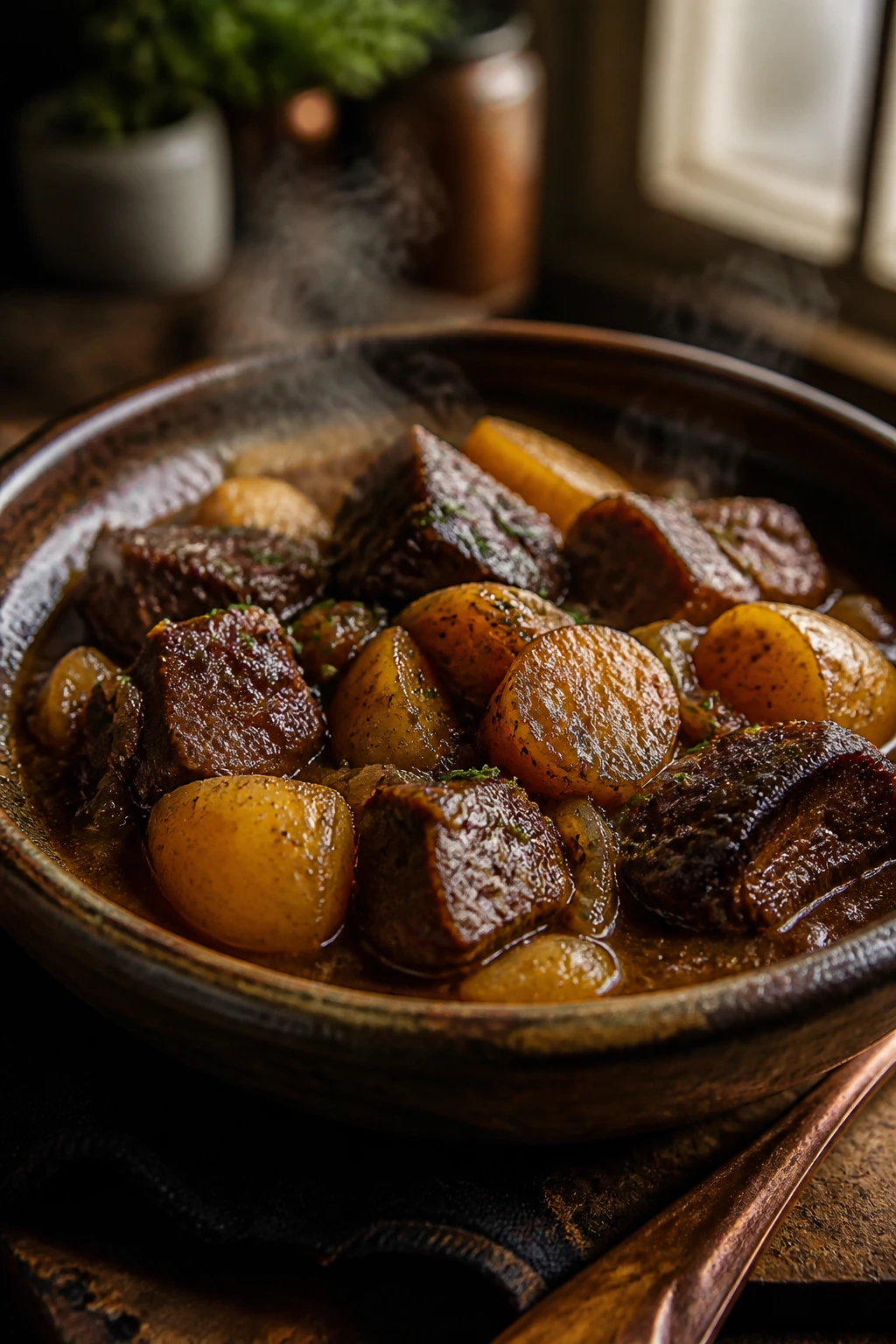
Presentation: Spoon the beef and potatoes into shallow bowls rather than deep soup bowls. That lets the sauce pool around the edges and makes the whole dish look intentional instead of soupy. A small shower of parsley on top is enough; you do not need a pile of garnish fighting with the braise.
Accompaniments: A crisp green salad with a sharp vinaigrette cuts through the richness nicely. So do buttered green beans, roasted Brussels sprouts, or a piece of crusty bread for mopping up the sauce. If I’m being honest, a slice of plain bread is the thing people reach for first.
Portions: Plan on about 1 1/2 cups per person, with a little extra sauce ladled over the top. For hungrier eaters, this stretches to 5 generous servings. For a lighter meal with salad and bread, it easily serves 6 or even 7.
Beverage Pairing: A dry red wine like Cabernet Sauvignon, Merlot, or a Syrah fits the browned, savory sauce. If you prefer beer, go for an amber ale or brown ale. For a nonalcoholic option, sparkling water with a squeeze of lemon cleans up the palate between bites.
Small Fixes That Make a Bigger Difference Than They Should
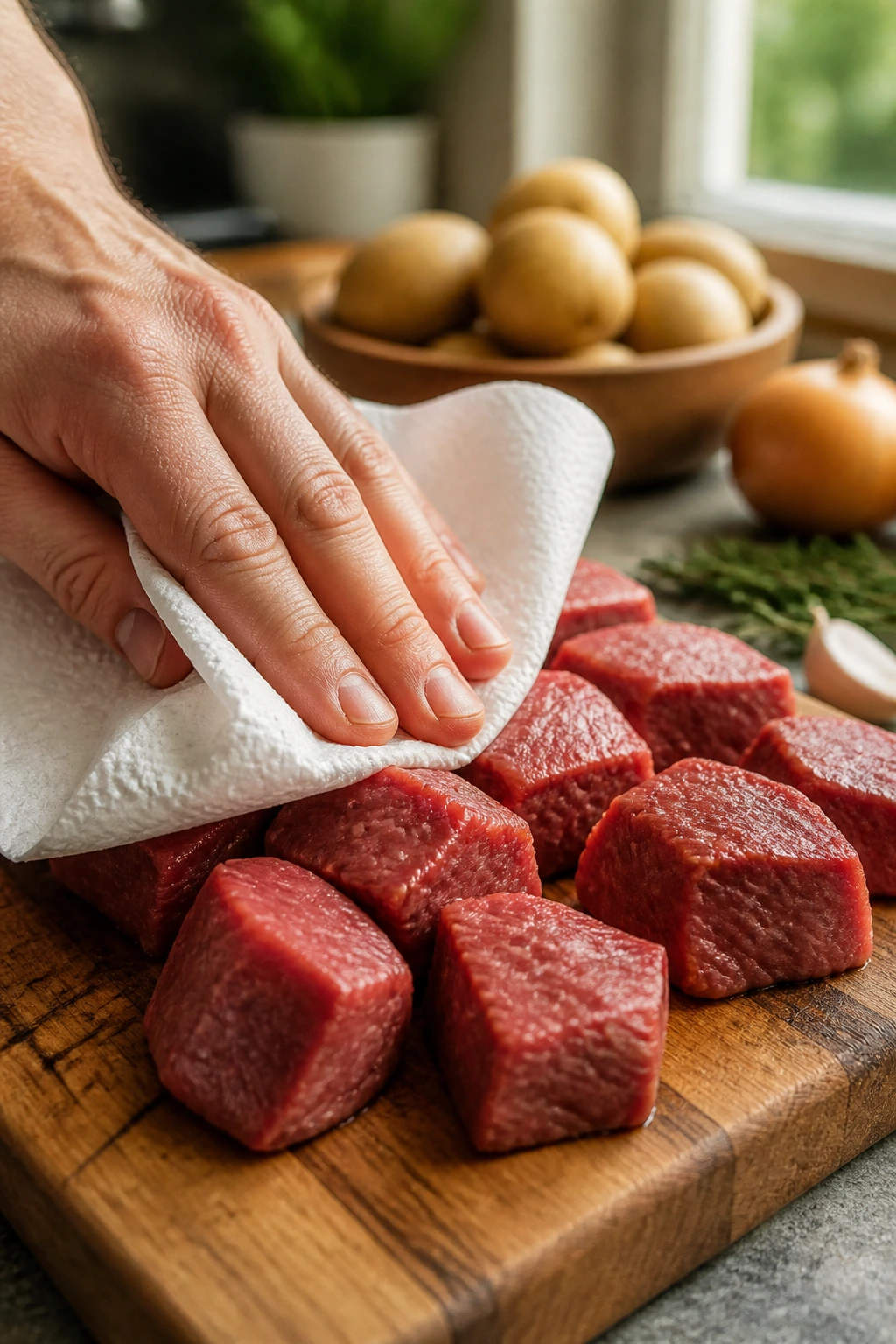
Dry the beef before it ever touches the flour.
Wet beef steams, and steamy beef will not brown properly. I keep a few paper towels right next to the cutting board and pat the cubes twice if they feel damp.
Salt in two stages if you like a fuller flavor.
A first seasoning before the sear builds flavor on the meat, but a tiny final adjustment after the sauce has reduced is where the dish really wakes up. Braises can taste flat if you only salt at the beginning and never check again at the end.
Keep the potato pieces the same size.
Uneven chunks are a sneaky problem. The small ones will collapse while the big ones are still hard in the center, and you end up fishing around the pot for the good pieces. Cut once, cut cleanly, and move on.
Use the lid while braising, then uncover only if needed.
The covered oven keeps moisture steady and helps the beef soften without drying out. Uncovering too early turns the sauce into a reduction before the meat is ready, which is how you end up with a pot that tastes strong but eats dry.
Taste after the butter goes in.
Butter softens the edges of the sauce, which is lovely, but it can also mute the salt a little. One last taste with a spoon is better than serving a pot that tastes almost finished.
Common Mistakes That Turn a Good Braise Into a Meh One
-
Crowding the pan during searing: The beef starts to gray and release liquid instead of browning. Fix it by working in batches and giving each cube a little breathing room.
-
Adding the potatoes from the start: They go soft, split, and disappear into the sauce before the beef is ready. Add them only for the last 45 to 60 minutes so they stay recognizable.
-
Boiling hard instead of braising gently: A violent boil makes the meat tighten up and the sauce taste rough. Keep the pot at a bare simmer on the stove and let the oven do the slow work.
-
Using lean beef instead of chuck: Lean cuts can taste dry or stringy after a long cook, even if they look browned and beautiful going in. Chuck roast, brisket, or short ribs are the better choices because they have enough connective tissue to soften.
-
Skipping the scrape after deglazing: Those brown bits on the bottom are flavor, not mess. If you leave them behind, the sauce tastes thinner and less layered.
-
Stopping too soon because the beef “looks done”: Tender braised beef is judged by feel, not color. If a fork meets resistance, give it more time. The difference between nearly tender and actually tender is often 20 extra minutes.
Smart Swaps and Flavor Variations
Beer-Braised Beef and Potatoes
Swap the red wine for a dark amber beer or a stout if you want a deeper, maltier sauce. Keep the rest of the recipe the same, but add the beer slowly so it does not foam up over the browned bits.
Garlic-Herb Sunday Pot
Add 2 more cloves of garlic, 1 teaspoon chopped rosemary, and a handful of sliced mushrooms when you sauté the onions and carrots. The rosemary makes the pot smell woodsy and a little sharper, which suits colder evenings and stronger bread on the side.
No-Wine Pantry Version
Use 4 cups beef broth instead of wine plus broth, then stir in 1 teaspoon red wine vinegar at the end to bring back a little lift. This version tastes cleaner and a touch sweeter, which some people prefer if they do not want the wine note.
Smoky Paprika Braise
Add 1 teaspoon smoked paprika with the tomato paste. The paprika gives the sauce a soft campfire edge without turning the dish into something Spanish or overwrought. It is a small change, but it changes the aroma as soon as the pot starts to simmer.
Slow Cooker Route
If the oven is occupied, sear and build the base on the stove, then move everything to a slow cooker and cook on low for 7 to 8 hours. Add the potatoes during the last 2 hours so they do not turn to paste.
Storing Leftovers Without Ruining the Potatoes
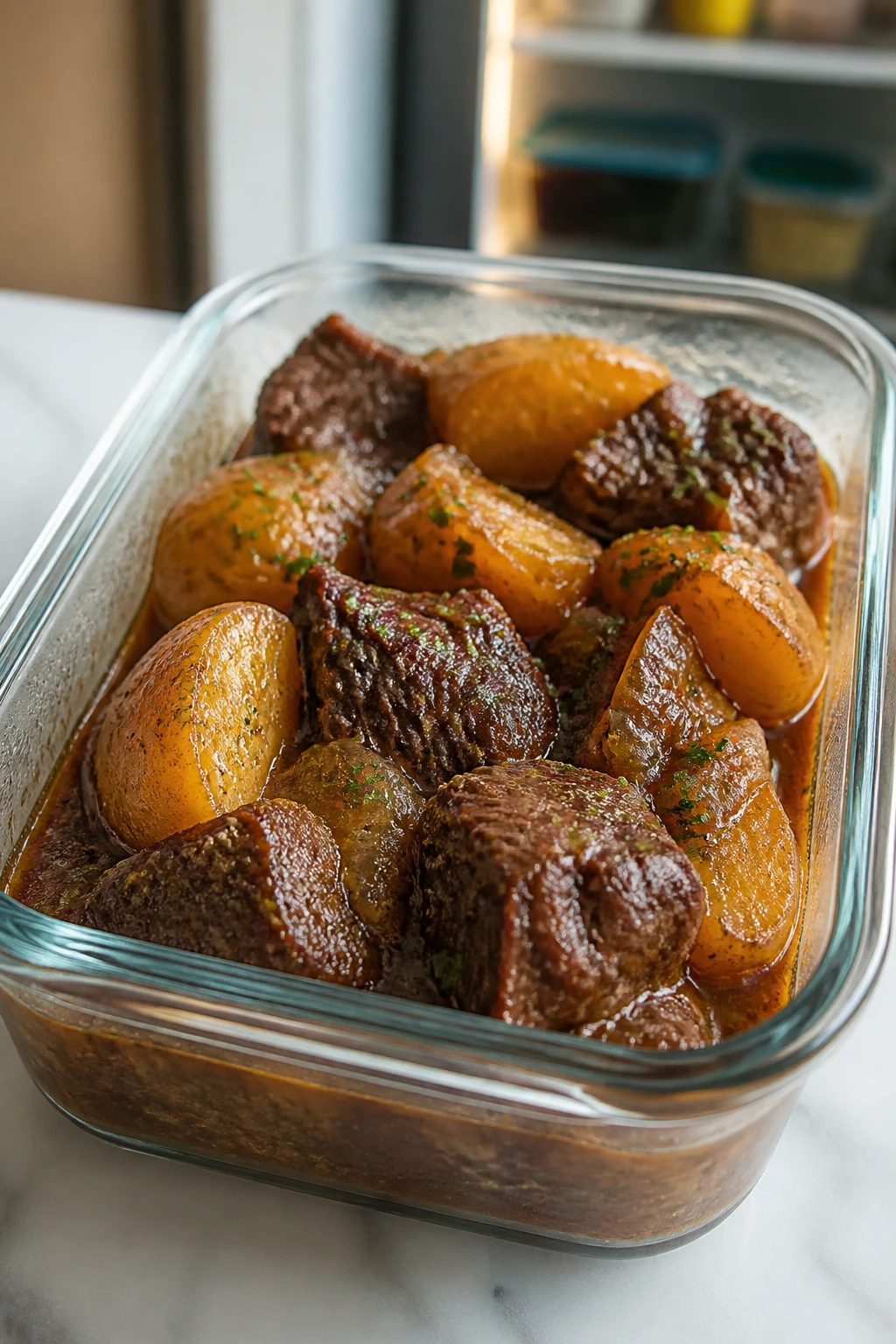
This dish keeps well, but the potatoes are the part that needs the most care. Once they sit in the sauce overnight, they soften more and take on a starchier texture. That is not a flaw so much as a fact of braised food.
Let the pot cool for no more than 2 hours at room temperature before refrigerating. Scoop the leftovers into shallow airtight containers so they chill quickly. Stored in the refrigerator, the beef and potatoes will keep for 3 to 4 days. If you need to hold it longer, freeze it for up to 3 months.
For the freezer, the beef and sauce freeze better than the potatoes do. If you know you want leftovers for later, freeze the beef mixture on its own and cook fresh potatoes when you reheat. If the potatoes are already in the pot, freeze them anyway — they will still taste good, just softer.
Reheat on the stovetop over low heat with a splash of broth or water, about 10 to 15 minutes, stirring now and then until the pot is hot all the way through. You can also rewarm it in a covered oven-safe dish at 325°F (165°C) for 20 to 30 minutes. The microwave works in a pinch, but the potatoes tend to get a little uneven and the beef can turn tough at the edges if you push it too far.
Questions People Ask Before They Cook It
Can I use beef stew meat instead of chuck roast?
Yes, if the stew meat is actually cut from chuck or another braising cut. The problem is that “stew meat” can be a mixed bag, and some packages include lean scraps that never get tender enough. If the pieces are very small, reduce the braising time a little and check them early.
Do I have to use wine?
No. Use an extra cup of beef broth and add a teaspoon of red wine vinegar at the end if you want some brightness. The wine does deepen the sauce, but the dish still works well without it.
Why did my potatoes fall apart?
They were either cut too small, cooked too long, or stirred too hard after they softened. Yukon Golds are sturdy, but even they will collapse if they spend the full braise in the pot. Add them late and stir with a light hand.
Can I make this in a slow cooker instead of the oven?
You can. Sear the beef and build the flavor on the stove first, then cook on low for 7 to 8 hours. Add the potatoes during the last 2 hours so they stay intact.
What if the sauce is too thin at the end?
Uncover the pot and simmer it on low for 8 to 12 minutes until it tightens. If you still want more body, mash a few potato pieces against the side of the pot and stir them back in. That gives the sauce a little thickness without making it pasty.
What if the beef is still tough after the suggested braise time?
Keep cooking it. Tough braised beef usually means the collagen has not fully broken down yet, and that needs more heat and time, not less. Check again every 15 minutes or so until a fork goes in with almost no resistance.
Can I use ground beef for this recipe?
Not really. Ground beef cooks on a different schedule and needs a different sauce structure, or it will turn crumbly and dull in a long braise. If ground beef is what you have, make a skillet dinner or casserole instead.
Can I make it a day ahead?
Yes, and the flavor often settles in a good way overnight. Refrigerate it, then reheat gently on the stove with a splash of broth. If the potatoes look too soft for your taste, you can spoon the beef and sauce over freshly cooked potatoes instead.
A Pot Worth Waiting On
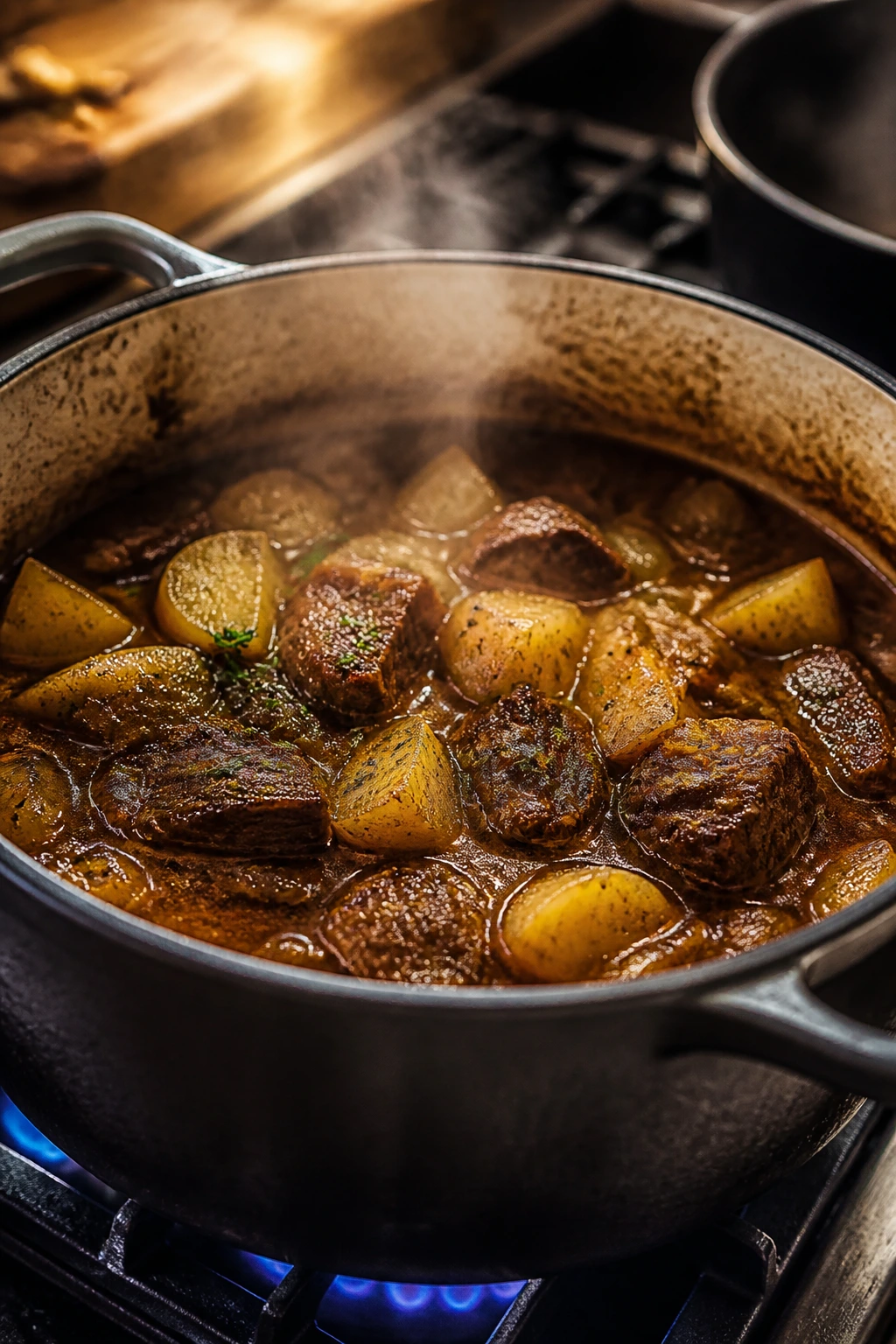
There is a reason this kind of dinner never really goes out of style. It is steady, warm, and plain-spoken in the best way. Nothing about it is flashy, but the bowl lands on the table with enough weight to make everyone go quiet for a minute.
And that is the part I like most. The beef tastes richer after it has had time to soften, the potatoes hold the sauce in their corners, and the whole pot gives you that old, satisfying feeling that dinner was planned with care instead of assembled in a hurry.
Make it once, and you will start cutting your potatoes a little more evenly, searing the beef a little more patiently, and keeping an extra loaf of bread around for the sauce.
Tender Beef and Potatoes — Recipe Card
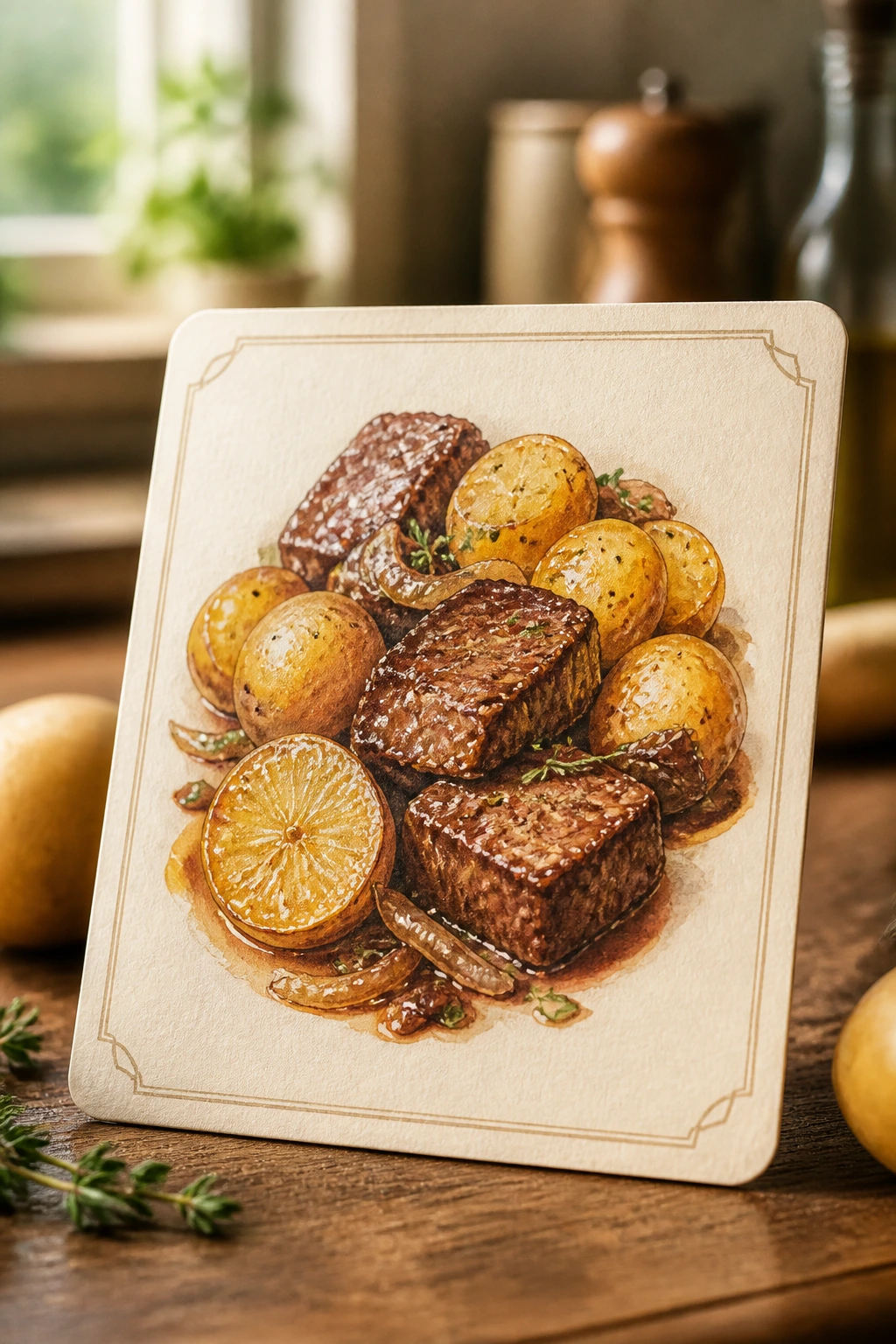
Recipe Name: Tender Beef and Potatoes
Description: Slow-braised beef chuck, Yukon Gold potatoes, carrots, and onions cooked in a rich red wine and beef broth sauce. The beef turns fork-tender, the potatoes stay intact, and the sauce finishes glossy and savory.
Prep Time: 25 minutes
Cook Time: 2 hours 15 minutes
Total Time: 2 hours 40 minutes
Course: Dinner, Main Course
Cuisine: American
Servings: 6 servings
Calories: About 520 kcal per serving
Ingredients
For the Beef and Vegetables:
- 2 1/2 lb beef chuck roast, trimmed and cut into 1 1/2-inch cubes
- 1 1/2 teaspoons kosher salt, plus more to taste
- 1 teaspoon black pepper
- 3 tablespoons all-purpose flour
- 2 tablespoons neutral oil, such as avocado or canola
- 1 large yellow onion, diced
- 3 medium carrots, cut into 1-inch chunks
- 4 cloves garlic, minced
For the Braising Liquid:
- 2 tablespoons tomato paste
- 1 cup dry red wine, or 1 cup additional beef broth
- 3 cups low-sodium beef broth
- 1 tablespoon Worcestershire sauce
- 2 teaspoons fresh thyme leaves, or 1 teaspoon dried thyme
- 1 bay leaf
For the Potatoes and Finish:
- 1 1/2 lb Yukon Gold potatoes, halved if small or cut into 1 1/2-inch pieces
- 1 tablespoon unsalted butter
- 2 tablespoons chopped fresh parsley
Instructions
- Preheat the oven to 325°F (165°C). Pat the beef dry, then season it with salt, pepper, and flour.
- Heat the oil in a Dutch oven over medium-high heat. Brown the beef in batches for 2 to 3 minutes per side, then transfer it to a plate.
- Add the onion and carrots to the pot and cook for 5 to 6 minutes. Stir in the garlic and tomato paste and cook for 1 minute.
- Pour in the wine and scrape the pot well. Simmer for 2 to 3 minutes. Add the broth, Worcestershire sauce, thyme, and bay leaf, then return the beef and juices to the pot.
- Bring to a gentle simmer, cover, and braise in the oven for 1 hour 15 minutes.
- Stir in the potatoes. Cover again and braise for 45 to 60 minutes, until the beef is fork-tender and the potatoes are cooked through.
- If needed, uncover and simmer on the stove for 8 to 12 minutes to thicken the sauce. Stir in the butter, remove the bay leaf, and adjust the seasoning.
- Rest for 10 minutes. Garnish with parsley and serve warm.
Notes: Add the potatoes late so they hold their shape. If you skip the wine, use extra broth plus 1 teaspoon red wine vinegar at the end. Leftovers keep for 3 to 4 days in the fridge and reheat gently with a splash of broth.