



A tender steak dinner does not need a special occasion to make sense. Give me a thick-cut steak, a hot skillet, and a plate with mashed potatoes that still hold a little steam, and I’m happy to call that a fine evening. The whole trick is restraint: salt the meat well, leave the crust alone long enough to form, and stop cooking before the center turns gray and dry.
That’s where a lot of steak dinners go wrong. People spend money on a nice cut, then bash it with too much heat for too long, or drown it in sauce to hide the fact that the meat was never handled with care. A steak dinner should taste like beef first, butter second, and garlic and herbs hanging around the edges. When it works, the first slice gives you a crisp crust, a rosy middle, and juices that stay where they belong until the knife goes in.
This version leans into the parts that matter most: a properly seared steak, potatoes that taste rich without turning gluey, green beans for a clean snap, and a pan sauce built from the browned bits stuck to the skillet. Nothing theatrical. Nothing fussy. Just a hearty dinner that feels like it was cooked by someone who knows when to stand back from the stove.
Why This Steak Dinner Works So Well
-
Thick-cut steak, not thin slices: A steak that’s at least 1 inch thick gives you enough time to build a deep brown crust before the center climbs past medium-rare.
-
Butter and garlic at the end, not the beginning: Adding them after the initial sear keeps the garlic sweet and the butter from burning into a bitter haze.
-
Yukon Gold potatoes stay creamy: Their texture holds together with butter and warm milk instead of turning into a sticky mash that feels heavy in the mouth.
-
A quick pan sauce from the same skillet: The browned bits left behind by the steak carry most of the flavor, so the sauce tastes rich without needing a long ingredient list.
-
Green beans cut through the richness: A hot, garlicky bean side keeps the plate from feeling flat and gives you something crisp against all that beef and potato.
-
It scales without drama: Double the potatoes, sear the steaks in batches, and the whole meal still feels composed instead of crowded.
How Much Time and Food You’re Looking At
Yield: Serves 4
Prep Time: 25 minutes
Cook Time: 35 minutes
Total Time: 1 hour
Difficulty: Intermediate — nothing here is technically hard, but you’re moving between potatoes, steak, beans, and a pan sauce without letting any one of them get neglected.
Chill/Rest Time: 30 minutes to 24 hours for an optional dry brine on the steak; 8 to 10 minutes resting after cooking
Best Served: Right away, with the steak still juicy and the potatoes piping hot
The schedule works best if you start the potatoes first, let the steak sit salted while you prep everything else, and cook the meat last so it can rest while you finish the sauce. If you like a more deliberate rhythm, salt the steak the night before and leave it uncovered on a rack in the fridge. The surface dries out a little, which sounds minor, but it’s the difference between a pale steak and one with a crust that crackles when you cut it.
What Goes Into the Pan
For the Steak
- 4 ribeye or strip steaks, about 8 oz each and 1 to 1¼ inches thick
- 1 tablespoon kosher salt
- 1 teaspoon freshly ground black pepper
- 2 tablespoons neutral oil, such as avocado or canola
- 2 tablespoons unsalted butter
- 4 garlic cloves, smashed
- 4 thyme sprigs
For the Mashed Potatoes
- 2 pounds Yukon Gold potatoes, peeled and cut into 1½-inch chunks
- 1½ teaspoons kosher salt, plus more for the pot
- 4 tablespoons unsalted butter
- ½ cup whole milk, warmed
- ¼ cup sour cream
- ½ teaspoon black pepper
For the Green Beans
- 1 pound green beans, trimmed
- 1 tablespoon olive oil
- 1 garlic clove, finely grated
- 1 teaspoon lemon juice
- ½ teaspoon kosher salt
- ¼ teaspoon black pepper
For the Pan Sauce
- 1 shallot, minced
- 8 ounces cremini mushrooms, sliced
- ½ cup beef broth
- ¼ cup dry red wine, or more beef broth
- 1 teaspoon Dijon mustard
- 1 teaspoon Worcestershire sauce
- 1 teaspoon cornstarch mixed with 1 tablespoon cold water
- 1 tablespoon chopped parsley
- 1 tablespoon cold butter
Why These Ingredients Stay Tender and Taste Right
The Steak That Can Take the Heat
What to use: 4 ribeye or strip steaks, each about 8 oz and 1 to 1¼ inches thick. Ribeye gives you a softer, fattier bite; strip steak is a little firmer and slices neatly.
Preparation: Pat the steaks dry with paper towels, then salt them well on both sides. If you have time, leave them uncovered on a rack for 30 minutes to a full day so the surface dries and the salt starts working into the meat.
Substitutions: Sirloin works if you want a leaner option, but don’t cook it past medium or it starts to stiffen. Filet mignon can work too, though it loses some of the beefy heft that makes this dinner feel hearty.
Tips: If your steaks are on the thin side, skip the oven finish and sear them fast. Thin steak and long heat do not get along. Also, use kosher salt if you can; table salt is denser, so you’d need less.
The Potatoes That Carry the Plate
What to use: 2 pounds Yukon Gold potatoes, peeled and cut into even chunks. They’re the kind of potato that mashes smoothly without turning watery.
Preparation: Start them in cold salted water so they cook evenly from the outside in. Drain them well and let them steam off for a minute or two before mashing, because excess water is the enemy of a good mash.
Substitutions: Russets make a fluffier mash, which is nice if you want something lighter under the steak. Red potatoes can work too, but they’ll stay a little more rustic and less silky.
Tips: Warm the milk before adding it. Cold milk cools the potatoes down fast and can make the butter seize into little greasy streaks. It’s a small detail, but it matters.
The Beans That Keep the Plate From Feeling Heavy
What to use: 1 pound green beans, trimmed, plus olive oil, garlic, lemon juice, salt, and pepper. Haricots verts are fine if you want a thinner, more delicate bean.
Preparation: Trim the ends cleanly and keep the beans dry before they hit the pan. A dry bean blisters faster; a wet bean steams and goes soft.
Substitutions: Asparagus fits this dinner beautifully if green beans aren’t around. Broccolini works too, though it has a bit more chew and wants another minute or two in the pan.
Tips: Add the grated garlic near the end so it perfumes the beans instead of burning in the oil. Burnt garlic turns sharp and bitter fast. Lemon juice should go in right at the finish.
The Pan Sauce That Makes the Dinner Taste Finished
What to use: Shallot, cremini mushrooms, beef broth, red wine, Dijon, Worcestershire, cornstarch slurry, parsley, and cold butter. The sauce should taste like steak drippings stretched into something spoonable.
Preparation: Slice the mushrooms evenly so they cook at the same pace, and mince the shallot small enough that it softens before the liquid goes in. Keep the butter cold until the very end.
Substitutions: If you don’t want wine, use extra broth and a teaspoon of balsamic vinegar for depth. White button mushrooms work, but cremini have a fuller flavor and brown more willingly.
Tips: Scrape the bottom of the skillet while the broth is in the pan. Those browned bits are the point. If the sauce tastes flat, it usually needs salt, not more mustard.
The Tools That Make Steak Night Easier
-
12-inch cast-iron or heavy stainless-steel skillet: This is the steak’s best friend; it holds heat when the meat hits the pan.
-
Medium saucepan or Dutch oven: Use this for the potatoes so they cook evenly and have room to bubble without boiling over.
-
Second skillet for the green beans: A basic 10-inch skillet works fine, and it keeps the sauce pan from getting crowded.
-
Instant-read thermometer: The cheapest way to avoid overcooked steak. Guessing costs more.
-
Potato masher or ricer: A masher gives you a homey texture; a ricer makes the potatoes smoother and lighter.
-
Tongs: Better than a fork for turning steaks, since forks puncture the meat and let juices escape.
-
Wooden spoon or silicone spatula: Useful for scraping the pan sauce without gouging the skillet.
-
Paper towels and a cutting board with a juice groove: Dry steak makes better crust, and the groove keeps the resting juices from wandering across the counter.
How to Cook the Steak Dinner Step by Step
Phase 1: Prep the Steak and Start the Potatoes
-
Season the steaks. Pat the steaks dry, then season both sides with the kosher salt. If you have 30 minutes or more, set them on a wire rack uncovered while you work on the rest of the meal. If you’re in a rush, let them sit at room temperature while you prep the vegetables.
-
Start the potatoes in cold water. Put the potato chunks in a saucepan and cover them with cold water by about 1 inch. Add a generous pinch of salt, bring the pot to a boil over high heat, then lower it to a steady simmer for 15 to 18 minutes, until the potatoes break cleanly when pierced with a fork.
-
Drain and dry the potatoes. Drain them well, then return them to the hot pot for 1 minute so the extra moisture evaporates. The potatoes should look a little matte around the edges, not shiny and wet.
Phase 2: Make the Mash
- Mash the potatoes. Add the butter, warm milk, sour cream, and black pepper to the potatoes. Mash until smooth and fluffy, stopping as soon as they come together. Do not beat them hard or run an immersion blender through them — that’s how you get gluey potatoes. Cover and keep warm over very low heat or in a low oven.
Phase 3: Cook the Green Beans
-
Blister the beans. Heat the olive oil in a second skillet over medium-high heat. Add the green beans and cook for 4 to 6 minutes, tossing now and then, until they’re bright green with a few browned spots and a little bite left in the center.
-
Finish the beans. Add the grated garlic, salt, pepper, and lemon juice in the last 30 seconds. Toss for just long enough to smell the garlic bloom in the oil, then remove the skillet from the heat and cover loosely.
Phase 4: Sear the Steak
-
Heat the skillet until it’s very hot. Set the cast-iron or stainless skillet over medium-high heat for 3 to 5 minutes. Add the neutral oil and swirl it around. When the oil shimmers and loosens fast across the surface, you’re ready.
-
Sear the steaks. Place the steaks in the skillet and leave them alone for 2 to 3 minutes on the first side. Flip and cook for another 2 to 3 minutes. If the steaks are thick and still under temperature, set the skillet in a 400°F oven for 3 to 5 minutes. Pull the steaks at 125°F for medium-rare or 135°F for medium.
-
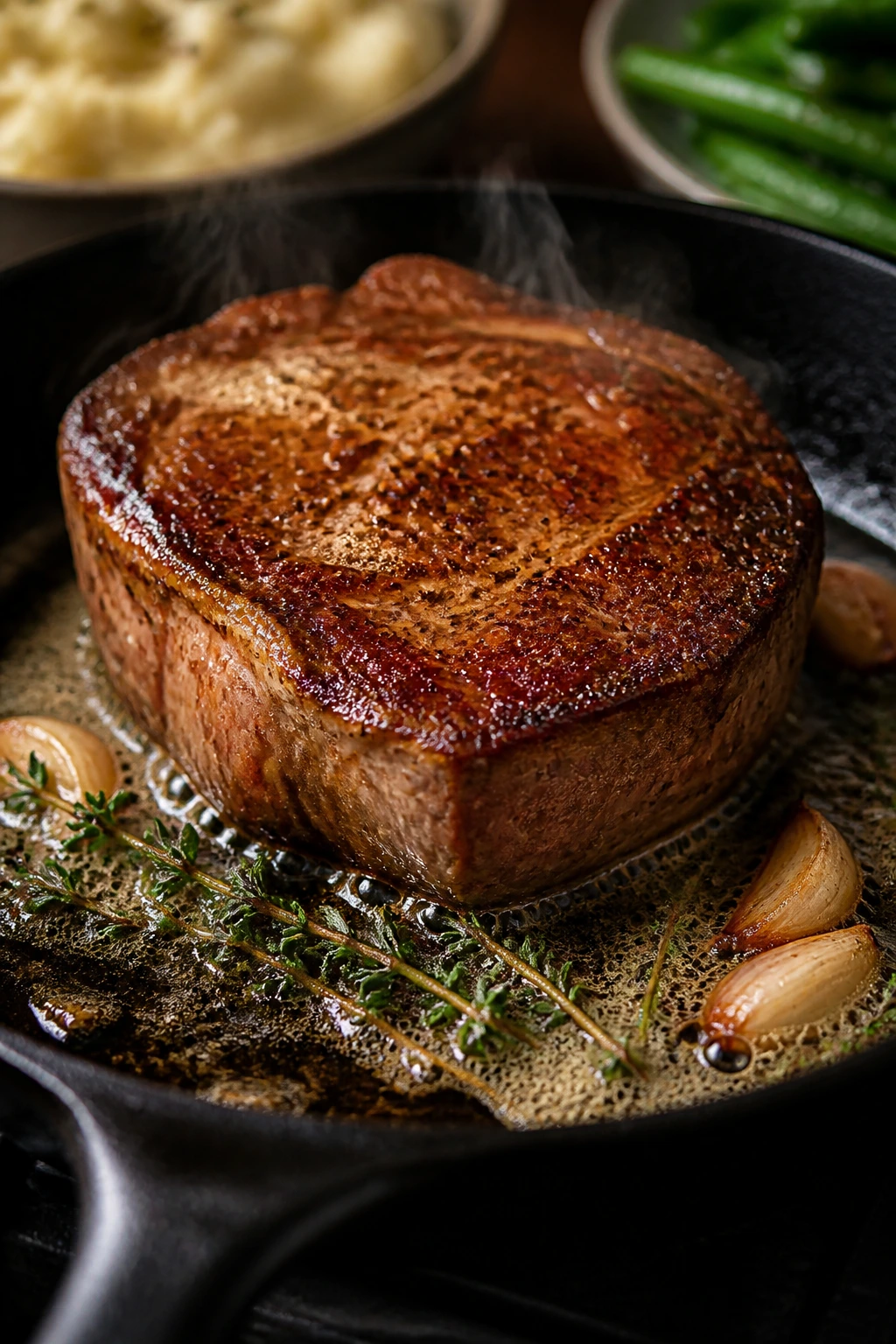
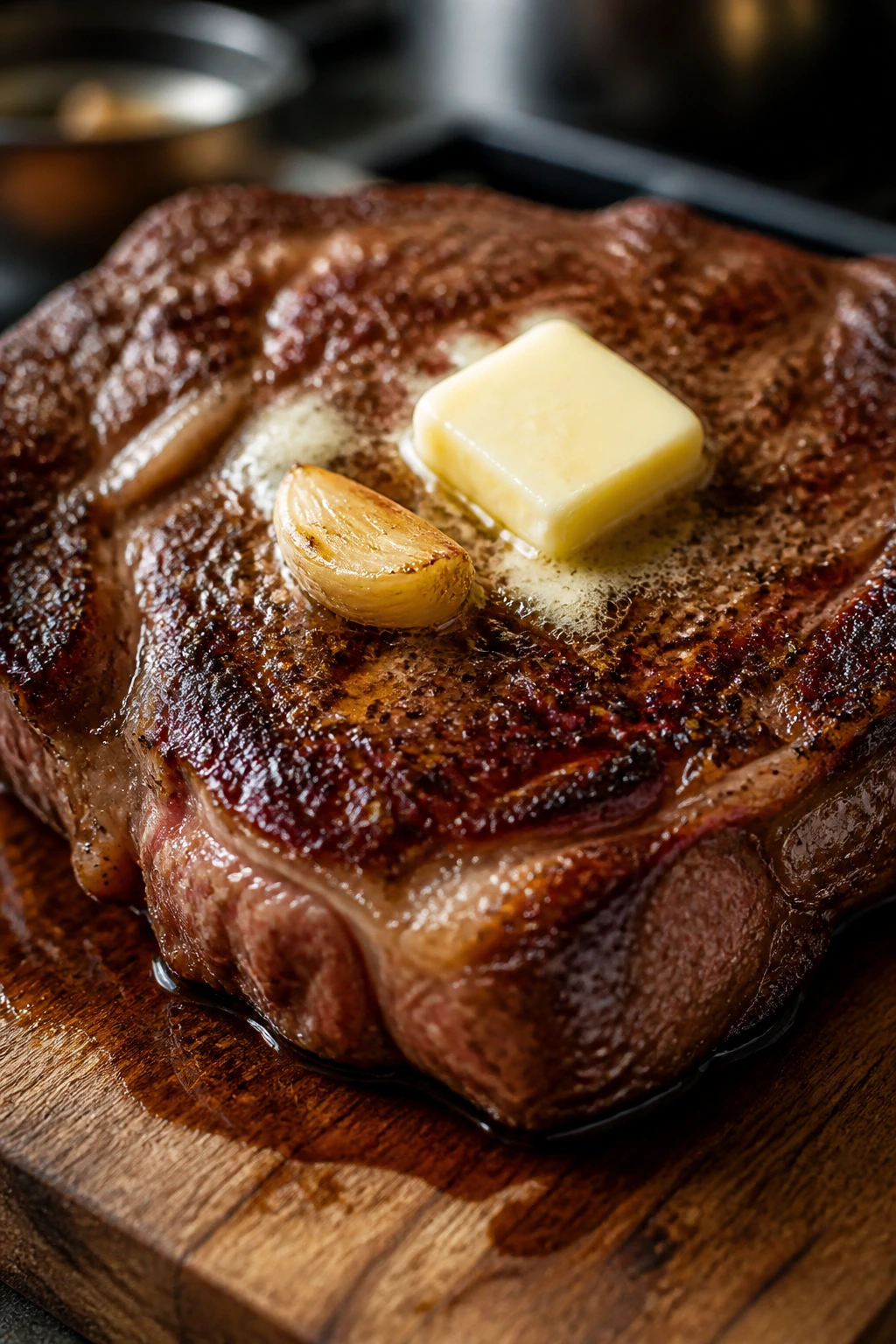
Baste with butter, garlic, and thyme. During the last minute, add the butter, smashed garlic, and thyme to the pan. Tilt the skillet and spoon the butter over the steaks for 30 to 60 seconds. The garlic should smell sweet and nutty, not dark or sharp. If the garlic starts to brown too quickly, pull the pan off the heat for a moment.
-
Rest the steak. Move the steaks to a cutting board and let them rest for 8 to 10 minutes. Don’t skip this part. The juices need a minute to settle back through the meat, and that pause is what keeps the first slice from flooding the board.
Phase 5: Make the Sauce and Plate
-
Build the pan sauce. Pour off all but about 1 tablespoon of fat from the steak skillet. Add the shallot and mushrooms, and cook over medium heat for 4 to 5 minutes until the shallot softens and the mushrooms take on a deep brown color. Pour in the wine and broth, then scrape up the browned bits with a wooden spoon.
-
Thicken and finish the sauce. Stir in the Dijon, Worcestershire, and cornstarch slurry. Simmer for 2 to 3 minutes, until the sauce turns glossy and lightly coats the back of a spoon. Turn off the heat and whisk in the cold butter and parsley.
-
Slice and serve. Slice the steak against the grain if you’re using strip steak, or leave ribeye whole if the bone and shape are doing the work for you. Spoon mashed potatoes onto warm plates, add the green beans, lean the steak beside the potatoes, and drizzle the sauce over the meat and mushrooms.
How to Plate It So the Plate Feels Generous
A steak dinner lives or dies on the plate. Warm plates help more than people think. Cold ceramic steals heat from the potatoes first, then the steak, and suddenly the whole meal feels less inviting before the first bite.
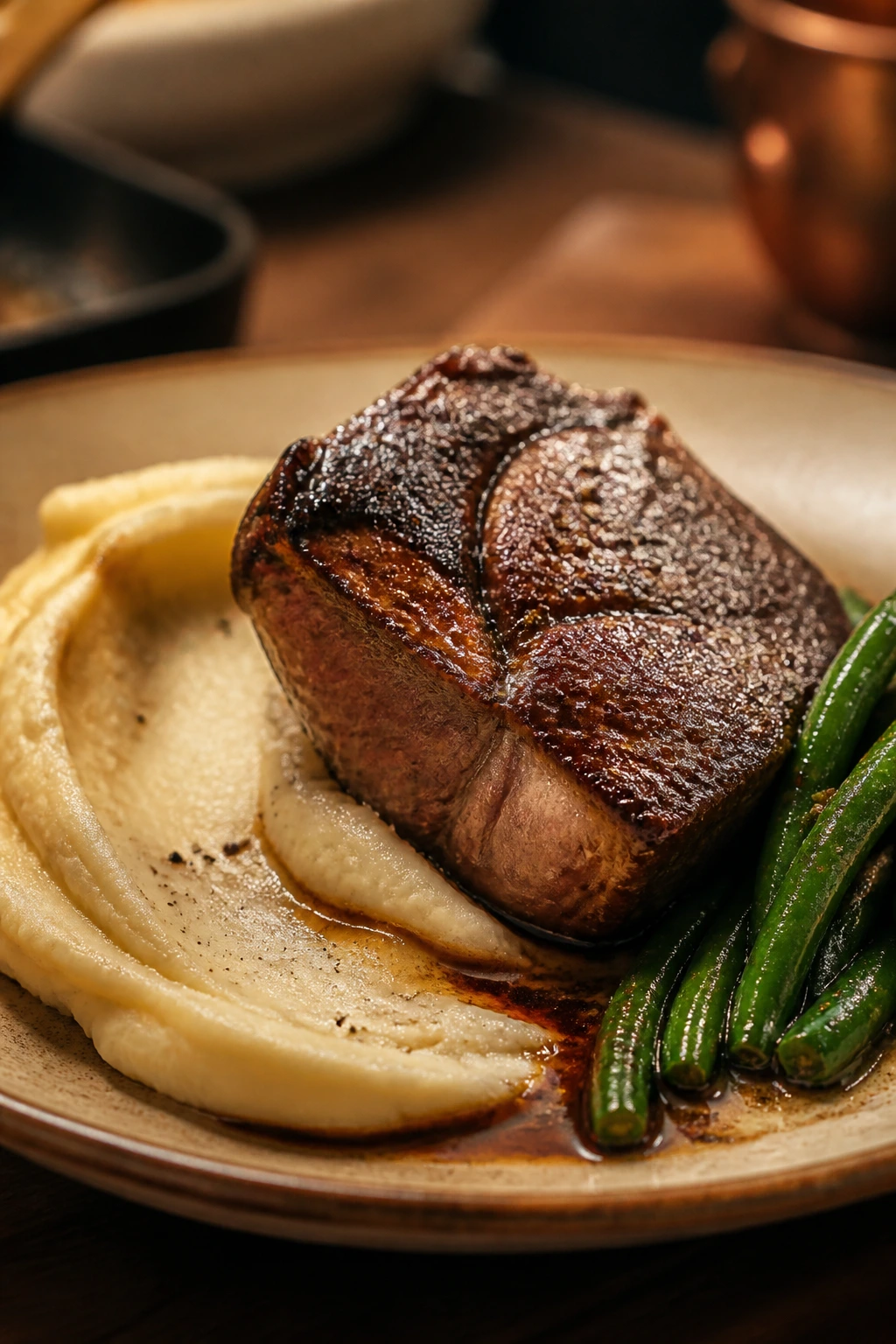
I like to make a shallow swoosh of mashed potatoes with the back of a spoon, then set the steak partly against it so the sauce can pool at the edge instead of drowning everything. The green beans should sit as their own little pile, not scattered across the plate like afterthoughts. That small bit of order makes the meal feel intentional.
Presentation: Slice the steak only if the cut benefits from it. Strip steak looks handsome when sliced on a bias; ribeye often looks better left as a thick, intact piece with a glossy spoonful of sauce over the top.
Accompaniments: A simple bitter green salad with lemon vinaigrette works well next to the richness, and a piece of crusty bread is worth having around for the sauce. If you want more food on the table, roasted carrots or mushrooms fit without fighting the steak.
Portions: Plan on one 8-ounce steak per person, about ¾ cup mashed potatoes, and a generous handful of green beans. If you’re feeding bigger appetites, add another potato or two before you add more meat; that keeps the meal hearty without making it lopsided.
Beverage Pairing: A cabernet sauvignon with firm tannins is the obvious move, but a Syrah or dry red blend also works well because the pepper and dark fruit like the steak’s crust. For something nonalcoholic, sparkling water with lemon or unsweetened iced tea cuts through the butter and keeps the meal from feeling too heavy.
Small Adjustments That Keep the Steak Tender
Salt Early, But Don’t Rush the Clock: Even 30 minutes of salting helps, and overnight is better if you can plan ahead. The steak will look a little damp at first, then drier as the salt draws moisture back into the surface. That’s exactly what you want.
Use the Thermometer, Not Your Nerves: A browned exterior can trick you into thinking the steak is done when the center is still too raw or already overcooked. Pulling at 125°F for medium-rare is a safer habit than relying on how the steak feels when you press it with a finger.
Keep the Pan Hot Before the Steak Goes In: If the skillet is only warm, the steak sits and sizzles without browning. You want a fierce first minute. That’s where the crust starts, and the crust is what gives the meat its steakhouse feel.
Let the Butter Do the Final Work: Butter basting is short and controlled. You’re coating, not frying. A full minute is plenty, and the garlic should smell sweet. If it smells dark or looks spotty brown, the pan has gone too far.
Slice Only After the Rest: The steak will look smaller after resting. Good. That’s the meat relaxing after the heat. Cut too soon and the board will catch the juices that were supposed to stay in the meat.
Mistakes That Turn Steak Chewy
-
Starting with a wet surface: If the steak goes into the pan damp, the first thing that happens is steaming. The symptom is a pale gray crust and a flat smell. Fix it by drying the steak hard with paper towels, and if you have time, leave it uncovered on a rack.
-
Crowding the skillet: Two steaks might fit, but they may not sear well if they’re pressed shoulder to shoulder. The heat drops, the oil cools, and the meat starts to stew. Cook in batches if needed. A browned second batch is better than an overcrowded first one.
-
Using the wrong heat for the cut: Thin steaks need a shorter, hotter sear; thicker steaks can take a quick finish in the oven. If you treat both the same, one ends up raw and the other gets tough. Match the heat to the thickness, not the clock.
-
Skipping the rest: Slicing right away sends the juices out onto the board. The steak still tastes good, but it loses that succulent bite that makes the dinner feel special. Give it 8 to 10 minutes under a loose tent of foil.
-
Mashing potatoes too hard: If the mash turns sticky and elastic, you’ve worked the starch too much. The fix is to mash by hand, stop as soon as the butter and milk disappear, and avoid any high-speed appliance that turns the potatoes into paste.
-
Reducing the sauce until it turns salty and thick: Pan sauce should coat a spoon, not cling like glue. If it gets too tight, stir in a splash of broth off the heat. That’s an easier fix than trying to rescue an over-reduced pan.
Variations Worth Trying on Purpose
Peppercorn Bistro Steak: Crush 1 tablespoon of black peppercorns and press them lightly into the steak before searing. Add 1 tablespoon brandy to the pan after the mushrooms, let it cook down for 30 seconds, then finish with broth and butter. The sauce turns sharper and more aromatic, and it leans hard into the steakhouse feel.
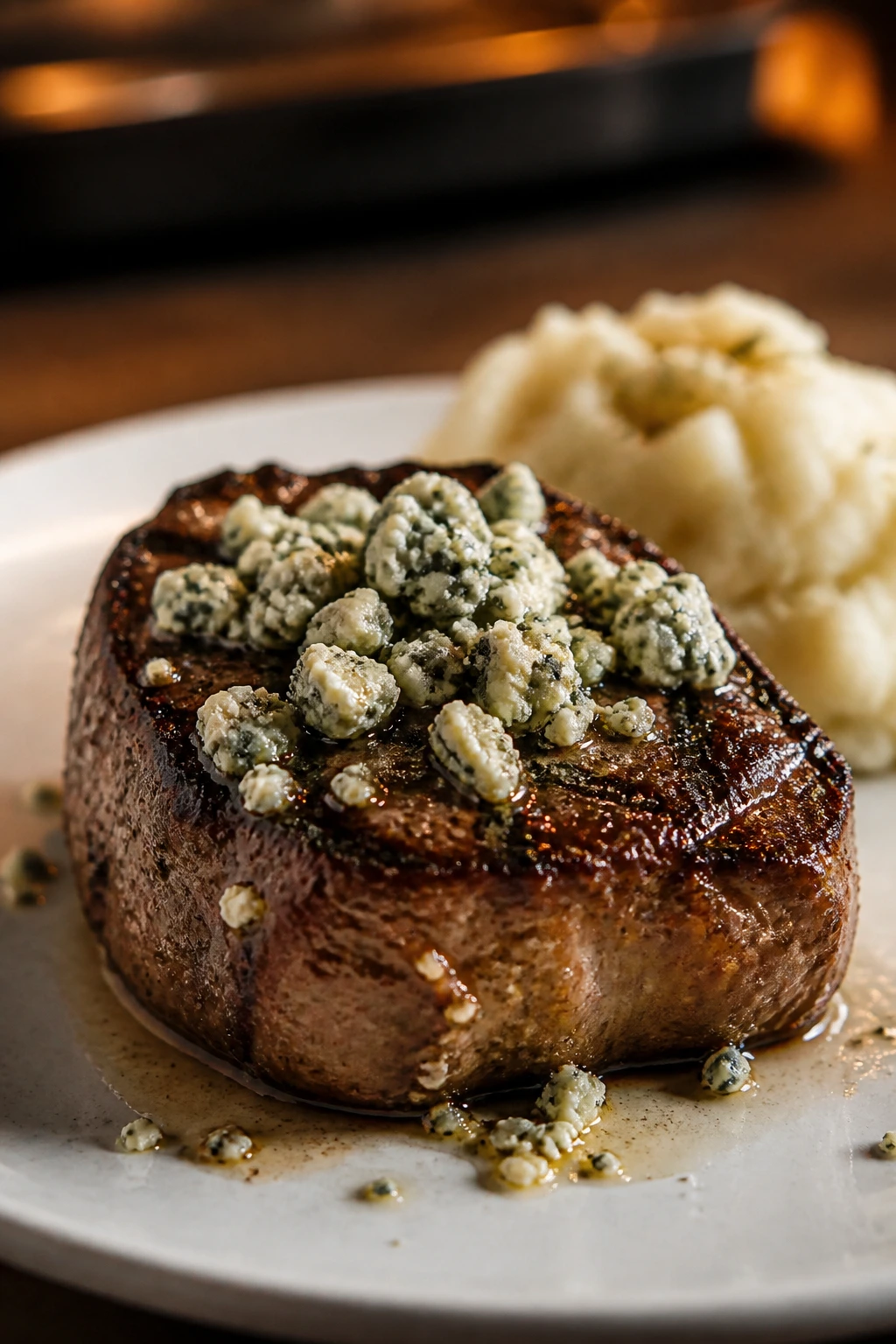
Blue Cheese Finish: Skip the pan sauce and crumble 2 ounces of blue cheese over the rested steak right before serving. The salty, creamy funk melts into the hot meat and makes the potatoes taste sweeter by contrast. This one is bold, so keep the green beans plain.
No-Wine Mushroom Gravy: Replace the red wine with extra beef broth and add 1 teaspoon balsamic vinegar at the end. You still get depth, but the flavor stays softer and a little rounder. It’s the version I’d make when I want the sauce to disappear into the meal rather than announce itself.
Herb-Roasted Potato Swap: If mashed potatoes feel too heavy, roast 1½ pounds of baby Yukon Golds with olive oil, salt, pepper, and rosemary at 425°F until browned and tender, about 30 to 35 minutes. They give the plate more texture and leave the steak to be the softest thing on the table.
Make-Ahead, Storage, and Reheating
The steak itself is best cooked close to serving, but that doesn’t mean the dinner has to be frantic. Salt the steaks up to 24 hours ahead and leave them uncovered on a rack in the fridge. That’s the smartest make-ahead move here. It doesn’t change the recipe much, but it improves the crust in a way you can see and hear.
The mashed potatoes can be made 1 day ahead and held in a covered container in the fridge. To reheat them, put them in a saucepan over low heat with a splash of warm milk and a knob of butter, stirring until they loosen. If you reheat them in the microwave, do it in short bursts and stir between each one so the center doesn’t dry out while the edges stay cold.
Cooked steak keeps in the fridge for 3 to 4 days in an airtight container. It freezes for up to 2 months if you slice it first and wrap it tightly, though the texture softens a little once thawed. Reheat steak gently in a 250°F oven until just warm, or warm slices in a skillet with a spoonful of broth. High heat will make the meat tough before it gets hot.
The green beans hold for 3 days in the fridge, but they lose some snap. Warm them fast in a skillet over medium heat with a drizzle of oil, and stop as soon as they’re hot. The pan sauce keeps for 3 days too; if it thickens in the fridge, loosen it with a splash of broth before reheating.
Room temperature is the one place to be careful. Don’t leave the steak, potatoes, or sauce out for more than 2 hours. If you’re serving buffet-style, keep the sauce warm over the lowest heat setting and cover the potatoes so they don’t skin over.
Steak Dinner Questions People Actually Ask
Can I use sirloin instead of ribeye or strip steak?
Yes, and it’s a sensible swap if you want something leaner. Sirloin just needs more attention because it gets dry faster, so don’t cook it past medium and slice it thin against the grain.
What temperature should the steak reach before I pull it from the pan?
For medium-rare, pull it at 125°F and rest it to finish around 130°F to 132°F. For medium, pull around 135°F. The carryover heat matters, especially with thicker steaks, so don’t wait for the thermometer to hit your final target in the pan.
Can I make the sauce without wine?
Absolutely. Use extra beef broth and a teaspoon of balsamic vinegar or a tiny splash of Worcestershire to replace some of the depth the wine would have brought. The sauce will taste less sharp and a little more round.
Do I have to peel the potatoes?
No. If you leave the skins on, the mash turns more rustic and a little more textured. That works fine with this dinner, especially if you like your potatoes to feel hearty rather than airy.
Can I grill the steak instead of searing it?
Yes. Grill over high heat until the same internal temperatures are reached, then let the meat rest and make the pan sauce separately on the stove. You’ll lose the fond from the skillet, so add a touch more butter and a splash of broth to the sauce to make up for it.
What if my sauce gets too thick?
Stir in broth, one tablespoon at a time, off the heat if possible. Pan sauce thickens fast once the cornstarch goes in, and a little extra liquid smooths it right out without thinning the flavor.
How do I know which way to slice the steak?
Look for the long lines running through the meat. Slice across those lines, not along them. That shortens the muscle fibers and gives you a bite that feels noticeably more tender, especially with strip steak or sirloin.
A Hot Plate and a Quiet Rest
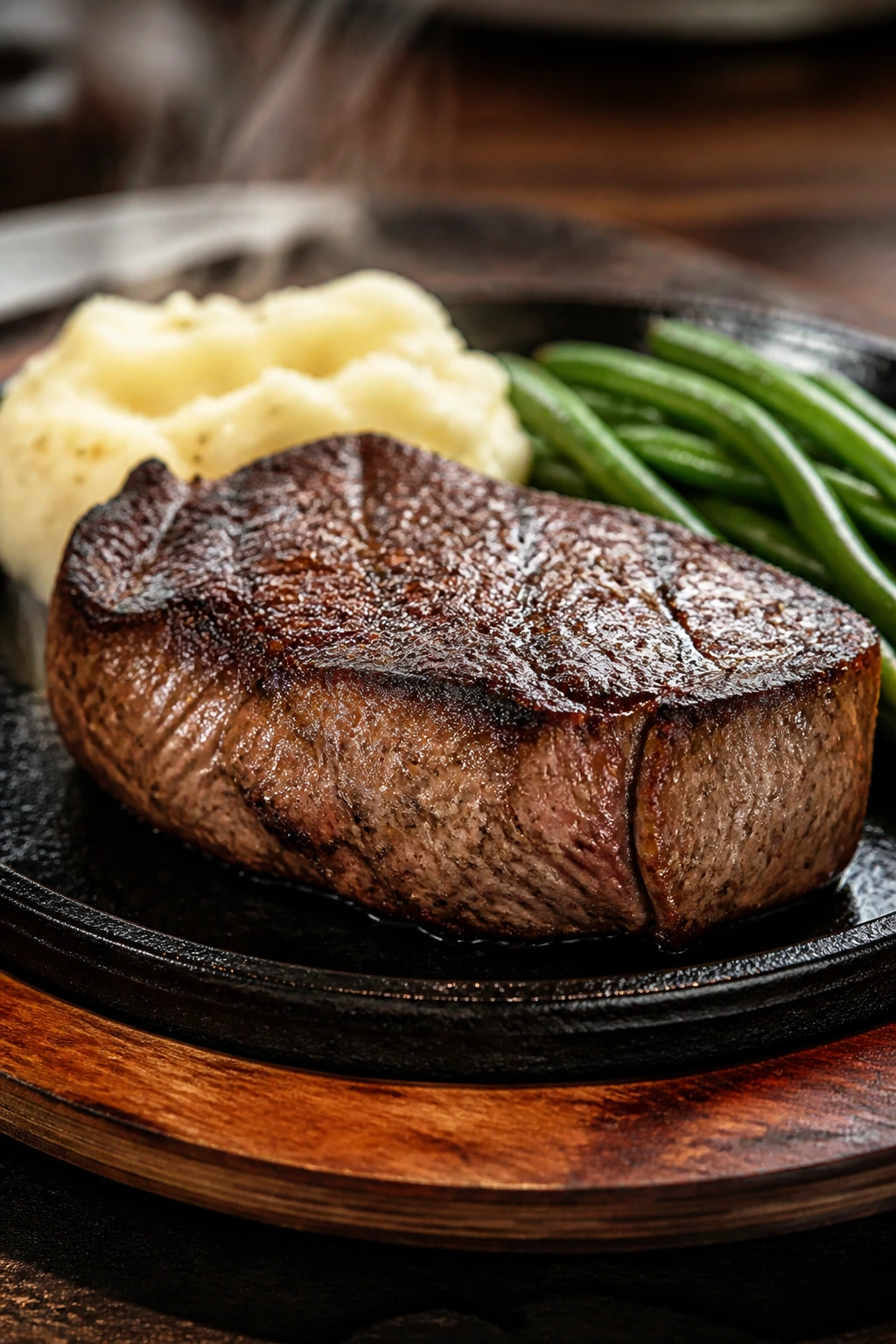
A steak dinner gets better when you stop trying to make it look effortless. Salt the meat. Get the pan hot. Leave the steak alone long enough to brown, then let it rest long enough to keep its juices. Those are not glamorous steps, but they’re the difference between a meal that feels merely rich and one that feels deeply satisfying.
I like this kind of dinner because it’s honest food. The steak brings the drama, but the potatoes, beans, and sauce do the supporting work, and each part earns its place. Nothing is there to decorate the plate. Everything is there because the plate needs it.
If you want a hearty dinner that still tastes clean at the end of the meal, start here and keep the heat under control. The skillet will do most of the heavy lifting once you give it the chance.
Tender Steak Dinner with Garlic Butter, Mashed Potatoes, and Green Beans — Recipe Card
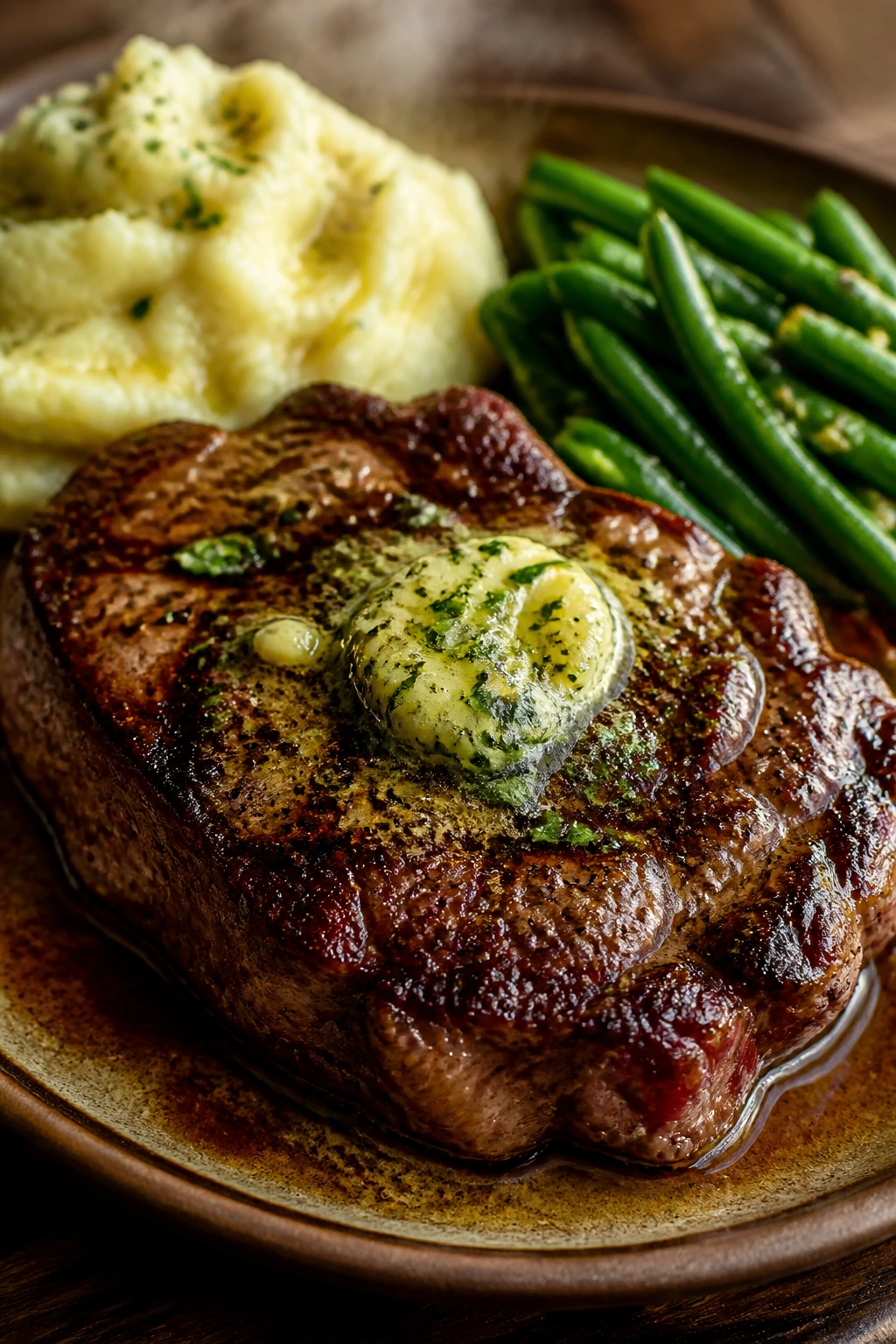
Recipe Name: Tender Steak Dinner with Garlic Butter, Mashed Potatoes, and Green Beans
Description: A hearty steak dinner built around seared ribeye or strip steaks, creamy Yukon Gold mashed potatoes, garlicky green beans, and a quick mushroom pan sauce made from the same skillet. The steak stays tender because the heat stays sharp and the rest time is respected.
Prep Time: 25 minutes
Cook Time: 35 minutes
Total Time: 1 hour
Course: Dinner, Main Course
Cuisine: American
Servings: 4 servings
Calories: About 820 kcal per serving
Chill/Rest Time: 30 minutes to 24 hours optional dry brine; 8 to 10 minutes resting after cooking
Best Served: Hot, right after the steak has rested
Ingredients
For the Steak
- 4 ribeye or strip steaks, about 8 oz each and 1 to 1¼ inches thick
- 1 tablespoon kosher salt
- 1 teaspoon freshly ground black pepper
- 2 tablespoons neutral oil, such as avocado or canola
- 2 tablespoons unsalted butter
- 4 garlic cloves, smashed
- 4 thyme sprigs
For the Mashed Potatoes
- 2 pounds Yukon Gold potatoes, peeled and cut into 1½-inch chunks
- 1½ teaspoons kosher salt, plus more for the pot
- 4 tablespoons unsalted butter
- ½ cup whole milk, warmed
- ¼ cup sour cream
- ½ teaspoon black pepper
For the Green Beans
- 1 pound green beans, trimmed
- 1 tablespoon olive oil
- 1 garlic clove, finely grated
- 1 teaspoon lemon juice
- ½ teaspoon kosher salt
- ¼ teaspoon black pepper
For the Pan Sauce
- 1 shallot, minced
- 8 ounces cremini mushrooms, sliced
- ½ cup beef broth
- ¼ cup dry red wine, or more beef broth
- 1 teaspoon Dijon mustard
- 1 teaspoon Worcestershire sauce
- 1 teaspoon cornstarch mixed with 1 tablespoon cold water
- 1 tablespoon chopped parsley
- 1 tablespoon cold butter
Instructions
-
Season the steaks with kosher salt. If you have time, set them on a rack uncovered for 30 minutes to 24 hours.
-
Cook the potatoes in cold salted water over a boil, then simmer for 15 to 18 minutes until fork-tender. Drain well and let them steam dry for 1 minute.
-
Mash the potatoes with the butter, warm milk, sour cream, and black pepper. Keep them covered and warm.
-
Cook the green beans in olive oil over medium-high heat for 4 to 6 minutes until blistered and bright green. Add the garlic, salt, pepper, and lemon juice at the end.
-
Heat the steak skillet over medium-high heat until very hot. Add the neutral oil.
-
Sear the steaks for 2 to 3 minutes per side. If needed, finish in a 400°F oven for 3 to 5 minutes, pulling at 125°F for medium-rare or 135°F for medium.
-
Baste with butter, garlic, and thyme during the final minute of cooking.
-
Rest the steaks for 8 to 10 minutes on a cutting board.
-
Make the pan sauce in the same skillet with shallot and mushrooms, then add wine, broth, Dijon, Worcestershire, and cornstarch slurry. Simmer until glossy, then finish with cold butter and parsley.
-
Slice and serve with mashed potatoes, green beans, and sauce spooned over the steak.
Notes: Pull the steak early and let carryover heat finish the job. Warm milk keeps the potatoes smooth. If the sauce thickens too much, loosen it with a splash of broth.