



A tender easy hamburger for a hearty dinner should not eat like a chore. It should give you a crisp-brown edge, a juicy center, and a skillet smell that makes people drift into the kitchen asking what’s for supper before you’ve even finished the onions.
The mistake most home cooks make is treating ground beef like it can take the same abuse as a steak. It can’t. Overmix it and it turns tight. Press it down in the pan and the juices run out. Skimp on the fat, or skip the moisture in the mixture, and you end up with a patty that tastes like a burger-shaped apology.
I like this style of hamburger dinner because it solves the usual problems without turning into a fussy project. A little milk. A grated onion. A short sear. Then the gravy picks up every browned bit from the skillet, which is where the good flavor lives anyway. If you’ve got 45 minutes, a sturdy pan, and a craving for something warm and substantial, you’re already most of the way there.
Why This Hamburger Dinner Stays Tender Instead of Turning Dry
Old-school hamburger steak has been doing honest work in home kitchens for a long time because it stretches ground beef into a proper plate of food. You get the deep, savory flavor of beef, but you don’t need a whole roast or a long braise to make dinner feel complete. The skillet gravy is the part that makes the dish feel finished. It wraps the patties in a glossy, onion-rich sauce and gives you something to spoon over mashed potatoes without any extra effort.
The texture is the real point. A good hamburger dinner should be soft enough to cut with the side of a fork, but not so loose that it falls apart the second it hits the pan. That balance comes from a few small choices that matter more than people think: 85/15 ground beef, a light hand with the mixing, and enough moisture in the mix to keep the meat from tightening up as it cooks.
And yes, temperature matters. The USDA recommends cooking ground beef to 160°F. That number is not optional, and it beats guessing by color every single time. The nice thing about this recipe is that the patties finish gently in the gravy, so you can reach that safe temperature without overcooking the edges into sawdust.
Why You’ll Like This One on a Busy Night
-
Juicy texture: The grated onion, milk, and egg keep the patties from turning dense and crumbly in the skillet.
-
One-pan cleanup: The same pan browns the beef, softens the onions, and builds the gravy, so the browned bits stay in the gravy instead of stuck to a second dish.
-
Straightforward timing: The patties sear fast, the gravy thickens fast, and the final simmer does the rest while you put potatoes or noodles on the table.
-
Dinner-plate friendly: This is a fork-and-knife meal, not a burger-bun situation. It sits well beside mashed potatoes, green beans, buttered noodles, or rice.
-
Pantry-flexible: If you’ve got panko, regular breadcrumbs, or even fine dry crackers, the recipe still works. That matters on nights when the grocery list didn’t cooperate.
-
Thermometer-safe: You know exactly when the beef is done. No guessing. No cutting one open and losing all the juices to the cutting board.
The Yield, Timing, and Difficulty at a Glance
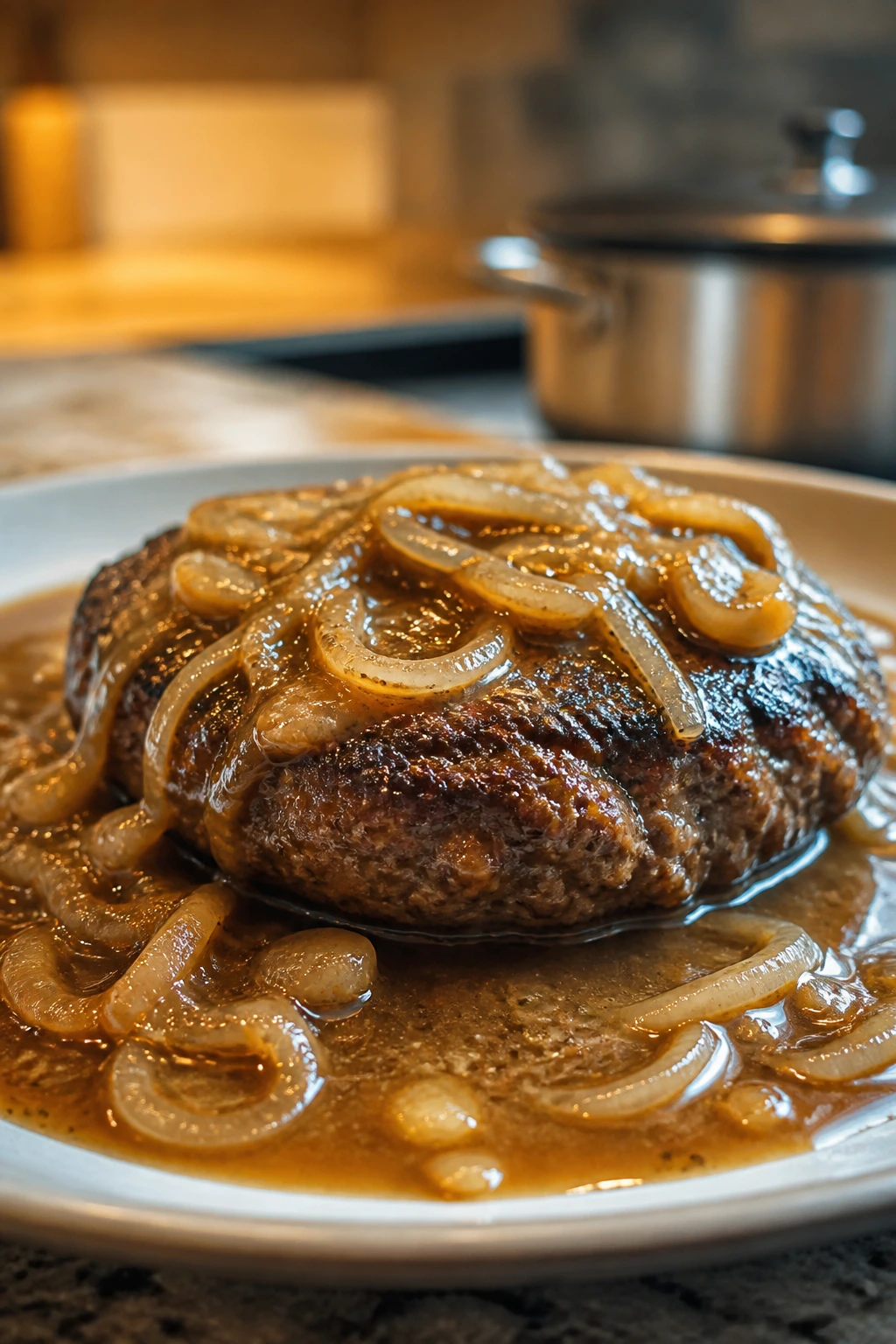
Yield: Serves 4
Prep Time: 20 minutes
Cook Time: 25 minutes
Total Time: 45 minutes
Difficulty: Beginner — the steps are simple, but the skillet timing and gentle handling keep the patties tender.
Chill/Rest Time: 5 minutes resting after cooking, optional 10 minutes chilling if the patties feel soft
Best Served: Hot from the skillet with mashed potatoes or buttered noodles
The Ingredients That Make the Beef Juicy and the Gravy Rich
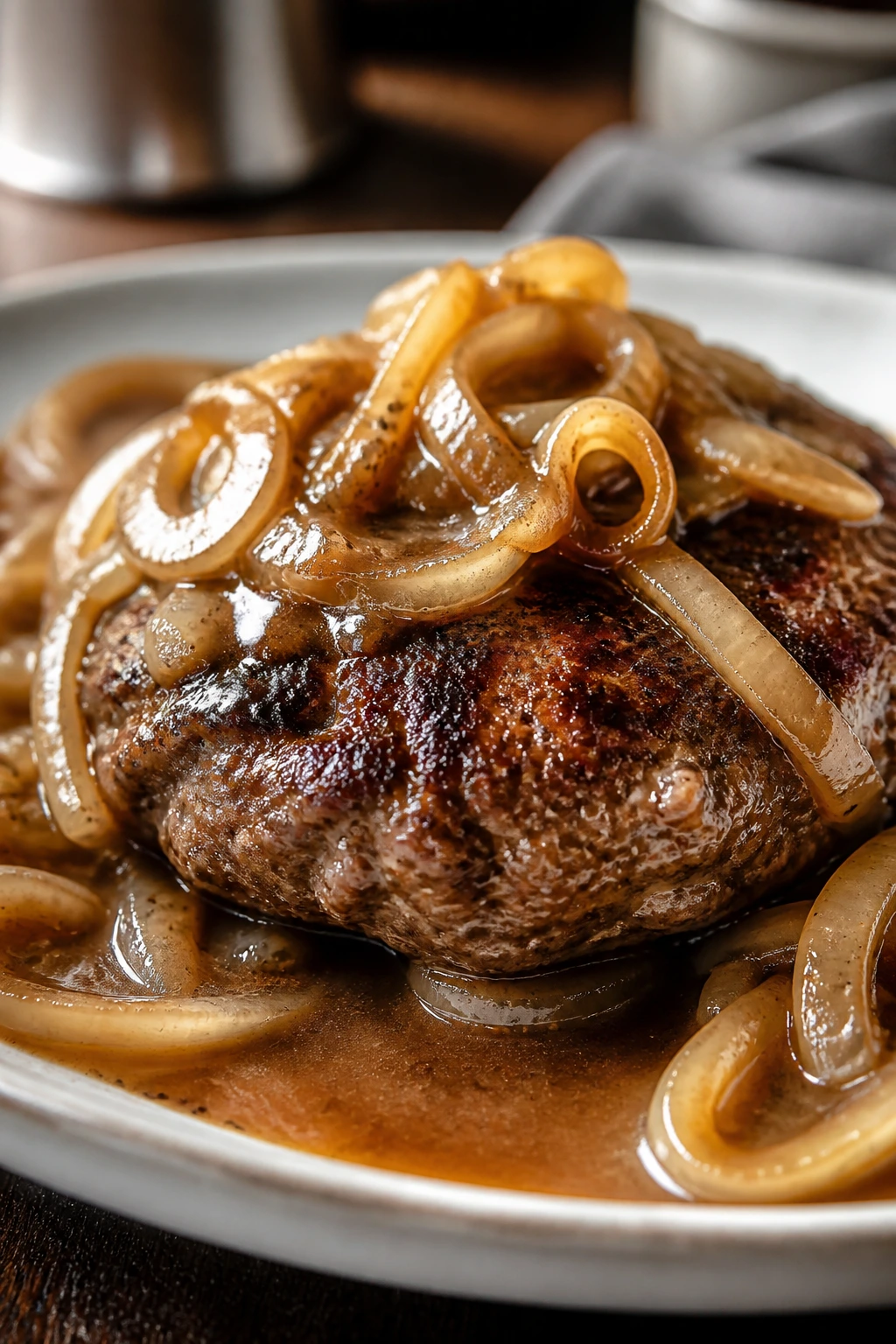
For the Hamburger Patties:
- 1 1/2 pounds ground beef, 85/15
- 1/2 cup panko breadcrumbs
- 1 large egg
- 1/4 cup whole milk
- 1/2 small yellow onion, finely grated
- 1 tablespoon Worcestershire sauce
- 1 teaspoon Dijon mustard
- 1 teaspoon kosher salt
- 1/2 teaspoon black pepper
- 1/2 teaspoon garlic powder
- 1 tablespoon neutral oil, for searing
For the Onion Gravy:
- 2 tablespoons unsalted butter
- 1 large yellow onion, thinly sliced
- 2 tablespoons all-purpose flour
- 2 cups low-sodium beef broth
- 1 teaspoon Worcestershire sauce
- 1/2 teaspoon dried thyme
- 1/2 teaspoon kosher salt, plus more to taste
- 1/4 teaspoon black pepper
- 1/2 cup sliced mushrooms, optional
- 1 tablespoon chopped parsley, for garnish
The Ingredient Choices That Matter More Than People Admit
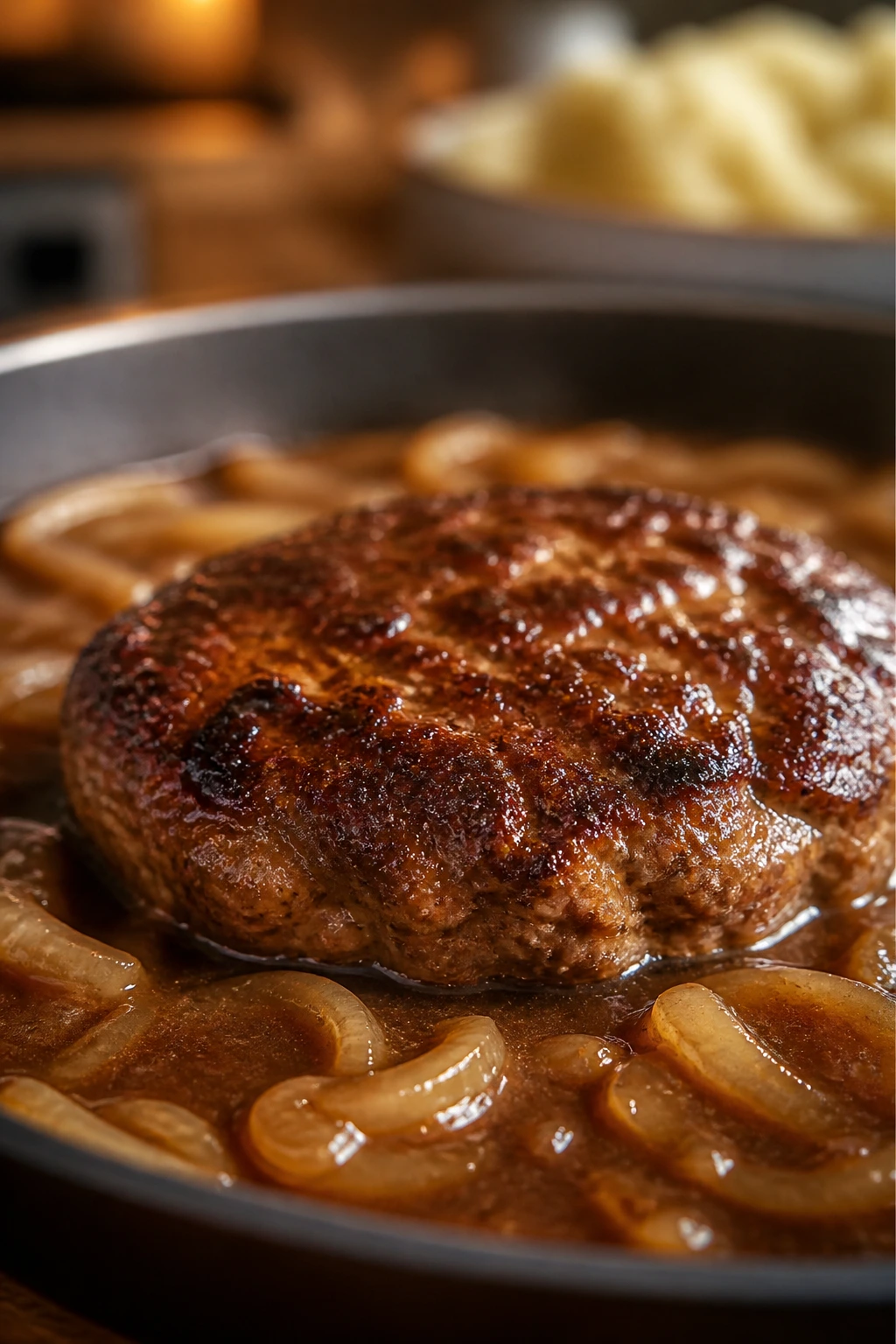
Ground Beef
What to use: 1 1/2 pounds ground beef, ideally 85/15. That fat ratio gives you enough richness to keep the patties from drying out, but not so much that the skillet floods with grease.
Preparation: Let the beef sit out just long enough to lose its fridge chill, about 10 to 15 minutes, so it mixes more evenly. Keep it cold enough to handle safely, though. You want pliable, not warm.
Substitutions: 80/20 works if you like a richer, juicier result, while 90/10 can work if you add an extra tablespoon of milk or a spoonful more grated onion. Ground turkey can stand in, but it needs more seasoning and a gentler hand.
Tips: If the beef looks wet and sticky before you even season it, pat it once with paper towels. That helps the patties brown instead of steaming.
Binder and Moisture
What to use: 1/2 cup panko, 1 egg, and 1/4 cup whole milk. That trio keeps the texture soft and gives the patties enough structure to hold together in the pan.
Preparation: Whisk the egg and milk together first if you like a more even mix, then fold that into the beef with the breadcrumbs. The grated onion goes in with the binder, not after.
Substitutions: Fine dry breadcrumbs work in place of panko, and crushed saltines work in a pinch. If you’re out of milk, a splash of beef broth is fine.
Tips: Don’t drown the mixture in binder. Too much and the patties taste bready. You want the breadcrumbs to disappear into the meat, not announce themselves.
Seasoning and Savory Boosters
What to use: Worcestershire sauce, Dijon mustard, garlic powder, salt, and black pepper. The Worcestershire gives the beef a deeper edge, while the mustard quietly sharpens the flavor so the patties don’t taste flat.
Preparation: Measure the seasonings before you touch the meat. Once your hands get in the bowl, you want to move quickly and stop mixing as soon as everything looks evenly distributed.
Substitutions: Yellow mustard can replace Dijon if that’s what you’ve got. Soy sauce can replace part of the Worcestershire for a slightly saltier, darker flavor.
Tips: Season the beef mixture a touch more boldly than you think you need. Some flavor gets muted once the patties simmer in gravy.
Onion Gravy Base
What to use: 2 large onions’ worth of sliced onion, butter, flour, beef broth, Worcestershire, thyme, salt, and pepper. The onions should cook until soft and golden at the edges; that’s where the gravy gets its backbone.
Preparation: Slice the onions thinly and evenly so they soften at the same pace. If you’re using mushrooms, slice them the same way so they brown without turning soggy.
Substitutions: Vegetable broth works if beef broth isn’t in the pantry, though the gravy will be lighter. A teaspoon of soy sauce can help replace some of the beefy depth.
Tips: Use low-sodium broth unless you like chasing saltiness with regret. You can always add more salt at the end. You cannot pull it back once it’s in there.
The Pan, Bowl, and Thermometer That Make This Easier
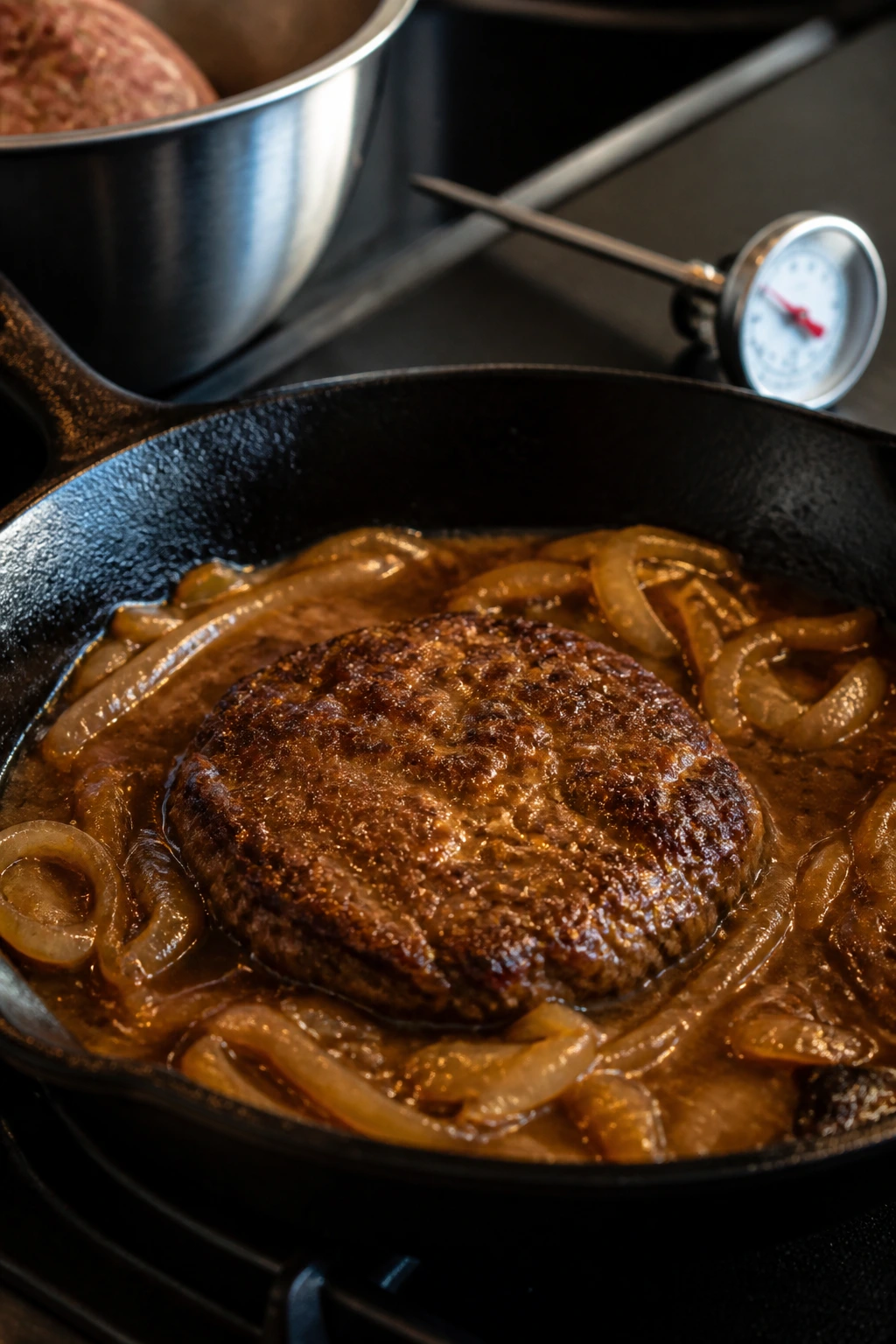
A recipe like this doesn’t need fancy gear, but the right tools save you from small annoyances. A heavy pan matters more than a nonstick one here, because you want those browned bits to stick to the surface long enough to become gravy.
- Large cast-iron or stainless-steel skillet: Best for browning and for building the gravy from the pan drippings.
- Large mixing bowl: You need room to fold the beef gently without crushing it.
- Instant-read thermometer: This is the easiest way to hit 160°F without overcooking the patties.
- Whisk: Essential for smoothing the gravy once the flour goes in.
- Thin spatula: Helps flip the patties cleanly without tearing the crust.
- Chef’s knife and cutting board: For slicing onions evenly.
- Box grater or microplane: Useful if you want to grate the onion instead of mincing it by hand.
- Measuring cups and spoons: Don’t wing the flour or broth. Gravy punishes guesswork.
Mixing and Shaping the Patties Without Turning Them Tough
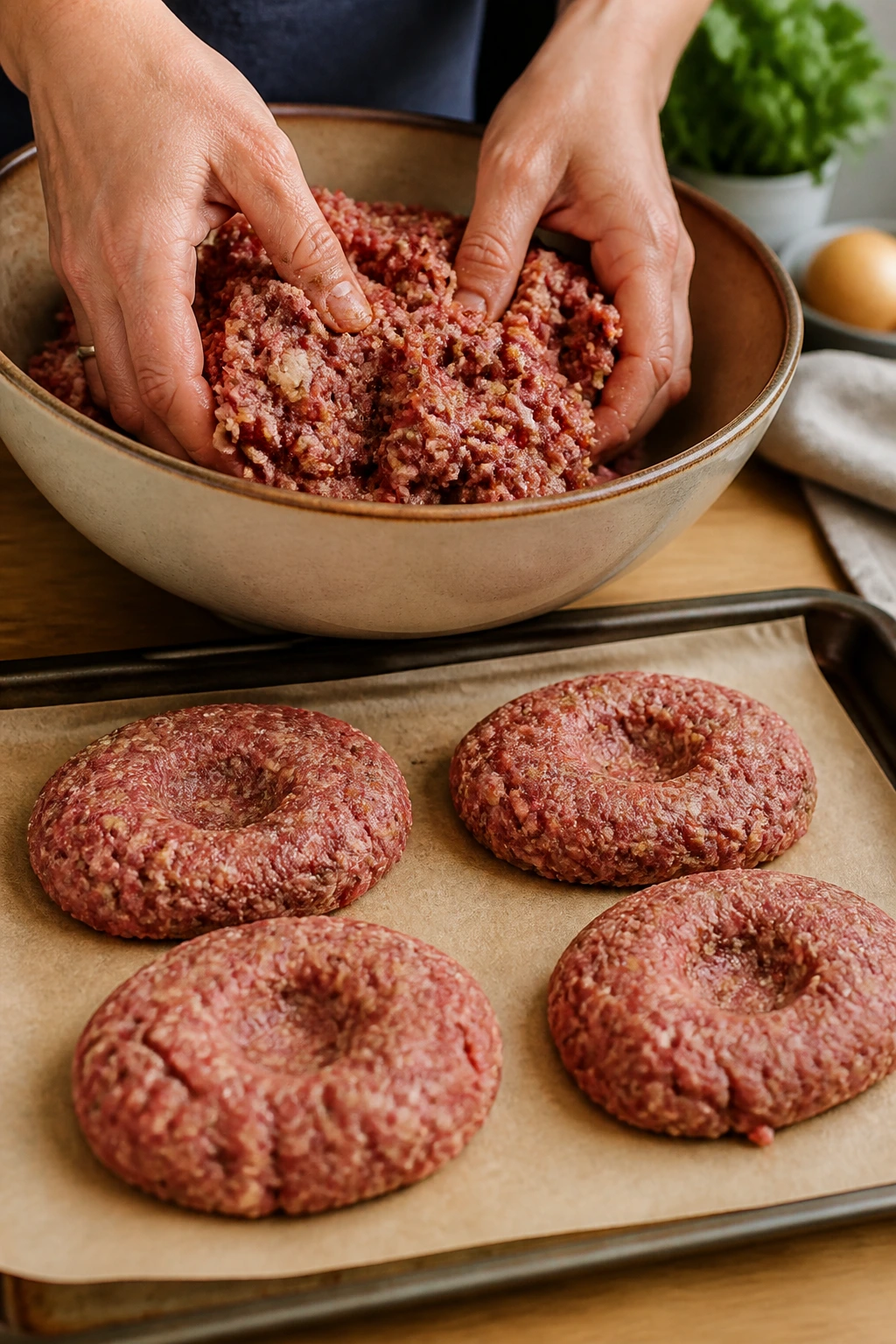
Don’t beat the beef into submission. That’s the whole trick. The meat should still look a little rough when you stop mixing; smooth, paste-like ground beef is already on the road to toughness.
Start by combining the panko, egg, milk, grated onion, Worcestershire, Dijon, salt, pepper, and garlic powder in a large bowl. Fold in the ground beef with your fingertips or a fork until the mixture just comes together. The color should look evenly seasoned, but you should still be able to see the fibers of the meat. That’s enough.
Form the mixture into 4 oval patties, each about 3/4-inch thick and roughly 6 ounces. Oval shapes are traditional for hamburger steaks, and they give you a little more surface area for browning. Press a shallow dimple in the center of each patty with your thumb. That small dip helps the patties stay flatter as they cook, instead of puffing up like little meat domes.
If the mixture feels loose or sticky, chill the patties on a plate for 10 minutes. Not longer than you need. Cold patties hold shape better, and they brown more cleanly when they hit the hot pan.
Searing the Hamburger Patties for a Deep Brown Crust
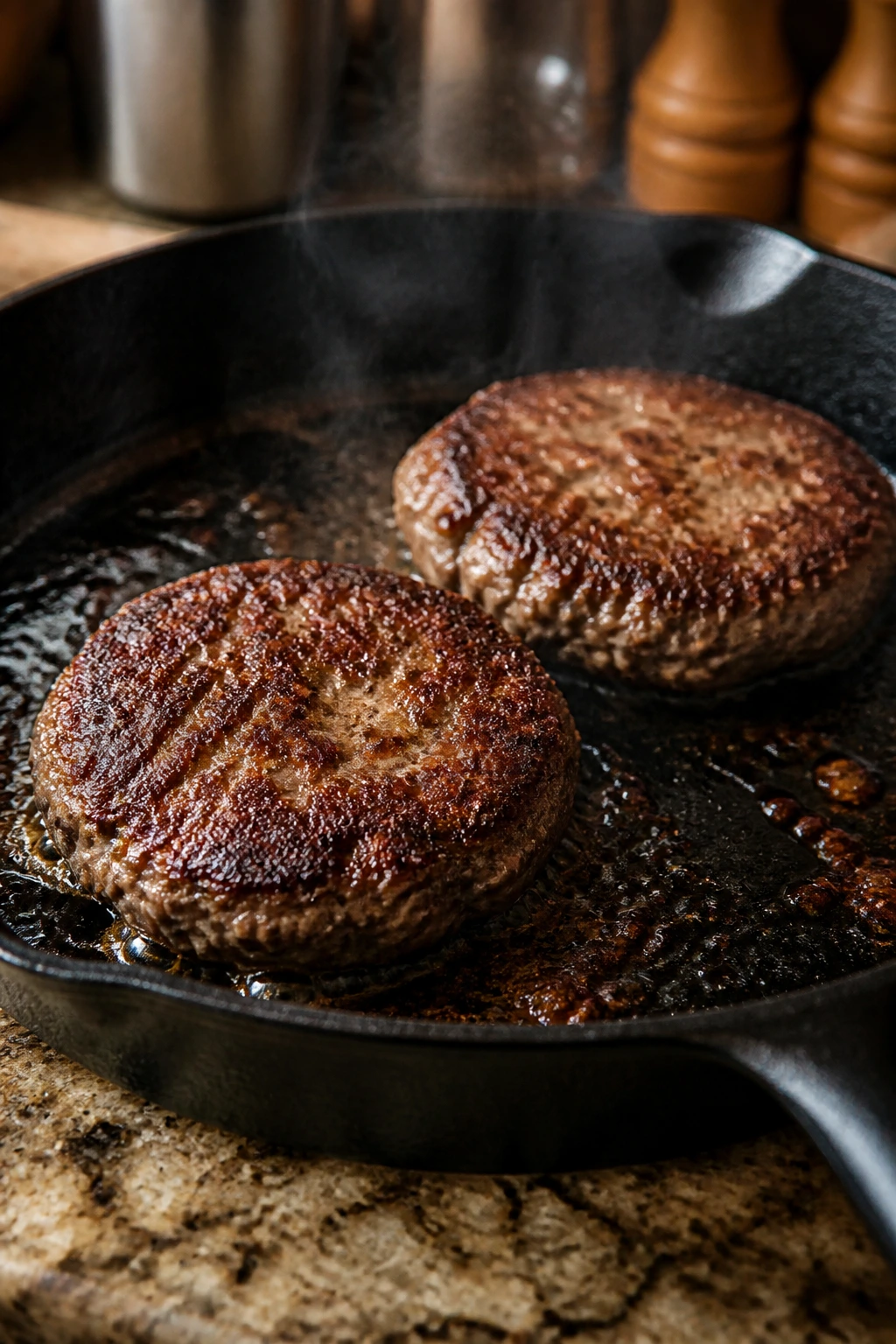
Heat the skillet over medium-high heat for 2 to 3 minutes before the oil goes in. That preheat matters. A cool skillet gives you gray beef. A properly hot skillet gives you a proper crust.
Add the oil and swirl it across the bottom. Lay the patties in gently, leaving space between them. If your pan is crowded, sear in two batches. Crowding drops the temperature fast, and then the patties steam instead of browning.
Cook the first side for 3 to 4 minutes until the underside is dark brown and releases easily. Flip once. Cook the second side for about 2 minutes, just enough to set the surface. You do not want them cooked through at this stage. The gravy finish is what brings them home.
Transfer the patties to a plate while you build the sauce. A little pink in the center is fine here. The final simmer will take care of the rest, and it will do it more gently than the skillet ever could on its own.
Making Onion Gravy in the Same Skillet
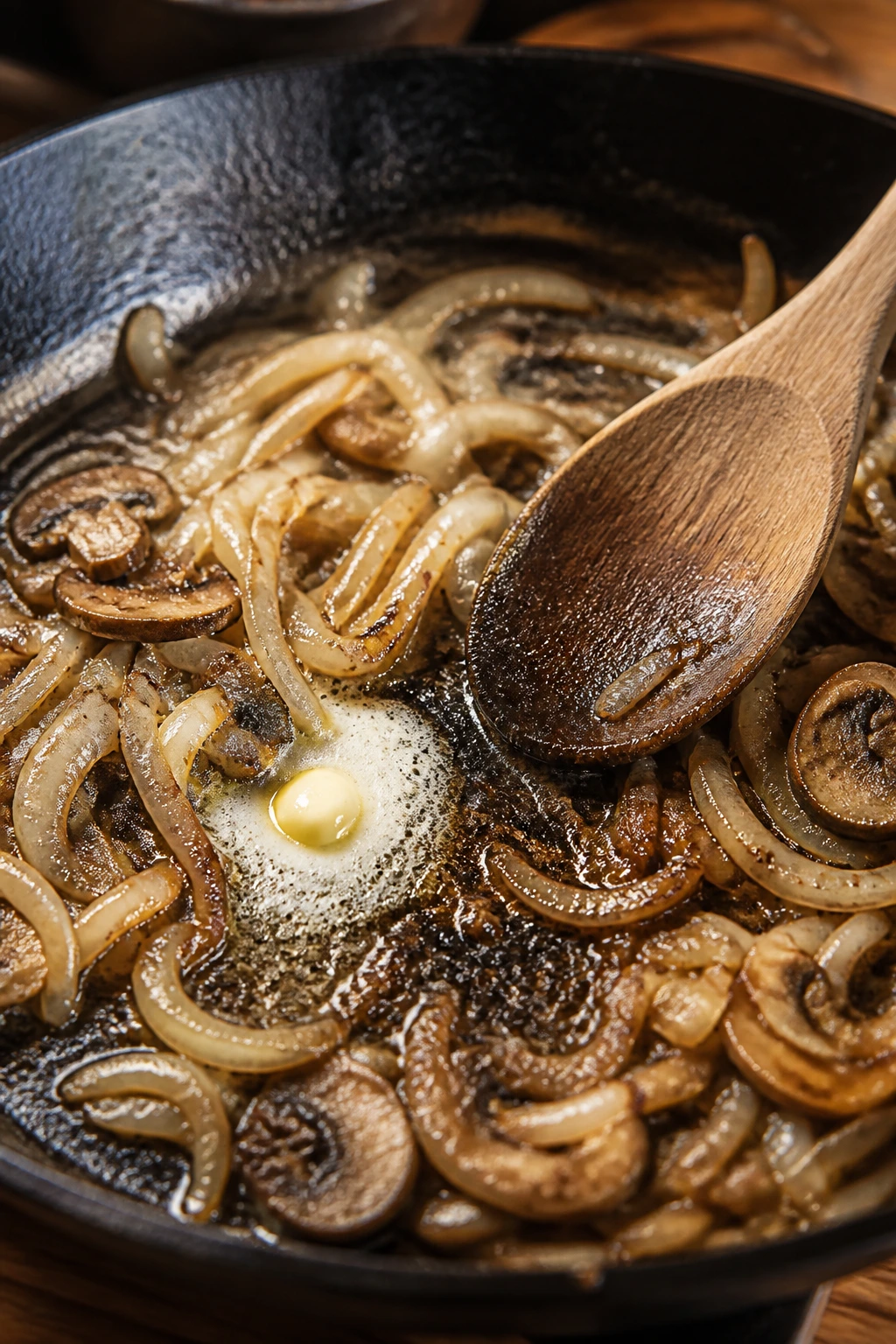
Turn the heat down to medium. Add the butter and sliced onions, and scrape the bottom of the skillet with a wooden spoon as the butter melts. Those dark browned bits are not burnt scraps. They are dinner.
Cook the onions for 6 to 8 minutes, stirring now and then, until they soften and pick up color at the edges. If you’re using mushrooms, add them once the onions start to relax and let them cook until they lose their water and go glossy. That usually takes another 3 to 4 minutes.
Sprinkle the flour over the onions and stir for a full minute. The pan will look a little pasty for a moment. Fine. You’re cooking off the raw flour taste, and that minute matters. Then start whisking in the beef broth slowly, a little at a time, until the gravy looks smooth and starts to thicken.
Add the Worcestershire, thyme, salt, and pepper. Let the gravy bubble for 3 to 5 minutes, just until it coats the back of a spoon. If you drag your finger through the gravy on that spoon, the line should stay clean for a second before closing. That’s the cue.
Finishing the Hamburger Steaks in Their Gravy
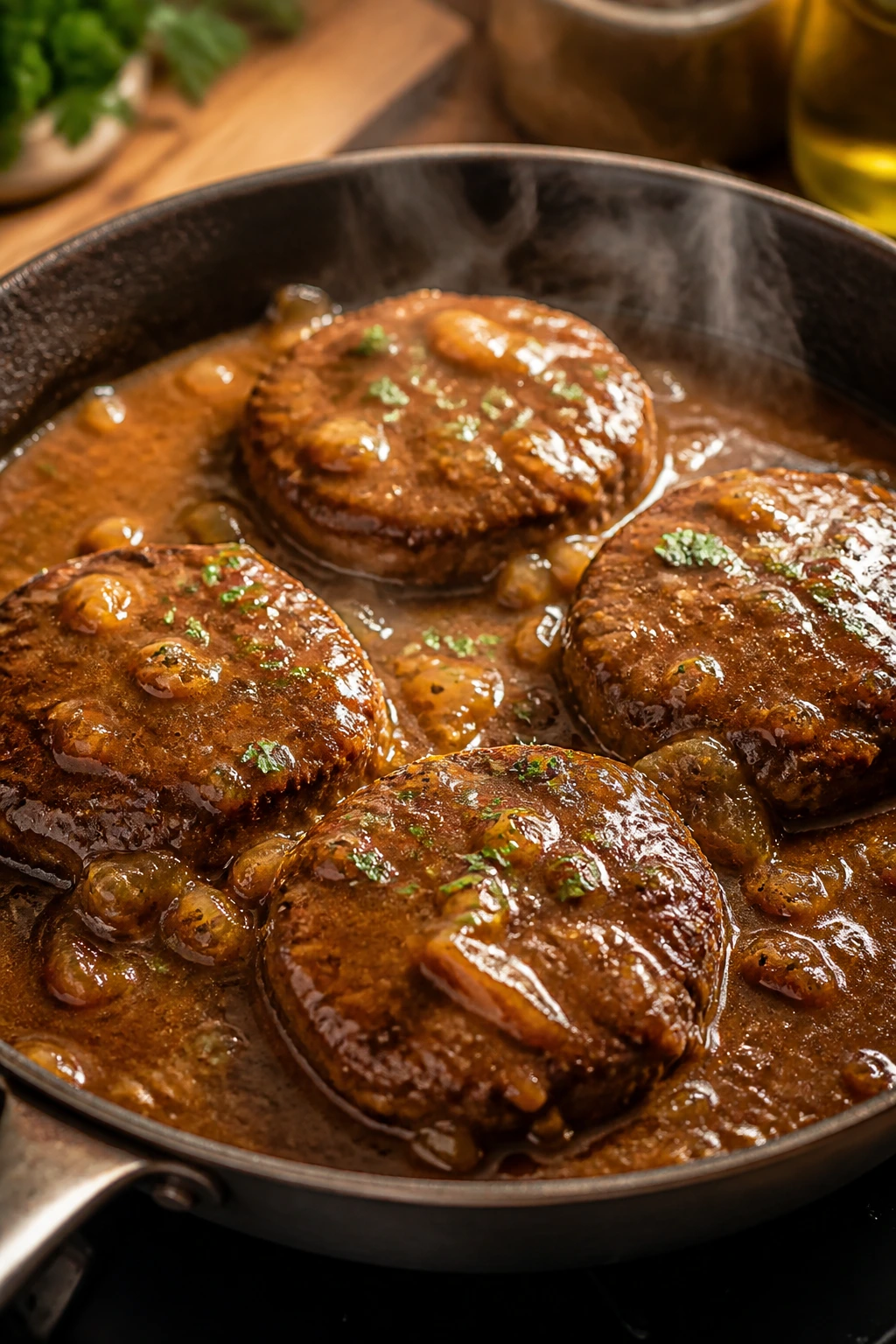
Slide the patties back into the skillet, along with any juices that collected on the plate. Spoon gravy over the top so the beef is mostly covered. Cover the pan loosely and reduce the heat to low.
Simmer for 6 to 8 minutes, turning the patties once halfway through if you want even coating. Use the thermometer in the thickest part of one patty. When it reads 160°F, you’re done. The gravy should be thick enough to cling to the meat and thin enough to puddle around mashed potatoes.
Take the pan off the heat and let it sit for 5 minutes before serving. The juices settle. The gravy thickens a little more. And the whole thing tastes more integrated, which is a fancy way of saying it eats better after a short rest.
Garnish with chopped parsley if you want a little color on top. Not because it changes the flavor much. It doesn’t. But a green finish against brown gravy is one of those small kitchen things that looks right on the plate.
How to Serve This Hamburger Dinner
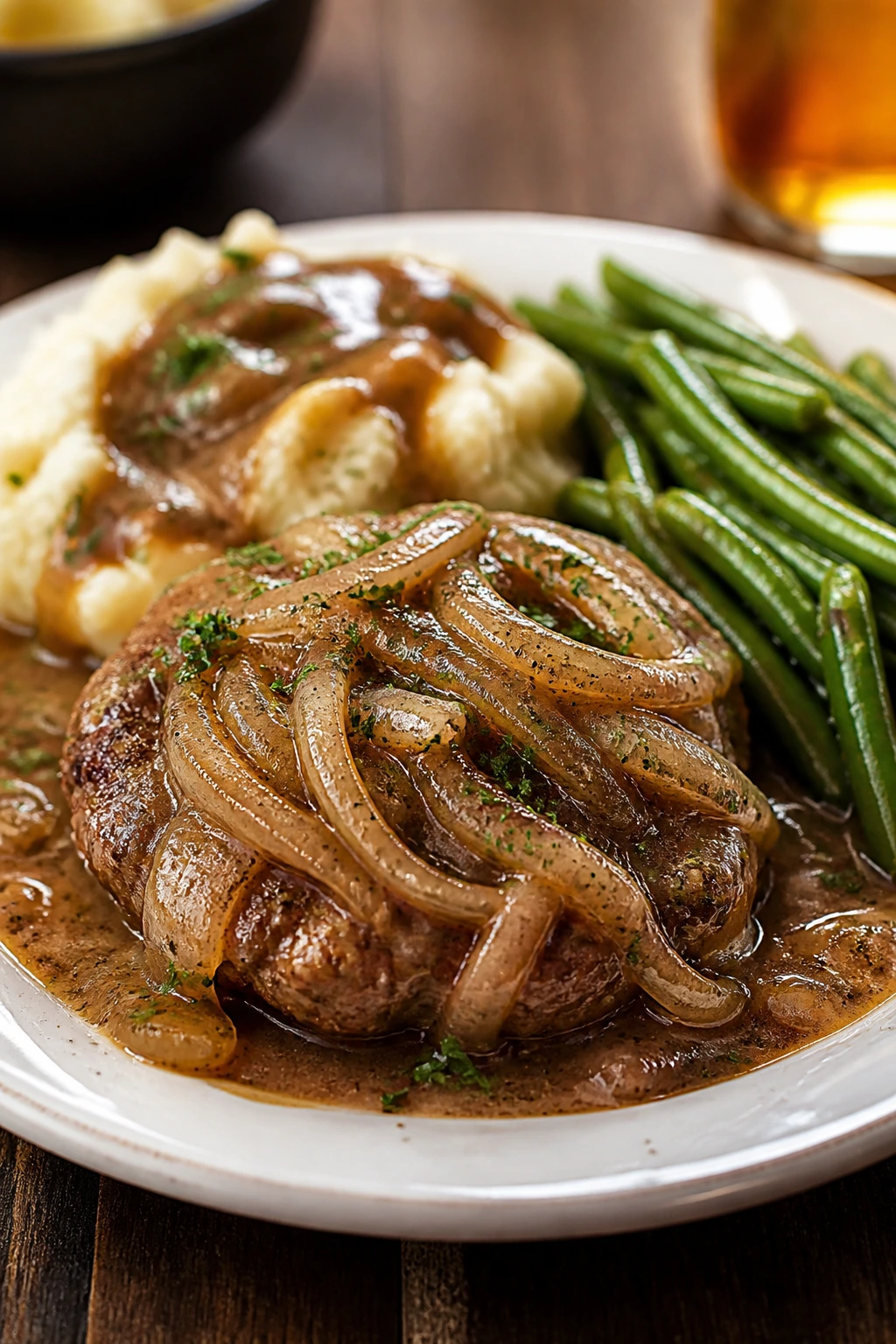
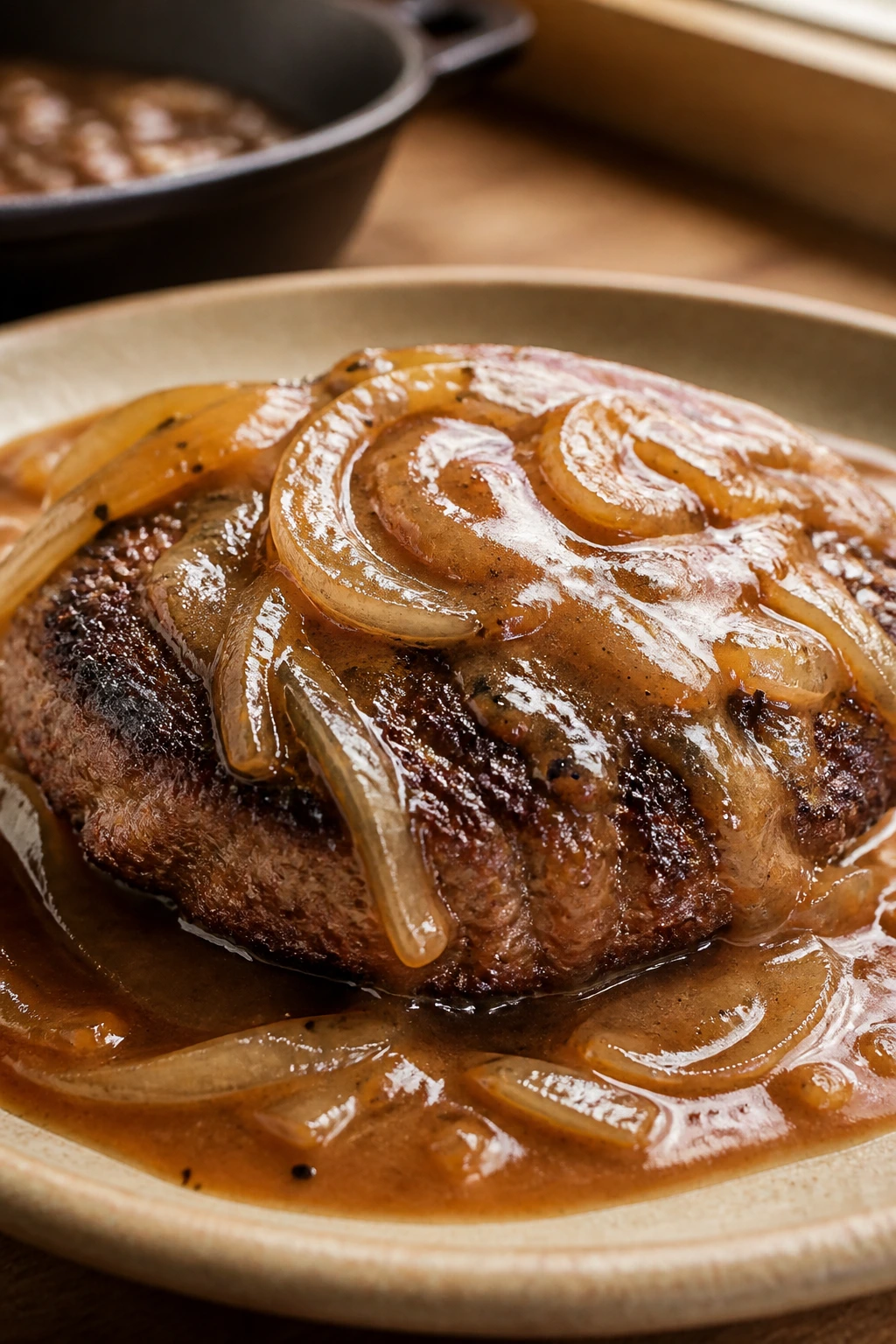
Presentation: Spoon a generous pool of gravy onto warm plates first, then set one or two patties on top so the onions drape over the beef instead of sinking into the potatoes. A final scatter of parsley and a crack of black pepper make the dish look finished, not just served.
Accompaniments: Mashed potatoes are the obvious move, and they’re the right move because they trap the gravy in all the little ridges. Buttered egg noodles work too, especially if you want the sauce to cling. Green beans, peas, or roasted carrots keep the plate from feeling too heavy, and a slice of crusty bread never hurts when gravy is involved.
Portions: One large patty per person is plenty if the side is potatoes or noodles. If you’re serving very hungry eaters, stretch the recipe to 5 smaller patties instead of 4 large ones. The cook time changes a little, but the technique stays the same.
Beverage Pairing: I like this with iced tea, a cold lager, or a glass of dry red wine if that’s your style. The gravy is rich enough to ask for something with a clean finish, not a sweet drink that makes the meal feel heavier.
Extra Tips That Change the Whole Plate
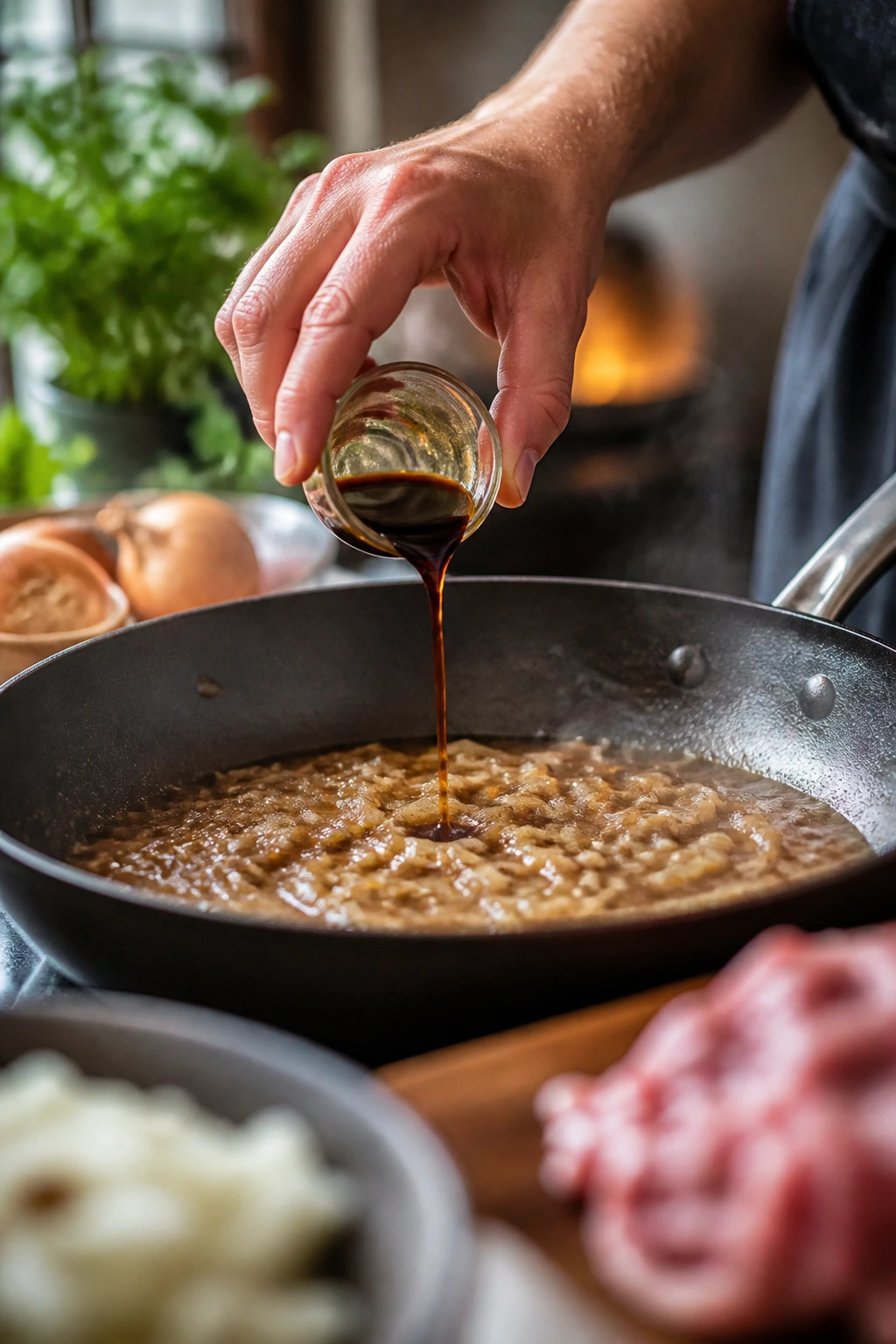
Flavor Enhancement: Stir 1 teaspoon of soy sauce or 1 teaspoon of tomato paste into the gravy while the flour cooks. It deepens the color and gives the sauce a little more savory grip without making it taste like either ingredient.
Texture Fix: If your ground beef mixture feels too soft to shape, don’t panic and don’t add a mountain of breadcrumbs. Chill it for 10 minutes first. Cold meat firms up, and the patties hold together much better in the pan.
Time-Saver: Slice the onions the night before and store them in an airtight container with a paper towel inside to catch moisture. That cuts your prep down without changing the recipe in any meaningful way.
Serving Suggestions: A spoonful of sour cream on the side works if you like a little tang with the gravy, and a few dill pickle slices can wake up the plate in a nice way. I know that sounds like an odd little extra, but salty pickle against beef and onion gravy has a real place at the table.
Mistakes That Turn Hamburger Dry or Flat
-
Mixing the meat until it looks smooth: That’s the fastest road to dense patties. If the mixture starts to feel sticky and elastic, stop. The beef should be combined, not whipped.
-
Using a skillet that isn’t hot enough: If the pan is only warm, the patties release moisture before they brown. The outside stays pale, the inside cooks unevenly, and the whole thing loses the steakhouse edge you want.
-
Skipping the gravy simmer: Once the patties are seared, they still need that gentle finish in the sauce. If you pull them too early, the outside can be okay while the center is underdone. If you simmer too hard, the edges toughen. Low heat. Patient heat.
-
Dumping in the broth all at once: That’s how you get lumpy gravy. Add it slowly while whisking so the flour dissolves and the sauce stays smooth.
-
Over-salting early: Beef broth, Worcestershire, and the meat mixture all bring salt to the party. Taste at the end, not halfway through, or you’ll end up with gravy that tastes sharp instead of savory.
-
Forgetting the thermometer: Color lies. Especially with ground beef, color lies all the time. The patties may look done before they actually are, and the safest fix is a quick thermometer check in the thickest part.
Variations for Different Tastes and Diets
Mushroom-Heavy Skillet: Add 8 ounces of sliced cremini mushrooms with the onions and let them brown before the flour goes in. The gravy turns darker and earthier, and the mushrooms soak up the pan flavor in a way that feels almost too easy.
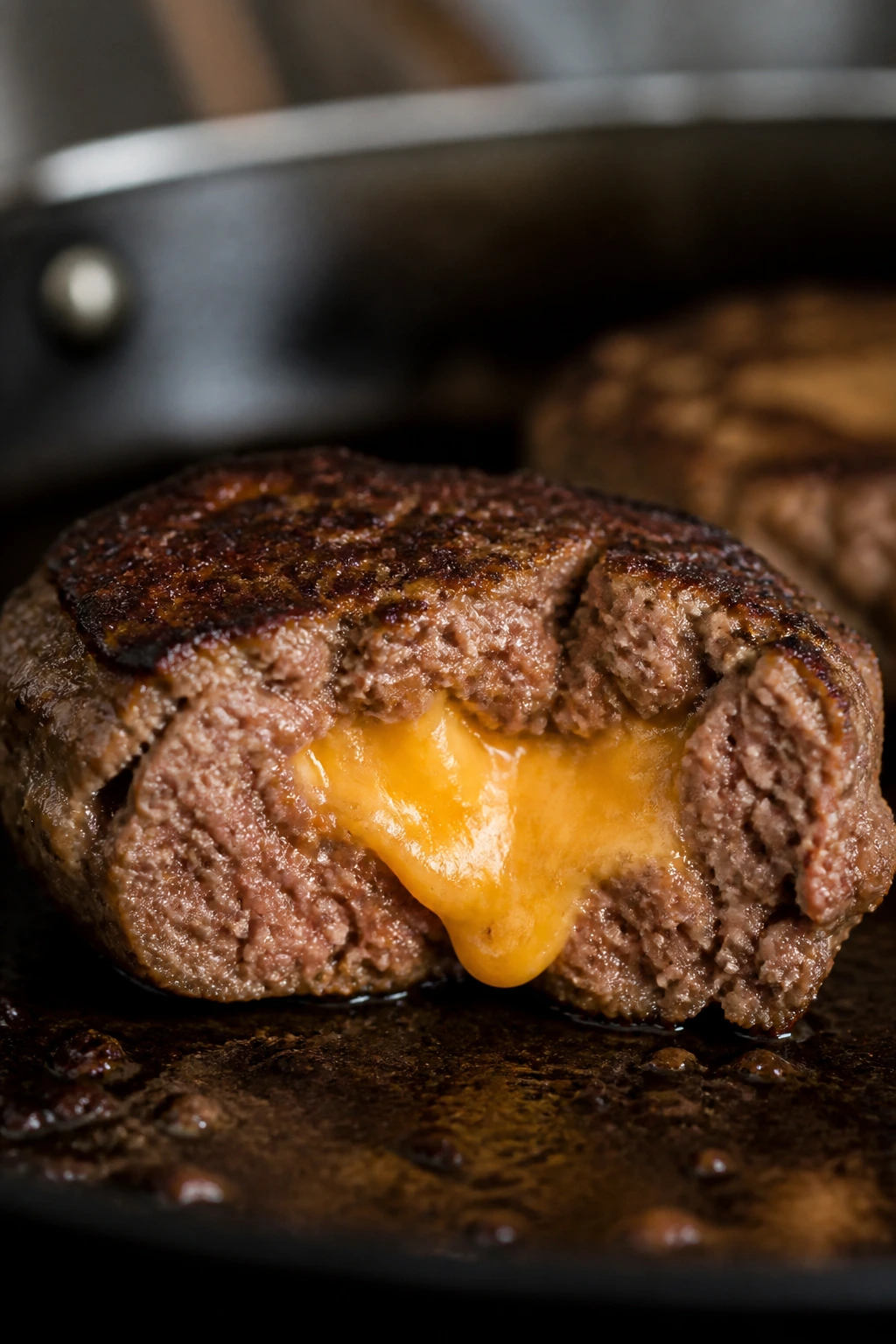
Cheddar-Filled Patties: Press a little mound of shredded sharp cheddar into the center of each shaped patty and seal the beef around it. Keep the patties thick enough to hold the cheese, and don’t overcook them past 160°F or the filling can leak out.
Gluten-Free Swap: Use certified gluten-free breadcrumbs or crushed gluten-free crackers in the patty mixture, then thicken the gravy with a cornstarch slurry instead of flour. Mix 1 tablespoon cornstarch with 2 tablespoons cold broth, stir it into the simmering gravy, and cook until it turns glossy.
Dairy-Free Version: Replace the milk with unsweetened oat milk or extra beef broth, and use oil instead of butter in the gravy. The grated onion keeps the patties moist, so you don’t lose the tenderness just because the dairy is gone.
Herbed Country Style: Add 1 teaspoon chopped fresh thyme or parsley to the beef mixture and finish the gravy with extra black pepper. It leans a little more rustic and smells like the sort of dinner people notice from the hallway.
Keeping Leftovers Juicy for Another Meal
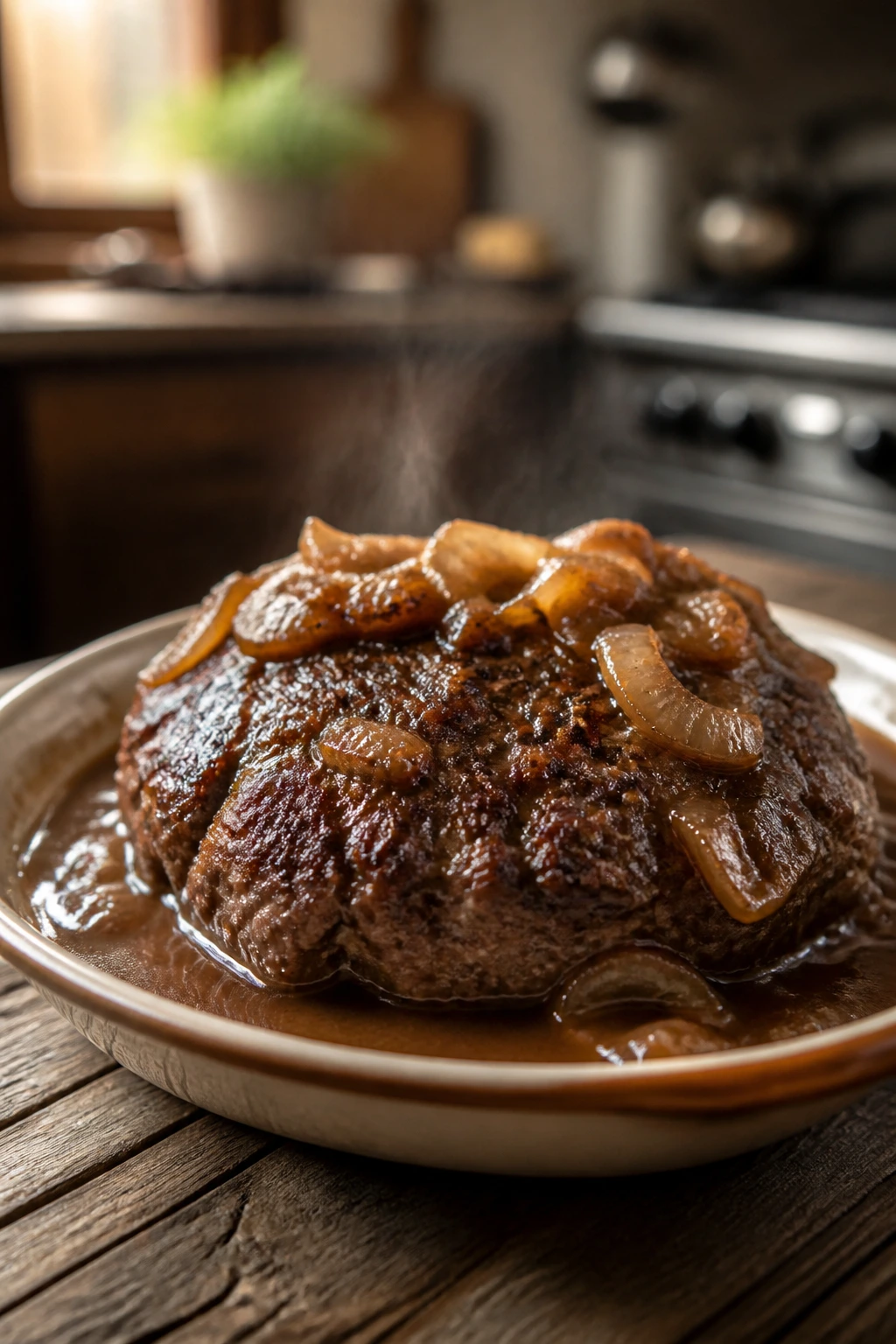
Hamburger steaks and gravy keep well, which is one reason I like making them on purpose instead of by accident. Let the food cool for no more than 2 hours at room temperature, then pack the patties and gravy into an airtight container. In the fridge, they hold for 3 to 4 days.
Freezing works too. Put the cooled patties and gravy into freezer-safe containers or heavy freezer bags, and press out as much air as you can. They’ll keep for up to 2 months. If you want the neatest thawing, freeze the patties in a single layer first, then stack them once firm.
For reheating, the skillet wins. Set the patties and gravy in a covered pan over low heat with 1 to 2 tablespoons of broth or water, and warm gently until the center is hot. The microwave is fine in a pinch, but use 50% power and stop to stir the gravy so it doesn’t spit. If the gravy thickens overnight, a splash of broth loosens it back up.
You can also make pieces ahead. Shape the patties up to 24 hours in advance and keep them covered in the fridge with parchment between layers. The onions for the gravy can be sliced ahead too. I would not cook the whole dish hours early unless you have to; it’s better fresh, and the crust is better when it hasn’t sat.
Hamburger Dinner Questions People Actually Ask
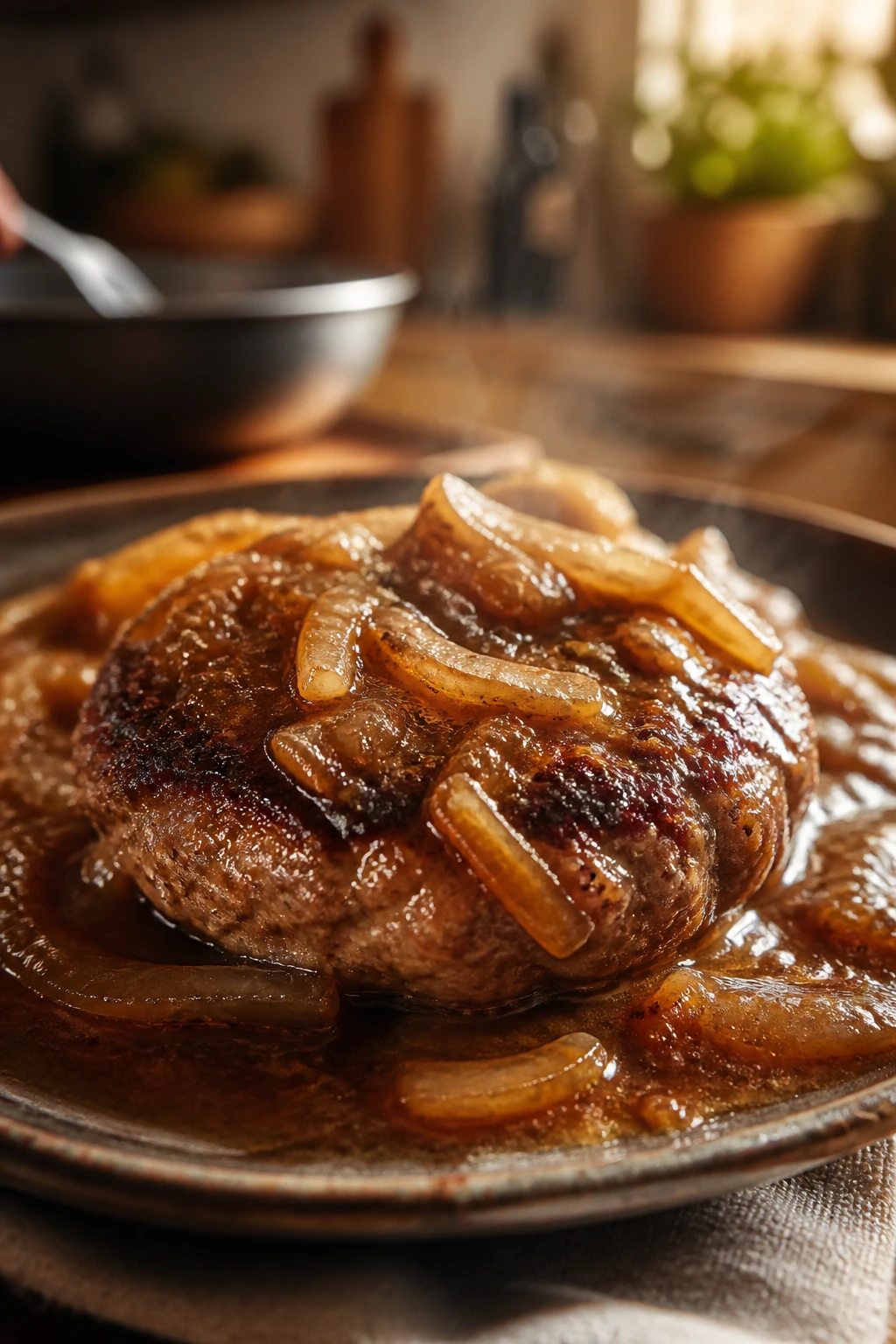
Can I use lean ground beef instead of 85/15?
Yes, but lean beef needs help. If you go with 90/10, keep the milk and grated onion in the mixture, and watch the cooking time closely so the patties don’t dry out before they reach 160°F.
Do I have to use panko?
No. Regular breadcrumbs, crushed saltines, or even plain dried breadcrumbs all work. Panko gives the softest texture, but the bigger point is having some dry binder to hold moisture in the patty.
Can I bake the patties instead of searing them?
You can bake them on a rimmed sheet pan at 400°F until they’re nearly done, then finish them in the gravy. You’ll lose some of the pan crust, though, and that crust is a big part of why the dish tastes rich.
Why did my gravy turn lumpy?
Usually the broth went in too fast or the flour wasn’t cooked long enough before the liquid was added. Whisk in the broth slowly over medium heat, and if you still get a few lumps, strain the gravy before returning the patties to the pan.
Can I make this without onions?
You can, but the gravy loses some depth. If onions are a no-go, add 1 teaspoon onion powder to the beef mixture and use a splash more Worcestershire in the gravy to replace some of the missing savoriness.
How do I know the patties are done without cutting them open?
Use an instant-read thermometer in the center of the thickest patty. Ground beef should reach 160°F, and that’s the number that matters more than whether the juices run clear.
Can I freeze the cooked patties in gravy?
Yes, and they freeze better than a lot of people expect. Cool them quickly, seal them well, and thaw them overnight in the refrigerator before reheating slowly in a covered pan.
What if the gravy gets too thick while simmering?
Whisk in a tablespoon or two of broth at a time until it loosens. The sauce should coat the meat, not glue it to the pan.
A Skillet Dinner That Pulls Its Weight
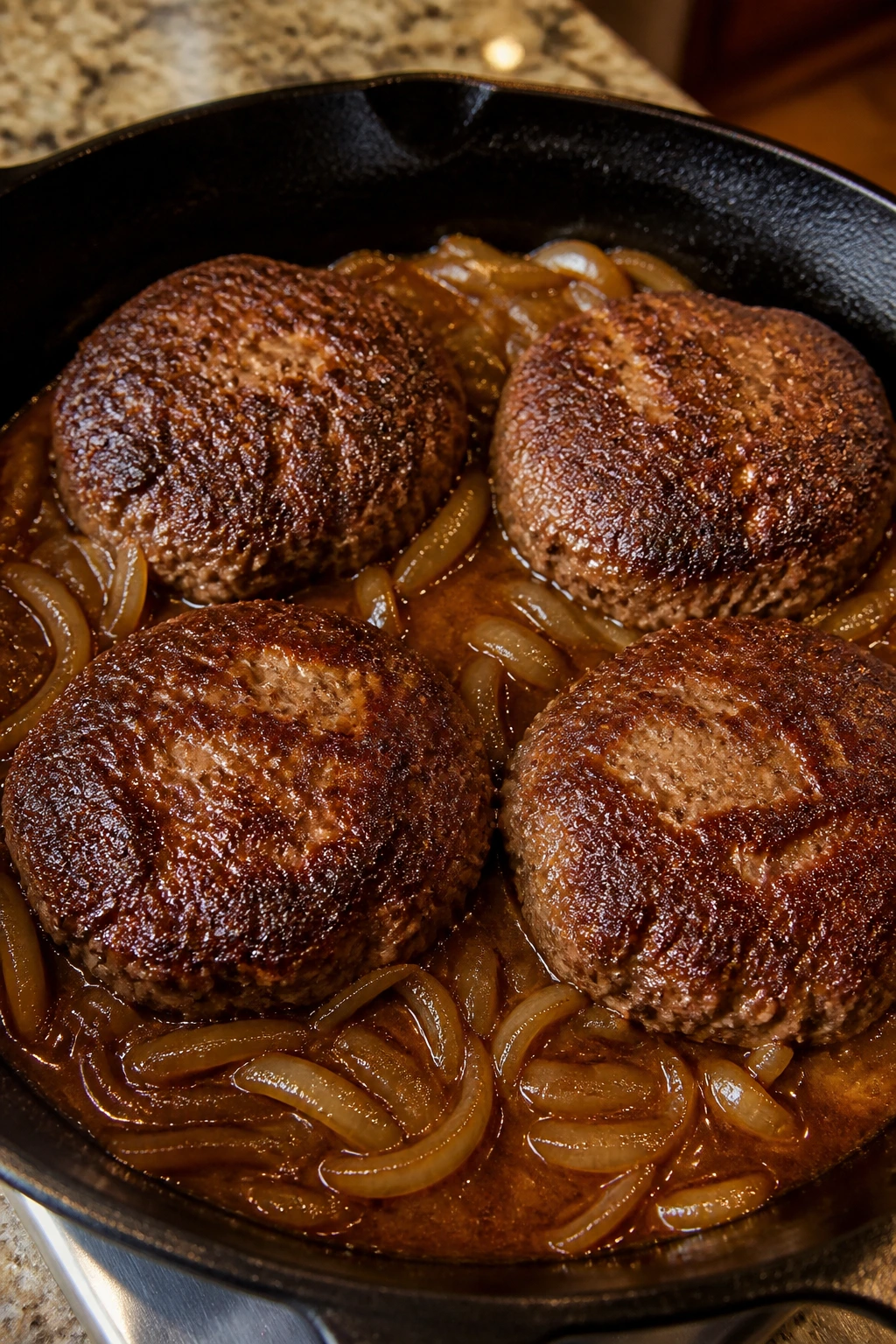
There’s a reason this kind of hamburger dinner sticks around. It uses ordinary ground beef, but it treats it with enough care to taste like something you planned instead of something you threw together. That’s the sweet spot for home cooking: practical, but not careless.
The short mix, the hot pan, and the slow finish in gravy do most of the work. The rest is timing and restraint, which is probably true of more good dinner recipes than people like to admit.
Put this on the table with mashed potatoes and something green, and it eats like a meal that cost more effort than it did. That’s a good trade any night of the week.
Tender Easy Hamburger for a Hearty Dinner — Recipe Card
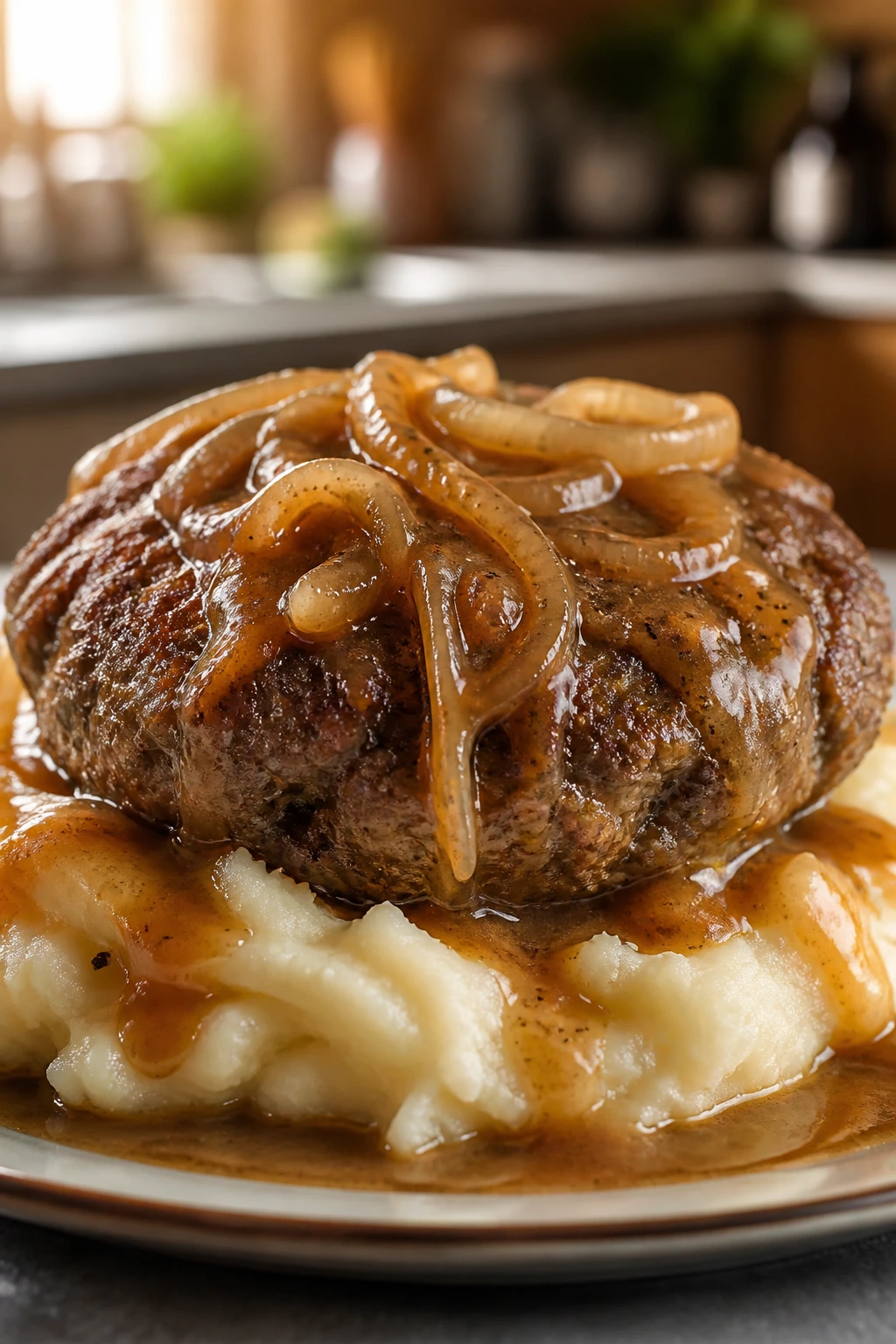
Recipe Name: Tender Easy Hamburger Steaks with Onion Gravy
Description: Juicy ground beef patties are lightly seasoned, seared until browned, then finished in a rich onion gravy. Serve them over mashed potatoes, noodles, or rice for a simple skillet dinner that feels complete.
Prep Time: 20 minutes
Cook Time: 25 minutes
Total Time: 45 minutes
Course: Dinner, Main Course
Cuisine: American
Servings: 4 servings
Calories: About 520 kcal per serving
Ingredients
For the Hamburger Patties:
- 1 1/2 pounds ground beef, 85/15
- 1/2 cup panko breadcrumbs
- 1 large egg
- 1/4 cup whole milk
- 1/2 small yellow onion, finely grated
- 1 tablespoon Worcestershire sauce
- 1 teaspoon Dijon mustard
- 1 teaspoon kosher salt
- 1/2 teaspoon black pepper
- 1/2 teaspoon garlic powder
- 1 tablespoon neutral oil, for searing
For the Onion Gravy:
- 2 tablespoons unsalted butter
- 1 large yellow onion, thinly sliced
- 2 tablespoons all-purpose flour
- 2 cups low-sodium beef broth
- 1 teaspoon Worcestershire sauce
- 1/2 teaspoon dried thyme
- 1/2 teaspoon kosher salt, plus more to taste
- 1/4 teaspoon black pepper
- 1/2 cup sliced mushrooms, optional
- 1 tablespoon chopped parsley, for garnish
Instructions
-
In a large bowl, combine the panko, egg, milk, grated onion, Worcestershire sauce, Dijon mustard, salt, pepper, and garlic powder.
-
Add the ground beef and mix gently with your fingertips until just combined. Form into 4 oval patties about 3/4-inch thick, then press a shallow dimple into the center of each one.
-
Heat a large skillet over medium-high heat for 2 to 3 minutes. Add the oil, then sear the patties for 3 to 4 minutes on the first side and about 2 minutes on the second side. Transfer to a plate.
-
Reduce the heat to medium and add the butter to the same skillet. Add the sliced onions, and mushrooms if using, and cook for 6 to 8 minutes until softened and lightly golden.
-
Sprinkle the flour over the onions and stir for 1 minute. Slowly whisk in the beef broth, scraping up the browned bits from the bottom of the pan.
-
Add the Worcestershire sauce, thyme, salt, and pepper. Simmer for 3 to 5 minutes until the gravy thickens enough to coat the back of a spoon.
-
Return the patties and any juices to the skillet. Spoon gravy over the top, cover loosely, and simmer on low for 6 to 8 minutes, or until the patties reach 160°F.
-
Rest for 5 minutes, then garnish with parsley and serve warm.
Notes: Use low-sodium broth so you can adjust the salt at the end. If the gravy thickens too much, whisk in a splash of broth. The dish is best served hot, right after the short rest.