



A dry bowl of browned ground beef is a small tragedy.
A tender ground beef dinner should taste like a pan that’s been coaxed into something better: beef with a soft bite, onions that have melted into the gravy, potatoes that hold their shape but give up at the edges, and a sauce that clings instead of sloshing. That’s the whole point here. Not fussy. Not flashy. Just a skillet that eats like a full meal and doesn’t leave you staring at the stove wondering why the meat feels gritty.
The difference comes down to timing and moisture. Brown the beef hard enough to get flavor, then stop before it dries out. Give the pan broth, a little tomato paste, and enough simmering time for the potatoes to go creamy without collapsing. Food-safety guidance puts ground beef at 160°F / 71°C, which is the safe finish line; from there, the job is to keep it juicy, not keep cooking it into sawdust.
There’s also something deeply satisfying about a dinner that lands between beef stew and a diner-style hash. You get the comfort of a gravy, the heft of potatoes, and the sort of savory smell that makes people drift into the kitchen asking, “Is it ready yet?” It’s the kind of meal I make when I want something sturdy, low-drama, and worth scraping the pan for.
Why This Tender Ground Beef Dinner Earns Its Spot
A lot of ground beef dinners fail in the same place: they start with promise and finish like cafeteria food. The meat gets crumbled into tiny bits, cooked too long, then buried under sauce that tastes thin and metallic. This version avoids that trap by treating ground beef like a good ingredient, not a problem to be hidden.
The flavor base matters more than people think. Onion, carrot, mushroom, garlic, thyme, tomato paste, and Worcestershire sauce build a gravy that tastes like it had time to think. The potatoes soak up the broth as they cook, so every spoonful gets a little beef, a little vegetable sweetness, and that dark, savory edge from the browned pan bits.
Why I keep coming back to it:
- The beef stays soft: Browning it in one layer and then simmering it gently keeps the texture plush instead of crumbly and dry.
- The gravy does the heavy lifting: Tomato paste, flour, broth, and Worcestershire create a sauce that tastes fuller than its ingredient list looks.
- The potatoes make it a full dinner: You do not need a separate starch unless you want bread for mopping.
- It uses ordinary ingredients well: Onion, carrots, broth, and frozen peas all behave like grown-up pantry staples when the pan is hot enough.
- It scales cleanly: Double it in a Dutch oven, or cut it in half for a smaller pan without changing the method much.
- It improves as it sits: The gravy settles into the potatoes, so leftovers are less fussy than the first serving.
Yield: Serves 6
Prep Time: 20 minutes
Cook Time: 35 minutes
Total Time: 55 minutes
Difficulty: Beginner — the ingredient list is simple, but the heat level and timing need a little attention.
Best Served: Hot from the skillet after a 5-minute rest, when the gravy has had a chance to thicken.
What Goes Into the Pan
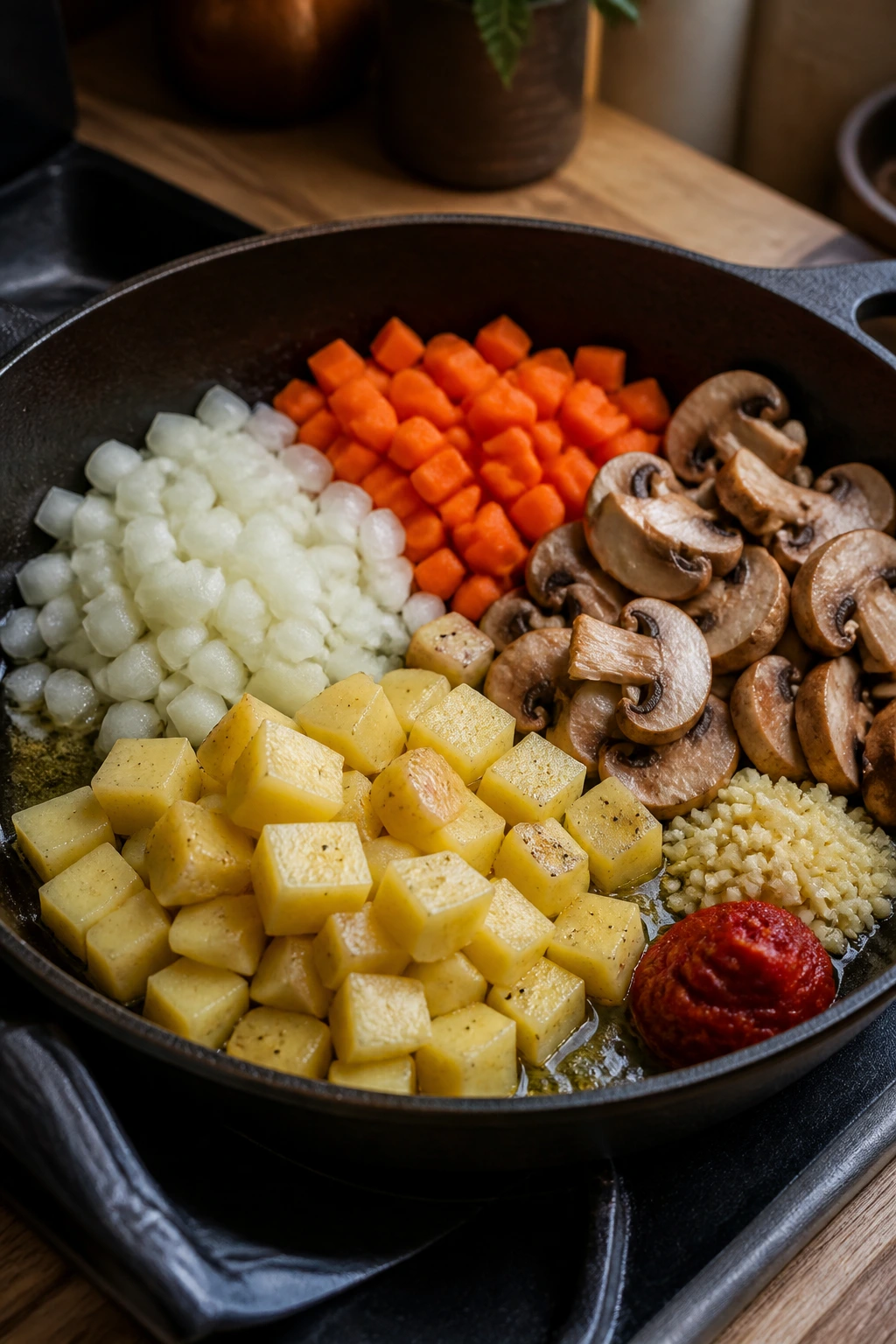
For the Skillet Dinner:
- 1 1/2 tablespoons olive oil — Gives the beef a head start if the pan is on the dry side.
- 1 1/2 pounds ground beef, 85/15 or 90/10 — I prefer 85/15 here; it brings more flavor and stays tender.
- 1 large yellow onion, diced (about 1 1/2 cups) — Sweetens as it cooks and gives the gravy body.
- 2 medium carrots, peeled and diced small (about 1 cup) — They soften into the sauce and add a little sweetness.
- 8 ounces cremini mushrooms, sliced (about 3 cups loosely packed) — They deepen the savory flavor without turning the dish into a mushroom dinner.
- 3 cloves garlic, minced — Added late so it tastes sweet, not sharp.
- 1 1/2 pounds Yukon Gold potatoes, scrubbed and cut into 3/4-inch cubes (about 4 medium potatoes) — They hold shape better than russets and go creamy at the edges.
- 2 tablespoons tomato paste — Thickens the gravy and gives it that slow-cooked color.
- 2 tablespoons all-purpose flour — Helps the broth turn into a proper sauce instead of a thin soup.
- 1 tablespoon Worcestershire sauce — Adds a dark, tangy note that makes the beef taste beefier.
- 2 1/2 cups low-sodium beef broth — Enough liquid to cook the potatoes and keep everything juicy.
- 1 teaspoon dried thyme — A little herbal backbone goes a long way in a skillet like this.
- 1 bay leaf — Optional in theory, but I rarely skip it.
- 1 teaspoon kosher salt, plus more to taste — Start light if your broth is salty.
- 1/2 teaspoon black pepper — Enough to show up without taking over.
- 1 cup frozen peas — Stirred in at the end so they stay bright and sweet.
- 2 tablespoons unsalted butter — Finishes the gravy with a soft sheen.
- 2 tablespoons chopped fresh parsley — For color and a fresh edge at the end.
Why Each Ingredient Matters in the Gravy
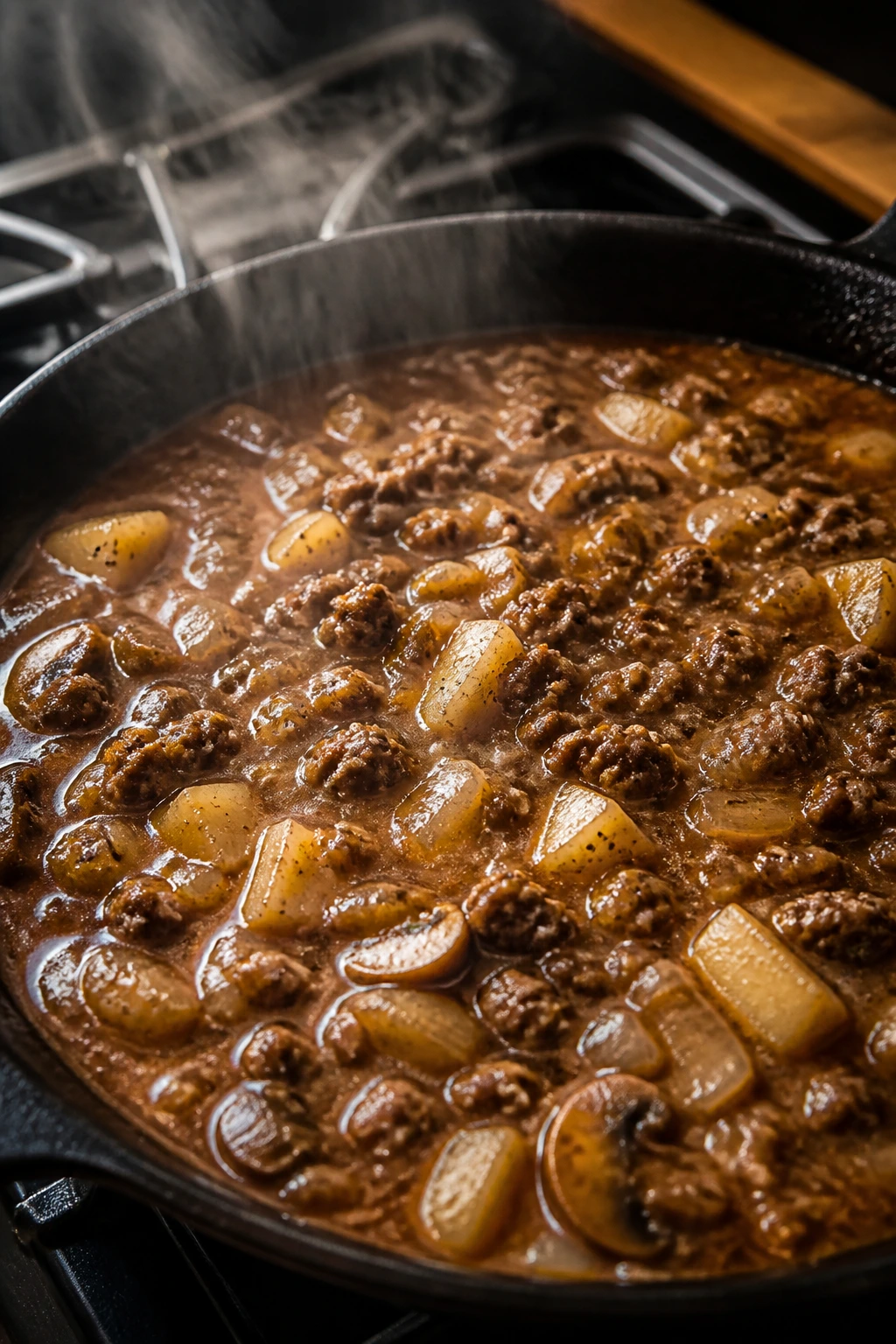
Ground Beef
What to use: 1 1/2 pounds of 85/15 or 90/10 ground beef is the sweet spot here. You want enough fat for flavor, but not so much that the pan ends up greasy.
Preparation: Keep it cold until it hits the skillet, then break it into larger chunks first before you begin stirring more aggressively. Those bigger pieces brown better than tiny crumbs.
Substitutions: Ground turkey works, though it needs an extra tablespoon of oil and tastes lighter. Ground chicken can work too, but it needs careful seasoning and a gentler hand.
Tips: I would not go ultra-lean unless you have to. 93/7 beef can work, but it gives you less drippings to build flavor, which means the gravy has to do more work.
Potatoes
What to use: Yukon Gold potatoes, cut into 3/4-inch cubes, are the right balance of creamy and sturdy. Russets break down faster and turn the skillet murkier.
Preparation: Cut them evenly so the smaller pieces do not disappear while the larger ones stay stubborn. If the cubes are half the size of a thumbnail, they’re too small.
Substitutions: Red potatoes are fine if that’s what you have; they hold shape well but stay a little firmer than Yukon Golds. Sweet potatoes can replace part of the batch if you want a sweeter skillet, though the flavor shifts noticeably.
Tips: Potatoes that are cut too large are the main reason this dish feels undercooked. Three-quarters of an inch sounds fussy, but it’s the difference between tender cubes and a skillet that needs ten more minutes.
Aromatics and Vegetables
What to use: 1 large onion, 2 carrots, 8 ounces cremini mushrooms, and 3 cloves garlic make the base taste fuller than the ingredient list suggests.
Preparation: Dice the onion and carrots small so they soften at the same pace as the potatoes. Slice the mushrooms thick enough that they keep some texture, then mince the garlic separately so it goes in at the right moment.
Substitutions: Celery can replace one carrot if you want a more classic stew note. If mushrooms aren’t your thing, add another half onion and a small splash of soy sauce for depth.
Tips: Don’t rush the vegetables. The onions should go translucent, the mushrooms should lose their raw smell, and the carrots should start to lose their crunch before the broth goes in.
Broth, Tomato, and Thickeners
What to use: 2 1/2 cups low-sodium beef broth, 2 tablespoons tomato paste, 2 tablespoons flour, 1 tablespoon Worcestershire sauce, 1 teaspoon thyme, and 1 bay leaf build the sauce.
Preparation: Measure these before you start cooking. Once the pan is hot, there’s no good reason to be hunting for a teaspoon while the garlic burns.
Substitutions: If you’re out of Worcestershire, use 1 teaspoon soy sauce plus 1 teaspoon balsamic vinegar. That swap won’t taste identical, but it gives the sauce the same dark, rounded edge.
Tips: Tomato paste needs about a minute in the hot pan to lose its raw, tinny taste. That tiny step matters more than people think. It’s where the gravy starts tasting cooked.
Finishing Ingredients
What to use: 1 cup frozen peas, 2 tablespoons unsalted butter, and 2 tablespoons chopped parsley finish the dish without weighing it down.
Preparation: Keep the peas frozen until the last few minutes. Chop the parsley right before serving so it stays bright.
Substitutions: Frozen corn can stand in for the peas if you want a sweeter finish. Chives or dill work in place of parsley if that’s what you have in the fridge.
Tips: Butter off the heat gives the gravy a softer gloss than butter boiled into the sauce. That tiny difference shows up in the bowl.
The Tools That Make the Skillet Easier
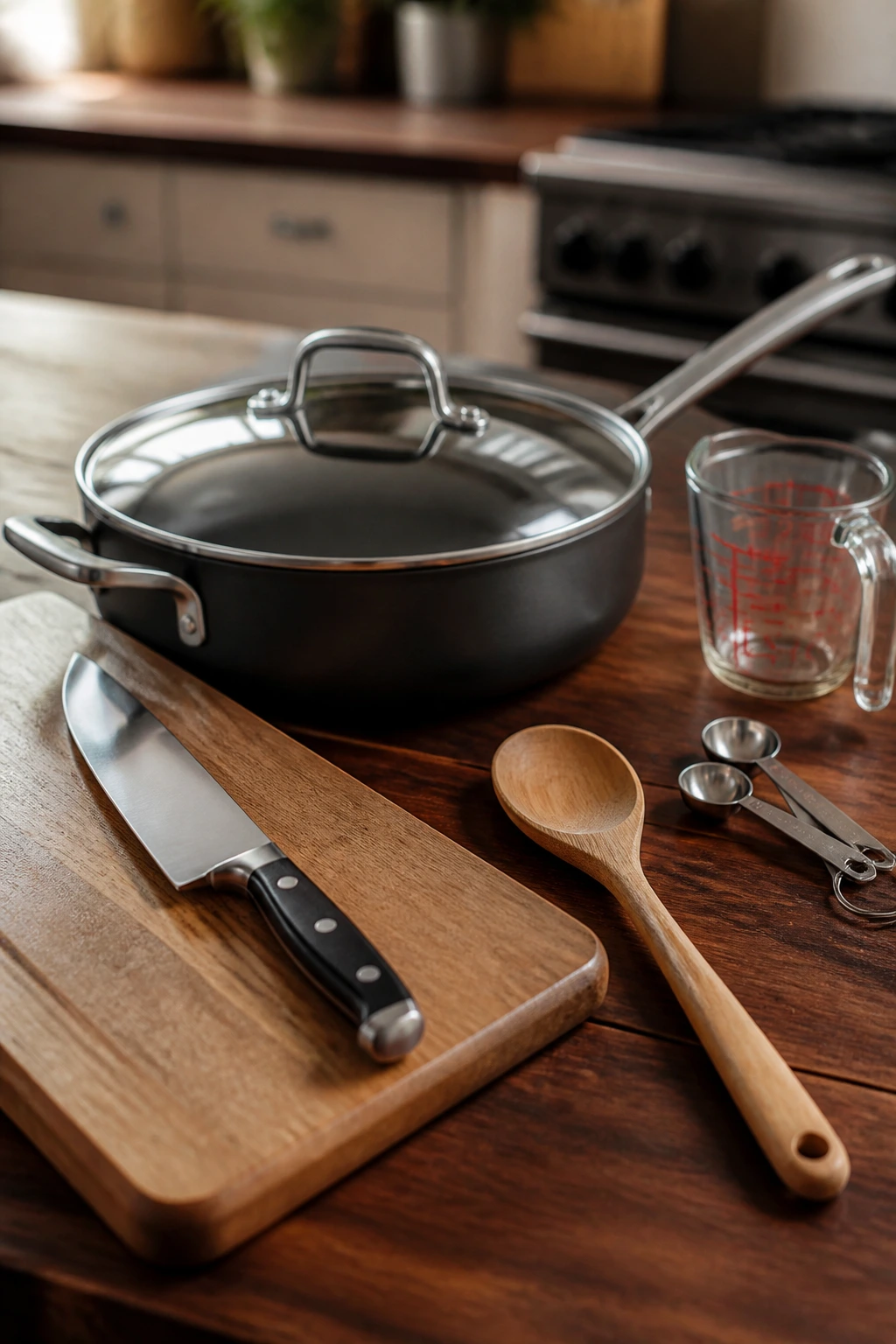
- 12-inch deep skillet with a lid or a Dutch oven — You need enough surface area to brown the beef and enough depth to simmer the potatoes without spills.
- Wooden spoon or sturdy spatula — Best for breaking up the beef and scraping up browned bits without scratching the pan.
- Chef’s knife — A sharp one makes the onion, carrot, and potato prep less annoying.
- Cutting board — Give yourself enough room to keep the potatoes from rolling into the sink.
- Measuring spoons and measuring cup — The flour, broth, tomato paste, and Worcestershire need to be measured, not guessed.
- Instant-read thermometer — Optional, but useful if you want to check the beef hits 160°F / 71°C before the simmer.
- Lid that fits your skillet — If you do not have one, a sheet pan or foil can work in a pinch.
How to Cook the Beef and Vegetables Without Drying Them Out
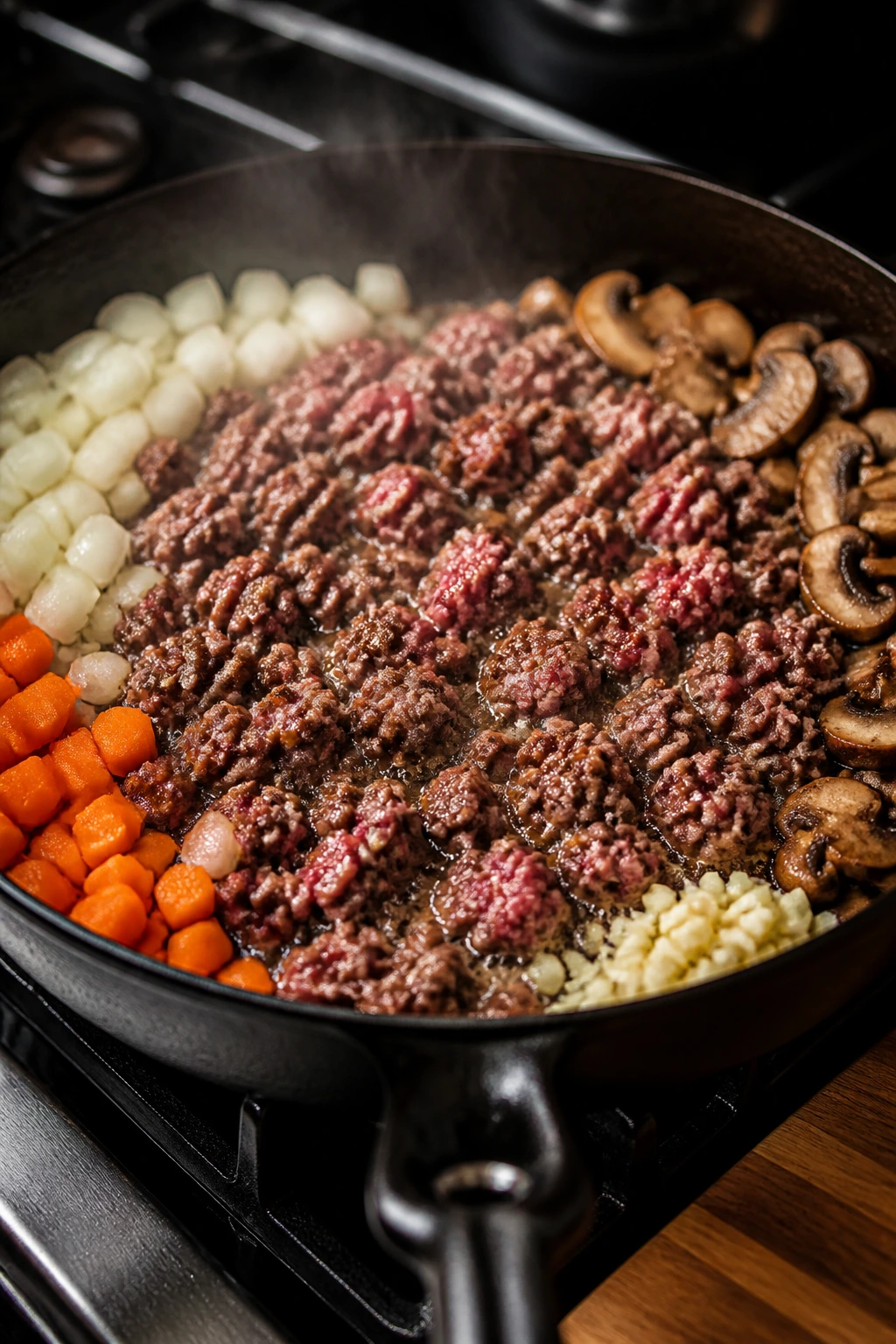
Prep the Vegetables
-
Dice the onion, carrots, and potatoes before the pan goes on the heat. Cut the onion and carrots into small, even pieces, and keep the potatoes to 3/4-inch cubes so they cook at the same pace.
-
Slice the mushrooms and mince the garlic separately. Mushrooms release moisture fast, and garlic burns faster than people expect, so having them prepped matters more than it sounds.
Brown the Beef
-
Heat 1 1/2 tablespoons olive oil in a 12-inch skillet over medium-high heat. The oil should shimmer, not smoke. Add the ground beef in a loose layer and let it sit for a minute before stirring.
-
Break up the beef and cook for 5 to 6 minutes, until the pink is gone and the edges start to brown. Season with about half the salt and pepper while it cooks. Do not stir every few seconds — the beef needs contact with the pan to pick up flavor.
-
If there is a lot of fat in the skillet, spoon off all but about 1 tablespoon. You want enough richness to carry the gravy, not a pool that makes the vegetables greasy.
Build the Gravy Base
-
Add the onion, carrots, and mushrooms to the skillet. Cook for 4 to 5 minutes, stirring every minute or so, until the onions turn translucent and the mushrooms lose their raw smell. The carrots should still have a little bite.
-
Stir in the garlic, tomato paste, and thyme. Cook for 1 minute, stirring constantly, until the tomato paste darkens from bright red to a deeper brick color. That quick minute keeps the paste from tasting sharp.
-
Sprinkle the flour over the mixture and stir for 1 minute. Every bit of beef and vegetable should look lightly coated. Skip the raw-flour shortcut; if you add broth too fast, the gravy can taste chalky.
Simmer Until Tender
-
Pour in the beef broth and Worcestershire sauce, scraping the bottom of the pan as you go. Add the potatoes and the bay leaf, then bring the pan to a gentle simmer. The liquid should bubble lazily, not boil hard.
-
Reduce the heat to medium-low, cover the skillet, and cook for 18 to 22 minutes. Stir once or twice during that time so nothing sticks. The potatoes should pierce easily with a fork, and the sauce should look thick enough to coat the spoon.
-
Stir in the peas and cook uncovered for 2 to 3 minutes. They only need enough time to heat through and turn bright green. If the sauce looks too thick, loosen it with a splash of broth.
-
Remove the bay leaf, stir in the butter, and taste for salt and pepper. The butter should melt into the gravy and give it a soft sheen. Let the skillet rest for 5 minutes before serving so the sauce settles.
How to Serve a Hearty Ground Beef Dinner
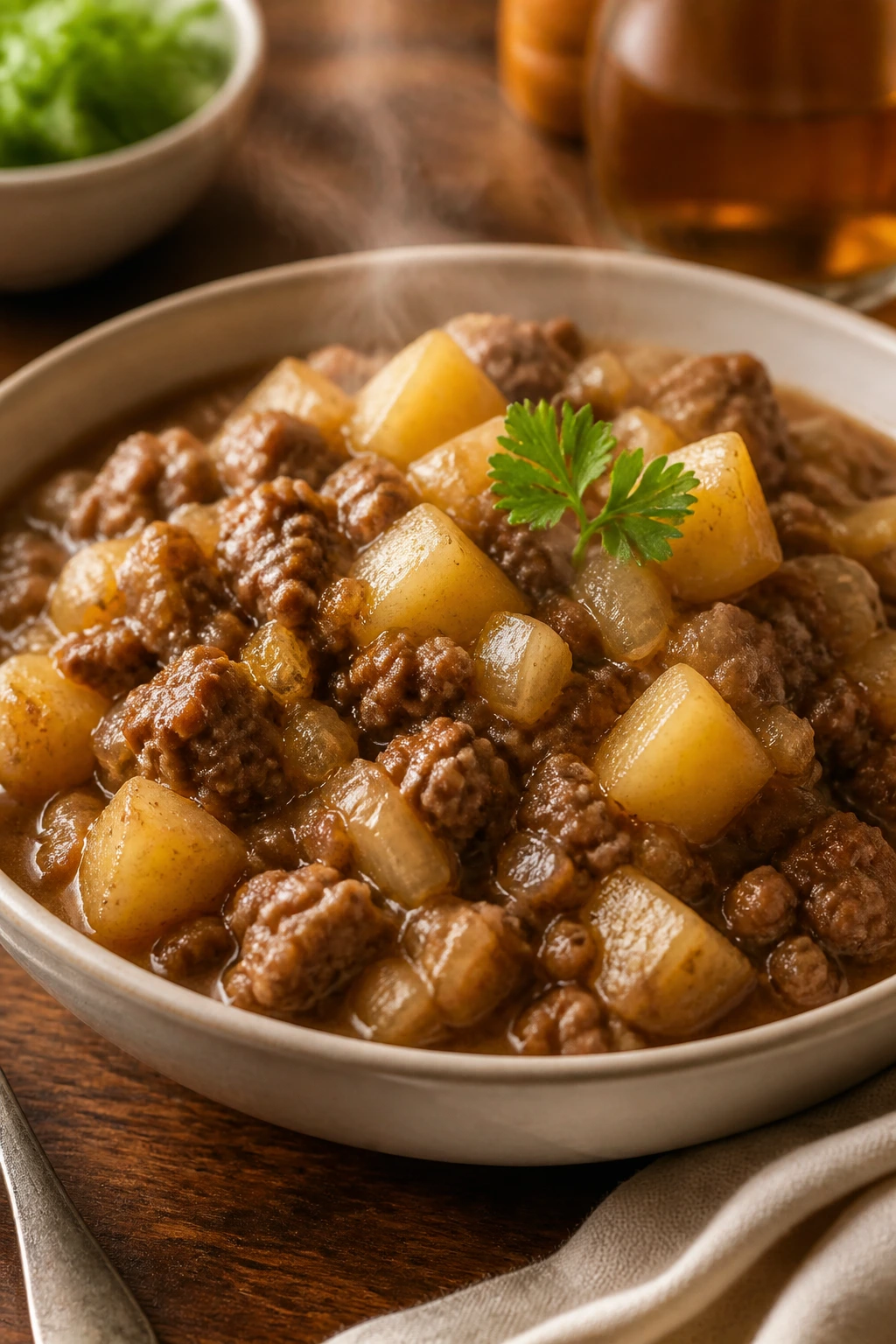
Presentation: Spoon the skillet into shallow bowls so the gravy pools around the potatoes instead of disappearing underneath them. A sprinkle of parsley and a crack of black pepper at the end makes the whole thing look finished, not just fed.
Accompaniments: Buttered crusty bread is the obvious move because it catches every bit of gravy. If you want something fresher, serve it with a simple green salad dressed in a sharp vinaigrette, or a side of green beans with a little lemon.
Portions: Plan on about 1 1/2 to 2 cups per adult, depending on whether you’re serving bread alongside it. If the table includes bigger appetites, this skillet stretches nicely with extra bread or a side of rice.
Beverage Pairing: I like this with unsweetened iced tea, a dry red wine like cabernet franc, or a malty brown ale. The drink should cut the richness, not compete with it.
Small Tweaks That Make the Flavor Bigger
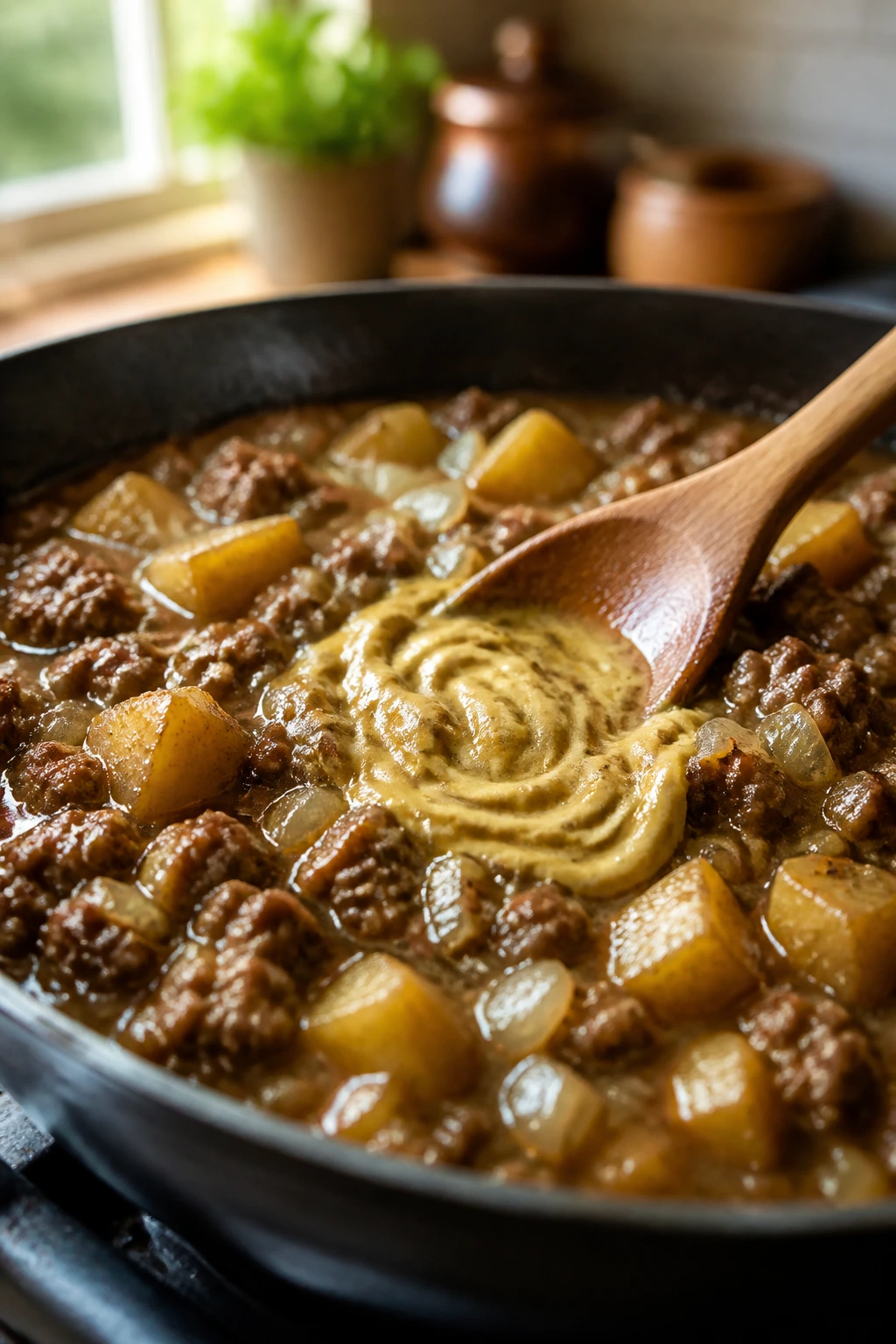
Flavor Enhancement: A teaspoon of Dijon mustard stirred in at the very end gives the gravy a sharper edge without turning it into a mustard sauce. If you like a brighter finish, a few drops of red wine vinegar do the same job in a different way.
Time-Saver: Dice the onion, carrots, and potatoes earlier in the day, then keep the potatoes in a bowl of cold water so they do not brown. Drain and pat them dry before they go into the skillet. That one habit cuts the active prep time in half.
Cost-Saver: If beef prices make you wince, use 1 pound ground beef and 1 extra cup of mushrooms. The dish still tastes full because mushrooms pick up the gravy and carry a lot of that savory depth.
Make-It-Yours: If you want a richer bowl, serve it over buttered egg noodles instead of eating it as a standalone skillet. If you want more vegetables, fold in a handful of chopped green beans or a cup of frozen corn with the peas.
Common Mistakes That Turn a Good Skillet Flat
-
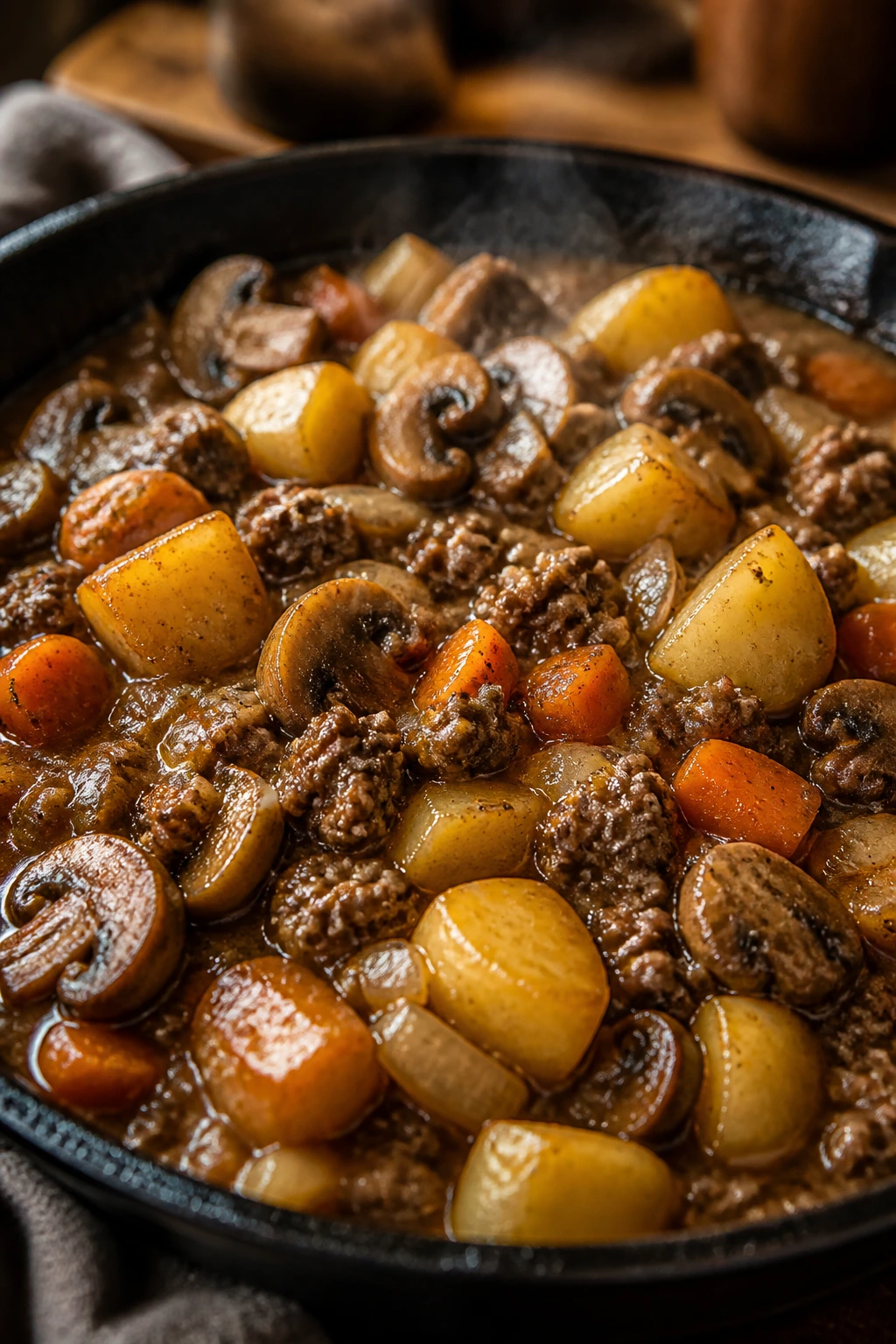
Using beef that’s too lean — Extra-lean ground beef dries out before the potatoes finish. Choose 85/15 or 90/10 if you can, and if you only have 93/7, add a little more oil and shorten the browning time.
-
Cutting the potatoes too large — Big cubes seem harmless until the beef is done and the centers are still firm. Keep them at 3/4-inch, and stir once or twice while they simmer so the pieces at the bottom do not take all the heat.
-
Letting the skillet boil hard — A rolling boil turns the gravy cloudy, tightens the beef, and can break the potatoes apart. Keep it at a gentle simmer once the broth goes in. Lazy bubbles. That’s what you want.
-
Adding the peas too early — They go dull and soft if they sit in the pan for the whole simmer. Stir them in at the very end so they stay sweet and green.
-
Skipping the flour step — If you pour broth into an unthickened skillet, you get something closer to soup than dinner. Cook the flour with the fat and tomato paste for a minute first so the sauce can tighten properly.
-
Not tasting before serving — Broths vary a lot in salt, and Worcestershire can push the flavor darker than you expect. Taste after the butter goes in, then adjust with salt, pepper, or a small splash of broth if needed.
Variations When You Want a Different Dinner Mood
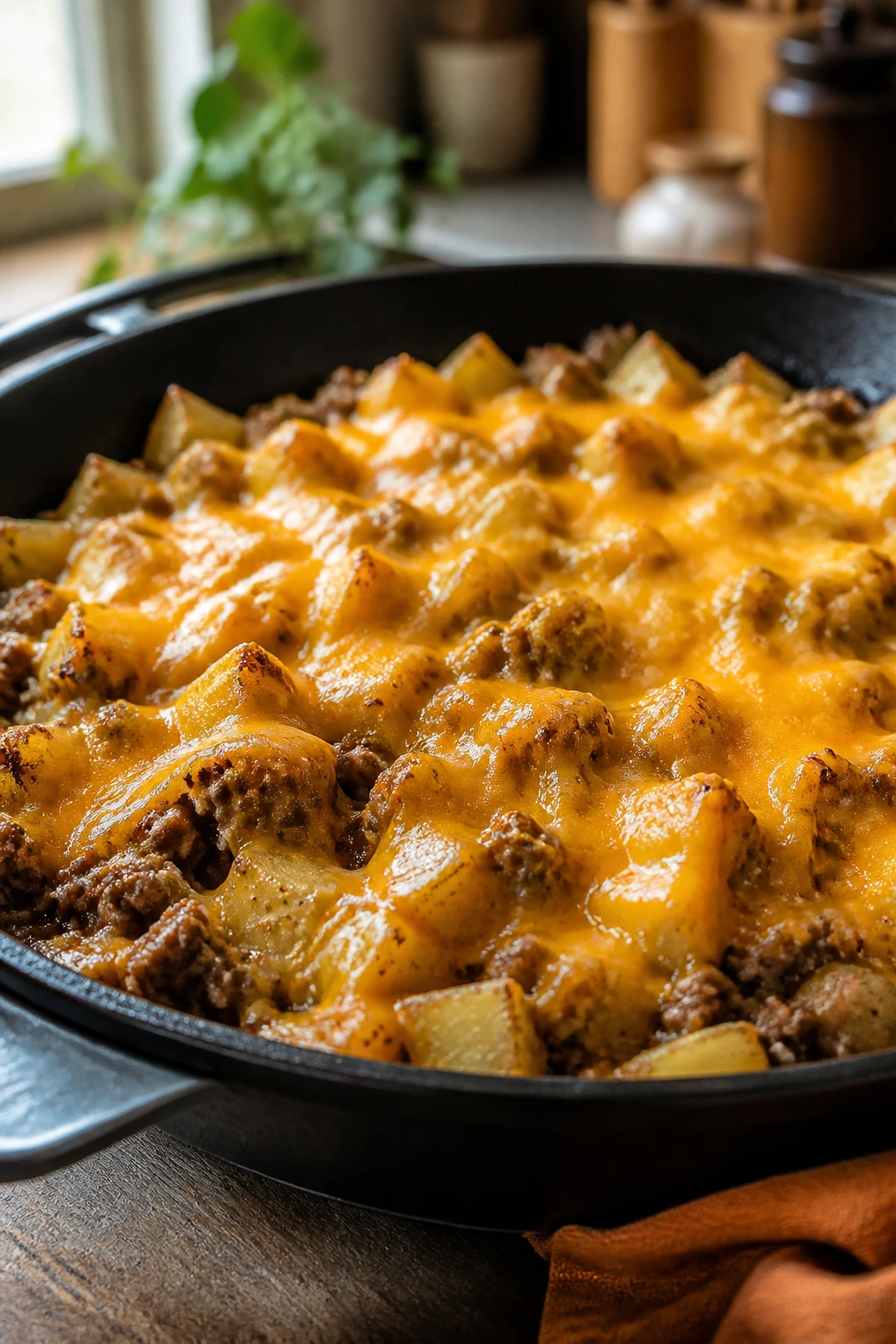
Cheddar-Topped Skillet
Stir 1 cup shredded sharp cheddar into the skillet after the butter goes in, or scatter it over the top and cover the pan for 2 minutes. The cheese melts into the potatoes and turns the whole thing a little more diner-style.
Mushroom-and-Thyme Diner Style
Double the mushrooms and add an extra 1/2 teaspoon thyme. This version tastes earthier and deeper, and it’s the one I’d make when I want the gravy to lean more savory than sweet.
Tex-Mex Beef Hash
Swap the thyme for 1 teaspoon chili powder and 1/2 teaspoon cumin, then add 1 cup corn and 1 cup black beans with the peas. Finish with cilantro and a squeeze of lime. It stops tasting like a stew and starts tasting like a skillet brunch that grew up.
Shepherd’s Pie Shortcut
Skip serving the dish as-is and spoon it into a baking dish, then top with mashed potatoes and broil until the peaks turn golden. You’re still using the same beef base, but the top gets that browned, craggy finish people always scrape first.
Keeping Leftovers Juicy, Not Dry
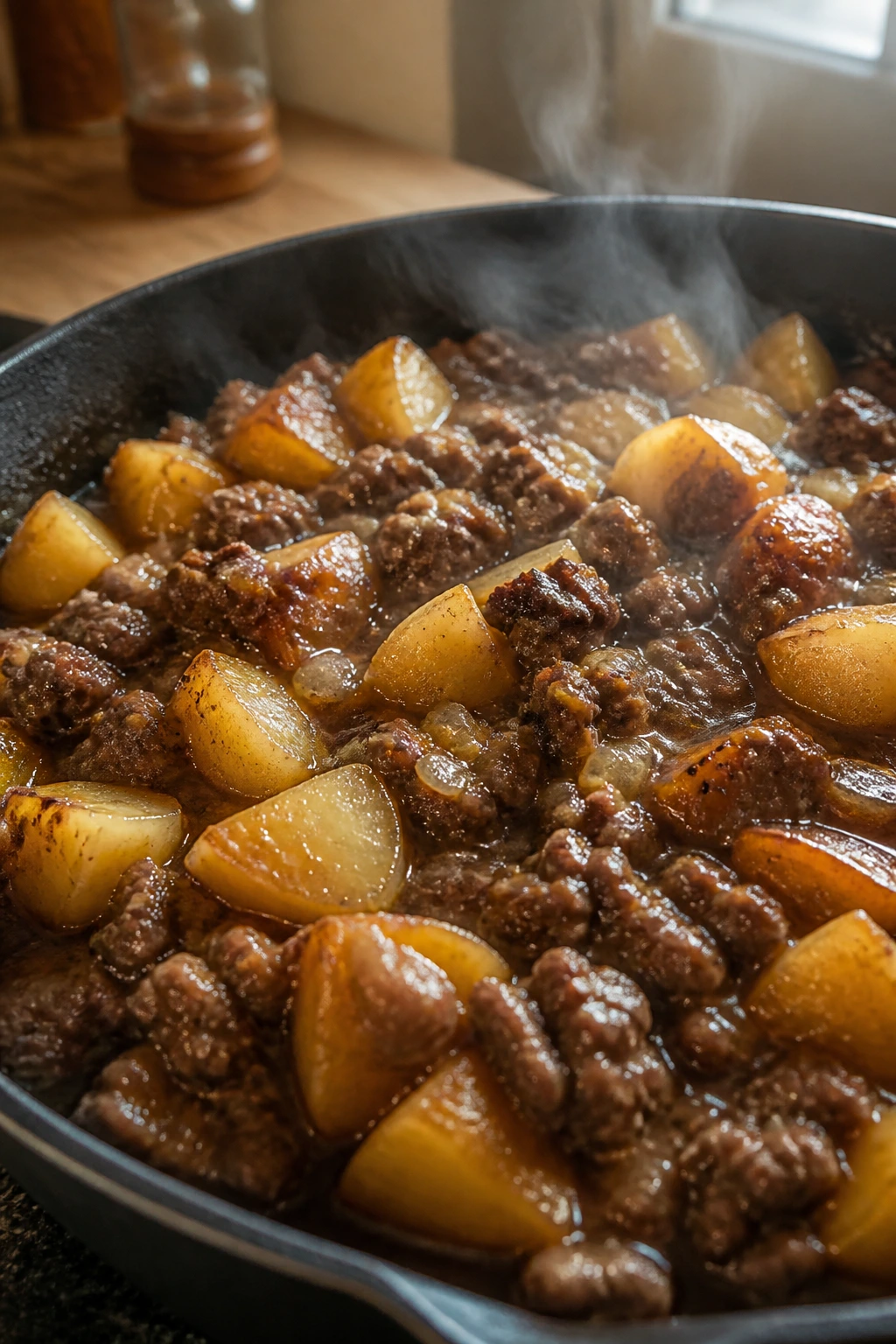
This skillet keeps well if you cool it fast and store it in an airtight container. Leave it on the counter only long enough to stop steaming, then refrigerate it within 2 hours. After that, the potatoes start to drink up the sauce and the texture gets less friendly.
In the fridge, it holds for 3 to 4 days. The flavor usually deepens overnight, but the potatoes will absorb some of the gravy. That’s normal. If you want the leftovers to look more like the first batch, save a splash of broth to stir in when you reheat.
For the freezer, pack the skillet into airtight containers and freeze for up to 2 months. I like to freeze it in meal-size portions instead of one giant block, because it reheats more evenly. Potatoes soften a little after freezing, so undercooking them by a minute or two in the original batch helps.
Reheat on the stovetop over low heat with 1 to 2 tablespoons of broth per serving, stirring every couple of minutes until hot. The microwave works too, but use 50% power and stop to stir once or twice so the beef doesn’t dry out at the edges. If the gravy looks too thick when it comes out of the fridge, that little splash of broth fixes the whole pan.
For make-ahead prep, dice the vegetables a day early and keep them in sealed containers. You can also brown the beef, onions, carrots, and mushrooms ahead of time, then refrigerate the base and finish the potatoes and peas later. If you do that, the skillet comes together faster and still tastes cooked, not reheated.
Ground Beef Dinner Questions People Ask at the Stove
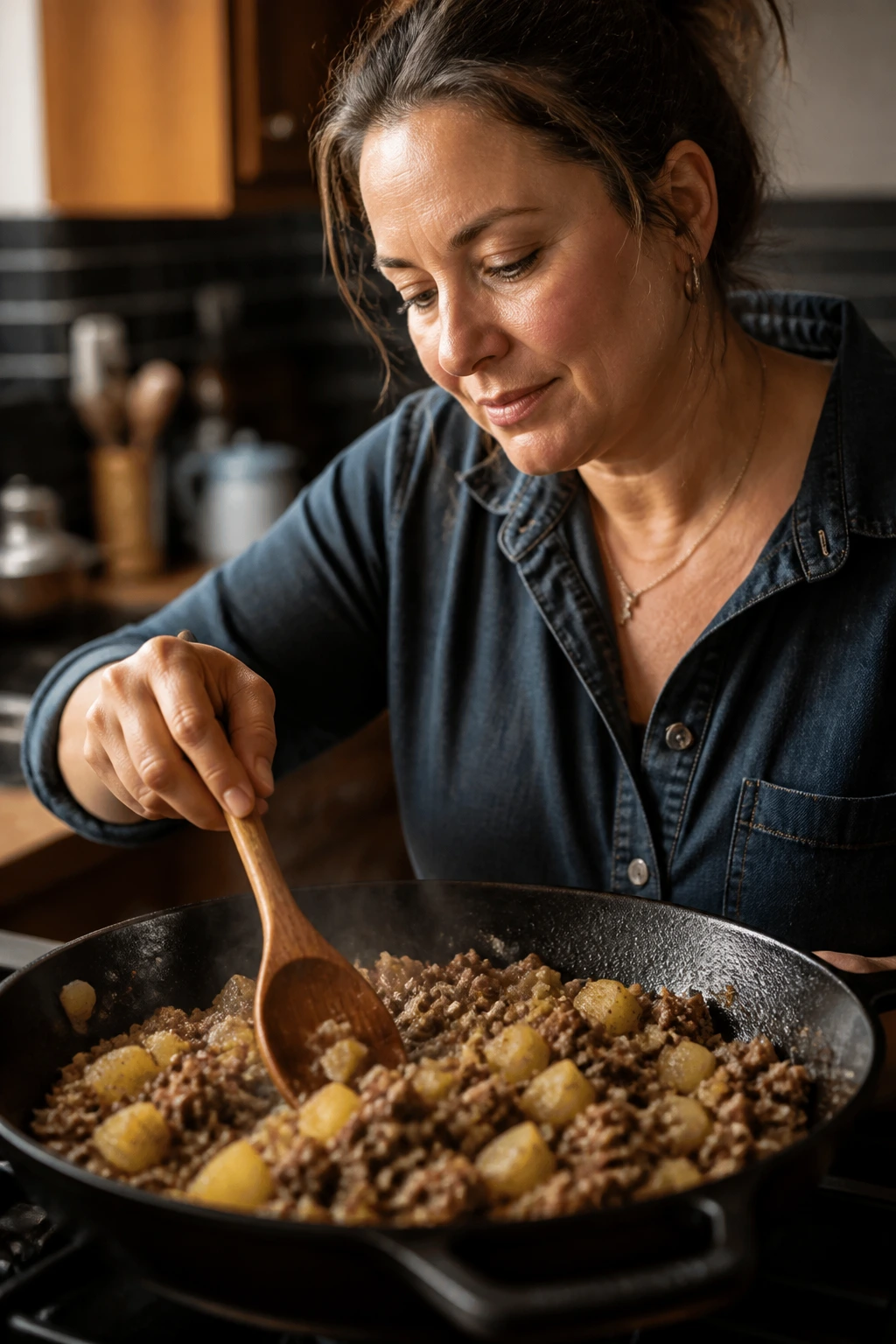
Can I make this with ground turkey instead of ground beef?
Yes, but add a little more oil because turkey is leaner and dries out faster. I’d also bump the Worcestershire sauce up by a teaspoon or add a splash of soy sauce to replace some of the beefy depth.
What if I only have russet potatoes?
Russets work, but they break down more easily and can make the sauce cloudier. Cut them a little larger than Yukon Golds and keep the simmer gentle so they do not fall apart before the beef finishes.
Can I leave out the mushrooms?
You can, and the skillet still works. Replace them with another half onion or a little extra carrot, then add a teaspoon of soy sauce or a pinch of extra thyme so the gravy doesn’t taste thin.
How do I thicken the sauce if it stays runny?
Take the lid off and simmer for 3 to 5 more minutes over medium-low heat. If it still looks loose, stir 1 tablespoon of flour with 2 tablespoons of cold water in a small bowl, then add that slurry to the pan and cook until the sauce tightens.
Can I double the recipe for a bigger group?
Yes, but use a Dutch oven or a very large deep skillet so the beef can brown instead of steaming. Brown it in batches if needed. Crowding the pan is the fastest way to lose flavor.
Is this good for meal prep?
It is one of the better meal-prep dinners because the gravy keeps everything moist. The potatoes soften a little in the fridge, but they reheat well with a splash of broth and a low, slow warm-up.
Can I make it in a slow cooker?
Not really the same way. The browned edges and the quick stovetop gravy are half the point here, and a slow cooker tends to soften the potatoes too much. If you absolutely want that route, brown the beef first, then cook it low and finish the peas at the end.
A Final Skillet Note
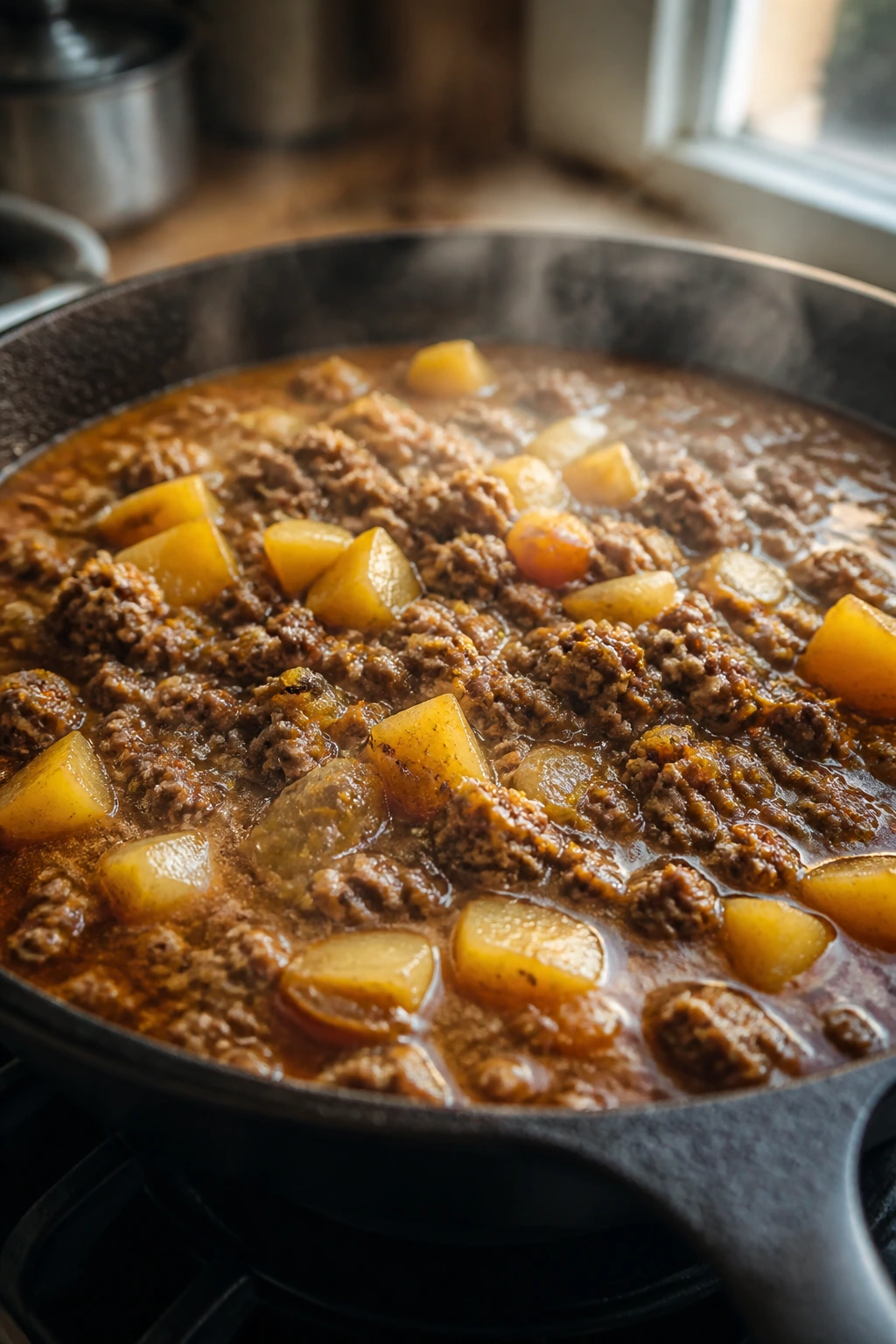
The best thing about this kind of dinner is that it does not ask for perfection. It asks for a hot pan, a little patience, and the good sense not to rush the simmer. That’s it. The rest is just letting beef, potatoes, and a proper gravy do what they do when they’re treated right.
And once you make it this way, the flat, dry version stops being acceptable. You’ll notice the difference in the first bite — the soft beef, the gravy on the spoon, the potatoes that taste like they belong there — and that’s usually enough to make the skillet come out again the next week.
Tender Ground Beef Dinner — Recipe Card
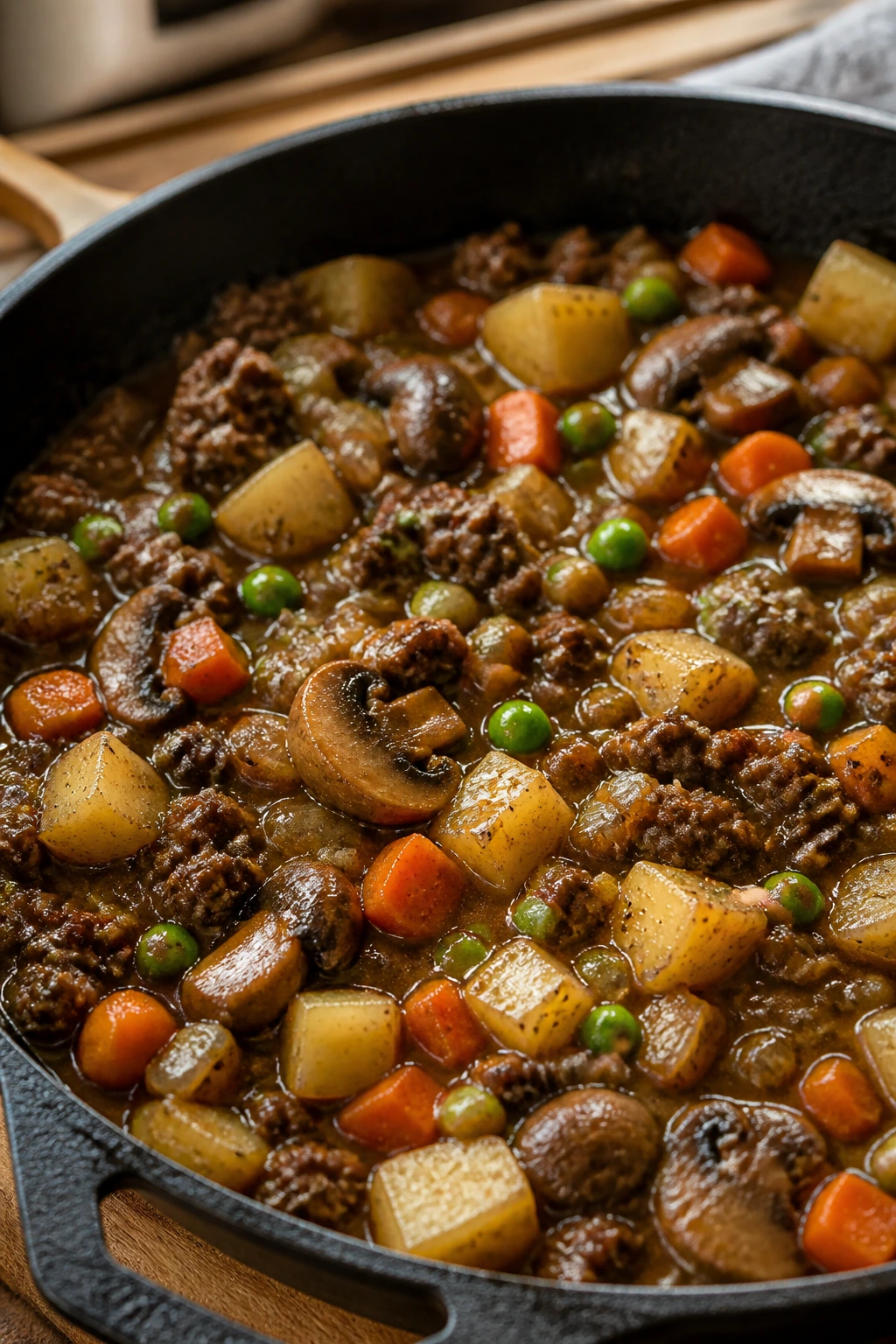
Recipe Name: Tender Ground Beef Dinner
Description: A one-skillet ground beef and potato dinner with carrots, mushrooms, peas, and a savory beef gravy. It’s hearty, rich, and built for a real weeknight table.
Prep Time: 20 minutes
Cook Time: 35 minutes
Total Time: 55 minutes
Course: Main Course
Cuisine: American
Servings: 6
Calories: About 340 kcal per serving
Ingredients
For the Skillet Dinner:
- 1 1/2 tablespoons olive oil
- 1 1/2 pounds ground beef, 85/15 or 90/10
- 1 large yellow onion, diced (about 1 1/2 cups)
- 2 medium carrots, peeled and diced small (about 1 cup)
- 8 ounces cremini mushrooms, sliced (about 3 cups loosely packed)
- 3 cloves garlic, minced
- 1 1/2 pounds Yukon Gold potatoes, scrubbed and cut into 3/4-inch cubes (about 4 medium potatoes)
- 2 tablespoons tomato paste
- 2 tablespoons all-purpose flour
- 1 tablespoon Worcestershire sauce
- 2 1/2 cups low-sodium beef broth
- 1 teaspoon dried thyme
- 1 bay leaf
- 1 teaspoon kosher salt, plus more to taste
- 1/2 teaspoon black pepper
- 1 cup frozen peas
- 2 tablespoons unsalted butter
- 2 tablespoons chopped fresh parsley
Instructions
-
Dice the onion, carrots, and potatoes before cooking. Slice the mushrooms and mince the garlic.
-
Heat the olive oil in a 12-inch deep skillet over medium-high heat. Add the ground beef and cook for 5 to 6 minutes, breaking it into larger pieces, until browned and no pink remains.
-
Add the onion, carrots, and mushrooms. Cook for 4 to 5 minutes, stirring occasionally, until the onion turns translucent and the mushrooms lose their raw smell.
-
Stir in the garlic, tomato paste, and thyme. Cook for 1 minute, stirring constantly, until the tomato paste darkens.
-
Sprinkle the flour over the mixture and stir for 1 minute so everything is lightly coated.
-
Pour in the beef broth and Worcestershire sauce, scraping up the browned bits from the bottom of the pan.
-
Add the potatoes, bay leaf, salt, and black pepper. Bring to a gentle simmer, then reduce the heat to medium-low, cover, and cook for 18 to 22 minutes, until the potatoes are fork-tender.
-
Stir in the frozen peas and cook uncovered for 2 to 3 minutes, until heated through and bright green.
-
Remove the bay leaf, stir in the butter, and taste for seasoning. Rest for 5 minutes, then garnish with parsley and serve hot.
Notes: Use Yukon Gold potatoes for the best texture. If the gravy thickens too much, loosen it with a splash of broth before serving.