



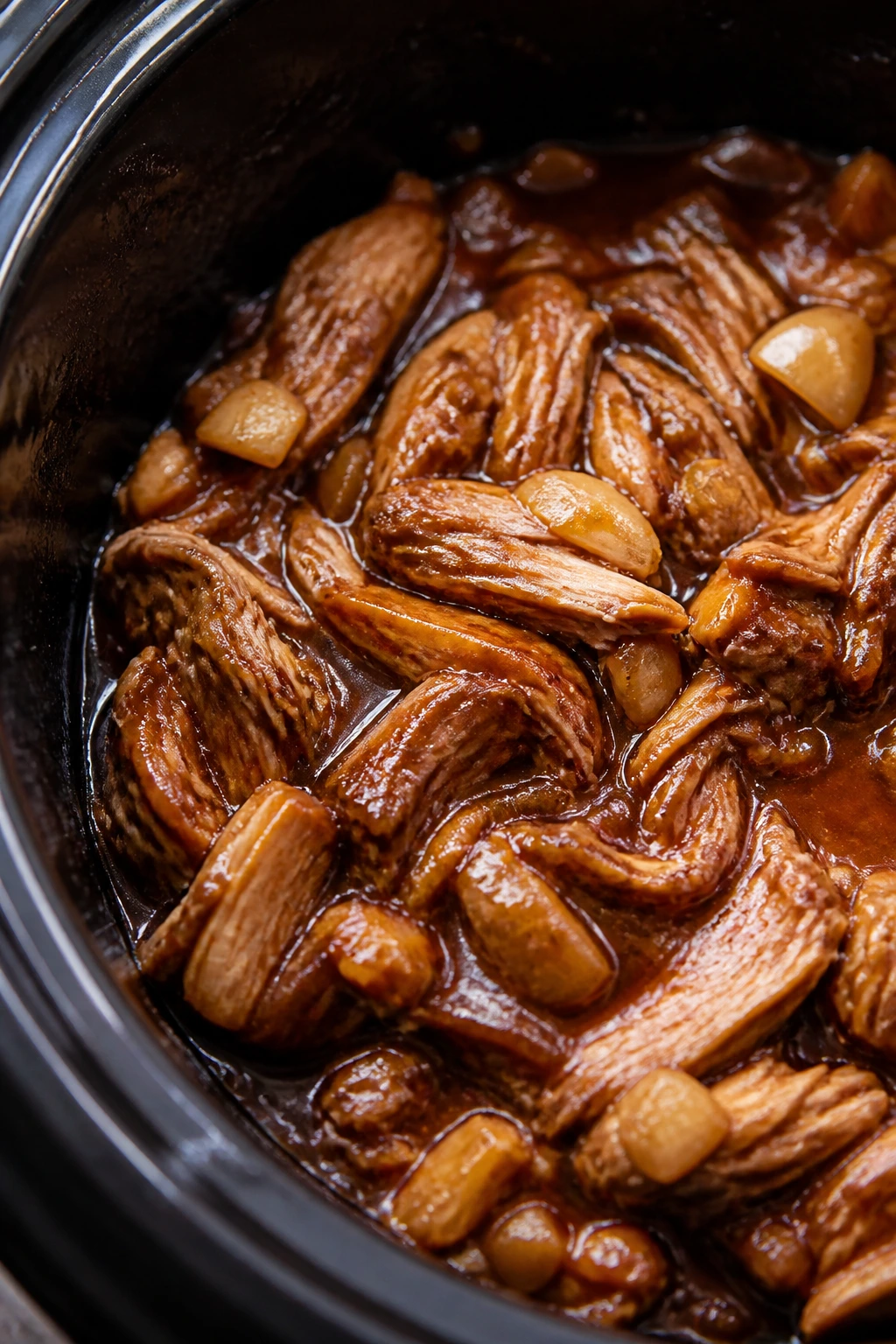
Slow cooker Asian chicken has a way of making the kitchen smell like soy sauce, garlic, and ginger got together and decided to do dinner’s heavy lifting for you. By the time the lid comes off, the sauce has gone dark and glossy, the chicken has gone soft at the edges, and the whole pot looks like it belongs over a bowl of steaming rice.
That is the appeal. Not fuss. Not a long ingredient parade. Just a pot you can leave alone, then return to when you’re ready to eat and the meat is tender enough to pull apart with a fork. I prefer thighs for this kind of recipe—breasts can work, but they punish a long cook fast, and this dish wants a little fat to keep it plush.
What makes this version worth making is that the flavor profile holds up under slow heat. Soy sauce, hoisin, rice vinegar, honey, sesame oil, garlic, and ginger can take hours without falling apart into something dull. A lot of sauces are built for a quick sizzle. This one is built for patience.
And patience pays off. The sauce gets rounder, the ginger gets softer, the garlic loses its bite, and the chicken starts tasting like it belongs in a takeout bowl even though it never got near a wok. That’s the whole trick, really. Leave the lid shut and let the slow cooker do what it does best.
Why This Slow Cooker Asian Chicken Works So Well
-
Almost all the work happens up front: Fifteen minutes of slicing and whisking is enough to set this dinner in motion, and the slow cooker handles the rest without any babysitting.
-
Chicken thighs stay tender through the long cook: Boneless thighs have enough fat to remain juicy after 4 to 5 hours on Low, which is why they make far more sense here than lean breasts.
-
The sauce keeps its shape: Hoisin gives body, honey gives shine, and the cornstarch finish turns the juices into a spoon-coating glaze instead of a watery broth.
-
It tastes better after resting: The sauce settles overnight and clings more tightly to the chicken the next day, so leftovers stop feeling like leftovers and start feeling planned.
-
It plays nicely with plain sides: Jasmine rice, noodles, cucumber salad, or steamed broccoli all work because the sauce already carries most of the flavor.
The Flavor Story Inside the Pot
Not every sauce survives a long cook. Some go flat. Some turn metallic. Some lose every bright note they had when they first hit the bowl. This one avoids that mess because it leans on ingredients that like heat rather than resenting it.
The slow cooker is doing a different job than a skillet would. A skillet builds browning fast; a slow cooker builds depth by holding ingredients together for hours, letting soy sauce darken the meat, letting ginger mellow, and letting garlic go sweet instead of sharp. That’s why this kind of recipe feels rich even though the ingredient list is short.
Why thighs beat breasts here
Thighs are the smarter cut. Full stop.
Breasts can absolutely be used, but they’re less forgiving. Once they go past done, they start to squeeze moisture instead of holding it. Thighs have enough connective tissue and fat to stay soft through the long simmer, which means you can cook them until they’re truly tender without crossing into dry, stringy territory.
What belongs at the end, not the beginning
Green onions, sesame seeds, extra rice vinegar, and any crunchy vegetable garnish all belong on top at the end. If you cook them for hours, they stop doing their job. You want their sharpness and crunch to contrast the glossy sauce, not disappear into it.
Why this is more “Asian-inspired” than a single regional dish
That’s worth saying out loud. This is a home-cook dinner built from pantry staples that echo familiar takeout flavors—soy, ginger, garlic, sesame, hoisin, honey—rather than a strict regional recipe. I like being clear about that because it keeps expectations honest. The dish is good on its own terms, and it does not need fake authenticity to earn a place on the table.
The Ingredient List and Timing You Need
Yield: Serves 6
Prep Time: 15 minutes
Cook Time: 4 to 5 hours on Low or 2½ to 3 hours on High
Total Time: 4 hours 15 minutes on Low, or about 3 hours 15 minutes on High
Difficulty: Beginner — the steps are straightforward, and the only “technique” worth watching is the sauce thickening at the end.
Best Served: Hot, over steamed jasmine rice or noodles, with green onions and sesame seeds
For the Chicken and Vegetables:
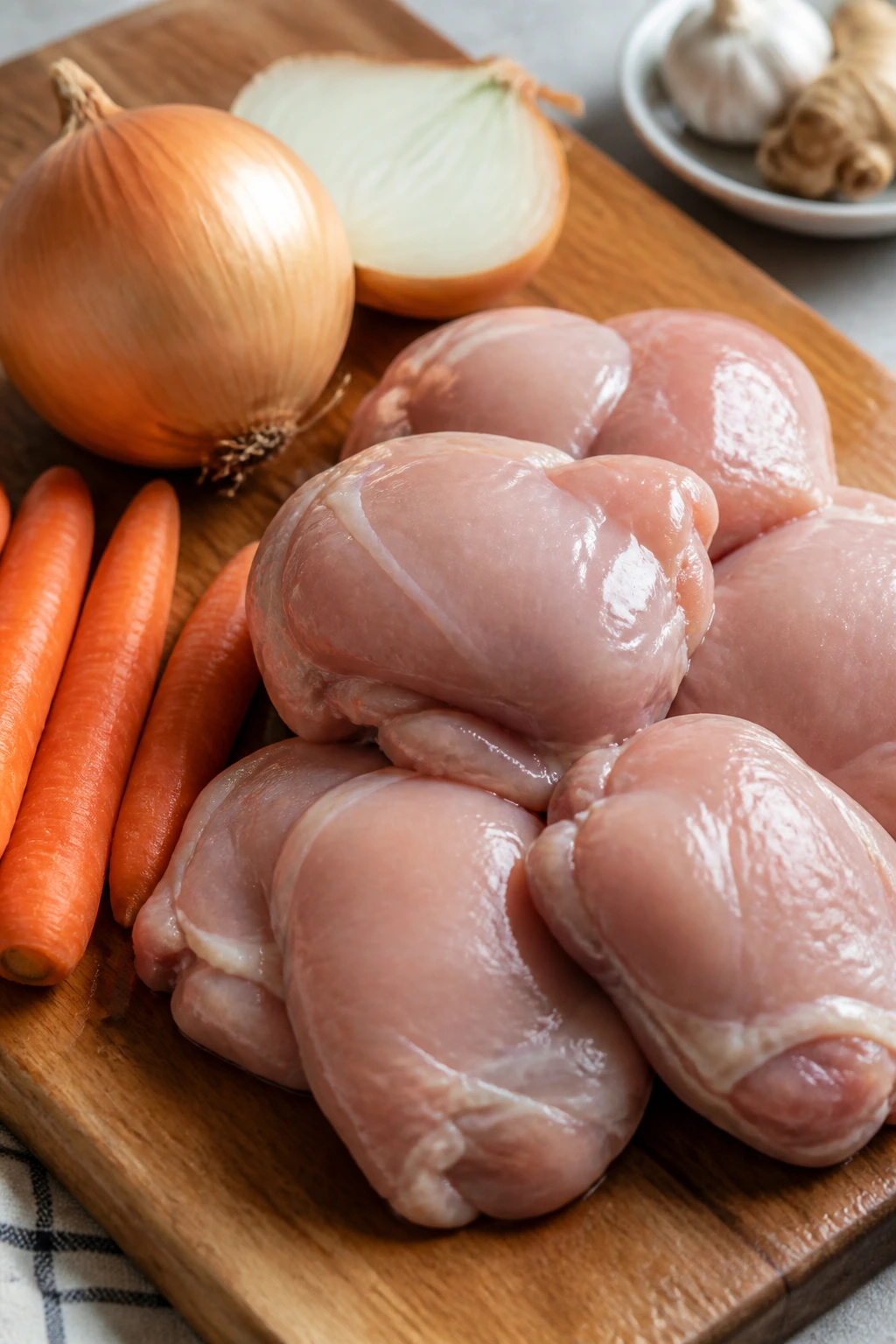
- 2 pounds boneless, skinless chicken thighs, trimmed of loose fat
- 1 medium yellow onion, sliced into 1/2-inch half-moons
- 2 medium carrots, peeled and sliced into 1/4-inch rounds
For the Sauce:
- 1/2 cup low-sodium soy sauce
- 1/4 cup honey
- 1/4 cup hoisin sauce
- 1/2 cup low-sodium chicken broth
- 2 tablespoons rice vinegar
- 1 tablespoon toasted sesame oil
- 4 cloves garlic, minced
- 1 tablespoon fresh ginger, finely grated
- 1/2 teaspoon freshly ground black pepper
- 1/2 teaspoon crushed red pepper flakes, optional
To Finish:
- 2 tablespoons cornstarch
- 3 tablespoons cold water
- 2 green onions, thinly sliced
- 1 tablespoon toasted sesame seeds
If you want the short version: chicken thighs, onion, carrots, a salty-sweet sauce, and a cornstarch finish. That’s the whole thing.
Why Each Ingredient Pulls Its Weight
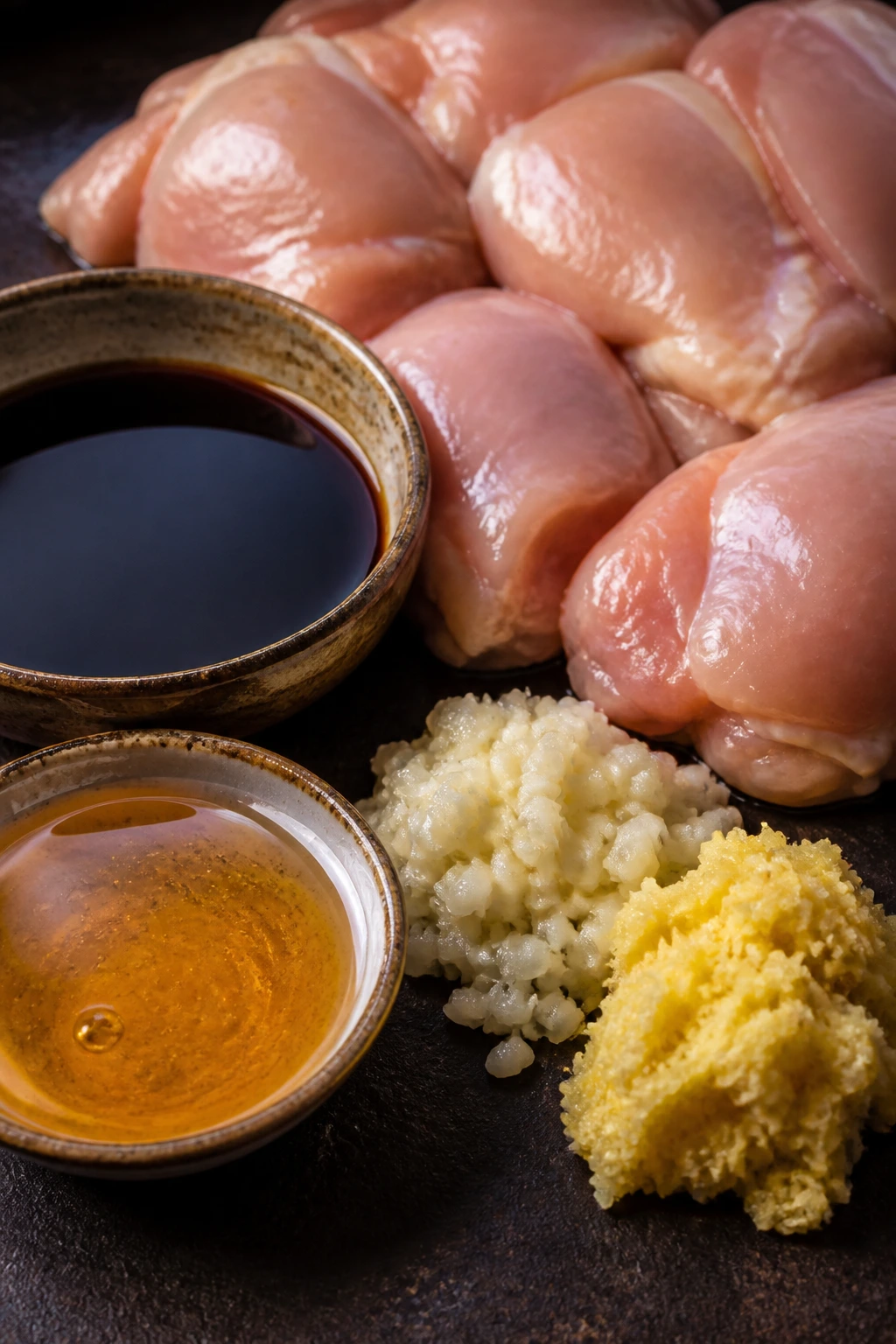
Chicken thighs
What to use: 2 pounds boneless, skinless chicken thighs, trimmed of loose fat.
Preparation: Leave them whole unless they’re unusually large, in which case you can cut the biggest pieces in half so they fit more evenly in the slow cooker.
Substitutions: Boneless chicken breasts can work, but check them early and expect a drier texture if they stay in the pot too long. You can also use boneless skinless chicken tenderloins, though they need a shorter cook time and a gentler hand.
Tips: Thighs are the engine of this recipe. They hold moisture through long heat, and they shred or slice cleanly once they’ve had time to relax in the sauce.
The sauce base
What to use: 1/2 cup low-sodium soy sauce, 1/4 cup honey, 1/4 cup hoisin sauce, 1/2 cup low-sodium chicken broth, 2 tablespoons rice vinegar, and 1 tablespoon toasted sesame oil.
Preparation: Whisk until the honey disappears and the sauce looks glossy rather than streaked. That small move matters more than people think, because unmixed honey tends to sink and cook unevenly.
Substitutions: Tamari works for gluten-free cooking. If you don’t have hoisin, a mix of extra soy sauce and a spoonful of brown sugar can get you in the neighborhood, though it won’t be as thick.
Tips: Use low-sodium soy sauce here. The slow cooker traps moisture, so salt does not evaporate the way it would in a skillet, and regular soy sauce can run too salty after hours of heat.
Aromatics and vegetables
What to use: 1 medium yellow onion, 2 medium carrots, 4 cloves garlic, and 1 tablespoon fresh ginger.
Preparation: Slice the onion into half-moons so it softens into the sauce. Cut the carrots into 1/4-inch rounds; thinner slices go soft too fast, and thicker ones can stay stubborn if your cooker runs cool. Grate the ginger finely so it disappears into the glaze instead of floating around in strands.
Substitutions: Red onion works if that’s what you’ve got. Ground ginger can stand in for fresh in a pinch—use 1 teaspoon—but the flavor is flatter and less lively.
Tips: Fresh garlic and ginger matter here because both are buried under long heat. Jarred garlic can taste dull after hours, and coarse ginger pieces can feel fibrous in the finished sauce.
The finishers
What to use: 2 tablespoons cornstarch, 3 tablespoons cold water, 2 green onions, and 1 tablespoon toasted sesame seeds.
Preparation: Mix the cornstarch with cold water in a small bowl until perfectly smooth. Slice the green onions right before serving so they stay crisp and bright.
Substitutions: Arrowroot powder can replace cornstarch if needed, but use a little less. If you like heat, extra red pepper flakes or a spoonful of chili crisp can stand in as the final accent.
Tips: The cornstarch slurry is not optional if you want a proper glaze. Slow cookers don’t evaporate much liquid, so the sauce needs a little help at the end to become clingy instead of thin.
The Tools That Make the Job Easy
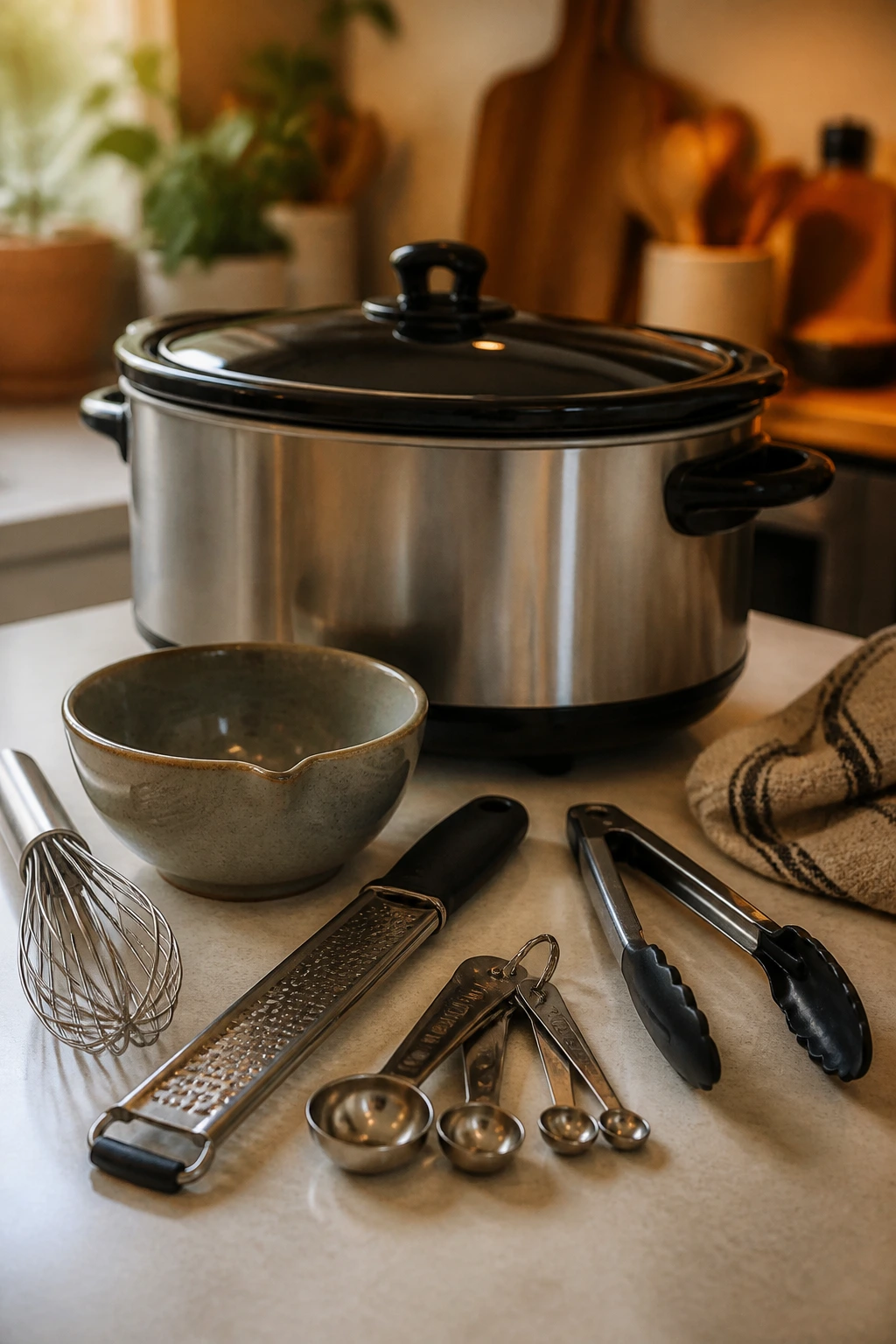
- 5- to 6-quart slow cooker: Large enough for 2 pounds of chicken and the sauce without crowding the insert.
- Whisk: Useful for dissolving the honey and keeping the sauce smooth before it goes in.
- Microplane or fine grater: The best way to turn ginger into a fine paste and keep it from stringing through the sauce.
- Measuring cups and spoons: You want the sweet-salty balance to stay exact, not drift.
- Tongs or a large serving spoon: Helpful for moving the chicken out before thickening the sauce.
- Small bowl: Needed for the cornstarch slurry.
- Two forks, optional: Handy if you want to shred the chicken before serving.
- Rice cooker or medium saucepan, optional: Not part of the chicken itself, but very useful for getting the rice timing right.
How to Cook It Without Hovering
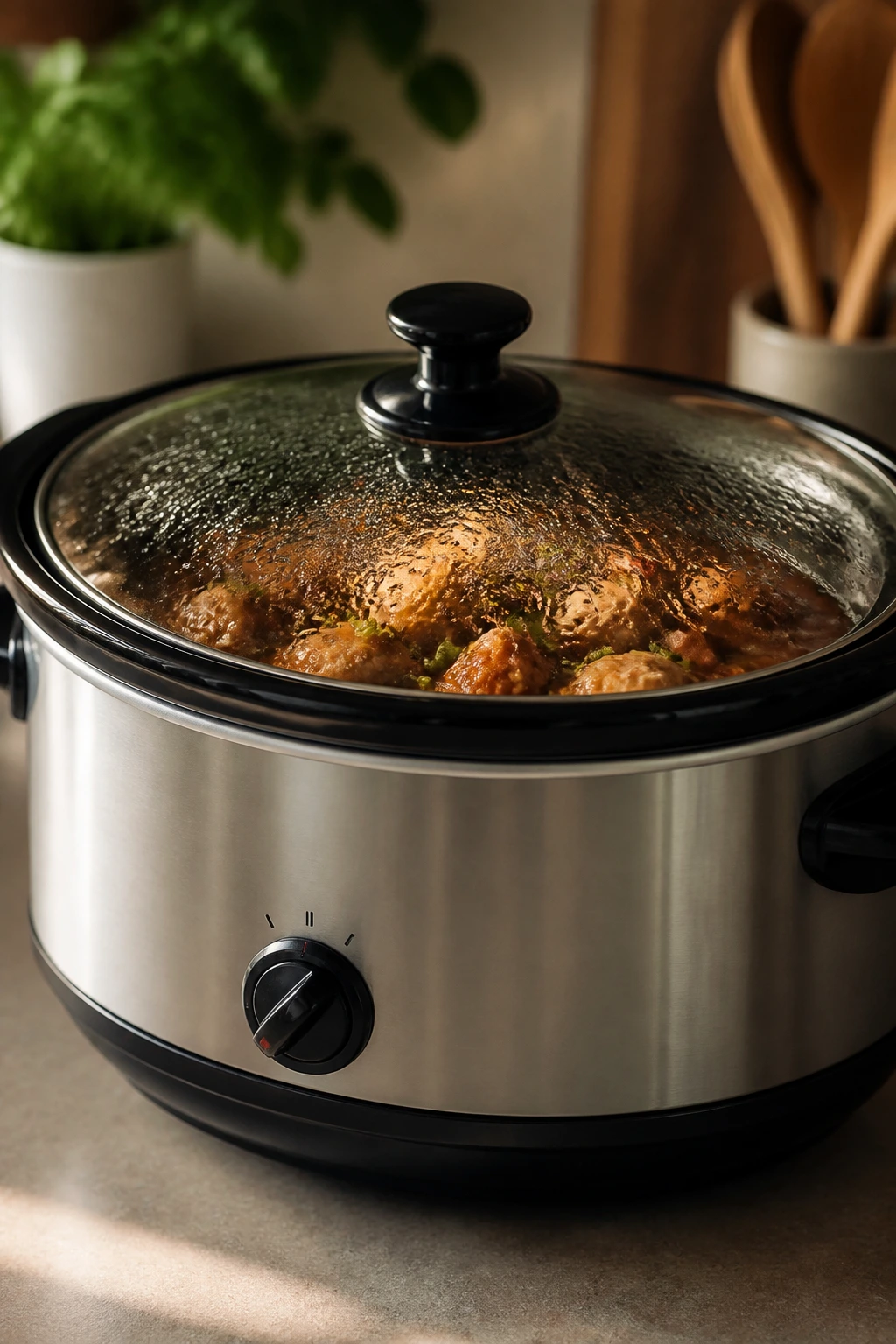
Prep the pot
-
Lightly coat the insert of a 5- to 6-quart slow cooker with nonstick spray or a thin wipe of neutral oil.
-
Add the sliced onion and carrots to the bottom of the cooker. They act like a little rack and keep the chicken from sitting flat against the insert.
-
Nestle the chicken thighs on top of the vegetables in as even a layer as you can manage. Don’t cram the pot past the fill line; slow cookers need room for heat and steam to move.
Mix the sauce
-
In a medium bowl, whisk together the soy sauce, honey, hoisin sauce, chicken broth, rice vinegar, sesame oil, garlic, ginger, black pepper, and red pepper flakes, if using. Keep whisking until the mixture looks smooth and glossy, not separated.
-
Pour the sauce over the chicken, making sure some of it runs down through the onions and carrots. Cover with the lid.
-
Cook on Low for 4 to 5 hours or High for 2½ to 3 hours, until the chicken reaches 165°F at the thickest part and gives easily when pressed with tongs. The meat should feel soft, not firm or springy.
Thicken and finish
-
Transfer the chicken to a plate. If you want shredded pieces, pull it apart now with two forks. If you prefer whole thighs, leave them intact and keep them warm under loose foil.
-
In a small bowl, whisk the cornstarch and cold water until smooth. Stir the slurry into the hot liquid in the slow cooker, then cover and cook on High for 10 to 15 minutes until the sauce turns shiny and thick enough to coat the back of a spoon.
-
Return the chicken to the pot and turn it through the sauce. Taste a spoonful. If it needs a brighter finish, add a small splash of rice vinegar. If it tastes too concentrated, loosen it with 1 to 2 tablespoons of warm water.
-
Scatter the green onions and sesame seeds over the top right before serving.
If you want the sauce extra clingy, leave the lid off for the last 5 minutes. That tiny bit of evaporation makes a bigger difference than another spoonful of cornstarch.
How to Serve It
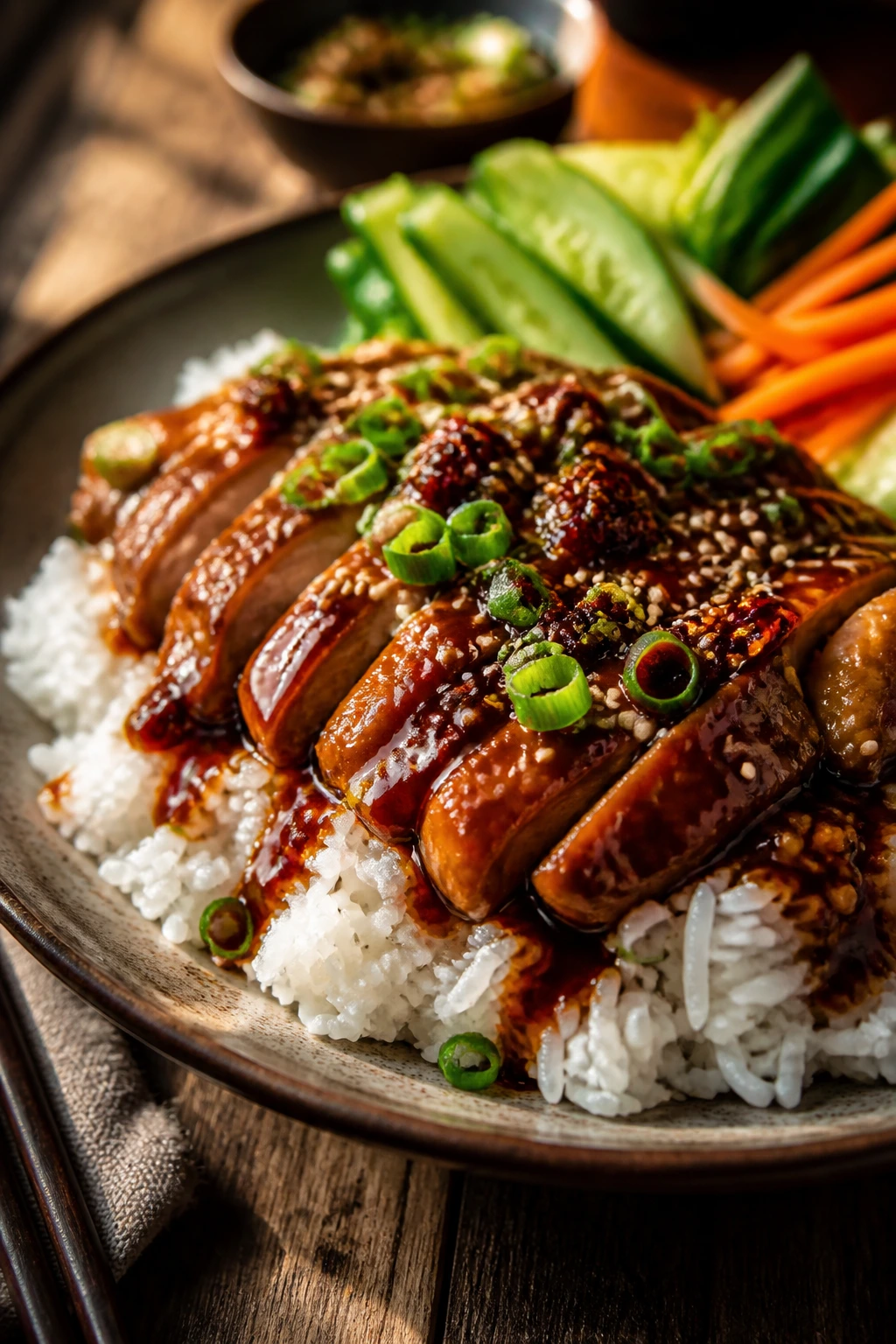
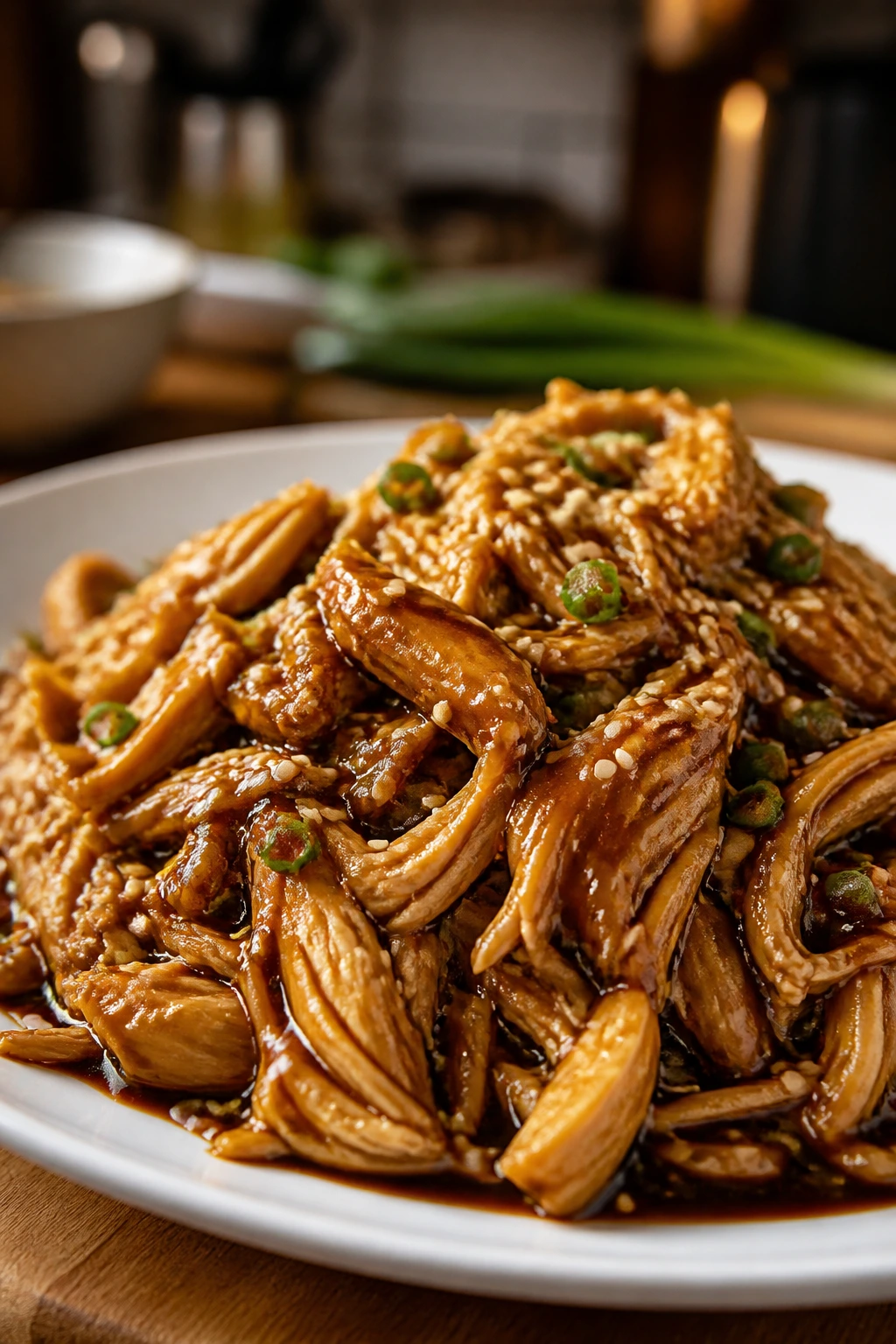
Presentation: Spoon the chicken and its glossy sauce over a mound of hot jasmine rice so the sauce can run into the grains instead of pooling at the edges of the bowl. Finish with the green onions and sesame seeds, and if you like a little heat, a few drops of chili crisp or sliced fresh chile on top look and taste right.
Accompaniments: Steamed broccoli, bok choy, snap peas, or a simple cucumber salad all work because they bring crunch and freshness next to the sauce. Noodles are a fine swap for rice, but choose something that doesn’t fight the glaze—lo mein noodles, ramen noodles, or rice noodles all do the job.
Portions: Six servings is realistic here, with about 1 to 1½ cups of chicken and sauce per person plus rice. If you’re feeding bigger appetites, stretch it with extra rice and a vegetable side rather than piling more chicken into the cooker.
Beverage Pairing: Unsweetened green tea is my first pick because it cuts through the salt and honey cleanly. A cold lager or sparkling water with lime also works if you want something sharper and more refreshing.
For lunch the next day, pack the rice separately if you can. The sauce is thick enough to stay where it should, and the chicken reheats more evenly that way.
Small Moves That Improve the Bowl
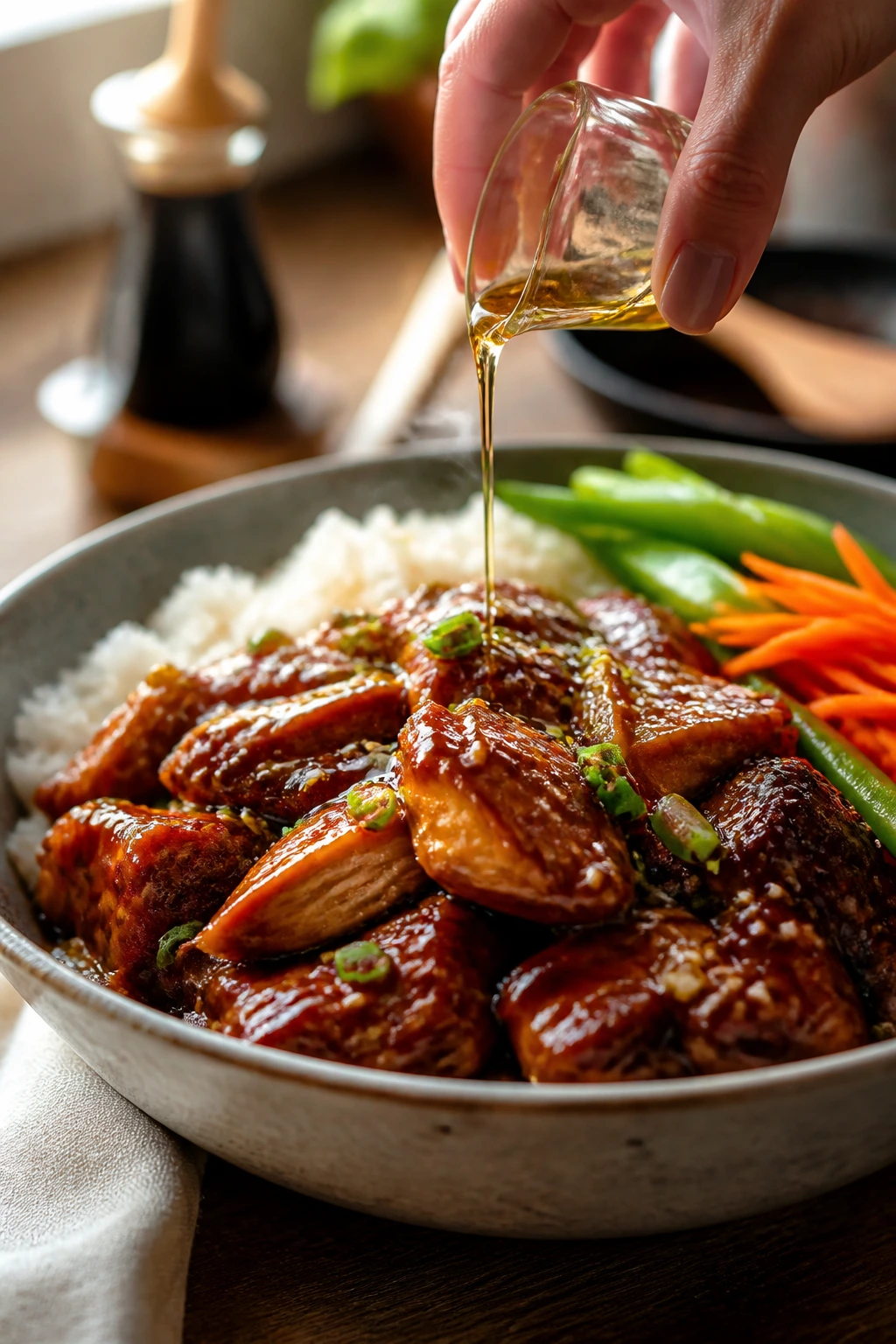
Flavor Enhancement: Stir in a teaspoon of rice vinegar and a few drops of toasted sesame oil at the end, after the sauce has thickened. Both flavors fade if they’re cooked too long, and the final splash makes the bowl taste brighter without turning it sour.
Time-Saver: Mix the sauce the night before and keep it in a jar in the fridge. In the morning, all you need to do is dump the onions, carrots, chicken, and sauce into the cooker. That’s the kind of shortcut that actually saves time because it removes a messy step, not just a minute or two.
Texture Move: If you want firmer vegetables, keep the carrots in the 1/4-inch range and skip delicate add-ins until the end. Thin bell pepper strips, snow peas, or broccoli florets should go in during the last 20 to 30 minutes, or they’ll collapse into the sauce and lose all their snap.
Cost-Saver: Buy chicken thighs in the family pack and freeze them in 2-pound portions. This recipe hides no flaws, which is exactly why thighs make sense here: they’re cheaper than breast meat and better suited to a long braise-style cook.
Heat Control: If your slow cooker runs hot, use the Low setting and check the chicken at the 3½-hour mark. Some machines are more like a quiet simmer, some are nearly a low oven, and that difference matters enough to turn a good pot dry if you ignore it.
Mistakes That Make It Flat or Dry
-
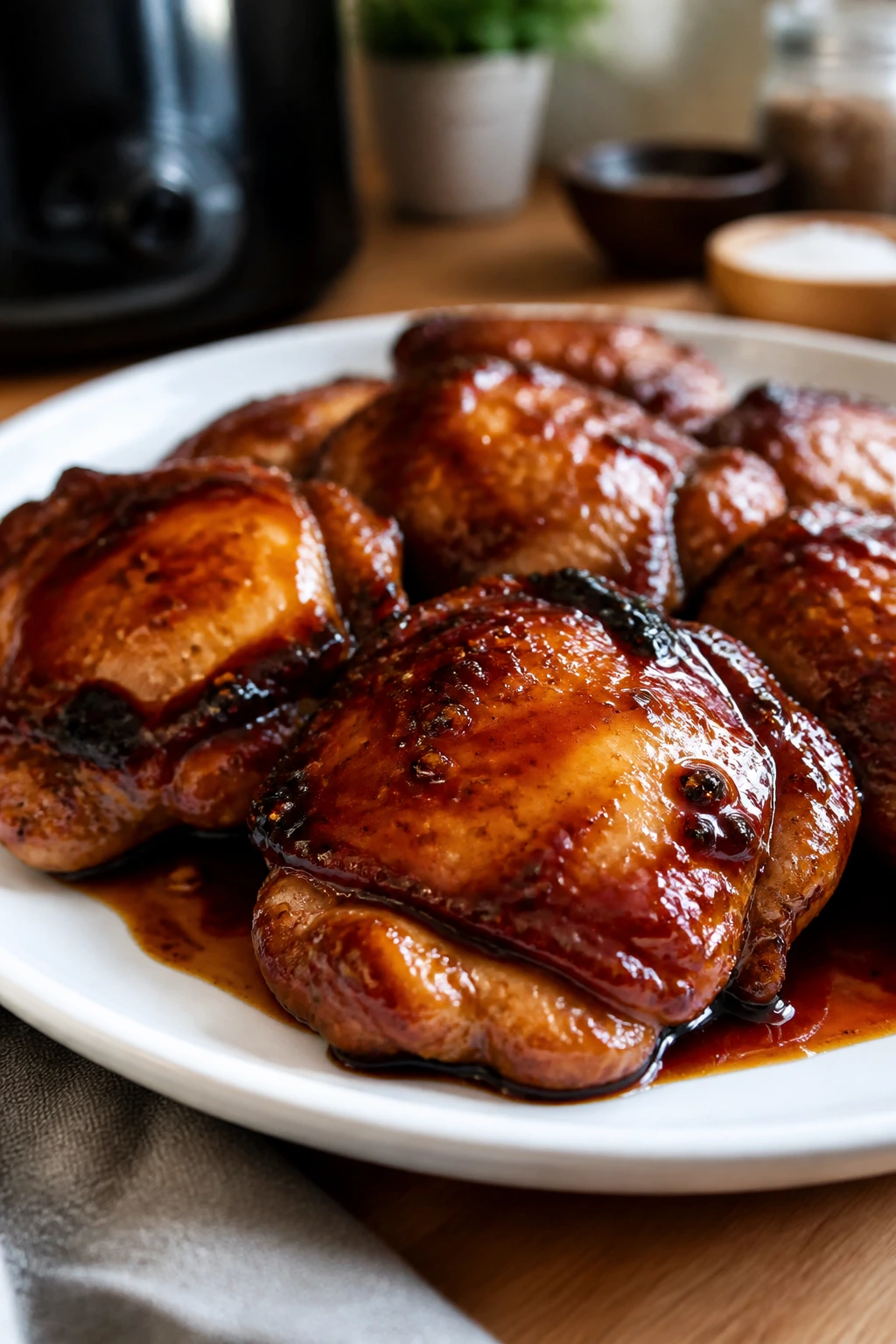
Using chicken breasts and forgetting about them: The meat turns chalky around the edges and tastes tired by the time dinner rolls around. Use thighs, or if you insist on breasts, start checking early and pull them the second they hit 165°F.
-
Pouring in the cornstarch dry: You’ll get pale lumps that never fully disappear. Mix the starch with cold water first, then stir it into hot liquid and give it a few minutes to thicken properly.
-
Choosing regular soy sauce without adjusting anything else: The sauce can go harsh and salty after hours in the cooker. Low-sodium soy sauce gives you room to finish the dish with rice vinegar or a little extra honey if it needs balance.
-
Adding quick-cooking vegetables at the start: Broccoli, snow peas, and bell peppers turn soft and swampy long before the chicken is done. Hold them back until the final 20 to 30 minutes, or keep them for a side dish.
-
Peeking every half hour: Every lift of the lid steals heat, and slow cookers hate that. The pot may seem idle, but opening it repeatedly can stretch the cook by a surprising amount.
-
Skipping the final taste test: Soy, hoisin, and honey can change a little depending on the brand. If the sauce needs more brightness, salt balance, or heat, the last minute is when you fix it—not after it’s on the rice.
Variations That Still Taste Like the Same Dish
Sticky Sesame Chicken
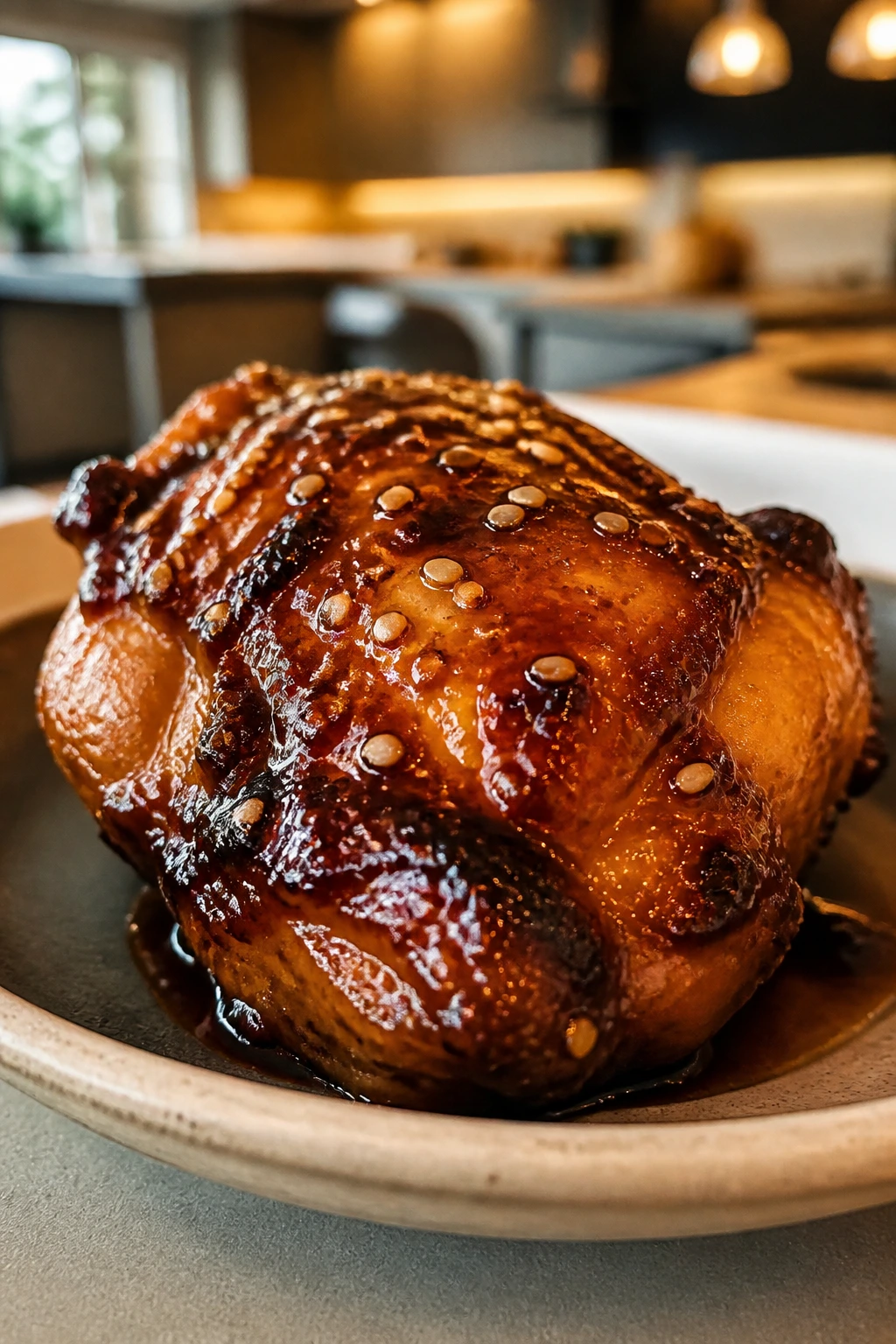
Add an extra tablespoon of hoisin and reduce the broth to 1/3 cup for a thicker, clingier glaze. This version leans sweeter and darker, which works well if you want the sauce to coat noodles instead of soaking into rice.
Orange-Ginger Chicken
Replace half the broth with fresh orange juice and add 1 teaspoon of orange zest at the end. The citrus lifts the sauce and makes the ginger feel sharper without making the dish taste like dessert.
Chili-Garlic Heat
Stir 1 to 2 tablespoons of chili garlic sauce into the sauce mix and cut the honey back to 3 tablespoons. The result is still balanced, but the sweetness steps back and the heat hangs around longer.
Gluten-Free Tamari Bowl
Use tamari instead of soy sauce and choose a gluten-free hoisin if you can find one. Rice vinegar is already a safe fit here, so the rest of the recipe barely changes, which is one of the reasons I like this style of dish for mixed crowds.
Veg-Heavy Dinner
Add 8 ounces of sliced mushrooms with the onion and carrots, then tuck in a handful of snap peas during the last 20 minutes. The mushrooms soak up the sauce and make the pot feel fuller without changing the flavor profile much.
Storage, Reheating, and Make-Ahead Notes
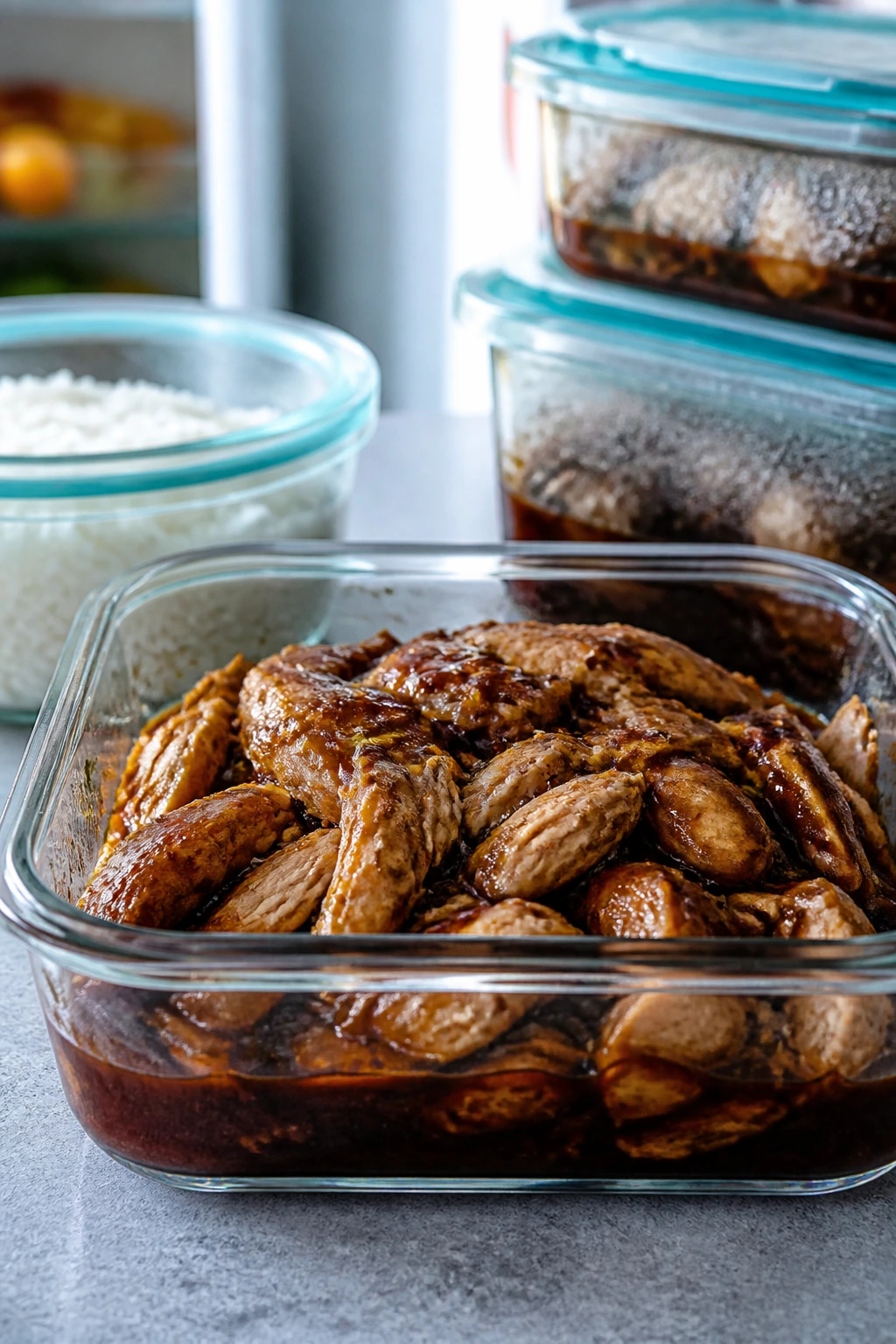
Let the chicken cool for a bit before packing it up, but don’t leave it out all evening. Once the pot is no longer steaming hard, move the chicken and sauce into shallow containers within 2 hours so it drops through the safe cooling zone quickly. Rice should go into its own container; if you store it with the sauce, it turns sticky in the wrong way.
In the refrigerator, this keeps well for 3 to 4 days. The flavor actually settles in overnight, which is why the leftovers feel rounder and less sharp the next day. The carrots soften a little more, so if you love a bit of bite, save some fresh cucumber or scallions for serving and add them cold.
For the freezer, pack the chicken and sauce together in freezer-safe bags or airtight containers for up to 2 months. Flattening a freezer bag makes thawing easier and saves space. Rice can be frozen too, but the texture is better if you cook it fresh on the day you serve the chicken.
Reheat gently. On the stovetop, use low heat with a splash of water or broth and stir until the sauce loosens and the chicken is steaming through. In the microwave, cover loosely and heat in 60-second bursts at 50 to 70 percent power, stirring once or twice so the sauce doesn’t tighten at the edges. If the glaze looks thick and sticky after chilling, that’s normal—just loosen it with a spoon or two of warm water.
You can also prep parts ahead. Slice the onion and carrots a day in advance, and whisk the sauce together up to 2 days ahead. The actual slow-cooker cook is still the easy part, which is the whole point.
Questions People Ask Before They Cook It
Can I use chicken breasts instead of thighs?
Yes, but the timing changes. Breasts can dry out during a long slow cook, so start checking them early—around 2½ hours on Low or 1½ to 2 hours on High. Pull them once they hit 165°F and feel just firm enough to slice.
Do I need to brown the chicken first?
No. Browning adds a little extra color and a deeper savory note, but this recipe doesn’t depend on it. The sauce has enough backbone from soy, hoisin, ginger, and garlic to stand on its own.
Can I start this with frozen chicken?
I wouldn’t. Slow cookers heat too slowly for frozen meat to be the safest choice, and the chicken can sit in the wrong temperature range for too long. Thaw it in the refrigerator overnight or in a sealed bag under cold water before cooking.
My sauce seems thin. How do I fix it?
Remove the chicken, stir in the cornstarch slurry, and cook on High for 10 to 15 minutes with the lid on. If it still needs more body, leave the lid off for a few minutes so some steam can escape. A second small slurry can help, but add it gradually.
What vegetables can I add without making the pot mushy?
Carrots and onions are safe from the start. Mushrooms also hold up well, though they soften. If you want broccoli, snap peas, or bell peppers, wait until the last 20 to 30 minutes so they stay recognizable instead of dissolving into the sauce.
Can I double the recipe for a bigger group?
Yes, if your slow cooker has room. Keep the fill line in mind, and don’t go past about two-thirds full or the food may cook unevenly. When doubling, the cook time may stretch by 30 to 45 minutes on Low, so check the chicken for tenderness rather than relying only on the clock.
What should I serve with it if I don’t want rice?
Lo mein noodles, rice noodles, or even mashed potatoes work in a pinch, though rice is the cleanest match. A crunchy vegetable side helps no matter what starch you choose, because the sauce likes a little contrast.
How can I make it less sweet?
Cut the honey down to 2 tablespoons and add an extra tablespoon of rice vinegar at the end. That shifts the sauce toward salty and tangy without stripping away the glossy finish.
A Final Bowl Worth Repeating
There’s a reason this kind of dinner keeps finding its way back into home kitchens. The ingredients are familiar, the method is forgiving, and the payoff is bigger than the effort looks on paper. That’s a good deal, especially on a night when you want dinner to be handled before you even think about the table.
Keep the thighs, keep the sauce balanced, and don’t rush the thickening step. Do that, and you get a pot of chicken that tastes like it paid attention while you were busy doing everything else.
Tender Slow Cooker Asian Chicken — Recipe Card
Recipe Name: Tender Slow Cooker Asian Chicken
Description: Boneless chicken thighs cook low and slow in a soy-ginger, hoisin, honey, and sesame sauce until they turn tender and easy to shred. A cornstarch finish turns the juices into a glossy glaze that’s built for rice or noodles.
Prep Time: 15 minutes
Cook Time: 4 to 5 hours on Low or 2½ to 3 hours on High
Total Time: 4 hours 15 minutes on Low, or about 3 hours 15 minutes on High
Course: Dinner, Main Course
Cuisine: Asian-inspired
Servings: 6 servings
Calories: About 330 kcal per serving
Ingredients
For the Chicken and Vegetables:
- 2 pounds boneless, skinless chicken thighs, trimmed of loose fat
- 1 medium yellow onion, sliced into 1/2-inch half-moons
- 2 medium carrots, peeled and sliced into 1/4-inch rounds
For the Sauce:
- 1/2 cup low-sodium soy sauce
- 1/4 cup honey
- 1/4 cup hoisin sauce
- 1/2 cup low-sodium chicken broth
- 2 tablespoons rice vinegar
- 1 tablespoon toasted sesame oil
- 4 cloves garlic, minced
- 1 tablespoon fresh ginger, finely grated
- 1/2 teaspoon freshly ground black pepper
- 1/2 teaspoon crushed red pepper flakes, optional
To Finish:
- 2 tablespoons cornstarch
- 3 tablespoons cold water
- 2 green onions, thinly sliced
- 1 tablespoon toasted sesame seeds
Instructions
-
Lightly coat the slow cooker insert with nonstick spray or a thin wipe of neutral oil.
-
Add the onion and carrots to the bottom of the slow cooker, then nestle the chicken thighs on top.
-
Whisk together the soy sauce, honey, hoisin sauce, chicken broth, rice vinegar, sesame oil, garlic, ginger, black pepper, and red pepper flakes, if using.
-
Pour the sauce over the chicken, cover, and cook on Low for 4 to 5 hours or High for 2½ to 3 hours, until the chicken reaches 165°F.
-
Transfer the chicken to a plate. Whisk the cornstarch with the cold water until smooth.
-
Stir the slurry into the slow cooker juices, cover, and cook on High for 10 to 15 minutes until the sauce is glossy and thick enough to coat a spoon.
-
Return the chicken to the pot, shred or leave whole, and turn it through the sauce.
-
Finish with green onions and sesame seeds, then serve hot over rice or noodles.
Notes: Low-sodium soy sauce keeps the sauce from turning too salty during the long cook. If the glaze seems thin, leave it uncovered for a few minutes after thickening. A splash of rice vinegar at the end wakes the whole bowl up.