



A slow cooker earns its space on the counter when dinner needs to keep moving without you hovering over it. The best versions of that promise are not flashy. They’re a roast that yields to a fork with almost no resistance, a pork shoulder that shreds into glossy strands instead of drying into sawdust, or a pile of chicken thighs that look ordinary at noon and taste like you paid attention all day.
That’s the real appeal of a fall-apart slow cooker meal. The phrase gets tossed around a little too casually, which is a shame, because there’s a precise sweet spot here: enough heat and time to break down collagen, enough liquid to keep the surface from turning leathery, and enough restraint to stop the whole thing from becoming flavorless soup. People often blame the cooker when the problem is the cut of meat, the amount of liquid, or the fact that the lid kept coming off every twenty minutes because someone wanted a peek. That lid matters. A lot.
What makes this style of cooking worth learning is how forgiving it can be once you understand the few things that actually matter. Chuck roast behaves differently from pork shoulder. Chicken thighs are not chicken breasts with a longer nap. And a slow cooker does not care how much you paid for the meat if you picked a lean cut that was never meant to be shredded. Get the right pieces in the pot, season with a little more intent than a one-sentence recipe card usually suggests, and the rest gets almost uncannily easy.
Why This Method Earns Its Keep
Collagen is the whole show: Tough cuts like chuck, shoulder, brisket, and thigh meat are loaded with connective tissue that softens over hours at low heat, which is why they turn silky instead of stringy.
You do not need a flood of liquid: A slow cooker traps steam, so 1 to 2 cups of broth, sauce, or cooking liquid is often enough for a 3- to 4-pound roast.
The timing is forgiving, but not unlimited: A roast can stay tender for a while on warm, yet lean meat will cross from juicy to dull if you ignore it for half a day too long.
The flavor keeps building while you’re gone: Onions soften, garlic mellows, spices bloom, and the cooking liquid picks up browned meat juices until the pot smells far deeper than the ingredient list looked at noon.
It makes weeknight dinners feel calm: Load the pot in the morning, turn the dial, and come back to something that only needs shredding, saucing, and a side dish.
Why Slow Cooker Meat Turns Fork-Tender Instead of Dry
A good slow cooker braise is a small chemistry lesson in a metal pot. The connective tissue in tougher cuts does not melt at grilling temperatures, and it does not magically disappear because you asked nicely. It breaks down slowly, in the presence of moisture, somewhere in the low-and-slow zone where muscle fibers relax and collagen turns into gelatin. That gelatin is what gives shredded beef or pork that glossy, spoon-coating texture instead of the dusty feel you get from a badly cooked lean roast.
Fat matters too, but not in the way people sometimes think. A thick fat cap can help shield the meat a little, and marbling gives you insurance against dryness. What really saves a roast, though, is the balance between heat and time. Too little time and the meat stays tight. Too much heat and the fibers seize before the connective tissue has softened enough. That’s why a slow cooker running on low tends to produce a cleaner shred than one blasted on high for the same chunk of meat.
Lean cuts are the oddballs here. Pork loin, sirloin tip, and chicken breast can be cooked in a slow cooker, sure, but they don’t have the same cushion of fat and connective tissue. They can go from fine to chalky in what feels like no time at all. If you want meat that falls apart in strands, choose the cuts that come with built-in structure. They’re built for the long game.
What that looks like in the pot
The meat should not be swimming like a stew. It should sit in enough liquid to keep the surface moist and help move flavors around, while the steam trapped under the lid does the rest. By the time it’s done, the meat should give way when you lift it with tongs and nudge it with a fork. If you need a knife to make it cooperate, it’s not finished yet.
The Cuts That Shred Cleanly After Hours of Heat
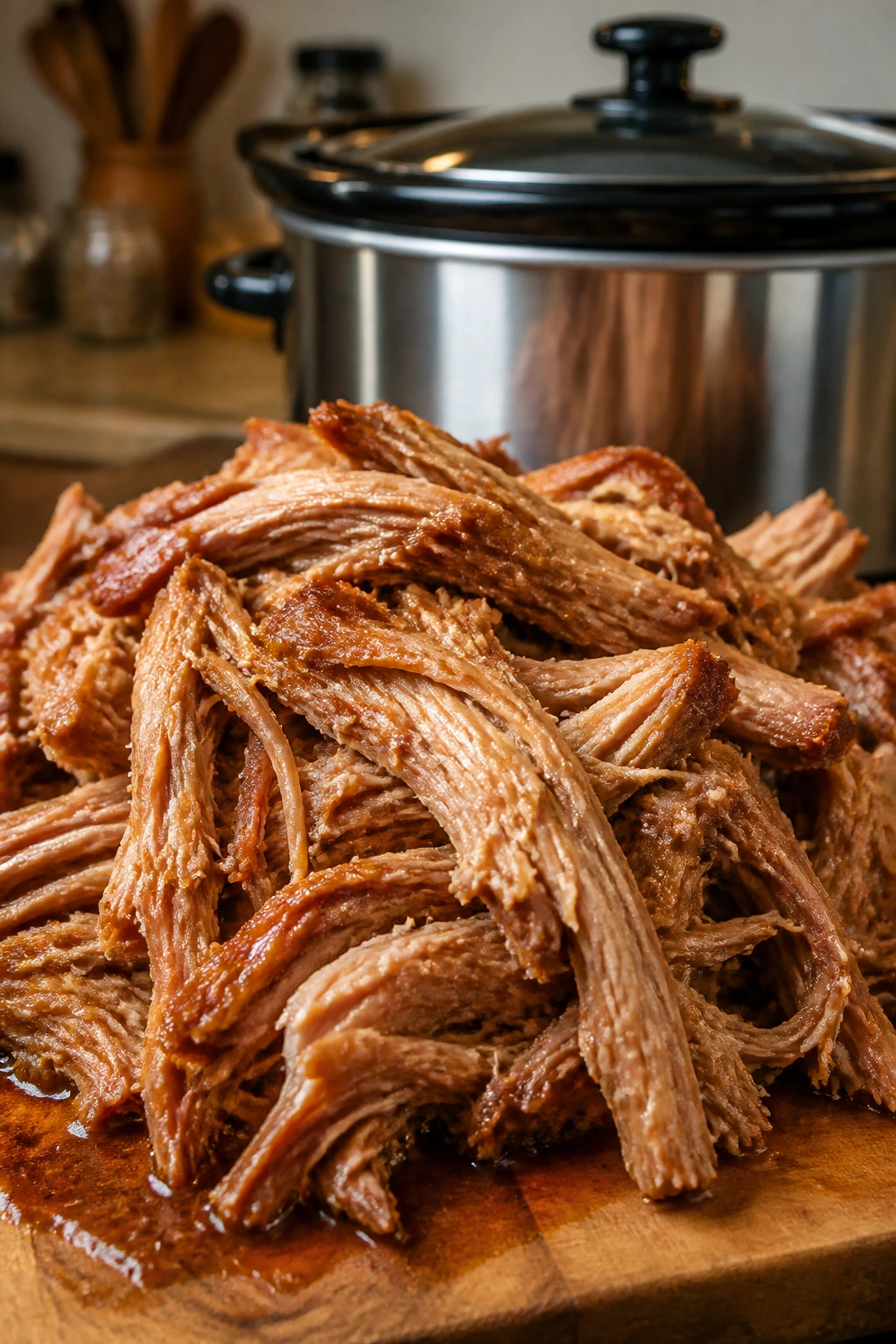
Not every piece of meat wants to be “fall-apart.” Some cuts fight you the whole way. Others practically hand over the fork. Once you know the difference, shopping gets easier and waste drops fast.
Beef: chuck, short ribs, and brisket
Chuck roast is the classic. It has enough marbling and connective tissue to turn lush after 8 to 10 hours on low, and the grain is forgiving when you shred it. A 3- to 4-pound chuck roast is the sweet spot for most home cookers.
Boneless short ribs work, but they’re richer and usually pricier. The texture is silky, almost sticky, and they like a braise with onions, wine, tomato paste, or soy sauce.
Brisket can be excellent when you want slices that barely hold together or a shredded texture with a little more chew than chuck. It likes a longer cook, and it benefits from a sauce or cooking liquid with some acidity.
Pork: shoulder, butt, and country-style ribs
Pork shoulder and pork butt are the stars of the set-and-forget world. They’re fatty enough to stay juicy and tough enough to improve with time. That sounds backwards until you cook them once.
Country-style ribs are a bit of a wildcard because they’re often cut from shoulder rather than the rib section. Check the package label. If they come from the shoulder, they’ll shred nicely; if they’re leaner, they may dry out sooner than you expect.
Poultry: thighs beat breasts by a mile
Bone-in, skin-on chicken thighs are the safest bet for a tender slow cooker chicken. They can run longer without turning stringy, and the bone helps protect the meat from overcooking.
Boneless thighs also work well. Chicken breasts, though, are the part people overtrust. They can be used in a slow cooker for soups or saucy dishes, but if you want that pull-apart texture, thighs are the better choice nearly every time.
Lamb and other rich cuts
Lamb shoulder behaves a lot like pork shoulder. It wants long, slow heat and a savory braising liquid. The result is a strong, rich shred that takes well to rosemary, garlic, tomato, or cumin.
Duck legs and turkey thighs fit the same basic pattern, though they need a bit more attention to fat and seasoning. The common thread is simple: choose the muscles that do actual work. They’re the ones that reward patience.
The Liquid, Seasoning, and Aromatics That Build Real Flavor
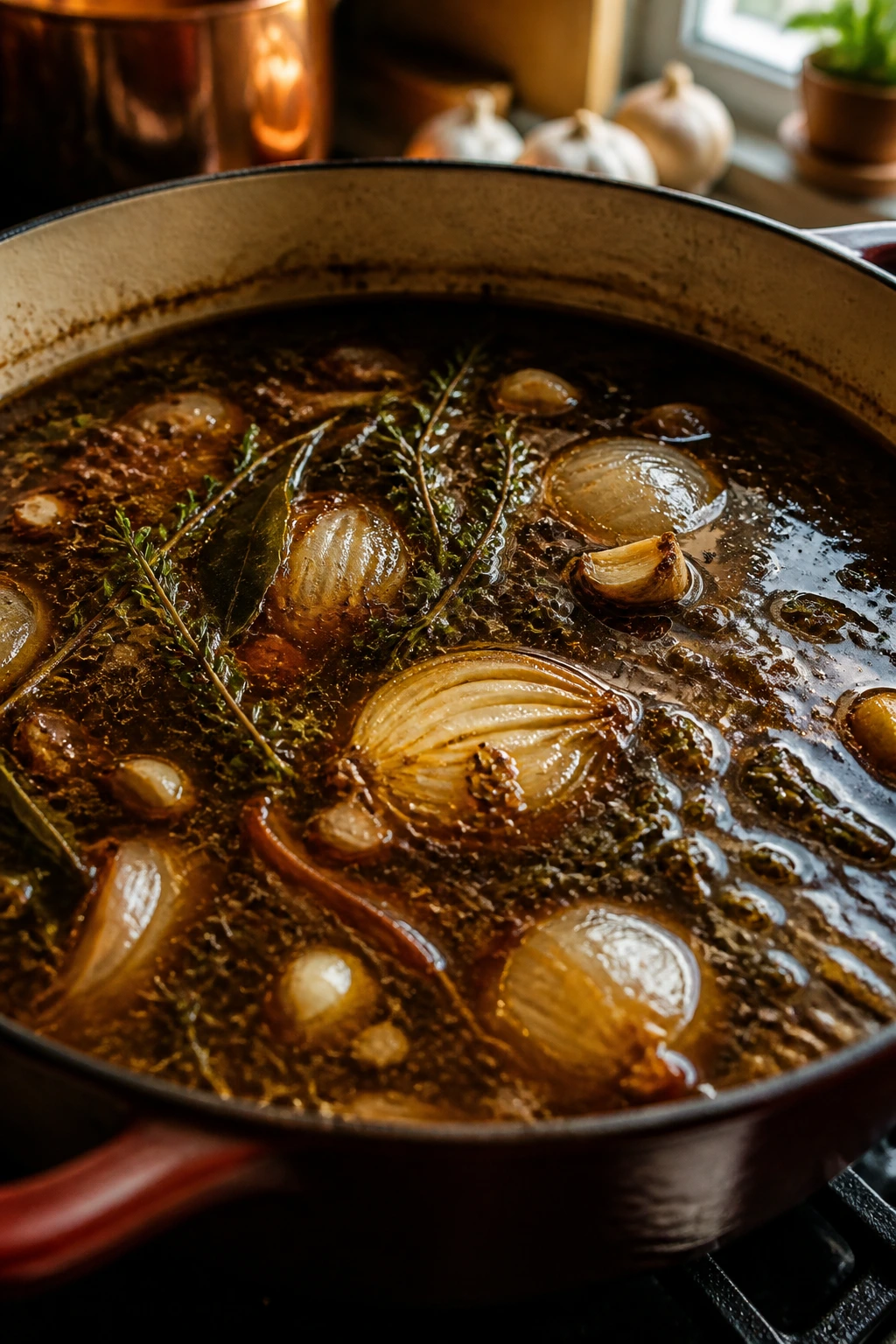
A slow cooker is not a magic flavor machine. If you toss in a roast, a cup of water, and a timid sprinkle of salt, you’ll get soft meat with the personality of cardboard. The liquid and seasonings need to do more than survive the cook; they need to carry the dish.
Start with something savory. Broth works, but stock has a little more body. If you’re cooking beef or pork, a combination of broth and tomato paste gives the cooking liquid a deeper color and a rounder taste. For chicken thighs, broth plus garlic, onion, and a splash of lemon juice or vinegar keeps the pot from going flat.
Salt earlier than people often do. Not absurdly early and not with a heavy hand, but enough that the meat tastes seasoned all the way through by the time it shreds. A useful starting point is about 1 teaspoon kosher salt per pound of meat, adjusted for salted broth, soy sauce, or barbecue sauce already in the mix. Table salt is denser, so use less.
Aromatics are not decoration. Onion slices, smashed garlic, celery, carrots, leeks, ginger, and herbs all change under slow heat. Onions soften into the sauce and practically vanish, which is a good thing. Garlic turns sweeter and less aggressive. Fresh rosemary and thyme survive better than delicate basil or parsley, which should usually go in at the end.
Acid keeps the pot from tasting muddy
A little vinegar, wine, citrus, tomato, or mustard sharpens the finished dish. You do not need much. A tablespoon or two can change the whole feel of the sauce and keep rich meat from tasting heavy. The trick is to use acid for balance, not to make the pot sour. That distinction matters more than most recipes admit.
Watch the liquid level
More liquid does not equal more flavor. It often means the opposite. If you pour in too much broth, the meat steams in a bland bath and the final sauce takes forever to reduce. For a standard 6-quart cooker, 1 to 2 cups of braising liquid is usually enough unless you’re making something meant to be soupy from the start.
How to Load the Pot So the Top Doesn’t Dry Out
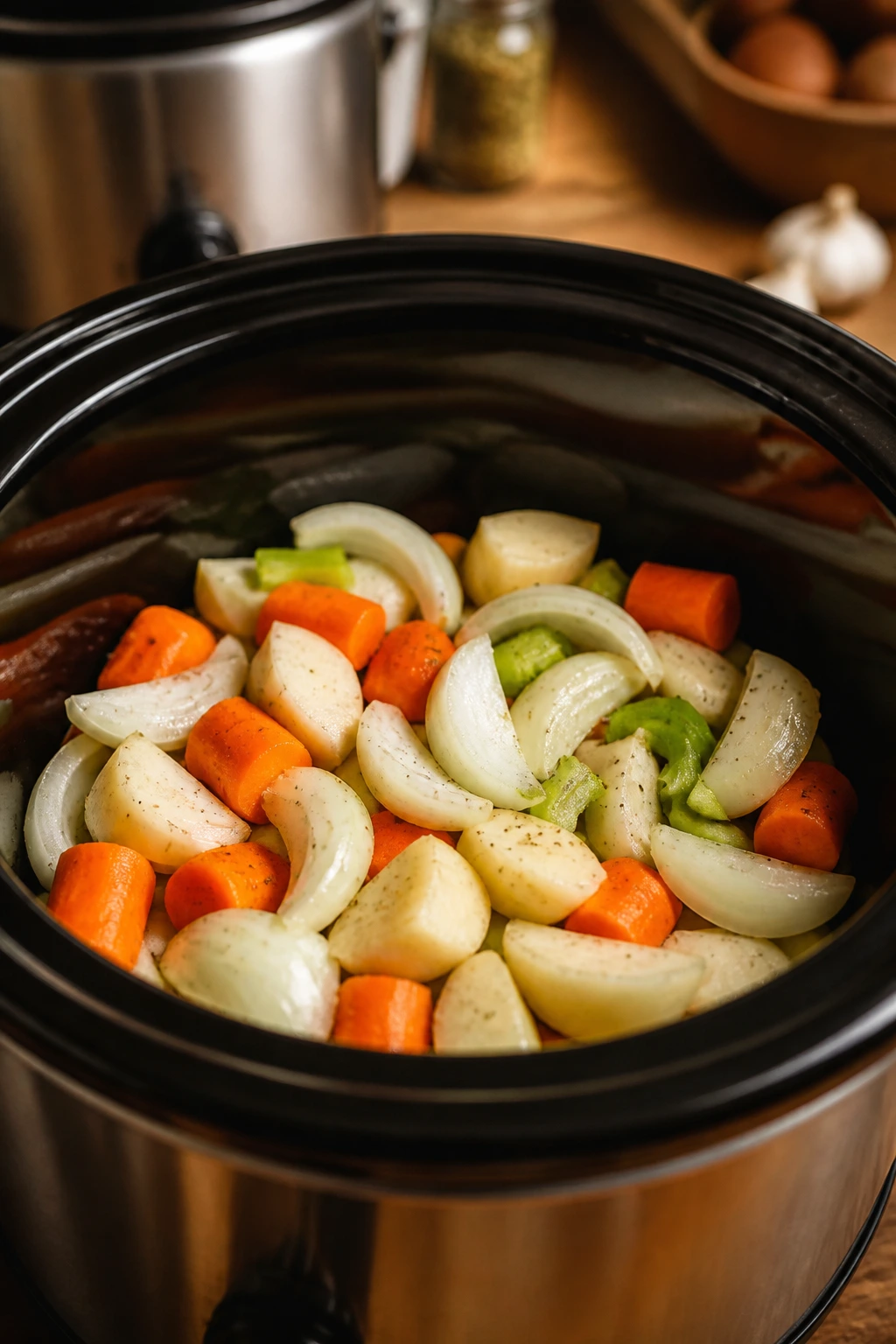
There’s a slightly annoying truth about slow cookers: they don’t heat exactly evenly. The edges and top can run a little drier than the middle, especially in older models that run hot. That’s why layering matters.
Put sturdier vegetables on the bottom if you’re using them. Carrots, onions, celery, potatoes, and parsnips can handle the long cook and help lift the meat slightly above the base of the pot. That matters because the bottom gets the most direct heat. A thin bed of sliced onions works especially well; it keeps the meat from sitting flat on the ceramic insert and turns syrupy by the end.
The meat should fit snugly, not jammed in like a suitcase someone sat on. If there’s a lot of empty space, the cooker has more room to trap steam, which sounds harmless until you realize it can dilute flavor. If there’s too much food, the pot heats unevenly and takes longer to get through the danger zone. Aim for about two-thirds to three-quarters full. That’s the comfortable zone.
Fat cap up or down? People argue about this more than the cooker deserves. In a slow cooker, the difference is smaller than in an oven. If the roast has a fat cap, placing it on top lets some fat baste the surface as it renders. If the roast is oddly shaped, fit it in the way that gives the most even contact with the lid closed and the least exposed surface.
The lid is not a curiosity
Open it only when you need to. Every peek drops the temperature and can add 15 to 20 minutes to the cook. That’s not kitchen folklore. It’s one of those little mechanics that makes dinner late for no good reason. If the recipe smells good and the lid is sealed, leave it alone.
Choosing LOW vs HIGH Without Guessing
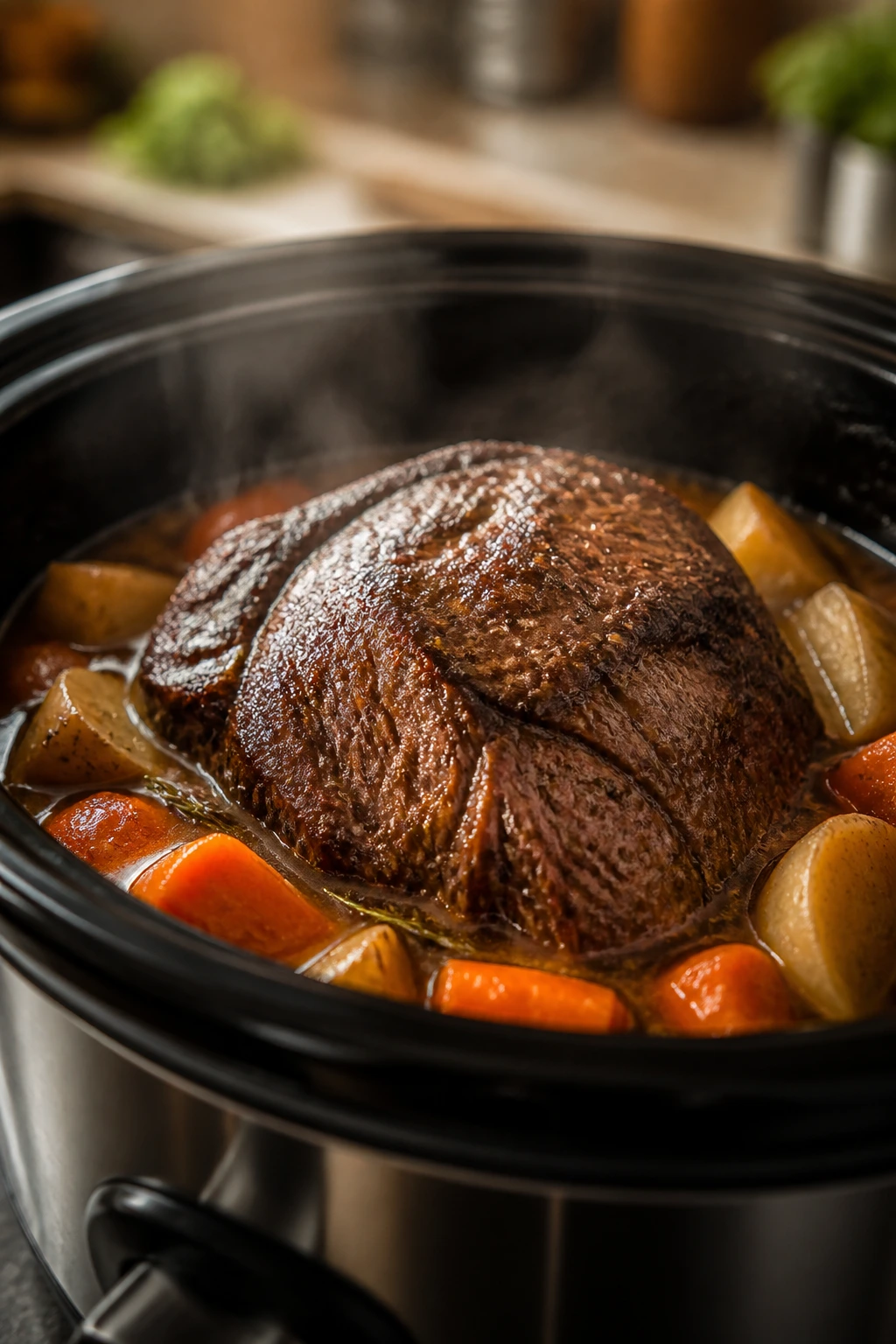
The low setting is not just “for people who have more time.” It gives you a gentler rise in temperature, which is often exactly what connective tissue wants. High can work, but it’s more abrupt. The meat hits hot liquid and steam sooner, and that’s sometimes fine for smaller pieces or thinner cuts, but not always ideal for a thick roast that needs time to surrender.
For a 3- to 4-pound chuck roast, expect about 8 to 10 hours on LOW or 4 to 6 hours on HIGH. Pork shoulder runs in the same general zone, though bone-in pieces can lean longer. Chicken thighs are faster: 4 to 5 hours on LOW or 2½ to 3½ hours on HIGH, depending on size and whether they’re bone-in. Brisket and large lamb shoulder pieces often need the longer side of low heat to get properly soft.
The better cue is texture and temperature, not the clock alone. Beef and pork meant for shredding usually feel best around 195°F to 205°F, where the collagen has broken down enough to pull apart cleanly. Chicken thighs need to hit 165°F for safety, but they often feel more tender closer to 175°F to 185°F because the fibers relax a bit more. That higher range isn’t about safety; it’s about texture.
When high makes sense
Use high if the pieces are smaller, the sauce is already hot, or the cook time really is tight. Cubed pork shoulder for tacos can move faster than a whole roast. Bone-in chicken thighs in sauce can also behave well on high. Still, if you have the time, low is the lane I trust more often. It gives you a larger margin before the meat slips from tender into tired.
A simple doneness test
Fork test first. Temperature second. If the meat resists, it needs more time. If it twists easily and starts to break when lifted, you’re probably there. That’s the point where the connective tissue has done its job and the meat no longer argues with you.
The Finishing Moves That Make It Taste Cooked, Not Just Warm
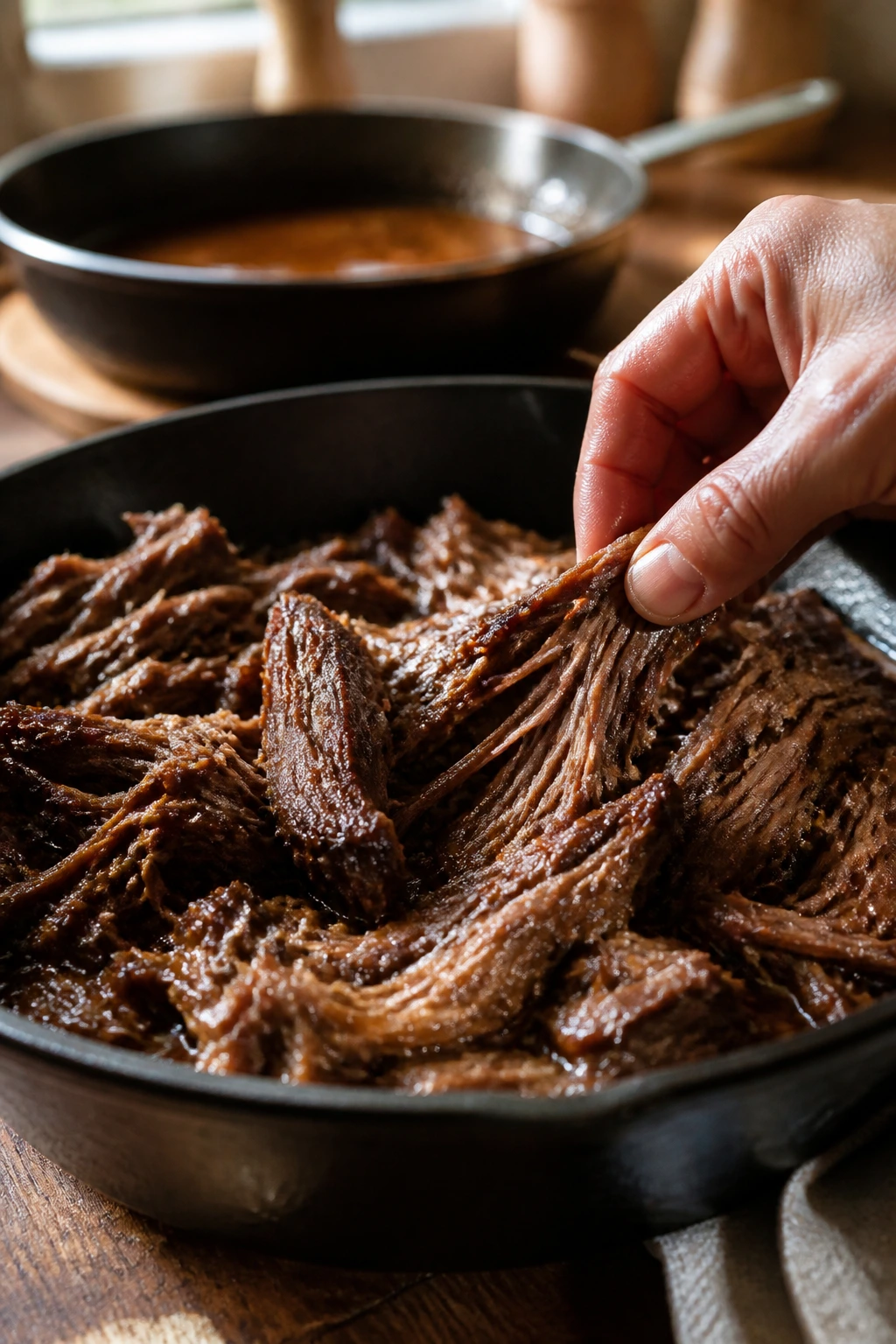
A lot of slow cooker food is technically done and still disappointing. That gap usually closes in the last ten minutes.
Shred the meat while it’s hot, not lukewarm. It falls apart more cleanly, and the fibers separate into nicer strands. Pull out any large pieces of fat or gristle as you go. If you used bone-in meat, remove the bones first, then shred the rest right in the cooker or on a cutting board. I prefer the cutting board if I want a cleaner texture and room to inspect the meat.
Then taste the cooking liquid. If it tastes thin or muddy, don’t serve it as-is. Spoon out some liquid, skim fat from the top if needed, and reduce it on the stove for 10 to 15 minutes until it looks darker and lightly coats a spoon. That one step can make a meal taste like it was planned, not merely survived.
Brightness changes everything
A squeeze of lemon, a splash of vinegar, chopped pickles, fresh herbs, or a little mustard at the end can wake up a heavy braise. Rich meat needs contrast. Without it, the plate tastes sleepy. With it, the same meat suddenly seems twice as savory.
Don’t forget texture
If you’re serving shredded beef or pork on sandwiches, toast the rolls. If it’s going over rice or mashed potatoes, make sure there’s enough sauce to cling but not so much that the whole thing turns soupy. For a roasted, sticky finish, spread shredded meat on a sheet pan, spoon over some reduced sauce, and broil for 3 to 5 minutes until the edges darken. That’s not mandatory. It’s just a very good idea.
How to Serve It Without Drowning the Plate
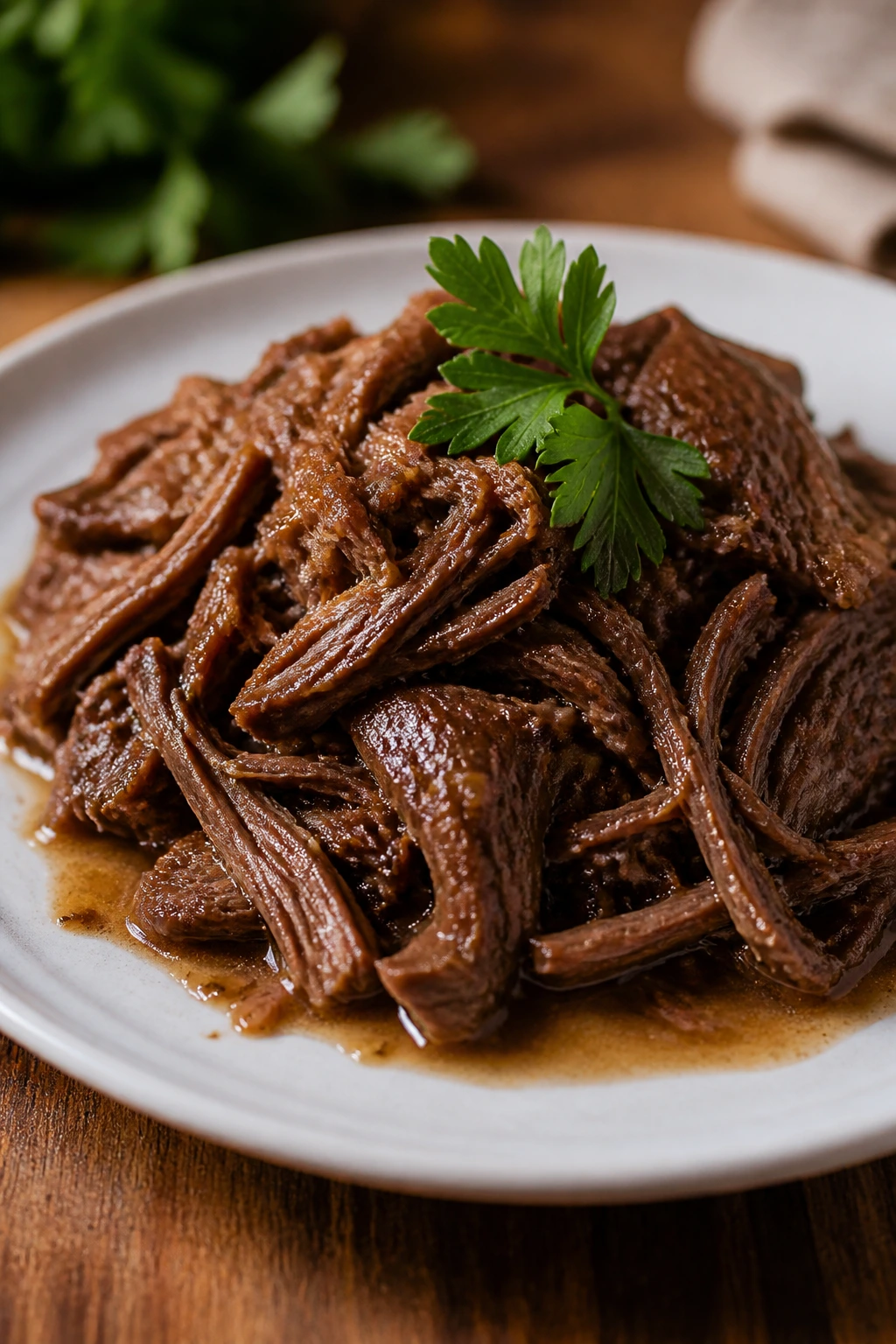
A fall-apart slow cooker meal can go in a few directions, and each one changes the plate in a way that matters. Serve shredded beef on buttery mashed potatoes and the dish feels deep and homey. Pile the same beef onto toasted brioche buns with a sharp slaw and it becomes a sandwich that needs napkins. Put pork shoulder over rice with a spoonful of its reduced sauce and you have something that eats like a bowl dinner without feeling heavy.
Presentation: Keep the meat slightly piled rather than flattened. A loose mound holds sauce better, and the edges catch a little texture if you’ve finished it under the broiler. Fresh herbs on top — parsley for beef, cilantro for pork, dill or chives for chicken — make the plate look awake.
Accompaniments: For beef, think mashed potatoes, egg noodles, polenta, roasted carrots, or crusty bread. For pork, try coleslaw, potato salad, cornbread, pickles, or rice. For chicken thighs, buttered rice, smashed potatoes, green beans, or a crisp salad with a sharp dressing all make sense.
Portions: A 3-pound roast usually serves 6 generously if you’re feeding it with sides, or 4 if it’s piled high on sandwiches. Bone-in chicken thighs land at 2 thighs per person for hungry adults, 1 to 1½ if you’re adding rice or bread. If you want leftovers, cook a touch more sauce than you think you need.
Beverage Pairing: For beef, a dry red wine, stout, or even strong black tea works. For pork, try apple cider, a pale ale, or sparkling water with lime. Chicken thighs with garlic, lemon, or herbs go nicely with iced tea, light white wine, or a crisp lager.
Practical Tips for Better Slow Cooker Results
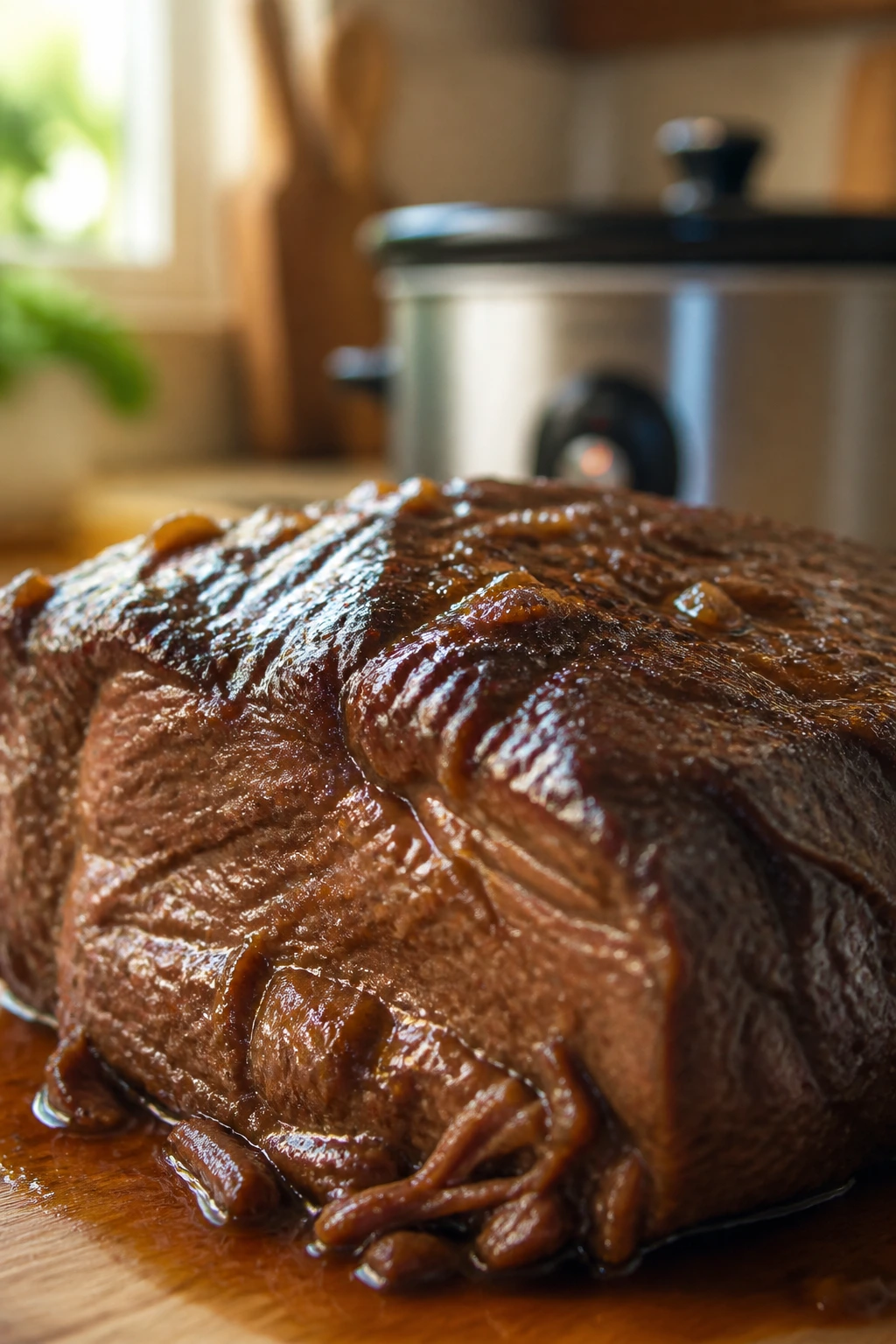
Flavor Enhancement: Brown the meat in a skillet before it goes into the cooker if you have 10 extra minutes. You’re not sealing in juices — that old line needs to retire — but you are creating browned bits that make the sauce taste deeper. A quick sear on two sides is enough.
Time-Saver: Slice onions and garlic the night before and keep them in a sealed container in the fridge. In the morning, you can dump the aromatics straight into the pot and move on with your day without doing knife work before coffee.
Pro Move: If your cooker runs hot, tuck a folded piece of parchment or a silicone mat under the lid edge only if the cooker manual allows it. Better yet, learn the hot spots on your machine and shave 30 to 45 minutes off future cooks. Some slow cookers are polite. Some are not.
Cost-Saver: Use a cheaper cut with enough connective tissue, not a lean “roast” cut that looks tidy on the shelf. Chuck, shoulder, and thighs are often the better buy because they improve with time instead of demanding perfection up front.
Finishing Touch: Add fresh herbs, citrus, or vinegar after cooking. Those ingredients are fragile in a slow cooker and lose brightness if they’re cooked for hours. A small handful of chopped parsley or cilantro at the end can change the whole mood of the dish.
Mistakes That Ruin a Fall-Apart Braise
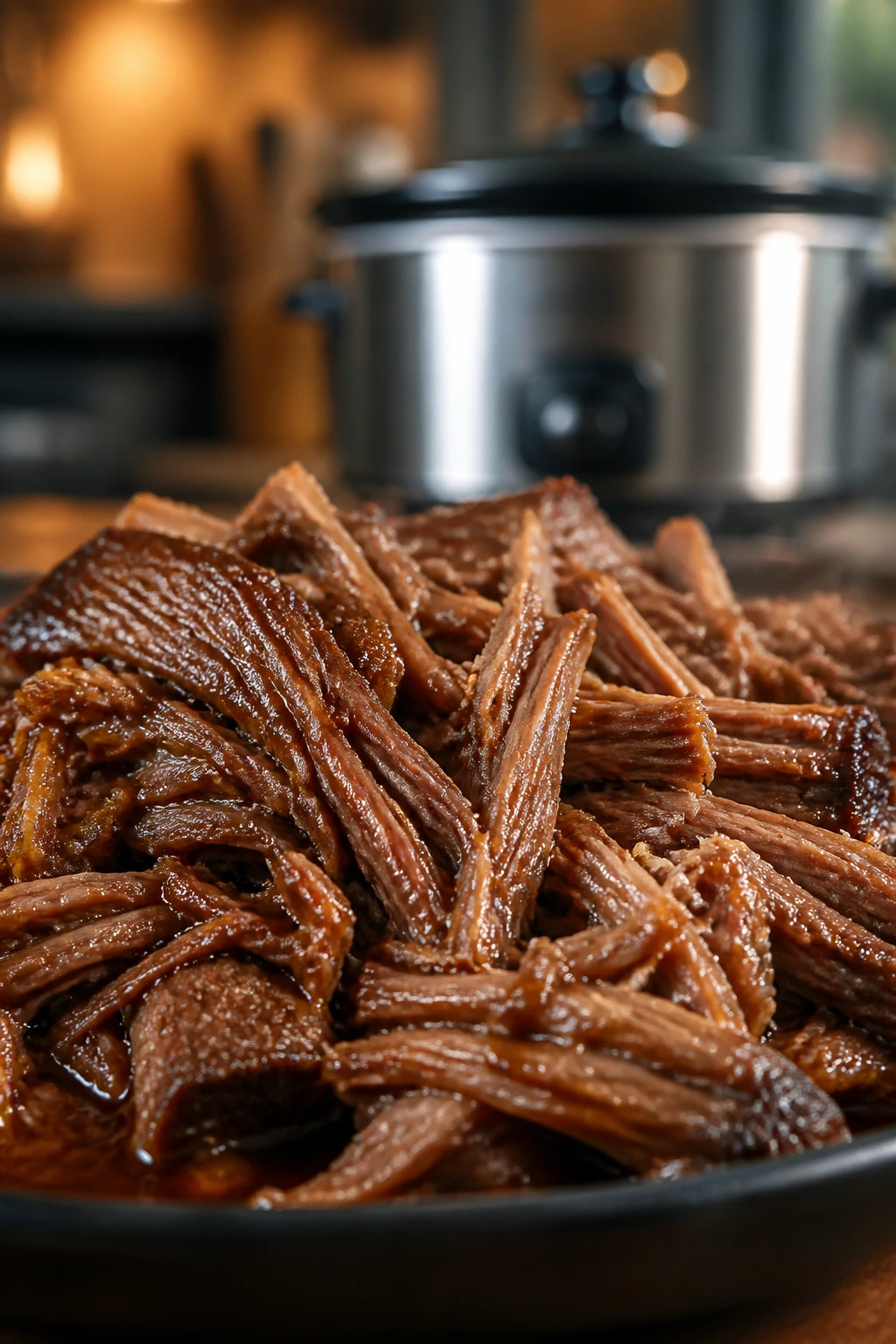
The biggest mistake is using the wrong cut and hoping the cooker will rescue it. A lean roast or chicken breast might look like the obvious choice because it’s tidy and familiar, but the result is often dry, chalky meat that shreds into sadness. Fix it by choosing cuts with connective tissue: chuck, shoulder, thighs, brisket, or lamb shoulder.
Too much liquid is the next one. If the meat is nearly submerged, you’re making a stew whether you meant to or not, and the final flavor can taste washed out. Start with less liquid than you think you need. You can always add more at the end, and reducing the sauce later is easy. Removing extra liquid is not.
Opening the lid too often is a quiet sabotage. The pot loses heat, the cook time stretches, and the top surface can dry out while the rest catches up. Leave the lid alone unless you’re checking toward the end. If the smell has you curious, join the club. Still do not peek every hour.
Salt mistakes show up in the final bite. Underseasoned meat tastes flat even when it’s tender. Overly salty broth, on the other hand, gets worse as it reduces. Season with the end sauce in mind, especially if you’re using soy sauce, packaged broth, barbecue sauce, or canned soup.
Another common trap: stopping too soon
A roast that slices neatly but doesn’t shred yet is not done for this style of cooking. People sometimes pull it early because it looks cooked through, then wonder why the fibers stay tough. Give it more time until the meat gives up easily when nudged with a fork.
And one more thing
Dairy added too early can split or turn grainy over long heat. If your recipe uses cream, sour cream, or cheese, stir it in near the end or after the cooker is off. That keeps the sauce smooth and the texture clean.
Style Changes That Keep the Same Tender Texture
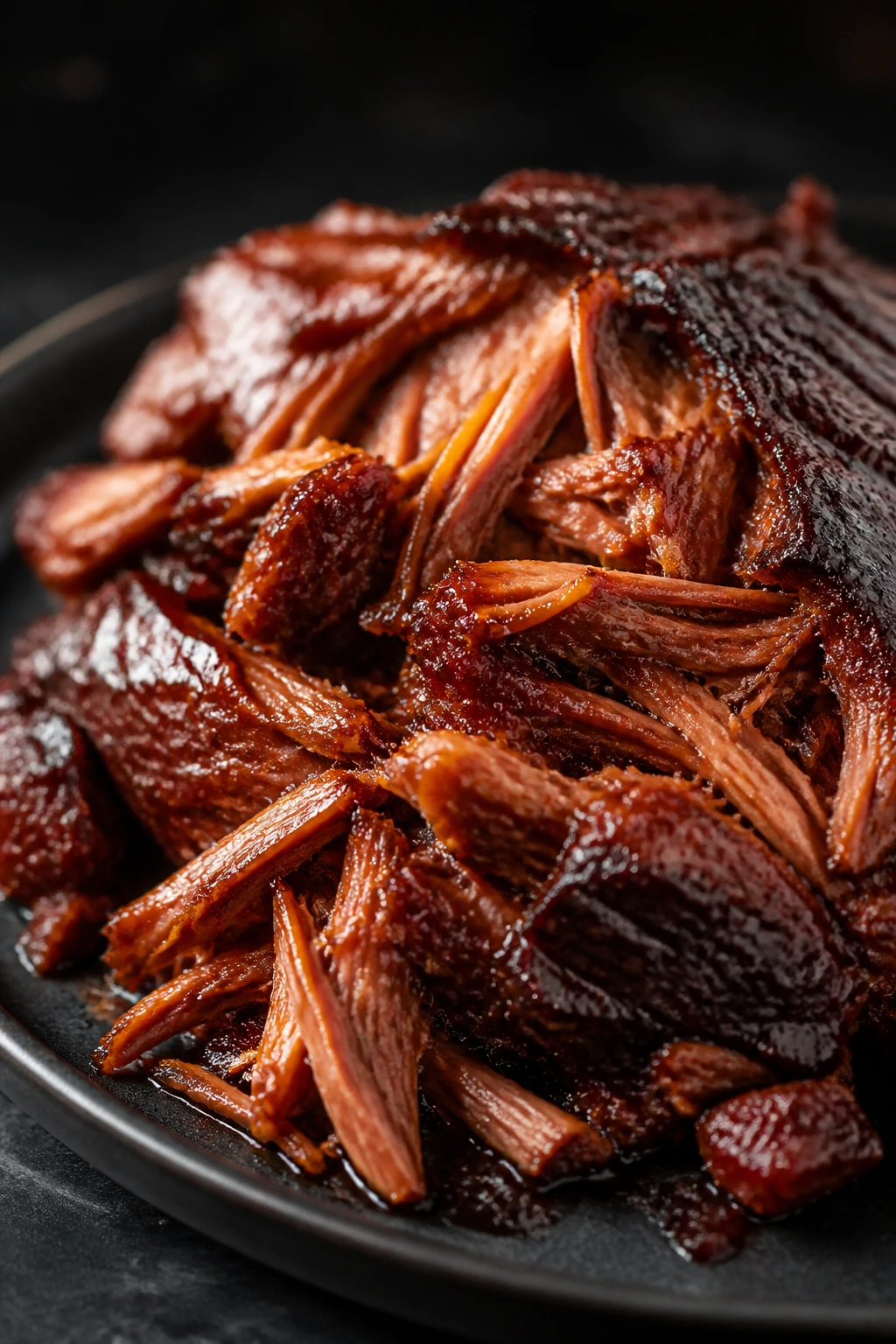
Smoky Barbecue Shred: Use beef chuck or pork shoulder with smoked paprika, tomato paste, a little brown sugar, Worcestershire, and a cup of barbecue sauce. It’s especially good when you want sandwich meat that tastes like it spent the afternoon near a grill, even if it didn’t.
Garlic-Herb Sunday Pot: Lean into rosemary, thyme, onion, garlic, and a splash of white wine or chicken stock. This works well with chicken thighs or lamb shoulder, and it feels quieter than the barbecue route — more pan sauce, less smoke.
Soy-Ginger Braise: Swap in soy sauce, fresh ginger, garlic, sesame oil, and a little rice vinegar. Beef chuck or pork shoulder does well here, and the sauce turns glossy enough to cling to rice or noodles.
Taco Night Fill: Season with cumin, oregano, chili powder, onion, garlic, and a little tomato. Add a jalapeño if you want heat. Shred the meat and finish with lime juice and chopped cilantro so the flavor stays lively in tortillas.
Creamy Chicken Thighs: Cook chicken thighs with broth, garlic, mushrooms, and thyme, then stir in cream at the end. This is the one to make when you want something spoonable over mashed potatoes without the punch of tomato or vinegar.
Tools That Make Slow Cooking Easier
-
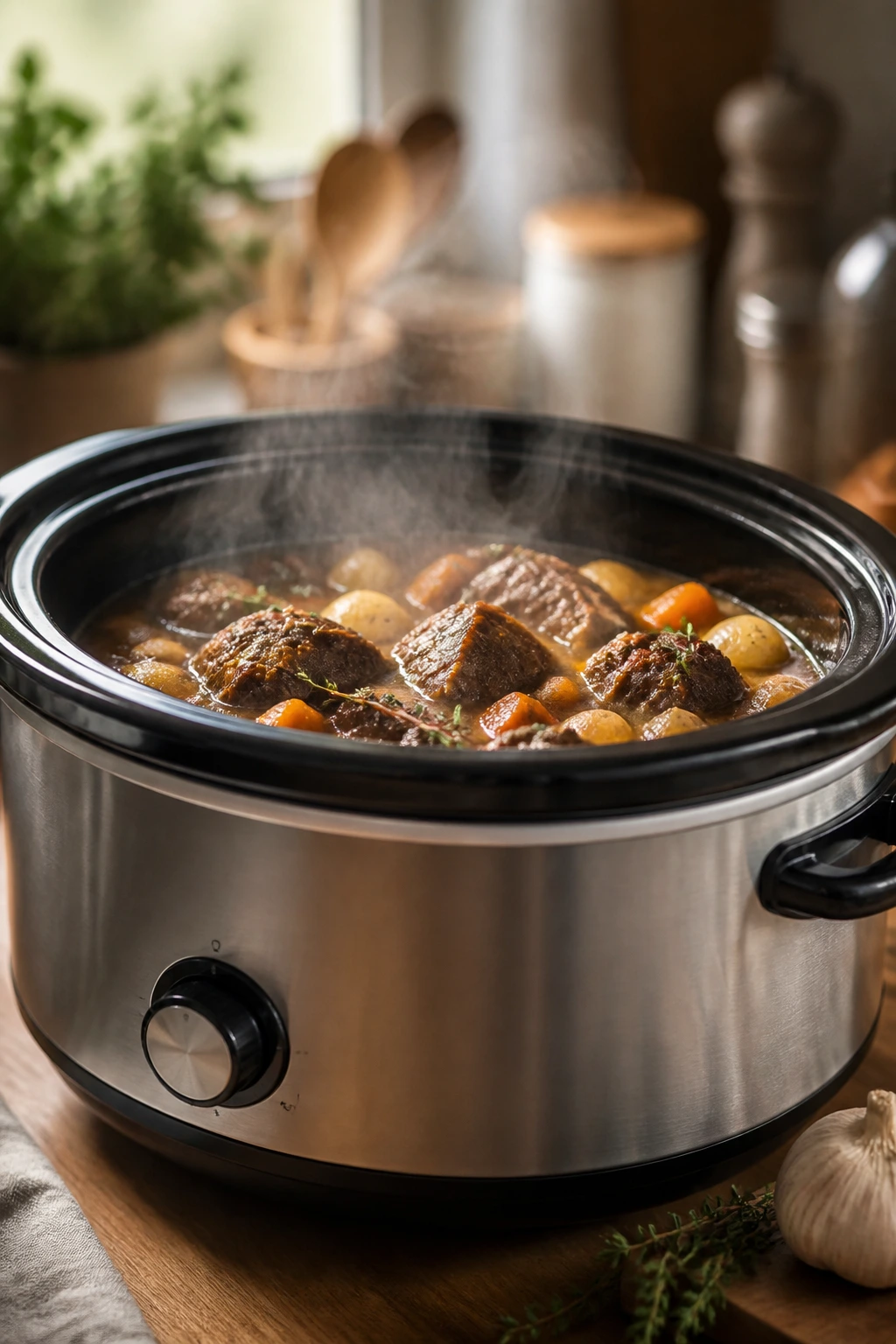
6-quart slow cooker: The most useful size for a family roast or a big batch of shredded meat. A 4-quart can work for smaller jobs, but it fills fast.
-
Instant-read thermometer: The fastest way to stop guessing. It tells you when chicken is safely cooked and when beef or pork has reached shreddable territory.
-
Long-handled tongs: Useful for turning, lifting, and moving a roast without tearing it apart too early.
-
Slotted spoon: Handy when you want to lift meat or vegetables out without hauling half the liquid with them.
-
Measuring cups and spoons: Slow cooker food gets bland when the seasoning is guessed at. Exact amounts help, especially with salt and acid.
-
Large cutting board: Better for shredding than doing it over the pot, where steam and liquid can make a mess fast.
-
Fat separator or spoon: Useful for skimming excess grease from beef and pork braises before you thicken the sauce.
-
A shallow storage container: Lets leftovers cool faster and makes reheating easier the next day.
Make-Ahead, Storage, and Reheating Rules
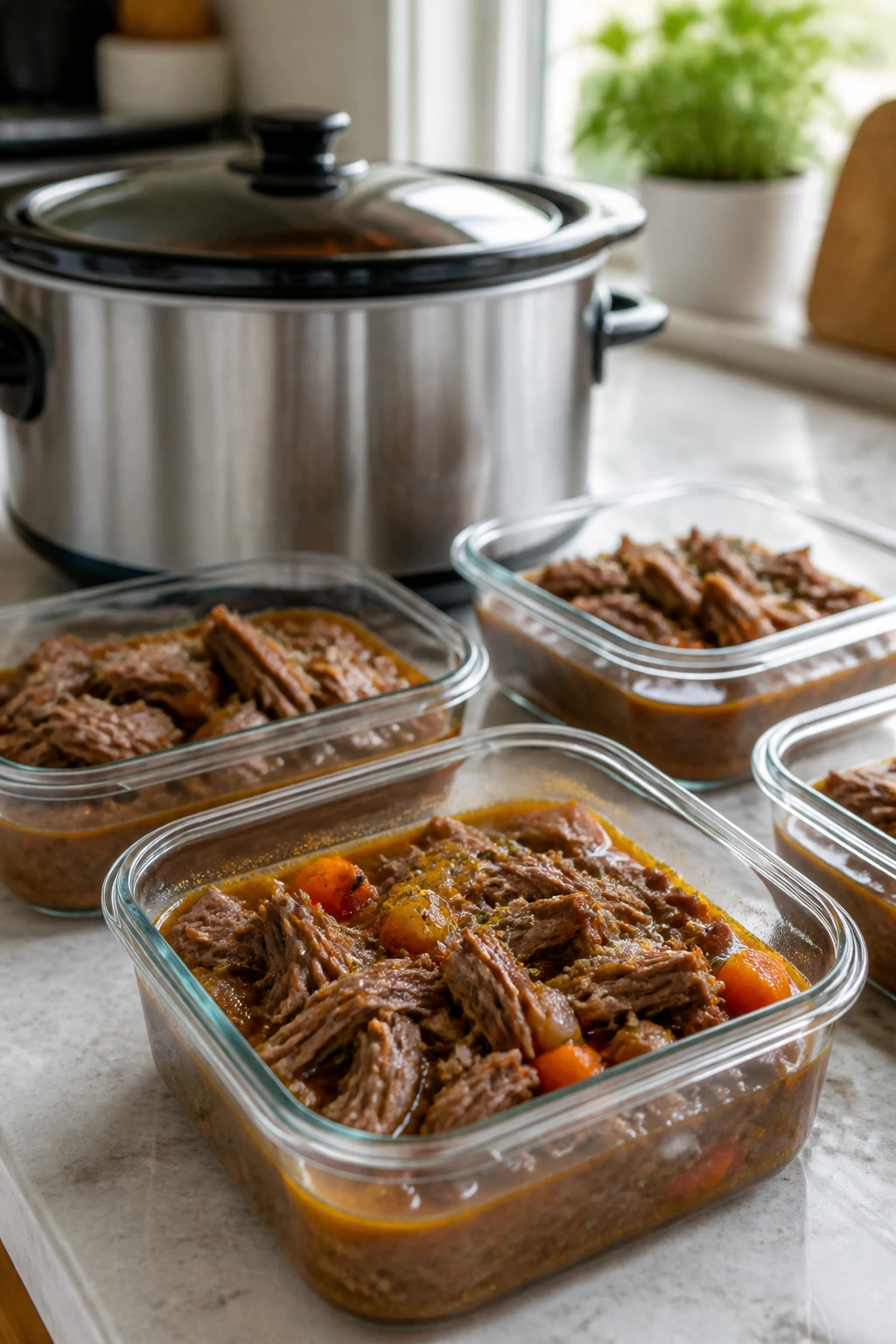
A slow cooker braise keeps well, but it does need a little care once it comes off the heat. Let the food cool for no more than 2 hours at room temperature before moving it into the fridge. If you’ve made a beef or pork dish with a lot of liquid, transfer it into a shallow container so it cools faster and more safely.
In the refrigerator, shredded meat or braised chunks usually keep for 3 to 4 days. Beef and pork often taste even better on day two because the sauce settles and the seasoning spreads through the meat. Chicken is a little less forgiving, so I’d keep chicken dishes on the earlier side of that range.
For the freezer, portion the meat with some sauce into zip-top bags or freezer containers and press out excess air. Flat bags freeze and thaw faster. Up to 2 to 3 months frozen is a good working range for best texture, though the food may still be safe after that if it’s been held properly. The texture starts to slide after a while, especially with chicken.
Reheat gently. On the stovetop, add a splash of broth or water and warm covered over low heat until the meat is hot all the way through. In the microwave, use medium power and stir or turn the food halfway through so the edges do not dry out. If the dish seems a little tight after reheating, a spoonful of its own cooking liquid usually fixes it fast.
One small but useful habit
Store the sauce with the meat, not separately, unless you have a very specific reason to keep them apart. The meat stays moister, the flavor stays where it belongs, and reheating gets simpler. Separate storage sounds neat. It is usually more trouble than it’s worth.
Questions People Ask Before They Walk Away From the Crockpot

Can I use frozen meat in a slow cooker?
I wouldn’t start a large roast from frozen. The cooker warms too slowly through the center, and that makes food safety and texture harder to manage. Thawed meat cooks more evenly and usually shreds better.
Do I need to sear the meat first?
No, but it helps. A quick browning step adds depth to beef and pork, especially if the braise is sauce-light. If you skip it, make sure the seasoning and aromatics are doing enough work to keep the dish from tasting flat.
Why is my meat still tough after hours in the cooker?
It usually needs more time, not less. Toughness often means the collagen has not broken down enough yet. If the meat is dry and tough, though, the cut may have been too lean to begin with.
How much liquid should I use?
For most shredded beef or pork dishes, 1 to 2 cups is enough in a standard 6-quart slow cooker. The pot traps steam, so you do not need to cover the meat completely. Too much liquid can dilute the flavor and turn the dish watery.
Can I cook chicken breasts this way?
You can, but they are not the best choice for a fall-apart texture. Chicken thighs are steadier and more forgiving. If you must use breasts, cook them in sauce and check them early so they don’t turn stringy.
What if the sauce is too thin at the end?
Spoon the meat out, then simmer the liquid uncovered on the stove until it reduces. If you need it thicker fast, whisk a small cornstarch slurry — about 1 tablespoon cornstarch mixed with 1 tablespoon cold water — into the hot liquid and cook for a minute or two.
Can I leave it on warm after it’s done?
For a while, yes. An hour or two on warm is usually fine for a braise, especially if the cooker is not packed to the top. Much longer than that, and the texture starts to fade, so I’d move it to storage once dinner is over.
What size slow cooker should I buy if I only want one?
A 6-quart slow cooker is the most flexible choice. It fits a 3- to 4-pound roast, a batch of chicken thighs, or enough sauce to feed a family without crowding the pot. Smaller cookers are fine for sides or small households, but 6 quarts is the workhorse.
The Quiet Magic of a Pot That Waits for You
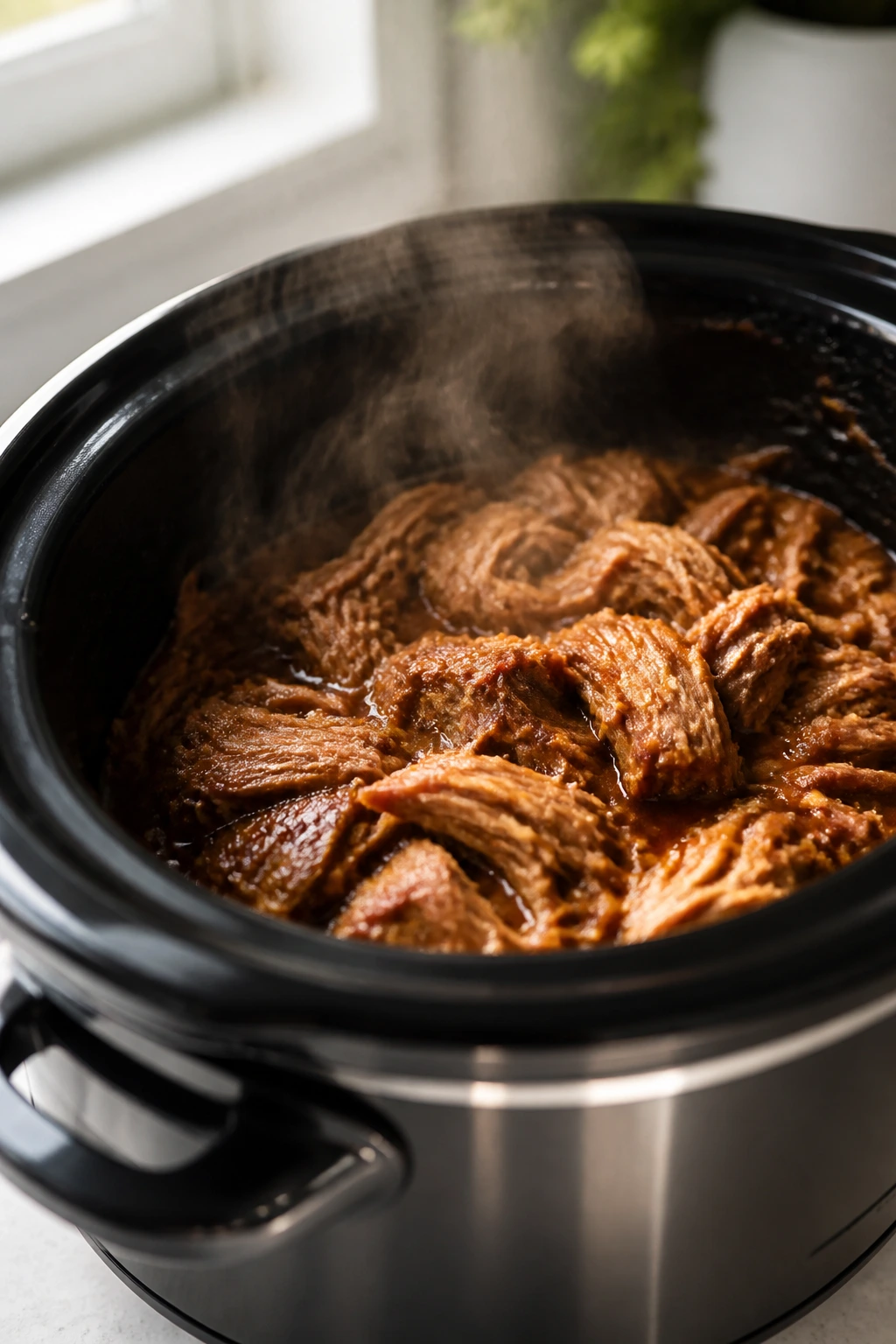
The best slow cooker meals do not ask you to be clever at dinner time. They ask you to pick the right cut, season it with a steady hand, and let heat and time do their slow, boring, useful work. That’s the real trick. Not drama. Not shortcuts. Just the kind of cooking that turns a tough roast into shredded meat that feels generous, or a pile of chicken thighs into something that slides off the fork.
Once you’ve made a few versions, the patterns get easy to spot. Lean cuts dry out, low heat gives you more room to breathe, and a last-minute splash of acid or a quick reduction can rescue a sauce that looked forgettable an hour earlier. Small things. But they add up fast.
The next time dinner needs to happen without your constant attention, a slow cooker is still one of the best tools on the counter. Feed it the right meat, keep your hands off the lid, and let it do the work while you do something else.