



Hot beef broccoli should hit the table glossy, not watery. The beef ought to be soft enough to bite cleanly, the broccoli should still have some snap at the stem, and the sauce should cling in a thin shiny coat instead of sliding to the bottom of the bowl.
That balance is harder than it looks. Too often the beef goes into a lukewarm pan and steams, the broccoli turns khaki, and the sauce tastes like soy sauce diluted with regret. The fix is mostly technique — thin slicing, a short marinade, a pan hot enough to hiss when the meat lands, and the discipline to stop cooking before the beef starts to toughen.
For a hearty dinner, that’s exactly the appeal. You get a real main dish, not a side pretending to be one, and you can spoon it over rice or noodles without dragging out three more pans. A few smart moves make the difference, and the first one is the reason this classic beef broccoli recipe works at all.
Why This Beef Broccoli Earns a Permanent Spot in the Dinner Rotation
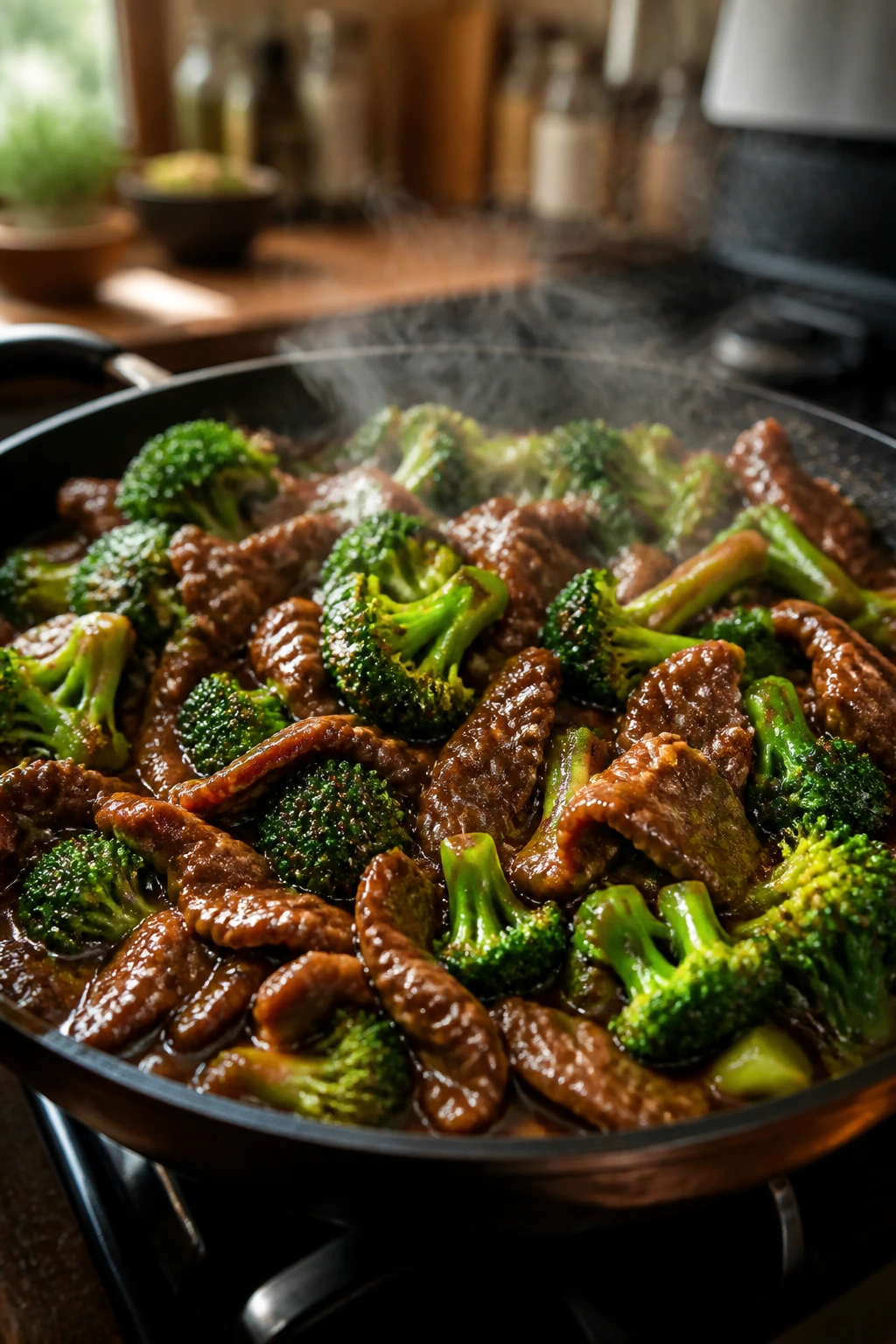
Beef broccoli lives or dies on heat, not effort. Once the beef is sliced properly and the sauce is mixed, the actual cooking is fast enough that you can keep the broccoli bright and the meat tender.
- Tender beef, not ropey strips: A short cornstarch-and-soy marinade coats the beef and helps it stay plush when the sauce hits the pan.
- Sauce that clings: Oyster sauce, broth, soy, and cornstarch make a glossy coating that sticks to every floret instead of pooling under the rice.
- Fast enough to feel civilized: The cooking itself takes about 15 minutes, which matters on nights when you do not want a project.
- One skillet does most of the work: You can make the whole dish in a wok or large skillet with one small bowl for the sauce and one cutting board.
- The leftovers hold up: Reheated gently in a skillet, the beef stays more supple than most leftover stir-fries, especially if you keep the rice separate.
The Chinese-American Takeout Dish That Works Better at Home
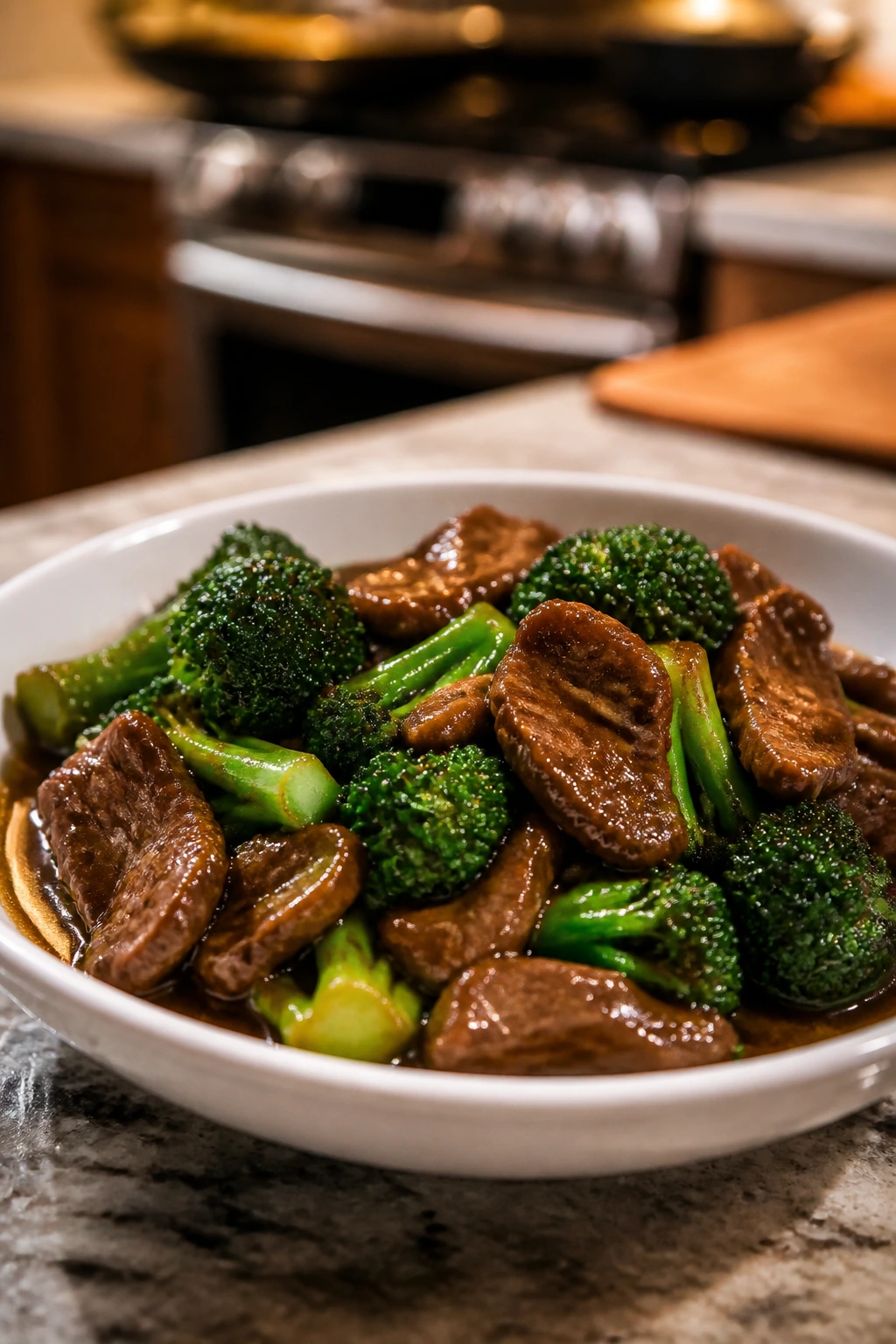
Why does beef broccoli often taste better from a decent home skillet than from a tired takeout container? Because the home version can be a little more deliberate.
The dish sits in that very American, very useful space between Chinese cooking techniques and pantry ingredients that became standard in home kitchens. Broccoli replaced more traditional greens because it was easy to find, easy to portion, and willing to stay crisp for a few minutes under a hot sauce. That swap made sense then, and it still makes sense now. Broccoli gives you enough structure to carry beef and sauce without collapsing into mush.
The version I like most leans into that balance. The sauce should taste almost too strong in the bowl — salty, savory, a little sweet, with a clean edge from rice vinegar — because the broccoli and beef dilute it once everything hits the pan. That’s one of those tiny kitchen truths that sounds fussy until you taste the difference. Flat stir-fry sauce is usually underseasoned before it ever meets the vegetables.
And the beef matters more than people think. Thin slices of flank steak or sirloin take on the sauce in a way thicker chunks never will. You want the edges browned, the middle still tender, and the whole thing finished before the meat tightens up. That’s the whole game, really.
Serving, Timing, and Difficulty at a Glance
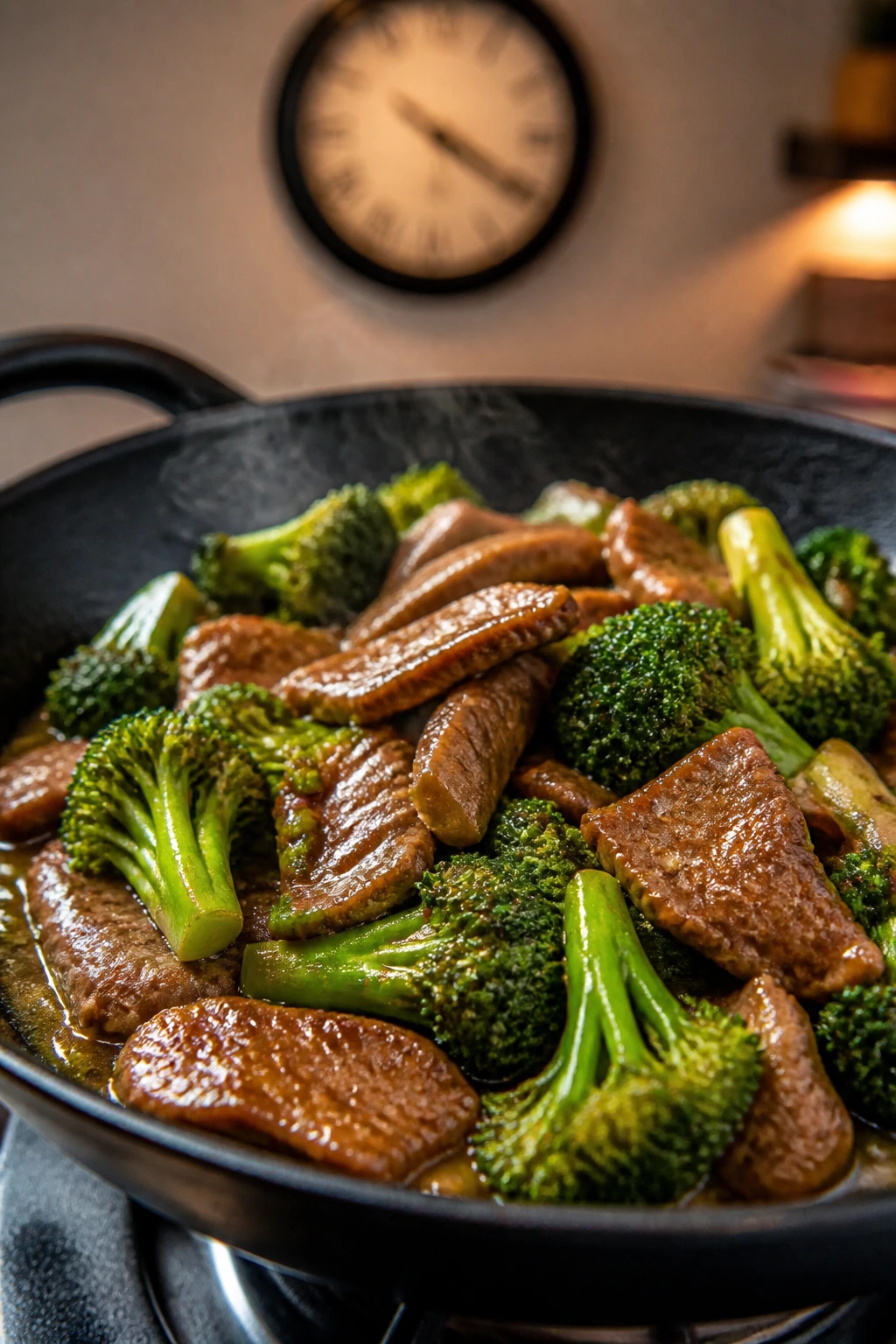
Before you start chopping, it helps to know where the recipe is headed. This is not a fussy dish, but it does reward a bit of attention at the stove.
Yield: Serves 4
Prep Time: 20 minutes
Cook Time: 15 minutes
Total Time: 45 minutes
Difficulty: Intermediate — the steps are straightforward, but thin-slicing the beef and managing high heat take a little practice.
Chill/Rest Time: 10 minutes for the beef marinade
Best Served: Right away, over hot jasmine rice, brown rice, or noodles
What Goes Into the Pan
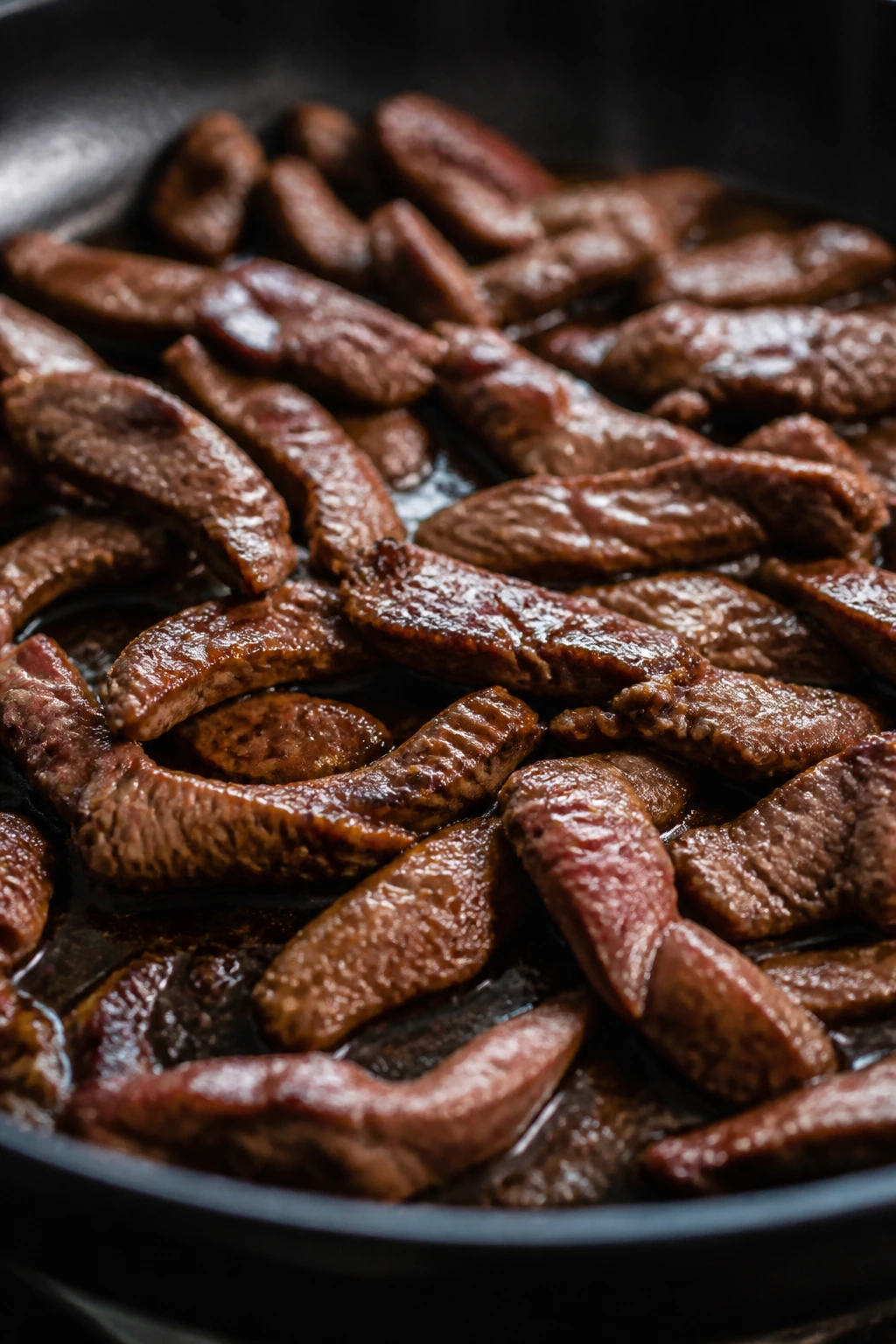
For the Beef
- 1½ pounds flank steak, sliced very thinly against the grain
- 1 tablespoon low-sodium soy sauce
- 1 tablespoon Shaoxing wine or dry sherry
- 1 tablespoon cornstarch
- 1 teaspoon toasted sesame oil
- ¼ teaspoon fine salt
- ¼ teaspoon freshly ground black pepper
For the Broccoli and Aromatics
- 1 pound broccoli florets, cut into bite-size pieces
- 2 tablespoons neutral oil, divided
- 4 cloves garlic, minced
- 1 tablespoon fresh ginger, minced
- 2 scallions, sliced, whites and greens separated
- ⅓ cup water or beef broth
For the Sauce
- ½ cup low-sodium beef broth
- ¼ cup low-sodium soy sauce
- 2 tablespoons oyster sauce
- 1 tablespoon packed light brown sugar
- 1 tablespoon cornstarch
- 1 teaspoon rice vinegar
- 1 teaspoon toasted sesame oil
- ½ teaspoon crushed red pepper flakes, optional
Why Each Ingredient Matters in This Beef Broccoli
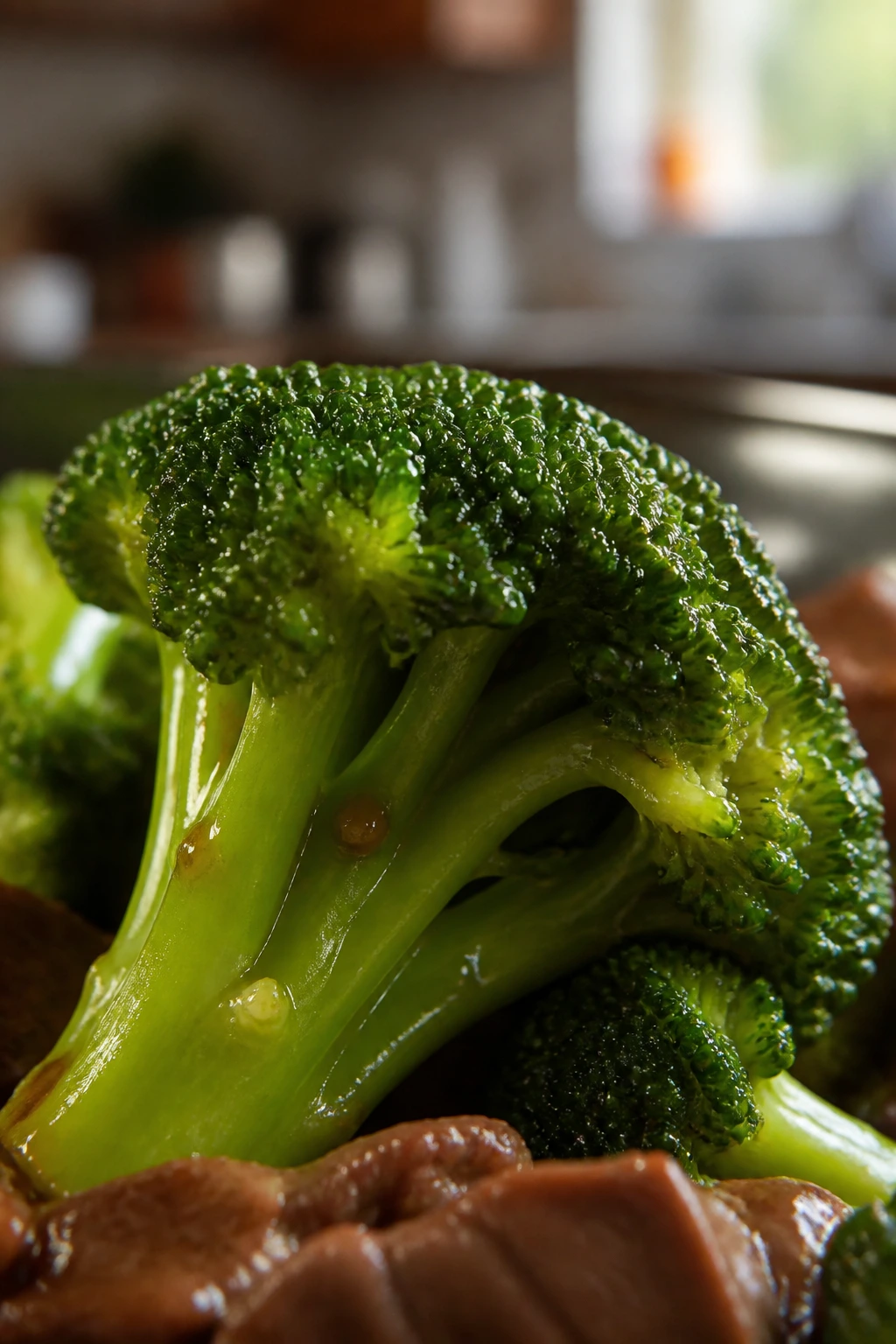
The Beef
What to use: 1½ pounds flank steak is my first choice because it slices cleanly and stays tender when cooked quickly. Sirloin works too if you want something a little easier to buy and trim.
Preparation: Chill the steak for 15 to 20 minutes before slicing, then cut it into very thin strips, about ⅛ inch thick, across the grain. Toss it with soy sauce, Shaoxing wine or dry sherry, cornstarch, sesame oil, salt, and pepper, then let it sit for 10 minutes.
Substitutions: Skirt steak works if you slice it carefully, and flat iron steak gives a similar result with a slightly softer chew. If you do not want alcohol, skip the Shaoxing wine and add 1 tablespoon of water plus a tiny pinch more salt.
Tips: The cornstarch is not there to thicken the final sauce; it creates a light coating that protects the beef from drying out. Thin is better than pretty here. Thin slices cook fast and stay supple.
The Broccoli
What to use: 1 pound of broccoli florets, ideally from 2 medium heads, gives the dish enough bulk to feel like dinner. If the stalks are sturdy, peel the tough outer layer and slice them into coins; they cook beautifully.
Preparation: Cut the florets into bite-size pieces so the stems and crowns finish at the same time. If one floret is twice the size of the others, it will be the one that stays undercooked while the tiny pieces turn soft.
Substitutions: Broccolini works well and cooks even faster. If you want a little more crunch, snap peas can replace about a third of the broccoli, though they change the feel of the dish a bit.
Tips: Pick broccoli with deep green florets and firm stems. Yellowing florets usually mean the vegetable has been sitting around, and they can taste a little flat once cooked.
The Sauce
What to use: The sauce is built from ½ cup beef broth, ¼ cup soy sauce, 2 tablespoons oyster sauce, 1 tablespoon brown sugar, 1 tablespoon cornstarch, 1 teaspoon rice vinegar, and 1 teaspoon sesame oil. That ratio gives you salt, depth, a little sweetness, and enough body to coat the beef.
Preparation: Whisk the sauce until the cornstarch dissolves completely. A few tiny white flecks are not a disaster, but if you pour in a lumpy sauce, the finished stir-fry will thicken in patches.
Substitutions: If oyster sauce is not on your shelf, use 1 tablespoon hoisin plus 1 teaspoon soy sauce, or choose a vegetarian mushroom oyster sauce if you want the same dark, savory depth without shellfish. Tamari can replace soy sauce for a gluten-free version.
Tips: The sauce should taste slightly stronger than you want when raw. Once it hits the broccoli and beef, the flavor softens. That little excess is not a mistake; it is the reason the final pan tastes full instead of thin.
The Aromatics and Finish
What to use: 4 cloves garlic, 1 tablespoon fresh ginger, and 2 scallions give the dish its sharp top notes. The white parts of the scallion go in early; the green parts go on at the end.
Preparation: Mince the garlic and ginger finely so they spread quickly through the hot oil. Thick chunks can burn before they have time to release their flavor.
Substitutions: Garlic paste or ginger paste can work in a pinch, though fresh is better here because you smell the difference the second it hits the pan. If scallions are unavailable, a tiny amount of thinly sliced shallot can stand in.
Tips: Garlic and ginger should go into the pan only after the beef is out or nearly done. They burn fast, and burnt aromatics turn the whole sauce bitter in about 10 seconds.
How to Slice the Beef So It Stays Tender
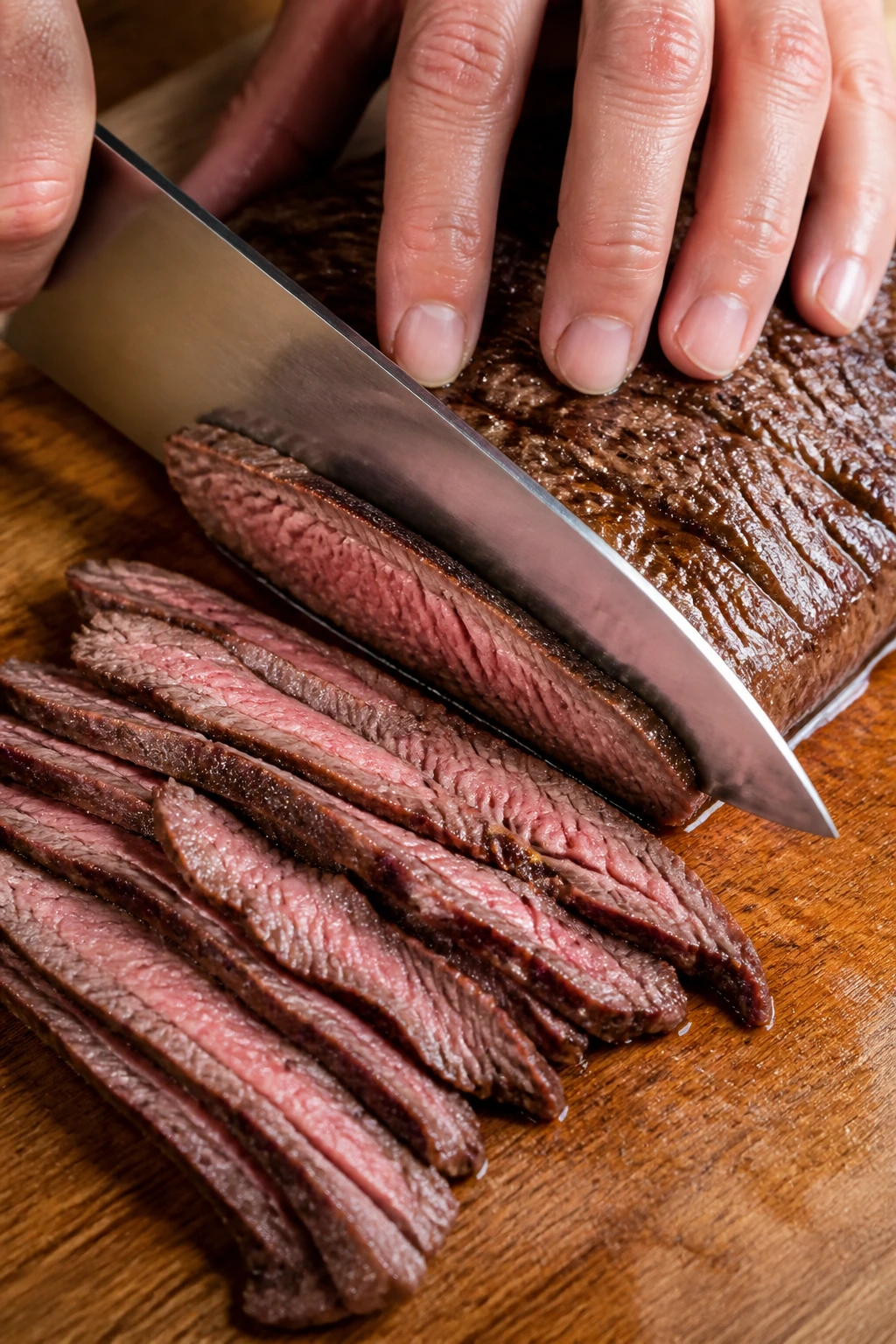
A good stir-fry starts before the heat turns on. The knife work decides whether this dish feels silky or chewy.
The first move is simple: chill the steak just enough that it firms up. Fifteen minutes in the freezer is usually enough. You are not trying to freeze it solid. You just want the grain to stop wobbling under the blade so the knife can make clean, thin cuts instead of shredding the meat.
Then look for the grain. On flank steak, the muscle fibers run in long visible lines. You want to cut across those lines, not parallel to them. That shortens the fibers and makes each bite easier to chew. Skip this and the beef turns stringy, even if you cook it perfectly.
Two tiny habits that matter
If the steak is long, slice it into 2- to 3-inch pieces first, then cut those pieces across the grain into thin strips. That gives you more control and keeps the strips from getting awkwardly long in the wok.
And do not make the strips thick because you think they’ll feel more substantial. They won’t. They’ll just take longer to cook, which is a fast way to end up with browned edges and dry centers. Thin slices are the reason beef broccoli feels tender instead of dense.
The Broccoli Trick: Crisp Edges, Bright Color, No Soggy Florets
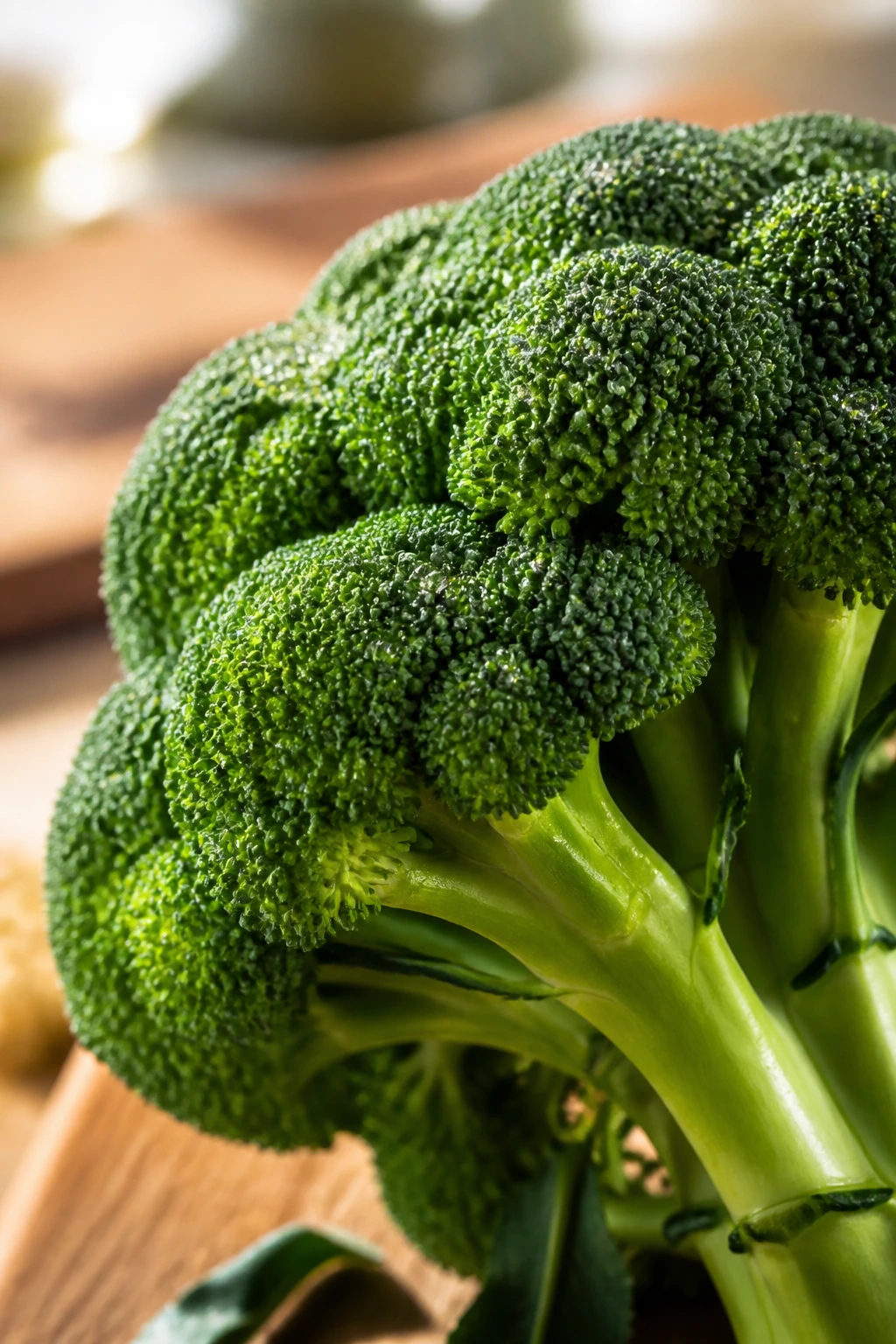
Broccoli is the one ingredient that can save or sink the whole pan. It either stays lively and green, or it turns dull and floppy.
The trick is to give it a head start without fully cooking it. In this recipe, the broccoli goes into the hot skillet with a splash of water and a lid for a couple of minutes. That steam softens the stems just enough so they are no longer raw in the middle, but it stops short of making them mushy. You then uncover the pan and let the last bit of water cook off before the beef and sauce return.
That little two-stage move matters. If you toss raw broccoli straight into the sauce and hope for the best, the beef will overcook while you wait for the florets to soften. If you blanch the broccoli too long, it goes olive-drab and loses the faint sweetness that makes it worth eating.
Use the stems, too
Broccoli stems are worth keeping if they are firm. Peel the outer layer, slice them thin, and let them cook with the florets. The stems have a nice mild crunch, and they make the pan feel fuller without adding extra cost. I would argue they are one of the best-value vegetables in the whole produce aisle.
The Tools That Make Stir-Fry Easier
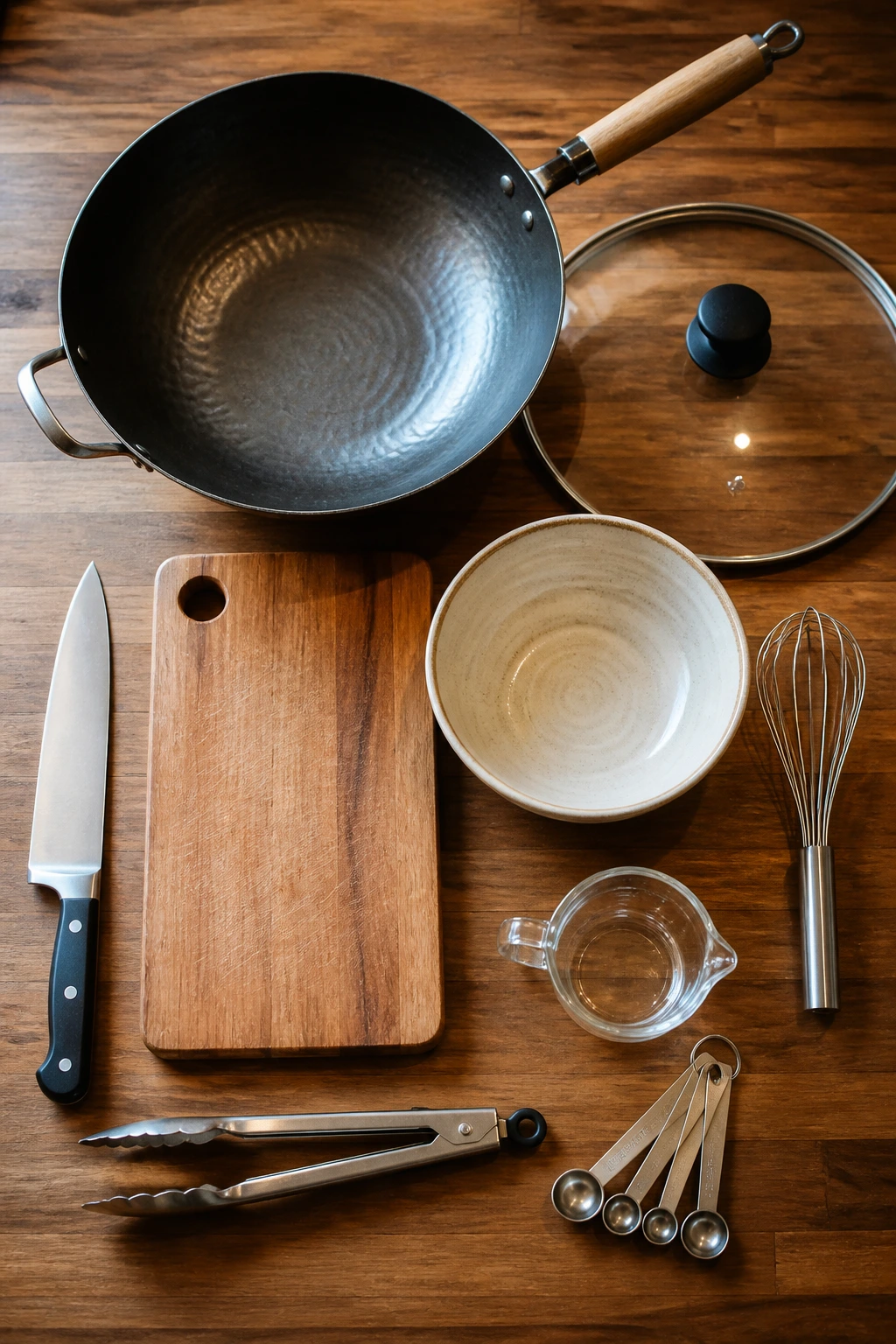
You do not need a restaurant setup to make classic beef broccoli, but the right tools keep the process calm.
- 12-inch wok or large skillet: A wok is ideal, but a wide stainless steel or cast-iron skillet works fine if you cook the beef in batches.
- Sharp chef’s knife: Thin beef slices depend on a knife that can cut cleanly without tearing the grain.
- Sturdy cutting board: Give yourself a board that does not slide around while you work. A damp towel underneath helps.
- Medium mixing bowl: This is for the beef marinade, so you have room to toss the slices evenly.
- Small bowl or measuring cup: Use this for the sauce so you can whisk the cornstarch smooth before cooking.
- Whisk or fork: A small whisk is easiest for breaking up cornstarch; a fork will do if that is what you have.
- Tongs or a wide spatula: You need something that can turn the beef quickly without breaking it up.
- Lid for the skillet: Not fancy, just useful. It traps steam around the broccoli for a minute or two.
- Measuring spoons and cups: Stir-fry moves quickly; you do not want to be guessing at the sauce.
Step-by-Step: Building the Beef Broccoli Stir-Fry
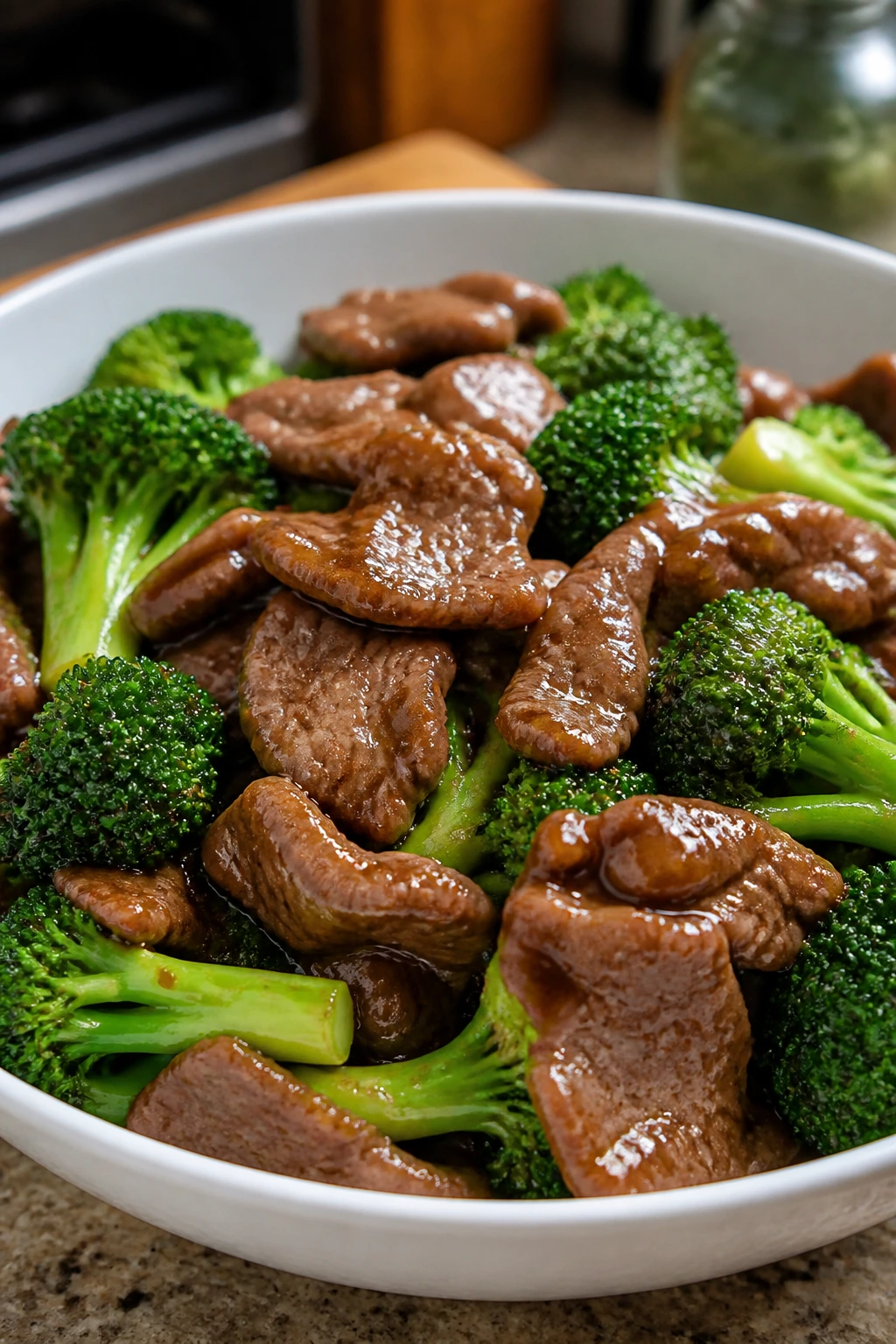
Prep the Beef and Sauce
-
Chill and slice the steak. Place the flank steak in the freezer for 15 to 20 minutes, just until firm. Slice it very thinly across the grain into strips about ⅛ inch thick. Do not cut with the grain, or the beef will turn chewy later.
-
Marinate the beef. Put the sliced steak in a medium bowl and add the soy sauce, Shaoxing wine or dry sherry, cornstarch, sesame oil, salt, and pepper. Toss until the strips look lightly coated and a little glossy. Let the beef sit for 10 minutes while you prepare everything else.
-
Whisk the sauce. In a small bowl or measuring cup, whisk together the beef broth, soy sauce, oyster sauce, brown sugar, cornstarch, rice vinegar, sesame oil, and red pepper flakes if you want a little heat. Stir until the cornstarch disappears into the liquid. Set it next to the stove.
Cook the Broccoli and Beef
-
Heat the skillet and soften the broccoli. Set a wok or large skillet over high heat and add 1 tablespoon of the neutral oil. When the oil shimmers, add the broccoli florets and ⅓ cup water. Cover immediately and steam for 2 minutes, then uncover and cook for 1 minute more, stirring once, until the broccoli is bright green and crisp-tender. Transfer it to a plate. If the florets still feel hard in the center, add 1 tablespoon more water and give them 30 seconds under the lid.
-
Sear the beef in batches. Add the remaining 1 tablespoon neutral oil to the hot pan. Lay the beef in a single layer, using tongs to separate the slices. Cook for 1 minute without moving it much, then stir and cook for another 30 to 60 seconds until the edges brown but the centers still look just a touch pink. Remove the beef to the plate with the broccoli. Crowding the pan will steam the meat instead of searing it.
-
Cook the aromatics. Lower the heat to medium-high. Add the garlic, ginger, and the white parts of the scallions. Stir for 20 to 30 seconds, just until they smell sweet and sharp at the same time. If the garlic starts to brown fast, pull the pan off the heat for a few seconds.
-
Add the sauce and thicken it. Whisk the sauce once more, then pour it into the pan. Let it bubble for 30 to 60 seconds, stirring, until it turns glossy and thick enough to lightly coat the back of a spoon. If it thickens too fast, splash in 1 to 2 tablespoons of water.
-
Return the beef and broccoli. Add the beef and broccoli back to the pan and toss for 30 to 60 seconds, just until everything is coated and heated through. The broccoli should stay green, not dull, and the beef should finish cooking without losing its softness.
-
Finish and serve. Turn off the heat, drizzle in the remaining sesame oil if you want a little extra aroma, and scatter the green parts of the scallions over the top. Serve immediately over hot rice or noodles. Waiting around after the sauce thickens is how the beef gets tough.
How to Serve It So the Plate Feels Full
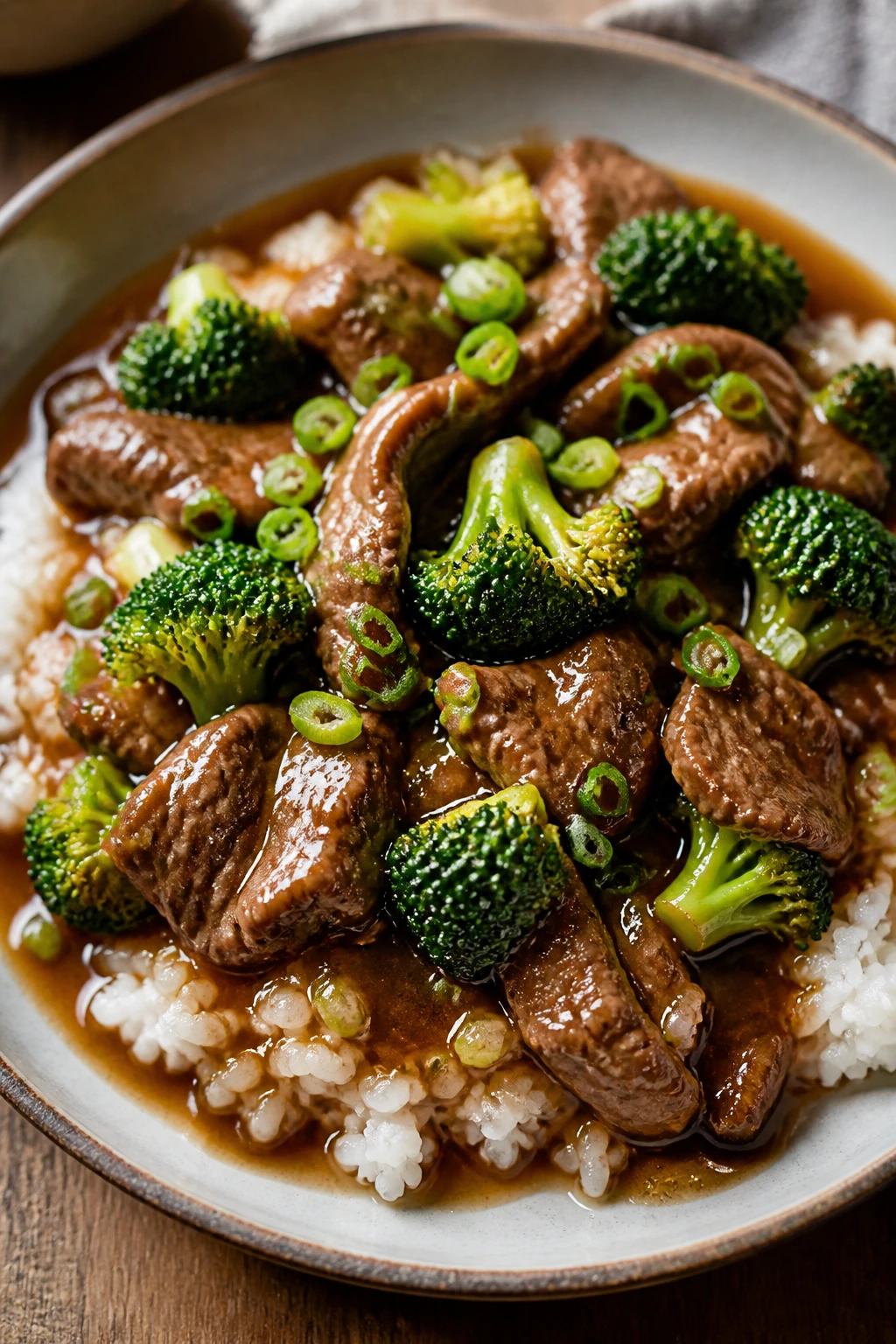
Presentation: Spoon the beef broccoli into shallow bowls if you want the sauce to stay where the spoon can catch it. The glossy sauce looks best when it’s gathered around the rice rather than buried under it, and the scallion greens give the top a clean, fresh finish.
Accompaniments: Steamed jasmine rice is the classic move because it absorbs the sauce without competing with it. Brown rice brings a little nuttiness, and lo mein noodles work if you want the dish to feel heavier. If you want something crisp alongside it, a cucumber salad dressed with rice vinegar and a pinch of salt is the right kind of quiet contrast.
Portions: Four servings works well if you serve about 1½ cups of beef broccoli over ¾ cup cooked rice per person. If you need to stretch it, add another cup of broccoli and serve with extra rice. If you want a more vegetable-forward plate, cut the rice back to ½ cup and keep the sauce a little looser.
Beverage Pairing: Cold jasmine tea keeps the meal from feeling heavy and picks up the floral side of the rice. A light lager or a crisp off-dry white wine also works because both cut through the soy and oyster sauce without flattening them.
Hard-Won Tips for Better Flavor and Better Texture
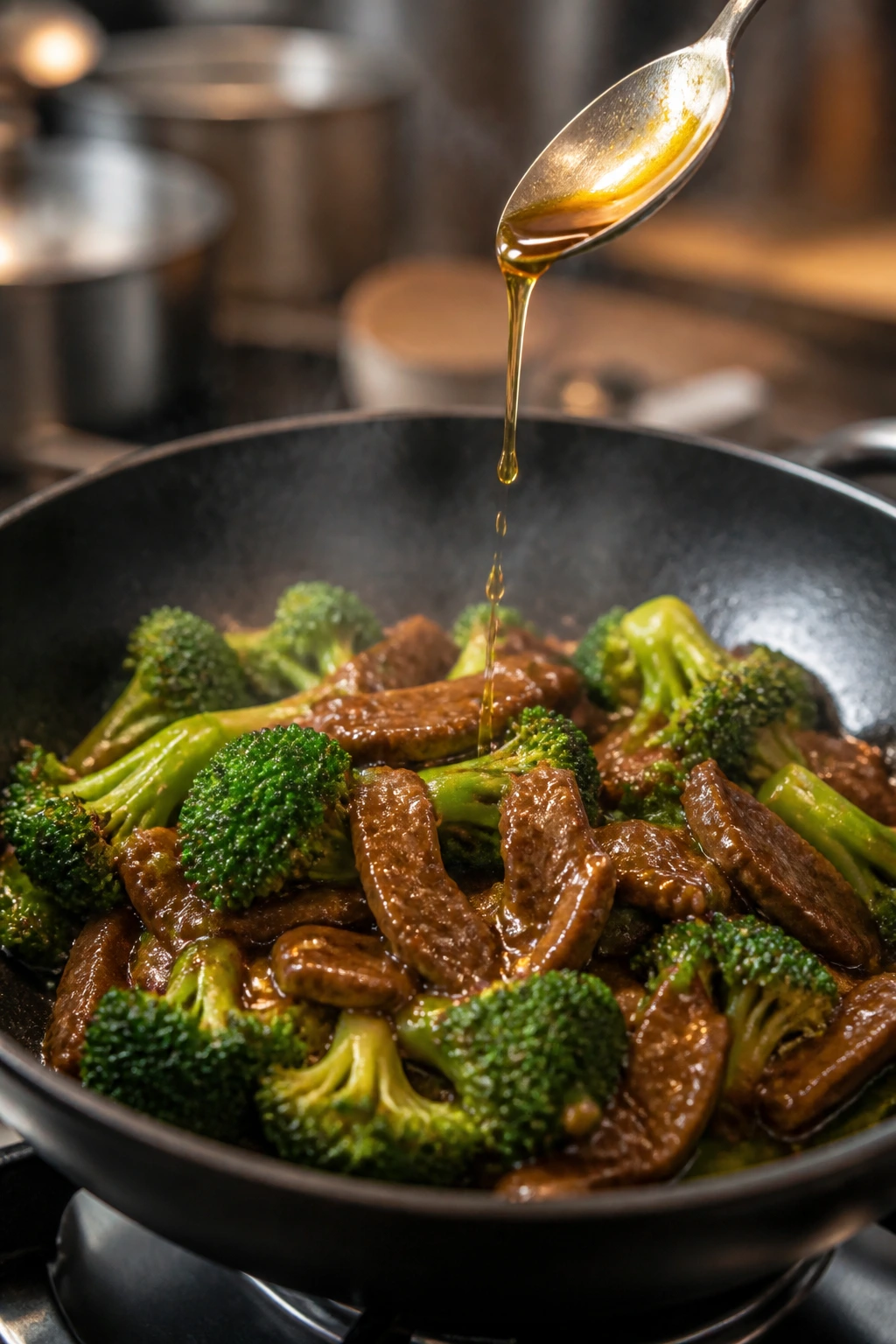
Flavor Enhancement: Add ½ teaspoon of white pepper to the beef marinade if you like that sharp restaurant-style finish. It brings a little warmth that shows up more clearly than black pepper once the sauce hits.
Time-Saver: Slice the beef and mix the sauce earlier in the day, then keep both covered in the fridge. If the steak is already cut and the sauce is already whisked, this dinner moves at a clip that feels almost unfair.
Texture Control: Pull the broccoli when it still has a little resistance at the stem. It will keep softening once the sauce goes in, and that extra minute of carryover heat matters more than people expect.
Cost-Saver: Use the broccoli stems. Peel them, slice them thin, and cook them with the florets. You get more food from the same bunch, and the stems bring a nice crisp bite that holds up to the sauce.
Small Finish, Big Payoff: A final drizzle of sesame oil off the heat smells louder than it tastes, and that is exactly why it works. Heat dulls sesame oil fast; add it at the end and the aroma stays on top of the dish instead of disappearing into the pan.
The Mistakes That Turn a Good Stir-Fry Into a Sad One
-
Slicing the beef the wrong way: If the strips are cut with the grain, the meat turns ropey and stubborn even when it looks cooked correctly. Fix it by freezing the steak briefly and cutting across the grain into thin strips.
-
Crowding the pan: When the beef sits in a pile, it releases liquid and steams. The symptom is gray meat with no browned edges, and the fix is simple: cook in two batches if your skillet cannot hold the beef in one layer.
-
Cooking the broccoli too long before the sauce goes in: Oversteamed broccoli turns dark, soft, and a little dull in flavor. Keep the steam step short and stop as soon as the stems lose their raw crunch.
-
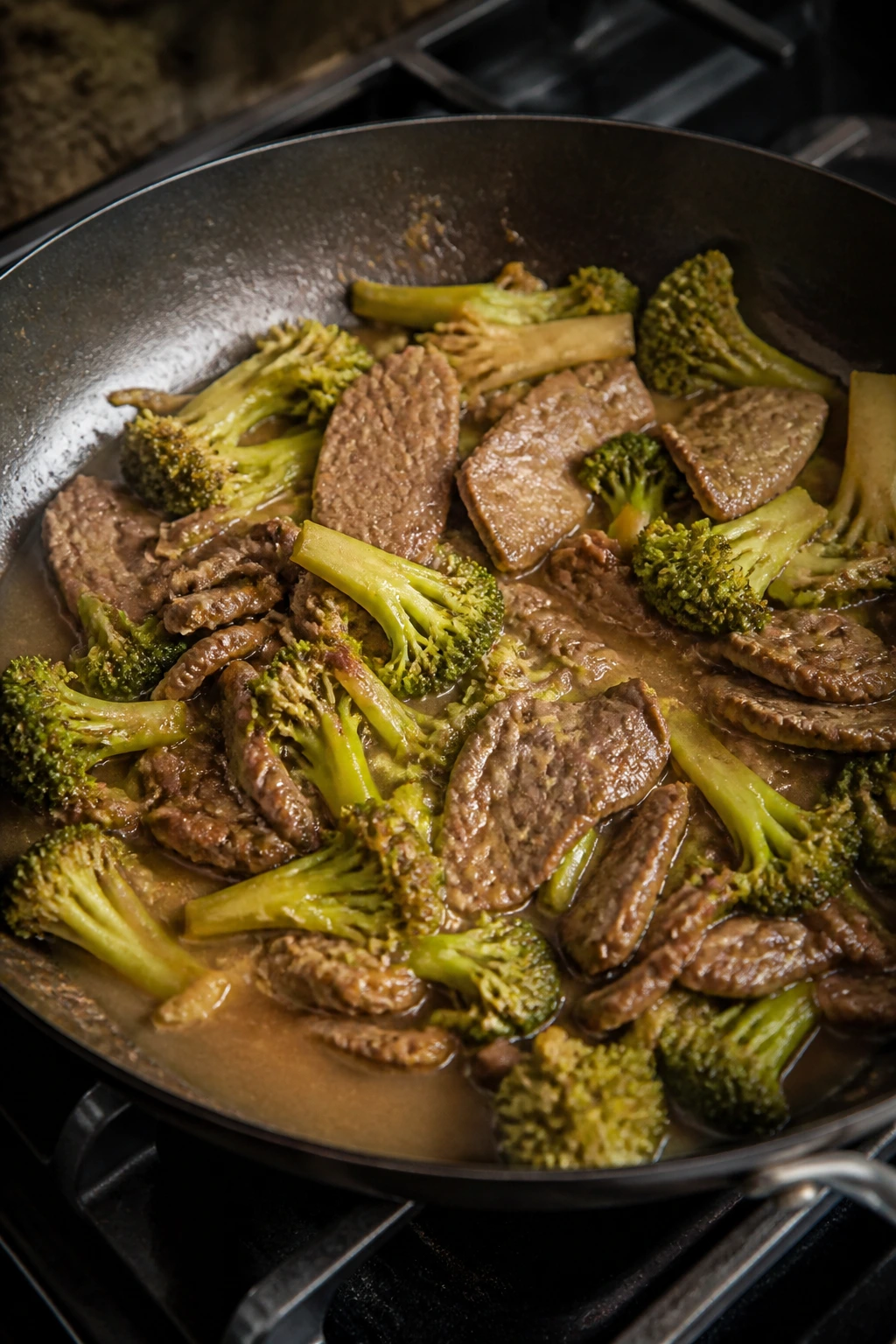
Adding the sauce before the pan is hot enough: A lukewarm pan gives you thin, tired sauce instead of a glossy coating. Wait until the aromatics have sizzled and the liquid bubbles right away when it lands.
-
Letting the sauce boil too long after thickening: Cornstarch can go from silky to gluey fast. Once the sauce lightly coats a spoon, return the beef and broccoli immediately and take the pan off the heat as soon as everything is coated.
-
Overseasoning the beef separately and the sauce again later: This is how the finished dish turns aggressively salty. The sauce should taste assertive in the bowl, but the beef marinade and oyster sauce already bring salt, so taste before you add anything extra.
Variations That Still Taste Like Beef Broccoli
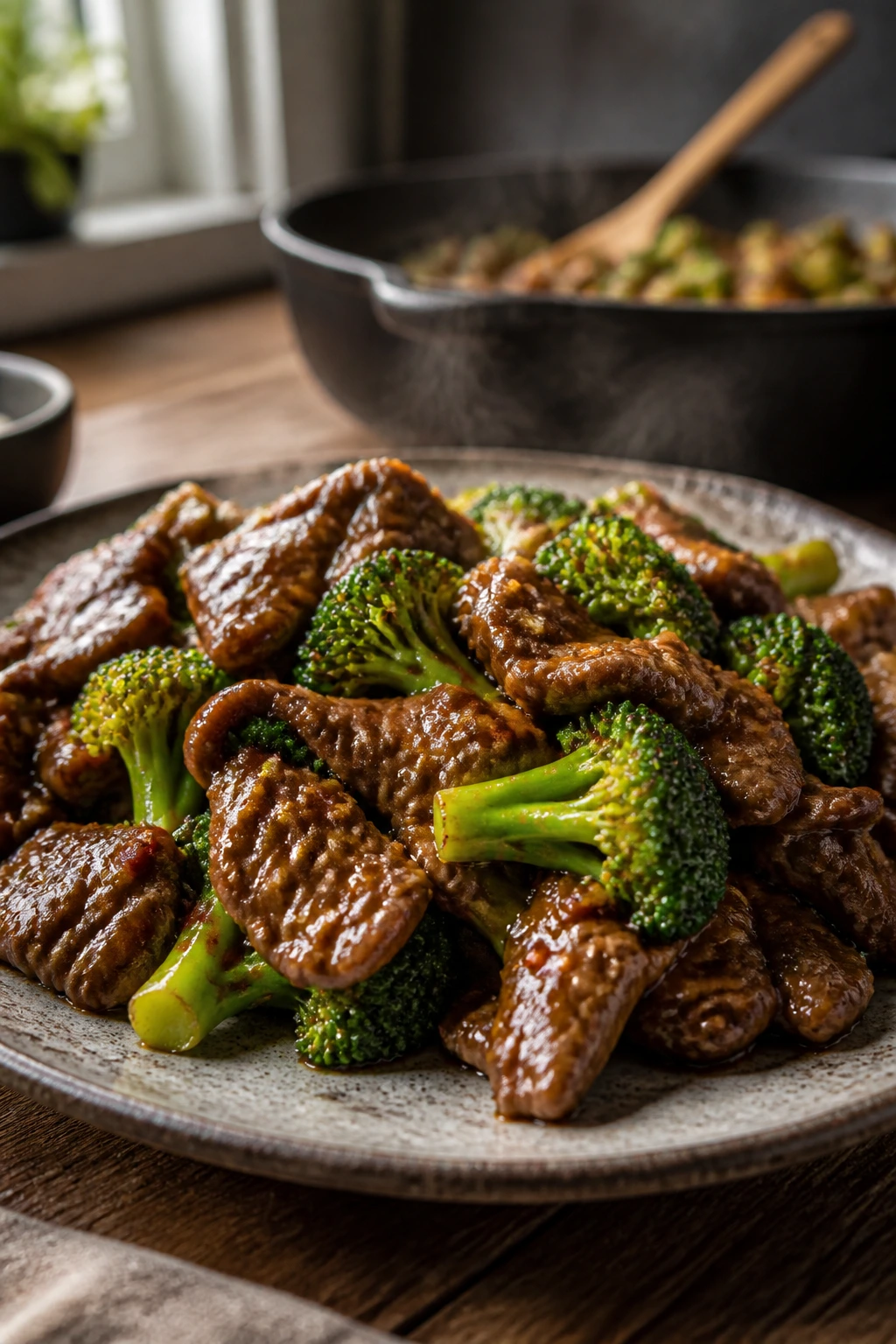
Garlic-Chili Beef Broccoli: Add 1 teaspoon of chili crisp or ½ teaspoon of crushed red pepper flakes to the sauce, then finish with an extra minced scallion. The heat stays in the background and gives the dish a little more edge without turning it into a completely different meal.
Mushroom Stretch Bowl: Add 8 ounces of sliced cremini or shiitake mushrooms when you cook the aromatics, and reduce the beef to 1 pound. The mushrooms soak up the sauce and make the pan feel fuller, which is handy if you want the same flavor with less meat.
Gluten-Free Skillet Version: Swap the soy sauce for tamari and use a gluten-free oyster sauce or mushroom sauce. Keep the rest of the recipe the same, but double-check the broth label because that is the sneaky place gluten can hide.
Orange-Sesame Beef Broccoli: Add 1 teaspoon of orange zest to the sauce and stir in 1 tablespoon of fresh orange juice at the very end. It softens the savory edge and gives the dish a brighter finish that still belongs in the same family.
Snow Pea Crunch Swap: Replace about half the broccoli with snow peas or sugar snap peas. You get a sharper crunch and a greener look, and the dish feels a little lighter without losing the same soy-garlic backbone.
Leftovers, Make-Ahead, and Reheating Without Wrecking the Texture
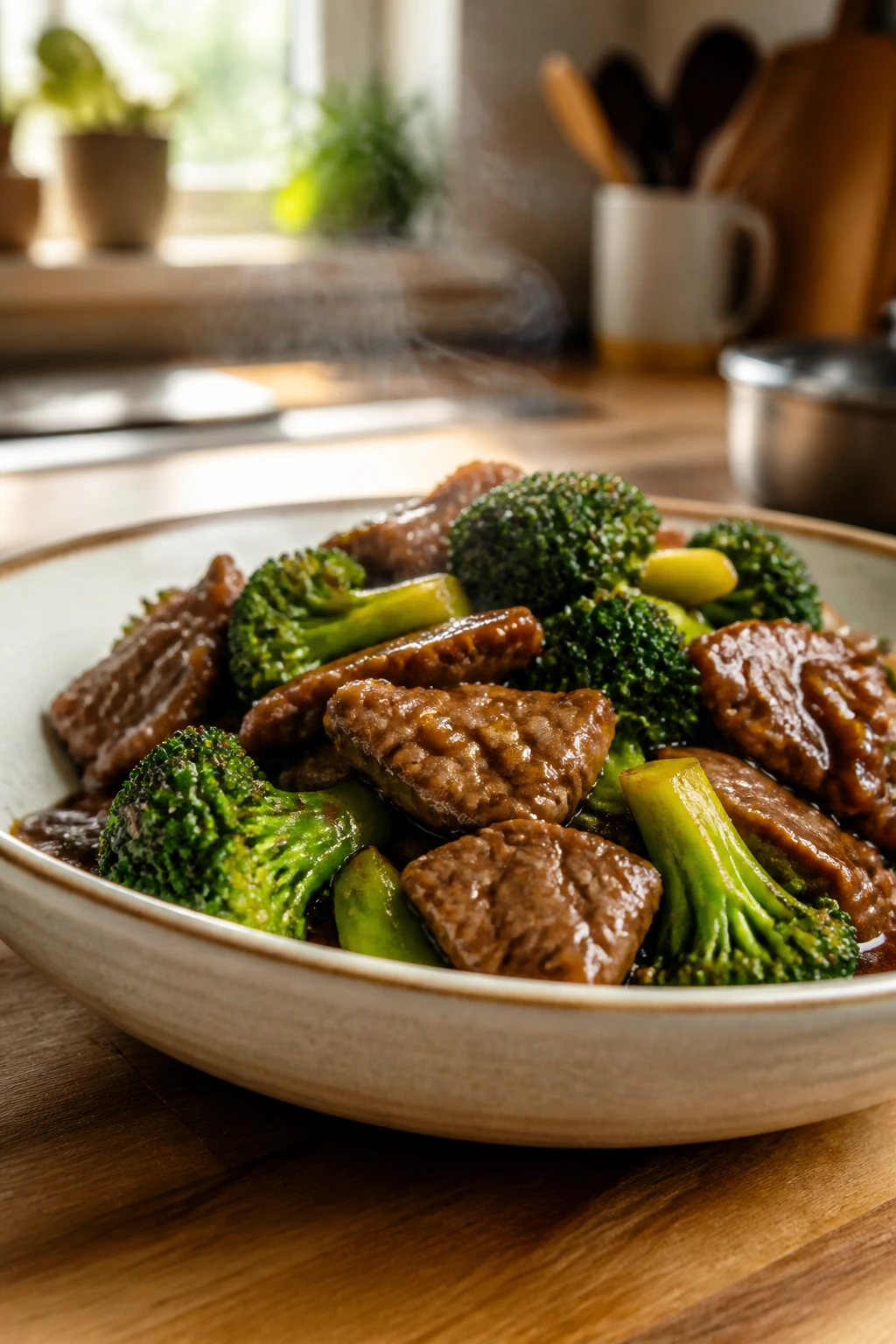
Refrigerator: Leftover beef broccoli keeps well in an airtight container for 3 to 4 days in the fridge. If you can, store the rice separately so it doesn’t soak up every drop of sauce and turn pasty by the next day.
Freezer: You can freeze the cooked beef and sauce for up to 2 months, but the broccoli will soften after thawing. If you know you want to freeze the dish, freeze the beef and sauce on their own and cook fresh broccoli when you reheat it. That keeps the texture much better.
Reheating: The best method is a skillet over medium heat with 1 to 2 tablespoons of water. Cover the pan for a minute to loosen the sauce, then stir until the beef is hot and the broccoli is warmed through. A microwave works in a pinch, but it softens the broccoli faster and can make the beef a little rubbery if you blast it too long.
Make-Ahead: You can slice and marinate the beef up to 24 hours ahead, though 10 to 30 minutes is enough for flavor and tenderness. The sauce can be whisked 2 days ahead and kept in the fridge. Broccoli can be cut the day before if you wrap it in a damp paper towel and keep it in a produce bag; any longer and the stems start to dry out.
A small warning: Do not leave the finished dish sitting out for long once it’s cooked. Stir-fries lose their best texture fast, and beef broccoli is at its best when the sauce is still glossy and the broccoli still has a little snap.
Questions People Ask Before Making Beef Broccoli

Can I use sirloin instead of flank steak?
Yes, and it’s a very sensible swap. Sirloin is a little easier to buy in many stores and usually slices more neatly, though it can dry out if you overcook it by even a minute or two.
Why is my beef chewy even though I sliced it thin?
Usually the cut went with the grain, the pan was too crowded, or the beef stayed on the heat too long. Thin slices help, but cutting across the grain and searing quickly in batches matter just as much.
Do I have to use oyster sauce?
No, but it does give the dish that dark, round takeout flavor. If you skip it, use hoisin with a touch more soy sauce, or buy a vegetarian mushroom oyster sauce for a similar depth.
Can I use frozen broccoli?
You can, though the texture is softer than fresh broccoli. Thaw it first and pat it dry, then shorten the steam step so it doesn’t collapse before the beef goes back in.
What if the sauce gets too thick?
Add a tablespoon of water or broth at a time and stir over medium heat. Cornstarch thickens fast once it reaches a simmer, so a tiny splash usually fixes the problem without thinning the flavor.
Is there a way to make this lower in sodium?
Yes. Use low-sodium soy sauce, low-sodium broth, and keep the oyster sauce to the measured amount instead of pouring with a heavy hand. The garlic, ginger, and rice vinegar do a lot of work, so you do not have to chase salt for the dish to taste complete.
Can I make this ahead for a busy night?
You can prep almost everything. Slice and marinate the beef, whisk the sauce, and cut the broccoli earlier in the day, then cook the dish right before dinner so the broccoli stays green and the beef stays tender.
Why This Skillet Keeps Getting Pulled Back Out
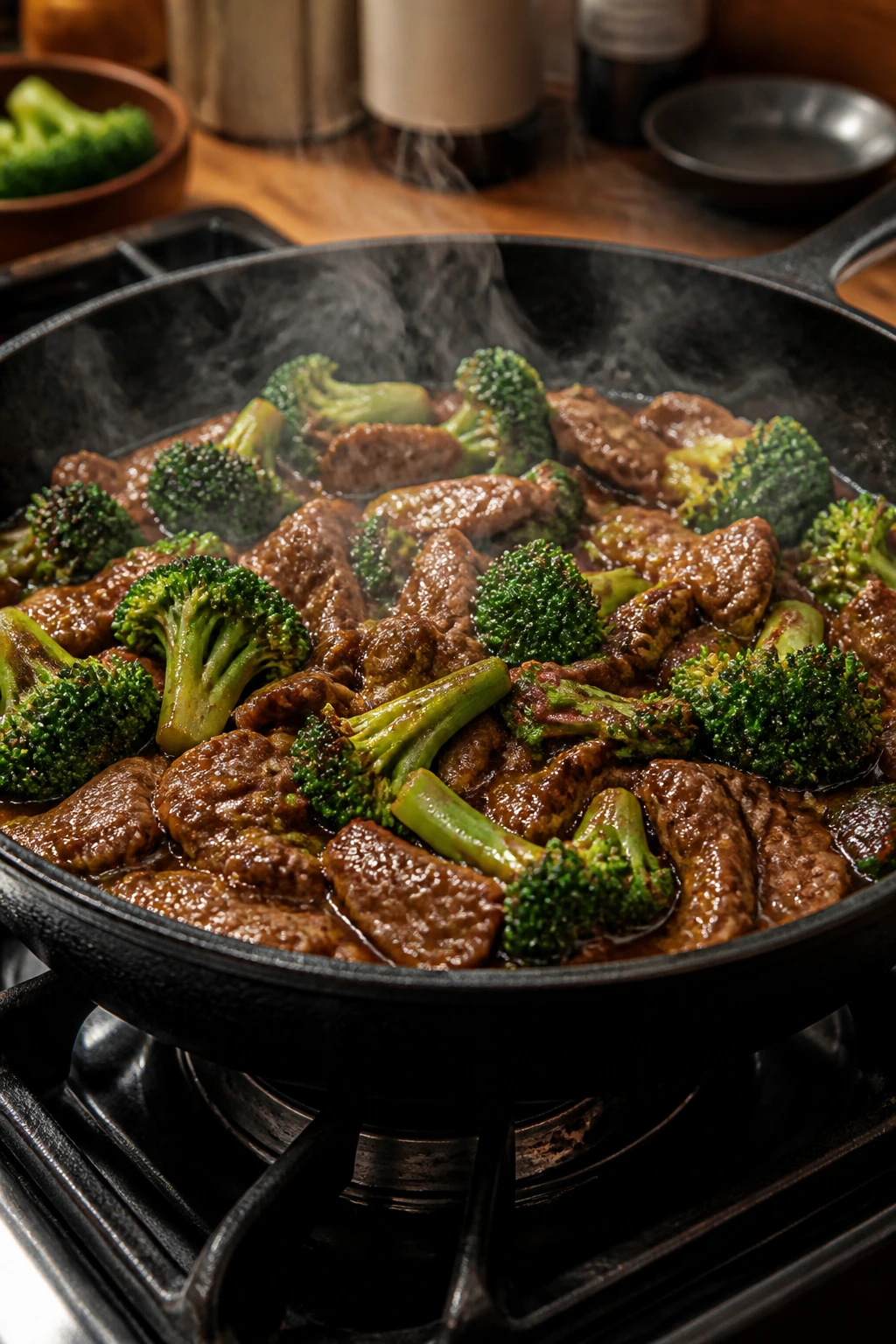
Beef broccoli works because it asks for restraint. Don’t overcook the meat, don’t drown the broccoli, and don’t let the sauce simmer so long that it turns gluey. Keep the pan hot, keep the slices thin, and the whole thing tastes like it came from a kitchen that knows exactly when to stop.
That’s the part I like most. It feels generous without being fussy, and it gives you a real dinner in the time it takes to steam rice. The next time a steak and a head of broccoli end up in the fridge together, this is the move.
Classic Beef Broccoli — Recipe Card
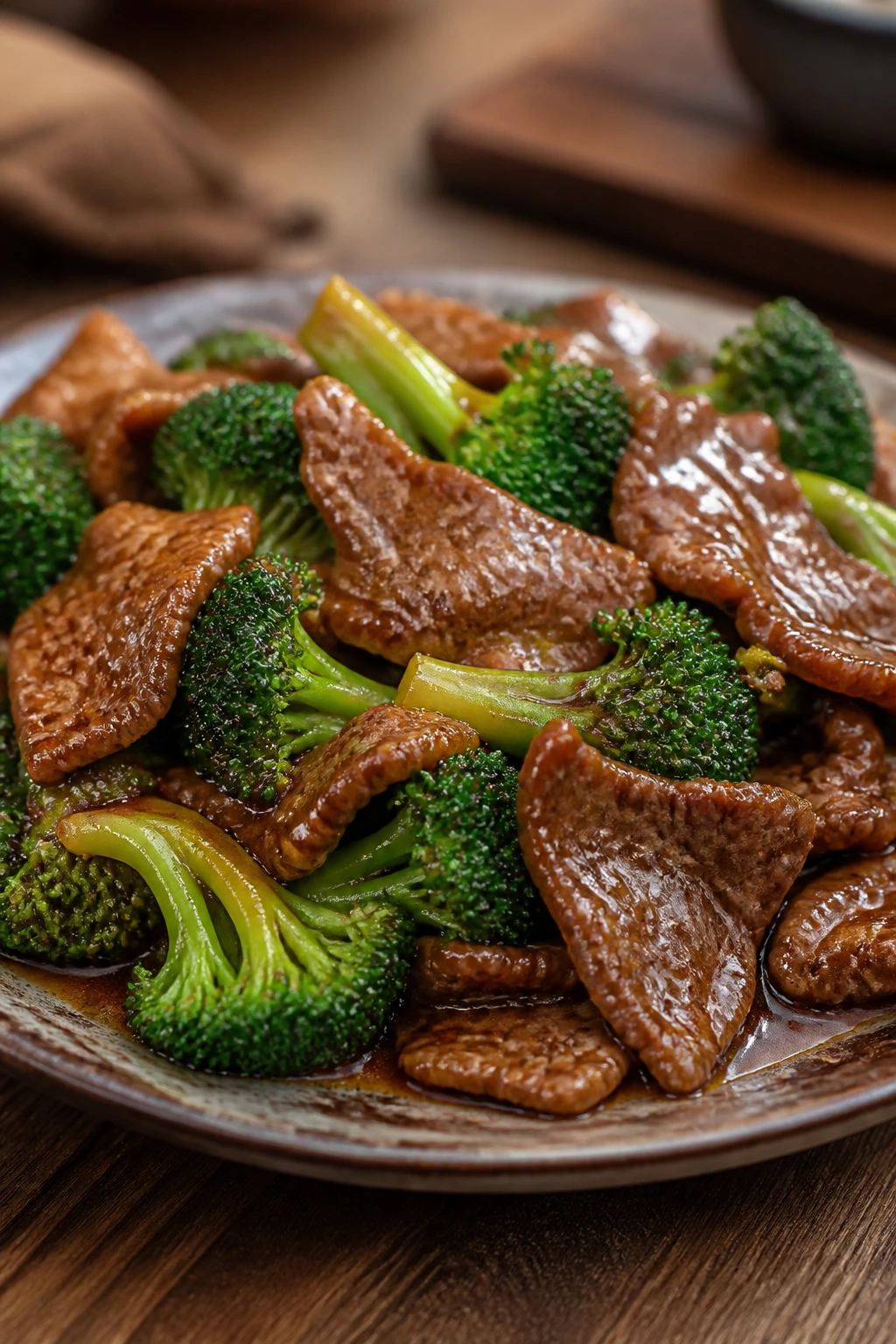
Recipe Name: Classic Beef Broccoli
Description: Thin-sliced flank steak, crisp-tender broccoli, and a glossy soy-oyster sauce come together in one hot skillet for a hearty dinner that tastes like a polished takeout favorite.
Prep Time: 20 minutes
Cook Time: 15 minutes
Total Time: 45 minutes
Course: Main Course
Cuisine: Chinese-American
Servings: 4 servings
Calories: Approx. 420 kcal per serving
Ingredients
For the Beef
- 1½ pounds flank steak, sliced very thinly against the grain
- 1 tablespoon low-sodium soy sauce
- 1 tablespoon Shaoxing wine or dry sherry
- 1 tablespoon cornstarch
- 1 teaspoon toasted sesame oil
- ¼ teaspoon fine salt
- ¼ teaspoon freshly ground black pepper
For the Broccoli and Aromatics
- 1 pound broccoli florets, cut into bite-size pieces
- 2 tablespoons neutral oil, divided
- 4 cloves garlic, minced
- 1 tablespoon fresh ginger, minced
- 2 scallions, sliced, whites and greens separated
- ⅓ cup water or beef broth
For the Sauce
- ½ cup low-sodium beef broth
- ¼ cup low-sodium soy sauce
- 2 tablespoons oyster sauce
- 1 tablespoon packed light brown sugar
- 1 tablespoon cornstarch
- 1 teaspoon rice vinegar
- 1 teaspoon toasted sesame oil
- ½ teaspoon crushed red pepper flakes, optional
Instructions
-
Freeze the steak for 15 to 20 minutes until firm, then slice it very thinly across the grain.
-
Toss the beef with soy sauce, Shaoxing wine or dry sherry, cornstarch, sesame oil, salt, and pepper. Let it rest for 10 minutes.
-
Whisk the beef broth, soy sauce, oyster sauce, brown sugar, cornstarch, rice vinegar, sesame oil, and red pepper flakes in a small bowl.
-
Heat 1 tablespoon neutral oil in a wok or large skillet over high heat. Add the broccoli and water, cover for 2 minutes, then uncover and cook 1 minute more until crisp-tender. Transfer to a plate.
-
Add the remaining 1 tablespoon neutral oil. Sear the beef in a single layer for 1 to 2 minutes total, working in batches if needed, until browned on the edges but still tender. Transfer to the plate.
-
Lower the heat to medium-high. Add the garlic, ginger, and white parts of the scallions. Stir for 20 to 30 seconds until fragrant.
-
Whisk the sauce again, pour it into the pan, and simmer for 30 to 60 seconds until glossy and lightly thickened.
-
Return the beef and broccoli to the pan. Toss for 30 to 60 seconds until coated and heated through.
-
Turn off the heat, finish with the green parts of the scallions, and serve immediately over rice or noodles.
Notes: Slice the beef while it is half-frozen for cleaner cuts. If you skip oyster sauce, use hoisin plus a little extra soy sauce. Keep the pan hot and avoid overcooking the beef after the sauce goes in.