



A tropical smoothie can go from bright and cold to sugary mush in about 30 seconds. The difference usually isn’t the fruit. It’s the balance. Too much banana and the drink turns heavy. Too much juice and it thins out into something that tastes more like a melted popsicle than a proper smoothie.
The version I keep coming back to is built around frozen pineapple, frozen mango, a banana for body, a little coconut milk for roundness, and lime to keep the whole thing awake. That combination sounds obvious until you taste the bad versions—the ones that lean too hard on sweetness and lose that sharp, beachy snap that makes a tropical smoothie worth bothering with in the first place. Good fruit blends should taste layered. Not loud. Layered.
I also like a smoothie that behaves like a drink, not a dessert you have to spoon. That means frozen fruit does most of the work, the liquid stays restrained, and the blender order matters more than people think. Get those details right and you end up with something thick, cold, and clean-tasting enough to sip slowly instead of rushing through because the texture gave up on you.
Why This Tropical Smoothie Belongs in the Fast Lane
-
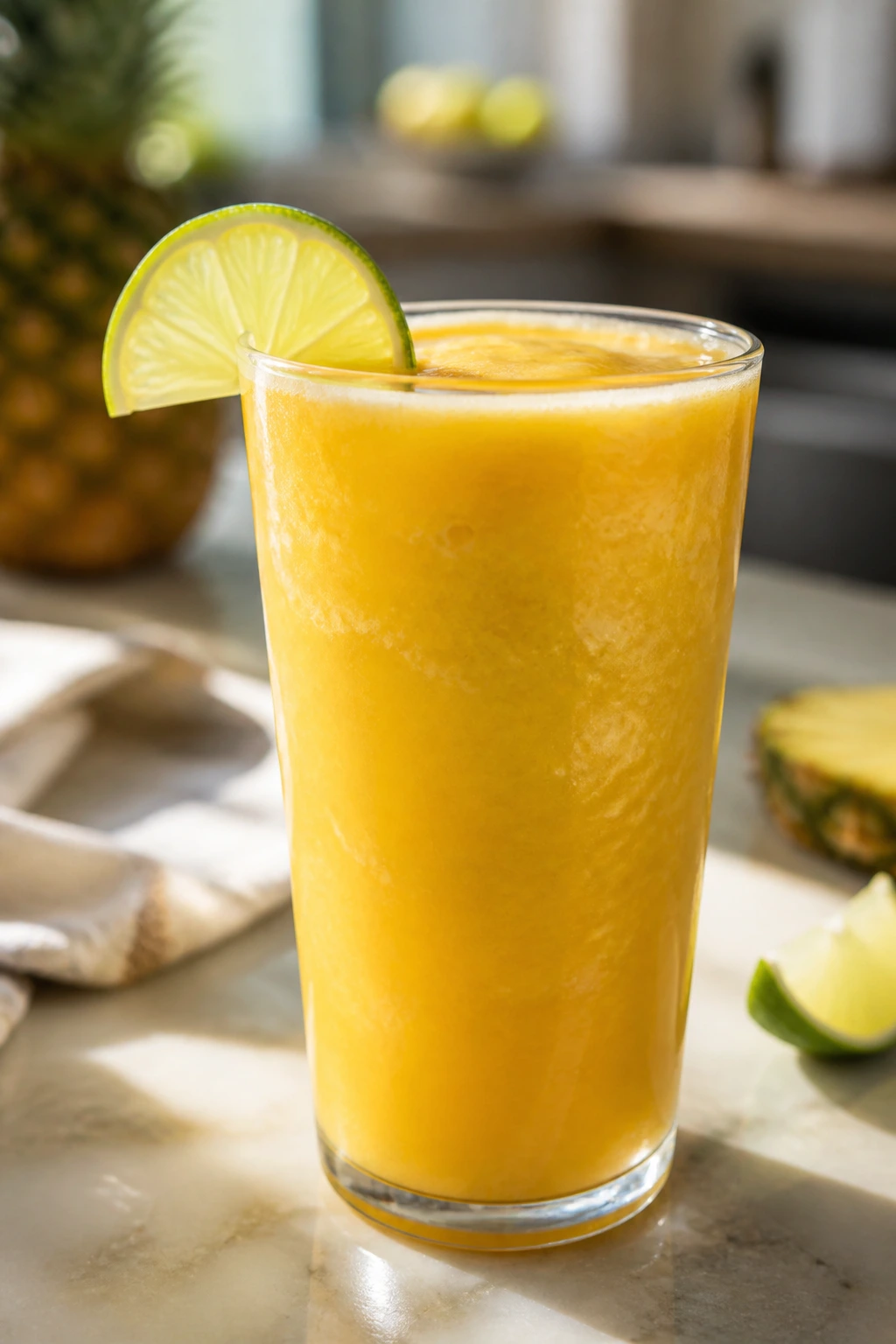
Bright, not cloying: Pineapple and lime keep the sweetness from flattening out, so the drink still tastes lively after the first few sips.
-
Thick without ice overload: Frozen fruit gives you the chilled texture you want without the watery finish ice can leave behind.
-
Creamy, but not heavy: Greek yogurt adds body and a little tang, while coconut milk smooths the edges instead of turning the whole thing into a milkshake.
-
Fast when the fruit is prepped: If the fruit is already frozen, the actual blending takes about a minute, and that’s generous.
-
Easy to tune: A splash more coconut water loosens it up, extra lime wakes it up, and a teaspoon of honey quiets fruit that’s too sharp.
-
Works at breakfast or midafternoon: It has enough substance to stand in for a light meal, but it still feels cold and fresh enough to drink beside a bowl of eggs or toast.
The Fruit Bowl That Drinks Like a Vacation
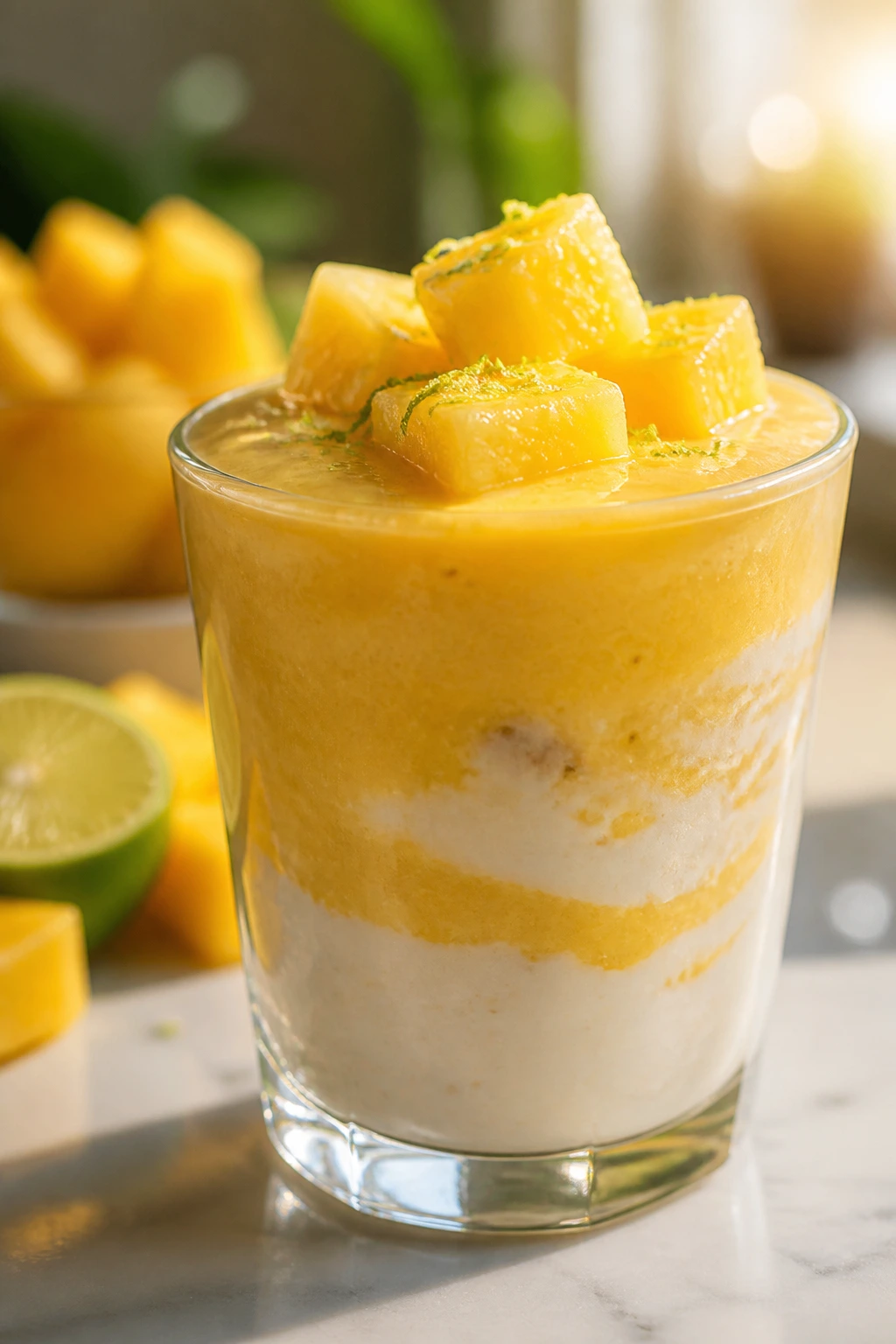
A good tropical smoothie owes more to balance than to any single fruit. Pineapple brings acidity and a sharp, almost sparkling edge. Mango softens that edge with a round, silky sweetness. Banana is the glue—it gives the blender something to work with and keeps the texture from turning thin and slippery.
Coconut belongs here because it slows the flavor down. Without it, pineapple and mango can taste a bit too eager, all top notes and no finish. With a small amount of coconut milk and a splash of coconut water, the drink starts to feel layered. Creamy first. Bright second. Then the lime comes in at the end and snaps the whole thing into focus.
There’s also a practical reason this style works so well. Tropical fruit has a lot of juice, which sounds helpful until you try to make a smoothie that isn’t watery. Frozen fruit solves that problem before it starts. It chills the drink and gives the blender resistance, which is exactly what you want if you’re after a thick pour that still moves through a straw.
One detail people miss: banana should support the other fruit, not dominate it. One medium banana is enough. Two is where the smoothie starts to taste like banana wearing pineapple cologne.
Yield, Time, and the Texture You’re Chasing
Yield: Serves 2 generous glasses
Prep Time: 10 minutes
Cook Time: 0 minutes
Total Time: 10 minutes
Difficulty: Beginner — there’s no stove work, no special technique, and the only real skill is knowing when to stop the blender.
Best Served: Immediately, while the smoothie is still thick, cold, and glossy
Chill/Rest Time: None, though freezing the banana slices ahead makes the texture noticeably better
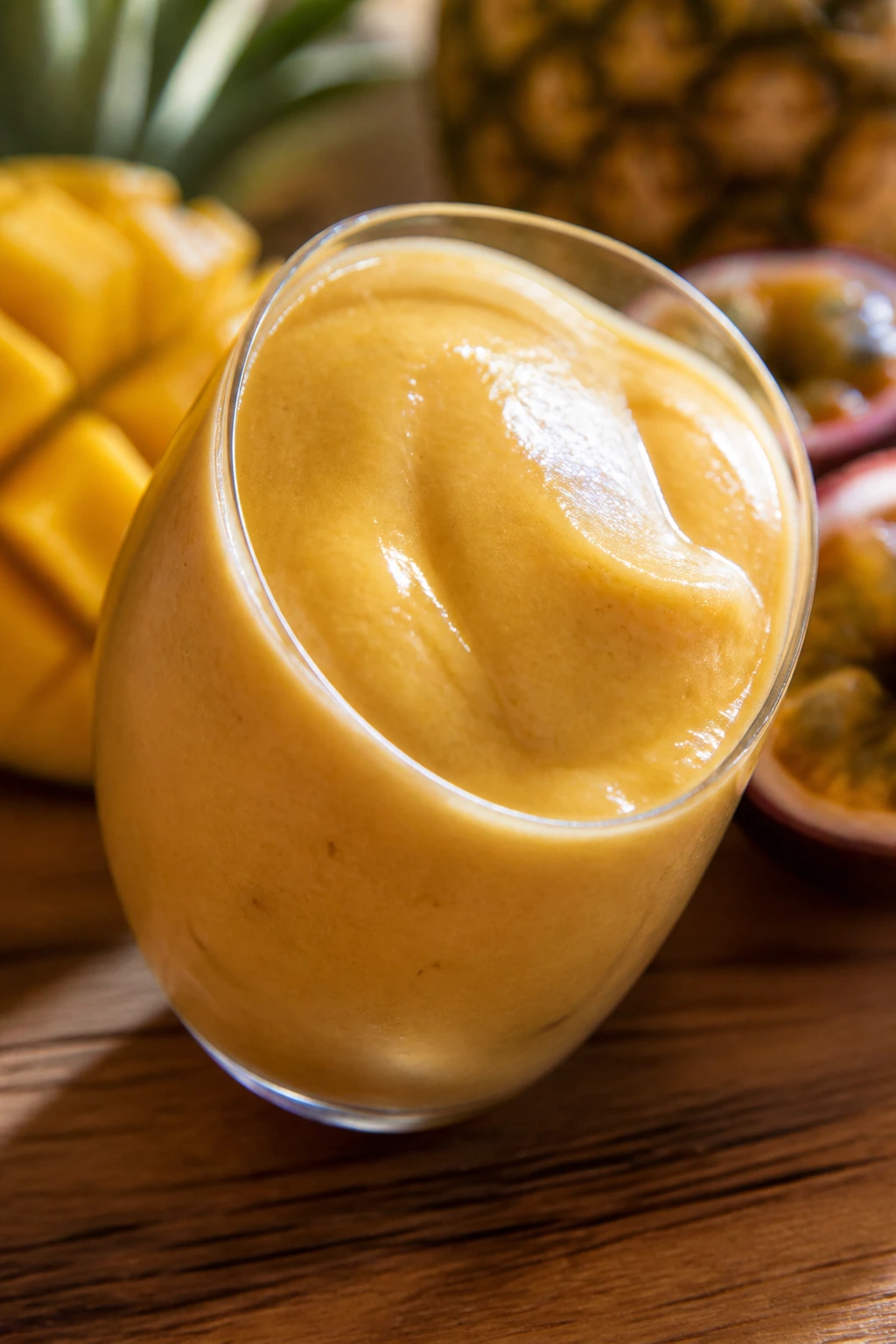
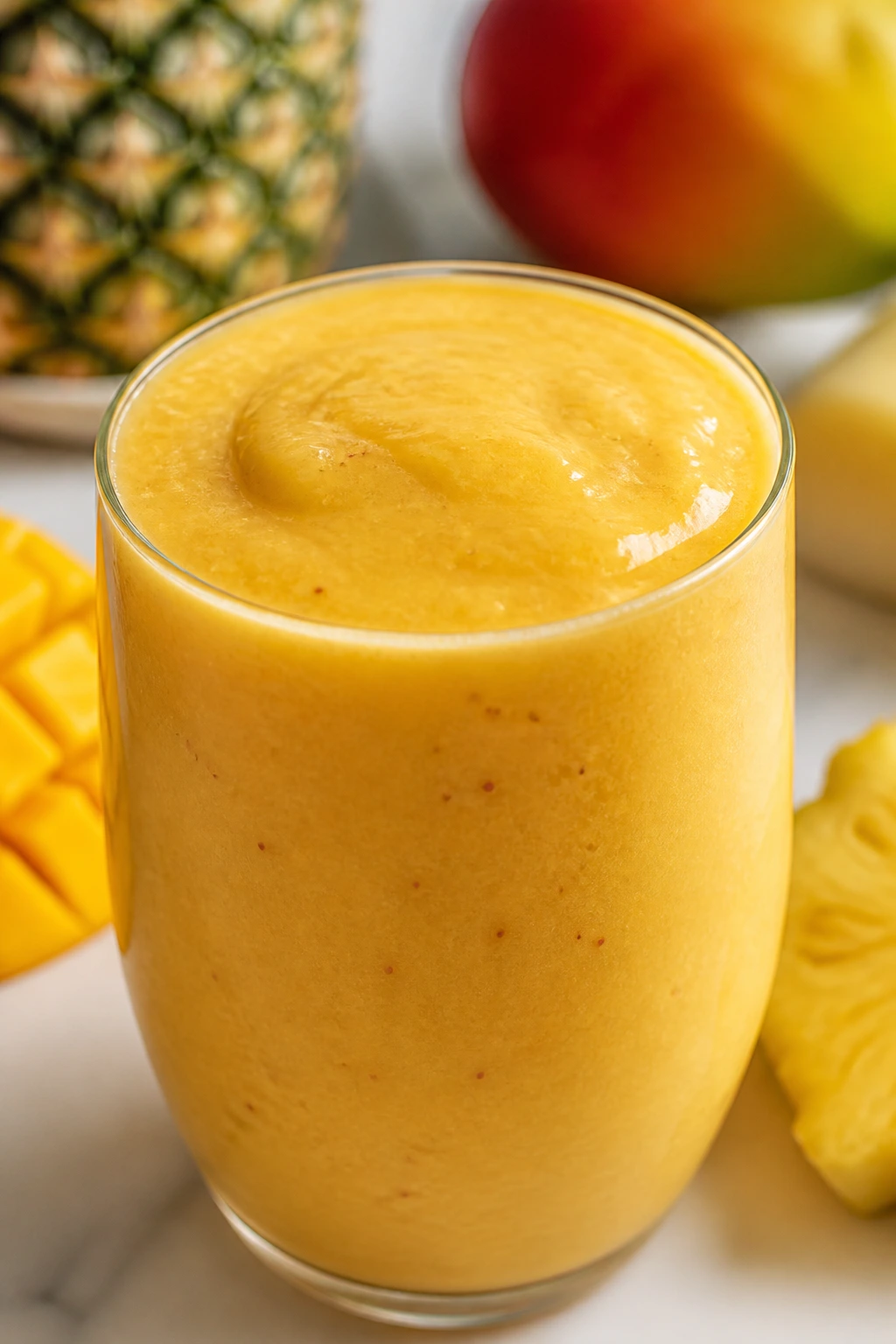
A smoothie like this lives or dies by texture. If it pours like juice, something went wrong. If it’s so thick the blender stalls, you went too far in the other direction. The sweet spot is a cold, spoon-thick drink that still moves. You should be able to tilt the glass and see it slide slowly, not slosh like a bowl of soup.
The timing block is short because the method is short. That’s the point. This isn’t a recipe that rewards fussing. It rewards a cold freezer, a good blender, and a little restraint with the liquid.
If you want to make the fruit more manageable, peel and slice the banana before freezing it. A whole frozen banana is a nuisance. Slices blend faster, and the blender won’t spend the first 20 seconds punching at one icy lump while the mango hangs out untouched on top.
The Ingredient List for a Tropical Smoothie That Actually Tastes Balanced
For the Smoothie:
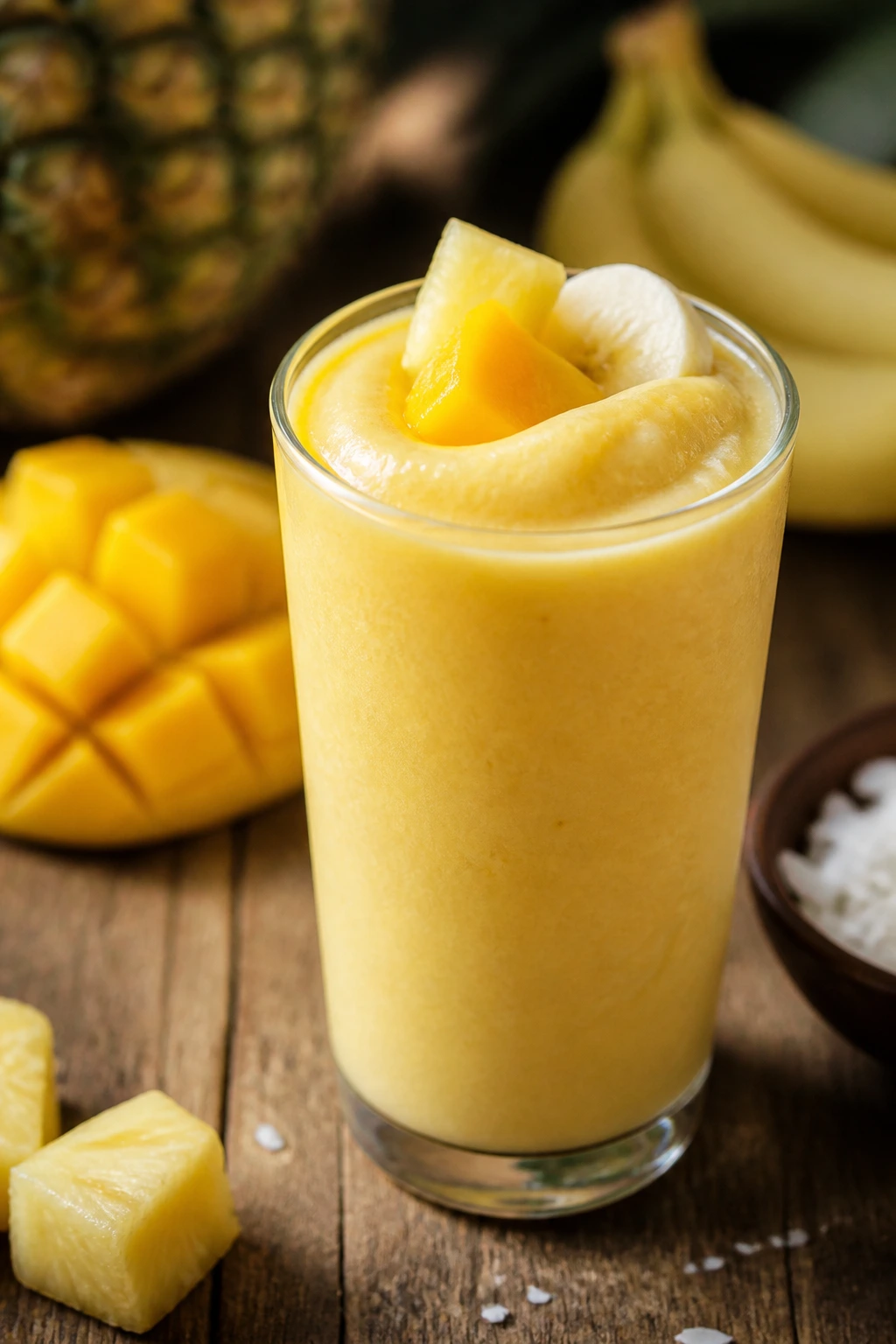
- 2 cups frozen pineapple chunks
- 1 1/2 cups frozen mango chunks
- 1 medium ripe banana, peeled, sliced, and frozen if possible
- 3/4 cup plain Greek yogurt
- 3/4 cup unsweetened coconut milk beverage, cold
- 1/4 cup cold coconut water, plus 2 to 4 tablespoons more if needed
- 1 tablespoon fresh lime juice
- 1 teaspoon finely grated lime zest
- 1 tablespoon honey or maple syrup, optional
- 1 pinch fine salt
That ingredient list looks short, and it should. Tropical smoothies get messy when people try to load them with too many extras before they’ve nailed the base. Once the fruit, liquid, and acidity are in the right place, you can add protein, greens, seeds, or extra sweetness without losing the original shape of the drink.
The fruit should be frozen solid. Not mostly frozen. Solid. If the pineapple is soft around the edges, it gives the blender too much free water and the result thins out. Bagged frozen fruit from the store is fine here, by the way. It’s often better than cutting and freezing fresh fruit at home because the pieces are already consistent in size.
Why These Ingredients Taste Better Together
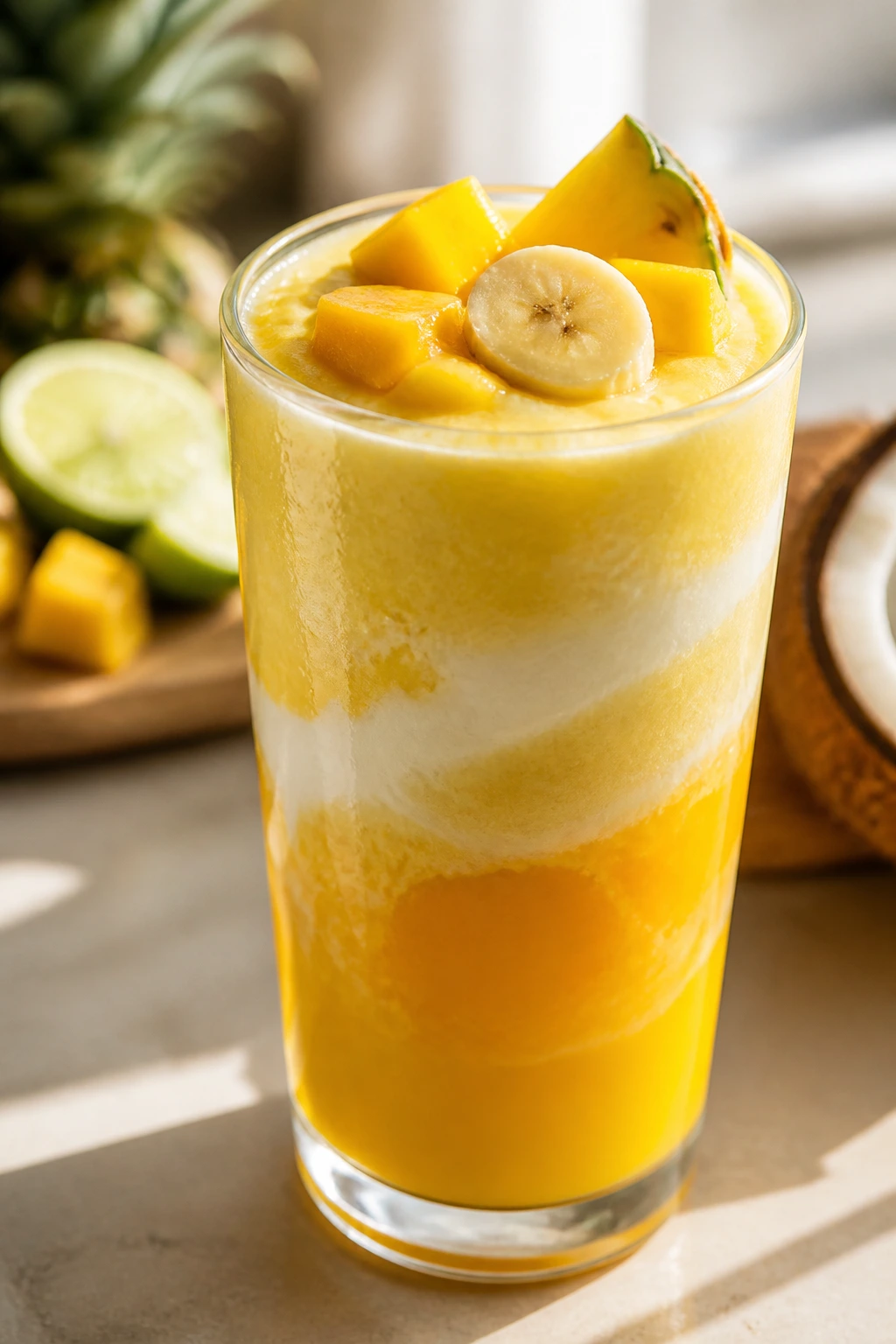
Frozen Fruit Base
- What to use: 2 cups frozen pineapple chunks and 1 1/2 cups frozen mango chunks, plus 1 medium banana that’s peeled and sliced before freezing if you can plan ahead.
- Preparation: Keep the fruit in the freezer until the second you blend it. If you’re freezing your own banana, slice it first so the pieces don’t turn into one stubborn block.
- Substitutions: Frozen peaches can replace part of the mango, and frozen papaya works if you want a softer, more floral flavor.
- Tips: Pineapple is the sharpest fruit in the blend, so it carries the drink. Mango and banana fill in the gaps and keep the sour edge from taking over.
Creamy Body
- What to use: 3/4 cup plain Greek yogurt.
- Preparation: Use it cold. Straight from the fridge is ideal because warm yogurt makes the smoothie feel softer and less refreshing.
- Substitutions: Coconut yogurt keeps the smoothie dairy-free, and a thick vanilla yogurt can work if you want a sweeter drink.
- Tips: Greek yogurt gives body without pushing the drink into milkshake territory. That little bit of tang keeps the fruit from tasting flat.
Liquid and Brightness
- What to use: 3/4 cup unsweetened coconut milk beverage, 1/4 cup coconut water, 1 tablespoon lime juice, and 1 teaspoon lime zest.
- Preparation: Keep the liquids cold and zest the lime before you cut it in half for juice.
- Substitutions: Almond milk can replace the coconut milk beverage, but the flavor gets less tropical. Orange juice can replace some of the coconut water if you want a sweeter, sunnier profile.
- Tips: Lime zest matters more than people think. The oils in the peel add fragrance that juice alone cannot match.
Finishers
- What to use: 1 tablespoon honey or maple syrup, plus a pinch of salt.
- Preparation: Taste before adding the sweetener if your fruit is very ripe.
- Substitutions: Agave works too, and if you want no added sugar at all, skip it entirely.
- Tips: Salt doesn’t make the smoothie salty. It makes the pineapple taste more pineapple-like and keeps the sweetness from sitting too high on the tongue.
The Blender and Glasses I’d Pull Out
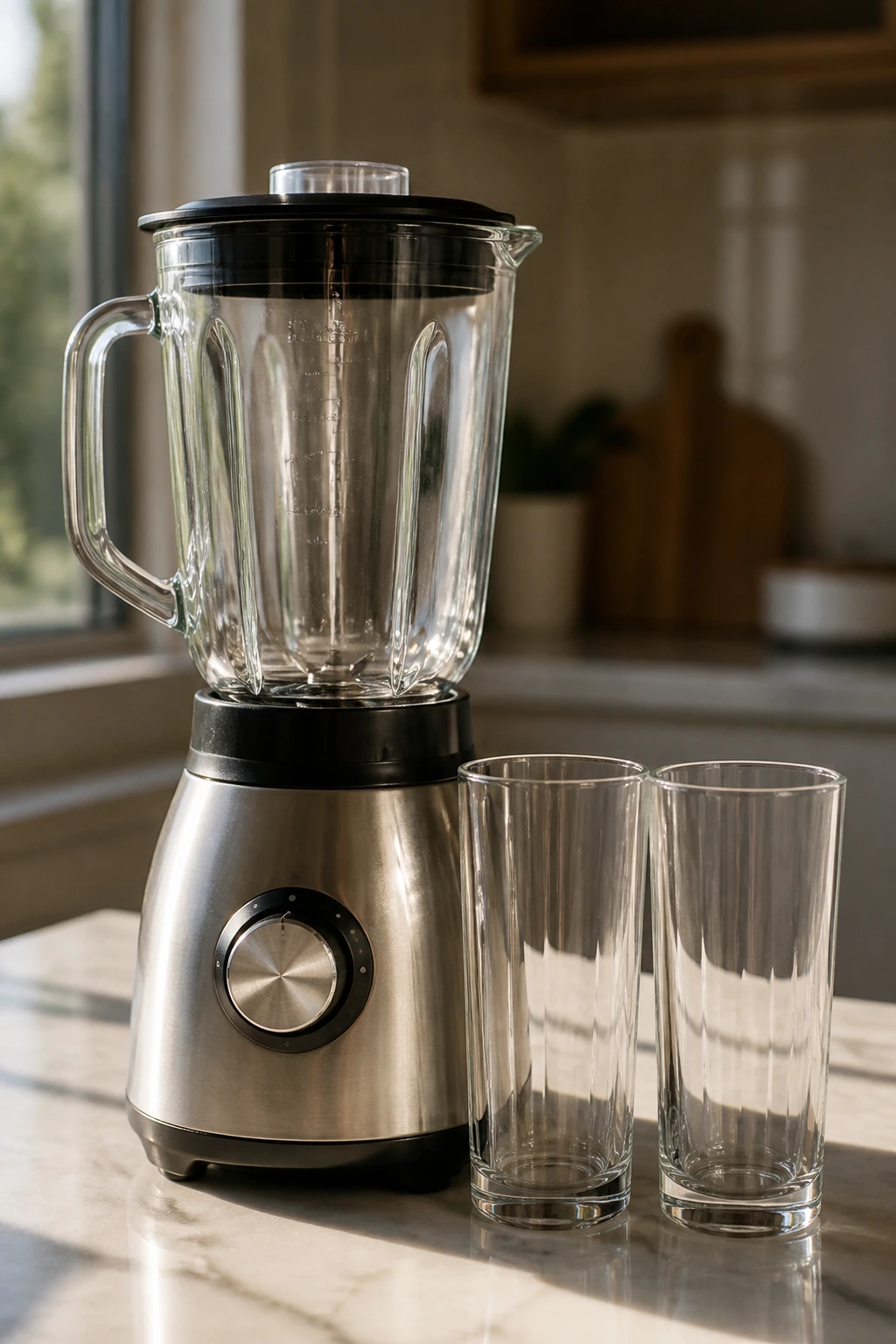
-
Blender with a sturdy motor: A high-speed blender makes the texture silkier, but a standard countertop blender can still do the job if you add the liquid first.
-
Rubber spatula: Useful for scraping down the sides if the frozen fruit hangs up above the blades.
-
Measuring cups and spoons: Smoothies look casual, yet the ratio matters. Too much liquid ruins the thickness fast.
-
Microplane or fine grater: Best for the lime zest. A coarse grater can catch the bitter white pith, and that’s not the note you want.
-
Two tall glasses: Chilling them in the freezer for 5 minutes is a small move that keeps the smoothie cold longer.
-
Optional tamper: Helpful if your blender has one and the blades need a little coaxing through the frozen fruit.
A blender is one of those tools where the shape of the jar matters as much as the motor. A narrow jar can pull frozen fruit down more efficiently than a wide one. If all you have is a basic blender, it still works; you just need to stop and stir once or twice instead of trying to force the machine to do everything in one go.
Cold glasses are worth the tiny extra effort. Warm glass walls steal the chill from the smoothie at the exact moment you want it to feel crisp. Five minutes in the freezer is enough.
The Blend Order That Keeps the Drink Thick
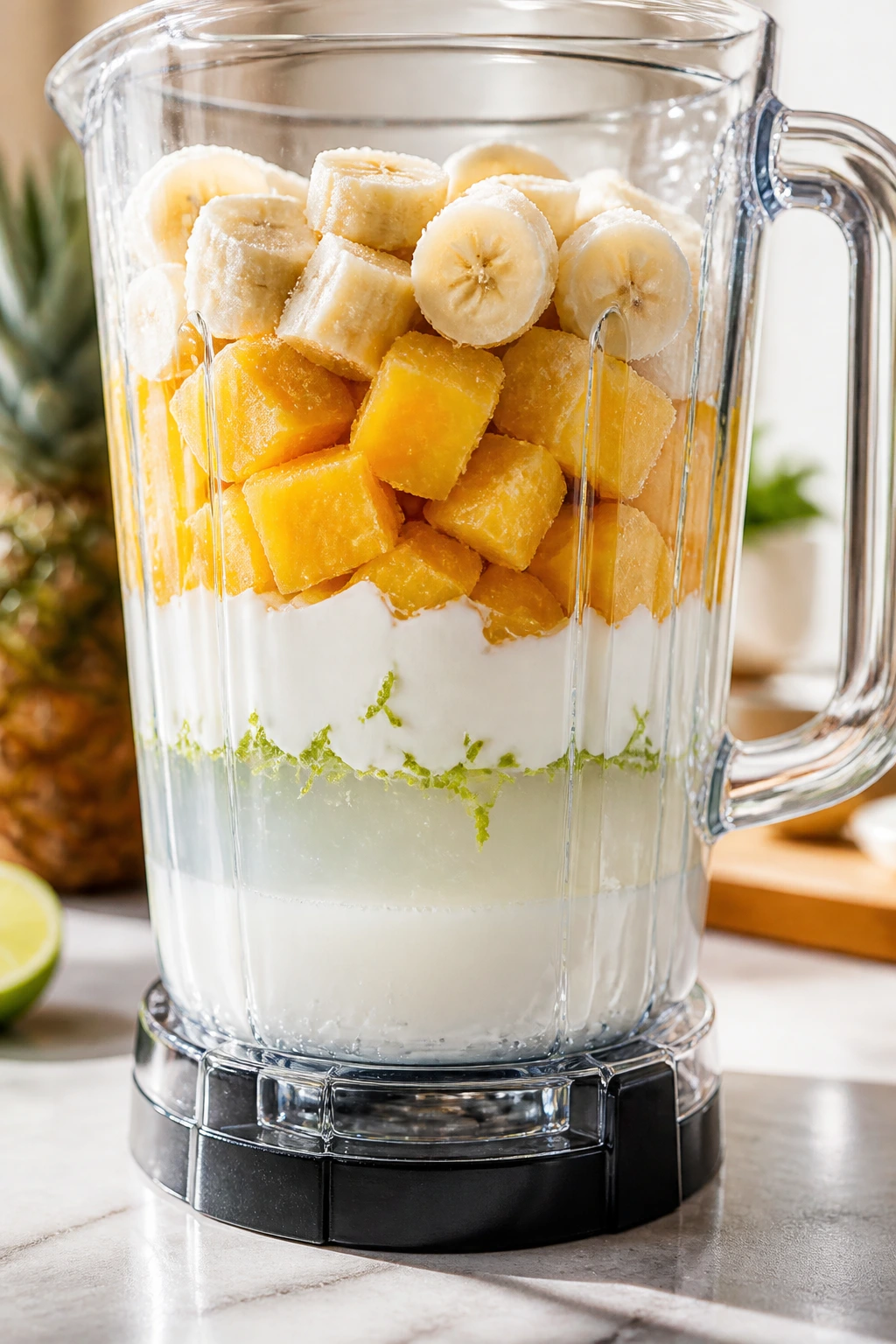
Prep the Fruit and Glasses:
- Put two tall glasses in the freezer for 5 minutes while you gather the ingredients. If your freezer is crowded, skip this step; it’s helpful, not mandatory.
- Make sure the pineapple, mango, and banana are frozen solid. If the banana has been sitting out, freeze the sliced pieces for at least 30 minutes before blending.
Build the Blender Jar: 3. Pour in the 3/4 cup coconut milk beverage and 1/4 cup coconut water first, then add the Greek yogurt, lime juice, lime zest, pinch of salt, and honey or maple syrup if you’re using it. Liquids on the bottom help the blades catch the fruit faster. 4. Add the frozen banana, frozen mango, and frozen pineapple on top. Press the fruit down gently with the back of a spoon if needed, but do not pack it in so tightly that the blades can’t move.
Blend and Adjust: 5. Start the blender on low for 10 to 15 seconds, then move to high and blend for 30 to 45 seconds, stopping once or twice to scrape down the sides if the mixture hangs up. Do not keep blending after it looks smooth — overblending warms the smoothie and thins the texture. 6. Check the consistency. If it’s too thick, add 1 tablespoon of coconut water at a time and blend for 5 seconds between additions. If it tastes too tart, add another teaspoon of honey or maple syrup and blend briefly.
Finish and Serve: 7. Pour the smoothie into the chilled glasses, scrape in every last bit, and serve immediately. The top should be thick enough to hold a few soft ripples for a moment before settling.
A few small things matter here. Starting with liquid helps the blade pull fruit down instead of spinning against a frozen wall. Stopping early matters too. Once the mixture is smooth, the blender’s job is done. Keep going and you invite heat, foam, and a thinner pour.
If the fruit gets stuck, resist the urge to dump in half a cup of liquid all at once. That’s the fastest way to overshoot the texture. Add it by the tablespoon. Boring advice. Effective advice.
How to Serve It Cold, Bright, and Clean
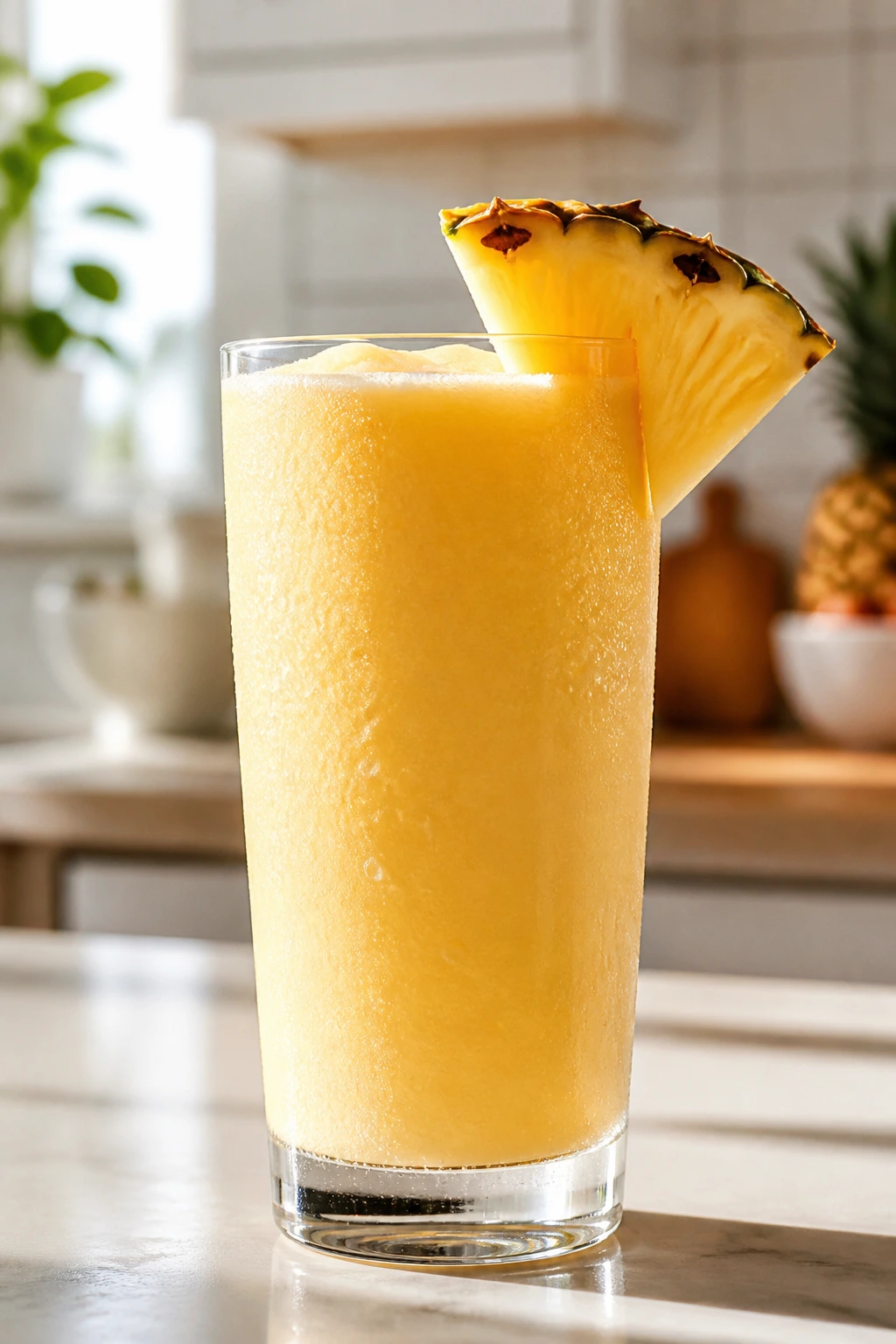
Presentation: Pour the smoothie into chilled glasses and give each one a small garnish that makes sense with the flavor: a pineapple wedge on the rim, a pinch of toasted coconut on top, or a thin strip of lime zest scattered across the surface. The drink should look thick and pale gold, not foamy and pale green.
Accompaniments: A tropical smoothie sits nicely beside coconut granola, buttered toast, a slice of banana bread, or scrambled eggs if you’re using it as breakfast. For something lighter, serve it with a small handful of macadamias or a bowl of sliced strawberries. Keep the sides simple. The smoothie already has enough flavor on its own.
Portions: Two 14-ounce glasses is the sweet spot for this batch. If you’re serving it next to food, pour smaller 8- to 10-ounce portions and save the rest for a second round only if you plan to drink it right away.
Beverage Pairing: If you want something alongside it, serve chilled sparkling water with lime or unsweetened iced tea. That sounds almost too plain, but plain is the point. You want a clean palate, not another sweet drink piling on top of the smoothie.
I like this smoothie best when it looks a little cold around the edges. Condensation on the glass, thick surface, no melted ice ring. That’s the visual cue that the ratio is right. If you’re serving brunch, this is the drink that can hold its own beside eggs and toast without fighting the plate.
For a more snack-like presentation, pour the smoothie into a smaller glass and top it with a tiny spoonful of toasted coconut. It doesn’t turn it into a dessert. It just gives the first sip a little texture.
Small Tweaks That Make This Tropical Smoothie Yours
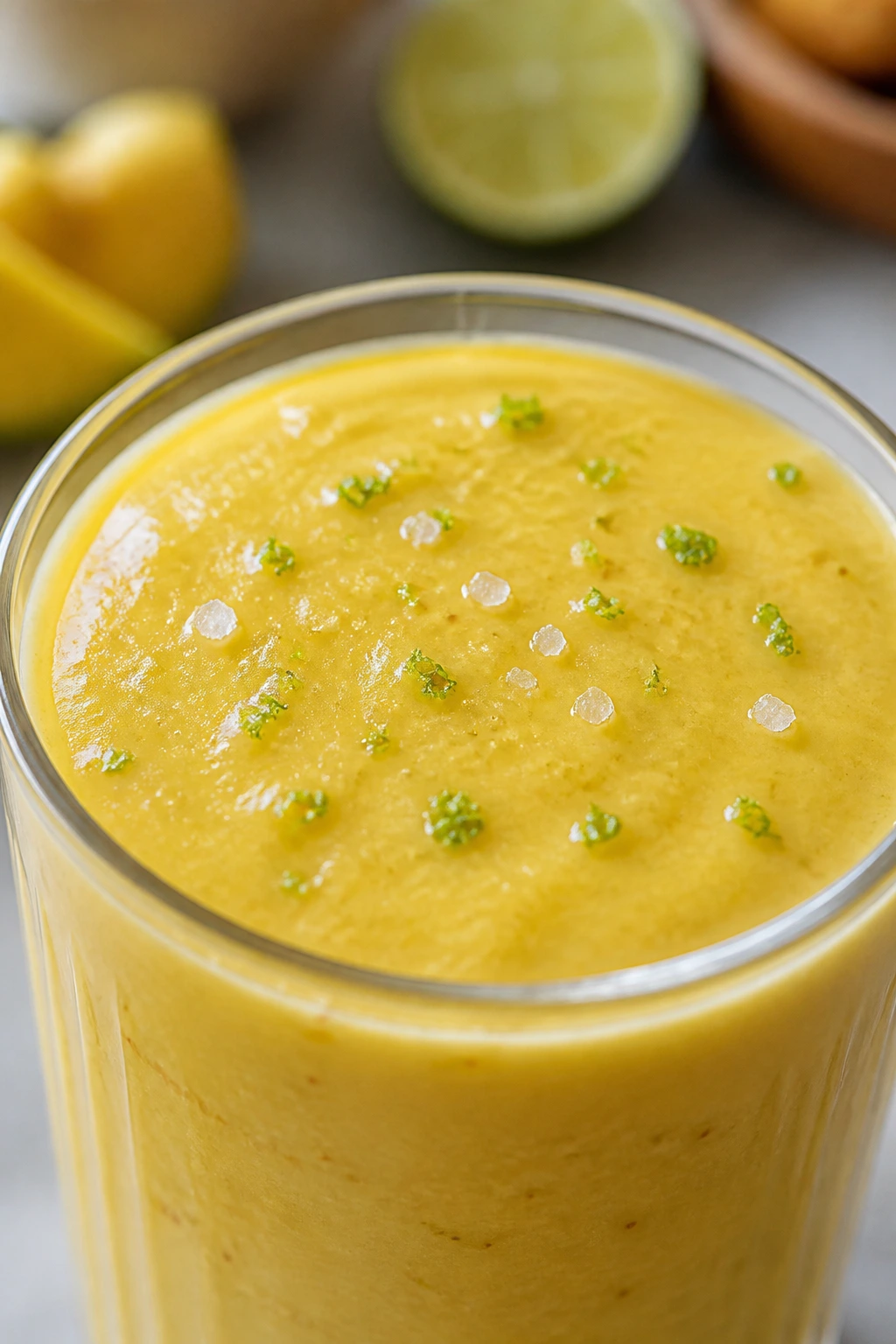
Flavor Enhancement: A tiny pinch of salt and a full teaspoon of lime zest change the whole drink more than another splash of sweetener ever will. If you want a warmer note, add 1/4 teaspoon of vanilla extract. It won’t make the smoothie taste like cake; it will make the fruit taste rounder.
Customization: Add 1 tablespoon chia seeds if you want a more filling smoothie, but let the drink sit for 2 minutes after blending so the seeds can thicken a bit. If you want more protein, add an extra 2 tablespoons of Greek yogurt or 1/2 scoop of a mild vanilla protein powder. Keep the protein light or it starts to steal the fruit’s brightness.
Serving Suggestions: Toasted shredded coconut, a mint sprig, or a few small cubes of fresh pineapple are enough garnish. I would skip heavy toppings like whipped cream here. They turn the smoothie into something else, and the clean fruit flavor is the whole reason to make it.
Make-It-Yours: For a dairy-free version, swap in coconut yogurt and keep the rest the same. For a lower-sugar version, leave out the honey and lean on very ripe mango. For a more tart, grown-up drink, use a full tablespoon of lime juice and cut the banana to half a banana.
Little changes matter because this recipe has a narrow lane. That’s not a weakness. It’s why it works. You can push it sweeter, thicker, greener, or creamier without losing the shape of the drink, but only if you change one thing at a time.
Common Tropical Smoothie Mistakes and Easy Fixes
-
Using too much liquid at the start: The smoothie turns thin and pours like fruit milk. Fix it by starting with the listed amount and adding more only in tablespoon increments after blending.
-
Skipping frozen fruit: You end up with a warm, loose drink that tastes flat by the second sip. Freeze the fruit solid or use bagged frozen fruit and keep it in the freezer until the blender is ready.
-
Letting banana take over: The smoothie starts to taste like banana first and tropical fruit second. Use one medium banana, not two, and let pineapple and mango stay in the lead.
-
Blending until the mixture gets hot: Foam climbs up the jar, the texture loosens, and the fresh fruit taste fades. Stop as soon as the blend is smooth and only restart if you need a quick splash of liquid.
-
Leaving out the lime or salt: The drink tastes sweet but sleepy, like it never quite wakes up. Lime adds brightness; salt sharpens the fruit. You need both.
-
Using canned coconut milk straight from the can: The smoothie can turn heavy and a little greasy, more like a dessert shake than a drink. If you want that richer version, use only a small splash and thin it with coconut water.
A smoothie is simple, which means its mistakes are blunt. There’s not much to hide behind. If the texture is off, the problem is usually one of three things: too much liquid, fruit that wasn’t frozen enough, or a blender that was allowed to run too long.
Another thing people do is taste too late. Taste before you pour. If the balance needs a nudge, you still have the blender right there. Once it hits the glass, your options get smaller fast.
Variations Worth Trying
Pineapple-Forward Cooler
Use 2 1/2 cups pineapple and only 1 cup mango. This version leans sharper and more acidic, which works well if your fruit is very ripe or if you like the first sip to come in with a little bite. Add an extra squeeze of lime and skip the sweetener unless the pineapple is unusually tart.
Creamier Island Breakfast
Swap the coconut milk beverage for 1/2 cup canned coconut milk plus 1/4 cup coconut water, and keep the Greek yogurt in place. The texture turns denser and richer, closer to a breakfast shake, but it still drinks well if you keep the liquid measured. I like this one when I want the smoothie to hold up beside toast or eggs.
Dairy-Free Island Blend
Replace the Greek yogurt with 3/4 cup coconut yogurt. The result is softer and a little more coconut-forward, with less tang and more dessert-like roundness. If you go this route, the lime becomes even more important because it keeps the sweetness from hanging around too long.
Green Tropic Shake
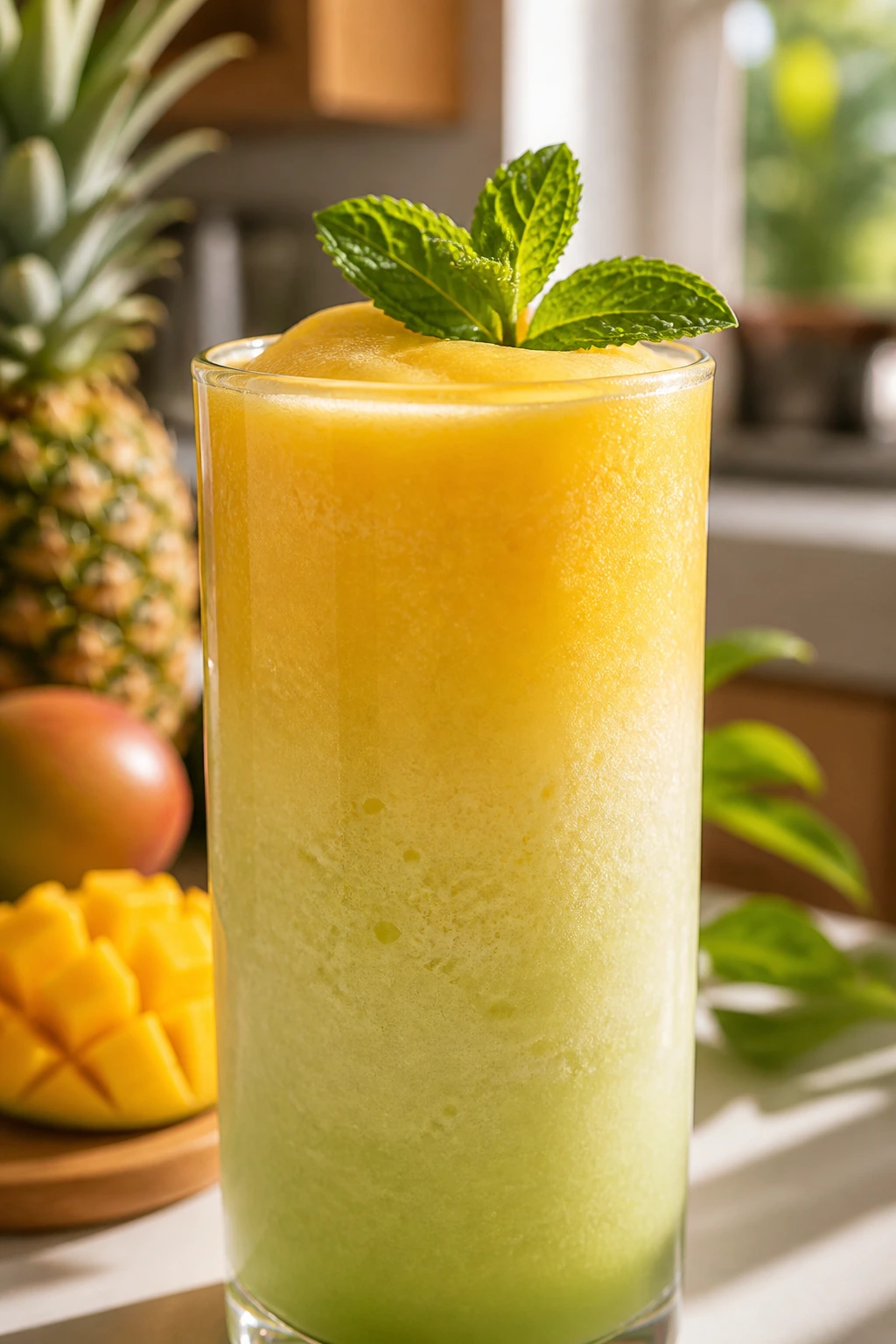
Add 1 packed cup baby spinach and reduce the banana to half. The smoothie will turn a pale green-gold, but the pineapple and mango stay in charge if you don’t overdo the greens. This is the version to make when you want the flavor of a fruit smoothie with a little extra vegetal backbone.
Protein Breakfast Blend
Add 1/2 scoop vanilla protein powder and an extra 2 tablespoons coconut water to keep the texture moving. If the powder is sweet, cut the optional honey. Protein powders vary wildly, so blend, taste, and adjust before you pour.
A variation should sound like the same drink wearing different shoes. If it starts tasting like an entirely different recipe, you changed too much. That’s usually where smoothie recipes go wrong: too many add-ins, not enough backbone.
One more thing. If you’re adding oats, chia, or flax, keep the quantities modest. A tablespoon or two is enough. Beyond that, the smoothie turns thick in a dull, pasty way that kills the clean fruit finish.
Make-Ahead, Storage, and What To Do With Leftovers
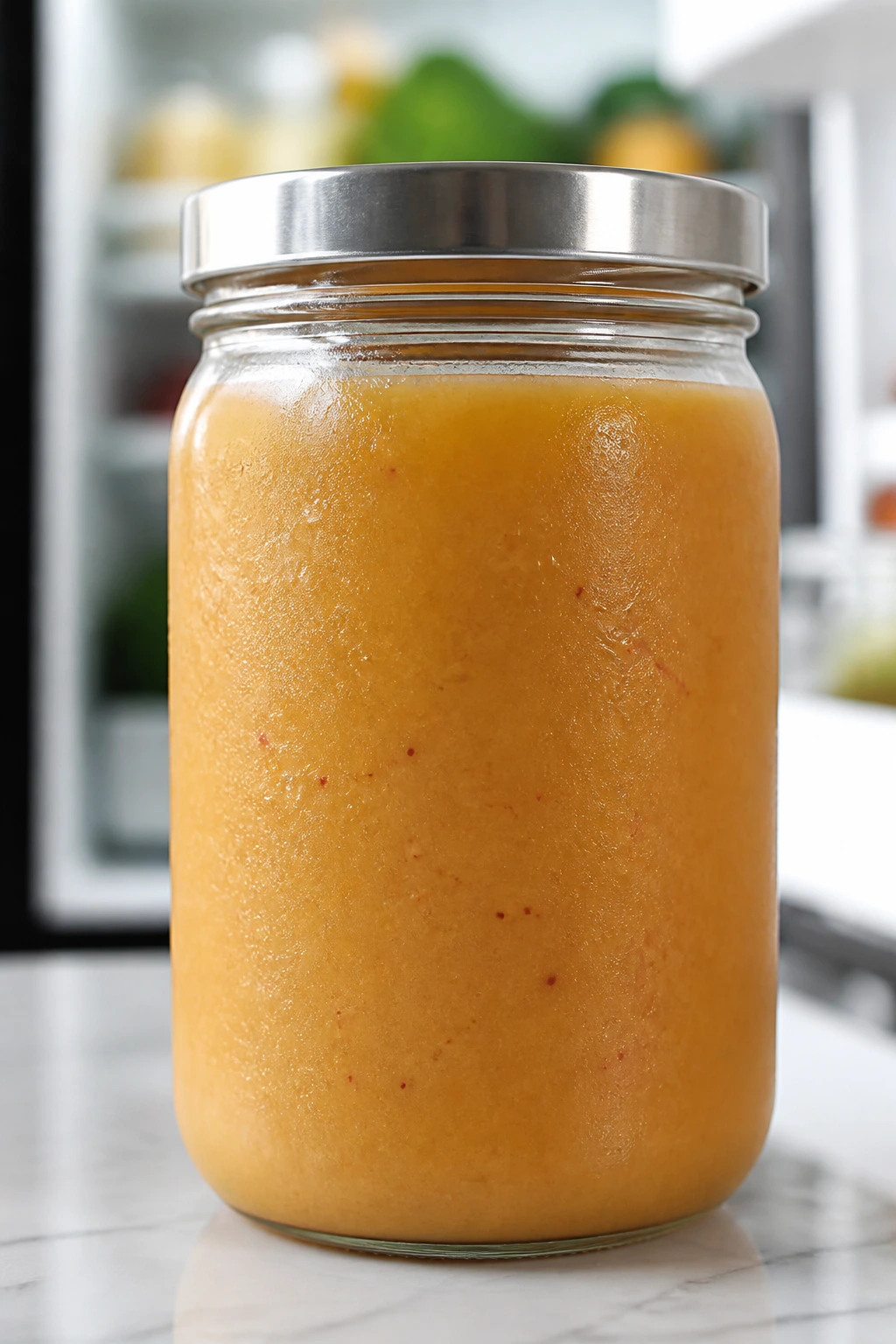
Fridge: Store leftover smoothie in an airtight jar or bottle for up to 24 hours. It will separate a little, which is normal. Shake hard or stir with a spoon, then blend with a tablespoon or two of coconut water if the texture has tightened up too much.
Freezer: Pour extra smoothie into ice pop molds or an ice cube tray and freeze for up to 2 months. The cubes can be reblended with a splash of coconut milk, or you can eat them as a frozen snack if you do not feel like doing more blender work.
Make-Ahead: The best make-ahead move is not blending the smoothie early. It’s making freezer packs. Divide the pineapple, mango, and banana into freezer bags, then freeze them flat. In the morning, dump a pack into the blender with the dairy and liquid, and you’re halfway there before your coffee finishes brewing.
Room Temperature: Don’t leave a dairy-based smoothie sitting out for more than 2 hours. It will soften fast, and the texture falls apart long before the flavor has a chance to improve.
Reheating: Don’t. A smoothie is not a soup. Once it warms, you can’t put the texture back together with heat. If it comes out too cold and stiff from the fridge, let it sit for 10 minutes, stir, and reblend with a splash of liquid. That’s the move. Heat is the wrong tool here.
If you know you’ll want this often, freeze the lime zest in tiny portions or keep a lime in the drawer just for this recipe. It sounds fussy until you try the smoothie without that citrus oil. Then you’ll understand why I keep making the same point.
Leftovers are fine, but fresh is still better. The mango and pineapple hold their flavor well for a day, yet the texture loses that glossy, spoon-thick feel after a while. Make it close to serving time if you can.
Tropical Smoothie Questions People Ask at the Counter
Can I make this tropical smoothie without banana?
Yes, and the easiest swap is 1/2 avocado plus an extra 1/2 cup mango. You’ll lose some sweetness and a little of the familiar smoothie shape, but the drink will stay creamy. If you want to avoid banana because of the flavor, this is the cleanest fix.
What’s the difference between coconut water and coconut milk in this recipe?
Coconut water is thin and lightly sweet, so it loosens the smoothie without making it heavy. Coconut milk adds body and a rounder flavor. This recipe uses both because one gives drinkability and the other gives creaminess.
Can I use fresh fruit instead of frozen fruit?
You can, but the texture changes a lot. Fresh fruit makes the smoothie thinner, so you’ll need several ice cubes or a short freeze on the fruit before blending. If you want the same thick finish, freezing the fruit first is the better move.
How do I make it thicker without turning it into a spoon dessert?
Use less liquid, keep the fruit frozen, and blend only until the texture turns smooth. If it still needs body, add 1 or 2 extra tablespoons of Greek yogurt. Don’t pile in ice. That gives you volume, not better texture.
Can I make it dairy-free?
Yes. Swap the Greek yogurt for coconut yogurt and keep the rest the same. If the dairy-free version tastes a little sweeter, add more lime juice instead of more sweetener so the fruit flavor stays clean.
Why does my smoothie separate in the fridge?
Because smoothies are emulsions only for a little while, and fruit plus liquid always wants to split once it sits. That’s normal. Shake it hard, stir it, or reblend it with a splash of coconut water, and it comes back together well enough for a leftover glass.
Can I add greens or protein without ruining the flavor?
Yes, but keep the additions modest. One packed cup of spinach disappears under the pineapple and mango, and half a scoop of mild protein powder usually stays in the background. Once you go heavier than that, the drink stops tasting like a tropical smoothie and starts tasting like a health project.
A Cold Glass Worth Repeating
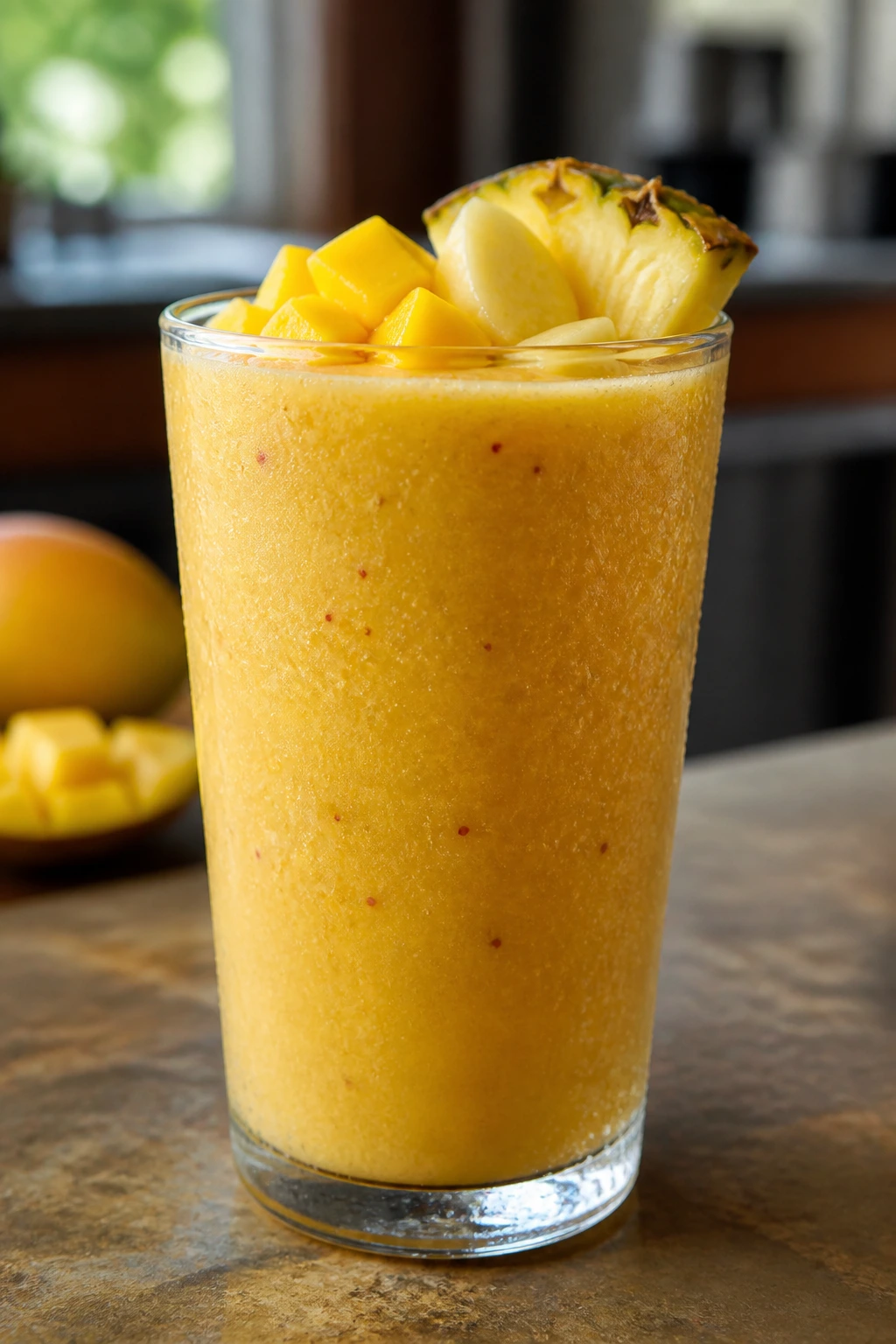
The best thing about this tropical smoothie is not that it feels fancy. It isn’t fancy. It’s the way a few ordinary ingredients line up into something cold, bright, and balanced enough to drink without thinking too hard about it. Frozen pineapple keeps the fruit sharp. Mango softens the edges. Lime wakes the whole glass up.
Keep the fruit in the freezer, the liquid measured, and the blender moving only as long as it needs to. That’s the whole trick. Once you’ve made it a few times, you’ll stop treating the recipe like a list and start treating it like a ratio, which is where the good smoothies live.
Tropical Smoothie for Summer Sipping — Recipe Card
Recipe Name: Tropical Smoothie for Summer Sipping
Description: A thick, cold tropical smoothie made with pineapple, mango, banana, coconut milk, coconut water, and lime. It tastes bright and creamy at the same time, with enough body to sip slowly and enough freshness to finish the glass.
Prep Time: 10 minutes
Cook Time: 0 minutes
Total Time: 10 minutes
Course: Breakfast, Snack, Drink
Cuisine: Tropical-Inspired
Servings: 2 servings
Calories: About 290 kcal per serving
Ingredients
For the Smoothie:
- 2 cups frozen pineapple chunks
- 1 1/2 cups frozen mango chunks
- 1 medium ripe banana, peeled, sliced, and frozen if possible
- 3/4 cup plain Greek yogurt
- 3/4 cup unsweetened coconut milk beverage, cold
- 1/4 cup cold coconut water, plus 2 to 4 tablespoons more if needed
- 1 tablespoon fresh lime juice
- 1 teaspoon finely grated lime zest
- 1 tablespoon honey or maple syrup, optional
- 1 pinch fine salt
Instructions
-
Chill two tall glasses in the freezer for 5 minutes, if possible.
-
Add the coconut milk beverage, coconut water, Greek yogurt, lime juice, lime zest, salt, and honey or maple syrup, if using, to the blender.
-
Add the frozen banana, mango, and pineapple on top of the liquids.
-
Blend on low for 10 to 15 seconds, then on high for 30 to 45 seconds, stopping once or twice to scrape down the sides if needed.
-
Add 1 tablespoon more coconut water at a time if the smoothie is too thick, or a little more honey if it tastes too sharp.
-
Pour into the chilled glasses and serve immediately.
Notes: Use frozen fruit for the thickest texture. If you want a dairy-free version, swap the Greek yogurt for coconut yogurt. Do not let the finished smoothie sit out long; it tastes best right away.