



A black bean dinner can carry a surprising amount of weight when you treat it like something that deserves a hot pan, a little fat, and a real finish. Give the beans a hard rinse, brown some onions, add mushrooms or potatoes, and finish with butter, acid, or sharp cheese, and the whole plate starts eating with the same deep, savory pull people usually associate with a steakhouse meal.
That is the part a lot of bean dinners miss. Straight-from-the-can black beans are fine, but they can also land flat if they never meet heat, salt, and a few things with actual personality. Once you press some of the beans into a mash, let the edges get a little crisp, and pair them with a glossy sauce or a browned potato crust, they stop reading as “meatless backup plan” and start reading as dinner.
These 12 black bean dinners lean hard into that richer, more substantial lane. They use the same building blocks steakhouse plates rely on — browned onions, mushrooms, potatoes, sharp cheese, buttery finishes, and a sharp little hit of acid at the end — because that combination gives black beans real presence. Not dainty. Not apologetic. Dinner.
Why These Black Bean Dinners Hit Like a Steakhouse Plate
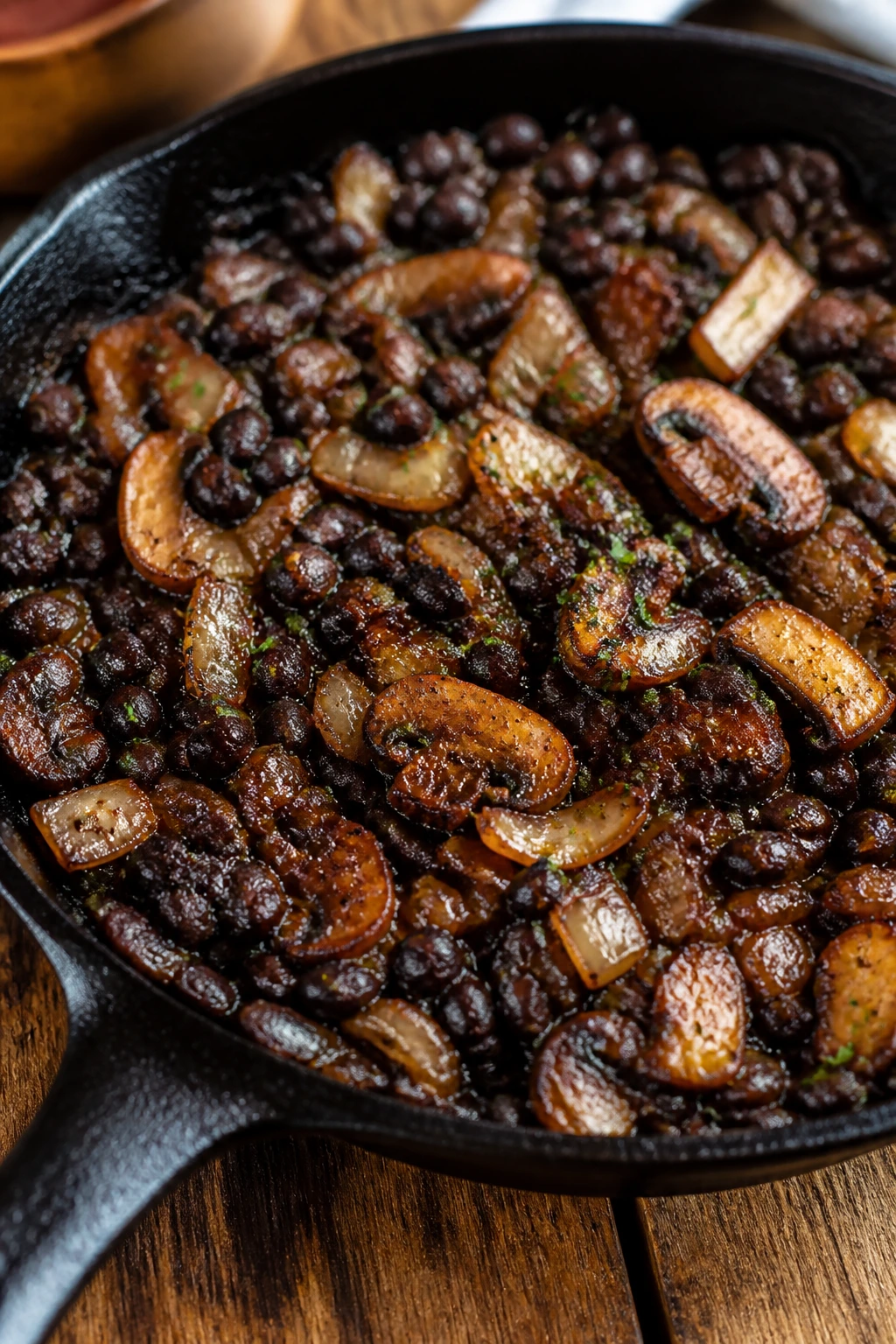
Browning does the heavy lifting. Black beans themselves are mild, so the first real flavor comes from a hot skillet, a browned onion, or a little roasted mushroom juice left in the pan. That crusty, savory layer is what makes the meal taste full instead of mushy.
Fat makes the beans feel finished. A spoonful of butter, olive oil, sour cream, cheddar, or even a glossy gravy changes the texture more than people expect. Beans need richness the way steak needs salt.
Potatoes and beans are a very good pair. Russets, Yukon Golds, crispy wedges, tater tots, and mashed potatoes all give the beans a steakhouse frame. They add heft, and they also catch sauce, which is half the fun.
A little acid keeps the plate from going dull. Vinegar, lime, pickled onions, salsa verde, or a splash of Worcestershire keeps the savory parts awake. Without that lift, the whole dinner can feel heavy in the wrong way.
These recipes work on weeknights, but they don’t taste rushed. A can of beans can become a burger, a skillet supper, or a casserole that looks like it took more effort than it did. That’s not a trick. That’s just smart cooking.
1. Bourbon-Onion Black Bean Burgers
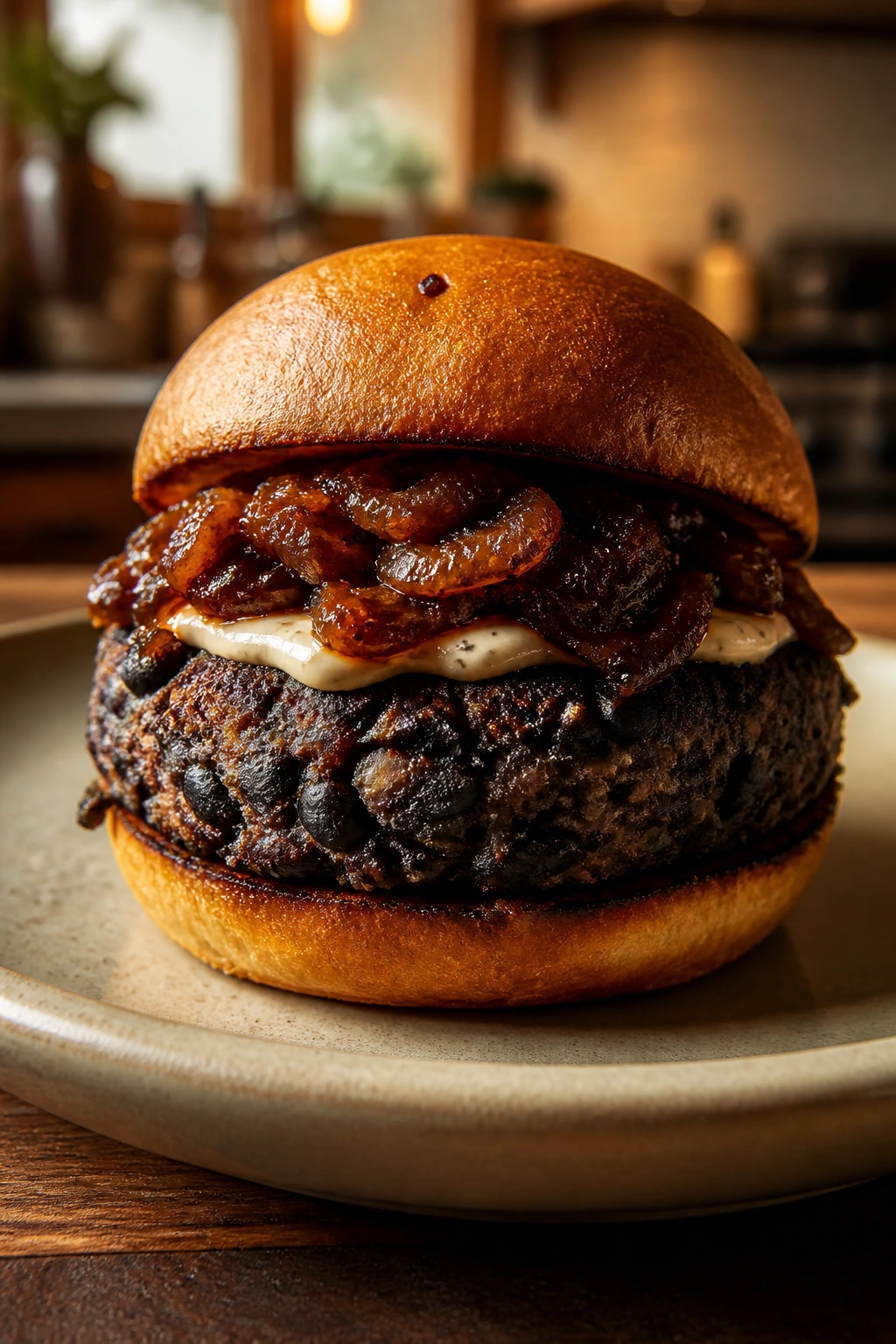
These burgers are what happens when a black bean patty stops trying to behave like a polite side dish. The outside gets a proper crust, the onion jam turns sticky and dark, and the horseradish mayo gives the whole bun the sharp, peppery bite you usually expect from a steakhouse sauce. They are messy in the best way.
Why It Works:
Black beans bring body, but they need a binder and a little roughness to hold together in the pan. Mashing about a third of the beans gives you a patty that stays tender inside instead of turning pasty, and the bourbon onion jam brings sweetness with a faint smoky edge that tastes very steakhouse to me. The horseradish mayo keeps the burger from drifting into soft, sweet territory.
Key Ingredients:
- 2 cans black beans (15 ounces each), rinsed and very well drained — the drier they are, the better the patties sear.
- 1 tablespoon olive oil — for the onions and the pan.
- 1 large yellow onion, thinly sliced — this becomes the jammy topping.
- 1 tablespoon brown sugar — helps the onions caramelize faster.
- 2 tablespoons bourbon — or use beef-style broth if you want to skip alcohol.
- 1 tablespoon apple cider vinegar — cuts the sweetness.
- 1 cup panko breadcrumbs — keeps the patties firm without making them heavy.
- 1 large egg — the main binder.
- 1 tablespoon Worcestershire sauce — deep savory flavor.
- 1 teaspoon smoked paprika, 1 teaspoon kosher salt, 1/2 teaspoon black pepper — the baseline seasoning.
- 4 brioche buns, toasted — soft enough for the patty, sturdy enough for the toppings.
- 4 slices sharp cheddar — optional, but I always reach for it.
- 1/3 cup mayonnaise + 1 tablespoon prepared horseradish — the quick sauce.
Quick Steps:
- Cook the onion jam. Heat the olive oil in a skillet over medium heat. Add the sliced onion and cook for 8 to 10 minutes, stirring often, until soft and golden.
- Stir in the brown sugar and cook for 2 minutes, then add the bourbon and vinegar. Let it bubble until sticky and glossy, about 2 more minutes. Move it to a bowl.
- In a large bowl, mash about 1 cup of the beans until mostly smooth. Add the rest of the beans, panko, egg, Worcestershire, smoked paprika, salt, and pepper. Mix until the mixture holds together when squeezed.
- Form 4 patties about 3/4-inch thick. Chill them for 10 minutes if the mixture feels loose.
- Wipe out the skillet, add a thin film of oil, and cook the patties over medium heat for 4 to 5 minutes per side until browned and hot through. Do not move them too early — that crust needs a minute to set.
- Top with cheddar in the last minute if you want it melted. Toast the buns and spread the horseradish mayo on both halves.
Equipment for This Recipe:
- Large skillet — for both the onion jam and the patties.
- Mixing bowl — roomy enough to mash without flinging beans across the counter.
- Spatula — a wide one helps flip without cracking the burgers.
- Sheet pan or plate — for resting the formed patties before cooking.
How to Serve This Dish:
Pile the burgers onto toasted brioche buns with a thick spoonful of onion jam and a little more horseradish mayo. I like them with steak fries or crisp dill pickles on the side, because the salty crunch balances the sweet onions. If you want to pretend you’re at a diner that owns a meat locker, add a pile of shredded lettuce and serve the burgers slightly tilted so the onions spill out.
Pro Tips for This Recipe:
- Dry the beans on a towel after rinsing. Wet beans make soft patties that slip around in the skillet.
- If your mixture feels sticky, add 1 to 2 more tablespoons of panko, not a handful all at once.
- Let the patties rest in the fridge for 10 minutes before cooking. Cold patties hold their shape better.
- Make the onion jam ahead. It tastes even better after sitting for a few hours.
Variations on This Dish:
- Mushroom Swiss Swap: Replace the cheddar with Swiss and pile on sautéed mushrooms for a burger that feels more classic steakhouse.
- Chipotle Heat: Stir 1 teaspoon chipotle in adobo into the burger mix and skip the horseradish.
- Gluten-Free Build: Use gluten-free breadcrumbs and serve on lettuce wraps or GF buns.
Common Mistakes to Avoid with This Dish:
- Leaving the beans wet: The patties turn mushy and can fall apart. Dry them well before mixing.
- Cooking over high heat: The outside burns before the center warms through. Medium heat is safer.
- Skipping the chill time: Soft patties are harder to flip. Ten minutes in the fridge helps more than people think.
2. Black Bean and Mushroom Shepherd’s Pie
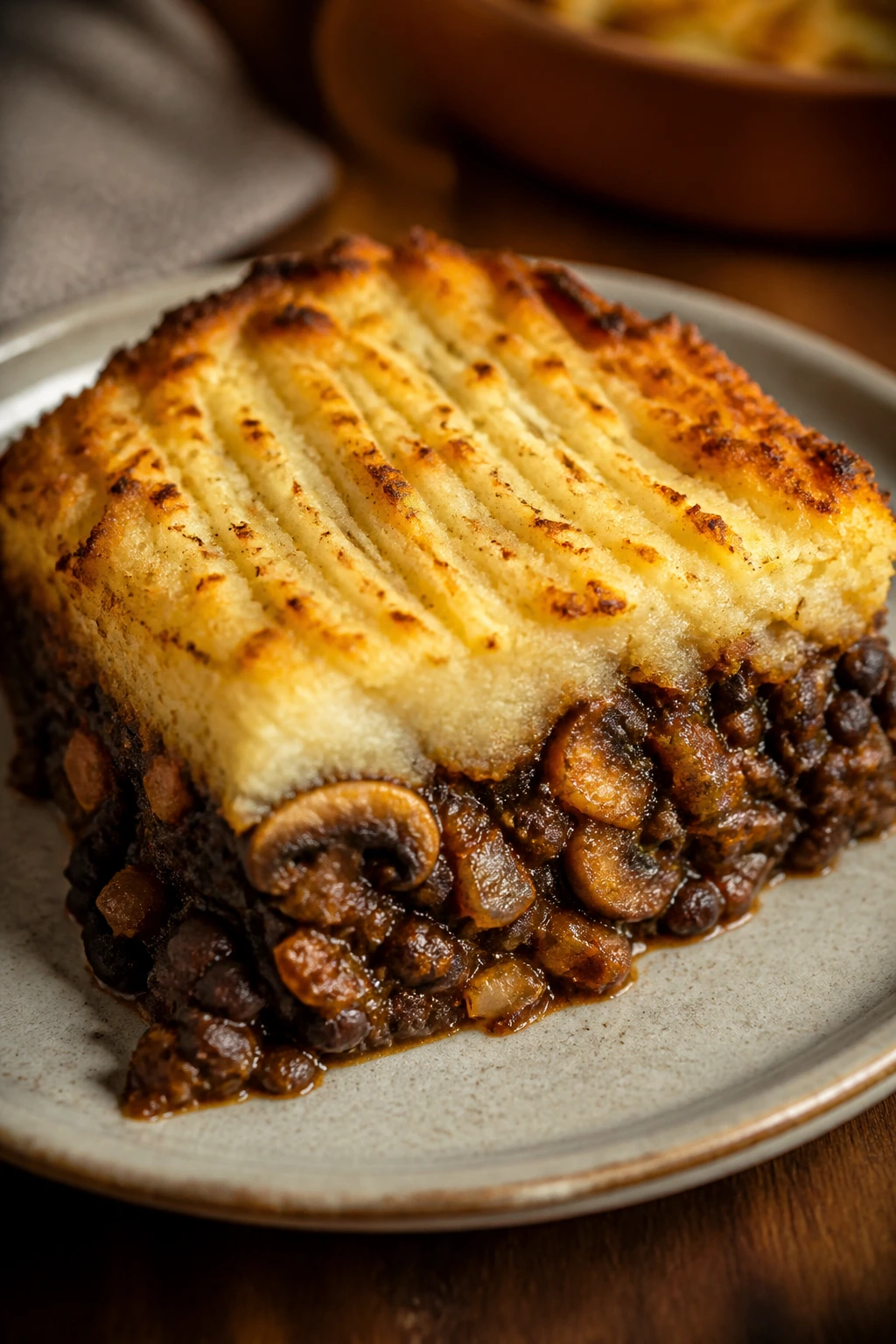
The top of this pie should come out with a few browned ridges, not a smooth blank blanket. Underneath, the filling turns dark and savory from mushrooms, tomato paste, and black beans, and the whole thing slices like proper dinner. It is cozy, yes, but it also has the kind of depth that makes you keep going back with the spoon.
Why It Works:
Mushrooms and black beans do a convincing job of carrying a rich, stew-like filling when they’re cooked down properly. Tomato paste and soy sauce add the meaty, salty base, while the mashed potatoes on top trap steam and keep the filling juicy. Bake it long enough for the edges to bubble and the top to take on little gold spots, and it feels a lot more composed than a simple bean casserole.
Key Ingredients:
- 2 pounds Yukon Gold potatoes, peeled and chopped — they mash smooth and buttery.
- 4 tablespoons unsalted butter — for the potato topping.
- 1/2 cup whole milk — warm it before adding.
- 1/2 cup shredded sharp cheddar — optional, but excellent.
- 1 tablespoon olive oil — for the filling.
- 1 large yellow onion, diced — the flavor base.
- 2 carrots, diced small — for sweetness and texture.
- 8 ounces cremini mushrooms, chopped — the savory backbone.
- 3 cloves garlic, minced — do not skip these.
- 2 cans black beans (15 ounces each), drained — the protein and body.
- 2 tablespoons tomato paste — deepens the sauce.
- 2 tablespoons all-purpose flour — thickens the filling.
- 2 tablespoons soy sauce — adds the salty, steakhouse-style note.
- 1 teaspoon dried thyme, 2 cups vegetable broth, salt, and black pepper — for the stew base.
Quick Steps:
- Boil the potatoes in salted water for 15 to 18 minutes until tender. Drain and mash with butter, warm milk, cheddar, salt, and pepper.
- While the potatoes cook, heat the olive oil in a skillet over medium heat. Cook the onion and carrots for 5 minutes, then add the mushrooms and cook until they shrink and give off their liquid, about 6 minutes.
- Stir in the garlic, tomato paste, flour, thyme, soy sauce, and black beans. Cook for 1 minute so the flour loses its raw taste.
- Pour in the broth and simmer for 5 to 7 minutes, stirring, until the filling is thick and spoonable, not soupy.
- Spread the filling into a 9×13-inch baking dish. Spoon the mashed potatoes over the top and rough them up with a fork.
- Bake at 400°F for 20 to 25 minutes until the edges are bubbling and the top is golden in spots.
- Rest for 10 minutes before serving. Cutting too soon sends the filling right out the side.
Equipment for This Recipe:
- Large pot — for boiling the potatoes.
- Large skillet — for the filling.
- Potato masher — smoother than a fork and much less annoying.
- 9×13-inch baking dish — gives the pie a good ratio of topping to filling.
How to Serve This Dish:
Serve each square with a spoonful of green beans or a crisp salad dressed in a sharp vinaigrette. I like a few extra thyme leaves on top and a crack of black pepper right before the plate leaves the kitchen. The edges should look browned and a little rustic, not perfect.
Pro Tips for This Recipe:
- Warm the milk before mixing it into the potatoes. Cold milk makes them gluey.
- Chop the mushrooms small enough that they disappear into the filling and don’t feel like a separate layer.
- If the filling looks loose, simmer it for another minute or two before it goes into the dish.
- Fork the top instead of smoothing it flat. Those ridges are where the best browning happens.
Variations on This Dish:
- Sweet Potato Crown: Swap half the Yukon Golds for sweet potatoes if you want a sweeter top.
- Dairy-Free Version: Use olive oil and warm oat milk in the mash, and skip the cheddar.
- Breadcrumb Crunch Top: Scatter seasoned breadcrumbs over the mashed potatoes before baking for a little crust.
Common Mistakes to Avoid with This Dish:
- Watery filling: If you skip the simmer, the pie slides apart. Cook until thick first.
- Cold potato topping: Spreading cold mash over hot filling can make uneven baking. Let the mash cool for a minute.
- Smooth, flat top: A flat top browns poorly. Rough it up with a fork.
3. Loaded Black Bean Baked Potatoes
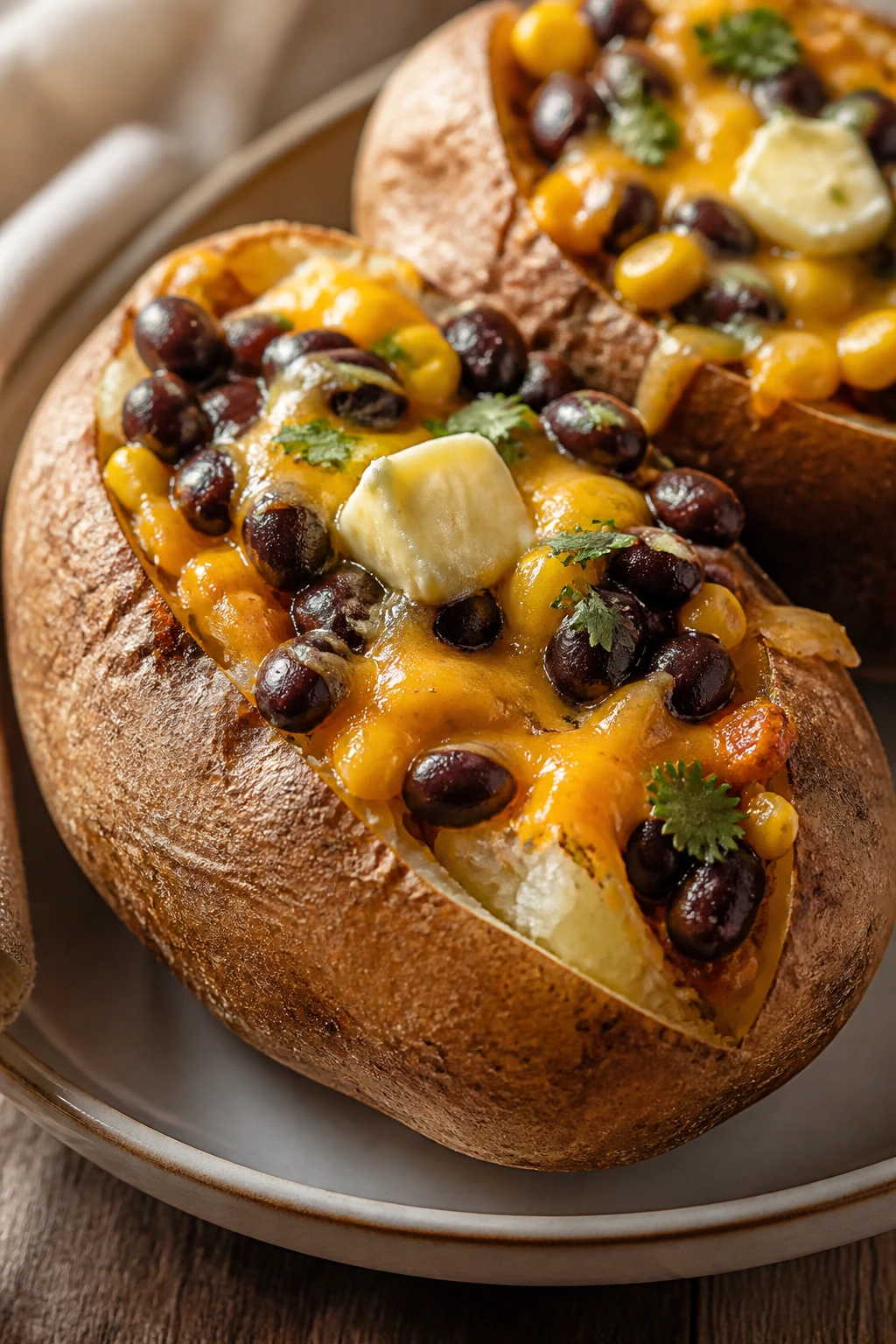
A properly baked russet potato has a crackly skin that gives way with a little pressure and steams when you split it open. Add smoky black beans, melted cheddar, and sour cream, and you have the kind of dinner that feels casual only until you take the first bite. It is simple. Not boring.
Why It Works:
The baked potato does the steakhouse job here: it gives the meal a thick, starchy center and a crisp skin that feels special when you crack it open. Black beans warmed with butter, corn, and smoked paprika taste fuller than plain beans, and the toppings melt into the fluffy potato instead of sitting on top like decoration. The whole trick is to keep the skins dry and the filling hot.
Key Ingredients:
- 4 large russet potatoes, scrubbed — the skins crisp best.
- 1 tablespoon olive oil — for the skins.
- 1 teaspoon kosher salt — helps the skins blister.
- 2 cans black beans (15 ounces each), drained and rinsed — the main filling.
- 1 cup frozen corn — sweet pops against the beans.
- 1 tablespoon unsalted butter — gives the filling a little gloss.
- 1 teaspoon smoked paprika, 1/2 teaspoon garlic powder, salt, and black pepper — keeps it savory.
- 1 cup shredded cheddar — for melting.
- 1/2 cup sour cream — the cool finish.
- 2 scallions, sliced — for freshness.
- 2 tablespoons salsa verde or hot sauce — optional, but useful.
Quick Steps:
- Heat the oven to 425°F. Prick each potato a few times with a fork, rub with olive oil, and sprinkle with salt.
- Bake directly on the oven rack or on a sheet pan for 50 to 60 minutes, until the skins are crisp and a knife slides in without resistance.
- Near the end of baking, warm the black beans, corn, butter, smoked paprika, garlic powder, salt, and pepper in a saucepan over medium heat for 5 to 6 minutes.
- Split the potatoes open and fluff the insides with a fork.
- Spoon the hot bean mixture over each potato and top with cheddar.
- Add sour cream, scallions, and salsa verde. If the potatoes are not hot enough to melt the cheese, put them back in the oven for 2 minutes.
Equipment for This Recipe:
- Sheet pan or oven rack — for baking the potatoes.
- Small saucepan — for warming the topping.
- Fork — for pricking and fluffing.
- Sharp knife — to split the potatoes cleanly.
How to Serve This Dish:
Put each potato on a plate with a little extra sour cream on the side and a simple green salad if you want something crisp next to the starch. A baked potato this loaded can stand alone, but I still like a pickle or a few sliced cherry tomatoes to break up the richness. Eat it while the skin is still snappy.
Pro Tips for This Recipe:
- Salt the outside of the potatoes before baking. It makes the skin taste like part of the meal, not packaging.
- Warm the bean topping fully before spooning it on. Lukewarm beans make the cheese sit there like an afterthought.
- If you want a richer topping, stir in a second tablespoon of butter right before serving.
- Choose potatoes that are roughly the same size so they finish together.
Variations on This Dish:
- Street-Corn Version: Add a spoonful of mayo, a squeeze of lime, and a little cotija cheese to the bean topping.
- Chipotle Sour Cream: Stir chipotle in adobo into the sour cream for a smoky finish.
- Vegan Plate: Swap the butter for olive oil and use cashew crema instead of sour cream.
Common Mistakes to Avoid with This Dish:
- Skipping the fork pricks: Potatoes can split in the oven. A few holes prevent that.
- Soggy skins: Wrapping potatoes in foil gives you soft skins, not the crisp shell you want here.
- Cold toppings: If the bean mixture is cold, the whole potato feels heavy instead of inviting.
4. Black Bean Fajita Skillet with Crispy Potato Wedges
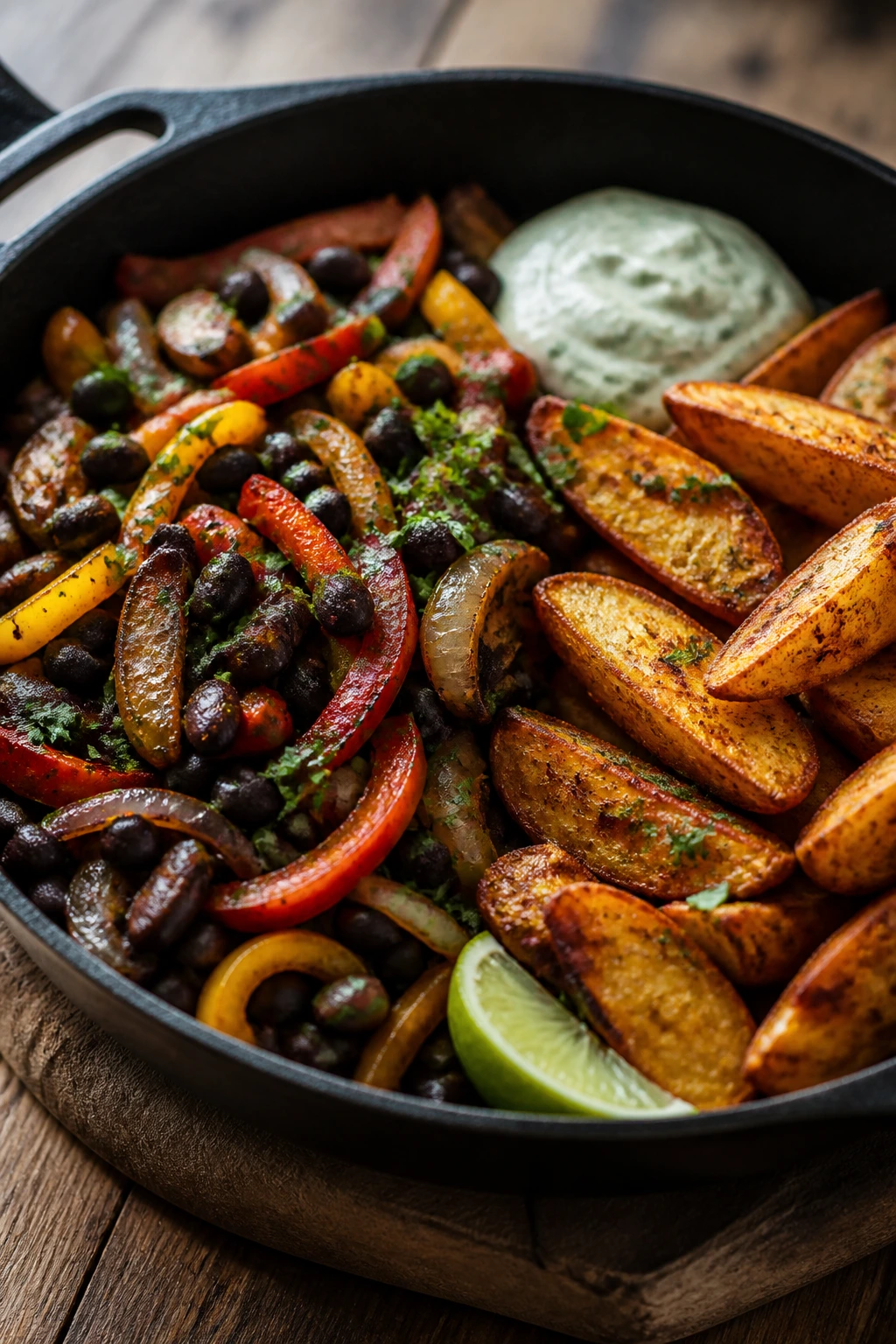
The skillet comes to the table smelling like charred onions, roasted peppers, and hot cumin. There’s a reason this one eats like a bigger meal than it looks: the potato wedges bring crunch, the beans bring body, and the lime crema keeps every bite bright enough to want another. It’s a little roadhouse, a little weeknight.
Why It Works:
Fajita vegetables need heat that’s strong enough to brown them, not just soften them. Once the potatoes get crispy in the oven and the beans warm in the same skillet, you end up with a dinner that has separate textures instead of one soft pile. Lime crema is the difference between “fine” and “I’d make this again tomorrow.”
Key Ingredients:
- 1 1/2 pounds russet potatoes, cut into wedges — for the crispy base.
- 2 tablespoons olive oil — for roasting.
- 1 teaspoon kosher salt, 1 teaspoon chili powder, 1 teaspoon cumin — the wedge seasoning.
- 1 red bell pepper, sliced — sweet and firm.
- 1 yellow bell pepper, sliced — more color and crunch.
- 1 large onion, sliced — the classic fajita backbone.
- 2 cans black beans (15 ounces each), drained — the main protein.
- 1 tablespoon fajita seasoning — or a mix of chili powder, cumin, garlic powder, and paprika.
- 1/2 cup sour cream — for the crema.
- 1 lime, juiced — sharpens the sauce.
- 1/4 cup chopped cilantro — for freshness.
- 1/2 cup shredded pepper jack — optional, but I like the melt.
Quick Steps:
- Heat the oven to 425°F. Toss the potato wedges with olive oil, salt, chili powder, and cumin.
- Spread them on a sheet pan and roast for 30 to 35 minutes, flipping once halfway through, until browned and crisp on the edges.
- While they roast, heat a large skillet over medium-high heat. Add the peppers and onion and cook for 8 to 10 minutes until softened with a little char.
- Stir in the black beans and fajita seasoning with 2 tablespoons of water. Cook for 3 to 4 minutes until hot and glossy.
- Mix the sour cream, lime juice, and a pinch of salt in a small bowl.
- Serve the beans and vegetables over the potato wedges, then drizzle with lime crema and finish with cilantro and pepper jack.
- If you want melted cheese, cover the skillet for 1 minute off the heat. That last minute softens the cheese without turning the vegetables limp.
Equipment for This Recipe:
- Rimmed sheet pan — for the potatoes.
- Large skillet — for the peppers, onions, and beans.
- Small bowl — for the crema.
- Tongs — for flipping the wedges without breaking them.
How to Serve This Dish:
Serve it straight from the skillet if you like a casual table, or spoon it onto warm plates with extra lime wedges. Tortillas are fair game here, though I usually keep the wedges front and center because they make the dish feel bigger. A cold beer or sparkling lime water works just fine alongside it.
Pro Tips for This Recipe:
- Cut the wedges evenly so they all finish at the same time.
- Do not crowd the sheet pan; if the wedges are piled up, they steam.
- Add the beans after the vegetables have some char so they don’t turn soft too early.
- Taste the crema before serving and add a pinch more salt if it tastes flat.
Variations on This Dish:
- Nacho Skillet: Add tortilla chips under the bean mixture and finish with extra cheese.
- Dairy-Free Lime Sauce: Replace the sour cream with unsweetened cashew yogurt.
- Mushroom Fajita Mix: Swap half the peppers for sliced mushrooms if you want more savory depth.
Common Mistakes to Avoid with This Dish:
- Steaming the potatoes: If the pan is crowded, they go soft. Use two pans if needed.
- Seasoning only at the end: The potatoes need salt before roasting, not just after.
- Overcooking the beans: Warm them through; do not cook them until they break apart.
5. Smoky Black Bean Salisbury Steaks
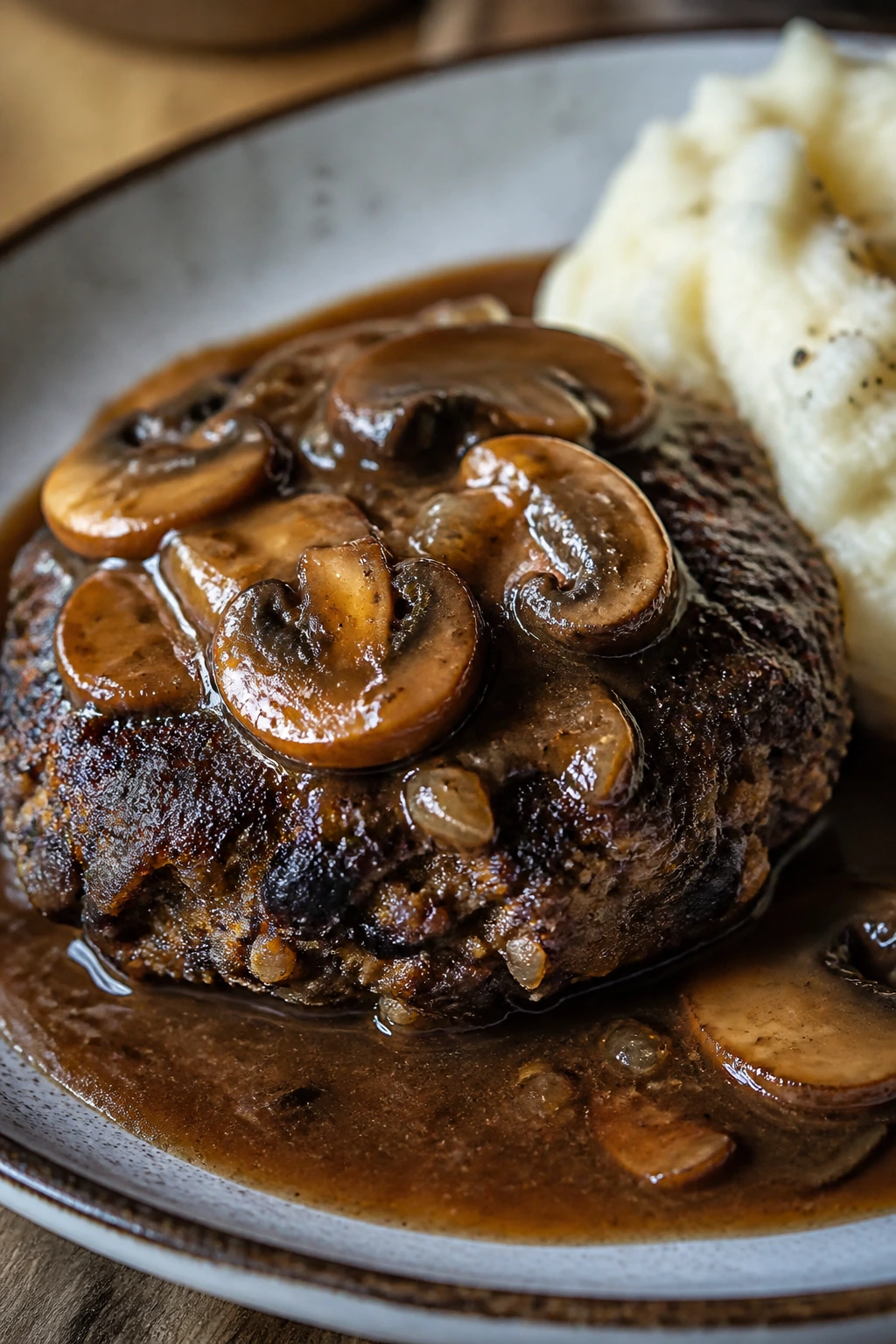
This is the plate that makes people pause. The bean patties are browned and firm, the mushroom gravy is glossy and deep, and the whole thing wants mashed potatoes immediately under it. It has that old-school diner weight, but it comes from a can of beans and a skillet, which still feels a little funny to me in the best way.
Why It Works:
Salisbury steak is really about the sauce and the sear. Black beans give you a sturdy patty when you mash them with oats and egg, while mushrooms, Dijon, and Worcestershire build the savory gravy that makes the dish feel grounded and rich. The key is not pretending the patties are meat; the goal is a good sear and a sauce that tastes worth dragging bread through.
Key Ingredients:
- 2 cans black beans (15 ounces each), drained and patted dry — the patty base.
- 1 cup quick oats — binds better than old-fashioned oats here.
- 1 large egg — helps the patties hold together.
- 1/2 cup onion, finely grated — disappears into the mix.
- 2 cloves garlic, minced — a small amount goes a long way.
- 1 tablespoon Dijon mustard — sharpens the flavor.
- 1 tablespoon Worcestershire sauce — the savory backbone.
- 1 teaspoon smoked paprika, 1 teaspoon kosher salt, 1/2 teaspoon black pepper — the core seasoning.
- 8 ounces cremini mushrooms, sliced — for the gravy.
- 2 tablespoons butter — for the gravy.
- 1 tablespoon all-purpose flour — thickens the sauce.
- 2 cups vegetable broth — or mushroom broth if you have it.
- 1 teaspoon soy sauce — deepens the gravy.
Quick Steps:
- Mash 1 cup of the beans until mostly smooth, then mix in the remaining beans, oats, egg, grated onion, garlic, Dijon, Worcestershire, smoked paprika, salt, and pepper.
- Form 4 oval patties and chill them for 10 minutes.
- Heat a skillet over medium heat with a thin film of oil. Cook the patties for 4 minutes per side until browned and set. Move them to a plate.
- In the same skillet, melt the butter and cook the mushrooms for 6 to 7 minutes until they release their liquid and start to brown.
- Sprinkle in the flour and stir for 1 minute, then whisk in the broth and soy sauce. Simmer for 3 to 4 minutes until the gravy coats the back of a spoon.
- Return the patties to the skillet and spoon gravy over them. Simmer gently for 2 minutes.
- Serve hot over mashed potatoes. Keep the heat low once the gravy is in place, or it can tighten too much.
Equipment for This Recipe:
- Large skillet — one pan does almost all the work.
- Mixing bowl — for the patty mixture.
- Box grater — for the onion.
- Spatula — for flipping the patties carefully.
How to Serve This Dish:
Mashed potatoes are the obvious choice, and I’d keep them buttery and simple. Green beans, peas, or roasted broccoli on the side all fit the plate without fighting the gravy. Spoon extra sauce around the potatoes, not just over the patties; the best bites are the ones that touch everything.
Pro Tips for This Recipe:
- Use quick oats, not thick rolled oats. The texture is much tighter.
- Pat the beans dry before mixing or the patties can turn soft.
- Let the gravy simmer just long enough to thicken; if you rush it, it tastes floury.
- If the patties crack when you flip them, leave them alone for another minute next time.
Variations on This Dish:
- Onion-Gravy Version: Add an extra sliced onion with the mushrooms for a sweeter, softer gravy.
- Gluten-Free Build: Use certified gluten-free oats and swap the flour for cornstarch.
- Portobello Boost: Add chopped portobellos to the gravy for even deeper mushroom flavor.
Common Mistakes to Avoid with This Dish:
- Too much oats: The patties get dry and bready. Stick to the measured cup.
- Flipping too soon: They need to set on one side before turning.
- Boiling the gravy hard: A hard boil can make the sauce split or tighten too much.
6. Black Bean Meatloaf with Tomato-Brown Sugar Glaze
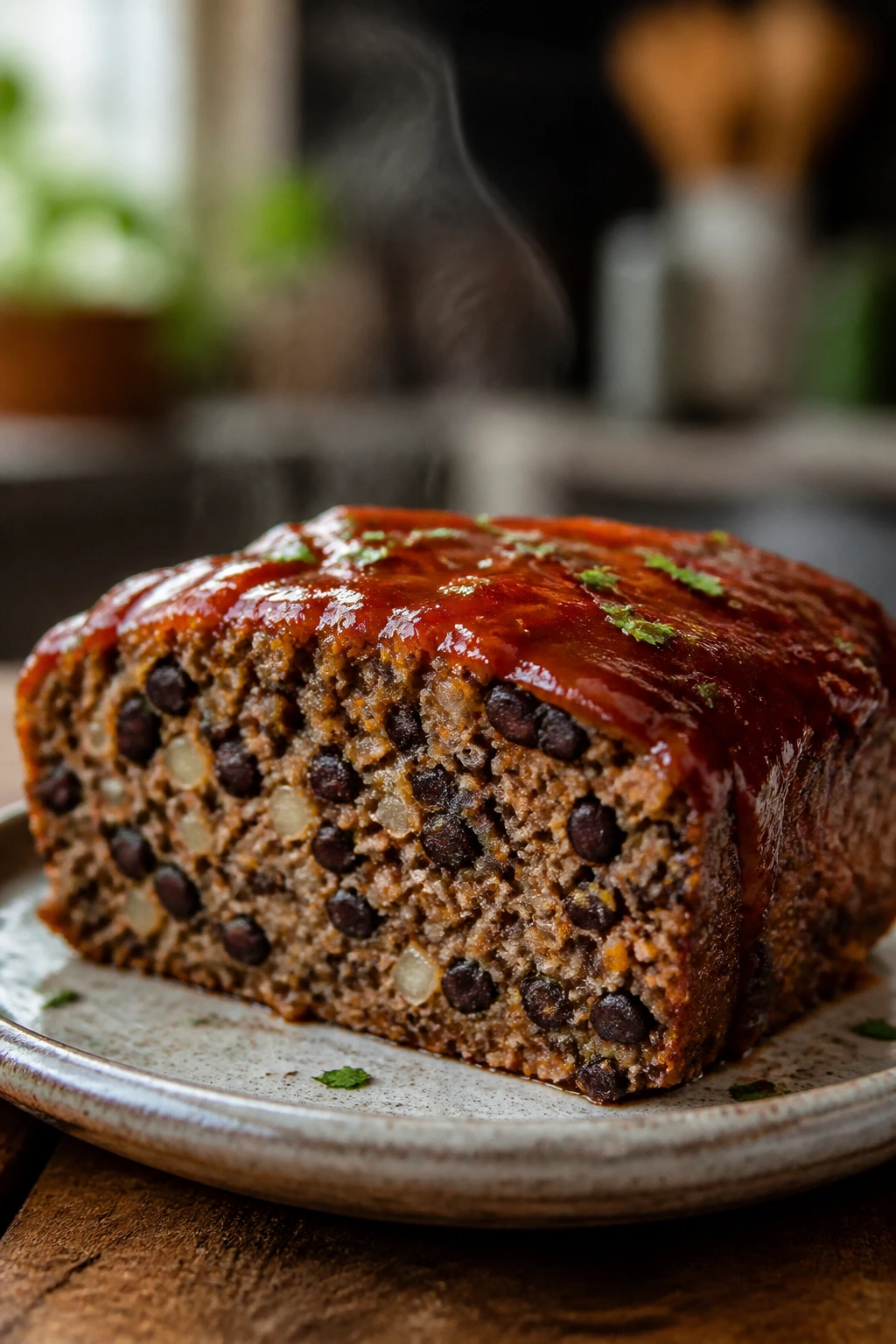
A good meatloaf should slice cleanly, and this one does. The black beans give it a rich, dense center, the carrots and onion keep it from feeling heavy, and the sticky glaze on top gets just enough heat to go shiny and a little caramelized. It looks like something your grandparents would approve of, which is saying a lot.
Why It Works:
Meatloaf is mostly about structure, moisture, and a finish that browns properly. Black beans give the loaf heft, breadcrumbs and eggs hold the shape, and the sautéed vegetables keep the interior from drying out. The glaze brings sweet tang and a lacquered top, which is the part people remember when they think they don’t care about meatloaf.
Key Ingredients:
- 2 cans black beans (15 ounces each), drained and lightly mashed — the main body.
- 1 cup breadcrumbs — helps the loaf hold together.
- 2 large eggs — binder.
- 1 small onion, finely diced — for savory depth.
- 1 carrot, finely grated — adds moisture and sweetness.
- 2 cloves garlic, minced — for the background flavor.
- 2 tablespoons ketchup — inside the loaf.
- 1 tablespoon Worcestershire sauce — savory edge.
- 1 teaspoon smoked paprika, 1 teaspoon kosher salt, 1/2 teaspoon black pepper — seasoning.
- For the Glaze: 1/3 cup ketchup, 1 tablespoon brown sugar, 1 teaspoon Dijon mustard.
Quick Steps:
- Heat the oven to 375°F. Lightly oil a 9×5-inch loaf pan or line it with parchment for easier lifting.
- Sauté the onion, carrot, and garlic in a skillet over medium heat for 5 minutes until softened. Let them cool for a few minutes.
- In a bowl, mix the beans, breadcrumbs, eggs, cooked vegetables, ketchup, Worcestershire, smoked paprika, salt, and pepper until just combined.
- Press the mixture into the loaf pan without packing it down too tightly.
- Stir together the glaze ingredients and spread half over the top.
- Bake for 35 minutes, add the remaining glaze, then bake 10 to 15 minutes more until the top is glossy and the edges are pulling slightly from the pan.
- Rest for 15 minutes before slicing. If you cut it too early, the slices will slump.
Equipment for This Recipe:
- Loaf pan — gives the shape and clean slices.
- Mixing bowl — for the loaf mixture.
- Skillet — for softening the vegetables.
- Parchment paper — optional, but useful for lifting.
How to Serve This Dish:
Serve thick slices with mashed potatoes and buttered green beans, or go a little broader with roasted carrots and a spoon of extra glaze on the side. The loaf should hold its shape, not crumble, so use a wide spatula if you’re lifting slices onto plates. A little chopped parsley on top keeps it from looking too brown-on-brown.
Pro Tips for This Recipe:
- Cool the sautéed vegetables before mixing them in; heat can make the eggs scramble unevenly.
- Do not pack the loaf down hard. A tight loaf turns dense fast.
- Let the glaze set in the last 10 minutes so it sticks instead of sliding off.
- If the top browns too fast, tent loosely with foil for the last stretch.
Variations on This Dish:
- BBQ Glaze: Swap the ketchup glaze for a smoky barbecue sauce and a teaspoon of mustard.
- Mini Loaves: Bake in a muffin tin for faster cook time and crisp edges.
- Vegan Version: Use flax eggs and 2 tablespoons olive oil in place of the eggs.
Common Mistakes to Avoid with This Dish:
- Skipping the rest time: Slices will fall apart while hot. Give it 15 minutes.
- Packing the loaf too tightly: The texture turns brick-like. Press gently.
- Using watery beans: The loaf can go soft. Drain and lightly mash them first.
7. Black Bean Enchilada Casserole with Poblano Cream
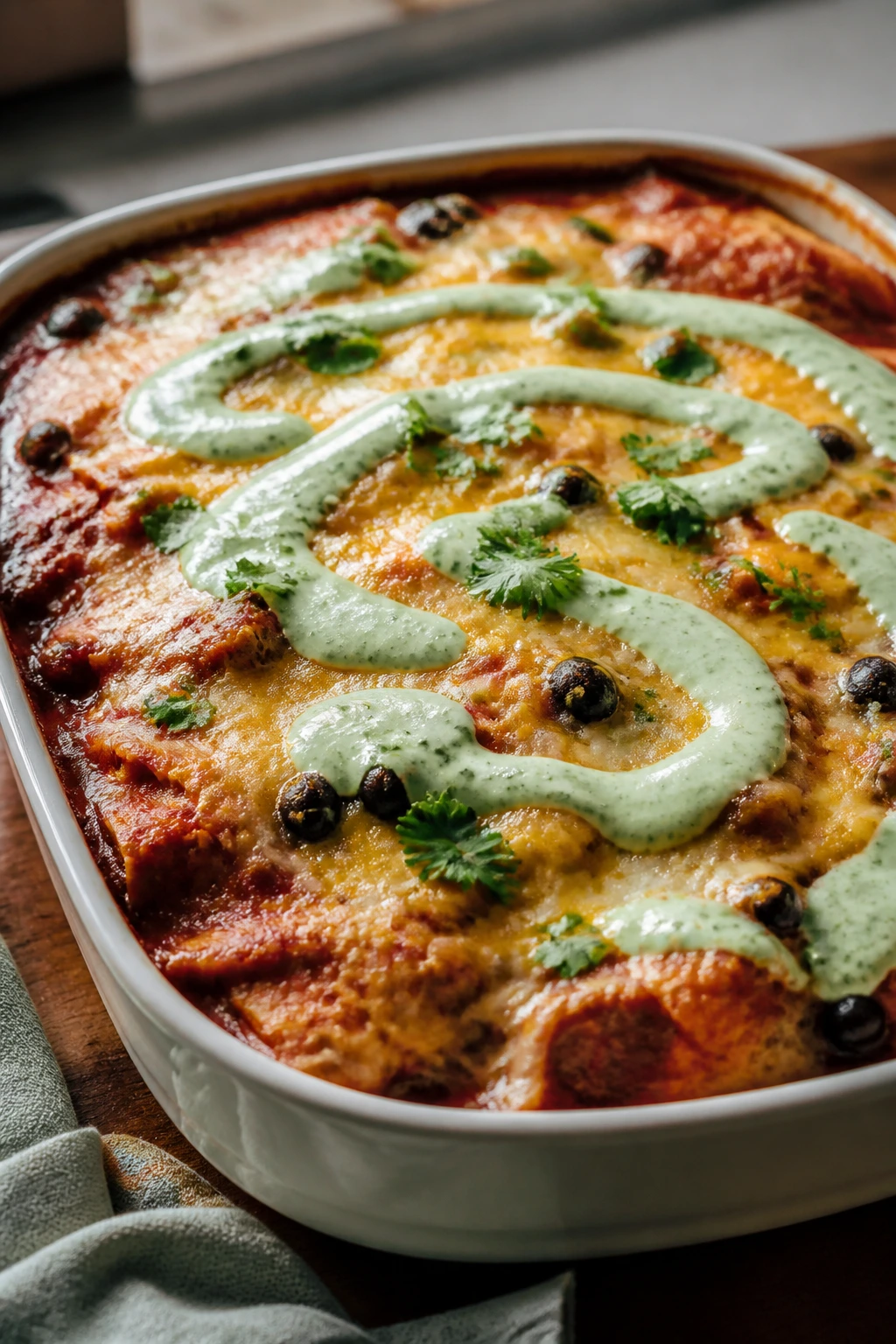
This casserole comes out bubbling around the edges, with cheese pulling up in little strings when you scoop it. The black beans soak up the red sauce, the tortillas soften into the layers, and the poblano cream on top gives you that cool-hot contrast that keeps each bite interesting. It’s the kind of baked dinner that disappears faster than the pan suggests.
Why It Works:
Layering matters here. Sauce on the bottom keeps the tortillas from sticking, black beans bring body, and cheese melts into the spaces between layers so the casserole slices cleanly once it rests. Roasted poblano cream gives you a steakhouse-style richness, but with a gentle green pepper note that keeps the whole thing from tasting flat.
Key Ingredients:
- 2 cans black beans (15 ounces each), drained — the main filling.
- 1 tablespoon olive oil — for the vegetables.
- 1 medium onion, chopped — the base flavor.
- 1 red bell pepper, chopped — adds sweetness.
- 2 cups red enchilada sauce — the main binder.
- 8 small corn tortillas, cut into strips — they soften into the layers.
- 2 cups shredded Monterey Jack — melts well and stays creamy.
- 1 cup frozen corn — a little sweetness and texture.
- 1 teaspoon cumin, 1/2 teaspoon dried oregano — for warmth.
- For the Poblano Cream: 1 roasted poblano pepper, 1/2 cup sour cream, 2 tablespoons milk, 1 teaspoon lime juice, pinch of salt.
Quick Steps:
- Heat the oven to 375°F. Grease a 9×13-inch baking dish.
- Cook the onion and bell pepper in olive oil over medium heat for 5 to 6 minutes until softened. Stir in the beans, corn, cumin, oregano, and 1 cup of the enchilada sauce.
- Spread a thin layer of enchilada sauce in the baking dish. Add half the tortilla strips, half the bean mixture, and half the cheese.
- Repeat with the remaining tortillas, bean mixture, sauce, and cheese.
- Bake for 20 to 25 minutes until bubbling and the cheese is melted with a little golden color.
- Blend the poblano cream ingredients until smooth.
- Rest the casserole for 10 minutes, then drizzle with the cream. If you cut it right away, the layers will slide instead of stack.
Equipment for This Recipe:
- 9×13-inch baking dish — the right size for a sturdy casserole.
- Skillet — for the filling.
- Blender or mini food processor — for the poblano cream.
- Spatula — for layering without tearing the tortillas.
How to Serve This Dish:
Serve squares with shredded lettuce, diced avocado, or a spoonful of pico de gallo. I like a little extra poblano cream on the side because people always ask for it after the first bite. If you want the plate to feel more complete, add a simple cucumber salad with lime and salt.
Pro Tips for This Recipe:
- Don’t drown the layers. Too much sauce makes the casserole collapse.
- Cut the tortillas into strips so they fit better and soften evenly.
- Rest the casserole before serving so the cheese can settle.
- Roast the poblano until the skin blisters; that’s where the flavor lives.
Variations on This Dish:
- Green Enchilada Version: Use green enchilada sauce and roasted tomatillo salsa.
- Dairy-Free Build: Use a cashew crema and dairy-free cheese that melts well.
- Spicier Pan: Add chopped jalapeños to the filling and a pinch of cayenne to the sauce.
Common Mistakes to Avoid with This Dish:
- Too much sauce: The casserole turns soupy. Use enough to coat, not soak.
- Skipping the rest: The layers need a few minutes to set.
- Using stiff tortillas without sauce: They can stay chewy instead of softening into the bake.
8. Black Bean and Roasted Cauliflower Bowls with Chimichurri
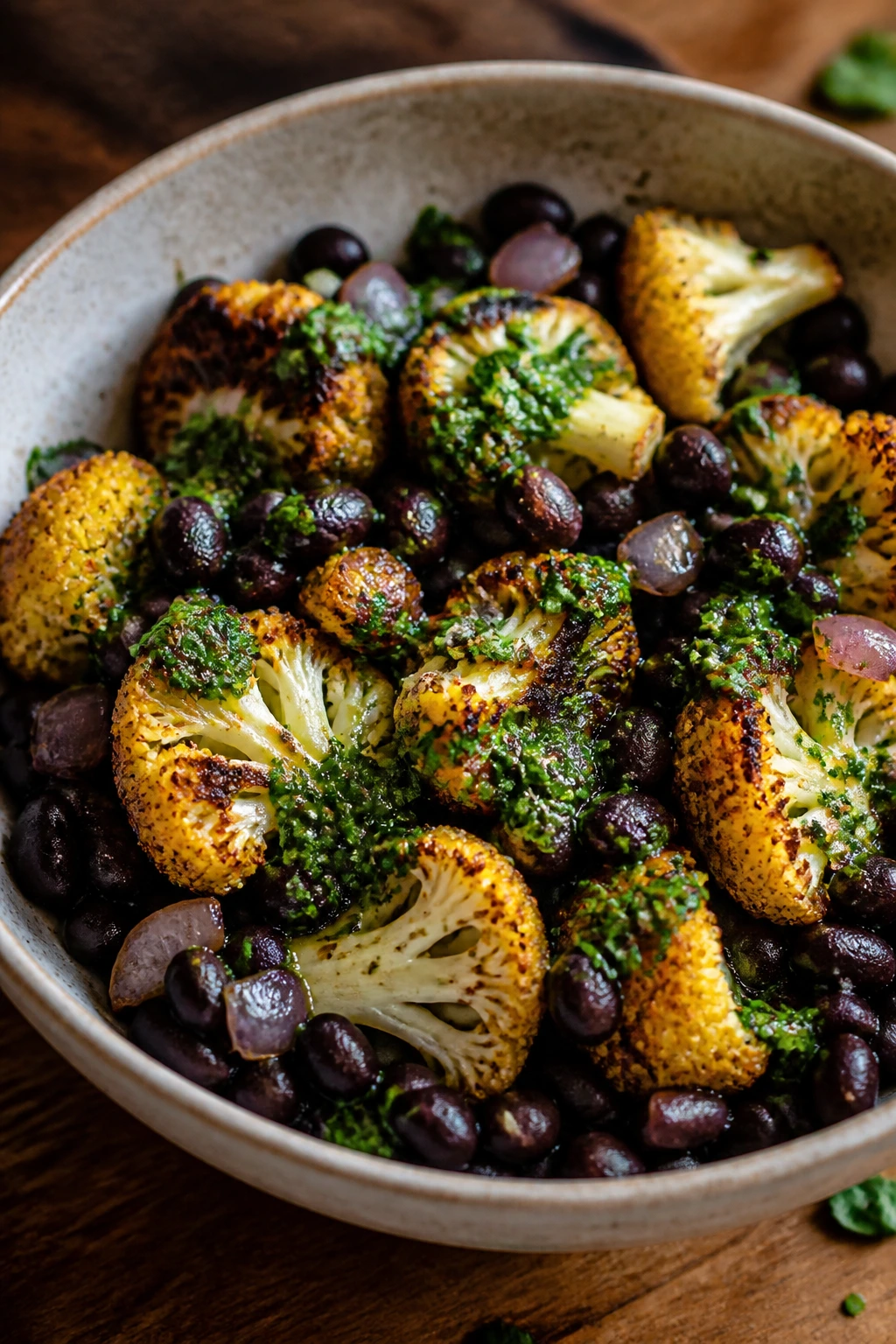
This is a bowl with real attitude. Roasted cauliflower gets browned edges, the black beans bring warmth and substance, and the chimichurri cuts through everything with garlic, parsley, and vinegar. It is lighter than a burger or pie, but it still eats like dinner with a backbone.
Why It Works:
Roasting cauliflower at high heat gives you the kind of caramelized edge that makes a bowl feel composed instead of random. Black beans provide the filling part, while chimichurri gives the plate its steakhouse signal; that bright herb sauce is the same reason grilled meats and roasted vegetables feel more complete once it’s on the table. Add grains if you want, but keep the roast and the sauce doing the talking.
Key Ingredients:
- 1 large head cauliflower, cut into florets or thick “steaks” — the roasted centerpiece.
- 2 cans black beans (15 ounces each), drained — the hearty base.
- 1 cup cooked farro or brown rice — optional, but useful if you want extra bulk.
- 8 ounces cremini mushrooms, halved — for browning.
- 3 tablespoons olive oil — for roasting.
- 1 teaspoon kosher salt, 1/2 teaspoon black pepper — seasoning.
- For the Chimichurri: 1 cup parsley, 1/4 cup cilantro, 2 cloves garlic, 2 tablespoons red wine vinegar, 1/2 cup olive oil, 1/2 teaspoon red pepper flakes, pinch of salt.
- 1 avocado or pickled onions — optional topping.
Quick Steps:
- Heat the oven to 425°F. Toss the cauliflower and mushrooms with olive oil, salt, and pepper.
- Spread them on a sheet pan and roast for 25 to 30 minutes, turning once, until browned at the edges and tender in the center.
- Warm the black beans in a small saucepan with 2 tablespoons of water, a pinch of salt, and a little pepper for 3 to 4 minutes.
- Pulse the chimichurri ingredients briefly in a food processor or chop them by hand and stir together.
- Spoon farro or rice into bowls if using. Top with beans, cauliflower, and mushrooms.
- Drizzle with chimichurri and finish with avocado or pickled onions.
- Serve immediately. The sauce should be fresh and sharp, not drowned into the bowl hours ahead.
Equipment for This Recipe:
- Rimmed sheet pan — for high-heat roasting.
- Small saucepan — for warming the beans.
- Food processor or sharp knife — for the chimichurri.
- Serving bowls — wide bowls help keep the layers visible.
How to Serve This Dish:
These bowls do well with a piece of crusty bread or a few crisp crackers on the side, though I usually keep the plate clean and let the sauce do the work. If you’re serving them to people who want more heft, add farro. If you want a lighter bowl, skip the grains and lean on the beans and cauliflower alone.
Pro Tips for This Recipe:
- Roast on a hot sheet pan if you can. Starting with a cold pan slows browning.
- Chop the parsley and cilantro enough that the chimichurri clings, but don’t puree it into soup.
- Pickled onions are a sharp, useful extra if you have them around.
- Salt the beans separately. They need their own seasoning, even under sauce.
Variations on This Dish:
- Quinoa Base: Swap the farro for quinoa if you want a lighter grain.
- Tahini Drizzle: Add a spoon of tahini with lemon juice for a creamier finish.
- Sweet Potato Bowl: Roast cubed sweet potatoes alongside the cauliflower for extra sweetness.
Common Mistakes to Avoid with This Dish:
- Steaming the cauliflower: If the pan is crowded, it won’t brown. Give the florets space.
- Making chimichurri too early: Fresh herbs lose their edge if they sit around too long.
- Skipping the warm beans: Cold beans make the bowl feel unfinished.
9. Coffee-Chili Black Bean Chili
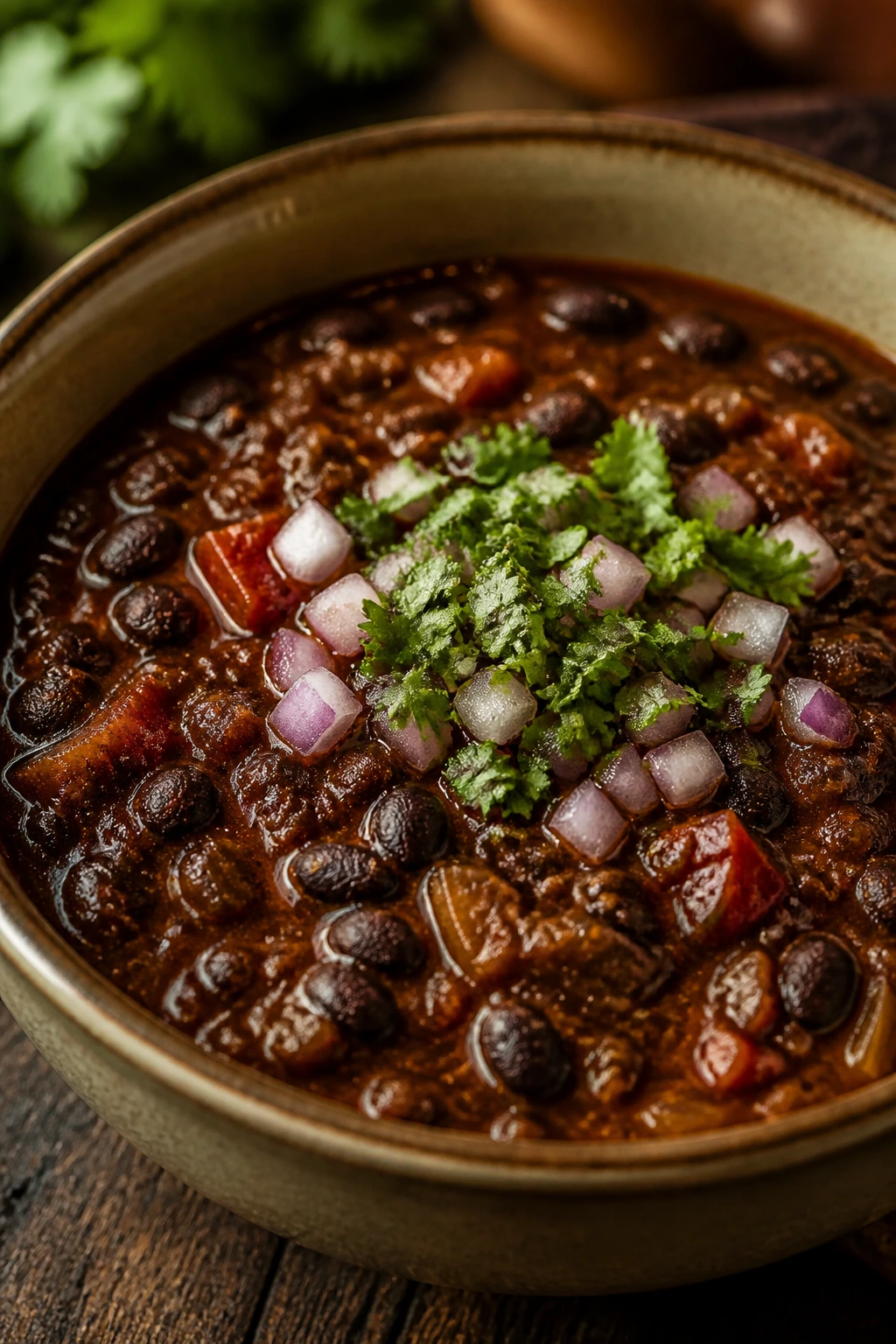
This chili smells like dinner with a long memory. The coffee doesn’t make it taste like a café; it makes the tomato and spice taste deeper, and the cocoa adds just enough dark warmth to pull the whole pot together. It’s the kind of bowl that asks for a spoon, a napkin, and nothing else unless you want cornbread on the side.
Why It Works:
Coffee and cocoa are classic depth-builders in chili because they mimic the toasted, browned notes you get from a good sear. Black beans hold their shape better than you might expect, so the pot stays chunky, and a long simmer lets the spices settle into the tomatoes instead of floating on top. This is one of those dishes where a 30-minute simmer tastes fine and a 45-minute simmer tastes like you had more time than you did.
Key Ingredients:
- 2 tablespoons olive oil — for the vegetables.
- 1 large onion, diced — the base.
- 1 red bell pepper, diced — adds sweetness.
- 3 cloves garlic, minced — no shortage here.
- 2 tablespoons chili powder — the main spice.
- 2 teaspoons ground cumin — for warmth.
- 1 tablespoon tomato paste — deepens the color.
- 1 cup brewed coffee — strong and unsweetened.
- 1 can crushed tomatoes (28 ounces) — the sauce body.
- 3 cans black beans (15 ounces each), drained — the main texture.
- 1 cup vegetable broth — loosens the pot.
- 1 teaspoon unsweetened cocoa powder — the quiet dark note.
- Salt and black pepper — to finish.
- Toppings: shredded cheddar, sour cream, scallions, or tortilla chips.
Quick Steps:
- Heat the olive oil in a Dutch oven over medium heat. Cook the onion and bell pepper for 6 minutes until softened.
- Stir in the garlic, chili powder, and cumin and cook for 30 seconds until fragrant.
- Add the tomato paste and cook for 1 minute, stirring so it darkens a little.
- Pour in the coffee, crushed tomatoes, beans, broth, cocoa, 1 teaspoon salt, and several grinds of black pepper.
- Bring to a boil, then lower the heat and simmer uncovered for 30 to 40 minutes, stirring now and then, until thick and dark.
- Taste and adjust salt. If it tastes flat, it probably needs another pinch of salt before it needs anything fancy.
- Serve hot with toppings. If the chili is too thin, simmer another 10 minutes uncovered.
Equipment for This Recipe:
- Dutch oven or large pot — for the chili.
- Wooden spoon — better than a whisk here.
- Measuring spoons — chili is much better when the spice amounts are right.
- Ladle — for serving without spilling.
How to Serve This Dish:
Cornbread is the obvious move, but baked potatoes, tortilla chips, or a baked sweet potato all work too. I also like chili spooned over crispy potato wedges if I want the dinner to feel especially substantial. Add sour cream and scallions at the table so people can build their own bowl.
Pro Tips for This Recipe:
- Use coffee that tastes good on its own. Bitter coffee makes bitter chili.
- Simmer uncovered so the flavor concentrates.
- Taste before serving and add salt at the end; beans soak up seasoning unevenly.
- If you want a little more heat, add chopped chipotle or a splash of hot sauce.
Variations on This Dish:
- Chipotle Smoke: Stir in chopped chipotle in adobo for a hotter, smokier bowl.
- Three-Bean Version: Add kidney beans or pinto beans if you want a mixed-bean pot.
- Turkey Blend: If you want meat in the pot, brown ground turkey first and build from there.
Common Mistakes to Avoid with This Dish:
- Burning the spices: Chili powder can turn harsh fast. Cook it briefly, not forever.
- Stopping the simmer too early: The pot needs time to thicken and taste cohesive.
- Under-salting: Beans can hide salt until the very end, so taste again before serving.
10. Black Bean Stuffed Bell Peppers with Garlic Breadcrumb Top
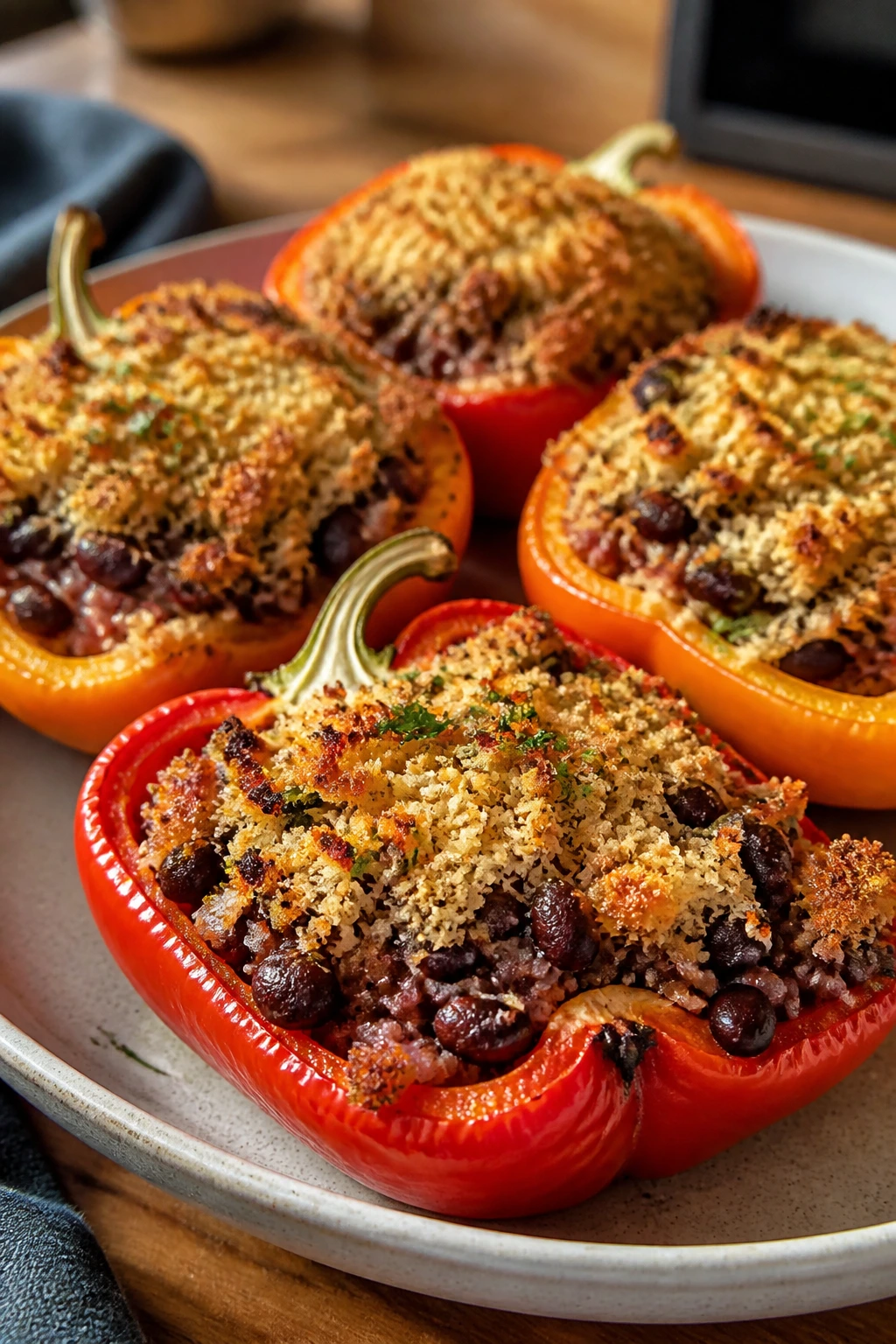
Stuffed peppers can be bland if no one bothers to season the filling. These aren’t. The peppers soften in the oven, the black bean and rice filling stays savory, and the garlic breadcrumb top gives you a little crunch where most stuffed peppers are all softness. It’s a tidy dinner, but not a timid one.
Why It Works:
Bell peppers need enough time in the oven to soften without collapsing. A filling of black beans, rice, mushrooms, and tomato sauce gives you moisture and structure at the same time, and the breadcrumb topping bakes into a thin crust that adds the texture most stuffed peppers lack. A little cheese under the crumbs helps everything hold together and makes the top taste richer.
Key Ingredients:
- 6 large bell peppers, halved and seeded — use red, yellow, or orange for sweetness.
- 2 cans black beans (15 ounces each), drained — the protein base.
- 1 cup cooked rice — helps the filling hold.
- 1 medium onion, diced — for the filling.
- 8 ounces mushrooms, finely chopped — adds savory depth.
- 2 cups tomato sauce — keeps the filling moist.
- 1 cup shredded cheddar — for the middle and top.
- 1/2 cup breadcrumbs — for the crust.
- 2 cloves garlic, minced — for the topping.
- 1 teaspoon smoked paprika, 1 teaspoon salt, 1/2 teaspoon black pepper — seasoning.
Quick Steps:
- Heat the oven to 375°F. Place the pepper halves cut-side up in a baking dish.
- Bake the peppers for 10 minutes so they start to soften.
- While they bake, cook the onion and mushrooms in a skillet over medium heat for 6 to 7 minutes until the mushrooms give up their liquid and the pan looks dry again.
- Stir in the beans, rice, tomato sauce, smoked paprika, salt, and pepper. Cook for 2 minutes.
- Fill the peppers generously, top with cheddar, then mix the breadcrumbs with garlic and a drizzle of olive oil and scatter them on top.
- Bake for 20 to 25 minutes until the peppers are tender and the tops are golden.
- Rest for 5 minutes before serving. Hot filling spills out fast if you cut in too early.
Equipment for This Recipe:
- Baking dish — holds the peppers upright.
- Skillet — for the filling.
- Mixing bowl — for the breadcrumb topping.
- Spoon — for packing the filling into the peppers.
How to Serve This Dish:
These are good with a green salad, roasted asparagus, or even just a slice of buttered bread if you want a fuller plate. I like to spoon a little extra tomato sauce onto the serving dish so the peppers sit in something glossy. If you’re serving guests, keep the pepper halves nestled together; they look better that way.
Pro Tips for This Recipe:
- Pre-bake the peppers. Raw peppers can stay too crunchy.
- Chop the mushrooms fine so they disappear into the filling instead of fighting it.
- Toss the breadcrumbs with a little oil so they brown instead of drying out.
- Let the filling be juicy, not soupy.
Variations on This Dish:
- Poblano Version: Use halved poblanos for a deeper pepper flavor.
- Cauliflower Rice Swap: Replace the rice with cauliflower rice for a lighter filling.
- Dairy-Free Top: Skip the cheese and use extra breadcrumbs with olive oil.
Common Mistakes to Avoid with This Dish:
- Overstuffing the peppers: They can split or tip over. Fill them generously, not wildly.
- Raw filling: The bean mixture should be hot before it goes into the peppers.
- Skipping the pre-bake: If the peppers never soften, the whole dish feels awkward to eat.
11. Black Bean Tater Tot Skillet with Pepper Jack
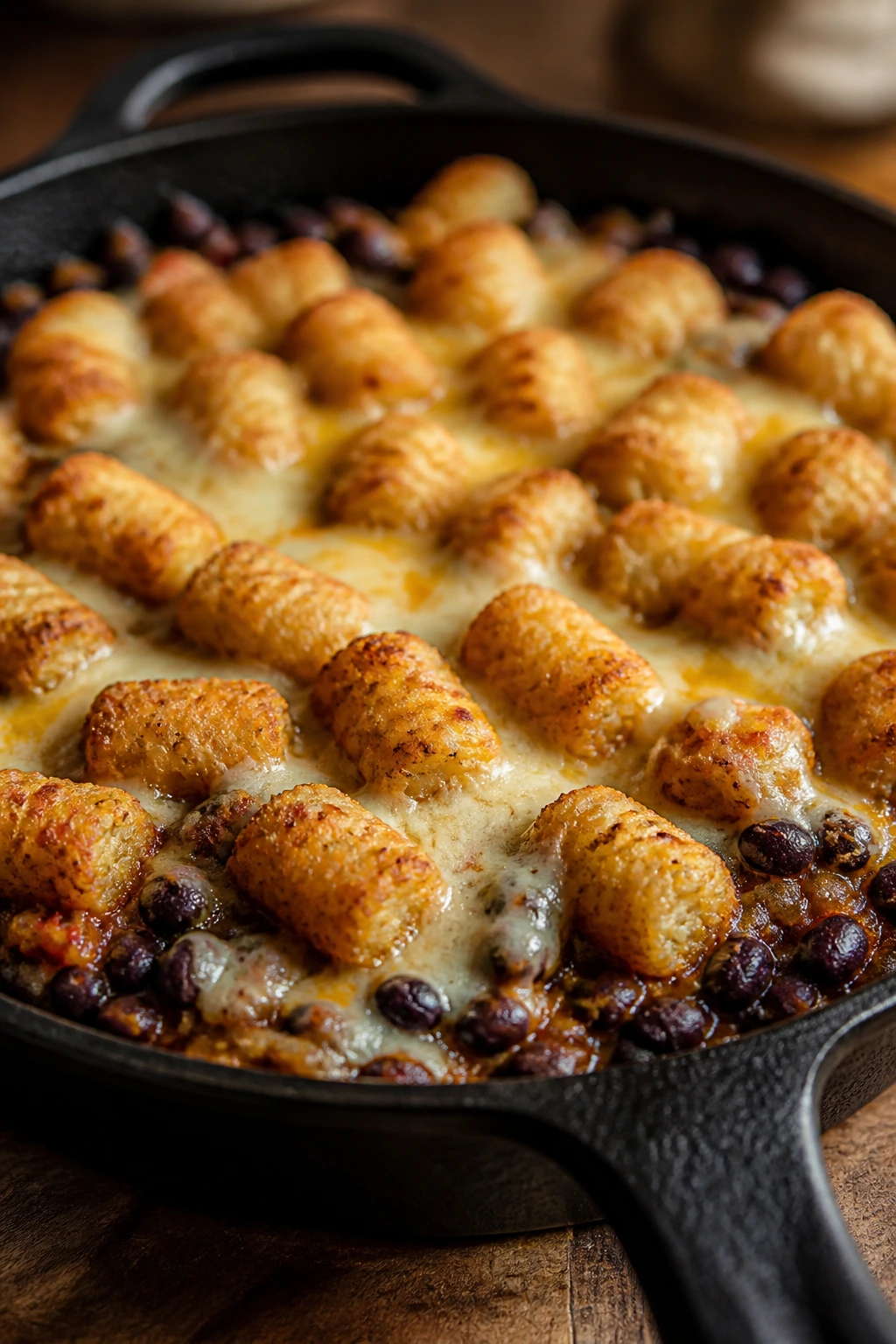
This is the dinner that knows it is a little ridiculous and leans into it. Crispy tater tots on top, saucy black beans underneath, caramelized onions in the middle, and melted pepper jack sealing the whole thing together. It tastes like a roadhouse plate that went to college for one semester and came back with better seasoning.
Why It Works:
The tater tots give you crunch and nostalgia, while the black bean filling supplies the heft. If the bean mixture is thick enough, the tots stay crisp on top instead of sinking into sauce, and a quick broil at the end gives the cheese a browned, blistered edge that changes the whole dish. This is not fine dining. It is better than that in a very specific way.
Key Ingredients:
- 1 tablespoon vegetable oil — for the skillet.
- 1 large onion, sliced — starts the savory base.
- 8 ounces cremini mushrooms, sliced — optional, but they make the skillet feel meatier.
- 2 cans black beans (15 ounces each), drained — the main filling.
- 1 cup corn — adds sweetness.
- 1 cup salsa or tomato sauce — keeps the beans moist.
- 1 teaspoon cumin, 1 teaspoon chili powder, 1/2 teaspoon salt — the seasoning.
- 4 cups frozen tater tots — the top layer.
- 1 1/2 cups shredded pepper jack — for the melt.
- 1/4 cup sliced scallions — finish.
- Sour cream, for serving — optional, but useful.
Quick Steps:
- Heat the oven to 425°F.
- Warm the oil in an oven-safe skillet over medium heat. Cook the onion and mushrooms for 8 minutes until browned and softened.
- Stir in the beans, corn, salsa, cumin, chili powder, and salt. Cook for 3 minutes until thick and bubbling.
- Arrange the tater tots over the top in a single layer.
- Bake for 25 minutes, then scatter the pepper jack over the tots and bake 5 more minutes until melted.
- Broil for 1 to 2 minutes if needed to brown the cheese. Finish with scallions and sour cream. Do not add so much sauce that the tots sink; they need a dry enough surface to crisp.
Equipment for This Recipe:
- Oven-safe skillet — the whole dish lives in one pan.
- Wooden spoon — for stirring the filling.
- Sheet pan — optional, if you want to bake the tots separately first.
- Oven mitts — the skillet gets hot fast.
How to Serve This Dish:
Serve it straight from the skillet with a simple slaw or sliced pickles to cut through the richness. It also works with a chopped salad if you want something fresh on the side, but honestly, the skillet is the point. A cold soda or an ice-cold beer fits the mood.
Pro Tips for This Recipe:
- Cook the filling until thick before the tots go on top.
- Leave space between the tots if you want more crisp edges.
- Broil only at the end; the cheese can burn fast.
- If you like heat, add jalapeños to the filling instead of dumping hot sauce on after.
Variations on This Dish:
- Breakfast-For-Dinner: Crack a few eggs over the skillet during the last 8 minutes of baking.
- Cauliflower Tot Swap: Use cauliflower tots if you want a lighter top.
- Extra-Spicy Version: Add diced pickled jalapeños and a pinch of cayenne.
Common Mistakes to Avoid with This Dish:
- Too much sauce: The tots absorb it and go soft.
- No broil finish: The cheese can look pale and dull without a quick blast of heat.
- Using a skillet that is not oven-safe: That ends badly, fast.
12. Black Bean Stroganoff with Mushrooms and Egg Noodles
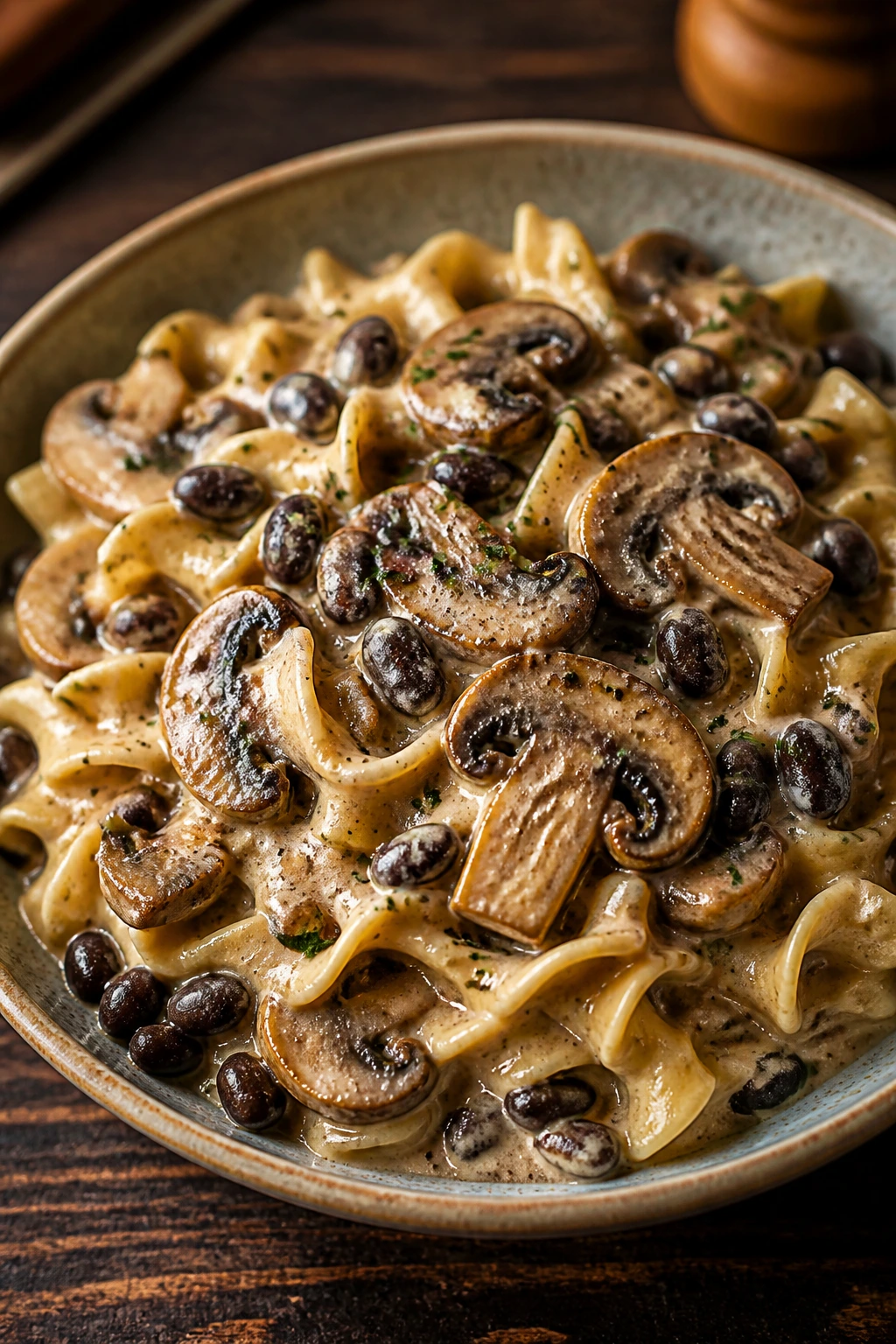
This one looks like a creamy noodle bowl, but it eats with the weight of a full dinner. The mushrooms go golden, the sour cream turns the sauce silky, and the black beans make the whole thing feel thicker and more filling than a standard vegetarian stroganoff. It’s the kind of meal that gets quiet at the table.
Why It Works:
Stroganoff lives on mushroom flavor, tangy cream, and a sauce that clings to noodles. Black beans step in as a sturdy, earthy element without fighting the sauce, and a little Dijon plus paprika keeps the whole thing from feeling one-note. The key is to keep the sour cream off direct heat at the end so the sauce stays smooth instead of splitting.
Key Ingredients:
- 12 ounces egg noodles — wide noodles hold the sauce well.
- 2 tablespoons butter — for the mushrooms and onions.
- 1 large onion, thinly sliced — base flavor.
- 12 ounces cremini mushrooms, sliced — the classic stroganoff body.
- 3 cloves garlic, minced — for depth.
- 2 cans black beans (15 ounces each), drained — the hearty part.
- 2 tablespoons all-purpose flour — thickens the sauce.
- 2 cups vegetable broth — the sauce base.
- 1 tablespoon Dijon mustard — adds tang.
- 1 teaspoon paprika — warm, not hot.
- 1 tablespoon soy sauce — for savory depth.
- 1/2 cup sour cream — stirred in at the end.
- 1 tablespoon lemon juice — brightens the sauce.
- Chopped parsley, for serving.
Quick Steps:
- Cook the noodles in well-salted water until just tender. Drain and set aside.
- Melt the butter in a large skillet over medium heat. Cook the onion and mushrooms for 8 to 10 minutes until browned and most of the liquid has cooked away.
- Stir in the garlic, flour, paprika, and soy sauce. Cook for 1 minute.
- Add the vegetable broth and Dijon, then simmer for 3 to 4 minutes until the sauce thickens.
- Stir in the black beans and cook for 2 minutes until heated through.
- Remove the skillet from the heat and stir in the sour cream and lemon juice.
- Toss with the noodles and top with parsley. Do not boil after the sour cream goes in, or the sauce can curdle.
Equipment for This Recipe:
- Large skillet — for the sauce.
- Pot — for the noodles.
- Colander — for draining.
- Wooden spoon — for stirring without smashing the mushrooms.
How to Serve This Dish:
Twirl it into shallow bowls with extra black pepper and a little parsley on top. A green salad with a sharp vinaigrette makes a good side, but I also like roasted broccoli because the edges pick up the sauce. If you want more steakhouse energy, add a side of buttered peas.
Pro Tips for This Recipe:
- Brown the mushrooms properly. Pale mushrooms mean pale sauce.
- Salt the pasta water like you mean it; the sauce alone should not carry the whole dish.
- Stir the sour cream in off the heat.
- If the sauce tightens too much, loosen it with a splash of broth.
Variations on This Dish:
- Gluten-Free Version: Use GF noodles and a cornstarch slurry instead of flour.
- Dairy-Free Cream Sauce: Swap in unsweetened cashew cream at the end.
- Smoky Stroganoff: Add a pinch of smoked paprika or a little chipotle for extra depth.
Common Mistakes to Avoid with This Dish:
- Curdling the sauce: Sour cream hates a hard boil. Keep the heat off.
- Undercooking the mushrooms: They need to brown, not just soften.
- Skipping the lemon juice: The dish can taste heavy without that bright finish.
Why Black Bean Dinners Need Browning, Not Just Simmering
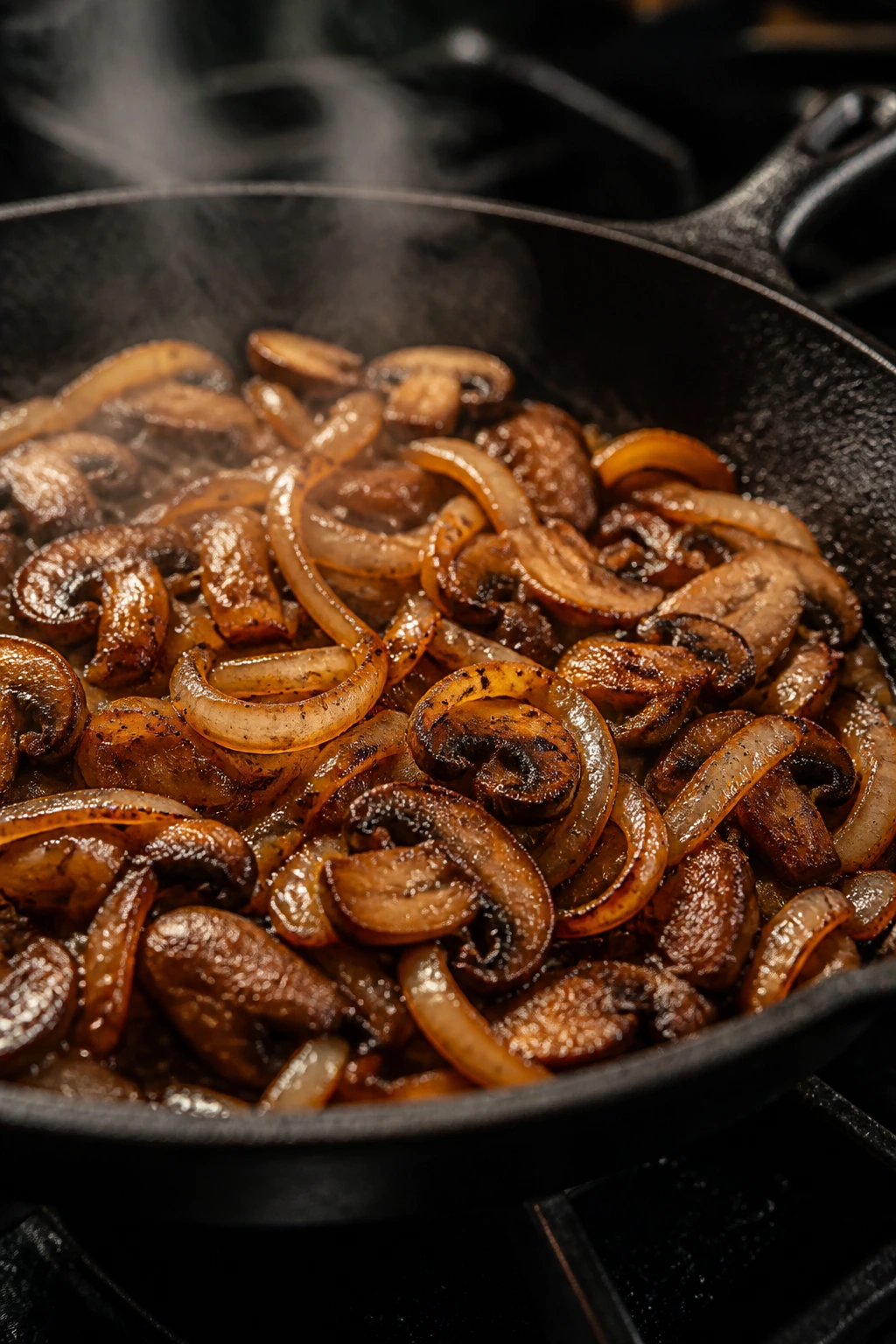
Black beans are forgiving, but they are not magical. If you drop them into a pot with broth and call it dinner, you get a meal that fills you up and forgets to impress you. The turn happens when the beans meet heat: onions take on color, mushrooms collapse and brown, tomato paste darkens in the pan, and the edges of potatoes or tortillas crisp up just enough to give every bite a little tension.
That’s the steakhouse connection. Steakhouse cooking is not only about the steak. It is about the browned bits in the pan, the butter on the vegetables, the sharp sauce on the side, and the starch that catches everything. Black bean dinners work the same way when you let them.
Build a Browned Base
Start with onions, garlic, mushrooms, or peppers in a hot skillet. Let them sit long enough to color before you stir again. That one step changes the whole dinner.
Give the Beans Something to Hold On To
Beans need structure. Mash some of them, leave some whole, and pair them with something starchy like breadcrumbs, rice, potatoes, noodles, or tortillas. That mix gives you a plate with texture instead of a bowl of soft sameness.
Finish Like You Mean It
A squeeze of lime, a spoon of sour cream, a handful of cheddar, or a drizzle of chimichurri can rescue a whole dish at the last second. Don’t bury the flavor under garnish. Use garnish as the final correction.
Essential Equipment for These Recipes
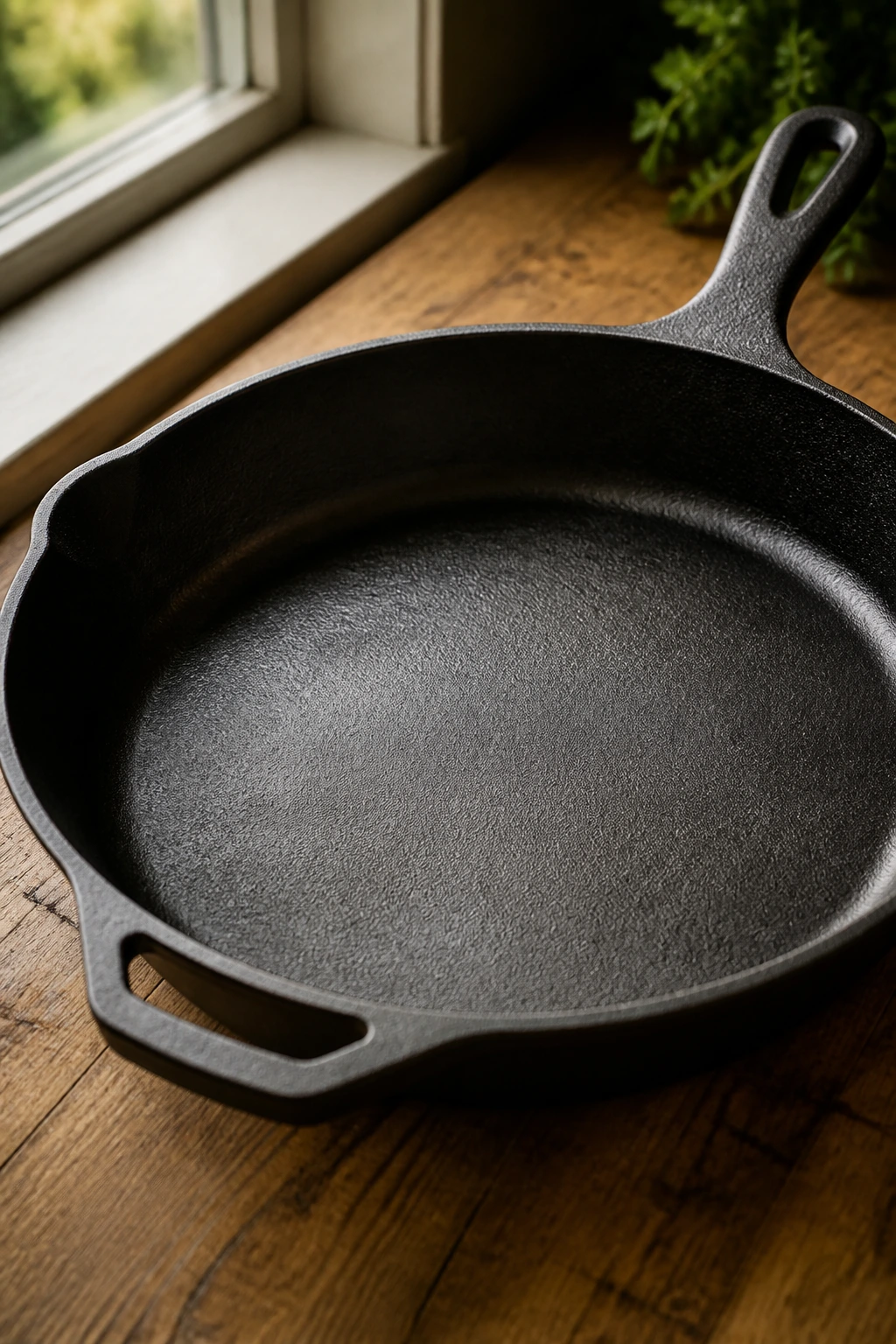
- 12-inch cast-iron skillet: Best for burgers, Salisbury steaks, and skillet dinners because it holds heat and browns well.
- Large Dutch oven: The right pot for chili, gravy, and anything that needs a long simmer.
- Rimmed sheet pans: Crucial for potatoes, cauliflower, and roasted pepper recipes where crowding would ruin the texture.
- 9×13-inch baking dish: The workhorse for shepherd’s pie and enchilada casserole.
- Loaf pan: Needed for the black bean meatloaf if you want clean slices.
- Potato masher: Useful for the burgers, shepherd’s pie, and meatloaf mixture.
- Fine-mesh strainer or colander: Rinses beans properly and keeps canned liquid from watering down the dish.
- Sharp chef’s knife: A lot of these dinners rely on clean chopping, not huge rough chunks.
- Wooden spoon or silicone spatula: Better than a whisk for thick bean mixtures and casseroles.
- Food processor or blender: Handy for chimichurri, poblano cream, or any sauce that needs to go smooth.
Smart Shopping and Ingredient Tips
Choose canned beans with your final texture in mind. Low-sodium black beans are the easiest starting point because you can season them yourself, and a 15-ounce can usually gives you about 1 1/2 cups drained beans. Rinse them until the water runs mostly clear; that starch on the outside can make sauces look muddy.
Use dried beans when you want a deeper, more even flavor. Soak them overnight if you have the time, then simmer until tender but not split apart. Salt them near the end of cooking, not at the start, so the skins stay intact. Dry beans make sense for chili, shepherd’s pie, and stroganoff if you like to batch-cook.
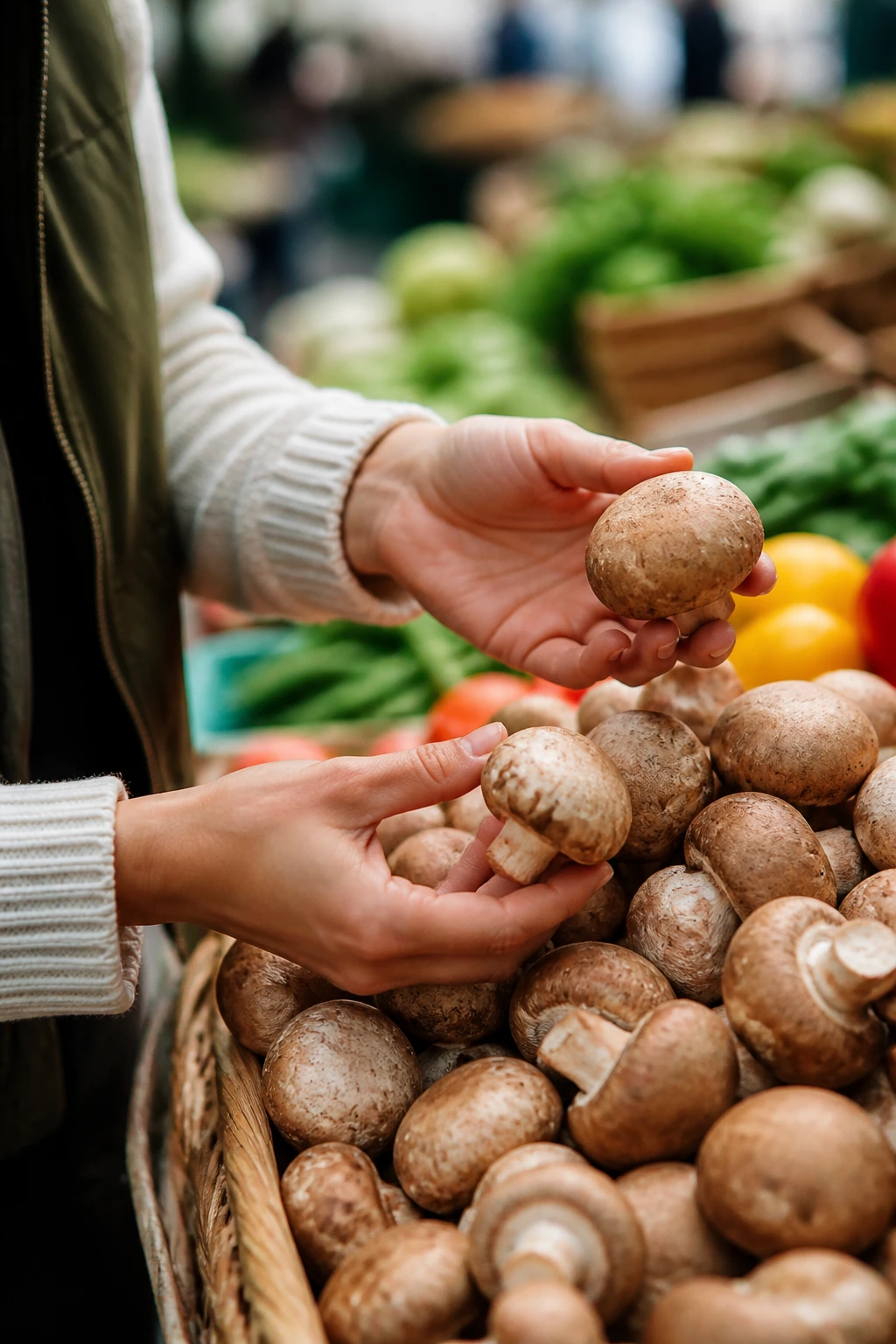
Buy mushrooms that still feel firm at the stem. Cremini are the best all-purpose pick here because they have more flavor than white button mushrooms and hold up better in gravy, casserole, and skillet dinners. If the caps feel slimy or the gills look wet, pass.
Choose your potatoes by texture, not habit. Russets are the move for baked potatoes and crispy wedges because their skins crisp and their centers fluff. Yukon Golds make the best mash and shepherd’s pie topping because they stay buttery without turning gluey. Red potatoes are fine, but they’re not my first choice for this collection.
Block cheese usually beats the pre-shredded bag. Pre-shredded cheese is coated so it doesn’t clump, and that coating can make the melt a little duller. If you have five extra minutes, grate the cheese yourself. It’s worth it in casseroles, stuffed peppers, and baked potatoes.
How to Serve These Recipes
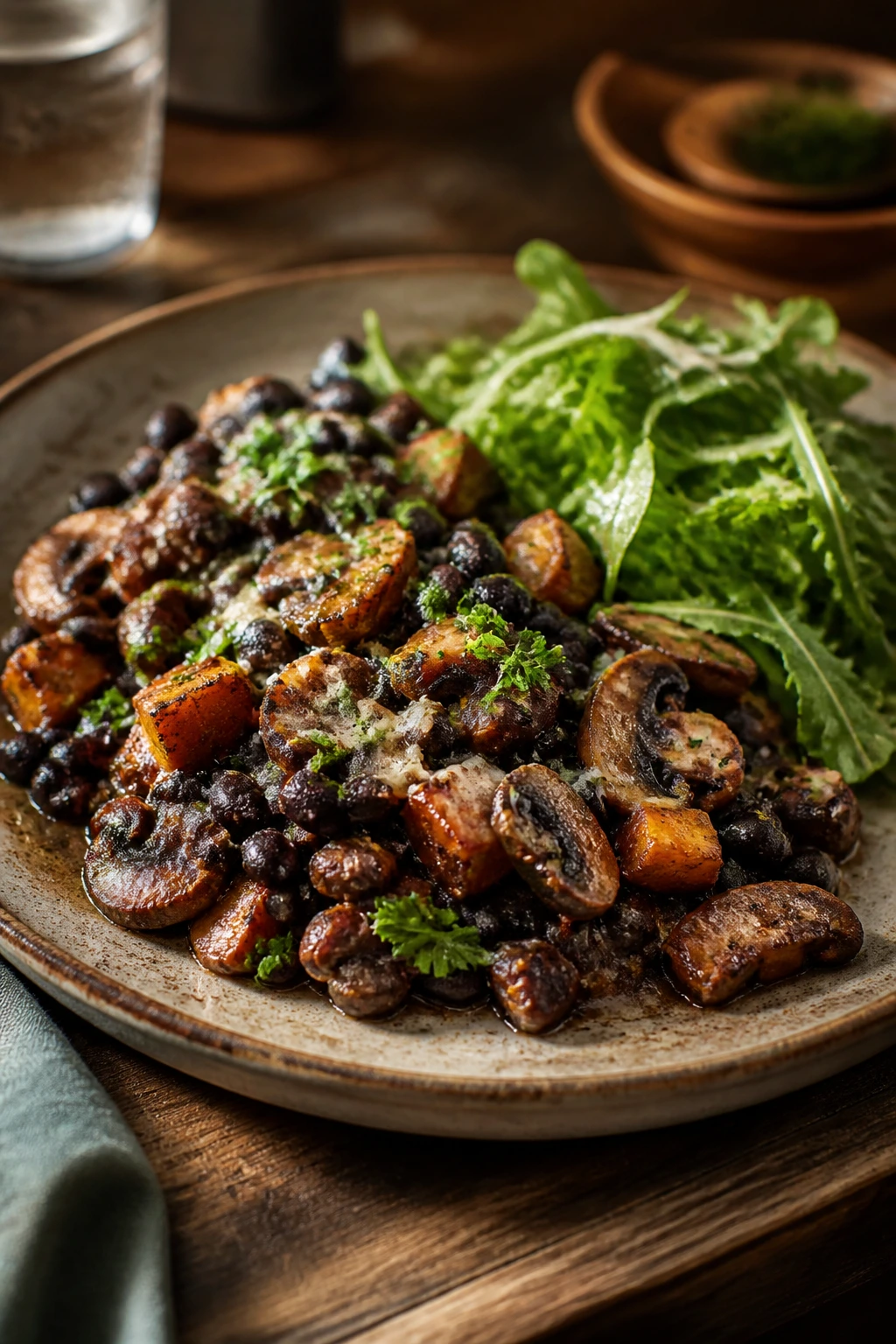
Presentation: Keep the plates a little messy on purpose. Black bean burgers look better when the onion jam spills out, chili looks better in a wide bowl with toppings grouped in little piles, and casseroles look better after a 10-minute rest with a sharp knife making clean squares. Lean into the rustic look; these are dinner plates, not museum pieces.
Accompaniments: Think steakhouse sides, not random extras. A crisp green salad, roasted green beans, buttered corn, broiled broccoli, or mashed potatoes all sit naturally beside these recipes. For the burger and Salisbury steak dishes, add pickles or a vinegar-y slaw. For the skillet dinners and bowls, lime wedges and chopped herbs keep the plate moving.
Portions: Most of these recipes serve 4 as a full dinner, though the baked potatoes, chili, and casserole stretch farther if you put something simple on the side. Burgers and Salisbury steaks usually land at one patty per person, while the pasta and casserole dishes feel generous with four clean portions. If you’re feeding bigger appetites, add potatoes or rice rather than just more beans.
Beverage Pairing: For a no-fuss drink, iced tea with lemon works across the whole collection. If you want something a little richer, a dark lager or a dry cider fits the smoky and savory notes nicely. For nonalcoholic pairings, sparkling water with lime keeps the plate from feeling heavy.
Additional Tips and Flavor Boosters
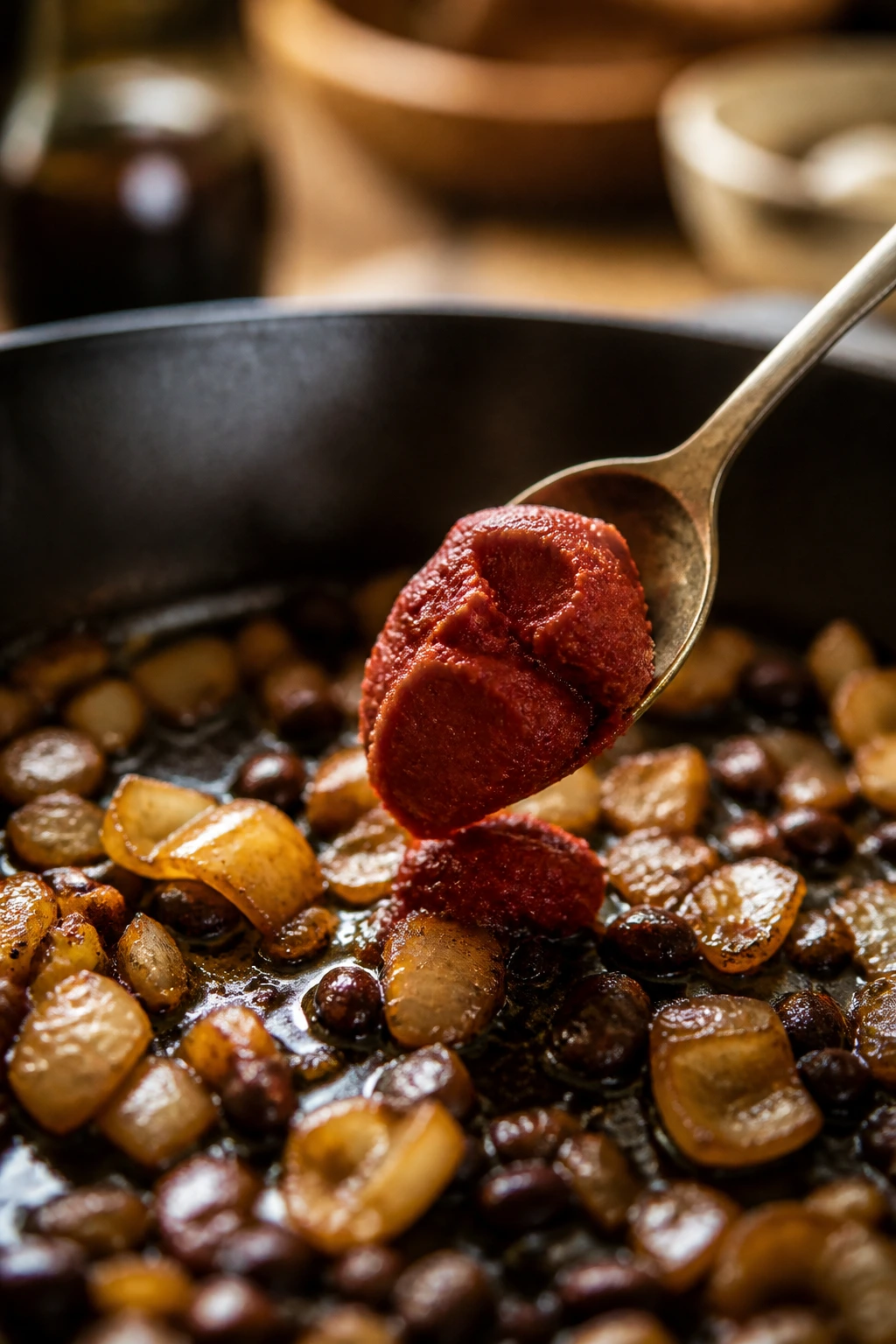
Flavor Enhancement: A spoon of tomato paste browned in oil, a splash of soy sauce, or a small knob of butter at the end can make black beans taste deeper and more finished. Don’t dump in all three at once. Pick one or two and let them do their job.
Customization: If you want more heat, add chipotle in adobo, crushed red pepper, or pickled jalapeños. If you want more sweetness, lean on caramelized onions or roasted peppers. If you want more smoke, reach for smoked paprika before you reach for hot sauce.
Serving Suggestions: Fresh herbs matter more than people think here. Chopped parsley on stroganoff, scallions on baked potatoes, cilantro on skillet dinners, and a little chive on top of a casserole all keep the food from looking and tasting flat. A bright garnish is not decoration; it is the last seasoning.
Make-It-Yours: For gluten-free dinners, use certified GF breadcrumbs, oats, noodles, or tortillas where needed. For dairy-free versions, use olive oil, cashew cream, or a plant-based sour cream that actually tastes tangy. For lower-sodium cooking, rinse the beans well and use vinegar, lime, and herbs to carry more of the flavor load.
Make-Ahead, Storage, and Reheating Guidance
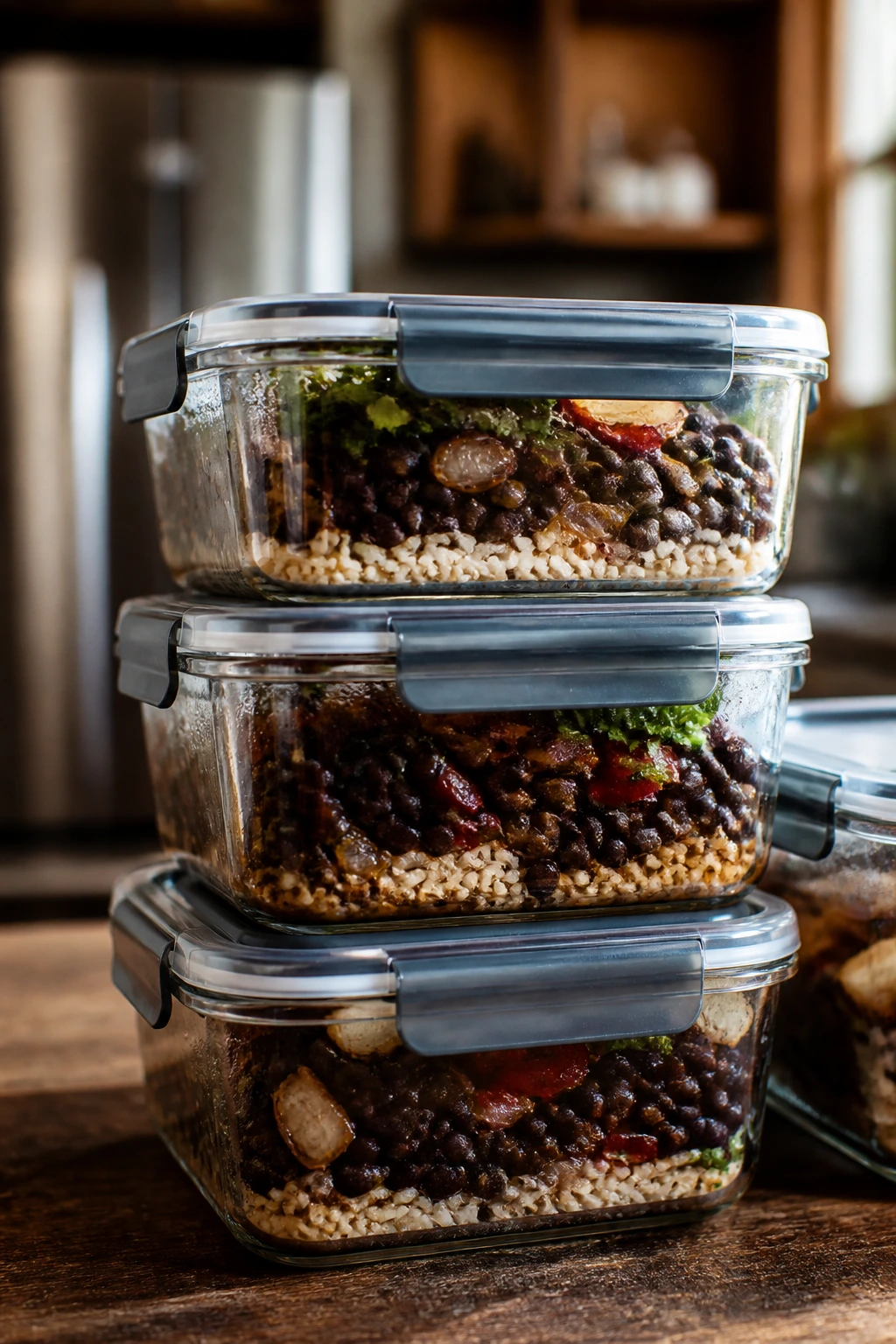
These black bean dinners hold up well, but they do not all behave the same way once they cool. Casseroles, chili, shepherd’s pie, and meatloaf are the easiest to make ahead because they reheat without losing much texture. Burgers and Salisbury steaks can also be shaped in advance; I’d chill the raw patties for up to 24 hours before cooking, or freeze them with parchment between layers for up to 2 months.
Cooked leftovers usually keep 3 to 4 days in the refrigerator in airtight containers. Chili and gravy-based dishes can go a little longer in texture than baked potatoes or tater tot skillets, but I would still aim to eat everything within that window. Frozen chili, shepherd’s pie, meatloaf, and burger patties do well for up to 2 months if wrapped tightly and sealed.
For reheating, use the method that protects the texture you already worked for. Casseroles and shepherd’s pie reheat best at 350°F, covered loosely with foil, until the center is hot all the way through. Burger patties and Salisbury steaks do better in a skillet over medium-low heat with a splash of broth or water so they do not dry out. Chili can go straight back onto the stove with a little water or broth if it has tightened up. Tater tot skillet leftovers are the one exception: reheat them in a hot oven or air fryer so the top gets crisp again.
A few of these dishes also improve overnight. Chili, shepherd’s pie filling, meatloaf, and Salisbury steak gravy usually taste a little better the next day because the beans and seasoning settle into each other. Stuffed peppers and baked potatoes, on the other hand, are best fresh or reheated with extra care so the texture stays decent.
Variations and Adaptations to Try
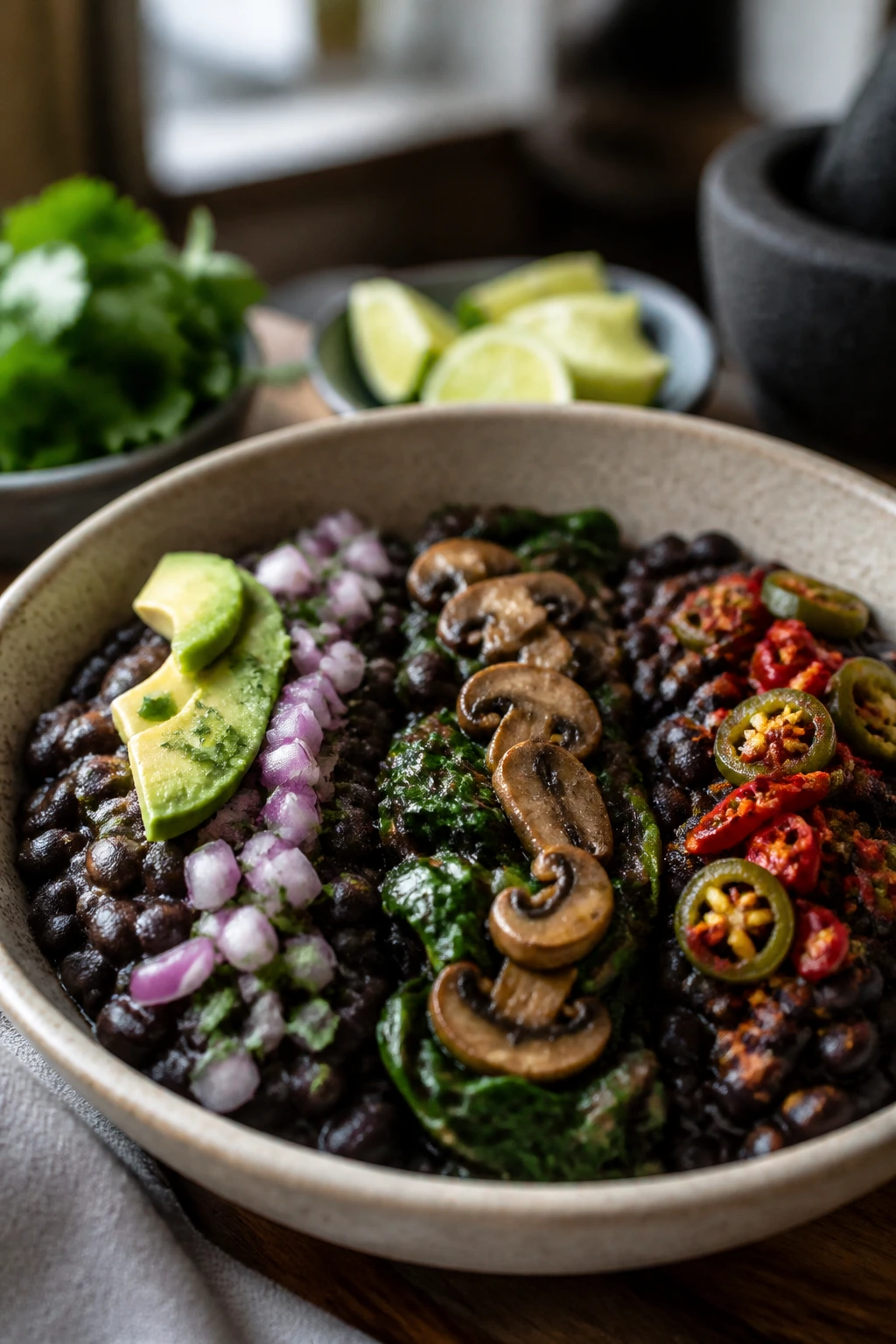
The Gluten-Free Route: Swap in certified gluten-free breadcrumbs, oats, noodles, or tortillas where needed. This works especially well in the burgers, meatloaf, Salisbury steaks, and enchilada casserole. The only thing to watch is texture; gluten-free binders can be a little looser, so chilling the mixture matters more.
The Dairy-Free Finish: Use olive oil instead of butter, unsweetened cashew cream instead of sour cream, and a plant-based cheese that melts cleanly. This route works best in the baked potatoes, stroganoff, enchilada casserole, and shepherd’s pie. If the dish tastes a little flat after the swap, a squeeze of lime or a splash of vinegar usually fixes it.
The Spice-Forward Version: Add chipotle, jalapeños, cayenne, or a good hot sauce to the skillet dinners, chili, and fajita skillet. I’d keep the heat building in layers rather than dumping it all in at once, because black beans already carry enough body without needing to be set on fire. A little smoke plus a little heat goes farther than a lot of raw burn.
The Extra-Hearty Add-In: Mushrooms, roasted cauliflower, caramelized onions, or cooked rice can stretch nearly every recipe here without making it feel cheap. This is the move when you want a meal that lands heavier on the plate and still keeps the bean flavor in the background. The mushrooms are the safest add-in if you want that steakhouse feeling to stay intact.
The Kid-Friendly Plate: Pull back the heat, lean on cheese, and keep the topping game simple. Baked potatoes, tater tot skillet, burgers, and meatloaf usually go over easiest with younger eaters because the textures are familiar. Serve sauce on the side if you want fewer complaints.
The Regional Twist: A spoon of chimichurri pushes the bowls toward South American flavors, poblano cream takes the casserole toward the Southwest, and mushroom gravy makes the Salisbury steaks feel closer to a diner or supper-club plate. The base is the same. The accent changes everything.
Common Mistakes to Avoid
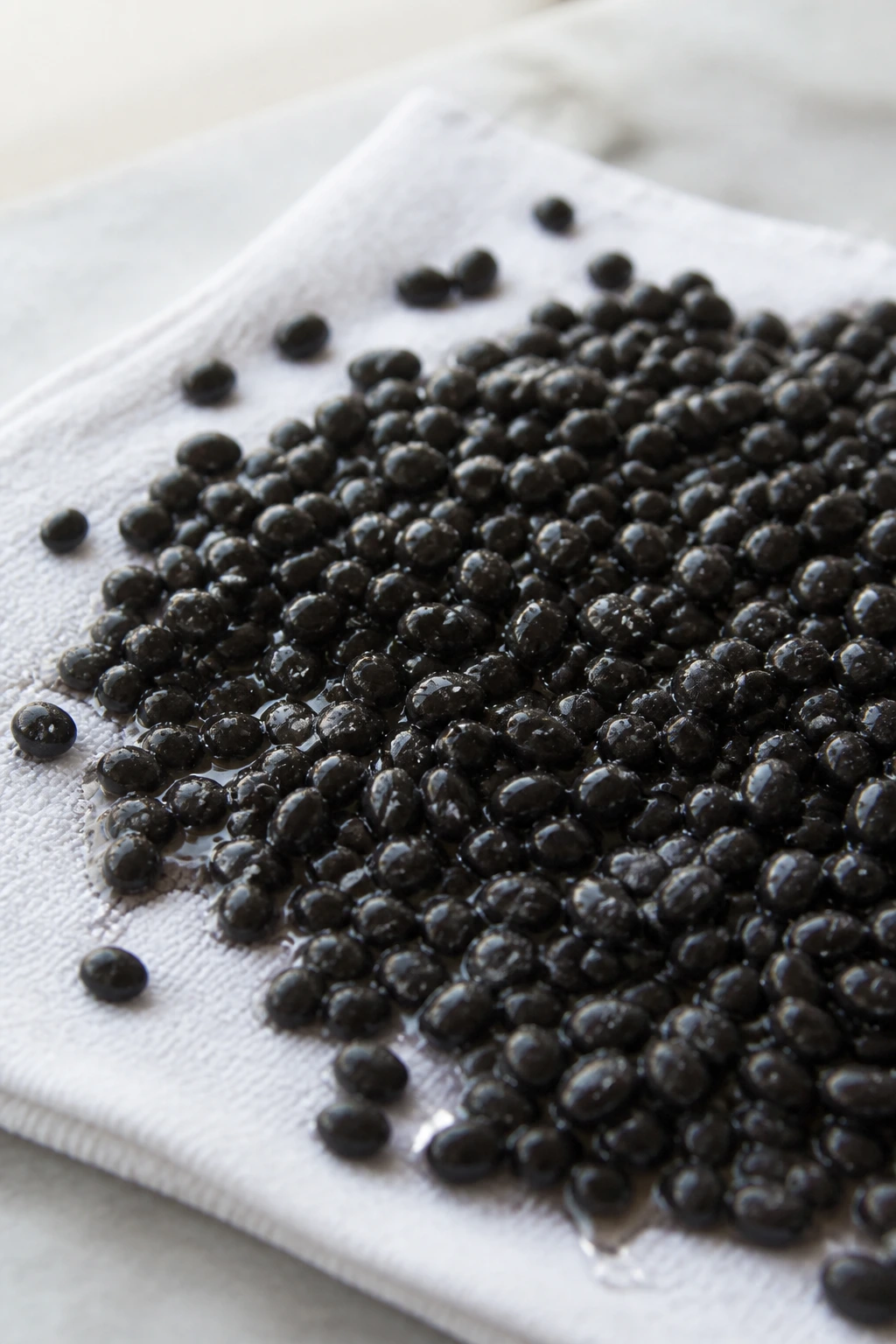
Not drying the beans after rinsing. Wet beans sabotage browning, weaken burger mix, and thin out casseroles. Drain them well, then let them sit for a minute on a towel or in the strainer while you prep everything else.
Treating black beans like they do not need a flavor base. Beans absorb seasoning, but they do not create flavor on their own. You need onion, garlic, mushrooms, tomato paste, smoked paprika, soy sauce, or a sharp sauce to make the plate feel finished.
Crowding the pan. When vegetables and potatoes pile up, they steam instead of brown. That means soft peppers, pale mushrooms, and limp wedges. If the pan looks full before you start, split the job into two batches.
Skipping acid at the end. Sour cream, lime, vinegar, pickled onions, or poblano cream does more than garnish. It keeps the black beans from tasting heavy and makes the savory parts pop. Without it, a lot of these dinners fall a little flat.
Cutting casseroles and loaves too early. Shepherd’s pie, meatloaf, enchilada casserole, and stuffed peppers all need a short rest. If you cut right away, the steam rushes out and the slices collapse. Five to fifteen minutes is enough to make a real difference.
Using too much liquid because the recipe looks dry in the pan. Black bean mixtures usually look tighter before baking or simmering than they will at the end. If you keep adding broth without patience, you’ll end up with soup where you wanted structure.
Frequently Asked Questions

Can I use dried black beans instead of canned beans?
Yes, and if you cook them well, the flavor is deeper. Soak them overnight if you can, then simmer until tender but not falling apart. One cup of dried beans usually yields about 2 1/2 to 3 cups cooked beans, so you can replace canned beans in most of these recipes with a little extra planning.
How do I keep black bean burgers from falling apart?
Dry beans, a good binder, and a short chill time are the whole game. Mash part of the beans, use enough breadcrumbs or oats to absorb moisture, and let the patties rest in the fridge before they hit the skillet. If the mixture still feels loose, it needs a little more dry binder, not more heat.
Which of these recipes freezes best?
Chili, shepherd’s pie, meatloaf, and Salisbury steaks freeze the cleanest. Burgers freeze well too if you freeze the uncooked patties between parchment sheets. I would not freeze baked potatoes or tater tot skillet leftovers unless you are fine with softer texture.
Can I make these dinners dairy-free without ruining the flavor?
Yes, if you keep the acidic finish. Use olive oil instead of butter, cashew cream or a tangy plant-based sour cream in place of dairy, and finish with lime, vinegar, or herbs. The flavor stays lively as long as you do not replace the dairy with something bland and stop there.
What if my black bean filling turns out too wet?
Simmer it uncovered for a few minutes first. If that doesn’t fix it, add breadcrumbs, oats, or a spoonful of flour depending on the recipe. The key is to thicken before baking or shaping, not after the dish is already in the oven.
Can I swap pinto beans for black beans?
You can, but the flavor shifts lighter and a little softer. Pinto beans work well in enchilada casserole, skillet dinners, and stuffed peppers, though they do not give the same dark, steakhouse-style depth. If you want the same effect, add more mushrooms, tomato paste, or smoked paprika.
Do these recipes need a lot of spice to taste bold?
No. Bold and hot are not the same thing. Most of the depth comes from browning, salt, mushrooms, onions, and a little acid at the end. Heat is optional; savoriness is not.
How do I make these meals feel less “bean-heavy”?
Use black beans as part of the structure, not the whole show. Pair them with potatoes, mushrooms, onions, tortillas, noodles, or a good sauce, and mash only some of the beans when the recipe calls for it. Texture is the part that keeps them from eating like a bowl of soft filler.
One More Plateful
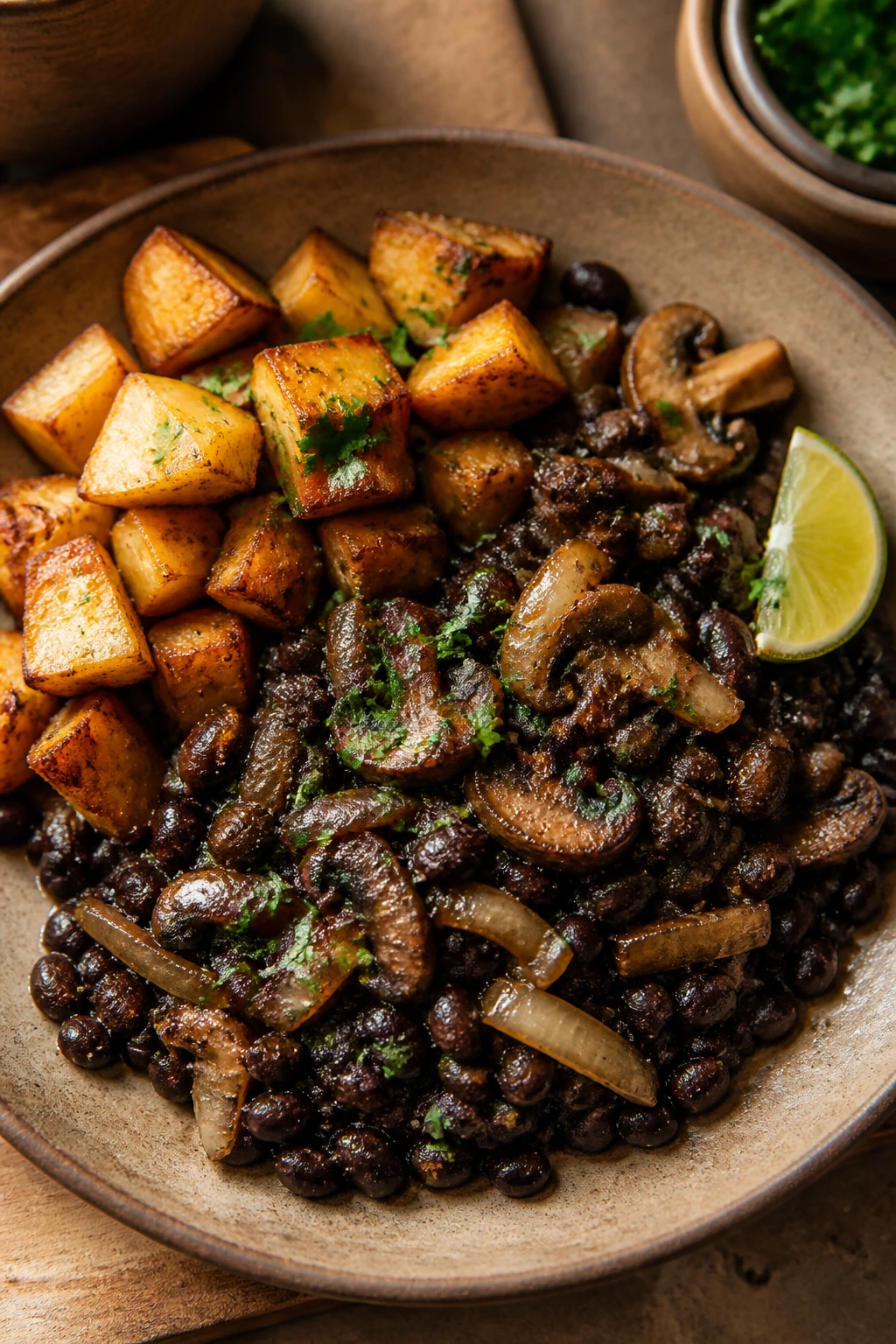
Black beans can do a lot more than sit quietly inside a burrito bowl. Give them browned onions, mushrooms, crisp potatoes, a little butter, and a sharp finish, and they start pulling their weight in a way that feels closer to a steakhouse plate than a pantry fallback.
That’s the real move with these dinners: do not ask the beans to pretend to be something else. Build around them the way a good cook builds around a steak — with sear, salt, sauce, and a side that knows its job. The next time you want dinner to feel sturdy and generous, start with a can of black beans and a hot skillet.