



There are nights when loaded baked potato dinners for crowds are the only sane answer. One oven. A stack of potatoes. A few big bowls of toppings that can be stretched, reheated, and passed around without anyone hovering over a cutting board waiting for a miracle. That’s the charm here: a baked potato looks modest, almost stubbornly plain, and then you split it open, add something rich and hot, and suddenly it behaves like a full dinner.
I’ve always thought russet potatoes are underrated in group cooking. They’re cheap, they hold their shape, and they turn into a fluffy, steam-scented base that can carry chili, pulled pork, broccoli cheddar, taco beef, mushrooms, or whatever else you’re in the mood to spoon on top. The skin gets a little crackly if you treat it right. The center goes soft and almost cloudlike. That contrast is the whole trick, and it’s why this kind of meal feels satisfying without needing a dozen side dishes.
The best part is that the menu can bend without breaking. You can make one topping heavy and smoky, another bright and sharp, another meatless, and let people build their own plate without turning dinner into a line of separate casseroles. That matters when the guest list grows and you need food that is flexible, filling, and easy to keep warm. There’s a reason potatoes keep showing up at gatherings. They earn their spot.
Why These Dinners Make Sense When You’re Feeding a Crowd
-
They scale without drama: Bake 6 potatoes or 24 potatoes, and the method barely changes; you just use more sheet pans and more topping bowls.
-
They’re friendly to picky eaters: A potato bar lets people skip the mushrooms, double the cheese, or go heavy on the pickles without making a second meal.
-
The toppings do the heavy lifting: Chili, pulled pork, taco beef, and creamy sauces can be cooked ahead and reheated while the potatoes stay simple.
-
They stay budget-conscious: Russets, beans, leftover chicken, and pantry sauces stretch farther than most crowd-size mains.
-
They feel hearty without getting fussy: You get the comfort of a casserole with the clean serving of a build-your-own dinner.
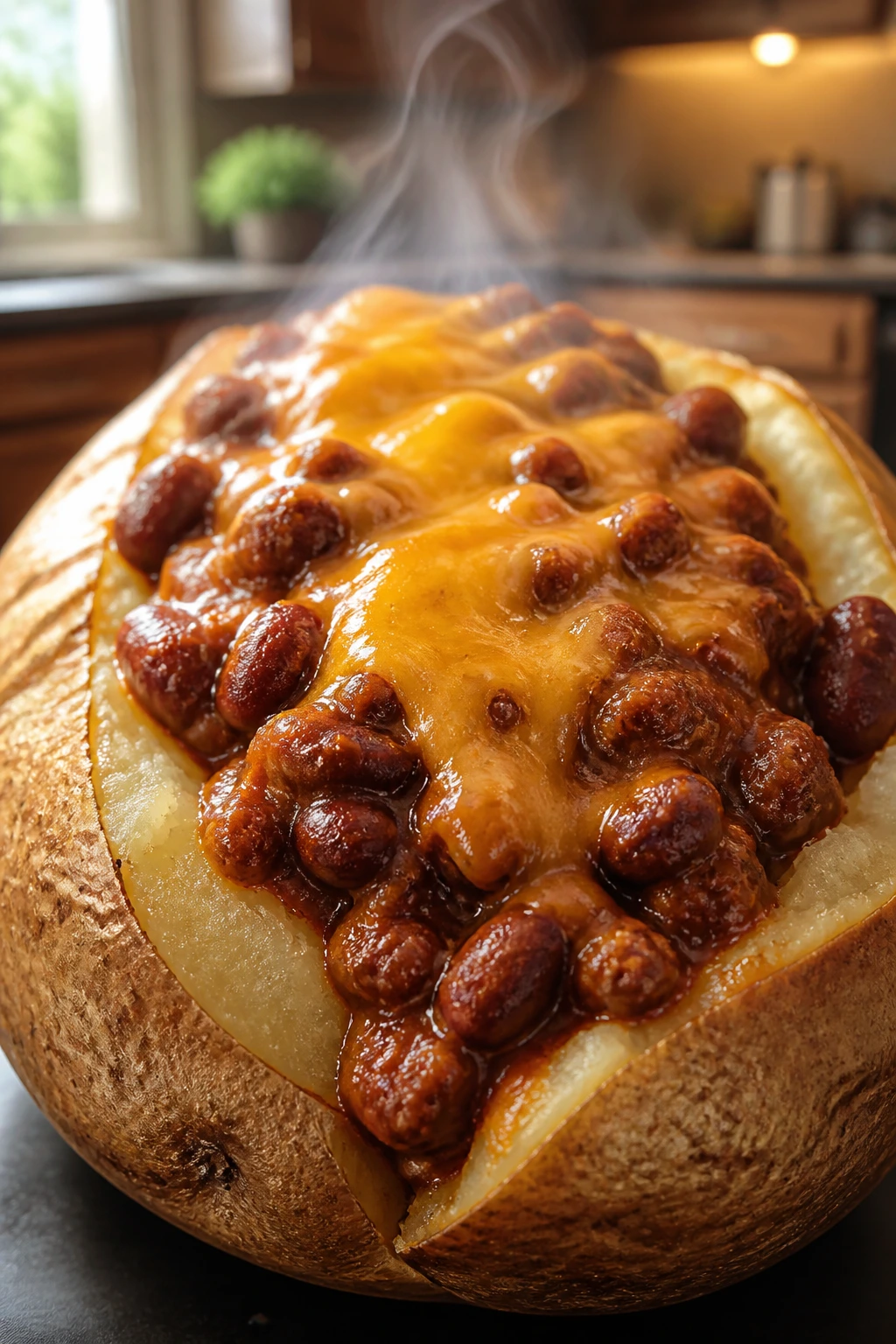
1. Chili Cheese Loaded Baked Potatoes
A hot baked potato turns into real dinner the second thick chili hits the split skin and the cheddar starts to melt into the steam. The smell alone does half the work here: beef, onions, tomatoes, and spice piled over something soft and buttery. It’s the most obvious choice in this lineup, and honestly, that’s not a flaw. Sometimes obvious is what the room wants.
Why It Works
Chili and baked potatoes are old friends because they solve each other’s weak spots. Chili can feel heavy on its own; the potato gives it room to spread out. A potato can feel a little plain; chili drags it into dinner territory with one spoonful. The key is thickness. If the chili is loose and soupy, it slides right off and softens the skin. If it’s simmered until it mounds on the potato, every bite stays balanced and the cheese has something to cling to.
Key Ingredients
For the Potatoes
- 6 large russet potatoes, scrubbed and dried
- 2 tablespoons olive oil
- 1 tablespoon kosher salt
For the Chili
- 1 pound ground beef
- 1 small yellow onion, finely diced
- 3 cloves garlic, minced
- 2 tablespoons chili powder
- 1 tablespoon tomato paste
- 1 can (15 ounces) kidney beans, drained and rinsed
- 1 can (14.5 ounces) diced tomatoes
- 1 cup beef broth
- 2 cups shredded sharp cheddar
For Serving
- 1/2 cup sour cream
- 3 scallions, thinly sliced
- 1 jalapeño, sliced thin, optional
Quick Steps
-
Bake the potatoes: Heat the oven to 425°F. Prick the potatoes all over, rub them with olive oil, and scatter the salt over the skins. Bake directly on a rack or on a sheet pan for 55 to 70 minutes, until the skins feel crisp and the centers give easily when squeezed with an oven mitt.
-
Start the chili: While the potatoes bake, cook the ground beef and onion in a large skillet over medium-high heat for 6 to 8 minutes, breaking the meat into small crumbles. Add the garlic and cook for 30 seconds, just until fragrant.
-
Build the pot: Stir in the chili powder and tomato paste, then add the beans, diced tomatoes, and beef broth. Bring it to a simmer and cook for 15 to 20 minutes, stirring now and then, until the chili is thick enough to sit on a spoon without running.
-
Split and fluff: Cut each potato open lengthwise and press the ends toward the center so the flesh opens up. Fluff the inside with a fork and season lightly with a pinch of salt if needed.
-
Load the potatoes: Spoon a generous mound of chili over each potato, then scatter cheddar over the top. Broil for 1 to 2 minutes if you want the cheese melted and a little blistered at the edges.
-
Finish hot: Add sour cream, scallions, and jalapeños at the table so people can adjust the heat and richness themselves.
Tips and Variations
-
Make-ahead move: The chili tastes even better after a night in the fridge, and it reheats cleanly on the stove over low heat.
-
Texture fix: If the chili looks thin, let it simmer uncovered for another 5 to 10 minutes before serving.
-
Flavor swap: Ground turkey works well if you want a lighter version, but add an extra pinch of salt and a teaspoon of smoked paprika.
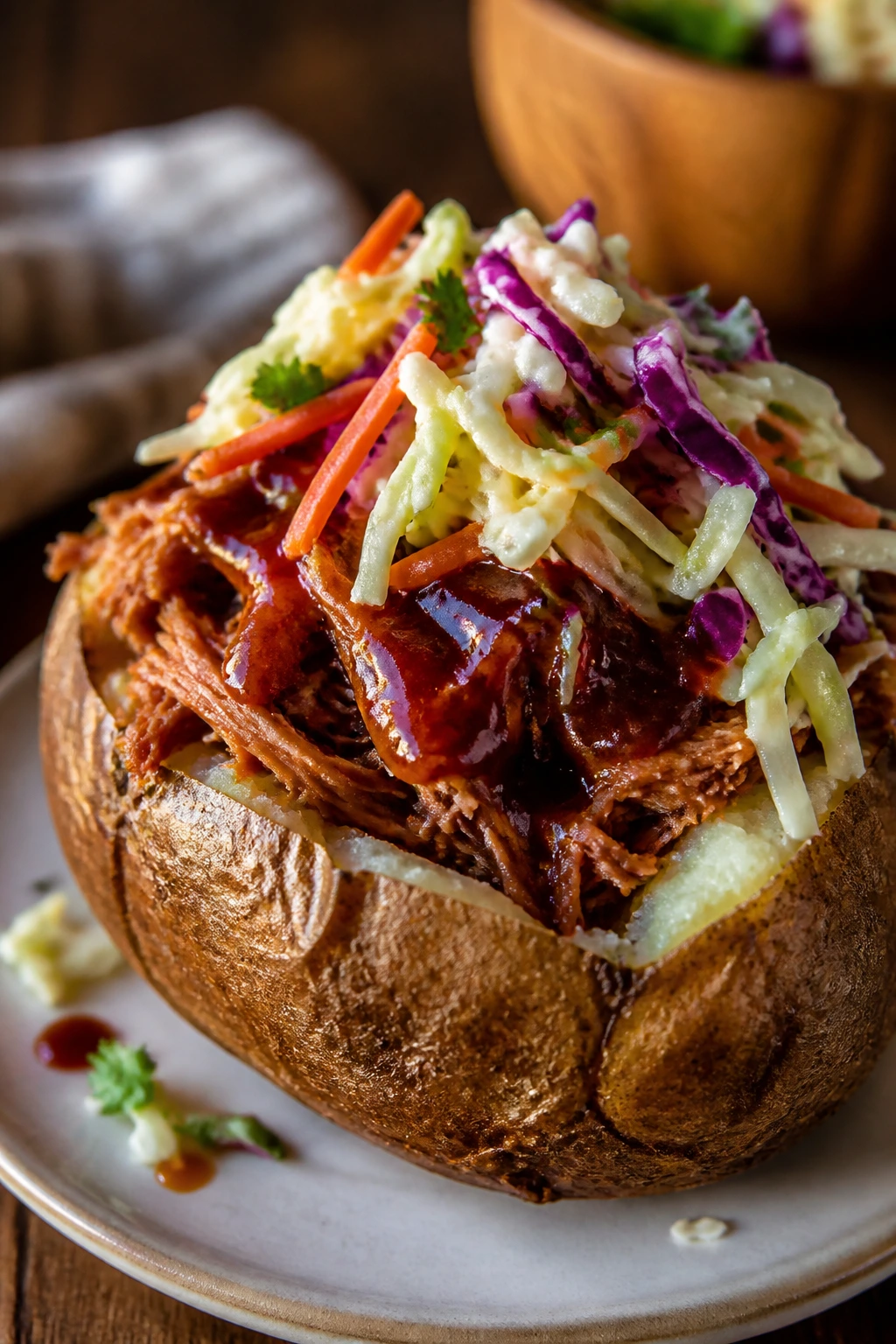
2. Smoky BBQ Pulled Pork and Crunchy Slaw Potatoes
Pulled pork belongs on a potato more often than on a bun. The potato gives you a sturdier base, the barbecue sauce brings the smoke and sweetness, and the slaw cuts through all of it with a cold, sharp crunch. It tastes like picnic food got organized and learned some manners.
Why It’s Crowd-Friendly
This is one of the easiest loaded baked potato dinners to scale because the main topping can be made ahead, held warm, and spooned out in waves. Pulled pork doesn’t mind waiting, especially if it’s sitting in a little barbecue sauce. The slaw matters more than people think. It keeps the whole plate from turning heavy and gives you that snap you’d normally get from a pickle spear or a raw onion slice. A potato can absorb a lot, but it still needs contrast.
Key Ingredients
For the Potatoes
- 6 large russet potatoes, scrubbed and dried
- 2 tablespoons olive oil
- 1 tablespoon coarse salt
For the Pork and Slaw
- 2 pounds cooked pulled pork, shredded, or 2 pounds pork shoulder cooked until shreddable
- 1 cup barbecue sauce
- 3 cups shredded cabbage slaw mix
- 1/2 cup mayonnaise
- 2 tablespoons apple cider vinegar
- 1 teaspoon sugar
- 1/2 teaspoon celery seed or 1 tablespoon pickle juice
For Finishing
- 1/2 cup sliced dill pickles
- 3 scallions, sliced
- Black pepper, to taste
Quick Steps
-
Bake the potatoes: Heat the oven to 425°F. Rub the potatoes with olive oil and coarse salt, then bake for 55 to 70 minutes until the skins are crisp and the centers feel soft all the way through.
-
Mix the slaw: In a bowl, stir together the cabbage mix, mayonnaise, apple cider vinegar, sugar, and celery seed or pickle juice. Let it sit while you warm the pork; the slaw will soften a little and pick up more flavor.
-
Warm the pork: Put the shredded pork in a skillet or saucepan with the barbecue sauce over medium-low heat. Stir until the meat is hot and glossy, about 8 to 10 minutes. Do not let it boil hard, or the sauce can tighten and go sticky in a bad way.
-
Split the potatoes: Cut each potato open and fluff the center. If the flesh looks dry, add a tiny bit of butter or olive oil before you pile on the pork.
-
Assemble the plates: Spoon the pork into the potato first, then add a little more sauce if the meat looks dry. Top with slaw and pickles so the cool crunch stays bright.
-
Serve with pepper: Finish with scallions and black pepper. The pepper sounds minor, but on a potato like this, it matters.
Tips and Variations
-
Keep the slaw separate: If it sits on hot pork for too long, it loses its bite fast.
-
Use what you have: Leftover smoked pork, grocery-store pulled pork, or rotisserie chicken all work if you season them well.
-
Extra depth: A spoonful of mustard-based barbecue sauce gives the whole plate more snap than a very sweet sauce.
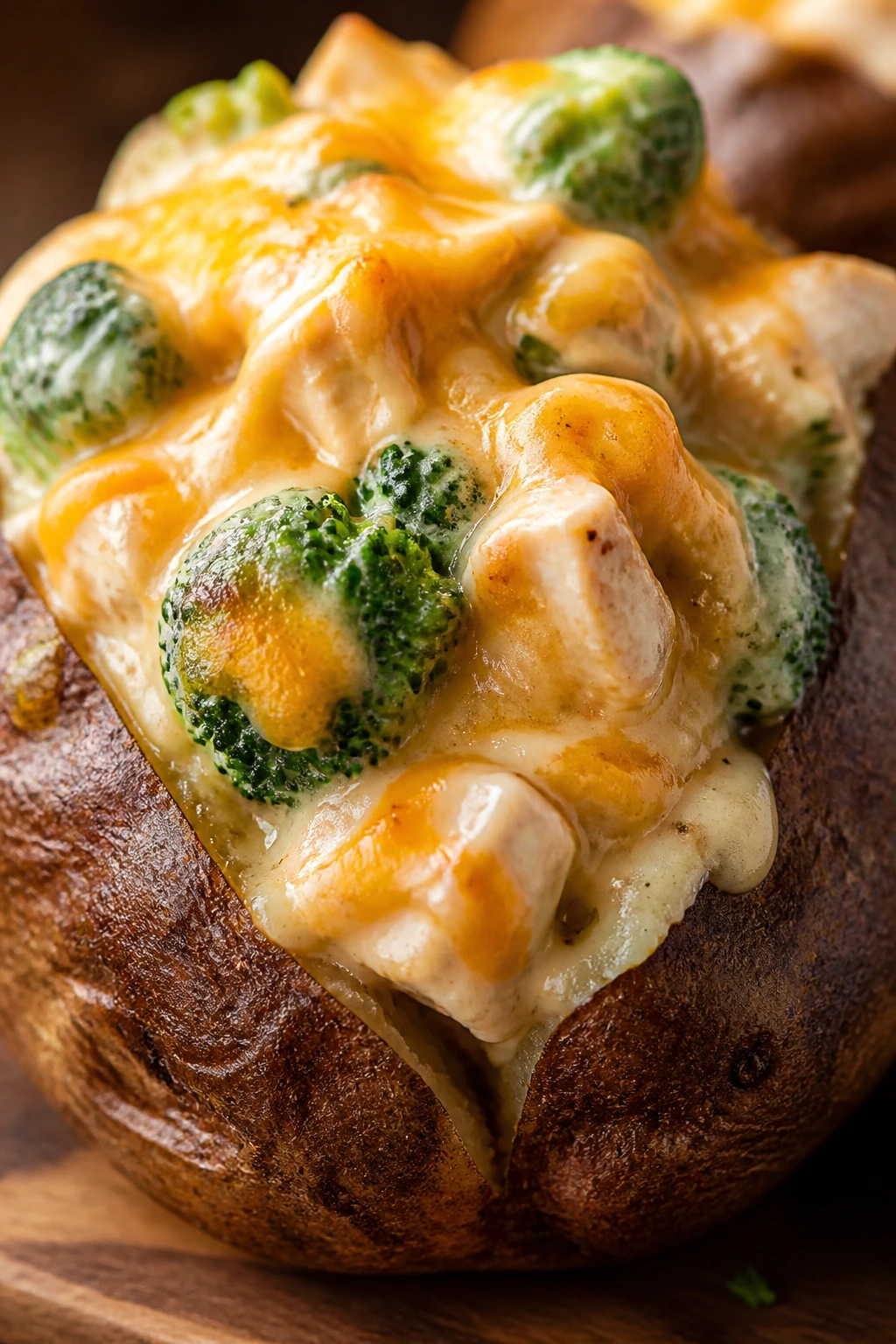
3. Broccoli Cheddar Chicken Baked Potatoes
Why does broccoli cheddar feel so right here? Because the potato acts like a built-in casserole dish and keeps the sauce from running everywhere. The chicken gives the meal structure, the broccoli adds some bite, and the cheese sauce makes the whole thing taste like a diner baked potato that got a little more thoughtful.
Why the Sauce Stays Creamy
The trick is making a sauce that’s thick enough to coat the potato instead of flooding it. A small roux of butter and flour gives the milk some body, and the cheese melts into that base without turning grainy if you keep the heat moderate. Add the broccoli near the end so it stays green and a little crisp-tender. If the florets are too big, they tumble off the potato. Chop them small. That tiny bit of extra knife work pays off.
Key Ingredients
For the Potatoes
- 6 large russet potatoes, scrubbed and dried
- 2 tablespoons olive oil
- 1 tablespoon kosher salt
For the Filling
- 2 cups cooked chicken, shredded or chopped
- 3 cups small broccoli florets
- 2 tablespoons butter
- 1 small onion, diced
- 2 tablespoons all-purpose flour
- 1 1/2 cups whole milk
- 2 cups shredded sharp cheddar
- 1 teaspoon Dijon mustard
- 1/2 teaspoon garlic powder
- Salt and black pepper, to taste
Quick Steps
-
Bake the potatoes: Heat the oven to 425°F and bake the oiled, salted potatoes for 55 to 70 minutes until the skins are crisp and the centers feel soft when pressed.
-
Cook the broccoli: Steam or microwave the broccoli for 2 to 3 minutes, just until bright green and barely tender. Drain it well so it does not water down the sauce.
-
Make the sauce base: Melt the butter in a saucepan over medium heat. Add the onion and cook for 4 to 5 minutes until soft. Stir in the flour and cook for 1 minute, stirring constantly, until the mixture smells a little nutty.
-
Whisk in the milk: Pour in the milk slowly while whisking. Cook for 3 to 4 minutes, until the sauce thickens enough to coat the back of a spoon.
-
Add chicken and cheese: Lower the heat and stir in the cheddar, Dijon, garlic powder, chicken, and broccoli. Season with salt and pepper. The sauce should be thick, creamy, and clingy, not runny.
-
Fill and finish: Split the potatoes, fluff the centers, then mound the chicken-broccoli mixture on top. Broil for 1 minute if you want the cheese on top to pick up a few browned spots.
Tips and Variations
-
Use rotisserie chicken: It saves time and gives the filling more flavor than plain poached chicken.
-
Small cuts matter: Broccoli florets should be bite-size or smaller so they spread across the potato evenly.
-
Make it richer: A spoonful of sour cream stirred into the sauce off the heat makes it taste extra round.
4. Taco Beef, Corn, and Salsa Verde Potatoes
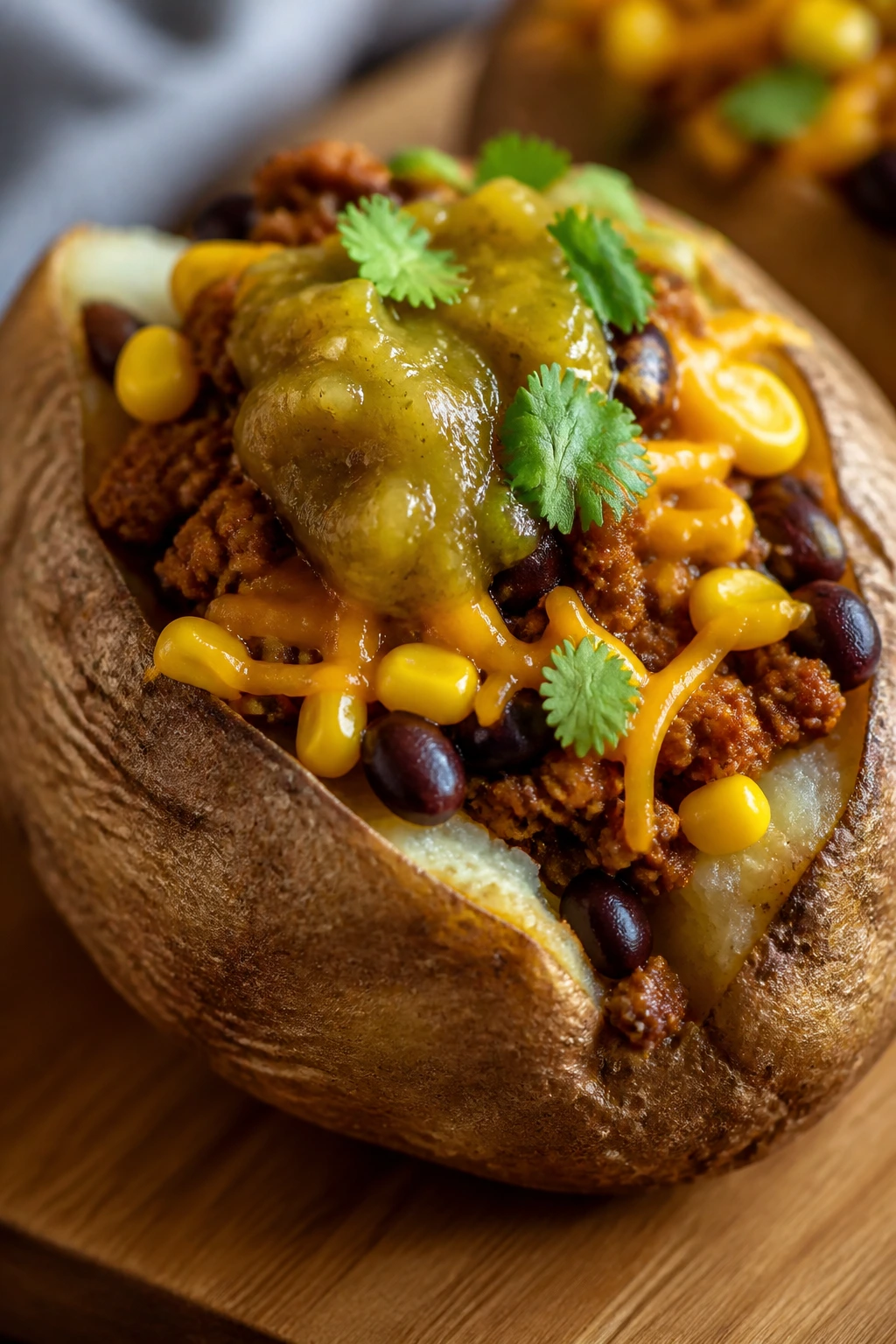
Taco night gets easier when the shells disappear. Everything good about the idea is still here: seasoned beef, corn, beans, cheese, lime, cilantro, a little heat. The potato just gives the whole thing a softer, sturdier landing pad than a tortilla ever could.
What Makes It Feed a Room
This is one of those crowd dinners that feels bigger than the ingredient list. Ground beef stretches nicely with beans and corn, and salsa verde keeps the filling from tasting heavy or flat. The potato takes all those juices and holds them in place. That means fewer drips, less chasing toppings around the plate, and more actual eating. For a group, that matters. People want food they can hold, not a balancing act.
Key Ingredients
For the Potatoes
- 6 large russet potatoes
- 1 tablespoon olive oil
- 1 tablespoon kosher salt
For the Taco Filling
- 1 pound ground beef or ground turkey
- 1 small onion, finely diced
- 2 tablespoons taco seasoning
- 1 can (15 ounces) black beans, drained and rinsed
- 1 cup corn kernels, frozen or fresh
- 1/2 cup salsa verde
- 1 cup shredded Monterey Jack
- 1 avocado, diced
- 1/4 cup chopped cilantro
- 1 lime, cut into wedges
Quick Steps
-
Bake the potatoes: Heat the oven to 425°F. Oil and salt the potatoes, then bake them for 55 to 70 minutes until the flesh feels soft and the skins are dry and crisp.
-
Cook the meat: Brown the ground beef and onion in a skillet over medium-high heat for 6 to 8 minutes, breaking the meat into fine crumbles. Drain any excess fat if needed.
-
Season the filling: Stir in the taco seasoning, black beans, corn, and salsa verde. Cook for 5 to 6 minutes, just until everything is hot and the sauce has thickened slightly.
-
Split the potatoes: Cut each potato open and fluff the center with a fork. Add a pinch of salt if the potato tastes muted.
-
Load with cheese: Spoon the taco filling onto each potato and scatter Monterey Jack over the top. Broil for 1 minute, just until the cheese melts.
-
Finish fresh: Add avocado, cilantro, and lime right before serving. The lime wakes up the beans and the beef more than people expect.
Tips and Variations
-
Keep avocado separate: It browns fast and turns mushy if you add it too early.
-
Thick salsa matters: Use a chunky salsa verde, not a watery one, or the potato base can get soggy.
-
Easy heat boost: Pickled jalapeños or a spoonful of chipotle crema works well if your crowd likes more fire.
5. Philly Cheesesteak Loaded Potatoes
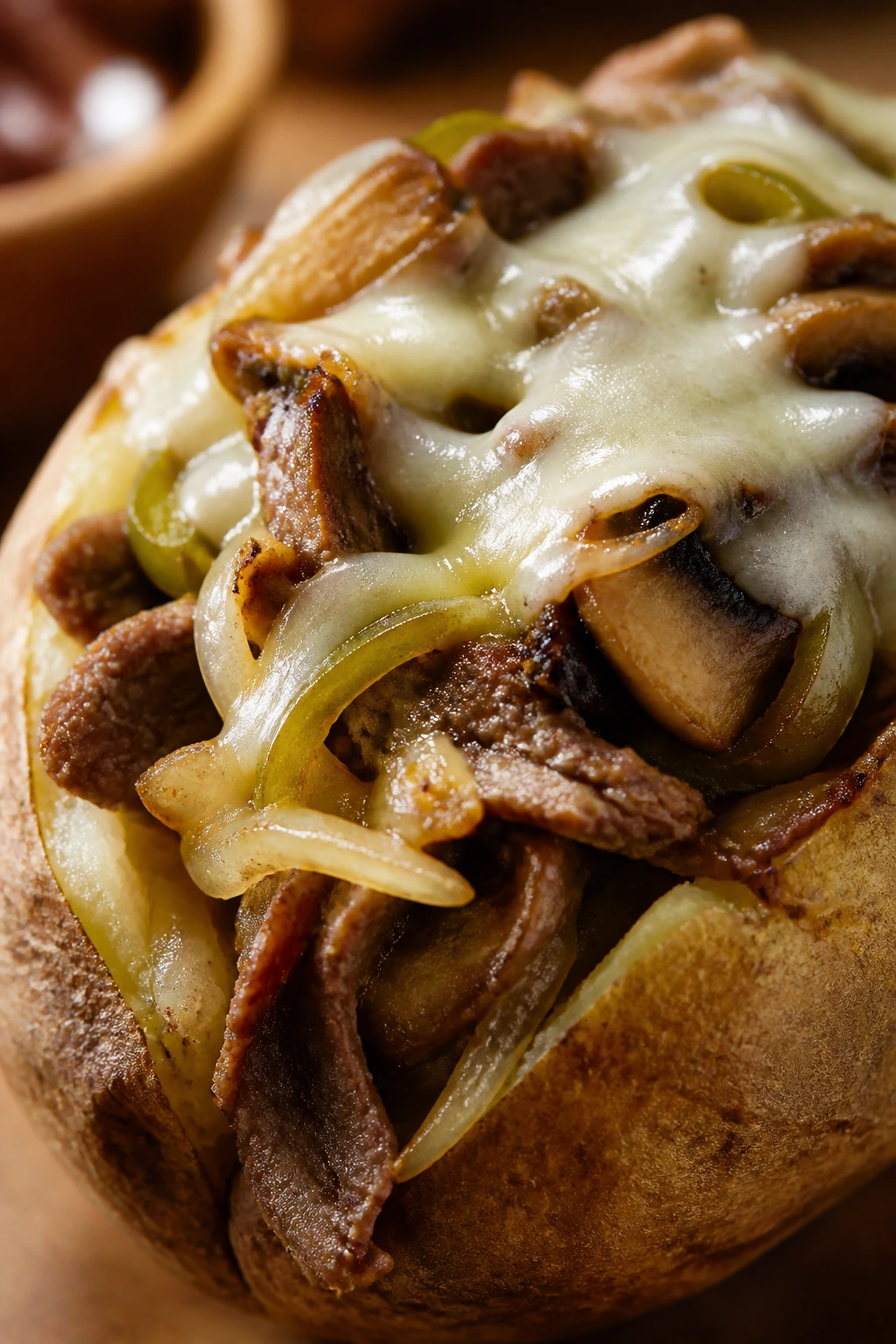
The best part of a cheesesteak is the filling anyway. The potato just gives it more room to breathe. Thin steak, onions, peppers, mushrooms, and melted provolone over a hot potato taste rich and a little indulgent, but not sloppy in the way a sandwich can get when it’s overloaded.
Why It Holds Up on a Buffet
Steak and peppers are fast-cooking ingredients, which makes this one easier to time than it looks. You can cook the vegetables first, sear the steak in the same pan, and keep everything hot while the potatoes finish. Provolone melts cleanly and gives the dish that familiar Philly feel. The potato base is sturdy enough that the filling doesn’t slide off the plate, which is more useful at a crowd table than a lot of people realize.
Key Ingredients
For the Potatoes
- 6 large russet potatoes
- 2 tablespoons olive oil
- 1 tablespoon coarse salt
For the Cheesesteak Filling
- 1 1/2 pounds shaved steak or very thinly sliced ribeye
- 1 tablespoon olive oil
- 2 tablespoons butter
- 1 large yellow onion, thinly sliced
- 2 bell peppers, thinly sliced
- 8 ounces mushrooms, sliced
- 1 tablespoon Worcestershire sauce
- 1 teaspoon garlic powder
- Salt and black pepper, to taste
- 8 ounces provolone, sliced or shredded
Quick Steps
-
Bake the potatoes: Heat the oven to 425°F. Bake the potatoes for 55 to 70 minutes until the skins are crisp and the centers are fully tender.
-
Cook the vegetables: Heat the olive oil and butter in a large skillet over medium-high heat. Add the onions, peppers, and mushrooms, then cook for 8 to 10 minutes until softened and a little caramelized at the edges.
-
Sear the steak: Push the vegetables to the side and add the shaved steak. Cook for 2 to 3 minutes, stirring often, until the meat is just cooked through. Stir everything together with Worcestershire sauce, garlic powder, salt, and pepper.
-
Cut and fluff: Split the potatoes open and fluff the centers with a fork. The inside should look steamy and pale, not dense.
-
Pile on the filling: Spoon the steak and vegetable mixture over each potato. Lay provolone on top or scatter shredded provolone over the filling.
-
Melt the cheese: Set the potatoes under the broiler for 1 to 2 minutes, just until the cheese bubbles and starts to slump over the edges.
Tips and Variations
-
Don’t crowd the pan: If the skillet is packed, the steak steams instead of searing.
-
Use good beef: Thinly sliced ribeye gives the cleanest flavor, but shaved beef from the store works too.
-
Sauce option: A spoonful of warm cheese sauce makes it richer, though I’d keep it light so the peppers stay visible.
6. Buffalo Chicken Ranch Baked Potatoes
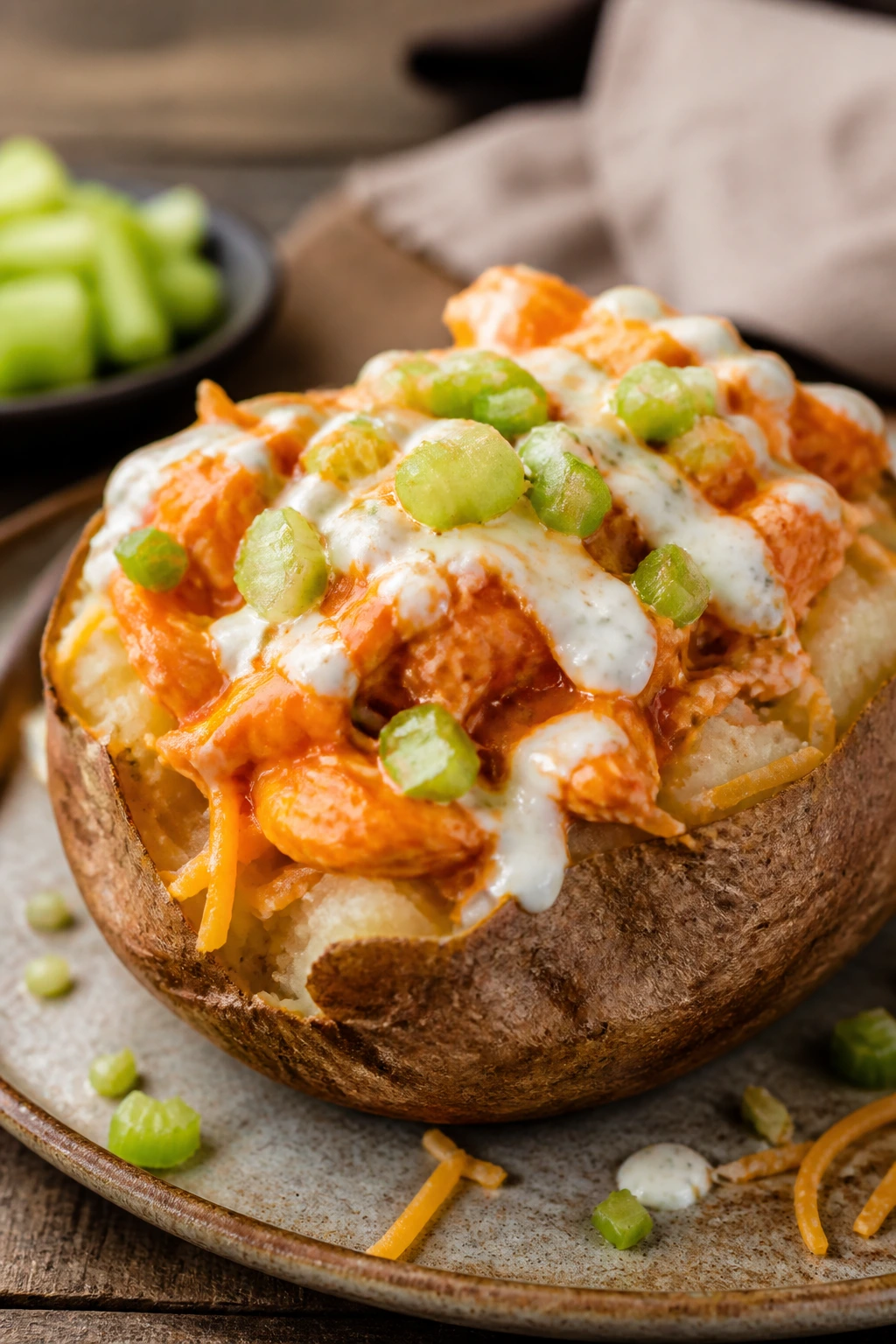
Buffalo chicken wants something mild and starchy under it. Potatoes are the obvious answer. You get heat, tang, creamy dressing, and enough soft potato to keep the whole thing from feeling too sharp. It’s a little messy, which is part of the appeal.
Why the Heat-Sauce Combo Works
Buffalo sauce can be aggressive if there isn’t something cooling it down. A baked potato gives the sauce something absorbent to cling to, and ranch softens the burn without making the plate bland. Celery brings crunch. Cheese gives it a little gravity. This is a dinner that feels casual, almost bar-food casual, but it still feeds a group in a practical way.
Key Ingredients
For the Potatoes
- 6 large russet potatoes
- 2 tablespoons olive oil
- 1 tablespoon kosher salt
For the Buffalo Chicken
- 2 cups cooked chicken, shredded
- 3/4 cup buffalo sauce
- 2 tablespoons butter
- 1 cup shredded cheddar
- 1/2 cup ranch dressing
- 1 cup celery, finely diced
- 1/4 cup blue cheese crumbles or more cheddar
- 3 scallions, sliced
- Black pepper, to taste
Quick Steps
-
Bake the potatoes: Heat the oven to 425°F. Oil and salt the potatoes, then bake them for 55 to 70 minutes until the skins are crisp and the centers are soft.
-
Warm the chicken: In a skillet over medium-low heat, stir the chicken, buffalo sauce, and butter together for 4 to 5 minutes until hot and glossy.
-
Split the potatoes: Cut each potato open and fluff the center with a fork. Add a little salt if the potato tastes flat against the spicy topping.
-
Fill with chicken: Spoon the buffalo chicken into each potato. Top with cheddar so it melts into the sauce.
-
Add cool elements: Drizzle ranch over the top and scatter the diced celery, blue cheese, and scallions.
-
Serve fast: Serve while the potato is still hot and the ranch is cold. That temperature contrast is half the pleasure.
Tips and Variations
-
Hold the ranch back: Drizzle it at the last second so the topping keeps some definition.
-
Mild version: Use half buffalo sauce and half melted butter if your crowd prefers gentler heat.
-
Crunch upgrade: Crushed celery leaves or a few fried onions add another layer without much work.
7. Creamy Mushroom Stroganoff Potatoes
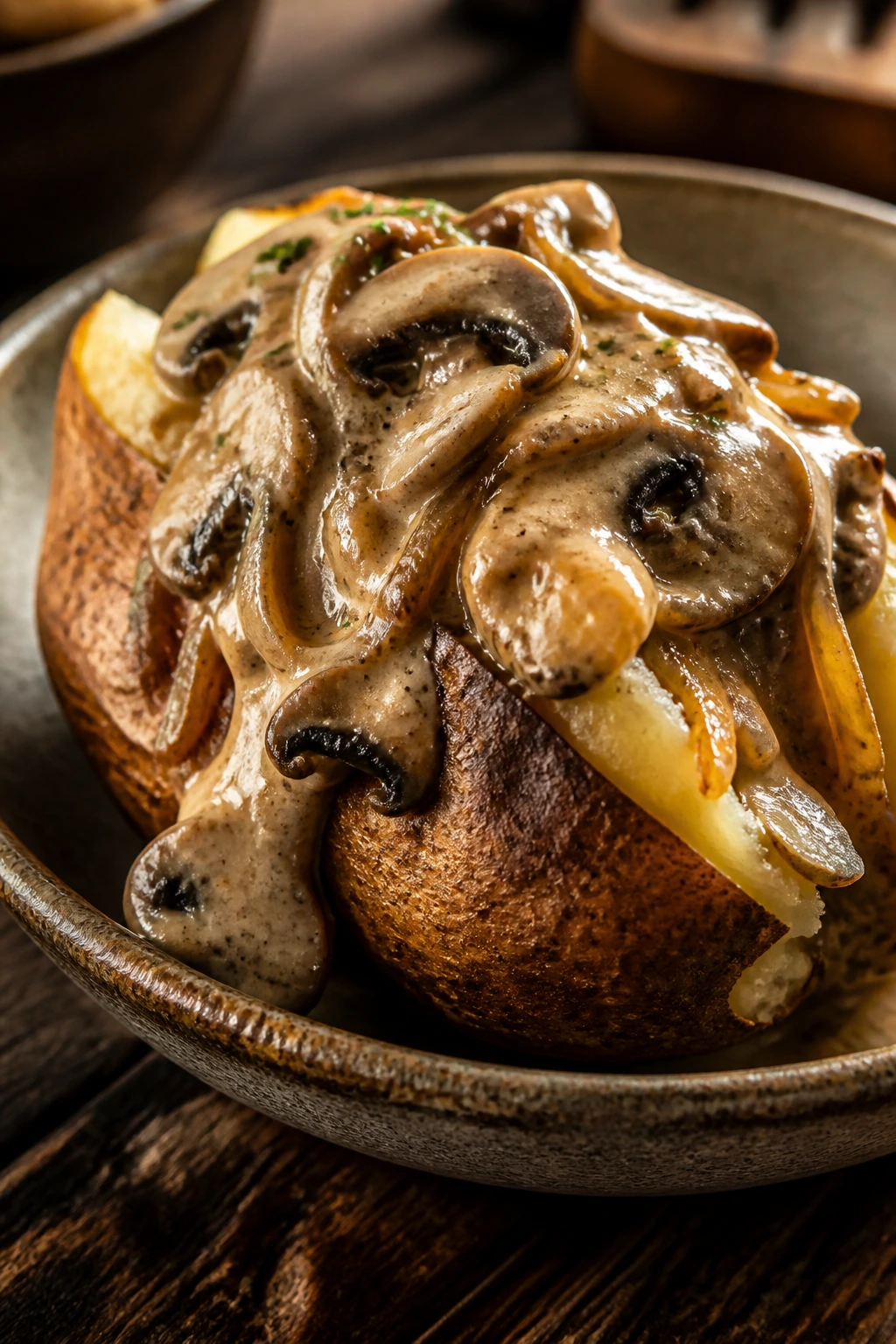
This one is for the mushroom people. The ones who want dinner to taste deep and savory, with a little tang from sour cream and a sauce that feels like it took more effort than it did. A baked potato gives stroganoff a better home than noodles on a busy night, and the result feels richer than the ingredient list suggests.
Why the Mushroom Filling Feels Rich
Mushrooms need time and heat to lose their water and pick up a browned, meaty flavor. That’s the whole game. Once the pan is hot enough and the moisture is cooked off, the mushrooms start tasting like themselves in a much better mood. A little Dijon and paprika give the sauce backbone. Stir the sour cream in off the heat so it stays smooth. If you add it while the pan is roaring hot, the sauce can go grainy. That’s a small mistake with a big payoff if you avoid it.
Key Ingredients
For the Potatoes
- 6 large russet potatoes
- 2 tablespoons olive oil
- 1 tablespoon kosher salt
For the Stroganoff Topping
- 1 1/2 pounds cremini or button mushrooms, sliced
- 1 large onion, thinly sliced
- 3 tablespoons butter
- 2 cloves garlic, minced
- 1 tablespoon all-purpose flour
- 1 1/2 cups beef broth or vegetable broth
- 1 teaspoon Dijon mustard
- 1 teaspoon paprika
- 3/4 cup sour cream
- 2 tablespoons chopped parsley
- Salt and black pepper, to taste
Quick Steps
-
Bake the potatoes: Heat the oven to 425°F. Bake the seasoned potatoes for 55 to 70 minutes until the skins are crisp and the centers are fluffy.
-
Brown the mushrooms: Melt the butter in a wide skillet over medium-high heat. Add the mushrooms and cook for 8 to 10 minutes, stirring occasionally, until they release their moisture and start to brown.
-
Build the sauce: Add the onion and cook for 4 to 5 minutes, then stir in the garlic and flour. Cook for 1 minute, then pour in the broth, Dijon, and paprika. Simmer for 4 to 5 minutes until the sauce thickens.
-
Finish with sour cream: Turn off the heat and stir in the sour cream. Season with salt and pepper. The sauce should be creamy and glossy, not broken or watery.
-
Split the potatoes: Open the potatoes and fluff the centers. If they look dry, a tiny drizzle of olive oil helps.
-
Top and garnish: Spoon the mushroom stroganoff over each potato and finish with parsley. That green note matters more than you’d think.
Tips and Variations
-
Use mixed mushrooms: A handful of shiitakes with the creminis gives the sauce a deeper, woodsy taste.
-
Thicken if needed: If the sauce feels loose, let it simmer another minute before adding sour cream.
-
Vegetarian swap: Use vegetable broth and skip any beefy add-ins; the mushrooms carry the flavor on their own.
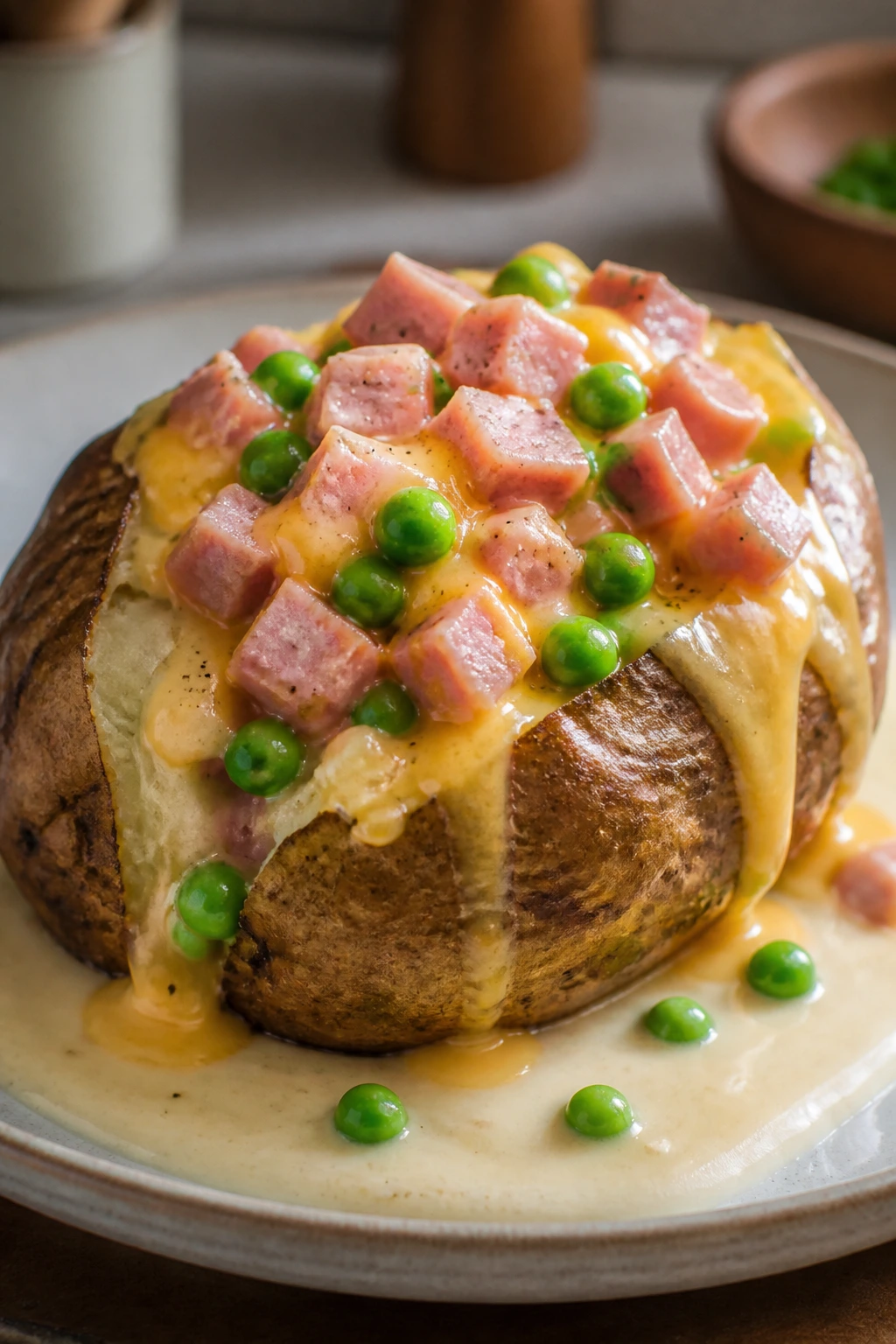
8. Ham, Peas, and Sharp Cheddar Potatoes
Ham and peas are the sort of leftovers that secretly wanted to be dinner. Add a little creamy sauce and sharp cheddar, and suddenly the whole thing tastes complete instead of patched together. This is one of the more family-friendly loaded baked potato dinners in the bunch because it’s mild, familiar, and easy to eat without a pile of extra condiments.
Why It Feels Like a Full Dinner
Ham brings salt, peas bring sweetness, and cheddar gives the filling enough body to feel like a proper meal. The sauce here doesn’t need to be fancy. A quick white sauce is enough, as long as it’s cooked until thick and smooth. Because the ingredients are already cooked or quick-cooking, this one moves fast. That makes it good for nights when the crowd arrives hungry and the timer is not your friend.
Key Ingredients
For the Potatoes
- 6 large russet potatoes
- 2 tablespoons olive oil
- 1 tablespoon kosher salt
For the Ham Filling
- 2 tablespoons butter
- 1 small onion, diced
- 2 tablespoons all-purpose flour
- 1 1/2 cups milk
- 2 cups diced ham
- 1 1/2 cups frozen peas
- 2 cups shredded sharp cheddar
- 1 teaspoon Dijon mustard
- Black pepper, to taste
- 2 tablespoons chopped chives
Quick Steps
-
Bake the potatoes: Heat the oven to 425°F and bake the oiled, salted potatoes for 55 to 70 minutes until tender all the way through.
-
Start the sauce: Melt the butter in a saucepan over medium heat. Add the onion and cook for 4 minutes until soft, then stir in the flour and cook for 1 minute.
-
Whisk in the milk: Add the milk slowly while whisking. Cook for 3 to 4 minutes until the sauce thickens and looks smooth.
-
Add ham and peas: Stir in the ham, peas, Dijon, and half the cheddar. Cook for 2 to 3 minutes until the peas are hot and the cheese melts into the sauce.
-
Split the potatoes: Cut the potatoes open and fluff the flesh with a fork. Season lightly with black pepper.
-
Finish with cheddar: Spoon the ham mixture over each potato and top with the rest of the cheddar and the chives.
Tips and Variations
-
Frozen peas are fine: They’re often better here because they stay bright and sweet.
-
Don’t boil hard: A hard boil can make the milk sauce grainy or too thick at the edges.
-
Extra comfort note: A spoonful of whole-grain mustard in the sauce adds a sharper edge if you want it.
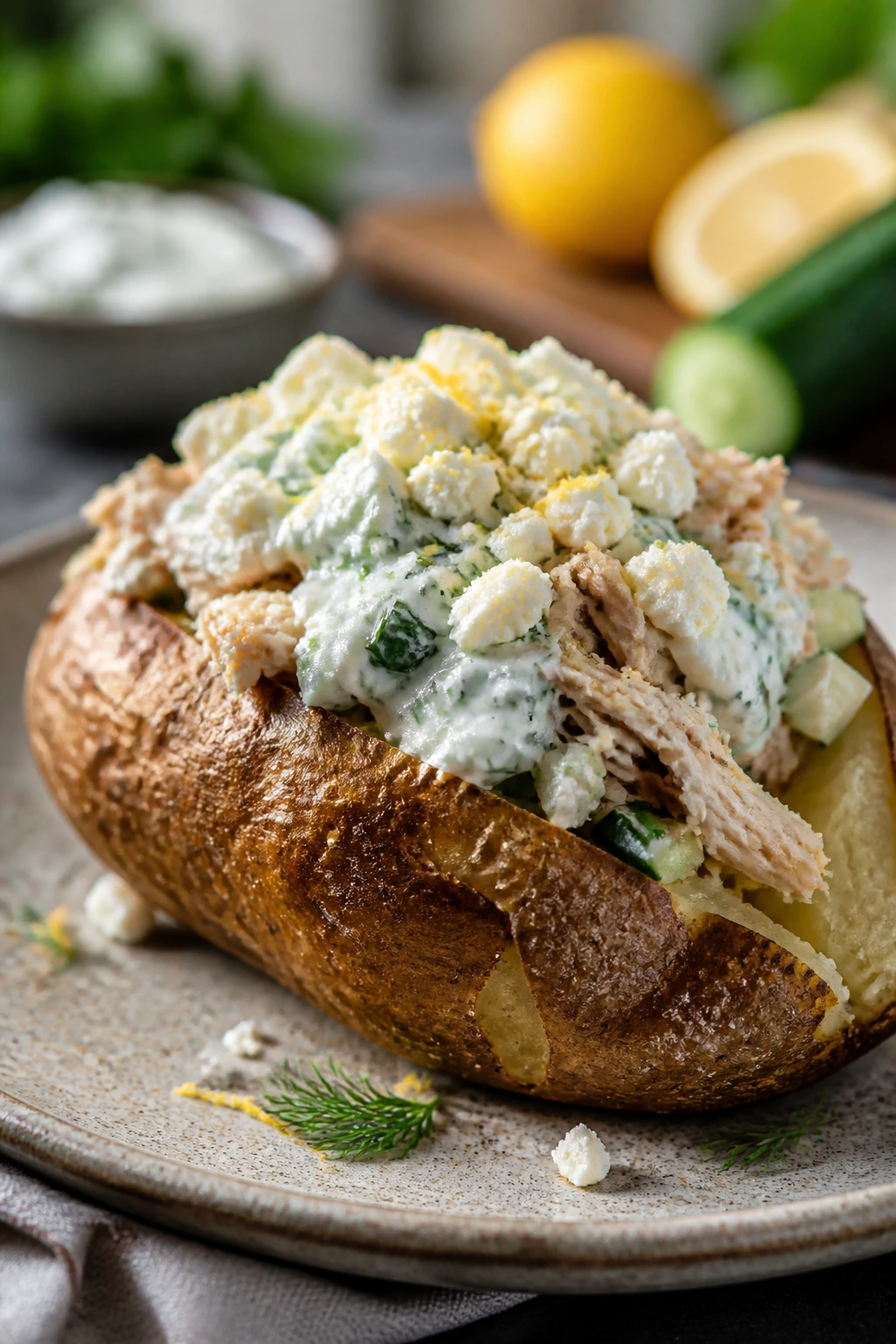
9. Greek Chicken Tzatziki Potatoes
Bright herbs and lemon keep a baked potato from feeling heavy. That’s the simple reason this one works. Chicken, cucumber, feta, and yogurt turn the potato into something closer to a gyro bowl, only warmer and more filling. It’s the cleanest-feeling option in the collection, which is useful when the rest of the table is leaning rich.
Why the Bright Finish Matters
A potato base wants salt, acid, and something cool on top. Greek-style toppings give you all three. The yogurt sauce cools the steam from the potato, cucumber adds crunch, and lemon keeps the chicken from tasting dull. If you’re serving a crowd, this is a smart place to go when you want a dinner that feels generous without being swampy. The freshness keeps every bite from blending into one soft note.
Key Ingredients
For the Potatoes
- 6 large russet potatoes
- 2 tablespoons olive oil
- 1 tablespoon kosher salt
For the Greek Toppings
- 2 cups cooked chicken, shredded or chopped
- 1 tablespoon olive oil
- 1 tablespoon dried oregano
- 1 1/2 cups Greek yogurt
- 1 cucumber, grated and squeezed dry
- 1 garlic clove, minced
- 1 tablespoon lemon juice
- 1 cup cherry tomatoes, halved
- 1/2 red onion, thinly sliced
- 1/2 cup crumbled feta
- 1/4 cup pitted olives
- 2 tablespoons chopped dill or parsley
Quick Steps
-
Bake the potatoes: Heat the oven to 425°F. Bake the seasoned potatoes for 55 to 70 minutes until the skins are crisp and the centers are tender.
-
Mix the tzatziki: Stir together the Greek yogurt, cucumber, garlic, and lemon juice. Press the cucumber with a spoon or clean hands to remove excess water first; that keeps the sauce thick.
-
Warm the chicken: Toss the chicken with olive oil and oregano in a skillet over medium heat for 2 to 3 minutes, just until warm.
-
Split the potatoes: Cut each potato open and fluff the inside. A small pinch of salt helps the potato stand up to the tangy toppings.
-
Build the plate: Spoon the chicken onto the potato, then add the tzatziki, tomatoes, onion, feta, and olives.
-
Finish with herbs: Sprinkle dill or parsley over the top. The herbs tie the lemon and cucumber to the rest of the plate.
Tips and Variations
-
Drain the cucumber well: Watery tzatziki is the fastest way to dull the whole dish.
-
Use leftover roast chicken: It picks up the oregano and lemon very easily.
-
Less sharp option: Swap half the yogurt for sour cream if you want a softer sauce.
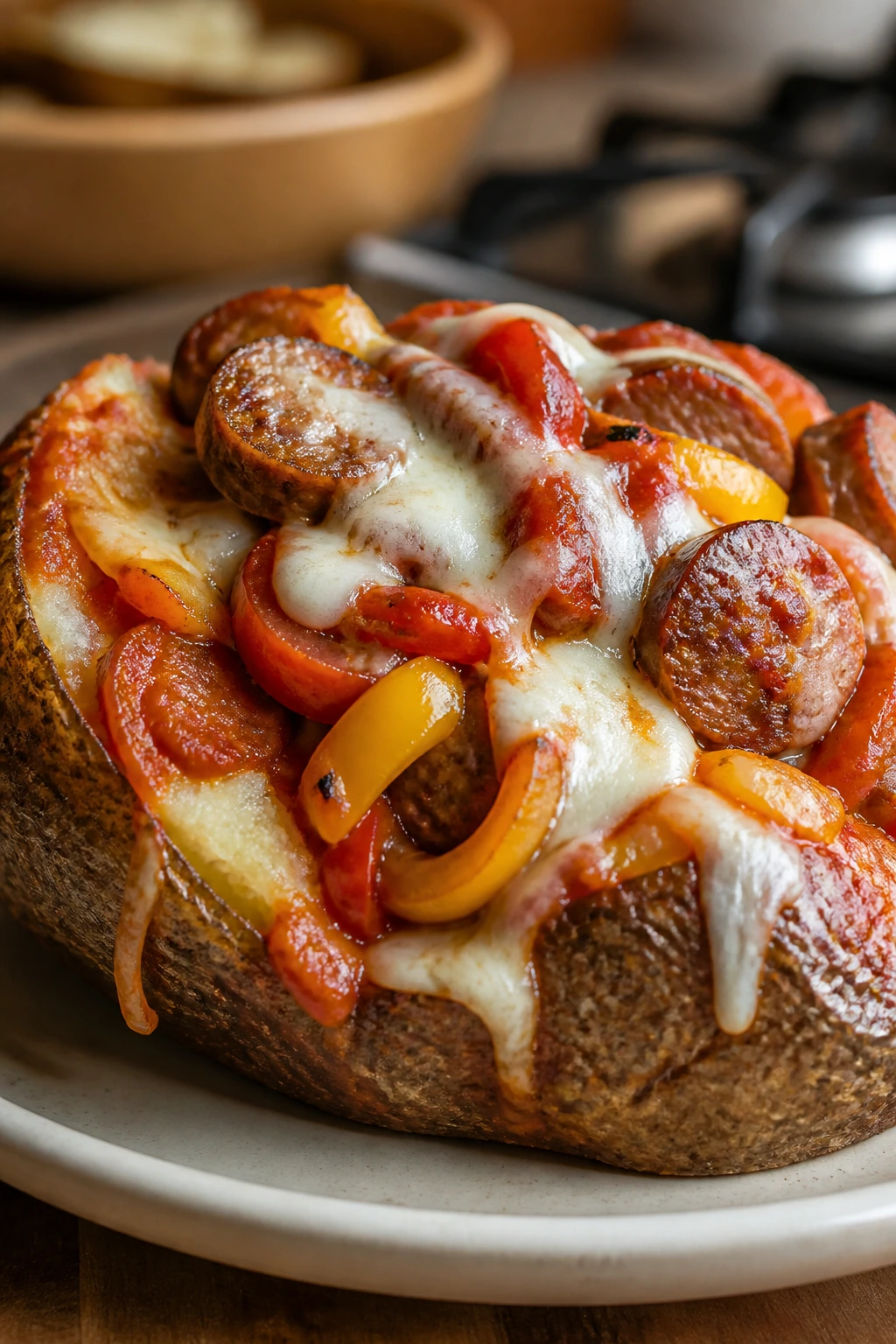
10. Sausage, Peppers, and Mozzarella Potatoes
This one smells like a busy sandwich shop and eats like a proper meal. Sausage gives the filling its backbone, peppers and onions bring sweetness, and marinara ties everything together in a way that feels familiar even if you’re not serving it on bread. The potato just makes it sturdier.
Why It Tastes Big Without Much Fuss
Italian sausage does a lot of work on its own. It brings fat, seasoning, and enough salt to flavor the peppers and onions in the same pan. Marinara gives the topping moisture without making it soupy, and mozzarella melts into long soft strands that look exactly how you want dinner to look when people are coming back for seconds. This is one of the more forgiving recipes in the group, which is why it belongs at a crowd table.
Key Ingredients
For the Potatoes
- 6 large russet potatoes
- 2 tablespoons olive oil
- 1 tablespoon coarse salt
For the Sausage Filling
- 1 1/2 pounds Italian sausage, casings removed
- 1 large onion, sliced
- 2 bell peppers, sliced
- 2 cloves garlic, minced
- 1 1/2 cups marinara sauce
- 1 1/2 cups shredded mozzarella or provolone
- 1 teaspoon Italian seasoning
- 2 tablespoons olive oil
- 2 tablespoons chopped basil
- Red pepper flakes, optional
Quick Steps
-
Bake the potatoes: Heat the oven to 425°F and bake the oiled, salted potatoes for 55 to 70 minutes until the skins are crisp and the centers are soft.
-
Brown the sausage: Heat the olive oil in a large skillet over medium-high heat. Add the sausage and cook for 6 to 8 minutes, breaking it up as it browns.
-
Cook the vegetables: Add the onion and peppers and cook for 6 to 7 minutes until softened. Stir in the garlic and cook for 30 seconds.
-
Add the sauce: Pour in the marinara and Italian seasoning. Simmer for 3 to 4 minutes until everything looks glossy and the sauce clings to the sausage instead of pooling.
-
Split the potatoes: Open each potato and fluff the inside with a fork. If you like, add a tiny bit of butter before topping.
-
Top and melt: Spoon the sausage mixture over the potatoes, cover with mozzarella, and broil for 1 to 2 minutes until melted. Finish with basil and red pepper flakes.
Tips and Variations
-
Drain excess grease: If the sausage renders a lot of fat, spoon some off before adding marinara.
-
Hot sausage or sweet sausage: Either works. Sweet sausage gives a softer crowd-pleasing flavor; hot sausage wakes the dish up.
-
Serve with bread? You can, but you don’t need to. The potato already does the heavy lifting.
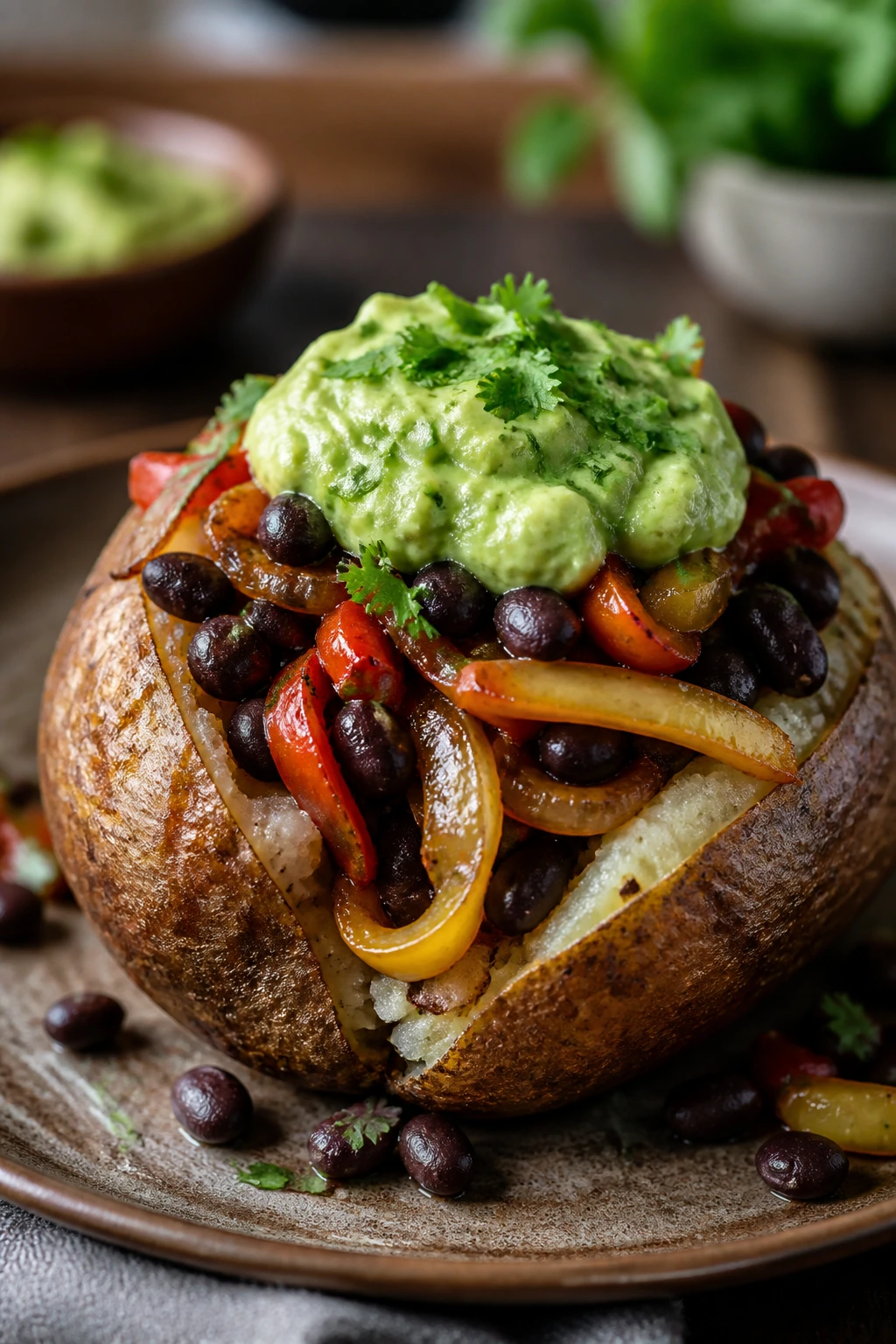
11. Black Bean Fajita Potatoes with Avocado Crema
Vegetarian dinners need shape, salt, and one good sauce. This has all three. Black beans make the potato filling substantial, peppers and onions bring smoke and sweetness, and the avocado crema cools everything down without turning the plate heavy.
Why the Bean-and-Veg Mix Works
Beans are a smart move for crowd dinners because they stretch well and keep their texture after reheating. Fajita seasoning gives the vegetables a little charred-corner flavor even if you’re cooking them indoors. The avocado crema adds richness without relying on a lot of cheese. This is the sort of dish that quietly wins over meat-eaters because it tastes complete, not like a compromise. That matters more than the label on the recipe.
Key Ingredients
For the Potatoes
- 6 large russet potatoes
- 2 tablespoons olive oil
- 1 tablespoon kosher salt
For the Filling
- 2 bell peppers, sliced
- 1 large onion, sliced
- 1 tablespoon olive oil
- 1 can (15 ounces) black beans, drained and rinsed
- 1 cup corn kernels
- 2 tablespoons fajita seasoning
- 1/2 cup salsa
- 1/4 cup cotija or queso fresco
- 1/4 cup chopped cilantro
For the Avocado Crema
- 1 avocado
- 1/2 cup Greek yogurt or sour cream
- 1 tablespoon lime juice
- 1 pinch salt
Quick Steps
-
Bake the potatoes: Heat the oven to 425°F. Rub the potatoes with oil and salt, then bake for 55 to 70 minutes until tender and crisp-skinned.
-
Cook the vegetables: Heat the olive oil in a skillet over medium-high heat. Add the peppers and onion and cook for 8 to 10 minutes until soft with a few browned edges.
-
Warm the beans: Stir in the black beans, corn, fajita seasoning, and salsa. Cook for 3 to 4 minutes until hot and thick.
-
Blend the crema: Mash the avocado with the yogurt, lime juice, and a pinch of salt until smooth but not runny. A few small avocado bits are fine.
-
Split the potatoes: Open and fluff the potatoes, then spoon on the bean and pepper mixture.
-
Finish with cool toppings: Drizzle the avocado crema over the top and scatter cotija and cilantro. Serve the lime wedges on the side.
Tips and Variations
-
Rinse the beans well: It removes the canned taste and keeps the filling cleaner.
-
Add char: A minute under the broiler after the beans go on gives the peppers a little extra depth.
-
No avocado? Use lime sour cream instead. It’s less lush, but still bright.
12. Shepherd’s Pie Potatoes
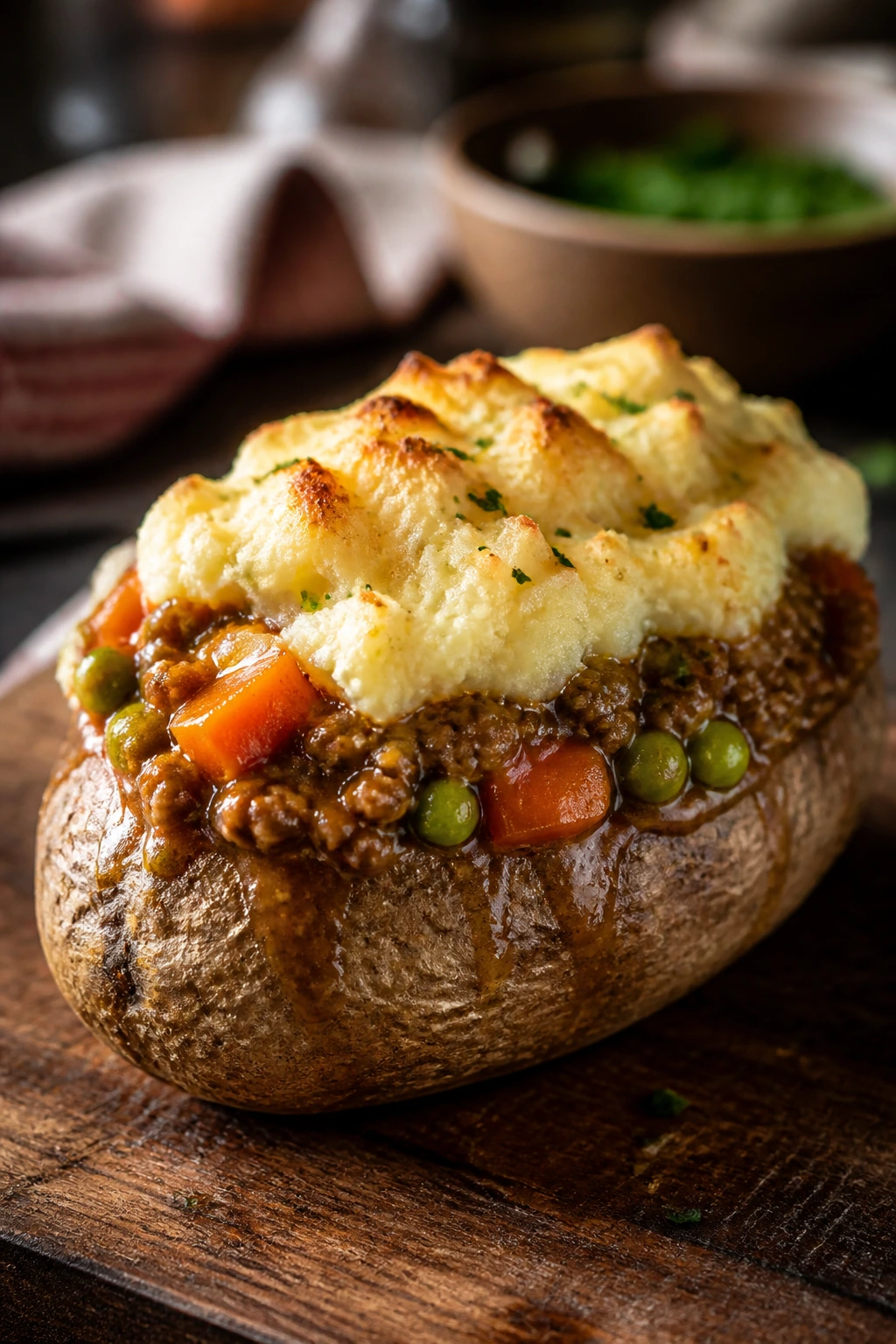
Some dinners ask for mashed potatoes on the side. This one puts the mash part out of a job. Savory meat, onions, carrots, peas, and gravy over a baked potato makes sense in a very direct way. It tastes like Sunday dinner, only easier to serve and easier to scale.
Why This Feels Like Sunday Dinner
Shepherd’s pie filling is built on the same ideas as a good gravy: browned meat, softened vegetables, enough flour to thicken the juices, and enough seasoning to taste like home instead of a pan of meat. The potato underneath keeps the whole thing from getting too dense. If you make the filling thick enough to spoon, not pour, it sits neatly on the baked potato and eats like a full plate. This is a good one for people who like comfort food with a bit of structure.
Key Ingredients
For the Potatoes
- 6 large russet potatoes
- 2 tablespoons olive oil
- 1 tablespoon kosher salt
For the Shepherd’s Pie Filling
- 1 1/2 pounds ground beef or ground lamb
- 1 large onion, diced
- 1 carrot, finely diced
- 2 tablespoons tomato paste
- 1 tablespoon all-purpose flour
- 1 1/2 cups beef broth
- 1 tablespoon Worcestershire sauce
- 1 cup frozen peas
- 1 teaspoon dried thyme
- 2 tablespoons butter
- 1/2 cup chopped parsley
- Salt and black pepper, to taste
Quick Steps
-
Bake the potatoes: Heat the oven to 425°F. Bake the seasoned potatoes for 55 to 70 minutes until the skins are crisp and the centers are tender.
-
Brown the meat: Melt the butter in a skillet over medium-high heat. Add the beef or lamb, onion, and carrot, then cook for 8 to 10 minutes until the meat is browned and the vegetables are soft.
-
Thicken the filling: Stir in the tomato paste and flour. Cook for 1 minute, then pour in the broth and Worcestershire sauce. Add the thyme, salt, and pepper. Simmer for 5 to 7 minutes until the filling is thick and spoonable.
-
Add the peas: Stir in the peas and cook for 1 minute, just until hot. Taste and adjust seasoning before you move on.
-
Split the potatoes: Open the baked potatoes and fluff the centers with a fork. If the flesh looks dry, a tiny dab of butter helps.
-
Top and finish: Spoon the shepherd’s pie filling over each potato and scatter parsley on top. Broil for 1 minute if you want the top to pick up a little color.
Tips and Variations
-
Make the filling thick: If it’s loose, it will slide off the potato and leave a puddle.
-
Beef or lamb: Lamb gives a more traditional flavor; beef is milder and often easier for a mixed crowd.
-
Parsley matters: The green finish keeps this from looking brown and heavy.
Why Loaded Baked Potato Dinners Work So Well for a Crowd
A potato dinner solves two big crowd problems at once: timing and choice. You can bake a whole tray of potatoes ahead of service, and every filling in this collection can be kept warm separately while people serve themselves. That means you’re not trying to coordinate six pans with six different cooking times while the first guest is already asking where the fork pile went.
There’s also the matter of flexibility. A crowd is rarely one crowd. Someone wants spicy food. Someone else wants no meat. One person wants extra cheese, one person wants no dairy, and one person will happily eat anything as long as it comes with a good sauce. A baked potato bar lets you cover a lot of those preferences with one base and a few smart toppings. That’s the kind of dinner that feels generous without becoming chaotic.
And potatoes behave well. They’re sturdy. They stay warm. They can be split, fluffed, and topped without collapsing into a mess on the plate. If you’ve ever tried to feed a room with delicate pasta, you know how valuable that is.
Essential Equipment for These Recipes
-
2 large rimmed sheet pans — Gives the potatoes enough space to roast instead of steam.
-
Wire rack, optional but useful — Helps the skins dry out and crisp on all sides.
-
Large skillet — Needed for the chili, taco beef, sausage, and steak fillings.
-
Medium saucepan or Dutch oven — Best for creamy sauces, stroganoff, and thicker fillings.
-
Mixing bowls — Handy for slaw, tzatziki, avocado crema, and holding prepped toppings.
-
Chef’s knife and cutting board — You’ll use these constantly for onions, peppers, herbs, and potatoes.
-
Tongs and oven mitts — Freshly baked potatoes are hotter than they look.
-
Fork or potato masher — For fluffing the potato centers so the fillings settle in instead of sliding off.
-
Measuring cups and spoons — Especially useful for sauces, seasoning, and keeping crowd portions consistent.
-
Airtight containers — Good for make-ahead fillings and leftover toppings.
Smart Shopping and Ingredient Tips
Potatoes are the backbone here, so buy them with some care. Look for large russets that feel firm, have dry skins, and are close to the same size so they finish baking together. A potato that weighs about 10 to 12 ounces is a good target for most crowd dinners. If the skins are green, shriveled, or soft at the ends, pass them by. You want a potato that will bake up fluffy, not one that looks tired before it even reaches the oven.
Cheese is worth a little attention too. Sharp cheddar, Monterey Jack, provolone, mozzarella, and cotija all show up in these recipes because they melt or crumble in a useful way. If you can shred the cheese yourself, do it. It melts more smoothly than most pre-shredded bags because the shreds are less coated and less dry. Pre-shredded cheese still works when time is short, though, and there’s no shame in using it when a crowd is breathing down your neck.
For the meat toppings, cooked leftovers are a gift. Pulled pork, chicken, sausage, and even chili can be made ahead and held warm while the potatoes roast. When you’re buying fresh meat for a crowd, think about how small you can cut the pieces before cooking. Thin steak, diced ham, and ground meat all move faster and spoon more neatly over a potato than big chunks do. That neatness matters when people are serving themselves.
Canned beans, salsa, tomatoes, and broth are your quiet helpers. Rinse beans to cut the canned taste. Drain extra liquid from tomatoes if the topping looks too loose. Use thick salsa rather than watery salsa if you want the potatoes to stay sturdy. A filling can taste generous and still be well-behaved.
How to Serve These Recipes
Presentation: Split each potato lengthwise, then push the ends toward the center so the flesh opens up in a soft mound. Fluff the middle with a fork before topping it. That little move gives the filling a place to settle, and it makes the plate look intentional instead of rushed.
Accompaniments: Keep the sides simple and crunchy. A green salad with sharp dressing, coleslaw, roasted broccoli, pickles, corn salad, or a bowl of sliced cucumbers can cut through the richness. If the potatoes are already heavy with chili, pork, or sausage, the side should bring freshness, not more heft.
Portions: For a dinner-sized plate, plan on one large potato per adult if you’re also serving a salad or vegetable. If the potato is the whole meal, two medium potatoes per hungry guest is safer, especially for teenagers or anyone who tends to treat dinner like a second lunch. For a buffet, make a few extras. Potatoes are cheap insurance.
Beverage Pairing: Crisp lager, hard cider, iced tea, lemonade, or sparkling water with lime all work well across the whole collection. For steak or sausage fillings, a dry red or a maltier beer fits the richer flavors. For lighter potato dinners, lemony iced tea or chilled sparkling water keeps the plate from feeling too dense.
Additional Tips and Flavor Boosters
Flavor Enhancement: Brush the skins with olive oil and salt before baking, then finish the plate with a sprinkle of flaky salt, chopped chives, or a little smoked paprika. The outside matters more than people think, and a seasoned skin makes the first bite more interesting.
Customization: Keep one or two toppings very simple and let people finish their own plate. A bowl of extra cheese, a bowl of herbs, a cool sauce, and one crunchy topping can turn the same base into several different dinners without making extra work for you.
Serving Suggestions: Put one sharp thing on the table for every rich thing. Pickled jalapeños, pepperoncini, pickles, lemon wedges, and quick-pickled onions all do the same job in slightly different ways. They wake the whole plate up.
Make-It-Yours: Greek yogurt can stand in for sour cream, dairy-free shreds can replace cheese, and beans or mushrooms can replace meat in most of these recipes without losing the spirit of the dish. The important part is seasoning the topping well enough that it still tastes complete. A potato is forgiving. The topping should be too, but not bland.
Make-Ahead, Storage, and Reheating Guidance
Baked potatoes are better when they are treated like a component, not a last-minute scramble. You can bake them a day ahead, let them cool, and refrigerate them whole and uncut for up to 4 days. When you want to serve them, reheat them in a 400°F oven for 15 to 20 minutes, or split them first and warm them under the broiler for 2 to 3 minutes after the filling is ready. The microwave works in a pinch, but it softens the skin, so I’d use it only when speed matters more than texture.
Most of the fillings in this collection keep well for 3 to 4 days in the refrigerator. Chili, taco beef, sausage filling, shepherd’s pie filling, pulled pork, and mushroom stroganoff all handle reheating nicely. Store them in airtight containers and reheat gently on the stove over medium-low heat or in a slow cooker on low if you’re holding them for a party. If the filling thickens too much after chilling, add a splash of broth, milk, or water and stir until it loosens.
Freezing works for several of the savory toppings. Chili, pulled pork, taco beef, sausage filling, and shepherd’s pie filling can usually be frozen for up to 2 to 3 months if they’re cooled fully first. Creamy dairy-heavy sauces are more fragile after freezing, so I’d skip freezing the broccoli cheddar sauce, the stroganoff sauce, and the avocado crema. The potatoes themselves do not freeze well once baked; the texture gets grainy and the skins soften in a weird way. Freeze the topping, not the base.
For a crowd, the easiest move is to bake the potatoes ahead, make the fillings the day before, and keep the toppings separate until serving. Reheat the fillings, split the potatoes, fluff them, and assemble right before the plate leaves your hands. If you need to hold the potatoes for a little while, keep them in a 200°F oven for up to 45 minutes, uncovered or lightly tented. Longer than that, and the skins start to dry out too much.
Variations and Adaptations to Try
The Potato Bar Night: Bake plain potatoes and set out 3 or 4 toppings from this collection—say chili, broccoli cheddar chicken, black bean fajita filling, and BBQ pork. It makes one meal feel like four, and people get to build exactly the plate they want. This is the best option when your crowd has mixed tastes and you don’t want to cook separate dinners.
The Lighter Forkful: Use Greek yogurt instead of sour cream, lean chicken instead of beef, and lean more on herbs, lemon, salsa verde, and vegetables. The potatoes still feel filling, but the plate lands lighter. This works especially well with the Greek chicken and black bean fajita ideas.
The Meatless Middle: Lean hard on mushrooms, beans, broccoli, peas, and sharp cheese. Mushroom stroganoff and black bean fajita potatoes already prove the point, but broccoli cheddar can also stand on its own as a full meal. If you keep the sauces thick and the seasoning sharp, nobody will complain.
The Heat Seeker’s Plate: Buffalo chicken, taco beef with jalapeños, chili with hot sauce, or sausage with red pepper flakes all fit here. The trick is giving the heat a cooling element too—ranch, sour cream, crema, or avocado. Heat without relief gets tiring halfway through the potato.
The Pantry-First Swap: Use canned beans, frozen corn, rotisserie chicken, leftover ham, jarred salsa, and frozen broccoli if that’s what you’ve got. This collection is built to absorb those swaps without falling apart. The only thing I’d protect is texture: keep the fillings thick and the toppings fresh.
The Slow-Cooker Shortcut: Make pulled pork, chili, taco beef, or sausage sauce ahead in a slow cooker, then bake the potatoes in the oven while the topping stays warm on low. It’s a quiet, low-stress way to feed people without hovering over the stove. Great for open-house style dinners.
Common Mistakes to Avoid
Wrapping the potatoes in foil from the start: That softens the skins and turns the whole potato a little damp. Bake them bare on a rack or sheet pan, and oil the skins if you want better texture.
Stopping the bake too early: A potato that still feels firm in the center will fight you at the table. Bake until a knife slides in with no resistance or the internal temperature is around 205°F to 210°F.
Making the topping too thin: Soupy chili, loose cheese sauce, or watery vegetables will run off the potato and puddle on the plate. Simmer until the topping mounds instead of pours.
Assembling too early: If the potato sits too long with hot filling on top, the skin softens and the center can go past fluffy into mushy. Hold components separately and assemble at the last minute when possible.
Skipping the acid: Rich potato dinners need something bright—vinegar, lemon, pickles, salsa, mustard, ranch, or herbs. Without that little sharp edge, the meal can taste flat halfway through.
Overcrowding the pans: When potatoes sit shoulder to shoulder, they steam instead of roast. Leave space so the heat can move around them, and rotate the pans once during baking if your oven has hot spots.
Frequently Asked Questions
What kind of potato works best for these dinners?
Russets are the best fit because their skins get crisp and their centers turn fluffy. Yukon Golds can work if you want a creamier inside, but they don’t get quite the same crackly skin, and they’re a little smaller, so the topping ratio changes.
Can I make the potatoes ahead of time for a party?
Yes. Bake them, cool them, and refrigerate them uncut for up to 4 days. Reheat them in a hot oven before splitting and topping so the skins wake back up instead of staying soft.
How do I keep the skins crisp once they’re baked?
Bake them uncovered, not wrapped in foil, and leave space between the potatoes. If you need to hold them, keep them warm in a low oven and avoid sealing them in a covered dish, which traps steam.
Can I serve these as a buffet?
Absolutely, and that’s one of their best uses. Keep the fillings hot in pans or slow cookers, line up the potatoes, and let people build their own plate. Put the cooler toppings—herbs, crema, ranch, avocado, pickles—at the end of the line.
What if my filling turns out too runny?
Simmer it a little longer uncovered, or whisk in a small spoonful of flour or cornstarch slurry if the recipe can handle it. Thick fillings behave better on potatoes and keep the skins from getting soggy.
Can I reheat a loaded baked potato in the microwave?
You can, but the skin won’t stay crisp. If you use the microwave, warm the potato first, then finish it in a hot oven or under the broiler for a few minutes after topping.
How many potatoes should I plan per person?
One large potato is enough for most adults if you’re serving sides. For a buffet or a very hungry group, plan on 1 to 1 1/2 large potatoes per person, or two smaller ones if the toppings are rich and the crowd likes seconds.
Can I use sweet potatoes in these recipes?
Yes, but choose toppings carefully. Chili, black beans, pulled pork, Greek chicken, and buffalo chicken all work well. I would skip the sweeter pairings if the potato base already has a lot of sweetness, or the plate can drift out of balance fast.
A Better Way to Feed a Room
A baked potato only looks plain until you give it something worth carrying. Then it becomes one of the easiest, kindest crowd dinners there is. You get one solid base, a handful of toppings that can be made ahead, and a table full of people who can build a plate that actually suits them. That is a useful kind of dinner. Not fancy. Not fussy. Just smart.
I like meals that solve more than one problem at once, and potatoes do that better than they get credit for. They hold heat. They stretch toppings. They let you use leftovers without making the meal feel like leftovers. And when you’re feeding a group, that combination is worth more than a polished menu.
Recipe Collection Quick Reference Table
| Recipe | Prep Time | Cook Time | Total Time | Servings | Standout Detail |
|---|---|---|---|---|---|
| Chili Cheese Loaded Baked Potatoes | 20 minutes | 70 minutes | 1 hour 30 minutes | 6 | Thick chili under sharp cheddar |
| Smoky BBQ Pulled Pork and Crunchy Slaw Potatoes | 25 minutes | 70 minutes | 1 hour 35 minutes | 6 | Sweet-smoky pork with cool slaw |
| Broccoli Cheddar Chicken Baked Potatoes | 20 minutes | 65 minutes | 1 hour 25 minutes | 6 | Creamy casserole-style filling |
| Taco Beef, Corn, and Salsa Verde Potatoes | 20 minutes | 75 minutes | 1 hour 35 minutes | 6 | Bright taco topping with lime finish |
| Philly Cheesesteak Loaded Potatoes | 25 minutes | 70 minutes | 1 hour 35 minutes | 6 | Steak, peppers, and molten provolone |
| Buffalo Chicken Ranch Baked Potatoes | 15 minutes | 70 minutes | 1 hour 25 minutes | 6 | Tangy heat with cool ranch |
| Creamy Mushroom Stroganoff Potatoes | 20 minutes | 70 minutes | 1 hour 30 minutes | 6 | Deep mushroom flavor with sour cream |
| Ham, Peas, and Sharp Cheddar Potatoes | 15 minutes | 65 minutes | 1 hour 20 minutes | 6 | Fast, family-friendly comfort filling |
| Greek Chicken Tzatziki Potatoes | 25 minutes | 60 minutes | 1 hour 25 minutes | 6 | Lemon, herbs, cucumber, and feta |
| Sausage, Peppers, and Mozzarella Potatoes | 20 minutes | 75 minutes | 1 hour 35 minutes | 6 | Saucy, sandwich-shop flavor on a potato |
| Black Bean Fajita Potatoes with Avocado Crema | 20 minutes | 70 minutes | 1 hour 30 minutes | 6 | Meatless, colorful, and filling |
| Shepherd’s Pie Potatoes | 25 minutes | 70 minutes | 1 hour 35 minutes | 6 | Savory gravy filling over fluffy potato |