



Some nights, the stove can keep its opinions to itself. You want dinner that does not ask for knife work, babysitting, or a sink full of pans. That is where rice cooker dinners earn their keep: one bowl, one lid, one button, and a hot meal that can happen while you change out of work clothes or answer the same homework question for the third time.
A rice cooker is better at dinner than most people give it credit for. It handles absorption cooking beautifully, which means the rice drinks up broth and flavor instead of getting thrashed around in a pot. Cut the ingredients small enough, respect the liquid ratio, and the machine will do a lot of the heavy lifting for you.
The trick is knowing what belongs in the cooker at the start and what should wait until the end. Delicate greens, shrimp, cheese, herbs, and bright finishing sauces usually belong in the final stretch. Heartier things — chicken thighs, mushrooms, chickpeas, sausage, short-grain rice, even thin steak — can go in from the beginning and come out with real flavor, not just steam.
A good rice cooker dinner is not a sad compromise. Done right, it is the kind of meal that tastes like you paid attention even when you did not have much to give. And on a lazy night, that feels like a small luxury.
Why These Rice Cooker Dinners Earn Their Keep
-
One-bowl cleanup: Most of these meals ask for a cutting board, a knife, and the cooker insert, which means you spend less time washing dishes and more time sitting down.
-
Pantry-friendly shopping: Rice, broth, beans, frozen vegetables, canned tomatoes, soy sauce, curry paste, and sausage cover a surprising amount of ground without turning your cart into a science project.
-
Flexible enough for real life: If the broccoli looks tired, use peas. If the chicken thighs are gone, use salmon or tofu. These dinners can bend a little without breaking.
-
Better than plain rice: The cooker becomes a flavor chamber when you add aromatics, broth, and a proper finish. You end up with dinner, not a side dish wearing a coat.
-
Built for low-energy evenings: Nothing here depends on standing over a pan and stirring until your wrist gets annoyed. You load, close, wait, and eat.
-
Easy to scale: Most rice cooker meals are happiest in the 4-serving zone, but they also stretch with extra beans, an egg on top, or a salad on the side if the table is crowded.
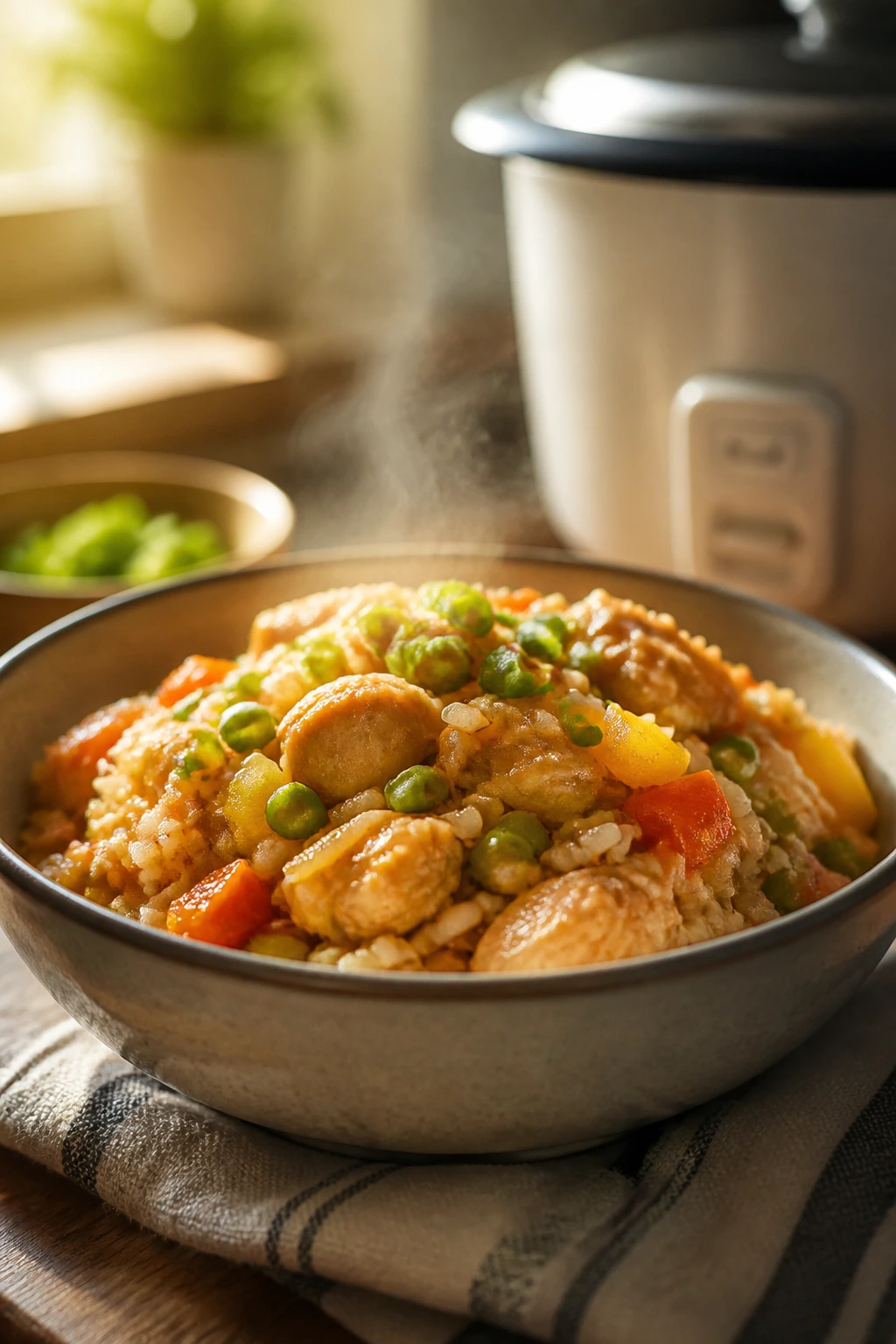
1. Garlic Butter Chicken and Peas Rice Cooker Dinner
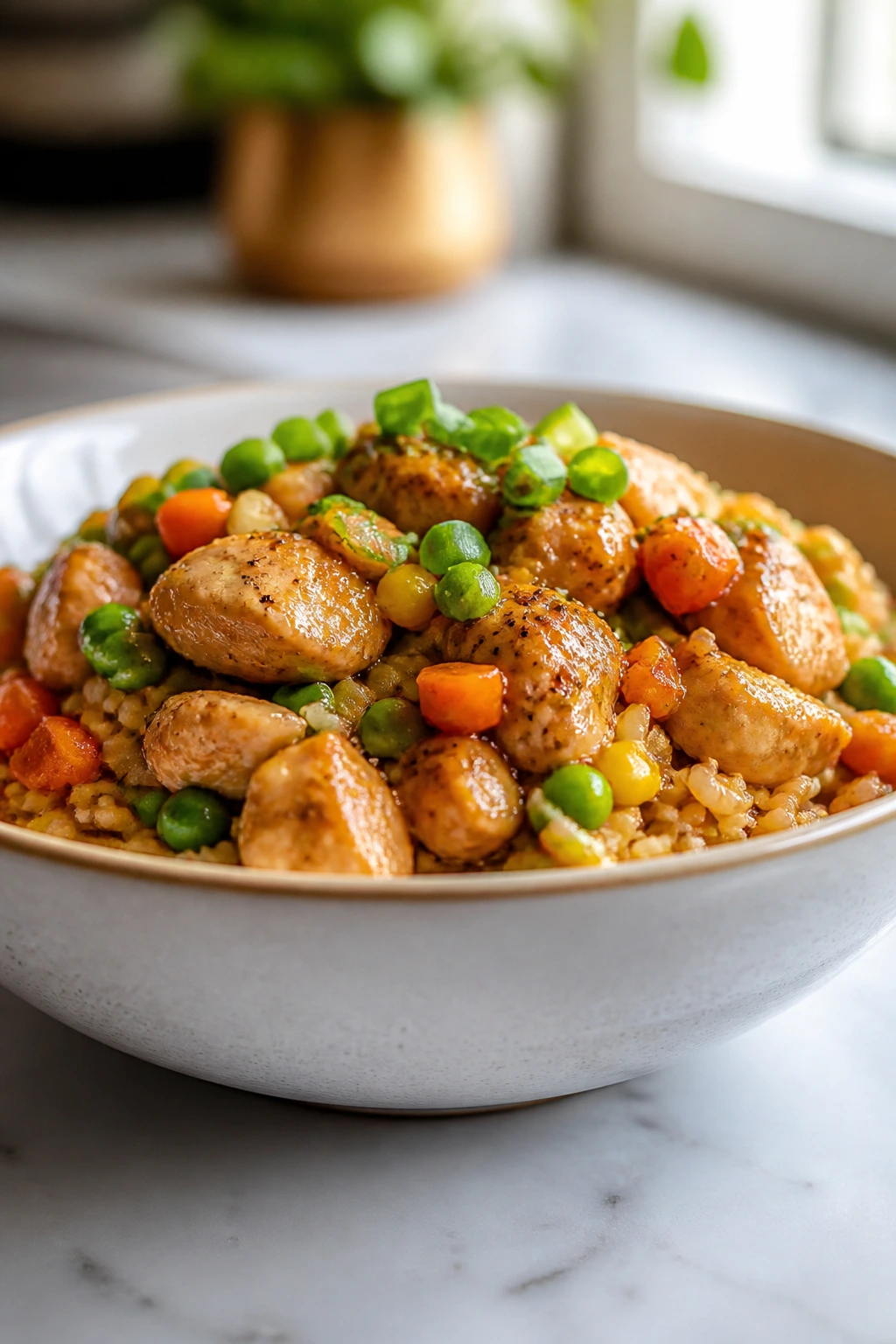
Chicken thighs are the lazy-night MVP here. They stay juicy, they forgive a slightly long cook, and they soak up garlic butter like they were built for it. The peas pop in at the end and keep the whole bowl from feeling heavy.
The result tastes like you did more work than you did. It is rich without being clumsy, and the lemon at the finish keeps the butter from sitting on your tongue. This is one of those rice cooker dinners that looks plain going in and somehow comes out smelling like a real home kitchen.
Why It Works: Chicken thighs handle the rice cooker cycle better than breasts because they have enough fat to stay tender during a long steam. The butter melts into the broth, coats the grains, and helps the garlic spread through the rice instead of clumping in one corner. The peas wait until the end so they keep their sweet snap and bright color. That little contrast matters more than people think; it keeps the bowl alive.
Key Ingredients:
- 1½ cups jasmine rice, rinsed until the water runs mostly clear
- 1¼ pounds boneless, skinless chicken thighs, cut into 1-inch pieces
- 2¼ cups low-sodium chicken broth
- 2 tablespoons unsalted butter
- 4 cloves garlic, minced
- 1 teaspoon kosher salt
- ½ teaspoon black pepper
- 1 teaspoon dried thyme
- 1 cup frozen peas, not thawed
- 2 tablespoons chopped parsley
- 1 tablespoon lemon juice
Quick Steps:
- Rinse the rice under cool water until it looks less cloudy, then drain well. That extra rinse keeps the grains fluffy instead of sticky.
- Add the rice, chicken broth, chicken thighs, butter, garlic, salt, pepper, and thyme to the rice cooker insert. Stir once so the rice settles into an even layer.
- Close the lid and cook on the standard white rice cycle. Do not open it halfway unless your cooker gives a very clear signal to do so.
- When the cycle ends, check the chicken. It should read 165°F in the thickest piece, and the rice should be tender with no hard center.
- Stir in the frozen peas, close the lid again, and let everything sit on warm for 5 minutes. The residual heat will turn the peas bright green and tender.
- Fluff with a rice paddle, add the lemon juice and parsley, and serve right away.
Tips and Variations:
- Add ¼ cup grated Parmesan at the end if you want a saltier, richer bowl.
- Swap peas for chopped asparagus or thawed edamame when the freezer changes its mind.
- A pinch of red pepper flakes at the table gives the whole dish a little lift.
2. Teriyaki Salmon and Broccoli Rice Bowls
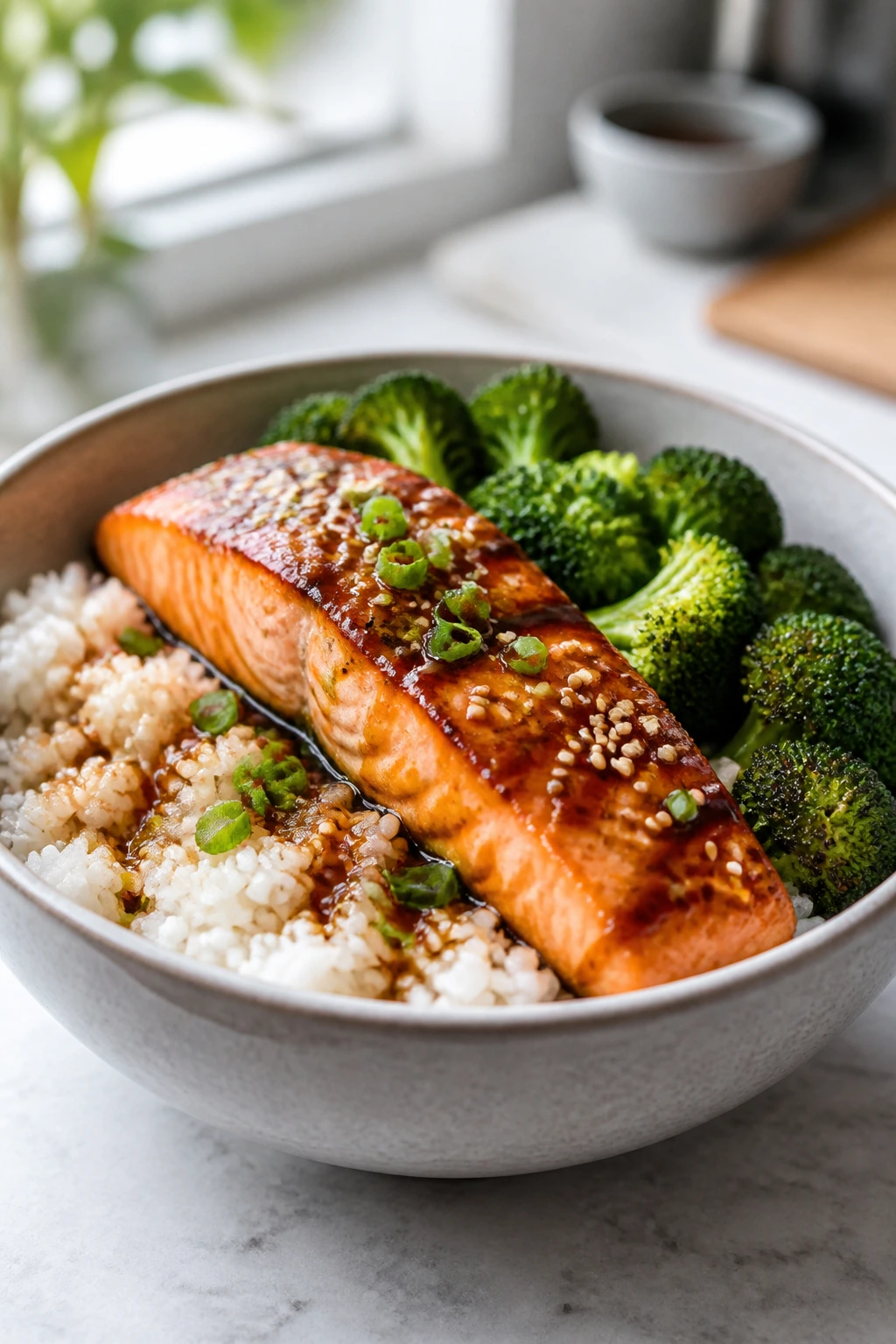
Salmon in a rice cooker sounds fussy until you do it once. Then it feels obvious. The rice turns plush, the broccoli steams just enough to stay green, and the teriyaki glaze slips into the rice where it can do what it does best.
This recipe has a lighter feel than the chicken dishes, but it still eats like dinner, not a snack. The salmon flakes in soft pieces, and the sesame oil gives the whole bowl a nutty finish that smells good before you even sit down.
Why It Works: Salmon cooks fast, which makes it a good match for a rice cooker that is already handling the rice below. The fish sits on top or in a steam tray during the last stretch, where gentle steam keeps it moist instead of drying it out. Broccoli also likes that final burst of heat; it turns crisp-tender instead of dull and mushy. The teriyaki sauce is split between the cooking liquid and the finish, so it seasons the rice without making the grains soggy.
Key Ingredients:
- 1½ cups short-grain or jasmine rice, rinsed
- 2 cups water
- 1 pound salmon fillet, skin removed, cut into 4 portions
- 2 cups broccoli florets, cut small
- ⅓ cup low-sodium soy sauce
- 3 tablespoons mirin
- 2 tablespoons honey
- 1 tablespoon rice vinegar
- 1 teaspoon grated fresh ginger
- 1 teaspoon sesame oil
- 2 scallions, sliced
- 1 tablespoon sesame seeds
Quick Steps:
- Rinse the rice well, then add it to the cooker with the water and ginger. Start the rice cycle.
- Whisk the soy sauce, mirin, honey, rice vinegar, and sesame oil in a small bowl. Save half for serving.
- When the rice is about 10 minutes from done, place the salmon on a steam tray or on a piece of parchment set above the rice if your cooker allows it. Brush the top with some of the teriyaki sauce.
- Add the broccoli beside the salmon or into the steam tray during the last 6 to 8 minutes. You want it bright green, not limp.
- When the salmon flakes easily and reaches 145°F, remove the tray and let the rice rest for 5 minutes.
- Fluff the rice, top with salmon and broccoli, drizzle the remaining sauce, and finish with scallions and sesame seeds.
Tips and Variations:
- If your cooker does not have a steam tray, place the salmon on a heatproof plate that fits inside the cooker.
- Thin carrot ribbons can stand in for some of the broccoli.
- A spoonful of chili crisp at the table gives this bowl some heat without drowning the fish.
3. Coconut Curry Chickpea and Spinach Rice
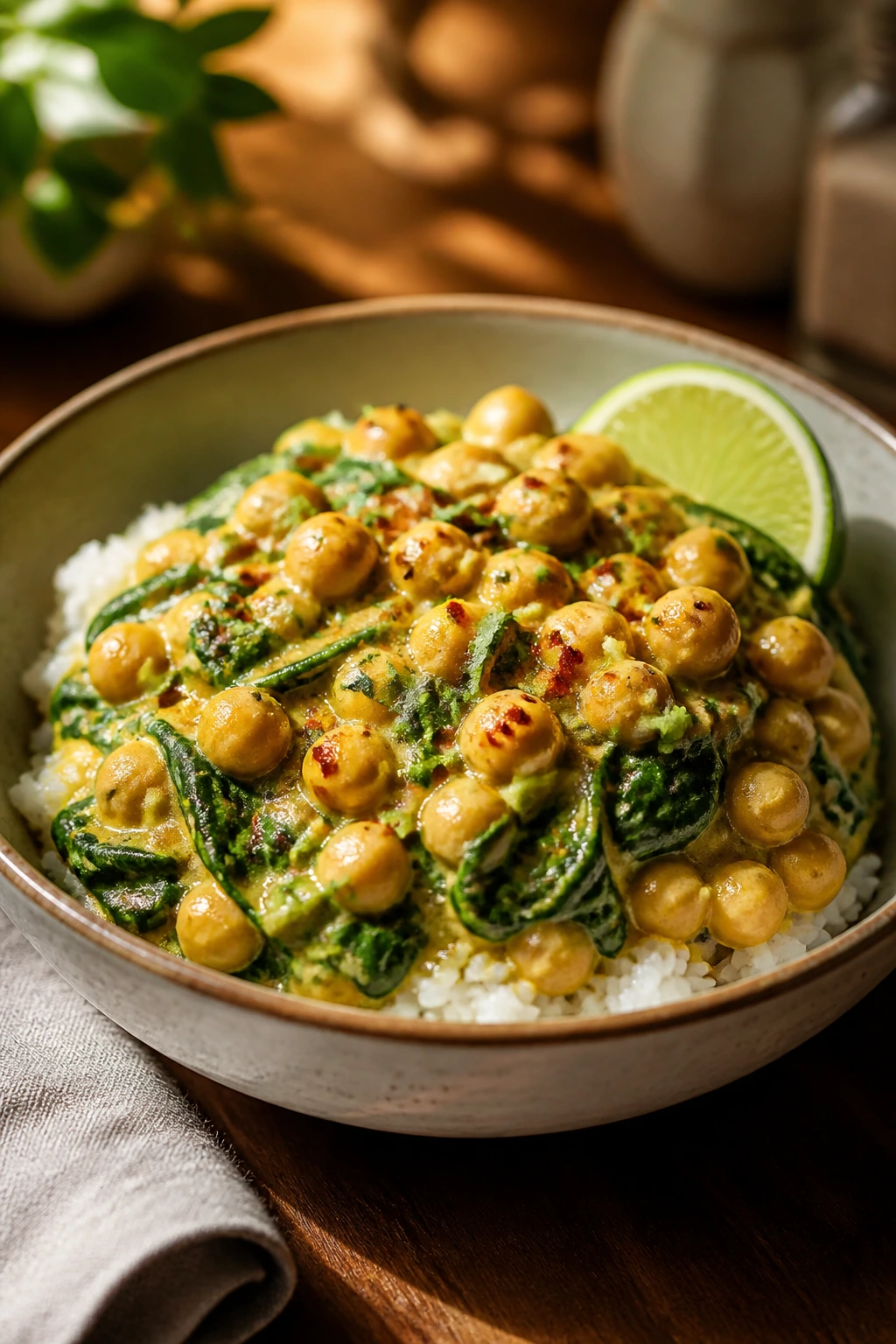
The kitchen smells like a curry house by the time the lid clicks to warm. Coconut milk makes the rice creamy, chickpeas give it heft, and spinach disappears into the steam at the end without turning bitter or stringy. It is one of the easiest meatless rice cooker dinners to keep in rotation.
This bowl feels calm in the best way. Warm spices, soft rice, and a little lime at the finish make it taste rounded and complete, not like a shortcut trying to impersonate dinner.
Why It Works: Coconut milk adds body and a little sweetness, which balances the heat from curry paste and the earthy chickpeas. Basmati rice keeps its shape well, so the dish stays fluffy instead of collapsing into a paste. Spinach goes in after the main cook because it wilts fast and can turn dull if left in the heat too long. A squeeze of lime at the end cuts through the richness and keeps the bowl from tasting flat.
Key Ingredients:
- 1½ cups basmati rice, rinsed and drained
- 1 can (13.5 ounces) full-fat coconut milk
- 1½ cups vegetable broth
- 1 can chickpeas (15 ounces), rinsed and drained
- 1 cup diced yellow onion
- 3 cloves garlic, minced
- 1 tablespoon grated fresh ginger
- 2 tablespoons red curry paste
- 1 teaspoon kosher salt
- 3 cups baby spinach
- 1 lime, cut into wedges
- 2 tablespoons chopped cilantro
Quick Steps:
- Add the rice, coconut milk, broth, chickpeas, onion, garlic, ginger, curry paste, and salt to the rice cooker. Stir until the curry paste is mostly dissolved.
- Close the lid and cook on the white rice or mixed rice cycle. If your cooker tends to run hot, a mixed rice setting usually gives the grains a gentler finish.
- When the cycle ends, check that the rice is tender and the liquid has absorbed. If the top looks a little wet, leave it on warm for 5 minutes.
- Fold in the spinach in handfuls. It will wilt almost immediately from the residual heat.
- Close the lid again for 2 to 3 minutes so the spinach softens without going dark.
- Fluff the rice, squeeze lime over the top, and finish with cilantro.
Tips and Variations:
- Add ½ cup thawed peas if you want a sweeter version with more color.
- Use mild curry paste if you’re feeding anyone who treats heat like a personal insult.
- A handful of toasted cashews on top adds crunch and makes the bowl feel finished.
4. Salsa Chicken, Black Beans, and Corn Rice
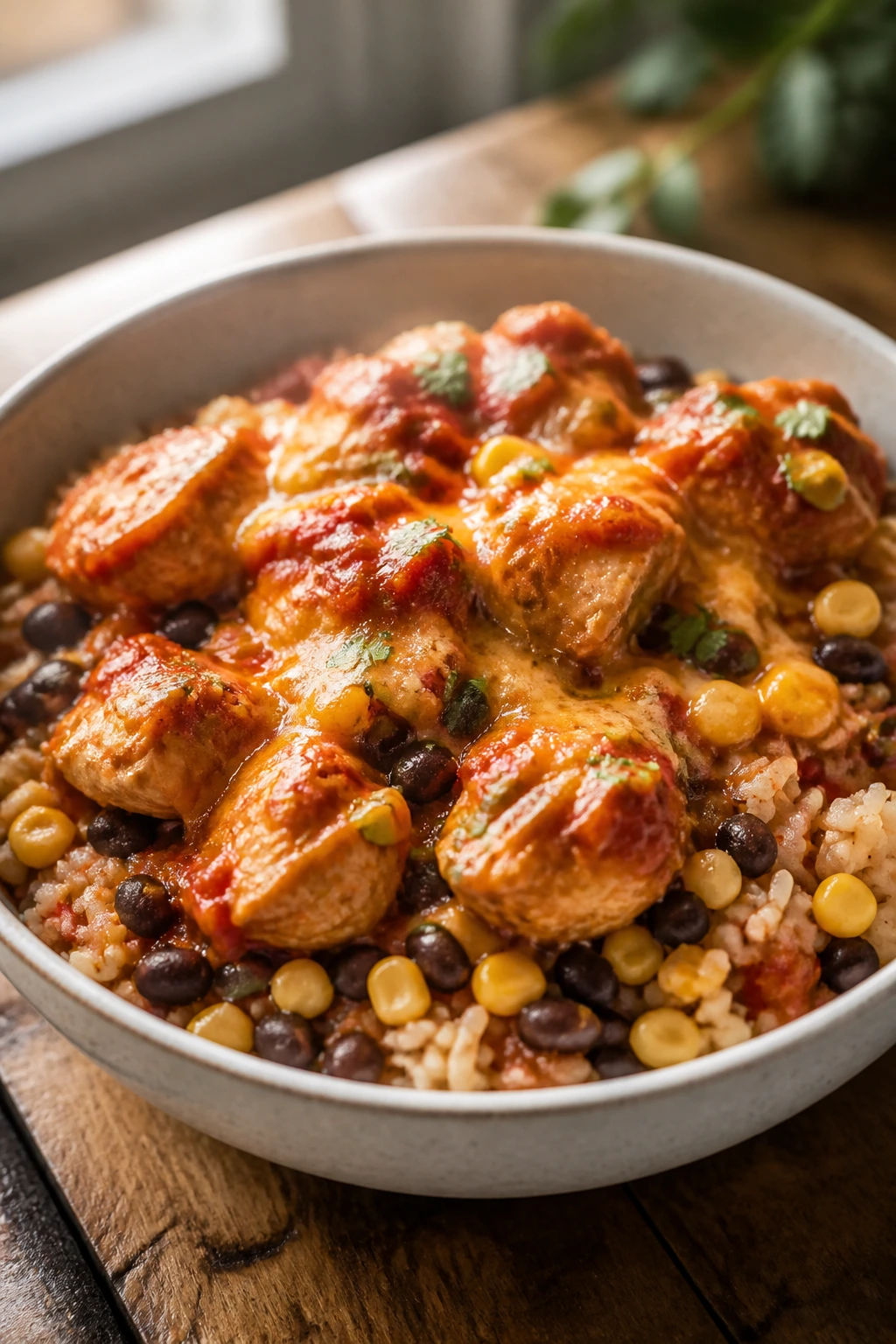
There are nights when taco fillings need to happen without a skillet circus. This is that meal. Salsa, chicken, beans, and corn cook together until the rice is seasoned all the way through, and the cheese melts into little salty pockets at the end.
It tastes a lot like the best part of taco night with less chaos and fewer bowls. The chicken shreds easily, the beans make it filling, and the lime on top wakes up the whole thing in a way a jar of salsa alone never could.
Why It Works: Salsa brings tomato, onion, chile, and acid in one shot, which gives the rice more flavor than plain broth could manage. Chicken thighs are a safer choice than breasts here because they stay juicy even after the rice has finished cooking. Black beans and corn add body and sweetness, which keeps the bowl from feeling one-note. The cheese waits until the rice is hot and done, so it melts instead of disappearing into the liquid.
Key Ingredients:
- 1½ cups long-grain white rice, rinsed
- 1½ pounds boneless, skinless chicken thighs
- 1½ cups chunky salsa
- 1 cup low-sodium chicken broth
- 1 can black beans (15 ounces), rinsed and drained
- 1 cup frozen corn
- 1 teaspoon ground cumin
- 1 teaspoon chili powder
- 1 cup shredded cheddar or Monterey Jack
- 2 tablespoons chopped cilantro
- 1 lime, cut into wedges
Quick Steps:
- Rinse the rice, then add it to the cooker with the salsa, broth, cumin, and chili powder. Stir once so the spices spread through the liquid.
- Nestle the chicken thighs into the rice mixture in a single layer. Close the lid and start the cycle.
- When the cycle ends, check the chicken for 165°F and shred it with two forks right in the cooker.
- Stir in the black beans and corn, then close the lid for 3 to 5 minutes so the corn warms through and the beans pick up heat.
- Sprinkle the cheese over the top, close the lid again, and let it melt for 2 minutes.
- Finish with cilantro and lime wedges, then spoon into bowls before the rice settles too much.
Tips and Variations:
- Use salsa verde if you want a brighter, tangier bowl.
- A spoonful of sour cream on top cools the spice and gives the rice a creamier finish.
- Tortilla chips on the side make this feel less like leftovers and more like a planned meal.
5. Creamy Mushroom Parmesan Rice Cooker Dinner
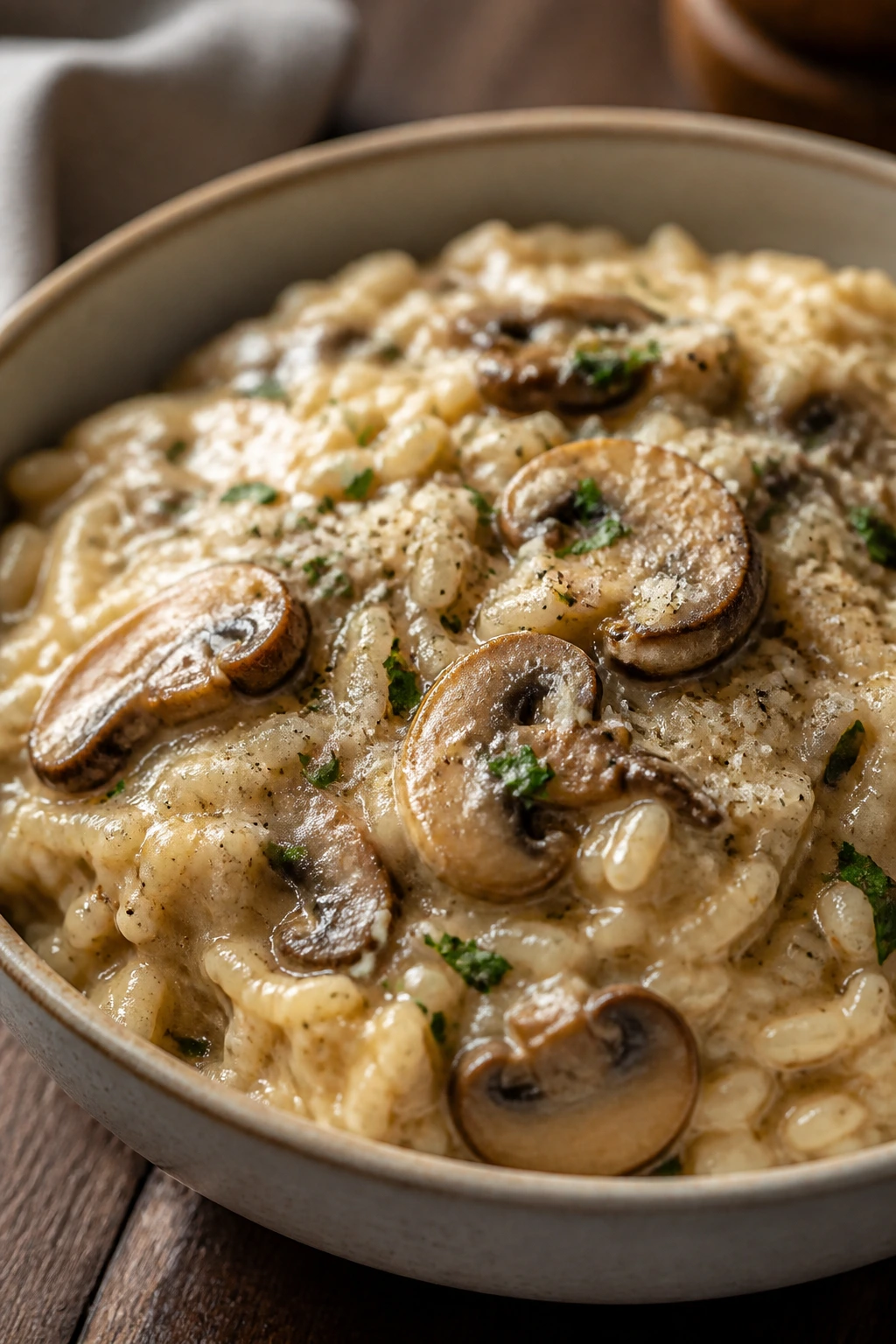
Creamy mushroom rice is what I make when I want dinner to feel calm. The mushrooms turn savory and woodsy, the Parmesan melts into the grains, and the rice gets that soft, spoonable texture people usually chase with a stovetop risotto. The rice cooker takes the stirring out of the equation, which is half the reason this dish is worth keeping around.
It is rich, yes, but not heavy in a greasy way. Think warm, buttery, and a little elegant without trying to be precious about it.
Why It Works: Arborio rice has enough starch to turn creamy when it cooks with enough liquid and a little patience. Mushrooms bring their own moisture and a deep savory note, so the dish tastes fuller than rice alone. Parmesan gives salt and body at the finish, which is a better move than cooking it in too early where it can clump. If your rice cooker has a sauté setting, the mushrooms gain more flavor; if it does not, the recipe still works because the steam does the softening.
Key Ingredients:
- 1½ cups arborio rice
- 8 ounces cremini or button mushrooms, sliced
- 1 small yellow onion, diced
- 2 tablespoons unsalted butter
- 3 cups hot vegetable broth
- ½ cup dry white wine or extra broth
- 2 cloves garlic, minced
- ½ teaspoon dried thyme
- ¾ teaspoon kosher salt
- ½ teaspoon black pepper
- ½ cup finely grated Parmesan
- 2 tablespoons heavy cream or mascarpone
- 2 tablespoons chopped parsley
Quick Steps:
- If your rice cooker has a sauté setting, melt the butter and cook the onion and mushrooms for 3 to 4 minutes, until the onions soften and the mushrooms lose their raw edge. If it does not, skip straight to the next step.
- Add the rice, broth, wine, garlic, thyme, salt, and pepper to the cooker. Stir to distribute the mushrooms through the rice.
- Close the lid and cook on the white rice or porridge setting. Hot broth helps the rice start cooking evenly.
- When the cycle ends, stir the rice once and check the texture. It should be creamy with a little bite left at the center, not soupy.
- Fold in the Parmesan and cream. Let it sit on warm for 3 to 5 minutes so the cheese melts cleanly.
- Finish with parsley and serve while the texture is still loose enough to spoon.
Tips and Variations:
- A handful of spinach stirred in at the end gives the bowl more color and a lighter feel.
- Swap half the mushrooms for chopped asparagus when the vegetables need using up.
- A few drops of truffle oil can work, but go easy; it gets bossy fast.
6. Beef and Broccoli Rice Cooker Bowl
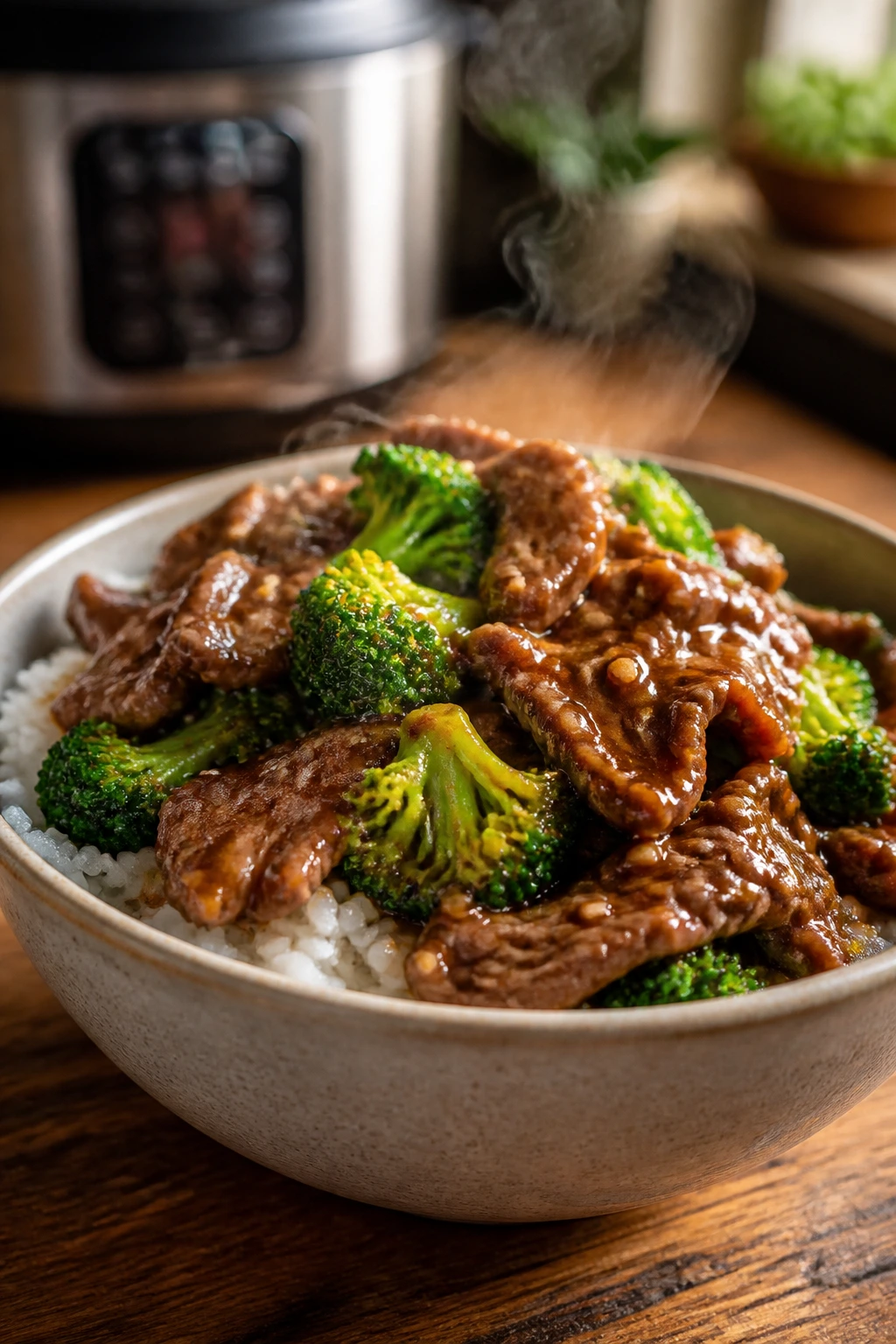
Beef and broccoli tends to look like takeout, but the rice cooker version stays gentler. Thin slices of beef soak up the soy-garlic sauce, and the broccoli goes in late so it keeps its bite. The rice underneath catches all the savory juices, which is where the best flavor usually ends up anyway.
This is a bowl that tastes fast and comforting at the same time. It does not need a bunch of garnish or a rescue mission from the fridge. It needs a clean bowl and maybe a sprinkle of sesame seeds.
Why It Works: Thin beef cooks quickly enough to fit into a rice cooker without turning leathery. Cornstarch helps the sauce cling to the meat and thickens the liquid a little as it cooks, which keeps the final bowl from being watery. Broccoli waits until the last stretch because it wants steam, not a long bath. The balance of soy sauce, ginger, garlic, and a touch of brown sugar gives the dish that familiar savory-sweet finish people expect from beef and broccoli.
Key Ingredients:
- 1½ cups jasmine rice, rinsed
- 1 pound flank steak or sirloin, sliced very thin against the grain
- 2½ cups low-sodium beef broth
- ⅓ cup low-sodium soy sauce
- 2 tablespoons brown sugar or honey
- 1 tablespoon cornstarch
- 2 cups broccoli florets, cut small
- 2 cloves garlic, minced
- 1 tablespoon grated ginger
- 1 teaspoon sesame oil
- 2 scallions, sliced
- 1 tablespoon sesame seeds
Quick Steps:
- Add the rice and beef broth to the rice cooker.
- In a small bowl, toss the sliced beef with soy sauce and cornstarch until the meat is lightly coated. Spread it over the rice in an even layer.
- Sprinkle in the garlic, ginger, and brown sugar, then close the lid and start the cycle.
- When the rice is nearly done, add the broccoli on top or into a steam tray and let it cook for the final 6 to 8 minutes. The florets should turn bright green and remain crisp at the stem.
- Check the beef for doneness and stir gently so the sauce moves through the rice. Avoid smashing the grains.
- Drizzle with sesame oil, top with scallions and sesame seeds, and serve.
Tips and Variations:
- Freezing the steak for 15 minutes before slicing makes it easier to cut thin.
- A splash of rice vinegar at the end sharpens the sauce if it tastes a little flat.
- Snow peas can replace some of the broccoli if you want a sweeter crunch.
7. Chicken Jambalaya Rice Cooker
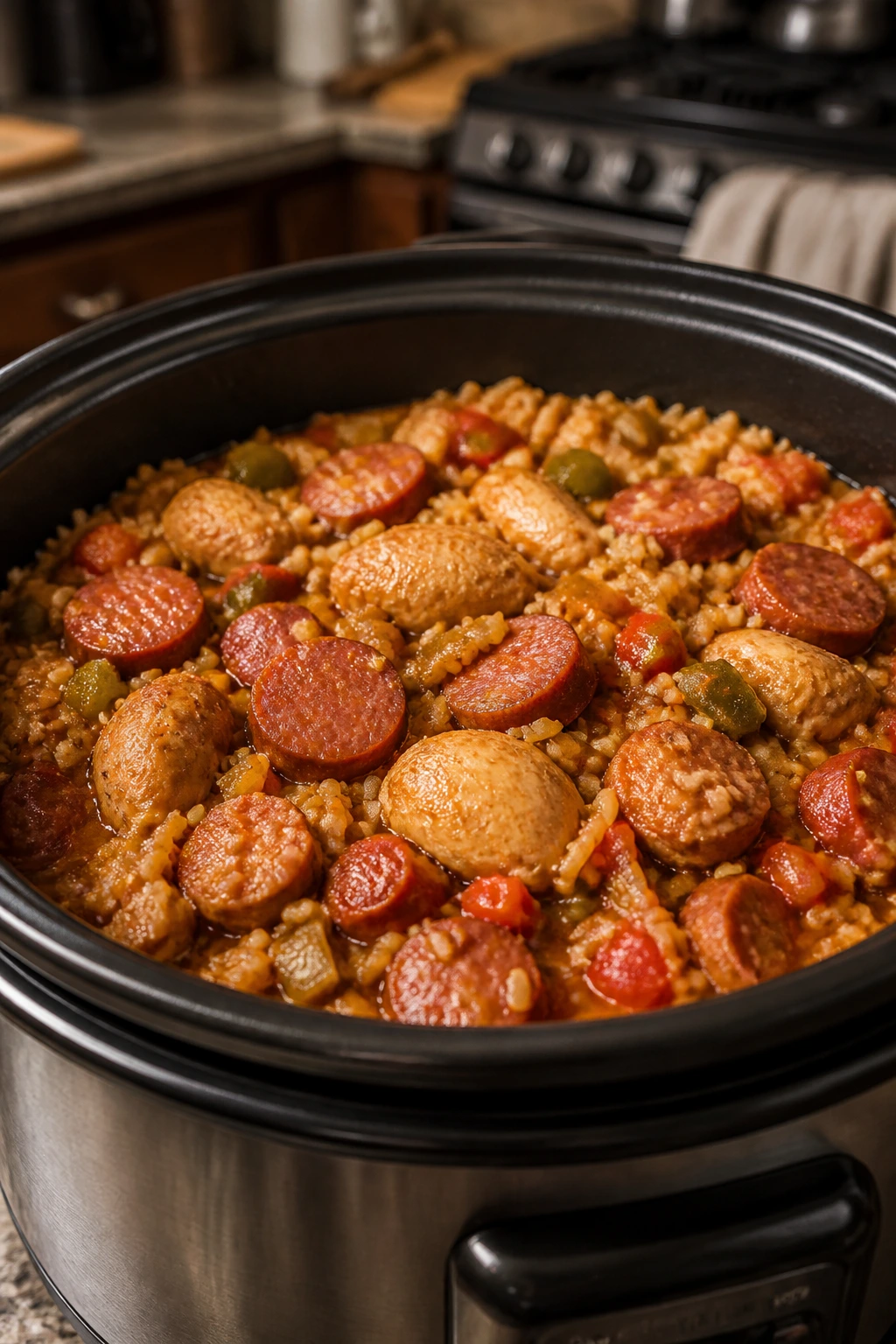
Jambalaya has a reputation for being hands-on; this version behaves better. The rice cooks in seasoned broth with tomatoes, chicken, sausage, onion, celery, and bell pepper, so every grain picks up a little smoke and spice. It is the kind of dinner that tastes like you did more than you did.
The texture matters here. You want the rice tender, not mushy, the sausage sliced thick enough to feel present, and the chicken juicy enough to keep the bowl from going dry. The rice cooker gets you there without the usual pot-watching drama.
Why It Works: Long-grain rice holds up well in a saucy, seasoned dish and does not collapse the way shorter grains can. Smoked sausage brings fat and salt early, which seasons the rice from the inside out. Tomatoes add acidity and moisture, while Cajun seasoning gives the dish backbone. The cooker keeps the heat even, so the rice finishes at the same pace as the chicken pieces.
Key Ingredients:
- 1½ cups long-grain white rice, rinsed
- 1 pound boneless, skinless chicken thighs, cut into 1-inch pieces
- 8 ounces smoked sausage, sliced into ¼-inch rounds
- 1 small yellow onion, diced
- 1 green bell pepper, diced
- 2 celery stalks, diced
- 1 can diced tomatoes (14.5 ounces), undrained
- 2 cups chicken broth
- 2 teaspoons Cajun seasoning
- 1 bay leaf
- 1 cup frozen okra or peas
- 2 tablespoons sliced scallions
Quick Steps:
- Add the rice, chicken, sausage, onion, bell pepper, celery, tomatoes, broth, Cajun seasoning, and bay leaf to the rice cooker.
- Stir once, then close the lid and cook on the standard white rice cycle.
- When the cycle ends, check the rice. It should be tender with the liquid absorbed, and the chicken should read 165°F.
- Stir in the okra or peas, close the lid, and let them warm for 5 minutes on the residual heat.
- Remove the bay leaf, fluff the jambalaya lightly, and taste for salt.
- Finish with scallions and serve while the rice is still loose.
Tips and Variations:
- A few drops of hot sauce at the table sharpen the whole pot.
- If you want a smokier finish, use andouille instead of standard smoked sausage.
- Do not skip the rest time. Jambalaya settles and tastes better after a few quiet minutes.
8. Mediterranean Tomato Feta Chickpea Rice
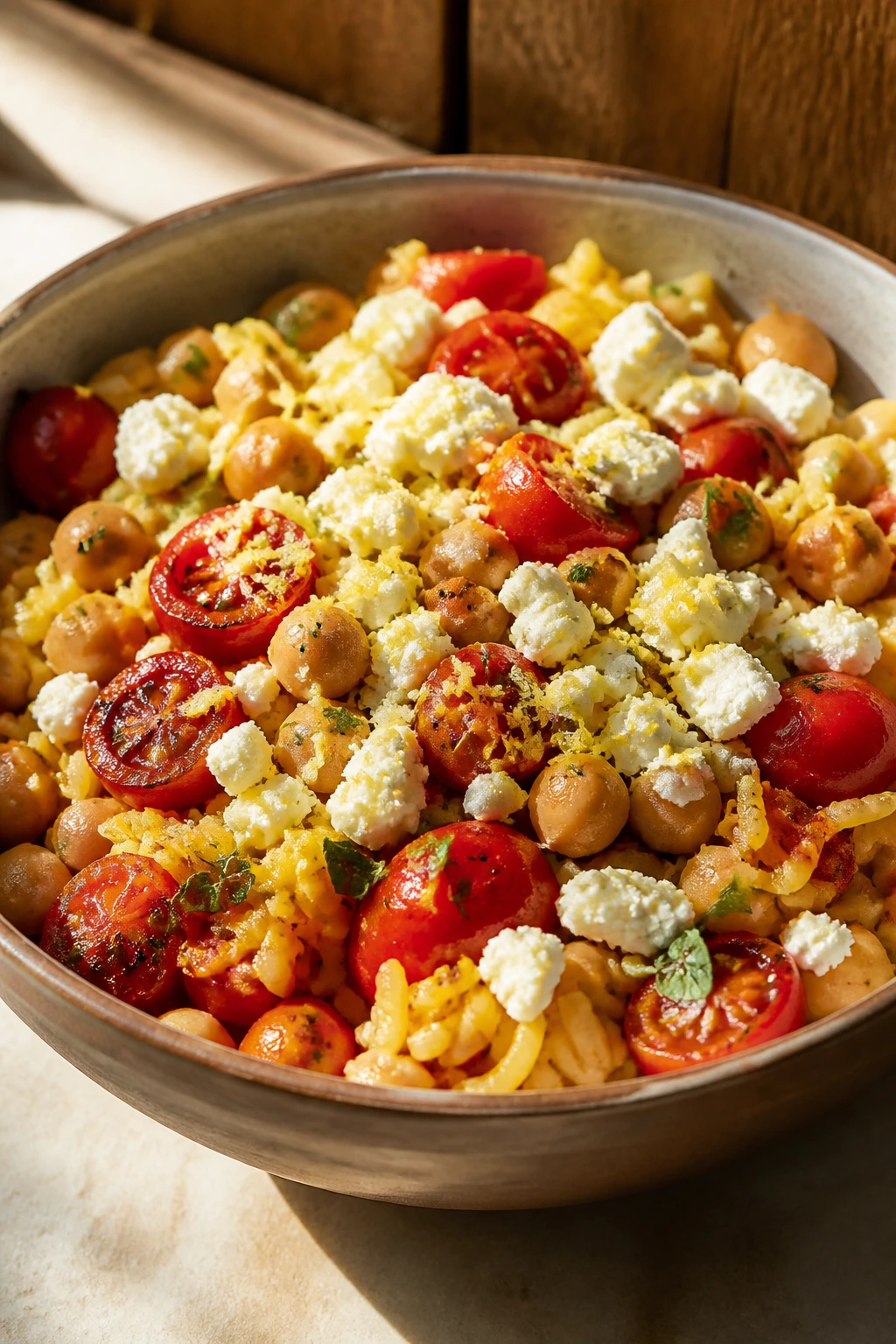
A bowl of chickpeas, tomatoes, and feta can carry a whole dinner if the rice is seasoned right. Lemon, oregano, and olive oil make the base taste sunny, while the feta adds salt and creaminess at the end. It is a tidy, bright meal that still feels substantial.
This is the dinner I reach for when the fridge has a few odds and ends and I want them to behave. It is forgiving, fast, and somehow more satisfying than the ingredient list suggests.
Why It Works: Chickpeas add protein and give the rice something to cling to, so the dish does not feel like plain grains with garnish on top. Tomatoes soften into the rice and bring enough moisture that the final bowl stays juicy without needing a sauce. Feta belongs at the end because heat turns it from crumbly and salty into a dull paste. Lemon juice and zest keep the whole dish from tasting one-dimensional.
Key Ingredients:
- 1½ cups basmati rice, rinsed
- 1 can chickpeas (15 ounces), rinsed and drained
- 1 cup cherry tomatoes, halved
- 1 small yellow onion, diced
- 3 cups vegetable broth
- 2 teaspoons dried oregano
- ½ teaspoon crushed red pepper flakes
- 1 teaspoon kosher salt
- 1 cup baby spinach
- ½ cup crumbled feta
- ¼ cup sliced kalamata olives
- 1 lemon, zested and juiced
- 2 tablespoons chopped parsley
Quick Steps:
- Add the rice, chickpeas, tomatoes, onion, broth, oregano, red pepper flakes, and salt to the rice cooker.
- Stir once, close the lid, and cook on the white rice cycle.
- When the cycle ends, fold in the spinach and let it wilt for 2 minutes on warm.
- Stir in the lemon juice and most of the lemon zest so the rice gets a fresh, bright edge.
- Sprinkle the feta and olives over the top, then close the lid for 1 minute just to soften the cheese slightly.
- Finish with parsley and the rest of the zest.
Tips and Variations:
- Add diced cucumber on top right before serving if you want a cooler, sharper contrast.
- A spoonful of hummus on the side makes the bowl feel fuller without much effort.
- If feta is not your thing, try crumbled goat cheese or leave the dairy out and use extra lemon.
9. Sausage, Peppers, and Onions Rice Cooker Dinner
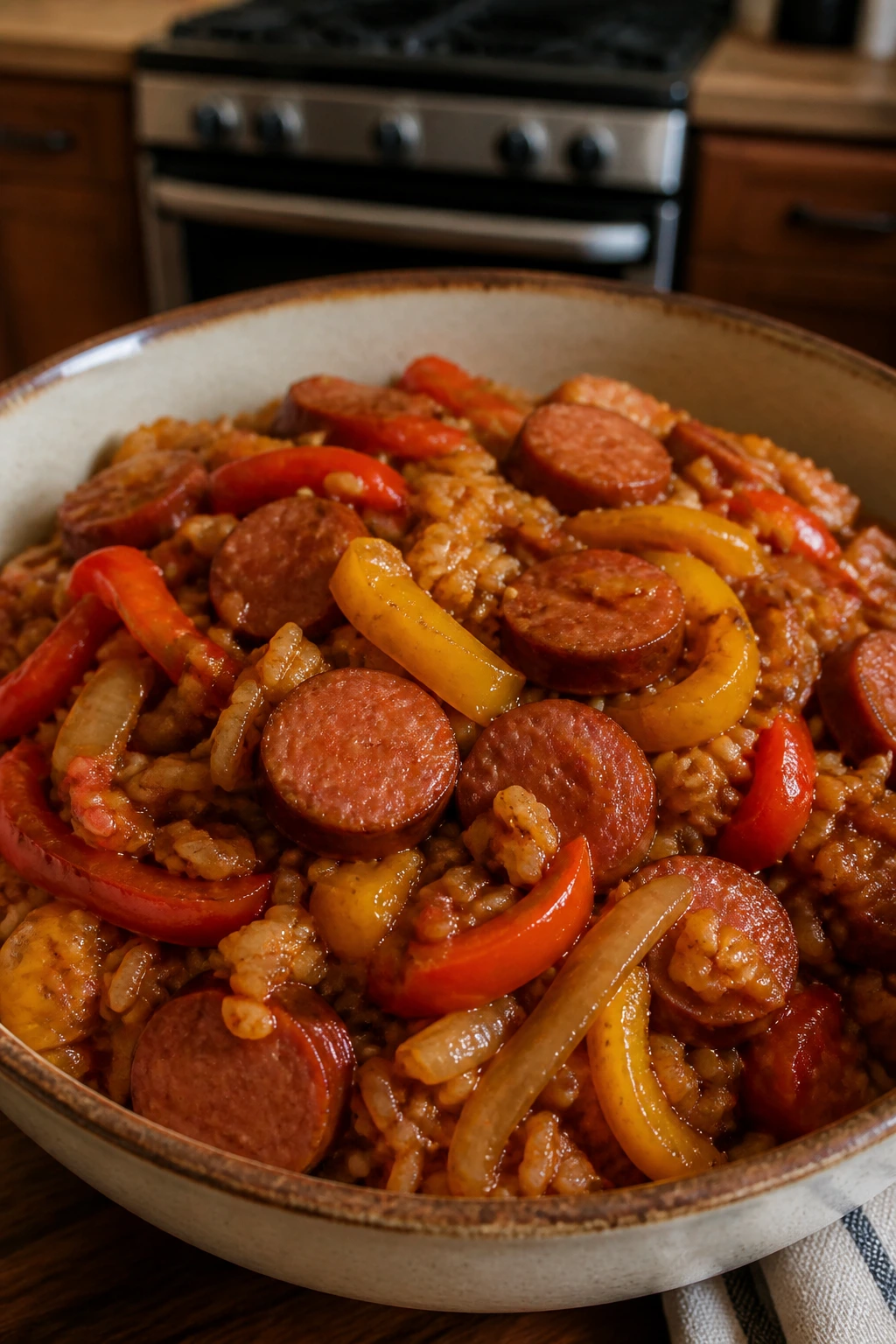
Sausage, peppers, and onions is the kind of dinner that fills the kitchen with good noise. Even without browning in a skillet, the smoked sausage, sweet peppers, and onion soften into a savory tangle over the rice. It tastes hearty, a little sweet, and just salty enough to keep you going back for another spoonful.
The rice absorbs the sausage drippings and tomato flavor as it cooks, which is exactly what you want. This is a bowl that lands somewhere between comfort food and an easy weeknight plan.
Why It Works: Smoked sausage is already cooked, which means the rice cooker only has to warm it and let the fat flavor the rice. Bell peppers and onions soften at the same pace as long-grain rice when they are cut small, so the whole dish finishes together. A little marinara or tomato sauce helps create enough moisture to cook the rice without drowning it. Italian seasoning ties the whole thing together without forcing the flavors in the same direction.
Key Ingredients:
- 1½ cups long-grain rice, rinsed
- 12 ounces smoked sausage, sliced into coins
- 1 red bell pepper, diced
- 1 yellow bell pepper, diced
- 1 medium onion, sliced thin
- 2 cups low-sodium chicken broth
- 1 cup marinara sauce
- 2 cloves garlic, minced
- 1 teaspoon Italian seasoning
- ½ teaspoon black pepper
- 2 tablespoons chopped basil or parsley
- ¼ cup grated Parmesan
Quick Steps:
- Add the rice, sausage, peppers, onion, broth, marinara, garlic, Italian seasoning, and black pepper to the rice cooker.
- Stir gently so the sauce touches most of the rice, then close the lid and start the cycle.
- When the cooker switches to warm, check that the rice is tender and the peppers have softened but still keep a little shape.
- Let the pot rest for 5 minutes so the liquid settles and the rice finishes absorbing the sauce.
- Fluff lightly, then top with Parmesan and herbs.
- Serve hot, with the sausage pieces spread through the bowl instead of piled in one spot.
Tips and Variations:
- If you like a little heat, use hot Italian sausage instead of mild smoked sausage.
- A spoonful of pesto at the end gives the bowl a green, herby finish.
- Leftover roasted zucchini or mushrooms can join the pot without complaint.
10. Kimchi Bacon Rice Cooker Bowl
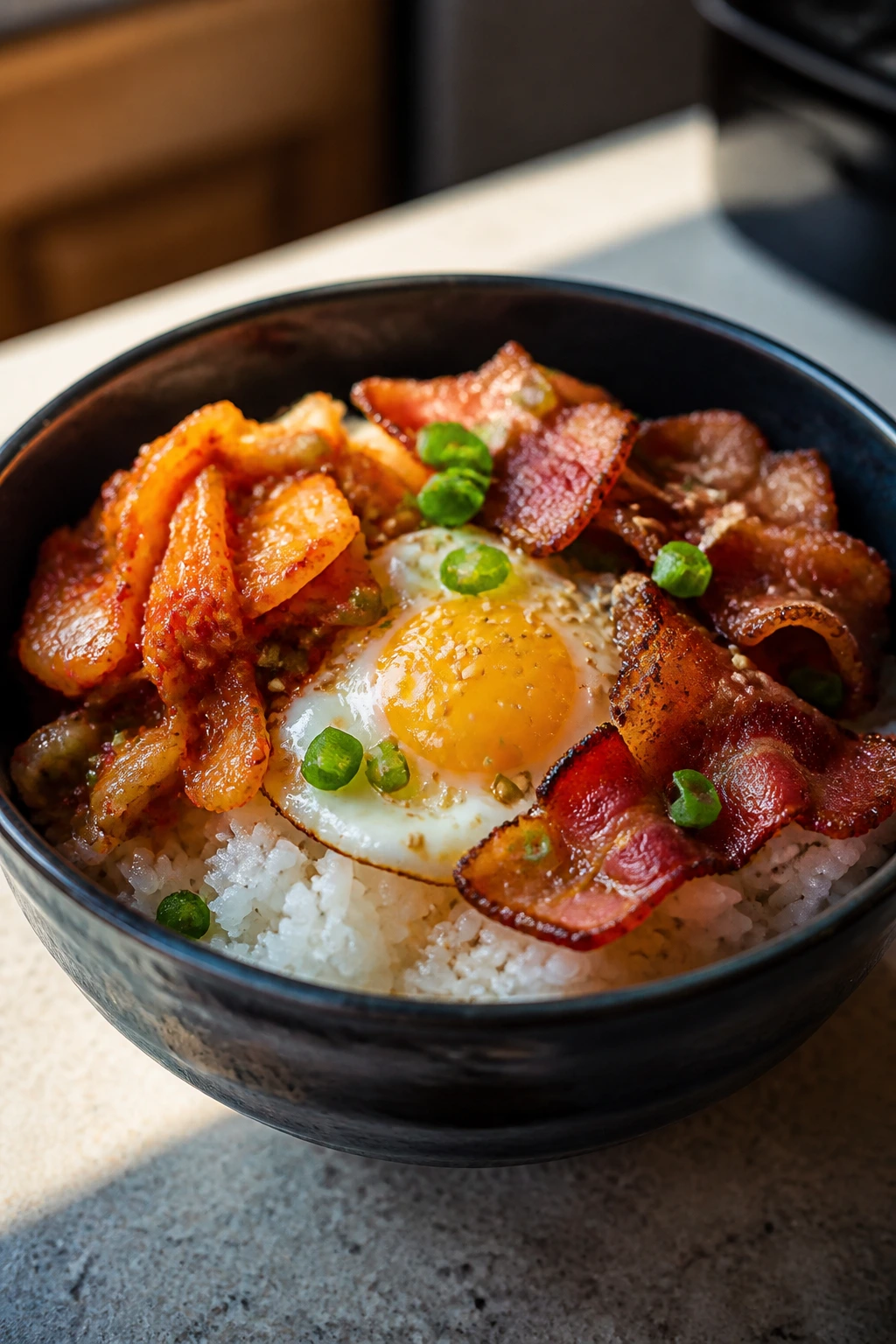
Kimchi and bacon should not be boring together. They aren’t. The bacon gives the rice smoke and salt, the kimchi brings tang and heat, and the rice underneath soaks up everything like it was waiting for this exact job. It is one of the more assertive rice cooker dinners here, and that is part of the charm.
You get sharp, fatty, savory, and a little funky in one bowl. Add a runny egg on top and the whole thing becomes the sort of dinner that looks like it took more energy than it did.
Why It Works: Kimchi already carries garlic, chile, and fermented tang, which means it seasons the rice without needing much help. Bacon renders fat into the cooker, and that fat coats the grains and makes the final texture feel richer. Short-grain rice stays a little sticky, which suits the bold ingredients better than a fluffy long-grain rice would. A fried egg on top adds a soft yolk that smooths out the heat and salt.
Key Ingredients:
- 1½ cups short-grain rice, rinsed
- 4 slices bacon, chopped
- 1 cup kimchi, chopped
- 1⅔ cups water
- 1 tablespoon gochujang
- 1 tablespoon low-sodium soy sauce
- 2 scallions, sliced
- 2 eggs, optional for serving
- 1 teaspoon sesame oil
- 1 tablespoon toasted sesame seeds
Quick Steps:
- If your rice cooker has a sauté setting, cook the bacon for 2 to 3 minutes first so it starts to render. If it does not, skip that part and keep going.
- Add the rice, water, kimchi, gochujang, soy sauce, and sesame oil to the cooker. Stir once so the paste dissolves into the liquid.
- Scatter the bacon on top, close the lid, and cook on the white rice cycle.
- When the cycle ends, let the rice rest for 5 minutes on warm so the kimchi flavor settles through the grains.
- Fluff the rice, top with scallions and sesame seeds, and add fried or soft-boiled eggs if you want extra richness.
- Serve right away while the rice is still sticky and glossy.
Tips and Variations:
- Use turkey bacon if you want less fat in the bowl, but add an extra teaspoon of sesame oil to keep it from tasting thin.
- A spoonful of mayo mixed with gochujang makes a fast drizzle that softens the heat.
- If the kimchi is very sour, use a little less soy sauce.
11. Shrimp Paella-Style Rice Cooker Dinner
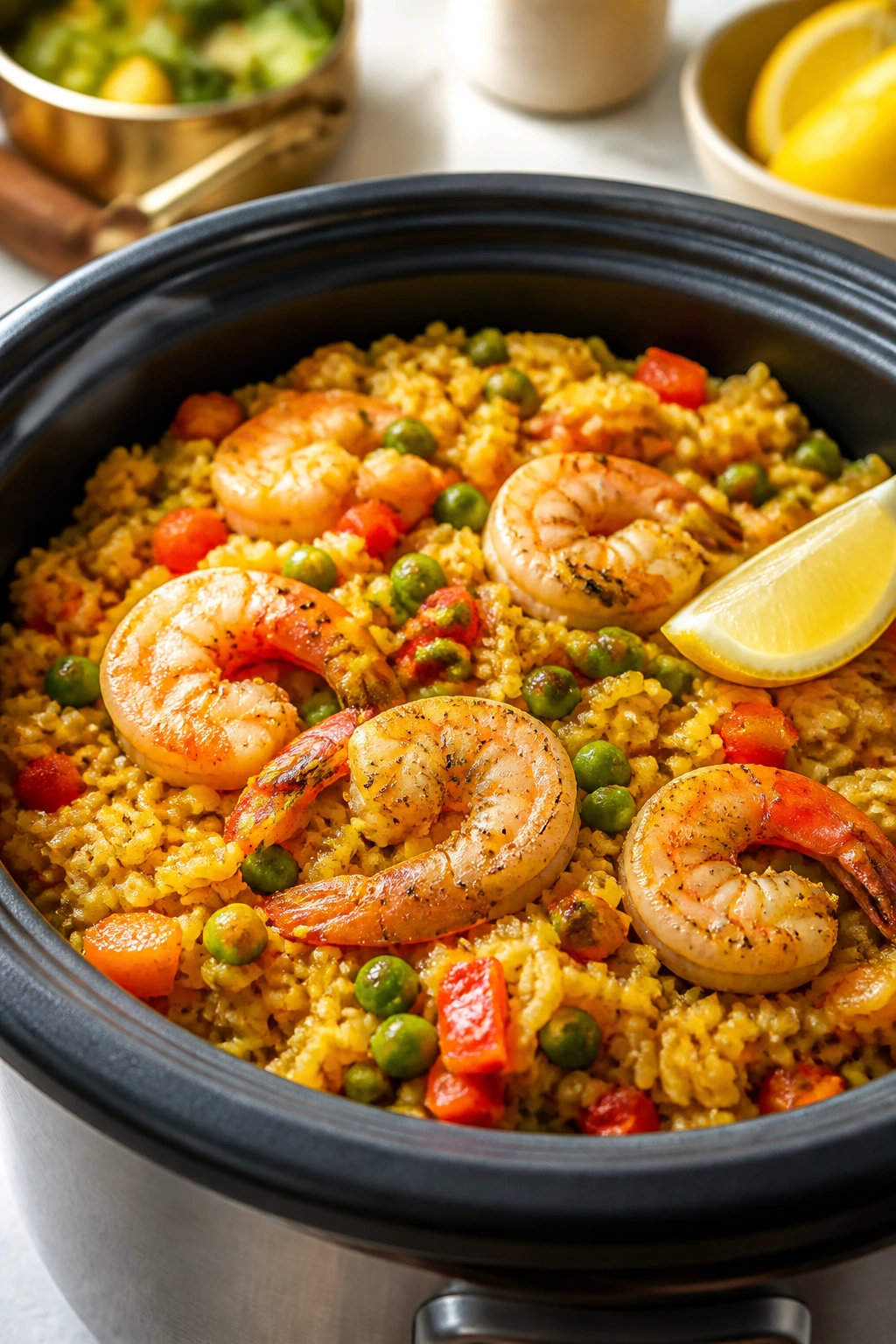
A rice cooker will never give you the crusty bottom of a classic paella pan, and that is fine. What it can give you is saffron-tinted rice, juicy shrimp, peppers, tomatoes, and peas in a bowl that tastes sunny and generous. The flavor hits the same notes even if the texture takes a quieter route.
This is the dinner that feels a little special without demanding a special mood. The shrimp go in late, the rice stays tender, and a squeeze of lemon at the end keeps everything from getting too soft or too polite.
Why It Works: Shrimp cook fast, which makes them perfect for the last few minutes of a rice cycle. The rice absorbs smoked paprika, tomato, broth, and saffron or turmeric, so the base tastes layered instead of plain. Peas and peppers add color and sweetness, which is part of what keeps paella-style rice so appealing in the first place. The key is to add the shrimp late enough that they stay plump and just opaque, not rubbery.
Key Ingredients:
- 1½ cups short-grain rice, rinsed
- 1 pound large shrimp, peeled and deveined
- 1 small onion, diced
- 1 red bell pepper, diced
- 1 cup diced tomatoes
- 2 cups chicken or seafood broth
- 1 teaspoon smoked paprika
- 1 pinch saffron threads or ¼ teaspoon turmeric
- 1 cup frozen peas
- 2 cloves garlic, minced
- 1 teaspoon kosher salt
- 2 tablespoons chopped parsley
- 1 lemon, cut into wedges
Quick Steps:
- Add the rice, onion, bell pepper, tomatoes, broth, smoked paprika, saffron or turmeric, garlic, and salt to the rice cooker.
- Stir once, then close the lid and start the cycle.
- When the rice is nearly done and most of the liquid is absorbed, add the shrimp and peas on top. Close the lid again and let them steam for 5 to 7 minutes.
- Check the shrimp. They should be pink, curled, and just opaque all the way through.
- Let the rice rest for 3 minutes, then fluff gently so you do not break the grains.
- Finish with parsley and lemon wedges.
Tips and Variations:
- A few cooked mussels or clams can join the bowl if you have them, but they are optional, not required.
- Extra bell pepper adds sweetness if you want a softer flavor profile.
- Do not overcook the shrimp. When they curl tight, they are done.
12. Peanut Tofu and Green Bean Rice Cooker Bowls
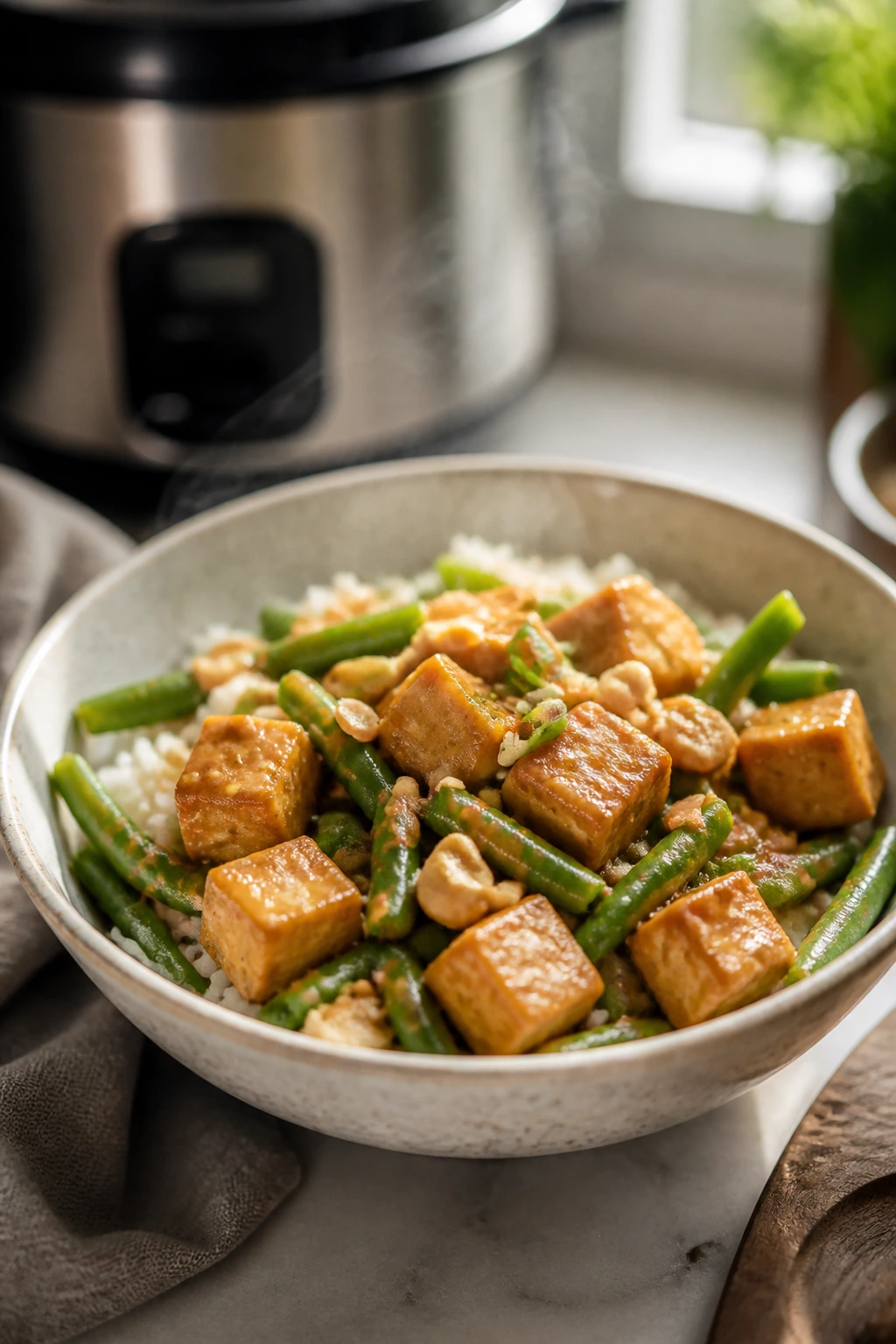
Tofu gets a bad rap from people who keep cooking it like cardboard. Give it peanut sauce, green beans, garlic, ginger, and hot rice, and the story changes fast. The tofu turns soft but not mushy, the beans stay crisp enough to bite, and the sauce brings the whole bowl together with almost no fuss.
This is a smart dinner for the nights when meat is not happening. It feels filling because the peanut sauce adds body, and the rice gives the tofu something to lean on instead of floating around lonely in the bowl.
Why It Works: Extra-firm tofu holds its shape under steam much better than softer styles, so it survives the cooker without falling apart. Peanut butter creates a sauce that clings to rice and tofu, while soy sauce and vinegar keep it from tasting heavy. Green beans are sturdy enough to go in with the rice for part of the cook, then stay snappy rather than collapsing. A little lime at the end brightens all the earthier flavors.
Key Ingredients:
- 1½ cups jasmine rice, rinsed
- 14 ounces extra-firm tofu, pressed for 10 minutes and cut into 1-inch cubes
- 2 cups green beans, trimmed and cut in half
- 2 cups water or vegetable broth
- ¼ cup creamy peanut butter
- 2 tablespoons low-sodium soy sauce
- 1 tablespoon rice vinegar
- 1 tablespoon honey or maple syrup
- 1 tablespoon sesame oil
- 2 cloves garlic, minced
- 1 teaspoon grated ginger
- 1 lime, cut into wedges
- 2 tablespoons chopped peanuts
Quick Steps:
- Add the rice and water or broth to the rice cooker.
- In a small bowl, whisk the peanut butter, soy sauce, rice vinegar, honey or maple syrup, sesame oil, garlic, and ginger with 2 tablespoons of hot water until smooth.
- Lay the tofu cubes and green beans on top of the rice. Spoon half of the peanut sauce over the top.
- Close the lid and cook on the standard white rice cycle.
- When the cycle ends, gently fold the tofu and green beans through the rice. Add a splash of water if the sauce feels too thick.
- Serve in bowls with the remaining sauce, lime wedges, and chopped peanuts on top.
Tips and Variations:
- Add sliced scallions or a pinch of chili flakes if you want more sharpness.
- Broccoli florets can replace some of the green beans, but cut them small so they finish on time.
- A spoonful of chili crisp on top is a very good idea if heat is welcome.
Why the Rice Cooker Pulls Its Weight on Tired Nights
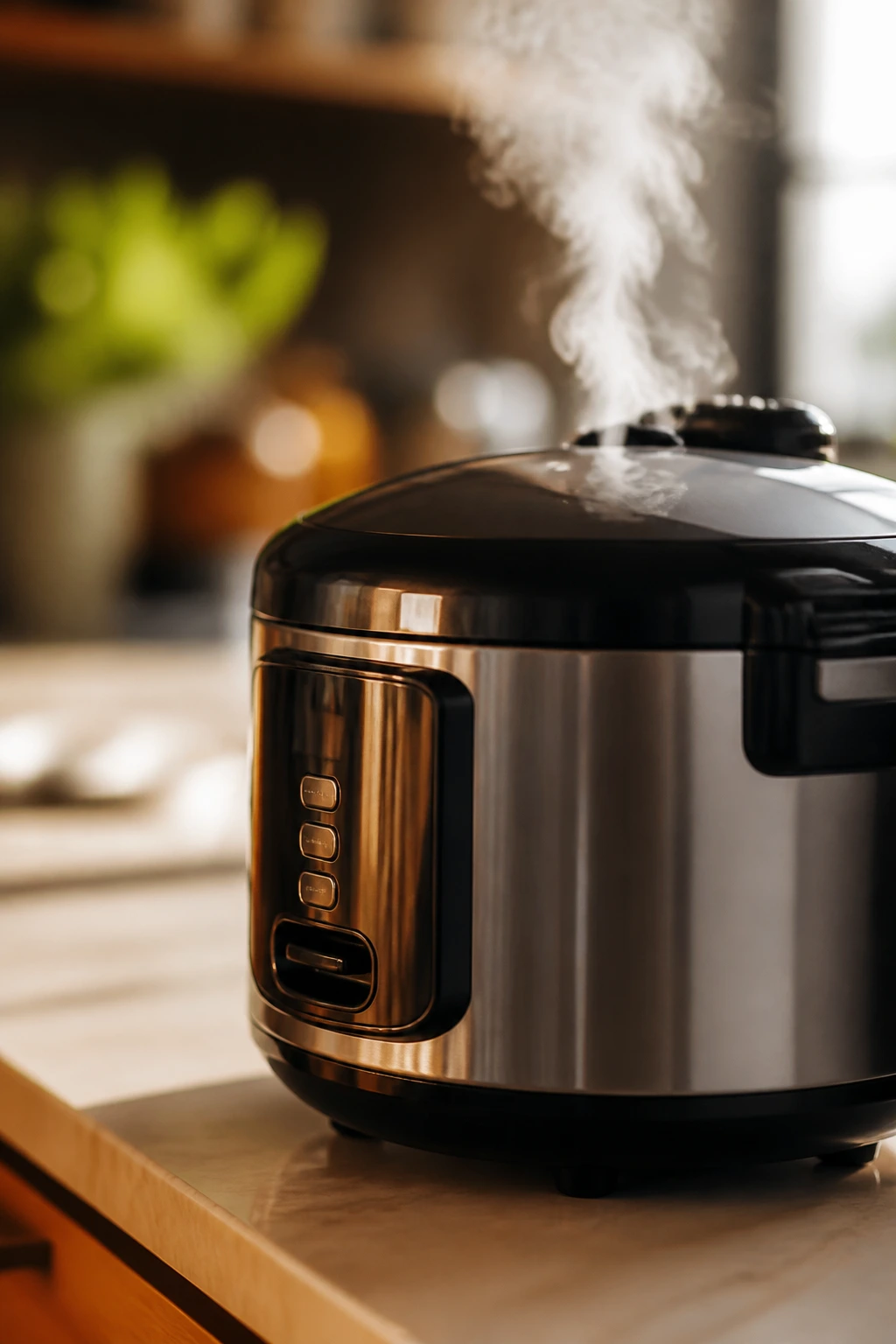
The rice cooker wins because it takes a cooking problem most people dislike — constant checking — and removes it. Absorption cooking works best when the ratio is predictable, the lid stays shut, and the ingredients are cut small enough to cook at the same pace. That combination is boring on paper and glorious in real life.
A rice cooker also does something a saucepan cannot always manage: it keeps the heat steady. That matters for chicken thighs, chickpeas, sausage, and risotto-style rice because they want gentle, even cooking rather than a rolling, impatient boil. If the appliance has a steam tray or a porridge mode, so much the better, but even the plain basic cycle can turn into dinner if you respect the timing.
There is a catch. Rice cookers are not very forgiving when you pile in huge chunks of raw food, drown the grains in liquid, or try to make every ingredient behave the same way. The best rice cooker dinners work because they break the meal into pieces that belong together: sturdy things at the start, delicate things near the end, and bright toppings at the finish.
That structure is what makes the whole thing feel easy without tasting empty. And yes, that difference matters.
Tools That Make These Dinners Easier
-
Rice cooker, 3- to 10-cup size: A basic model works fine; a steam tray, porridge mode, or sauté setting is a bonus, not a requirement.
-
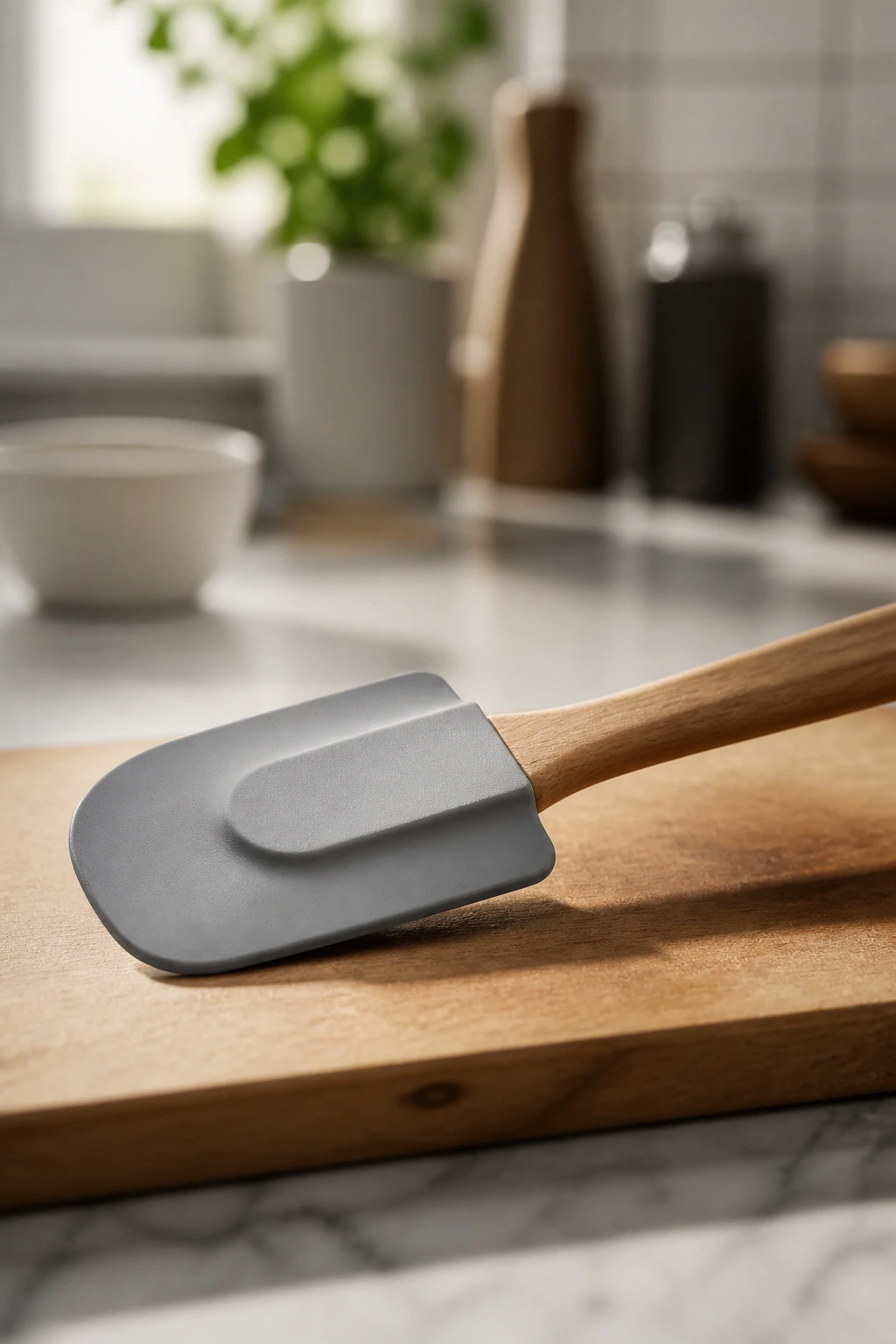
Rice paddle or silicone spatula: The cooker insert scratches easily, so a metal spoon is a bad habit.
-
Fine-mesh strainer: Handy for rinsing rice and beans until they stop shedding starch and foam.
-
Chef’s knife and cutting board: Small, even cuts help chicken, peppers, mushrooms, and broccoli cook on schedule.
-
Measuring cups and spoons: Rice cookers reward exact liquid measurements more than sloppy guesswork.
-
Instant-read thermometer: Useful for chicken, salmon, and shrimp when you want to check doneness without digging around.
-
Small bowl and whisk: Good for sauces, marinades, and peanut or teriyaki mixtures before they go into the cooker.
-
Heatproof plate or steam tray: Helpful for fish and vegetables that need steam without sitting directly in the liquid.
-
Airtight storage containers: Necessary if you want leftovers to stay good instead of drying out in the fridge.
Shopping the Smart Way for Rice Cooker Meals
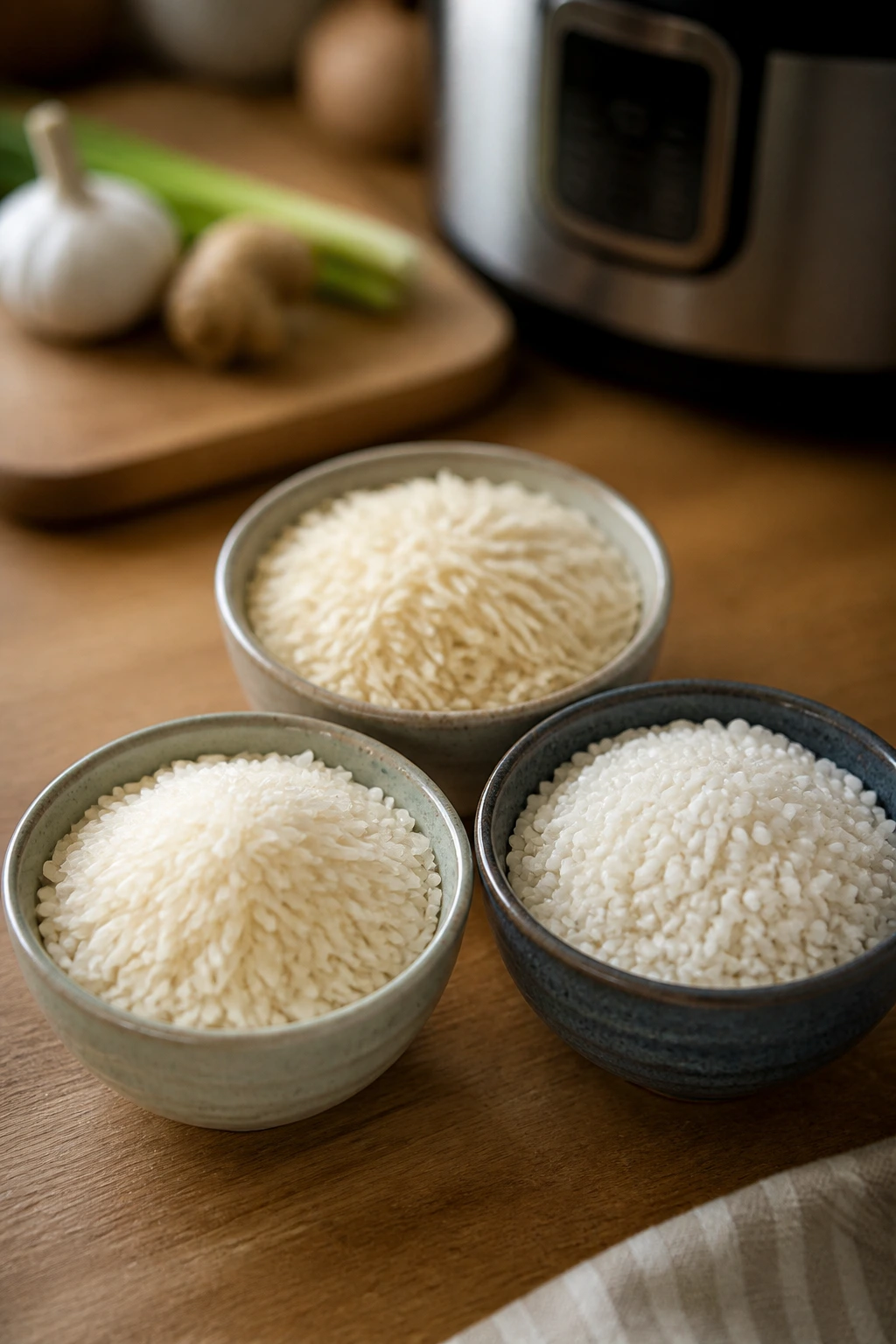
Rice choice matters more than people admit. Jasmine gives you fluffy, fragrant grains that work well with curry, chicken, and saucy bowls. Basmati stays light and separate, which is why it suits Mediterranean flavors and chickpea dinners so well. Short-grain rice is better for stickier bowls, paella-style meals, and anything that benefits from a creamy finish.
Broth is the quiet workhorse. Low-sodium broth gives you room to season the dish yourself, which matters because soy sauce, salsa, sausage, and feta all bring salt of their own. If all you have is standard broth, cut back on the added salt in the recipe and taste at the end.
Frozen vegetables are your friend. Peas, corn, broccoli florets, green beans, and spinach all behave well in a rice cooker if you add them near the end or use them in small pieces. Fresh vegetables are nice, but tired fresh broccoli can turn into a disappointment fast, while frozen broccoli usually shows up in better shape.
Canned beans deserve a rinse. Chickpeas and black beans come with a starchy liquid that can muddy the flavor if you skip that step. Rinse them until the foam disappears, and they will taste cleaner in the final bowl.
For proteins, choose the cut that likes gentle heat. Chicken thighs beat breasts for most rice cooker dinners because they stay moist. Salmon should be thick in the center, shrimp should be peeled and deveined, sausage should already be cooked, and tofu should be extra-firm. The rice cooker is not the place for tough bargain cuts that need a long braise.
How to Serve These Rice Cooker Dinners Without Making Them Small
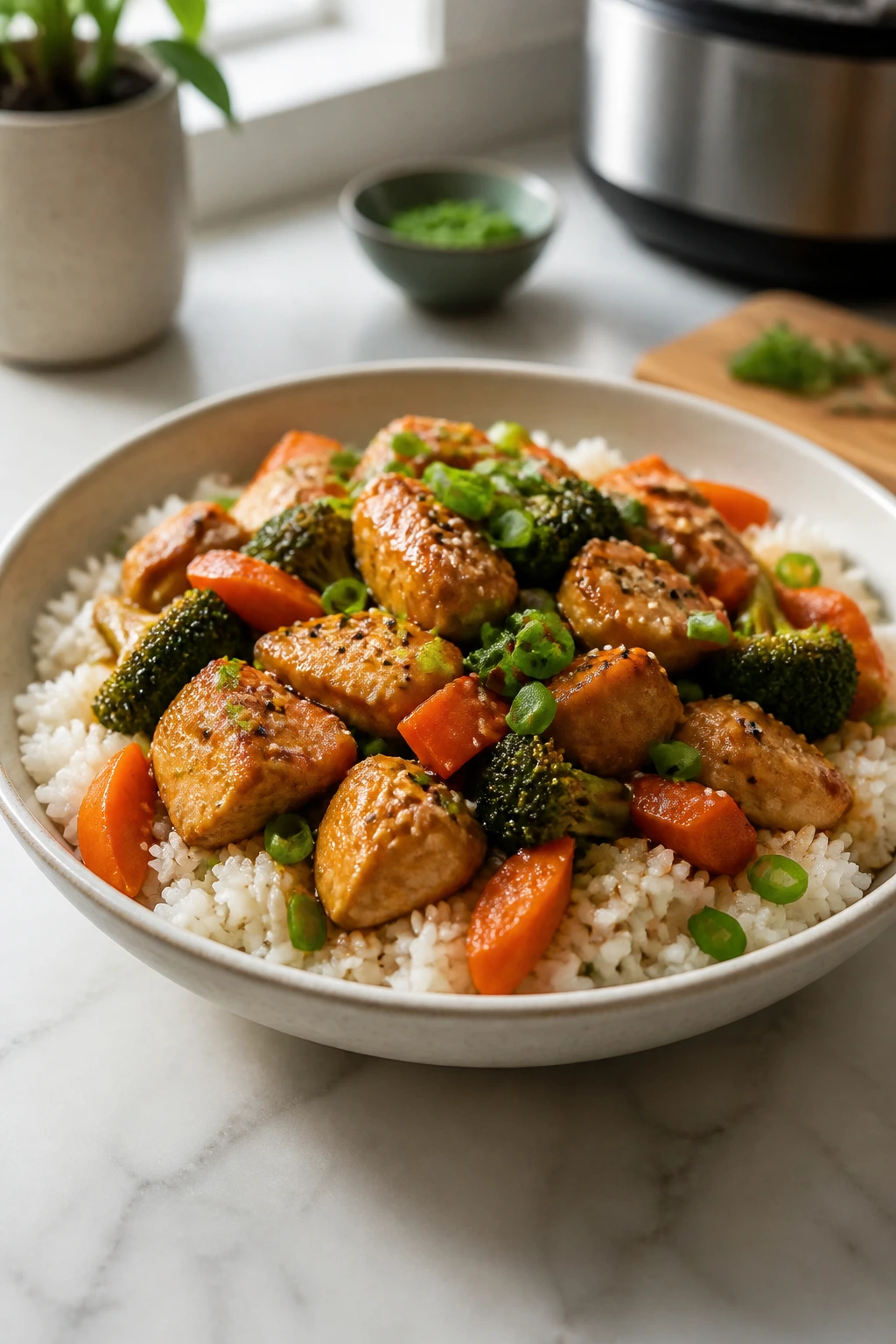
Presentation: Use shallow bowls instead of deep soup mugs. Fluff the rice first, then spoon the protein and vegetables over the top so the good parts stay visible. A scatter of scallions, sesame seeds, herbs, or feta makes the bowl look finished without much effort.
Accompaniments: Quick cucumber salad, bagged slaw with a sharp vinaigrette, steamed greens, garlic toast, naan, or a fried egg on the side all work well across this collection. If the meal already leans rich, choose something crisp and acidic. If the bowl is light, lean on bread or a simple salad to make it feel complete.
Portions: Most of these recipes feed 4 standard servings. If the table includes hungry people, plan on a little extra rice and one more vegetable side rather than just piling on more sauce. For smaller appetites, these dinners hold up well the next day, so it is fine to make a full batch and treat the leftovers as built-in relief.
Beverage Pairing: Iced green tea, sparkling water with lime, dry cider, or a clean lager fit most of these bowls without fighting them. Coconut curry likes something crisp and cold. Teriyaki and sesame bowls do well with tea or ginger beer. Tomato-based rice dishes can stand up to a light red if you want wine.
Flavor Boosts That Fit These Bowls
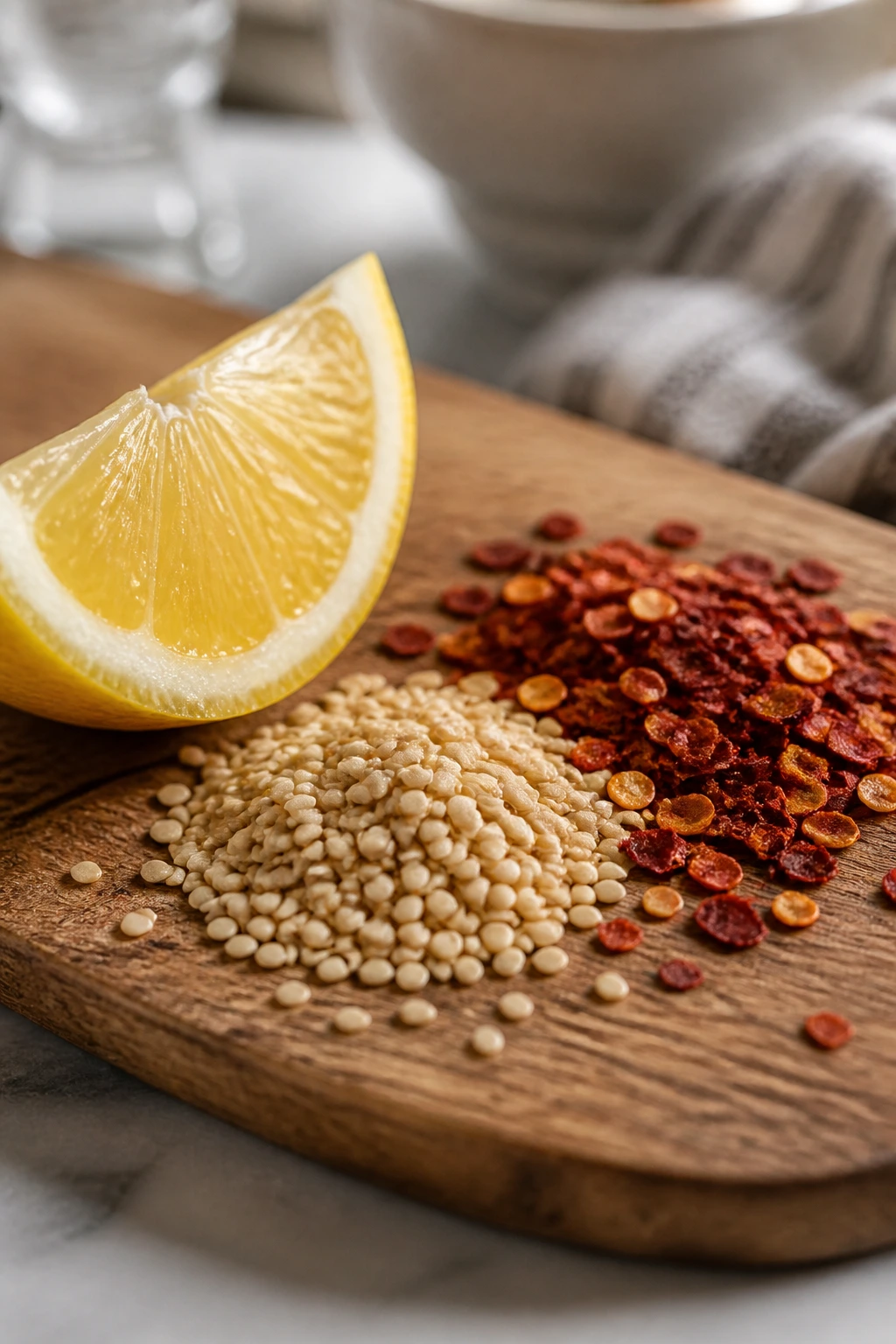
Flavor Enhancement: Acid is the cheapest upgrade in the room. Lemon juice, lime wedges, rice vinegar, and a small splash of hot sauce can wake up a bowl that tastes heavy or flat after the cooker opens. A teaspoon of toasted sesame oil or a pat of butter at the finish also changes the texture in a big way.
Customization: Keep a few topping lanes open. Chili crisp for heat, chopped herbs for freshness, toasted peanuts or sesame seeds for crunch, and pickled onions for sharpness can all go on the table without making the main recipe more complicated. That kind of modular cooking keeps picky eaters calm and lets everyone steer their own bowl.
Serving Suggestions: A soft egg on top of kimchi rice, extra parsley over mushroom rice, cilantro on salsa chicken, or basil on the Mediterranean bowl all make sense. Finishing touches are not decoration here. They keep the food from tasting like it sat too long in one flavor lane.
Make-It-Yours: For dairy-free eating, skip Parmesan and feta and lean harder on herbs, citrus, and olive oil. For gluten-free meals, use tamari or certified gluten-free soy sauce instead of standard soy sauce. For more protein, add edamame, a fried egg, or an extra half pound of chicken, but keep the liquid ratio steady so the rice still cooks properly.
Make-Ahead, Fridge Life, and Reheating
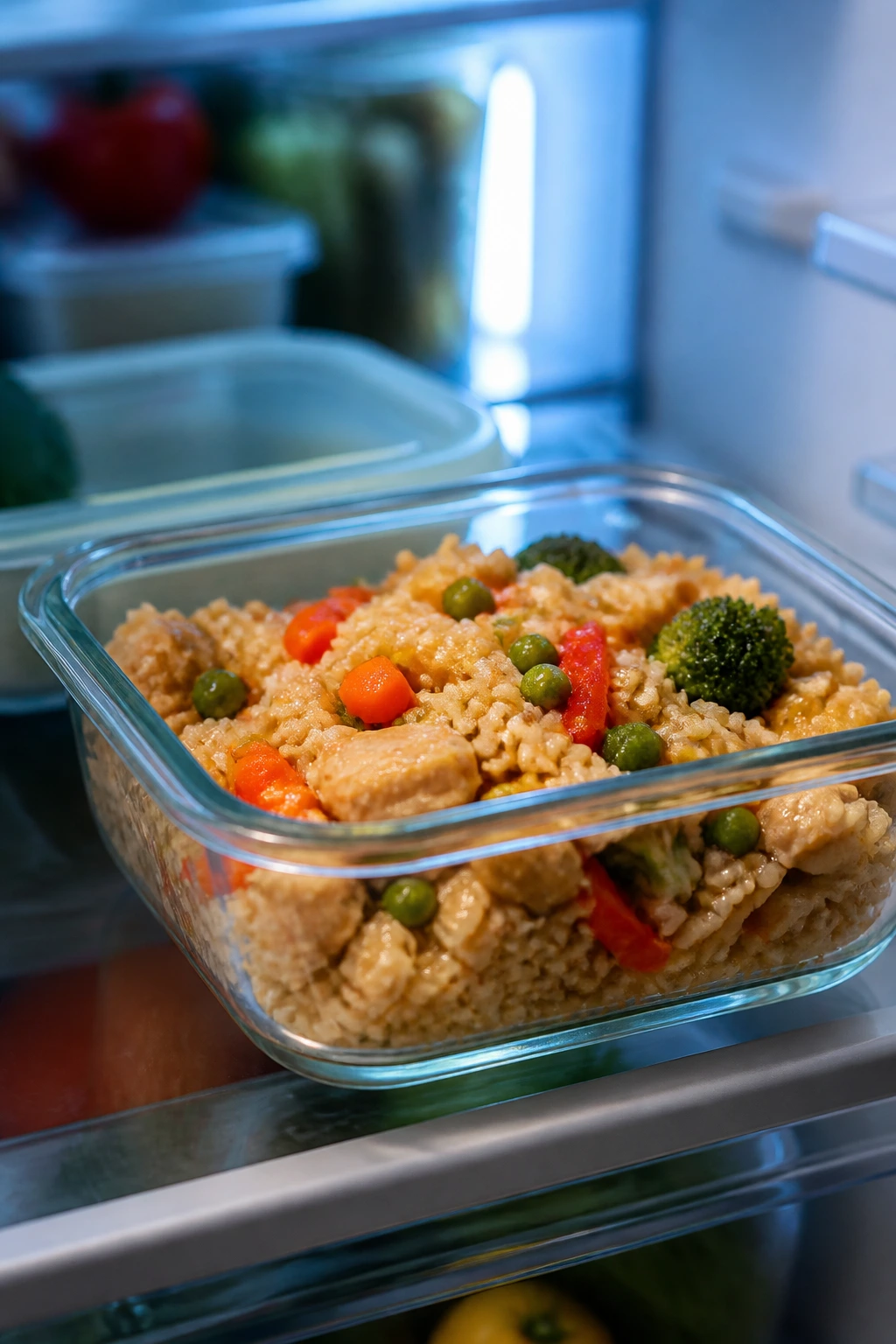
Most rice cooker dinners hold well in the fridge for 3 to 4 days if you cool them quickly and store them in shallow airtight containers. Seafood versions are a little fussier; plan on 2 days for salmon or shrimp dishes, because the texture drops off sooner than chicken or bean-based meals. If you know you will be packing lunch the next day, those seafood bowls are fine, but they are not long-haul leftovers.
Freezing works for the sturdier dishes: chicken, sausage, mushroom, curry, bean, and tofu bowls usually freeze well for up to 2 months. Saucy rice with tomatoes or curry paste tends to hold better than plain rice because the moisture helps protect the grains. Shrimp dishes are the odd ones out; they can be frozen in a pinch, but the shrimp gets softer when reheated, so I would eat those fresh whenever possible.
Reheat gently. For microwave reheating, add 1 to 2 tablespoons of water or broth per bowl, cover loosely, and heat in 1-minute bursts, stirring once halfway through. For a stovetop rescue, use a skillet over medium-low heat with a splash of broth and a lid for a few minutes so the steam loosens the rice. If you want to revive a larger batch, a rice cooker on warm with a tablespoon or two of water can work for about 8 to 10 minutes, though it is best for plain rice or saucy chicken dishes rather than seafood.
One food-safety note matters here: cool cooked rice quickly. Spread it into a shallow container instead of leaving a big hot mass in the cooker all evening. Rice is one of those foods that deserves prompt refrigeration, not a long slow hangout on the counter.
Easy Swaps for Different Needs
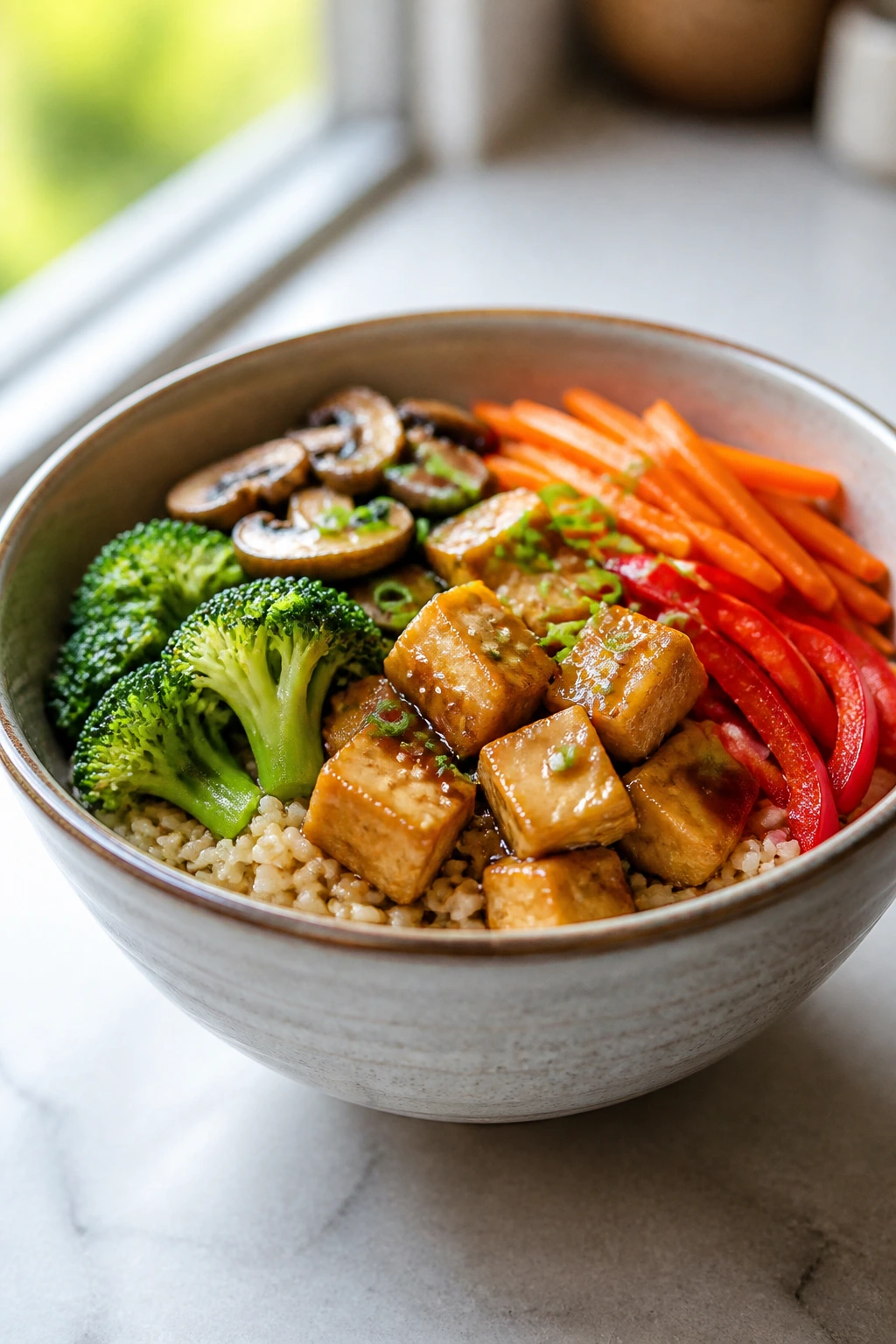
Gluten-Free Pantry Shift
Use tamari or certified gluten-free soy sauce in the teriyaki, beef, kimchi, and peanut bowls. Check broth labels too, because some brands hide wheat in plain sight. If you keep the seasonings clean, the whole collection stays easy to adapt.
Dairy-Free Comfort Bowls
Skip Parmesan and feta, then finish with olive oil, lemon, herbs, or a spoonful of coconut yogurt where it makes sense. The mushroom bowl and the Mediterranean bowl still taste full without cheese if you give them a bright finish. Richness does not have to mean dairy.
Low-Sodium Reset
Choose low-sodium broth, then lean harder on garlic, ginger, citrus, smoked paprika, cumin, and fresh herbs. Sausage, soy sauce, and cheese already bring salt, so the rest of the recipe should stay restrained. A lot of bland food is just under-seasoned food with too much liquid.
Vegetarian Night Mode
The chickpea curry, mushroom rice, Mediterranean bowl, and peanut tofu dinner already carry their own weight. For the chicken or beef recipes, swap in mushrooms, tofu, or extra beans and keep the cut small so the cooker can finish them evenly. A vegetarian bowl needs texture more than a lecture.
Heat-Lover’s Upgrade
Keep chili crisp, red pepper flakes, sliced jalapeños, and gochujang on hand. Add the heat at the table or during the last few minutes of cooking, not at the start, so the spice does not disappear into the broth. That gives you control instead of brute force.
Common Rice Cooker Dinner Mistakes to Skip
-
Using too much liquid: The rice turns gummy at the top and soupy at the bottom. Fix it by sticking to the liquid ratios in the recipe and remembering that salsa, tomatoes, coconut milk, and broth all count as liquid, not just plain water.
-
Adding delicate vegetables too early: Spinach, broccoli florets, peas, and herbs go soft or gray if they spend the whole cycle in the cooker. Add them near the end so they keep their color and some bite.
-
Cutting protein too large: Big chunks of chicken or beef can cook unevenly in a rice cooker. Keep chicken around 1-inch pieces, slice beef thin against the grain, and cut vegetables small enough to match.
-
Ignoring the rest time: Rice needs a few minutes after the cycle ends to settle and finish steaming. If you scoop too early, the top can look wet and the bottom can feel uneven.
-
Overfilling the cooker: A crowded insert can boil over or leave the rice unevenly cooked. If your cooker is near the max line, scale the recipe down or split it into two batches.
-
Forgetting the final acid or fat: A bowl can taste flat even when the cooking went well. Lemon, lime, vinegar, butter, sesame oil, or a little cheese at the end wakes everything up and makes the flavors line up.
Questions People Ask Before Hitting Start

Can I use brown rice in these recipes?
Usually, yes, but brown rice needs more liquid and a longer cook cycle. It works best in the curry, chicken, Mediterranean, and bean-based bowls; delicate seafood recipes are less friendly to it. If your cooker has a brown rice setting, use it.
Do I need a rice cooker with a fancy sauté setting?
No. A basic cooker handles most of these meals just fine. A sauté setting helps with mushrooms, bacon, or onions, but it is a bonus rather than a requirement.
Can I double these recipes?
Sometimes, but only if your cooker has the room. Stay below the max fill line and give saucy recipes extra time to settle. If a recipe is already near the top of the insert, doubling it is asking for a boil-over.
What kind of rice works best for lazy-night dinners?
Jasmine is the most forgiving all-around choice, basmati is great for lighter bowls, and short-grain rice works best when you want a stickier or creamier finish. Arborio is the pick for the mushroom bowl. If you keep those four on hand, you can make most of the collection without a second trip to the store.
Can I use frozen chicken or shrimp?
Thaw them first. Rice cookers are good at steady heat, but they are not ideal for cooking frozen proteins safely and evenly from raw. Thawed shrimp and chicken cook more predictably and taste better too.
What if my rice cooker switches to warm too soon?
That usually means the cooker thinks the liquid is gone. Add a few tablespoons of broth or water, close the lid, and let it continue if the model allows a restart. Some cookers run hot and need a little less liquid than the recipe calls for, so note what happened and adjust next time.
How do I keep rice from sticking to the bottom?
Rinse the rice, use the correct liquid ratio, and avoid leaving the cooker on warm for hours after dinner. A thin coating of oil or butter in the insert can help with especially sticky recipes like kimchi rice or curry rice.
Can I make these ahead for lunch?
Yes, especially the chicken, curry, bean, mushroom, and sausage bowls. Store the rice and toppings together if you want the flavors to meld, or keep bright toppings like herbs, cheese, and citrus separate so they stay lively.
A Calmer Way to Get Dinner on the Table
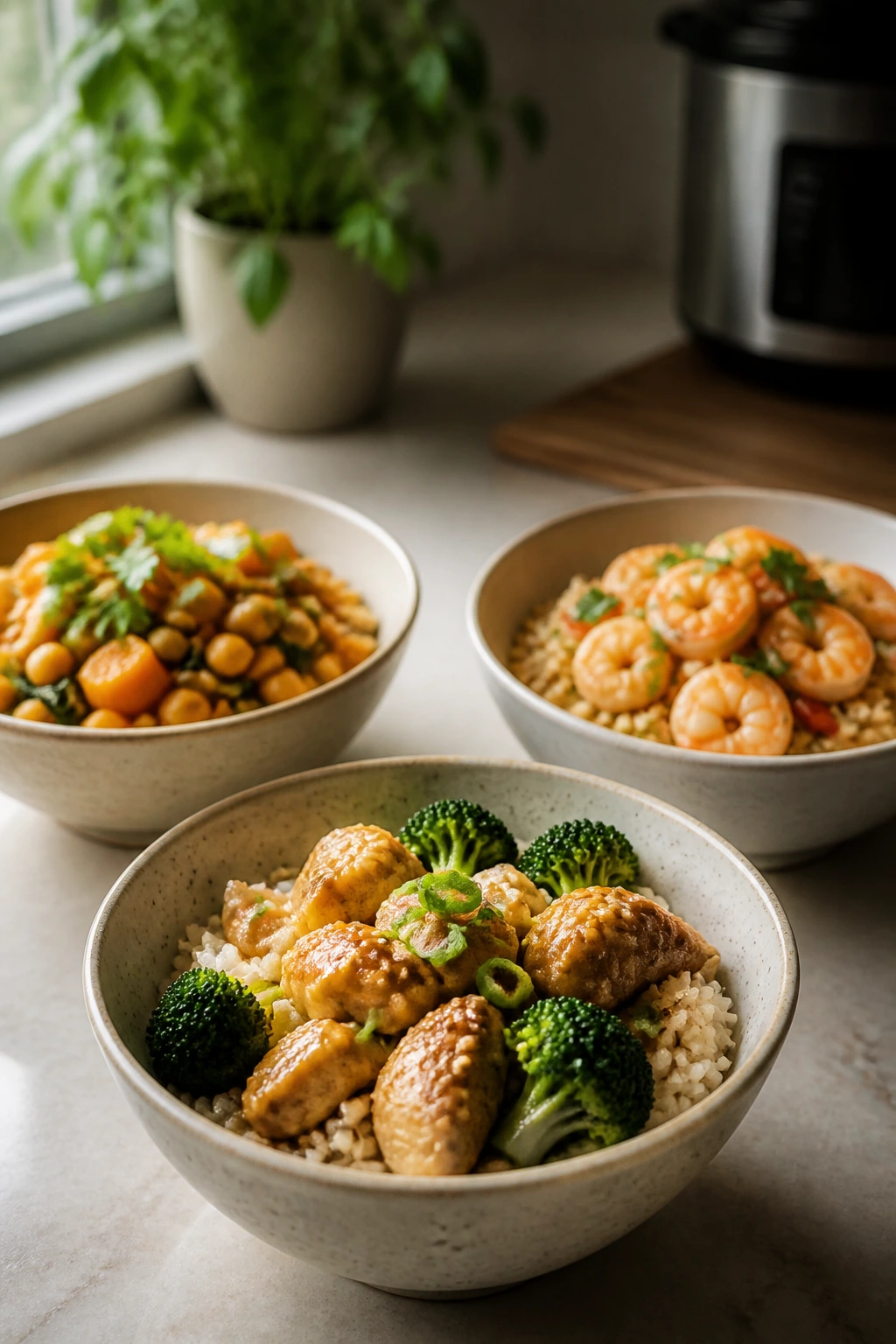
There is a reason people keep coming back to rice cooker dinners after they swear they will cook “properly” from now on. They work with tired energy instead of fighting it. You get a hot meal, a smaller pile of dishes, and enough structure that the food still tastes thought-out.
That is the real win here: not genius, not drama, just a dependable dinner path that does not collapse when your day has already asked too much of you. Keep one chicken bowl, one vegetarian bowl, and one seafood bowl in your back pocket, and the lazy-night question gets easier fast.
Quick Reference at a Glance
| Recipe | Prep Time | Cook Time | Total Time | Servings | Standout Detail |
|---|---|---|---|---|---|
| Garlic Butter Chicken and Peas Rice Cooker Dinner | 15 min | 30 min | 45 min | 4 | buttery rice with juicy thighs |
| Teriyaki Salmon and Broccoli Rice Bowls | 15 min | 25 min | 40 min | 4 | fast-steamed salmon with glossy sauce |
| Coconut Curry Chickpea and Spinach Rice | 10 min | 30 min | 40 min | 4 | creamy curry flavor from pantry staples |
| Salsa Chicken, Black Beans, and Corn Rice | 10 min | 30 min | 40 min | 4 to 5 | taco-night flavor in one pot |
| Creamy Mushroom Parmesan Rice Cooker Dinner | 10 min | 35 min | 45 min | 4 | risotto-style texture without stirring |
| Beef and Broccoli Rice Cooker Bowl | 15 min | 30 min | 45 min | 4 | takeout-style sauce with tender beef |
| Chicken Jambalaya Rice Cooker | 15 min | 35 min | 50 min | 4 to 6 | smoky, seasoned rice with real depth |
| Mediterranean Tomato Feta Chickpea Rice | 10 min | 30 min | 40 min | 4 | bright lemon finish and salty feta |
| Sausage, Peppers, and Onions Rice Cooker Dinner | 15 min | 30 min | 45 min | 4 | savory sausage flavor through every grain |
| Kimchi Bacon Rice Cooker Bowl | 10 min | 30 min | 40 min | 4 | bold, sticky rice with sharp kimchi bite |
| Shrimp Paella-Style Rice Cooker Dinner | 15 min | 25 min | 40 min | 4 | saffron-tinted rice with tender shrimp |
| Peanut Tofu and Green Bean Rice Cooker Bowls | 15 min | 30 min | 45 min | 4 | creamy peanut sauce and sturdy tofu |