



Most people don’t struggle with eating lighter at lunch. Dinner is where the wheels come off. By 6:30, you want something warm, salty, and filling, not a bowl of regret that leaves you staring into the pantry an hour later. That’s why healthy dinners under 500 calories matter: they have to feel like dinner, not a compromise dressed up as virtue.
The sweet spot is smaller than it looks. A tablespoon of olive oil brings about 120 calories all by itself, cheese disappears fast, and a “little” serving of rice turns into a half-cup more than you meant to scoop. So the trick isn’t starving yourself or pretending zucchini noodles are a personality. It’s building dinners with lean protein, plenty of vegetables, smart carbs, and sauces that do real work.
I’m partial to meals that keep their shape on a plate. A sheet-pan chicken dinner should have browned edges. A curry should smell like toasted spices and garlic the moment the lid comes off. A stir-fry should still have some bite, not a sad pile of overcooked vegetables swimming in soy sauce. The recipes below lean on those details, because bland “healthy food” is not the goal here. Good dinner is.
Why These 20 Dinners Earn a Spot on Your Weeknight List
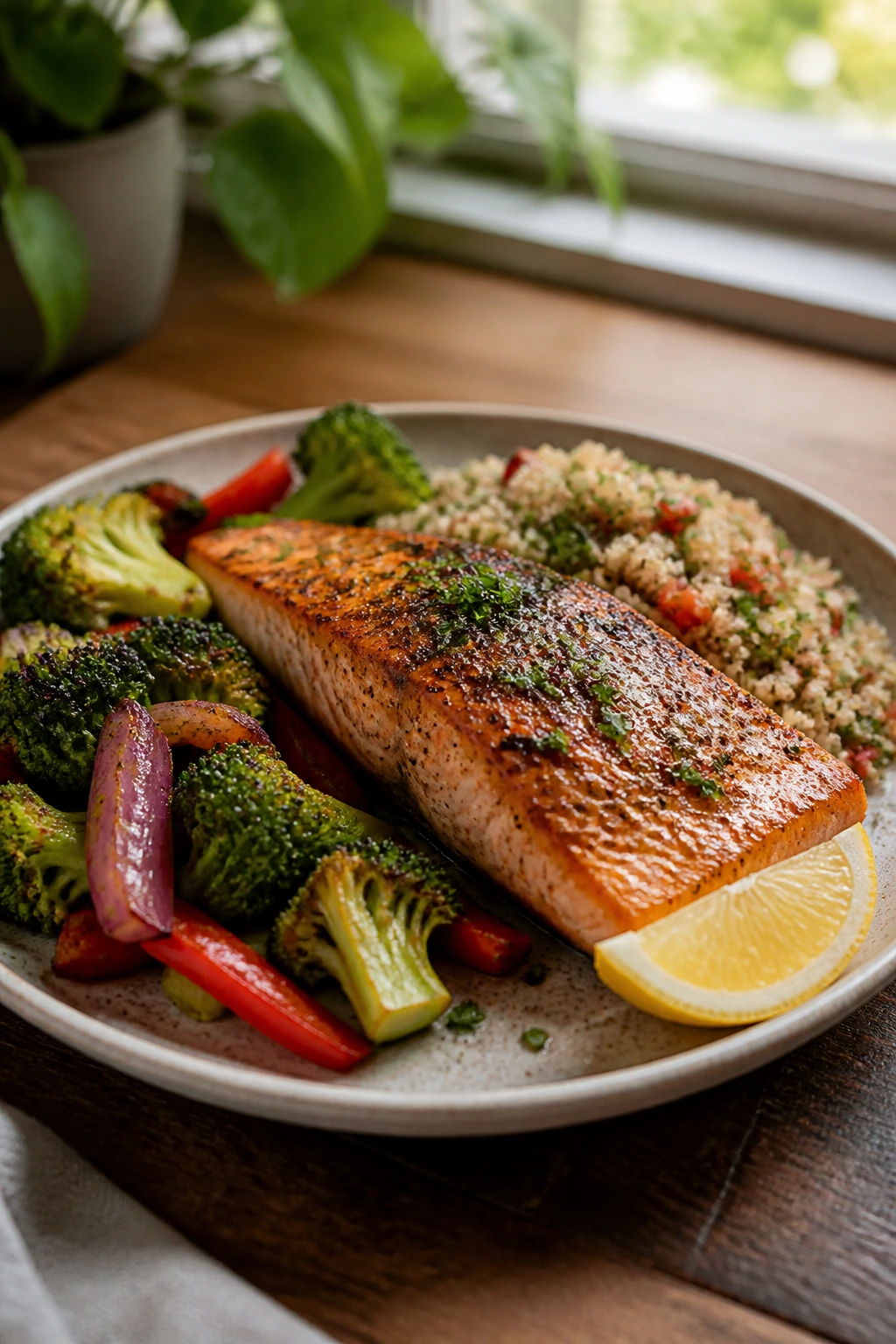
- Portion-Smart by Design: Each recipe uses measured fats, a defined protein portion, and a sensible carb load, so the calories stay honest without feeling tiny.
- Enough Flavor to Stop Snacking: Acid, herbs, garlic, spices, and a few sharp finishing touches keep these meals bright instead of flat.
- Built for Real Kitchens: You’ll see sheet pans, skillets, soups, and simple bake-and-stir methods that don’t demand a rack of specialty gear.
- Flexible on Busy Nights: Most of these dinners tolerate swapped vegetables, different grains, or a change in protein without collapsing.
- Family-Friendly, Not “Diet Food”: These are meals people actually eat again, which matters more than a perfect macro chart.
- Good Leftovers Count: A healthy dinner isn’t just what happens at the table; it’s what still tastes decent when you reheat it tomorrow.
1. Sheet-Pan Lemon Garlic Chicken with Broccoli
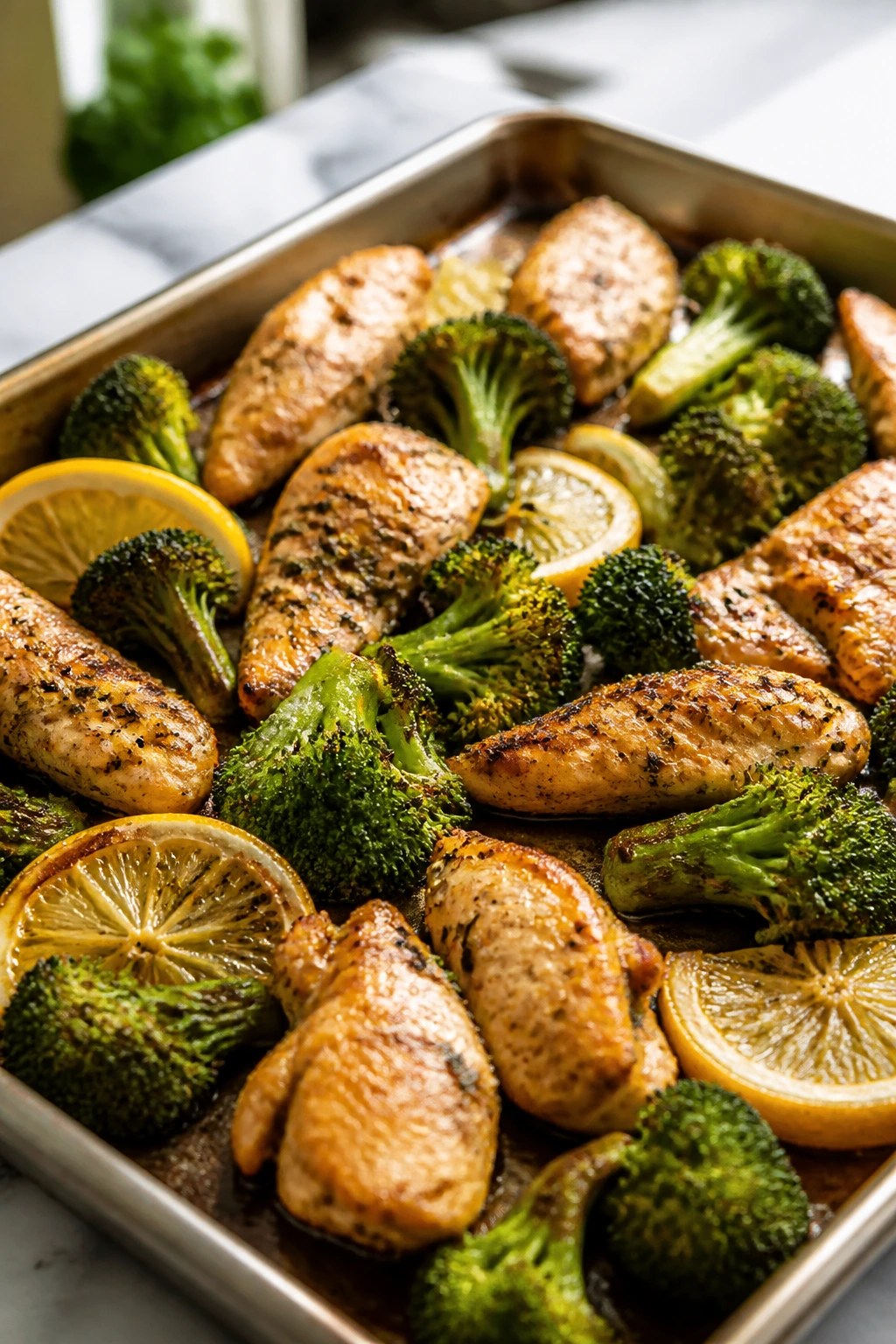
This one smells like dinner should. Lemon zest hits the hot tray first, garlic softens into sweetness, and the broccoli edges go crisp and a little nutty while the chicken stays juicy. A serving lands around 390 calories, which is a nice place to be when you want a full plate, not a side dish pretending to be supper.
The mix of chicken, broccoli, and a light lemon marinade keeps things simple without turning dull. You get protein, fiber, and a little fat from olive oil, but not so much that the whole tray turns heavy.
Why It Works
Sheet-pan cooking does the hard part for you: the oven gives the broccoli char and the chicken a clean roast, and both finish around the same time if you cut the florets and chicken evenly. Lemon juice and zest keep the flavor sharp, which matters because low-calorie dinners can taste flat when they lean too hard on salt alone. A 425°F oven also helps the broccoli brown instead of steaming, which is half the appeal here.
Key Ingredients
- 1 1/2 lbs boneless, skinless chicken breasts, cut into 1-inch strips
- 4 cups broccoli florets
- 2 tbsp olive oil
- 3 garlic cloves, minced
- 1 lemon, zested and juiced
- 1 tsp dried oregano
- 1/2 tsp kosher salt
- 1/4 tsp black pepper
- 2 tbsp grated Parmesan, optional
Quick Steps
- Preheat the oven to 425°F (220°C) and line a rimmed sheet pan with parchment paper.
- Toss the chicken with 1 tablespoon olive oil, garlic, lemon zest, lemon juice, oregano, salt, and pepper.
- Toss the broccoli with the remaining olive oil and a pinch of salt.
- Spread everything on the pan in one layer. Do not crowd the tray, or the vegetables will steam.
- Roast for 18 to 22 minutes, flipping once halfway through, until the chicken reaches 165°F and the broccoli has browned edges.
- Finish with Parmesan, if using, and serve hot.
Tips and Variations
- Quick swap: Chicken thighs work, but the calories creep up a bit.
- Flavor boost: Add red pepper flakes and a spoonful of Dijon to the marinade.
- Serving move: Spoon the chicken and broccoli over 1/2 cup cooked brown rice if you want a little more bulk.
2. Turkey Taco Cauliflower Rice Skillet
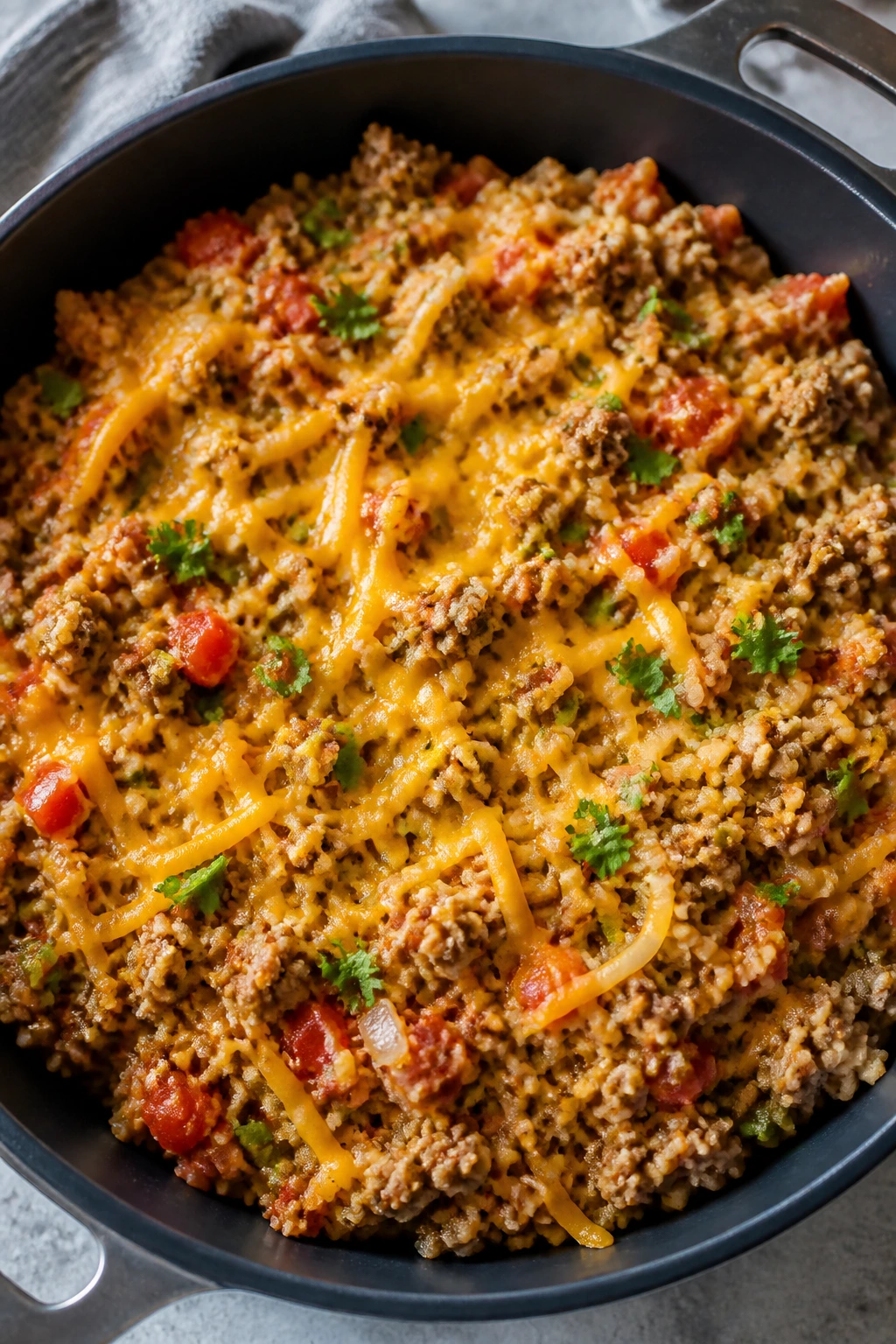
This skillet tastes like taco night after someone cleaned up the portion sizes. The turkey stays savory and a little smoky, the cauliflower rice soaks up the seasoning, and the tomatoes give the whole pan enough juiciness to feel complete. One serving comes in around 420 calories, depending on how much cheese you scatter on top.
It’s the kind of dinner that earns repeat requests because it’s fast, colorful, and easy to eat straight from the skillet if you’re honest with yourself about weeknight behavior.
Why It Fits
Ground turkey takes taco seasoning well, but it can taste thin if you don’t brown it properly. That’s why this recipe starts with a hot skillet and a little patience. The cauliflower rice pulls the calorie count down while still giving you volume, and the black beans add fiber so the meal doesn’t vanish ten minutes later.
Key Ingredients
- 1 lb lean ground turkey
- 4 cups cauliflower rice
- 1 cup canned black beans, rinsed and drained
- 1 cup diced tomatoes
- 1 small onion, diced
- 2 garlic cloves, minced
- 2 tbsp taco seasoning
- 1 tbsp olive oil
- 1/2 cup shredded reduced-fat cheddar
- 2 tbsp chopped cilantro, optional
Quick Steps
- Heat olive oil in a large skillet over medium-high heat.
- Cook onion for 3 to 4 minutes until softened, then add garlic for 30 seconds.
- Add the turkey and break it up. Cook for 6 to 8 minutes, until no pink remains and the edges brown a little.
- Stir in taco seasoning, tomatoes, black beans, and cauliflower rice. Cook for 5 to 7 minutes until the rice is tender but not mushy.
- Scatter cheese over the top, cover for 1 minute, and finish with cilantro.
Tips and Variations
- Make it hotter: A chopped jalapeño works well with the onion.
- Meal-prep note: This reheats better than most rice bowls because cauliflower rice doesn’t dry out as badly.
- Optional crunch: Top with shredded lettuce or a few crushed tortilla chips right before eating.
3. Baked Salmon with Asparagus and Dill Yogurt
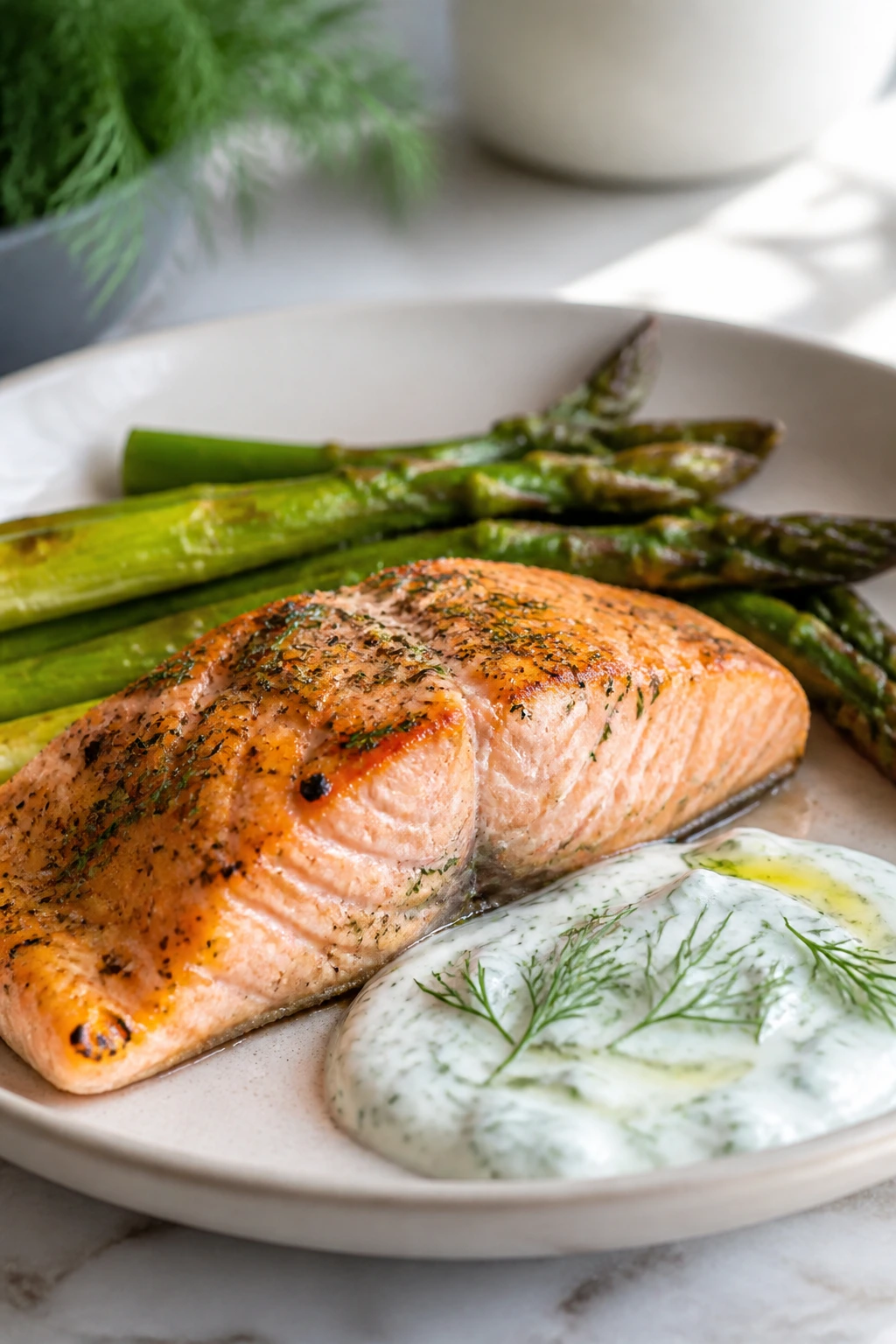
Salmon brings richness, asparagus brings snap, and the dill yogurt sauce ties the whole plate together with a cool, tangy finish. It feels a touch dressed up, which is nice, but the method is still plain enough for a Tuesday. Depending on the fillet size, you’re looking at roughly 460 calories per serving.
I like this one because it gives you enough fat from the salmon to feel satisfied without needing a giant portion. That’s a useful trick when you’re keeping dinner under a calorie target.
Why It Works
Salmon is naturally forgiving, and baking it beside asparagus keeps the timing simple. The fish bastes itself a little as it cooks, while the asparagus picks up flavor from the pan juices. Dill yogurt adds creaminess without the calorie load of a heavy sauce, and the lemon keeps the flavor bright enough to cut through the richness of the fish.
Key Ingredients
- 4 salmon fillets, about 5 oz each
- 1 lb asparagus, trimmed
- 1 tbsp olive oil
- 1 lemon, sliced
- 1/2 tsp kosher salt
- 1/4 tsp black pepper
- 3/4 cup plain Greek yogurt
- 1 tbsp chopped fresh dill
- 1 tsp lemon juice
- 1 small garlic clove, grated
Quick Steps
- Heat the oven to 400°F (205°C) and line a baking sheet.
- Arrange salmon and asparagus on the tray, then drizzle both with olive oil. Season with salt and pepper.
- Lay lemon slices over the salmon.
- Bake for 12 to 15 minutes, until the salmon flakes and the asparagus is tender with a little bite.
- Stir yogurt, dill, lemon juice, and garlic together, then spoon it over the warm fish.
Tips and Variations
- No dill? Parsley or chives work fine.
- If the salmon is thick: Give it 2 or 3 extra minutes; don’t guess.
- Best move: Serve with roasted baby potatoes if you need a more substantial plate, but keep the portion modest.
4. Shrimp and Bell Pepper Stir-Fry
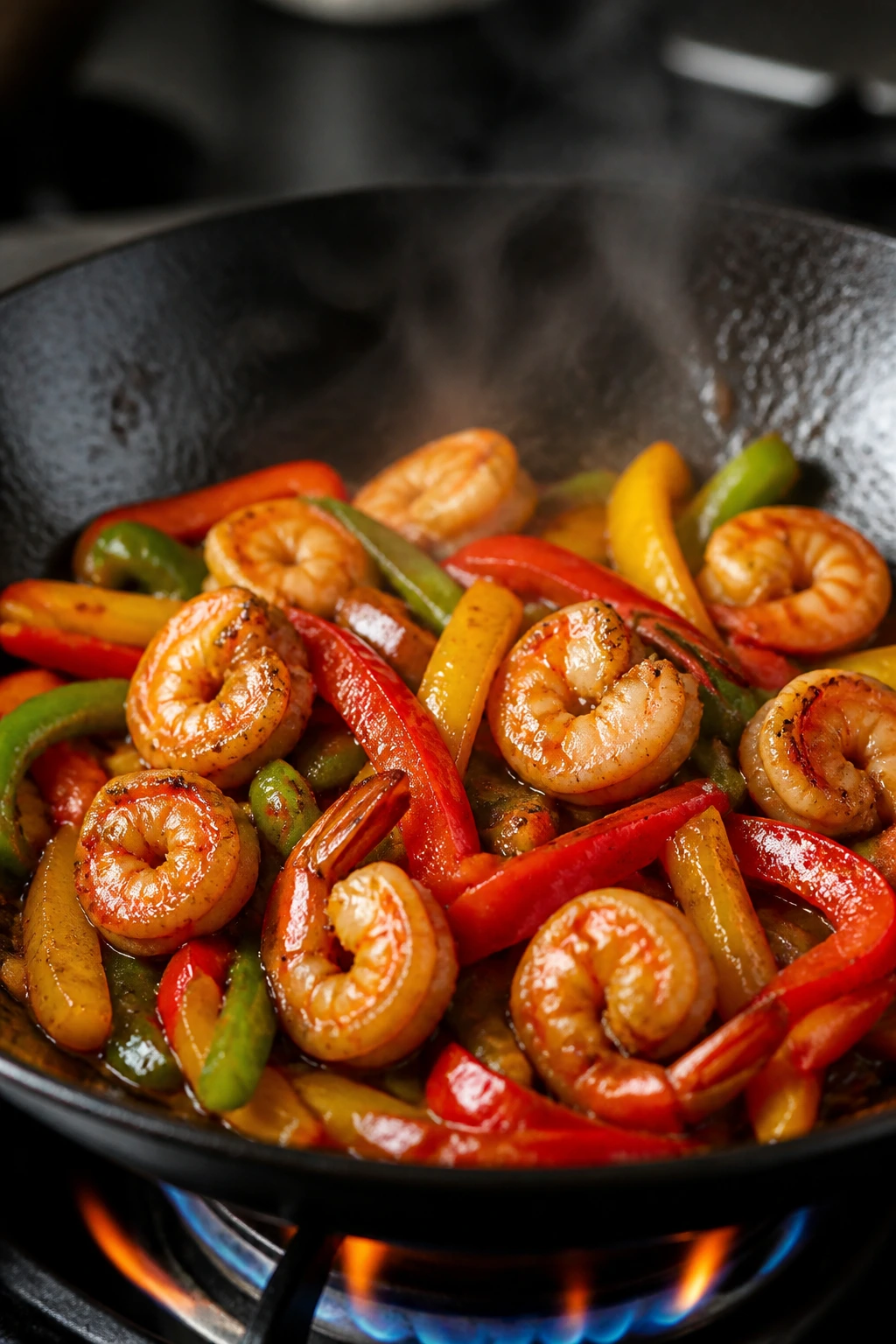
This stir-fry is all about speed and color. The shrimp cook in minutes, the peppers stay crisp, and the sauce clings instead of pooling at the bottom of the pan. A full serving sits around 340 calories, which leaves room for a small bowl of rice if you want one.
Shrimp is one of those ingredients that makes a light dinner feel like you did more than you actually did. That’s not a complaint.
Why It Works
Shrimp cooks fast enough that you can keep the vegetables from going limp. Bell peppers, snap peas, and onions bring sweetness and crunch, while a ginger-soy sauce adds salt, heat, and a little gloss. The recipe stays under 500 calories because it uses a tablespoon of oil and depends on high heat instead of heavy sauce.
Key Ingredients
- 1 lb large shrimp, peeled and deveined
- 2 bell peppers, sliced
- 1 cup snap peas
- 1 small red onion, sliced
- 2 garlic cloves, minced
- 1 tbsp fresh ginger, grated
- 2 tbsp low-sodium soy sauce
- 1 tbsp rice vinegar
- 1 tbsp sesame oil
- 1 tsp cornstarch mixed with 2 tbsp water
Quick Steps
- Heat sesame oil in a wok or large skillet over high heat.
- Add onion and peppers; stir-fry for 3 to 4 minutes until bright and lightly softened.
- Add garlic and ginger for 30 seconds.
- Toss in shrimp and cook 2 to 3 minutes per side until pink and curled.
- Stir in soy sauce, rice vinegar, and cornstarch slurry. Cook for 1 minute until glossy and slightly thickened.
Tips and Variations
- Frozen shrimp is fine: Thaw it first and pat it dry.
- Watch the clock: Overcooked shrimp gets rubbery fast.
- Serving idea: Spoon over cauliflower rice or a half-cup of jasmine rice.
5. Chickpea Spinach Curry with Brown Rice
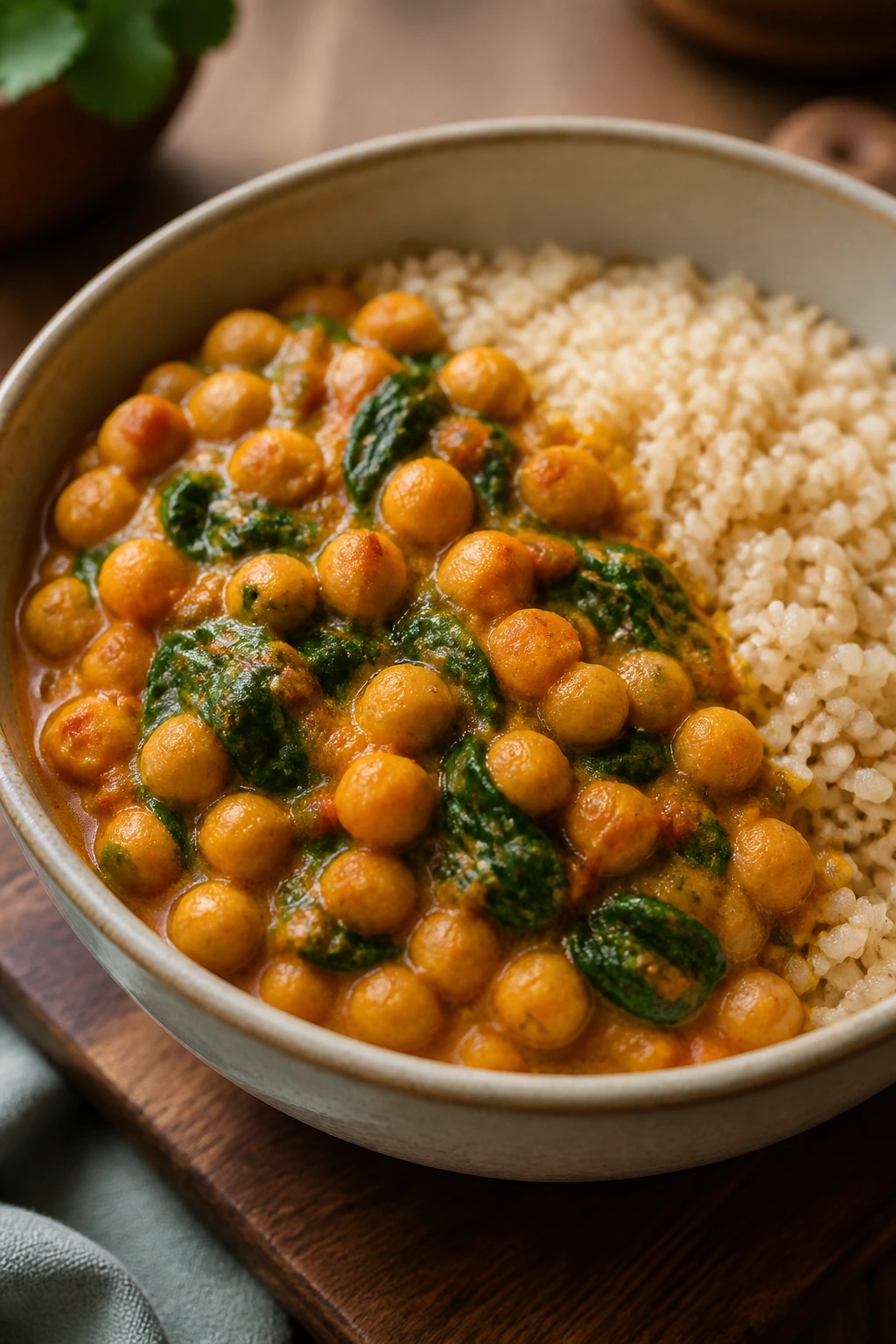
Warm spices, creamy tomato broth, and tender chickpeas make this feel bigger than its calorie count suggests. The spinach wilts into the sauce and disappears in the best possible way, while the brown rice gives the bowl just enough weight. A serving lands close to 480 calories if you keep the rice portion tight.
This is the kind of vegetarian dinner that doesn’t act like a substitute. It has its own personality.
Why It Works
Chickpeas bring protein and fiber, which gives this curry staying power even without meat. Coconut milk can push calories up fast, so this version uses a modest amount and stretches it with crushed tomatoes and broth. Blooming the curry powder in oil for a minute is worth the extra pan time because it stops the spices from tasting raw.
Key Ingredients
- 2 tbsp olive oil
- 1 small onion, diced
- 3 garlic cloves, minced
- 1 tbsp grated ginger
- 2 tbsp curry powder
- 1 can (15 oz) chickpeas, rinsed and drained
- 1 can (14.5 oz) diced tomatoes
- 1/2 cup light coconut milk
- 1/2 cup vegetable broth
- 4 cups baby spinach
- 2 cups cooked brown rice
- 1/2 tsp salt
Quick Steps
- Warm olive oil in a saucepan over medium heat.
- Cook onion for 4 minutes until soft, then stir in garlic, ginger, and curry powder for 30 seconds.
- Add chickpeas, tomatoes, coconut milk, broth, and salt.
- Simmer for 12 to 15 minutes until the sauce thickens a bit and smells rich.
- Stir in spinach until wilted, then serve over brown rice.
Tips and Variations
- Make it vegan? It already is.
- Heat lovers: Add a chopped chili or 1/2 teaspoon cayenne.
- Better leftovers: The flavor deepens overnight, so the next day is no letdown.
6. Turkey Meatballs with Zucchini Noodles
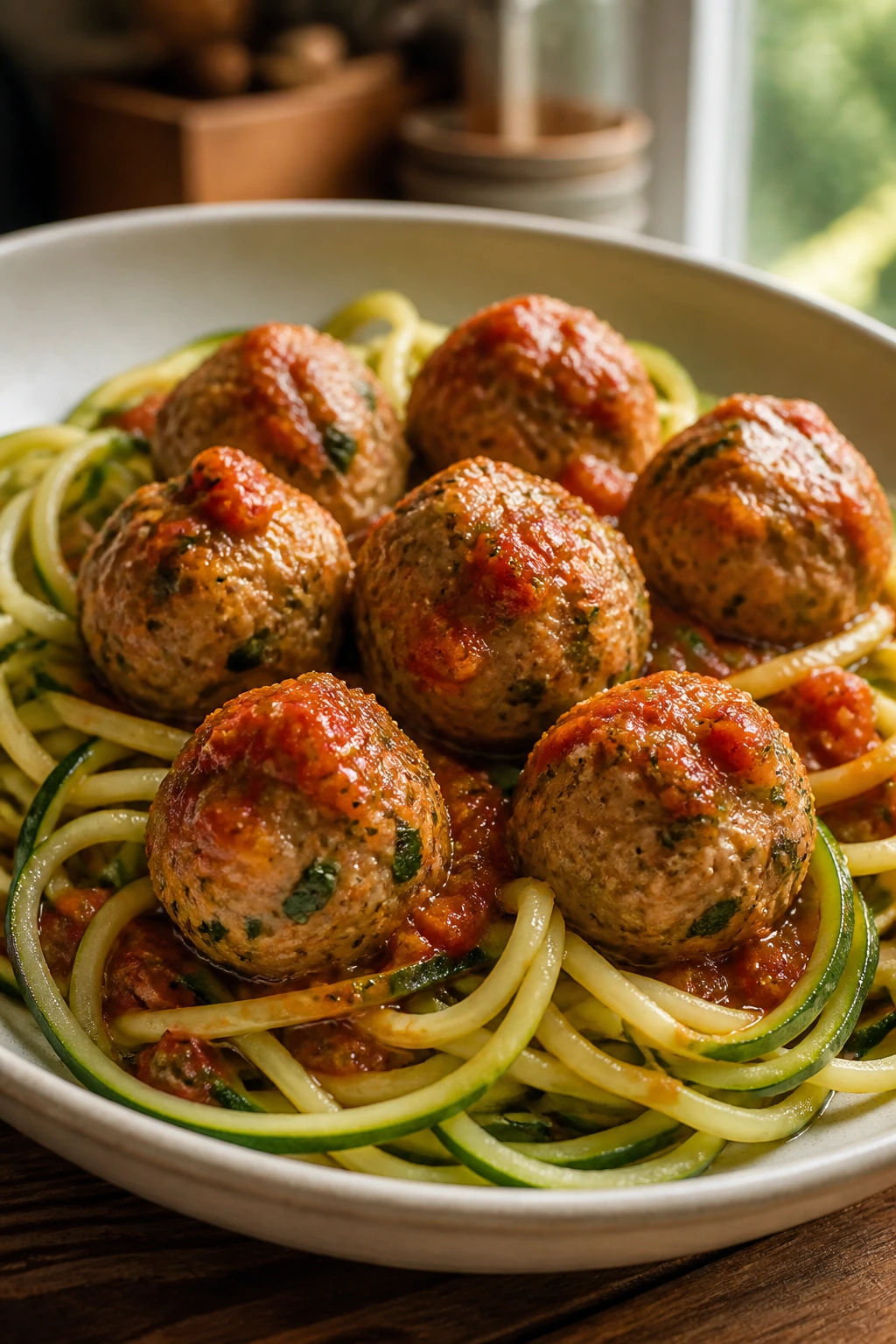
These meatballs are juicy, garlicky, and far more useful than the bland dry version people complain about. The zucchini noodles keep the plate light, while marinara gives you that familiar pasta-night comfort. One serving comes in around 430 calories, depending on the sauce and cheese.
The key here is not to overwork the meat. Mix it just enough, and the meatballs stay tender instead of turning dense.
Why It Works
Lean turkey can dry out if it’s cooked too long, so the oven handles the meatballs gently while the pan sauce does the flavor lifting. Zucchini noodles are lower in calories than pasta and still catch sauce well if you don’t drown them. A little Parmesan inside the meatballs adds savoriness without needing a giant cheese blanket on top.
Key Ingredients
- 1 lb ground turkey
- 1/4 cup breadcrumbs
- 1 egg
- 2 tbsp grated Parmesan
- 2 garlic cloves, minced
- 1 tsp Italian seasoning
- 1/2 tsp salt
- 3 zucchini, spiralized
- 2 cups marinara sauce
- 1 tbsp olive oil
Quick Steps
- Heat oven to 400°F (205°C).
- Mix turkey, breadcrumbs, egg, Parmesan, garlic, seasoning, and salt until just combined.
- Shape into 16 meatballs and place on a lined baking sheet.
- Bake for 15 to 18 minutes until cooked through.
- Warm marinara in a skillet, toss in zucchini noodles for 1 to 2 minutes, then top with meatballs.
Tips and Variations
- Don’t overcook the zoodles: They should be warm, not floppy.
- Shortcut: Jarred marinara works if you choose one with low sugar.
- Extra flavor: A pinch of red pepper flakes in the sauce helps.
7. Lean Beef Stuffed Bell Peppers
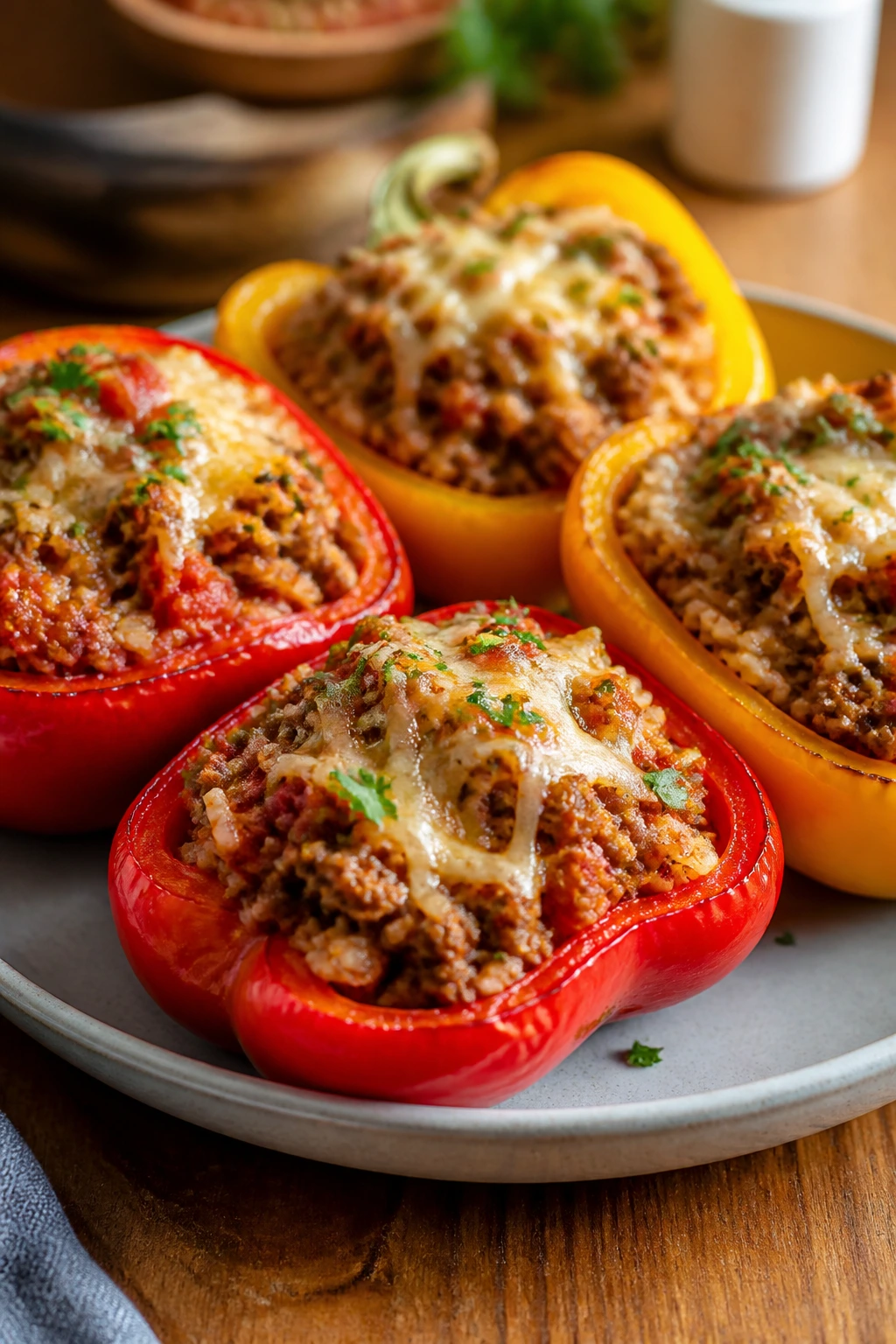
Stuffed peppers can be heavy if you let them get that way. These stay in range by using lean beef, brown rice, and a measured amount of cheese, so you get the comfort without the brick-in-the-stomach feeling. A stuffed half pepper lands near 470 calories.
The peppers bake until tender but still hold their shape, which matters. Nobody wants a collapsed pepper boat leaking everywhere.
Why It Works
Bell peppers make their own edible bowl, and that does a lot of calorie-control work for you. Lean beef gives the filling a savory depth, while brown rice stretches the meat so you can serve a proper portion without going overboard. Tomato sauce keeps everything moist during baking, and a modest topping of cheese finishes the dish without turning it into a casserole.
Key Ingredients
- 4 large bell peppers, halved and seeded
- 1 lb lean ground beef
- 1 cup cooked brown rice
- 1 small onion, diced
- 2 garlic cloves, minced
- 1 cup tomato sauce
- 1 tsp Italian seasoning
- 1/2 tsp salt
- 1/2 cup shredded mozzarella
- 1 tbsp olive oil
Quick Steps
- Heat oven to 375°F (190°C).
- Sauté onion and garlic in olive oil for 3 minutes.
- Brown the beef, then stir in rice, tomato sauce, seasoning, and salt.
- Stuff the peppers, place them in a baking dish, and top with mozzarella.
- Bake for 30 to 35 minutes until the peppers are tender and the cheese is melted.
Tips and Variations
- For softer peppers: Par-bake the halves for 10 minutes first.
- Lower-carb version: Swap the rice for cauliflower rice.
- My preference: A spoonful of chopped parsley right before serving makes the whole dish look fresher.
8. Chicken Fajita Lettuce Wraps
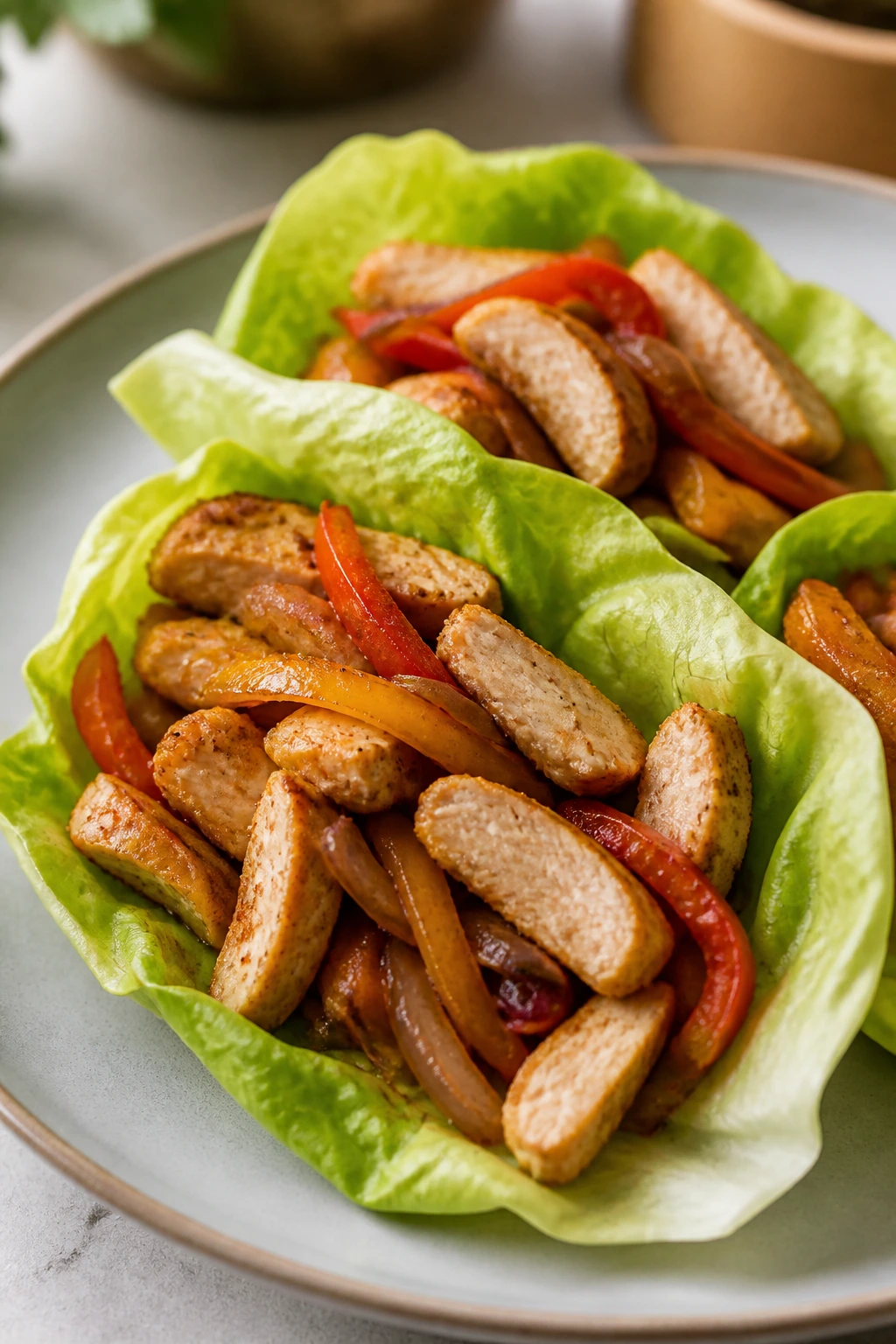
These wraps have the sizzling, smoky taste of fajitas without the heavy tortillas. The chicken stays juicy, the peppers and onions bring sweetness, and the crisp lettuce gives each bite a cold snap that works better than it sounds. You can keep a serving around 320 calories pretty easily.
This is one of those dinners that feels like a small trick. It scratches the taco itch fast.
Why It Works
The fajita seasoning coats the chicken and vegetables, so you don’t miss the tortilla as much as you’d expect. Cooking the filling over fairly high heat keeps the peppers from going mushy, and butter lettuce or romaine adds crunch without adding much to the calorie count. A spoon of salsa or Greek yogurt finishes the wraps in a way that feels complete.
Key Ingredients
- 1 lb boneless, skinless chicken breasts, sliced thin
- 2 bell peppers, sliced
- 1 small onion, sliced
- 1 tbsp olive oil
- 2 tsp chili powder
- 1 tsp cumin
- 1/2 tsp garlic powder
- 1/2 tsp salt
- 8 large lettuce leaves
- Salsa and Greek yogurt, for serving
Quick Steps
- Toss chicken with chili powder, cumin, garlic powder, and salt.
- Heat olive oil in a skillet over medium-high heat.
- Cook chicken for 5 to 6 minutes until nearly done.
- Add peppers and onion; cook 4 to 5 minutes until crisp-tender and lightly charred.
- Spoon into lettuce leaves and top with salsa and a little yogurt.
Tips and Variations
- Need more substance? Add black beans, but measure them.
- Meal-prep note: Keep the filling separate from the lettuce until serving.
- Best flavor move: A squeeze of lime at the end wakes everything up.
9. Baked Cod with Tomato Olive Relish
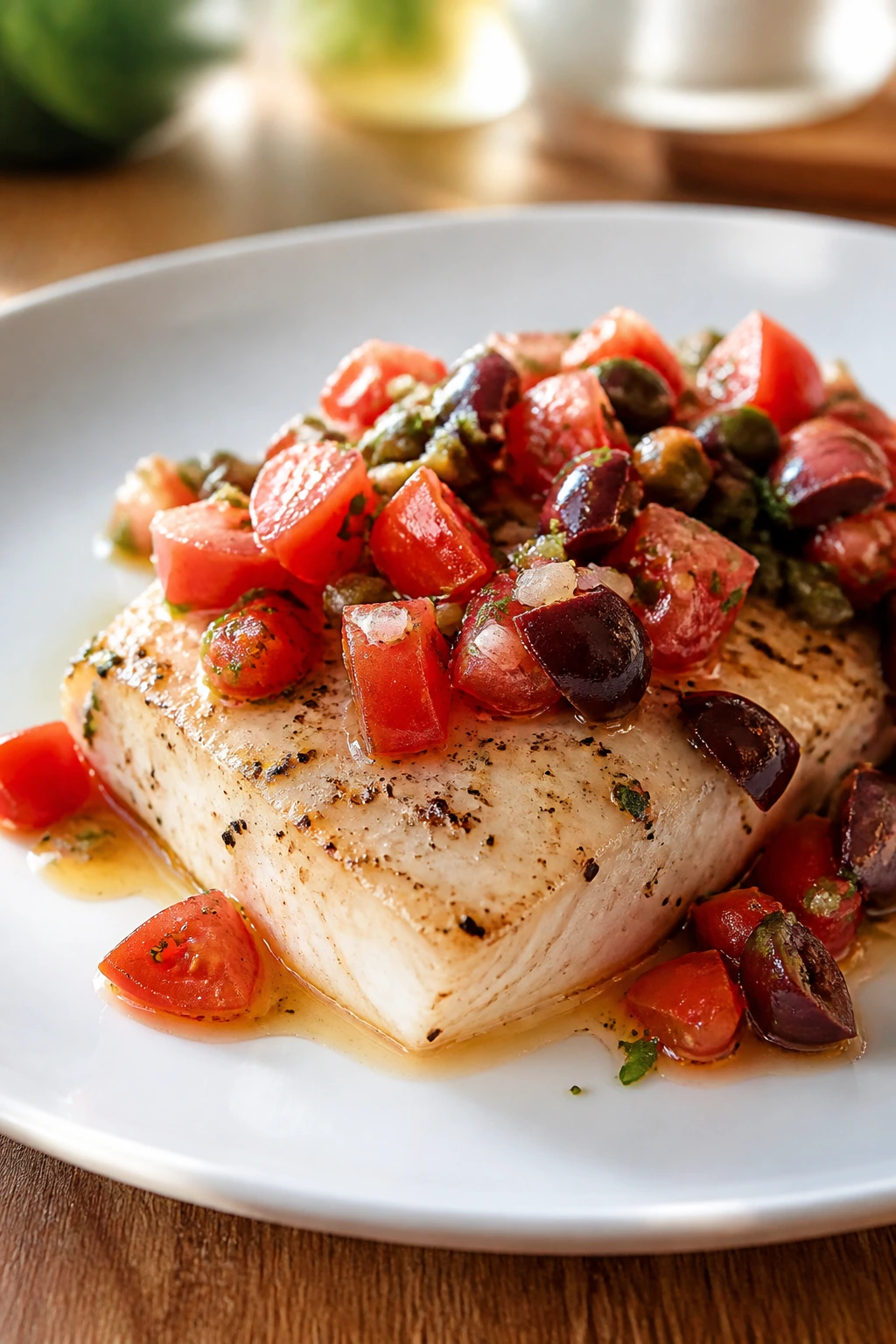
Cod is mild, but that’s a feature here. It takes on the salty tomato-olive topping, bakes quickly, and stays light enough that you can pair it with vegetables or a small starch and still stay under 350 calories per serving. The relish brings the plate to life.
I like recipes like this because they use restraint well. No giant sauce. No heavy crust. Just enough flavor to make the fish interesting.
Why It Works
Cod is lean, so the trick is not overbaking it. The tomato olive relish adds moisture and punch, which protects the fish from tasting dry. The olives bring salt, the tomatoes bring acidity, and a little caper brine helps the topping taste finished without requiring much oil.
Key Ingredients
- 4 cod fillets, about 5 oz each
- 1 cup cherry tomatoes, halved
- 1/3 cup sliced olives
- 1 tbsp capers, drained
- 2 tbsp olive oil
- 1 garlic clove, minced
- 1 tbsp lemon juice
- 1 tbsp chopped parsley
- 1/2 tsp salt
- 1/4 tsp black pepper
Quick Steps
- Heat oven to 400°F (205°C).
- Mix tomatoes, olives, capers, olive oil, garlic, lemon juice, parsley, salt, and pepper.
- Place cod in a baking dish and spoon the relish over the top.
- Bake for 12 to 15 minutes until the fish flakes easily.
- Spoon extra relish over each fillet before serving.
Tips and Variations
- If your cod is thick: Start checking at 12 minutes, not later.
- Swap idea: Haddock or halibut work with the same method.
- Serving thought: A small serving of couscous fits this nicely.
10. Lentil Shepherd’s Pie
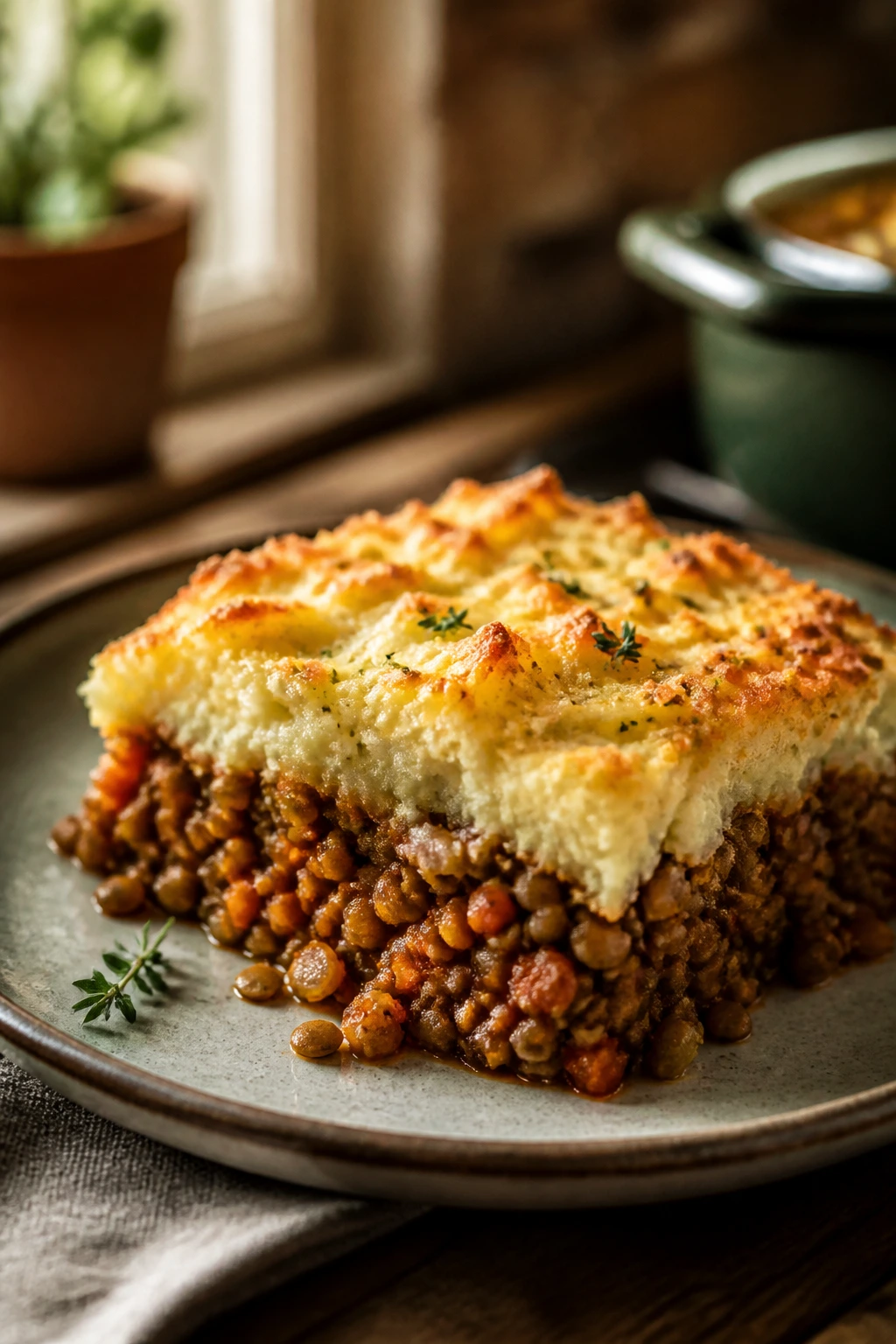
This is the cozy one. The mashed potato top browns in spots, the lentil filling turns savory and a little earthy, and the whole dish feels far more substantial than its calorie count would suggest. A serving comes in near 440 calories if you keep the potato layer in line.
It’s also a reminder that vegetarian food doesn’t need to be delicate. Sometimes you want something that eats like a cold evening.
Why It Works
Lentils have enough body to stand in for meat, especially when they’re cooked with onion, carrot, tomato paste, and broth. The potato topping gives you the familiar shepherd’s pie feel, but using a moderate amount of butter and milk keeps the calories controlled. Bake it long enough to brown the top, and the whole dish tastes fuller.
Key Ingredients
- 1 1/2 cups brown or green lentils, rinsed
- 1 onion, diced
- 2 carrots, diced
- 2 celery stalks, diced
- 2 tbsp tomato paste
- 3 cups vegetable broth
- 4 medium potatoes, peeled and chopped
- 1/4 cup milk
- 1 tbsp butter
- 1 tsp thyme
- 1/2 tsp salt
Quick Steps
- Simmer lentils in broth until tender, about 25 minutes.
- Cook onion, carrots, and celery in a skillet until softened.
- Stir in tomato paste, thyme, lentils, and a splash of broth.
- Mash potatoes with milk and butter.
- Spread lentils in a baking dish, top with potatoes, and bake at 400°F for 15 minutes until golden.
Tips and Variations
- For deeper flavor: Add a splash of Worcestershire if you’re not keeping it vegetarian.
- Texture tip: Don’t over-mash the potatoes; a few lumps are good.
- Make-ahead win: Assemble it a day ahead and bake when needed.
11. Teriyaki Tofu Bowls with Snap Peas
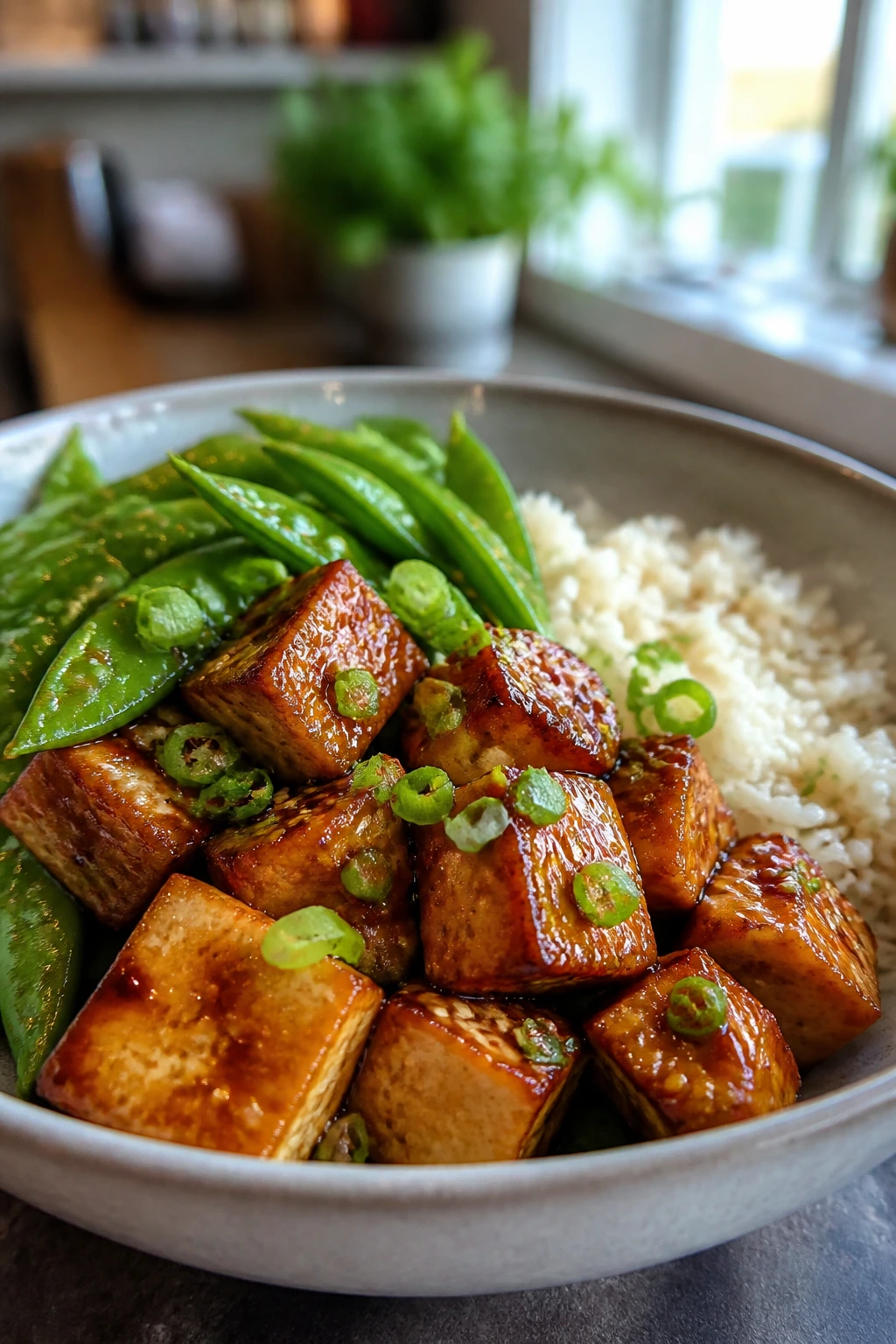
Tofu gets a bad reputation from people who only ever had it under-seasoned. Give it a hot pan, a little patience, and a sticky teriyaki glaze, and it starts acting like dinner. With snap peas and rice, this bowl lands around 450 calories.
The best part is the contrast: crisp tofu edges, tender peas, and a sauce that clings instead of drowning everything.
Why It Works
Extra-firm tofu holds up to pan-searing, which is what makes this dish work. Pressing the tofu gets rid of surface water, so it browns instead of steaming, and the teriyaki sauce reduces into a glossy coat with just a little cornstarch. Snap peas stay bright and snappy, which keeps the bowl from feeling soft all the way through.
Key Ingredients
- 1 block extra-firm tofu, about 14 oz
- 1 tbsp cornstarch
- 1 tbsp neutral oil
- 1 cup snap peas
- 1 carrot, julienned
- 2 cups cooked rice
- 1/4 cup low-sodium soy sauce
- 2 tbsp honey
- 1 tbsp rice vinegar
- 1 tsp grated ginger
Quick Steps
- Press tofu for 15 minutes, then cut into cubes and toss with cornstarch.
- Pan-fry in oil over medium-high heat until browned on most sides.
- Add snap peas and carrot; cook for 2 minutes.
- Stir soy sauce, honey, vinegar, ginger, and 2 tablespoons water into the pan.
- Simmer for 1 to 2 minutes until the sauce thickens and coats everything.
Tips and Variations
- Crispier tofu: Use an air fryer if you’ve got one.
- Lower-calorie move: Serve over cauliflower rice instead of rice.
- Finish well: Sesame seeds and scallions matter here.
12. Greek Chicken Salad Bowls
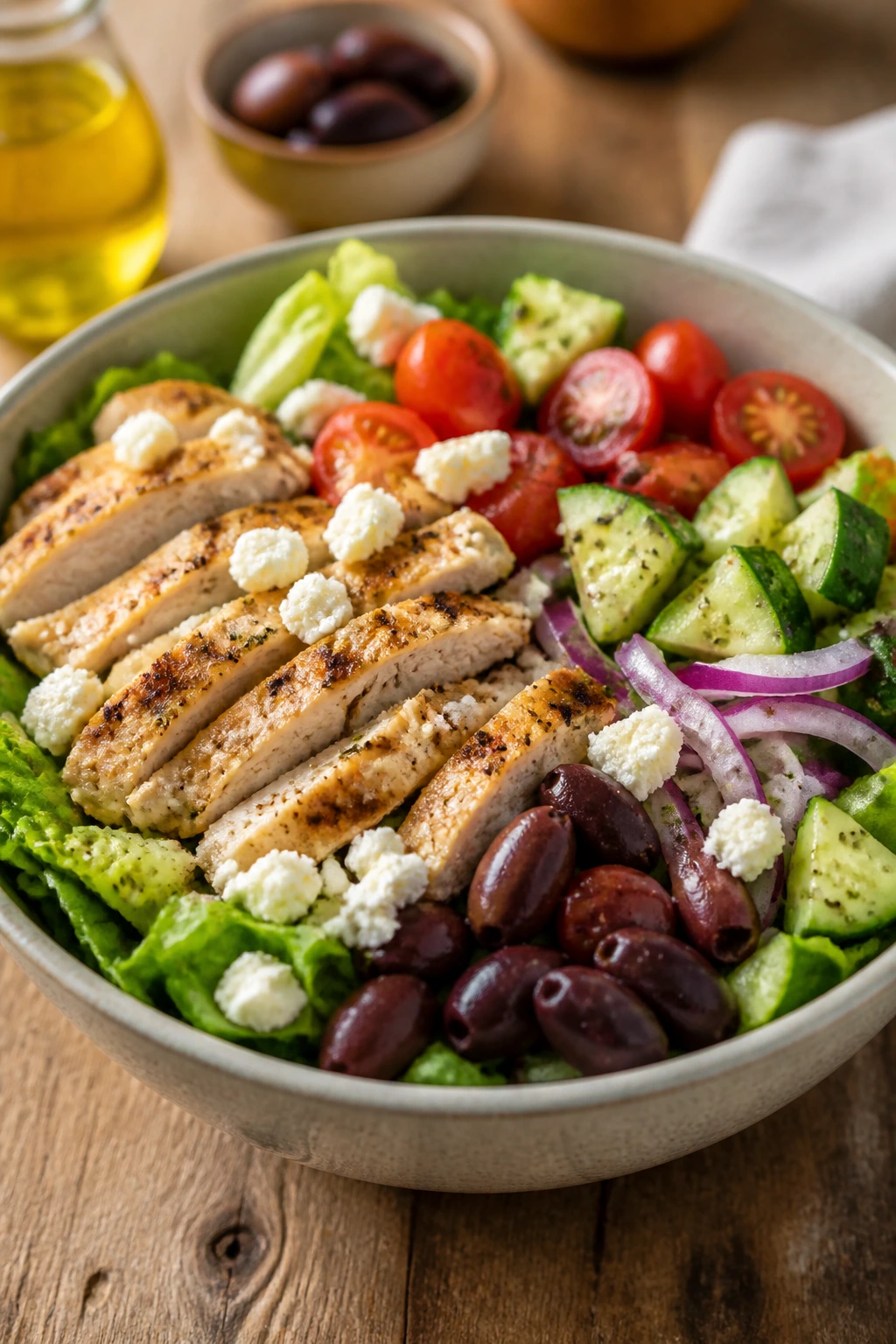
Cold or room temperature, this bowl still feels like dinner. The chicken brings protein, cucumber and tomatoes bring crunch, and a little feta plus olives give you the salty edge that keeps salad from tasting like a punishment. A bowl stays around 390 calories with a measured dressing.
I like this one on nights when the fridge looks a little boring but still has enough pieces to become something decent.
Why It Works
The Greek flavor profile does a lot of lifting for relatively few calories. Lemon, oregano, garlic, cucumber, and feta create a sharp, clean taste that doesn’t need much oil. Because the chicken is seasoned separately, every bite stays interesting rather than bland under a pile of lettuce.
Key Ingredients
- 1 lb chicken breast cutlets
- 1 tbsp olive oil
- 1 tsp dried oregano
- 1/2 tsp salt
- 1/4 tsp pepper
- 6 cups chopped romaine
- 1 cup cherry tomatoes
- 1 cucumber, diced
- 1/4 cup red onion, thinly sliced
- 1/3 cup feta
- 2 tbsp Greek vinaigrette
Quick Steps
- Season chicken with olive oil, oregano, salt, and pepper.
- Cook in a skillet over medium heat for 4 to 5 minutes per side until done.
- Slice and let rest for 5 minutes.
- Build bowls with romaine, tomatoes, cucumber, onion, and feta.
- Top with chicken and drizzle with vinaigrette.
Tips and Variations
- Want it more filling? Add 1/2 cup cooked farro.
- Shortcut: Use leftover grilled chicken.
- Flavor boost: Fresh dill makes the bowl taste brighter fast.
13. Beef and Broccoli with Brown Rice
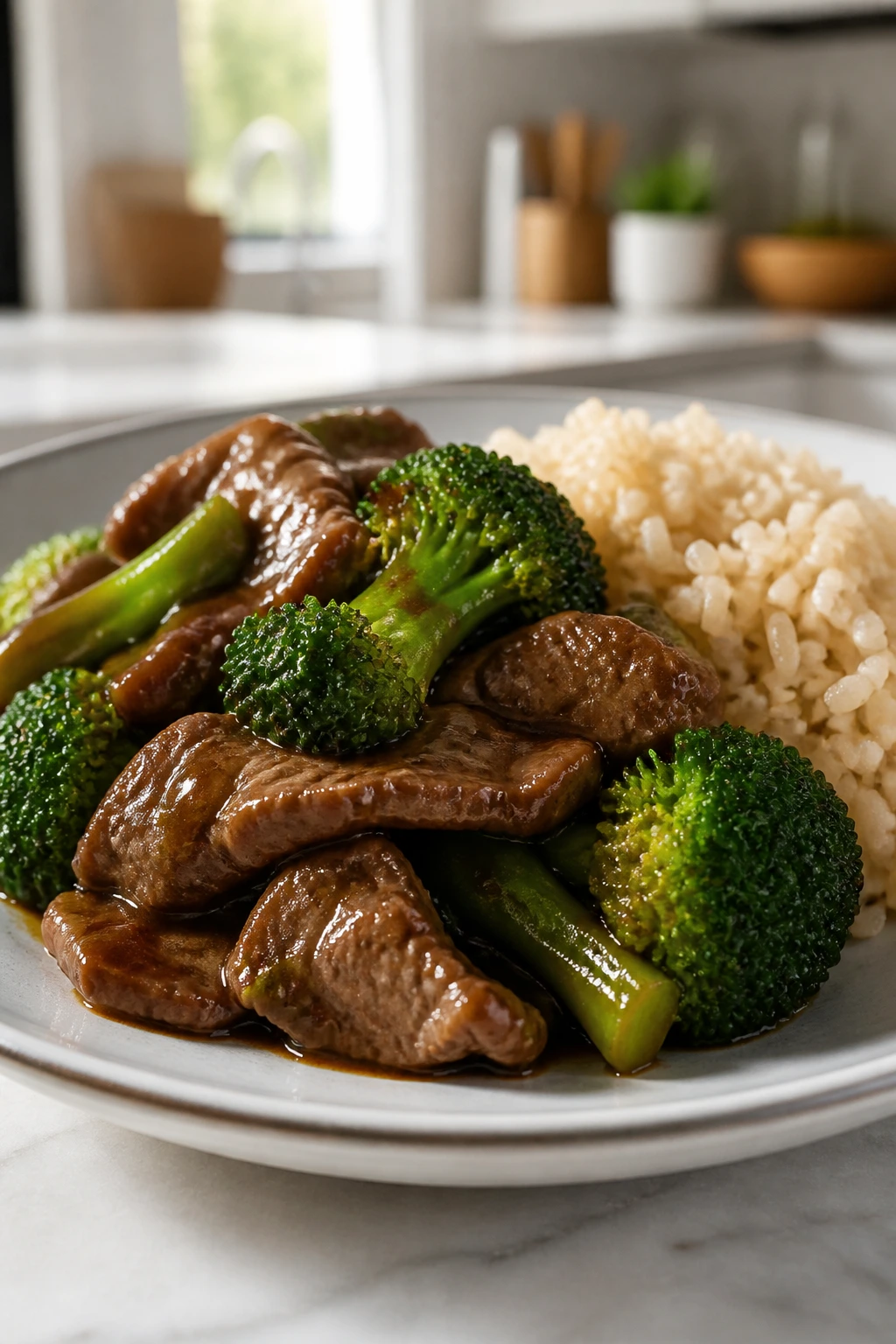
Yes, takeout-style beef and broccoli can fit the calorie target if you trim the oil and keep the sauce measured. The beef is savory, the broccoli stays green and crisp, and the sauce clings in that glossy way people secretly love. A serving sits near 490 calories with a modest rice portion.
This one lives or dies on two things: slicing the beef thinly and not cooking the broccoli to death.
Why It Works
A lean cut like flank steak gives you enough beef flavor without the fat load of a heavier cut. Blanching or quick-steaming the broccoli before it hits the skillet helps it cook evenly, and a soy-ginger sauce thickened with cornstarch gives you takeout texture without the heavy sugar hit. Brown rice makes the bowl feel complete, not overloaded.
Key Ingredients
- 1 lb flank steak, thinly sliced
- 4 cups broccoli florets
- 2 cups cooked brown rice
- 2 tbsp low-sodium soy sauce
- 1 tbsp oyster sauce
- 1 tbsp sesame oil
- 2 garlic cloves, minced
- 1 tbsp ginger, grated
- 1 tsp cornstarch
- 1 tbsp neutral oil
Quick Steps
- Toss beef with cornstarch and 1 tablespoon soy sauce.
- Stir-fry broccoli until bright green, about 3 minutes, then remove.
- Sear beef in hot oil for 2 to 3 minutes.
- Add garlic, ginger, remaining soy sauce, oyster sauce, sesame oil, and 2 tablespoons water.
- Return broccoli and cook 1 minute until coated.
Tips and Variations
- Best texture trick: Slice the beef against the grain.
- Too salty? Use half oyster sauce and extra water.
- Serving note: Keep rice at 1/2 cup cooked if calories matter.
14. Butternut Squash and Black Bean Chili
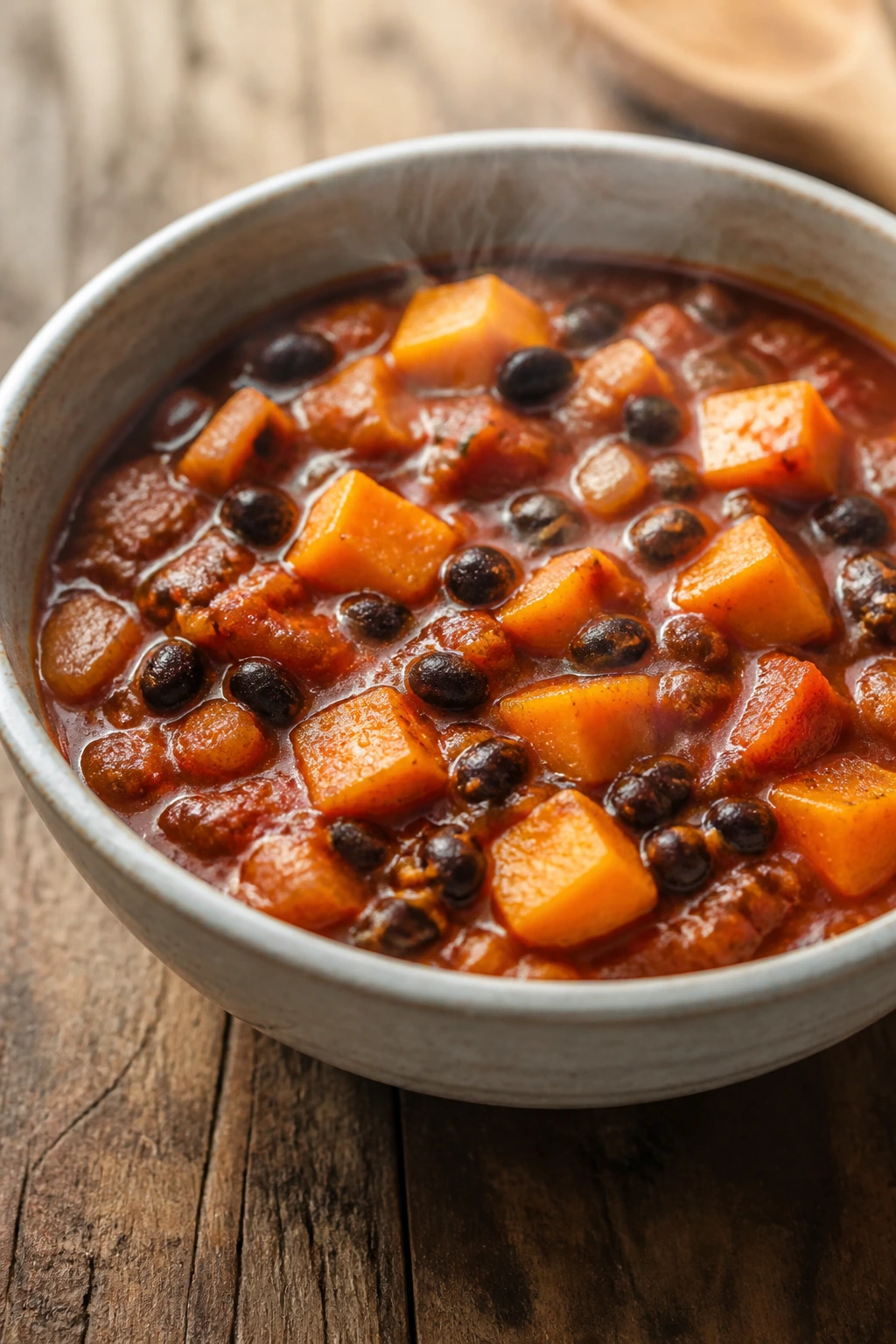
Thick, earthy, and a little sweet from the squash, this chili has enough body to feel like a real dinner without any meat at all. The beans bring protein, the tomatoes add acid, and the spices make the whole pot smell like it’s doing something worthwhile. A bowl comes in around 410 calories.
The squash softens into the chili and gives it a silky texture that works better than people expect. Not flashy. Just good.
Why It Works
Butternut squash adds bulk and a gentle sweetness that balances chili powder and cumin. Black beans bring fiber and protein, which keeps the bowl satisfying without a pile of cheese on top. A long simmer helps the squash soften and the flavors meld, and that’s where the chili gets its depth.
Key Ingredients
- 1 tbsp olive oil
- 1 onion, diced
- 2 garlic cloves, minced
- 4 cups butternut squash, peeled and cubed
- 2 cans black beans, rinsed and drained
- 1 can diced tomatoes
- 2 cups vegetable broth
- 2 tbsp chili powder
- 1 tsp cumin
- 1/2 tsp salt
Quick Steps
- Cook onion in olive oil for 4 minutes.
- Add garlic, squash, chili powder, and cumin; stir for 1 minute.
- Pour in beans, tomatoes, broth, and salt.
- Simmer for 25 to 30 minutes until the squash is tender.
- Mash a few spoonfuls against the side of the pot to thicken.
Tips and Variations
- More heat: Add chipotle in adobo.
- Serving idea: A spoon of plain yogurt is enough; no need to bury it.
- Storage note: Chili gets even better after a night in the fridge.
15. Egg Roll in a Bowl with Turkey
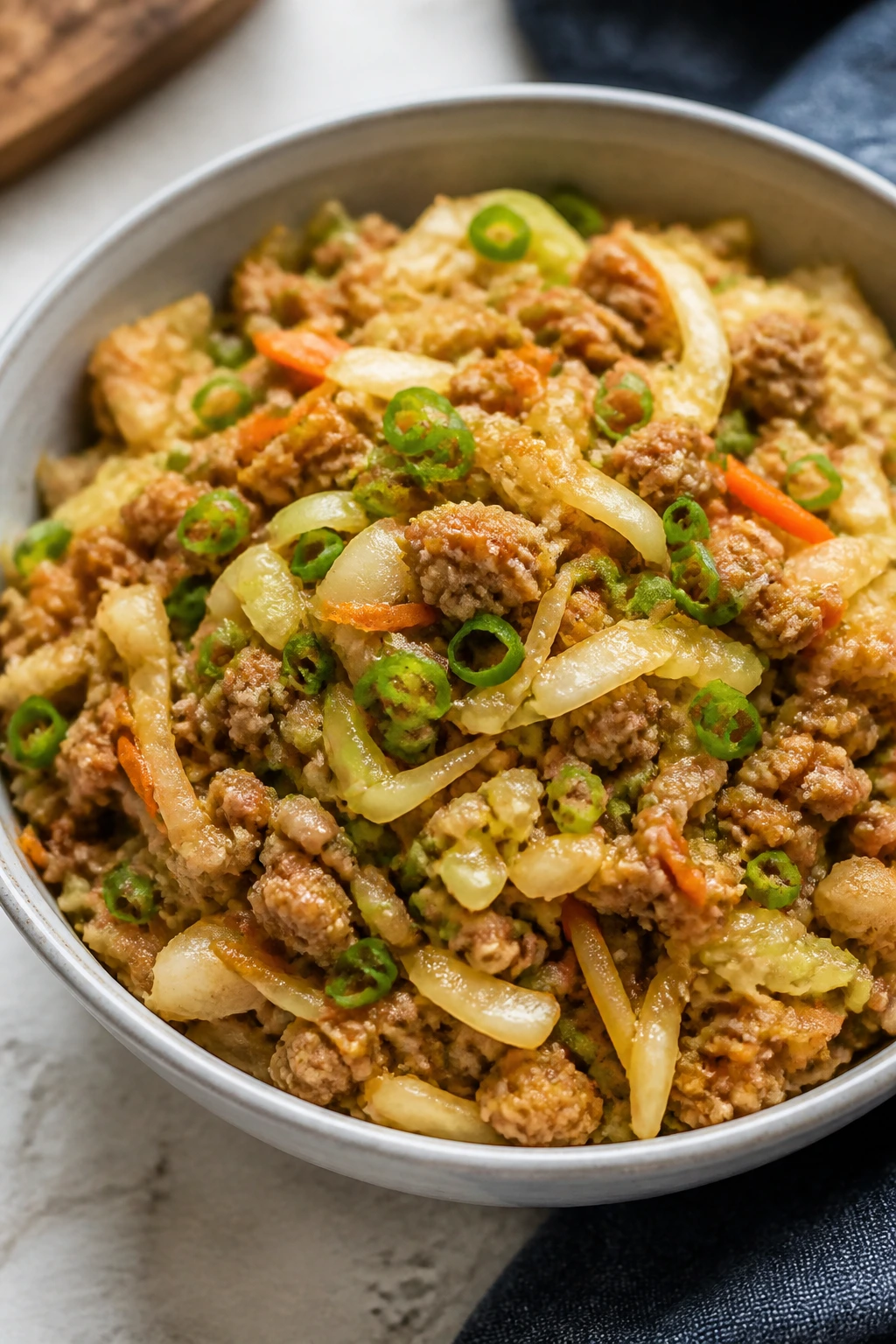
All the takeout flavor is here, minus the fried wrapper. Cabbage softens in the skillet, the turkey soaks up soy and ginger, and the sesame oil makes the whole thing smell like a dinner you’d happily repeat. One bowl runs about 360 calories.
This is one of my favorite “I can’t be bothered” dinners because it cooks fast and still tastes intentional.
Why It Works
Shredded cabbage is the secret weapon. It cooks down quickly, absorbs sauce, and gives you a lot of volume for very few calories. Turkey keeps the dish light, and the combination of ginger, garlic, and sesame oil gives it that familiar egg-roll flavor without needing the wrapper at all.
Key Ingredients
- 1 lb ground turkey
- 1 tbsp neutral oil
- 1 small onion, diced
- 3 cups shredded cabbage or coleslaw mix
- 2 carrots, shredded
- 2 garlic cloves, minced
- 1 tbsp grated ginger
- 2 tbsp low-sodium soy sauce
- 1 tsp sesame oil
- 2 scallions, sliced
Quick Steps
- Brown turkey in oil over medium-high heat.
- Add onion, garlic, and ginger; cook for 2 minutes.
- Stir in cabbage and carrots, then cook for 5 to 7 minutes until softened but still a little crisp.
- Add soy sauce and sesame oil.
- Finish with scallions and serve hot.
Tips and Variations
- Crunch lover: Leave the cabbage slightly firmer than you think you should.
- No turkey? Ground chicken works the same way.
- Make it bowl-style: Serve with 1/2 cup rice if you have room in your calorie budget.
16. Pesto Chicken Zucchini Noodles
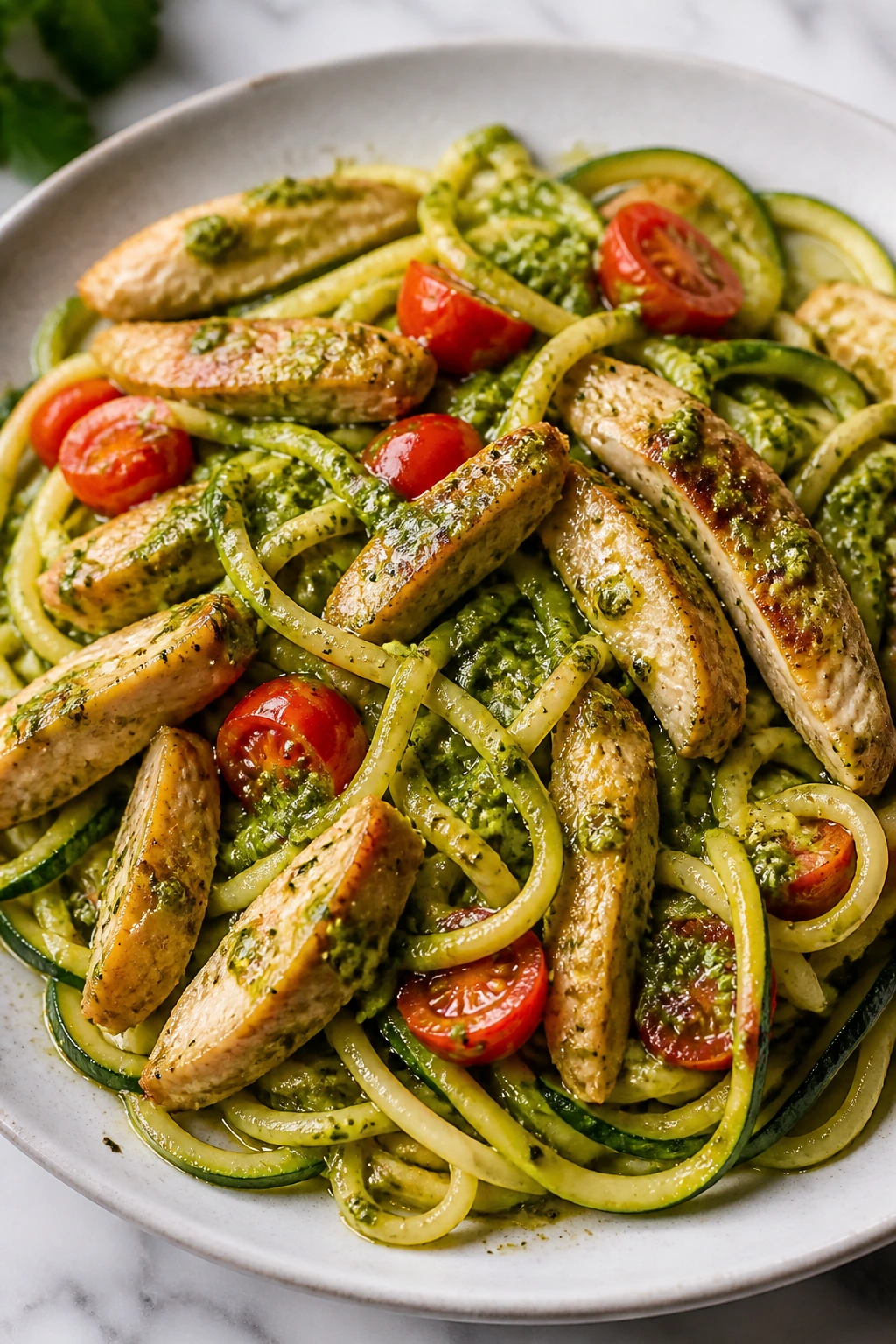
This is the dinner version of a quick clean-up: bright basil pesto, juicy chicken, and zucchini noodles that stay light instead of clumping like wet string. It’s fast, green, and around 420 calories a serving if you don’t go wild with pesto.
The trick is using pesto as a finishing sauce, not a soup base. Too much and the calories climb fast.
Why It Works
Chicken gives the bowl its staying power, while zucchini noodles keep the starch load low. Pesto brings fat, garlic, and basil in a concentrated form, so a couple of spoonfuls go a long way. A quick skillet toss keeps the zucchini from leaking water and turning the sauce dull.
Key Ingredients
- 1 lb boneless, skinless chicken breast, sliced
- 3 zucchini, spiralized
- 3 tbsp basil pesto
- 1 tbsp olive oil
- 1 cup cherry tomatoes, halved
- 1 garlic clove, minced
- 1/4 tsp salt
- 1/4 tsp pepper
- 2 tbsp grated Parmesan, optional
Quick Steps
- Cook chicken in olive oil over medium-high heat for 6 to 7 minutes until done.
- Add garlic and tomatoes; cook for 1 minute.
- Add zucchini noodles and toss for 1 to 2 minutes only.
- Remove from heat and stir in pesto.
- Top with Parmesan if using.
Tips and Variations
- Don’t overcook the noodles: They should still bend a little.
- Extra richness: A teaspoon of lemon juice sharpens the pesto.
- Meal-prep caution: Keep zucchini and sauce separate until reheating.
17. Miso Soba Soup with Edamame
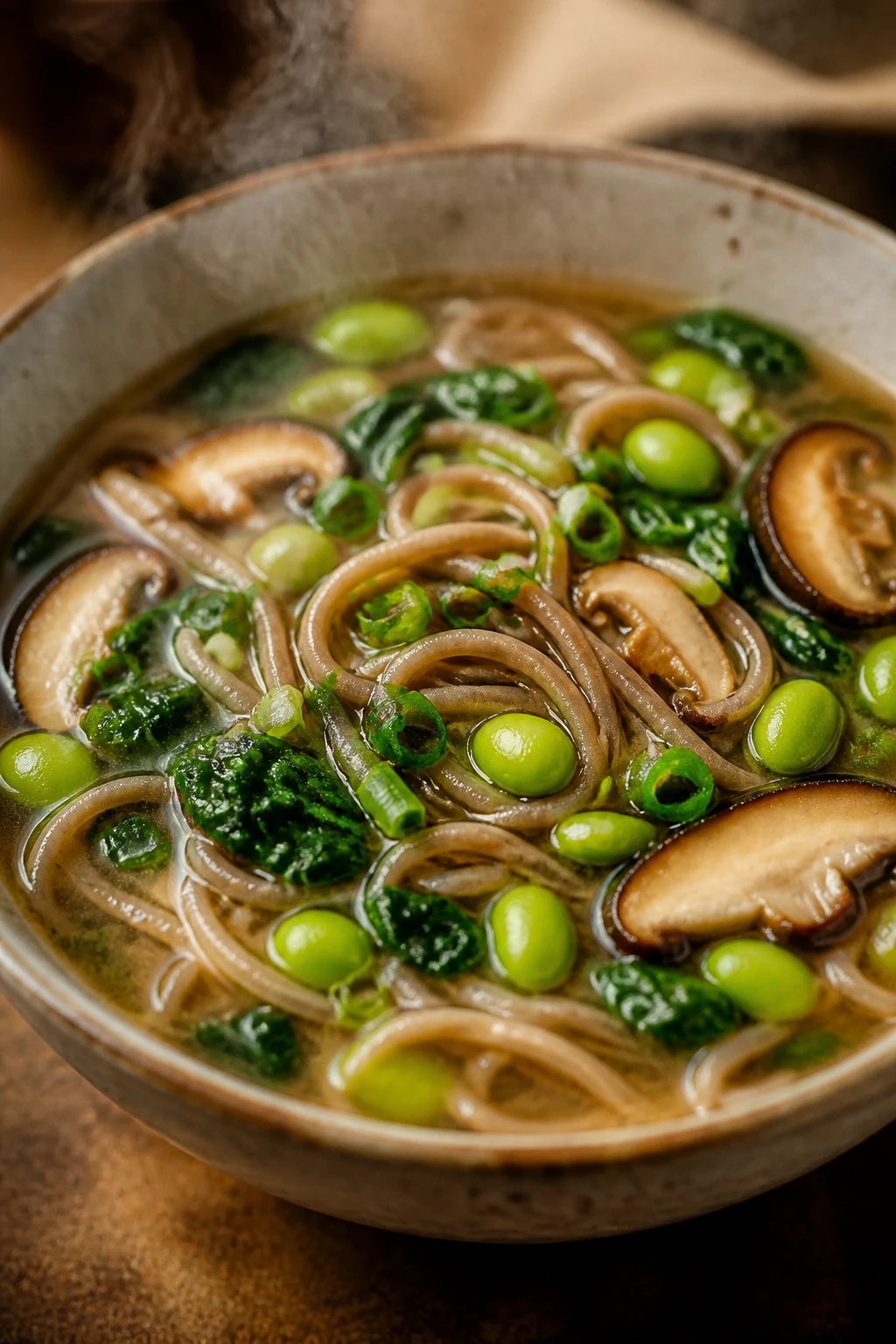
Brothy, salty, and a little nutty, this soup feels like a full meal even though it stays light. Soba noodles give it chew, edamame adds protein, and mushrooms make the broth taste deeper than it should for so little effort. A bowl sits around 380 calories.
Soups like this are useful because they eat bigger than the number on the page. That matters on hungry nights.
Why It Works
Miso paste carries a lot of flavor in a small amount, which is one reason this soup stays under the calorie cap. Edamame brings protein, soba noodles provide enough carbs to make it dinner, and mushrooms add an earthy base note. Keep the broth at a gentle simmer after the miso goes in; hard boiling dulls the flavor.
Key Ingredients
- 4 cups low-sodium broth
- 2 tbsp white miso paste
- 4 oz soba noodles
- 1 cup shelled edamame
- 2 cups sliced mushrooms
- 2 scallions, sliced
- 1 tsp grated ginger
- 1 tsp sesame oil
- 1 cup baby spinach
- 1 tsp soy sauce
Quick Steps
- Simmer broth with ginger and mushrooms for 5 minutes.
- Add soba noodles and cook according to package directions.
- Stir in edamame and spinach for the last minute.
- Turn off heat, whisk miso with a ladle of broth, then stir it back in.
- Finish with soy sauce, sesame oil, and scallions.
Tips and Variations
- Don’t boil the miso: It tastes harsher that way.
- Protein bump: Add shredded chicken or tofu cubes.
- Nice touch: A few drops of chili oil go a long way.
18. Turkey Burgers with Sweet Potato Wedges
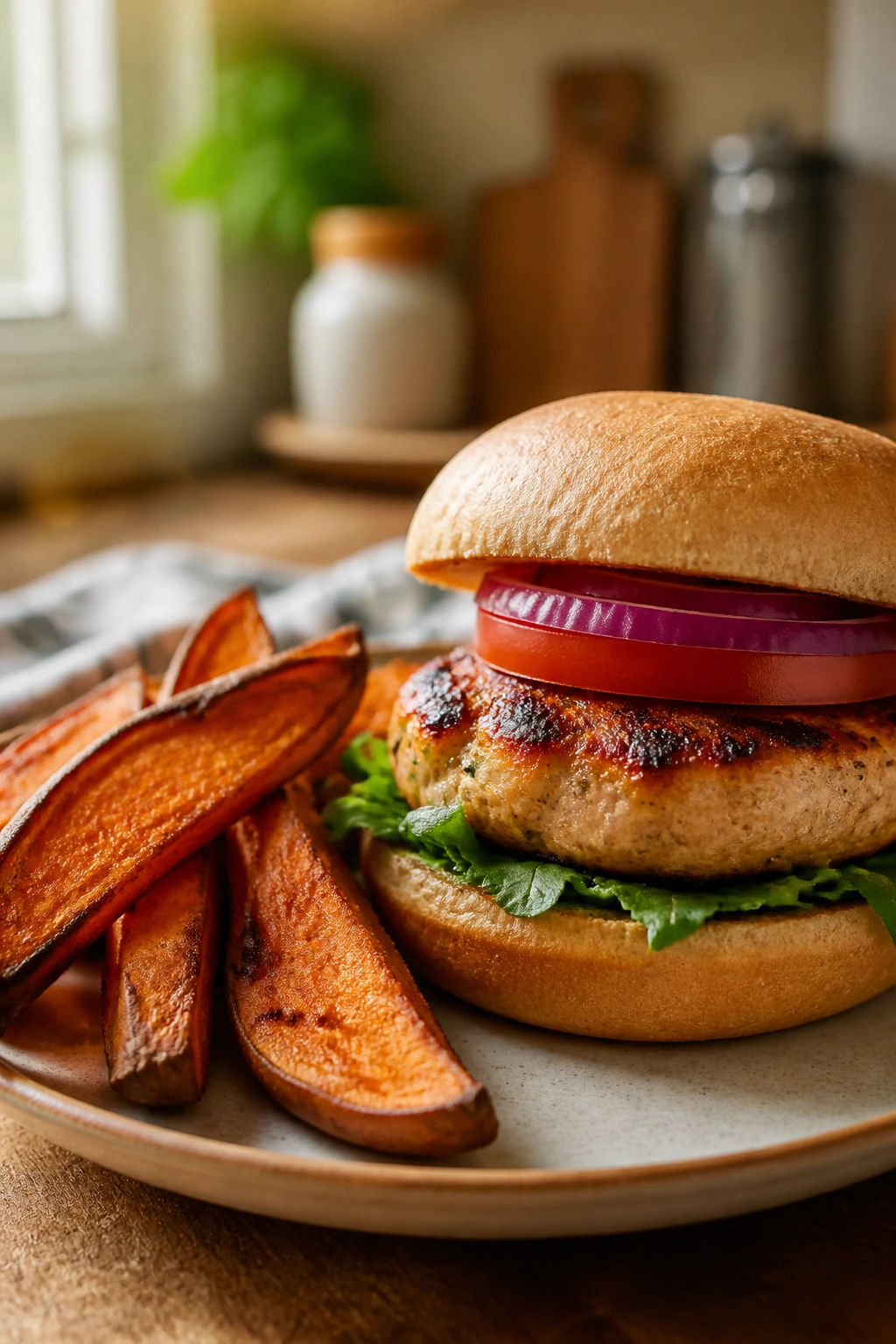
This one gives you the burger feeling without the grease-heavy aftermath. The turkey patty stays lean, the sweet potato wedges bring a little sweetness and crunch, and a simple yogurt sauce keeps the whole thing fresh. A plate lands around 480 calories if you keep the bun situation under control.
If you’ve been missing burger night, this is the cleaner answer that still feels like a reward.
Why It Works
Turkey burgers can be dry, so grated onion, mustard, and a touch of Worcestershire help keep the patty juicy. Baking the sweet potato wedges on the same tray saves time and gives you a built-in starch that feels more dinner-like than a plain salad. The yogurt sauce replaces heavier condiments and keeps the burger bright.
Key Ingredients
- 1 lb ground turkey
- 1/4 cup grated onion
- 1 tbsp Dijon mustard
- 1 tsp Worcestershire sauce
- 1/2 tsp salt
- 1/4 tsp pepper
- 2 large sweet potatoes, cut into wedges
- 1 tbsp olive oil
- 1/2 cup plain Greek yogurt
- 4 burger buns or lettuce leaves
Quick Steps
- Heat oven to 425°F (220°C).
- Toss sweet potato wedges with olive oil and a pinch of salt; roast for 25 minutes.
- Mix turkey, onion, mustard, Worcestershire, salt, and pepper; form 4 patties.
- Pan-cook or grill patties for 4 to 5 minutes per side until done.
- Serve on buns or lettuce with yogurt sauce and the roasted wedges.
Tips and Variations
- Lower-calorie move: Skip the bun and use lettuce wraps.
- Juicier patties: Don’t pack the meat too tightly.
- If you want spice: Add smoked paprika and a little hot sauce.
19. Mediterranean Stuffed Eggplant
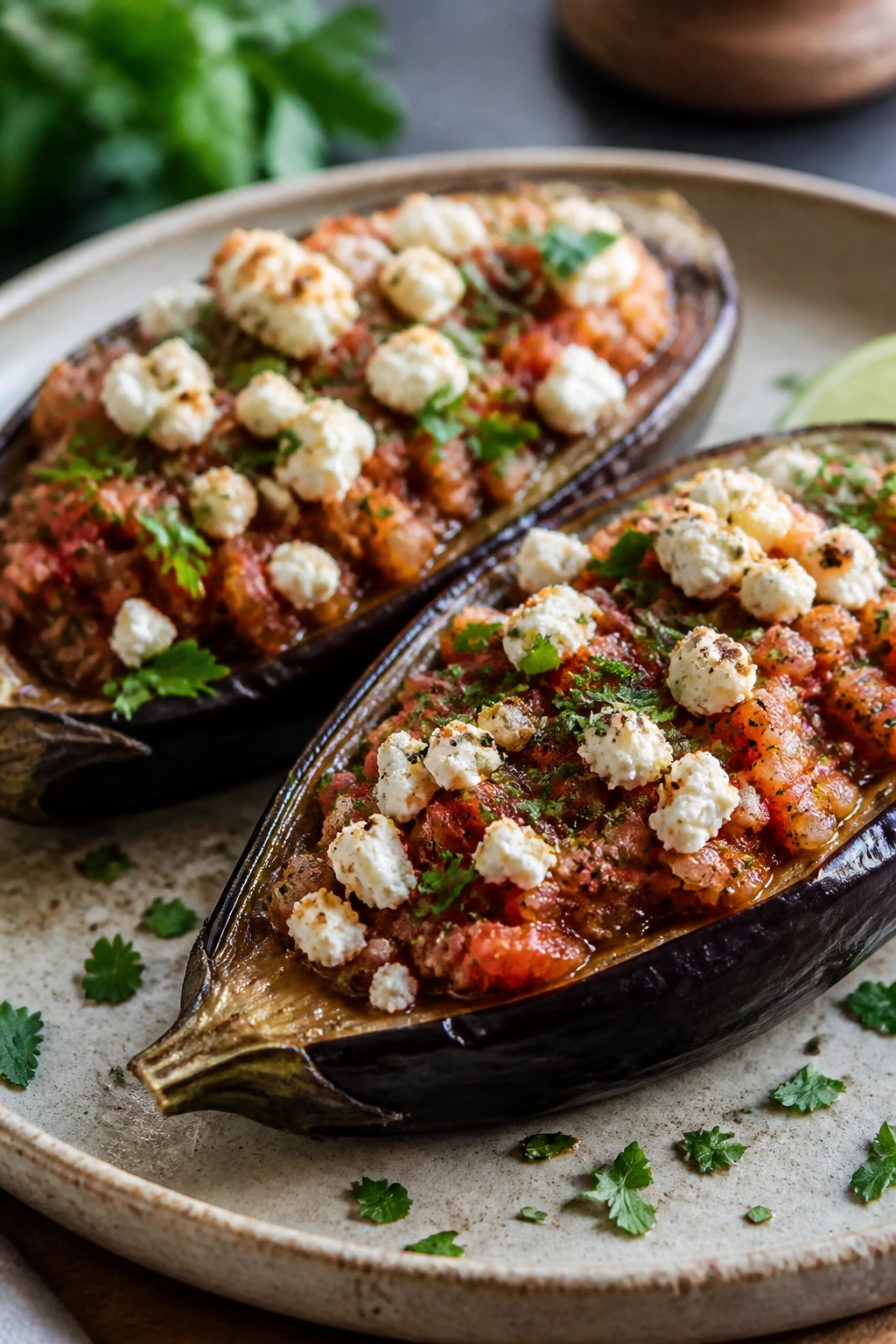
Eggplant turns silky when it roasts properly, and that’s what makes this dish worth doing. The filling leans on tomatoes, onion, herbs, and a modest amount of couscous or quinoa, so the plate feels complete without getting heavy. A serving comes in around 450 calories.
This is one of those dinners that looks like you worked harder than you did. I’m not mad about that.
Why It Works
Roasted eggplant gives you a soft, almost creamy base that soaks up tomato sauce without collapsing. Chickpeas or lean ground turkey can bulk up the filling, but even without meat, the mix of herbs and grains makes it substantial. A little feta on top finishes the dish with salt and tang, and you don’t need much.
Key Ingredients
- 2 medium eggplants, halved lengthwise
- 1 tbsp olive oil
- 1 small onion, diced
- 2 garlic cloves, minced
- 1 cup diced tomatoes
- 1 cup cooked couscous or quinoa
- 1 cup chickpeas, rinsed and drained
- 1 tsp dried oregano
- 1/2 tsp salt
- 1/3 cup crumbled feta
Quick Steps
- Roast eggplant halves cut-side down at 400°F for 20 minutes.
- Scoop out a little flesh and chop it.
- Sauté onion and garlic, then add tomatoes, chopped eggplant, grains, chickpeas, oregano, and salt.
- Fill the eggplant shells and top with feta.
- Bake for 10 to 12 minutes until hot and lightly browned.
Tips and Variations
- For softer shells: Roast the eggplant a few minutes longer.
- Meat version: A little ground lamb changes the mood fast.
- Serving note: Fresh mint or parsley lifts the whole tray.
20. Coconut Lime Chicken Soup
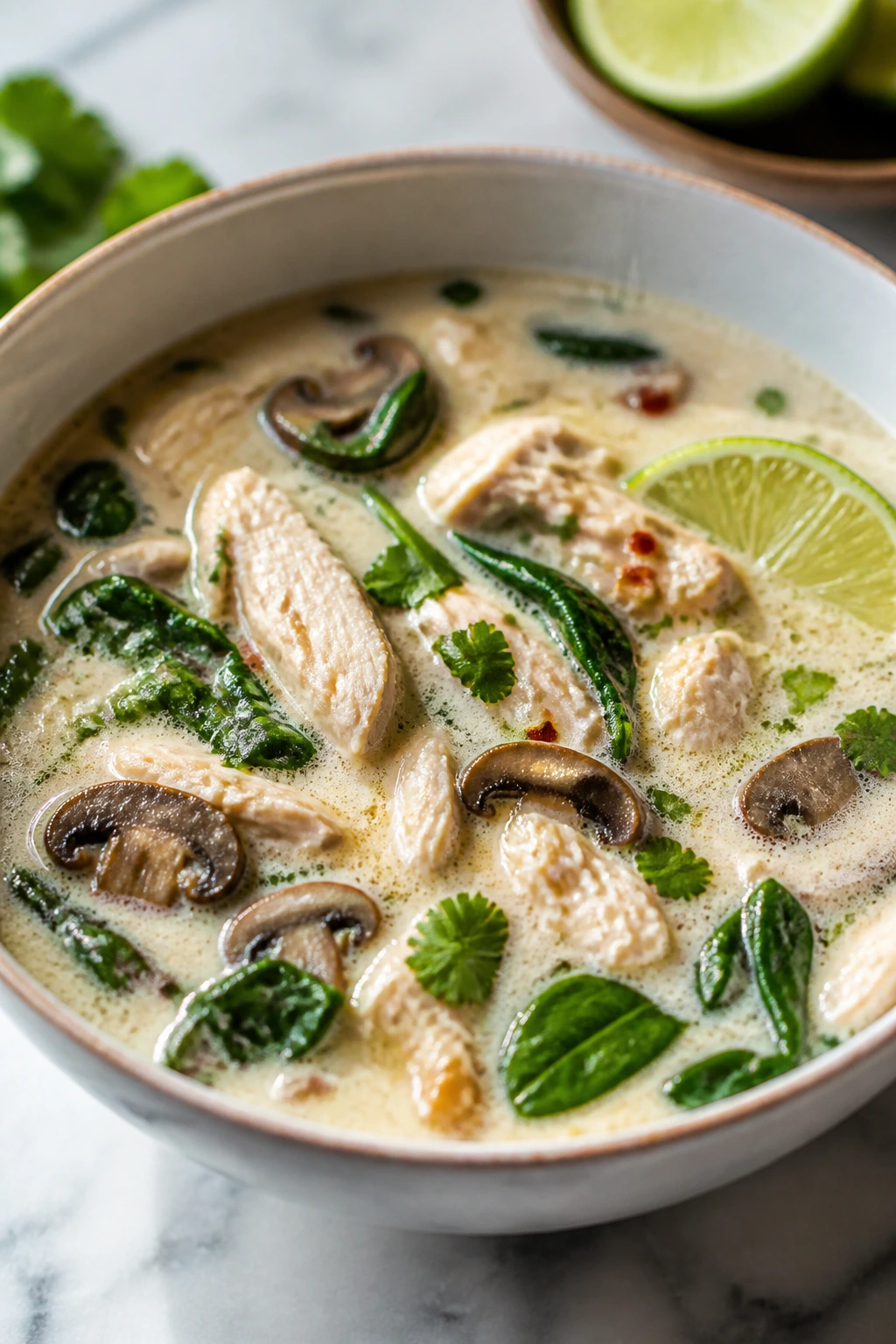
This soup is light enough to fit the calorie target but still tastes rich because the coconut milk and lime do a nice little balancing act. The broth is fragrant, the chicken stays tender, and the vegetables make the bowl feel complete. A serving lands close to 400 calories.
It’s the sort of meal you want when dinner needs to be soothing but not heavy. Warm, bright, and a little creamy. Exactly right.
Why It Works
A small amount of coconut milk gives the soup body without turning it into a calorie bomb. Lime juice adds acid at the end, which keeps the broth from tasting dull or flat. Chicken breast, mushrooms, and spinach bring protein and volume, and a gentle simmer keeps the texture clean.
Key Ingredients
- 1 tbsp olive oil
- 1 small onion, diced
- 2 garlic cloves, minced
- 1 tbsp grated ginger
- 1 lb chicken breast, cut into bite-sized pieces
- 4 cups chicken broth
- 1 cup light coconut milk
- 1 cup sliced mushrooms
- 2 cups baby spinach
- 2 tbsp lime juice
- 1 tbsp fish sauce or soy sauce
Quick Steps
- Cook onion, garlic, and ginger in olive oil for 3 minutes.
- Add chicken and cook until the outside turns opaque.
- Pour in broth, coconut milk, mushrooms, and fish sauce.
- Simmer for 12 to 15 minutes until the chicken is cooked and the mushrooms soften.
- Stir in spinach and lime juice just before serving.
Tips and Variations
- If you like heat: Add sliced chili or a little red curry paste.
- For a thicker soup: Simmer uncovered for a few extra minutes.
- Best finish: Fresh cilantro and extra lime make it pop.
What Keeps These Dinners Filling Without Breaking the Calorie Bank
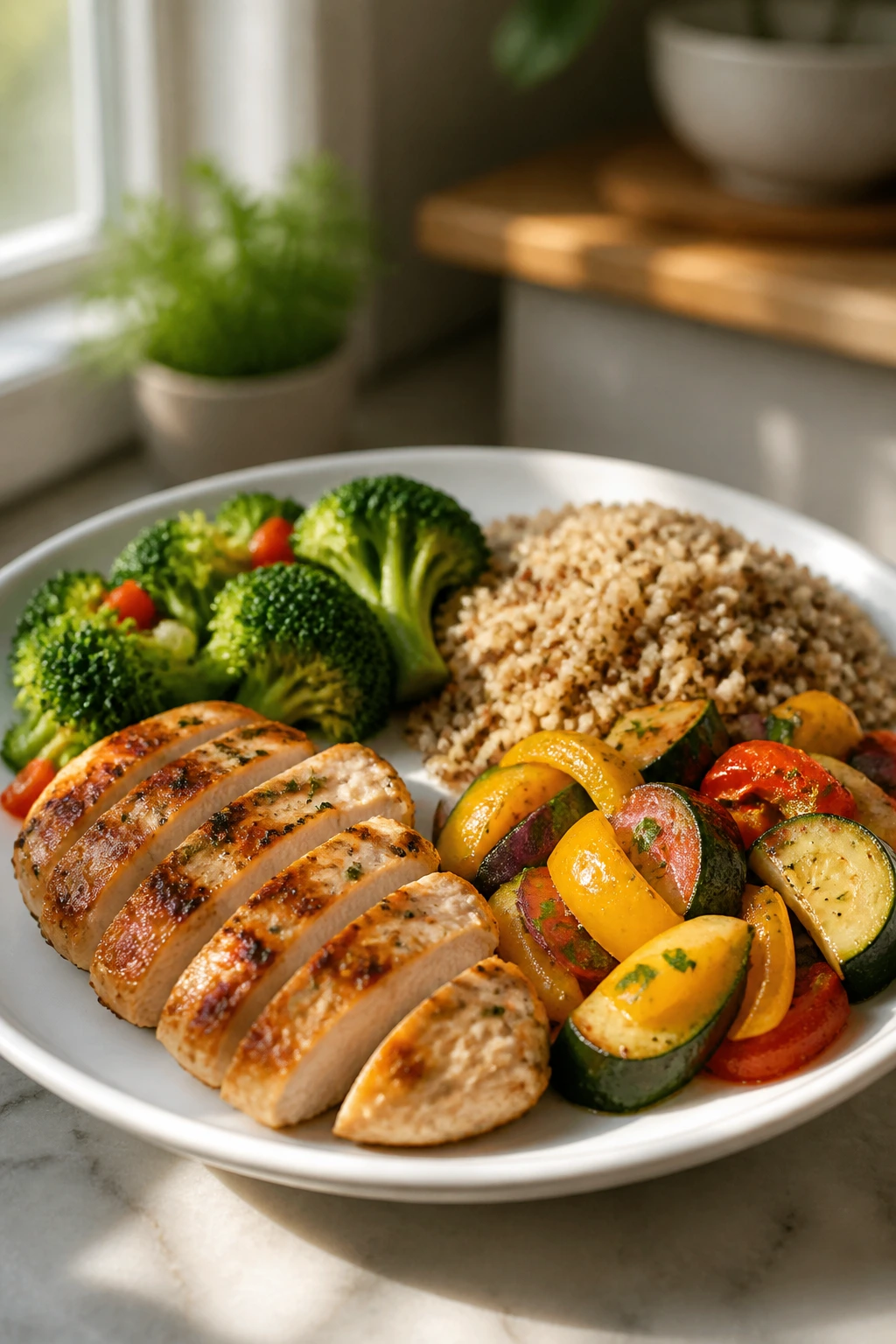
The recipes above work because they do a few small things well instead of one giant thing badly. They use lean protein in sensible portions, which matters more than people want to admit. A 4- to 6-ounce serving of chicken, fish, turkey, tofu, or beans gives the plate backbone, and that backbone keeps you from hunting for snacks an hour later.
Vegetables carry a lot of the load here. Broccoli, peppers, spinach, cabbage, eggplant, asparagus, and zucchini all bring volume, water, and fiber for very few calories. That’s why a bowl of stir-fry can feel generous while still staying under target. The plate looks full. Your stomach notices.
Sauce is where the calories hide if you stop paying attention. A tablespoon of oil, a splash of sesame oil, a handful of cheese, a scoop of pesto, a drizzle of dressing — these are the details that decide whether dinner lands at 380 calories or quietly wanders past 600. I’m not against fat. I’m against not measuring it.
Essential Equipment for These Recipes
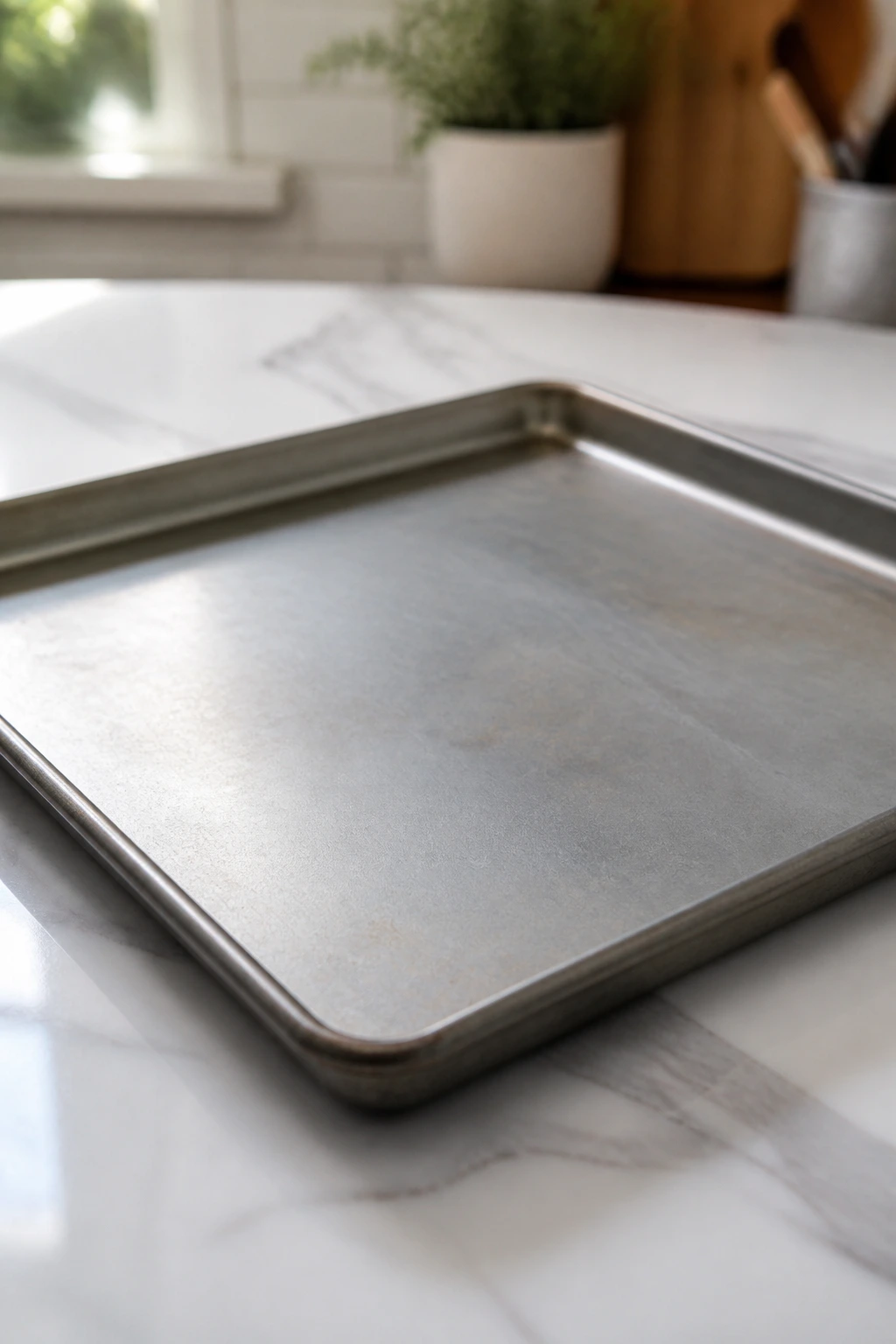
- Rimmed sheet pans: Crucial for roasting chicken, salmon, vegetables, and wedges without spills.
- Large nonstick skillet: The workhorse for stir-fries, taco skillets, egg roll bowls, and burger patties.
- Dutch oven or soup pot: Best for chili, curry, coconut soup, and miso broth.
- Baking dish: Useful for stuffed peppers, eggplant, and casseroles that need a steady oven.
- Sharp chef’s knife: Cuts veggies evenly, and even cuts cook more evenly. That’s not glamorous, but it matters.
- Cutting board with a stable surface: A wobbly board turns fast prep into a nuisance.
- Instant-read thermometer: The cleanest way to tell when chicken, turkey, or salmon is done.
- Mixing bowls: One large bowl for marinades or fillings saves a lot of chaos.
- Tongs and a fish spatula: Tongs handle most things; the fish spatula is a nice extra for delicate fillets.
- Meal-prep containers: Make leftovers easier to portion, which helps keep these dinners in range.
Smart Shopping and Ingredient Tips
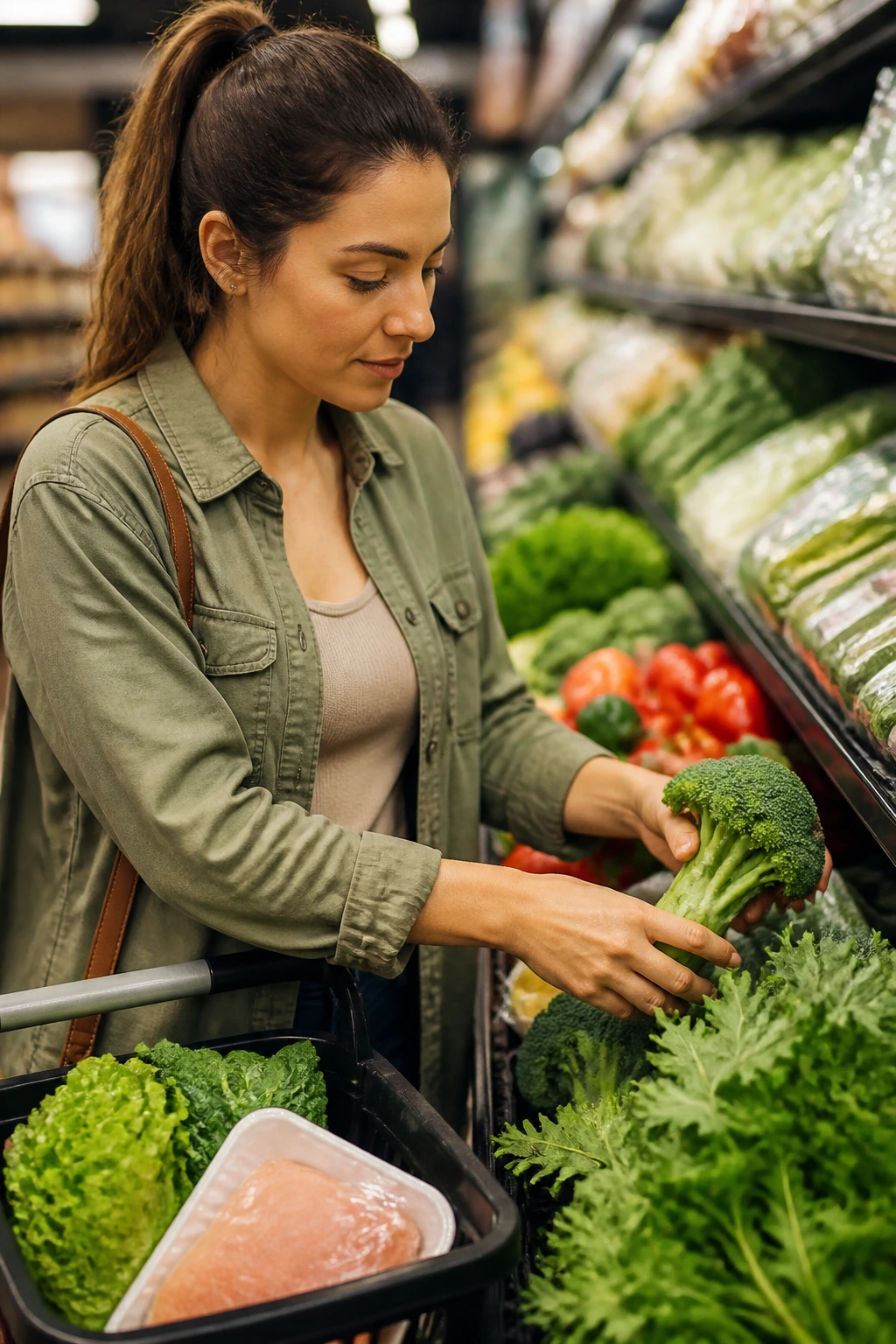
Buy lean proteins that still have some flavor. Chicken breast is the easiest calorie-saving move, but boneless thighs can work when you want more richness. For ground meat, choose 93% lean turkey or 90/10 beef; fattier blends taste good, sure, but they also burn through your calorie room fast.
Frozen ingredients deserve more respect than they get. Frozen shrimp, edamame, cauliflower rice, spinach, and even broccoli can be excellent here, especially when fresh produce looks tired or costs too much. Just thaw and dry anything that goes into a hot skillet, or you’ll end up steaming the pan instead of cooking it.
Be picky about sauces and condiments. Low-sodium soy sauce, canned tomatoes without extra sugar, plain Greek yogurt, and broth that doesn’t taste like salt water all make a difference. A decent jarred marinara or pesto is fine too, but check the serving size. Half a cup can be four servings on paper and one serving in the real world.
Grains and starches need measuring, not guessing. Cooked rice, couscous, quinoa, and pasta can fit these dinners easily when you portion them honestly. A half-cup cooked grain is often enough once you’ve got protein and vegetables on the plate. That small move does a lot.
How to Serve These Recipes
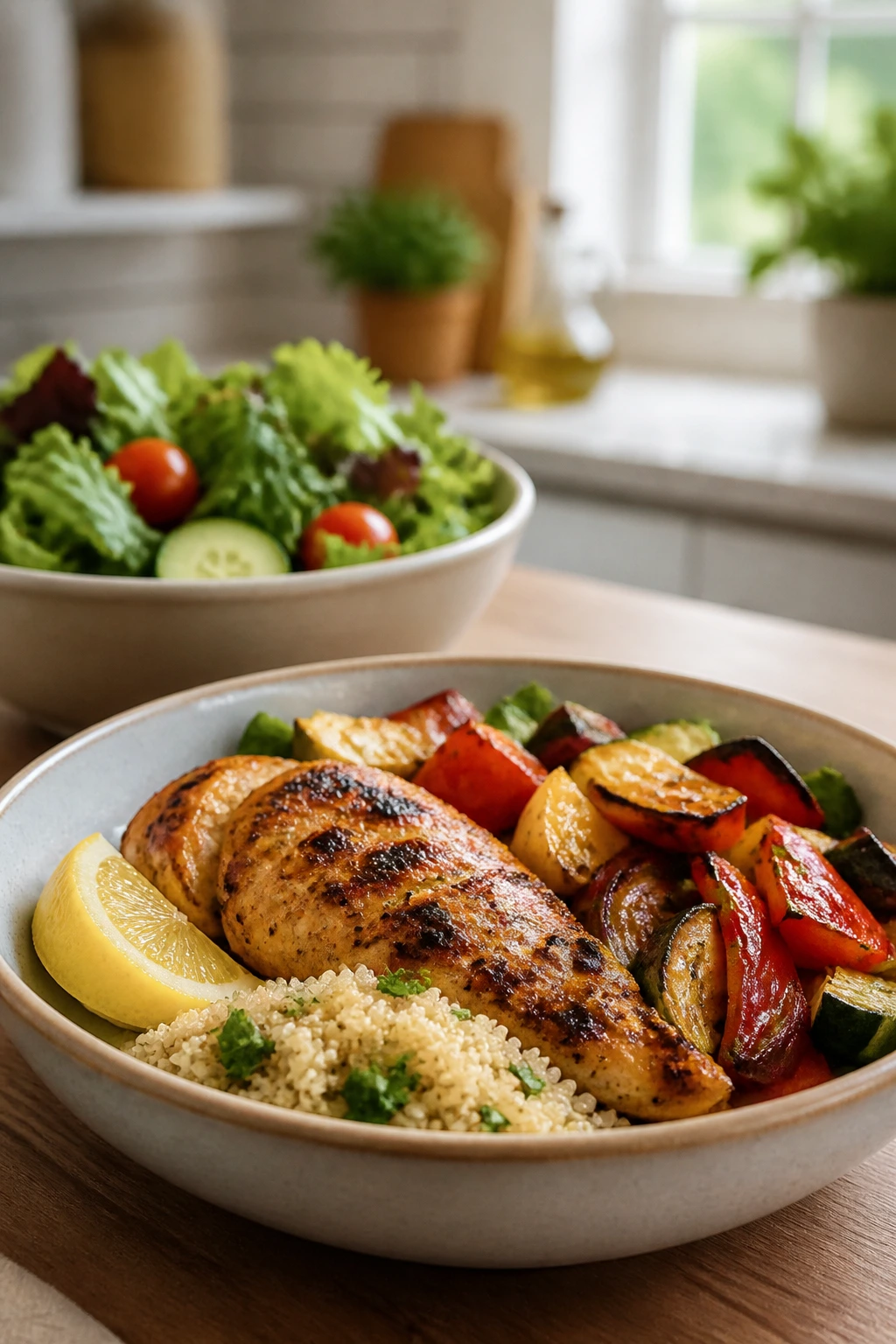
Presentation: Use shallow bowls, wide plates, or rimmed soup bowls so the food looks generous without requiring huge portions. A sprinkle of herbs, a lemon wedge, or a little yogurt drizzle makes even the simplest dinner feel finished.
Accompaniments: A crisp side salad, roasted green beans, cucumber salad, steamed asparagus, or a small piece of whole-grain bread fits these meals better than oversized sides. If you want starch, keep it measured — 1/2 cup rice, one small potato, or a modest portion of couscous is usually enough.
Portions: Most of these recipes serve 4, and that’s the sweet spot for calorie control. If you’re feeding hungrier people, scale up the vegetables first and then the protein; don’t double the cheese or oil and call it balance. You’ll know the portion is right when the plate looks full but you still feel okay after dinner instead of weighed down.
Beverage Pairing: Sparkling water with lime, unsweetened iced tea, or a dry white wine with fish and chicken keeps the meal feeling fresh. For heartier dishes like chili or shepherd’s pie, a simple glass of cold water with lemon is honestly enough.
Additional Tips and Flavor Boosters
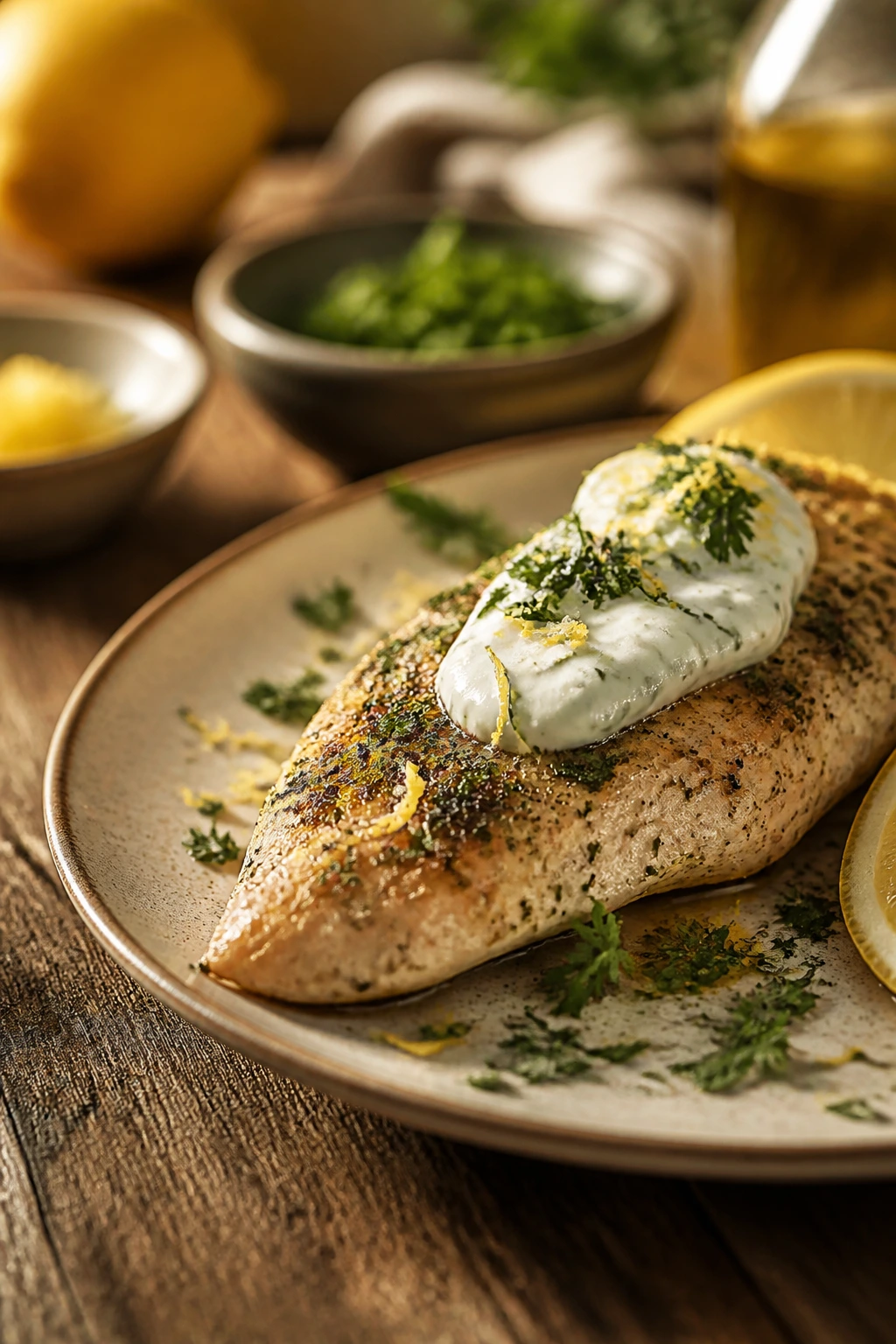
Flavor Enhancement: Acid is the fastest fix for a dinner that tastes a little sleepy. A squeeze of lemon, a splash of vinegar, or a spoonful of pickled relish can wake up chicken, fish, beans, and vegetables without piling on calories.
Customization: Keep a few add-ins around — scallions, parsley, cilantro, chili flakes, capers, olives, toasted sesame seeds, and plain Greek yogurt. Those are small pantry moves, but they change the mood of a meal more than a second protein ever will.
Serving Suggestions: Finish roasted dishes with fresh herbs after they come out of the oven, not before. Add yogurt sauces at the table, not in the pan. And if a dish feels too soft, give it crunch with sliced cucumber, radishes, toasted seeds, or a few crisp lettuce leaves.
Make-It-Yours: For gluten-free dinners, use tamari, corn tortillas, rice, quinoa, or gluten-free pasta. For dairy-free versions, skip cheese and lean on tahini, avocado, coconut milk, or extra herbs. For higher-protein plates, increase the lean protein a little and trim back the starch instead of raiding the cheese drawer.
Make-Ahead, Storage, and Reheating Guidance
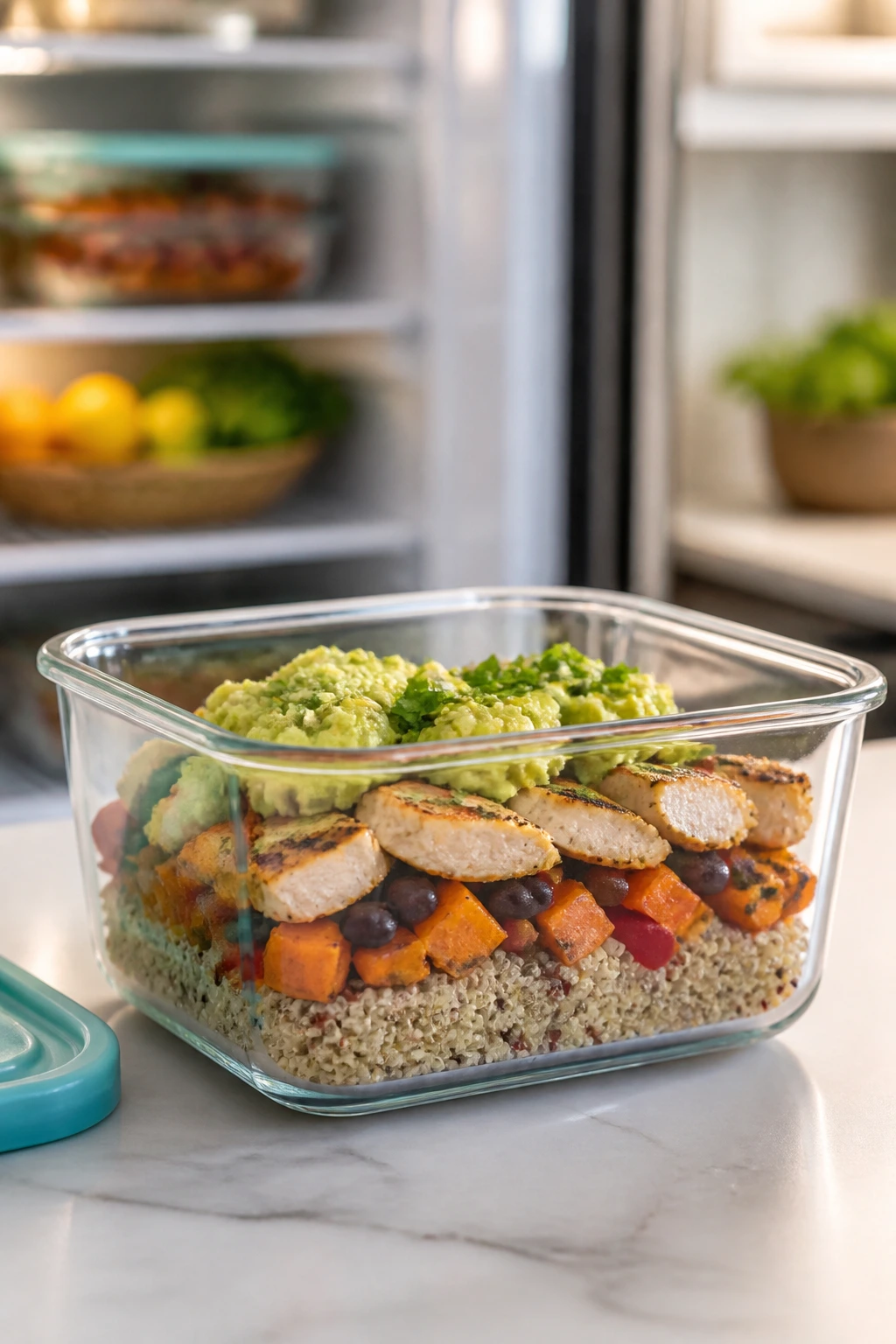
Most of these dinners hold well in the fridge for 3 to 4 days if you cool them quickly and pack them in shallow containers. Soups, chili, curry, and lentil dishes often taste even better the next day because the spices settle in. Crisp salads and lettuce wraps are the exceptions; keep the components separate and assemble at the last minute.
For the freezer, use common sense. Chili, curry, shepherd’s pie filling, meatballs, stuffed peppers, and cooked turkey or chicken fillings freeze well for up to 2 to 3 months. Zucchini noodles, lettuce, and salad greens do not freeze well at all, and fish is better fresh or refrigerated than frozen after cooking.
Reheat skillet meals in a pan over medium heat with a splash of water or broth so the sauce loosens up. Oven dishes do best at 350°F, covered with foil until hot. Soups and chilis reheat gently on the stove over low to medium heat; don’t boil them hard unless you want the texture to go dull. For rice bowls, heat the rice separately if you can. That one small step stops the whole bowl from going mushy.
A useful habit: keep sauces, garnishes, and crunchy toppings separate from the main food until serving. It takes a minute longer, but the leftovers stay cleaner and taste fresher.
Variations and Adaptations to Try
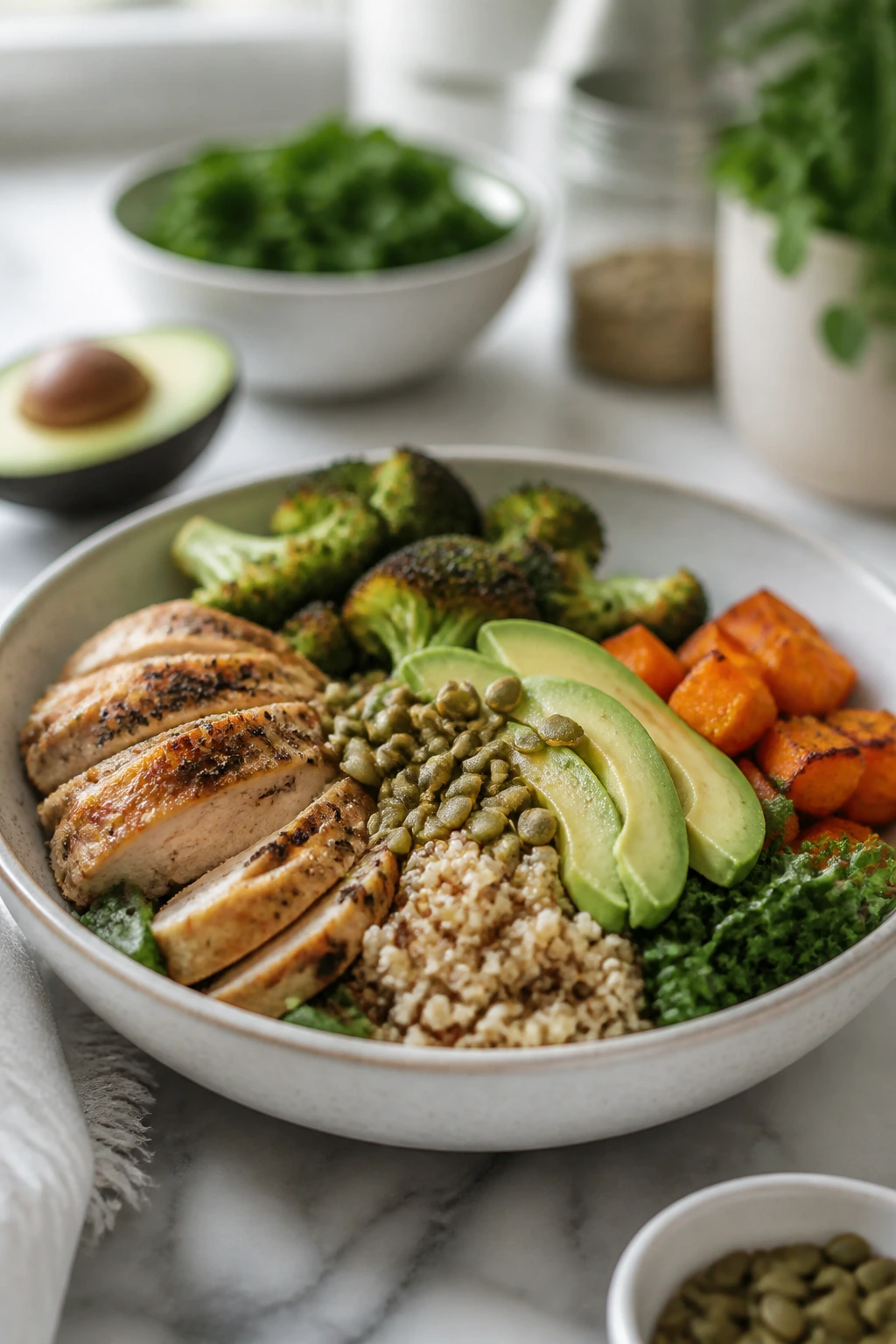
Gluten-Free Swap Board: Swap soy sauce for tamari, use rice or quinoa instead of wheat noodles, and lean on corn tortillas or lettuce wraps where needed. The flavor stays intact, and you don’t have to redesign dinner from scratch.
Dairy-Free Lane: Leave out cheese and yogurt-based toppings, then replace them with avocado slices, tahini sauce, or a quick herb vinaigrette. Coconut milk works well in soups and curries, though you’ll want to keep the amount modest.
Higher-Protein Plate: Add extra chicken, shrimp, tofu, or edamame to bowls and stir-fries, then reduce the grain portion a little. That shift keeps the calories in check while making the meal stick with you longer.
Low-Sodium Reset: Use unsalted broth, rinse canned beans well, and rely on lemon, vinegar, garlic, herbs, and spices for flavor. The food will taste cleaner, not bland, if you season in layers instead of dumping salt at the end.
Kid-Friendly Calm Down: Pull back the chili flakes, serve sauces on the side, and cut vegetables into smaller pieces so they’re easier to eat. Kids often do better with a familiar base — rice, noodles, chicken, meatballs — plus one vegetable that doesn’t fight back.
Spice-Forward Switch: Add chipotle, curry paste, sambal, harissa, or extra ginger depending on the recipe’s base. I’d rather see a dinner with a clear point of view than one that’s timid and forgettable.
Common Mistakes to Avoid
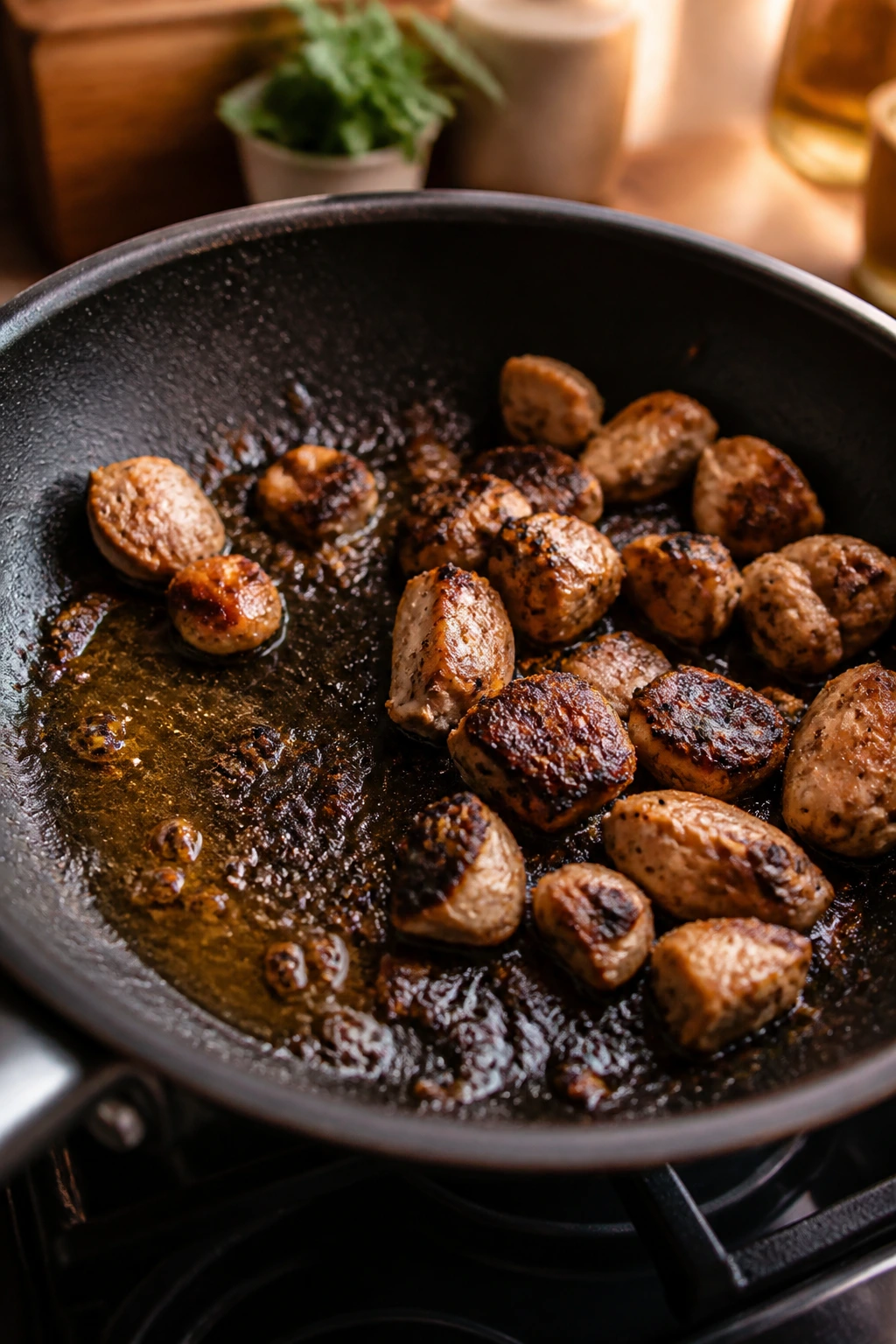
Pouring on the oil: A skillet can look dry and still only need a teaspoon or two. If you free-pour, the calorie count climbs fast and the food can get greasy instead of glossy. Measure it once, then trust your pan.
Crowding the pan: This is the fastest way to steam vegetables into submission. Spread food out, cook in batches if needed, and let the edges brown a little. Browned edges taste like effort paid off.
Under-seasoning because the meal is “healthy”: That’s a lazy habit, and it ruins good ingredients. Use salt, acid, herbs, garlic, and spice with intention. A dish can stay under 500 calories and still taste lively.
Making the protein portion too small: Cutting calories by shrinking the chicken or tofu too hard usually backfires. You end up hungry, and then the snack raid starts. Keep protein portions reasonable and trim the extras first.
Using sauces like you’re painting a wall: Pesto, dressing, yogurt sauces, and teriyaki all work best in measured amounts. Spoon, toss, taste. Then stop. You do not need a lake of sauce for dinner to feel finished.
Rushing the finish: Fish needs to flake, chicken needs to reach temperature, and vegetables need a little browning. Pulling things too early gives you pale, watery results; leaving them too long gives you dry meat and tired vegetables. Neither one is worth saving 30 seconds.
Frequently Asked Questions

Can a dinner with rice or pasta still stay under 500 calories?
Yes, if the portion is measured and the rest of the plate does the heavy lifting. A 1/2-cup cooked serving of rice or pasta can fit easily alongside lean protein and vegetables, especially when the sauce isn’t overloaded with oil or cheese.
How do these dinners stay filling without giant portions?
Protein, fiber, and some fat work together better than sheer volume alone. Chicken, fish, turkey, beans, lentils, tofu, and vegetables keep you full longer than a tiny plate of plain carbs.
Are frozen vegetables okay in these recipes?
Absolutely. Frozen broccoli, cauliflower rice, spinach, edamame, and stir-fry blends are often cleaner and more reliable than tired produce. Just thaw and dry watery vegetables before they hit the pan.
What if I need to make a recipe dairy-free?
Skip cheese and yogurt toppings, then replace them with herbs, lemon, avocado, tahini, or a dairy-free sauce you already like. In many of these dinners, dairy is optional rather than structural.
Can I meal-prep several of these dinners at once?
You can, and the best ones for that are chili, curry, meatballs, stuffed peppers, turkey taco skillets, and soups. Keep crunchy parts, greens, and sauces separate if you want the leftovers to stay pleasant.
How do I estimate calories if my portions are bigger than the recipe says?
Start with the protein and starch portions, since that’s where the numbers change fastest. A little extra chicken is easier to budget than extra oil, cheese, or pesto. Those small spoonfuls add up faster than people think.
What’s the best way to reheat a skillet dinner without drying it out?
Use a skillet over medium heat with a splash of water, broth, or sauce. A lid helps trap steam for the first minute or two, then take it off so the food can finish warming and keep some texture.
Can I make these dinners more kid-friendly without raising the calories much?
Yes. Keep spice mild, cut vegetables smaller, and lean on familiar flavors like taco seasoning, tomato sauce, teriyaki, or a light cheese topping. Serving sauces on the side also helps a lot.
A Lighter Plate That Still Feels Like Dinner
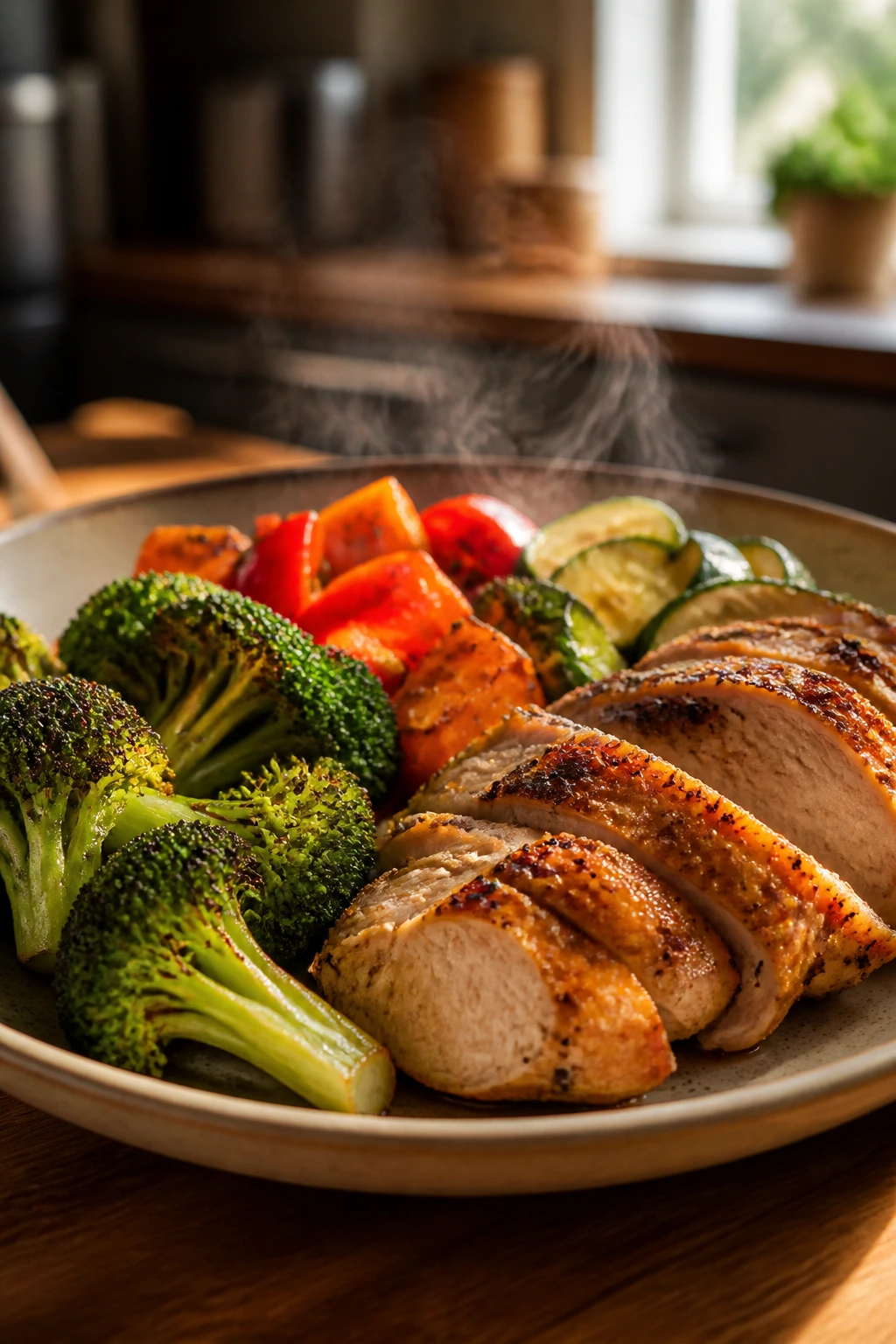
The nicest thing about these meals is that none of them feels like punishment. They taste like real food — roast chicken with browned broccoli, curry that smells like garlic and spices, salmon with a sharp yogurt sauce, chili that actually warms you up. That matters, because a dinner routine only works when people want to eat it again.
If you keep one rule from this list, make it this: measure the fat, keep the protein honest, and let vegetables do the volume work. That’s the whole trick, really. Everything else is seasoning, timing, and a little common sense.