



Cold weeknights expose bad dinner planning fast. A tired salad won’t help. Neither will a sad bowl of soup when the wind is pushing at the windows and everybody’s hungry at the same time. Pot pie dinners solve that problem with a hot filling, a bronzed lid, and enough comfort to make the whole table exhale at once.
What I like about a good pot pie is that it feels generous without being fussy. The filling can be simple—chicken, turkey, beef, beans, mushrooms, fish, even leftover ham—and once it’s tucked under pastry, biscuits, mashed potatoes, or cornbread, it turns into something that looks more thoughtful than the effort it asked for. That matters on a night when your energy is already half gone.
And there’s a practical side people forget. Pot pie dinners are one of the few cold-weather meals that actually improve the house while they cook. Onions soften. Butter and broth turn into gravy. The top goes crisp while the inside bubbles around the edges. By the time it hits the table, the kitchen smells like you meant to make dinner feel cozy.
Why These Pot Pie Dinners Earn Their Spot on the Table
- Weeknight-friendly: Most of these recipes lean on one pan, one skillet, or one baking dish, so cleanup stays sane even when the weather does not.
- Comfort with range: You get chicken, beef, seafood, pork, turkey, vegetarian, and pantry-based versions, which means nobody gets stuck eating the same thing twice.
- Flexible toppings: Puff pastry, biscuit dough, cornbread, and mashed potatoes each bring a different texture, and they all work for a reason.
- Leftover-smart: A lot of these fillings welcome cooked chicken, holiday turkey, or stray vegetables that are headed toward the back of the fridge.
- Cold-night practical: The sauces are thick, the fillings are hearty, and the portions hold up well if someone comes back for seconds.
- More forgiving than they look: A pot pie can handle small swaps, a slightly different vegetable mix, or a crust shortcut without collapsing into chaos.
1. Skillet Chicken Pot Pie with Puff Pastry Lid
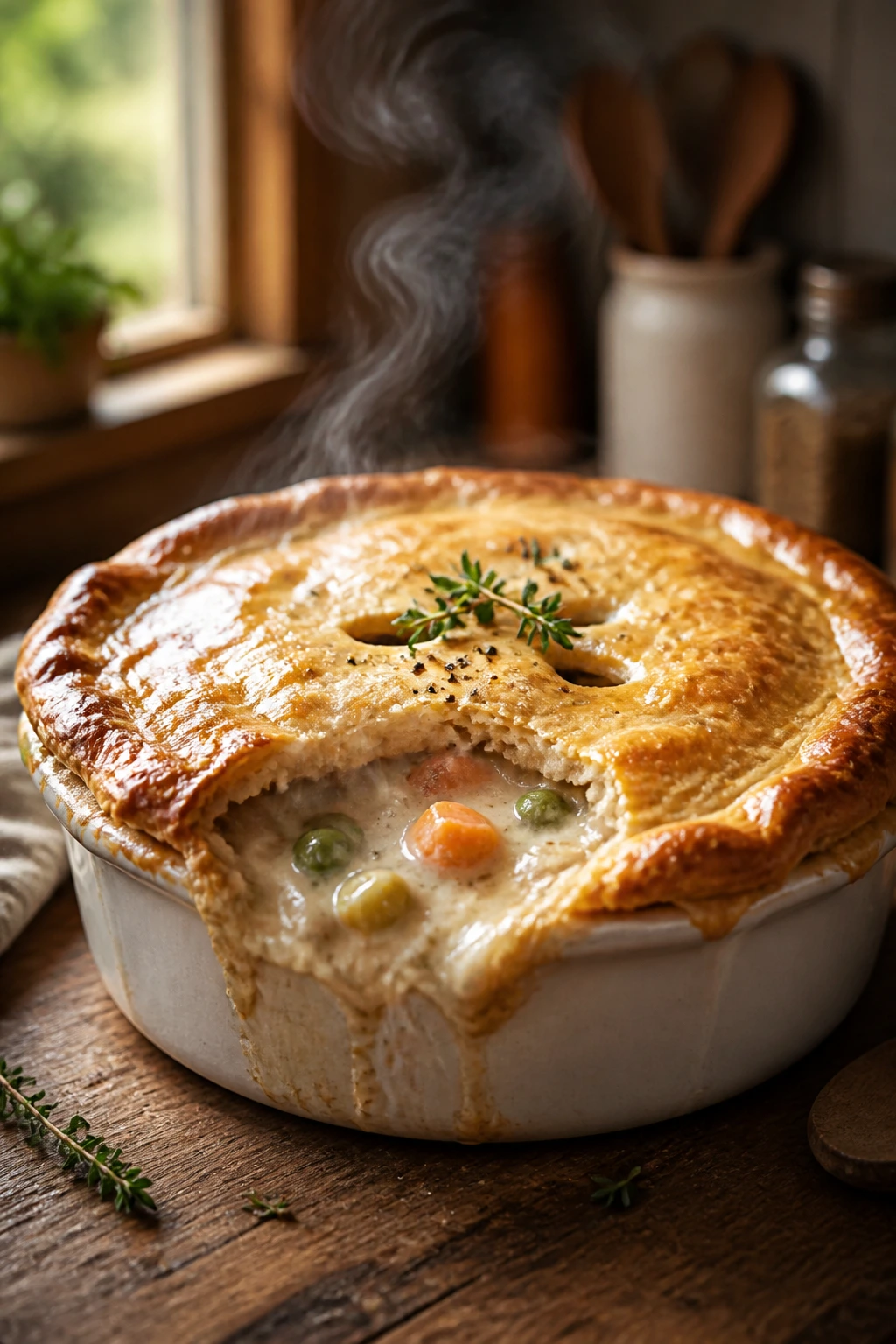
A classic chicken pot pie is hard to beat when the weather turns sharp. This one leans on tender chicken thighs, sweet carrots, and a silky gravy under a sheet of puff pastry that bakes into a shattering, golden lid. It smells like butter and thyme before it even reaches the table, which is half the point.
Why It Works on a Bitter Night
The filling stays rich because the flour is cooked into the vegetables before the broth goes in, so the sauce thickens without tasting raw or pasty. Boneless chicken thighs stay juicier than breasts during a longer simmer, and the puff pastry gives you a crisp top without the weight of a full bottom crust. That means you get all the satisfaction of pot pie with a shorter bake and less risk of a soggy middle.
Key Ingredients
- 1½ pounds boneless, skinless chicken thighs, cut into 1-inch pieces
- 2 tablespoons unsalted butter
- 1 medium yellow onion, diced
- 2 medium carrots, peeled and diced
- 2 celery stalks, diced
- 2 cloves garlic, minced
- 3 tablespoons all-purpose flour
- 2 cups chicken broth
- ¾ cup whole milk
- 1 cup frozen peas
- 1 teaspoon fresh thyme leaves, or ½ teaspoon dried thyme
- 1 sheet puff pastry, thawed
- 1 large egg, beaten with 1 tablespoon water for egg wash
Quick Steps
- Preheat and brown: Heat the oven to 400°F (200°C). In a large oven-safe skillet, melt the butter over medium-high heat and cook the chicken for 4 to 5 minutes, until the outside loses its raw look and picks up a little color. Remove it to a plate.
- Build the base: Add the onion, carrots, and celery to the same skillet. Cook for 6 to 8 minutes, stirring often, until the onion turns translucent and the carrots start to soften at the edges. Stir in the garlic for 30 seconds.
- Thicken the gravy: Sprinkle in the flour and stir for 1 minute. Slowly pour in the broth, then the milk, stirring the whole time so the sauce stays smooth. Simmer for 3 to 4 minutes until it coats a spoon.
- Finish the filling: Stir the chicken back in with the peas and thyme. Season well with salt and black pepper. The filling should look loose but not soupy.
- Top and bake: Lay the puff pastry over the skillet, trim the edges if needed, and cut 3 small slits in the center. Brush with egg wash and bake for 20 to 25 minutes, until the pastry is deeply golden and the filling is bubbling around the edges.
Tips and Variations
- Shortcut: Rotisserie chicken works here; add it after the sauce thickens so it stays tender.
- Extra flavor: A teaspoon of Dijon in the gravy gives the filling a sharper finish.
- Best move: Let the pie rest for 10 minutes before serving, or the filling will run too quickly.
2. Turkey and Biscuit Pot Pie
This is the pot pie I reach for when leftover turkey is sitting in the fridge and nobody wants another plain sandwich. The biscuit topping bakes into soft, bronzed domes that soak up a little gravy without turning mushy, and the filling has that familiar holiday-boned flavor: celery, sage, cream, and a good amount of pepper.
Why This One Feels So Settling
Biscuit toppings are forgiving in a way pie crust isn’t. They don’t need perfect edges, and they’re happy sitting on top of a thick filling that’s already hot when they go into the oven. Leftover turkey is lean, so the cream and broth matter more here than they would in a chicken version; they keep the filling from drying out before the biscuits finish baking.
Key Ingredients
- 3 cups cooked turkey, shredded or diced
- 2 tablespoons unsalted butter
- 1 medium onion, diced
- 2 cups frozen mixed vegetables
- 2 tablespoons all-purpose flour
- 2 cups turkey broth or chicken broth
- ½ cup heavy cream
- 1 teaspoon dried sage
- 1 teaspoon chopped fresh parsley, plus more for serving
- 1 can refrigerated biscuit dough, 8 biscuits
- 1 tablespoon milk, for brushing the biscuits
Quick Steps
- Start the filling: Heat the oven to 375°F (190°C). Melt the butter in a skillet over medium heat, then cook the onion for about 5 minutes until softened and glossy.
- Make it gravy-thick: Sprinkle in the flour and stir for 1 minute. Add the broth slowly, then the cream, whisking until the sauce looks smooth and lightly thickened.
- Add the turkey: Stir in the turkey, frozen vegetables, sage, and parsley. Simmer for 3 minutes, just long enough for everything to look hot and coated.
- Top the pan: Transfer the filling to a 9-inch baking dish if needed. Arrange the biscuits on top, leaving a little space between them so the edges can brown.
- Bake and finish: Brush the biscuits with milk and bake for 20 to 24 minutes, until the biscuits are cooked through and the filling is bubbling at the sides.
Tips and Variations
- Best swap: If your turkey is very dry, add an extra 2 tablespoons of cream.
- Flavor boost: A pinch of poultry seasoning gives the whole dish a more classic holiday edge.
- Serving idea: Spoon the filling into bowls with a biscuit on top if you want cleaner portions.
3. Beef and Mushroom Pot Pie with Red Wine Gravy
If you want a pot pie that eats like a proper winter dinner, this is the one. Ground beef brings heft, mushrooms add that dark, savory edge, and a splash of red wine makes the gravy taste as if it simmered all afternoon even when it didn’t. The crust on top gets flaky and the filling turns glossy and deep brown.
Why the Filling Stays Rich, Not Heavy
Mushrooms do a lot of the heavy lifting here. They release liquid, then soak it back up after browning, which means the pan builds a stronger flavor base before the liquid goes in. A little red wine sharpens the gravy, but the key is cooking off the alcohol so the sauce tastes round instead of acidic. Ground beef keeps the dish quick, and it also makes this recipe work on nights when stew meat would take too long.
Key Ingredients
- 1 pound ground beef
- 8 ounces cremini mushrooms, sliced
- 1 medium onion, diced
- 1 medium carrot, diced
- 2 cloves garlic, minced
- 2 tablespoons tomato paste
- 2 tablespoons all-purpose flour
- ½ cup dry red wine
- 1½ cups beef broth
- 1 teaspoon Worcestershire sauce
- 1 cup frozen peas
- 1 sheet puff pastry or 1 refrigerated pie crust
Quick Steps
- Brown the meat: Heat the oven to 400°F (200°C). In a skillet over medium-high heat, cook the beef until no pink remains, breaking it up as it cooks. Spoon off excess fat if needed.
- Cook the vegetables: Add the mushrooms, onion, and carrot. Cook for 7 to 8 minutes, until the mushrooms brown and the onion softens.
- Build the sauce: Stir in the garlic and tomato paste, then dust with flour. Pour in the wine and let it bubble for 1 minute before adding the broth and Worcestershire sauce.
- Finish the filling: Simmer until the gravy thickens enough to cling to a spoon, then fold in the peas. Taste for salt and pepper.
- Bake with the top on: Transfer to a baking dish, cover with pastry or crust, cut a few steam vents, and bake for 20 to 25 minutes until the top is crisp and the filling is bubbling at the edges.
Tips and Variations
- Good shortcut: If you skip the wine, use extra broth plus 1 teaspoon balsamic vinegar.
- Texture note: Let the mushrooms brown before stirring much, or they’ll steam and taste flat.
- Serving move: A spoonful of sour cream on top is not elegant, but it is good.
4. Ham, Potato, and Cheddar Pot Pie
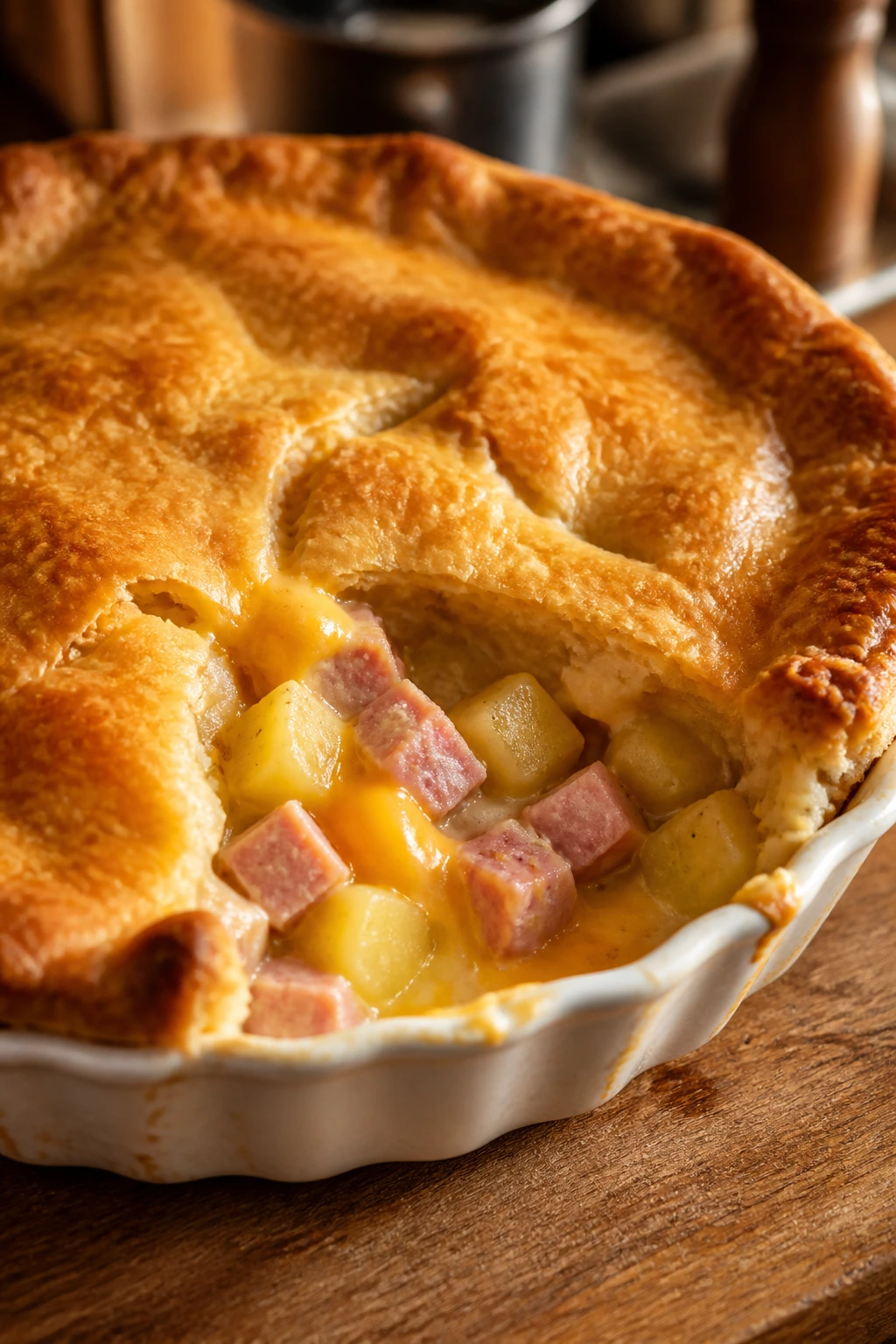
Ham and potatoes were practically born to share a crust. This one is creamy, salty, and just a little sharp from the cheddar, with soft Yukon gold potatoes that hold their shape instead of dissolving into mash. It feels like the sort of dinner that comes together from pieces already waiting in the fridge, and that’s a kind of winter magic.
Why It Feeds a Crowd Without Fuss
Potatoes thicken the filling naturally once they simmer in the broth, which means you need less flour than you would in a meat-only pie. Ham brings salt and smoke, so the gravy doesn’t need much else besides onion, thyme, and a little mustard. The cheddar melts into the sauce and gives the whole pan a creamy finish that makes this more dinner than side dish.
Key Ingredients
- 1 pound Yukon gold potatoes, peeled and cut into ½-inch cubes
- 2 tablespoons unsalted butter
- 1 leek, white and light green parts only, sliced and rinsed well
- 2 cups diced cooked ham
- 2 tablespoons all-purpose flour
- 1½ cups chicken broth
- ½ cup whole milk
- 1 teaspoon Dijon mustard
- 1 teaspoon fresh thyme leaves
- 1 cup shredded sharp cheddar
- 1 sheet puff pastry or 1 pie crust
Quick Steps
- Par-cook the potatoes: Bring a pot of salted water to a boil and cook the potatoes for 6 to 7 minutes, until they are just barely tender. Drain them well.
- Make the filling: Heat the oven to 400°F (200°C). Melt the butter in a skillet and cook the leek for 4 minutes until soft. Stir in the ham and flour.
- Add the liquids: Pour in the broth, milk, and mustard, stirring until the sauce thickens. Add the thyme, potatoes, and cheddar, then stir gently so the potatoes stay in chunks.
- Assemble: Spoon the filling into a baking dish and top with pastry or crust. Cut vents so the steam has somewhere to go.
- Bake: Bake for 22 to 28 minutes, until the top is deeply browned and the filling is bubbling through the vents.
Tips and Variations
- More bite: Add 1 cup frozen peas if you want a sweeter edge.
- Cheese choice: Gruyère gives a nuttier finish if cheddar feels too bold.
- Practical tip: Rinse leeks well; grit hiding in the layers ruins the mood fast.
5. Sausage, Kale, and White Bean Pot Pie
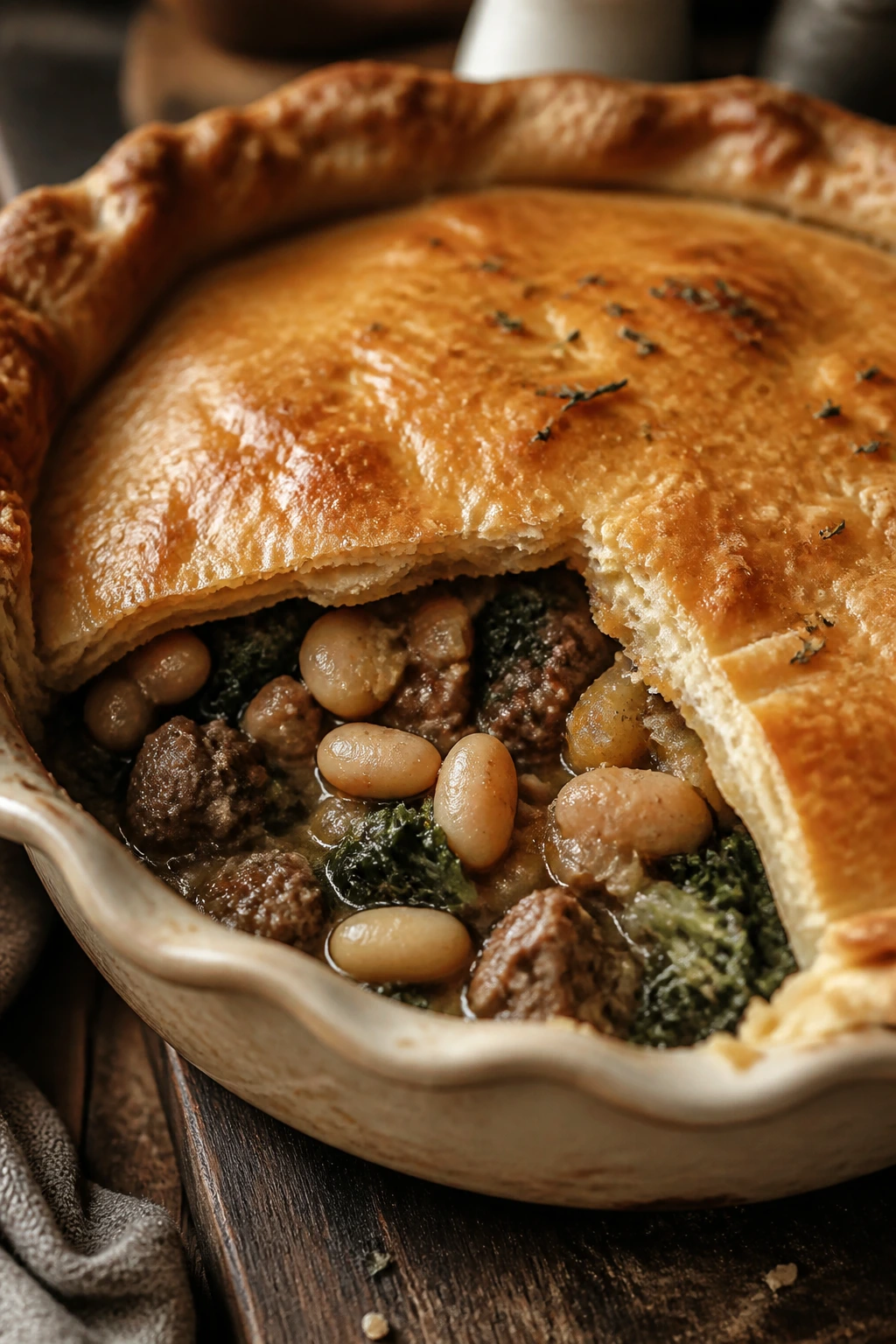
This one leans savory and a little rustic, the sort of dinner that feels sturdy enough to stand up to a damp, gray evening. Italian sausage brings spice, white beans make the filling creamy without much fuss, and kale softens into the gravy just enough to lose the raw edge. It’s hearty, but not sleepy.
Why the Greens Keep It from Feeling Flat
Sausage needs something bright and a little fibrous beside it, or the whole pie can feel heavy. Kale handles the job better than spinach here because it keeps a bit of texture after baking. White beans thicken the filling in a natural way, and that gives you a creamy body without loading the pan with extra dairy.
Key Ingredients
- 1 pound Italian sausage, casings removed if needed
- 1 medium onion, diced
- 2 medium carrots, diced
- 3 cloves garlic, minced
- 2 tablespoons all-purpose flour
- 1¾ cups chicken broth
- ½ cup half-and-half
- 1 can cannellini beans, drained and rinsed
- 3 cups chopped kale, stems removed
- 1 teaspoon dried sage
- 1 sheet puff pastry
Quick Steps
- Brown the sausage: Heat the oven to 400°F (200°C). Cook the sausage in a skillet over medium-high heat until browned and crumbly, about 6 minutes.
- Add the vegetables: Stir in the onion and carrots. Cook for 5 to 6 minutes until the onion softens and the carrots lose their raw crunch.
- Thicken and season: Add garlic and flour, then pour in the broth and half-and-half. Simmer until the sauce turns creamy and lightly thick.
- Finish the filling: Stir in the beans, kale, and sage. Cook for 2 to 3 minutes until the kale starts to wilt but still looks green.
- Top and bake: Transfer to a baking dish, cover with puff pastry, vent the top, and bake for 20 to 25 minutes until the pastry is crisp and the filling bubbles around the edges.
Tips and Variations
- Spice note: Hot Italian sausage makes this feel bolder without changing the method.
- Bean swap: Great Northern beans work if cannellini aren’t in the pantry.
- Serving idea: A squeeze of lemon at the table wakes up the whole pie.
6. Vegetarian Lentil and Root Vegetable Pot Pie
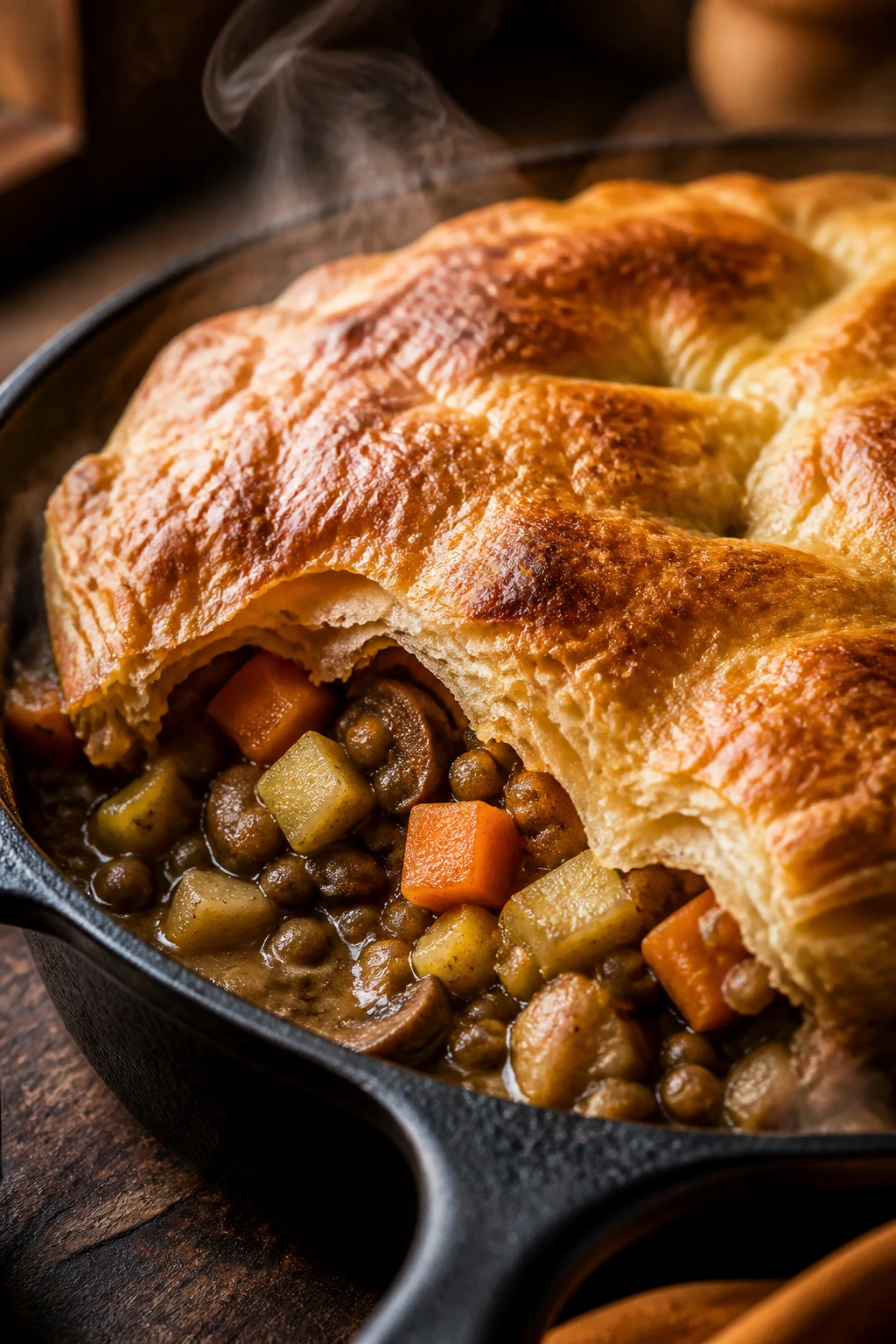
This is the vegetable pot pie I make when I want something that feels sturdy, not like a consolation prize. Lentils give the filling body, root vegetables bring sweetness, and mushrooms add that deep, savory note that keeps the whole thing grounded. The top turns crisp while the inside stays earthy and rich.
Why Lentils Hold Up Better Than You’d Think
Brown lentils are one of the few plant proteins that can sit inside a thick sauce and still feel substantial after baking. They keep enough shape to read as dinner, not puree. The trick is cooking them until tender but not soft, because they’ll keep absorbing liquid in the oven. Root vegetables help here too; parsnips and carrots give you sweetness, while mushrooms add the kind of flavor people usually think only meat can provide.
Key Ingredients
- 1 cup brown or green lentils, rinsed
- 2 tablespoons olive oil
- 1 medium onion, diced
- 2 medium carrots, diced
- 1 parsnip, peeled and diced
- 8 ounces cremini mushrooms, chopped
- 2 cloves garlic, minced
- 2 tablespoons tomato paste
- 3 cups vegetable broth
- 1 teaspoon dried thyme
- 1 cup frozen peas or chopped spinach
- 1 sheet puff pastry or 1 pie crust
Quick Steps
- Cook the lentils: Simmer the lentils in salted water for 18 to 20 minutes, until tender but still holding their shape. Drain well.
- Build the flavor base: Heat the oven to 400°F (200°C). Warm the oil in a skillet and cook the onion, carrots, parsnip, and mushrooms for 8 minutes until browned in spots.
- Add depth: Stir in the garlic and tomato paste, cooking for 1 minute so the paste darkens slightly.
- Make the sauce: Pour in the broth and thyme, then simmer until the mixture looks thick and glossy. Fold in the lentils and peas.
- Bake: Transfer to a baking dish, top with pastry, vent, and bake for 20 to 25 minutes until the crust is golden and the filling is bubbling.
Tips and Variations
- Vegan option: Use plant-based puff pastry and olive oil instead of butter.
- Extra body: A diced potato can join the carrots if you want the filling thicker.
- Good habit: Taste the lentils before baking; under-seasoning plant-based fillings is a common mistake.
7. Curried Chickpea and Sweet Potato Pot Pie
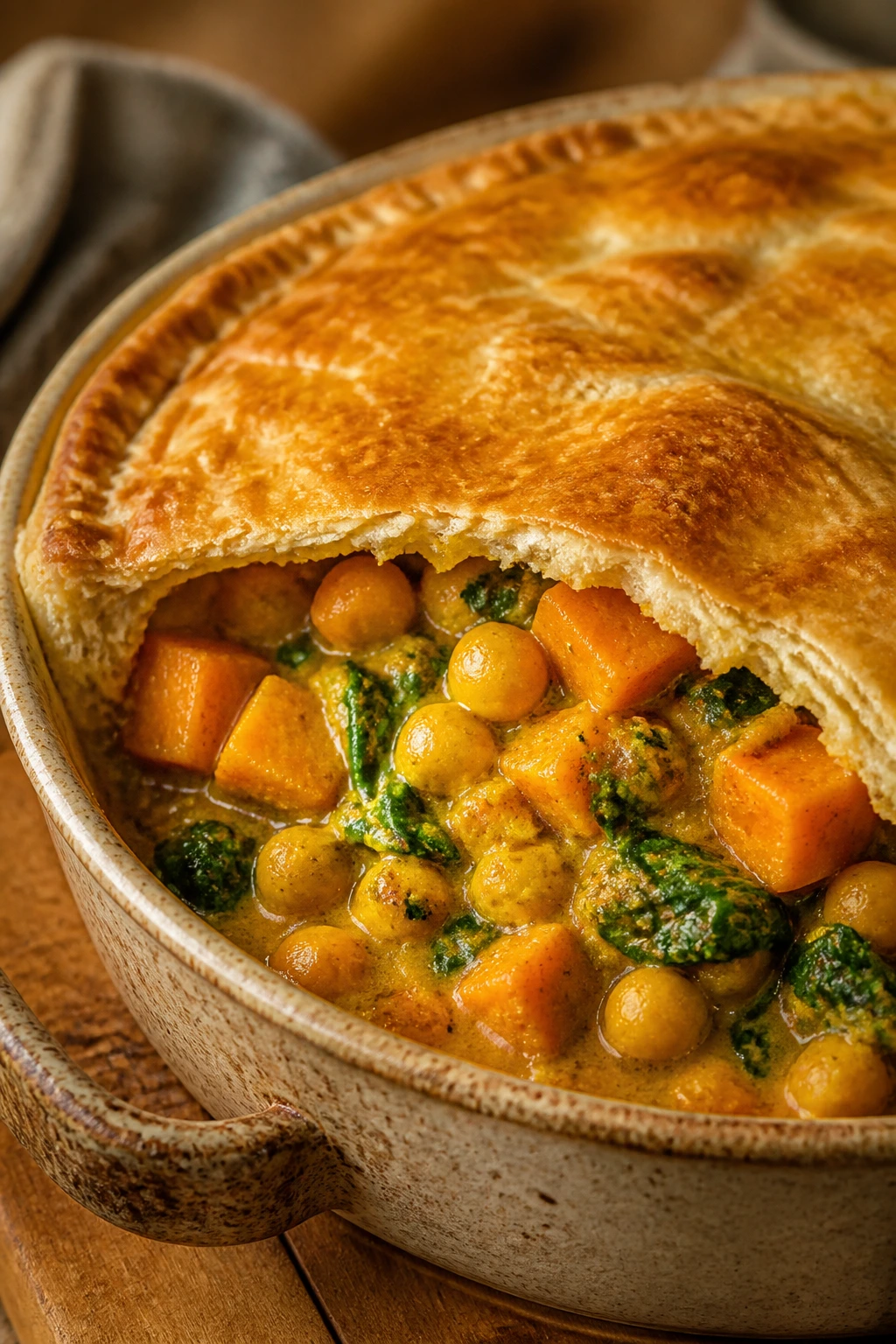
This pot pie smells different in the best way. Curry powder warms the filling without making it taste complicated, sweet potato turns creamy around the edges, and chickpeas bring a nutty bite that plays well with coconut milk. It is the kind of dinner that feels pantry-smart and still tastes like you put thought into it.
Why Curry and Coconut Make Sense Here
Sweet potato and chickpeas both tolerate a little sweetness and a little heat, which is why curry powder works so well in the sauce. Coconut milk gives the filling a soft, round body, and the broth keeps it from becoming thick enough to sit like paste under the crust. Spinach goes in at the end so it doesn’t overcook into a dark, tired layer. That tiny bit of care matters.
Key Ingredients
- 1 medium sweet potato, peeled and diced into ½-inch cubes
- 2 tablespoons olive oil
- 1 medium onion, diced
- 2 cloves garlic, minced
- 2 teaspoons curry powder
- 1 tablespoon tomato paste
- 2 cans chickpeas, drained and rinsed
- 1 can coconut milk
- 1 cup vegetable broth
- 2 cups baby spinach
- 1 sheet puff pastry
- Salt, black pepper, and a squeeze of lime for serving
Quick Steps
- Soften the sweet potato: Heat the oven to 400°F (200°C). Simmer the sweet potato cubes in salted water for 5 minutes, then drain. They should be barely tender, not falling apart.
- Cook the aromatics: Warm the oil in a skillet and cook the onion for 5 minutes. Stir in the garlic, curry powder, and tomato paste for 30 seconds.
- Build the sauce: Add the chickpeas, coconut milk, and broth. Simmer for 6 to 8 minutes until the sauce thickens slightly.
- Finish the filling: Stir in the sweet potato and spinach. Cook just until the spinach wilts and the potatoes are coated.
- Bake the pie: Transfer to a baking dish, cover with puff pastry, vent the top, and bake for 20 to 25 minutes until the pastry is golden and the filling bubbles at the edges.
Tips and Variations
- Heat control: A pinch of chili flakes gives the filling more lift if you like it spicier.
- Fresh finish: Lime zest over the top makes the coconut taste less heavy.
- Texture note: Don’t overcook the sweet potatoes on the stove or they’ll collapse in the oven.
8. Salmon, Pea, and Dill Pot Pie
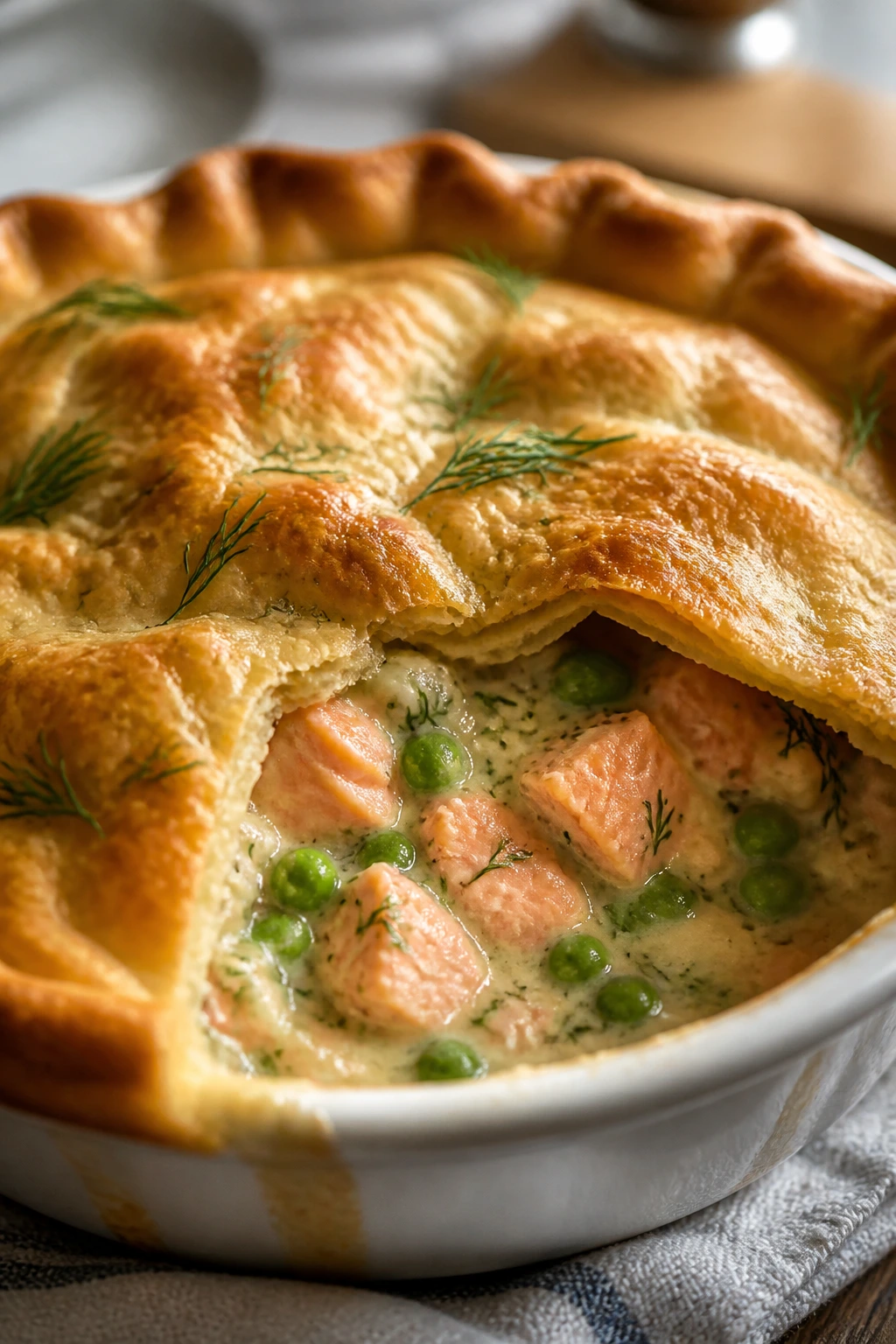
Fish in a pot pie makes some people blink, and that’s fine. Salmon is rich enough to stand up to a creamy sauce, and dill gives the whole dish a clean finish that keeps it from feeling too dense. This one is gentler than the beef or sausage versions, but it still eats like a full meal.
Why Salmon Needs a Gentle Hand
Salmon cooks fast and dries out faster than most fillings can forgive, so the trick is to build the sauce first and add the fish at the end. Leeks and peas give the pie a sweet background, and a little lemon keeps the cream from tasting flat. The filling should be hot and thick before the salmon goes in; that way, the fish finishes in the oven instead of boiling itself into flakes.
Key Ingredients
- 1 pound skinless salmon fillet, cut into 1-inch pieces
- 1 tablespoon butter
- 1 leek, thinly sliced and rinsed
- 1 small potato, peeled and diced into ½-inch cubes
- 1 tablespoon all-purpose flour
- 1½ cups milk
- ½ cup chicken broth or vegetable broth
- 1 cup frozen peas
- 1 tablespoon chopped fresh dill
- 1 teaspoon lemon zest
- 1 sheet puff pastry
Quick Steps
- Par-cook the potato: Boil the potato cubes for 6 minutes until barely tender, then drain.
- Make the sauce: Heat the oven to 400°F (200°C). Melt the butter in a skillet and cook the leek for 4 to 5 minutes until soft. Stir in the flour.
- Add the liquids: Pour in the milk and broth gradually, stirring until the sauce thickens and looks smooth.
- Add the filling: Stir in the potato, peas, dill, and lemon zest. Fold in the salmon pieces gently so they stay intact.
- Bake: Transfer to a baking dish, top with pastry, vent, and bake for 18 to 22 minutes, until the crust is golden and the salmon is just cooked through.
Tips and Variations
- Best swap: Use cod or haddock if salmon feels too rich.
- Flavor lift: A pinch of white pepper keeps the color clean and the flavor sharp.
- Timing note: Pull it when the salmon is opaque but still moist; overbaking makes fish pie taste tired fast.
9. Shrimp and Corn Pot Pie with Cornbread Top
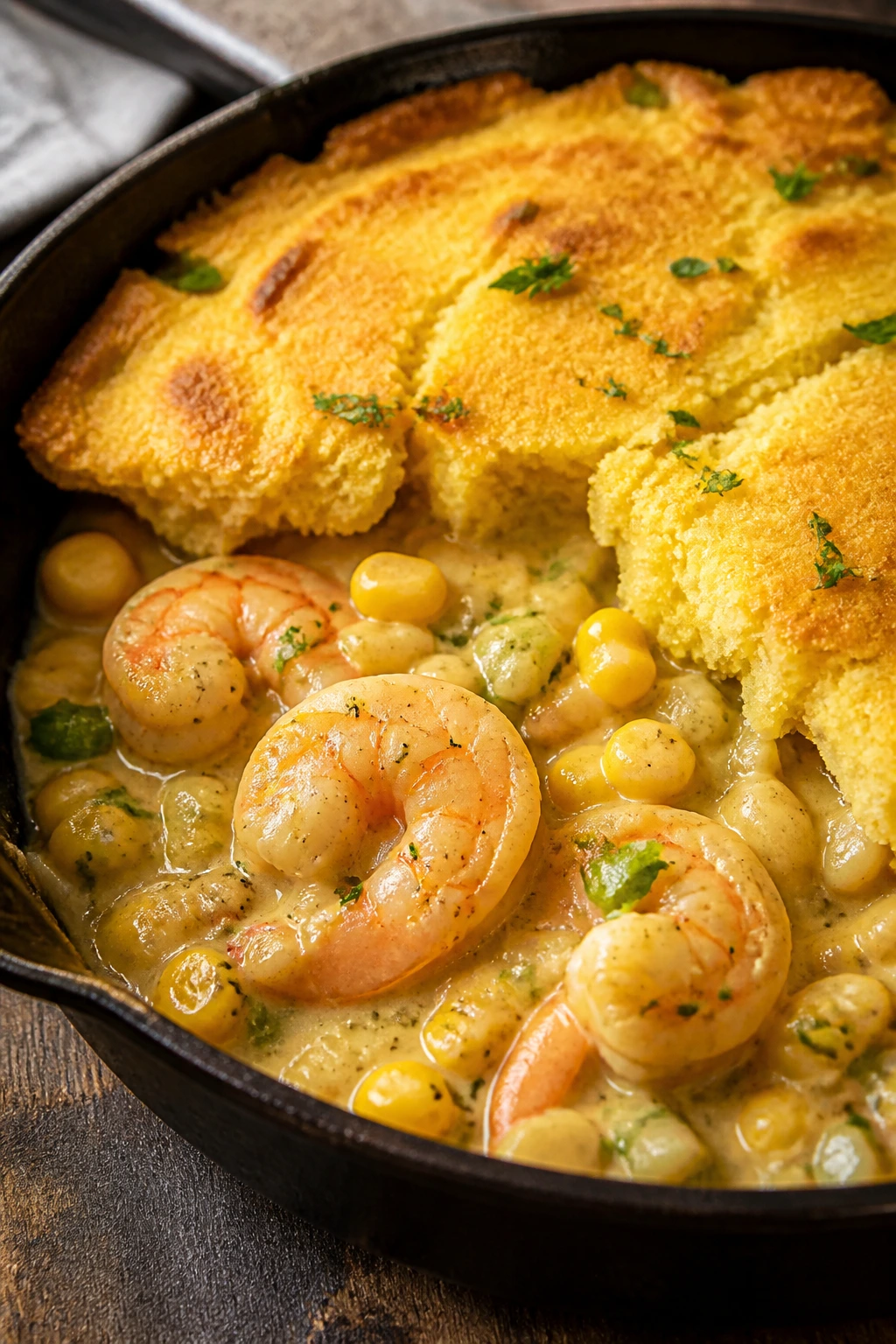
This is the loudest, most playful pot pie in the bunch. Shrimp bring sweetness, corn adds crunch and color, and the cornbread topping bakes into something soft in the middle with crisp edges where it meets the filling. It’s a little Southern, a little weeknight, and very good at making a dull evening feel less dull.
Why Cornbread Changes the Whole Mood
Cornbread topping gives you a drier, sturdier finish than pastry, which works well with a saucy seafood filling. Shrimp need only a short bake, so the filling is cooked first and the topping goes on when the skillet is ready. Cajun seasoning or smoked paprika gives the whole dish a warm background without drowning the shrimp, which would be easy to do if the seasoning went too far.
Key Ingredients
- 1 pound large shrimp, peeled and deveined
- 2 cups corn kernels, fresh or frozen
- 1 small bell pepper, diced
- 1 celery stalk, diced
- 1 small onion, diced
- 2 cloves garlic, minced
- 2 tablespoons all-purpose flour
- 1½ cups seafood stock, chicken broth, or vegetable broth
- ½ cup heavy cream
- 1 teaspoon Cajun seasoning
- 1 package cornbread mix, plus the eggs and milk listed on the box
Quick Steps
- Start the filling: Heat the oven to 400°F (200°C). Cook the onion, bell pepper, and celery in a skillet for 5 minutes until softened.
- Make the gravy: Stir in the garlic and flour, then pour in the broth and cream. Simmer until the sauce thickens enough to coat the back of a spoon.
- Add shrimp and corn: Stir in the corn, shrimp, and Cajun seasoning. Cook for 2 minutes only, until the shrimp are just starting to turn pink.
- Top with cornbread: Mix the cornbread batter according to the package and spoon it over the filling. Don’t worry if it’s rustic; this dish can handle that.
- Bake: Bake for 18 to 22 minutes, until the cornbread is golden and a toothpick comes out mostly clean from the center.
Tips and Variations
- Seafood note: Keep the shrimp slightly underdone before baking or they’ll turn rubbery.
- Extra color: Add sliced scallions on top after baking.
- Serving idea: Hot sauce at the table is not optional for people who like heat.
10. French Onion Chicken Pot Pie
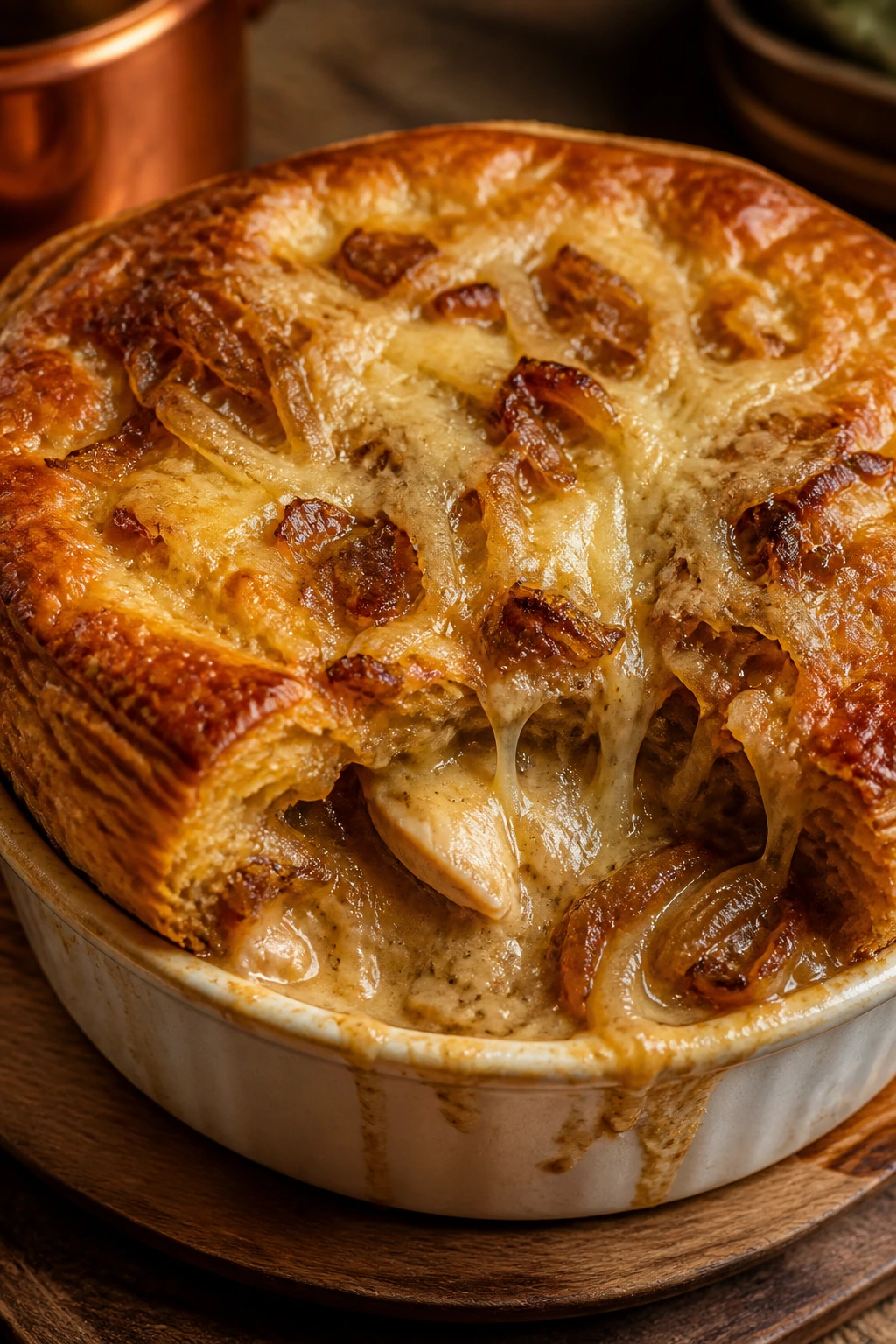
This is the pot pie for people who like onions cooked until sweet, dark, and almost jammy. The chicken is mild enough to let the onions take the lead, while Gruyère melts into the gravy and gives the whole dish a nutty finish. It tastes a little more dressed up than the average weeknight pie, but it still behaves like dinner, not a project.
Why Caramelized Onions Carry the Dish
French onion flavor works because the onions do the heavy lifting early. Once they’ve cooked down and browned, they bring sweetness, depth, and a little bitterness that makes the creamy sauce taste more layered. Chicken stays in the background here, which is the point; the pie is about the onion gravy and the way the cheese stretches when you spoon into it.
Key Ingredients
- 1½ pounds boneless chicken thighs, cut into bite-sized pieces
- 3 large yellow onions, thinly sliced
- 2 tablespoons butter
- 1 tablespoon olive oil
- 1 teaspoon thyme leaves
- 8 ounces cremini mushrooms, sliced
- 2 tablespoons all-purpose flour
- 2 cups chicken broth
- ½ cup heavy cream
- 1 cup shredded Gruyère
- 1 sheet puff pastry
Quick Steps
- Caramelize the onions: Heat the oven to 400°F (200°C). Cook the onions in butter and oil over medium heat for 20 to 25 minutes, stirring often, until they turn deep golden and soft.
- Add the chicken and mushrooms: Stir in the chicken and mushrooms. Cook for 5 to 6 minutes until the chicken loses its raw look.
- Thicken the filling: Add thyme and flour, stirring for 1 minute. Pour in the broth and cream, then simmer until the sauce thickens.
- Melt in the cheese: Stir in half the Gruyère, then transfer the filling to a baking dish.
- Bake with pastry: Top with puff pastry, sprinkle the remaining cheese around the edges if you like, and bake for 22 to 25 minutes until browned and bubbling.
Tips and Variations
- Time saver: Slice the onions ahead of time; that’s the only part that asks for patience.
- Cheese swap: Swiss cheese works if Gruyère feels too expensive.
- Best detail: Don’t rush the onions. Pale onions make a pale pie.
11. Pork and Apple Cider Pot Pie
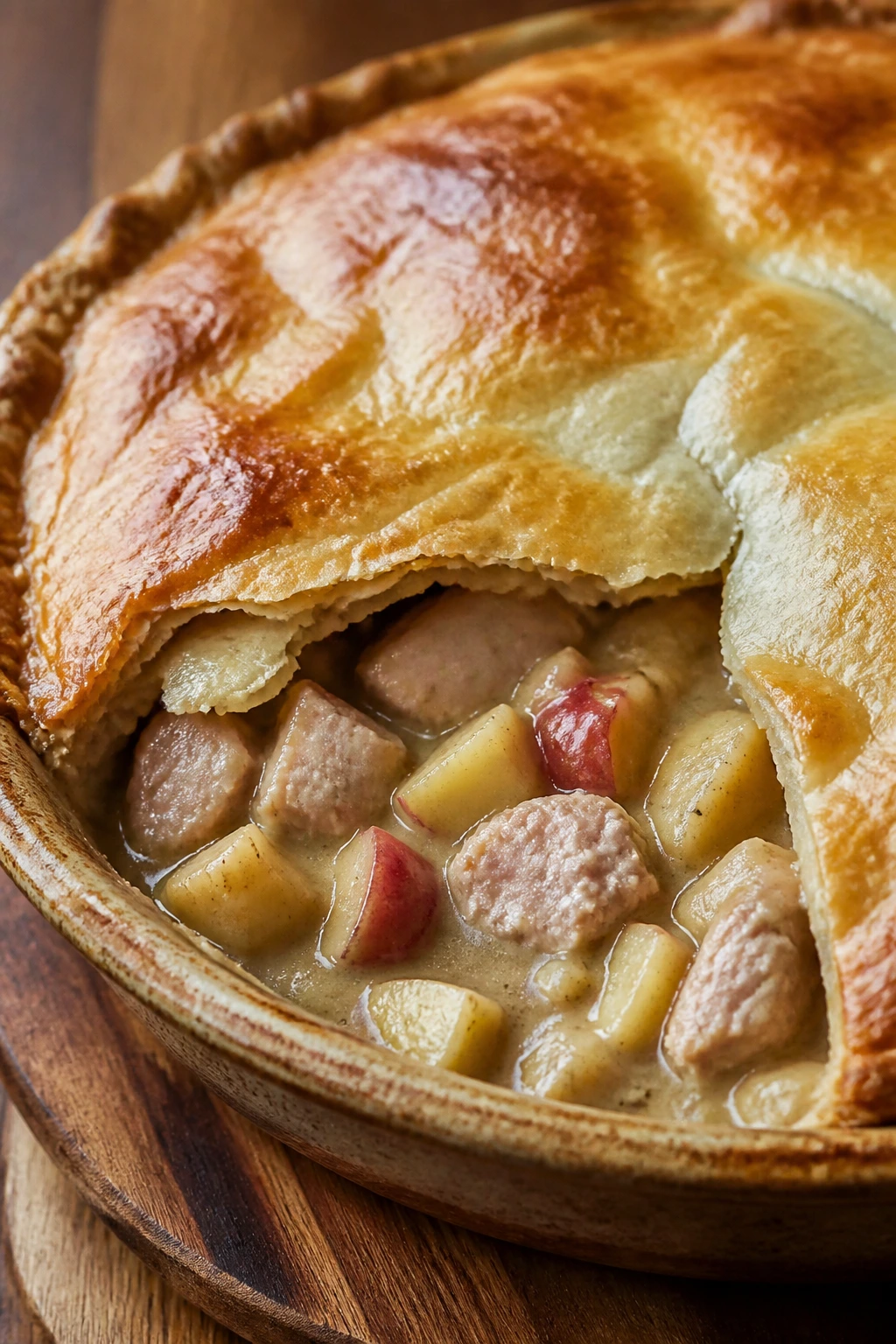
Pork and apples belong together more often than people admit. In a pot pie, the cider sharpens the gravy just enough to keep the filling from drifting into sweetness, while carrots and onion anchor everything back in dinner territory. It’s a cold-weather pie with a little brightness tucked inside.
Why Apple and Pork Work in the Same Pan
Pork likes a bit of acid and a bit of fruit, and apple cider gives both without turning the pan into dessert. Ground pork cooks quickly, which makes this one friendly for a weeknight, but the flavor still tastes rounded once the cider reduces. A little Dijon helps tie the savory and sweet notes together, and sage keeps the filling from feeling one-dimensional.
Key Ingredients
- 1 pound ground pork
- 1 medium onion, diced
- 1 medium carrot, diced
- 1 apple, peeled and diced
- 2 tablespoons all-purpose flour
- 1 cup apple cider
- 1 cup chicken broth
- 1 teaspoon Dijon mustard
- 1 teaspoon chopped fresh sage, or ½ teaspoon dried sage
- 1 cup frozen peas
- 1 sheet puff pastry
Quick Steps
- Brown the pork: Heat the oven to 400°F (200°C). Cook the pork in a skillet over medium-high heat until no pink remains, breaking it into small pieces.
- Add the vegetables: Stir in the onion, carrot, and apple. Cook for 6 to 7 minutes until the onion softens and the apple just starts to lose its edge.
- Build the sauce: Add the flour and stir for 1 minute. Pour in the cider and broth, then whisk in the Dijon and sage.
- Finish the filling: Simmer until the sauce thickens, then stir in the peas. The mixture should look glossy and spoonable, not loose.
- Bake: Transfer to a baking dish, top with puff pastry, vent, and bake for 20 to 25 minutes until the pastry is crisp and the filling bubbles through the slits.
Tips and Variations
- Pork swap: Diced pork tenderloin works, but add it after the onions so it stays tender.
- Flavor note: A splash of apple cider vinegar at the end can sharpen the filling if the apples are sweet.
- Serving idea: Serve with mustard on the side if your crowd likes a stronger bite.
12. Shepherd’s Pie Pot Pie with Ground Lamb
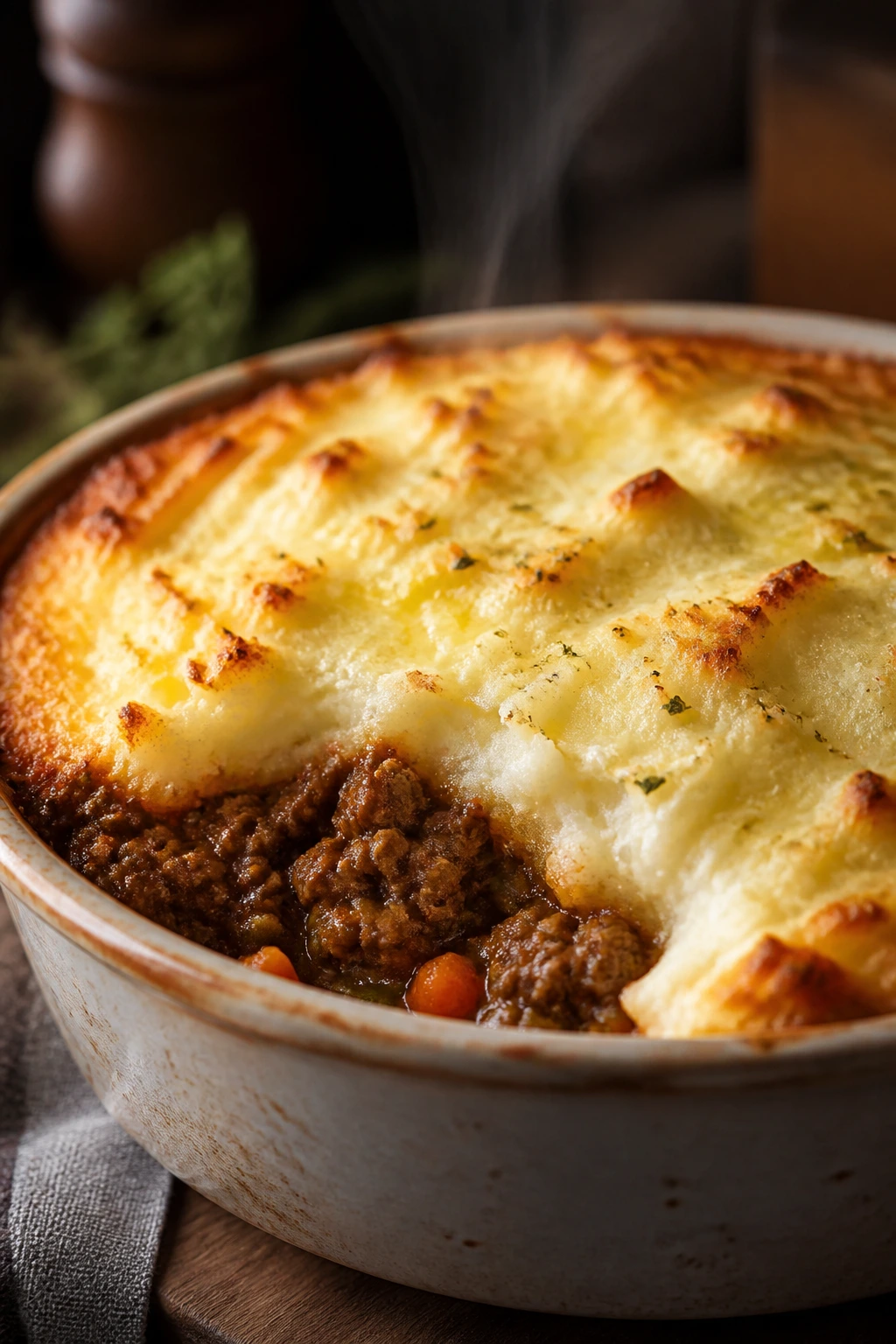
This one splits the difference between shepherd’s pie and pot pie, and I’m not sorry about it. Ground lamb gives the filling a deeper, more savory flavor than beef, and the mashed potato topping turns golden in patches where the butter rises to the surface. It’s cozy in a way that feels old-fashioned without tasting dusty.
Why Mashed Potato Topping Never Fails
Mashed potatoes work because they seal in the filling while still letting steam escape around the edges. They also absorb flavor from the lamb gravy underneath, so every spoonful tastes layered. Lamb carries thyme and Worcestershire beautifully, and peas keep the filling from going monochrome. If you like dinners that hold heat well at the table, this one behaves nicely.
Key Ingredients
- 1½ pounds ground lamb
- 1 medium onion, diced
- 2 medium carrots, diced
- 2 cloves garlic, minced
- 2 tablespoons tomato paste
- 1 tablespoon Worcestershire sauce
- 2 tablespoons all-purpose flour
- 1 cup beef broth
- 1 cup frozen peas
- 2 pounds Yukon gold potatoes, peeled and cut into chunks
- 4 tablespoons butter
- ¼ cup milk
- 1 sheet of puff pastry cut into strips, optional for extra crunch
Quick Steps
- Cook the potatoes: Heat the oven to 400°F (200°C). Boil the potatoes in salted water for 15 minutes, until very tender. Drain, then mash with butter, milk, salt, and pepper.
- Brown the lamb: While the potatoes cook, brown the lamb in a skillet over medium-high heat until deeply cooked and crumbly.
- Build the filling: Add onion and carrots, cooking for 5 minutes until softened. Stir in garlic, tomato paste, Worcestershire, and flour for 1 minute.
- Add the broth and peas: Pour in the broth and simmer until the mixture thickens. Stir in the peas and taste for salt.
- Top and bake: Spread the filling in a baking dish, cover with mashed potatoes, and add puff pastry strips if you want extra crunch. Bake for 20 to 25 minutes until the top browns in spots.
Tips and Variations
- Make it richer: A tablespoon of sour cream in the mash gives a softer finish.
- Lean option: Ground beef works if lamb feels too strong.
- Good move: Drag a fork across the potato top before baking so the ridges brown better.
Why Pot Pie Wins on a Cold Night
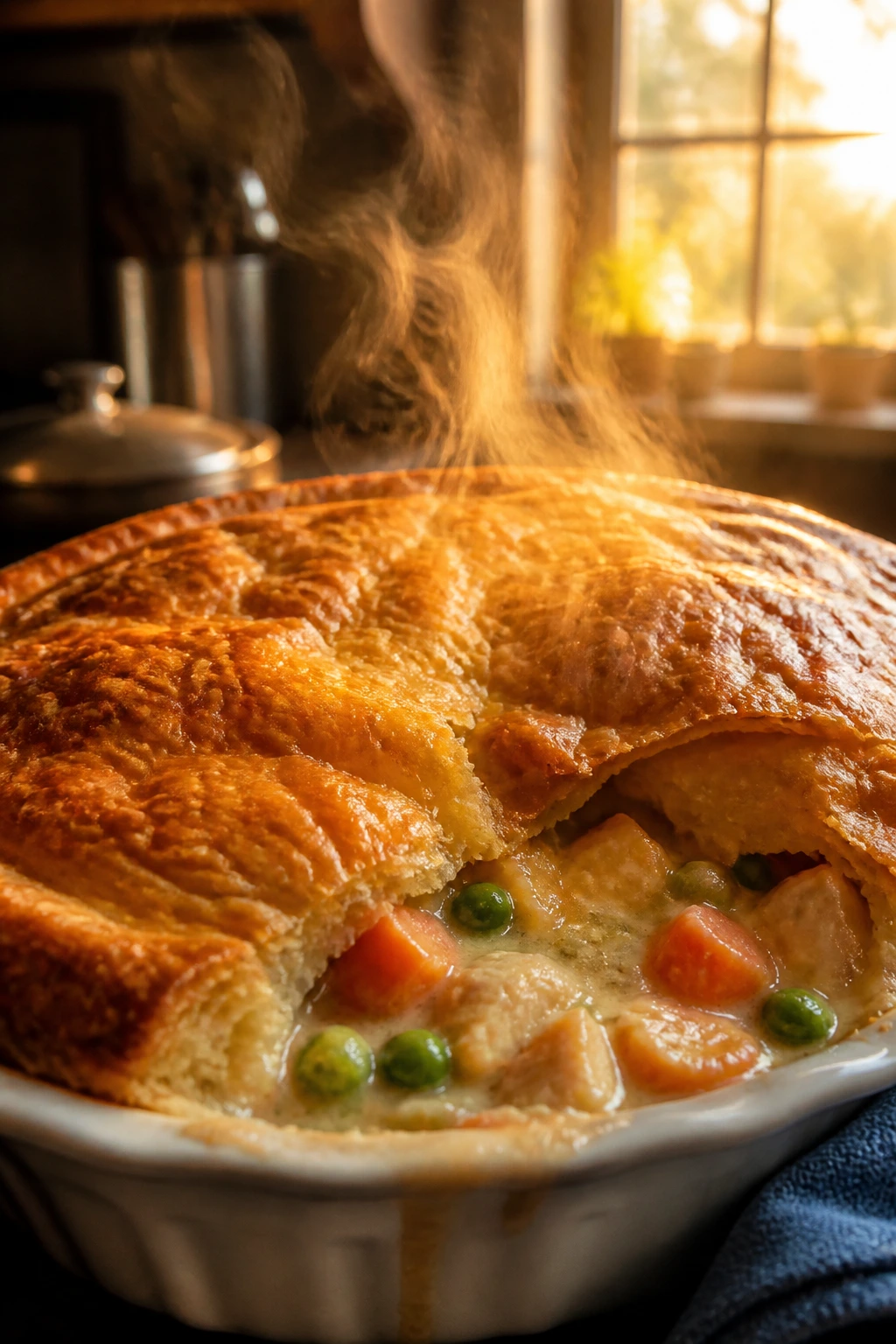
Pot pie dinners do something plain casseroles often miss: they keep the filling and topping distinct. The sauce stays saucy, the crust or biscuit stays textured, and the first spoonful gives you contrast instead of one soft note. That contrast is what makes the whole thing satisfying. Crisp, creamy, tender, browned. The whole package.
There’s also a small practical brilliance to the method. A flour-thickened filling can be assembled in advance, and most topping styles forgive a little inconsistency. Puff pastry doesn’t care if the carrots are a little rustic. Biscuit dough can go on in uneven spoonfuls and still come out good. Even mashed potatoes can be patched over a filling that isn’t arranged like a magazine cover.
And cold-weather cooking likes that sort of confidence. You want dinner to feel grounded, not fragile. Pot pie gives you that.
Essential Equipment for These Recipes
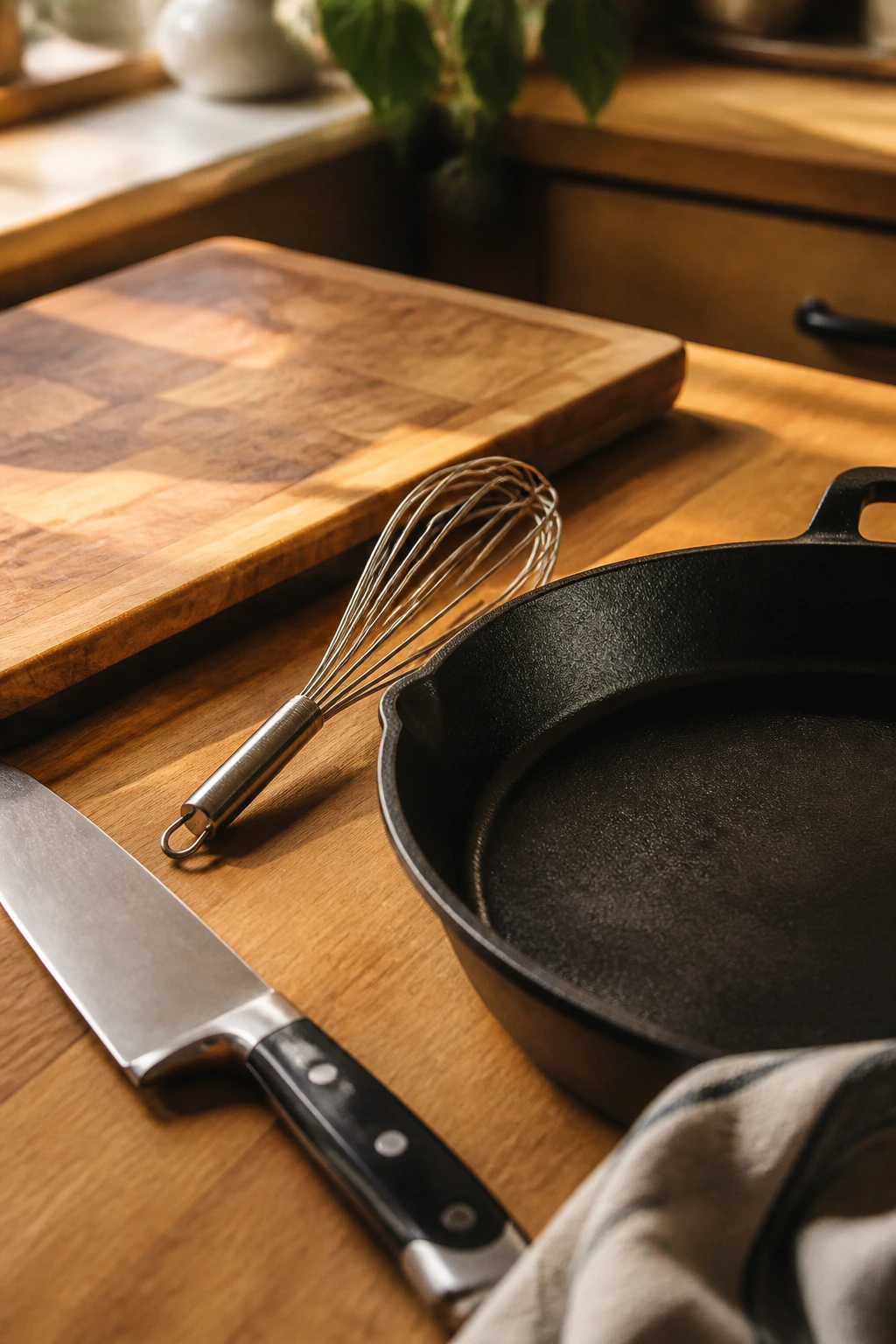
- Large oven-safe skillet: Handy for any recipe you want to start on the stove and finish in the oven.
- 9-inch or 10-inch baking dish: Best for recipes that move from stovetop filling to a separate crust or topping.
- Wooden spoon or silicone spatula: Useful for stirring without scraping the pan into sharp corners.
- Whisk: Keeps broth, milk, and flour from turning lumpy.
- Sharp chef’s knife: You’ll use it on onions, carrots, celery, potatoes, and herbs.
- Cutting board: A roomy one makes winter cooking less cramped.
- Measuring cups and spoons: Especially important for broth, flour, and cream ratios.
- Pastry brush: Helpful for egg wash on puff pastry and for brushing biscuit tops with milk.
- Potato masher: Needed for the shepherd’s pie version and useful if you like a rustic mash.
- Sheet pan: Put your baking dish on one if you want to catch drips in the oven.
- Airtight containers: Good for storing leftover filling or a fully baked pie.
Smart Shopping and Ingredient Tips
A pot pie is only as good as the filling you build, and the shopping list matters more than people think. For chicken and turkey versions, choose thighs if you want juiciness and breasts if you plan to serve quickly and don’t want visible fat. For beef, ground meat gives you speed; stew meat gives you better chew but asks for more time. Ground pork and lamb should be cooked until no pink remains, then seasoned while hot so the spices stick.
Frozen vegetables are fine here. I’d even say they’re wise on a cold night, because peas, corn, and mixed vegetables often taste brighter than tired produce that’s been sitting in the drawer. Mushrooms should be firm and dry, not slimy. Potatoes should feel heavy in the hand and free of green spots. If you’re buying pastry, keep it frozen until the day you need it, and thaw it in the fridge so it stays pliable instead of sticky.
Broth is the quiet backbone of every one of these recipes. Use something you’d drink if you had to. That doesn’t mean fancy stock, just one with enough body that the sauce tastes like dinner and not salt water. Cream, milk, and half-and-half all have jobs, but none of them can rescue a weak broth. Garlic, onions, thyme, and Dijon are worth having around for that reason alone.
How to Serve These Pot Pie Dinners
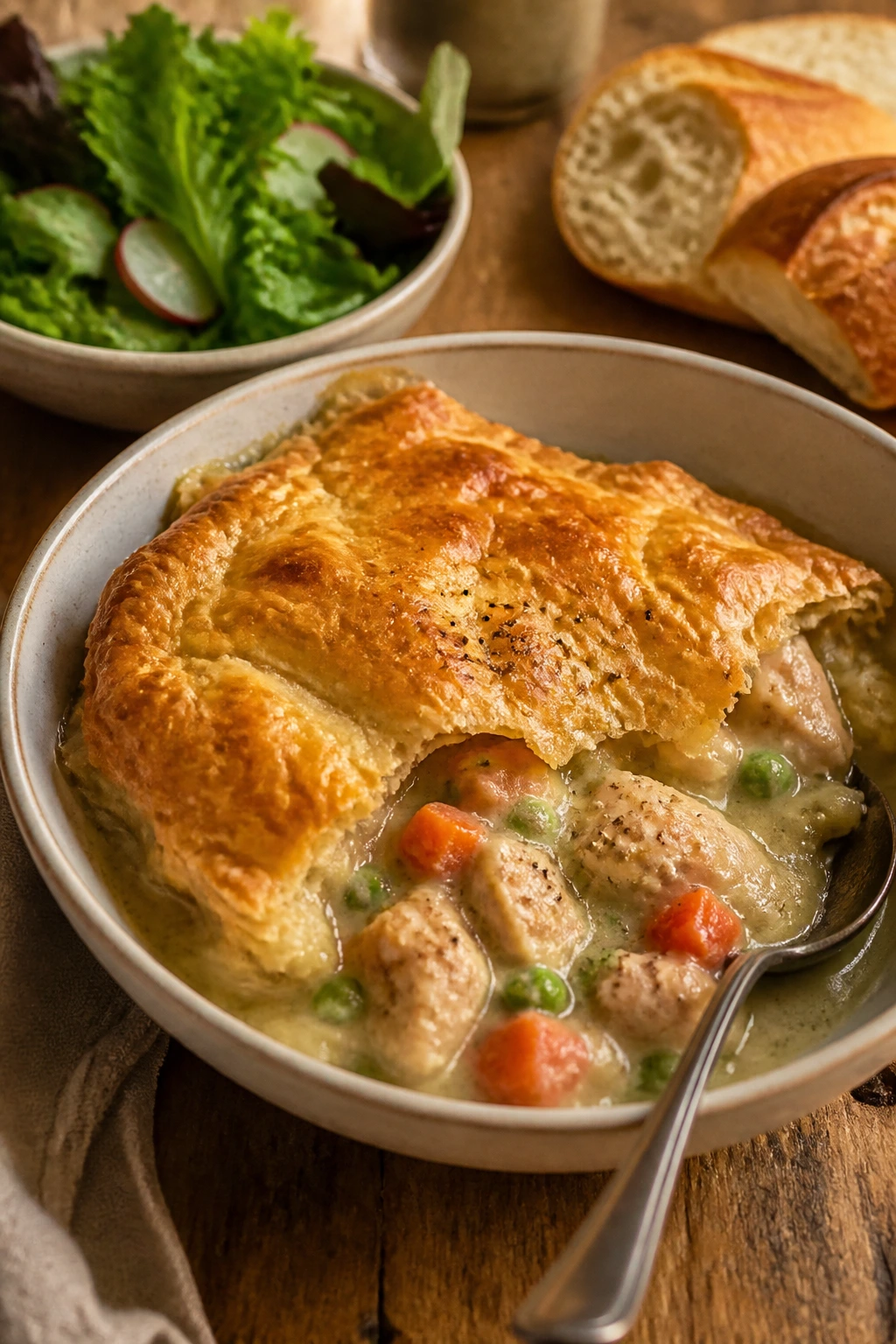
Presentation: Serve pot pie in wide shallow bowls or on plates with a spoon and fork nearby, because the filling deserves room to spread a little. If you’ve used puff pastry, keep the top intact until the table so everyone gets that first crack when the spoon goes in.
Accompaniments: A sharp green salad, buttered green beans, roasted broccoli, or simple pickled onions all cut through the richness. For the heartier pies, good bread is optional, not necessary; for the lighter ones, crusty bread is welcome if you want to chase the gravy.
Portions: Most of these recipes feed 4 to 6 people, depending on whether the filling is the main event or part of a bigger meal. If you’re feeding bigger appetites, build in a vegetable side and plan on six portions instead of four. If you’re serving smaller appetites, the leftovers reheat well enough to be lunch the next day.
Beverage Pairing: Dry cider is an easy match for chicken, pork, and ham pies. For beef or lamb, I like a dark beer or a simple red wine with enough structure to stand up to the gravy. On non-alcoholic nights, sparkling water with lemon or hot apple cider does the job without crowding the plate.
Additional Tips and Flavor Boosters
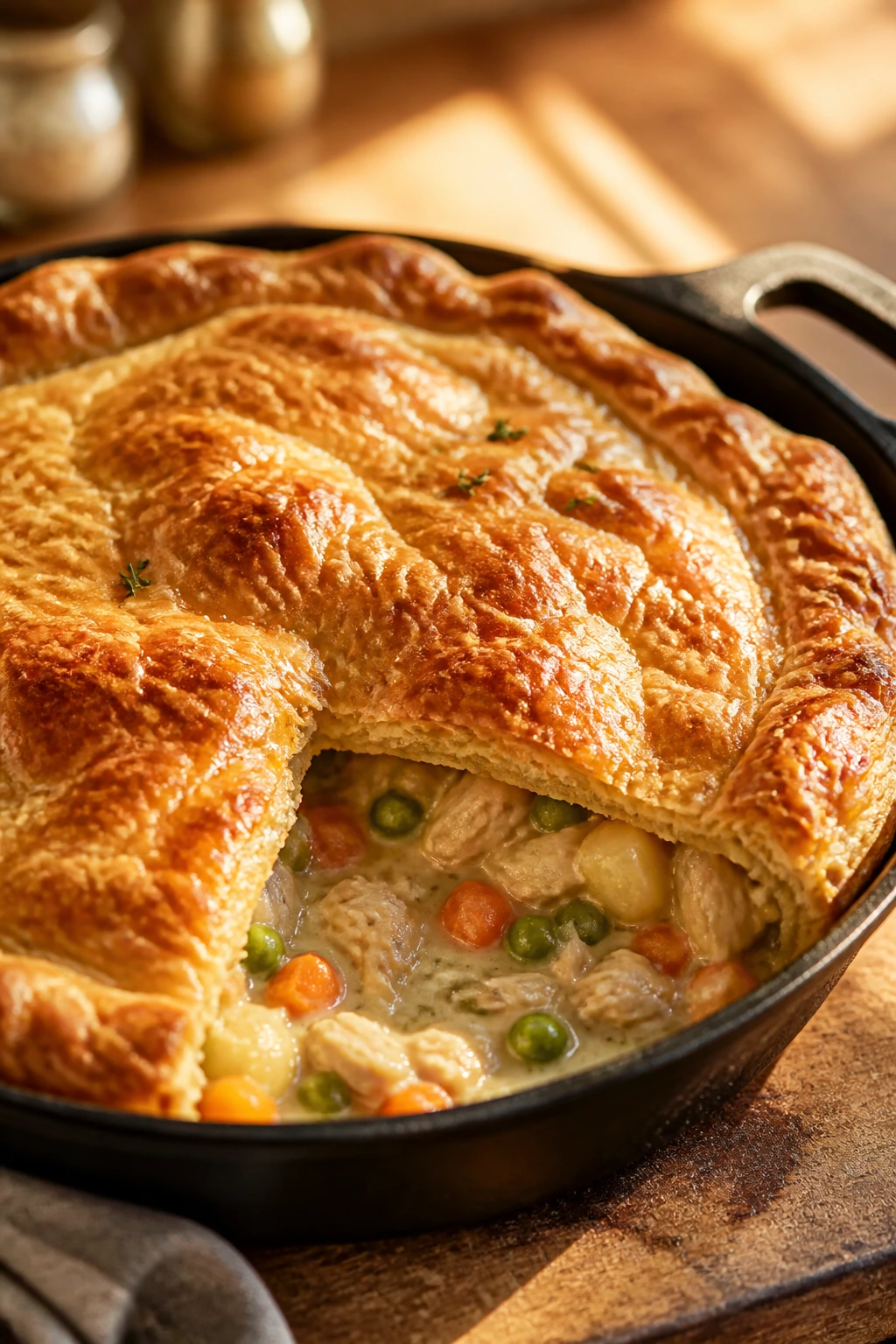
Flavor Enhancement: Finish creamy fillings with a teaspoon of Dijon, a splash of lemon juice, or a few drops of vinegar right before baking. That little bit of acid keeps the sauce from tasting sleepy, especially in chicken, turkey, and vegetarian pies.
Customization: Add frozen peas, corn, or chopped green beans near the end of cooking so they stay bright. If you want a richer result, stir a handful of grated cheese into ham, beef, or onion-heavy fillings.
Serving Suggestions: Fresh herbs matter more than people admit. Parsley, dill, thyme, or chives on top after baking make the pie taste fresh instead of merely warm. A dusting of flaky salt on pastry right after it comes out of the oven is a small thing that pays off fast.
Make-It-Yours: For dairy-free versions, use olive oil, unsweetened oat milk, or canned coconut milk depending on the filling. For gluten-free cooking, thicken the gravy with cornstarch instead of flour and top with gluten-free puff pastry, mashed potatoes, or a cornbread crust.
Make-Ahead, Storage, and Reheating Guidance
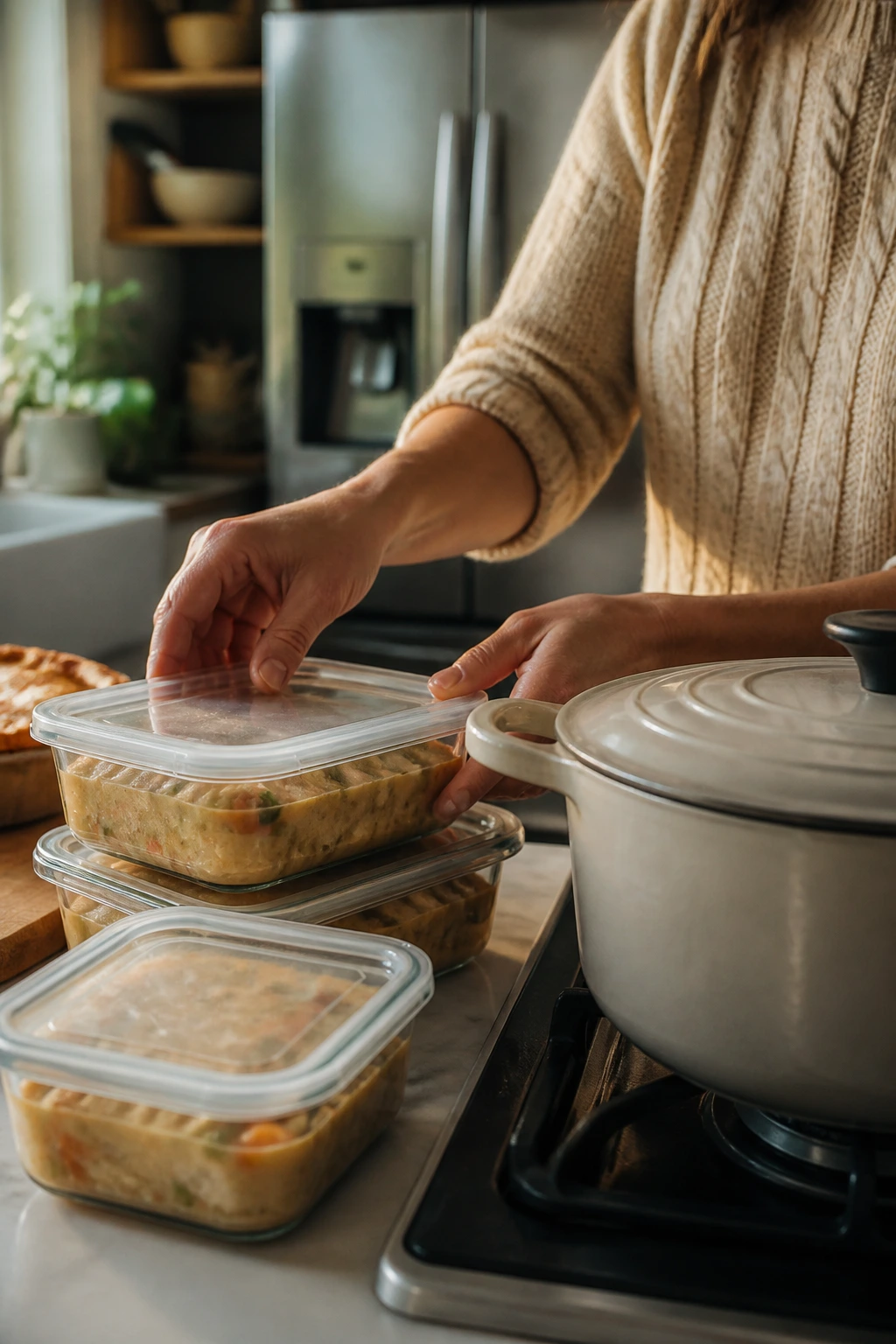
Most pot pie fillings can be made 1 to 2 days ahead and kept covered in the refrigerator. If you’re using puff pastry or biscuit dough, I’d wait to add the topping until baking day so the texture stays crisp. The filling itself often tastes even better after a night in the fridge because the gravy settles and the seasoning evens out.
Leftover baked pot pie keeps in the refrigerator for 3 to 4 days. Wrap the dish tightly or move portions to airtight containers once it has cooled, but don’t leave it out for more than 2 hours. For freezing, individual slices or fully cooled fillings work best; freeze for up to 2 months. Pie crust and puff pastry lose some of their snap after freezing, but the flavor stays solid, which is what matters most on a weekday.
Reheat slices in a 350°F (175°C) oven, covered loosely with foil for the first 10 to 15 minutes, then uncovered for the last few minutes so the top dries back out. Microwaving is faster, but it softens pastry and biscuits. If you only need to warm the filling, use a skillet over low heat with a splash of broth or milk, then top with a fresh biscuit or toast. For mashed potato versions, the oven is still the best bet; the top browns again instead of turning gluey.
Variations and Adaptations to Try
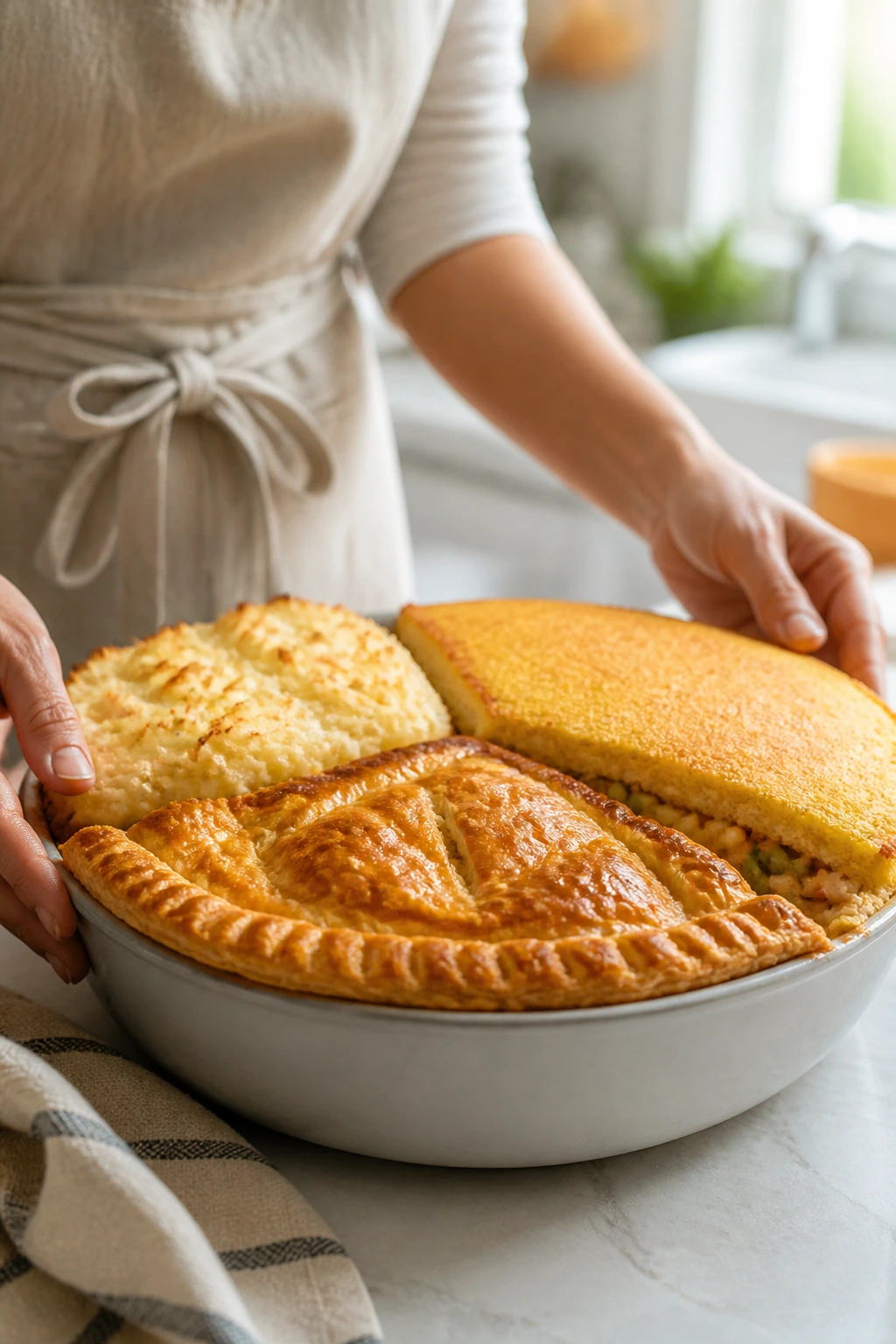
Gluten-Free Crust Swap: Use cornstarch to thicken the filling instead of flour, then top with gluten-free puff pastry, mashed potatoes, or a cornmeal crust. Keep an eye on browning, because some gluten-free doughs color faster than regular pastry.
Dairy-Free Comfort Pie: Replace butter with olive oil or dairy-free margarine, and use unsweetened oat milk or coconut milk depending on the flavor profile. Chicken, chickpea, and vegetable versions handle this especially well.
Pantry-First Version: Lean on canned beans, frozen vegetables, rotisserie chicken, and boxed broth. This version is not fancy, and that’s fine; it’s the one you make when the grocery run did not happen.
Extra-Winter Root Veg Pie: Add parsnips, turnips, or rutabaga to chicken, beef, or vegetarian fillings. These vegetables bring sweetness and body, and they hold up better than watery squash in a baked pie.
Spice-Bright Version: Add curry powder to chickpea pie, smoked paprika to beef, or a pinch of cayenne to sausage. A small amount changes the tone fast, which is useful when you want a familiar dish to feel new without changing the whole structure.
Common Mistakes to Avoid
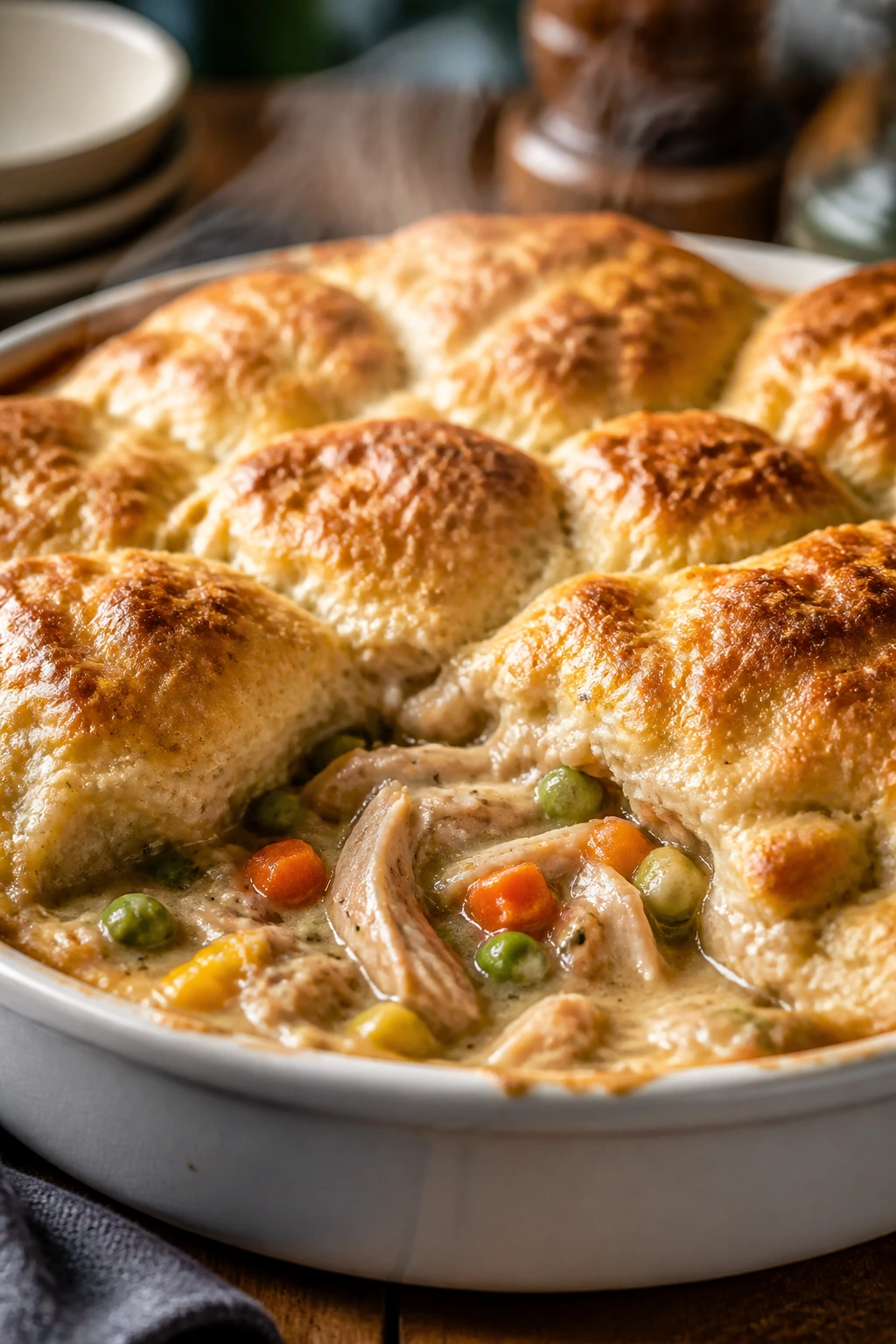
Thin filling: If the filling looks like soup before it goes into the oven, it will likely stay loose after baking. The fix is simple: simmer a few minutes longer and let the sauce thicken until it clings lightly to a spoon.
Soggy crust: A wet filling and a raw pastry top are a bad pair. Cool the filling for 10 minutes before topping it, and if you’re using pie crust or puff pastry, make sure the oven is fully heated before the dish goes in.
Under-seasoned gravy: A thick sauce without enough salt tastes flat no matter how much butter you add. Taste the filling before baking, and don’t be shy with black pepper, thyme, mustard, or a splash of acid.
Overcooked seafood: Shrimp and salmon turn tough fast. Add them near the end, and use the oven only long enough to finish the topping and bring the fish to opaque.
Too-crowded vegetables: Raw carrots, potatoes, and root vegetables need a head start. Par-cook the dense ones or dice them small, or they’ll stay hard while the top browns.
Burned edges: Puff pastry and biscuit tops can brown faster than the filling heats through. If the top is getting dark too early, cover it loosely with foil for the last 10 minutes.
Frequently Asked Questions
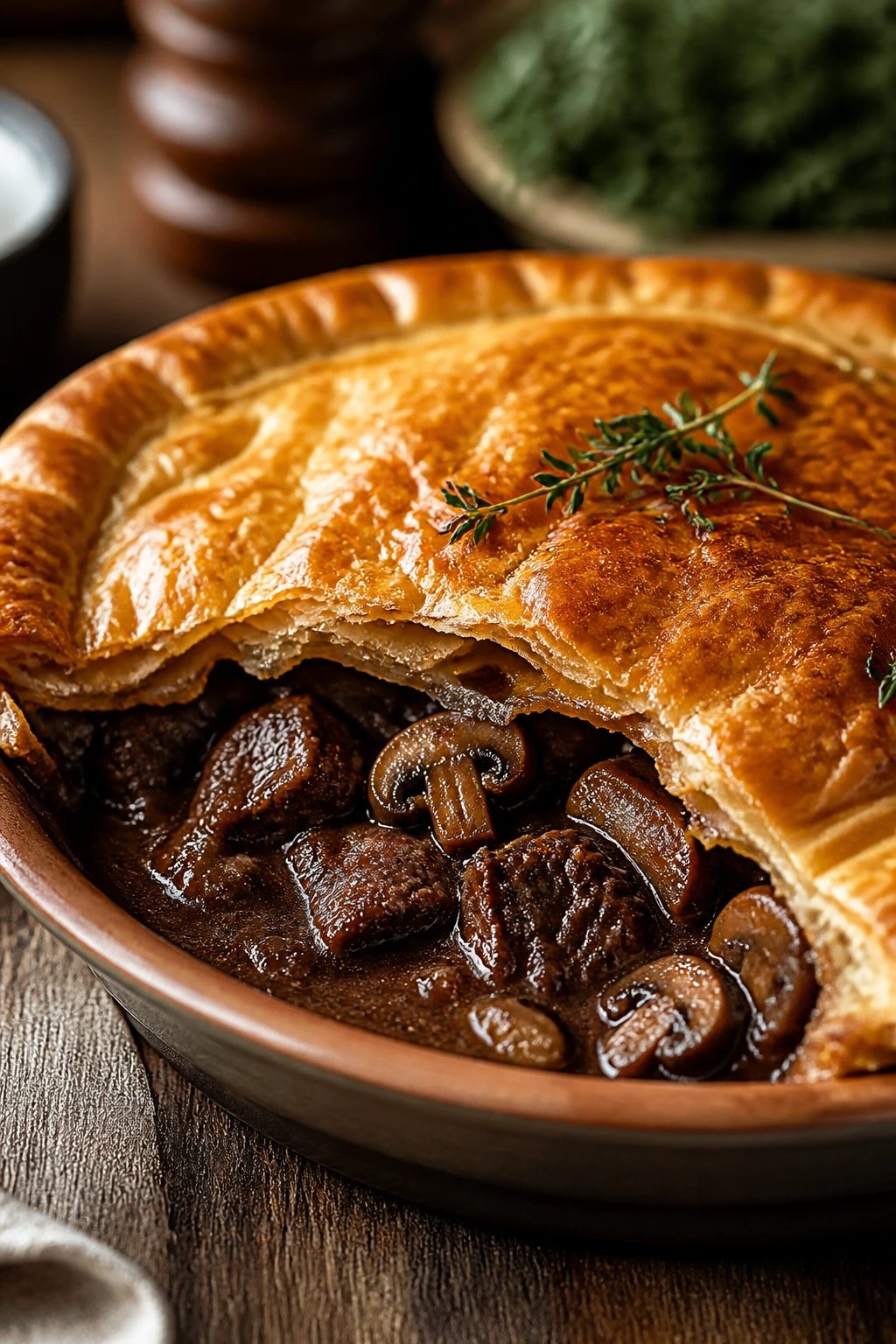
Can I use store-bought crust or biscuit dough?
Yes, and you probably should if the goal is getting dinner on the table without drama. Store-bought puff pastry, pie crust, and biscuit dough all work well here as long as the filling is thick enough to support them.
How do I keep the bottom from getting soggy?
The easiest fix is to avoid over-wet filling and bake the pie in a fully preheated oven. If you’re using a bottom crust, blind-baking it for a few minutes helps, but many of these recipes skip the bottom crust altogether for that reason.
Can I make these with leftover chicken or turkey?
Absolutely. Leftover poultry is one of the best ways to make a pot pie feel effortless, but add it after the sauce thickens so it doesn’t dry out. Cold cooked meat only needs long enough to heat through.
Which pot pies freeze best?
Beef, turkey, chicken, vegetarian lentil, and pork versions freeze more reliably than seafood versions. Seafood fillings can turn soft after thawing, so I’d freeze those only if you’re okay with a slightly looser texture.
Can I use frozen vegetables instead of fresh?
Yes. Peas, corn, spinach, and mixed vegetables often work better frozen because they’re already cleaned and trimmed, and they hold their shape well during baking. Just add them near the end so they don’t turn bland.
What if my filling is too runny after baking?
Spoon it into a skillet and simmer it uncovered for a few minutes, or stir in a small cornstarch slurry before reheating. Next time, let the filling reduce a little more on the stove before it goes under the crust.
Can I make one filling and change the topping?
You can, and that’s a smart way to get variety without multiplying your work. Chicken, sausage, beef, and vegetable fillings all adapt nicely to puff pastry, biscuits, cornbread, or mashed potatoes.
How do I reheat leftovers without wrecking the top?
Use the oven when you can. A 350°F oven with a loose foil cover for the first stretch keeps the filling warm while the top stays crisp enough to feel like the original dish, not a leftover compromise.
A Better Kind of Cold-Night Dinner
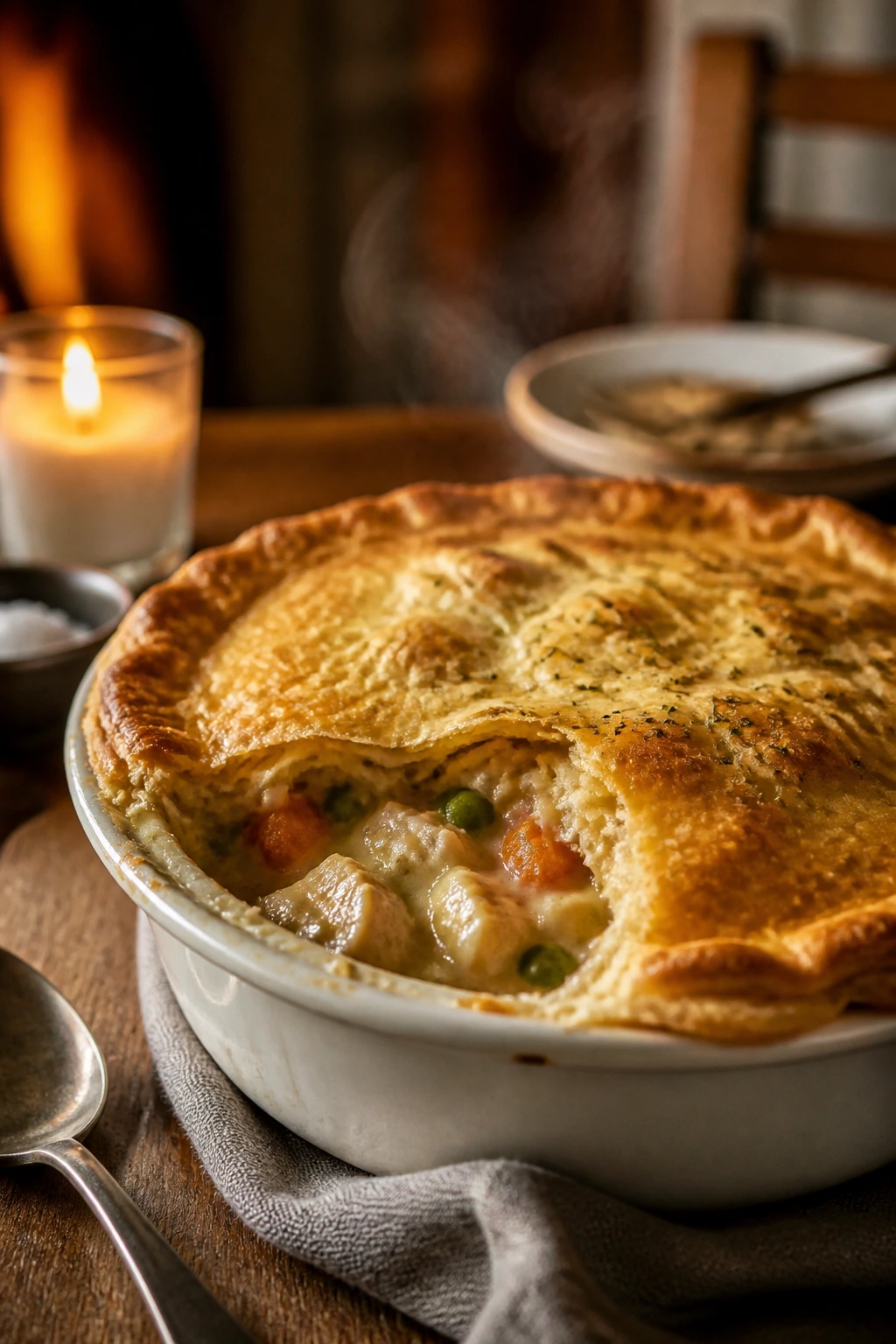
Pot pie dinners earn their place because they do three jobs at once: they feed people well, they make use of what’s on hand, and they bring a little warmth into a room that probably needs it. That’s a rare combination. Plenty of meals are easy. Fewer feel this satisfying.
The nice part is that once you make one or two, the rest start to look less like recipes and more like templates you can bend to your fridge. Chicken becomes turkey. Puff pastry becomes biscuits. Beef becomes mushrooms and onions. And suddenly cold nights stop feeling like a dinner problem.
| Recipe | Prep Time | Cook Time | Total Time | Servings | Standout Detail |
|---|---|---|---|---|---|
| Skillet Chicken Pot Pie with Puff Pastry Lid | 20 min | 35 min | 55 min | 6 | crispiest pastry top |
| Turkey and Biscuit Pot Pie | 15 min | 30 min | 45 min | 6 | best leftover turkey fix |
| Beef and Mushroom Pot Pie with Red Wine Gravy | 20 min | 40 min | 1 hr | 6 | deepest savory gravy |
| Ham, Potato, and Cheddar Pot Pie | 18 min | 35 min | 53 min | 6 | creamiest potato filling |
| Sausage, Kale, and White Bean Pot Pie | 20 min | 35 min | 55 min | 6 | hearty without feeling heavy |
| Vegetarian Lentil and Root Vegetable Pot Pie | 20 min | 40 min | 1 hr | 6 | most filling plant-based option |
| Curried Chickpea and Sweet Potato Pot Pie | 20 min | 35 min | 55 min | 6 | warm spice and coconut finish |
| Salmon, Pea, and Dill Pot Pie | 20 min | 35 min | 55 min | 6 | lightest, most elegant pie |
| Shrimp and Corn Pot Pie with Cornbread Top | 20 min | 30 min | 50 min | 6 | boldest flavor and texture |
| French Onion Chicken Pot Pie | 25 min | 40 min | 1 hr 5 min | 6 | caramelized onion richness |
| Pork and Apple Cider Pot Pie | 20 min | 40 min | 1 hr | 6 | sweet-savory cider balance |
| Shepherd’s Pie Pot Pie with Ground Lamb | 20 min | 35 min | 55 min | 6 | best mash-topped comfort pie |