



Pellet grill dinners for summer nights have a particular kind of pull: you get smoke, char, and a cool kitchen, without standing over flames like a nervous camp counselor. The grill does the heavy lifting. You get to look like you planned ahead.
That’s the beauty of a pellet grill when the evenings are warm and the appetite is broad. Chicken thighs stay juicy, salmon picks up a clean wood note, burgers get a little edge on the outside, and vegetables take on that sweet, roasted thing they can only do over steady heat. A pellet grill won’t bully the food the way a screaming-hot gas flame sometimes does. It coaxes. That matters.
The best pellet grill dinners for summer nights are the ones that feel relaxed but still taste thought through. A platter of chicken with sticky sauce. Salmon with lemon and dill. Steak sliced across the grain and piled onto warm tortillas. Ribs that take their time and reward patience. The list below leans into that mood hard — easy enough for a weeknight, good enough to carry a whole weekend dinner outdoors.
Why This Collection Feels So Useful
- Low-Stress Cooking: Pellet grills hold temperature well, so these dinners don’t demand constant babysitting the way charcoal can.
- Big Flavor, Small Fuss: A little wood smoke, a smart rub, and one good finishing sauce do more work than a pile of complicated steps.
- Warm-Night Friendly: These recipes keep the oven off and let dinner happen outside, which is a gift when the house already feels warm.
- Built for Real Life: You’ll find fast options for busy nights, plus slower cooks for when you want dinner to feel like an event.
- Flexible by Design: Most of these dinners can be adjusted for different wood pellets, side dishes, and spice levels without falling apart.
- Crowd-Friendly: Several recipes scale easily, and a few are the kind of platter food that disappears fast when people wander in hungry.
1. Honey-Barbecue Chicken Thighs with Sticky Edges
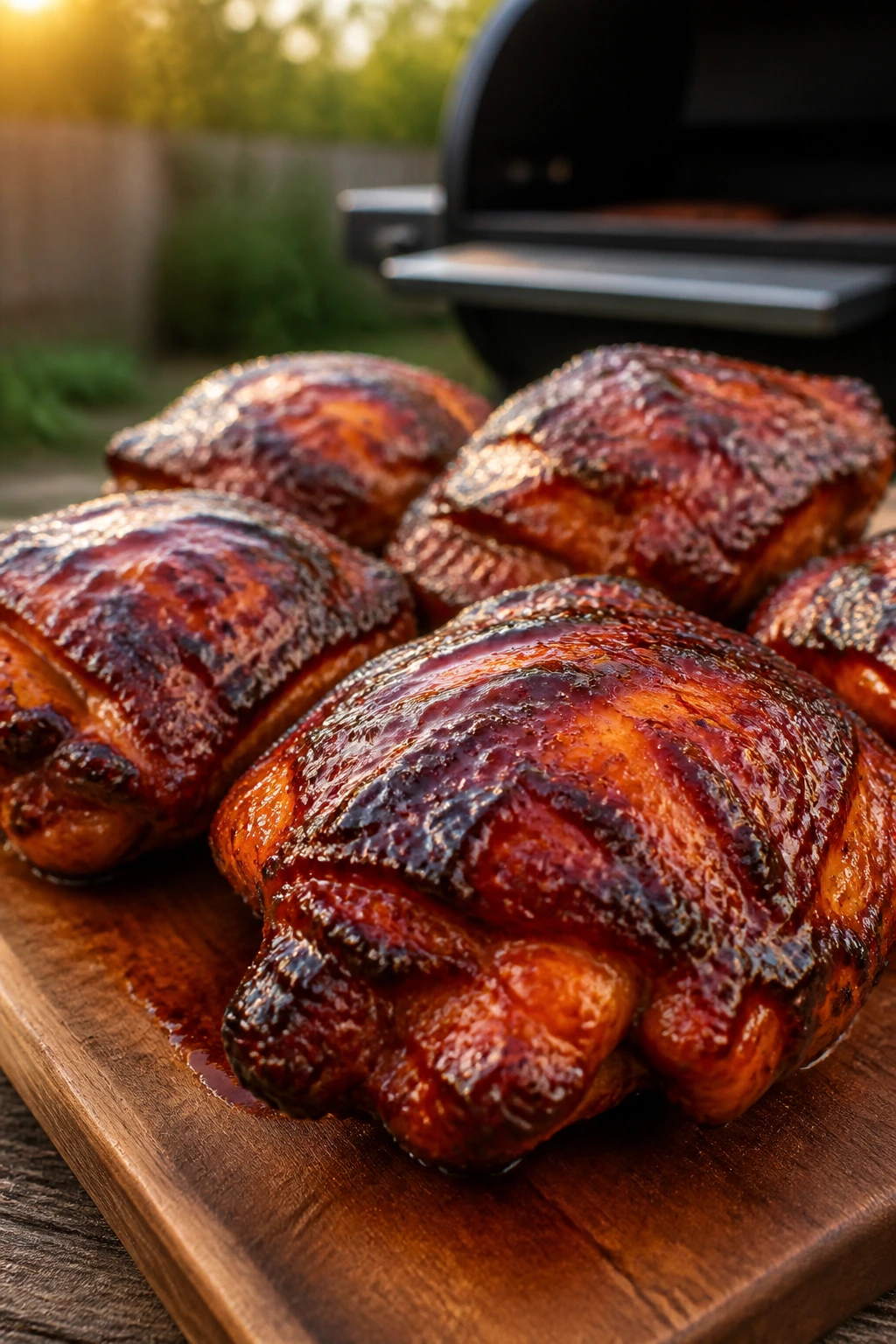
Chicken thighs are the quiet hero of pellet grill dinners for summer nights. They tolerate a little extra heat, stay tender, and pick up smoke in a way chicken breast never quite manages. The sweet barbecue glaze gets tacky at the edges, and that is the part people remember — the glossy, lacquered finish with a little char where the sauce kisses the grill.
Why It Works on the Pellet Grill
Dark meat is forgiving, which is exactly why it belongs on a pellet grill. You can run the cooker at a steady 375°F and get a juicy center without burning the glaze, as long as you add the sauce near the end. The honey helps the surface brown, the vinegar keeps the sauce from going flat, and the thighs finish with enough fat rendered out to feel rich instead of greasy.
Key Ingredients:
- 2 1/2 pounds boneless, skinless chicken thighs
- 1 tablespoon olive oil
- 1 1/2 teaspoons kosher salt
- 1 teaspoon black pepper
- 1 teaspoon smoked paprika
- 1 teaspoon garlic powder
- 1/2 cup barbecue sauce
- 1/4 cup honey
- 2 tablespoons apple cider vinegar
- 1 tablespoon Dijon mustard
Quick Steps:
- Preheat the pellet grill to 375°F and clean the grates so the glaze won’t stick to old residue.
- Pat the chicken thighs dry, then toss them with olive oil, salt, pepper, smoked paprika, and garlic powder until lightly coated.
- Stir together the barbecue sauce, honey, vinegar, and Dijon in a small bowl.
- Grill the thighs for 18 to 22 minutes, turning once, until the thickest piece reaches 165°F and the outside is lightly browned.
- Brush on the glaze during the last 5 minutes, then grill just until it looks shiny and sticky.
- Rest the chicken for 5 minutes before serving so the juices settle back in.
Tips and Variations:
- Use apple or cherry pellets if you want a softer smoke profile that suits the honey glaze.
- Swap Dijon for yellow mustard if that’s what you keep on hand; it’ll taste a little brighter.
- If the sauce darkens too fast, move the thighs to a cooler spot on the grate for the final minutes.
2. Cedar-Plank Salmon with Lemon-Dill Butter
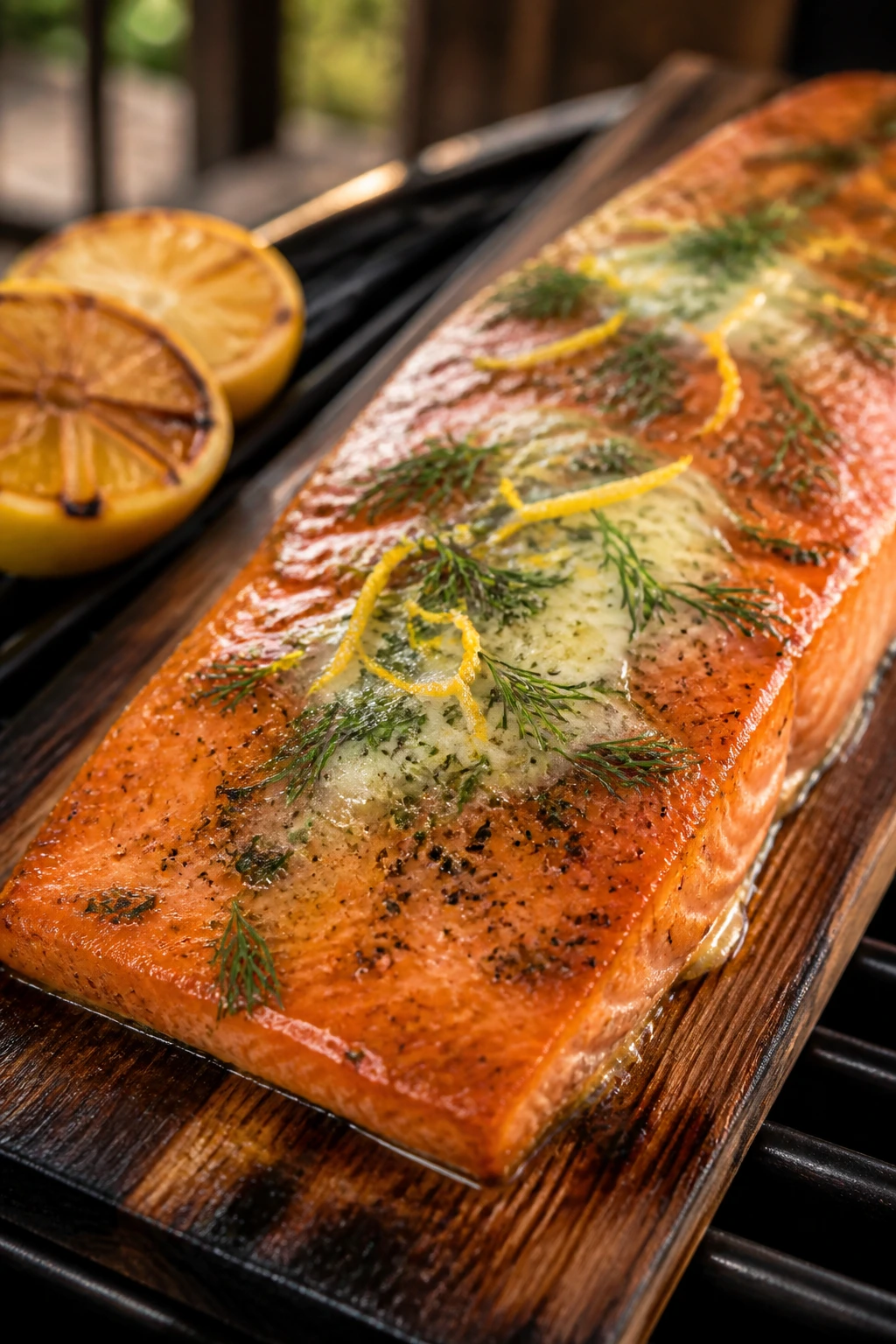
Salmon on a cedar plank smells like summer before the fish even hits the grill. The wood adds a gentle perfume, not an aggressive smoke bomb, which is why this dish tastes clean and elegant instead of heavy. The butter melts into the flaky flesh, and the lemon keeps everything awake.
What Makes Cedar and Salmon Such a Good Pair
A cedar plank gives salmon a soft, rounded smoke that works especially well with a pellet grill set around 400°F. The plank buffers the heat, the fish cooks evenly, and the surface never gets that dry, harsh edge you can get from direct grates. If you’ve ever had salmon that looked nice but tasted a little flat, this fixes that in a single move.
Key Ingredients:
- 1 cedar plank, soaked in water for at least 1 hour
- 1 1/2 pounds salmon fillet, skin on
- 2 tablespoons olive oil
- 1 teaspoon kosher salt
- 1/2 teaspoon black pepper
- 3 tablespoons unsalted butter, melted
- 1 tablespoon fresh dill, chopped
- 1 teaspoon lemon zest
- 1 tablespoon fresh lemon juice
- 2 lemon slices, for topping
Quick Steps:
- Soak the cedar plank in water for 1 hour, then drain it well before grilling.
- Preheat the pellet grill to 400°F and set the plank on the grates for 3 to 4 minutes until it starts to smoke lightly.
- Brush the salmon with olive oil, then season it with salt and pepper.
- Stir together the melted butter, dill, lemon zest, and lemon juice, then spoon that over the salmon.
- Place the salmon on the plank and cook for 12 to 18 minutes, depending on thickness, until it flakes easily and reaches 145°F at the thickest point.
- Rest it for 3 minutes, then serve with the lemon slices.
Tips and Variations:
- If you want a more pronounced herbal note, add chopped chives to the butter.
- A thin layer of honey under the butter gives the salmon a glossy finish.
- Don’t skip the soak. A dry plank can scorch too fast.
3. Smoked Cheeseburgers with Charred Onions
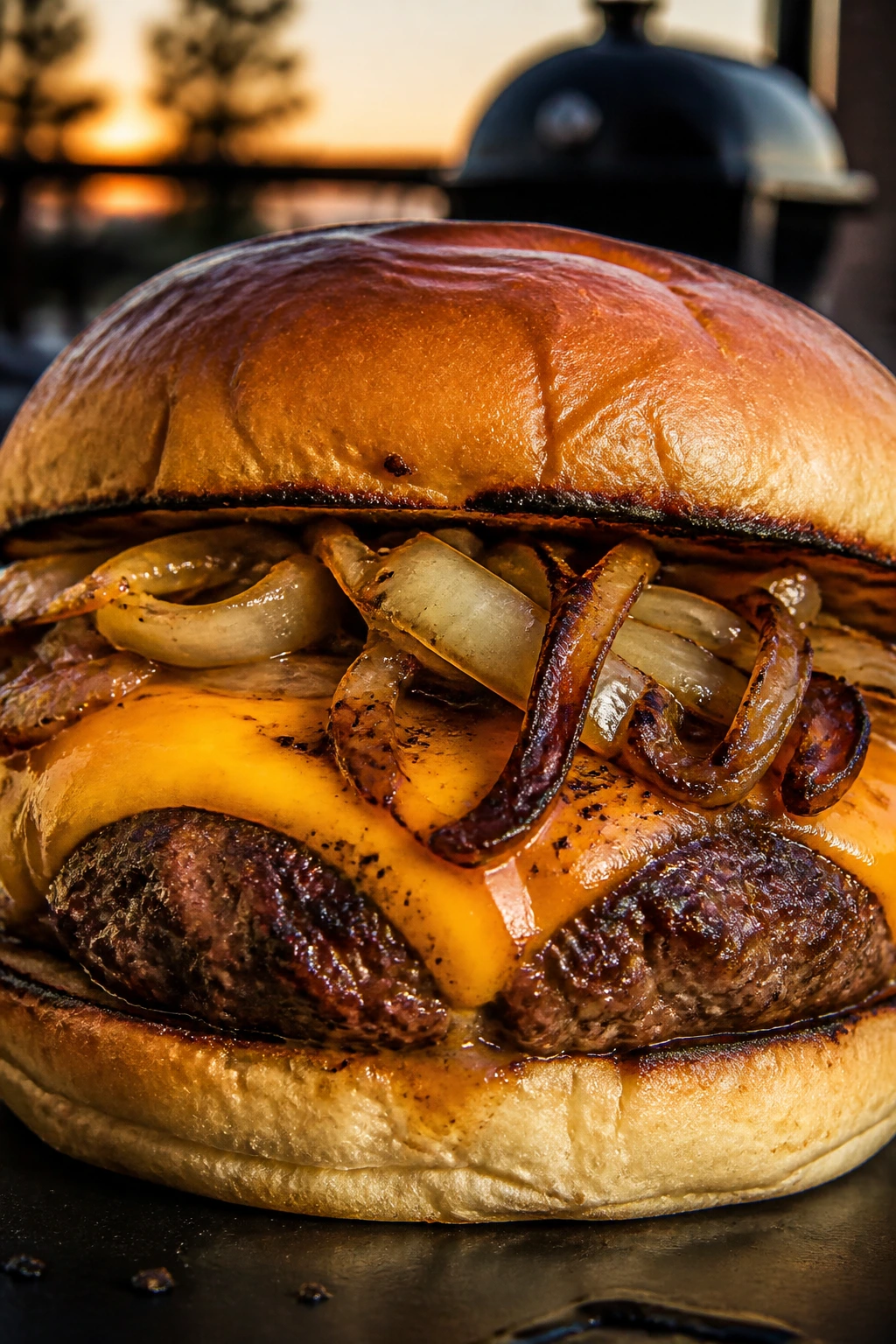
There’s a reason burgers keep showing up at backyard tables. They’re direct. They don’t ask for ceremony. A pellet grill gives them a little smoke depth that a skillet can’t mimic, and when you top them with onions cooked until the edges brown and collapse, the whole thing gets just enough sweetness to keep the beef from feeling one-note.
Why Burger Fat Matters Here
Use 80/20 ground beef and don’t fight it. The fat keeps the patties juicy through the smoke phase, and that extra richness carries cheddar better than lean meat ever will. I like to run burgers first at 225°F to pick up smoke, then finish them hotter so the outside gets a little crust. That two-stage method gives you more flavor without drying the center.
Key Ingredients:
- 2 pounds 80/20 ground beef
- 1 teaspoon kosher salt
- 1 teaspoon black pepper
- 1 teaspoon Worcestershire sauce
- 1 large yellow onion, sliced
- 2 tablespoons unsalted butter
- 4 slices cheddar cheese
- 4 burger buns, split
- Lettuce, tomato, pickles, mustard, and mayonnaise for serving
Quick Steps:
- Preheat the pellet grill to 225°F.
- Mix the beef with salt, pepper, and Worcestershire just until combined, then form 4 equal patties and press a small dimple into the center of each one.
- Cook the patties for 20 minutes at 225°F so they pick up smoke.
- Raise the grill to 400°F, add the onion slices to a cast-iron skillet with butter, and cook until soft and browned at the edges.
- Finish the burgers for 4 to 6 minutes, top with cheddar during the last minute, and cook to 160°F for ground beef safety.
- Toast the buns for 30 to 60 seconds, then build the burgers with onions and the toppings you like.
Tips and Variations:
- Add a slice of pepper jack if you want a little heat.
- A spoonful of barbecue sauce under the cheese gives the burger a backyard-style finish.
- Don’t press the patties while they cook. That just leaks juice onto the grates.
4. Peach-Glazed Pork Tenderloin
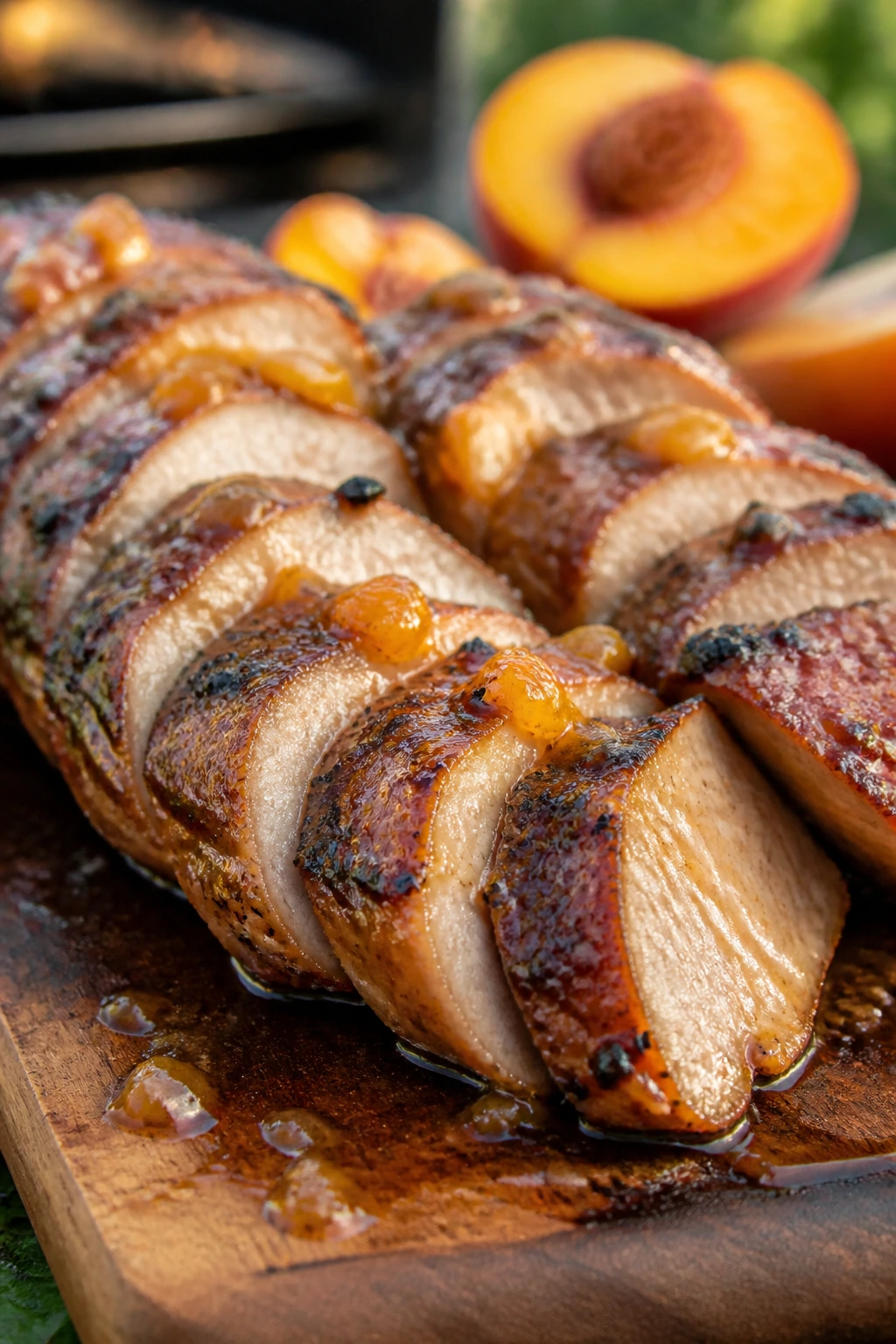
Pork tenderloin loves fruit, and peaches are one of the few things that can make the cut taste richer without weighing it down. This one is sweet, a little tangy, and polished enough to slice into neat medallions for a platter. It looks like you worked harder than you did, which is useful on a weeknight.
The Sweet Spot Between Pork and Fruit
Pork tenderloin has a mild flavor, so it takes well to a glaze that has both sugar and acid. Peach preserves give you body, Dijon gives the sauce grip, and a splash of vinegar keeps the whole thing from tasting sticky in the wrong way. Cook it at 375°F and pull it the moment it hits 145°F. Any hotter, and the tenderloin starts to lose its soft texture.
Key Ingredients:
- 2 pork tenderloins, about 1 1/2 to 2 pounds total
- 1 teaspoon kosher salt
- 1/2 teaspoon black pepper
- 1 teaspoon smoked paprika
- 1 tablespoon olive oil
- 1 cup peach preserves
- 2 tablespoons Dijon mustard
- 1 tablespoon soy sauce
- 1 tablespoon apple cider vinegar
- 1 ripe peach, sliced
- 2 scallions, sliced
Quick Steps:
- Preheat the pellet grill to 375°F.
- Pat the pork dry and season it with salt, pepper, and smoked paprika.
- Whisk together the peach preserves, Dijon, soy sauce, and vinegar in a small bowl.
- Grill the tenderloins for 12 minutes, turning once, then brush on some glaze.
- Continue grilling for 12 to 15 minutes more, brushing again near the end, until the thickest part reaches 145°F.
- Rest the pork for 5 to 7 minutes, slice it into medallions, and finish with the fresh peach slices and scallions.
Tips and Variations:
- If peaches are out of season, apricot preserves work well and taste a little brighter.
- A pinch of red pepper flakes in the glaze gives the pork a low hum of heat.
- Slice against the grain. Tenderloin can still eat dry if you cut it the wrong way.
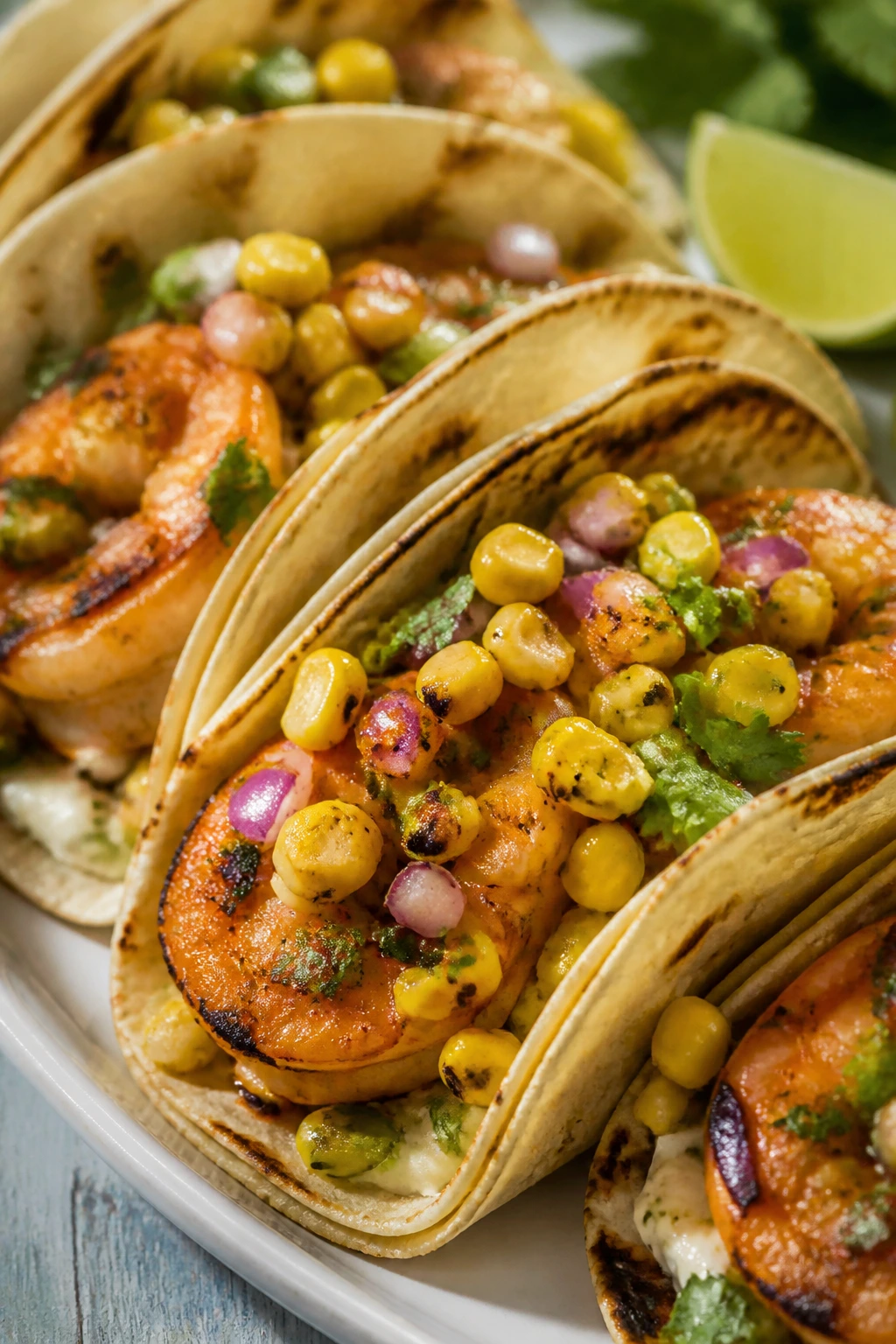
5. Shrimp Tacos with Smoked Corn Salsa
Shrimp on a pellet grill cooks so fast it almost feels like cheating. That’s the point. You get the flavor of fire without standing over it, and the corn salsa brings sweetness, crunch, and a little smoke from the grill itself. These tacos are the first thing I’d make when I wanted dinner to feel fun without becoming a project.
How the Smoke Helps Shrimp
Shrimp only needs a short time on the grate — usually 2 to 3 minutes per side at 400°F — so the grill has to be ready before the seafood goes on. The cornstarch-like tackiness you get from a light oil coating helps the seasoning cling, and the quick salsa keeps the tacos from feeling heavy. I like these best when the tortillas are warmed right on the grate for a few seconds. That tiny step matters.
Key Ingredients:
- 1 1/2 pounds large shrimp, peeled and deveined
- 2 tablespoons olive oil
- 1 teaspoon chili powder
- 1/2 teaspoon ground cumin
- 1/2 teaspoon garlic powder
- 1 teaspoon kosher salt
- 2 limes, divided
- 3 ears corn, husked
- 1/2 small red onion, finely diced
- 1/4 cup chopped cilantro
- 8 corn or flour tortillas
- 1 avocado, sliced
- 1/3 cup sour cream
- 1/4 cup crumbled cotija cheese
Quick Steps:
- Preheat the pellet grill to 400°F.
- Toss the shrimp with olive oil, chili powder, cumin, garlic powder, salt, and the juice of 1 lime.
- Grill the corn for 10 to 12 minutes, turning until lightly charred in spots, then cut the kernels off the cob.
- Mix the corn with red onion, cilantro, and the juice of the second lime to make the salsa.
- Grill the shrimp for 2 to 3 minutes per side until pink and opaque.
- Warm the tortillas for 20 to 30 seconds per side, then fill with shrimp, salsa, avocado, sour cream, and cotija.
Tips and Variations:
- Add diced jalapeño to the salsa if you like a little bite.
- Frozen shrimp work fine if thawed and patted dry first.
- A spoonful of mayo mixed with sour cream makes the taco sauce richer.
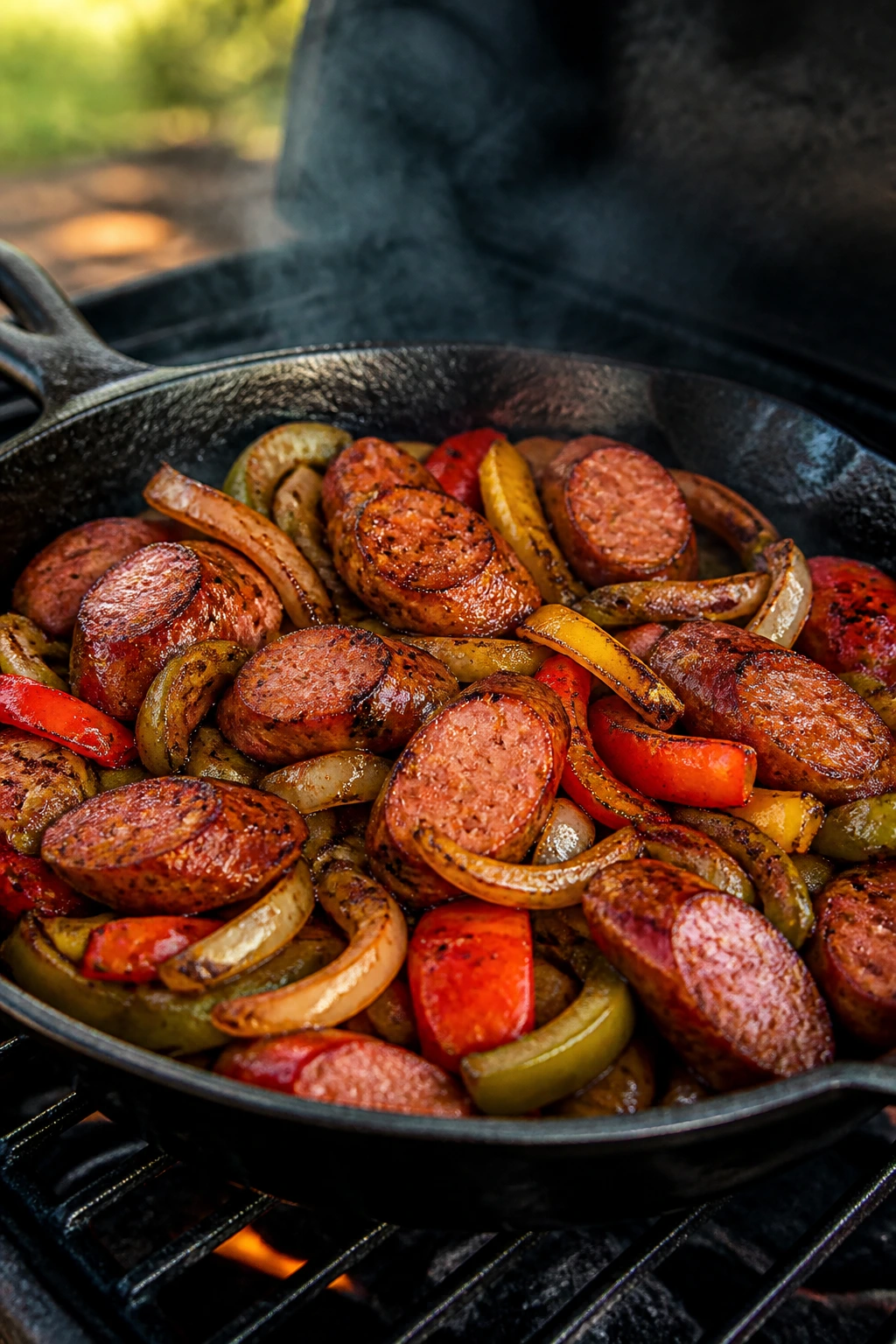
6. Smoked Sausage and Peppers in a Cast-Iron Skillet
This is the dinner you make when you want the grill to do the work but you don’t feel like fussing with marinades or a dozen components. Sausage brings its own seasoning, peppers soften into sweet ribbons, and the skillet catches all the little browned bits that make the dish taste deeper than it should.
Why Cast Iron Belongs Outside
A cast-iron skillet turns the pellet grill into a giant outdoor stovetop. That means the sausage browns instead of drying, the vegetables pick up a little smoke around the edges, and cleanup stays sane. Cook it around 400°F and stir once or twice, not constantly. If you stir every minute, the vegetables never caramelize.
Key Ingredients:
- 1 1/2 pounds smoked sausage, sliced into 1/2-inch rounds
- 3 bell peppers, sliced
- 1 large yellow onion, sliced
- 8 ounces cremini mushrooms, sliced
- 2 tablespoons olive oil
- 3 cloves garlic, minced
- 1 teaspoon Italian seasoning
- 1/2 teaspoon crushed red pepper flakes
- 1/2 teaspoon kosher salt
- 1/4 teaspoon black pepper
Quick Steps:
- Preheat the pellet grill to 400°F and place a large cast-iron skillet inside to heat for 10 minutes.
- Add the olive oil, sausage, onion, peppers, and mushrooms to the skillet, then toss with garlic, Italian seasoning, red pepper flakes, salt, and pepper.
- Cook for 20 minutes, stirring once or twice, until the sausage browns and the vegetables soften with browned edges.
- Stir in a splash of water if the pan starts to look dry, scraping up any browned bits.
- Cook for another 5 to 8 minutes until the peppers are tender but still hold shape.
Tips and Variations:
- Serve over rice, on toasted rolls, or straight from the skillet with crusty bread.
- Use chicken sausage if you want a lighter version.
- A spoonful of jarred roasted peppers adds more sweetness without extra work.
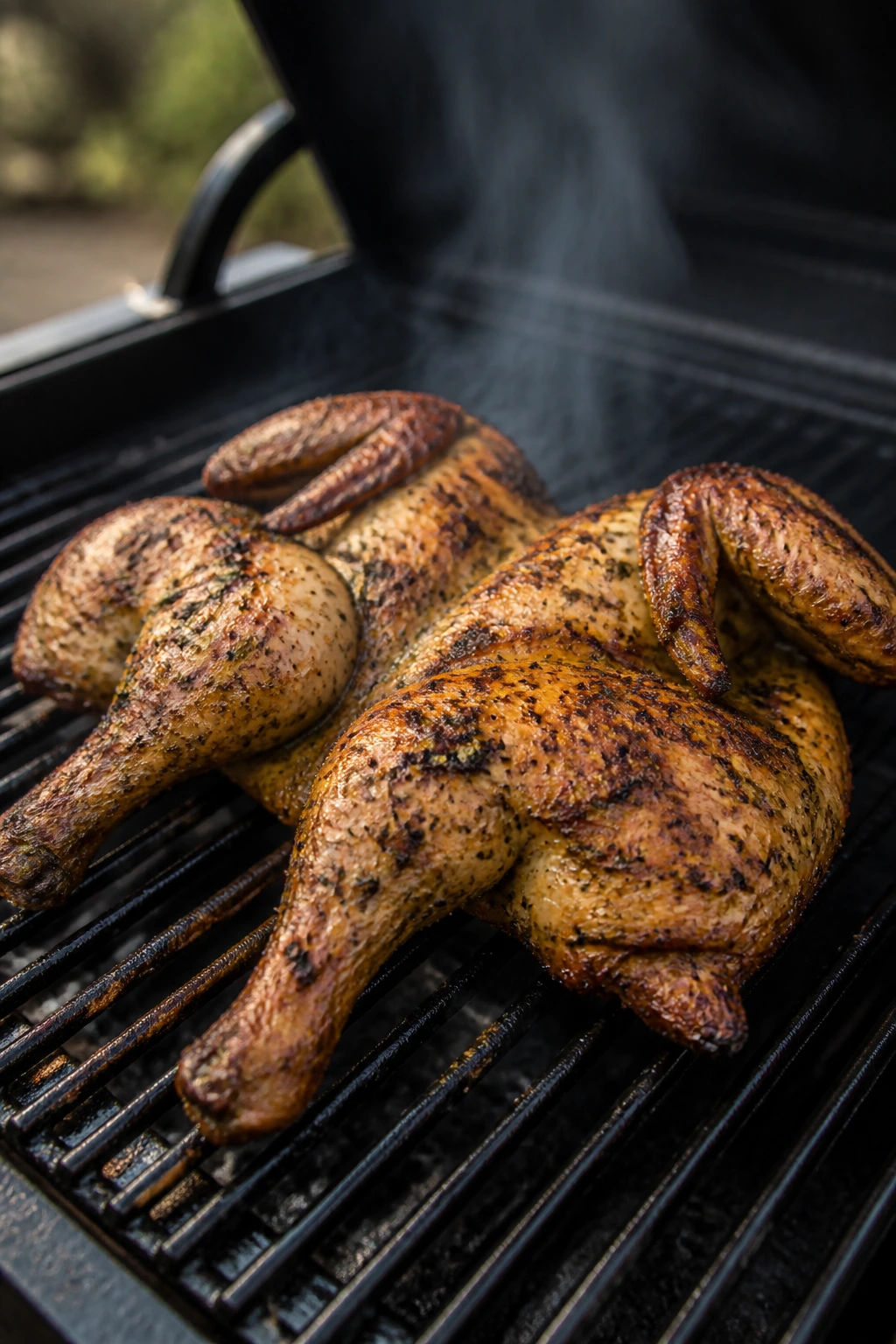
7. Spatchcock Chicken with Garlic-Herb Rub
Spatchcock chicken is one of those things that sounds fancier than it is. You cut out the backbone, flatten the bird, and suddenly it cooks faster and more evenly. On a pellet grill, that shape matters. The thighs finish when the breast is still juicy, and the skin gets enough direct heat to turn golden instead of rubbery.
What Spatchcocking Fixes
Whole chicken can be awkward on a grill because the breast and legs cook at different rates. Flattening the bird solves that problem and cuts the cook time down to around 50 minutes at 375°F for a medium bird. The garlic-herb rub gets into all the skin folds, and a little lemon under the chicken helps the drippings smell clean instead of heavy.
Key Ingredients:
- 1 whole chicken, 4 to 5 pounds
- 2 tablespoons olive oil
- 2 teaspoons kosher salt
- 1 teaspoon black pepper
- 2 teaspoons garlic powder
- 1 teaspoon dried thyme
- 1 teaspoon dried rosemary, crushed
- 1 teaspoon paprika
- 1 lemon, halved
- 2 tablespoons unsalted butter, softened
Quick Steps:
- Preheat the pellet grill to 375°F.
- Spatchcock the chicken by removing the backbone with kitchen shears, then press the breastbone down until the bird lies flat.
- Mix olive oil, salt, pepper, garlic powder, thyme, rosemary, and paprika, then rub it all over the chicken, including under the skin where you can reach.
- Place lemon halves cut-side down on the grate and set the chicken skin-side up over indirect heat.
- Grill for 45 to 55 minutes until the thickest part of the breast reaches 165°F and the thighs are at least 175°F.
- Rest for 10 minutes, then finish with softened butter if you want a richer sheen.
Tips and Variations:
- Let the chicken sit uncovered in the fridge for a few hours if you want extra crisp skin.
- Swap rosemary for oregano if you prefer a more Mediterranean profile.
- Don’t try to rush this over high direct heat. The skin browns before the inside catches up.
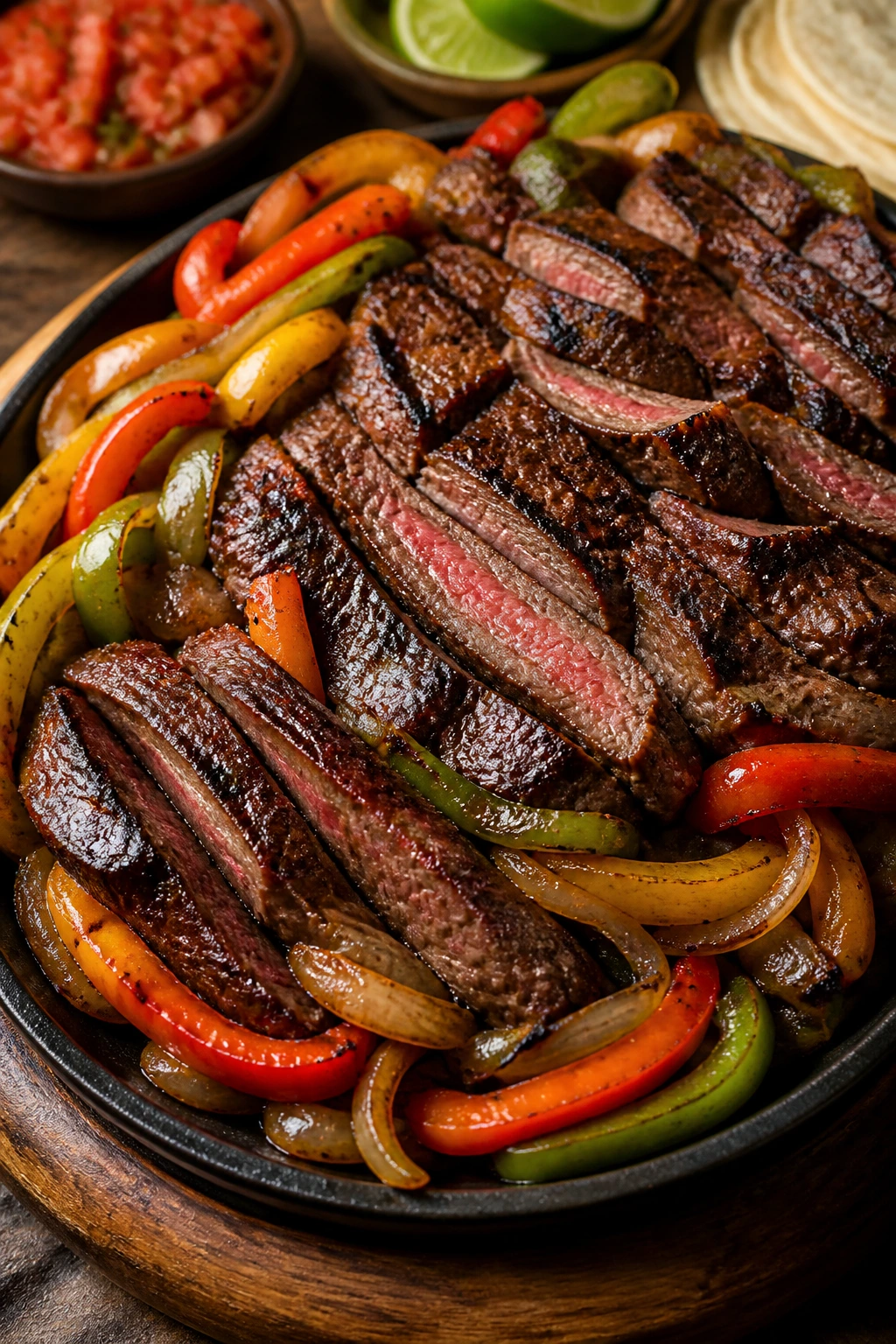
8. Flank Steak Fajita Platters
Flank steak on a pellet grill gives you that edge of smoke without making the meat taste like it spent all day in a pit. It’s perfect for slicing thin and piling into tortillas with peppers and onions that are soft, sweet, and a little blistered. This is one of my favorite ways to feed a few people without losing the feel of a proper dinner.
The Case for Fajitas on a Pellet Grill
Flank steak rewards high heat and a short cook, and a pellet grill can do both if you preheat it properly. A fast sear at 425°F or higher gives you the dark crust you want, while the indirect heat nearby keeps the peppers from turning mushy. Resting the steak for 10 minutes matters here, because the juices need to settle before you slice across the grain.
Key Ingredients:
- 1 1/2 pounds flank steak
- 2 tablespoons olive oil
- 2 teaspoons fajita seasoning
- 1 teaspoon kosher salt
- 1/2 teaspoon black pepper
- 3 bell peppers, sliced
- 1 large red onion, sliced
- 1 lime, cut into wedges
- 8 small flour tortillas
- Salsa, guacamole, and sour cream for serving
Quick Steps:
- Preheat the pellet grill to 425°F.
- Rub the steak with olive oil, fajita seasoning, salt, and pepper, then let it sit while the grill heats.
- Toss the peppers and onion with a little olive oil and grill them in a basket or cast-iron skillet for 12 to 15 minutes until softened and lightly charred.
- Grill the flank steak for 4 to 6 minutes per side for medium-rare, or until it reaches 130 to 135°F.
- Rest the steak for 10 minutes, then slice thinly across the grain.
- Warm the tortillas and build the fajita platters with steak, peppers, onions, lime, and your favorite toppings.
Tips and Variations:
- Skirt steak works too, though it cooks a little faster.
- A spoonful of orange juice in the marinade softens the seasoning and adds a bright note.
- Slice it wrong and it eats chewy. Across the grain only.
9. Pellet Grill Meatloaf with Tangy Glaze
Meatloaf sounds like winter food until you put it on a pellet grill. Then it becomes smoky, tender, and a little more interesting than the version baked inside. The glaze bubbles at the edges, the loaf holds together when sliced, and dinner feels more substantial than the weather suggests it should.
Why Meatloaf Loves Gentle Heat
Meatloaf is one of those dishes that benefits from steady, moderate heat rather than a fierce blast. At 350°F, the outside sets without burning the glaze, and the inside cooks through evenly to the safe ground-meat temperature of 160°F. The pellet grill adds flavor that the oven can’t, which is why this version tastes less plain and more finished.
Key Ingredients:
- 2 pounds ground beef, preferably 85/15
- 1 cup breadcrumbs
- 1/2 cup milk
- 2 large eggs
- 1 small onion, finely diced
- 2 cloves garlic, minced
- 2 tablespoons Worcestershire sauce
- 1 teaspoon kosher salt
- 1/2 teaspoon black pepper
- 1 cup ketchup, divided
- 2 tablespoons brown sugar
- 1 tablespoon apple cider vinegar
Quick Steps:
- Preheat the pellet grill to 350°F.
- Mix the breadcrumbs and milk in a large bowl, then let them sit for 2 minutes until the crumbs soften.
- Add the beef, eggs, onion, garlic, Worcestershire, salt, pepper, and 1/2 cup ketchup, then mix gently until combined.
- Shape into a loaf on a foil-lined sheet pan or in a shallow loaf pan, then spread the remaining ketchup mixed with brown sugar and vinegar on top.
- Grill for 1 hour to 1 hour 15 minutes until the center reaches 160°F and the top looks glossy and browned.
- Rest for 10 minutes before slicing so the loaf doesn’t fall apart.
Tips and Variations:
- A mix of beef and ground pork makes a softer, richer loaf.
- Finely chopped bell pepper can stand in for some of the onion if you want more sweetness.
- If the glaze starts to darken too much, tent loosely with foil for the last 15 minutes.
10. Veggie and Halloumi Skewers with Chimichurri
Halloumi is the cheese that refuses to melt into a puddle, which makes it perfect for a pellet grill. It turns golden and squeaky, while the vegetables soften and take on the kind of light char that makes them taste fuller. This is the rare meatless dinner that doesn’t feel like a compromise.
Why Halloumi Holds Up So Well
Halloumi has a firm texture and a salty bite that stands up to direct heat at 425°F. Unlike softer cheeses, it won’t collapse before the vegetables finish cooking. The chimichurri does the heavy lifting on flavor, with parsley, garlic, vinegar, and oil giving you a sharp green sauce that wakes the whole plate up.
Key Ingredients:
- 8 ounces halloumi, cut into 1-inch cubes
- 1 zucchini, cut into thick rounds
- 1 red bell pepper, cut into 1-inch pieces
- 1 yellow bell pepper, cut into 1-inch pieces
- 1 small red onion, cut into wedges
- 8 ounces cherry tomatoes
- 2 tablespoons olive oil
- 1 teaspoon kosher salt
- 1/2 teaspoon black pepper
For the Chimichurri:
- 1 cup parsley leaves
- 1/4 cup cilantro leaves
- 2 cloves garlic
- 2 tablespoons red wine vinegar
- 1/2 teaspoon red pepper flakes
- 1/3 cup olive oil
Quick Steps:
- Preheat the pellet grill to 425°F.
- Thread the halloumi and vegetables onto skewers, then brush with olive oil and season with salt and pepper.
- Blend or finely chop the chimichurri ingredients until loose and spoonable.
- Grill the skewers for 10 to 12 minutes, turning once or twice, until the vegetables are tender and the halloumi is golden.
- Spoon the chimichurri over the hot skewers just before serving.
Tips and Variations:
- Add mushrooms if you want more earthy flavor and extra volume.
- A little mint in the chimichurri makes the sauce taste brighter.
- Use flat metal skewers if you have them. They don’t spin around like the thin wooden kind.
11. Salmon Burgers with Quick Pickles
A salmon burger is a different animal from a beef burger. Lighter, softer, and more delicate, yes — but also more interesting when you season it well and give it some crunch from the toppings. The quick pickles matter here. They cut through the richness and keep the whole thing from feeling soft all the way through.
What Makes a Salmon Burger Different
Salmon has enough natural fat to hold together, but it needs a binder so the patties don’t crumble on the grill. A little mayo and egg help, breadcrumbs tighten the mix, and the grill at 400°F gives the burgers a firm edge without making them dry. Cooked to 145°F, they stay tender and safe, and the pickles make each bite feel sharper.
Key Ingredients:
- 1 1/2 pounds salmon fillet, skin removed and finely chopped
- 1 egg
- 1/3 cup mayonnaise
- 1/2 cup breadcrumbs
- 2 tablespoons minced dill
- 1 tablespoon lemon juice
- 1 teaspoon kosher salt
- 1/2 teaspoon black pepper
- 4 burger buns
For the Quick Pickles:
- 1 cucumber, thinly sliced
- 1/4 cup rice vinegar
- 1 tablespoon sugar
- 1 teaspoon salt
Quick Steps:
- Stir together the cucumber, rice vinegar, sugar, and salt, then let the quick pickles sit while you make the burgers.
- Preheat the pellet grill to 400°F and oil the grates lightly.
- Mix the salmon, egg, mayonnaise, breadcrumbs, dill, lemon juice, salt, and pepper until it just holds together.
- Shape into 4 patties and grill for 4 to 5 minutes per side until firm and cooked through.
- Toast the buns for 30 seconds, then top the burgers with quick pickles and anything creamy you like.
Tips and Variations:
- Add chopped capers for a sharper, brinier bite.
- A spoonful of dill yogurt sauce works well if you want less mayo on the bun.
- Chill the patties for 15 minutes before grilling if the mixture feels soft.
12. Pineapple Teriyaki Chicken Breasts
Chicken breasts can be dry, and I won’t pretend otherwise. But a good marinade, careful timing, and a pellet grill set at the right heat fix most of that problem. Pineapple brings sweetness and a little tenderizing power, teriyaki gives salt and gloss, and the result tastes like the sort of dinner people imagine when they say they want “something grilled.”
Why a Wet Marinade Helps Here
Chicken breast has little fat, so it needs help staying juicy. Pineapple juice adds flavor and a faint acidity that keeps the meat from tasting flat, while soy sauce and ginger build that savory-sweet profile without asking for much effort. Grill it at 400°F and pull it as soon as the center reaches 165°F. Overcook it by even a few minutes and you’ll taste the difference.
Key Ingredients:
- 4 boneless, skinless chicken breasts, about 2 pounds total
- 1/2 cup pineapple juice
- 1/3 cup soy sauce
- 2 tablespoons brown sugar
- 1 tablespoon grated fresh ginger
- 2 cloves garlic, minced
- 1 tablespoon sesame oil
- 4 pineapple rings
- 2 green onions, sliced
- Sesame seeds, for serving
Quick Steps:
- Whisk together the pineapple juice, soy sauce, brown sugar, ginger, garlic, and sesame oil.
- Pour half over the chicken and let it marinate for 30 minutes to 2 hours in the fridge.
- Preheat the pellet grill to 400°F.
- Grill the chicken for 5 to 6 minutes per side, brushing with the reserved marinade during the last few minutes.
- Add the pineapple rings during the final 2 to 3 minutes so they caramelize lightly.
- Rest the chicken for 5 minutes, then slice and finish with green onions and sesame seeds.
Tips and Variations:
- If the marinade is used as a basting sauce, keep some separate and untouched for safety.
- Brown rice or coconut rice makes a good side without stealing the show.
- A pinch of chili flakes gives the glaze a little edge.
13. Baby Back Ribs with a Dry Rub
Ribs are the long-cook reward in this group. They ask for patience, but not much else. The pellet grill keeps them steady for hours, which is a small mercy, and the final sauce or glaze turns the bark glossy just before serving. If you want one dinner that feels like an occasion, this is the one.
The Long Cook Worth Waiting For
Baby back ribs need low heat and time, usually around 225°F for several hours, so the collagen has a chance to relax and the meat starts to pull back from the bone. A dry rub builds the bark, the wrap locks in moisture, and the final unwrapped stretch firms up the surface. I like the 3-2-1 method for backyard cooking because it’s simple to remember and gives dependable results.
Key Ingredients:
- 2 racks baby back ribs
- 2 tablespoons yellow mustard
- 2 tablespoons brown sugar
- 1 tablespoon kosher salt
- 1 tablespoon paprika
- 2 teaspoons black pepper
- 2 teaspoons garlic powder
- 2 teaspoons onion powder
- 1 teaspoon smoked paprika
- 1/2 cup apple juice
- 2 tablespoons unsalted butter
- 1/2 cup barbecue sauce
Quick Steps:
- Peel off the membrane from the back of the ribs, then coat them lightly with mustard.
- Mix the brown sugar, salt, paprika, black pepper, garlic powder, onion powder, and smoked paprika, then rub it all over the ribs.
- Preheat the pellet grill to 225°F and smoke the ribs for 3 hours.
- Wrap the ribs tightly in foil with apple juice and butter, then cook for 2 more hours.
- Unwrap, brush with barbecue sauce, and cook for 45 to 60 minutes more until the ribs bend easily and the meat has pulled back from the bone.
- Rest for 10 minutes before slicing between the bones.
Tips and Variations:
- Use cherry pellets if you want a slightly sweeter smoke.
- A touch of cayenne in the rub wakes up the flavor fast.
- If the bark looks dry before wrapping, spritz with apple juice once during the first stage.
14. Stuffed Bell Peppers with Ground Turkey and Rice
Stuffed peppers are one of those dinners that look busy and taste comfortingly familiar. The pellet grill gives the peppers a roasted sweetness that the oven can’t quite match, and the filling stays savory without turning heavy. They’re neat enough for company, which is more than I can say for a lot of summer cooking.
What Stuffed Peppers Need
The trick is getting the filling fully cooked before the peppers go too soft. That means using rice that’s already cooked, browning the turkey first, and baking the peppers at 375°F until they’re tender but still upright. A little cheese on top gives you a browned cap and holds the filling in place.
Key Ingredients:
- 6 large bell peppers
- 1 pound ground turkey
- 1 cup cooked rice
- 1 small onion, diced
- 2 cloves garlic, minced
- 1 cup tomato sauce
- 1 teaspoon Italian seasoning
- 1 teaspoon kosher salt
- 1/2 teaspoon black pepper
- 1 cup shredded mozzarella or cheddar
Quick Steps:
- Preheat the pellet grill to 375°F.
- Slice the tops off the peppers, remove the seeds, and set them upright in a cast-iron skillet or foil pan.
- Brown the turkey with onion and garlic in a skillet, then stir in the cooked rice, tomato sauce, Italian seasoning, salt, and pepper.
- Spoon the filling into the peppers and top with cheese.
- Grill for 35 to 45 minutes until the peppers are tender and the filling reaches 165°F.
- Let them sit for 5 minutes before serving so the filling firms up.
Tips and Variations:
- Use leftover rice if you have it; it saves time and works perfectly.
- A handful of chopped parsley on top keeps the dish from looking too heavy.
- If the peppers wobble, slice a thin bit off the bottom so they sit flat.
15. BBQ Chicken Flatbreads with Corn and Red Onion
Flatbreads on a pellet grill feel like the smartest kind of casual dinner. They cook fast, use leftovers well, and still taste like you planned the meal instead of raiding the fridge in a panic. The crust gets crisp, the cheese melts into the sauce, and the sweet corn keeps every slice from tasting one-dimensional.
Why Flatbreads Finish the List Well
This is the low-lift option that still earns its place. If you already have cooked chicken, dinner comes together fast at 450°F with a short grill time, and the flatbread develops a crackly bottom before the cheese fully blisters. The trick is to keep the toppings thin so the crust doesn’t turn soggy under the sauce.
Key Ingredients:
- 4 naan breads or flatbreads
- 2 cups cooked shredded chicken
- 1/2 cup barbecue sauce
- 2 cups shredded mozzarella
- 1 cup corn kernels, fresh or thawed
- 1/2 small red onion, thinly sliced
- 1 jalapeño, sliced thin
- 2 tablespoons chopped cilantro
- 1 tablespoon olive oil
Quick Steps:
- Preheat the pellet grill to 450°F.
- Toss the shredded chicken with barbecue sauce.
- Brush the flatbreads lightly with olive oil, then top with mozzarella, chicken, corn, red onion, and jalapeño.
- Grill for 8 to 10 minutes until the cheese melts and the bottom is crisp with browned spots.
- Finish with cilantro and slice while hot.
Tips and Variations:
- Use rotisserie chicken if you want the fastest version possible.
- A few crumbles of feta add salt and a nice tang.
- Keep the toppings light. Too much sauce and the bread goes soft in the middle.
Why Pellet Grills Win on Warm Nights
The biggest reason pellet grills work so well for these pellet grill dinners for summer nights is control. You can set the temperature, trust the smoker to hold it, and stop hovering over the food every forty seconds. That steadiness is what gives you juicy chicken thighs, evenly cooked pork tenderloin, and ribs that don’t careen from underdone to dry while you’re inside looking for a serving platter.
There’s another thing I like: pellet grills keep the kitchen cooler. That sounds small until you’ve spent an evening trying to make dinner in a house that already feels warm. Moving the cooking outdoors means the stove and oven can sit out of the equation, and that changes the whole mood of the meal. Dinner feels looser. More social. Less like a chore.
They also make wood flavor easier to use well. Apple pellets give chicken and pork a soft sweetness. Hickory leans stronger and is good for burgers or ribs. Cherry sits in the middle with a little color and a little fruit note. Oak is the plain, dependable choice when you want smoke without a pronounced personality. The food decides the mood, and the pellets back it up.
Essential Gear for These Pellet Grill Dinners
- Pellet grill or pellet smoker: The main tool, ideally with stable temperature control and enough grate space for the size of meal you want.
- Instant-read thermometer: This is not optional for chicken, pork, burgers, fish, and ribs if you care about doneness.
- Cast-iron skillet: Useful for sausage and peppers, onions, and any recipe that benefits from steady heat and browned edges.
- Metal tongs: Long enough to move food without getting your hands too close to the heat.
- Fish spatula: Handy for salmon, shrimp, and anything delicate that can fall apart on the grate.
- Sharp chef’s knife: For slicing flank steak, vegetables, and herbs cleanly.
- Cutting board: One board for produce and a separate one for raw meat if you’re being careful, which you should be.
- Mixing bowls: At least two sizes, because marinades and rubs are easier when you’re not juggling tiny containers.
- Basting brush: Good for sticky glazes, barbecue sauce, and teriyaki.
- Foil and a sheet pan: Useful for resting meat, catching drips, and making cleanup less annoying.
- Skewers: Metal is best; wooden skewers need soaking and can be fussy.
Smart Shopping and Ingredient Tips for Pellet Grill Dinners
Buy meat with the grill in mind, not just the recipe card. Chicken thighs should look plump and even, not watery. Pork tenderloin should feel firm and have a pale pink color. For burgers, choose beef with enough fat to stay moist — 80/20 is the sweet spot for this collection. Salmon should smell clean, not fishy, and the flesh should look moist and tight rather than slack.
Produce matters more than people think on a pellet grill because the heat concentrates flavor instead of hiding weak ingredients. Pick peppers that feel heavy for their size. Choose peaches that smell like peaches. Corn should have snug husks and kernels that feel full when you press a thumbnail into one. Mushrooms, onions, and tomatoes can be a little imperfect; they’re going to soften and brown anyway.
Pellets deserve the same care. Apple and cherry are useful for chicken, pork, salmon, and vegetables because they stay mild. Hickory is stronger and better for ribs, burgers, and meatloaf. Oak is the safest all-purpose choice when you want the smoke to stay in the background. Mixed hardwood pellets are fine too, but if a bag smells dusty or bitter before it goes into the hopper, skip it.
A final note on shortcuts: frozen shrimp, frozen corn, and good jarred peach preserves are not cheating. They’re sanity. The trick is knowing where frozen or packaged ingredients hold up and where fresh matters more. Fresh herbs for finishing, yes. Frozen pineapple in a marinade? Usually fine. Tired lettuce on a burger? No one needs that.
How to Serve These Recipes
Presentation: Pile the food on warm platters whenever you can. Chicken thighs and ribs look best when stacked loosely and brushed with a little extra glaze. Sliced steak should fan across the plate, not sit in a heap. Tacos, flatbreads, and burgers get better when the toppings are visible instead of buried.
Accompaniments: Keep the sides simple and summer-friendly: grilled corn, potato salad, slaw, cucumber salad, buttered rice, crusty bread, and roasted potatoes all play nicely with smoke. For the lighter dishes — salmon, shrimp, and halloumi — a crisp green salad or a pile of tomatoes with olive oil helps keep the meal balanced.
Portions: Most of these recipes serve 4 to 6 people, though ribs and meatloaf stretch farther when the side dishes are generous. For bigger groups, double the chicken thigh, sausage, or flatbread recipes first. For smaller dinners, steak, salmon, and shrimp scale down cleanly without leaving too much leftover meat behind.
Beverage Pairing: A cold lager, a crisp pilsner, or sparkling water with lemon all work across the board. For something nonalcoholic with more body, iced tea with a squeeze of citrus fits the smoky-sweet flavor of barbecue chicken, ribs, and flatbreads especially well.
Additional Tips and Flavor Boosters
Flavor Enhancement: A finishing sauce changes a good grilled dinner into one people talk about later. Try herb butter on salmon, a squeeze of lime over shrimp, or a vinegar-heavy sauce on pork and ribs. That final acidic note wakes up smoke in a way salt alone can’t.
Customization: Pick one direction and commit. If you like sweet, lean into honey, peach, or pineapple. If you like heat, add jalapeño, crushed red pepper, or chipotle powder. If you like savory depth, reach for mustard, Worcestershire, soy sauce, and garlic. Mixing all four directions at once muddies the food.
Serving Suggestions: Fresh herbs matter more than most people expect. Cilantro on tacos, dill on salmon, parsley on peppers, and scallions on pork make the plates look brighter and taste fresher. Keep a cutting board and a lemon wedge nearby; those two things solve a lot of late-summer dinner problems.
Make-It-Yours: For gluten-free diners, use corn tortillas, gluten-free buns, or serve the meat over rice or roasted potatoes. For dairy-free cooking, skip the cheese and lean on sauces, herbs, and olive oil. For lower-sodium meals, season with acid and smoke — lemon juice, vinegar, and wood flavor can do more than people think when you cut back on salt.
Common Mistakes to Avoid with Pellet Grill Dinners
Cooking with a dirty grate: Old grease and burnt bits stick to fresh food and can make sauce taste bitter. Scrape the grates before you preheat, and brush them after the grill warms up.
Chasing smoke that isn’t there: Pellet grills give flavor, but more smoke is not always better. White billowy smoke can taste harsh. You want thin, steady smoke, not a chimney effect.
Overcrowding the grate: If the food is packed too tightly, air can’t move, and the grill starts steaming instead of cooking. Leave room around burgers, peppers, shrimp, and chicken so the heat can circulate.
Saucing too early: Sugar burns. Honey burns faster. Barbecue glaze and teriyaki should go on near the end unless you want a dark, sticky crust that tastes a little scorched.
Skipping the thermometer: Chicken thighs, pork tenderloin, burgers, and salmon all have different target temperatures. Guessing is how good food becomes mediocre food. Use the thermometer.
Slicing too soon: Steak, pork, and chicken need a rest. If you cut right away, the juices flood out and the meat eats drier than it should. Give it 5 to 10 minutes and you’ll notice the difference on the plate.
Variations and Adaptations to Try
Citrus-and-Herb Summer Mode: Swap sweet glazes for lemon, lime, dill, parsley, and oregano. This works especially well on salmon, chicken, shrimp, and halloumi when you want the smoke to stay subtle.
Low-Sugar Backyard Version: Use mustard-based rubs, dry seasonings, and vinegar sauces instead of sweet barbecue glaze. It’s a smart fit for ribs, pork tenderloin, and chicken thighs when you want more savory edge.
Spice-Forward Night: Add chipotle powder, jalapeño, cayenne, or hot sauce to the marinades and finishing sauces. This version plays well with burgers, flatbreads, tacos, and sausage.
Vegetable-First Dinner: Build meals around peppers, corn, onions, zucchini, tomatoes, and mushrooms, then add halloumi or a smaller portion of meat. The pellet grill gives vegetables enough character that they don’t feel like an afterthought.
Gluten-Free Swap-Out: Use corn tortillas, rice bowls, foil-pan vegetables, and gluten-free buns where needed. The cooking method stays the same; only the starch changes.
Weeknight Shortcut Build: Start with rotisserie chicken, jarred sauce, quick pickles, and store-bought flatbread. The pellet grill still brings the flavor, but the prep time drops sharply.
Frequently Asked Questions
What pellets work best for these summer dinners?
Apple and cherry are the easiest all-around choices because they stay gentle with chicken, pork, salmon, and vegetables. Hickory is stronger and better for ribs, burgers, and meatloaf. Oak is the dependable middle ground if you want smoke without a strong wood-specific note.
Can I cook fish and meat on the same pellet grill?
Yes, though I’d cook the fish first if I’m being picky about smell and flavor transfer. A clean grill, a hot grate, and a quick wipe-down help a lot. Cedar-plank salmon is also forgiving because the plank separates the fish from the metal.
How do I keep chicken breasts from drying out?
Use a marinade, cook over moderate heat, and pull them the second they hit 165°F. Thick chicken breasts cook more evenly if you pound the thicker end slightly or butterfly them. The pineapple teriyaki recipe is built around that exact problem.
Do I need to smoke everything for hours?
No. Burgers, shrimp, salmon, flatbreads, and sausage only need enough time to pick up smoke and finish cooking. A pellet grill can act like a steady outdoor oven when the recipe calls for it. That flexibility is half the appeal.
What if my pellet grill runs hotter on one side?
Use that hotter zone for searing burgers, finishing steaks, or browning flatbreads. Put chicken, pork tenderloin, or fish on the cooler side if the grill has a noticeable hot spot. Rotating the food once during the cook also helps even things out.
Can I prep any of these dinners ahead of time?
Absolutely. Rub chicken, pork, or ribs the night before. Make salsa, chimichurri, and pickles ahead and keep them cold. Marinate shrimp only briefly, though, because citrus and acid can make it mushy if you leave it too long.
What should I do if the glaze starts burning before the meat is done?
Move the food to a cooler part of the grill and tent it loosely with foil if needed. Sugar-heavy sauces go on late for a reason. If the surface has darkened too much, finish the meat without more sauce and serve the glaze on the side.
Can I use a pellet grill like a regular grill for these recipes?
Most of them, yes. Crank the heat for steak, burgers, and flatbreads. Hold it steady and lower for chicken, pork, and ribs. The nice part is that a pellet grill can shift between those jobs without much drama.
A Cooler Way to Cook Dinner
A good pellet grill dinner doesn’t try to impress by being difficult. It wins by being steady, flavorful, and calm enough for a warm evening. That’s why this kind of cooking sticks: it gives you smoke, color, and depth without turning dinner into a production.
Start with the easy wins if you want to ease in — the chicken thighs, shrimp tacos, or flatbreads. Then move to the longer cooks when you’ve got time to let the grill do its quiet work. Once you get used to that rhythm, outdoor dinner stops feeling like extra work and starts feeling like the simplest good decision on the table.
| Recipe | Prep Time | Cook Time | Total Time | Servings | Standout Detail |
|---|---|---|---|---|---|
| Honey-Barbecue Chicken Thighs with Sticky Edges | 15 min | 22 min | 37 min | 4 to 6 | glossy glaze with crisped edges |
| Cedar-Plank Salmon with Lemon-Dill Butter | 15 min | 15 min | 30 min + 1 hr soak | 4 | gentle smoke from the cedar plank |
| Smoked Cheeseburgers with Charred Onions | 20 min | 26 min | 46 min | 4 | smoky burgers with sweet onions |
| Peach-Glazed Pork Tenderloin | 15 min | 25 min | 40 min | 4 to 5 | sweet-savory glaze and fast cook time |
| Shrimp Tacos with Smoked Corn Salsa | 20 min | 15 min | 35 min | 4 | quick shrimp with charred corn salsa |
| Smoked Sausage and Peppers in a Cast-Iron Skillet | 15 min | 28 min | 43 min | 4 to 6 | one-pan dinner with browned sausage |
| Spatchcock Chicken with Garlic-Herb Rub | 20 min | 50 min | 1 hr 10 min | 4 to 6 | even cooking and crisp skin |
| Flank Steak Fajita Platters | 20 min | 15 min | 35 min + 10 min rest | 4 | grill-charred steak with peppers |
| Pellet Grill Meatloaf with Tangy Glaze | 20 min | 1 hr 10 min | 1 hr 30 min | 6 | smoky meatloaf with sticky topping |
| Veggie and Halloumi Skewers with Chimichurri | 25 min | 12 min | 37 min | 4 | salty cheese and bright green sauce |
| Salmon Burgers with Quick Pickles | 25 min | 10 min | 35 min | 4 | tender patties with crisp pickles |
| Pineapple Teriyaki Chicken Breasts | 15 min | 24 min | 39 min + 30 min marinating | 4 | sweet glaze with pineapple rings |
| Baby Back Ribs with a Dry Rub | 20 min | 4 hr 45 min | 5 hr 5 min | 4 to 6 | low-and-slow ribs with classic bark |
| Stuffed Bell Peppers with Ground Turkey and Rice | 25 min | 40 min | 1 hr 5 min | 6 | neat, hearty stuffed peppers |
| BBQ Chicken Flatbreads with Corn and Red Onion | 20 min | 10 min | 30 min | 4 | fast grill-flatbreads with smoky toppings |