



Some nights, dinner needs to behave itself. Not charm you, not impress anybody, not involve three pans, one skillet, and a sauce that turns against you the second you look away. Sheet pan chicken dinners are the opposite of that mess: one hot oven, one rimmed tray, and a meal that settles into itself while you do something more useful than hovering at the stove.
I love them for the same reason I love a sharp pencil and a clean cutting board. They reduce friction. Chicken gets bronzed at the edges, vegetables take on those little caramelized spots that taste far more deliberate than they are, and the whole kitchen smells like garlic, roasted onion, and dinner finally getting its act together. The trick is not magic. It’s spacing, heat, and choosing ingredients that roast at roughly the same pace instead of forcing carrots to keep up with zucchini, which is a losing battle.
There’s also a practical truth here that doesn’t get enough respect: weeknight cooking gets easier when you stop asking each ingredient to do a different job. A good sheet pan dinner is built around that simple idea. Chicken does the heavy lifting, vegetables bring texture and color, and a smart seasoning blend ties the whole thing together without making you babysit it. Once you get the rhythm, you can rotate flavors all year long and never feel like you’re eating the same tray twice.
Why These Sheet Pan Chicken Dinners Earn Their Keep
- Fast cleanup: One pan, maybe two if you want to avoid crowding, means fewer dishes and less post-dinner resentment.
- Flexible ingredients: Most of these dinners forgive small swaps, so you can use what’s in the fridge without wrecking the meal.
- Balanced plates: Protein, vegetables, and often a built-in starch show up together, which makes dinner feel complete without extra work.
- Good for real life: These recipes hold up when you’re hungry, distracted, and not in the mood for culinary theater.
- Easy to scale: You can feed two people or six by changing the pan count and keeping the same method.
- Weeknight-friendly flavor: Strong seasoning, high heat, and roasted edges do the flavor work for you.
1. Lemon Garlic Chicken with Potatoes and Green Beans
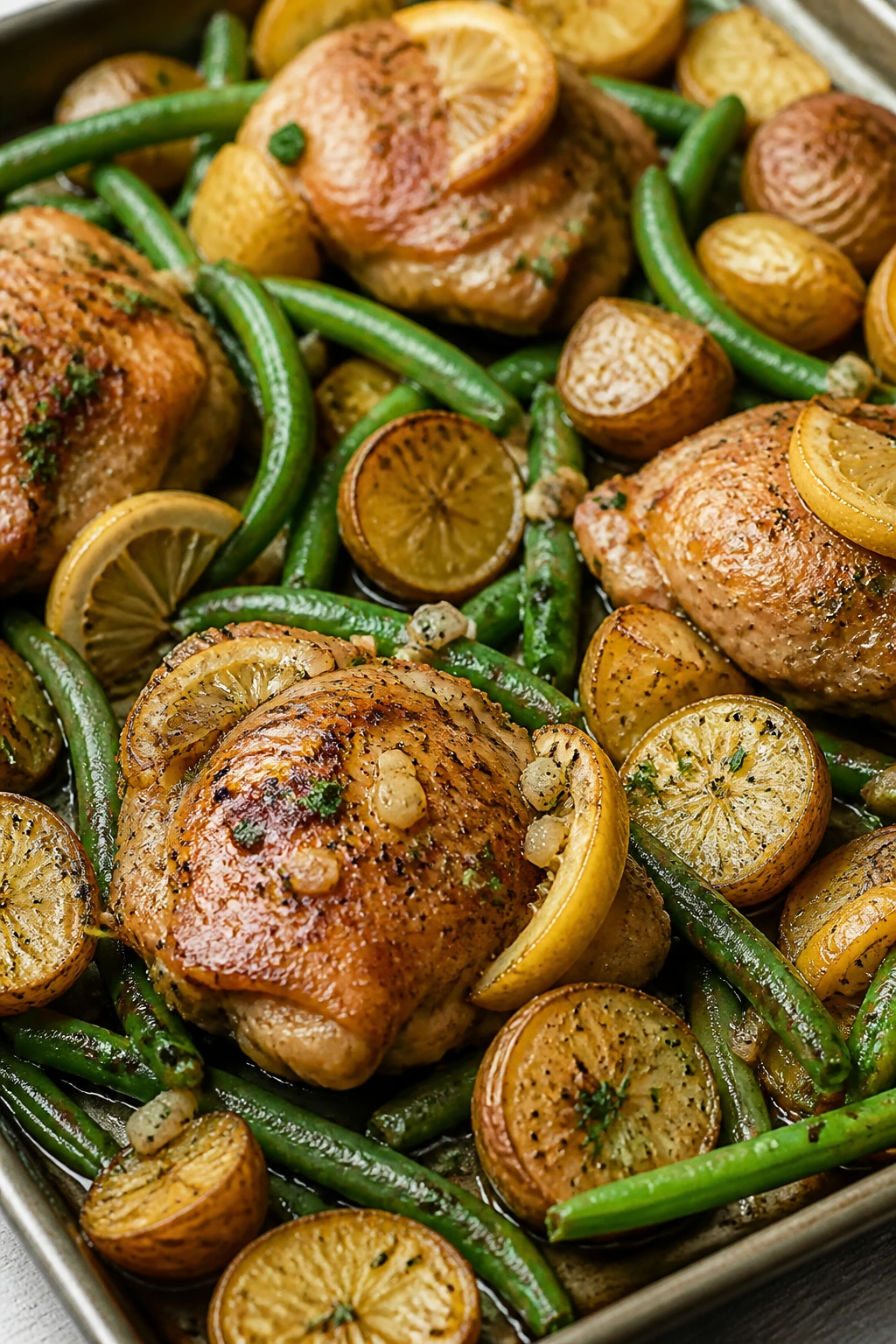
Bright lemon, roasted garlic, and soft potatoes give this dinner the kind of clean, savory finish that never feels heavy. The green beans stay snappy if you add them late, which is the whole point. Nobody wants floppy beans under a pile of chicken juices.
Why It Works:
This combination works because the potatoes need a head start, while the chicken and green beans finish in a shorter window. Boneless thighs stay juicy at 425°F, and the lemon gets stirred in at the end so it tastes fresh instead of bitter or cooked down. A little oregano gives the tray that familiar, dinner-table smell that makes people wander into the kitchen asking when it’s ready.
Key Ingredients:
- 1 1/2 lbs boneless, skinless chicken thighs, patted dry
- 1 1/2 lbs baby potatoes, halved if large
- 12 oz green beans, trimmed
- 3 tbsp olive oil
- 4 garlic cloves, minced
- 1 lemon, zested and juiced
- 1 1/2 tsp dried oregano
- 1 tsp kosher salt
- 1/2 tsp black pepper
- 1/2 tsp paprika
- 2 tbsp chopped parsley, for finishing
Quick Steps:
- Preheat the oven to 425°F (220°C) and line a rimmed sheet pan with parchment for easier cleanup.
- Toss the potatoes with 1 1/2 tablespoons of olive oil, half the garlic, half the salt, pepper, paprika, and oregano. Spread them cut-side down and roast for 15 minutes.
- Season the chicken with the remaining oil, garlic, salt, and a squeeze of lemon juice.
- Add the chicken to the pan, nestling it between the potatoes. Roast for 12 minutes.
- Scatter the green beans around the pan, then roast for 10 to 12 minutes more, until the chicken reaches 165°F in the thickest part and the beans are bright green with blistered spots.
- Finish with lemon zest, parsley, and the remaining lemon juice right before serving.
Tips and Variations:
- Shortcut: Use pre-trimmed green beans if you can find them; nobody gets extra joy from stringing beans on a Tuesday.
- Swap: Baby Yukon Golds work well if you want a creamier potato.
- Serve it with: Warm pita or a spoonful of Greek yogurt if you like a little tang.
2. Honey Mustard Chicken with Brussels Sprouts and Carrots
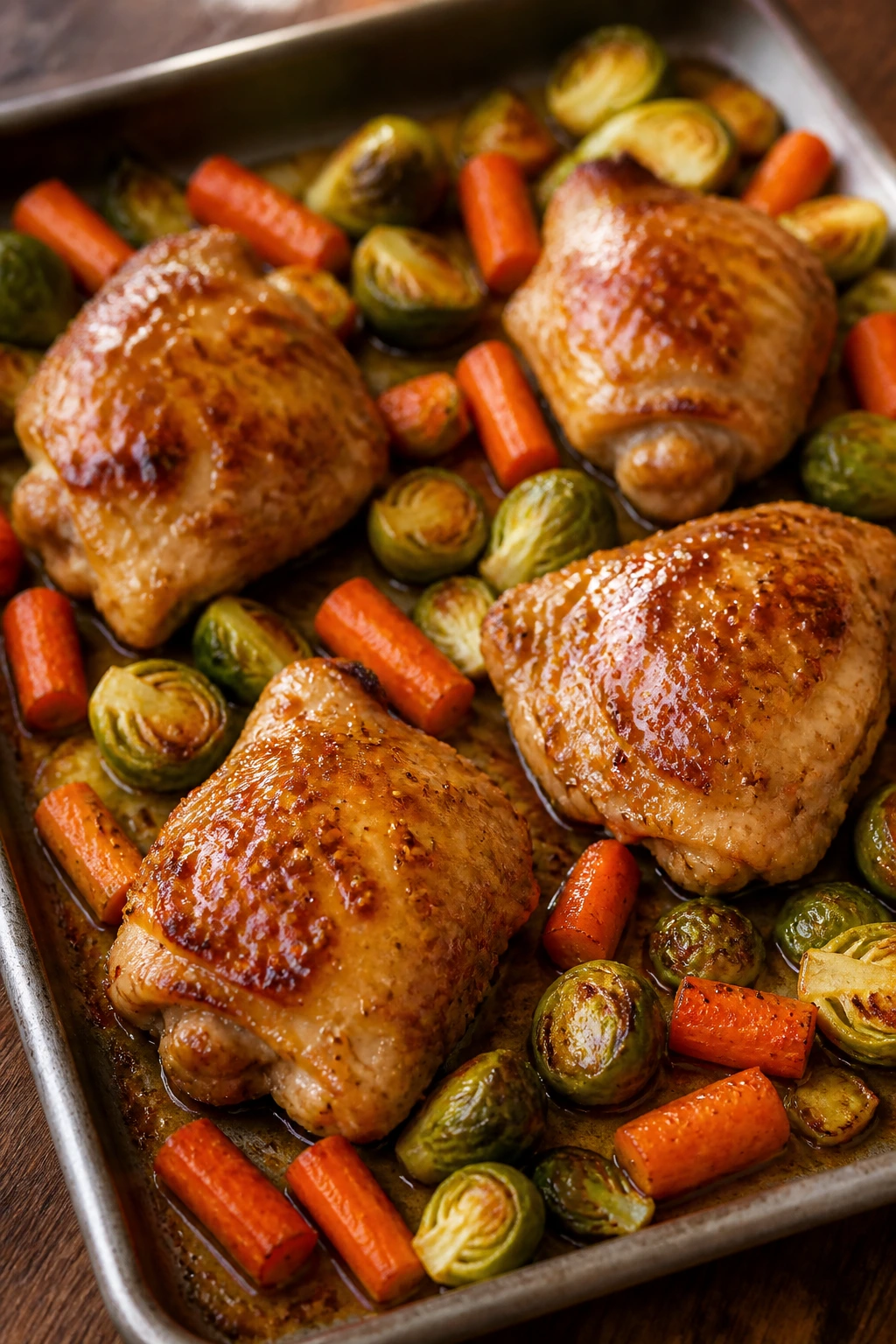
This tray has the sort of sweet-savory pull that makes Brussels sprouts behave. The honey caramelizes at the edges, the mustard sharpens everything up, and the carrots turn tender without getting mushy. It tastes a little more polished than the effort suggests, which is always a nice surprise.
Why It Works:
Dijon and whole-grain mustard bring bite, while honey helps the chicken brown instead of drying out. Brussels sprouts and carrots both like high heat, so they roast into that sweet, browned place that raw vegetables only dream about. A small splash of apple cider vinegar at the end cuts through the glaze and keeps the whole thing from turning sticky in a cloying way.
Key Ingredients:
- 1 1/2 lbs boneless, skinless chicken thighs
- 1 lb Brussels sprouts, halved
- 4 medium carrots, cut into 2-inch sticks
- 1 small red onion, cut into wedges
- 2 tbsp olive oil
- 2 tbsp Dijon mustard
- 1 tbsp whole-grain mustard
- 2 tbsp honey
- 1 tbsp apple cider vinegar
- 1 tsp kosher salt
- 1/2 tsp black pepper
- 1 tsp garlic powder
- 1/2 tsp dried thyme
Quick Steps:
- Preheat the oven to 425°F (220°C).
- Whisk the Dijon, whole-grain mustard, honey, vinegar, and 1 tablespoon of olive oil in a small bowl.
- Toss the Brussels sprouts, carrots, and onion with the remaining olive oil, salt, pepper, garlic powder, and thyme. Spread on the sheet pan and roast for 12 minutes.
- Coat the chicken lightly with half the honey-mustard mixture, then add it to the pan.
- Roast for 15 to 18 minutes more, brushing on the remaining glaze during the last 5 minutes. The chicken should reach 165°F and the sprouts should have browned leaves at the edges.
- Rest for 5 minutes before serving so the juices settle instead of running off the board.
Tips and Variations:
- Flavor move: Add a teaspoon of maple syrup if you want the glaze rounder and less sharp.
- Texture fix: Cut carrots smaller than you think you need; thick chunks lag behind the sprouts.
- Serving idea: Spoon the pan juices over rice or mashed potatoes. Waste not.
3. Cajun Chicken with Peppers and Onions
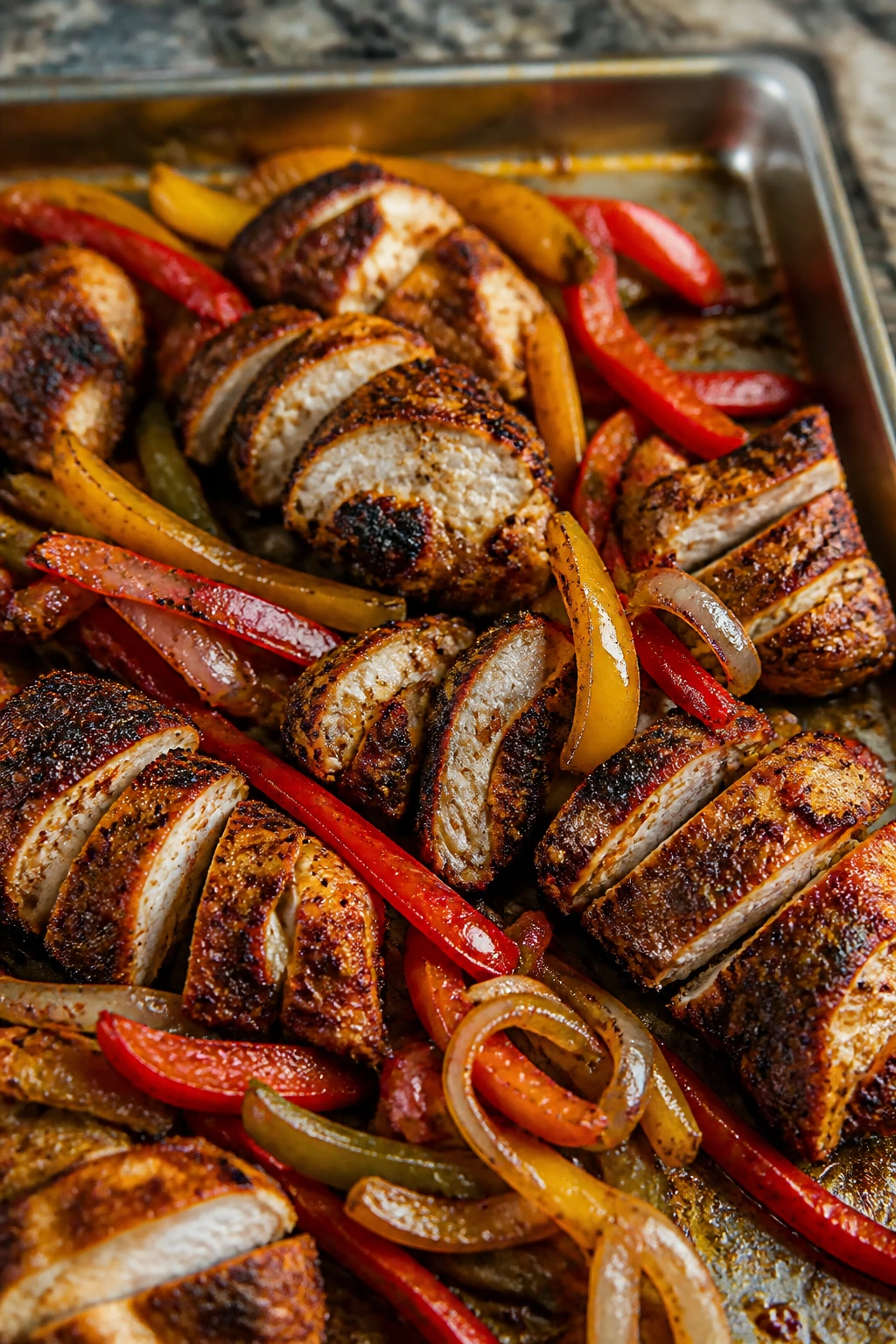
If you want dinner with a little swagger, this is it. The peppers soften but stay lively, the onions go sweet at the edges, and the Cajun seasoning gives the chicken a dark, smoky crust that smells like it should have taken longer than it did. It’s loud in the best way.
Why It Works:
Cajun seasoning brings salt, smoke, garlic, and heat in one shot, which is exactly what a busy night needs. Bell peppers and onions roast fast, especially when sliced into long, even strips, and they give you a built-in vegetable side that doesn’t feel like an afterthought. A squeeze of lime at the end wakes everything up and keeps the tray from reading as heavy or flat.
Key Ingredients:
- 1 1/2 lbs boneless, skinless chicken breasts, sliced into 1-inch strips
- 3 bell peppers, sliced into strips
- 1 large yellow onion, sliced into wedges
- 2 tbsp olive oil
- 2 1/2 tsp Cajun seasoning
- 1 tsp smoked paprika
- 1/2 tsp kosher salt
- 1/2 tsp black pepper
- 1 lime, cut into wedges
- 2 tbsp chopped cilantro or parsley
Quick Steps:
- Preheat the oven to 425°F (220°C) and lightly oil the sheet pan.
- Toss the peppers and onion with 1 tablespoon of olive oil, 1 teaspoon of Cajun seasoning, smoked paprika, salt, and pepper. Roast for 10 minutes.
- Season the chicken strips with the remaining oil and Cajun seasoning.
- Add the chicken to the pan, spreading it into a single layer so it sears instead of steaming.
- Roast for 12 to 14 minutes, tossing once halfway through, until the chicken is cooked through and the vegetables are soft at the edges with some dark spots.
- Finish with lime juice and chopped herbs. Serve fast while the peppers still have a little bite.
Tips and Variations:
- Heat control: Use a mild Cajun blend if your seasoning runs salty or hot; some blends are no joke.
- Best add-on: Spoon leftovers into tortillas with shredded lettuce and hot sauce.
- Extra color: A handful of cherry tomatoes can go in for the last 6 minutes if you want more sweetness.
4. Pesto Chicken with Cherry Tomatoes and Zucchini
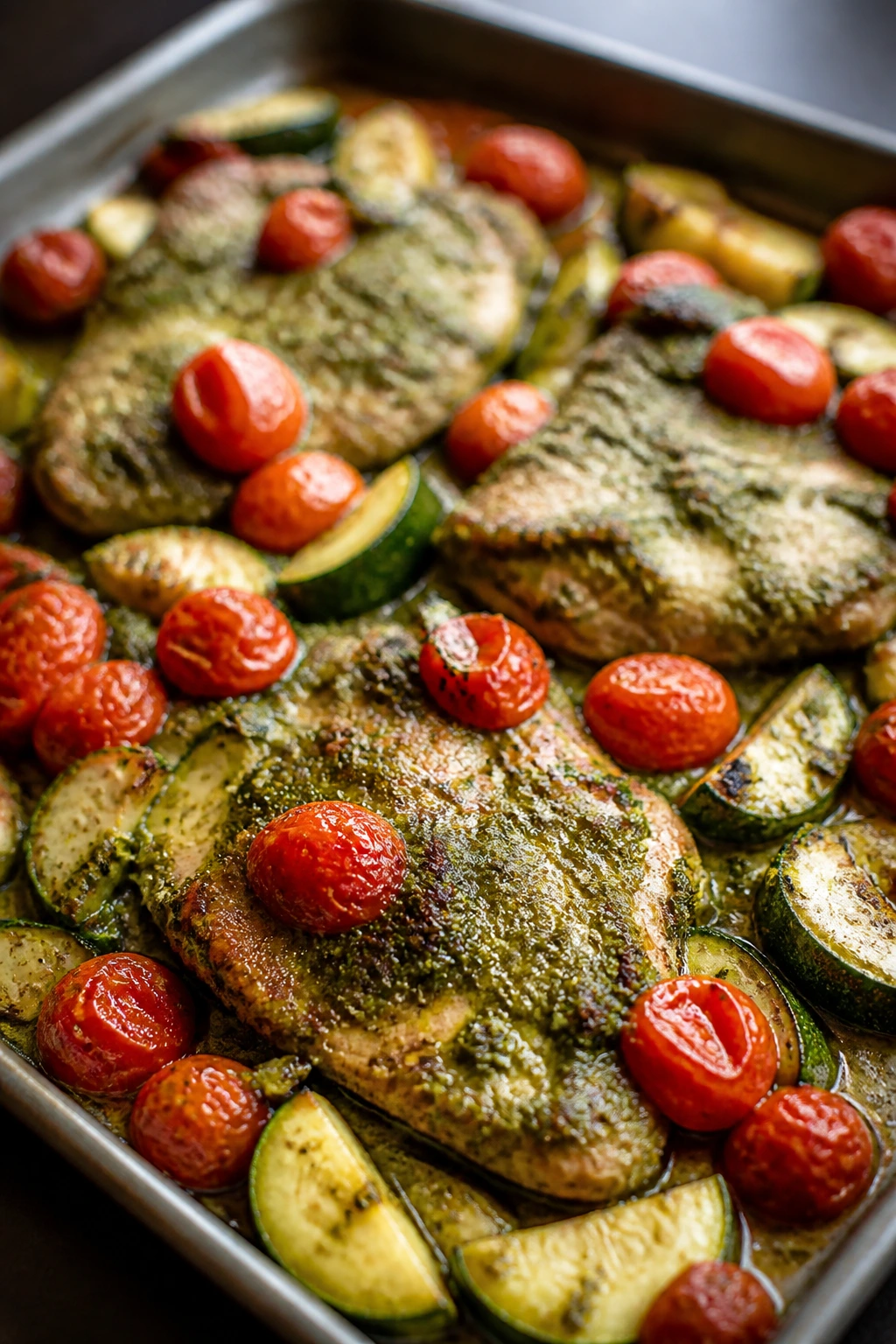
This one tastes like it should have been harder. Basil pesto gives the chicken a herby, almost creamy coating, while cherry tomatoes burst into little pockets of sauce and zucchini turns soft around the edges without falling apart. The whole pan smells green and garlicky in a way that wakes up a tired kitchen.
Why It Works:
Pesto already carries fat, herbs, cheese, and garlic, so it acts like both seasoning and sauce. Cherry tomatoes roast beautifully because their skins hold the juices in until they split, and zucchini soaks up flavor without needing much intervention. This is one of those dinners that looks casual on the tray but lands with enough flavor that nobody misses a second course.
Key Ingredients:
- 1 1/2 lbs boneless, skinless chicken breasts, cut into large cutlets
- 2 medium zucchini, cut into half-moons
- 2 cups cherry tomatoes
- 1 small red onion, sliced
- 3 tbsp basil pesto
- 2 tbsp olive oil
- 1/2 tsp kosher salt
- 1/2 tsp black pepper
- 2 tbsp grated Parmesan
- 1 tbsp lemon juice
- Fresh basil leaves, for finishing
Quick Steps:
- Preheat the oven to 425°F (220°C).
- Toss the zucchini, tomatoes, and onion with olive oil, salt, and pepper. Spread them on the pan and roast for 8 minutes.
- Coat the chicken with pesto on both sides, using just enough to make a thin layer.
- Add the chicken to the pan and roast for 14 to 16 minutes, until the chicken reaches 165°F and the tomatoes have collapsed at the seams.
- Sprinkle Parmesan over the top during the last 2 minutes so it melts into the juices.
- Finish with lemon juice and basil leaves. Let the pan sit for 3 minutes before serving so the pesto settles into a glossy coating.
Tips and Variations:
- Sauce note: If your pesto is thick, loosen it with 1 tablespoon of olive oil before coating the chicken.
- Veg swap: Yellow squash can stand in for zucchini with no drama.
- Serving idea: This is excellent over orzo, though it doesn’t need pasta to feel complete.
5. Teriyaki Chicken with Broccoli and Snap Peas
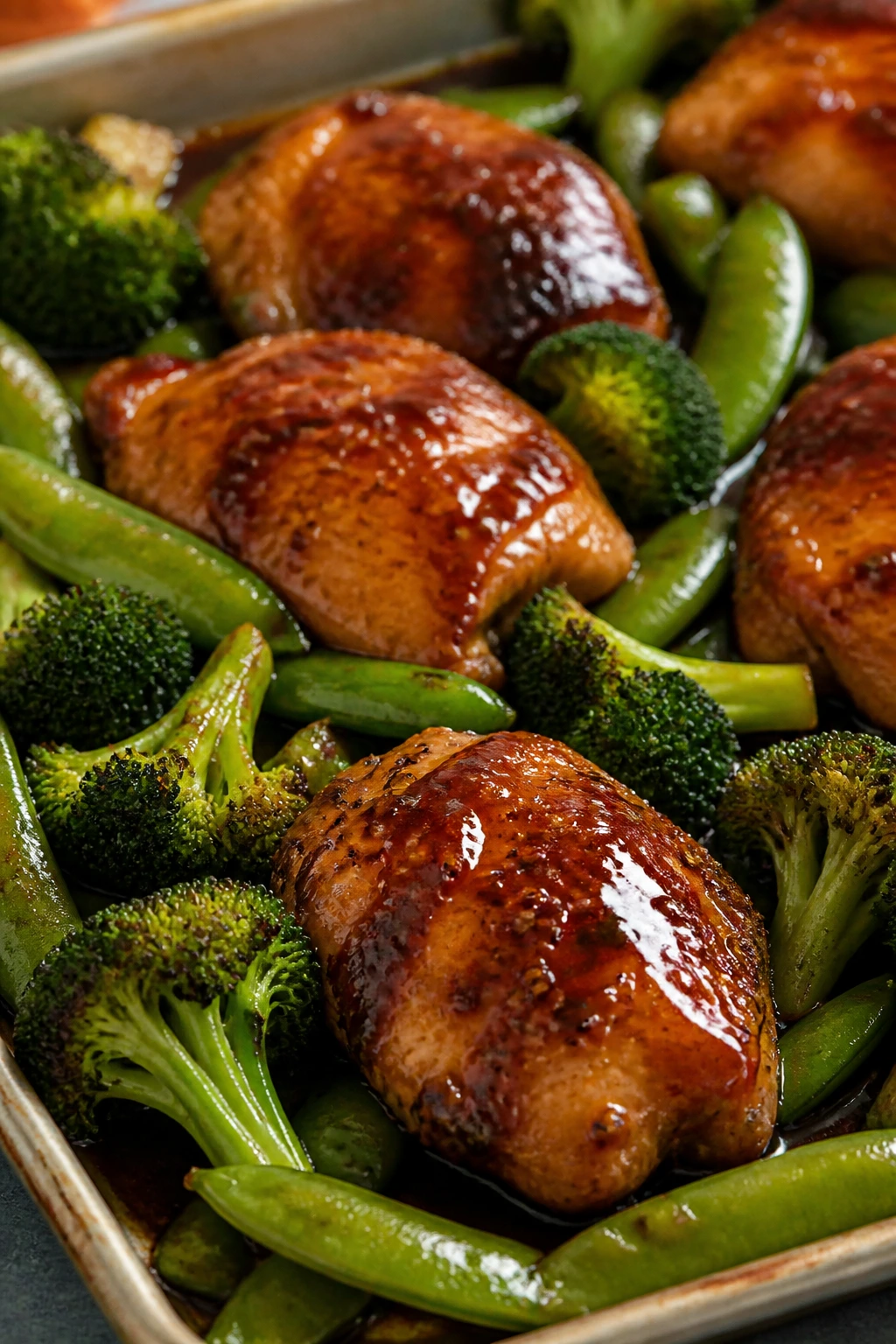
Sweet-salty teriyaki can go clumsy fast if you pour it on too early, so this version keeps the glazing smart. The chicken roasts first, the vegetables catch a little color, and the sauce goes on late enough to stay glossy instead of sticky-burned. The result tastes clean, not syrupy.
Why It Works:
Broccoli and snap peas like quick heat and a touch of moisture, which makes them a good match for boneless chicken thighs. A quick cornstarch-thickened sauce clings better than bottled teriyaki that gets watery in the oven. The ginger and garlic bring enough bite to balance the honey or brown sugar, which keeps the tray from leaning candy-sweet.
Key Ingredients:
- 1 1/2 lbs boneless, skinless chicken thighs
- 4 cups broccoli florets
- 8 oz snap peas
- 2 tbsp neutral oil
- 1/3 cup low-sodium soy sauce
- 2 tbsp honey
- 1 tbsp rice vinegar
- 2 tsp grated fresh ginger
- 3 garlic cloves, minced
- 1 tsp cornstarch mixed with 1 tbsp water
- 2 sliced scallions
- 1 tsp sesame seeds
Quick Steps:
- Preheat the oven to 425°F (220°C).
- Whisk the soy sauce, honey, rice vinegar, ginger, garlic, and cornstarch slurry in a small saucepan. Simmer for 1 to 2 minutes until lightly thickened, then set aside.
- Toss the chicken with 1 tablespoon of oil and spread it on the sheet pan. Roast for 10 minutes.
- Add the broccoli and snap peas tossed with the remaining oil. Roast for 10 minutes more.
- Brush the chicken and vegetables with the teriyaki sauce, then roast for 3 to 5 minutes until glossy and cooked through.
- Top with scallions and sesame seeds right before serving.
Tips and Variations:
- Better texture: Don’t drown the vegetables. A light coat of oil is enough.
- No saucepan? Use a bottled teriyaki sauce and brush it on only during the final minutes.
- Serve it with: Steamed rice, obviously, but cauliflower rice works if you want a lighter plate.
6. Mediterranean Chicken with Chickpeas, Tomatoes, and Feta
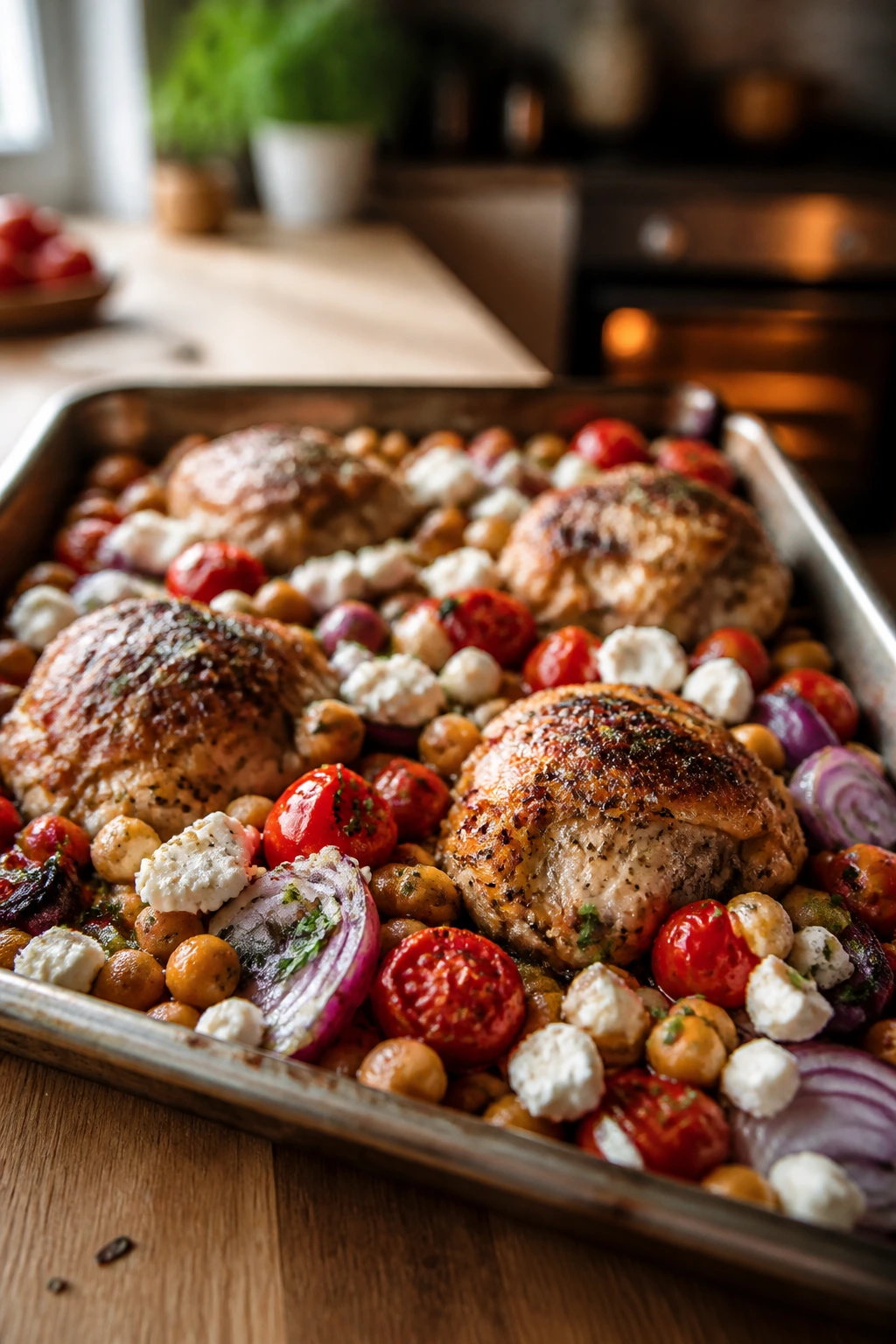
This is the tray I make when I want dinner to taste like I tried harder than I did. Chickpeas roast until the outsides firm up, tomatoes burst, and feta lands on top in salty little pockets that melt just enough to matter. It’s bright, savory, and sturdy enough to stand on its own.
Why It Works:
Chickpeas are the sleeper ingredient here. They roast up nutty and crisp around the edges, so they behave more like a side than a filler. Lemon, oregano, olives, and feta bring a lot of flavor without requiring a sauce, which keeps the sheet pan from getting soggy and lets the chicken stay the star.
Key Ingredients:
- 1 1/2 lbs boneless, skinless chicken thighs
- 1 can (15 oz) chickpeas, drained and rinsed
- 2 cups cherry tomatoes
- 1 red bell pepper, sliced
- 1 small red onion, sliced into wedges
- 3 tbsp olive oil
- 1 lemon, zested and juiced
- 2 tsp dried oregano
- 1 tsp kosher salt
- 1/2 tsp black pepper
- 1/2 cup crumbled feta
- 2 tbsp chopped dill or parsley
- 1/3 cup pitted Kalamata olives, optional
Quick Steps:
- Preheat the oven to 425°F (220°C).
- Toss the chickpeas, tomatoes, pepper, onion, olive oil, lemon zest, oregano, salt, and pepper on the sheet pan. Roast for 12 minutes.
- Season the chicken with a little salt and lemon juice, then add it to the pan.
- Roast for 15 to 18 minutes more until the chicken is cooked through and the tomatoes have split and gone jammy.
- Scatter feta and olives over the top during the last 3 minutes.
- Finish with herbs and a final squeeze of lemon juice.
Tips and Variations:
- Texture trick: Pat the chickpeas dry before roasting so they crisp instead of steaming.
- Flavor boost: Add a pinch of crushed red pepper if you like a little heat.
- Best left-over move: Chop the cold leftovers and stuff them into pita with cucumbers.
7. BBQ Chicken with Sweet Potatoes and Red Onion
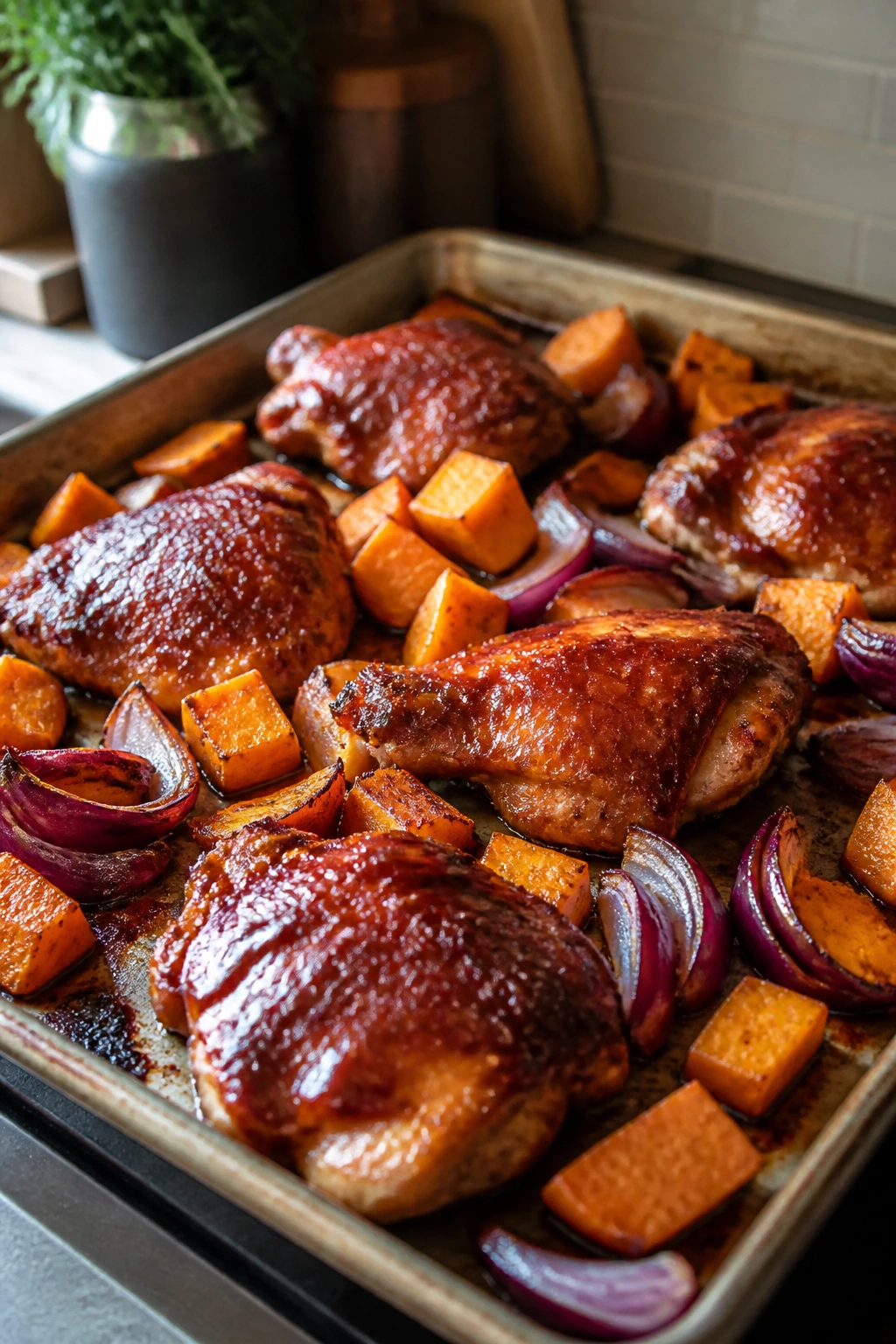
This one is smoky, sticky, and a little bit sweet in the way that makes people scrape the pan. The sweet potatoes go tender and caramelized, the onions soften into ribbons, and the BBQ sauce clings to the chicken in that glossy, almost lacquered finish that tells you dinner is going to disappear fast.
Why It Works:
Sweet potatoes need a head start because they roast slower than chicken, especially when they’re cut into even cubes rather than random chunks. BBQ sauce can scorch if it goes in too early, so the best move is to brush it on near the end when the chicken is nearly done. Smoked paprika deepens the flavor without making the tray taste like bottled sauce and bottled sauce only.
Key Ingredients:
- 1 1/2 lbs boneless, skinless chicken thighs
- 2 medium sweet potatoes, peeled and cut into 3/4-inch cubes
- 1 large red onion, sliced
- 2 tbsp olive oil
- 1 tsp smoked paprika
- 1 tsp garlic powder
- 1 tsp kosher salt
- 1/2 tsp black pepper
- 1/2 cup BBQ sauce
- 1 tbsp apple cider vinegar
- 2 tbsp chopped scallions, for finishing
Quick Steps:
- Preheat the oven to 425°F (220°C).
- Toss the sweet potatoes and onion with olive oil, smoked paprika, garlic powder, salt, and pepper. Roast for 15 minutes.
- Season the chicken lightly with salt and pepper, then add it to the pan.
- Roast for 15 minutes more.
- Brush the chicken with BBQ sauce mixed with apple cider vinegar, then roast for 5 to 7 minutes until the glaze is sticky and the chicken reaches 165°F.
- Top with scallions and serve while the edges are still crisp.
Tips and Variations:
- Sauce control: Thin very thick BBQ sauce with a teaspoon of water so it brushes on instead of clumping.
- Substitution: Butternut squash cubes can replace sweet potatoes if you want a slightly firmer bite.
- Side idea: Cornbread makes sense here, though a green salad cuts through the sweetness better.
8. Salsa Verde Chicken with Corn and Black Beans
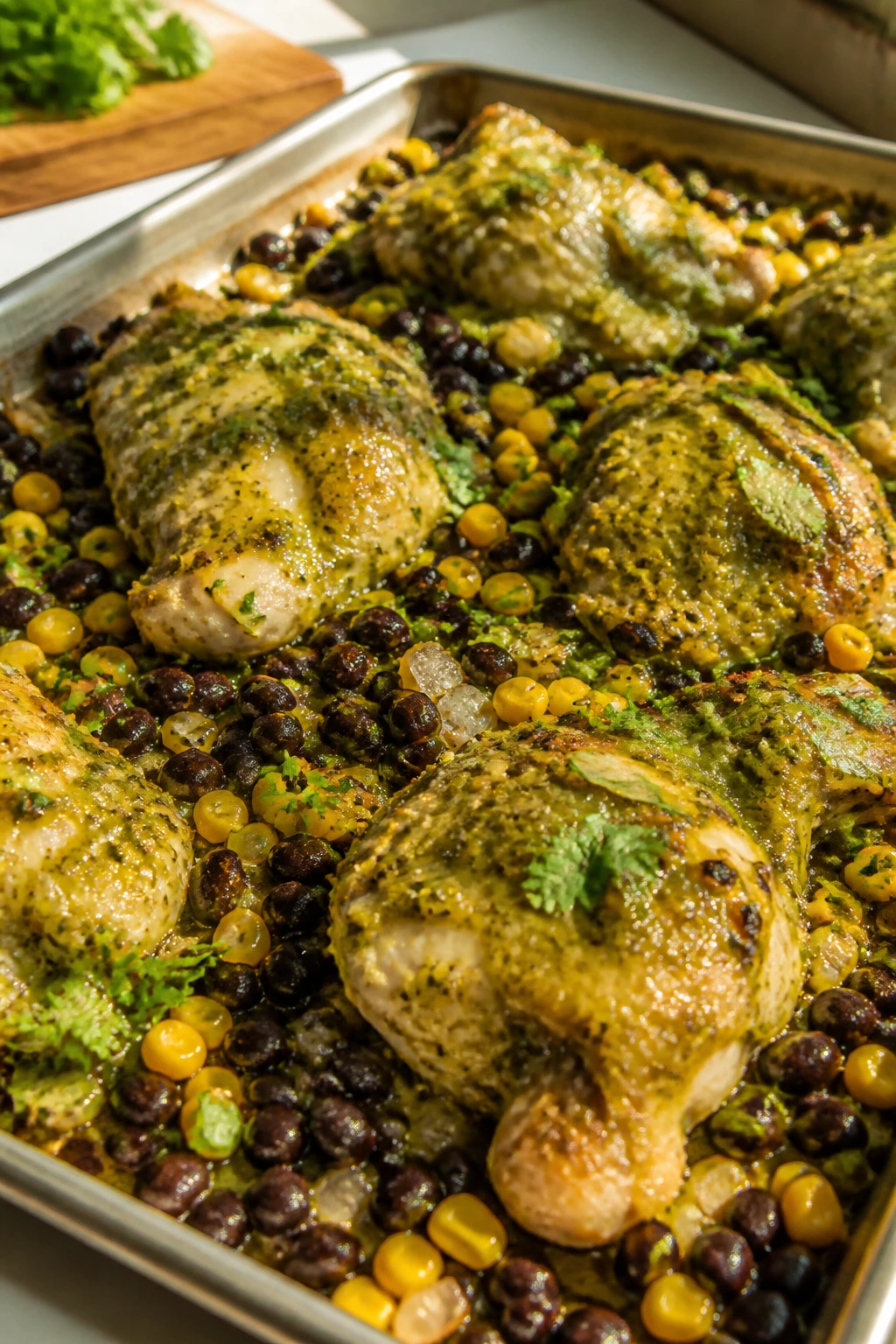
This tray leans bright and saucy instead of heavy. Salsa verde brings tang, corn adds sweetness, and black beans make the whole thing feel more like dinner than a side dish pretending to be one. It’s the sort of meal that wants tortillas nearby, but it doesn’t absolutely need them.
Why It Works:
Salsa verde does a lot of work in a small space. It seasons the chicken, adds moisture, and gives the beans and corn something to cling to without turning the pan watery. A little cumin rounds out the sharp green flavor, and a handful of cilantro at the end makes the whole thing smell fresh instead of canned.
Key Ingredients:
- 1 1/2 lbs boneless, skinless chicken breasts or thighs
- 1 can (15 oz) black beans, drained and rinsed
- 1 1/2 cups corn kernels, fresh or thawed from frozen
- 1 small red onion, sliced
- 1 1/2 cups salsa verde
- 2 tbsp olive oil
- 1 tsp ground cumin
- 1/2 tsp kosher salt
- 1/2 tsp black pepper
- 1 lime, cut into wedges
- 1/4 cup chopped cilantro
- Avocado slices, for serving
Quick Steps:
- Preheat the oven to 425°F (220°C).
- Toss the beans, corn, and onion with olive oil, cumin, salt, and pepper. Spread on the sheet pan and roast for 10 minutes.
- Add the chicken and spoon salsa verde over the top, coating each piece.
- Roast for 15 to 18 minutes, until the chicken is done and the salsa has thickened around the edges.
- Squeeze lime over the pan and add cilantro.
- Serve with avocado slices, rice, or warm tortillas.
Tips and Variations:
- Short cut: Thawed frozen corn works fine here, and frozen corn usually browns better than canned.
- Heat tweak: Add sliced jalapeño if you want more bite.
- Leftovers: They make a solid burrito filling the next day.
9. Parmesan Chicken with Asparagus and Baby Potatoes
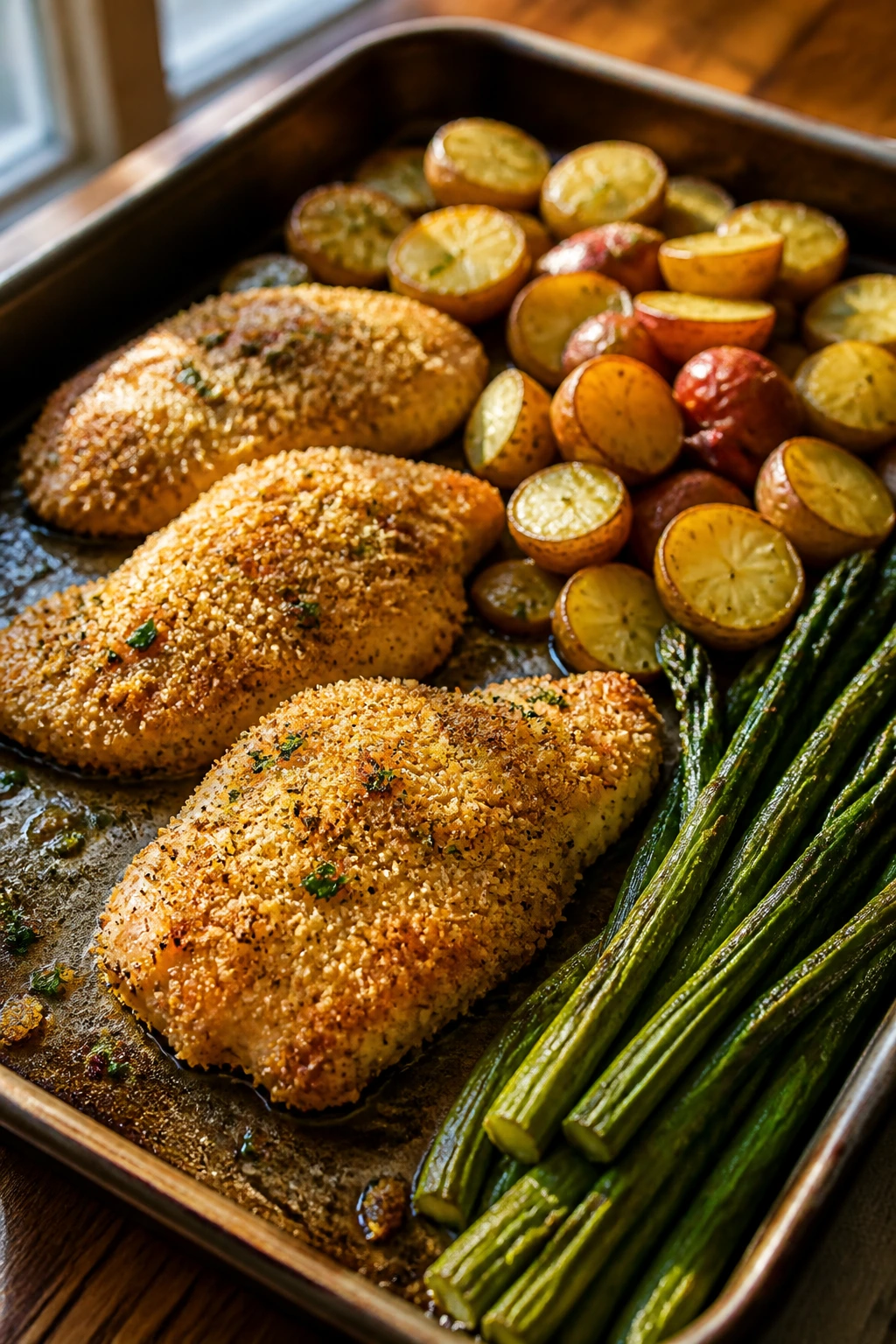
This is the most “dinner party on a Tuesday” tray in the bunch. The chicken gets a crisp Parmesan-panko coating, the potatoes roast until fluffy inside, and the asparagus joins late so it stays tender with a little snap. It’s tidy, savory, and a little fancy without becoming fussy.
Why It Works:
The potato timing is the whole game here. If they start first, they’ll finish right when the chicken crust turns golden, and the asparagus can jump in at the end so it doesn’t collapse into green strings. Parmesan brings salt and browning power, which means the chicken gets flavor before the first bite even happens.
Key Ingredients:
- 1 1/2 lbs chicken breasts, pounded to even thickness
- 1 lb baby potatoes, halved
- 1 bunch asparagus, trimmed
- 1/2 cup panko breadcrumbs
- 1/2 cup finely grated Parmesan
- 2 tbsp olive oil
- 2 tbsp Dijon mustard
- 1 tsp garlic powder
- 1 tsp Italian seasoning
- 1 tsp kosher salt
- 1/2 tsp black pepper
Quick Steps:
- Preheat the oven to 425°F (220°C).
- Toss the potatoes with 1 tablespoon of olive oil, half the salt, and half the pepper. Roast for 15 minutes.
- Mix the panko, Parmesan, garlic powder, Italian seasoning, and remaining pepper in a bowl. Brush the chicken with Dijon, then press the coating onto the top.
- Add the chicken to the pan and roast for 12 minutes.
- Scatter the asparagus with the remaining oil and salt, then add to the pan. Roast for 8 to 10 minutes more until the chicken reaches 165°F and the crust is golden.
- Rest for 5 minutes before slicing so the coating stays put.
Tips and Variations:
- Crispness note: Panko gives a better crust than regular breadcrumbs, full stop.
- Cheese swap: Pecorino can stand in for some of the Parmesan if you want a saltier edge.
- Serving idea: A quick squeeze of lemon over the asparagus brightens the whole tray.
10. Harissa Chicken with Cauliflower and Chickpeas
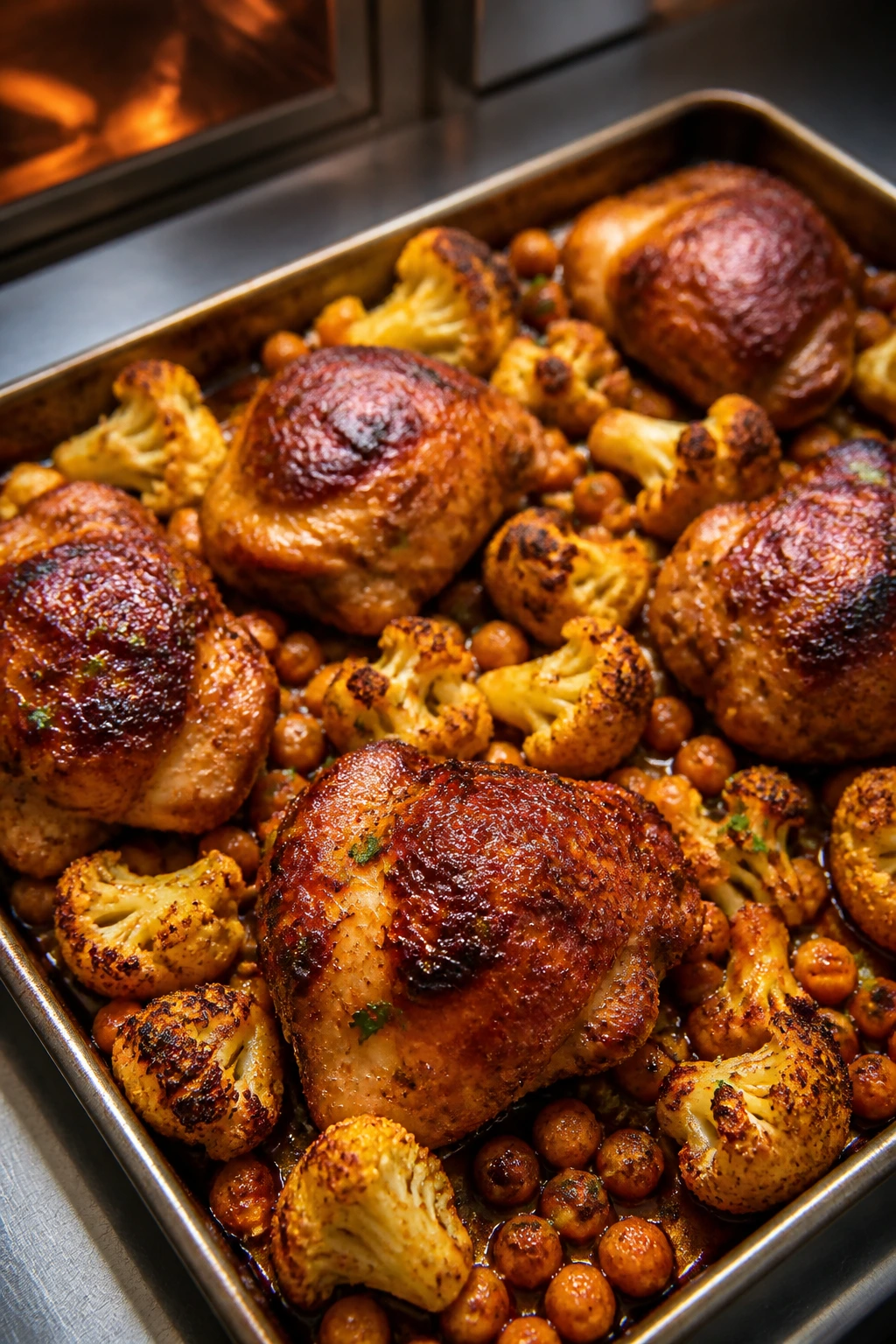
Harissa brings heat, smoke, and a little floral depth that makes roasted cauliflower taste deeper than it has any right to taste. Chickpeas crisp at the edges, onion softens, and the chicken picks up the spice without needing a marinade that sits around for half a day. This one wakes up a tired palate.
Why It Works:
Harissa paste carries chili, garlic, and spices in one spoonful, which makes it efficient in the best way. Cauliflower loves high heat and turns nutty when it browns, while chickpeas add a chewy contrast that keeps the tray from feeling one-note. A cooling yogurt drizzle after roasting gives you a nice reset button between bites.
Key Ingredients:
- 1 1/2 lbs boneless, skinless chicken thighs
- 1 medium head cauliflower, cut into florets
- 1 can (15 oz) chickpeas, drained and patted dry
- 1 red onion, cut into wedges
- 2 1/2 tbsp harissa paste
- 3 tbsp olive oil
- 1 tsp kosher salt
- 1/2 tsp black pepper
- 1/2 tsp ground cumin
- 1/2 cup plain Greek yogurt
- 1 tbsp lemon juice
- Chopped mint or parsley, for serving
Quick Steps:
- Preheat the oven to 425°F (220°C).
- Toss the cauliflower, chickpeas, and onion with olive oil, salt, pepper, cumin, and 1 1/2 tablespoons of harissa. Roast for 15 minutes.
- Coat the chicken with the remaining harissa and add it to the pan.
- Roast for 15 to 18 minutes more, until the chicken reaches 165°F and the cauliflower edges are browned.
- Stir the yogurt with lemon juice in a small bowl.
- Serve the chicken and vegetables with the yogurt drizzle and herbs.
Tips and Variations:
- Heat level: Harissa varies a lot, so taste yours before you commit.
- Extra texture: Toasted almonds or sesame seeds make a good finishing crunch.
- Side idea: Couscous is fast and plays nicely with the spice.
11. Chicken Fajita Sheet Pan
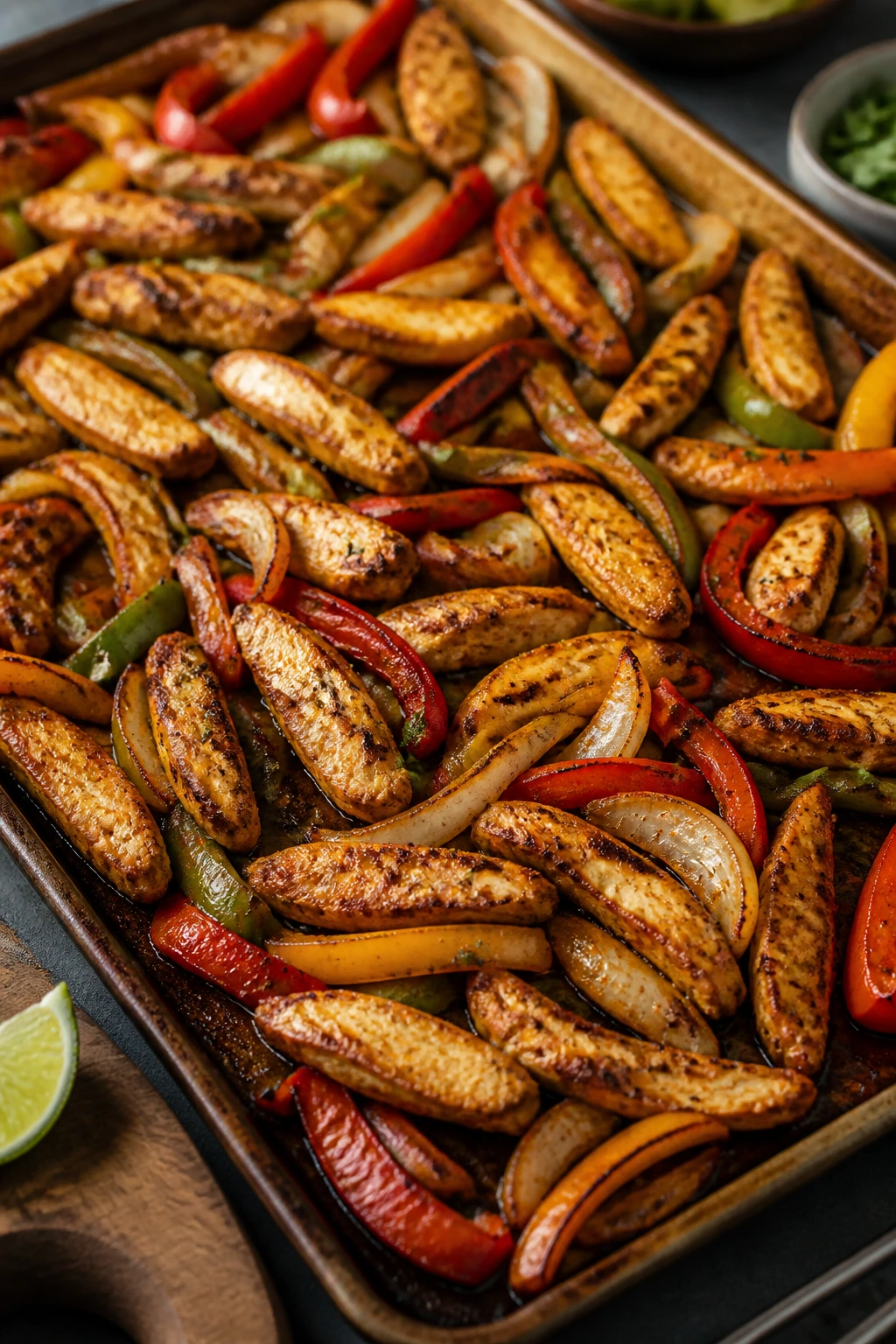
This is the tray that smells like a Friday night no matter what day it is. Chicken strips, peppers, and onions all roast together under a fajita spice blend that goes smoky, savory, and a little sharp with lime at the end. It’s the most obvious candidate for tortillas, which is not a bad thing at all.
Why It Works:
Slicing the chicken into strips helps it cook at the same pace as the peppers and onions, so nobody ends up waiting around while another ingredient overcooks. A little oil keeps the spice blend from burning, and a squeeze of lime after roasting cuts through the char and wakes up every bite. If you want the easiest possible taco night, this is the move.
Key Ingredients:
- 1 1/2 lbs boneless, skinless chicken breasts, sliced into strips
- 3 bell peppers, sliced
- 1 large onion, sliced
- 2 tbsp olive oil
- 2 tsp chili powder
- 1 1/2 tsp ground cumin
- 1 tsp smoked paprika
- 1 tsp garlic powder
- 1 tsp kosher salt
- 1/2 tsp black pepper
- 1 lime, cut into wedges
- Tortillas, salsa, and sour cream, for serving
Quick Steps:
- Preheat the oven to 425°F (220°C).
- Toss the peppers and onion with half the oil and half the seasonings. Roast for 10 minutes.
- Season the chicken with the remaining oil and spices.
- Add the chicken to the sheet pan and spread everything into one layer.
- Roast for 12 to 14 minutes, stirring once, until the chicken is cooked through and the vegetables have charred edges.
- Finish with lime juice and serve in tortillas with salsa and sour cream.
Tips and Variations:
- Better browning: Don’t pile the peppers high; a spread-out tray gives you actual char.
- Make it a bowl: Rice, beans, and avocado turn this into a very solid dinner bowl.
- Extra heat: Add sliced jalapeños if your crew likes the flames.
12. Balsamic Chicken with Mushrooms and Broccolini
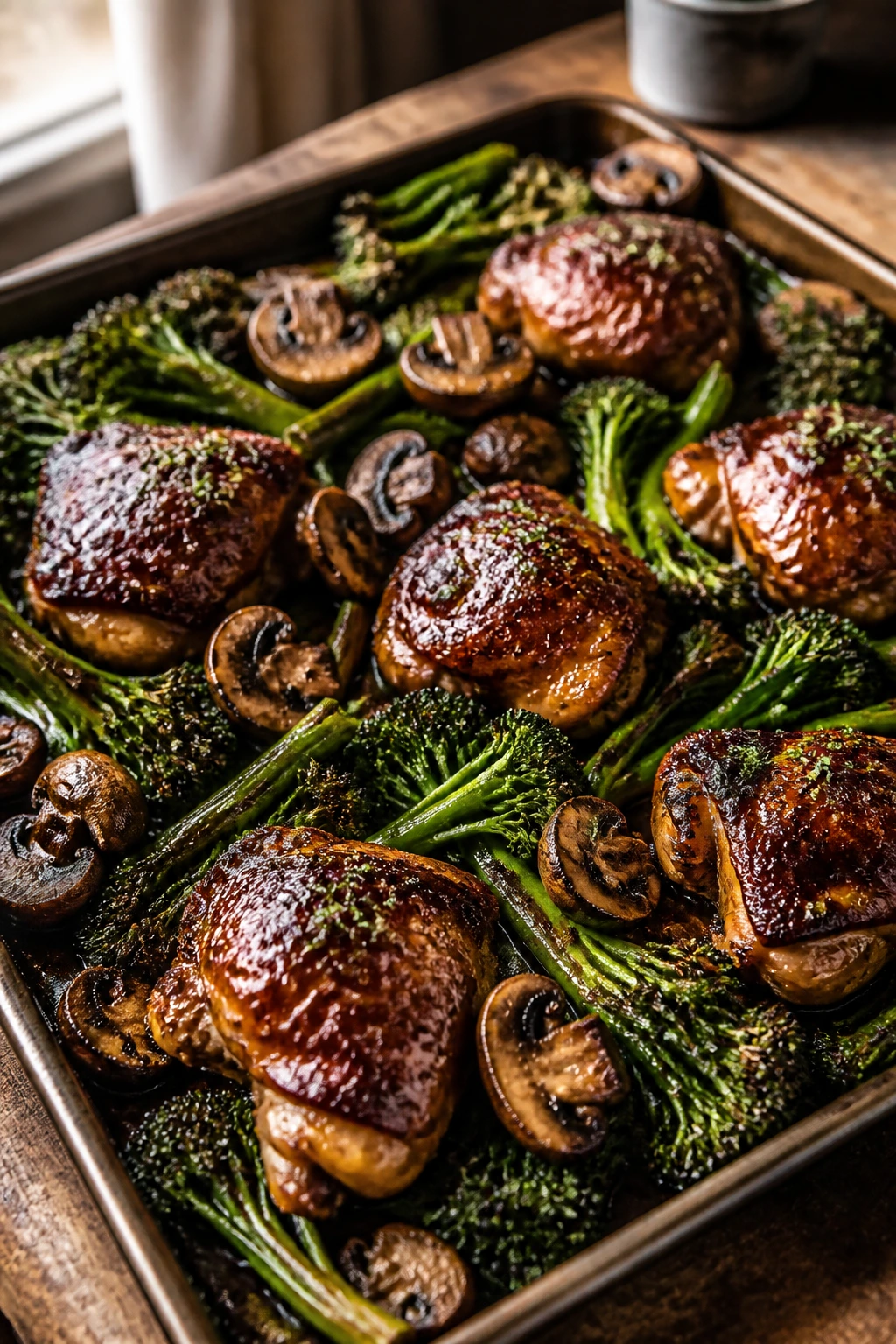
This is the dark horse of the whole collection. The balsamic reduction turns glossy and sweet-tart, mushrooms soak up the pan juices, and broccolini stays just firm enough to keep the plate from feeling soft all the way through. It’s weeknight food with a slightly more grown-up coat on.
Why It Works:
Mushrooms roast best when they have room to brown, not steam, and broccolini likes a quick blast of heat that leaves the stems tender and the tips crisp. Balsamic vinegar reduces into a sticky glaze without much help, especially when you pair it with Dijon and garlic. The chicken gets enough acidity to stay lively, and the pan juices practically beg for bread.
Key Ingredients:
- 1 1/2 lbs boneless, skinless chicken thighs
- 8 oz cremini mushrooms, halved
- 1 bunch broccolini, trimmed
- 1 small red onion, sliced
- 3 tbsp olive oil
- 3 tbsp balsamic vinegar
- 1 tbsp Dijon mustard
- 3 garlic cloves, minced
- 1 tsp kosher salt
- 1/2 tsp black pepper
- 1/2 tsp dried thyme
- 1 tbsp chopped parsley, for finishing
Quick Steps:
- Preheat the oven to 425°F (220°C).
- Whisk the balsamic vinegar, Dijon, garlic, 2 tablespoons of olive oil, salt, pepper, and thyme.
- Toss the mushrooms and onion with the remaining olive oil and roast for 10 minutes.
- Add the chicken and broccolini to the pan, then brush everything with the balsamic mixture.
- Roast for 15 to 18 minutes more, until the chicken is at 165°F and the sauce is glossy and slightly syrupy.
- Finish with parsley and let the pan sit for 3 minutes before serving.
Tips and Variations:
- Sauce warning: If your balsamic is very sweet, cut it with a teaspoon of water so it doesn’t get too sticky.
- Veg swap: Asparagus can replace broccolini if you trim the stalks well.
- Serving idea: Crusty bread is not optional in my house for this one.
The Sheet Pan Rhythm That Makes These Dinners Work
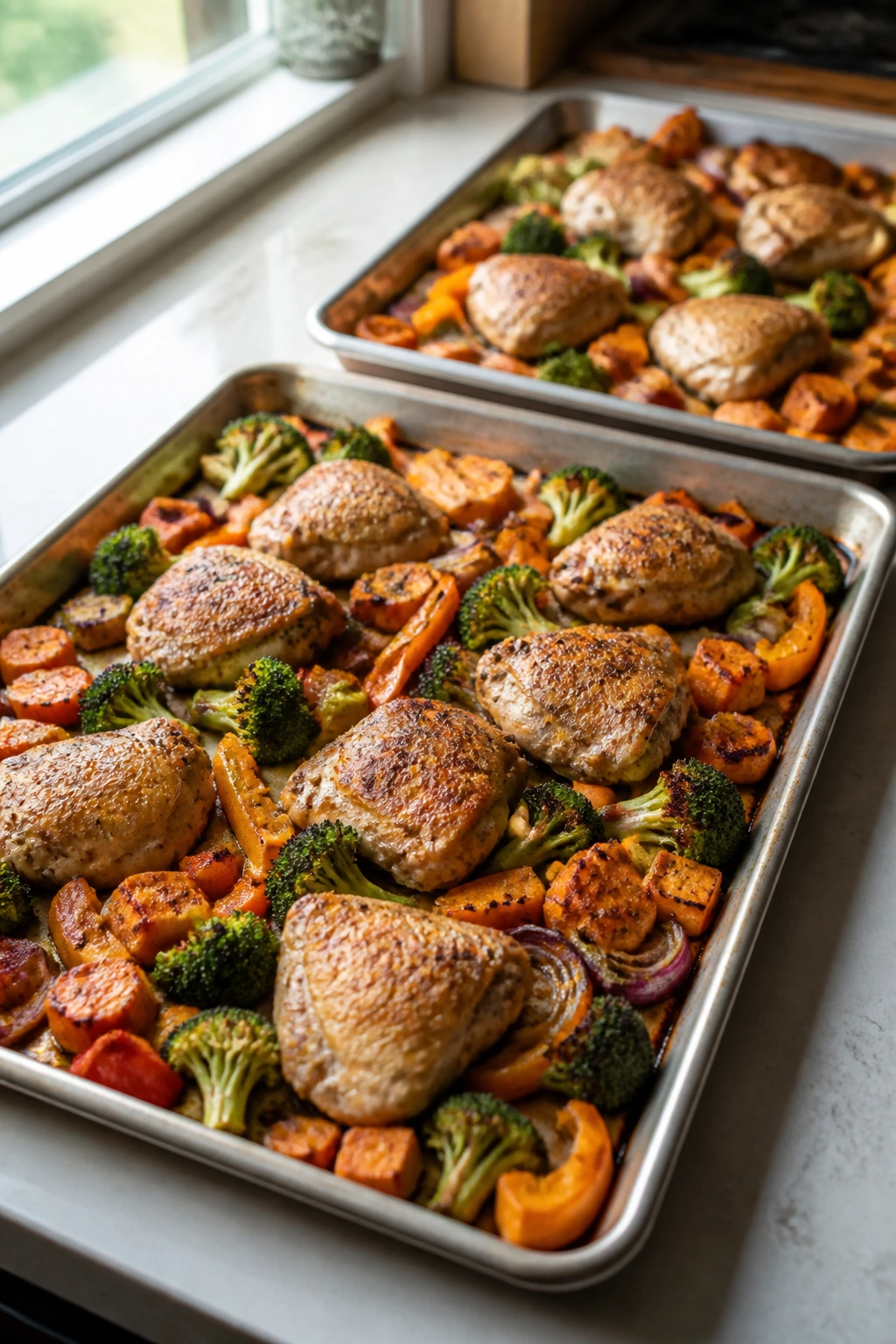
The best part of sheet pan cooking isn’t the cleanup, though I won’t pretend that isn’t lovely. It’s the rhythm. You start with ingredients that need the longest roast, give them a head start, and bring in everything else at the right time so the tray finishes together instead of in awkward stages. That pacing matters more than fancy seasoning.
High heat helps, usually 425°F, because it pushes moisture out of the vegetables and gives the chicken real browning before the interior overcooks. A lower temperature can work, but the food tends to steam more and roast less. And once you’ve tasted the difference between golden edges and pale, soft ones, it’s hard to go back.
Spacing matters too. Crowding a sheet pan turns the whole thing into a damp little parking lot, which is why two pans are often better than one overloaded tray. I’d rather wash a second pan than eat steamed peppers. Easy call.
Essential Equipment for These Recipes
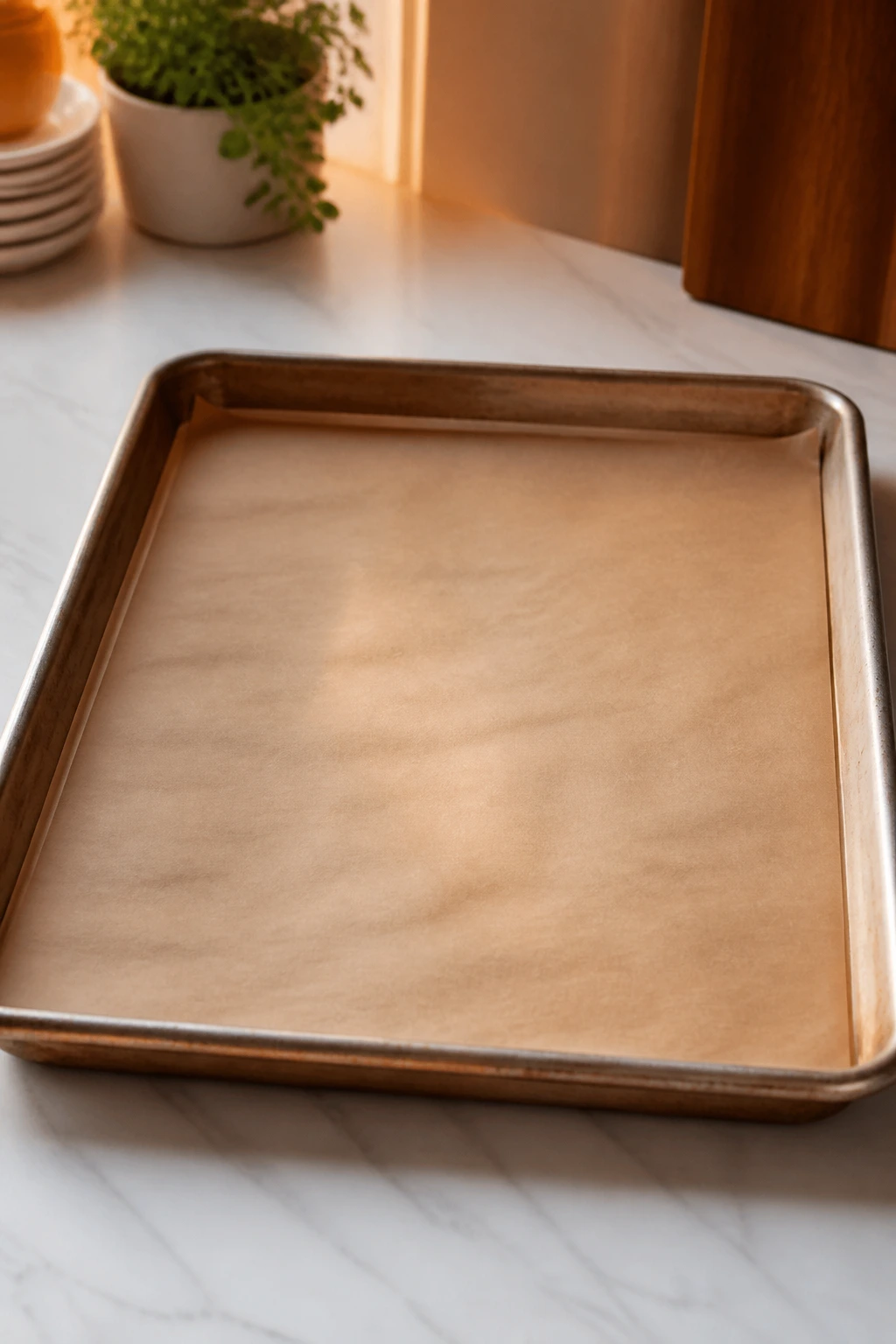
- Rimmed half-sheet pans: The raised edge keeps juices from slipping off the pan and making a mess in the oven.
- Parchment paper or foil: Parchment makes cleanup easier; foil can help if you want a bit more browning and don’t mind a little more scrubbing.
- Large mixing bowls: You’ll need at least one big bowl for tossing vegetables and seasoning without spillage.
- Instant-read thermometer: Chicken should reach 165°F in the thickest part, and guessing is a bad system.
- Sharp chef’s knife: Even cuts help everything cook at the same speed.
- Cutting board: Use one large board so you’re not chasing vegetables across the counter.
- Tongs or a spatula: Handy for turning chicken or moving vegetables without tearing them.
- Microplane or fine grater: Best for lemon zest, garlic, and hard cheese finishes.
- Measuring spoons and cups: Sauces and spice blends behave better when you don’t eyeball everything.
- A small whisk: Ideal for honey mustard, teriyaki, and balsamic mixtures.
- Airtight containers: Useful for storing leftovers without drying them out.
- Optional second sheet pan: A lifesaver when you’re cooking for more than four and want proper browning.
Smart Shopping and Ingredient Tips
Chicken thighs are the forgiving choice. They stay juicy even when the oven runs a touch hot or you forget them for two extra minutes while answering a text you should’ve ignored. Chicken breasts can work beautifully, but they reward even thickness and a thermometer. If the breasts are thick on one end and thin on the other, pound them or slice them into cutlets.
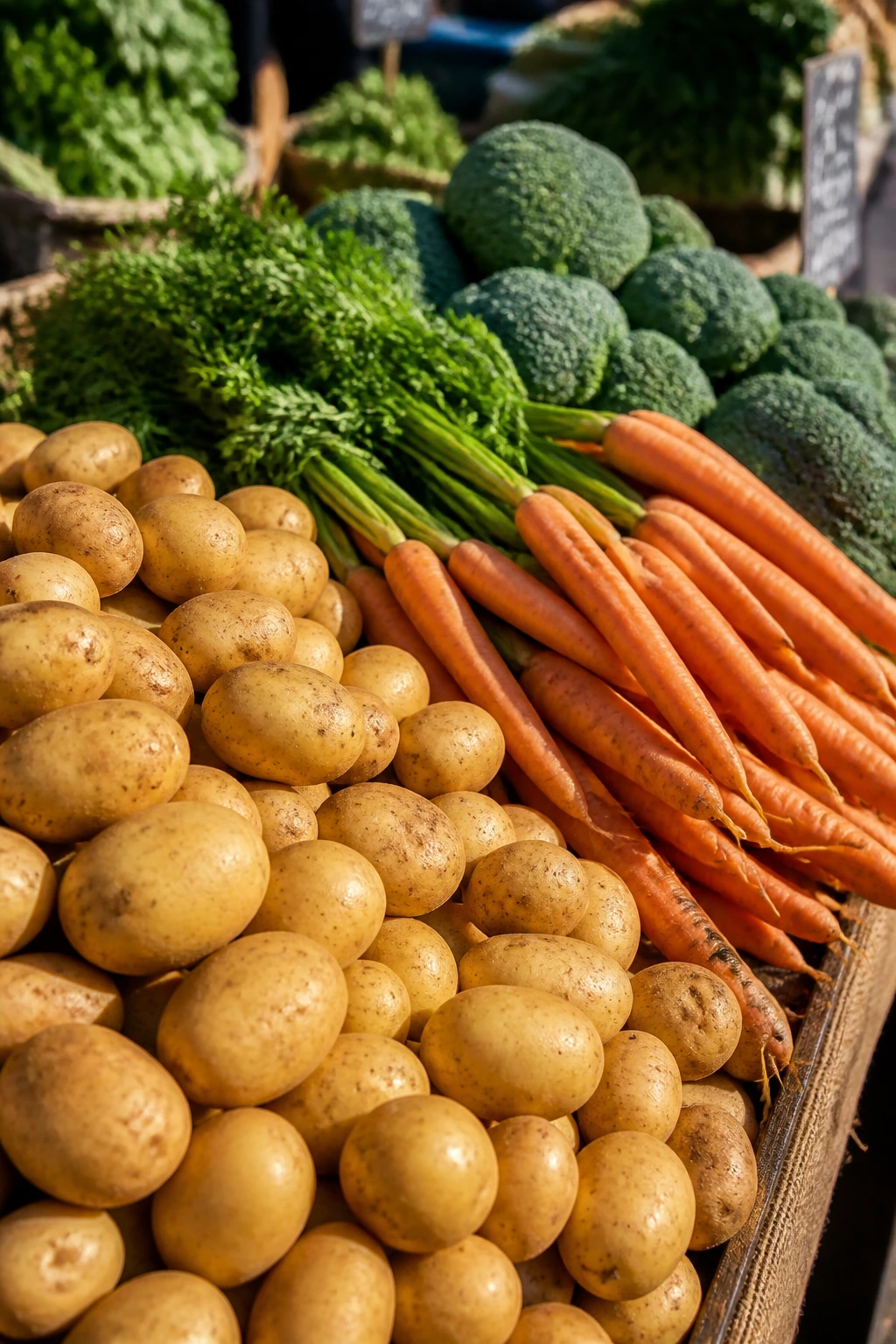
Vegetable size matters more than most people expect. Potatoes should be cut into 3/4-inch pieces, carrots into similar sticks, and broccoli or cauliflower into florets that aren’t huge. If one piece is twice the size of the others, it will still be chewing when everything else is done. That’s not a recipe problem; that’s a knife problem.
Sauces are where a lot of sheet pan dinners go sideways. Anything sugary — honey, BBQ sauce, teriyaki — belongs near the end unless you want burnt edges and a bitter smell from the oven. Dry spice blends are safer earlier. Wet glazes are better when brushed on late or served alongside.
Frozen vegetables can work in a pinch, but not all of them behave the same way. Frozen corn is excellent. Frozen broccoli or green beans can work if thawed and patted dry. Frozen zucchini? I’d skip it unless you enjoy a soft, watery pan.
Also, buy better salt than you think you need. I mean it. A good kosher salt and a bright lemon can rescue a tray that looked flat at the start.
How to Serve These Recipes
Presentation:
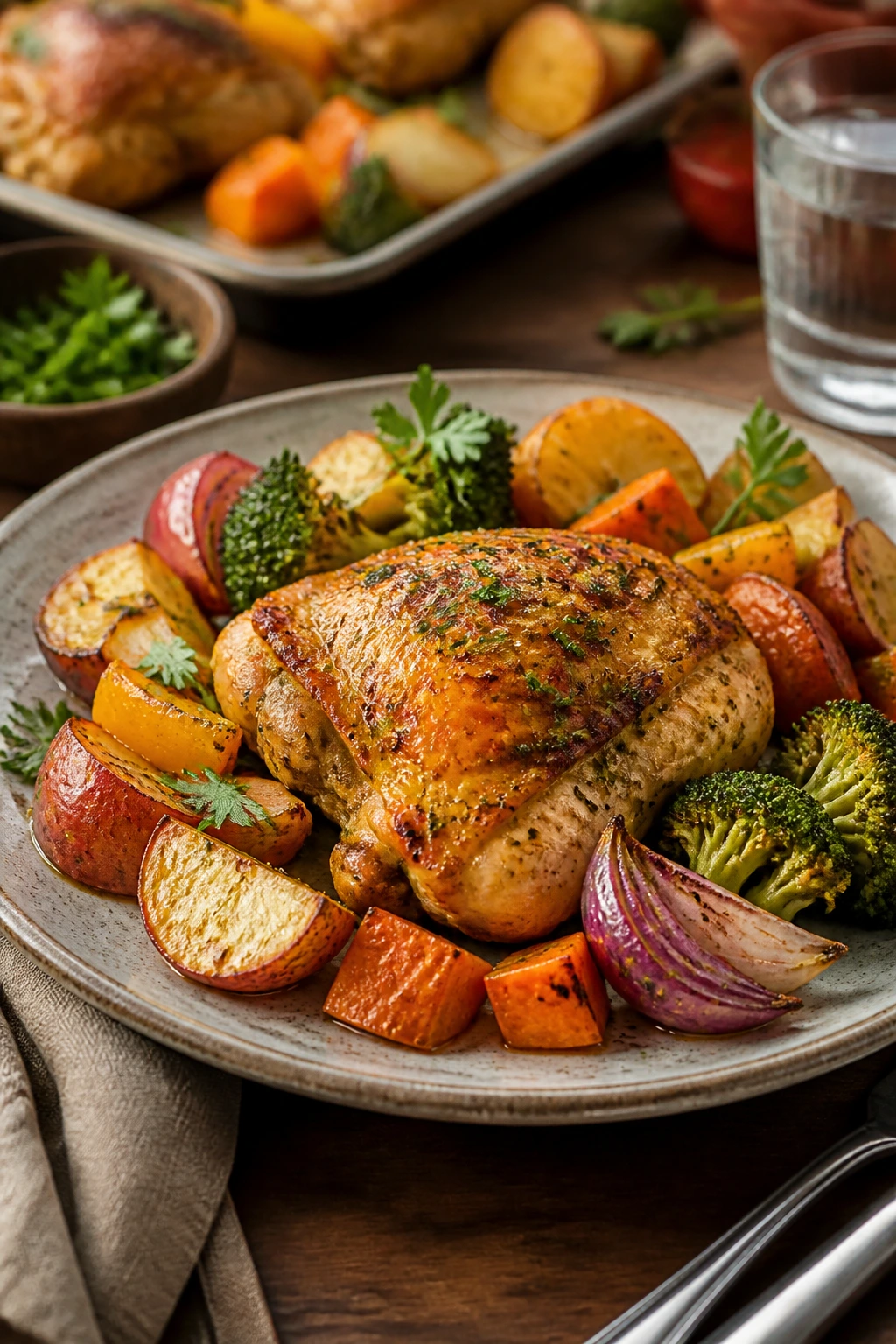
Pile the chicken slightly off-center on the tray or transfer it to a wide platter and spoon the vegetables and pan juices around it. A final hit of herbs, lemon zest, chopped scallions, or crumbled cheese makes the whole thing look finished instead of accidental.
Accompaniments:
Rice, couscous, warm tortillas, crusty bread, buttered noodles, or a simple green salad all work depending on the flavor profile. I like to keep the side light when the tray is already rich — a crisp salad or plain rice lets the chicken stay the focus.
Portions:
Plan on about 6 ounces of chicken per adult and roughly 1 to 1 1/2 cups of vegetables. If you’re feeding very hungry people, add bread or a starch; if you’re feeding lighter eaters, a tray can stretch farther than you think because the vegetables fill in the space.
Beverage Pairing:
Sparkling water with citrus is the cleanest match for most of these dinners. Unsweetened iced tea, a light lager, or a chilled white wine also work well, especially with the lemon, pesto, or Mediterranean trays.
Additional Tips and Flavor Boosters
Flavor Enhancement:
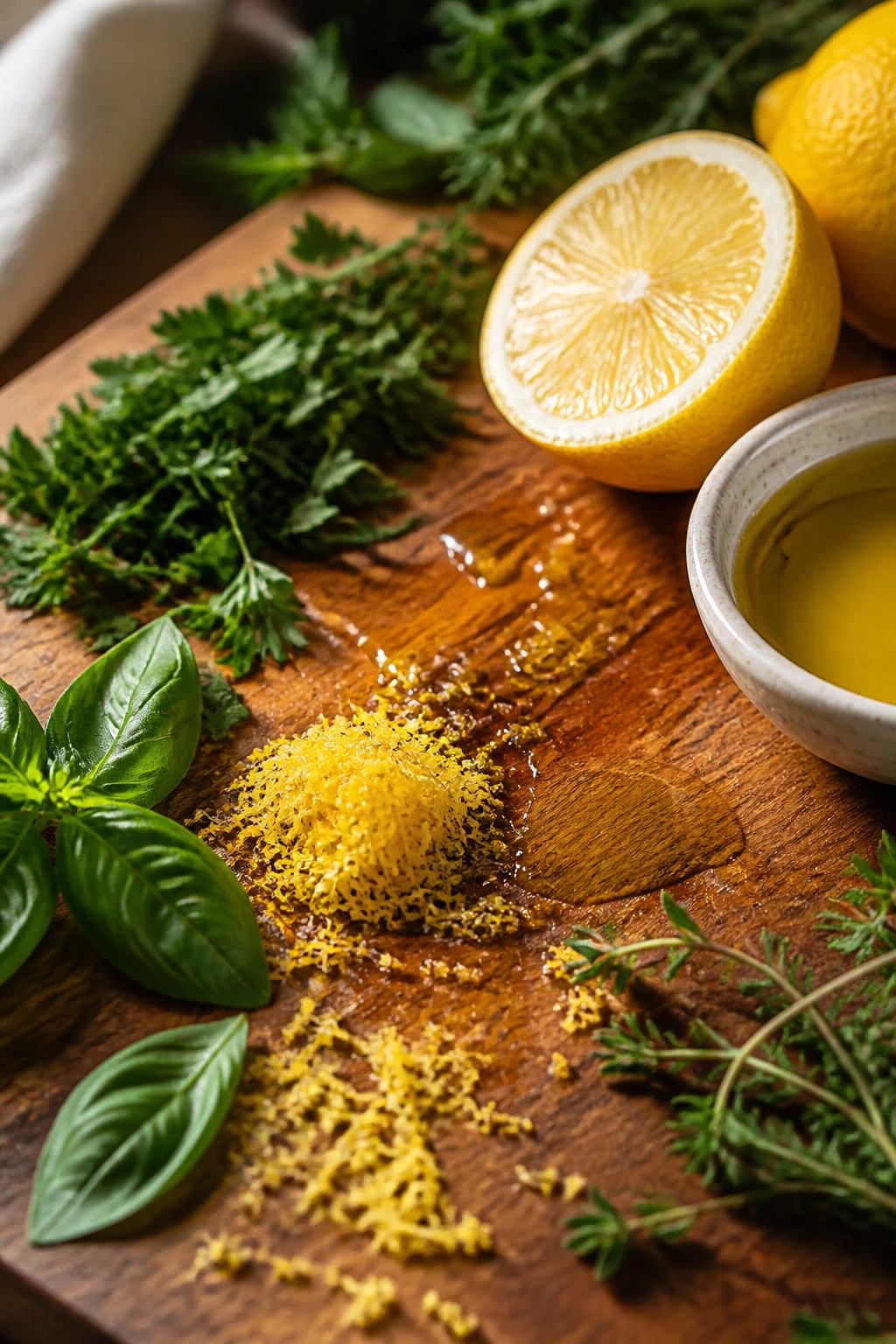
A finishing squeeze of lemon, lime, or a tiny drizzle of good olive oil changes the last 10% of the dish in a way people notice. That final gloss keeps roasted food from tasting dry, even when it isn’t.
Customization:
Add a handful of cherry tomatoes, olives, scallions, or sliced peppers to almost any tray if you want more color and a little extra sauce from the pan. A spoonful of yogurt or sour cream on the side can also calm down spice and make dinner feel more complete.
Serving Suggestions:
Fresh herbs matter more than most home cooks think. Parsley, dill, cilantro, basil, or mint can wake up roasted chicken the way a clean shirt wakes up an old pair of jeans. Crumbled feta, Parmesan, or toasted sesame seeds do the same thing from a different angle.
Make-It-Yours:
If you want lower-carb plates, push the vegetables higher and skip starch on the side. If you want more fiber, add chickpeas or black beans. If dairy is a problem, leave the cheese off the tray and lean harder on citrus, herbs, and mustard for punch.
Make-Ahead, Storage, and Reheating Guidance
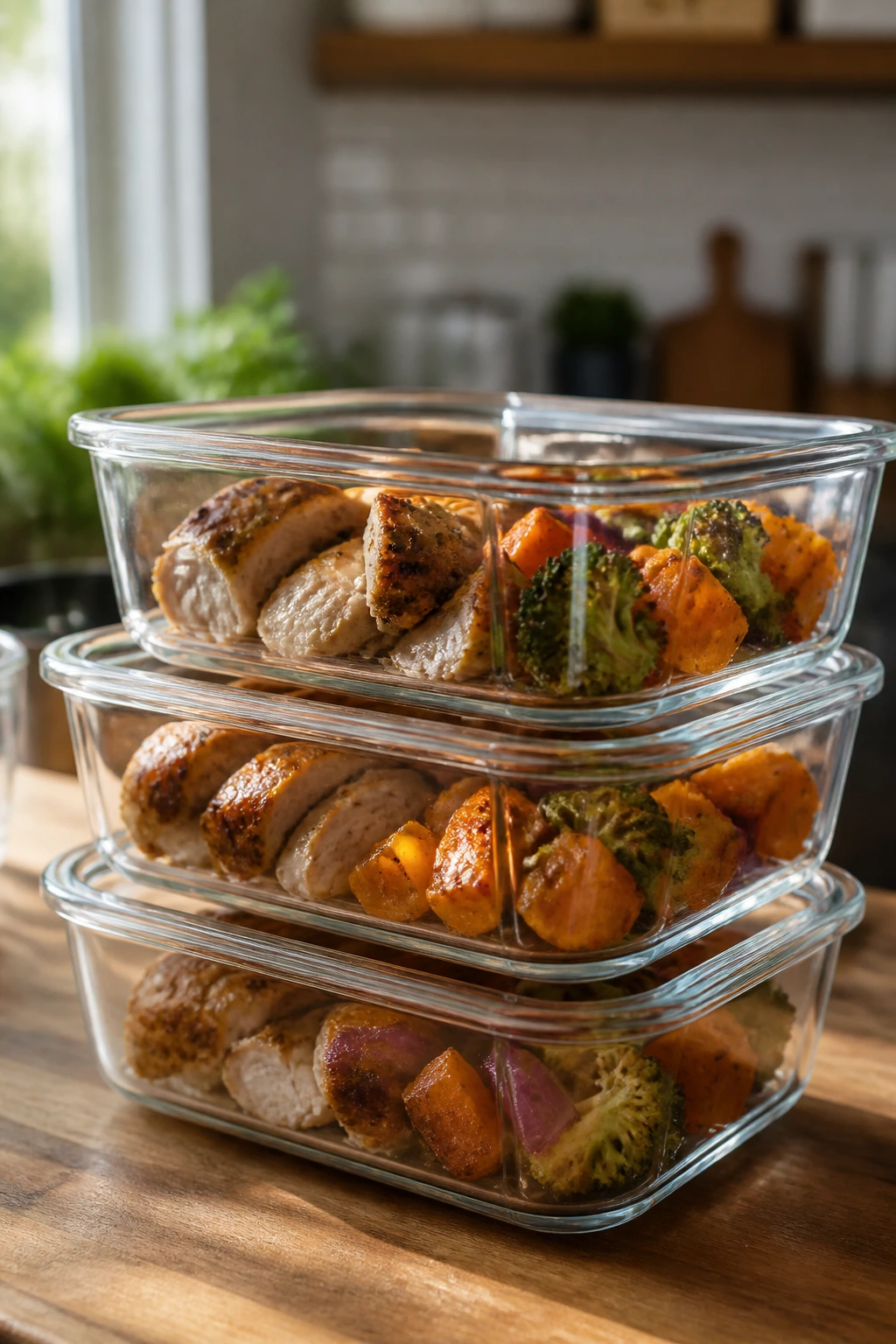
Most of these dinners keep 3 to 4 days in the refrigerator in airtight containers. Chicken and vegetables freeze for about 2 months, though the vegetables soften a bit after thawing. That’s fine for fajita filling, salsa verde trays, and balsamic chicken; less ideal for crisp asparagus or snap peas, which lose their charm faster.
If you want to prep ahead, cut the vegetables and mix the seasoning or sauce earlier in the day, then keep everything separate until roasting time. For honey mustard, teriyaki, balsamic, and BBQ versions, making the sauce ahead is smart because the flavor settles and the final dinner comes together faster. I’d avoid fully assembling the pan too far in advance if the vegetables are salty or acidic, since they can start weeping and soften before they hit the oven.
Reheat leftovers in a 350°F oven for 10 to 15 minutes, loosely covered with foil so the chicken doesn’t dry out. Remove the foil for the last few minutes if you want the edges to crisp back up. A skillet over medium heat works well for fajita, Cajun, or balsamic leftovers, especially if you splash in a teaspoon or two of water to keep the chicken from sticking.
Microwave reheating is fine when you’re in a hurry, but use short bursts and stop as soon as the chicken is hot. Overdoing it gives you that rubbery edge nobody likes. For trays with sauce, keep any fresh herbs, yogurt, avocado, or citrus garnish separate until serving.
Swaps and Variations Worth Trying
Gluten-Free Pantry Swap
Most of these recipes are already close to gluten-free, but check spice blends, soy sauce, and bottled sauces closely. Tamari stands in neatly for soy sauce, and gluten-free panko works for the Parmesan chicken without much drama.
Dairy-Free Finish
Skip feta, Parmesan, yogurt, or sour cream, then replace the missing brightness with extra lemon, herbs, or a spoon of tahini thinned with water. The tray will still taste finished, just in a different register.
Low-Sodium Lane
Use low-sodium soy sauce, reduce packaged seasoning blends, and build flavor with garlic, citrus, vinegar, and herbs. That keeps the dinner lively without leaning on salt to do every job.
Mild Kid-Friendly Version
Pull back on Cajun spice, harissa, and chili powder, then serve hot sauce or extra seasoning at the table instead of in the pan. Kids often eat more of these dinners when the heat can be added by choice, not forced on the whole tray.
Extra-Veggie Tray
Double the vegetables and roast them on a second pan so they brown instead of steaming. If you do this, stagger the pans on different oven racks and rotate them halfway through.
Starch-on-the-Pan Swap
Potatoes are the obvious choice, but cubed sweet potatoes, chickpeas, or even thick slices of cauliflower can take their place when you want a different texture. Just keep the cuts even and give denser vegetables the head start they need.
Common Mistakes to Avoid
Crowding the pan:
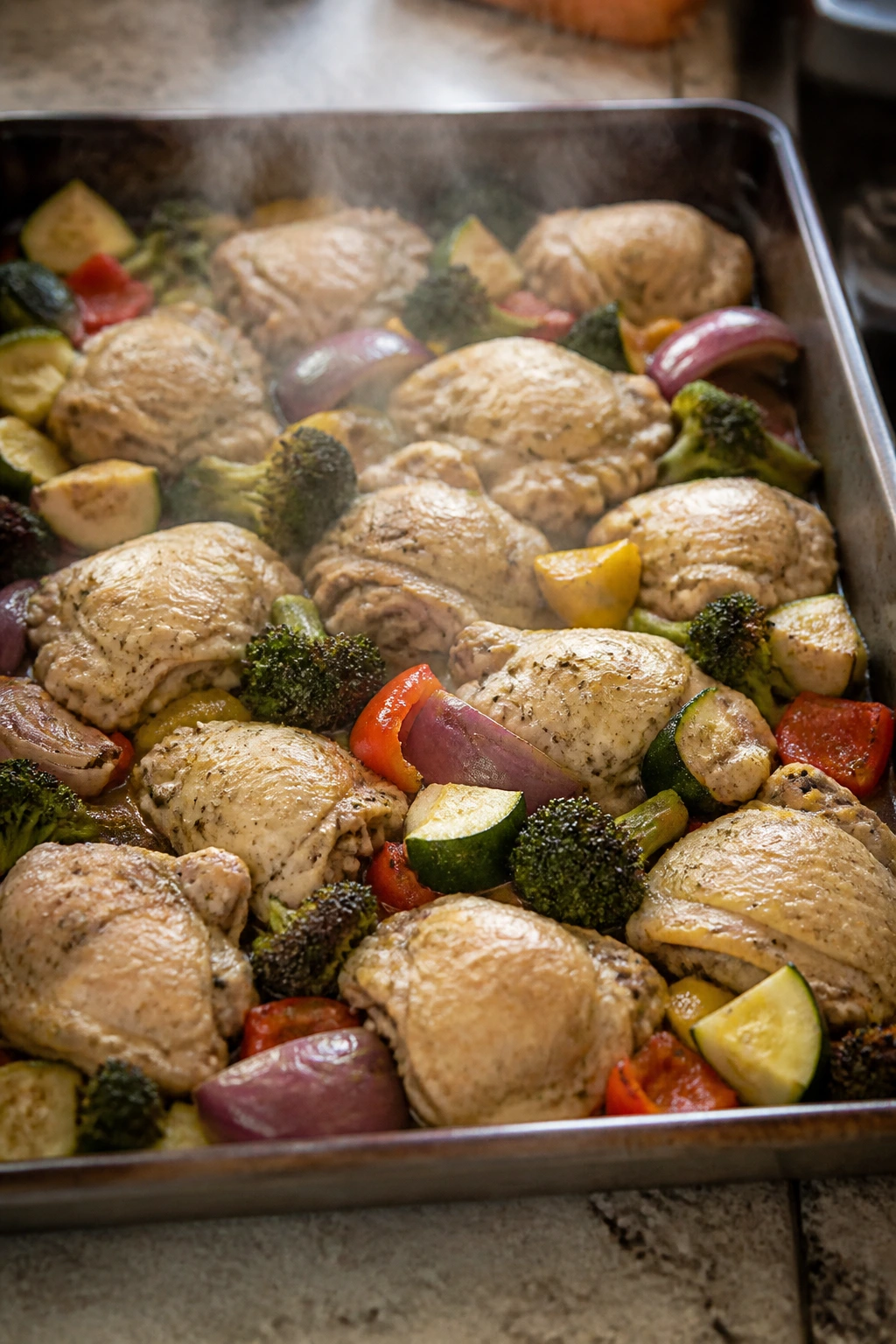
If the ingredients sit on top of one another, they steam. That gives you pale chicken and soft vegetables instead of browning. Use a second pan if needed, and don’t be stingy with space.
Cutting everything different sizes:
Huge potatoes and tiny onion slivers will not finish together. Match the cuts so the oven doesn’t have to solve your timing problem for you.
Saucing too early:
Honey, BBQ sauce, and teriyaki can burn before the chicken is done. Brush them on late, or you’ll get dark edges that taste bitter instead of caramelized.
Skipping the thermometer:
Chicken can look done and still be under temperature. Check the thickest part and pull it when it reaches 165°F. That’s the difference between juicy and disappointing.
Under-seasoning the vegetables:
A lot of people season the chicken and leave the vegetables basically naked. Don’t do that. The vegetables need salt, oil, and herbs of their own or they’ll taste like the side dish they are, which is not a compliment.
Using wet vegetables straight from the sink or freezer:
Water on the surface slows browning. Pat everything dry, especially mushrooms, chickpeas, and thawed frozen produce, so the oven can roast instead of steam.
Questions Readers Actually Ask

Can I use chicken breasts instead of thighs in all of these recipes?
Yes, with a little care. Breasts cook faster and dry out sooner, so keep them in even thickness and check them early. If a recipe uses sauce, breasts are often better when you brush the sauce on near the end.
How do I keep the vegetables from getting soggy?
Dry them well, use enough oil to coat but not drown, and give them room on the pan. Mushrooms, zucchini, and frozen vegetables are the easiest ones to turn soggy, so they need the most space and the least moisture.
Do I have to flip everything halfway through?
Not always. Thin chicken strips and smaller vegetables benefit from a toss or turn, but chicken thighs and well-spaced vegetables can roast without much fuss. If the pan is crowded, though, a turn helps every piece brown more evenly.
Can I make these ahead for meal prep?
Yes. Roast the components, cool them quickly, and pack them in containers for up to 4 days. Reheat in the oven or skillet so the textures stay closer to the original meal.
What if my chicken finishes before the vegetables?
Pull the chicken off, cover it loosely with foil, and return the vegetables to the oven for 5 to 10 minutes. That usually happens when the vegetable pieces are too large or the pan is too crowded.
Are frozen vegetables okay on a sheet pan?
Some are fine, some are trouble. Frozen corn and chickpeas that have been thawed and dried work well. Frozen zucchini, broccoli, or green beans can work too, but they need extra drying or they’ll steam.
Can I double these recipes for a crowd?
Absolutely, but use two sheet pans. Don’t pile everything onto one tray just because the ingredients fit in the bowl. The oven can only brown so much food at once.
What’s the best way to get more browning without overcooking the chicken?
Start the denser vegetables first, then add the chicken when they’re partway done. Also, use thighs when you can. They tolerate a longer roast and forgive more mistakes than breasts.
A Dinner Habit Worth Keeping
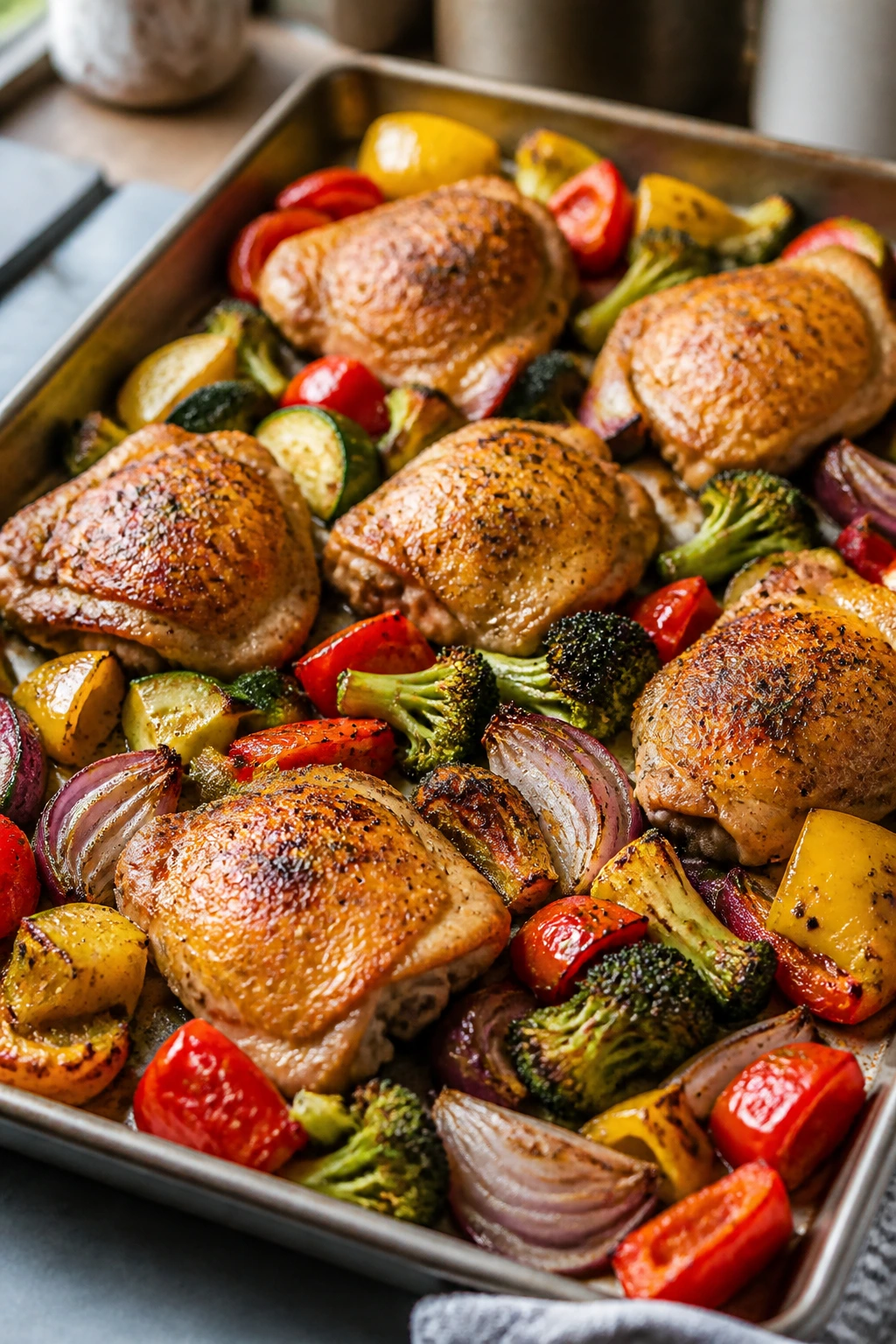
There’s a reason sheet pan chicken dinners keep showing up in real kitchens. They’re efficient without being dull, flexible without being random, and satisfying in that plainspoken way weeknight food should be. You don’t need a pile of equipment or a long list of tricks. You need heat, space, and a little judgment about timing.
Once you’ve made a few of these, the pattern starts to feel almost automatic: roast the slowest ingredient first, bring in the rest, finish with something bright, and serve while the edges are still hot and a little crisp. That’s enough. More than enough, honestly.