



Some easy picnic food ideas look polished on a kitchen counter and fall apart the minute they hit a blanket. The bread sweats. The tomatoes leak. The potato salad turns into a cold puddle with onions floating in it like little regrets. The dishes worth packing are the ones that can take a little heat, a little jostling, and a little time without losing their shape or their flavor.
That’s the whole trick with picnic food. You want salt, acid, crunch, and enough body that each bite still tastes deliberate after the cooler has been opened six times and the napkins have somehow migrated under somebody’s elbow. A good summer picnic recipe does not need a stove waiting in the wings. It needs manners.
These recipes lean into that. There are sandwiches that stay neat, salads that taste better after a short rest, fruit that feels refreshing instead of watery, and a dessert bar that cuts cleanly with a knife instead of smearing across the parchment. A few are hearty enough to count as dinner. A few are the side dishes that quietly steal the show. All of them are built for warm evenings when you want food that packs well and still tastes like itself.
Why These Picnic Dishes Keep Their Cool
- Room-Temperature Friendly: These recipes are chosen because they still taste balanced after they’ve sat out long enough to get from the kitchen to the park table, which matters more than looking perfect in the fridge.
- Make-Ahead Ready: Most of them improve after 30 minutes to a few hours, when the lemon, vinegar, herbs, and salt get into the chicken, pasta, or beans instead of sitting on top.
- Easy to Pack: Each recipe is built around a single container, a sandwich wrapper, or a simple component pair, so you’re not juggling a dozen little bowls and lids.
- Summer-Smart Flavor: Bright herbs, crisp vegetables, cool fruit, and tangy dressings keep the food from tasting heavy when the air is warm and the appetite is a little lower.
- Flexible Portions: You can scale these up without losing your mind. Double the salad, add more bread, slice the bars smaller, and the whole spread still behaves.
- Actually Useful on a Blanket: These are the kinds of foods you can eat with one hand, a fork, or a napkin folded twice. That sounds small. It isn’t.
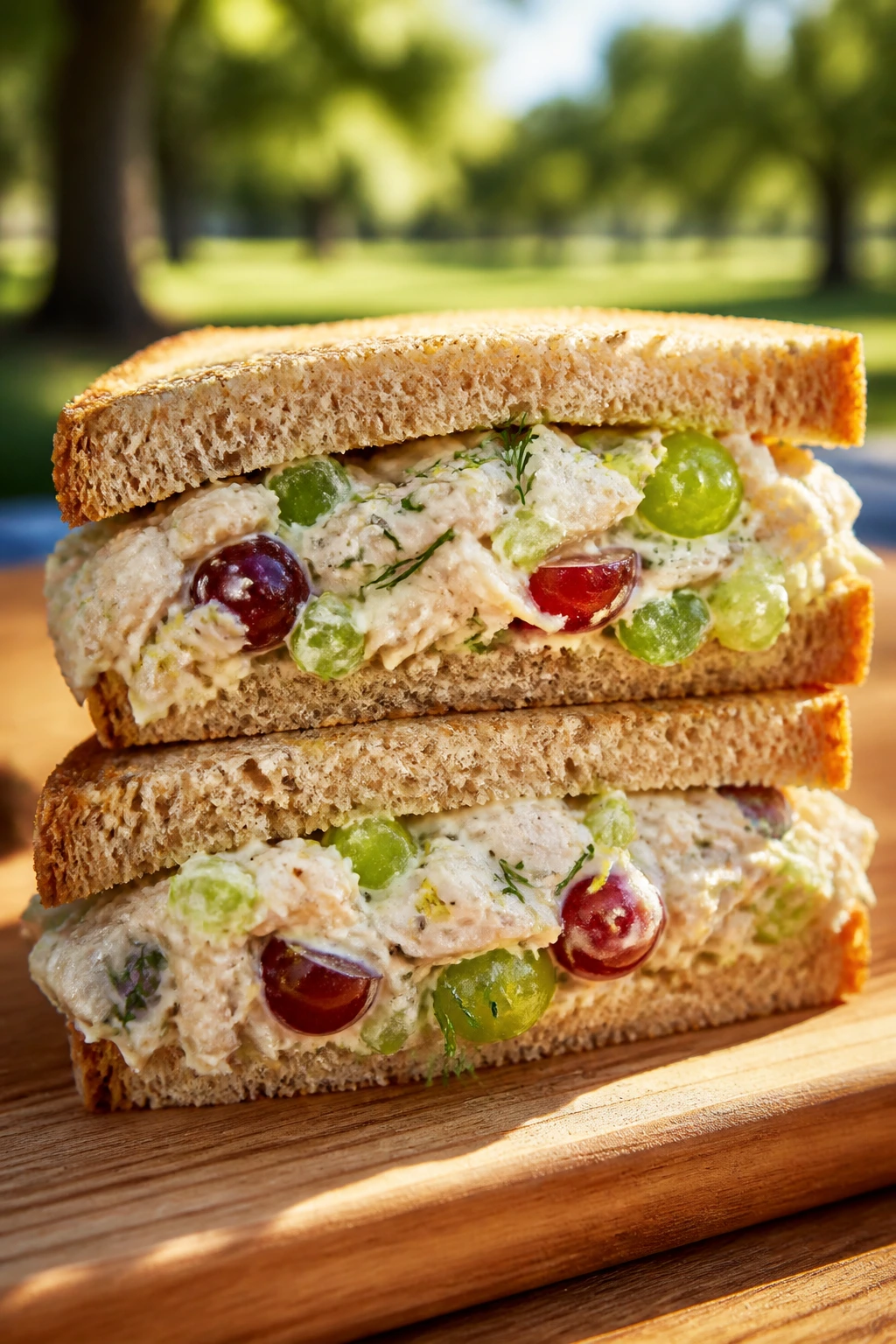
1. Lemon-Dill Chicken Salad Sandwiches
A good chicken salad should feel cool, not gloopy. This one stays bright because the lemon does real work, the dill keeps the flavor sharp, and the celery gives each bite a clean little snap. The grapes are there for contrast, not sweetness overload, and they earn their spot.
Why It Works:
Chicken salad is one of those picnic staples that can go bland fast if it leans too hard on mayonnaise. Here, a mix of mayo and Greek yogurt keeps the texture creamy without feeling heavy, and the lemon zest keeps the whole bowl smelling fresh even after it chills. Using shredded chicken instead of big cubes helps the dressing cling to every piece, which matters when you’re packing sandwiches hours before you eat. If you let it sit for 20 to 30 minutes, the flavors settle in and the salad stops tasting like separate ingredients.
Key Ingredients:
- 3 cups shredded cooked chicken — Rotisserie chicken works, and shredded pieces catch the dressing better than big chunks.
- 1/3 cup mayonnaise — Gives the salad body and keeps it from drying out in the cooler.
- 1/4 cup plain Greek yogurt — Lightens the mix a little without making it thin.
- 2 celery stalks, finely diced — Adds crunch that holds up after chilling.
- 1/2 cup seedless red grapes, halved — A small sweet note that keeps the salad from tasting flat.
- 2 tablespoons fresh dill, chopped — Use the tender fronds, not the thick woody stems.
- 1 tablespoon lemon juice — Brightens the chicken and cuts through the mayo.
- 1 teaspoon lemon zest — Gives the salad a sharper lemon smell and taste.
- 1/2 teaspoon kosher salt — Needed more than you think once the salad is cold.
- 1/4 teaspoon black pepper — Keeps the flavor from going soft.
Quick Steps:
- In a large bowl, whisk together the mayonnaise, Greek yogurt, lemon juice, lemon zest, salt, and black pepper until smooth.
- Fold in the chicken, celery, grapes, and dill with a spatula until everything is coated evenly. Do not mash the chicken into paste; you want loose shreds, not a spread.
- Taste the salad and adjust with a pinch more salt or a squeeze of lemon if it tastes dull.
- Cover and chill for 20 to 30 minutes, until the salad feels cold and the lemon-dill flavor settles in.
- Spoon onto bread or croissants with lettuce leaves, then wrap each sandwich tightly in parchment for the cooler.
Equipment for This Recipe:
- Large mixing bowl — Big enough to fold without spilling chicken onto the counter.
- Rubber spatula — Better than a spoon for keeping the shreds intact.
- Chef’s knife and cutting board — For the celery, grapes, and dill.
- Measuring cups and spoons — The dressing needs the right balance.
- Parchment paper or sandwich wraps — Keeps the bread from getting squashed in transport.
How to Serve This Dish:
Pile the chicken salad on soft sandwich bread, a split croissant, or little rolls if you want a neater picnic feel. I like it with kettle chips and cucumber spears because the crunch keeps the plate from feeling soft all the way through. One sandwich makes a light lunch; two halves plus a side works better for dinner.
Pro Tips for This Recipe:
- If your chicken was cold from the fridge, let it sit 10 minutes before mixing so the dressing coats it more evenly.
- Toast the bread lightly if you’re packing these for later than 30 minutes. It slows down sogginess.
- Add a tablespoon of chopped parsley if your dill is soft or tired; the salad will still taste fresh.
- Pack the salad separately from the bread if you know the sandwiches will sit more than an hour before eating.
Variations on This Dish:
- Cranberry-Walnut Version: Swap the grapes for 1/3 cup dried cranberries and add 1/4 cup chopped walnuts for a more autumn-leaning crunch that still works in summer.
- Curried Chicken Salad: Stir in 1 teaspoon mild curry powder and use chopped apple instead of grapes. It tastes sharper and plays well with naan or pita.
- Herb Garden Swap: Replace the dill with chopped tarragon and chives for a more savory, slightly anise-like flavor.
Common Mistakes to Avoid with This Dish:
- Too much mayo: The salad turns heavy and greasy. Start with the listed amount, then add 1 tablespoon at a time only if it still looks dry.
- Wet celery or grapes: Extra water makes the salad loose. Pat the celery dry after washing and halve the grapes just before mixing.
- Assembling too early: The bread absorbs moisture. Keep the salad and bread separate until close to serving if the picnic is not immediate.
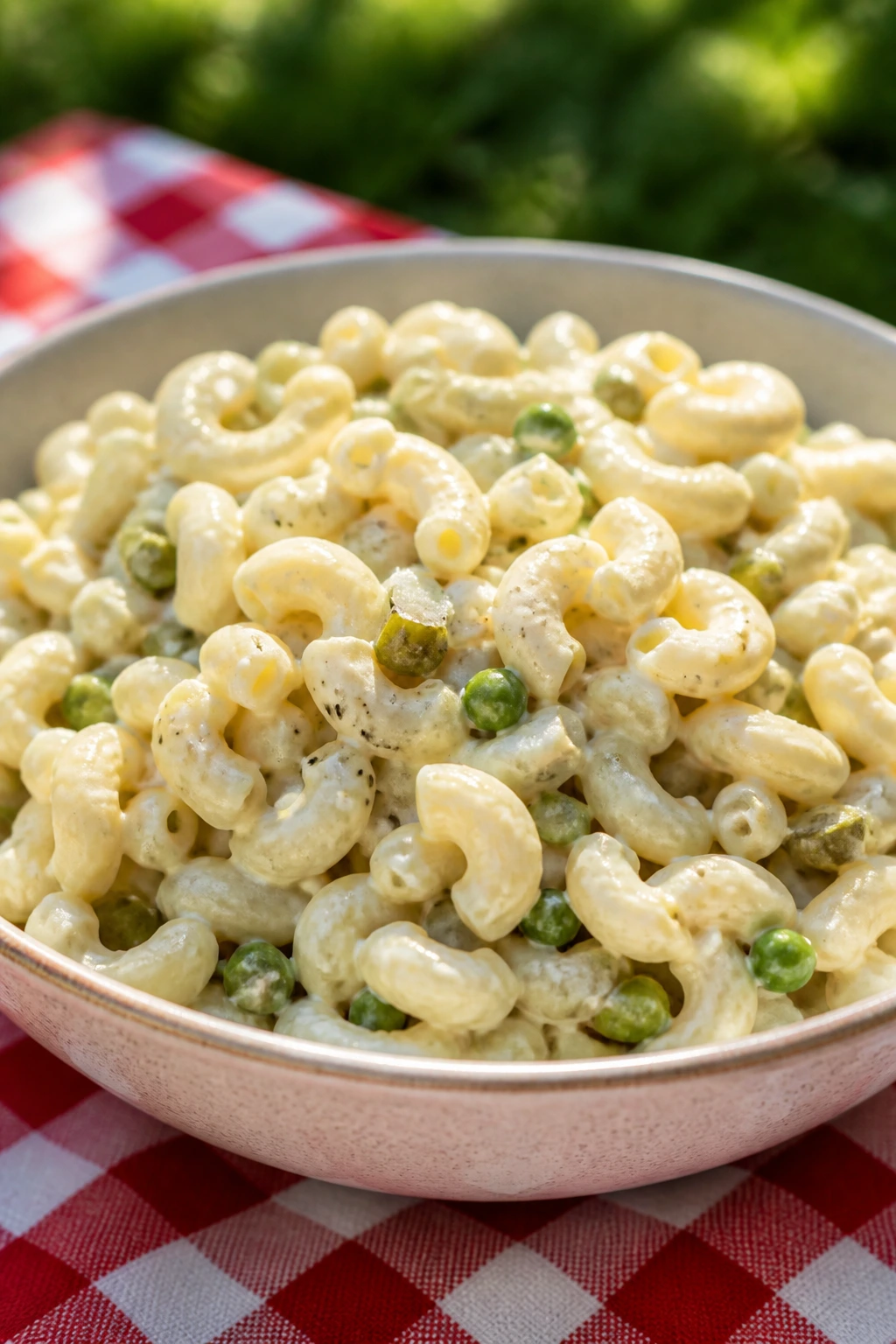
2. Classic Macaroni Salad with Pickles and Peas
This is the kind of macaroni salad that disappears from the bowl without anybody announcing it. The pickles bring a sharp bite, the peas add a little sweetness, and the eggs make it feel more like a complete dish than a side trying to borrow attention.
Why It Works:
Macaroni salad lives or dies on texture. Cook the pasta too long and you get a soft, sticky mess that drinks up dressing instead of holding it. This version uses elbow macaroni cooked to a firm bite, then cooled quickly so it stays separate in the bowl. The dressing is mostly mayo, but Dijon and pickle brine keep it from tasting one-note, and the peas give you little cold pops of sweetness in the middle of the creamy pasta.
Key Ingredients:
- 12 ounces elbow macaroni — The classic shape catches dressing in the curve.
- 3/4 cup mayonnaise — Provides the creamy base.
- 2 tablespoons Dijon mustard — Gives the dressing some edge.
- 1 tablespoon apple cider vinegar — Sharpens the flavor once the salad chills.
- 2 celery stalks, diced — Adds crunch and keeps the texture lively.
- 1/2 cup dill pickles, finely chopped — Brings salt and tang.
- 3/4 cup frozen peas, thawed — Frozen peas work well here and keep their sweetness.
- 3 hard-boiled eggs, chopped — Makes the salad hearty enough for dinner.
- 2 tablespoons chopped chives — A mild onion note without too much bite.
- 1 teaspoon sugar — Rounds out the vinegar and pickle brine.
- Salt and black pepper to taste — Cold pasta always needs a little more seasoning than you expect.
Quick Steps:
- Bring a large pot of salted water to a boil and cook the macaroni for 7 to 8 minutes, until just al dente.
- Drain and rinse briefly under cool water, then shake off as much water as possible. If the pasta stays wet, the dressing will thin out.
- In a large bowl, whisk together the mayonnaise, Dijon, vinegar, sugar, 1/2 teaspoon salt, and a few grinds of black pepper.
- Fold in the pasta, celery, pickles, peas, eggs, and chives until everything is coated.
- Cover and chill for at least 1 hour, then taste again and add more salt or vinegar if the flavor feels sleepy.
Equipment for This Recipe:
- Large pot — You need enough water so the pasta cooks evenly.
- Colander — For draining and a quick rinse.
- Large mixing bowl — Big enough for folding without breaking the pasta.
- Wooden spoon or spatula — Keeps the eggs from getting crushed.
- Measuring cups and spoons — Especially for the dressing.
How to Serve This Dish:
Scoop it into a shallow bowl so the peas and eggs stay visible instead of sinking to the bottom. It sits nicely beside grilled chicken, burgers, or sliced tomatoes with salt and pepper. For a picnic, I like it packed in a lidded container with a cold pack underneath and a spoon tucked right on top.
Pro Tips for This Recipe:
- Salt the cooking water generously. The pasta should taste seasoned before it ever meets the dressing.
- Chill the salad before serving, but don’t let it sit so long that the dressing firms up too much; 1 to 4 hours is the sweet spot.
- If the salad looks dry after chilling, stir in 1 to 2 tablespoons of mayo or a splash of pickle brine.
- Chop the eggs fairly small so they blend into the pasta instead of breaking apart in big chunks.
Variations on This Dish:
- Sweet Relish Version: Swap the chopped pickles for 1/2 cup sweet pickle relish if you like a softer, sweeter salad.
- Bacon Upgrade: Add 4 slices of crisp bacon, crumbled, for a smoky edge that makes the salad read more like a main side.
- Herb-Heavy Finish: Stir in 1 tablespoon each of chopped parsley and dill for a fresher, greener flavor.
Common Mistakes to Avoid with This Dish:
- Overcooked pasta: Soft noodles collapse after chilling. Stop at al dente and rinse promptly.
- Overdressing before chilling: The pasta absorbs the dressing and can look dry later. Save a spoonful of dressing to stir in right before serving if needed.
- Skipping the final taste: Cold salad tastes flatter than warm food. Always adjust the salt and vinegar after it has chilled.
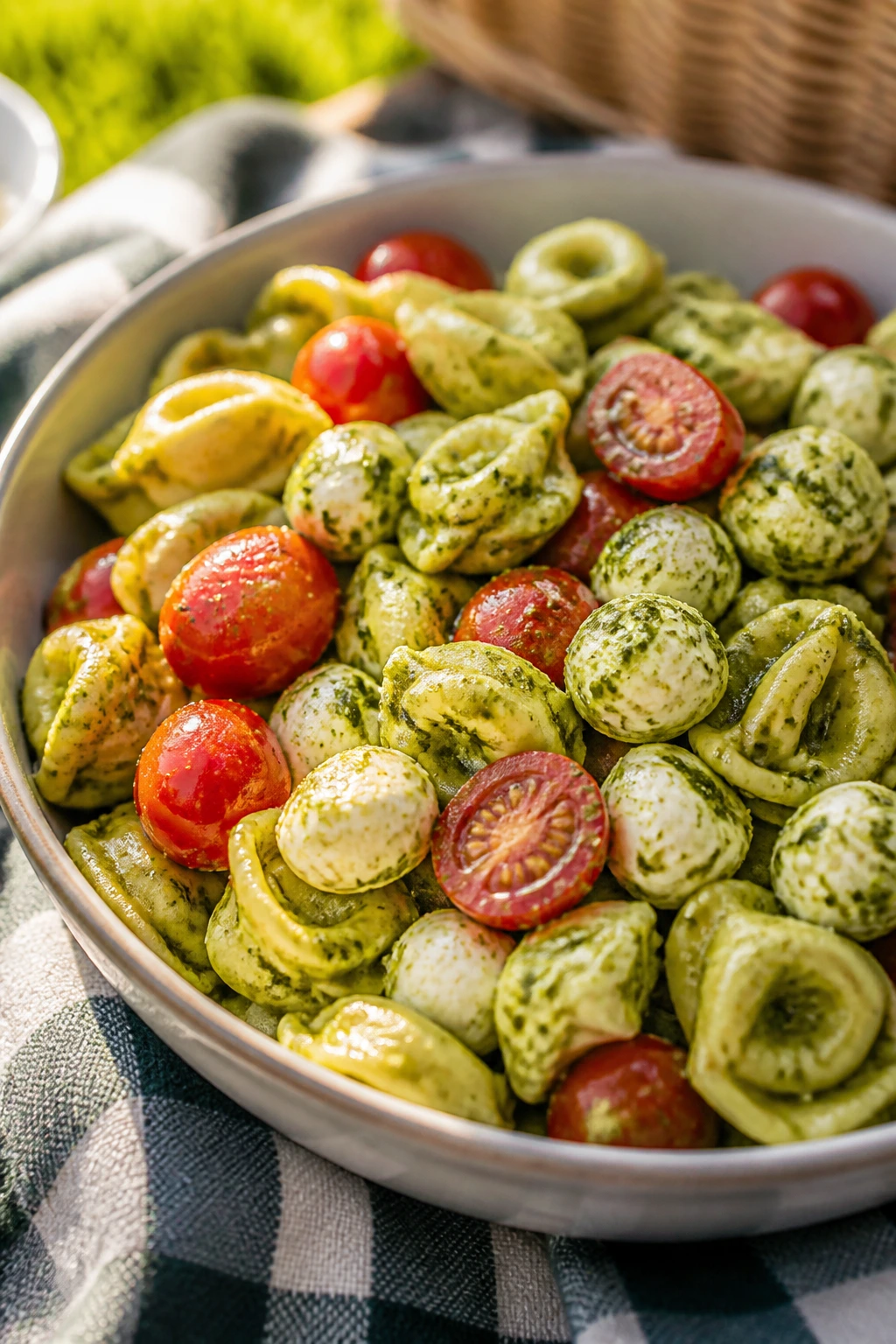
3. Pesto Tortellini Salad with Tomatoes and Mozzarella
If you want one pasta salad that feels a little richer than the classic mayo version, this is the one. The cheese tortellini make it feel substantial, the pesto brings basil and garlic in one shot, and the tomatoes cut through all that richness with juice and acid.
Why It Works:
Tortellini are built for picnic duty because they carry filling, texture, and a bit of weight in every bite. Pesto clings to the folds and edges better than a thin vinaigrette, and a touch of lemon juice keeps the basil from tasting heavy or greasy after chilling. The trick is to cool the pasta fast, then toss it while it still has a little surface warmth so the pesto coats instead of sliding off.
Key Ingredients:
- 20 ounces cheese tortellini — Fresh or refrigerated tortellini both work.
- 1 cup basil pesto — Use a pesto that tastes bright, not salty and dull.
- 1/4 cup extra-virgin olive oil — Loosens the pesto enough to coat the pasta.
- 2 tablespoons lemon juice — Keeps the salad lively.
- 1 pint cherry tomatoes, halved — Juicy, sweet, and easy to eat.
- 8 ounces mozzarella pearls — Tiny cheese pieces scatter better than one big ball.
- 1/3 cup sliced black olives — Add a briny note that balances the pesto.
- 2 cups baby arugula — Gives the salad a peppery edge.
- 1/4 cup grated Parmesan — Sharpens the sauce without making it heavy.
- 2 tablespoons toasted pine nuts — For crunch and a little nuttiness.
Quick Steps:
- Boil the tortellini in salted water according to the package, usually 2 to 3 minutes, until tender but still springy.
- Drain and rinse briefly under cool water, then toss with the olive oil so the pieces do not stick together.
- In a large bowl, whisk the pesto and lemon juice until smooth enough to coat the pasta.
- Fold in the tortellini, tomatoes, mozzarella pearls, olives, arugula, Parmesan, and pine nuts.
- Chill for 20 to 30 minutes, then taste and add a pinch of salt only if needed. Pesto is already salty, so go slowly.
Equipment for This Recipe:
- Large pot — Tortellini need room to move.
- Colander — For a quick drain and rinse.
- Large mixing bowl — Lets you toss gently without breaking the pasta.
- Whisk — Helps loosen the pesto cleanly.
- Serving spoon — A wide spoon is better than a fork here.
How to Serve This Dish:
Serve it cold or just slightly cool, not icy. It works as a picnic main next to sliced melon or as a side for grilled sausages and corn. I like a few extra basil leaves on top because the bowl smells alive when you open it.
Pro Tips for This Recipe:
- Add the arugula right before serving if you want more bite and less wilt.
- Drain the tortellini well; extra water makes the pesto slide into the bottom of the bowl.
- Toast the pine nuts in a dry skillet for 3 to 4 minutes until golden and fragrant.
- If your pesto is thick, loosen it with a teaspoon of warm water before mixing it into the pasta.
Variations on This Dish:
- Chicken Pesto Picnic Bowl: Add 2 cups diced cooked chicken and serve it as a fuller meal.
- Sun-Dried Tomato Version: Swap half the fresh tomatoes for 1/3 cup chopped sun-dried tomatoes for a deeper, sweeter bite.
- Gluten-Free Swap: Use refrigerated gluten-free tortellini if you can find it, or switch to gluten-free rotini and keep the same dressing.
Common Mistakes to Avoid with This Dish:
- Using too much pesto straight from the jar: The salad turns dense and oily. Always loosen it with lemon juice and a little olive oil.
- Adding greens too early: Arugula wilts fast in the dressing. Add it at the end if you want a fresher texture.
- Skipping the salt check: Pesto, cheese, and olives all bring salt. Taste before you add anything extra.
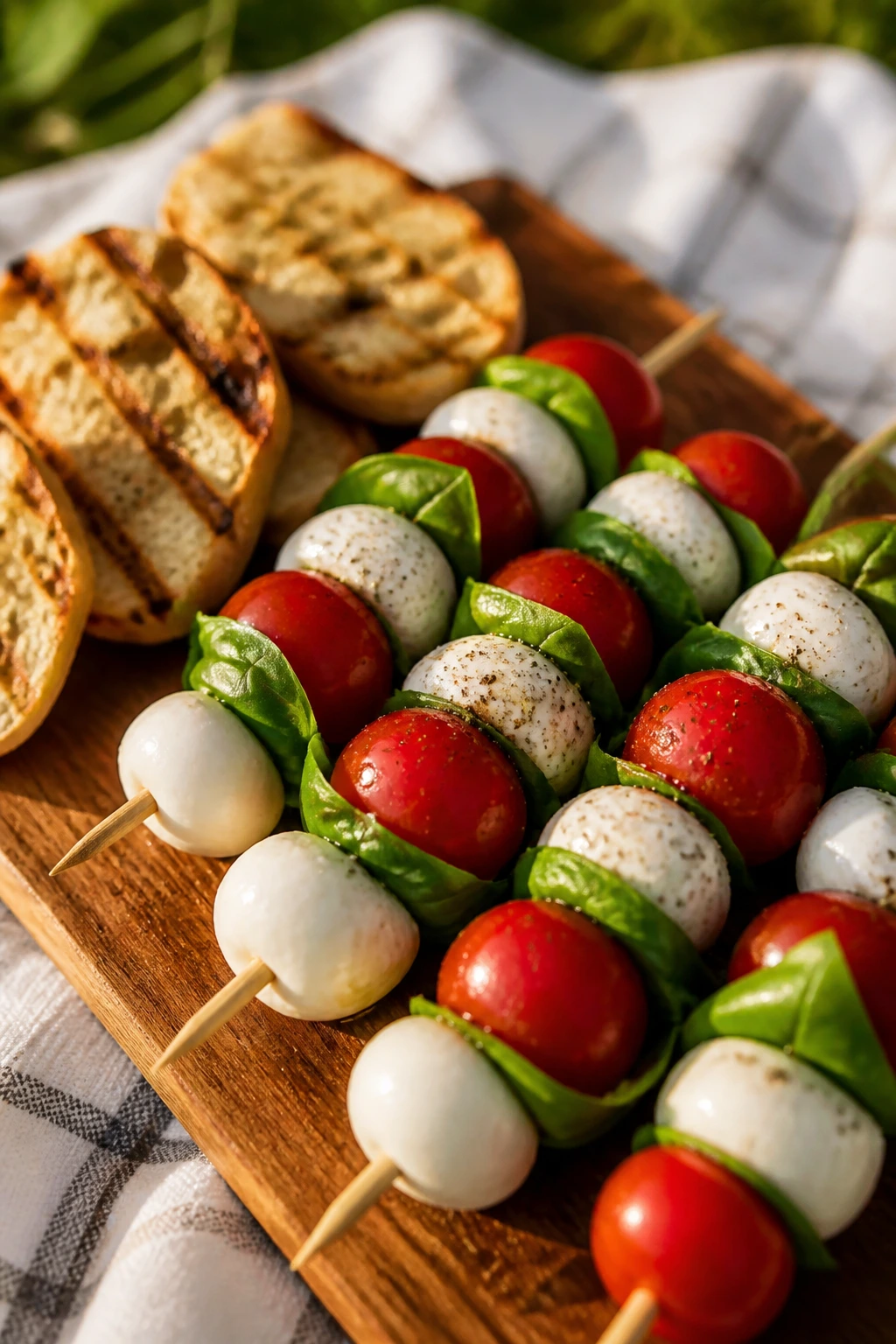
4. Caprese Skewers with Grilled Bread
A Caprese skewer is almost too neat for its own good, which is exactly why it works so well for a picnic. You get tomato, basil, and mozzarella in one bite, and the grilled bread gives you something sturdier than a salad fork can manage.
Why It Works:
This is picnic food with a clean line down the middle. The tomatoes stay juicy, the mozzarella stays cool and creamy, and the basil gives each bite a fragrant lift. The bread matters more than people think; when you toast or grill it lightly, it becomes the thing that catches the balsamic instead of dissolving under it. That’s the difference between a nice snack and a tray people keep circling back to.
Key Ingredients:
- 1 pint cherry tomatoes — Small enough to skewer and eat in one bite.
- 8 ounces mozzarella balls — Look for mini bocconcini or ciliegine.
- 24 small basil leaves — Fresh and whole, not torn to bits.
- 2 tablespoons extra-virgin olive oil — For the bread and a light finish.
- 1 tablespoon balsamic glaze — Thick enough to drizzle without running everywhere.
- 1 small baguette, sliced into 1/2-inch pieces — A tight crumb keeps it from getting soggy.
- 1 garlic clove, halved — Rubbed on the warm bread for a little bite.
- Flaky salt — A few crystals on top make the tomatoes pop.
- Black pepper — A little finish on the cheese and tomatoes.
Quick Steps:
- Thread one tomato, one basil leaf, and one mozzarella ball onto each small skewer, repeating until the ingredients are used up.
- Brush the baguette slices lightly with olive oil.
- Grill or toast the bread for 1 to 2 minutes per side until the edges are golden and the surface feels crisp. Rub each warm slice with the cut side of the garlic clove.
- Arrange the skewers on a platter and drizzle with balsamic glaze.
- Finish with flaky salt and black pepper, then pack the bread separately if you are not serving immediately.
Equipment for This Recipe:
- Small skewers or appetizer picks — Bamboo is fine.
- Cutting board and knife — For slicing the baguette.
- Grill pan, skillet, or toaster oven — Any of these will crisp the bread.
- Pastry brush — Makes the oil go on evenly.
- Serving platter — Gives the skewers room to breathe.
How to Serve This Dish:
These work best as a first plate, not a heavy side. Put the skewers on one tray and the grilled bread on another so the toast stays crisp. I like them with olives, sliced peaches, or a simple salad when the rest of the picnic feels a little too starchy.
Pro Tips for This Recipe:
- If the mozzarella is packed in water, pat it dry before skewering so the glaze sticks better.
- Keep the balsamic glaze off the bread until serving; it softens the toast fast.
- Use tomatoes that feel heavy for their size. They’ll taste sweeter.
- For a prettier tray, alternate the skewer order so not every bite looks identical.
Variations on This Dish:
- Prosciutto Caprese: Add a folded ribbon of prosciutto to each skewer for a salty, meaty edge.
- Peach Caprese: Swap half the tomatoes for ripe peach chunks when you want a softer, sweeter bite.
- Dairy-Free Version: Use marinated tofu cubes in place of mozzarella and keep the basil, tomato, and balsamic.
Common Mistakes to Avoid with This Dish:
- Wet cheese: It makes the tray messy. Pat the mozzarella dry before assembling.
- Overdressed bread: The toast loses its crunch. Drizzle the glaze on the skewers, not the bread.
- Using oversized tomatoes: They slip off the skewer and make the bites awkward. Stick with cherry or grape tomatoes.
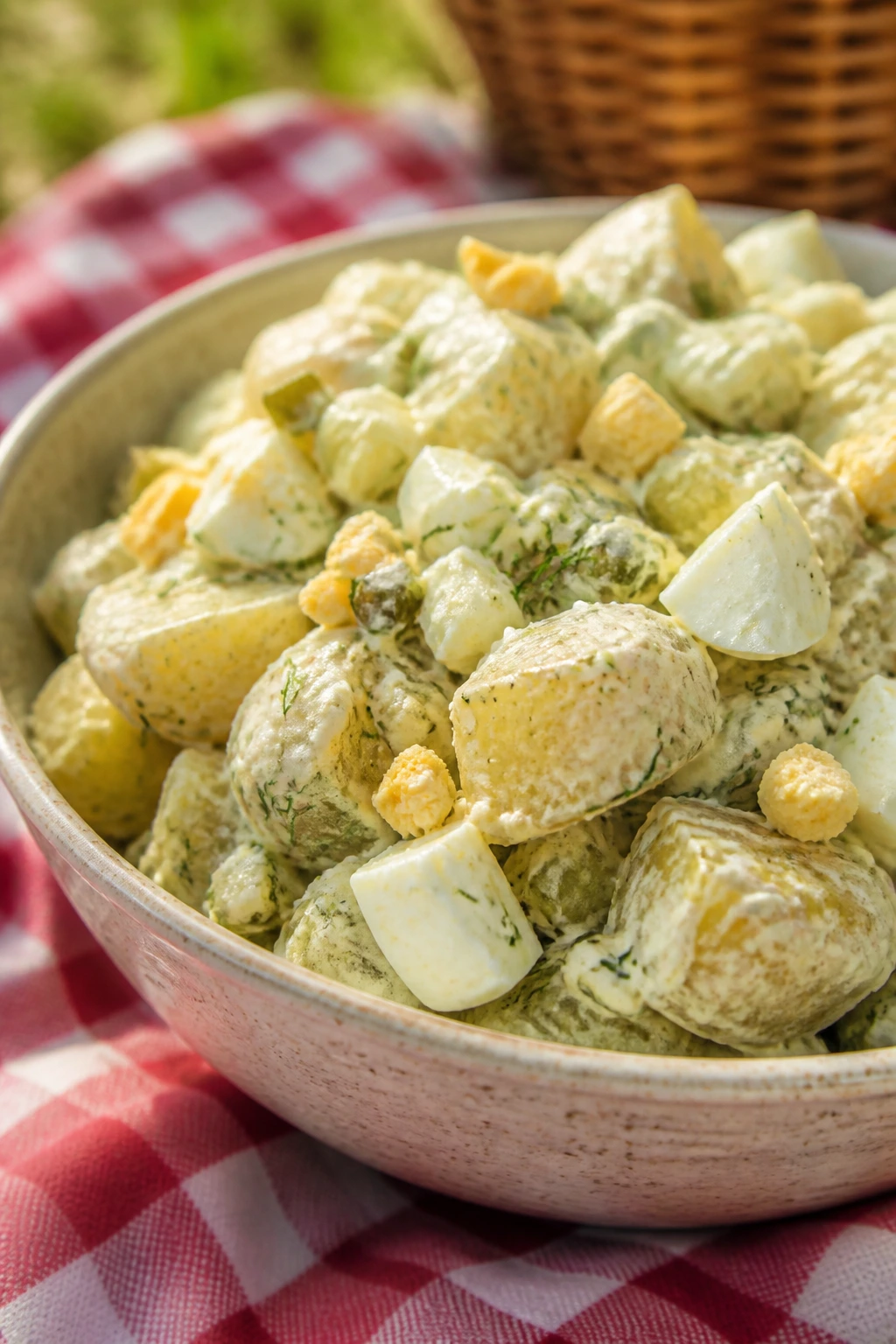
5. Creamy Dill Potato Salad with Eggs
This is the potato salad that tastes like someone actually cared about the seasoning. The dill is green and sharp, the pickles bring a little snap, and the eggs give the bowl a soft richness that makes the whole thing feel complete.
Why It Works:
Potato salad has a bad habit of tasting like cold starch unless the dressing is doing some real work. Here, Dijon, pickle brine, and fresh dill keep the creaminess in line, and the warm potatoes absorb salt and acid better than cold ones ever will. The best move is to dress the potatoes while they’re still slightly warm, then chill the salad so the flavors settle without turning watery.
Key Ingredients:
- 2 pounds baby red potatoes, halved — Their thin skins hold together well.
- 1/2 cup mayonnaise — Gives the salad its creamy base.
- 1/4 cup sour cream — Adds tang and softens the mayo.
- 2 tablespoons Dijon mustard — Sharp enough to keep the dressing awake.
- 2 tablespoons pickle brine or apple cider vinegar — For the acidic lift.
- 3 hard-boiled eggs, chopped — Makes the salad richer.
- 1/3 cup red onion, finely diced — A little bite, but not too much.
- 1/4 cup dill pickles, chopped — Reinforces the briny flavor.
- 2 tablespoons fresh dill, chopped — The flavor that makes the salad feel cold and green.
- 2 tablespoons chopped chives — Gives the top layer a mild onion note.
- Salt and black pepper — Enough to season the potatoes all the way through.
Quick Steps:
- Put the potatoes in a large pot, cover with cold salted water, and bring to a boil. Cook for 12 to 15 minutes, until a knife slides in without resistance but the potatoes still hold their shape.
- Drain and let the potatoes sit for 10 minutes so the steam fades. If you stir them while they’re piping hot, they break apart too fast.
- In a large bowl, whisk together the mayonnaise, sour cream, Dijon, pickle brine, 1/2 teaspoon salt, and black pepper.
- Fold in the warm potatoes, eggs, red onion, pickles, dill, and chives until coated.
- Cover and chill for at least 1 hour. Taste again before serving and add salt if the potatoes still seem flat.
Equipment for This Recipe:
- Large pot — For boiling the potatoes evenly.
- Colander — To drain without smashing them.
- Large mixing bowl — Big enough for gentle folding.
- Chef’s knife — Needed for the potatoes, onion, eggs, and pickles.
- Measuring spoons — Helps keep the dressing balanced.
How to Serve This Dish:
Serve this in a shallow bowl with a fork, not a deep container that hides the best bits. It sits nicely next to grilled sausages, roast chicken, or simple tomato sandwiches. For a picnic, sprinkle a few extra chives on top so the bowl looks fresh after the lid comes off.
Pro Tips for This Recipe:
- Leave the potato skins on. They help the pieces stay intact and give the salad a better texture.
- If the dressing tastes dull, add 1 teaspoon more pickle brine before reaching for more salt.
- Chop the eggs small enough that they melt into the salad a little, but not so small they disappear.
- Make it at least an hour ahead. The flavor improves after the first chill.
Variations on This Dish:
- Mustard-Forward Version: Add another tablespoon of Dijon and skip the sour cream for a sharper finish.
- Green Herb Version: Fold in chopped parsley and tarragon with the dill for a more herbal, almost French-style salad.
- No-Egg Version: Leave out the eggs and add 1/2 cup diced celery for a cleaner, crunchier bowl.
Common Mistakes to Avoid with This Dish:
- Overboiling the potatoes: They fall apart in the bowl. Test early and stop when they’re just tender.
- Underseasoning the potatoes: Cold potatoes need more salt than you’d think. Taste after chilling, not only before.
- Adding too much onion: Raw onion can take over. Keep it finely diced and measured.
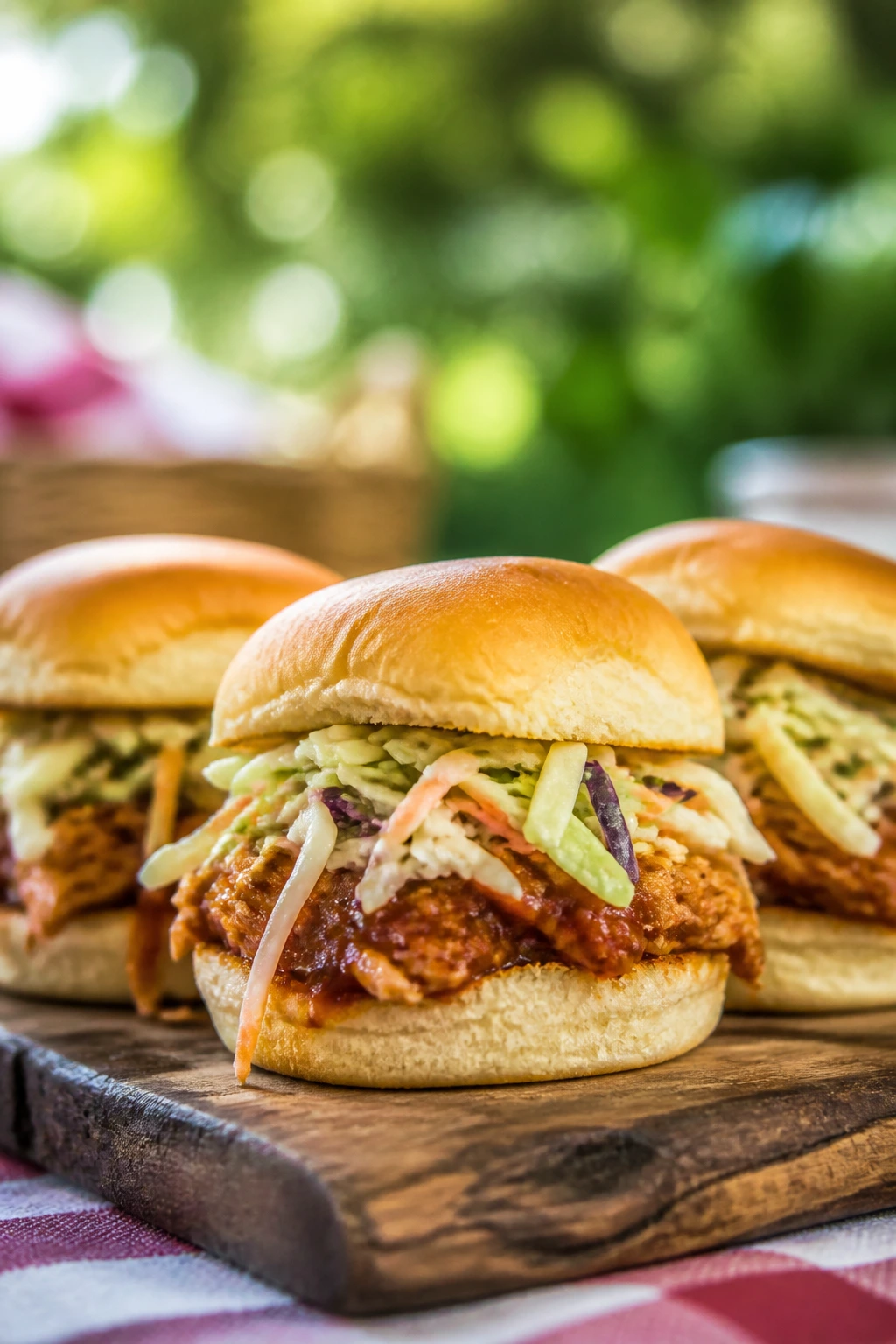
6. BBQ Chicken Sliders with Quick Slaw
These sliders are the picnic answer to “I need something that feels like dinner but still fits in one hand.” The chicken is saucy and smoky, the slaw stays crisp, and the bun holds just enough without turning into sponge.
Why It Works:
Chicken thighs are the right cut here because they stay juicy through grilling or searing, and they handle barbecue sauce without drying out. The quick slaw does two jobs: it adds crunch, and it keeps the sliders from tasting sticky. A splash of vinegar in the chicken and another in the slaw makes the whole thing taste brighter, which is a useful thing when the food is being eaten cold or lukewarm.
Key Ingredients:
- 1 1/2 pounds boneless, skinless chicken thighs — More forgiving than breasts.
- 1 tablespoon olive oil — Helps the seasoning cling.
- 1 teaspoon kosher salt — Brings the chicken into focus.
- 1 teaspoon smoked paprika — Adds grill flavor even if you use a skillet.
- 1 cup barbecue sauce — Pick one with a balance of sweet and tangy.
- 1 tablespoon apple cider vinegar — Sharpens the sauce.
- 3 cups shredded green cabbage — The backbone of the slaw.
- 1 large carrot, grated — Adds color and a little sweetness.
- 1/4 cup mayonnaise — Binds the slaw.
- 1 tablespoon vinegar — Keeps the slaw lively.
- 1 teaspoon sugar — Takes the edge off the vinegar.
- 12 slider buns — Soft enough to bite cleanly, sturdy enough to hold the filling.
Quick Steps:
- In a medium bowl, toss the cabbage, carrot, mayonnaise, vinegar, sugar, and a pinch of salt until evenly coated. Chill while you cook the chicken.
- Rub the chicken thighs with olive oil, salt, and smoked paprika.
- Grill or sear the chicken over medium-high heat for 5 to 6 minutes per side, until the outside is browned and the center reaches 165°F. Do not cut them too early or the juices will run out.
- Rest the chicken for 5 minutes, then slice or shred and toss with the barbecue sauce and apple cider vinegar.
- Split the buns, fill with chicken, top with slaw, and wrap each slider in parchment if you are packing them for later.
Equipment for This Recipe:
- Grill, grill pan, or large skillet — Any of the three works.
- Instant-read thermometer — The easiest way to keep chicken juicy.
- Mixing bowl — For the slaw.
- Tongs — For flipping the chicken without tearing it.
- Parchment paper — Great for wrapping sliders neatly.
How to Serve This Dish:
Serve the sliders warm or at room temperature with pickles on the side and a handful of potato chips for crunch. They make a solid main dish for a picnic because you can wrap each one separately and still eat without a lot of cleanup. If you want a bigger spread, pair them with macaroni salad or grilled corn.
Pro Tips for This Recipe:
- Keep the slaw a little dry. If it’s too loose, it will drip through the bun fast.
- Brush the cut sides of the buns with a little melted butter and toast them briefly if you are serving right away.
- Slice the chicken across the grain so each bite stays tender.
- If you use chicken breasts instead, pound them to even thickness so they cook at the same speed.
Variations on This Dish:
- Spicy Chipotle Slider: Stir 1 to 2 teaspoons chipotle in adobo into the barbecue sauce for heat and smoke.
- Pulled Pork Swap: Use cooked shredded pork instead of chicken and keep the same slaw.
- Vegetarian Jackfruit Version: Use drained young green jackfruit, shred it, and simmer it in barbecue sauce until it picks up flavor.
Common Mistakes to Avoid with This Dish:
- Dry chicken: It ruins the whole slider. Use thighs or watch the thermometer closely if you use breasts.
- Soggy buns: Assemble too early and the bread gives up. Pack the slaw separately if the sliders won’t be eaten right away.
- Too much sauce: It floods the bun and hides the chicken. Toss lightly, then add more only if needed.
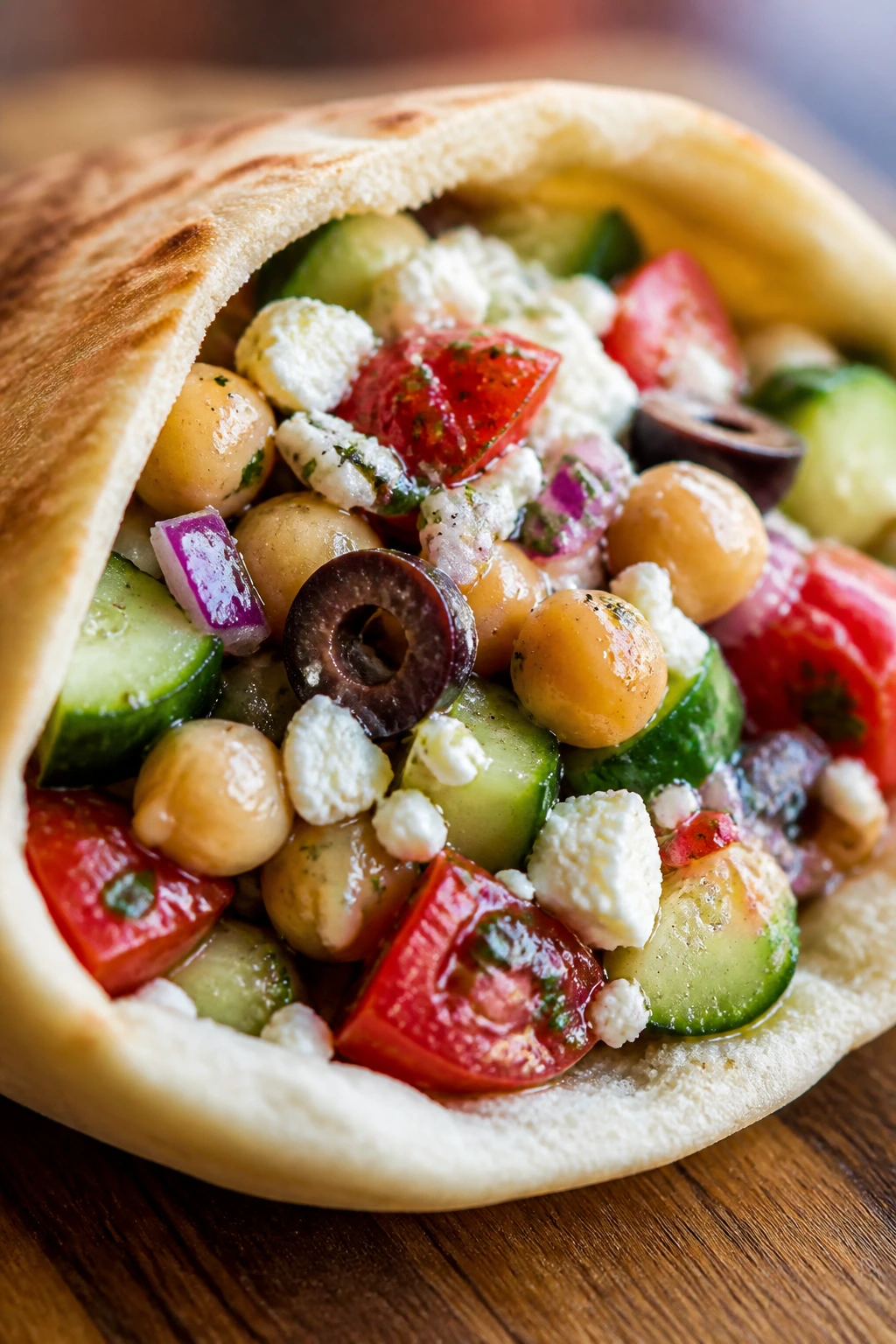
7. Mediterranean Chickpea Salad Pitas
This is the kind of meal that feels cool before you even take a bite. Chickpeas, cucumber, tomatoes, feta, and olives give you all the savory pieces, and the lemon-oregano dressing keeps the whole thing tasting crisp instead of heavy.
Why It Works:
Chickpeas are sturdy enough to travel and forgiving enough to take on a lot of seasoning. Once you toss them with olive oil, lemon, and oregano, they stop tasting like pantry food and start tasting like a proper filling. The pita helps, but the real trick is the balance of wet and dry ingredients: juicy tomatoes for freshness, diced cucumber for crunch, and feta for salt. Too much of any one thing and the pocket gets sloppy.
Key Ingredients:
- 2 cans chickpeas, drained and rinsed — Rinse well so the dressing tastes clean.
- 1 cucumber, diced — Adds crunch and coolness.
- 1 pint cherry tomatoes, halved — Juicy but not too watery if you halve them at the last minute.
- 1/2 red onion, thinly sliced — A little bite goes a long way.
- 4 ounces feta, crumbled — Brings salt and creaminess.
- 1/3 cup kalamata olives, sliced — Adds briny depth.
- 3 tablespoons olive oil — Forms the dressing base.
- 2 tablespoons lemon juice — Keeps the salad bright.
- 1 teaspoon dried oregano — The herb that gives the bowl shape.
- 1/2 cup hummus — Helps anchor the pita so it doesn’t leak.
- 4 pita breads — Warm or room temperature both work.
- 2 tablespoons chopped parsley — A fresh finish on top.
Quick Steps:
- In a large bowl, whisk together the olive oil, lemon juice, oregano, 1/2 teaspoon salt, and black pepper.
- Add the chickpeas, cucumber, tomatoes, onion, olives, feta, and parsley, then toss gently until coated.
- Taste and adjust with more lemon or salt if the flavors feel flat.
- Warm the pita briefly in a dry skillet or wrap for 20 seconds in foil in a low oven, just until flexible.
- Spread a spoonful of hummus inside each pita and fill with the salad. Pack the filling separately if you want the pita to stay drier.
Equipment for This Recipe:
- Large bowl — For tossing the salad without breaking the feta too much.
- Sharp knife — Needed for the cucumber, onion, and tomatoes.
- Small whisk — Makes the dressing faster than a fork.
- Dry skillet or foil packet — For warming the pita.
- Spoon — For stuffing the pockets cleanly.
How to Serve This Dish:
Serve the salad pitas with extra lemon wedges, cucumber spears, or a small container of hummus for dipping. They’re useful on a picnic because they feel like a full meal without needing a knife and fork. If you’re packing for a long outing, keep the salad and pita separate and assemble right before eating.
Pro Tips for This Recipe:
- Salt the cucumbers lightly and let them sit for 5 minutes if they’re extra watery, then pat them dry.
- Use feta in a block if you can. It has a cleaner, creamier texture than the pre-crumbled stuff.
- Slice the onion thin enough that it blends into the salad instead of sticking out in sharp chunks.
- A little parsley goes farther than you think; too much can crowd the lemon.
Variations on This Dish:
- Quinoa Chickpea Bowl: Add 2 cups cooked quinoa and serve it in a container instead of pita for a more filling lunch.
- Spicy Pepperoncini Version: Stir in chopped pepperoncini and a pinch of red pepper flakes for a hotter, tangier salad.
- Vegan Swap: Skip the feta and use extra olives plus a spoonful of tahini in the dressing for more body.
Common Mistakes to Avoid with This Dish:
- Watery cucumbers: They thin the dressing fast. Salt and drain them if they seem extra juicy.
- Overstuffing the pita: The filling spills out immediately. Use less than you think you need.
- Underseasoning the chickpeas: They need enough salt to taste like part of the salad, not a filler.
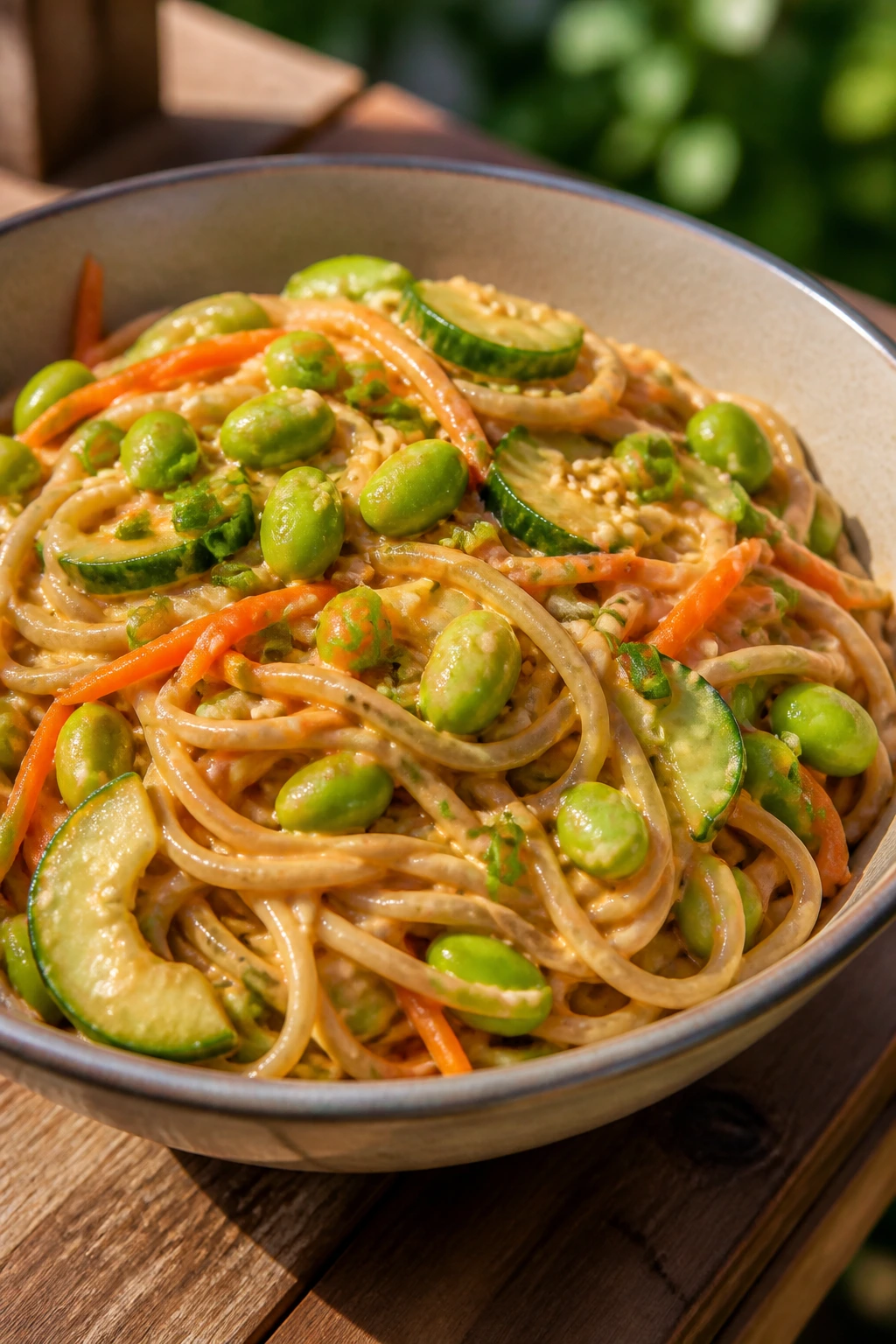
8. Cold Sesame Noodle Salad with Edamame
Cold noodle salads can be spectacular or clumsy. This one stays on the right side because the sauce is thick enough to cling, the vegetables stay crisp, and the noodles get rinsed before they clump into one giant tangle.
Why It Works:
A good sesame dressing needs enough body to coat but not so much thickness that it turns into paste. Peanut butter or tahini gives the sauce richness, soy sauce adds salt, and rice vinegar keeps it from tasting sticky. The edamame makes the bowl feel more complete, and the cucumber and carrot keep the texture lively enough that every forkful feels different.
Key Ingredients:
- 12 ounces spaghetti or soba noodles — Soba gives a deeper flavor; spaghetti is easier to find.
- 1 cup shelled edamame — Frozen works perfectly here.
- 1 large carrot, julienned or grated — Adds crunch and color.
- 1 cucumber, thinly sliced — Keeps the salad cool.
- 3 scallions, sliced — Brings a fresh onion note.
- 1/4 cup peanut butter or tahini — The base of the dressing.
- 2 tablespoons soy sauce — Gives the sauce salt and depth.
- 2 tablespoons rice vinegar — Keeps the dressing bright.
- 1 tablespoon sesame oil — Adds the nutty smell that makes the bowl recognizable.
- 1 tablespoon honey — Softens the sharp edges.
- 1 tablespoon lime juice — Adds one more sharp note.
- 1 tablespoon sesame seeds — For a little crunch on top.
Quick Steps:
- Cook the noodles in salted water according to the package, then drain and rinse under cold water until the noodles feel cool to the touch.
- In a large bowl, whisk together the peanut butter or tahini, soy sauce, rice vinegar, sesame oil, honey, lime juice, and 1 to 2 tablespoons warm water until smooth and pourable.
- Toss the noodles with the dressing, then fold in the edamame, carrot, cucumber, and scallions.
- Sprinkle the sesame seeds over the top and chill for 30 minutes so the flavors settle.
- If the salad tightens up after chilling, loosen it with a spoonful of water before serving.
Equipment for This Recipe:
- Large pot — For boiling the noodles.
- Colander — For draining and rinsing.
- Large bowl — Gives you room to toss evenly.
- Whisk — Needed to make the dressing smooth.
- Grater or knife — For the carrot and cucumber.
How to Serve This Dish:
Serve it chilled, with extra scallions or sesame seeds on top if you want the bowl to look fresh after transport. It can stand alone as a vegetarian main or sit beside grilled chicken, tofu, or skewers. For a picnic, I like to pack it in a shallow container so it cools evenly.
Pro Tips for This Recipe:
- Reserve a little warm noodle water if you want to loosen the sauce later.
- If using soba, rinse gently so you don’t wash away all the surface starch and flavor.
- Cut the cucumber into thin half-moons so it blends into the noodles more easily.
- Add chili crisp only if you want heat; a teaspoon goes a long way.
Variations on This Dish:
- Tahini-Lime Version: Use tahini instead of peanut butter and add extra lime juice for a brighter, nuttier dressing.
- Spicy Peanut Noodles: Stir in chili crisp or sriracha for a sharper kick.
- Gluten-Free Version: Use rice noodles and tamari instead of soy sauce.
Common Mistakes to Avoid with This Dish:
- Dressing too thick: It won’t spread through the noodles. Add warm water a teaspoon at a time until it flows.
- Sticky noodles: Rinse them after cooking or they’ll clump into a tangle.
- Adding cucumber too early if it’s watery: Pat it dry first so the salad stays crisp.
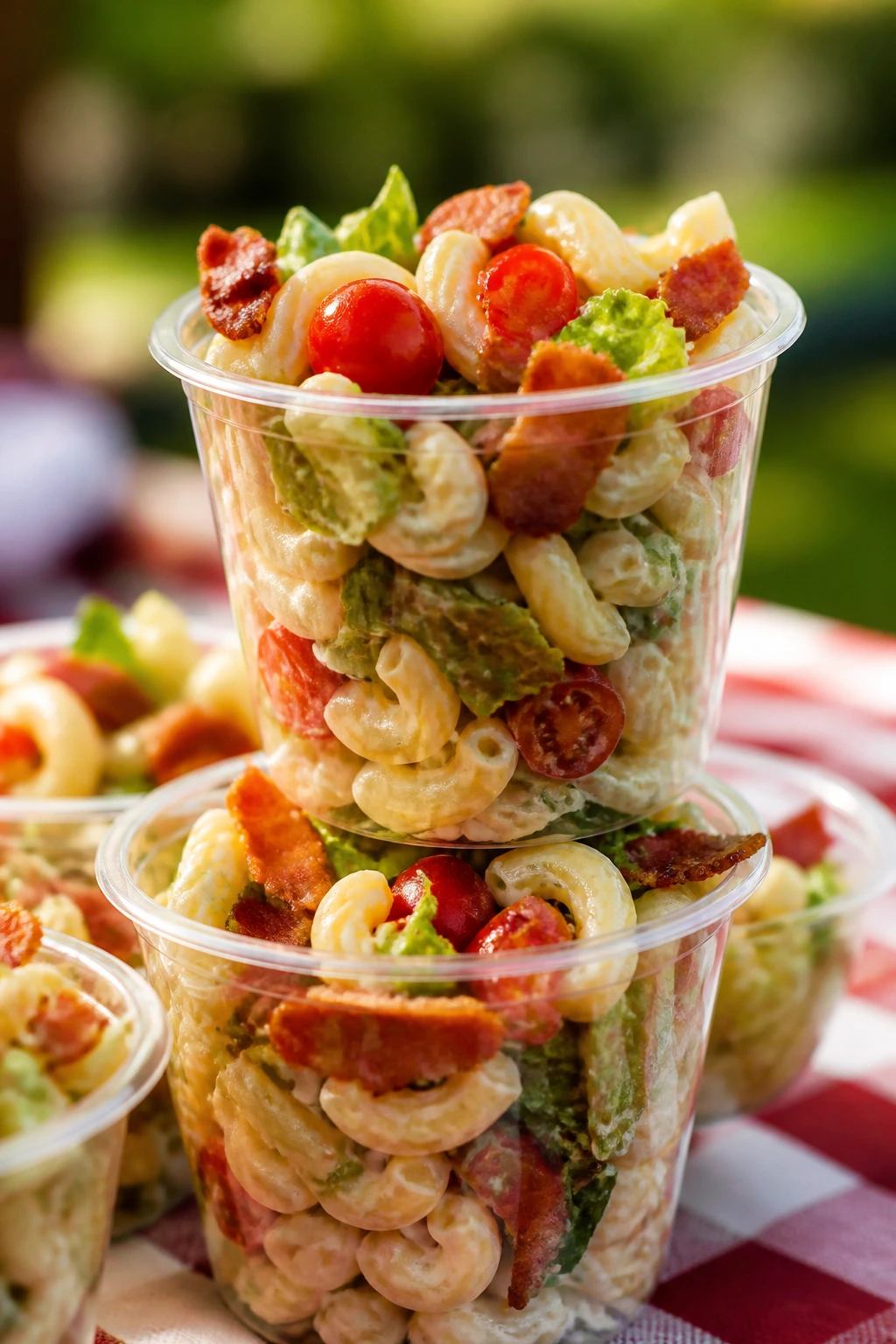
9. BLT Pasta Salad Cups
This tastes like a BLT that took a detour through a picnic bowl. You still get the bacon, tomato, and lettuce, but the pasta makes it more substantial and the cups keep the lettuce from turning limp before you sit down.
Why It Works:
Bacon and tomatoes already know how to behave together. Add pasta and a light creamy dressing, and you get a side dish that eats more like a meal. The trick is to fold the romaine in at the very end so it keeps its crunch, and to keep the tomatoes from flooding the bowl with juice. Serving it in cups is not a gimmick. It prevents the top layer from collapsing into the dressing.
Key Ingredients:
- 12 ounces rotini pasta — The spirals trap the dressing.
- 6 slices bacon — Crisp and chopped into small pieces.
- 2 cups cherry tomatoes, halved — Smaller pieces leak less.
- 2 cups romaine, chopped — Add right before serving.
- 1/2 cup mayonnaise — For the dressing.
- 1/4 cup sour cream — Lightens the mayo slightly.
- 1 tablespoon red wine vinegar — Gives the dressing bite.
- 1 teaspoon sugar — Balances the vinegar.
- 1/2 teaspoon black pepper — Needed for the bacon-rich bowl.
- 1/2 cup shredded cheddar — Optional but useful if you want it more meal-like.
- 2 tablespoons chopped chives — A fresh onion note on top.
Quick Steps:
- Cook the rotini in salted water until al dente, about 8 to 10 minutes, then drain and rinse until cool.
- Cook the bacon in a skillet over medium heat until crisp, about 8 minutes. Drain on paper towels and chop.
- Whisk the mayonnaise, sour cream, vinegar, sugar, and black pepper in a large bowl.
- Fold in the pasta, tomatoes, bacon, cheddar, and chives. Add the romaine only right before serving so it stays crisp.
- Spoon into small cups or containers and chill until the picnic starts.
Equipment for This Recipe:
- Large pot — For the pasta.
- Skillet — For the bacon.
- Mixing bowl — For the dressing and salad.
- Slotted spoon or tongs — Makes bacon draining easier.
- Small cups or containers — Helpful if you want individual picnic servings.
How to Serve This Dish:
Serve the cups cold with a fork and a few extra chives on top. They’re useful alongside grilled burgers or as a lighter main when the rest of the menu is already rich. If you’re plating on a board, put the lettuce on top rather than mixing it all the way through so it doesn’t disappear.
Pro Tips for This Recipe:
- Let the pasta cool before adding the dressing, or it will melt the creamy part and go oily.
- Drain the tomatoes briefly on paper towels if they’re extra juicy.
- Save a handful of bacon for the top if you want the cups to look sharper after transport.
- Keep the romaine separate if the cups won’t be eaten for an hour or more.
Variations on This Dish:
- Turkey BLT Version: Swap the bacon for chopped roasted turkey and add a little extra black pepper.
- Ranch Style: Replace the vinegar dressing with a spoonful of ranch seasoning mixed into the mayo and sour cream.
- Avocado BLT: Fold in diced avocado right before serving for a softer, richer finish.
Common Mistakes to Avoid with This Dish:
- Adding lettuce too early: It wilts and goes limp. Save it for the end.
- Using too much dressing: The pasta gets heavy and greasy. Start lightly.
- Not cooling the bacon: Warm bacon softens the pasta and ruins the texture.
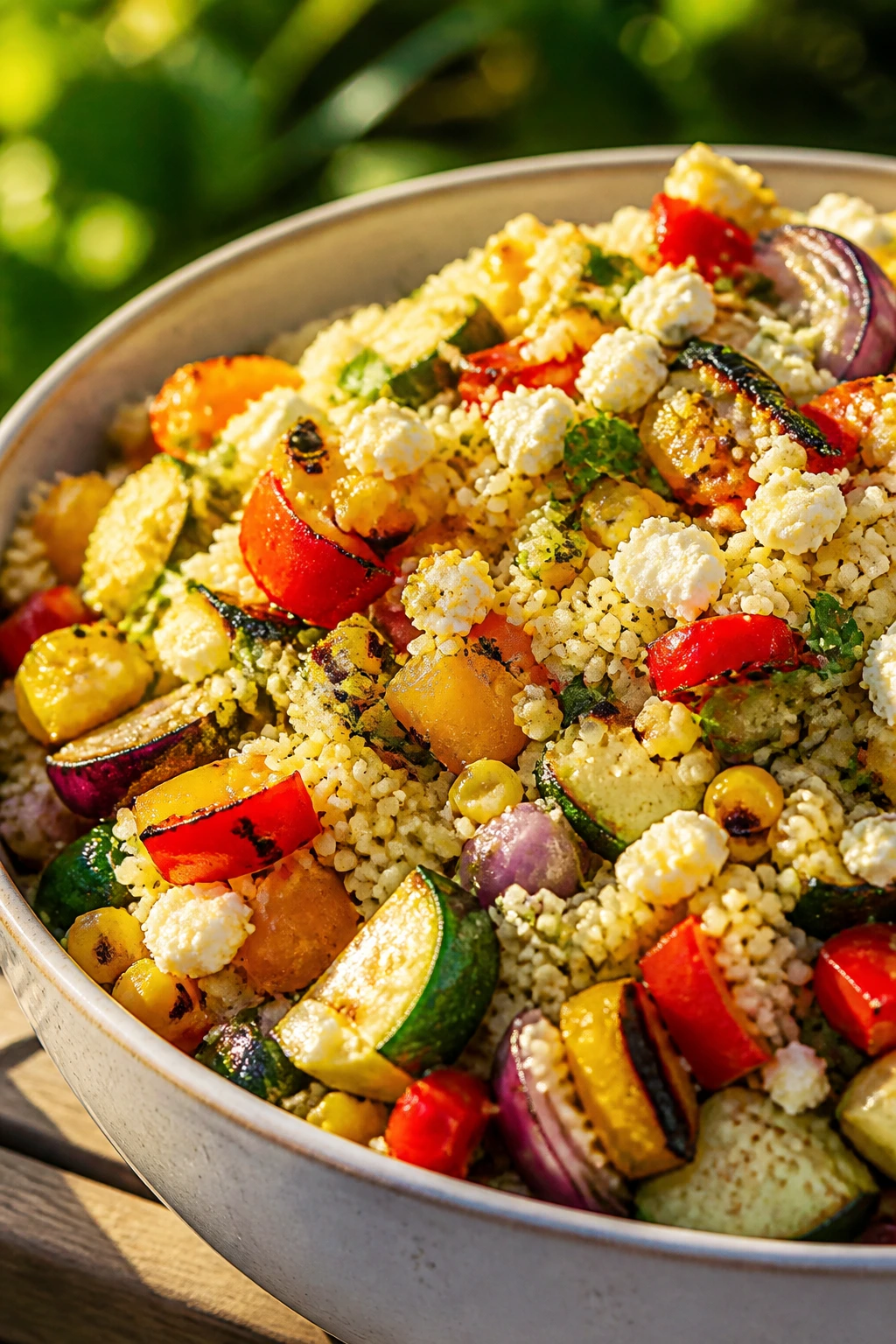
10. Grilled Veggie Couscous Salad
Grilled vegetables always bring a little smoke to the party, and couscous is one of the easiest grains to dress up without much trouble. This bowl works because the vegetables keep their edges, the couscous stays fluffy, and the lemon dressing wakes everything up at the end.
Why It Works:
Couscous cooks fast and soaks up flavor without turning muddy. Grilling the zucchini, peppers, and corn gives the salad charred edges that taste like summer without needing a long cook time. The feta adds salt, the parsley keeps the bowl bright, and the lemon dressing ties the whole thing together. Serve it warm, room temperature, or chilled. It behaves all three ways.
Key Ingredients:
- 1 1/2 cups couscous — Quick-cooking and ideal for summer prep.
- 1 3/4 cups boiling water or low-sodium broth — Broth adds more flavor.
- 1 zucchini, sliced into planks — Easy to grill and chop.
- 1 red bell pepper, quartered — Sweet once it hits the heat.
- 1 yellow bell pepper, quartered — Adds color and keeps the bowl lively.
- 1 ear corn, husked — Grilled until lightly browned.
- 1/2 red onion, sliced into thick rings — Holds together on the grill.
- 1/3 cup olive oil — For grilling and dressing.
- 3 tablespoons lemon juice — Keeps the salad sharp.
- 1/4 cup parsley, chopped — A fresh herbal finish.
- 1/4 cup feta, crumbled — Optional but highly useful.
- Salt and black pepper — Needed on both the vegetables and the couscous.
Quick Steps:
- Brush the zucchini, peppers, corn, and onion lightly with olive oil and season with salt and black pepper.
- Grill the vegetables over medium-high heat for 3 to 4 minutes per side, until char marks appear and the vegetables are tender but not collapsing.
- Pour the boiling water or broth over the couscous in a bowl, cover tightly, and let stand for 5 minutes. Fluff with a fork.
- Whisk the remaining olive oil with the lemon juice and a pinch of salt.
- Chop the grilled vegetables, fold them into the couscous with the parsley and feta, then toss with the dressing. Taste and add more lemon if needed.
Equipment for This Recipe:
- Grill, grill pan, or broiler pan — Any of these gives you char.
- Large bowl — For steaming and fluffing the couscous.
- Sharp knife — Needed for chopping the vegetables after grilling.
- Tongs — Helpful for flipping the vegetables.
- Fork — Couscous needs fluffing, not mashing.
How to Serve This Dish:
Serve it in a wide bowl with extra parsley on top so the charred vegetables show through. It works as a side for grilled chicken or fish, or as a vegetarian main with hummus and pita. For a picnic, it can sit at room temperature for a little while without losing its shape.
Pro Tips for This Recipe:
- Don’t overcook the corn; a little bite keeps the salad from going soft.
- If the couscous clumps, drizzle with a tablespoon of olive oil and fluff again.
- Chop the vegetables into pieces close to the same size so each spoonful feels balanced.
- A squeeze of lemon right before serving sharpens the grilled flavor nicely.
Variations on This Dish:
- Farro Version: Use cooked farro instead of couscous for a chewier salad that holds up well overnight.
- Halloumi Upgrade: Add grilled halloumi cubes for a saltier, more filling version.
- Dairy-Free Finish: Skip the feta and add chopped olives for the salty contrast.
Common Mistakes to Avoid with This Dish:
- Overcooking the vegetables: They go soft and lose the grilled edges. Stop while they still have some shape.
- Lumpy couscous: It needs fluffing with a fork as soon as it rests.
- Dressing before the vegetables cool a bit: Excess heat can dull the lemon and wilt the herbs.
11. Tuna and White Bean Lettuce Cups
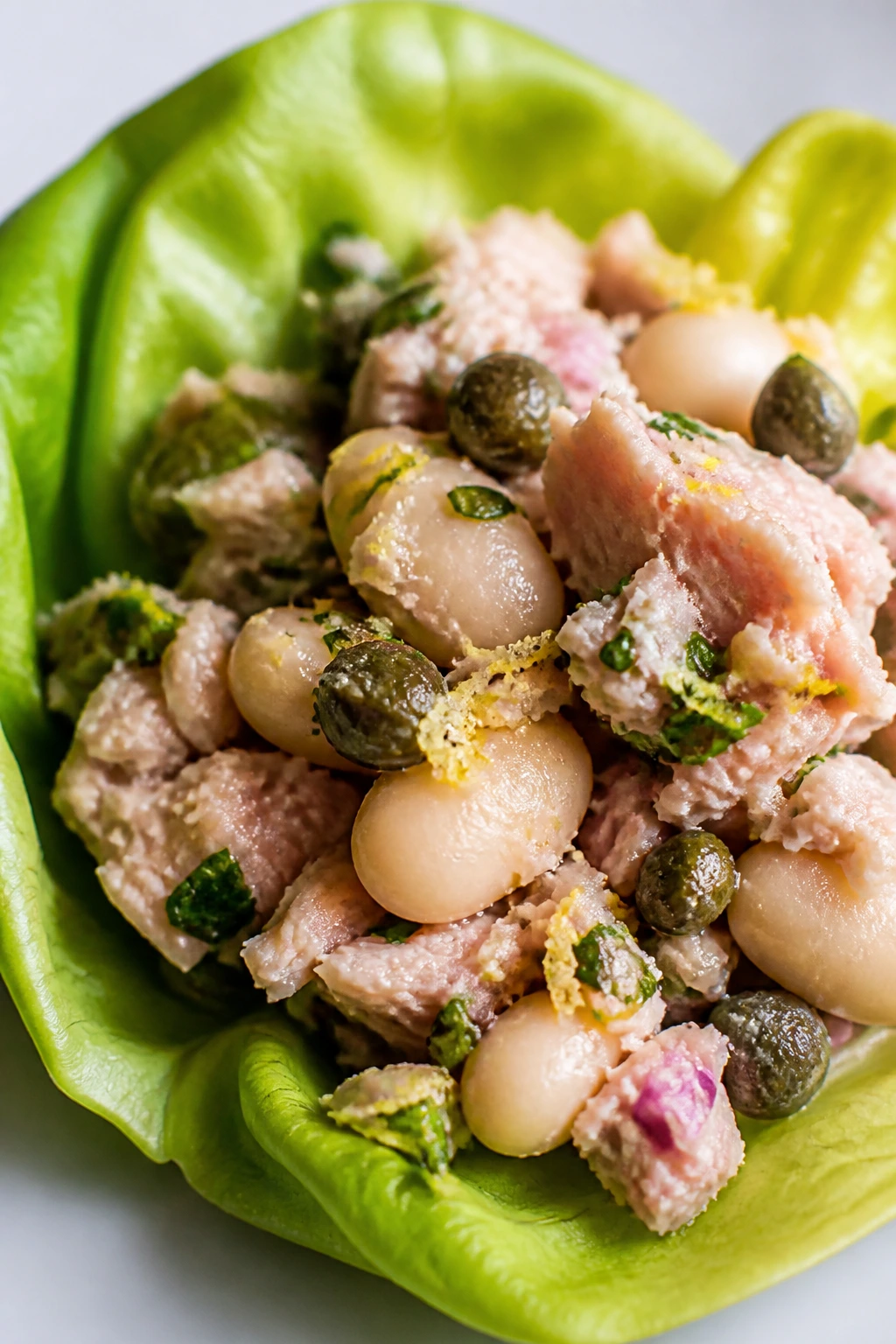
Tuna salad gets a lot more interesting when you give it beans and capers. The result is less lunchroom and more breezy dinner plate: clean, briny, and filling enough that you don’t need a sandwich to make it feel complete.
Why It Works:
White beans bulk up the tuna without adding heaviness, which is a useful trick for picnic food that should feel satisfying but not sleepy. Capers, lemon, and Dijon do the bright work, while celery and onion keep the texture from going soft. Lettuce cups make the whole thing easy to eat with your hands, and they cool the filling down even more. That matters when the evening is warm and you want something crisp right away.
Key Ingredients:
- 2 cans tuna packed in olive oil, drained — Oil-packed tuna tastes fuller.
- 1 can cannellini beans, drained and rinsed — Soft but sturdy.
- 1/4 cup mayonnaise — Binds the filling.
- 1 tablespoon Dijon mustard — Gives a little bite.
- 1 lemon, zested and juiced — Brightens the tuna.
- 2 celery stalks, finely diced — Keeps the filling crunchy.
- 1/4 red onion, finely diced — Adds sharpness.
- 2 tablespoons capers, chopped — Briny and punchy.
- 1 tablespoon parsley, chopped — A fresh green note.
- 8 to 10 large romaine or butter lettuce leaves — For scooping.
- Salt and black pepper — Needed after the tuna and capers join the bowl.
Quick Steps:
- In a medium bowl, whisk together the mayonnaise, Dijon, lemon juice, lemon zest, salt, and black pepper.
- Fold in the tuna, cannellini beans, celery, onion, capers, and parsley until combined. Leave some beans partly whole so the filling still has texture.
- Taste and adjust with more lemon or pepper if needed.
- Chill for 15 to 20 minutes if you want the filling colder, then spoon into lettuce leaves.
- Pack the lettuce separately from the filling if you are traveling with the cups.
Equipment for This Recipe:
- Medium bowl — For mixing without smashing the beans.
- Fork — Good for breaking up the tuna gently.
- Sharp knife — For celery, onion, and parsley.
- Citrus zester or fine grater — For the lemon zest.
- Serving plate or container — For neat lettuce cups.
How to Serve This Dish:
Serve these as a light main with crackers, sliced cucumbers, or a bowl of tomatoes on the side. They work especially well when you want something that feels cooler than a sandwich but still gives you protein. For a picnic, I’d pack the filling in one container and the lettuce leaves in another so the cups stay crisp.
Pro Tips for This Recipe:
- Drain the tuna well, even if it’s packed in oil. Extra liquid makes the filling slippery.
- Rinse the beans gently so they don’t turn mushy.
- Use big lettuce leaves with a natural curve. Flat leaves make poor cups.
- If you want more richness, add 1 tablespoon of olive oil instead of more mayo.
Variations on This Dish:
- Greek Tuna Cups: Add chopped cucumber and a few sliced olives, then swap the parsley for dill.
- Avocado Tuna Version: Fold in diced avocado right before serving for a softer, creamier bowl.
- No-Mayo Option: Use mashed avocado and extra lemon for a fresher, lighter filling.
Common Mistakes to Avoid with This Dish:
- Mashing the beans into paste: A few whole pieces make the filling better. Stir gently.
- Using weak lettuce: Thin leaves tear under the filling. Choose romaine hearts or sturdy butter lettuce.
- Skimping on acid: Tuna and beans need lemon or they taste flat.
12. Ham, Cheddar, and Apple Tea Sandwiches
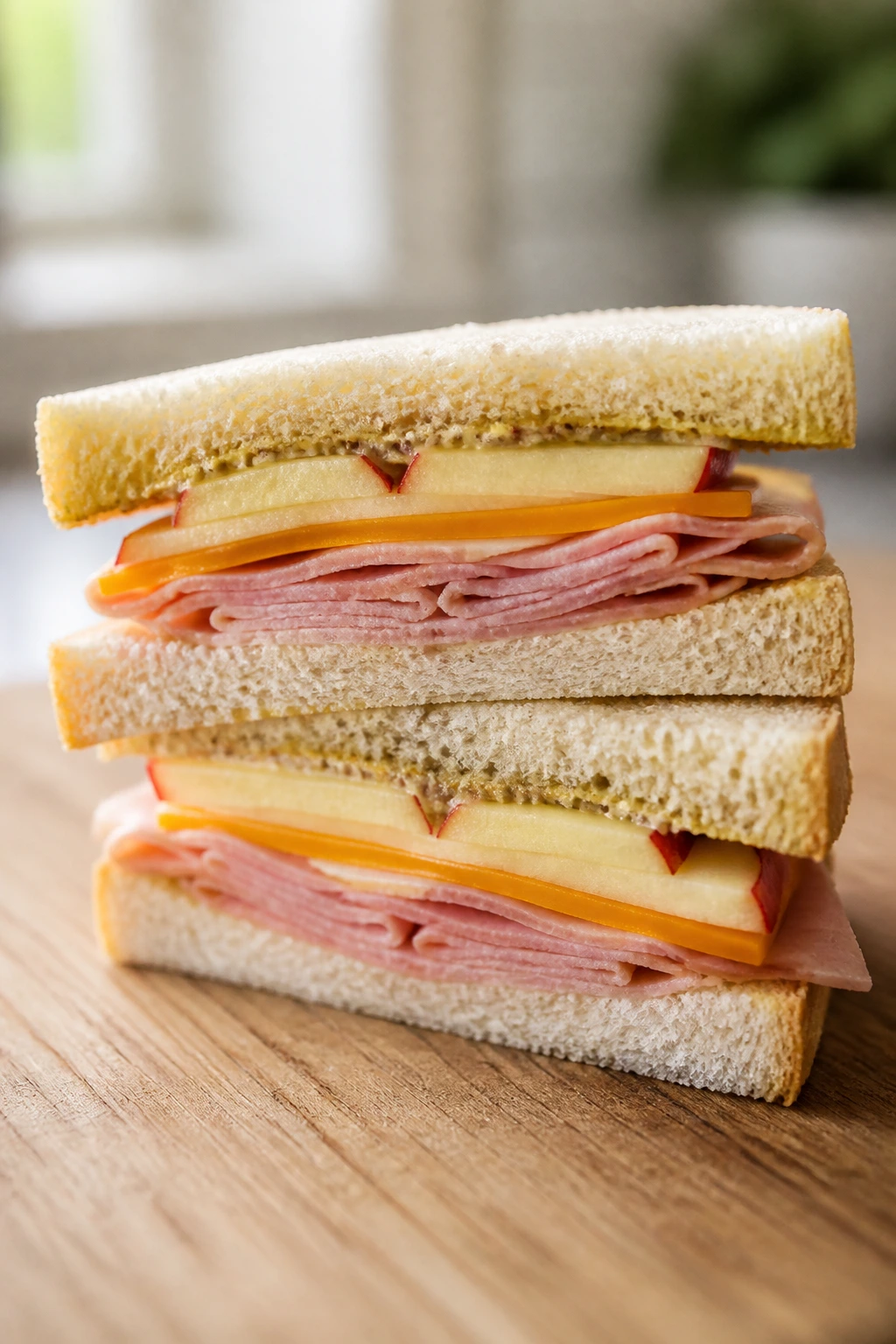
These look a little fancy, which is funny because they’re built from very ordinary things. The apple keeps the ham from feeling salty and one-note, the cheddar gives the sandwich some backbone, and the butter barrier keeps the bread from going damp too fast.
Why It Works:
Tea sandwiches live on structure. Soft bread, thin fillings, and a layer that protects the crumb from moisture. Butter does that job here, and the Dijon-honey spread brings a sweet-savory note that plays well with ham and sharp cheddar. The apple is sliced thin enough to stay crisp, which is the whole point. You want a little bite, not a slab of fruit trying to take over the sandwich.
Key Ingredients:
- 8 slices soft sandwich bread — White or light wheat works best.
- 3 tablespoons softened unsalted butter — Acts as a moisture barrier.
- 2 tablespoons Dijon mustard — Gives the filling sharpness.
- 1 tablespoon honey — Softens the mustard and supports the ham.
- 1 tablespoon chopped chives — Keeps the flavor fresh.
- 6 ounces sliced ham — Thin slices layer neatly.
- 6 ounces sharp cheddar, sliced thin — Strong enough to stand up to the apple.
- 1 small apple, cored and sliced paper-thin — Use a crisp apple with a sweet-tart bite.
- 1 teaspoon lemon juice — Toss with the apple to slow browning.
- Black pepper — A few turns wake up the cheese and ham.
Quick Steps:
- Stir the butter, Dijon, honey, chives, and a little black pepper together in a small bowl.
- Toss the apple slices with the lemon juice so they stay bright while you build the sandwiches.
- Spread the butter mixture on all 8 slices of bread, all the way to the edges.
- Layer ham, cheddar, and apple slices on 4 of the bread slices, then top with the remaining bread. Press gently.
- Trim the crusts if you want a classic tea-sandwich look, then cut each sandwich into 2 or 4 triangles.
Equipment for This Recipe:
- Sharp knife — Needed for thin apple slices and clean cuts.
- Cutting board — Gives you a steady surface for trimming.
- Small mixing bowl — For the butter spread.
- Spreader or butter knife — Makes the coating even.
- Parchment or wax paper — Helps wrap the sandwiches without squishing them.
How to Serve This Dish:
Serve these chilled or at cool room temperature, cut into neat triangles or fingers. They belong on a tray with grapes, olives, or a few salted potato chips for crunch. For a picnic, wrap each sandwich tightly and keep them flat so the layers do not shift.
Pro Tips for This Recipe:
- Slice the apple as thin as possible. Thick slices make the sandwiches awkward and push everything apart.
- Use a sharper cheddar than you think you need; mild cheese gets lost behind the ham.
- If the bread is extra soft, chill the assembled sandwiches for 15 minutes before cutting.
- Keep the fillings in a single layer. Piling them high is how tea sandwiches break apart.
Variations on This Dish:
- Turkey and Gruyère Swap: Use turkey and Gruyère with the same apple and mustard spread.
- Pear and Ham Version: Replace the apple with thin pear slices for a softer, sweeter bite.
- Open-Face Picnic Toasts: Turn the filling into little toast rounds if you want a less bread-heavy snack.
Common Mistakes to Avoid with This Dish:
- Too much filling: The sandwiches split when you cut them. Keep the layers thin.
- Skipping the butter barrier: The bread absorbs moisture fast. Butter to the edges.
- Thick apple slices: They make the sandwich hard to bite cleanly. Slice paper-thin.
13. Watermelon Feta Mint Skewers
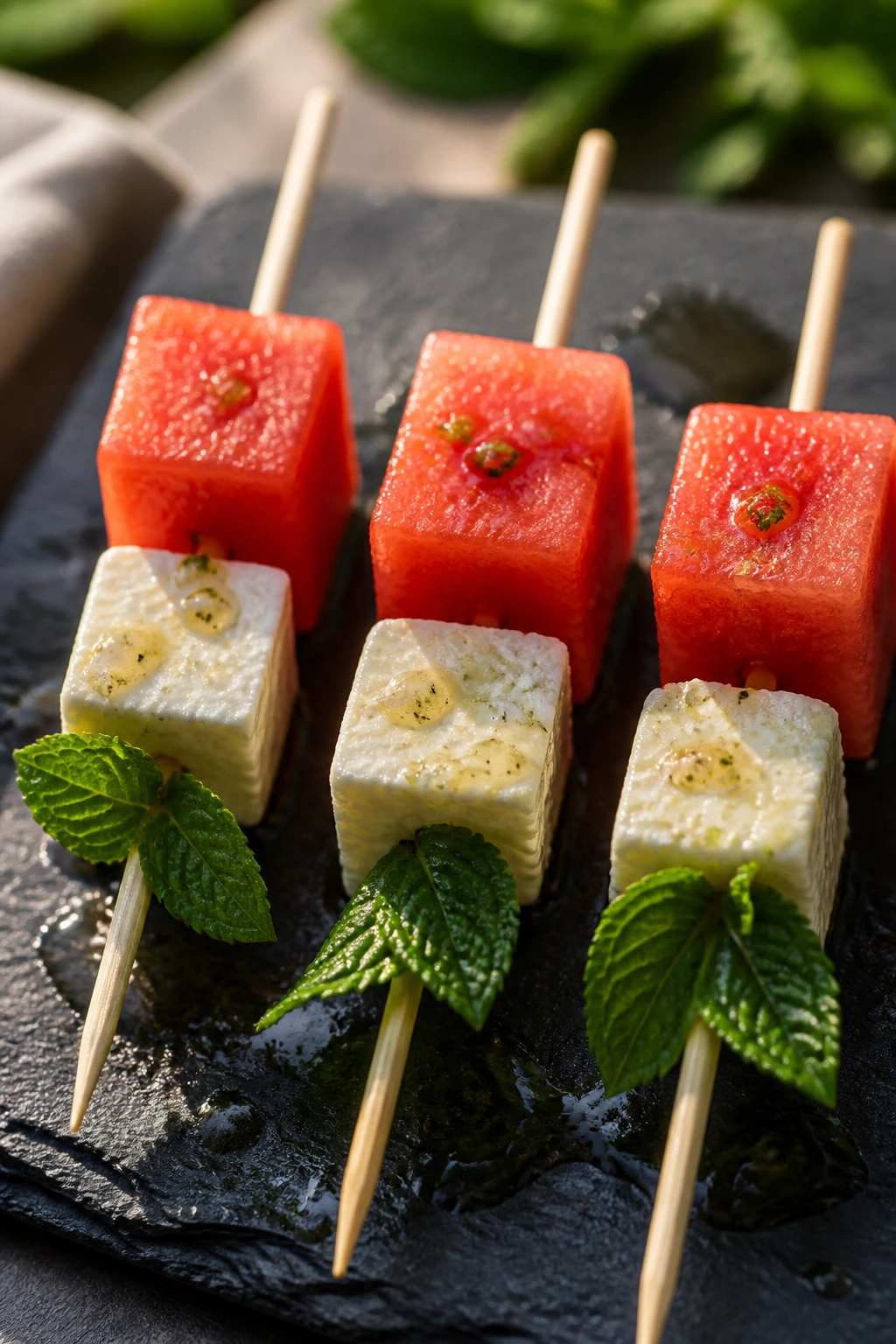
Watermelon and feta can sound like a trend until you eat them together in the heat and realize they make plain sense. The melon is cold and sweet, the feta is salty and firm, and the mint makes the whole thing feel cleaner than a regular fruit plate.
Why It Works:
This is one of the easiest picnic dishes to assemble, but it still needs a little thought. Watermelon gives you the juicy part, feta gives you the salt, and mint gives you the aromatic lift that keeps each bite from tasting like just fruit and cheese. The key is keeping the pieces big enough to skewer without falling apart, and not drowning them in dressing. A light lime drizzle is enough.
Key Ingredients:
- 4 cups watermelon, cut into 1-inch cubes — Seedless is easiest to work with.
- 8 ounces feta, cut into cubes — Block feta holds together better than crumbled feta.
- 1 cucumber, cut into thick half-moons or chunks — Adds crunch.
- 1/4 cup fresh mint leaves — Torn or left whole for garnish.
- 2 tablespoons lime juice — Brightens the melon.
- 1 tablespoon olive oil — Smooths the lime and adds a little richness.
- Flaky salt — A small pinch makes the sweetness pop.
- Black pepper — Optional, but good if you like contrast.
- 16 small skewers — Bamboo picks work fine.
Quick Steps:
- Thread watermelon, cucumber, and feta onto the skewers in alternating order.
- Whisk the lime juice and olive oil together with a tiny pinch of salt.
- Arrange the skewers on a chilled platter and drizzle lightly with the lime dressing just before serving.
- Scatter the mint leaves over the top and add a few flakes of salt.
- Keep the skewers cold until the last minute, especially if you’re packing them for a warm evening.
Equipment for This Recipe:
- Sharp knife — For clean melon and feta cubes.
- Cutting board — Gives you room to work without losing juice.
- Small skewers — The easiest way to make them portable.
- Small bowl and whisk — For the quick dressing.
- Chilled platter or container — Helps them stay fresh longer.
How to Serve This Dish:
Serve these as a cold side or a first bite before the heavier food comes out. They look good on a tray with extra mint tucked around the edges. I like them with grilled chicken or simple crackers because the sweet-salty contrast gives the plate a little more shape.
Pro Tips for This Recipe:
- Dry the feta cubes with a paper towel before skewering if they’re very damp.
- Don’t cut the watermelon too small. Tiny pieces fall apart as soon as you move the skewers.
- Add mint at the end so it stays bright and doesn’t wilt in the dressing.
- If you want a more savory version, add a thin cucumber ribbon instead of a thicker chunk.
Variations on This Dish:
- Peach-Feta Skewers: Swap half the watermelon for ripe peach chunks for a softer, sweeter bite.
- Chili-Lime Version: Add a pinch of chili flakes to the lime dressing for a little heat.
- Halloumi Swap: Use grilled halloumi instead of feta if you want a firmer cheese that eats more like a savory skewer.
Common Mistakes to Avoid with This Dish:
- Too much dressing: It turns the tray watery. Drizzle lightly.
- Melon cut too small: The skewers get fragile. Keep the cubes substantial.
- Packing warm: Watermelon leaks and goes limp faster in heat. Chill the tray until serving.
14. Strawberry Spinach Salad with Almonds
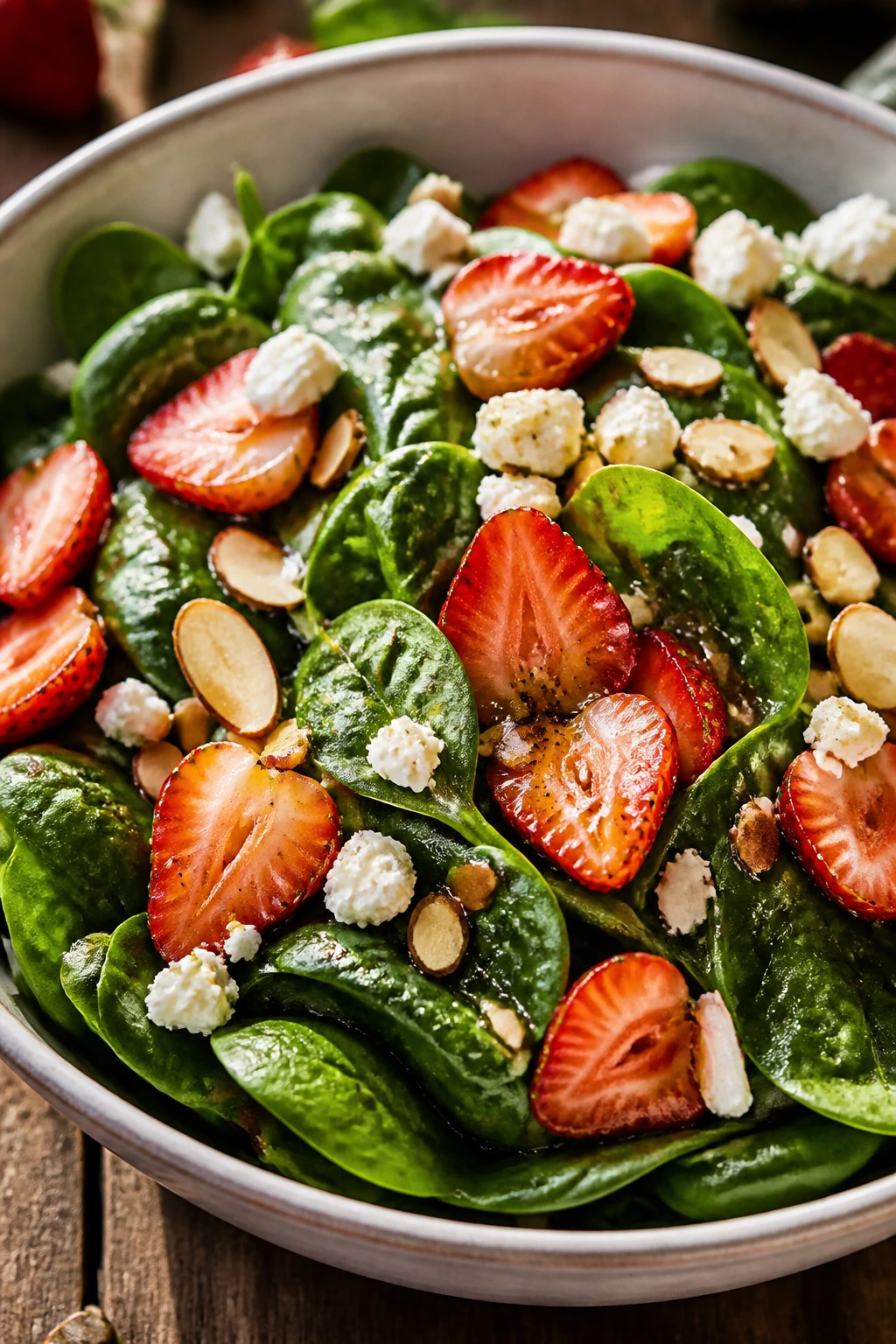
This is the salad people keep returning to because it has the right mix of sweet, tart, and crunchy. The strawberries bring perfume, the almonds give you a proper bite, and the goat cheese softens the whole thing without making it heavy.
Why It Works:
Spinach is a good picnic green because it stays tender without turning into a soggy heap the way some lettuces do. Strawberries add juice and sweetness, but only if they’re sliced right before serving or packed dry. The dressing uses honey and vinegar in equal conversation, which keeps the fruit from tasting too candy-like. Toasted almonds matter here. Raw almonds are fine. Toasted ones make the salad smell and taste like a real dish.
Key Ingredients:
- 6 cups baby spinach — Tender but sturdy enough for dressing.
- 2 cups strawberries, hulled and sliced — Pick berries that smell sweet.
- 1/2 red onion, sliced paper-thin — Use less if you want a softer flavor.
- 1/2 cup sliced almonds — Toast them for better flavor.
- 1/3 cup goat cheese, crumbled — Creamy and tangy.
- 3 tablespoons olive oil — Forms the dressing base.
- 2 tablespoons white balsamic vinegar or apple cider vinegar — Keeps the dressing bright.
- 1 tablespoon honey — Balances the acid.
- 1 teaspoon poppy seeds — Adds texture and a little visual speckling.
- Salt and black pepper — Just enough to round out the fruit.
Quick Steps:
- Toast the almonds in a dry skillet over medium heat for 3 to 4 minutes, stirring often, until fragrant and lightly golden.
- Whisk the olive oil, vinegar, honey, poppy seeds, salt, and black pepper in a small bowl.
- Combine the spinach, strawberries, and red onion in a large bowl.
- Add the dressing just before serving and toss gently until the leaves are lightly coated.
- Top with the toasted almonds and goat cheese, then serve immediately.
Equipment for This Recipe:
- Dry skillet — For toasting the almonds.
- Large salad bowl — Needed for tossing without bruising the spinach.
- Small whisk or fork — To blend the dressing.
- Sharp knife — For clean strawberry slices and thin onion.
- Salad spinner or paper towels — Useful if the spinach needs drying.
How to Serve This Dish:
Serve it on a wide shallow platter if you want the strawberries visible, or in a large bowl if you’re packing it for a blanket meal. It pairs well with grilled chicken, sandwiches, or a piece of bread to catch the leftover dressing. For a picnic, keep the dressing and almonds separate until the last minute if you want the salad to stay crisp.
Pro Tips for This Recipe:
- Dry the spinach well. Even a little water will dilute the dressing.
- Slice the strawberries at the end so they do not bleed into the bowl.
- Use a light hand with the onion. It should support the berries, not fight them.
- Crumble the goat cheese by hand so the pieces stay soft and uneven.
Variations on This Dish:
- Blueberry Spinach Version: Swap half the strawberries for blueberries for a less juicy, more stable salad.
- Avocado Upgrade: Add diced avocado right before serving if you want more richness.
- Dairy-Free Finish: Skip the goat cheese and add sunflower seeds for extra crunch.
Common Mistakes to Avoid with This Dish:
- Overdressing: The spinach collapses and the berries get mushy. Start with less dressing than you think.
- Using raw almonds: Toast them first. It takes almost no time and changes the whole salad.
- Slicing strawberries too early: They soften and leak. Cut them close to serving.
15. Lemon Blueberry Bars
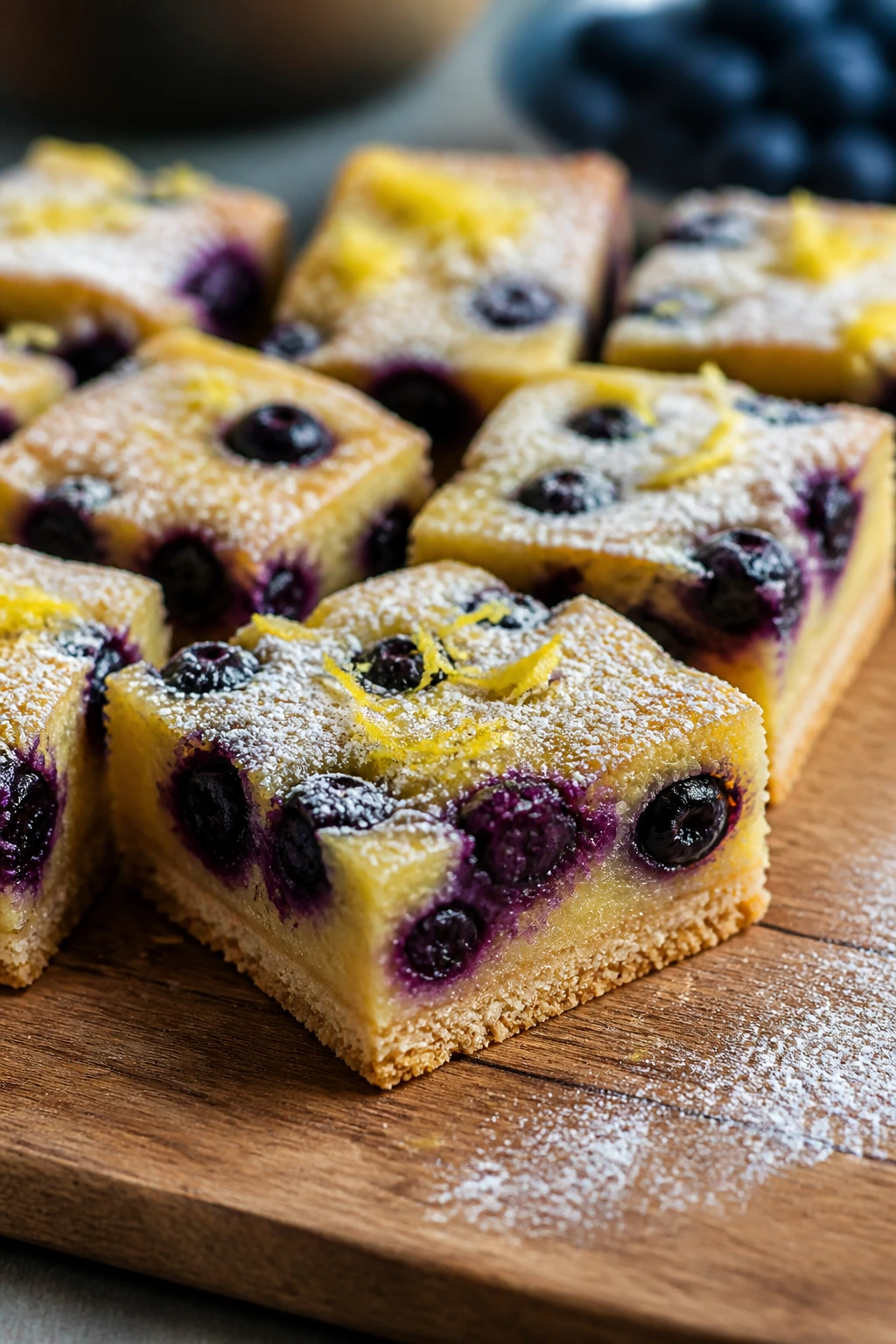
The best picnic desserts are the ones that cut cleanly and don’t need a fork. These bars have a short, buttery crust, a lemon filling that sets up firmly, and blueberries that burst just enough to stain the top with little purple spots.
Why It Works:
Bars beat frosted cakes outdoors because they travel better and stay tidy. The crust is sturdy enough to hold the filling, and the lemon keeps the sweetness in check so the bars taste bright instead of sugary. Blueberries are naturally picnic-friendly because they don’t melt, and a chill after baking gives the filling its clean slice. Dust with powdered sugar only at the end or it dissolves into the top and disappears.
Key Ingredients:
- 2 cups all-purpose flour — For the crust.
- 1/2 cup powdered sugar — Gives the crust a tender texture.
- 1 cup cold unsalted butter, cubed — Cold butter makes a better short crust.
- 1/4 teaspoon salt — Keeps the crust from tasting flat.
- 1 cup granulated sugar — For the lemon filling.
- 1/4 cup flour — Helps the filling set.
- 3 large eggs — Bind the filling.
- 1/4 cup fresh lemon juice — The flavor that carries the whole bar.
- 1 tablespoon lemon zest — Gives the bars a sharper lemon smell.
- 1 cup blueberries — Fresh berries are easiest here.
- Powdered sugar for dusting — Optional, but pretty.
Quick Steps:
- Heat the oven to 350°F and line a 9-by-13-inch baking pan with parchment, leaving an overhang on two sides.
- Mix the flour, powdered sugar, and salt for the crust, then cut in the cold butter until the mixture looks like coarse crumbs. Press into the pan and bake for 15 minutes, until the edges are just turning pale gold.
- Whisk the granulated sugar, flour, eggs, lemon juice, and lemon zest until smooth.
- Stir in the blueberries, then pour the filling over the hot crust.
- Bake for 22 to 25 minutes, until the center is set and only a slight wobble remains in the middle. Cool completely, chill for 1 hour, then lift out and dust with powdered sugar before slicing.
Equipment for This Recipe:
- 9-by-13-inch baking pan — The right size for clean bars.
- Parchment paper — Makes lifting easy.
- Mixing bowls — One for crust, one for filling.
- Whisk — Smooths the lemon filling.
- Pastry cutter or fork — Helps cut in the butter.
How to Serve This Dish:
Cut the bars into squares or rectangles and pack them with parchment between layers so the powdered sugar does not smear. They belong at the end of the picnic, after the salads and sliders have done their job. A few fresh berries on the tray make them look especially good without much extra work.
Pro Tips for This Recipe:
- Use cold butter for the crust and don’t overwork it. A sandy texture is what you want.
- Chill the bars fully before cutting or the filling will tear.
- If your blueberries are huge, halve a few so the filling slices more neatly.
- Dust with powdered sugar right before serving, not hours ahead.
Variations on This Dish:
- Raspberry Lemon Bars: Swap the blueberries for raspberries for a sharper, slightly tarter bar.
- Lime Coconut Version: Replace the lemon with lime juice and add 1/4 cup shredded coconut to the crust.
- Gluten-Free Swap: Use a good gluten-free all-purpose blend for the crust and filling flour.
Common Mistakes to Avoid with This Dish:
- Cutting too early: The filling needs time to set. Chill before slicing.
- Overbaking: The bars go dry and lose their soft center. Stop when the middle is just set.
- Skipping the parchment: You’ll regret it when you try to lift the bars out in one piece.
Why Room-Temperature Picnic Food Wins the Night
Picnic food has a job that plated dinner never has to think about. It has to survive transport, sit through a little weather, and still taste balanced when the lid comes off and somebody says, “We forgot the forks.” That’s why the best picnic recipes lean on structure instead of delicacy. A little vinegar keeps creamy dishes from going sleepy. A sturdy grain or pasta gives the salad something to hold onto. Crunch from celery, cucumber, lettuce, or toasted nuts keeps your mouth interested after the third bite.
Temperature matters too. Cold food should be cold enough to feel fresh, not so icy that the flavors hide. Room-temperature food should be the kind that stays stable for an hour or two and doesn’t melt into a puddle when the sun leans on it. That’s where sandwiches with butter barriers, bean salads with lemon, and bars that cut cleanly really earn their place. They behave.
There’s also the small but real matter of appetite. On warm evenings, people usually want food that tastes bright and a little lighter than a heavy roast or a creamy casserole. Lemon, dill, mint, cucumber, tomato, and pickle brine do a lot of work here. They wake up the palate. They keep the whole spread from feeling sleepy by the time the second paper plate comes around.
And if you’re packing for a longer stretch outdoors, food safety stops being a footnote. Perishable food should not sit out for more than 2 hours, and if the temperature is hot enough that the cooler starts sweating, that window gets shorter. Keep mayo-based salads, chicken, tuna, and dairy chilled in an insulated cooler with ice packs until you’re ready to eat. Boring advice? Maybe. Useful advice? Absolutely.
Essential Equipment for These Recipes
- Insulated cooler with ice packs — The simplest way to keep chicken salad, tuna salad, and fruit cold until serving.
- Leakproof storage containers — Use shallow containers for salads and taller ones for dressings so nothing sloshes into the lid.
- Parchment paper and foil — Great for wrapping sliders, tea sandwiches, and bars without crushing them.
- Sharp chef’s knife — Thin apple slices, neat tomato halves, and clean sandwich cuts depend on it.
- Cutting board with a non-slip grip — Watermelon, cucumbers, and tomatoes can slide around fast.
- Large mixing bowls — One bowl that’s too small turns every salad into a mess.
- Whisk and rubber spatula — The whisk handles dressings; the spatula keeps pasta and chicken from getting mashed.
- Instant-read thermometer — Especially useful for BBQ chicken sliders so you can stop at 165°F and keep the meat juicy.
- Salad spinner or clean towels — Dry greens and herbs matter more than most people think.
- Small skewers or appetizer picks — Handy for Caprese skewers and fruit bites.
Smart Shopping and Ingredient Tips
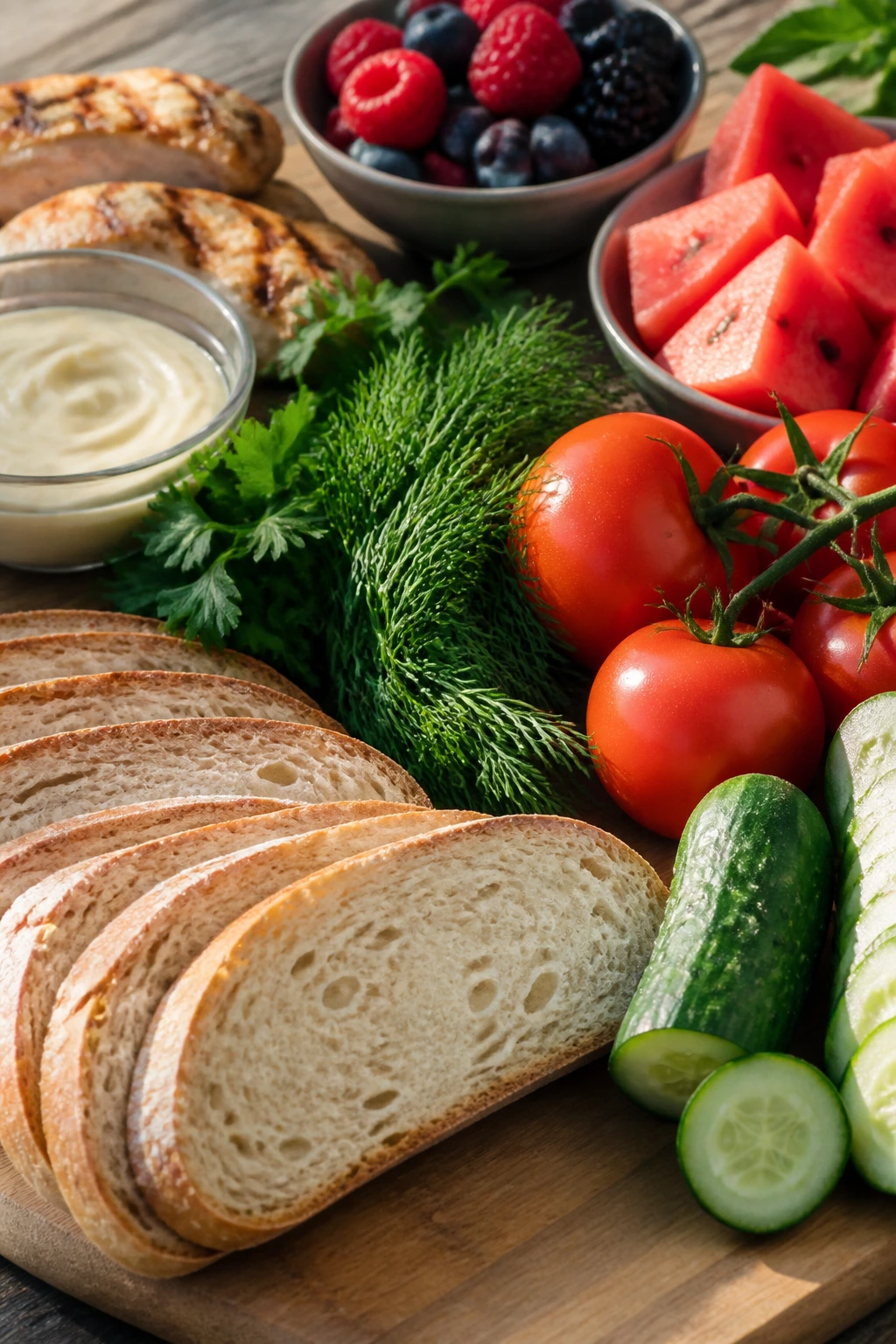
Start with the ingredients that make the biggest difference in a picnic dish: bread, herbs, tomatoes, chicken, mayonnaise, and fruit. Soft sandwich bread should have a tight crumb and a fresh feel; airy artisan loaves are lovely for toast, but they make miserable picnic sandwiches because the filling leaks through the holes. For chicken salad and sliders, rotisserie chicken is an honest shortcut. It’s already seasoned, already cooked, and it shreds into useful pieces without much fuss. Let it cool before mixing so the dressing doesn’t get thin.
For salads, choose produce that can survive a little travel. Cucumbers should feel firm all the way through, not soft at the ends. Tomatoes should smell like something when you hold them close to your nose. Berries should be dry and fragrant, not glossy with excess juice. Watermelon should feel heavy for its size. Those little clues matter more than the label ever will.
When a recipe uses canned chickpeas or tuna, drain them well and rinse chickpeas until the water runs mostly clear. That removes some of the can flavor and keeps the salad cleaner-tasting. Frozen peas and frozen edamame are excellent here; they’re picked at the right moment and thaw into the bowl with better color than many tired fresh versions. For cheese, buy feta in a block if possible, and choose mozzarella pearls packed in liquid only if you’re willing to pat them dry.
Mayo-based dishes need the real stuff, or at least a full-fat version that behaves like it. Light mayonnaise can get thin after chilling, especially if the salad includes pickles, celery, or tomatoes. Dijon, vinegar, lemon, and pickle brine are the little things that save a picnic spread from tasting flat. Don’t be shy with them.
How to Serve These Recipes
Presentation:
Build the spread in layers of texture. Put creamy salads in shallow bowls so the good bits stay visible, stack sandwiches in parchment, and use a wide platter for skewers or bars. A tray lined with lettuce or parchment looks cleaner than a pile of mismatched containers, and it makes the food easier to grab without fuss.
Accompaniments:
Kettle chips, cucumber spears, pickles, olives, and fresh berries cover most of the gaps in this menu. If you want more substance, add crusty bread, crackers, or a simple green salad. The nice part is that these recipes already do a lot of the work, so the sides can stay plain.
Portions:
For a light picnic supper, plan one sandwich or two sliders per person, plus one salad or fruit dish and one sweet square. For hungrier people, bump the sandwiches to two and keep the sides small. Bars and skewers can be sliced or doubled easily, which makes them useful when the crowd changes at the last minute.
Beverage Pairing:
Iced tea with lemon works across the savory dishes. Sparkling water with lime keeps the fruit and cheese plates feeling sharp. For something a little more grown-up, a crisp lager or a dry rosé handles the pesto, grilled vegetables, and sliders without fighting the food.
Additional Tips and Flavor Boosters
Flavor Enhancement: A small hit of acid at the end changes everything. Lemon zest over chicken salad, extra vinegar in potato salad, or a splash of lime over fruit turns the whole basket sharper and cleaner.
Customization: Add chopped herbs, toasted nuts, olives, or pickles to give the recipes your own shape. Dill, parsley, basil, mint, and chives all work here because they stay fresh tasting even after a little chilling.
Serving Suggestions: Keep flaky salt in a tiny container and finish tomatoes, watermelon, and Caprese skewers right before eating. A last-minute sprinkle can make a simple dish taste more alive than another spoonful of dressing ever will.
Make-It-Yours: For gluten-free picnics, lean on lettuce cups, rice noodles, couscous swaps, and gluten-free bars. For dairy-free versions, use vinaigrettes, hummus, or avocado in place of creamier elements. For people who want more heat, add chili crisp, pepperoncini, or a few red pepper flakes rather than drowning the whole bowl in hot sauce.
Make-Ahead, Storage, and Reheating Guidance
Most of these recipes are meant to be made ahead, but they do not all age the same way. Chicken salad, tuna salad, and mayo-based pasta salads keep for 3 days refrigerated in sealed containers, though they taste best in the first 24 to 48 hours. Potato salad holds well for up to 4 days because the potatoes and dressing settle into each other, while grain salads like couscous stay good for about the same stretch if you keep the herbs and cheese from getting crushed.
Fruit-based dishes need more care. Strawberry spinach salad is best assembled right before serving, and watermelon skewers should be eaten the same day, ideally within a few hours. The fruit holds its shape best when it’s cold and dry. Bars, on the other hand, are the most forgiving sweet item in the lineup. Lemon blueberry bars keep 4 to 5 days refrigerated or up to 2 months frozen if you wrap them well.
For sliders and hot items, refrigerate the cooked chicken filling for 3 to 4 days and reheat it gently in a skillet over medium-low heat with a splash of water or broth. You can also microwave it at 50% power in short bursts, stirring between rounds, until it’s steaming. Keep the buns separate until the last minute. That one habit saves a lot of soggy bread.
Do not leave perishable food sitting out more than 2 hours, and cut that to 1 hour if the evening is hot enough that the cooler never feels cold when you open it. Pack cold foods with ice packs top and bottom, and keep them shaded. If you’re making sandwiches ahead, build them with a butter or cheese barrier against the bread and wrap them tightly in parchment before they go into the cooler.
Variations and Adaptations to Try
Gluten-Free Picnic Mix:
Swap in gluten-free pasta for the macaroni and tortellini salads, use lettuce cups instead of bread, and lean on the couscous salad only if you replace couscous with quinoa or rice. The rest of the basket can stay almost the same, which is the whole point. You don’t need a brand-new menu, just a few smart substitutions.
Dairy-Light Spread:
Use vinaigrettes, hummus, and olive oil in place of creamy dressings where you can. The chickpea pitas, noodle salad, tuna lettuce cups, and fruit skewers already lean this way with only a few small changes. If you miss the richness, add olives, capers, or toasted nuts instead of more cheese.
Vegetarian Main-Event Swap:
Between the chickpea pitas, pesto tortellini salad, Caprese skewers, couscous bowl, and fruit dishes, you can build a full picnic without meat. If you want more protein, add white beans, extra feta, or grilled halloumi. That keeps the spread satisfying without making it feel like a side-dish parade.
Spice-Forward Picnic Basket:
Add chili crisp to the noodle salad, chipotle to the sliders, red pepper flakes to the chickpea bowl, and black pepper over the watermelon if you want sharp contrast. Keep the heat in the background, not at full blast; picnic food should wake you up, not steam you out. A little heat also works well with cold dishes because the temperature contrast is part of the fun.
Kid-Friendly Cuts:
Make mini sandwiches, tiny skewers, and smaller fruit pieces. Kids usually do better with food that’s easy to hold and not overloaded with onion or capers, so keep the stronger flavors on the side. Bars cut into small squares also pack well and cut down on the crumb explosion.
Common Mistakes to Avoid
Letting creamy dishes get too warm:
Mayo-based salads and chicken should stay chilled until serving. If they sit in the sun too long, the texture loosens and the flavor drops off fast. Use a cooler, and keep the lid closed when you’re not reaching in.
Packing wet ingredients without drying them:
A little water is all it takes to turn pasta salad thin, lettuce limp, or bread soggy. Pat cucumbers, tomatoes, herbs, and mozzarella dry before they go into the bowl. It sounds fussy. It isn’t.
Dressing everything too early:
Some dishes improve after a rest, but not all components should be mixed at the same time. Lettuce, sandwich bread, and delicate berries need to wait until the end. Keep dressing, greens, and bread separate if you want crispness.
Using the wrong bread:
Big airy loaves and soft rolls without structure get mushy fast. Choose bread with a tighter crumb for sandwiches, sliders, and tea sandwiches. If the bread feels too soft to survive the cooler, toast it lightly or use parchment barriers.
Forgetting the final taste test:
Cold food tastes flatter than warm food. Always taste again after chilling and add salt, lemon, vinegar, or black pepper as needed. One extra teaspoon of acid can save a whole bowl.
Cutting fruit or bars too soon:
Blueberry bars need time to set, and strawberries leak if they’re sliced too early. Let the dessert cool and chill before cutting, and keep fruit salads close to serving time. Patience is not glamorous. It does matter.
Frequently Asked Questions
Can I make these picnic foods the day before?
Yes, most of the savory salads and the lemon blueberry bars do well with an overnight rest. Keep lettuce, bread, and dressing separate until the last possible moment so they stay fresh and crisp.
Which recipes travel best if I do not have a cooler?
The bars, Caprese skewers, fruit skewers, grilled bread, and some grain salads will hold up best for a short trip. Anything with chicken, tuna, eggs, mayo, or dairy should stay chilled in a cooler until serving.
How do I keep sandwiches from getting soggy?
Use butter, cheese, or lettuce as a moisture barrier between the bread and the wetter fillings. Wrap the sandwiches tightly in parchment and pack them flat so the filling does not shift and press into the crumb.
Can I use rotisserie chicken in the chicken salad and sliders?
Absolutely. It’s one of the easiest ways to save time, and the texture works well in both recipes. Just let it cool before mixing so the dressing does not thin out.
What if my pasta salad tastes dull after chilling?
Add salt, lemon, vinegar, or pickle brine a little at a time. Cold pasta and beans mute flavor, so the final adjustment often matters more than the first mix.
How long can picnic food sit out safely?
Perishable food should not sit out more than 2 hours, and only 1 hour if the weather is hot enough to make the cooler feel warm. Keep salads, chicken, tuna, eggs, and dairy tucked in ice packs until you’re ready to eat.
Can I scale these recipes for a bigger crowd?
Yes, most of them double cleanly. The only catch is texture: if you scale up the dressings, taste and season carefully so the larger batch doesn’t turn bland or overly salty.
What should I pack first in the cooler?
Put the coldest and most sensitive items in first: chicken salads, tuna salads, potato salad, and any dairy-based dishes. Keep bars, bread, and fruit near the top or in a separate container so they don’t get crushed.
The Basket That Holds Its Own
A good picnic spread does not need drama. It needs food that can survive a little heat, a little time, and a little human clumsiness without falling apart before the first paper plate is empty. That’s why these dishes work: they’ve got texture, brightness, and enough structure to make the whole meal feel easy instead of fragile.
Pick one creamy thing, one crunchy thing, one fresh fruit or salad, and one sweet square. That combination gets you through a summer evening without a stove, a sink full of pans, or a tray of limp bread. And once you’ve packed a basket like that once or twice, the whole idea starts to feel less like a project and more like a habit worth keeping.