



Fruit kebabs fix a very specific summer problem: you want something cold, sweet, and a little playful, but you do not want to stand over a stove or drag out a mixer. A bowl of cut fruit is fine. Fruit on a stick feels like a small event.
The trick is not complicated, which is part of the appeal. Choose fruit that holds its shape, cut it into pieces that match in size, and use a light glaze or finishing salt only where it makes sense. If you have ever watched strawberries tumble around in a bowl while the last peach goes soft in the fridge, you already know why skewers win. They keep the fruit neat, they make portions obvious, and they look far more polished than the effort involved.
I also like how flexible fruit kebabs are. You can keep them bare and crisp, or you can lean into grilled peaches, lime-honey gloss, a little mint, a pinch of chile, or a spoonful of yogurt on the side. They work as dessert, snack, brunch, or a bright little side dish beside something savory off the grill. The one hard rule is size. Cut everything to roughly the same bite so the skewer eats cleanly instead of turning into a juggling act.
Why You’ll Love This Collection
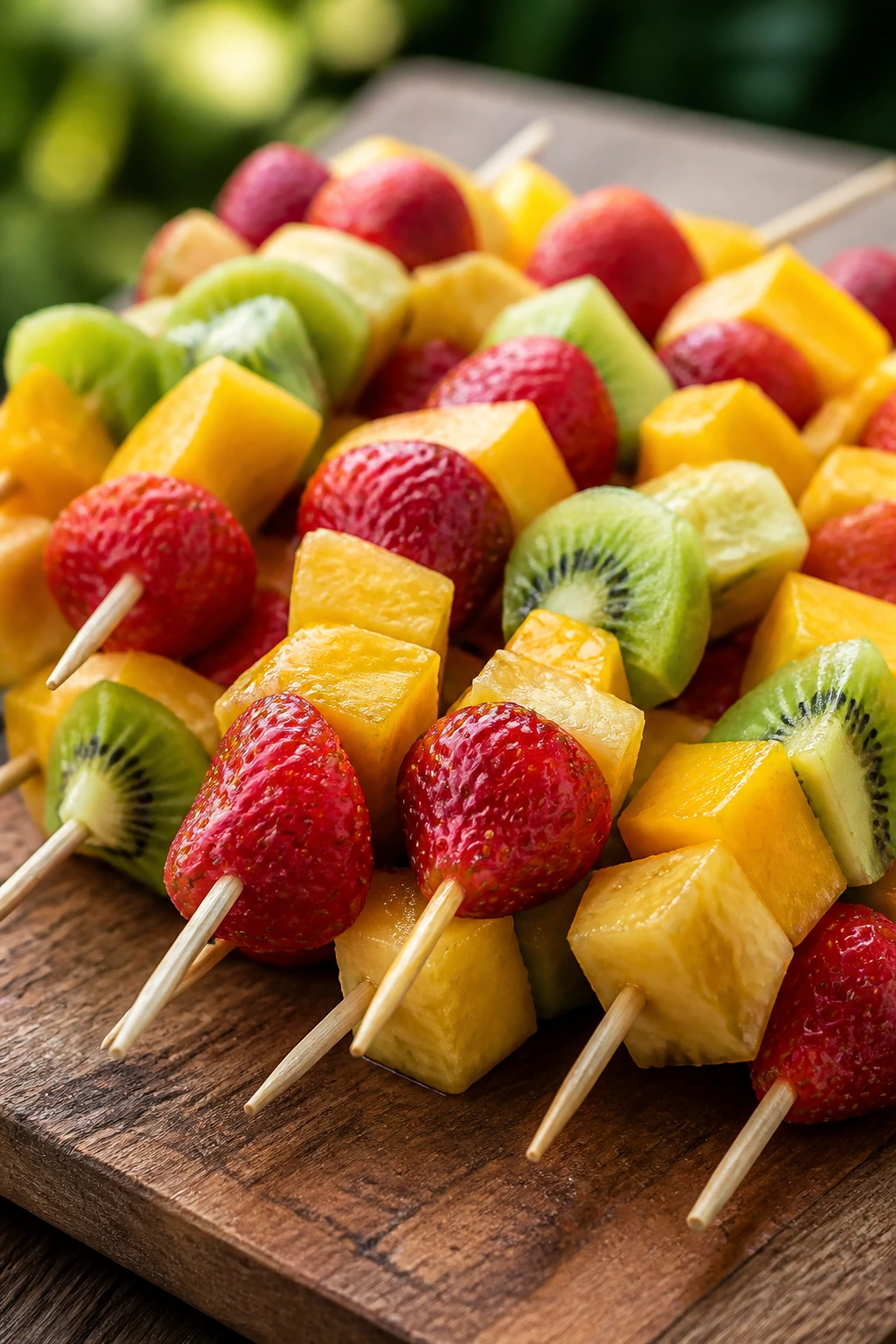
- Almost no heat required: Most of these fruit kebabs come together with a knife, a bowl, and a tray, so your kitchen stays cool and calm.
- Built for picky eaters: Fruit that’s threaded neatly is easier to hand to kids, guests, and anyone who tends to leave “mixed” things untouched.
- Easy to scale up or down: A few skewers for a quiet night or a whole platter for a cookout follows the same pattern, which saves mental energy.
- Sweet, salty, and tart options live side by side: Some of these lean bright and crisp, while others bring in honey, chile, mint, or yogurt for contrast.
- Grill-friendly choices are included: A handful of these skewers take on light char beautifully, which is useful when the grill is already hot anyway.
- Leftovers don’t have to feel sad: Several of the fruit combos hold up well in the fridge for a short stretch, and the extras can be chopped into yogurt, oatmeal, or a cold fruit salad.
1. Strawberry, Kiwi, and Basil Honey-Lime Kebabs
Strawberries and kiwi are one of those combinations that looks almost too clean to be real—red, green, and glossy from a quick lime-honey brush. Basil makes the whole skewer smell fresh before the first bite even lands. I like this one because the flavors are bright without tipping into candy-sweet, and the fruit pieces stay firm enough to feel tidy on a plate.
Why It Works:
Strawberries bring body, kiwi brings tang, and basil gives the skewer a green, peppery edge that keeps the fruit from tasting flat. A small amount of honey smooths the lime juice so the glaze clings instead of running off the fruit. The acid also keeps the kiwi looking lively, which matters if these sit out for more than a few minutes. This is the kind of kebab that tastes better after a 10-minute chill, not worse.
Key Ingredients:
- 1 pound strawberries, hulled and left whole if small or halved if large
- 3 kiwis, peeled and cut into 1-inch chunks
- 2 tablespoons honey
- 1 tablespoon fresh lime juice
- 1 teaspoon lime zest
- 10 to 12 basil leaves
- Pinch of flaky salt
Quick Steps:
- Whisk the glaze: Stir the honey, lime juice, and lime zest in a small bowl until smooth.
- Prep the fruit: Hull the strawberries and cut the kiwi into pieces close to the size of the strawberry halves.
- Thread the skewers: Alternate strawberries and kiwi, tucking in a basil leaf every third piece so it does not get buried in the glaze.
- Brush lightly: Paint the skewers with the honey-lime mixture. Do not soak them—you want sheen, not a puddle.
- Chill briefly: Rest the kebabs on a tray in the fridge for 10 to 15 minutes so the glaze sets and the fruit firms up.
- Finish and serve: Add a tiny pinch of flaky salt right before serving.
Equipment for This Recipe:
- 8 to 10 bamboo or metal skewers
- Small mixing bowl
- Citrus zester or fine grater
- Sharp paring knife
- Serving tray or platter
How to Serve This Dish:
Serve these cold with a bowl of vanilla yogurt or whipped ricotta on the side. They also work well over pound cake if you want to turn them into a very low-effort dessert plate. Two skewers make a solid snack; three or four can stand in for dessert.
Pro Tips for This Recipe:
- Choose strawberries that are firm all the way through. Soft berries slump once they meet the glaze.
- Keep the kiwi pieces on the larger side. Thin slices slip and split when you thread them.
- Basil tastes best here when it is added whole or torn at the end. If you chop it too early, it bruises and goes dark.
- If your strawberries are especially juicy, pat them dry first so the glaze stays on the fruit.
Variations on This Dish:
- Minted Brightness: Swap basil for mint if you want a cooler finish and a more classic fruit-salad feel.
- Maple Lime Version: Use maple syrup instead of honey for a softer sweetness with a little woodsy depth.
- Grilled Berry Edge: Give the strawberry halves a quick 30-second kiss on a hot grill before threading them. That light caramel note changes the whole skewer.
Common Mistakes to Avoid with This Dish:
- Cutting kiwi too small: Tiny pieces tear apart. Keep them chunky enough to stay on the skewer.
- Adding too much glaze: The fruit starts sliding around and the basil gets wet and sad.
- Assembling too early: Kiwi and strawberries are fine for a short chill, but the basil looks best when it is added close to serving time.
2. Watermelon, Cantaloupe, and Mint Chili-Lime Kebabs
Watermelon and cantaloupe can feel ordinary in a bowl. On a skewer, they pick up a little swagger. The contrast between the deep red watermelon and pale orange cantaloupe makes this one look like a summer flag, and the chili-lime finish wakes up fruit that might otherwise taste soft and sleepy.
Why It Works:
Both melons are full of water, which means they need help from acid and salt to taste like more than cold juice. Lime sharpens the sweetness, while a tiny dusting of chile gives the fruit a snap that makes you want another bite. The mint is not there to decorate the plate; it cuts through the melon and keeps the finish clean. This skewer is at its best when the melon is very cold and very dry on the outside.
Key Ingredients:
- 3 cups seedless watermelon, cut into 1-inch cubes
- 3 cups cantaloupe, cut into 1-inch cubes
- 1 tablespoon fresh lime juice
- 1 teaspoon lime zest
- 1 teaspoon honey
- 1 tablespoon chopped mint
- 1/4 teaspoon chili-lime seasoning or a pinch of chili powder plus flaky salt
- Optional: 1/2 cup feta cubes for serving
Quick Steps:
- Dry the melon: Spread the cubes on paper towels for 5 minutes so the surface moisture does not make the glaze slide off.
- Mix the finish: Stir the lime juice, lime zest, honey, and mint together in a small bowl.
- Thread the fruit: Alternate watermelon and cantaloupe on the skewers, leaving a little space between pieces so the cubes do not crush each other.
- Brush or toss lightly: Add just enough lime mixture to gloss the fruit.
- Season at the end: Sprinkle the chili-lime seasoning over the kebabs right before serving.
- Serve cold: If using feta, scatter it around the platter or tuck a cube between two melon pieces on a few skewers.
Equipment for This Recipe:
- 8-inch skewers
- Sharp chef’s knife
- Melon baller or sturdy spoon, optional
- Paper towels
- Small bowl and spoon
How to Serve This Dish:
These skewers work well beside grilled chicken, burgers, or anything salty and smoky off the grill. I also like them as a pre-dinner nibble with sparkling water or iced mint tea. Two skewers per person is enough for a snack; four make a light dessert if you include feta.
Pro Tips for This Recipe:
- Use melon that smells fragrant at the stem end. Bland melon stays bland, even with lime.
- Keep the cubes dry. Watermelon that’s wet on the outside sheds its seasoning in seconds.
- If the chile makes you nervous, use only salt and lime zest. You still get enough contrast.
- Feta should be cold and firm if you add it. Warm feta turns crumbly and messy fast.
Variations on This Dish:
- Feta Picnic Version: Add feta cubes directly to the skewer for a salty-sweet bite that lands somewhere between salad and dessert.
- Mint-Only Refresh: Skip the chile and lean into lime and mint for a cleaner, more kid-friendly skewer.
- Frozen Grape Bonus: Thread a few frozen grapes on the side of the platter for extra chill and a firmer bite.
Common Mistakes to Avoid with This Dish:
- Wet fruit: Seasoning slides off the melon and pools at the bottom of the tray.
- Overloading the skewers: Big cubes need space, or they split when you pick them up.
- Using old, flavorless melon: No amount of lime can hide a melon that never had much flavor to begin with.
3. Pineapple, Mango, and Coconut-Lime Kebabs
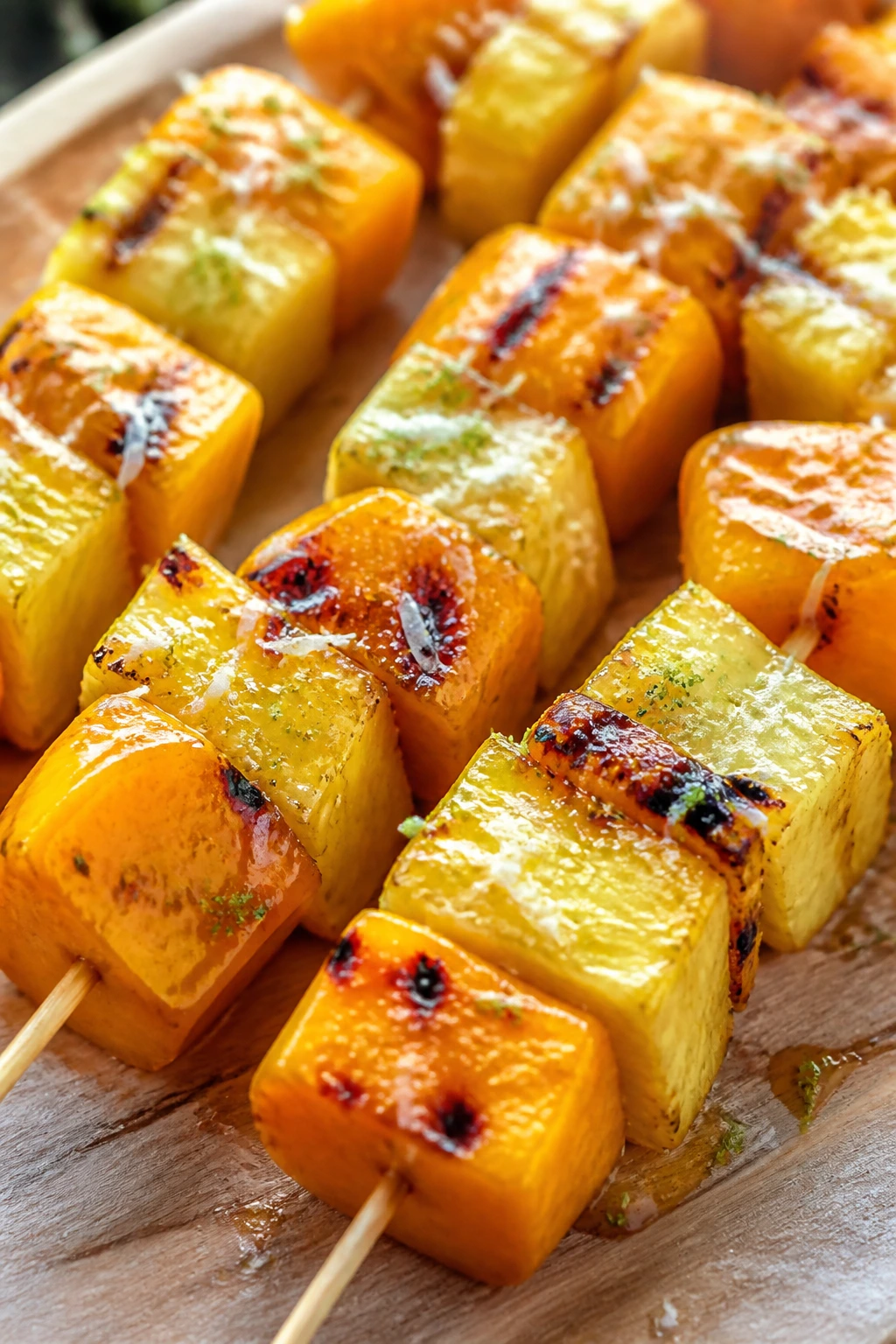
Pineapple and mango bring the sort of tropical sweetness that feels made for an outdoor grill. Add coconut and lime, and you get a skewer that tastes sunny without being syrupy. I prefer this one with a little char on the pineapple, because the edges go caramel-dark and the mango stays soft in the center.
Why It Works:
Pineapple has enough acidity to wake up the mango, and mango has enough softness to make the whole skewer feel lush. A touch of coconut oil helps the fruit take on grill marks instead of sticking to the grate. Lime and toasted coconut finish the job: one gives brightness, the other adds a dry, nutty crunch. The key is to grill fast and stop before the mango turns mushy.
Key Ingredients:
- 1 small pineapple, peeled, cored, and cut into 1-inch chunks
- 2 ripe but firm mangoes, peeled and cut into 1-inch chunks
- 1 tablespoon melted coconut oil
- 1 tablespoon fresh lime juice
- 1 teaspoon honey or agave
- 2 tablespoons toasted coconut flakes
- Pinch of chili flakes, optional
- Tiny pinch of salt
Quick Steps:
- Preheat the grill: Heat a grill or grill pan to medium-high, about 400°F to 425°F.
- Make the glaze: Whisk the coconut oil, lime juice, honey, and salt together until the mixture looks glossy.
- Thread the fruit: Alternate pineapple and mango chunks on the skewers, keeping the pieces snug but not packed tight.
- Brush and grill: Paint the fruit with the glaze and grill for 1 to 2 minutes per side, just until light grill marks appear. Turn gently—mango bruises fast.
- Finish with coconut: Sprinkle toasted coconut over the skewers while they are still warm so it sticks.
- Add chile if you want it: A pinch of chili flakes over the top makes the sweetness more interesting.
Equipment for This Recipe:
- Grill or grill pan
- Metal skewers or soaked bamboo skewers
- Pastry brush
- Tongs
- Small whisk and bowl
How to Serve This Dish:
Serve these warm with coconut yogurt, vanilla ice cream, or a spoonful of thick Greek yogurt if you want less sweetness. They also work next to grilled shrimp or chicken when you want fruit on the same plate as dinner. For dessert, one skewer per person is usually enough unless the mango was tiny.
Pro Tips for This Recipe:
- Buy mangoes that give slightly at the stem end but still feel firm. Overripe mango collapses on the grill.
- Keep pineapple chunks on the larger side. Small cubes dry out before they char.
- Toast the coconut in a dry skillet until it smells nutty, not brown-black. It burns fast.
- If you are using bamboo skewers, soak them for at least 20 minutes so the ends do not scorch.
Variations on This Dish:
- Tajín Tropical: Swap the chili flakes for Tajín and get a sharper, saltier finish.
- Coconut Cream Drizzle: Add a spoonful of coconut cream over the finished kebabs for a richer dessert plate.
- Rum-Lime Note: If you want a grown-up version, brush the fruit with a tiny splash of dark rum mixed into the glaze before grilling.
Common Mistakes to Avoid with This Dish:
- Grilling too long: Mango turns into warm jam faster than you think.
- Using soft fruit: Pineapple can handle heat; a squishy mango cannot.
- Adding coconut before grilling: It burns before the fruit is finished.
4. Grilled Peach and Plum Kebabs with Vanilla Yogurt
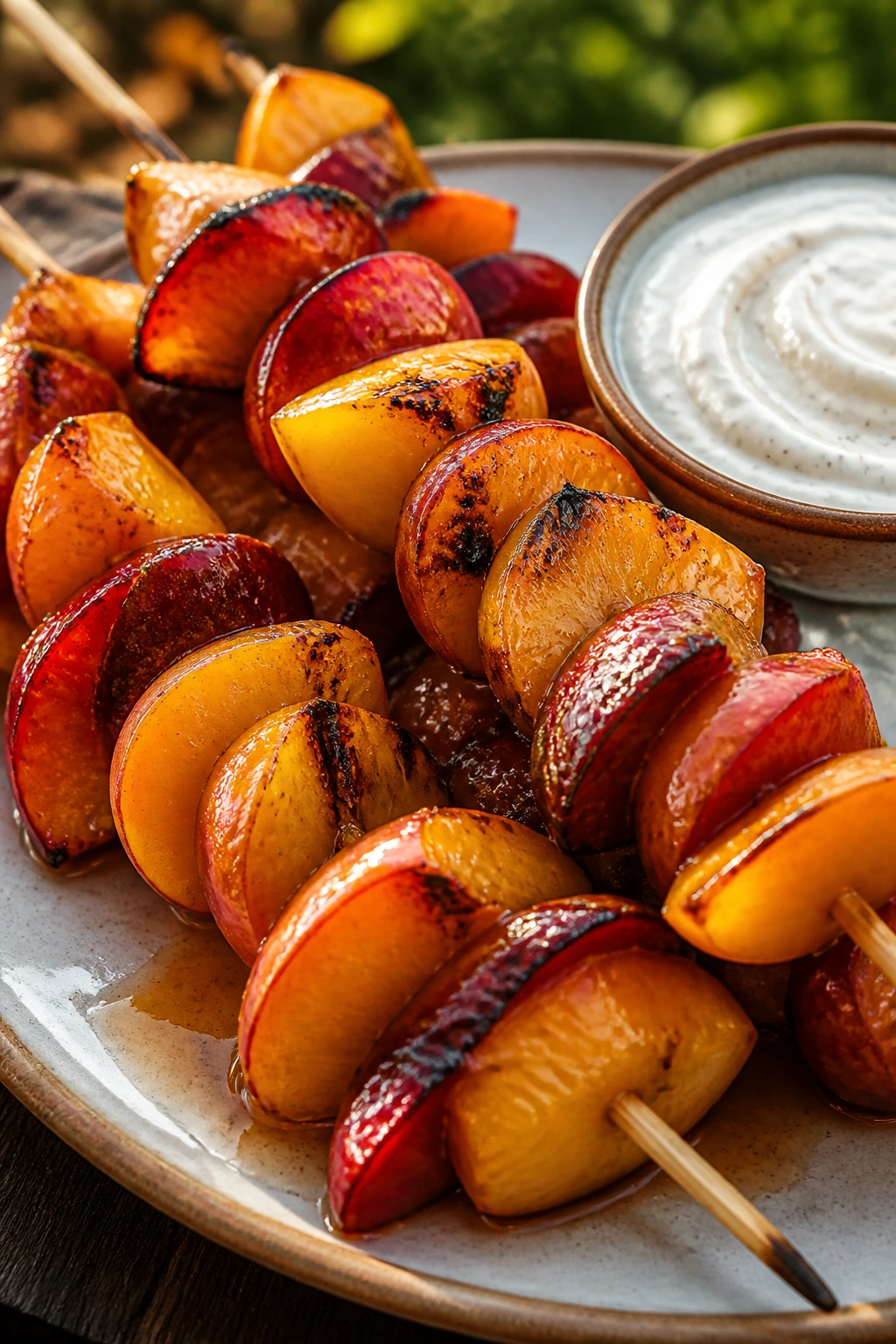
Peaches and plums are at their best when they keep a little structure. Grill them, and the cut edges soften just enough to smell like jam without turning to mush. The vanilla yogurt on the side makes this feel like dessert without asking you to bake a thing.
Why It Works:
Stone fruit loves heat because the sugar concentrates fast and the surface takes on a light caramel note. Peaches bring perfume, plums bring a tart edge, and the two together keep the skewer from tasting flat. A brushed mix of honey, butter, and vanilla helps the fruit mark instead of sticking, and the yogurt gives a cool, creamy contrast that keeps the dessert from feeling heavy. Grill time matters here. Barely long enough is the sweet spot.
Key Ingredients:
- 4 ripe but firm peaches, pitted and cut into wedges
- 4 ripe but firm plums, pitted and cut into wedges
- 1 tablespoon melted butter or neutral oil
- 2 tablespoons honey
- 1 teaspoon vanilla extract
- 1/2 teaspoon cinnamon
- 1 cup plain Greek yogurt or vanilla yogurt
- 1 teaspoon lemon zest
Quick Steps:
- Heat the grill: Set it to medium, around 375°F to 400°F.
- Mix the glaze: Whisk the butter, honey, vanilla, and cinnamon together until smooth.
- Thread the fruit: Alternate peach wedges and plum wedges on the skewers, placing the sturdier end pieces near the outside.
- Brush and grill: Coat the fruit lightly and grill for 1 to 2 minutes per side, only until grill marks show and the fruit gives a little when pressed.
- Stir the yogurt: Mix the yogurt with lemon zest and keep it chilled.
- Plate immediately: Set the kebabs on a platter and serve with the yogurt spooned alongside.
Equipment for This Recipe:
- Grill or grill pan
- Metal skewers
- Pastry brush
- Small bowl and whisk
- Serving plate with a lip, since juicy stone fruit can run
How to Serve This Dish:
I like these with the yogurt in a shallow bowl so the peaches can be dipped rather than drowned. A square of shortbread or a crisp butter cookie beside the plate makes the whole thing feel finished. Two skewers is a normal dessert portion; one works as a light after-dinner bite.
Pro Tips for This Recipe:
- Choose peaches that still have a little bite. Overripe fruit falls apart once the heat hits it.
- Cut the plums into wide wedges so they stay on the skewer and do not spin.
- Grill with the cut side down first. That gives you the best marks and keeps the surface from sticking.
- If the yogurt feels too thick, loosen it with a teaspoon of milk so it drizzles better.
Variations on This Dish:
- Almond Cream Version: Swap the yogurt for lightly sweetened almond cream and add sliced almonds on top.
- Brown Sugar Brush: Use brown sugar in place of honey for a deeper, almost caramel finish.
- No-Grill Shortcut: Leave the fruit raw and spoon the vanilla yogurt over the top just before serving.
Common Mistakes to Avoid with This Dish:
- Using fruit that is too soft: It falls off the skewer before it gets any color.
- Walking away from the grill: Stone fruit goes from lightly marked to collapsed in a very short window.
- Skipping the acid: Lemon zest in the yogurt keeps the whole plate from tasting one-note.
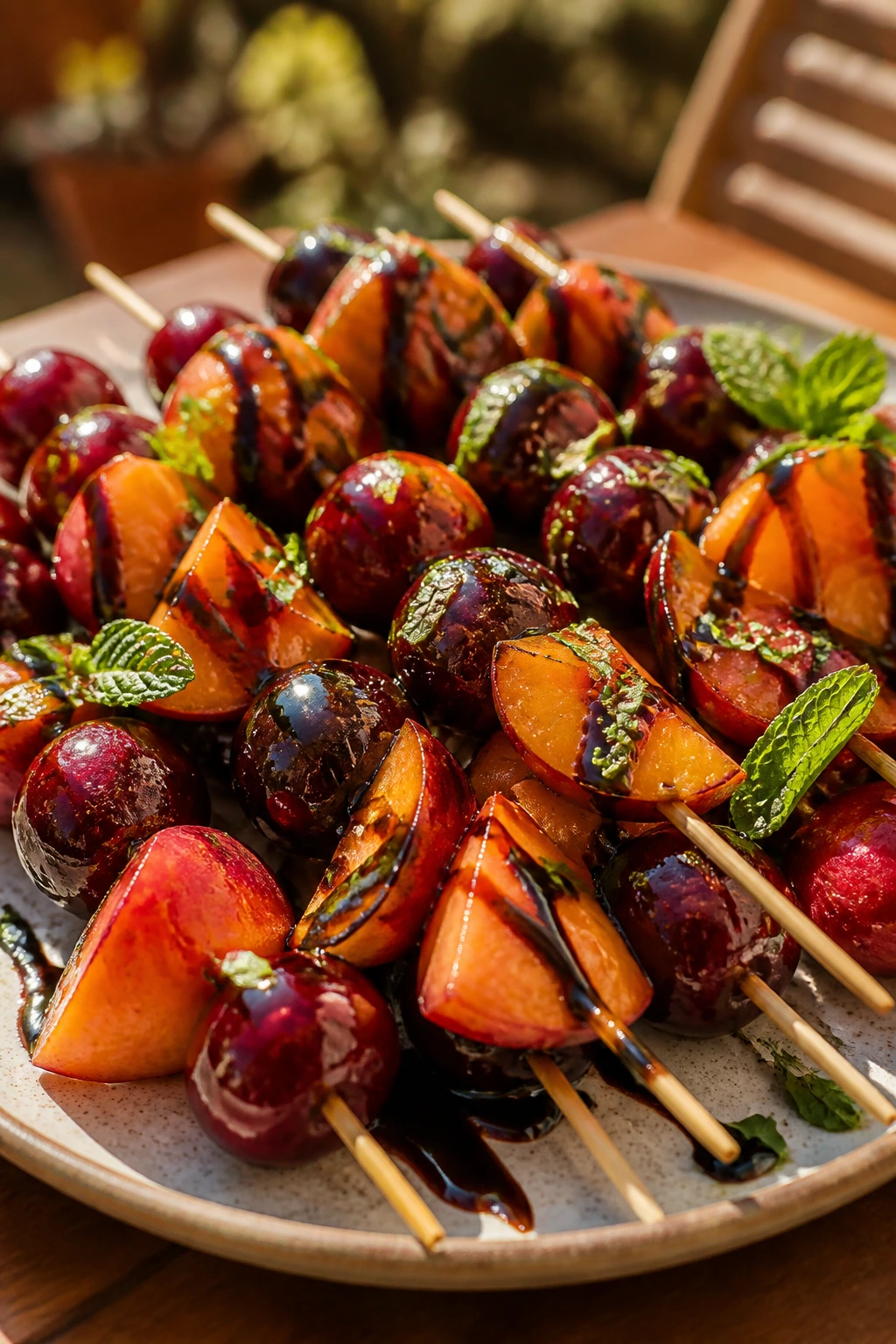
5. Cherry and Nectarine Balsamic Kebabs
This is the skewer I make when I want something that feels a little more grown-up without turning the kitchen into a project. Sweet cherries, juicy nectarines, and a sticky balsamic glaze create a sharp-sweet bite that belongs on a patio table with a chilled plate nearby. It tastes fancy enough for company and easy enough for a Tuesday.
Why It Works:
Cherries bring bursts of juice, nectarines bring a softer stone-fruit texture, and balsamic glaze gives both fruit a dark, slightly tangy edge. A tiny amount of salt sharpens the fruit instead of muting it. If you grill the nectarines for a minute or two, the surface caramelizes and the cherry flavor stands out even more. This one is all about contrast: soft against firm, sweet against tangy, warm fruit against cool mint.
Key Ingredients:
- 2 cups fresh sweet cherries, pitted
- 3 nectarines, pitted and cut into wedges
- 2 tablespoons balsamic glaze
- 1 teaspoon honey
- 1 tablespoon chopped fresh mint
- 1 pinch flaky salt
- Optional: 2 ounces goat cheese for serving
Quick Steps:
- Pit the cherries: Use a cherry pitter or split them carefully and remove the pits by hand.
- Prep the glaze: Stir the balsamic glaze and honey together in a small bowl.
- Thread the fruit: Alternate cherries and nectarine wedges, keeping the nectarine skin side out when possible so the pieces hold together.
- Grill or skip grilling: If grilling, place on a medium grill for 1 to 2 minutes per side until marked. If not, arrange the skewers on a tray and move on.
- Brush and finish: Paint with the balsamic glaze and scatter mint over the top.
- Add salt at the end: A small pinch of flaky salt makes the cherry flavor sharper.
Equipment for This Recipe:
- Cherry pitter or small paring knife
- Skewers
- Grill or grill pan, optional
- Small bowl and spoon
- Platter for serving
How to Serve This Dish:
Serve these with goat cheese, mascarpone, or even a thin spread of ricotta on crostini if you want an appetizer feel. They also sit nicely beside grilled pork or chicken, since the balsamic keeps the plate from feeling too sweet. For dessert, keep the cheese optional and let the fruit stand alone.
Pro Tips for This Recipe:
- Buy cherries that are plump and glossy, not wrinkled. Soft cherries make the skewers messy.
- Nectarines should still feel firm at the shoulder. If they are too ripe, they split when threaded.
- Balsamic glaze is better than plain vinegar here. Plain vinegar is too sharp and runs off the fruit.
- Mint should be added at the end, not mixed into the glaze, or it turns dark.
Variations on This Dish:
- Thyme Garden Version: Swap mint for thyme if you want a drier, earthier finish.
- Goat Cheese Sidecar: Serve with crumbled goat cheese on the side instead of over the top.
- All-Grilled Stone Fruit: Leave the cherries off the skewer and grill only the nectarines, then spoon the cherries over the platter afterward.
Common Mistakes to Avoid with This Dish:
- Using watery balsamic dressing instead of glaze: It slides right off and never clings.
- Pitting cherries roughly: Broken cherries bleed juice and make the platter look bruised.
- Overgrilling nectarines: They should soften, not collapse.
6. Grape, Orange, and Rosemary Kebabs
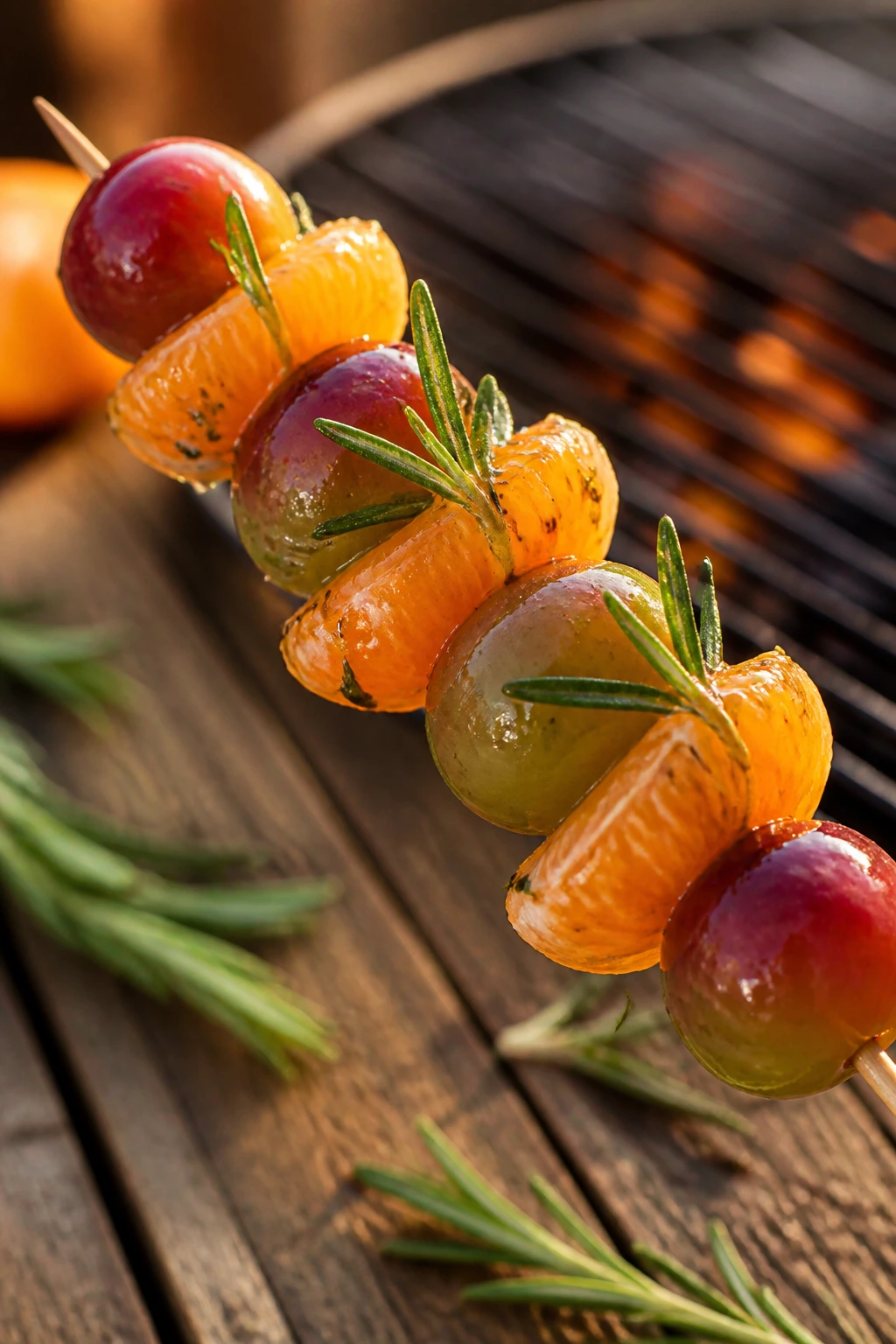
Grapes are easy to overlook until you put them beside citrus and rosemary. Then they get interesting. The grapes stay cool and juicy, the orange adds perfume, and the rosemary brings a piney edge that tastes more like a cookout than a fruit tray.
Why It Works:
Grapes are one of the best skewer fruits because they are firm, bite-sized, and naturally glossy. Citrus segments, when handled carefully, bring acidity and aroma, while rosemary keeps the sweetness from turning flat. A small honey-rosemary glaze ties the pieces together and gives the whole skewer a holiday-table look without making it heavy. This is also one of the few fruit kebabs that feels equally at home as a snack or a side dish.
Key Ingredients:
- 3 cups seedless grapes, washed and dried well
- 3 clementines, peeled and segmented
- 1 tablespoon honey
- 1 tablespoon fresh orange juice
- 1 teaspoon very finely chopped rosemary
- 1 teaspoon lemon juice
- Pinch of salt
Quick Steps:
- Dry the fruit: Pat the grapes dry and set the clementine segments on a towel for a few minutes.
- Make the glaze: Stir the honey, orange juice, lemon juice, rosemary, and salt together.
- Thread the skewers: Alternate grapes and clementine segments, tucking the orange between clusters of grapes so it does not split.
- Brush very lightly: The glaze should coat, not flood.
- Chill for 10 minutes: This helps the citrus hold together and keeps the grapes crisp.
- Serve cold: Add a few rosemary leaves to the platter if you want more aroma.
Equipment for This Recipe:
- Skewers
- Small bowl
- Paring knife
- Citrus juicer, optional
- Paper towels
How to Serve This Dish:
These are nice with labneh, plain yogurt, or a thin ricotta spread if you want a creamy counterpoint. They also make a clean little side dish next to grilled fish. Two skewers is enough for a snack; three work as part of a fruit plate.
Pro Tips for This Recipe:
- Choose grapes that are crisp and deeply colored. Soft grapes taste tired.
- Keep the rosemary finely chopped. Big woody pieces can feel sharp in the mouth.
- If the orange segments are too loose, cut them in half and thread through the membrane.
- A short chill helps the glaze settle and keeps the fruit from slipping.
Variations on This Dish:
- Grapefruit Bite: Replace clementines with grapefruit segments for a sharper, more grown-up edge.
- Thyme Swap: Use thyme instead of rosemary if you want a softer herb note.
- Sparkling Finish: Serve with a splash of sparkling water over the platter right before carrying it out. It sounds odd, but the aroma is lovely.
Common Mistakes to Avoid with This Dish:
- Using wet grapes: The glaze refuses to cling and the skewers get slippery.
- Chopping rosemary too coarsely: The texture becomes unpleasant fast.
- Trying to cram in too many citrus segments: The fruit tears and falls apart.
7. Dragon Fruit, Pineapple, and Lime Kebabs
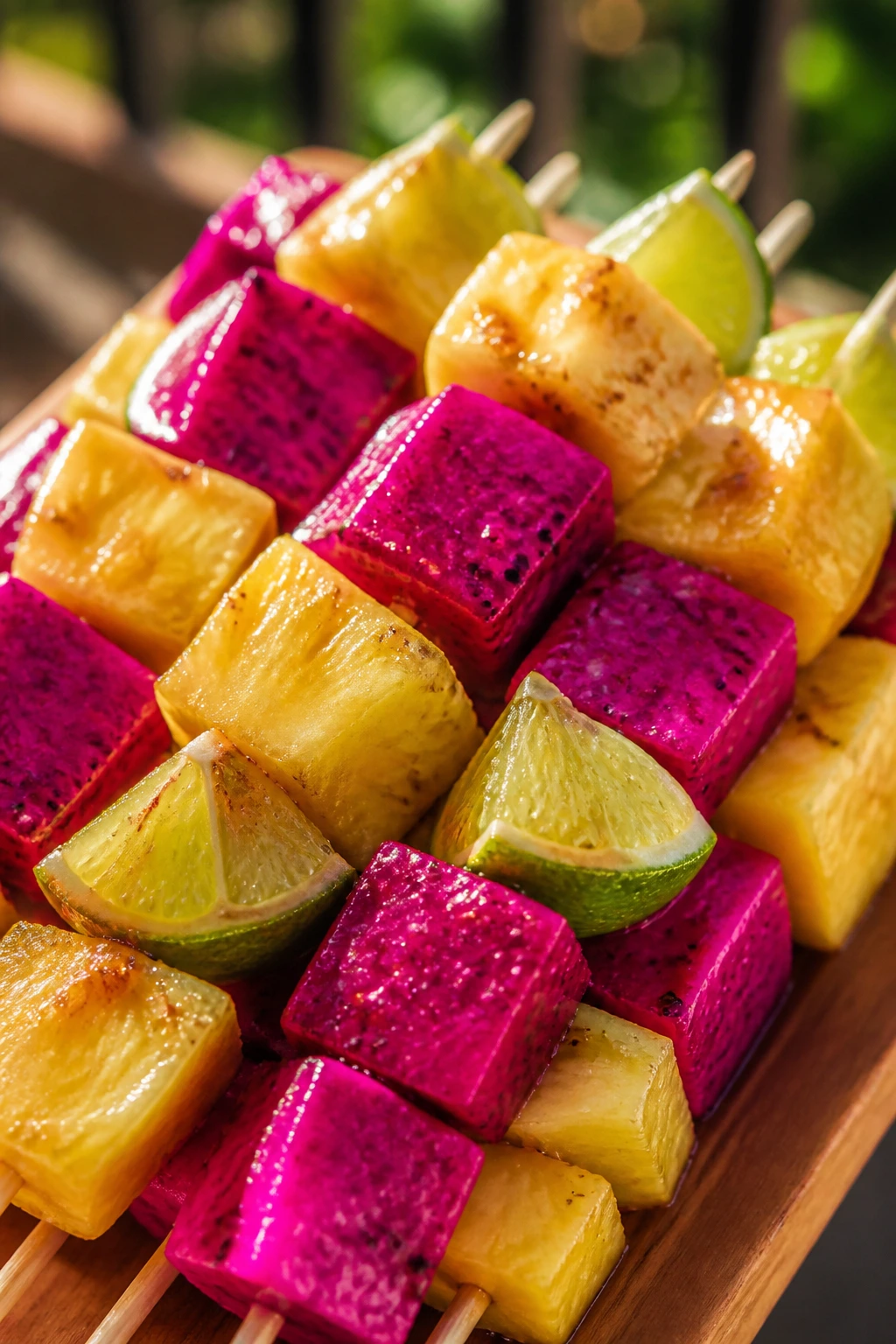
Dragon fruit is the show-off here. The color alone does half the work, whether you find the pink-fleshed kind or the white-fleshed variety with black seeds. Pineapple gives the skewer more flavor than dragon fruit can manage on its own, and lime keeps everything lively.
Why It Works:
Dragon fruit has a mild, cucumber-like sweetness, so it needs a louder partner. Pineapple brings that louder partner in a hurry, and lime keeps the whole thing from tasting like decoration. A light honey-lime brush helps the fruit stay glossy, while toasted coconut adds the crunch dragon fruit cannot provide. This is the skewer to make when you want something dramatic on the platter and not much effort in the kitchen.
Key Ingredients:
- 2 dragon fruits, peeled and cut into 1-inch cubes
- 2 cups pineapple chunks
- 1 tablespoon lime juice
- 1 teaspoon lime zest
- 1 tablespoon honey or agave
- 2 tablespoons toasted coconut
- Tiny pinch of salt
Quick Steps:
- Prep carefully: Peel the dragon fruit and cut it into cubes about the same size as the pineapple.
- Mix the glaze: Stir the lime juice, zest, honey, and salt together until the honey dissolves.
- Thread the skewers: Alternate dragon fruit and pineapple, keeping the dragon fruit in the middle where it is less likely to slip.
- Brush lightly: Add the glaze with a small spoon or pastry brush.
- Add coconut at the end: Sprinkle toasted coconut over the fruit just before serving.
- Keep it chilled: Dragon fruit tastes better cold and firm, not warm and soft.
Equipment for This Recipe:
- Skewers
- Sharp knife
- Small bowl and spoon
- Cutting board
- Optional melon baller for decorative cubes
How to Serve This Dish:
These look especially nice on a white platter with lime wedges and extra coconut scattered around the edges. I like them as a dessert after grilled chicken or shrimp because the fruit is cool and clean after something smoky. One to two skewers per person is usually enough.
Pro Tips for This Recipe:
- Buy dragon fruit that feels slightly soft but not mushy. Too ripe and it becomes slippery.
- If the coconut is unsweetened, toast it until just golden so it smells nutty.
- Pineapple chunks should be slightly larger than the dragon fruit cubes. Pineapple shrinks more when it sits.
- Salt matters here. Even a tiny pinch makes the lime and pineapple taste brighter.
Variations on This Dish:
- Berry Swap: If dragon fruit is hard to find, use strawberries and kiwi for a similar color contrast.
- Chili-Lime Version: Add a pinch of chile powder to the glaze for a sharper finish.
- Coconut Cream Dip: Serve with chilled coconut cream on the side for a richer dessert feel.
Common Mistakes to Avoid with This Dish:
- Choosing dragon fruit that is too soft: It turns watery and slides around on the skewer.
- Skipping the pineapple: Dragon fruit alone tastes too mild for most people.
- Adding too much glaze: The fruit should shine, not swim.
8. Honeydew, Cantaloupe, and Ginger-Lime Kebabs
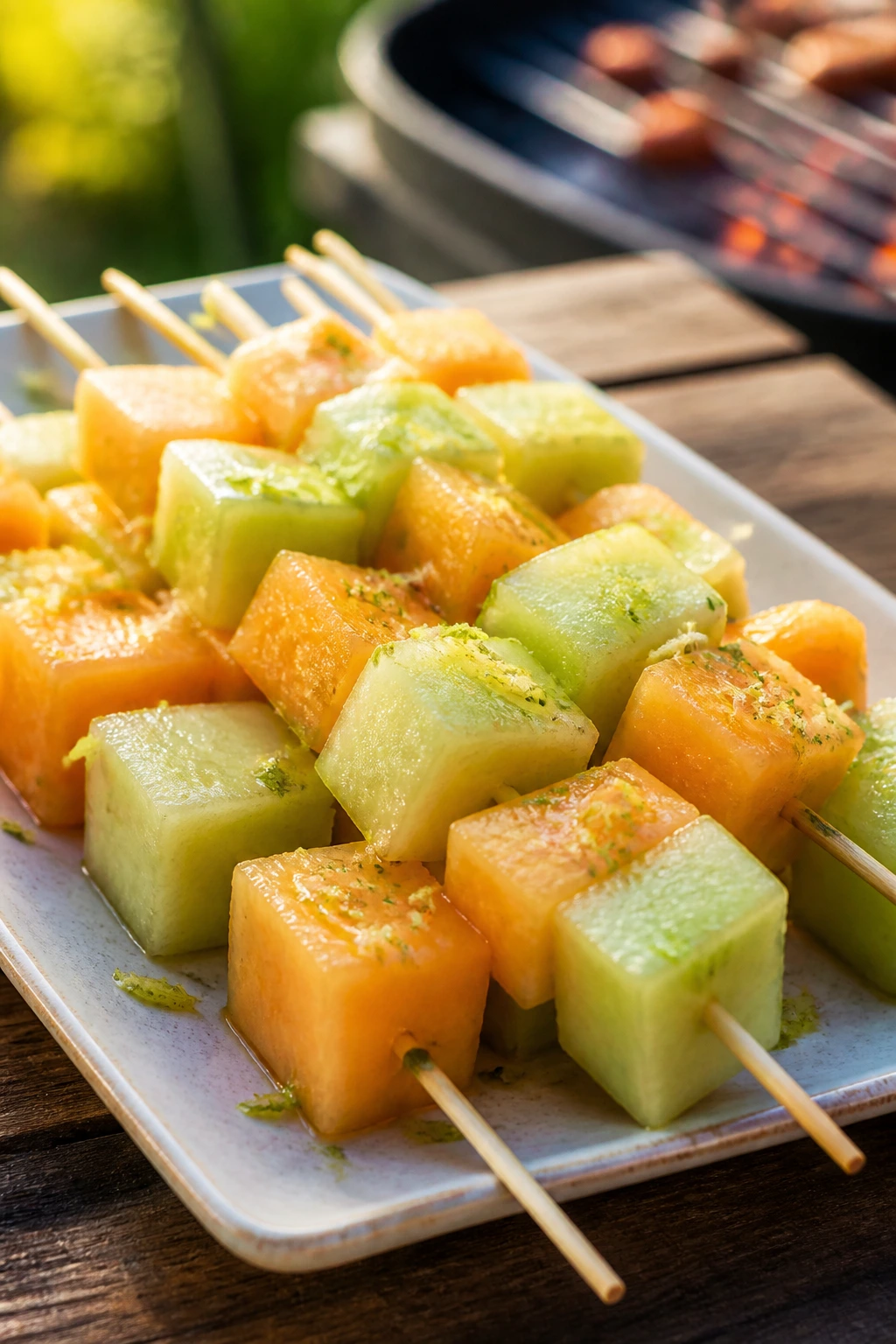
Melon is easy to dismiss until you put a little ginger and lime on it. Then it wakes up. Honeydew gives the skewer a cool, soft sweetness, cantaloupe brings the perfume, and ginger leaves a tiny heat at the end that makes the fruit taste more awake.
Why It Works:
Both melons are mild, which makes them good blank canvases for sharp flavors. Ginger adds a bite that lasts for a second and disappears, while lime keeps the sweetness from feeling heavy. The trick is to keep the cubes small enough to eat in one bite but large enough to stay on the skewer. If the melon is cold and dry, these skewers feel crisp and refreshing rather than watery.
Key Ingredients:
- 2 cups honeydew melon, cut into 1-inch cubes
- 2 cups cantaloupe, cut into 1-inch cubes
- 1 tablespoon fresh lime juice
- 1 teaspoon lime zest
- 1 teaspoon finely grated fresh ginger
- 1 tablespoon honey
- 8 to 10 mint leaves, whole
- Pinch of salt
Quick Steps:
- Dry the melon pieces: Lay them on a towel for a few minutes to remove surface moisture.
- Mix the glaze: Stir together the lime juice, lime zest, ginger, honey, and salt.
- Thread the skewers: Alternate honeydew and cantaloupe, tucking in mint leaves between a few pieces if you want extra aroma.
- Brush lightly: Use just enough glaze to coat the melon.
- Chill the skewers: Ten minutes in the fridge firms the fruit and lets the ginger settle in.
- Serve cold: Add more mint at the end if you want a stronger herbal finish.
Equipment for This Recipe:
- Skewers
- Small bowl
- Fine grater or microplane
- Sharp knife
- Paper towels
How to Serve This Dish:
These are a clean palate cleanser beside grilled meat or rich pasta, which is a little surprising and works better than you’d think. They also make a neat brunch plate with yogurt and granola. Two skewers per person is a generous snack; four makes a light dessert if you’re serving them after dinner.
Pro Tips for This Recipe:
- Choose melons that smell fragrant and feel heavy for their size. That’s where the flavor lives.
- Grate the ginger finely so it disperses instead of clumping.
- Add mint leaves sparingly. Too much mint steals the melon’s aroma.
- Salt is non-negotiable here. It sharpens the melon the way lemon sharpens berries.
Variations on This Dish:
- Basil Ginger Swap: Use basil instead of mint for a slightly sweeter herbal note.
- Pineapple Addition: Add a few pineapple chunks if you want a firmer, more tropical skewer.
- Lime-Salt Minimalist: Skip the honey and keep the finish to lime zest and flaky salt only.
Common Mistakes to Avoid with This Dish:
- Using soft, overripe melon: It collapses and turns the tray soggy.
- Overdressing the fruit: Melon should be glossy, not wet.
- Cutting uneven cubes: Some pieces will fall through the skewer line while others are too large to eat neatly.
9. Apricot, Plum, and Thyme Kebabs
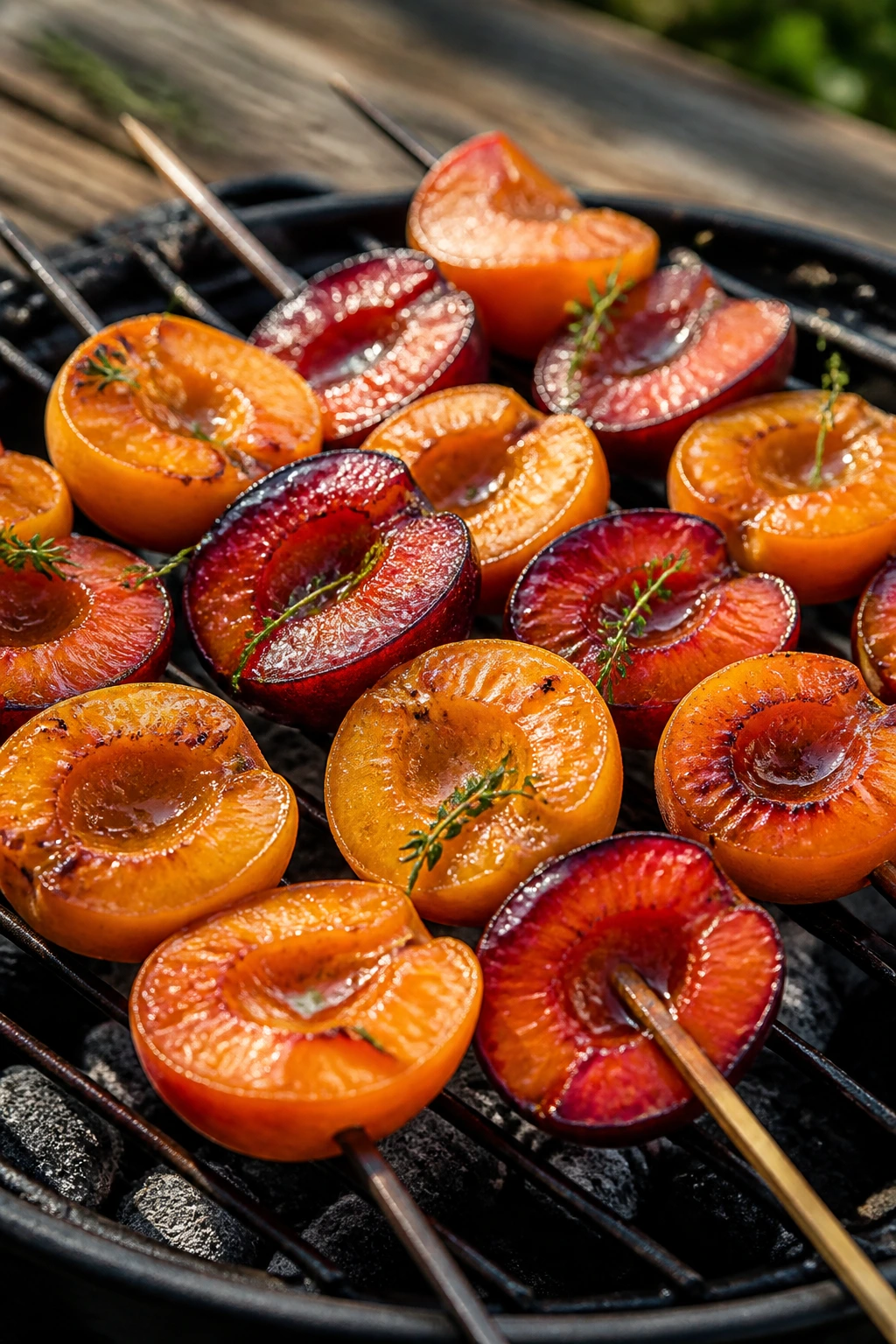
Apricots and plums have a built-in tension that I love. Apricots lean floral and gentle; plums bring a darker tang. A little thyme pushes both fruits toward something more savory, which makes these feel grown-up without making them difficult.
Why It Works:
Stone fruit likes a quick kiss of heat, and thyme keeps the sweetness from becoming sticky. Honey gives the fruit a faint glaze, while lemon zest keeps the finish clean. These kebabs are excellent when the fruit is ripe but still firm, because the grill marks deepen the fruit’s flavor without turning the flesh into jam. Thyme is subtle here, not loud. That is the point.
Key Ingredients:
- 8 apricots, halved and pitted
- 4 plums, cut into wedges and pitted
- 1 tablespoon honey
- 1 teaspoon lemon zest
- 1 teaspoon fresh thyme leaves
- 1 tablespoon melted butter or neutral oil
- Pinch of salt
Quick Steps:
- Prep the fruit: Cut the apricots and plums into large, sturdy pieces.
- Mix the glaze: Stir together the honey, lemon zest, thyme, butter, and salt.
- Thread the skewers: Alternate apricot halves and plum wedges, placing the flesh side in a way that helps them stay balanced.
- Grill fast: Cook over medium heat for 1 to 2 minutes per side until the surface shows marks and the fruit softens slightly.
- Brush after grilling: Add the glaze while the fruit is warm so it absorbs the flavor.
- Serve right away: Thyme is most fragrant when the fruit is still warm.
Equipment for This Recipe:
- Skewers
- Grill or grill pan
- Small bowl and spoon
- Pastry brush
- Tongs
How to Serve This Dish:
These fit nicely beside a spoonful of crème fraîche, thick yogurt, or even a scoop of vanilla ice cream if you want dessert to lean softer. A few toasted almonds on the plate add crunch. Two skewers is enough for a light dessert, especially if the fruit was large.
Pro Tips for This Recipe:
- Buy apricots that are fragrant and give just a little at the stem. Hard apricots taste sour in the wrong way.
- Thin plum wedges can split on the skewer. Keep them generous.
- Brush the glaze after grilling if you want the honey to stay bright.
- A little salt makes the thyme taste greener and keeps the fruit from tasting flat.
Variations on This Dish:
- Rosemary Honey Version: Swap thyme for finely chopped rosemary if you want a piney edge.
- Almond Crunch Finish: Add sliced almonds after plating for a dry, toasty contrast.
- No-Heat Plate: Skip the grill and serve the raw fruit with the glaze and a spoonful of yogurt.
Common Mistakes to Avoid with This Dish:
- Overripe stone fruit: It looks nice in the bowl and falls apart on the grill.
- Too much thyme: A little goes a long way, and you want the fruit to stay in charge.
- Leaving the fruit on the heat too long: It should soften, not collapse.
10. Banana, Strawberry, and Dark Chocolate Kebabs
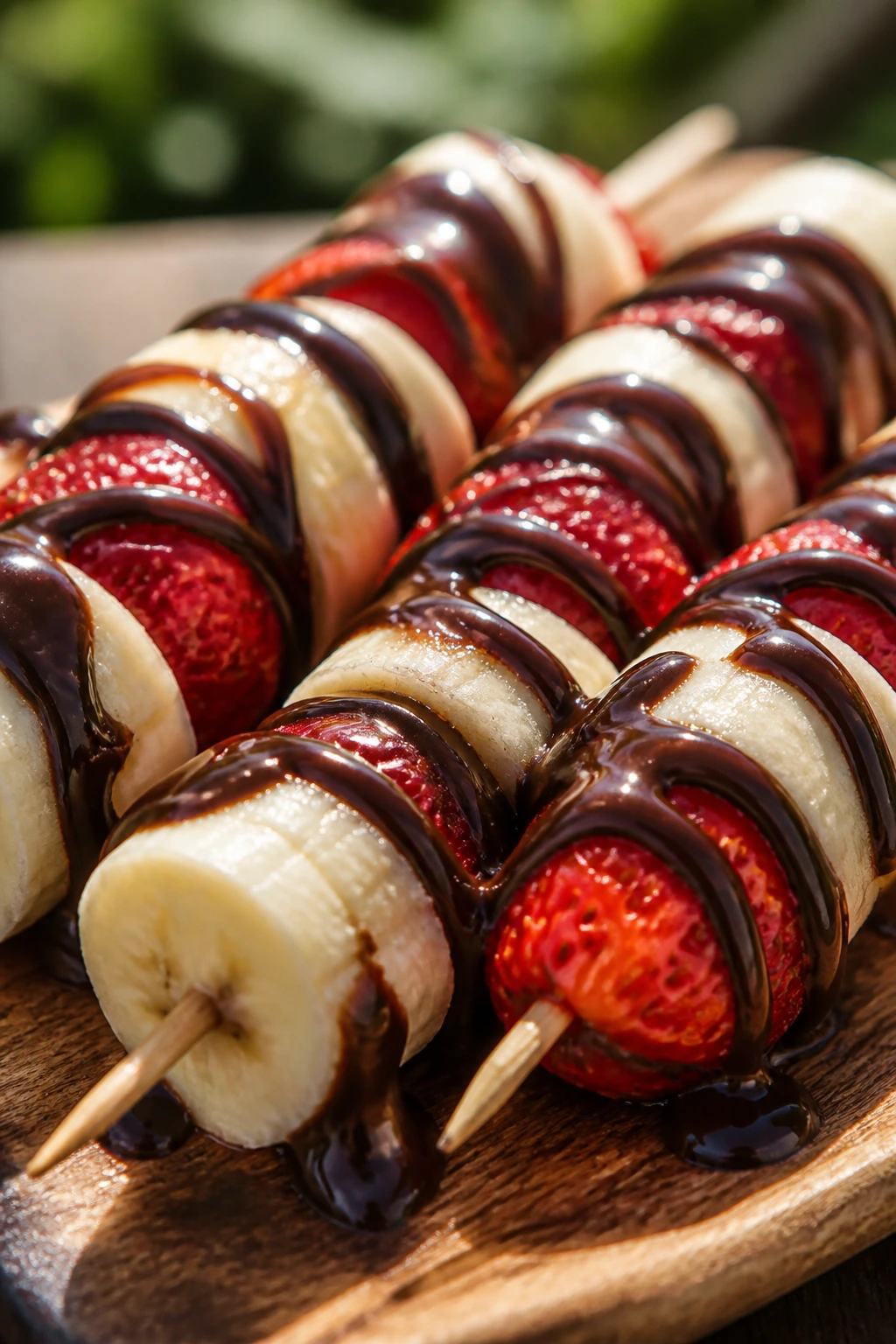
Banana on a skewer can be a bad idea if you treat it like a long-term project. Done right, though, it becomes a very decent summer dessert: soft banana, juicy strawberry, and a ribbon of dark chocolate that hardens just enough to crack when you bite in. This one is for the moment, not the leftovers.
Why It Works:
Banana brings creamy texture, strawberries add freshness, and dark chocolate gives the skewer a bitter edge that keeps the fruit from feeling too sweet. The fruit needs a quick treatment with lemon juice so the banana does not go dull and brown before dessert reaches the table. This recipe is all about timing. Assemble it close to serving, drizzle the chocolate when the fruit is cold, and eat it while the chocolate still has a little snap.
Key Ingredients:
- 3 firm bananas, peeled and cut into 1-inch chunks
- 1 pound strawberries, hulled
- 1 tablespoon fresh lemon juice
- 3 ounces dark chocolate, melted
- 1 tablespoon toasted coconut or chopped nuts, optional
- Tiny pinch of salt
Quick Steps:
- Prep the banana fast: Cut the banana pieces and toss them gently with lemon juice so they do not brown right away.
- Thread the skewers: Alternate banana chunks and strawberries, keeping the banana pieces between sturdier berry ends when possible.
- Chill briefly: Put the skewers in the fridge for 5 to 10 minutes so the banana firms up.
- Melt the chocolate: Warm the chocolate until smooth, then let it cool for a minute so it drizzles instead of running everywhere.
- Drizzle and finish: Spoon the chocolate over the skewers and add coconut or nuts if you want crunch.
- Serve immediately: Bananas wait for nobody.
Equipment for This Recipe:
- Skewers
- Small microwave-safe bowl or heatproof bowl
- Spoon
- Sharp knife
- Serving tray lined with parchment, if you want easier cleanup
How to Serve This Dish:
These are best served as dessert on a plate, not stacked in a bowl. A spoonful of whipped cream or a scoop of vanilla ice cream turns them into a low-effort sundae situation. One to two skewers per person is enough because the banana makes them richer than the other fruit kebabs here.
Pro Tips for This Recipe:
- Use bananas that are ripe but still firm. Spotted bananas get soft and slide off the skewer.
- Let the melted chocolate cool slightly before drizzling or it melts the banana surface.
- Add coconut or nuts while the chocolate is still tacky so they stay put.
- If you need a dairy-free finish, use melted coconut chocolate or skip the drizzle and dust with cocoa.
Variations on This Dish:
- Peanut Butter Thread: Drizzle thinned peanut butter instead of chocolate for a more breakfast-like skewer.
- Cocoa Coconut Finish: Skip the chocolate drizzle and dust the fruit with cocoa powder and coconut flakes.
- Berry-Heavy Swap: Use extra strawberries and leave the banana in bigger chunks if you want a fresher dessert.
Common Mistakes to Avoid with This Dish:
- Making it too early: Banana browns and softens while you wait.
- Using hot chocolate: It melts the fruit and turns into a mess.
- Picking overripe bananas: They look harmless until they split on the skewer.
11. Fig, Grape, and Honey Ricotta Kebabs
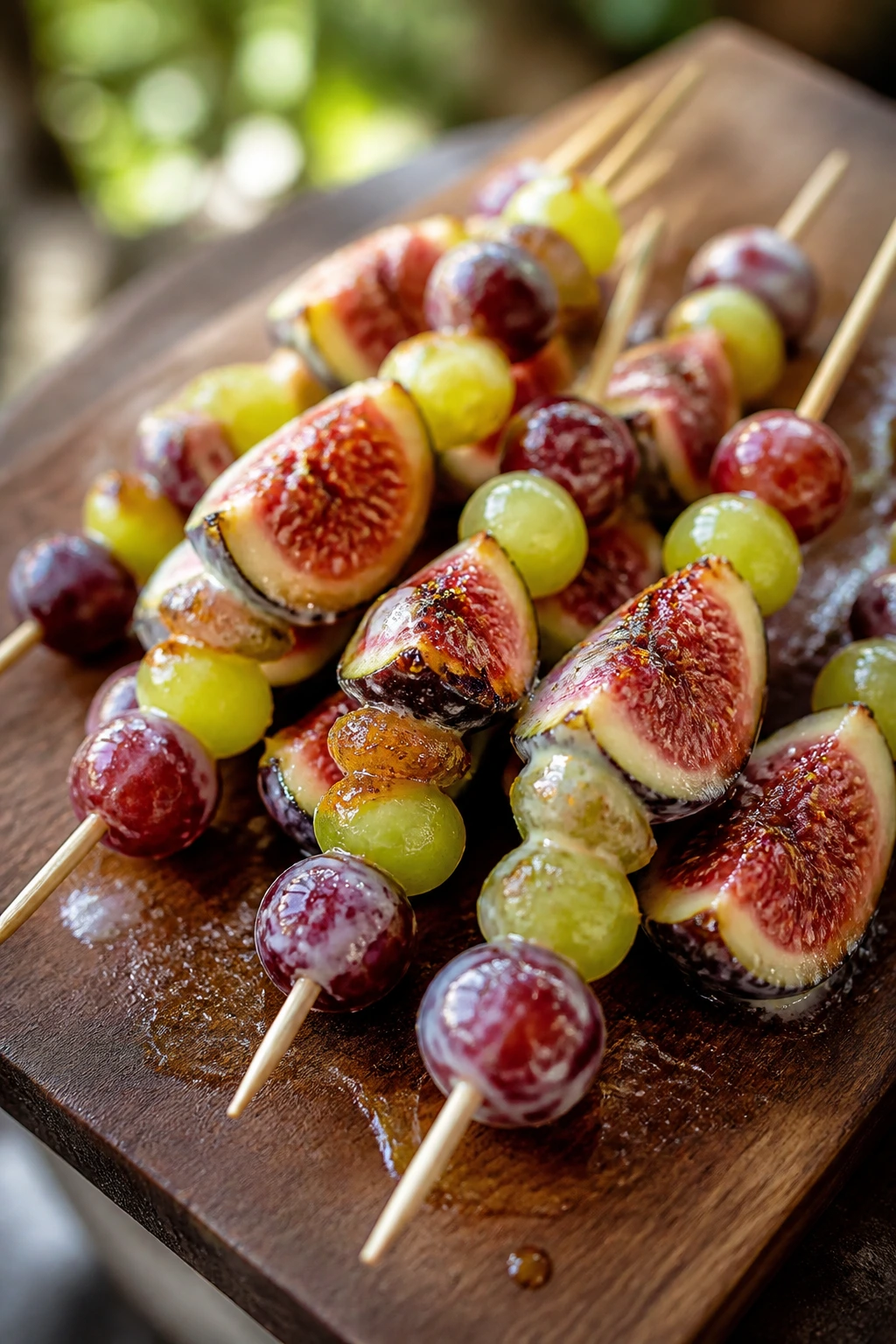
Fresh figs have a fragile, almost velvet texture that makes them feel luxurious without any fuss. Pair them with grapes, and the whole skewer gets a plush, juicy rhythm. Honey ricotta on the side pulls the fruit into dessert territory and gives you something creamy to drag the bite through.
Why It Works:
Figs are soft enough to feel special but sturdy enough to sit on a skewer if you handle them gently. Grapes bring firmness and keep the figs from dominating every bite. Ricotta sweetened with honey and a little orange zest gives the platter body and prevents the fruit from tasting one-dimensional. This recipe works best when the figs are ripe but not split open. Once they burst, they lose the elegant thing that makes them worth buying.
Key Ingredients:
- 8 fresh figs, halved if small or quartered if large
- 2 cups seedless grapes
- 1 cup ricotta
- 1 tablespoon honey
- 1 teaspoon orange zest
- 1 tablespoon chopped pistachios, optional
- Tiny pinch of salt
Quick Steps:
- Stir the ricotta: Mix the ricotta, honey, orange zest, and salt until just smooth.
- Prep the figs gently: Trim only the stem ends if needed; do not overcut them.
- Thread the skewers: Alternate figs and grapes, placing a grape at each end to help anchor the softer figs.
- Chill the fruit: A short chill keeps the figs from smearing.
- Serve with ricotta: Spoon the ricotta into a bowl and scatter pistachios over the top if using.
- Eat soon after plating: Fresh figs are lovely, but they are not patient.
Equipment for This Recipe:
- Skewers
- Small bowl
- Spoon or small whisk
- Sharp knife
- Serving bowl for ricotta
How to Serve This Dish:
Serve these on a narrow platter so the figs do not roll around. I like them as a dessert after a salty meal because the ricotta softens the fruit and the orange zest keeps it bright. Two skewers per person is enough unless you are skipping other dessert entirely.
Pro Tips for This Recipe:
- Buy figs that are soft at the neck but not leaking. If they split, they are already past their best texture.
- Pat the grapes dry so they do not make the figs slip.
- Pistachios add a nice crunch, but keep them on the side if you are serving people with nut concerns.
- A tiny pinch of salt in the ricotta wakes up the honey.
Variations on This Dish:
- Mascarpone Swap: Use mascarpone instead of ricotta for a richer, smoother dip.
- Vegan Cream Version: Blend soaked cashews with a little maple syrup and orange zest.
- Berry Add-On: Tuck a strawberry between the figs and grapes if you want more brightness.
Common Mistakes to Avoid with This Dish:
- Using overripe figs: They smear before they ever look pretty on the plate.
- Overloading the skewer: Figs are delicate and need space.
- Leaving the ricotta too plain: Without honey and zest, it tastes heavy instead of creamy.
12. Lychee, Strawberry, and Mint Kebabs
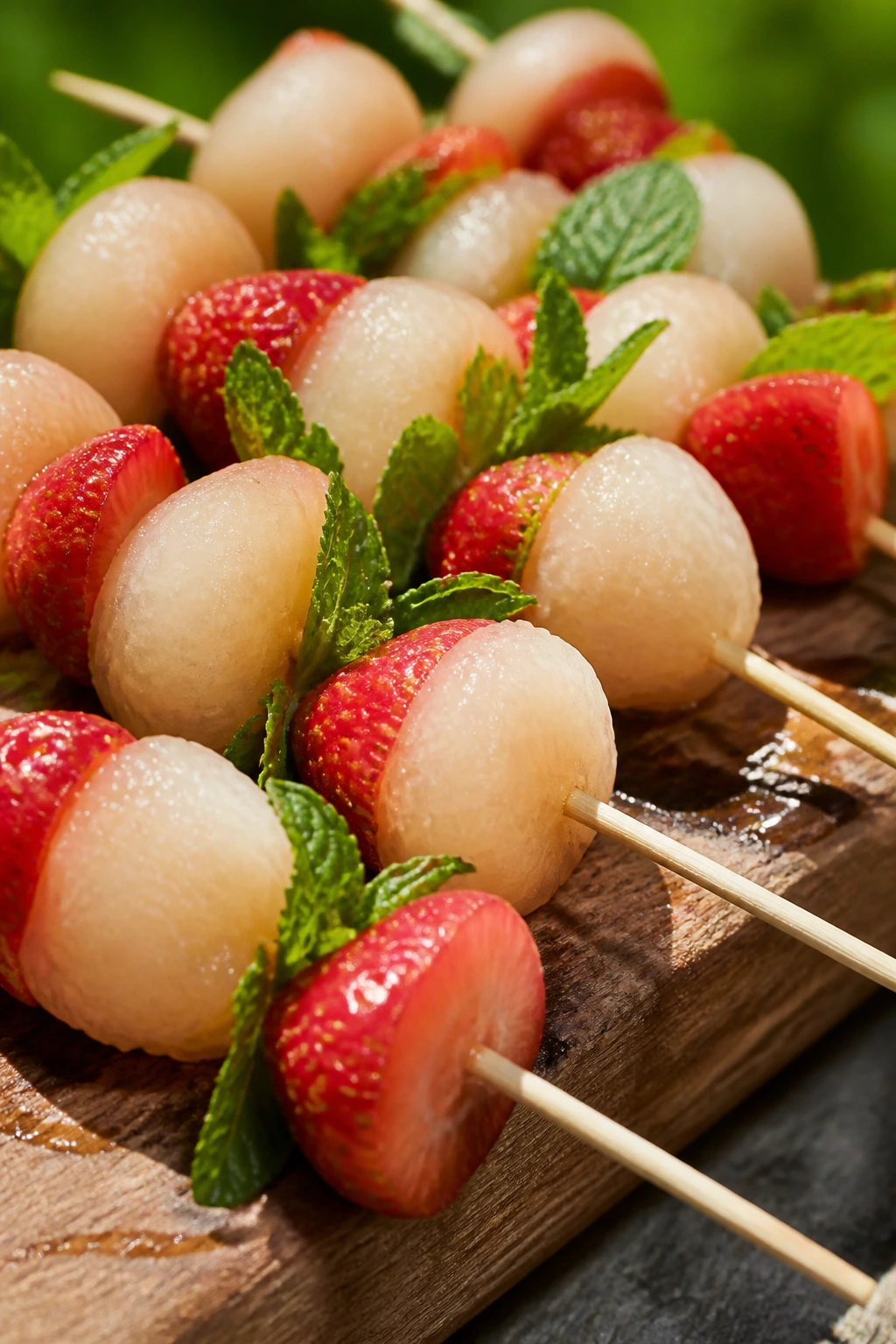
Lychee has a cool, floral sweetness that feels almost fancy the first time you taste it in a fruit skewer. Strawberries keep it grounded, and mint adds enough freshness to stop the whole thing from wandering into perfume territory. This one is a little unexpected, which is part of the charm.
Why It Works:
Lychee is soft, juicy, and aromatic, so it benefits from a firmer fruit that gives each bite some structure. Strawberries do that job well and bring a familiar flavor that keeps lychee from feeling too strange. Mint refreshes the finish and makes the skewer taste colder than it actually is. If you can find fresh lychees, great. Canned lychees work too, as long as they are drained well and patted dry.
Key Ingredients:
- 2 cups lychees, peeled and pitted, fresh or canned and drained
- 1 pound strawberries, hulled
- 1 tablespoon fresh lime juice
- 1 teaspoon sugar or honey
- 8 to 10 mint leaves
- Tiny pinch of salt
Quick Steps:
- Drain the lychees well: If using canned lychees, press them gently in a towel so they are not slick.
- Mix a light glaze: Stir the lime juice, sugar or honey, and salt together.
- Thread the skewers: Alternate strawberries and lychees, tucking mint leaves between a few pieces if you want a strong mint aroma.
- Brush lightly: Use just enough glaze to make the fruit shine.
- Chill 10 minutes: This firms the lychees and helps the mint scent spread.
- Serve cold: Lychee tastes cleanest when chilled.
Equipment for This Recipe:
- Skewers
- Small bowl
- Towel or paper towels
- Paring knife
- Platter
How to Serve This Dish:
These are nice after grilled food because they feel cool and slightly floral. A bowl of coconut yogurt or a scoop of plain Greek yogurt on the side makes the lychee flavor less fragile. Two skewers work well for dessert; one or two make a snack with tea.
Pro Tips for This Recipe:
- Dry the lychees thoroughly. Wet lychees make the skewer slippery in seconds.
- Fresh mint is strongest when the leaves are left whole or torn, not chopped.
- If the lychee flavor feels too delicate, add a touch more lime zest.
- Keep the strawberries firm so they do not crush the softer lychee.
Variations on This Dish:
- Rosewater Note: Add a drop or two of rosewater to the glaze for a softer floral finish.
- Dragon Fruit Pairing: Swap half the strawberries for dragon fruit cubes if you want a more dramatic color mix.
- No-Sugar Version: Skip the sugar entirely and rely on lime and mint.
Common Mistakes to Avoid with This Dish:
- Leaving lychees wet: They slide and smear.
- Using overpowered mint: Too much mint buries the lychee.
- Forgetting to drain canned fruit: It turns the whole tray glossy in the wrong way.
13. Mango, Passion Fruit, and Chile-Lime Kebabs
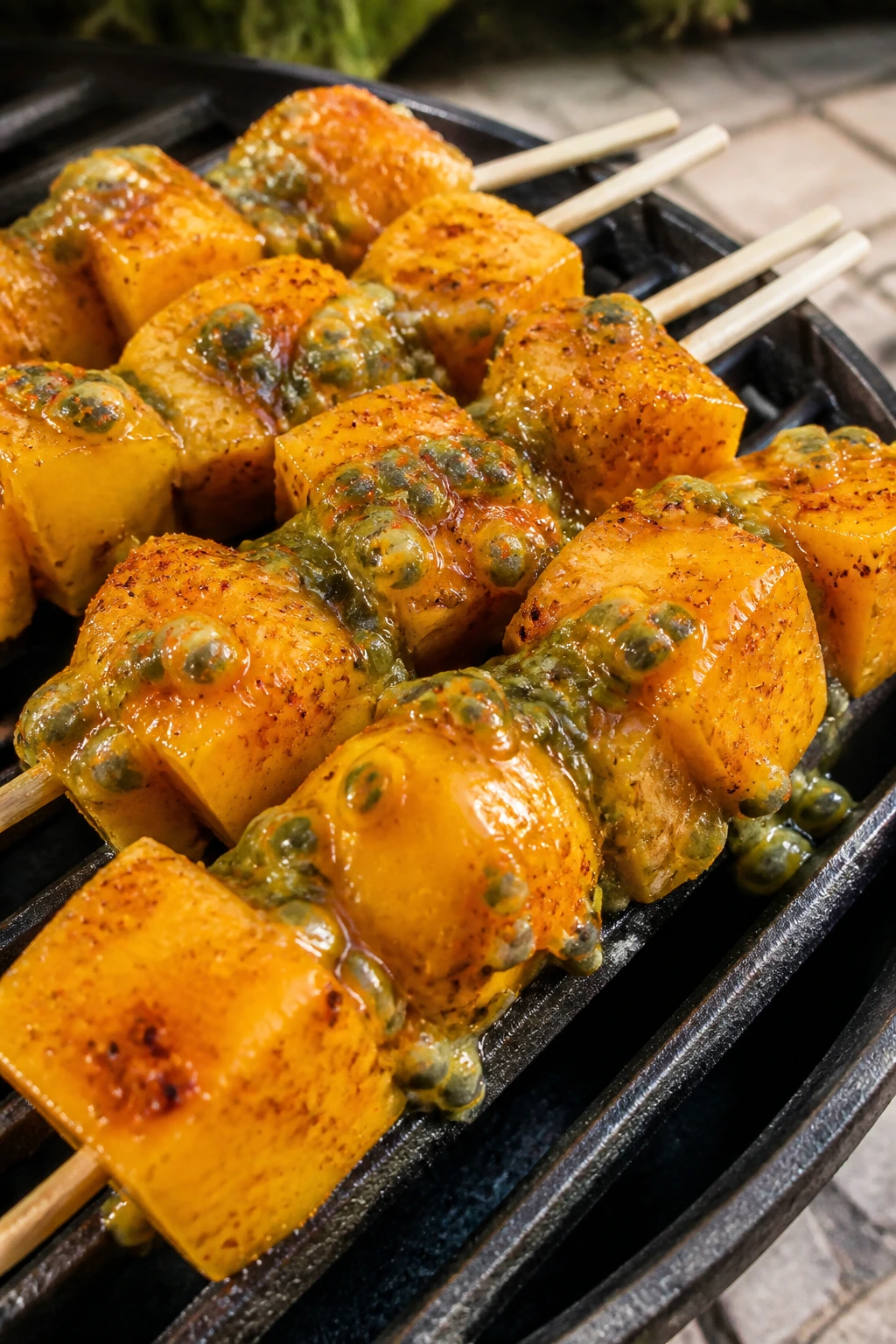
Mango and passion fruit belong together when you want something tart, sweet, and a little electric. Chile gives the fruit a flash of heat, which sounds dramatic until you taste it and realize the spice just makes the mango taste more mango-like. This skewer is bold, sticky, and one of the easiest ways to make fruit feel less polite.
Why It Works:
Mango has enough flesh to hold a skewer neatly, and passion fruit brings acidity that cuts through its sweetness. A small dose of chile-lime seasoning wakes everything up without turning the fruit into a challenge. Because passion fruit pulp is too loose to skewer, it works as a glaze or drizzle. That keeps the kebabs bright without making them fall apart.
Key Ingredients:
- 3 ripe but firm mangoes, peeled and cut into 1-inch chunks
- Pulp from 2 passion fruits
- 1 tablespoon lime juice
- 1 teaspoon honey or agave
- 1/4 teaspoon chile-lime seasoning, plus more to taste
- Tiny pinch of salt
- Optional: toasted coconut for garnish
Quick Steps:
- Prep the mango: Cut it into sturdy chunks that hold the skewer without splitting.
- Mix the glaze: Stir the passion fruit pulp, lime juice, honey, salt, and chile-lime seasoning together.
- Thread the skewers: Fill each skewer with mango chunks, leaving a little space between pieces so the glaze can cling.
- Brush or spoon the glaze: Add just enough to coat the mango.
- Chill for 10 minutes: This helps the tartness settle into the fruit.
- Finish with coconut if using: Sprinkle it over the top right before serving.
Equipment for This Recipe:
- Skewers
- Knife and cutting board
- Small bowl
- Spoon
- Optional fine mesh strainer if you want to remove some seeds from the passion fruit pulp
How to Serve This Dish:
Serve these with grilled fish, shrimp, or chicken if you want the fruit to sit on the same plate as dinner. They also work as a bright dessert with sorbet. One skewer is plenty for a side; two make a dessert portion.
Pro Tips for This Recipe:
- Pick mangoes that are ripe enough to smell sweet but still firm at the cut side.
- If the passion fruit is very tart, add a little more honey, not more seasoning.
- A pinch of salt keeps the mango from tasting washed out.
- Do not drown the fruit in sauce. A thin coat gives you the best contrast.
Variations on This Dish:
- Coconut Cooler: Add toasted coconut and skip the chile for a softer tropical profile.
- Mild Lime Version: Use lime zest alone if you want the fruit to stay kid-friendly.
- Grilled Mango Edge: Put the mango chunks on the grill for 1 minute per side before glazing.
Common Mistakes to Avoid with This Dish:
- Using mango that is too soft: It falls apart under the skewer.
- Overdoing the chile: You want warmth, not a dare.
- Skipping the salt: The fruit tastes flatter without it.
14. Peach, Plum, and Vanilla-Cardamom Kebabs
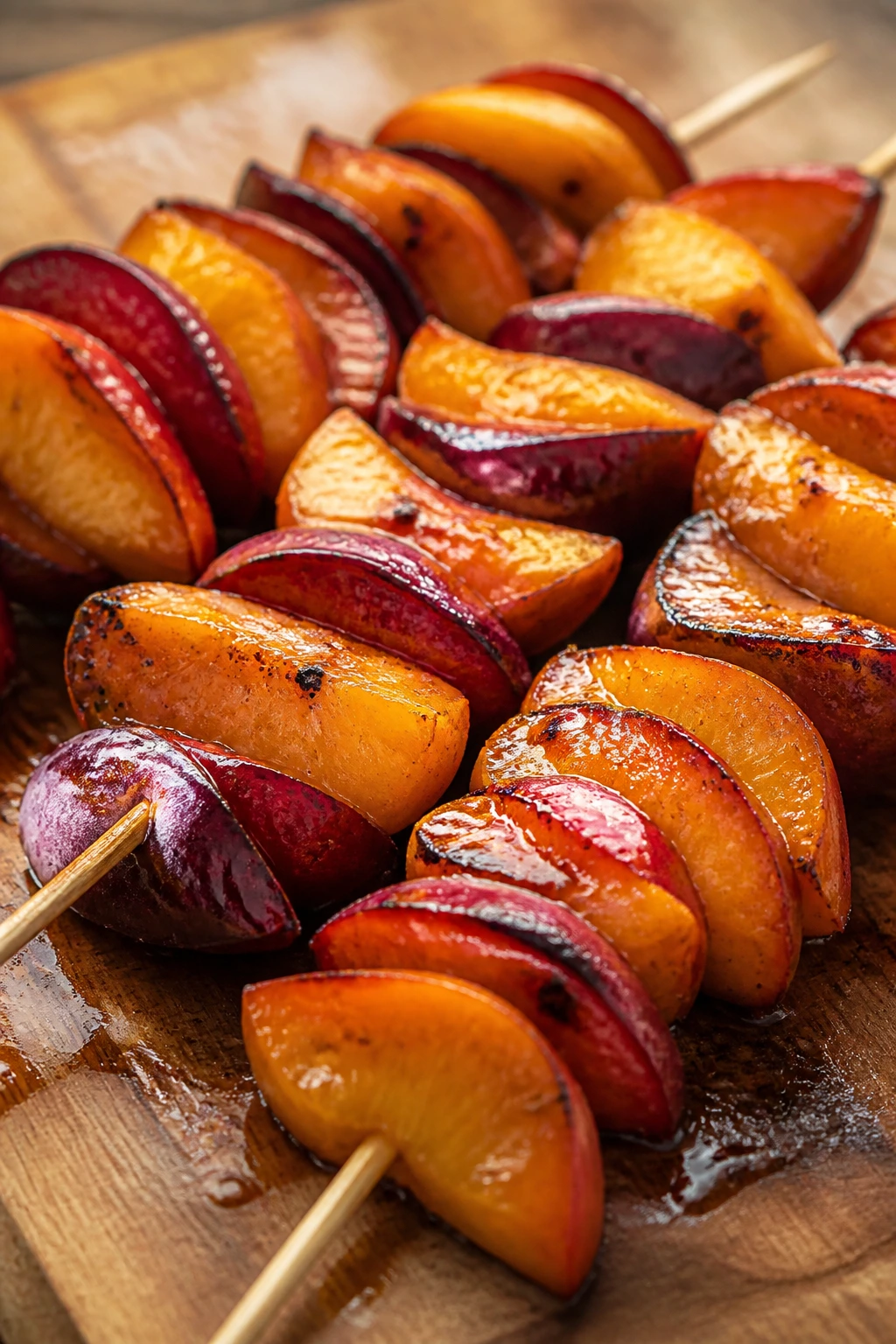
Peaches and plums are the kind of fruit that already tastes like summer, so they do not need much help. Cardamom gives them a softer, spiced backbone than cinnamon would, and vanilla makes the whole skewer smell like dessert before it reaches the table. This is a quiet, polished skewer rather than a loud one.
Why It Works:
Cardamom plays well with stone fruit because it adds perfume without making the fruit taste like pie filling. Vanilla rounds the edges, and a tiny bit of maple or honey helps the glaze stick. Grilling the fruit briefly creates a caramel-like edge, but the center should still feel juicy. That balance is what keeps the skewer from becoming mushy and overworked.
Key Ingredients:
- 4 peaches, pitted and cut into wedges
- 4 plums, pitted and cut into wedges
- 1 tablespoon maple syrup or honey
- 1 teaspoon vanilla extract
- 1/4 teaspoon ground cardamom
- 1 tablespoon melted butter or neutral oil
- Tiny pinch of salt
Quick Steps:
- Mix the glaze: Stir the maple syrup, vanilla, cardamom, butter, and salt together.
- Thread the fruit: Alternate peach and plum wedges, using pieces that are firm enough to hold their shape.
- Brush the fruit: Coat the outside lightly so it grills instead of sticking.
- Grill briefly: Cook over medium heat for 1 to 2 minutes per side until the fruit softens and marks appear.
- Rest on a platter: Give the skewers a minute to settle before plating.
- Serve warm or room temp: Both work here, and the cardamom shows up more as the fruit cools slightly.
Equipment for This Recipe:
- Skewers
- Grill or grill pan
- Small bowl and spoon
- Pastry brush
- Tongs
How to Serve This Dish:
These go well with plain yogurt, crème fraîche, or a scoop of ice cream that is not too sweet. A few crushed pistachios or almonds on the plate add a small crunch. Two skewers is a reasonable dessert portion; one is enough if there are other sweets on the table.
Pro Tips for This Recipe:
- Choose peaches with some firmness. They should bend a little under your fingers, not collapse.
- Keep the cardamom light. Too much, and it takes over the fruit.
- If the plums are very juicy, pat the cut sides dry before grilling.
- Brush the glaze on thinly. A heavy coat scorches faster than you expect.
Variations on This Dish:
- Cinnamon Sugar Shift: Swap cardamom for cinnamon if you want a more familiar dessert flavor.
- Almond Cream Pairing: Serve with almond yogurt or almond cream for a nuttier plate.
- No-Grill Version: Leave the fruit raw and drizzle with the vanilla-cardamom glaze right before serving.
Common Mistakes to Avoid with This Dish:
- Using too-soft fruit: It smears before it chars.
- Loading on the spice: Cardamom is fragrant and should stay in the background.
- Leaving the fruit on the grill too long: Stone fruit should soften, not dissolve.
15. Watermelon, Feta, and Mint Kebabs with Lime
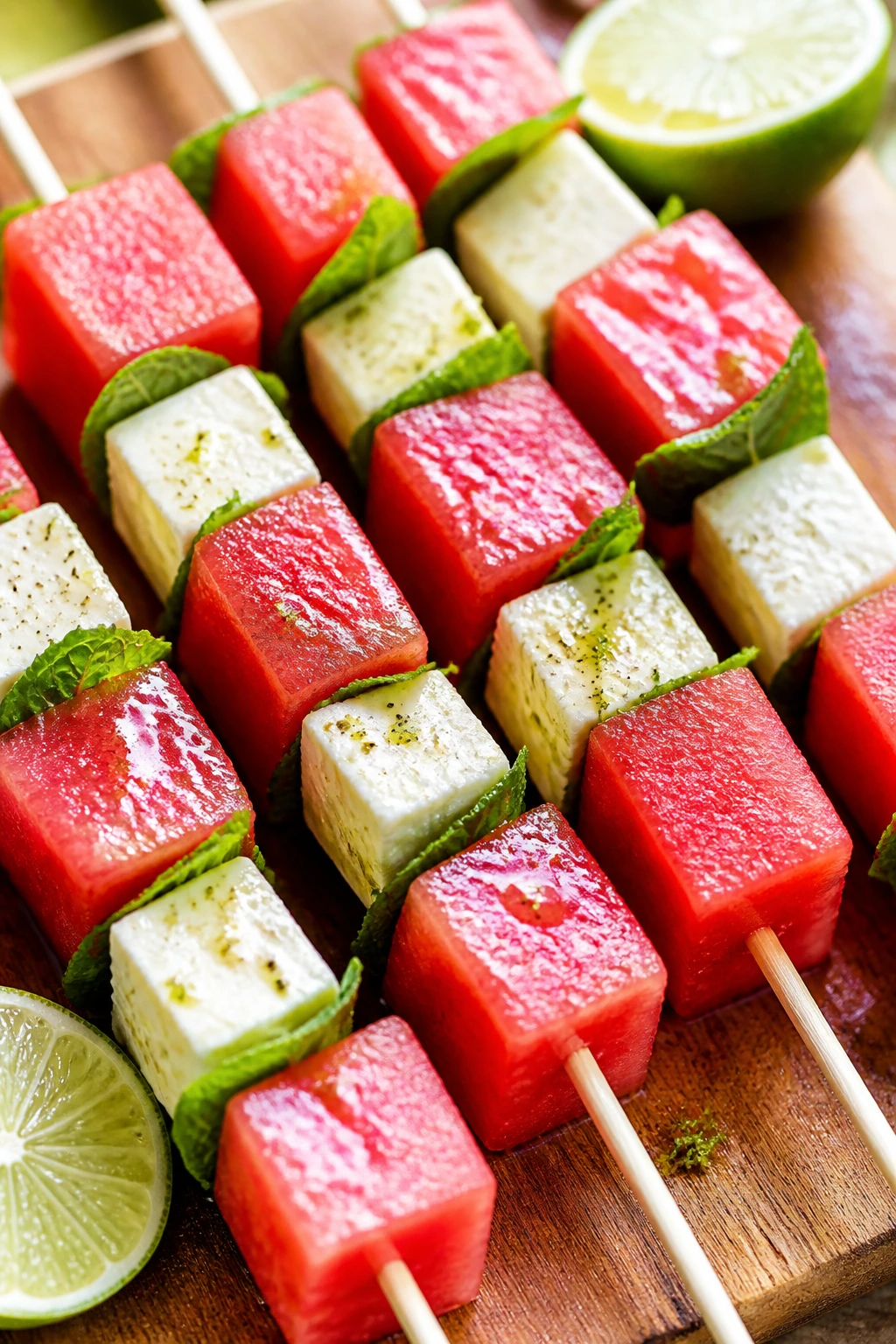
This is the salty-sweet skewer people keep going back to between bites of everything else. Watermelon brings the juice, feta brings the brine, mint keeps it cool, and lime keeps the whole thing from tasting too soft. It is simple in the best possible way.
Why It Works:
Watermelon and feta are a classic pairing because the salt sharpens the melon’s sweetness. Mint keeps the bite fresh, and lime adds the edge that makes the fruit taste even colder. This is the one skewer in the bunch that can lean appetizer instead of dessert, which is useful when you want something on the platter that feels more savory than sweet. If the watermelon is dry on the outside and the feta is cold and firm, the skewer holds together with very little fuss.
Key Ingredients:
- 3 cups seedless watermelon, cut into 1-inch cubes
- 8 ounces feta, cut into 1-inch cubes if firm enough
- 1 tablespoon fresh lime juice
- 1 teaspoon lime zest
- 1 tablespoon chopped mint
- 1 teaspoon olive oil, optional
- Pinch of black pepper
- Pinch of chili flakes, optional
Quick Steps:
- Dry everything: Pat the watermelon and feta dry so the skewer stays tidy.
- Mix the finish: Stir the lime juice, lime zest, mint, and olive oil together if using.
- Thread the skewers: Alternate watermelon and feta, keeping the feta between sturdier watermelon cubes so it does not break.
- Season lightly: Add black pepper and a pinch of chili flakes if you want more edge.
- Chill for 10 minutes: This helps the feta stay firm and the watermelon stay crisp.
- Serve cold: Add extra mint at the end if you want a stronger herbal aroma.
Equipment for This Recipe:
- Skewers
- Paper towels
- Small bowl
- Sharp knife
- Platter or tray
How to Serve This Dish:
These are very good with grilled chicken, skewered shrimp, or a simple rice salad. They also make sense on a snack board with olives, crackers, and tomatoes. Two skewers work as a starter; three can stand in as a light lunch if you add bread.
Pro Tips for This Recipe:
- Buy feta in a block and cut it yourself if possible. Pre-crumbled feta is too dry and crumbly for skewers.
- Choose watermelon with firm flesh, not grainy flesh.
- Add mint near the end so it stays bright and does not darken.
- A small amount of black pepper makes the feta taste cleaner.
Variations on This Dish:
- Halloumi Sizzle: Swap the feta for grilled halloumi if you want a firmer, less crumbly version.
- No-Chile Classic: Leave out the chili flakes and keep the flavor clean and simple.
- Tomato Side Plate: If you want more of a salad feel, serve the kebabs next to halved cherry tomatoes and cucumbers, not on the skewer.
Common Mistakes to Avoid with This Dish:
- Using crumbly feta: It falls apart before you reach the platter.
- Skipping the drying step: Watermelon that is wet makes the feta slippery.
- Packing the skewers too tightly: The fruit breaks when you try to turn or lift it.
Why Fruit Kebabs Work So Well on a Warm Night
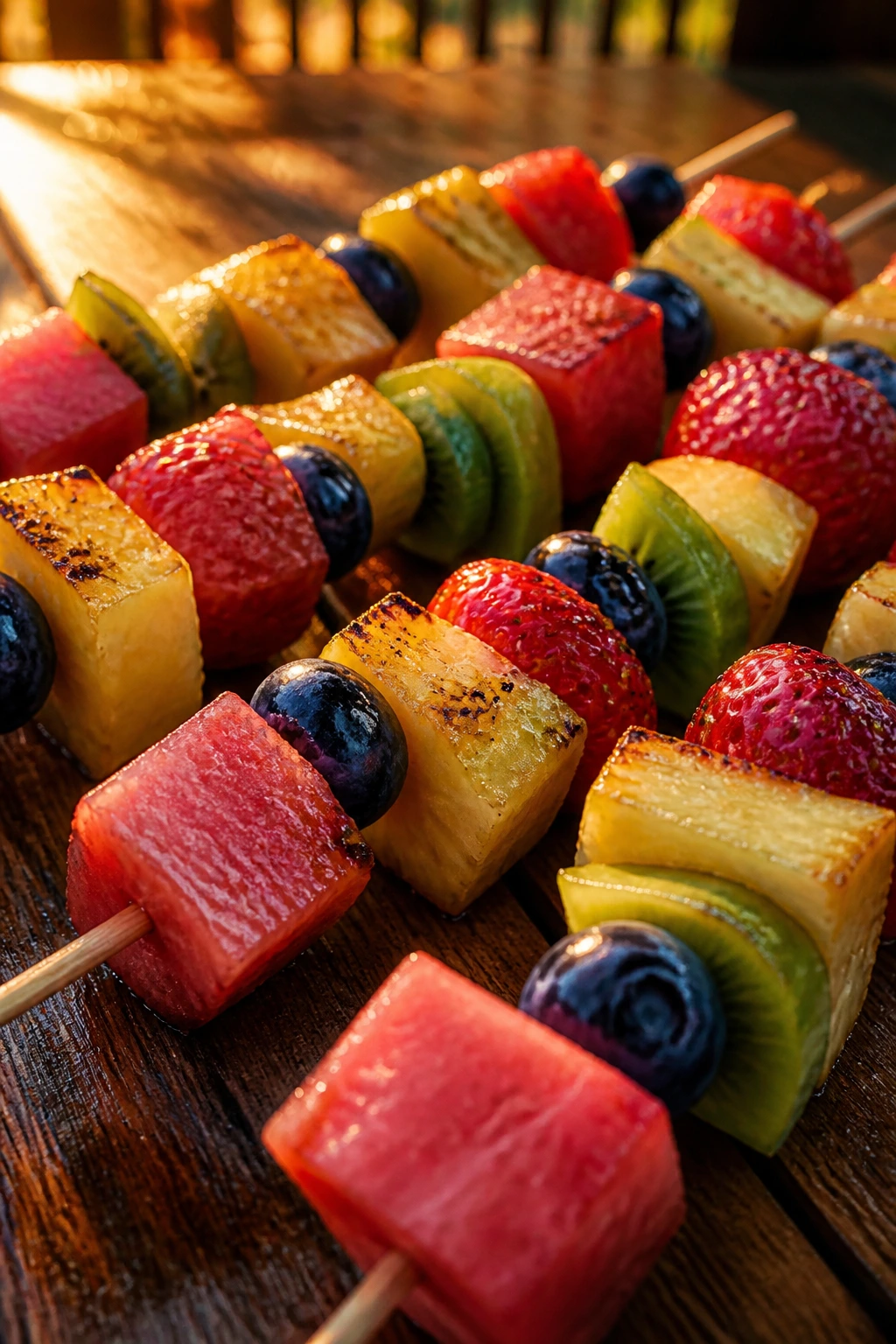
Fruit kebabs are faster than a fruit salad and less fussy than dessert, which is a nice place to live when the grill is already hot and nobody wants a long kitchen job. The skewer itself does a lot of practical work. It keeps pieces neat, makes portions obvious, and gives you a way to mix soft fruit with firmer fruit without turning the plate into a heap.
The best versions share the same shape logic. Firm fruit goes on the ends. Softer fruit goes in the middle. Pieces should be cut to a similar size—around 1 inch is the sweet spot for most of these—so every bite feels balanced instead of lopsided. If you are grilling, fruit with a little structure works better than delicate fruit that turns to syrup the second it meets heat. Pineapple, peach, plum, and mango can take it. Raspberries and very soft berries usually cannot.
A small amount of acid changes everything. Lime, lemon, balsamic glaze, or even orange juice helps fruit taste brighter and keeps the whole skewer from reading as one-note sweetness. Salt matters too. Not a lot. A pinch. Enough to make the fruit taste more like itself.
Essential Equipment for These Recipes
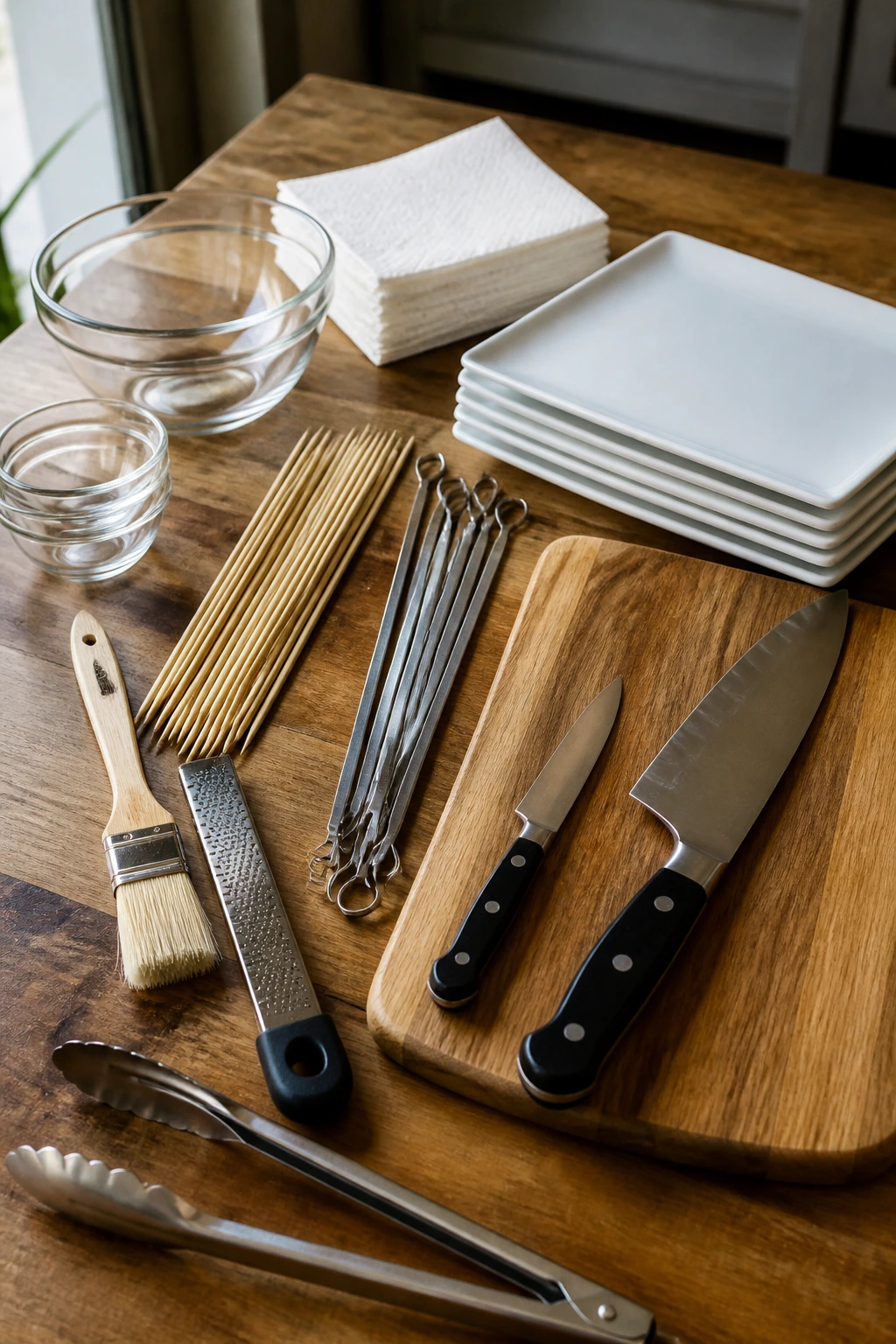
- 8- to 10-inch bamboo skewers: Good for no-cook versions; soak them if you plan to grill near the ends.
- Metal skewers: Better for grilled peach, plum, pineapple, and mango recipes because they do not scorch.
- Sharp paring knife: The small blade is easier for peeling, hulling, and trimming fruit into even pieces.
- Chef’s knife and cutting board: Use a stable board with a damp towel underneath so it does not slide while you cut melon or stone fruit.
- Small mixing bowls: You’ll want separate bowls for glazes, yogurt dips, and quick finishing salts.
- Pastry brush: Handy for brushing honey-lime glaze or oil without drowning the fruit.
- Citrus zester or microplane: Lime zest and lemon zest make the fruit taste brighter without making it wetter.
- Tongs: Essential for turning grilled kebabs without tearing them.
- Serving trays or rimmed platters: Rimmed platters keep juicy fruit and glazes from wandering off the edge.
- Paper towels: Dry fruit before threading; this one small step keeps everything cleaner and less slippery.
Smart Shopping and Ingredient Tips
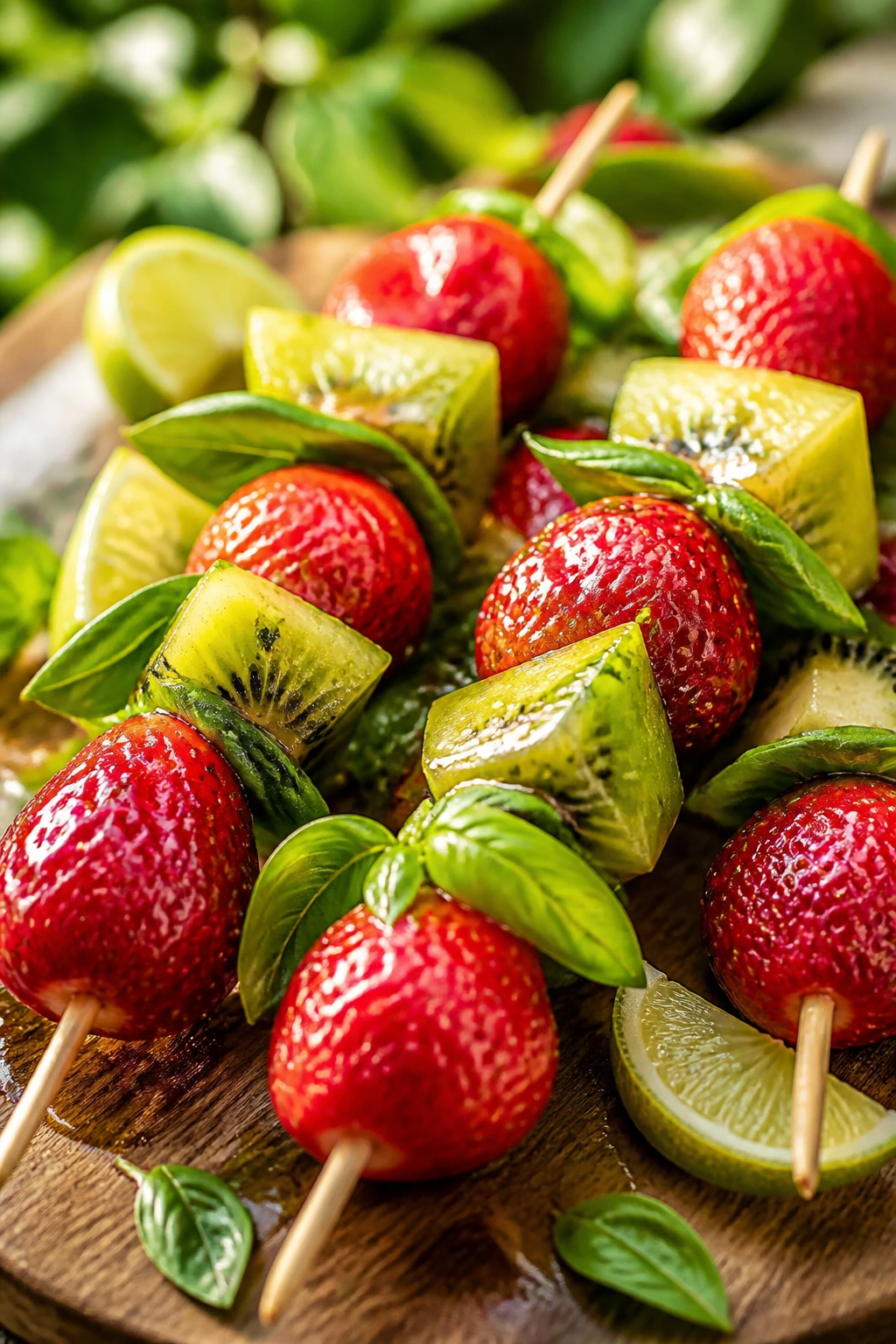
Buy fruit for skewers a little firmer than you would buy fruit for eating straight from your hand. That sounds backward until you try to thread a peach that has already turned soft at the shoulders. It collapses under the skewer and leaves juice all over the board. The fruit should give slightly when pressed, but it should still have enough structure to hold a cube or wedge.
For berries, look for dry, bright skins and green caps that have not started to brown. For grapes, choose plump clusters without shriveled stems. For melon, weight matters more than size; a heavy melon usually has better juice and flavor than a big one that feels light. Stone fruit should smell sweet near the stem end. If it smells like nothing, it will taste like nothing with or without a glaze.
Pineapple and mango need a little attention. Pineapple should be fragrant and golden rather than stringy and pale. Mango should feel ripe but still firm. Dragon fruit is mostly about texture and color, so buy one with even skin and just a little give. Lychee is easiest when it is fresh and chilled, but canned lychee works if it is drained well and dried before skewering. Figs are fragile and should be handled like they mean something—because they do.
Frozen fruit is not a great swap for these kebabs. It softens too fast and turns watery once it thaws. If you have extra fruit, freeze it for smoothies, not skewers. And if you are buying herbs, choose bright, dry leaves. Basil and mint wilt fast in a hot kitchen, so use them close to service if you can.
How to Serve These Fruit Kebabs
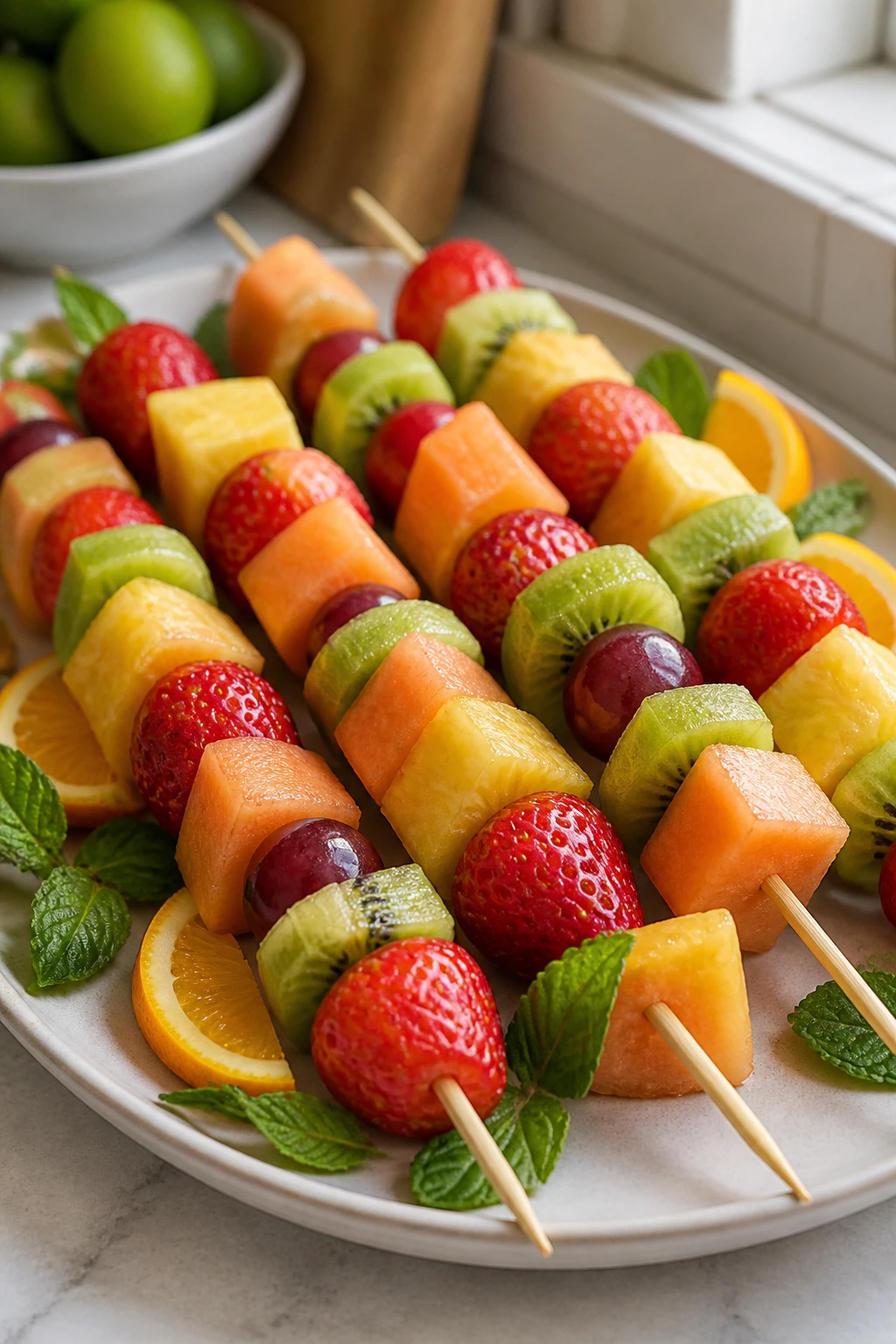
Presentation: Build the skewers in alternating patterns so the colors repeat across the platter—red-green, orange-yellow, pale pink-deep purple. A white or pale tray shows off the fruit better than a dark one. Tuck whole mint leaves, a few citrus wedges, or a scattering of toasted coconut around the edges so the platter looks full without becoming crowded.
Accompaniments: Plain Greek yogurt, whipped ricotta, coconut yogurt, vanilla ice cream, shortbread, grilled chicken, shrimp, or a simple cheese board all fit these kebabs in different ways. If you want to keep things very easy, put out one creamy dip and one crunchy side like biscotti or toasted almonds. Fruit kebabs can also stand beside salty snacks—olives, crackers, or even a handful of pretzels—if you want a sweet-salty spread.
Portions: For a snack, plan on 2 skewers per person. For dessert, 2 to 3 skewers usually feel right unless the meal was light. If the skewers are part of a larger spread, 1 to 2 per person is enough. Stone fruit and chocolate versions tend to feel richer, so the portion can be a little smaller there.
Beverage Pairing: Sparkling water with lime is the safest pairing because it never fights the fruit. Iced mint tea works especially well with melon, strawberry, and watermelon skewers. For a slightly more celebratory table, a dry rosé or sparkling wine sits nicely beside the grilled peach and pineapple versions.
Additional Tips and Flavor Boosters
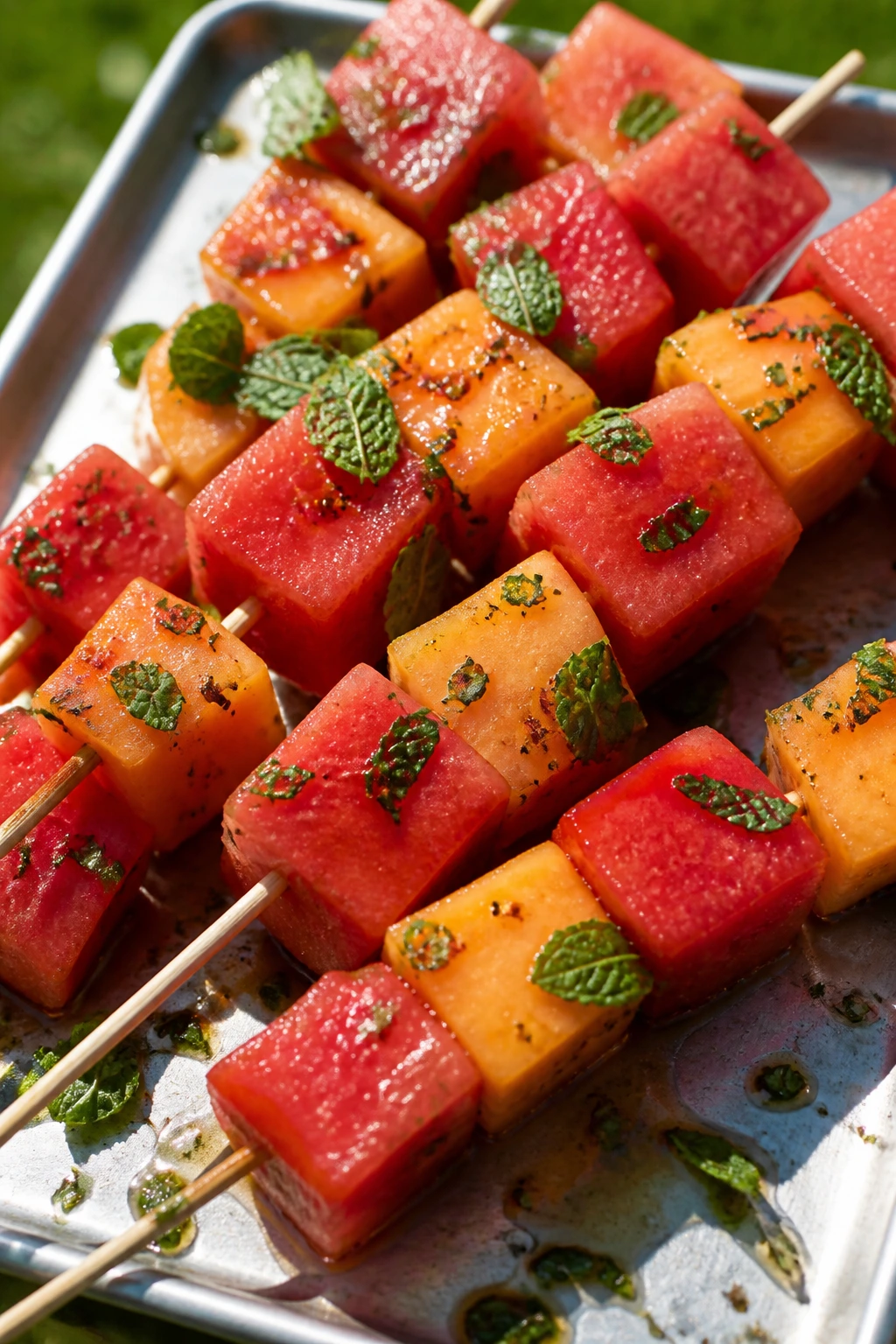
Flavor Enhancement: A tiny pinch of flaky salt, added at the end, makes strawberries taste sweeter and melon taste less watery. On tropical skewers, chile-lime seasoning or Tajín gives the fruit a sharper edge that keeps people reaching back for another bite.
Customization: Swap basil for mint, or mint for thyme, depending on whether you want a softer or greener finish. Honey can become maple syrup if you want a deeper sweetness, and plain yogurt can become coconut yogurt when you need a dairy-free dip. If a skewer feels too sweet, add citrus zest rather than more juice; zest changes the aroma without making the fruit soggy.
Serving Suggestions: Toasted coconut works beautifully on pineapple and mango. Crushed pistachios or almonds add crunch to fig and stone-fruit kebabs. A drizzle of balsamic glaze turns cherries and nectarines into something more dinner-party than picnic. Keep garnishes light. The fruit should still look like fruit.
Make-It-Yours: For a lower-sugar version, skip honey entirely and use lime, lemon, or orange zest with a pinch of salt. For a kid-friendly plate, stick to strawberries, grapes, melon, and pineapple, and leave the chile in the pantry. For a dairy-free finish, coconut yogurt and coconut cream both work without asking for any complicated substitutions.
Make-Ahead, Storage, and Reheating Guidance
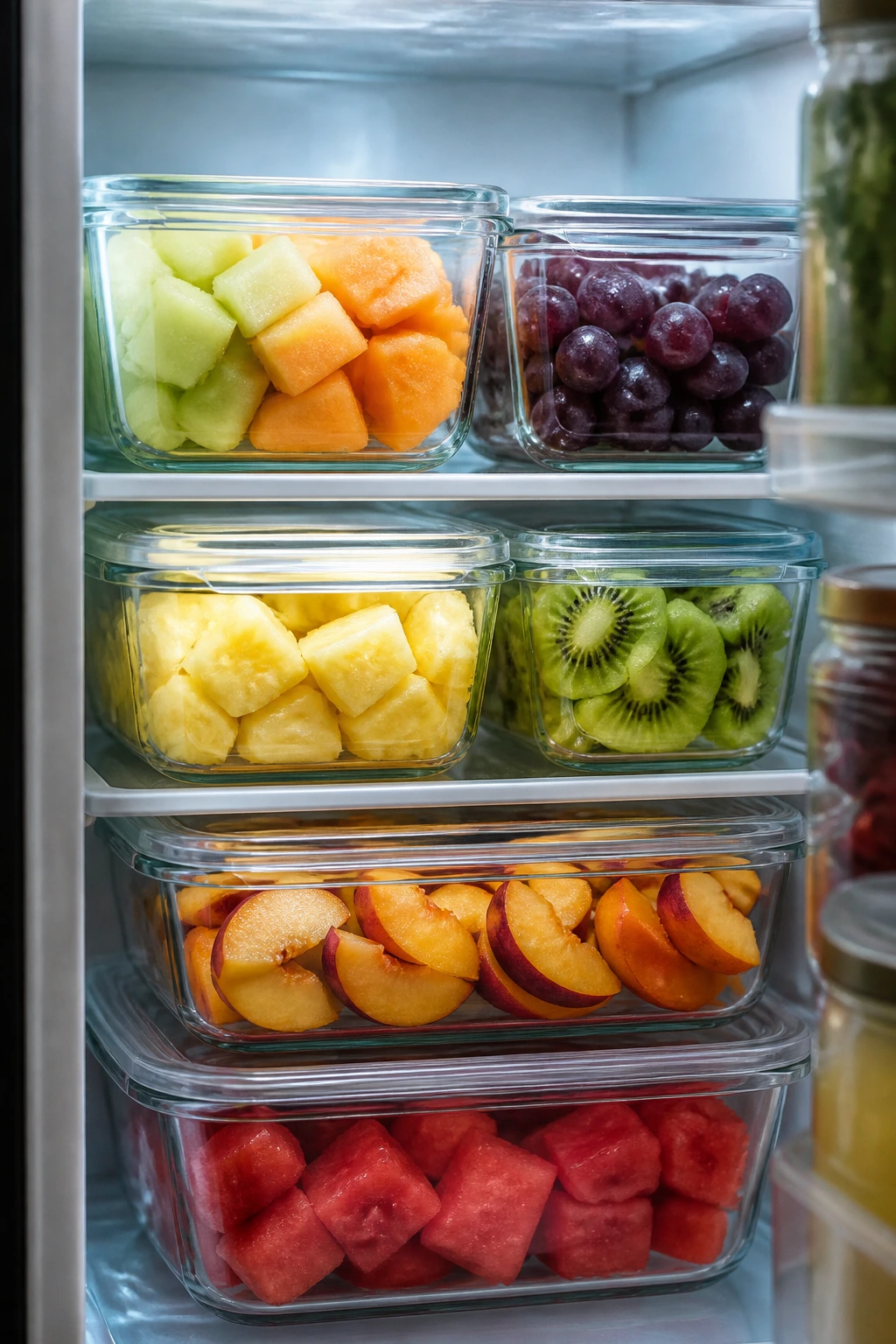
Most fruit kebabs are best the day you assemble them, but you can do some of the work ahead. Cut firmer fruit—melon, pineapple, grapes, kiwi, mango, and stone fruit—up to 24 hours in advance and store each type in a separate airtight container in the fridge. Keeping them separate helps prevent the fruit from bleaching each other with juice and keeps the pieces tidy when you thread them.
Assembled skewers hold well for about 6 to 12 hours in the refrigerator if you are using sturdy fruit and no delicate herbs. Melon, pineapple, grapes, kiwi, and stone fruit can handle that window. Bananas, figs, and basil are another story. Those should be assembled as close to serving time as you can manage. If you are making the banana-chocolate or fig-ricotta versions, I would not push past a couple of hours before serving.
Store glazes and dips separately. Honey-lime glazes, yogurt dips, and ricotta creams usually keep for 2 to 3 days in the fridge in a sealed container. Give them a quick stir before serving because citrus and dairy can separate a little. Mint and basil are happiest when they are added right before plating, not buried in storage with the fruit.
Reheating is not really part of the fresh fruit skewer story. If you grilled the fruit and want to serve it warm again, give it 30 to 60 seconds on a hot grill or in a dry skillet. Any longer and the fruit softens too much. Cold fruit kebabs can also sit at room temperature for about 20 to 30 minutes before serving, which is often better than serving them ice-cold straight from the fridge.
Freezing assembled kebabs is a bad trade. The texture falls apart when they thaw. If you end up with extra cut fruit, freeze that fruit for smoothies, fruit sauces, or a quick compote later.
Variations and Adaptations to Try
Tajín Trail: Sprinkle Tajín over pineapple, mango, watermelon, or strawberries for a sharper finish. It gives you chile, lime, and salt in one pass, which is handy when you do not want to mix another glaze.
Dairy-Free Creaminess: Use coconut yogurt, whipped coconut cream, or a cashew-based cream instead of yogurt or ricotta. A little lime zest or vanilla keeps the dip from tasting flat.
Grill-Mark Dessert: Turn peaches, plums, pineapple, or mango into a grilled version by brushing them lightly with oil or honey and cooking them just long enough to show marks. This version feels more like dessert from the grill and less like fruit salad on a stick.
Low-Sugar Brightness: Skip honey and syrup altogether. Rely on citrus zest, mint, basil, thyme, and a pinch of salt to make the fruit taste sharper without extra sweetness.
Kid Rainbow Skewers: Build skewers from strawberries, grapes, melon, and pineapple, all cut into similar pieces. Leave out the herbs and chile so the plate stays familiar and easy to eat.
Stone-Fruit Stack: Combine peaches, nectarines, apricots, and plums when you want one skewer to taste fully like summer orchard fruit. A light honey glaze or vanilla yogurt dip is enough; no extra flavors are needed.
Common Mistakes to Avoid
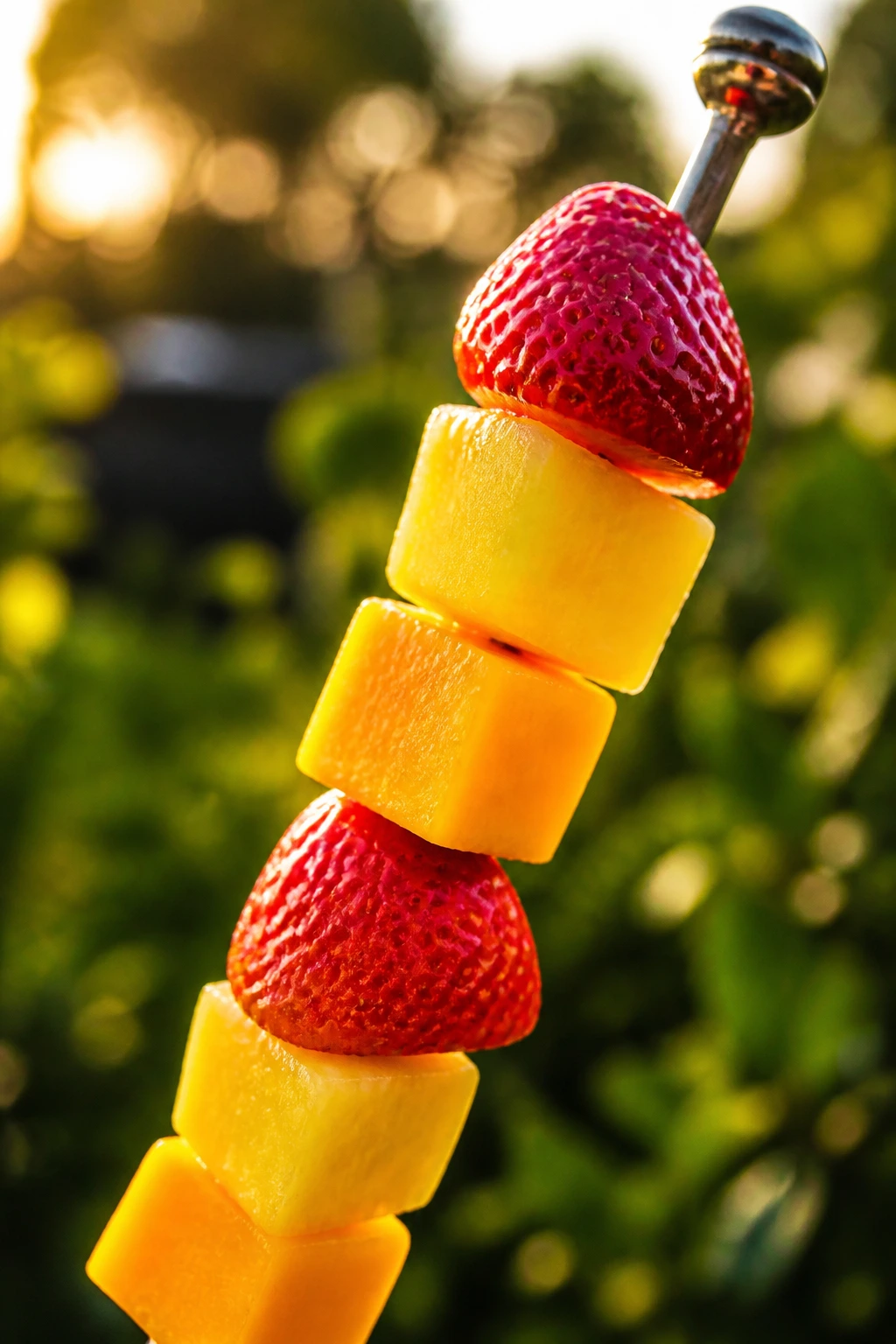
One of the easiest ways to wreck fruit kebabs is to cut every fruit to a different size. Tiny kiwi pieces slide around, huge melon chunks split the skewer, and a whole strawberry on one end makes the balance awkward. Keep the pieces close in size and the skewer will behave much better.
Another mistake is overbrushing the fruit with glaze. Too much honey, lime, or balsamic turns the skewer slippery and pools on the tray. You want shine, not syrup. Brush lightly, then taste. If it needs more, add a little extra at the end.
People also overestimate how much heat fruit can take. Pineapple and stone fruit can handle a short grill. Bananas, figs, and soft berries cannot. If you leave delicate fruit on the heat too long, it collapses before it gets any color. Short bursts work. Long cooking does not.
Packing the skewers too tightly is another common problem. Fruit needs a little breathing room so the pieces can settle and turn without splitting. Cramped skewers look dense on the plate and are harder to eat cleanly. Leave a small gap between pieces and the whole thing feels easier.
Finally, do not forget to dry the fruit. Wet melon, wet grapes, and wet lychee all make the tray slippery and dilute any seasoning you add. A paper towel takes 30 seconds. It saves you a mess.
Frequently Asked Questions
How do you keep fruit kebabs from falling off the skewer?
Cut the fruit into pieces that are large enough to grip the skewer, and avoid overly soft fruit unless you are serving it right away. Firm fruit on the ends helps anchor softer pieces in the middle, which makes a bigger difference than people expect.
What fruits work best for grilling?
Pineapple, peaches, plums, nectarines, mango, and apricots handle heat well because they hold their shape for a short cook. Melon, bananas, and berries are much less reliable on the grill and are better served fresh.
Can I make fruit kebabs the day before?
You can prep the fruit the day before, but assemble the skewers only if the fruit is sturdy. Grapes, pineapple, kiwi, melon, and stone fruit can usually handle a short overnight chill, while bananas, figs, and basil are better added just before serving.
Do I need to soak bamboo skewers?
Only if you are grilling and the ends will be near heat. Soak bamboo skewers for 20 to 30 minutes so they do not scorch. If you are serving everything cold, soaking is unnecessary.
How do I stop bananas and peaches from browning?
A small amount of lemon or lime juice slows browning on cut bananas and peaches. Use enough to coat the surface lightly, not enough to make the fruit wet and sour.
Can I use frozen fruit?
Not for the kebabs themselves. Frozen fruit softens too much when it thaws and tends to fall apart on the skewer. Save frozen fruit for smoothies, sauces, or compotes.
What dip goes best with fruit kebabs?
Vanilla yogurt, coconut yogurt, whipped ricotta, and honey-sweetened Greek yogurt are all dependable. Match the dip to the fruit: yogurt for citrus and berries, ricotta for figs and stone fruit, coconut cream for pineapple and mango.
How many kebabs should I plan per person?
For a snack, plan on 2 skewers per person. For dessert, 2 to 3 is usually enough, though the chocolate and banana version may feel richer, so a smaller portion works there.
Can I make these without a grill?
Absolutely. Most of the recipes here are fresh fruit skewers, and the grilled versions still taste good if you skip the heat and serve them with a glaze or dip. The fruit does not need grill marks to be worth serving.
A Cooler Way to End Dinner
Fruit kebabs are one of those small kitchen moves that pay back more than they should. You cut, thread, glaze, and serve, and suddenly the table feels brighter. The fruit tastes cleaner on a skewer than it does piled in a bowl, and the mix of firm pieces, herbs, citrus, salt, or a quick char gives each bite a little shape.
What I like most is that these can stay simple or turn a little dressy without asking for extra effort. Strawberry and basil. Peach and vanilla. Pineapple with chile and lime. Watermelon with feta. Pick the mood, cut the fruit well, and let the skewers do the rest. The next time the evening feels too warm for anything fussy, these are the kind of dessert-or-snack plate that makes sense immediately.