



The best smoky kids BBQ party for backyard cookouts does not smell like a restaurant smoker that’s been working overtime since dawn. It smells lighter than that. A little applewood drifting over chicken thighs. A faint char on corn. Ketchup warming on a slider bun. Enough smoke to make the adults smile, not so much that the children wrinkle their noses and go looking for goldfish crackers.
That balance matters more than people think. Too many backyard parties aim at an adult barbecue fantasy—big smoke, heavy sauce, ribs that need two hands and a stack of napkins. Kids don’t want a ceremony. They want food that arrives hot, tastes familiar, and can survive a three-minute interruption for bubbles, chalk, or a renegade soccer ball. If the menu is built for their actual habits, the whole cookout gets easier.
And there’s a lovely side effect. Once the grill is set up with a gentle smoke, a clear serving plan, and a few cold sides that hold up outside, the backyard starts doing the hosting for you. You’re not chasing people through the kitchen. You’re standing by the grill while the yard fills with that sweet, savory haze that says dinner is happening somewhere out back.
Why a Smoky Backyard BBQ Party Works So Well
Low-effort atmosphere: A grill does half the decorating for you. The smell of charcoal, sizzling fat, and a mild wood smoke trail tells everyone they’re at a real cookout before the first plate is served.
Kid-friendly portions: Sliders, drumsticks, sliced chicken, and corn on the cob fit smaller hands better than big rib slabs or saucy sandwiches that collapse on contact.
Flexible timing: Grilled food can come off in waves. That matters when one child is late, another is on the swing set, and a third is asking for “one more turn” on the sprinkler.
Cheaper menu, better payoff: Chicken thighs, hot dogs, ground beef, beans, watermelon, and buns stretch farther than a sit-down meal, and smoke makes those simpler foods taste far less plain.
Less indoor chaos: The oven stays off. The sink stays calmer. You can keep the messy, hot part of the party outside where it belongs.
Built-in adult appeal: A mild smoky edge gives the food enough character that the grown-ups don’t feel like they’re trapped in a kiddie menu with napkins.
Keeping Smoke Flavor Gentle Enough for Little Eaters
A child-friendly smoke profile is lighter than most barbecue fans expect. That’s the first thing worth saying plainly. If the grill is belching thick white smoke, the food is not getting “extra flavor.” It’s getting harsh smoke, and kids are fast to notice that bitter edge before adults do.
I prefer fruitwoods for this kind of backyard cookout. Applewood brings a soft sweetness that works on chicken, sausages, and even grilled fruit. Cherry is a little rounder and gives the food a warm color without shouting for attention. Maple is even quieter, which makes it a nice choice when you want the grill to whisper instead of roar. Hickory has its place, but on a kids party menu I use it sparingly—one chunk, maybe two, not a full handful.
Thin smoke beats heavy smoke every time
You want the smoke to look almost shy. Thin blue smoke is the sweet spot. Thick gray clouds usually mean the fire is dirty, the wood is smoldering too hard, or the lid has been opened and closed enough times to keep the grill from settling.
A simple rule helps. If you can smell the smoke from the patio but it does not sting your nose, you’re close. If it smells like a damp campfire and lingers in your throat, back off.
The easiest ways to keep it mild
- Use 1 to 2 wood chunks on a charcoal grill, not a pile of chips.
- On a gas grill, tuck a small foil pouch of chips over one burner and keep the other side for gentler heat.
- Keep sauces with a lot of sugar off the fire until the last few minutes, or the sweetness will scorch and taste bitter.
- Choose shorter cook times for the smoky foods. Chicken thighs, hot dogs, corn, and burgers pick up smoke fast; you do not need to keep them in there forever.
I also like to hold the smoke back until the grill is clean and hot. Dirty grates and sooty flames make the flavor rough. Clean heat gives you that backyard smell people lean toward instinctively.
Building a Menu Kids Can Actually Eat Without a Knife
A good kids BBQ menu should feel like it was built by someone who has watched a child try to eat a dripping sandwich while standing up. That’s the test. If the food needs a fork, a napkin, and a parent hovering nearby, it belongs at the table only as an option—not as the main event.
The easiest menu structure is almost boring in the best possible way: one or two grilled proteins, one crunchy side, one cold side, something sweet, and drinks that can be carried without spilling all over the patio. Keep the menu short. Short menus get eaten.
The main food should fit one hand
Mini burgers, sliders, hot dogs, sliced grilled chicken, and skewers are the heavy lifters here. They work because they can be held, eaten, and set down without a complicated balancing act. You can cut larger pieces into smaller bites after grilling, which is a lot better than trying to convince a six-year-old to work through a giant breast of chicken by themselves.
I’d plan on 3 to 4 ounces of protein per child if there are side dishes, and a little more if the menu is very simple. For older kids and adults, 5 to 6 ounces is more realistic. That sounds fussy until you’ve hosted a party and realized that the food disappears in two very different ways: the confident eaters take full portions, and everyone else snacks in small rounds.
Build the plate around texture
Kids tend to like contrast. Soft bun, crisp pickle, juicy meat, cold fruit, maybe a crunchy chip. That mix matters more than a lot of sauce. A sandwich that squishes into mush on the first bite is a mess. A slider with a little structure, on the other hand, gets picked up again.
A strong backyard menu usually includes:
- Sliders or mini burgers with ketchup, mustard, and pickle chips.
- Grilled chicken thighs sliced after resting, because thighs stay juicier than breasts on a busy grill.
- Hot dogs or sausages for the children who want the most familiar thing possible.
- Corn on the cob cut in half for smaller hands, or sliced into smaller rounds if you want less dripping.
- Watermelon wedges or fruit cups, because cold fruit does more for a hot afternoon than a complicated dessert ever will.
Don’t make the sauces too sharp
Children often prefer sweet barbecue sauce over vinegar-heavy or smoky-hot versions. That does not mean the food should taste flat. A sauce with a little honey, brown sugar, or ketchup base usually reads better on a kid’s tongue than a chile-loaded glaze that leaves everyone reaching for juice.
One neat trick: keep the sauce on the side and brush it on only after the meat has finished grilling. That keeps the burn risk down and lets people choose how much they want.
The Backyard Layout That Keeps Everyone Moving
A backyard cookout feels easy when the space has zones. Without them, the yard turns into a knot of people standing too close to the grill, the cooler, the serving table, and the one child who is somehow always barefoot.
The grill should have its own lane. Not a theoretical lane. A real one. Give it space—ideally 10 feet or more from the house, fence, overhanging branches, and anything flammable. Then set up everything else so the crowd naturally moves away from the heat instead of toward it.
A simple backyard map
- Grill zone: This is for the person cooking and one helper at most. No wandering feet.
- Plate-up zone: A folding table with plates, buns, napkins, and utensils.
- Cold zone: Cooler, ice packs, drinks, fruit, and anything that must stay chilled.
- Game zone: Chalk, bubbles, balls, sprinkler, lawn games, or whatever keeps the younger crowd busy.
- Trash and wipe zone: One bin for scraps, one for clean-up wipes, and paper towels where people can find them without asking.
That layout sounds a little rigid until the party starts. Then it feels like mercy.
Why the serving table should not live near the grill
Hot food and hungry children create traffic. Traffic near heat is where things go wrong. If the bun tray is on the far side of the grill, people naturally spread out. If it’s right next to the cooking grate, everybody crowds the one place you need clear.
I also like to keep condiments in squeeze bottles or small lidded containers. Ketchup bottles sloshed open on a picnic table become sticky little crime scenes. Squeeze bottles are less charming, maybe, but much easier to live with.
Shade changes the whole party
If you have one shady corner, use it for drinks and the cooler. Food sitting in direct sun warms faster than people realize, and children are not known for eating on a careful schedule. The shade buys you time. It also keeps the lemonade from tasting like bathwater.
Fire Safety and Food Safety Around a Backyard Grill
A backyard party with children around a hot grill needs clear rules, and honestly, kids are usually happier when the rules are simple enough to repeat. “Stay behind the chalk line.” “Only grown-ups touch the grill.” “Wait for the plate.” That kind of thing.
The grill itself should be treated like a tool, not a decoration. Keep lighter fluid, matches, and propane out of reach. Never add lighter fluid to a live flame. If you’re using charcoal, let the coals ash over before cooking. If you’re using gas, check the hose and connections before anyone starts asking when lunch is ready.
Food temperatures that keep people safe
Here’s where a little authority matters. The USDA’s food safety guidance is steady and useful: ground beef and burgers should reach 160°F, chicken and turkey should reach 165°F, and whole cuts of pork or beef like chops or steaks are fine at 145°F with a 3-minute rest. For kids, I like the simple route. Burgers are cooked through. Chicken is cooked through. No pink guessing games.
That rest time is not optional fluff. It lets the temperature settle and the juices redistribute, which keeps the meat from leaking all over the cutting board the second you slice it.
The two-plate rule saves a party
One plate for raw meat. One plate for cooked food. Keep them separate from the start. Do not put cooked burgers back on the tray that held the raw patties, even if the tray “looks clean.” It isn’t. The same goes for tongs. Raw-touched tongs stay with the raw food. Clean tongs touch the finished food.
I know that sounds overly careful. It isn’t. It’s one of those tiny habits that prevents a cookout from turning into a kitchen memory nobody wants.
Keep food out of the danger zone
Perishable food should not sit out for more than 2 hours. If the afternoon is hot enough that everyone is already sweating by the time the music starts, cut that window to 1 hour. Creamy salads, sliced meat, dairy-heavy dips, and anything with mayonnaise belong in the cooler when they’re not being served.
I’d rather bring out smaller bowls in rounds than set the whole spread outside and hope for the best. Kids graze. They return. They forget where they left their cup. Smaller refills work better than a giant buffet slowly warming in the sun.
Mains That Hold Up to Smoke and Stay Tender
The main dishes at a smoky kids BBQ party should do two things at once: taste good off the grill and stay easy to eat after a child inevitably wanders off for a few minutes before coming back hungry again. That means choosing foods with some forgiveness built in.
Burgers and sliders
Ground beef burgers are the easiest crowd-pleaser to manage because they cook fast and stay familiar. I like 80/20 beef for flavor and juiciness, shaped into 4-ounce patties for full-size burgers or 2-ounce patties for sliders. Make a small dimple in the center of each patty so it does not balloon into a football shape on the grill.
A hot grill gives you those dark stripes and a quick crust, but you do not need a blackened surface. Kids usually care more about the soft bun and the ketchup than the exact grill mark pattern. Good. That makes your life easier.
Chicken thighs and drumsticks
If I had to pick one protein for this kind of party, I’d reach for boneless chicken thighs or a mix of thighs and drumsticks. Thighs forgive overcooking better than breasts, and they keep their shape once sliced. Drumsticks are a little more hands-on, but many children love the built-in handle.
Brush on a mild sauce near the end, not at the beginning. Sugar burns fast over open flame. A glaze that goes on in the last 5 minutes of cooking stays glossy and sweet instead of sticky and bitter.
Hot dogs and sausages
Nothing says “kids are here and nobody has the energy to pretend otherwise” like hot dogs. That is not a bad thing. Hot dogs and sausages bring the menu back to earth. They are fast, recognizable, and easy to eat. If the rest of the meal is a little more ambitious, these keep the smallest guests from feeling left out.
For sausage, choose one with a mild snap rather than a pepper bomb. A smoked sausage can carry the grill flavor without asking children to work through a lot of spice. For hot dogs, I like to warm them through with a little char rather than leaving them pale and floppy.
Veggie options that do not feel like punishment
A kids BBQ party should have at least one vegetable that came off the grill on purpose. Portobello caps, zucchini planks, bell pepper strips, and onion halves all work. Halloumi is a strong choice if you want something salty and chewy that can handle heat without collapsing.
Cut everything into pieces that fit a small hand. A giant grilled mushroom looks clever on Instagram and annoying on a paper plate. Smaller pieces are what get eaten.
Sides That Stay Good on the Table Even When the Grill Gets Busy
Cold sides do a lot of quiet work at a backyard cookout. They fill the plate, reset the palate, and keep the meal from becoming one long line of hot food. The trick is choosing sides that can sit safely for a bit and still taste good after the grill has claimed your attention.
A vinegar-based slaw is one of my favorites for this exact reason. It stays crisp longer than a creamy slaw, and the sharper dressing cuts through smoky meat without making the plate feel heavy. If you want a mayo-based slaw or potato salad, keep it chilled in the cooler and bring it out in smaller bowls.
Sides that travel well from cooler to table
- Vinegar slaw with thin cabbage, carrots, and a light tangy dressing.
- Corn salad with grilled kernels, diced pepper, and a little lime.
- Baked beans kept warm in a foil pan or slow cooker.
- Fruit salad with melon, grapes, and berries that can be eaten with fingers.
- Potato wedges or potato salad, depending on whether you want something hot or cold.
- Chips and salsa because some children will always be chip people.
The practical part matters. Food that needs a complicated serving spoon or a long wait at room temperature tends to get ignored. Small bowls, simple utensils, and easy-to-grab pieces all help.
Corn deserves a mention of its own
Grilled corn works beautifully at a smoky kids BBQ party because it bridges the gap between vegetable and treat. Brush it with butter, salt, and a little lime. Or leave it plain. Once it has a few browned spots, children who ignore vegetables for sport will still usually take a bite.
Cutting the cobs in half makes them less unwieldy. It also keeps kernels from flying everywhere when small hands bite too hard. That’s one of those tiny party moves that saves your floor from a gritty mess later.
Keep one cold crunch on the table
A tray of cucumber slices, baby carrots, celery sticks, or bell pepper strips can do more than people expect. It gives children something to snack on while they wait. It also keeps the menu from becoming all smoke and starch.
Drinks and Desserts That Don’t Melt into a Puddle
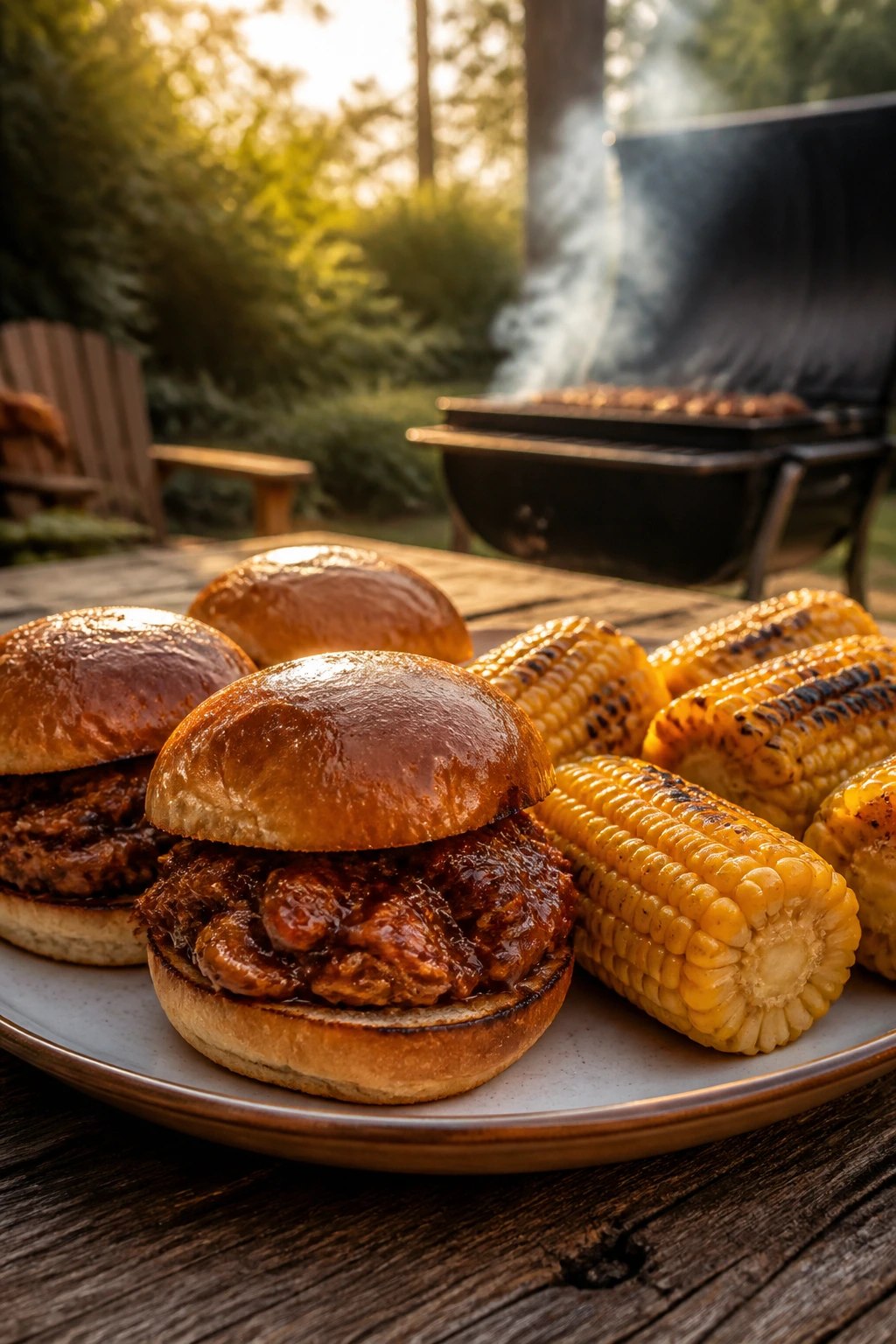
Hot weather and sugar have a strange relationship. A dessert can look perfect when it leaves the kitchen and become a mess five minutes later. That is why the smartest choices here are either cold, simple, or both.
A drink station should be easy to understand from across the yard. Water, lemonade, iced tea, and maybe a sparkling option with citrus slices are enough for most parties. You do not need six flavored waters and three syrups. A big dispenser with lemon rounds and a few mint leaves feels festive without asking you to babysit it.
Drinks that hold up
- Lemonade with frozen berries instead of regular ice, so the flavor does not get watered down.
- Iced tea sweetened lightly, with peach slices or lemon wheels.
- Sparkling water with orange or lime for guests who want something less sweet.
- Water in a clearly marked cooler because a party can look cheerful and still leave people dehydrated.
I like to keep cups in one stack and a small trash bin right beside the drink table. It cuts the wandering. It also stops the “where do I put this?” problem that seems to appear every 90 seconds at a children’s party.
Dessert should be easy to hold
If the grill is smoky and the dinner is casual, dessert should follow the same rule. Popsicles, ice cream sandwiches, brownies cut into small squares, fruit kabobs, and grilled peaches all fit the job. You want something that can be eaten fast before it melts down a wrist.
Grilled peaches, brushed with a little butter and set over the warm grates for a minute or two, are a nice bridge between the smoky side of the meal and the sweet finish. Add a scoop of ice cream only if you’re ready to serve it immediately. Otherwise it becomes a race against gravity.
Keep the sweetest things for the end
Children tend to lose patience for plates once dessert shows up. That is useful. Serve the savory food first, then bring out the sweets after the main rush has passed. If you reveal the ice cream too early, the entire meal can become a negotiation.
Games and Yard Time Between Plates
A backyard cookout with children needs a little motion. Not a structured camp schedule. Just enough to let them burn off some excitement while the adults stand near the grill and pretend not to be happy about the break.
The best games are the ones that can start and stop quickly. A full soccer match is too much. A giant obstacle course is too much. A few simple stations work better because hungry children do not all want the same kind of fun at the same time.
Easy ways to keep them busy
- Bubble station: Cheap, quick, and hard to beat for younger children.
- Sidewalk chalk zone: Mark off a square and let them draw on the patio or driveway.
- Sprinkler run: Good on hot days, but keep it far from the grill and electrical cords.
- Lawn game lane: Beanbag toss, ring toss, or small plastic bowling pins.
- Freeze dance: One speaker, one playlist, and no complicated equipment.
I like to set the play area 15 to 20 feet from the cooking zone. That keeps curious kids away from the heat without making the whole backyard feel off-limits. They can still see the grill, which somehow makes the food feel more anticipated.
Don’t make the games too precious
A backyard party is not the place for fragile rules or expensive toys. A few chalk lines and a ball can carry a lot of weight. If one game gets ignored, move on. Children usually tell you by their feet what they want to do next.
And if a child is happiest sitting near the cooler waiting for a hot dog, let that count as participation. Not every kid wants the sprinkler. Some want food first. Good for them.
Timing the Party So the Best Food Hits the Table Hot
A party can feel effortless if the food comes out in the right order. That’s the whole trick. Timing matters more than menu size, and the grill gives you a better chance at smooth pacing than an indoor stove does because you can cook in stages.
A simple working timeline
-
The day before: Chop vegetables, mix dry rubs, portion meats, make the slaw dressing, and chill drinks. If you’re marinating chicken, get it in the fridge early so the flavor can settle in.
-
Two hours before guests arrive: Set out plates, cups, napkins, and serving spoons. Fill the cooler. Move anything that must stay cold into a shaded spot.
-
Forty-five minutes before serving: Start the grill. On charcoal, let the coals turn ashy and settle. On gas, preheat with the lid closed until the grates are hot enough to sear.
-
Twenty minutes before serving: Lay out buns, condiments, and cold sides. Toast the buns lightly if you want a little structure, but do not leave them where they dry out.
-
Fifteen minutes before serving: Cook the fastest items first if the menu has any, like hot dogs or thin sausage. Then move to burgers and chicken.
-
Serve in waves: Put out a first round of meat and buns, then refill as needed. That keeps the food hotter and the line shorter.
Why waves work better than one giant reveal
A single giant buffet looks impressive for about thirty seconds. After that, the burgers cool, the corn dries, and the children all want the same item at the same time. Waves keep the food alive. They also let you correct the grill pace if one batch runs faster than expected.
A cookout with kids always moves in bursts. Someone drops a cup. Someone needs a bandage. Someone wants another look at the bubbles. If the food plan can flex, the whole party feels calmer.
Keep one fallback item ready
I always like to have one extra simple backup. A tray of sliced fruit, a bowl of chips, or a stack of plain rolls can save you if the grill takes longer than expected. Nothing fancy. Just a quiet safety net.
Practical Tips for a Party That Feels Easy, Not Rushed
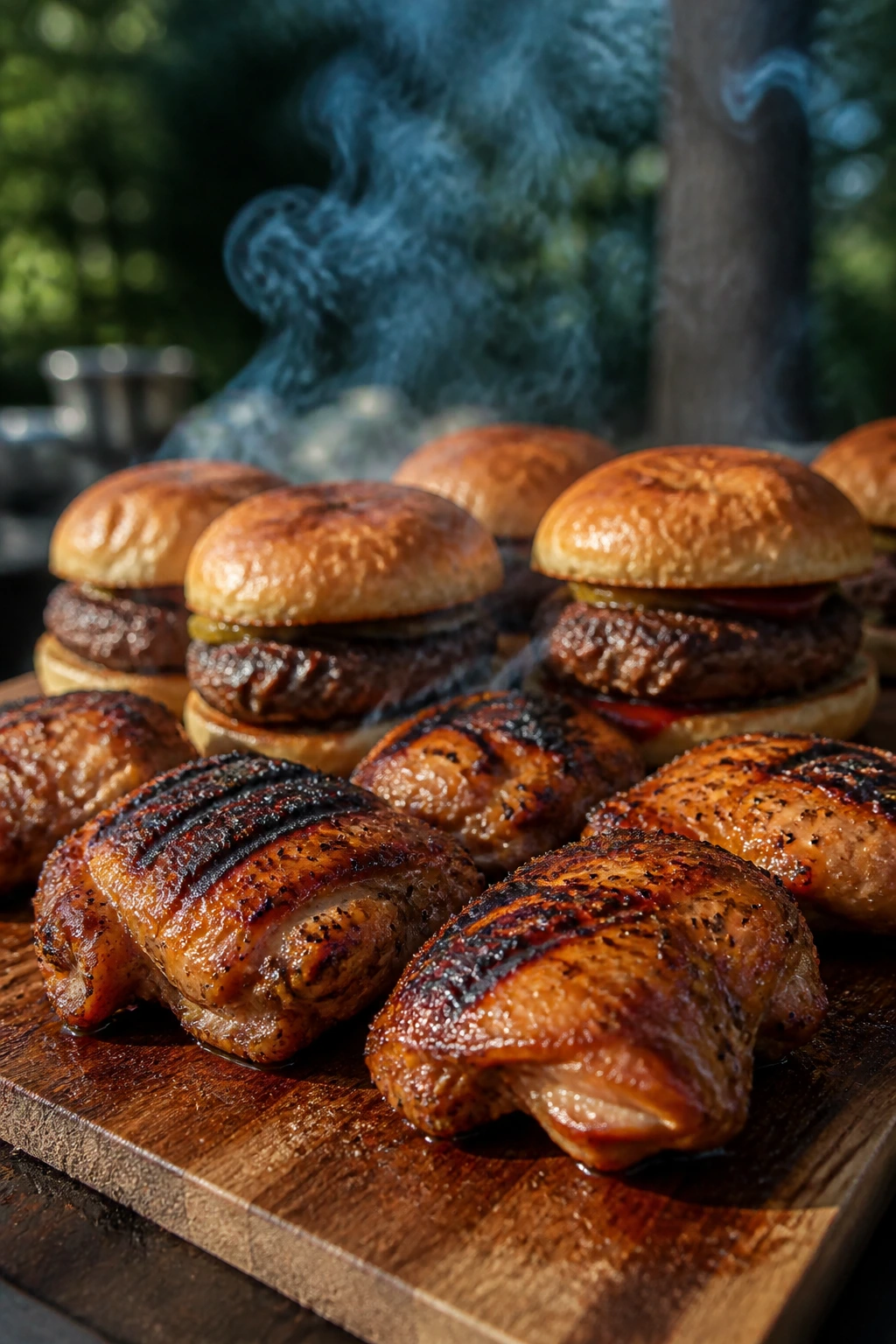
Flavor Enhancement: Warm a little barbecue sauce with a spoonful of apple juice and brush it on chicken during the last few minutes of grilling. The sauce stays glossy, and the fruit note softens the smoke without turning the food sugary.
Time-Saver: Cut corn in half before the party and parboil it for a few minutes if you want a faster grill finish. It’ll pick up char quickly and won’t tie up your grate while you handle burgers.
Cost-Saver: Build the protein menu around chicken thighs and hot dogs, then use sliders as the “special” item. That combination keeps the plate varied without pushing you into expensive cuts for every guest.
Kid-Flow: Put drinks and napkins away from the grill so children don’t gather in the hot zone every time they need a refill. It sounds small. It isn’t.
Cleanup Hack: Line the serving table with parchment or butcher paper before the food comes out. Sticky hands, dripping sauce, and fallen crumbs are much easier to deal with when the table itself never gets hit.
One more thing I like: keep a second empty cooler or tote nearby for trash and used serving tools. It sounds boring. It also saves the party from collapsing into a scattered pile of half-empty bags, loose spoons, and greasy foil.
Common Mistakes That Make Backyard BBQ Harder Than It Needs to Be
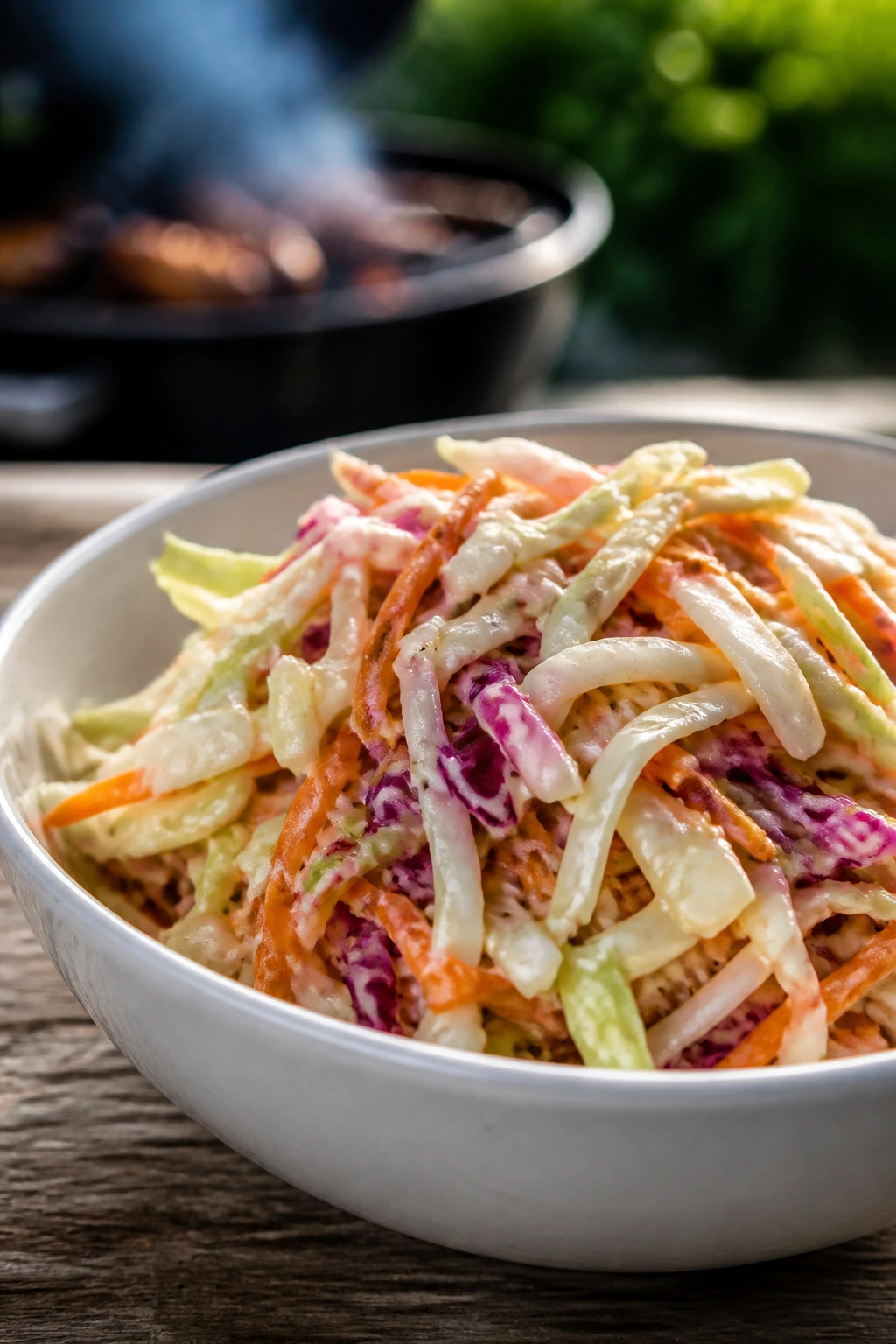
Too much smoke too early: If the food tastes bitter or leaves a sharp aftertaste, the fire probably got too smoky. Use less wood, wait for cleaner heat, and keep the lid closed instead of feeding the fire every minute.
Cooking everything over direct flame: Burgers can handle direct heat. Chicken thighs, sausages, and corn often do better with a cooler zone beside the fire. If the outside is charred and the inside is still underdone, the grill setup is the problem—not the recipe.
Leaving creamy sides in the sun: Potato salad and mayo-based slaws go soft fast when they sit out. Keep them cold in the cooler and refill from smaller bowls. If you can’t keep them chilled, choose vinegar slaw or a non-dairy side instead.
Skipping the thermometer: Guessing is how burgers get dry and chicken gets overcooked. An instant-read thermometer takes the drama out of the last five minutes. Burgers should hit 160°F. Chicken should hit 165°F. Plain and simple.
Letting the grill area turn into a playground: Children near the grill need a clear boundary. One distracted step is enough to create a burn risk. A visible line on the ground, a table barrier, or one adult stationed nearby solves more problems than stern reminders shouted across the yard.
Serving too late: If the children are already hungry and half the food is still on the grill, patience disappears fast. Put out fruit, chips, or crackers earlier than you think you need to. A small snack buys you time.
Variations and Party Themes to Try

Applewood Backyard Classic: This version leans sweet and gentle. Use applewood smoke, burgers, chicken thighs, corn, and watermelon, then keep the sauces mild. It’s the easiest route if you want a crowd-pleasing menu that never feels heavy.
Southern Porch Cookout: Go a little richer with hickory used lightly, vinegar slaw, baked beans, pulled chicken, and sweet tea. This works best when the adults want a deeper barbecue profile but the children still need the food to stay accessible.
Skewer Night for Small Hands: Thread chicken, bell peppers, and pineapple onto short skewers, then grill them over medium heat. Kids like the stick-and-pickup format, and the food comes off in neat portions that don’t slide around a plate.
Allergy-Smart Yard Party: Keep one grilled protein gluten-free, swap to dairy-free slaw or fruit salad, and set out buns separately. This version works when the guest list has mixed needs and you want the table to feel easy rather than awkwardly special.
Rain-Plan Patio Version: If the weather turns and the grill still works, move the food service under cover and keep the menu tight: burgers, hot dogs, one side, one fruit dish. You can also finish some items in the oven and use the grill for smoke and sear only. Not ideal. Still perfectly workable.
Tools and Equipment That Earn Their Keep
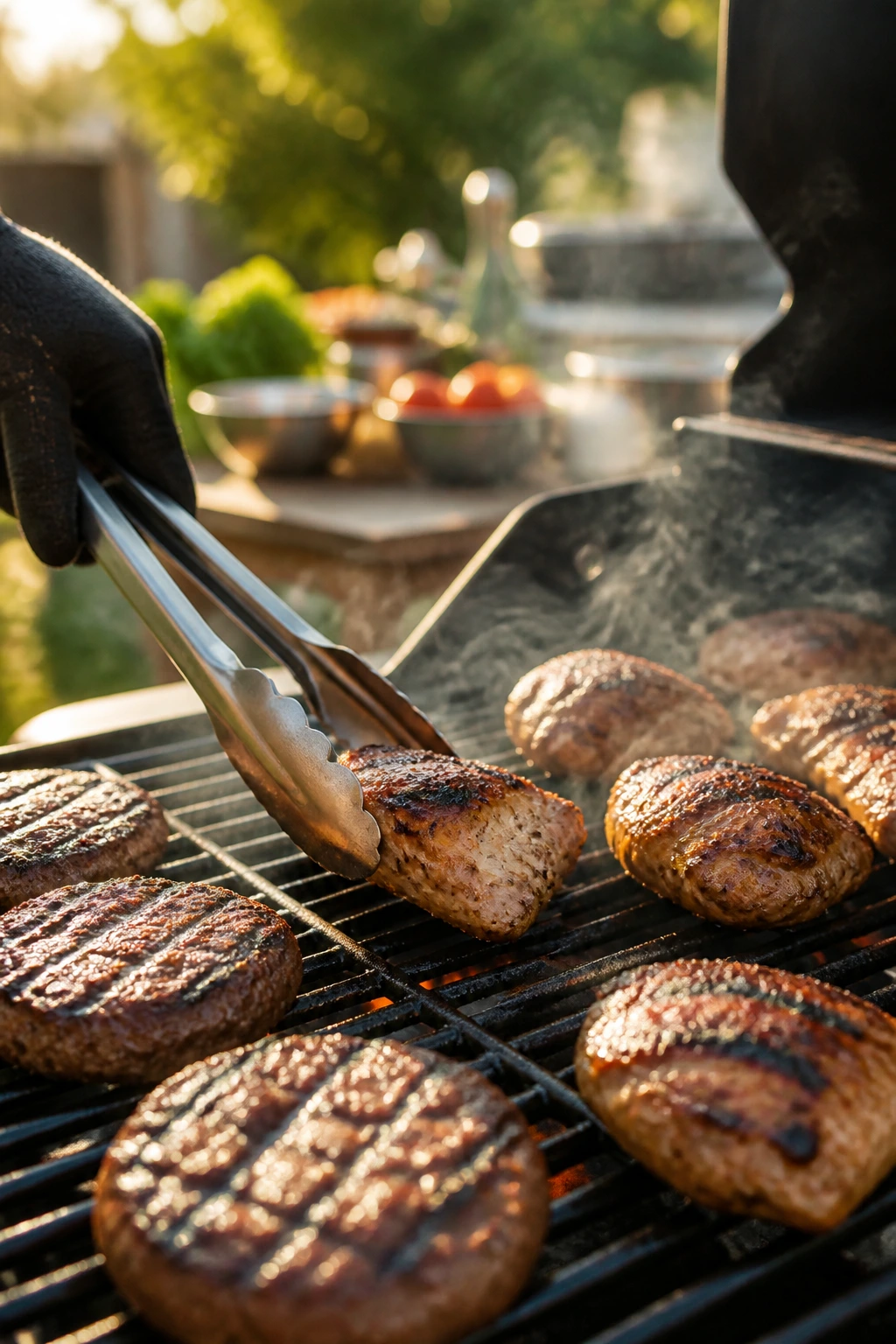
- Charcoal grill or gas grill — Either works; charcoal gives more smoke character, gas gives easier temperature control.
- Long-handled tongs — You want enough reach to stay clear of flare-ups and hot grates.
- Instant-read thermometer — The fastest way to know when burgers and chicken are done without cutting them open.
- Spatula with a thin edge — Better for sliders and delicate burgers than a bulky flipper.
- Chimney starter — If you use charcoal, this beats lighter fluid for cleaner heat.
- Heat-resistant gloves — Handy when moving grates, coals, or foil pans.
- Serving platters with rims — They catch juices and stop cooked food from sliding off the table.
- Sheet pans — Good for staging cooked meat, toasting buns, or carrying batches from grill to table.
- Cooler with ice packs — Keeps drinks, slaw, fruit, and mayo-based sides safe.
- Squeeze bottles or lidded condiment containers — Cleaner than open jars and easier for kids to use without drenching their sleeves.
- Grill brush or scraper — Clean grates make better smoke and less sticking.
- Foil pans — Useful for beans, corn, holding hot food, or catching drips.
Make-Ahead Prep, Storage, Leftovers, and Cleanup
The party gets easier when the work is front-loaded. A lot of the best grill-day moves happen the day before anyone shows up.
What to make ahead
You can chop onions, peppers, cucumbers, and cabbage the day before. Slaw dressing can be mixed ahead and held in a jar. Burger patties can be shaped and stacked with parchment between them. Chicken can be marinated overnight, which helps if you want the meat to taste seasoned all the way through instead of only on the surface.
Fruit is trickier. Watermelon, grapes, and berries are easy to prep ahead, but once you cut softer fruit, it needs to stay cold. If I’m making fruit salad, I’ll cut it a few hours early, toss it lightly with lemon juice, and keep it in the fridge until the party starts.
How long leftovers keep
Cooked meat keeps in the fridge for 3 to 4 days in a sealed container. Grilled chicken, burgers, and hot dogs all fit that window. Creamy sides are more fragile; keep them chilled and use them within 2 to 3 days. Vinegar slaws and bean salads usually hold a bit better because they’re less sensitive to heat and moisture.
For the freezer, cooked chicken and burger patties can last about 2 months if they’re wrapped well and stored flat. Hot dogs and sausages freeze fine, though they’re usually better eaten sooner rather than later.
Reheating without wrecking the texture
For chicken, a 325°F oven covered with foil works well. Add a spoonful of water or broth to the pan so the meat doesn’t dry out. Burgers are best rewarmed in a skillet over low heat or in the oven until just warm. The microwave works in a pinch, but use short bursts or the edges get rubbery.
Corn can be reheated in a skillet or wrapped in foil in the oven. Beans can go back on the stove with a splash of water. Fruit should be eaten cold; do not try to “reheat” it and expect it to still behave.
Cleanup that saves tomorrow-you
Scrape the grates while they’re still warm, not blazing hot and not stone cold. Empty charcoal ash only once everything has fully cooled. Wipe down the serving table before sauce dries into a crust. And if you used a cooler, drain it right away. Standing meltwater is one of those tiny annoyances that grows legs if you leave it overnight.
Questions People Ask Before the Grill Warms Up
How smoky should the food taste at a kids BBQ party?
Less smoky than most barbecue purists would choose for themselves. You want the food to smell like the grill, not like it spent an hour in a smokehouse. If the first bite feels heavy or bitter, the smoke was too strong.
Can I do this on a gas grill instead of charcoal?
Yes, and gas is often easier when children are involved because temperature control is more predictable. Add a small foil pouch of wood chips if you want a little smoke flavor, and keep the heat split between a hot side and a cooler side.
What’s the safest meat to serve when children and adults are both eating?
Chicken thighs, fully cooked burgers, and hot dogs are the easiest to manage because they cook fast and are familiar to nearly everyone. I’d avoid pink burgers at a kids party. It creates too much uncertainty at the serving table.
How do I keep food warm without drying it out?
Use foil loosely, not tightly sealed, and set cooked meat on a warm sheet pan or in a low oven around 200°F to 250°F while you finish the batch. Add sauces at the end, not before holding. Wet food holds better than dry food.
What if I only have one cooler?
Prioritize the coldest, most fragile foods: drinks, slaw, fruit, and anything with mayo or dairy. Pack those around ice packs and keep the cooler shut. Dry goods like buns, chips, and napkins can live outside the cooler and save space.
Can I make the sides the day before?
Yes, and for this kind of party, that’s smart. Slaw dressing, bean salads, fruit prep, and even many potato salads can be done ahead if they’re chilled properly. Just hold anything mayo-based very cold and keep it off the table until serving time.
What do I do if the smoke tastes bitter or harsh?
Back off the wood and clean up the fire. Bitter smoke usually means the grill is too dirty, the wood is smoldering instead of burning cleanly, or fat is hitting the flames too hard. Move the food to a cooler zone and let the smoke clear before adding the next batch.
Can I use the oven for part of the food if the weather turns ugly?
Absolutely. Finish chicken in the oven, reheat beans indoors, and use the grill for a quick sear or a little smoke at the end. A backyard cookout does not stop being a cookout because the sky gets fussy.
The Smell That Pulls Everyone Back Outside
A smoky kids BBQ party does not need fancy tricks to feel memorable. It needs food that matches the way children actually eat, smoke that stays gentle, and a backyard layout that keeps people moving in the right direction. That combination does more than feed a crowd. It changes the whole mood of the afternoon.
The part I like most is how forgiving this kind of cookout can be when it’s set up with intention. A little char on the corn. Juicy chicken thighs. Sliders that disappear before you even finish opening the napkins. That’s enough. Keep the smoke light, the cooler cold, and the grill zone clear, and the party tends to take care of itself.
When the last burger is gone and the yard smells faintly sweet from the coals, you’ll know you got the balance right. And odds are, somebody will already be asking when the next backyard cookout is happening.