



Thirty minutes is enough time for salmon dinners ready in 30 minutes to feel like a real answer, not a compromise. That’s the lovely thing about salmon: it doesn’t ask for a long braise, a two-hour marinade, or a heroic amount of babysitting. A hot oven, a skillet, a few good acids, and dinner starts looking polished before you’ve had time to talk yourself out of cooking.
What makes these dinners work isn’t only speed. It’s the way salmon takes on flavor without fighting it. Garlic lands hard. Lemon wakes everything up. Soy sauce, miso, dill, curry paste, pesto, capers, mustard — all of them find a home here because salmon has enough fat to stay tender and enough clean flavor to carry a bold sauce without turning muddy. The trick is matching the fish to fast-cooking vegetables, quick grains, and sauces that don’t need an hour to settle.
I’ve got a soft spot for meals that behave on a weeknight. No frantic juggling. No side dish holding court while the main protein overcooks. Just the kind of dinner that can go from fridge to table with a little rhythm and almost no drama. Some of these are sheet-pan simple, some are skillet jobs, and a few are the sort of bowl-and-wrap dinners I reach for when I want the kitchen to look tidy again by the time I sit down.
Why These Quick Salmon Dinners Earn Their Spot
-
Fast without feeling skimpy: Salmon cooks in minutes, but it still eats like a real dinner, which is more than can be said for a lot of “quick” meals that leave you hunting for snacks an hour later.
-
Built for one good pan and a few good bowls: Most of these recipes lean on pantry staples, a sheet pan, or a skillet, so cleanup stays sane even when the dinner feels a little dressed up.
-
Easy to bend toward what you already have: Rice, noodles, tortillas, couscous, salad greens, and frozen vegetables all fit the same salmon rhythm without turning the recipe into a compromise.
-
Hard to overcomplicate on purpose: Salmon doesn’t need a long ingredient list to taste rich. A bright sauce, a crisp vegetable, and a starch that doesn’t sulk are enough.
-
Friendly to fresh or frozen fish: Good frozen salmon holds up well here, which matters more than people admit. If you thaw it properly and pat it dry, it cooks beautifully.
-
The timing stays honest: These are dinners that really can land on the table in about 30 minutes, not “30 minutes plus a mysterious amount of prep nobody mentioned.”
1. Sheet-Pan Lemon Garlic Salmon with Asparagus
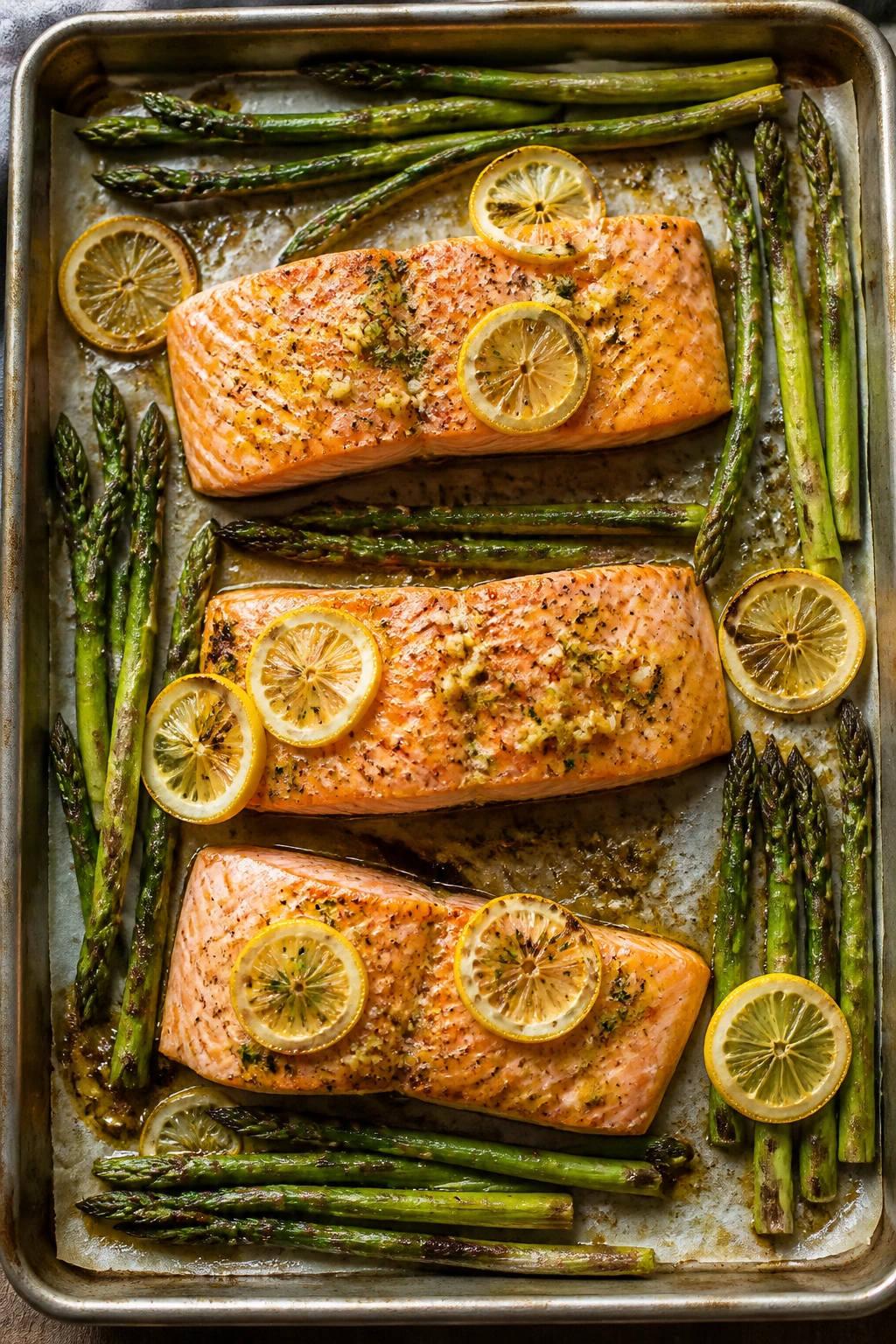
A sheet pan is the right kind of answer when you want salmon to taste bright and clean without turning the kitchen into a project. The asparagus cooks in the salmon’s shadow, the garlic softens instead of scorching, and the lemon brings just enough snap to keep the whole pan from feeling heavy. It smells like the kind of dinner you’d make if you had your life together, even if you absolutely do not.
Why It Works
Salmon and asparagus have almost the same patience level in the oven, which is why this pairing works so well. A hot oven at 425°F gives the asparagus a little edge and the salmon enough heat to cook through in about 10 to 12 minutes, depending on thickness. Parchment keeps the fish from sticking, and it also keeps the garlic from gluing itself to the pan in those bitter little burnt bits nobody wants.
Key Ingredients
- 4 salmon fillets, 6 ounces each — center-cut fillets cook most evenly, and skin-on or skinless both work here.
- 1 pound asparagus, woody ends trimmed — look for spears that are firm and not overly thick.
- 2 tablespoons olive oil — helps the vegetables roast instead of dry out.
- 3 garlic cloves, minced — keep the pieces small so they soften quickly.
- 1 lemon, zested and sliced — zest for the fish, slices for the pan, juice for the finish.
- 1 teaspoon kosher salt — enough to season both salmon and asparagus without overdoing it.
- 1/2 teaspoon black pepper — gives the fish a little edge.
- 1/2 teaspoon paprika — adds color and a faint warmth.
- 2 tablespoons chopped parsley — optional, but it makes the plate look and taste fresher.
Quick Steps
- Preheat the oven to 425°F (220°C) and line a rimmed sheet pan with parchment paper.
- Toss the asparagus with 1 tablespoon olive oil, half the garlic, 1/2 teaspoon salt, and a few grinds of black pepper. Spread it into one layer.
- Pat dry the salmon fillets, then rub them with the remaining oil, lemon zest, paprika, the rest of the garlic, and the remaining salt.
- Nestle the salmon onto the pan among the asparagus, keeping a little space around each piece so the fish roasts instead of steams.
- Bake for 10 to 12 minutes, until the thickest part of the salmon reaches 145°F and the flesh flakes cleanly with a fork.
- Broil for 30 to 60 seconds if you want a little color on top, then finish with lemon juice and parsley.
Tips and Variations
- Add tomatoes: A handful of cherry tomatoes can go on the pan for the last 6 minutes and burst into a fast pan sauce.
- Use thin spears carefully: Skinny asparagus needs less time, so check it at the 8-minute mark or it will go limp.
- Make it more filling: Spoon the salmon and asparagus over couscous or rice if you want the dinner to stretch farther.
2. Honey Soy Glazed Salmon Bowls with Snap Peas and Rice
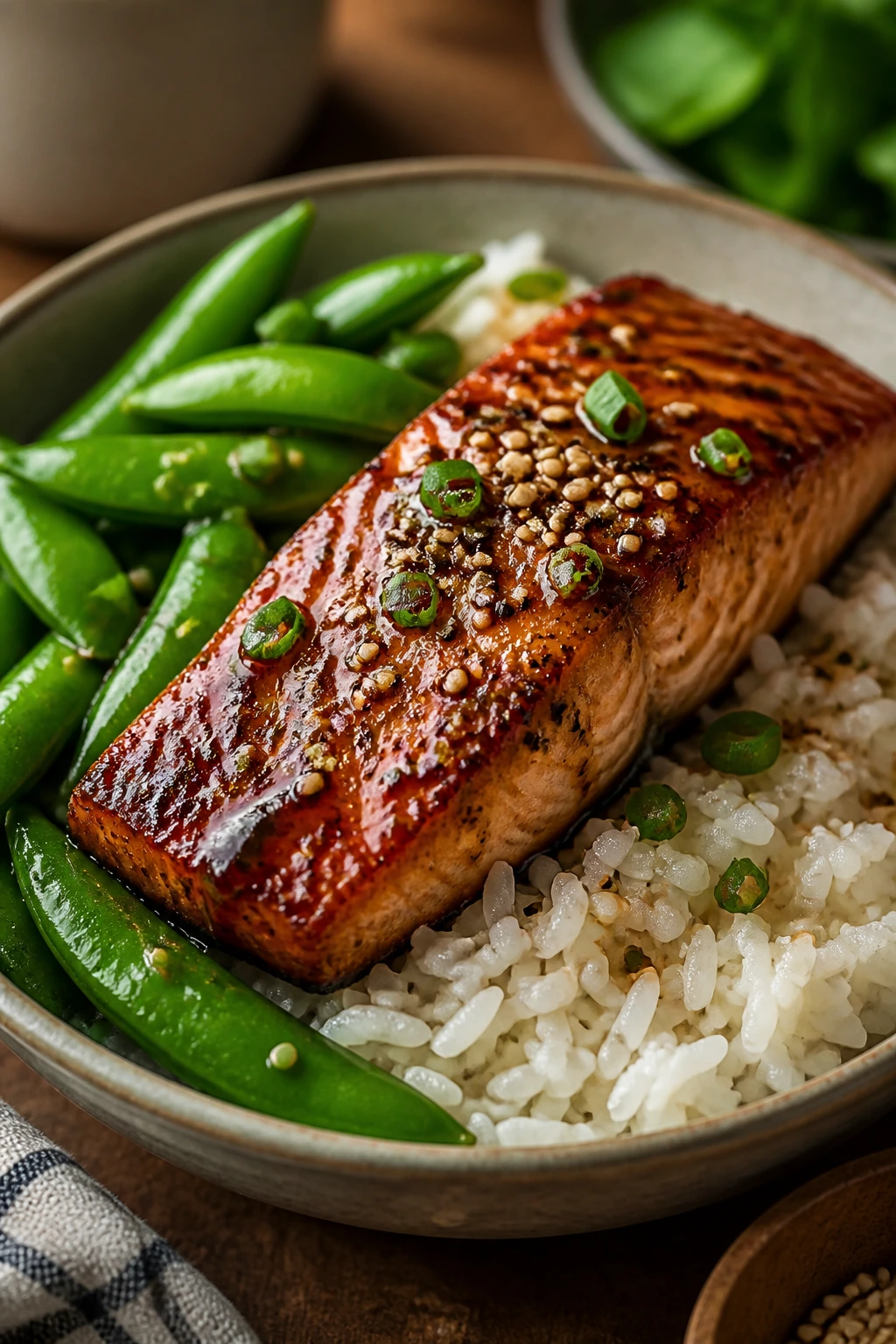
Sweet-salty glaze is what makes a weeknight bowl feel complete. This version has a glossy salmon top, crisp snap peas, and warm rice underneath, which is enough structure to make dinner feel organized without being fussy. It’s the kind of bowl that looks like you planned ahead, even if you built it in the last 20 minutes.
Why It Works
A fast glaze built from soy sauce, honey, ginger, and garlic gives the salmon a sticky surface that turns deeply savory in a short time. The trick is to sear the fish first, then brush on the glaze during the last couple minutes so the honey caramelizes without burning. Snap peas stay bright and snappy if you cook them just long enough to lose the raw edge — about 2 minutes in a hot pan.
Key Ingredients
- 1 1/2 pounds salmon fillets — cut into 4 portions.
- 3 cups cooked jasmine rice — warm rice is best; leftover rice works well.
- 1 cup snap peas — trim the strings if they’re obvious.
- 1 medium carrot, julienned — gives the bowl crunch and color.
- 3 tablespoons soy sauce — use low-sodium if you want more control.
- 2 tablespoons honey — builds the glaze and helps it cling.
- 1 tablespoon rice vinegar — keeps the sauce from tasting flat.
- 1 teaspoon grated fresh ginger — fresh is sharper and better here than dried.
- 2 garlic cloves, minced — tiny pieces cook into the glaze fast.
- 1 teaspoon sesame oil — a little goes a long way.
- 2 teaspoons sesame seeds — for a nutty finish.
- 2 scallions, sliced — the green tops brighten the bowl at the end.
Quick Steps
- Whisk the soy sauce, honey, rice vinegar, ginger, garlic, and sesame oil in a small bowl.
- Heat a large skillet over medium-high heat with a little neutral oil.
- Sear the salmon, skin side down if it has skin, for 4 minutes without moving it, then flip and cook 2 minutes more.
- Brush half the glaze over the salmon and cook for 1 to 2 minutes until glossy and slightly sticky.
- Sauté the snap peas and carrot in the same pan for 2 to 3 minutes, just until the peas turn brighter and the carrot softens at the edges.
- Warm the rice, divide it into bowls, then top with the vegetables and salmon.
- Finish with the remaining glaze, sesame seeds, and scallions.
Tips and Variations
- Use cold rice if you have it: Freshly cooked rice can clump; day-old rice holds its shape better and soaks up the glaze.
- Add heat if you want it: A spoonful of chili crisp or a pinch of red pepper flakes changes the bowl without slowing anything down.
- Swap the grain: Quinoa or brown rice works, though jasmine rice gives the cleanest backdrop for the glaze.
3. Cajun Salmon Tacos with Lime Slaw
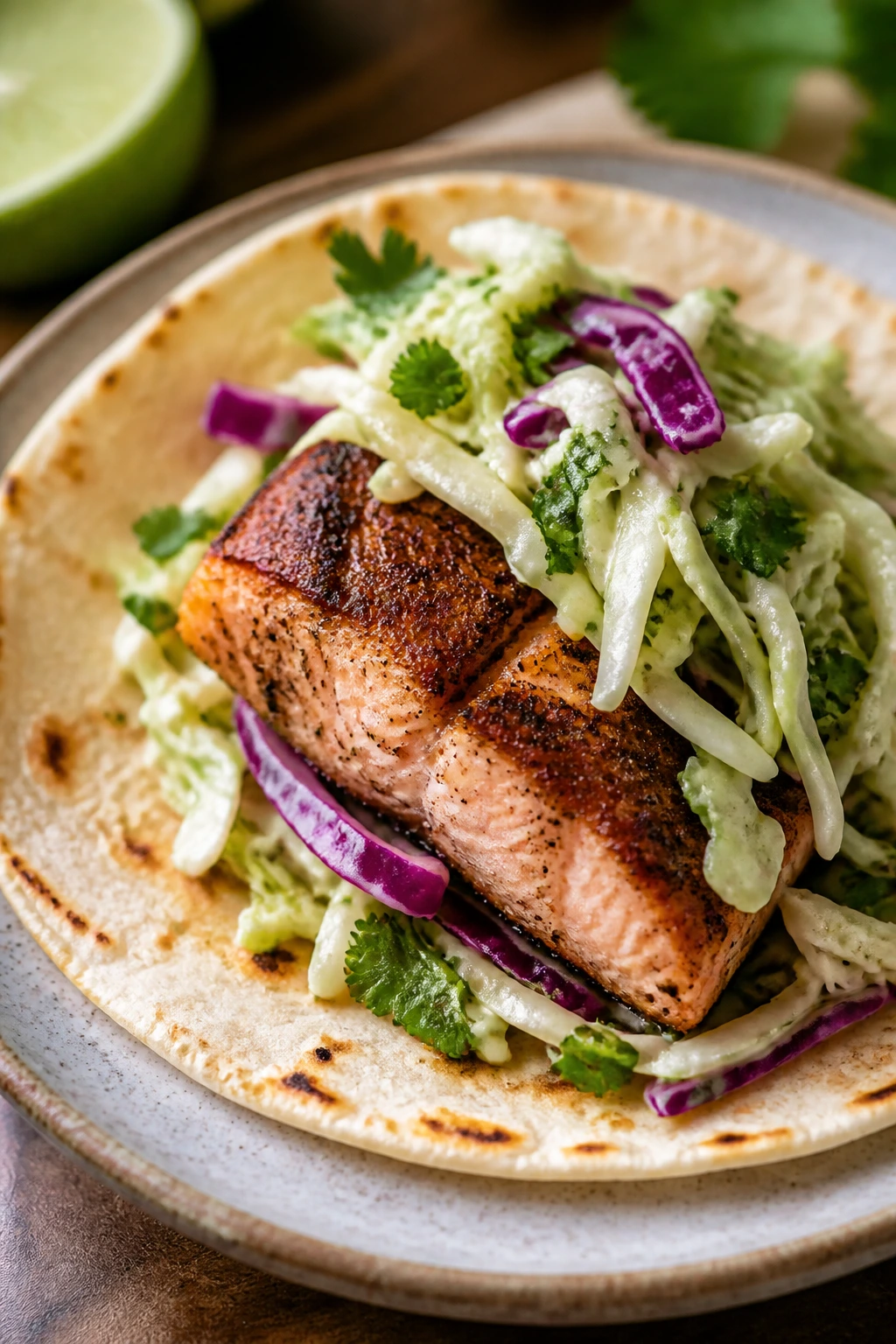
Tacos make salmon feel casual in the best way. The spice crust gets a little smoky in the pan, the slaw stays cool and crisp, and the whole thing lands in warm tortillas with just enough lime to keep each bite sharp. If you’ve ever wanted a fish taco that doesn’t taste timid, this is the lane.
Why It Works
Cajun seasoning gives you smoke, heat, garlic, and a little herbal roughness all at once, which means the salmon doesn’t need much else. A quick sear in a hot skillet creates a crust in just a few minutes, and the fish flakes neatly for tacos without drying out. The slaw matters because it brings crunch and acidity, which cuts through the richness of the salmon and keeps the taco from feeling heavy after the second bite.
Key Ingredients
- 1 pound salmon fillet, skin removed if needed — cut into 4 portions.
- 1 tablespoon Cajun seasoning — buy one with salt built in, or use your own blend.
- 1 teaspoon smoked paprika — boosts the smoky edge.
- 1 teaspoon garlic powder — helps the crust cling.
- 2 teaspoons neutral oil — for the skillet.
- 8 small tortillas — corn or flour, whichever you like better.
- 3 cups shredded cabbage — green, red, or a mix.
- 2 tablespoons mayonnaise or Greek yogurt — binds the slaw.
- 2 tablespoons lime juice — sharpens the filling.
- 1/4 cup cilantro, chopped — freshens the whole taco.
- 1 avocado, sliced — optional, but the creaminess is useful.
- Hot sauce, to taste — for people who want more kick.
Quick Steps
- Mix the cabbage, mayo or yogurt, lime juice, cilantro, and a pinch of salt in a bowl.
- Combine the Cajun seasoning, smoked paprika, and garlic powder, then rub it over the salmon.
- Heat a skillet over medium-high heat and add the oil.
- Sear the salmon for 3 to 4 minutes per side, until the outside is darkened and the center flakes easily.
- Warm the tortillas in a dry pan or directly over a flame for a few seconds per side.
- Flake the salmon into large pieces and fill each tortilla with slaw, salmon, avocado, and hot sauce.
- Finish with an extra squeeze of lime.
Tips and Variations
- Char the tortillas: A little blistering adds flavor fast, and it makes the tacos feel restaurant-level.
- Use pickled onions if you have them: They bring more punch than avocado and work especially well if you like the tacos bright.
- Keep the spice flexible: If the Cajun blend is salty, go light on the extra salt so the fish doesn’t tip too far.
4. Pan-Seared Salmon with Creamy Dill Yogurt Sauce and Cucumber Salad
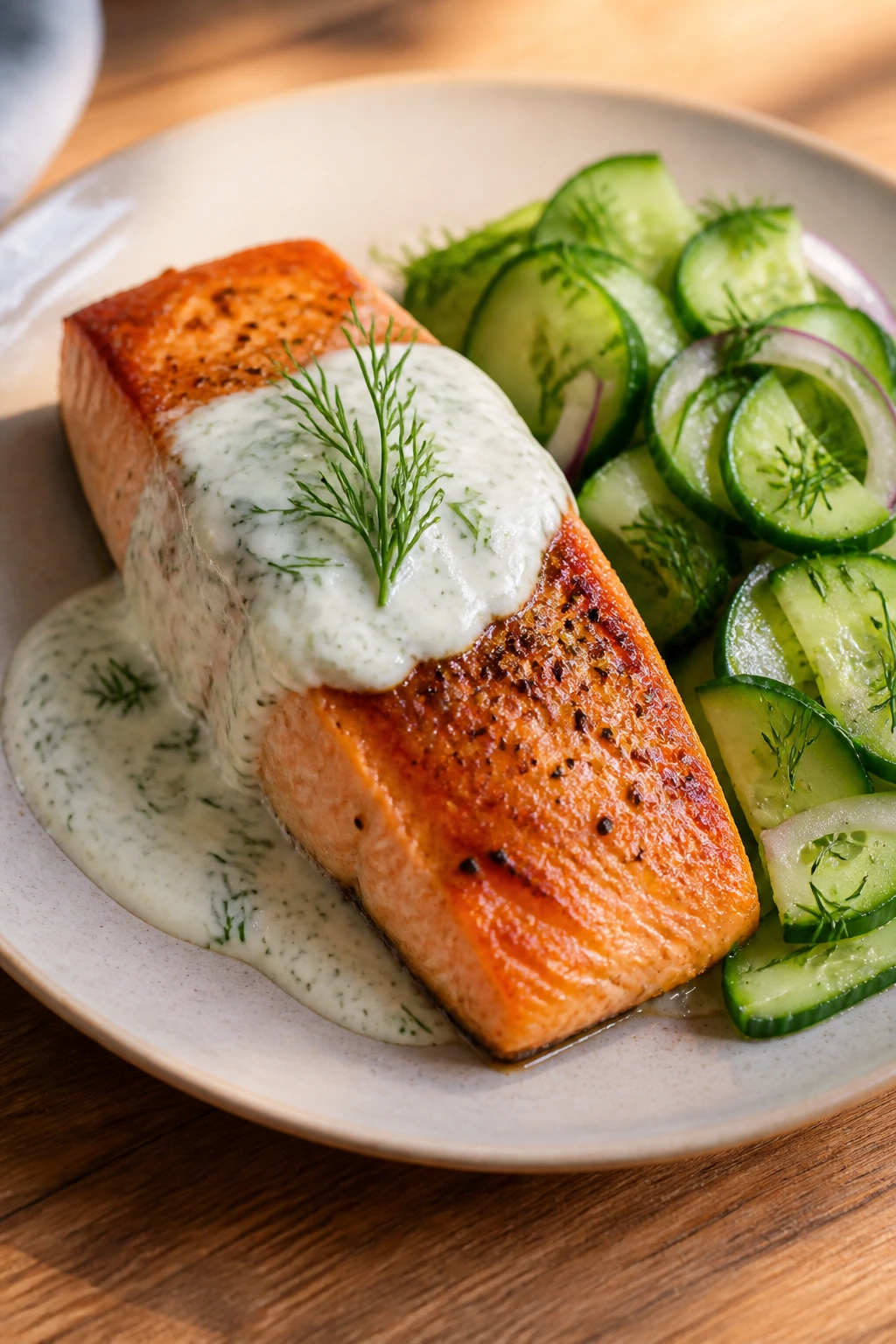
This is the salmon dinner I make when I want the plate to feel cool, clean, and slightly old-fashioned in a good way. Dill and cucumber are natural partners, and yogurt gives the sauce a tang that feels lighter than cream but still soft enough to coat the fish. It’s calm food. Not boring. Calm.
Why It Works
Pan-searing gives salmon a bronzed crust and keeps the center tender, especially if you cook skin-side down first and let the fat render a bit. The dill yogurt sauce does double duty: it cools the fish and gives you a quick way to add acid, herbs, and creaminess without turning on another burner. The cucumber salad keeps the plate bright and crunchy, which is a neat trick when a dinner has only a few moving parts.
Key Ingredients
- 4 salmon fillets, 6 ounces each — try to choose pieces of similar thickness.
- 1 tablespoon olive oil — for the skillet.
- 1 cup plain Greek yogurt — full-fat gives the smoothest sauce.
- 2 tablespoons fresh dill, chopped — dried dill works in a pinch, but fresh is better.
- 1 tablespoon lemon juice — wakes up the yogurt.
- 1 garlic clove, finely grated — keeps the sauce sharp.
- 1 cucumber, thinly sliced — the salad’s main crunch.
- 4 radishes, thinly sliced — optional, but the peppery bite is good.
- 1 tablespoon red wine vinegar — pulls the salad together.
- 4 pita rounds — for serving, toasted if you like.
- Salt and black pepper, to taste.
Quick Steps
- Stir the yogurt, dill, lemon juice, grated garlic, and a pinch of salt in a bowl.
- Toss the cucumber and radishes with vinegar, a drizzle of olive oil, and a pinch of salt.
- Pat dry the salmon well and season both sides with salt and pepper.
- Heat the olive oil in a skillet over medium-high heat until it shimmers.
- Cook the salmon skin side down for 4 to 5 minutes, then flip and cook 2 to 3 minutes more until the center reaches 145°F.
- Toast the pita while the fish rests for a minute or two.
- Serve the salmon with sauce over the top and cucumber salad on the side.
Tips and Variations
- Add capers: A spoonful in the yogurt sauce gives the whole plate a briny lift.
- Use sour cream if you want more richness: It’s a little heavier, but it works.
- Keep the salad dry: Salt the cucumbers just before serving or they’ll lose too much water.
5. Pesto Salmon with Burst Cherry Tomatoes
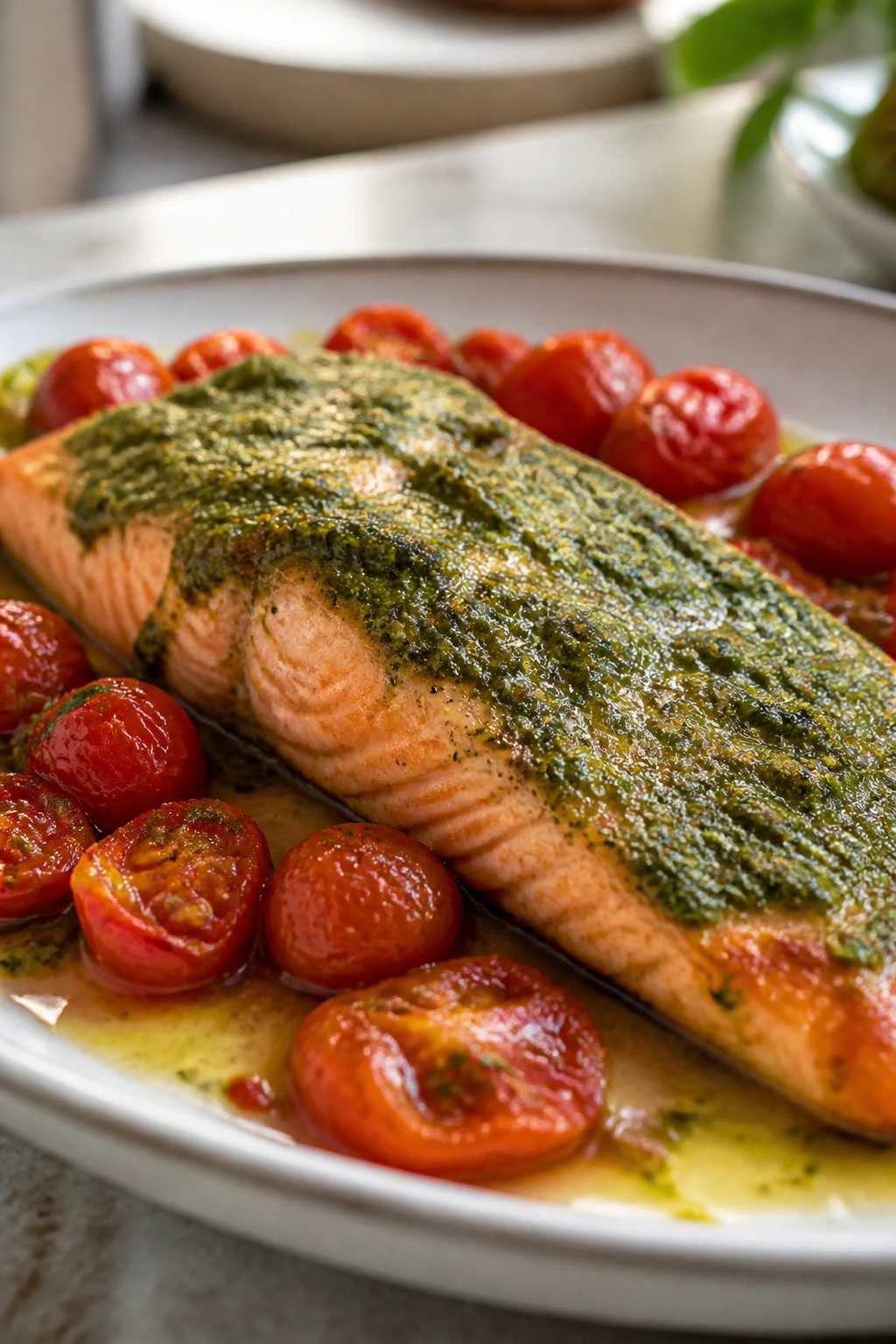
Pesto is one of those ingredients that saves dinner without making a scene about it. Spoon it over salmon, throw in cherry tomatoes, and the oven does the rest. The tomatoes soften and split, the basil turns fragrant, and the salmon picks up a green, garlicky coat that tastes like more effort than it took.
Why It Works
Pesto contains oil, herbs, cheese, and nuts, which makes it both seasoning and sauce in one compact spoonful. That matters on a tight clock because you do not need to build flavor in stages; the pesto handles the heavy lifting while the tomatoes turn jammy in the oven. The tomatoes also keep the salmon from drying out, because they release juices as they roast and give the pan a little natural sauce.
Key Ingredients
- 4 salmon fillets, about 6 ounces each
- 2 cups cherry tomatoes — choose small ones that feel firm.
- 1/3 cup basil pesto — store-bought or homemade both work.
- 2 tablespoons olive oil — helps the tomatoes roast.
- 2 garlic cloves, thinly sliced — optional, but nice.
- 1/4 cup grated Parmesan — for a salty finish.
- 1 tablespoon lemon juice — brightens the pesto.
- Fresh basil leaves, for serving.
- Salt and black pepper, to taste.
Quick Steps
- Preheat the oven to 425°F (220°C) and line a baking dish or sheet pan.
- Toss the cherry tomatoes with olive oil, sliced garlic, a pinch of salt, and black pepper.
- Arrange the salmon on top or beside the tomatoes and spoon pesto over each fillet.
- Bake for 12 to 14 minutes, until the salmon reaches 145°F and the tomatoes have started to split.
- Sprinkle Parmesan over the hot fish and return it to the oven for 1 minute if you want the cheese to melt a bit.
- Finish with lemon juice and basil.
- Serve with crusty bread, couscous, or a spoonful of rice.
Tips and Variations
- Thin the pesto with lemon juice: If your pesto is thick, a splash of lemon makes it easier to spread and brighter on the plate.
- Try sun-dried tomato pesto: It tastes deeper and a little sweeter, which works well with salmon.
- Do not skip the tomatoes: They turn the dish from “salmon with a topping” into a pan sauce dinner.
6. Salmon Fried Rice with Ginger and Peas
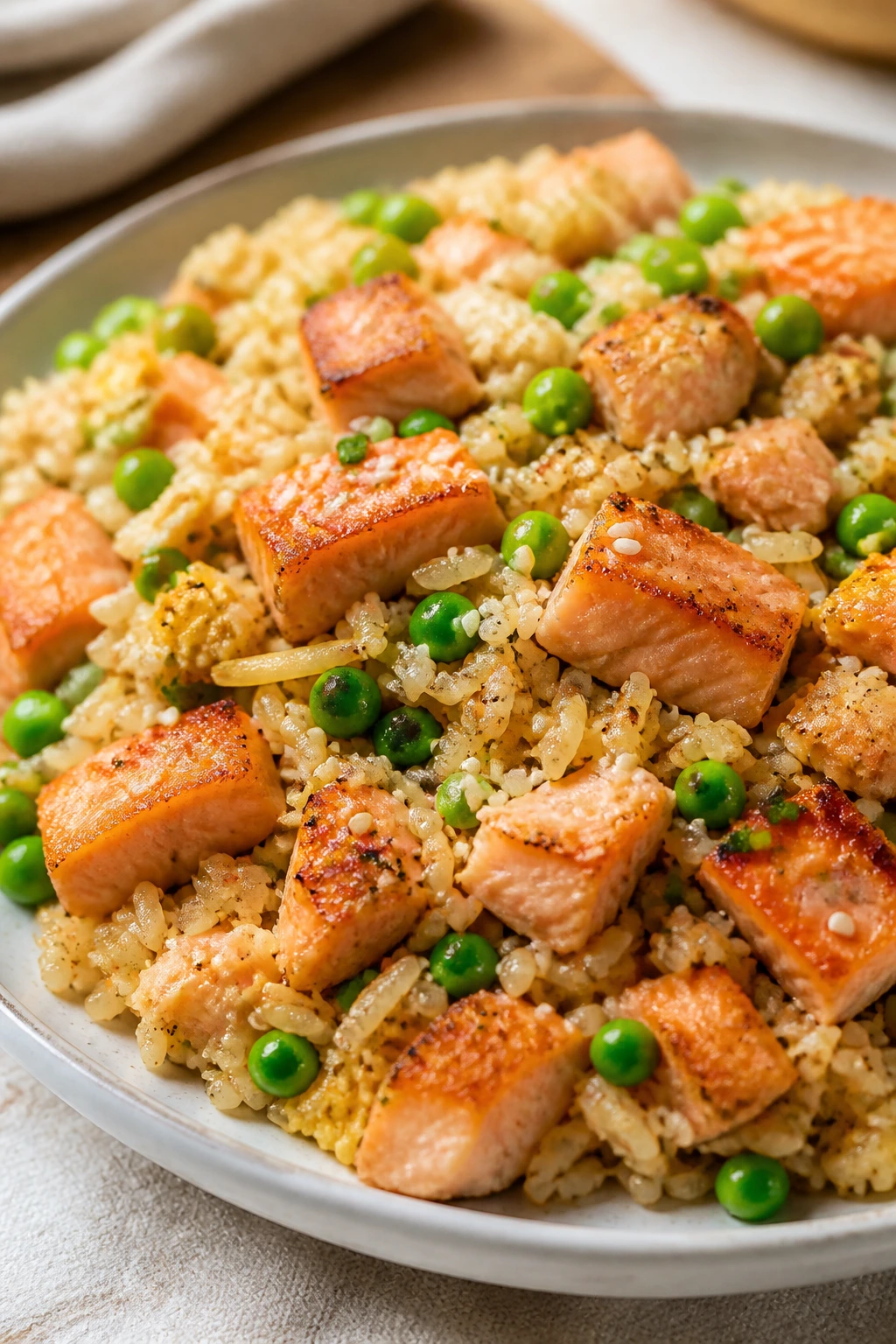
Leftover rice has a job now. This is the kind of fried rice that feels fast because the rice is already cooked and the salmon only needs a few minutes in the pan. You get crisp edges, tender flakes, and that lovely sesame-ginger smell that hits the kitchen before the food hits the plate.
Why It Works
Fried rice rewards cold, dry rice because the grains separate in the pan instead of collapsing into a soft mound. Salmon fits the same pattern beautifully; you can sear it first, set it aside, and fold it back in at the end so it stays in big, satisfying pieces. The eggs, peas, and carrot keep the dish from turning into salmon-and-rice monotony, which is a real risk if you rush the pan.
Key Ingredients
- 1 pound salmon, cut into 1-inch chunks
- 3 cups cold cooked rice — jasmine or long-grain works best.
- 2 eggs — scrambled directly in the pan.
- 1 cup frozen peas — no need to thaw first.
- 1 medium carrot, diced small
- 3 scallions, sliced
- 2 tablespoons soy sauce
- 1 tablespoon sesame oil
- 1 tablespoon neutral oil
- 1 teaspoon grated ginger
- 2 garlic cloves, minced
- 1 tablespoon rice vinegar, optional
Quick Steps
- Heat the neutral oil in a large skillet or wok over medium-high heat.
- Sear the salmon chunks for 2 to 3 minutes per side until just cooked through, then move them to a plate.
- Scramble the eggs in the same pan, then push them to one side.
- Cook the carrot and peas for 2 minutes, add the garlic and ginger, and stir until fragrant.
- Add the cold rice and soy sauce, breaking up any clumps with a spatula.
- Fold the salmon back in, drizzle with sesame oil, and cook for 1 to 2 minutes more.
- Finish with scallions and a small splash of rice vinegar if you want more lift.
Tips and Variations
- Cold rice matters: Fresh rice goes sticky and soft. Chilled rice stays separate and gets those good fried edges.
- Use leftover cooked salmon if you have it: Fold it in at the very end so it does not dry out.
- Add chili oil at the table: That way everyone gets their own heat level.
7. Teriyaki Salmon Noodle Bowls
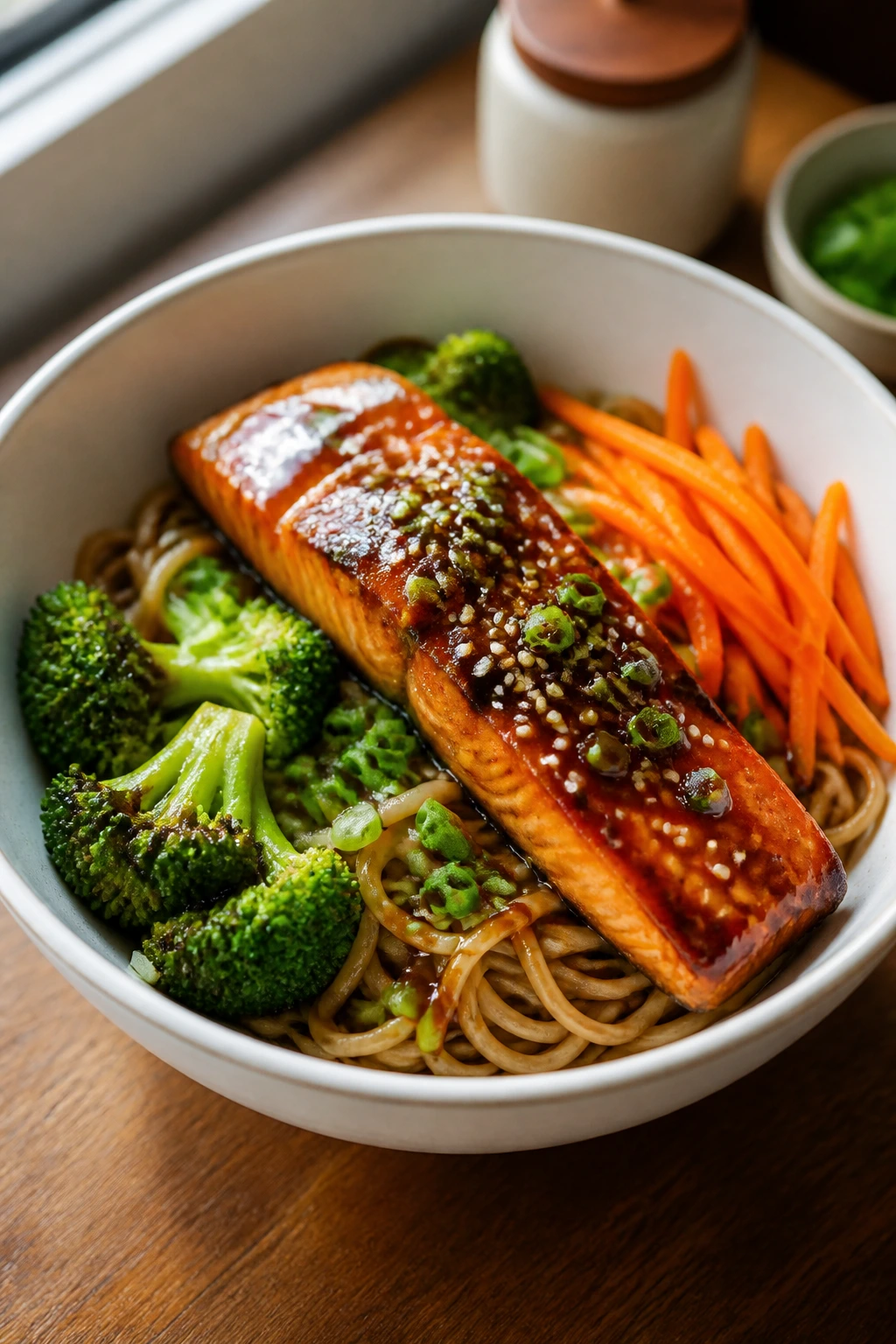
There’s a clean comfort to teriyaki salmon with noodles underneath. The sauce coats the fish, the noodles catch the extra glaze, and broccoli gives the bowl a bite so it doesn’t collapse into sweet softness. It’s the kind of dinner that lands somewhere between takeout and a proper home-cooked meal.
Why It Works
Teriyaki works fast because the sauce is already balanced: soy for salt, sugar or honey for shine, ginger and garlic for depth. Salmon takes that glaze well, especially if you brush it on near the end so the sugars caramelize without burning. Noodles make the whole thing feel complete, and broccoli stands up to the sauce better than a delicate green would.
Key Ingredients
- 1 1/2 pounds salmon fillets
- 8 ounces soba noodles or ramen noodles
- 1 pound broccoli florets — cut small enough to cook quickly.
- 1 medium carrot, julienned
- 1/3 cup teriyaki sauce
- 1 tablespoon sesame oil
- 1 tablespoon neutral oil
- 2 scallions, sliced
- 1 tablespoon sesame seeds
- 1 tablespoon lime juice, optional
Quick Steps
- Cook the noodles according to the package directions, adding the broccoli in the last 2 to 3 minutes if you want to soften it in the same pot.
- Drain the noodles and broccoli, then toss them with sesame oil so they do not stick together.
- Heat the neutral oil in a skillet over medium-high heat.
- Sear the salmon for 3 to 4 minutes per side, then brush on half the teriyaki sauce during the last minute.
- Warm the carrot quickly in the hot noodle pot or leave it raw for more crunch.
- Divide the noodles into bowls and top with salmon, broccoli, carrot, and the remaining sauce.
- Finish with scallions, sesame seeds, and lime juice if you want more brightness.
Tips and Variations
- Use bottled teriyaki if time is tight: A good bottled sauce is fine here, especially if you add fresh scallions and sesame oil.
- Keep the broccoli bitey: Overcooked broccoli turns dull fast and drags the bowl down.
- Swap the noodles: Udon gives a softer chew, while soba brings a nuttier flavor.
8. Salmon Caesar Salad with Crisp Croutons
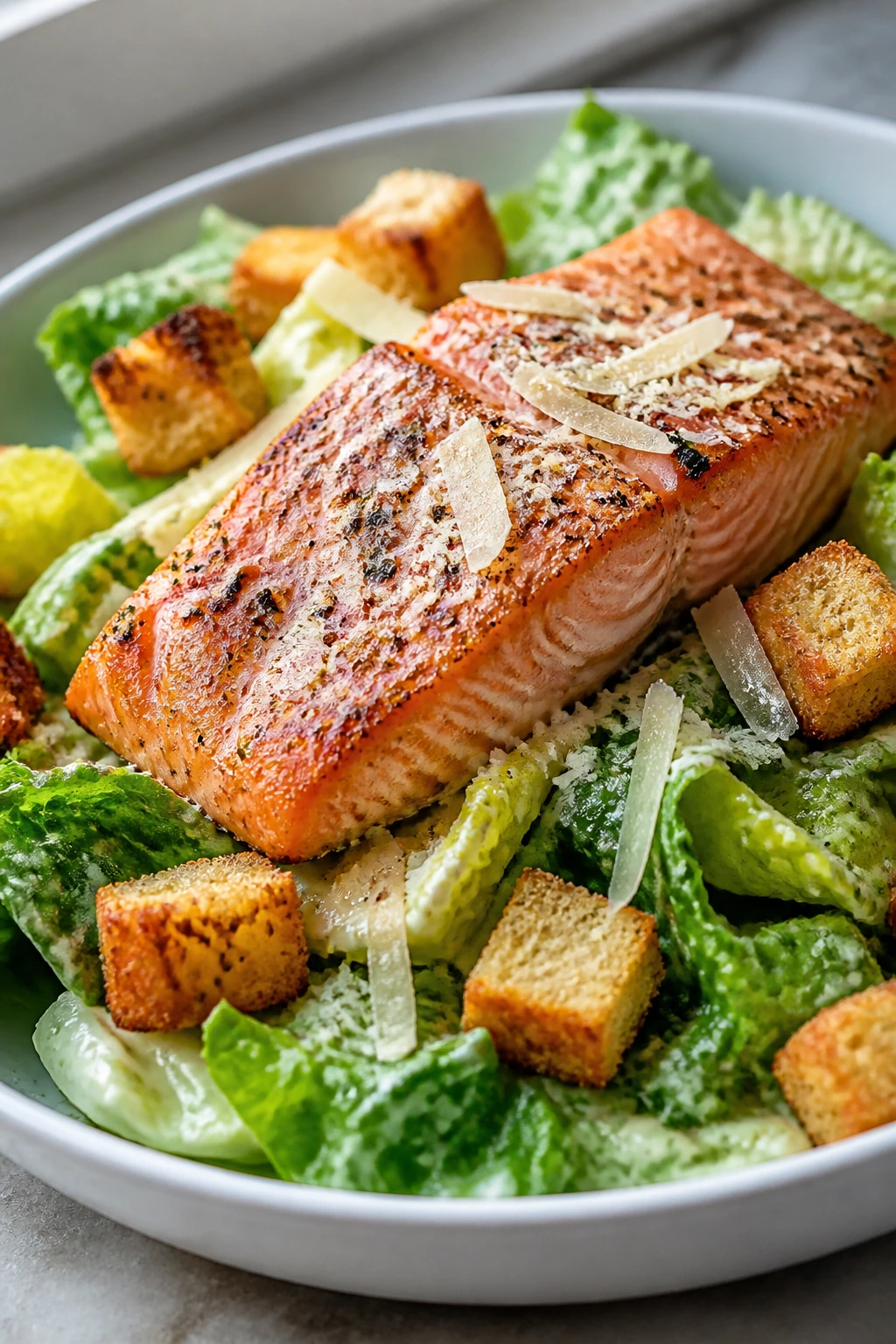
Caesar salad gets a lot better when salmon takes the place of the usual chicken. You still get the salty, creamy dressing and the crunch of croutons, but the fish gives the plate a richer center. It’s dinner disguised as salad, and I mean that in the best possible way.
Why It Works
A Caesar salad needs contrast, or it just tastes like lettuce wearing heavy perfume. Salmon provides the substance, romaine gives crispness, and Parmesan plus dressing handle the salt and cream. The fish only needs a hot skillet and a short rest, which keeps the entire meal under the half-hour mark without making the salad feel like a side dish pretending to be dinner.
Key Ingredients
- 1 pound salmon fillet — cut into 4 portions.
- 2 romaine hearts, chopped
- 1 cup croutons — homemade or store-bought.
- 1/2 cup Caesar dressing — use the style you actually like.
- 1/4 cup grated Parmesan
- 1 lemon, cut into wedges
- 1 tablespoon olive oil
- 1 teaspoon black pepper
- Salt, if needed
Quick Steps
- Heat a skillet over medium-high heat with the olive oil.
- Season the salmon with salt and black pepper, then sear it for 4 minutes on the first side.
- Flip and cook 2 to 3 minutes more until the center reaches 145°F.
- Toss the romaine with Caesar dressing in a large bowl.
- Add Parmesan and croutons, then toss lightly so the leaves stay crisp.
- Top the salad with salmon and lemon wedges.
- Serve the fish in larger pieces or flake it over the greens if you want every bite coated.
Tips and Variations
- Use a light hand with the dressing: Salmon is rich enough that the salad does not need to drown.
- Add capers if you like more brine: A few capers make the plate taste sharper and less creamy.
- Toast the croutons again if they’re stale: Five minutes in a dry skillet wakes them right up.
9. Coconut Curry Salmon with Spinach
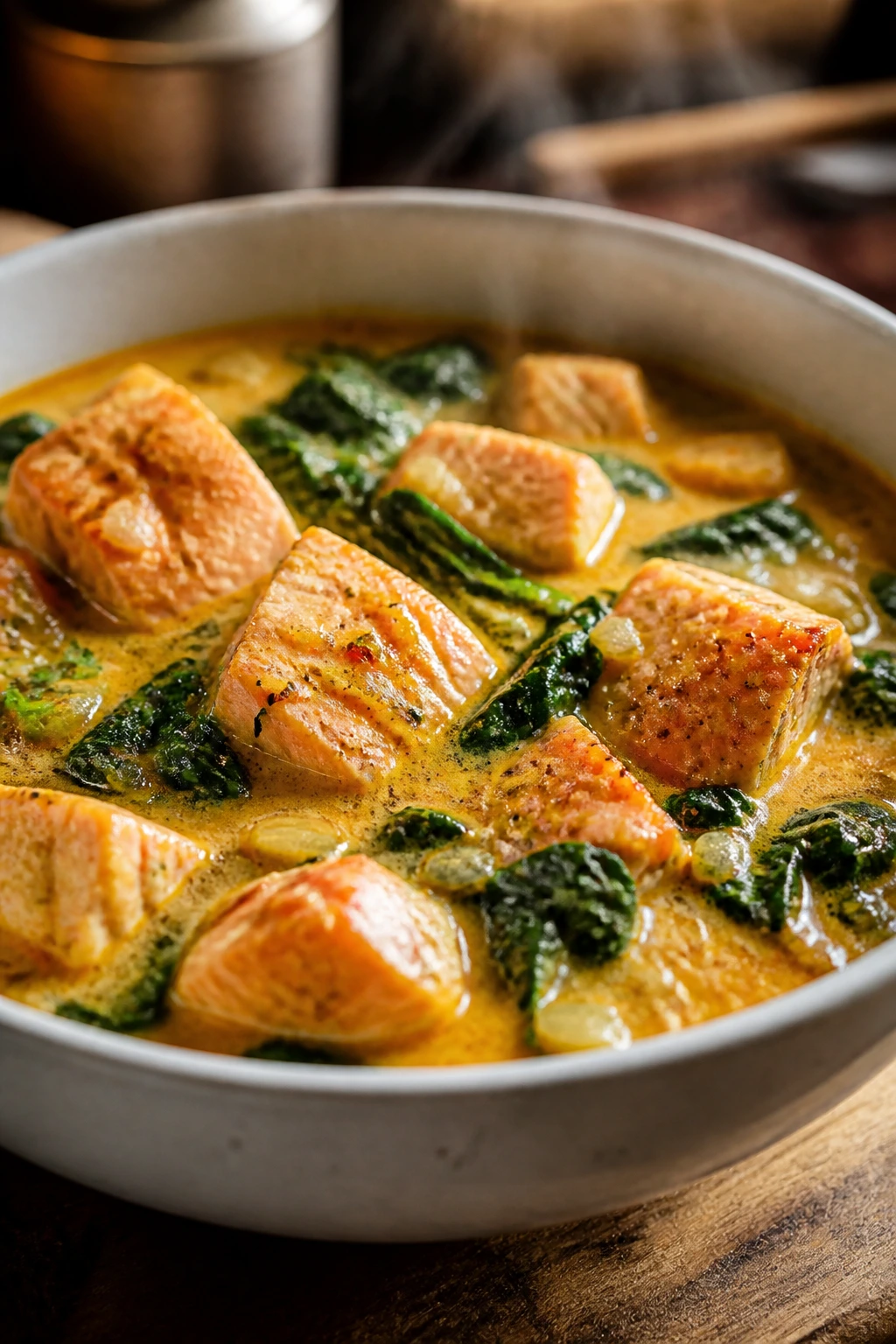
This is the loudest dinner in the group, flavor-wise, and I mean that as a compliment. Coconut milk makes the sauce soft and round, red curry paste brings heat and spice, and spinach disappears into the pot in a few seconds. Serve it with rice and you get a bowl that tastes like it took much longer than it did.
Why It Works
Curry paste blooms in fat, so a quick sauté in oil or coconut milk unlocks a deeper flavor before the liquid goes in. Salmon is a good match for curry because the fish stays tender in a gently simmering sauce and picks up spice without turning dry. Spinach barely needs any time at all, which keeps the greens vivid and the whole dish within your 30-minute window.
Key Ingredients
- 1 pound salmon fillet, cut into large chunks
- 1 tablespoon neutral oil
- 1 small onion, thinly sliced
- 1 bell pepper, sliced
- 2 tablespoons red curry paste
- 1 can coconut milk, 13.5 ounces
- 1 cup water or fish broth
- 3 cups baby spinach
- 1 lime, cut into wedges
- 2 tablespoons chopped cilantro
- Cooked jasmine rice, for serving
Quick Steps
- Heat the oil in a wide skillet over medium heat.
- Cook the onion and bell pepper for 4 to 5 minutes until the onion softens and smells sweet.
- Stir in the curry paste and cook for 30 seconds so it darkens a shade.
- Pour in the coconut milk and water or broth, then bring the sauce to a gentle simmer.
- Add the salmon chunks and cook for 6 to 8 minutes, turning once, until the fish is opaque and flakes easily.
- Fold in the spinach until it wilts, then squeeze in lime juice.
- Serve over rice with cilantro on top.
Tips and Variations
- Keep the simmer gentle: A hard boil can break the salmon apart and make the sauce look greasy.
- Add peas or mushrooms: Both fit nicely and don’t ask for much extra time.
- Use green curry paste if you like more herbal heat: The dish changes character fast, but it still works.
10. Salmon Pasta with Lemon, Capers, and Spinach
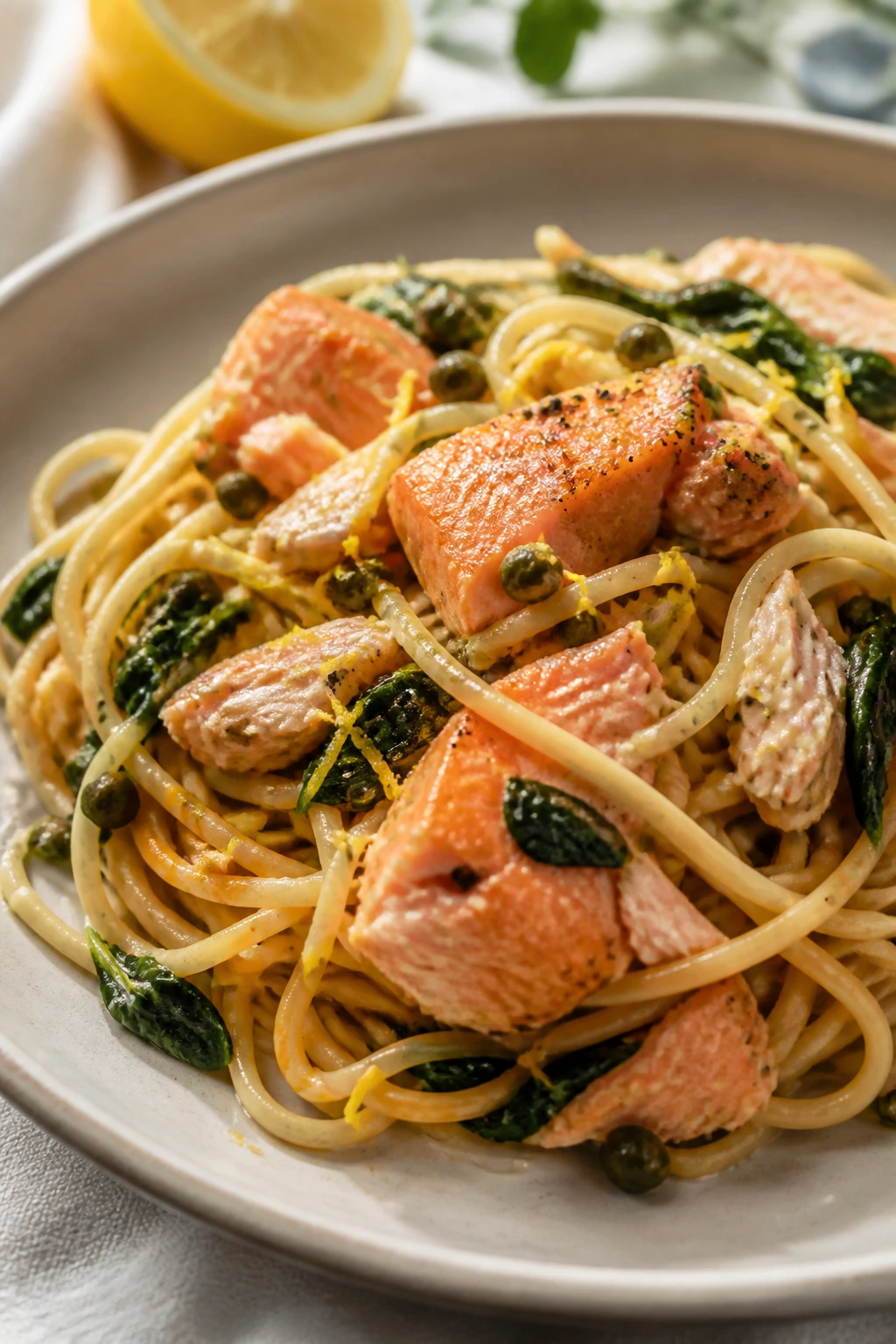
Pasta and salmon are a much better pairing than people give them credit for. Capers cut through the richness, lemon keeps the sauce bright, and spinach melts into the noodles without asking for another pan. It’s fast, sharp, and a little luxurious without needing cream.
Why It Works
The pasta water is the quiet hero here. A splash of it helps butter, olive oil, lemon juice, and salmon juices turn into a light sauce that clings to the noodles instead of pooling at the bottom of the bowl. Capers bring salt and acidity, which means you can keep the ingredient list short and still end up with a dinner that tastes layered.
Key Ingredients
- 12 ounces spaghetti or linguine
- 1 pound salmon fillet
- 2 tablespoons olive oil
- 2 tablespoons unsalted butter
- 3 garlic cloves, minced
- 2 tablespoons capers, drained
- 2 cups baby spinach
- 1 lemon, zested and juiced
- 1/4 cup chopped parsley
- 1/2 cup reserved pasta water
- Salt and black pepper, to taste
- Optional Parmesan, for serving
Quick Steps
- Bring a pot of salted water to a boil and cook the pasta until just al dente.
- Reserve 1 cup of pasta water before draining.
- Season the salmon with salt and pepper, then sear it in olive oil over medium-high heat for 4 minutes on the first side and 2 to 3 minutes on the second.
- Remove the salmon and use the same pan to cook the garlic and capers for 30 seconds.
- Add butter, lemon zest, lemon juice, and 1/2 cup pasta water, then stir until the sauce looks glossy.
- Toss in the spinach and pasta, adding more pasta water if needed so the noodles look lightly coated.
- Flake the salmon over the top or leave it in larger pieces, then finish with parsley and Parmesan.
Tips and Variations
- Save more pasta water than you think you need: A few tablespoons can rescue a sauce that looks too tight.
- Use linguine if you want more surface for the sauce: Spaghetti works, but linguine gives the sauce a better grip.
- Add a pinch of chili flakes: The gentle heat plays nicely with lemon and capers.
11. Maple Mustard Salmon with Green Beans and Couscous
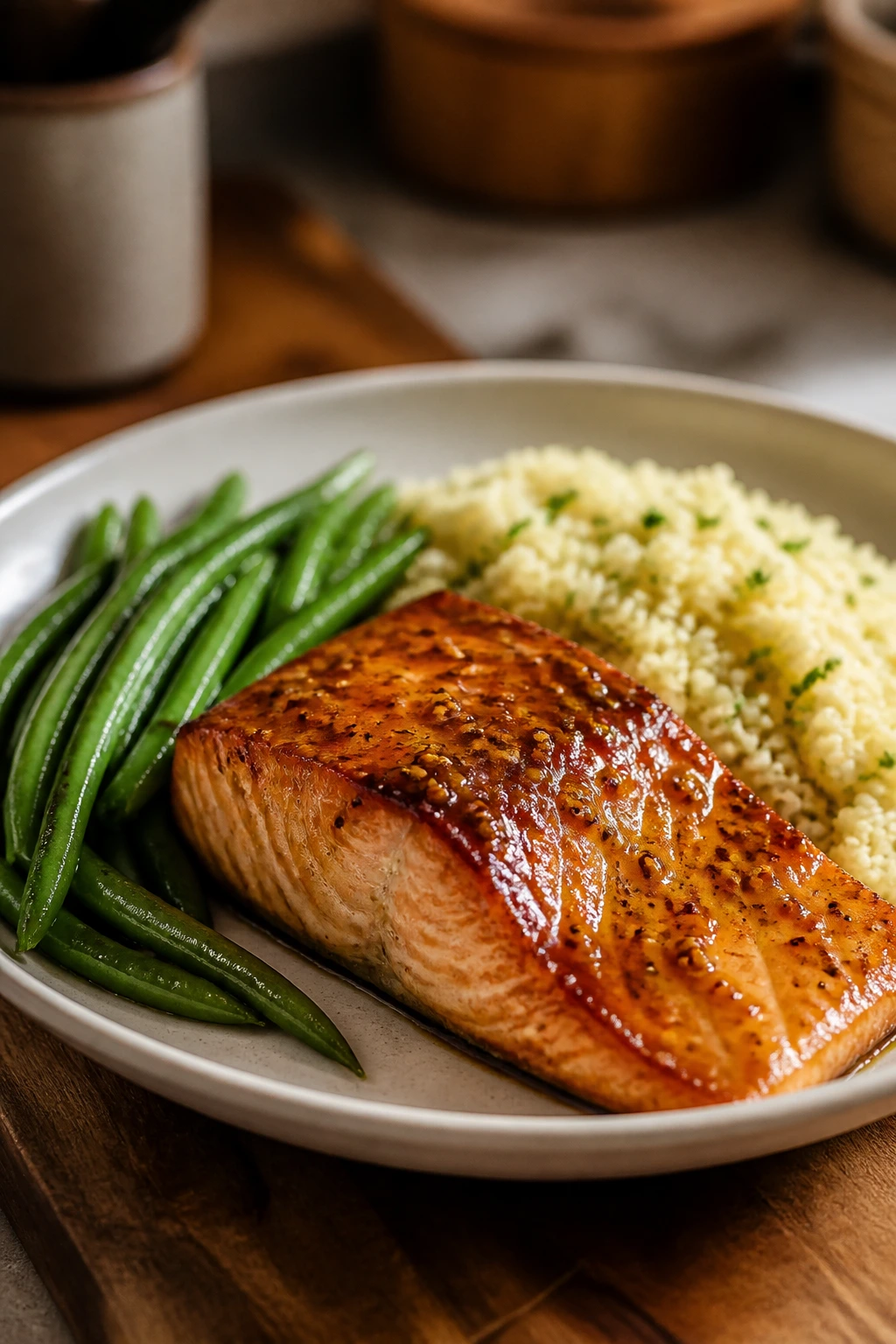
Maple and mustard look like an odd couple until they hit hot salmon. One is sweet, one is sharp, and together they make a glaze that browns quickly and tastes bigger than the ingredient list suggests. Green beans and couscous turn the plate into a full dinner without eating up the clock.
Why It Works
A glaze made from Dijon, whole-grain mustard, and maple syrup gives you color, tang, and a little sweetness in one pass. Salmon handles that combination well because the fish has enough fat to stay rich while the glaze caramelizes on the surface. Couscous is a smart partner because it cooks in minutes and absorbs stray glaze and fish juices without turning mushy.
Key Ingredients
- 4 salmon fillets, about 6 ounces each
- 1 tablespoon Dijon mustard
- 1 tablespoon whole-grain mustard
- 1 tablespoon maple syrup
- 1 tablespoon olive oil
- 1 pound green beans, trimmed
- 1 cup couscous
- 1 1/4 cups boiling broth or water
- 1 teaspoon thyme leaves — fresh or dried.
- 2 tablespoons sliced almonds, optional
- Salt and black pepper, to taste
Quick Steps
- Preheat the oven to 425°F (220°C) and line a sheet pan.
- Whisk the Dijon, whole-grain mustard, maple syrup, olive oil, thyme, salt, and pepper.
- Toss the green beans with a little oil and salt, then spread them on the pan.
- Roast the green beans for 5 minutes, then add the salmon and brush the glaze over the top.
- Roast for 10 to 12 minutes more, until the beans are tender-crisp and the salmon reaches 145°F.
- Stir the couscous with the boiling broth, cover it, and let it sit for 5 minutes, then fluff with a fork.
- Serve the salmon and green beans over the couscous, with almonds sprinkled on top if using.
Tips and Variations
- Use thin green beans: Thick beans can still work, but they need a little more time and can outlast the fish if you’re not careful.
- Add lemon zest to the glaze: It cuts the sweetness and makes the whole plate sharper.
- Swap couscous for quinoa: If you want a nuttier base, quinoa works, though it takes longer.
12. Blackened Salmon Wraps with Avocado and Tomato
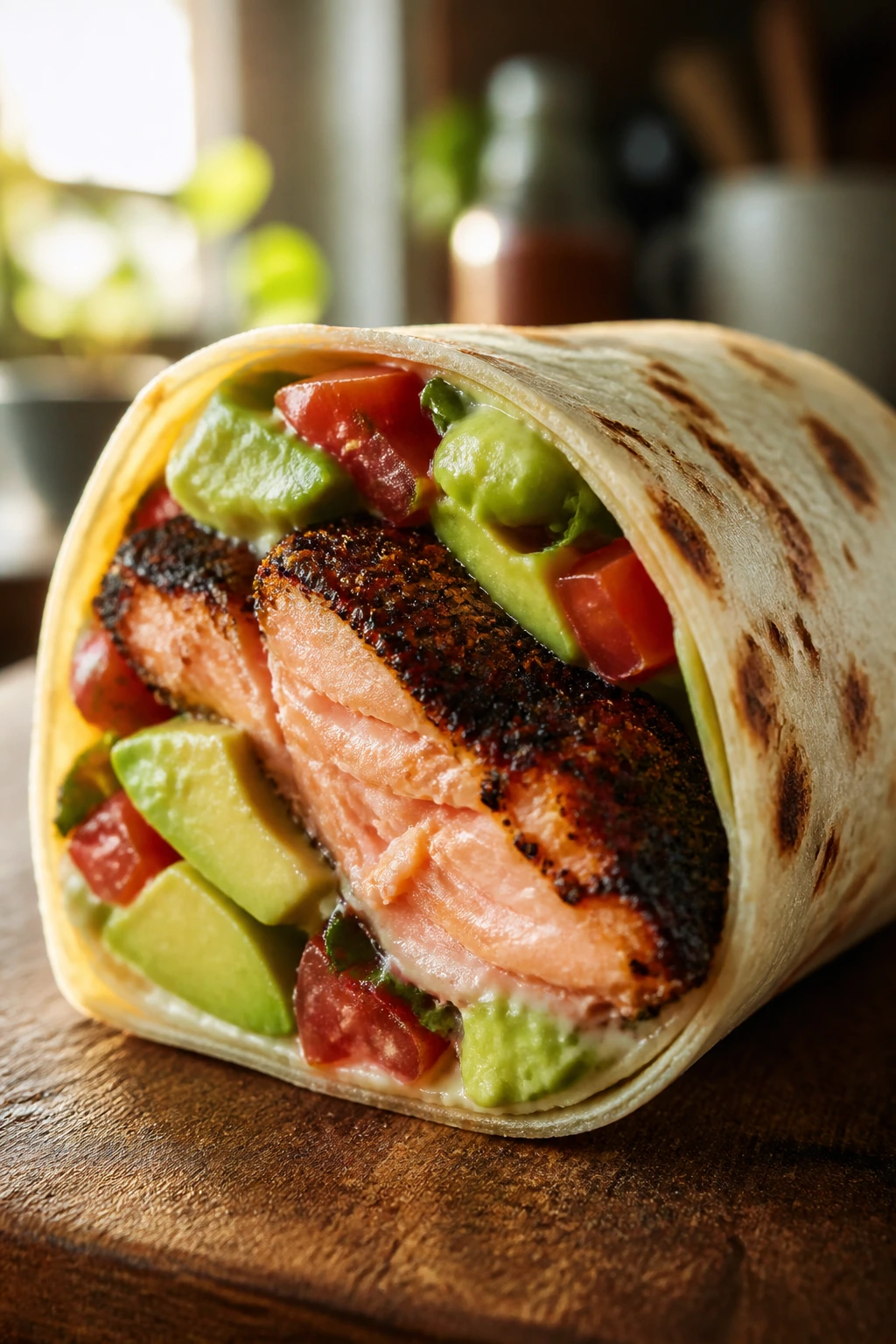
A blackened crust gives salmon a loud, peppery edge that stands up to soft avocado and juicy tomato. Wrapped in a warm tortilla, it becomes one of those dinners that feels relaxed but still has enough character to keep your attention. There’s smoke, creaminess, and crunch in the same bite. That’s the whole point.
Why It Works
Blackening seasoning is built for fast fish because the spices toast in the pan almost instantly and create a dark crust with little effort. You want a hot skillet, a dry surface on the salmon, and enough oil to keep the seasoning from burning before the fish cooks through. The avocado and tomato cool the heat and stop the wraps from tasting one-note.
Key Ingredients
- 1 pound salmon fillet
- 1 1/2 tablespoons blackening seasoning — or make your own with paprika, garlic powder, onion powder, thyme, cayenne, salt, and pepper.
- 2 teaspoons neutral oil
- 4 large tortillas
- 1 avocado, sliced
- 1 tomato, diced
- 2 cups shredded lettuce
- 2 tablespoons sour cream or mayonnaise
- 1 tablespoon lime juice
- Hot sauce, to taste
Quick Steps
- Stir the sour cream or mayo with lime juice and a pinch of salt.
- Pat dry the salmon and rub it all over with the blackening seasoning.
- Heat the oil in a skillet over medium-high heat until it shimmers.
- Cook the salmon for 3 to 4 minutes per side, pressing lightly the first few seconds so the crust sets.
- Warm the tortillas in a dry skillet or wrapped in foil.
- Flake the salmon into large pieces and layer it into the tortillas with lettuce, tomato, avocado, and sauce.
- Finish with hot sauce if you want the wraps to bite back a little.
Tips and Variations
- Do not overdo the seasoning with salt if your blend is salty already: That’s how blackened fish turns harsh.
- Use shredded cabbage instead of lettuce: It keeps its crunch better if the wraps sit for a few minutes.
- Add corn kernels for sweetness: Fresh, thawed frozen, or charred all work.
13. Mediterranean Salmon Couscous Bowls
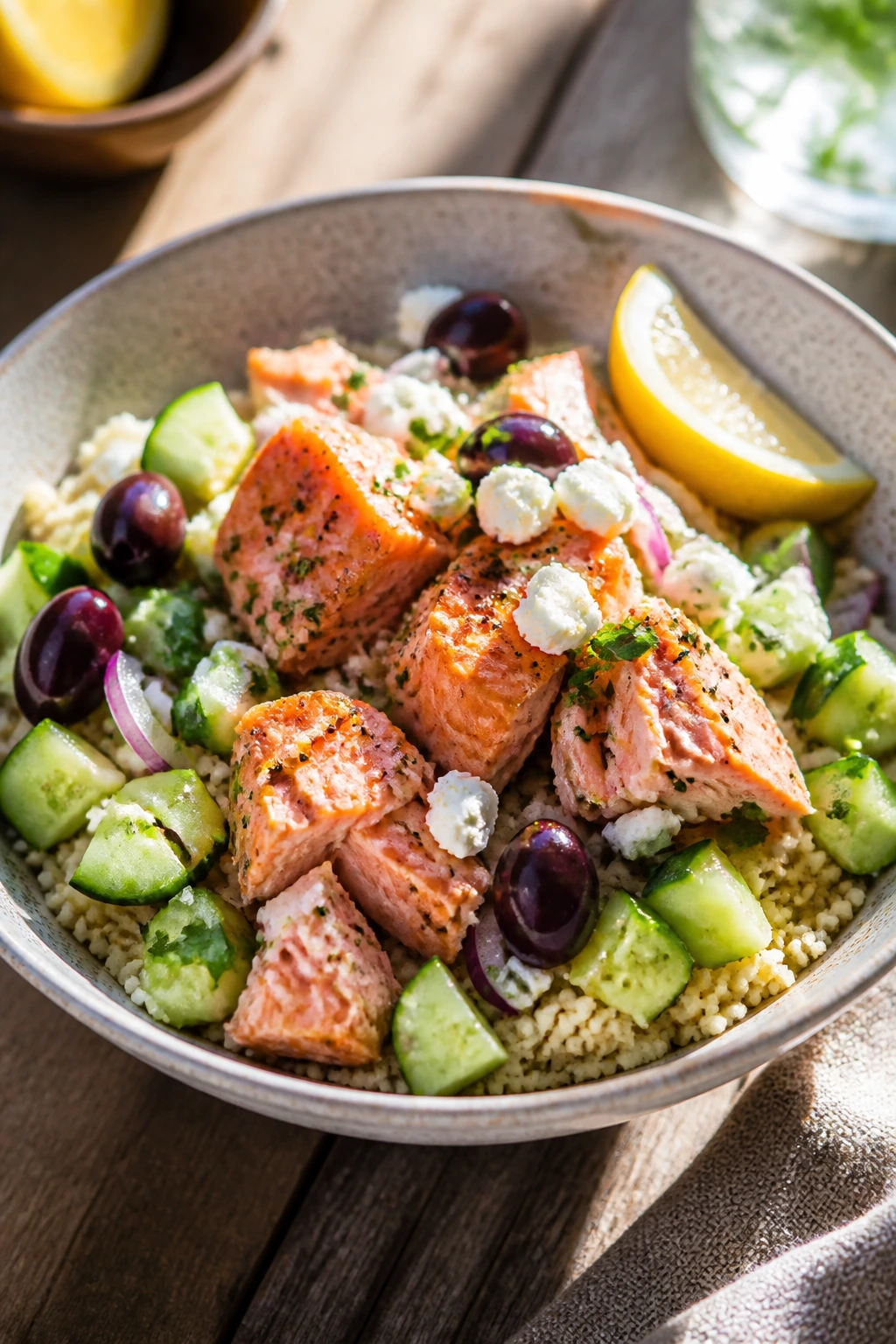
This bowl tastes like sunshine without trying too hard. Cucumber, tomatoes, olives, feta, and lemon do the work around the salmon, and couscous keeps everything loose and fast. I like meals like this because they feel composed, but you never have to fuss over them.
Why It Works
Mediterranean flavors play nicely with salmon because they lean on acidity, herbs, and briny notes instead of heavy sauce. Couscous is nearly unfair in a 30-minute dinner — it absorbs boiling water in minutes and gives you a base that can carry olive oil, lemon, and salmon juices. The feta and olives add enough salt that you don’t need to drown the fish in anything.
Key Ingredients
- 1 pound salmon fillet
- 1 cup couscous
- 1 cup boiling water or broth
- 1 cucumber, diced
- 1 cup cherry tomatoes, halved
- 1/2 cup pitted olives, sliced
- 1/3 cup feta, crumbled
- 2 tablespoons olive oil
- 1 lemon, juiced
- 1 teaspoon dried oregano
- 1 garlic clove, grated
- 2 tablespoons chopped parsley
Quick Steps
- Pour the boiling water or broth over the couscous, cover it, and let it sit for 5 minutes.
- Fluff the couscous with a fork, then stir in olive oil, lemon juice, garlic, oregano, and parsley.
- Mix the cucumber, tomatoes, olives, and feta in a bowl with a pinch of salt.
- Season the salmon with salt and pepper, then sear it in a skillet for 4 minutes on the first side and 2 to 3 minutes on the second.
- Flake or slice the salmon and place it over the couscous.
- Spoon the salad over or beside the fish.
- Finish with extra lemon if you want the bowl brighter.
Tips and Variations
- Add chickpeas if you want more bulk: They turn the bowl into a sturdier dinner without slowing it down.
- Use dill instead of parsley for a cooler flavor: Dill and salmon are old friends for a reason.
- Serve the salad warm or room temp: Both work, and neither one is fussy.
14. Salmon Burgers with Quick Pickles and Slaw
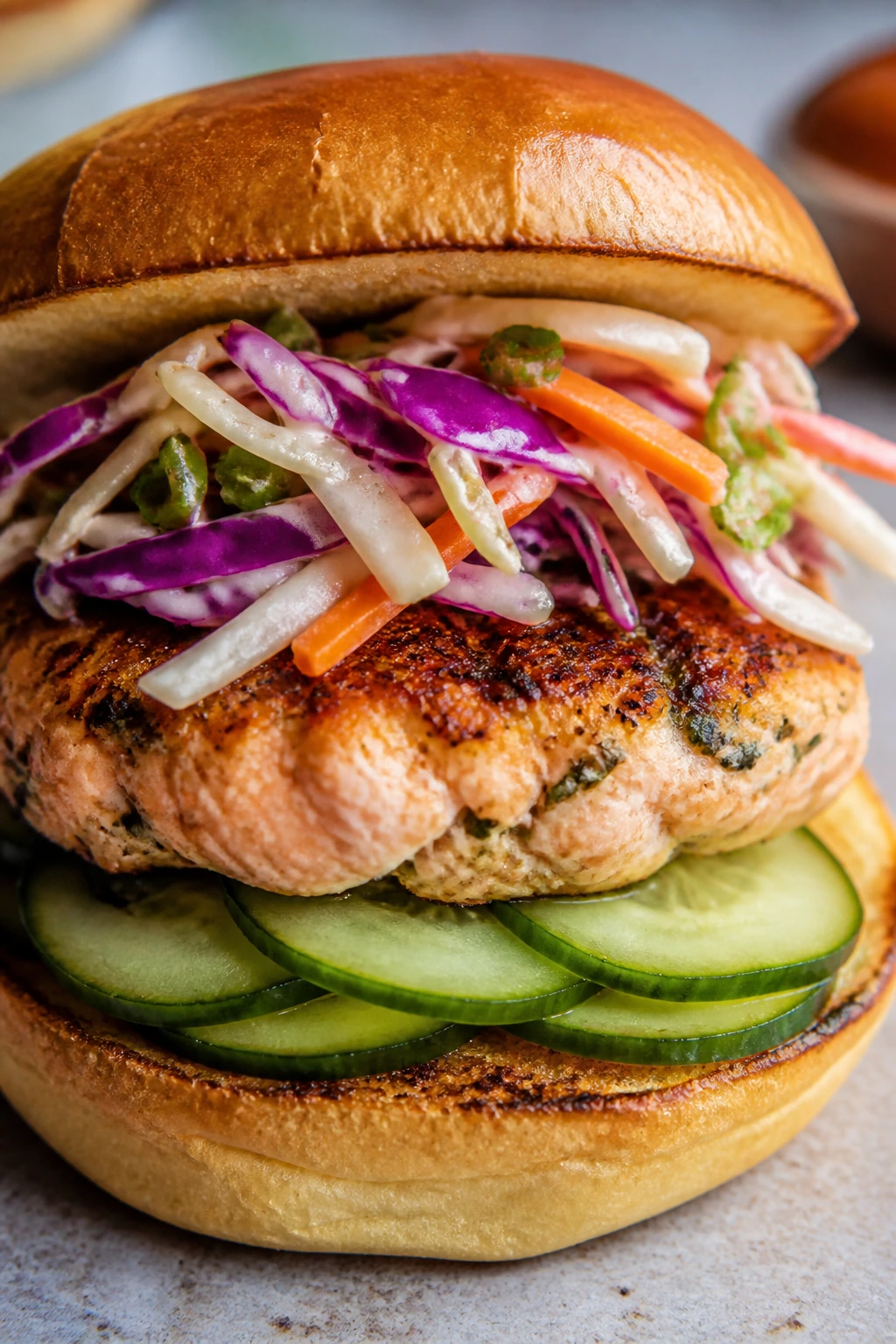
A good salmon burger should taste like salmon first, not like a mystery patty with fish in it. These are made with chopped salmon, a little binder, and enough texture to hold on the griddle. The quick pickles bring acid and crunch, which keeps the burger lively and stops it from feeling soft all the way through.
Why It Works
Salmon burgers work best when the fish is chopped, not puréed. You want pieces big enough to stay flaky and recognizable after cooking, because that gives the burger a better bite and a more honest fish flavor. A short pickling step adds a sharp note that cuts through the richness of the salmon and the bun, and it takes only a few minutes if you slice the onions thin.
Key Ingredients
- 1 pound skinless salmon fillet, finely chopped
- 1 egg
- 1/3 cup panko breadcrumbs
- 2 scallions, finely sliced
- 1 tablespoon Dijon mustard
- 1 teaspoon lemon zest
- 1 teaspoon salt
- 1/2 teaspoon black pepper
- 2 tablespoons neutral oil
- 4 burger buns
- 2 cups shredded cabbage
- 1/2 red onion, thinly sliced
- 1/3 cup vinegar
- 1/3 cup water
- 1 teaspoon sugar
- 1 tablespoon mayonnaise
Quick Steps
- Quick-pickle the red onion with vinegar, water, sugar, and a pinch of salt in a bowl.
- Mix the salmon, egg, panko, scallions, Dijon, lemon zest, salt, and pepper in a large bowl until just combined.
- Shape the mixture into 4 patties and press them lightly so they hold together.
- Heat the oil in a skillet over medium heat.
- Cook the patties for 4 to 5 minutes per side, until browned and cooked through.
- Toss the cabbage with mayonnaise and a pinch of salt for a fast slaw.
- Toast the buns, then build each burger with slaw, salmon patty, and pickled onions.
Tips and Variations
- If the mixture feels soft, chill the patties for 5 minutes: That helps them hold together in the pan.
- Use canned salmon if you want a shortcut: Drain it well and remove any big bones if needed.
- A little mustard in the slaw works too: It gives the whole burger more edge.
15. Miso Glazed Salmon with Broccoli and Sesame Noodles
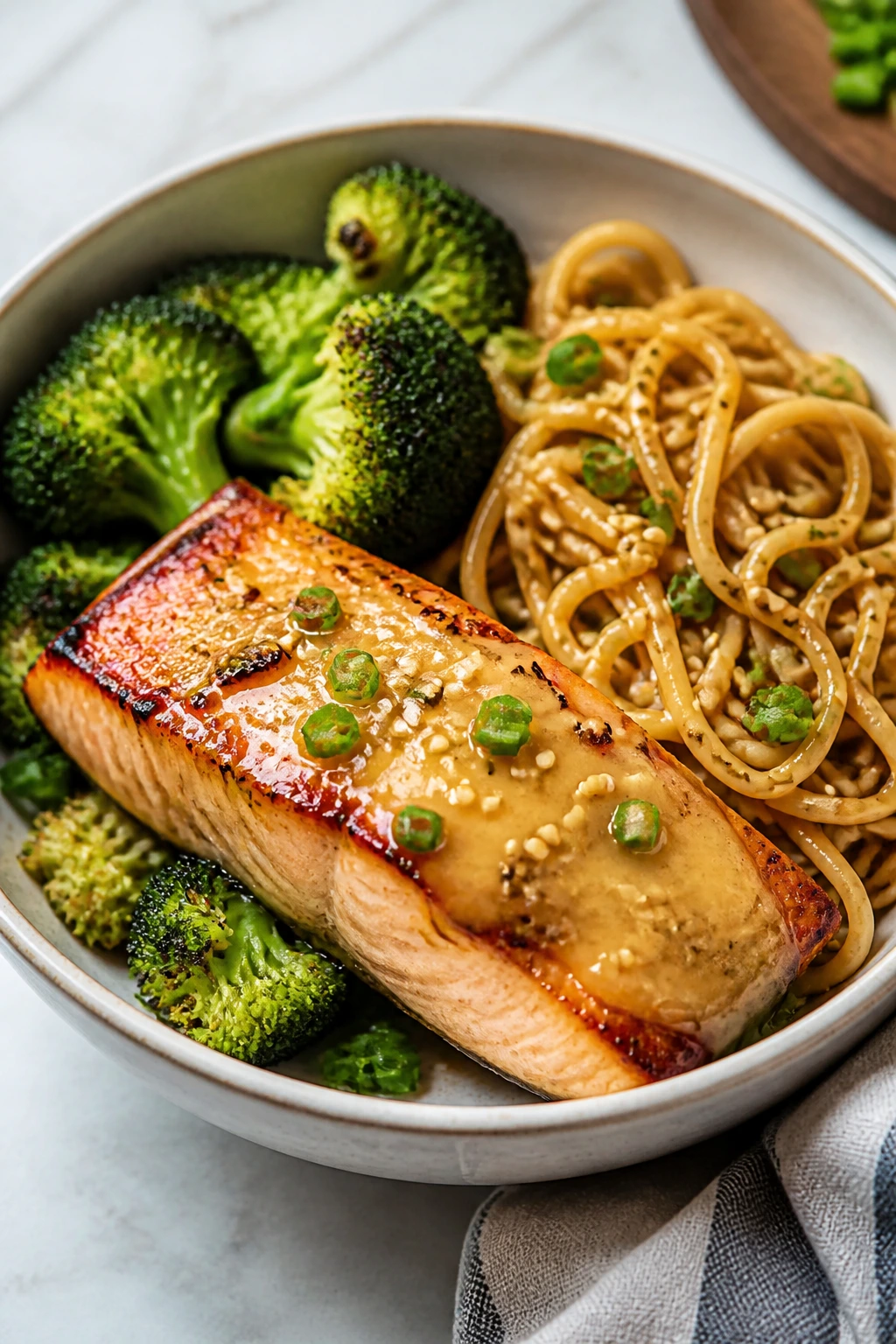
Miso gives salmon a savory depth that tastes far more complicated than the recipe is. The glaze caramelizes on the fish, the broccoli stays green and firm, and the sesame noodles catch the leftover sauce in the bowl. It’s the kind of dinner that makes a weeknight feel a little more deliberate.
Why It Works
White miso has a salty, mellow funk that clings to salmon better than a thin sauce does. Mixed with honey and soy, it forms a glaze that browns in the oven or under the broiler without needing a long roast. Broccoli and noodles are fast enough to keep up, which is the real hurdle with glazed fish dinners; if the sides lag, the fish goes dry waiting.
Key Ingredients
- 1 pound salmon fillet
- 2 tablespoons white miso paste
- 1 tablespoon honey
- 1 tablespoon soy sauce
- 1 tablespoon rice vinegar
- 8 ounces noodles — soba, ramen, or thin wheat noodles.
- 1 large head broccoli, cut into small florets
- 1 tablespoon sesame oil
- 1 tablespoon neutral oil
- 2 scallions, sliced
- 1 tablespoon sesame seeds
Quick Steps
- Whisk the miso, honey, soy sauce, and rice vinegar into a smooth glaze.
- Cook the noodles according to the package directions, adding the broccoli in the last 2 to 3 minutes if the noodles boil in the same pot.
- Drain the noodles and toss them with sesame oil so they do not clump.
- Place the salmon on a lined sheet pan, brush it with the glaze, and roast at 425°F for 10 to 12 minutes or broil it for the last minute if you want more color.
- Toss the noodles with the broccoli and a little neutral oil if needed.
- Slice the salmon and set it over the noodles.
- Finish with scallions and sesame seeds.
Tips and Variations
- Go light on the soy if your miso is salty: White miso can carry more salt than you expect.
- Broil carefully: The glaze goes from caramelized to scorched fast under high heat.
- Add a squeeze of lime at the end: It wakes up the miso and keeps the bowl from tasting heavy.
Why Salmon Wins on Busy Nights
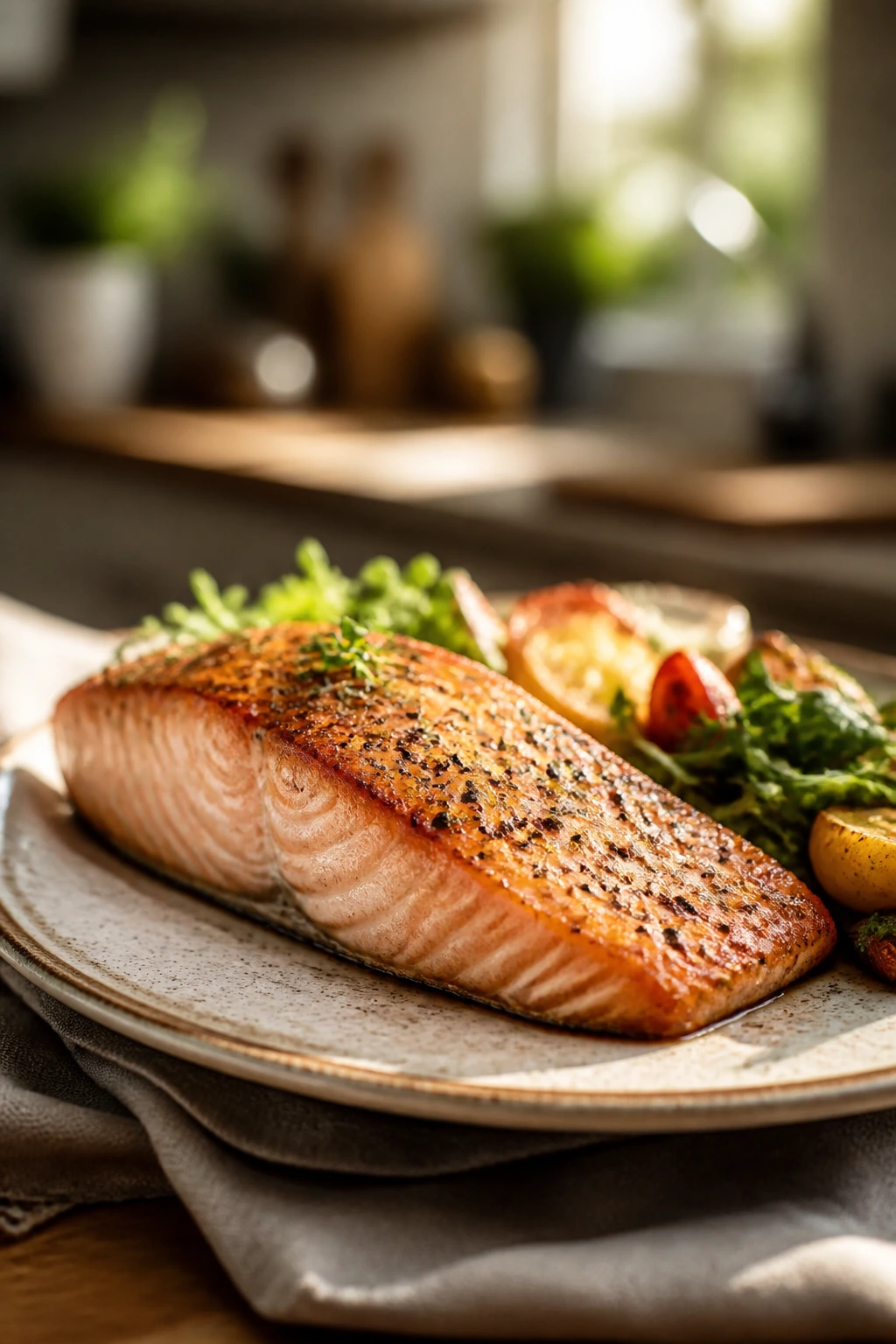
Salmon works on a clock in a way a lot of other proteins do not. That matters. A six-ounce fillet can go from raw to done in less than a dozen minutes, and that means you can build the rest of dinner around it instead of waiting on it. If you’ve ever stood at the stove trying to keep one pan warm while another side dish finishes up, you already know the difference.
The other reason salmon earns its place is texture. It has enough natural fat to stay tender under high heat, enough flavor to stand up to strong sauces, and enough structure to be served whole, flaked, cubed, or chopped. That flexibility is what lets one ingredient show up as tacos, bowls, pasta, salad, curry, and burgers without feeling like a gimmick.
Food safety sits in the middle of all of this, whether people like talking about it or not. A reliable thermometer is the easiest way to stop guessing, and the standard safe temperature for fish is 145°F at the thickest point. Some cooks prefer salmon a little softer and pull it earlier, then let carryover heat finish the job, but the important part is knowing what you’re aiming for instead of hoping the center somehow sorted itself out.
The Gear That Makes These Dinners Easier
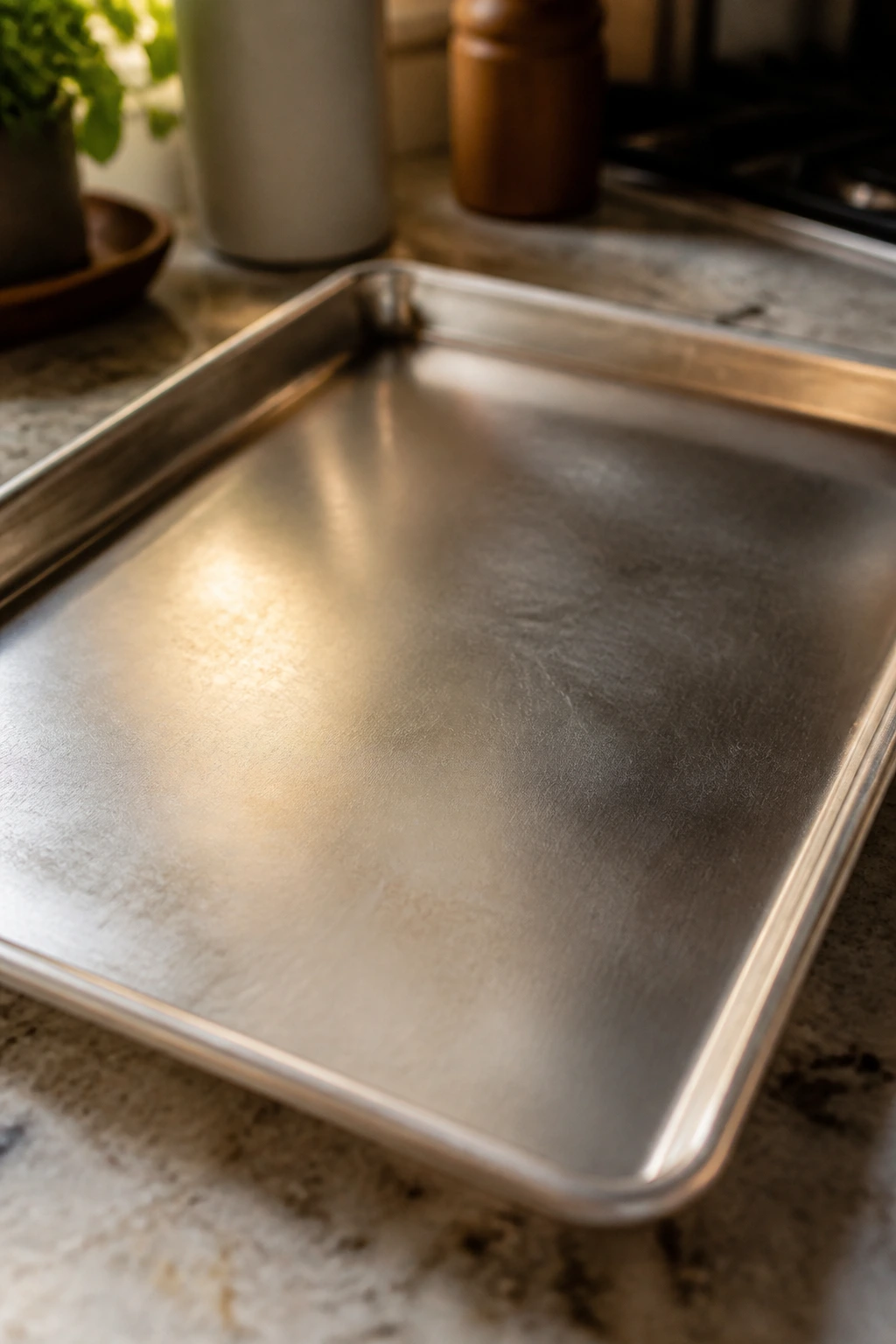
- Rimmed sheet pan — the workhorse for baked salmon, especially when vegetables share the pan.
- Large skillet or sauté pan — ideal for searing fish, building a glaze, or tossing fried rice.
- Fish spatula — thin, flexible, and far less likely to tear a fillet when you flip it.
- Instant-read thermometer — the cleanest way to know when salmon is done without cutting into it.
- Mixing bowls in 2 or 3 sizes — one for sauces, one for slaw, one for tossing grains or noodles.
- Small whisk or fork — good for emulsifying quick dressings and glazes.
- Microplane or fine grater — handy for lemon zest, garlic, ginger, and even nutmeg if a sauce wants it.
- Tongs — especially useful for noodles, tortillas, and flipping vegetables.
- Chef’s knife and cutting board — obvious, but worth naming because thin, even cuts matter more than people think.
- Measuring spoons and cups — quick sauces only work when the balance is right.
- Parchment paper — optional, but it saves you from stuck salmon and scorched glaze.
- Colander — useful for pasta, couscous, and anything that needs a fast drain.
Smart Shopping and Ingredient Tips
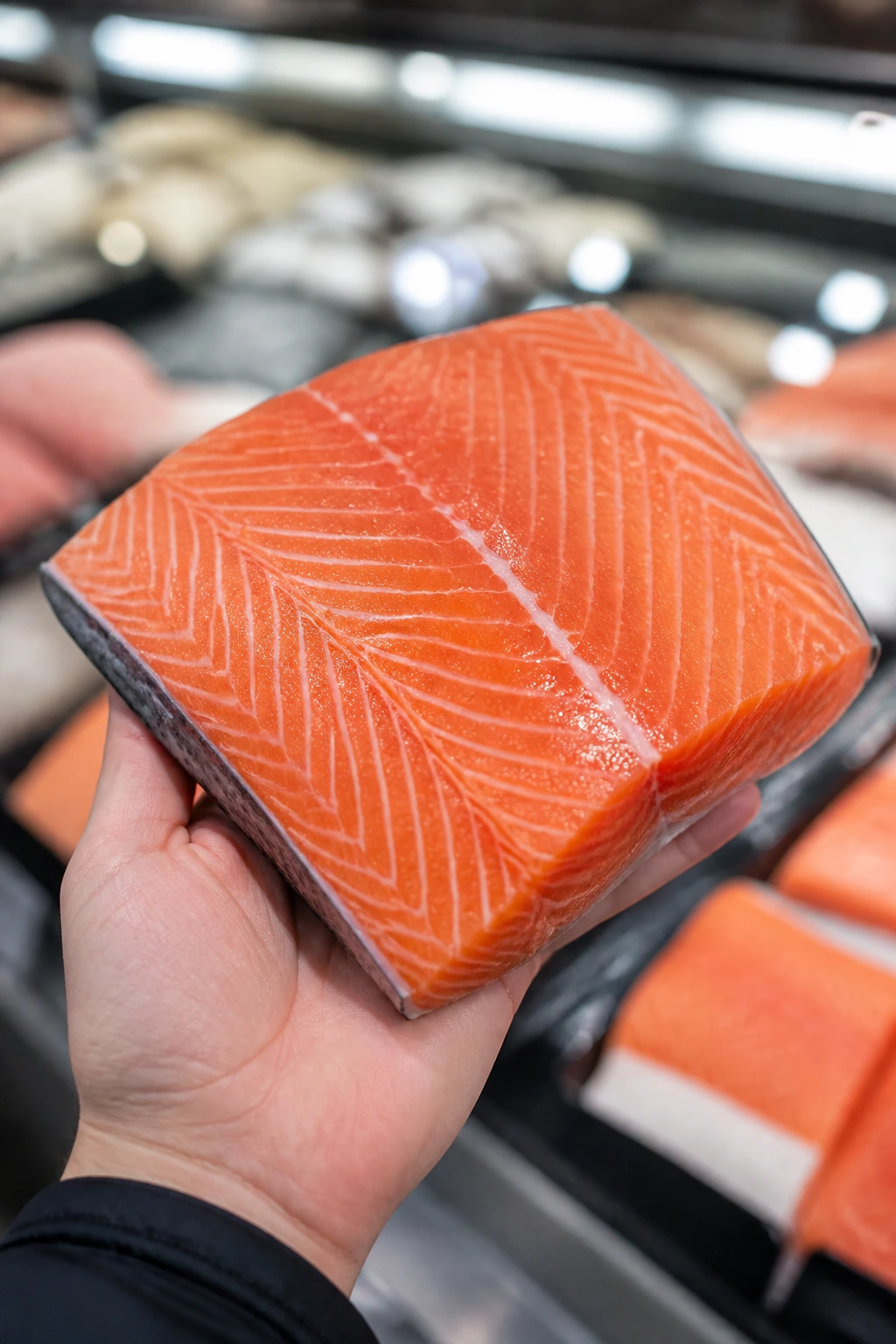
Buy salmon by thickness first, not just by species. A center-cut fillet that’s roughly 1 to 1 1/2 inches thick cooks more evenly than a tapering tail piece, and that matters a lot when the whole dinner depends on timing. If the flesh looks dry at the edges or dull in color, keep walking. Fresh salmon should smell clean, like cold water and the sea, not sharp or sour.
Frozen salmon is not a consolation prize. It’s often a better buy than the piece sitting in the case too long, especially if you’re cooking on a weeknight and need something dependable. Thaw it in the refrigerator overnight when you can, or keep it sealed and thaw it under cold running water if time is short. Then dry it well. Water on the surface is the enemy of browning.
For sauces and seasonings, a few pantry items do more work than an overstuffed shopping list. Soy sauce, miso, Dijon, honey, rice vinegar, capers, pesto, and curry paste all earn their shelf space here because they turn a plain fillet into dinner fast. Buy the kind you actually like tasting on a spoon, because the fish will not hide bad sauce. It never does.
Vegetables should match the clock. Asparagus, snap peas, broccoli florets, spinach, cabbage, cucumbers, tomatoes, green beans, and scallions all make sense because they cook quickly or need almost no cooking at all. Skip anything that needs a long roast unless you’re willing to par-cook it first. A 30-minute salmon dinner breaks the second the vegetables stop respecting the clock.
How to Serve These Salmon Dinners
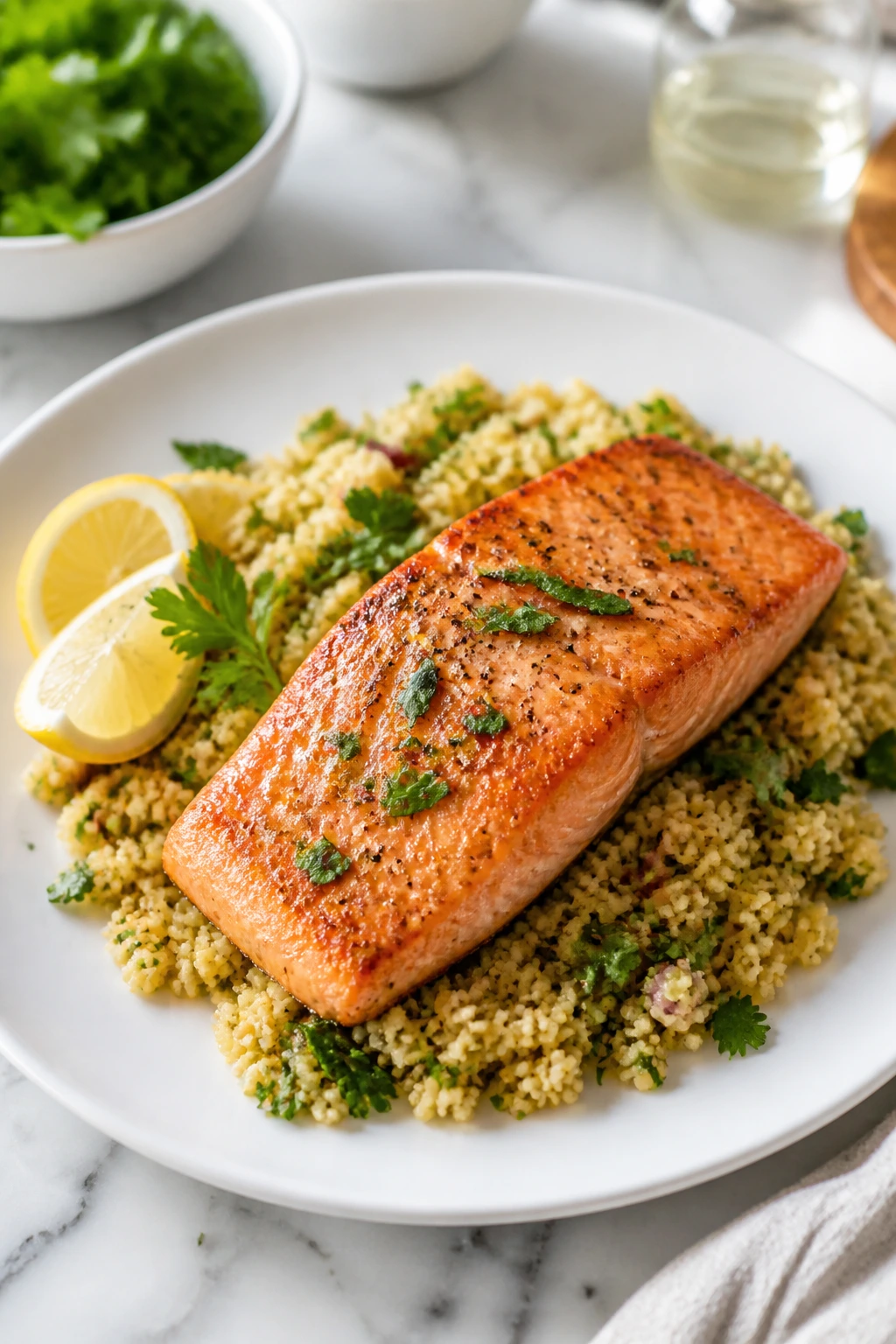
Presentation: Keep the fish visible when you can. A whole fillet over couscous or noodles looks generous, while flaked salmon works better in tacos, bowls, fried rice, and wraps where you want every bite mixed. Add herbs, sesame seeds, lemon wedges, or scallions at the end; they make the plate look finished and they also wake up the flavor.
Accompaniments: Rice, couscous, pasta, tortillas, pita, and salad greens cover almost every recipe in this collection, but I’d also keep one simple vegetable side in your back pocket. A cucumber salad, steamed green beans, sliced avocado, or a handful of roasted cherry tomatoes can carry a meal farther than people expect. Bread is useful too. Some nights you want something to mop up the sauce.
Portions: A 5- to 6-ounce salmon fillet per adult is a good standard if the meal has a grain or vegetable on the side. For tacos and wraps, 4 ounces per person often goes far enough because the tortillas and toppings stretch it. If you’re feeding hungrier people, add another cup of rice or a second handful of greens rather than piling on more fish.
Beverage Pairing: Crisp white wine works across most of these dinners — Sauvignon Blanc, dry Riesling, or Pinot Grigio all handle lemon, herbs, and light sauces well. If you’d rather skip wine, sparkling water with lime, unsweetened iced tea, or a light lager keeps the meal feeling fresh instead of heavy.
Extra Flavor Moves Worth Using
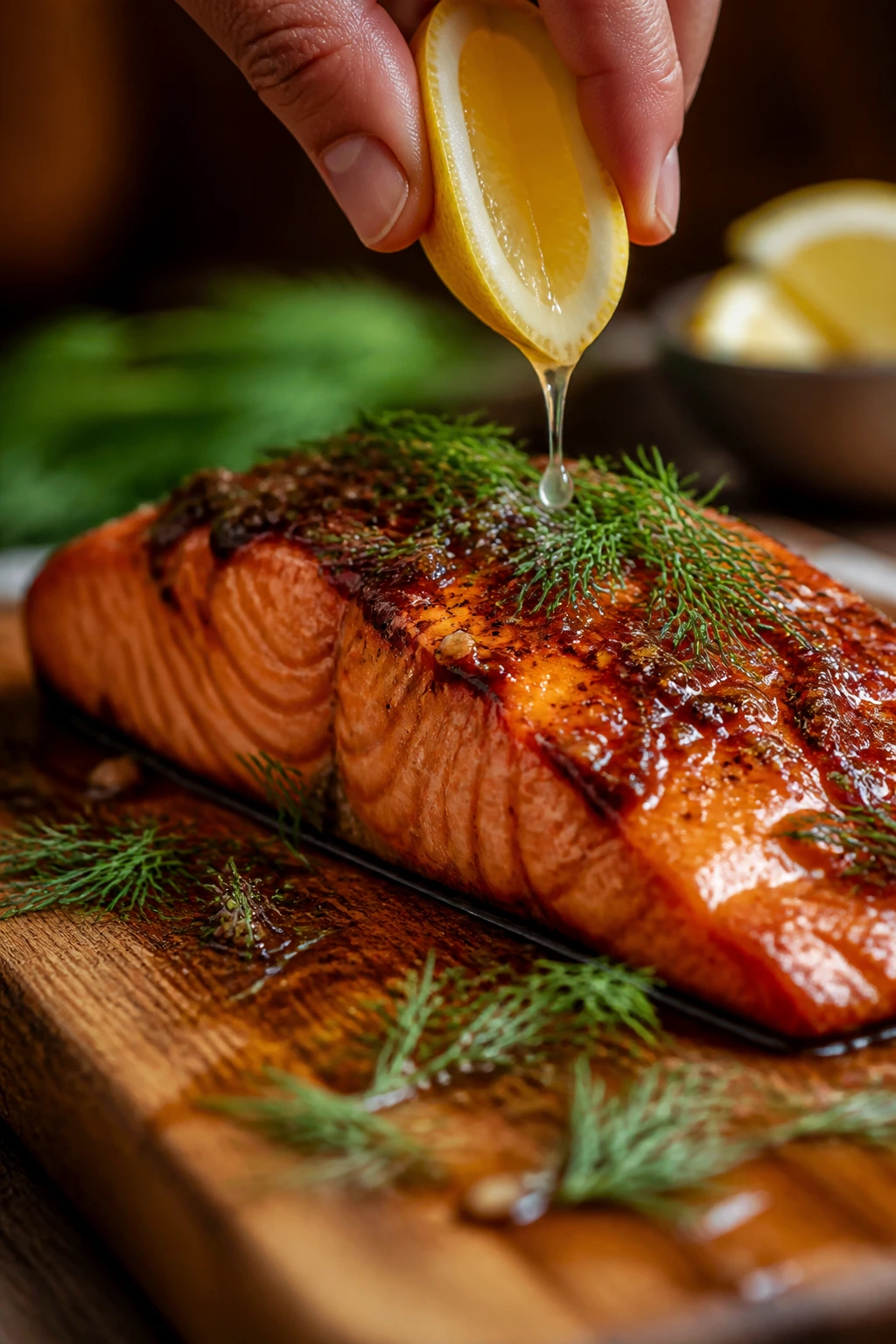
Flavor Enhancement: Finish almost any salmon dinner with a little acid. Lemon juice, rice vinegar, lime, or even a spoonful of quick-pickled onions gives the fish a cleaner edge and keeps rich sauces from flattening out. If the recipe already has citrus, add zest or a few capers instead of more juice.
Customization: If you want more heat, go with chili crisp, red pepper flakes, harissa, or a pinch of cayenne in the glaze. If you want a softer, herbier path, use dill, parsley, basil, or cilantro at the end rather than cooking all the flavor into the pan. Fresh herbs taste brighter when they land on hot fish at the last second.
Serving Suggestions: Crunch matters. Toasted sesame seeds, sliced scallions, chopped peanuts, crushed pita chips, or quick-pickled vegetables all keep salmon dinners from feeling one-note. The soft flake of salmon loves a little contrast; otherwise the whole plate can blur together.
Make-It-Yours: For gluten-free dinners, use tamari, corn tortillas, rice, couscous alternatives, or gluten-free noodles. For dairy-free meals, skip yogurt or cream sauces and lean on olive oil, miso, tahini, coconut milk, or citrus instead. For lower-carb plates, build around salad greens, cabbage slaw, cauliflower rice, or extra vegetables and keep the grain portion smaller.
Make-Ahead, Storage, and Reheating Guidance
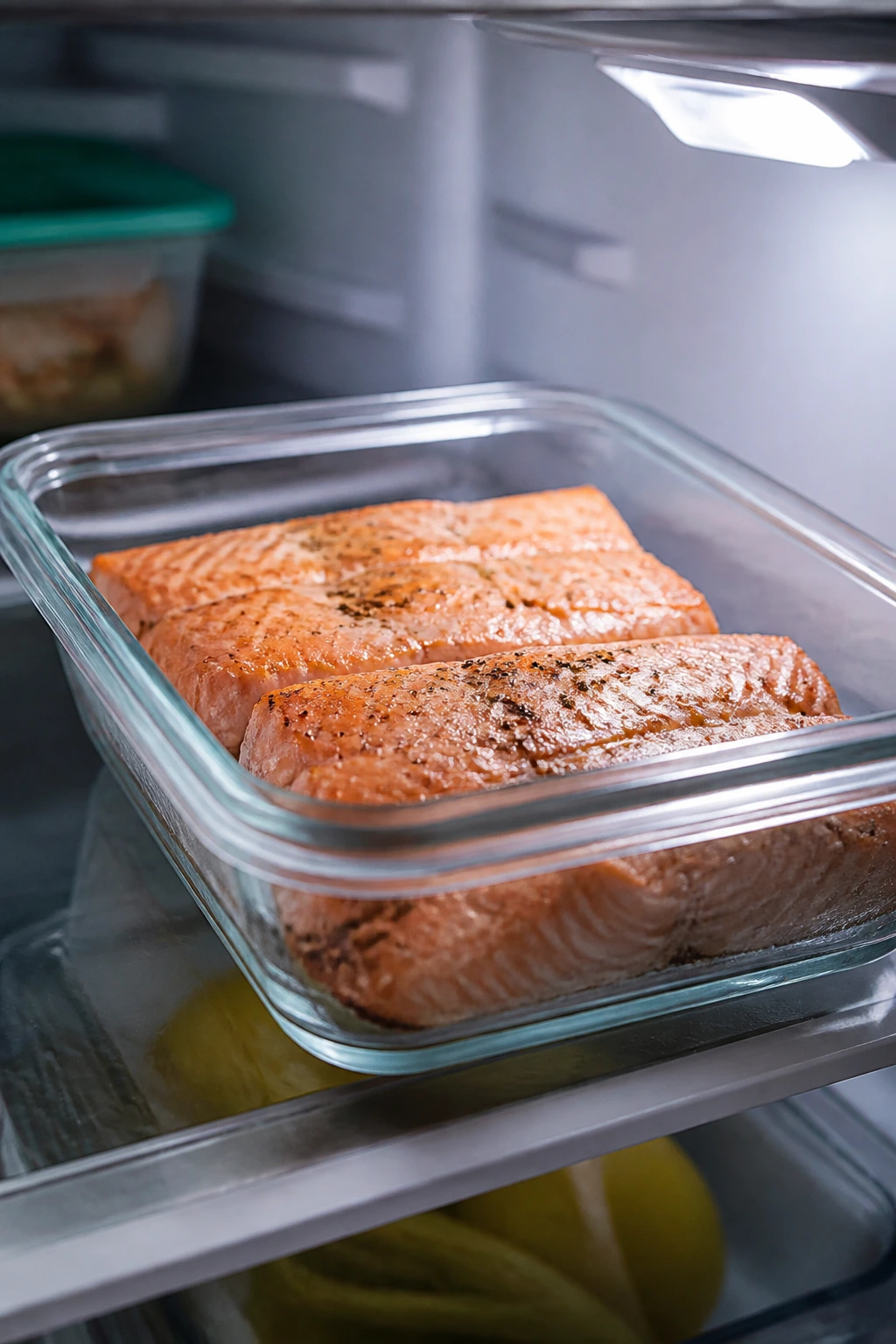
Cooked salmon keeps well in the refrigerator for 3 to 4 days when it’s stored in a shallow airtight container and cooled within 2 hours of cooking. That timeline matters. Salmon can pick up a stronger smell if it sits too long, and the texture dries out faster than chicken or beef. If it smells sour or sharply fishy, trust your nose and pass on it.
Freezing cooked salmon is possible for about 2 months, though the texture softens once it thaws. I’d freeze it only if you know it’s headed for fried rice, pasta, or a bowl where the fish can be flaked and mixed back in. Freeze it without the delicate toppings — no yogurt sauce, no cucumber salad, no fresh herbs. Those should stay fresh until serving day.
Reheating works best with gentle heat. A 275°F oven for about 8 to 10 minutes is usually enough for a fillet, especially if you splash a teaspoon or two of water or broth into the baking dish and cover it loosely with foil. On the stovetop, warm salmon over low heat in a covered skillet with a little water or sauce nearby. The microwave is fine in short bursts at lower power, but high heat makes the edges chalky fast.
For bowls, tacos, wraps, and salads, store the components separately if you can. Rice and noodles can sit with the salmon, but slaw, greens, cucumber, avocado, and yogurt sauces should stay apart until the final assembly. If you’re planning ahead, season the fish a few hours in advance, keep it cold, and cook it just before dinner. That gives you the best texture without turning the kitchen into a race.
Variations and Adaptations to Try
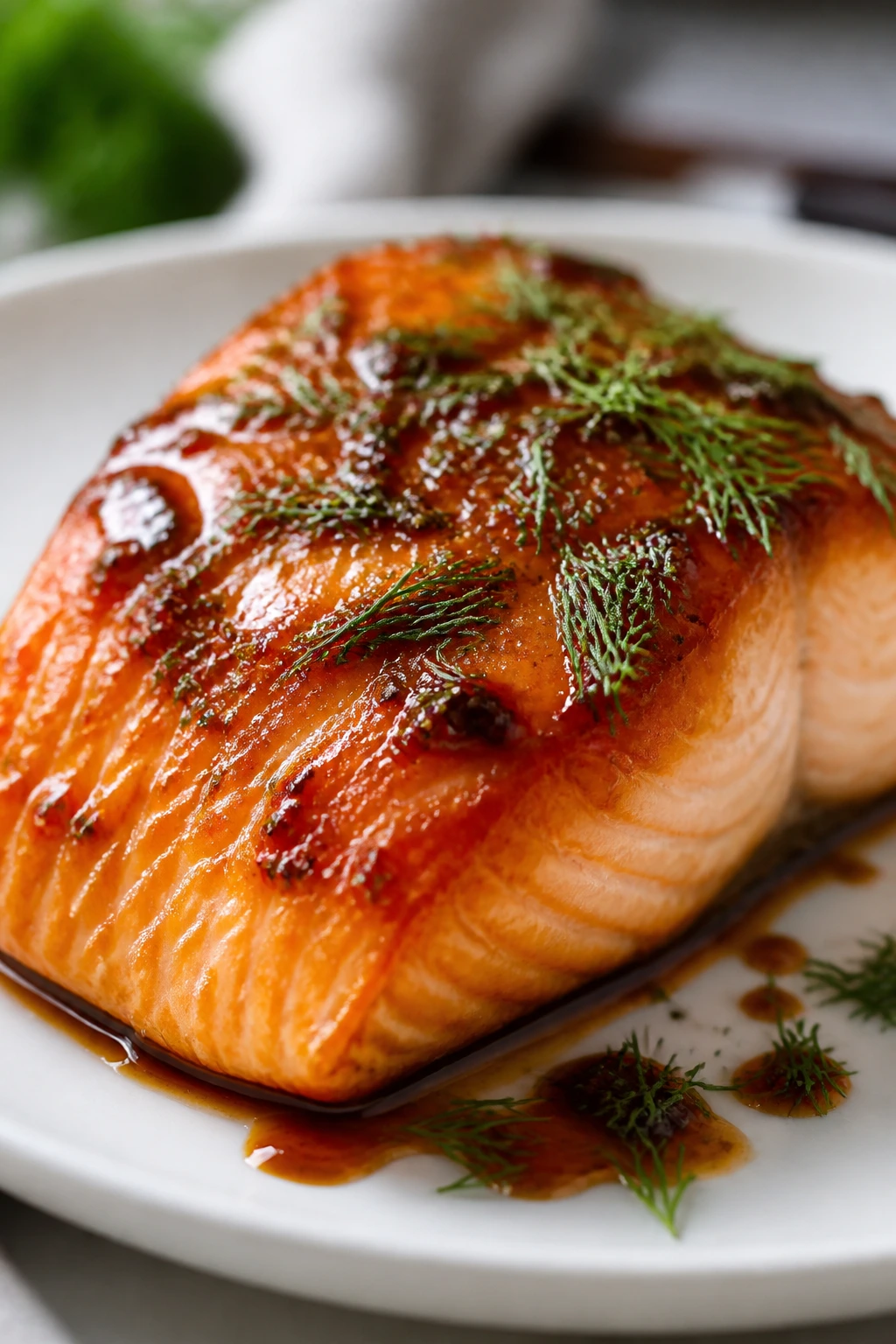
Gluten-Free Swap: Use tamari instead of soy sauce, corn tortillas instead of flour, and rice or gluten-free noodles in place of wheat pasta. Most of these recipes adapt cleanly because the flavor comes from the salmon and sauce, not from the starch itself. Check bottled sauces, though. Teriyaki and pesto can hide gluten where you least expect it.
Dairy-Free Route: Skip Caesar dressing, yogurt sauces, and Parmesan-heavy finishes, then lean on olive oil, lemon, tahini, coconut milk, or miso for body. A dairy-free salmon dinner does not have to feel stripped down. It just needs a sharper sense of acid and salt.
Heat-Seeker Version: Add chili crisp to the bowls, cayenne to the blackening spice, red pepper flakes to pasta, or a spoonful of harissa to the glaze. Salmon takes heat well when there’s enough fat and citrus on the plate. You want a lift, not a burn that covers everything else.
Low-Carb Plate: Serve the salmon over greens, cucumber salad, sautéed spinach, cauliflower rice, or shredded cabbage instead of grains. Tacos can become lettuce wraps, pasta bowls can become vegetable skillets, and the flavor still holds together. The sauce does the heavy lifting here, not the starch.
Pantry Backup Dinner: Frozen salmon, bagged slaw, microwave rice, bottled teriyaki, jarred pesto, and canned coconut milk can carry you through any of these recipes on short notice. That’s not cheating. That’s cooking with a good sense of timing. The fish still deserves a fresh herb or citrus finish, though.
Common Mistakes to Avoid
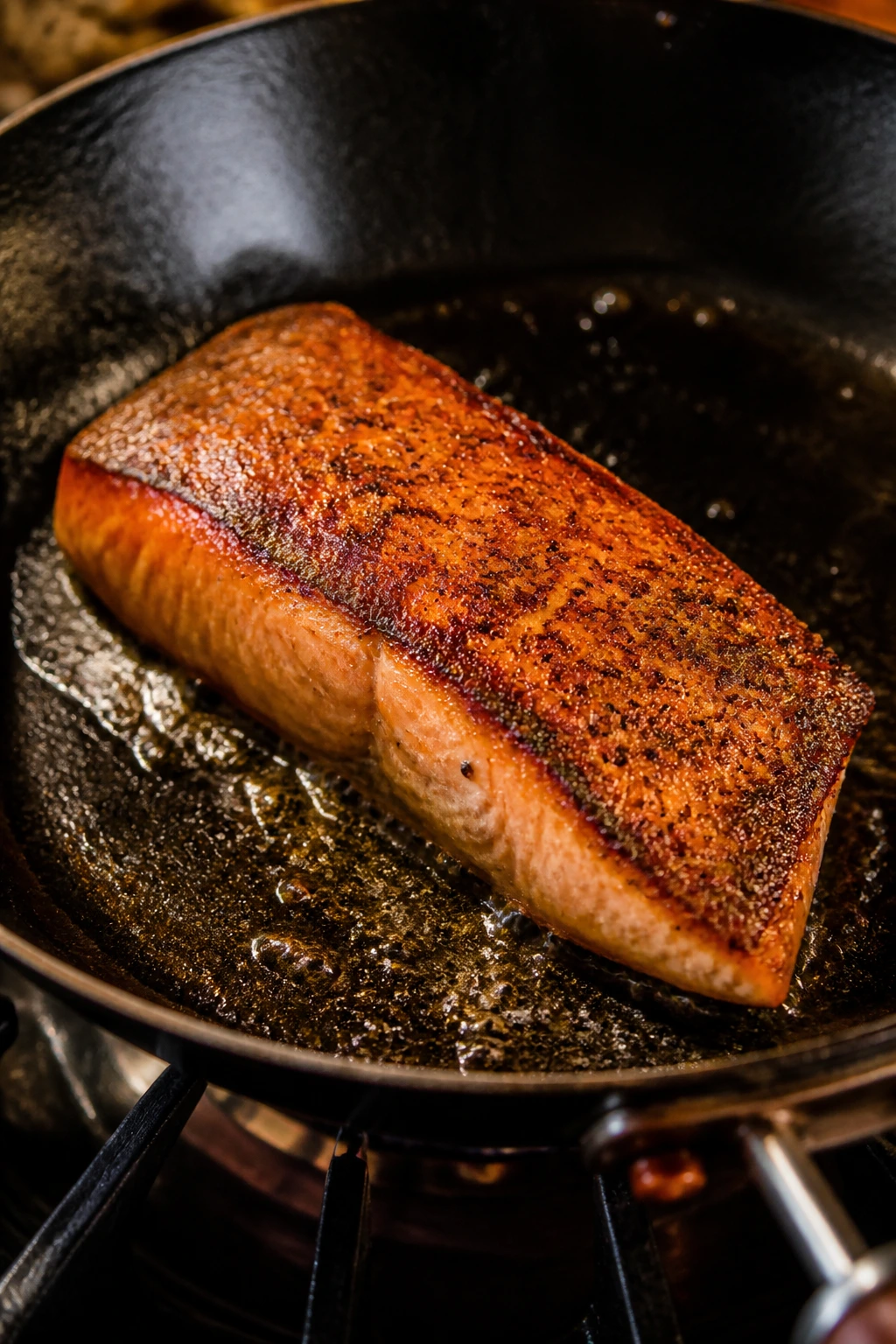
The first mistake is using salmon pieces of wildly different thickness in the same pan. A skinny tail piece will cook before the thick center-cut fillet is done, and then you’re choosing which dinner to save. Buy evenly cut portions or separate the thinner ends for another meal.
The second mistake is skipping the dry step. Wet salmon steams instead of searing, and steam is the enemy of a good crust. Pat the fish dry with paper towels before seasoning, especially for skillet recipes and blackened seasoning.
The third mistake is crowding the pan. Too much salmon or too many vegetables packed together lowers the heat and turns everything soft. Give the fish some space, or cook in batches. It’s slower by a few minutes and better by a mile.
The fourth mistake is cooking everything on the same schedule. Salmon, asparagus, couscous, noodles, slaw, and spinach all behave differently. The fish is not the place to wait while you “just finish” a side dish. Build the side around the fish, not the other way around.
The fifth mistake is drowning salmon in a sweet glaze too early. Honey, maple, and teriyaki burn if they sit on high heat for too long. Brush them on near the end, or use a lower oven and watch the surface closely. Dark and glossy is the goal. Black and bitter is not.
Questions People Ask Before Making These Dinners

Can I use frozen salmon for all of these recipes?
Yes. Frozen salmon works well as long as it’s thawed fully, patted dry, and cooked from an even thickness. If the recipe depends on a hard sear or a glaze, dryness matters even more, so don’t rush that step.
How do I know when salmon is done?
The cleanest answer is an instant-read thermometer at the thickest point. 145°F is the standard safe temperature for fish, and the flesh should flake without looking translucent in the middle. If you slice into it and it still looks glossy and raw at the center, give it another minute or two.
Should I buy skin-on or skinless salmon?
Skin-on fillets are often easier to sear because the skin helps protect the flesh and gives you a little buffer against overcooking. Skinless works fine for tacos, curries, burgers, and flaked bowls. If you want crisp skin, start skin-side down in a hot pan and let it do its thing.
Can I swap in another fish?
Yes, though the timing may shift. Trout, arctic char, or cod can stand in for some of these recipes, but very lean fish like cod need closer attention so they do not dry out. Keep the sauce and vegetable pairings, then adjust the cook time to the thickness of the fish.
What if my salmon sticks to the pan?
Usually the pan was not hot enough, the fish was too wet, or you tried to flip it too soon. Let it sear undisturbed for a full few minutes, and it will usually release on its own when the crust forms. A thin fish spatula helps too.
Can I make the sauces ahead of time?
Most of them, yes. Glazes, dressings, pesto sauces, and yogurt sauces can be mixed a day or two ahead and kept chilled. Just hold back delicate fresh herbs, or add a little more lemon right before serving so the sauce tastes lively.
Which of these hold up best as leftovers?
Fried rice, pasta, bowls, curry, and salmon burgers tend to reheat better than tacos or salads. For the softer dishes, keep sauces and greens separate so the texture stays decent. Cold salmon salad over greens is fine the next day, but only if the dressing is light and the fish was cooked cleanly.
How can I scale these recipes for more people?
Use the same pan logic, just split the fish across two sheet pans or two skillets if needed. Crowding is the thing that ruins a bigger batch fastest. If you’re feeding a crowd, make extra rice, couscous, or salad on the side and keep the salmon portions generous rather than trying to stretch one fillet too far.
A Fast Dinner Habit Worth Keeping
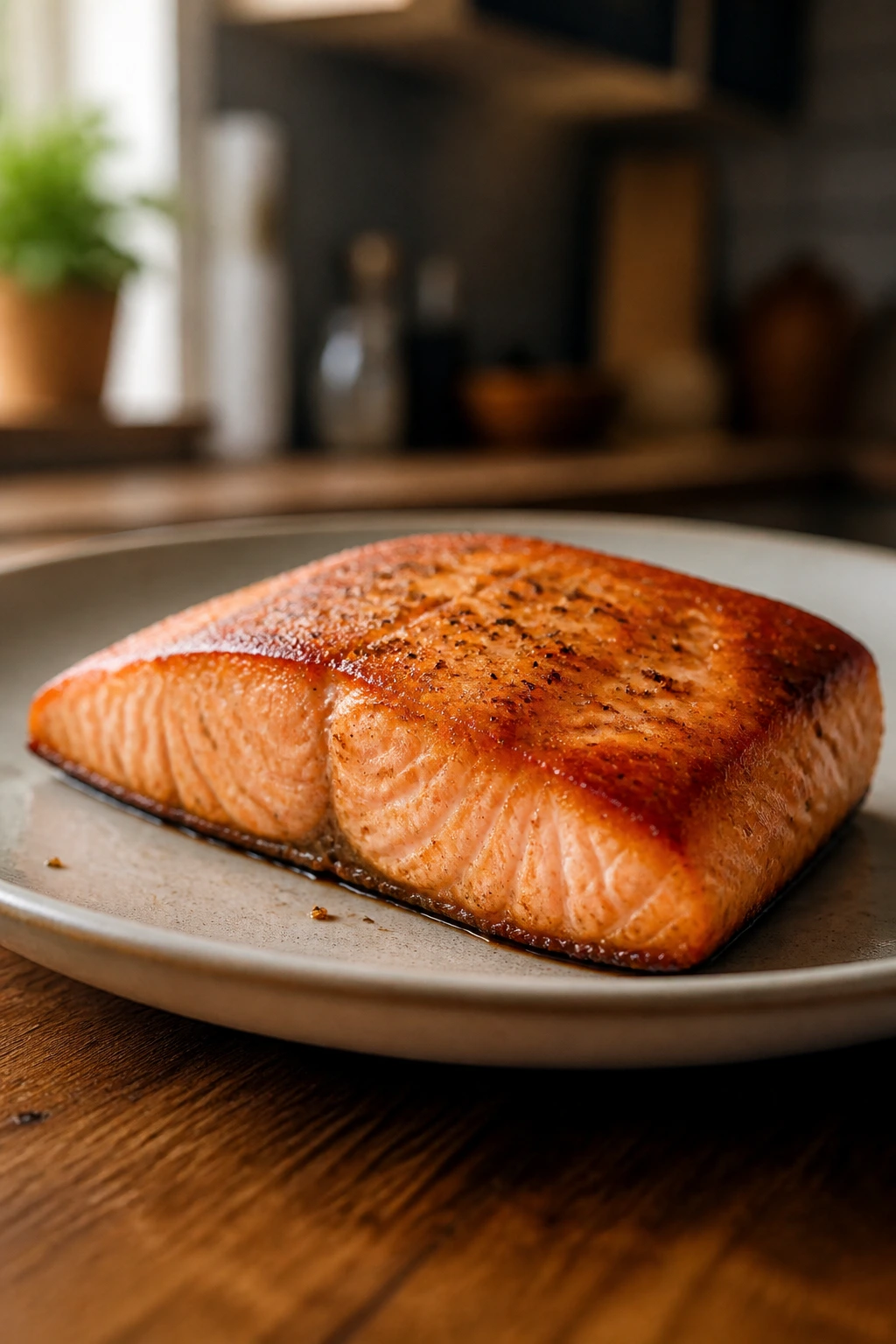
The best thing about salmon dinners like these is that they stop feeling like special-occasion food and start feeling useful. Useful is a compliment, by the way. A salmon dinner that cooks in half an hour, eats well, and doesn’t demand much cleanup earns a place in the regular rotation faster than a fancier meal that only works when you’ve got a quiet evening and a full sink.
Pick the version that matches your mood, your pantry, or the vegetables that need to be used up before they go soft. Keep one bright sauce, one quick side, and one good pan in reach, and the rest takes care of itself faster than you’d expect.