



Pork tenderloin is the cut I reach for when Sunday supper needs to feel generous without turning the kitchen into a wrestling match. It cooks fast, stays mild enough to take on almost any sauce, and slices into neat little medallions that look polished even when the rest of dinner is plain potatoes and a green vegetable.
That combination matters. A pork tenderloin dinner can feel like a roast from a slower, older kitchen, but the actual work is tidy and contained: season well, get some color on the outside, and pull it at 145°F so the center stays juicy. Miss that target, and the cut turns dry in a hurry. Hit it, and you get tender meat with a clean bite, not stringy, not mushy, just right.
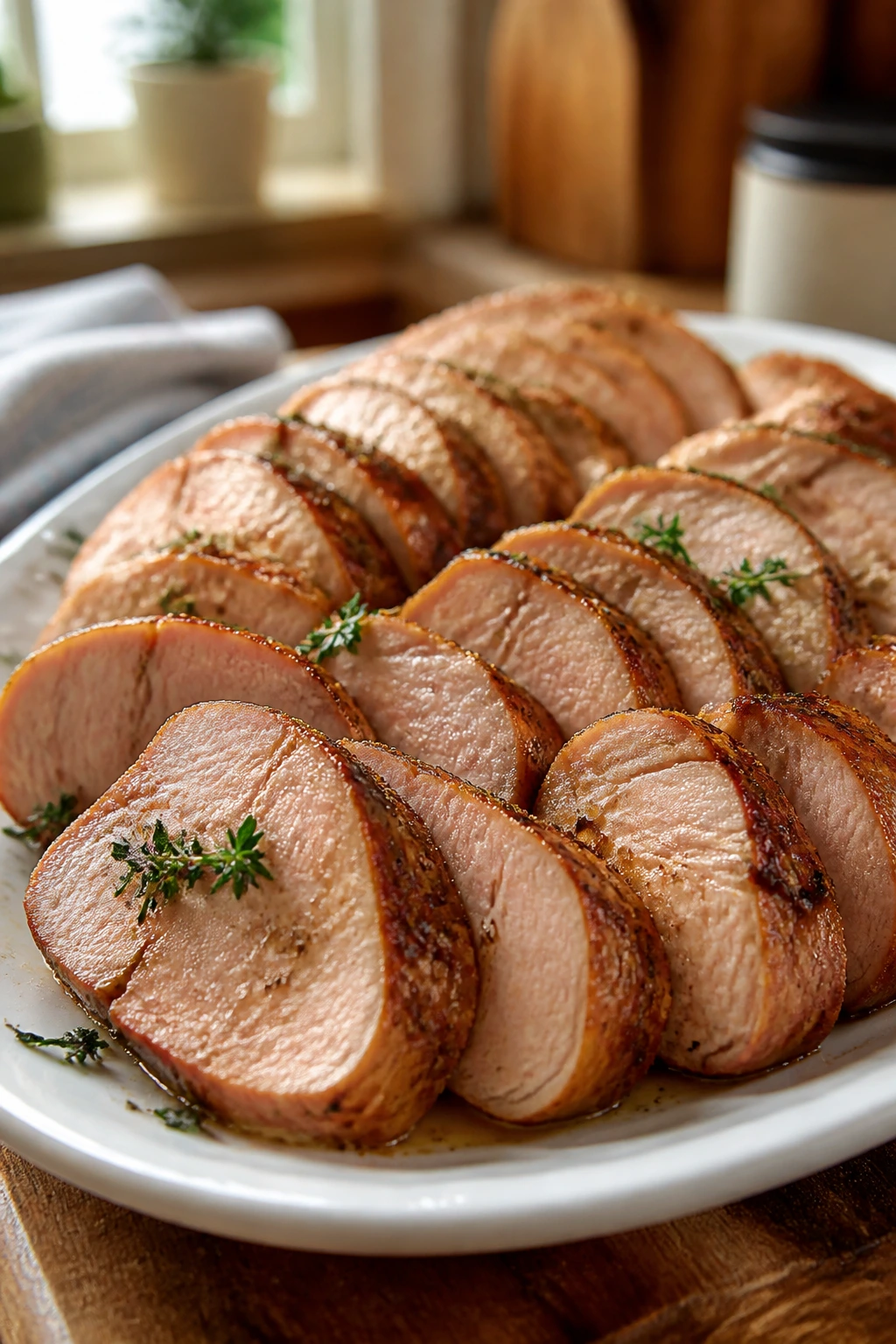
These 12 pork tenderloin dinners lean into that sweet spot. Some are glossy and a little sweet, some are herbal and savory, some lean on apples or cider, and one or two bring enough crunch or brightness to keep the whole plate lively. They’re the sort of pork tenderloin recipes that make Sunday supper feel like an occasion without demanding a three-hour commitment.
Why These Pork Tenderloin Dinners Work So Well for Sunday Supper
-
Fast enough to keep the evening calm: A pork tenderloin usually finishes in about 20 to 30 minutes, which leaves room for side dishes, a salad, or just a quiet table without rushing.
-
Comforting without heaviness: Pork tenderloin is lean, so it feels substantial but not cloying; that makes it a better fit for a big meal than a lot of richer cuts.
-
Flexible enough for the pantry you already have: Mustard, apples, garlic, cider, rosemary, soy sauce, honey, and thyme can all take this cut in different directions without much effort.
-
Easy to pair with classic sides: Mashed potatoes, roasted carrots, green beans, buttered noodles, cabbage, rice, or crusty bread all make sense here.
-
Good-looking on the plate: Once you slice pork tenderloin against the grain, you get neat medallions with clean edges, which means dinner looks composed even if the day did not.
-
Worth the thermometer: These dinners reward precision. Pull the pork at 145°F, rest it for at least 3 minutes, and the texture stays supple instead of chalky.
1. Garlic Herb Roasted Pork Tenderloin with Pan Jus
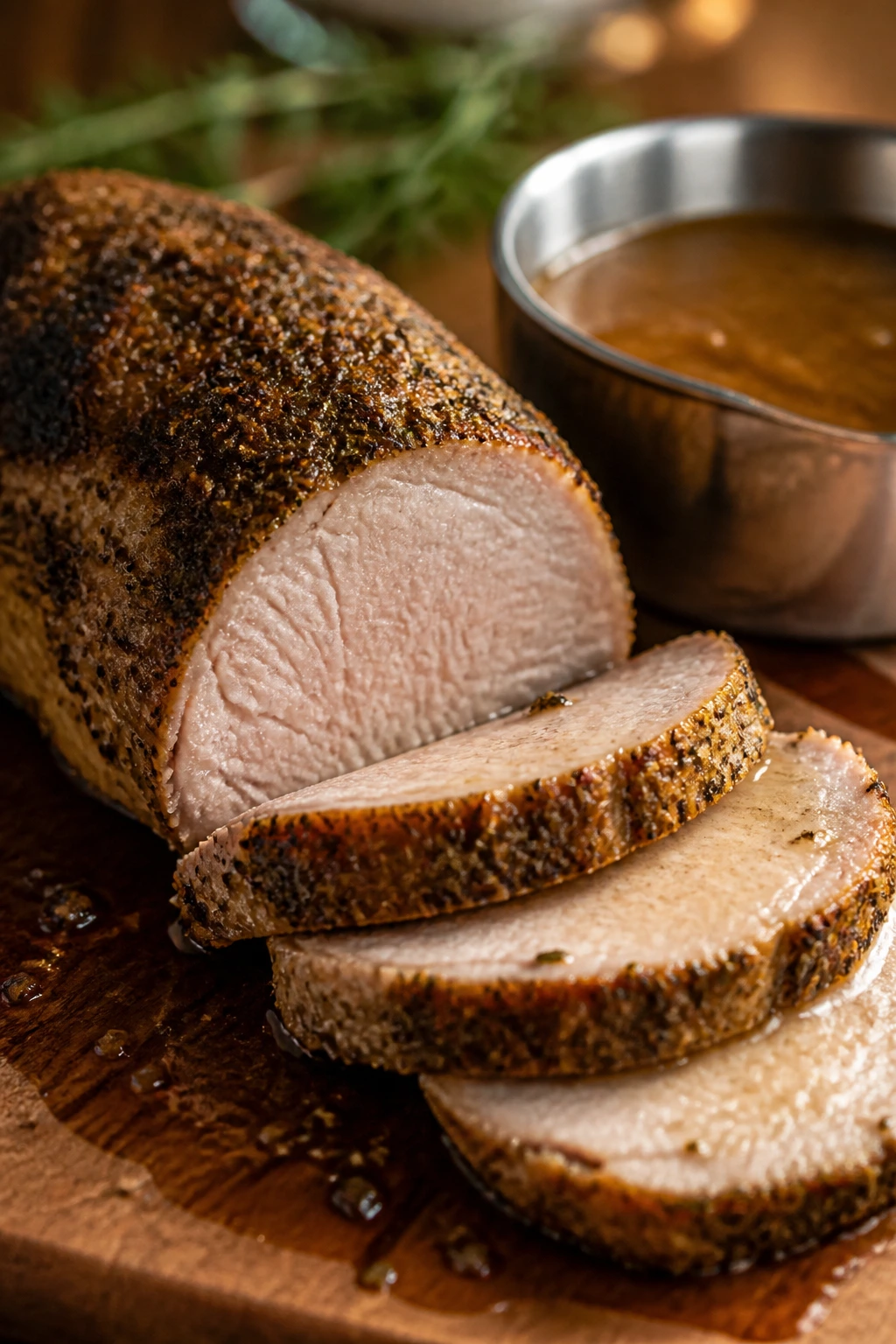
A plain roasted pork tenderloin can be forgettable. This one isn’t. The garlic and herbs cling to the meat, the outside picks up a deep brown crust, and the pan juices turn into a quick jus that tastes like you spent far more time on dinner than you actually did.
Why It Works
High heat is the trick here. Pork tenderloin is too lean to sit around for long, so a hot oven gives you color before the center dries out, and a quick skillet sear helps the surface pick up a little edge before roasting. The jus uses the browned bits left in the pan — the fond — which means the sauce tastes meaty and honest, not like something poured from a carton. That little bit of Dijon sharpens the broth and keeps the garlic from tasting flat.
Key Ingredients
- 2 pork tenderloins, about 1 to 1¼ pounds each, silver skin removed
- 2 tablespoons olive oil
- 1½ teaspoons kosher salt
- 1 teaspoon black pepper
- 4 garlic cloves, minced
- 1 tablespoon chopped fresh rosemary
- 1 tablespoon chopped fresh thyme
- 1 tablespoon unsalted butter
- 1 small shallot, finely chopped
- ¾ cup low-sodium chicken stock
- 1 teaspoon Dijon mustard
- 1 teaspoon lemon juice
Quick Steps
- Preheat the oven to 425°F (220°C) and set a rack in the center.
- Pat the pork dry, then rub it with olive oil, salt, pepper, garlic, rosemary, and thyme.
- Sear the tenderloins in a hot oven-safe skillet over medium-high heat for 2 minutes per side, until the surface is browned.
- Roast for 12 to 16 minutes, until an instant-read thermometer inserted into the thickest part reads 145°F.
- Transfer the pork to a cutting board and rest it for 5 to 10 minutes.
- Make the jus in the same skillet: add butter and shallot, cook for 1 minute, then stir in stock and Dijon, scraping up the browned bits until the sauce reduces slightly.
- Finish with lemon juice, slice the pork, and spoon the pan jus over the top.
Tips and Variations
- Make-ahead: Season the pork up to 24 hours ahead and refrigerate it uncovered for better browning.
- Swap the herbs: Sage or oregano can stand in for thyme if that’s what’s in the crisper drawer.
- Serving idea: Spoon the jus over mashed potatoes so nothing good goes to waste.
2. Honey Mustard Pork Tenderloin with Apples and Onions
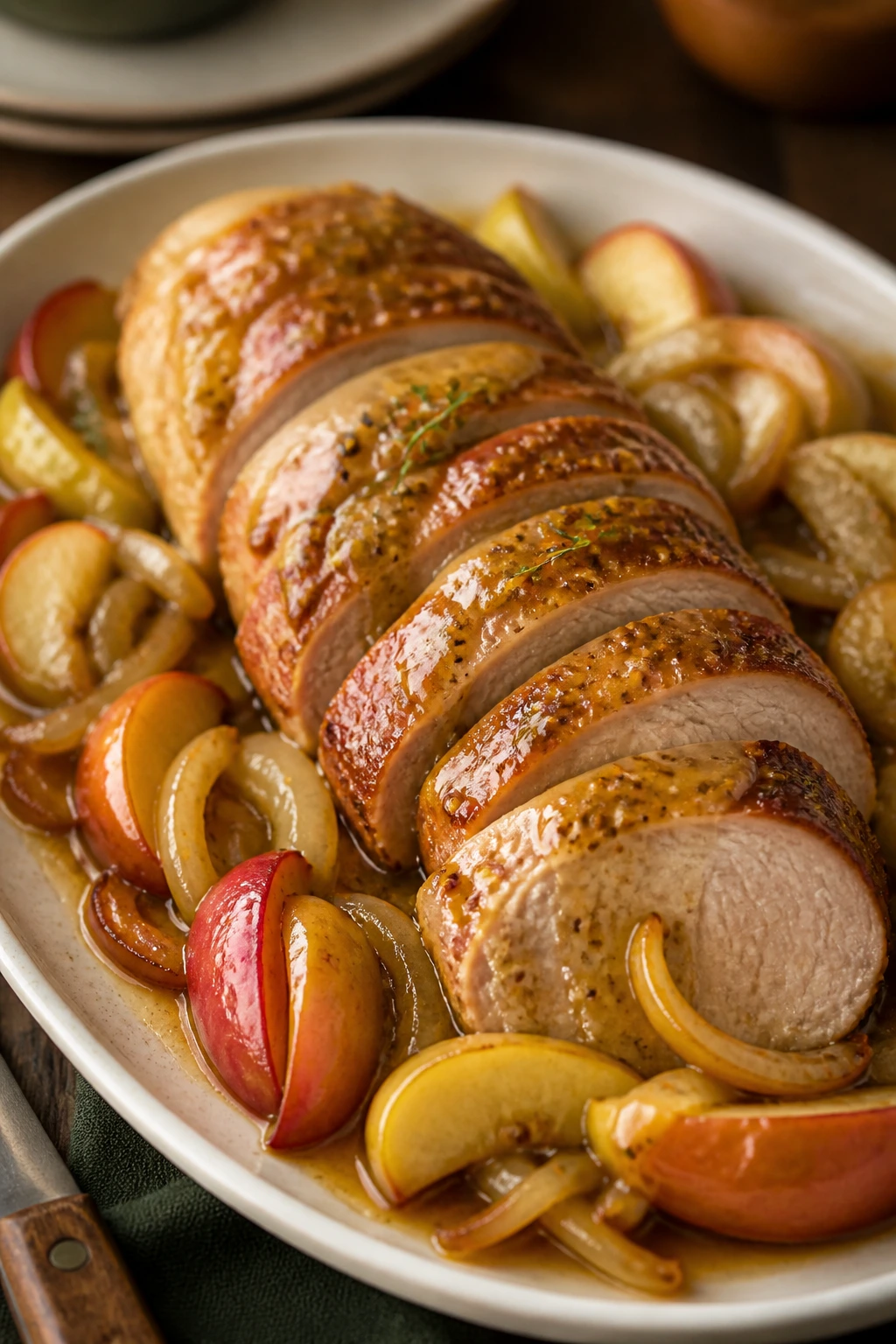
Sweet, sharp, and a little old-fashioned, this is the pork tenderloin dinner that smells like a house where someone actually cooks on Sundays. The apples soften at the edges, the onions go silky, and the glaze turns glossy enough to make the whole thing look glazed in amber.
Why the Glaze Belongs Here
Honey and mustard do what they always do best: they pull lean pork in two directions at once. The honey gives you shine and browning, while Dijon keeps the sweetness from going syrupy. Apples bring a soft, juicy bite that fits pork so naturally it almost feels unfair, and a splash of cider vinegar keeps the pan sauce from drifting into dessert territory. If you use a firm apple — Granny Smith, Honeycrisp, Pink Lady — it holds shape instead of collapsing into jam.
Key Ingredients
- 2 pork tenderloins, about 2½ pounds total
- 2 tablespoons olive oil
- 2 teaspoons kosher salt
- 1 teaspoon black pepper
- 3 tablespoons Dijon mustard
- 2 tablespoons whole-grain mustard
- 3 tablespoons honey
- 1 tablespoon apple cider vinegar
- 2 medium apples, cored and sliced into wedges
- 1 large yellow onion, sliced
- 1 teaspoon dried sage or 1 tablespoon fresh chopped sage
- ½ cup apple cider or chicken stock
- 1 tablespoon butter
Quick Steps
- Preheat the oven to 400°F (205°C).
- Whisk the Dijon, whole-grain mustard, honey, and cider vinegar into a smooth glaze.
- Season the pork with salt and pepper, then sear it in olive oil over medium-high heat for 2 to 3 minutes per side.
- Scatter the apples and onions around the pork in the skillet or roasting pan, then brush the glaze over the tenderloins.
- Roast for 15 to 18 minutes, brushing once more halfway through, until the pork hits 145°F.
- Rest the meat on a cutting board while the apples and onions finish softening in the pan juices.
- Deglaze with cider or stock and butter if you want a spoonable sauce, then slice and serve.
Tips and Variations
- Use firm apples: Softer apples disappear before dinner is done.
- Go brighter: A little lemon zest in the glaze makes the whole dish feel less heavy.
- Best side: Buttered egg noodles or mashed potatoes both catch the sauce well.
3. Balsamic-Glazed Pork Tenderloin with Roasted Grapes and Red Onions
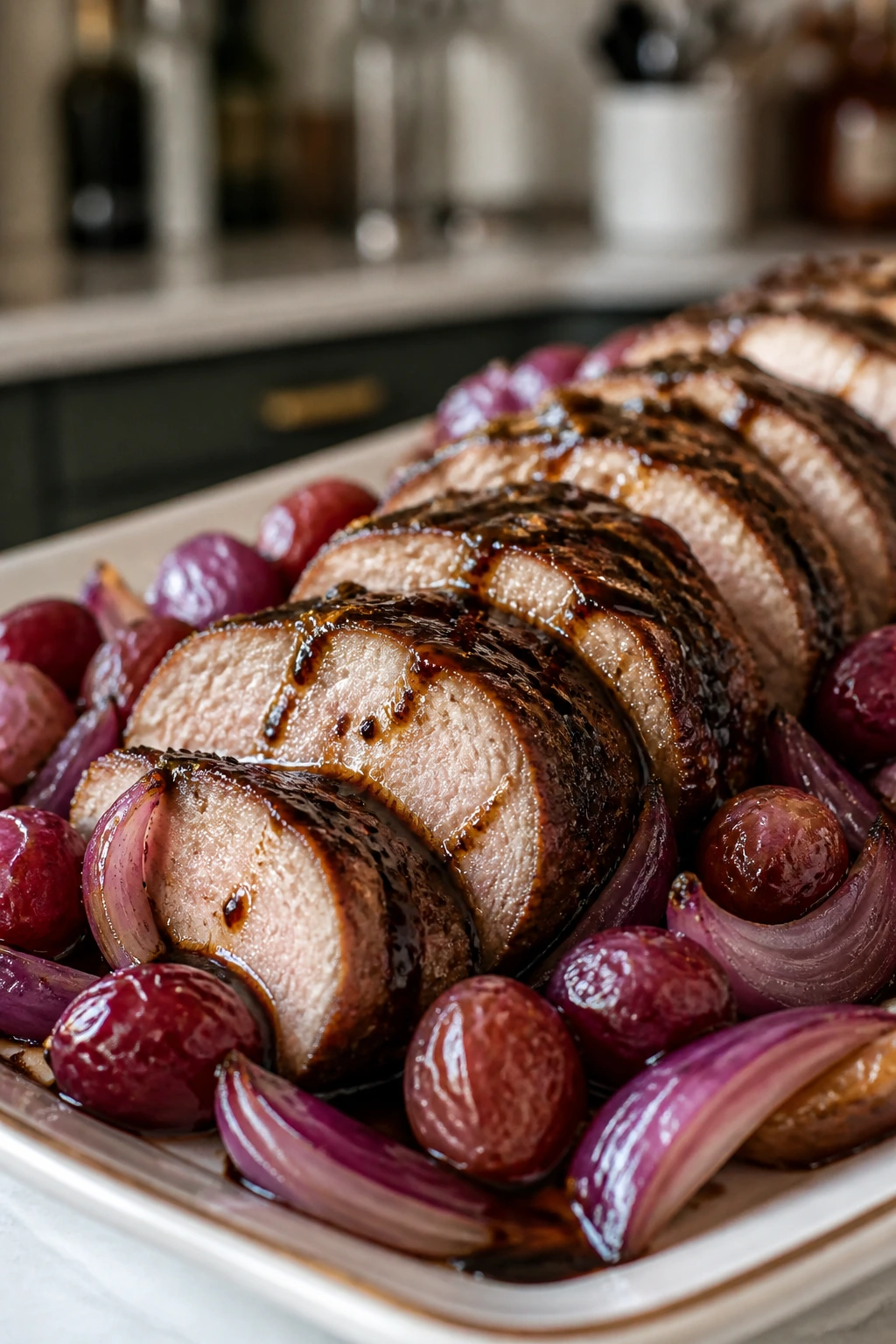
This one looks like you meant to do something elegant. The grapes blister, the onions go jammy, and the balsamic turns dark and syrupy around the edges of the pan. It’s a little sweet, a little sharp, and just strange enough to feel special without becoming fussy.
Why the Grapes Matter
Roasted grapes are one of those tricks that sounds prettier than it is complicated. In the oven, they burst and release juice, which gives the balsamic glaze body and a deep fruit note that fresh grapes simply do not have. Red onion adds a mellow, savory base so the dish doesn’t read like candy, and maple syrup rounds out the acid without making the sauce sticky. This is the sort of dinner that tastes richer than it looks on paper.
Key Ingredients
- 2 pork tenderloins, 1 to 1¼ pounds each
- 2 tablespoons olive oil
- 1¾ teaspoons kosher salt
- 1 teaspoon black pepper
- 3 tablespoons balsamic vinegar
- 2 tablespoons maple syrup
- 3 garlic cloves, minced
- 2 cups seedless red grapes
- 1 large red onion, cut into wedges
- 1 tablespoon fresh thyme leaves
- 1 tablespoon butter
Quick Steps
- Preheat the oven to 425°F (220°C).
- Toss the grapes and onion with 1 tablespoon olive oil, half the salt, and half the thyme, then spread them on a rimmed sheet pan.
- Roast the grapes and onions for 10 minutes so they start to wrinkle and soften.
- Rub the pork with the remaining oil, salt, pepper, garlic, balsamic, maple syrup, and thyme.
- Nestle the tenderloins into the pan and roast for 12 to 15 minutes, until the internal temperature reaches 145°F.
- Rest the pork for 5 to 10 minutes, then stir butter into the pan juices to make them glossy.
- Slice and spoon the grapes, onions, and glaze over the pork.
Tips and Variations
- Use the right grapes: Seedless red grapes hold up best and give the sauce the deepest color.
- Add crunch: Toasted walnuts or pecans are excellent over the top.
- Serve with: Creamy polenta or crusty bread, because the sauce begs for something soft underneath.
4. Rosemary Dijon Pork Tenderloin with Fingerling Potatoes
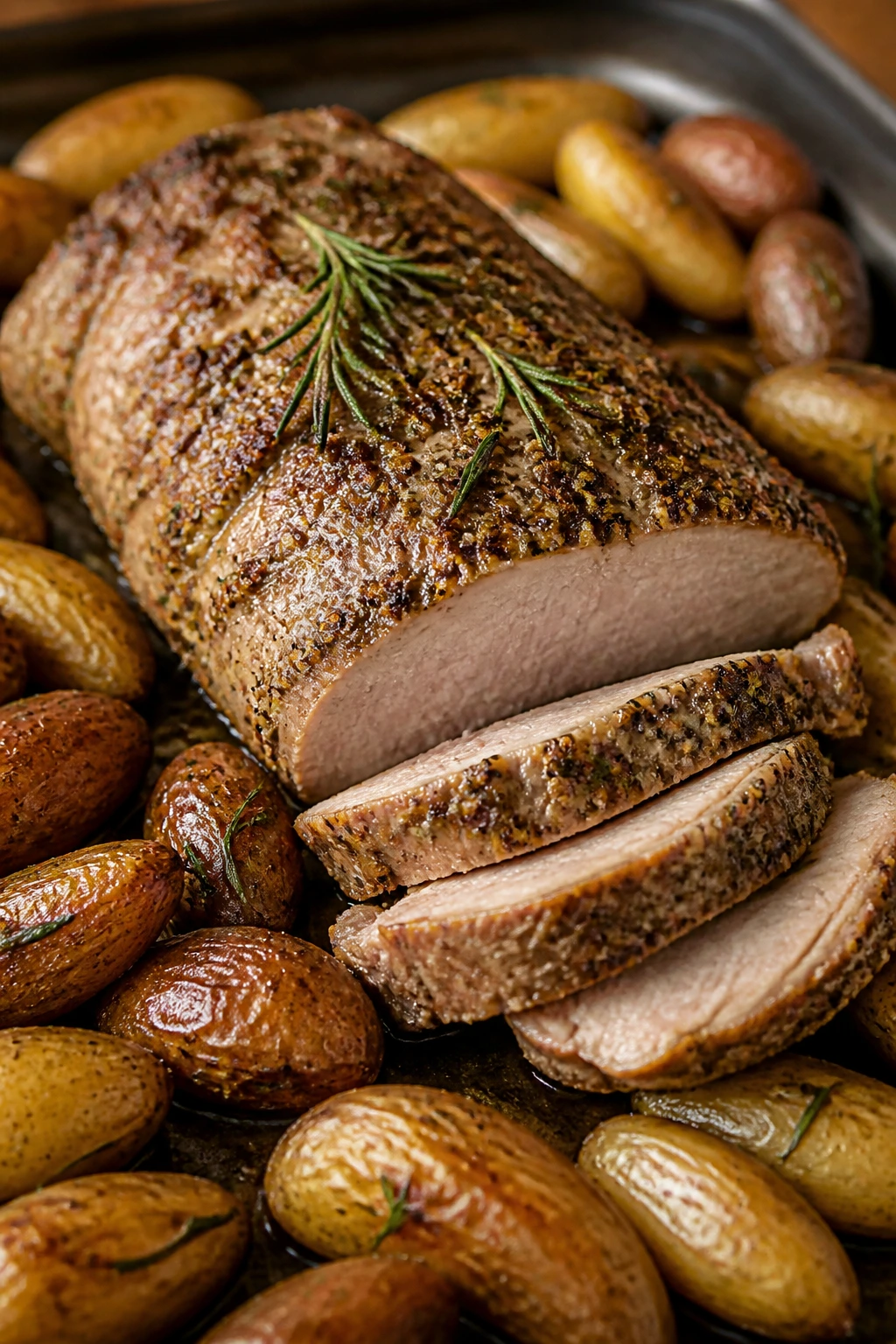
Some dinners want to be admired from across the table before anyone cuts in. This is one of them. The potatoes roast until their skins wrinkle and crisp, the rosemary perfumes the pan, and the Dijon leaves the pork with a savory edge that feels classic rather than old-fashioned.
What the Potatoes Add
Fingerlings are not here as a side note. They soak up the oil, the pork juices, and a little of the mustardy coating, which means they taste seasoned from the inside instead of merely salted on top. The small shape is a gift because they cook at nearly the same pace as the tenderloin, and that keeps the whole pan in sync. If you’ve ever served roasted potatoes that finished too early and went limp while the meat rested, you know how annoying that can be.
Key Ingredients
- 2 pork tenderloins, about 2½ pounds total
- 1½ pounds fingerling potatoes, halved lengthwise
- 3 tablespoons olive oil
- 2 teaspoons kosher salt
- 1 teaspoon black pepper
- 2 tablespoons Dijon mustard
- 2 tablespoons chopped fresh rosemary
- 3 garlic cloves, minced
- 1 teaspoon smoked paprika
- 1 tablespoon lemon juice
- 2 tablespoons chopped parsley
Quick Steps
- Preheat the oven to 425°F (220°C).
- Toss the potatoes with 2 tablespoons oil, 1 teaspoon salt, pepper, and smoked paprika, then spread them on a sheet pan.
- Roast the potatoes for 15 minutes so they start to brown on the cut sides.
- Rub the pork with the remaining oil, Dijon, rosemary, garlic, and the remaining salt.
- Push the potatoes to the sides of the pan and add the pork in the center.
- Roast for 12 to 15 minutes, until the tenderloins reach 145°F and the potatoes are crisp at the edges.
- Rest the pork, then toss the potatoes with lemon juice and parsley before slicing and serving.
Tips and Variations
- Even cuts matter: Halve the fingerlings so they all finish at the same time.
- If the potatoes are larger: Give them a 5-minute head start or parboil them for 8 minutes.
- Better than plain bread: A loaf of crusty sourdough makes this feel like a complete meal.
5. Maple Chipotle Pork Tenderloin with Sweet Potatoes and Lime
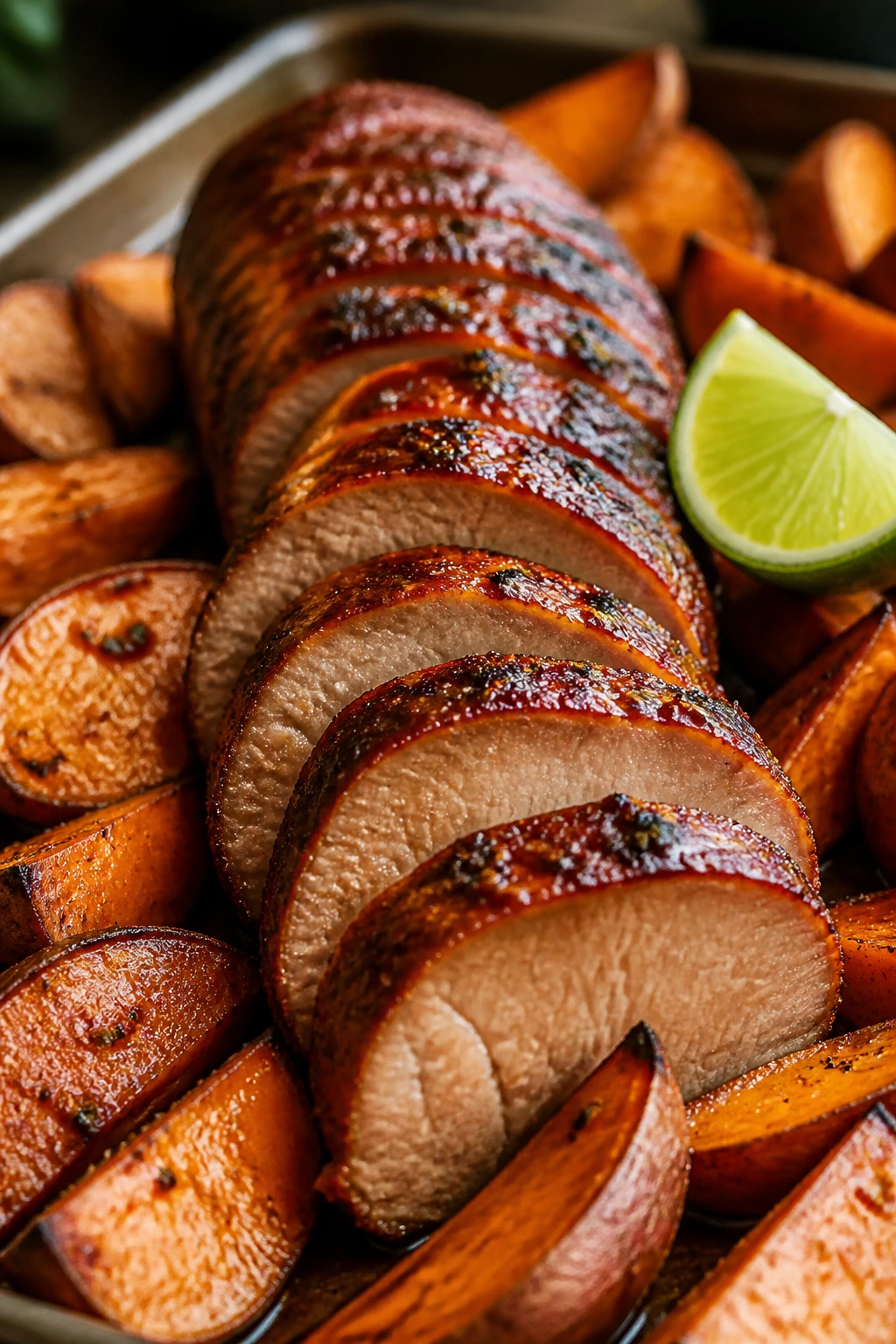
This is the plate that wakes things up. The maple brings a soft sweetness, the chipotle gives it a smoky kick, and the sweet potatoes roast into caramelized wedges that belong right there beside the pork. A squeeze of lime at the end keeps the whole thing from going heavy.
Why the Smoke-and-Sweet Balance Works
Sweet potatoes naturally lean sweet, so they can take a lot of seasoning without losing character. Chipotle in adobo has heat, smoke, and a little vinegar built in, which means it behaves like a glaze and a spice rub at the same time. Maple syrup gives you color and a sticky finish, but lime juice at the end matters just as much because it cuts through the sugar and makes every bite taste sharper. That contrast is what keeps this dinner from feeling flat.
Key Ingredients
- 2 pork tenderloins, about 2½ pounds total
- 2 medium sweet potatoes, peeled and cut into wedges
- 2 tablespoons olive oil
- 2 teaspoons kosher salt
- 1 teaspoon black pepper
- 2 tablespoons maple syrup
- 1 to 2 teaspoons minced chipotle in adobo, plus 1 teaspoon adobo sauce
- 1 teaspoon ground cumin
- 2 garlic cloves, minced
- 1 lime, juiced and zested
- 2 tablespoons chopped cilantro
Quick Steps
- Preheat the oven to 425°F (220°C).
- Toss the sweet potato wedges with 1 tablespoon oil, 1 teaspoon salt, ½ teaspoon pepper, and ½ teaspoon cumin.
- Roast the sweet potatoes for 15 minutes to give them a head start.
- Mix the maple syrup, chipotle, adobo sauce, garlic, lime zest, remaining cumin, salt, and pepper into a paste.
- Rub the pork with the remaining oil and the chipotle glaze, then nestle it beside the sweet potatoes.
- Roast for 12 to 15 minutes, until the pork reaches 145°F and the sweet potatoes are tender with browned edges.
- Rest the pork, then finish everything with lime juice and cilantro.
Tips and Variations
- Tame the heat: Use only adobo sauce if you want smoke without a real burn.
- Make it fuller: Black beans or rice fit nicely under the sliced pork.
- Bright finish: Lime zest at the end matters as much as the juice.
6. Creamy Mushroom Pork Tenderloin Skillet
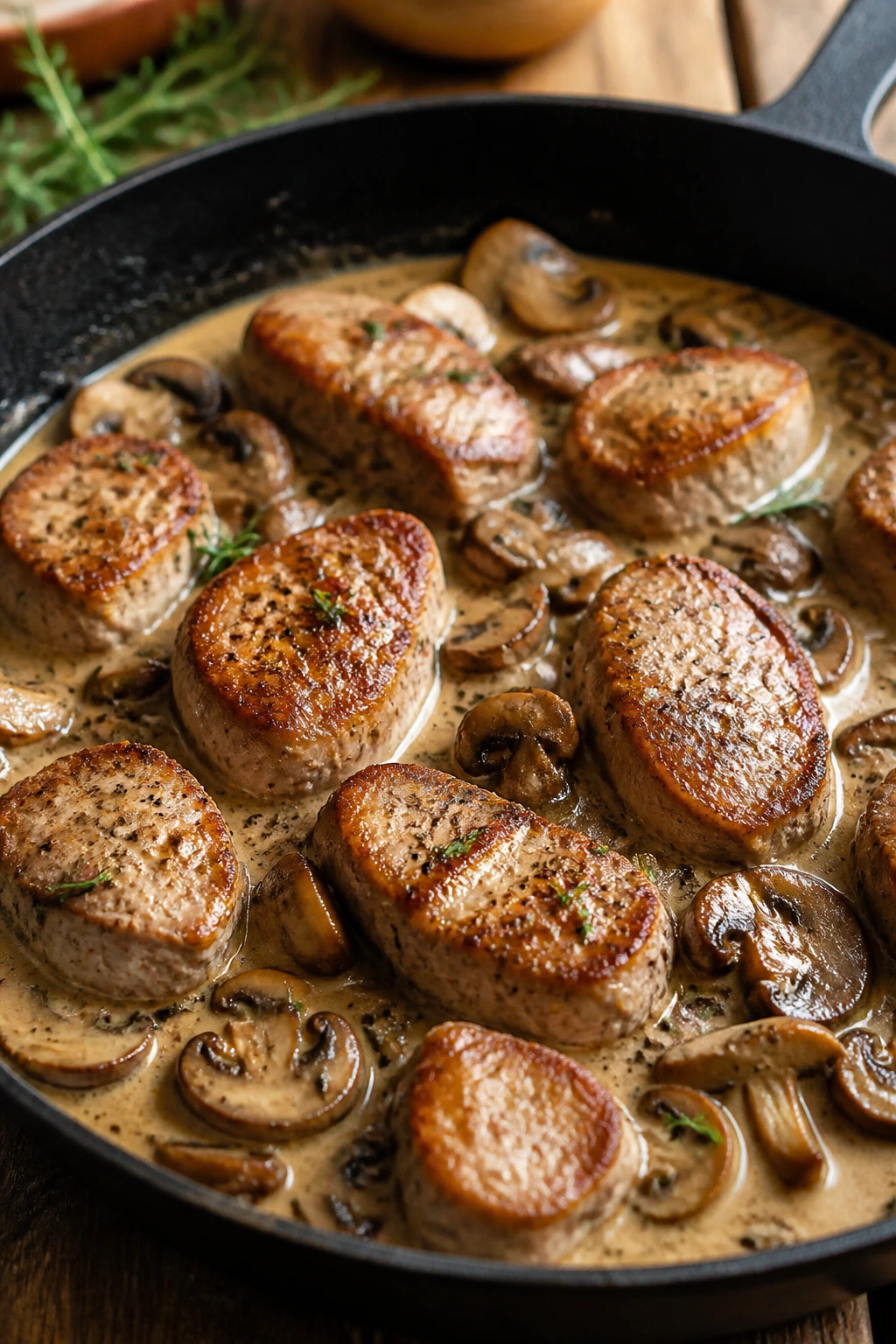
A skillet supper has a different energy. This one lands somewhere between cozy and a little bit old-world, with browned pork medallions, soft mushrooms, and a sauce that begs to be dragged through bread or poured over noodles. It feels like the dinner you make when the table needs quiet conversation more than drama.
Why the Skillet Route Wins
Cutting the tenderloin into medallions gives you more browned surface area, which means more flavor and a faster cook. Mushrooms bring depth because they release moisture first, then absorb the butter, stock, and cream that follow. A little Dijon in the sauce keeps the richness from becoming bland, and thyme gives the whole pan a woodsy note that works with pork almost too well. If you’ve ever had a mushroom sauce that tasted thin, the fix is simple: brown the mushrooms properly and don’t rush the reduction.
Key Ingredients
- 2 pork tenderloins, trimmed and sliced into 1-inch medallions
- 2 tablespoons olive oil
- 1 tablespoon butter
- 1 pound cremini mushrooms, sliced
- 1 small shallot, minced
- 2 garlic cloves, minced
- ¾ cup low-sodium chicken stock
- ½ cup heavy cream
- 1 tablespoon Dijon mustard
- 1 teaspoon fresh thyme leaves
- 1 teaspoon kosher salt
- ½ teaspoon black pepper
- 2 tablespoons chopped parsley
Quick Steps
- Season the pork medallions with salt and pepper.
- Heat the oil in a large skillet over medium-high heat, then sear the pork for 2 minutes per side until browned. Transfer to a plate.
- Add butter and mushrooms to the skillet and cook for 6 to 8 minutes, stirring only occasionally, until the mushrooms are deeply browned.
- Stir in shallot and garlic and cook for 1 minute.
- Pour in stock, Dijon, cream, and thyme, then simmer for 3 to 4 minutes until the sauce lightly coats a spoon.
- Return the pork and any juices to the pan and simmer for 2 to 3 minutes more, just until the pork reaches 145°F.
- Finish with parsley and serve right away.
Tips and Variations
- Don’t boil the cream: Keep the sauce at a gentle simmer or it can split.
- Add noodles: Egg noodles are the obvious choice, and they’re right.
- Use half-and-half: It works, though the sauce will be a little looser.
7. Bacon-Wrapped Pork Tenderloin with Sage Butter
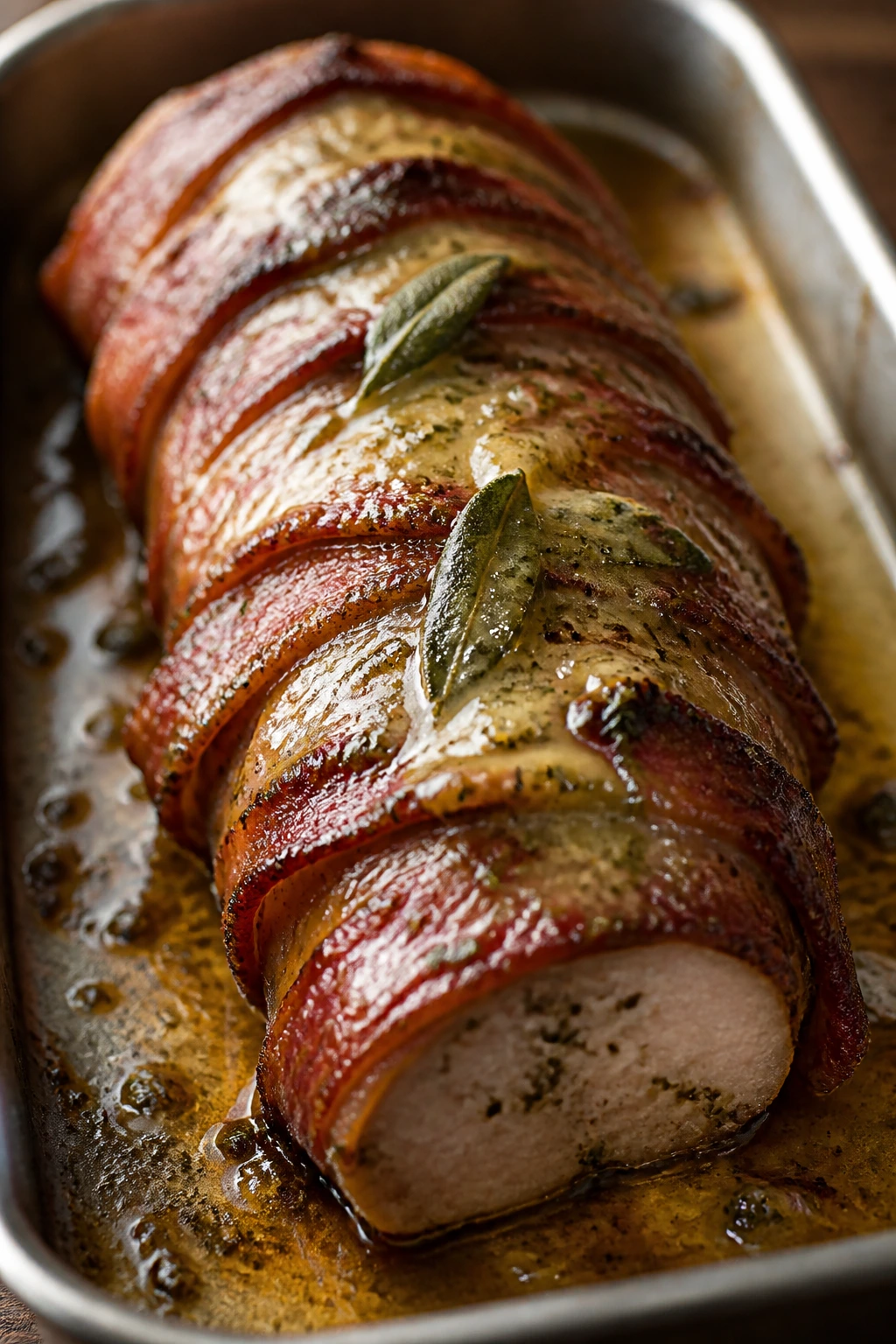
Bacon solves a real problem here. Pork tenderloin is lean, and lean meat can dry out if you stare at it too long. Wrapping it in bacon adds fat, smoke, and a little drama, and the sage butter melts over the sliced pork like the finishing move the dish always wanted.
Why Bacon Helps
Bacon gives the outside a built-in basting layer while the pork roasts, which means the surface dries out less quickly. It also seasons the meat from the outside in, especially if you use thinner slices that render before the tenderloin overcooks. Sage butter is the nice, glossy thing on top, but it does more than look good: the butter carries the herb flavor and rounds off the salt from the bacon. A touch of Dijon under the wrap helps glue the layers together and adds a little sharpness.
Key Ingredients
- 2 pork tenderloins, about 1 pound each
- 8 to 10 slices thin-cut bacon
- 1 tablespoon Dijon mustard
- 1 tablespoon olive oil
- 1 teaspoon kosher salt
- 1 teaspoon black pepper
- 4 tablespoons unsalted butter, softened
- 1 tablespoon finely chopped fresh sage
- 1 garlic clove, grated
- 1 teaspoon lemon zest
Quick Steps
- Preheat the oven to 400°F (205°C).
- Season the pork with salt and pepper, then brush it lightly with Dijon.
- Wrap each tenderloin with bacon slices, overlapping them slightly, and secure with toothpicks if needed.
- Sear the bacon-wrapped pork in an oven-safe skillet over medium heat for 2 to 3 minutes per side until the bacon starts to render.
- Roast for 15 to 20 minutes, until the pork reaches 145°F and the bacon is crisp at the edges.
- Mix the butter, sage, garlic, and lemon zest while the pork rests.
- Slice the pork and top each serving with a small spoonful of sage butter.
Tips and Variations
- Use thin-cut bacon: Thick bacon can stay limp while the pork is already done.
- Watch the salt: Bacon brings plenty, so don’t overdo it at the seasoning stage.
- Good side: Green beans with toasted almonds keep the plate from feeling too rich.
8. Pork Tenderloin with Peaches and Thyme
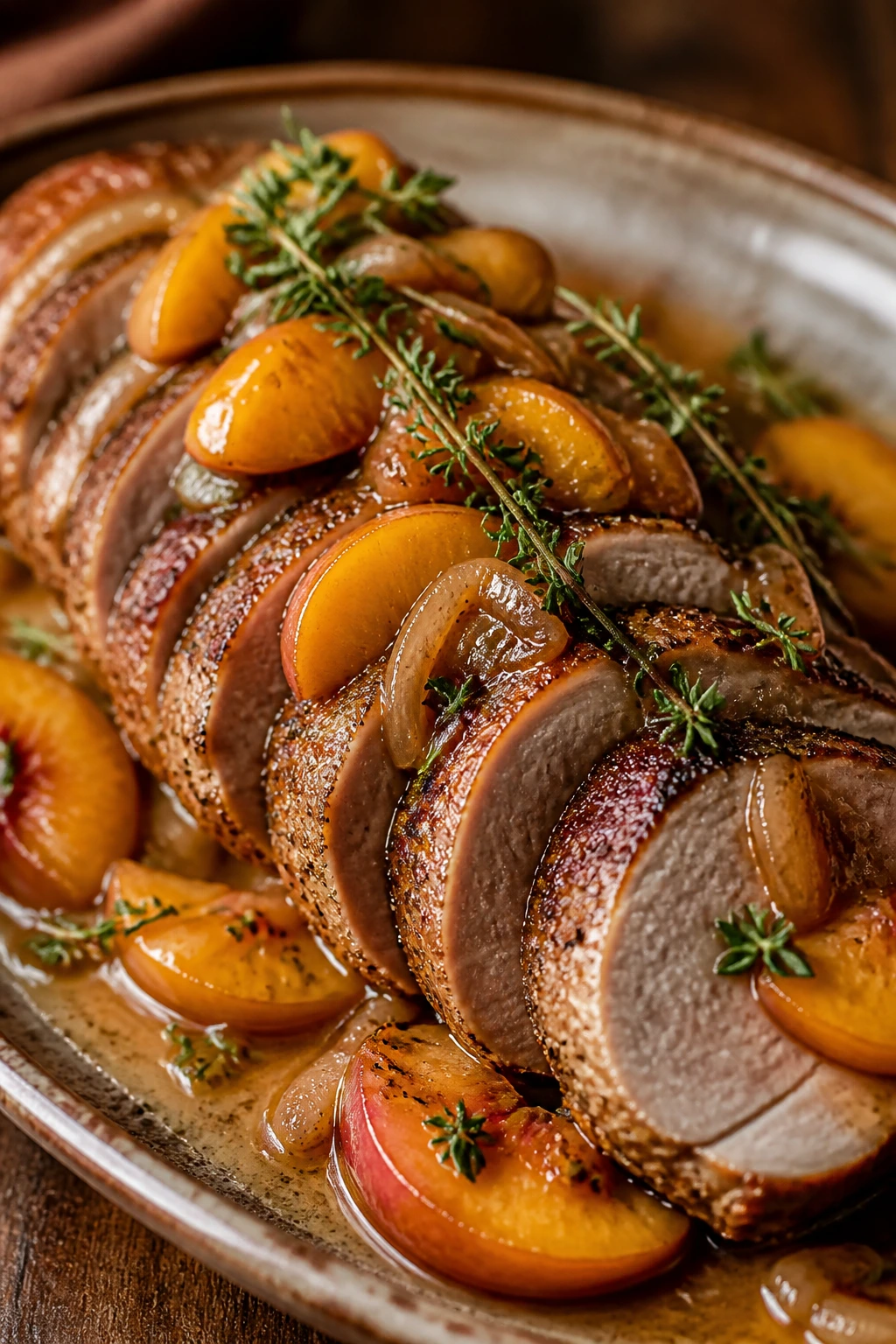
This dinner sounds seasonal, but it does not have to be. Fresh peaches are lovely, sure, but thawed frozen peaches or well-drained canned peaches can step in without making the dish feel second-rate. The point is tenderness, brightness, and that odd but pleasant moment where fruit and pork finally stop acting like strangers.
Why Peaches Need a Sharp Edge
Peaches can go soft and sugary fast, which is why they need thyme, shallot, and a little vinegar or wine to keep them honest. Pork tenderloin gives you a neutral canvas, so the fruit tastes sunny rather than theatrical. A quick pan sauce with butter and cider or white wine brings the flavors together and catches the juices the peaches leave behind. If your peaches are especially ripe, use less honey; if they’re a bit tart, the glaze can take a little more.
Key Ingredients
- 2 pork tenderloins, 1 to 1¼ pounds each
- 2 tablespoons olive oil
- 1¾ teaspoons kosher salt
- 1 teaspoon black pepper
- 2 ripe peaches, sliced, or 2 cups thawed frozen peach slices
- 1 small shallot, thinly sliced
- 2 teaspoons fresh thyme leaves
- ½ cup dry white wine or apple cider
- 1 tablespoon honey
- 1 tablespoon butter
- 1 teaspoon apple cider vinegar
Quick Steps
- Preheat the oven to 425°F (220°C).
- Season the pork with salt and pepper, then sear it in oil over medium-high heat for 2 minutes per side.
- Transfer the pork to a plate and add shallot to the skillet; cook for 1 minute.
- Add peaches, thyme, honey, wine or cider, and vinegar, then stir gently for 2 minutes until the fruit starts to soften.
- Return the pork to the skillet and roast for 12 to 15 minutes, until the internal temperature reaches 145°F.
- Rest the pork for 5 minutes.
- Finish the sauce with butter and spoon the peaches over the sliced pork.
Tips and Variations
- Drain canned peaches well: Too much syrup makes the sauce thin and sticky.
- Use thyme, not a heavy herb mix: You want the fruit to stay center stage.
- Serving note: Rice pilaf or couscous makes this feel complete.
9. Orange-Garlic Pork Tenderloin with Broccoli
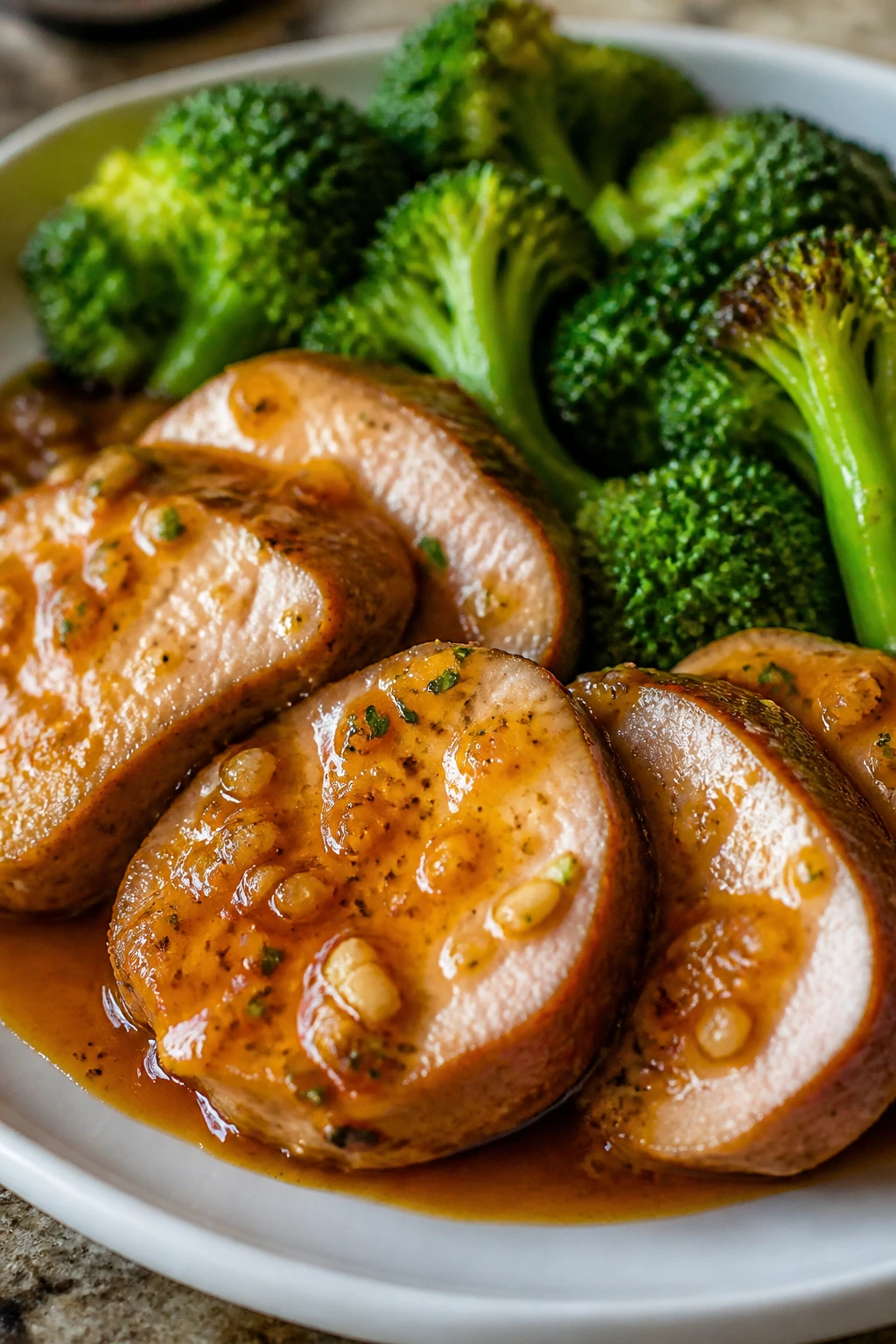
If you like a dinner that tastes bright and a little glossy, this one does the job. The orange juice reduces into a sticky glaze, the garlic and ginger keep it from drifting sweet, and the broccoli turns bronzed at the edges while it roasts. It’s a little lighter than some of the other dinners here, but it still feels like a full plate.
Why the Citrus Keeps It Bright
Orange juice can taste one-note if it is used carelessly, which is why it needs soy sauce, ginger, and garlic to sharpen it. The salt in the soy deepens the pork, while the citrus brings a little lift that keeps every bite awake. Broccoli is the right partner because its bitterness and char balance the glaze, and sesame oil at the end gives the dish a nutty smell that shows up the second the plate hits the table.
Key Ingredients
- 2 pork tenderloins, about 2½ pounds total
- 4 cups broccoli florets
- 2 tablespoons neutral oil
- 2 teaspoons kosher salt
- 1 teaspoon black pepper
- ½ cup orange juice
- 1 tablespoon orange zest
- 3 tablespoons low-sodium soy sauce or tamari
- 2 garlic cloves, grated
- 1 teaspoon grated fresh ginger
- 2 teaspoons honey
- 1 teaspoon sesame oil
Quick Steps
- Preheat the oven to 425°F (220°C).
- Toss the broccoli with 1 tablespoon oil, 1 teaspoon salt, and half the pepper, then spread it on a sheet pan.
- Roast the broccoli for 10 minutes.
- Whisk the orange juice, zest, soy sauce, garlic, ginger, and honey into a glaze.
- Rub the pork with the remaining oil, salt, and pepper, then brush on half the glaze.
- Add the pork to the pan and roast for 12 to 15 minutes, brushing once more halfway through, until the pork reaches 145°F.
- Drizzle with sesame oil, slice, and serve with the broccoli and any pan glaze.
Tips and Variations
- Use low-sodium soy: The glaze reduces, so salt can sneak up on you.
- Add rice: Jasmine rice turns this into a proper Sunday supper, not a side dish dressed up as one.
- If the glaze burns: Lower the oven by 25 degrees and brush it on later in the cook.
10. Parmesan-Crusted Pork Tenderloin with Brussels Sprouts
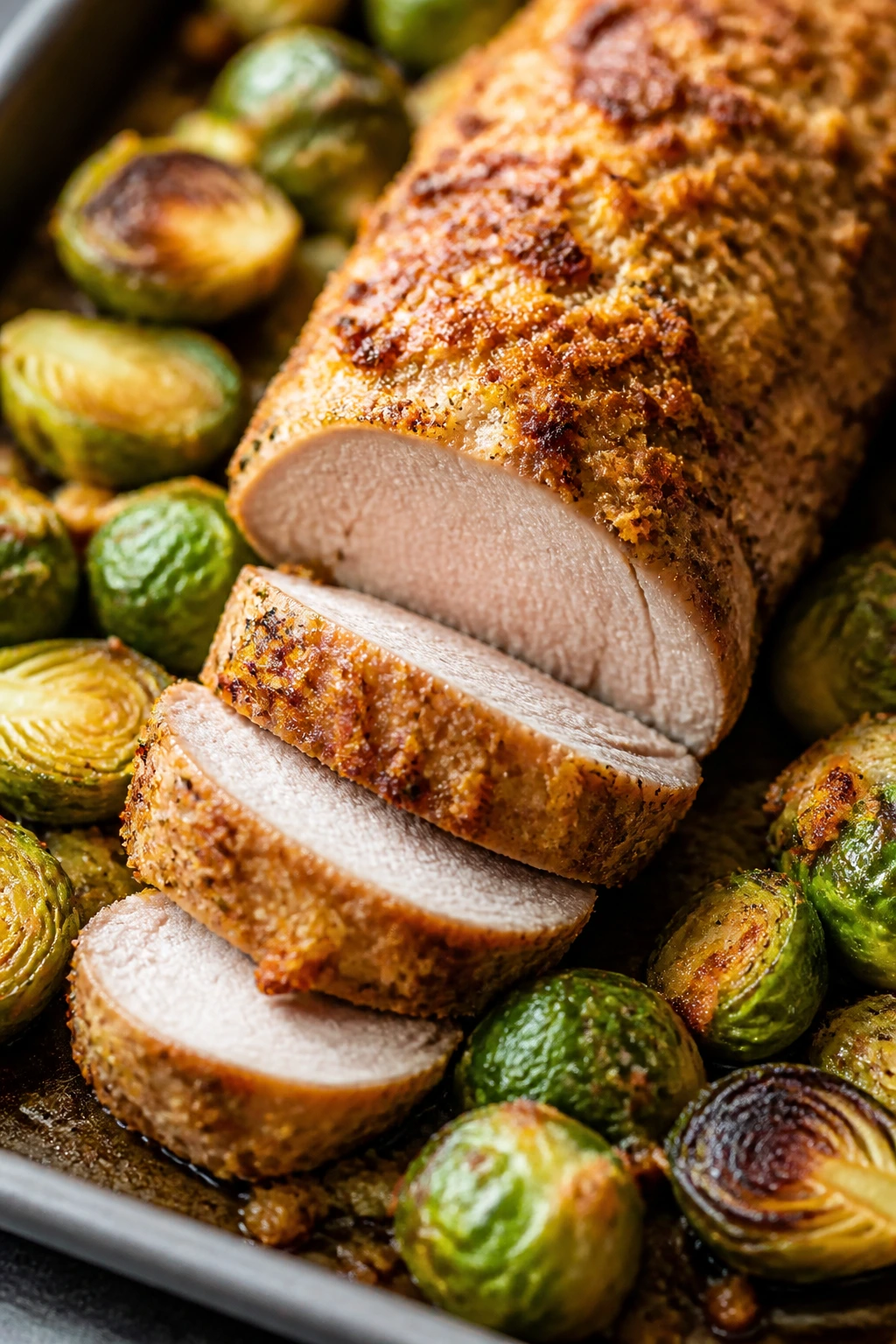
Brussels sprouts and pork tenderloin get along better than they have any right to. The crust on the pork gives you crunch and salt, the sprouts crisp in the same pan, and the Parmesan adds a nutty, browned edge that feels almost restaurant-like without any real trickery. It’s a dinner with a little texture, which matters more than people admit.
Why the Crust Stays Crisp
A crust made from Parmesan and panko works because the cheese melts and browns while the crumbs dry out and sharpen. Dijon or mayonnaise underneath acts like glue, helping the coating stick through the roast. Brussels sprouts are good here because they release a little moisture and then caramelize in the hot pan, which means the dish avoids the soft, uniform feel that can sink roast dinners. Lemon at the end keeps the crust from tasting heavy.
Key Ingredients
- 2 pork tenderloins, silver skin removed
- 3 cups Brussels sprouts, trimmed and halved
- 2 tablespoons olive oil
- 1½ teaspoons kosher salt
- 1 teaspoon black pepper
- 2 tablespoons Dijon mustard
- 2 tablespoons mayonnaise
- ½ cup panko breadcrumbs
- ½ cup finely grated Parmesan cheese
- 1 teaspoon garlic powder
- 1 teaspoon lemon juice
Quick Steps
- Preheat the oven to 400°F (205°C).
- Toss the Brussels sprouts with oil, ½ teaspoon salt, and ½ teaspoon pepper, then spread them on a sheet pan.
- Roast the sprouts for 12 minutes.
- Mix the panko, Parmesan, garlic powder, remaining salt, and remaining pepper in a shallow bowl.
- Brush the pork with Dijon and mayonnaise, then press the crumb mixture onto the top and sides.
- Nestle the pork among the sprouts and roast for 15 to 18 minutes, until the pork reaches 145°F and the crust is golden.
- Rest the pork, finish with lemon juice, and slice.
Tips and Variations
- Crush the panko slightly: Smaller crumbs cling better than giant flakes.
- Don’t crowd the sprouts: They need space or they steam.
- A good side: Mashed potatoes make the crunchy topping even better.
11. Pork Tenderloin with Cider Pan Sauce and Buttery Cabbage
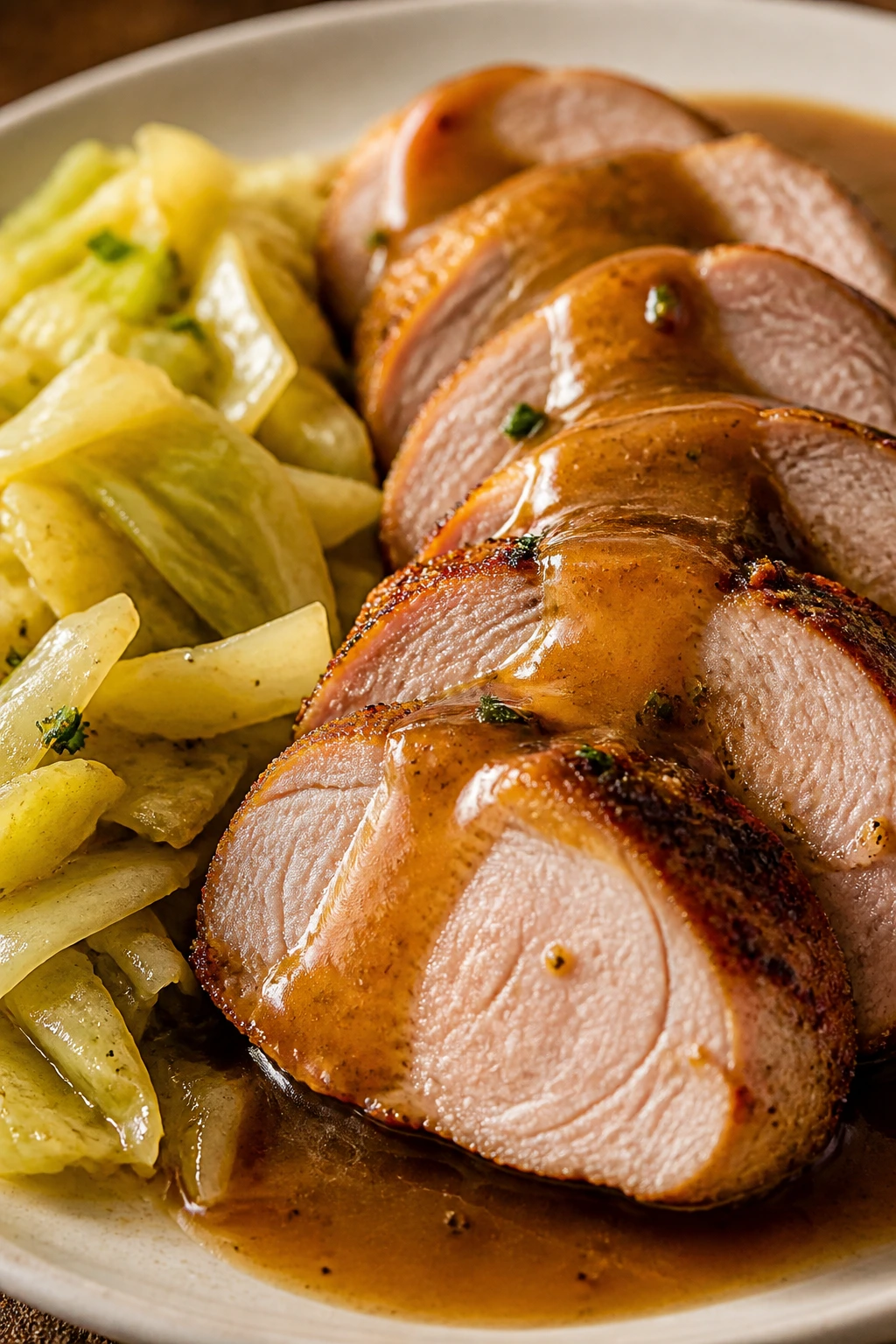
This is the one that tastes like a long, calm meal even though it doesn’t take long to make. The cider pan sauce is sharp and a little sweet, the cabbage softens into ribbons, and the pork sits in the middle like it belongs there. It’s the kind of dinner that feels domestic in the best sense.
Why Cider Makes It Feel Like Home
Cider brings the right kind of sweetness for pork because it is fruit-based but not sugary. When it reduces in the pan, it picks up the browned meat juices and turns into a sauce that tastes deeper than plain stock ever could. Cabbage works because it loves fat and salt; as it cooks, it softens, drinks up the butter and pork drippings, and gives the whole plate some mellow bulk. If you want a Sunday supper that leans old-school without turning heavy, this is a good path.
Key Ingredients
- 2 pork tenderloins, about 2½ pounds total
- 1 small green cabbage, cut into 6 wedges
- 1 large onion, sliced
- 2 tablespoons olive oil
- 2 tablespoons unsalted butter
- 1½ teaspoons kosher salt
- 1 teaspoon black pepper
- 1 cup apple cider
- 1 tablespoon Dijon mustard
- 1 tablespoon apple cider vinegar
- 1 teaspoon fresh thyme leaves
Quick Steps
- Preheat the oven to 425°F (220°C).
- Season the pork with salt and pepper, then sear it in oil over medium-high heat for 2 to 3 minutes per side.
- Add the cabbage wedges and onion around the pork, dot the cabbage with butter, and roast for 12 to 15 minutes.
- Check the pork; when it reaches 145°F, move it to a cutting board to rest.
- Transfer the cabbage and onion to a serving platter.
- Pour cider, Dijon, vinegar, and thyme into the hot skillet, scrape up the browned bits, and simmer for 3 to 5 minutes until lightly reduced.
- Spoon the sauce over the sliced pork and cabbage.
Tips and Variations
- Choose a crisp cider: Cloudy, unfiltered cider makes the sauce taste fuller.
- Char is welcome: Let some cabbage edges brown for better flavor.
- Serve with bread: The sauce deserves a crusty loaf or a biscuit.
12. Stuffed Pork Tenderloin with Spinach, Feta, and Sun-Dried Tomatoes
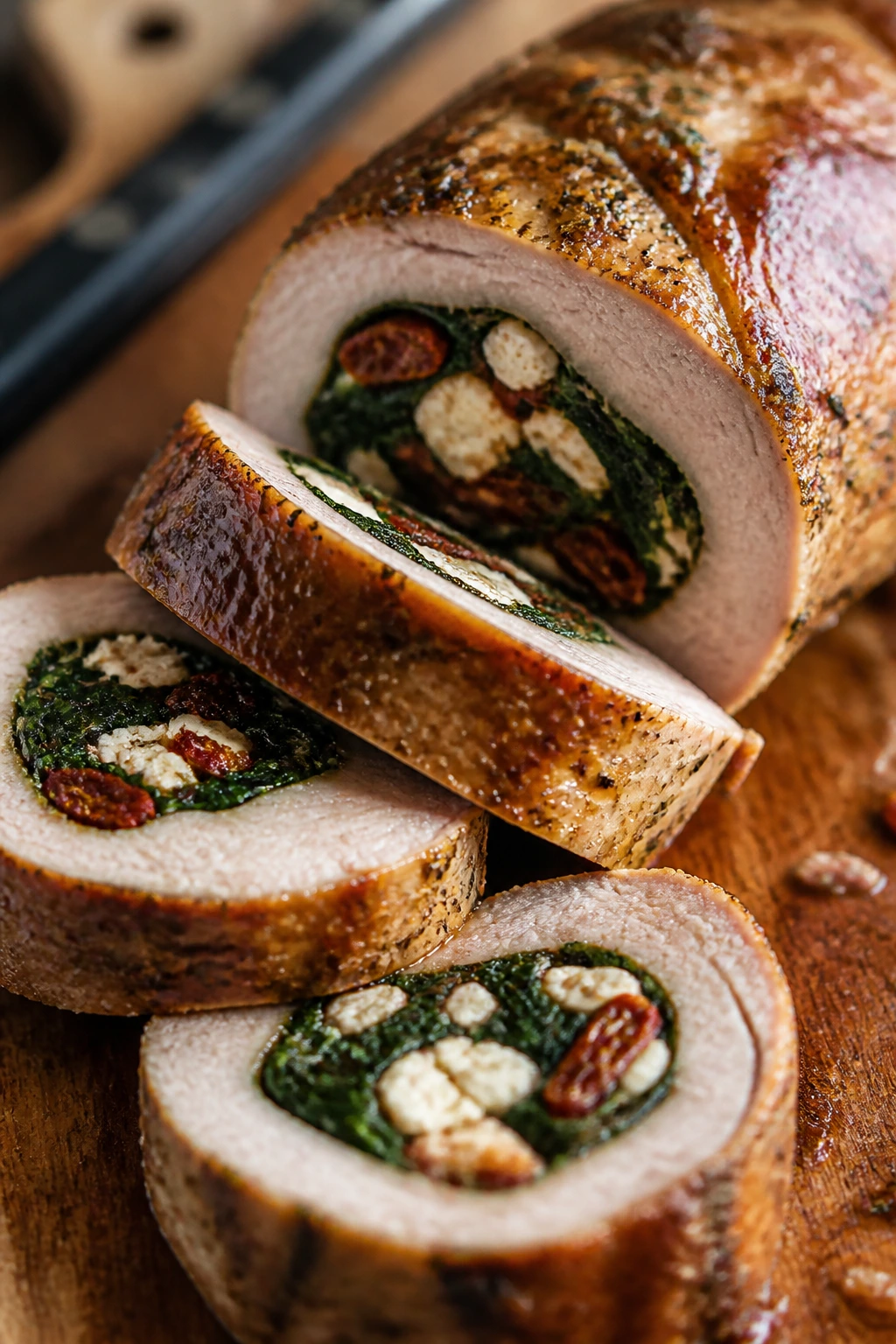
This is the centerpiece dinner. When you slice into it, the spiral of spinach, feta, and tomatoes looks dramatic in the most useful way — it tells people they’re about to eat well. The filling keeps the pork moist, the feta gives salt, and the tomatoes bring a deep, almost sweet chew that keeps every slice interesting.
Why Stuffing Changes the Game
A stuffed tenderloin gives you a built-in flavor layer in the center of the meat, not just on the outside. Spinach brings moisture and color, feta adds sharpness, and sun-dried tomatoes concentrate enough flavor that you don’t need a heavy sauce to make the dish feel complete. The trick is restraint. Too much stuffing and the roast splits open; too little and you lose the point. A thin, even layer works better than a big heap every time.
Key Ingredients
- 2 pork tenderloins, about 1 pound each
- 2 tablespoons olive oil
- 2 teaspoons kosher salt
- 1 teaspoon black pepper
- 2 cups fresh spinach, chopped
- ½ cup crumbled feta
- ⅓ cup chopped sun-dried tomatoes, well drained
- 2 garlic cloves, minced
- 1 teaspoon dried oregano
- 1 tablespoon breadcrumbs
- 1 tablespoon lemon juice
- Kitchen twine or toothpicks
Quick Steps
- Preheat the oven to 400°F (205°C).
- Sauté the spinach and garlic in 1 tablespoon oil over medium heat for 1 minute, just until the spinach wilts.
- Mix the spinach with feta, sun-dried tomatoes, oregano, breadcrumbs, lemon juice, salt, and pepper.
- Butterfly each tenderloin by slicing lengthwise without cutting all the way through, then open it and lightly pound it to an even thickness.
- Spread the filling over the pork in a thin layer, roll it up tightly, and secure it with kitchen twine or toothpicks.
- Sear the stuffed tenderloins in the remaining oil for 2 minutes per side, then roast for 18 to 22 minutes, until the center reaches 145°F.
- Rest for 10 minutes, remove the twine, and slice into rounds.
Tips and Variations
- Go light on filling: Too much stuffing leaks out and makes the roast hard to slice.
- Drain the tomatoes well: Oil-heavy tomatoes can make the stuffing slippery.
- Best side: A simple rice pilaf or roasted potatoes keeps the stuffing from stealing the entire meal.
Why Pork Tenderloin Belongs at the Center of the Table
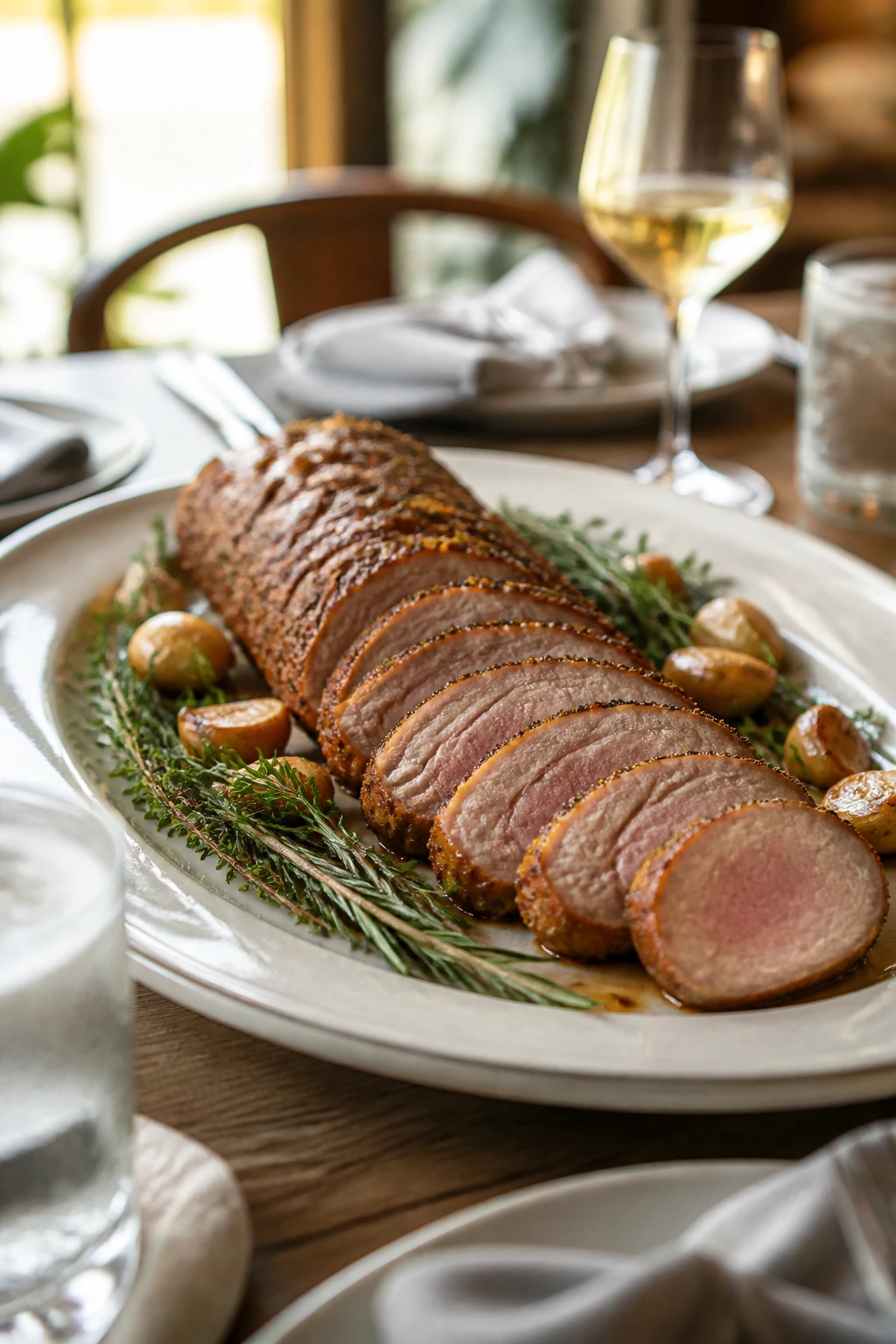
Pork tenderloin earns its spot because it does several jobs at once. It feels special enough for a Sunday supper, but it does not demand the kind of attention a larger roast wants. That matters when you’d rather be setting the table, finishing a side dish, or just sitting down before everyone starts circling the kitchen.
The other advantage is simple: tenderloin likes flavor. Garlic, mustard, cider, herbs, fruit, smoke, cheese — it takes them all without turning muddy. That’s why these pork tenderloin dinners can move from rustic to glossy to a little bit sharp without losing their footing.
Essential Equipment for These Recipes
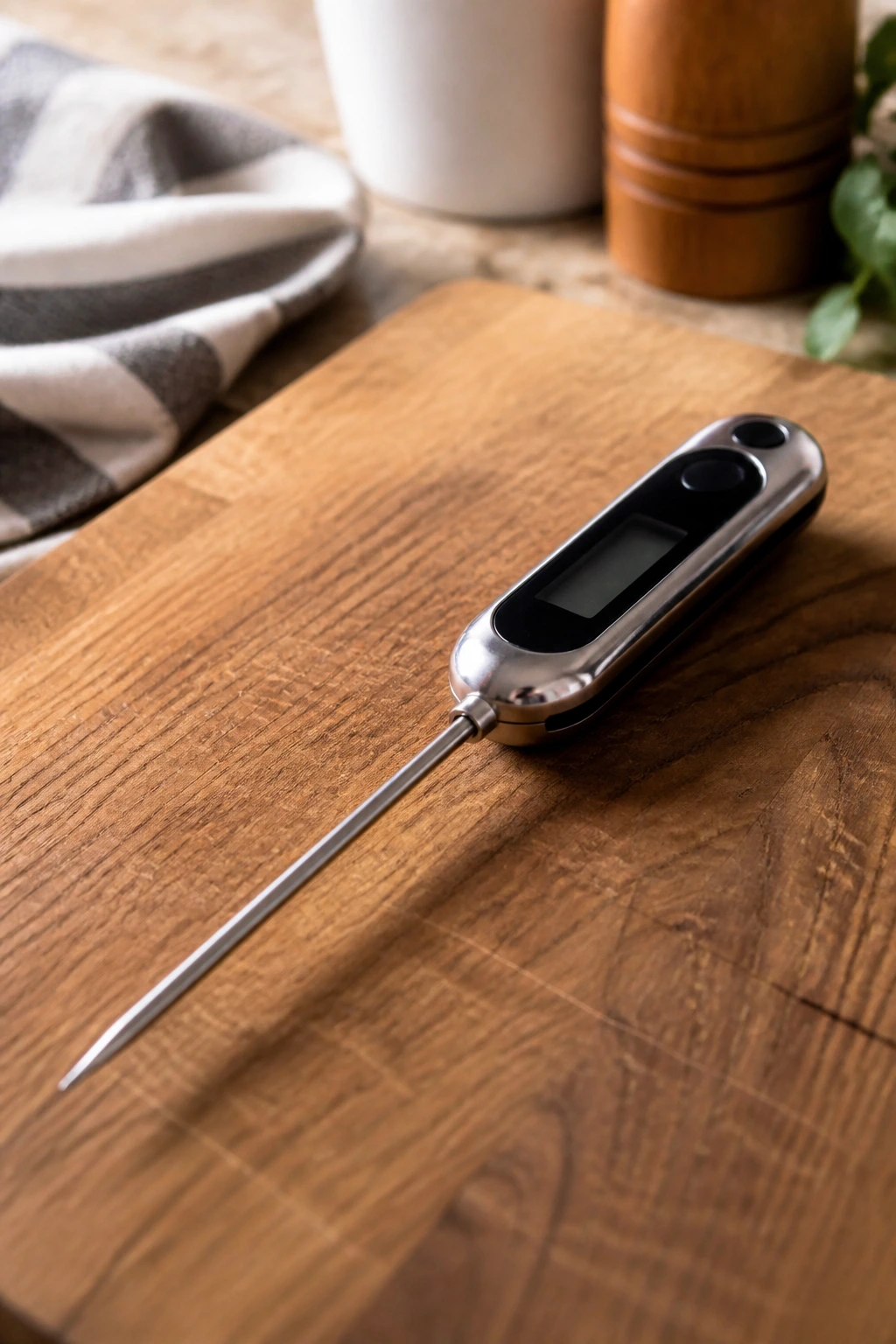
- Instant-read thermometer — The most useful tool here; pull the pork at 145°F and stop guessing.
- Rimmed sheet pans — Best for roasted dinners with potatoes, grapes, broccoli, or cabbage.
- Large oven-safe skillet or cast-iron pan — Ideal for searing and finishing in the oven.
- Sharp chef’s knife — Necessary for removing silver skin, slicing apples, and cutting medallions.
- Cutting board with a moat or lip — Catches juices when the pork rests.
- Tongs — Much easier than forks for turning tenderloins without stabbing them.
- Small saucepan — Handy for pan sauces that need a quick reduction.
- Mixing bowls — Useful for glazes, rubs, and fillings.
- Basting brush — Helps spread glaze evenly over the meat.
- Kitchen twine or toothpicks — Needed for stuffed pork tenderloin and helpful for bacon-wrapped versions.
- Foil — Good for tenting the meat during its rest; don’t seal it tight or the crust softens.
- Meat mallet or rolling pin — Handy for flattening stuffed tenderloins to an even thickness.
Smart Shopping and Ingredient Tips
A good pork tenderloin starts with shape and color. Look for pieces that are about 1 to 1¼ pounds each, with a smooth, even surface and only a thin layer of silver skin, if any is left on. The cut should feel firm, not floppy. If the package holds a puddle of liquid or the pork looks gray along the edges, keep moving.
Tenderloin and pork loin are not the same thing, and the difference matters. Tenderloin is smaller, leaner, and more delicate; pork loin is wider and better for a longer roast. If a recipe here says tenderloin, use tenderloin. A pork loin can work in a pinch, but you’ll need more time and a different slicing plan.
For the fruit-based dinners, choose apples and peaches that hold shape. Granny Smith, Honeycrisp, Pink Lady, and firm yellow peaches all handle heat better than soft fruit. Grapes should be seedless and tight-skinned, not wrinkled. For the cider sauce, buy actual cider rather than spiced punch or vinegar — you want fruit sweetness, not a flavor circus.
Mustard also deserves a little thought. Dijon brings sharpness and a smooth texture. Whole-grain mustard gives flecks and a grainier bite. If a recipe asks for both, don’t skip one unless you have to; each does something different. Low-sodium stock is worth buying because pan sauces reduce fast, and salty stock can turn harsh in a hurry.
How to Serve These Recipes
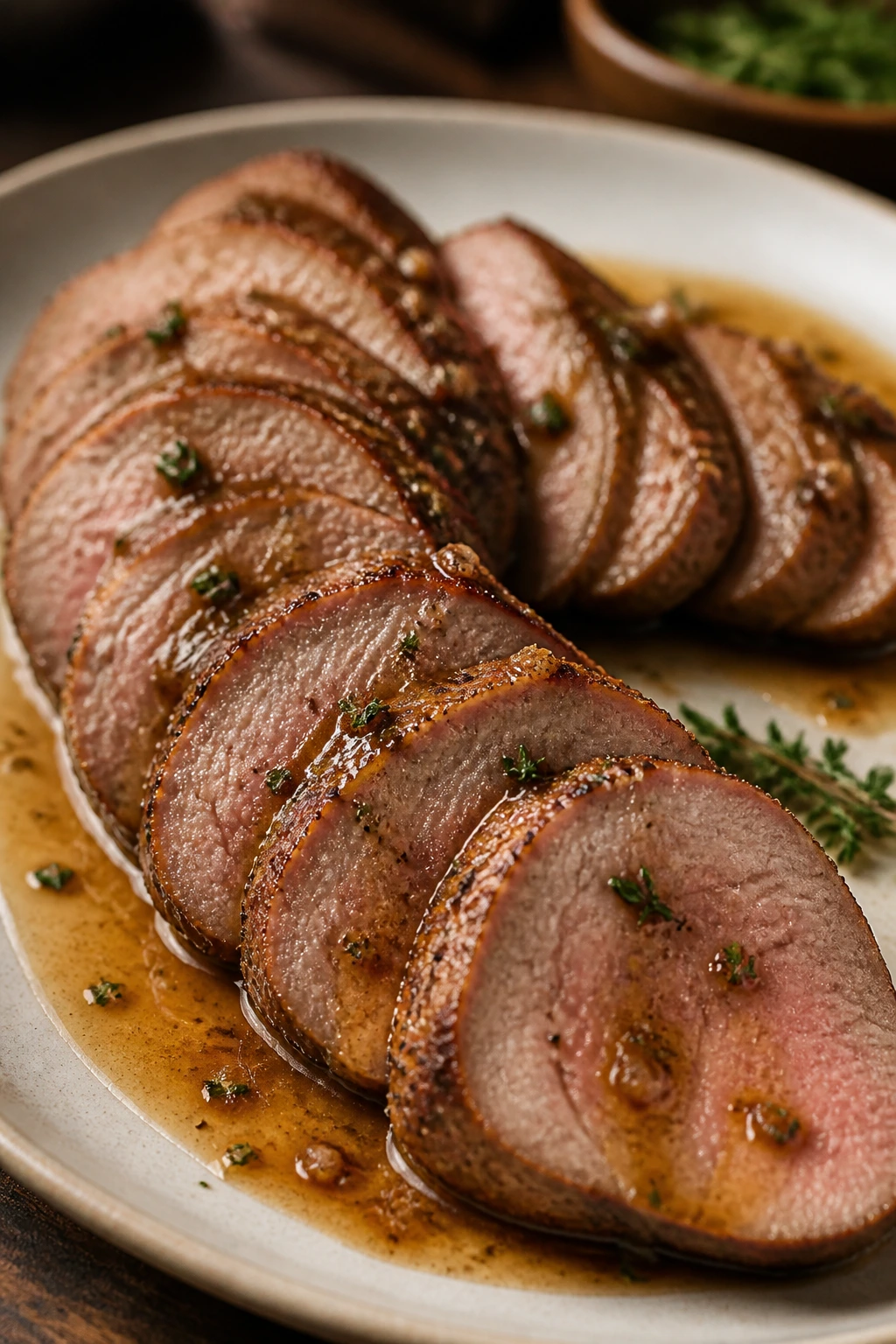
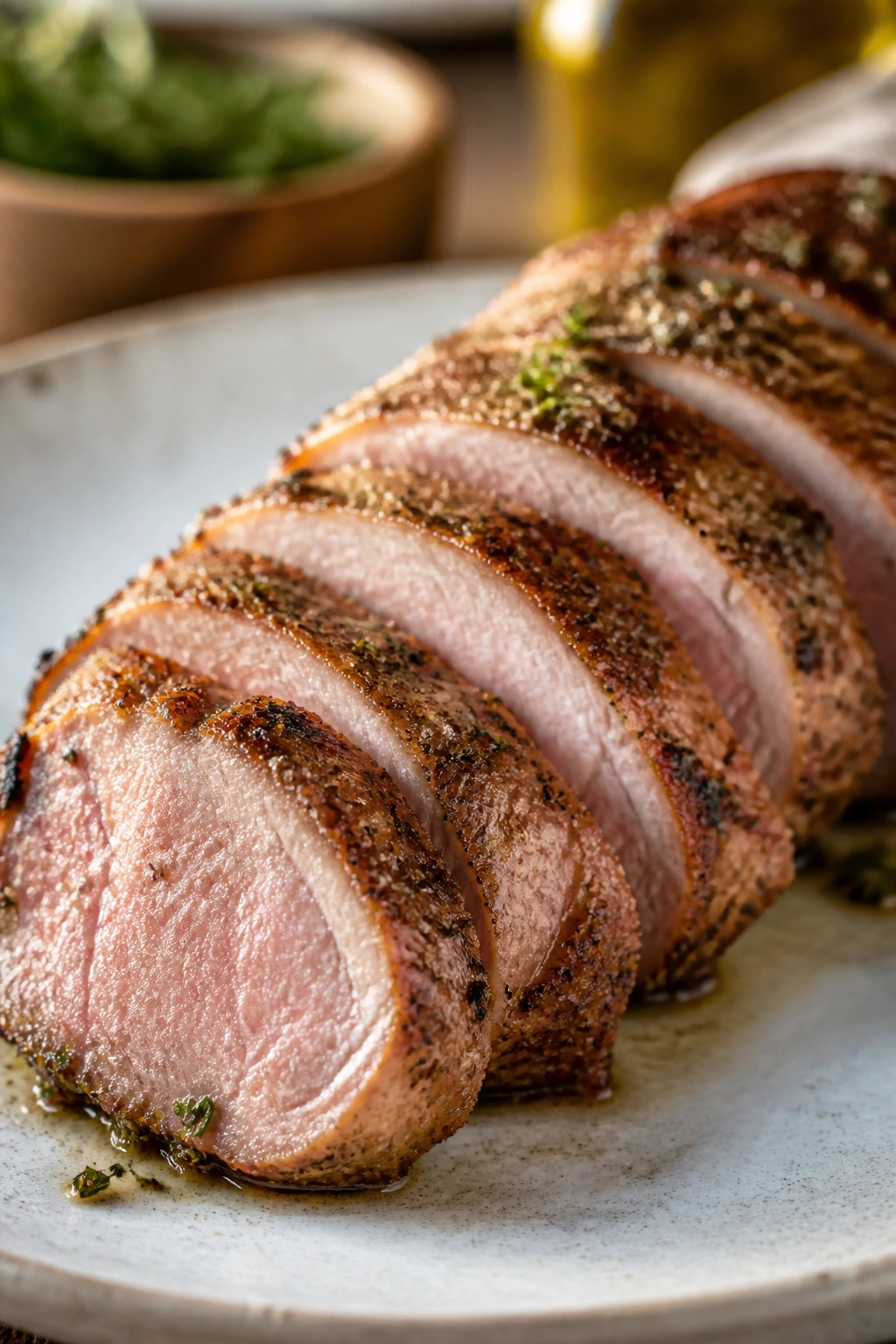
Presentation: Slice pork tenderloin against the grain into ½-inch medallions and fan them slightly on the plate. Spoon sauce, fruit, or pan juices over part of the meat, not all of it, so the browned edges stay visible and the dish looks intentional rather than drowned.
Accompaniments: Mashed potatoes, roasted baby potatoes, buttered noodles, rice pilaf, green beans, Brussels sprouts, cabbage, glazed carrots, and simple salads all fit. If the pork has a bold glaze, keep the side dish plain; if the pork is herb-driven, a richer side like potato gratin works better.
Portions: One pork tenderloin usually serves 3 to 4 people when the table is hungry, or 4 to 6 people with a full spread of sides. Two tenderloins are the safer bet for Sunday supper, since leftovers are useful and the meat reheats well.
Beverage Pairing: Dry cider, Pinot Noir, or a light-bodied red with low tannin works across most of these dishes. For non-alcoholic pairing, cold sparkling water with lemon or an unsweetened apple spritzer keeps the meal bright.
Additional Tips and Flavor Boosters
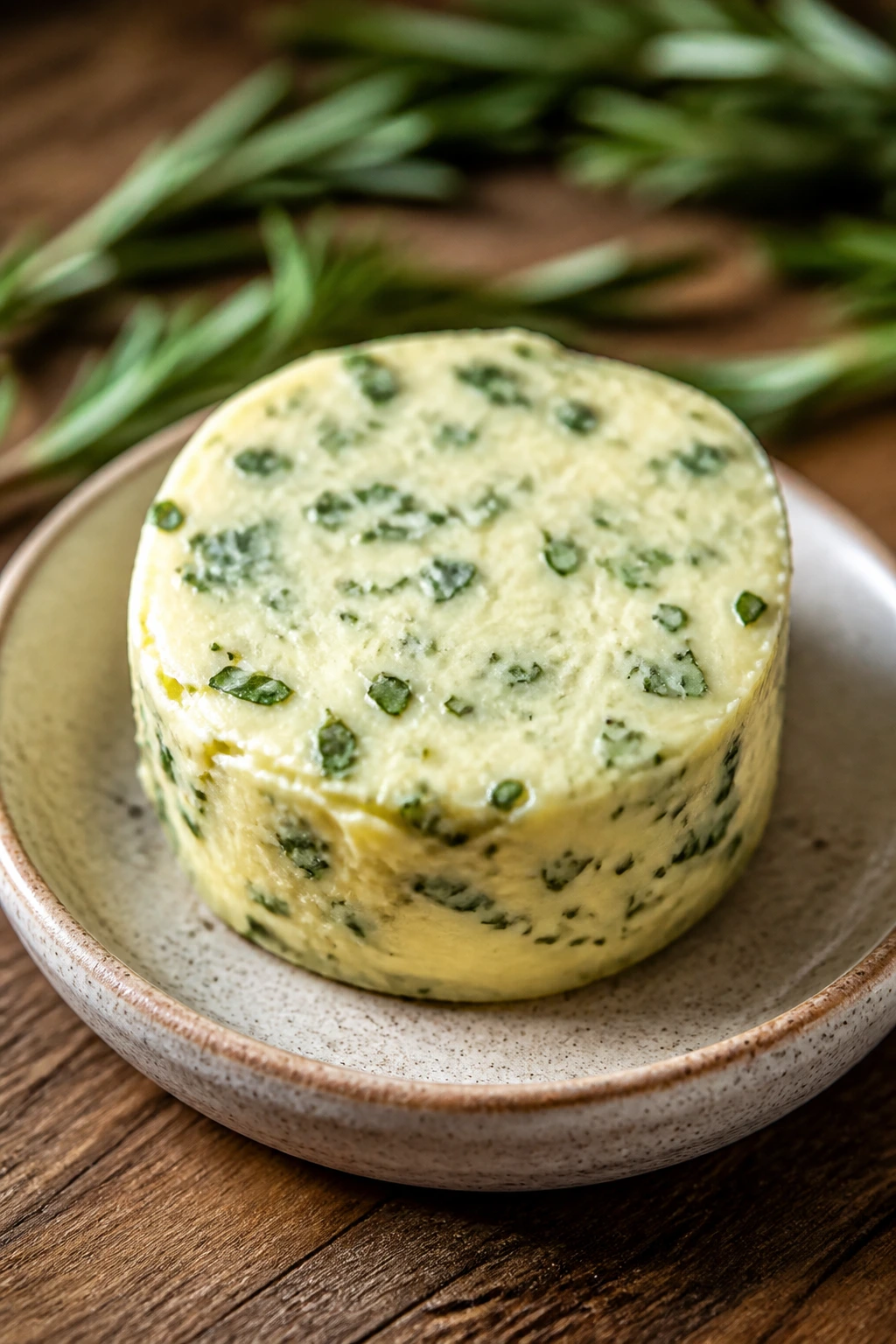
Flavor Enhancement: Finish roasted pork with a small pat of herb butter, a drizzle of olive oil, or a squeeze of lemon right before serving. That last little shine wakes up the meat after it rests.
Customization: If your crowd likes more heat, add red pepper flakes, chipotle, or a pinch of cayenne to the glaze. If they prefer milder food, lean on rosemary, thyme, sage, apples, and cider instead.
Serving Suggestions: Chopped parsley, thyme leaves, fried sage, or toasted nuts can break up a glossy plate and add texture. A spoonful of mustard on the side is never wasted either.
Make-It-Yours: For a dairy-free dinner, skip butter in the pan sauce and finish with olive oil. For a gluten-free version, use tamari instead of soy sauce and cornstarch instead of flour if you need to thicken anything.
Make-Ahead, Storage, and Reheating Guidance
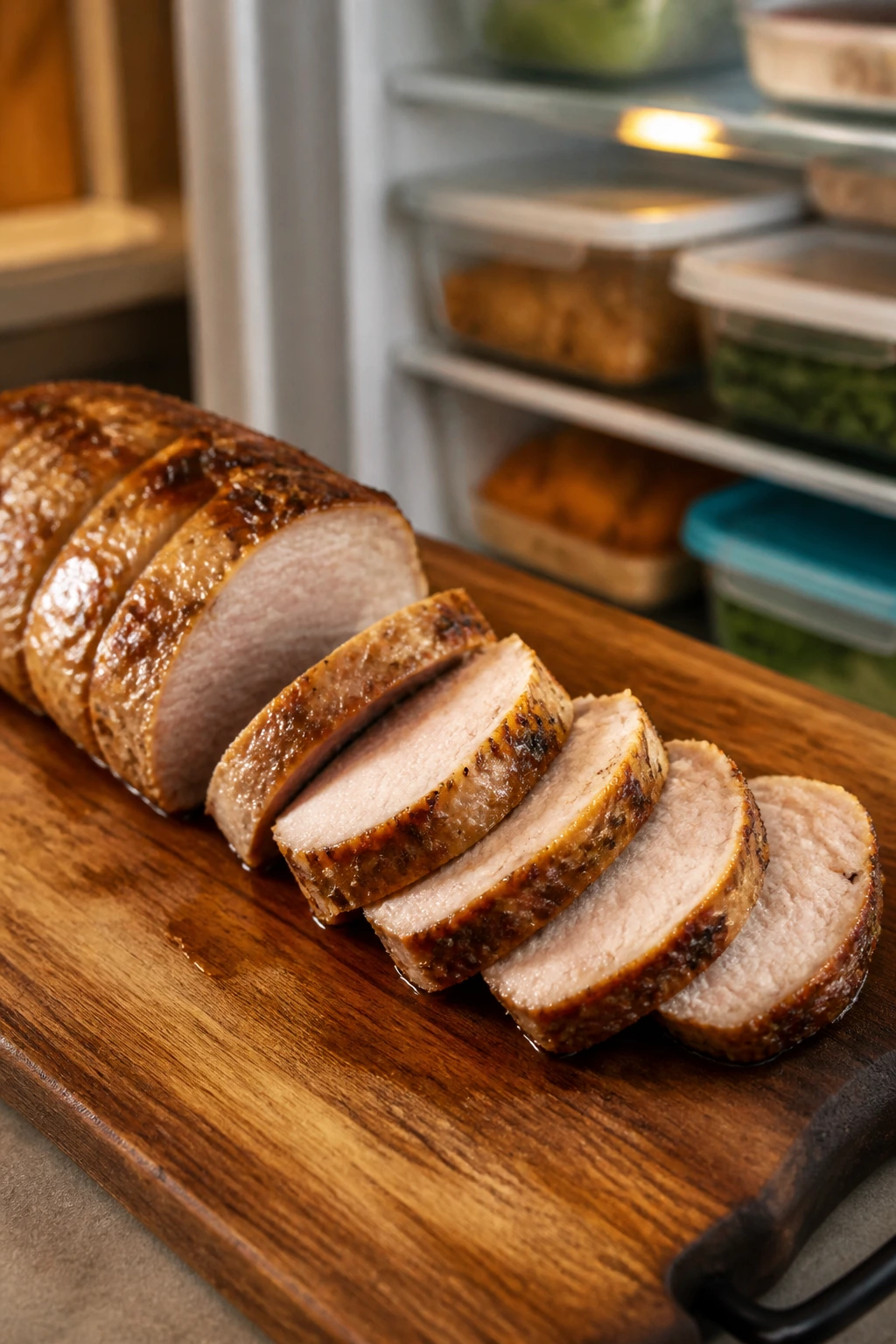
Pork tenderloin is best eaten after a short rest and a proper slice, but it holds up better than people think. If you want to get ahead, season the meat up to 24 hours in advance and keep it uncovered or lightly wrapped in the refrigerator. Stuffed tenderloins can be assembled a few hours early and chilled before roasting, though they should be tied tightly so the filling stays where it belongs.
Cooked pork keeps well in the refrigerator for 3 to 4 days in a covered container. Slice it before chilling if you know you’ll use it for sandwiches, grain bowls, or quick reheats; whole tenderloin dries out more slowly, but slices are easier to warm evenly. For the freezer, wrap cooled pork tightly and freeze it for up to 2 months. Sauced dishes freeze better than plain roast pork because the extra moisture protects the meat a little.
For reheating, the oven is safest. Warm sliced pork at 300°F (150°C), covered with foil, for about 10 to 15 minutes, with a splash of stock or sauce in the pan. A skillet over low heat also works if you keep the slices in a single layer and add a spoonful of liquid. Microwaves can do the job, but they push pork from tender to dry in a hurry, so use short bursts and stop while the meat is still just warm in the center.
Cream sauces are the one place where you need a little caution. They can separate after freezing, so if you know a skillet dinner will be frozen, hold back the cream and add it during reheating instead.
Variations and Adaptations to Try
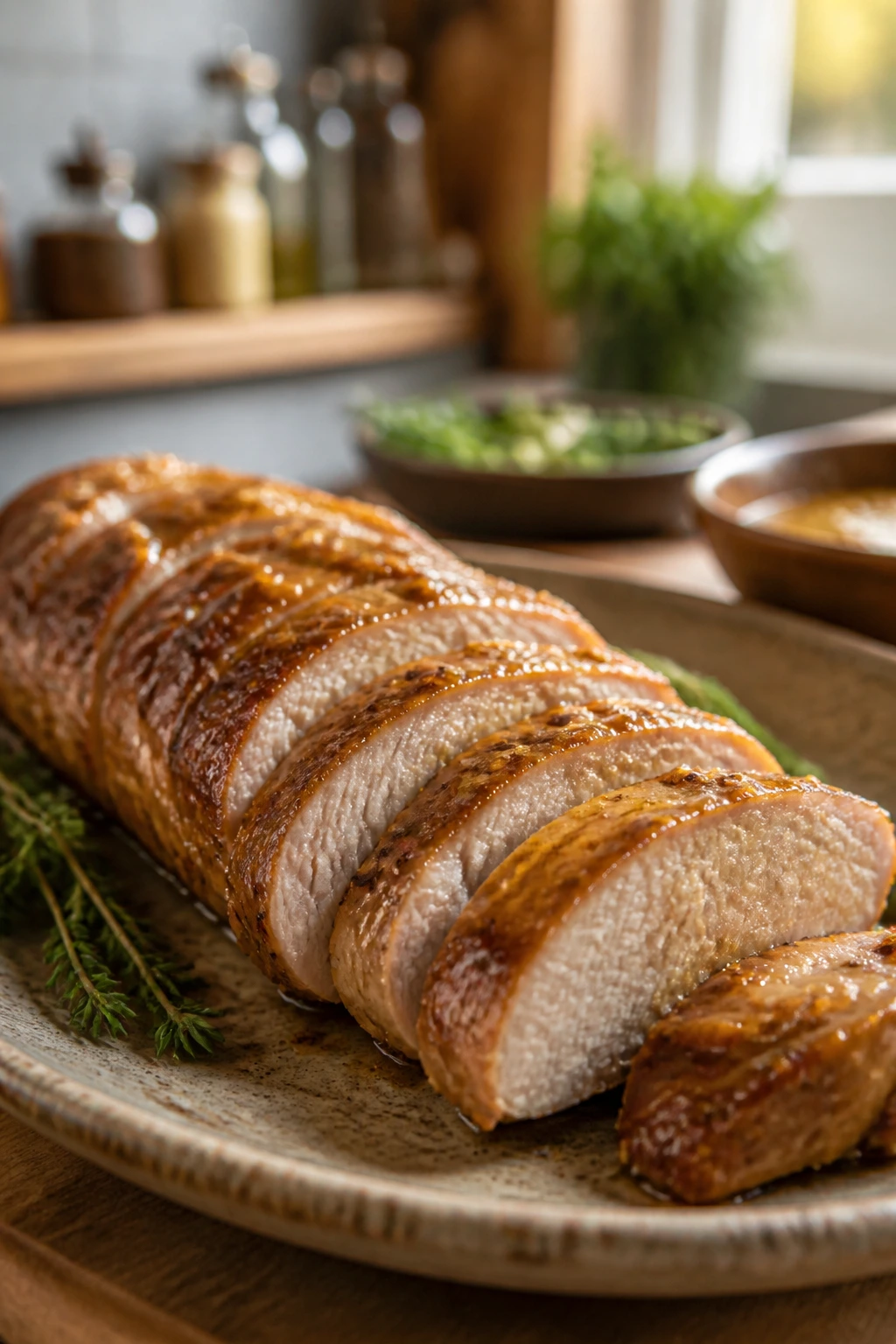
Gluten-Free Sunday Plate: Use tamari in place of soy sauce, and swap panko for gluten-free breadcrumbs or crushed rice crackers. The texture stays crisp enough for crusted versions without much fuss.
Dairy-Free Pan Sauce: Replace butter with olive oil or a dairy-free spread, and finish sauces with a splash of stock or cider instead of cream. You’ll lose a little richness, but the flavors stay clean and direct.
Lower-Sodium Supper: Use low-sodium stock, go lighter on bacon and soy sauce, and rely more on herbs, citrus, garlic, and vinegar. Pork tenderloin likes brightness, so you do not need to drown it in salt to make it taste finished.
Kid-Friendly Sweet Roast: Favor apple, honey, maple, and mild mustard, then keep chipotle, black pepper, and vinegar in the background. Children tend to accept pork better when the glaze is glossy and lightly sweet rather than sharp.
Heat-Lover’s Finish: Add chipotle, cayenne, or red pepper flakes to the glaze, then finish with lime or vinegar to keep the heat from sitting flat. The acidity matters more than people think.
Rustic Sunday Style: Serve any of these with mashed potatoes, roasted carrots, and a simple pan gravy. That trio turns even the lighter recipes into a full old-school meal.
Common Mistakes to Avoid
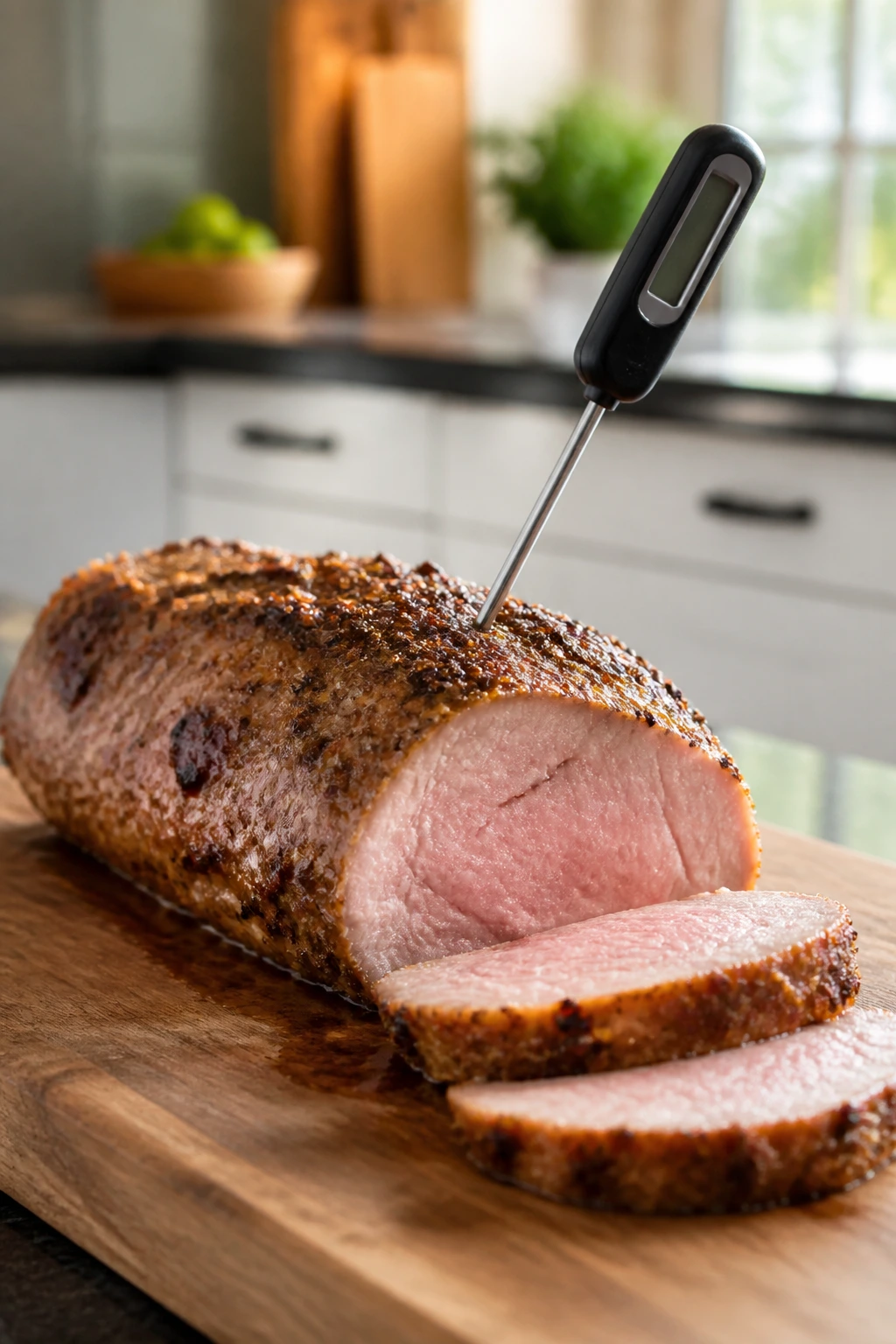
Skipping the thermometer: Pork tenderloin looks done before it is done, and eyeballing it leads to dry meat. Pull it at 145°F and rest it; that tiny discipline saves the whole dinner.
Leaving the silver skin on: That thin membrane does not break down during roasting. It tightens, curls, and makes slicing awkward, so trim it off before seasoning.
Overcrowding the pan: If potatoes, fruit, or vegetables are packed too tightly, they steam instead of brown. Spread everything out and use two pans if the recipe needs it.
Cutting too soon: The juices need a few minutes to settle. Slice right away and they run onto the board; rest the pork, and they stay in the meat where they belong.
Putting sugary glaze on too early: Honey, maple, and balsamic can burn if they sit under high heat for too long. Brush on part of the glaze near the end, then finish with the rest after roasting if needed.
Confusing tenderloin with loin: Pork loin is larger and takes longer to cook. If you swap it in without adjusting the method, the outside can overcook before the center is ready.
Frequently Asked Questions
Can I use pork loin instead of pork tenderloin?
You can, but not without adjusting the cook time and maybe the pan size. Pork loin is wider and fattier, so it needs longer in the oven and slices best into thicker portions; tenderloin cooks faster and stays more delicate.
How do I know pork tenderloin is done without cutting into it?
Use an instant-read thermometer inserted into the thickest part. 145°F is the target, followed by a short rest, and that’s far more reliable than looking at color.
Can I stuff pork tenderloin safely?
Yes, as long as you butterfly it evenly and don’t overfill it. Roll it tightly, tie it well, and make sure the center still reaches 145°F after roasting.
What if I do not have an oven-safe skillet?
Sear the pork in a regular skillet, then transfer it to a sheet pan to finish in the oven. Pour any pan juices into a small saucepan afterward to make the sauce.
Do these dinners work in an air fryer?
Several of them do, especially the herb-roasted, mustard, and glazed versions. The catch is capacity: if the tenderloin bends or crowds the basket, the surface browns unevenly, so keep the pieces in a single layer.
Can I make pork tenderloin ahead for guests?
You can season or stuff it ahead, then roast it close to serving time. If you want to roast it fully before guests arrive, undercook it by a degree or two, rest it, and rewarm it gently at low heat.
What sides fit the whole collection best?
Mashed potatoes, roasted vegetables, cabbage, rice, egg noodles, and crusty bread all work across several of these dinners. Choose one starch, one vegetable, and maybe one salad, and the plate will feel complete without overdoing it.
Why does my pork tenderloin dry out even when the recipe seems right?
Usually it’s one of three things: the oven ran hot, the meat stayed in too long, or it was sliced too soon and lost its juices. The fix is a thermometer, a short rest, and a clean slice against the grain.
A Better Sunday Habit
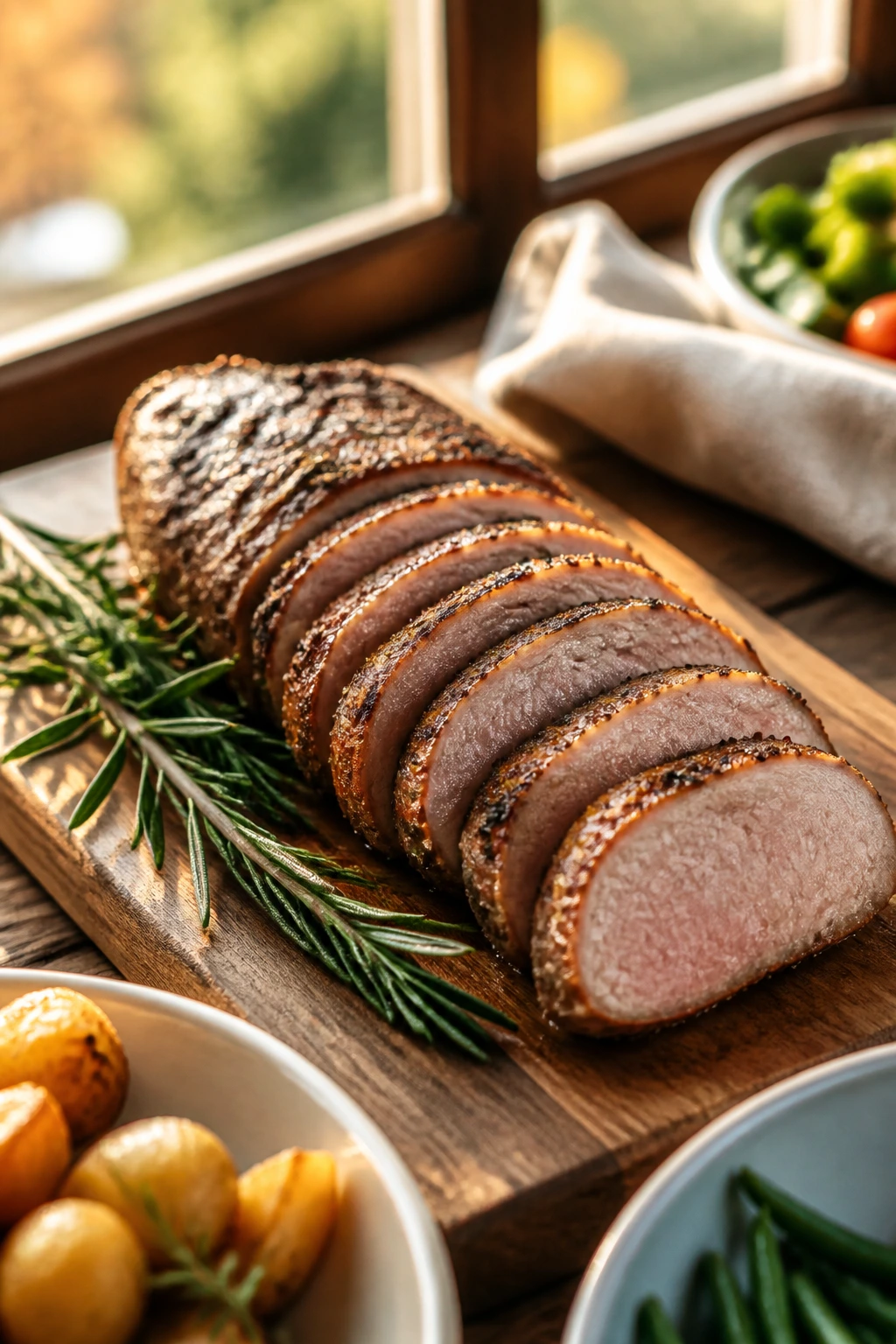
Pork tenderloin earns repeat use because it can be many things without asking much in return. One night it’s herb-roasted and clean; another night it’s glossy with honey mustard or cider; another time it’s a stuffed centerpiece that looks more complicated than it is. That range is the whole point.
Keep the thermometer close, the seasoning generous, and the pan sauce honest. Do that, and Sunday supper stops feeling like a chore disguised as a tradition.