



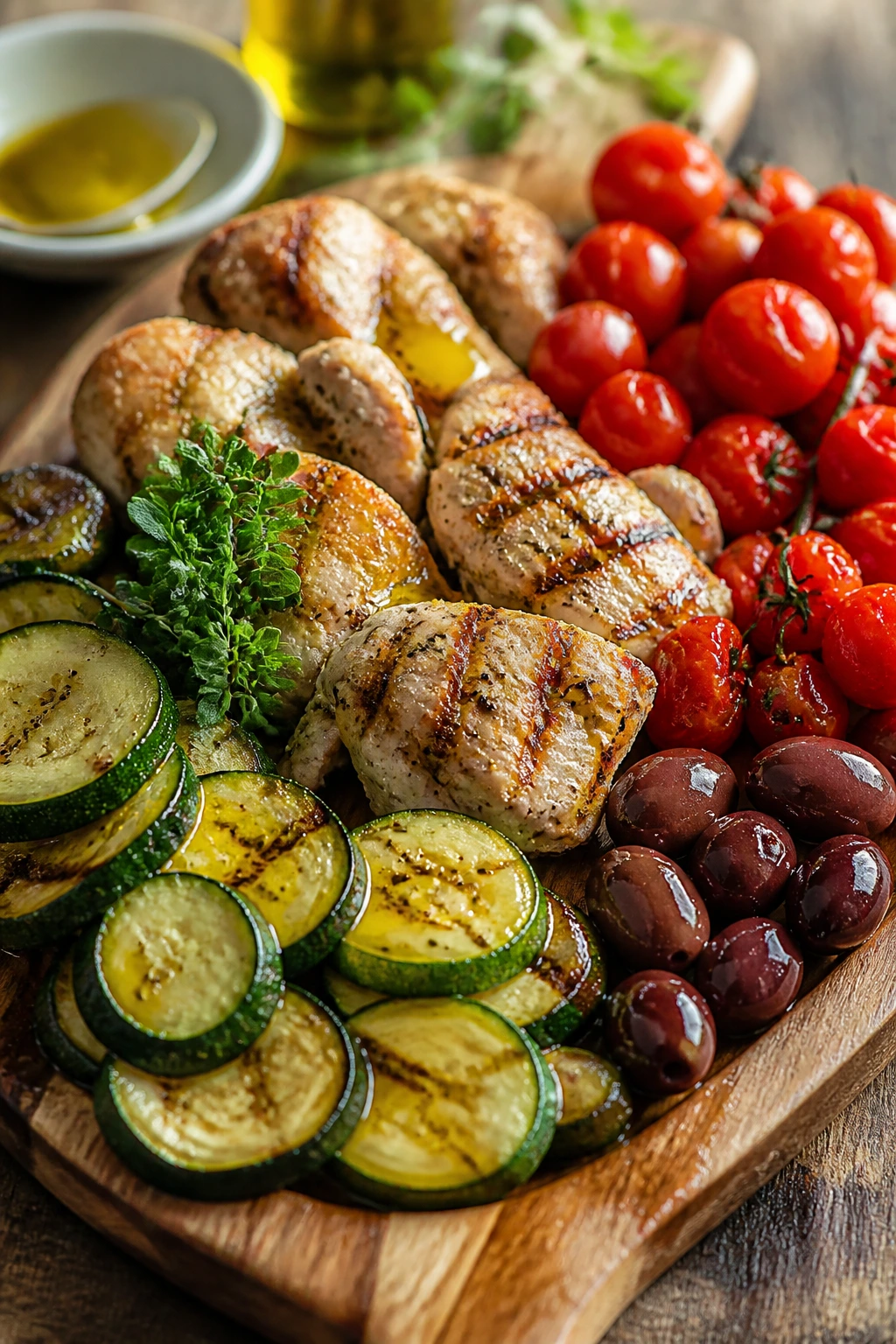
Some dinners feel generous and still leave room in your day. That’s the sweet spot here: Mediterranean dinners for weight loss that taste like someone actually wanted to cook, not like someone was trying to win an argument with a scale. Think bright lemon, tomatoes that have had time to soften and turn sweet, herbs that smell alive when they hit hot oil, and enough protein and fiber to carry you through the night without that heavy, overfed slump.
The trick isn’t eating tiny portions of sad food. That never lasts. The trick is building a plate the Mediterranean way: vegetables doing the heavy lifting, lean protein anchoring the meal, olive oil used with a spoon instead of a shrug, and carbs chosen on purpose instead of piled on by habit. That’s where these dinners earn their keep. They feel like dinner. Proper dinner. A plated meal with actual flavor and texture, not a punishment.
And because dinner is where most people drift off-plan, the recipes below lean hard into practicality. Sheet pans. Skillets. Bakes. Bowls. Soups. A few faster options for weeknights, a few that feel a little more dressed up, and plenty that work with what you already keep in the kitchen. If you’ve ever stared at chicken breasts, a half-empty jar of olives, and a lemon on the counter wondering how to make something worth eating, you’re in the right place.
Why This Collection Earns Its Keep
-
Protein Without the Food Coma: Chicken, fish, turkey, beans, yogurt, and eggs show up often here, which means these dinners help you stay satisfied instead of hunting the pantry an hour later.
-
Vegetables Do the Heavy Lifting: Zucchini, peppers, eggplant, greens, tomatoes, fennel, and cauliflower make the meals feel abundant without loading the plate with extra calories.
-
Olive Oil Stays Measured: You still get the richness Mediterranean food is known for, but the fat is handled with a spoon, not a free pour.
-
Weeknight-Friendly Methods: Sheet pans, one-skillet meals, and simple bakes keep cleanup sane, and that matters more than people admit.
-
Flexible Enough for Real Life: Swap grains, change the protein, or make a dish meatless without wrecking the whole plan.
-
Big Flavor, Short Ingredient Lists: Garlic, oregano, dill, parsley, capers, feta, lemon, and olives do a lot of work, so the meals taste layered without becoming fussy.
1. Lemon-Garlic Chicken Souvlaki Bowls
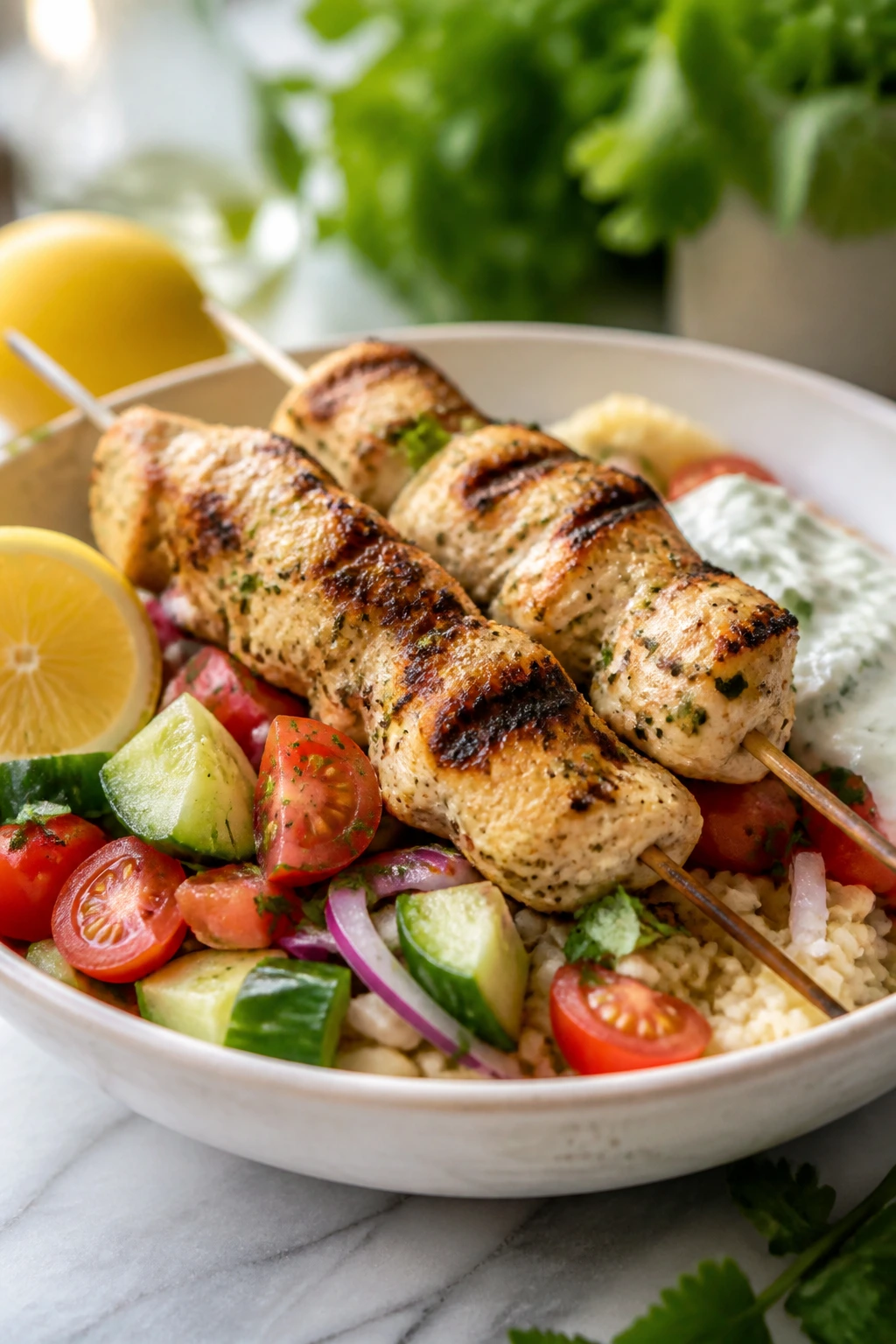
Chicken souvlaki bowls hit that rare dinner sweet spot: sharp, juicy, and deeply savory without feeling heavy. The chicken gets a quick lemon-garlic marinade, then sears fast so the edges brown before the inside dries out. Piled over cucumber, tomatoes, and a modest scoop of grains, it tastes like a proper meal with a bright finish.
The version I like most keeps the bowl clean and simple. No drippy sauces, no overloaded rice mountain, no chaos. Just well-seasoned chicken, crisp vegetables, and a cool yogurt finish that gives you the creamy note people usually chase with more oil or cheese.
Why It Works:
The marinade uses acid, garlic, oregano, and a little olive oil, which gives the chicken big flavor without needing a long ingredient list. Chicken thighs stay more forgiving than breasts, but breasts work if you watch the heat and pull them at 165°F. The bowl format also helps with portion control: a little grain, a lot of vegetables, and enough protein to make dinner stick.
Key Ingredients:
- For the Chicken
- 1½ lbs boneless, skinless chicken thighs, cut into 1½-inch pieces
- 2 tbsp olive oil
- 2 tbsp lemon juice
- 3 garlic cloves, grated
- 2 tsp dried oregano
- 1 tsp kosher salt
- ½ tsp black pepper
- For the Bowls
- 3 cups chopped romaine or shredded lettuce
- 1 cup cherry tomatoes, halved
- 1 cucumber, diced
- 1 cup cooked brown rice or cauliflower rice
- ¼ cup sliced red onion
- For the Yogurt Sauce
- ¾ cup plain Greek yogurt
- 1 tbsp lemon juice
- 1 tbsp chopped dill
- Pinch of salt
Quick Steps:
- Toss the chicken with olive oil, lemon juice, garlic, oregano, salt, and pepper. Let it sit for 15 to 30 minutes while you prep the vegetables.
- Heat a large skillet over medium-high heat until a drop of water sizzles at once.
- Add the chicken in a single layer and cook for 4 to 5 minutes per side, until browned and the thickest piece reaches 165°F.
- Stir the yogurt, lemon juice, dill, and salt in a small bowl until smooth.
- Build bowls with lettuce, rice, tomatoes, cucumber, and onion.
- Top with the chicken and a spoonful of yogurt sauce. Finish with extra oregano if you like a sharper hit.
Tips and Variations:
- Lighter Plate: Use cauliflower rice and extra lettuce if you want the bowl to feel bigger without adding much starch.
- Meal Prep Move: Marinate the chicken up to 12 hours ahead; it gets even more flavorful.
- Shortcut: Store-bought tzatziki works if you’re short on time, though I still prefer the yogurt sauce here because it stays cleaner.
2. Sheet-Pan Cod with Tomatoes, Olives, and Zucchini
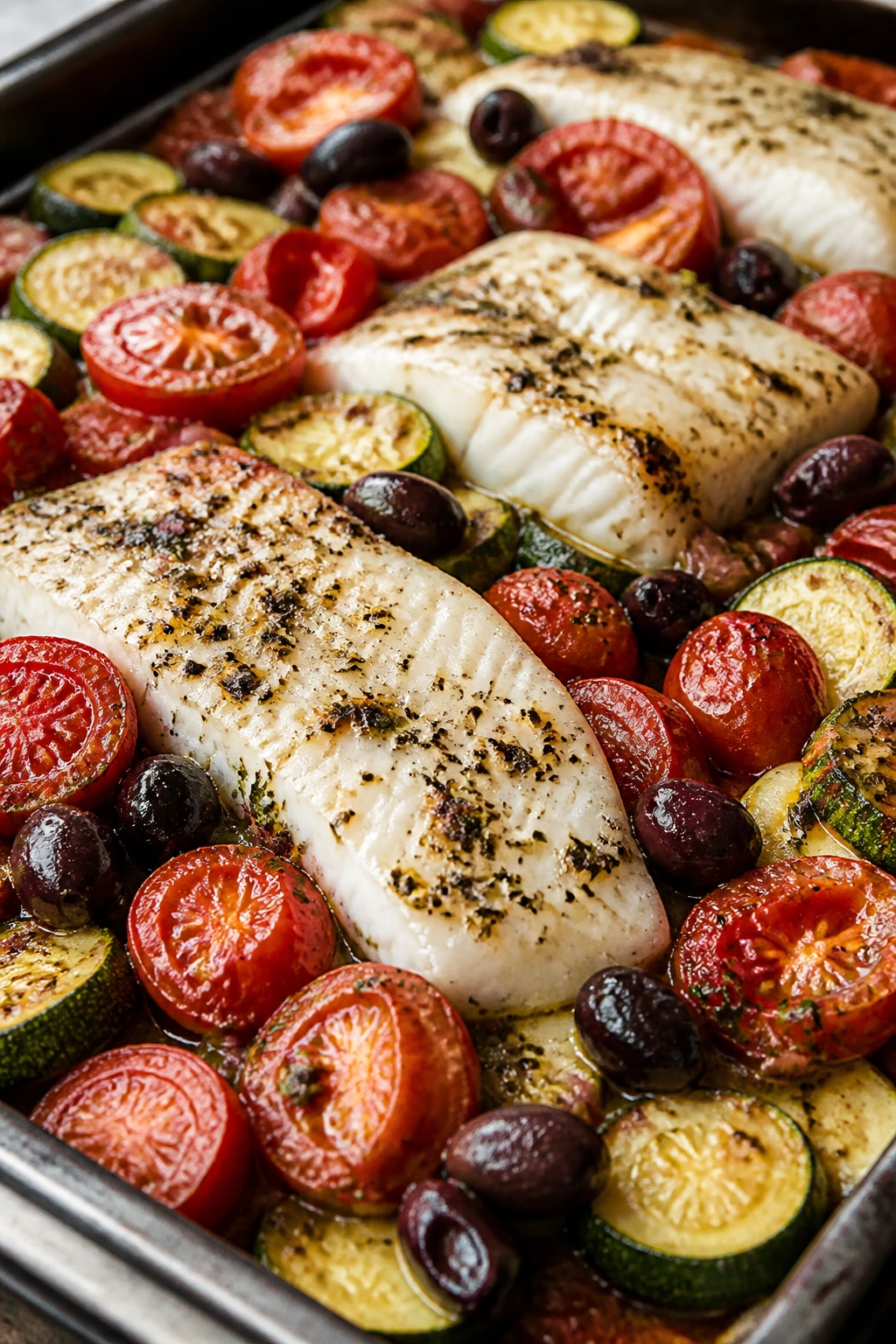
Cod is a modest fish in the best possible way. It’s mild, flaky, and happy to soak up whatever you put around it, which makes it ideal when you want a dinner that tastes bright rather than fishy. On a sheet pan with tomatoes and olives, it turns tender and a little silky, while the vegetables collapse into a savory pan sauce.
This is one of those dinners that feels smarter than it is. You do a bit of chopping, slide the pan into a hot oven, and the whole kitchen starts smelling like garlic and warm tomato skin. That smell alone can fix a long day.
Why It Works:
Cod is lean, so it gives you protein without much fat, and the tomatoes plus olive oil provide the richness that keeps the dish from tasting bare. A hot oven, around 425°F, cooks the fish fast enough that it stays moist. The olives and capers add salt and punch, which means you do not need a heavy sauce.
Key Ingredients:
- 1½ lbs cod fillets, cut into 4 portions
- 2 medium zucchini, sliced into half-moons
- 2 cups cherry tomatoes
- ½ cup pitted Kalamata olives
- 3 tbsp olive oil
- 3 garlic cloves, thinly sliced
- 1 tsp dried oregano
- ½ tsp kosher salt
- ¼ tsp black pepper
- 1 lemon, cut into wedges
- 2 tbsp chopped parsley
Quick Steps:
- Heat the oven to 425°F and line a sheet pan with parchment.
- Toss the zucchini, tomatoes, olives, garlic, olive oil, oregano, salt, and pepper on the pan.
- Roast for 10 minutes, until the tomatoes start to burst and the zucchini looks glossy.
- Nestle the cod into the vegetables and roast 10 to 12 minutes more, until the fish flakes easily and looks opaque through the center.
- Spoon the juices over the fish, squeeze on lemon, and scatter parsley on top.
- Serve with a small portion of quinoa or a piece of whole-grain bread if you want extra heft.
Tips and Variations:
- Fish Swap: Haddock or halibut works the same way; just watch thinner fillets so they don’t dry out.
- Flavor Boost: Add 1 tablespoon capers if you like a sharper, briny finish.
- Don’t Crowd the Pan: Keep the vegetables in one layer or they’ll steam instead of roasting.
3. Turkey-Stuffed Bell Peppers with Feta and Brown Rice
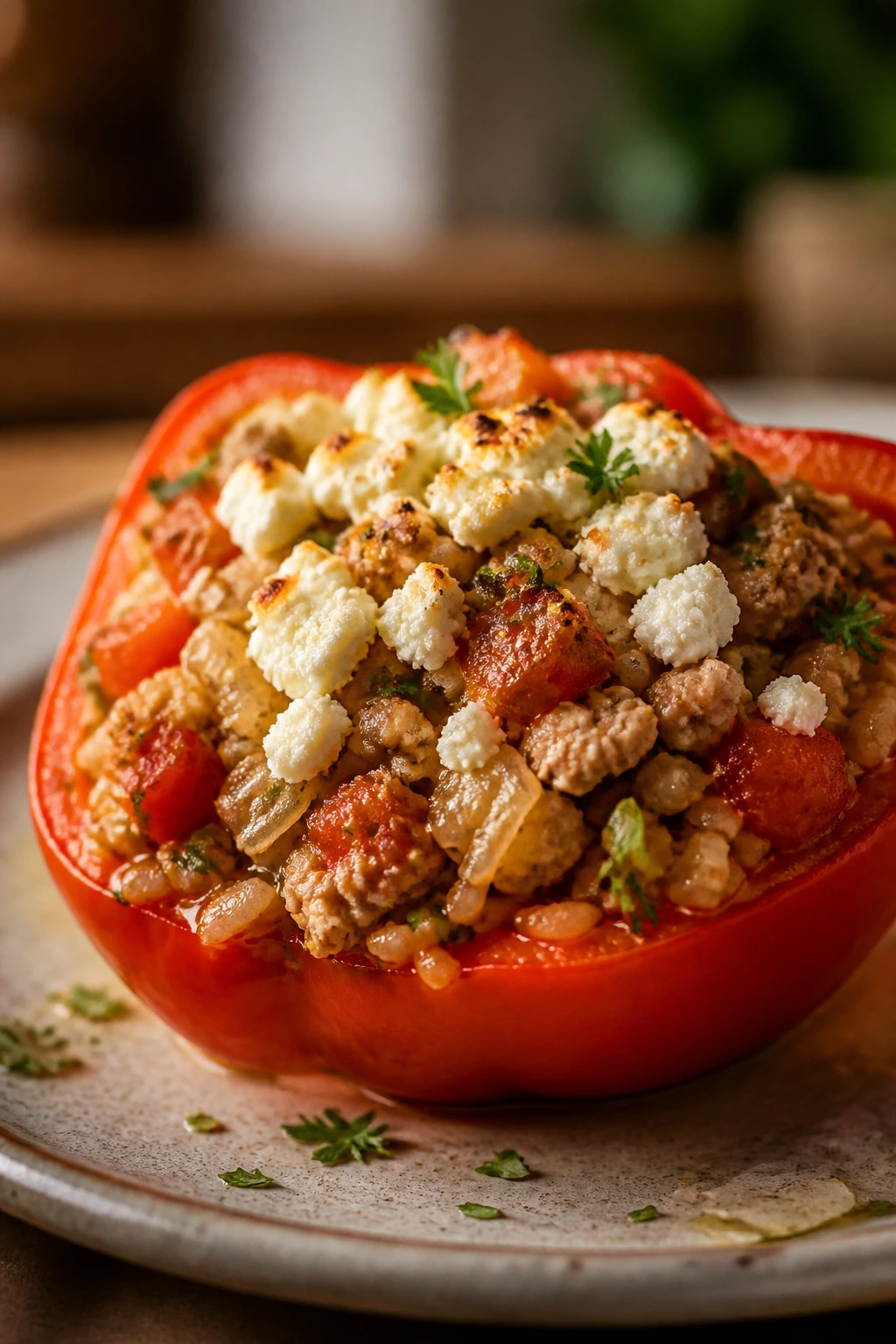
Bell peppers turn into little edible bowls here, and that’s part of the charm. The filling is savory and warm, with turkey, tomatoes, onion, and herbs, while the peppers soften just enough to hold their shape. A little feta on top brings salt and creaminess without turning the whole thing into a cheese bomb.
I like stuffed peppers for weight-loss dinners because the structure does some of the work for you. One pepper half is a built-in serving. You do not need to guess what a reasonable portion looks like.
Why It Works:
Turkey is lean but still satisfying when it’s cooked with onion, garlic, and tomato paste. Brown rice adds chew and a bit of fiber, which helps the filling feel complete. Baking the peppers covered for part of the time keeps them tender, then uncovering them at the end gives you browned edges and a filling that isn’t soggy.
Key Ingredients:
- 4 large bell peppers, halved and seeded
- 1 lb lean ground turkey
- 1 small yellow onion, diced
- 2 garlic cloves, minced
- 1 cup cooked brown rice
- 1 cup crushed tomatoes
- 1 tbsp tomato paste
- 1 tsp dried oregano
- 1 tsp kosher salt
- ½ tsp black pepper
- ¼ cup crumbled feta
- 2 tbsp chopped parsley
Quick Steps:
- Heat the oven to 400°F. Place the pepper halves cut side up in a baking dish.
- Brown the turkey with onion over medium heat for 6 to 8 minutes, breaking it up as it cooks.
- Stir in garlic, tomato paste, crushed tomatoes, rice, oregano, salt, and pepper. Cook 2 minutes until the mixture smells rich and looks thick.
- Spoon the filling into the peppers and cover the dish with foil.
- Bake for 25 minutes, then uncover, top with feta, and bake 10 minutes more.
- Let the peppers rest 5 minutes before serving so the filling settles.
Tips and Variations:
- Lower-Carb Version: Use cauliflower rice instead of brown rice and skip nothing else.
- Make-Ahead Friend: Assemble the peppers a day ahead and bake when needed.
- Texture Tip: Choose peppers with flat bottoms if you want them to stay upright in the dish.
4. Chickpea, Spinach, and Egg Shakshuka
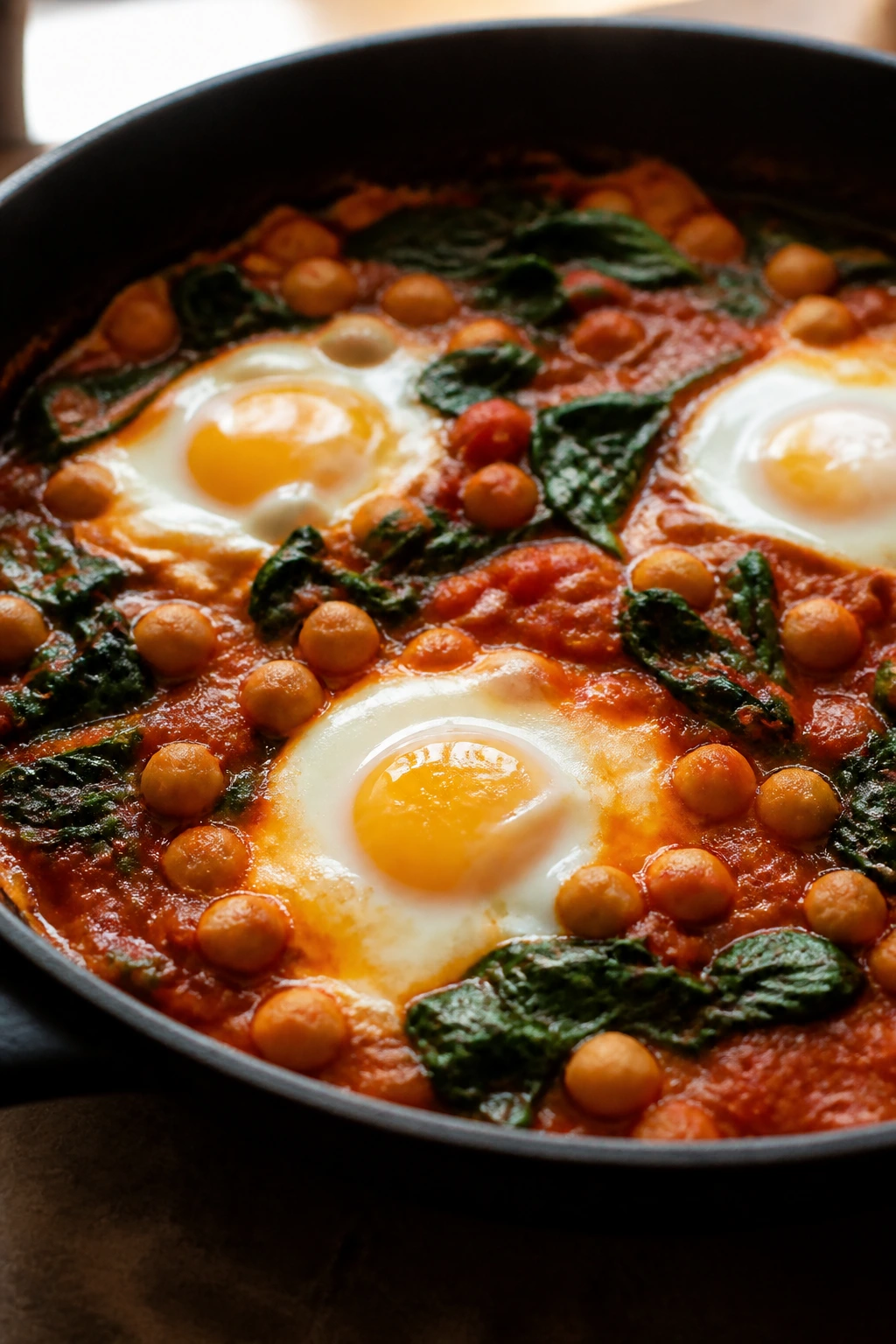
Shakshuka looks rustic in the best way: bubbling tomato sauce, greens folded through the edges, eggs set right on top. The yolks break into the sauce and turn it creamy without any cream at all. Chickpeas make it sturdy enough for dinner, not just breakfast-in-disguise.
This is the dish I make when I want a meatless night that still feels like a real meal. The pan comes to the table hot, the edges are red and gold, and everybody can scoop a little differently. Messy in a good way.
Why It Works:
Tomatoes, onions, peppers, and spices create a bold base, while chickpeas add protein and fiber. The eggs cook gently in the sauce, so you get richness without extra fat. A quick finish under the lid keeps the whites set and the yolks soft, which is the whole point.
Key Ingredients:
- 2 tbsp olive oil
- 1 medium onion, diced
- 1 red bell pepper, diced
- 3 garlic cloves, minced
- 1 tsp ground cumin
- 1 tsp smoked paprika
- ¼ tsp red pepper flakes
- 1 can (28 oz) crushed tomatoes
- 1 can (15 oz) chickpeas, drained and rinsed
- 3 cups baby spinach
- 4 to 6 large eggs
- ½ tsp salt
- ¼ tsp black pepper
- 2 tbsp chopped cilantro or parsley
Quick Steps:
- Warm the olive oil in a wide skillet over medium heat.
- Cook the onion and bell pepper for 6 to 8 minutes, until soft and lightly golden.
- Stir in garlic, cumin, paprika, and red pepper flakes for 30 seconds.
- Add tomatoes, chickpeas, salt, and pepper. Simmer 10 minutes until thickened.
- Stir in spinach until wilted, then make little wells in the sauce and crack in the eggs.
- Cover and cook 5 to 7 minutes, until the whites are set but the yolks still wobble slightly.
- Finish with herbs and serve hot.
Tips and Variations:
- Bread Choice: One slice of whole-grain toast is enough for most people; the sauce is the star.
- Protein Boost: Add ½ cup crumbled feta if you want more salt and creaminess.
- Heat Control: Skip the red pepper flakes if you want a softer flavor profile.
5. Greek Turkey Meatballs with Cucumber-Yogurt Sauce
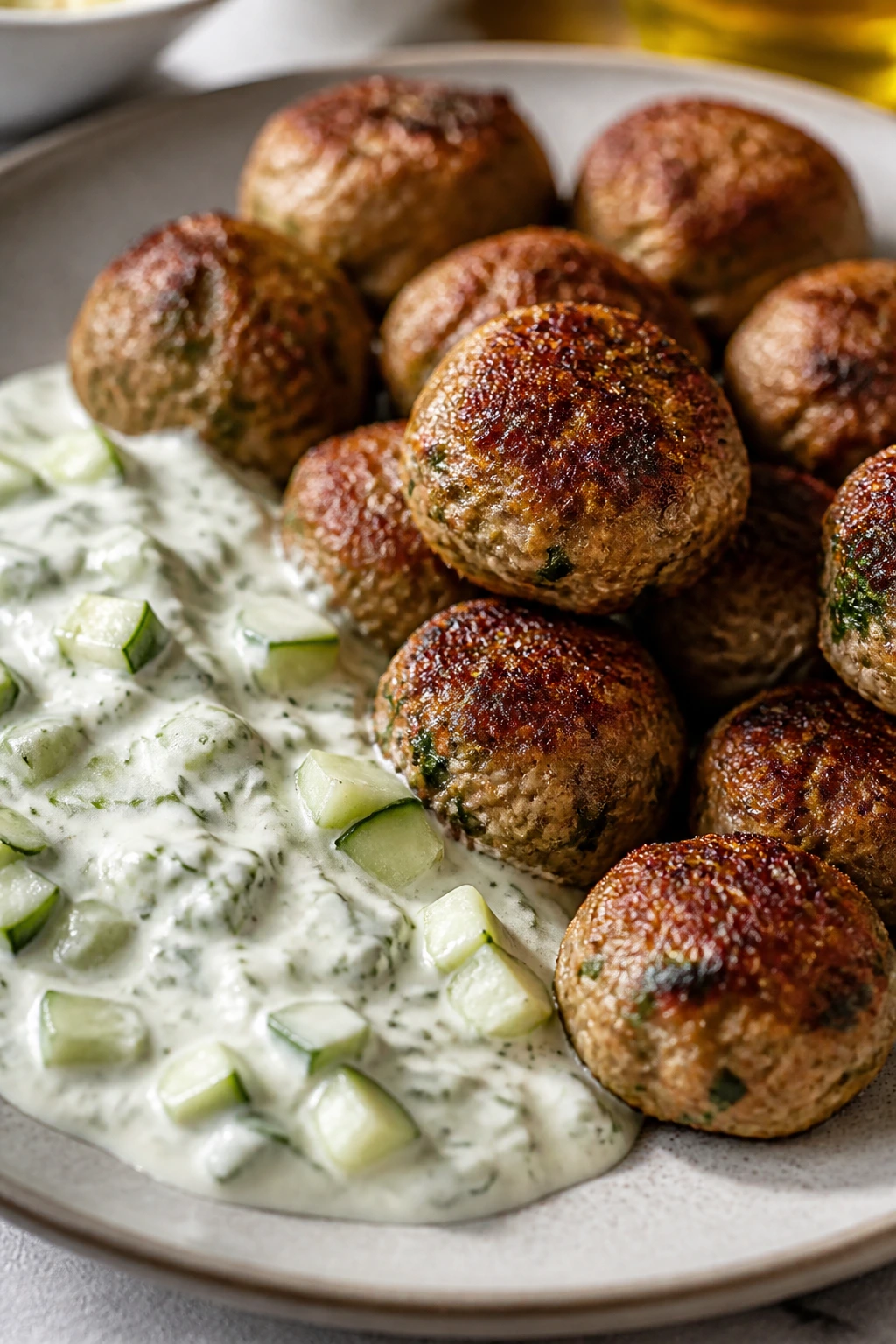
These meatballs are what happens when you want comfort food that doesn’t sit like a brick. They’re soft inside, browned outside, and full of dill, parsley, garlic, and onion. The yogurt sauce cools everything down and gives the plate a clean, tangy edge.
Ground turkey can go bland fast if you treat it like an afterthought. Here, it gets enough herbs and a little grated onion to stay juicy. That makes a bigger difference than people expect.
Why It Works:
Turkey meatballs are naturally lean, so the trick is keeping moisture in the mix and not overcooking them. A short bake at 425°F helps them brown without drying out. The cucumber-yogurt sauce adds volume and flavor without much calorie load, and it doubles as a dip for vegetables.
Key Ingredients:
- 1 lb lean ground turkey
- 1 egg
- ½ cup grated onion
- ¼ cup breadcrumbs
- 2 tbsp chopped parsley
- 1 tbsp chopped dill
- 2 garlic cloves, minced
- 1 tsp kosher salt
- ½ tsp black pepper
- 1 tbsp olive oil
- For the Sauce
- ¾ cup plain Greek yogurt
- ½ cucumber, finely grated and squeezed dry
- 1 tbsp lemon juice
- 1 tbsp chopped dill
- Pinch of salt
Quick Steps:
- Heat the oven to 425°F and line a baking sheet with parchment.
- Mix turkey, egg, onion, breadcrumbs, parsley, dill, garlic, salt, and pepper until just combined.
- Shape into 16 meatballs and brush lightly with olive oil.
- Bake 14 to 16 minutes, until browned and cooked through.
- Stir together the yogurt, cucumber, lemon juice, dill, and salt.
- Serve the meatballs over greens, with the sauce spooned on top or on the side.
Tips and Variations:
- Juicier Meatballs: Grate the onion on a box grater instead of dicing it; the moisture matters.
- Serving Move: Put them into lettuce cups with tomatoes if you want a lighter dinner.
- Batch Cooking: Double the meatballs and freeze half after baking.
6. Salmon with Fennel and Orange Salad
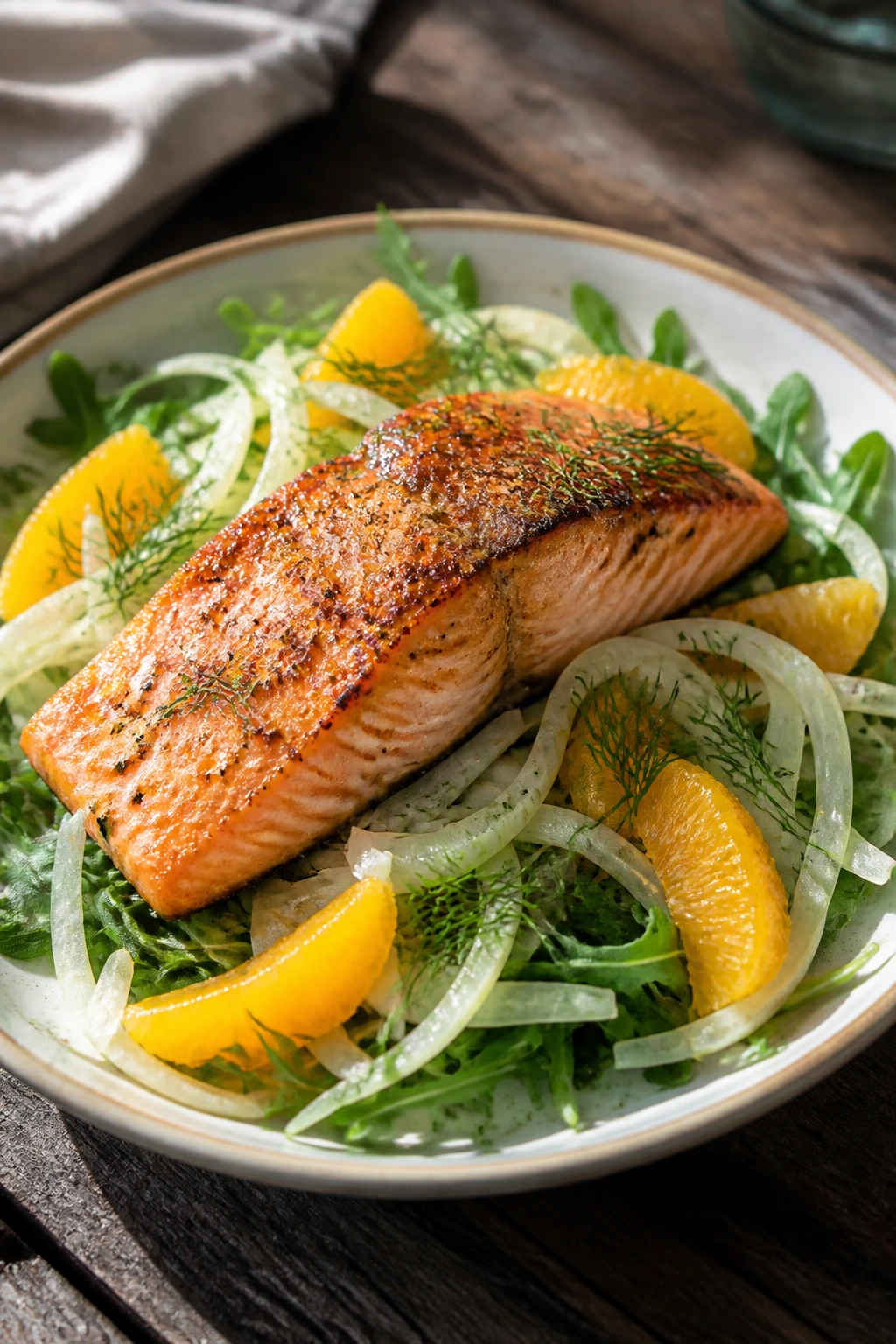
Salmon can be rich enough to feel luxurious and still fit a lighter dinner, which is why it shows up so often in smart weeknight cooking. Pair it with fennel and orange and the whole plate turns sharp, sweet, and clean. The contrast is what makes it work.
Fennel is one of those vegetables people skip because they think it’s fussy. It isn’t. Slice it thin, dress it well, and it turns crisp and slightly sweet, with a faint licorice note that plays well against oily fish.
Why It Works:
Salmon provides satisfying fat and protein, so you don’t need much else on the plate. The fennel-orange salad keeps the meal bright and fresh, which helps the richness feel balanced rather than heavy. Roasting the salmon at 400°F gives you a gentle cook and a tender center.
Key Ingredients:
- 4 salmon fillets, about 5 oz each
- 1 tbsp olive oil
- ½ tsp kosher salt
- ¼ tsp black pepper
- 1 fennel bulb, thinly sliced
- 2 oranges, peeled and sliced
- 2 cups arugula
- 1 tbsp lemon juice
- 1 tbsp olive oil
- 1 tbsp chopped dill
Quick Steps:
- Heat the oven to 400°F. Line a small baking sheet with parchment.
- Place the salmon on the sheet, rub with olive oil, salt, and pepper, and roast 10 to 12 minutes.
- Toss fennel, orange slices, arugula, lemon juice, olive oil, and dill in a bowl.
- Let the salmon rest 2 minutes so the juices settle.
- Pile the salad on plates and set the salmon alongside or right over the greens.
- Serve immediately while the fish is still silky in the center.
Tips and Variations:
- Citrus Swap: Grapefruit works if you want a sharper bite.
- Texture Tip: Slice the fennel as thinly as you can; thick pieces stay awkwardly crunchy.
- Extra Satisfying: Add ½ cup cooked farro if you want the meal to carry farther.
7. Skillet Eggplant and Lentil Moussaka
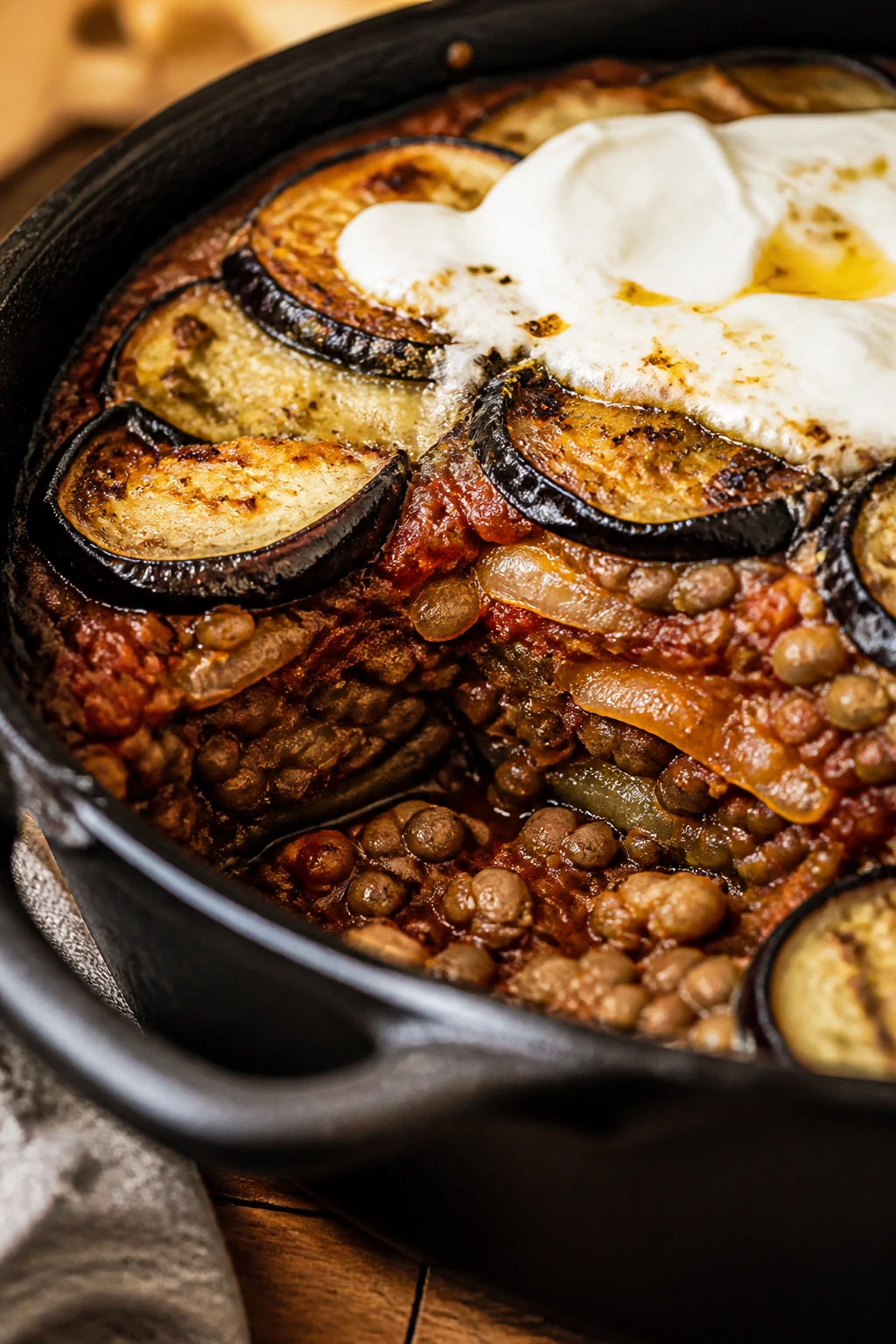
This is the casserole that proves vegetarian dinners can hold their own. Eggplant softens into something almost meaty, lentils bring earthy depth, and the tomato layer gives the whole pan a steady backbone. A light yogurt topping keeps the dish creamy without leaning into the heavy béchamel you’d find in traditional versions.
I like this dish when I want comfort but don’t want to feel flattened afterward. It’s warm, deeply savory, and better than it looks in the pan. Eggplant always needs a little patience. Here, it earns it.
Why It Works:
Lentils give the dish protein and body, which matters when you’re skipping meat. Eggplant absorbs flavor as it cooks, so a good browning step gives you more payoff later. Keeping the topping light makes the whole pan feel more balanced and less like a starch-and-fat project.
Key Ingredients:
- 2 medium eggplants, sliced into ½-inch rounds
- 1 cup dry brown or green lentils
- 1 medium onion, diced
- 2 garlic cloves, minced
- 1 can (14.5 oz) crushed tomatoes
- 1 tsp dried oregano
- 1 tsp ground cinnamon
- 1 tsp kosher salt
- ½ tsp black pepper
- 1 cup plain Greek yogurt
- 1 egg
- ¼ cup grated Parmesan
- 1 tbsp olive oil
Quick Steps:
- Cook the lentils in water until tender but not mushy, about 20 to 25 minutes.
- Brown the eggplant slices in olive oil in a hot skillet until golden on both sides.
- Cook onion and garlic in the same pan, then add tomatoes, oregano, cinnamon, salt, and pepper. Simmer 10 minutes.
- Whisk yogurt, egg, and Parmesan in a bowl.
- Layer eggplant, lentils, and tomato sauce in a baking dish, then spoon the yogurt mixture over the top.
- Bake at 375°F for 20 minutes, until set and lightly browned.
- Rest 10 minutes before slicing so the layers hold.
Tips and Variations:
- Eggplant Tip: Salt the slices for 20 minutes if they’re especially spongy, then blot dry.
- Flavor Boost: A pinch of nutmeg in the topping gives a warmer finish.
- Vegetarian Main: Serve with a chopped salad and stop there; it’s complete on its own.
8. Chicken Shawarma Lettuce Wraps
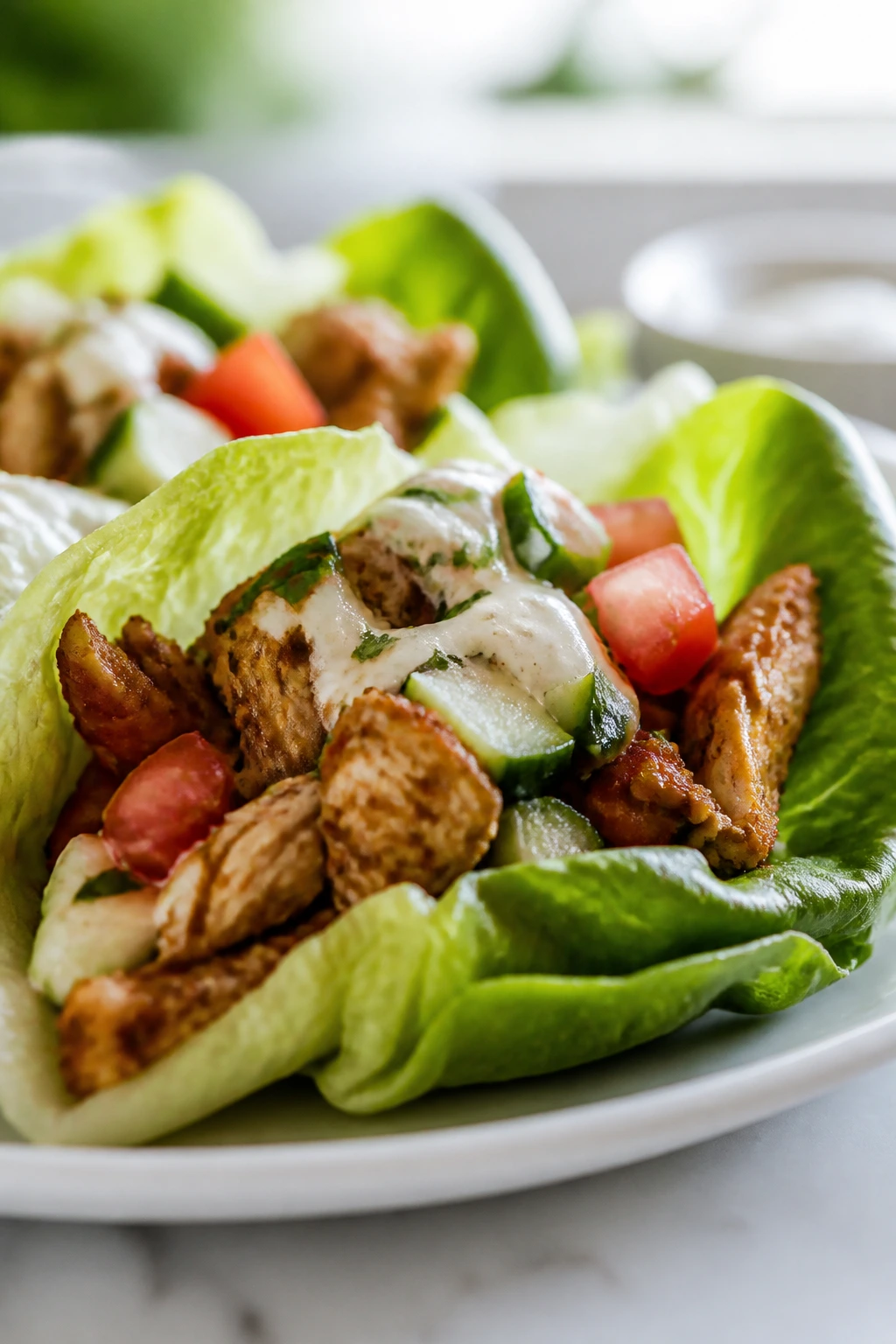
These wraps keep all the flavor of shawarma and none of the oversized pita situation that can quietly wreck a lighter dinner. The chicken is warm, spiced, and a little smoky. Crisp lettuce leaves do the job of the bread, and honestly, they’re better at it than people expect.
The first bite is all contrast: hot chicken, cold sauce, crunchy lettuce, soft tomato. That contrast keeps the meal interesting even though the ingredient list is short. Short is good here.
Why It Works:
Shawarma-style seasoning brings a lot of flavor without adding calories. Using lettuce leaves instead of bread cuts the starch down and puts the focus on the chicken and sauce. A hot skillet or grill pan gives the chicken the charred edges that make it taste fuller.
Key Ingredients:
- 1½ lbs boneless, skinless chicken thighs
- 2 tbsp olive oil
- 2 tsp ground cumin
- 2 tsp paprika
- 1 tsp ground coriander
- ½ tsp turmeric
- 1 tsp kosher salt
- 2 garlic cloves, minced
- 1 tbsp lemon juice
- 1 head butter lettuce or romaine hearts
- 1 cup diced tomatoes
- ½ cup sliced cucumber
- ½ cup plain Greek yogurt
- 1 tbsp tahini
Quick Steps:
- Toss the chicken with olive oil, spices, garlic, salt, and lemon juice.
- Heat a skillet over medium-high heat and cook the chicken for 5 to 6 minutes per side until browned and cooked through.
- Mix yogurt and tahini with a splash of water if needed to make a loose sauce.
- Separate the lettuce leaves and pat them dry.
- Fill each leaf with chicken, tomatoes, cucumber, and a drizzle of sauce.
- Serve right away so the lettuce stays crisp.
Tips and Variations:
- Make It Faster: Slice the chicken before cooking so it browns in less time.
- Extra Crunch: Add shaved red cabbage if you want the wraps more substantial.
- Sauce Note: If tahini tastes too strong, cut it with a bit more yogurt and lemon.
9. Whole-Wheat Tuna Pasta with Capers and Arugula
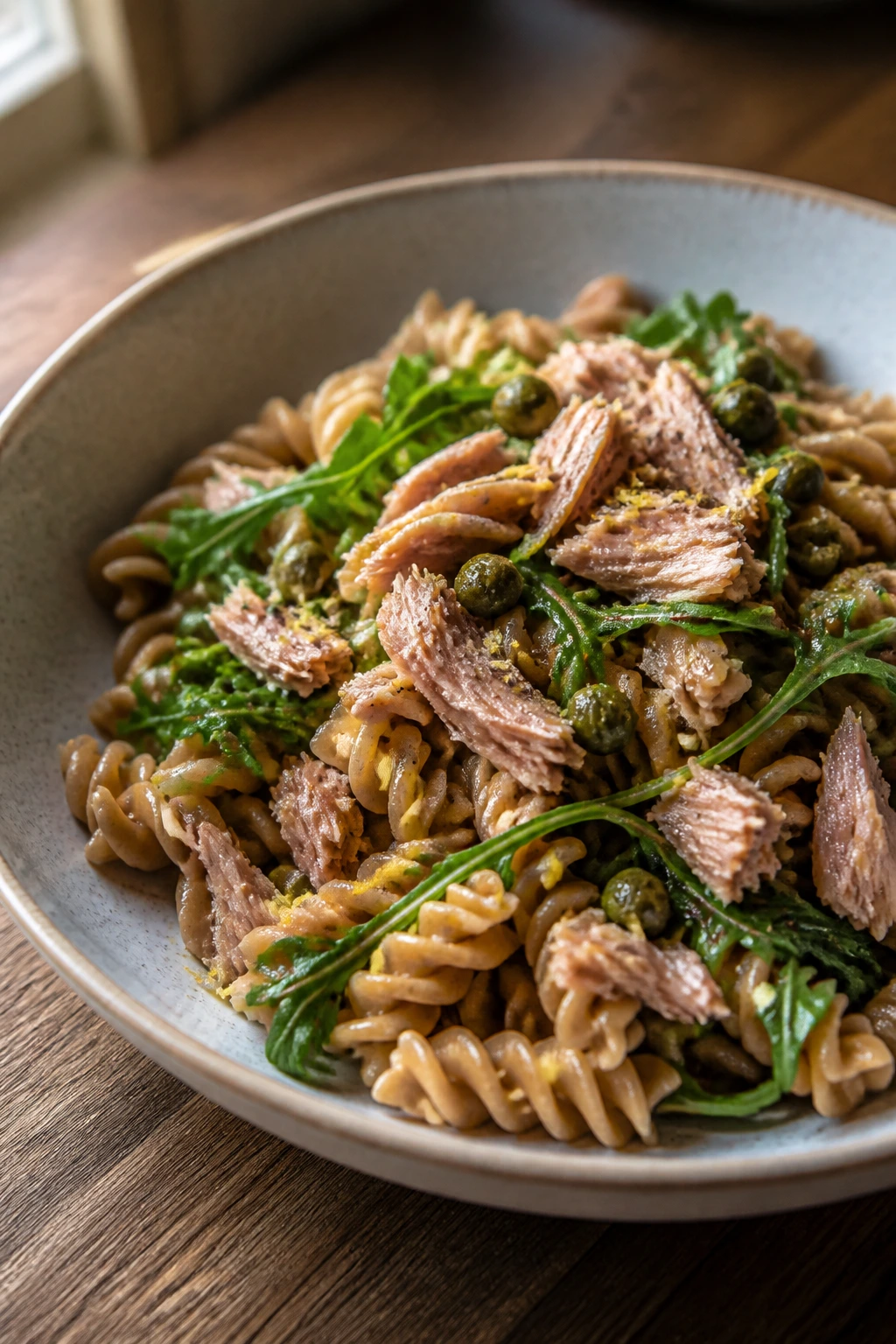
Tuna pasta gets a lot of grief because people remember the heavy, mayo-soaked versions. This one lives somewhere cleaner and sharper. Whole-wheat pasta gives it bite, capers bring salt and brightness, and arugula wilts into the hot noodles without turning limp in a sad way.
It’s pantry food, but dressed like it means it. That matters when you want a dinner that feels fast and still has a shape to it. The trick is keeping the pasta portion modest and loading the bowl with herbs and greens.
Why It Works:
Tuna offers lean protein with almost no prep. Capers and lemon give the dish enough sharpness that you don’t need much oil or cheese. Whole-wheat pasta adds fiber and stays a bit toothier, which helps the meal feel more complete at a smaller portion.
Key Ingredients:
- 8 oz whole-wheat spaghetti or penne
- 2 tbsp olive oil
- 3 garlic cloves, minced
- 1 can (5 oz) tuna in olive oil or water, drained
- 2 tbsp capers, drained
- 2 cups baby arugula
- 1 lemon, zested and juiced
- ¼ tsp red pepper flakes
- ¼ cup chopped parsley
- 2 tbsp grated Parmesan
- Salt and black pepper to taste
Quick Steps:
- Boil the pasta in salted water until al dente, then reserve ½ cup pasta water.
- Warm olive oil in a skillet over medium heat and cook garlic for 30 seconds.
- Add tuna, capers, red pepper flakes, lemon zest, and juice.
- Toss in the pasta with a splash of pasta water until glossy.
- Fold in arugula and parsley until the greens wilt.
- Finish with Parmesan and black pepper, then serve while hot.
Tips and Variations:
- Lighter Serving: Keep the pasta at 2 oz dry per person and bulk up with extra arugula.
- Pantry Swap: Chopped olives can stand in for capers if that’s what you have.
- Watch the Salt: Capers and Parmesan both bring salt, so taste before adding more.
10. Zucchini Noodle Shrimp Scampi, Greek Style
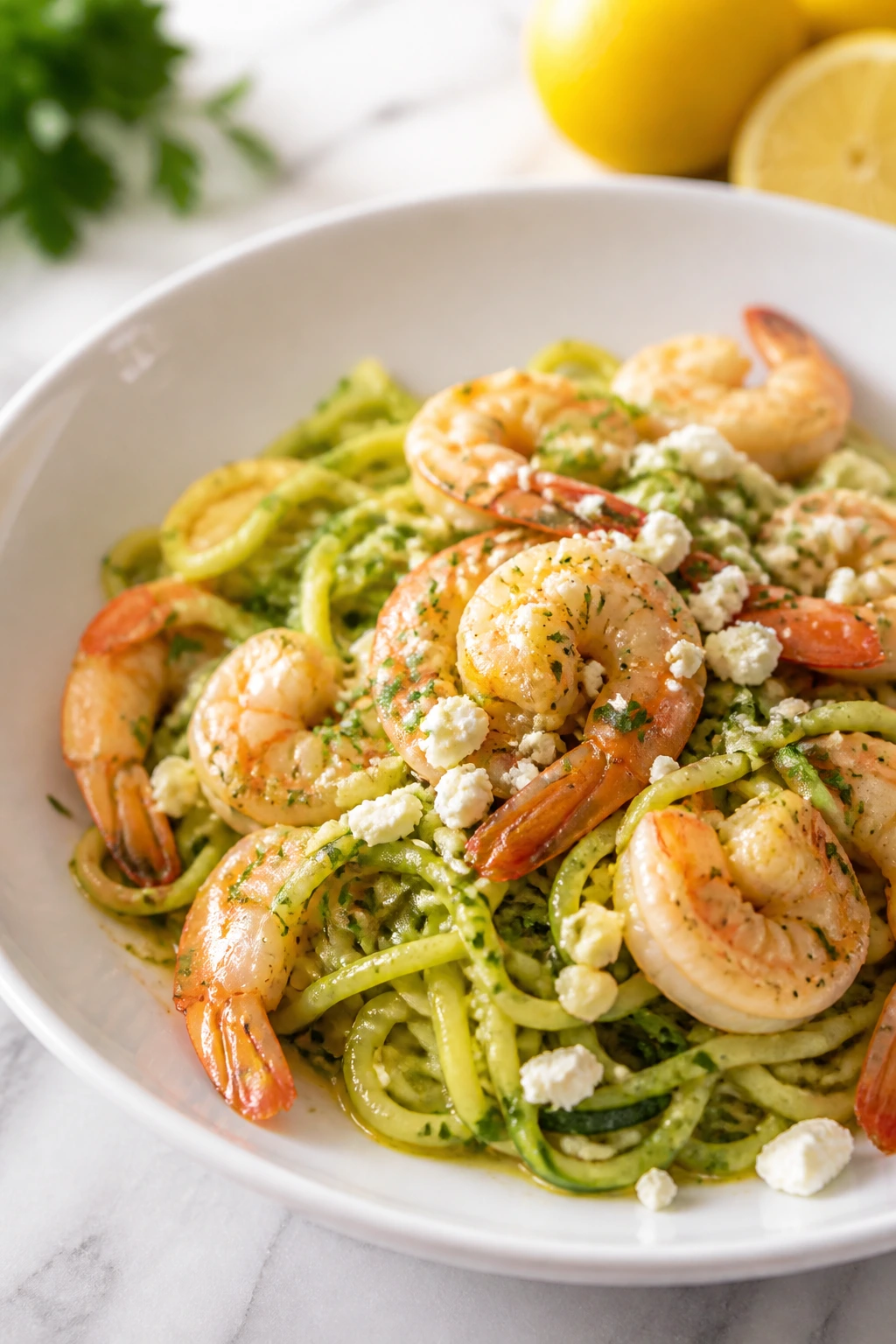
Shrimp scampi can get heavy fast when it’s swimming in butter and a mountain of pasta. Zucchini noodles keep the plate lighter and let the garlic, lemon, and shrimp stay in charge. The result is glossy, bright, and quick enough that dinner can be on the table before you’ve talked yourself into ordering something else.
I like this version because it doesn’t feel like a compromise. It tastes like a clean shrimp dish with real personality. The zucchini stays a little snappy, which is exactly what you want.
Why It Works:
Shrimp cooks in minutes, so it’s ideal for quick dinners. Zucchini noodles soak up flavor without adding much starch, and a small amount of feta at the end gives the dish a salty finish without weighing it down. Cooking the shrimp first keeps it tender; adding the zoodles later stops them from going watery.
Key Ingredients:
- 1½ lbs large shrimp, peeled and deveined
- 3 medium zucchini, spiralized
- 3 tbsp olive oil
- 4 garlic cloves, minced
- ½ tsp red pepper flakes
- 1 lemon, juiced
- ¼ cup chopped parsley
- ¼ cup crumbled feta
- ½ tsp kosher salt
- ¼ tsp black pepper
Quick Steps:
- Pat the shrimp dry and season with salt and pepper.
- Heat 2 tablespoons olive oil in a skillet over medium-high heat and cook shrimp 1 to 2 minutes per side until pink. Remove them.
- Add the remaining olive oil and garlic to the pan, then cook 30 seconds.
- Stir in zucchini noodles and red pepper flakes, tossing for 2 minutes until just softened.
- Return the shrimp, add lemon juice and parsley, and toss to coat.
- Top with feta and serve immediately.
Tips and Variations:
- Dry Zoodles Help: Salt the zucchini lightly and let it sit 10 minutes, then blot if your noodles tend to leak water.
- Extra Body: Add a handful of cherry tomatoes for sweetness and color.
- Protein Swap: Scallops work if you want a slightly richer version.
11. Cauliflower Rice Falafel Bowls
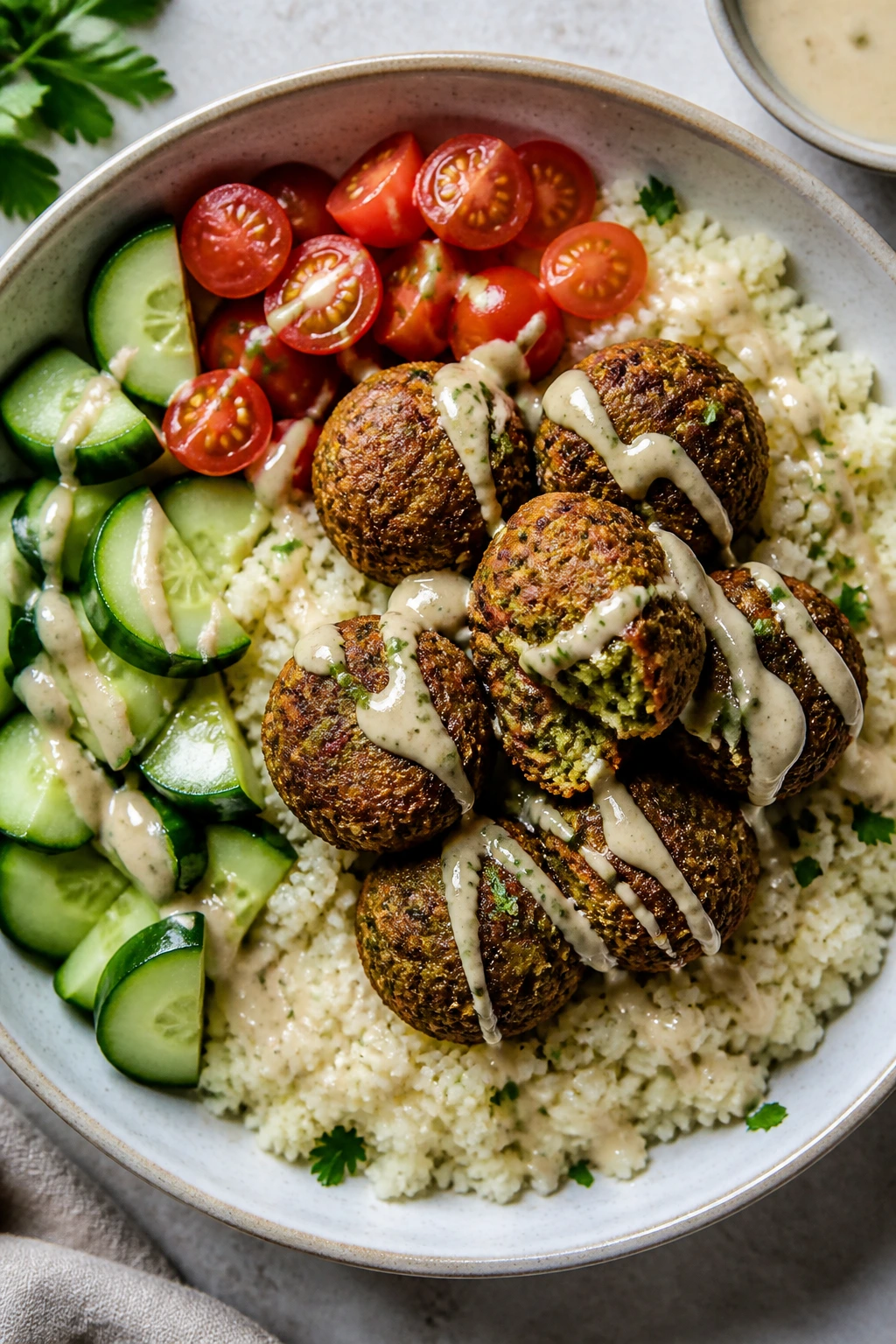
Falafel bowls can look like takeout, but this version keeps the grains light and the vegetables loud. The falafel is crisp on the outside and herb-heavy inside, and the cauliflower rice gives you volume without turning the meal into a starch pile. Add cucumber, tomato, and a slick of tahini, and you’ve got a bowl that eats big without going heavy.
The best part is the texture. Crispy, cool, creamy, tender. That’s what makes a bowl like this satisfying enough to return to.
Why It Works:
Chickpeas and herbs create a filling base with fiber and plant protein. Baking or air-frying the falafel cuts down on oil compared with deep-frying, while cauliflower rice keeps the bowl low in starch. Tahini adds the richness that makes the dish taste finished, not stripped down.
Key Ingredients:
- 2 cans (15 oz each) chickpeas, drained and patted dry
- ½ cup chopped parsley
- ¼ cup chopped cilantro
- ½ small onion, chopped
- 2 garlic cloves
- 1 tsp cumin
- 1 tsp coriander
- ½ tsp salt
- 2 tbsp flour or chickpea flour
- 2 cups cauliflower rice
- 1 cup diced cucumber
- 1 cup halved cherry tomatoes
- 3 tbsp tahini
- 1 tbsp lemon juice
Quick Steps:
- Heat the oven to 425°F or preheat the air fryer to 375°F.
- Pulse chickpeas, herbs, onion, garlic, cumin, coriander, salt, and flour in a food processor until the mixture holds together but still looks a little coarse.
- Shape into small patties or balls and brush lightly with oil.
- Bake for 20 to 22 minutes, flipping once, or air-fry 12 to 14 minutes until browned.
- Warm the cauliflower rice in a skillet for 3 to 4 minutes.
- Build bowls with cauliflower rice, falafel, cucumber, tomatoes, and tahini thinned with lemon juice and water.
Tips and Variations:
- Crispier Falafel: Chill the mixture for 20 minutes before shaping if it feels loose.
- Shortcut: Use pre-riced cauliflower and a good store-bought tahini sauce if you’re short on time.
- Fresh Finish: Mint leaves on top make the bowl taste brighter.
12. Sheet-Pan Harissa Chicken and Vegetables
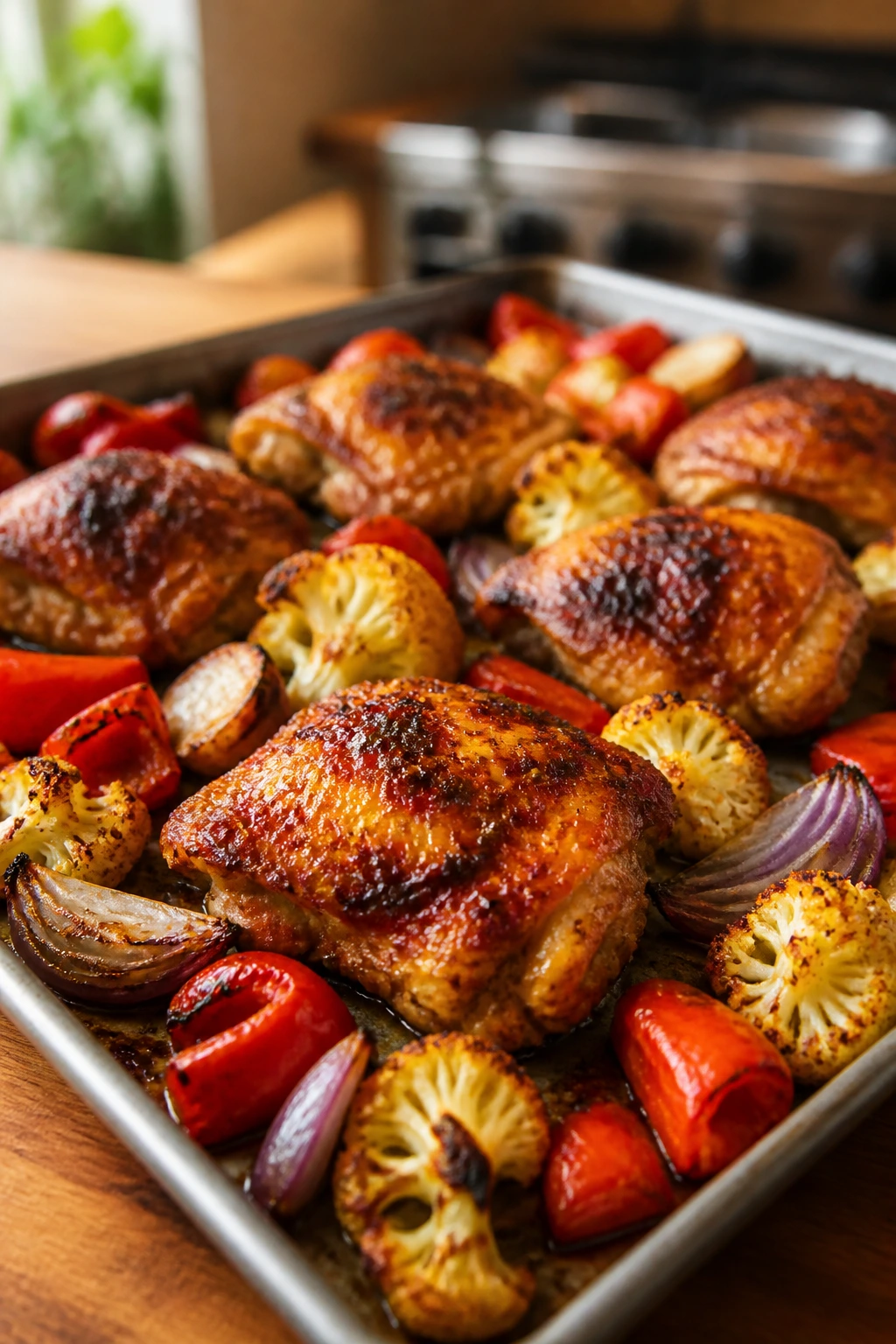
Harissa earns its place fast. It’s smoky, peppery, and warm without being sugary, which is why it works so well on a sheet pan with chicken and vegetables. Everything roasts together, and the vegetables pick up the spice from the chicken drippings. That’s the whole magic trick.
This is one of the easiest ways to make dinner feel bigger than the effort behind it. A couple of cuts, a toss, a roast, done. And the leftovers, if there are any, hold up well.
Why It Works:
Harissa paste gives you a deep, smoky heat with very little extra work. Chicken thighs stay juicy in the oven, while cauliflower and bell peppers roast at the same pace. A sheet pan at 425°F gives the vegetables enough heat to brown before they collapse into mush.
Key Ingredients:
- 1½ lbs boneless, skinless chicken thighs
- 2 tbsp harissa paste
- 2 tbsp olive oil
- 1 tbsp lemon juice
- 1 medium cauliflower, cut into florets
- 2 bell peppers, sliced
- 1 red onion, cut into wedges
- 1 tsp kosher salt
- ½ tsp black pepper
- 2 tbsp chopped parsley
- ¼ cup plain yogurt for serving
Quick Steps:
- Heat the oven to 425°F and line a large sheet pan.
- Toss chicken with harissa, olive oil, lemon juice, salt, and pepper.
- Spread cauliflower, peppers, and onion on the pan and nestle the chicken among them.
- Roast for 25 to 30 minutes, stirring the vegetables once halfway through, until the chicken reaches 165°F and the cauliflower has browned edges.
- Sprinkle parsley over the pan and serve with yogurt on the side.
- Add a squeeze of lemon if you want more lift.
Tips and Variations:
- Heat Level: Harissa varies a lot, so taste the paste before adding extra.
- Serving Move: Spoon the chicken and vegetables over a small bed of couscous if you need more carbohydrate.
- Color Tip: Use both red and yellow peppers for a sweeter, brighter pan.
13. White Bean and Kale Soup with Parmesan
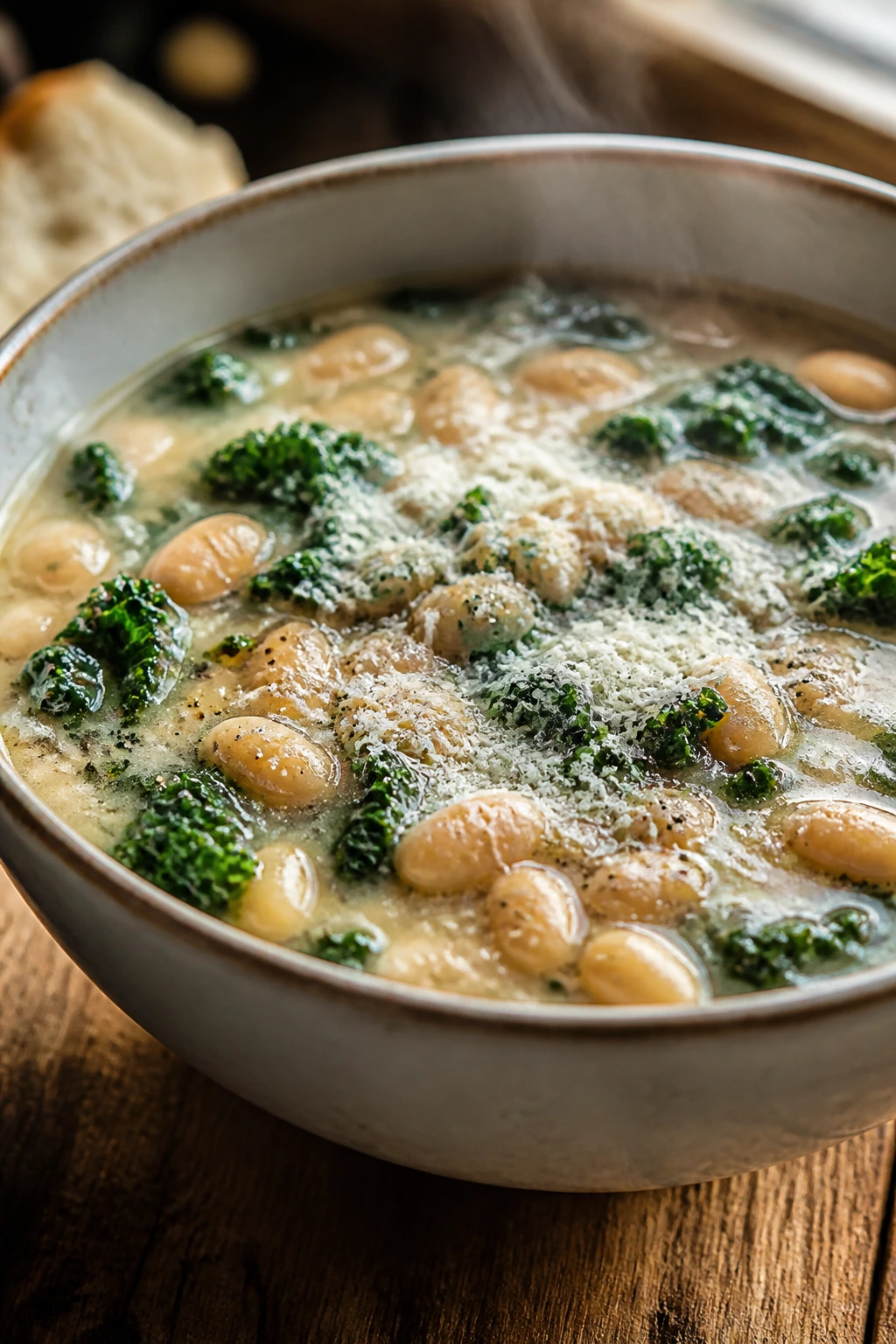
Soup for dinner only feels like a sad compromise when it’s thin. This one isn’t thin. White beans make it creamy, kale gives it structure, and Parmesan adds a salty edge that turns the pot into something you actually want to eat from a deep bowl. It’s simple, but not plain.
I like this soup on nights when the fridge looks a little bare and I still want dinner to feel deliberate. It’s also one of those meals that tastes better after a short rest, once the beans and broth settle into each other.
Why It Works:
Beans bring protein and fiber, so the soup is filling without needing cream. Kale holds its shape better than softer greens, which keeps the bowl interesting. A small Parmesan rind, if you have one, infuses the broth with a savory backbone that tastes richer than the ingredient list suggests.
Key Ingredients:
- 2 tbsp olive oil
- 1 onion, diced
- 2 carrots, diced
- 2 celery stalks, diced
- 3 garlic cloves, minced
- 2 cans (15 oz each) white beans, drained and rinsed
- 6 cups low-sodium chicken or vegetable broth
- 1 Parmesan rind or ¼ cup grated Parmesan
- 1 tsp dried thyme
- 1 bunch kale, stems removed and chopped
- 1 tsp salt
- ½ tsp black pepper
- Lemon wedges for serving
Quick Steps:
- Warm olive oil in a soup pot over medium heat.
- Cook onion, carrots, and celery for 8 minutes until softened.
- Stir in garlic and thyme for 30 seconds, then add broth, beans, and Parmesan rind.
- Simmer 15 minutes so the broth gets savory and the beans start to break down a little.
- Add kale and cook 5 minutes until tender but still green.
- Season with salt and pepper, remove the rind, and serve with lemon on top.
Tips and Variations:
- Creamier Soup: Mash a cup of the beans against the side of the pot before adding the kale.
- Extra Freshness: A squeeze of lemon at the end keeps the soup from tasting flat.
- Freezer Note: Freeze without the kale if you want the best texture later; stir in fresh greens when reheating.
14. Mediterranean Turkey Burgers with Cucumber Salad
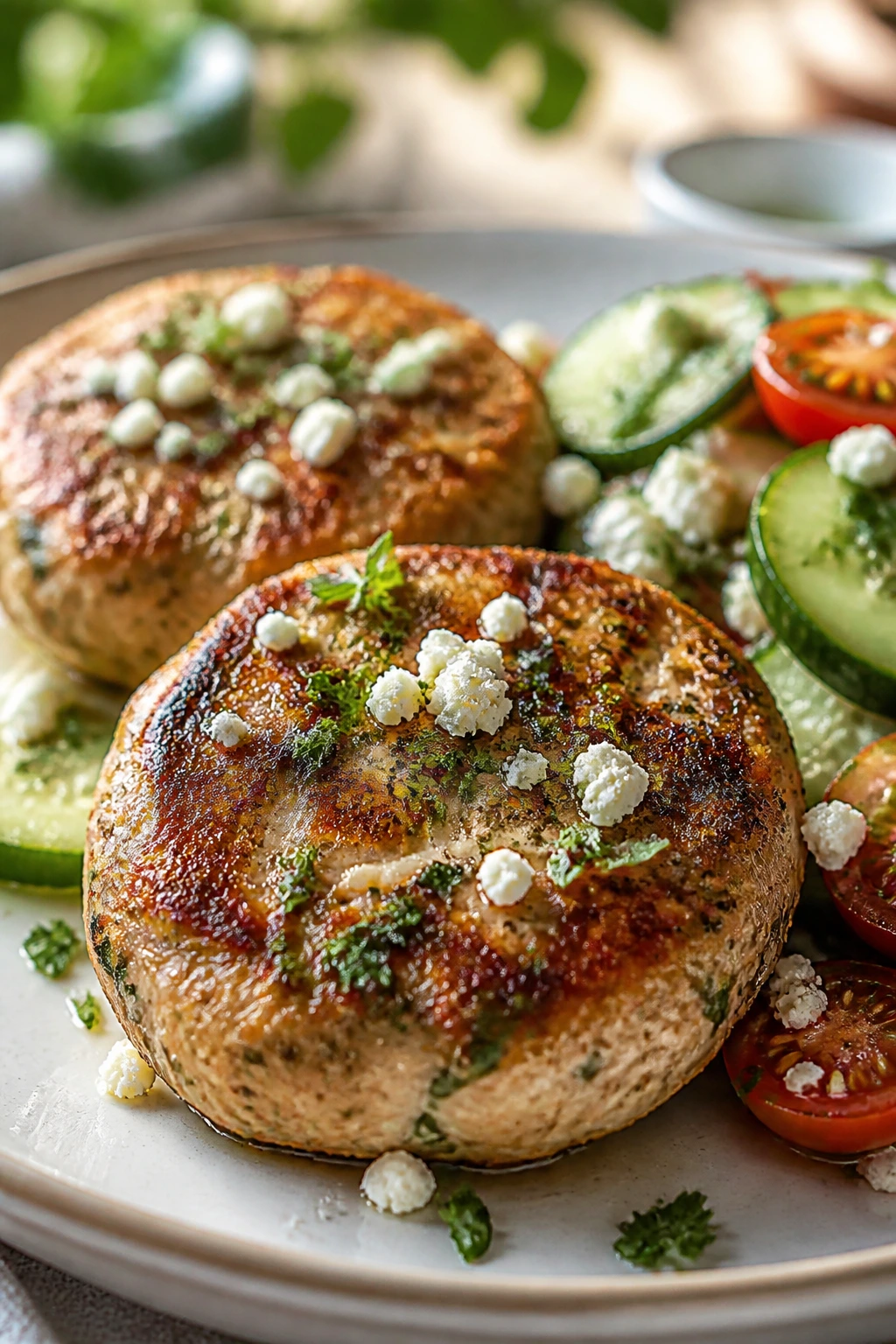
Turkey burgers can be dry and forgettable when they’re treated like a low-fat substitute instead of their own thing. These are seasoned with garlic, parsley, onion, and a little feta, which keeps the texture softer and the flavor sharper. Pair them with cucumber salad and you’ve got something that feels like grill food without the overdoing-it energy.
A good burger doesn’t need a thick bun and three sauces to feel complete. This version keeps the plate lean and lets the toppings do the talking. Crisp cucumber, tomato, herbs. Enough.
Why It Works:
Lean turkey benefits from moisture and flavor inside the patty, not just on top of it. Feta adds salt and a little fat, which helps the burgers stay tender. The cucumber salad brings crunch and acidity, which balances the richer burger without adding much to the calorie count.
Key Ingredients:
- 1½ lbs lean ground turkey
- ½ cup grated onion
- ¼ cup crumbled feta
- 2 tbsp chopped parsley
- 1 garlic clove, minced
- 1 tsp dried oregano
- 1 tsp kosher salt
- ½ tsp black pepper
- 1 tbsp olive oil
- 2 cups sliced cucumber
- 1 cup halved cherry tomatoes
- 1 tbsp red wine vinegar
Quick Steps:
- Mix turkey, onion, feta, parsley, garlic, oregano, salt, and pepper gently.
- Shape into 4 patties and make a slight thumbprint in the center of each.
- Heat olive oil in a skillet or grill pan over medium-high heat.
- Cook patties 5 to 6 minutes per side, until the center reaches 165°F.
- Toss cucumber, tomatoes, and vinegar with a pinch of salt.
- Serve burgers with the salad, on a thin bun, or wrapped in lettuce.
Tips and Variations:
- Moister Burgers: Don’t overmix the meat; stop as soon as everything looks combined.
- Burger Bowl: Skip the bun and serve over chopped romaine with the cucumber salad on top.
- Flavor Twist: Add a little mint if you want the burgers to taste cooler and brighter.
15. Stuffed Portobello Mushrooms with Spinach and Tomato
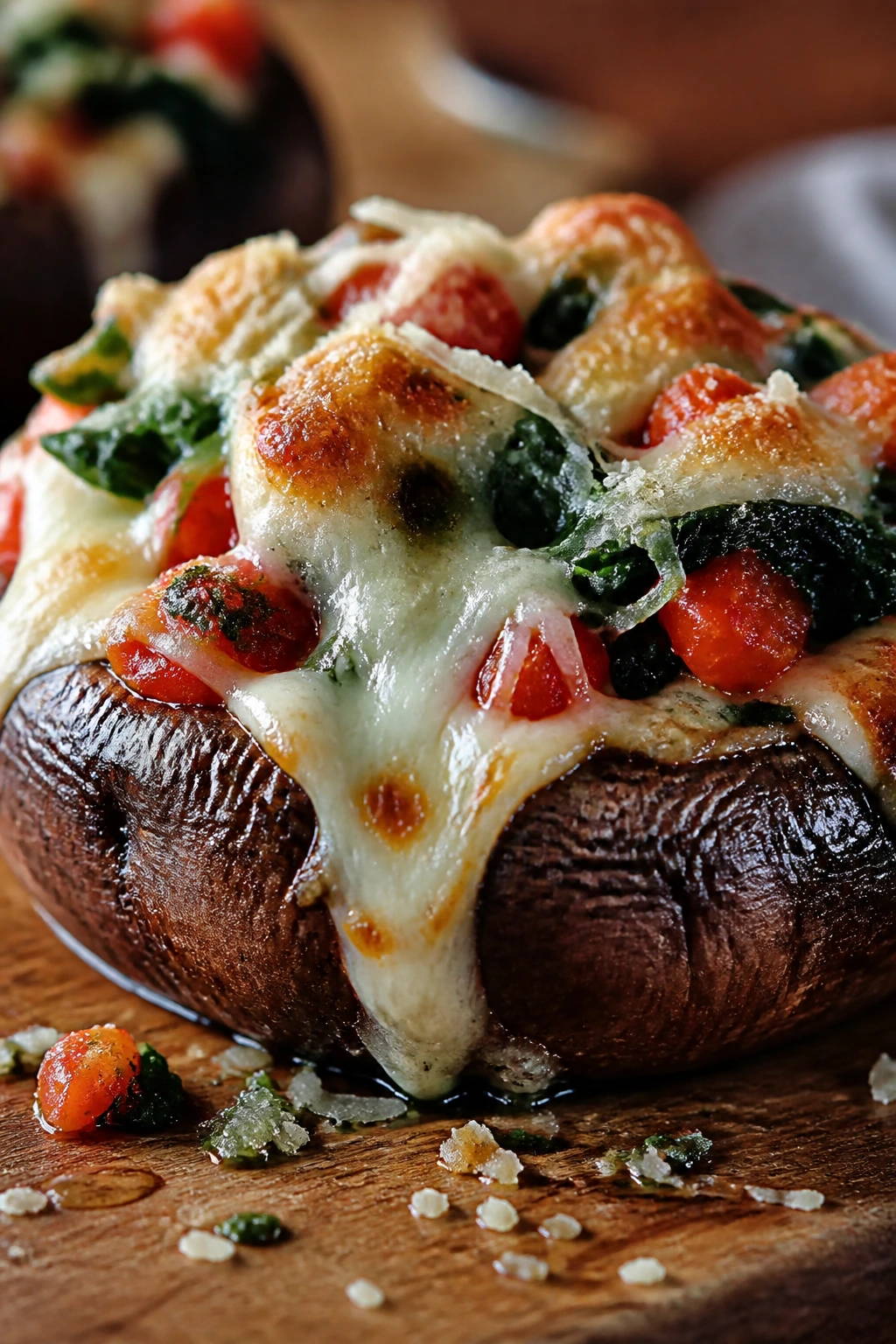
Portobello mushrooms have a meaty chew that makes them a natural stand-in for a heavier main course, but they stay lighter on the stomach. Stuff them with spinach, tomato, garlic, and a little mozzarella, and they bake into a dinner that’s savory, juicy, and pleasantly messy under a fork. They look fancier than they are.
These are especially good when you want a dinner that doesn’t need a starch to feel complete. The mushroom cap does the work of the base, and the filling carries enough flavor to keep you interested. No apology necessary.
Why It Works:
Portobellos roast into tender, almost steak-like caps if you pull out the gills and season them well. Spinach and tomato keep the filling light and moist, while a small amount of cheese adds richness without dominating. Baking at 400°F lets the mushrooms release moisture without turning leathery.
Key Ingredients:
- 4 large portobello mushroom caps
- 2 tbsp olive oil
- 2 garlic cloves, minced
- 2 cups baby spinach
- 1 cup diced tomatoes, drained a bit
- ½ tsp salt
- ¼ tsp black pepper
- ½ tsp dried oregano
- ¾ cup shredded mozzarella
- 2 tbsp grated Parmesan
- 1 tbsp chopped basil
Quick Steps:
- Heat the oven to 400°F and line a baking sheet.
- Brush the mushrooms with olive oil and remove the gills if they’re crowded.
- Sauté garlic, spinach, and tomatoes for 2 to 3 minutes until the spinach wilts and the mixture looks mostly dry.
- Season with salt, pepper, and oregano, then spoon into the mushroom caps.
- Top with mozzarella and Parmesan.
- Bake 15 to 18 minutes until the mushrooms are tender and the cheese melts.
- Finish with basil and serve hot.
Tips and Variations:
- Less Watery Filling: Cook the tomatoes a little longer so excess liquid evaporates.
- Cheese Lightening: Use half mozzarella, half extra spinach if you want to cut calories a bit more.
- Side Idea: A small green salad with lemon dressing is enough alongside these.
16. Halibut with Herb Salsa Verde and Green Beans
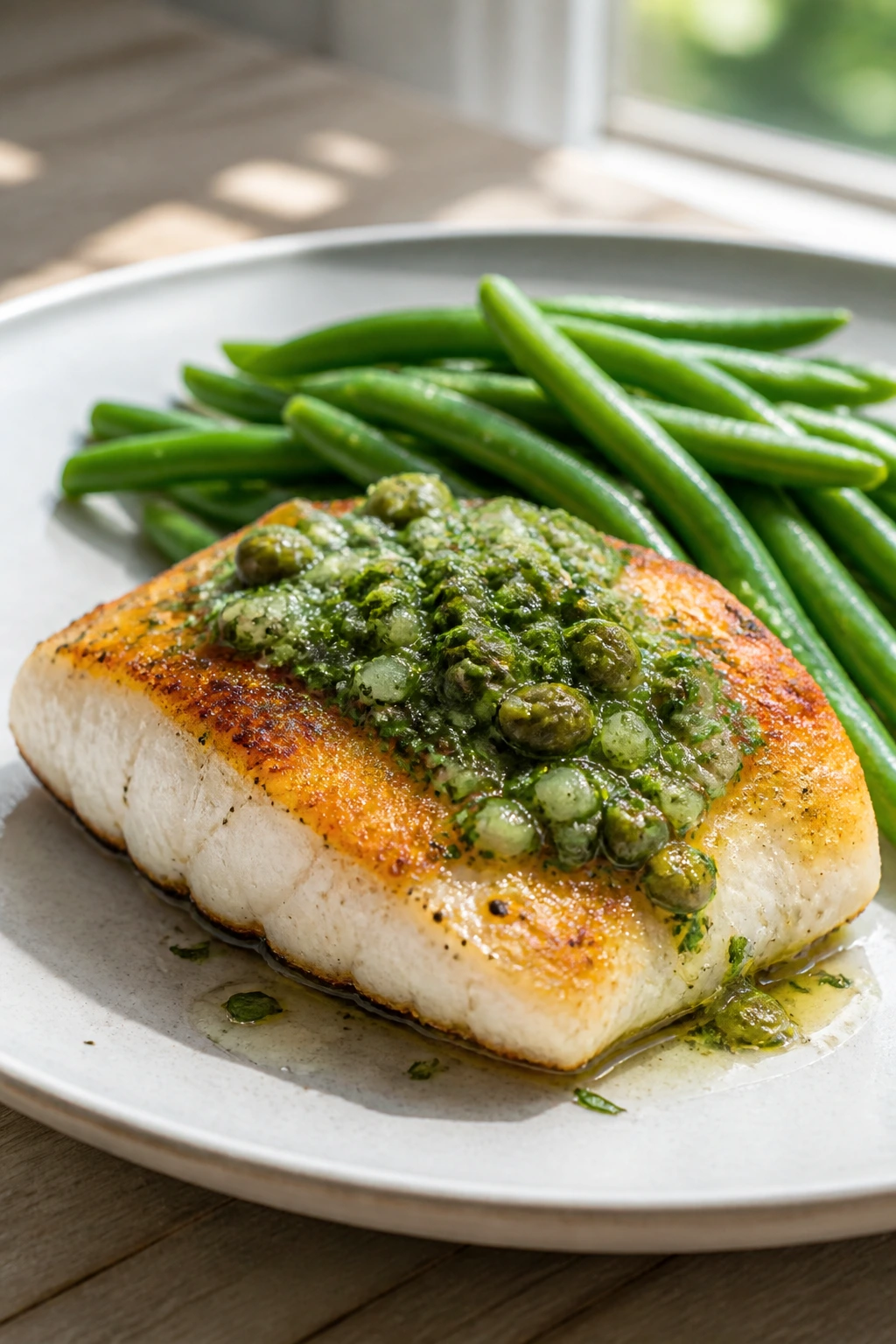
Halibut is firm, clean-tasting fish that feels a little special the second it hits the pan. It’s the kind of dinner you make when you want something light but not flimsy. The herb salsa verde wakes it up with parsley, capers, lemon, and garlic, and the green beans give the plate a crisp edge.
This dish doesn’t try to hide the fish. That’s a strength. Good halibut needs only enough heat to stay moist and enough sauce to keep each bite lively.
Why It Works:
Halibut has a dense, satisfying texture, which makes it a smart choice when you want protein without breading or frying. The salsa verde is mostly herbs and acid, so it brings flavor without much fat. A quick pan sear plus a short oven finish gives you a golden surface and a flaky center.
Key Ingredients:
- 4 halibut fillets, about 5 oz each
- 2 tbsp olive oil
- ½ tsp kosher salt
- ¼ tsp black pepper
- 1 lb green beans, trimmed
- 1 cup parsley leaves
- 2 tbsp capers
- 1 garlic clove
- 2 tbsp lemon juice
- 3 tbsp olive oil
- 1 tsp Dijon mustard
Quick Steps:
- Heat the oven to 400°F.
- Make the salsa verde by blending parsley, capers, garlic, lemon juice, olive oil, and Dijon.
- Season halibut with salt and pepper.
- Sear in an oven-safe skillet with olive oil for 2 minutes per side.
- Add green beans around the fish, then move the skillet to the oven for 6 to 8 minutes until the fish flakes and the beans are tender-crisp.
- Spoon salsa verde over the fish and green beans before serving.
Tips and Variations:
- Fish Check: Pull halibut when the center is just opaque; it keeps cooking off the heat.
- Sauce Note: If the salsa verde tastes too sharp, add 1 teaspoon of water to mellow it.
- Vegetable Swap: Asparagus works in place of green beans if that’s what you have.
17. Farro Salad with Grilled Chicken and Roasted Vegetables
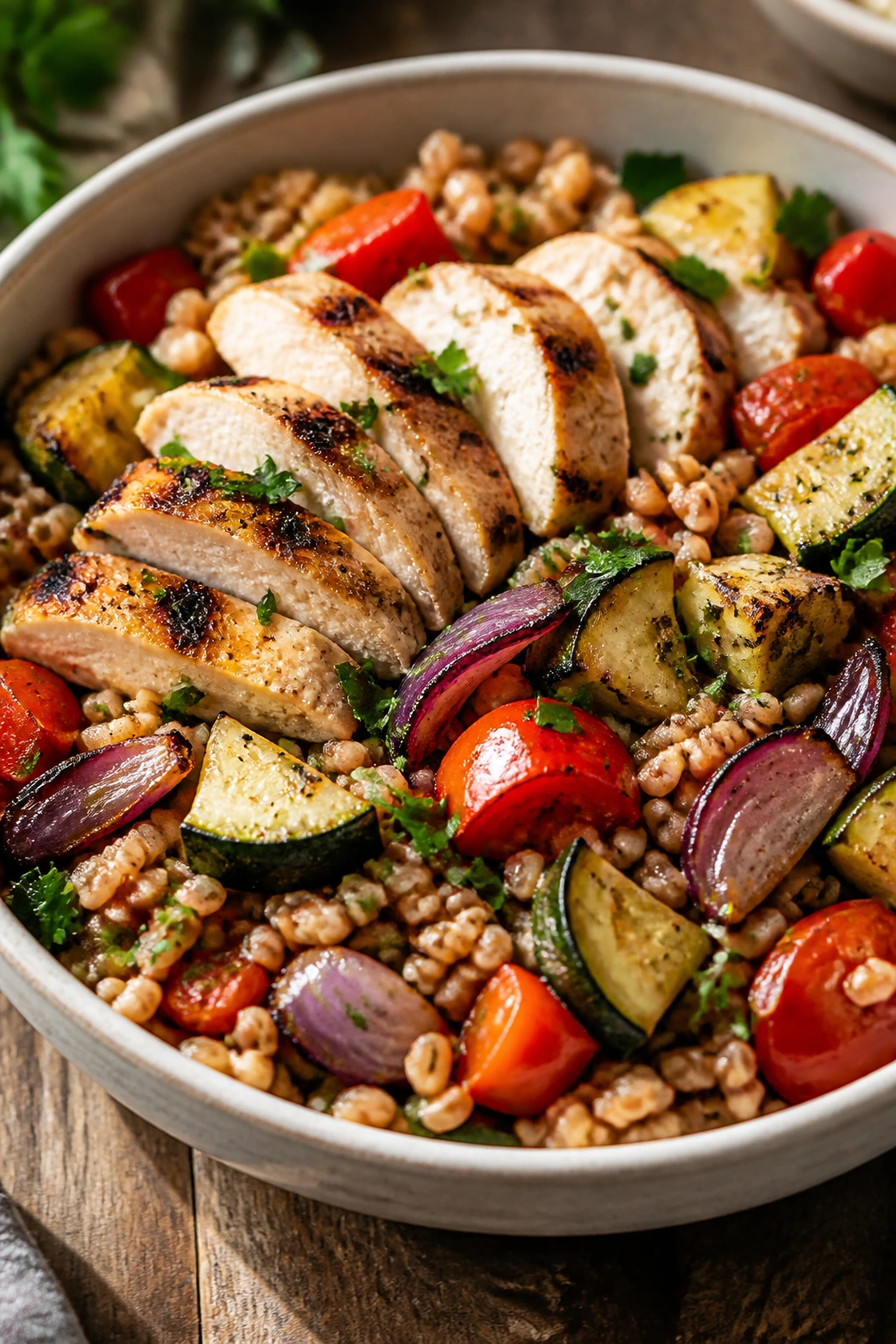
Farro has a chewy, nutty bite that makes a grain salad feel like actual dinner instead of lunch that got dressed up. Grilled chicken gives it protein, roasted vegetables bring sweetness, and herbs tie everything together. This is the bowl you want when you need leftovers that don’t feel tired by tomorrow.
I’m partial to farro because it holds sauce and dressing better than a lot of softer grains. You get a forkful with texture. That matters when you’re trying to stay satisfied on a lighter plate.
Why It Works:
Farro gives you fiber and chew, which helps the meal feel substantial without needing a giant portion. Roasting the vegetables concentrates their flavor, and a lemon vinaigrette keeps the whole bowl bright. Chicken breast stays lean here, but the grain and vegetables keep it from feeling dry or sparse.
Key Ingredients:
- 1 cup farro
- 1½ lbs chicken breast
- 2 zucchini, chopped
- 1 red bell pepper, chopped
- 1 small red onion, sliced
- 2 tbsp olive oil
- 1 tsp oregano
- 1 tsp salt
- ½ tsp black pepper
- 2 tbsp lemon juice
- 1 tbsp Dijon mustard
- ¼ cup chopped parsley
Quick Steps:
- Cook farro in salted water until tender but chewy, about 25 to 30 minutes.
- Toss zucchini, pepper, and onion with olive oil, oregano, salt, and pepper. Roast at 425°F for 20 minutes.
- Season chicken and grill or sear until it reaches 165°F, then rest and slice.
- Whisk lemon juice, Dijon, and a little olive oil into a dressing.
- Toss farro with the roasted vegetables and parsley.
- Top with sliced chicken and dressing before serving.
Tips and Variations:
- Grain Swap: Bulgur or barley works if farro isn’t in the cupboard.
- Cold Lunch Bonus: This salad tastes good chilled, which makes leftovers useful.
- Flavor Lift: Add a few chopped olives or a crumble of feta if you want a saltier finish.
18. Baked Ratatouille with Eggs and Goat Cheese
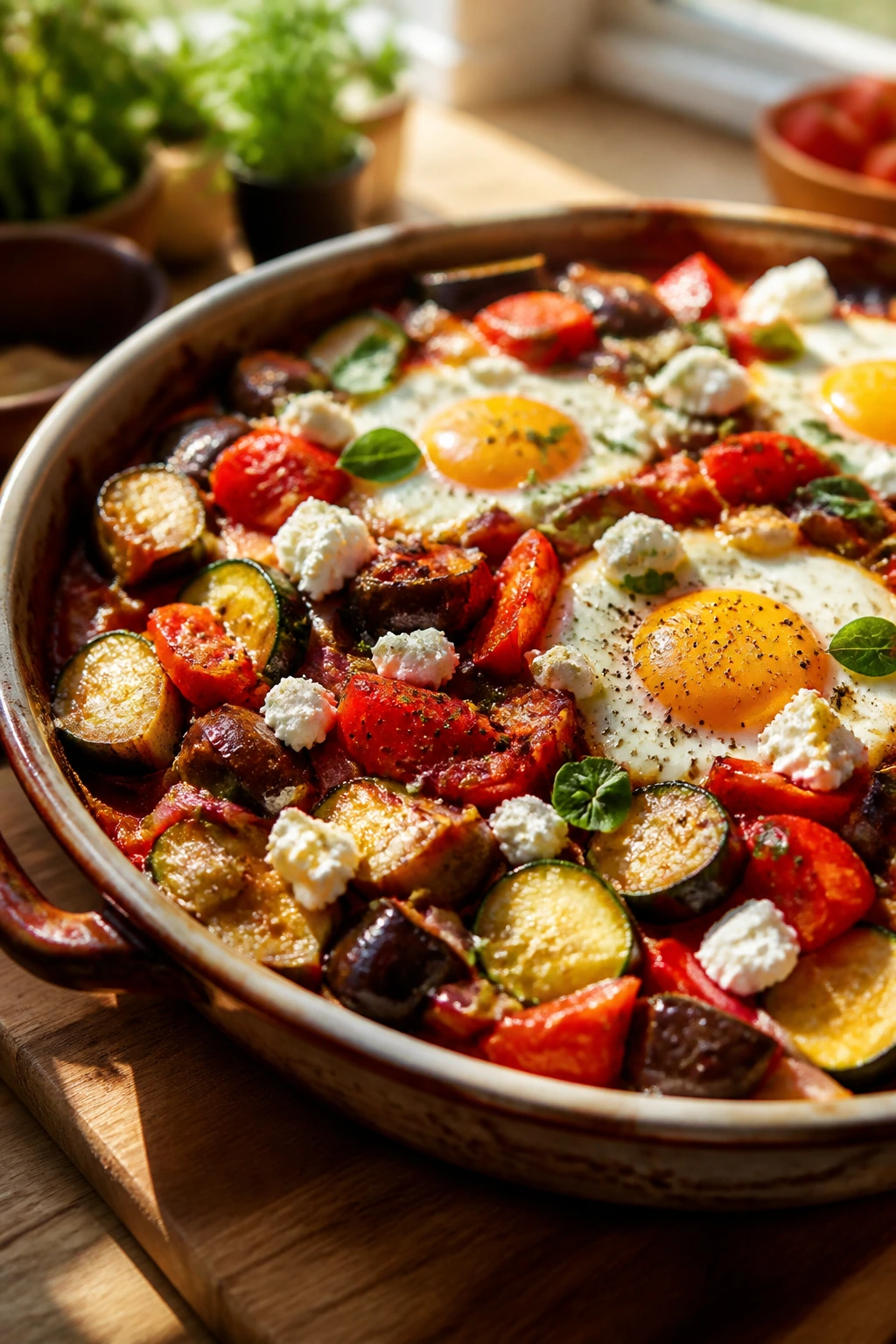
Ratatouille already knows how to make vegetables taste like dinner. Bake eggplant, zucchini, tomatoes, onion, and peppers together until they slump into a glossy, herb-scented tangle, then crack eggs on top and let them set in the heat. Goat cheese at the end adds a tang that makes the whole dish feel finished.
This is one of those meals that looks calm even when your day has not been. A pan of vegetables, a few eggs, some herbs. That’s enough.
Why It Works:
Ratatouille gives you a lot of volume from vegetables, which is useful when you want dinner to feel generous. Eggs add protein and turn it into a full meal, and goat cheese contributes a small amount of richness with a sharp finish. Baking the vegetables first lets them collapse and concentrate before the eggs go in.
Key Ingredients:
- 1 medium eggplant, diced
- 2 zucchini, sliced
- 1 red bell pepper, chopped
- 1 yellow onion, sliced
- 3 garlic cloves, minced
- 4 tomatoes, chopped or 1 can diced tomatoes
- 2 tbsp olive oil
- 1 tsp dried thyme
- 1 tsp salt
- ½ tsp black pepper
- 4 to 6 eggs
- ¼ cup crumbled goat cheese
- 2 tbsp chopped basil
Quick Steps:
- Heat the oven to 400°F.
- Toss eggplant, zucchini, pepper, onion, garlic, tomatoes, olive oil, thyme, salt, and pepper in a baking dish.
- Roast for 35 minutes, stirring once, until the vegetables are soft and glossy.
- Make small wells in the vegetables and crack in the eggs.
- Bake 8 to 12 minutes more, until the whites are set and the yolks are still a little soft.
- Scatter goat cheese and basil over the top and serve hot.
Tips and Variations:
- Egg Timing: Pull the dish when the whites are set but the yolks still move a bit; carryover heat finishes the job.
- Cheese Swap: Feta works if goat cheese isn’t your thing.
- Bread Optional: A small piece of toasted whole-grain bread is enough for scooping.
Why Mediterranean Dinners Work on a Calorie-Conscious Plate
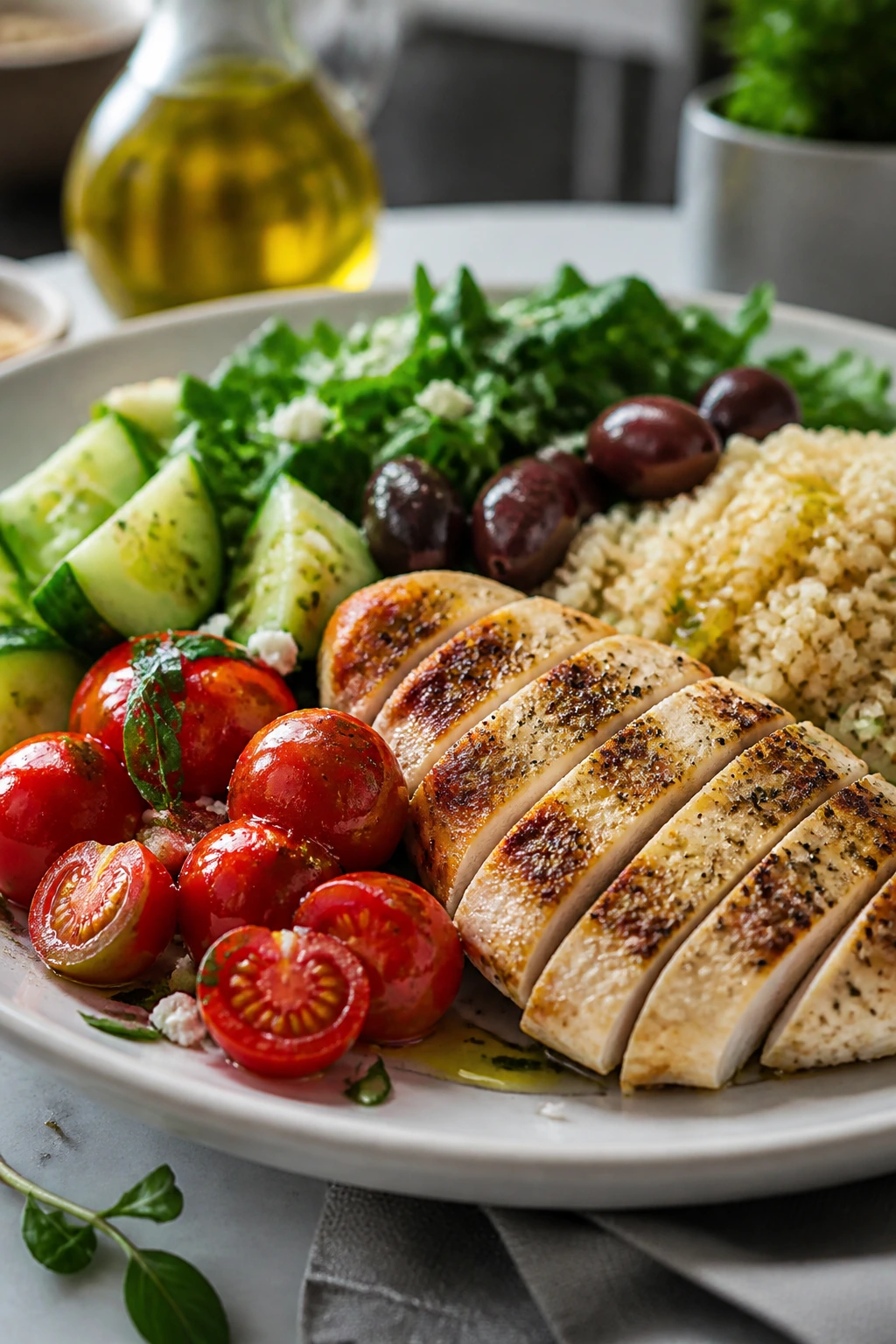
The Mediterranean pattern works for dinner because it gives you structure without making meals feel tiny. Protein anchors the plate, vegetables take up space, and olive oil or cheese appears in measured amounts instead of drifting into the recipe without a plan. That’s a useful shift. A dinner that looks full tends to feel full.
There’s also a practical rhythm to it. Fish cooks fast. Chicken can be marinated in minutes. Beans and lentils stretch a meal without making it bland. And the flavor building blocks—garlic, lemon, herbs, capers, tomatoes, onions, vinegar—do a lot of work for almost no calories. That means you’re not relying on heavy sauce to make dinner taste like something.
The biggest mistake people make with lighter dinners is treating “healthy” like a texture. Dry chicken. Bare vegetables. No salt. No wonder they give up. Mediterranean cooking doesn’t do that. It seasons properly, uses acid to wake things up, and keeps the plate interesting enough that you want to finish it.
The Pots, Pans, and Tools That Pull These Dinners Together
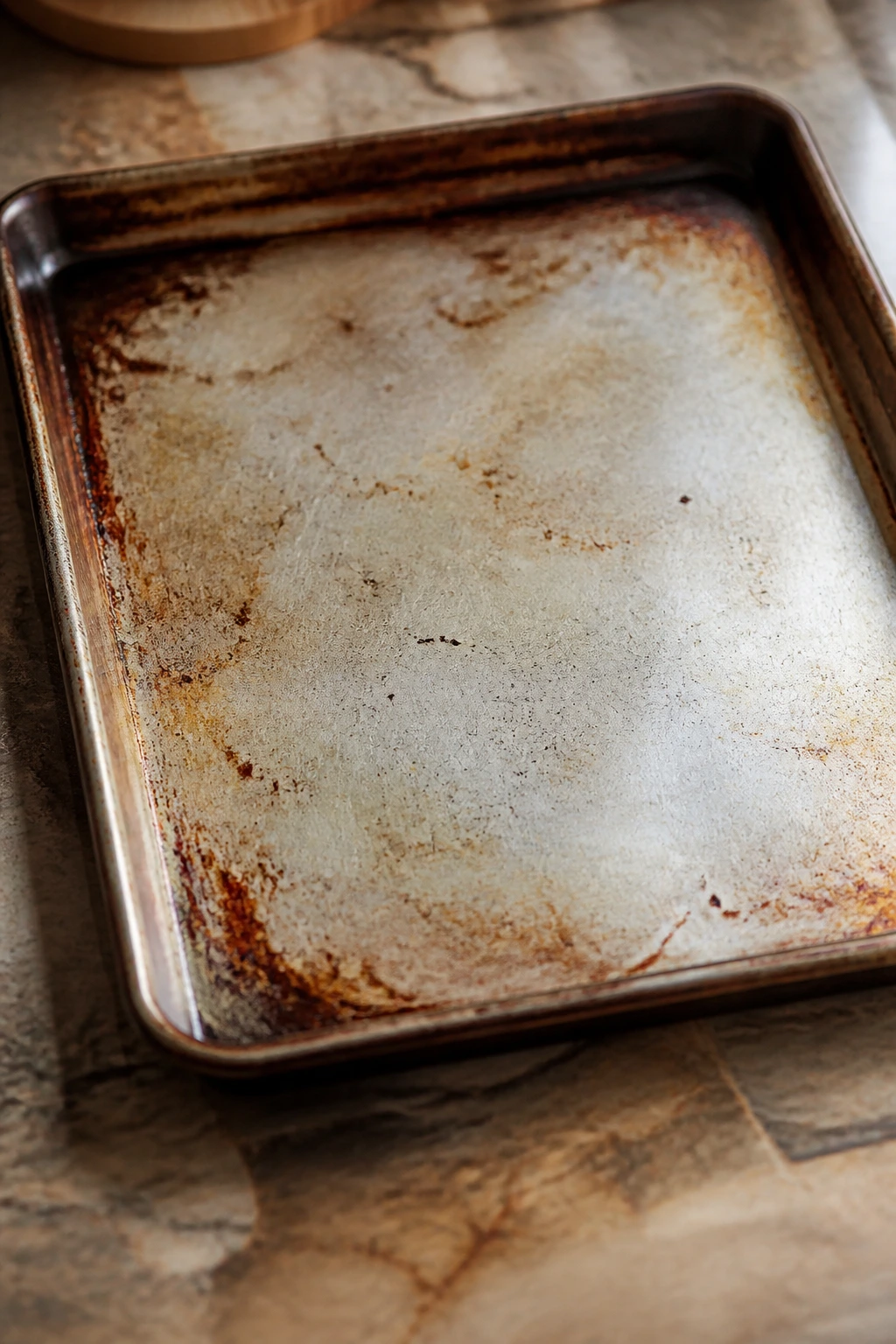
You do not need a kitchen stuffed with gadgets for these meals. A few reliable tools handle almost everything here.
- Large sheet pan: Essential for cod, chicken, vegetables, and anything that needs browning in the oven.
- Deep skillet or sauté pan: Best for shakshuka, soups, pasta finishes, and quick sauces.
- Oven-safe skillet: Handy for fish and chicken recipes that start on the stove and finish in the oven.
- Sharp chef’s knife: Chopping vegetables cleanly makes these dinners faster and safer.
- Cutting board: Give raw protein and vegetables separate boards if you can manage it.
- Mixing bowls: You’ll use them for marinades, sauces, and bowl-style dinners.
- Instant-read thermometer: The easiest way to keep chicken, fish, and turkey from overcooking.
- Food processor or blender: Optional, but useful for falafel mixtures and salsa verde.
- Microplane or fine grater: Good for garlic, lemon zest, and onion when you want finer texture.
- Airtight containers: Useful for leftovers, especially grain bowls and soups.
Smart Shopping for Mediterranean Dinners That Actually Help
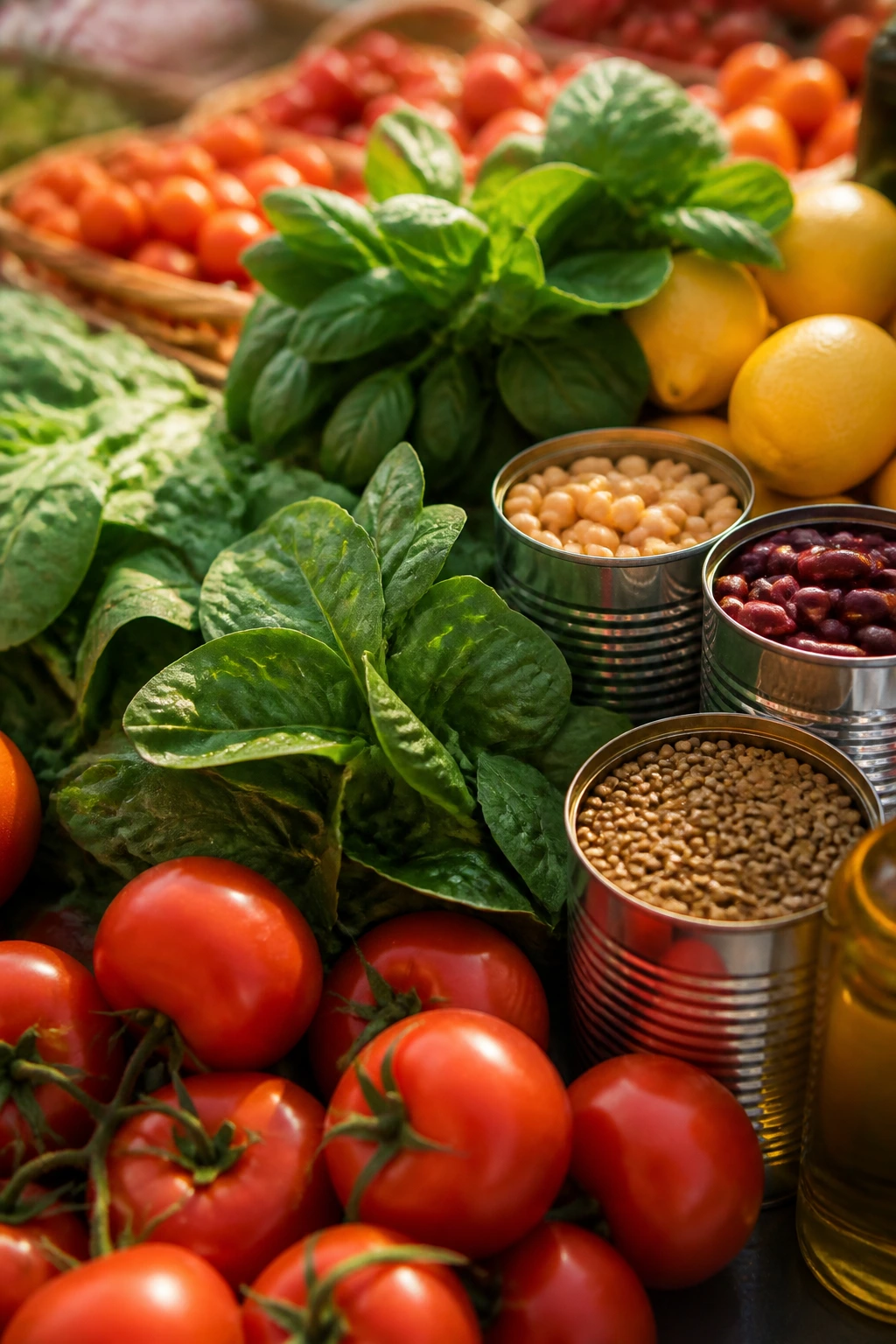
Start with the protein. For chicken and turkey, lean is fine, but don’t go so lean that the meat dries out every time. Chicken thighs stay juicier and are easier to cook well, while breast meat works best when it’s sliced thin or cooked in a sauce. For fish, pick fillets that look moist and smell clean, not fishy. Cod, halibut, salmon, and shrimp all fit the pattern well.
Beans and lentils are your quiet heroes. Canned beans should be low-sodium if possible, because they let you control the salt in the pot. Lentils are cheap, filling, and easy to season, which is exactly why they show up so often in dinners that don’t break the budget. Frozen spinach, cauliflower rice, and green beans are fair game too. They’re not a compromise; they’re dinner shortcuts.
For dairy, think of feta, Greek yogurt, goat cheese, and Parmesan as finishing ingredients, not the foundation. A small amount can change the whole dish, but the goal is flavor, not a cheese avalanche. Olive oil should taste fresh and a little peppery. If it smells flat, it’ll taste flat too.
Produce matters more than people think. Tomatoes should be ripe enough to smell like something. Zucchini should feel firm, not spongy. Eggplant should be heavy for its size. Herbs should look perky, not tired. If the herbs are wilted in the store, they’ll wilt in your bowl too.
How to Serve These Dinners at the Table
Presentation:
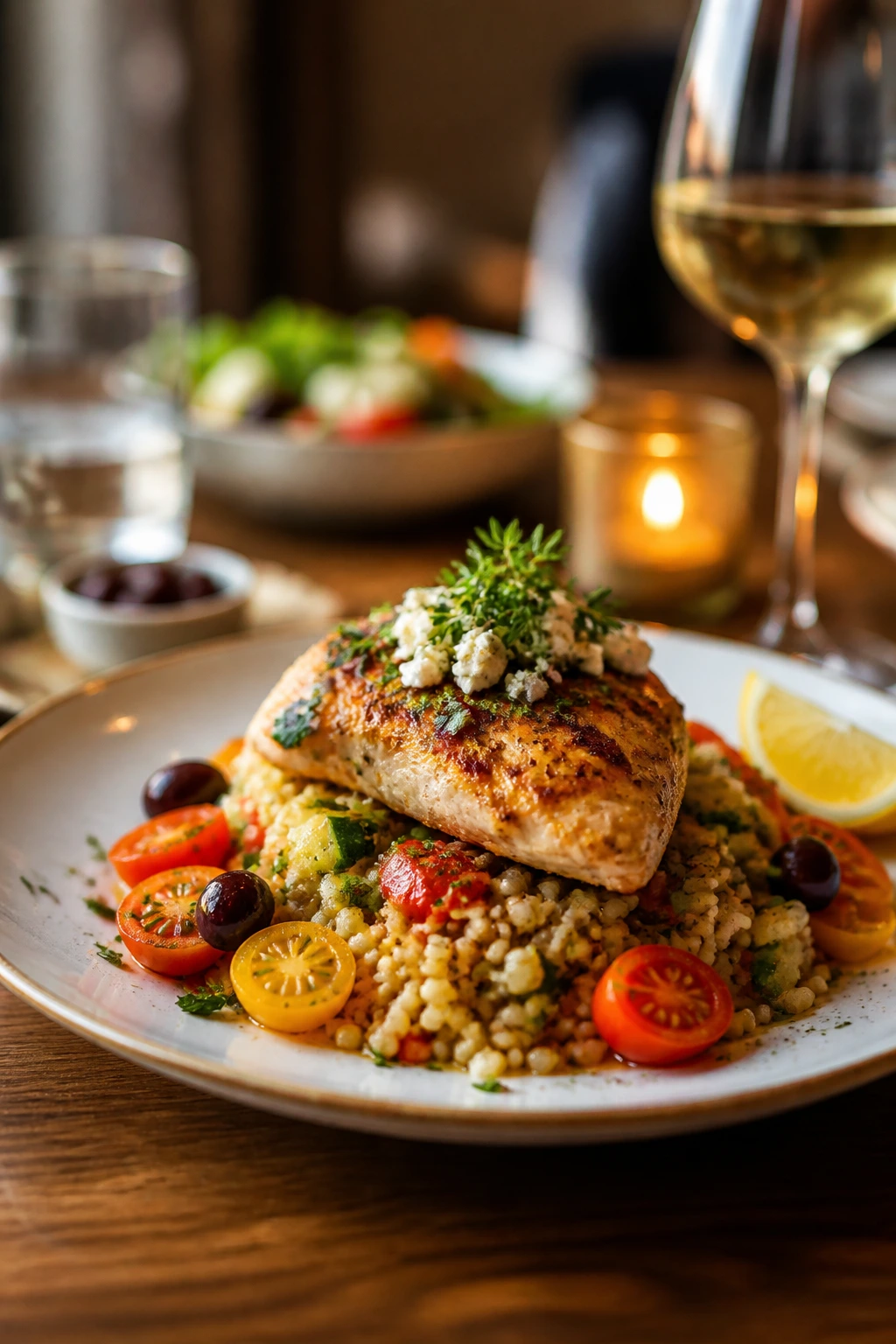
Serve bowls and sheet-pan meals with a little height so the plate looks intentional, not dumped. A small mound of grain, a neat pile of vegetables, and a protein on top usually beats a flat spread. Fresh herbs, lemon wedges, and a last drizzle of olive oil make even simple food look cared for.
Accompaniments:
Keep sides light and crisp. A chopped cucumber salad, a tomato salad, roasted carrots, or warm whole-grain bread covers most of these recipes without stealing the spotlight. If you want extra starch, choose a half-cup portion of farro, brown rice, or couscous rather than building the meal around bread.
Portions:
For most of these dinners, 4 to 6 ounces of protein and 1 to 2 cups of vegetables is a solid starting point. If weight loss is the goal, the easiest adjustment is not cutting flavor; it’s trimming the starch and keeping the vegetables generous. Bowls should feel full before you add grains.
Beverage Pairing:
Sparkling water with lemon fits almost everything here. If you want something with more flavor, try unsweetened iced tea with mint or a dry white wine with fish and chicken dishes. Keep it simple. These dinners are already carrying the flavor load.
Additional Tips and Flavor Boosters
Flavor Enhancement:
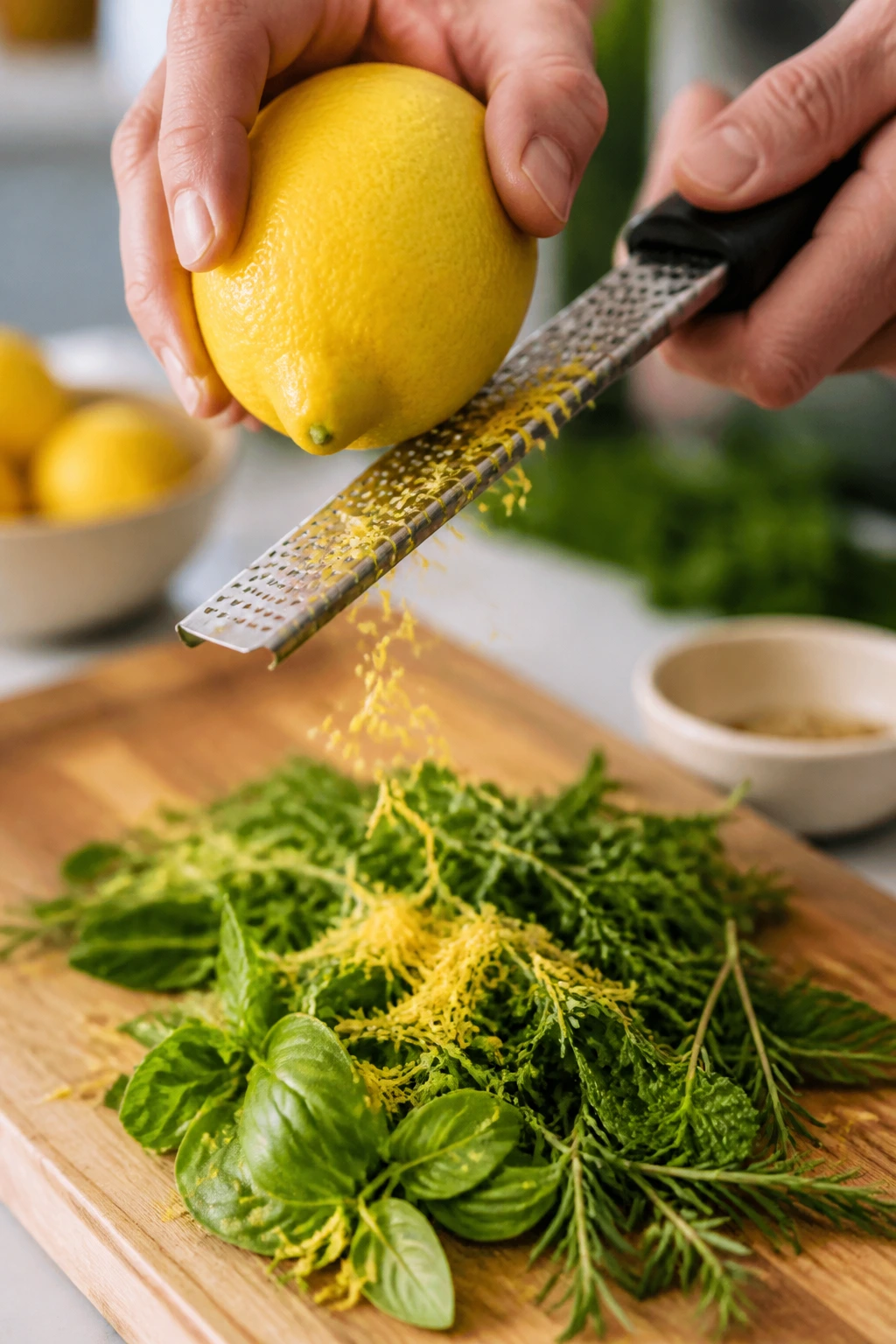
Finish more of these dishes with lemon zest than with extra salt. Zest gives you a sharper, cleaner lift than juice alone, especially on fish, chicken, and beans. A tiny hit of fresh dill, parsley, or mint at the end makes the plate taste fresher than another spoonful of sauce.
Customization:
Need more heat? Add red pepper flakes, harissa, or a bit of Aleppo pepper. Want a softer, family-friendly flavor? Keep the spices but cut the chili in half and lean on herbs instead. These recipes can take a little twisting without falling apart.
Serving Suggestions:
Use crunchy toppings where a recipe feels too soft. Sliced cucumber, chopped radish, toasted pine nuts, or a few pumpkin seeds can save a dish that otherwise feels one-note. A spoonful of yogurt or tahini sauce also helps bridge the gap between lean and satisfying.
Make-It-Yours:
For dairy-free cooking, use tahini sauces, olive oil, or mashed avocado instead of yogurt and cheese. For lower-carb plates, swap grains for greens, cauliflower rice, or roasted vegetables. For vegetarian nights, chickpeas, lentils, eggs, and mushrooms cover more ground than most people think.
Make-Ahead, Storage, and Reheating Guidance
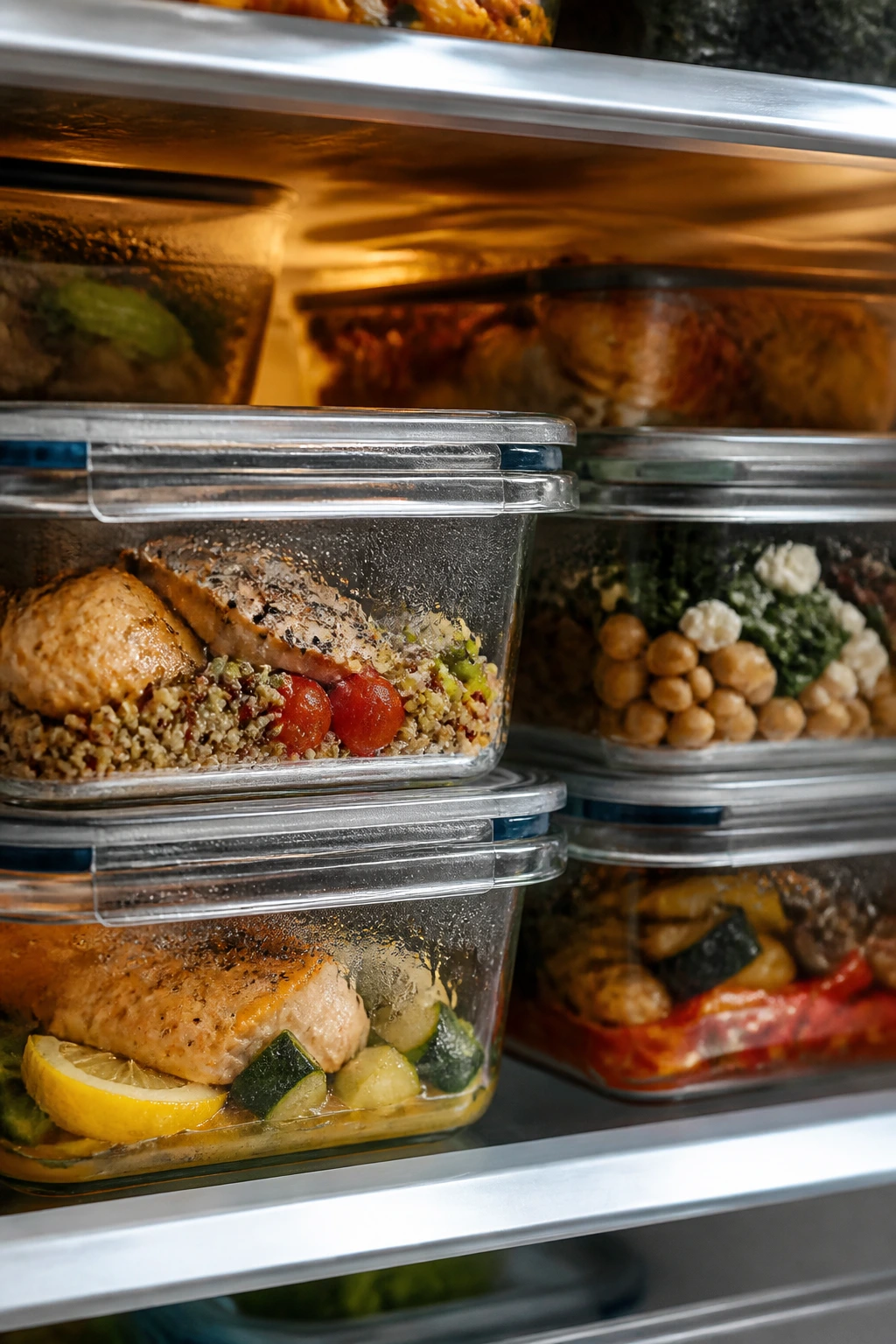
A few of these dinners are best fresh, especially anything with crisp lettuce, delicate fish, or zoodles. But most will keep well if you store them the right way. Cooked chicken, turkey, lentil, bean, and grain-based dishes usually keep 3 to 4 days in the fridge in sealed containers. Fish is shorter-lived; plan on 1 to 2 days for the best texture. Soups can stretch to 4 or 5 days if you cool them quickly and chill them without leaving the pot out for hours.
Freezing depends on the recipe. Meatballs, turkey filling, soups, lentil moussaka, and cooked chicken all freeze well for up to 2 months. Fish dishes usually do not freeze well after cooking, and anything with lettuce, cucumber, or zoodles should be eaten fresh. If you know you’ll freeze a recipe, leave off the yogurt sauce, fresh herbs, and delicate garnishes until serving time.
Reheat chicken, turkey, bean dishes, and soups gently over medium-low heat or in a 325°F oven until warmed through. Add a splash of broth or water if the texture tightens up. For fish, use low heat and stop as soon as it’s warm, not piping hot; aggressive reheating dries it out fast. Grain bowls can be warmed in the microwave with a damp paper towel over the top, then finished with fresh lemon and herbs to wake them back up.
Easy Variations and Adaptations to Try
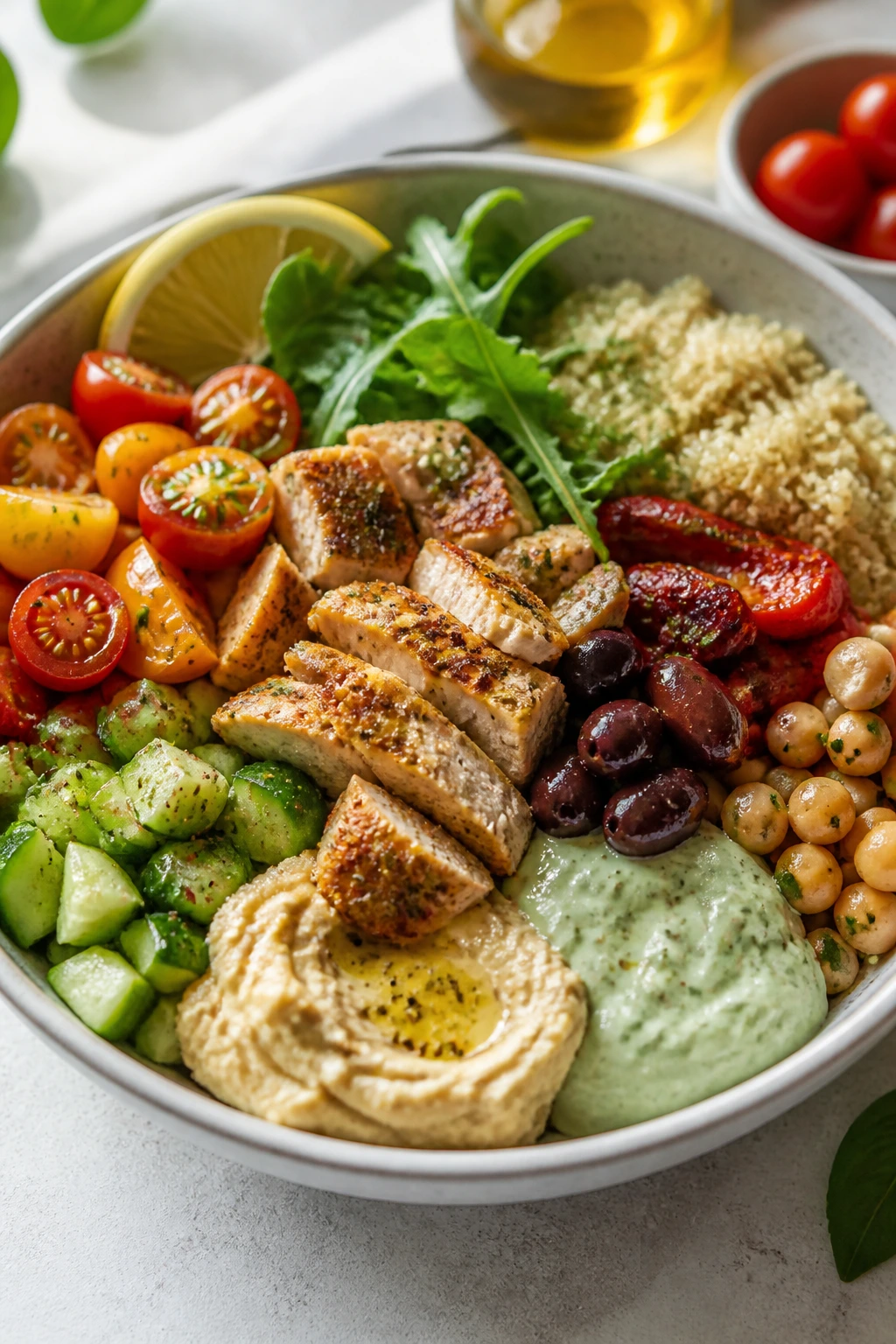
Gluten-Free Mediterranean Night:
Skip breadcrumbs in meatballs and use chickpea flour, ground oats, or gluten-free breadcrumbs instead. Serve bowls over rice, cauliflower rice, or greens rather than farro or pasta. The flavor stays intact; the starch just changes shape.
Dairy-Free Dinner Switch:
Use tahini, olive oil, or a blended cashew sauce in place of yogurt and cheese. A squeeze of lemon and a good pinch of salt matter more than people think here, since dairy often provides the final lift. You can still get a rich finish without touching the cheese drawer.
Lower-Carb Plate Setup:
Swap grains for extra vegetables in almost every recipe. Lettuce, zucchini, cauliflower rice, cabbage, roasted peppers, and cucumber all work. This is the easiest adjustment when you want dinner to feel larger without adding much starch.
Vegetarian Protein Swap:
Use chickpeas, lentils, eggs, white beans, or baked tofu where chicken or fish would normally go. Mediterranean flavors are generous enough to support plant protein without needing a separate sauce to make it taste like a meal. Chickpeas and eggs, in particular, carry a lot of weight here.
Mild-and-Friendly Version:
Reduce garlic slightly, skip chili flakes, and lean on lemon, oregano, parsley, and dill. That keeps the food bright and approachable for kids or anyone who doesn’t love heat. The meals still taste adult. They just won’t bite back.
Smokier, Bolder Version:
Add harissa, smoked paprika, or charred vegetables when you want deeper flavor. This works especially well with chicken, chickpeas, and roasted cauliflower. A little smoke makes lighter dinners feel more substantial.
Common Mistakes to Avoid
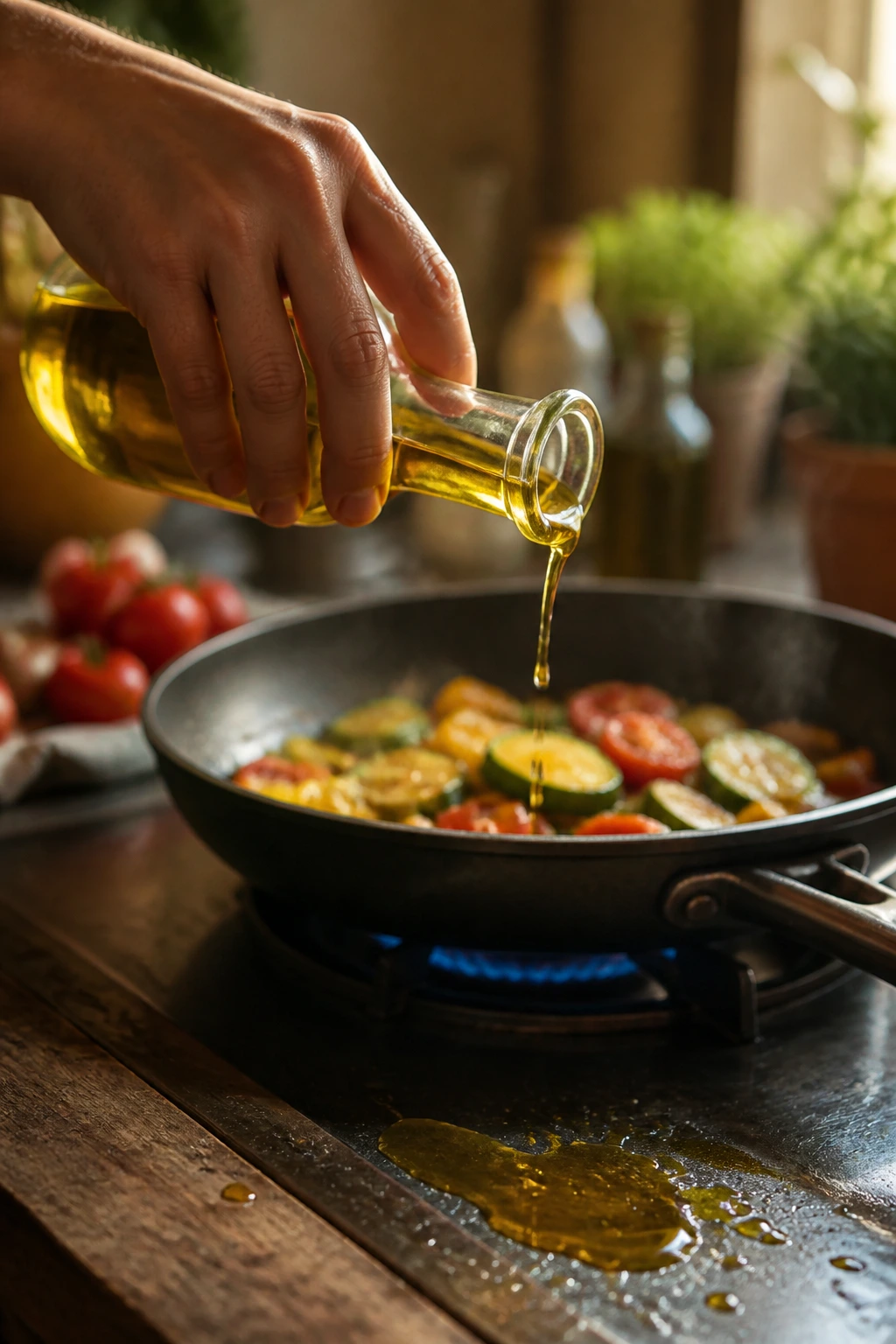
Using too much oil by accident:
Olive oil is part of the style, but free-pouring it can turn a light dinner into something much heavier than planned. Measure it. A tablespoon here and there is enough for most pans and salads.
Overcooking lean protein:
Chicken breast, cod, shrimp, and turkey dry out fast when you leave them in the heat too long. Use an instant-read thermometer and pull the food as soon as it hits the right temperature. Fish especially should stay just opaque and still a little tender.
Under-seasoning the vegetables:
People season the protein and forget the peppers, zucchini, onions, and beans. That leaves the plate flat. Salt the vegetables at the start, then finish with lemon, herbs, or vinegar so they taste alive.
Making the carb portion the main event:
A cup of pasta or grains can be fine. A giant mound is another story. Keep starch to a supporting role and let vegetables and protein dominate the plate if weight loss is the goal.
Skipping acidity:
Lemon, vinegar, tomatoes, capers, and yogurt keep these meals from tasting dull. Without one sharp note, even a well-cooked dish can feel sleepy. Add acid near the end so it stays bright.
Serving everything lukewarm:
A lot of these dinners live or die on temperature contrast. Hot chicken with cool yogurt, warm beans with fresh herbs, roasted vegetables with crisp salad. If everything sits too long, the dish loses shape fast.
Questions People Ask Before Cooking These Dinners

Can I still eat grains and lose weight?
Yes. The issue is usually portion size, not the grain itself. A half-cup to one cup of cooked farro, rice, or pasta can fit neatly into a lighter dinner if the rest of the plate is built around protein and vegetables.
Which protein is the best choice if I want to stay full?
Chicken thighs, salmon, turkey meatballs, eggs, and beans tend to feel the most satisfying because they bring either fat, protein, or both. If you go very lean, pair the meal with vegetables and a sauce so it doesn’t feel skimpy.
Are these dinners good for meal prep?
Most of them are. Grain bowls, soups, meatballs, stuffed peppers, and turkey filling hold up well for a few days. Fish and lettuce-based wraps are better cooked fresh, which is the tradeoff for a better texture.
What if I don’t like olives or capers?
Leave them out and use lemon, herbs, and a little extra salt instead. You’ll lose some briny punch, but the food will still taste Mediterranean enough if the rest of the flavor base is strong.
Can I make these without an oven?
Several of them work entirely on the stovetop: shakshuka, soup, tuna pasta, shrimp scampi, meatballs in a skillet, and turkey burgers. For baked dishes, a covered skillet or a heavy pan with a lid can help in a pinch, though the texture changes a bit.
How do I keep fish from tasting dry?
Pull it early and let carryover heat finish the job. Fish is done when it flakes but still looks moist in the center. If you’re nervous, use cod, salmon, or halibut before trying a delicate fillet.
What’s the easiest recipe in the whole list?
The sheet-pan cod, chicken shawarma wraps, and tuna pasta are probably the least fussy. They use short ingredient lists and don’t need much technique beyond basic chopping and timing.
Can I scale these recipes up for a crowd?
Yes, especially the sheet-pan dinners, soups, stuffed peppers, and meatballs. Just don’t crowd the pan if you’re roasting protein and vegetables; use two pans if you need more space so everything browns instead of steaming.
A Lighter Table That Still Feels Generous
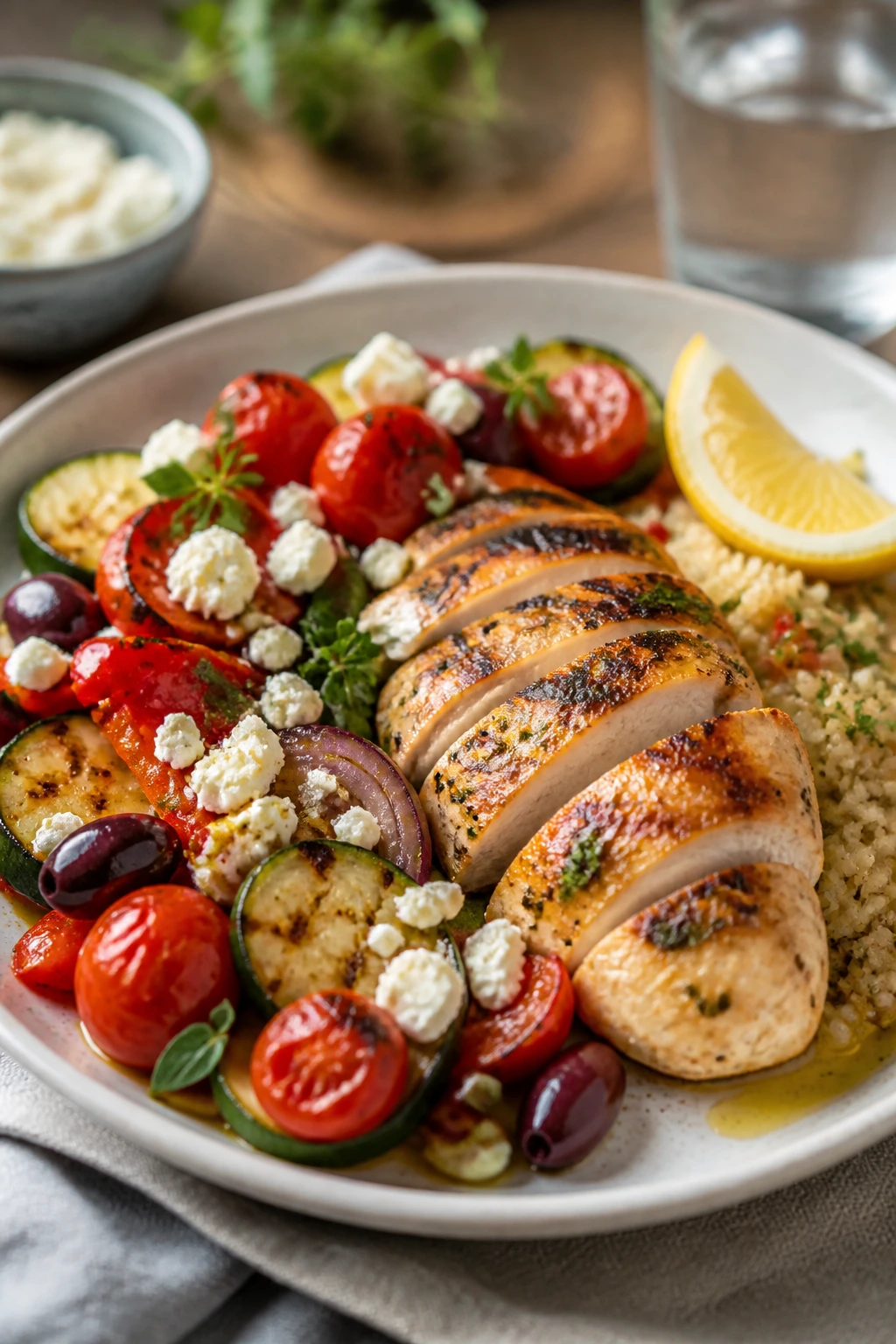
A lighter dinner should still feel like dinner. Real dinner. The kind that lands on the table with color, steam, and enough flavor that nobody starts scavenging for snacks ten minutes later. That’s what Mediterranean cooking does well when you keep the portions honest and the ingredients sharp.
If you keep one idea from all of this, make it this: build the plate around protein, vegetables, and bright flavor, then use grains, cheese, or bread as support instead of the main event. That’s where these meals start to feel effortless in practice. Not because they’re empty or strict, but because they’re balanced in a way that holds up night after night.