



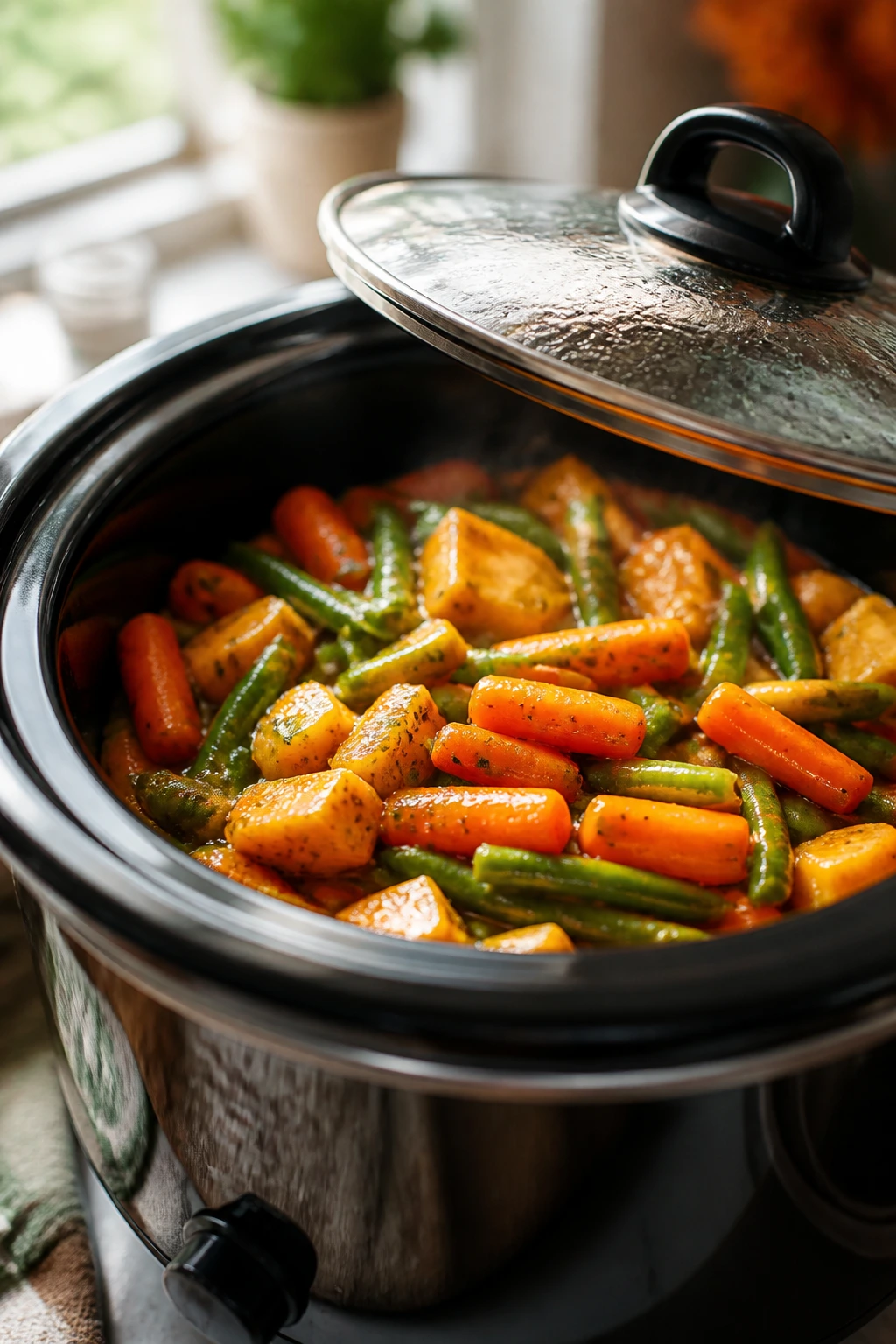
The oven always gets the glory on Thanksgiving, but the Thanksgiving crockpot vegetable sides are what keep the whole table from turning into a traffic jam. One slow cooker can hold carrots glistening with maple butter, green beans that still have a little bite, or a squat bowl of sweet potatoes that tastes like it came from a more complicated kitchen than it did. And the best part is the smell: butter, garlic, sage, brown sugar, pepper, and broth all mingling in one low hum while the rest of the house does its own thing.
That’s the real appeal here. You can put in the work early, walk away, and come back to a side dish that’s warm, ready, and not fighting the turkey for space in the oven. A slow cooker is especially good with vegetables that like gentle heat—roots, squash, green beans, Brussels sprouts, corn, collards—because it softens them from the inside out instead of blasting them hard. The trick is knowing which vegetables can handle a long bath and which ones need a shorter stay.
I’m especially fond of these kinds of sides for lazy Sundays because they have a certain calm to them. No frantic basting. No juggling three casseroles under a too-hot broiler. Just practical, sturdy food that can sit for a while, absorb flavor, and still taste like the vegetable it started as. Some of these recipes lean sweet, some go savory, and a few land right in the middle where Thanksgiving sides tend to live best.
If your holiday table needs less scrambling and more breathing room, these fifteen slow cooker vegetable sides will do the job with a lot less fuss than they look like they should.
Why You’ll Love This Collection
-
Oven Space Relief: Every recipe here keeps at least one dish off the stove, which matters when the oven is already packed with stuffing, rolls, and a bird that refuses to hurry.
-
Real Vegetable Flavor: These sides aren’t trying to hide the vegetables; they soften them, glaze them, or turn them creamy without burying them under five pounds of cheese.
-
Flexible Timing: Most of these can sit on Warm for a while, which means dinner can run late without you serving cold carrots or dried-out greens.
-
Built for Make-Ahead Work: Several of these recipes can be prepped the day before, then finished in the slow cooker with almost no last-minute drama.
-
Comfort Without Chaos: The flavors are familiar—maple, butter, garlic, sage, bacon, thyme—but the method keeps your kitchen quieter and your hands freer.
-
Good for Mixed Crowds: You’ll find sweet sides, savory sides, and a few dishes that can be adjusted easily for dairy-free or vegetarian guests without rebuilding the whole recipe.
1. Slow Cooker Garlic Butter Green Beans
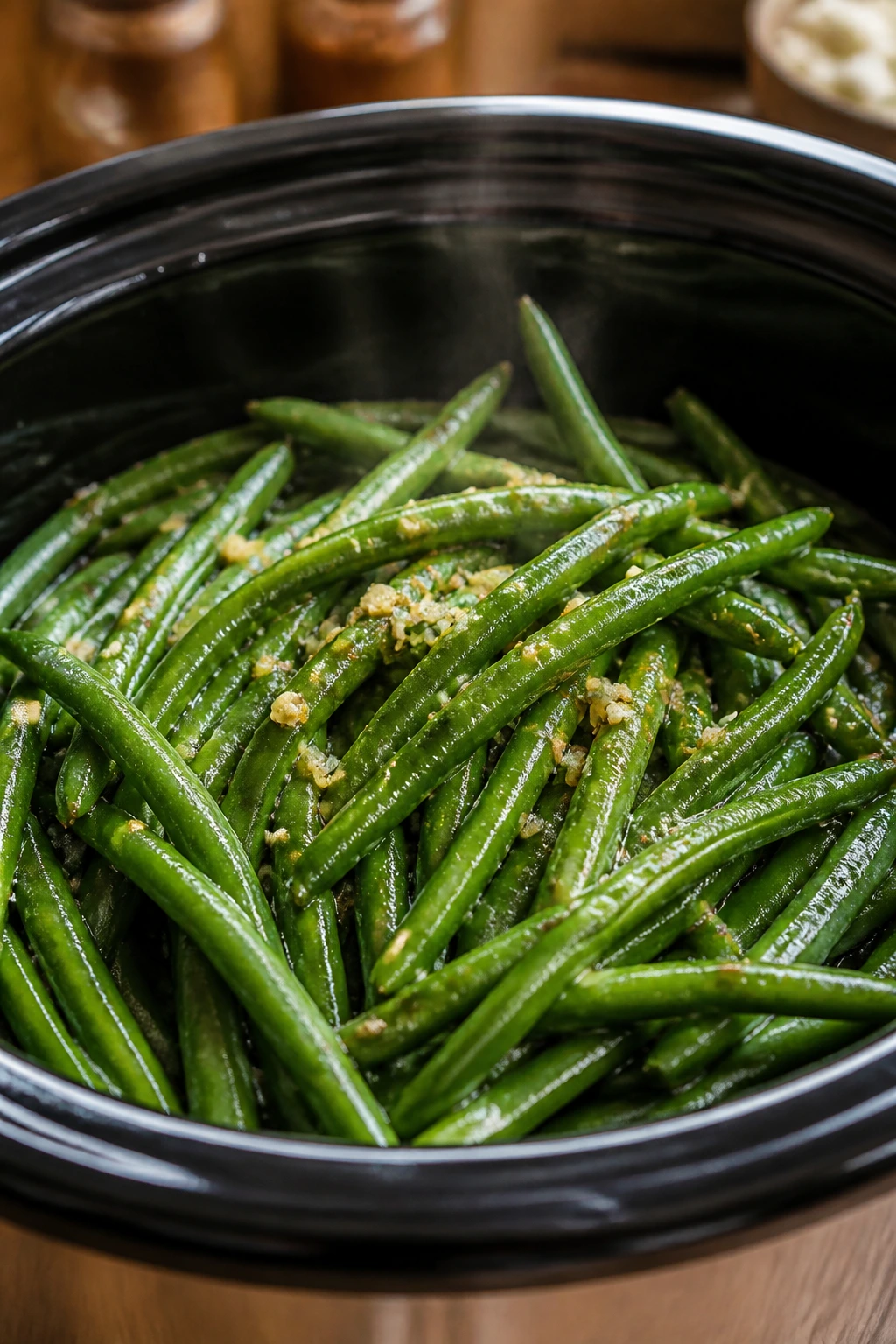
Green beans can go two ways on a holiday table: crisp and bright, or limp and forgettable. This version lands in the better lane. The beans soak up garlic butter and broth, stay green instead of drab, and finish with enough structure that they still feel like vegetables instead of garnish.
Why It Works: Green beans are one of the few vegetables that benefit from a short, gentle slow cook. The steam inside the crockpot softens them without shredding their shape, and the butter gives the beans enough fat to taste rich without turning them greasy. A squeeze of lemon at the end does the quiet but important work of keeping the whole dish from tasting flat.
Key Ingredients:
- 2 lbs fresh green beans, trimmed
- 4 tbsp unsalted butter, cut into pieces
- 4 garlic cloves, minced
- 1/2 cup low-sodium vegetable broth
- 1 tsp kosher salt
- 1/2 tsp black pepper
- 1 tbsp lemon juice or 1 tsp lemon zest
- 1/3 cup sliced almonds, toasted, optional
Quick Steps:
- Place the trimmed green beans in a 4- to 6-quart slow cooker and scatter the garlic over the top.
- Dot the beans with butter, then pour in the broth and season with salt and pepper.
- Cover and cook on LOW for 1 1/2 to 2 hours, stirring once halfway through, until the beans are bright green and tender with a little snap left in the center.
- Stir in the lemon juice or zest, then taste and adjust the salt.
- Spoon into a serving bowl and finish with toasted almonds if you want a little crunch.
Equipment for This Recipe:
- 4- to 6-quart slow cooker
- Sharp knife and cutting board
- Slotted spoon or tongs
How to Serve This Dish: Pile the beans into a shallow bowl so the butter pools a little at the bottom, then give them one last shower of black pepper. They sit nicely next to gravy-heavy dishes, because the lemon and garlic cut through all that richness.
Pro Tips for This Recipe:
- Use beans that bend cleanly and snap rather than leathery ones; old beans soften badly in the crockpot.
- If your slow cooker runs hot, check at 75 minutes. Green beans can go from pleasant to mushy in a hurry.
- Toast the almonds separately. If you add them too early, they go soft and lose the point.
Variations on This Dish:
- Lemon-Herb Beans: Add 1 teaspoon chopped thyme and 1 teaspoon chopped parsley at the end for a more herbal finish.
- Bacon Green Beans: Stir in 4 slices cooked, crumbled bacon right before serving for a saltier, smokier version.
Common Mistakes to Avoid with This Dish:
- Cooking them all afternoon: The beans lose their snap and turn drab. Stop early and hold on Warm if needed.
- Skipping the acid: Without the lemon, the butter can feel heavy. A small splash is enough to wake everything up.
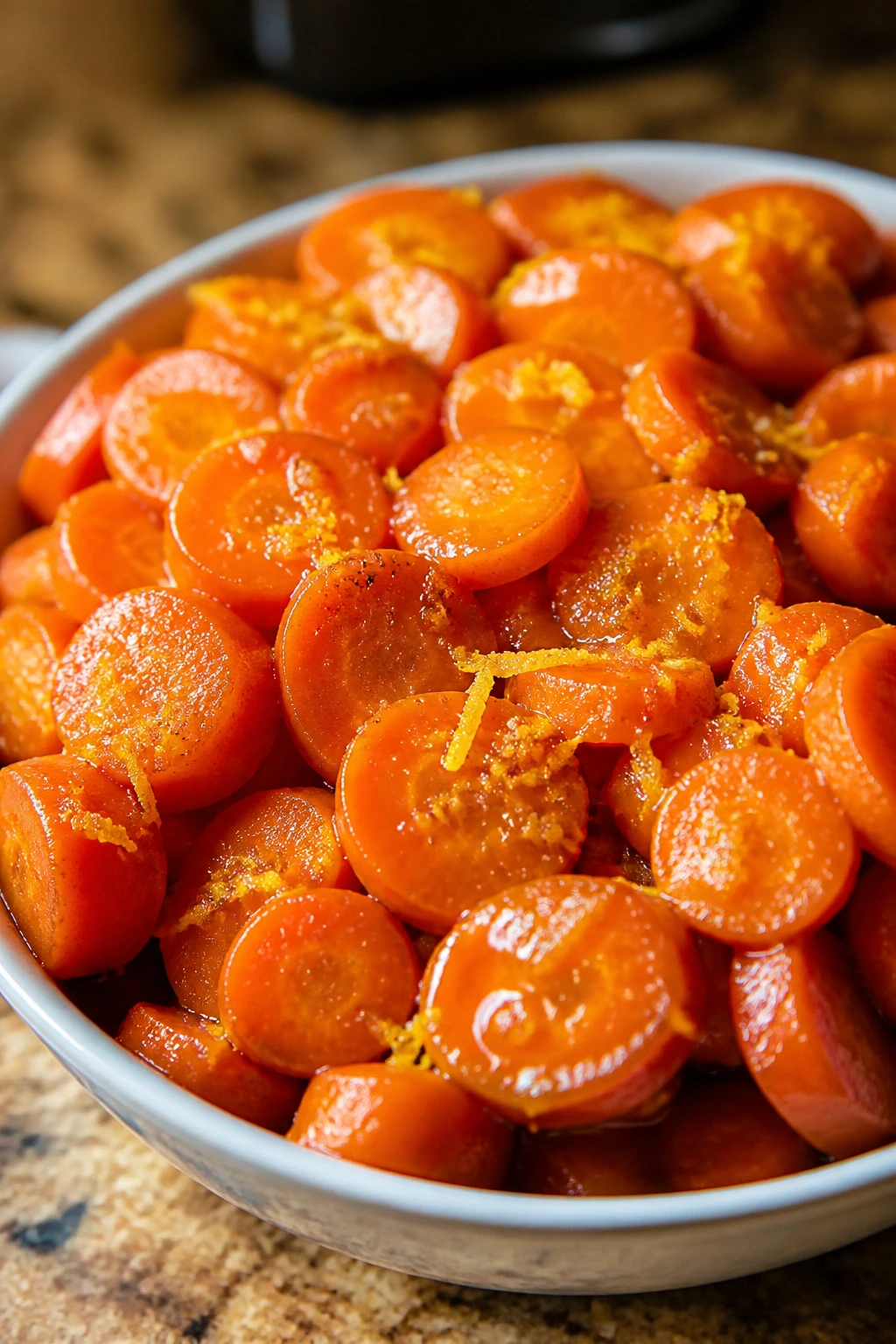
2. Crockpot Maple-Orange Carrots
Carrots take glaze beautifully, and this version gives them a shiny, almost lacquered finish without turning them into candy. The orange keeps the sweetness from feeling one-note, while the maple adds that familiar Thanksgiving warmth that people always seem to want more of on the table.
Why It Works: Thick carrot coins or short batons hold their shape in the slow cooker better than baby carrots, which can get slippery and bland. The broth provides just enough moisture to steam them, and the butter with maple syrup creates a light glaze rather than a sticky syrup bath. Orange zest sharpens the sweetness in a way plain sugar never will.
Key Ingredients:
- 2 lbs carrots, peeled and cut into 2-inch pieces
- 3 tbsp unsalted butter
- 2 tbsp pure maple syrup
- 1/4 cup orange juice
- 1 tsp orange zest
- 1/2 tsp ground cinnamon
- 1/2 tsp kosher salt
- 1 tbsp chopped parsley, optional
Quick Steps:
- Add the carrots to the slow cooker in an even layer.
- Whisk together the butter, maple syrup, orange juice, orange zest, cinnamon, and salt, then pour it over the carrots.
- Cover and cook on LOW for 3 to 4 hours, stirring once or twice, until the carrots are fork-tender and glossy.
- If the glaze looks thin near the end, leave the lid cracked for the last 15 minutes to let some liquid cook off.
- Transfer to a serving bowl and scatter parsley over the top if you want a little color.
Equipment for This Recipe:
- 4- to 6-quart slow cooker
- Vegetable peeler
- Small whisk or fork
How to Serve This Dish: Serve these carrots in a warm bowl with a spoon so guests can scoop up a little glaze with each serving. They play nicely with roast turkey, but they also hold their own beside ham or a vegetarian main.
Pro Tips for This Recipe:
- Cut the carrots evenly so the small ones do not turn mushy while the big ones stay hard in the middle.
- Use real maple syrup, not pancake syrup. The flavor difference shows up fast in a simple dish like this.
- A tiny pinch of black pepper can be nice here if you like carrot sweetness with a little edge.
Variations on This Dish:
- Ginger-Orange Carrots: Add 1 teaspoon freshly grated ginger for a sharper, brighter glaze.
- Brown Sugar Carrots: Swap the maple syrup for 2 tablespoons brown sugar and 1 tablespoon honey if that’s what you have on hand.
Common Mistakes to Avoid with This Dish:
- Using baby carrots without checking the texture: They can go soft and watery. Fresh peeled carrots hold up better.
- Adding too much liquid: The goal is glaze, not carrot soup. Stick to the listed orange juice and butter.
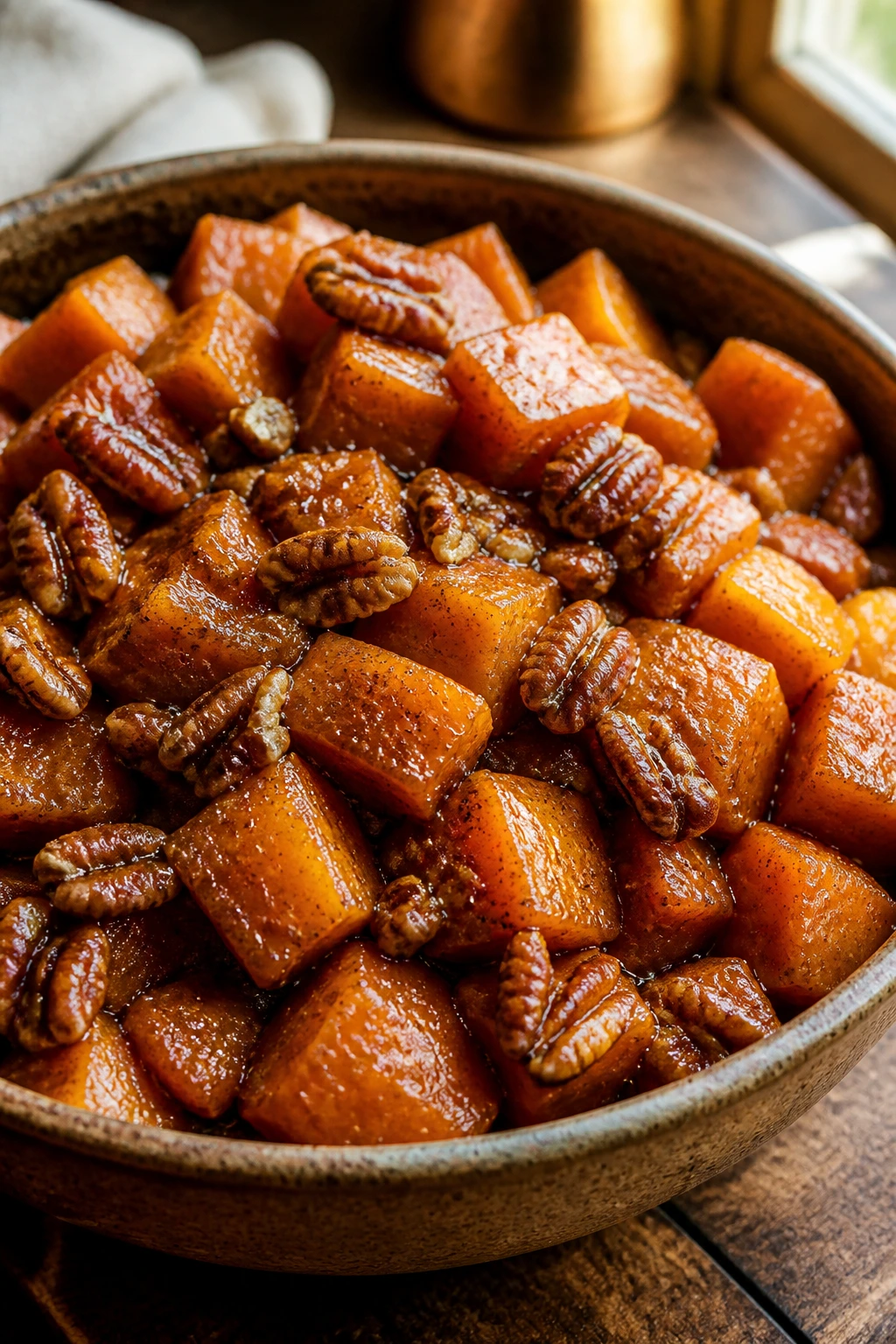
3. Brown Sugar Sweet Potatoes with Pecans
Sweet potatoes in the slow cooker become almost custard-soft, which is exactly why they work so well here. They turn rich and fluffy without needing a casserole dish, and the pecans on top add a dry, toasty bite that keeps the whole thing from sinking into sweetness.
Why It Works: Sweet potatoes are dense enough to handle several hours of gentle heat, and the starches break down into a creamy mash naturally. Butter, cream, and vanilla make the texture lush, while cinnamon and salt keep the sweetness from getting sticky or flat. Pecans are added at the end so they stay crisp instead of disappearing into the mash.
Key Ingredients:
- 3 lbs sweet potatoes, peeled and cut into 1-inch cubes
- 4 tbsp unsalted butter
- 1/3 cup brown sugar
- 1/3 cup heavy cream or whole milk
- 1 tsp vanilla extract
- 1 tsp ground cinnamon
- 1/2 tsp kosher salt
- 1/2 cup chopped pecans, toasted
Quick Steps:
- Place the sweet potatoes in the slow cooker and dot them with butter.
- Sprinkle the brown sugar, cinnamon, and salt over the potatoes, then pour in the cream and vanilla.
- Cover and cook on LOW for 4 to 5 hours, stirring once or twice, until the cubes are completely tender.
- Mash lightly with a potato masher for a rustic texture, or mash more firmly if you want it smoother.
- Top with the toasted pecans right before serving.
Equipment for This Recipe:
- 4- to 6-quart slow cooker
- Potato masher
- Sharp knife and cutting board
How to Serve This Dish: Spoon the sweet potatoes into a wide bowl and let the pecans sit on top where people can actually see them. They work as a side with turkey, but I like them especially well beside anything salty—ham, gravy, or a green vegetable with less sweetness.
Pro Tips for This Recipe:
- Cut the cubes the same size so they soften at the same rate.
- If you want a marshmallow topping, add it only during the last 10 minutes and keep a close eye on it.
- A pinch of nutmeg is nice, but do not overdo it. Sweet potato can turn dusty fast.
Variations on This Dish:
- Pecan-Free Version: Skip the nuts and finish with toasted coconut or a little cinnamon sugar if you need a nut-free side.
- Savory Sweet Potatoes: Reduce the brown sugar to 2 tablespoons and add thyme, black pepper, and a little more butter for a less dessert-like version.
Common Mistakes to Avoid with This Dish:
- Underseasoning: Sweet potatoes need salt to taste like more than orange paste. Taste before serving.
- Cooking until they dry out: If your cooker runs hot, check early and add a splash of cream if the edges look sticky.
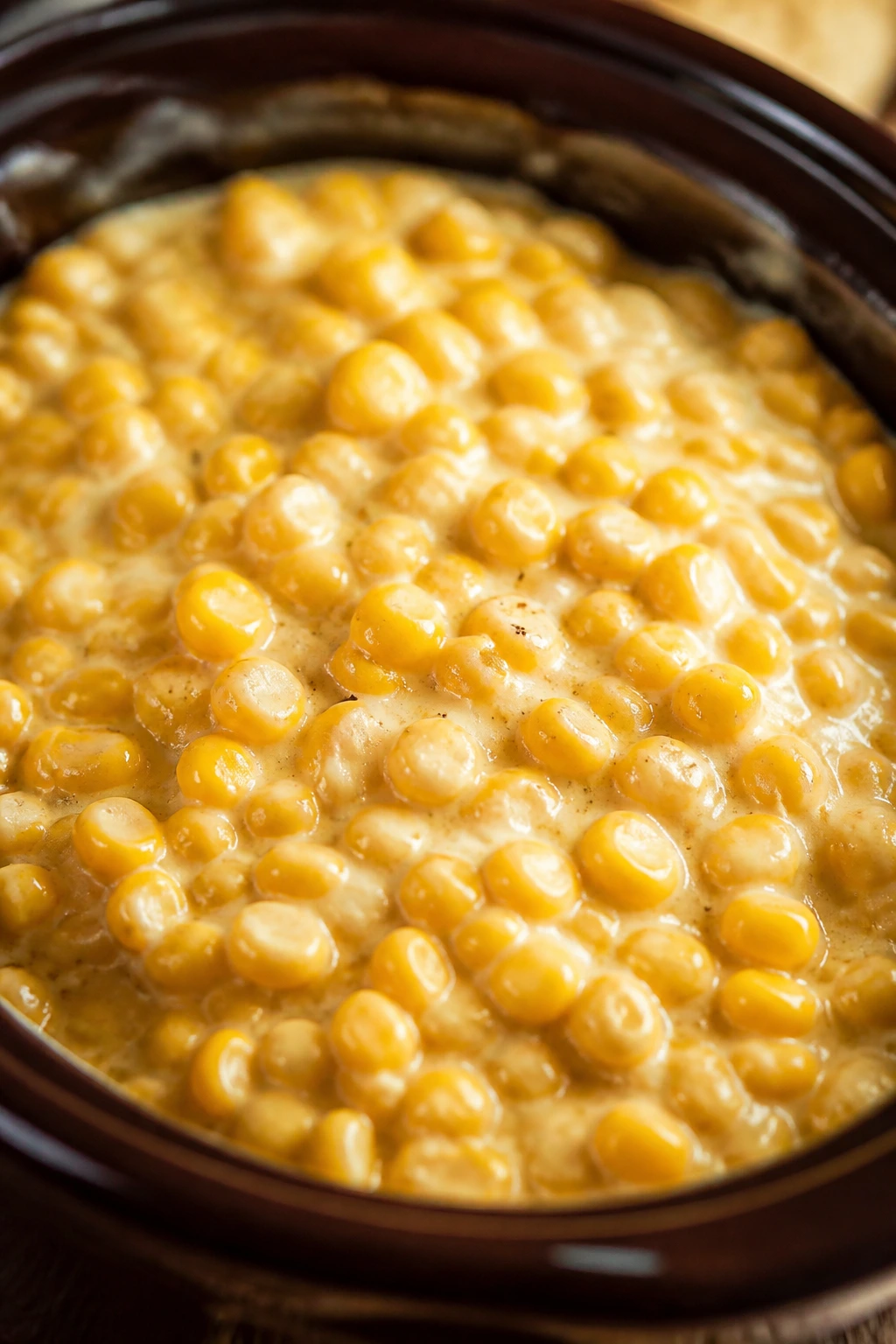
4. Creamy Crockpot Corn with Cream Cheese
This is the kind of side that disappears before the second helping of turkey. It tastes like sweet corn folded into a soft, buttery sauce, with enough cream cheese to make every spoonful cling together instead of running around the plate.
Why It Works: Frozen corn is a smart choice here because it holds its texture and tastes sweet even after a few hours in the crockpot. Cream cheese gives the dish body, while a little evaporated milk or cream keeps it silky. Corn needs surprisingly little work; once it has fat, salt, and a warm dairy base, it becomes the easiest side on the table.
Key Ingredients:
- 2 (12-ounce) bags frozen corn, or 6 cups kernels
- 8 oz cream cheese, cut into cubes
- 1/2 cup heavy cream
- 3 tbsp unsalted butter
- 1 tbsp sugar
- 1/2 tsp kosher salt
- 1/4 tsp black pepper
- 2 tbsp chopped chives, optional
Quick Steps:
- Add the corn, cream cheese, cream, butter, sugar, salt, and pepper to the slow cooker.
- Cover and cook on LOW for 2 to 3 hours, stirring once or twice, until the cream cheese melts and the corn is hot all the way through.
- Stir well until the sauce looks smooth and coats the kernels.
- Taste and adjust the salt or sugar if needed.
- Finish with chives and serve warm.
Equipment for This Recipe:
- 4-quart slow cooker
- Silicone spatula
- Measuring cups and spoons
How to Serve This Dish: Serve it in a deep bowl with a spoon, because the sauce is part of the point. It’s excellent next to smoked meats or roast turkey, and it also helps balance vegetables that lean more bitter or green.
Pro Tips for This Recipe:
- Use frozen corn straight from the bag. No thawing needed, and the texture stays better.
- If you want more body, mash about 1 cup of the corn against the side of the slow cooker before serving.
- Add herbs only at the end so they stay fresh and don’t fade into the cream.
Variations on This Dish:
- Jalapeño Corn: Add 1 minced jalapeño with the corn for a little heat.
- Parmesan Corn: Stir in 1/3 cup grated Parmesan at the end for a saltier, more savory finish.
Common Mistakes to Avoid with This Dish:
- Leaving it on too long: The corn gets chewy and the dairy can separate. Once it’s hot and smooth, move it to Warm.
- Using low-fat dairy: It tends to look thin and break more easily. Full-fat ingredients hold up better in a slow cooker.
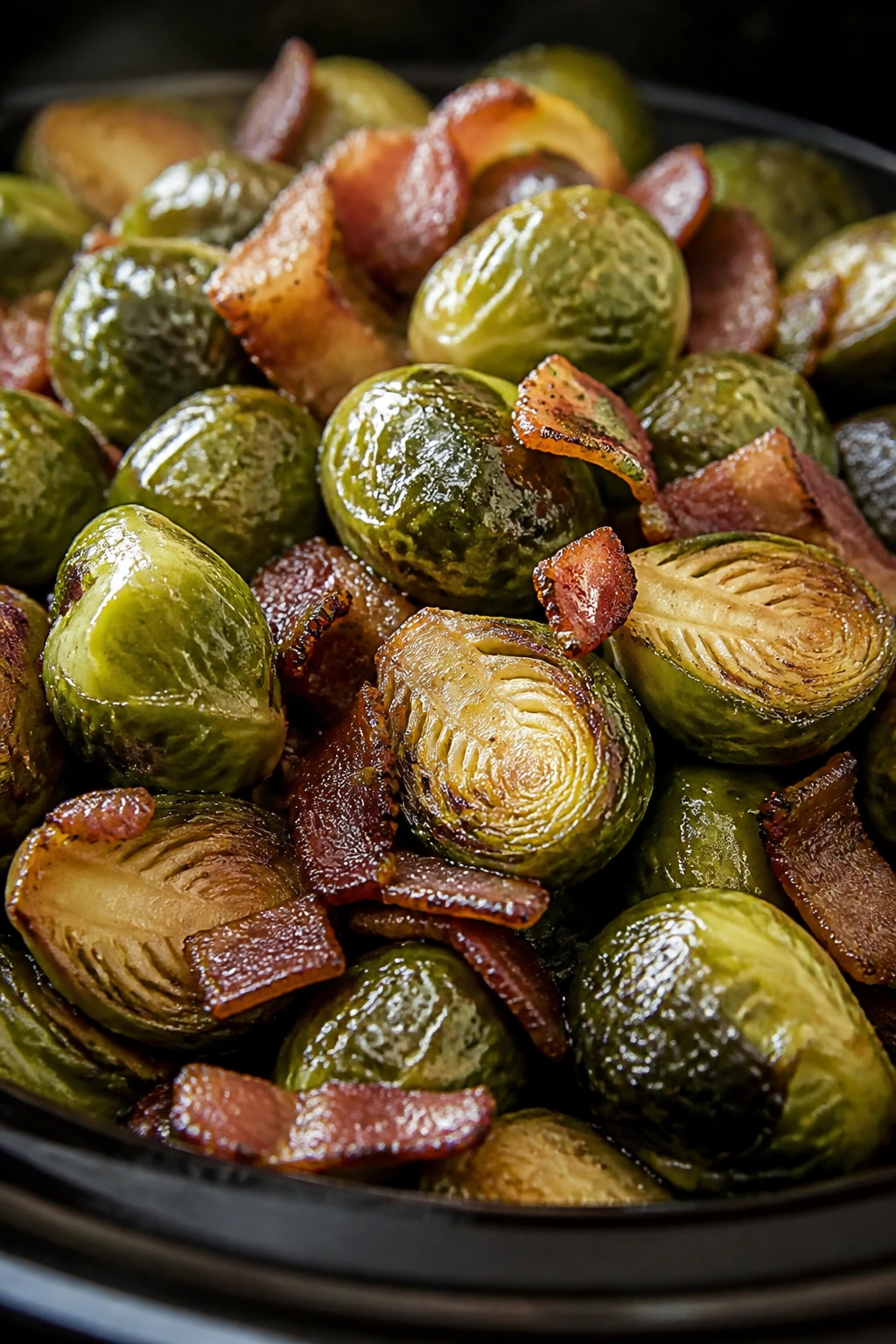
5. Slow Cooker Bacon-Balsamic Brussels Sprouts
Brussels sprouts need a little swagger, and bacon plus balsamic gives them exactly that. The sprouts come out soft at the center, glossy at the edges, and salty enough to hold their own against richer holiday dishes.
Why It Works: Brussels sprouts handle long heat better than delicate vegetables, especially when they’re halved and given a little fat. Bacon adds smoke and salt, balsamic adds sharpness, and maple syrup rounds the edges so the whole dish lands in a sweet-savory zone. If you want browning, a quick finish under the broiler fixes the one thing a slow cooker cannot do.
Key Ingredients:
- 2 lbs Brussels sprouts, trimmed and halved
- 6 slices bacon, cooked and crumbled
- 3 tbsp balsamic vinegar
- 2 tbsp maple syrup
- 2 tbsp unsalted butter
- 1 tsp Dijon mustard
- 1/2 tsp kosher salt
- 1/2 tsp black pepper
Quick Steps:
- Place the halved Brussels sprouts in the slow cooker.
- Whisk the balsamic vinegar, maple syrup, butter, Dijon, salt, and pepper together, then pour over the sprouts.
- Add the bacon and toss gently to coat.
- Cover and cook on LOW for 2 to 2 1/2 hours, stirring once, until the sprouts are tender but still hold their shape.
- If you want more color, spread them on a sheet pan and broil for 2 to 3 minutes before serving.
Equipment for This Recipe:
- 4- to 6-quart slow cooker
- Sheet pan, optional for finishing
- Tongs
How to Serve This Dish: Spoon the sprouts into a warm platter and drizzle any glaze from the cooker over the top. They’re sharp enough to cut through mashed potatoes and rich enough to sit beside stuffing without disappearing.
Pro Tips for This Recipe:
- Choose smaller sprouts if you can; they stay less cabbagey and more nutty.
- Keep the bacon fully cooked before it goes in, or the sprouts will steam in grease instead of tasting balanced.
- The broiler finish is optional, but it adds a real difference in flavor and texture.
Variations on This Dish:
- Apple Cider Brussels: Swap half the balsamic for apple cider and add a few diced apples for a sweeter, softer side.
- Vegetarian Brussels: Skip the bacon and use smoked paprika plus an extra tablespoon of butter for depth.
Common Mistakes to Avoid with This Dish:
- Cooking the sprouts until they collapse: They should still have a little bite. Mushy sprouts smell stronger and taste dull.
- Adding too much sweetener: Too much maple masks the balsamic and makes the dish heavy.
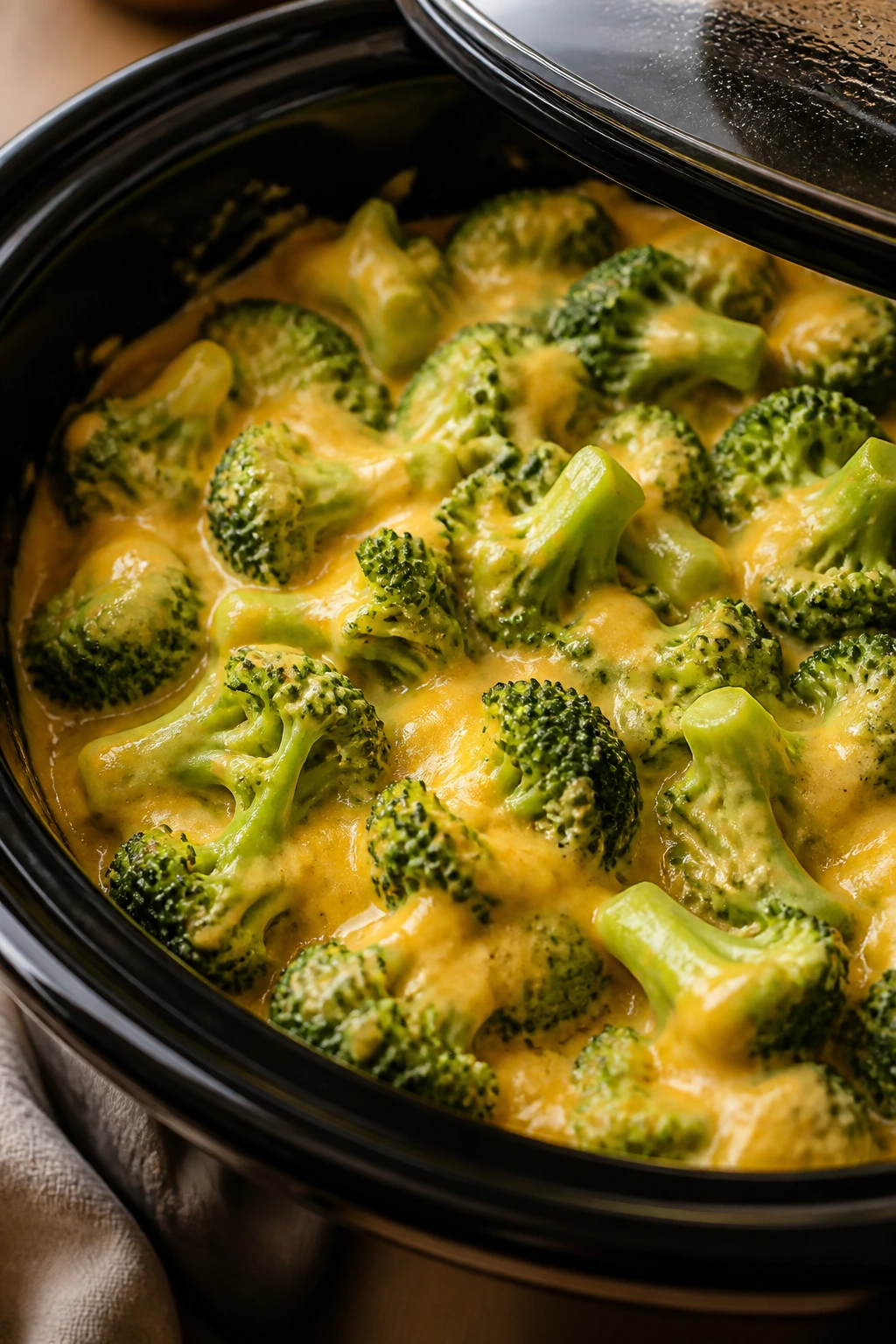
6. Crockpot Broccoli Cheddar
Broccoli cheddar in the slow cooker is a little tricky, and that is exactly why people get excited when it turns out well. You want the broccoli softened but not gray, and you want the cheese sauce to cling to the florets instead of splitting into oil and stringy bits.
Why It Works: Broccoli cooks fast, so the recipe keeps the slow-cooker time short and adds the cheese near the end. Cream cheese and evaporated milk stabilize the sauce better than plain milk, which matters when the heat sits on the vegetables for a while. A little dry mustard gives the cheddar some spine.
Key Ingredients:
- 2 lbs broccoli florets, cut into bite-size pieces
- 8 oz sharp cheddar, shredded
- 4 oz cream cheese, cubed
- 1/2 cup evaporated milk
- 1/2 cup vegetable broth
- 1 tsp dry mustard
- 1/4 tsp ground nutmeg
- 1/2 tsp kosher salt
- 1/2 tsp black pepper
Quick Steps:
- Add the broccoli, broth, evaporated milk, dry mustard, nutmeg, salt, and pepper to the slow cooker.
- Cover and cook on LOW for 1 to 1 1/2 hours, until the broccoli turns bright green and begins to soften.
- Stir in the cream cheese and shredded cheddar.
- Cook for 15 to 20 minutes more, just until the cheese melts and the sauce looks smooth.
- Serve right away so the broccoli keeps its shape.
Equipment for This Recipe:
- 4-quart slow cooker
- Box grater or shredded cheese
- Silicone spatula
How to Serve This Dish: Serve it in a shallow bowl and spoon the cheese sauce over the florets rather than stirring it into a mess. It pairs well with simple roast meats or a plate full of potatoes, because it brings the rich, salty note that people tend to want.
Pro Tips for This Recipe:
- Shred the cheese yourself if you can. Pre-shredded cheese contains anti-caking powder that can make the sauce grainier.
- Cut broccoli into fairly even pieces so the small bits do not disappear.
- If the sauce seems thin, let it sit uncovered for 5 minutes before serving.
Variations on This Dish:
- Cauliflower Broccoli Mix: Use half broccoli and half cauliflower for a softer texture and a milder flavor.
- Sharp-and-Smoky Version: Add 1/4 teaspoon smoked paprika if you want a little more depth.
Common Mistakes to Avoid with This Dish:
- Overcooking the broccoli: It turns olive-colored and stinky fast. Short cook time matters here more than anywhere else in the article.
- Adding all the cheese at the start: It can seize or separate. Wait until the broccoli is nearly done.
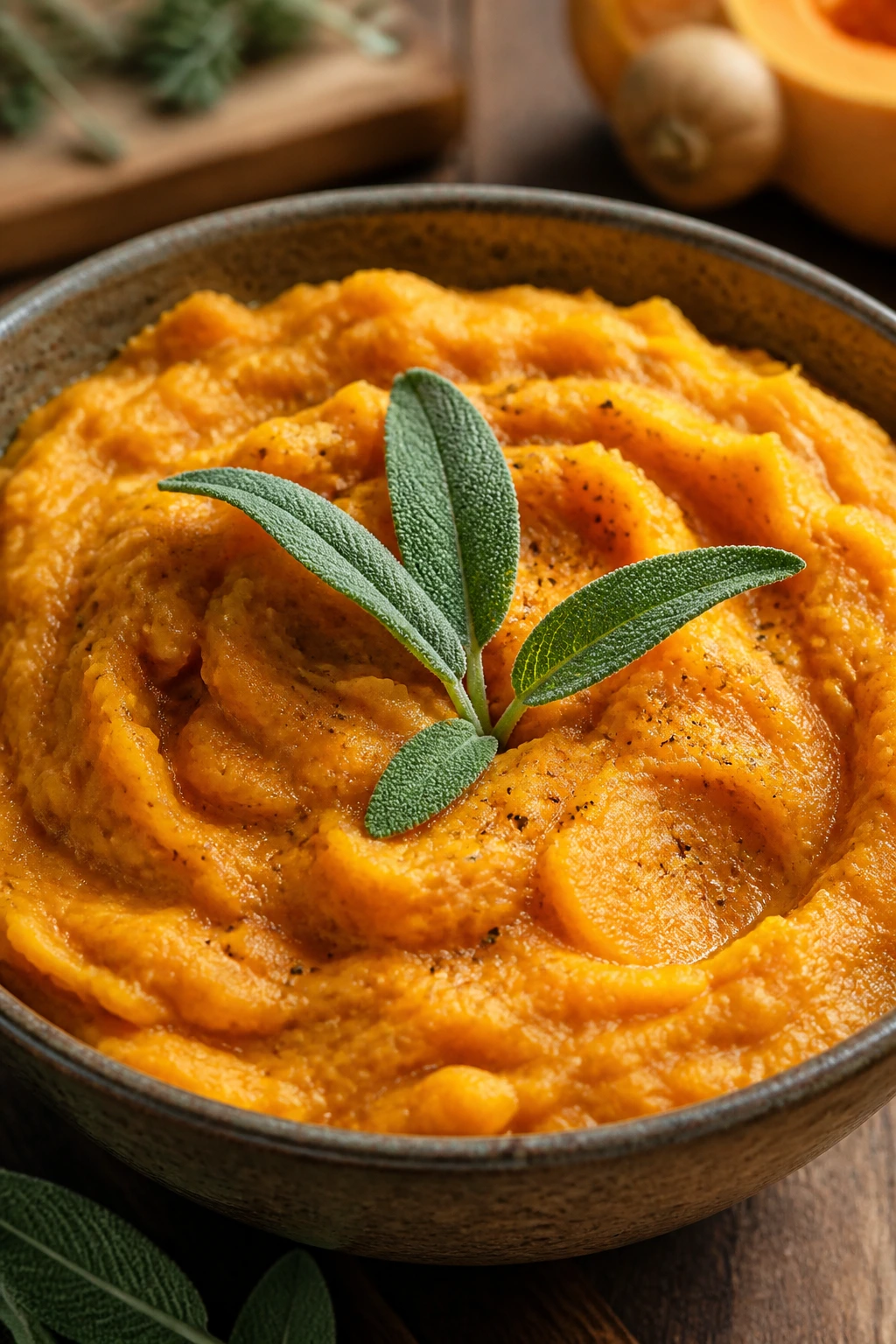
7. Sage Butternut Squash Mash
Butternut squash mash tastes like autumn in a bowl, but only if you keep it from getting watery or stringy. In the slow cooker, it turns soft enough to mash with almost no effort, and sage gives it a woodsy note that stops the squash from drifting into dessert territory.
Why It Works: Butternut squash is dense enough to handle several hours of low heat, and the slow cooker turns the cubes uniformly tender. Butter and cream add body, while sage and nutmeg keep the sweetness in check. The mash ends up smoother than a roast-and-blend version, which is handy when the oven is already busy.
Key Ingredients:
- 3 lbs butternut squash, peeled, seeded, and cut into 1-inch cubes
- 3 tbsp unsalted butter
- 2 tbsp maple syrup
- 1/2 cup half-and-half
- 1 tsp finely chopped sage
- 1/4 tsp ground nutmeg
- 1/2 tsp kosher salt
- 1/4 tsp black pepper
Quick Steps:
- Add the squash cubes to the slow cooker.
- Stir together the butter, maple syrup, half-and-half, sage, nutmeg, salt, and pepper, then pour over the squash.
- Cover and cook on LOW for 4 to 5 hours, until the squash crushes easily with a spoon.
- Mash until creamy but still a little rustic if you like texture.
- Taste and adjust the salt before serving.
Equipment for This Recipe:
- 6-quart slow cooker
- Potato masher or sturdy fork
- Sharp vegetable peeler
How to Serve This Dish: Serve it as a soft mound under a spoonful of gravy or on its own with extra sage on top. It does well beside turkey, and it also plays nicely with other sweet sides because the sage pulls it back into savory territory.
Pro Tips for This Recipe:
- Cut the cubes evenly so the edges do not turn mushy while the centers stay firm.
- If the mash feels loose, leave the lid off for 10 minutes and stir once.
- A spoonful of sour cream at the end can make the texture taste richer without making it heavy.
Variations on This Dish:
- Garlic Sage Squash: Add 2 minced garlic cloves for a more savory mash.
- Orange Squash Mash: Swap the maple syrup for orange zest and a splash of juice if you want a brighter profile.
Common Mistakes to Avoid with This Dish:
- Starting with too much liquid: Squash releases moisture as it cooks. Too much cream at the start can make the mash loose.
- Leaving the peel on: Butternut peel stays tough in the crockpot and gives the mash a stringy texture.
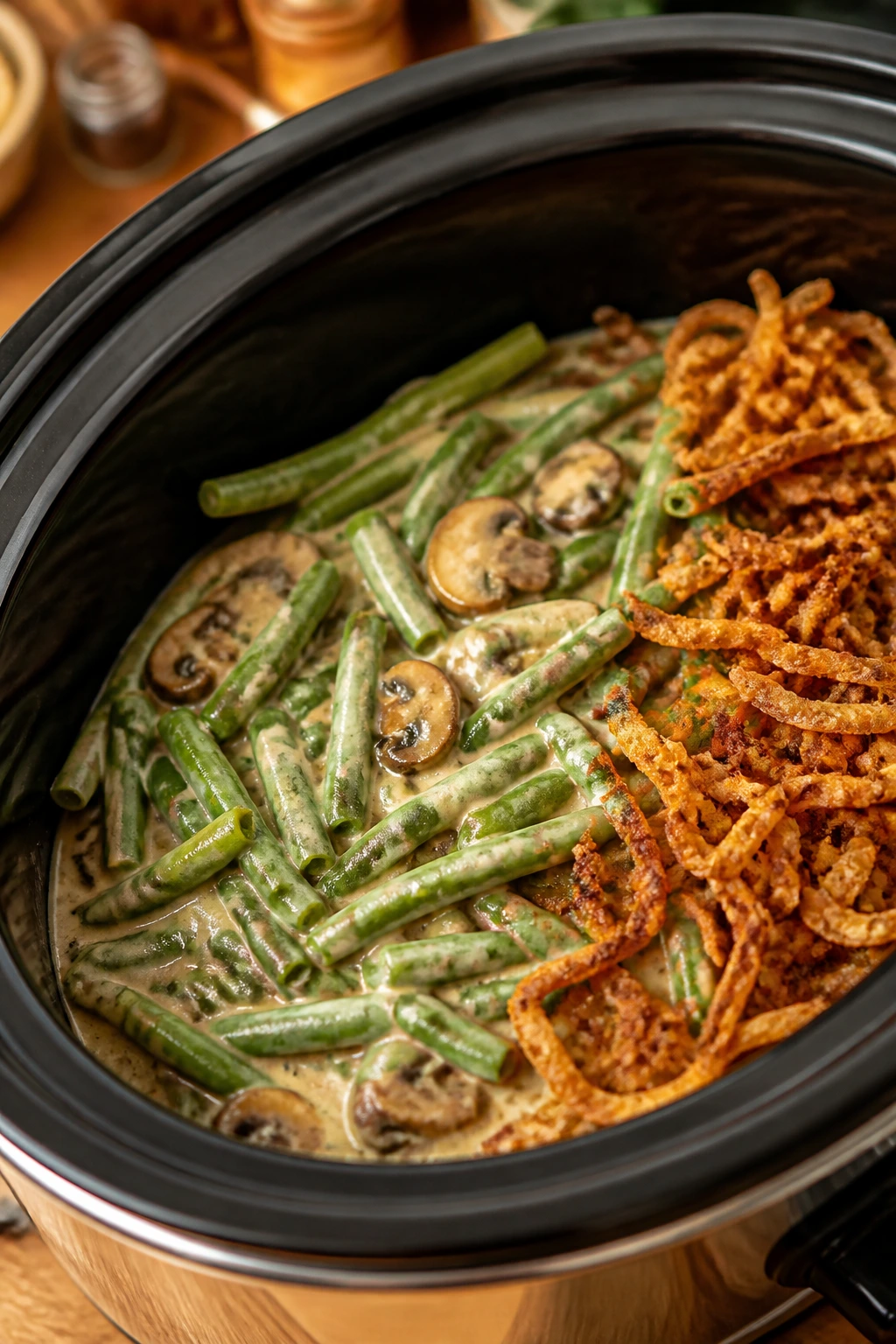
8. Slow Cooker Green Bean Casserole
Green bean casserole has a very specific job on Thanksgiving, and this version does it with fewer pans and less babysitting. The slow cooker makes the mushroom sauce creamy and keeps the beans hot, while crispy onions go in late so they do not dissolve into soggy confetti.
Why It Works: Fresh or frozen green beans can both work here, but fresh beans hold a better bite. The condensed mushroom soup and milk create the familiar casserole sauce, and a few extra mushrooms make the flavor deeper without making it fancy for the sake of being fancy. The fried onions need to stay out of the heat until the end, which is the whole trick.
Key Ingredients:
- 2 lbs fresh green beans, trimmed and cut, or thawed frozen green beans
- 1 (10.5-ounce) can condensed cream of mushroom soup
- 1/2 cup whole milk
- 8 oz cremini mushrooms, sliced
- 1 small yellow onion, thinly sliced
- 1 tsp soy sauce
- 1/2 tsp garlic powder
- 1 1/2 cups crispy fried onions, divided
Quick Steps:
- Add the green beans, mushroom soup, milk, mushrooms, onion, soy sauce, and garlic powder to the slow cooker.
- Stir until the soup loosens into a thick sauce.
- Cover and cook on LOW for 3 to 4 hours, stirring once or twice, until the beans are tender.
- Stir in 1 cup of the fried onions during the last 15 minutes of cooking.
- Transfer to a serving dish and top with the remaining fried onions right before serving.
Equipment for This Recipe:
- 4- to 6-quart slow cooker
- Cutting board and knife
- Spoon for stirring
How to Serve This Dish: Serve it straight from the crock or move it to a casserole dish so the onion topping stays visible. It belongs beside roast turkey and stuffing, but it also works as the one vegetable side that everyone recognizes instantly.
Pro Tips for This Recipe:
- Keep extra onions for the top. Once they sit in the sauce, they lose their crunch fast.
- If you use frozen beans, do not add extra liquid; they release enough moisture on their own.
- A little soy sauce gives the casserole a deeper mushroom flavor without making it taste Asian or oddly salty.
Variations on This Dish:
- From-Scratch Sauce: Replace the condensed soup with a thick mushroom sauce made from butter, flour, broth, and cream.
- Extra-Mushroom Version: Double the mushrooms if you like the filling part more than the bean part.
Common Mistakes to Avoid with This Dish:
- Adding all the onions at the start: They turn soft and disappear.
- Overloading the crockpot: The beans need room to cook evenly, or the bottom goes mushy while the top stays underdone.
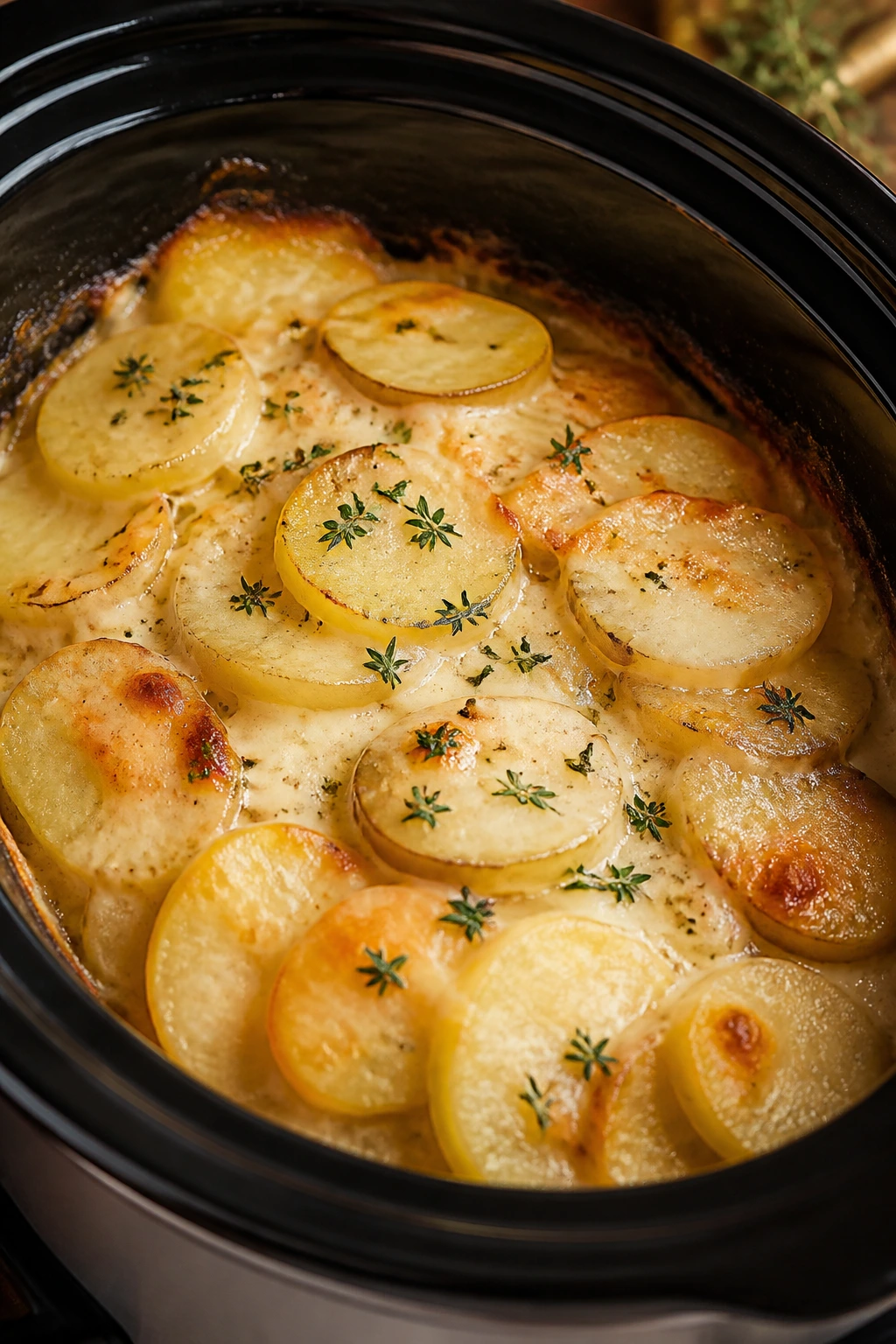
9. Crockpot Scalloped Potatoes with Thyme
Scalloped potatoes are the casserole that can make people forget there are other sides on the table. They take longer than most vegetables here, but the slow cooker handles that patience for you, and the result is a pan of thin slices cloaked in cream and thyme with browned edges if you let them run a little longer.
Why It Works: Yukon Gold potatoes hold their shape and stay creamy instead of chalky, which is why they beat Russets in this dish. The cream and milk mixture thickens as the potatoes release starch, creating the sauce without a flour-heavy roux. Thyme gives the potatoes a woodsy, holiday note that keeps the dish from tasting one-dimensional.
Key Ingredients:
- 3 lbs Yukon Gold potatoes, scrubbed and sliced 1/8 inch thick
- 2 cups heavy cream
- 1 cup whole milk
- 2 tbsp unsalted butter, melted
- 2 cloves garlic, minced
- 1 tsp fresh thyme leaves or 1/2 tsp dried thyme
- 1 1/2 cups shredded Gruyère or sharp cheddar
- 1 1/2 tsp kosher salt
- 1/2 tsp black pepper
Quick Steps:
- Grease the slow cooker insert lightly with butter.
- Layer half the potatoes in the bottom, then spoon over half the cream, garlic, thyme, salt, pepper, and cheese.
- Repeat with the remaining potatoes and cream mixture.
- Cover and cook on LOW for 6 to 7 hours, until a knife slides through the center with no resistance.
- Let it sit for 10 minutes before serving so the sauce settles.
Equipment for This Recipe:
- 6-quart slow cooker
- Mandoline or sharp knife
- Measuring cups
How to Serve This Dish: Scoop the potatoes with a wide spoon so you get cream and slices together in one serving. They’re rich enough to stand in for two sides, but they still make sense next to green vegetables or tart cranberry sauce.
Pro Tips for This Recipe:
- Slice the potatoes evenly. Thick slices will stay firm while thin ones dissolve.
- Do not rinse the potatoes after slicing; the surface starch helps thicken the sauce.
- If your cooker has hot spots, rotate the insert once midway through.
Variations on This Dish:
- Gruyère-and-Onion Version: Add a thin layer of sautéed onions between the potato layers for deeper flavor.
- Dairy-Lighter Version: Use half-and-half in place of some of the cream, but keep at least one cup cream so the sauce stays rich.
Common Mistakes to Avoid with This Dish:
- Using russet potatoes without adjusting the time: They can fall apart more easily and turn grainy.
- Trying to rush the cook: Scalloped potatoes need time for the slices to soften all the way through.
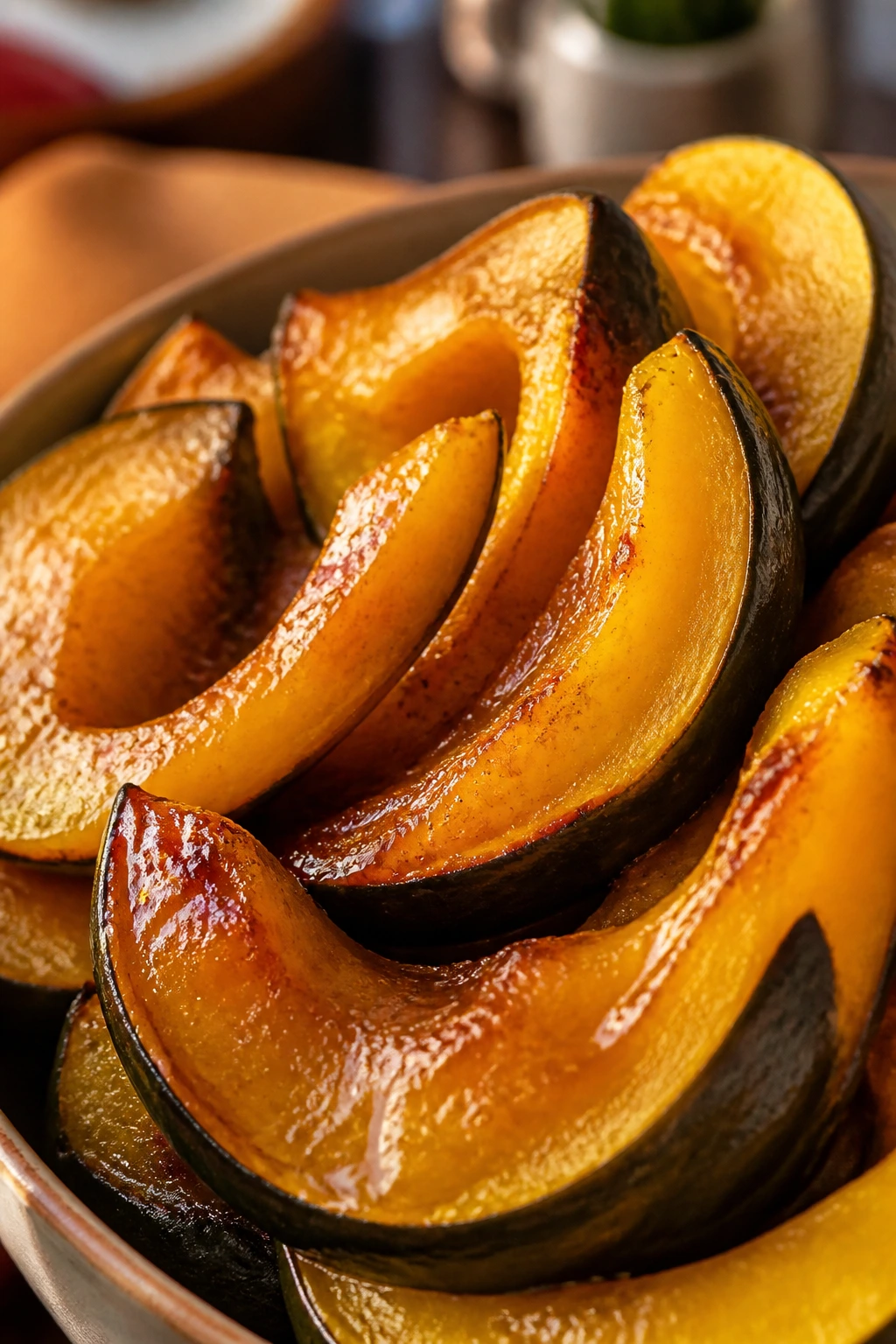
10. Honey-Butter Acorn Squash
Acorn squash smells like a holiday kitchen the moment the butter melts over it. The flesh turns soft and almost silky, while the honey and brown sugar create a gloss that makes each wedge look like it was brushed by hand.
Why It Works: Acorn squash has enough structure to survive several hours in the slow cooker, and the skin helps keep the wedges from collapsing. Honey and butter seep into the flesh without overwhelming it, and a little cinnamon pushes the squash toward warm, familiar territory. Sage or rosemary can pull it back into savory space if you want less sweetness.
Key Ingredients:
- 2 medium acorn squash, halved, seeded, and cut into wedges
- 3 tbsp unsalted butter
- 2 tbsp honey
- 1 tbsp brown sugar
- 1 tsp ground cinnamon
- 1/2 tsp kosher salt
- 1 tbsp chopped sage or rosemary
Quick Steps:
- Arrange the squash wedges in the slow cooker, overlapping them if needed.
- Whisk the butter, honey, brown sugar, cinnamon, salt, and herbs together, then spoon over the squash.
- Cover and cook on LOW for 2 1/2 to 3 hours, until the squash is fork-tender but still holds a clean wedge shape.
- Baste once or twice with the liquid in the pot.
- Serve with the syrup from the bottom spooned over the top.
Equipment for This Recipe:
- 6-quart slow cooker
- Sharp chef’s knife
- Spoon for basting
How to Serve This Dish: Serve the wedges skin-side down so people can scoop the soft flesh out of the shell if they want. This side works as a bridge between sweet potato casserole and a more savory vegetable dish, which makes it useful on a crowded plate.
Pro Tips for This Recipe:
- Choose squash with deep green skin and a heavy feel for its size.
- If the wedges are too thick, cut them into smaller crescents so they cook evenly.
- A small splash of maple syrup can replace part of the honey if that’s what you have.
Variations on This Dish:
- Savory Herb Squash: Skip the brown sugar and add extra sage plus black pepper.
- Pecan-Top Squash: Sprinkle toasted pecans over the squash right before serving for crunch.
Common Mistakes to Avoid with This Dish:
- Overcooking until it slumps: Squash that collapses loses its shape and starts tasting watery.
- Using too much honey: The squash should taste like squash first, dessert second.
11. Parmesan Mushroom and Pearl Onion Medley
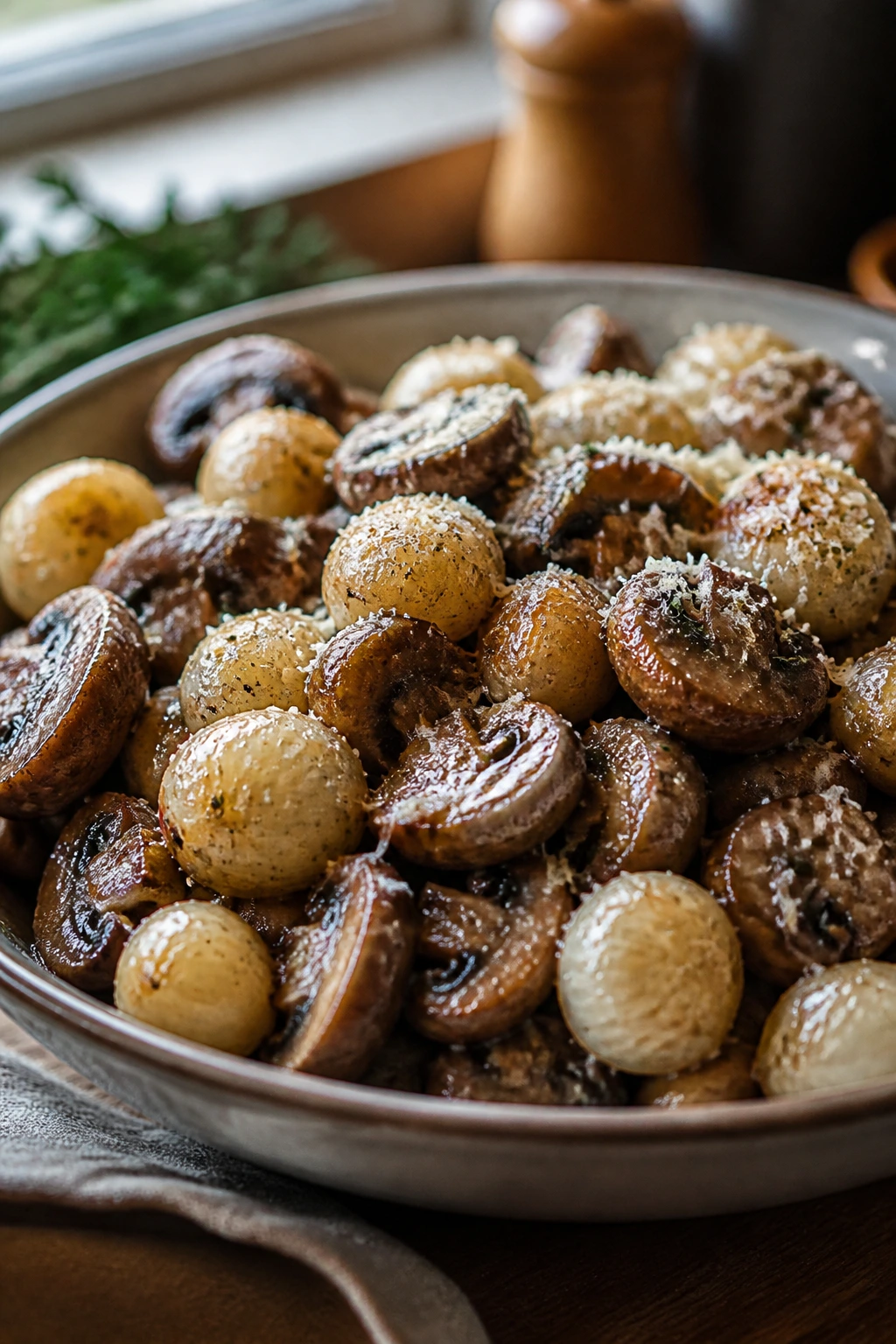
This side looks simple, and that’s part of its charm. Mushrooms bring a meaty bite, pearl onions turn soft and sweet, and Parmesan sneaks in a salty finish that makes the whole bowl taste more deliberate than the effort suggests.
Why It Works: Mushrooms release a lot of moisture, so they need room and a lid that can come off near the end if you want the sauce to tighten. Pearl onions bring gentle sweetness, and Parmesan gives the pan juices a savory edge. A little broth keeps the vegetables from sticking before they shed their own liquid.
Key Ingredients:
- 1 lb cremini mushrooms, halved if large
- 12 oz pearl onions, peeled, fresh or frozen
- 3 tbsp unsalted butter
- 2 cloves garlic, minced
- 1/2 cup low-sodium vegetable broth
- 1 tsp dried thyme
- 1/3 cup finely grated Parmesan
- 1 tbsp chopped parsley
Quick Steps:
- Place the mushrooms and pearl onions in the slow cooker.
- Add the butter, garlic, broth, and thyme, then season lightly with salt and pepper.
- Cover and cook on LOW for 2 to 2 1/2 hours, until the onions are tender and the mushrooms have shrunk and softened.
- Stir in the Parmesan and leave the lid cracked for 10 to 15 minutes if you want the sauce to thicken.
- Finish with parsley and serve warm.
Equipment for This Recipe:
- 4-quart slow cooker
- Small paring knife if you peel fresh pearl onions
- Slotted spoon
How to Serve This Dish: Serve it in a small bowl with a spoon because the buttery mushroom juices are worth catching. It works as a side for turkey, but it also slides in nicely beside roast beef or mashed potatoes if your holiday table wanders away from tradition.
Pro Tips for This Recipe:
- Frozen pearl onions save a lot of time and work well here.
- Do not crowd in extra liquid; mushrooms produce more on their own than most people expect.
- Parmesan should go in at the end, not at the beginning, or it can clump.
Variations on This Dish:
- Sherry Mushroom Medley: Add 2 tablespoons dry sherry in place of part of the broth for a deeper flavor.
- Creamy Mushroom Version: Stir in 2 tablespoons cream at the end if you want a softer sauce.
Common Mistakes to Avoid with This Dish:
- Peeling every pearl onion by hand when you do not need to: Frozen peeled onions work and save time.
- Expecting a dry side: This dish is meant to be juicy. Serve it with a spoon.
12. Slow Cooker Collard Greens with Smoked Turkey
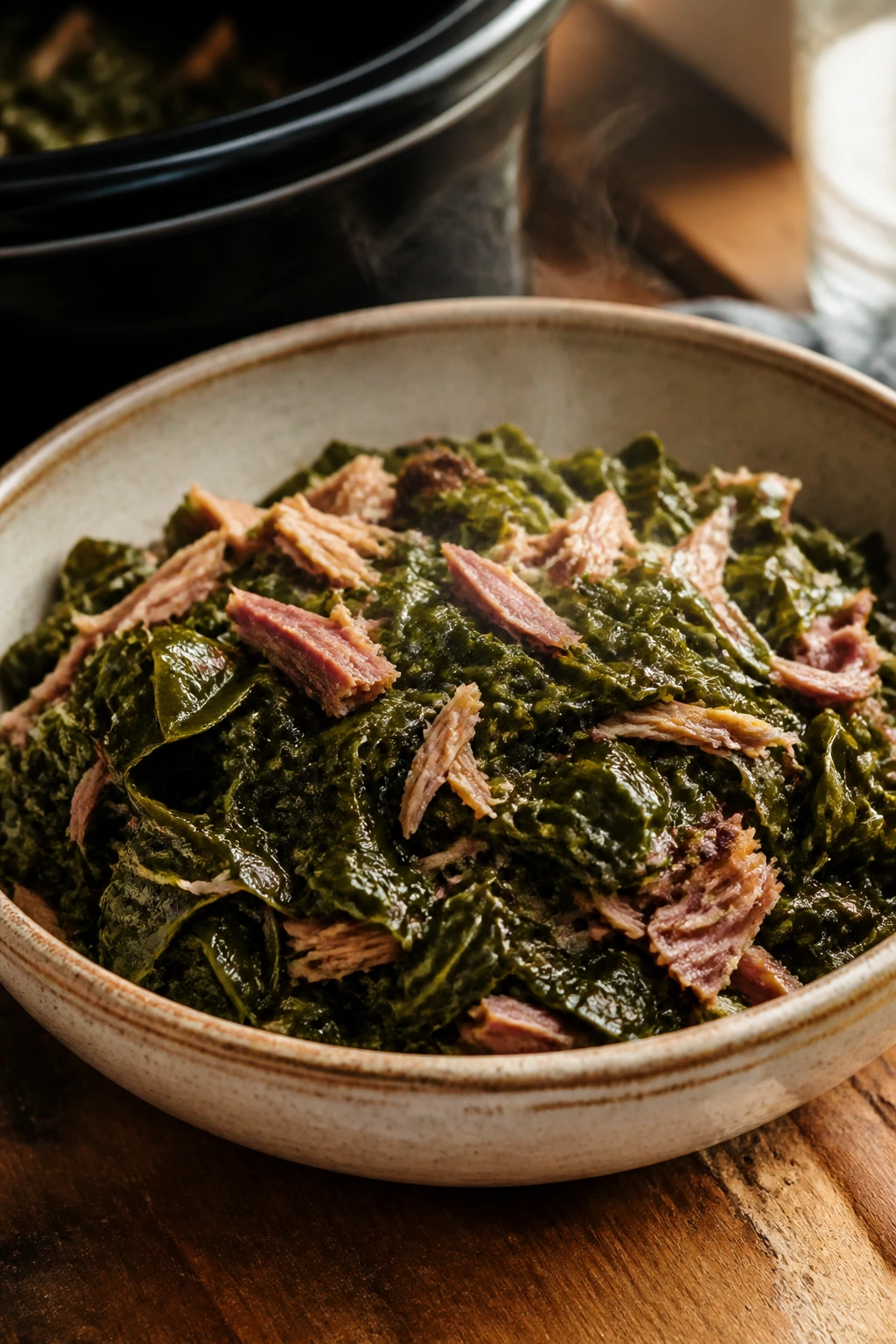
Collard greens need patience, and the slow cooker gives them exactly that without demanding anything from you. The leaves soften into silky ribbons, the smoked turkey seasons the broth, and the vinegar at the end keeps the greens from tasting heavy or muddy.
Why It Works: Collards are sturdy enough to handle long cooking, which is why they become tender instead of tired in this recipe. Smoked turkey adds salt and depth without making the pot greasy, and apple cider vinegar brightens the broth right before serving. If you’ve ever had greens that tasted flat, the lack of acid was probably the problem.
Key Ingredients:
- 2 lbs collard greens, stems removed and leaves chopped
- 1 smoked turkey leg or ham hock, about 1 to 1 1/2 lbs
- 1 large onion, chopped
- 4 cloves garlic, minced
- 4 cups low-sodium chicken or vegetable broth
- 2 tbsp apple cider vinegar
- 1/2 tsp red pepper flakes
- 1 tsp kosher salt, plus more to taste
Quick Steps:
- Add the collards, smoked turkey, onion, garlic, broth, vinegar, red pepper flakes, and salt to the slow cooker.
- Stir once to settle the greens into the liquid.
- Cover and cook on LOW for 7 to 8 hours, until the greens are tender and the turkey is falling apart.
- Remove the turkey, shred the meat if needed, and return it to the pot.
- Taste and adjust the salt and vinegar before serving.
Equipment for This Recipe:
- 6-quart slow cooker
- Sharp knife and cutting board
- Tongs or a slotted spoon
How to Serve This Dish: Serve the greens with a little broth in the bowl; that pot liquor is half the point. They are best alongside cornbread, turkey, or anything rich and starchy that can pick up the broth.
Pro Tips for This Recipe:
- Remove the thick center stems. They stay chewy even after long cooking.
- Taste near the end before adding more salt. Smoked meat can season the broth more than expected.
- If you want a softer heat, add the red pepper flakes at the end instead of the beginning.
Variations on This Dish:
- Vegetarian Collards: Skip the turkey and use smoked paprika plus a bit more olive oil for body.
- Spicy Pot-Liquor Greens: Add a sliced jalapeño if you like the broth with a sharper bite.
Common Mistakes to Avoid with This Dish:
- Rushing the cook time: Collards need long heat to lose their toughness. Shortcuts leave them chewy.
- Skipping the vinegar: Without acid, the broth tastes heavy and sleepy.
13. Creamed Spinach with Nutmeg
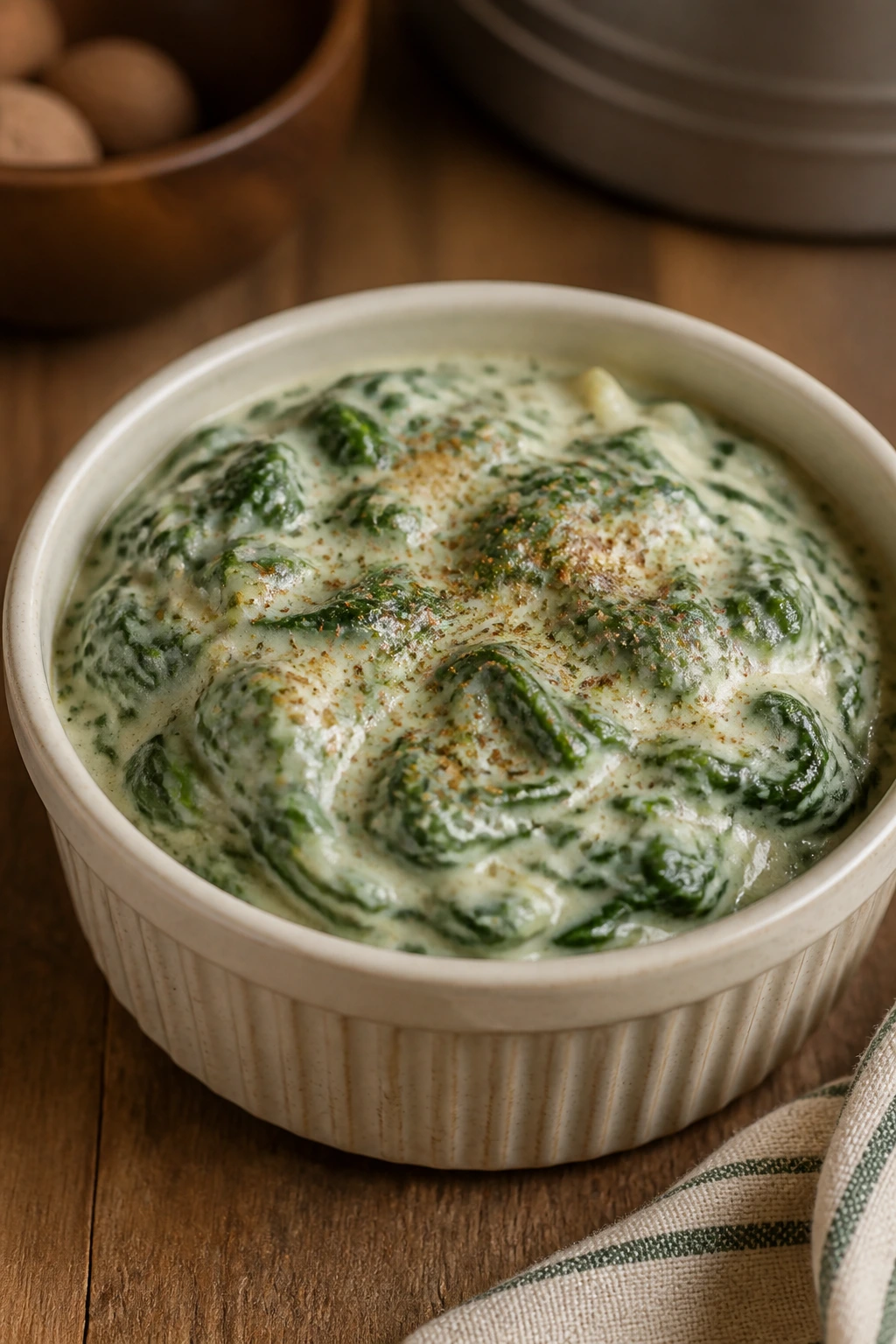
Creamed spinach has a reputation for being rich, and this version earns it. The spinach turns velvety, the cream cheese melts into the sauce, and the nutmeg keeps the whole thing from tasting like baby food in a green sweater.
Why It Works: Frozen spinach is actually the smart move here because it has already lost some moisture, which means the sauce stays thicker. Cream cheese and Parmesan add body, while nutmeg gives the finished dish that old-school holiday flavor people recognize right away. A short cook keeps the spinach from turning dark and swampy.
Key Ingredients:
- 3 (10-ounce) packages frozen chopped spinach, thawed and squeezed dry
- 8 oz cream cheese, cubed
- 1/2 cup heavy cream
- 2 tbsp unsalted butter
- 1 small onion, finely minced
- 2 cloves garlic, minced
- 1/2 cup grated Parmesan
- 1/4 tsp ground nutmeg
- 1/2 tsp kosher salt
- 1/4 tsp black pepper
Quick Steps:
- Place the spinach, cream cheese, cream, butter, onion, garlic, Parmesan, nutmeg, salt, and pepper in the slow cooker.
- Stir to break up the cream cheese a little.
- Cover and cook on LOW for 1 1/2 to 2 hours, stirring every 30 minutes, until the cheese melts and the spinach turns silky.
- If the mixture looks watery, leave the lid off for the last 10 minutes.
- Taste and add a pinch more nutmeg or salt if needed.
Equipment for This Recipe:
- 4-quart slow cooker
- Clean kitchen towel or cheesecloth for squeezing spinach dry
- Silicone spatula
How to Serve This Dish: Serve the spinach in a small warm bowl or spoon it onto a platter next to roast meat. It is dense enough to sit under gravy, but I like it on the side where the green color can actually show up against the rest of the meal.
Pro Tips for This Recipe:
- Squeeze the spinach dry with real force. Extra water is what makes creamed spinach sad.
- Freshly grated nutmeg tastes cleaner than the dusty pre-ground kind.
- Stir halfway through so the cheese melts evenly and does not cling to one side.
Variations on This Dish:
- Cheddar Spinach: Swap half the Parmesan for sharp cheddar if you want a louder cheese flavor.
- Garlic-Lover’s Version: Roast the garlic first and mash it in at the end for a sweeter finish.
Common Mistakes to Avoid with This Dish:
- Not draining the spinach enough: The sauce gets thin and the flavor goes dull.
- Cooking it too long after the cheese melts: Spinach can turn bitter if you push it past the finish line.
14. Rosemary Root Vegetable Medley
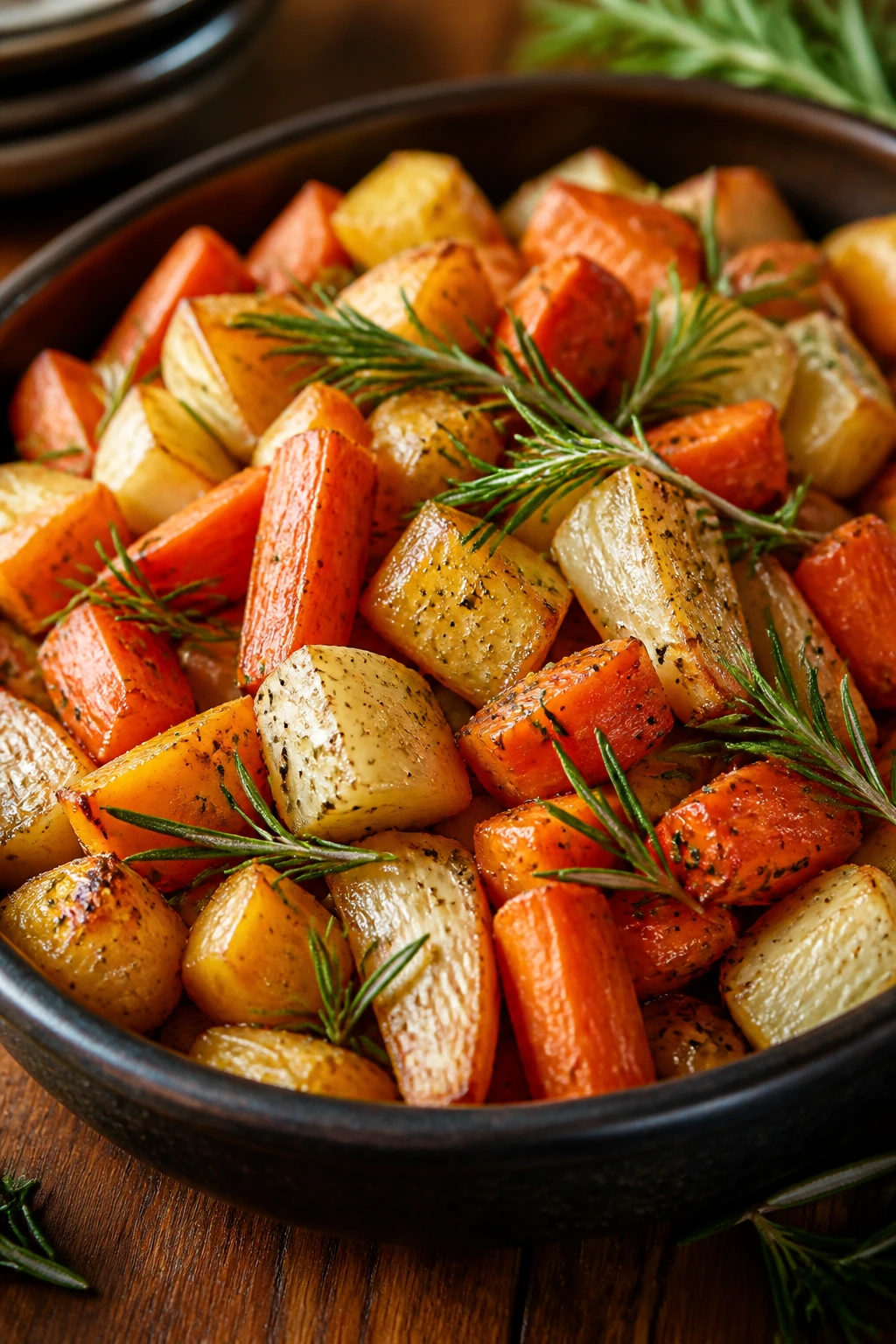
Root vegetables are the slow cooker’s comfort zone. Carrots, parsnips, turnips, and rutabaga all soften at roughly the same pace, and rosemary gives the whole bowl a woodsy backbone that feels right on a November table.
Why It Works: These vegetables are dense, so the long gentle heat works with them instead of against them. A little olive oil helps carry the rosemary, and broth prevents the edges from sticking before the vegetables release their own moisture. This is the side for anyone who wants vegetables that taste like vegetables, not frosting.
Key Ingredients:
- 2 lbs mixed root vegetables, peeled and cut into 1-inch chunks
- 3 tbsp olive oil
- 2 tsp chopped fresh rosemary or 1 tsp dried rosemary
- 3 cloves garlic, smashed or minced
- 1/2 cup low-sodium vegetable broth
- 1 tsp kosher salt
- 1/2 tsp black pepper
Quick Steps:
- Combine the root vegetables in the slow cooker.
- Toss with olive oil, rosemary, garlic, broth, salt, and pepper.
- Cover and cook on LOW for 4 to 5 hours, stirring once or twice, until the vegetables are fork-tender.
- Taste and add a pinch more salt if the flavor feels quiet.
- Serve warm with the cooking juices spooned over the top.
Equipment for This Recipe:
- 5- to 6-quart slow cooker
- Vegetable peeler
- Sharp knife
How to Serve This Dish: Serve this medley in a wide bowl so the mix of colors shows up—orange carrots, pale turnips, gold rutabaga. It is a nice counterweight to richer casseroles because it tastes clean and earthy.
Pro Tips for This Recipe:
- Cut the rutabaga a touch smaller than the carrots, since it cooks a little slower.
- Rosemary can get loud fast. Start with the listed amount and add more only at the end if needed.
- If the vegetables seem too wet at the end, leave the lid off for 10 minutes.
Variations on This Dish:
- Parsnip-Forward Version: Use extra parsnips for a sweeter, softer result.
- Honey Rosemary Roots: Add 1 tablespoon honey if you want a glazed edge without making the dish sugary.
Common Mistakes to Avoid with This Dish:
- Cutting the vegetables in wildly different sizes: Some will turn to mush while others stay hard.
- Using too much broth: The vegetables should steam gently, not swim.
15. Roasted Garlic Cauliflower Mash
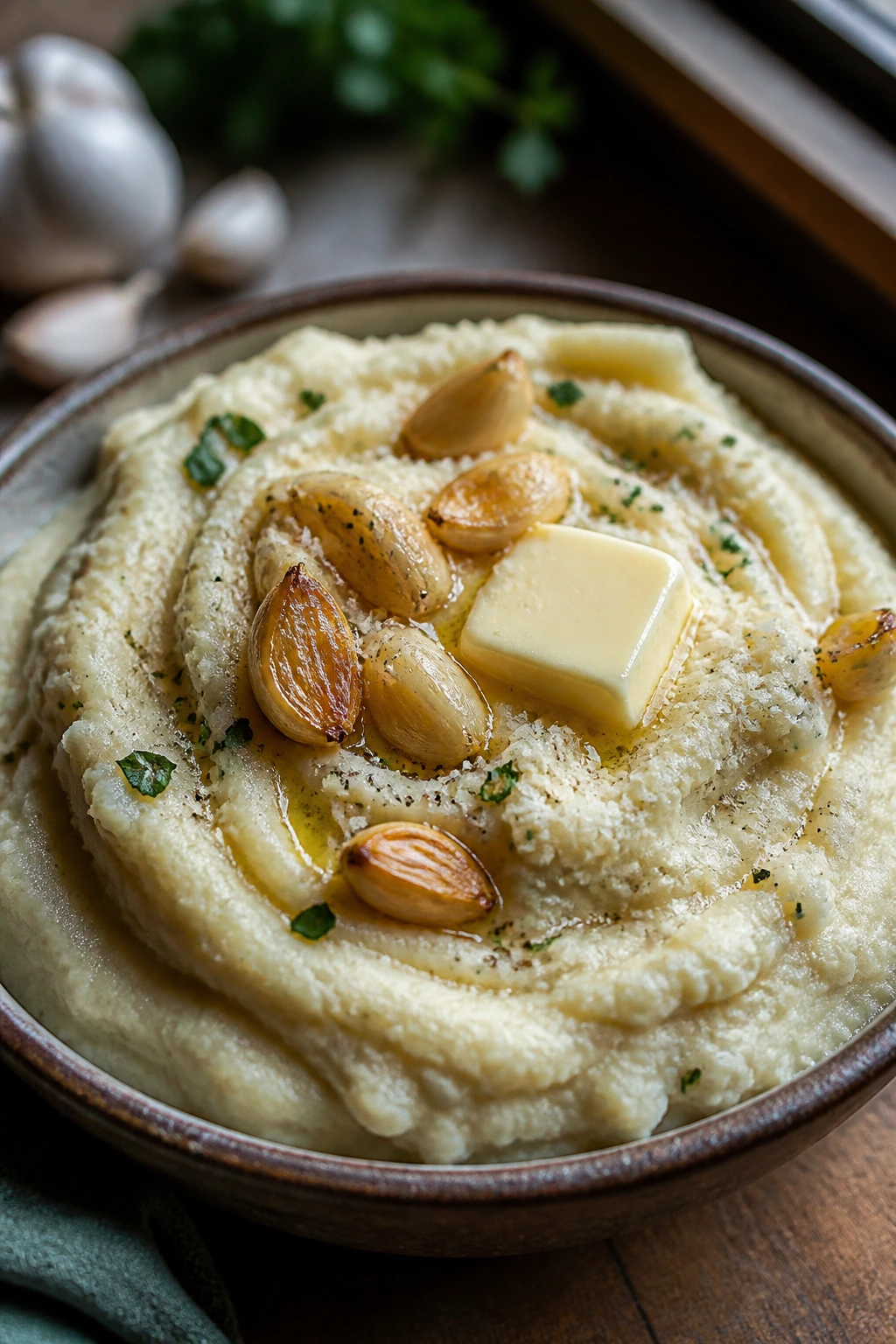
Cauliflower mash can be bland and watery when it is handled badly, which is why roasted garlic matters here. The florets cook down soft, the garlic gives them sweetness and depth, and the cheese plus sour cream keep the texture thick enough to stand in for mashed potatoes if you want it to.
Why It Works: Cauliflower gives off a lot of water, so the recipe keeps the liquid modest and lets some steam escape near the end. Roasted garlic has a mellow, almost sweet flavor that blends smoothly with butter and cream cheese. Parmesan adds salt and a little umami, which keeps the mash from tasting like plain steamed cauliflower.
Key Ingredients:
- 2 large heads cauliflower, cut into florets
- 1 head roasted garlic, cloves squeezed out
- 4 tbsp unsalted butter
- 4 oz cream cheese
- 1/4 cup sour cream
- 1/3 cup grated Parmesan
- 1/2 tsp kosher salt
- 1/4 tsp black pepper
- 2 tbsp chopped chives, optional
Quick Steps:
- Place the cauliflower florets in the slow cooker with 1/2 cup water or broth.
- Cover and cook on LOW for 2 to 3 hours, until the florets are very tender.
- Drain off any extra liquid carefully, then add the roasted garlic, butter, cream cheese, sour cream, Parmesan, salt, and pepper.
- Mash with a potato masher or blend briefly with an immersion blender for a smoother texture.
- Taste and finish with chives.
Equipment for This Recipe:
- 4- to 6-quart slow cooker
- Potato masher or immersion blender
- Colander or slotted spoon for draining
How to Serve This Dish: Serve it like mashed potatoes, with a small well in the center for gravy if you want. It works especially well with turkey, because the mash has enough richness to carry sauce but not so much that it tastes heavy.
Pro Tips for This Recipe:
- Drain the cauliflower well before mashing. Leftover water is what makes mash runny.
- Roasted garlic is worth the extra step because raw garlic would taste sharp and unfinished here.
- If you want it thicker, let it sit uncovered for a few minutes after mashing.
Variations on This Dish:
- Cheddar Cauliflower Mash: Swap the Parmesan for sharp cheddar if you want a more classic comfort-food flavor.
- Herbed Cauliflower Mash: Add dill or parsley at the end for a fresher taste.
Common Mistakes to Avoid with This Dish:
- Not draining the liquid: The mash turns loose fast and never really recovers.
- Using raw garlic: It can taste harsh and dominate the dish instead of blending in.
Why the Slow Cooker Handles Holiday Vegetables So Well
The slow cooker is best when you use it for what it actually does well: gentle, enclosed heat that coaxes vegetables into tenderness without demanding attention every ten minutes. That matters more on a holiday table than people admit. The oven can only hold so much, and once you start lining up casseroles, rolls, and a tray of stuffing, the slow cooker becomes the easiest place to park a vegetable side that still needs warmth and time.
It also gives you a little control over texture, which is the part that makes or breaks vegetable sides. Root vegetables like carrots, squash, and sweet potatoes can sit in low heat for hours and come out soft, sweet, and steady. Broccoli and green beans need a shorter stay, which is why the recipes above keep their cook times tight. The cooker isn’t magic. It just gives you a safer buffer than a hot oven or a crowded stove.
Best Matches for the Crockpot
Sturdy vegetables love the method. Think sweet potatoes, carrots, parsnips, rutabaga, acorn squash, and collards. They absorb butter, herbs, broth, and sugar without falling apart right away.
Where You Have to Be Careful
Delicate vegetables are a different story. Broccoli, green beans, and Brussels sprouts need shorter cook times or a finish outside the slow cooker if you want them to taste fresh instead of tired. That’s not a flaw in the recipe. It’s the nature of the vegetable.
Essential Equipment for These Recipes
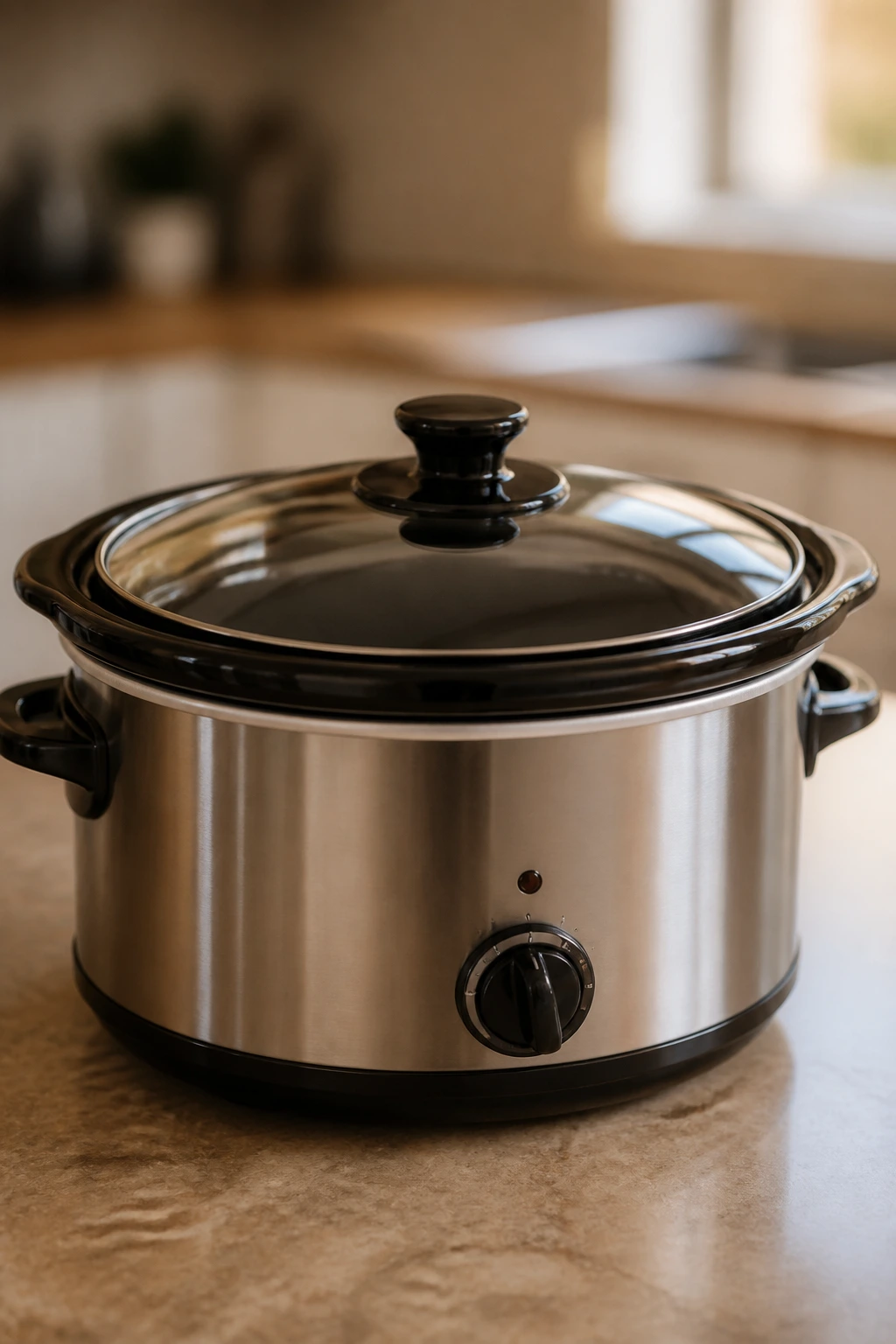
- 4- to 6-quart slow cooker: The workhorse for most of these sides; a 6-quart model gives you enough room for larger batches.
- Vegetable peeler: Handy for carrots, squash, sweet potatoes, and root vegetables where the skin needs to come off cleanly.
- Sharp chef’s knife: A dull knife crushes vegetables and makes even cuts harder, which matters when cook times are tight.
- Cutting board: A stable board keeps prep quick and makes trimming and peeling less annoying.
- Potato masher: Better than a blender for sweet potatoes, cauliflower mash, and squash when you want a rustic texture.
- Immersion blender: Optional, but useful for making cauliflower or squash smoother without transferring hot food.
- Measuring cups and spoons: Slow cooker sides are forgiving, but the butter, salt, and liquid still need to stay in range.
- Silicone spatula: Good for scraping the bottom of the insert without scratching it.
- Mandoline: Optional for scalloped potatoes if you want even slices with less work.
- Colander or clean kitchen towel: Useful for draining spinach or cauliflower so the finished dish doesn’t turn watery.
Smart Shopping for Tender, Flavorful Vegetables
The first rule is boring and true: buy vegetables that still have some life in them. Green beans should bend with a snap, not feel rubbery. Carrots should be firm, not soft near the tops. Brussels sprouts need tight heads and pale stems; if the outer leaves are yellowing, leave them behind. Cauliflower should feel heavy for its size, and squash should feel dense rather than hollow.
Frozen vegetables can be a smart shortcut in a slow cooker, but not every one behaves the same way. Frozen corn is excellent here because it keeps its sweetness and shape. Frozen chopped spinach is also a gift, especially for creamed spinach, because the freezing and thawing process already does some of the moisture work for you. Green beans and broccoli are better fresh if you care about texture. They can handle frozen, but they do not always look as clean on the plate.
Buy low-sodium broth and unsalted butter whenever you can. Slow cookers trap flavor, which also means they trap salt. A dish that tastes perfect at the start can get harsh by the end if the broth is already heavily seasoned. The same thing goes for bacon, Parmesan, and soy sauce. Each one brings salt of its own, so a little restraint at the shopping stage saves you from a table full of over-seasoned vegetables.
For potatoes and squash, size matters more than price. Choose potatoes of similar width so they slice evenly. Pick squash and sweet potatoes that feel heavy and have few soft spots. And if you can find peeled pearl onions frozen, take the shortcut. It is not cheating. It is sanity.
How to Serve These Dishes
Presentation: Use shallow bowls, wide platters, or oval serving dishes so the color shows up. Green beans look better spread out, carrots look better in a glossy mound, and mashed vegetables always look less heavy when they are spooned into a warm dish instead of dumped into a deep one.
Accompaniments: These sides pair naturally with roast turkey, ham, stuffing, cranberry sauce, and dinner rolls, but they also help when the rest of the meal is heavier than you planned. A bitter green, a tart relish, or a plain starch can balance out the sweet sides without making the table feel repetitive.
Portions: For a standard holiday meal, plan on about 1/2 cup per person for each vegetable side if there are several dishes on the table. If one side is acting as the main vegetable, like scalloped potatoes or green bean casserole, 3/4 cup per person is more realistic. Leftovers are a feature, not a problem, so it is usually smarter to make a little extra than to run short.
Beverage Pairing: A dry sparkling cider works with almost every recipe here because it cuts through butter and cream without fighting the herbs. If you prefer wine, an unoaked Chardonnay or a light Pinot Noir can handle the sweet-savory mix nicely. For a nonalcoholic option, iced tea with lemon or sparkling water with orange slices keeps the meal from feeling too heavy.
Additional Tips and Flavor Boosters
Flavor Enhancement: A finishing splash of acid—lemon juice, apple cider vinegar, or even a little orange zest—keeps rich vegetable sides from tasting sleepy. On a table full of butter and cream, a tiny sharp note makes the vegetables taste more alive.
Customization: Add toasted nuts, crispy onions, or fresh herbs at the end instead of cooking them in the pot. That one move adds texture where slow cookers usually flatten it. Pecan, almond, chive, parsley, and sage all make sense here.
Serving Suggestions: Keep one small bowl of extra salt and one of black pepper nearby if you’re serving a mixed group. A few people want more seasoning, and it is easier to let them adjust than to over-salt the whole dish.
Make-It-Yours: For dairy-free versions, swap butter for olive oil or plant butter and use unsweetened oat cream or coconut milk where a recipe needs cream. For vegetarian guests, vegetable broth works in almost every recipe here, and smoked paprika can stand in for bacon or ham in the savory dishes.
Make-Ahead, Storage, and Reheating Guidance
Most of these vegetable sides will keep 3 to 4 days in the refrigerator in airtight containers. Collard greens, green bean casserole, carrots, and root vegetables usually hold up the best. Cream-based dishes like scalloped potatoes, creamed spinach, and cauliflower mash are still fine for leftovers, but their texture can shift a little after chilling. They are safe and tasty; they just won’t be quite as smooth as they were fresh.
If you want to freeze leftovers, the best candidates are the sturdier, less dairy-heavy dishes. Sweet potatoes, collards, root vegetables, and some carrot dishes freeze well for up to 2 months. Cream-heavy recipes can separate when thawed, so I would keep those refrigerated when possible and make them fresh if you want the best texture. Label the containers with the dish name and date so you do not play freezer mystery later.
For reheating, use the method that protects texture. Green beans, Brussels sprouts, and broccoli do best in a covered skillet with a splash of broth, or in the microwave in short bursts with the lid slightly cracked. Mash-style sides can go back into the slow cooker on LOW with a spoonful or two of milk or cream, then stirred every 15 minutes until hot. Casseroles and scalloped potatoes reheat well in a 300°F oven, covered loosely with foil, until the center is warm.
If you’re making these ahead for a holiday meal, you can prep the vegetables the day before: peel, slice, and store them in airtight containers in the fridge. For potatoes, keep the sliced pieces in cold water and drain them well before cooking. Once the vegetables are cooked, keep them hot on Warm only as long as needed; if the crockpot sits for more than about two hours, the texture starts drifting, and the edges of delicate vegetables can go from tender to tired.
Variations and Adaptations to Try
-
Dairy-Free Holiday Table: Use olive oil or plant butter instead of dairy butter, and swap cream cheese or heavy cream for coconut milk, oat cream, or a thick unsweetened dairy-free alternative. This works especially well in squash, carrots, and root vegetables where the flavor can stand up to the swap.
-
Lower-Sugar Glaze: Cut maple syrup, honey, or brown sugar by half and replace the missing sweetness with orange zest, apple cider, or extra cinnamon. You still get a glazed look, but the vegetable flavor stays in front.
-
Vegetarian Savory Swap: Skip bacon, ham hock, or smoked turkey and add smoked paprika, a splash of soy sauce, or a little miso for depth. That keeps the savory dishes from tasting thin when you remove the meat.
-
Kid-Friendly Mild Mode: Back off the vinegar, pepper, and strong herbs for younger eaters, then finish the adult portions at the table with extra seasoning. Carrots, corn, and sweet potatoes usually do best with this adjustment.
-
Crunch-First Finish: Add toasted nuts, fried onions, or buttered panko only at the end so the top layer stays crisp. This helps on casseroles, creamed vegetables, and Brussels sprouts where texture is half the point.
-
Herb Garden Twist: Lean into thyme, sage, rosemary, parsley, and chives instead of heavier spices. This gives the table a fresher, greener profile and helps the richer dishes feel less weighted down.
Common Mistakes to Avoid
The biggest mistake is treating every vegetable like it wants the same cook time. It doesn’t. Green beans and broccoli need short, careful cooking, while squash, potatoes, and collards can handle a lot more time. If you give every side the same schedule, some will turn soft and others will still be stubborn in the middle.
Another common slip is adding crunchy toppings too early. Fried onions, toasted almonds, panko, and even fresh herbs can go limp or bitter if they sit in steam too long. Keep them back and add them at the end, or the texture you wanted never really shows up.
People also tend to overfill the slow cooker. A packed insert traps steam unevenly, which means the bottom layer can go mushy while the top layer stays undercooked. If a recipe looks crowded, use a larger cooker or split it into two batches. It’s less glamorous, but it works.
Then there’s forgetting that slow cookers trap salt. Broth, bacon, Parmesan, soy sauce, and condensed soup can add up fast. Taste near the end and adjust then. Early over-seasoning is harder to fix than blandness, and blandness is at least recoverable.
A final one: keeping delicate vegetables on Warm for too long. Warm is useful for a short window, not a holding pen for the whole afternoon. If you need to keep something hot, stir it once in a while and move it to a serving dish when the texture is where you want it.
Frequently Asked Questions
Can I use frozen vegetables in these slow cooker sides?
Yes, but choose carefully. Frozen corn and frozen spinach work especially well because they keep texture and save prep time. Frozen green beans or broccoli can work in a pinch, but they usually need a shorter cook so they do not turn soft.
What size slow cooker do I need for these recipes?
A 4-quart cooker handles most single-vegetable sides, while a 6-quart model is better for larger batches, potatoes, and casseroles. If you want to make two sides at once, use separate cookers or plan on one batch at a time. Crowding is where texture starts going off the rails.
How do I keep vegetables from turning mushy?
Use the right vegetable for the right recipe, cut pieces evenly, and check early rather than late. Delicate vegetables need shorter cook times, and even sturdy ones can overcook if your slow cooker runs hot. When in doubt, stop a little early and hold on Warm.
Can I make these the day before?
Yes, several of them are excellent make-ahead dishes. Collard greens, root vegetables, and sweet potatoes hold up especially well, while broccoli and green beans are better cooked closer to serving time. You can still prep the produce a day ahead, which saves a lot of kitchen time.
Which of these recipes travel best?
Sweet potatoes, collards, carrots, green bean casserole, and scalloped potatoes travel well in a lidded slow cooker or insulated carrier. Just keep the dish hot and avoid stirring in crunchy toppings until you arrive. Anything creamy should be transported with the lid secured and a towel under it if needed.
Can I double a recipe in the same slow cooker?
Only if the insert has room and the food still sits below the fill line. Doubling is fine for some root vegetable dishes, but it can ruin texture in broccoli, green beans, and casseroles if the pot is too full. If the cooker looks crowded, make two smaller batches instead.
Do I need to grease the slow cooker insert?
For mashed dishes, casseroles, and scalloped potatoes, a light coat of butter or cooking spray helps a lot. For vegetable medleys with broth, it is less important, but a little grease still makes cleanup easier. Don’t overdo it, or the finished dish can taste slick.
How long can these sit on Warm during dinner?
About 1 to 2 hours is the sweet spot for most of them. After that, delicate vegetables keep softening and creamy dishes can start to thicken too much. Stir occasionally and transfer to a serving bowl if you want to stop the cooking faster.
What if my slow cooker runs hotter than expected?
Check the dish earlier than the recipe says and trust texture, not the clock alone. Many older models cook faster on Low than newer ones, and some inserts develop hot spots near the edge. If you know your cooker runs hot, reduce the time by 15 to 30 minutes and watch closely the first time you make a recipe.
A Softer Thanksgiving Table
These slow cooker vegetable sides bring a kind of calm that the holiday table usually needs but rarely gets. The flavors are familiar enough to feel right—garlic, butter, sage, maple, thyme, cream, bacon—but the method takes the edge off the day. You get vegetables that are warm, seasoned, and ready without one more pan fighting for space on the stove.
That’s the part I keep coming back to. A crockpot cannot brown everything or crisp every topping, but it does something just as useful: it buys you breathing room. And on a lazy Sunday, or a Thanksgiving kitchen that already feels full, breathing room is worth more than another fancy trick.
If you pick even three or four of these recipes and build your table around them, the rest of the meal gets easier in a way you can actually feel. The vegetables stop being the rushed afterthought and start acting like the steady part of the plate, which is where they belong.