



The first thing to understand about slow-cooked crockpot Chinese food is that it is not trying to be a wok. If you want the snap of broccoli tossed for thirty seconds in screaming heat, or that smoky high-heat flavor cooks call wok hei, the slow cooker is the wrong tool. If you want chicken thighs that turn spoon-tender, pork shoulder that falls apart into glossy strands, and a soy-ginger sauce that darkens while you’re doing something else, this is where the crockpot earns its shelf space.
I’m using “Chinese food” here the way home cooks usually mean it: Chinese-American takeout favorites, braised meats, soup, tofu, and saucy vegetable dishes built around soy, sesame, ginger, garlic, vinegar, and a little sweetness. That’s a wide lane. Good. It means there’s room for orange chicken, beef and broccoli, sesame pork, hot and sour soup, and a dozen other dishes that make more sense in a covered pot than in a skillet.
The set-and-forget part works only when you stop asking the slow cooker to mimic a stir-fry. Ask it to braise. Ask it to soften connective tissue, deepen sauce, and hold flavor in a way a covered skillet never quite can. Then keep the crunchy stuff for the end. That’s the real trick, and once you get it, dinner starts to feel suspiciously easy.
Why Crockpot Chinese Food Works Better as a Braise Than a Stir-Fry
Braises love low heat and a lid. Chicken thighs, pork shoulder, beef chuck, and mushrooms all get more tender over hours because the cooker has time to break down tough bits without scorching the sauce.
The sauce gets a deeper color and rounder taste. Soy sauce, hoisin, garlic, ginger, and a little sugar need time together; after a few hours, they stop tasting separate and start tasting like one coherent dish.
You can build takeout-style flavor without standing at the stove. A stir-fry asks for constant attention. A slow-cooker braise asks for a cutting board, one bowl, and a modest amount of confidence.
Vegetables still have a place. They just need better timing. Broccoli, bok choy, peppers, and snow peas can work beautifully if they go in late or get cooked separately and added at the end.
Cleanup stays civilized. One insert. One bowl for sauce. Maybe one skillet if you sear the meat. That matters more than people admit.
The big limitation is also the reason this method succeeds. Anything that depends on a crisp coating, a blistered edge, or a very fast toss in hot oil belongs somewhere else. That sounds restrictive. It isn’t. It just means the crockpot gets the jobs it can do well instead of being bullied into doing everything.
The Sauce Formula That Holds Up After Hours of Heat
What makes one slow-cooker sauce taste like takeout and another taste like soy-water? Ratio, mostly. The sauce has to carry salt, sweetness, body, and a little acid, and none of those parts should bully the others.
A dependable shape for crockpot Chinese food starts with low-sodium soy sauce, a sweetener, a savory booster like hoisin or oyster sauce, a splash of vinegar, ginger, garlic, and enough unsalted broth or water to keep things moving. If the pot looks alarmingly dark and a little too aggressive before it cooks, that’s usually a good sign. Slow heat softens the edges. A sauce that tastes balanced in the bowl often tastes shy after four hours.
What Each Part Does
Soy sauce: gives salt, color, and the deep savory backbone. Low-sodium soy is easier to control because slow cooking concentrates everything.
Hoisin or oyster sauce: brings body and a thicker, darker sweetness. Hoisin leans sweet and molasses-like; oyster sauce leans round and savory. Both help the sauce cling.
Sugar, honey, or brown sugar: this is what turns the sauce from “seasoned liquid” into glaze. You do not need much before long heat makes it stronger.
Rice vinegar or black vinegar: wakes the whole pot up. This part is easy to miss, and then the finished dish tastes heavy.
Garlic and ginger: grate them fine if you can. Thin slices work, but finely grated aromatics spread their flavor through the sauce more evenly.
Cornstarch: keep it out of the pot at the start. Add it near the end as a slurry if you want sauce that coats the spoon instead of pooling like broth.
A few numbers help. For a standard 5- to 6-quart slow cooker, many braises sit in the neighborhood of 1/2 cup soy sauce, 2 to 4 tablespoons sweetener, 2 tablespoons vinegar, 1 to 2 tablespoons savory sauce, and 1 to 2 cups broth, adjusted for the dish and the amount of meat. That is not a recipe. It’s a working range. The point is balance, not exactitude.
The One Thing People Overlook
Sesame oil is a finishing oil, not a long-cook oil. Add it at the end. If it sits under hours of heat, it loses the warm toasted perfume that makes the whole kitchen smell like you know what you’re doing.
Meat, Tofu, and Mushrooms That Stay Tender
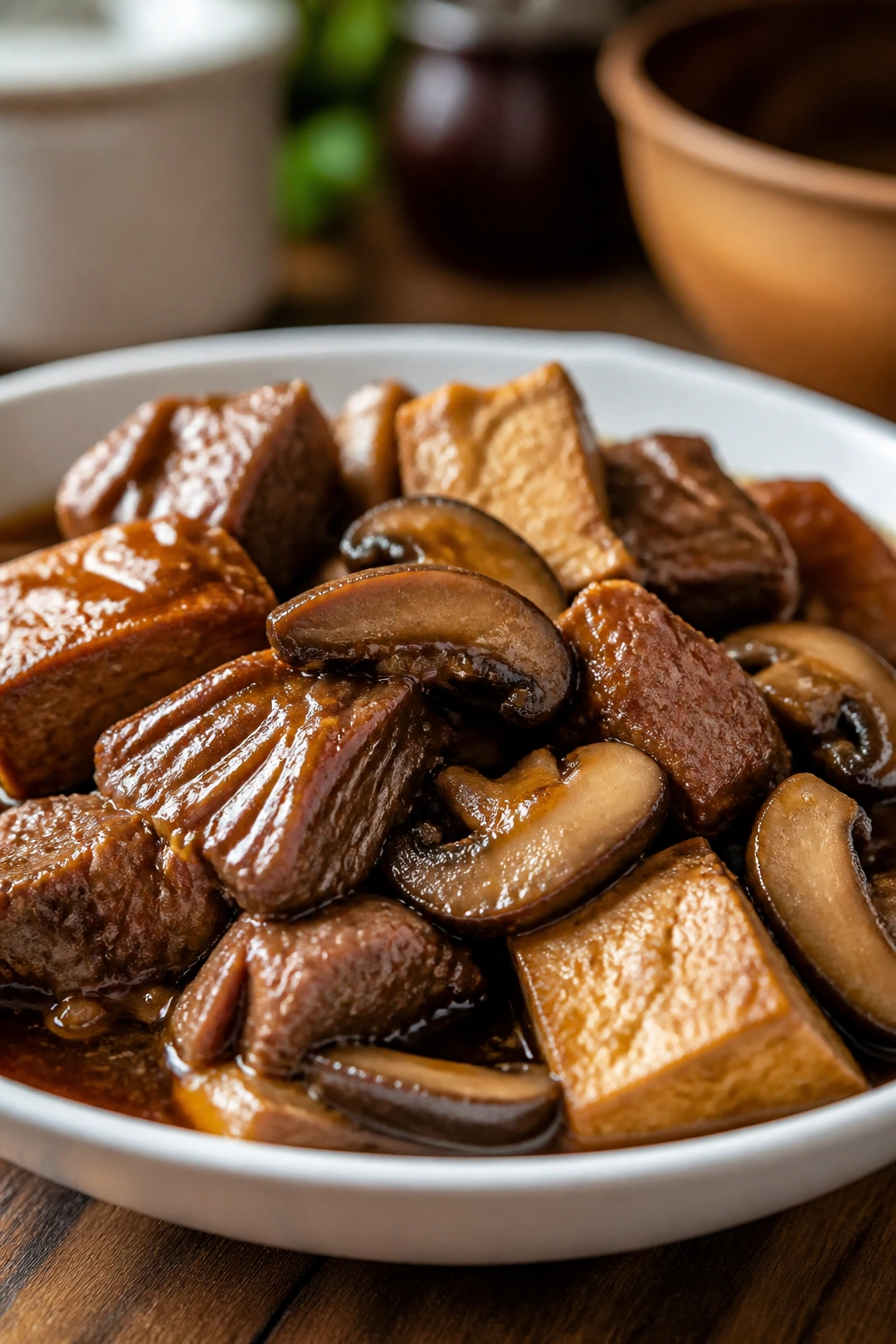
The best proteins for the crockpot are the ones with a little fat, a little connective tissue, or both. That is the blunt version, and it saves a lot of disappointment.
Chicken thighs are the easy winner. Boneless, skinless thighs stay juicy over a long cook and absorb sauce without turning stringy. Drumsticks work too, especially if you like meat that falls from the bone. Pork shoulder is another gift to the slow cooker; it starts out a little stubborn and ends up shreddable, which is exactly what you want for sesame pork, char siu-style pork, or any saucy bowl that needs meat with body.
Beef chuck is the slow-cooker beef to buy. Not flank steak. Not a delicate sirloin you were hoping to rescue with optimism. Chuck has the collagen that melts into richness over time. If you want a beef and broccoli-style dish, use chuck and slice it after cooking, or use small chunks and let them go until they’re tender enough to pull apart with a spoon. Short ribs are excellent too, though richer and more expensive.
The Protein Short List
- Chicken thighs: best all-around choice for saucy braises; they stay moist and don’t punish you if the pot runs a little hot.
- Pork shoulder: ideal for shredding into sticky bowls, lettuce wraps, or steamed buns.
- Beef chuck: the safest beef for long cooking; it turns tender without going dry.
- Short ribs: rich, deeply flavored, and excellent with soy, ginger, and star anise.
- Firm tofu: workable if pressed and handled well, especially in vegetarian braises.
- Shiitake or king oyster mushrooms: not a protein in the strict sense, but they give the same satisfying chew and absorb sauce beautifully.
What to Treat Carefully
Chicken breast can work, but only if it spends less time in the pot. Add it later, or pull it the minute it reaches 165°F. Otherwise it goes from “lean” to “chalky” fast.
Flank steak is better in a hot pan than in a slow cooker. Same with shrimp. Shrimp wants the final ten minutes, maybe less. If it sits in the pot all afternoon, you’ll get rubber.
Tofu is its own case. Extra-firm tofu, pressed for 20 to 30 minutes and browned first, holds shape much better. Straight-from-the-package tofu can still taste good in a braise, but it breaks apart sooner and gives you a softer, more stew-like texture.
Mushrooms deserve more love here than they usually get. They soak up soy sauce and garlic like sponges, and shiitake in particular adds a dark, savory note that makes a vegetarian pot feel fuller. If you’ve never braised mushrooms for this style of cooking, start there. They’re the sleeper hit.
Vegetables, Noodles, and Rice: What Goes In Early and What Stays Out
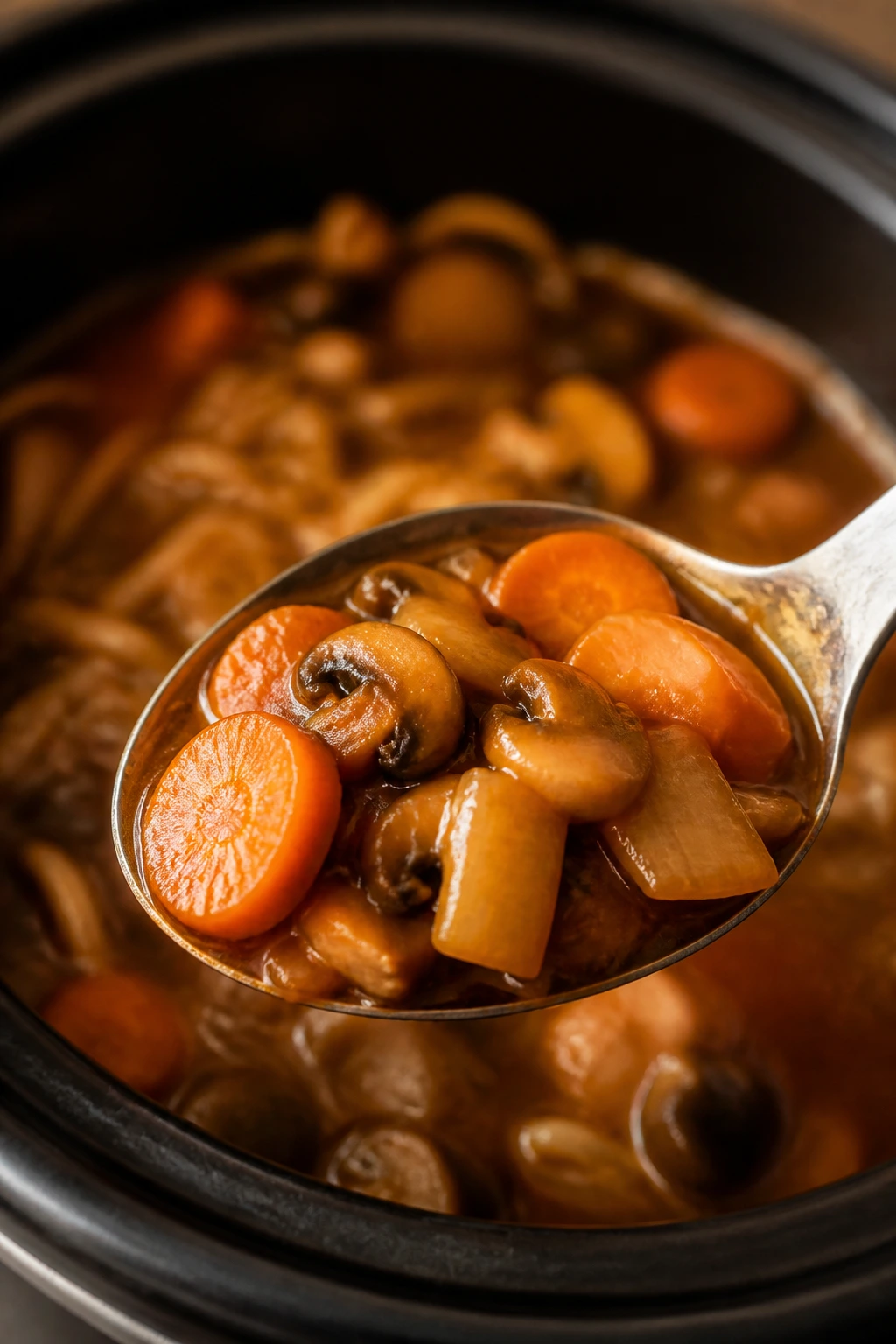
Broccoli at the beginning is how you get green sludge. Bok choy at the beginning is how you get limp leaves and stems that taste like warm bathwater. The fix is not complicated. The fix is timing.
Hard vegetables can go in early. Carrots, onions, celery, daikon, and thick mushrooms all handle long heat better than delicate greens. Slice carrots thin enough to soften in the pot, or cut them on a bias if you want them to keep a little shape. Onions disappear into the sauce in the best possible way, which is why they’re useful even when they don’t look dramatic.
What Belongs in Early
- Carrots: cut into thin coins or half-moons so they soften without becoming a separate side dish.
- Onions: chopped or sliced; they dissolve into sweetness and help the sauce feel fuller.
- Mushrooms: shiitake, cremini, or king oyster all work; they like long cooking.
- Bamboo shoots and water chestnuts: add texture without going soft.
- Napa cabbage: sturdier than regular cabbage and useful in soupier dishes.
What Belongs in Late
Broccoli florets need the final 15 to 25 minutes, depending on how soft you like them. Bok choy is better in the last 10 minutes; the stems need a little more time than the leaves, so separate them if you want to be fussy in a good way. Snow peas and bell peppers can go in near the end too, especially if you want some snap left.
Noodles are the tricky one. If you throw them into the crockpot at the start, they absorb liquid, swell, and collapse into a soft tangle that has the texture of regret. Cook them separately unless you are making a very specific noodle-based stew. Rice belongs on its own path too. Jasmine rice, white rice, or brown rice should be cooked outside the pot, then spooned underneath the saucy braise.
And yes, fried rice in the crockpot is a bad idea. Rice needs dry heat and a hot pan. The slow cooker gives it none of that.
Crockpot Chinese Food Dishes That Translate Best
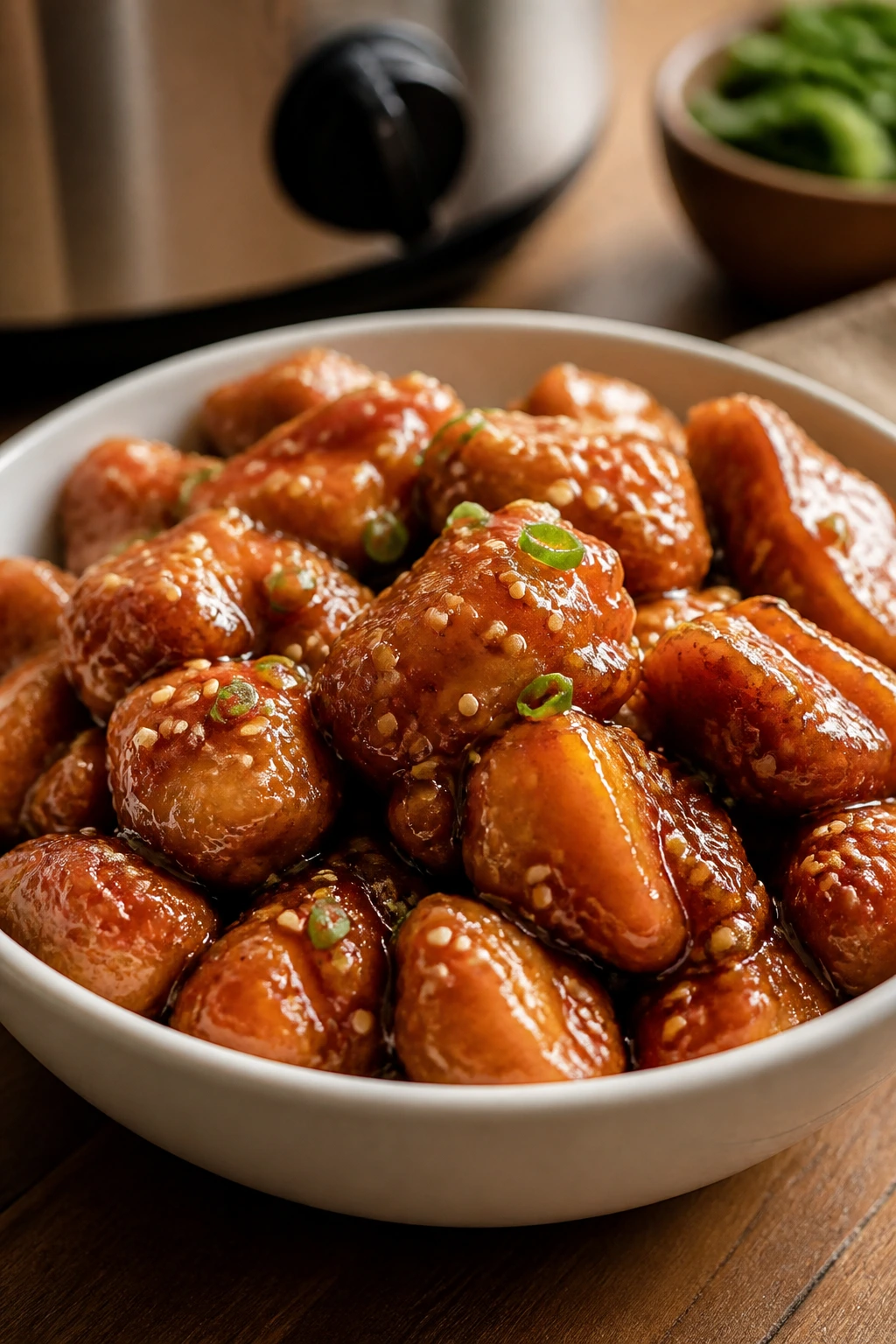
Not every takeout favorite deserves a slow cooker. Some dishes are born for a blazing wok and a fast hand. Others are happier when the heat drops and the lid stays on. The best candidates are the ones that already lean saucy, braised, or soup-forward.
Sticky Sesame Chicken
This is one of the easiest translations because the sauce loves time. Chicken thighs, soy sauce, ginger, garlic, honey, a little vinegar, and sesame oil at the end give you a glossy bowl that tastes closer to a braise than a fried takeout dish, which is fine. Better, honestly. You get tenderness without frying, and the sauce clings to rice in a way that feels practical and generous.
Beef and Broccoli
The common mistake is using the wrong beef and putting the broccoli in too early. Use chuck, cook it until tender, and add broccoli near the end or steam it separately. What you get is not a wok clone. It’s a slow-cooked version with deeper beef flavor and a sauce that actually coats the meat instead of sliding off into the rice.
Char Siu-Style Pork Shoulder
If you like sweet-savory pork with hoisin, five-spice, garlic, and a little red color from fermented bean curd or a touch of paprika, pork shoulder is your friend. Cook it low until it shreds, then spread it on a tray and broil it for a few minutes if you want sticky edges. That last step changes the whole dish. It gives you the texture the crockpot can’t create on its own.
Orange Chicken Without the Fryer
Orange chicken in a slow cooker works only if you treat the citrus with some caution. Fresh orange juice, orange zest, soy, ginger, garlic, honey, and vinegar make a sauce that tastes bright instead of sticky-sweet. Zest matters more than people expect. Juice alone can go flat. Zest hangs around.
Hot and Sour Soup Base
This is where the slow cooker feels almost smug. Broth, mushrooms, tofu, bamboo shoots, white pepper, ginger, and a finish of vinegar make a base that develops depth over time. Add the egg at the end if you want ribbons. Add scallions and a little chili oil at the table. It’s one of the few Chinese-style dishes that can be deeply satisfying even without meat.
Braised Tofu and Shiitake
If you want a vegetarian pot that doesn’t feel like an afterthought, this is a strong move. Pressed tofu, browned first, holds shape well enough to carry sauce. Shiitake mushrooms bring the dark savoriness that beef usually would, and bok choy or napa cabbage can be added near the end for bulk and color.
There’s a reason these dishes work. They already know how to be patient.
The Last Ten Minutes: How to Finish With Gloss, Acid, and Crunch
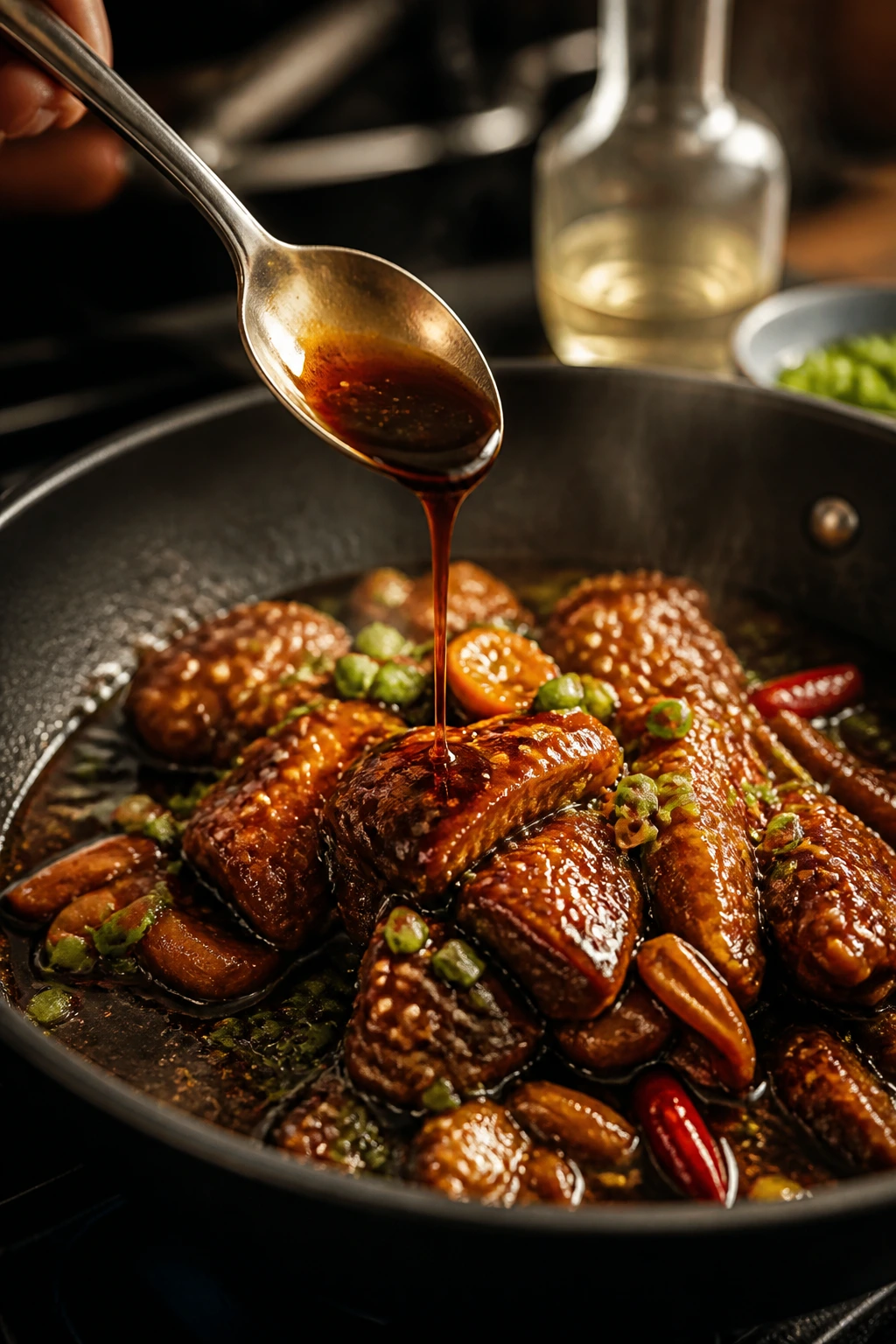
A slow cooker can build depth. It cannot finish a dish for you. That’s your job, and the final ten minutes often matter more than the first ten.
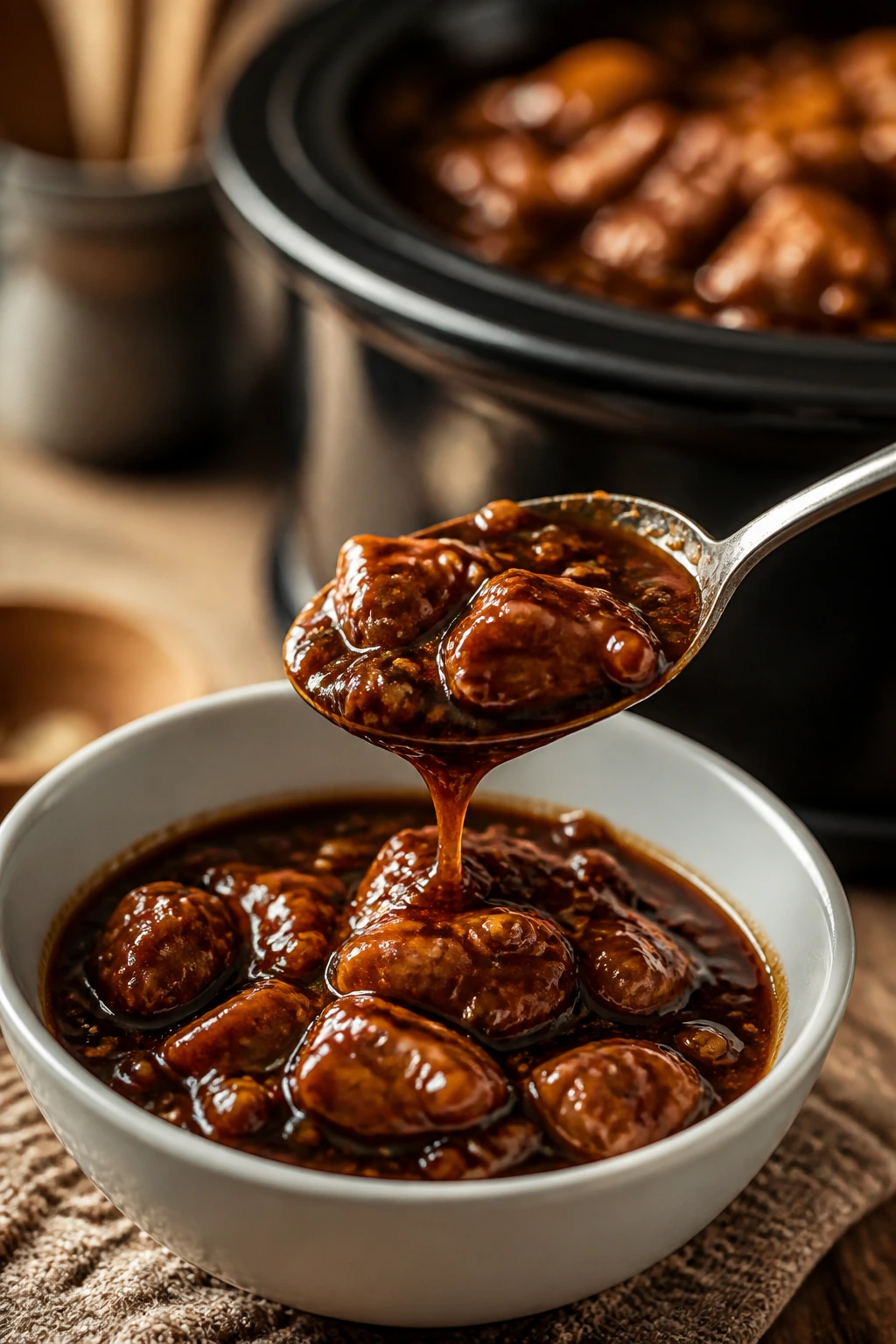
Gloss comes from reduction or slurry. If the sauce is thin at the end, remove the lid and let it cook on High for 15 to 20 minutes, or transfer it to a saucepan and simmer it on the stove. A slurry of cornstarch and cold water also works well, but add it near the end, not at the beginning. A common starting point is 1 tablespoon cornstarch plus 1 tablespoon cold water per cup of sauce, adjusted to how thick you want it.
Brightness comes from acid. A teaspoon or two of rice vinegar or Chinese black vinegar can turn a heavy sauce into a lively one. The difference is not subtle. It’s the difference between “nice” and “I want another bowl.”
Crunch has to be added on purpose. Toasted sesame seeds, sliced scallions, crushed peanuts, and thinly sliced fresh chilies all wake up soft braises. Chopped cilantro can work in some dishes, though I use it selectively. It’s not a universal fix.
Heat belongs at the end too. Chili crisp, chili oil, or a spoonful of doubanjiang stirred in after cooking lets you control the burn. If you cook those flavors for six hours, they lose their bite and can turn muddy.
One more thing. Sesame oil is magic here, but it should be treated like perfume. Stir it in after the heat is off. The aroma is the point.
How to Serve a Slow-Cooker Chinese Dinner
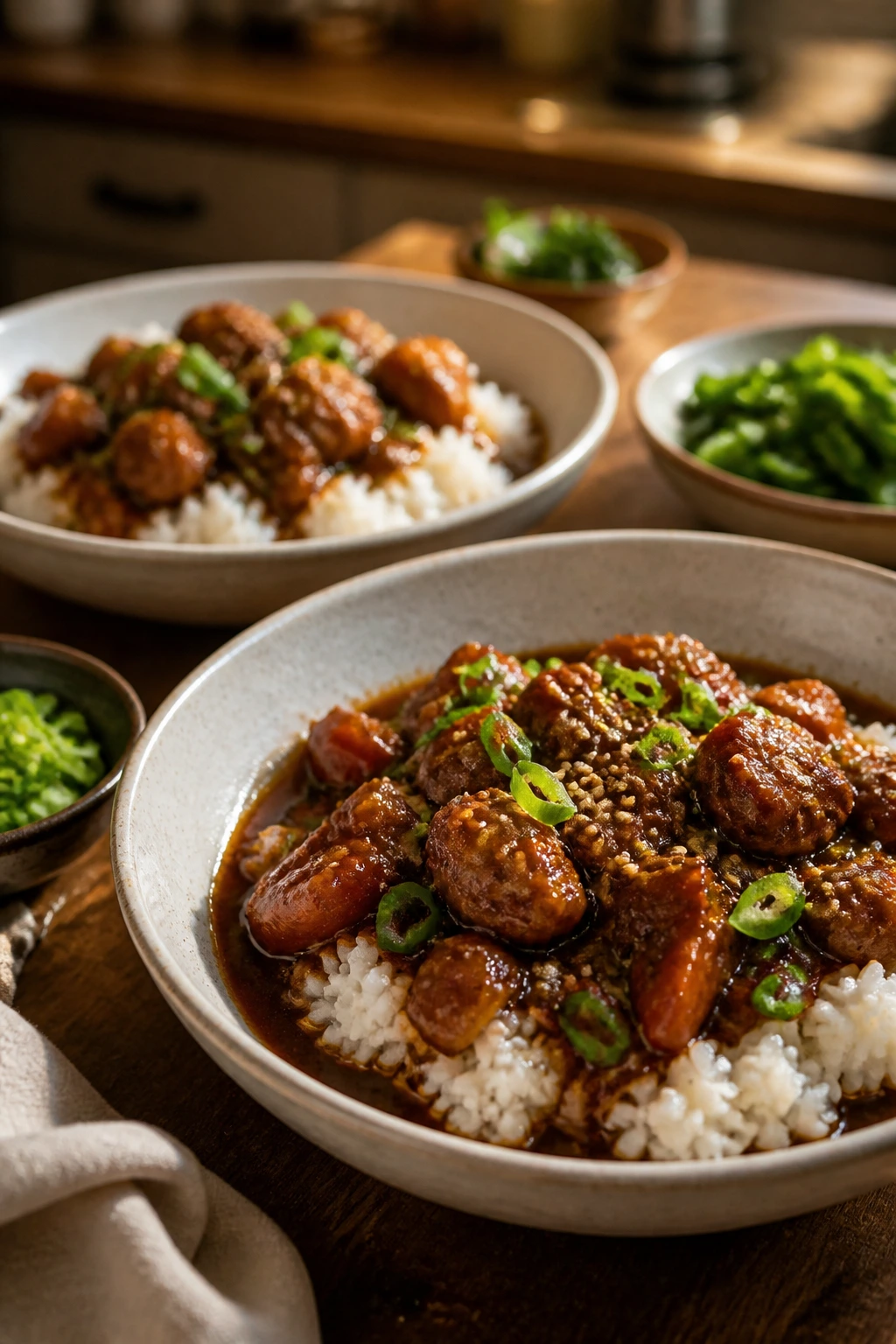
Presentation: Use shallow bowls when the dish is saucy. Rice in the bottom, braise over the top, scallions and sesame seeds scattered last. Bowls hold the sauce better than plates, and the whole thing looks more generous when the liquid has somewhere to pool.
Accompaniments: Jasmine rice is the safest pairing because it stays fragrant without fighting the sauce. Steamed bok choy, garlicky Chinese broccoli, quick cucumber salad with rice vinegar, and simple sautéed snow peas all make sense beside these dishes. If the main is already rich, keep the side plain and green. If the main is lighter, a sesame noodle side can stretch the meal.
Portions: Plan on about 3/4 to 1 cup of saucy main per person if you’re serving rice alongside it. For heartier dishes like pork shoulder or chuck, 5 to 6 ounces of raw meat per person is a reasonable place to start for dinner. If you want leftovers, increase the batch by a third rather than doubling blindly; slow cookers like comfortable headroom, not a packed-in crowd.
Beverage Pairing: Unsweetened jasmine tea is the cleanest fit. A dry lager works well with soy-heavy dishes. Off-dry riesling can handle sweet-savory sauces without getting cloying. Sparkling water with a squeeze of lime does the job if you want something quiet and cold.
The best plates here are not fussy. They’re warm, slightly messy, and built for sauce.
Small Tweaks That Improve the Whole Pot
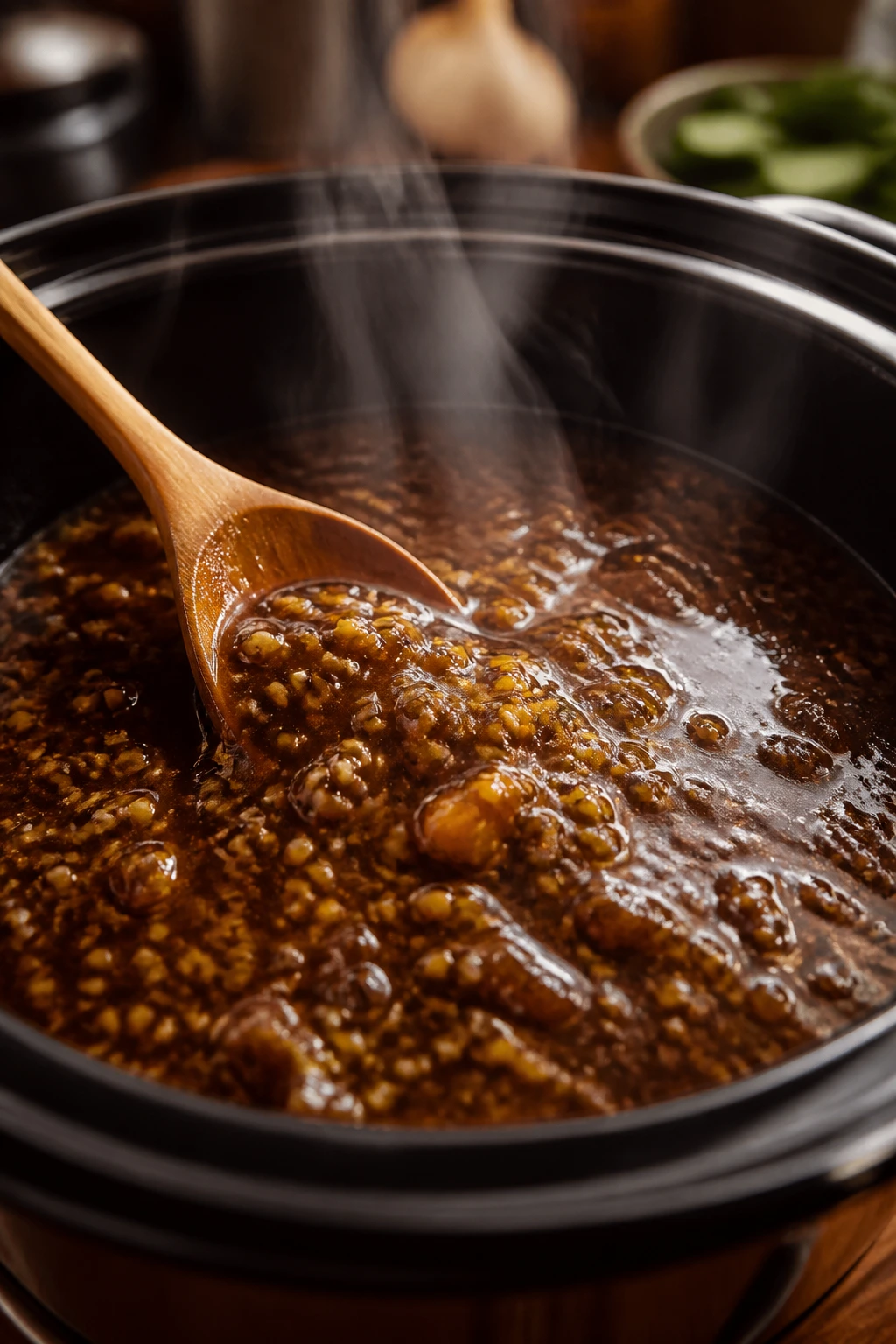
Salt smartly. Low-sodium soy sauce is not a compromise; it’s a control knob. Slow cooking concentrates salt, so starting lower gives you room to finish the dish properly. Taste the sauce before it goes in, then again near the end.
Grate the aromatics. Finely grated ginger and garlic disappear into the sauce better than big slices. Their flavor spreads more evenly, and you don’t end up with one bitter chunk at the bottom of the bowl.
Hold back the sesame oil. Same with chili crisp. These belong at the finish, where their smell can actually reach your nose. Six hours of heat mutes them.
Use a liner if cleanup is what stops you. Slow cooker liners are fine for sticky honey-hoisin sauces. They don’t change the food. They do save you from scrubbing glaze off ceramic after it cools into glue.
If you have ten minutes, sear the meat first. You do not have to. But browned chicken thighs, beef chuck, or pork shoulder start with a better-looking sauce because the browned bits at the bottom of the skillet get dissolved into the liquid. That matters more than a lot of people think.
Keep one small ladle of sauce back. If the pot tightens too much as it sits, or if leftovers need loosening the next day, a little reserved sauce makes reheating smoother. It’s a small habit that pays off.
Common Mistakes That Make the Food Taste Flat or Mushy
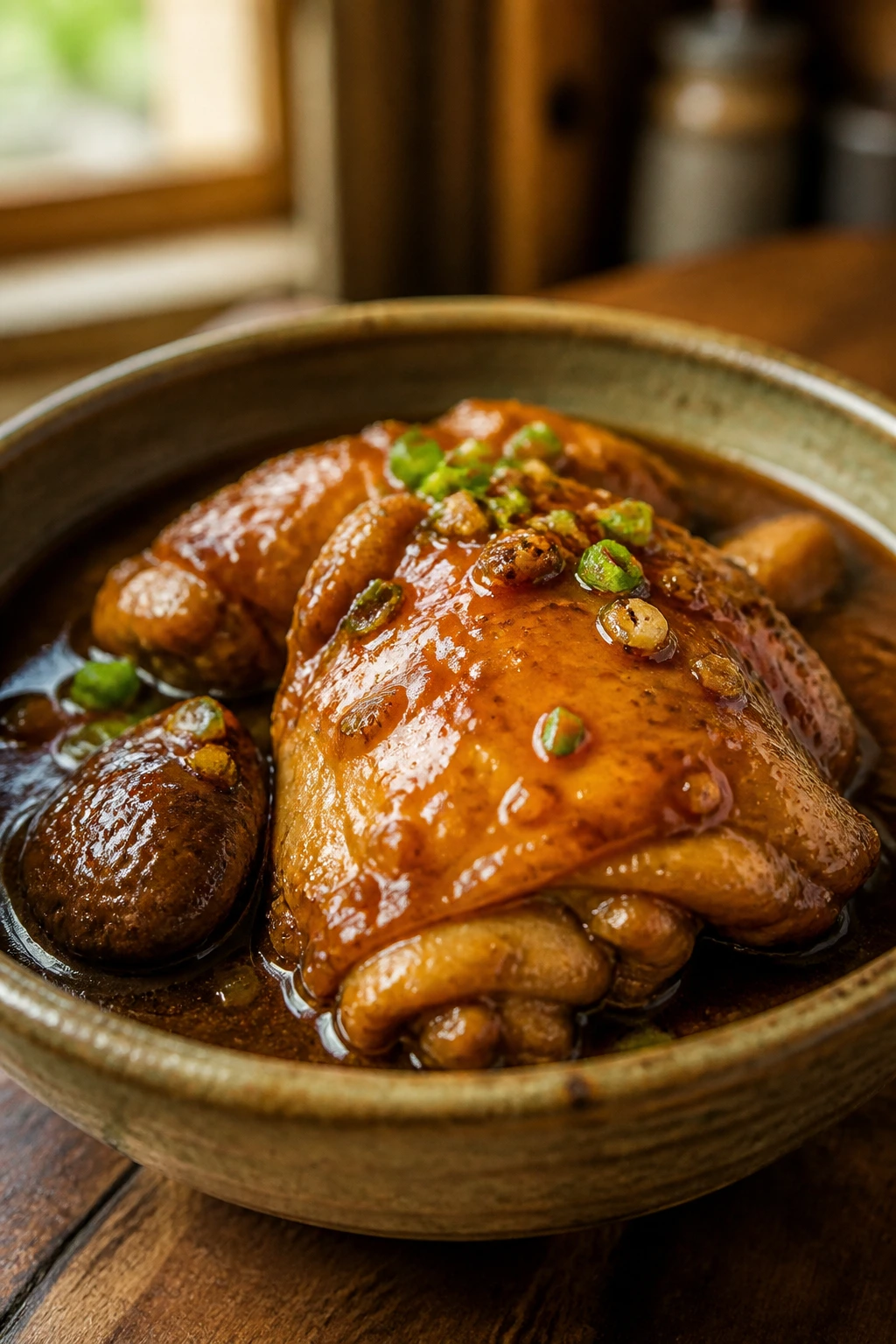
Using chicken breast for a six-hour cook. The symptom is dry, stringy meat that tastes tired before dinner even starts. The fix is simple: use thighs, or add breast during the last 60 to 90 minutes and pull it when it hits 165°F.
Adding broccoli at the beginning. The symptom is gray-green florets that collapse into the sauce. The fix is to add broccoli in the final 15 to 25 minutes, or steam it separately and fold it in at the end.
Leaving out acid. The symptom is a pot that smells good but eats heavy and flat. The fix is a splash of rice vinegar or black vinegar at the end. Start with 1 teaspoon, taste, then add more if the sauce still feels sleepy.
Putting cornstarch in too early. The symptom is a sauce that never thickens properly or turns oddly gummy after long heat. The fix is to use a slurry near the end or reduce the sauce on the stove after the main cook.
Overfilling the cooker. The symptom is watery sauce and vegetables that steam instead of braise. If the pot is more than about two-thirds full, it can struggle to concentrate flavor. Use a larger insert or cut the batch down.
Relying on sweet bottled sauce without adjusting it. The symptom is a pot that tastes like one note with extra sugar. The fix is to add garlic, ginger, soy, and vinegar so the sauce tastes built, not poured.
Easy Variations for Heat, Salt, Vegetarian Meals, and Kid-Friendly Bowls
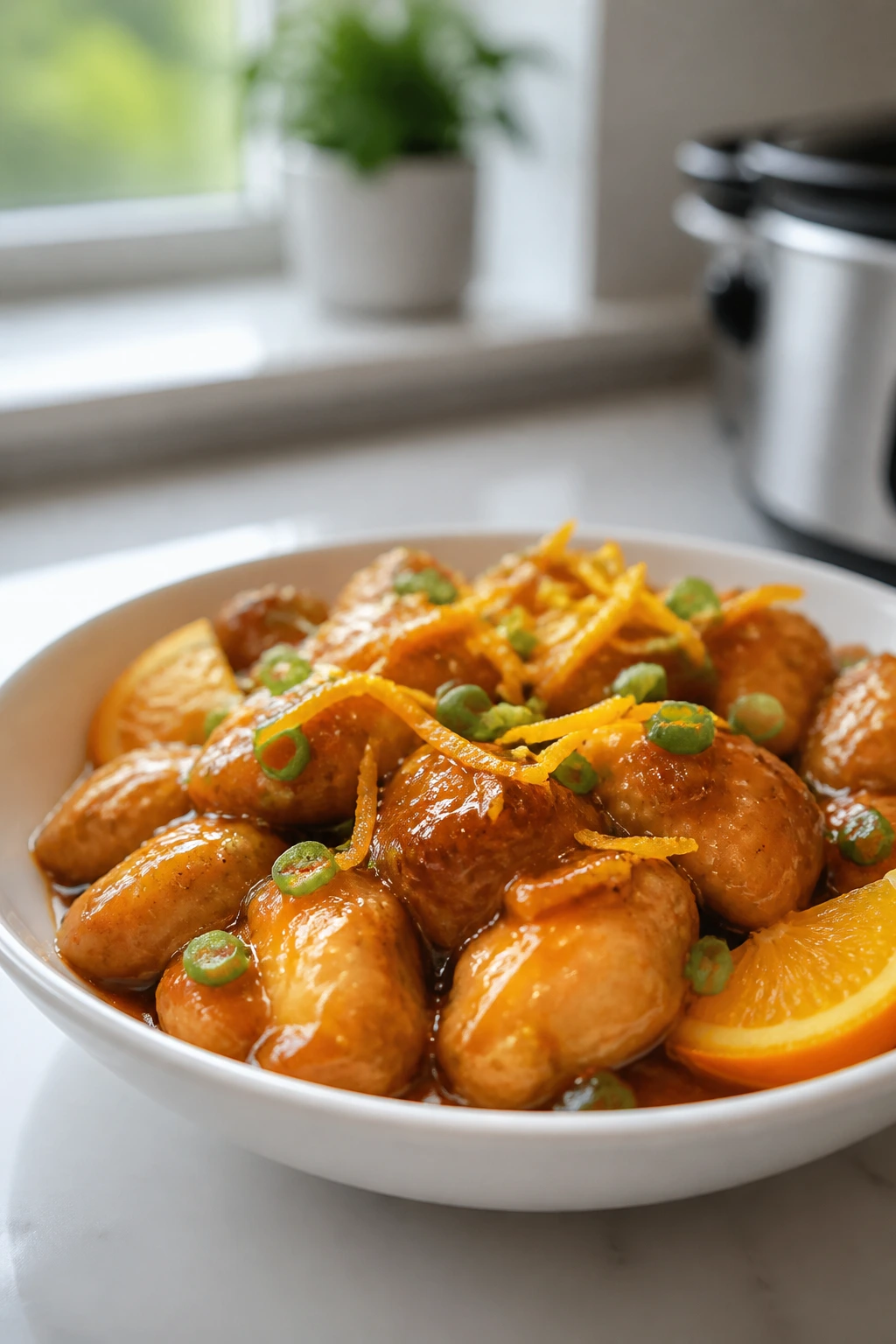
Orange Peel Chicken: Add orange zest, fresh orange juice, soy, garlic, and a little honey, then finish with more zest at the end. This version works when you want bright citrus without crossing into syrupy territory.
Five-Spice Pork Shoulder: Use hoisin, soy, Shaoxing wine or dry sherry, garlic, and a careful hand with five-spice powder. A half teaspoon can be enough for a modest batch; too much and the pot starts smelling like clove-heavy soap. Broil the shredded pork for a minute or two if you want crisp edges.
Mushroom-and-Tofu Braise: Press firm tofu, brown it, then slow-cook it with shiitake mushrooms, ginger, garlic, mushroom oyster sauce, and bok choy. This version gives you a bowl with body even without meat.
Low-Sodium Pantry Bowl: Use tamari or reduced-sodium soy, unsalted broth, extra ginger, and a stronger finish of rice vinegar and scallions. The acid does a lot of the work that salt usually would.
Chili Crisp Heatwave: Stir chili crisp, chili oil, or a spoonful of chili bean paste in at the end instead of the beginning. That keeps the heat sharp and the aroma lively. It also lets everyone at the table decide how far to go.
Kid-Friendly Sesame Chicken: Keep the ginger and garlic moderate, skip the chili, and lean on honey and sesame for flavor. Kids usually do better with a sauce that is glossy and gently sweet, not aggressive with heat or vinegar.
Essential Tools for Slow-Cooker Chinese Cooking
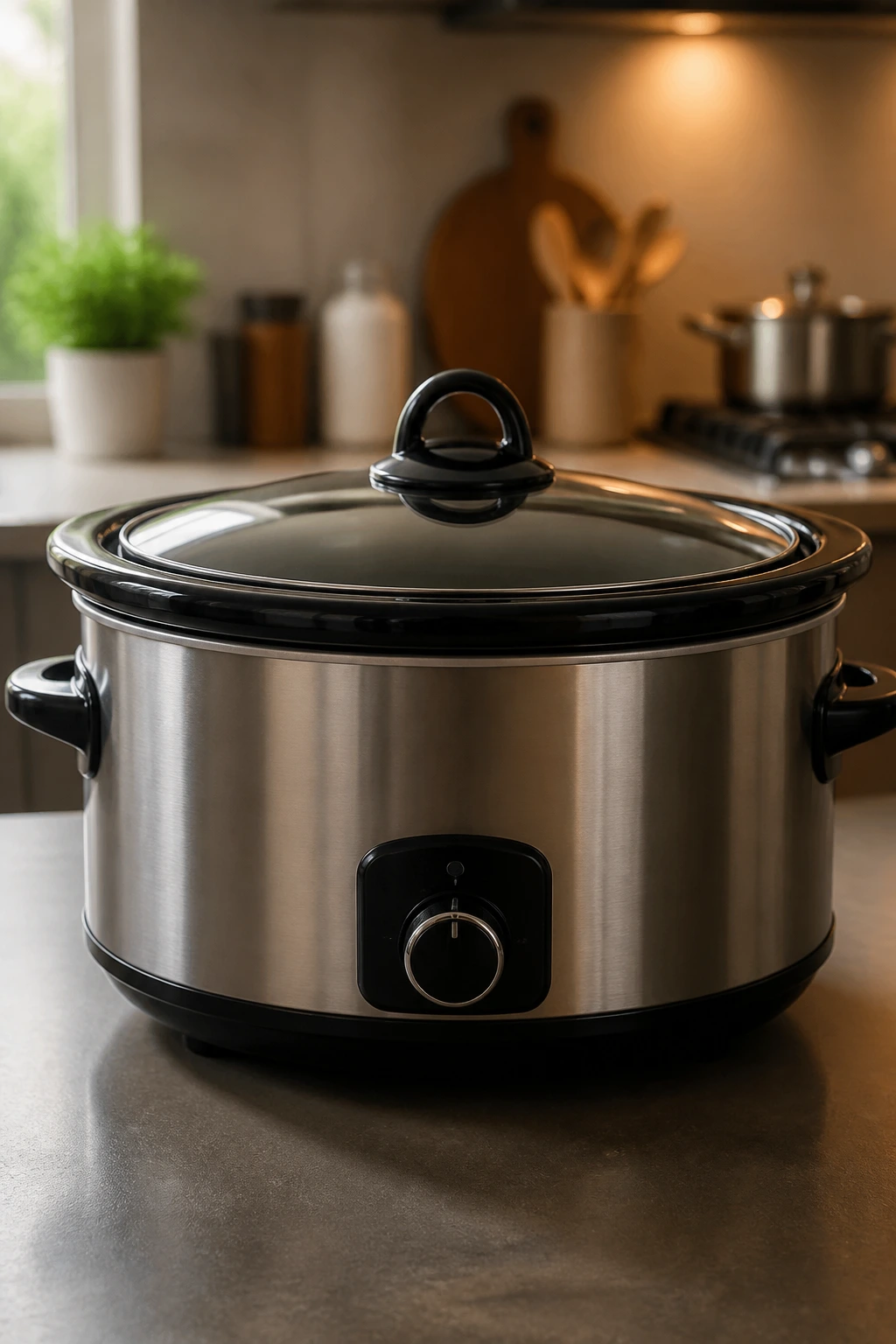
- 6-quart slow cooker: The most useful size for family-style braises; a 4-quart works for smaller batches, but the sauce has less room to move.
- Large mixing bowl: Needed for whisking sauce before it goes into the cooker.
- 12-inch skillet or sauté pan: Optional, but useful for searing meat, softening aromatics, or reducing sauce at the end.
- Microplane or fine grater: Best for ginger and garlic when you want the flavor to spread through the pot.
- Instant-read thermometer: Essential for chicken and helpful for checking beef and pork if you’re unsure about timing.
- Slotted spoon or tongs: Handy for moving meat into bowls before you thicken or reduce the sauce.
- Fine-mesh strainer: Useful if you want a silkier sauce or need to catch bits of ginger at the end.
- Rice cooker or saucepan with a tight lid: Keeps the rice separate and properly textured.
- Airtight storage containers: Necessary for leftovers, especially if you’re keeping rice apart from the braise.
- Slow-cooker liners: Optional, but they make cleanup easier when the sauce is sticky and sugary.
Make-Ahead, Storage, and Reheating Without Ruining the Texture
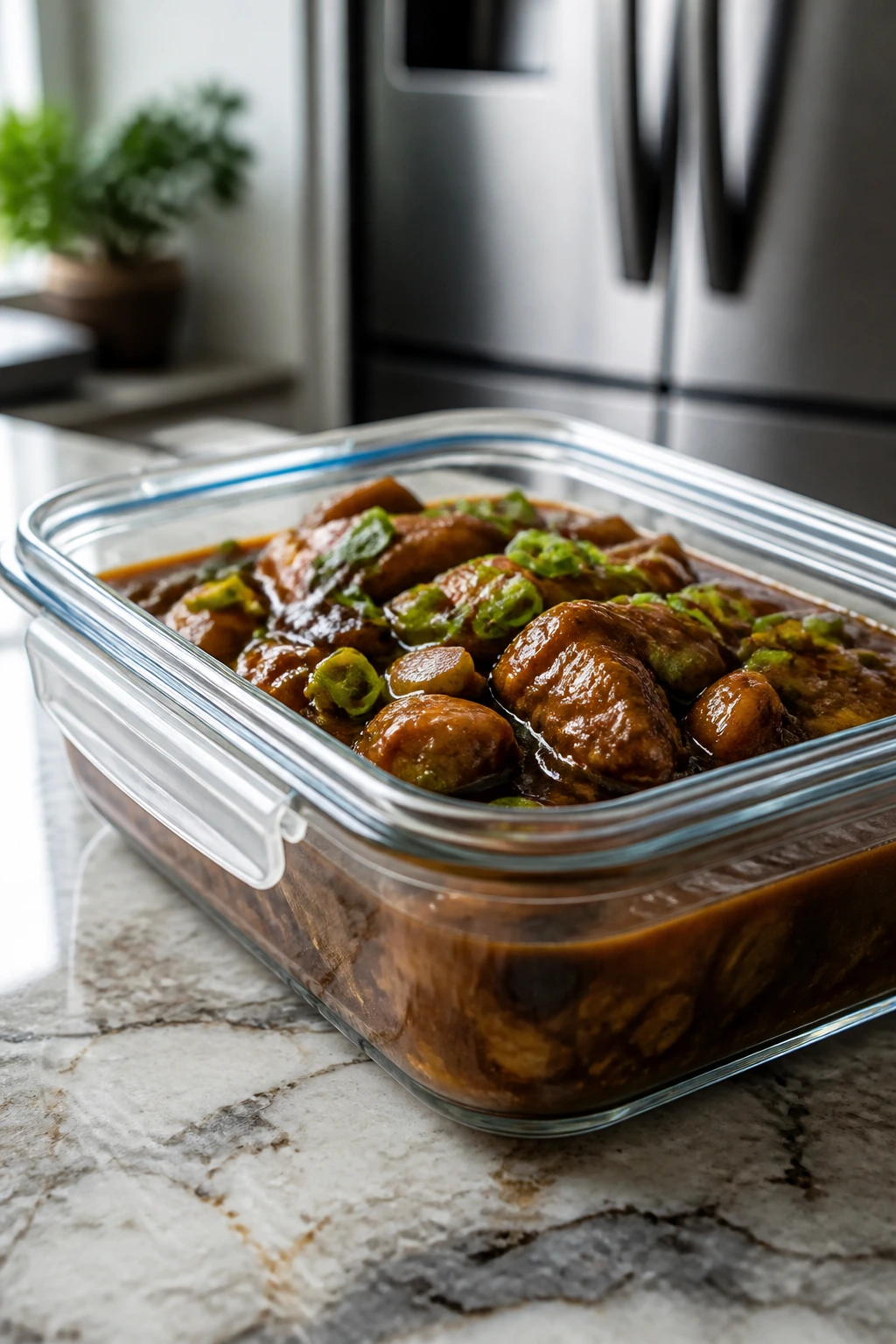
Saucy slow-cooker dishes hold up well, but the texture is better if you store the components with some care. The general leftover rule from USDA food safety guidance is straightforward: get food into the refrigerator within 2 hours, sooner if the room is hot. Don’t let the cooker sit on the counter half the evening.
Fridge: Most cooked chicken, pork, beef, tofu, and vegetable braises keep well for 3 to 4 days in airtight containers. Rice should be cooled quickly and stored separately so it doesn’t turn gluey. If the sauce thickens in the fridge, that is normal.
Freezer: Most saucy braises freeze for up to 2 months with good texture. Pork shoulder, beef chuck, and chicken thigh dishes tend to freeze better than broccoli-heavy versions. If you know a dish will be frozen, hold back delicate vegetables and add fresh ones after reheating.
Reheating: For saucy meat, a covered skillet over medium-low heat is usually the best move. Add a tablespoon or two of water if the sauce has tightened, and stir gently until the food is steaming all the way through. In the microwave, use short bursts and stir between them so the edges don’t overcook while the middle stays cold. Soup-based dishes can go straight into a saucepan and simmer gently.
Make-ahead: Sauce can often be mixed a day or two ahead and kept in the fridge. Aromatics can be chopped ahead as well. If you want to sear meat before work, cool it first, store it separately, and combine it with the sauce later rather than letting it sit in the insert all day. Rice and noodles are best cooked fresh. They don’t age gracefully in sauce.
The funny thing about these dishes is that some of them taste better the next day. Pork shoulder, beef chuck, and mushroom braises often settle into themselves overnight. Broccoli does not. That’s why you keep the vegetables on a short leash.
Frequently Asked Questions
Can I cook rice in the slow cooker with the sauce?
You can, but I wouldn’t. Rice turns gummy fast in a wet, long-cook environment, and it steals sauce from the main dish. Cook rice separately so the grains stay distinct and the whole bowl tastes cleaner.
Do I have to brown the meat first?
No, but it helps. Browning gives you deeper flavor and a better-looking sauce because the browned bits dissolve into the liquid. If you’re short on time, skip it and add a little extra ginger, garlic, or sesame oil at the end.
What’s the best chicken cut for crockpot Chinese food?
Boneless, skinless chicken thighs are the safest choice. They stay juicy over a long cook and can handle sweet-savory sauces without drying out. Chicken breast can work, but it needs a shorter cook and a more careful hand.
How do I keep broccoli from getting mushy?
Add it near the end, usually in the final 15 to 25 minutes, depending on the size of the florets and the heat of your cooker. If you want full control, steam it separately and fold it into the sauce right before serving.
Can I use frozen meat?
Not straight into the cooker. Food safety gets messy when frozen meat spends too long in the danger zone before heating through. Thaw it first in the refrigerator, then cook as normal.
Why does my sauce taste too sweet after cooking?
Long heat can make sugar feel louder than it did in the mixing bowl. Fix it with acid first: a teaspoon or two of rice vinegar or black vinegar usually helps. If it still feels heavy, add a little soy sauce and ginger, then taste again.
Can I make these dishes vegetarian?
Yes, and mushrooms do most of the heavy lifting. Use firm tofu, shiitake or king oyster mushrooms, vegetarian mushroom oyster sauce, and a strong finish of ginger, scallions, and sesame oil. The sauce needs to be a little more assertive without meat, so don’t be shy with the aromatics.
Are noodles a bad idea in the slow cooker?
Mostly, yes. They soak up liquid and go soft in a hurry. If you want noodles, cook them separately and toss them with the sauce at the end, or ladle the braise over them in the bowl.
What if the sauce is too thin at the end?
Remove the lid and let it cook on High for 15 to 20 minutes, or move it to a saucepan and simmer it down. A cornstarch slurry works too, but add it late and stir until the sauce turns glossy rather than cloudy.
Is this authentic Chinese cooking?
It’s better to think of it as Chinese-inspired home cooking, especially in the takeout and braise lane. The slow cooker is not a substitute for every regional Chinese technique, and it doesn’t need to be. It’s a useful tool for a specific job: tender meat, layered sauce, and a dinner that doesn’t need babysitting.
A Pot That Earns Its Shelf Space
The slow cooker does not need to imitate a wok to be useful. That’s the whole point. Once you stop forcing it into crisp stir-fry jobs, it becomes very good at the things it was built for: braises, saucy meats, soup bases, and deeply flavored fills for rice bowls.
That is why this style of cooking keeps pulling people back. You get the smell of ginger and soy drifting through the kitchen, the sauce turning darker as the afternoon goes on, and a dinner that feels more deliberate than the effort it asked from you. Not every Chinese dish belongs here. The ones that do tend to be the ones people finish first.
The next time you want dinner to cook itself, reach for braise-minded ingredients, keep the vegetables on a short timer, and save the scallions for the end. That’s where the real payoff lives.