



Thanksgiving side dishes have a funny habit of crowding the oven at the exact moment you want the turkey in, the rolls browned, and the pie filling bubbling. The slow cooker fixes that mess without making dinner feel smaller. It gives you steam, softness, deep onion sweetness, and buttery starch without asking for constant babysitting, which is exactly why crockpot easy Thanksgiving sides have a permanent place in my kitchen when the holiday table starts looking like a logistics problem.
The best part is not laziness. It’s control.
A slow cooker lets you hold mashed potatoes at the right temperature, coax onions into sweetness without scorching them, and keep cranberry sauce glossy while you deal with everything else that threatens to go sideways. It also has a very specific charm on a lazy Sunday: you can put three pounds of potatoes, a handful of garlic cloves, and a stick of butter into a pot, walk away, and come back to something that smells like a holiday kitchen someone else already cleaned up.
What follows are the sides I’d actually make for a crowded table. Some are classic, some lean a little unexpected, and a few are the kind of dishes that quietly disappear first because they taste like they took more work than they did. That’s the sweet spot.
Why These Crockpot Thanksgiving Sides Earn Their Spot
-
Oven Relief: Every recipe here takes pressure off the oven, which matters when the turkey, the rolls, and the pie all want the same space at the same time.
-
Low-Stress Texture: The slow cooker gives potatoes, squash, greens, and beans a soft, steady heat that keeps them from turning patchy or scorched around the edges.
-
Make-Ahead Friendly: Several of these sides taste better after they’ve rested a bit, especially cranberry sauce, chutney, and anything built on onions or herbs.
-
Holiday Flavor Without Fuss: Sage, butter, garlic, maple, and cider do the heavy lifting here, so the dishes taste traditional even when the method is relaxed.
-
Useful Beyond the Holiday Table: These are the kinds of sides that work for Sunday supper, potlucks, and cold-weather dinners long after the big meal is over.
1. Creamy Crockpot Mashed Potatoes
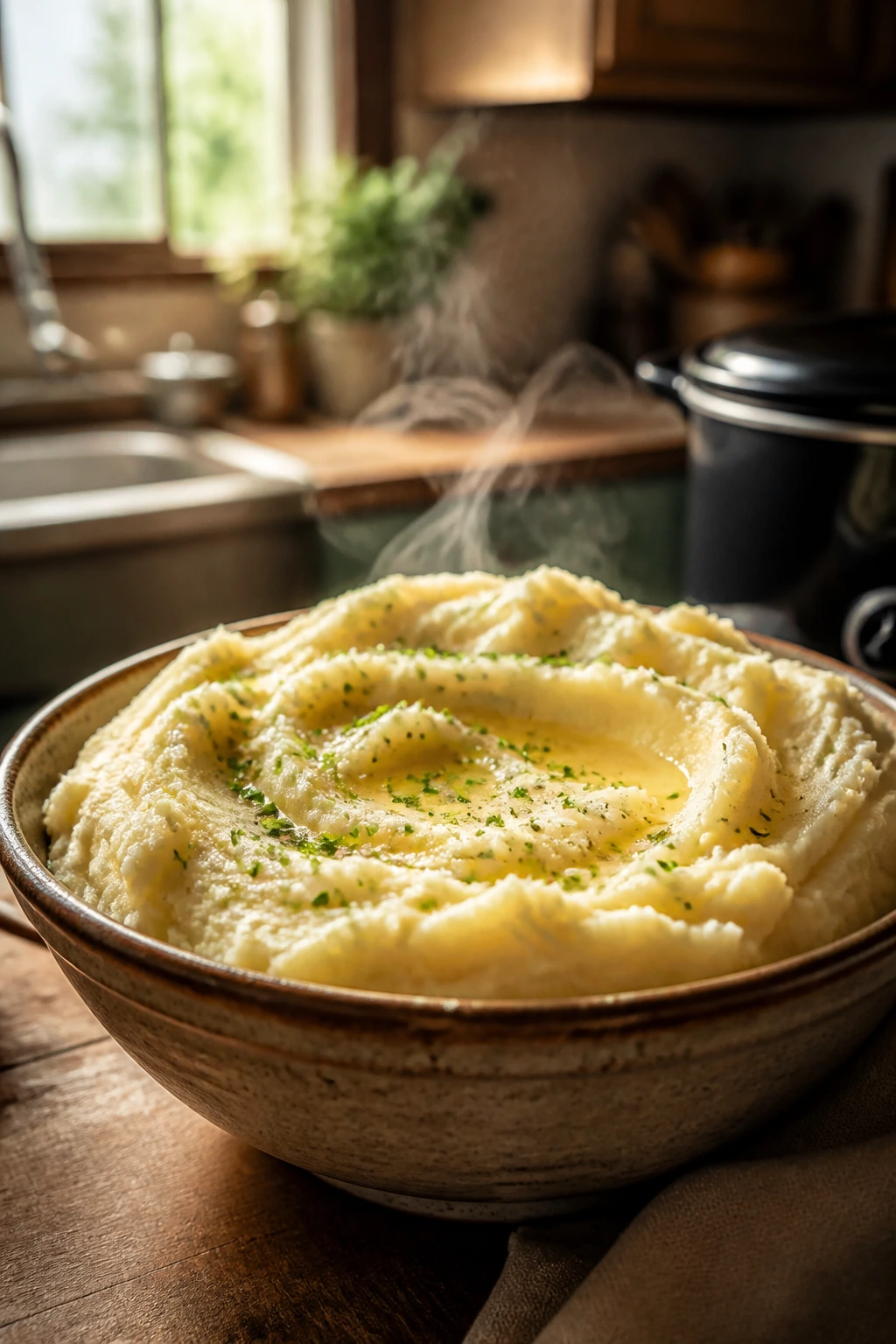
Soft, buttery mashed potatoes from a slow cooker have a different feel from stovetop mash. They come out plush and calm, with the garlic mellowed instead of sharp and the butter folding into the potatoes like it belongs there. If you like mashed potatoes that hold a spoon mark and don’t slump into soup, this is the one to make.
Why It Works:
Potatoes cook evenly in the steady heat, and the lid traps just enough moisture to keep them from drying out before they’re mashed. Yukon Golds are the sweet spot because they’re naturally creamy and less gluey than russets. Add warm dairy at the end, not cold, or the texture can tighten up fast.
Key Ingredients:
- 3 pounds Yukon Gold potatoes, peeled and cut into 2-inch chunks
- 4 garlic cloves, smashed
- 1 cup low-sodium chicken broth or vegetable broth
- 1 teaspoon kosher salt
- 1/2 teaspoon black pepper
- 1/2 cup unsalted butter, cut into pieces
- 4 ounces cream cheese, softened
- 3/4 to 1 cup warm heavy cream or whole milk
- 2 tablespoons chopped chives, for finishing
Quick Steps:
- Put the potatoes, garlic, broth, salt, and pepper into a 6-quart slow cooker.
- Cover and cook on high for 3 to 4 hours or low for 6 to 7 hours, until the potatoes break apart easily with a fork.
- Drain off any extra liquid if the pot looks wet around the edges.
- Add the butter and cream cheese, then mash until smooth but still a little textured.
- Stir in the warm cream a little at a time until the potatoes feel loose and fluffy, not runny.
- Taste and adjust salt before topping with chives.
Equipment for This Recipe:
- 6-quart slow cooker
- Potato masher
- Wooden spoon
- Measuring cups
- Ladle or heatproof cup for adding cream
How to Serve This Dish:
Pile the potatoes into a shallow bowl and make a small well in the middle for gravy. They sit nicely next to turkey, ham, roasted carrots, or green beans, and they’re even better if you finish them with a little more butter right before the table fills up.
Pro Tips for This Recipe:
- Warm the cream first. Cold dairy makes mashed potatoes feel tighter.
- If the potatoes look watery at the bottom, let them sit uncovered for 5 minutes before mashing.
- Yukon Golds beat russets here for texture.
- Add chopped herbs at the end, not the beginning, or they lose brightness.
Variations on This Dish:
- Roasted Garlic Mash: Swap the smashed garlic for 1 head of roasted garlic for a deeper, sweeter flavor.
- Sour Cream and Dill Mash: Use 1/2 cup sour cream instead of cream cheese and add 1 tablespoon dill.
- Dairy-Free Potato Bowl: Replace butter with olive oil and use unsweetened oat milk.
Common Mistakes to Avoid with This Dish:
- Starting with cold dairy: The potatoes tighten up and need more mixing to loosen.
- Overmashing: The texture turns paste-like fast, especially if you use a mixer.
- Leaving extra broth in the pot: Too much liquid makes the mash look glossy but eat thin.
2. Classic Slow Cooker Stuffing
Stuffing in the slow cooker gives you that familiar sage-and-onion aroma without having to fight for a baking dish. The bread cubes soften just enough to soak up broth and butter, but if you use day-old bread and don’t drown it, the edges stay pleasantly chewy instead of turning into bread pudding. That’s the line to watch.
Why It Works:
The slow cooker handles the aromatics beautifully. Onion and celery go from sharp to sweet, sage gets rounder, and the bread has time to absorb everything without the bottom layer catching. The trick is starting with dry bread cubes; fresh bread turns gummy before the flavors settle.
Key Ingredients:
- 10 cups day-old bread cubes, about 1-inch pieces
- 1/2 cup unsalted butter
- 1 large yellow onion, diced
- 3 celery stalks, diced
- 2 teaspoons dried sage
- 1 teaspoon dried thyme
- 1/2 teaspoon black pepper
- 1 1/2 cups low-sodium chicken broth or vegetable broth
- 2 large eggs, lightly beaten
- 1/4 cup chopped parsley
Quick Steps:
- Lightly toast the bread cubes on a sheet pan or in a dry skillet until dry at the edges.
- Melt the butter in a skillet and cook the onion and celery for 6 to 8 minutes, until soft and fragrant.
- Stir in the sage, thyme, salt, and pepper, then pour this over the bread cubes.
- Add the broth, eggs, and parsley, tossing gently until the bread is evenly moistened but not soggy.
- Transfer to a greased slow cooker and cook on low for 3 to 4 hours.
- If you want a drier top, crack the lid during the last 20 minutes.
Equipment for This Recipe:
- 6-quart slow cooker
- Large mixing bowl
- Skillet
- Wooden spoon
- Sheet pan or cooling rack for drying bread
How to Serve This Dish:
Spoon stuffing into a wide bowl so the steam can escape a little instead of trapping everything under the lid. It sits naturally under turkey gravy, but it also plays well with roasted mushrooms and cranberry sauce if you like a sweet-salty bite.
Pro Tips for This Recipe:
- Bread that is too fresh will collapse. Dry cubes are non-negotiable.
- Add broth slowly. The mix should look moist, not soaked.
- If your slow cooker runs hot, start checking at 2 1/2 hours.
- Salt the onion mixture well; stuffing that tastes flat usually needed more seasoning at that stage.
Variations on This Dish:
- Sausage Sage Stuffing: Brown 1/2 pound breakfast sausage with the onions and celery.
- Cornbread Stuffing: Use half cornbread cubes and half sandwich bread for a softer crumb.
- Mushroom Herb Stuffing: Add 8 ounces chopped mushrooms with the onions for a deeper savory note.
Common Mistakes to Avoid with This Dish:
- Using soft, fresh bread: It turns to paste before the center cooks through.
- Packing the cooker too tightly: The middle stays dense and underheated.
- Adding too much broth at once: The stuffing should clump lightly, not pour.
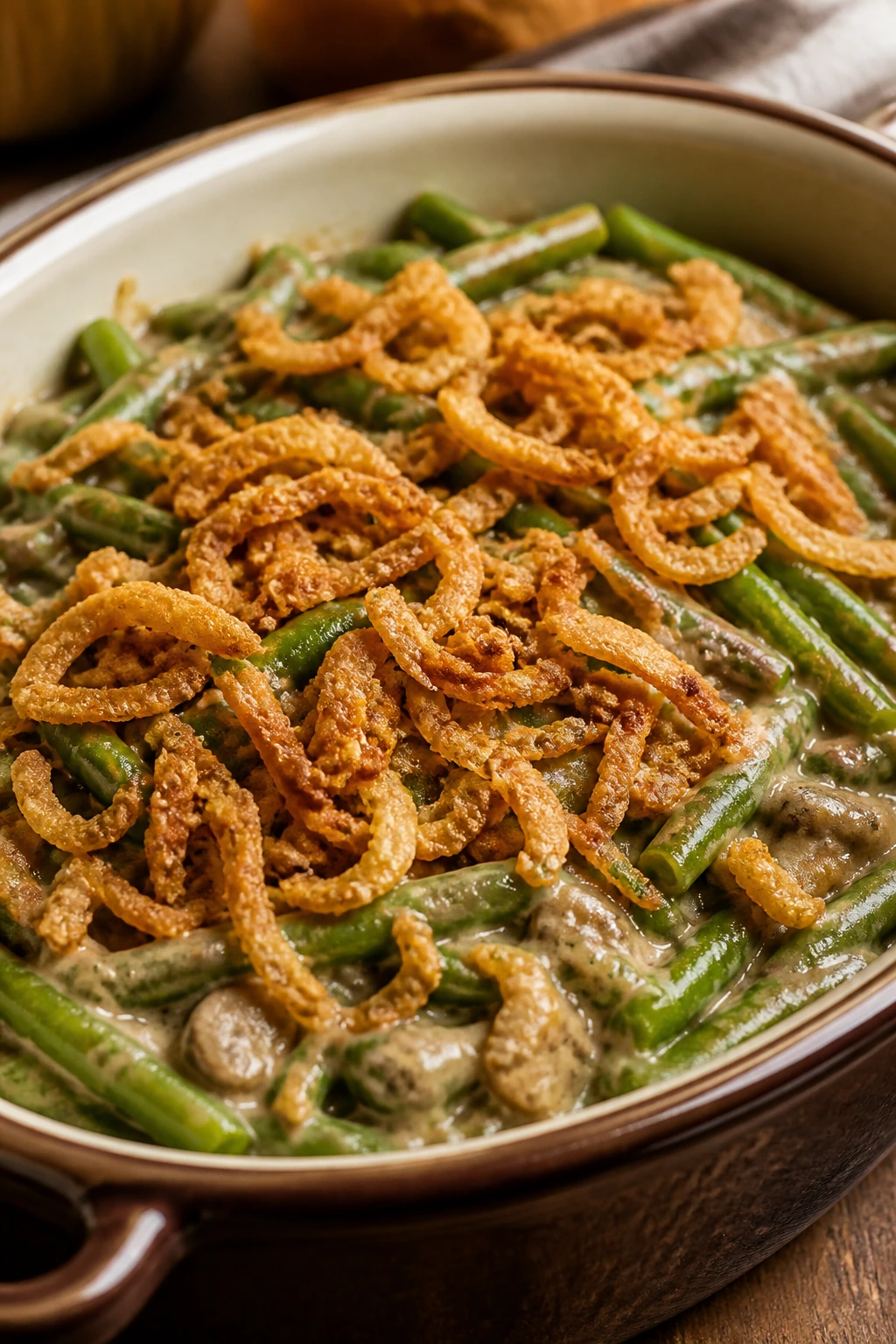
3. Slow Cooker Green Bean Casserole
Green bean casserole can be floppy in the wrong way, but the slow cooker gives it a softer, rounder middle that still tastes like Thanksgiving. The mushroom sauce coats the beans instead of burying them, and the onions on top can stay crunchy if you add them at the end. That detail matters. A lot.
Why It Works:
Fresh green beans hold their shape better than canned, and a homemade mushroom sauce gives the dish enough body to feel intentional rather than canned-soup heavy. The slow cooker lets the beans absorb the sauce without drying out. Save the crispy onions for the final stretch or they disappear into the steam.
Key Ingredients:
- 2 pounds fresh green beans, trimmed and cut in half
- 1 tablespoon butter
- 1 small onion, finely diced
- 12 ounces cremini mushrooms, sliced
- 2 cloves garlic, minced
- 2 tablespoons all-purpose flour
- 1 cup milk
- 1 cup low-sodium vegetable broth
- 1 teaspoon soy sauce
- 1 cup crispy fried onions
- Salt and pepper to taste
Quick Steps:
- Sauté the onion and mushrooms in butter for 8 to 10 minutes, until the mushrooms release their moisture and start to brown.
- Stir in the garlic and flour, then cook for 1 minute.
- Whisk in the milk, broth, and soy sauce until smooth and lightly thickened.
- Add the green beans to the slow cooker and pour the sauce over the top.
- Cook on low for 3 to 4 hours, until the beans are tender but still have a little snap.
- Top with crispy onions during the last 10 minutes, or sprinkle them on at the table.
Equipment for This Recipe:
- 5- to 6-quart slow cooker
- Skillet
- Whisk
- Cutting board and knife
- Measuring cups and spoons
How to Serve This Dish:
Serve it in a low casserole-style bowl so the sauce pools around the beans. It’s good beside turkey, but it also cuts through richer dishes like mac and cheese or mashed potatoes because of the green, savory bite.
Pro Tips for This Recipe:
- Brown the mushrooms first. Raw mushrooms water down the sauce.
- Fresh beans beat frozen here because they keep a better bite.
- If the sauce looks thin, let it sit uncovered for 10 minutes before serving.
- Put the onions on late. Steam is their enemy.
Variations on This Dish:
- Bacon Mushroom Version: Add 4 strips of cooked bacon, crumbled, with the onions.
- Garlic Cream Version: Stir in 2 ounces cream cheese for a thicker sauce.
- No-Soup Shortcut: Use 1 can cream of mushroom soup if you need a faster route.
Common Mistakes to Avoid with This Dish:
- Using canned green beans: They turn mushy quickly.
- Adding fried onions too early: They melt into the casserole.
- Skipping the mushroom browning step: The flavor gets thin and flat.
4. Slow Cooker Mac and Cheese
Mac and cheese in a slow cooker should be creamy enough to coat a spoon and still loose enough to settle on the plate in one soft mound. It is not the time for a dry, baked casserole pretending to be comfort food. This version stays lush, which is exactly why people reach for a second scoop before the turkey has cooled.
Why It Works:
The slow cooker keeps the cheese sauce gentle, so it doesn’t split the way a hot stovetop sauce can when you rush it. Using a mix of sharp cheddar and a little cream cheese gives it both bite and body. I like to cook the pasta just shy of done before it goes in; that keeps the noodles from turning chalky.
Key Ingredients:
- 1 pound elbow macaroni, cooked 1 minute shy of package directions
- 3 cups shredded sharp cheddar cheese
- 1 cup shredded Gruyère or Monterey Jack
- 4 ounces cream cheese, softened
- 2 cups whole milk, warmed
- 1 cup evaporated milk
- 3 tablespoons unsalted butter
- 1 teaspoon dry mustard
- 1/2 teaspoon paprika
- Salt and black pepper to taste
Quick Steps:
- Butter the slow cooker insert.
- Stir together the warm milk, evaporated milk, butter, mustard, paprika, salt, and pepper.
- Add the cooked macaroni and all the cheese, then fold gently so every noodle gets coated.
- Cook on low for 1 to 1 1/2 hours, stirring once halfway through, until the sauce is creamy and the cheese is fully melted.
- Taste and adjust seasoning before serving.
Equipment for This Recipe:
- 4- to 6-quart slow cooker
- Large pot for boiling pasta
- Colander
- Wooden spoon
- Box grater if you are shredding cheese by hand
How to Serve This Dish:
Spoon it into a warm bowl and let the sauce settle for a minute before serving. A little cracked pepper on top helps, and if you want the plate to feel more complete, pair it with green beans or cranberry sauce to cut the richness.
Pro Tips for This Recipe:
- Shred the cheese yourself if you can. Pre-shredded cheese often melts less smoothly.
- Warm the milk before mixing. Cold milk slows the melting.
- Stir once during cooking so the edges do not overthicken.
- If it gets too thick, splash in 1/4 cup milk and stir.
Variations on This Dish:
- Pepper Jack Kick: Replace half the cheddar with pepper Jack for a sharper finish.
- Smoked Gouda Version: Swap in smoked Gouda for a warmer, campfire-like note.
- Breadcrumb Topper: Sprinkle toasted breadcrumbs on individual servings for crunch.
Common Mistakes to Avoid with This Dish:
- Cooking the pasta all the way first: It softens too much in the slow cooker.
- Using only one cheese: The flavor gets dull and the texture less silky.
- Leaving it on warm for hours: The edges dry out and the sauce tightens.
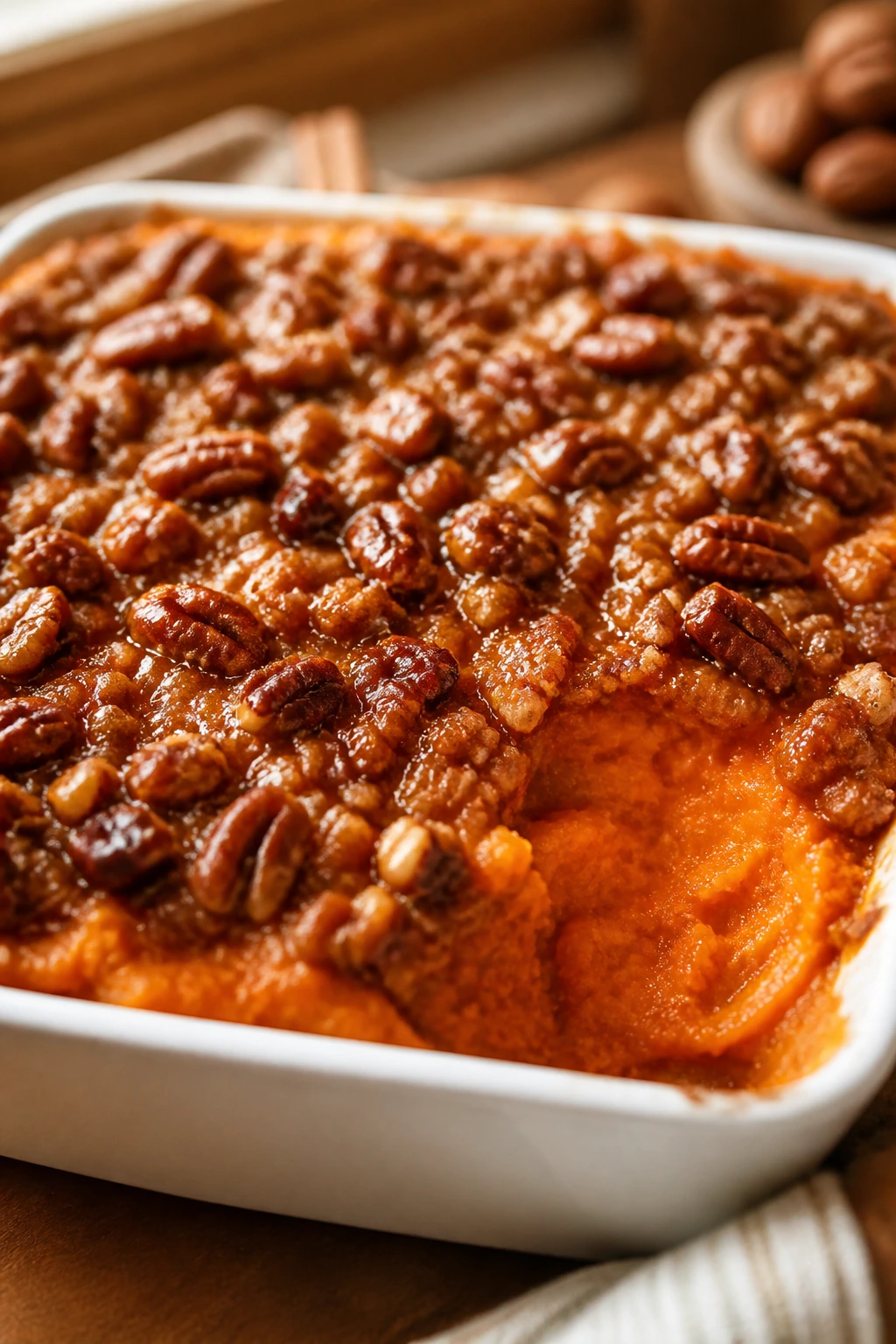
5. Sweet Potato Casserole with Pecan Topping
This version gives you the soft, mashed sweet potato center people expect, plus a pecan top that tastes toasted even though the cooker is doing the heavy lifting. The filling should smell like butter, cinnamon, and brown sugar, not like baby food with spices. That’s the difference between a side dish and something people hover over with a spoon.
Why It Works:
Sweet potatoes break down into a naturally creamy base in the slow cooker, and a little orange juice or milk keeps the mash from becoming dense. The topping is best when it’s mixed separately so the nuts stay coated and don’t disappear into the filling. If you want a firmer top, let the lid crack for the last 15 minutes.
Key Ingredients:
- 4 pounds sweet potatoes, peeled and cut into 2-inch chunks
- 1/2 cup unsalted butter
- 1/3 cup brown sugar
- 1/2 teaspoon cinnamon
- 1/4 teaspoon nutmeg
- 1/2 teaspoon salt
- 2 eggs, lightly beaten
- 1/3 cup milk or half-and-half
- 1 cup chopped pecans
- 1/3 cup brown sugar, for topping
- 2 tablespoons flour
- 2 tablespoons melted butter, for topping
Quick Steps:
- Add the sweet potatoes and 1/4 cup water to the slow cooker.
- Cook on high for 3 to 4 hours or low for 6 to 7 hours, until the potatoes mash easily.
- Drain off excess water, then mash with butter, brown sugar, cinnamon, nutmeg, salt, eggs, and milk.
- Mix the pecans, brown sugar, flour, and melted butter for the topping.
- Spread the pecan mixture over the sweet potatoes and cook on low for 20 to 30 minutes.
- Serve warm.
Equipment for This Recipe:
- 6-quart slow cooker
- Potato masher
- Mixing bowl
- Measuring cups and spoons
- Rubber spatula
How to Serve This Dish:
Serve it in a shallow bowl so the pecan topping stays visible and doesn’t sink into the filling. It works as a sweet counterpoint to savory turkey and gravy, and it can sit next to green beans without feeling too sugary if you keep the cinnamon restrained.
Pro Tips for This Recipe:
- Drain the potatoes if you see watery liquid at the bottom.
- Use roasted sweet potatoes if you want a deeper flavor, but the cook time gets shorter.
- Do not overdo the cinnamon; sweet potato already carries its own sweetness.
- Add the pecan top near the end so it tastes toasted rather than steamed.
Variations on This Dish:
- Marshmallow Finish: Add mini marshmallows during the last 10 minutes for a softer, sweeter top.
- Maple Pecan Style: Swap brown sugar for maple syrup in the filling.
- Gingered Version: Add 1 teaspoon grated fresh ginger for a brighter edge.
Common Mistakes to Avoid with This Dish:
- Too much liquid in the cooker: The mash turns loose and drab.
- Skipping the salt: Sweet potatoes need it or they taste flat.
- Mixing the topping into the filling: You lose the crunchy contrast.
6. Crockpot Creamed Corn
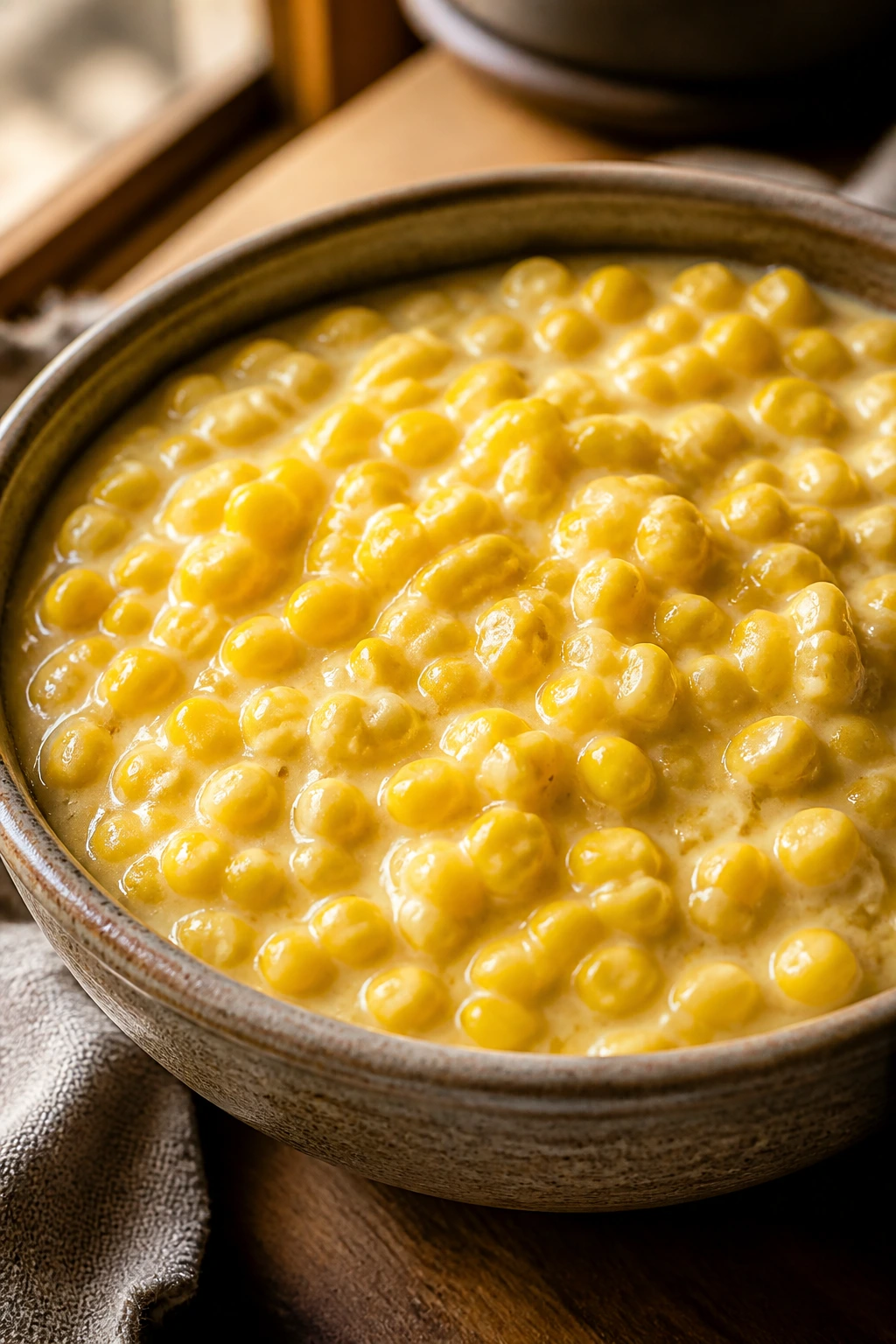
Creamed corn should feel like a spoonable, buttery sauce with kernels suspended in it, not a soup pretending to be a side. The slow cooker is excellent here because it coaxes the corn into sweetness and lets the cream cheese melt into the liquid without any fuss. It’s one of those dishes that disappears while people are still asking who made it.
Why It Works:
Frozen corn works very well because it already has the moisture you need, and cream cheese gives the sauce body without forcing a roux. A little sugar is not a crime here; it sharpens the corn flavor instead of making the dish taste like dessert. Stir it once or twice so the edges do not overheat.
Key Ingredients:
- 4 cups frozen corn
- 8 ounces cream cheese, cut into cubes
- 4 tablespoons unsalted butter
- 1/2 cup heavy cream
- 1/2 cup whole milk
- 1 tablespoon sugar
- 1/2 teaspoon salt
- 1/4 teaspoon black pepper
- 2 tablespoons grated Parmesan, optional
Quick Steps:
- Put the corn, cream cheese, butter, cream, milk, sugar, salt, and pepper in the slow cooker.
- Cook on low for 3 hours, stirring once or twice, until the cream cheese is melted and the mixture looks glossy.
- Mash about one cup of the corn lightly with the back of a spoon if you want a thicker texture.
- Stir in Parmesan, if using, and taste for salt.
- Keep warm until serving.
Equipment for This Recipe:
- 4- to 6-quart slow cooker
- Wooden spoon
- Measuring cups
- Heatproof spatula
How to Serve This Dish:
Spoon it alongside ham, turkey, or stuffing. It looks best in a small serving bowl with a little extra black pepper on top, and it fills the gap between savory gravy and sweeter holiday sides.
Pro Tips for This Recipe:
- Frozen corn is easier than fresh here and gives a consistent result.
- Cube the cream cheese so it melts faster.
- If the mixture looks too thin, leave the lid off for 10 minutes at the end.
- Parmesan is optional, but it adds a salty edge that keeps the dish from leaning too sweet.
Variations on This Dish:
- Jalapeño Corn: Add one minced jalapeño for a little heat.
- Garlic Herb Corn: Stir in 1 teaspoon minced garlic and 1 tablespoon chives.
- Bacon Corn: Finish with cooked crumbled bacon right before serving.
Common Mistakes to Avoid with This Dish:
- Using low-fat cream cheese: The sauce can turn grainy.
- Overcooking until it separates: Pull it once the mixture looks smooth and creamy.
- Forgetting to stir: The edges can thicken faster than the center.
7. Glazed Carrots with Brown Sugar and Thyme
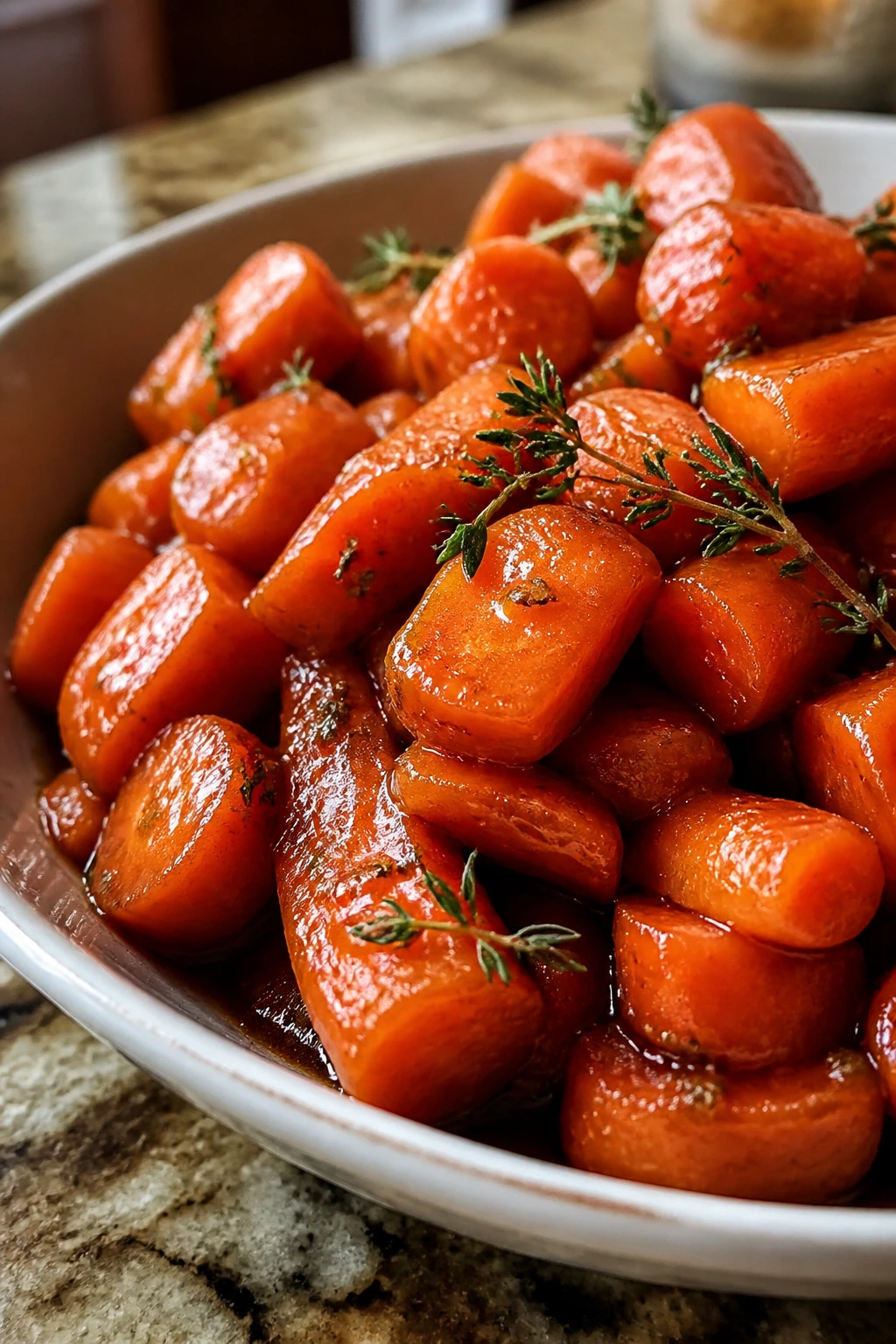
These carrots come out glossy and tender, with enough bite left that they don’t taste like they surrendered. Brown sugar and butter give them that familiar holiday glaze, but the thyme keeps the sweetness from getting sticky and one-note. They’re the sort of side that makes a plate look finished.
Why It Works:
Carrots take beautifully to the gentle heat of the slow cooker, and the glaze builds as the carrots release a little moisture. A touch of thyme or orange zest keeps the flavor bright. Cut them in even pieces or the thin ends go soft before the thicker ones are done.
Key Ingredients:
- 2 pounds carrots, peeled and cut into 2-inch pieces
- 4 tablespoons unsalted butter
- 1/4 cup brown sugar or maple syrup
- 1 teaspoon dried thyme or 1 tablespoon fresh thyme
- 1/2 teaspoon salt
- 1/4 teaspoon black pepper
- 2 tablespoons orange juice
- 1 teaspoon orange zest, optional
Quick Steps:
- Put the carrots, butter, brown sugar, thyme, salt, pepper, orange juice, and zest into the slow cooker.
- Toss to coat.
- Cover and cook on low for 3 to 4 hours, stirring once halfway through, until the carrots are tender but not collapsing.
- If the glaze looks thin, cook uncovered for the last 15 minutes.
- Stir again and serve warm.
Equipment for This Recipe:
- Slow cooker
- Vegetable peeler
- Sharp knife
- Cutting board
- Spoon for stirring
How to Serve This Dish:
Pile the carrots into a long narrow dish so the glaze runs across the top. They look especially good next to anything pale and creamy, like mashed potatoes or cauliflower mash, because the orange color wakes the whole plate up.
Pro Tips for This Recipe:
- Cut thick carrots in half lengthwise so they cook at the same rate as the skinny ones.
- Maple syrup gives a darker flavor than brown sugar.
- Add orange zest at the end if you want the citrus to stay sharp.
- Don’t let them cook until slumped; you still want shape.
Variations on This Dish:
- Honey Thyme Carrots: Use honey instead of brown sugar for a lighter glaze.
- Cinnamon Carrots: Add a pinch of cinnamon if you want a sweeter profile.
- Dijon Carrots: Stir in 1 teaspoon Dijon mustard for a savory edge.
Common Mistakes to Avoid with This Dish:
- Uneven cuts: Some pieces turn mushy while others stay hard.
- Too much sugar: The glaze gets sticky instead of glossy.
- Cooking too long: Carrots lose their snap and taste flat.
8. Butternut Squash with Sage Butter
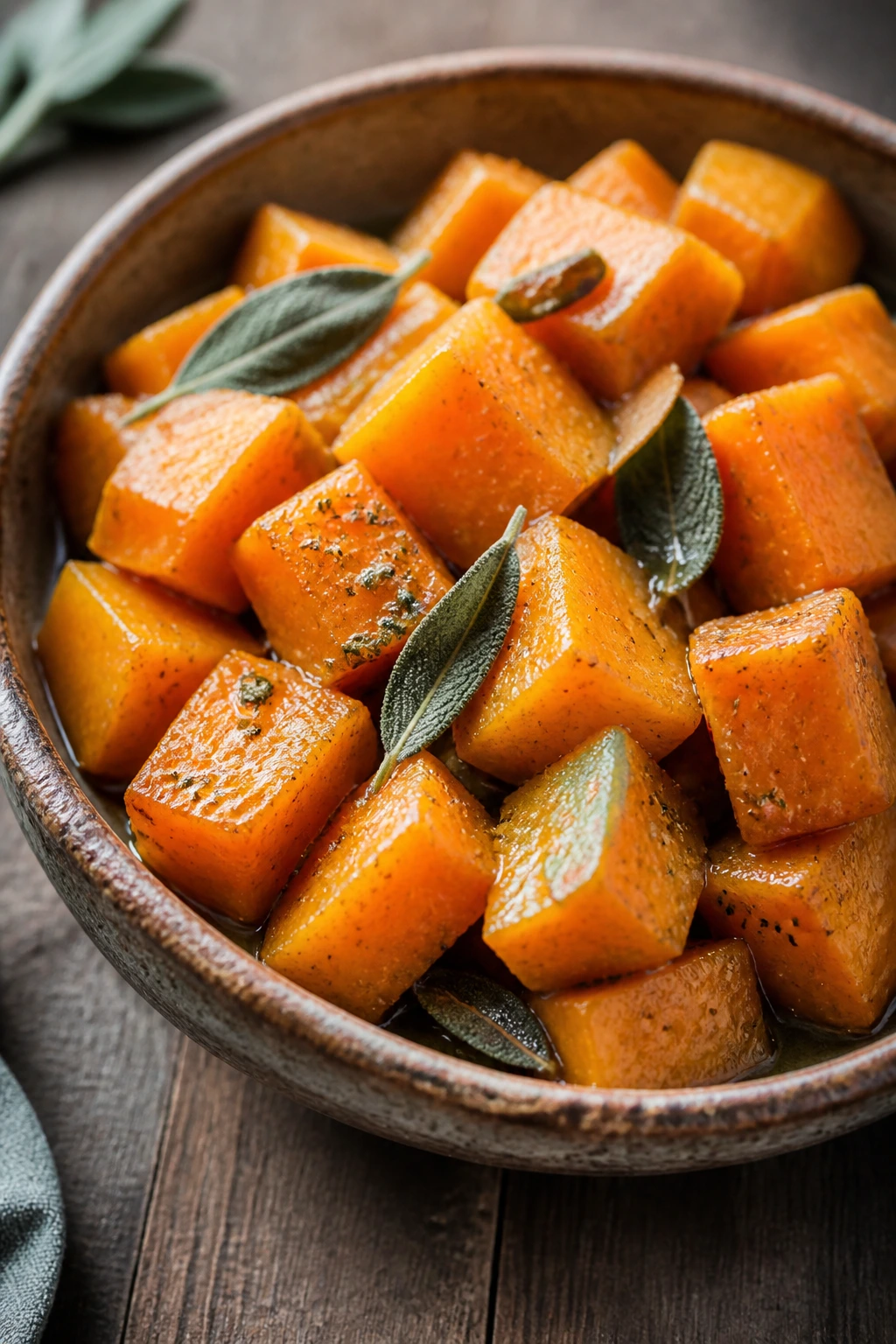
Butternut squash in the slow cooker turns silky fast, and that’s a good thing if you want a side that feels soft without becoming baby food. Sage butter gives it a clean, woodsy note that makes the squash taste more savory and less sugary. I like this one because it lands somewhere between a mash and a roast.
Why It Works:
The squash is dense enough to hold together while it softens, so the cooker can do the work without wrecking the texture. Sage and butter are a natural pair here, and a little salt keeps the sweetness honest. If your squash is cut too small, it can collapse; large cubes hold up better.
Key Ingredients:
- 1 large butternut squash, peeled, seeded, and cut into 1 1/2-inch cubes
- 4 tablespoons unsalted butter
- 1 tablespoon chopped fresh sage or 1 teaspoon dried sage
- 1 tablespoon brown sugar or maple syrup
- 1/2 teaspoon salt
- 1/4 teaspoon black pepper
- 2 tablespoons vegetable broth or water
Quick Steps:
- Place the squash in the slow cooker with the broth or water.
- Melt the butter with the sage and brown sugar, then pour over the squash.
- Add salt and pepper, then stir gently.
- Cook on low for 3 to 4 hours, until the squash is tender but not falling apart.
- Taste and adjust seasoning before serving as chunks or lightly mashed.
Equipment for This Recipe:
- Slow cooker
- Sharp vegetable peeler
- Chef’s knife
- Mixing spoon
- Small saucepan, optional for melting the butter
How to Serve This Dish:
Serve it as a soft side that can be mashed lightly with a fork on the plate. It pairs well with turkey, roast chicken, or mushroom gravy, and it gives the plate a deep orange note that feels right for the table.
Pro Tips for This Recipe:
- Cut the squash evenly or the smaller cubes will break down first.
- Fresh sage gives a cleaner taste than too much dried sage.
- Add the butter mixture early so the squash soaks up the flavor.
- If you want more structure, stop cooking when the cubes are fork-tender rather than soft all the way through.
Variations on This Dish:
- Maple Pecan Squash: Finish with toasted pecans for crunch.
- Garlic Sage Squash: Add 2 minced garlic cloves to the butter.
- Brown Butter Version: Brown the butter first if you want a nutty note.
Common Mistakes to Avoid with This Dish:
- Cutting the squash too small: It cooks too fast and turns mushy.
- Skipping salt: The sweetness can get cloying.
- Stirring too aggressively: You’ll crush the cubes before they’re ready.
9. Brussels Sprouts with Bacon and Maple
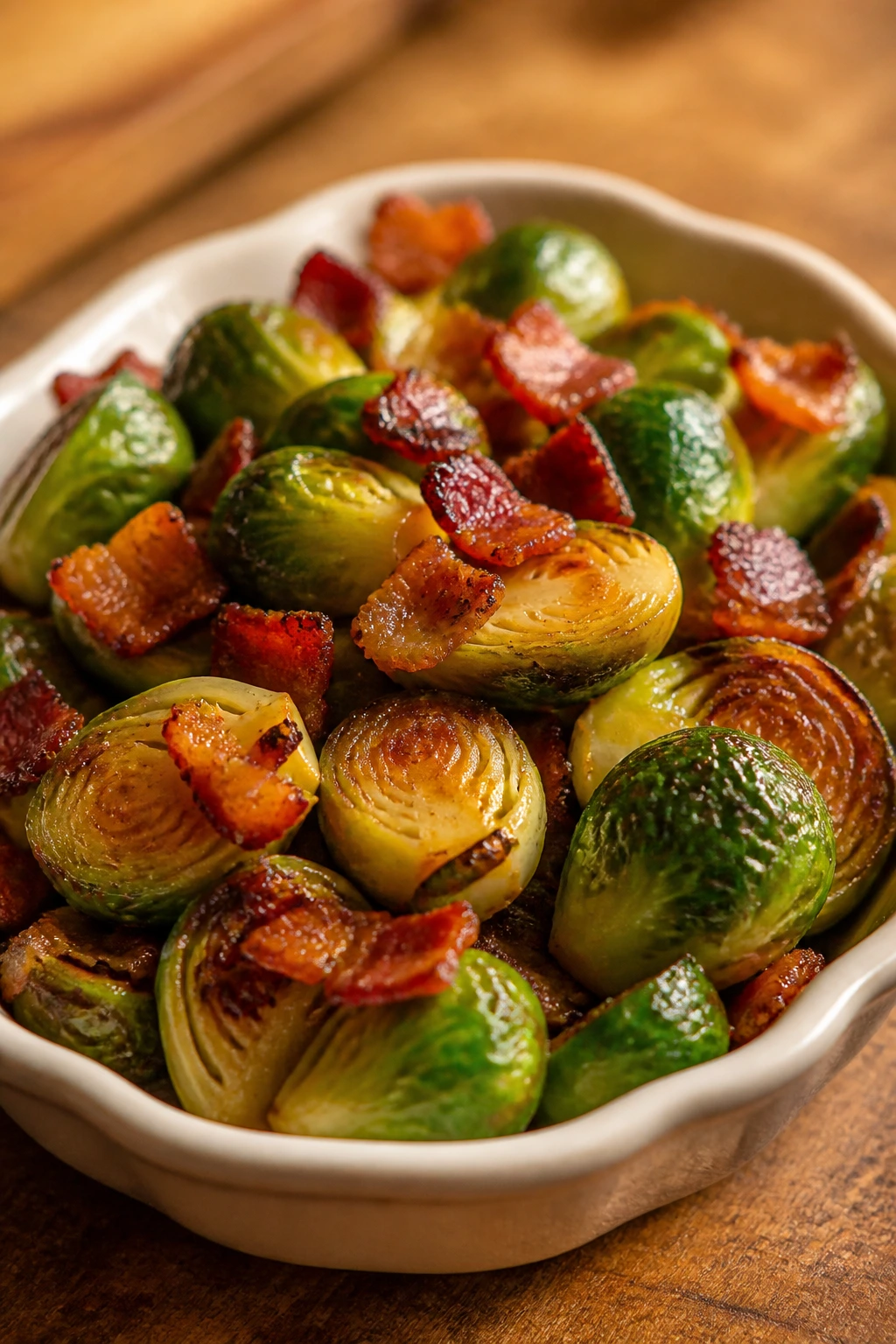
Brussels sprouts in the slow cooker get tender and savory, with bacon adding salt and smoke and maple softening the bitter edge. If you’ve only had them roasted, expect a different texture here: softer, looser, and more spoonable. That is not a flaw if you want them as a side next to rich gravy.
Why It Works:
The sprouts absorb bacon fat and maple as they cook, which gives you a balanced sweet-salty bite in every forkful. Halving them helps them cook evenly and keeps the centers from staying hard. A splash of apple cider vinegar at the end keeps the dish from going dull.
Key Ingredients:
- 2 pounds Brussels sprouts, trimmed and halved
- 6 slices bacon, chopped
- 1 small onion, thinly sliced
- 1/4 cup maple syrup
- 2 tablespoons apple cider vinegar
- 1/4 cup chicken broth or vegetable broth
- Salt and pepper to taste
Quick Steps:
- Cook the bacon in a skillet until the fat renders and the pieces start to crisp.
- Add the onion and cook for 3 to 4 minutes, then transfer bacon and onion to the slow cooker.
- Add the Brussels sprouts, maple syrup, vinegar, broth, salt, and pepper.
- Stir gently, cover, and cook on low for 3 to 4 hours.
- Taste and adjust with a little more vinegar or salt before serving.
Equipment for This Recipe:
- Slow cooker
- Skillet
- Sharp knife
- Cutting board
- Slotted spoon
How to Serve This Dish:
Serve it in a bowl with a shallow rim so the maple glaze can pool around the sprouts. It works especially well beside mashed potatoes and turkey because the bacon gives the plate a savory anchor.
Pro Tips for This Recipe:
- Cut large sprouts in quarters so they match the small ones.
- Add vinegar at the end if you want a brighter finish.
- Do not expect crisp edges from the slow cooker.
- If your bacon is very fatty, drain off some of the grease before adding it.
Variations on This Dish:
- Balsamic Sprouts: Replace maple with balsamic vinegar for a sharper flavor.
- Garlic Bacon Sprouts: Add 2 cloves minced garlic in the last hour.
- Vegetarian Sprouts: Skip bacon and use smoked paprika plus olive oil.
Common Mistakes to Avoid with This Dish:
- Leaving sprouts whole: The centers stay hard.
- Too much maple: The dish turns sticky-sweet and heavy.
- Cooking too long: They go from tender to limp fast.
10. Homestyle Cranberry Sauce
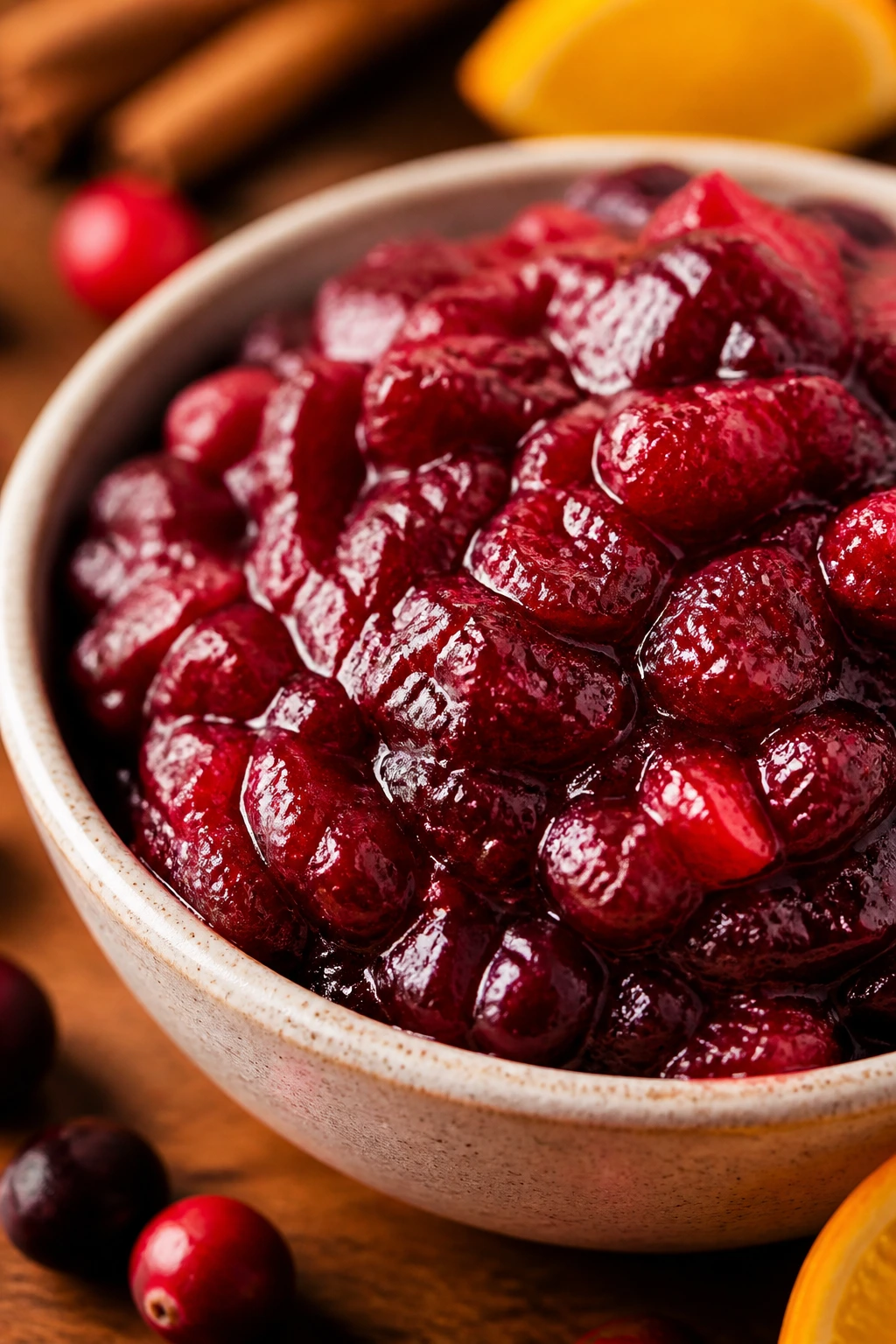
Cranberry sauce is one of the few holiday sides that gets better when it has time to cool and settle. The slow cooker makes it glossy and deep red, with the berries bursting into a thick spoonable jam that tastes like orange peel and tart fruit. It is a small dish with a big job.
Why It Works:
The steady heat breaks down the cranberries without scorching the sugar at the bottom. Orange juice gives the sauce brightness, and a cinnamon stick adds warmth without making it taste like pie filling. If you want a looser sauce, stop earlier; if you want it thick enough to slice cold, cook it a little longer.
Key Ingredients:
- 12 ounces fresh or frozen cranberries
- 3/4 cup granulated sugar
- 1 cup orange juice
- 1 strip orange zest
- 1 cinnamon stick
- Pinch of salt
Quick Steps:
- Add all the ingredients to the slow cooker.
- Cook on high for 2 to 3 hours, stirring once or twice, until most of the berries have burst.
- Remove the cinnamon stick and orange zest.
- Mash lightly with a spoon if you want a smoother sauce.
- Cool before serving.
Equipment for This Recipe:
- Small slow cooker or 3-quart insert
- Wooden spoon
- Measuring cups
- Citrus zester or peeler
- Small bowl for cooling
How to Serve This Dish:
Serve cranberry sauce in a small bowl with a spoon, not a ladle. It belongs on the same plate as turkey, stuffing, and potatoes, where the sharp fruitiness cuts through butter and gravy.
Pro Tips for This Recipe:
- Use frozen cranberries straight from the freezer if that’s what you have.
- Taste after cooking; some berries are tarter than others.
- Add a little more sugar only after the berries burst.
- Cranberry sauce thickens as it cools, so don’t overcook it.
Variations on This Dish:
- Apple Cranberry Sauce: Add 1 peeled chopped apple for a softer texture.
- Ginger Orange Sauce: Stir in 1 teaspoon grated fresh ginger.
- Port-Spiked Sauce: Add 2 tablespoons port wine after cooking for depth.
Common Mistakes to Avoid with This Dish:
- Cooking until it’s dry: The sauce thickens later as it cools.
- Skipping salt: The flavor gets flat.
- Using too much zest: It can turn bitter fast.
11. Mushroom Gravy
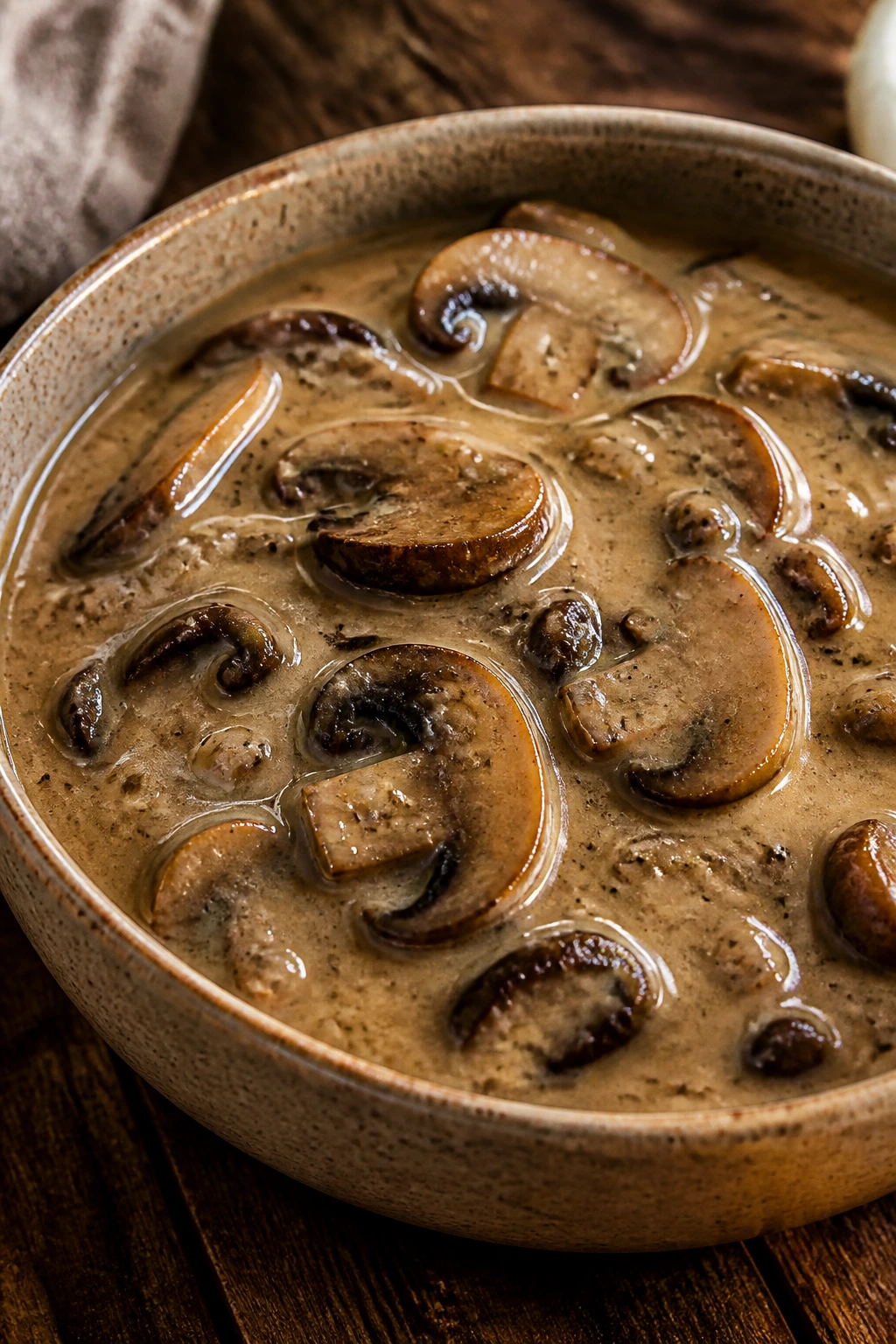
Good gravy is glossy, savory, and deeply mushroomy without tasting like you raided a soup can. The slow cooker helps the mushrooms soften into the broth, and the flour thickens the whole thing into something that can sit under mashed potatoes without vanishing. This is a side, yes, but it also acts like glue for the plate.
Why It Works:
Mushrooms release a lot of flavor when they cook slowly with onion and thyme. A bit of soy sauce or tamari adds depth without making the gravy taste like soy sauce. If you like a smoother gravy, blend part of it before serving; if you like pieces of mushroom, leave it chunky.
Key Ingredients:
- 1 pound cremini mushrooms, sliced
- 1 small onion, diced
- 3 tablespoons butter
- 3 tablespoons all-purpose flour
- 2 1/2 cups low-sodium vegetable broth or chicken broth
- 1 teaspoon soy sauce or tamari
- 1/2 teaspoon dried thyme
- Salt and pepper to taste
Quick Steps:
- Melt the butter in a skillet and cook the onion and mushrooms for 8 to 10 minutes, until browned.
- Stir in the flour and cook for 1 minute.
- Whisk in the broth, soy sauce, and thyme until smooth.
- Transfer to the slow cooker and cook on low for 2 to 3 hours, stirring once or twice, until thickened.
- Season to taste and keep warm.
Equipment for This Recipe:
- Slow cooker
- Skillet
- Whisk
- Measuring spoons
- Ladle
How to Serve This Dish:
Pour it over mashed potatoes, stuffing, or even roasted vegetables. It should look shiny and dark, not pale, and it tastes best when it runs slowly rather than in a watery rush.
Pro Tips for This Recipe:
- Brown the mushrooms first or the gravy tastes thin.
- If it gets too thick, whisk in a little broth.
- Blend half the gravy for a smoother finish.
- Season at the end because broth and soy sauce can vary in saltiness.
Variations on This Dish:
- Herb Gravy: Add rosemary and sage with the thyme.
- Creamy Gravy: Stir in 1/4 cup cream at the end.
- Gluten-Free Gravy: Use cornstarch instead of flour.
Common Mistakes to Avoid with This Dish:
- Skipping the browning step: The flavor won’t be deep enough.
- Adding too much flour at once: It clumps.
- Leaving it on warm too long: It can thicken past the point of usefulness.
12. Parsnip and Carrot Mash
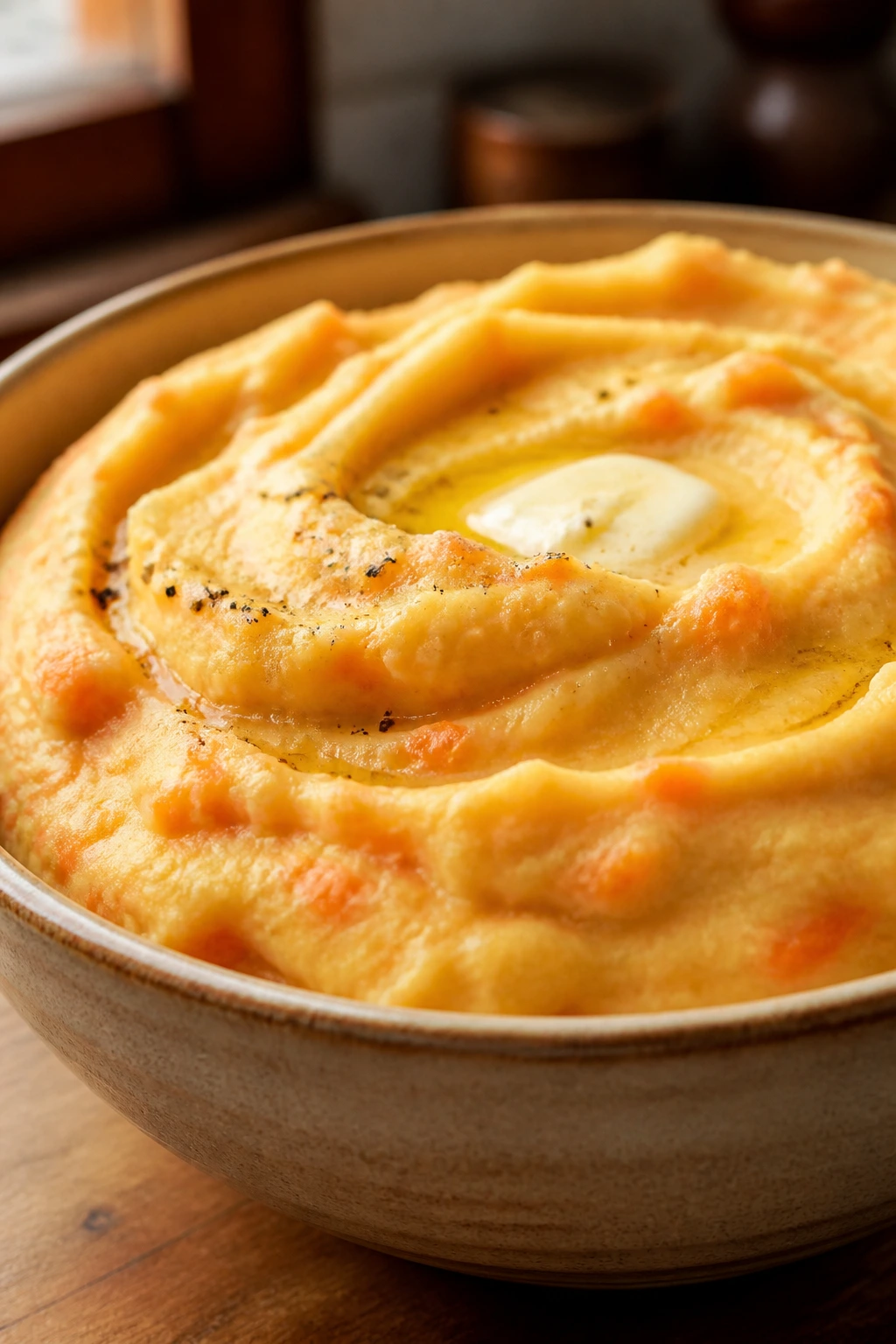
Parsnips taste a little like carrot and a little like celery root, and that makes them a smart partner for mash. Combined with carrots, they turn into a pale gold side with a gentle sweetness and a sharper finish than potatoes have. I like this one when the table needs a break from starch that all tastes the same.
Why It Works:
Parsnips soften into a creamy mash if they’re cut small and cooked with the carrots long enough to lose their fibrous edge. A little butter and cream smooth out the texture, while nutmeg gives the mash a faint holiday warmth. If the parsnips are large and woody, peel them a little deeper.
Key Ingredients:
- 1 1/2 pounds parsnips, peeled and chopped
- 1 1/2 pounds carrots, peeled and chopped
- 4 tablespoons unsalted butter
- 1/2 cup warm heavy cream or milk
- 1 teaspoon salt
- 1/4 teaspoon black pepper
- Pinch nutmeg
- 1/2 cup vegetable broth
Quick Steps:
- Add the parsnips, carrots, and broth to the slow cooker.
- Cook on high for 3 to 4 hours or low for 6 hours, until very tender.
- Drain excess liquid, then mash with butter, cream, salt, pepper, and nutmeg.
- Taste and adjust seasoning.
- Serve hot.
Equipment for This Recipe:
- Slow cooker
- Potato masher or ricer
- Cutting board
- Peeler
- Measuring cups
How to Serve This Dish:
Serve this mash in a bowl with a little melted butter on top and a sprinkle of chives if you want color. It works well beside roasted meats and mushroom gravy, and it gives the plate a softer, earthier note than potatoes do.
Pro Tips for This Recipe:
- Chop the parsnips no larger than the carrots.
- Use a ricer if you want a finer texture.
- Nutmeg should stay in the background.
- Taste before adding more cream; parsnips can go from thick to loose fast.
Variations on This Dish:
- Garlic Parsnip Mash: Add 3 cloves garlic to the cooker.
- Herbed Mash: Stir in parsley and thyme at the end.
- Dairy-Free Mash: Use olive oil and unsweetened oat milk.
Common Mistakes to Avoid with This Dish:
- Undercooking the parsnips: They mash stringy.
- Too much broth: The mash can get watery.
- Not peeling deeply enough: Woody bits stay behind.
13. Slow Cooker Corn Pudding
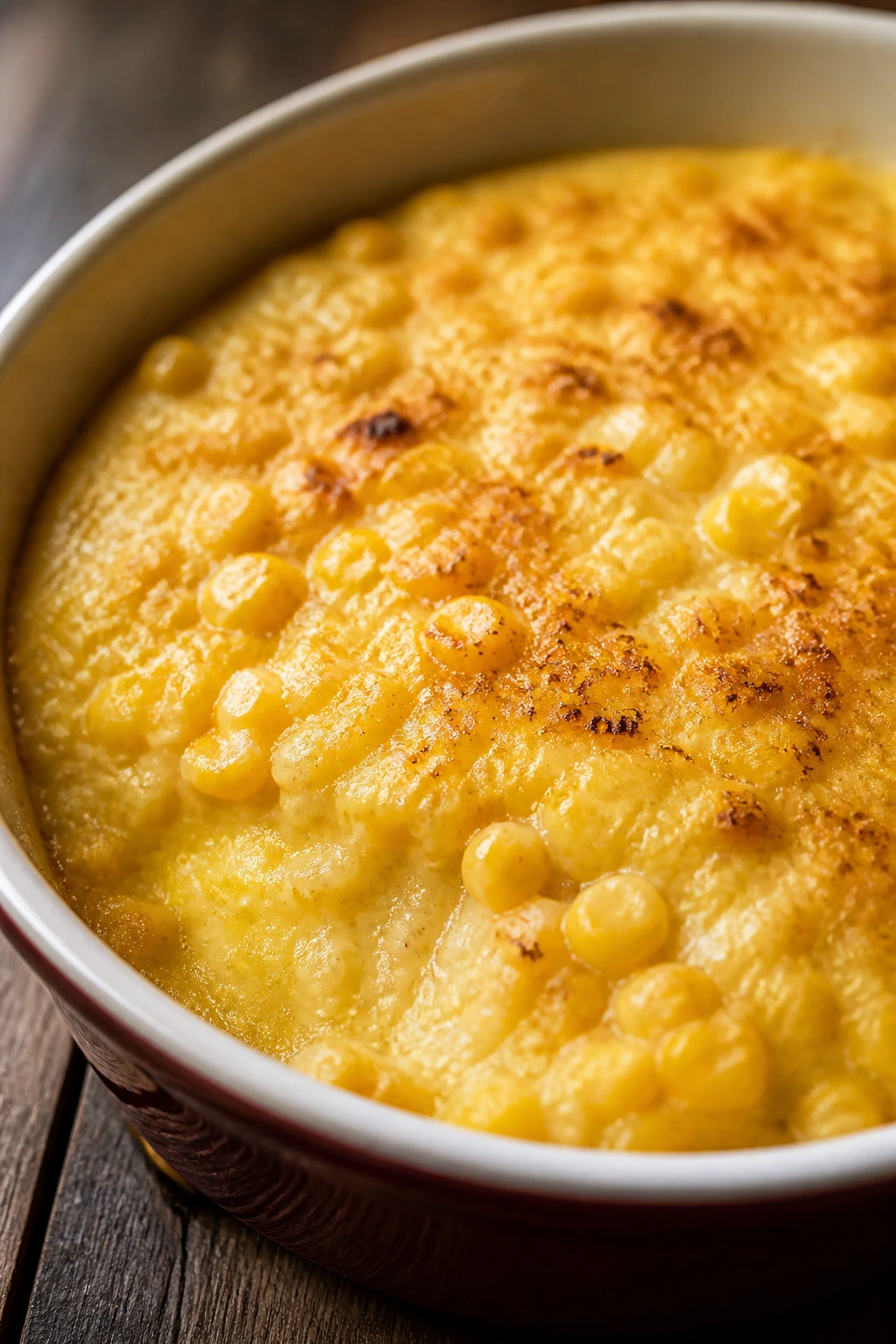
Corn pudding sits in that nice middle space between side and spoonbread. It should wobble a little when you move the cooker, then settle into a custardy scoop with sweet corn kernels scattered through it. The slow cooker makes it gentle and soft without the edges turning dry.
Why It Works:
Eggs and cornmeal give the pudding its structure, while cream-style corn keeps the texture rich and loose. A slow cooker is ideal because custards need steady heat, not sharp oven blasts. If you want a firmer slice, cook it a little longer; if you want a spoonable side, stop sooner.
Key Ingredients:
- 1 can cream-style corn, 14 to 15 ounces
- 2 cups frozen corn
- 2 large eggs, beaten
- 1/2 cup whole milk
- 1/4 cup melted butter
- 1/4 cup cornmeal
- 2 tablespoons sugar
- 1/2 teaspoon salt
- 1/4 teaspoon black pepper
Quick Steps:
- Whisk the eggs, milk, butter, cornmeal, sugar, salt, and pepper in a bowl.
- Fold in the cream-style corn and frozen corn.
- Pour into a greased slow cooker.
- Cook on high for 2 to 3 hours, until the center is set but still slightly soft.
- Rest for 10 minutes before serving.
Equipment for This Recipe:
- Small or medium slow cooker
- Mixing bowl
- Whisk
- Rubber spatula
- Measuring cups
How to Serve This Dish:
Serve it with a large spoon so guests can scoop both custard and kernels in one bite. It pairs nicely with ham, turkey, and greens, and it sits well next to cranberry sauce because the sweetness is familiar rather than sugary.
Pro Tips for This Recipe:
- Grease the cooker well or the pudding sticks.
- Do not overbake; a little wobble is what you want.
- Frozen corn is fine and saves time.
- Let it rest before scooping so it firms slightly.
Variations on This Dish:
- Cheddar Corn Pudding: Stir in 1 cup shredded cheddar.
- Jalapeño Corn Pudding: Add one minced jalapeño.
- Herbed Corn Pudding: Add chopped chives and thyme.
Common Mistakes to Avoid with This Dish:
- Cooking until fully firm: It gets dry.
- Using too much cornmeal: The texture turns sandy.
- Forgetting to grease the pot: Cleanup gets ugly fast.
14. Cauliflower Mash with Parmesan
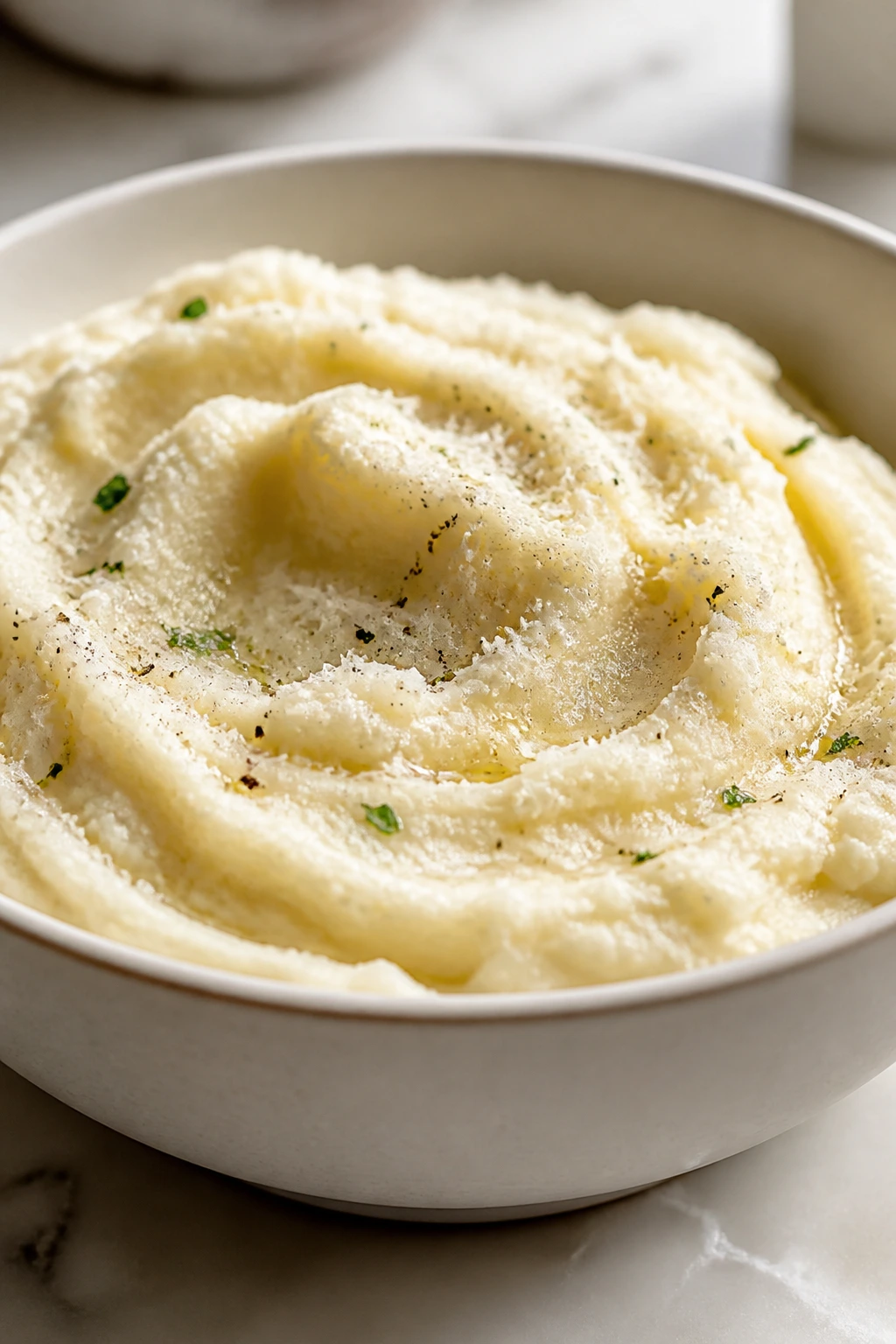
Cauliflower mash should taste like cauliflower first, not like a diet stand-in. When you slow-cook it with garlic and cheese, it gets creamy and lightly sweet, with enough body to replace potatoes on a plate without feeling watery. Parmesan keeps the flavor sharp and savory.
Why It Works:
Cauliflower softens quickly, so the slow cooker gives you a hands-off path to tender florets without overhandling them. Cream cheese or Parmesan gives the mash the weight it needs. I prefer to drain it well before mashing; extra moisture is the enemy here.
Key Ingredients:
- 2 large heads cauliflower, cut into florets
- 4 garlic cloves, smashed
- 1/2 cup vegetable broth
- 4 tablespoons butter
- 4 ounces cream cheese
- 1/3 cup grated Parmesan
- Salt and pepper to taste
Quick Steps:
- Put cauliflower, garlic, and broth into the slow cooker.
- Cook on high for 2 to 3 hours or low for 4 to 5 hours, until the florets are very tender.
- Drain well.
- Add butter, cream cheese, and Parmesan, then mash or blend until smooth.
- Season and serve hot.
Equipment for This Recipe:
- Slow cooker
- Colander
- Potato masher or immersion blender
- Measuring cups
- Wooden spoon
How to Serve This Dish:
Serve it like mashed potatoes, with gravy or a pat of butter on top. It is especially good beside rich dishes because it gives the plate a lighter base without turning into a sad puree.
Pro Tips for This Recipe:
- Drain it well. Seriously, that part matters.
- An immersion blender gives the smoothest finish.
- Use Parmesan in moderation so it does not take over.
- Taste after mashing, not before.
Variations on This Dish:
- Roasted Garlic Cauliflower: Use roasted garlic instead of raw.
- Cheddar Cauliflower: Swap Parmesan for sharp cheddar.
- Dairy-Free Version: Use olive oil and a splash of unsweetened almond milk.
Common Mistakes to Avoid with This Dish:
- Not draining the cauliflower: The mash gets watery.
- Overblending: It can turn gluey.
- Underseasoning: Cauliflower needs enough salt to wake up.
15. Savory Bread Pudding with Sage and Onion
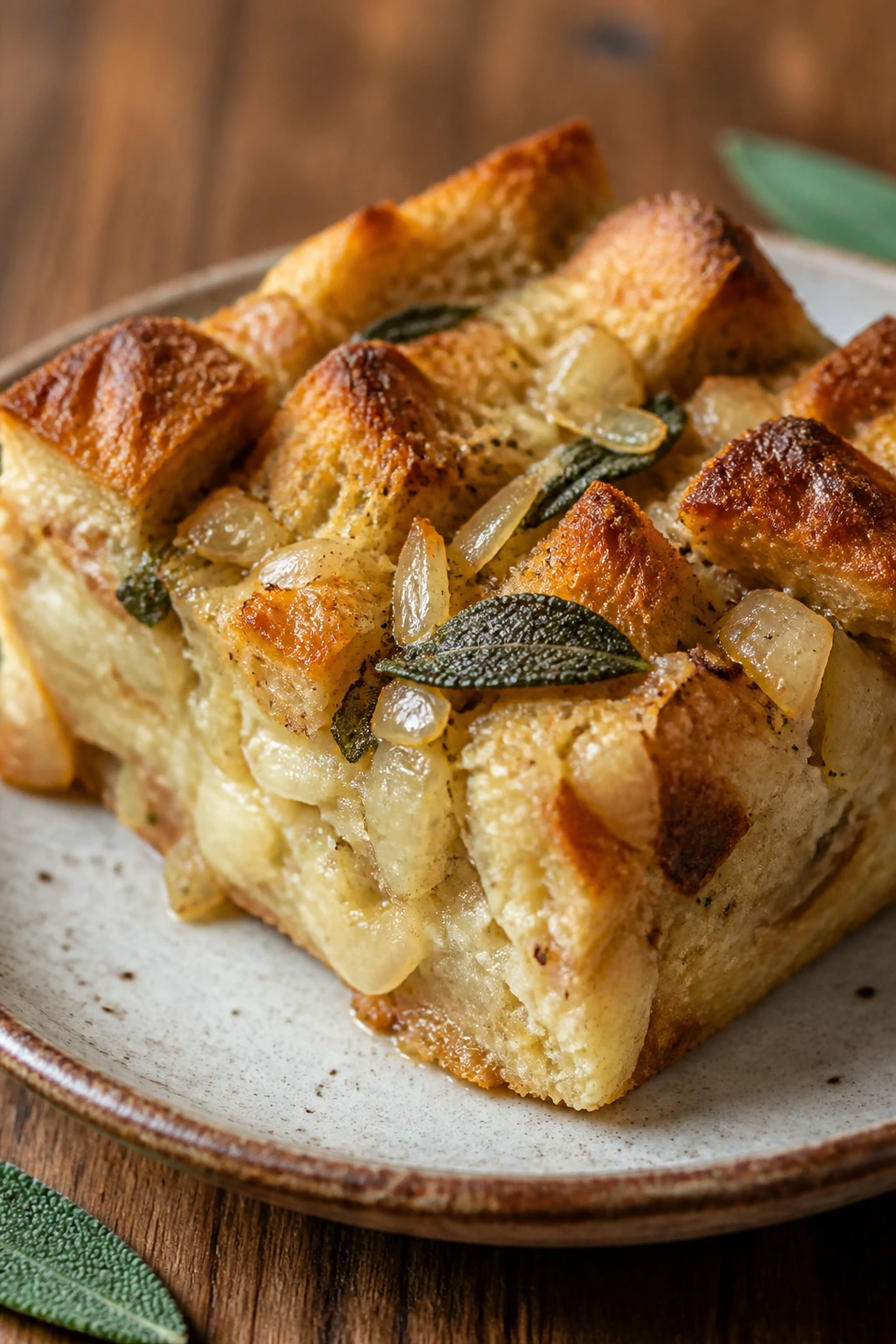
This is stuffing’s softer cousin, and it has a tender, almost custardy center that feels at home on a holiday table. The bread soaks up sage, onion, butter, and broth, then settles into something between dressing and casserole. It is not supposed to be crunchy all the way through.
Why It Works:
Bread pudding in the slow cooker is a smart move when you want stuffing flavor without the oven race. Day-old bread drinks in the custard slowly, and the onions and celery bring the flavor base. If you like a more pronounced sage note, this is the dish for it.
Key Ingredients:
- 8 cups day-old bread cubes
- 1 small onion, diced
- 2 celery stalks, diced
- 3 tablespoons butter
- 2 teaspoons dried sage
- 1 teaspoon dried thyme
- 2 large eggs
- 1 1/2 cups low-sodium broth
- 1/2 cup milk
- Salt and pepper to taste
Quick Steps:
- Toast the bread cubes until dry at the edges.
- Sauté onion and celery in butter until soft.
- Whisk eggs, broth, milk, sage, thyme, salt, and pepper.
- Combine bread and vegetables, then pour the custard over and fold gently.
- Cook in a greased slow cooker on low for 3 to 4 hours until set.
Equipment for This Recipe:
- Slow cooker
- Mixing bowl
- Skillet
- Whisk
- Measuring cups
How to Serve This Dish:
Scoop it rather than slice it. It sits well beside turkey or mushrooms, and the soft texture makes it especially good for plates already crowded with gravy and potatoes.
Pro Tips for This Recipe:
- Use sturdy bread like sourdough or French bread.
- Do not soak the mixture until it slumps.
- Let it rest 10 minutes before serving.
- A little parsley on top gives it a fresher look.
Variations on This Dish:
- Mushroom Sage Pudding: Add sautéed mushrooms.
- Sausage Bread Pudding: Add browned sausage for more heft.
- Cornbread Version: Use cornbread cubes for a sweeter base.
Common Mistakes to Avoid with This Dish:
- Fresh bread: It turns soggy and tight.
- Too much custard: The center never sets.
- Cooking too long: The edges dry before the middle finishes.
16. Collard Greens with Apple Cider Vinegar
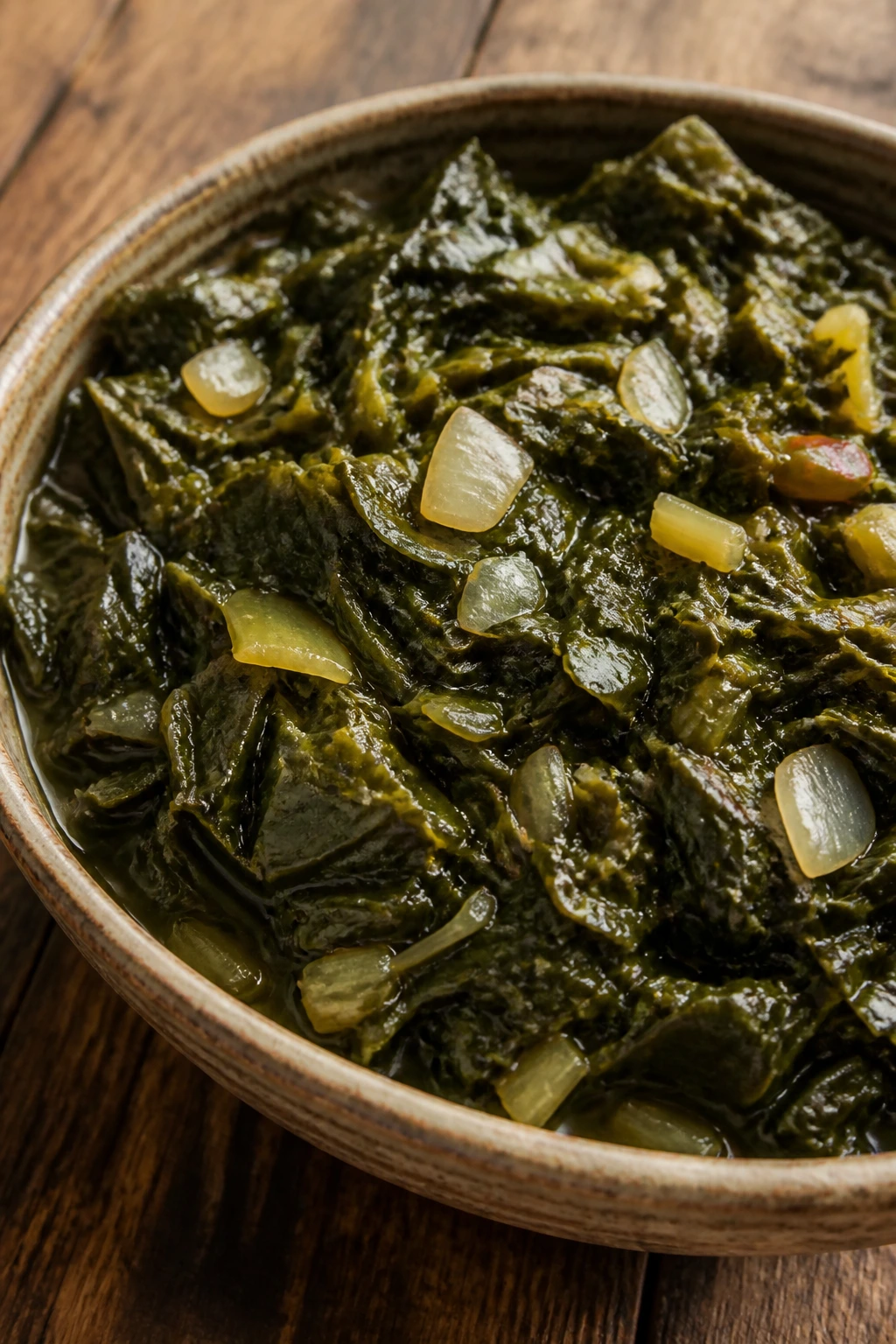
Collard greens need time, and the slow cooker gives them that without burning the pot or forcing you to stand over a stove. The leaves turn tender and savory, the vinegar sharpens the broth, and if you add smoked turkey or bacon, the whole pot tastes like it has been simmering all afternoon in a very good way. It is one of the deepest-flavored sides in the lineup.
Why It Works:
Low, slow heat breaks down the greens’ toughness and lets the smoky meat flavor move through the broth. Apple cider vinegar added near the end keeps the greens from tasting muddy. If you cut the ribs out of the leaves, you get a cleaner texture from the start.
Key Ingredients:
- 2 bunches collard greens, stems removed and leaves sliced
- 1 onion, sliced
- 3 garlic cloves, minced
- 4 slices bacon or 1 smoked turkey leg
- 3 cups low-sodium chicken broth
- 2 tablespoons apple cider vinegar
- 1/2 teaspoon red pepper flakes
- Salt and pepper to taste
Quick Steps:
- Put onion, garlic, bacon or turkey, broth, and pepper flakes in the slow cooker.
- Cook on high for 1 hour to start the flavor base.
- Add the collards in batches, pressing them down as they soften.
- Cook on low for 5 to 6 hours, until the greens are tender.
- Stir in vinegar, taste, and season before serving.
Equipment for This Recipe:
- Slow cooker
- Knife and cutting board
- Tongs
- Measuring cups
- Slotted spoon
How to Serve This Dish:
Use a bowl with a little broth at the bottom so the greens stay glossy. They work beautifully with cornbread, turkey, or mashed potatoes, and they balance rich sides with their vinegar bite.
Pro Tips for This Recipe:
- Remove the thick center ribs or the texture stays chewy.
- Add vinegar near the end so it stays bright.
- If using bacon, cook it first for a deeper base.
- Greens shrink a lot, so start with more than looks necessary.
Variations on This Dish:
- Smoky Ham Hock Greens: Use a ham hock instead of bacon.
- Vegetarian Greens: Use smoked paprika and vegetable broth.
- Spicy Greens: Add extra red pepper flakes or a sliced jalapeño.
Common Mistakes to Avoid with This Dish:
- Leaving the ribs on: They stay tough.
- Skipping acid: The greens taste heavy and flat.
- Not enough cooking time: Collards need patience.
17. Parmesan Herb Polenta
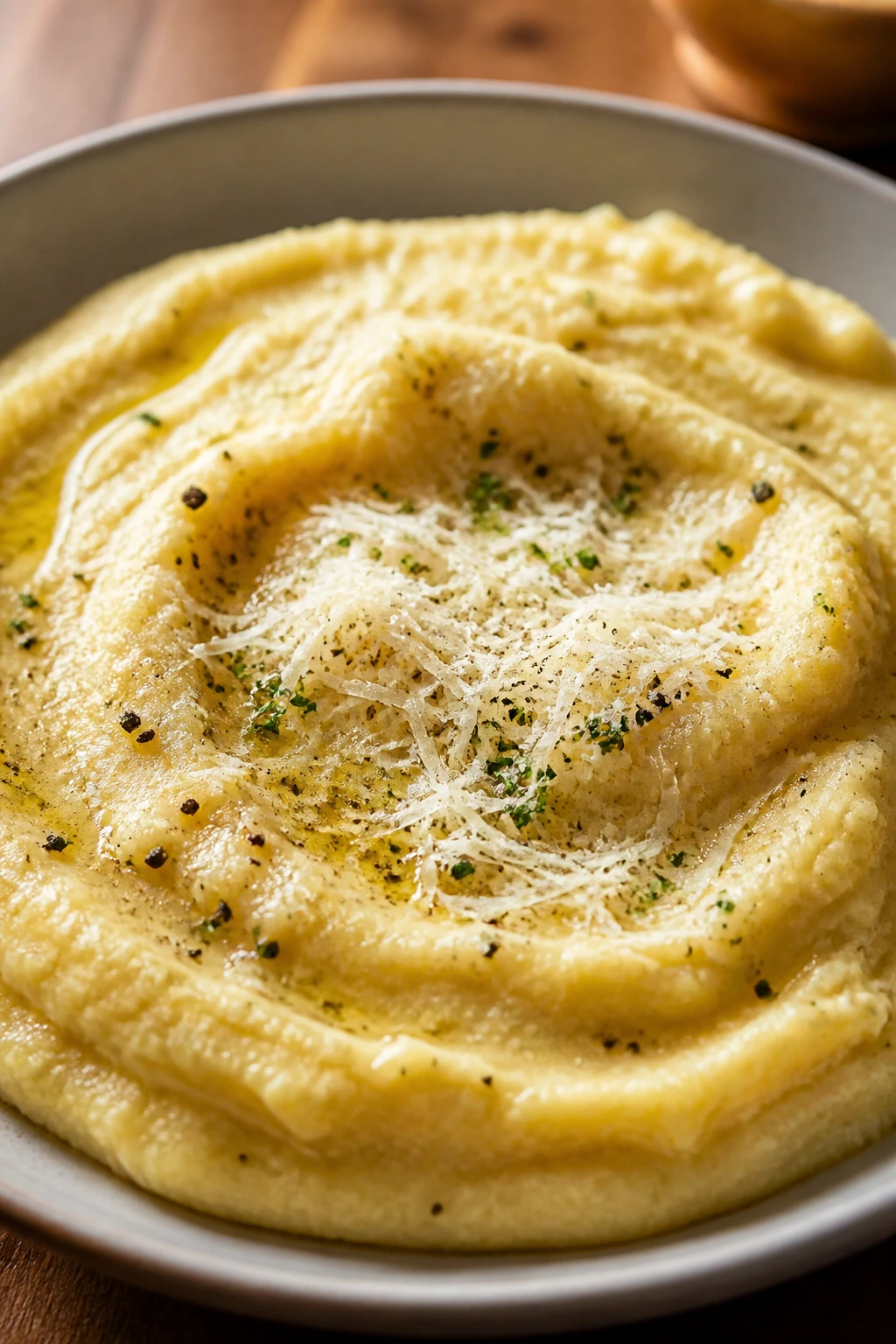
Polenta done in a slow cooker feels almost luxurious because you don’t have to stand there stirring until your arm gets tired. It comes out creamy, nutty, and soft enough to hold a spoon mark, with Parmesan folding in at the end for a salty edge. It is the kind of side that quietly improves everything placed on top of it.
Why It Works:
Coarse cornmeal needs time and liquid to soften without turning grainy, and the slow cooker gives it both. Stirring occasionally keeps the texture even, while butter and cheese round out the corn flavor. If you want it firmer, let it sit uncovered for a few minutes before serving.
Key Ingredients:
- 1 cup coarse cornmeal or polenta
- 4 cups low-sodium broth
- 1 cup whole milk
- 3 tablespoons butter
- 1/2 cup grated Parmesan
- 1 teaspoon salt
- 1/4 teaspoon black pepper
- 1 teaspoon chopped thyme or rosemary
Quick Steps:
- Whisk the cornmeal, broth, milk, salt, and pepper in the slow cooker.
- Cook on high for 2 to 3 hours, stirring every 30 to 45 minutes.
- When the mixture is thick and creamy, stir in butter, Parmesan, and herbs.
- Taste and adjust salt.
- Serve warm.
Equipment for This Recipe:
- Slow cooker
- Whisk
- Wooden spoon
- Measuring cups
- Heatproof spatula
How to Serve This Dish:
Spoon it under mushrooms, gravy, or roasted vegetables. It looks and eats best when it’s still loose enough to spread slightly across the plate, not stiff enough to cut.
Pro Tips for This Recipe:
- Stir during cooking so the bottom doesn’t settle into a crust.
- Use coarse cornmeal, not instant.
- Add cheese at the end so it stays smooth.
- Broth gives more flavor than water.
Variations on This Dish:
- Garlic Polenta: Add minced garlic with the liquid.
- Creamy Mushroom Polenta: Top with sautéed mushrooms.
- Fontina Version: Swap some Parmesan for Fontina if you want more melt.
Common Mistakes to Avoid with This Recipe:
- Using instant polenta: It gets mushy too fast.
- No stirring: The bottom can scorch.
- Adding cheese too early: It can grain out.
18. Root Vegetable Medley with Rosemary
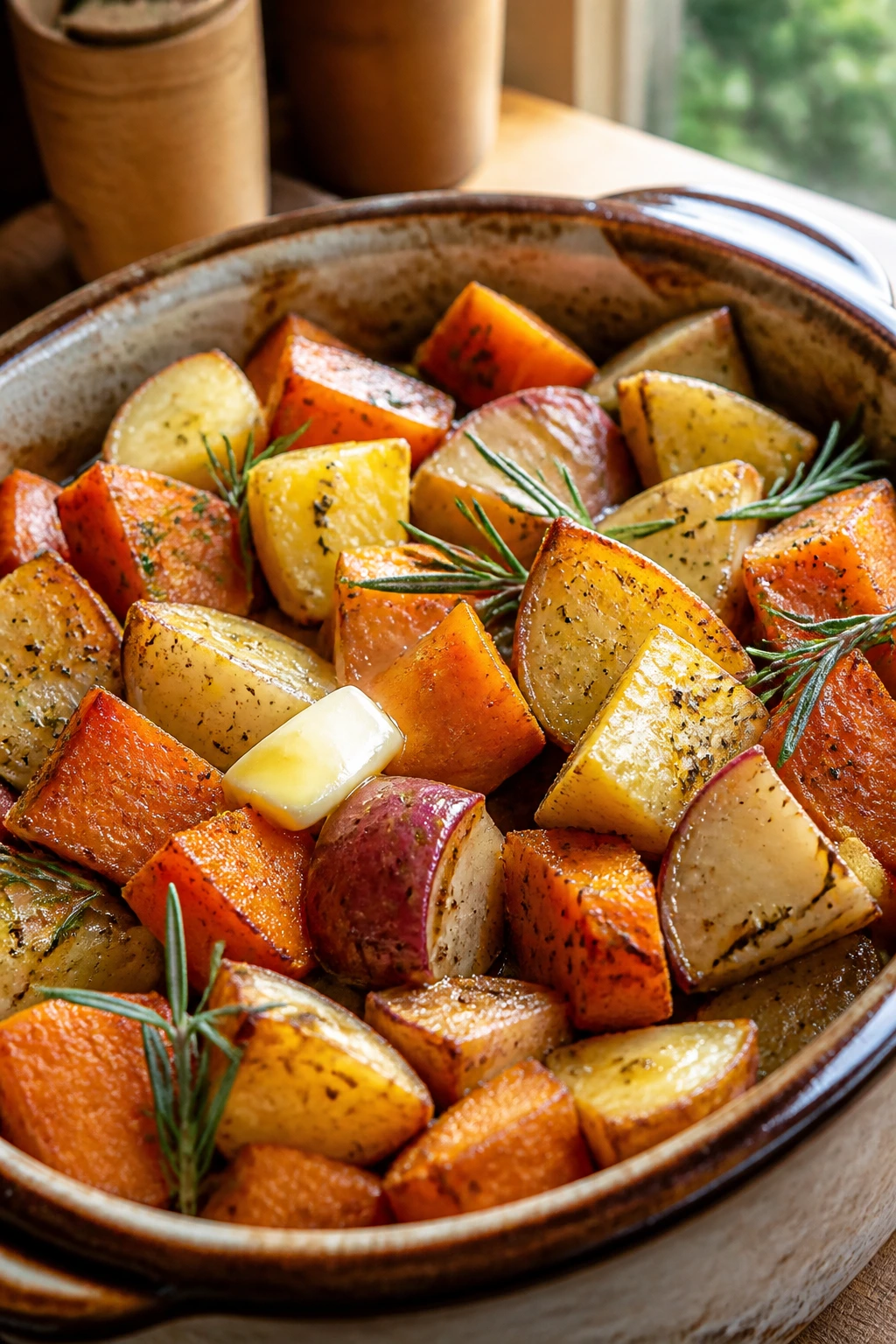
A root vegetable medley looks humble until the rosemary and butter start working on it. Then the carrots, parsnips, turnips, and sweet potatoes come out tasting earthy, sweet, and faintly piney, with enough texture to hold their shape in a serving spoon. It’s the side I make when I want the table to feel grounded.
Why It Works:
Different roots need a similar amount of time if you cut them into roughly the same size, and the slow cooker handles that balance well. Rosemary and garlic are sturdy enough to stand up to long cooking without fading. A little broth keeps the vegetables from drying while they soften.
Key Ingredients:
- 2 cups carrots, cut into chunks
- 2 cups parsnips, cut into chunks
- 2 cups turnips or rutabaga, cut into chunks
- 2 cups sweet potato, cut into chunks
- 3 tablespoons butter or olive oil
- 2 teaspoons chopped rosemary
- 2 garlic cloves, minced
- 1/2 cup vegetable broth
- Salt and pepper to taste
Quick Steps:
- Add all the vegetables to the slow cooker.
- Toss with butter or oil, rosemary, garlic, broth, salt, and pepper.
- Cook on low for 4 to 5 hours, stirring once or twice, until tender.
- Taste and adjust seasoning.
- Serve with a spoon so the vegetables keep their shape.
Equipment for This Recipe:
- Slow cooker
- Cutting board
- Sharp knife
- Vegetable peeler
- Large spoon
How to Serve This Dish:
Serve it in a wide dish so the colors show. It pairs with almost anything on a holiday table, and it gives you a nice break from dairy-heavy sides without looking like a compromise.
Pro Tips for This Recipe:
- Cut dense vegetables like turnips a little smaller than sweet potatoes.
- Fresh rosemary tastes cleaner than too much dried rosemary.
- Don’t over-stir or the chunks will break down.
- Add a knob of butter at the end for shine.
Variations on This Dish:
- Maple Root Medley: Add 1 tablespoon maple syrup for a soft glaze.
- Garlic Herb Medley: Increase the garlic and add thyme.
- Orange Rosemary Medley: Finish with a little orange zest.
Common Mistakes to Avoid with This Dish:
- Uneven vegetable size: Some pieces overcook while others stay hard.
- Using too little salt: Roots need it.
- Cooking until collapsed: You want chunks, not puree.
19. Apple Cranberry Chutney
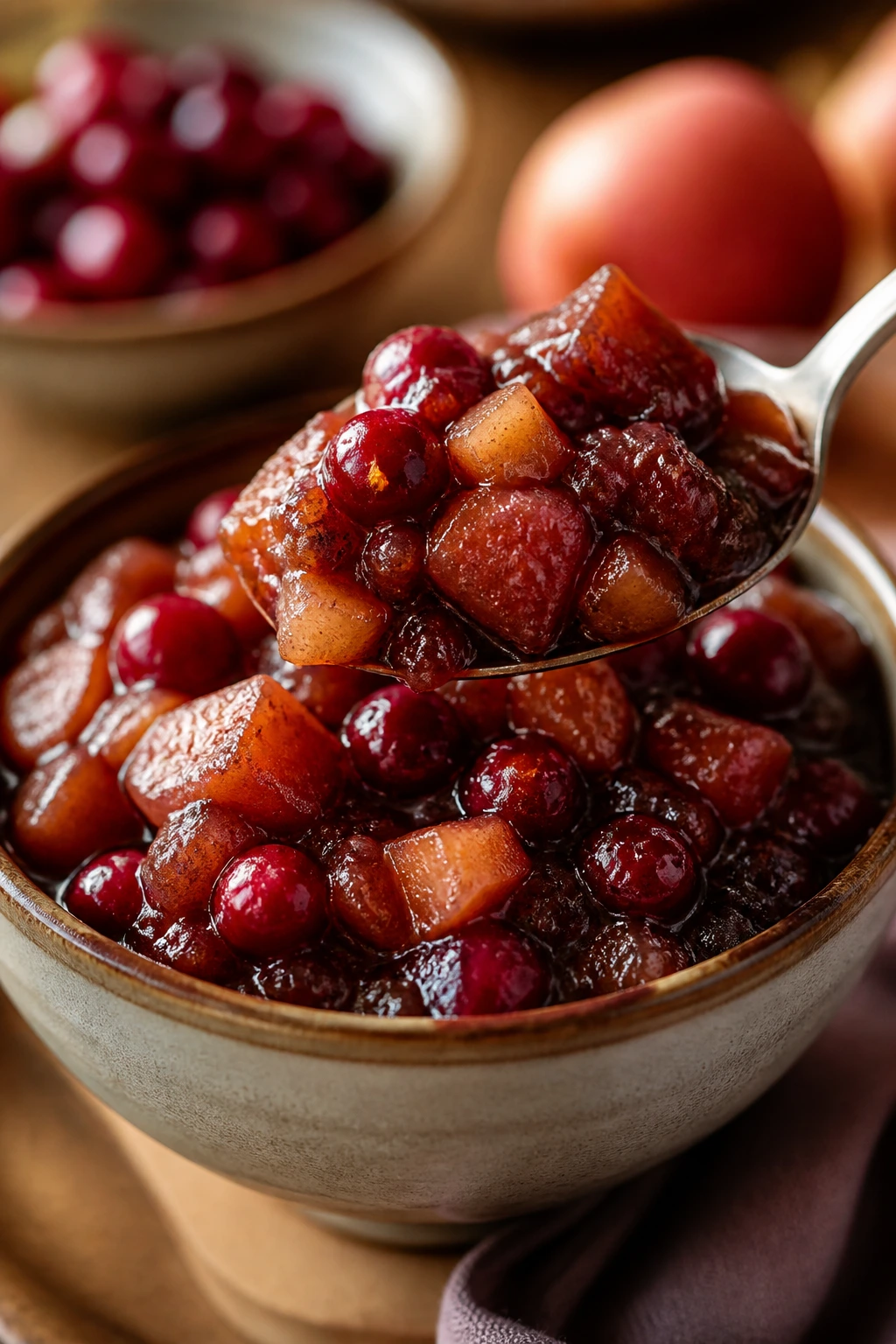
Chutney is the underrated side that behaves like both sauce and relish. Apples soften into a jammy base, cranberries burst through the sweetness, and a little vinegar keeps the whole thing bright enough to cut through rich food. It’s one of those dishes that people don’t expect to crave, then ask for again.
Why It Works:
The slow cooker turns apples into a soft, spoonable base without scorching the sugar or vinegar. Cranberries bring tartness and color, while onion and ginger keep the flavor from reading like pie. This is one of the best make-ahead sides in the group because the flavor deepens after it cools.
Key Ingredients:
- 4 apples, peeled, cored, and chopped
- 2 cups cranberries
- 1 small onion, finely chopped
- 1/2 cup brown sugar
- 1/3 cup apple cider vinegar
- 1 teaspoon grated fresh ginger
- 1/2 teaspoon cinnamon
- Pinch of salt
- 1/4 cup raisins, optional
Quick Steps:
- Combine everything in the slow cooker.
- Cook on high for 2 to 3 hours, stirring once or twice, until the apples are soft and the cranberries have burst.
- Mash lightly if you want a smoother chutney.
- Cool before serving.
- Store chilled for the best flavor.
Equipment for This Recipe:
- Small slow cooker
- Sharp knife
- Cutting board
- Wooden spoon
- Measuring cups
How to Serve This Dish:
Serve chutney in a small bowl or spoon it beside turkey, cheese, or roasted vegetables. It works like a bright accent on a heavy plate, which is exactly why it vanishes so fast.
Pro Tips for This Recipe:
- Use firm apples so they do not collapse instantly.
- Taste after cooling; the vinegar is sharper when hot.
- Keep the ginger modest unless you want a stronger bite.
- A pinch of salt keeps the fruit from tasting candy-like.
Variations on This Dish:
- Pear Cranberry Chutney: Replace half the apples with pears.
- Orange Ginger Chutney: Add orange zest and extra ginger.
- Spiced Chutney: Add cloves or allspice in tiny amounts.
Common Mistakes to Avoid with This Dish:
- Too much sugar: The chutney loses its sharp edge.
- Cooking until dry: It should stay spoonable.
- Using apples that fall apart too fast: The texture turns flat.
20. Orange-Glazed Beets
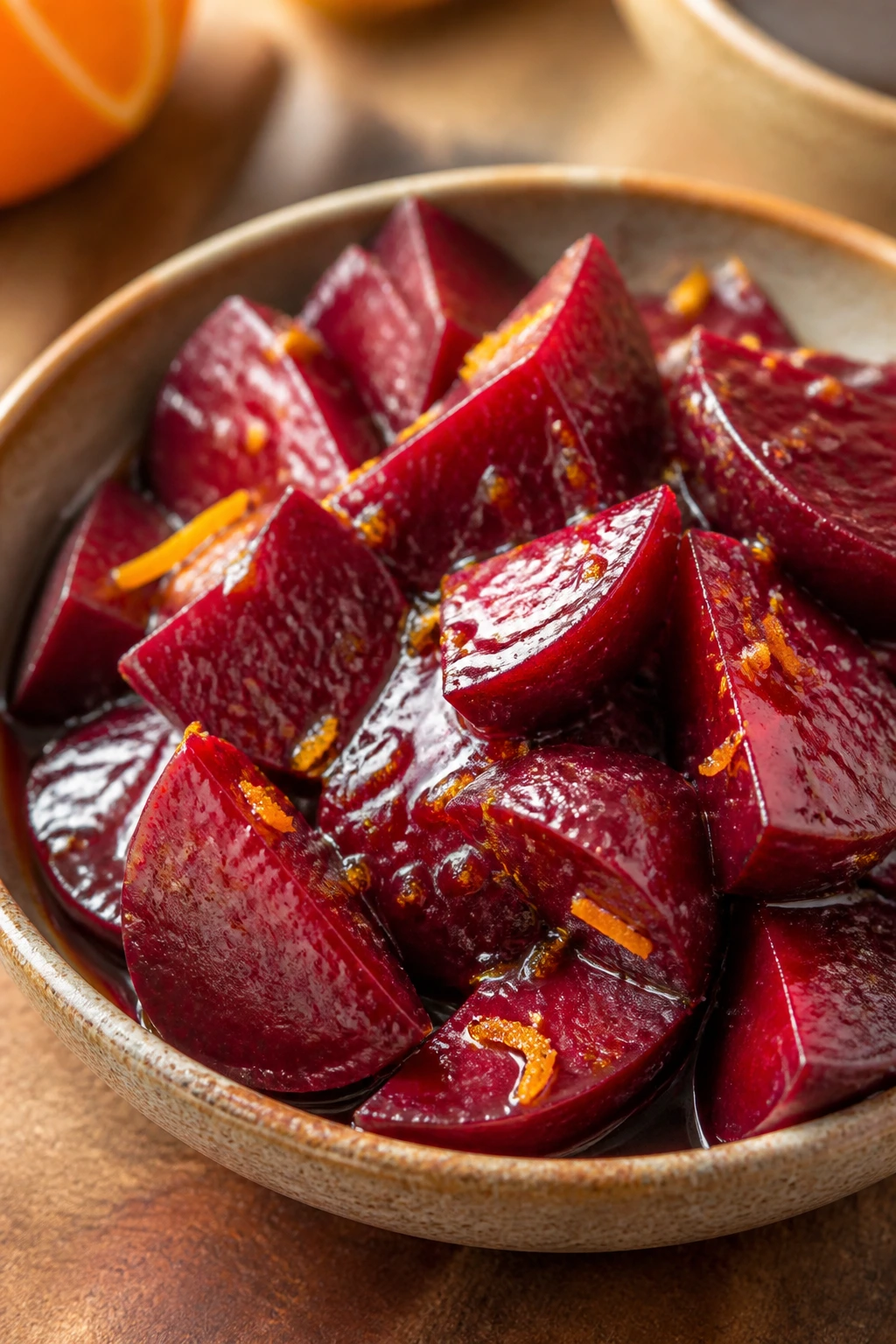
Beets bring a deep color and a clean, earthy sweetness that works better on a holiday table than people expect. The orange glaze lifts the earthiness and makes them taste brighter, while the slow cooker keeps the edges tender instead of leathery. If you’ve only had beets roasted, this version will feel softer and more polished.
Why It Works:
Beets need moisture and time to soften, and the slow cooker gives both without drying them out. Orange juice and honey balance their earthy flavor, while thyme keeps the glaze from going syrupy. Cut them into even wedges so they cook at the same pace.
Key Ingredients:
- 2 pounds beets, peeled and cut into wedges
- 1/2 cup orange juice
- 2 tablespoons honey
- 2 tablespoons butter
- 1 teaspoon thyme leaves
- 1/2 teaspoon salt
- 1/4 teaspoon black pepper
- 1 tablespoon balsamic vinegar, optional
Quick Steps:
- Put the beets, orange juice, honey, butter, thyme, salt, and pepper into the slow cooker.
- Cook on low for 4 to 5 hours, until fork-tender.
- Stir in balsamic vinegar if using.
- Taste and adjust salt.
- Serve warm or at room temperature.
Equipment for This Recipe:
- Slow cooker
- Peeler
- Knife and cutting board
- Spoon
- Gloves, optional if you dislike beet stains
How to Serve This Dish:
Serve them in a small wide bowl so the glaze clings to the sides. They work well beside creamy dishes because they add color and a little sharp sweetness to the plate.
Pro Tips for This Recipe:
- Wear gloves if you care about red-stained fingers.
- Keep the wedges similar in size.
- Add balsamic only if you want extra depth.
- A little orange zest at the end makes the glaze pop.
Variations on This Dish:
- Maple Beet Glaze: Swap honey for maple syrup.
- Citrus Herb Beets: Add a strip of orange peel and rosemary.
- Carrot Beet Mix: Add carrots for a sweeter, less earthy side.
Common Mistakes to Avoid with This Dish:
- Cutting beet pieces too large: They stay firm too long.
- Using too much liquid: The glaze won’t cling.
- Overcooking: The beets can lose their clean flavor.
21. Scalloped Potatoes and Onions
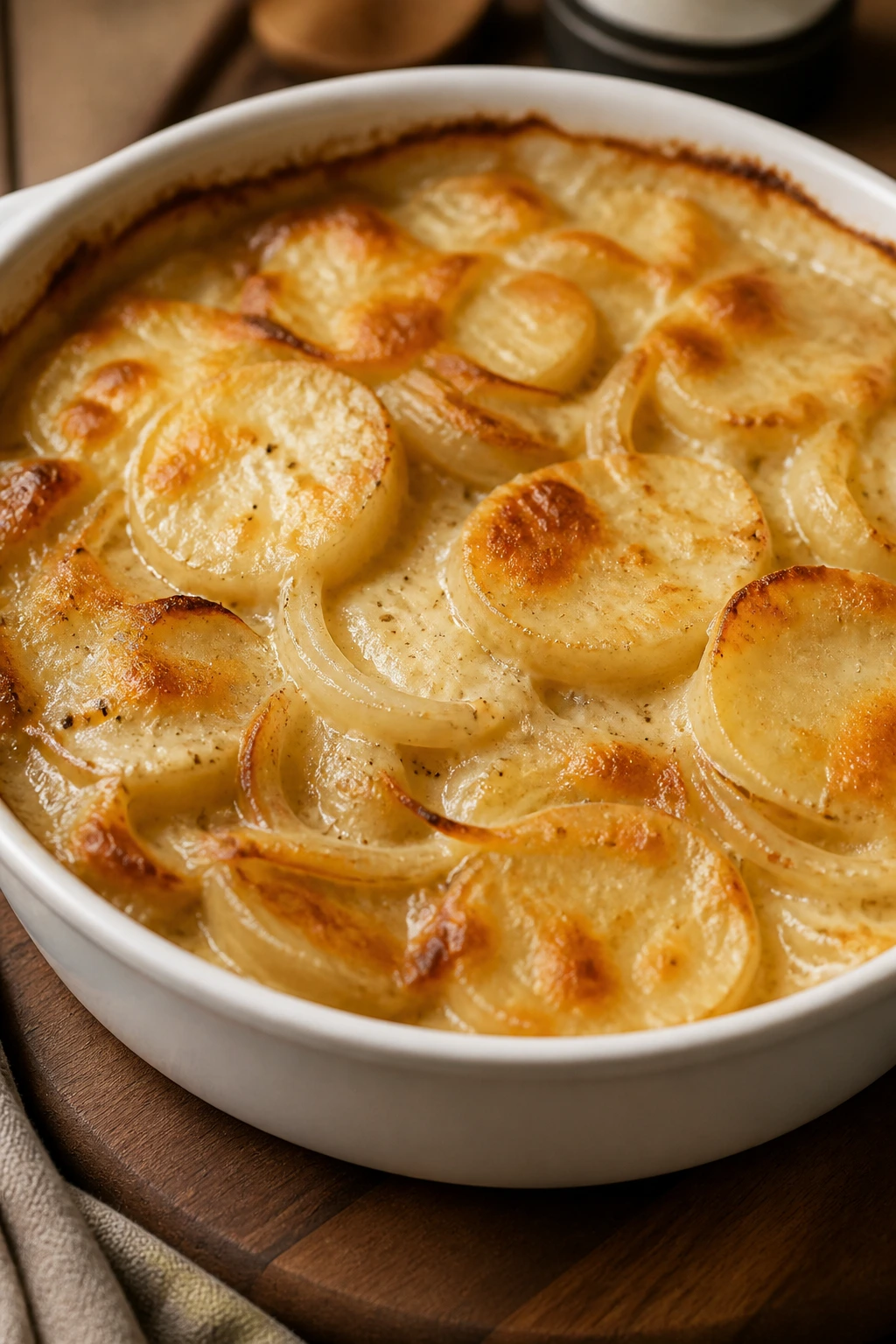
Scalloped potatoes in the slow cooker are soft, layered, and unapologetically creamy. The onion slices melt into the potatoes, and the cheese turns the whole thing into a rich side with a little structure left in the center. I prefer this when mashed potatoes already have a job elsewhere on the table.
Why It Works:
Thin potato slices absorb the dairy evenly, which means each layer gets seasoned instead of the sauce sitting on top. Onion adds sweetness as it cooks down, and a little flour in the sauce helps it thicken without going gluey. Slice the potatoes evenly or you’ll end up with a mixed bag of hard and mushy layers.
Key Ingredients:
- 3 pounds russet or Yukon Gold potatoes, peeled and thinly sliced
- 1 medium onion, thinly sliced
- 3 tablespoons butter
- 3 tablespoons flour
- 2 cups milk
- 1 cup shredded cheddar
- 1 teaspoon salt
- 1/2 teaspoon black pepper
- 1/4 teaspoon paprika
Quick Steps:
- Grease the slow cooker and layer half the potatoes and onions inside.
- Melt butter in a skillet, stir in flour, then whisk in milk until smooth and slightly thickened.
- Season the sauce with salt, pepper, and paprika.
- Pour half the sauce over the first layer, repeat with the remaining potatoes, onions, and sauce, then top with cheddar.
- Cook on low for 6 to 7 hours, until the potatoes are tender.
Equipment for This Recipe:
- Slow cooker
- Mandoline or sharp knife
- Skillet
- Whisk
- Cheese grater
How to Serve This Dish:
Use a spatula to lift out square-ish portions so the layers stay visible. It sits best beside turkey and greens, and it also behaves nicely under a little extra cheddar if you want to make it feel more indulgent.
Pro Tips for This Recipe:
- Slice potatoes evenly for consistent cooking.
- Use a mandoline if you want thin, uniform layers.
- Let it rest 15 minutes before serving so it firms up.
- Yukon Golds give a creamier finish; russets are a little fluffier.
Variations on This Dish:
- Garlic Scalloped Potatoes: Add minced garlic to the sauce.
- Gruyère Version: Swap cheddar for Gruyère.
- Leek Potato Bake: Replace onion with sliced leeks.
Common Mistakes to Avoid with This Dish:
- Slices too thick: The center stays hard.
- Not thickening the sauce first: The dish can go watery.
- Serving too soon: It falls apart on the plate.
22. Herbed Pearl Onions and Mushrooms
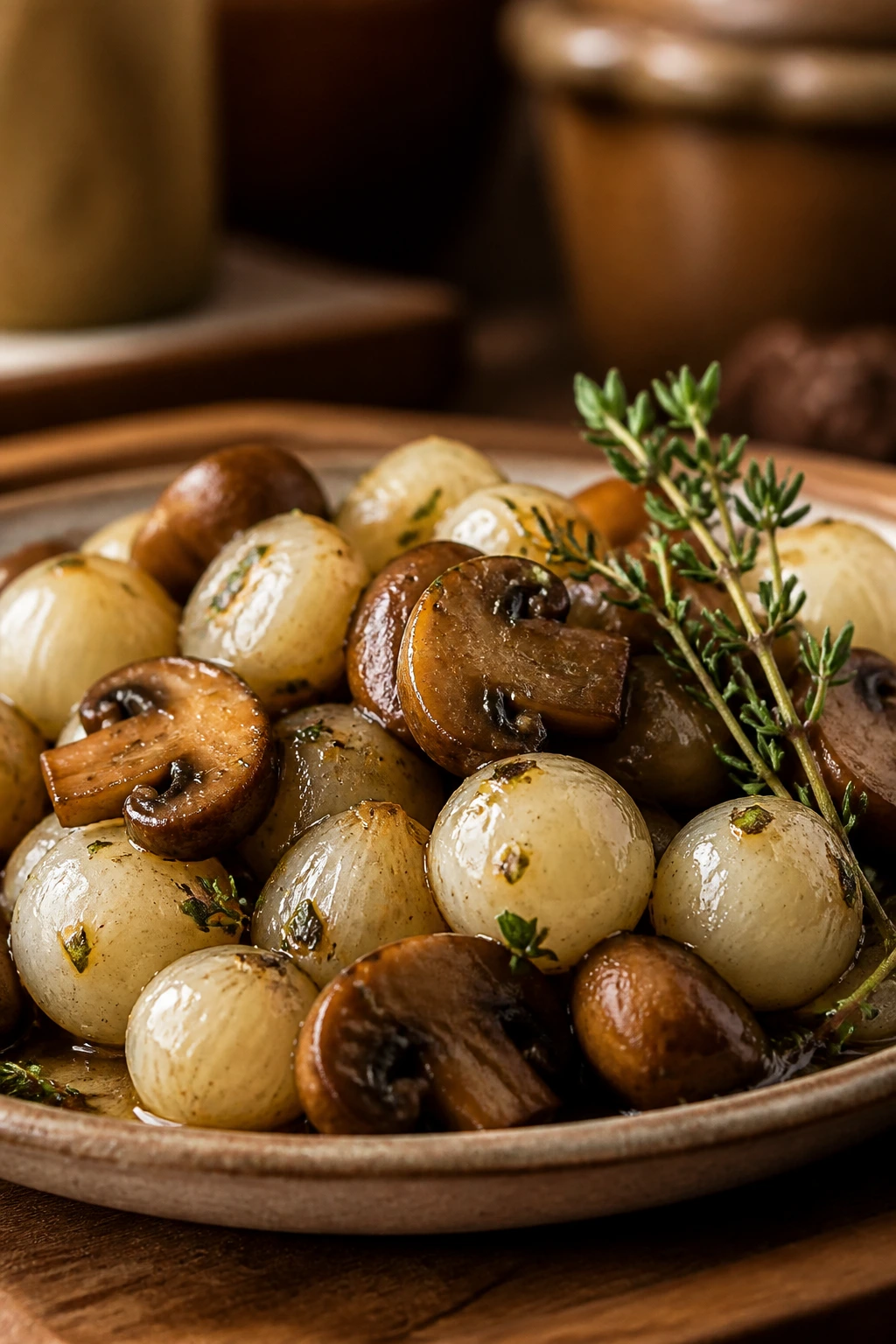
Pearl onions and mushrooms are the quiet side that makes a holiday table feel finished. The onions soften into sweet little bites, the mushrooms soak up butter and herbs, and the whole pot tastes like it came from a restaurant kitchen that understands restraint. It is subtle, yes, but not forgettable.
Why It Works:
Pearl onions are naturally sweet, and mushrooms add umami, which means this dish fills the gap between creamy sides and tart relishes. Butter, thyme, and a little balsamic vinegar give it depth without making it heavy. Frozen pearl onions make the prep much easier and work well here.
Key Ingredients:
- 1 pound pearl onions, peeled if fresh or thawed if frozen
- 1 pound cremini or button mushrooms, halved
- 3 tablespoons butter
- 1/2 cup vegetable broth
- 1 teaspoon fresh thyme leaves or 1/2 teaspoon dried thyme
- 1 tablespoon balsamic vinegar
- Salt and pepper to taste
- 1 tablespoon chopped parsley, for serving
Quick Steps:
- Put the onions, mushrooms, butter, broth, thyme, salt, and pepper into the slow cooker.
- Cook on low for 3 to 4 hours, until the onions are tender and the mushrooms have released their juices.
- Stir in balsamic vinegar.
- Taste and adjust seasoning.
- Top with parsley before serving.
Equipment for This Recipe:
- Slow cooker
- Cutting board and knife
- Measuring cups
- Spoon
- Small bowl for parsley
How to Serve This Dish:
Serve it in a small bowl so the mushrooms and onions stay glossy. It’s a nice side to tuck alongside turkey, gravy, or roasted root vegetables, and it gives the plate a savory, polished edge.
Pro Tips for This Recipe:
- Frozen pearl onions save a lot of peeling time.
- Don’t drown the mushrooms in liquid; they make their own.
- Add balsamic at the end so it stays bright.
- Fresh thyme is worth using if you have it.
Variations on This Dish:
- Garlic Butter Mushrooms: Add 2 minced garlic cloves with the butter.
- Creamed Onion Version: Stir in 1/4 cup cream at the end.
- Sherry Mushroom Mix: Add a splash of dry sherry for depth.
Common Mistakes to Avoid with This Recipe:
- Too much broth: The mushrooms turn soupy.
- Skipping the vinegar: The flavor can feel one-note.
- Cooking on high too long: The onions may split apart.
Why the Slow Cooker Wins on Thanksgiving Side Duty
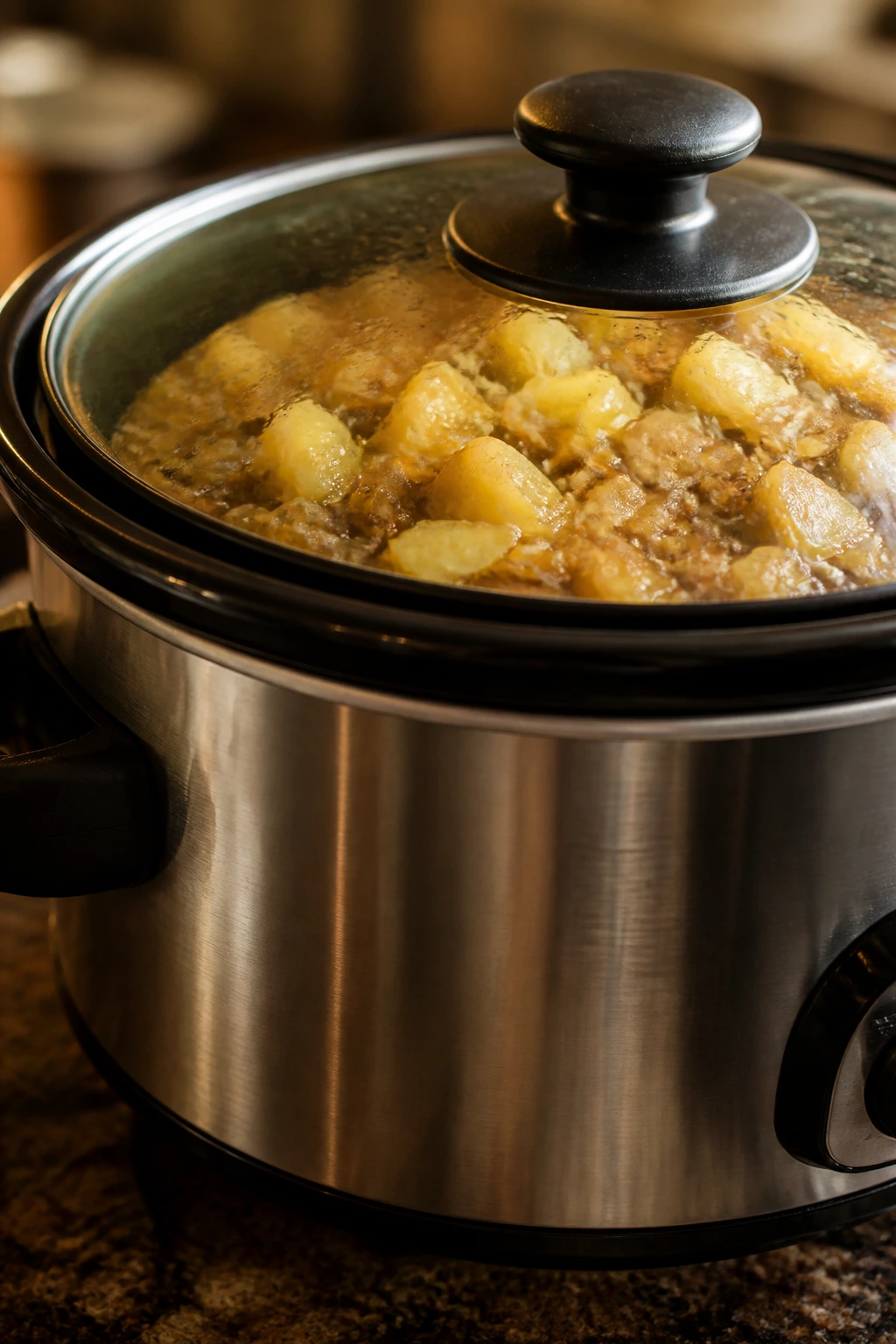
A slow cooker earns its keep because it does one thing the oven cannot do: it holds a side at a steady, lower temperature without demanding attention. That matters with Thanksgiving food, where timing gets weird fast. A tray of rolls wants 20 minutes, the turkey needs rest time, and the potatoes need to stay hot while the gravy settles. The slow cooker absorbs the chaos.
It also treats certain ingredients with more kindness than direct heat does. Potatoes stay fluffy instead of crusting at the edges. Greens soften without scorching. Cranberries burst into sauce instead of catching on the bottom of a saucepan. Even the slightly messy dishes — stuffing, mac and cheese, creamed corn — come out with a softer center because the cooker keeps the heat even from wall to wall.
There’s a catch, and it’s a fair one. The slow cooker won’t brown, crisp, or caramelize the way a hot oven does. So the smartest Thanksgiving strategy is not to ask it for what it cannot do. Use it for the soft, buttery, saucy sides. Save the oven for the things that need color. That division of labor is the whole trick, and once you stop fighting it, the meal gets easier.
Essential Equipment for These Recipes
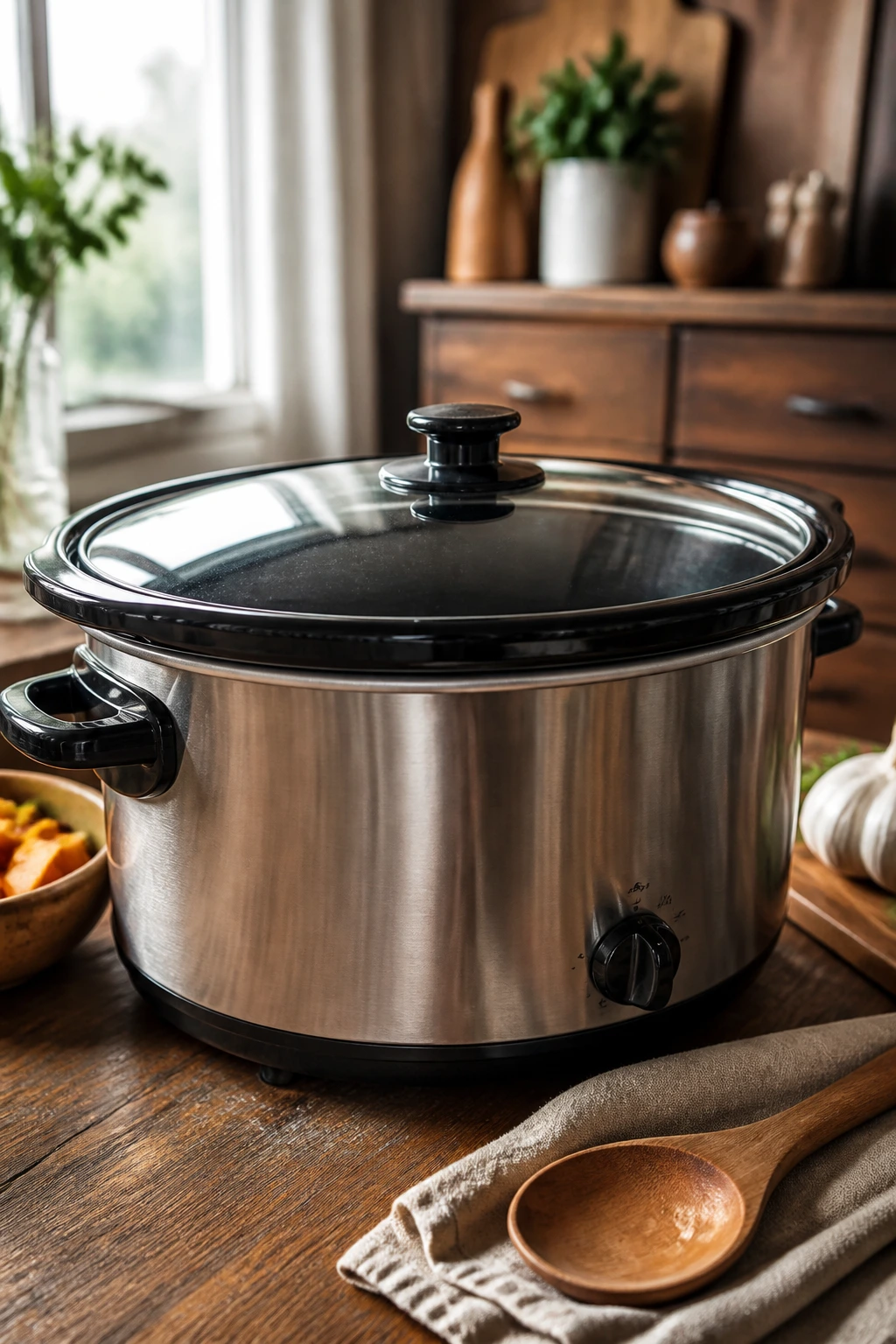
- 6-quart slow cooker: This size handles most of the recipes here without crowding the ingredients.
- 4-quart slow cooker: Handy for cranberry sauce, chutney, gravy, or smaller sides.
- Skillet: You’ll use it for browning onions, mushrooms, bacon, or butter-flour bases.
- Large mixing bowl: Stuffing, mac and cheese, and puddings need room for gentle mixing.
- Sharp chef’s knife: Uniform cuts matter more than people think in a slow cooker.
- Cutting board: A roomy board keeps prep from turning into a pile.
- Whisk: Essential for gravy, corn pudding, scalloped potatoes, and cheese sauces.
- Potato masher or ricer: Use a masher for rustic texture; a ricer for silkier mash.
- Colander: Needed for potatoes and cauliflower so they do not sit in extra water.
- Wooden spoon or silicone spatula: Good for stirring without scraping the insert too hard.
- Measuring cups and spoons: Slow cooker recipes still need real measurements.
- Airtight containers: Useful for storing leftovers without drying them out.
Smart Shopping and Ingredient Tips
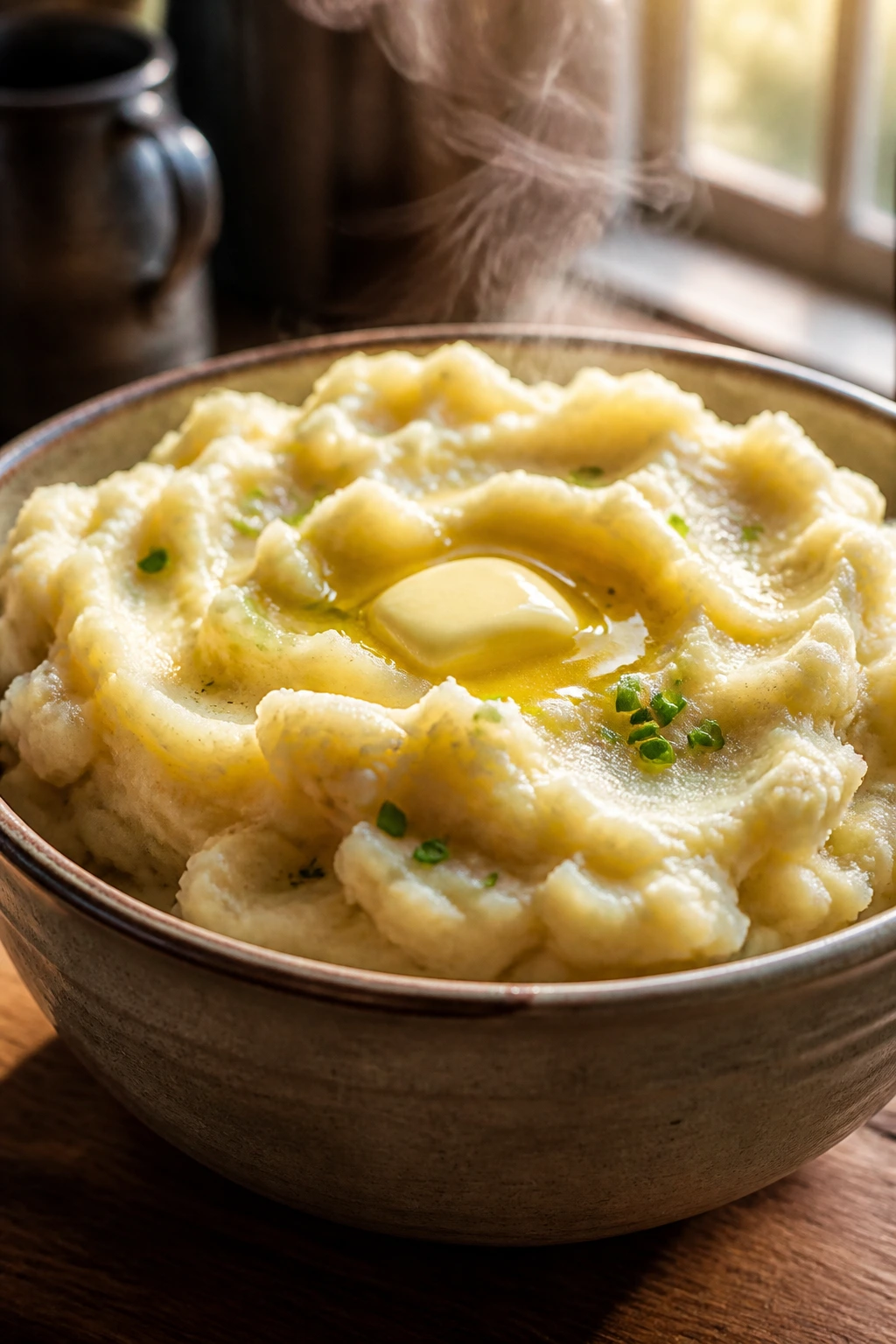
The first rule of shopping for crockpot Thanksgiving sides is to buy ingredients that can handle soft heat without falling apart. Yukon Gold potatoes hold their shape better than russets if you want mashed potatoes with body. Fresh green beans beat canned ones in casseroles because they still have a little bite after long cooking. For squash, choose one that feels heavy for its size and has dull, uncracked skin; shiny skin is often a sign it was picked too early and tastes less developed.
Frozen vegetables are your friend more often than people admit. Frozen corn, frozen pearl onions, and even frozen cranberries work beautifully in slow cooker recipes because they are already washed, trimmed, and ready to go. That matters when the kitchen is full and you do not want to spend twenty minutes peeling tiny onions while butter burns on the stove.
Cheese is one place where quality matters, but not in a snobbish way. For mac and cheese or cauliflower mash, block cheese that you shred yourself melts more smoothly than pre-shredded cheese, which often carries anti-caking starches. Same with butter: use real butter if the recipe leans on flavor rather than just fat. A small amount of good butter does more here than a larger amount of mediocre spread ever will.
Herbs deserve a thought too. Dried sage and thyme are fine in slow cooker stuffing, gravy, and squash because they have enough time to bloom. Fresh parsley, chives, or thyme are better for the finish because they bring a clean top note that survives the long cook. And when a recipe uses vinegar, citrus, or mustard, don’t treat that as a garnish. Those acidic pieces keep the sides from reading as heavy and one-dimensional.
How to Serve These Recipes
Presentation:
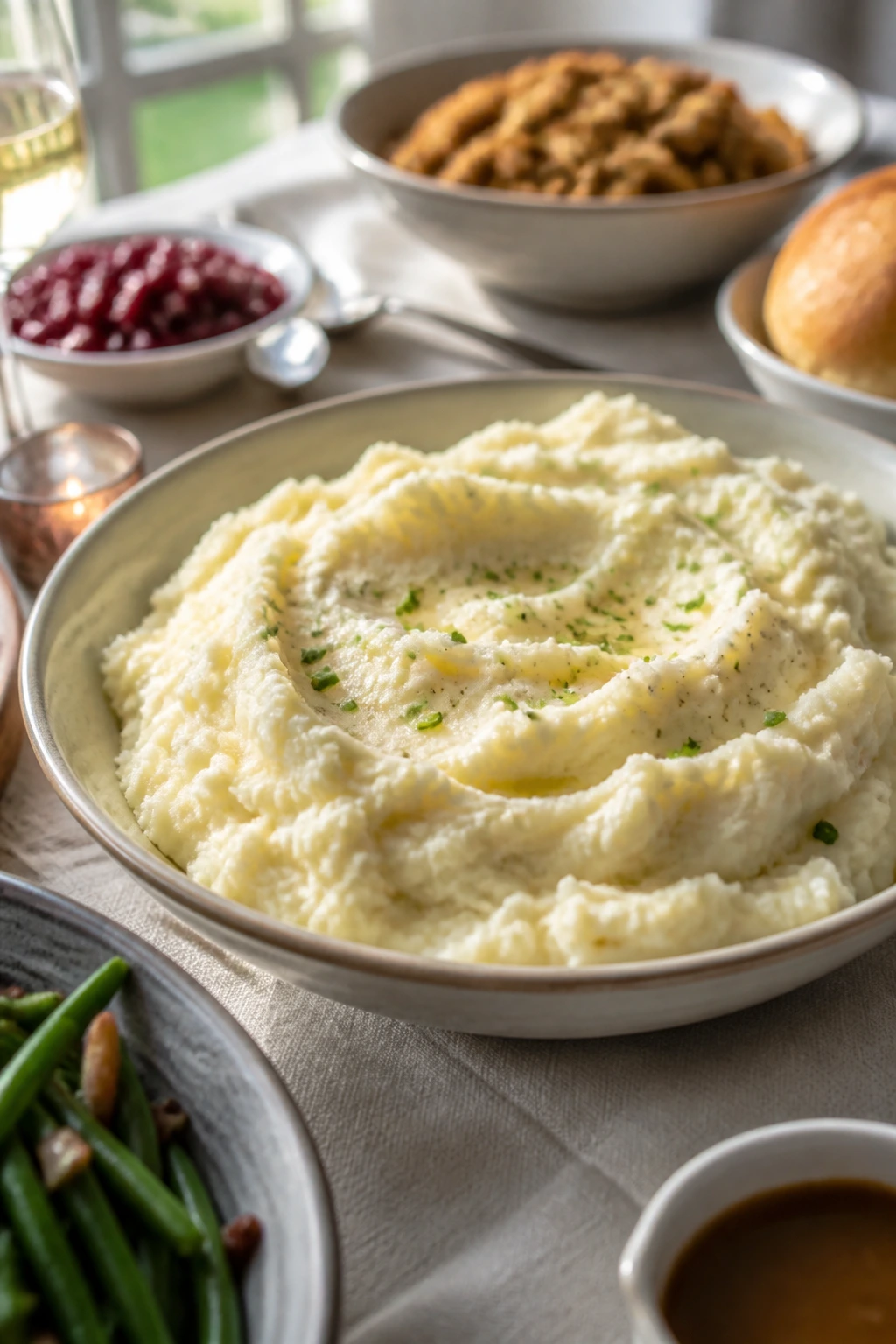
Use shallow bowls, wide platters, and low casseroles rather than deep pots whenever you can. Mashed potatoes, creamed corn, and scalloped potatoes look better when they can spread a little. Bright garnishes help too — chopped parsley on beets, chives on potatoes, a few extra cranberries on chutney.
Accompaniments:
These sides are built to sit beside turkey, ham, roast chicken, or mushrooms, but they also pair with plain roasted vegetables and soft rolls. If you want the plate to feel balanced, choose one creamy side, one tart side, and one vegetable with bite. Cranberry sauce, green bean casserole, and mashed potatoes do that job well together.
Portions:
For a holiday spread with several sides, plan on 1/3 to 1/2 cup per person for each dish, then increase to 3/4 cup for the things people always return to — mashed potatoes, stuffing, and mac and cheese. If you are scaling down for a smaller gathering, cut most recipes in half, but keep an eye on cook time because smaller amounts can soften faster.
Beverage Pairing:
A dry sparkling cider works across almost everything here because it cuts the butter and sugar without clashing. For something warmer, a mug of unsweetened apple cider or black tea with a little lemon fits the table nicely.
Additional Tips and Flavor Boosters
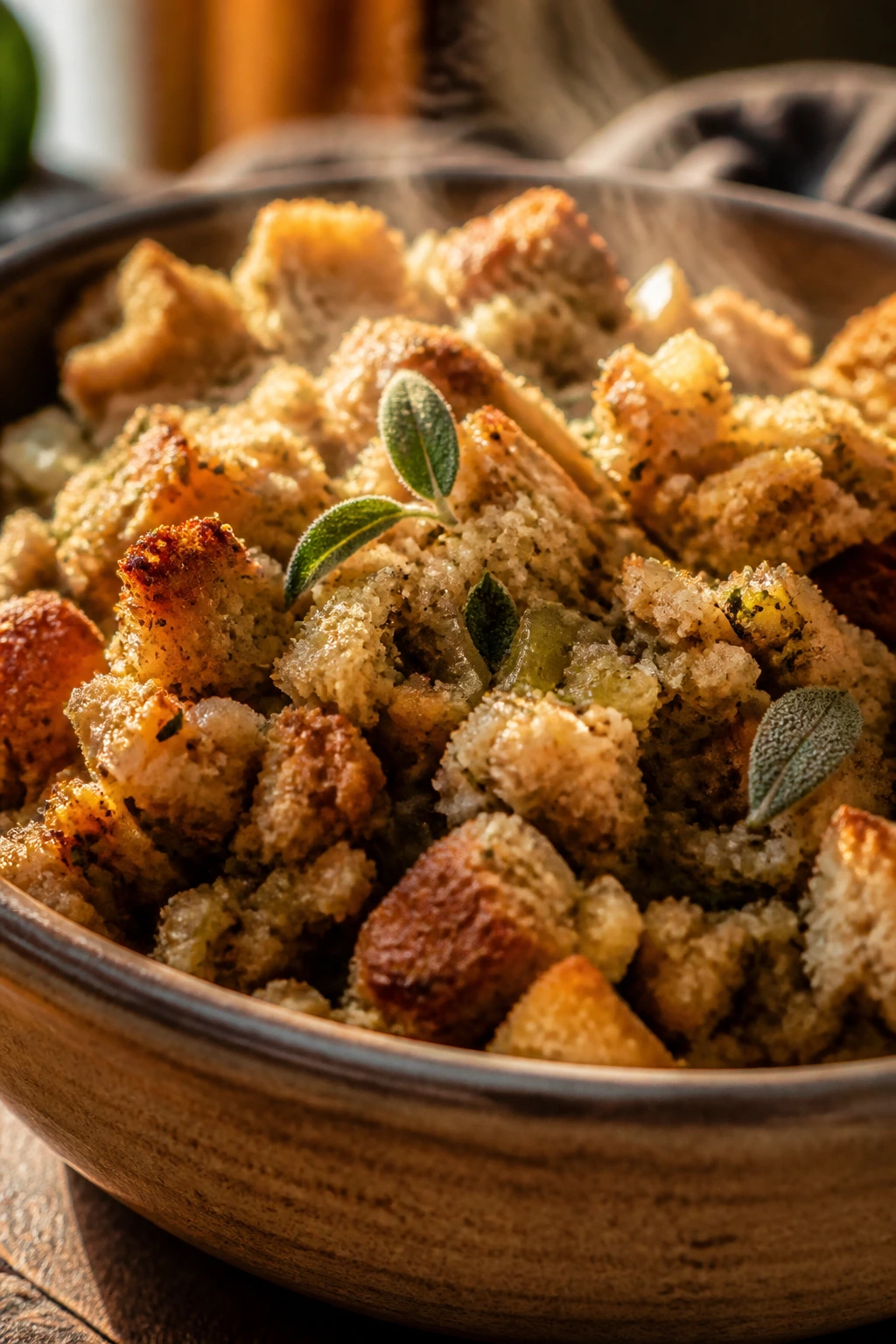
Flavor Enhancement: A small amount of acid at the end changes everything. A teaspoon or two of apple cider vinegar, lemon juice, or balsamic can wake up greens, mushrooms, beets, and carrots without making them taste sharp.
Customization: If your table runs classic, lean into sage, onion, butter, and thyme. If it runs bolder, add smoked paprika to Brussels sprouts, extra garlic to cauliflower mash, or a touch of Dijon to carrots and gravy.
Serving Suggestions: Keep a bowl of chopped herbs near the table. Parsley, chives, and thyme make a slow cooker side look deliberate, and they add freshness to dishes that have spent hours under a lid.
Make-It-Yours: For dairy-free guests, olive oil and broth can replace butter in several of these dishes, and coconut milk can stand in for cream in mashed roots. For a lower-sugar table, trim the brown sugar by a third in sweet potato casserole and glazed carrots, then lean on orange zest and butter for flavor.
Make-Ahead, Storage, and Reheating Guidance
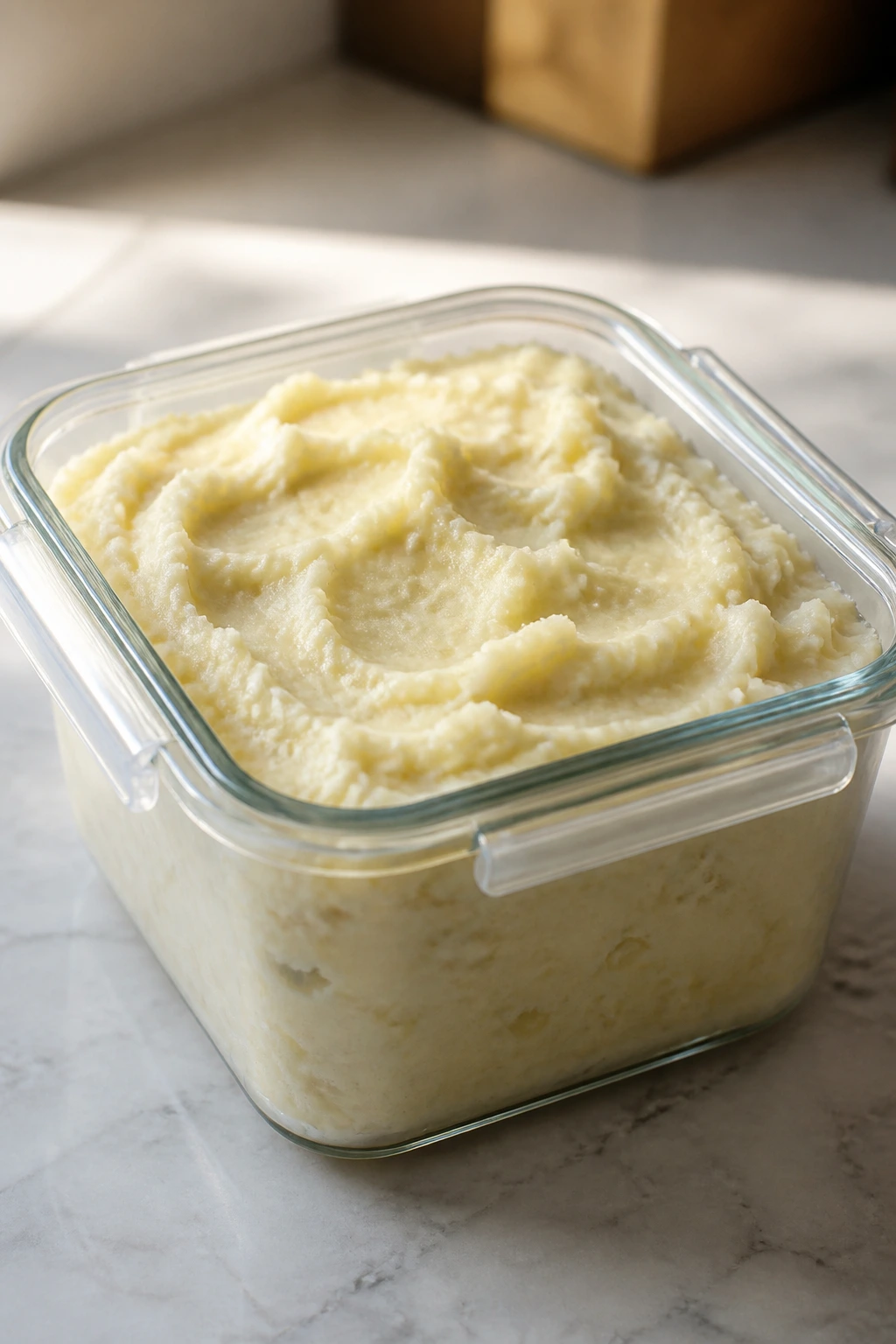
Most of these sides keep well in the fridge for 3 to 4 days, though cranberry sauce and chutney can hold for up to 1 week because the sugar and acid help preserve them a little longer. Cream-heavy dishes like mac and cheese, mashed potatoes, and corn pudding are best eaten within 2 to 3 days for the cleanest texture. Collard greens, mushroom gravy, and root vegetables land comfortably in that 3 to 4 day window if you chill them promptly.
Freezing works best for mashed potatoes, cranberry sauce, chutney, collards, gravy, and some root vegetable dishes. Pack them in airtight containers and freeze for up to 2 months. Mac and cheese, cream corn, and custard-style sides can be frozen, but the texture may separate or grain a little after thawing, so I would only freeze those if you are comfortable stirring in a splash of milk during reheating.
Reheat mashed potatoes, cauliflower mash, polenta, and root mash gently on the stovetop or in the microwave with a spoonful or two of milk or broth. Gravy and cranberry sauce do well on low heat in a saucepan; whisk often so the texture comes back smooth. Vegetable sides like Brussels sprouts, carrots, and squash can be warmed in a covered baking dish at a moderate oven temperature if you want them to stay less wet than the microwave makes them.
For make-ahead work, several dishes can be cooked the day before and reheated: cranberry sauce, chutney, gravy, collards, and even stuffing taste fine after a rest. Mashed potatoes can be made ahead too, but save a little extra cream or broth to stir in when you rewarm them. If you plan to keep anything on the slow cooker’s warm setting, keep it to a couple of hours at most. Longer than that, and the edges dry while the center turns soft in a way you did not ask for.
Variations and Adaptations to Try

Dairy-Light Holiday Spread:
Use olive oil instead of butter in carrots, greens, squash, and root vegetables, then swap milk or cream for unsweetened oat milk or broth where the texture can handle it. You lose a little richness, sure, but the herbs and vegetables become more visible.
Vegetarian Table Without Compromise:
Choose vegetable broth, skip bacon and smoked turkey, and bring in mushrooms, soy sauce, and a little extra butter or olive oil for depth. This works especially well for gravy, stuffing, green beans, and collards, where flavor sits in the liquid.
Lower-Sugar Balance:
Cut brown sugar or maple syrup by about one-third in sweet potato casserole, glazed carrots, and Brussels sprouts, then add orange zest or a touch of vinegar to keep the flavor lively. The food still reads as holiday food; it just stops leaning so hard toward dessert.
Kid-Friendly Creamy Set:
Keep sage modest, use mild cheddar in mac and cheese and scalloped potatoes, and lean on buttery mashed potatoes, creamed corn, and sweet potato casserole. Kids usually prefer the dishes that are soft, mild, and easy to recognize.
Bold Herb and Garlic Pass:
Double the garlic in mashed potatoes, cauliflower mash, mushroom gravy, and Brussels sprouts, then finish with fresh thyme, parsley, or rosemary. It gives the whole table a more savory spine and pairs especially well with turkey.
Southern-Style Comfort Turn:
Add smoked turkey, bacon, or ham hock to greens and beans, use cornbread in stuffing and bread pudding, and finish corn pudding with sharp cheddar. That version pulls the whole spread toward deeper, saltier flavors.
Common Mistakes to Avoid
The first mistake is choosing the wrong texture for the slow cooker. Foods that need crisp edges — like fried onions or roasted potato skins — lose their edge under lid and steam. Put those on late or serve them on the side.
The second mistake is adding all the liquid you think you need at once. Slow cookers trap moisture, so a recipe that looks dry at the start can end up soupy by the end. Add broth in smaller amounts, especially for stuffing, mashed vegetables, and scalloped potatoes.
The third mistake is ignoring the size of the cut. Big potato chunks, giant beet wedges, and uneven carrots cook at different speeds, which means some pieces collapse while others stay hard. A slow cooker rewards steady, even chopping more than almost any other method does.
The fourth mistake is not seasoning enough at the beginning. Butter, potatoes, squash, and corn all need salt earlier than people expect because the gentle heat softens flavor as much as it softens texture. Taste late, yes, but season early too.
The fifth mistake is holding dairy-heavy dishes too long on warm. Mac and cheese, mashed potatoes, and creamed corn can get thick around the edges and slightly tired in the middle after hours of gentle heat. If they need to sit, stir them now and then and add a splash of warm milk or broth.
The sixth mistake is assuming every side should be cooked until it disappears into itself. Collards need tenderness, but Brussels sprouts still need some shape. Butternut squash can be spoon-soft without becoming puree. Knowing where to stop is half the job.
Frequently Asked Questions

Can I make most of these sides the day before?
Yes. Cranberry sauce, chutney, gravy, stuffing, and collards are the easiest make-ahead choices because they hold their flavor well after chilling. Mashed potatoes, mac and cheese, and corn pudding can also be made ahead, but you’ll want to reheat them with a little milk or broth so the texture comes back to life.
What slow cooker size should I use for holiday sides?
A 6-quart slow cooker is the safest bet for most of these recipes because it gives the ingredients room to soften without spilling over. Smaller 3- to 4-quart models work well for cranberry sauce, gravy, or chutney. If a cooker is packed to the top, the middle tends to heat slowly and unevenly.
Can I use frozen vegetables instead of fresh?
Absolutely, and in a few recipes I’d encourage it. Frozen corn, frozen cranberry, and frozen pearl onions work very well because they save prep and still cook cleanly. For green beans or Brussels sprouts, fresh often keeps a better bite, but frozen can work if you accept a softer texture.
How do I keep a slow cooker side from turning watery?
Start with less liquid than you think, especially in squash, potatoes, and vegetable medleys. Also, leave the lid cracked for the last 10 to 20 minutes if a recipe needs to tighten up. Dense vegetables release moisture as they cook, and the cooker traps it.
Can I keep these dishes on warm for the whole meal?
For a short stretch, yes. Two hours on warm is usually fine for mashed potatoes, gravy, corn, and squash, especially if you stir once or twice. After that, textures start to slide, so if the meal will run long, transfer the food to a serving dish and cover it lightly.
What if my slow cooker runs hot?
Check everything earlier than the recipe suggests. Some units cook faster than others, and the difference between tender and mushy can be less than 30 minutes with vegetables or dairy-heavy dishes. If you know your cooker is aggressive, use the low setting more often and start testing early.
Do I need to spray or line the slow cooker first?
For sticky dishes like mac and cheese, sweet potato casserole, and corn pudding, yes — a light coat of butter or spray saves you from scraping. For broth-based dishes like greens or chutney, lining is less important, though it still makes cleanup easier. A liner can help if you’re cooking for a crowd and want a fast cleanup.
Which sides freeze best?
Cranberry sauce, chutney, mushroom gravy, collard greens, and mashed root vegetables freeze best because their texture is forgiving. Potatoes can freeze, too, but they may become slightly grainy unless you add enough butter or cream. Custards and cheese-heavy dishes freeze less gracefully, so I’d treat those as fridge-first leftovers.
How do I scale these recipes for a smaller gathering?
Cut the ingredient list in half, but do not assume the cook time halves too. Smaller batches often cook faster, especially in smaller slow cookers, so start checking early. The liquid and seasoning also need a lighter hand when the volume drops.
A Table Full of Quiet Wins
The nicest thing about these crockpot easy Thanksgiving sides is that none of them tries to steal the meal. They fill the table with the parts people actually go back for: the soft potatoes, the tart cranberry sauce, the onion-scented stuffing, the glossy gravy, the squash that tastes like butter and smoke and a little patience.
And on a lazy Sunday, that same quality matters just as much. A slow cooker turns the kind of prep that usually eats your afternoon into something you can start, check once, and trust. That is the whole appeal here — not fewer flavors, but fewer headaches.