



Sunday dinner has a way of revealing the truth. If the pan comes out smelling like garlic, butter, and browned edges, everyone drifts into the kitchen. If it smells like a “healthy compromise,” the questions start before the plates hit the table.
That’s why weekend family meals kids will actually eat usually look a little different from the meals adults say they want to make. They’re familiar. They’re warm. They have clear textures — crisp chicken, soft pasta, cheesy tops, bread you can tear by hand — and they don’t ask a child to pretend to enjoy a sauce just because it contains vegetables.
I have a strong opinion here: the best kid-friendly weekend dinner recipes do not hide everything. They put the good stuff front and center. Cheese gets a proper melt. Chicken gets a crunchy crust. Pasta gets baked until the top turns speckled and bronzed. And if there’s a vegetable, it earns its place instead of sneaking in like a spy.
Why These Weekend Family Meals Work Better Than Fancy Plans
-
Familiar flavors: These recipes lean on chicken tenders, sliders, pasta, pizza, and casserole-style bakes, which means fewer negotiations and less suspicious sniffing at the table.
-
Weekend pacing: Most of the dishes give you room to chop, stir, or brown something while the oven heats, then let the heat do the heavy lifting while you clean the counter.
-
Kid-friendly textures: Crisp edges, soft centers, gooey cheese, and saucy fillings show up again and again because those are the textures kids trust first.
-
Flexible serving: Nearly every meal below can be set out with fruit, raw vegetables, a simple salad, or extra bread so different appetites can build their own plate.
-
Shortcut-friendly: Rotisserie chicken, store-bought meatballs, marinara, tortillas, and frozen fries all have a place here when the goal is a calm dinner, not a cooking contest.
-
Leftover potential: A few of these taste even better the next day, which matters when the weekend starts with a full fridge and ends with a lunchbox to pack.
1. Crispy Baked Chicken Tenders with Honey Mustard
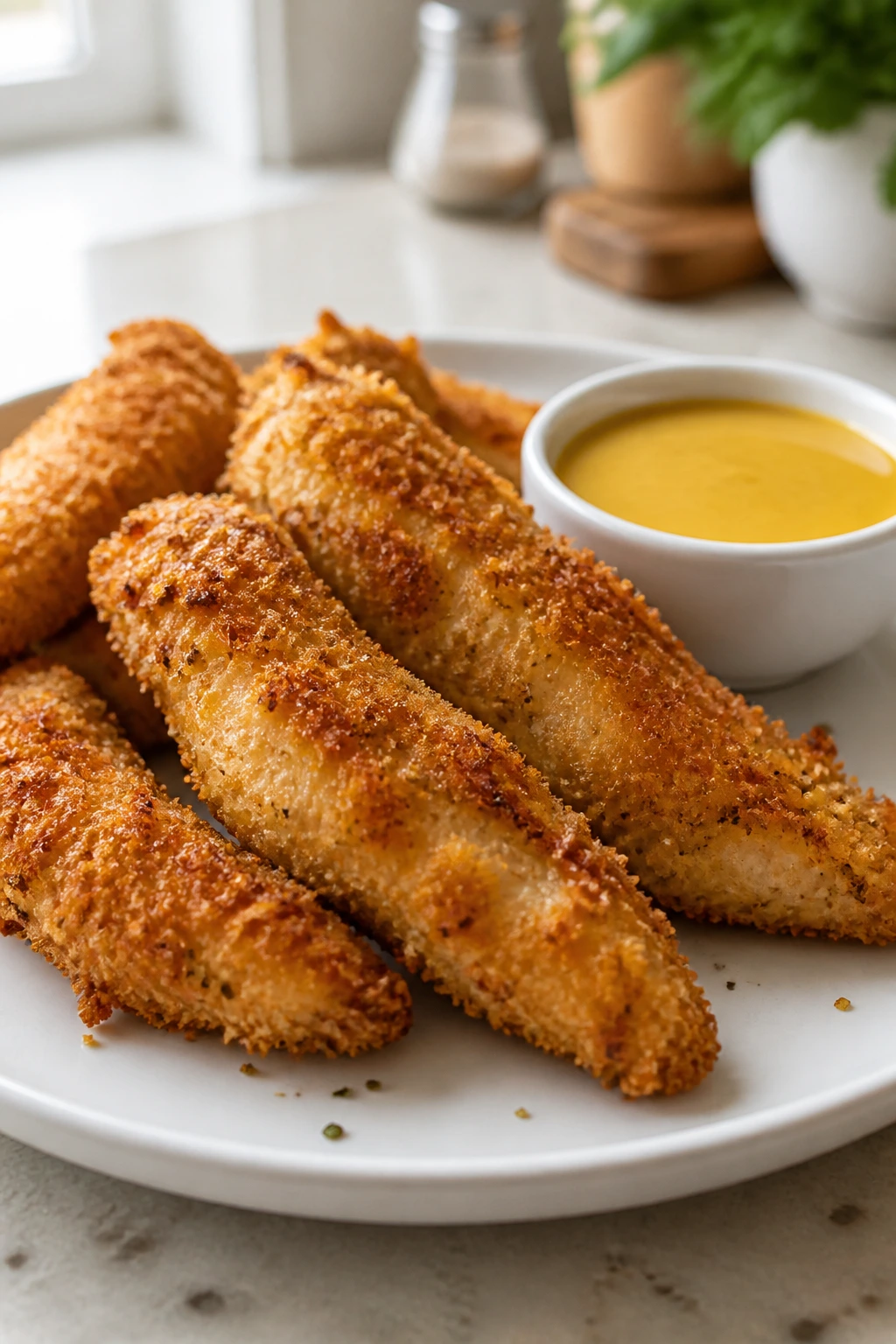
Intro: These chicken tenders come out with a shattering, golden crust that stays crisp long enough to make it to the table. The honey mustard is sharp first, then sweet, which is exactly the kind of dip kids will keep going back to. I like this recipe because it feels like takeout without the grease or the soggy box.
Why It Works: Panko gives the coating that airy crunch regular breadcrumbs never quite match. Parmesan adds a salty edge, and the hot oven does the rest if you give the chicken enough space. A rack helps, too — air moves under the tenders instead of trapping steam beneath them.
Key Ingredients:
- 2 pounds chicken tenders
- 1/2 cup all-purpose flour
- 2 large eggs
- 1 tablespoon water
- 2 cups panko breadcrumbs
- 1/2 cup finely grated Parmesan cheese
- 1 teaspoon paprika
- 1 teaspoon garlic powder
- 1 teaspoon kosher salt
- 1/2 teaspoon black pepper
- Olive oil spray
- 1/3 cup mayonnaise
- 1/4 cup Dijon mustard
- 2 tablespoons honey
- 1 teaspoon lemon juice
Quick Steps:
- Preheat the oven to 425°F (220°C) and set a wire rack over a rimmed baking sheet.
- Set out three shallow bowls: flour in one, eggs whisked with water in the second, and panko mixed with Parmesan, paprika, garlic powder, salt, and pepper in the third.
- Dredge each tender in flour, dip it in egg, then press it into the crumb mixture so the coating clings in a thick, even layer.
- Arrange the tenders on the rack and mist the tops lightly with oil spray.
- Bake for 8 minutes, flip carefully, then bake 6 to 8 minutes more until the crust is deep gold and the chicken reaches 165°F (74°C).
- Whisk the mayonnaise, Dijon, honey, and lemon juice together for the dip while the chicken rests for 3 minutes.
Equipment for This Recipe:
- Rimmed baking sheet
- Wire rack
- 3 shallow bowls
- Tongs
- Instant-read thermometer
How to Serve This Dish: Pile the tenders on a warm platter with a bowl of honey mustard in the center. I like them with oven fries, sliced cucumbers, or a pile of apple wedges, because the crisp-salty chicken needs something cool beside it.
Pro Tips for This Recipe:
- Press the crumb coating on firmly; loose crumbs fall off in the oven.
- Don’t skip the rack if you can help it. Flat baking works, but the bottom gets softer.
- Salt the panko mix well. Plain crumbs taste thin next to chicken.
- Sauce goes on the side. If you drizzle it early, the crust gives up.
Variations on This Dish:
- Ranch-Style Tenders: Swap the honey mustard for ranch mixed with a little lemon zest.
- Parmesan Herb Crust: Add dried parsley and a spoon of Italian seasoning to the panko.
- Gluten-Free Crunch: Use gluten-free panko and rice flour in place of the all-purpose flour.
Common Mistakes to Avoid with This Dish:
- Crowding the pan: The chicken steams instead of browning. Leave space between tenders.
- Using too little seasoning: Bland crumbs make the whole dish taste flat. Season every layer.
- Cutting into them too soon: The crust can slide if you move the chicken before it rests for a few minutes.
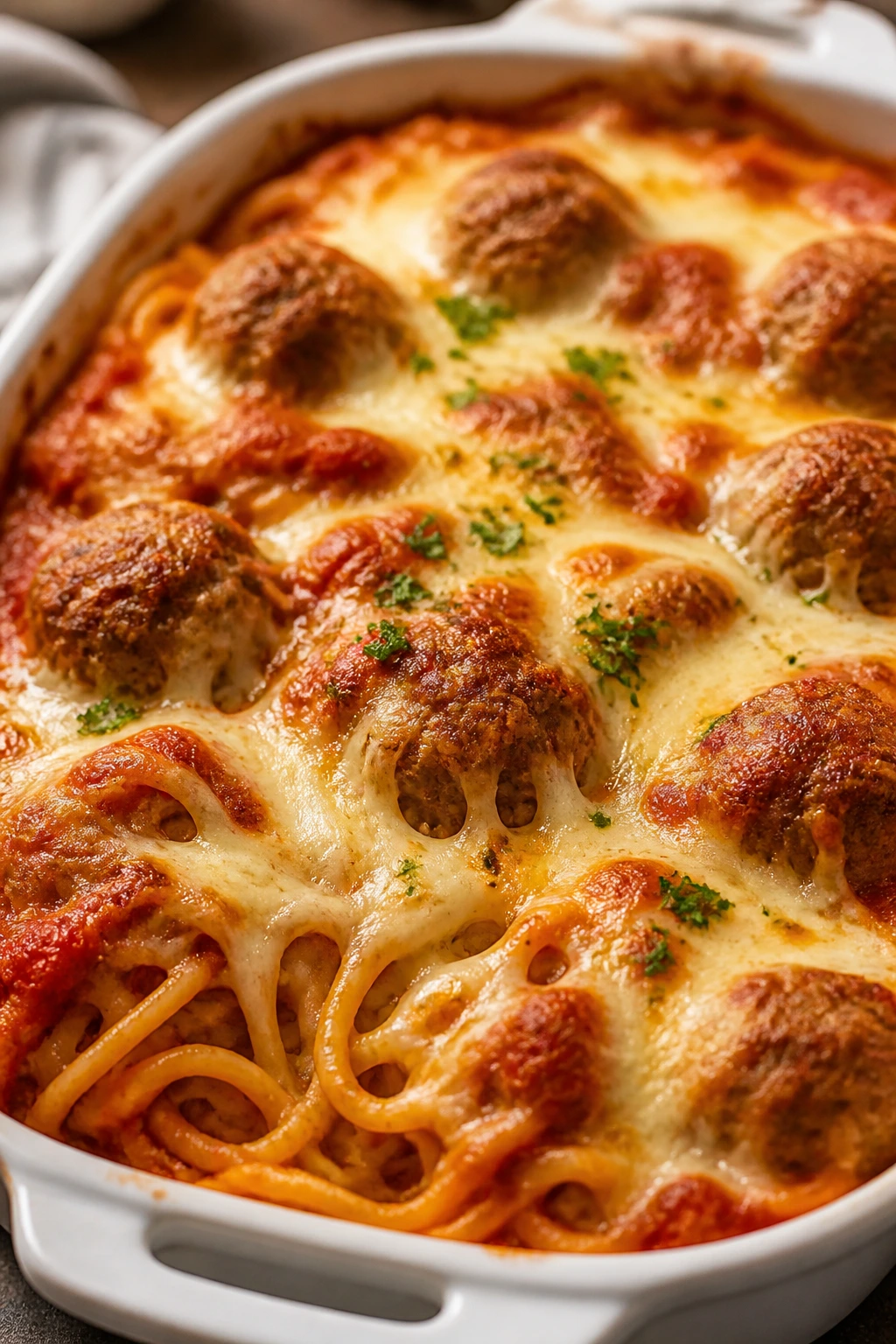
2. Cheesy Baked Spaghetti and Meatballs
Intro: Baked spaghetti is one of those dishes that makes a kitchen smell like a Sunday afternoon even when it’s Thursday night. The noodles soak up sauce in the oven, the meatballs sink into the cheese, and the top turns into one big browned patch of comfort. Kids usually go for it because it eats like familiar spaghetti, only thicker and more fun to scoop.
Why It Works: Baking the pasta with sauce helps every strand pick up flavor instead of leaving a puddle at the bottom of the bowl. Ricotta adds creaminess between the layers, and mozzarella gives you those stretchy pulls that make children suspiciously happy. Use spaghetti cooked just short of done, or the oven will take it past soft into mushy.
Key Ingredients:
- 12 ounces spaghetti
- 1 tablespoon olive oil
- 1 small yellow onion, finely diced
- 2 cloves garlic, minced
- 4 cups marinara sauce
- 1 1/2 pounds cooked meatballs
- 1 cup ricotta cheese
- 2 cups shredded mozzarella
- 1/2 cup grated Parmesan
- 1 teaspoon dried basil
- 1/2 teaspoon crushed red pepper flakes, optional
- Salt for the pasta water
Quick Steps:
- Preheat the oven to 375°F (190°C) and grease a 9×13-inch baking dish.
- Boil the spaghetti in salted water until just shy of al dente, then drain it.
- Warm the olive oil in a skillet, cook the onion for 4 minutes until soft, stir in the garlic for 30 seconds, then add the marinara and meatballs.
- Toss the spaghetti with the sauce mixture and half the mozzarella.
- Spoon half the pasta into the dish, dot with ricotta, then add the remaining pasta and top with the rest of the mozzarella and Parmesan.
- Bake for 20 to 25 minutes until bubbling at the edges and browned on top.
- Let it sit for 10 minutes before serving so the layers settle.
Equipment for This Recipe:
- Large pot
- Large skillet
- 9×13-inch baking dish
- Tongs or a pasta fork
- Cheese grater
How to Serve This Dish: Serve generous scoops with garlic bread and a simple green salad if anyone at the table will touch one. The sauce should cling to the noodles and the cheese should stretch when you lift the first portion.
Pro Tips for This Recipe:
- Cook the pasta 2 minutes less than the box says. The oven will finish it.
- Warm the sauce before mixing so the casserole bakes evenly.
- Use meatballs that are already fully cooked if you want a cleaner, faster shortcut.
- Resting matters here. Cut too soon and the whole thing slides.
Variations on This Dish:
- Hidden Veggie Baked Spaghetti: Stir grated zucchini and carrot into the sauce before baking.
- Meatless Mushroom Version: Replace meatballs with sautéed mushrooms and white beans.
- Spicy Red Pepper Bake: Add a spoon of calabrian chili paste to the marinara for adults.
Common Mistakes to Avoid with This Dish:
- Overcooking the pasta first: Soft noodles turn gummy in the oven.
- Skipping the rest time: The casserole needs a few minutes to hold together.
- Using a thin sauce: Watery sauce makes the bottom soupy instead of saucy.
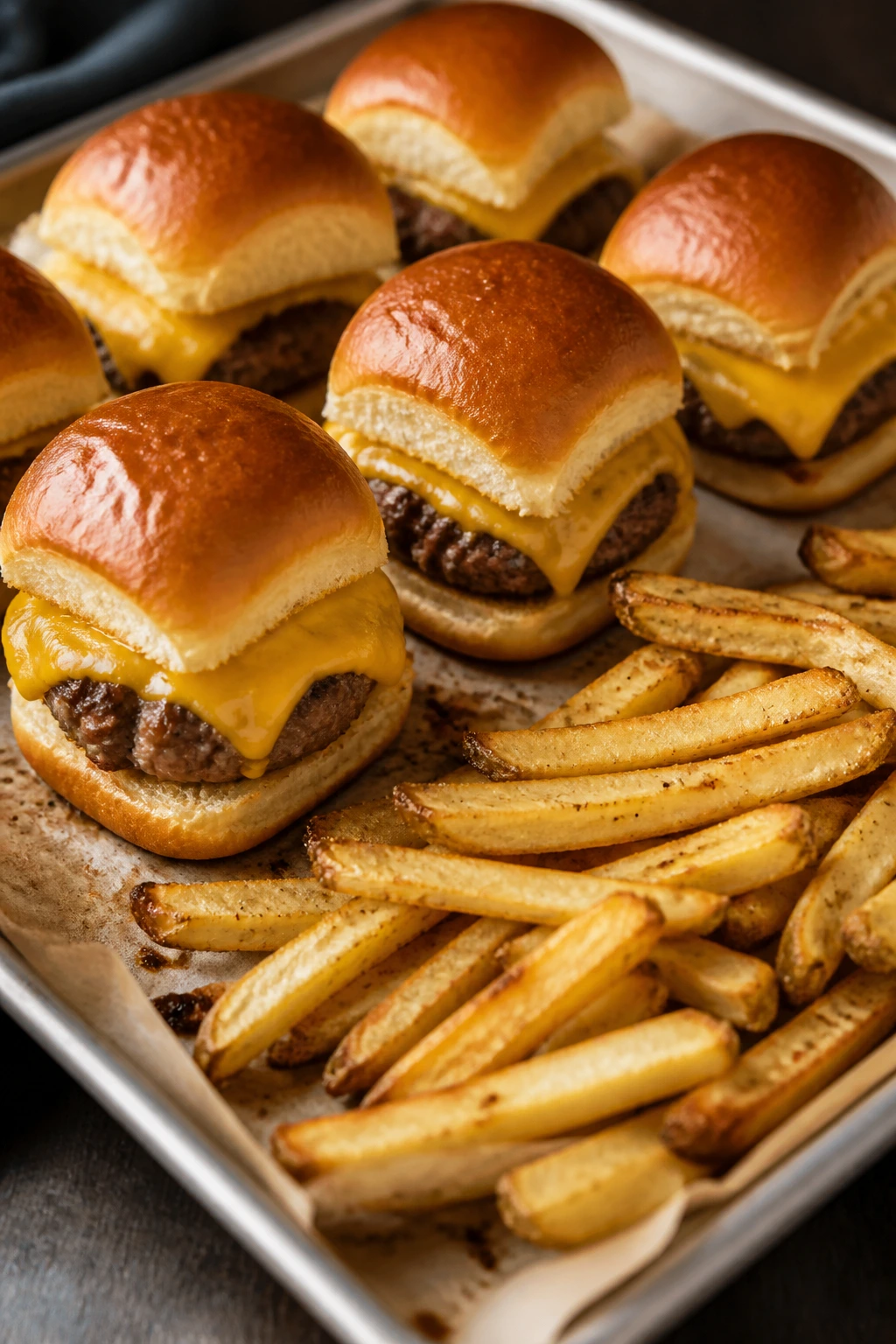
3. Mini Cheeseburger Sliders with Oven Fries
Intro: A tray of sliders disappears fast because kids can hold them with one hand and never feel trapped by a giant burger. The beef is savory, the cheese melts right into the onions, and the pickles wake everything up without turning the whole plate into a condiment accident. These feel like game-day food, which is part of the charm.
Why It Works: Slider buns bake up soft in the middle and lightly toasted on top, so they don’t collapse under the filling. A little Worcestershire in the beef gives you that burger-shop flavor without needing a grill. The oven fries give you a built-in side dish, and they’re easier than frying a batch of potatoes while everyone asks when dinner is ready.
Key Ingredients:
- 2 pounds russet potatoes, cut into fries
- 2 tablespoons olive oil
- 1 teaspoon kosher salt, plus more to taste
- 2 pounds ground beef
- 1 small onion, finely diced
- 1 tablespoon Worcestershire sauce
- 1 teaspoon garlic powder
- 8 slices cheddar cheese
- 12 slider buns
- Dill pickle chips
- Ketchup and mustard
Quick Steps:
- Preheat the oven to 425°F (220°C). Toss the potatoes with olive oil and salt, then spread them on a sheet pan.
- Bake the fries for 35 to 40 minutes, flipping once, until crisp at the edges.
- While the fries cook, brown the beef and onion in a skillet over medium-high heat until the meat is no longer pink and the onion is soft.
- Stir in Worcestershire and garlic powder, then season to taste.
- Split the buns, fill with beef, tuck in a slice of cheddar, and arrange on a second sheet pan.
- Bake the sliders for 6 to 8 minutes, just until the cheese melts and the buns warm through.
- Add pickles and condiments right before serving.
Equipment for This Recipe:
- 2 rimmed sheet pans
- Large skillet
- Spatula
- Sharp knife
- Serving platter
How to Serve This Dish: Put the sliders on one tray and the fries on another, then set out ketchup, mustard, and extra pickles so everyone can build their own. A plate with 2 sliders and a fistful of fries is about right for most kids.
Pro Tips for This Recipe:
- Dry the potato fries well before oiling them. Wet potatoes never crisp properly.
- Use buns with a soft, tight crumb so the filling doesn’t fall out.
- Add the cheese while the beef is still hot. It melts faster that way.
- Keep the pickles separate until the end if you hate soggy bottoms.
Variations on This Dish:
- Bacon Cheeseburger Sliders: Add crisp bacon on top of the beef before baking.
- Turkey Burger Sliders: Swap in ground turkey and a splash of olive oil for moisture.
- Dairy-Free Version: Skip the cheese and add extra ketchup, mustard, and pickles.
Common Mistakes to Avoid with This Dish:
- Skipping the potato flip: One side burns while the other stays pale.
- Overfilling the buns: A little beef goes farther than you think on a slider roll.
- Letting the sliders sit too long before serving: They’re best when the cheese is still soft.
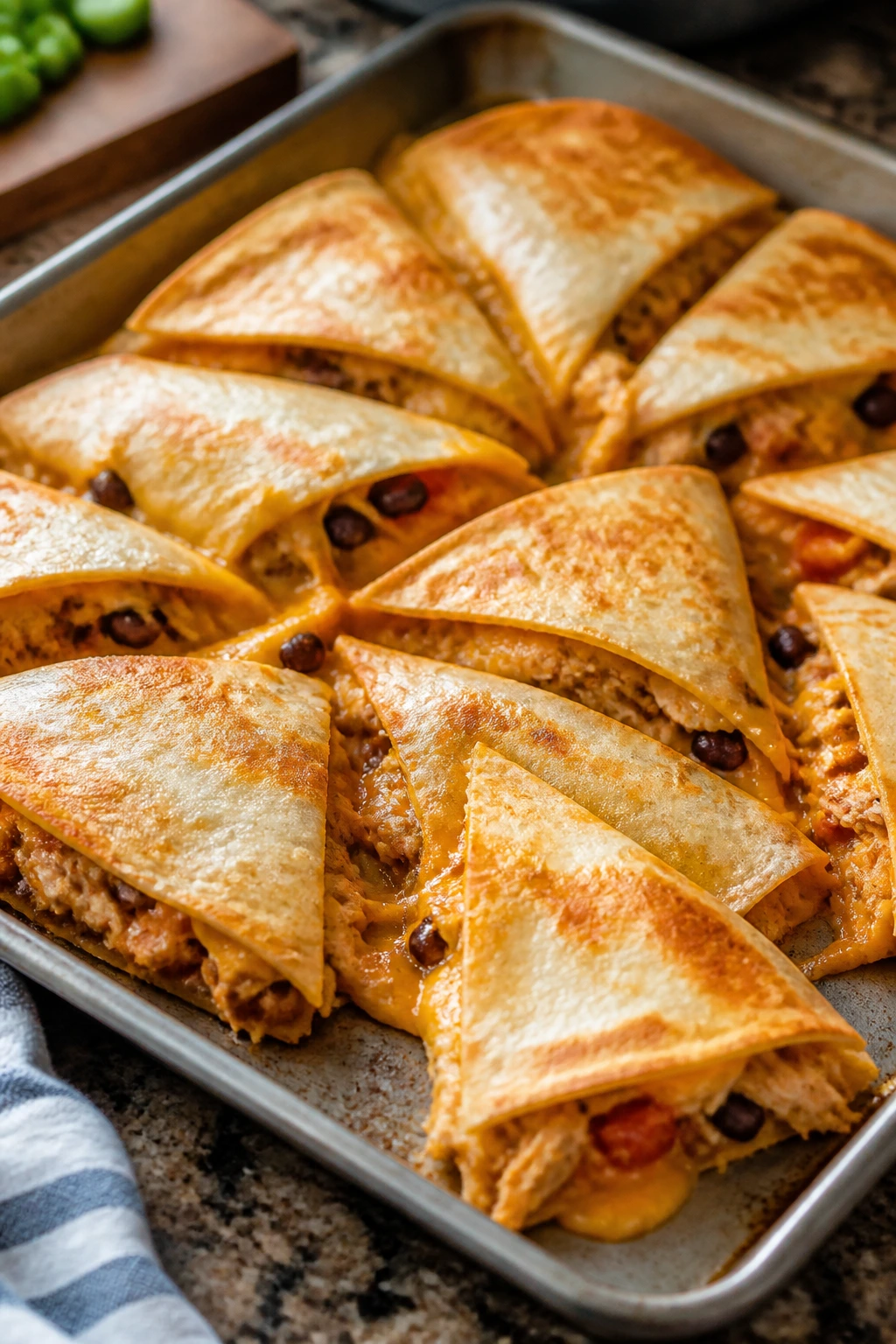
4. Sheet-Pan Quesadillas with Chicken and Cheese
Intro: Sheet-pan quesadillas solve the two problems that usually make quesadilla night messy: standing at the stove forever, and making one tortilla at a time while hungry people hover. The whole thing bakes into a crisp, golden slab you can cut into triangles. Kids love the shape, and parents love the fact that the cheese stays inside instead of burning to the skillet.
Why It Works: A sheet pan gives the tortilla an even, toasted surface and keeps the filling from overcooking. Rotisserie chicken saves time, black beans add enough body to make the filling feel like a meal, and mild salsa gives moisture without turning the tortillas soggy. The trick is using less filling than you want. Always less.
Key Ingredients:
- 8 large flour tortillas
- 3 cups shredded rotisserie chicken
- 2 cups shredded Monterey Jack cheese
- 1 cup shredded cheddar
- 1 cup canned black beans, rinsed and drained
- 1/2 cup mild salsa
- 1 teaspoon taco seasoning
- 2 tablespoons melted butter or olive oil
- Sour cream, for serving
Quick Steps:
- Preheat the oven to 425°F (220°C) and line a large sheet pan with parchment.
- Mix the chicken, black beans, salsa, and taco seasoning in a bowl.
- Lay 4 tortillas on the pan so they overlap slightly in the middle and hang over the edges.
- Scatter half the cheese over the tortillas, spoon the chicken mixture on top, then add the remaining cheese.
- Fold the overhanging tortillas over the filling, then set the last 4 tortillas on top to close the edges.
- Brush the top with melted butter or oil and bake for 12 to 15 minutes until crisp and browned.
- Rest for 5 minutes, then cut into wedges with a sharp knife.
Equipment for This Recipe:
- Large sheet pan
- Parchment paper
- Mixing bowl
- Pastry brush
- Sharp knife or pizza cutter
How to Serve This Dish: Cut the quesadilla slab into triangles and serve with sour cream, salsa, and sliced avocado if you have it. A little shredded lettuce on the side adds crunch without much effort.
Pro Tips for This Recipe:
- Go light on the filling or the tortillas will burst.
- Parchment makes cleanup easier and helps with clean slicing.
- Let it rest before cutting; molten cheese leaks out if you rush.
- Mild salsa works better than chunky salsa here because it spreads without soaking the tortillas.
Variations on This Dish:
- Bean-and-Corn Quesadillas: Skip the chicken and add extra beans plus sweet corn.
- Cheesy Steak Version: Use chopped cooked steak and a little sautéed onion.
- Spinach Quesadillas: Fold in a handful of chopped spinach for a softer, greener filling.
Common Mistakes to Avoid with This Dish:
- Overfilling the tortillas: The seam splits open in the oven.
- Using wet salsa: Too much liquid makes the tortilla limp.
- Cutting right away: The cheese needs a short rest to settle.
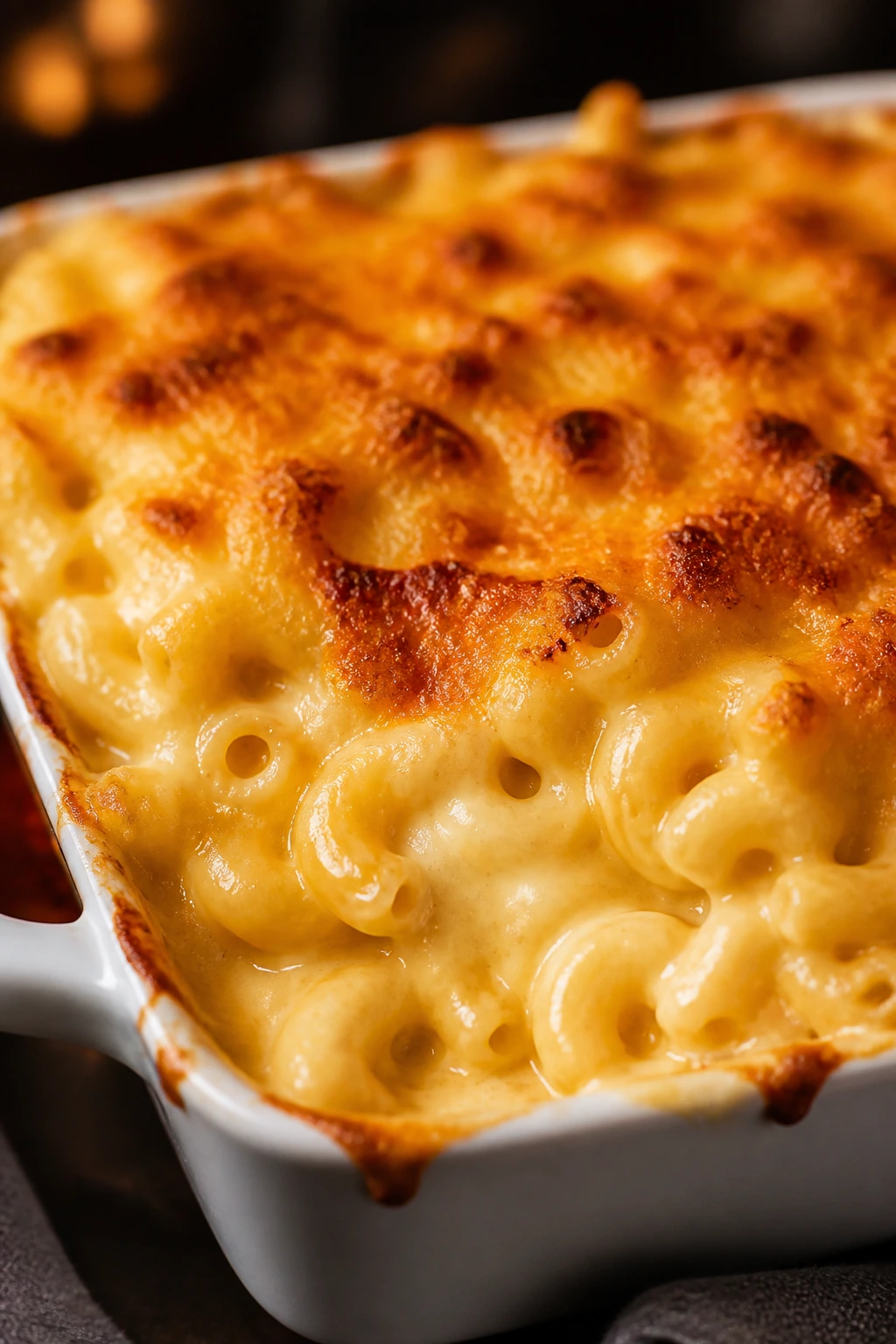
5. Creamy Baked Mac and Cheese
Intro: Mac and cheese has a way of clearing the table of opinions. The sauce is creamy enough to coat every curl of pasta, the top bakes into a bronzed lid, and the whole pan smells like butter and toasted milk solids. Kids usually don’t ask what’s in it. They just ask for seconds.
Why It Works: A quick roux gives the cheese sauce body so it doesn’t split into grease and grainy bits. Evaporated milk helps keep the sauce smooth through baking, and a blend of sharp cheddar with a milder cheese keeps the flavor big without becoming harsh. Breadcrumb topping is optional, but I like the contrast.
Key Ingredients:
- 1 pound elbow macaroni
- 4 tablespoons unsalted butter
- 1/4 cup all-purpose flour
- 3 cups whole milk
- 1 can evaporated milk, 12 ounces
- 1 teaspoon dry mustard
- 1/2 teaspoon paprika
- 3 cups shredded sharp cheddar
- 1 cup shredded Monterey Jack
- 1 teaspoon kosher salt
- 1 cup panko breadcrumbs
- 1 tablespoon melted butter, for the topping
Quick Steps:
- Preheat the oven to 375°F (190°C) and grease a 9×13-inch baking dish.
- Cook the macaroni until just under al dente, then drain it.
- Melt the butter in a saucepan, whisk in the flour, and cook for 1 minute until it smells faintly nutty.
- Whisk in the milk and evaporated milk and cook until the sauce thickens enough to coat a spoon.
- Stir in mustard, paprika, salt, and the shredded cheese until smooth.
- Fold in the pasta, spread into the dish, and top with panko tossed with melted butter.
- Bake for 20 to 25 minutes until bubbling and browned on top.
Equipment for This Recipe:
- Large pot
- Medium saucepan
- Whisk
- 9×13-inch baking dish
- Wooden spoon
How to Serve This Dish: Serve mac and cheese alongside roasted broccoli, peas, or sliced tomatoes if someone needs a vegetable on the plate. A small scoop goes a long way, but kids usually know their own limits here.
Pro Tips for This Recipe:
- Grate the cheese yourself. Pre-shredded cheese can make the sauce grainy.
- Pull the pasta early. It keeps softening in the oven.
- Stir the sauce until it’s glossy, not boiling hard.
- Let the dish sit 10 minutes before serving so it sets instead of slumping.
Variations on This Dish:
- Bacon Mac: Add crisp bacon bits between the pasta layers.
- Broccoli Mac: Fold in tiny broccoli florets that have been steamed for 2 minutes.
- White Cheddar Version: Swap in all white cheddar for a sharper, cleaner flavor.
Common Mistakes to Avoid with This Dish:
- Using low-fat milk only: The sauce can turn thin and chalky.
- Overbaking: Too long in the oven dries out the edges and splits the sauce.
- Forgetting to season the pasta water: The noodles need salt before they ever meet the cheese.
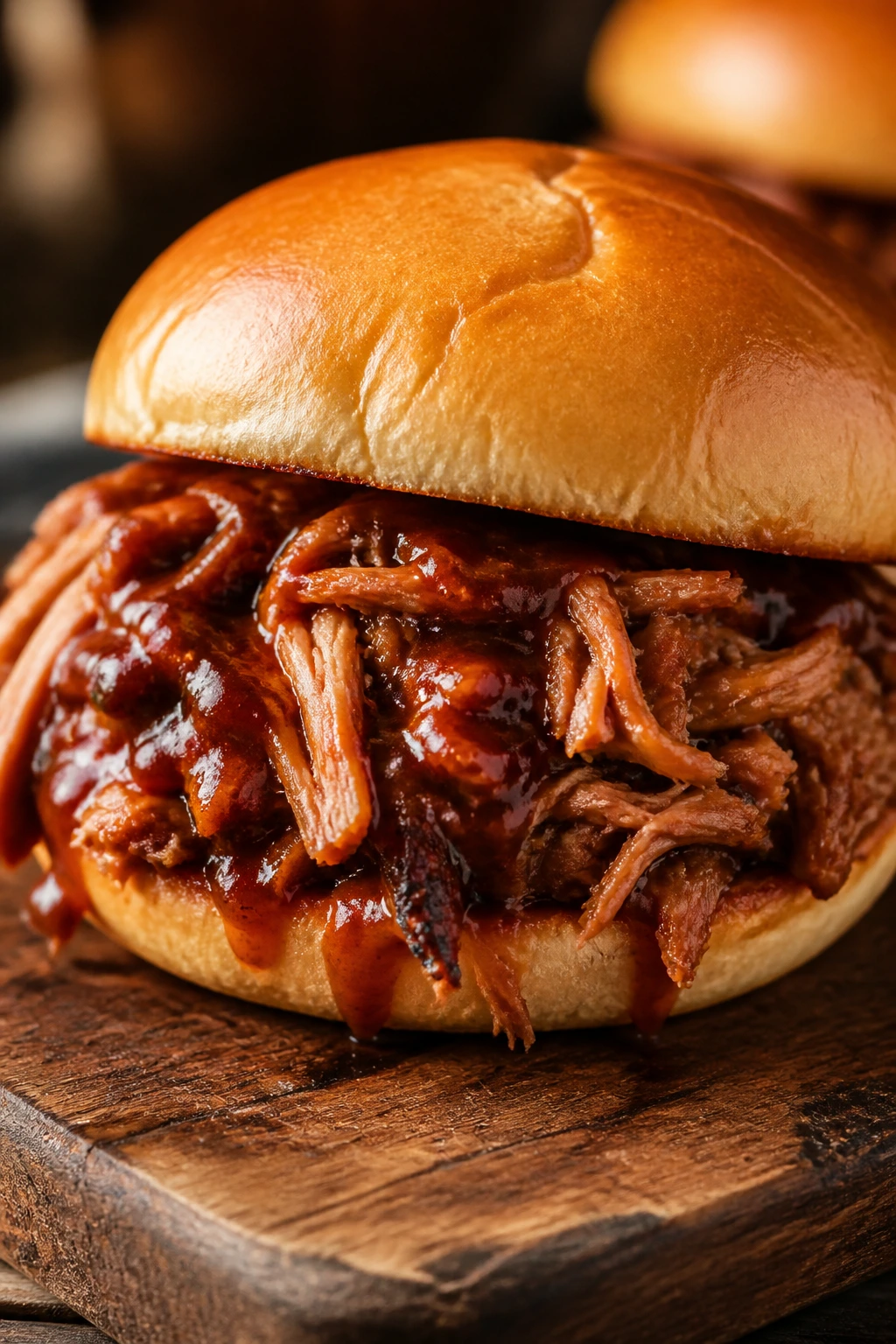
6. BBQ Pulled Pork Sandwiches
Intro: Pulled pork is a weekend meal because it asks for time, not attention. Once the pork starts cooking, the house fills with onion, smoke, and sweet vinegar, and you can wander off to do the rest of your day. By the time dinner rolls around, the meat shreds into soft ribbons that catch barbecue sauce in every strand.
Why It Works: Pork shoulder has enough fat to stay juicy through long cooking, which is why it beats leaner cuts by a mile here. A dry rub sets the flavor on the outside, and a hit of vinegar keeps the sauce from tasting flat or sticky-sweet. I like serving it on soft buns with crunchy slaw because the textures do half the work.
Key Ingredients:
- 4 to 5 pounds pork shoulder
- 2 tablespoons brown sugar
- 1 tablespoon smoked paprika
- 1 tablespoon kosher salt
- 1 teaspoon black pepper
- 1 teaspoon garlic powder
- 1 large onion, sliced
- 3/4 cup chicken broth
- 1 cup barbecue sauce, plus more for serving
- 2 tablespoons apple cider vinegar
- 8 soft sandwich buns
- Coleslaw, for topping
Quick Steps:
- Mix the brown sugar, paprika, salt, pepper, and garlic powder, then rub it over the pork.
- Place the sliced onion in the bottom of a slow cooker or Dutch oven and set the pork on top.
- Add the broth and cook on low for 8 hours in a slow cooker or at 300°F (150°C) in the oven for about 4 1/2 to 5 hours.
- Shred the pork with two forks when it falls apart easily.
- Stir in the barbecue sauce and vinegar, then cook uncovered for 15 minutes more if you want it thicker.
- Pile onto buns and top with coleslaw.
Equipment for This Recipe:
- Slow cooker or Dutch oven
- Forks for shredding
- Cutting board
- Sharp knife
- Measuring spoons
How to Serve This Dish: Put the pork in a warm bowl, the buns beside it, and the coleslaw in a separate dish so people can build their own sandwiches. Chips, pickles, or corn on the cob fit right alongside it.
Pro Tips for This Recipe:
- Trim only the thickest fat, not all of it. Some fat keeps the meat juicy.
- Shred while warm. Cold pork fights back.
- Keep extra sauce on the side for kids who like a wetter sandwich.
- Toast the buns for 2 minutes if you want them to hold up better.
Variations on This Dish:
- Sweet and Tangy Pork: Add a spoon of mustard to the sauce.
- Spicy Pork Sandwiches: Stir in a little hot sauce or chipotle.
- Slider Version: Serve the pork on mini buns for smaller hands.
Common Mistakes to Avoid with This Dish:
- Cooking on high heat too early: The pork tightens up instead of softening.
- Using too much sauce at once: The meat should be coated, not drowned.
- Skipping the rest before shredding: The juices need a minute to settle.
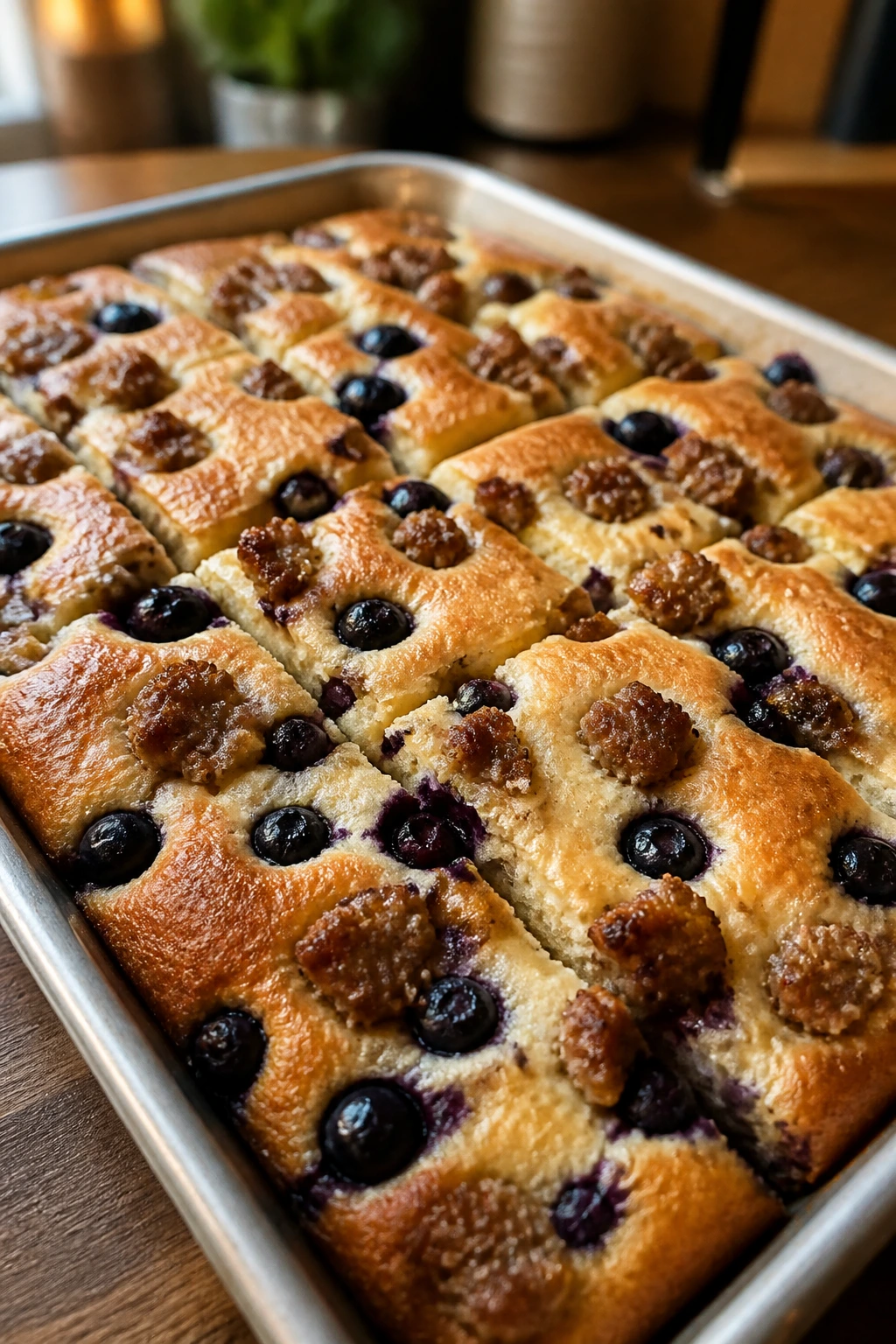
7. Sheet-Pan Pancake Bake with Sausage and Blueberries
Intro: Breakfast-for-dinner gets serious when it comes out of the oven in one slab you can slice like cake. The pancake layer stays tender, the sausage adds savory bites, and the blueberries burst into little pockets of syrupy tartness. Kids tend to buy into this one fast because it feels playful and familiar at the same time.
Why It Works: Baking the batter in a sheet pan gives you even squares instead of a stack that goes cold while you cook the rest. Pre-cooking the sausage keeps the pan from getting greasy, and the blueberries add enough sweetness that you don’t need to drown the whole thing in syrup. This is a meal that looks like dessert before the first bite. That helps.
Key Ingredients:
- 2 cups all-purpose flour
- 2 tablespoons sugar
- 1 tablespoon baking powder
- 1/2 teaspoon kosher salt
- 2 cups milk
- 2 large eggs
- 4 tablespoons melted butter
- 1 pound breakfast sausage, cooked and crumbled
- 1 cup blueberries
- Maple syrup, for serving
Quick Steps:
- Preheat the oven to 400°F (200°C) and grease a rimmed sheet pan.
- Whisk the flour, sugar, baking powder, and salt in a bowl.
- Whisk the milk, eggs, and melted butter in a second bowl, then stir the wet ingredients into the dry just until combined.
- Pour the batter into the pan, scatter the sausage and blueberries over the top, and bake for 15 to 18 minutes.
- Check the center; it should spring back when pressed lightly and a toothpick should come out clean.
- Cut into squares and serve with warm maple syrup.
Equipment for This Recipe:
- Rimmed sheet pan
- 2 mixing bowls
- Whisk
- Spatula
- Knife for slicing
How to Serve This Dish: Serve the squares with scrambled eggs if you want to stretch the meal, or just set out syrup and butter and let everyone dig in. A few extra berries on the side look nice and give the plate some brightness.
Pro Tips for This Recipe:
- Don’t overmix the batter. Lumps are fine.
- Cook the sausage first so it doesn’t release fat into the batter.
- Watch the pan near the end; sheet-pan pancakes go from done to dry fast.
- Warm the syrup first if you want the whole tray to feel cozy.
Variations on This Dish:
- Bacon and Maple Version: Swap the sausage for chopped cooked bacon.
- Apple Cinnamon Bake: Use diced apples instead of berries and add cinnamon.
- Plain Vanilla Squares: Leave out the add-ins and serve with jam.
Common Mistakes to Avoid with This Dish:
- Pouring batter into an ungreased pan: It sticks in ugly patches.
- Using raw sausage: It will not cook through in time.
- Baking until the top is brown all over: That usually means the middle dried out.
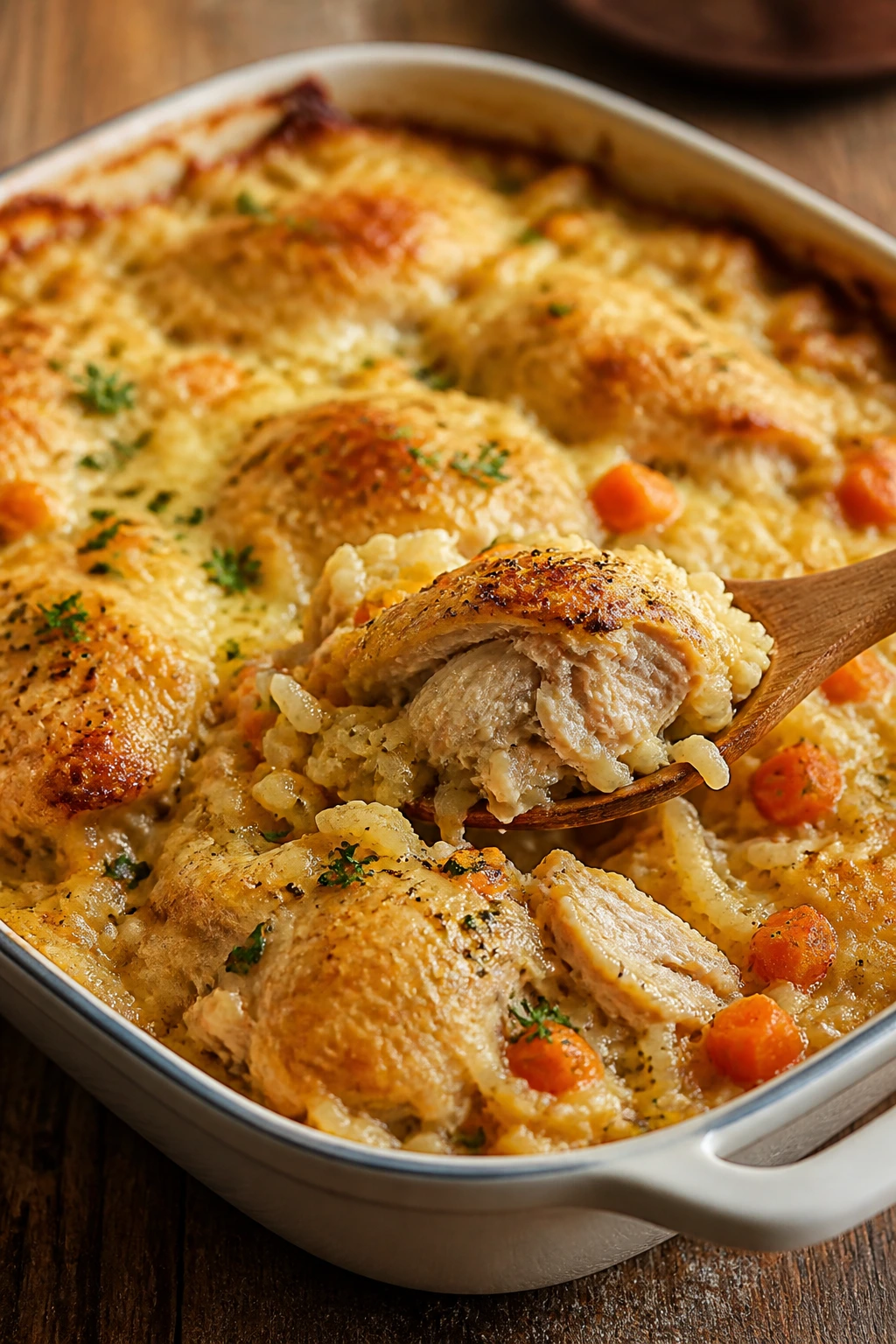
8. Chicken and Rice Casserole with Carrots
Intro: Chicken and rice casserole is one of those old-school dinners that still earns its keep because it lands gently on the table. The rice softens under the chicken juices, the carrots turn sweet, and the top gets a little golden where the cheese meets the edge of the dish. Kids who dodge mixed meals often do better with this because everything sits in neat, familiar bites.
Why It Works: Long-grain rice holds its shape better than short-grain rice in a baked casserole, so you get separate grains instead of a heavy paste. Chicken thighs stay moist through the bake, and a simple creamy base keeps the rice from drying out before it cooks through. The vegetables melt into the background without disappearing completely.
Key Ingredients:
- 2 pounds boneless, skinless chicken thighs
- 1 1/2 cups long-grain white rice
- 3 1/2 cups chicken broth
- 1 can cream of chicken soup, 10.5 ounces
- 1 cup milk
- 2 carrots, finely diced
- 1 celery stalk, finely diced
- 1 small onion, finely diced
- 1 1/2 cups shredded cheddar
- 1 teaspoon garlic powder
- 1 teaspoon kosher salt
- 1/2 teaspoon black pepper
Quick Steps:
- Preheat the oven to 375°F (190°C) and grease a 9×13-inch dish.
- Stir the rice, broth, soup, milk, carrots, celery, onion, garlic powder, salt, and pepper together in the dish.
- Lay the chicken thighs on top and press them slightly into the rice mixture.
- Cover tightly with foil and bake for 45 minutes.
- Remove the foil, sprinkle on the cheddar, and bake uncovered for 10 to 15 minutes more until the rice is tender and the cheese melts.
- Rest for 10 minutes before serving.
Equipment for This Recipe:
- 9×13-inch baking dish
- Foil
- Mixing bowl
- Measuring cups
- Knife and cutting board
How to Serve This Dish: Serve generous spoonfuls straight from the dish with a simple cucumber salad or steamed green beans. The casserole is rich enough to stand alone, so I keep the side dish plain and crunchy.
Pro Tips for This Recipe:
- Dice the carrots and celery small so they cook through.
- Keep the foil sealed tight for the first bake or the rice can dry out.
- Chicken thighs are more forgiving than breasts here.
- Let the casserole rest so the rice stops moving around in the dish.
Variations on This Dish:
- Mushroom Chicken and Rice: Add a cup of sliced mushrooms to the vegetable mix.
- Cheddar Broccoli Version: Stir in tiny broccoli florets during the last 15 minutes.
- Herbed Version: Add thyme and parsley for a softer, more savory flavor.
Common Mistakes to Avoid with This Recipe:
- Using instant rice: It can turn mushy before the chicken finishes.
- Leaving the dish uncovered too early: The rice won’t absorb enough liquid.
- Cutting the chicken before checking the rice: The rice texture is the real test here.
9. French Bread Pizza Boats
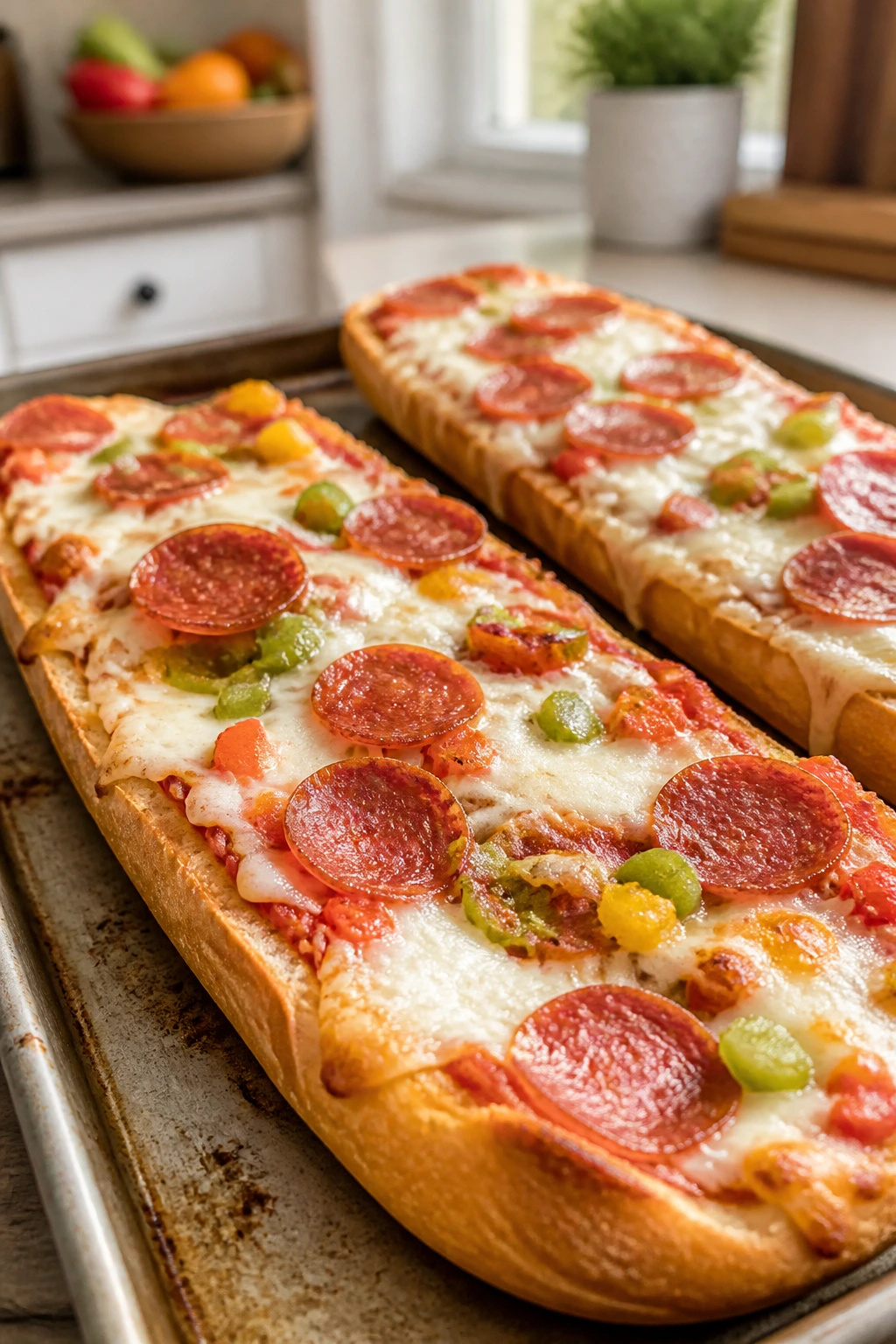
Intro: French bread pizza is one of the fastest ways to get a table full of happy eaters without touching a delivery app. The bread stays crisp underneath, the sauce bubbles in the middle, and the cheese browns in little freckles on top. Kids like the custom feel of it; adults like that it takes almost no negotiation.
Why It Works: A split loaf gives you a built-in crust with more structure than a thin pizza base, so heavy toppings won’t sink the whole thing. Toasting the bread first keeps the bottom from going soft. This is also a very forgiving recipe — if one kid wants pepperoni and another wants plain cheese, you can split the loaf down the middle and nobody has to compromise.
Key Ingredients:
- 2 large French bread loaves
- 1 tablespoon olive oil
- 2 cups pizza sauce
- 4 cups shredded mozzarella
- 1 1/2 cups sliced pepperoni
- 1/2 cup sliced bell pepper
- 1/2 teaspoon dried oregano
- Parmesan, for finishing
Quick Steps:
- Preheat the oven to 425°F (220°C) and line a sheet pan.
- Split the bread loaves lengthwise and brush the cut sides with olive oil.
- Toast the bread cut-side up for 5 minutes.
- Spread pizza sauce over each half, then top with mozzarella, pepperoni, bell pepper, and oregano.
- Bake for 10 to 12 minutes until the cheese melts and the edges crisp.
- Sprinkle with Parmesan and slice into thick pieces.
Equipment for This Recipe:
- Sheet pan
- Serrated knife
- Pastry brush
- Cheese grater
- Spatula
How to Serve This Dish: Cut the loaves into wide slices and serve with carrot sticks or a tossed salad if you want something fresh on the side. A little bowl of extra pizza sauce for dipping never hurts.
Pro Tips for This Recipe:
- Toast the bread before topping it. That’s the difference between crisp and damp.
- Don’t overload with sauce or the center softens too much.
- Use shredded mozzarella, not thick slices, so the melt happens evenly.
- Let the loaf sit for 2 minutes before cutting or the cheese slides off.
Variations on This Dish:
- Sausage and Onion Boats: Swap pepperoni for cooked sausage and thin onion slices.
- Veggie Pizza Boats: Use mushrooms, olives, and peppers for a brighter topping.
- White Pizza Boats: Skip the sauce and use ricotta, mozzarella, and garlic oil.
Common Mistakes to Avoid with This Recipe:
- Using fresh bread that’s too soft: It won’t hold up as well under toppings.
- Skipping the pre-toast: The bottoms turn soggy fast.
- Using too many wet toppings: That’s how you lose the crunch.
10. Sloppy Joe Skillet
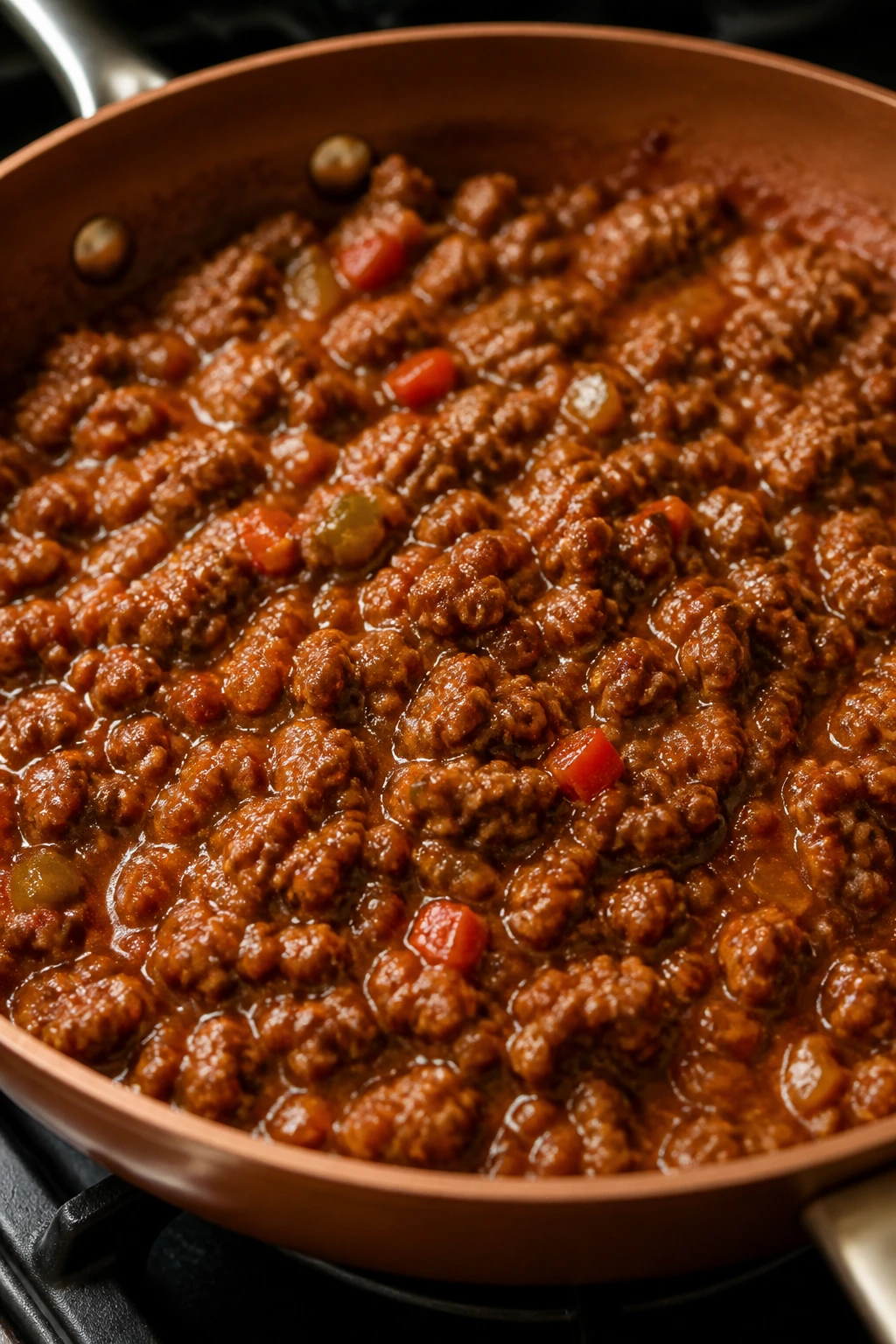
Intro: Sloppy Joes are messy by design, and that’s part of why kids enjoy them. The beef gets sweet and tangy in the skillet, the sauce clings to the bun, and every bite tastes like it came from a diner booth. I’ll take that over a fussy sandwich any day.
Why It Works: Tomato paste gives the sauce body, ketchup brings the sweetness, and a splash of Worcestershire adds the deep savory note that makes this taste like more than seasoned meat. Cooking the sauce down a little before serving keeps the filling from sliding right out of the bun. A good Sloppy Joe should be loose enough to eat with a fork and thick enough to stay put. There’s a line there.
Key Ingredients:
- 2 pounds ground beef
- 1 small onion, diced
- 1 small green bell pepper, diced
- 2 cloves garlic, minced
- 1/2 cup ketchup
- 2 tablespoons tomato paste
- 1 tablespoon Worcestershire sauce
- 1 tablespoon brown sugar
- 1 teaspoon yellow mustard
- 1/2 cup water
- 8 sandwich buns
- Salt and pepper
Quick Steps:
- Brown the beef in a large skillet over medium-high heat, then drain excess fat if needed.
- Add the onion and bell pepper and cook for 4 minutes until soft.
- Stir in the garlic for 30 seconds.
- Add the ketchup, tomato paste, Worcestershire, brown sugar, mustard, water, salt, and pepper.
- Simmer for 10 to 12 minutes until thick and glossy.
- Spoon onto buns and serve hot.
Equipment for This Recipe:
- Large skillet
- Wooden spoon
- Knife
- Cutting board
- Measuring spoons
How to Serve This Dish: Serve the filling in a bowl with buns on the side if you want less mess at the table. Chips, carrot sticks, or sliced grapes make an easy finish.
Pro Tips for This Recipe:
- Drain the beef if it’s greasy, or the sauce tastes heavy.
- Let the filling simmer long enough to thicken. Thin filling spills everywhere.
- Toast the buns if you want them sturdier.
- Add a little water only if the skillet gets too tight.
Variations on This Dish:
- Turkey Joe: Use ground turkey and a spoon of olive oil.
- BBQ Joe: Swap half the ketchup for barbecue sauce.
- Cheesy Joe: Melt a slice of cheddar over the hot filling before closing the bun.
Common Mistakes to Avoid with This Recipe:
- Making it too sweet: Too much sugar turns the sauce sticky in the wrong way.
- Serving immediately after adding sauce: A short simmer makes a better filling.
- Using flimsy buns: Soft buns that tear in half make the meal a lot messier.
11. Turkey Meatball Sub Bake
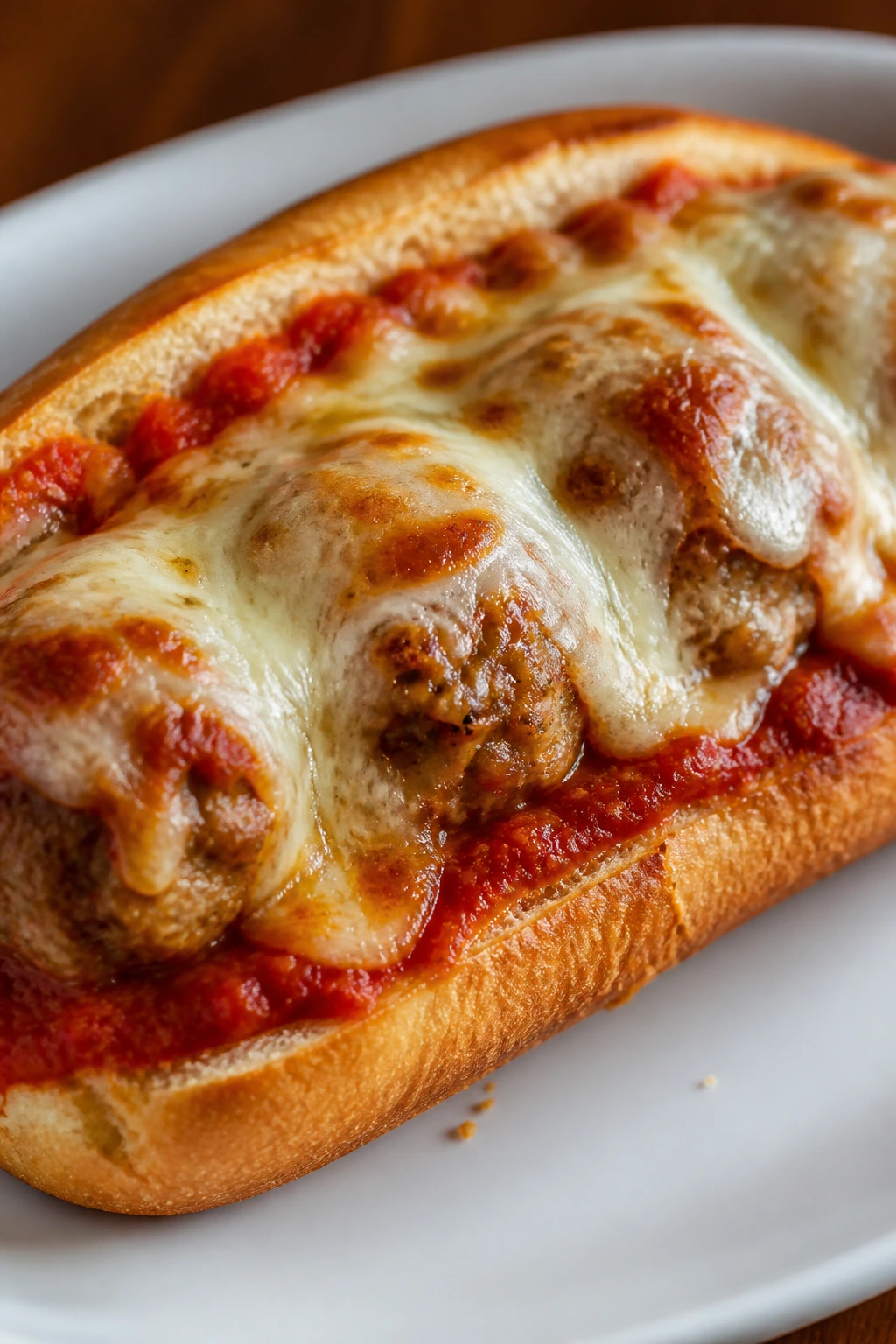
Intro: This is the kind of meal that feels a little more put together than plain spaghetti and meatballs, but not so put together that kids start asking questions. The meatballs stay tender, the sauce gets into the bread, and the cheese on top turns into a molten lid. It’s a sub, but baked. More efficient. Less drippy.
Why It Works: Turkey meatballs stay lighter than beef, which is handy when you’re stacking them into bread with sauce and cheese. Baking the sub open-faced gives you enough heat to melt the cheese without turning the roll into a sponge. I like a sturdy roll for this, something with a little chew.
Key Ingredients:
- 2 pounds ground turkey
- 1/2 cup breadcrumbs
- 1 egg
- 1/4 cup grated Parmesan
- 2 cloves garlic, minced
- 1 teaspoon Italian seasoning
- 1 teaspoon kosher salt
- 1/2 teaspoon black pepper
- 3 cups marinara sauce
- 6 sub rolls
- 2 cups shredded mozzarella
- Fresh basil, optional
Quick Steps:
- Preheat the oven to 400°F (205°C).
- Mix the turkey, breadcrumbs, egg, Parmesan, garlic, seasoning, salt, and pepper gently until combined.
- Roll into meatballs and bake on a sheet pan for 15 minutes, until cooked through.
- Warm the marinara in a skillet and toss the meatballs in it.
- Split the rolls, fill with meatballs and sauce, then cover with mozzarella.
- Bake the subs for 6 to 8 minutes until the cheese melts and the rolls toast lightly.
Equipment for This Recipe:
- Sheet pan
- Large bowl
- Mixing spoon
- Skillet
- Sub rolls
How to Serve This Dish: Set the subs on a board and hand out extra napkins. A simple salad or roasted zucchini on the side keeps the plate from feeling too heavy.
Pro Tips for This Recipe:
- Mix the meatball blend lightly. Overworking turkey makes it tough.
- Use rolls that hold their shape after saucing.
- Warm the sauce before assembling so the cheese melts fast.
- Add basil after baking if you want a fresh finish.
Variations on This Dish:
- Meat Sauce Version: Skip the meatballs and use a thick bolognese.
- Garlic Bread Sub Bake: Brush the rolls with garlic butter before filling.
- Mozzarella-Only Version: Leave off Parmesan if you want a milder flavor.
Common Mistakes to Avoid with This Recipe:
- Using rolls that are too soft: They collapse under the sauce.
- Baking the meatballs too long: Turkey dries out faster than beef.
- Flooding the bread with sauce: It should be saucy, not soaked.
12. Taco Pasta Skillet
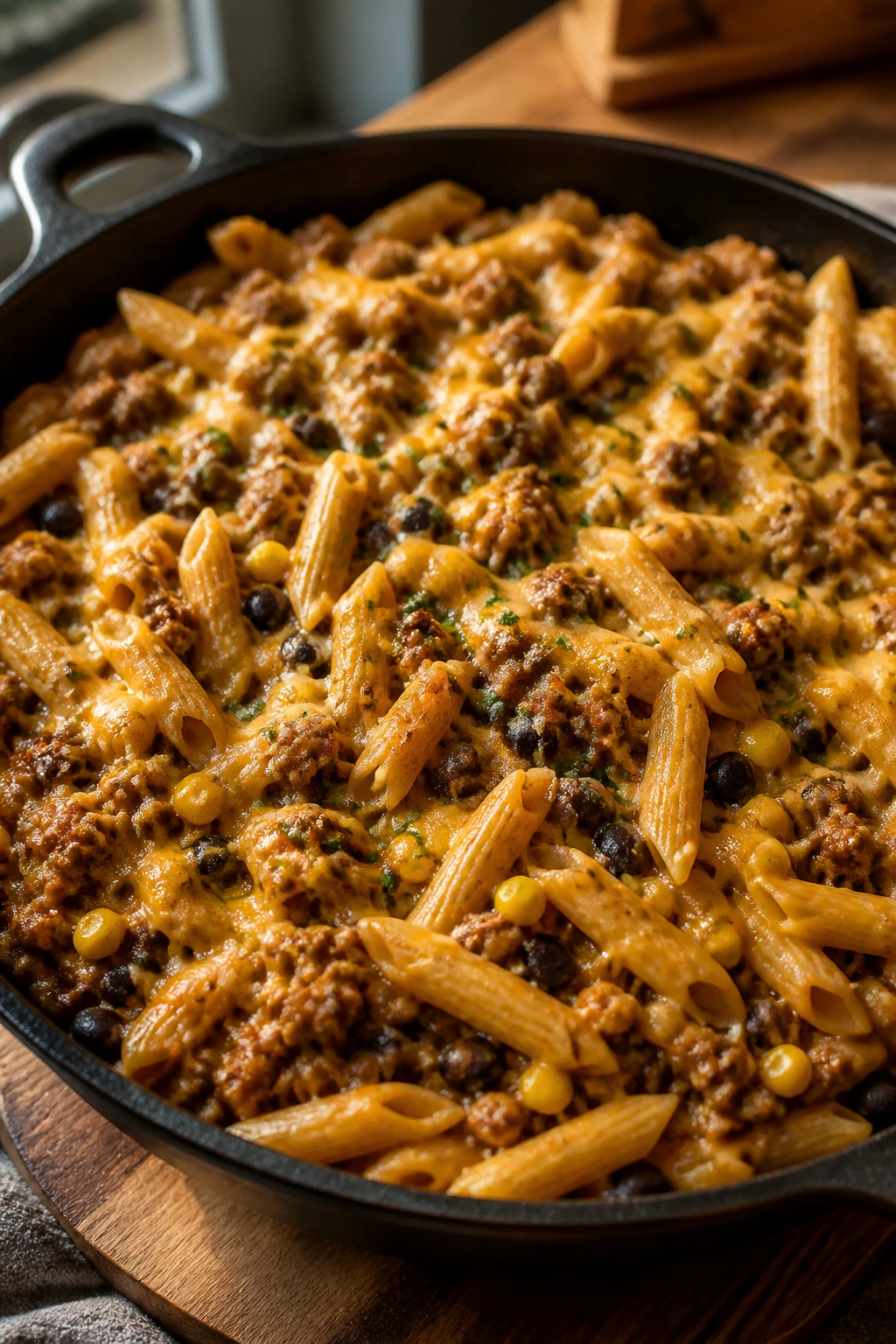
Intro: Taco pasta is what happens when two kid-approved dinners stop arguing and combine forces. The pasta picks up the spice from the taco seasoning, the cheese melts into the sauce, and the whole skillet tastes like something between nachos and baked ziti. That’s a useful overlap.
Why It Works: One skillet keeps the pasta from wandering into a separate sauce pan and gives the starch a chance to absorb flavor as it cooks. Salsa and broth make an easy base, and black beans add enough heft that you don’t need a giant pile of meat. If your kids are picky about visible spices, this is a good middle ground because the flavor lands softly, not like a dare.
Key Ingredients:
- 1 1/2 pounds ground beef
- 1 small onion, diced
- 2 tablespoons taco seasoning
- 2 cups uncooked medium pasta shells
- 2 1/2 cups chicken broth
- 1 cup salsa
- 1 cup canned black beans, rinsed and drained
- 1 cup frozen corn
- 2 cups shredded cheddar
- Sour cream and chopped cilantro, for serving
Quick Steps:
- Brown the beef and onion in a large skillet over medium-high heat, then drain excess fat.
- Stir in taco seasoning and cook for 30 seconds.
- Add the pasta, broth, salsa, beans, and corn.
- Bring to a simmer, cover, and cook for 12 to 14 minutes, stirring once or twice, until the pasta is tender and most of the liquid is absorbed.
- Stir in the cheddar until melted.
- Serve with sour cream and cilantro.
Equipment for This Recipe:
- Large deep skillet or sauté pan
- Wooden spoon
- Lid
- Measuring cups
- Cheese grater
How to Serve This Dish: Spoon it into shallow bowls and let people top theirs with sour cream or extra cheese. A handful of shredded lettuce on the side gives the meal a taco-bar feel without much work.
Pro Tips for This Recipe:
- Use a deep skillet so the pasta has room to move.
- Stir once or twice while cooking so nothing sticks on the bottom.
- Choose a salsa that tastes good on its own; it carries the whole sauce.
- Add a splash of broth if the skillet tightens before the pasta is tender.
Variations on This Dish:
- Chicken Taco Pasta: Swap the beef for shredded rotisserie chicken.
- Mild Cheese Version: Use mild salsa and Monterey Jack for younger kids.
- Extra Veggie Skillet: Add diced zucchini or bell pepper with the onion.
Common Mistakes to Avoid with This Recipe:
- Using too little liquid: The pasta won’t cook through.
- Letting the skillet boil hard: The sauce can reduce too fast.
- Adding cheese before the pasta is tender: It can clump and stick.
13. Baked Ziti with Hidden Veggies
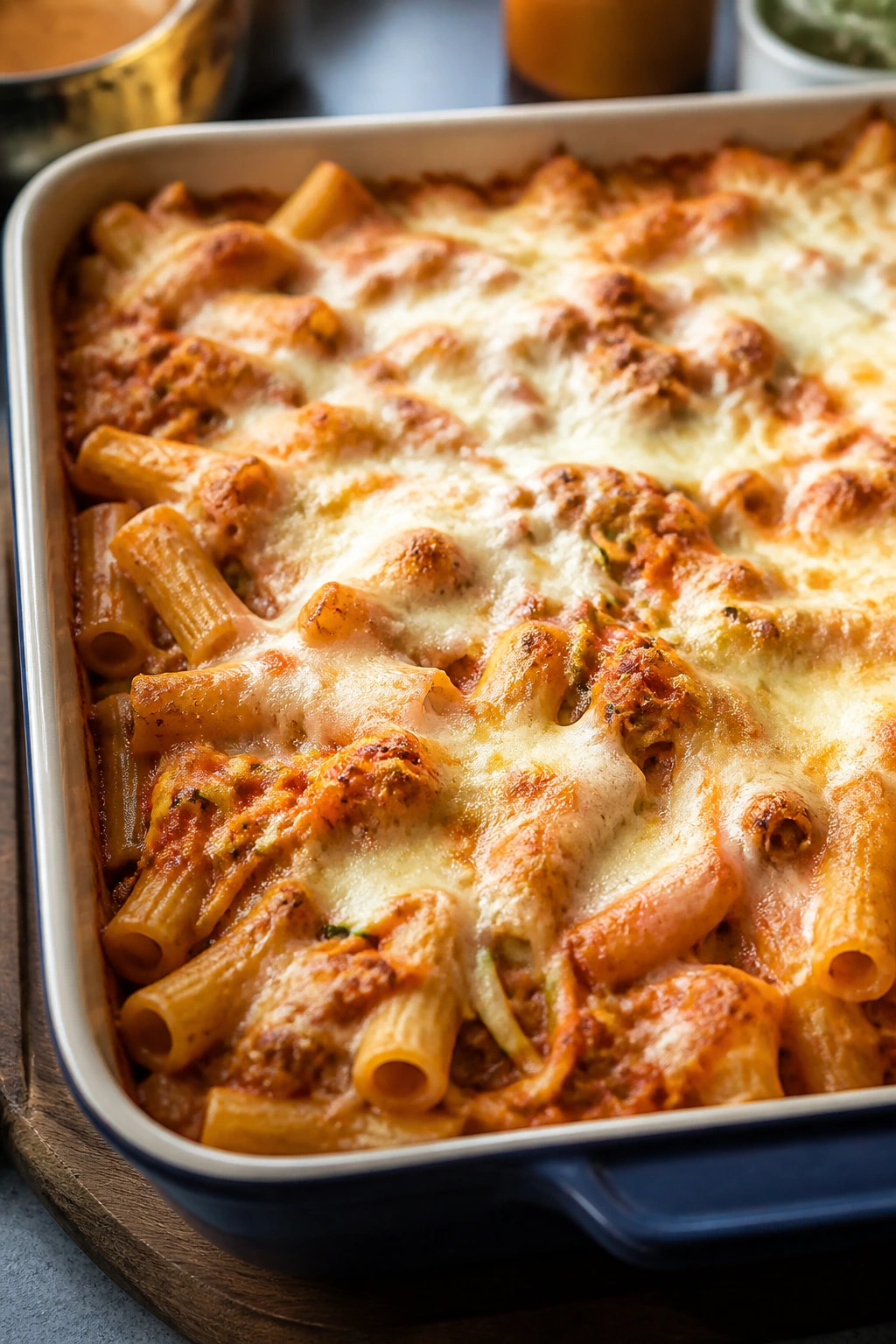
Intro: Ziti is a safe bet, and hiding vegetables in the sauce is one of the few tricks that actually earns its keep. The pasta catches sauce in its tubes, the cheese browns into islands, and the vegetables soften into the background instead of announcing themselves. Kids usually accept it because it still looks like baked pasta, not a lecture.
Why It Works: Ziti holds sauce in a way long noodles can’t. Grated zucchini and carrot melt into the tomato base as they cook, and a little ricotta keeps the bake creamy without making it heavy. I prefer to grate the vegetables fine enough that they disappear after simmering for a bit. No big chunks. No drama.
Key Ingredients:
- 1 pound ziti or penne
- 2 tablespoons olive oil
- 1 small onion, grated or finely diced
- 2 cloves garlic, minced
- 1 medium zucchini, grated and squeezed dry
- 1 medium carrot, grated
- 4 cups marinara sauce
- 1 cup ricotta cheese
- 3 cups shredded mozzarella
- 1/2 cup grated Parmesan
- 1 teaspoon Italian seasoning
Quick Steps:
- Preheat the oven to 375°F (190°C) and grease a baking dish.
- Boil the pasta until just under al dente, then drain.
- Warm the olive oil in a skillet and cook the onion for 3 minutes, then add garlic, zucchini, and carrot for another 4 minutes.
- Pour in the marinara and simmer for 5 minutes.
- Toss the pasta with the sauce and ricotta, then layer into the dish with mozzarella and Parmesan between the layers.
- Bake for 25 to 30 minutes until bubbling and browned.
- Rest for 10 minutes before serving.
Equipment for This Recipe:
- Large pot
- Skillet
- Baking dish
- Box grater
- Spoon or spatula
How to Serve This Dish: Serve it with garlic toast and a crisp salad if you want a proper dinner spread. A square that holds together on the plate usually means the rest time was long enough.
Pro Tips for This Recipe:
- Squeeze the zucchini well or the sauce gets watery.
- Grate the carrot finely so it blends into the sauce.
- Undercook the pasta a touch. It keeps its shape better after baking.
- Use a deep dish if you like lots of cheese layers.
Variations on This Dish:
- Spinach Ziti: Stir in chopped spinach during the last minute of sauce simmering.
- Meat Ziti: Add cooked ground beef or sausage to the sauce.
- Three-Cheese Ziti: Replace some mozzarella with provolone for a deeper melt.
Common Mistakes to Avoid with This Recipe:
- Leaving the zucchini wet: The whole pan turns loose.
- Using too much ricotta: It can weigh the pasta down.
- Serving too soon: Hot ziti falls apart before it settles.
14. Cheesy Chicken Enchilada Casserole
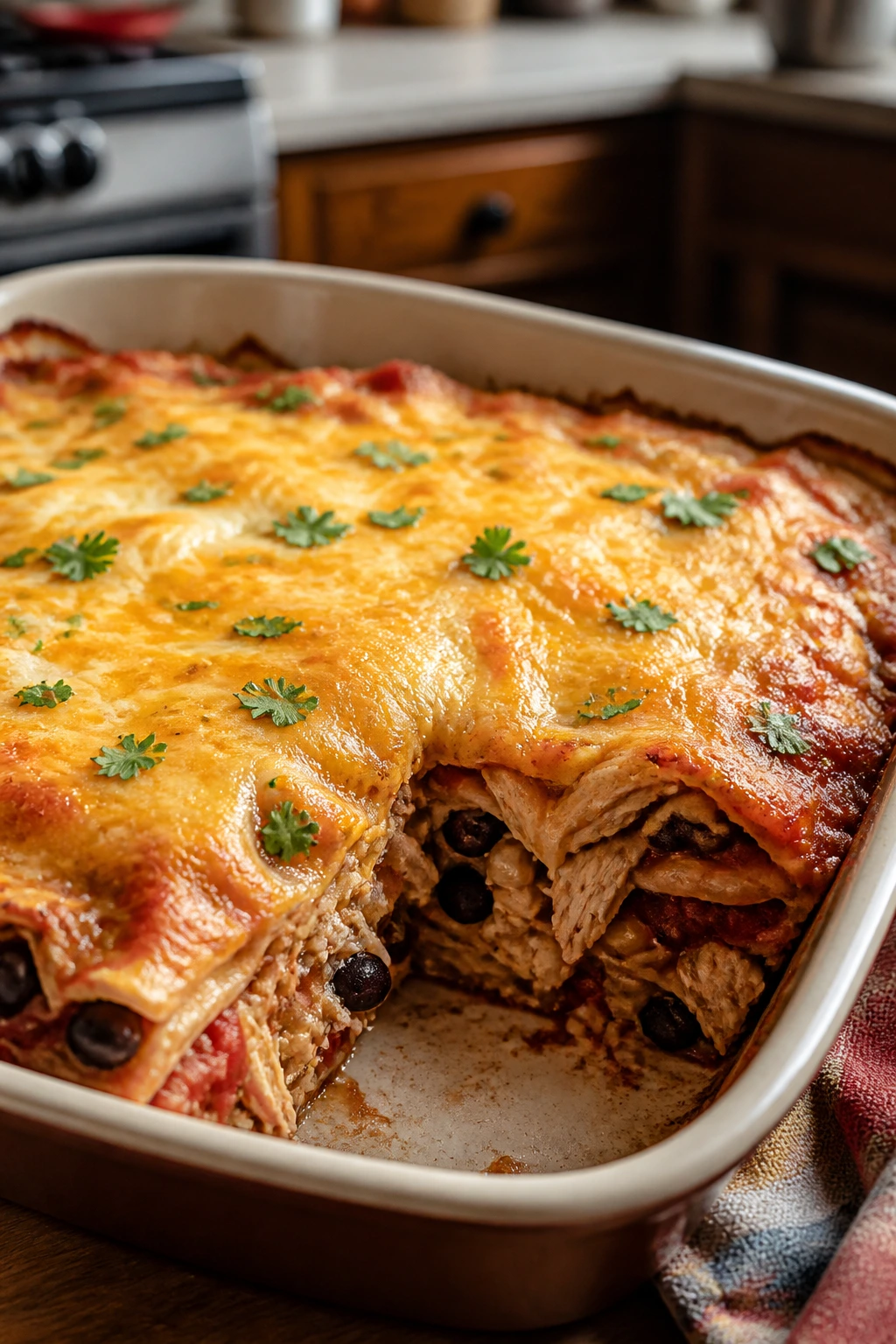
Intro: This casserole tastes like enchiladas without asking anyone to roll ten tortillas while the filling leaks across the counter. Layers of sauce, chicken, beans, and cheese bake into a soft, scoopable square that holds together better than you’d expect. The mild version tends to work best with kids, though you can heat it up on the table for adults.
Why It Works: Layering tortillas like a casserole gives you the same flavors you’d get from rolled enchiladas, but with much less assembly. Shredded chicken keeps the filling sturdy, beans stretch the meal, and a mild enchilada sauce keeps the spice level manageable. I like adding a little corn for sweetness because it breaks up the richness.
Key Ingredients:
- 4 cups shredded cooked chicken
- 10 small flour or corn tortillas
- 3 cups mild enchilada sauce
- 1 can black beans, rinsed and drained
- 1 cup frozen corn
- 3 cups shredded Monterey Jack or cheddar blend
- 1 small onion, finely diced
- Chopped cilantro and sour cream, for serving
Quick Steps:
- Preheat the oven to 375°F (190°C) and grease a 9×13-inch dish.
- Spread a thin layer of enchilada sauce in the bottom.
- Add tortillas, tearing them as needed to cover the base, then layer chicken, beans, corn, onion, sauce, and cheese.
- Repeat the layers once more.
- Finish with tortillas, sauce, and a thick layer of cheese.
- Bake for 30 to 35 minutes until bubbling at the edges.
- Rest for 10 minutes, then cut into squares.
Equipment for This Recipe:
- 9×13-inch baking dish
- Mixing bowl
- Spoon
- Foil, optional
- Sharp knife
How to Serve This Dish: Serve each square with sour cream and cilantro on top. Rice, shredded lettuce, or sliced avocado can sit alongside it if you want to make the plate feel fuller.
Pro Tips for This Recipe:
- Use mild sauce unless you know your crowd likes heat.
- Tear the tortillas to fit the dish so the layers seal better.
- Rotisserie chicken works well and saves a pile of time.
- Rest before cutting so the layers don’t smear.
Variations on This Dish:
- Green Chile Version: Use salsa verde and pepper jack.
- Beef Enchilada Casserole: Swap in browned ground beef.
- Extra-Cheesy Version: Add a layer of cream cheese between the tortilla layers.
Common Mistakes to Avoid with This Recipe:
- Using too much sauce at once: The casserole can get soupy.
- Skipping the rest time: The layers slide apart.
- Choosing a very hot sauce for kids: The whole point is dinner, not negotiations.
15. Mini Meatloaf Muffins with Mashed Potato Swirls
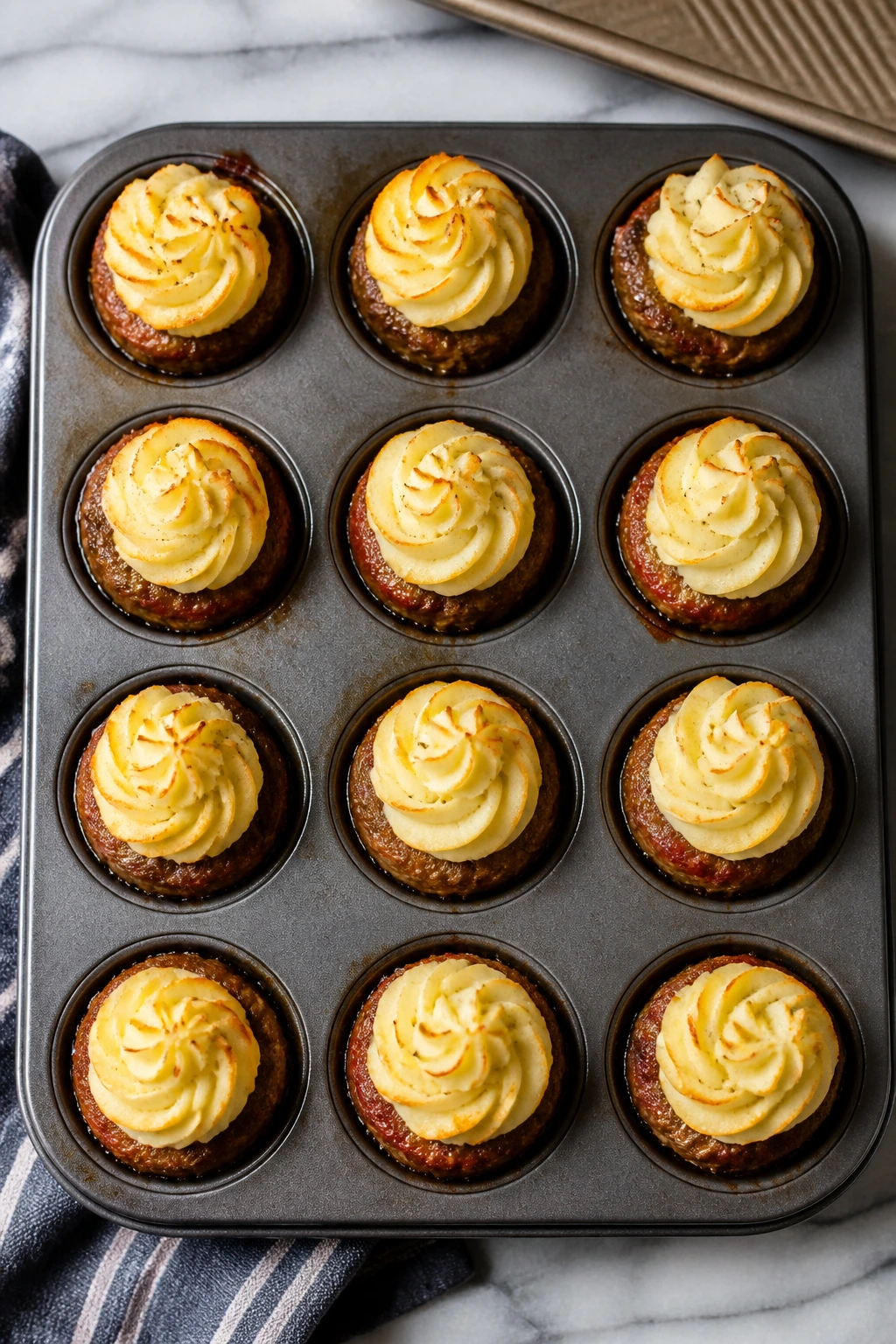
Intro: Meatloaf muffins are the polite version of meatloaf, which sounds silly until you realize children will often eat anything that comes in a muffin tin. The edges brown faster, the centers stay juicy, and a little mashed potato swirl on top makes the whole thing look like something made on purpose. That matters more than people admit.
Why It Works: A muffin tin creates more surface area, which means more browned bits and less of the dense middle that makes some meatloaf recipes drag. The ketchup glaze caramelizes on top, and a piped potato swirl gives you a built-in side without needing a second serving dish. It’s classic, just less fussy.
Key Ingredients:
- 2 pounds ground beef
- 1 cup breadcrumbs
- 2 large eggs
- 1 small onion, grated
- 1/4 cup milk
- 2 tablespoons Worcestershire sauce
- 1 teaspoon kosher salt
- 1/2 teaspoon black pepper
- 1/2 cup ketchup
- 1 tablespoon brown sugar
- 4 cups prepared mashed potatoes, warm
Quick Steps:
- Preheat the oven to 375°F (190°C) and grease a standard muffin tin.
- Mix the beef, breadcrumbs, eggs, onion, milk, Worcestershire, salt, and pepper gently until combined.
- Press the mixture into the muffin cups.
- Stir the ketchup and brown sugar together, then spoon a little over each cup.
- Bake for 20 to 22 minutes until the centers reach 160°F (71°C).
- Pipe or spoon warm mashed potatoes on top, then return the pan to the oven for 3 to 5 minutes to warm through.
- Let the muffins rest for 5 minutes before lifting them out.
Equipment for This Recipe:
- Standard muffin tin
- Mixing bowl
- Spoon or spatula
- Piping bag or zip-top bag, optional
- Instant-read thermometer
How to Serve This Dish: Plate 2 or 3 muffins per person with extra mashed potatoes, green beans, or peas on the side. A spoonful of extra ketchup or gravy on the plate is not a bad idea.
Pro Tips for This Recipe:
- Grating the onion keeps the meatloaf tender and stops big onion bites.
- Don’t pack the meat too hard into the cups.
- Warm mashed potatoes pipe better than cold ones.
- Let the muffins rest before removing them or they can break apart.
Variations on This Dish:
- Turkey Meatloaf Muffins: Swap in ground turkey and add a spoon of olive oil.
- BBQ Muffins: Replace the ketchup glaze with barbecue sauce.
- Cheddar-Topped Version: Fold shredded cheddar into the meat mixture.
Common Mistakes to Avoid with This Recipe:
- Overmixing the meat: The texture turns dense.
- Using cold mashed potatoes: They won’t spread nicely on top.
- Baking until the glaze burns: The sugar darkens fast near the end.
Why Familiar Comfort Food Wins on a Weekend Table
Weekend cooking has room for a little more shape than a rushed Tuesday dinner. You can brown onions properly. You can preheat the oven and actually wait for it. You can let a casserole rest instead of serving it in a panic.
That extra breathing room matters with kids. Familiar food lands better when it arrives hot, crisp where it should be crisp, and soft where it should be soft. A tender chicken strip with a good crust beats a dry “healthier” version every time. A baked pasta with a browned top usually gets eaten more eagerly than a bowl of sauce-heavy noodles.
There’s another reason these meals work: they’re easy to read. Kids don’t have to guess what the dish is supposed to be. They see sliders, pizza bread, mac and cheese, meatballs, and taco pasta. Clear food tends to get clearer answers.
What Belongs in Your Weekend Dinner Kit
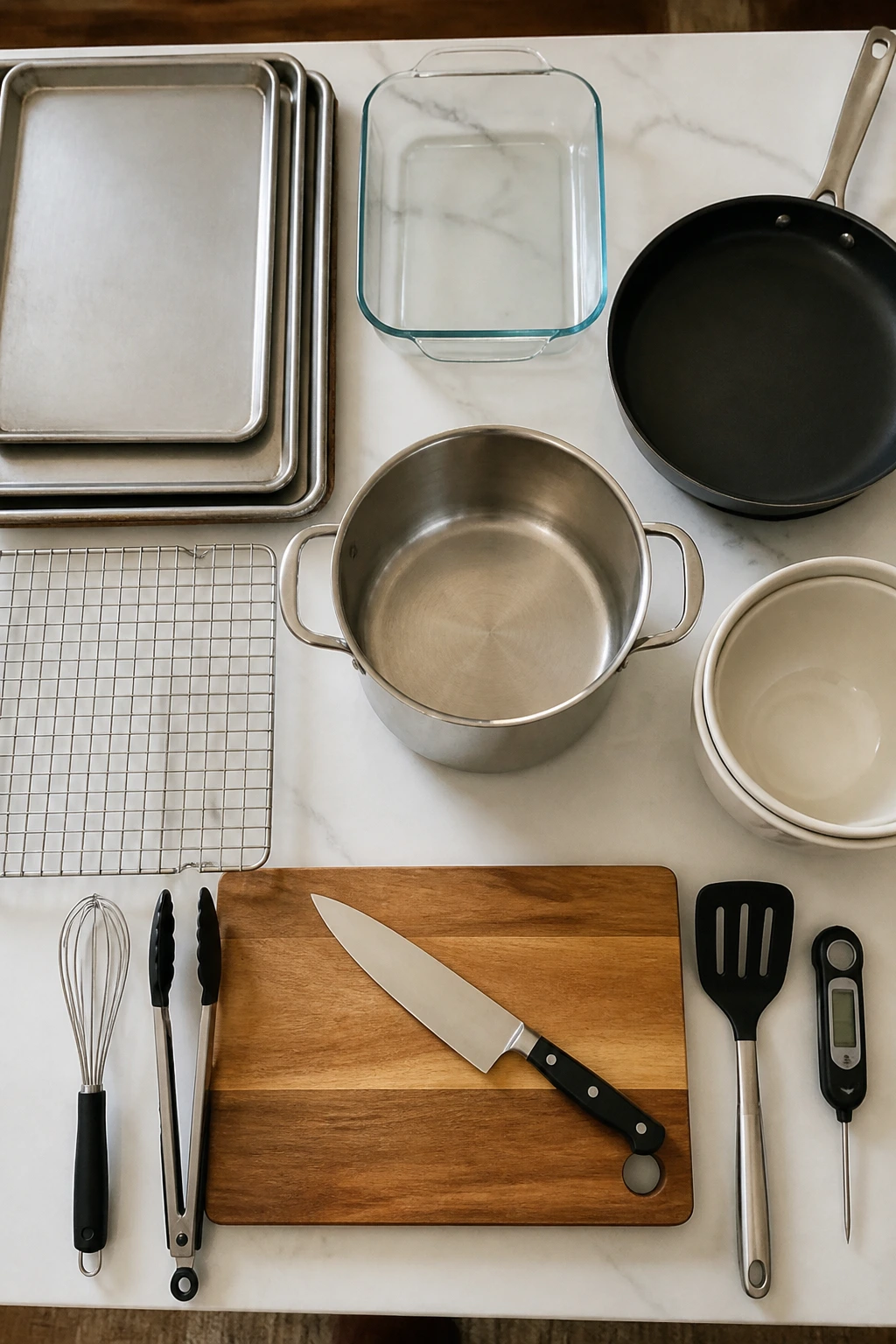
- Rimmed sheet pans: They handle chicken tenders, fries, quesadillas, and pizza boats without crowding.
- 9×13-inch baking dish: This is the workhorse for casseroles, baked pasta, enchilada layers, and mac and cheese.
- Large skillet or sauté pan: You need one sturdy pan for Sloppy Joes, taco pasta, and sauce building.
- Large pot: Pasta and macaroni need room to move so they don’t stick together.
- Wire rack: Useful for chicken tenders and anything crisp-coated that needs airflow underneath.
- Mixing bowls: At least two. More if you hate stopping to wash between steps.
- Whisk: Makes the cheese sauce and pancake batter smoother.
- Tongs and a spatula: Tongs for turning chicken and fries; spatulas for scooping casseroles and sliding meatballs.
- Instant-read thermometer: A cheap one saves guesswork with chicken, pork, and meatloaf.
- Sharp knife and cutting board: Especially handy for sliders, bread pizzas, and anything that needs clean slicing after a brief rest.
Smart Shopping and Ingredient Tips That Save the Whole Meal
A good kid-friendly weekend dinner starts in the cart, not at the stove. Buy bread with structure — slider buns, French bread, sub rolls, and tortillas should feel soft but not flimsy. If a loaf collapses when you squeeze the bag, it probably won’t hold sauce well.
Ground meat deserves some attention too. For burgers, meatballs, and meatloaf, 80/20 ground beef gives enough fat for flavor without turning greasy. Ground turkey works for lighter meals, but it needs a little help from onion, egg, or breadcrumbs so it doesn’t bake dry. Pork shoulder should have some marbling. That’s the part that melts into tenderness.
Cheese matters more than people think. Block cheese you shred yourself melts cleaner and tastes fuller than most pre-shredded bags. That extra minute at the grater is worth it for mac and cheese, enchiladas, ziti, and anything with a big baked top. If you’re buying mozzarella for pizza or pasta, look for low-moisture shredded cheese. Fresh mozzarella is lovely, but it can flood a casserole.
Sauces and canned items deserve the same care. Choose marinara or salsa that you’d actually dip a chip into. If the sauce tastes flat from the jar, it usually tastes flat in the casserole too. A spoon of tomato paste, a little Worcestershire, or a pinch of sugar can fix a lot, but the base still has to be decent.
For vegetables, small cuts are your friend. Finely diced onion disappears into meat sauce. Grated carrot and zucchini melt into baked pasta. Tiny broccoli florets cook fast enough to stay tender. Big chunks are where family dinners go sideways.
How to Serve These Recipes for the Least Fuss
Presentation: Serve crispy foods on a platter, not in a deep bowl, so the steam doesn’t trap the crunch. Pizzas, tenders, and sliders look better spread out. Casseroles and baked pastas should rest before you cut them, then get served in clean squares or scoops so the pan still looks tidy.
Accompaniments: Keep the sides simple and fresh. Cucumber slices, apple wedges, carrot sticks, peas, green beans, tossed salad, corn on the cob, and roasted broccoli all play well with the richer dishes here. Bread goes with pasta. Fruit goes with chicken tenders. Pickles belong near burgers and sloppy joes, because that sharp bite cuts the richness.
Portions: Most of these recipes feed 4 to 6 people comfortably, with sliders, meatloaf muffins, and chicken tenders stretching farther if you add a side. For bigger appetites, use 2 tenders per child and 3 to 4 for adults, or plan 1 generous casserole scoop plus a green side. The goal is enough food that nobody starts rummaging in the pantry at 8 p.m.
Beverage Pairing: Cold milk is the obvious answer for a lot of these, and it still works. Lemonade, iced tea, or sparkling water with lime handles the heavier dishes nicely, while a simple fruit punch works for birthday-table energy. For the adults, a crisp lager or a dry hard cider pairs cleanly with sliders, pizza bread, and pulled pork.
Additional Tips and Flavor Boosters for Easier Wins
Flavor Enhancement: Keep one finishing sauce on hand and use it where it counts. A little garlic butter brushed over bread pizzas, a spoon of pickled jalapeño brine stirred into taco pasta, or fresh basil over ziti can wake up a dish without making it taste busy.
Customization: Split the pan when you can. Half pepperoni, half cheese on French bread pizza. Half mild, half spicy sauce at the taco table. One tray of chicken tenders plain, another dusted with paprika and extra Parmesan. That tiny bit of choice keeps people from picking apart their dinner.
Serving Suggestions: Put crunchy things on top at the last minute. Crushed potato chips over mac and cheese, toasted breadcrumbs on casserole, sliced pickles on sliders, or crispy onions over pulled pork all add a little texture that kids notice right away.
Make-It-Yours: Gluten-free eaters can swap in GF pasta, GF breadcrumbs, and corn tortillas where needed. Dairy-free plates work best on sliders, pulled pork, sloppy joes, and taco pasta because the cheese is optional rather than structural. If you’re cooking for a spice-sensitive table, keep heat at the condiment level and let adults add hot sauce themselves.
Make-Ahead, Storage, and Reheating Guidance That Actually Helps
Most of these meals keep well for 3 to 4 days in the fridge in airtight containers, though the crispy ones ask for a little more care. Chicken tenders, fries, and pizza boats are best reheated in a 375°F (190°C) oven for 8 to 12 minutes so the crust wakes back up. Microwaving them works in a pinch, but the texture gets soft fast.
Casseroles, pasta bakes, meatloaf muffins, and taco skillet leftovers do better in the refrigerator than on the counter. Reheat them covered at 350°F (175°C) until hot in the center, or microwave single portions with a spoonful of water or sauce to keep the edges from drying out. If the pasta seems tight on day two, a splash of milk or broth can loosen it.
Pulled pork freezes well for up to 2 months in freezer bags laid flat. Let it cool first, portion it, and freeze it with a little sauce so the meat doesn’t dry out later. Meatballs, sloppy joe filling, and baked ziti also freeze well if they’re wrapped tightly and labeled before they disappear behind the peas.
Bread-based meals need a different plan. French bread pizza and sliders are best assembled fresh, though the fillings can be made ahead by a day. Keep sauces, meat, and cheese separate, then build and bake right before dinner. That’s how you keep the bread from turning sad and damp.
A few dishes do improve overnight. Baked spaghetti, ziti, and enchilada casserole settle into cleaner slices after a night in the fridge. They lose a little drama, but gain shape. That trade is often worth it.
Variations and Adaptations to Try Across the Whole Collection
Mild-First Plates: Keep the base recipe gentle, then put hot sauce, crushed red pepper, sliced jalapeños, or spicy mustard on the table. Kids eat better when the dish itself doesn’t threaten them.
Dairy-Light Swaps: Use olive oil instead of butter where possible, skip the cheese on sandwiches and skillet meals, and lean on tomato sauce, salsa, or barbecue sauce for flavor. Pulled pork, sloppy joes, and taco pasta still work well this way.
Gluten-Free Fixes: Swap in gluten-free pasta, breadcrumbs, and tortillas, and choose corn tortillas or potato sides when bread is part of the meal. The key is matching the texture of the original, not just the ingredient label.
Veggie Booster Version: Add finely grated zucchini, carrot, spinach, or cauliflower rice to the recipes that already have a sauce. Small shreds disappear better than big chunks, especially in baked pasta and casseroles.
Small-Hand Service: Turn every meal into a smaller format when needed. Make mini sliders, meatloaf muffins, quesadilla wedges, or casserole scoops served on toast points. Kids often eat more when the food looks sized for them.
Big-Batch Weekend Prep: Double the pasta bakes, sloppy joe filling, and pulled pork, then freeze half. It makes the next weekend easier without forcing you into a meal plan that feels like homework.
Common Mistakes to Avoid When Cooking for a Kid Crowd
The first mistake is chasing “healthy” so hard that you lose the texture. Kids notice dry chicken, limp bread, and sauce with no body. A meal can be balanced and still have a crisp edge or a proper melt.
Another one is overloading the pan. If the chicken tenders sit on top of each other, they steam. If the pasta casserole is too wet, it slumps. If the quesadilla has too much filling, the tortilla splits. More is not always better. Usually it is just messier.
A lot of home cooks also under-season the base because they’re worried about kids. That usually backfires. Ground beef, pasta sauce, and rice casseroles need salt somewhere in the process or they taste flat under all that cheese.
Rushing the rest time is a classic error. Baked spaghetti, ziti, enchilada casserole, and meatloaf muffins all need a short pause before serving. Skip it, and the slices fall apart. Wait a bit, and the dish holds together like it was supposed to.
Finally, don’t hide vegetables so aggressively that the meal tastes weird. Tiny grated vegetables in sauce are one thing. A giant pile of overcooked broccoli jammed into a cheese bake is another. Kids can smell a trick.
Frequently Asked Questions About Weekend Family Meals Kids Will Eat
Can I make most of these ahead of time?
Yes, especially the casseroles, pasta bakes, meatballs, and pulled pork. Assemble them earlier in the day, refrigerate, then bake when you’re ready. Keep crisp coatings and bread toppings separate until the last minute.
Which recipes freeze best?
Pulled pork, sloppy joe filling, meatballs, baked ziti, taco pasta, and chicken casserole all freeze well. Store them flat in airtight containers or freezer bags for easier stacking. Bread-based meals freeze worse, so those are better built fresh.
What’s the best way to keep kids’ dinner from getting soggy?
Keep wet toppings off until serving, toast bread before filling it, and let casseroles rest before cutting. If you’re making something crispy, use a rack or at least avoid piling pieces on top of each other while they cool.
Can I swap ground turkey for beef in these meals?
You can, and it works best in sloppy joes, meatballs, taco pasta, and meatloaf muffins. Turkey needs more seasoning and sometimes a little olive oil or extra onion so it doesn’t taste dry.
What if my kids won’t eat visible vegetables?
Use grated carrot, zucchini, or onion in sauces and casseroles where they soften into the background. Keep raw vegetables on the side instead of mixing them in when you know the crowd is cautious. Separate usually works better than a surprise.
How do I scale these recipes for a bigger family?
Double the casseroles, pasta, pulled pork, and taco skillet recipes without much trouble. Chicken tenders, sliders, and pizza boats scale well too, but you’ll need extra sheet pans so the food doesn’t crowd. More space beats one overloaded pan.
Can I use store-bought shortcuts without ruining dinner?
Absolutely. Rotisserie chicken, frozen meatballs, jarred marinara, pre-shredded cheese, and canned beans all belong in real-life cooking. Save your energy for the part that actually changes the meal, like seasoning, baking, or browning.
What if a casserole comes out too dry?
Usually that means the oven ran hot, the pasta was overcooked, or there wasn’t enough sauce to begin with. Add a little broth, milk, or extra marinara before reheating, then cover loosely so the steam softens the edges.
The Dinners They’ll Ask For Again
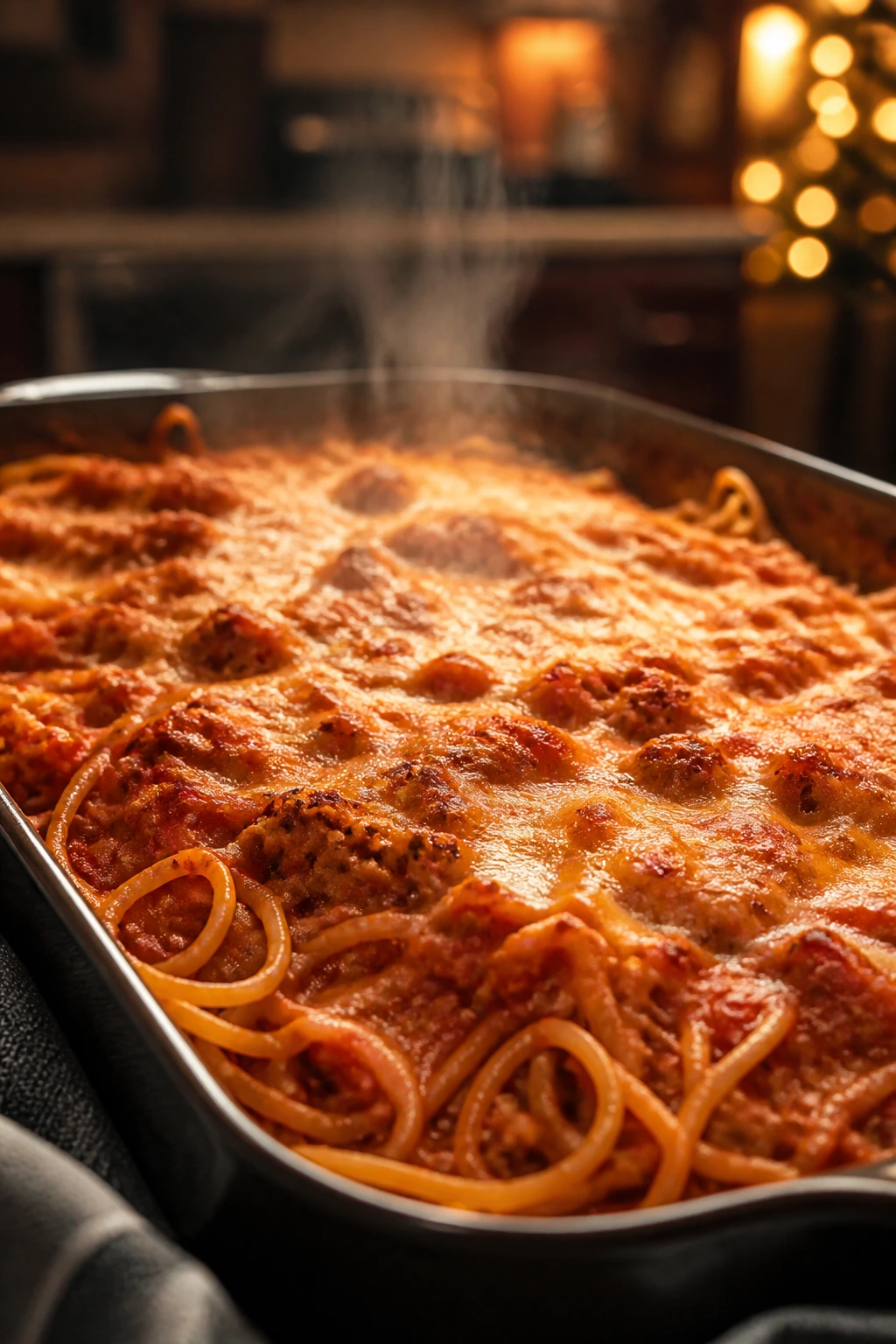
The best weekend family dinners do one thing well: they make the table easier to gather around. Not fancy. Not showy. Just hot food with the right texture, the right amount of sauce, and enough familiarity that kids stop negotiating and start eating.
That’s the real win here. A pan of baked spaghetti, a tray of chicken tenders, or a skillet of taco pasta can carry a whole evening if the flavors are clear and the cooking is steady. Keep the bread crisp, the cheese melted, and the sauces where they belong, and you’ll have the sort of meal people ask for again before the dishes are washed.