



A pound of beef can look skinny on paper and generous on the plate. The trick is not to bully it into becoming something else. The trick is to give it a few smart partners — breadcrumbs, oats, rice, beans, mushrooms, grated vegetables, a little cheese, maybe a panade if you’re feeling old-school — and let those ingredients carry the weight while the beef brings the flavor.
The worst meatballs I’ve eaten had the same problem: too much hand pressure, too much heat, not enough moisture, and no real plan for the binder. They came out dense enough to bounce. The good ones are a different animal. They’re tender in the middle, browned where they should be browned, and sturdy enough to survive a simmer in sauce or a tumble through gravy without turning grainy.
That’s what this collection is built around. Each batch starts with one pound of ground beef and stretches it in a different direction, so you can make a full dinner without feeling like you’re making a compromise. Some lean Italian and saucy, some go smoky or tangy, and a few taste like they wandered in from another kitchen entirely. Same amount of beef. Very different plates.
Why You’ll Love This Collection
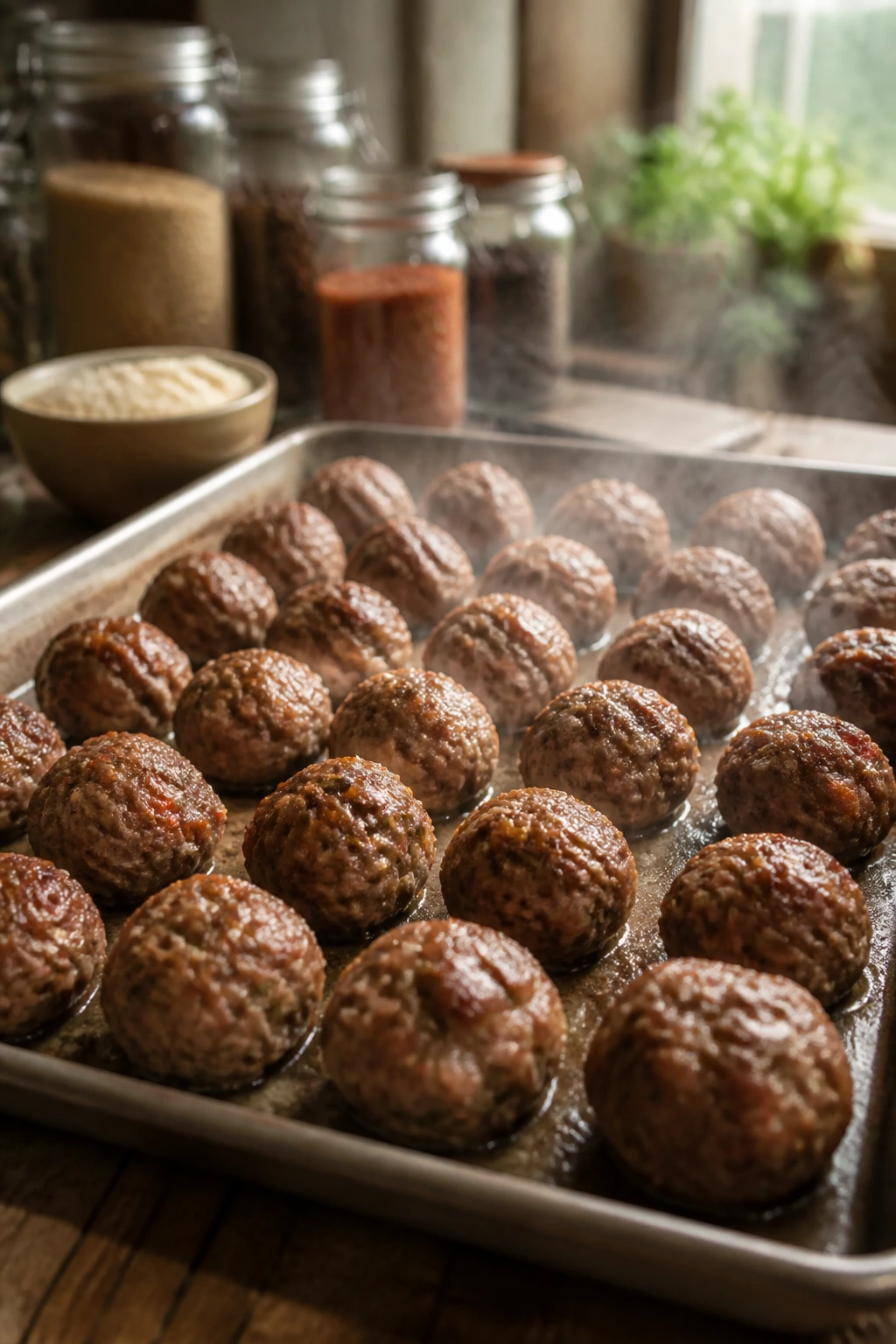
- One pound goes farther: Every recipe starts with a single pound of beef and a smart stretcher, so you get a full tray of meatballs without buying extra meat.
- Pantry-first cooking: Breadcrumbs, oats, rice, beans, crackers, and canned sauces do a lot of the work here, which makes these recipes useful when the fridge looks sparse.
- Different moods, same base: You can go Italian, Greek, Korean, Swedish, BBQ, curry, or Salisbury-style without changing the way you buy beef.
- Better texture, not just bigger yield: The fillers here aren’t padding. They help keep the meatballs tender, hold moisture, and stop that tight, dry chew that ruins a good batch.
- Freezer-friendly payoff: Most of these freeze well either raw or cooked, so one shaping session can quietly buy you a few future dinners.
- Easy to scale: Small meatballs for pasta, medium ones for bowls, bigger ones for subs — the same basic method handles all three without fuss.
1. Classic Italian Breadcrumb Meatballs
These are the meatballs that smell like dinner before they even hit the sauce. The breadcrumb panade keeps the crumb soft, the Parmesan brings salt and depth, and the garlic does that familiar Italian-kitchen thing where it makes the whole room feel warmer. They’re the batch I make when I want beef to taste like itself, only fuller and better cushioned.
The beauty of this version is that it stretches a pound of beef without making the mixture feel crowded. Milk-soaked crumbs melt into the meat, which means the finished meatballs stay tender after a bake and a short simmer in marinara. That’s the whole point: the meat stays flavorful, but the texture gets gentler.
Why It Works:
A soaked breadcrumb mix keeps the lean protein from squeezing out all its juice in the oven. Parmesan sharpens the flavor so you do not need a long ingredient list to get a satisfying result. Baking first gives you color without the mess of pan-frying every batch. Then a short simmer in sauce softens the edges in the best way.
Key Ingredients:
- 1 lb ground beef, preferably 85/15 — enough fat to stay juicy after baking.
- 1 cup fresh breadcrumbs — they soak up milk and make the meatballs tender.
- 1/3 cup whole milk — turns the breadcrumbs into a soft panade.
- 1 large egg — helps the mixture hold its shape.
- 1/4 cup finely grated Parmesan — adds salt and a nutty edge.
- 2 tbsp chopped fresh parsley — keeps the flavor bright.
- 2 garlic cloves, minced — enough to smell it without taking over.
- 1 tsp kosher salt — start here and taste the sauce after.
- 1/2 tsp black pepper — enough bite to keep the beef from tasting flat.
- 2 cups marinara sauce — use your favorite jarred sauce or homemade.
Quick Steps:
- Preheat the oven to 400°F and line a rimmed baking sheet with parchment.
- Stir the breadcrumbs and milk together in a large bowl; let them sit for 5 minutes until the crumbs look soft and damp.
- Add the beef, egg, Parmesan, parsley, garlic, salt, and pepper. Mix with your hands only until combined. Do not knead the mixture like bread dough.
- Shape the mixture into 18 to 20 meatballs, about 1 1/2 inches wide, and set them on the baking sheet with a little space between each one.
- Bake for 14 to 16 minutes, until browned at the edges and registering 160°F in the center.
- Warm the marinara in a skillet, add the meatballs, and simmer for 8 to 10 minutes so they soak up sauce without turning tough.
Equipment for This Recipe:
- Large mixing bowl
- Rimmed baking sheet
- Parchment paper
- 1 1/2-tablespoon scoop or small spoon
- Large skillet with lid or deep saucepan
How to Serve This Dish:
Pile these over spaghetti, tuck them into toasted hoagie rolls, or set them on creamy polenta if you want the sauce to feel a little more luxurious. A shower of extra Parmesan and chopped basil makes the pan look finished without much effort.
Pro Tips for This Recipe:
- If the mixture feels loose, chill it for 10 minutes before shaping. Cold beef holds together better.
- Grate the Parmesan finely. Big shreds do not melt as gracefully.
- Spoon a little marinara under the meatballs, not only over them. That keeps the bottoms from drying out.
- For a softer texture, bake first and simmer gently. A rolling boil makes the meatballs tighten up.
Variations on This Dish:
- Spicy Sunday Sauce: Add 1/2 teaspoon red pepper flakes and a pinch of fennel seed to the mix for more heat and a deeper sausage-like flavor.
- Mozzarella Center: Press a small cube of low-moisture mozzarella into the middle of each meatball for a stretchy core.
- Gluten-Free Swap: Use certified gluten-free breadcrumbs in the same amount. The texture stays close to the original.
Common Mistakes to Avoid with This Dish:
- Using dry breadcrumbs straight from the container: The meatballs can turn chalky. Soak the crumbs in milk first.
- Overmixing the meat: The finished texture goes dense and springy. Stop when the ingredients disappear into each other.
- Boiling them hard in sauce: The edges toughen. Keep the simmer gentle and let the sauce do the rest.
2. Swedish Meatballs in Cream Gravy
These smell like butter, allspice, and onions coming together in a skillet. The first bite should be soft and a little savory-sweet, not loud, not flat. That’s what makes Swedish meatballs work so well when you’re stretching a pound of beef: the gravy carries the meal, and the spices make the meat taste bigger than it is.
I like this version because it treats the breadcrumbs like part of the texture, not a secret filler. The meatballs get browned first, then bathed in a cream gravy that clings to mashed potatoes like it was born there. It’s rich, yes, but not heavy in the way a bad cream sauce can be.
Why It Works:
Breadcrumbs soaked in milk keep the mixture soft and help the meatballs stay tender during browning. Allspice and nutmeg give that classic Nordic warmth without making the dish taste like dessert. The gravy pulls in the browned bits from the pan, which is where the flavor hides.
Key Ingredients:
- 1 lb ground beef — 85/15 or 80/20 works best here.
- 1/2 cup fine breadcrumbs — they disappear into the mix and help stretch the beef.
- 1/2 cup whole milk — softens the crumbs into a panade.
- 1 small onion, grated — melts into the meat instead of poking out in chunks.
- 1 large egg — binds everything together.
- 1 tsp kosher salt — needed to keep the spices from getting lost.
- 1/2 tsp ground allspice — the flavor that says “Swedish” immediately.
- 1/4 tsp ground nutmeg — small amount, big effect.
- 1/4 tsp white pepper — gives a cleaner heat than black pepper.
- 2 tbsp butter — for browning and for the gravy.
- For the gravy: 2 tbsp butter, 2 tbsp flour, 1 1/2 cups beef broth, 1/2 cup sour cream, 1 tsp Dijon mustard.
Quick Steps:
- Soak the breadcrumbs in milk for 5 minutes until the mixture thickens.
- Add the beef, grated onion, egg, salt, allspice, nutmeg, and white pepper. Mix gently until just combined.
- Shape the mixture into 20 small meatballs. Smaller is better here; they cook evenly and soak up gravy well.
- Brown the meatballs in butter over medium heat for 6 to 8 minutes, turning so they color on several sides. Transfer to a plate.
- In the same skillet, whisk the flour into the butter and browned bits, then slowly add the broth. Simmer until the gravy looks smooth and lightly thickened.
- Take the pan off the heat, stir in the sour cream and Dijon, then return the meatballs to warm through for 3 to 5 minutes. Do not boil after adding sour cream.
Equipment for This Recipe:
- Mixing bowl
- Box grater
- Large skillet
- Wooden spoon or silicone spatula
- Small whisk
How to Serve This Dish:
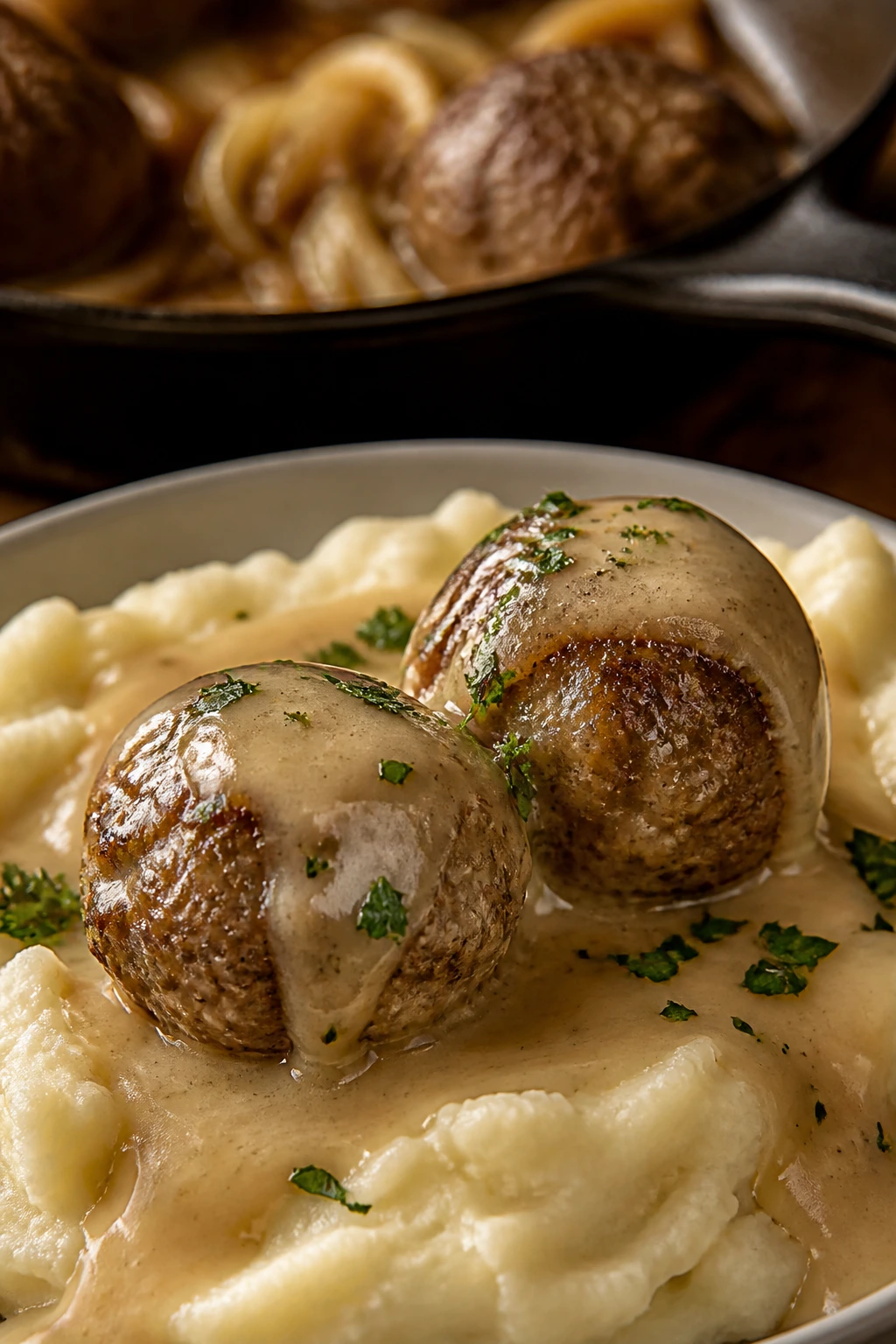
Mashed potatoes are the obvious partner, and they’re the right one. Egg noodles work too, especially if you want the gravy to spread out a little. Add lingonberry jam if you have it; a spoonful on the side cuts through the creaminess better than most people expect.
Pro Tips for This Recipe:
- Grate the onion fine. Big pieces can split the meatballs when they cook.
- Keep the meatballs on the smaller side, about 1 1/4 inches wide, so the center cooks before the crust gets too dark.
- Stir the sour cream in off the heat. Heat it too hard and the gravy can break.
- Taste the gravy before serving. A pinch more salt or a little extra Dijon can wake it up fast.
Variations on This Dish:
- Mushroom-First Version: Sauté 1 cup finely chopped mushrooms with the onion for a deeper, earthier gravy.
- Lighter Cream Sauce: Swap half the sour cream for plain Greek yogurt and add it off the heat.
- Pork-Free Party Tray: Keep the same spice mix, but shape the meatballs even smaller for appetizers.
Common Mistakes to Avoid with This Dish:
- Adding sour cream while the pan is bubbling: The gravy can curdle. Lower the heat first.
- Too much nutmeg: The spice should whisper, not announce itself.
- Crowding the skillet: Meatballs need room to brown. If they steam, the flavor goes flat.
3. Greek Lemon-Oregano Meatballs
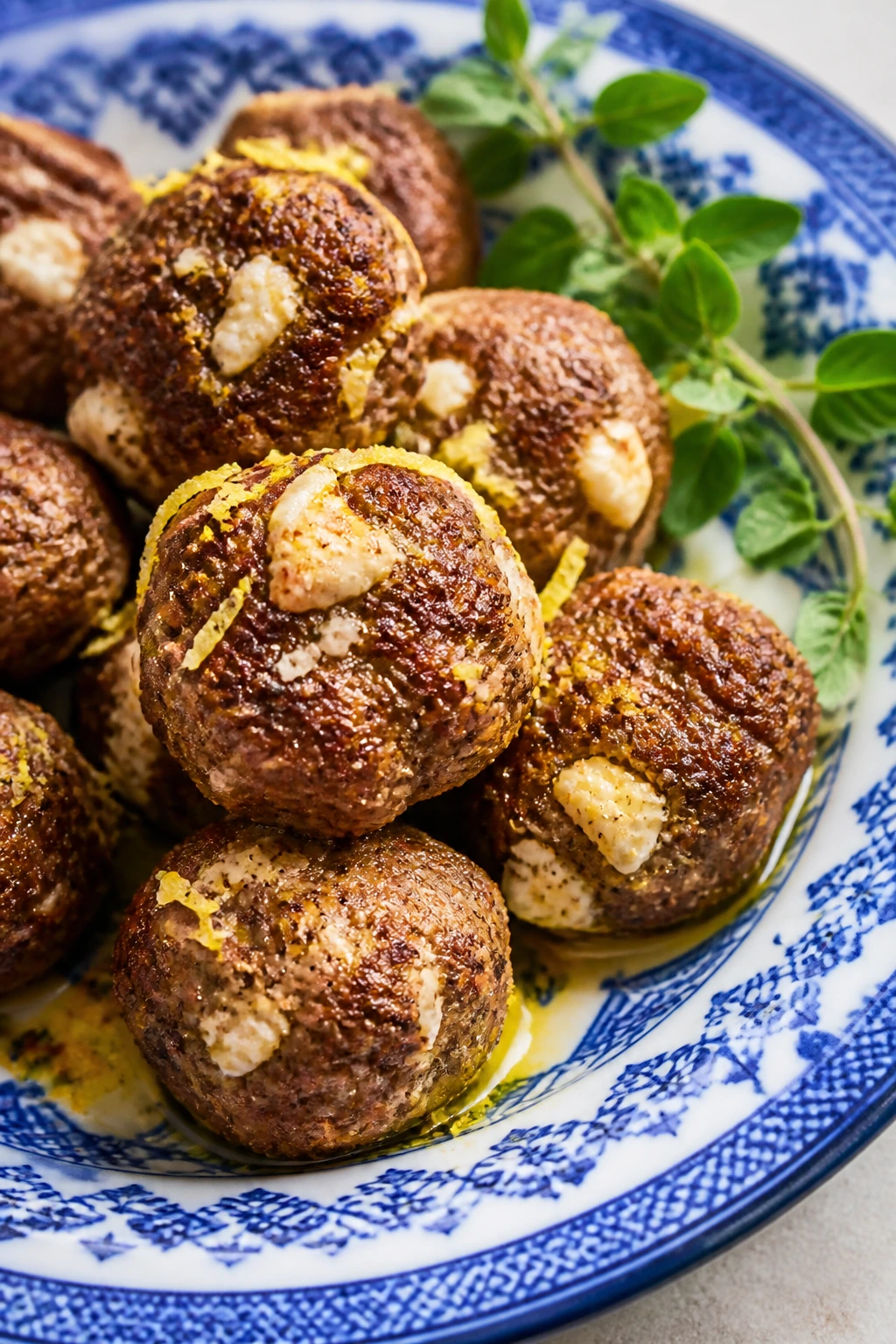
Do you want a meatball that tastes sharp, salty, and sunny without needing a complicated sauce? This is the one. Feta and lemon zest wake up the beef, oregano gives the batch that unmistakable Greek pantry smell, and a chilled yogurt sauce on the side makes the whole plate feel brighter.
These meatballs stretch beautifully because the panko and milk soften the mixture before it goes into the oven. The feta adds richness, but not so much that the beef disappears. What you end up with is a batch that tastes balanced, not stuffed.
Why It Works:
Panko brings lightness and keeps the texture from turning compact. Feta adds salt in little pockets, which means every bite has more flavor than a plain beef meatball would. Baking at a higher heat gives the surface a little color without drying out the middle.
Key Ingredients:
- 1 lb ground beef — not too lean, or the feta and lemon will taste sharp without enough body.
- 3/4 cup panko breadcrumbs — light enough to keep the crumb open.
- 1/4 cup whole milk — softens the panko.
- 1 large egg — holds the mixture together.
- 1/3 cup crumbled feta — use a block if possible and crumble it yourself.
- 2 tbsp chopped dill or parsley — either herb works here.
- 1 tsp dried oregano — the backbone of the flavor.
- Zest of 1 lemon — brightens the whole mix.
- 2 garlic cloves, minced — enough to make the meatballs smell savory.
- 1 tsp kosher salt — go lighter if your feta is very salty.
- 1/2 tsp black pepper — for a little heat.
- For the yogurt sauce: 1 cup Greek yogurt, 1/2 cup grated cucumber squeezed dry, 1 tbsp lemon juice, pinch of salt.
Quick Steps:
- Preheat the oven to 425°F and line a sheet pan with parchment.
- Mix the panko and milk in a bowl; let it sit for 5 minutes.
- Add the beef, egg, feta, herbs, oregano, lemon zest, garlic, salt, and pepper. Mix until the ingredients are evenly distributed.
- Shape into 18 meatballs and place them on the sheet pan.
- Bake for 12 to 14 minutes, until lightly browned and at 160°F in the center.
- Stir together the yogurt sauce ingredients and chill it while the meatballs finish.
Equipment for This Recipe:
- Mixing bowl
- Rimmed baking sheet
- Parchment paper
- Microplane or fine grater for the lemon zest
- Small bowl for the yogurt sauce
How to Serve This Dish:
Serve these in warm pita with sliced tomato, cucumber, and a spoonful of the yogurt sauce. They also work well over rice with a handful of chopped herbs. The plate wants something cool and crisp nearby, not more heaviness.
Pro Tips for This Recipe:
- Squeeze the cucumber dry. Watery sauce weakens the whole plate.
- If the feta is very salty, cut the added salt back to 3/4 teaspoon.
- Chill the mixture for 10 minutes if it feels soft; feta can make it loose.
- A little extra lemon zest on top at the end gives the finished plate a fresh snap.
Variations on This Dish:
- Minted Greek Version: Swap the dill for chopped mint and serve with tomato wedges.
- Lamb Blend: Use half lamb and half beef if you want a richer, more classic souvlaki-style flavor.
- Rice Bowl Route: Serve the meatballs over rice with shredded lettuce and a lemony olive oil drizzle instead of pita.
Common Mistakes to Avoid with This Dish:
- Using feta like it’s plain cheese: It’s salty. Add salt carefully.
- Skipping the squeeze on the cucumber: The sauce turns thin fast.
- Overbaking: These are small meatballs. A few extra minutes can take them from tender to dry.
4. Korean-Style Gochujang Meatballs
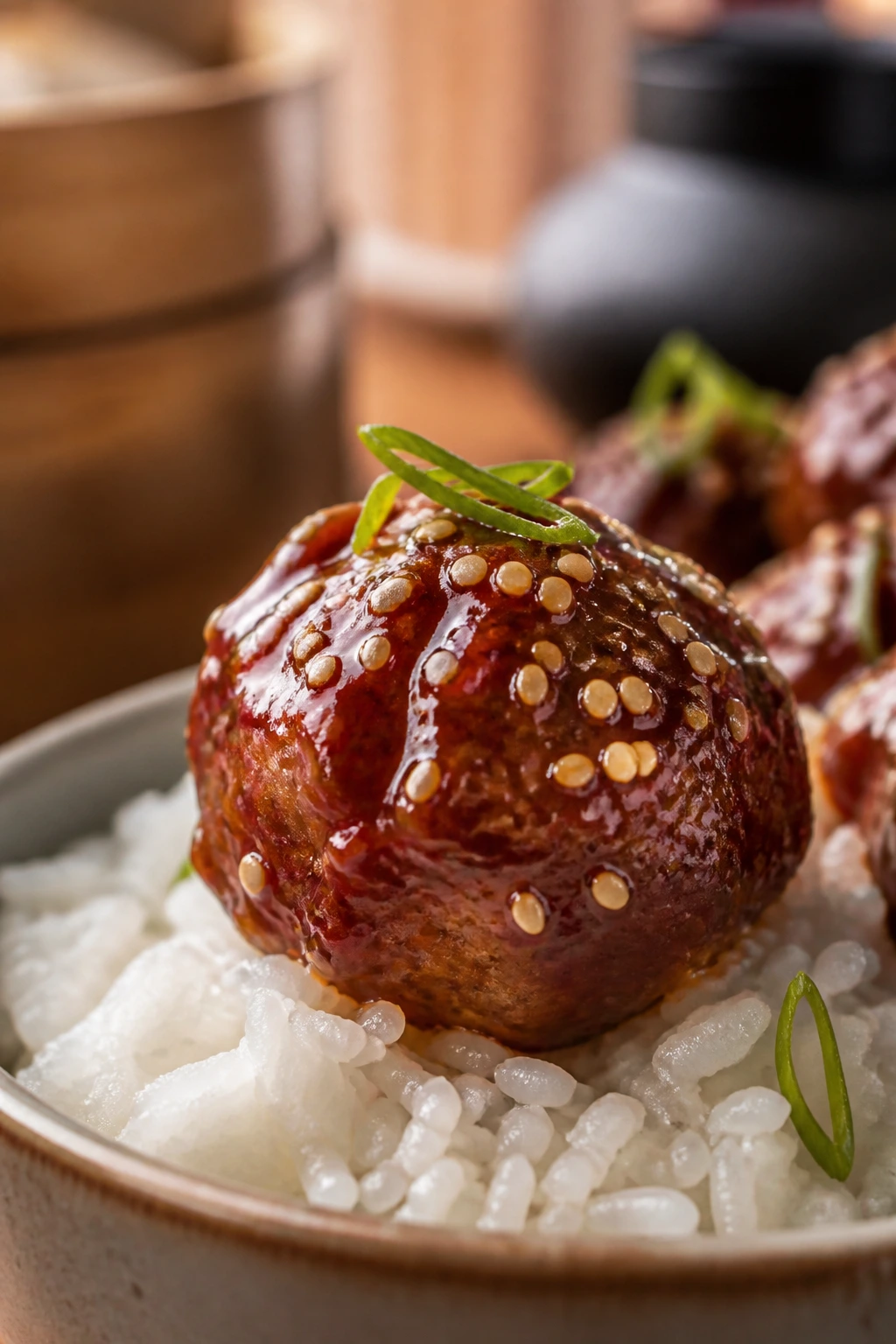
These have a sticky, glossy finish that clings to each meatball instead of puddling at the bottom of the bowl. Grated pear gives the mix a little sweetness and moisture, while gochujang brings heat that builds slowly instead of punching you in the face. They’re the sort of meatballs that disappear fast over rice.
What makes this version stretch so well is the way fruit and panko work together. The pear keeps the beef from tightening up, and the glaze makes a pound feel like a bigger, more complete meal. It’s a smart trade: a little beef, a little sweetness, a lot of flavor.
Why It Works:
Gochujang is thick enough to cling once it reduces with honey and soy. The grated pear melts into the mixture and helps keep the crumb tender. Sesame oil and ginger give the beef a clean, savory edge that holds up even after baking.
Key Ingredients:
- 1 lb ground beef — 85/15 works nicely.
- 3/4 cup panko breadcrumbs — keeps the meatballs from feeling dense.
- 1/4 cup grated Asian pear or apple — adds moisture and gentle sweetness.
- 1 large egg — the binder.
- 2 tbsp minced scallion — gives the mix freshness.
- 1 tbsp soy sauce — seasons the meatballs from the inside.
- 1 tsp sesame oil — a little goes a long way.
- 1 tsp grated fresh ginger — keeps the flavor sharp and clean.
- 2 garlic cloves, minced — savory depth.
- 1/2 tsp kosher salt — because soy sauce and gochujang both bring salt.
- For the glaze: 2 tbsp gochujang, 2 tbsp honey, 2 tbsp soy sauce, 1 tbsp rice vinegar, 2 tbsp water.
Quick Steps:
- Preheat the oven to 400°F and line a baking sheet with parchment.
- Combine the beef, panko, pear, egg, scallion, soy sauce, sesame oil, ginger, garlic, and salt in a bowl.
- Shape into 18 to 20 meatballs, about 1 1/2 inches wide.
- Bake for 12 to 14 minutes, until browned and at 160°F.
- While they bake, simmer the glaze ingredients in a small saucepan for 2 to 3 minutes, just until glossy and slightly thick.
- Toss the hot meatballs in the glaze and serve right away.
Equipment for This Recipe:
- Mixing bowl
- Rimmed baking sheet
- Small saucepan
- Spoon or silicone spatula
- Microplane or fine grater for the ginger
How to Serve This Dish:
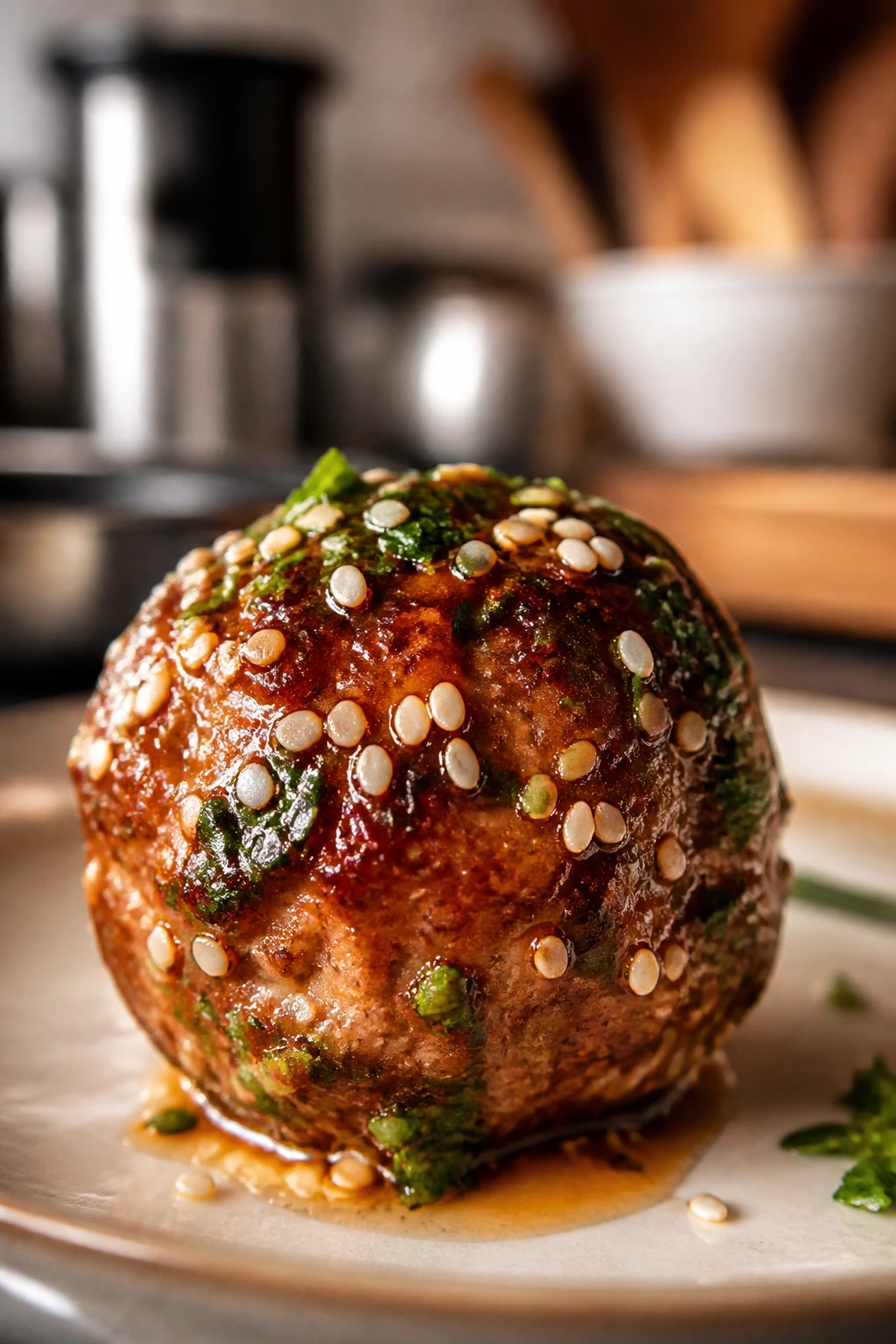
These belong over steamed rice with sliced cucumbers or quick-pickled carrots. If you want a sharper plate, add sesame seeds and thin-sliced scallions on top. They’re also good tucked into lettuce cups, where the glaze drips a little and nobody complains.
Pro Tips for This Recipe:
- Use pear if you can find it; apple works, but pear tastes cleaner here.
- Taste the glaze before tossing. Some gochujang brands are hotter and saltier than others.
- Don’t overreduce the glaze. It should coat, not turn into candy.
- A sprinkle of toasted sesame seeds at the end gives the dish a nuttier finish.
Variations on This Dish:
- Extra-Spicy Batch: Add 1 teaspoon chili flakes to the glaze for a sharper burn.
- Pineapple Glaze: Swap the pear for pineapple and use pineapple juice in place of half the water.
- Meal-Prep Bowls: Pack the meatballs with rice, cabbage, and cucumbers for lunches that hold up well.
Common Mistakes to Avoid with This Dish:
- Using too much pear: The mixture can get soft. Stick to the amount listed.
- Pouring the glaze on too soon: It can thin out and slide off. Toss after it reduces.
- Baking until the meatballs are dark: The glaze gives color later. The oven should stop at browned, not burnt.
5. Taco Meatballs with Corn and Black Beans
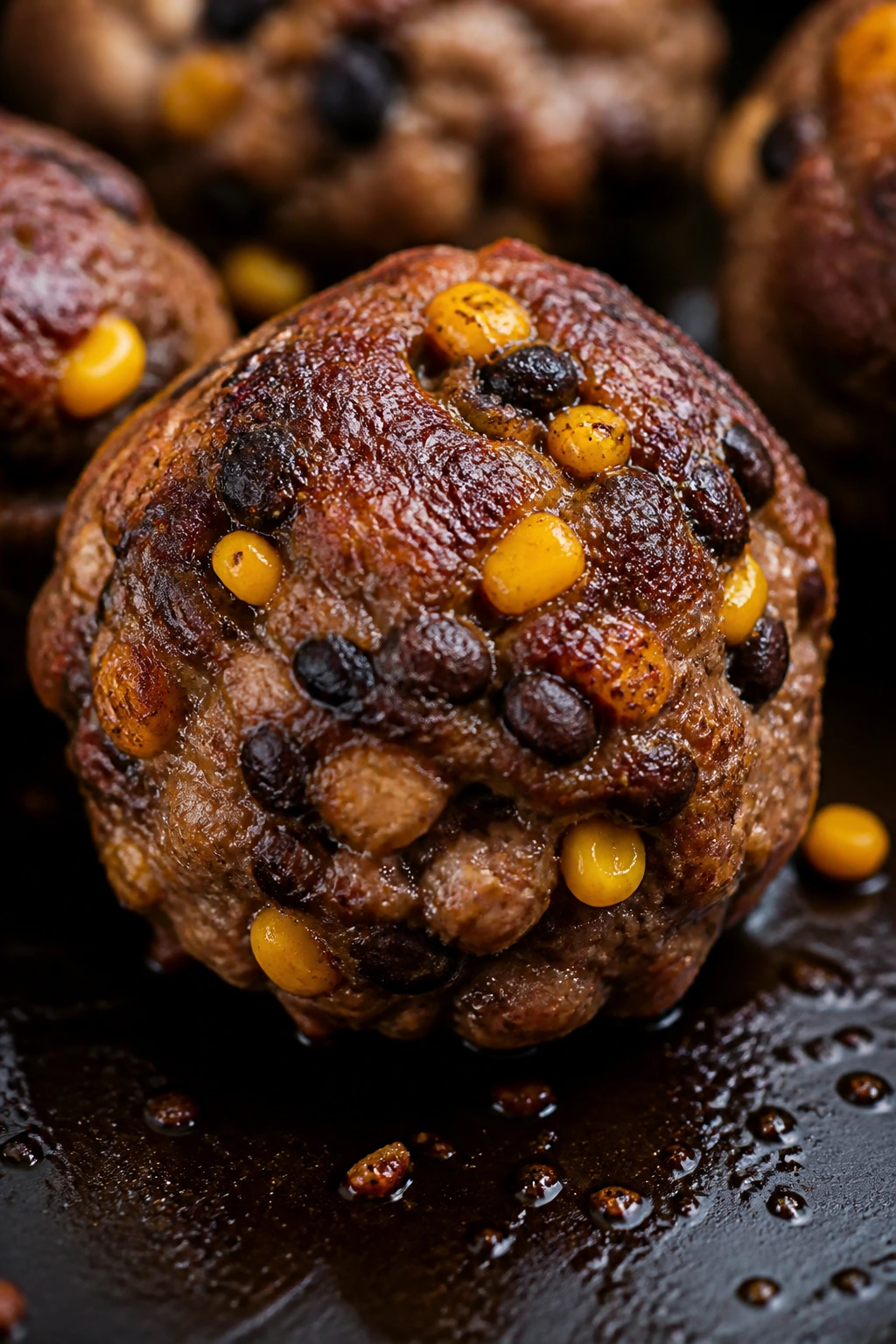
These smell like taco night and look like they belong in a skillet with salsa nearby. Black beans and corn stretch the beef in a way that still feels familiar, not fussy. You get soft centers, little pops of corn, and enough taco seasoning to make the whole batch taste like it knows exactly where it came from.
I like this one because it’s honest about being a stretch recipe. The beans are visible. The corn is visible. Nothing is trying to pretend it’s not there, and that’s why the finished meatballs work. They’re hearty enough for bowls and casual enough for taco shells.
Why It Works:
Mashed black beans add body and a soft, almost creamy texture inside the meatball. Crushed tortilla chips bring salt and crunch, while corn keeps the bite from feeling too uniform. The taco seasoning does the job the way it should: boldly, but not so much that the beef disappears.
Key Ingredients:
- 1 lb ground beef — 85/15 is a good middle ground.
- 1 cup black beans, rinsed and lightly mashed — the main stretcher.
- 1/2 cup crushed tortilla chips — helps bind and adds seasoning.
- 1/2 cup corn kernels — frozen, canned, or fresh all work.
- 1 large egg — keeps the mix together.
- 2 tbsp finely minced onion — melts into the meat.
- 1 tbsp taco seasoning — the flavor anchor.
- 1 tsp ground cumin — adds warmth.
- 1 tsp kosher salt — adjust if your chips or seasoning are salty.
- 1/4 cup salsa for serving — optional, but useful.
Quick Steps:
- Preheat the oven to 425°F and line a baking sheet with parchment.
- Mash the black beans with a fork until about half of them are broken down.
- Mix the beef, beans, tortilla chips, corn, egg, onion, taco seasoning, cumin, and salt in a bowl.
- Shape into 18 meatballs and set them on the sheet pan.
- Bake for 14 to 15 minutes, until the edges brown and the center hits 160°F.
- Spoon salsa over the top or serve the meatballs in taco shells, rice bowls, or burrito bowls.
Equipment for This Recipe:
- Mixing bowl
- Fork for mashing beans
- Rimmed baking sheet
- Parchment paper
- Small scoop or spoon
How to Serve This Dish:
These are good in warm tortillas with shredded lettuce, diced tomato, and a little shredded cheese. They also work as rice-bowl meatballs with avocado and sour cream. If you want the cleanest plate, keep the salsa on the side and let people dunk.
Pro Tips for This Recipe:
- Drain the beans well. Extra liquid makes the mix sticky and hard to shape.
- Crush the chips fairly fine. Big shards can poke holes in the meatballs.
- If the mixture feels loose, chill it for 10 minutes before rolling.
- Use fresh salsa for serving if you want brighter flavor than canned taco sauce gives.
Variations on This Dish:
- Enchilada Tray Version: Bake the meatballs in enchilada sauce and top with cheese for the last few minutes.
- Mild Kid Batch: Cut the taco seasoning in half and serve with plain sour cream.
- Chipotle Kick: Add a spoonful of minced chipotle in adobo to the mix if you want smoke and heat.
Common Mistakes to Avoid with This Dish:
- Leaving too much moisture in the beans: The meatballs can slump. Drain and mash well.
- Using chips that are too thick: They don’t blend in as well. Crush them fine.
- Adding salsa to the mixture: It loosens everything. Save it for serving.
6. Mushroom Duxelles Beef Meatballs
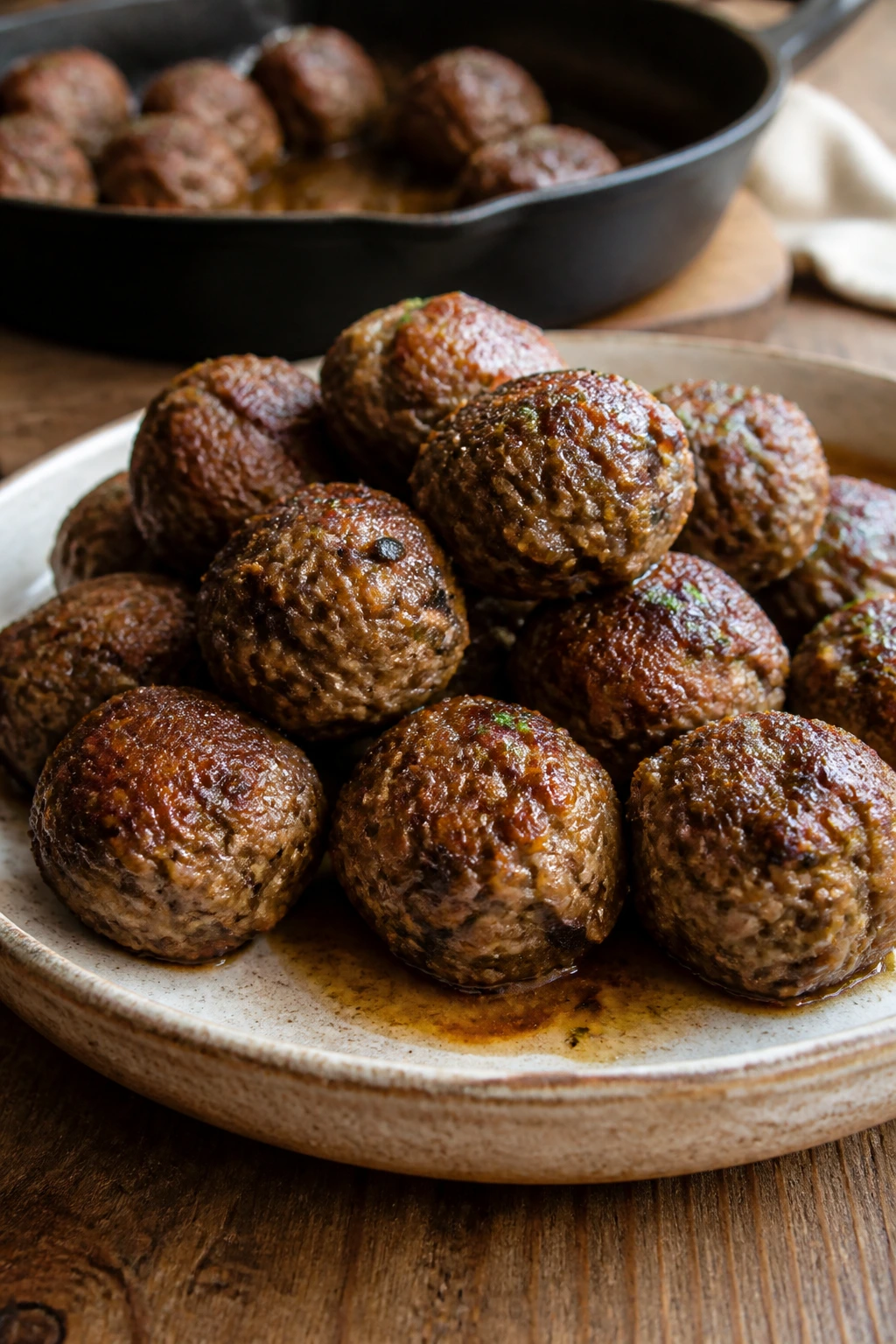
These are the meatballs for people who like savory food that tastes like it paid attention. The mushrooms get cooked down until they almost vanish, which is the whole trick. What’s left is a deep, almost meaty background flavor that makes one pound of beef behave like more than one pound of beef.
I tend to make this version when I want the plate to feel a little more grown-up without getting precious. The mushrooms stretch the mixture and deepen the sauce, and the beef stays front and center. It’s the kind of recipe that quietly outperforms its ingredient list.
Why It Works:
Cooking the mushrooms before they go into the meatballs drives off water, so the finished batch isn’t soggy. That concentrated mushroom flavor gives the beef more depth without making the texture heavy. A quick pan sauce catches the browned bits and turns them into something worth spooning over noodles.
Key Ingredients:
- 1 lb ground beef — 85/15 keeps the meatballs moist.
- 8 oz mushrooms, finely chopped — cremini are a good pick.
- 1 small onion, finely minced — adds sweetness once it cooks down.
- 3/4 cup breadcrumbs — helps the mixture hold together.
- 1 large egg — binds the batch.
- 1 tbsp Worcestershire sauce — boosts the savory side.
- 1 tsp dried thyme — works naturally with mushrooms.
- 1 tsp kosher salt — season enough for the mushrooms, too.
- 1/2 tsp black pepper — gives the mix a little bite.
- 1 tbsp butter — for cooking the mushroom base.
- For the pan sauce: 1 cup beef broth, 1 tsp Dijon mustard, 1 tbsp butter.
Quick Steps:
- Cook the mushrooms and onion in butter over medium-high heat for 8 to 10 minutes, stirring often, until the pan is dry and the mixture looks browned. Cool it for a few minutes.
- Mix the cooled mushroom mixture with the beef, breadcrumbs, egg, Worcestershire, thyme, salt, and pepper.
- Shape into 18 meatballs and place them on a lined baking sheet.
- Bake at 400°F for 14 minutes, until browned and cooked through.
- Warm the beef broth and Dijon in a skillet, whisk in the butter, and simmer for 2 to 3 minutes until lightly glossy.
- Add the meatballs and spoon the sauce over them for 2 to 4 minutes before serving.
Equipment for This Recipe:
- Large skillet
- Mixing bowl
- Rimmed baking sheet
- Parchment paper
- Wooden spoon or spatula
How to Serve This Dish:
They’re excellent over egg noodles, mashed potatoes, or a buttered slice of toast if you want the sauce to go somewhere quickly. A simple green salad on the side keeps the plate from feeling too rich. If you’re feeling lazy, no judgment — the sauce still does the heavy lifting.
Pro Tips for This Recipe:
- Cook the mushrooms until the pan looks nearly dry. Water left behind is the enemy here.
- Let the mushroom mix cool before adding it to the beef. Hot filling can start cooking the meat early.
- Use cremini or baby bella mushrooms if you can; they taste deeper than plain white buttons.
- The Dijon in the sauce should be subtle, not sharp. Start with 1 teaspoon.
Variations on This Dish:
- Garlic-Thyme Roast: Add an extra garlic clove and finish with chopped parsley.
- Red Wine Skillet: Replace half the broth with red wine for a darker, richer sauce.
- Cheese-Topped Version: Scatter a little grated Gruyère over the baked meatballs and broil briefly.
Common Mistakes to Avoid with This Dish:
- Skipping the mushroom cookdown: The mix turns wet and loose.
- Adding the meat to a hot mushroom filling: It can smear the fat and make the texture odd.
- Using too much sauce reduction: You want a spoonable finish, not glue.
7. Oatmeal Onion Gravy Meatballs
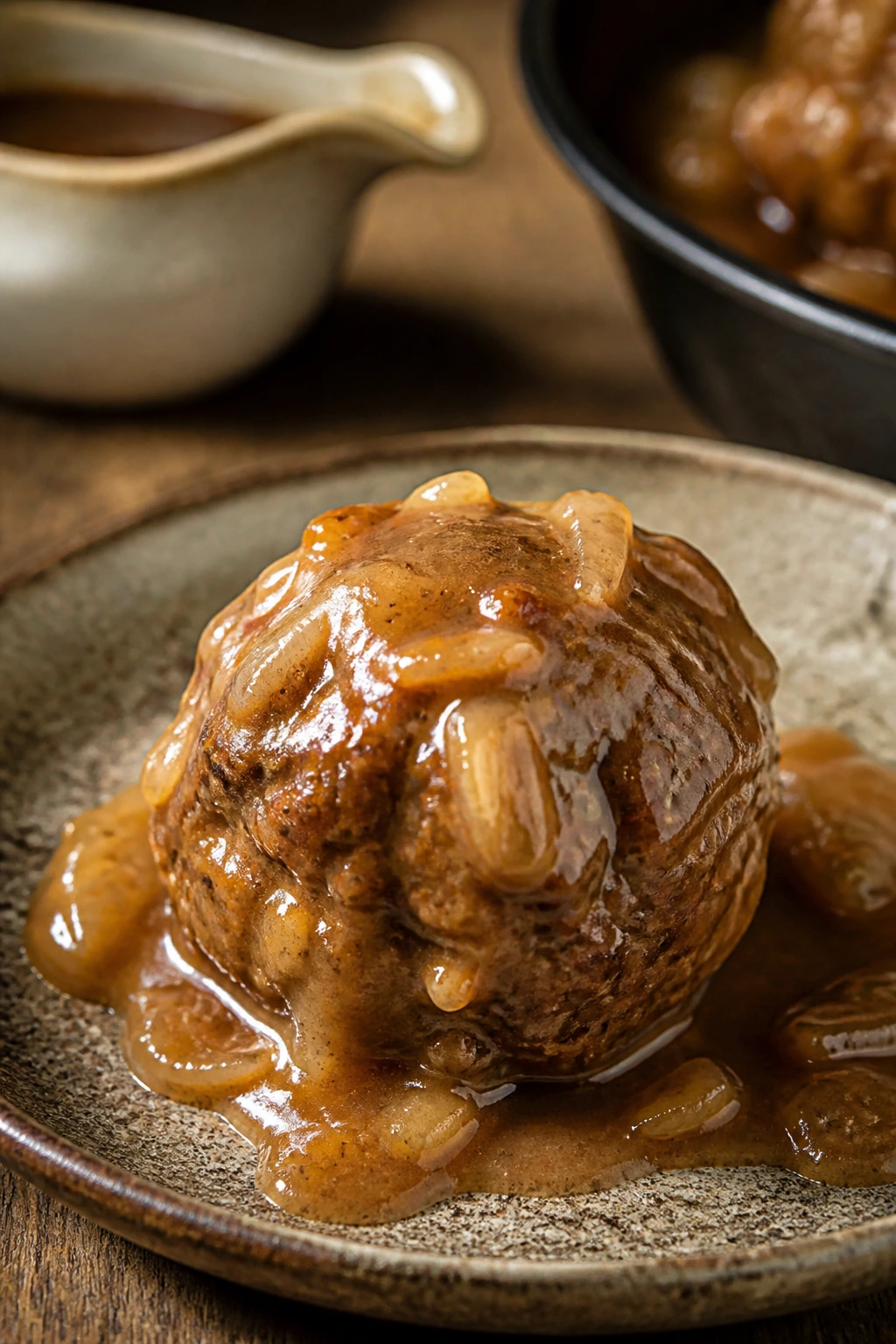
This is the budget meatball that still tastes like somebody cared. Quick oats give the beef enough structure to stretch, the onion melts into the mix, and the gravy turns the whole thing into a proper dinner with very little drama. If you grew up eating meatballs or Salisbury steak with gravy, this will hit a familiar note.
The texture is a little different from breadcrumb versions — slightly earthier, a little more substantial, and less airy. That’s not a flaw. It’s why they stand up so well to gravy and mashed potatoes.
Why It Works:
Quick oats soak up liquid fast, so the mixture feels cohesive without getting pasty. A grated onion adds moisture and sweetness, which keeps the oats from tasting dry. The gravy turns the starch on the outside into a silky coating instead of a heavy crust.
Key Ingredients:
- 1 lb ground beef — 85/15 or 80/20.
- 1/2 cup quick oats — they soften faster than old-fashioned oats.
- 1/3 cup milk — helps the oats hydrate.
- 1 small onion, grated — the flavor stays mellow after cooking.
- 1 large egg — holds the meatballs together.
- 1 tsp onion powder — gives the meat a stronger savory note.
- 1 tsp kosher salt — needed for balance.
- 1/2 tsp black pepper — enough to keep the flavor awake.
- For the gravy: 2 cups beef broth, 2 tbsp flour, 1 tbsp butter, 1 tsp Worcestershire sauce.
Quick Steps:
- Stir the oats and milk together and let them stand for 5 minutes.
- Add the beef, grated onion, egg, onion powder, salt, and pepper. Mix until just combined.
- Shape into 16 to 18 meatballs.
- Brown the meatballs in a skillet over medium heat for about 3 minutes per side.
- Remove the meatballs, melt the butter in the skillet, whisk in the flour, and cook for 1 minute.
- Slowly add the broth and Worcestershire, simmer until thickened, then return the meatballs and cook for 8 to 10 minutes.
Equipment for This Recipe:
- Mixing bowl
- Box grater
- Large skillet with lid
- Whisk
- Spoon for turning meatballs
How to Serve This Dish:
Mashed potatoes are the obvious move, but buttered toast or egg noodles work too if that’s what’s in the kitchen. Spoon plenty of gravy over the top. These meatballs want a soft landing.
Pro Tips for This Recipe:
- Use quick oats, not thick rolled oats. The larger flakes stay chewy.
- Don’t skip the flour-cooking step in the gravy. Raw flour tastes dusty.
- Keep the meatballs medium-small so they finish before the outside gets too dark.
- A splash of extra broth can loosen gravy that tightens as it sits.
Variations on This Dish:
- Mushroom Gravy: Add 1 cup sliced mushrooms after the butter melts.
- Smoked Paprika Batch: Add 1/2 teaspoon smoked paprika to the meat for a little warmth.
- Creamier Finish: Stir in 2 tablespoons sour cream off the heat for a richer sauce.
Common Mistakes to Avoid with This Dish:
- Using old-fashioned oats whole: They don’t soften enough.
- Letting the gravy boil hard: It can get lumpy or too thick.
- Skipping the browning step: The finished dish loses a lot of flavor if everything just poaches.
8. Tomato-Rice Meatballs
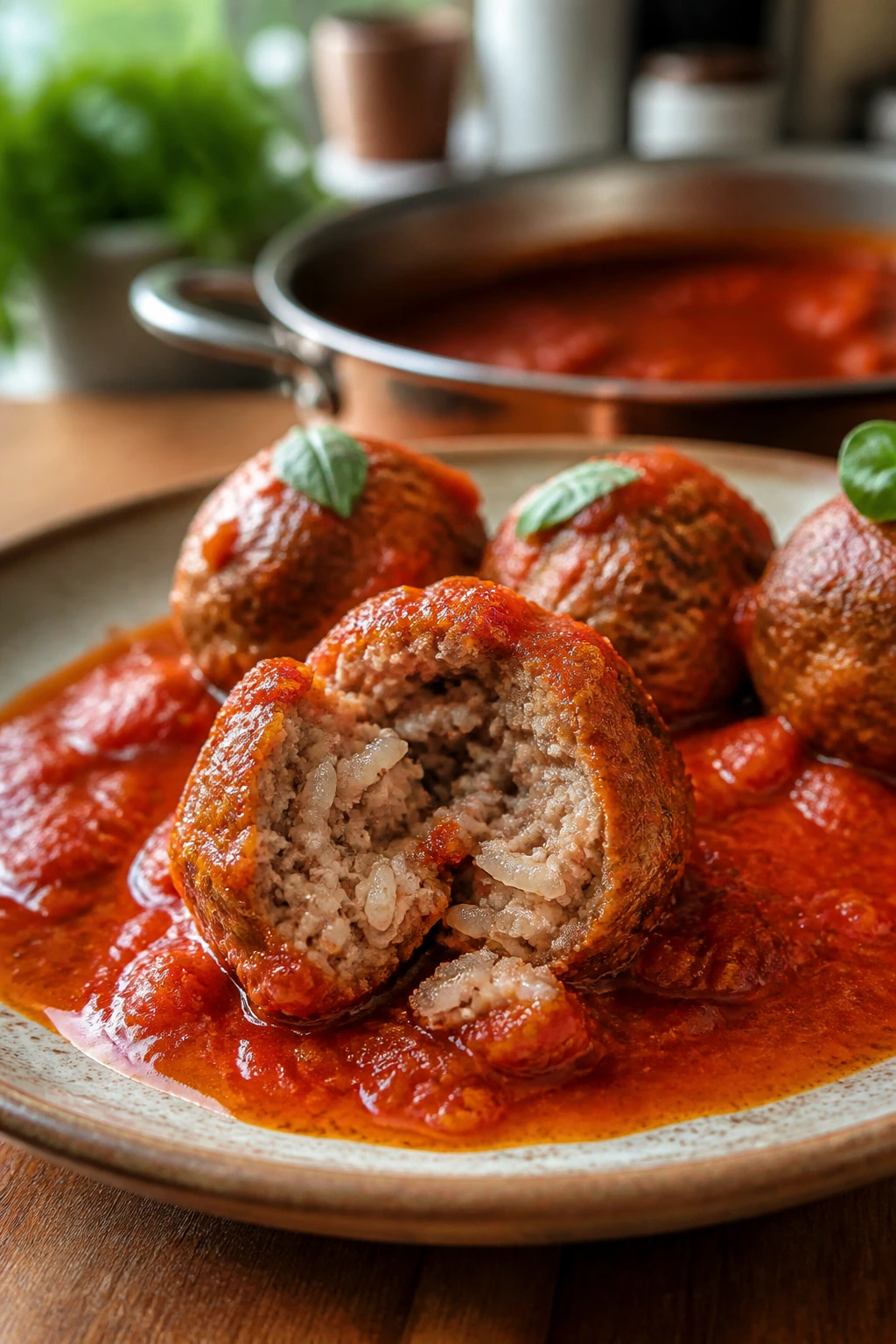
Leftover rice is the quiet hero here. It stretches the beef without making the meatballs taste bready, and it gives the centers a soft, almost fluffy bite once they simmer in tomato sauce. This is the batch I’d make when I want a meal that feels familiar but not boring.
The rice needs to be cool and fairly dry, which matters more than people think. Hot rice turns gummy and can make the mixture tight. Cold rice keeps the meatballs lighter and helps the sauce cling later.
Why It Works:
Cooked rice acts like a soft filler that bulks up the meatballs without stealing flavor. The tomato sauce finishes the job by adding moisture back after the quick sear. Parmesan or breadcrumbs, depending on what you use, help the batch hold its shape while still tasting tender.
Key Ingredients:
- 1 lb ground beef — 85/15 keeps the texture pleasant.
- 1 cup cooked, cooled rice — day-old rice is ideal.
- 1 large egg — the binder.
- 1/2 cup finely grated onion — melts into the mix.
- 1/3 cup Parmesan or plain breadcrumbs — either works.
- 2 garlic cloves, minced — gives the tomato sauce somewhere to land.
- 1 tsp Italian seasoning — ties the whole batch together.
- 1 tsp kosher salt — taste the sauce too.
- 1/2 tsp black pepper — enough for a little snap.
- 24 oz tomato sauce — for simmering.
Quick Steps:
- Mix the beef, rice, egg, onion, Parmesan or breadcrumbs, garlic, seasoning, salt, and pepper in a bowl.
- Shape the mixture into 18 meatballs.
- Heat a skillet with a little oil and sear the meatballs for 2 minutes per side until they pick up color.
- Pour the tomato sauce into the skillet, add the meatballs, and bring the sauce to a gentle bubble.
- Cover and simmer on low for 12 to 15 minutes, until the meatballs reach 160°F and the sauce thickens a little.
- Taste the sauce and add a pinch of salt or basil before serving.
Equipment for This Recipe:
- Mixing bowl
- Large skillet with lid
- Wooden spoon or spatula
- Measuring cups
- Small scoop or spoon
How to Serve This Dish:
These are very good over spaghetti, but they also work on their own with garlic bread and a green salad. If you want the easiest dinner plate possible, serve them in shallow bowls so the sauce stays put. Nobody needs a dry meatball skidding around on a plate.
Pro Tips for This Recipe:
- Use cold rice. Warm rice can make the mixture sticky and slack.
- If the mix seems wet, let it sit for 10 minutes before shaping.
- Searing first gives the sauce more flavor than dropping the meatballs straight into the pot.
- Finish the sauce with torn basil if you have it; dried basil can’t do the same job.
Variations on This Dish:
- Cheesy Center: Press a small cube of mozzarella into the middle of each meatball.
- Brown Rice Version: Use cooked brown rice for a nuttier texture.
- Arrabbiata Heat: Stir red pepper flakes into the tomato sauce for a sharper finish.
Common Mistakes to Avoid with This Dish:
- Using hot rice: The mixture can turn gummy.
- Skipping the sear: You lose color and a lot of flavor.
- Simmering too fast: The meatballs can split if the sauce is bubbling hard.
9. Chickpea Cumin Meatballs
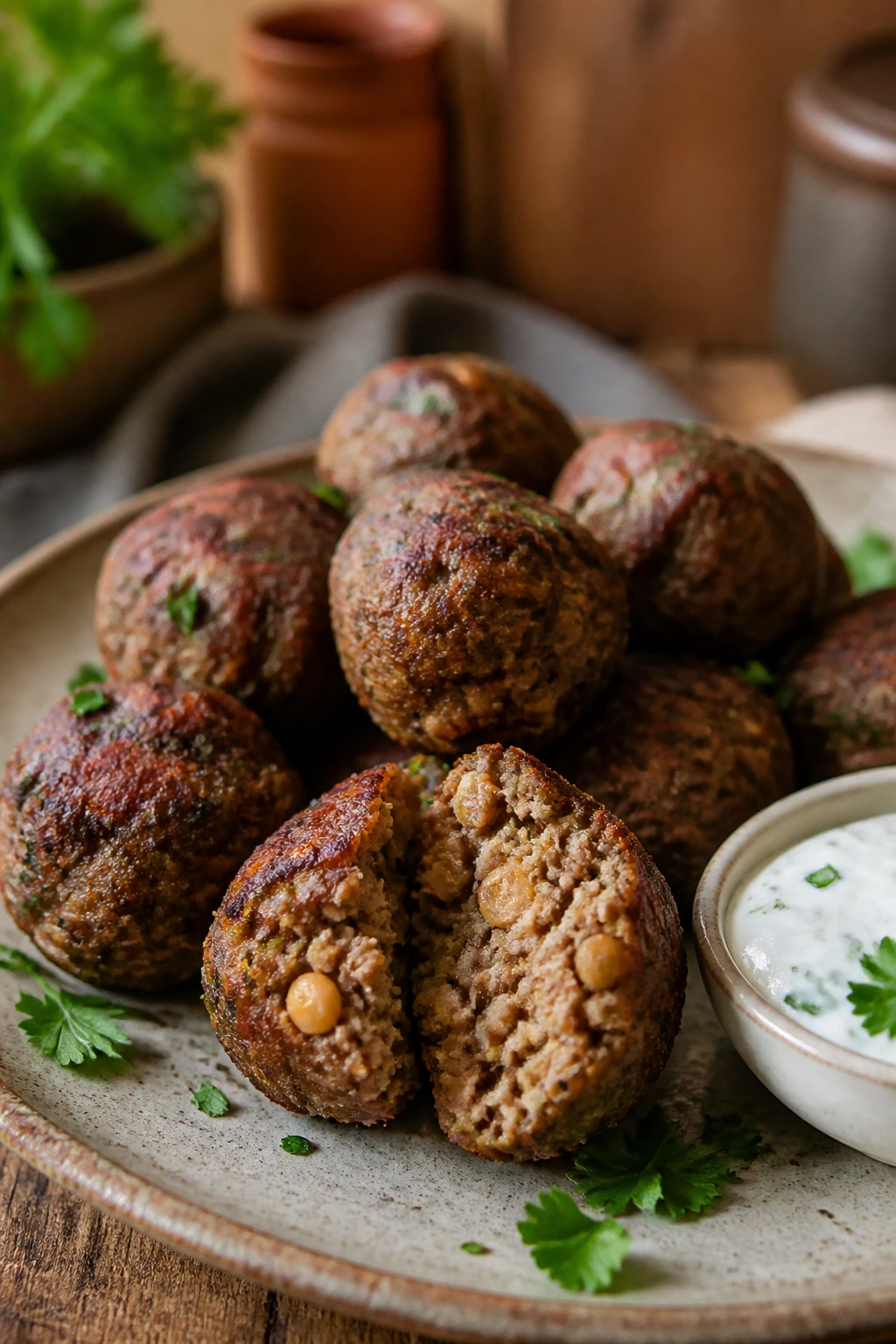
These lean a little Middle Eastern, a little Mediterranean, and a lot savory. Chickpeas bring body and a soft, nutty texture that makes the beef go further without feeling thin. Cumin and coriander do the rest, giving the meatballs a warm, rounded flavor that plays well with yogurt sauce and herbs.
I like this batch because it feels sturdy enough for bowls but not dense in the least. The chickpeas are doing two jobs at once: stretching the meat and making the crumb gentler. That makes them ideal for pita sandwiches or rice plates with something crisp on the side.
Why It Works:
Mashed chickpeas add structure and absorb seasoning in a way that tastes intentional, not hidden. Cumin and coriander give the beef a deeper, warmer profile. A tangy yogurt sauce keeps the plate from feeling heavy and makes the flavors pop more than a plain ketchup-style topping would.
Key Ingredients:
- 1 lb ground beef — use 85/15 if possible.
- 1 cup chickpeas, drained and mashed — the main stretcher.
- 1/2 cup breadcrumbs — helps the mixture hold together.
- 1 large egg — binds the meatballs.
- 2 tbsp chopped parsley or cilantro — bring some freshness.
- 1 tsp ground cumin — the backbone of the flavor.
- 1 tsp ground coriander — adds a soft citrus note.
- 2 garlic cloves, minced — keeps the mix savory.
- 1 tsp kosher salt — enough to season the chickpeas too.
- 1/2 tsp black pepper — a little edge.
- For the yogurt sauce: 1 cup Greek yogurt, 1 tbsp lemon juice, pinch of salt.
Quick Steps:
- Mash the chickpeas with a fork until most of them are broken down, leaving a few small pieces for texture.
- Add the beef, breadcrumbs, egg, herbs, cumin, coriander, garlic, salt, and pepper. Mix gently.
- Shape into 18 meatballs and place them on a parchment-lined baking sheet.
- Bake at 400°F for 14 minutes, until browned and 160°F inside.
- Stir the yogurt sauce together while the meatballs bake.
- Serve with the yogurt sauce and extra herbs.
Equipment for This Recipe:
- Mixing bowl
- Fork or potato masher
- Baking sheet
- Parchment paper
- Small bowl for sauce
How to Serve This Dish:
Warm pita, chopped cucumbers, and tomato make this feel complete fast. Rice is a fine backup if you want a more filling bowl. A scatter of parsley or cilantro on top keeps the whole thing from feeling too beige.
Pro Tips for This Recipe:
- Drain the chickpeas well. Wet chickpeas weaken the mixture.
- Leave a few chickpea bits intact for texture; don’t mash everything into paste.
- If the mix feels loose, chill it for 10 minutes before rolling.
- A little tahini in the yogurt sauce adds depth if you want something richer.
Variations on This Dish:
- Harissa Version: Add 1 teaspoon harissa to the mix for extra heat.
- Minted Bowl: Swap cilantro for mint and serve with cucumber salad.
- Roasted Pepper Sauce: Spoon roasted red pepper sauce over the meatballs instead of yogurt.
Common Mistakes to Avoid with This Dish:
- Leaving chickpeas in big pieces: The meatballs can fall apart.
- Using too much cilantro or parsley: The herbs should support the flavor, not turn it grassy.
- Baking until they’re dark: The chickpeas can dry out faster than you’d expect.
10. Spinach-Feta Meatballs
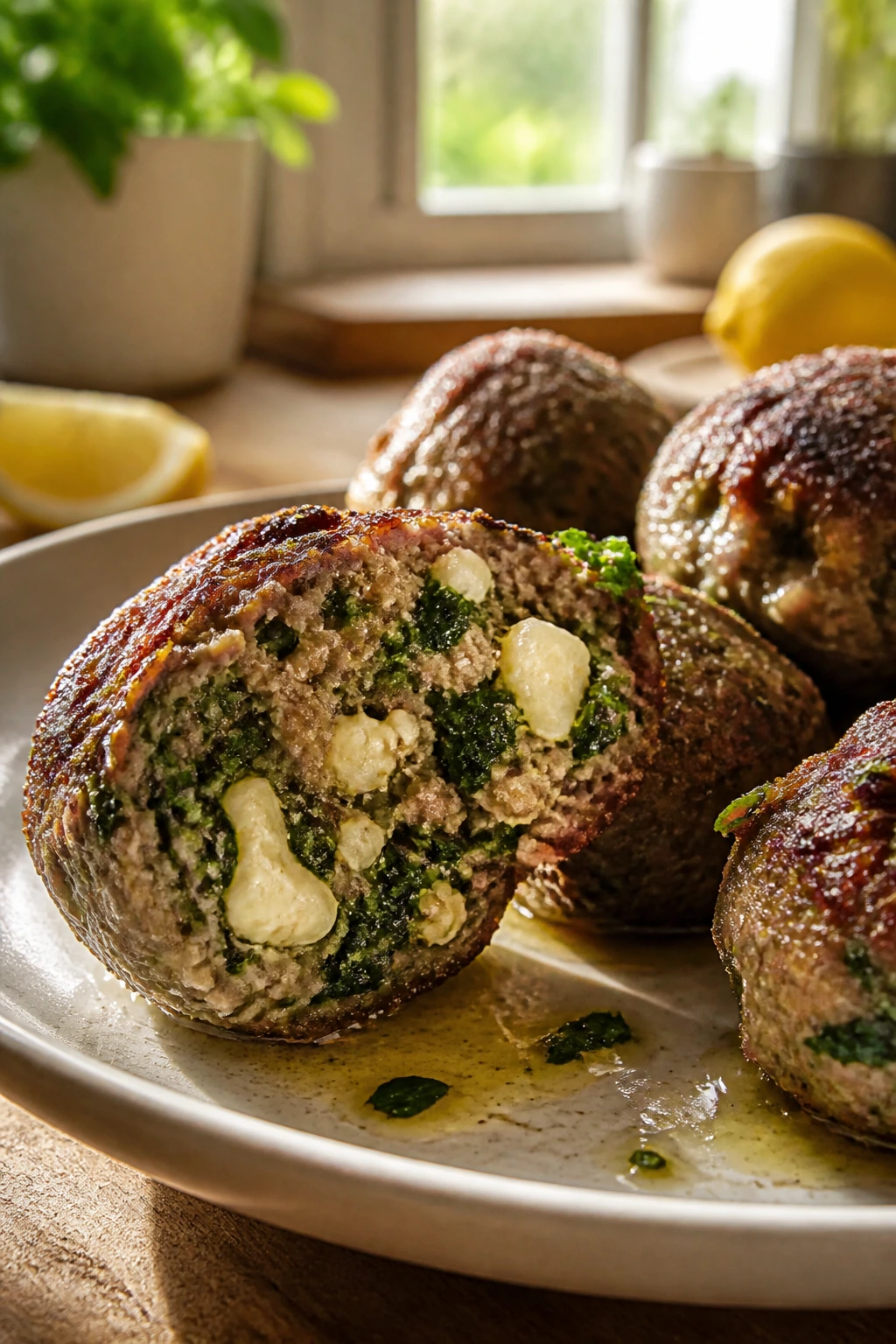
These taste green in the best possible way — not grassy, not muddy, but bright and savory with a salty hit from the feta. Spinach makes the beef go farther, and once it’s squeezed dry, it disappears into the mixture instead of turning the batch watery. Lemon zest lifts the whole thing and keeps it from feeling like a freezer-aisle compromise.
The texture lands somewhere between tender and springy, which is exactly where you want it. The meatballs feel generous on the plate, and the feta gives each bite a little surprise. Nothing complicated. Just solid, useful flavor.
Why It Works:
Cooked spinach adds volume and moisture without asking for more beef. Feta seasons the batch from the inside, so the meatballs taste lively even before the sauce or side dish gets involved. A hot oven gives the surface color while keeping the center soft.
Key Ingredients:
- 1 lb ground beef — a medium-fat grind is best.
- 1 cup thawed spinach, squeezed very dry — the stretcher and the color.
- 3/4 cup breadcrumbs — keeps the mix from slumping.
- 1 large egg — the binder.
- 1/2 cup crumbled feta — salty, creamy pockets.
- 2 garlic cloves, minced — helps the spinach taste savory.
- 1 tsp dried oregano — gives the meat a Greek feel.
- Zest of 1 lemon — brightens the spinach.
- 1 tsp kosher salt — use a little less if your feta runs salty.
- 1/2 tsp black pepper — enough for balance.
- For serving: plain Greek yogurt with a squeeze of lemon.
Quick Steps:
- Squeeze the spinach in a clean towel until it feels almost dry.
- Mix the beef, spinach, breadcrumbs, egg, feta, garlic, oregano, lemon zest, salt, and pepper in a bowl.
- Shape into 18 meatballs and place on a lined baking sheet.
- Bake at 425°F for 13 to 15 minutes until browned and cooked through.
- Spoon lemon yogurt on the side or underneath the meatballs.
Equipment for This Recipe:
- Mixing bowl
- Clean kitchen towel or cheesecloth
- Baking sheet
- Parchment paper
- Small bowl for the yogurt
How to Serve This Dish:
These fit nicely over rice or tucked into pita with cucumbers and tomatoes. If you want a lighter plate, serve them with a chopped salad and a dollop of yogurt. The feta already brings salt, so simple sides are enough.
Pro Tips for This Recipe:
- Squeeze the spinach harder than feels necessary. That water has to go somewhere.
- Use block feta if you can; it crumbles cleaner and tastes less dusty.
- Lemon zest works better than lemon juice inside the meatballs. Juice can loosen the mix.
- If the mixture feels soft, chill it before shaping.
Variations on This Dish:
- Minted Kefta Version: Add chopped mint and a pinch of cinnamon for a more spiced profile.
- Ricotta Softness: Swap half the feta for ricotta if you want a gentler, creamier bite.
- Lemon-Herb Rice Bowl: Serve over rice with olives and tomatoes for a more complete meal.
Common Mistakes to Avoid with This Dish:
- Wet spinach: It makes the mixture slack.
- Too much feta: The meatballs can turn salty and crumbly.
- Skipping the lemon zest: The flavor gets heavy fast without that bright edge.
11. BBQ Onion Meatballs
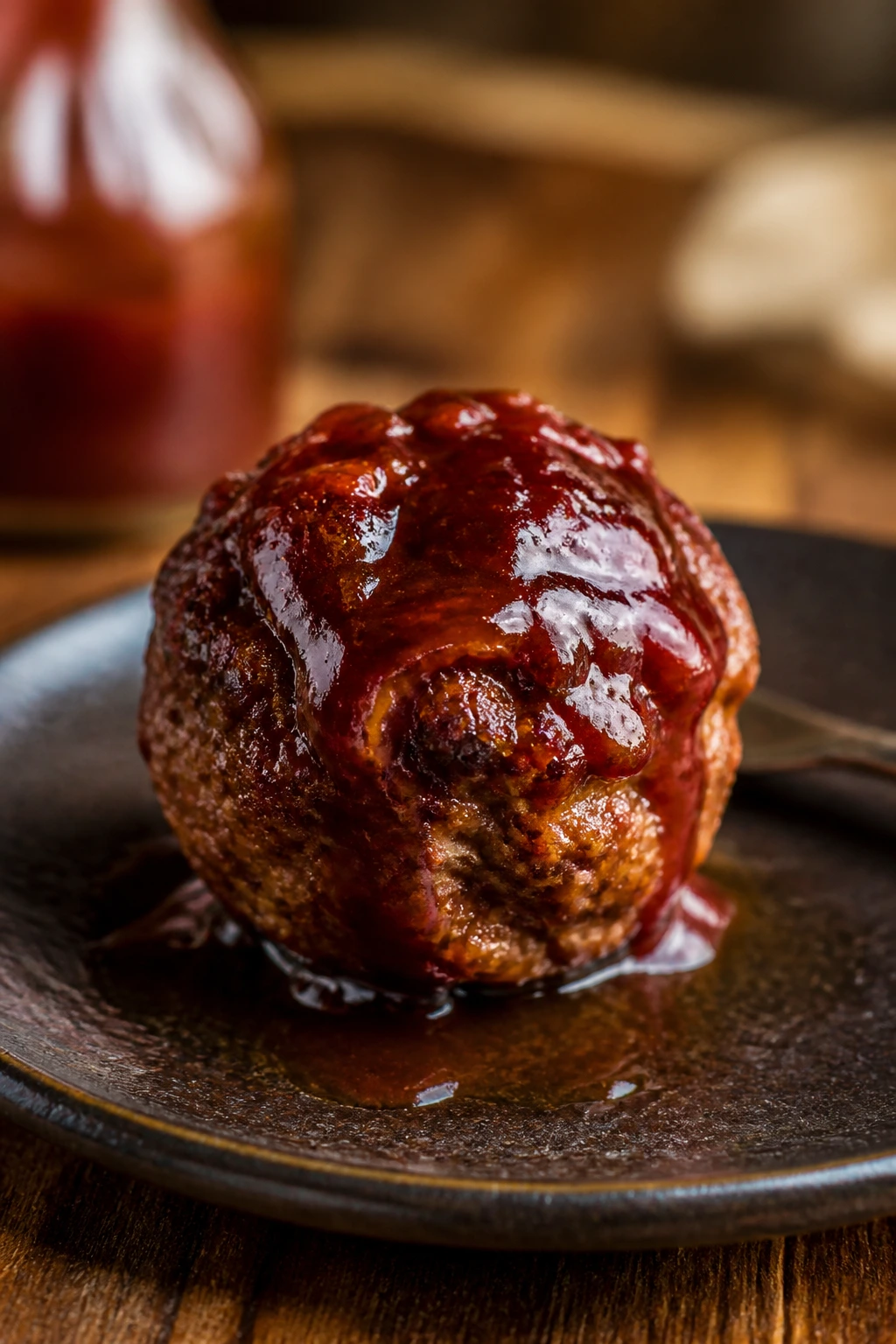
These are sticky, smoky, and slightly sweet, the kind of meatballs that belong next to coleslaw and a pile of buns. Grated onion keeps the beef juicy, crushed crackers stretch the mixture, and the BBQ glaze gives the finished batch a lacquered finish that makes them look more involved than they are. They’re also one of the easiest ways to turn a pound of beef into a trayful of food.
The onion does a lot of work here. It blends into the meat, adds moisture, and softens the whole texture so the BBQ sauce can do the loud part at the end. That’s a nice division of labor.
Why It Works:
Crushed saltines or crackers act as a fast binder and absorb the onion juice. The BBQ glaze is added after baking, which keeps the sugars from burning before the meatballs are cooked through. A little Worcestershire gives the mixture a deeper savory edge under the smoke and sweetness.
Key Ingredients:
- 1 lb ground beef — 85/15 is a safe bet.
- 3/4 cup crushed saltines or plain crackers — the stretcher.
- 1/2 cup finely grated onion — it melts into the mix.
- 1 large egg — binds everything.
- 2 tbsp ketchup — adds a little sweetness inside the meatballs.
- 1 tbsp Worcestershire sauce — gives depth.
- 1 tsp smoked paprika — brings the smoke without a grill.
- 1 tsp kosher salt — enough for the crackers and meat.
- 1/2 tsp black pepper — for a little bite.
- For the glaze: 1 cup BBQ sauce, 2 tbsp apple cider vinegar.
Quick Steps:
- Preheat the oven to 425°F and line a sheet pan with parchment.
- Mix the beef, crackers, onion, egg, ketchup, Worcestershire, smoked paprika, salt, and pepper.
- Shape into 18 meatballs and arrange them on the sheet pan.
- Bake for 14 to 15 minutes, until browned and cooked to 160°F.
- Stir the BBQ sauce and vinegar together, then toss the hot meatballs in the glaze.
- Serve right away or keep warm in a low oven for a short while.
Equipment for This Recipe:
- Mixing bowl
- Sheet pan
- Parchment paper
- Small bowl for glaze
- Spoon or tongs
How to Serve This Dish:
Set these out with coleslaw, potato salad, or soft rolls if you want sandwich night to happen with almost no warning. They also make a good appetizer tray with toothpicks. A little extra glaze on the side never hurts.
Pro Tips for This Recipe:
- Grate the onion finely so it disappears into the meat.
- Add the glaze after baking, not before. Sugar burns fast.
- Pick a tangy BBQ sauce, not a syrupy one. The vinegar needs something to balance.
- If the mixture feels too soft, chill it for 10 minutes before rolling.
Variations on This Dish:
- Spicy Smokehouse: Add 1/2 teaspoon cayenne or chipotle powder to the meat.
- Honey Mustard Finish: Swap half the BBQ sauce for honey mustard.
- Slider Tray: Make the meatballs slightly smaller and serve them on mini buns.
Common Mistakes to Avoid with This Dish:
- Glazing before baking: The sauce can scorch.
- Using sweet, soft crackers in large crumbs: The texture gets uneven.
- Overmixing after the crackers go in: The meatballs lose tenderness.
12. Teriyaki Carrot Meatballs
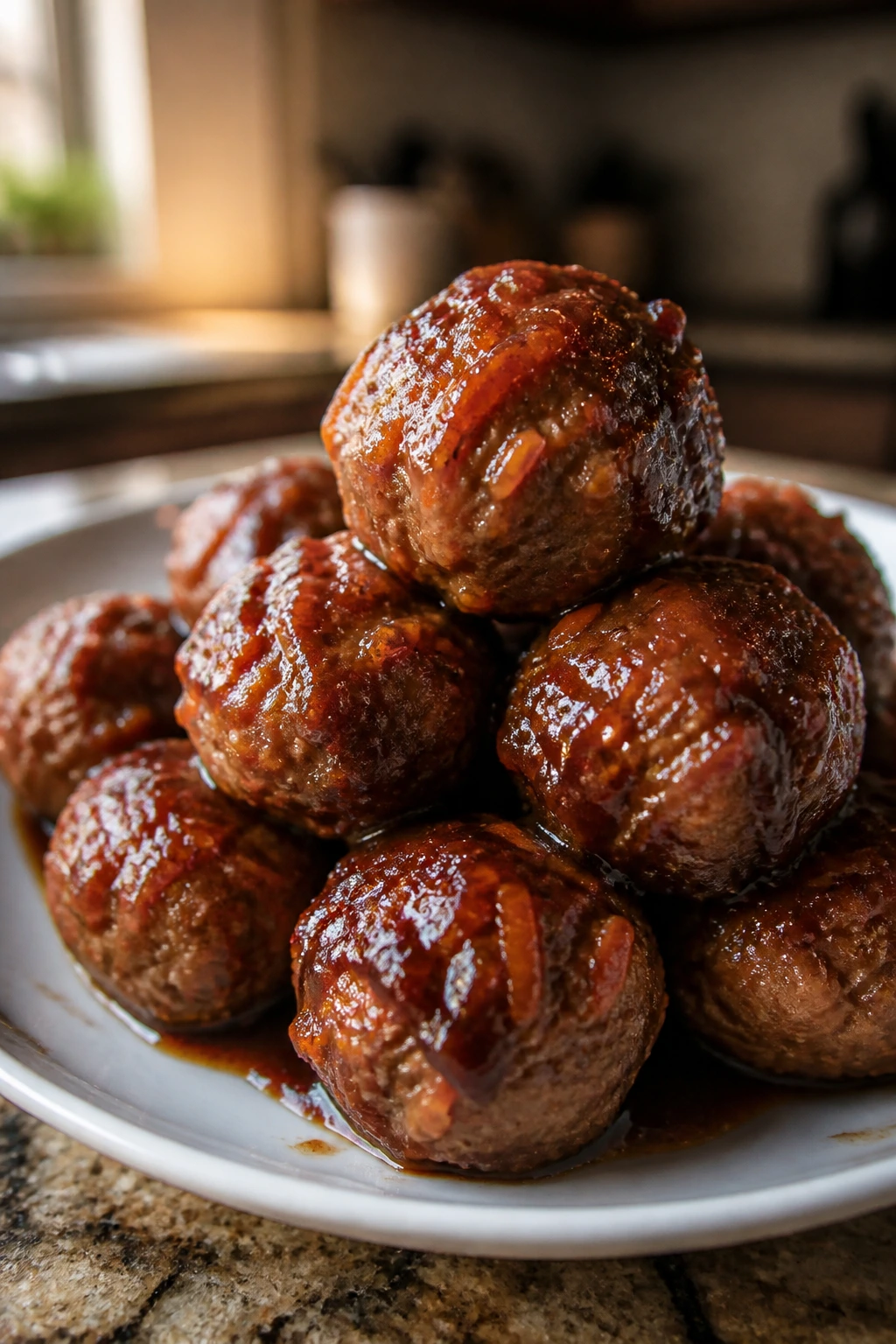
These are glossy, slightly sweet, and a little cleaner-tasting than the heavier sauce-forward batches above. Grated carrot stretches the beef and brings moisture, while the teriyaki glaze gives you that shiny, sticky finish that clings to rice and noodles. They’re straightforward, but not dull.
What I like here is the contrast: savory beef, sweet glaze, fresh scallion, and the faint bite of ginger. It all lands in one bowl without feeling too busy. And because the carrot is grated fine, it doesn’t read like a vegetable recipe masquerading as dinner.
Why It Works:
Carrot adds moisture and a gentle sweetness that softens the beef. Panko keeps the texture light so the grated vegetable doesn’t make the meatballs compact. The glaze thickens with a cornstarch slurry, which means it coats instead of running off the meat.
Key Ingredients:
- 1 lb ground beef — 85/15.
- 3/4 cup panko breadcrumbs — a light binder.
- 1/2 cup grated carrot — fine grate, not big shreds.
- 2 tbsp minced scallion — freshness and bite.
- 1 large egg — the binder.
- 1 tbsp soy sauce — seasons the mix.
- 1 tsp sesame oil — adds a nutty base note.
- 1 tsp grated fresh ginger — keeps the flavor sharp.
- 2 garlic cloves, minced — savory backbone.
- For the glaze: 1/3 cup soy sauce, 1/4 cup water, 2 tbsp honey, 1 tbsp rice vinegar, 1 tsp cornstarch mixed with 1 tbsp water.
Quick Steps:
- Preheat the oven to 400°F and line a baking sheet with parchment.
- Mix the beef, panko, carrot, scallion, egg, soy sauce, sesame oil, ginger, and garlic.
- Shape into 18 meatballs.
- Bake for 12 to 14 minutes until browned and cooked through.
- Simmer the glaze ingredients in a small saucepan for 2 to 3 minutes, then whisk in the cornstarch slurry until glossy.
- Toss the meatballs in the glaze and serve.
Equipment for This Recipe:
- Mixing bowl
- Baking sheet
- Parchment paper
- Small saucepan
- Whisk
How to Serve This Dish:
Rice is the cleanest match, but noodles or steamed broccoli work well too. Sprinkle sesame seeds on top and add a few more sliced scallions. The bowl should look glossy and a little messy in the good way.
Pro Tips for This Recipe:
- Grate the carrot finely so it blends into the mix.
- If the carrot seems very wet, press it lightly in a towel before adding it.
- Add the cornstarch slurry near the end of the glaze simmer, not at the start.
- A squeeze of lime at the table can wake up the whole bowl.
Variations on This Dish:
- Orange Sesame: Swap a few tablespoons of water in the glaze for orange juice.
- Chili Crisp Bowl: Spoon a little chili crisp over the finished meatballs for heat and crunch.
- Garlic-Heavy Version: Add one extra garlic clove to the meat and a little minced garlic to the glaze.
Common Mistakes to Avoid with This Dish:
- Using coarse carrot shreds: They can make the meatballs feel stringy.
- Over-thickening the glaze: It should coat, not set up like taffy.
- Overbaking: The carrot helps moisture, but not enough to save a batch left too long in the oven.
13. Harissa Bulgur Meatballs
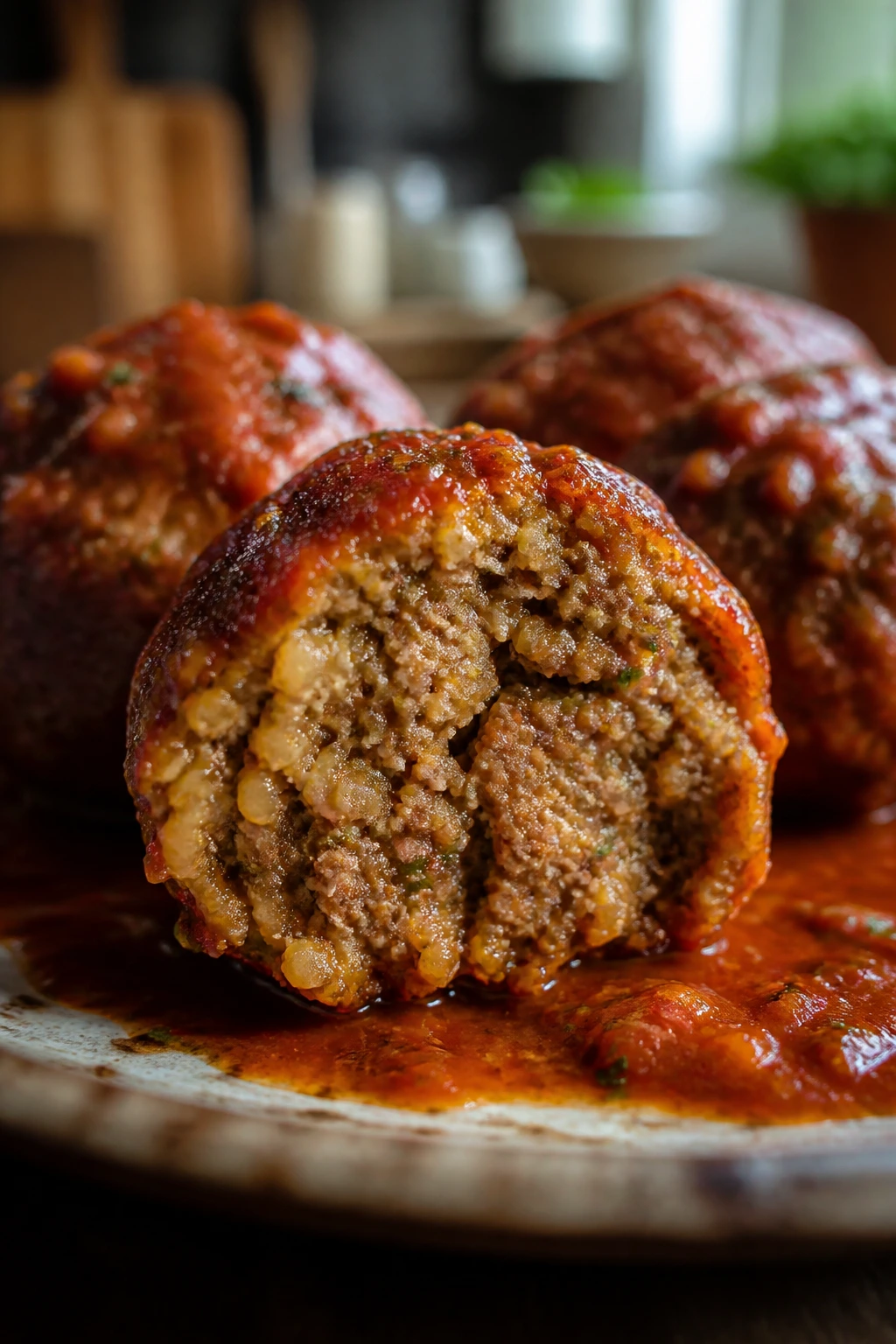
These have a warm, slightly smoky edge that lands somewhere between North African and Mediterranean. Bulgur gives the meatballs a sturdy, grain-like texture that makes a pound of beef stretch farther than you’d expect, and harissa brings a slow-building heat. The tomato sauce around them keeps the whole dish grounded.
I like this version because it feels bold without being fussy. The bulgur adds body, the harissa adds personality, and the tomato sauce pulls everything together so the meatballs taste complete. It’s a good one when you want dinner to feel different without turning into a project.
Why It Works:
Fine bulgur soaks up liquid and helps the mixture hold together without turning gummy. Harissa seasons the meat from within, so the sauce only has to finish the job. A quick simmer in tomato sauce softens the edges and gives the bulgur time to settle into the beef.
Key Ingredients:
- 1 lb ground beef — medium-fat works best.
- 1/2 cup fine bulgur — the grain stretcher.
- 1/2 cup boiling water or broth — for soaking the bulgur.
- 1 small onion, grated — keeps the meat moist.
- 1 large egg — binds the batch.
- 1 tbsp harissa paste — adjust to your heat preference.
- 1 tsp ground cumin — gives the dish a warm base note.
- 1 tsp ground coriander — rounds out the spice.
- 1 tsp kosher salt — enough to season the grain too.
- 1/2 tsp black pepper — for a little bite.
- 1 can crushed tomatoes — for the sauce.
Quick Steps:
- Pour the boiling water or broth over the bulgur and let it sit for 10 minutes until the grains are soft and the liquid is absorbed.
- Mix the soaked bulgur with the beef, onion, egg, harissa, cumin, coriander, salt, and pepper.
- Shape into 18 meatballs and place on a baking sheet.
- Bake at 400°F for 14 minutes.
- Warm the crushed tomatoes in a skillet, add the meatballs, and simmer gently for 8 to 10 minutes.
- Taste the sauce and add a pinch of salt or a little more harissa if needed.
Equipment for This Recipe:
- Mixing bowl
- Measuring cup
- Baking sheet
- Large skillet with lid
- Wooden spoon
How to Serve This Dish:
Serve these with couscous, flatbread, or a pile of rice that can catch the sauce. A spoonful of yogurt on the side cools the heat nicely. They also play well with a cucumber salad, which keeps the plate from feeling too dense.
Pro Tips for This Recipe:
- Use fine bulgur. Coarse grains need more time and can stay chewy.
- Harissa brands vary a lot. Taste yours before adding extra.
- If the mixture feels wet, let it rest for 10 minutes before shaping.
- A drizzle of olive oil over the tomato sauce at the end softens the spice.
Variations on This Dish:
- Rosemary Olive Version: Add chopped olives and a little rosemary for a more Mediterranean profile.
- Creamy Yogurt Finish: Swirl yogurt over the top just before serving.
- Chickpea Side Plate: Serve with roasted chickpeas instead of rice for a firmer, more textured meal.
Common Mistakes to Avoid with This Dish:
- Using coarse bulgur without adjusting time: It can stay hard.
- Adding too much harissa at once: Heat builds fast. Start modestly.
- Boiling the sauce hard: The meatballs can split and the texture gets rough.
14. Salisbury Skillet Meatballs
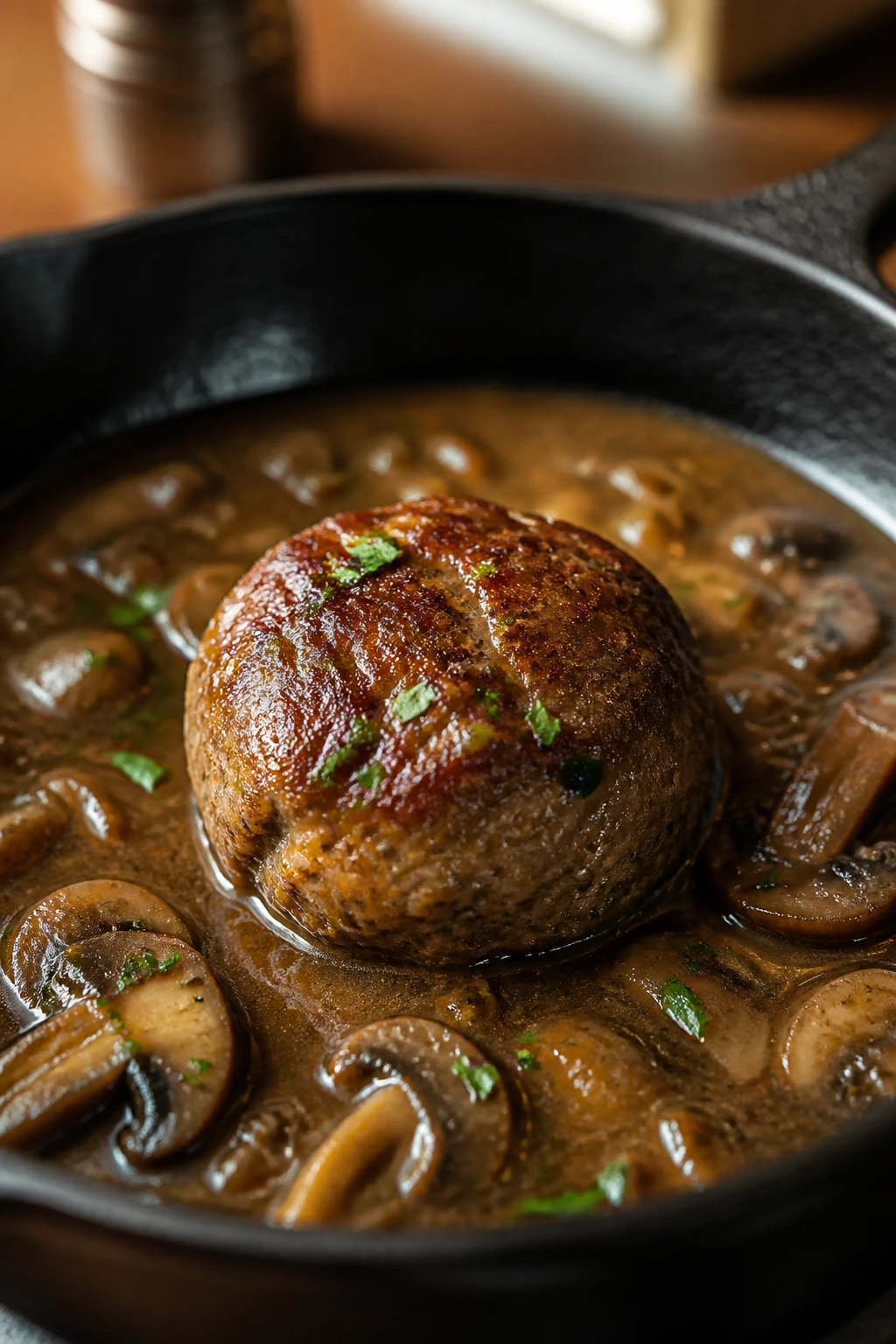
This is the dinner that feels like it arrived from a very practical part of your memory. Beefy, brown, saucy, and not trying to be fashionable. The mushrooms and gravy do the classic Salisbury-steak thing, only in meatball form, which means more surface area for sauce and fewer knife-and-fork hassles.
This recipe stretches a pound of beef in a way that feels old-fashioned for a reason: it works. Breadcrumbs soften the mix, onion keeps the beef moist, and the skillet gravy turns browned bits into dinner. That’s not nostalgia talking. That’s chemistry.
Why It Works:
Breadcrumbs and egg help the meatballs hold together while still staying soft in the middle. Browning them first gives the gravy a better base than simmering raw meatballs ever would. Mushrooms add volume to the sauce and make the whole skillet feel bigger than its ingredients.
Key Ingredients:
- 1 lb ground beef — 85/15 or 80/20.
- 3/4 cup breadcrumbs — enough to stretch the mix without making it dry.
- 1 large egg — binding.
- 2 tbsp ketchup — a little sweetness and color.
- 1 tbsp Worcestershire sauce — deepens the savory note.
- 1 small onion, grated — moisture and flavor.
- 1 tsp kosher salt — starts the seasoning.
- 1/2 tsp black pepper — balance.
- 8 oz mushrooms, sliced — for the gravy.
- For the gravy: 2 cups beef broth, 2 tbsp flour, 2 tbsp butter.
Quick Steps:
- Mix the beef, breadcrumbs, egg, ketchup, Worcestershire, grated onion, salt, and pepper.
- Shape into 16 meatballs.
- Brown the meatballs in a skillet over medium heat, turning until they have color on a few sides. Remove them to a plate.
- Add the mushrooms to the skillet and cook until they soften and brown.
- Stir in the butter and flour, cook for 1 minute, then slowly whisk in the broth.
- Return the meatballs and simmer for 8 to 10 minutes until the gravy thickens and the meatballs finish cooking.
Equipment for This Recipe:
- Large skillet with lid
- Mixing bowl
- Whisk
- Spoon or spatula
- Plate for holding browned meatballs
How to Serve This Dish:
Mashed potatoes are the obvious match, but buttered noodles or even white rice will catch the gravy just fine. A little chopped parsley on top keeps the skillet from looking too brown, which is saying something. This one wants a fork and a napkin.
Pro Tips for This Recipe:
- Brown the meatballs before making the gravy. The fond is where the flavor lives.
- Let the mushrooms color a bit before adding the flour.
- Stir the gravy well when adding broth so it stays smooth.
- Taste after simmering; Worcestershire and broth can need a pinch more salt.
Variations on This Dish:
- No-Mushroom Route: Skip the mushrooms and make a plain brown gravy with onion.
- Onion-Lover’s Version: Add extra sliced onion with the mushrooms for a sweeter skillet.
- Herbed Finish: A little thyme or chopped chives at the end makes the sauce taste fresher.
Common Mistakes to Avoid with This Dish:
- Skipping the browning step: The sauce loses depth.
- Adding flour too late or too early: Cook it for a minute so the gravy doesn’t taste raw.
- Letting the skillet boil hard: The meatballs can tighten up fast.
15. Coconut Curry Zucchini Meatballs
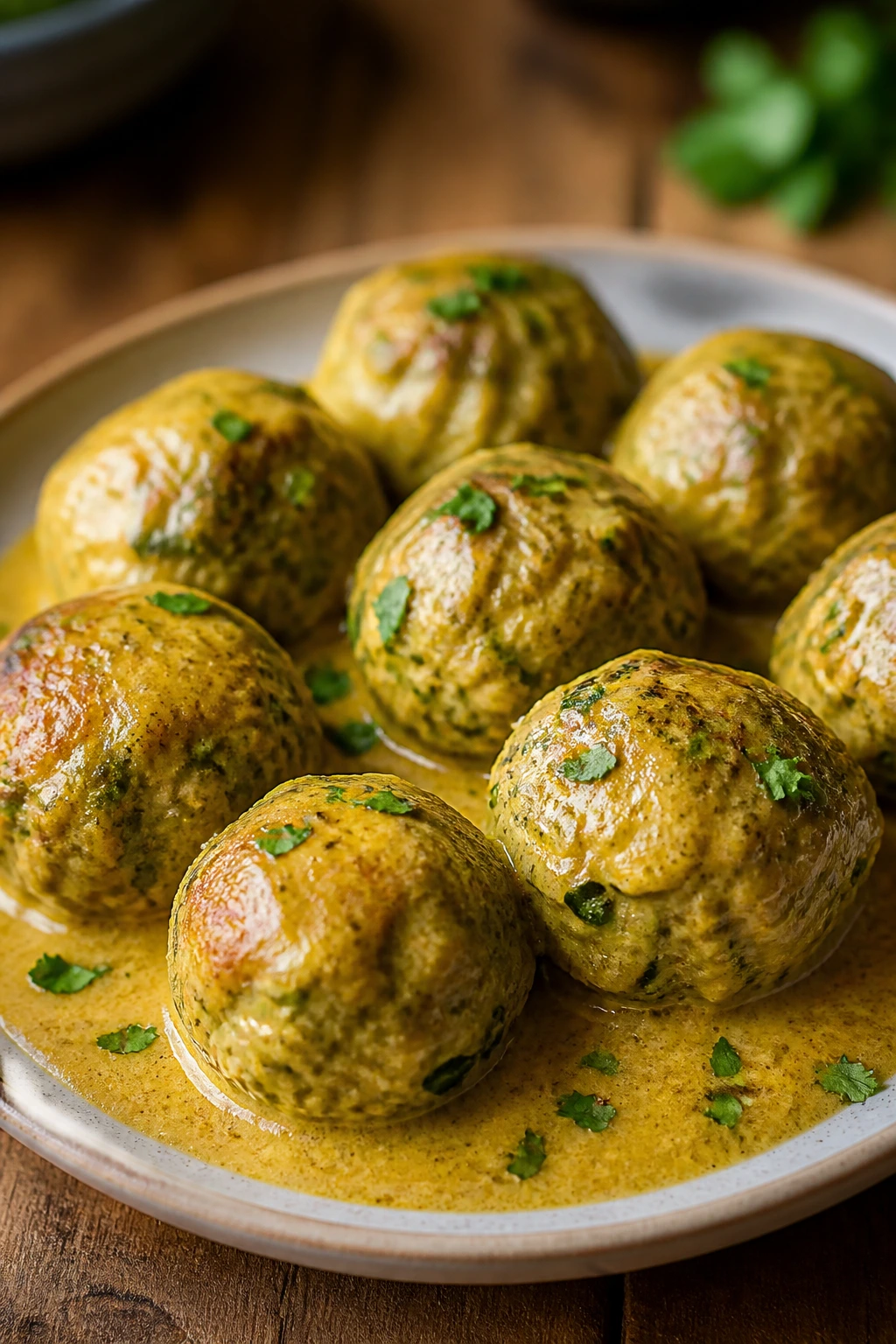
This is the most flexible-sounding batch in the collection, but it works because the zucchini disappears once it’s squeezed dry and mixed into the beef. What you get is a soft, fragrant meatball with enough curry flavor to carry a coconut sauce without needing a long list of extras. It’s rich, yes, but still light enough to serve over rice without feeling dragged down.
The coconut milk gives the sauce that silky, rounded finish that plays well with warm spices. Zucchini stretches the beef quietly, which is my favorite kind of stretching. Nobody at the table has to hear about it.
Why It Works:
Squeezed zucchini adds moisture and volume without a strong flavor of its own. Curry paste or curry powder seasons the meatballs and the sauce at the same time, which keeps the dish unified. Coconut milk smooths out the spice and gives the sauce a spoonable body.
Key Ingredients:
- 1 lb ground beef — medium-fat gives the best texture.
- 3/4 cup breadcrumbs — for structure.
- 1/2 cup grated zucchini, squeezed dry — the stretcher.
- 1 large egg — the binder.
- 1 tbsp curry powder or curry paste — start here and adjust to taste.
- 1 tsp kosher salt — enough to season the beef and zucchini.
- 1/2 tsp black pepper — for balance.
- For the sauce: 1 can full-fat coconut milk, 2 tbsp curry paste, 1 cup beef or chicken broth, 1 tbsp fish sauce or soy sauce, juice of 1 lime.
Quick Steps:
- Squeeze the grated zucchini in a towel until it feels dry and compact.
- Mix the beef, breadcrumbs, zucchini, egg, curry powder or paste, salt, and pepper.
- Shape into 18 meatballs and place on a parchment-lined baking sheet.
- Bake at 400°F for 14 minutes until cooked through.
- Warm the coconut milk, curry paste, broth, and fish sauce or soy sauce in a skillet, then simmer gently for 5 minutes.
- Add the meatballs and finish with lime juice just before serving.
Equipment for This Recipe:
- Mixing bowl
- Clean kitchen towel
- Baking sheet
- Large skillet or shallow saucepan
- Spoon for the sauce
How to Serve This Dish:
Steamed rice is the easy choice, and it’s the one I’d reach for first. Noodles work too, but rice keeps the sauce in its lane. A handful of cilantro or basil on top adds a fresh edge that coconut sauce likes.
Pro Tips for This Recipe:
- Squeeze the zucchini dry enough that it no longer feels slippery.
- Full-fat coconut milk gives a better sauce body than light coconut milk.
- Add the lime at the end so the sauce stays bright.
- If your curry paste is very strong, start with 1 tablespoon and add more after tasting.
Variations on This Dish:
- Red Curry Version: Use red curry paste for a sharper, hotter finish.
- Green Herb Route: Add chopped basil or cilantro to the meatballs and use green curry paste.
- Peanut Finish: Stir 1 tablespoon peanut butter into the sauce for a deeper, nuttier note.
Common Mistakes to Avoid with This Dish:
- Wet zucchini: It turns the mixture loose.
- Boiling the coconut milk hard: The sauce can split.
- Adding lime too early: The bright note fades during simmering.
16. Cheeseburger Meatballs with Pickle Sauce
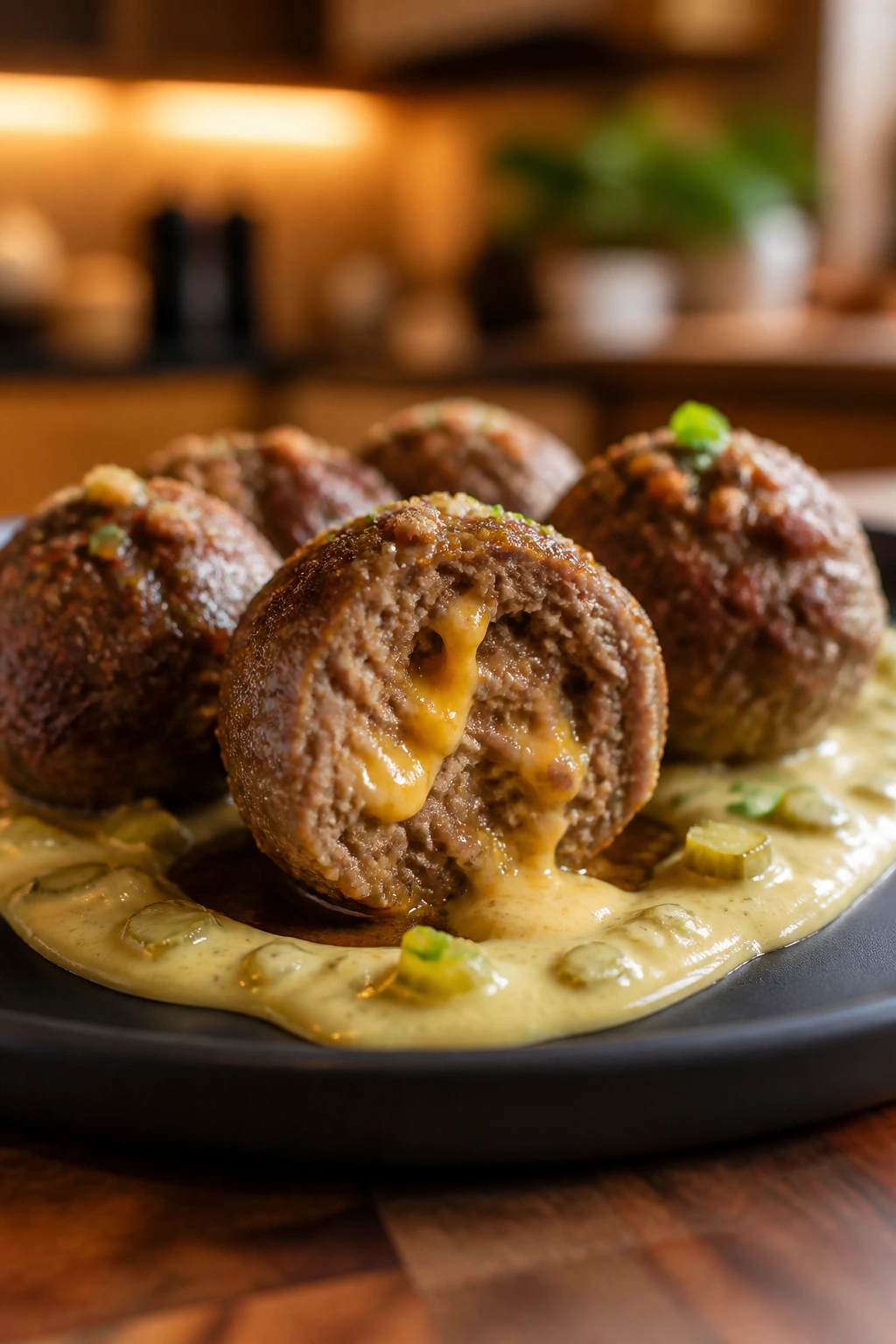
These are unapologetically burger-ish, which is part of the fun. Cheddar melts into the beef, onion adds juiciness, and the pickle-mustard sauce gives you that fast-food tang without making the meatballs taste like a gimmick. They’re the easiest way to turn a pound of beef into something that makes people grin.
The point here is not subtlety. The point is to taste like a cheeseburger that learned better manners and got rolled into a ball. Crushed crackers stretch the mixture, cheddar brings richness, and the pickle sauce keeps the whole thing from going flat.
Why It Works:
Crushed crackers act as both filler and binder, which helps the beef go farther without a bread-heavy taste. Shredded cheddar melts into the meat and gives the inside a little richness. The pickle sauce cuts through all that fat with acid and crunch, which keeps the finished plate from feeling too soft.
Key Ingredients:
- 1 lb ground beef — 85/15 gives you the best burger flavor.
- 3/4 cup crushed plain crackers — the stretcher.
- 1/2 cup finely chopped onion — for that burger-stand flavor.
- 1/2 cup shredded sharp cheddar — enough to taste it, not enough to leak everywhere.
- 1 large egg — holds the mixture together.
- 1 tbsp ketchup — a little sweetness.
- 1 tsp yellow mustard — keeps the flavor burger-like.
- 1 tsp kosher salt — adjust if your crackers are salty.
- 1/2 tsp black pepper — standard burger seasoning.
- For the sauce: 1/2 cup mayonnaise or Greek yogurt, 2 tbsp pickle relish, 1 tbsp mustard, 1 tsp pickle brine, 1 tbsp chopped chives.
Quick Steps:
- Preheat the oven to 425°F and line a sheet pan with parchment.
- Mix the beef, crackers, onion, cheddar, egg, ketchup, mustard, salt, and pepper until just combined.
- Shape into 18 meatballs, keeping them all about the same size.
- Bake for 14 to 15 minutes, until browned and at 160°F in the center.
- Stir the sauce ingredients together while the meatballs bake.
- Serve the meatballs with the pickle sauce on the side or drizzled over the top.
Equipment for This Recipe:
- Mixing bowl
- Baking sheet
- Parchment paper
- Small bowl for sauce
- Spoon or scoop
How to Serve This Dish:
These are especially good on slider buns with lettuce and tomato, but they also work on toothpicks as an appetizer tray. If you want the easiest dinner, put them over roasted potatoes and let the sauce do the talking. A few sliced pickles on the side never hurt.
Pro Tips for This Recipe:
- Use sharp cheddar so the cheese still tastes like itself after baking.
- Keep the onion very fine so it softens in the oven.
- Chill the mixture for 10 minutes if it feels soft from the cheese.
- The pickle sauce should taste tangy, not sweet. Add relish carefully.
Variations on This Dish:
- Bacon Cheeseburger Batch: Add a few spoonfuls of cooked chopped bacon if you want more smoke.
- Double Pickle Version: Stir chopped dill pickles into the sauce for extra crunch.
- Slider Tray: Make smaller meatballs and serve them on mini buns for a party plate.
Common Mistakes to Avoid with This Dish:
- Using too much cheddar: It can leak and make the pan greasy.
- Skipping the mustard: The flavor loses its burger shape.
- Overloading the sauce with relish: It can turn sweet and muddy.
Why Stretching a Pound of Beef Works So Well
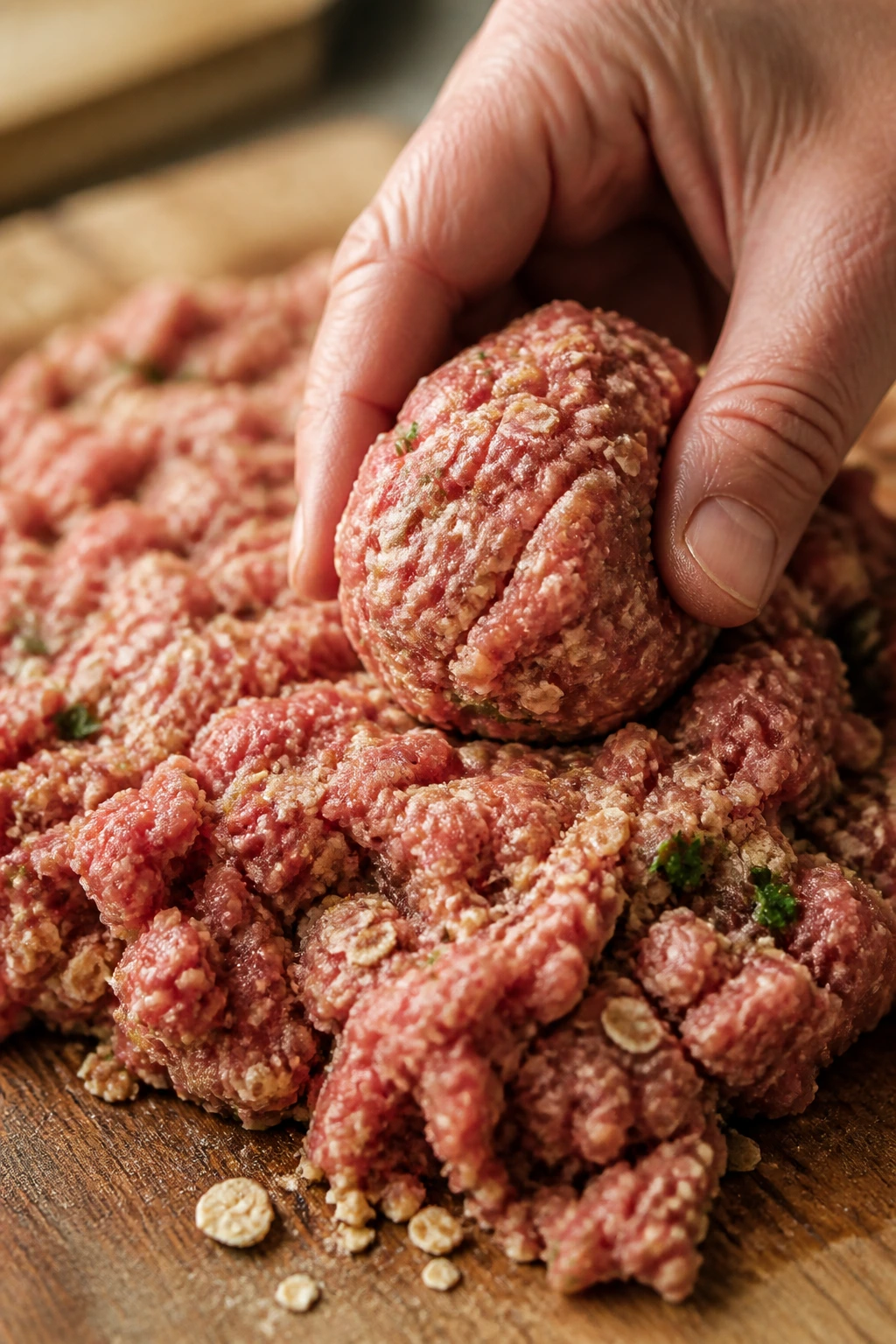
A meatball is one of the few beef dishes that actually likes company. Ground beef already has a loose structure, which means you’re not trying to preserve a steak-like shape or a hard crust. You’re building a tender, compact bite, and that gives you room to add ingredients that bring moisture, body, and flavor.
The classic move is the panade — breadcrumbs soaked in milk, broth, or even yogurt. That soft paste traps moisture and keeps the meat from tightening up. Oats do something similar with a slightly more rustic texture. Rice, bulgur, chickpeas, mushrooms, and grated vegetables all work, but they do different jobs. Rice adds bulk. Mushrooms add savory depth. Beans and chickpeas add softness and body. Vegetables add moisture and make the mix feel fuller without making it heavy.
The key is ratio. Too little stretcher and you haven’t really stretched anything. Too much, and the beef starts tasting timid. A good target is somewhere around 1/2 to 1 cup of extender per pound of beef, plus one egg for binding. The mixture should feel soft, not wet, and hold a thumbprint without slumping apart.
A second reason this works: meatballs are forgiving about shape. You can bake them, pan-fry them, or simmer them in sauce, and each method gives you a slightly different payoff. Baking is cleaner. Browning gives better flavor. Simmering finishes the texture. The recipes in this collection use all three, because beef meatballs shouldn’t have only one personality.
Essential Equipment for These Meatball Recipes
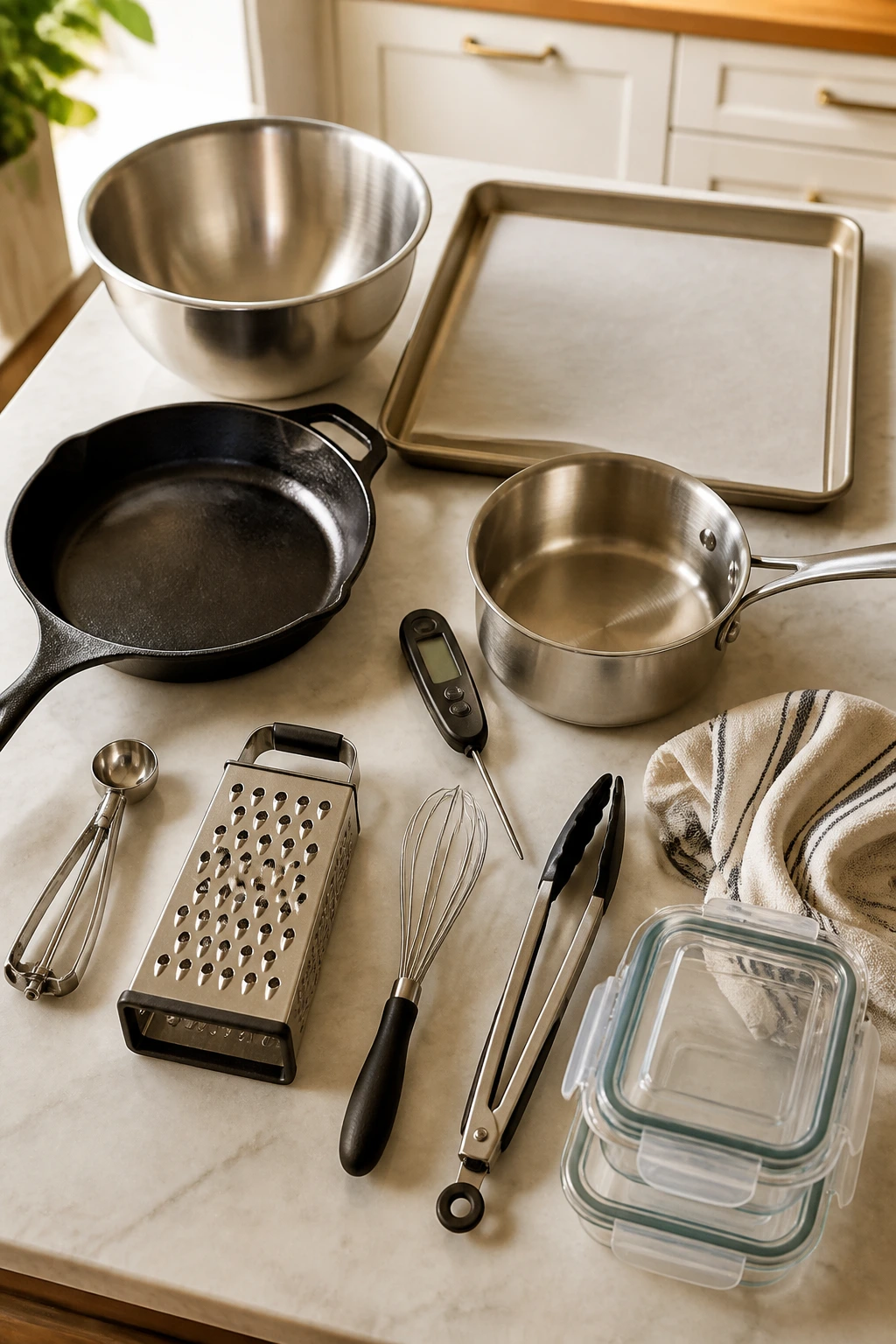
- Large mixing bowls — one or two deep bowls keep the mixture from spilling while you work.
- Rimmed baking sheets — they catch drips and make oven batches easier to handle.
- Parchment paper — it keeps sticky meatballs from welding themselves to the pan.
- Large skillet — useful for browning, gravy, and sauce-based finishes.
- Small saucepan — ideal for glazes, gravies, and quick reductions.
- Instant-read thermometer — the easiest way to know when ground beef is safely cooked to 160°F.
- 1 1/2-tablespoon scoop — gives you even meatballs, which matters more than people think.
- Box grater — useful for onion, Parmesan, zucchini, and cucumber.
- Whisk — important for gravies and smooth sauces.
- Tongs or a sturdy spoon — for turning, saucing, and serving without tearing the meatballs.
- Clean kitchen towel or cheesecloth — handy for squeezing moisture from spinach or zucchini.
- Airtight storage containers — useful if you’re making a batch for later.
Smart Shopping and Ingredient Tips
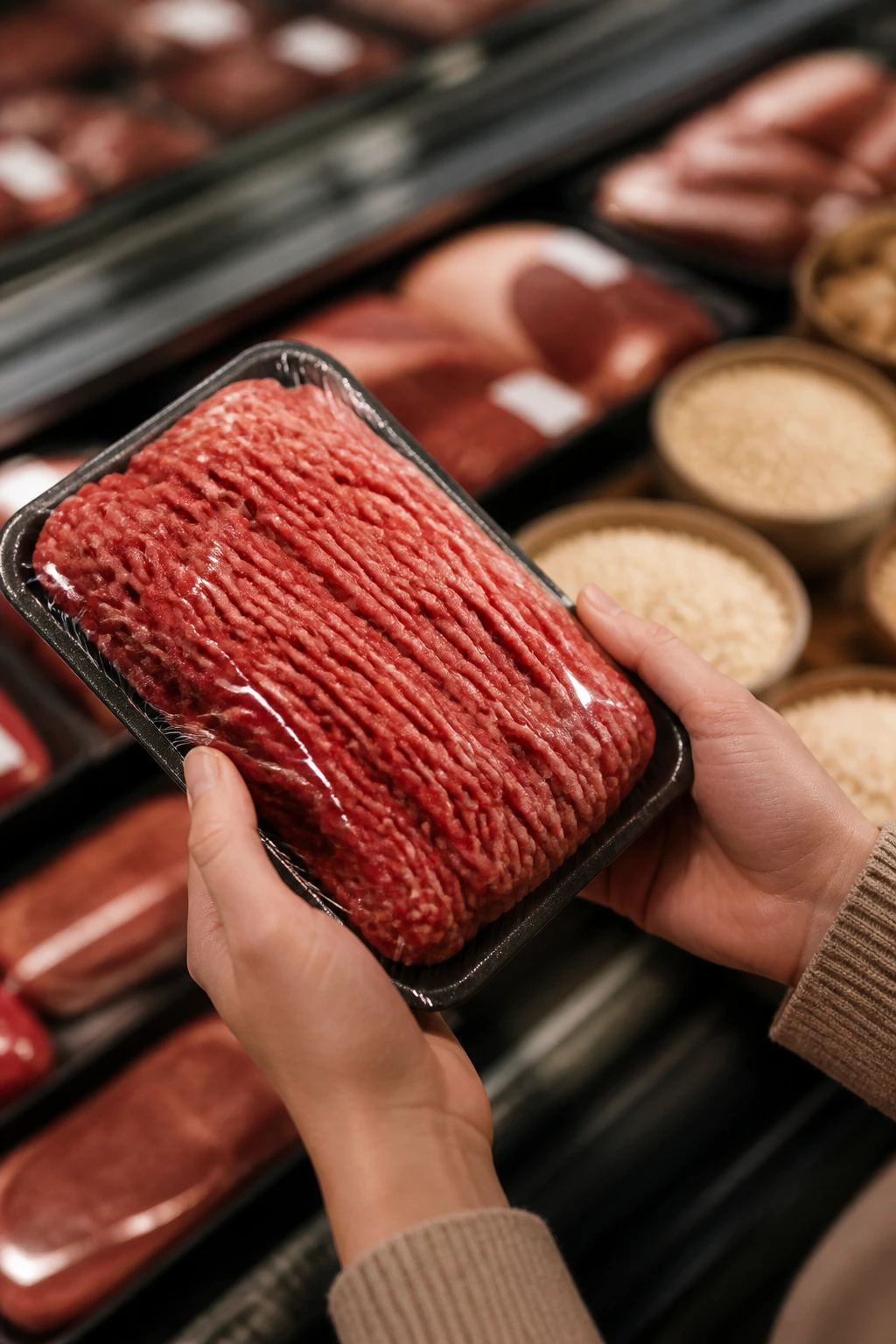
Start with the beef. For most of these recipes, 85/15 ground beef hits the sweet spot: enough fat for flavor, not so much that the pan turns greasy. If you only find 90/10, it can still work, but the recipes with dry binders — oats, breadcrumbs, crackers, bulgur — are happier when you add enough moisture from milk, onion, yogurt, or sauce.
Breadcrumbs are not all the same either. Fresh breadcrumbs absorb more liquid and give a softer finish. Panko keeps things lighter and airier. Crushed saltines or plain crackers bring a little salt and a more old-school texture. Pick the one that matches the sauce. For cream gravies and tomato sauces, plain crumbs are the safest choice. For BBQ or cheeseburger meatballs, crackers bring a little extra nostalgia.
Vegetables need a little handling. Grated onion disappears into the mix and adds moisture. Mushrooms need to be cooked until the pan is nearly dry. Spinach and zucchini need to be squeezed hard, or they’ll water down the batch. Rice should be cool and dry, not warm and sticky. Chickpeas should be drained well and mashed enough that you’re not rolling whole beans inside the meatballs.
Sauces matter as much as the meatball itself. Buy or make something with enough acid to cut the richness — marinara, pickle sauce, yogurt sauce, mustard gravy, or a curry with lime at the end. A meatball batch this size can feel flat if the sauce is shy. A little sharpness fixes that fast.
How to Serve These Meatballs
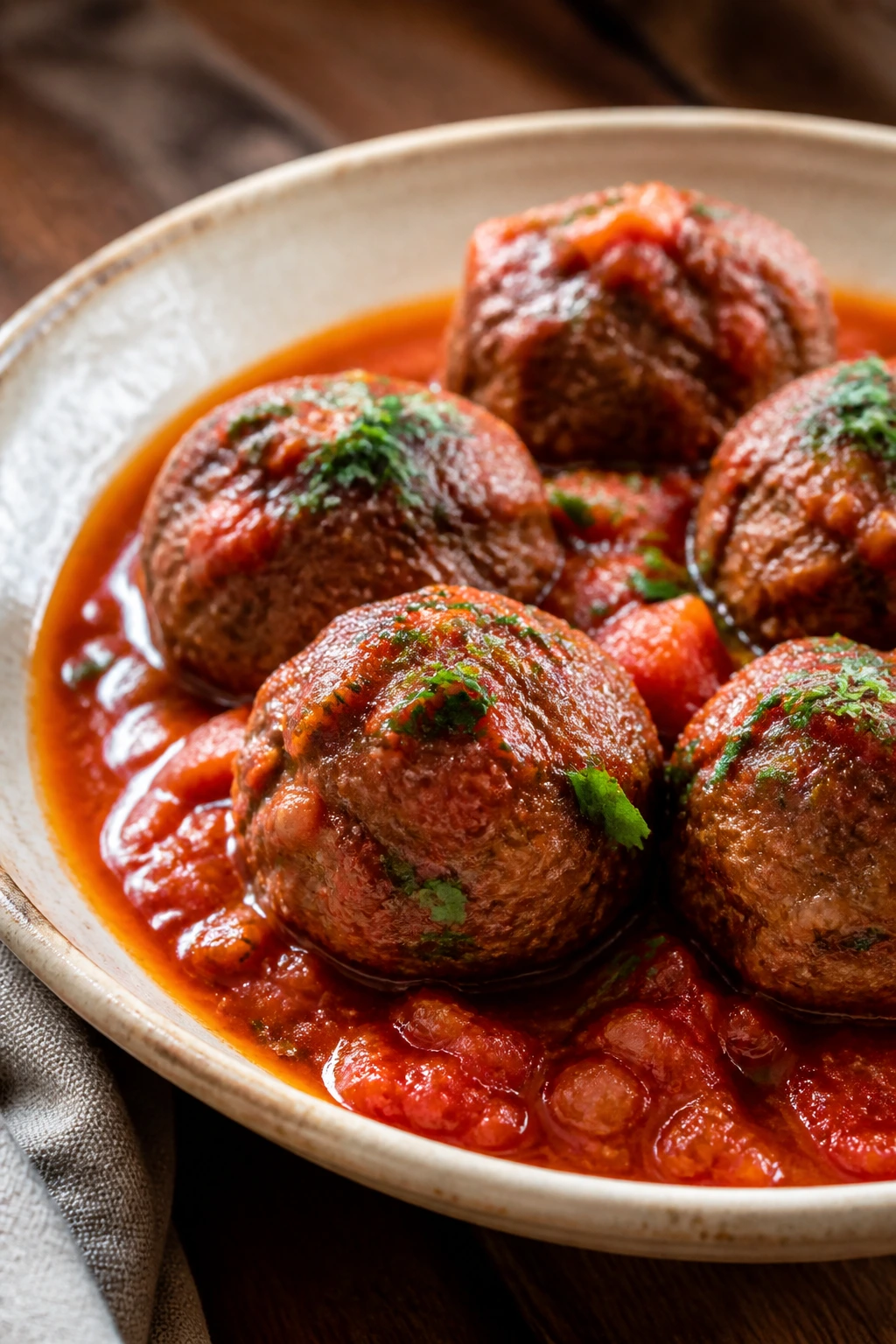
Presentation:
Serve meatballs in a shallow bowl or low-sided platter so the sauce has somewhere to pool. A scatter of herbs, scallions, sesame seeds, or shaved Parmesan makes the dish look finished without needing a lot of fuss. If you’re serving a sauce-heavy batch, spoon the sauce under the meatballs first and add another spoonful over the top.
Accompaniments:
Spaghetti, egg noodles, mashed potatoes, rice, couscous, toasted rolls, pita, slaw, and chopped salads all fit somewhere in this collection. The Italian and tomato versions want pasta or bread. The Swedish and Salisbury batches want potatoes. The Greek, Korean, teriyaki, and curry versions are happiest over rice or tucked into bowls.
Portions:
A pound of beef stretched into meatballs usually feeds 4 to 6 people as a main dish, depending on what’s served alongside it. If you’re putting them over pasta or rice, plan on 4 to 5 meatballs per adult. If they’re headed onto sliders or appetizer trays, smaller portions go farther.
Beverage Pairing:
A dry red wine works well with tomato, mushroom, and Salisbury-style versions. A crisp lager or pilsner suits BBQ, cheeseburger, and taco meatballs. For the Greek, Korean, and curry batches, sparkling water with lemon or a light iced tea keeps the plate from feeling too heavy.
Additional Tips and Flavor Boosters
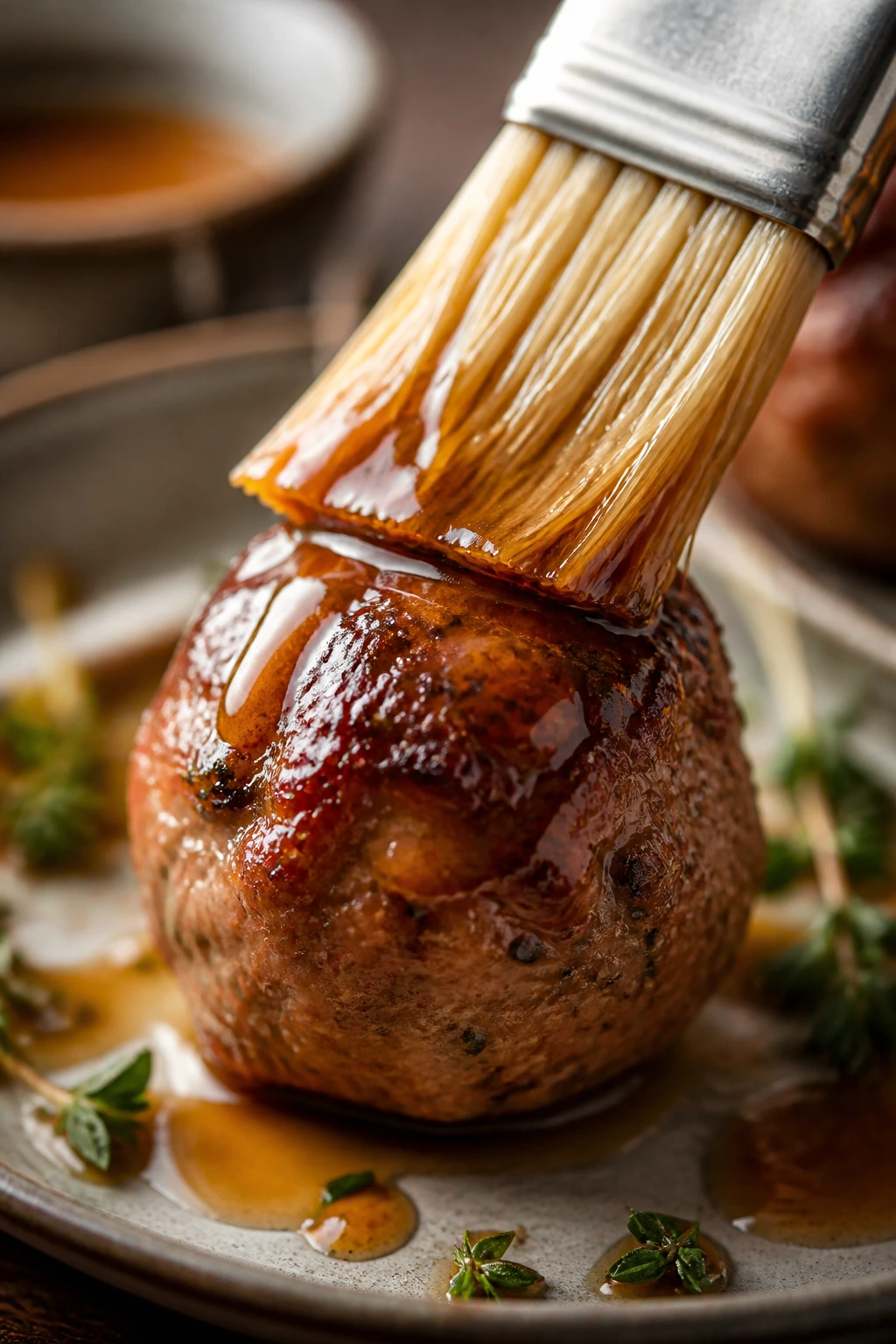
Flavor Enhancement:
A small finishing hit can change the whole batch. Tomato-sauced meatballs take well to a little butter or olive oil stirred in at the end. Greek and taco versions like a squeeze of lemon or lime right before serving. Teriyaki and Korean batches wake up fast when you add toasted sesame seeds and fresh scallions.
Customization:
Keep the base the same and move the flavor around. Swap parsley for cilantro, oregano for cumin, or breadcrumbs for oats, depending on the style you want. If you want a softer texture, add a spoonful more panade. If you want a firmer bite for sliders, keep the mix slightly tighter and shape smaller meatballs.
Serving Suggestions:
Finishing touches matter more than people think. Chopped herbs, pickles, thin-sliced onions, crunchy slaw, and a spoon of yogurt can make a plain-looking tray feel done. A meatball bowl without something crisp on top can taste flat even when the seasoning is good.
Make-It-Yours:
For a dairy-free batch, use broth or unsweetened plant milk in the panade and skip the cheese. For a gluten-free batch, use certified GF breadcrumbs or panko. For a lower-sodium batch, lean harder on lemon, vinegar, herbs, and garlic rather than salt. A little acidity goes a long way when the beef is stretched.
Make-Ahead, Storage, and Reheating Guidance
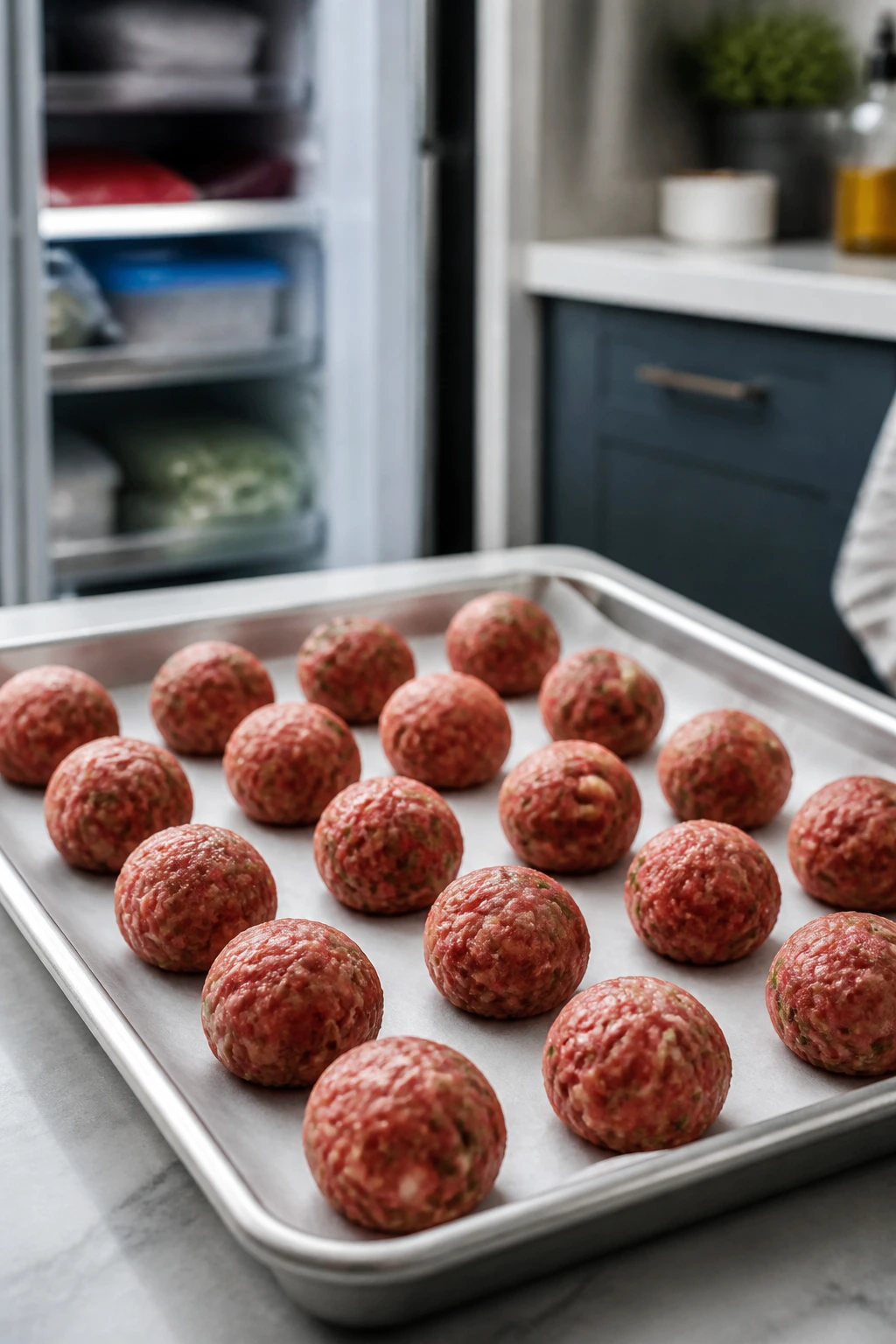
Raw meatballs can be shaped and refrigerated for up to 24 hours before cooking. That’s useful when you want to get the messy part out of the way early. Line them up on a tray, cover tightly, and chill. If you’re freezing them raw, set them on a tray until firm, then move them to a freezer bag or airtight container. They keep well for up to 3 months.
Cooked meatballs hold in the refrigerator for 3 to 4 days. If they’re sitting in sauce, they often taste even better on day two because the seasoning has time to settle. Freeze cooked meatballs for up to 2 to 3 months. For the best texture, cool them first, then freeze in a single layer before bagging them up.
Reheat sauced meatballs gently on the stove over low heat with a splash of broth, water, or extra sauce. In the oven, cover them and warm at 300°F to 325°F until hot in the center, usually 15 to 20 minutes depending on size. Microwaving works in a pinch, but use short bursts and cover the dish so the edges don’t dry out. Meatballs that were baked, then frozen, usually reheat more gracefully than ones that were simmered hard in sauce for too long.
Variations and Adaptations to Try
Gluten-Free Crumb Swap:
Use certified gluten-free breadcrumbs or panko in the same amount as the recipe calls for. If you’re starting with crackers, switch to crushed GF rice crackers. The texture stays close, and the meatballs still hold together well.
Dairy-Free Panade:
Replace milk with low-sodium broth or unsweetened oat milk, then skip the Parmesan or sour cream in the mix. Add a spoonful of olive oil if the recipe needs a little extra softness. This works especially well in the Italian, taco, and curry batches.
Lean-Beef Rescue:
If you only have 90/10 beef, add a little extra moisture from grated onion, yogurt, or sauce and keep a close eye on cook time. Lean meat dries fast, so aim for the lower end of the baking time and use a thermometer. A little fat from the sauce helps too.
Mini Meatball Tray:
Shape the mixture into 1-inch meatballs for appetizers, soup, or party trays. Cut the baking time down by several minutes and check often. Smaller meatballs brown faster, so watch the oven instead of the clock.
Sauce Swap Shuffle:
Use the same beef base and change the sauce to fit the meal. Marinara gives you pasta night, gravy gives you mashed potatoes, yogurt gives you a cool bowl, and curry gives you rice and naan. The base is flexible enough to take all four directions.
Kid-Friendly Mild Batch:
Reduce pepper, harissa, gochujang, curry paste, or chili flakes, then put the hotter sauce on the table separately. Kids tend to like the cheesier, BBQ, and teriyaki versions first, especially when the meatballs are small and easy to pick up.
Common Mistakes to Avoid
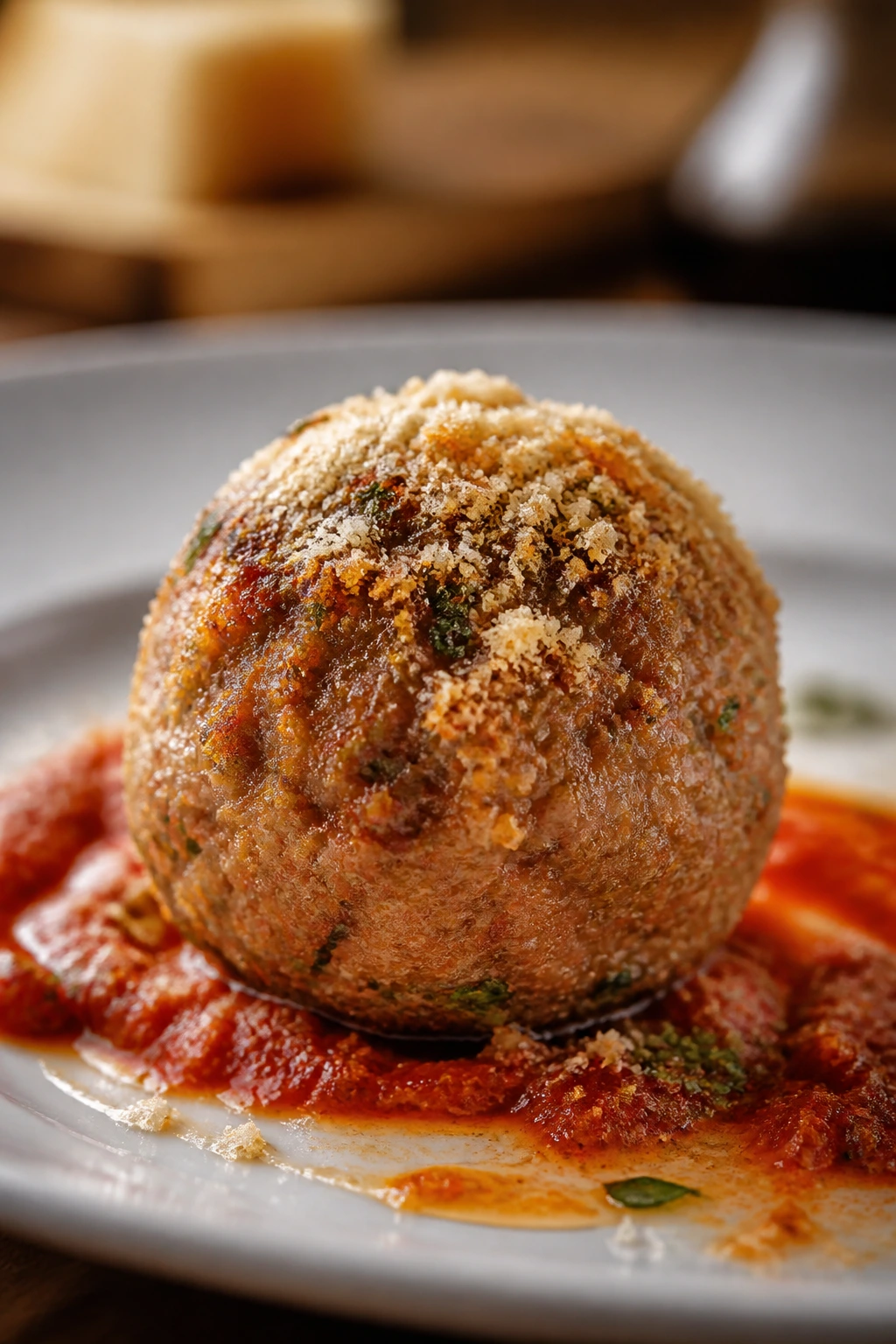
The most common problem is mixing the meat too hard. It feels productive, and it isn’t. Overworked meatballs turn tight and bouncy because the proteins lock up. Mix until the ingredients disappear, then stop.
Another trap is using the wrong texture of stretcher. Coarse oats, dry breadcrumbs, gummy rice, or watery vegetables can all throw the ratio off. The fix is simple: use the form that fits the recipe, and treat moisture as part of the equation, not an afterthought.
People also make the meatballs too large and too crowded. Bigger balls need longer in the oven, which can dry the outside before the middle is done. Crowding the pan causes steaming, and steamed meatballs are pale, soft, and a little sad. Give them a little room. It matters.
The last big mistake is forgetting that seasoning has to survive the sauce. If you use salty cheese, soy sauce, feta, crackers, or broth, the salt math changes fast. Taste the mix when you can — or fry a tiny test patty if you’re unsure. A meatball that starts bland usually ends bland.
And then there’s cooking too aggressively once the sauce is in the pan. A hard boil can split cream sauces, break tomato sauces, and tighten the meat. Gentle heat wins almost every time.
Frequently Asked Questions
Can I use 90/10 ground beef for these recipes?
Yes, but the texture gets drier faster. Choose the saucier recipes — tomato, gravy, curry, or glaze-based versions — and consider adding a little extra grated onion or milk-soaked binder to keep things supple.
What’s the best ingredient for stretching beef without making the meatballs taste bready?
Mushrooms, chickpeas, rice, and grated vegetables are the least bread-like options. Breadcrumbs and oats still work well, but they read a little more obviously in the finished bite.
Can I bake all of these instead of pan-frying?
Most of them, yes. Baking at 400°F to 425°F is the cleanest route for a big batch, and it gives you even browning without standing over a skillet. If a recipe depends on browned fond for the sauce, you can still bake the meatballs and make the sauce in a separate pan.
How do I keep meatballs from falling apart?
Use enough binder, keep the mixture cold, and don’t skip the egg unless the recipe tells you to. If the mix feels loose, chill it for 10 to 15 minutes before shaping. Also, avoid moving them around too soon once they hit the pan.
Can I freeze raw meatballs?
Yes. Shape them first, freeze them on a tray until firm, then pack them into a freezer bag. That way they don’t glue themselves together. Bake or simmer them from thawed, or add a few extra minutes if you cook them from frozen.
What if I don’t have breadcrumbs?
Crushed crackers, panko, quick oats, cooked rice, or fine bulgur all work in the right recipe. Each one changes the texture a little, so match the substitute to the flavor profile you want. Salted crackers need a lighter hand with added salt.
How do I know when they’re done without cutting one open?
An instant-read thermometer is the easiest answer. For ground beef, aim for 160°F in the center. If you don’t have a thermometer, the meatballs should feel firm and spring back a little when pressed, not squishy.
Can I make them the day before?
Yes. You can shape the mixture and refrigerate it overnight, or cook the meatballs a day ahead and warm them in sauce before serving. In many cases, the flavor settles a little better after sitting.
A Fuller Skillet
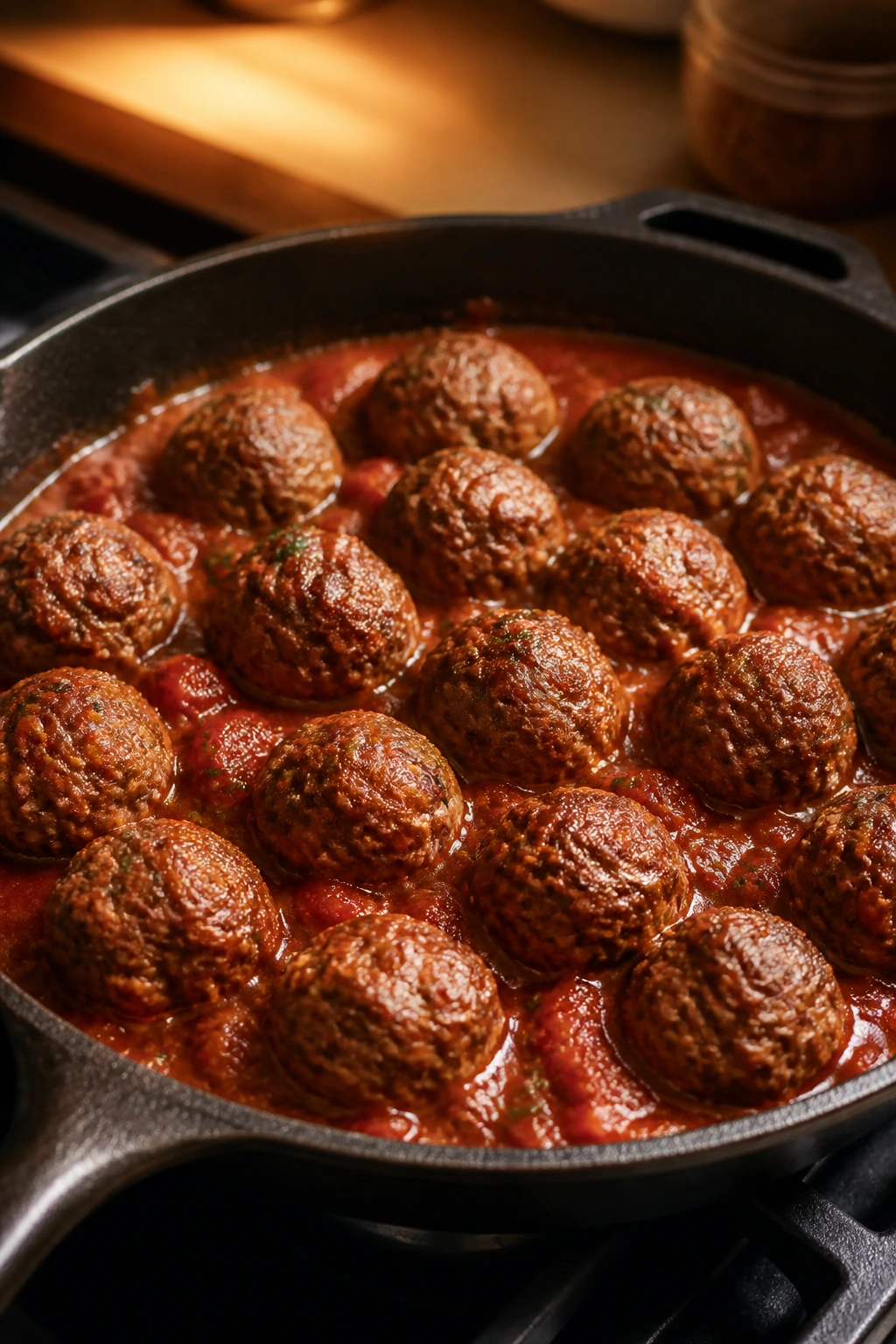
A pound of beef does not have to look modest at the table. It just needs the right partner. Once you know how to use breadcrumbs, oats, rice, beans, mushrooms, or grated vegetables, the beef starts acting like the center of a bigger meal instead of the only thing on the plate.
Pick the version that matches the pantry and the mood in the room. Keep the mixing gentle, keep the heat sensible, and let the sauce do some of the talking. The best meatballs in this bunch aren’t the flashiest ones. They’re the ones that make one pound feel like enough.