



A good ground beef and broccoli skillet should smell like browned meat, sweet onion, and garlic hitting hot oil at the same moment. You want the broccoli to keep a little snap, the sauce to cling in a shiny coat, and the beef to have those tiny craggy edges that grab every drop of flavor. If it turns soft and gray, the whole thing feels tired. If the sauce slides to the bottom of the pan like soup, it needs help.
That’s why this version leans on ground beef instead of sliced steak. Ground beef browns faster, so you get more flavor with less fuss, and the rough texture gives the sauce somewhere to hang on. The dish lands somewhere between takeout-style beef and broccoli and the kind of skillet dinner you make when you want something filling without hauling out half the kitchen.
I also like how forgiving it is. Broccoli can be a little bigger or a little smaller. The beef can be 85/15 or 90/10. The sauce can lean sweeter, sharper, or hotter depending on what’s in the cupboard. The trick is not fancy. It’s heat control, a short steam for the broccoli, and a sauce that thickens at the very end instead of soaking everything from the start.
Why This Ground Beef and Broccoli Works So Well
-
Fast Browning: Ground beef gives you more browned surface area than sliced meat, and that means more of those deep, savory bits in the pan.
-
Broccoli Stays Crisp Enough: A short covered steam softens the florets without turning them dull and floppy, which is the difference between a lively skillet and a soggy one.
-
The Sauce Clings: Cornstarch thickens the soy-based sauce into a glossy glaze, so it coats rice and broccoli instead of pooling under them.
-
It’s Pantry-Friendly: Soy sauce, broth, garlic, ginger, brown sugar, and vinegar are all regular cupboard items. Nothing here is precious.
-
Leftovers Hold Up: The beef reheats well, and the broccoli keeps enough texture for lunch the next day if you cool it quickly and don’t overcook it in the first place.
-
It Feels Bigger Than It Is: A pound and a half of beef stretches nicely once broccoli joins the party, especially over rice or noodles.
Timing and Yield at a Glance
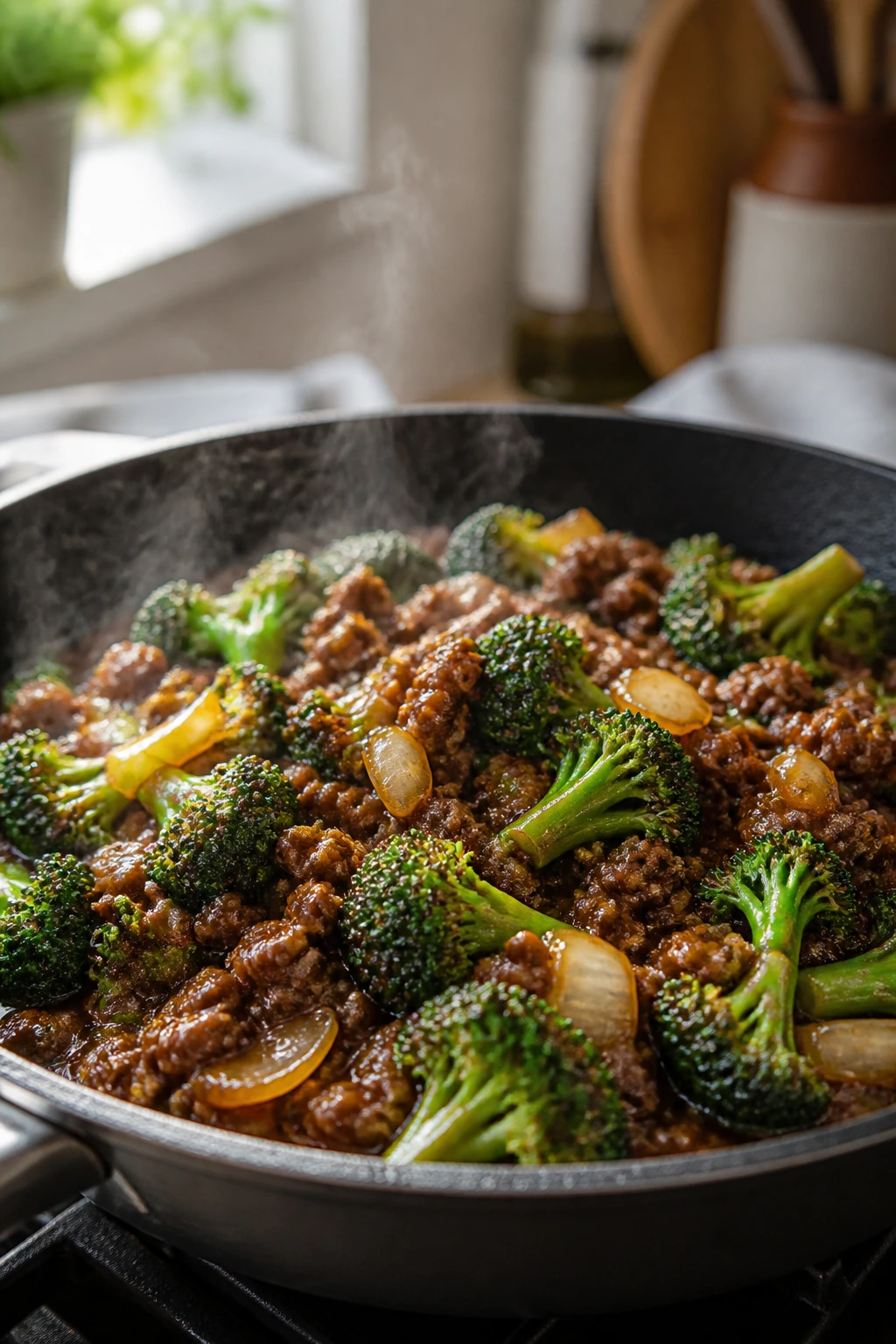
Yield: Serves 4 to 6
Prep Time: 15 minutes
Cook Time: 15 minutes
Total Time: 30 minutes
Difficulty: Beginner — one skillet, one bowl for the sauce, and a short covered steam are all you need.
Best Served: Right after cooking, over hot rice or noodles.
The easiest way to keep this dinner calm is to prep the sauce before the pan gets hot. Once the beef is in the skillet, things move fast. Too fast for rummaging. Too fast for wondering where you left the cornstarch.
I also like to cut the broccoli before I touch the stove. Tiny detail, big payoff. You can move from browning to steaming without pausing to wrestle a stalk of broccoli with one hand while the onions sit there getting too dark.
The Short Ingredient List
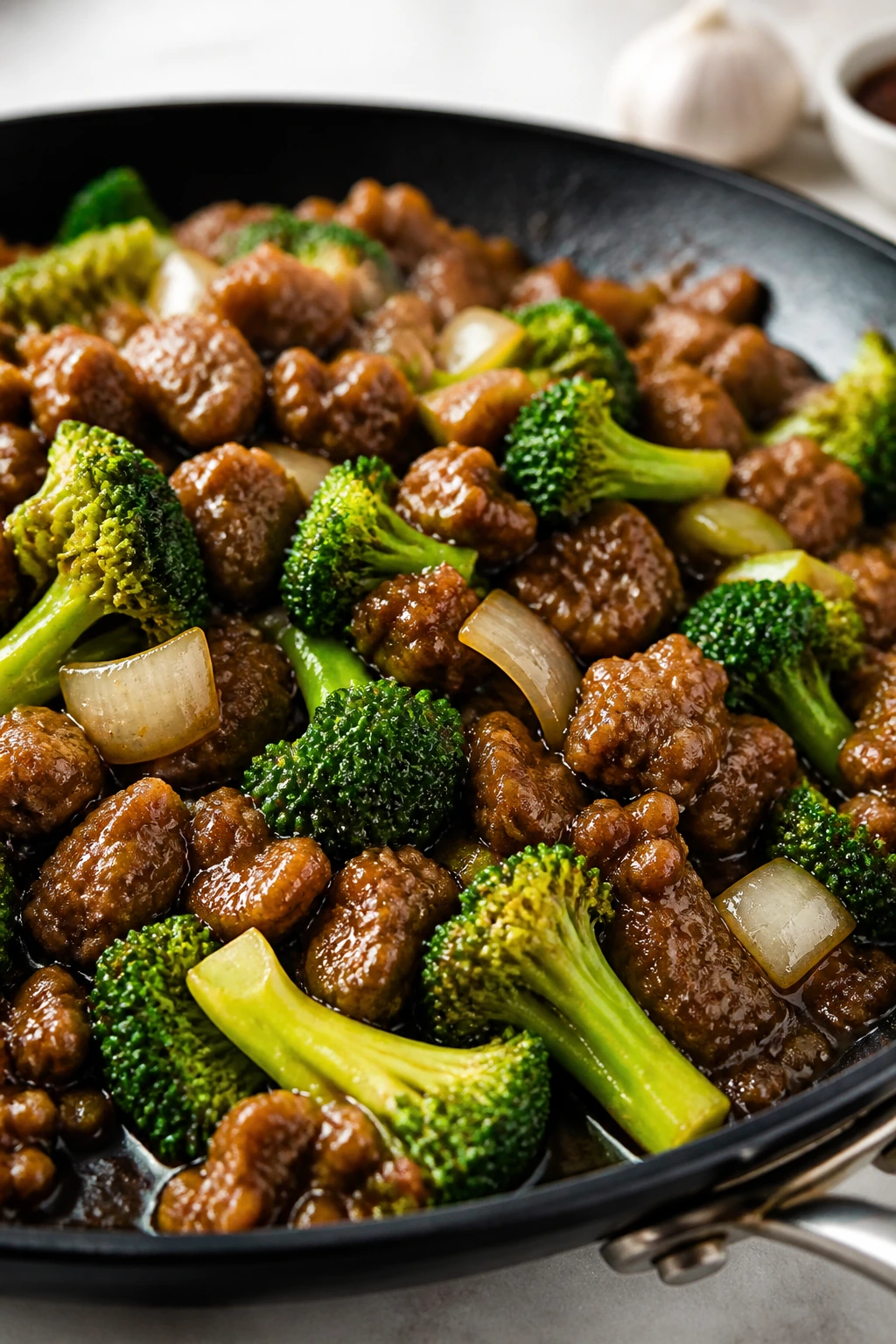
For the Beef and Broccoli:
- 1 1/2 pounds lean ground beef, 85/15 or 90/10
- 1 tablespoon neutral oil, only if your beef is very lean
- 1 medium yellow onion, finely diced
- 5 to 6 cups broccoli florets, cut into bite-size pieces
- 4 cloves garlic, minced
- 1 tablespoon fresh ginger, grated
- 2 green onions, thinly sliced
- 1 tablespoon sesame seeds, for finishing
For the Sauce:
- 1/2 cup low-sodium soy sauce
- 1/2 cup beef broth
- 2 tablespoons oyster sauce
- 2 tablespoons packed light brown sugar
- 1 tablespoon rice vinegar
- 1 tablespoon cornstarch
- 1 tablespoon toasted sesame oil
- 1/4 teaspoon black pepper
- 1/4 teaspoon red pepper flakes, optional
- 1/4 cup water, for steaming the broccoli
This ingredient list is short enough to memorize after one run. That’s part of the appeal. You’re not juggling a marinade, a separate glaze, and a finishing sauce. You’re building one sauce, cooking everything in sequence, and then eating while the broccoli still has some bite.
Why Each Ingredient Pulls Its Weight in the Pan
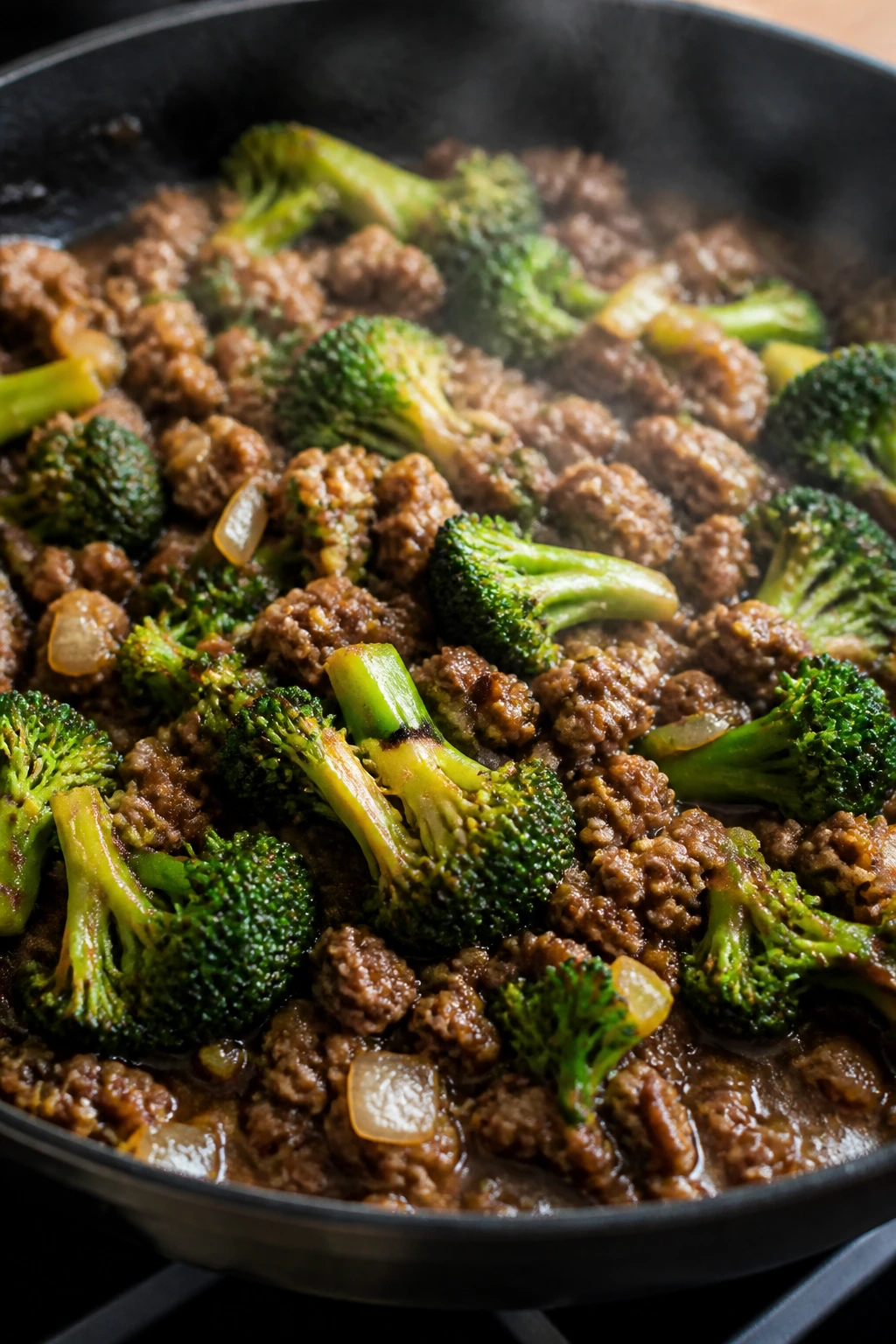
Ground Beef
What to use: 1 1/2 pounds of 85/15 or 90/10 ground beef gives you enough fat for flavor without turning the skillet greasy.
Preparation: Let it sit out for 10 to 15 minutes while you chop the vegetables so it drops into the pan in loose clumps instead of one cold brick.
Substitutions: Ground turkey works if you want a leaner skillet, though it needs a little extra oil and a bit more seasoning.
Tips: If you use beef that’s closer to 80/20, spoon off extra fat after browning so the sauce doesn’t taste heavy.
Broccoli
What to use: 5 to 6 cups broccoli florets, cut into bite-size pieces, plus the tender part of the stems if you like them.
Preparation: Slice the florets into even pieces so the bigger tops and smaller bits finish at the same time; peel the stems if they’re thick and stringy, then slice them thin.
Substitutions: Broccolini, cauliflower florets, or even a mix of broccoli and snap peas can stand in if that’s what you’ve got.
Tips: Dry the broccoli well after rinsing. Wet broccoli dumps extra steam into the pan and makes the sauce thinner than it should be.
The Sauce
What to use: Low-sodium soy sauce, beef broth, oyster sauce, brown sugar, rice vinegar, cornstarch, sesame oil, black pepper, and a pinch of red pepper flakes.
Preparation: Whisk the cornstarch until it disappears before it ever hits the skillet; it settles fast and hates being rushed.
Substitutions: Tamari works for a gluten-free version, and if you skip oyster sauce, add another tablespoon of soy sauce plus a teaspoon of sugar to keep the sauce from tasting flat.
Tips: Keep the sesame oil for the end if you can. Its nutty smell fades a little when it gets cooked too hard.
Aromatics and Finish
What to use: One diced onion, four cloves of garlic, one tablespoon of grated fresh ginger, two sliced green onions, and sesame seeds.
Preparation: Mince the garlic fine so it melts into the sauce instead of showing up as sharp little bits; grate the ginger with a microplane or the fine side of a box grater.
Substitutions: Shallot can stand in for onion, and if you’re out of fresh ginger, a small pinch of ground ginger will do in a pinch.
Tips: Add the garlic only after the beef has browned. It burns fast in a dry pan and turns bitter before you can blink.
The Tools That Keep This Dinner Fast, Not Fuss
-
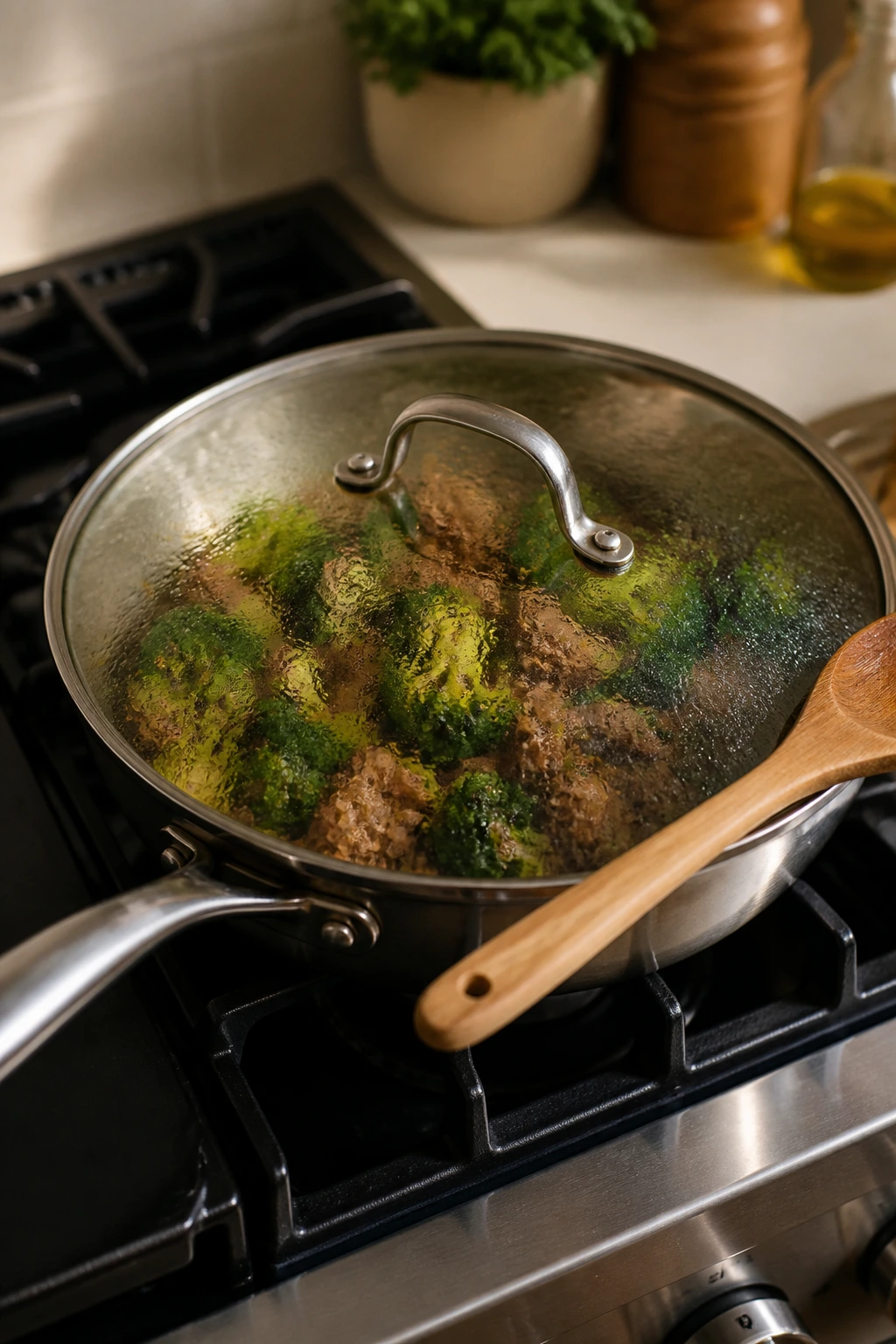
12-inch skillet with a lid: A wide pan gives the beef room to brown instead of steam, and the lid is what softens the broccoli without overcooking it.
-
Wooden spoon or heatproof spatula: You need something sturdy enough to break up the beef into small pieces while it cooks.
-
Small bowl and whisk: The sauce comes together cleanly in a bowl, and the whisk keeps the cornstarch from clumping.
-
Chef’s knife and cutting board: A sharp knife makes the onion and broccoli prep go faster, and uniform pieces cook more evenly.
-
Microplane or fine grater: Handy for ginger. You can mince it by hand, but a fine grater gives the sauce a smoother finish.
-
Measuring spoons and cups: The sauce depends on balance. Eyeballing soy sauce is how dinner gets too salty.
I like a skillet with some depth here. A shallow frying pan can work, but it gets messy the second you add the broccoli and sauce. A 12-inch sauté pan gives you a little breathing room, which matters more than people think.
Browning, Steaming, and Glazing the Pan Step by Step
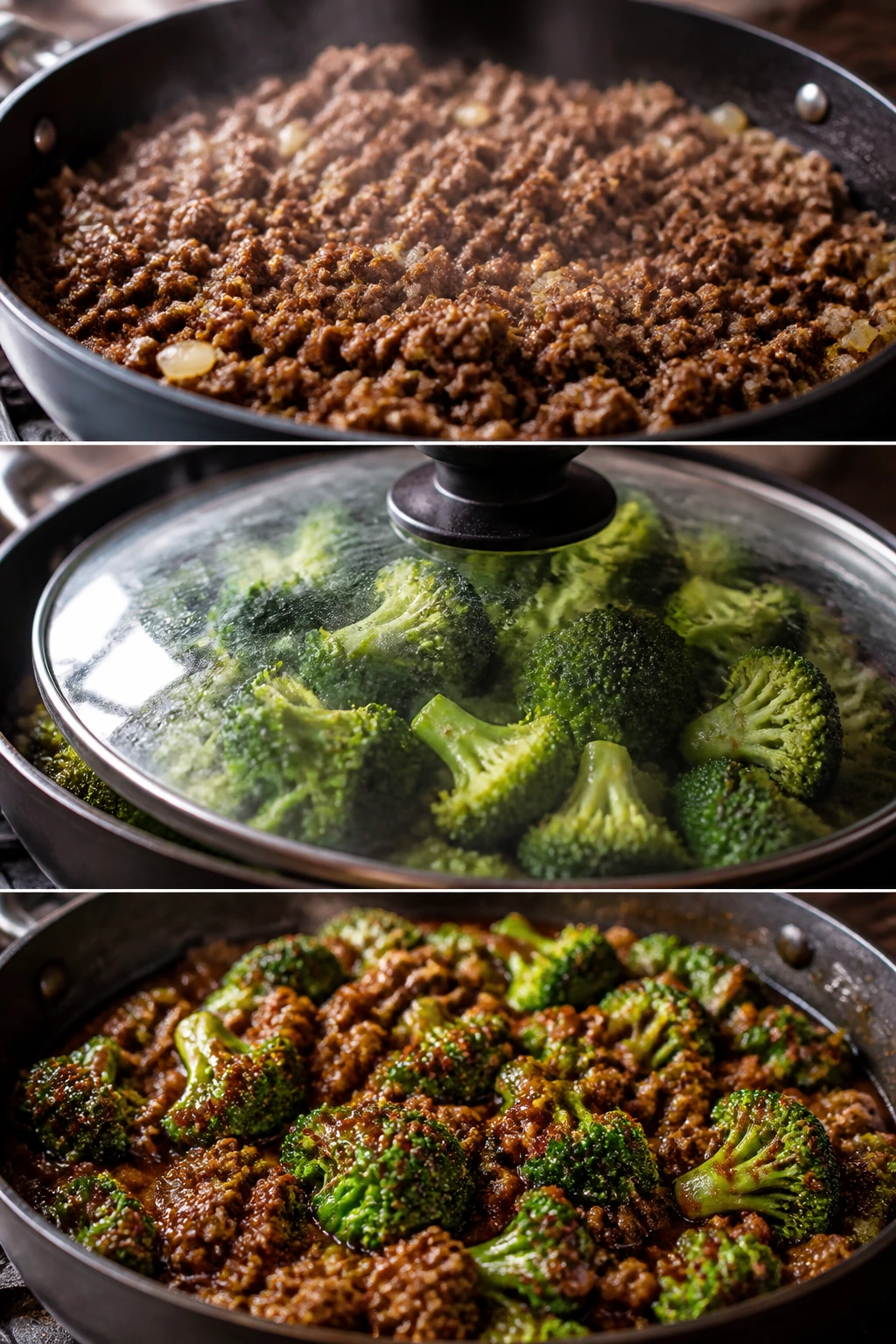
Make the Sauce:
-
In a small bowl, whisk together the soy sauce, beef broth, oyster sauce, brown sugar, rice vinegar, cornstarch, sesame oil, black pepper, and red pepper flakes until the cornstarch disappears and the mixture looks smooth.
-
Set the bowl aside near the stove and give it one more whisk before you pour it later. Cornstarch settles fast, and a second whisk saves you from little lumps hiding at the bottom.
Brown the Beef:
-
Heat a 12-inch skillet over medium-high heat. If your beef is on the lean side, add 1 tablespoon neutral oil. Add the onion and cook for about 2 minutes, stirring often, until it starts to soften and the edges look translucent.
-
Add the ground beef and cook for 5 to 6 minutes, breaking it into small crumbles with a spoon or spatula. Keep cooking until it’s no longer pink and you see browned spots on the bottom of the pan. If more than a tablespoon or two of fat collects in the skillet, spoon some off.
Add the Aromatics:
- Stir in the garlic and ginger and cook for 30 seconds, just until fragrant. Do not let the garlic brown; once it goes from pale to toasted to bitter, the whole dish changes character in a bad way.
Steam the Broccoli:
- Add the broccoli florets and 1/4 cup water. Cover the skillet and cook for 3 to 4 minutes, until the broccoli turns bright green and a knife slips into the thicker stems with a little resistance. You want crisp-tender, not soft. If the florets are large, give them another minute.
Glaze and Finish:
-
Whisk the sauce again and pour it into the skillet. Stir everything together and let it bubble for 1 to 2 minutes, until the sauce thickens enough to coat the back of a spoon and leaves a glossy sheen on the beef and broccoli.
-
Turn off the heat and taste. Add a splash more soy sauce for salt, a teaspoon of vinegar for brightness, or a pinch more brown sugar if the sauce needs roundness. Sprinkle over the green onions and sesame seeds, then serve right away.
The sauce will look thin the second it hits the skillet. That’s normal. Give it a minute or two and it turns from watery to glossy, which is exactly what you want before it goes over rice.
How I’d Serve It at the Table
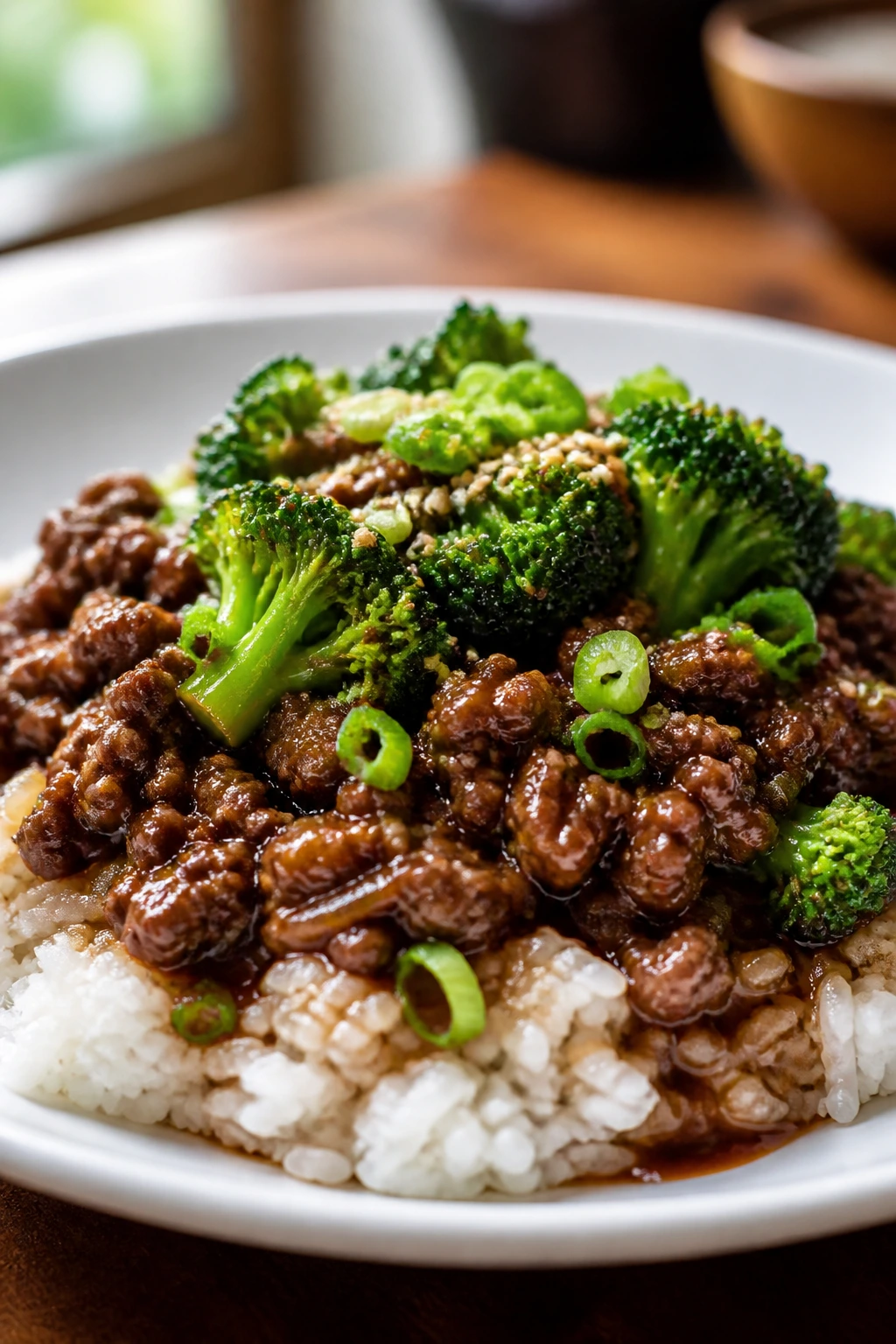
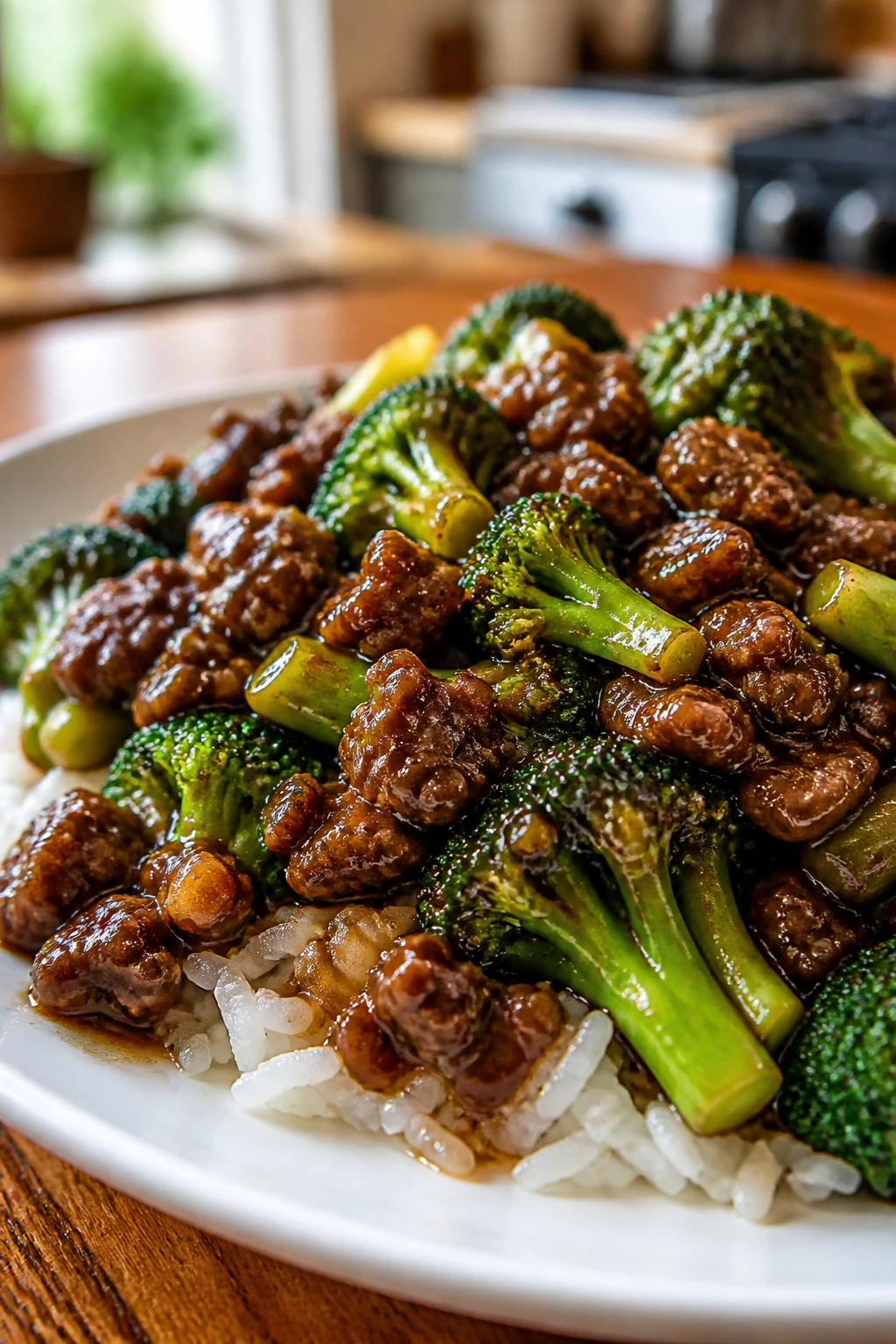
Presentation: Spoon the beef and broccoli over a mound of hot jasmine rice so the sauce runs into the rice instead of disappearing at the bottom of the bowl. I like to pile the broccoli on top rather than burying it, then finish with green onions and sesame seeds for a little lift.
Accompaniments: Plain steamed rice is the cleanest match, but brown rice, ramen noodles, or even buttered noodles all work. If you want something fresh beside it, a quick cucumber salad with rice vinegar and a pinch of sugar cuts through the richness nicely. A plate of sliced oranges sounds odd on paper and tastes sharp and useful on the table.
Portions: Count on this serving 4 hearty portions or 6 smaller ones. Over rice, one generous cup of the beef and broccoli mixture per person is a fair starting point. If you’re feeding bigger appetites, stretch the skillet with extra rice rather than piling on more sauce.
Beverage Pairing: Cold green tea is a clean match. A dry lager or a chilled riesling does the job too if you want something with a little more snap. The sauce has enough salt and sweetness that syrupy drinks feel heavy fast.
Small Adjustments That Change the Dish Without Rewriting It
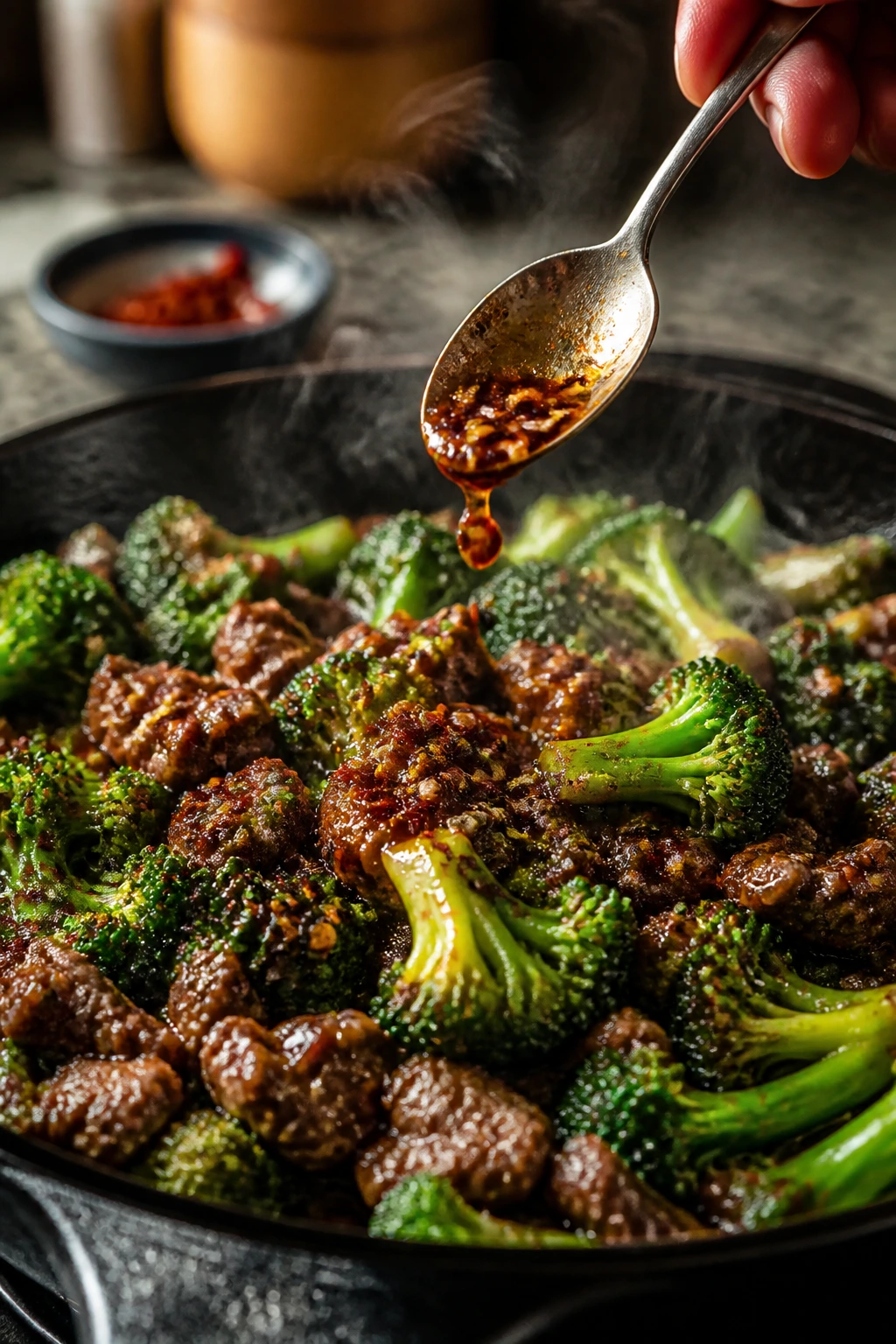
Flavor Enhancement: A teaspoon of chili garlic sauce or a spoonful of chili crisp stirred in at the end gives the sauce more heat and a little texture. I like this better than dumping in a giant shake of red pepper flakes because it spreads the heat more evenly.
Time-Saver: Buy broccoli florets that are already trimmed if the produce section has them. If the bag includes thick stems, slice those thin and add them first so they get a head start under the lid.
Cost-Saver: Use 85/15 ground beef and spoon off the extra fat after browning. It gives you flavor without needing a separate oil bath, and it’s usually the sweet spot for a skillet like this.
Make-It-Yours: Toss in sliced mushrooms, shredded carrots, or a handful of snap peas if you want more vegetables in the pan. I’ve also done this over cauliflower rice on nights when I wanted the beef and broccoli to stay front and center without a heavy starch underneath.
A tiny squeeze of rice vinegar right before serving can wake the whole thing up. Not a flood. Half a teaspoon can be enough if the sauce tastes a little sleepy.
Common Slip-Ups and Easy Fixes
-
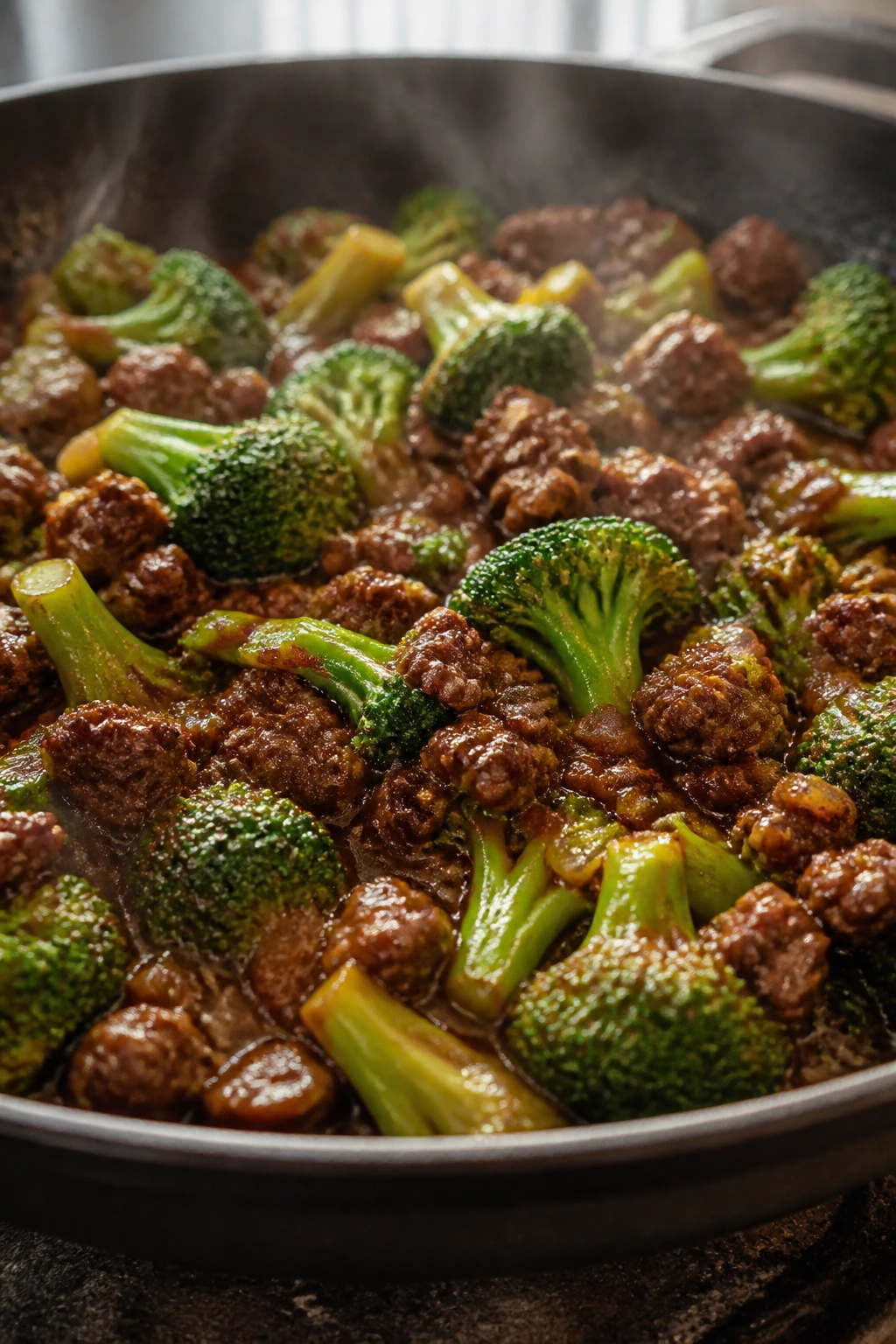
Crowding the beef into one soggy layer: If the meat goes into the pan too cold or too packed together, it steams instead of browns, and the finished dish tastes flat. Break it up as it cooks and give the skillet a minute of real heat before you stir.
-
Letting the broccoli cook too long: Soft broccoli turns olive-green and loses that clean snap that makes this dish worth eating. Keep the lid on only long enough for the florets to turn bright green and barely tender, then move straight to the sauce.
-
Skipping the whisk on the sauce: Cornstarch sinks to the bottom and forms little white clumps if you pour it in half-mixed. Whisk it well in the bowl, then whisk it again before it hits the pan.
-
Adding garlic too early: Garlic in a dry skillet burns fast. If it cooks before the beef is browned, it can go from fragrant to bitter in a blink, and there’s no fixing that without starting over.
-
Using full-sodium soy sauce and salting blindly: The sauce can go from savory to harsh if you add salt before tasting. Start with low-sodium soy, finish the dish, then adjust at the end if it needs a little more edge.
-
Expecting the sauce to thicken before it boils: Cornstarch needs heat to do its job. If you pull the pan too early, the sauce stays thin and slick; if you keep it at a lively bubble for a minute or two, it turns glossy and tight.
Variations That Actually Taste Different
Spicy Chili Crisp Version: Stir 1 to 2 tablespoons of chili crisp into the sauce at the end and skip the red pepper flakes. You’ll get heat, little crunchy bits, and a deeper savory note that plays well against the broccoli’s bitterness.
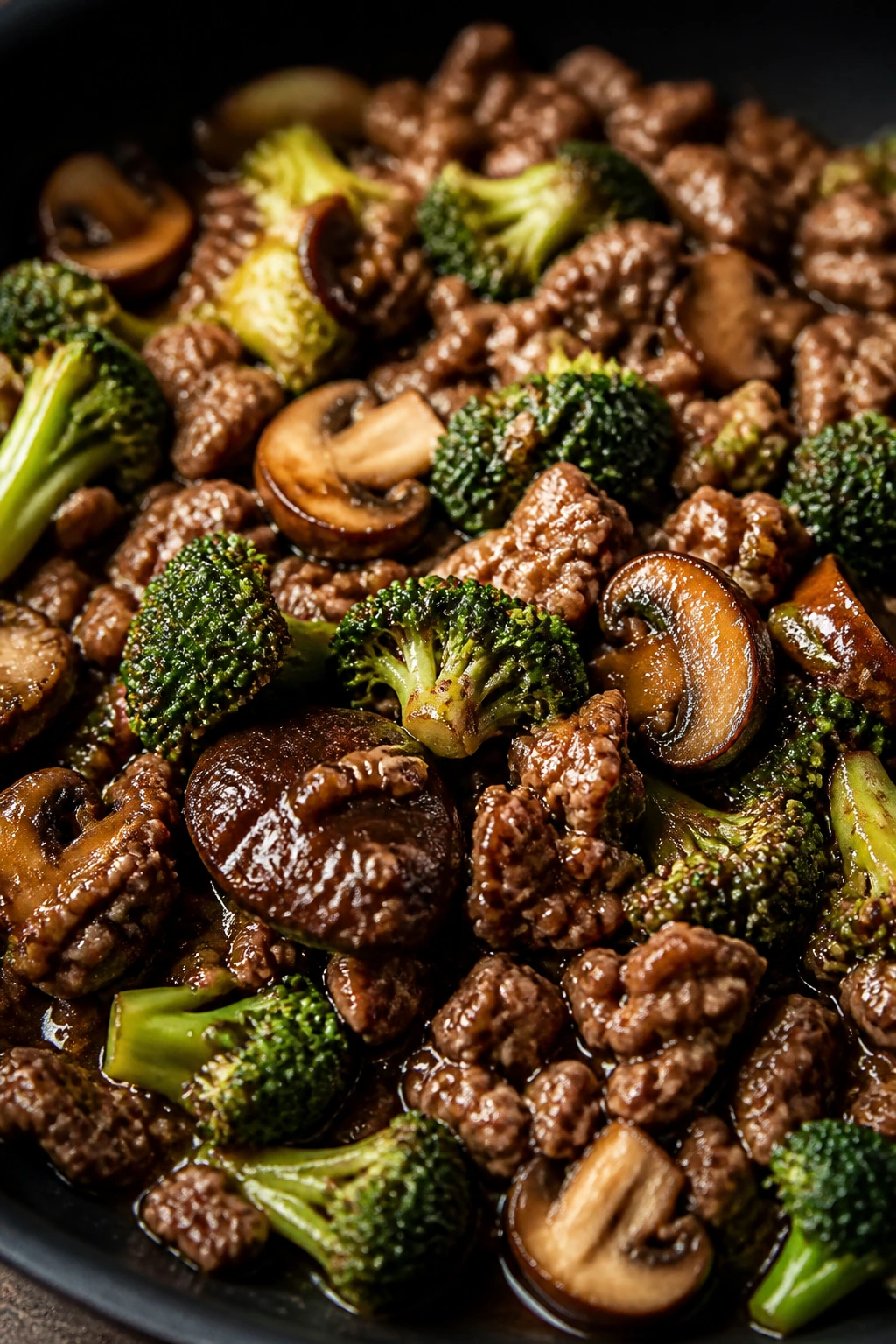
Mushroom-Heavy Skillet: Add 8 ounces of sliced cremini mushrooms after the beef browns and cook them until they release their liquid and start to brown. The mushrooms soak up sauce and make the skillet taste bigger without adding another pound of meat.
Gluten-Free Tamari Bowl: Swap the soy sauce for tamari and choose a gluten-free oyster sauce, or use an extra tablespoon of tamari if that’s easier to find. The rest of the method stays the same, and the sauce still thickens the way you want it to.
Low-Carb Plate: Serve the beef and broccoli over cauliflower rice or shredded cabbage instead of rice. I like cabbage better than cauliflower rice when I want more crunch, because it softens just enough under the hot sauce and keeps a little bite.
Ground Turkey Swap: Use 1 1/2 pounds ground turkey, plus the tablespoon of neutral oil at the start so the pan doesn’t run dry. Turkey is milder than beef, so I’d keep the oyster sauce and ginger in place and maybe add an extra splash of soy at the end.
Leftovers, Freezer Stashes, and Reheating
Refrigerator
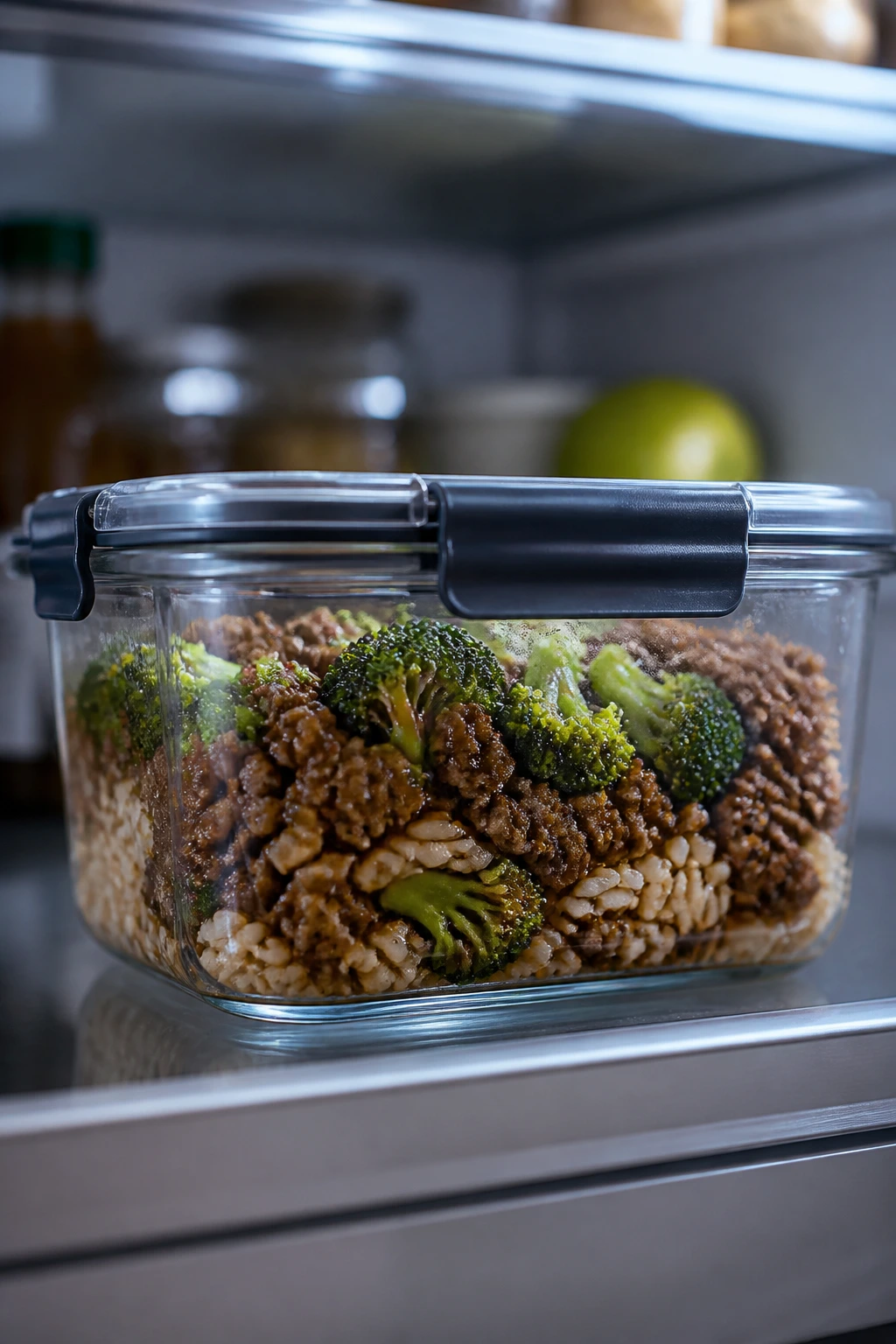
Let the skillet cool for no more than 2 hours before you pack it up. Store leftovers in an airtight container in the fridge for 3 to 4 days. If you’re planning for lunch boxes, keep the rice separate so it doesn’t drink up all the sauce overnight.
Freezer
You can freeze the cooked beef and broccoli for up to 2 months, but the broccoli will soften a little after thawing. If freezing is part of the plan, undercook the broccoli by 1 minute so it holds together better later. I freeze it in flat portions, which thaw faster and stack neatly.
Reheating
For the best texture, reheat the beef and broccoli in a skillet over medium heat with 1 to 2 tablespoons of water. Cover it for a minute or two, then stir until it’s hot all the way through. The microwave works in a pinch, but use 60-second bursts and stir between them so the broccoli doesn’t go limp in one corner while the beef stays cool in another.
Make-Ahead
The sauce can be whisked together up to 3 days ahead and kept in the fridge. You can also chop the broccoli and onion the day before, though I’d keep the broccoli in a sealed container lined with a paper towel so it stays dry. If you want to brown the beef ahead of time, do that one day early and rewarm it in the skillet before adding the broccoli and sauce.
Leftovers taste a little saucier the next day because the broccoli releases a bit of moisture. I don’t mind that. Actually, I like it with rice on day two more than I like it the first night, as long as you don’t overcook the reheat.
Questions Home Cooks Ask First

Can I use frozen broccoli instead of fresh?
Yes, but thaw it first and pat it dry with paper towels. Frozen broccoli carries extra water, and if you toss it straight into the skillet, the sauce gets thin and the florets turn softer than you probably want.
What fat ratio of ground beef works best?
I like 85/15 because it gives enough fat to flavor the onion and garlic without forcing you to drain half the skillet. If you use 90/10, add the tablespoon of oil at the start. If you go richer, spoon off excess grease after browning so the sauce stays clean.
Can I make this without oyster sauce?
You can. Add another tablespoon of soy sauce and a teaspoon of brown sugar to replace some of the missing depth. The flavor will be a little less rounded, but the dish still works if oyster sauce isn’t in the cabinet.
Why did my sauce stay thin?
Usually one of three things happened: the cornstarch wasn’t whisked well, the sauce didn’t boil long enough, or too much water leaked from the broccoli. Let it bubble for at least a minute after pouring it in, and make sure the broccoli is dry before it goes into the pan.
Can I serve it over noodles instead of rice?
Yes. Lo mein noodles, ramen noodles, or even plain spaghetti all catch the sauce well. I’d toss the noodles with a spoonful of the sauce first, then spoon the beef and broccoli on top so the bowl doesn’t turn into one heavy clump.
Is this recipe spicy?
Not unless you make it that way. The red pepper flakes are optional, and you can leave them out entirely for a milder skillet. If you want more heat, chili crisp or a little sriracha at the end gives you more control than dumping in extra flakes at the start.
Can I double the recipe for a bigger crowd?
Yes, but use two skillets or brown the beef in batches if you can. A crowded pan traps steam, which means less browning and more gray beef. The sauce can be doubled cleanly, but the broccoli cooks better when it has room to sit in a single layer under the lid.
A Skillet Dinner Worth Repeating
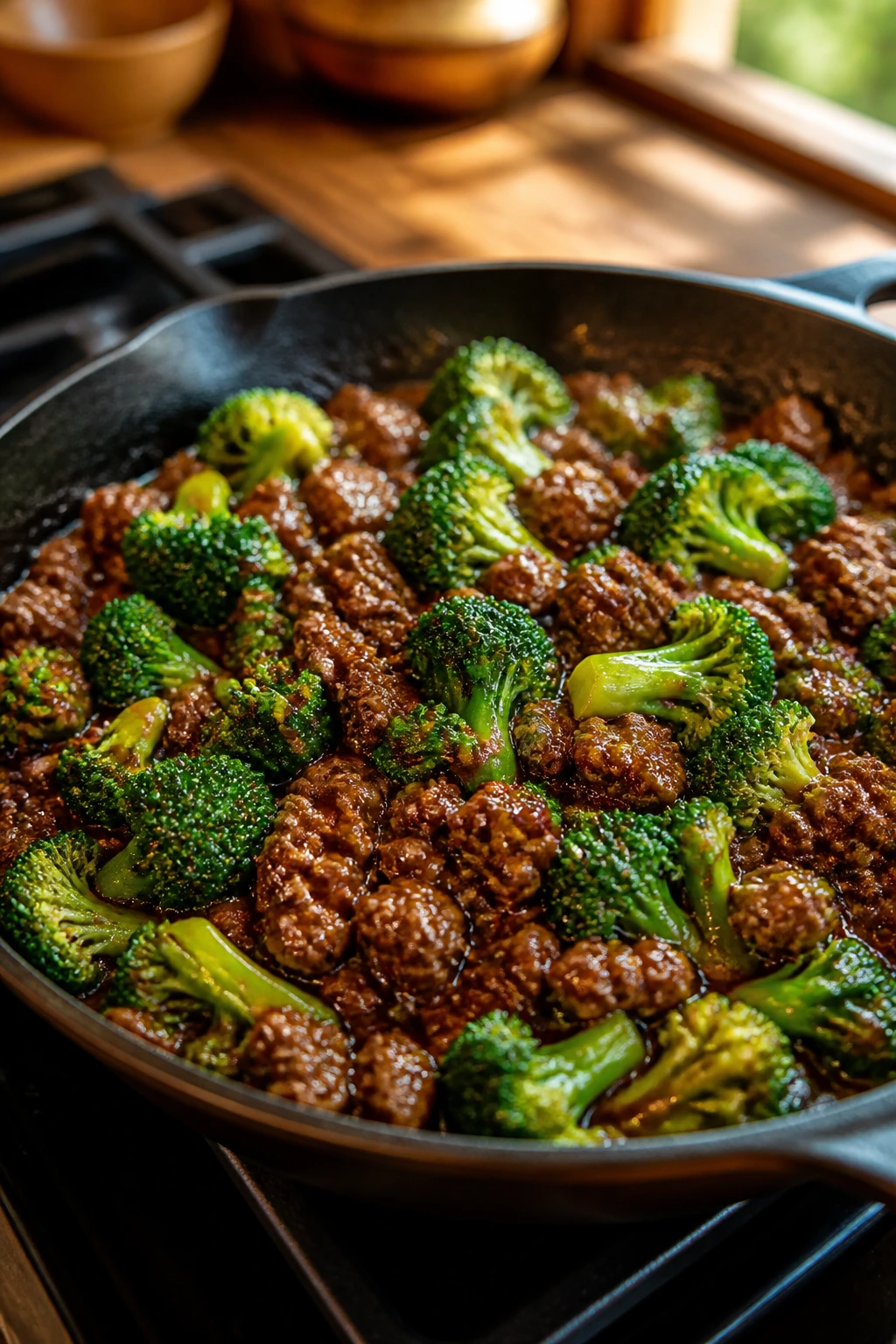
Some dinners work because they behave. This one does exactly that: the beef browns fast, the broccoli gets a short steam, and the sauce tightens enough to coat every bite without turning the pan into soup. That’s the part I keep coming back to. It feels dependable without feeling dull.
If you keep the broccoli in bite-size pieces, whisk the sauce before it hits the heat, and give the pan a minute to brown the beef before you rush in with the garlic, the whole dish falls into place. Not fussy. Not precious. Just a solid skillet dinner that earns its spot in the rotation.
Ground Beef and Broccoli Skillet — Recipe Card
Recipe Name: Ground Beef and Broccoli Skillet
Description: A savory, saucy beef and broccoli dinner made in one skillet with browned ground beef, crisp-tender broccoli, garlic, ginger, and a glossy soy-based sauce. Best served hot over rice or noodles.
Prep Time: 15 minutes
Cook Time: 15 minutes
Total Time: 30 minutes
Course: Dinner, Main Course
Cuisine: American-Chinese Inspired
Servings: 5 servings
Calories: 390 kcal
Ingredients
For the Beef and Broccoli:
- 1 1/2 pounds lean ground beef, 85/15 or 90/10
- 1 tablespoon neutral oil, only if the beef is very lean
- 1 medium yellow onion, finely diced
- 5 to 6 cups broccoli florets, cut into bite-size pieces
- 4 cloves garlic, minced
- 1 tablespoon fresh ginger, grated
- 2 green onions, thinly sliced
- 1 tablespoon sesame seeds, for finishing
For the Sauce:
- 1/2 cup low-sodium soy sauce
- 1/2 cup beef broth
- 2 tablespoons oyster sauce
- 2 tablespoons packed light brown sugar
- 1 tablespoon rice vinegar
- 1 tablespoon cornstarch
- 1 tablespoon toasted sesame oil
- 1/4 teaspoon black pepper
- 1/4 teaspoon red pepper flakes, optional
- 1/4 cup water, for steaming the broccoli
Instructions
-
Whisk together the soy sauce, beef broth, oyster sauce, brown sugar, rice vinegar, cornstarch, sesame oil, black pepper, and red pepper flakes in a small bowl.
-
Heat a 12-inch skillet over medium-high heat. Add the neutral oil if needed, then cook the onion for 2 minutes until softened.
-
Add the ground beef and cook for 5 to 6 minutes, breaking it into small crumbles, until browned and no longer pink. Spoon off excess fat if needed.
-
Stir in the garlic and ginger and cook for 30 seconds, just until fragrant.
-
Add the broccoli and 1/4 cup water. Cover and cook for 3 to 4 minutes, until the broccoli is bright green and crisp-tender.
-
Re-whisk the sauce, pour it into the skillet, and stir for 1 to 2 minutes until thickened and glossy.
-
Turn off the heat, taste and adjust if needed, then top with green onions and sesame seeds before serving.
Notes: For a gluten-free version, use tamari and gluten-free oyster sauce. If you want firmer broccoli, reduce the covered steam by 1 minute. Reheat leftovers in a skillet with a splash of water for the best texture.