



Breakfast pizza recipes sound like a stunt until you make one properly, with a hot oven, a dough that has had time to relax, and eggs that stay soft instead of turning rubbery. Then the whole thing clicks. The crust comes out crisp at the rim and chewy in the middle, the cheese melts into a little puddle around the eggs, and the toppings smell like the best part of pasta night before the pasta even hits the pot.
That pasta-night pantry is half the appeal. Mozzarella, Parmesan, ricotta, basil, olives, sausage, tomato sauce, a jar of pesto you meant to use with penne — all of it slides naturally onto pizza dough and suddenly tastes more deliberate. The trick is knowing what deserves to go on raw, what needs a quick sauté first, and which toppings absolutely should not be piled on cold and wet unless you enjoy a limp center. You probably don’t.
A good breakfast pizza has a small amount of drama and a lot of discipline. The oven should be hot enough to blister the dough before the eggs overcook. The toppings should be familiar but not sleepy. And when the first slice comes up with a clean stretch of cheese and a yolk that just barely runs, you’ll understand why this format earns a spot on a brunch table, a casual dinner spread, or any pasta night where you want something that feels a little unexpected without requiring a separate grocery list.
Why These Breakfast Pizzas Earn a Spot in the Rotation
-
Pantry overlap: Most of these pizzas use the same Italian and Mediterranean staples that already show up in a pasta-night kitchen — olive oil, garlic, Parmesan, basil, ricotta, sausage, and tomato sauce.
-
Fast bake time: Once the oven and stone are hot, most of these pizzas finish in 10 to 14 minutes, which is faster than waiting on a casserole and more interesting than a skillet full of eggs.
-
Cooked-and-raw balance: The best versions mix one or two cooked toppings with fresh herbs or cheese at the end, so the pizza tastes layered instead of heavy.
-
Flexible crusts: A 1-pound ball of dough works, but naan, flatbread, and parbaked crusts can step in when you want brunch with less fuss.
-
Good use for leftovers: Extra marinara, cooked sausage, roasted peppers, broccoli rabe, or meatballs from the night before all make sense here.
-
Crowd-friendly by design: You can bake two different pizzas at once and keep each one separate, which saves a lot of arguments at the table.
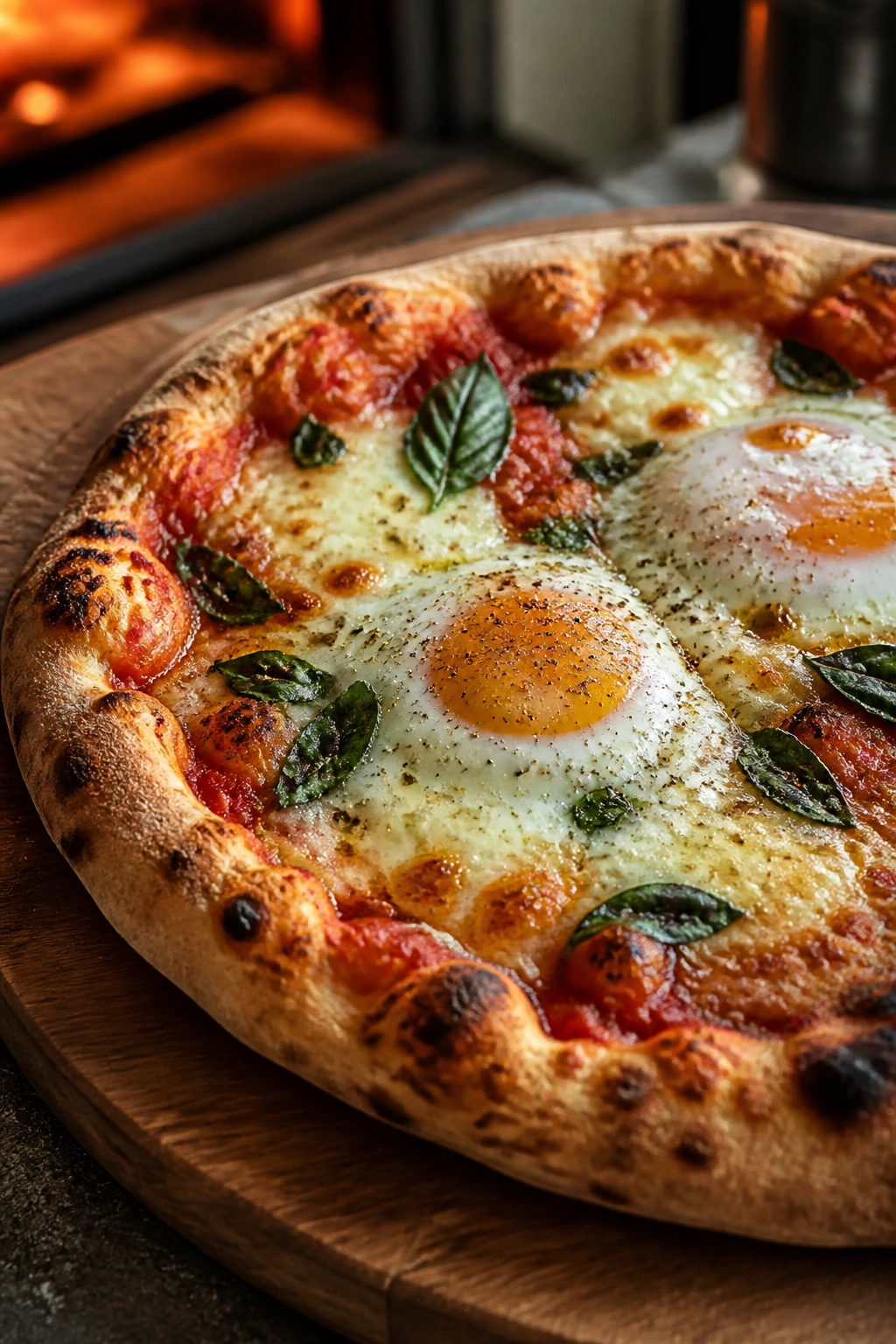
1. Margherita Breakfast Pizza with Soft Eggs
The classic Margherita treatment works on breakfast pizza because it keeps the toppings spare and the flavors clean. You get bright tomato sauce, stretchy mozzarella, fresh basil, and eggs set just enough to hold their shape. It smells like a pizza shop and a Sunday breakfast table decided to share a kitchen.
Why It Works:
The sauce gives the pizza a familiar pasta-night backbone, while the eggs add richness without making the whole thing heavy. Baking the eggs directly on the pizza means the whites set in the same heat that crisps the crust, so you don’t end up with a separate pan and an extra mess. Keep the sauce thin; a heavy layer will steam the dough before the bottom has a chance to brown.
Key Ingredients:
- 1 lb pizza dough, room temperature
- 2 tbsp extra-virgin olive oil
- 1/2 cup marinara or pizza sauce
- 8 oz whole-milk mozzarella, shredded
- 2 large eggs
- 1/4 cup grated Parmesan
- 8 fresh basil leaves, torn
- 1/4 tsp red pepper flakes
- Fine sea salt and black pepper, to taste
Quick Steps:
- Preheat the oven to 475°F and place a pizza stone or inverted baking sheet inside to heat for at least 30 minutes.
- Stretch the dough into a 12-inch round on parchment paper or a floured peel.
- Brush the surface with olive oil, then spread the marinara in a thin layer, leaving a 1/2-inch border.
- Scatter the mozzarella evenly, then make 2 shallow wells in the cheese and crack the eggs into them.
- Bake for 10 to 12 minutes, until the crust is browned underneath and the egg whites are set but the yolks still wobble a little.
- Finish with Parmesan, basil, red pepper flakes, and a pinch of black pepper before slicing.
Equipment for This Recipe:
- Pizza stone or inverted rimmed baking sheet
- Pizza peel or parchment paper
- Small bowl for sauce
- Box grater for Parmesan
- Sharp knife or pizza wheel
How to Serve This Dish:
Cut this into 6 wedges and serve it while the yolks still have some movement. A small arugula salad with lemon and olive oil keeps the plate from feeling one-note, and a cappuccino or strong black coffee fits the flavor set better than anything sugary.
Pro Tips for This Recipe:
- Let the dough rest at room temperature for 30 to 45 minutes before stretching or it will keep snapping back.
- Use whole-milk mozzarella; part-skim can bake up a little rubbery here.
- If you like runny yolks, pull the pizza the second the whites are opaque at the edges and just barely glossy on top.
- Add the basil after baking. It should smell green and sharp, not wilted and dull.
Variations on This Dish:
- Garlic Margherita: Rub the stretched dough with one cut garlic clove before adding the sauce for a sharper base.
- Buffalo Morning Margherita: Drizzle 1 to 2 tbsp of hot sauce over the finished pizza if you want heat without changing the structure.
- Ricotta Dot Margherita: Add small spoonfuls of ricotta between the cheese and eggs for a creamier slice.
Common Mistakes to Avoid with This Dish:
- Too much sauce: If the center looks wet before baking, the crust will steam instead of crisp. Keep the sauce thin.
- Cold dough: A stiff dough tears and shrinks. Give it time to warm up.
- Overbaking the eggs: If the yolks go chalky, you missed the sweet spot by a minute or two. Watch for set whites, not a hard yolk.
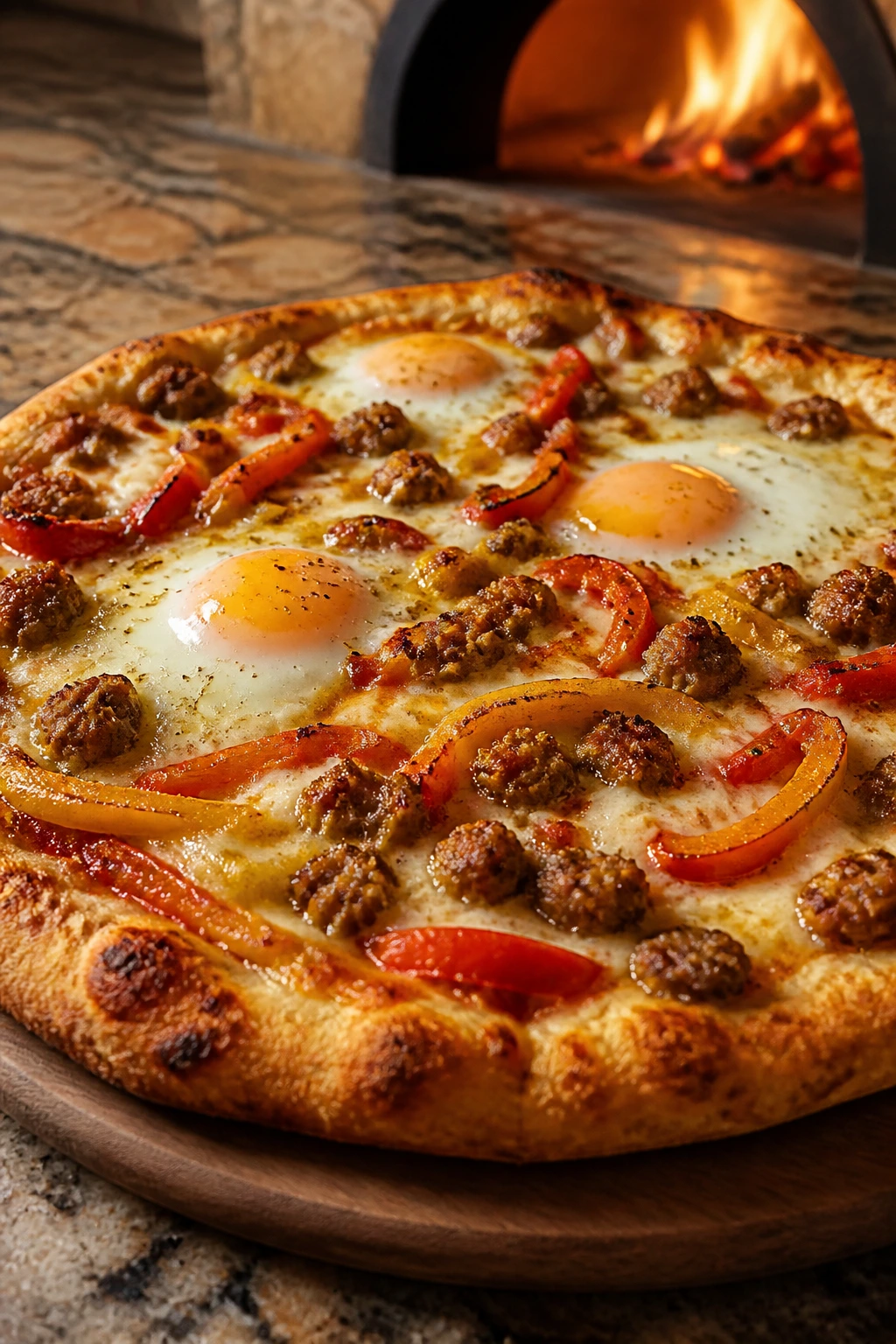
2. Italian Sausage and Pepper Breakfast Pizza
This is the pizza that feels most at home on a pasta-night table. Sweet peppers, browned sausage, and melted cheese are already a natural match with red sauce, and the eggs make it feel like breakfast stole the show. The edges get a little smoky, which I like; it keeps the whole thing from tasting too polite.
Why It Works:
Italian sausage brings fat and seasoning, which means the pizza doesn’t need a lot of extra help. Peppers and onions add sweetness, but only if you cook them first so they don’t dump water onto the dough. The eggs settle into the sausage and cheese and turn the whole slice into something between a breakfast pie and a very good baked sandwich.
Key Ingredients:
- 1 lb pizza dough, room temperature
- 8 oz mild Italian sausage, casings removed
- 1 tbsp olive oil
- 1/2 red bell pepper, thinly sliced
- 1/2 yellow bell pepper, thinly sliced
- 1/2 small yellow onion, thinly sliced
- 1/3 cup marinara
- 1 cup shredded mozzarella
- 1/2 cup shredded provolone
- 3 large eggs
- 1 tsp dried oregano
- Black pepper, to taste
Quick Steps:
- Preheat the oven to 475°F with a stone or baking sheet inside.
- Heat a skillet over medium-high heat and cook the sausage, breaking it into small crumbles, for 5 to 6 minutes until browned.
- Add the olive oil, peppers, and onion, then cook for 4 to 5 minutes until the vegetables soften and lose their raw edge.
- Stretch the dough into a 12-inch round and spread it with marinara.
- Add the mozzarella, provolone, sausage mixture, and 3 small wells for the eggs.
- Crack the eggs into the wells and bake for 11 to 13 minutes, until the whites are set and the crust is deep golden.
- Sprinkle with oregano and black pepper before slicing.
Equipment for This Recipe:
- Large skillet
- Pizza stone or heavy baking sheet
- Parchment paper
- Spatula
- Sharp knife
How to Serve This Dish:
Serve it in thick wedges with a bowl of sliced oranges or a tomato-cucumber salad. It also holds up well with a little hot sauce on the side, especially if you want the sausage to taste a touch sharper. This one can be a main meal, not a nibble.
Pro Tips for This Recipe:
- Brown the sausage fully before it goes on the pizza. Pale sausage tastes flat here.
- Keep the pepper strips thin so they soften in the oven instead of staying crunchy in a weird way.
- If your sausage is particularly salty, go light on the marinara.
- Provolone gives this a little tang; don’t skip it unless you’re replacing it with another sharp cheese.
Variations on This Dish:
- Hot Sausage Version: Use spicy Italian sausage and add 1/4 tsp crushed red pepper to the peppers while they cook.
- Green Pepper Supper Pie: Swap the red and yellow peppers for green bell pepper if you want a more old-school pizzeria flavor.
- No-Sauce Slice: Brush the dough with olive oil and garlic instead of marinara for a drier, sharper pizza.
Common Mistakes to Avoid with This Dish:
- Adding raw peppers: They dump moisture into the crust. Cook them first.
- Using too much sausage: A heavy layer can slide around. Small crumbles are easier to bite through.
- Skipping the preheat: This pizza needs a hot bottom or the center turns soft and dull.
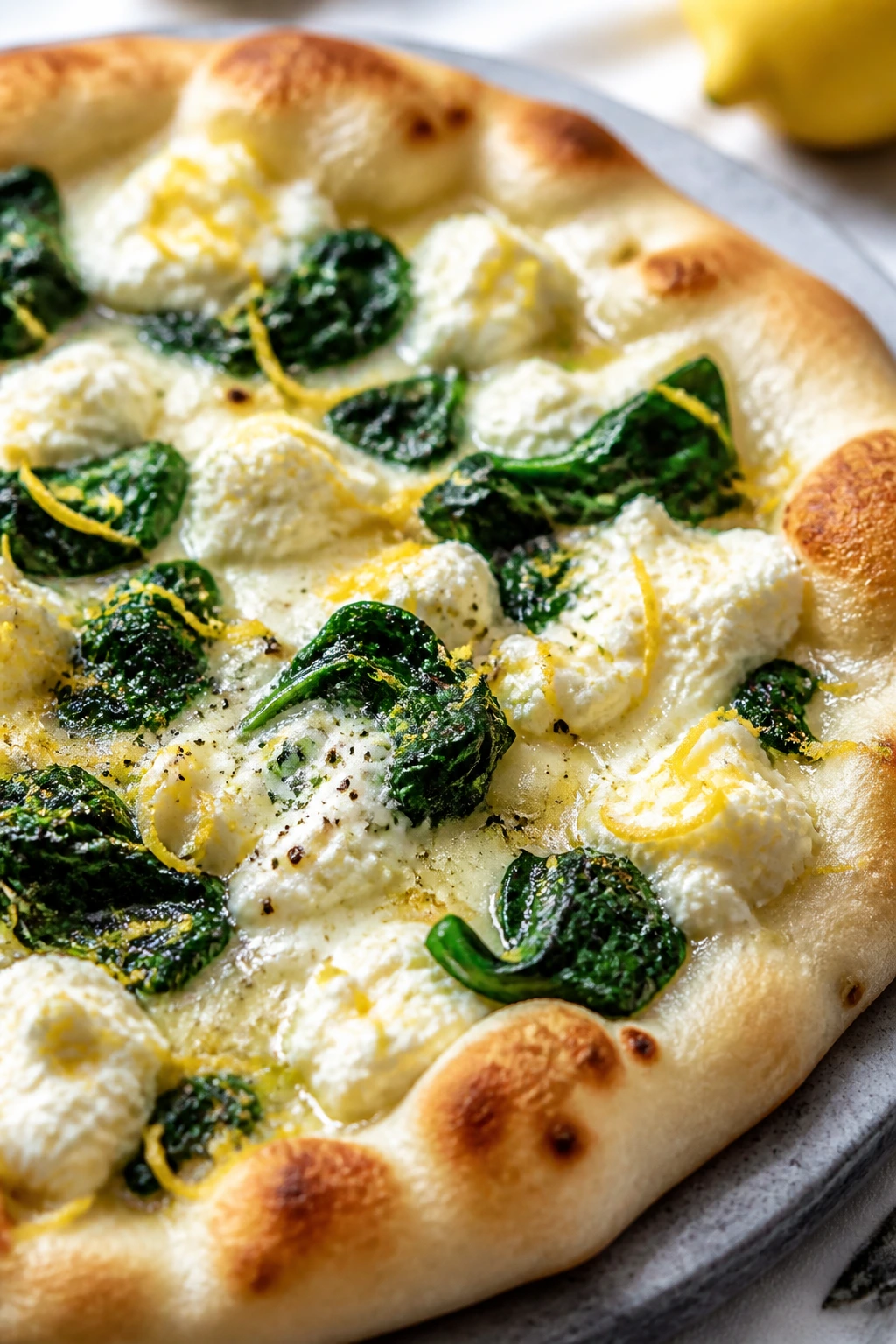
3. Spinach Ricotta Breakfast Pizza with Lemon
This one leans creamier and lighter, which is useful when you want breakfast pizza without the sausage-and-cheese weight. Ricotta gives the crust soft pockets of richness, spinach brings color, and lemon zest wakes the whole thing up. It tastes like a white pizza that remembered it was allowed to be breakfast.
Why It Works:
Ricotta behaves differently from shredded cheese. It melts into soft, milky patches instead of turning into one blanket, so each bite feels varied. The spinach has to be cooked down first or it will waterlog the dough, and the lemon zest at the end keeps the cheese from reading bland. That bright finish matters more than people think.
Key Ingredients:
- 1 lb pizza dough
- 2 tbsp olive oil
- 2 cloves garlic, minced
- 5 oz baby spinach
- 3/4 cup ricotta
- 1 cup shredded mozzarella
- 2 large eggs
- 1 tsp lemon zest
- 1 tbsp grated Parmesan
- Pinch of nutmeg
- Salt and black pepper, to taste
Quick Steps:
- Preheat the oven to 475°F with a stone or sheet pan inside.
- Warm 1 tbsp olive oil in a skillet over medium heat, add the garlic, and cook for 20 seconds until fragrant.
- Add the spinach and cook for 1 to 2 minutes until wilted and the pan looks mostly dry; cool it slightly, then squeeze out excess moisture.
- Stretch the dough into a 12-inch round and brush with the remaining olive oil.
- Dollop ricotta over the dough, scatter the spinach and mozzarella, then make 2 small wells and crack in the eggs.
- Bake for 10 to 12 minutes until the crust is browned and the egg whites are set.
- Finish with Parmesan, lemon zest, a pinch of nutmeg, and black pepper.
Equipment for This Recipe:
- Skillet
- Pizza stone or baking sheet
- Clean kitchen towel or cheesecloth for squeezing spinach
- Microplane for zest
- Pizza peel or parchment
How to Serve This Dish:
Serve it with fennel-scented sausage links if you want more protein, or leave it on its own with a bitter greens salad. The lemon makes the pizza taste fresh enough that you don’t need much else.
Pro Tips for This Recipe:
- Drain the spinach well. Even a tablespoon of extra water can make the center stubbornly soft.
- Use full-fat ricotta if you can; the texture is smoother and less grainy.
- Add the lemon zest after baking so the perfume stays bright.
- A tiny pinch of nutmeg in the ricotta and spinach makes the pizza taste deeper without announcing itself.
Variations on This Dish:
- Herb Garden White Pie: Add chopped dill and chives to the ricotta for a sharper, greener taste.
- Roasted Garlic Spinach Pie: Mash 2 roasted garlic cloves into the ricotta before spreading it.
- Lighter Egg White Version: Use 4 egg whites instead of whole eggs if you want less yolk richness.
Common Mistakes to Avoid with This Dish:
- Wet spinach: Squeeze it dry or the crust softens under the center.
- Too much ricotta: Thick mounds don’t melt evenly. Dollops work better.
- Forgetting the citrus: Without lemon, the pie can taste sleepy.
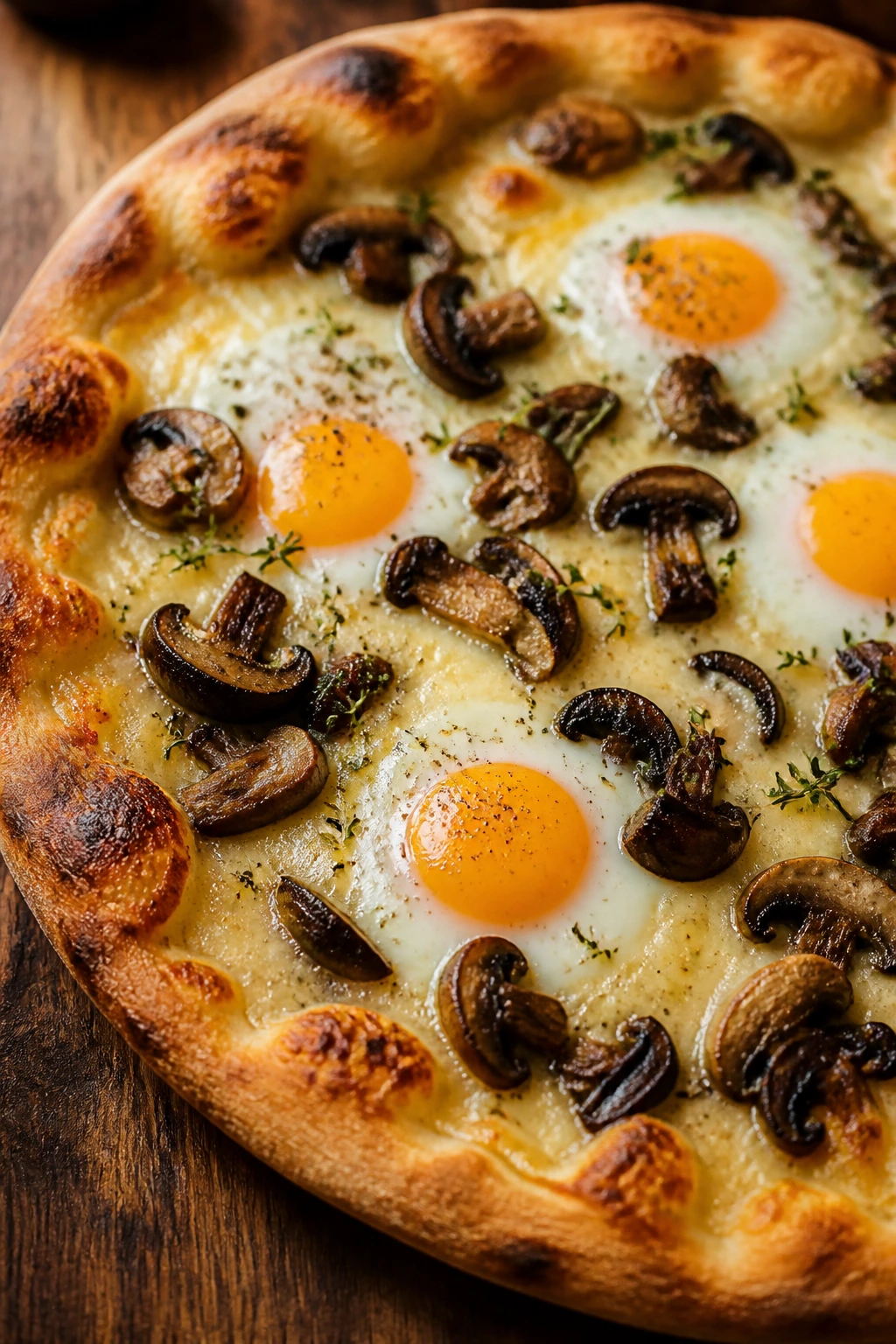
4. Mushroom and Fontina Breakfast Pizza
Mushrooms on breakfast pizza need a little care, but the payoff is worth it. When they’re browned properly, they bring a deep, meaty flavor that plays nicely with fontina’s nutty melt. This is the pizza that tastes like it has more hours in it than it actually does.
Why It Works:
Mushrooms have a lot of water, so the whole job here is cooking that moisture out before it touches the dough. Fontina melts silkier than mozzarella and has enough flavor to carry the pie without extra sauce. A small amount of thyme is enough; mushrooms can take over if you let them.
Key Ingredients:
- 1 lb pizza dough
- 12 oz cremini mushrooms, sliced
- 2 tbsp unsalted butter
- 1 tbsp olive oil
- 1 small shallot, finely chopped
- 1 clove garlic, minced
- 1 cup shredded fontina
- 1/2 cup shredded mozzarella
- 2 large eggs
- 1 tsp fresh thyme leaves
- Salt and black pepper, to taste
Quick Steps:
- Preheat the oven to 475°F with your stone or sheet pan inside.
- Heat butter and olive oil in a skillet over medium-high heat, then cook the mushrooms for 6 to 8 minutes until their liquid evaporates and the edges brown.
- Add the shallot and garlic, cooking for 1 minute more until fragrant.
- Stretch the dough into a 12-inch round and place it on parchment or a peel.
- Scatter the fontina and mozzarella over the dough, then top with the mushroom mixture and make 2 wells for the eggs.
- Crack the eggs into the wells and bake for 11 to 13 minutes, until the whites set and the crust is crisp.
- Finish with thyme, black pepper, and a small pinch of salt.
Equipment for This Recipe:
- Heavy skillet
- Pizza stone or baking sheet
- Pizza peel or parchment
- Spatula
- Small bowl for prepped mushrooms
How to Serve This Dish:
I like this with a simple salad dressed in lemon vinaigrette. It also pairs well with a bowl of tomato soup if you’re stretching it toward lunch. Cut it while hot; the fontina gets especially stretchy right out of the oven.
Pro Tips for This Recipe:
- Don’t rush the mushrooms. Pale mushrooms taste watery.
- Fontina can be sticky to grate, so chill it for 10 minutes first if your box grater fights back.
- If you want a deeper flavor, add a teaspoon of finely chopped rosemary with the mushrooms.
- Keep the salt modest until the end, because cheese and mushrooms both bring their own.
Variations on This Dish:
- Truffle Mushroom Pie: Add 1/2 tsp truffle oil after baking, not before.
- Wild Mushroom Version: Use a mix of cremini, shiitake, and oyster mushrooms for a woodsy edge.
- Parmesan Cap Finish: Add shaved Parmesan and a few capers after baking for a sharper finish.
Common Mistakes to Avoid with This Dish:
- Undercooked mushrooms: If they’re still glossy and wet, they’ll seep onto the crust.
- Too much thyme: It can turn medicinal fast. Keep it restrained.
- Skipping the egg wells: Crack them directly onto the cheese so they stay in place.
5. Pesto Potato Breakfast Pizza
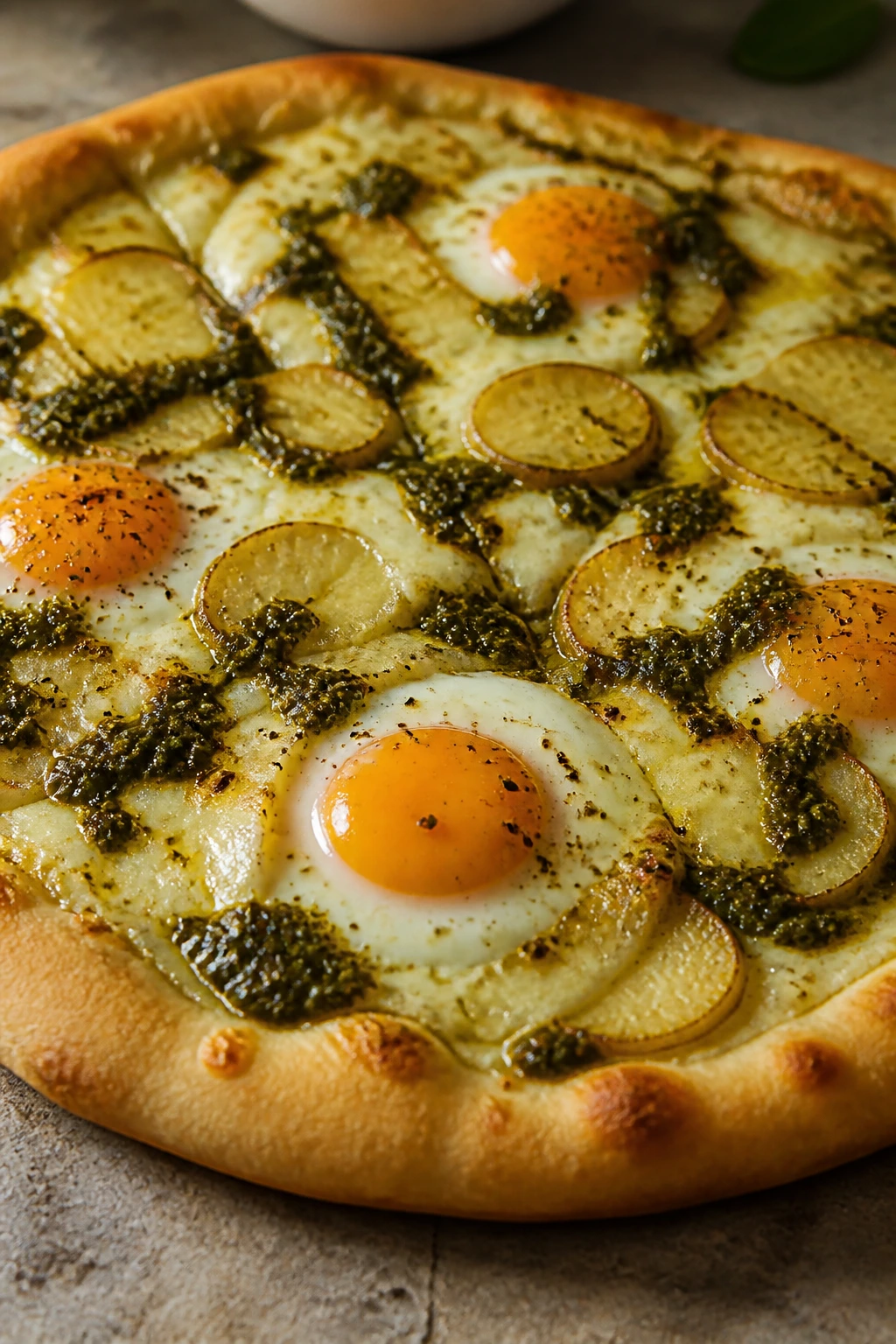
Potatoes on pizza sound odd until you taste them with pesto and eggs. Then the whole thing makes sense. Thin slices of potato turn tender in the oven, pesto brings garlic and basil, and the crust gets this sturdy, almost focaccia-like feel that works especially well when you want breakfast to eat like a meal.
Why It Works:
Potatoes need a head start or they’ll stay chalky. A quick par-cook gives them the softness you want without making them mushy, and the pesto provides enough moisture and fat to keep the slice from feeling dry. This one is rich in a way that reads more Mediterranean than heavy.
Key Ingredients:
- 1 lb pizza dough
- 3 tbsp basil pesto
- 1 medium Yukon Gold potato, very thinly sliced
- 1 tbsp olive oil
- 1 cup shredded mozzarella
- 2 tbsp grated Parmesan
- 1 tsp chopped rosemary
- 2 large eggs
- Salt and black pepper, to taste
Quick Steps:
- Preheat the oven to 475°F with a stone or baking sheet inside.
- Toss the potato slices with 1 tsp olive oil and microwave them for 2 minutes, or simmer them briefly for 3 minutes, until barely tender.
- Stretch the dough into a 12-inch round and brush with the remaining olive oil.
- Spread the pesto over the dough, leaving the border bare, then layer on the potato slices in a single layer.
- Scatter the mozzarella and Parmesan over the top, then make 2 wells and crack in the eggs.
- Bake for 11 to 13 minutes, until the potatoes are tender at the edges and the egg whites are set.
- Finish with rosemary, black pepper, and a pinch of salt.
Equipment for This Recipe:
- Sharp knife or mandoline
- Microwave-safe bowl or small saucepan
- Pizza stone or baking sheet
- Parchment paper
- Pizza wheel
How to Serve This Dish:
This pizza wants something crisp and acidic on the side, like sliced cucumbers with lemon or a bitter little green salad. It also works as a brunch centerpiece cut into smaller squares if you want people to graze rather than sit down for a heavy plate.
Pro Tips for This Recipe:
- Slice the potatoes thin enough that they go tender in one bake. Thick slices make the middle awkward.
- Don’t pile on the pesto. Too much and the crust softens.
- A mandoline makes this easier, but keep your fingers out of the line of fire.
- Rosemary is strong here; chop it fine so it doesn’t land like little pine needles.
Variations on This Dish:
- Garlic Potato White Pie: Skip the pesto and use garlic oil with extra Parmesan.
- Sweet Potato Version: Thin slices of sweet potato work, but give them 1 extra minute in the microwave.
- Sunflower Pesto Swap: Use a nut-free pesto if you need to avoid pine nuts.
Common Mistakes to Avoid with This Dish:
- Raw potatoes: They won’t finish in time unless they’re very thin.
- Too much pesto: That’s the fastest way to make a soft crust.
- Crowding the slices: Potatoes need some overlap, not a shingled roof.
6. Caprese Prosciutto Breakfast Pizza
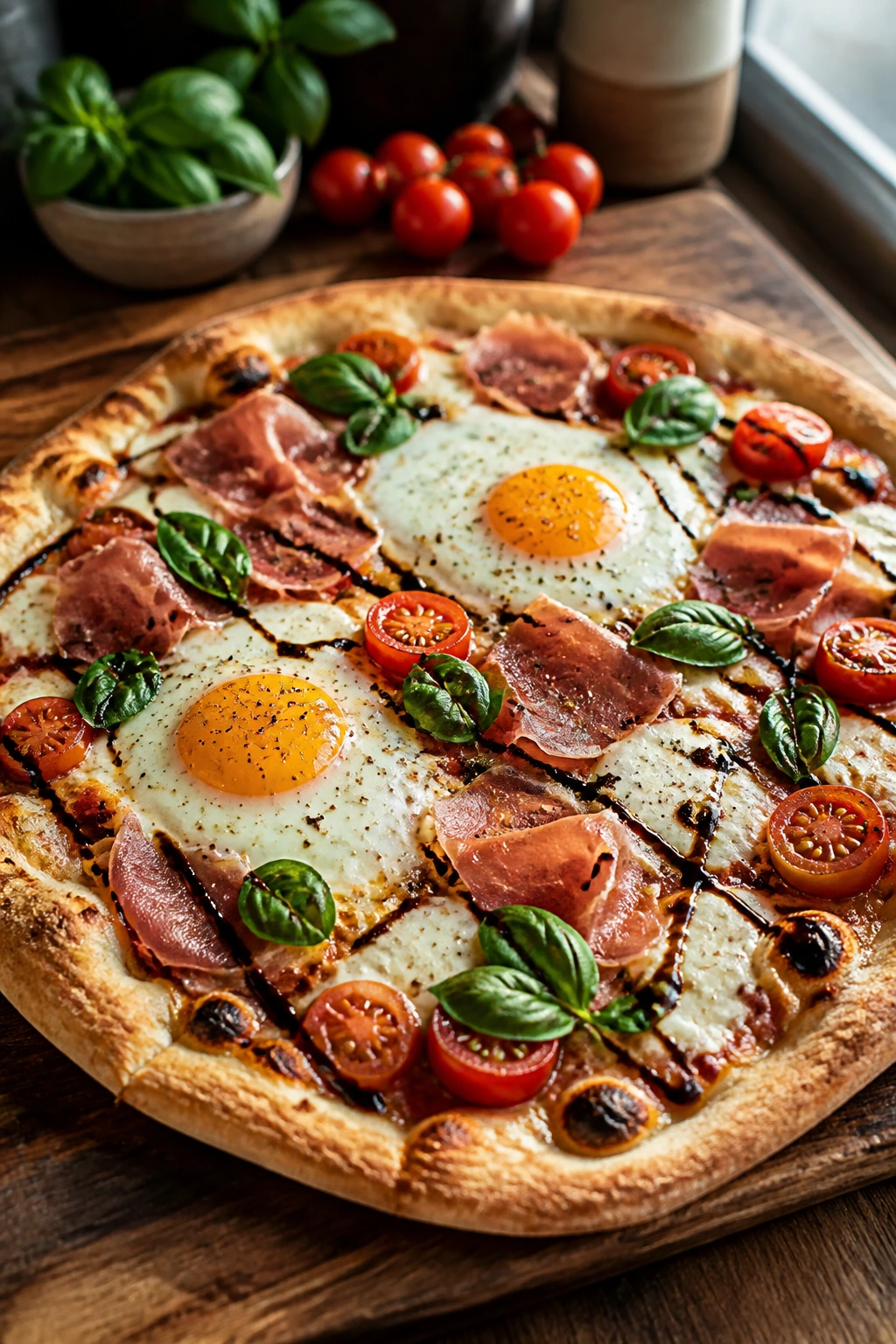
This is the one that looks fancier than it is. Fresh mozzarella, tomatoes, basil, and prosciutto bring that clean caprese profile, but the eggs and crust turn it into a full breakfast pizza instead of a salad on dough. A little balsamic glaze at the end sharpens the tomatoes and makes the whole pie taste awake.
Why It Works:
Fresh mozzarella melts into soft pockets rather than a full stretch, which is exactly what you want when tomatoes are involved. Prosciutto doesn’t need a long bake; it should stay just warmed through so it keeps its silkiness. The balsamic glaze adds acid and sweetness after baking, when the tomatoes are hot and ready to drink it in.
Key Ingredients:
- 1 lb pizza dough
- 2 tbsp olive oil
- 1/2 cup crushed tomatoes or light marinara
- 6 oz fresh mozzarella, sliced and patted dry
- 1 cup cherry tomatoes, halved
- 4 oz prosciutto, torn into ribbons
- 2 large eggs
- 10 basil leaves
- 2 tbsp balsamic glaze
- Salt and black pepper, to taste
Quick Steps:
- Preheat the oven to 475°F with a stone or heavy sheet pan inside.
- Stretch the dough into a 12-inch round and brush with olive oil.
- Spread a thin layer of tomatoes over the crust, then add the fresh mozzarella and cherry tomatoes.
- Make 2 wells, crack in the eggs, and bake for 10 to 12 minutes until the whites set.
- Add the prosciutto during the last 2 minutes of baking so it warms without drying out.
- Finish with basil, black pepper, and balsamic glaze before cutting.
Equipment for This Recipe:
- Pizza stone or sheet pan
- Parchment paper
- Paper towels for drying mozzarella
- Small spoon for balsamic glaze
- Pizza wheel
How to Serve This Dish:
Serve it with a bowl of olives or a simple citrus salad. The plate looks best when the basil goes on in torn pieces and the balsamic is drizzled in a messy zigzag. Messy is good here.
Pro Tips for This Recipe:
- Pat the fresh mozzarella dry or it will puddle on the crust.
- Add prosciutto near the end so it stays supple.
- Use ripe cherry tomatoes; dull tomatoes turn watery and make the pizza taste flat.
- A tiny pinch of black pepper across the top makes the prosciutto taste less salty.
Variations on This Dish:
- Tomato-Free Caprese: Skip the crushed tomato and use only olive oil, mozzarella, and fresh tomatoes.
- Parma and Arugula Version: Add arugula after baking for a peppery finish.
- Heavier Brunch Cut: Swap prosciutto for thin slices of cooked pancetta if you want more bite.
Common Mistakes to Avoid with This Dish:
- Wet mozzarella: Dry it first. No exceptions.
- Baking prosciutto too long: It turns brittle fast.
- Skipping the glaze: Without acid at the end, the pie can feel one-note.
7. Broccoli Rabe and Sausage Breakfast Pizza
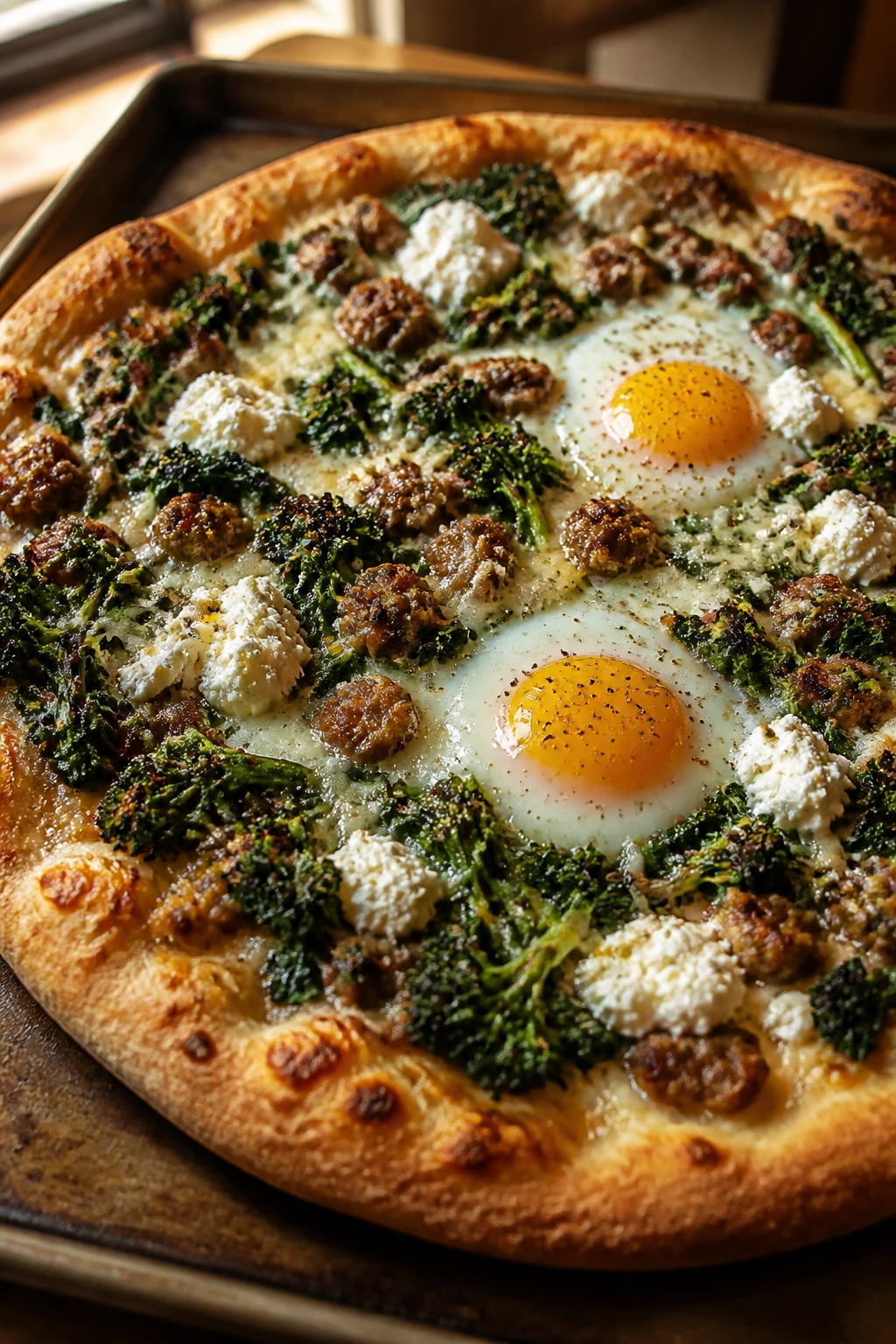
Broccoli rabe brings a bitter edge that keeps sausage pizza from turning sleepy. It’s a little more grown-up than the average breakfast pie, and I like that. The greens, garlic, sausage, and cheese give you enough salt and contrast that the eggs feel earned instead of decorative.
Why It Works:
Broccoli rabe needs blanching or sautéing before it goes on the pizza, because raw rabe can be harsh and stubborn. Once it softens, its bitterness becomes part of the flavor instead of a problem to solve. Ricotta calms everything down, and the sausage brings enough fat to keep the greens from feeling too lean.
Key Ingredients:
- 1 lb pizza dough
- 8 oz Italian sausage, casings removed
- 1 bunch broccoli rabe, trimmed
- 2 cloves garlic, sliced
- 1 tbsp olive oil
- 1/2 cup ricotta
- 1 cup shredded mozzarella
- 2 large eggs
- 1/4 tsp red pepper flakes
- Salt, black pepper, and a squeeze of lemon juice
Quick Steps:
- Preheat the oven to 475°F with a stone or baking sheet inside.
- Blanch the broccoli rabe in salted boiling water for 1 minute, then drain and chop it roughly.
- Cook the sausage in a skillet over medium-high heat until browned, then add the garlic, broccoli rabe, olive oil, and red pepper flakes and cook for 2 minutes.
- Stretch the dough into a 12-inch round and spread small spoonfuls of ricotta over the surface.
- Add the mozzarella, broccoli rabe mixture, and 2 egg wells; crack in the eggs.
- Bake for 11 to 13 minutes until the crust is browned and the egg whites are set.
- Finish with black pepper and a squeeze of lemon juice.
Equipment for This Recipe:
- Large pot
- Skillet
- Pizza stone or sheet pan
- Tongs or slotted spoon
- Cutting board and knife
How to Serve This Dish:
Cut it into sturdy wedges and serve with roasted potatoes or a shaved fennel salad if you want a bigger brunch spread. The lemon at the end keeps the rabe lively, so don’t skip it.
Pro Tips for This Recipe:
- Blanching the broccoli rabe first removes the harsh edge and shortens the skillet time.
- Use ricotta sparingly; it should soften the pizza, not cover the greens.
- A little lemon right at the end is what makes the bitterness feel intentional.
- If the sausage is especially fatty, drain it briefly before adding it to the pizza.
Variations on This Dish:
- Cheesier Rabe Pie: Add 1/4 cup Parmesan for a saltier finish.
- Spicy Southern Italian Version: Use hot sausage and a heavier pinch of red pepper flakes.
- White Pizza Style: Skip the ricotta and brush the crust with garlic oil instead.
Common Mistakes to Avoid with This Dish:
- Raw broccoli rabe: It’s too tough and too bitter. Cook it first.
- Too much lemon: A squeeze is enough. You want brightness, not sourness.
- Crowding the toppings: Leave some dough exposed so the crust can brown.
8. Mediterranean Olive and Feta Breakfast Pizza
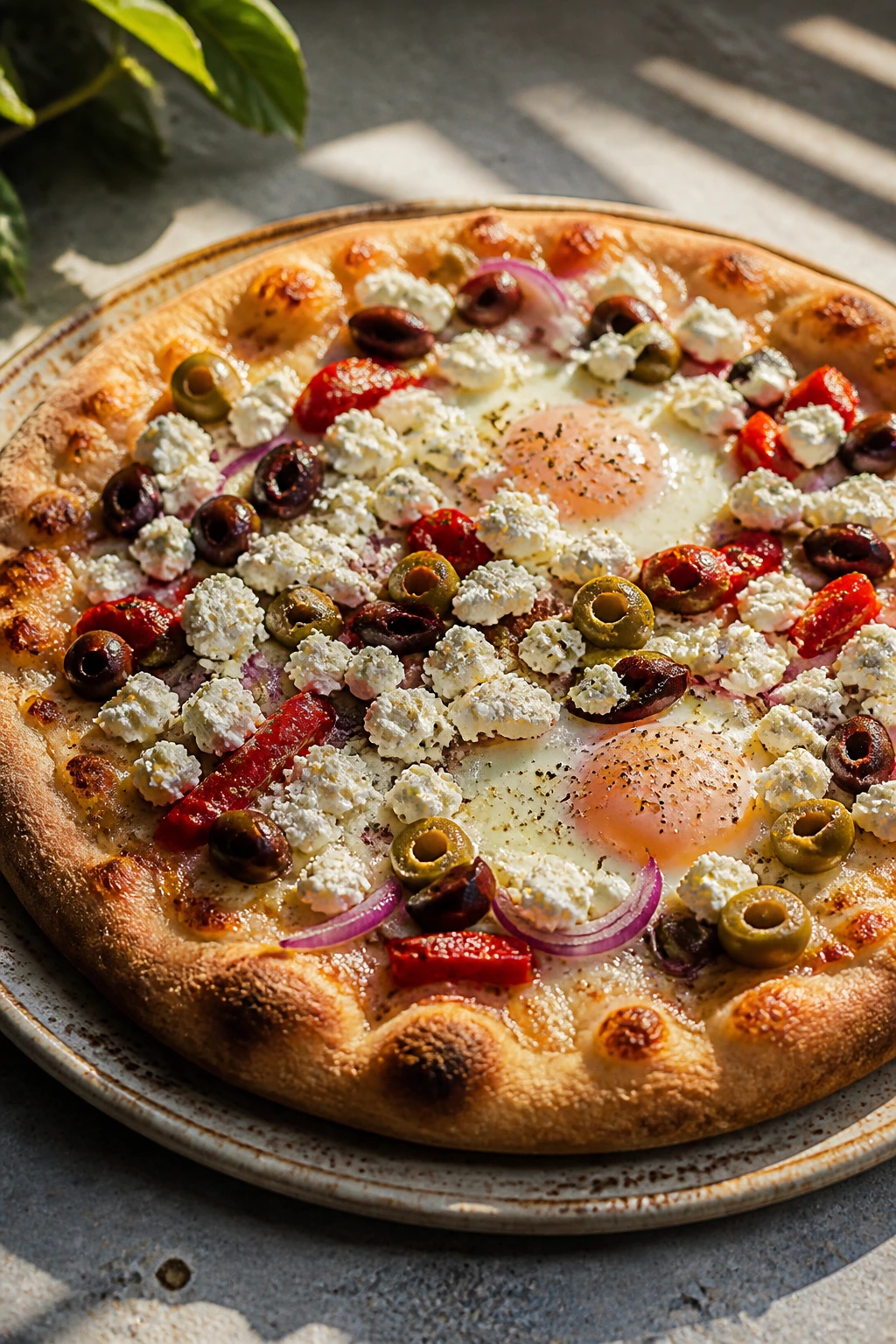
This is where breakfast pizza starts acting like a mezze plate with a crust. Salty feta, briny olives, sweet red onion, and roasted peppers bring a punchy, savory profile that stays interesting from the first bite to the last. If you like bold flavors early in the day, this one doesn’t hold back.
Why It Works:
Feta gives you immediate salt and tang, while mozzarella helps the pizza melt into something sliceable instead of crumbly. Olives and roasted peppers are already seasoned and cooked, which means they won’t steal moisture from the dough. Eggs on top soften the sharper edges and make the pizza feel more complete.
Key Ingredients:
- 1 lb pizza dough
- 2 tbsp olive oil
- 1/2 cup ricotta or light tomato sauce
- 1 cup shredded mozzarella
- 1/2 cup crumbled feta
- 1/4 cup Kalamata olives, pitted and halved
- 1/4 cup Castelvetrano olives, pitted and halved
- 1/2 small red onion, very thinly sliced
- 1/2 cup roasted red peppers, sliced
- 2 large eggs
- 1 tsp dried oregano
Quick Steps:
- Preheat the oven to 475°F with a stone or sheet pan inside.
- Stretch the dough into a 12-inch round and brush with olive oil.
- Spread a thin layer of ricotta or tomato sauce, then add mozzarella, feta, olives, red onion, and roasted peppers.
- Make 2 small wells and crack in the eggs.
- Bake for 10 to 12 minutes until the crust is browned and the egg whites are set.
- Finish with oregano and, if you like, a few torn parsley leaves.
Equipment for This Recipe:
- Pizza stone or sheet pan
- Parchment paper
- Small bowl for olives and peppers
- Knife for slicing onion
- Pizza wheel
How to Serve This Dish:
A simple cucumber salad dressed with olive oil and lemon makes sense here, and so does strong coffee. If you want a more brunch-like table, add fresh melon or grapes on the side to cool the salt.
Pro Tips for This Recipe:
- Use two kinds of olives if you can. The mix gives the topping more depth.
- Slice the red onion paper-thin so it softens in the oven.
- Feta varies in saltiness, so taste before adding more salt to the finished pizza.
- A little chopped parsley or dill after baking keeps the flavors fresh.
Variations on This Dish:
- Greek-Style Version: Add a few sliced cherry tomatoes and a pinch of dried mint.
- Tomato Base Swap: Use a spoonful of marinara under the cheese if you want more acidity.
- No-Egg Mezze Pie: Bake it without eggs and top with a dollop of yogurt after slicing.
Common Mistakes to Avoid with This Dish:
- Using too many salty toppings: Feta and olives already do the job.
- Thick onion slices: They stay too sharp.
- Skipping the mozzarella: Feta alone won’t melt the pie properly.
9. Sun-Dried Tomato and Artichoke Breakfast Pizza
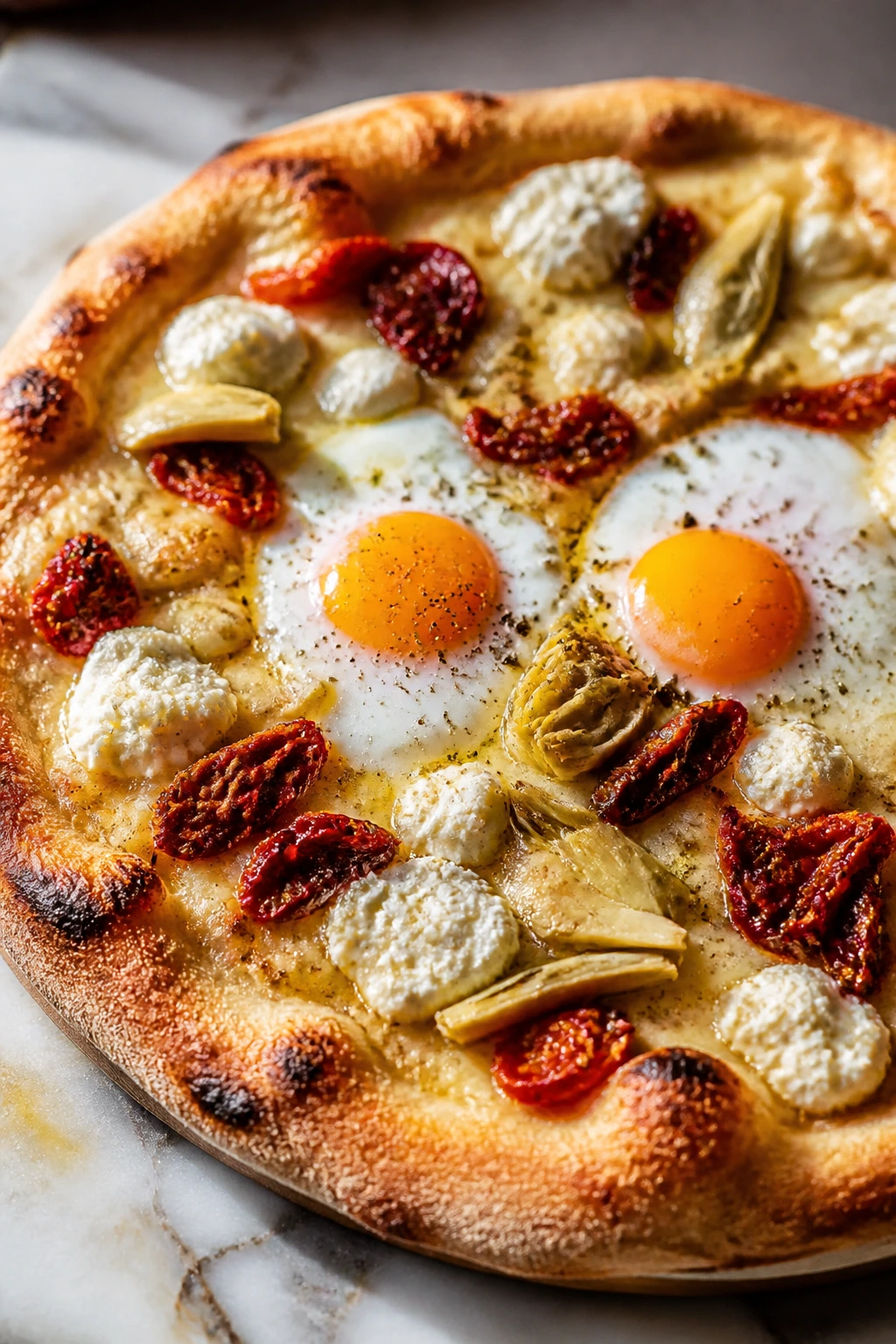
This pizza tastes like it wandered in from a very good antipasto platter. Sun-dried tomatoes bring concentrated sweetness, artichokes add a soft, briny note, and the eggs make the whole thing feel more like breakfast than a snack. It’s a smart use for jarred ingredients that often sit around waiting for a better plan.
Why It Works:
Sun-dried tomatoes already pack flavor, so you don’t need much sauce. Artichoke hearts need to be patted dry or they’ll leak liquid onto the crust, and a small amount of ricotta gives the pizza a creamy base that ties the sharper ingredients together. The eggs mellow the tang and make the slice more substantial.
Key Ingredients:
- 1 lb pizza dough
- 2 tbsp oil from the sun-dried tomato jar
- 1/2 cup ricotta
- 1/2 cup sun-dried tomatoes, chopped
- 1 cup artichoke hearts, drained and quartered
- 1 cup shredded mozzarella
- 1/4 cup grated Parmesan
- 2 large eggs
- 1 clove garlic, minced
- 6 basil leaves
- Black pepper, to taste
Quick Steps:
- Preheat the oven to 475°F with a stone or sheet pan inside.
- Stretch the dough into a 12-inch round and brush with sun-dried tomato oil.
- Spread the ricotta in thin patches, then add mozzarella, sun-dried tomatoes, artichokes, and garlic.
- Make 2 wells and crack in the eggs.
- Bake for 11 to 13 minutes until the crust is browned and the whites are just set.
- Finish with Parmesan, basil, and black pepper.
Equipment for This Recipe:
- Pizza stone or baking sheet
- Parchment paper
- Small bowl for draining artichokes
- Microplane or grater
- Pizza wheel
How to Serve This Dish:
Serve it with a peppery salad or marinated beans if you want to lean into the antipasto vibe. The basil at the end matters here; it cuts through the oil and keeps the pizza from feeling dense.
Pro Tips for This Recipe:
- Pat the artichokes dry with a towel before topping.
- Use the tomato oil from the jar; it’s already seasoned and saves a step.
- Garlic should go on finely minced so it cooks before the crust browns.
- If the sun-dried tomatoes are chewy, chop them smaller than you think you need.
Variations on This Dish:
- Roasted Pepper Swap: Use roasted red peppers instead of artichokes for a softer, sweeter pie.
- Caper Finish: Add 1 tbsp capers after baking for extra briny bite.
- White Antipasto Pie: Skip the sun-dried tomatoes and use extra ricotta plus olive oil.
Common Mistakes to Avoid with This Dish:
- Wet artichokes: They make the center slippery.
- Too much garlic: One clove is enough.
- Overloading the tomato pieces: Concentrated flavor doesn’t need a mountain of topping.
10. Smoked Salmon and Dill Breakfast Pizza
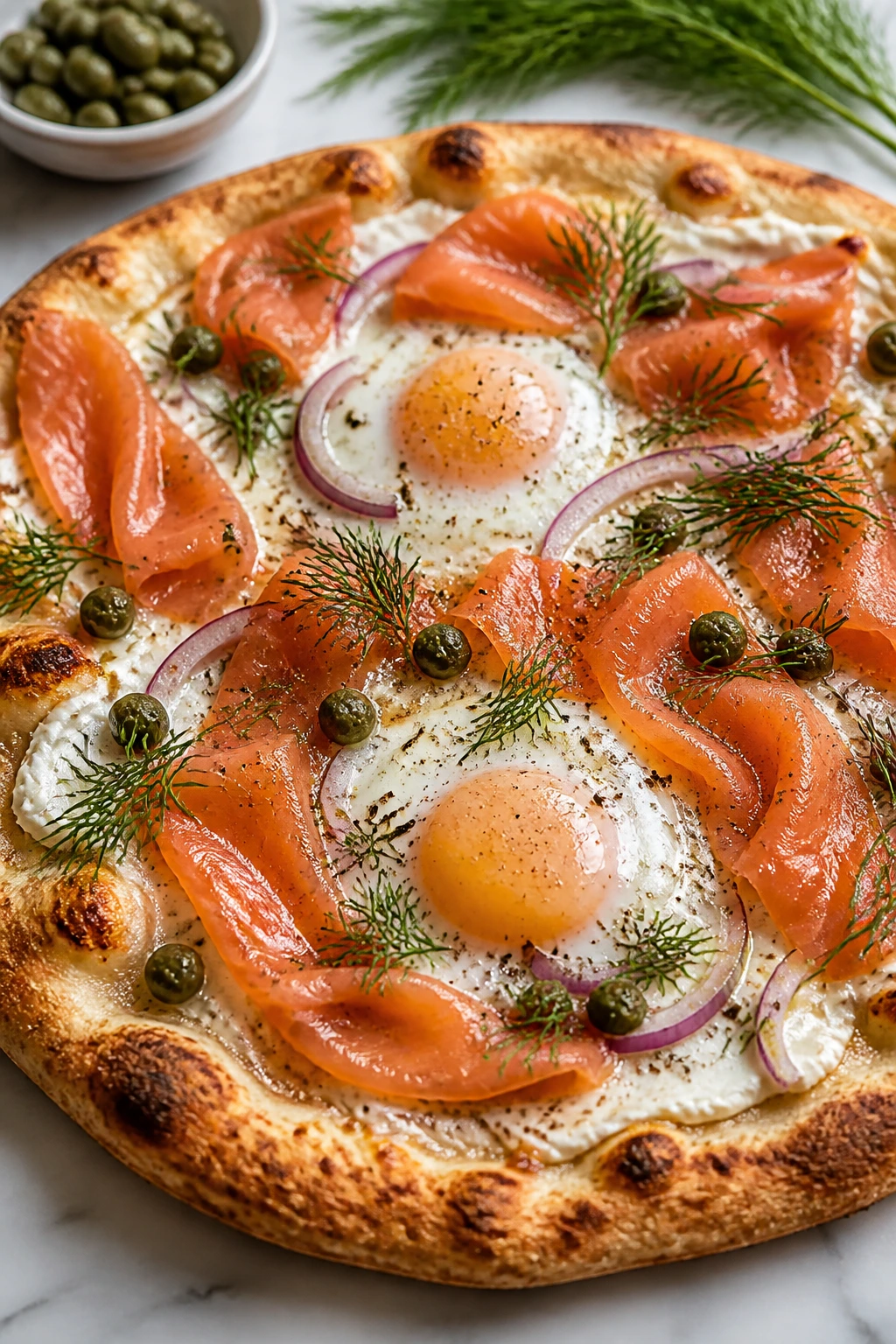
This one pulls toward brunch more than pasta night, but it still fits the collection because the base is the same: a hot crust, creamy cheese, and toppings that are meant to be light, salty, and fresh. Smoked salmon gives you silkiness, dill brings a clean herb note, and the eggs connect the whole thing to breakfast without making it feel heavy.
Why It Works:
Cream cheese creates a cool, rich layer that works like a white sauce without needing a pot. Smoked salmon should go on after baking or in the final minute, because too much heat dries it out and makes it salty in a blunt way. Capers and red onion add the sharpness this pizza needs so it doesn’t taste like soft cheese on bread.
Key Ingredients:
- 1 lb pizza dough
- 4 oz cream cheese, softened
- 1 tbsp lemon juice
- 1 cup shredded mozzarella
- 4 oz smoked salmon
- 1/4 small red onion, very thinly sliced
- 1 tbsp capers, drained
- 2 large eggs
- 2 tbsp chopped fresh dill
- Black pepper, to taste
Quick Steps:
- Preheat the oven to 475°F with a stone or baking sheet inside.
- Stretch the dough into a 12-inch round and spread the cream cheese mixed with lemon juice over the surface.
- Add the mozzarella, red onion, and capers, then make 2 wells and crack in the eggs.
- Bake for 10 to 12 minutes until the crust is golden and the whites are set.
- Add the smoked salmon during the last minute or scatter it over the hot pizza right after baking.
- Finish with dill and black pepper before slicing.
Equipment for This Recipe:
- Small bowl for cream cheese mixture
- Pizza stone or baking sheet
- Knife for slicing onion
- Parchment paper
- Pizza cutter
How to Serve This Dish:
Serve it with cucumber slices, lemon wedges, and coffee or sparkling water. If you want a more polished brunch table, a few dill sprigs on top and a bowl of sliced radishes make the plate look intentional without trying too hard.
Pro Tips for This Recipe:
- Soften the cream cheese fully or it will tear the dough.
- Add the salmon late so it stays silky.
- Keep the onion slices thin; they should whisper, not shout.
- Dill should go on at the end. It loses a lot of aroma if baked hard.
Variations on This Dish:
- Everything-Bagel Style: Sprinkle sesame seeds, poppy seeds, and coarse salt over the cream cheese base.
- Lox and Herb Version: Add a few chopped chives with the dill.
- No-Cheese Version: Use olive oil and a little lemon zest instead of cream cheese if you want a lighter pie.
Common Mistakes to Avoid with This Dish:
- Baking the salmon too long: It turns dry and overly salty.
- Using cold cream cheese: It drags instead of spreading.
- Forgetting acid: Lemon juice keeps the pizza from feeling soft and flat.
11. Pancetta, Pea, and Pecorino Breakfast Pizza
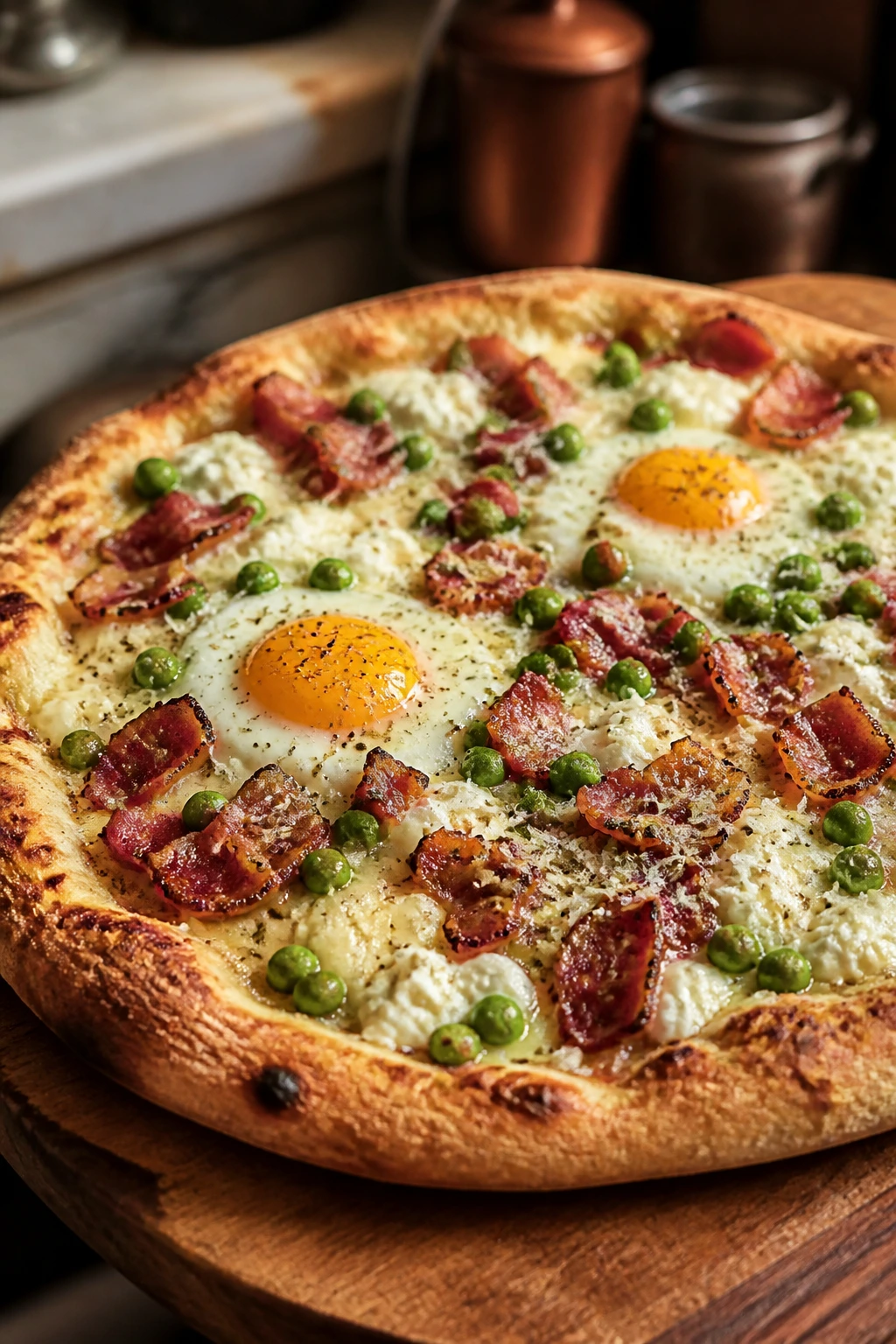
Pancetta and peas are a classic Italian pairing that somehow never gets old. Here, they turn breakfast pizza into something salty, sweet, and a little more elegant than the usual sausage route. Pecorino sharpens the edges, and the peas bring a soft pop that keeps the slice from feeling dense.
Why It Works:
Pancetta renders quickly and gives the crust flavor before it even hits the oven. Peas add sweetness and color, but they need only a short thaw or warm-through so they stay bright instead of mushy. Pecorino is the right cheese here because it’s sharp enough to stand up to pancetta without needing a huge amount.
Key Ingredients:
- 1 lb pizza dough
- 4 oz pancetta, diced
- 1 tbsp olive oil
- 1 cup frozen peas, thawed
- 1/2 cup ricotta
- 1 cup shredded mozzarella
- 1/4 cup grated Pecorino Romano
- 2 large eggs
- 1 tbsp chopped fresh mint
- Black pepper, to taste
Quick Steps:
- Preheat the oven to 475°F with a stone or sheet pan inside.
- Cook the pancetta in a skillet over medium heat until crisp, about 5 minutes, then drain lightly on paper towels.
- Toss the peas with the olive oil and a pinch of black pepper.
- Stretch the dough into a 12-inch round and dot with ricotta.
- Add mozzarella, pancetta, peas, and 2 egg wells; crack in the eggs.
- Bake for 10 to 12 minutes until the crust is browned and the egg whites are set.
- Finish with Pecorino, mint, and black pepper.
Equipment for This Recipe:
- Skillet
- Pizza stone or baking sheet
- Paper towels
- Small bowl for peas
- Cheese grater
How to Serve This Dish:
This goes well with a green salad or roasted asparagus, which keeps the meal in a spring-brunch lane. The mint at the end makes the pizza taste sharper and cleaner, so don’t skip it even if you think it sounds odd.
Pro Tips for This Recipe:
- Crisp the pancetta fully; chewy pancetta won’t give you the same effect.
- Thaw the peas and blot them dry so they don’t steam the crust.
- Pecorino is salty, so taste before adding extra salt at the table.
- Mint should be chopped small. Big leaves can taste abrupt.
Variations on This Dish:
- Pancetta and Asparagus Pie: Swap peas for thin asparagus tips.
- Ricotta-Heavy Version: Add extra ricotta in small spoonfuls if you want a softer slice.
- Bacon Swap: Bacon works, but it tastes smokier and less clean than pancetta.
Common Mistakes to Avoid with This Dish:
- Using wet peas: They dilute the cheese layer.
- Skipping the mint: It’s the thing that keeps the pizza from tasting heavy.
- Too much Pecorino: A little goes far.
12. Carbonara Breakfast Pizza
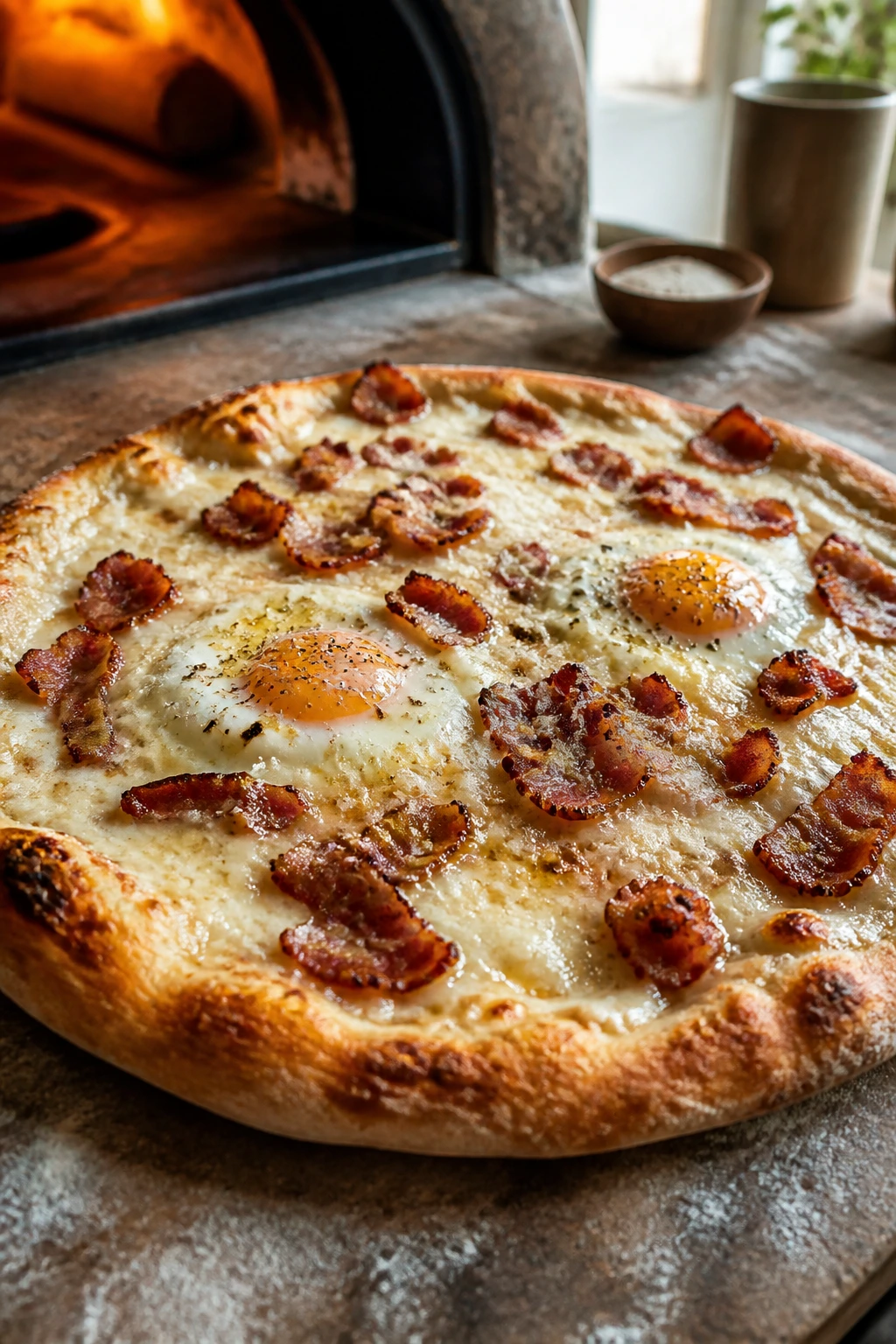
Carbonara on pizza sounds like a joke until you eat it. Then it tastes obvious. Pancetta, pecorino, black pepper, and eggs already belong together, and the crust gives them a new shape. This is probably the richest pizza in the collection, which means it’s the one you make when you want breakfast to feel like a small event.
Why It Works:
Carbonara relies on fat, salt, and heat, and pizza gives you all three in one shot. The eggs finish in the oven and turn into a sauce-like layer against the cheese, while the pancetta provides the salty backbone. You do not want tomato here; it would only fight the cheese and black pepper.
Key Ingredients:
- 1 lb pizza dough
- 4 oz pancetta, diced
- 1 tbsp olive oil
- 1/2 cup crème fraîche or mascarpone, softened
- 1/2 cup shredded mozzarella
- 1/2 cup grated Pecorino Romano
- 2 large eggs
- 1 tbsp chopped parsley
- 1 tsp coarsely cracked black pepper
Quick Steps:
- Preheat the oven to 475°F with a stone or sheet pan inside.
- Cook the pancetta in a skillet over medium heat until crisp, then spoon it onto paper towels.
- Stretch the dough into a 12-inch round and brush it lightly with olive oil.
- Spread the crème fraîche over the crust, then add mozzarella, Pecorino, and the pancetta.
- Make 2 wells and crack in the eggs.
- Bake for 10 to 12 minutes until the whites set and the crust is browned.
- Finish with parsley and a generous crack of black pepper.
Equipment for This Recipe:
- Skillet
- Pizza stone or sheet pan
- Parchment paper
- Pepper mill
- Small bowl for crème fraîche
How to Serve This Dish:
Serve it immediately, before the cheese tightens up. It’s rich enough that I like it with something sharp and plain — arugula dressed with lemon or sliced fennel is enough. Coffee works; so does a dry sparkling drink if you’re turning brunch into a longer thing.
Pro Tips for This Recipe:
- Keep the crème fraîche layer thin. Too much makes the crust soggy.
- Black pepper matters here; grind it coarsely so you can taste it.
- If you want a looser egg, pull the pizza when the whites are just set and the yolks still move.
- Parmesan can replace some Pecorino, but the sharper cheese keeps it closer to carbonara.
Variations on This Dish:
- Guanciale Upgrade: Use guanciale if you can find it; it renders with a deeper pork flavor.
- Herb Carbonara: Add chives to the parsley for a fresher finish.
- No-Cream Base: Skip the crème fraîche and use only a light brush of olive oil for a more austere pie.
Common Mistakes to Avoid with This Dish:
- Using tomato sauce: It breaks the carbonara profile.
- Too much cream base: A thin layer is enough.
- Baking until the eggs are hard: You lose the point of the dish.
13. Zucchini, Mint, and Ricotta Breakfast Pizza
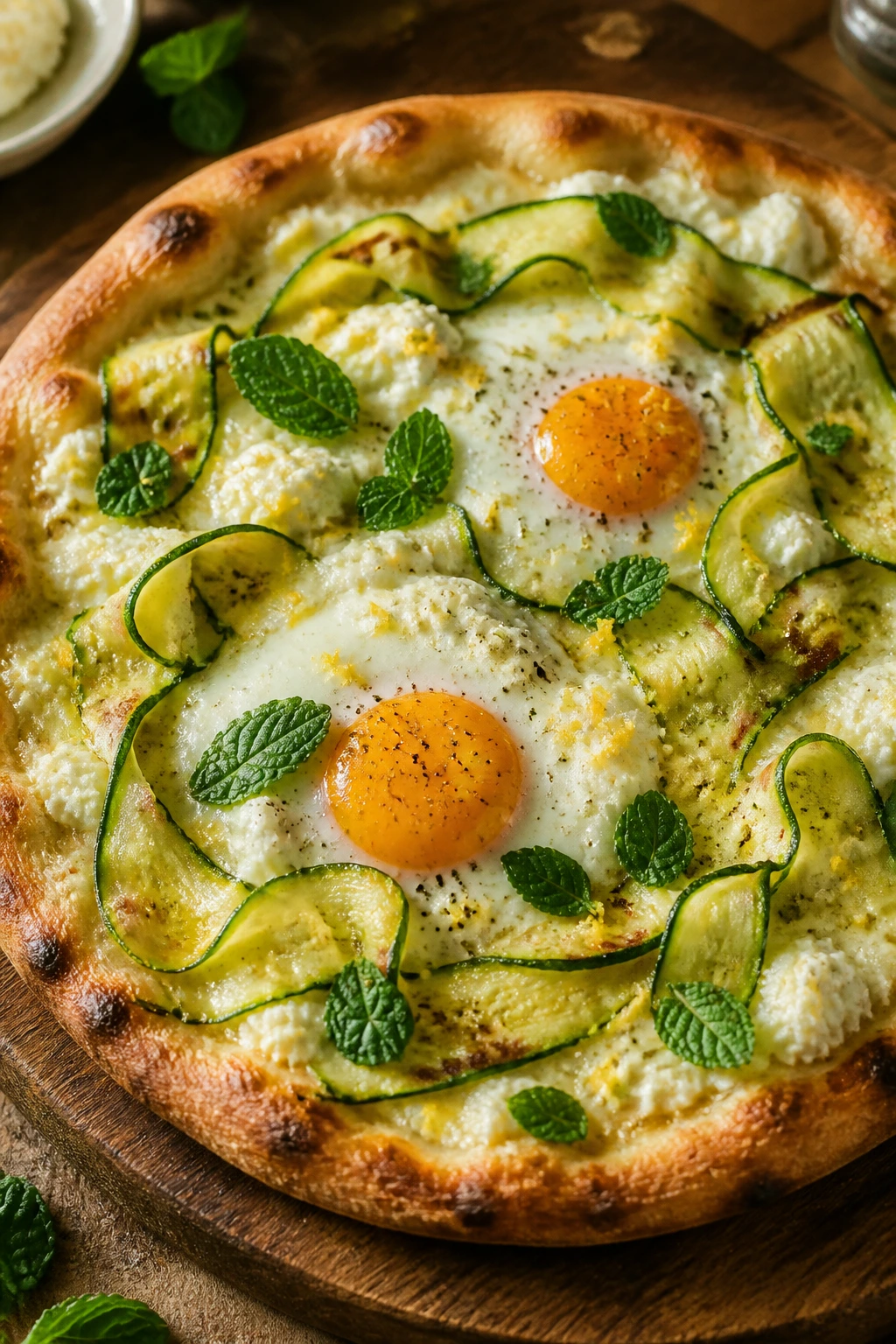
Zucchini can go bland fast, so the move is to treat it carefully. Thin ribbons, a little salt, a quick blot, and then it turns into something light and almost sweet on the pizza. Ricotta gives body, mint keeps it bright, and the whole thing lands somewhere between garden brunch and white pizza.
Why It Works:
Zucchini carries a lot of water, so salting and blotting it before baking matters. Ricotta gives the pie a creamy base without the weight of a heavy sauce, and the mint adds a cool finish that works especially well with eggs. This is one of the more delicate pizzas here, which is a nice change of pace.
Key Ingredients:
- 1 lb pizza dough
- 2 medium zucchini, shaved into ribbons
- 1 tsp kosher salt
- 1 tbsp olive oil
- 1 clove garlic, minced
- 1 cup ricotta
- 1 cup shredded mozzarella
- 2 large eggs
- 1 tsp lemon zest
- 2 tbsp chopped fresh mint
- 2 tbsp grated Parmesan
Quick Steps:
- Preheat the oven to 475°F with a stone or baking sheet inside.
- Toss the zucchini ribbons with the salt and let them sit for 10 minutes, then blot them dry with paper towels.
- Stretch the dough into a 12-inch round and brush with olive oil.
- Spread the ricotta over the crust, then add mozzarella, garlic, zucchini, and 2 egg wells.
- Crack in the eggs and bake for 10 to 12 minutes until the crust is browned and the whites are set.
- Finish with lemon zest, mint, and Parmesan.
Equipment for This Recipe:
- Vegetable peeler or mandoline
- Paper towels
- Pizza stone or baking sheet
- Microplane
- Small bowl for ricotta
How to Serve This Dish:
It’s good with a side of sliced tomatoes, but only if the tomatoes are ripe and salted. A few extra mint leaves on top make the pizza feel fresh instead of soft, which matters when ricotta is involved.
Pro Tips for This Recipe:
- Salt the zucchini first or the pizza gets watery.
- Shave the ribbons thin; thick zucchini chunks don’t cook evenly.
- Lemon zest is doing real work here. Don’t leave it out.
- If the ricotta is thick, loosen it with 1 tbsp olive oil before spreading.
Variations on This Dish:
- Summer Garden Version: Add thin shaved fennel with the zucchini.
- Garlic-Herb Version: Mix chopped basil into the ricotta for a more savory profile.
- No-Egg White Pie: Bake it without eggs and finish with a drizzle of olive oil and more mint.
Common Mistakes to Avoid with This Dish:
- Wet zucchini: It will undo the crust.
- Thick ribbons: They stay awkwardly firm.
- Skipping the mint: The pizza tastes flatter without it.
14. Calabrian Chili Potato Breakfast Pizza
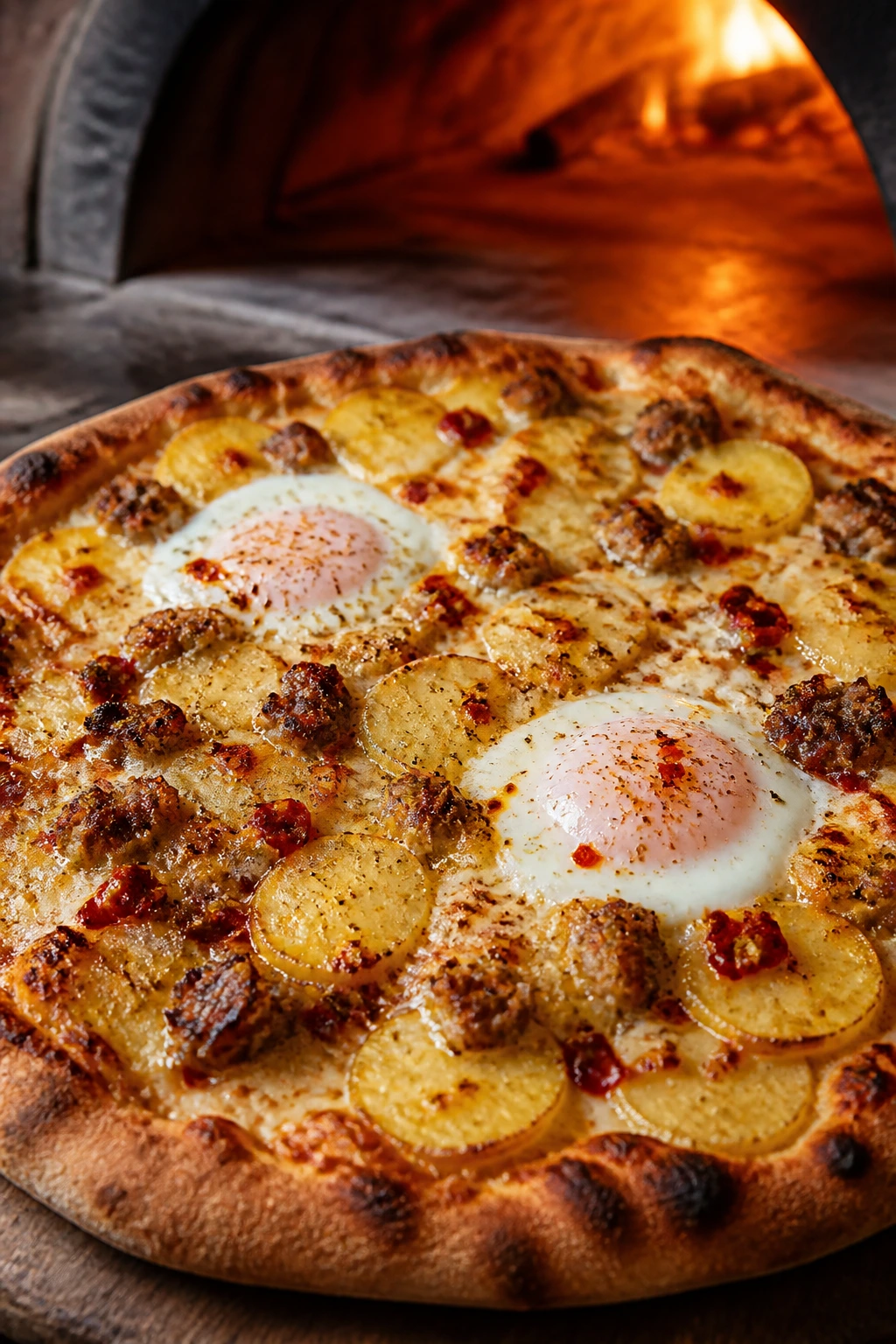
This is the spicy one, and it earns its heat. Calabrian chili paste brings a fruity burn, potato gives it heft, and sausage ties it back to the Italian pantry. It’s the sort of pizza that wakes up a table without needing much else.
Why It Works:
Potatoes carry heat well and give the pizza some real structure, which matters when the toppings are bold. Calabrian chili paste has a bright, almost sweet heat that tastes different from ordinary red pepper flakes, and a little goes a long way. If your sausage has enough seasoning, the chili paste mostly needs to sit underneath and around it instead of dominating the whole pie.
Key Ingredients:
- 1 lb pizza dough
- 1 medium Yukon Gold potato, thinly sliced
- 8 oz Italian sausage, cooked and crumbled
- 1 tbsp Calabrian chili paste
- 1 tbsp olive oil
- 1 cup shredded mozzarella
- 1/2 cup shredded fontina
- 2 large eggs
- 1 tsp dried oregano
- Salt and black pepper, to taste
Quick Steps:
- Preheat the oven to 475°F with a stone or sheet pan inside.
- Par-cook the potato slices in boiling water for 2 minutes or microwave them for 2 minutes until just bendable.
- Stretch the dough into a 12-inch round and brush with olive oil mixed with the Calabrian chili paste.
- Add mozzarella, fontina, potato slices, and sausage, then make 2 wells for the eggs.
- Crack in the eggs and bake for 11 to 13 minutes until the crust is browned and the potatoes are tender.
- Finish with oregano and black pepper.
Equipment for This Recipe:
- Small bowl for chili oil
- Pizza stone or sheet pan
- Sharp knife or mandoline
- Saucepan or microwave-safe bowl
- Pizza cutter
How to Serve This Dish:
This pizza wants a cool side, like a simple yogurt-cucumber salad or sliced pears. A little honey drizzle on the crust sounds strange until you try it, and then the heat-sweet balance makes sense.
Pro Tips for This Recipe:
- Calabrian chili paste is stronger than flakes. Start with less if you’re unsure.
- Keep the potato slices thin and flexible before baking.
- Fontina helps tame the heat and improves the melt.
- A few drops of honey on the finished crust can round out the spice.
Variations on This Dish:
- Milder Chili Pie: Use crushed red pepper instead of chili paste.
- Double Heat Version: Add spicy sausage and a few sliced pepperoncini.
- Vegetarian Chili Potato: Skip the sausage and add roasted mushrooms instead.
Common Mistakes to Avoid with This Dish:
- Too much chili paste: It can overpower the rest of the pizza.
- Raw potato slices: They need a head start.
- No cooling side: The heat feels harsher without something creamy or crisp alongside it.
15. Four-Cheese Herb Breakfast Pizza
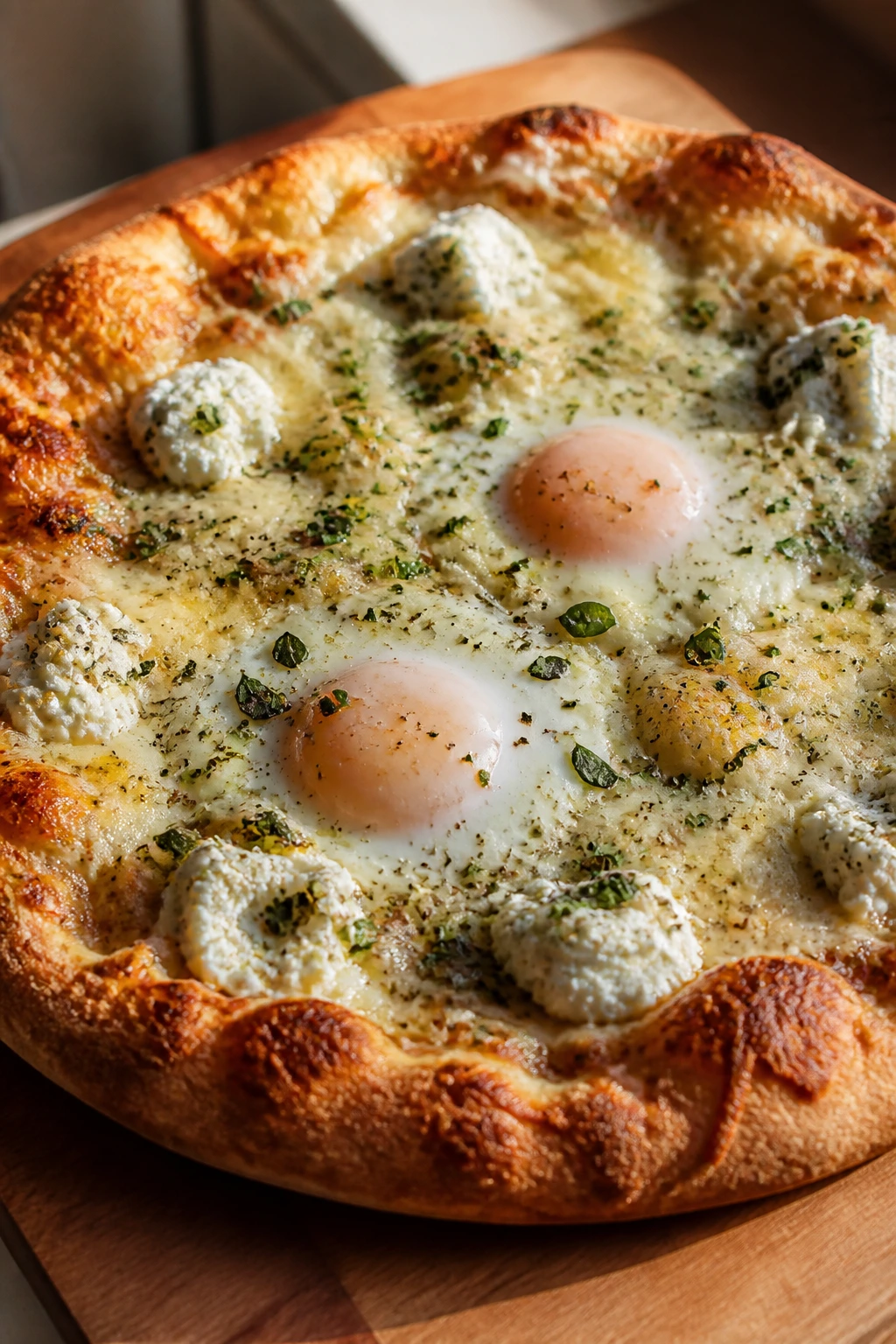
Sometimes the smartest breakfast pizza is the one that stops trying so hard. Four cheeses, a good dough, and a handful of herbs give you enough flavor without a lot of moving parts. This is the pizza I’d make when the fridge has odds and ends of cheese and not much else.
Why It Works:
Each cheese has a job. Ricotta gives creaminess, mozzarella gives melt, fontina gives depth, and Parmesan gives sharpness. Herbs stop the whole pie from turning into a block of dairy, and the eggs give it just enough structure to read as breakfast rather than late-night snacking.
Key Ingredients:
- 1 lb pizza dough
- 2 tbsp olive oil
- 1/2 cup ricotta
- 1 cup shredded mozzarella
- 1/2 cup shredded fontina
- 1/4 cup grated Parmesan
- 2 large eggs
- 1 tsp chopped oregano
- 1 tsp chopped basil
- 1 tsp chopped chives
- Black pepper, to taste
Quick Steps:
- Preheat the oven to 475°F with a stone or baking sheet inside.
- Stretch the dough into a 12-inch round and brush with olive oil.
- Dollop the ricotta over the dough, then add mozzarella, fontina, and Parmesan.
- Make 2 wells in the cheese and crack in the eggs.
- Bake for 10 to 12 minutes until the crust is browned and the whites are set.
- Finish with oregano, basil, chives, and black pepper.
Equipment for This Recipe:
- Pizza stone or baking sheet
- Box grater
- Small bowls for cheese
- Parchment paper
- Pizza wheel
How to Serve This Dish:
This pizza likes a sharp side salad or a bowl of roasted tomatoes. It also works surprisingly well cut into small squares as part of a larger brunch spread, since the cheese makes every bite feel complete on its own.
Pro Tips for This Recipe:
- Use cheeses with different textures. Four soft cheeses get muddy fast.
- Keep the ricotta in small spoonfuls so the surface stays uneven and interesting.
- Fresh herbs should go on after baking, not before.
- If you only have three cheeses, skip the Parmesan before you skip the mozzarella.
Variations on This Dish:
- Garlic Herb Version: Mix roasted garlic into the ricotta.
- Sharp Cheese Swap: Replace fontina with provolone for a saltier bite.
- Green Herb Pie: Add parsley and dill if you want a fresher herb profile.
Common Mistakes to Avoid with This Dish:
- Too much cheese: The pizza turns greasy and heavy.
- Dry herb mix only: Fresh herbs give a better finish.
- Skipping black pepper: It keeps the cheese from tasting flat.
16. Meatball and Ricotta Breakfast Pizza
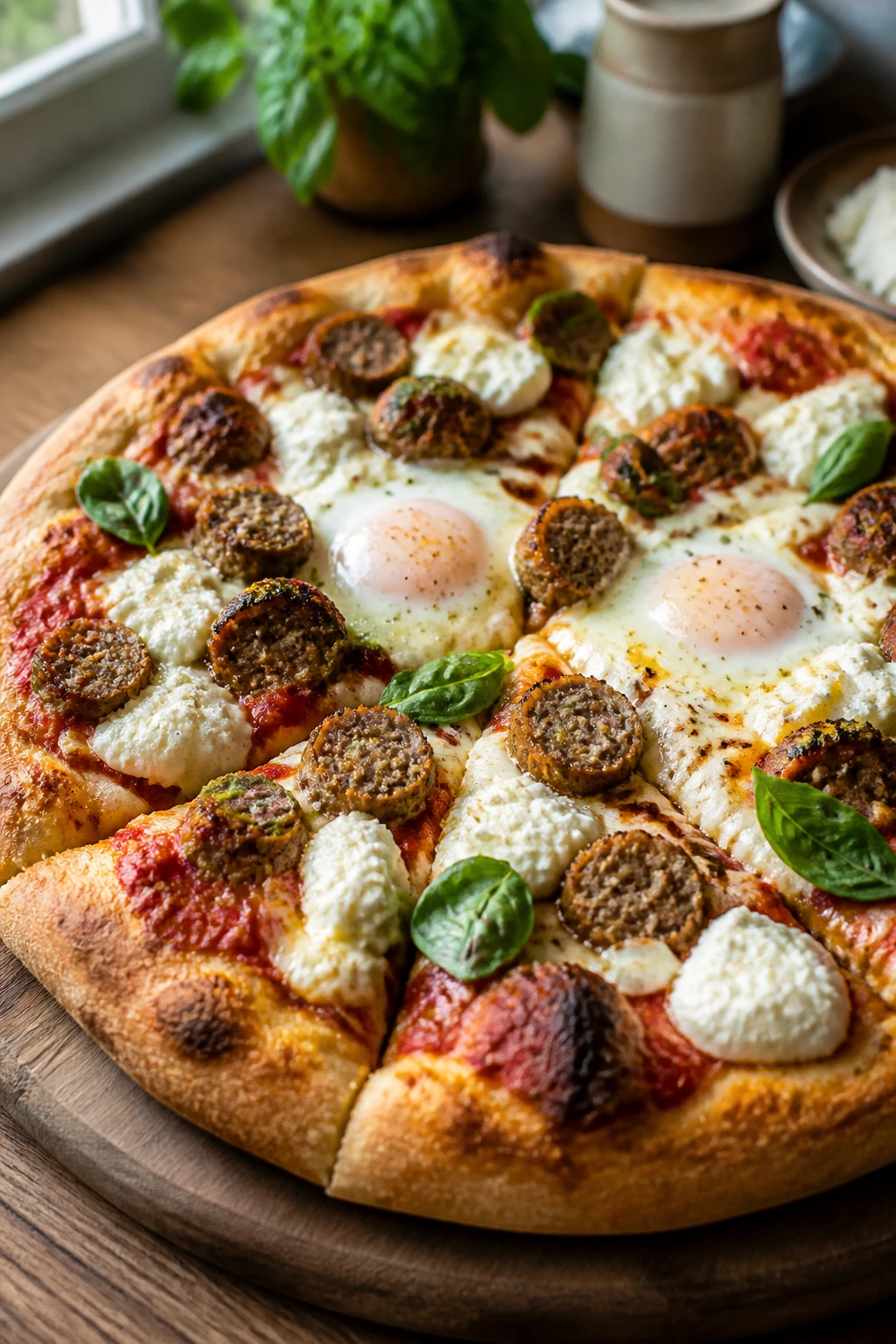
This is the most directly linked to pasta night, and that’s why I saved it for last. If you have leftover meatballs or a tray of them in the freezer, they turn into a breakfast pizza that tastes like a victory lap. Marinara, ricotta, mozzarella, and basil make the whole thing feel like Sunday sauce moved to a different shift.
Why It Works:
Meatballs already carry tomato, garlic, and seasoning, so the pizza builds on flavor you’ve already done the work for. Ricotta softens the edges and stops the sauce from feeling too sharp, while mozzarella ties the top together. This is one of the few breakfast pizzas here that can handle a slightly heavier hand, because the meatballs do the structural work.
Key Ingredients:
- 1 lb pizza dough
- 1/2 cup marinara
- 5 to 6 cooked meatballs, sliced
- 1 cup shredded mozzarella
- 1/2 cup ricotta
- 2 large eggs
- 2 tbsp grated Parmesan
- 6 basil leaves
- 1/4 tsp red pepper flakes
- Black pepper, to taste
Quick Steps:
- Preheat the oven to 475°F with a stone or sheet pan inside.
- Stretch the dough into a 12-inch round and spread the marinara in a thin layer.
- Add mozzarella, sliced meatballs, and small spoonfuls of ricotta.
- Make 2 wells and crack in the eggs.
- Bake for 11 to 13 minutes until the crust is browned and the egg whites are set.
- Finish with Parmesan, basil, red pepper flakes, and black pepper.
Equipment for This Recipe:
- Pizza stone or baking sheet
- Pizza wheel
- Small spoon for ricotta
- Knife for slicing meatballs
- Parchment paper
How to Serve This Dish:
Serve it with a simple green salad or roasted broccoli if you want the meal to feel complete without adding more pasta night energy. It also makes a good game-day brunch pizza because it holds together well in slices.
Pro Tips for This Recipe:
- Slice the meatballs rather than piling them whole so every bite gets some.
- Use a moderate amount of marinara. Too much and the crust softens.
- Ricotta adds creaminess, but don’t cover the whole pizza with it.
- Basil belongs at the end, after the heat has done its work.
Variations on This Dish:
- Sausage Meatball Swap: Use sliced cooked Italian sausage if that’s what you have.
- Spicy Sunday Sauce Version: Add extra red pepper flakes and a spoonful of Calabrian chili paste to the marinara.
- Extra Cheese Version: Add provolone under the mozzarella for a heavier melt.
Common Mistakes to Avoid with This Dish:
- Whole meatballs on top: They make the pizza awkward to cut. Slice them.
- Too much sauce: Leftover sauce can be tempting, but restraint keeps the crust crisp.
- Skipping the basil: It gives the pizza its fresh finish.
What Makes a Hot Oven and a Thin Crust Work Here
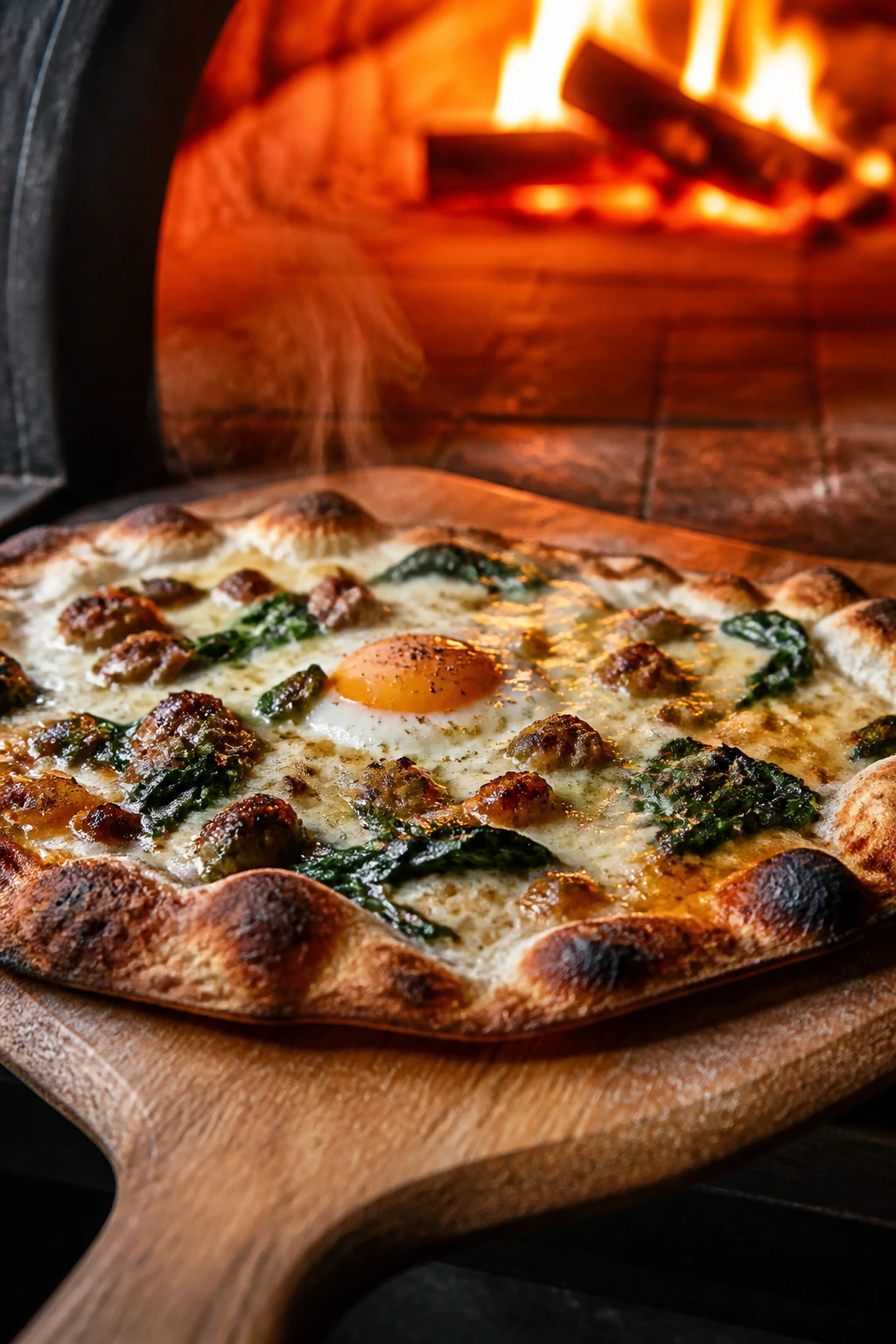
Breakfast pizza depends on speed, but not the sloppy kind. You want a hot oven, a preheated stone or steel if you have one, and toppings that have already handled their moisture before they meet the dough. That combination is what gives you a crisp base instead of an underbaked middle that tastes fine but eats like damp bread.
The other rule is simpler than people want it to be: if a topping holds water, cook or drain it first. Mushrooms, spinach, broccoli rabe, zucchini, artichokes, and even fresh mozzarella all need some handling before they go on the crust. When you do that work ahead of time, the oven can focus on browning the dough and melting the cheese rather than steaming everything into mush.
Eggs are the last piece. They need enough heat to set the whites, but not so much time that the yolks go chalky. That’s why this style of pizza works best when you keep an eye on the last few minutes and pull the pie when the center still has a little shine. Pizza is not the place for autopilot. At least not this kind.
Essential Equipment for These Recipes
-
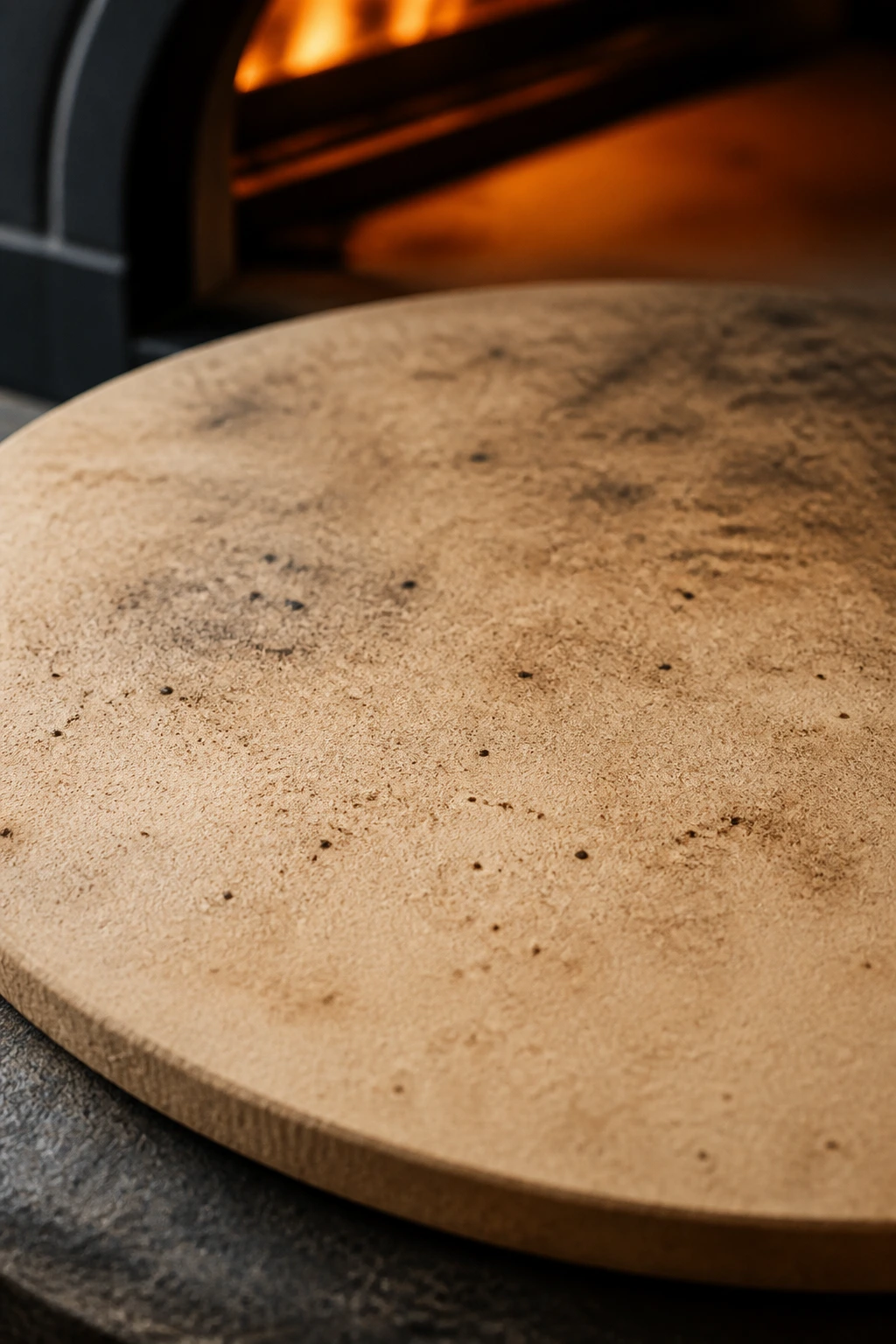
Pizza stone or pizza steel: Best for browning the bottom quickly; an inverted rimmed baking sheet works if that’s what you’ve got.
-
Pizza peel or parchment paper: A peel makes launching easier, but parchment is the simpler choice for most home ovens.
-
Large skillet: Useful for sausage, mushrooms, pancetta, broccoli rabe, and any topping that needs a quick cook first.
-
Sharp knife: Thin slices matter more than people think, especially for onions, peppers, zucchini, and potatoes.
-
Box grater or microplane: Good for Parmesan, Pecorino, lemon zest, and any finishing cheese.
-
Mandoline or vegetable peeler: Optional, but helpful for potato and zucchini slices that cook evenly.
-
Pizza wheel: Cleaner slicing than a chef’s knife, especially for pies with runny eggs.
-
Paper towels or clean kitchen towel: You’ll use these for drying mozzarella, draining greens, and blotting wet vegetables.
-
Small bowls: Keep toppings organized so you’re not trying to cook from a pile.
Smart Shopping and Ingredient Tips
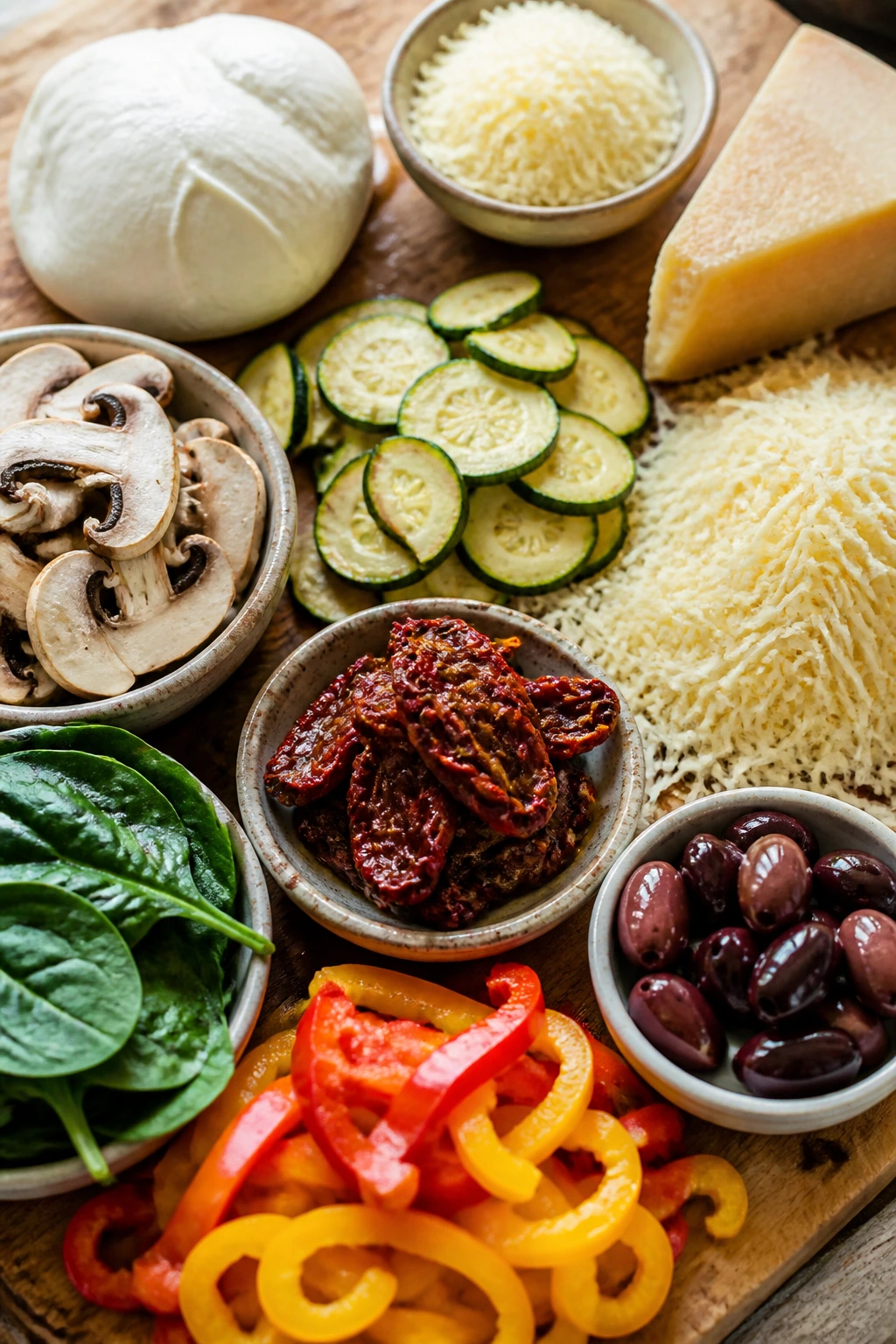
Pizza dough matters more than the labels on the bag. Buy a dough that feels elastic and a little tacky, not dry and stiff, and let it sit at room temperature long enough to stretch without tearing. If you can get dough from a local pizzeria, even better; it tends to have more flavor and better structure than the bland supermarket stuff.
Cheese is where people get lazy. Whole-milk mozzarella melts more smoothly than part-skim, ricotta should be thick rather than watery, and Parmesan or Pecorino should be freshly grated if possible because the pre-grated stuff can taste dusty. For pizzas that rely on sharper flavors, like carbonara or sausage, use real Pecorino Romano rather than trying to fake that bite with more mozzarella.
With vegetables, look at moisture first and color second. Mushrooms should be firm, spinach should be crisp, zucchini should be small and glossy, and artichokes should be packed well and drained thoroughly. Jarred ingredients are fine here — sun-dried tomatoes, roasted peppers, capers, olives, and pesto all earn their place — but they need to be blotted or balanced so they don’t flood the crust.
Eggs are worth buying fresh, but not fancy. Large eggs are the right size for most of these pizzas, and they’re easier to judge visually when they start to set. If you know your oven runs hot, crack the eggs a little later in the bake or you’ll overshoot the yolk before the cheese is fully melted. That’s one of those small details that changes the whole slice.
How to Serve These Recipes
Presentation:
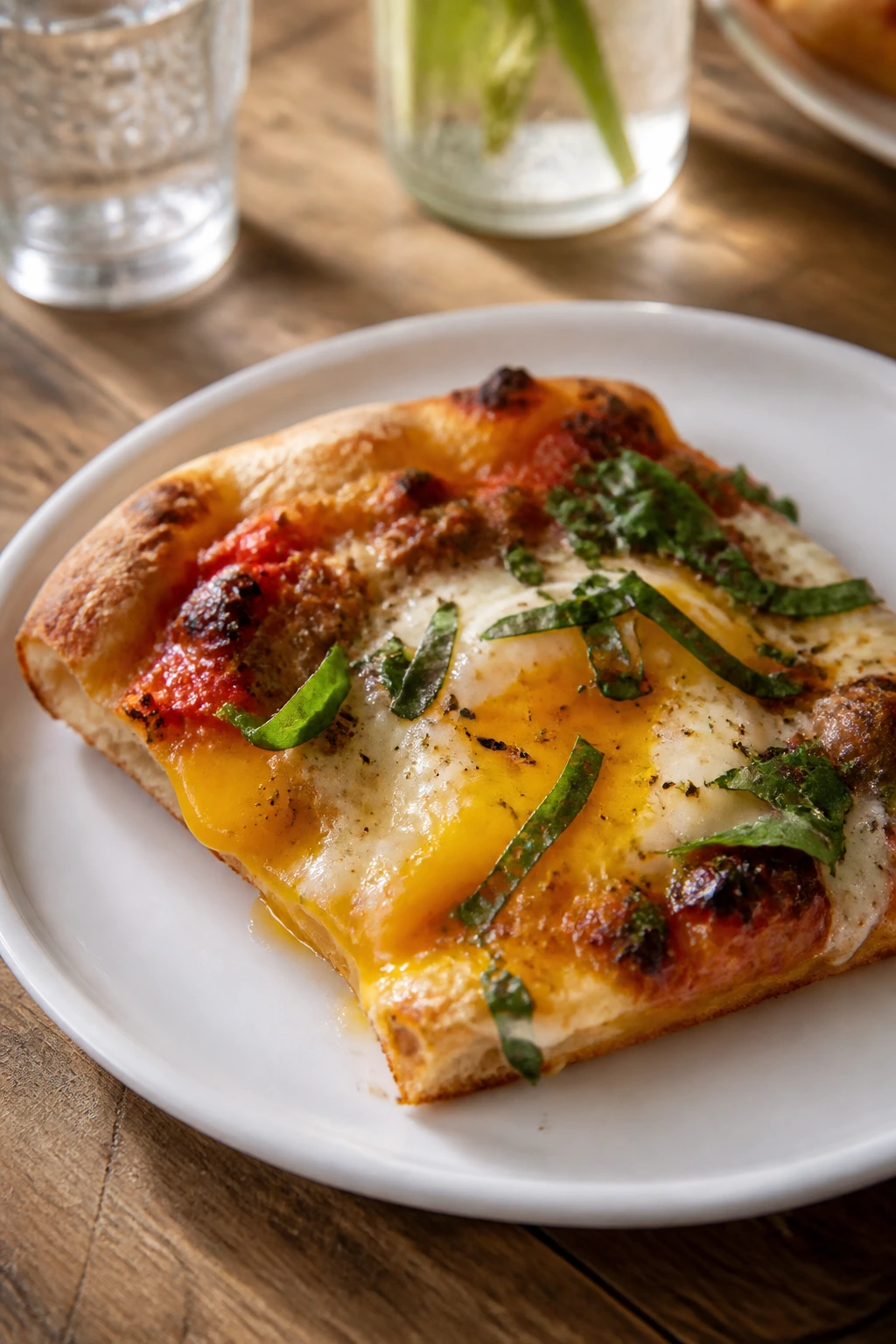
Cut each pizza into 6 wedges for a main course or 8 smaller pieces for brunch grazing. A little torn basil, chopped parsley, or a light dusting of Parmesan right before serving makes the surface look fresh and keeps the toppings from reading flat.
Accompaniments:
A peppery arugula salad, sliced citrus, roasted potatoes, or a bowl of olives all fit the Italian and Mediterranean flavor profile without competing with the pizza. If the pizza is already rich — carbonara, meatball, or four-cheese — keep the side simple and bright.
Portions:
One 1-pound dough ball usually feeds 2 to 3 people as a main dish or 4 people when there are sides. For a brunch spread, I like to cut the pizzas smaller and let people sample two different styles; that works especially well if one pizza is red-sauce based and the other is white.
Beverage Pairing:
Coffee is the obvious answer, but an espresso, cappuccino, sparkling water with lemon, or a dry sparkling wine also fits. For the saltier pies, like feta, carbonara, or prosciutto, a crisp drink helps more than a sweet one.
Additional Tips and Flavor Boosters
Flavor Enhancement:
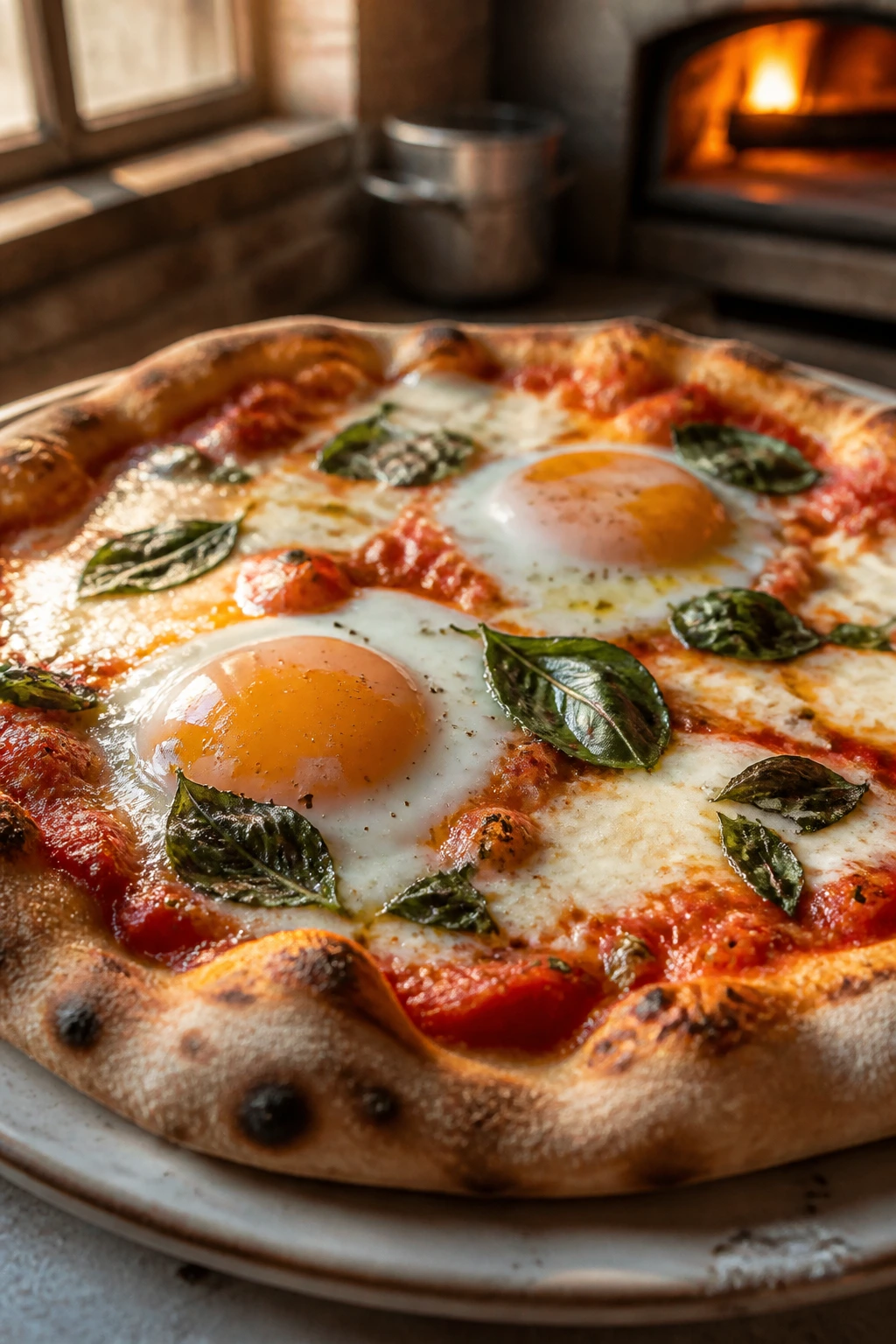
A light drizzle of good olive oil after baking changes the texture of the top layer in a way you can taste immediately. On tomato-based pies, a small finish of balsamic glaze or hot honey can sharpen the edges without smothering the pizza.
Customization:
If you want more protein, add another egg or use a few extra ounces of sausage or pancetta. If you want the pizzas lighter, switch one cheese for ricotta or reduce the total amount of shredded cheese and add more herbs instead.
Serving Suggestions:
Keep red pepper flakes, flaky salt, lemon wedges, and extra Parmesan on the table. People like finishing their own slice, and breakfast pizza benefits from that last little adjustment right before the bite.
Make-It-Yours:
For gluten-free eating, use a certified gluten-free crust and bake it on a preheated sheet pan. For dairy-free versions, use a good melting plant-based cheese and lean harder on olive oil, herbs, and salty toppings like olives, capers, or sausage to keep the flavor from thinning out.
Make-Ahead, Storage, and Reheating Guidance
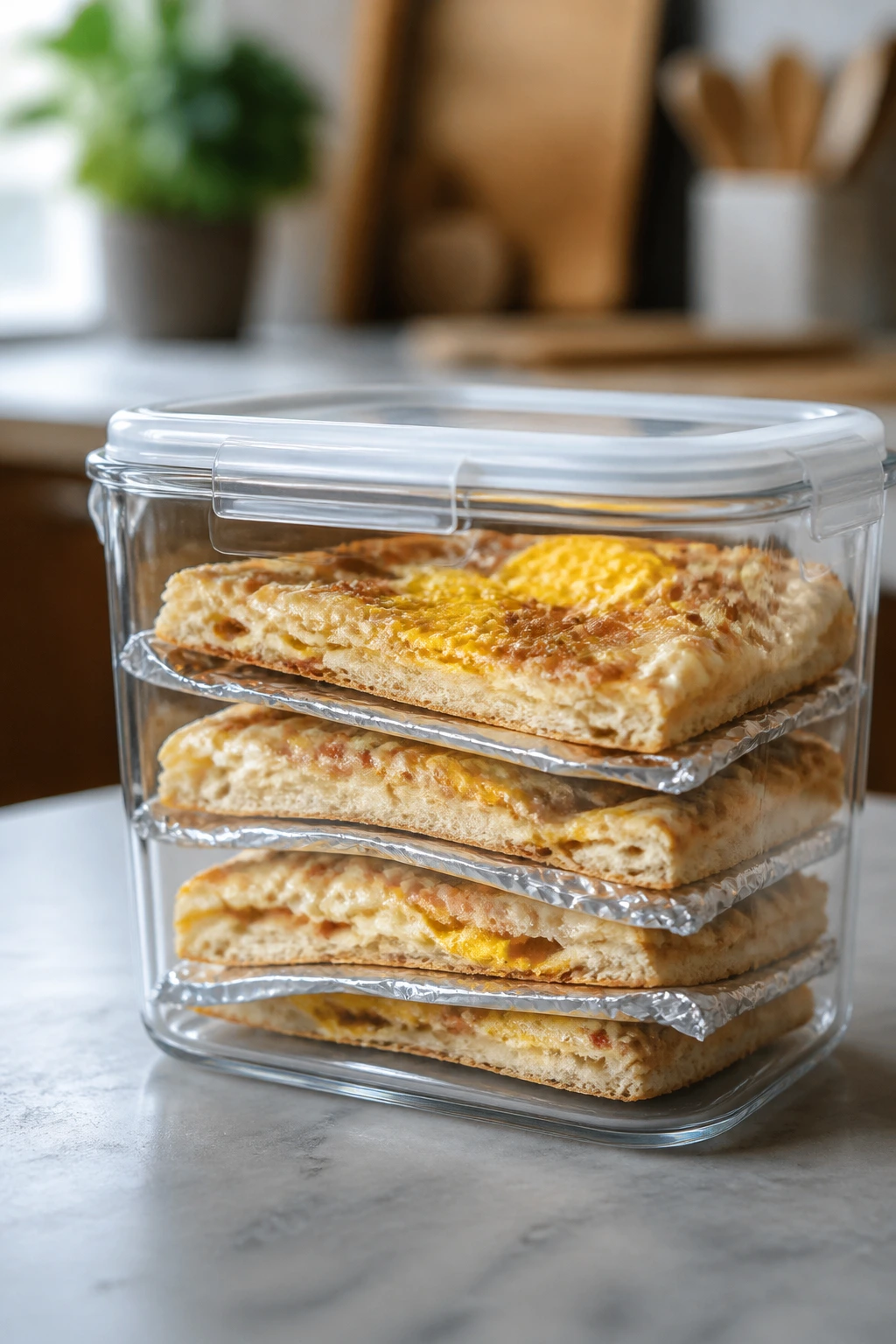
Most of these pizzas are best the day they’re baked, especially the ones with soft eggs. If you’re planning for leftovers, bake the eggs a little firmer than you normally would so they reheat without turning watery. A finished pizza keeps well in the fridge for up to 3 days in an airtight container, or wrapped tightly in foil and then sealed in a bag.
Freezing works for some of them, but not all. Pizzas with smoked salmon, fresh herbs, or very soft eggs lose their texture after thawing, while sausage, meatball, margherita, and carbonara-style pies freeze better for up to 2 months. Wrap slices individually, then reheat straight from frozen on a baking sheet at 375°F until hot in the center and crisp at the edges.
For reheating, the oven wins. Set it to 375°F and bake slices for 6 to 8 minutes on a sheet pan, or use a dry skillet over medium heat for 3 to 4 minutes with a lid on for the last minute so the cheese melts again. The microwave works in an emergency, but it softens the crust and makes the eggs a little sad.
If you want to prep ahead, cook sausage, pancetta, or meatballs up to 2 days early, wash and dry herbs the day before, and grate cheese in advance. Dough is the thing that needs the most breathing room. Let it rest until it stretches without tearing, and your whole morning gets easier.
Variations and Adaptations to Try
Flatbread Shortcut Brunch:
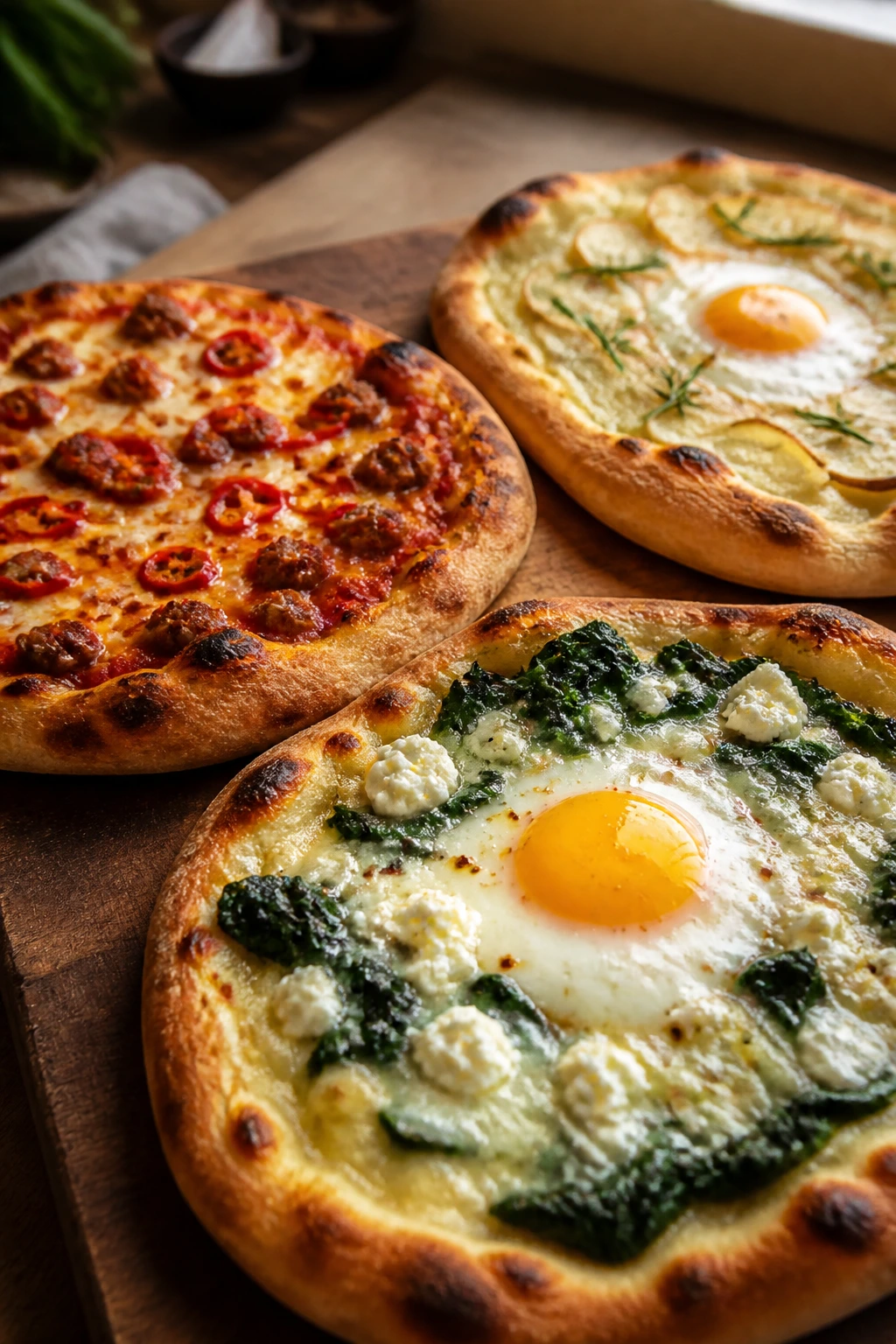
Use naan, pita, or store-bought flatbread when you want the idea of breakfast pizza without shaping dough. Lower the bake time to about 8 to 10 minutes and keep the toppings lighter, because thin flatbreads dry out quickly.
White Pizza Lineup:
Skip tomato sauce altogether and lean into olive oil, ricotta, fontina, garlic, and herbs. This works especially well for spinach, mushroom, zucchini, and broccoli rabe pizzas, where the toppings already carry enough flavor.
Gluten-Free Shells:
A sturdy gluten-free crust can handle most of these pizzas if you preheat the pan well and avoid overloading it. Keep the toppings on the dry side and accept that the crust will be a little more fragile; that’s normal.
Dairy-Light Approach:
Use less shredded cheese, more olive oil, and bolder toppings like sausage, olives, capers, sun-dried tomatoes, and herbs. You still want a little cheese for melt, but the pie can stay interesting without being heavy.
Spice-First Calabrian Style:
Add Calabrian chili paste, spicy sausage, pepper flakes, and a little honey on the finish. That mix works across several of the recipes here, especially the sausage, potato, and meatball versions.
Vegetable-Heavy Brunch Pie:
Load the pizza with pre-cooked mushrooms, spinach, zucchini, artichokes, and roasted peppers, then use smaller amounts of cheese so the toppings stay in balance. This is the version that tastes closest to the Mediterranean side of the collection.
Common Mistakes to Avoid with These Recipes
Cold dough is the first thing that trips people up. If the dough keeps shrinking back or tears when you stretch it, it hasn’t relaxed enough. Give it 30 to 45 minutes on the counter, and the difference is immediate.
Wet toppings are the second problem. Spinach, zucchini, mushrooms, artichokes, tomatoes, and mozzarella can all sabotage the crust if you don’t dry or cook them first. A crisp pizza is mostly the result of moisture management, which is not glamorous but absolutely real.
Overloading the pizza is a classic mistake. More cheese does not always mean better pizza; too much of it makes the center greasy and slows the bake. Keep the layer even and give the dough some breathing room around the edge so the crust can rise and brown.
Oven temperature matters more than people want to admit. If the oven is too cool, the toppings wilt before the dough catches color, and the whole pizza feels flat. Preheat fully, give the stone time to heat through, and don’t open the door every minute to check on it.
Egg timing can also go sideways fast. Crack them too early and they overcook while the cheese is still catching up; crack them too late and they slide around raw on top of a finished pie. Look for set whites with yolks that still have a little movement if you want that soft breakfast finish.
Finally, don’t slice immediately after the pizza leaves the oven if it’s especially cheesy or topped with fresh mozzarella. Give it 1 to 2 minutes so the surface settles. That tiny pause keeps the toppings where they belong instead of on the cutting board.
Frequently Asked Questions
Can I use store-bought dough for all of these pizzas?
Yes, and it’s the easiest way to keep this collection realistic. Let the dough warm up, stretch it gently, and bake on a hot surface so it tastes like you meant it to be there.
What’s the best cheese if I only want to buy two?
Buy whole-milk mozzarella and one sharper cheese, like Parmesan or Pecorino. Mozzarella gives melt, while the sharper cheese keeps the flavor from going flat.
Can I make these without eggs?
You can, but the pizzas will read more like dinner pies than breakfast pizzas. If you skip the eggs, add a little extra ricotta, roasted vegetables, or sausage so the slice still feels complete.
How do I keep the crust from getting soggy under tomatoes?
Use a thin sauce layer, dry fresh mozzarella, and avoid piling wet vegetables on top. If a topping feels damp in your hand, it needs a minute of prep before it goes on the pizza.
Can I bake two pizzas at once?
Yes, if your oven has enough heat and you rotate the pans halfway through. Sheet pans on two racks can work, though a pizza stone usually does a better job than two weak pans.
What if my dough keeps shrinking when I stretch it?
Stop fighting it and let it rest for 10 to 15 minutes. Gluten tightens when the dough is cold or overhandled, and a short break usually fixes the problem.
Can I make the toppings ahead of time?
Absolutely. Sausage, pancetta, mushrooms, spinach, broccoli rabe, potatoes, and meatballs can all be cooked a day or two early. Just cool them completely before storing so they don’t steam themselves soggy in the container.
Which pizzas hold up best as leftovers?
Sausage, margherita, mushroom, meatball, carbonara, and potato-based pizzas reheat nicely. Pies with smoked salmon, fresh basil, or very soft eggs are better eaten right away.
Do I need a pizza stone?
No, but it helps. A preheated inverted baking sheet is a fine substitute and still gives you enough bottom heat to brown the crust.
Can I use naan or flatbread instead of dough?
Yes, especially if you want a faster brunch. Just watch the bake time closely, because thin flatbreads can go from crisp to brittle in a minute or two.
A Final Slice Before the Coffee Gets Cold
Breakfast pizza works because it borrows from pasta night without pretending to be pasta night. The same pantry items show up again, but they land on a hotter, crisper base and get rearranged around eggs, which changes the whole mood of the meal. You’re not starting from scratch. You’re giving familiar ingredients a sharper angle.
That’s the part I like best: these pizzas are flexible without being vague. If you have dough, cheese, eggs, and a few well-chosen toppings, you can build something that tastes specific instead of random. The next time the fridge has a little mozzarella, some basil, maybe a few leftover meatballs or a sad half-jar of pesto, the answer is already sitting there.