



Greek yogurt chicken has a particular smell halfway through roasting: garlic softening, lemon warming at the edges, oregano turning from sharp and dry to something rounder and sweeter in the heat. If you’ve ever stood in front of an oven and caught that first wave of browned dairy and chicken fat, you know the effect. It’s not flashy. It’s better than flashy.
The rustic version is the one I keep coming back to. Bone-in chicken, rough-cut potatoes, red onion, and a thick yogurt marinade that clings to the meat instead of sliding off like a cheap sauce. It feels like the kind of pan a grandmother would put down in the middle of the table with bread, a knife, and no apology at all. The yogurt doesn’t make the chicken taste like yogurt, either. It makes the meat stay plush while the edges pick up little bronzed freckles that taste faintly tangy and deeply savory.
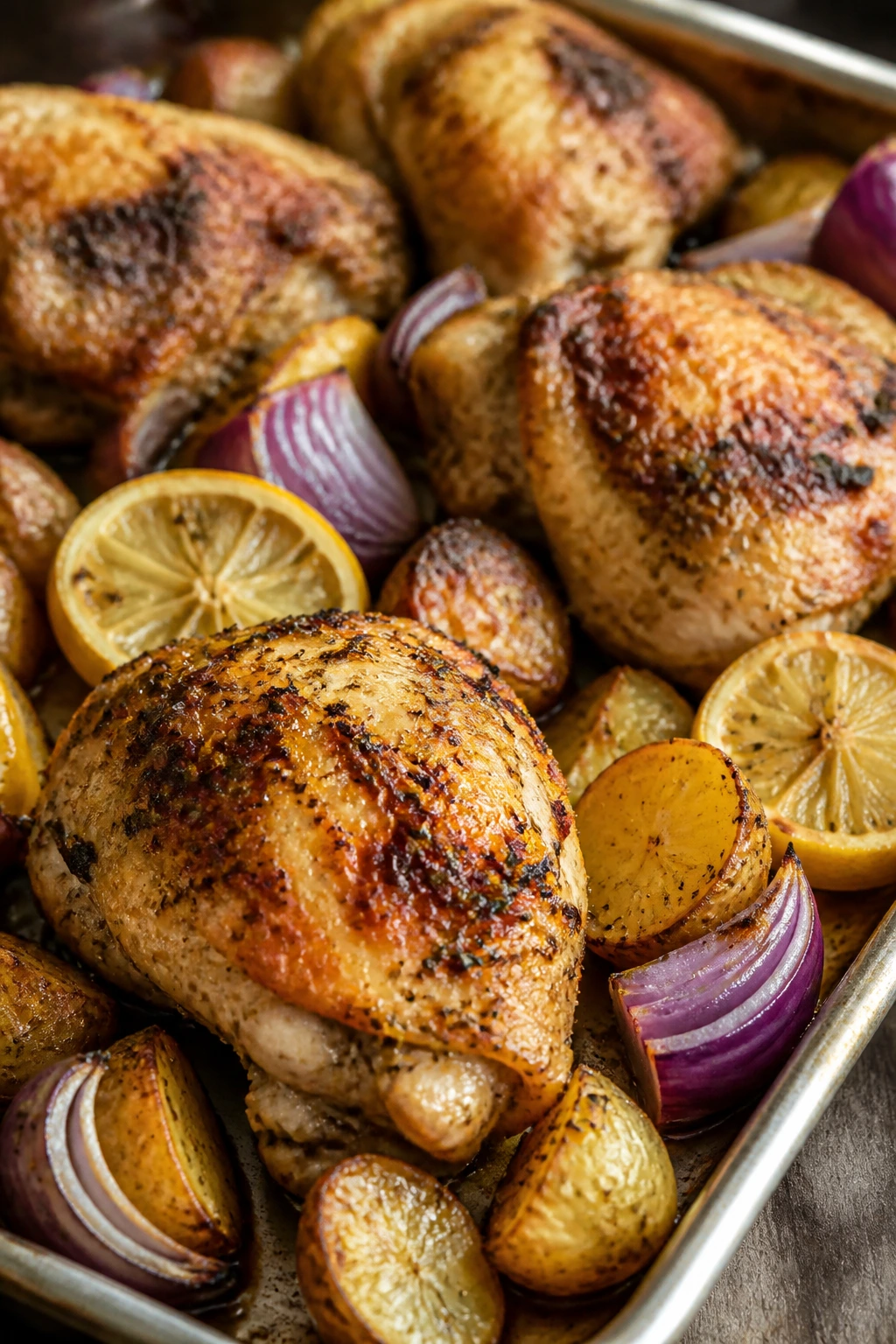
And that’s the charm here: the dish looks humble until you pull the pan from the oven. Then the whole thing turns glossy, browned, and a little messy in the best way. The potatoes catch drips from the chicken, the onion softens into sweet ribbons, and the lemon wakes everything up right before serving.
Why You’ll Keep Coming Back to This Chicken
-
The yogurt does real work: A thick, whole-milk Greek yogurt marinade clings to the chicken, helps the surface brown, and keeps the meat from drying out the way a straight lemon-and-oil marinade can.
-
The pan tastes layered, not fussy: Garlic, oregano, lemon zest, and red onion turn into drippings you’ll want to mop up with bread or spoon over the potatoes.
-
It cooks like a full dinner, not a project: Chicken pieces and potatoes finish in the same pan at a steady 425°F, so you’re not juggling three burners and a separate side dish.
-
It forgives a little timing chaos: If the chicken rests five minutes too long after roasting, it still eats juicy. That’s the kind of margin I like.
-
It looks rustic in a way that feels honest: The browned yogurt speckles, lemon slices, and uneven potato edges make the pan look homey instead of styled within an inch of its life.
-
It works with what’s in the fridge: You can swap herbs, change the vegetables, or use thighs only and the bones of the recipe still hold.
Timing, Yield, and the Ingredient List
Yield: Serves 6
Prep Time: 20 minutes
Cook Time: 45 to 50 minutes
Total Time: About 1 hour 10 minutes, plus marinating time
Difficulty: Intermediate — the method is straightforward, but the difference between juicy and dry chicken comes from using the right cut, the right oven temperature, and a thermometer.
Chill/Rest Time: 2 to 12 hours marinating; 10 minutes resting after roasting
Best Served: Warm, with the pan juices spooned over the chicken and potatoes
For the Chicken and Marinade:
- 3 pounds bone-in, skin-on chicken thighs and drumsticks
- 1 cup plain whole-milk Greek yogurt
- 3 tablespoons extra-virgin olive oil
- 4 garlic cloves, finely grated or minced
- Zest of 1 lemon
- 3 tablespoons fresh lemon juice, divided
- 2 teaspoons dried oregano
- 1 teaspoon kosher salt
- 1 teaspoon sweet paprika
- 1/2 teaspoon black pepper
- 1/4 teaspoon red pepper flakes, optional
For the Pan:
- 1 1/2 pounds baby Yukon Gold or red potatoes, halved if large
- 1 large red onion, cut into 8 wedges
- 1 tablespoon olive oil
- 1/2 teaspoon kosher salt
- 1/2 teaspoon dried oregano
For Finishing:
- 2 tablespoons chopped fresh parsley
- Lemon wedges, for serving
- 1/3 cup crumbled feta, optional
Why Greek Yogurt Chicken Tastes So Good in a Hot Oven
Why does yogurt work on chicken at all? Because it does two jobs at once, and it does neither in a showy way. The acidity in the yogurt gently loosens the outer proteins on the chicken, while the thickness of the yogurt keeps the seasonings glued to the surface so they don’t disappear into the pan. That’s the part people miss when they treat yogurt like a decorative marinade. It’s not decorative. It’s a coating, a tenderizer, and a browning helper all in one.
Greek yogurt is especially useful because it’s strained and thick. Regular yogurt can be too loose and watery for this kind of roast. You end up with puddles at the bottom of the pan and pale patches on the meat. Whole-milk Greek yogurt sticks to the chicken in a thin, even layer that browns in the oven instead of steaming away. The fat helps, too. Not in a glamorous way. In a practical, kitchen-real way. Fat carries flavor, and it gives the marinade a little more body as it bakes.
The flavor profile lands somewhere between bright and savory. Lemon keeps the whole thing from feeling heavy, garlic adds a little sharpness, and oregano brings the familiar Mediterranean note that makes the kitchen smell like you’ve been cooking all afternoon even when you haven’t. If you’ve ever had roast chicken that tasted flat in the middle, this is the fix. The yogurt gives the meat a deeper seasoning footprint, and the pan juices carry that flavor into the potatoes.
No single grandmother owns this exact recipe. That’s part of why it feels right. It borrows from the broad Mediterranean habit of using yogurt, citrus, olive oil, herbs, and bone-in chicken because those things behave well together. The result is rustic, not precious. There’s a reason dishes like this survive in home kitchens longer than fancier ones. They make sense at the stove.
What Each Ingredient Is Doing in the Bowl
Chicken Pieces
What to use: 3 pounds of bone-in, skin-on chicken thighs and drumsticks. I like a mix because the different shapes make the pan look natural, and the thighs stay especially juicy.
Preparation: Pat the chicken dry before marinating, especially around the skin and the joint. Dry skin grabs the yogurt better, and the final roast browns more evenly.
Substitutions: All thighs work well if you want less guessing at doneness. Bone-in chicken breasts can work, though they need a shorter cook time and a closer eye.
Tips: Keep the pieces similar in size so the smaller ones don’t overcook before the larger ones hit 165°F in the thickest part.
Greek Yogurt Marinade
What to use: 1 cup plain whole-milk Greek yogurt, 3 tablespoons olive oil, 4 garlic cloves, zest and 2 tablespoons of the lemon juice, oregano, salt, paprika, black pepper, and red pepper flakes if you want a little heat.
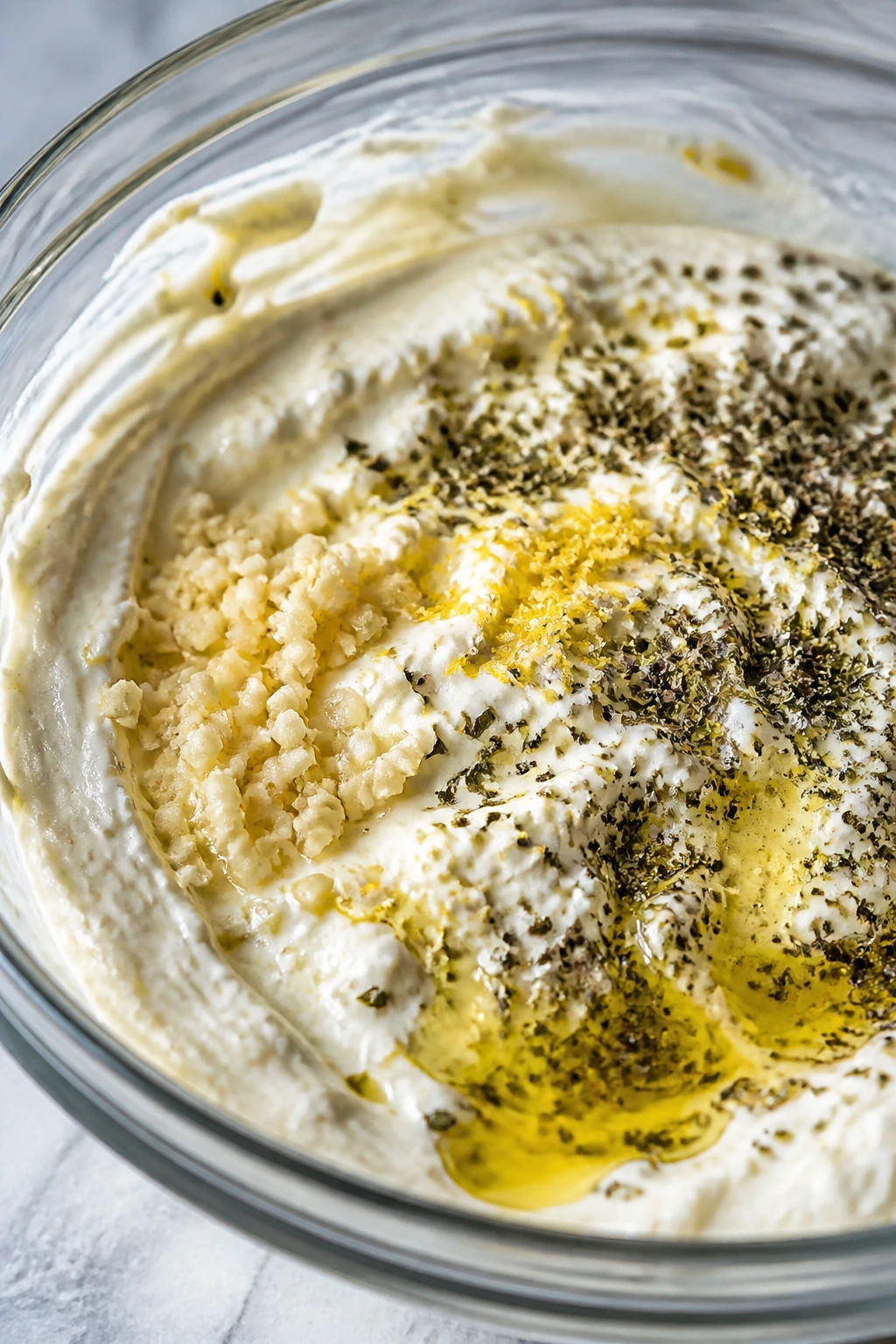
Preparation: Whisk the marinade until the yogurt looks smooth and creamy, with no clumps of garlic or streaks of oil sitting on top. Add the chicken and rub the mixture into every surface.
Substitutions: Plain sour cream can stand in if that’s what you have, though it’s a little richer and less tangy. Unsweetened coconut yogurt works in dairy-free kitchens, but you’ll want extra lemon zest to keep the flavor from going soft.
Tips: Whole-milk yogurt browns better than low-fat, which can look a bit thin and taste sharper after roasting. I skip the low-fat tub here every time.
Potatoes and Onion
What to use: 1 1/2 pounds baby Yukon Gold or red potatoes and 1 large red onion, cut into wedges.
Preparation: Halve the potatoes if they’re larger than a golf ball, so they finish at the same speed as the chicken. Cut the onion into wide wedges that hold together in the oven.
Substitutions: Fingerlings work well, and so do chunks of peeled Yukon Gold. Fennel wedges can replace some of the potato if you want a sweeter, softer pan.
Tips: Season the vegetables on their own before they go into the pan. If you only season the chicken, the potatoes can taste like they were cooked near flavor instead of inside it.
Finishing Touches
What to use: Chopped parsley, lemon wedges, and crumbled feta if you want it.
Preparation: Chop the parsley right before serving so it stays bright. Keep the feta cold until the last minute; it crumbles better that way.
Substitutions: Dill or mint can replace some of the parsley. Kalamata olives can join the pan if you like a brinier note.
Tips: Finish the dish after it comes out of the oven, not before. Fresh herbs and a final squeeze of lemon keep the roast from tasting too soft or muddy.
The Tools That Make the Job Easier
A few pieces of equipment do most of the heavy lifting here. Nothing exotic. Nothing that requires a special drawer.
-
Large mixing bowl: Big enough to hold the chicken and marinade without sloshing yogurt over the counter when you turn the pieces.
-
Rimmed sheet pan or shallow roasting pan: A 13 x 18-inch sheet pan gives the chicken room to brown instead of steaming in its own moisture.
-
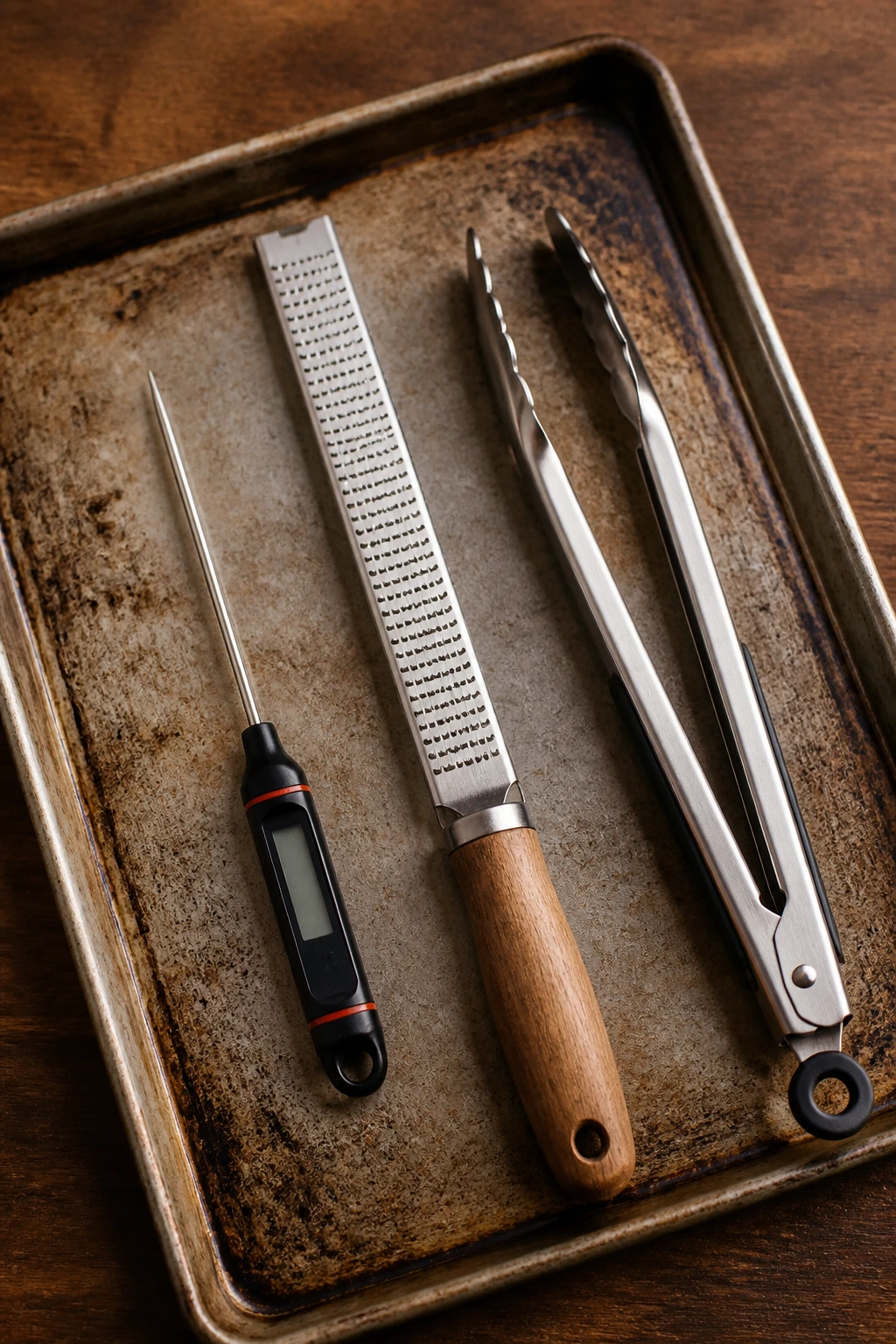
Microplane or fine grater: Best for the lemon zest and garlic, which blend into the yogurt better than chunky pieces do.
-
Tongs: Useful for moving chicken pieces without scraping off the marinade too early.
-
Instant-read thermometer: The one tool I wouldn’t skip. Chicken is done at 165°F in the thickest part, and guessing by color is how people end up with dry thighs or undercooked joints.
-
Cutting board and sharp knife: You’ll use them for the potatoes, onion, lemon, and herbs.
-
Foil, optional: Handy for a loose tent if the chicken is browning too fast before the potatoes finish.
How to Roast Greek Yogurt Chicken Without Drying It Out
Marinate the Chicken
-
Pat the chicken pieces dry with paper towels and place them in a large bowl.
-
In a separate bowl, whisk together the Greek yogurt, olive oil, garlic, lemon zest, 2 tablespoons of the lemon juice, oregano, salt, paprika, black pepper, and red pepper flakes if using. The mixture should look creamy and evenly speckled with herbs.
-
Add the chicken to the marinade and turn each piece until it’s coated on all sides. Cover the bowl and refrigerate for at least 2 hours or up to 12 hours. Do not leave the chicken sitting in the marinade for a full day; the texture can start to go a little soft on the surface.
Build the Pan
-
Heat the oven to 425°F (220°C) and position a rack in the center. Let the chicken sit at room temperature for 20 to 30 minutes while the oven heats.
-
On a rimmed sheet pan, toss the potatoes and red onion with 1 tablespoon olive oil, 1/2 teaspoon salt, and 1/2 teaspoon oregano. Spread them out in a single layer so they have room to brown.
-
Nestle the marinated chicken pieces on top of the vegetables, skin-side up. Scrape off any big clumps of yogurt that fall into the pan; a thin coating on the meat is fine, but thick blobs on the sheet pan can scorch before the chicken is done.
Roast and Finish
-
Roast for 25 minutes, then rotate the pan. Spoon some of the pan juices over the potatoes and check whether the edges of the onions are starting to brown. Continue roasting for another 15 to 20 minutes, until the chicken reaches 165°F in the thickest part and the potatoes yield easily when pierced with a fork. If your drumsticks are large, give them an extra 5 minutes.
-
If the chicken needs more color, turn on the broiler for 1 to 2 minutes at the end. Watch it closely. Yogurt can go from bronzed to too dark faster than you’d think.
-
Pull the pan from the oven and let it rest for 10 minutes. Scatter over the parsley, squeeze on the remaining lemon juice, add feta if using, and serve with the pan juices spooned over everything.
How to Serve the Chicken So the Pan Feels Complete
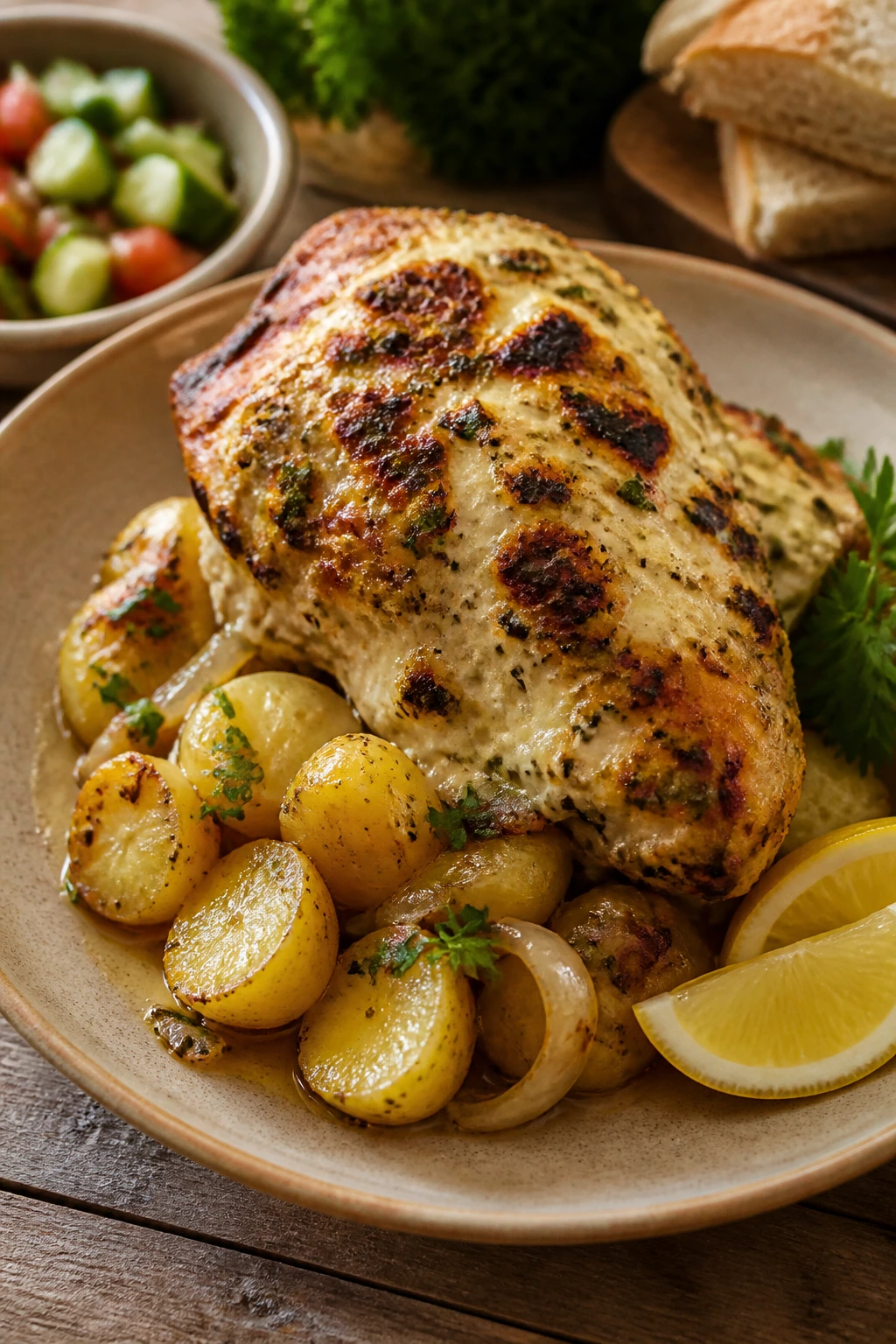
Presentation: Spoon a mound of potatoes and onion onto each warm plate, then set a piece of chicken on top so the browned yogurt coating stays visible. Finish with parsley and a few lemon wedges tucked on the side; the plate should look casual, not arranged like a catering tray.
Accompaniments: Warm pita, crusty bread, or a simple rice pilaf all make sense here because they catch the lemony drippings. A chopped cucumber-tomato salad with a pinch of salt keeps the plate bright, and sautéed greens work well if you want something a little more bitter beside the roast.
Portions: Plan on 1 chicken piece plus a generous scoop of potatoes per person for a normal dinner. If the crowd is hungrier, count on 2 smaller pieces or 1 large thigh plus bread. This recipe stretches farther when you serve it with pita and salad.
Beverage Pairing: A dry white wine like Assyrtiko or a clean, crisp Pinot Grigio works well with the yogurt, garlic, and lemon. If you want something without alcohol, sparkling water with lemon or a cold mint tea keeps the palate fresh between bites.
Small Moves That Improve the Finished Pan
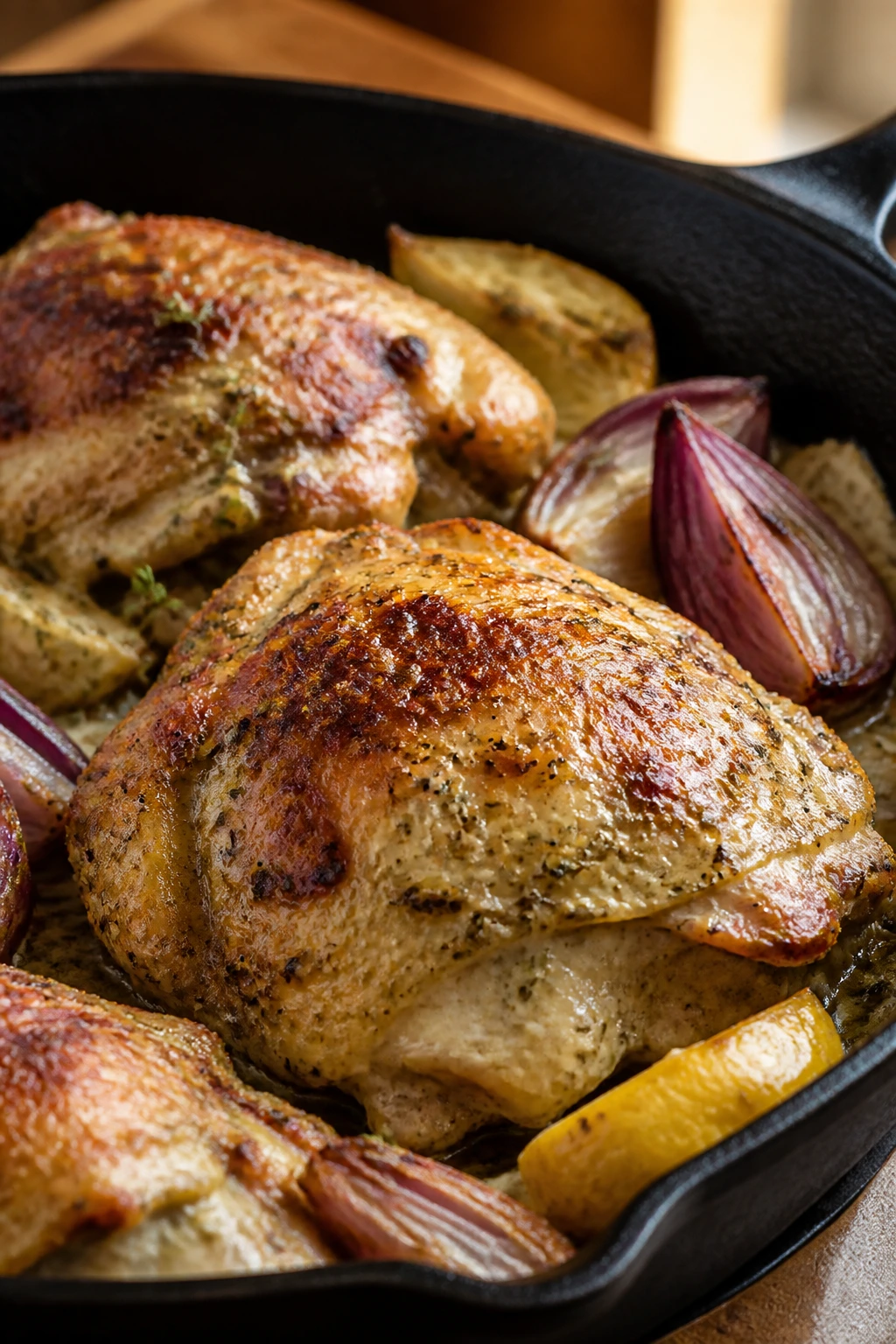
Small things. Big payoff.
Flavor Enhancement: Save the final tablespoon of lemon juice for the end instead of putting all of it in the marinade. The roast tastes brighter when that last squeeze hits the hot chicken and potatoes right before serving.
Time-Saver: Marinate the chicken in a zip-top bag set inside a bowl. It takes less fridge space, and you can turn the bag once or twice without dirtying another utensil.
Pro Move: If your potatoes are slow to brown, give them a 6-minute head start in boiling salted water before they go into the sheet pan. Drain them well and rough them up a little in the colander; the edges catch more color in the oven.
Cost-Saver: Thighs are cheaper than breasts and much harder to ruin in a hot oven. If you’re buying a family pack, go with the thighs and drumsticks before the price of anything else starts to matter.
Serving Suggestions: A pinch of flaky salt over the chicken right after roasting gives the yogurt crust a little snap. If you keep feta on hand, crumble a small amount over the potatoes instead of burying the chicken in cheese.
Mistakes That Turn an Easy Roast Into a Letdown
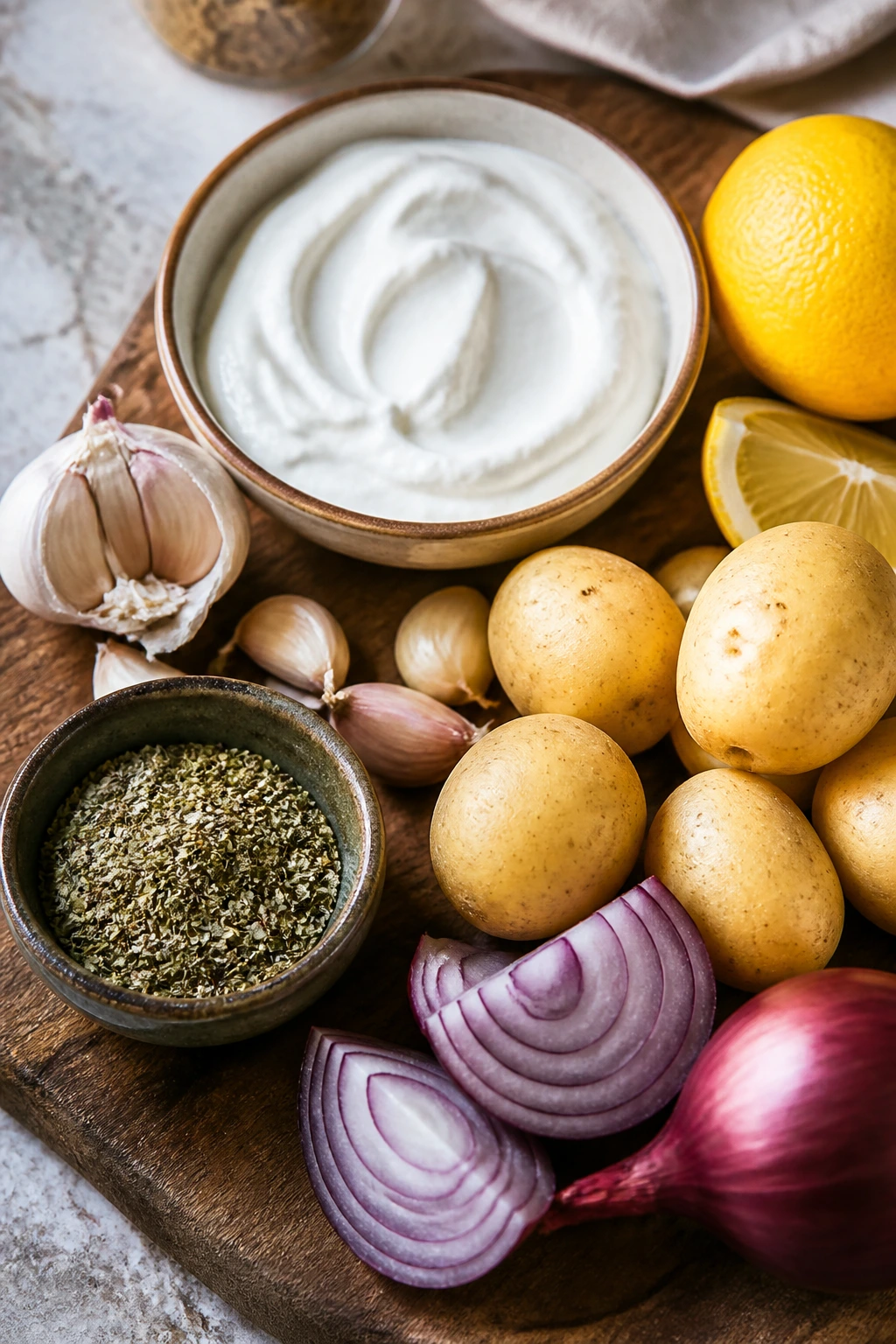
Using thin yogurt or the wrong style: If your yogurt is watery, the marinade slides off and puddles in the pan. The fix is simple: use thick, plain whole-milk Greek yogurt, and if the tub looks loose, stir in a spoonful more before coating the chicken.
Crowding the pan: If the chicken and potatoes are piled on top of each other, the vegetables steam and the yogurt coating turns pale. Spread everything in a single layer with a little open space around the pieces, even if that means using a second pan.
Letting garlic sit in big chunks: Large pieces of garlic can scorch and turn bitter before the chicken finishes. Grate or mince it finely so it blends into the yogurt and perfumes the whole pan instead of sitting there like a tiny burned hazard.
Cooking by color alone: Yogurt can brown before the chicken is actually done, and the skin on bone-in pieces lies to people all the time. The fix is an instant-read thermometer in the thickest part, right next to the bone but not touching it. You want 165°F.
Marinating too long with too much acid: Lemon is good here, but more is not automatically better. If the chicken sits too long in a very sharp marinade, the surface can take on a slightly pasty texture. Keep the yogurt dominant and let the final squeeze of lemon handle the brightness.
Skipping the rest: Hot chicken leaks juice the second you cut into it. Ten minutes on the counter lets the fibers settle and keeps the first slice from emptying onto the board.
Variations That Fit Different Kitchens
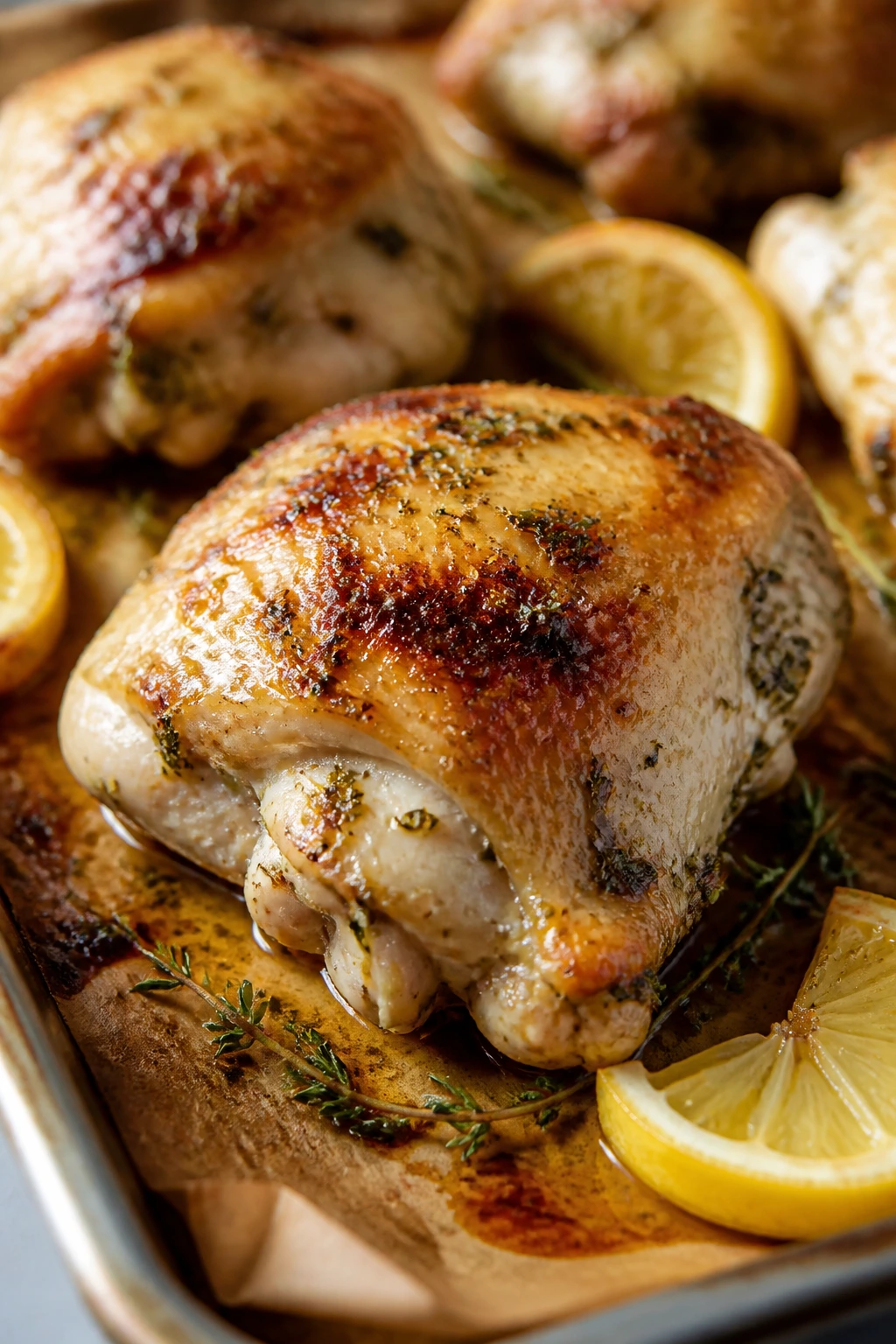
All-Thighs Version: Use 3 pounds of bone-in, skin-on thighs only. They cook a little more evenly than mixed pieces and give you rich pan drippings that taste almost spooned from a restaurant roast. Start checking at 40 minutes and go from there.
Chicken and Fennel Tray: Replace half the potatoes with fennel wedges and add a handful of cherry tomatoes during the last 15 minutes of roasting. The fennel goes sweet and silky, and the tomatoes burst into a loose sauce that’s excellent with bread.
Dairy-Free Citrus Marinade: Swap the Greek yogurt for 1/3 cup olive oil plus 3 tablespoons lemon juice and 1 tablespoon Dijon mustard, then add an extra 1 teaspoon oregano. The chicken won’t get the same creamy coating, but it will still brown well and taste clean, lemony, and herb-forward.
Mint-and-Dill Finish: Keep the base recipe the same, but finish with chopped mint and dill instead of parsley, plus crumbled feta. The flavor leans fresher and a little cooler, which works well if you’re serving a cucumber salad on the side.
Smokier Pantry Version: Add 1 extra teaspoon paprika and a pinch of ground cumin to the yogurt. It nudges the roast toward a warmer, earthier flavor without pulling it away from the Mediterranean profile.
Make-Ahead, Storage, and Reheating
Leftovers behave better than you might think. The chicken stays juicy for several days, and the potatoes become a little softer but still useful for lunch or a second dinner.
Store cooked chicken and potatoes in separate airtight containers if you can. They’ll keep in the refrigerator for 3 to 4 days. If they’re packed together, the potatoes pick up more moisture from the chicken juices and soften faster.
For freezing, tuck the cooked chicken into freezer-safe containers or bags for up to 2 months. The potatoes freeze too, though their texture turns a little mealier after thawing. If you care most about texture, freeze the chicken and make fresh potatoes later. That’s the cleaner move.
To reheat, put the chicken in a baking dish, add a tablespoon or two of water or chicken broth, cover loosely with foil, and warm at 325°F for 15 to 20 minutes, until the chicken reaches 165°F again. Uncover for the last 5 minutes if you want the skin to firm up. Potatoes reheat best on a separate tray at the same temperature so their edges have a chance to wake back up.
The raw marinated chicken can be made ahead too. Keep it in the fridge for up to 12 hours, or freeze it in the marinade for up to 2 months, then thaw overnight in the refrigerator before roasting. That’s a useful trick when you want dinner waiting for you without doing anything sketchy with room temperature chicken. Don’t leave it out for long. Poultry doesn’t reward that kind of casual behavior.
Questions People Ask Before They Cook It
Can I use boneless chicken breasts instead of thighs?
Yes, but shorten the cooking time and watch the thermometer like a hawk. Boneless breasts can roast in about 18 to 22 minutes at 425°F, depending on size, and they dry out faster than thighs if you leave them in the oven too long.
Do I have to use whole-milk Greek yogurt?
You don’t have to, but I recommend it. Whole-milk yogurt gives the marinade more body and browns better; low-fat yogurt can look thinner and make the pan a little wetter.
How long should the chicken marinate?
Two hours gives you a good result, and 4 to 12 hours gives you a deeper one. I wouldn’t push it much beyond that range because the lemon and yogurt can start to soften the surface too much.
Can I make this on a grill instead of in the oven?
Yes, but use bone-in thighs or drumsticks and keep the heat moderate, not wild. A grill basket or a cast-iron pan on the grates helps the yogurt coating stay put; otherwise, it can stick and tear.
Why didn’t my chicken brown very well?
Usually it’s one of three things: the pan was crowded, the yogurt was too thin, or the oven ran cool. Spread the pieces out, use thick yogurt, and finish under the broiler for 1 minute if needed.
Can I add more vegetables to the same pan?
Yes, but choose vegetables that can roast in about the same amount of time as the chicken. Fennel, carrots cut into thick batons, and cherry tomatoes all work. Soft vegetables like zucchini are better added near the end so they don’t collapse.
What if the yogurt looks clumpy on the chicken before baking?
A few thick spots are fine. If there are big blobs, use the back of a spoon to spread them into a thinner coat; the goal is a light, even layer, not a marshmallow-thick blanket.
A Pan Worth Repeating
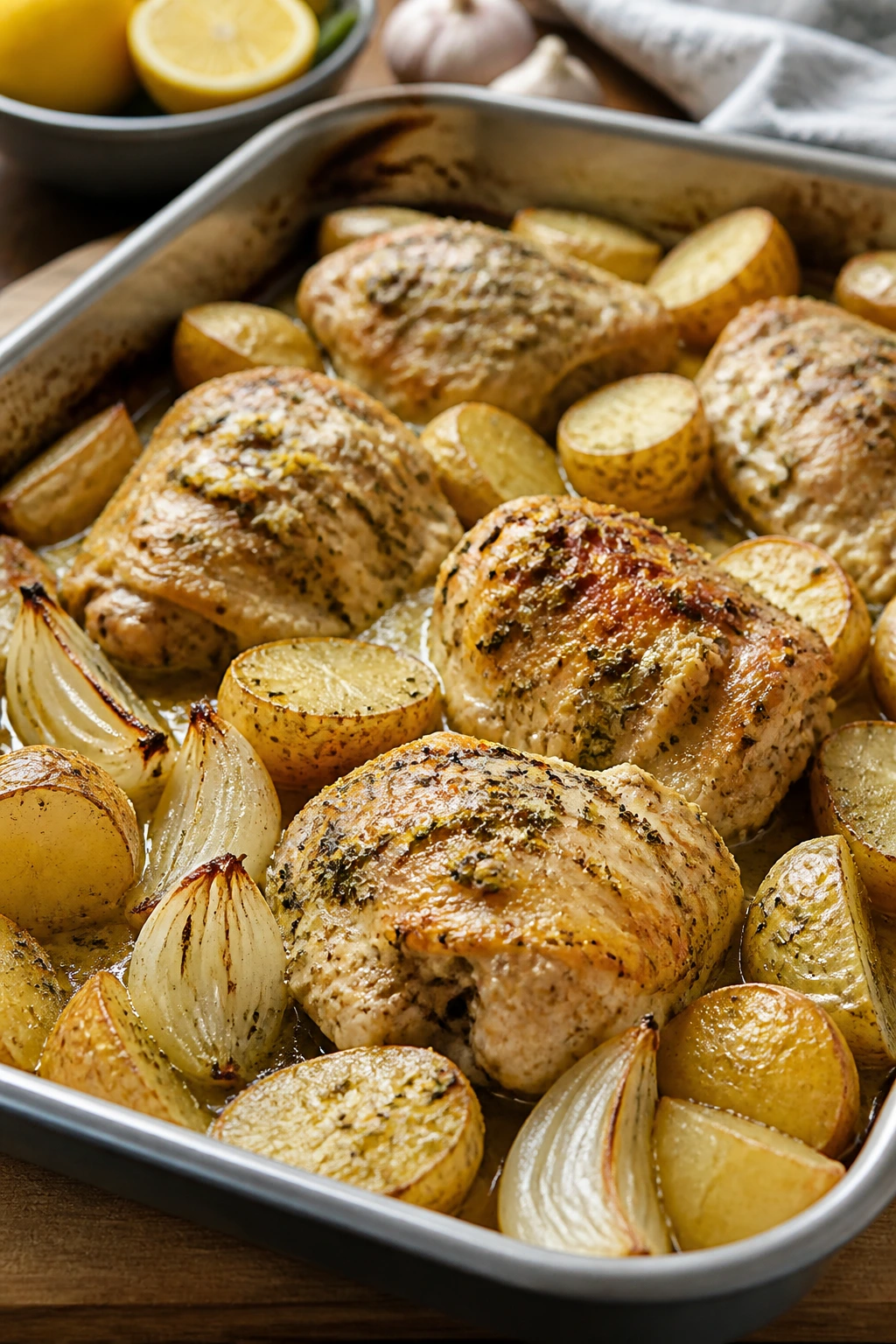
The best thing about this chicken is that it never asks to be more elegant than it is. It comes out of the oven smelling like lemon peel, garlic, browned dairy, and warm herbs, and that’s enough. The potatoes catch the drippings. The onion softens. The chicken stays juicy in a way that feels almost unfair after such a plain-looking marinade.
I like recipes that earn their place by being useful more than fussy, and this one does that job cleanly. Keep the yogurt thick, keep the oven hot, and keep the pan a little loose so the edges can brown. Do that, and you’ll have a roast that belongs in the regular rotation, not the “someday” folder.
Rustic Greek Yogurt Chicken — Recipe Card
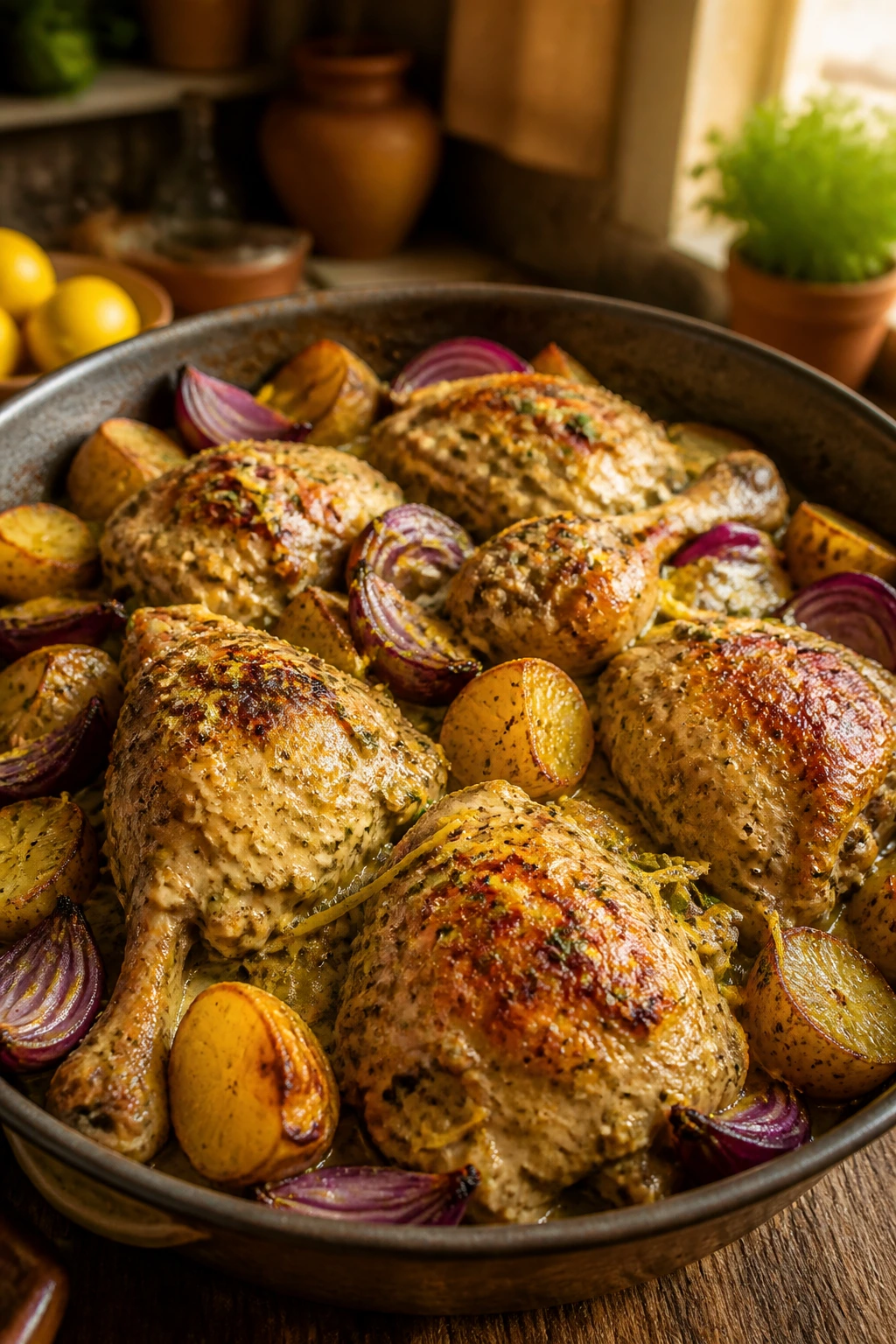
Recipe Name: Rustic Greek Yogurt Chicken
Description: Bone-in chicken marinated in thick Greek yogurt, lemon, garlic, and oregano, then roasted with potatoes and red onion until browned and juicy. The pan juices finish the whole dish with a bright, savory edge.
Prep Time: 20 minutes
Cook Time: 45 to 50 minutes
Total Time: About 1 hour 10 minutes, plus marinating time
Course: Dinner, Main Course
Cuisine: Mediterranean-inspired, Greek
Servings: 6 servings
Calories: About 560 kcal per serving
Ingredients
For the Chicken and Marinade:
- 3 pounds bone-in, skin-on chicken thighs and drumsticks
- 1 cup plain whole-milk Greek yogurt
- 3 tablespoons extra-virgin olive oil
- 4 garlic cloves, finely grated or minced
- Zest of 1 lemon
- 3 tablespoons fresh lemon juice, divided
- 2 teaspoons dried oregano
- 1 teaspoon kosher salt
- 1 teaspoon sweet paprika
- 1/2 teaspoon black pepper
- 1/4 teaspoon red pepper flakes, optional
For the Pan:
- 1 1/2 pounds baby Yukon Gold or red potatoes, halved if large
- 1 large red onion, cut into 8 wedges
- 1 tablespoon olive oil
- 1/2 teaspoon kosher salt
- 1/2 teaspoon dried oregano
For Finishing:
- 2 tablespoons chopped fresh parsley
- Lemon wedges, for serving
- 1/3 cup crumbled feta, optional
Instructions
-
Pat the chicken dry and place it in a large bowl.
-
Whisk the Greek yogurt, olive oil, garlic, lemon zest, 2 tablespoons lemon juice, oregano, salt, paprika, black pepper, and red pepper flakes if using until smooth.
-
Coat the chicken in the marinade, cover, and refrigerate for 2 to 12 hours.
-
Heat the oven to 425°F (220°C) and let the chicken sit at room temperature for 20 to 30 minutes.
-
Toss the potatoes and red onion with olive oil, salt, and oregano on a rimmed sheet pan.
-
Nestle the chicken on top, skin-side up, and scrape off any large clumps of marinade.
-
Roast for 25 minutes, then rotate the pan and spoon some juices over the potatoes.
-
Roast for another 15 to 20 minutes, until the chicken reaches 165°F in the thickest part and the potatoes are tender.
-
Broil for 1 to 2 minutes if you want deeper browning, watching closely.
-
Rest for 10 minutes, then finish with parsley, the remaining lemon juice, and feta if using.
Notes: Use whole-milk Greek yogurt for the best browning. Don’t crowd the pan. An instant-read thermometer makes this much easier to get right.