



Italian chicken recipes have a way of sounding ordinary until you cook a few good ones back to back. Then the pattern becomes hard to miss: olive oil instead of butter, rosemary instead of heavy spice blends, lemon where another cuisine might reach for sugar, and sauce that clings lightly instead of drowning the plate. Tuscany leans into that kind of restraint. The chicken still tastes like chicken. It just tastes better dressed.
That’s the part I always come back to. A pan of chicken thighs browned until the skin crackles at the edges, a handful of garlic that softens instead of burns, beans that go creamy in the broth, tomatoes that break down into something almost jammy—those small moves turn a plain dinner into something you want to mop up with bread. Not fancy. Not fussy. Just deeply satisfying in the way a good kitchen smell can settle into a room before anyone’s even sat down.
A lot of Tuscan-style cooking works because it knows where to stop. The herbs stay bright. The wine gets reduced enough to lose its sharp edge. The chicken is cooked until tender, not blasted into dryness and covered up with cheese. When the ingredients are good, that restraint pays off fast, and the best part is that these dishes do not ask for a special occasion. They ask for a skillet, a little patience, and a willingness to let garlic, rosemary, beans, tomatoes, and lemon do the talking.
Why These Tuscan Chicken Recipes Work So Well
-
Pantry-first flavor: Olive oil, garlic, canned tomatoes, white beans, capers, dried oregano, and broth show up again and again, which means you can make half of these without a rescue trip to the store.
-
Chicken thighs get the spotlight: Thighs stay juicy through braises, skillet sauces, and long oven time, and they hold up better than breasts when the sauce needs another few minutes to reduce.
-
The sauces are practical, not precious: These are the kind of sauces that come together in one pan, with browned bits, wine, broth, and a finishing touch of lemon or herbs.
-
Bread and beans have a real job here: Tuscan cooking loves something sturdy to catch the juices, whether that’s polenta, crusty bread, or cannellini beans that soak up flavor instead of floating past it.
-
Bright and savory stay in balance: A good Tuscan-style chicken dish usually has one sharp note—wine, lemon, capers, tomatoes, or vinegar—to keep the whole plate from feeling flat.
-
Most of these reheat well: The braises, soups, and saucy skillet dinners hold up the next day, which is more than I can say for a lot of chicken recipes that promise comfort and deliver dry leftovers.
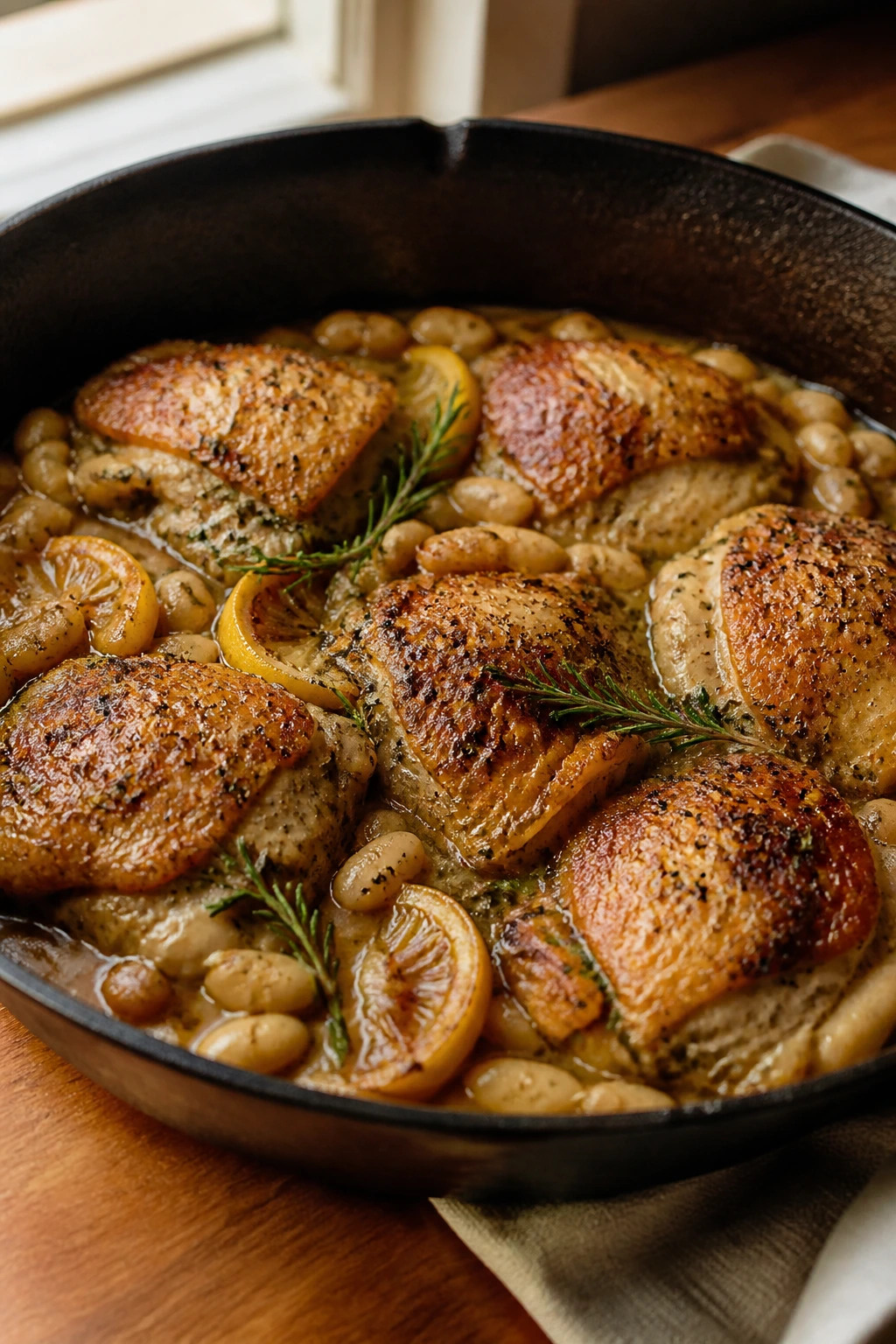
1. Lemon-Rosemary Skillet Chicken with Cannellini Beans
The first thing you notice is the smell. Rosemary goes resinous in the hot oil, garlic softens, and the chicken picks up a browned edge that makes the whole skillet feel bigger than its ingredients. The beans are the quiet part of the dish, but they’re the reason the sauce tastes rounded instead of thin.
Why It Works:
This is the kind of dinner that tastes like it took longer than it did. Chicken thighs stay tender while the cannellini beans absorb the lemony pan juices, and the rosemary gives the dish a woodsy note that feels very Tuscan without becoming heavy. A quick splash of white wine lifts the browned bits, and the final hit of lemon keeps the beans from tasting flat.
Key Ingredients:
- 2 lbs boneless, skinless chicken thighs
- 1½ teaspoons kosher salt, plus more to taste
- 1 teaspoon black pepper
- 2 tablespoons all-purpose flour
- 2 tablespoons olive oil
- 1 small yellow onion, diced
- 4 garlic cloves, minced
- 1 tablespoon chopped fresh rosemary
- ½ cup dry white wine
- 1 cup chicken stock
- 2 (15-ounce) cans cannellini beans, drained and rinsed
- 1 lemon, zested and juiced
- 2 tablespoons chopped parsley
- 1 tablespoon unsalted butter
Quick Steps:
- Pat the chicken dry, season it with salt, pepper, and flour, and shake off the excess.
- Heat the olive oil in a large skillet over medium-high heat and sear the chicken for 4 to 5 minutes per side, until browned. Remove it to a plate.
- Lower the heat to medium, add the onion, and cook for 3 minutes until softened. Stir in the garlic and rosemary for 30 seconds.
- Pour in the wine and scrape up the browned bits. Simmer for 1 minute.
- Add the stock, beans, lemon zest, and chicken. Simmer gently for 8 to 10 minutes, until the chicken reaches 165°F and the sauce lightly coats a spoon.
- Finish with lemon juice, parsley, and butter. Let the butter melt in, then serve hot.
Equipment for This Recipe:
- 12-inch skillet with a lid
- Tongs
- Wooden spoon
- Microplane or fine grater
How to Serve This Dish:
Serve it straight from the skillet with crusty bread, or spoon it over soft polenta if you want something that catches every drop of sauce. A handful of sautéed greens on the side makes the plate feel complete without adding much work.
Pro Tips for This Recipe:
- Brown the chicken well before adding anything liquid; pale chicken gives you a pale sauce.
- Mash a few beans against the side of the pan if you want the sauce thicker.
- Add the lemon juice at the end, not earlier, or it can taste sharp instead of bright.
- Dry rosemary can work in a pinch, but use half the amount and rub it between your fingers first.
Variations on This Dish:
- Kale and Bean Version: Stir in 2 packed cups of chopped kale during the last 3 minutes of simmering.
- Creamier Finish: Add ¼ cup heavy cream with the butter for a softer, richer sauce.
- Chickpea Swap: Use chickpeas instead of cannellini beans for a firmer, nuttier bite.
Common Mistakes to Avoid with This Dish:
- Don’t crowd the pan while searing. The chicken will steam and the sauce will taste flatter.
- Don’t skip the wine deglaze. Those browned bits are the backbone of the whole skillet.
- Don’t boil the beans hard once the chicken goes back in. Gentle heat keeps the chicken tender and the beans intact.
2. Chicken Cacciatore with Peppers and Olives
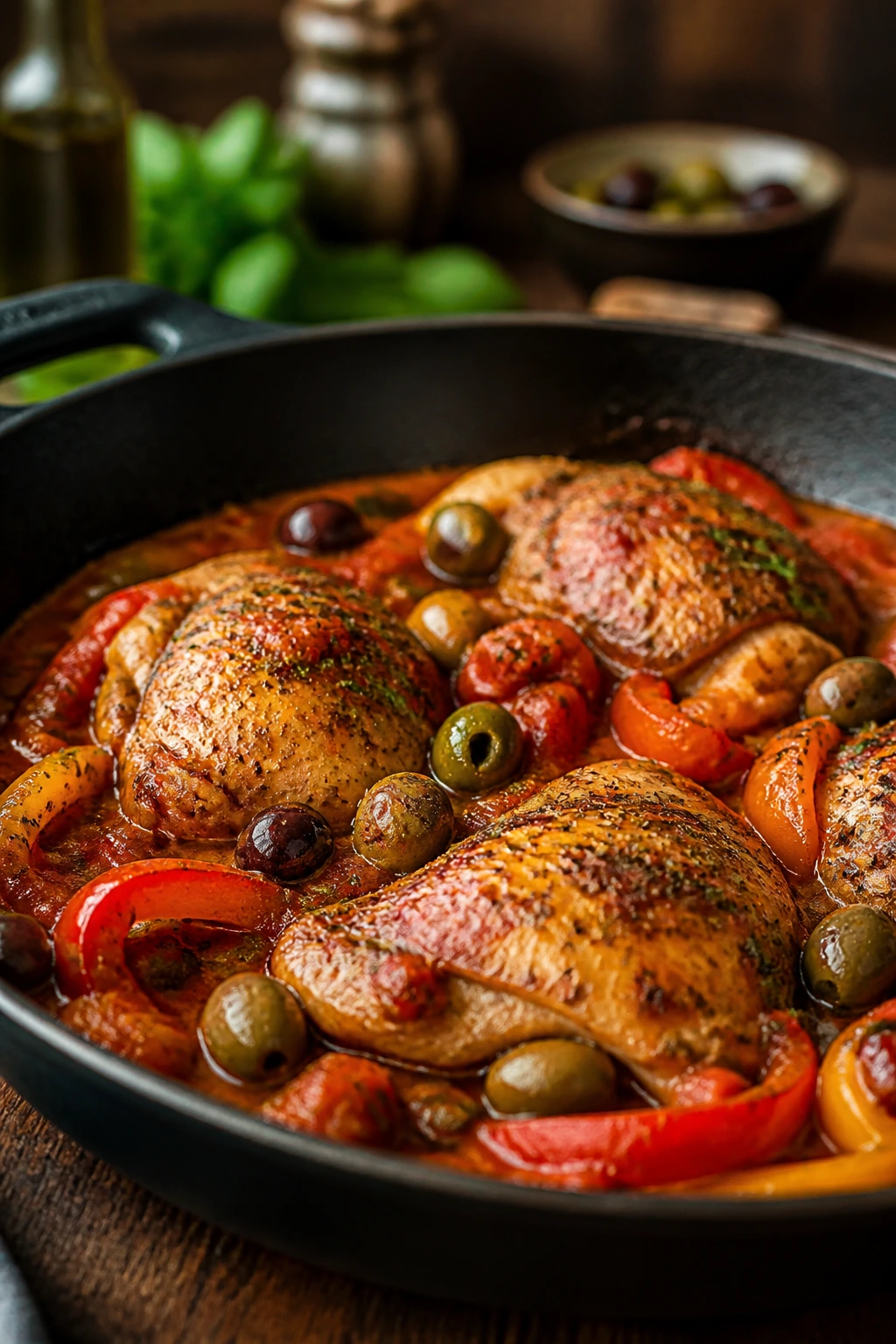
Chicken cacciatore should smell like a kitchen that has been cooking for a while in the best way. The peppers go soft and sweet, the tomatoes turn dark and glossy, and the olives bring a briny edge that keeps each bite from leaning too sweet. I like this with bone-in thighs; they hold up to the braise and taste fuller than boneless meat here.
Why It Works:
Cacciatore is built for one-pan cooking, and that matters. You brown the chicken first, then use the same pan to cook the vegetables and build a sauce with tomatoes, wine, and olives. The fat from the chicken and the sweetness from the peppers keep the sauce balanced, while a little oregano and basil make the whole thing smell like dinner has been simmering far longer than the clock says.
Key Ingredients:
- 2½ lbs bone-in, skin-on chicken thighs
- 2 teaspoons kosher salt
- 1 teaspoon black pepper
- 2 tablespoons all-purpose flour
- 2 tablespoons olive oil
- 1 large yellow onion, sliced
- 2 red bell peppers, sliced
- 1 yellow bell pepper, sliced
- 8 ounces cremini mushrooms, halved
- 4 garlic cloves, minced
- 2 tablespoons tomato paste
- ½ cup dry red wine
- 1 (28-ounce) can crushed tomatoes
- ½ cup pitted Kalamata olives
- 1 tablespoon capers
- 1 teaspoon dried oregano
- ¼ cup chopped basil
Quick Steps:
- Season the chicken with salt, pepper, and flour.
- Heat the olive oil in a Dutch oven over medium-high heat and brown the chicken, skin side down first, for 5 to 6 minutes per side. Remove it.
- Add the onion, peppers, and mushrooms. Cook for 6 to 8 minutes, stirring, until softened and lightly browned.
- Stir in the garlic and tomato paste, then cook for 1 minute until the paste darkens slightly.
- Add the wine, scrape the pot clean, then pour in the tomatoes, olives, capers, oregano, and chicken.
- Cover and simmer over low heat for 35 to 40 minutes, until the chicken is tender and the sauce has thickened.
- Finish with basil and serve hot.
Equipment for This Recipe:
- Dutch oven or heavy pot
- Tongs
- Cutting board and sharp knife
- Wooden spoon
How to Serve This Dish:
Polenta is my first choice, especially the soft kind with a little butter stirred in. Pasta works too, but I think this sauce really shines over something that can soak into the edges. Add a bitter green salad if you want a clean finish after the tomato-rich sauce.
Pro Tips for This Recipe:
- Brown the chicken in batches if needed; crowding steals color and flavor.
- Use good olives. Bland olives make the whole pot taste sleepy.
- Let the sauce rest 10 minutes before serving if you can. The flavors settle in a better way.
Variations on This Dish:
- Cherry Tomato Cacciatore: Swap the crushed tomatoes for 2 pints halved cherry tomatoes and simmer until they burst.
- White Cacciatore: Use white wine and 1 cup chicken stock instead of red wine and tomatoes for a lighter version.
- Pepper-Heavy Version: Add one extra bell pepper and a pinch of red pepper flakes for more sweet heat.
Common Mistakes to Avoid with This Dish:
- Don’t undercook the peppers. They should be soft, not crunchy.
- Don’t add the chicken before the tomato paste cooks for a minute; raw paste tastes tinny.
- Don’t rush the simmer. Cacciatore needs time for the sauce to stop tasting like separate parts.
3. Creamy Tuscan Chicken with Spinach and Sun-Dried Tomatoes
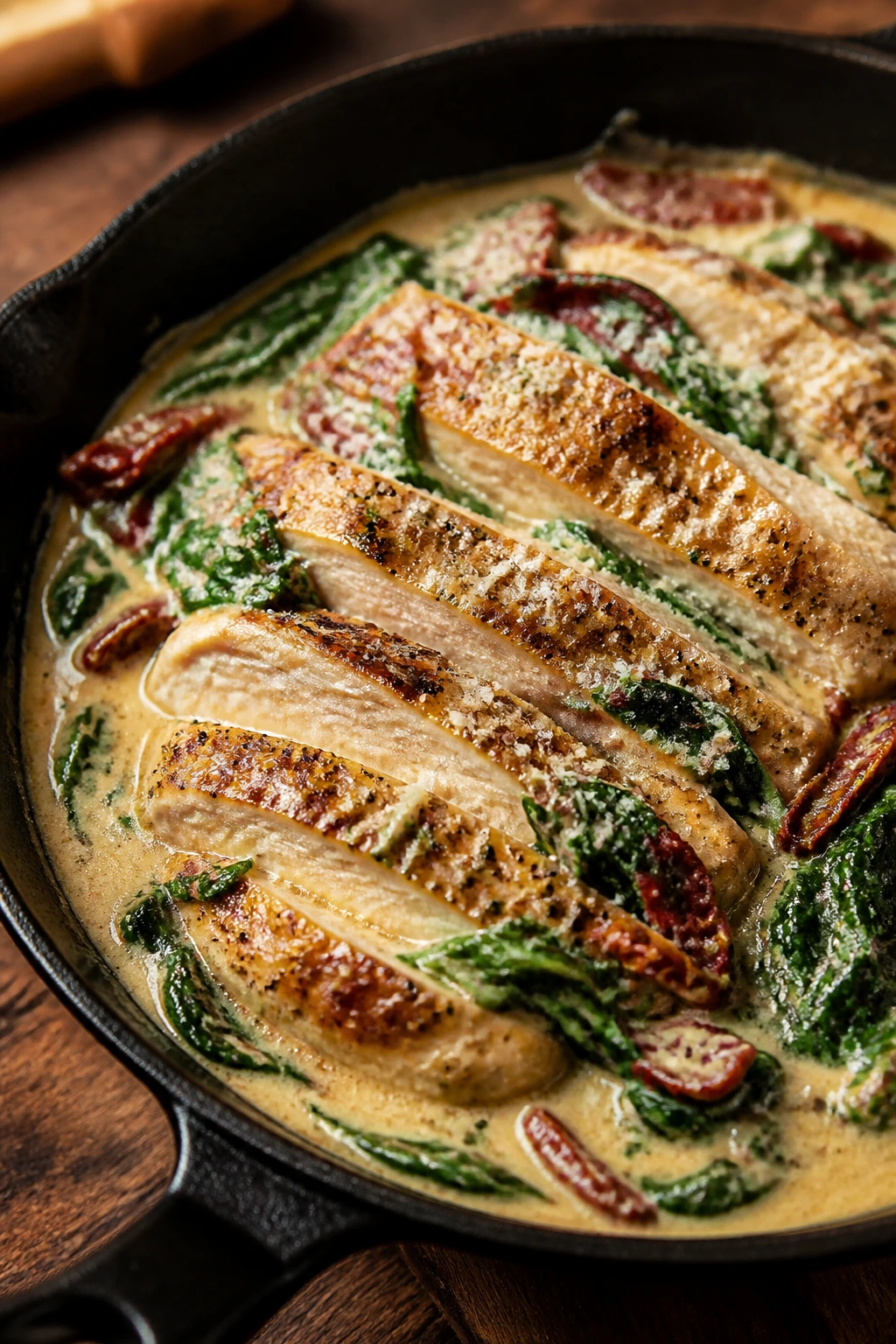
This one is the glossy skillet dinner people picture when they hear “Tuscan chicken,” and for once the reputation matches the plate. The sun-dried tomatoes bring a concentrated sweetness, the spinach wilts into the cream, and the parmesan thickens the sauce just enough to coat the chicken without turning it pasty.
Why It Works:
The trick here is contrast. Browned chicken gives you savory edges, while the cream sauce stays soft and rich with garlic, parmesan, and sun-dried tomatoes. A small amount of broth keeps the sauce from feeling too thick, and the spinach folds in at the end so it stays green and fresh instead of collapsing into a swampy mess.
Key Ingredients:
- 1½ lbs boneless, skinless chicken breasts, sliced horizontally into cutlets
- 1 teaspoon kosher salt
- 1 teaspoon black pepper
- ¼ cup all-purpose flour
- 2 tablespoons olive oil
- 2 tablespoons unsalted butter
- 4 garlic cloves, minced
- ½ cup chopped sun-dried tomatoes in oil, drained
- 1 cup chicken broth
- ¾ cup heavy cream
- ½ cup grated parmesan cheese
- 4 cups baby spinach
- 1 tablespoon chopped basil
- 1 tablespoon lemon juice
Quick Steps:
- Season the chicken with salt and pepper, then lightly dredge it in flour.
- Heat the olive oil and butter in a skillet over medium-high heat and cook the chicken for 3 to 4 minutes per side, until golden and cooked through. Remove it.
- Lower the heat to medium and cook the garlic for 30 seconds, then add the sun-dried tomatoes.
- Pour in the broth and simmer for 2 minutes, scraping the pan clean.
- Stir in the cream and parmesan, then cook for 2 to 3 minutes until the sauce thickens slightly.
- Add the spinach and stir just until wilted, about 1 minute.
- Return the chicken to the skillet, spoon sauce over the top, and finish with basil and lemon juice.
Equipment for This Recipe:
- Large skillet
- Tongs
- Measuring cups and spoons
- Whisk
How to Serve This Dish:
This wants something plain underneath it: buttered pasta, mashed potatoes, or creamy polenta. Keep the sides quiet so the sauce stays in charge. The plate should look silky, green, and a little red-gold from the tomatoes.
Pro Tips for This Recipe:
- Slice the chicken cutlets evenly so they finish at the same time.
- Don’t let the cream boil hard; a gentle simmer keeps it smooth.
- Add the lemon juice after the heat comes off if you want the sauce to stay extra glossy.
Variations on This Dish:
- Mushroom Tuscan Chicken: Add 8 ounces sliced cremini mushrooms after the garlic.
- Dairy-Light Version: Use half-and-half instead of cream and reduce the broth by ¼ cup.
- Thigh Version: Swap in boneless thighs and cook them 2 to 3 minutes longer per side.
Common Mistakes to Avoid with This Dish:
- Don’t add the spinach too early or it will disappear into the sauce.
- Don’t use dry, pre-shredded parmesan if you can avoid it; it can make the sauce grainy.
- Don’t skip the flour on the chicken if you want the sauce to cling instead of slide off.
4. Chicken Piccata with Capers and White Wine
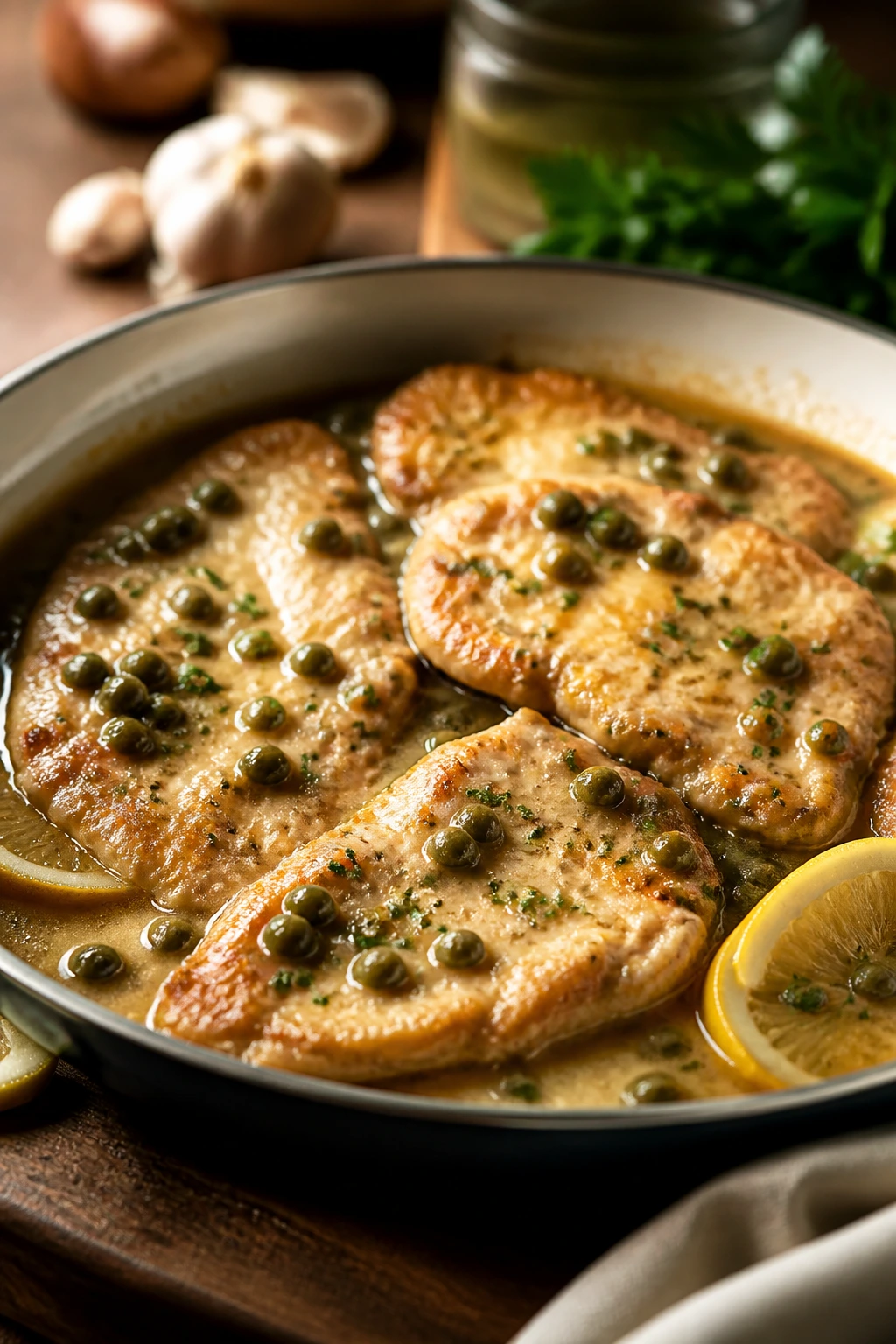
Piccata is all about speed and sharpness. The chicken is thin, the sauce is brisk, and the capers give you these little salty pops that wake up each bite. It’s one of the few chicken recipes that tastes polished without asking you to do much more than pound, dredge, and pan-fry.
Why It Works:
Thin chicken cutlets cook fast and stay tender, which is exactly what piccata needs. The white wine and lemon reduce into a bright pan sauce, and the butter smooths the edges so the whole dish tastes clean rather than harsh. Capers are the piece people remember, because they cut through the richness and keep the sauce lively.
Key Ingredients:
- 1½ lbs chicken breasts, sliced into cutlets
- 1 teaspoon kosher salt
- 1 teaspoon black pepper
- ½ cup all-purpose flour
- 3 tablespoons olive oil
- 3 tablespoons unsalted butter
- ½ cup dry white wine
- 1 cup chicken stock
- ¼ cup fresh lemon juice
- 3 tablespoons drained capers
- 2 tablespoons chopped parsley
- Lemon slices, for serving
Quick Steps:
- Pound the chicken cutlets to an even ¼-inch thickness.
- Season with salt and pepper, then dredge lightly in flour.
- Heat 2 tablespoons olive oil and 1 tablespoon butter in a skillet over medium-high heat. Cook the chicken for 2 to 3 minutes per side until golden. Set aside.
- Add the remaining oil and butter, then pour in the wine and stock. Simmer for 3 minutes.
- Stir in the lemon juice and capers, then cook for 1 minute until the sauce tastes sharp but not harsh.
- Return the chicken to the pan and spoon sauce over it for 1 minute.
- Finish with parsley and lemon slices.
Equipment for This Recipe:
- Meat mallet or rolling pin
- Large skillet
- Shallow dredging dish
- Tongs
How to Serve This Dish:
Serve it with roasted potatoes, angel hair pasta, or a tangle of sautéed spinach. I like extra lemon on the side for anyone who wants a sharper hit. The sauce should pool thinly around the chicken, not hide it.
Pro Tips for This Recipe:
- Pound the chicken evenly so the edges do not dry out before the center cooks.
- Keep the sauce at a simmer, not a boil; too much heat makes it taste rough.
- Rinse the capers if they’re packed heavily in salt.
Variations on This Dish:
- Herbed Piccata: Add a teaspoon of chopped thyme or tarragon to the sauce.
- Panko Piccata: Dredge the chicken in flour, then a thin coat of panko for a crunchier crust.
- Garlic Piccata: Cook 2 minced garlic cloves in the butter before adding the wine.
Common Mistakes to Avoid with This Dish:
- Don’t let the flour coating get thick and gummy. A light dusting is enough.
- Don’t walk away during the sauce reduction; piccata can go from bright to bitter fast.
- Don’t overcook the cutlets. They should still feel springy when you press them lightly.
5. Baked Parmesan Chicken with Marinara and Mozzarella
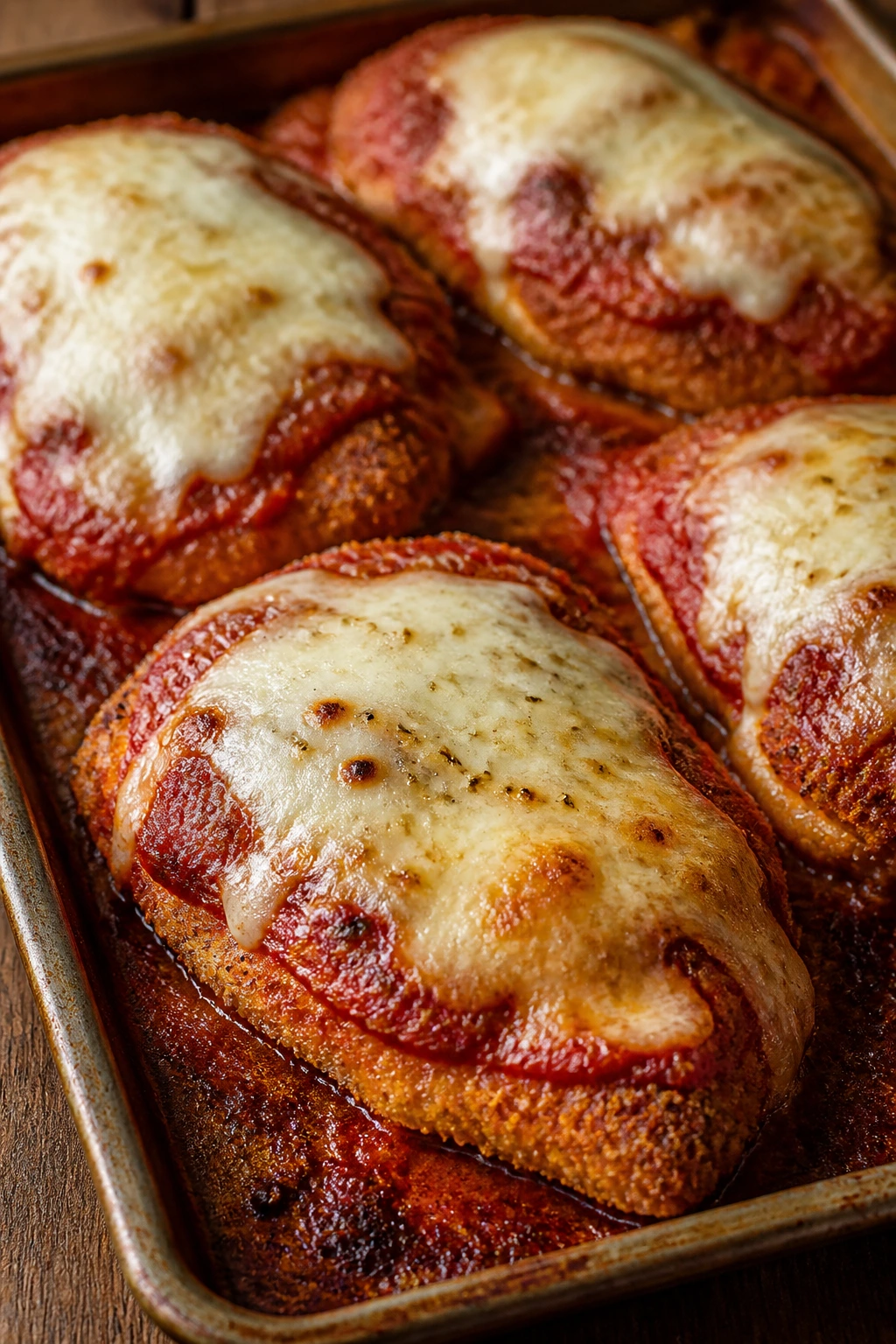
This is the baked, bubbling cousin of chicken Parmesan, minus the mess of frying. The crust gets crisp in the oven, the marinara softens the edges, and the mozzarella turns into those stretchy white pockets that make everyone at the table lean in when the pan comes out.
Why It Works:
Baking instead of frying keeps the breading intact and makes this easier to manage on a weeknight. A good breadcrumb-parmesan coating gives the chicken texture, then the marinara and mozzarella melt together in the oven for the last few minutes. The dish tastes familiar in the best way: crunchy, saucy, and just salty enough from the cheese.
Key Ingredients:
- 4 boneless, skinless chicken breasts, halved horizontally
- 1 teaspoon kosher salt
- 1 teaspoon black pepper
- ½ cup all-purpose flour
- 2 large eggs
- 1 tablespoon water
- 1½ cups panko breadcrumbs
- ¾ cup grated parmesan cheese
- 2 tablespoons olive oil
- 2 cups marinara sauce
- 1½ cups shredded mozzarella cheese
- 2 tablespoons chopped basil
Quick Steps:
- Heat the oven to 425°F and line a baking sheet with parchment.
- Set up three shallow dishes: flour in one, beaten eggs with water in the second, and panko mixed with parmesan in the third.
- Season the chicken, then coat each piece in flour, egg, and breadcrumb mixture.
- Arrange on the baking sheet, drizzle with olive oil, and bake for 18 minutes.
- Spoon marinara over each piece, top with mozzarella, and bake 6 to 8 minutes more until the cheese melts and the chicken reaches 165°F.
- Broil for 1 to 2 minutes if you want brown spots on the cheese.
- Finish with basil before serving.
Equipment for This Recipe:
- Rimmed baking sheet
- Parchment paper
- Three shallow bowls
- Instant-read thermometer
How to Serve This Dish:
Serve it with spaghetti, garlic bread, or a simple arugula salad dressed with lemon and olive oil. It also does well over polenta if you want something softer than pasta. The plate should look messy in a good way, with sauce trailing off the crust.
Pro Tips for This Recipe:
- Use a wire rack on the baking sheet if you want the bottom crust extra crisp.
- Let the breaded chicken sit 5 minutes before baking so the coating sticks better.
- Warm the marinara first so you don’t cool down the chicken when you add it.
Variations on This Dish:
- Eggplant-Style Marinara Version: Use the same breading on thick slices of zucchini instead of chicken.
- Spicy Mozzarella Bake: Add red pepper flakes to the breadcrumb mix and use a sharper marinara.
- Gluten-Free Version: Swap in gluten-free panko and rice flour.
Common Mistakes to Avoid with This Dish:
- Don’t drown the chicken in sauce. A few spoonfuls are enough.
- Don’t skip preheating the oven. The crust needs that blast of heat to crisp.
- Don’t overbake once the cheese is on top, or the breading softens too much.
6. Tuscan Chicken Soup with Orzo
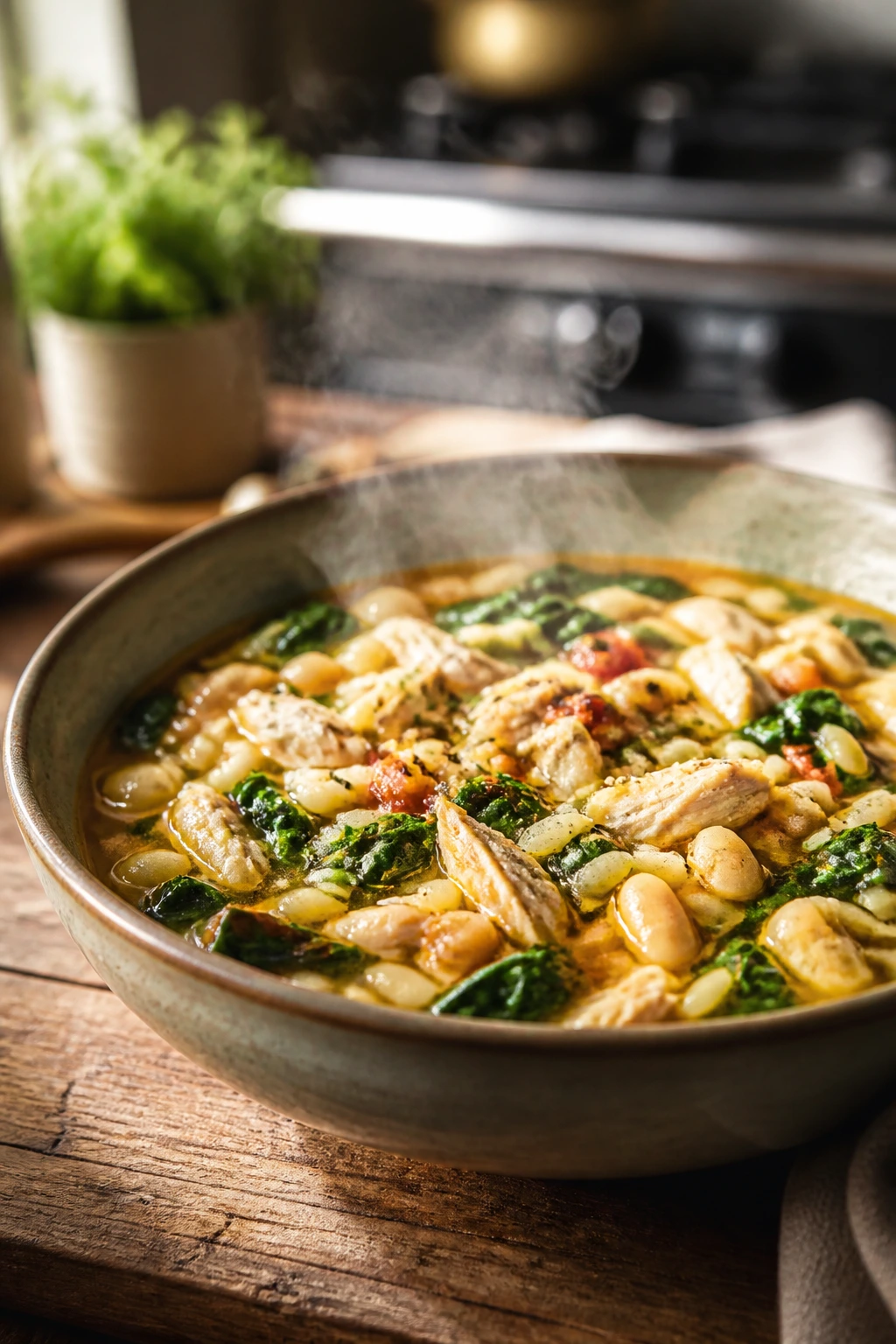
A good chicken soup can feel plain. This one doesn’t. The broth gets depth from tomato paste and rosemary, the orzo gives it a little body, and the cannellini beans make the bowl feel like a meal instead of a starter. I like the spinach added at the very end so it stays bright green and doesn’t go mushy.
Why It Works:
Soup is where Tuscan cooking can quietly show off. Chicken thighs add enough richness to keep the broth from tasting thin, while beans and orzo make each spoonful fuller. A parmesan rind, if you have one, gives the broth a savory backbone without turning it cheesy.
Key Ingredients:
- 1½ lbs boneless, skinless chicken thighs
- 1 tablespoon olive oil
- 1 yellow onion, diced
- 2 carrots, diced
- 2 celery stalks, diced
- 4 garlic cloves, minced
- 2 tablespoons tomato paste
- 6 cups chicken broth
- 1 teaspoon chopped rosemary
- ¾ cup orzo
- 1 (15-ounce) can cannellini beans, drained and rinsed
- 3 cups chopped kale or spinach
- 1 tablespoon lemon juice
- ¼ cup grated parmesan, plus more for serving
Quick Steps:
- Heat the olive oil in a soup pot over medium heat. Cook the onion, carrots, and celery for 6 minutes until softened.
- Stir in the garlic and tomato paste and cook for 1 minute.
- Add the broth, rosemary, and chicken thighs. Bring to a gentle simmer and cook for 20 minutes.
- Remove the chicken, shred it, and return it to the pot.
- Add the orzo and simmer for 8 to 10 minutes, stirring often, until tender.
- Stir in the beans and greens and cook for 2 minutes until the greens wilt.
- Finish with lemon juice and parmesan.
Equipment for This Recipe:
- Large soup pot or Dutch oven
- Ladle
- Cutting board and knife
- Wooden spoon
How to Serve This Dish:
Serve it in deep bowls with extra parmesan and a thick slice of toasted bread. If you want more heft, add a drizzle of olive oil over the top right before serving. The broth should look golden with flecks of green and pale beans tucked through it.
Pro Tips for This Recipe:
- Cook the orzo separately if you expect leftovers; it will keep its texture better.
- Shred the chicken while it is still warm because it pulls apart more easily.
- Add the lemon at the very end so the broth stays round, not sharp.
Variations on This Dish:
- White Bean and Escarole Soup: Swap kale for escarole for a more bitter edge.
- Rice Version: Use ¾ cup cooked rice instead of orzo for a softer bowl.
- Creamy Soup Finish: Stir in ¼ cup cream at the end for a richer broth.
Common Mistakes to Avoid with This Dish:
- Don’t boil the soup hard once the chicken goes in. Gentle simmering keeps the meat tender.
- Don’t overcook the orzo. It keeps absorbing liquid after the pot comes off the heat.
- Don’t forget to taste the broth before serving; soup needs more salt than people expect.
7. Chicken and Artichoke Braise with Lemon and Thyme
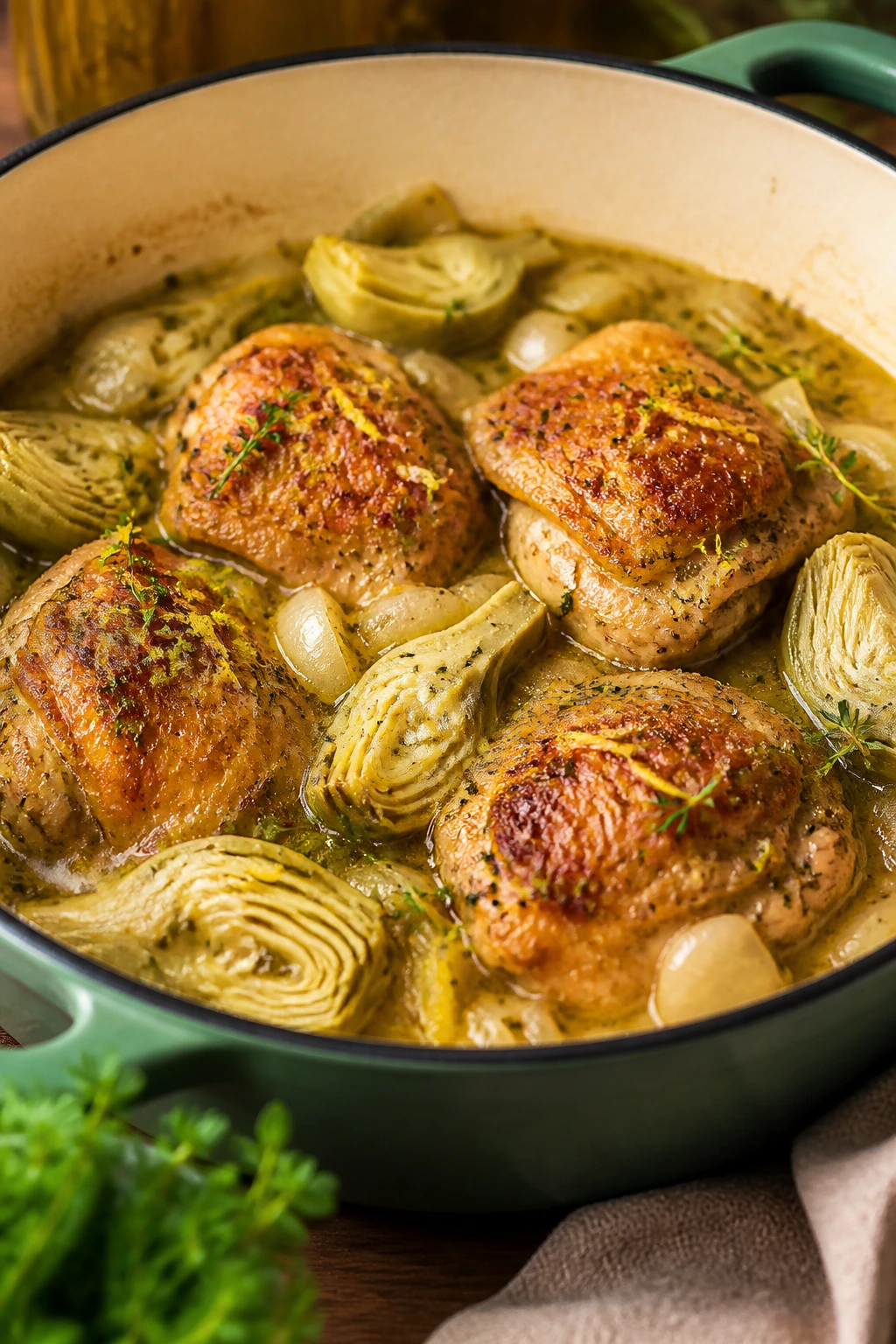
Artichokes give this braise a little tang and a little chew, which is part of why I like it so much. The chicken cooks in a shallow pool of white wine and stock until it’s tender, then lemon and thyme cut through the richness so the dish stays bright instead of sleepy.
Why It Works:
Braising softens the artichokes and lets the chicken absorb the sauce without drying out. White wine gives the braising liquid a clean edge, and thyme brings a soft herbal note that does not fight with the lemon. This is the kind of dish that tastes even better after ten minutes off the heat, once the sauce settles.
Key Ingredients:
- 2 lbs bone-in, skin-on chicken thighs
- 1½ teaspoons kosher salt
- 1 teaspoon black pepper
- 2 tablespoons olive oil
- 2 shallots, sliced
- 4 garlic cloves, minced
- 1 cup dry white wine
- 1 cup chicken stock
- 1 (14-ounce) can artichoke hearts, drained and halved
- 1 teaspoon fresh thyme leaves
- 1 lemon, zested and juiced
- 2 tablespoons chopped parsley
Quick Steps:
- Season the chicken with salt and pepper.
- Heat the olive oil in a Dutch oven over medium-high heat and brown the chicken for 5 minutes per side. Remove it.
- Add the shallots and cook for 2 minutes. Stir in the garlic for 30 seconds.
- Pour in the wine and stock, scraping up the browned bits.
- Add the artichokes, thyme, lemon zest, and chicken. Cover and simmer gently for 30 to 35 minutes.
- Uncover for the last 5 minutes if you want the sauce slightly reduced.
- Finish with lemon juice and parsley.
Equipment for This Recipe:
- Dutch oven with lid
- Tongs
- Sharp knife
- Citrus zester
How to Serve This Dish:
This braise belongs with mashed potatoes, buttered rice, or thick slices of toasted sourdough. It also does nicely with roasted asparagus if you want to keep the meal light. Spoon plenty of sauce over the chicken so the artichokes don’t sit dry on the plate.
Pro Tips for This Recipe:
- Use artichoke hearts packed in water or brine, not marinated ones, unless you want a stronger vinegar note.
- Brown the thighs in batches if the pot is crowded.
- Finish with parsley after cooking so it stays fresh and green.
Variations on This Dish:
- Olive and Artichoke Version: Add ½ cup green olives with the artichokes.
- Creamier Braise: Stir in 2 tablespoons crème fraîche at the end.
- Lighter Version: Use boneless thighs and reduce the braise time to 20 minutes.
Common Mistakes to Avoid with This Dish:
- Don’t let the braise boil. Fast heat toughens chicken and shrivels the artichokes.
- Don’t use marinated artichokes unless you cut back on the lemon.
- Don’t skip the browning stage; it gives the sauce its depth.
8. Chicken Milanese with Arugula Salad and Lemon
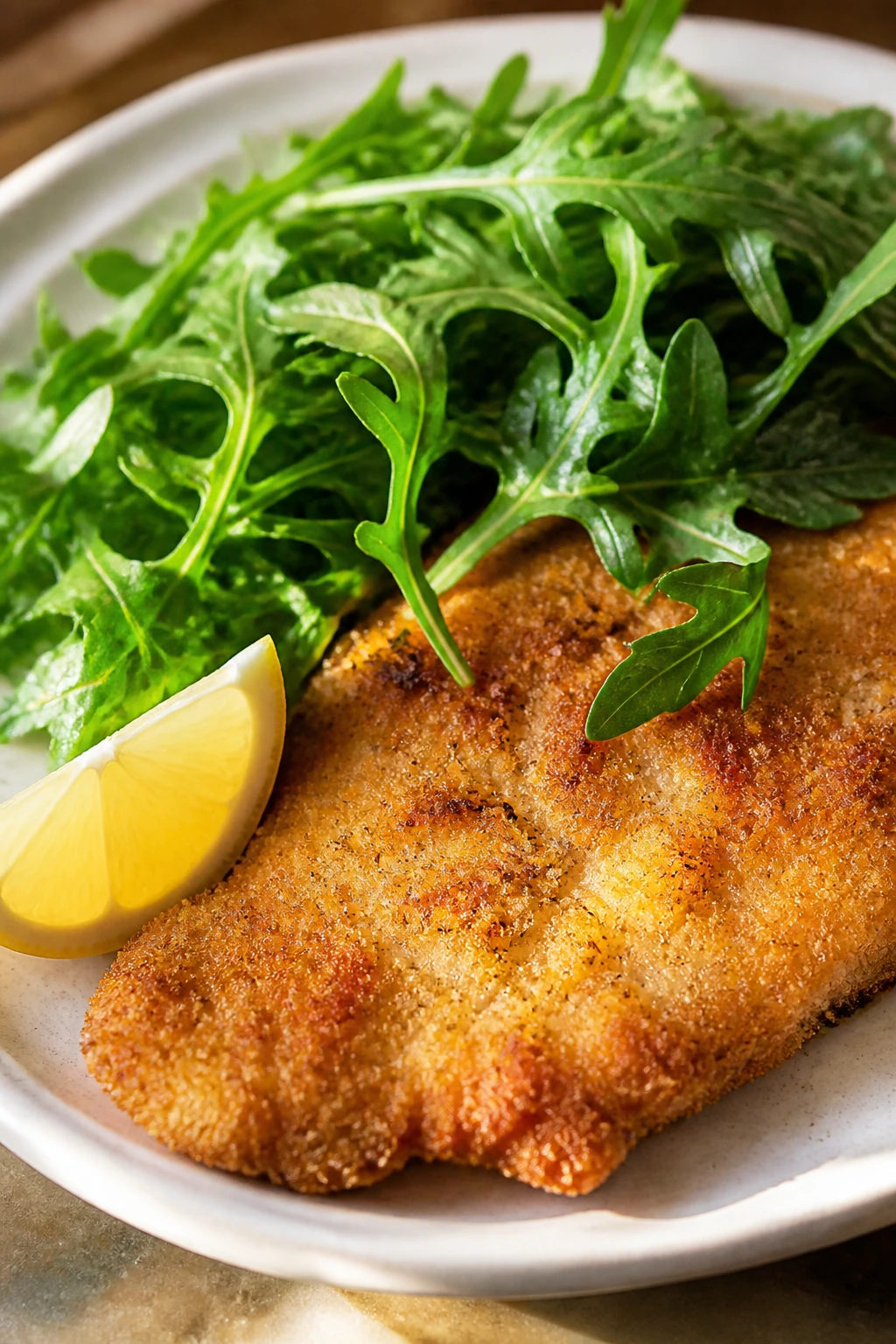
Chicken Milanese is all about contrast: crisp crust, tender meat, peppery greens, and a lemony finish that keeps everything from tasting too rich. It’s one of those recipes that looks elegant on the plate and still feels easy enough to make on a regular night.
Why It Works:
Thin cutlets cook fast, which means they stay juicy under the breading. The salad on top or beside it brings sharpness, and lemon juice keeps the fried crust from feeling heavy. The whole thing depends on timing, and once you get the rhythm of breading and frying, it moves quickly.
Key Ingredients:
- 1½ lbs chicken breasts, sliced into thin cutlets
- 1 teaspoon kosher salt
- 1 teaspoon black pepper
- ½ cup all-purpose flour
- 2 large eggs, beaten
- 1½ cups panko breadcrumbs
- ½ cup grated parmesan cheese
- ½ cup olive oil, for frying
- 4 cups arugula
- 1 cup cherry tomatoes, halved
- 2 tablespoons lemon juice
- 2 tablespoons olive oil
- 2 tablespoons shaved pecorino or parmesan
Quick Steps:
- Pound the chicken cutlets lightly so they’re even.
- Season them, then dredge in flour, egg, and panko mixed with parmesan.
- Heat the olive oil in a large skillet over medium-high heat.
- Fry the chicken for 3 to 4 minutes per side until golden and cooked through. Drain on a wire rack.
- Toss the arugula and tomatoes with lemon juice and olive oil.
- Pile the salad over or beside the chicken and top with shaved cheese.
Equipment for This Recipe:
- Meat mallet
- Large skillet
- Wire rack
- Shallow breading dishes
How to Serve This Dish:
Serve it on warm plates so the crust does not lose its crisp edge immediately. A wedge of lemon on the side is not decoration here; people will use it. For a fuller meal, add roasted potatoes or a simple bean salad.
Pro Tips for This Recipe:
- Let the breaded cutlets sit 5 minutes before frying so the coating adheres.
- Keep the oil at a steady medium-high heat; too cool and the crust drinks oil.
- Drain on a rack, not paper towels, or the bottom goes soggy.
Variations on This Dish:
- Herbed Milanese: Add chopped parsley and basil to the breadcrumb mix.
- Tomato-Free Version: Use shaved fennel and arugula dressed with lemon only.
- Oven-Baked Version: Bake on a rack at 425°F for 18 minutes, flipping once.
Common Mistakes to Avoid with This Dish:
- Don’t fry cold chicken straight from the fridge if it’s thick; let it sit out 15 minutes first.
- Don’t press on the crust while it cooks. Leave it alone.
- Don’t pile on dressing. The salad should stay crisp, not drenched.
9. One-Pan Garlic Chicken with Potatoes and Fennel
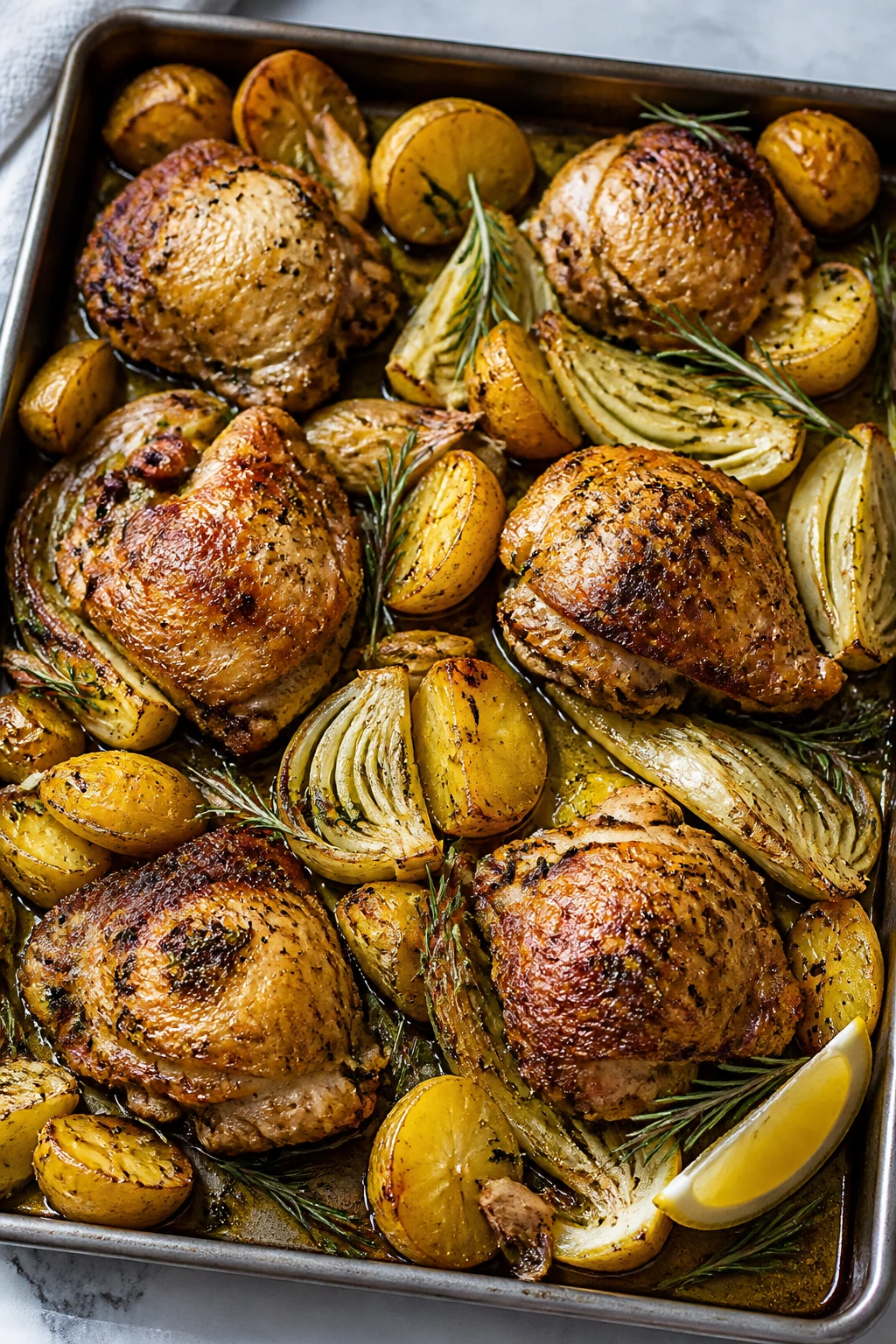
This is the roast pan I make when I want dinner to smell like herbs and browned onions for an hour. Fennel softens and sweetens in the oven, potatoes soak up the chicken fat, and garlic turns mellow instead of sharp. It’s hearty, but the lemon at the end keeps it from going dull.
Why It Works:
Chicken thighs and root vegetables like to cook together because they trade flavor as they roast. Fennel brings a light anise note that feels right at home with rosemary and white wine. A little space on the pan matters here, because browning the vegetables is what keeps the dish from tasting steamed.
Key Ingredients:
- 2½ lbs bone-in, skin-on chicken thighs
- 2 teaspoons kosher salt
- 1 teaspoon black pepper
- 1½ lbs baby potatoes, halved
- 2 fennel bulbs, cut into wedges
- 1 small red onion, cut into wedges
- 6 garlic cloves, smashed
- 2 tablespoons olive oil
- 1 tablespoon chopped rosemary
- ½ cup dry white wine
- 1 lemon, cut into wedges
Quick Steps:
- Heat the oven to 425°F.
- Toss the potatoes, fennel, onion, garlic, olive oil, salt, pepper, and rosemary on a large sheet pan.
- Nestle the chicken thighs among the vegetables, skin side up.
- Pour the wine into the pan and roast for 40 to 45 minutes, until the chicken is at 165°F and the potatoes are tender.
- Broil for 1 to 2 minutes if you want deeper color on the skin.
- Squeeze lemon over the top and serve hot.
Equipment for This Recipe:
- Large rimmed sheet pan
- Tongs
- Sharp knife
- Instant-read thermometer
How to Serve This Dish:
Serve it right on the sheet pan if you want a rustic table. If you’re plating, put the vegetables down first and set the chicken on top so the skin stays visible. A green salad with vinegar keeps the meal from feeling too roast-heavy.
Pro Tips for This Recipe:
- Cut the fennel into wide wedges so it doesn’t collapse in the oven.
- Dry the chicken skin well before seasoning if you want it crisp.
- Add a splash more wine if the pan starts to look dry midway through roasting.
Variations on This Dish:
- Orange and Rosemary Version: Swap the lemon for orange wedges and zest.
- Mushroom Roast: Add 8 ounces quartered mushrooms to the pan.
- Lower-Carb Version: Replace potatoes with cauliflower florets and reduce roasting time by 10 minutes.
Common Mistakes to Avoid with This Dish:
- Don’t pack the sheet pan too tightly. Tight pans steam the vegetables.
- Don’t cut the potatoes too large or they’ll finish late.
- Don’t skip the lemon at the end; it wakes up all the roasted flavors.
10. Chicken Puttanesca with Cherry Tomatoes and Olives
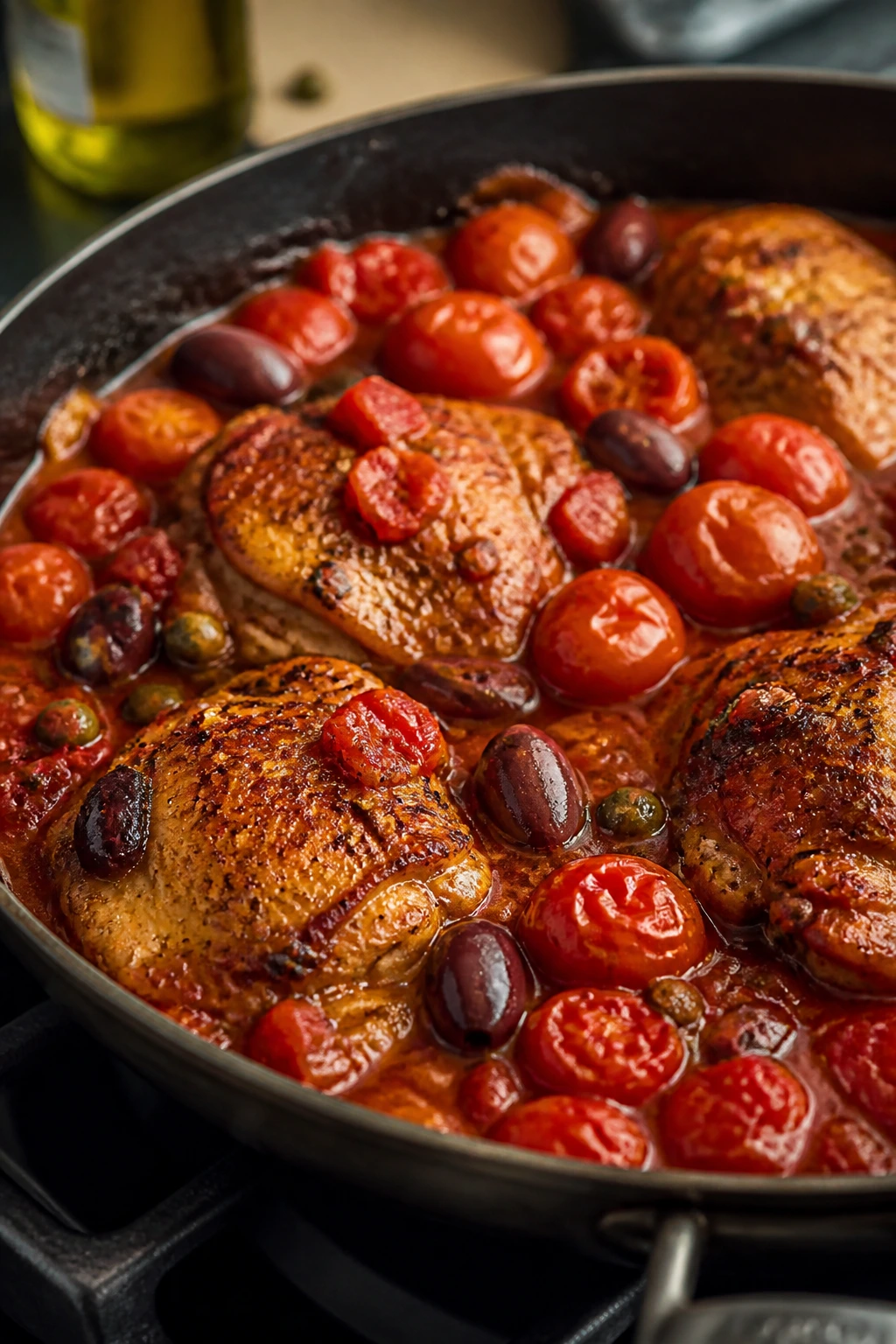
Puttanesca is brash in the best way. The tomatoes burst, the olives bring salt, the capers add little sparks of brine, and the chicken sits in the middle like it was born for the sauce. If you like your dinner with a little attitude, this one delivers it without asking permission.
Why It Works:
The classic puttanesca flavors—olive, caper, garlic, tomato, and chili—do the heavy lifting here, so the chicken just needs to be browned and finished in the sauce. Cherry tomatoes are useful because they collapse into a sauce that tastes fresher than canned tomatoes alone. A touch of anchovy paste, if you want it, deepens the savory base without making the dish taste fishy.
Key Ingredients:
- 2 lbs boneless, skinless chicken thighs
- 1½ teaspoons kosher salt
- 1 teaspoon black pepper
- 2 tablespoons olive oil
- 5 garlic cloves, minced
- 2 pints cherry tomatoes
- ½ cup Kalamata olives, pitted and halved
- 2 tablespoons capers, rinsed
- 1 teaspoon anchovy paste, optional
- ½ teaspoon red pepper flakes
- ¼ cup dry white wine
- 2 tablespoons chopped parsley
Quick Steps:
- Season the chicken with salt and pepper.
- Heat the olive oil in a large skillet over medium-high heat and brown the chicken for 4 minutes per side. Remove it.
- Lower the heat to medium and cook the garlic, anchovy paste, and red pepper flakes for 30 seconds.
- Add the cherry tomatoes and cook for 6 to 8 minutes until they burst and turn jammy.
- Stir in the olives, capers, and wine, then return the chicken to the skillet.
- Simmer for 8 to 10 minutes until the chicken is cooked through and the sauce thickens.
- Finish with parsley.
Equipment for This Recipe:
- Large skillet
- Tongs
- Wooden spoon
- Small knife for pitting olives if needed
How to Serve This Dish:
Spaghetti is the obvious match, but thick bread or creamy polenta works just as well. The sauce should be bold enough that you want something starchy under it. A scatter of parsley over the top keeps the plate from looking too dark.
Pro Tips for This Recipe:
- Rinse the capers unless you want the salt level to jump.
- Let the tomatoes cook long enough to break down; half-burst tomatoes taste unfinished.
- Keep the simmer gentle once the chicken returns or the sauce can reduce too far.
Variations on This Dish:
- Sardinian-Style Twist: Add a spoonful of chopped fennel fronds at the end.
- No-Anchovy Version: Skip the anchovy paste and add 1 teaspoon extra olive brine.
- Pasta Bake Version: Toss with cooked spaghetti, top with breadcrumbs, and bake until crisp.
Common Mistakes to Avoid with This Dish:
- Don’t undercook the tomatoes. They need time to turn into sauce.
- Don’t let the capers dominate; rinse first and taste later.
- Don’t use very lean chicken breast here unless you watch the cook time closely.
11. Chicken Marsala with Mushrooms
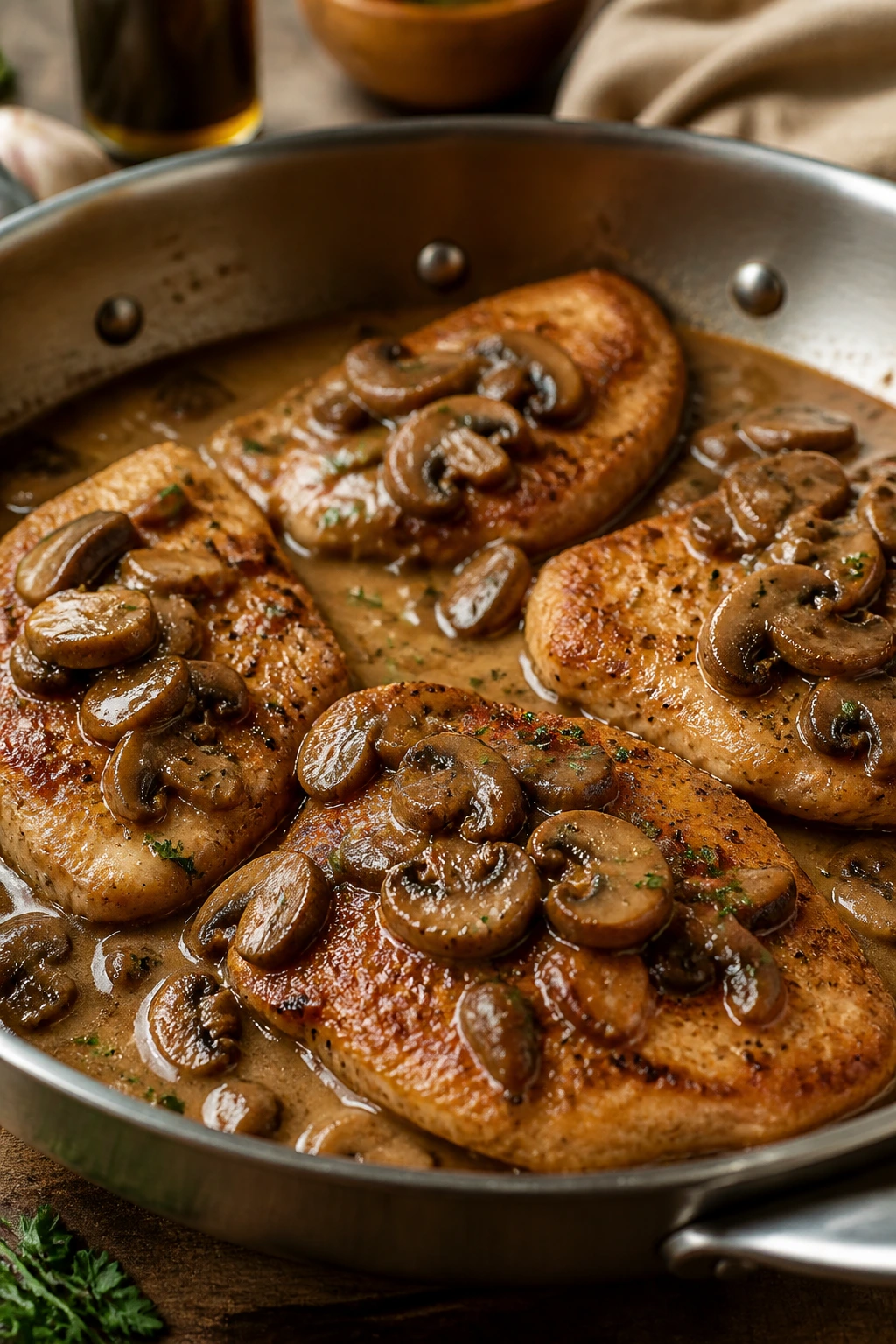
Marsala sauce can be silky or sloppy, and the difference usually comes down to heat control. The mushrooms bring earthiness, the wine adds a sweet sherry-like depth, and the chicken cutlets stay tender because they cook fast. I like this one with a spoon more than a knife.
Why It Works:
Marsala reduces into a glossy sauce that’s rich without needing much cream, if any. Mushrooms soak up the pan juices, and a little flour on the chicken helps everything thicken naturally. This recipe has a classic restaurant feel, but the skillet method keeps it straightforward.
Key Ingredients:
- 1½ lbs chicken breasts, sliced into cutlets
- 1 teaspoon kosher salt
- 1 teaspoon black pepper
- ½ cup all-purpose flour
- 3 tablespoons olive oil
- 2 tablespoons unsalted butter
- 12 ounces cremini mushrooms, sliced
- 1 shallot, minced
- ¾ cup dry Marsala wine
- 1 cup chicken stock
- 1 teaspoon fresh thyme leaves
- 2 tablespoons chopped parsley
Quick Steps:
- Season and lightly flour the cutlets.
- Heat the oil and 1 tablespoon butter in a skillet over medium-high heat. Cook the chicken for 2 to 3 minutes per side, then remove.
- Add the mushrooms and cook for 5 minutes until browned.
- Stir in the shallot and thyme for 1 minute.
- Pour in the Marsala and stock and simmer for 5 minutes until the sauce reduces by about a third.
- Return the chicken to the pan, add the remaining butter, and spoon sauce over the top.
- Finish with parsley and serve.
Equipment for This Recipe:
- Large skillet
- Tongs
- Shallow bowl for flour
- Wooden spoon
How to Serve This Dish:
Serve it with mashed potatoes, egg noodles, or soft polenta. You want something that can catch the sauce under the mushrooms. A side of peas or green beans gives the plate some color and a crisp bite.
Pro Tips for This Recipe:
- Buy dry Marsala for cooking, not the sweet dessert version.
- Brown the mushrooms well; pale mushrooms make a pale sauce.
- Add the butter at the end so the sauce shines.
Variations on This Dish:
- Cream Marsala: Stir in ¼ cup cream after the wine reduces.
- Garlic Marsala: Add 2 minced garlic cloves with the shallot.
- Thigh Marsala: Use boneless thighs and cook them 2 minutes longer per side.
Common Mistakes to Avoid with This Dish:
- Don’t crowd the mushrooms or they’ll steam.
- Don’t pour in too much Marsala at once or the sauce can taste sharp.
- Don’t over-flour the chicken; a thin coat is enough.
12. Roasted Chicken Thighs with Gremolata and Beans
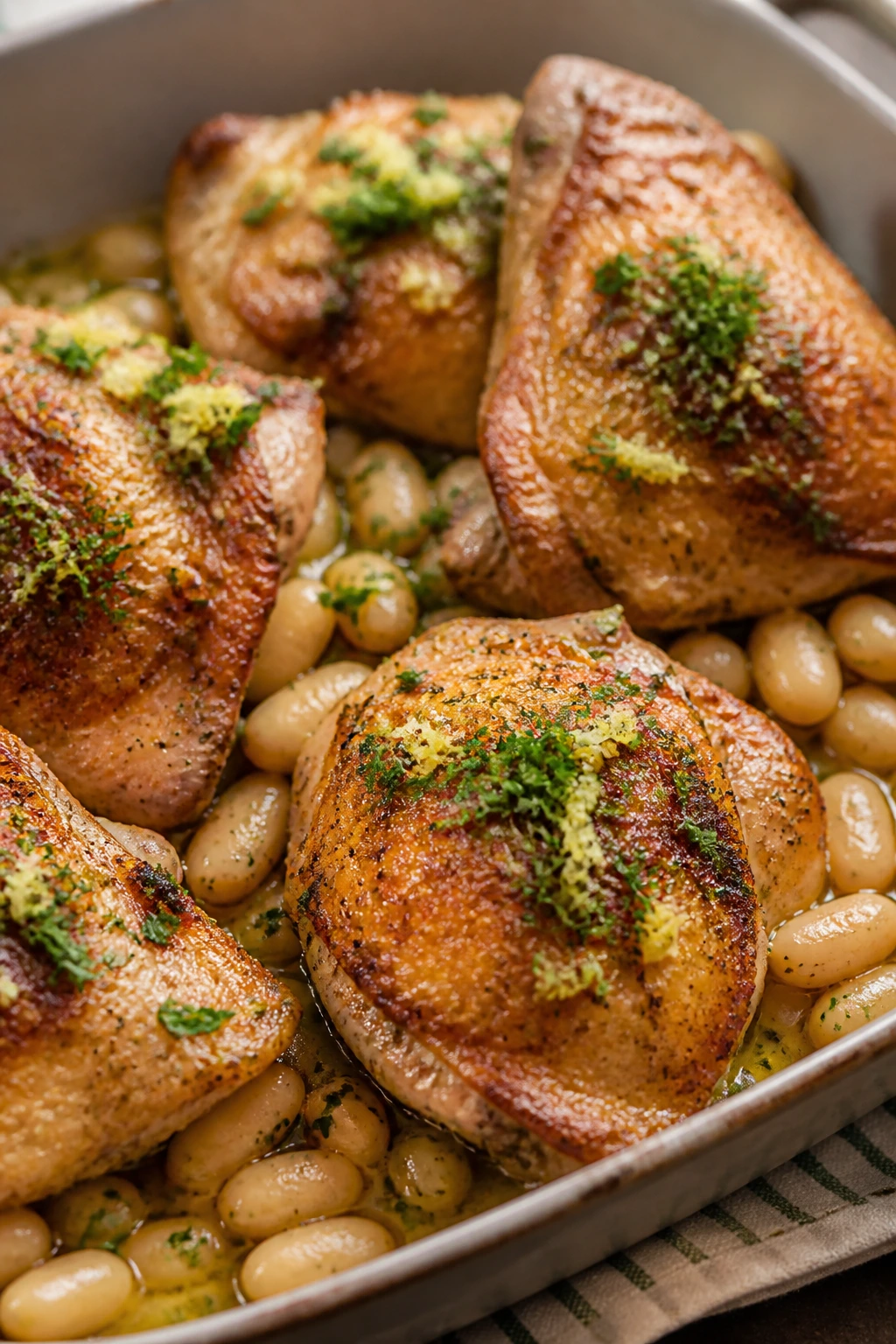
This is the kind of dish that feels simple until the first bite, when the lemon-garlic gremolata hits the hot chicken skin and wakes everything up. The beans roast under the thighs and soak up the juices, which means there’s no sad corner of the pan left behind.
Why It Works:
Roasting chicken over beans is smart because the drippings season the whole pan. Gremolata—parsley, lemon zest, and garlic—is the bright finish that keeps the meal from feeling heavy. You get crispy skin, creamy beans, and enough acid to cut through the fat.
Key Ingredients:
- 2½ lbs bone-in, skin-on chicken thighs
- 1¾ teaspoons kosher salt
- 1 teaspoon black pepper
- 2 tablespoons olive oil
- 2 (15-ounce) cans cannellini beans, drained and rinsed
- 1 small onion, thinly sliced
- 2 garlic cloves, smashed
- 1 teaspoon chopped rosemary
- For the Gremolata:
- ¼ cup chopped parsley
- 1 tablespoon lemon zest
- 1 small garlic clove, finely grated
- 1 tablespoon olive oil
Quick Steps:
- Heat the oven to 425°F.
- Toss the beans, onion, smashed garlic, rosemary, salt, pepper, and olive oil in a baking dish.
- Season the chicken thighs and place them on top of the bean mixture, skin side up.
- Roast for 35 to 40 minutes until the skin is browned and the chicken reaches 165°F.
- Stir the gremolata ingredients together.
- Spoon the gremolata over the hot chicken and beans before serving.
Equipment for This Recipe:
- 9×13-inch baking dish or shallow roasting pan
- Small bowl for gremolata
- Tongs
- Instant-read thermometer
How to Serve This Dish:
This is excellent with toasted bread because the beans are basically begging to be scooped. A little bitter radicchio or arugula on the side is enough to round it out. The chicken should sit on a mound of glossy beans, not alone on the plate.
Pro Tips for This Recipe:
- Dry the chicken well before roasting so the skin browns.
- Don’t bury the thighs in beans; they need direct heat on top.
- Make the gremolata right before serving so the garlic stays sharp.
Variations on This Dish:
- Lemon-Herb Bean Roast: Add thyme and oregano to the bean base.
- Tomato Bean Version: Stir in 1 cup cherry tomatoes before roasting.
- No-Bean Version: Roast the chicken over sliced fennel and onions instead.
Common Mistakes to Avoid with This Dish:
- Don’t skip the salt on the beans. They need seasoning too.
- Don’t add the gremolata too early or the garlic will turn harsh.
- Don’t use a deep dish; you want roasting, not steaming.
13. Chicken Sugo with Polenta
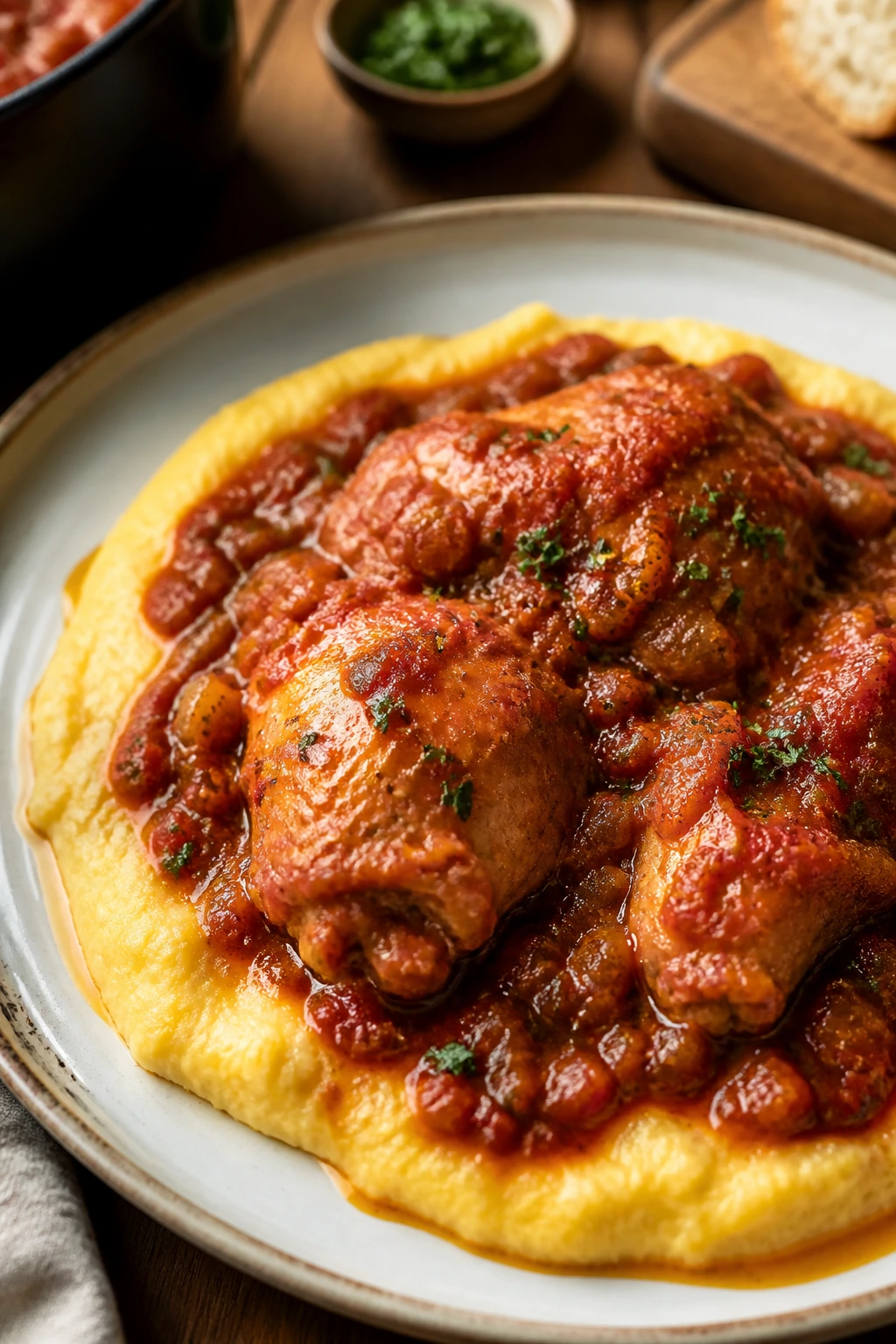
A slow sugo is one of those sauces that makes you pause when you pass the stove. The tomatoes darken, the chicken softens, and the polenta underneath turns into a creamy base that tastes like it belongs under this sauce and nothing else. This is comfort food, but it has structure.
Why It Works:
Sugo needs time, and chicken thighs are happy to give it. As the sauce simmers, the chicken releases flavor into the tomatoes and wine, while polenta acts like a soft landing pad for everything in the pot. A bay leaf and a little red wine are small things, but they make the sauce feel layered.
Key Ingredients:
- 2 lbs bone-in chicken thighs and drumsticks
- 1½ teaspoons kosher salt
- 1 teaspoon black pepper
- 2 tablespoons olive oil
- 1 onion, finely chopped
- 1 carrot, finely chopped
- 1 celery stalk, finely chopped
- 4 garlic cloves, minced
- 2 tablespoons tomato paste
- ½ cup dry red wine
- 1 (28-ounce) can crushed tomatoes
- 1 bay leaf
- 1 teaspoon dried oregano
- For the Polenta:
- 1 cup coarse polenta
- 4 cups water
- 1 teaspoon kosher salt
- 2 tablespoons butter
- ¼ cup grated parmesan
Quick Steps:
- Season and brown the chicken in olive oil over medium-high heat. Remove it.
- Cook the onion, carrot, celery, and garlic for 6 minutes.
- Stir in the tomato paste, then add the wine and reduce for 1 minute.
- Add the crushed tomatoes, bay leaf, oregano, and chicken. Simmer covered for 35 to 40 minutes.
- Meanwhile, cook the polenta with water and salt, stirring often, until thick and creamy, about 25 minutes.
- Finish the polenta with butter and parmesan.
- Serve the chicken and sugo over the polenta.
Equipment for This Recipe:
- Dutch oven
- Whisk for the polenta
- Wooden spoon
- Fine grater for parmesan
How to Serve This Dish:
Spoon the polenta into shallow bowls and ladle the sugo over the top so the sauce runs into the edges. A little extra parmesan is fine, but don’t bury it. A green salad with vinegar keeps the bowl from feeling too soft.
Pro Tips for This Recipe:
- Stir the polenta often so it doesn’t clump or scorch.
- If the sugo gets too thick, loosen it with a splash of water or stock.
- Use crushed tomatoes with good flavor; the sauce does not hide weak tomatoes.
Variations on This Dish:
- Garlicky Sugo: Add 2 extra garlic cloves to the sauce base.
- Spicy Sugo: Add ½ teaspoon red pepper flakes with the tomato paste.
- Bean-Heavy Version: Stir in 1 cup cannellini beans during the last 10 minutes.
Common Mistakes to Avoid with This Dish:
- Don’t rush the onion-carrot-celery base. That sweetness matters.
- Don’t stop stirring the polenta too long or it will settle and stick.
- Don’t serve the sugo the second it finishes; a short rest improves the texture.
14. Grilled Chicken with Rosemary, Grapes, and Balsamic
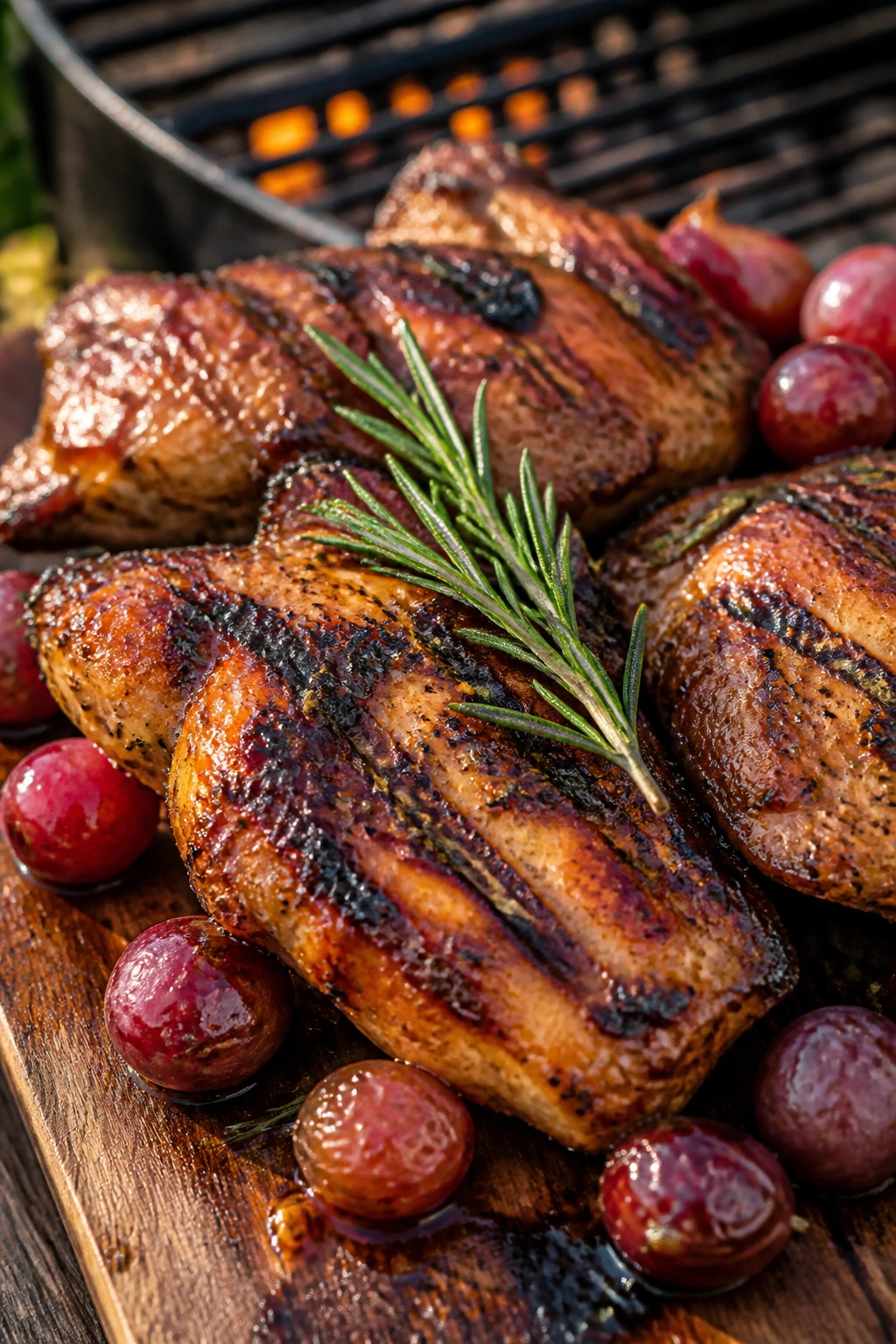
Grapes on a grill sound odd until you taste them softened and lightly charred next to rosemary-scented chicken. The fruit gets jammy at the edges, the balsamic turns syrupy, and the whole plate lands somewhere between savory and sweet without tipping into dessert territory.
Why It Works:
This is the lighter side of Tuscan-inspired cooking, and the contrast is what gives it character. Rosemary and garlic season the chicken, while grapes provide sweetness that plays well with balsamic’s edge. Grilling adds smoke, and that tiny bit of char is what keeps the dish from feeling soft.
Key Ingredients:
- 2 lbs boneless, skinless chicken thighs or breasts
- 2 teaspoons kosher salt
- 1 teaspoon black pepper
- 2 tablespoons olive oil
- 2 tablespoons balsamic vinegar
- 3 garlic cloves, minced
- 1 tablespoon chopped rosemary
- 2 cups red grapes
- 1 shallot, sliced
- 1 tablespoon honey
- 2 tablespoons chopped mint or parsley
Quick Steps:
- Mix the olive oil, balsamic, garlic, rosemary, salt, and pepper, then coat the chicken.
- Marinate for 20 to 30 minutes while you heat the grill or grill pan.
- Toss the grapes and shallot with honey.
- Grill the chicken over medium-high heat for 5 to 6 minutes per side, until cooked through.
- Grill the grapes and shallot in a perforated pan or foil packet for 4 to 5 minutes, until softened.
- Serve the chicken with the warm grapes on top and herbs scattered over everything.
Equipment for This Recipe:
- Grill or grill pan
- Mixing bowl
- Tongs
- Foil packet or grill tray for the grapes
How to Serve This Dish:
Farro, couscous, or a warm white bean salad fits nicely here. I like this with something grainy and one bitter green, because the grapes already bring sweetness. The finished plate should look glossy, with a few charred edges on the fruit.
Pro Tips for This Recipe:
- If you use breasts, pound them to even thickness so they don’t dry out.
- Don’t let the grapes overcook; they should soften, not collapse completely.
- Add the mint or parsley right at the end so it stays fresh.
Variations on This Dish:
- Stone Fruit Swap: Use halved plums or apricots instead of grapes.
- Indoor Version: Sear the chicken in a skillet and roast the grapes in the oven.
- Herby Version: Add thyme leaves to the marinade for extra depth.
Common Mistakes to Avoid with This Dish:
- Don’t marinate too long in balsamic or the chicken can taste one-note.
- Don’t grill over flare-ups that burn the grapes.
- Don’t skip the fruit. It’s the piece that makes the dish work.
15. Chicken and Kale Ribollita-Style Stew
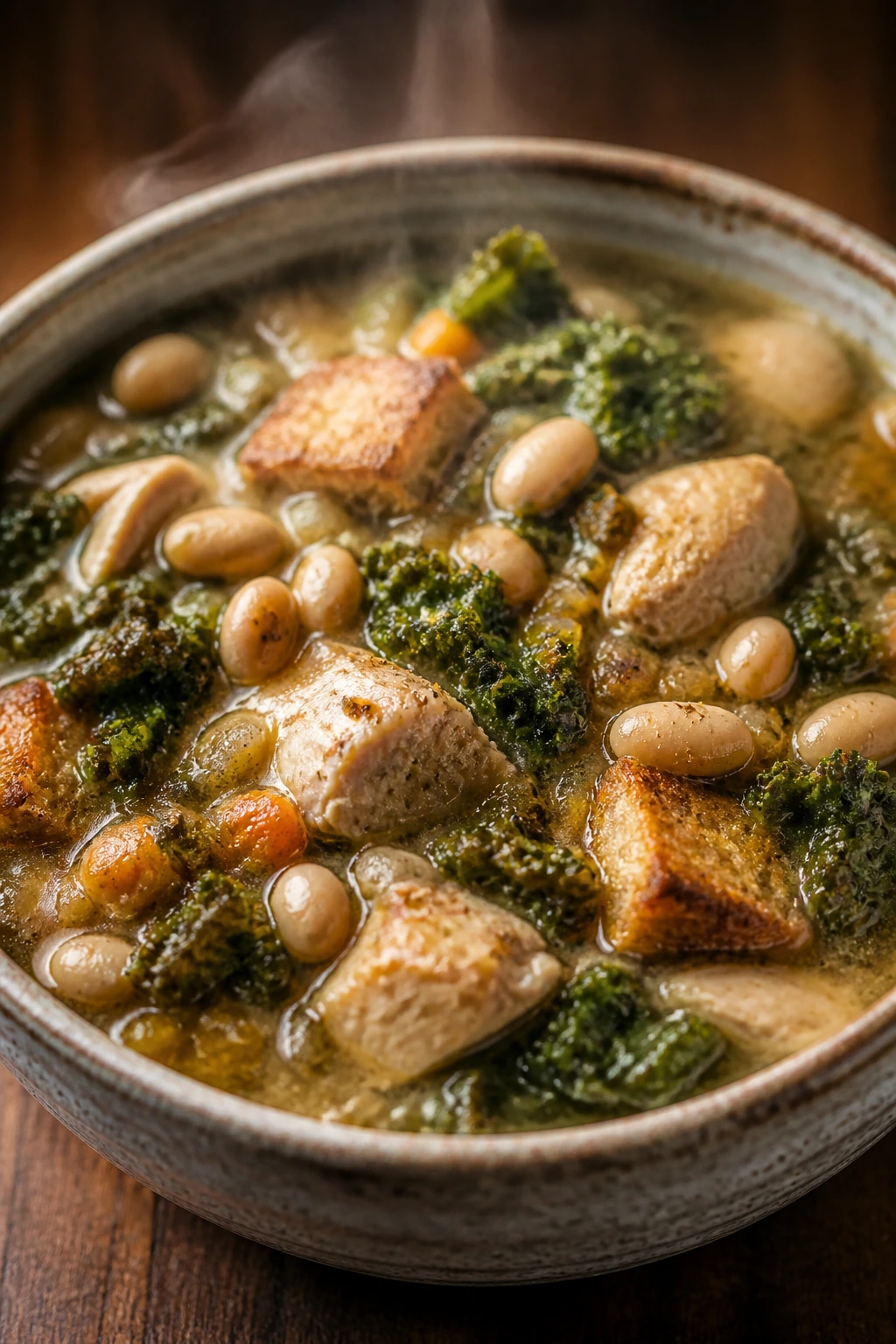
Ribollita usually leans on beans and bread for body, and that same idea works beautifully with chicken. The stew gets thick, the kale stays a little toothsome, and the bread soaks up enough broth to make every bowl feel like a complete meal. It’s rustic in the way that matters: sturdy, not sloppy.
Why It Works:
This stew borrows the ribollita habit of building texture instead of relying on cream. Chicken thighs add savory depth, beans make the broth fuller, and stale bread turns into a soft, almost dumpling-like layer. The kale gives the stew shape and keeps it from becoming too soft.
Key Ingredients:
- 1½ lbs boneless, skinless chicken thighs
- 1 tablespoon olive oil
- 1 onion, chopped
- 2 carrots, chopped
- 2 celery stalks, chopped
- 4 garlic cloves, minced
- 2 tablespoons tomato paste
- 6 cups chicken stock
- 1 (28-ounce) can diced tomatoes
- 1 teaspoon chopped rosemary
- 1 (15-ounce) can cannellini beans
- 4 cups chopped kale
- 3 cups cubed stale country bread
- ¼ cup grated parmesan
Quick Steps:
- Brown the chicken in olive oil, then remove it.
- Cook the onion, carrots, celery, and garlic for 7 minutes.
- Stir in the tomato paste and rosemary, then add the stock and diced tomatoes.
- Return the chicken and simmer for 20 minutes.
- Stir in the beans, kale, and bread cubes. Simmer 8 to 10 minutes until thick.
- Finish with parmesan and serve hot.
Equipment for This Recipe:
- Large soup pot
- Wooden spoon
- Sharp knife
- Ladle
How to Serve This Dish:
Serve it in deep bowls with a final shower of parmesan and a drizzle of olive oil. If the stew is thick enough to stand a spoon in, you’ve got the right texture. More bread on the side is not a bad idea, although it is not required.
Pro Tips for This Recipe:
- Use stale bread, not fresh; it holds shape better in the stew.
- Tear the kale leaves off the stems so the texture stays pleasant.
- Let the stew sit 10 minutes before serving so it thickens properly.
Variations on This Dish:
- Sausage-Style Depth: Add a little fennel seed if you want a more savory, sausage-like note.
- Bean-Only Version: Skip the chicken and add another can of beans.
- Lighter Broth Version: Reduce the bread by half for a soupier bowl.
Common Mistakes to Avoid with This Dish:
- Don’t add fresh bread too early or it will vanish into paste.
- Don’t overcook the kale; it should still have some bite.
- Don’t forget to season again at the end, because bread and beans soak up salt fast.
16. Stuffed Chicken Breasts with Prosciutto and Sage
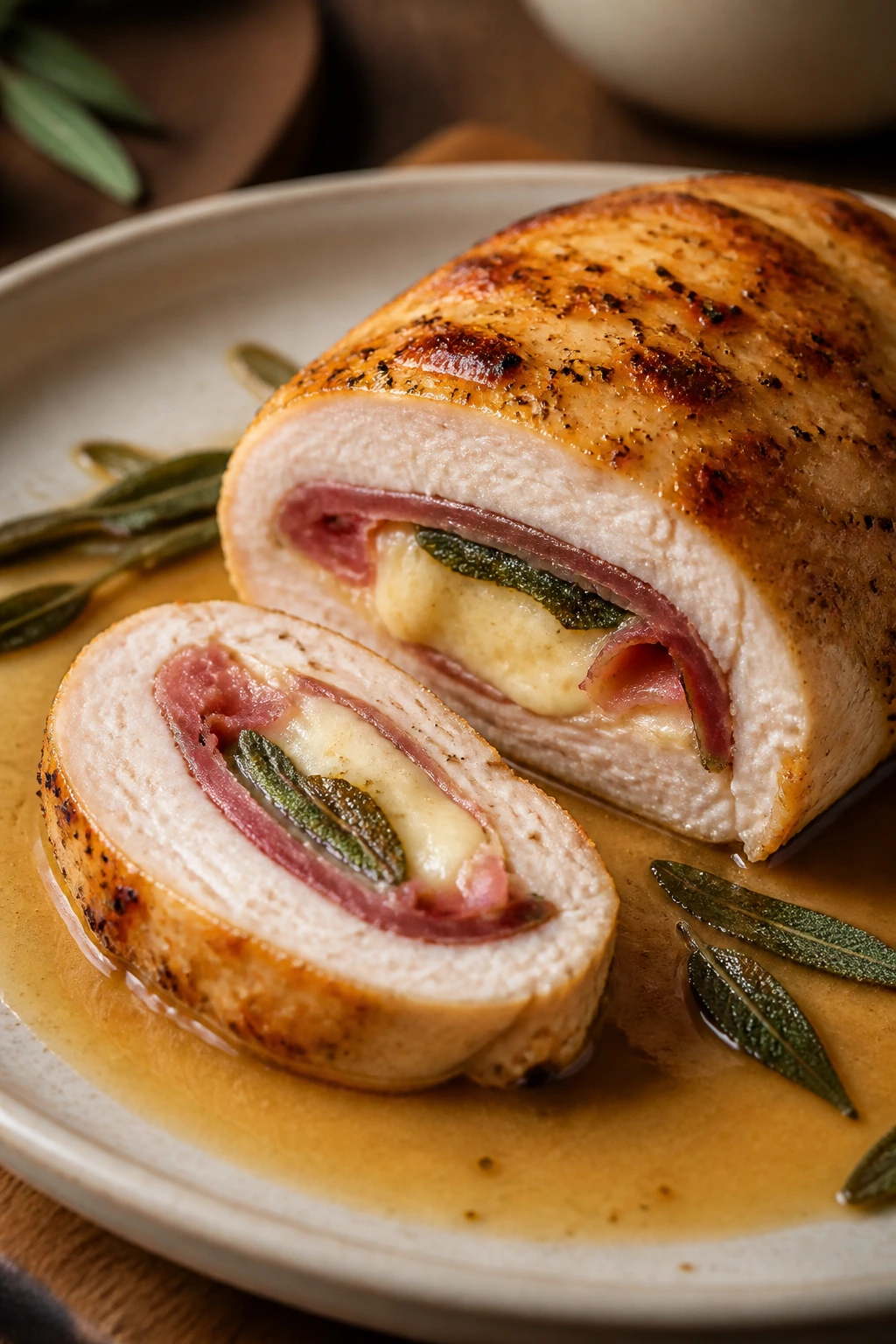
When you cut into this, the prosciutto and cheese show up in a neat ribbon through the middle, and that little reveal never gets old. Sage brings a dry, almost piney note that feels right with chicken breast, which can be boring if you don’t give it something to do. This does the job.
Why It Works:
Stuffing a breast with prosciutto and cheese keeps the interior moist and gives you a salty, savory core. Searing first builds color; finishing in the oven cooks the chicken through without burning the outside. Sage and white wine keep the dish in that Tuscan lane where meat, herbs, and a simple pan sauce do most of the talking.
Key Ingredients:
- 4 boneless, skinless chicken breasts
- 4 slices prosciutto
- 4 fresh sage leaves
- 4 ounces fontina cheese, sliced
- 1 teaspoon kosher salt
- 1 teaspoon black pepper
- ¼ cup all-purpose flour
- 2 tablespoons olive oil
- 2 tablespoons unsalted butter
- ½ cup dry white wine
- ½ cup chicken stock
- 1 tablespoon lemon juice
Quick Steps:
- Heat the oven to 400°F.
- Slice a pocket into each chicken breast without cutting all the way through.
- Stuff each breast with prosciutto, sage, and fontina, then secure with toothpicks if needed.
- Season and lightly flour the chicken.
- Sear in olive oil and butter for 3 minutes per side, then move the skillet to the oven for 12 to 15 minutes, until the chicken reaches 165°F.
- Deglaze the pan with wine and stock, simmer for 2 minutes, and finish with lemon juice.
- Spoon the sauce over the chicken.
Equipment for This Recipe:
- Oven-safe skillet
- Toothpicks
- Sharp paring knife
- Tongs
How to Serve This Dish:
Slice the chicken on the bias so the filling shows. Roasted potatoes, green beans, or a plain risotto fit well beside it. If you want the plate to look polished, spoon the sauce under the slices instead of over the top.
Pro Tips for This Recipe:
- Use chilled cheese so it stays inside the pocket while searing.
- Don’t overstuff the breasts or they’ll split open.
- Remove the toothpicks before serving so nobody gets an unpleasant surprise.
Variations on This Dish:
- Pancetta Swap: Use pancetta instead of prosciutto for a fattier center.
- Spinach Stuffed Version: Add a few wilted spinach leaves with the cheese.
- Moisture Boost: Brush the chicken with olive oil before flouring if you’re worried about dryness.
Common Mistakes to Avoid with This Dish:
- Don’t cut the pockets too deep.
- Don’t skip the sear; the oven alone won’t give you enough color.
- Don’t slice the chicken before it rests for 5 minutes, or the juices will run out.
17. Chicken Pappardelle with Tomato Cream Sauce
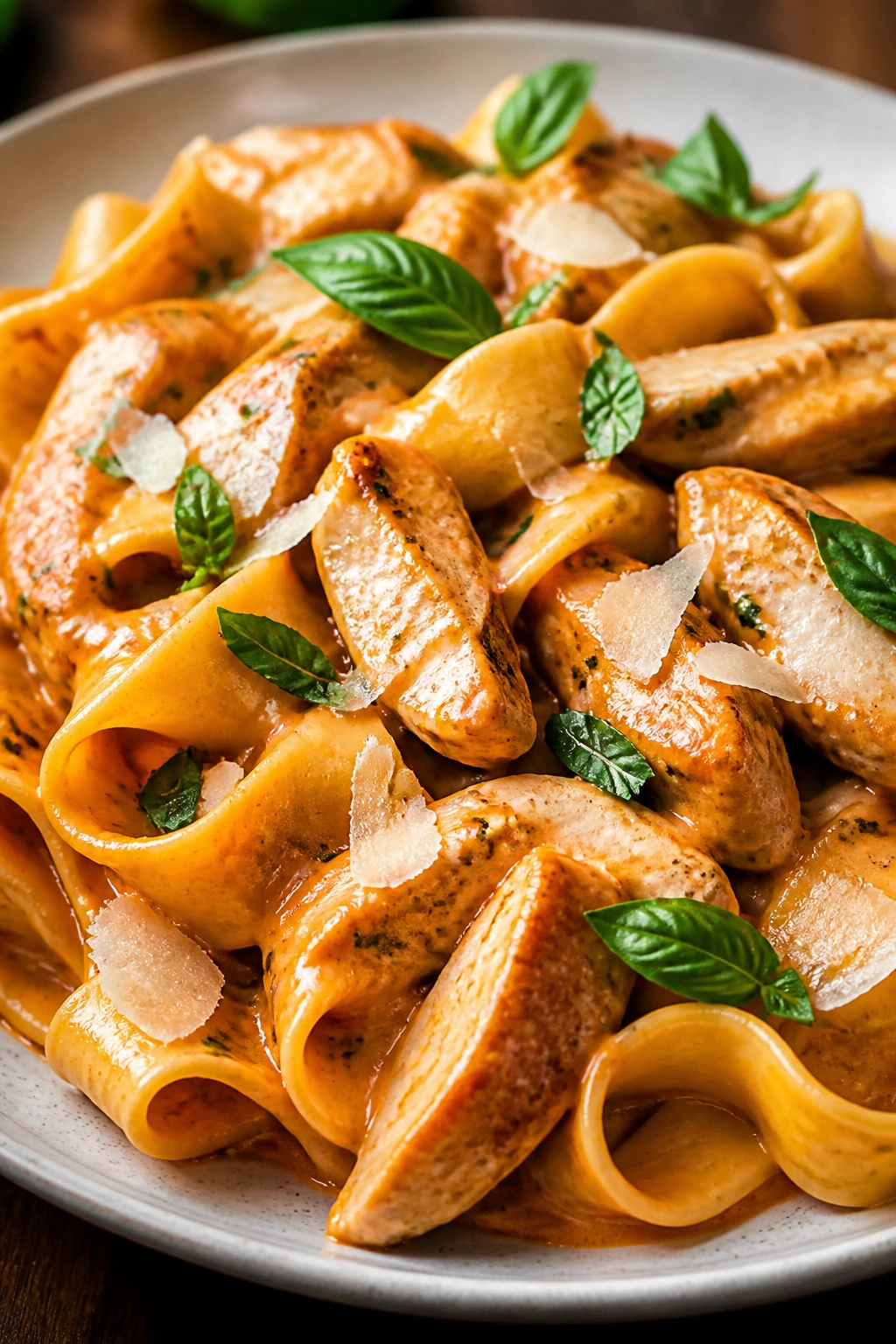
This is the kind of pasta that feels like a treat without becoming a project. Wide noodles catch the sauce, chicken gives the dish substance, and the tomato-cream base lands in that sweet spot between bright and rich. I like a few basil leaves scattered over the top because the sauce can handle it.
Why It Works:
Tomato paste gives the sauce depth, cream softens the edges, and parmesan thickens everything without making it gluey. Chicken thighs or sliced breast pieces both work, but the wide pappardelle is doing real work here by grabbing the sauce in each ribbon. Sun-dried tomatoes add a little concentrated sweetness if you want extra Tuscan flavor.
Key Ingredients:
- 1½ lbs boneless chicken thighs, cut into bite-size pieces
- 1 teaspoon kosher salt
- 1 teaspoon black pepper
- 2 tablespoons olive oil
- 1 small onion, minced
- 4 garlic cloves, minced
- 2 tablespoons tomato paste
- ½ cup chopped sun-dried tomatoes
- 1 cup chicken broth
- ¾ cup heavy cream
- 12 ounces pappardelle
- ½ cup grated parmesan
- ¼ cup chopped basil
Quick Steps:
- Cook the pappardelle in salted water until al dente; reserve 1 cup of pasta water.
- Brown the chicken in olive oil, then remove it.
- Cook the onion and garlic for 3 minutes, then stir in the tomato paste and sun-dried tomatoes.
- Add the broth and simmer for 2 minutes.
- Stir in the cream, then return the chicken and cook until done, about 6 to 8 minutes.
- Toss in the pasta with parmesan and a splash of pasta water until the sauce coats the noodles.
- Finish with basil.
Equipment for This Recipe:
- Large skillet
- Large pot for pasta
- Tongs
- Measuring cup for pasta water
How to Serve This Dish:
Serve it in shallow bowls so the sauce stays around the noodles. A simple green salad is enough on the side; the pasta already carries the meal. More parmesan is fine, but don’t bury the basil.
Pro Tips for This Recipe:
- Undercook the pasta by about a minute; it finishes in the sauce.
- Reserve pasta water. It loosens the sauce without thinning the flavor.
- Use the widest pasta you can find if you want the sauce to cling.
Variations on This Dish:
- Mushroom Pasta Version: Add 8 ounces mushrooms with the onion.
- Lighter Sauce: Use half cream and half milk, then reduce the broth slightly more.
- Spicy Version: Add red pepper flakes with the garlic.
Common Mistakes to Avoid with This Dish:
- Don’t overcook the chicken while the pasta boils.
- Don’t dump in all the pasta water at once.
- Don’t let the cream boil hard after it goes in.
18. Slow-Braised Chicken with White Wine, Onion, and Sage
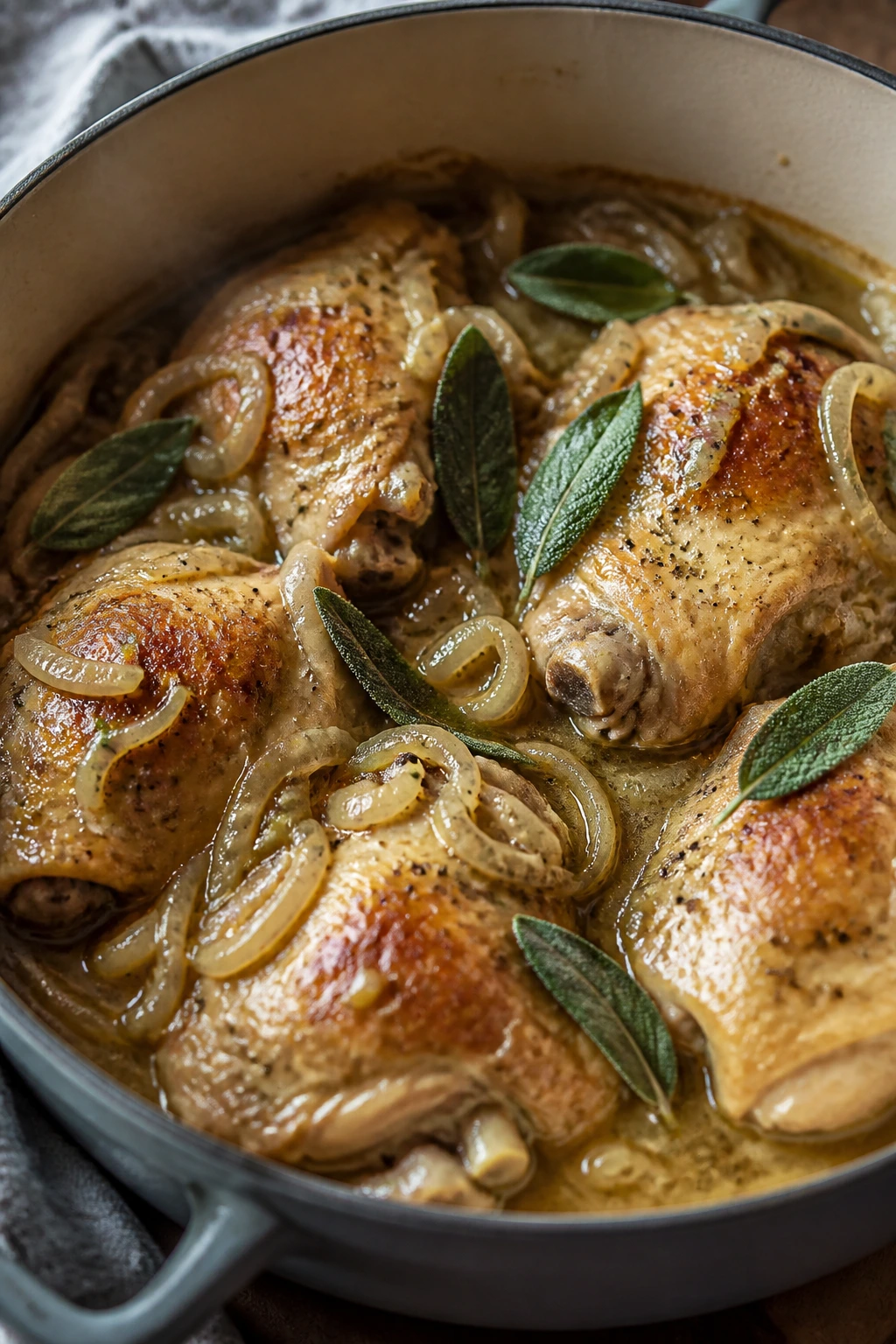
This is the slow, quiet dish at the end of the list, and it might be the one I’d make first if I wanted the house to smell like dinner before lunch. Onions melt into the sauce, sage gives the braise a dry herbal edge, and the white wine turns the whole pot into something soft and savory. It’s simple, but it doesn’t taste plain.
Why It Works:
Braising bone-in chicken in wine and stock gives you tender meat and a sauce that tastes layered without much fuss. Onions break down into sweetness, sage keeps the flavor from drifting into bland territory, and a covered pot holds enough steam to keep the chicken juicy. This is the kind of recipe that rewards patience more than speed.
Key Ingredients:
- 3 lbs bone-in chicken pieces
- 2 teaspoons kosher salt
- 1 teaspoon black pepper
- 2 tablespoons olive oil
- 2 large onions, sliced
- 4 garlic cloves, sliced
- 6 fresh sage leaves
- 1 cup dry white wine
- 1½ cups chicken stock
- 2 carrots, cut into chunks
- 1 bay leaf
- 2 tablespoons chopped parsley
Quick Steps:
- Season the chicken with salt and pepper.
- Brown the chicken in olive oil in a Dutch oven, then remove it.
- Add the onions and cook for 8 minutes until they start to soften and color. Stir in the garlic and sage for 30 seconds.
- Pour in the wine and simmer for 2 minutes, scraping the pot.
- Add the stock, carrots, bay leaf, and chicken.
- Cover and braise in a 325°F oven for 50 to 60 minutes, until the chicken is very tender.
- Finish with parsley and serve with the reduced braising liquid.
Equipment for This Recipe:
- Dutch oven with lid
- Tongs
- Wooden spoon
- Oven mitts
How to Serve This Dish:
This braise is excellent over mashed potatoes, polenta, or even buttered egg noodles if that’s what’s in the cupboard. Spoon the onions and carrots over the chicken so the sauce doesn’t disappear into the plate. A sharp green salad on the side cuts the richness neatly.
Pro Tips for This Recipe:
- Brown the chicken first; the braise tastes much deeper that way.
- Use fresh sage if you can, because dried sage can turn dusty in a long braise.
- If the sauce is thin, uncover the pot for 10 minutes before serving.
Variations on This Dish:
- Potato Braise: Add waxy potato chunks with the carrots.
- Lemon Sage Version: Add lemon zest at the very end for a brighter finish.
- Tomato-Free Version: Keep the broth clear and serve with extra bread for dipping.
Common Mistakes to Avoid with This Dish:
- Don’t braise at too high a temperature or the chicken can tighten up.
- Don’t forget to taste the sauce after braising; it may need another pinch of salt.
- Don’t serve the dish straight from the oven without a short rest.
Why Tuscany Keeps Showing Up in These Pans
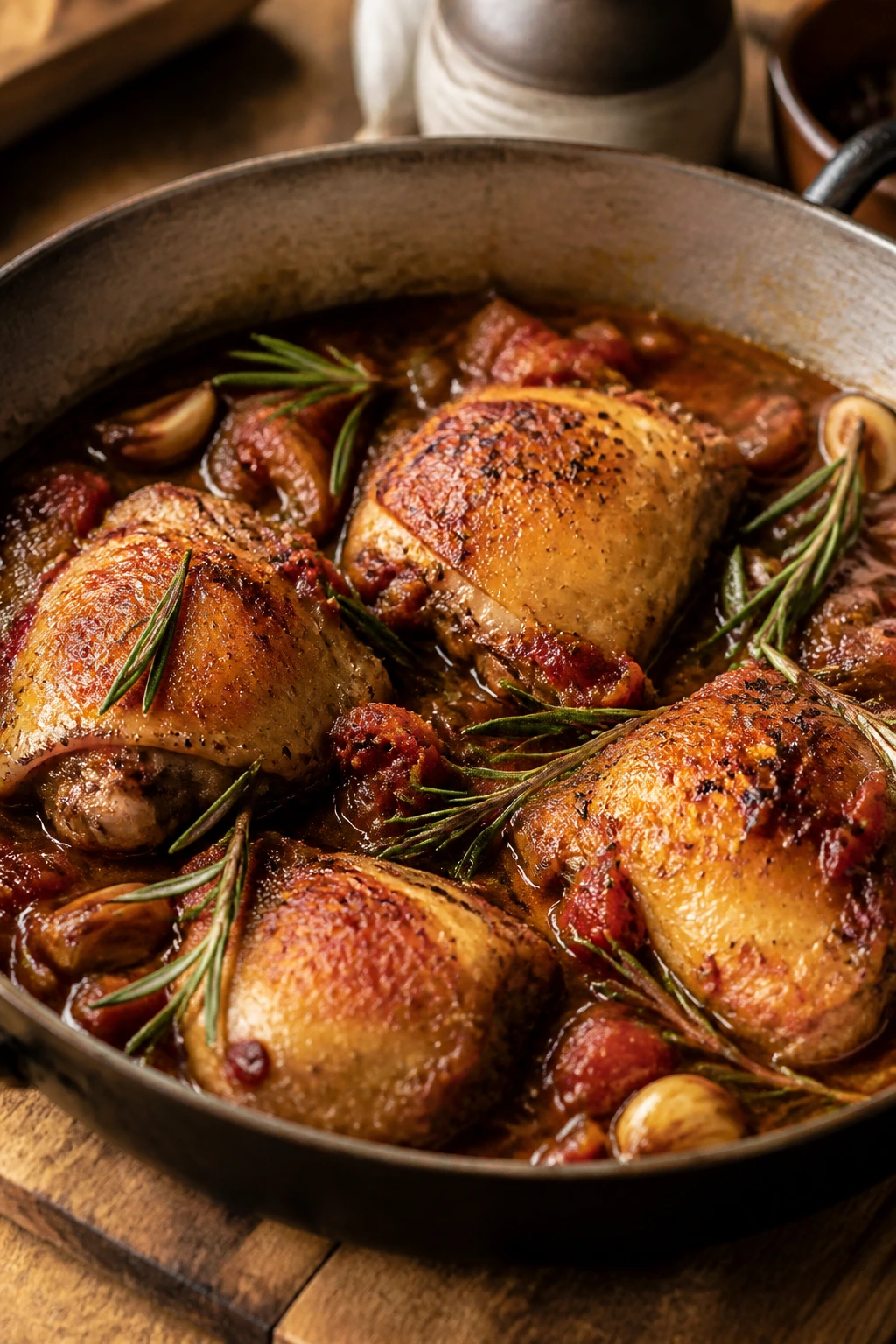
Tuscany is a pantry cuisine at heart. It likes the things that are already useful before dinner starts: olive oil in a dark bottle, garlic on the counter, a few herbs in a bowl, beans in the cupboard, bread that has gone just stale enough to be useful again. Chicken fits that style because it can absorb flavor without fighting back. Give it rosemary, lemon, wine, or tomatoes, and it starts speaking the same language as the rest of the plate.
What I like most about these recipes is how they use technique to make a small ingredient list feel complete. Browning creates depth. Braising builds softness. A sauce reduced in the same pan where the chicken cooked picks up all the useful residue from the bottom, and that residue is where a lot of the flavor lives. People say Tuscan cooking is simple, and that’s true, but simple isn’t the same thing as shallow. It’s just more disciplined.
There’s also a practical reason these dishes keep working. Chicken is affordable compared with a lot of other proteins, and it’s flexible enough to move between skillet dinners, soups, roasts, and pasta without losing its identity. That makes it one of the easiest ways to cook in a Tuscan style without needing a rack of specialty ingredients. Use what you have. Keep the oil good. Don’t drown the herbs. That’s the whole game.
What You’ll Want in the Kitchen Before You Start
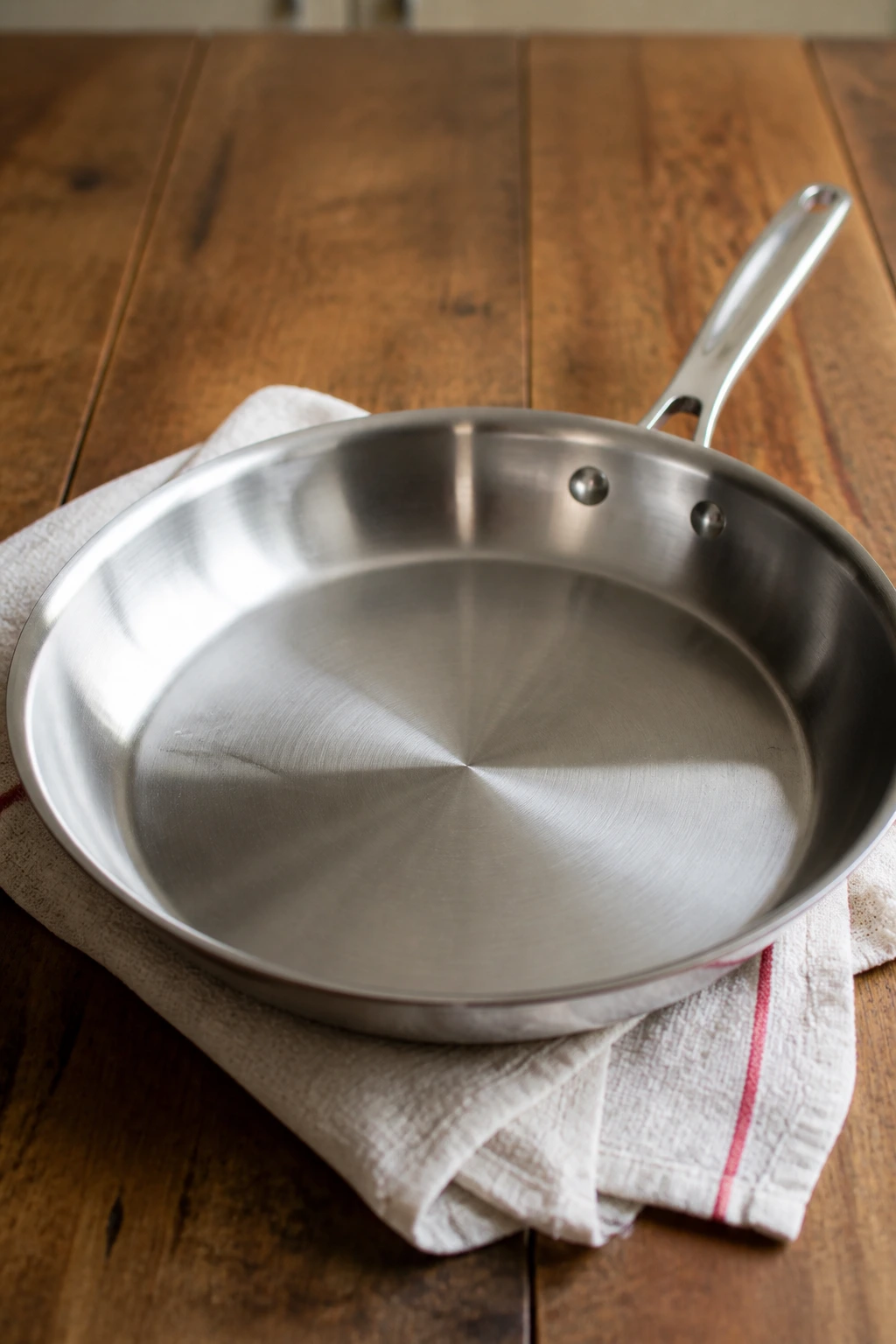
- 12-inch skillet: The sweet spot for most stovetop chicken recipes here, especially the saucy ones.
- Dutch oven or heavy braising pot: Necessary for cacciatore, braises, stew, and soup.
- Rimmed sheet pan: Useful for roasted chicken, Milanese baked cutlets, and anything that needs room.
- Instant-read thermometer: Chicken thighs forgive you more than breasts, but this still removes the guesswork.
- Tongs: Better than a fork for turning chicken without tearing the crust.
- Sharp chef’s knife: Onions, fennel, artichokes, and herbs all go faster when the knife is honest.
- Microplane or fine grater: Best for lemon zest, parmesan, and garlic in gremolata.
- Measuring cups and spoons: Sauces live and die by balance, especially wine, broth, and lemon.
- Cutting board with a damp towel underneath: Keeps the board from skating while you slice cutlets or chop herbs.
- Shallow bowls for breading: Needed for piccata, Milanese, and baked Parmesan chicken.
Smart Shopping for the Best Results
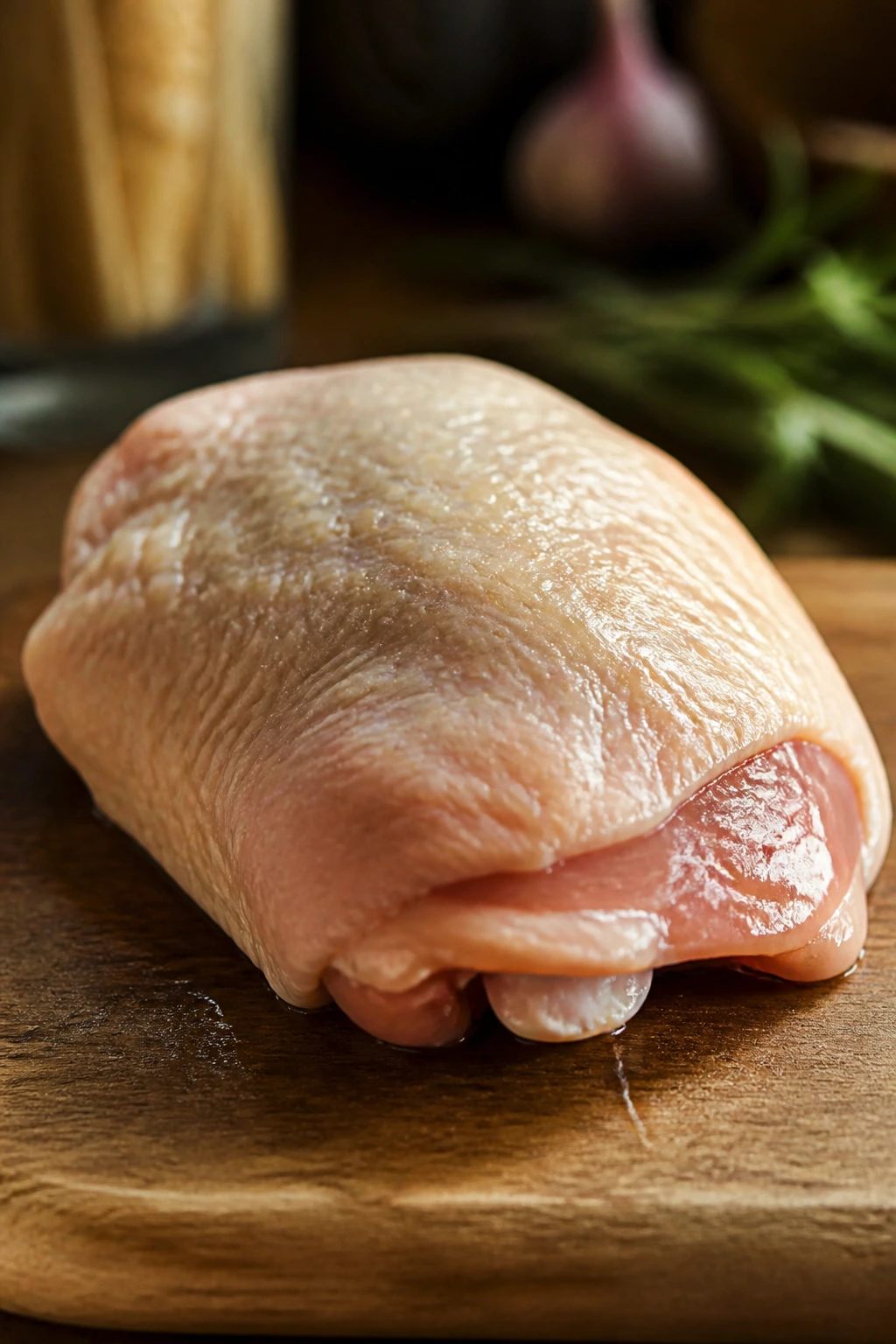
Chicken thighs are the safest buy for most of these recipes because they stay juicy through searing, braising, and roasting. If you use breasts, look for pieces that are similar in size and plan to pound or slice them so they cook evenly. Bone-in thighs give you more flavor in braises and roasts, while boneless thighs make weeknight skillet dinners move faster. That isn’t a trend. It’s just how the meat behaves.
For tomatoes, choose the kind that tastes like tomatoes when you open the can. Crushed tomatoes should smell sweet and a little earthy, not metallic. Marinara should be thick enough to cling without looking sugary. If a recipe uses cherry tomatoes, buy firm ones with skin that still feels taut; soft tomatoes can work, but they collapse too fast and go dull.
Beans and olives matter more than people think. Cannellini beans should be creamy but not chalky, and olives should taste briny and alive, not just salty. Artichoke hearts packed in water or brine stay cleaner in braises than the heavily marinated kind. With dried herbs, buy smaller amounts more often if you can; rosemary and oregano lose their edge when they’ve sat around too long.
Wine is not the place to pinch pennies to the point of regret. Use something you would drink, even if it’s not expensive. Dry white wine works for piccata, lemon braises, and skillet chicken; dry red wine is better for cacciatore and sugo. Marsala should be dry Marsala if the recipe calls for cooking, because sweet Marsala can bend the sauce in the wrong direction fast.
How to Serve These Recipes
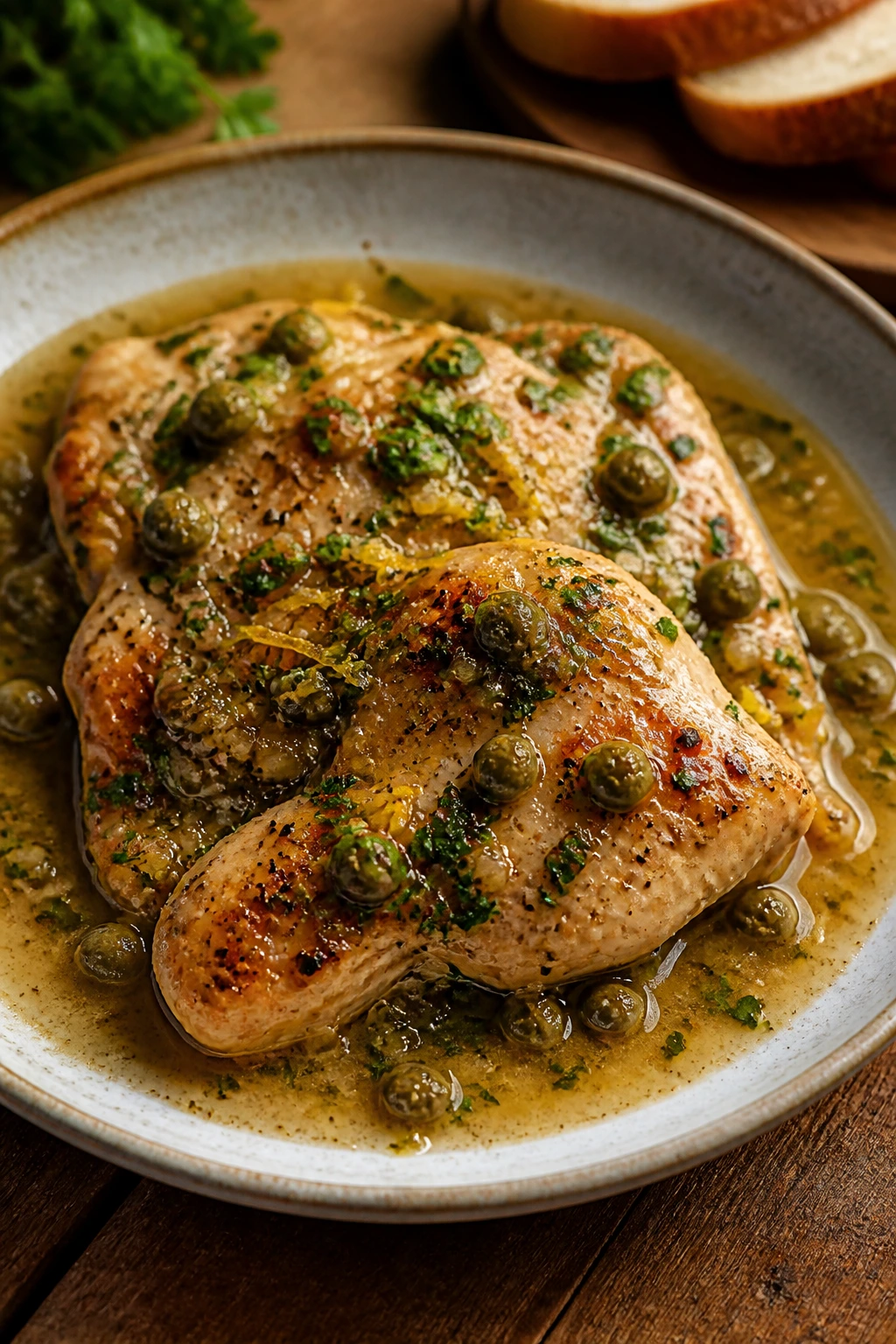
Presentation:
Serve saucy chicken in shallow bowls or on warm plates with enough rim to hold the juices. Slices of chicken look better when they’re slightly overlapped, not stacked in a pile. A final scatter of chopped parsley, basil, or lemon zest makes the food look fresh even when the flavors are deep.
Accompaniments:
Crusty bread is the most reliable companion, especially for the skillet sauces and braises. Polenta, buttered pasta, roasted potatoes, farro, and simple greens all fit the Tuscan mood without fighting the chicken. If you want one standard side that works with nearly every recipe here, make a peppery arugula salad with lemon and olive oil.
Portions:
Plan on 5 to 6 ounces of cooked chicken per person for a main course, or one large thigh and one small thigh if you’re serving bone-in pieces. Saucy dishes stretch farther than cutlet recipes, so a little bread or polenta helps make four servings feel generous. If you’re scaling up, keep the pan space in mind; crowding changes the texture more than the math suggests.
Beverage Pairing:
A dry white wine like Vermentino or Pinot Grigio fits lemony, caper, and artichoke dishes. For tomato-heavy or braised recipes, a medium-bodied red such as Chianti feels more natural. Sparkling water with lemon works across the board if you want something simple and clean.
Small Tweaks That Make a Big Difference
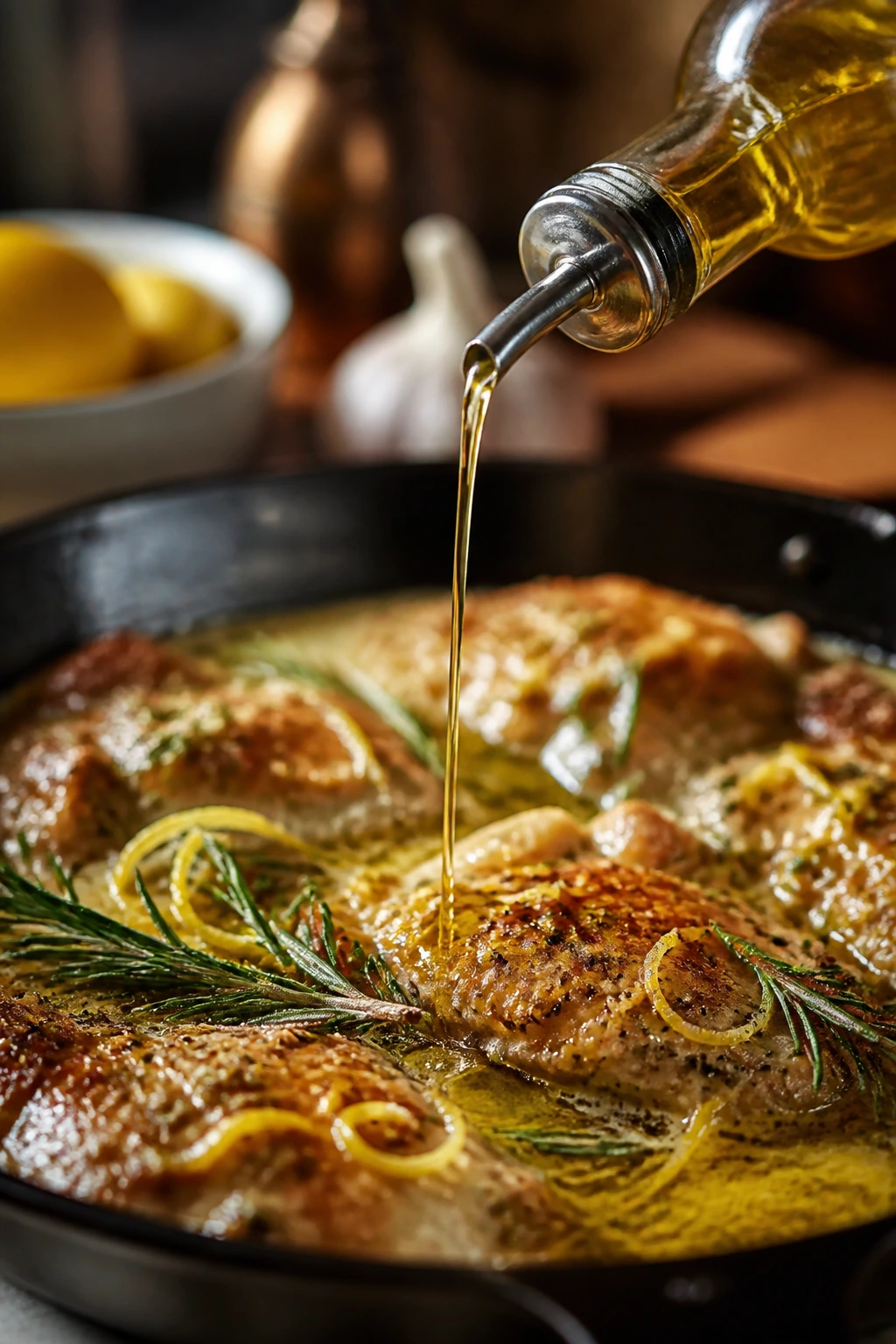
Flavor Enhancement:
A tiny finishing drizzle of good olive oil can do more for these dishes than another handful of cheese. For the tomato sauces, a pinch of sugar is rarely needed; a little extra salt or lemon usually fixes what people think is sweetness. Finishing with fresh herbs off the heat gives the plate a cleaner smell and a better first bite.
Customization:
If you like more vegetables, add kale, spinach, mushrooms, fennel, or artichokes depending on the recipe’s base. If you want more richness, a spoonful of butter at the end smooths out wine sauces without making them heavy. For extra depth, a parmesan rind simmered in soup or braise is one of those small pantry moves that pays back hard.
Serving Suggestions:
Toast the bread before serving if you know the sauce is thin. It holds together better. For cutlets and Milanese, I like a simple mound of arugula on top rather than a big salad on the side; it feels cleaner and keeps the plate from going flat.
Make-It-Yours:
For a gluten-free version, use rice flour or gluten-free panko where breading is involved, and serve with polenta instead of pasta or bread. For dairy-free cooking, lean on olive oil, broth, and a little extra reduction rather than cream or butter. If you want lower carb, shift the meal toward braises, greens, artichokes, and beans, and skip the breaded cutlets.
Make-Ahead, Storage, and Reheating Guidance
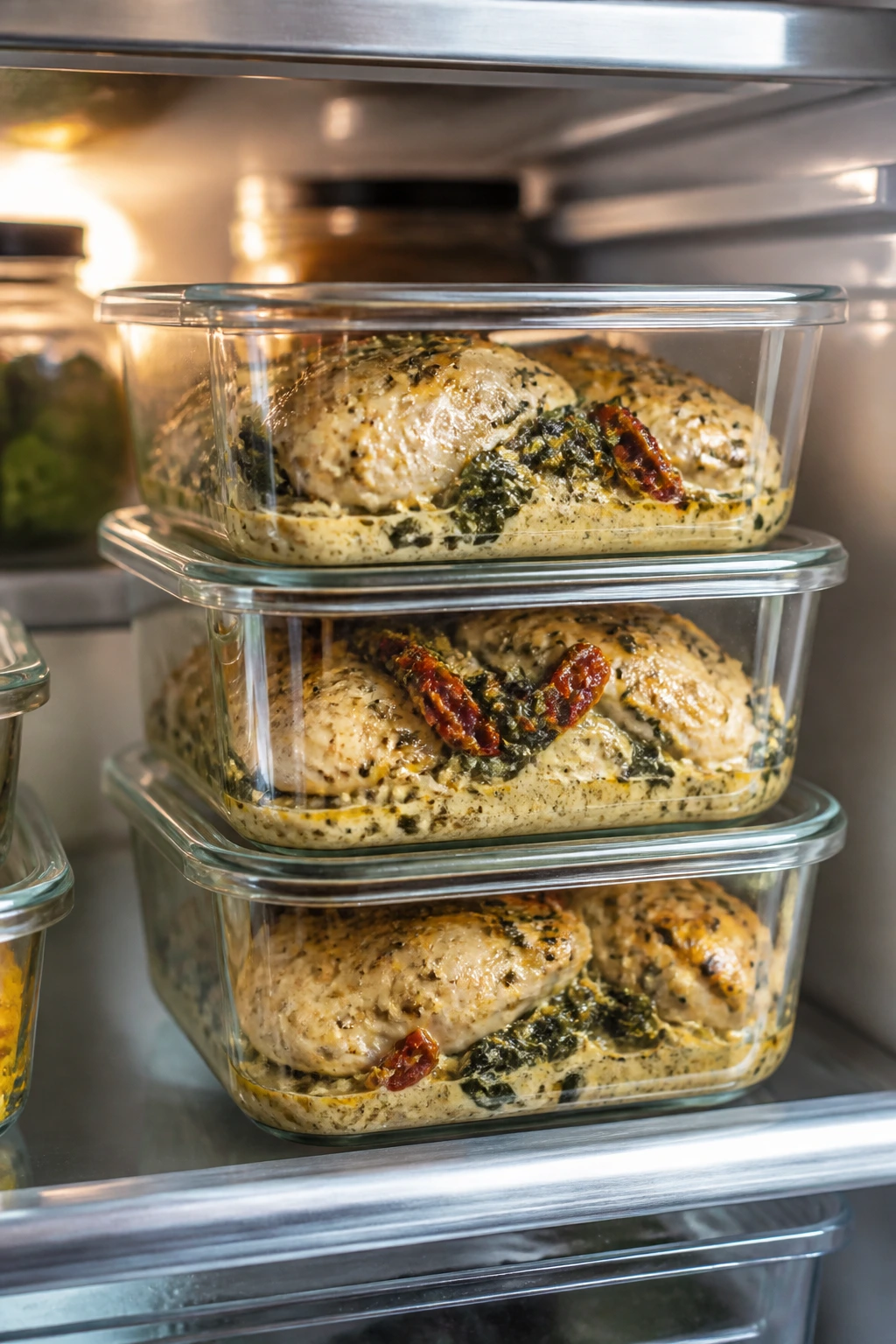
Most of the saucy chicken recipes here keep well in the fridge for 3 to 4 days, and many of the braises and soups taste better the next day because the herbs and wine settle in overnight. Store them in shallow airtight containers so they cool quickly and evenly. If the dish has pasta or bread in it, keep those separate when you can; otherwise they’ll drink up the sauce and go soft.
For the freezer, the best candidates are the braises, cacciatore, sugo, and soup. They hold for up to 2 months without much trouble if you cool them fully first and leave a little room in the container for expansion. Cream sauces can be frozen, but they sometimes separate when reheated. If you do freeze them, reheat slowly and whisk in a splash of broth to bring the sauce back together.
Breaded cutlets and Milanese are the least freezer-friendly because the crust loses its edge. If you need to make them ahead, fry or bake them, cool them, and refrigerate for a day. Reheat on a wire rack in a 375°F oven for 10 to 12 minutes, not in the microwave, or they’ll turn limp.
For skillet sauces and creamy dishes, reheat over low heat with a spoonful or two of broth, water, or cream, depending on the recipe. Stir often. Don’t blast the pan. High heat is what breaks dairy sauces and dries out chicken breast leftovers. Braises and soups can be rewarmed a little more confidently, but even then, gentler heat gives a better texture.
Variations and Adaptations to Try
Gluten-Free Tuscan Plates
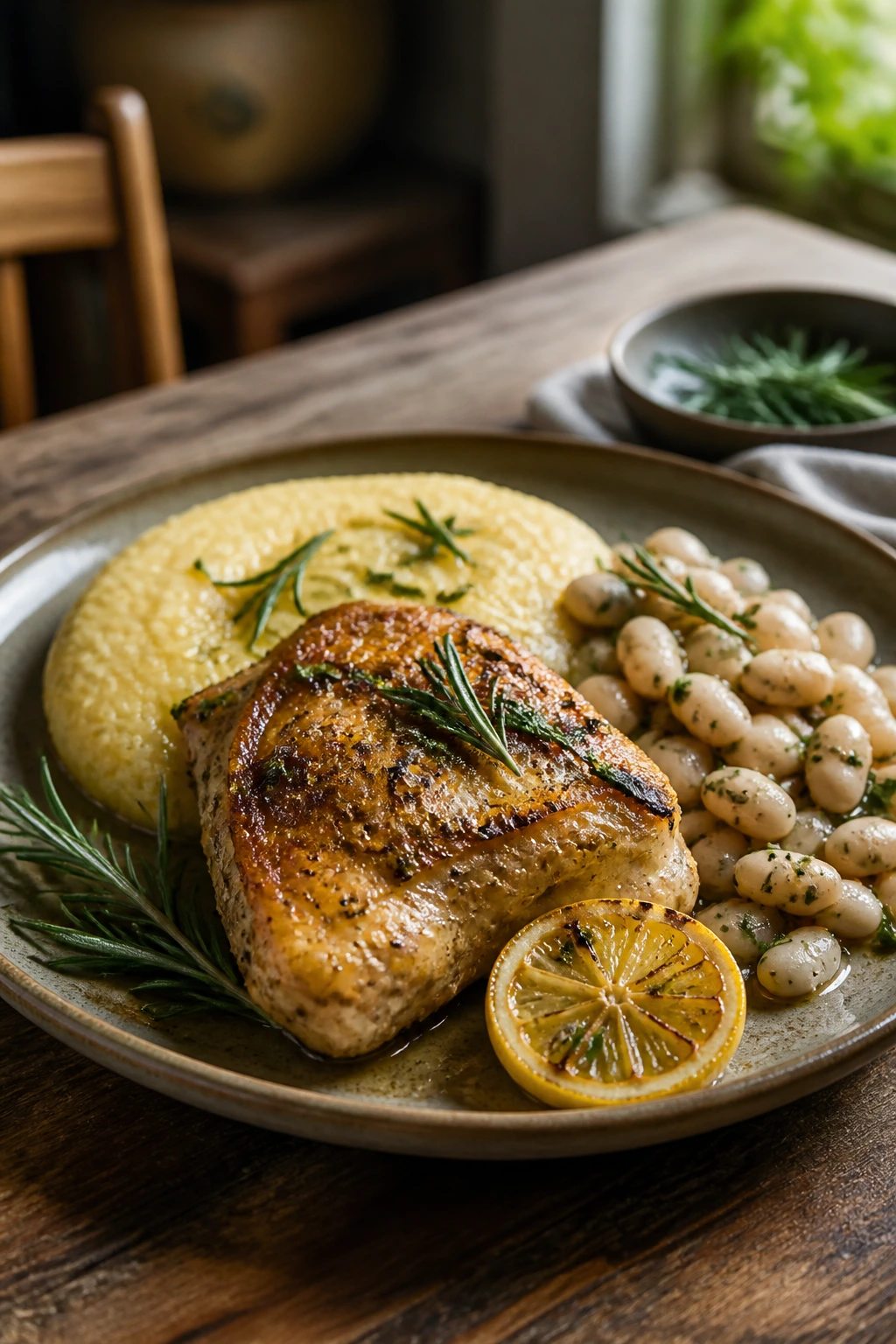
Use rice flour or a gluten-free flour blend for dredging, and choose gluten-free panko when you need a crust. Pair the dishes with polenta, beans, roasted potatoes, or rice instead of pasta or bread. This change works especially well for piccata, Milanese, and baked Parmesan chicken.
Dairy-Free Cream Sauce Swaps
For creamy skillet recipes, skip the cream and build body with extra reduction, a little olive oil, and a spoonful of puréed white beans if you want more thickness. Nutritional yeast can help with a savory edge, though it changes the flavor more than people expect. Keep the lemon and herbs bright so the dish still feels complete.
Bean-Heavy Dinner Plates
If you want a more filling, pantry-forward meal, add cannellini beans to skillet chicken, braises, and soups. They work especially well with rosemary, thyme, garlic, and lemon. This is one of the easiest ways to stretch a pound of chicken into a larger meal without making it feel thin.
Kid-Friendly Mild Versions
Cut back on capers, red pepper flakes, and strong olives, then lean on tomatoes, mozzarella, and parmesan instead. The structure of the dish stays the same, but the sharp edges soften. Chicken Milanese, baked Parmesan chicken, and creamy Tuscan chicken are the easiest places to start.
Slow-Cooker Friendly Braises
Chicken cacciatore, soup, sugo, and onion-sage braises adapt well to a slow cooker if you brown the chicken and vegetables first. That first browning step matters more than people want to admit, because it gives the finished sauce a deeper taste. Keep dairy out until the very end if you’re using this route.
Common Mistakes That Ruin Tuscan Chicken Fast
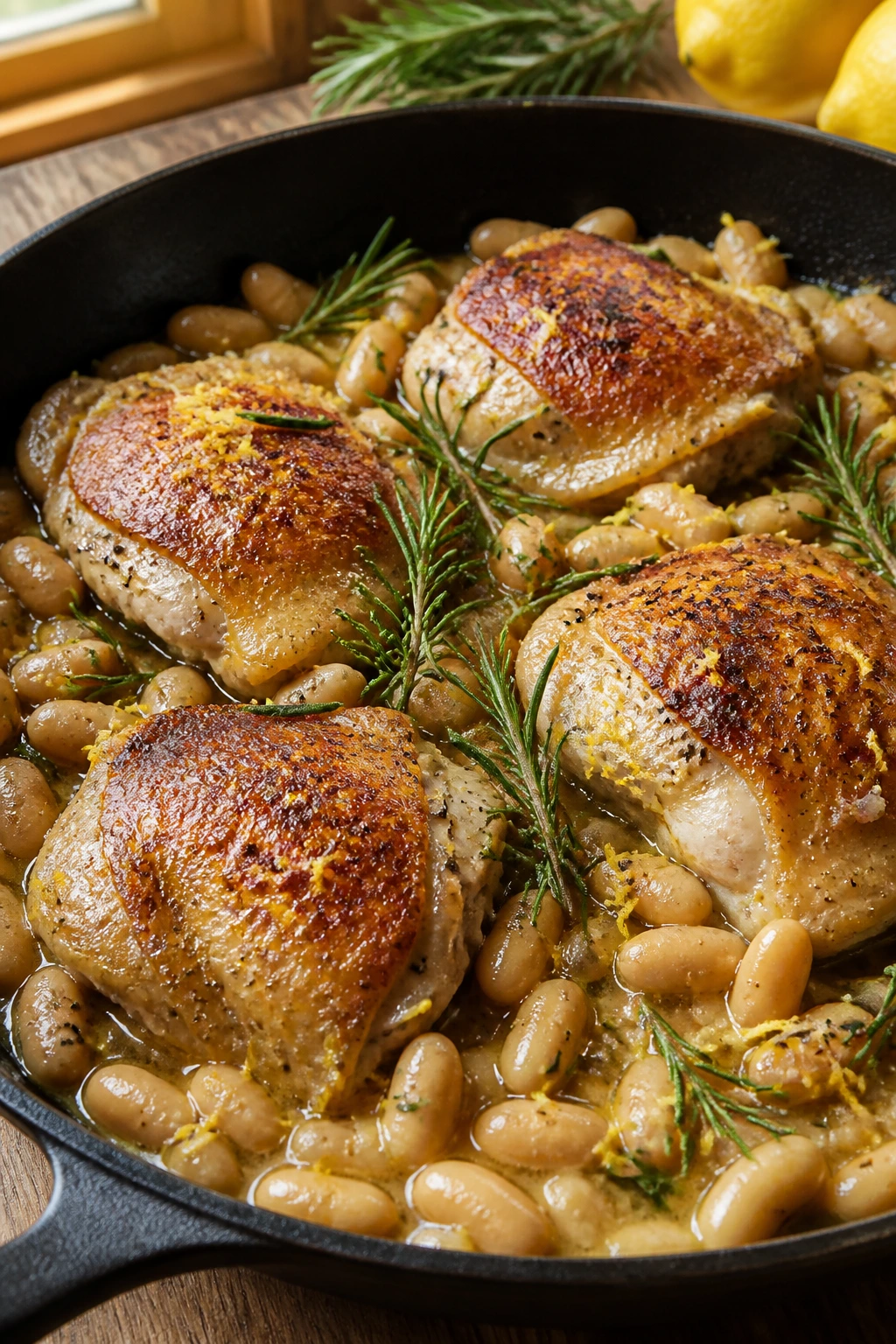
The first mistake is using chicken that doesn’t match the cooking method. Breasts are fine for cutlets and fast pan sauces, but they dry out fast in long braises if you ignore them. Thighs are the safer choice for slow cooking, and bone-in pieces give you more protection when the heat runs a little high.
Another one is underseasoning the base. Chicken needs salt, sure, but so do the onions, beans, tomatoes, and broth. If the pan sauce tastes dull, the problem usually isn’t that it needs more cream; it needs more seasoning, a little lemon, or a stronger reduction. Taste the sauce before serving. Every time.
People also rush the browning step. Pale chicken and pale vegetables make pale sauce. Those browned bits in the pan are not junk, they’re flavor, and scraping them up with wine or broth is part of the recipe, not an optional flourish. Skip that, and the dish tastes flatter than it should.
Cream sauces can break if you boil them hard. Keep the heat low once cream or cheese goes in, and don’t walk away. The same goes for lemon-heavy sauces. Add acid at the end when possible, because heat can make the sharpness feel rough instead of clean.
Finally, a lot of cooks overload the pan. Chicken needs room to color, potatoes need space to roast, and breaded cutlets need airflow if you want the crust to stay crisp. Crowding feels efficient in the moment. It rarely is.
Questions People Usually Ask Before Cooking These

Can I use chicken breasts in most of these recipes?
Yes, but treat them carefully. Slice them thin, pound them evenly, or shorten the cooking time so they stay juicy. For braises, roasts, and long simmers, thighs are the safer bet.
What makes a chicken recipe taste Tuscan instead of just Italian?
Tuscan-style dishes lean on olive oil, rosemary, sage, beans, bread, lemon, wine, and tomatoes without piling on a heavy sauce. The flavors are savory, earthy, and bright rather than sweet or overloaded with cheese.
Do I need fresh herbs for these dishes?
Fresh herbs are best when they’re finishing a dish or getting stirred into a salad or gremolata. Dried rosemary, oregano, and thyme still work well in braises and sauces. Use less dried herb than fresh, because the dried stuff can get loud quickly.
What’s the best side dish for these recipes?
Polenta, crusty bread, roasted potatoes, and buttered pasta all work depending on the sauce. If the chicken has beans or a thick stew-like sauce, bread and greens are enough. For cutlets, keep the side lighter so the crust stays the star.
Can I make these ahead for a dinner party?
Yes, especially the braises, soups, cacciatore, and sugo. They often taste better after resting overnight. Make fried cutlets and Milanese as close to serving time as possible if you want the crust crisp.
What if my cream sauce splits?
Pull the pan off the heat, whisk in a splash of cold broth or cream, and keep stirring gently. A little parmesan can also help bring it back together. High heat and hard boiling are usually the culprits.
Can I freeze these recipes?
Most braises, soups, and tomato-based dishes freeze well for up to 2 months. Creamy sauces and breaded cutlets are less forgiving, so I’d refrigerate those and eat them sooner. Freeze in shallow containers so the food chills quickly.
How do I keep breaded chicken from going soggy?
Drain it on a wire rack, not paper towels, and serve it without burying the crust under too much sauce. If you need to hold it briefly, keep it in a low oven on a rack so air can move around it.
Bringing Tuscany to the Table Without Making It Fussy
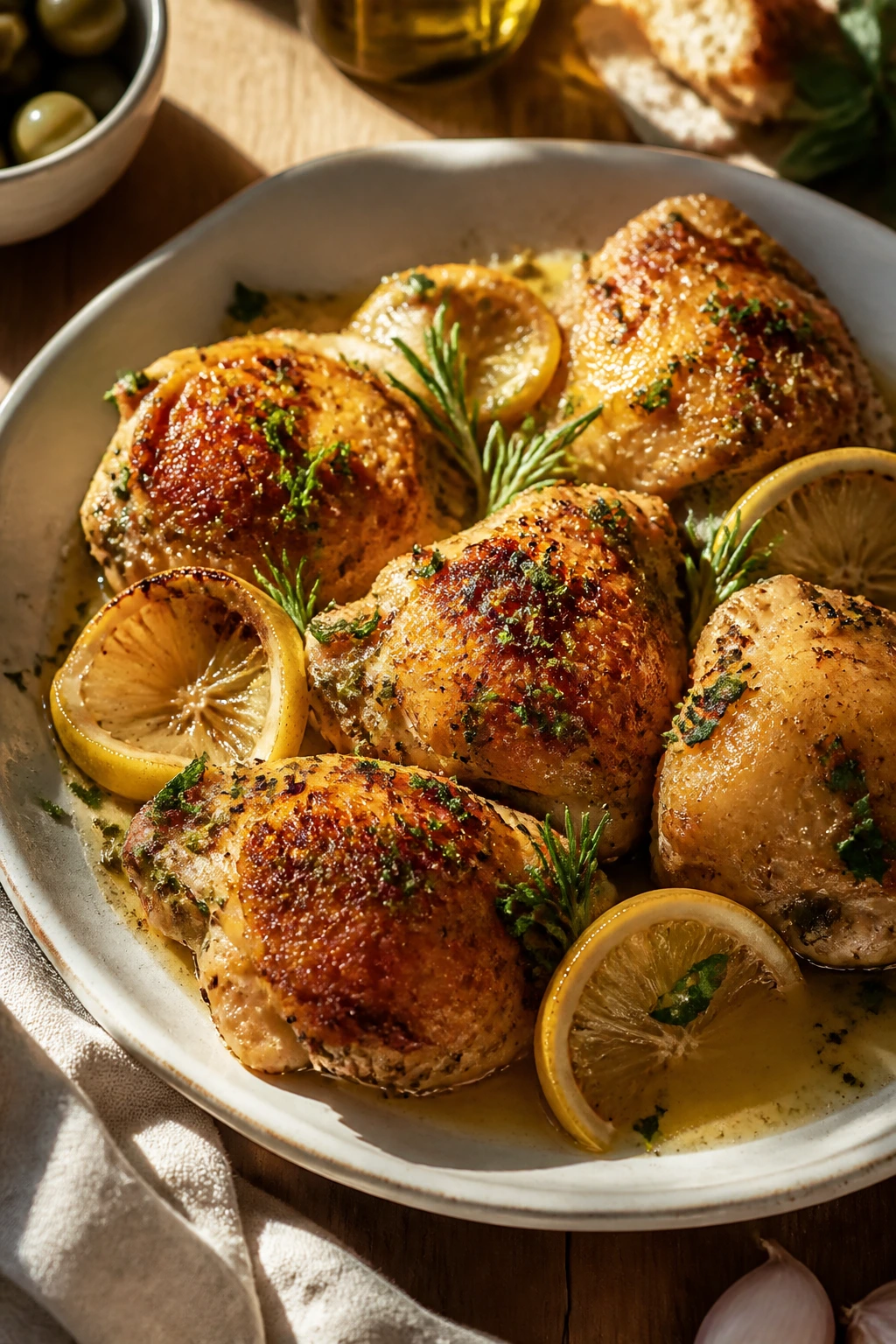
The best part of cooking this way is that you stop chasing novelty and start trusting the pantry. A skillet, a lemon, a handful of herbs, and a good cut of chicken can carry a dinner farther than a long shopping list ever will. That’s the quiet appeal of Tuscan-inspired cooking: it knows how to taste complete without becoming complicated.
Once you’ve cooked a few of these, you’ll start seeing the pattern in your own kitchen. A braise for a cold night. A cutlet when you want something crisp. A bean-heavy skillet when bread and wine are enough to round out the meal. Keep the olive oil good, the heat under control, and the seasoning honest, and the rest falls into place.