



Veggie rolls are the kind of Meatless Monday food that get eaten fast and remembered later. They look light, but when they’re built well — with crunch, something creamy, something herb-slick, and a sauce that wakes everything up — they don’t feel like a compromise at all. They feel like dinner with a plan.
What usually sinks vegetable-heavy rolls is moisture. A soggy cucumber, a hot filling tucked into a wrapper that should’ve cooled for 10 minutes longer, a sauce poured too early — that’s how you end up with torn rice paper, limp tortillas, or puff pastry that never gets its flake back. Once you learn the rhythm, though, these are some of the easiest things to pull off from the crisper drawer, a pack of wrappers, and whatever cheese, beans, tofu, or herbs you already have hanging around.
And that’s the charm of this collection. Some of these veggie rolls are cool and fresh, some are baked until the edges go bronze, and some are the kind of snacky, hand-held food that disappears while you’re still setting out the sauce. If you want a vegetarian dinner that feels varied instead of repetitive, this is a very good place to live for a while.
Why You’ll Love This Collection
-
Texture does the heavy lifting: Every roll here has a clear contrast — crisp, chewy, flaky, or tender — so the vegetables don’t fade into the background.
-
The fillings are practical, not precious: Most of these recipes use common produce like carrots, cabbage, spinach, peppers, cucumbers, and sweet potatoes, which means fewer special trips.
-
Some are make-ahead friendly, some are last-minute wins: You can prep the filling for a few in the morning, then roll, bake, or slice right before dinner.
-
There’s a format for every mood: Rice paper, phyllo, puff pastry, tortillas, nori, and egg roll wrappers all show up here, so the collection never feels samey.
-
Dipping sauce matters here: A good sauce turns a simple vegetable roll into something that feels finished, especially when the filling is clean and lightly seasoned.
-
Meatless Monday gets easier when dinner can be handheld: These are the kinds of vegetarian recipes that work as appetizers, lunch boxes, or a full plate with a salad on the side.
1. Fresh Garden Spring Rolls With Peanut-Lime Dip
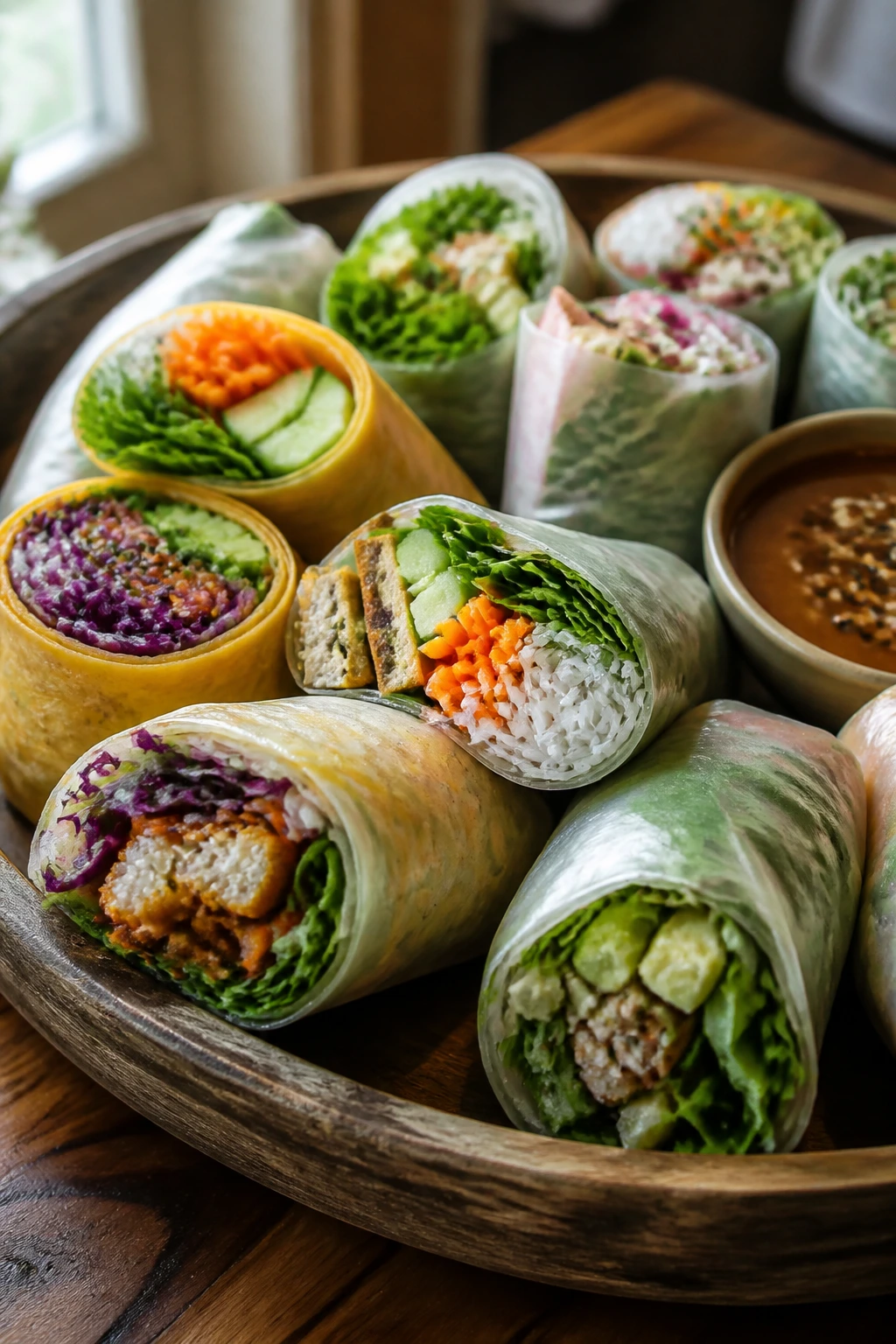
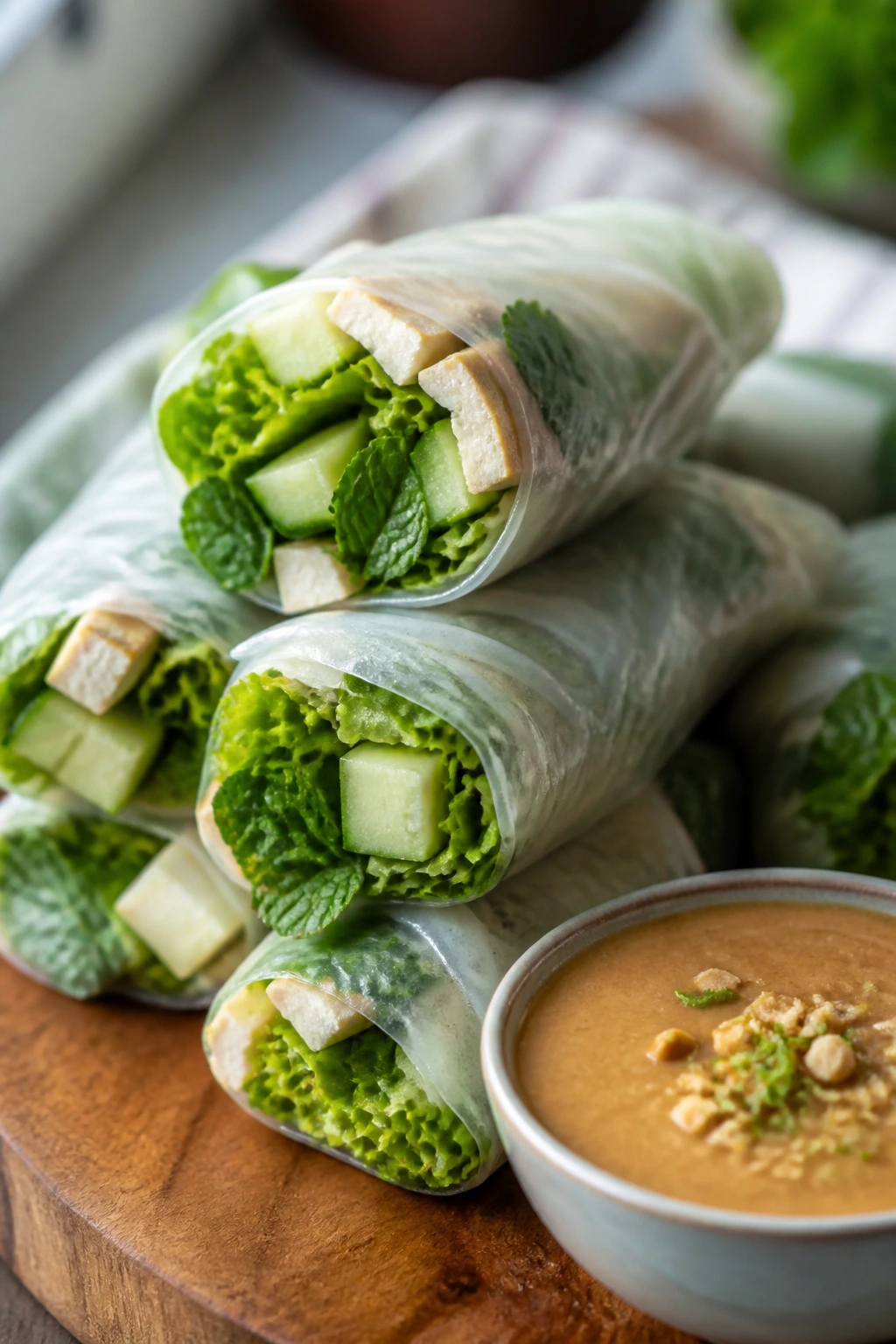
Crisp lettuce, cool cucumber, mint, and a little tofu tucked into translucent rice paper — these are the veggie rolls I make when I want dinner to feel clean and bright without feeling flimsy. The trick is to keep the filling dry and cool, then roll tightly enough that the stack holds together when you cut into it. Fresh spring rolls are fussy for about five minutes. After that, they’re easy.
Why It Works:
Rice paper gives you chew without needing a hot oven, and the filling stays lively because nothing gets overcooked. The tofu adds enough body that the rolls don’t feel like herb bundles wrapped in starch. Peanut-lime dip is doing a lot of work here, too — salty, sweet, and a little sharp, which keeps each bite moving. If you’ve only had spring rolls that tasted bland, this version fixes the problem with acid and salt, not more stuff.
Key Ingredients:
- 12 rice paper wrappers
- 4 oz rice vermicelli
- 8 oz extra-firm tofu, pressed and sliced into thin strips
- 2 cups shredded butter lettuce
- 1 large carrot, julienned
- 1 cucumber, seeded and cut into thin matchsticks
- 1 avocado, sliced
- 1/2 cup mint leaves
- 1/2 cup cilantro leaves
- For the peanut dip: 1/3 cup peanut butter, 2 tablespoons lime juice, 1 tablespoon soy sauce, 1 tablespoon maple syrup, 1 grated garlic clove, 2 to 4 tablespoons warm water
Quick Steps:
- Cook 4 oz rice vermicelli according to the package directions, drain, and rinse under cool water until the noodles feel slippery, not sticky.
- Press and slice the tofu, then sear it in a lightly oiled skillet over medium-high heat for 2 to 3 minutes per side until the edges are golden.
- Stir the dip ingredients together in a bowl, adding warm water a spoonful at a time until it drips slowly from the spoon.
- Fill a shallow dish with cool water. Dip one rice paper wrapper for 8 to 10 seconds, then lay it on a damp towel or clean cutting board.
- Layer a little lettuce, noodles, tofu, carrot, cucumber, avocado, mint, and cilantro across the lower third of the wrapper. Fold the sides in and roll tightly like a burrito.
- Repeat with the remaining wrappers and cut each roll in half with a sharp knife.
Equipment for This Recipe:
- Large shallow dish for soaking rice paper
- Clean damp kitchen towel
- Sharp knife
- Nonstick skillet or well-seasoned pan
- Small bowl for the peanut dip
How to Serve This Dish:
Serve these on a platter with the cut sides facing up, and put the peanut dip in the center so people can grab without juggling a plate. A few extra mint leaves and lime wedges make the whole tray look intentional. Two rolls per person is right for lunch; three or four works if you’re pairing them with soup.
Pro Tips for This Recipe:
- Keep the tofu and vegetables cold before rolling. Warm fillings soften the rice paper too fast.
- Don’t soak the wrappers until they go floppy. Pull them while they still feel a little firm; they’ll finish softening on the board.
- If the avocado is very ripe, slice it at the very end so it doesn’t smear through the filling.
- A damp towel under your cutting board keeps the rice paper from sliding when you slice the finished rolls.
Variations on This Dish:
- Sesame-Edamame Version: Swap tofu for 1 cup shelled edamame and add 1 tablespoon toasted sesame seeds for a nuttier bite.
- Mango Herb Roll: Replace half the cucumber with thin mango strips for a sweeter finish that still stays fresh.
- Spicy Peanut Finish: Stir 1 teaspoon sambal oelek or chili crisp into the dip if you want heat without changing the filling.
Common Mistakes to Avoid with This Dish:
- Overstuffing the wrapper: If the roll feels stretched before you tuck the sides, it will split. Use less filling than you think.
- Letting the noodles drip wet: Excess water makes the rice paper gummy. Drain and cool the noodles fully before assembling.
- Cutting with a dull knife: A blunt blade drags the wrapper and crushes the filling. Use the sharpest knife in the drawer.
2. Crispy Oven-Baked Vegetable Egg Rolls
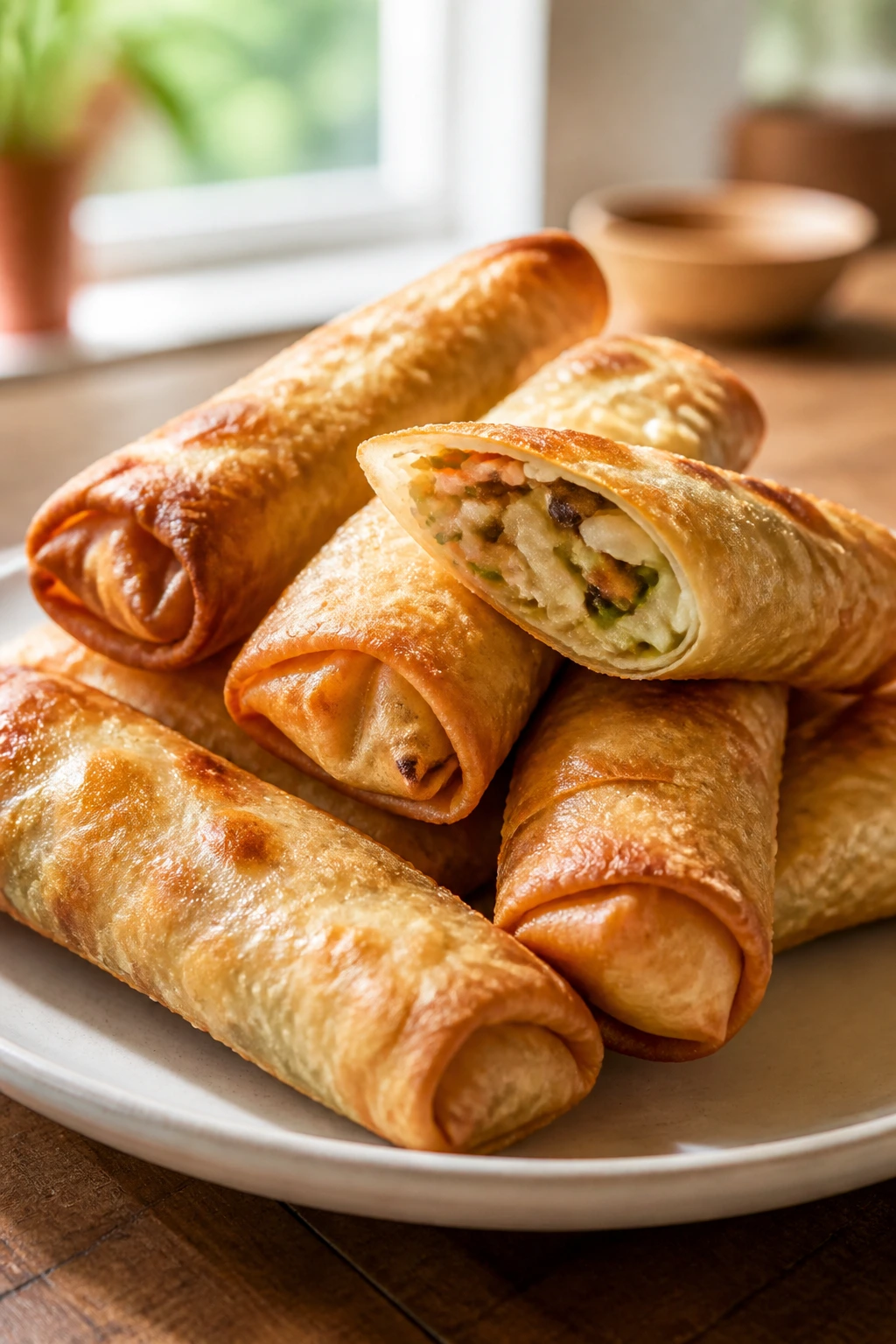
This is the tray I pull out when I want something hot, crunchy, and a little more substantial than a fresh roll. The cabbage and mushrooms cook down into a savory filling with enough moisture to stay juicy, but not so much that the wrappers burst in the oven. Baked egg rolls never pretend to be fried. They’re lighter, cleaner, and still crisp enough to snap when you bite them.
Why It Works:
Mushrooms bring a deep, meaty flavor without actual meat, and cabbage gives you that sweet, soft edge once it’s sautéed for a few minutes. Baking at a fairly hot oven, then brushing with oil, helps the wrappers brown instead of drying out. The filling also benefits from cooling before rolling; hot cabbage steam is the fastest way to turn a crisp shell floppy. This one rewards patience in a very obvious way.
Key Ingredients:
- 16 egg roll wrappers
- 2 tablespoons toasted sesame oil
- 8 oz cremini mushrooms, finely chopped
- 2 cups green cabbage, shredded
- 1 cup carrots, shredded
- 1 cup bean sprouts
- 3 scallions, thinly sliced
- 2 garlic cloves, minced
- 1 tablespoon grated ginger
- 2 tablespoons soy sauce
- 1 teaspoon rice vinegar
- 1 tablespoon neutral oil, for brushing
- 1 beaten egg or 2 tablespoons flour-water slurry, for sealing
Quick Steps:
- Heat sesame oil in a skillet over medium-high heat. Add mushrooms and cook for 4 to 5 minutes until they release their liquid and begin to brown.
- Stir in cabbage, carrots, garlic, and ginger. Cook for 3 to 4 minutes until the vegetables soften slightly but still look bright.
- Add bean sprouts, scallions, soy sauce, and rice vinegar. Cook for 1 minute, then spread the filling on a plate and cool it completely.
- Place an egg roll wrapper on a board like a diamond. Spoon 2 to 3 tablespoons of filling near the bottom corner, fold in the sides, roll up tightly, and seal the edge with egg or slurry.
- Set the rolls seam-side down on a parchment-lined baking sheet. Brush or spray them lightly with neutral oil.
- Bake at 425°F (220°C) for 15 to 18 minutes, turning once halfway through, until the wrappers are deep golden and crisp.
Equipment for This Recipe:
- Large skillet or wok
- Rimmed baking sheet
- Parchment paper
- Pastry brush or oil spray
- Small bowl for sealing the wrappers
How to Serve This Dish:
Serve these hot, right off the tray, with sweet chili sauce, extra soy sauce, or a quick dipping bowl of vinegar and chili flakes. They’re good as a starter, but three or four with a crunchy slaw can pass for dinner. If you’re feeding a mixed crowd, this is one of the first platters to empty.
Pro Tips for This Recipe:
- Chop the mushrooms small so the filling rolls easily and doesn’t poke through the wrapper.
- Cool the filling on a plate, not in the skillet. A shallow spread lets steam escape fast.
- A light oil brush matters. Too much oil gives you greasy patches; too little leaves pale spots.
- If your oven runs cool, give the rolls an extra 2 minutes and watch the seams first.
Variations on This Dish:
- Corn-and-Pepper Version: Swap the bean sprouts for 1 cup diced bell pepper and 1/2 cup corn for a sweeter filling.
- Sesame Tofu Swap: Add 1 cup crumbled firm tofu and reduce the mushrooms to 6 oz if you want more protein.
- Air-Fryer Batch: Cook at 390°F for 9 to 11 minutes, flipping once; don’t crowd the basket or the wrappers soften.
Common Mistakes to Avoid with This Dish:
- Rolling hot filling: Steam makes the wrappers tear from the inside. Always cool the filling first.
- Packing them too tightly in the pan: Crowding traps moisture and leaves pale bottoms. Give each roll a little room.
- Skipping the seam seal: Dry corners lift in the oven. Use egg wash or slurry on every wrapper edge.
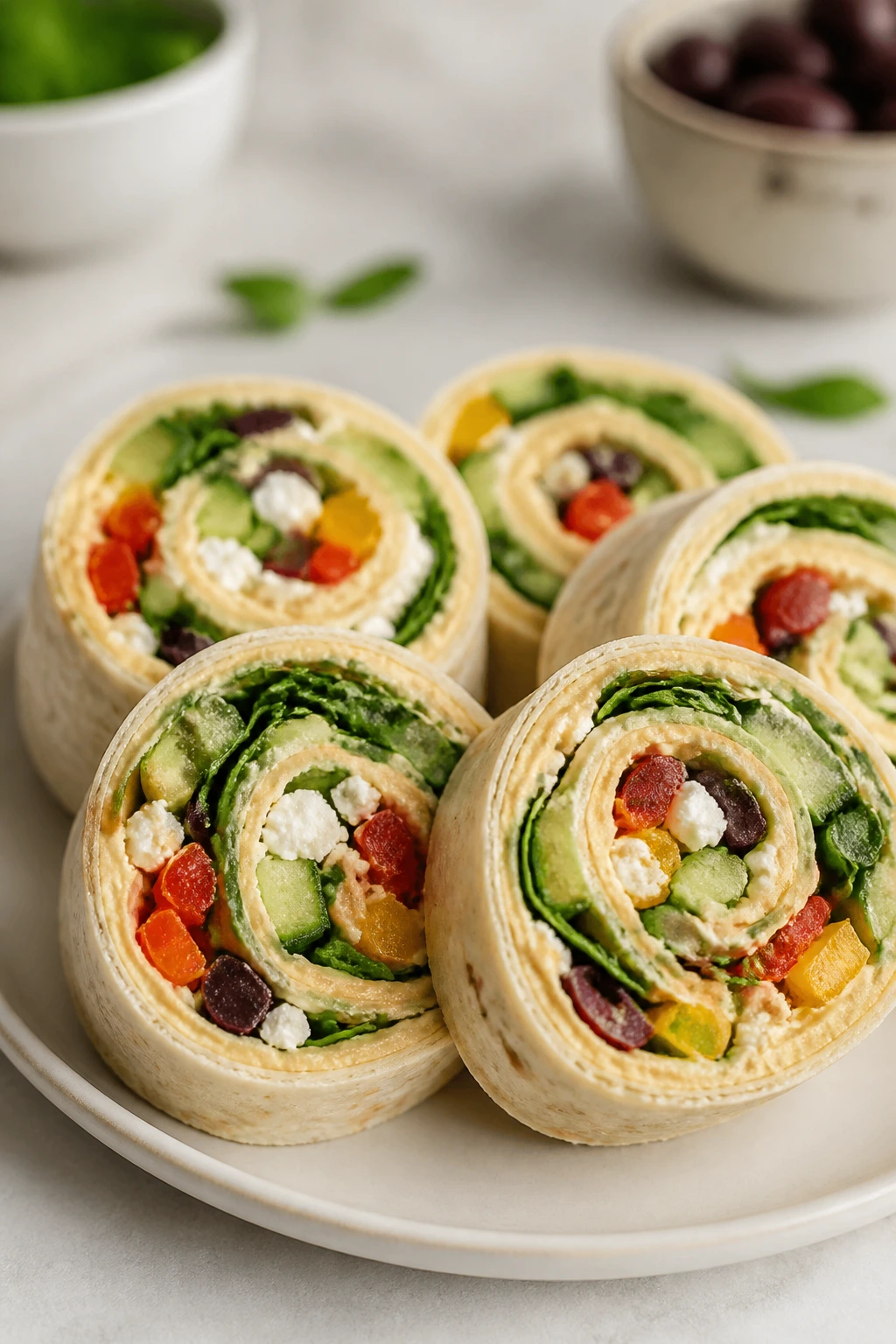
3. Mediterranean Hummus Pinwheels
These are the rolls you make when lunch needs to be cold, neat, and not remotely sad. Hummus gives the tortilla a creamy base, then cucumbers, peppers, feta, and olives bring salt and crunch. Slice them thin and they look like little spirals with actual structure, which matters more than people admit.
Why It Works:
Pinwheels work because the filling is spread in a thin layer, not piled in a mound. That means the tortilla rolls tightly and cuts cleanly after a short chill. Hummus acts like edible glue, and the feta stays briny enough to keep the whole thing from tasting flat. If you’ve ever made wrap pinwheels that fell apart into a mushy heap, the fix is less filling and a firmer chill.
Key Ingredients:
- 4 large flour tortillas
- 1 cup hummus
- 1 cup baby spinach leaves
- 1 cup shredded carrot
- 1 red bell pepper, finely diced
- 1/2 cucumber, seeded and patted dry, chopped small
- 1/2 cup crumbled feta
- 1/4 cup chopped kalamata olives
- 1 tablespoon lemon juice
- 1 teaspoon dried oregano
Quick Steps:
- Pat the cucumber dry with paper towels so it doesn’t leak into the tortilla.
- Mix the hummus with lemon juice and oregano, then spread it edge to edge on each tortilla in a thin, even layer.
- Scatter spinach, carrot, bell pepper, cucumber, feta, and olives over the hummus, leaving a 1-inch border at the top edge.
- Roll each tortilla up tightly from the bottom, pressing as you go so the spiral holds.
- Wrap the rolls in parchment or plastic and chill for 20 to 30 minutes.
- Slice into 1-inch pinwheels with a sharp serrated knife and arrange cut side up.
Equipment for This Recipe:
- Cutting board
- Serrated knife
- Small mixing bowl
- Parchment or plastic wrap
- Sharp chef’s knife for trimming
How to Serve This Dish:
Serve these cold on a platter with extra hummus in the center and a dusting of oregano over the top. They sit nicely next to olives, cherry tomatoes, or a simple cucumber salad. Four to six pinwheels make a light lunch; eight to ten work as a snack board component.
Pro Tips for This Recipe:
- Dry ingredients are your friend. Wet tomatoes or watery cucumbers will wreck the spiral.
- Don’t overfill the center. The seam needs to close around the filling without bulging.
- Chill before slicing. Warm tortillas smear; cold ones cut cleanly.
- If your tortillas are stiff, microwave them under a damp towel for 10 seconds so they flex without cracking.
Variations on This Dish:
- Roasted Red Pepper Spin: Add 2 tablespoons chopped roasted red peppers for a sweeter, softer bite.
- White Bean Swap: Replace half the hummus with mashed white beans for a lighter, less garlicky filling.
- Herby Spring Version: Add chopped dill and parsley, then skip the olives for a brighter flavor.
Common Mistakes to Avoid with This Dish:
- Too much hummus: Thick layers slide around when you roll. Spread it thin.
- Cutting too soon: Warm wraps squish. A short chill fixes that.
- Using wet vegetables: Even a little surface moisture can turn the spiral slippery and dull.
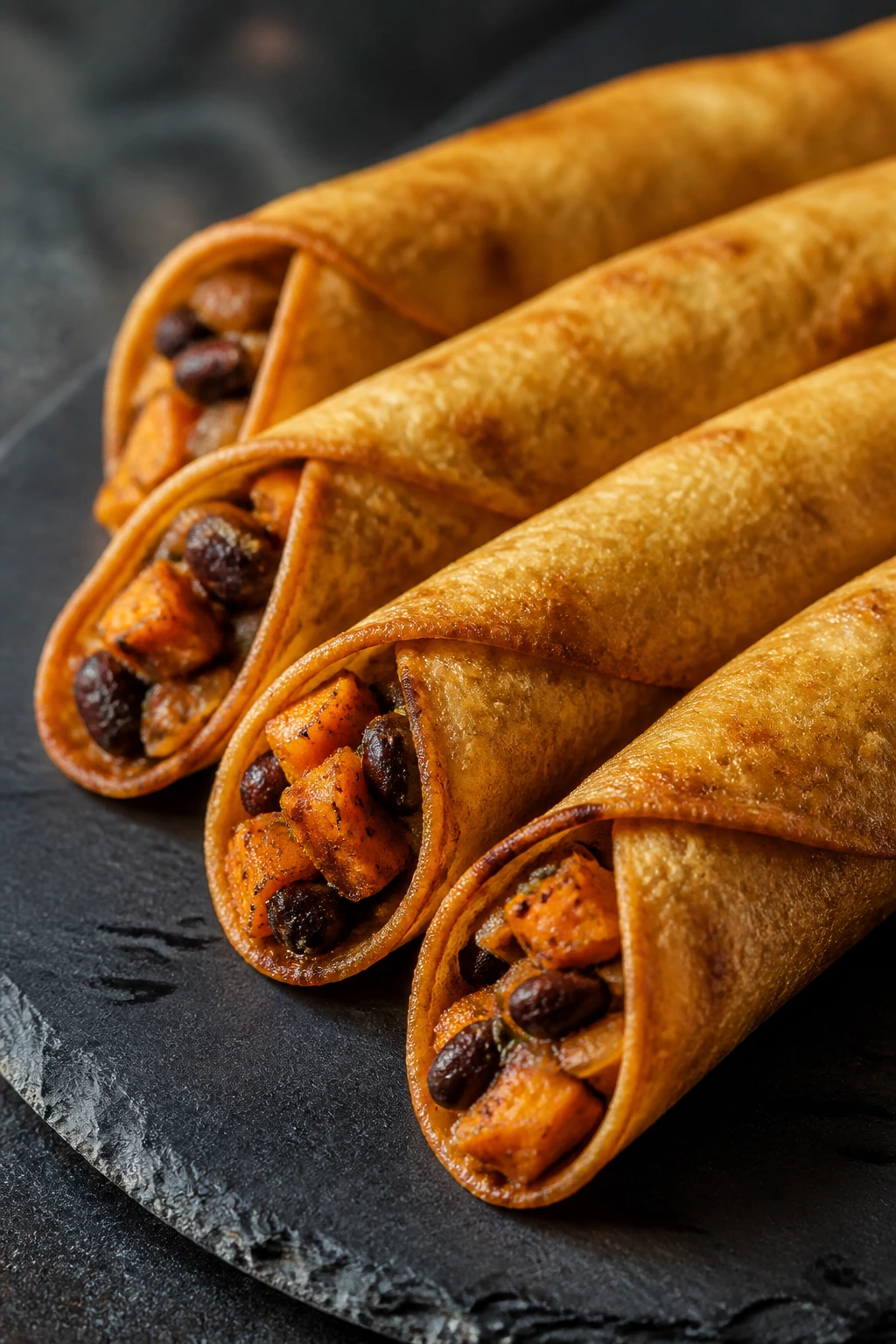
4. Sweet Potato and Black Bean Taquitos
These are the rolls that feel the most like dinner. Sweet potato brings a soft, almost creamy base, black beans bring heft, and the tortilla crisps up into something you can pick up with one hand while standing at the counter. Bake them well and the ends go blistered and crunchy.
Why It Works:
Sweet potato mashed with just enough seasoning stays dense instead of watery, which matters because taquitos rely on a filling that holds together when rolled tight. Black beans add protein and texture, and the corn gives little pops of sweetness so the filling doesn’t read as one-note. Baking at high heat helps the tortilla dry out into a crackly shell. Frying is optional. Honestly, it’s not necessary.
Key Ingredients:
- 2 medium sweet potatoes, peeled and cut into chunks
- 1 tablespoon olive oil
- 1 cup canned black beans, drained and rinsed
- 1/2 cup corn kernels
- 1 teaspoon ground cumin
- 1 teaspoon chili powder
- 1/2 teaspoon smoked paprika
- 1/2 teaspoon fine salt
- 1/2 cup shredded Monterey Jack or cheddar
- 12 small corn tortillas
- Neutral oil spray or 2 tablespoons melted oil
Quick Steps:
- Boil or roast the sweet potato chunks until fork-tender, about 15 to 20 minutes for boiling or 25 to 30 minutes at 400°F (205°C) if roasting.
- Mash the sweet potatoes with olive oil, cumin, chili powder, smoked paprika, and salt until mostly smooth.
- Stir in black beans, corn, and cheese. Let the filling cool for 10 minutes so it won’t steam the tortillas apart.
- Warm the tortillas briefly in a dry skillet or wrapped in a damp towel in the microwave so they bend without cracking.
- Spoon 2 tablespoons of filling onto each tortilla, roll tightly, and place seam-side down on a parchment-lined baking sheet.
- Spray or brush the taquitos lightly with oil and bake at 425°F (220°C) for 15 to 18 minutes, flipping once, until crisp and bronze.
Equipment for This Recipe:
- Saucepan or baking sheet for the sweet potatoes
- Large mixing bowl
- Baking sheet
- Parchment paper
- Skillet or microwave for warming tortillas
How to Serve This Dish:
Pile them on a tray with salsa, sour cream, or avocado crema, and add shredded lettuce if you want to turn them into a plate dinner. They’re sturdy enough for dipping, which is half the point. Four taquitos per person is a solid dinner serving.
Pro Tips for This Recipe:
- Wet filling is the enemy. If your sweet potato mash looks loose, cook it another minute or two over low heat before rolling.
- Corn tortillas crack if they’re cold. Warm them until pliable, not hot and limp.
- A little cheese helps seal the filling, but too much makes the taquitos burst in the oven.
- For a deeper flavor, stir 1 tablespoon of salsa into the mash before filling.
Variations on This Dish:
- Green Chile Version: Add 2 tablespoons chopped green chiles and swap cheddar for pepper jack.
- Bean-Forward Swap: Use pinto beans instead of black beans if you want a softer, earthier filling.
- Air-Fryer Batch: Cook at 390°F for 8 to 10 minutes, turning once for even browning.
Common Mistakes to Avoid with This Dish:
- Overfilling the tortillas: If the seam fights you, back off. Thin taquitos crisp better.
- Skipping the oil finish: Bare tortillas bake dry and chalky. A light coat matters.
- Using cold sweet potato mash: Cold filling is fine, but it needs to be smooth and not stiff, or the rolls crack when shaped.
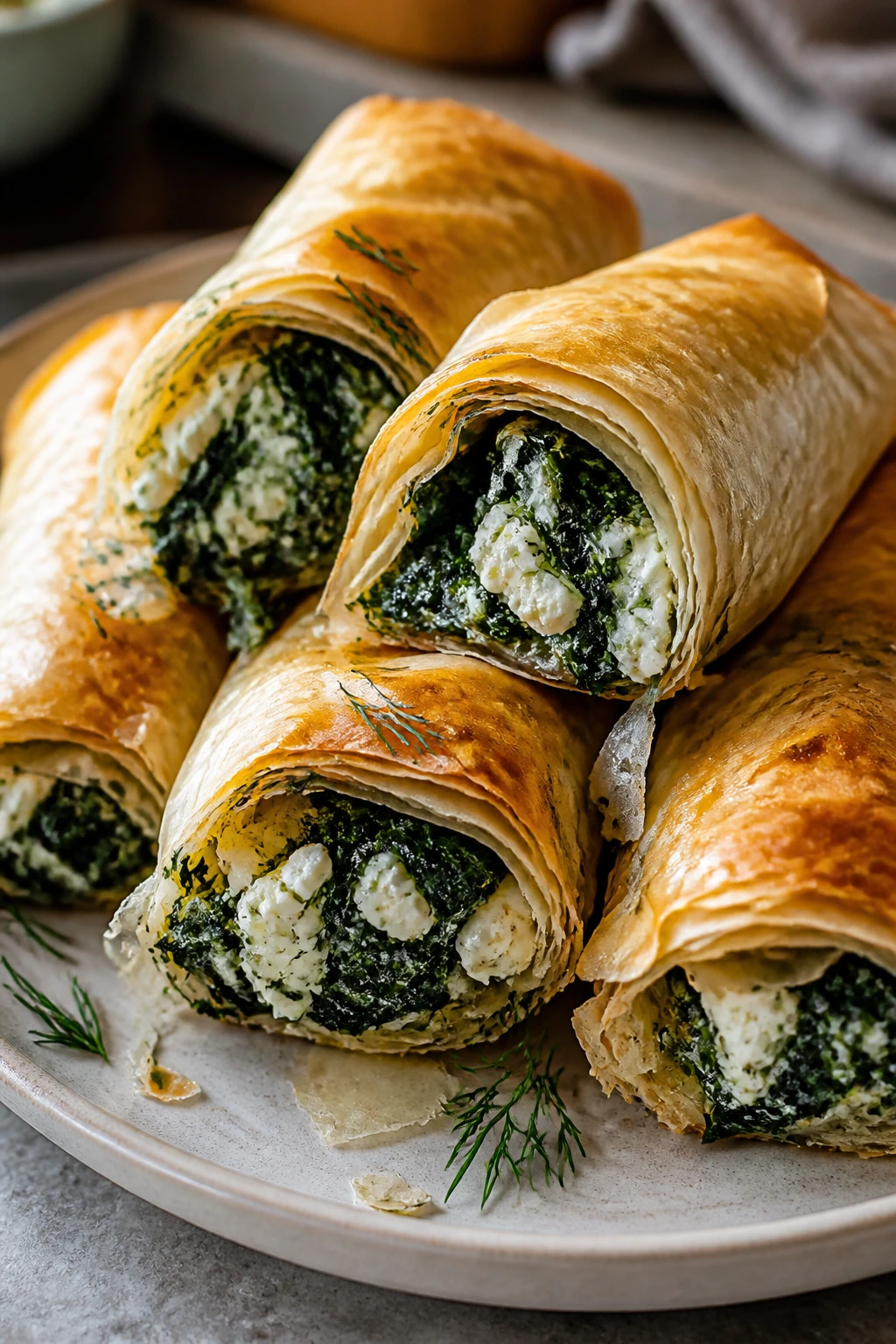
5. Spinach, Feta, and Dill Phyllo Rolls
Phyllo is flaky, a little dramatic, and worth the trouble when you want a roll that shatters in layers instead of chewing like bread. Spinach and feta give the filling a salty, savory center, while dill keeps it from feeling heavy. These are the rolls that taste better than they look, which is saying something, because they look good too.
Why It Works:
Phyllo needs a filling that isn’t wet, and this one gets there by squeezing the spinach hard and using just enough ricotta to bind. The feta carries the flavor, while dill and a pinch of nutmeg give it that unmistakable spanakopita vibe. Rolling small portions keeps the pastry crisp all the way through. If you make them too big, they seal poorly and the layers steam instead of flake.
Key Ingredients:
- 10 oz fresh spinach
- 1 cup crumbled feta
- 1/2 cup ricotta
- 2 scallions, finely sliced
- 2 tablespoons chopped dill
- 1/4 teaspoon ground nutmeg
- 1/4 teaspoon black pepper
- 8 sheets phyllo dough, thawed
- 4 tablespoons melted butter or olive oil
- 1 egg, beaten, for sealing or brushing
Quick Steps:
- Wilt the spinach in a skillet over medium heat for 2 to 3 minutes, then cool and squeeze it dry in a clean towel until no liquid drips out.
- Mix spinach with feta, ricotta, scallions, dill, nutmeg, and pepper.
- Lay one phyllo sheet on the counter and brush it lightly with melted butter. Layer a second sheet on top and brush again.
- Cut into 4 long strips. Place a spoonful of filling near one end of each strip and roll into tight cigars, sealing the tip with egg.
- Set the rolls on a parchment-lined sheet, brush the tops with butter or oil, and bake at 375°F (190°C) for 18 to 22 minutes until deeply golden.
- Cool for 5 minutes before moving them; fresh out of the oven, they’re fragile.
Equipment for This Recipe:
- Skillet
- Clean kitchen towel for squeezing spinach
- Pastry brush
- Baking sheet
- Sharp knife or pizza cutter for slicing phyllo
How to Serve This Dish:
Serve warm, not blazing hot, with lemon wedges or a small bowl of tzatziki. They’re good as a starter, but they also sit nicely beside a tomato salad or roasted potatoes. Two to three rolls make a side portion; five or six can carry a lighter dinner.
Pro Tips for This Recipe:
- Keep unused phyllo covered with a barely damp towel. It dries out fast.
- Squeeze the spinach harder than feels reasonable. Any leftover water ruins the layers.
- Brush the layers lightly. Heavy butter makes the rolls greasy instead of crisp.
- If the ends start to darken before the centers bake, tent the tray loosely with foil for the last few minutes.
Variations on This Dish:
- Lemon-Zest Version: Add 1 teaspoon finely grated lemon zest for a brighter, sharper finish.
- Kale-and-Goat-Cheese Swap: Replace the spinach with cooked kale and the ricotta with goat cheese.
- Herb-Heavy Batch: Add parsley and mint for a greener, fresher flavor profile.
Common Mistakes to Avoid with This Dish:
- Wet spinach filling: That’s the fastest route to soggy pastry. Squeeze thoroughly.
- Letting phyllo sit uncovered: It cracks, then tears, then you start over. Keep it wrapped.
- Using too much filling per strip: The rolls puff best when the seam can close without bulging.
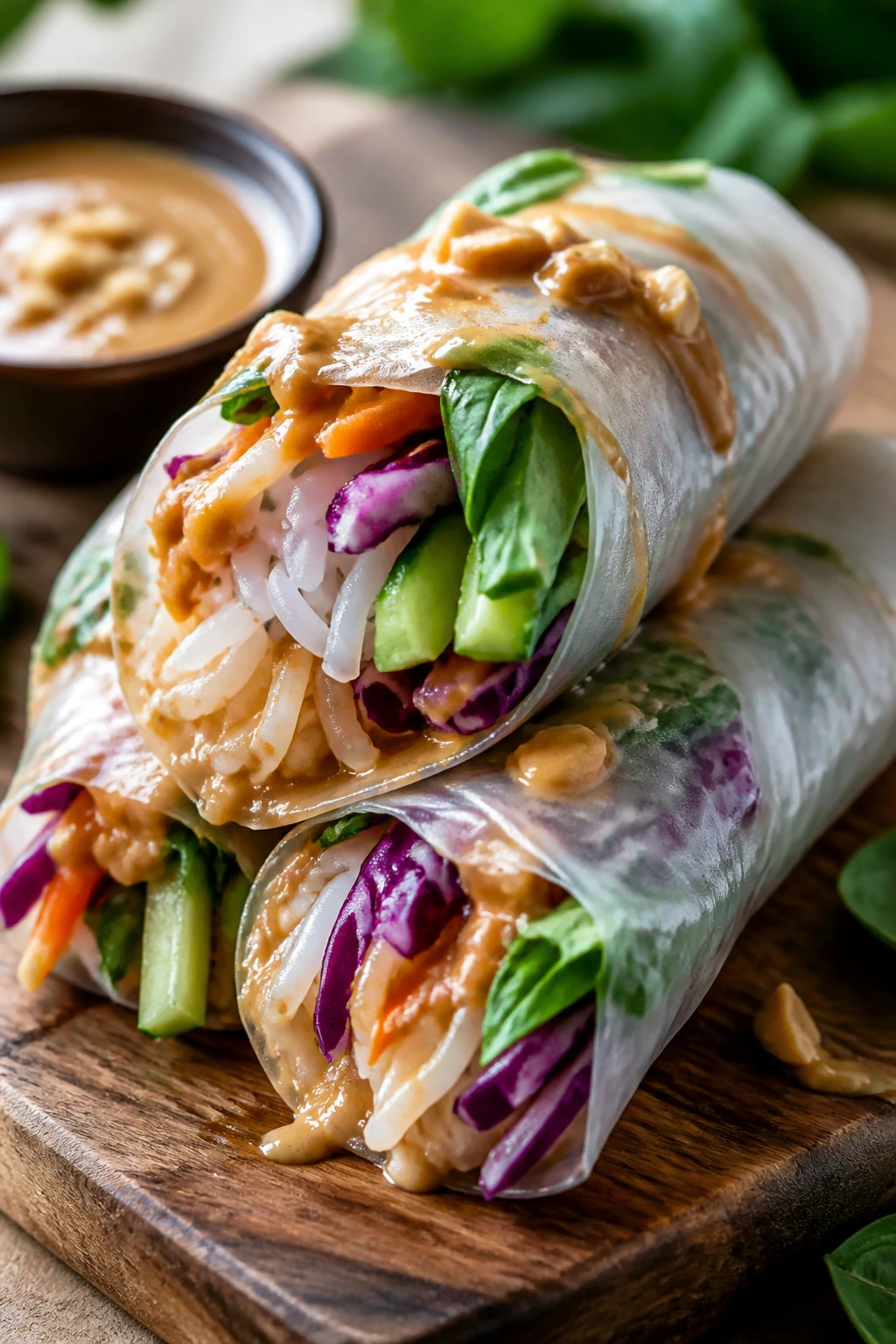
6. Thai Peanut Noodle Rice Paper Rolls
These are the veggie rolls that eat like a cool noodle salad wrapped in rice paper. You get slippery rice noodles, crunchy cabbage, crisp cucumber, and a peanut sauce that clings to everything without drowning it. They’re a little more filling than the garden spring rolls, which makes them a smart Meatless Monday dinner when you want something light but not tiny.
Why It Works:
Rice noodles give the rolls a soft center that makes them feel more substantial than herb-and-veg-only versions. Peanut sauce inside or alongside the roll adds fat and salt, so the vegetables taste fuller. The key is to keep the noodle bundle small and the vegetables dry, otherwise the wrapper gets tacky fast. This is one of those recipes where patience shows up on the plate.
Key Ingredients:
- 12 rice paper wrappers
- 4 oz thin rice noodles
- 1 cup shredded purple cabbage
- 1 cup shredded carrots
- 1 cucumber, cut into thin sticks
- 1 red bell pepper, sliced thin
- 1 cup shelled edamame, cooked and cooled
- 1/2 cup basil leaves
- 1/2 cup mint leaves
- For the peanut sauce: 1/3 cup peanut butter, 2 tablespoons soy sauce, 1 tablespoon lime juice, 1 tablespoon maple syrup, 1 teaspoon sesame oil, 1 to 3 tablespoons warm water, chili flakes to taste
Quick Steps:
- Cook the rice noodles according to the package directions, rinse under cool water, and drain very well.
- Whisk the peanut sauce until smooth, thinning it enough that it drips in a slow ribbon.
- Prepare all vegetables and keep them dry. Paper towels matter here.
- Dip one rice paper wrapper in cool water for 8 to 10 seconds, then lay it flat.
- Add a small nest of noodles, cabbage, carrots, cucumber, bell pepper, edamame, basil, and mint near the lower third. Roll tightly, folding in the sides as you go.
- Repeat and serve with extra peanut sauce for dipping.
Equipment for This Recipe:
- Medium saucepan
- Colander
- Shallow dish for rice paper
- Cutting board
- Small whisk or fork
How to Serve This Dish:
Cut them on the diagonal if you want the noodle filling to show through the wrapper. A bowl of extra peanut sauce and a few lime wedges on the side make the plate feel finished. Two rolls are enough for a light meal; three if you’re not serving a side.
Pro Tips for This Recipe:
- Don’t make the noodles long and tangled. Snip them once or twice with kitchen scissors.
- The sauce should be loose enough to dip but thick enough to cling. If it’s paste-like, add water.
- Mint and basil both help. Skip one and the rolls lose some of their lift.
- Assemble on a damp towel if your countertop is dry; rice paper grabs less aggressively that way.
Variations on This Dish:
- Sesame-Soba Twist: Swap rice noodles for chilled soba if you want a nuttier, heartier filling.
- Crunch-Heavy Version: Add shredded daikon or jicama for a sharper bite.
- Tofu Protein Add-In: Fold in baked tofu matchsticks if you want the rolls to carry dinner on their own.
Common Mistakes to Avoid with This Dish:
- Too much sauce inside the roll: Use the sauce for dipping unless you want a slippery mess.
- Wet vegetables: They make the wrapper gummy and the roll hard to slice.
- Overloading with noodles: A small bundle is enough. Big bundles split the wrapper.
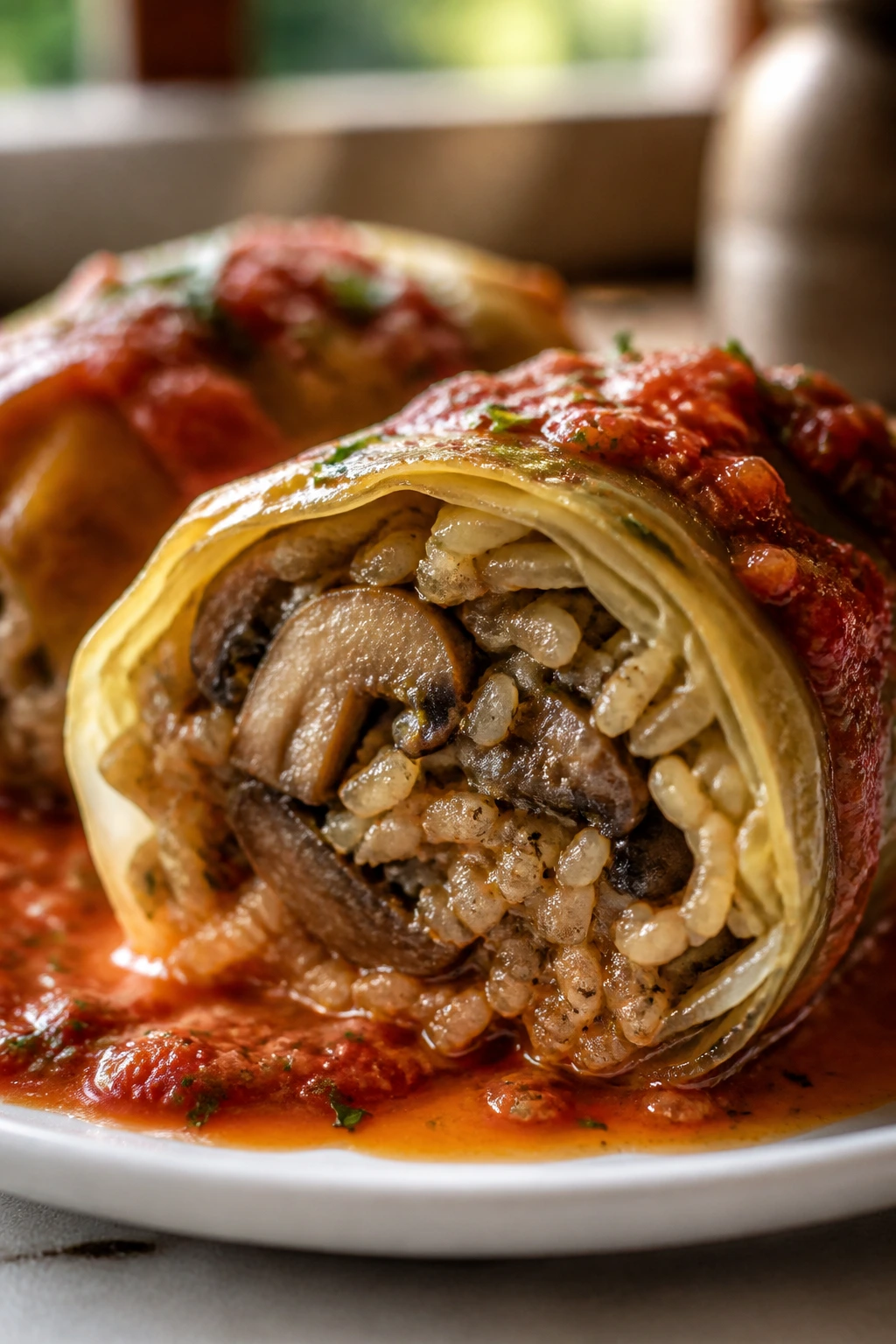
7. Mushroom and Cabbage Savory Rolls
These are old-school cabbage rolls in a meatless coat, and I mean that in the best way. The mushroom filling goes earthy and rich, the cabbage softens into a tender wrapper, and the tomato sauce gives the whole dish a little acid so it doesn’t taste heavy. This is the plate I make when I want the evening meal to feel grounded and hot from the oven.
Why It Works:
Mushrooms, onions, and rice create the kind of filling that holds together when baked, and cabbage leaves are sturdy enough to contain it without falling apart. A tomato base keeps the rolls moist while they finish in the oven, which matters because cabbage can go from tender to chewy if it’s left dry. The whole dish gets better after a short rest. That’s the nice part. You can breathe.
Key Ingredients:
- 8 large savoy cabbage leaves
- 8 oz cremini mushrooms, finely chopped
- 1 small onion, diced
- 2 garlic cloves, minced
- 1 tablespoon olive oil
- 1 cup cooked brown rice
- 1 tablespoon tomato paste
- 1 cup crushed tomatoes
- 1 teaspoon dried thyme
- 1/2 teaspoon smoked paprika
- 1/2 teaspoon fine salt
- 1/4 teaspoon black pepper
- 1/4 cup grated Parmesan or nutritional yeast
Quick Steps:
- Blanch the cabbage leaves in boiling water for 2 to 3 minutes until pliable, then drain and trim the thick stems flat.
- Sauté onion and mushrooms in olive oil over medium-high heat for 6 to 8 minutes until the mushrooms brown and the pan looks mostly dry.
- Stir in garlic, tomato paste, thyme, paprika, salt, pepper, and cooked rice. Cook for 1 minute, then mix in Parmesan or nutritional yeast.
- Spoon filling into each cabbage leaf, fold in the sides, and roll from the base into neat packets.
- Spread crushed tomatoes in a baking dish, nestle the rolls seam-side down, and spoon a little sauce over the top.
- Bake at 350°F (175°C) for 30 to 35 minutes until the cabbage is tender and the sauce bubbles at the edges.
Equipment for This Recipe:
- Large pot for blanching cabbage
- Large skillet
- Baking dish
- Tongs
- Sharp knife for trimming stems
How to Serve This Dish:
Serve with extra tomato sauce spooned around the base and a little grated cheese on top if you like a richer finish. A slice of crusty bread or a green salad works well here, because the rolls themselves are soft and savory. Two rolls per person is a normal dinner portion.
Pro Tips for This Recipe:
- Trim the cabbage rib or it will crack when you roll.
- Cook the mushroom filling until the skillet is fairly dry. Wet filling slips apart.
- Let the baked rolls rest for 10 minutes before serving so they hold together better.
- If your cabbage leaves are small, use two leaves overlapped instead of forcing a tight roll.
Variations on This Dish:
- Lentil Version: Replace the rice with 1 cup cooked green lentils for a firmer, more protein-rich filling.
- Herb-Tomato Version: Add chopped parsley and basil to the tomato sauce for a fresher finish.
- Creamy Polish-Style Twist: Serve with a spoonful of sour cream on top.
Common Mistakes to Avoid with This Dish:
- Overcooked cabbage leaves: They tear while rolling. Pull them once they’re flexible, not mushy.
- Loose filling: If the rice is underseasoned or the mushrooms are too wet, the rolls slip apart.
- Skipping the sauce layer: The rolls need moisture to finish tender in the oven.
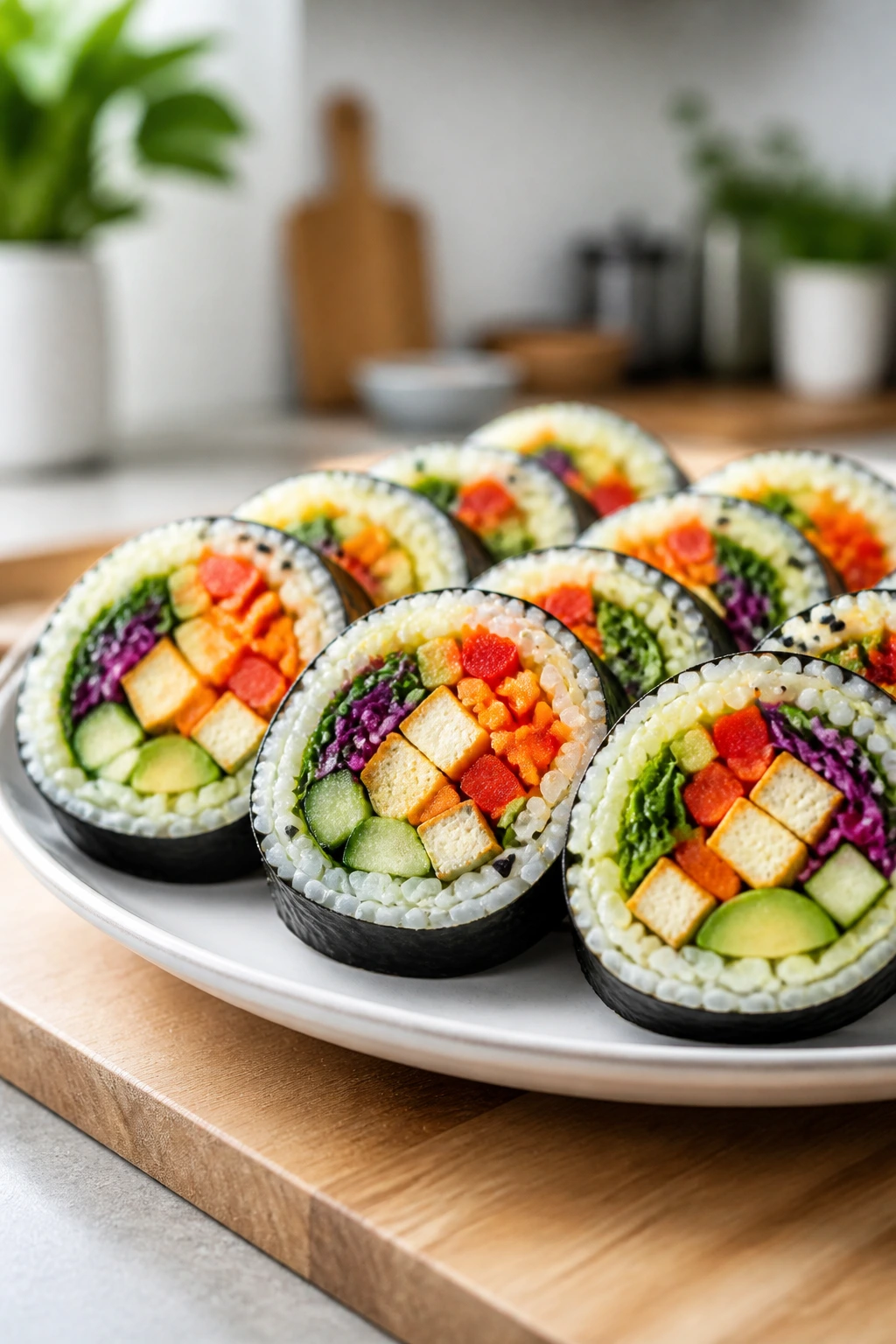
8. Rainbow Veggie Sushi Rolls
Sushi rolls look fancy because the knife work is neat, not because they’re hard. Once the rice is seasoned properly and the filling is cut into long, even sticks, the whole process feels calm and almost mechanical. These veggie rolls are the most precise in the bunch, which is part of the fun.
Why It Works:
Short-grain rice clings to itself after seasoning, so the roll holds together without glue or mayo. Crisp vegetables keep the interior from turning soft, and the nori adds that faint seaweed chew people either love immediately or learn to love after two bites. Sushi rolls also give you clean slices, which makes them a nice change from the messy, hot-baked options in this collection. The sharp knife matters more than the garnish. Always does.
Key Ingredients:
- 2 cups uncooked sushi rice
- 2 1/2 cups water
- 1/4 cup rice vinegar
- 1 tablespoon sugar
- 1 teaspoon fine salt
- 6 sheets nori
- 1 avocado, sliced
- 1 cucumber, cut into long sticks
- 1 carrot, cut into long sticks
- 1/2 red bell pepper, cut into long strips
- 4 oz baked tofu, cut into strips
- 1 tablespoon sesame seeds
Quick Steps:
- Rinse the sushi rice until the water runs mostly clear, then cook it with the water according to the package or rice cooker directions.
- Mix rice vinegar, sugar, and salt, then fold it into the hot rice and fan the rice for a minute so it cools to warm and glossy.
- Lay a nori sheet on a bamboo mat, shiny side down. Spread a thin layer of rice across the sheet, leaving a 1-inch strip bare at the top.
- Arrange avocado, cucumber, carrot, bell pepper, tofu, and sesame seeds in a line near the bottom edge.
- Roll tightly with the mat, pressing gently as you go, and seal the bare edge with a touch of water.
- Slice with a wet, very sharp knife in one clean motion.
Equipment for This Recipe:
- Bamboo sushi mat
- Sharp chef’s knife
- Small bowl of water
- Rice cooker or saucepan
- Plastic wrap for covering the mat, if you want easier cleanup
How to Serve This Dish:
Serve the rolls sliced into 6 to 8 pieces with tamari, pickled ginger, and wasabi on the side. A small pile of sesame seeds over the cut edges looks tidy, but the clean knife cut is what makes them look polished. One roll per person works for lunch; two rolls is a full meal.
Pro Tips for This Recipe:
- Use a thin rice layer. Thick rice makes the roll bulky and hard to close.
- Keep a bowl of water nearby for your fingers. Sticky rice will try to glue itself to everything.
- Let the rice cool before rolling or the nori softens too fast.
- If the avocado is very soft, place it in the center of the filling, not near the edge.
Variations on This Dish:
- Mango Sushi Roll: Add a strip of mango for sweetness and skip the bell pepper.
- Spicy Mayo Version: Mix a little sriracha into mayo or vegan mayo and drizzle lightly inside.
- Brown Rice Swap: Use short-grain brown rice if you want a nuttier chew, though it needs to be a little stickier to work cleanly.
Common Mistakes to Avoid with This Dish:
- Wet rice: If it’s too hot or too loose, the nori slips and tears.
- Overstuffing the center: Sushi rolls close best when the filling is narrow and even.
- Dull slicing: Sawing through the roll crushes the edges. Use a sharp, wet knife.
9. Buffalo Cauliflower Tortilla Rolls
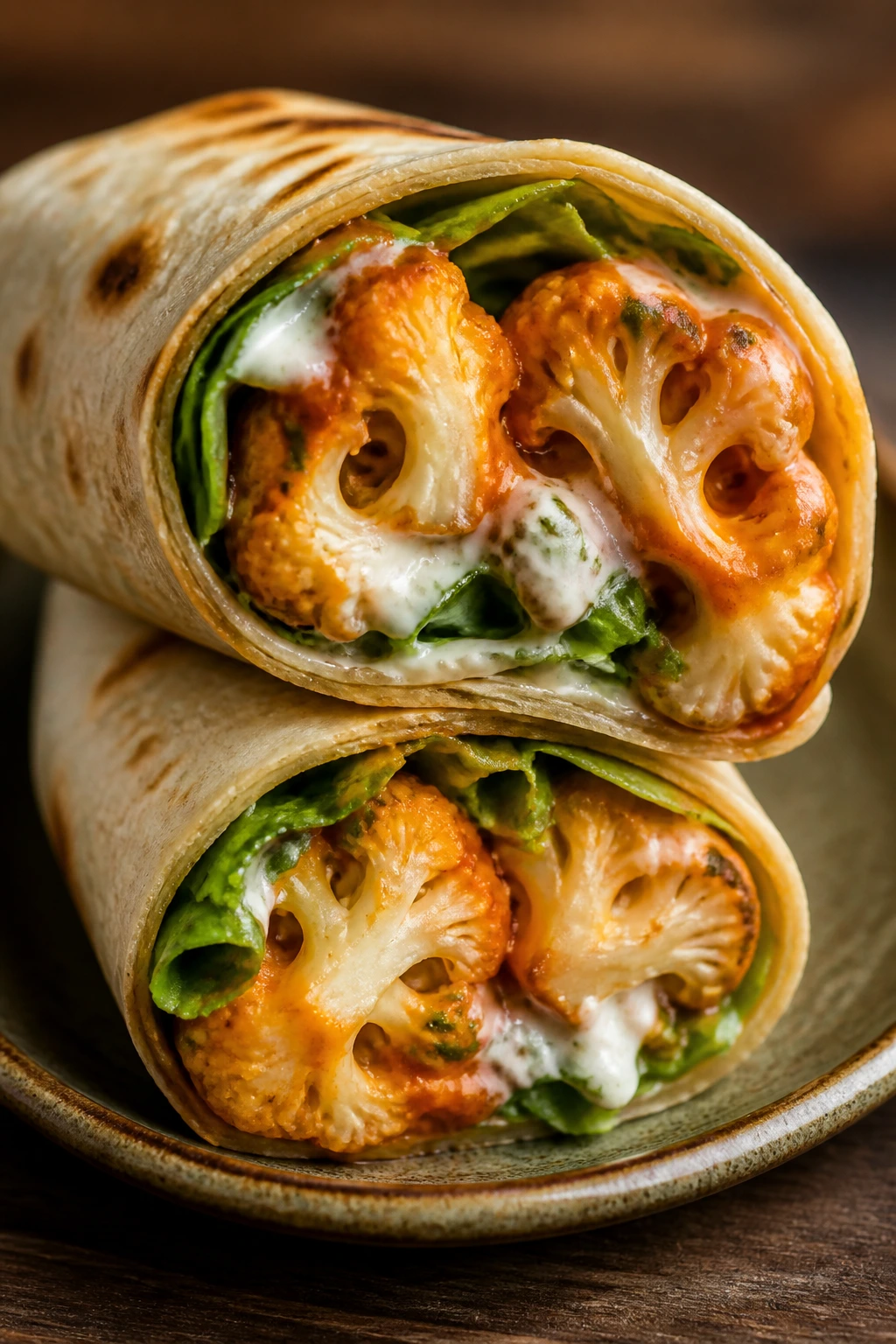
Buffalo cauliflower wraps are the loudest thing on the table, flavor-wise. They’re smoky, hot, tangy, and a little messy in the right way, with lettuce and dressing cooling down the heat. The cauliflower has to roast long enough to lose its raw bite. Shortcuts leave you with a damp, spicy vegetable pile. Not ideal.
Why It Works:
Roasting the cauliflower caramelizes the edges and keeps the florets from going mushy when they’re tossed in hot sauce. The tortilla acts as a soft shell around the filling, which means this roll lands somewhere between a wrap and a hand-held dinner. A ranch or yogurt dressing inside cools the heat before the first bite reaches your tongue. That contrast is the whole game here.
Key Ingredients:
- 1 medium head cauliflower, cut into small florets
- 1 tablespoon olive oil
- 1/2 cup hot sauce
- 2 tablespoons melted butter or vegan butter
- 1/2 teaspoon garlic powder
- 1/2 teaspoon smoked paprika
- 4 large flour tortillas
- 1 cup shredded lettuce
- 1 carrot, shredded
- 1 cup ranch dressing or plain Greek yogurt mixed with a little lemon juice
- 2 celery stalks, thinly sliced
Quick Steps:
- Toss the cauliflower with olive oil, garlic powder, smoked paprika, and a pinch of salt.
- Roast at 425°F (220°C) for 20 to 25 minutes until the florets are browned at the edges and tender when pierced.
- Stir hot sauce and melted butter together, then toss the roasted cauliflower in the sauce.
- Warm the tortillas so they bend without tearing.
- Spread dressing down the center, add lettuce, carrot, celery, and buffalo cauliflower, then roll tightly.
- Slice in half and serve immediately.
Equipment for This Recipe:
- Rimmed baking sheet
- Large bowl
- Mixing spoon
- Knife and cutting board
- Small bowl for the sauce
How to Serve This Dish:
Serve these with extra dressing and a pile of celery sticks, because the cool crunch matters against the heat. They’re good with baked potato wedges or a simple cabbage slaw. One big wrap per person is enough for lunch; two smaller halves work if you’re setting out a spread.
Pro Tips for This Recipe:
- Cut the florets small. Big chunks roll badly and fall out.
- Roast until the edges brown. Pale cauliflower tastes flat, even under hot sauce.
- Drain any excess sauce from the cauliflower before rolling so the tortilla doesn’t soften.
- If you want less heat, use half hot sauce and half melted butter.
Variations on This Dish:
- Blue Cheese Version: Swap ranch for blue cheese dressing if you like a sharper finish.
- Chickpea Buffalo Wrap: Replace cauliflower with roasted chickpeas for a crunchier, drier filling.
- Lower-Heat Option: Use a mild pepper sauce and add extra smoked paprika for flavor without the burn.
Common Mistakes to Avoid with This Dish:
- Undercooked cauliflower: It stays crunchy in the wrong way. Roast until truly tender.
- Saucing too early: Let the cauliflower cool for a minute so the tortilla doesn’t steam.
- Using a cold tortilla: It cracks when rolled. Warm it first.
10. Carrot-Ginger Rice Paper Rolls
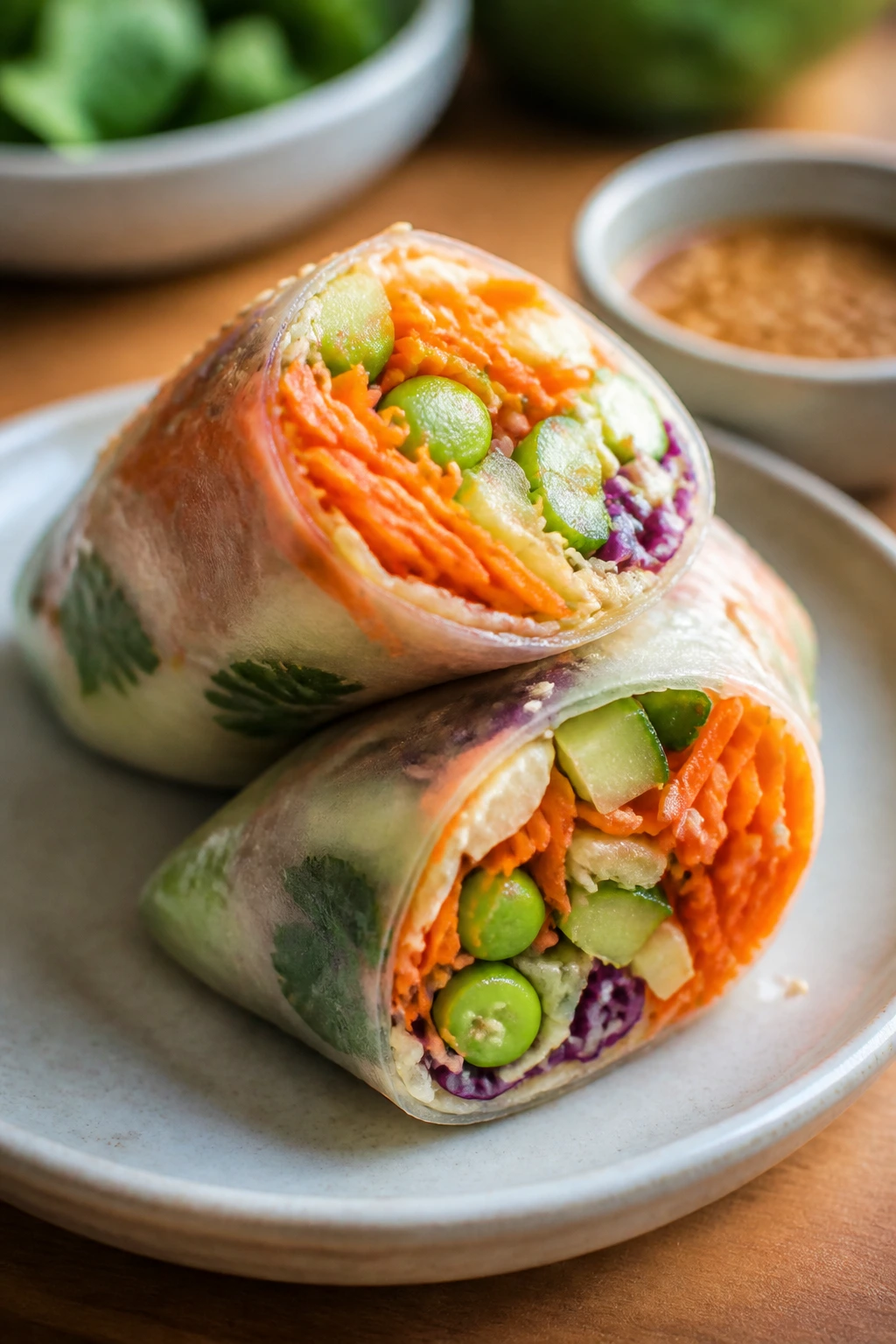
These are the brighter, sharper cousin of the classic fresh roll. Carrot and ginger give the filling a clean bite, and the little hit of sesame keeps it from tasting all green and raw. I like these when I want something fresh but not bland, which happens more often than it should.
Why It Works:
Carrots carry ginger well because they’re sweet enough to absorb it without getting muddy. Rice paper keeps the texture soft but not heavy, and edamame or noodles add enough body that the rolls feel like a meal. The sauce matters here even more than usual, because the filling is deliberately lean. If your rolls ever taste like “crunch and hope,” this fixes that.
Key Ingredients:
- 12 rice paper wrappers
- 2 cups shredded carrots
- 1 cup shredded cabbage
- 1 cup shelled edamame, cooked and cooled
- 1 cucumber, cut into sticks
- 1 avocado, sliced
- 1/2 cup cilantro leaves
- 1 tablespoon grated fresh ginger
- 2 teaspoons lime juice
- 1 teaspoon sesame oil
- 1/4 teaspoon salt
- For dipping: 2 tablespoons tahini, 1 tablespoon soy sauce, 1 tablespoon warm water, chili flakes to taste
Quick Steps:
- Toss the carrots with ginger, lime juice, sesame oil, and salt so they taste seasoned before they go into the wrapper.
- Fill a shallow dish with cool water and dip one rice paper wrapper for 8 seconds.
- Lay the wrapper flat, then pile on a small line of carrots, cabbage, edamame, cucumber, avocado, and cilantro.
- Fold the sides in and roll tightly, keeping the filling compact.
- Whisk the tahini dip ingredients until smooth.
- Serve the rolls right away or chill them under a barely damp towel for short-term holding.
Equipment for This Recipe:
- Shallow dish for soaking rice paper
- Small mixing bowl
- Cutting board
- Sharp knife
- Paper towels for drying vegetables
How to Serve This Dish:
Serve these with the tahini dip and extra cilantro scattered on the plate. They’re good as a starter or a light lunch, especially beside a bowl of miso soup or a cucumber salad. Two or three rolls make a reasonable serving.
Pro Tips for This Recipe:
- Season the carrots before rolling. They taste flat if all the seasoning stays in the dip.
- Keep the avocado tucked in the center so it doesn’t smear against the wrapper.
- Don’t leave the rolls uncovered in the fridge; rice paper dries into a leathery shell.
- A teaspoon of sesame seeds in the filling gives a little extra nuttiness.
Variations on This Dish:
- Miso-Tahini Dip: Stir a pinch of miso into the dipping sauce for more depth.
- Noodle Add-In: Add a small bundle of cooled rice noodles if you want the rolls heavier.
- Herb Swap: Use mint instead of cilantro for a cooler, sweeter finish.
Common Mistakes to Avoid with This Dish:
- Skipping the carrot seasoning: Plain shredded carrot tastes thin. Toss it first.
- Overloading with avocado: Too much turns the roll slippery.
- Letting the wrapper sit too long in water: It keeps softening after you pull it, so work fast.
11. Broccoli Cheddar Crescent Rolls

These are the rolls for people who want something warm, cheesy, and unmistakably snacky. The broccoli gets chopped small enough to blend into the filling, the cheddar melts into the cream cheese, and the crescent dough bakes into those familiar flaky layers that smell like a bakery when they come out. Simple? Yes. Boring? Not even close.
Why It Works:
Broccoli and cheddar work because the broccoli gives structure while the cheese binds everything together. Cream cheese prevents the filling from drying out, and the crescent dough does the rest, puffing around the filling as it bakes. The key is chopping the broccoli small so the rolls close cleanly and bake evenly. Big florets punch holes through the dough. Tiny pieces behave.
Key Ingredients:
- 1 tube refrigerated crescent dough, 8 rolls
- 2 cups broccoli florets, finely chopped
- 1 cup shredded sharp cheddar
- 4 oz cream cheese, softened
- 1 tablespoon Dijon mustard
- 1 garlic clove, grated
- 1/4 teaspoon black pepper
- 1 egg, beaten, for brushing
- 1 tablespoon sesame seeds or everything seasoning, optional
Quick Steps:
- Steam or blanch the broccoli for 2 minutes, then cool and squeeze out excess water with a towel.
- Mix broccoli, cheddar, cream cheese, Dijon, garlic, and pepper until thick and spreadable.
- Unroll the crescent dough and separate into triangles.
- Spoon filling near the wide end of each triangle, roll toward the point, and curve slightly if you want the classic crescent shape.
- Brush with egg and sprinkle with sesame seeds if using.
- Bake at 375°F (190°C) for 12 to 15 minutes until puffed and deeply golden.
Equipment for This Recipe:
- Mixing bowl
- Baking sheet
- Parchment paper
- Small brush for egg wash
- Knife or kitchen scissors for chopping broccoli
How to Serve This Dish:
Serve warm with tomato soup, a green salad, or just a small bowl of mustard for dipping. They work as a lunch, a side, or a snacky dinner when the fridge is looking sparse. Two or three rolls make a serving if there’s soup on the table.
Pro Tips for This Recipe:
- Squeeze the broccoli dry. Water turns the filling loose and leaks from the seam.
- Keep the cream cheese softened so the filling mixes fast and smooth.
- Don’t overfill the triangles. Crescent dough needs room to puff.
- If the tops brown too fast, cover loosely with foil for the last few minutes.
Variations on This Dish:
- Jalapeño Cheddar Version: Add finely chopped jalapeño for heat.
- Cauliflower Swap: Replace half the broccoli with cauliflower for a milder filling.
- Vegan Crescent Roll: Use vegan cream cheese and shredded vegan cheddar with a dairy-free dough.
Common Mistakes to Avoid with This Dish:
- Using wet broccoli: The filling slips and soaks the dough.
- Rolling too loosely: The filling leaks out and the rolls uncoil in the oven.
- Skipping the egg wash: The rolls bake pale and soft instead of bronzed.
12. Falafel Cucumber Tahini Wrap Rolls
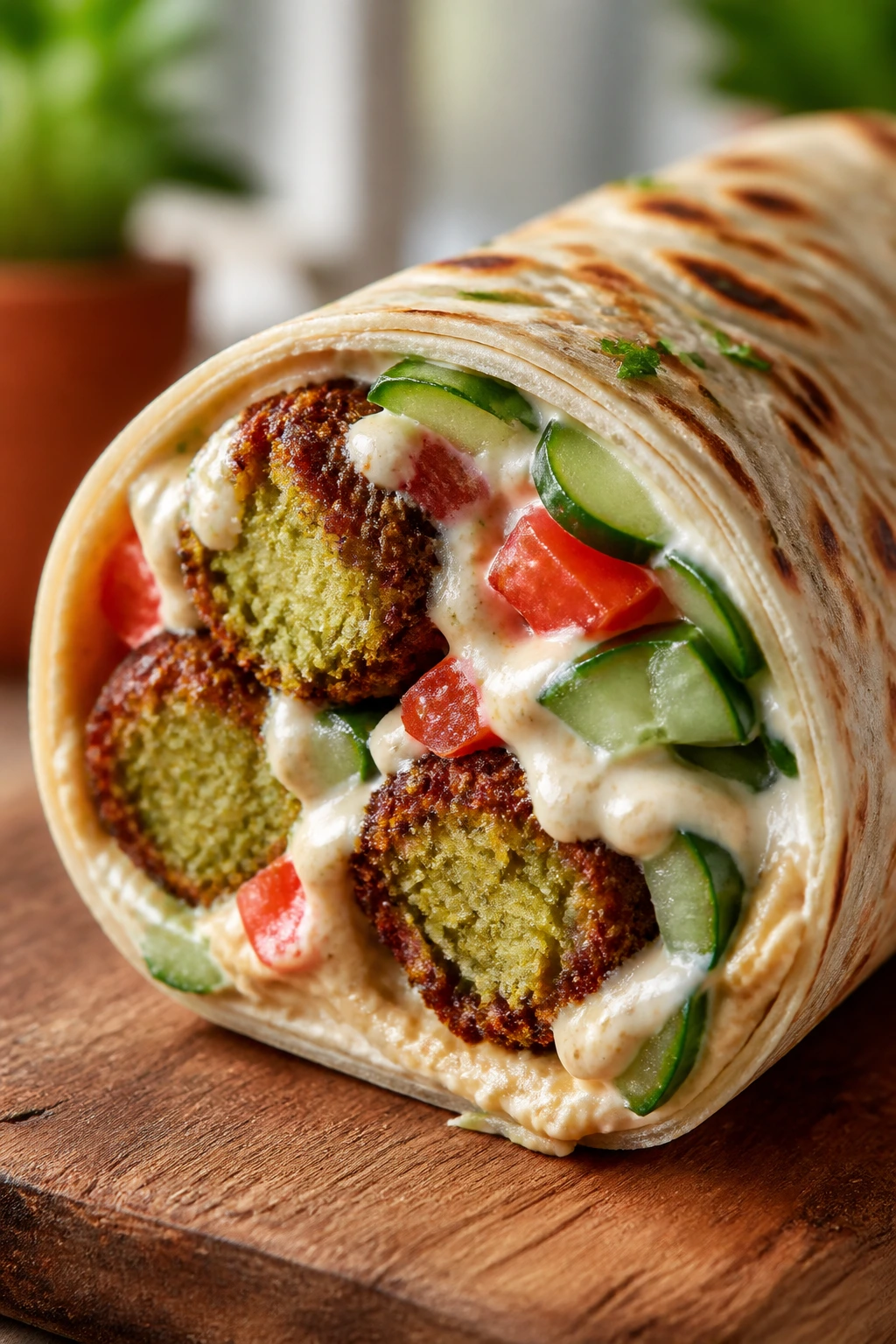
This is the roll when you want dinner to taste like a good street cart without leaving the kitchen. Crisp falafel, cool cucumber, tomato, hummus, and tahini make a wrap that feels layered and complete. It’s hearty enough to carry a meal, but the vegetables keep it from feeling heavy.
Why It Works:
Falafel brings texture and protein, and hummus gives the tortilla or lavash enough creaminess that you don’t need a separate sauce in every bite. Cucumber and tomato stay cool and bright, which balances the warm falafel. Tahini ties everything together with a little bitterness and a little richness. The only real trick is not to overload it, because falafel can be crumbly if you force too many balls into one wrap.
Key Ingredients:
- 12 small falafel balls, baked or pan-fried
- 4 large lavash breads or flour tortillas
- 1 cup hummus
- 1 cup cucumber, thinly sliced
- 1 cup tomato, seeded and diced
- 1/2 red onion, very thinly sliced
- 1 cup shredded lettuce
- For the tahini drizzle: 1/4 cup tahini, 2 tablespoons lemon juice, 2 to 3 tablespoons warm water, 1 small garlic clove, grated, 1/4 teaspoon salt
Quick Steps:
- Whisk the tahini drizzle until smooth and pourable.
- Warm the falafel so it’s crisp on the outside and hot in the middle.
- Spread hummus over each wrap, leaving a border at the edge.
- Layer lettuce, cucumber, tomato, onion, and 3 falafel balls in a line near the bottom third.
- Drizzle lightly with tahini, then roll tightly, folding the sides inward as you go.
- Slice in half and serve while the falafel is still warm.
Equipment for This Recipe:
- Skillet or oven sheet for warming falafel
- Small bowl for tahini
- Cutting board
- Sharp knife
- Spoon for spreading hummus
How to Serve This Dish:
Serve the wraps cut on a diagonal with more tahini on the side and a few olives or pickles on the plate. They’re filling enough for dinner but also travel well if you keep the sauce separate until serving. One wrap is a solid meal.
Pro Tips for This Recipe:
- Seed the tomatoes if they’re juicy. Too much liquid turns the wrap soggy.
- Warm the lavash or tortillas for a few seconds so they roll without cracking.
- Keep the falafel close to the bottom edge so the roll closes neatly.
- Add chopped parsley if you want a greener, fresher finish.
Variations on This Dish:
- Pickled Turnip Version: Add pickled turnips for a sharper, more savory bite.
- Spicy Harissa Wrap: Stir harissa into the hummus for a deeper heat.
- Lentil Falafel Swap: Use lentil-based falafel if you want a softer interior.
Common Mistakes to Avoid with This Dish:
- Too much wet filling: Tomatoes need to be seeded or the wrap gets mushy.
- Crumbling falafel: If the balls are very dry, crush one lightly into the hummus so the wrap holds better.
- Skipping the warm wrap step: Cold bread tears when rolled.
13. Kimchi Tofu Gimbap
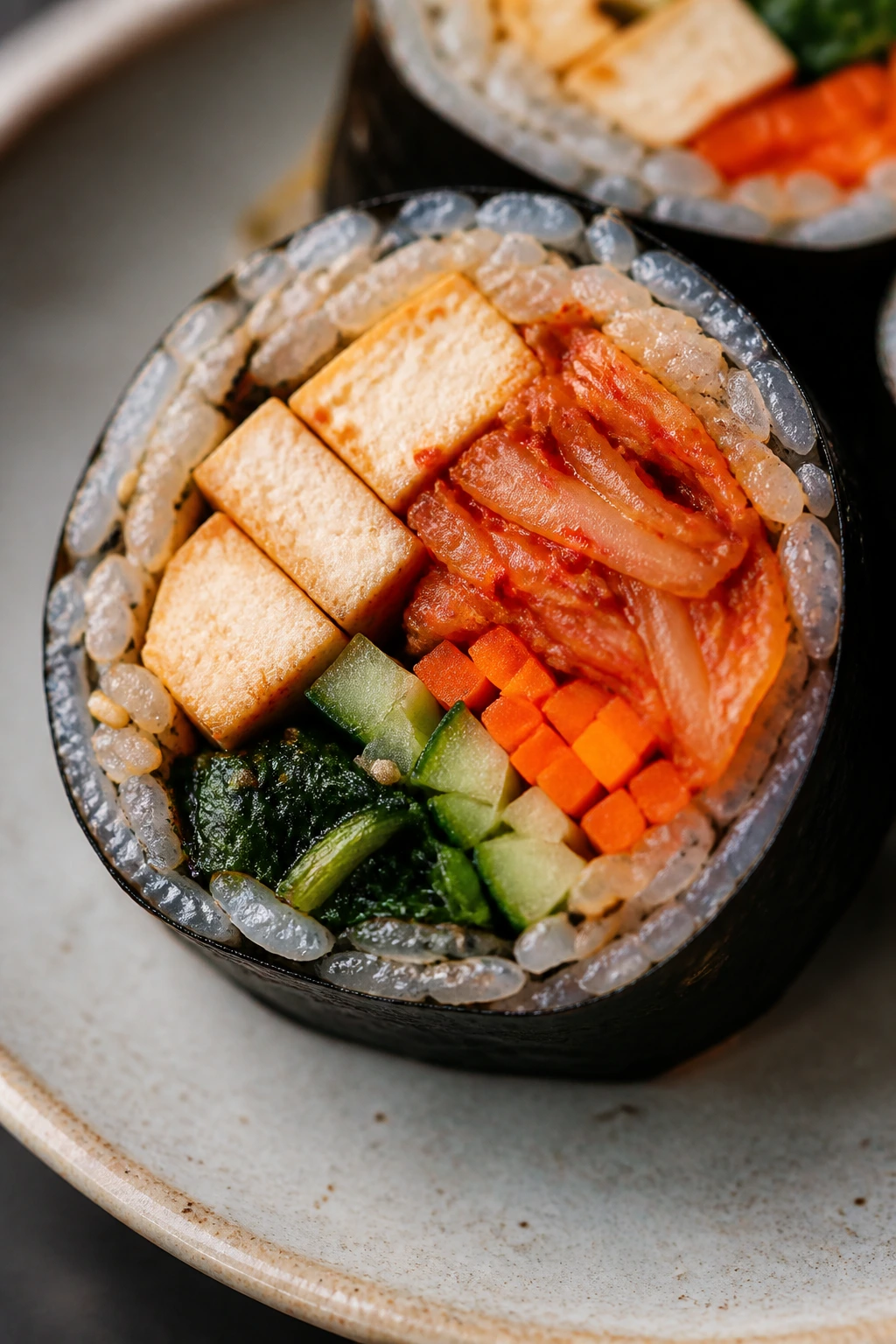
This is the roll with backbone. Gimbap is firmer than sushi, a little more savory, and usually less precious about exact shapes — which is why it’s one of my favorite meatless dinner moves. The sesame-scented rice, tofu, and well-drained kimchi make each slice bold without being sloppy.
Why It Works:
Gimbap relies on rice that’s seasoned with sesame oil instead of vinegar, so it eats more nutty than sushi. Kimchi adds heat and acidity, but only if you drain it well; wet kimchi will tear the roll apart. Tofu and vegetables balance the rice so the slices hold their shape and feel like actual food, not just flavored starch. This is one of the few rolls here that tastes even better at room temperature.
Key Ingredients:
- 3 cups cooked short-grain rice
- 1 tablespoon sesame oil
- 1 teaspoon fine salt
- 8 sheets nori
- 8 oz firm tofu, sliced into strips
- 1 cup kimchi, well-drained and chopped
- 1 cup spinach
- 1 carrot, cut into thin strips
- 1/2 cucumber, seeded and cut into sticks
- 1/2 cup pickled radish strips
- 1 tablespoon sesame seeds
Quick Steps:
- Pan-sear the tofu until golden on both sides, then cool it slightly.
- Quickly wilt the spinach in a skillet, squeeze it dry, and season it with a pinch of salt and a few drops of sesame oil.
- Season the rice with sesame oil and salt while it’s still warm.
- Place a nori sheet on a bamboo mat, spread rice thinly across it, and lay tofu, kimchi, spinach, carrot, cucumber, and pickled radish in a line.
- Roll tightly, pressing with the mat so the cylinder feels compact.
- Brush the outside lightly with sesame oil and slice with a sharp knife.
Equipment for This Recipe:
- Bamboo mat
- Sharp knife
- Skillet
- Small bowl for seasoning rice
- Clean towel for drying vegetables
How to Serve This Dish:
Slice into 8 rounds and serve with soy sauce or a little gochujang mixed with vinegar. Sesame seeds on top make the cut edges look neat. Two to three sections per person is fine as a snack; half a roll per person is a light lunch.
Pro Tips for This Recipe:
- Drain the kimchi aggressively. Paper towels help.
- Keep the rice warm, not hot, when you roll. Very hot rice can make the nori tough.
- Don’t put the filling too close to the edge; gimbap needs a clean seam.
- A dab of sesame oil on the knife helps it cut through without tearing.
Variations on This Dish:
- Sesame Spinach Version: Add extra spinach and skip the kimchi for a milder roll.
- Tempeh Swap: Replace tofu with marinated tempeh strips for a firmer bite.
- Spicy Gochujang Dip: Mix a little gochujang with rice vinegar for a punchier side sauce.
Common Mistakes to Avoid with This Dish:
- Wet filling: It causes the roll to slip and the rice to smear.
- Rice too thick: Heavy rice makes the gimbap hard to close.
- Dull knife: You’ll crush the slices instead of making clean rounds.
14. Butternut Squash and Sage Puff Pastry Rolls
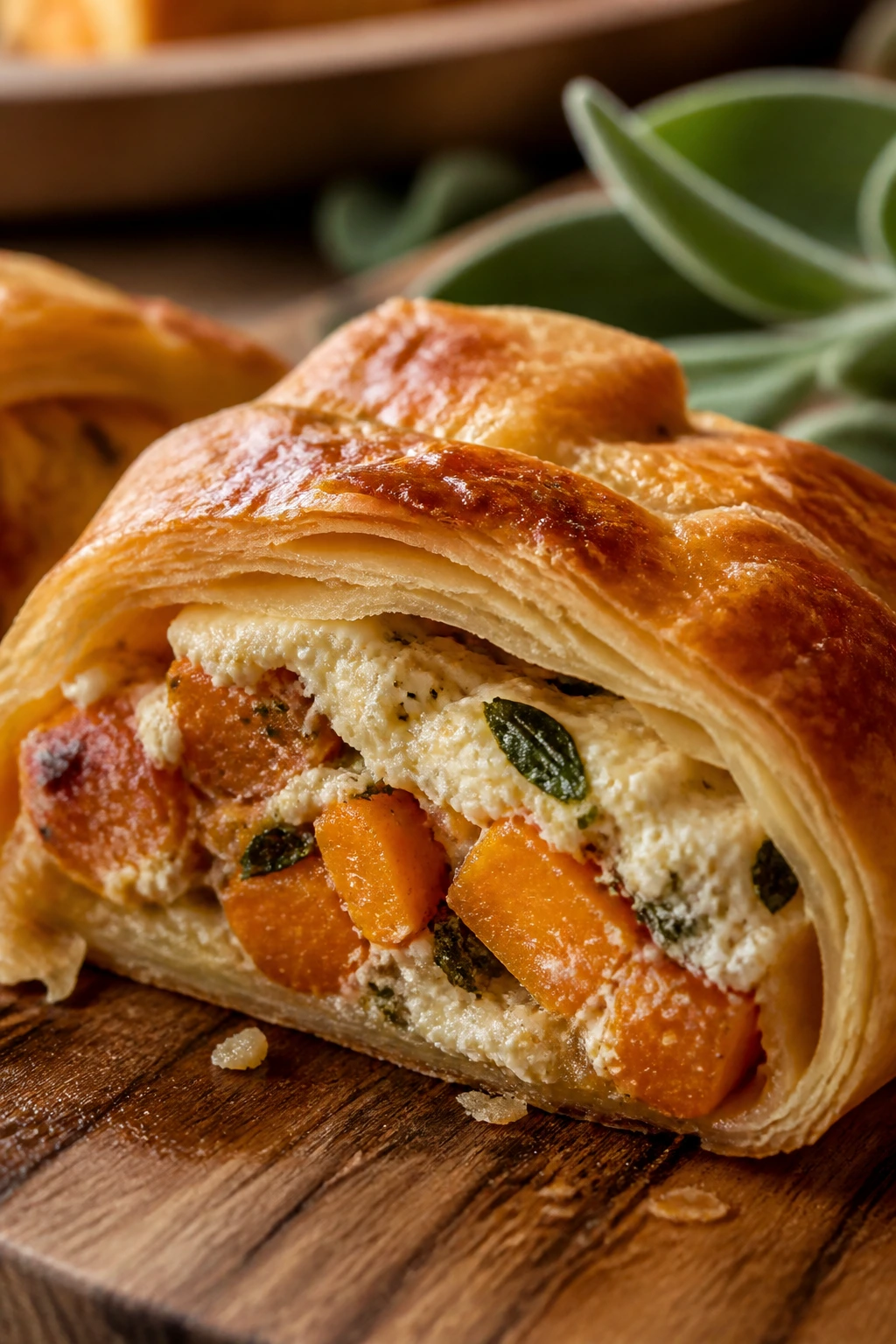
These are the rolls that smell like the oven is trying to be useful. Roasted squash brings sweetness, sage cuts through it, and puff pastry gives every bite a crisp shell with a soft center. They work as a starter, but I’d eat them as dinner with a salad and not feel remotely shortchanged.
Why It Works:
Butternut squash becomes sweeter and denser after roasting, which makes it a solid filling for pastry. Ricotta keeps the inside creamy without making it runny, and sage gives the rolls a warm, savory edge that stops the squash from reading as dessert. Puff pastry needs heat to lift, so keeping the filling cold until the last minute helps the layers bloom in the oven. That’s the difference between a puff and a puddle.
Key Ingredients:
- 2 cups roasted butternut squash cubes, cooled
- 1/2 cup ricotta
- 1/3 cup grated Parmesan
- 1 tablespoon chopped fresh sage
- 1/4 teaspoon ground nutmeg
- 1/4 teaspoon black pepper
- 1 package puff pastry, thawed
- 1 egg, beaten, for brushing
Quick Steps:
- Roast the squash at 400°F (205°C) until tender and lightly caramelized, about 20 to 25 minutes, then cool completely.
- Mash the squash slightly and mix it with ricotta, Parmesan, sage, nutmeg, and pepper.
- Roll the puff pastry into a rectangle and cut it into long strips or squares, depending on the shape you want.
- Spoon the filling into the center, fold or roll the pastry over, and seal the seam with a little egg wash.
- Brush the tops with egg and score lightly if you want a cleaner puff.
- Bake at 400°F (205°C) for 18 to 22 minutes until the pastry is bronzed and puffed.
Equipment for This Recipe:
- Baking sheet
- Parchment paper
- Mixing bowl
- Pastry brush
- Fork for sealing edges if needed
How to Serve This Dish:
Serve warm with a green salad, a swipe of cranberry chutney, or a little olive oil and flaky salt on the side. They look especially nice on a board with a few sage leaves scattered around. Two to three rolls make a light lunch portion.
Pro Tips for This Recipe:
- Cool the squash before mixing. Warm filling softens pastry before it hits the oven.
- Don’t over-mash the squash if you like texture. A few chunks are nice.
- Keep puff pastry cold until you’re ready to fill it.
- If you want extra sheen, brush with egg wash twice — once before baking and once halfway through if your oven runs cool.
Variations on This Dish:
- Caramelized Onion Version: Add 1/2 cup slow-cooked onions for a deeper, sweeter filling.
- Goat Cheese Swap: Replace ricotta with goat cheese for more tang.
- Seeded Finish: Sprinkle the tops with sesame or pumpkin seeds before baking.
Common Mistakes to Avoid with This Dish:
- Wet filling: It stops the pastry from puffing properly.
- Warm pastry dough: Handle it cold or it turns sticky and flat.
- Skipping the seal: The filling escapes and burns on the tray.
15. Caprese Puff Pastry Rolls
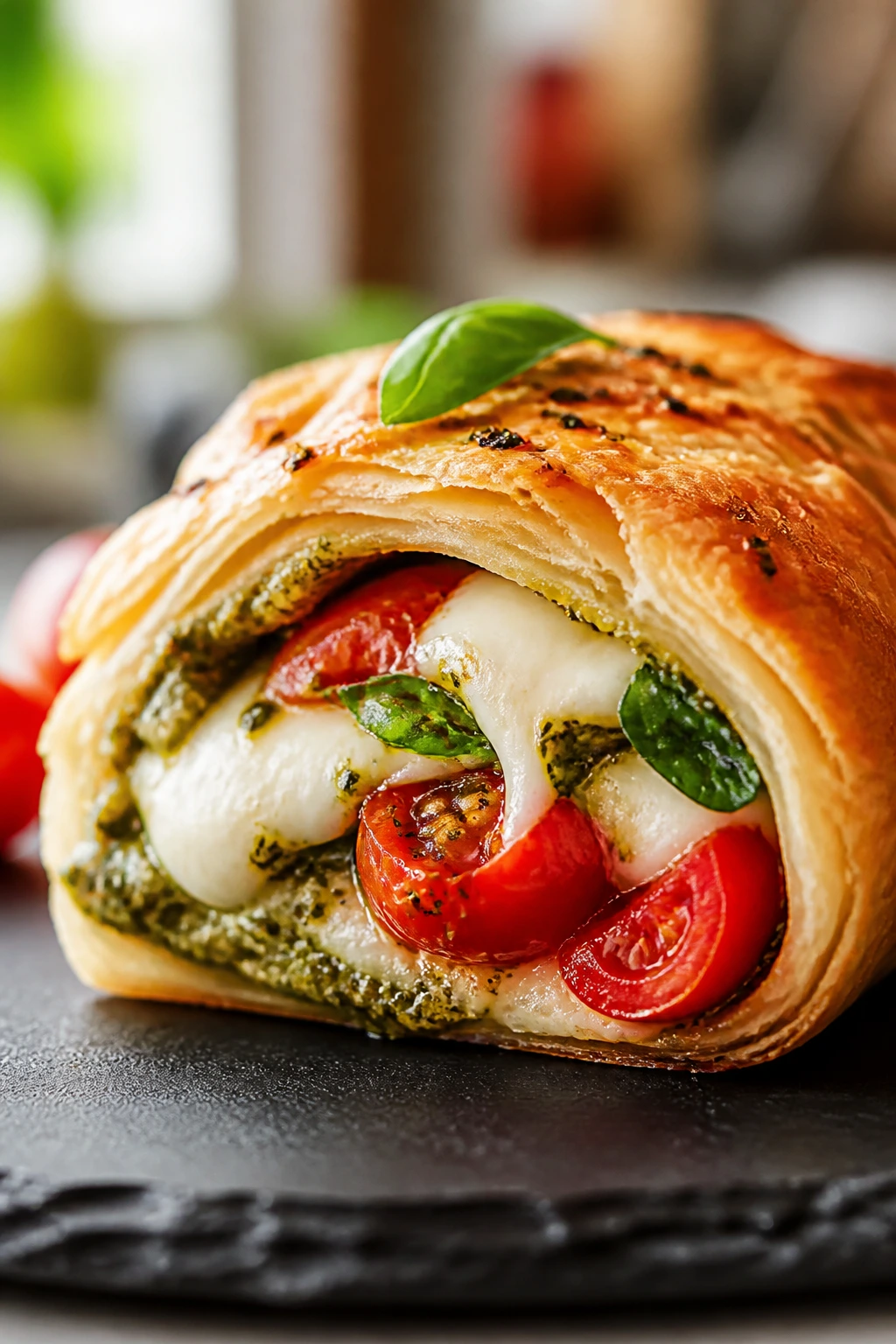
Caprese in roll form is basically a good idea wearing a better outfit. Tomato, basil, mozzarella, and pesto are already a clean combination; puff pastry just turns it into something flaky and a little more formal. The important move is drying the tomatoes well, because watery tomatoes will sabotage the pastry faster than anything else.
Why It Works:
The mozzarella melts into the pesto and creates a creamy center, while the basil keeps the whole thing sharp and green. Puff pastry gives the Caprese filling a crisp shell that’s easier to serve than a loose tart. If you want the flavor of a tomato-basil sandwich with more crunch and less mess, this is the version to make. It’s also one of the fastest baked rolls in the collection.
Key Ingredients:
- 2 sheets puff pastry, thawed
- 1 cup basil pesto
- 8 oz mozzarella, diced small or shredded
- 1 cup cherry tomatoes, halved and patted very dry
- 1/2 cup fresh basil leaves
- 1 egg, beaten, for brushing
- 2 tablespoons balsamic glaze
- Black pepper
Quick Steps:
- Pat the cherry tomatoes dry and let them sit on paper towels for a few minutes if they’re very juicy.
- Roll out the puff pastry slightly and spread a thin layer of pesto across each sheet.
- Scatter mozzarella, tomatoes, basil, and a little black pepper over the pesto.
- Roll the pastry into logs, seal the seam, and slice into pinwheel-style rounds or keep them as short rolls.
- Brush with egg wash and bake at 400°F (205°C) for 18 to 22 minutes until puffed and golden.
- Drizzle with balsamic glaze after baking.
Equipment for This Recipe:
- Baking sheet
- Parchment paper
- Sharp knife
- Pastry brush
- Paper towels for the tomatoes
How to Serve This Dish:
Serve these warm, drizzled with balsamic glaze, alongside a plain salad or a bowl of tomato soup. They’re rich enough to feel complete but still light enough to share from a platter. Two or three pieces make a satisfying snack; four can be dinner with a salad.
Pro Tips for This Recipe:
- Dry the tomatoes until they feel almost tacky. That’s the sweet spot.
- Keep the pesto layer thin. Too much makes the pastry wet in the middle.
- Slice with a serrated knife if the pastry puffs unevenly.
- Let them sit for 5 minutes before serving so the cheese settles.
Variations on This Dish:
- Sun-Dried Tomato Version: Swap fresh tomatoes for chopped sun-dried tomatoes when you want a more concentrated flavor.
- Goat Cheese Caprese: Replace some mozzarella with goat cheese for a tangier filling.
- Spinach Add-In: Add a handful of chopped baby spinach for more green and less richness.
Common Mistakes to Avoid with This Dish:
- Using wet tomatoes: The pastry turns soggy and the seam leaks.
- Too much pesto: It puddles and prevents puffing.
- Cutting while piping hot: The cheese runs everywhere. Give the rolls a short rest.
16. Loaded Veggie Pinwheels
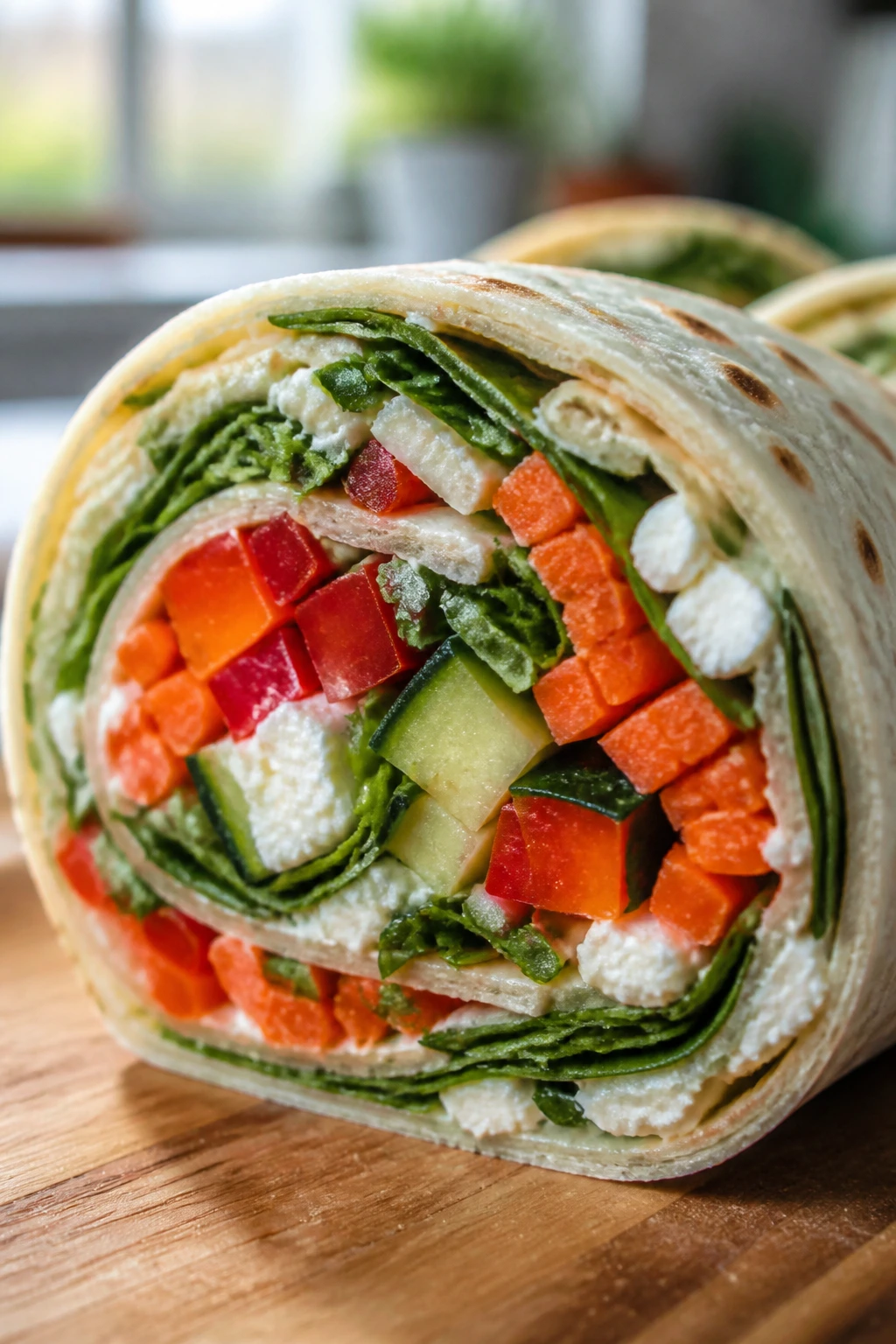
These are the cleanest lunchbox rolls in the set, and also the most customizable. Cream cheese or hummus gives the tortilla grip, then crunchy vegetables, feta, and herbs keep the slices lively. I like these when I want something cold that still feels layered, not just spread-and-wrap monotony.
Why It Works:
Pinwheels hold best when the vegetables are chopped small and the spread is thick enough to act like mortar. The zucchini needs to be squeezed dry or it will bleed water into the tortilla, which is the one thing that turns a neat spiral into a limp one. Feta or a sharp cheese keeps the filling from tasting too soft. These are the rolls that reward a sharp knife and a short chill. Not glamorous. Just useful.
Key Ingredients:
- 4 large flour tortillas
- 8 oz cream cheese or hummus, softened
- 1 cup baby spinach, chopped
- 1 red bell pepper, finely diced
- 1 carrot, finely shredded
- 1/2 zucchini, grated and squeezed dry
- 1/3 cup feta
- 2 scallions, finely sliced
- 1 tablespoon chopped dill or chives
Quick Steps:
- Pat the zucchini dry in a towel until it stops dripping.
- Mix the cream cheese or hummus with dill or chives so the spread has a little flavor of its own.
- Spread the mixture edge to edge on each tortilla in a thin, even layer.
- Scatter spinach, bell pepper, carrot, zucchini, feta, and scallions over the surface.
- Roll tightly from the bottom, wrap each roll, and chill for 20 minutes so the spiral firms up.
- Slice into pinwheels with a sharp serrated knife.
Equipment for This Recipe:
- Box grater
- Clean kitchen towel
- Sharp serrated knife
- Cutting board
- Wrap or parchment for chilling
How to Serve This Dish:
Serve these cut side up on a platter with extra dill scattered over the top and a small bowl of ranch or herb yogurt on the side if you want dipping. They travel well for lunch and work nicely beside fruit, chips, or a simple soup. Six to eight pinwheels per person is a reasonable snack portion.
Pro Tips for This Recipe:
- Squeeze the zucchini until it feels almost dry. That one step saves the spiral.
- Don’t smear the spread all the way to a ragged edge if your tortillas are fragile; leave a narrow clean strip on one side for a tidy seam.
- Chill before slicing or the rolls will squish.
- If using hummus, choose a thick one. Thin hummus slides.
Variations on This Dish:
- Everything Bagel Version: Stir everything bagel seasoning into the spread for a sharper, saltier finish.
- Mediterranean Swap: Replace the carrot with chopped roasted red pepper and add chopped olives.
- Dairy-Free Version: Use hummus or whipped white beans instead of cream cheese.
Common Mistakes to Avoid with This Dish:
- Too much filling: Pinwheels need restraint or the spiral falls apart.
- Wet zucchini: It’s the sneaky problem ingredient in this one.
- Slicing before chilling: Warm rolls flatten when the knife hits them.
Why Veggie Rolls Work So Well on Meatless Monday
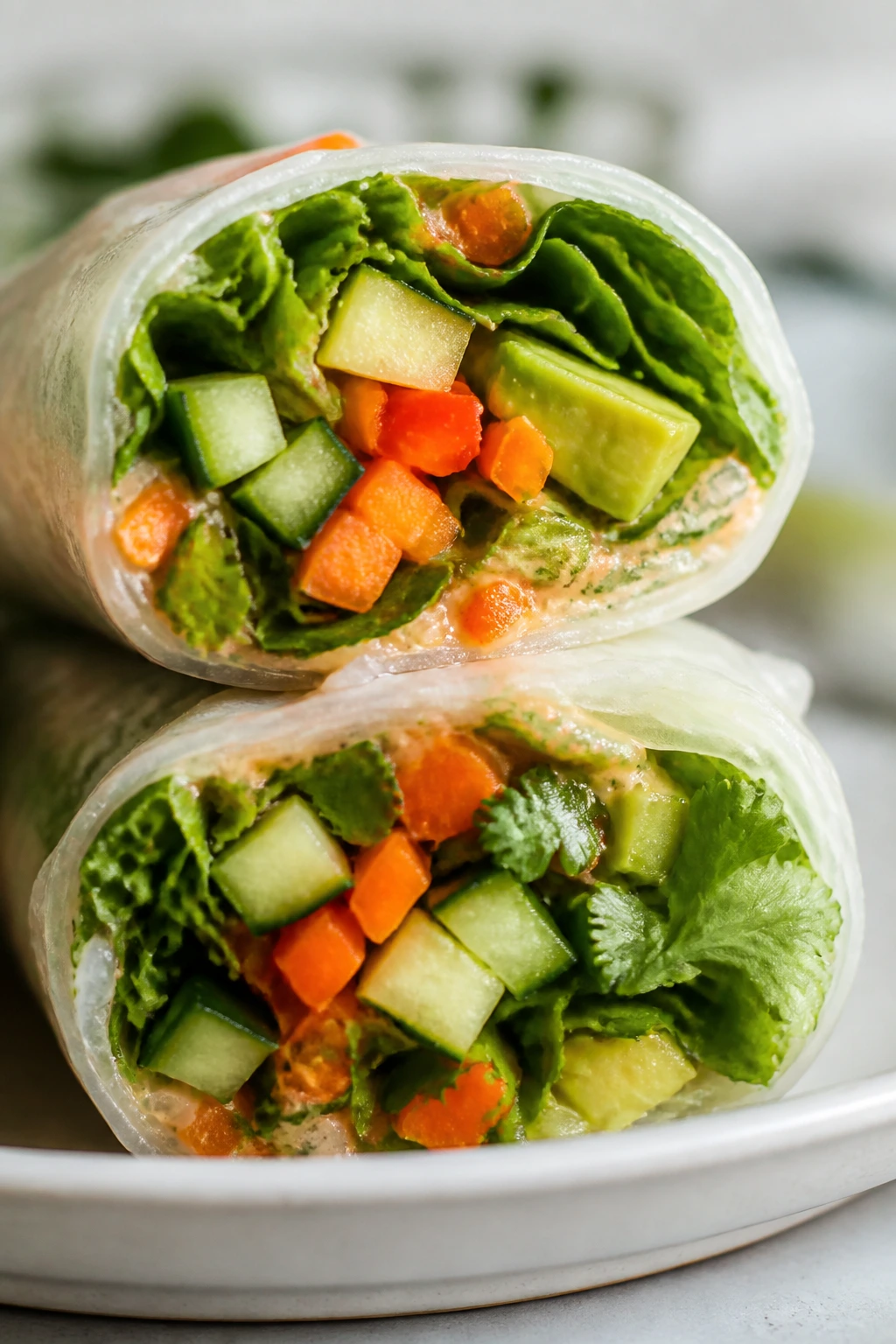
There’s a reason these veggie rolls feel more satisfying than a random salad and less fussy than a three-pan dinner. The wrapper — whether it’s rice paper, pastry, nori, tortilla, phyllo, or an egg roll shell — gives the vegetables shape. That matters. Without a container, a lot of meatless fillings taste fine but eat like an afterthought.
The other thing these recipes do well is balance. Fresh rolls lean on herbs and cool crunch. Baked rolls rely on caramelized edges and a little fat to keep the filling from drying out. Pinwheels and wraps use spreads and chopped vegetables to make every slice hold together. In practice, that means you can match the style to the kind of evening you’re having. Crisp and hot. Cool and fast. Flaky and savory. Same general idea, different mood.
If you’re trying to keep a meatless rotation interesting, this format saves you from the same old pasta-and-sauce loop. It also scales nicely. One tray can work as dinner, an appetizer, or lunch for the next day if you pack the wet pieces separately. And because the fillings here are built from vegetables, beans, tofu, herbs, and a few smart dairy choices, the grocery list stays grounded. No hunting for three specialty items and a prayer.
Essential Equipment for These Recipes
-
Sharp chef’s knife: Thin, clean cuts matter for every roll here, especially sushi, pinwheels, and fresh rice paper rolls.
-
Cutting board with a damp towel underneath: It keeps slick wrappers from sliding when you roll or slice them.
-
Rimmed baking sheets: You’ll use these for egg rolls, taquitos, puff pastry, and anything that needs hot air around it.
-
Parchment paper: It keeps baked rolls from sticking and makes cleanup a lot easier when cheese or sauce leaks.
-
Pastry brush or oil spray: Useful for egg rolls, taquitos, and puff pastry so the tops brown instead of going dull.
-
Bamboo sushi mat: Not required for every recipe, but it makes sushi rolls and gimbap much easier to shape tightly.
-
Large skillet or wok: Handy for sautéing mushroom fillings, wilting spinach, or searing tofu before rolling.
-
Clean kitchen towels: You’ll need at least one for squeezing moisture out of spinach, zucchini, or cabbage.
-
Small mixing bowls: Keep sauces separate and small enough that you can whisk without smearing the counter.
-
Shallow dish or pie plate: Best for softening rice paper wrappers in water without breaking them.
Smart Shopping for Wrappers, Greens, and Fillings
Buy wrappers with the end use in mind. Rice paper should feel dry and stiff in the package, not sticky or bent into a curled mess. Egg roll wrappers want to be pliable, not cracked at the corners. Puff pastry should still be cold when you bring it home, and phyllo needs to stay frozen until the day before you use it. If a package looks damaged or dried out, skip it. You’ll pay for that later in broken seams and wasted filling.
Vegetables need to be drier than people think. Choose cucumbers that feel firm, mushrooms that look dry instead of slimy, and cabbage that feels heavy for its size. Avoid tomatoes that are already leaking in the produce bag unless you’re serving them raw and not baking them into pastry. For rolls that rely on crispness, moisture control is everything. I’d rather buy a smaller amount of good produce than a giant bag that turns watery by dinner.
For cheese, buy blocks and shred when you can. Pre-shredded cheese has its place, especially in a hurry, but block cheddar and mozzarella melt with a cleaner texture. Feta should be creamy and not sand-like; ricotta should taste fresh, not sour. Tofu works best when it’s extra-firm and pressed. Beans should be drained and rinsed, then patted dry if you’re rolling them into tortillas or pastry. Little details. Big difference.
Herbs deserve a mention too. Mint, basil, dill, cilantro, parsley, and scallions can turn a quiet vegetable roll into something with actual lift. If the herbs look limp, pass. If they smell strong when you rub a leaf, they’ll do their job. And if you see a good sale on cabbage, carrots, or sweet potatoes, take it. Those vegetables do a lot of work here without asking for much back.
How to Serve These Veggie Rolls
Presentation:
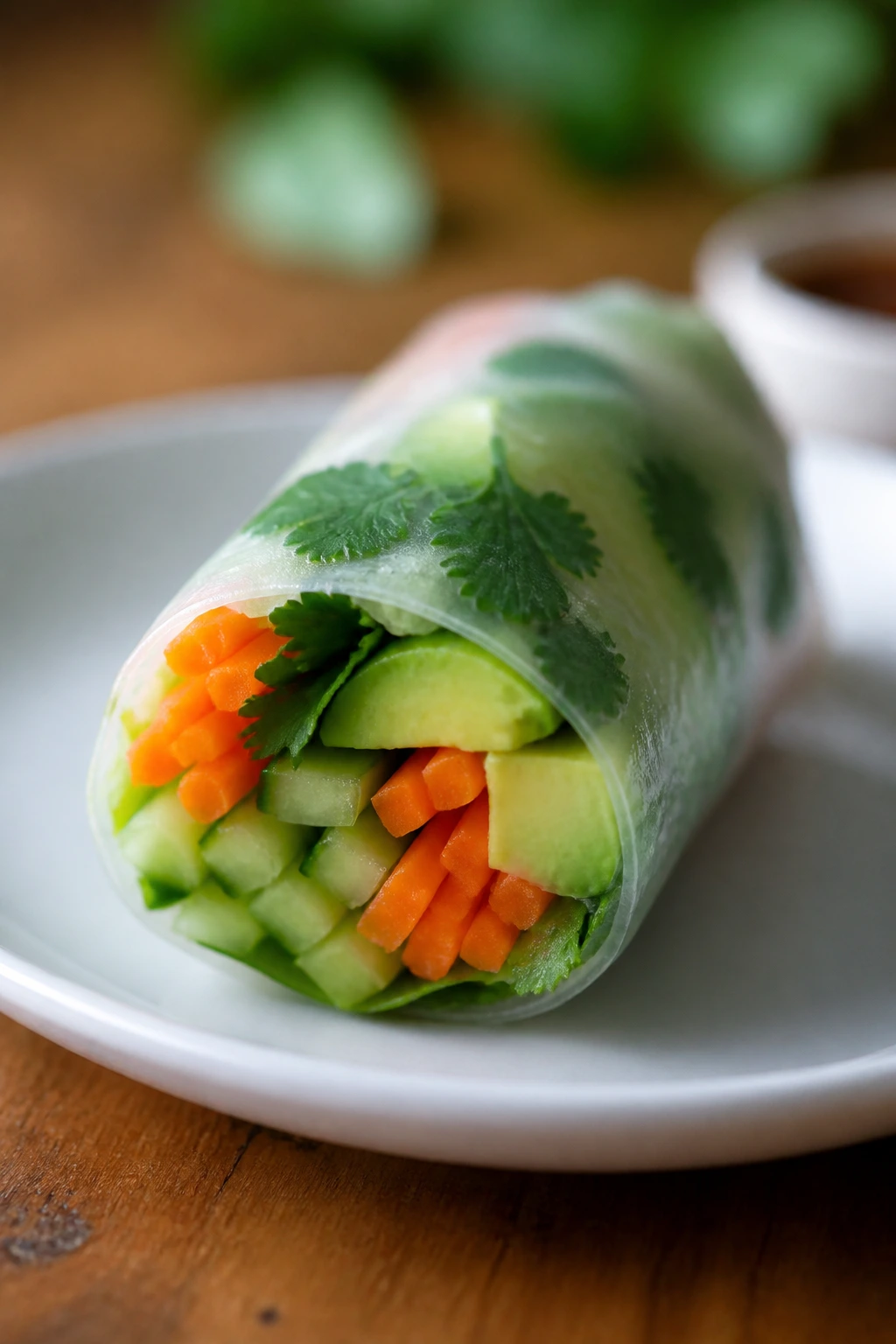
Mix textures on the platter instead of lining everything up like a school cafeteria tray. Fresh rolls can be halved on the diagonal, egg rolls can stay whole, and pinwheels should be stacked cut-side up so the spirals show. Put saucy dips in small bowls, not big ones, so they don’t spill over the crisp rolls.
Accompaniments:
A crisp cucumber salad, a simple green salad, or a bowl of broth-based soup works across the whole collection. For the baked rolls, think tomato soup, miso soup, or a light slaw. For fresh rolls and sushi, keep it cool: pickled ginger, sesame salad, edamame, or a vinegary cucumber dish. The goal is contrast, not competition.
Portions:
Fresh rice paper rolls are usually a 2- to 3-roll serving for lunch and 3 to 4 for dinner if you add a side. Egg rolls, taquitos, and puff pastry rolls are richer, so 2 to 3 pieces with salad is often enough. Sushi rolls and gimbap slice into 6 to 8 pieces, and pinwheels can be counted more like bites than full servings.
Beverage Pairing:
Iced green tea, sparkling water with lime, or ginger beer fit nearly all of these. If you want something with a little more body, a dry white wine like sauvignon blanc works with the fresh and herb-heavy rolls, while a light lager or pilsner suits the hot baked ones. Keep the drink simple. The rolls are doing enough already.
Additional Tips and Flavor Boosters
Flavor Enhancement:
A small finishing move goes a long way. A squeeze of lime over fresh rolls, a drizzle of balsamic glaze over Caprese puff pastry, or a dusting of sesame seeds over gimbap changes the final bite more than another tablespoon of filling ever will. Chili crisp, pesto, tahini, and herb oils are all good here because they sit on top instead of soaking through.
Customization:
If you want more protein, tofu, edamame, falafel, beans, or lentils can be tucked into most of these without wrecking the structure. If you want more crunch, add shredded cabbage, jicama, or carrot. If you want richer rolls, use cream cheese, ricotta, feta, or avocado. The best version is the one that keeps the wrapper intact and the filling balanced.
Serving Suggestions:
Use fresh herbs as garnish, not decoration. Mint on spring rolls, dill on pinwheels, basil on Caprese rolls, cilantro on the carrot-ginger batch — those little green finishes do real work. A few sesame seeds, black pepper, or flaky salt also help the rolls taste intentional instead of assembled. Tiny thing. Big payoff.
Make-It-Yours:
For gluten-free eaters, rice paper, sushi rolls, and corn tortillas are the safest places to start, as long as the sauces use tamari instead of soy sauce. For dairy-free versions, hummus, tahini, avocado, and roasted vegetables carry the flavor without needing cheese. For kids, dial back raw onion, chili heat, and anything too sharp; sweet potato taquitos, broccoli cheddar rolls, and pinwheels usually land well.
Make-Ahead, Storage, and Reheating Guidance
Fresh rice paper rolls, sushi rolls, and pinwheels are best the day they’re made. You can prep the fillings a day ahead, though, and that’s the smart move if you’re trying to keep dinner calm. Store fillings in separate containers so the wetter pieces don’t bleed into the dry ones. Once assembled, fresh rolls hold for about 24 hours in the fridge if wrapped snugly and kept under a barely damp paper towel, but they’re at their best within a few hours.
Baked rolls — egg rolls, taquitos, phyllo rolls, puff pastry rolls, and crescent rolls — are more forgiving. Let them cool completely, then store them in an airtight container lined with parchment for up to 3 days in the fridge. For freezing, wrap them individually and freeze for up to 2 months. Reheat in a 375°F to 400°F oven or air fryer until the outside crisps again; usually 8 to 12 minutes in the oven or 4 to 6 minutes in the air fryer, depending on size.
Sauces need their own space. Peanut sauce, tahini sauce, ranch, balsamic glaze, and soy-based dips all keep better in small lidded containers than they do slathered over the rolls. If you’re packing lunch, keep wet and dry separate until the moment you eat. That’s especially true for rice paper, tortilla wraps, and anything with tomatoes or cucumber. The rolls don’t like being made to sit in their own steam.
Room temperature is a short window only. Give cooked rolls no more than 2 hours out before moving them to the fridge, and give fresh rolls even less if they’re sitting under warm lights or direct sun. If a roll smells dull, feels sticky, or has visible condensation trapped inside the wrapper, don’t try to rescue it with sauce. Start over. It’s faster than pretending.
Variations and Adaptations to Try
Crunch-First Version:
Lean into vegetables that keep their shape: cabbage, carrots, cucumber, radish, bell pepper, and snap peas. This style works best in rice paper, nori, and tortillas because the filling stays sharp instead of soft. If you like a loud bite, this is the lane.
Dairy-Free Build:
Use hummus, tahini, mashed avocado, or cashew cream in place of ricotta, cream cheese, and ranch-style fillings. Puff pastry and phyllo still work if you keep the filling dry and the sauce on the side. The trick is to make sure you replace the richness, not just remove it.
Protein-Heavy Swap:
Add tofu, tempeh, edamame, falafel, black beans, or lentils depending on the wrapper. Fresh rolls like tofu and edamame; baked rolls like beans and lentils; sushi and gimbap like tofu or cucumber with a little sesame oil. That keeps the rolls filling enough to stand in for dinner.
Mild, Kid-Friendly Batch:
Skip raw onion, kimchi, too much black pepper, and hot sauce. Sweet potato taquitos, broccoli cheddar rolls, pinwheels, and Caprese puff pastry usually work well when the seasoning stays simple. Leave dipping sauces on the side so people can choose their own level.
Spicy Finish Pack:
If heat is your thing, keep the roll itself moderate and finish with chili crisp, sriracha mayo, harissa yogurt, or gochujang dipping sauce. That gives you control, which matters more than hiding spice in the filling. A little heat on the outside feels cleaner.
Regional Twist Batch:
Push the flavors in one direction and let the wrapper follow. Go Mediterranean with hummus, olives, and feta. Go Thai with peanut sauce, mint, and basil. Go Korean with kimchi, sesame oil, and tofu. Go Italian with pesto, tomato, and mozzarella. The structure stays the same. The mood changes completely.
Common Mistakes to Avoid
The biggest mistake is overstuffing. People want a roll that looks generous, so they pile in half the bowl, and then the wrapper splits or the seam refuses to close. Use less filling than your instinct says, especially with rice paper, tortillas, and puff pastry. A roll that closes cleanly always tastes better than a stuffed one that leaks halfway to the plate.
Wet fillings cause more trouble than bad seasoning ever will. Cabbage that wasn’t squeezed, cucumbers that weren’t patted dry, mushrooms that were left soupy, tomatoes that kept their seeds — all of that ends in a soft, floppy roll. Dry the vegetables, cool the cooked fillings, and drain anything briny or juicy. It’s not fussy. It’s the job.
Another common problem is picking the wrong wrapper for the filling. Heavy, wet fillings belong in sturdier shells like tortillas, phyllo, egg roll wrappers, or cabbage leaves. Delicate fillings belong in rice paper or nori. If you try to put a wet mushroom mix into rice paper and expect good behavior, the wrapper will disagree with you in about 30 seconds.
Then there’s the impatience issue. Hot fillings steam wrappers from the inside, fresh rolls get gummy if they sit too long, and baked rolls go soft if they’re boxed up while still warm. Let things cool when they need to cool, and serve the rolls at the temperature they were built for. Fresh means fresh. Crisp means crisp. Warm means warm.
Finally, don’t ignore the knife. A dull blade ruins sushi, gimbap, pinwheels, and even fresh rolls because it drags instead of slicing. Wipe the blade between cuts, wet it when the filling is sticky, and use the sharpest knife you have. That one habit alone makes the whole platter look better.
Frequently Asked Questions
Which of these veggie rolls is easiest for a first-time cook?
Mediterranean pinwheels and broccoli cheddar crescent rolls are the least fussy. Neither asks you to manage delicate wrappers for long, and both can be adjusted easily if the filling seems loose.
Can I make these ahead for lunch?
Yes, but choose the right style. Pinwheels, baked egg rolls, taquitos, and crescent rolls hold well; fresh rice paper rolls and sushi are best assembled close to serving time, with the fillings prepped ahead instead.
How do I keep rice paper from tearing?
Dip it briefly, not for ages, and work on a damp surface. The wrapper should still feel a little firm when you lift it, because it keeps softening after it leaves the water.
Can I freeze any of these?
Baked rolls freeze much better than fresh ones. Egg rolls, taquitos, phyllo rolls, puff pastry rolls, and crescent rolls can all go into the freezer after cooling; rice paper, pinwheels, and sushi do not freeze well.
What if my tortillas crack when I roll them?
They’re probably too cold or too dry. Warm them for a few seconds under a damp towel or in a dry skillet so they bend without splitting.
What dipping sauces work across most of the recipes?
Peanut sauce, tahini-lemon sauce, ranch, soy sauce with lime, and a simple yogurt dip all show up more than once here for a reason. They’re versatile enough to match different fillings without fighting them.
How do I make these more filling without adding meat?
Add tofu, falafel, black beans, lentils, edamame, or rice noodles. Those ingredients change the structure enough that the rolls can stand in for dinner instead of a side.
What’s the best way to reheat baked rolls without making them soggy?
Use a hot oven or air fryer, not the microwave. A few minutes at 375°F to 400°F brings the crispness back; the microwave just steams the wrapper.
Can I use store-bought fillings or shortcuts?
Absolutely. Rotisserie-style shortcuts don’t apply here, but pre-shredded carrots, store-bought hummus, pre-cooked rice, baked falafel, and jarred pesto all save time without ruining the texture. The main rule is still moisture control.
A Tray Worth Reaching For
A good Meatless Monday doesn’t need to feel like a penance. It needs a little crunch, a little salt, and a filling that knows how to hold together when you pick it up. That’s what these veggie rolls do when they’re built with care — they make vegetables feel purposeful instead of apologetic.
Pick one cold roll, one baked roll, and one that uses whatever wrapper is already in your freezer. That gives you a mix of textures, temperatures, and effort levels without making dinner complicated. Once you start thinking in rolls, a crisper drawer stops looking like a side note and starts looking like the main event.