



Garlicky veggie cups are the sort of healthy dinner I reach for when the fridge looks half-full of odds and ends but still has enough in it to make a real meal. A zucchini that’s gone a little soft, a few mushrooms, a handful of spinach, a pepper, some eggs — that’s all you need to make something that smells like garlic in hot olive oil and comes out of the oven with browned edges and a soft center.
What makes these work is discipline, not magic. The vegetables get cooked first, long enough to lose their water, and that one move keeps the cups from collapsing into a soggy little puddle. The egg-and-cottage-cheese mixture turns them into something more substantial than a side dish, but not so heavy that you need a nap after dinner.
I like this kind of recipe because it behaves like actual dinner. Put two or three cups on a plate with a sharp salad, a scoop of grain, or a slice of toast rubbed with garlic, and it feels composed. No drama. No pile of random vegetables pretending to be enough. Just a tidy, savory bake with crisp edges, lots of garlic, and the quiet satisfaction of making a muffin tin do more than it usually gets credit for.
Why These Garlicky Veggie Cups Earn a Place at Dinner
-
They use one skillet and one muffin tin. That keeps cleanup modest, which matters on nights when you’re already juggling chopping, dishes, and a sink that somehow filled itself.
-
The vegetables don’t turn watery. Mushrooms, zucchini, and spinach all lose moisture in the skillet first, so the cups set cleanly instead of steaming into a loose mess.
-
The garlic has actual depth. Some goes in early to perfume the oil, and the rest lands when the vegetables are almost done, so you get a rounded garlic flavor instead of a flat one-note bite.
-
They reheat better than a lot of egg bakes. The cottage cheese gives the centers a soft, creamy texture that stays pleasant after a trip through the fridge.
-
Dinner feels complete without much extra work. Add a salad, some rice, or a bowl of soup, and the cups stop reading like a snack and start acting like a meal.
-
They travel well. If someone eats late or you want lunch for tomorrow, these hold together in a lunch box far better than a loose scramble.
How One Muffin Tin Becomes Dinner
Yield: 12 standard muffin cups, about 4 to 6 dinner servings
Prep Time: 20 minutes
Cook Time: 24 minutes
Total Time: 44 minutes
Difficulty: Beginner — the steps are straightforward, but the vegetables need a real sauté so the cups set properly.
Chill/Rest Time: 10 minutes cooling before unmolding
Best Served: Warm, after a short rest, with a salad or grain on the side
A batch of 12 gives you some flexibility. If you’re serving them as the main event with a salad or roasted potatoes, count on 2 to 3 cups per person. If they’re part of a bigger spread, the same batch can feed more people without feeling stingy.
The rest time matters. I’d never call these fussy, but I would call them easier to remove after they’ve sat in the tin for 8 to 10 minutes. Straight from the oven, the edges are delicate; after a short pause, they settle into their shape and release cleanly.
What Goes Into the Muffin Tin
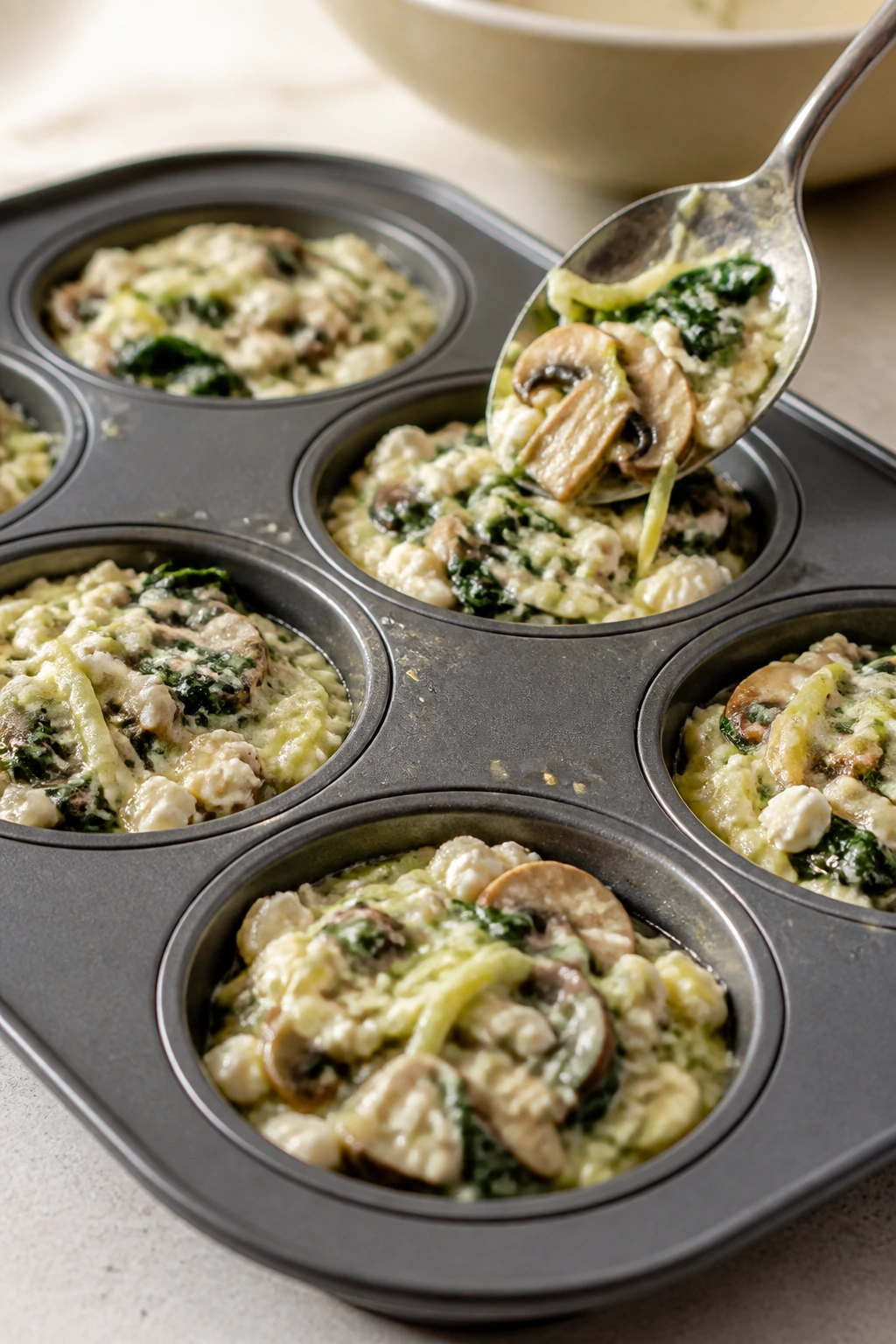
For the Vegetable Filling:
- 2 tablespoons extra-virgin olive oil
- 1 small yellow onion, finely diced
- 8 ounces cremini mushrooms, finely chopped
- 1 medium zucchini, grated on the large holes of a box grater and squeezed dry
- 1 red bell pepper, finely diced
- 2 packed cups baby spinach, roughly chopped
- 4 cloves garlic, minced
For the Egg Base:
- 6 large eggs
- 1 cup cottage cheese
- 1/4 cup chickpea flour or all-purpose flour
- 1/2 cup grated Parmesan cheese, divided
- 3/4 teaspoon fine sea salt
- 1/2 teaspoon black pepper
- 1 teaspoon dried oregano
- 1/4 teaspoon crushed red pepper flakes
For Finishing:
- 1/3 cup crumbled feta
- 2 tablespoons chopped fresh parsley
- Nonstick cooking spray or softened butter, for the muffin tin
That ingredient list looks short because it is short. The trick is choosing vegetables that cook down cleanly and a dairy base that sets with enough structure to hold them. Nothing here is decorative. Every item has a job.
Choosing Zucchini, Mushrooms, and Dairy That Bake Cleanly
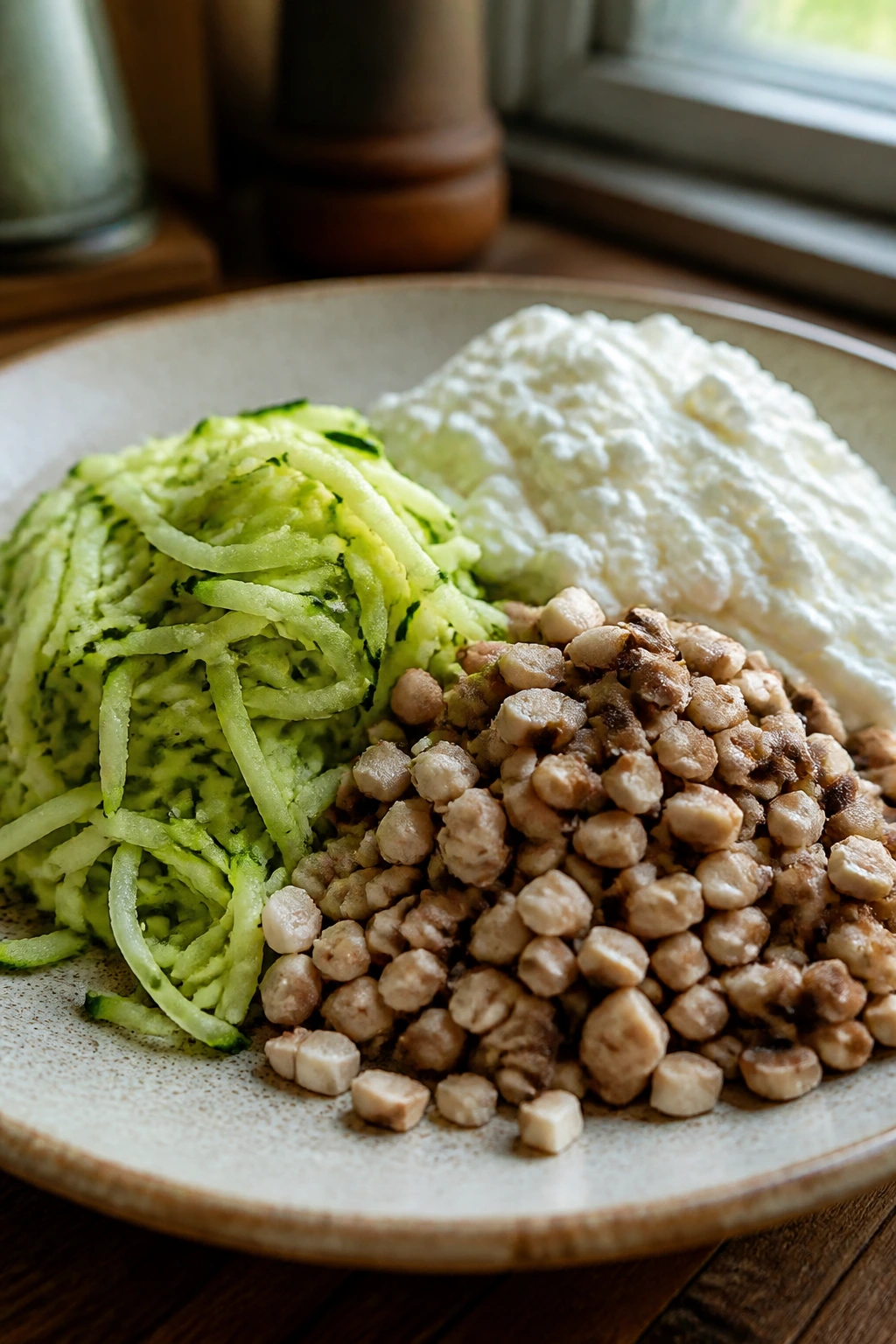
Zucchini and mushrooms need to be in the right mood
A small zucchini is better than a giant one here, and I mean that in the most practical way possible. Big zucchini tend to have spongy seeds and a lot more water, which is exactly what you do not want when you’re trying to get a set egg cup. Look for one that feels firm and smooth, no bigger than your forearm, and shred it on the large holes of a box grater so it can cook down quickly.
Mushrooms are the other place where a little judgment pays off. Cremini mushrooms give the cups a deeper, almost meaty background flavor, and they brown better than pale button mushrooms. If the package feels slimy or the caps look wet and sticky, put it back. You want mushrooms that are dry enough to sizzle, not mushrooms that are already trying to stew.
Cottage cheese should be thick, not watery
Cottage cheese adds body and a little tang, but it should not dump a puddle of whey into the batter. If yours looks loose, spoon it into a fine-mesh sieve for a few minutes while you cook the vegetables. That ten-second bit of draining is the difference between a custardy cup and a damp one.
Full-fat cottage cheese gives the smoothest result, though low-fat will work if that’s what you buy. I wouldn’t use anything with added herbs or extra salt; the Parmesan and feta already handle the savory side of the equation.
Parmesan and feta are not doing the same job
Parmesan adds the baked, nutty backbone. Feta brings a salty, crumbly pop that shows up in little pockets inside the cups. If you only have one of them, the recipe still works, but the flavor shifts: all Parmesan makes the cups more mellow, while all feta makes them sharper and saltier.
If you want the cleanest melt, grate the Parmesan from a wedge. Pre-grated is fine in a pinch, but the texture from a fresh grate is finer and it disperses better through the custard.
Why Each Ingredient Pulls Its Weight
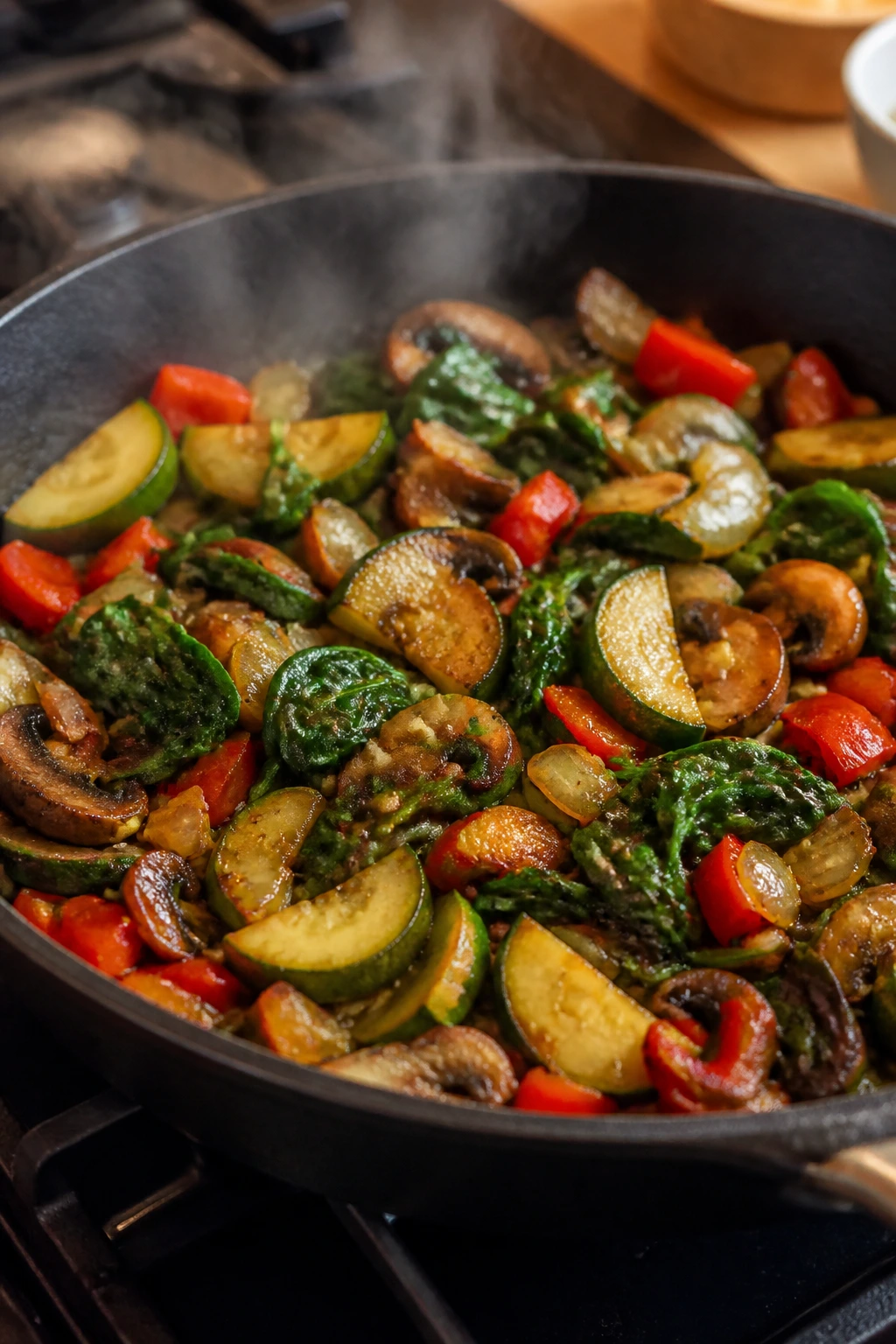
Vegetables
- What to use: 1 small yellow onion, 8 ounces cremini mushrooms, 1 medium zucchini, 1 red bell pepper, 2 packed cups baby spinach, and 4 cloves garlic.
- Preparation: Dice the onion and pepper small, chop the mushrooms finely, and squeeze the grated zucchini in a kitchen towel until it feels barely damp. Spinach can stay roughly chopped; it collapses fast in the skillet.
- Substitutions: Button mushrooms can stand in for cremini, yellow squash can replace zucchini, and chopped kale can replace spinach if you cook it a minute longer. Frozen spinach works too, but it has to be thawed and wrung out until it feels dry.
- Tips: Cook the mushrooms until the skillet looks almost dry again. That’s the point where their flavor deepens and the cups stop tasting like steamed vegetables.
Eggs, Cottage Cheese, and Flour
- What to use: 6 large eggs, 1 cup cottage cheese, and 1/4 cup chickpea flour or all-purpose flour.
- Preparation: Whisk the eggs hard enough that the yolks disappear into the whites, then stir in the cottage cheese and flour until the mixture looks mostly smooth. A few cottage cheese curds are fine.
- Substitutions: Ricotta makes a softer, richer cup; plain Greek yogurt can stand in for some of the cottage cheese if you want more tang; chickpea flour gives a slightly firmer, nuttier result than all-purpose flour. If you prefer a lighter texture, use all-purpose flour.
- Tips: The flour is not there to make these bready. It’s there to steady the custard so the cups slice cleanly and don’t slump the moment they leave the pan.
Cheese and Seasoning
- What to use: 1/2 cup grated Parmesan cheese, 1/3 cup crumbled feta, 3/4 teaspoon fine sea salt, 1/2 teaspoon black pepper, 1 teaspoon dried oregano, and 1/4 teaspoon crushed red pepper flakes.
- Preparation: Divide the Parmesan so some goes into the egg base and some gets scattered on top before baking. Crumble the feta by hand so you get bigger pockets instead of dust.
- Substitutions: Pecorino Romano can replace Parmesan if you like a sharper edge, and goat cheese can replace feta if you want a creamier, more tangy finish. If you’re using a very salty feta, scale the salt back a touch.
- Tips: Seasoning the egg base matters more than seasoning the vegetables alone. The salt needs to be in the custard so every bite tastes finished, not only the filling.
The Equipment That Keeps the Cups from Sticking
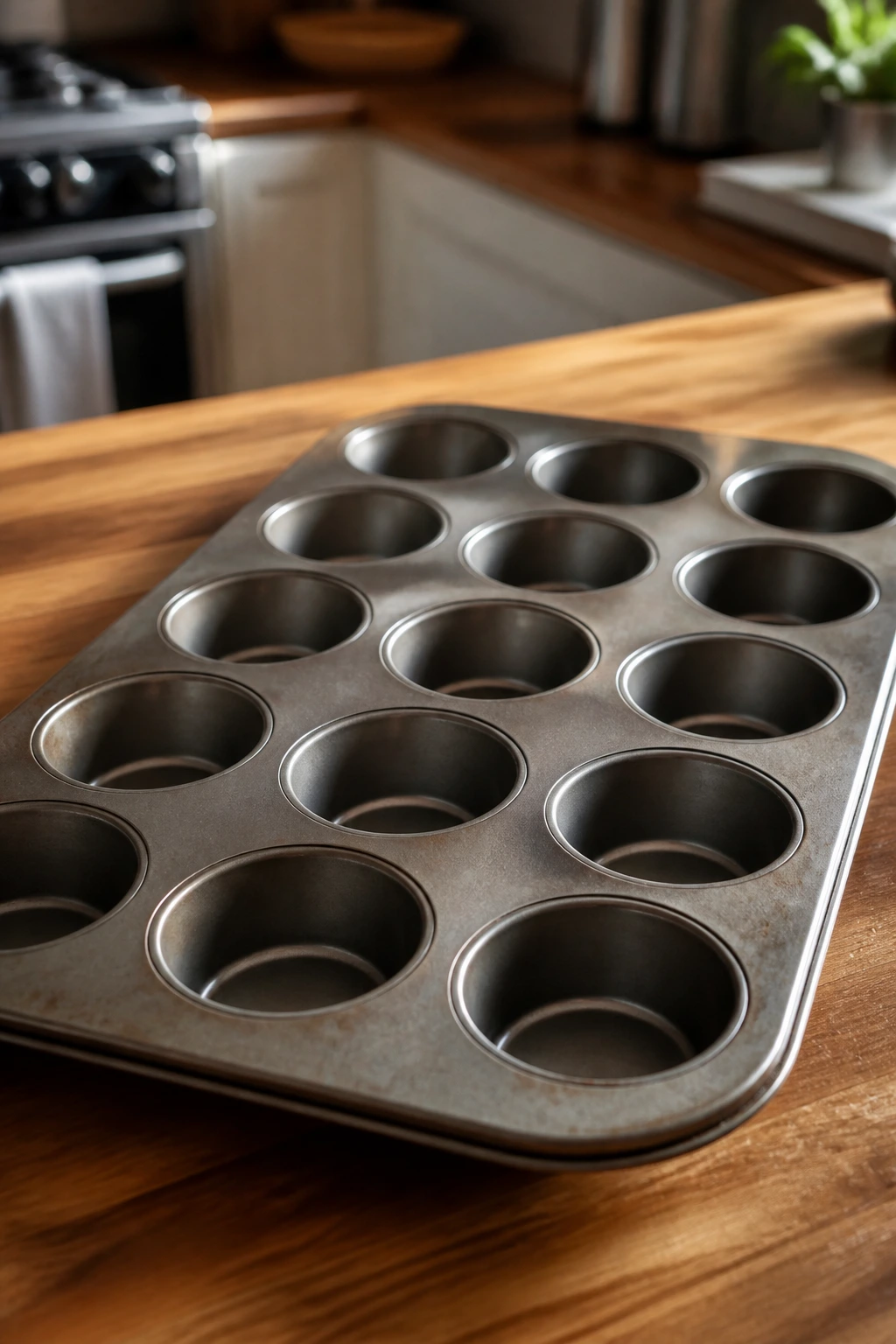
- 12-cup metal muffin tin — metal browns better than silicone, which matters when you want those little crisp edges.
- 12-inch skillet or wide sauté pan — wide enough to cook the vegetables in a thinner layer so moisture can evaporate quickly.
- Large mixing bowl — roomy enough to fold the vegetables into the egg mixture without sloshing.
- Whisk — useful for breaking up the cottage cheese curds and blending the eggs smoothly.
- Box grater — the large holes work best for zucchini; the fine side turns it into a wetter paste, which is not what you want here.
- Clean kitchen towel or cheesecloth — the easiest way to squeeze the zucchini dry.
- Silicone spatula — gentle enough for folding without smashing the vegetables.
- Instant-read thermometer — optional, but handy if you like a clean safety check; the centers should reach 165°F.
A metal muffin tin does two things at once: it gives you browning and it gives you shape. Silicone is fine if it’s what you own, but the cups won’t brown as deeply and they can be floppy when you move them. If you’re making these for dinner, the metal tin is the one I’d choose without thinking twice.
Sauté, Mix, Fill, Bake: The Method That Works
Prep the Pan and Oven
-
Preheat the oven to 375°F (190°C) and position a rack in the center. Grease a 12-cup muffin tin generously with nonstick cooking spray or softened butter, making sure the corners and sidewalls are coated.
-
Set the grated zucchini in a clean kitchen towel and squeeze firmly until no more water drips out. If the zucchini looks damp but no longer wet, you’re in the right zone. Do not skip this step — loose zucchini water is the fastest way to get soggy bottoms.
Cook Out the Vegetables
-
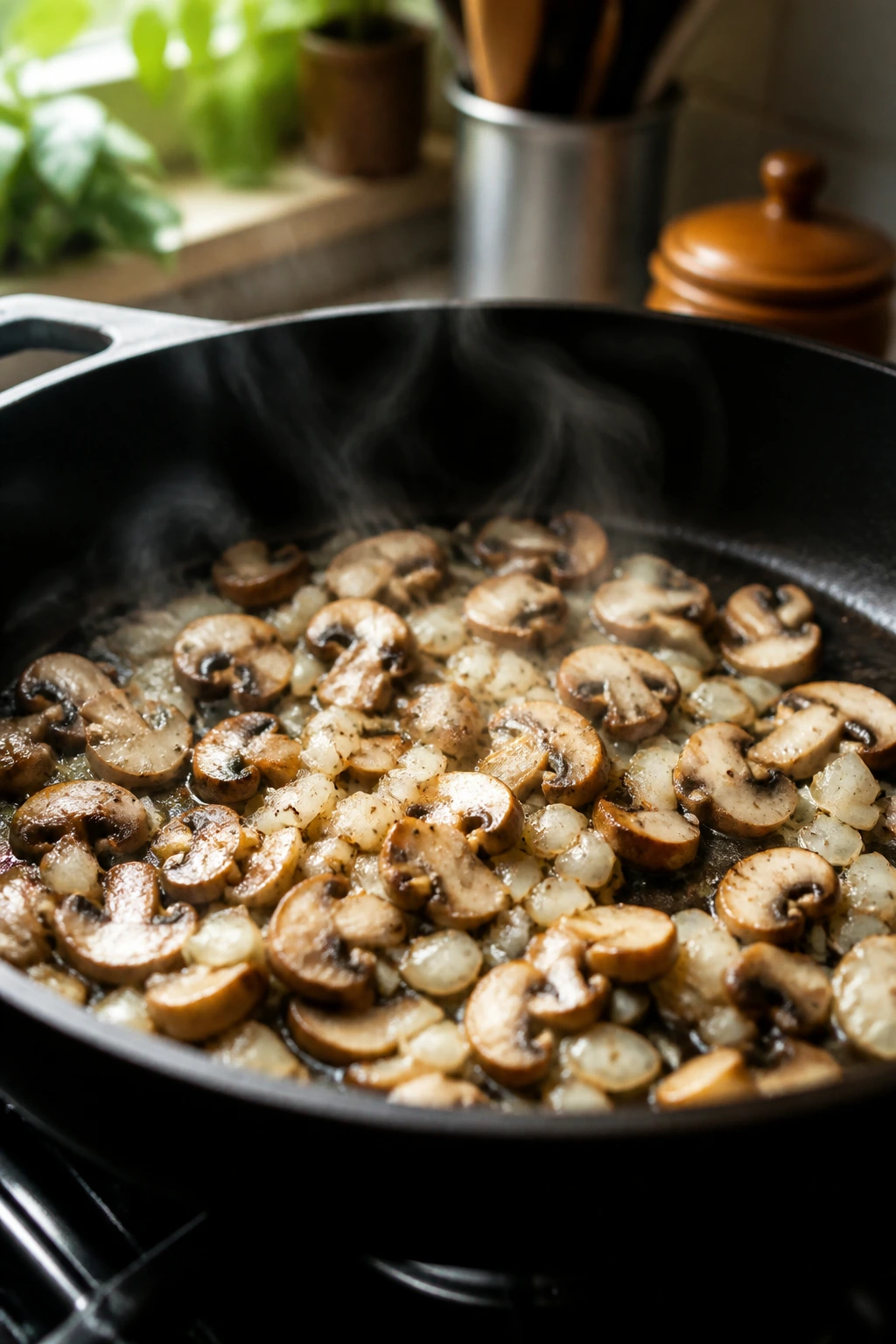
Warm the olive oil in a large skillet over medium heat. Add the onion and cook for about 3 minutes, stirring once or twice, until it softens and turns translucent at the edges.
-
Add the mushrooms and cook for 4 to 5 minutes, stirring occasionally, until they release their liquid and the pan looks almost dry again. The mushrooms should smell savory and start to take on a little color. If there’s still a puddle in the skillet, keep cooking.
-
Stir in the zucchini, red bell pepper, salt, black pepper, oregano, and crushed red pepper flakes. Cook for 3 to 4 minutes, until the zucchini loses its raw look and the pepper starts to soften.
-
Add the garlic and cook for 30 seconds, just until fragrant. Stir in the spinach and keep cooking for another 30 to 45 seconds, until it wilts and folds into the vegetables. Transfer the mixture to a bowl and let it cool for 8 to 10 minutes.
Mix and Bake
-
In a large bowl, whisk the eggs, cottage cheese, flour, 1/4 cup of the Parmesan, and the parsley until the mixture looks mostly smooth. A few curds from the cottage cheese are fine. If the vegetables are still hot, wait — hot filling can start setting the eggs before the cups even hit the oven.
-
Fold the cooled vegetable mixture and the feta into the egg base, stirring just until everything is evenly distributed. Spoon the mixture into the prepared muffin cups, filling each one about three-quarters full. Sprinkle the remaining 1/4 cup Parmesan evenly over the tops.
-
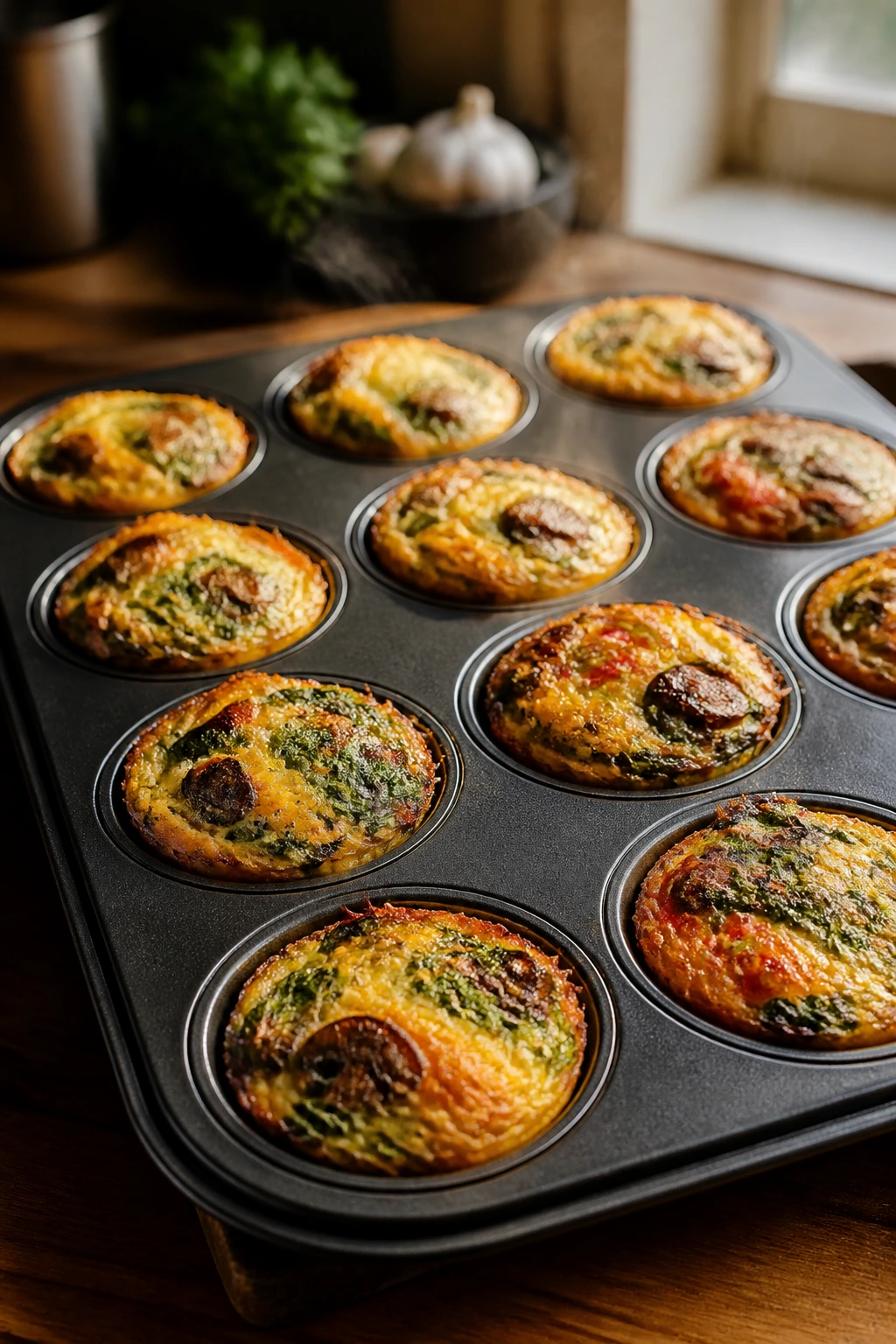
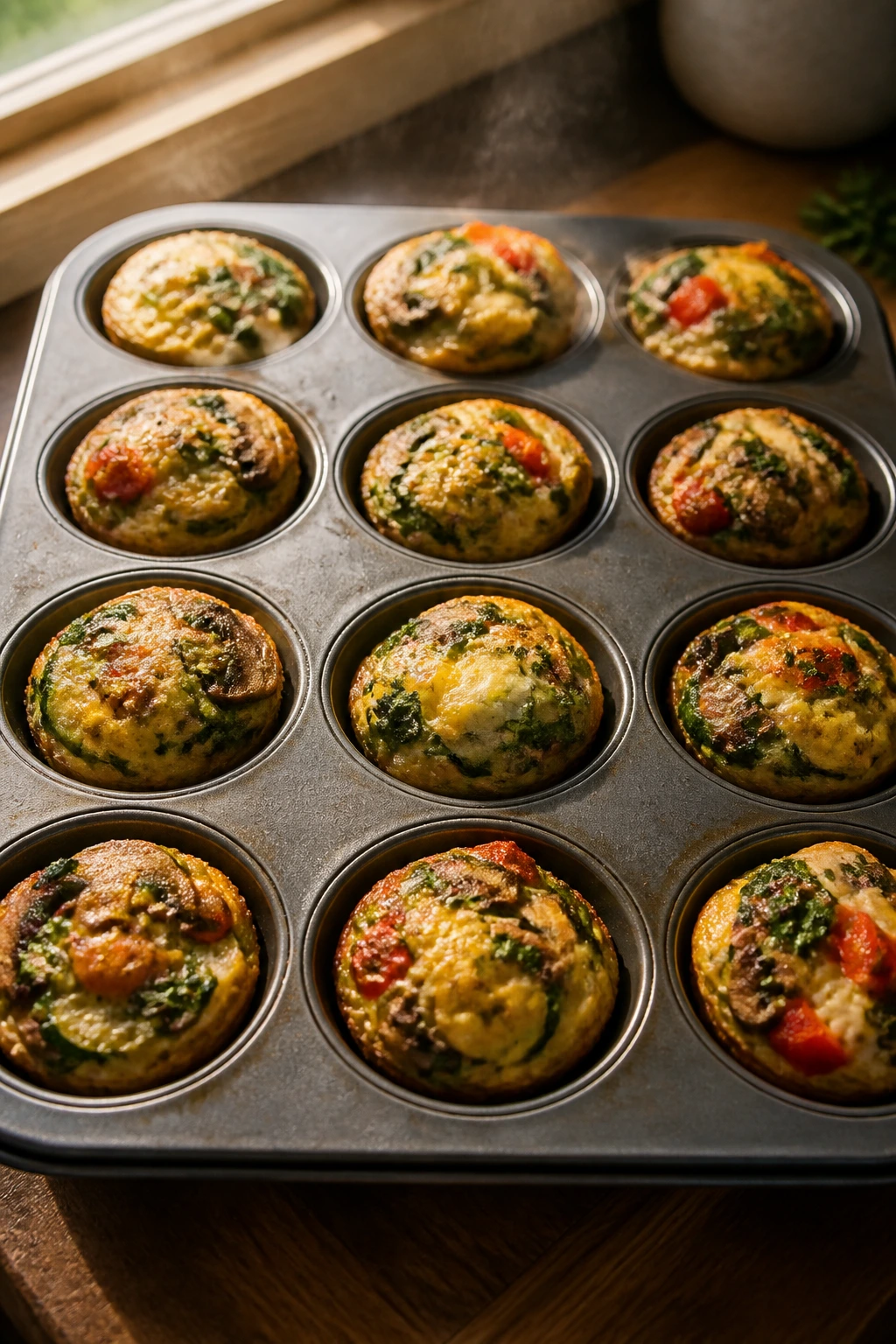
Bake for 20 to 24 minutes, until the tops are puffed, the edges are lightly golden, and the centers are set. An instant-read thermometer inserted into the middle should read 165°F. Remove the pan from the oven and let the cups rest for 8 to 10 minutes before loosening them with a thin knife and lifting them out.
That rest after baking is not a cosmetic suggestion. The cups tighten as they cool, which makes them easier to lift and less likely to tear. Straight out of the oven, they’re tender. After a short pause, they become clean-edged little dinner cups.
How to Plate Them So Dinner Feels Finished
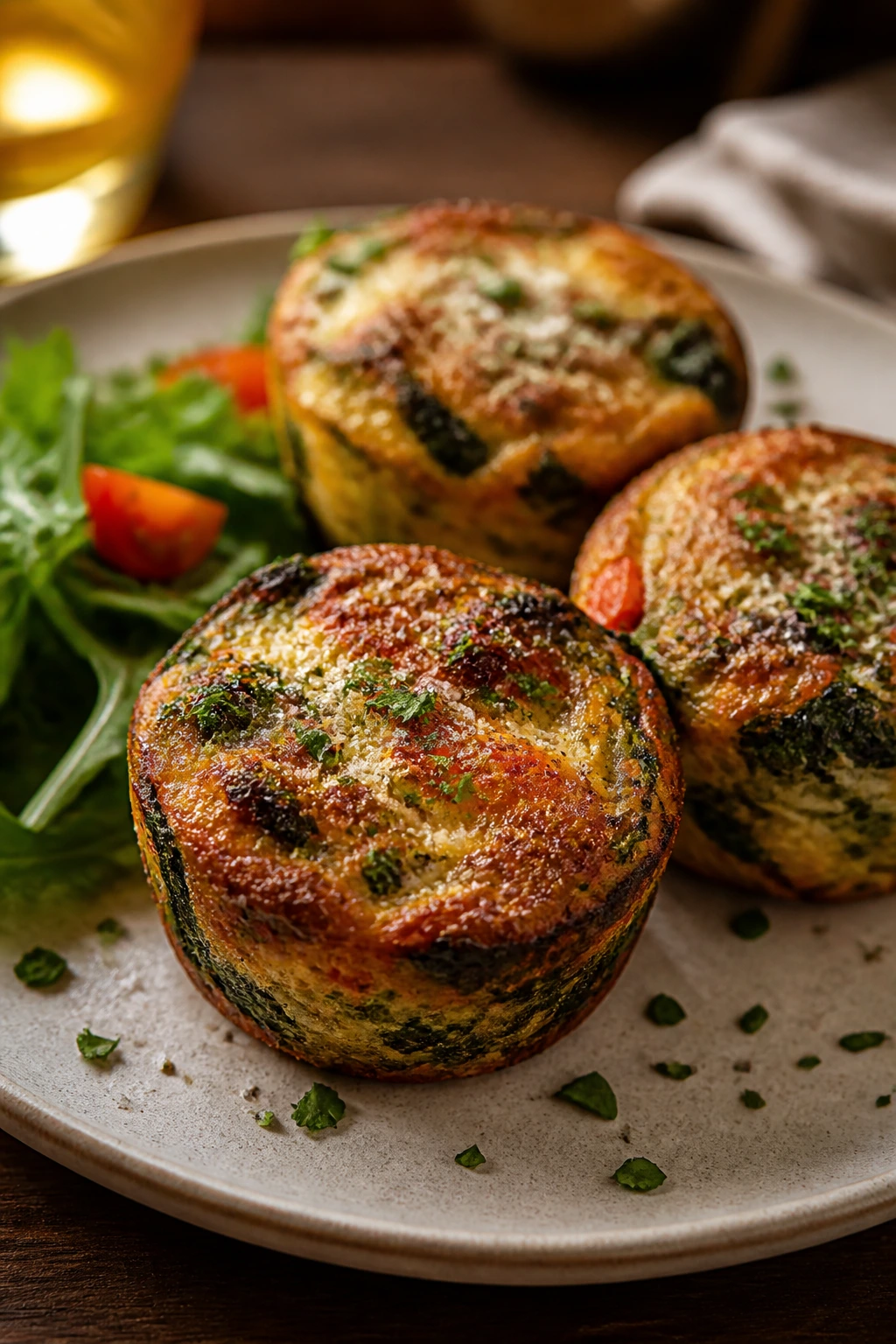
Presentation: Serve 2 or 3 veggie cups on each plate, with the browned tops facing up so the Parmesan freckles are visible. A little chopped parsley or chive scattered over the top makes the dish look awake, not just reheated.
Accompaniments: I like these with a lemony arugula salad, sliced tomatoes with olive oil and salt, or roasted potatoes if you want a more filling dinner. A spoonful of plain yogurt mixed with a pinch of salt and garlic powder gives you a cool, tangy side sauce that plays well with the warm cups.
Portions: Count on 2 cups per person for a lighter dinner with a side salad, or 3 cups per person if these are the main event. The batch makes 12 cups, so it stretches to 4 hearty servings or 6 lighter ones without any awkward math at the table.
Beverage Pairing: Sparkling water with lemon keeps the meal bright, and a dry white wine works if you want something with dinner that night. Unsweetened iced tea is also good here because it doesn’t step on the garlic or the feta.
The cups don’t need a lot of dressing up. Their whole personality comes from the browned edges and the sharp, savory smell when you cut into one. Keep the sides simple and crisp; a pile of creamy mashed potatoes next to them would feel oddly heavy.
Small Moves That Make the Garlic Taste Fuller
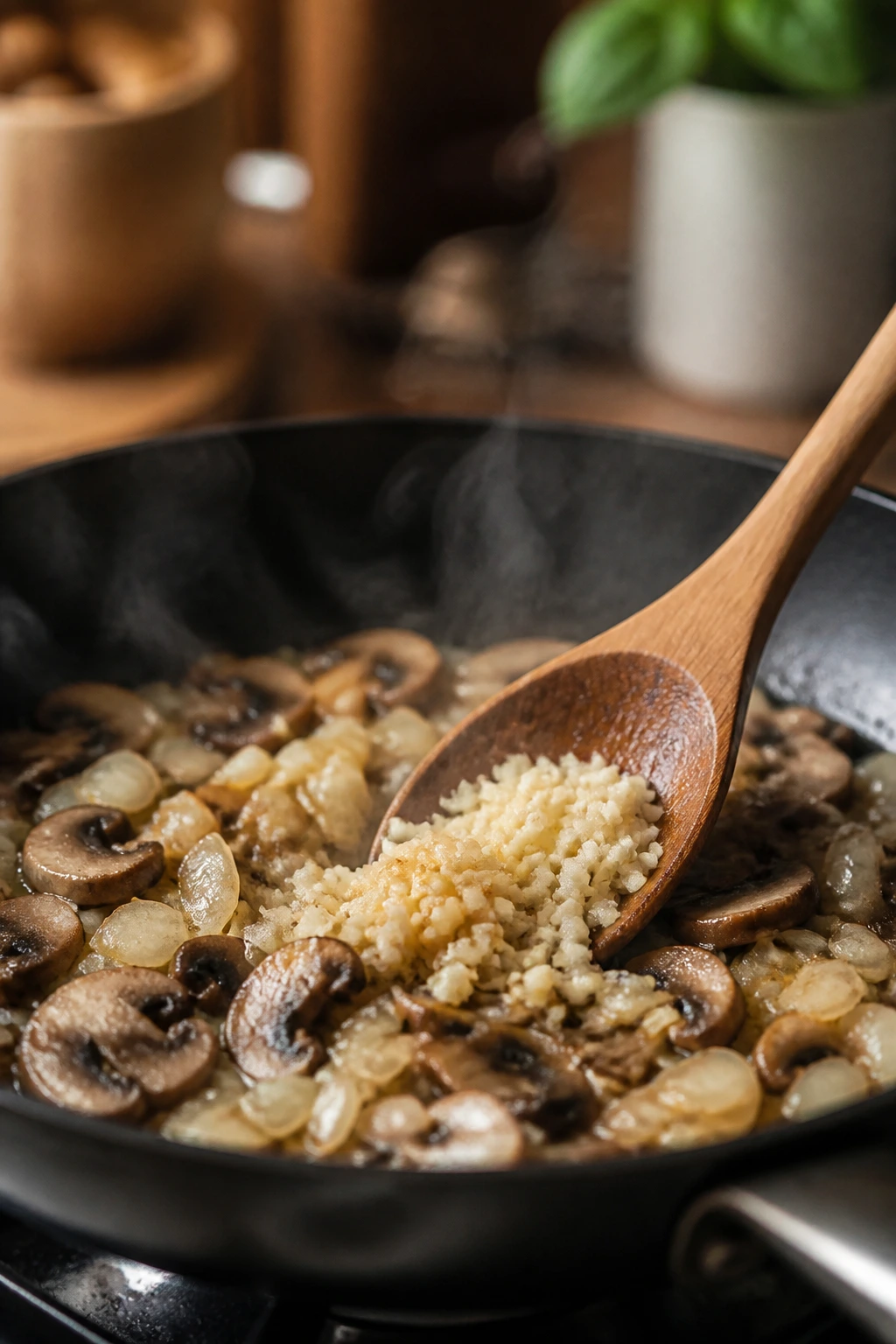
Flavor Enhancement: Use the garlic in two stages if you want a deeper result. Stir half of it in with the mushrooms and onion, then add the rest with the zucchini and pepper; the first batch mellows in oil, while the second keeps the finished cups from tasting flat.
Time-Saver: Chop the onion, pepper, and mushrooms while the oven is preheating. If you move straight from heating the oven to heating the skillet, the whole dish feels faster than it looks on paper.
Pro Move: Let the cooked vegetables cool on a plate or in a shallow bowl instead of leaving them in the hot skillet. A shallow layer loses steam faster, and that one detail helps the egg mixture stay smooth.
Cost-Saver: Button mushrooms and store-brand cottage cheese both work. If you’re going to spend a little extra anywhere, spend it on the Parmesan; a sharp wedge brings more savory depth than a larger amount of mediocre cheese.
Make-It-Yours: A spoonful of chopped dill, basil, or chives changes the tone without changing the recipe’s structure. Dill makes the cups feel brighter, basil leans more Mediterranean, and chives keep the garlic flavor front and center.
A squeeze of lemon at the table is worth considering too. Not in the batter. On the plate. The acidity sharpens the cheese and makes the vegetables taste fresher, which matters when the recipe leans savory and rich.
The Mistakes That Make Savory Cups Soggy or Rubbery
-
Wet zucchini going straight into the bowl. The symptom is a soft, damp bottom that never really sets. The fix is simple: grate the zucchini, salt it lightly if you want to be extra cautious, and squeeze it in a towel until no liquid drips out when you twist.
-
Stopping the sauté too early. If the mushrooms still look glossy and the skillet has liquid in it, the cups will taste steamed and loose. Cook until the pan sounds sizzly again and the vegetables look dry on the surface.
-
Adding the egg mixture while the vegetables are hot. This starts cooking the eggs at the edge of the bowl and leaves you with uneven texture. Let the vegetable mixture cool for 8 to 10 minutes so it feels warm, not hot.
-
Overfilling the muffin tin. The tops spill over, the centers bake unevenly, and the cups can stick to the pan’s rim. Fill each cavity about three-quarters full and stop there, even if the bowl looks like it could hold more.
-
Baking until the tops are deeply browned. That’s how you end up with rubbery eggs. Pull the cups when they’re puffed, lightly golden, and just set in the center; they’ll finish tightening as they cool.
-
Trying to unmold them immediately. They’re fragile while piping hot. Wait the full 8 to 10 minutes, then run a thin knife around the edge and lift gently.
Flavor Swaps and Other Ways to Make Them
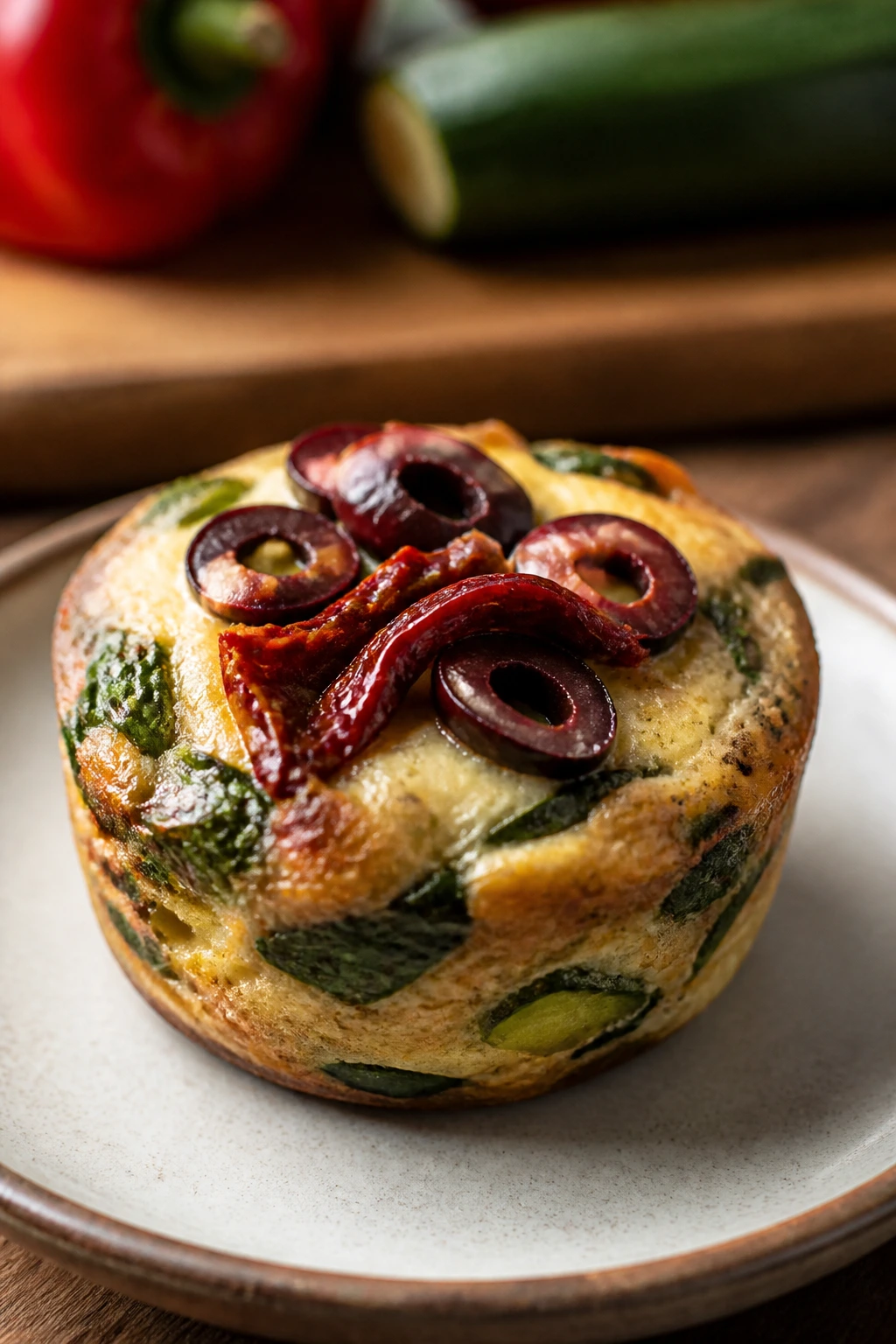
Mediterranean Market Cups
Add 1/4 cup chopped sun-dried tomatoes and 2 tablespoons sliced Kalamata olives to the vegetable mix, then use fresh basil instead of parsley on top. The cups get saltier and a little more vivid, which is useful if you’re serving them with plain grains or cucumber salad.
Broccoli-Cheddar Dinner Cups
Swap the zucchini and red pepper for 1 1/2 cups finely chopped broccoli florets that have been steamed for 2 minutes and patted dry. Replace the feta with sharp cheddar and add a pinch of mustard powder to the egg mixture; the cups will taste a little more like a compact vegetable casserole.
Dairy-Free Garden Cups
Use 1 cup plain silken tofu blended in place of the cottage cheese, and replace the Parmesan with 2 tablespoons nutritional yeast plus a little extra salt. The texture is softer and a bit less rich, but the result still bakes into neat, savory cups.
Spicy Green Chile Cups
Stir in 1 small minced jalapeño and 1/3 cup chopped roasted green chiles with the vegetables, then swap feta for Monterey Jack. The heat stays friendly, not aggressive, and the green chile flavor fits the garlic especially well.
Bean-Boosted Cups
Fold in 1/2 cup mashed cannellini beans with the egg base for a creamier, more filling result. If you take this route, drop the flour to 2 tablespoons so the cups don’t get too dense.
Make-Ahead, Storage, and Reheating Notes
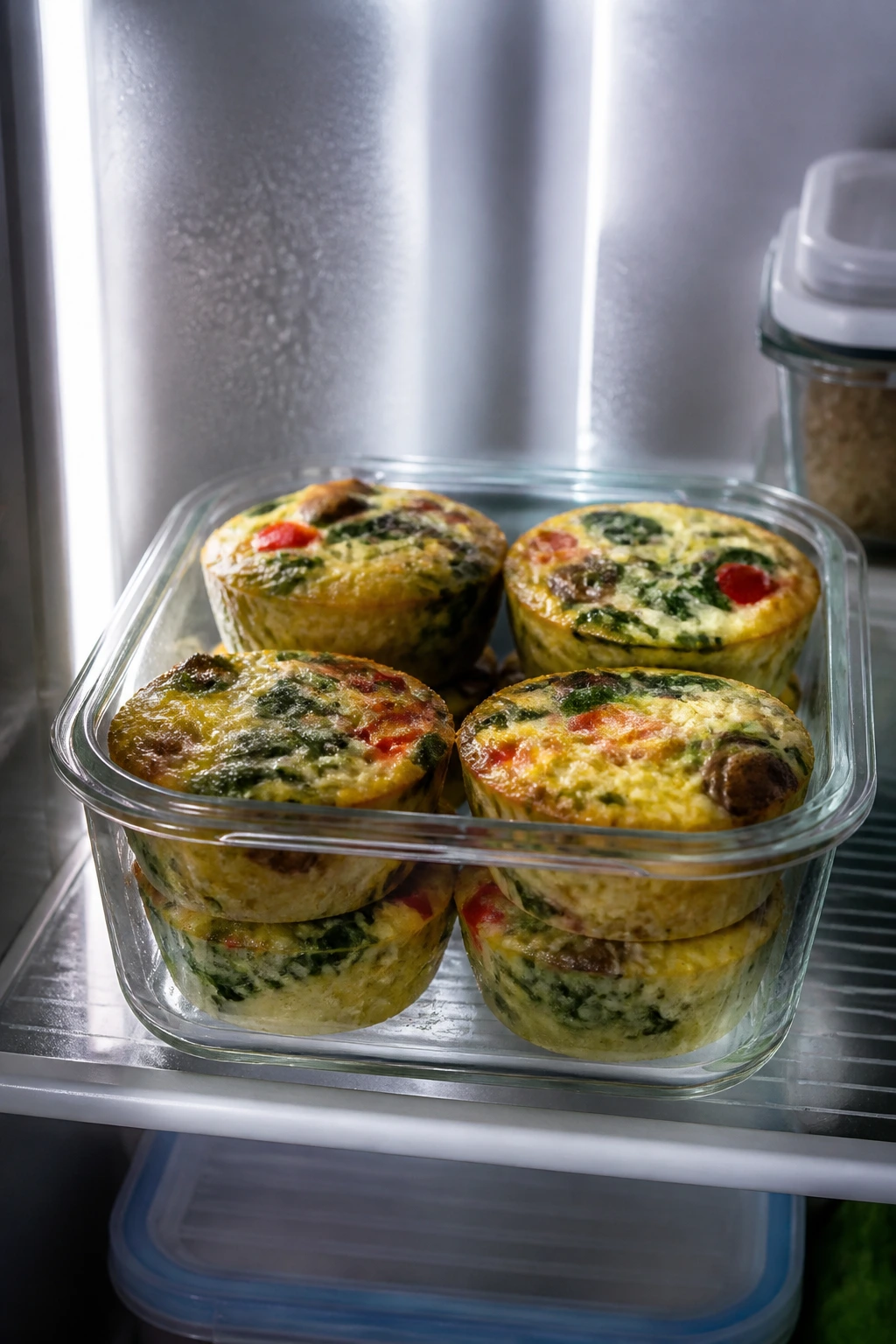
Making them ahead
The vegetable mixture can be cooked up to 2 days ahead and stored in the fridge in an airtight container. That’s the smartest place to start if you know weeknights are going to be busy, because the longest part of the recipe is getting the moisture out of the vegetables. The egg mixture can be whisked a few hours ahead too, though I usually wait to fold everything together until I’m ready to bake so the texture stays fresh.
If you want to move even faster, grease the muffin tin ahead of time and keep it on a sheet pan near the stove. Small setup moves save more time than people expect. They also make the final assembly calmer, which is worth something when you’re holding a hot skillet and trying not to spill eggs.
Fridge life
Baked veggie cups keep for up to 4 days in the refrigerator in an airtight container. Let them cool completely before packing them up, or condensation will soften the tops and make the bottoms soggy. I like to line the container with a paper towel if I know they’ll sit for more than a day; it catches a bit of surface moisture.
Room temperature is another matter. These should not sit out longer than 2 hours. That’s the standard food-safety line for cooked egg dishes, and it’s a good one to respect.
Freezer life
For longer storage, freeze the cooled cups on a parchment-lined tray until firm, then move them to a freezer bag or container. They’ll keep well for up to 2 months. Freezing them flat first keeps them from welding together into one giant egg brick.
I would freeze them plain, not topped with extra yogurt or herbs. Garnishes get odd in the freezer. Add those after reheating.
Reheating
From the fridge, the best method is a 325°F oven for 8 to 10 minutes, uncovered, until warmed through. If you want the edges to crisp again, move them to an air fryer at 350°F for 3 to 5 minutes. The microwave works in a pinch — 20 to 30 seconds for one cup, a bit more for two — but the texture turns softer.
From frozen, reheat in a 325°F oven for 15 to 18 minutes, loosely covered with foil for the first half if you’re worried about drying the tops. They can go straight from freezer to oven without thawing. If you’re in a hurry, thaw them overnight in the fridge first; they reheat more evenly that way.
Questions Readers Usually Ask
Can I use frozen spinach instead of fresh?
Yes, and it works well if you thaw it fully and squeeze it dry until it feels almost crumbly. Frozen spinach brings more water than fresh, so the squeezing step matters even more. If you skip that, the cups will be loose in the middle.
Do I have to use cottage cheese?
No. Ricotta gives a softer, richer texture, and plain Greek yogurt can replace part of the cottage cheese if you want more tang. Cottage cheese is my pick for a lighter, more protein-rich result, but the recipe doesn’t fall apart without it.
Can I make these in a mini muffin tin?
You can, and they become tidy little appetizer bites. Bake them for about 12 to 15 minutes instead of 20 to 24, and check early because mini tins move fast. The filling should still puff and set, just in a smaller shape.
Why did my cups come out watery?
Usually it’s one of three things: the zucchini wasn’t squeezed hard enough, the mushrooms were undercooked, or the cups were pulled before the center finished setting. All three are fixable next time. Dry vegetables, a hot oven, and a short rest solve most of it.
Can I freeze the finished cups?
Yes. Cool them completely, freeze them on a tray first, then store them in a freezer bag for up to 2 months. Reheat from frozen in a 325°F oven until hot all the way through; that keeps the texture better than microwaving from frozen.
What if I want them to feel more filling for dinner?
Serve them with a grain salad, roasted potatoes, or a bowl of soup. You can also fold in 1/2 cup mashed cannellini beans or serve an extra cup per person if you want the plate to lean more toward a full meal.
Can I swap the Parmesan or feta for something else?
Yes. Pecorino Romano makes them sharper, cheddar makes them more comforting, and goat cheese gives a creamier center. Just watch the salt level if your replacement cheese is already salty.
What’s the best way to keep them from sticking to the pan?
Grease the tin generously, and don’t use paper liners unless you enjoy fighting egg custard off paper. A metal muffin tin plus a short cooling period makes a bigger difference than most people expect. If a cup still clings, run a thin knife around the edge before lifting.
A Quiet Argument for Dinner in a Muffin Tin
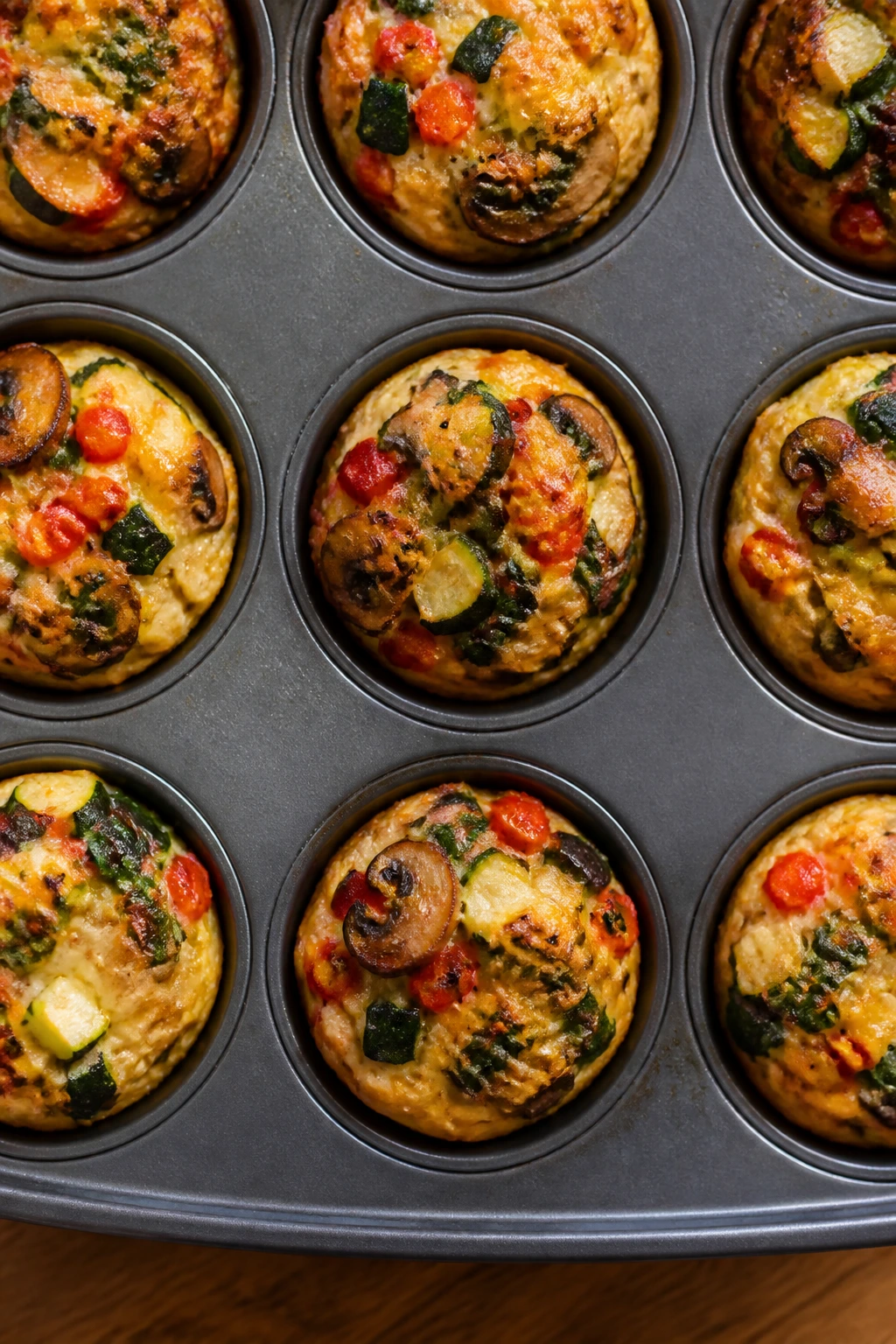
A muffin tin is not the most glamorous piece of cookware in the kitchen. That’s exactly why I like it here. It turns a pile of vegetables and eggs into something with edges, shape, and a little browned color around the rim, which is all a solid weeknight dinner really needs.
The real trick is moisture control. Once you get comfortable cooking the vegetables until they’re dry and letting the cups rest before you pull them from the tin, this recipe stops feeling like a one-off and starts acting like a template. Keep the garlic, keep the eggs, swap the vegetables around, and dinner gets a lot less fussy without getting boring.
Garlicky Veggie Cups for a Healthy Dinner — Recipe Card
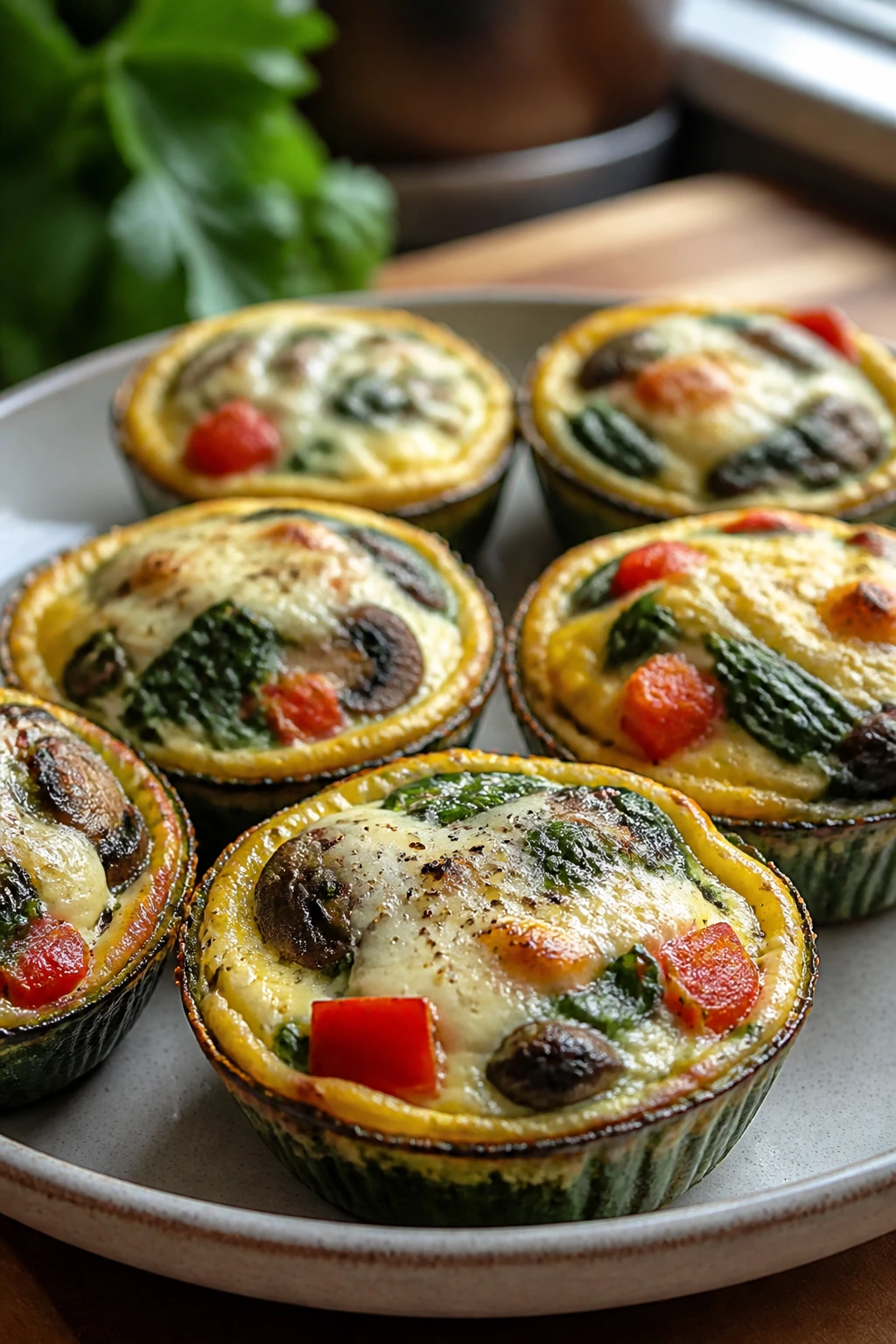
- Recipe Name: Garlicky Veggie Cups for a Healthy Dinner
- Description: Savory, garlic-forward vegetable cups baked in a muffin tin with eggs, cottage cheese, Parmesan, feta, and well-cooked vegetables. They’re sturdy enough for dinner and easy enough for a weeknight.
- Prep Time: 20 minutes
- Cook Time: 24 minutes
- Total Time: 44 minutes
- Course: Dinner, Main Course
- Cuisine: American
- Servings: 6
- Calories: About 245 kcal per serving
Ingredients
For the Vegetable Filling:
- 2 tablespoons extra-virgin olive oil
- 1 small yellow onion, finely diced
- 8 ounces cremini mushrooms, finely chopped
- 1 medium zucchini, grated on the large holes of a box grater and squeezed dry
- 1 red bell pepper, finely diced
- 2 packed cups baby spinach, roughly chopped
- 4 cloves garlic, minced
For the Egg Base:
- 6 large eggs
- 1 cup cottage cheese
- 1/4 cup chickpea flour or all-purpose flour
- 1/2 cup grated Parmesan cheese, divided
- 3/4 teaspoon fine sea salt
- 1/2 teaspoon black pepper
- 1 teaspoon dried oregano
- 1/4 teaspoon crushed red pepper flakes
For Finishing:
- 1/3 cup crumbled feta
- 2 tablespoons chopped fresh parsley
- Nonstick cooking spray or softened butter, for the muffin tin
Instructions
- Preheat the oven to 375°F (190°C) and grease a 12-cup muffin tin well.
- Squeeze the grated zucchini dry in a clean towel.
- Warm the olive oil in a skillet over medium heat. Cook the onion for 3 minutes, then add the mushrooms and cook until the pan is nearly dry.
- Stir in the zucchini, bell pepper, salt, pepper, oregano, and red pepper flakes. Cook 3 to 4 minutes, then add the garlic and spinach and cook until wilted. Cool the vegetables for 8 to 10 minutes.
- Whisk the eggs, cottage cheese, flour, 1/4 cup Parmesan, and parsley until mostly smooth.
- Fold in the cooled vegetables and the feta.
- Divide the mixture among the muffin cups, filling each about three-quarters full. Top with the remaining Parmesan.
- Bake for 20 to 24 minutes, until puffed, lightly golden, and set in the center.
- Rest for 8 to 10 minutes before loosening and removing from the tin.
Notes: Squeeze the zucchini hard; it should feel damp, not wet. If your cottage cheese is watery, drain off the excess liquid first. These reheat best in a 325°F oven for a few minutes rather than in the microwave.