



A good crockpot soup can feed a dozen people without turning your kitchen into a line cook’s nightmare. That’s the quiet magic of crockpot soups and stews: the slow cooker gives onion, garlic, stock, beans, grains, and tough cuts of meat enough time to stop acting like separate ingredients and start tasting like dinner. The broth deepens, the vegetables soften without falling apart, and the whole pot gets a little more persuasive by the hour.
I’ve always thought the best crowd-size soups are the ones that don’t act like they need constant supervision. A hard simmer can shred chicken, mute herbs, or turn vegetables gray and tired. Gentle heat does the opposite. It makes beef chuck silky, lets lentils keep their shape, and gives onions enough time to disappear into the background without losing their sweetness.
That matters when you’re feeding a group. You want bowls that feel generous, not thin. You want recipes that hold for an extra 20 minutes when someone’s running late, and still taste like the kitchen had a plan. These 18 crockpot soups and stews lean hard into that kind of practicality, with enough flavor and texture to carry a whole table.
Why These Crockpot Soups Keep a Table Full
-
Big-batch math: Most of these recipes make 8 to 10 hearty servings, and a few stretch past that if you add bread, rice, or a salad on the side.
-
Low-stress timing: The slow cooker buys you 6 to 8 hours of gentle cooking, which is exactly what you want when the rest of the day is noisy.
-
Better texture from tough cuts: Chuck roast, pork shoulder, ham hocks, and sausage all improve when they sit in moist heat long enough to relax.
-
Pantry-friendly building blocks: Beans, tomatoes, broth, barley, rice, lentils, and frozen corn show up again and again because they’re cheap, sturdy, and easy to scale.
-
Flexible serving: A bowl of soup can be a light lunch or a full dinner once you add crusty bread, cheddar, croutons, or a pile of herbs.
-
Make-ahead friendly: Many of these taste even better the next day. The broth settles, the seasoning rounds out, and the leftovers stop tasting like leftovers.
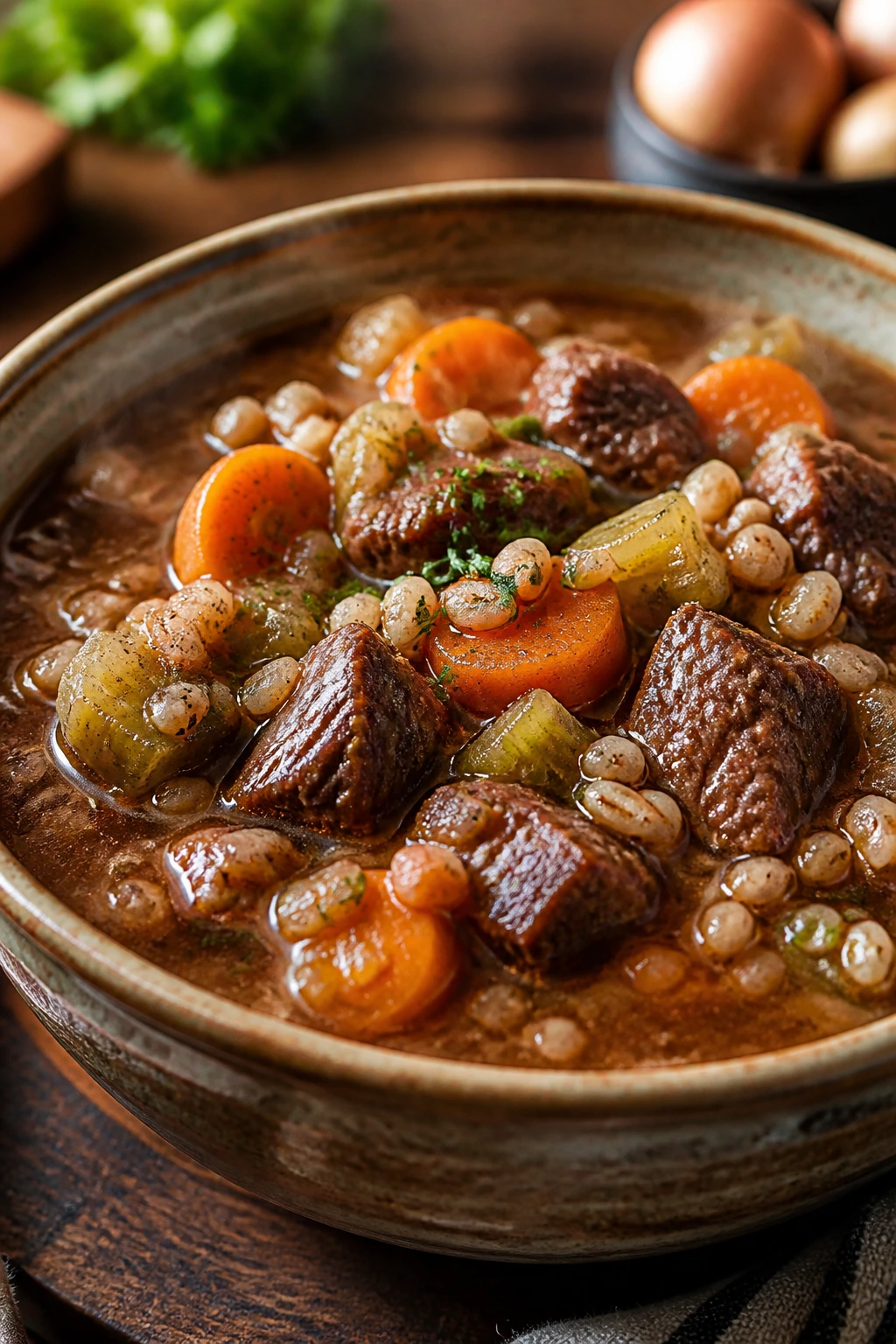
1. Beef and Barley Stew
A bowl of beef and barley stew has a certain old-school seriousness to it. The barley turns glossy and a little chewy, the beef goes spoon-tender, and the broth picks up that deep, brown, almost roasted flavor that only shows up after several hours in the pot. This is the kind of slow cooker stew that makes the house smell like onions, thyme, and patience.
Why It Works:
Chuck roast has enough fat and connective tissue to soften instead of drying out. Pearl barley thickens the broth without turning it into paste, which is a big reason this stew feeds a crowd so well. Browning the beef first gives the final pot a darker, richer flavor that you cannot fake later. The carrots and celery hold their shape better than people expect, so the stew still feels structured after 8 hours on low.
Key Ingredients:
- 2 1/2 lbs beef chuck, cut into 1-inch cubes — the marbling keeps it tender.
- 1 1/2 teaspoons kosher salt — season the beef before it goes in.
- 1 teaspoon black pepper — enough to give the broth some edge.
- 1 large yellow onion, diced — it melts into the base.
- 3 carrots, sliced into 1/2-inch rounds — they stay sweet and sturdy.
- 3 celery stalks, sliced — classic stew backbone.
- 3 garlic cloves, minced — use fresh, not jarred, if you can.
- 1/3 cup tomato paste — deepens the color and adds body.
- 6 cups beef broth — low-sodium gives you control.
- 3/4 cup pearl barley, rinsed — this thickens the stew as it cooks.
- 2 teaspoons fresh thyme leaves or 1 teaspoon dried thyme — earthy, not loud.
- 2 bay leaves — small detail, big payoff.
Quick Steps:
- Brown the beef: Heat a skillet over medium-high heat with 1 tablespoon oil. Sear the beef in two batches for 3 to 4 minutes per side until well browned, then transfer to the slow cooker.
- Build the base: In the same skillet, cook the onion, carrots, and celery for 4 to 5 minutes, stirring often, until the onion is glossy and the edges start to color. Add garlic and tomato paste and cook for 1 minute.
- Load the slow cooker: Scrape the vegetables into the slow cooker. Add broth, barley, thyme, bay leaves, salt, and pepper. Stir once.
- Cook slowly: Cover and cook on LOW for 7 to 8 hours or HIGH for 4 to 5 hours, until the beef breaks apart easily and the barley is tender but not bloated.
- Finish and adjust: Remove bay leaves. Taste and add more salt if needed. If the broth seems thin, leave the lid off for 15 minutes on HIGH to tighten it up.
Equipment for This Recipe:
- 6-quart or larger slow cooker — barley and beef need room.
- Large skillet — for browning and building flavor.
- Wooden spoon — sturdy enough for scraping up browned bits.
- Chef’s knife and cutting board — keep the vegetables even.
- Ladle — for serving without mangling the barley.
How to Serve This Dish:
Serve it in wide bowls with a piece of buttered sourdough or a handful of saltines. A spoonful of horseradish on the side is sharp and good if you like a little bite. This stew feeds about 8 people as a main course, and it stretches nicely if you offer a simple green salad.
Pro Tips for This Recipe:
- Brown the beef in batches. If you crowd the skillet, it steams and turns gray.
- Rinse the barley before adding it so the broth stays cleaner and less starchy.
- Stir in a splash of red wine or Worcestershire sauce if you want a darker, more savory finish.
- If your slow cooker runs hot, check the barley at 6 1/2 hours on low so it doesn’t turn mushy.
Variations on This Dish:
- Mushroom Barley Version: Add 8 ounces sliced cremini mushrooms with the carrots for a earthier broth.
- Root Veggie Swap: Replace one carrot with 1 cup diced parsnips or turnips for a slightly sweeter, more rustic finish.
- Dairy-Free Creamed Finish: Stir in 1/4 cup coconut cream at the end for a softer texture without using dairy.
Common Mistakes to Avoid with This Dish:
- Skipping the browning step: The stew tastes flat and one-note. Brown the beef or accept a shallower broth.
- Adding too much barley: It keeps swelling and can turn the pot into porridge. Measure it.
- Under-salting early on: The broth needs salt before the long cook, then a final adjustment at the end.
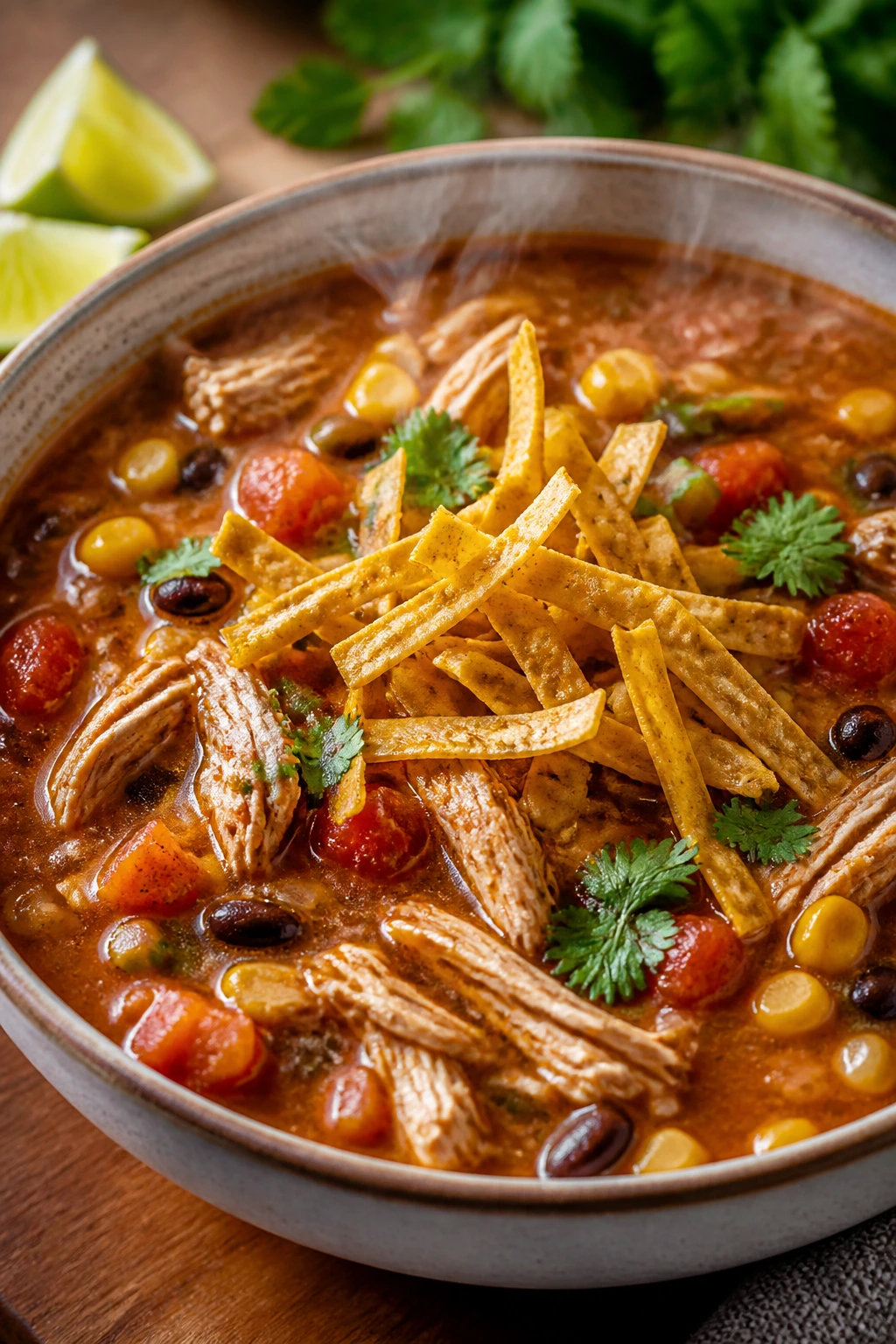
2. Chicken Tortilla Soup
Chicken tortilla soup should smell like toasted cumin, tomatoes, and lime before the lid even comes off. The broth stays lively, the chicken shreds into soft strands, and the tortillas on top bring the crunch you need so every spoonful has a little contrast. This is one of those crockpot soups that feels casual until the toppings go on, and then it suddenly looks like you planned ahead.
Why It Works:
Boneless chicken thighs hold up better than breasts in the slow cooker, especially in a soup with tomatoes and green chiles. Canned fire-roasted tomatoes add a smoky edge without making you stand at the stove. Black beans and corn turn the pot into something substantial enough for dinner, not just a starter. Lime at the end wakes up the whole bowl, which matters more here than people think.
Key Ingredients:
- 2 lbs boneless, skinless chicken thighs — stays moist and shreds easily.
- 1 large onion, diced — sweetens as it cooks.
- 4 garlic cloves, minced — gives the broth a deeper base.
- 1 can (14.5 oz) fire-roasted diced tomatoes — smoky and bright.
- 1 can (4 oz) diced green chiles — mild heat and tang.
- 1 can (15 oz) black beans, rinsed and drained — turns the soup hearty.
- 1 1/2 cups frozen corn — no thawing needed.
- 5 cups chicken broth — low-sodium is best.
- 2 teaspoons ground cumin — the backbone of the flavor.
- 1 teaspoon chili powder — warm, not aggressive.
- 1 teaspoon kosher salt — adjust after shredding.
- 1 lime, juiced — the finish matters.
- Tortilla strips, avocado, cilantro, and shredded cheese — for serving.
Quick Steps:
- Load the slow cooker: Add the chicken thighs, onion, garlic, tomatoes, green chiles, beans, corn, broth, cumin, chili powder, and salt.
- Cook until tender: Cover and cook on LOW for 6 hours or HIGH for 3 to 4 hours, until the chicken is opaque and pulls apart with little resistance.
- Shred the chicken: Remove the thighs, shred them with two forks, and return them to the pot.
- Brighten the broth: Stir in the lime juice and taste for salt. Add more if the broth needs a sharper finish.
- Finish the bowl: Ladle into bowls and top with tortilla strips, avocado, cilantro, and cheese.
- Keep the crunch separate: Add tortilla strips only at serving time so they stay crisp.
Equipment for This Recipe:
- 6-quart slow cooker — enough room for toppings and broth.
- Two forks — for shredding the chicken.
- Small skillet or baking sheet — if you want to crisp tortilla strips yourself.
- Ladle — for clean serving.
- Citrus juicer — optional, but handy.
How to Serve This Dish:
Serve it with a pile of toppings in separate bowls so people can build their own. A squeeze of lime, a few avocado cubes, and a spoonful of sour cream make the bowl feel finished. It feeds 6 to 8 generously, and it’s even better with warm corn tortillas on the side.
Pro Tips for This Recipe:
- Use thighs, not breasts, if you want the chicken to stay juicy after hours on low.
- If you like more body, mash a handful of the beans against the side of the pot before serving.
- Fry your tortilla strips in a little oil and salt them lightly; boxed chips are fine, but homemade strips taste sharper.
- Add lime after the chicken is shredded, not at the start, or the acid can flatten the broth.
Variations on This Dish:
- Smoky Chipotle Version: Add 1 chopped chipotle in adobo for deeper heat and a little fire.
- Vegetable-Heavy Bowl: Stir in diced zucchini or extra corn during the last 30 minutes.
- Creamy Tortilla Soup: Swirl in 1/3 cup sour cream right before serving for a richer, softer broth.
Common Mistakes to Avoid with This Dish:
- Adding tortilla strips too early: They disappear. Top the bowls right before serving.
- Cooking chicken breasts for too long: They dry out and turn stringy. Thighs are safer here.
- Forgetting the lime: The soup tastes heavier without it. The acid sharpens everything.
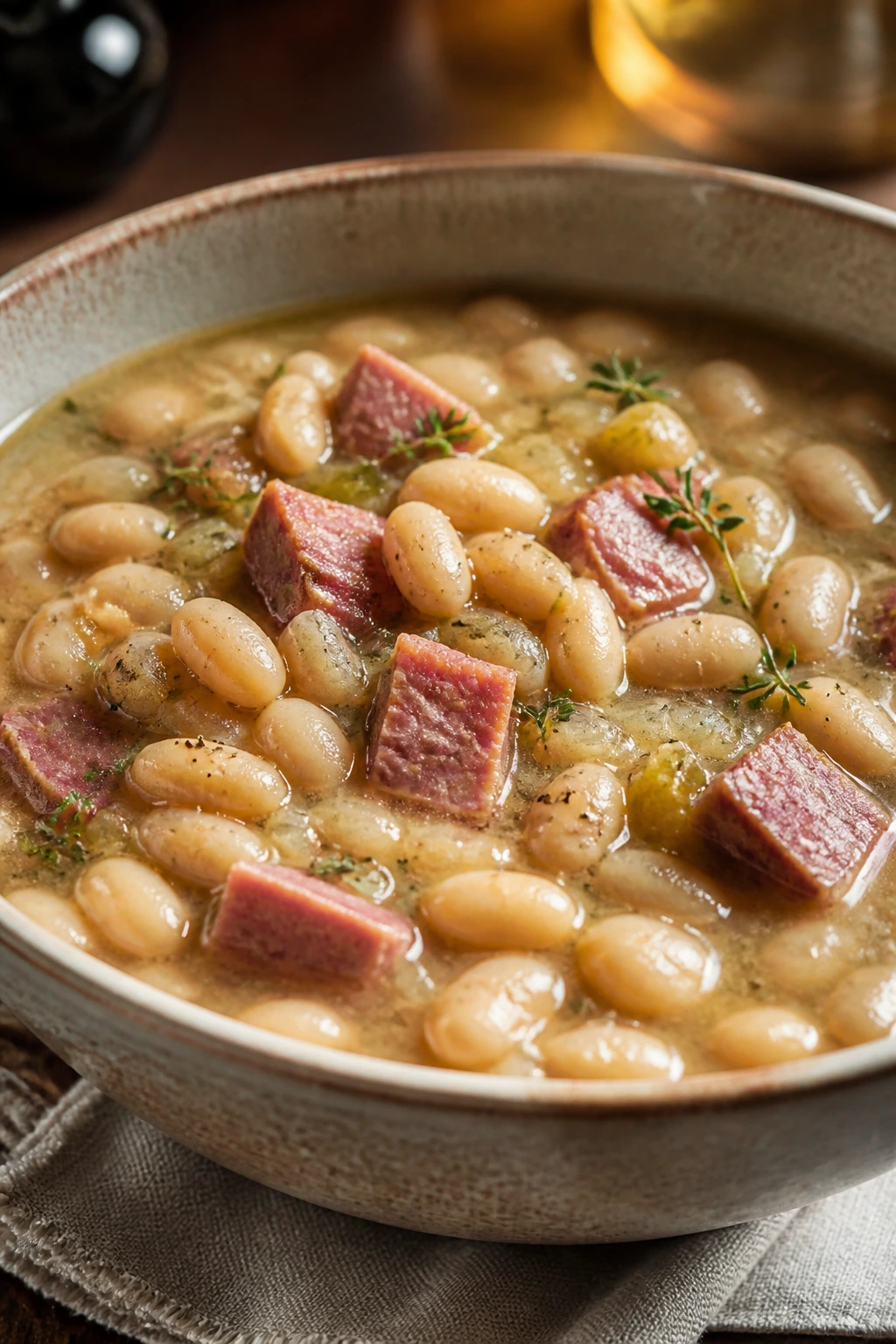
3. White Bean and Ham Soup
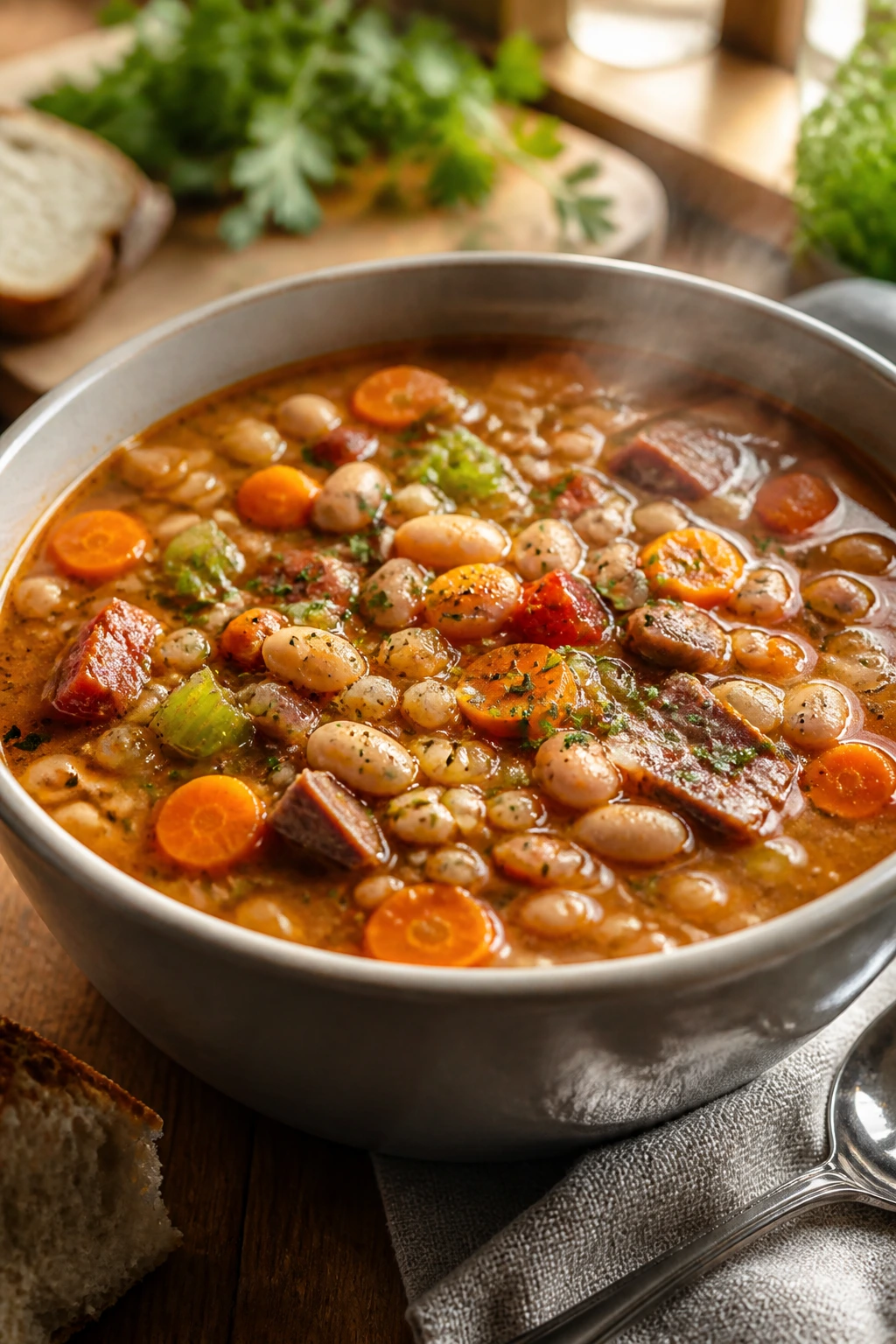
White bean and ham soup has a salty, smoky calmness to it. The beans go creamy without dissolving completely, the ham gives the broth that old-fashioned deli counter smell, and the vegetables stay humble in the best way. It is the sort of soup that tastes even better after an overnight rest, which is one reason it shows up so often at big family tables.
Why It Works:
Ham hocks or a meaty ham bone give the broth body that plain stock can’t match. Cannellini beans soften into a creamy base, especially if you mash a few at the end. Onion, carrot, and celery keep the soup from feeling too heavy. A little thyme and bay leaf go a long way because ham already brings plenty of salt and smoke.
Key Ingredients:
- 1 lb dried cannellini beans, soaked overnight and drained — or 3 cans, rinsed and drained.
- 1 meaty ham hock or 2 cups diced ham — the smoky anchor.
- 1 large onion, diced — sweet base flavor.
- 2 carrots, diced — enough to balance the salt.
- 2 celery stalks, diced — classic soup structure.
- 4 garlic cloves, minced — fresh is better here.
- 6 cups low-sodium chicken broth — gives you room to adjust salt.
- 2 bay leaves — subtle but worth it.
- 1 teaspoon dried thyme — pairs cleanly with ham.
- 1/2 teaspoon black pepper — round, not sharp.
- 1 tablespoon apple cider vinegar — brightens the finish.
- Chopped parsley — optional, but nice.
Quick Steps:
- Prep the beans: If using dried beans, soak them overnight and rinse well. If using canned beans, rinse and drain them.
- Layer the pot: Add beans, ham hock or diced ham, onion, carrots, celery, garlic, broth, bay leaves, thyme, and pepper to the slow cooker.
- Cook until creamy: Cover and cook on LOW for 8 hours or HIGH for 4 to 5 hours, until the beans are fully tender.
- Thicken slightly: Remove the ham hock, shred the meat off the bone, and return it to the pot. Mash 1 to 2 cups of beans against the side of the crock to make the soup creamier.
- Finish with acid: Stir in apple cider vinegar and taste before adding any extra salt.
- Serve warm: Sprinkle with parsley and ladle into bowls.
Equipment for This Recipe:
- 6- or 7-quart slow cooker — beans expand as they cook.
- Cutting board and knife — for the vegetable base.
- Forks or tongs — to pull the ham from the bone.
- Potato masher or spoon — for thickening.
- Ladle — for serving.
How to Serve This Dish:
This is excellent with a buttered biscuit or a slice of cornbread that can soak up the broth. Serve it in deeper bowls, because the beans settle at the bottom and you want a little of everything in each spoonful. It easily serves 8, and it feels especially complete with a sharp green salad on the side.
Pro Tips for This Recipe:
- Go easy on the salt until the end; ham can make the pot saltier than you expect.
- If the beans are old, they may need an extra hour on low. That happens.
- A Parmesan rind can stand in for some of the smokiness if you’re using diced ham instead of a ham hock.
- Mash only part of the beans so the soup stays textured, not gluey.
Variations on This Dish:
- Ham Bone Classic: Use the leftover bone from a holiday ham for a deeper, richer broth.
- Herbed Bean Soup: Add rosemary along with the thyme for a more woodsy flavor.
- Smoky Turkey Swap: Replace the ham with smoked turkey leg and keep the rest the same.
Common Mistakes to Avoid with This Dish:
- Using too much added salt early: The ham does the salting for you. Taste at the end.
- Not soaking dried beans long enough: Old beans stay stubborn. Give them a full overnight soak.
- Skipping the vinegar: Without a little acid, the soup can taste heavy and flat.
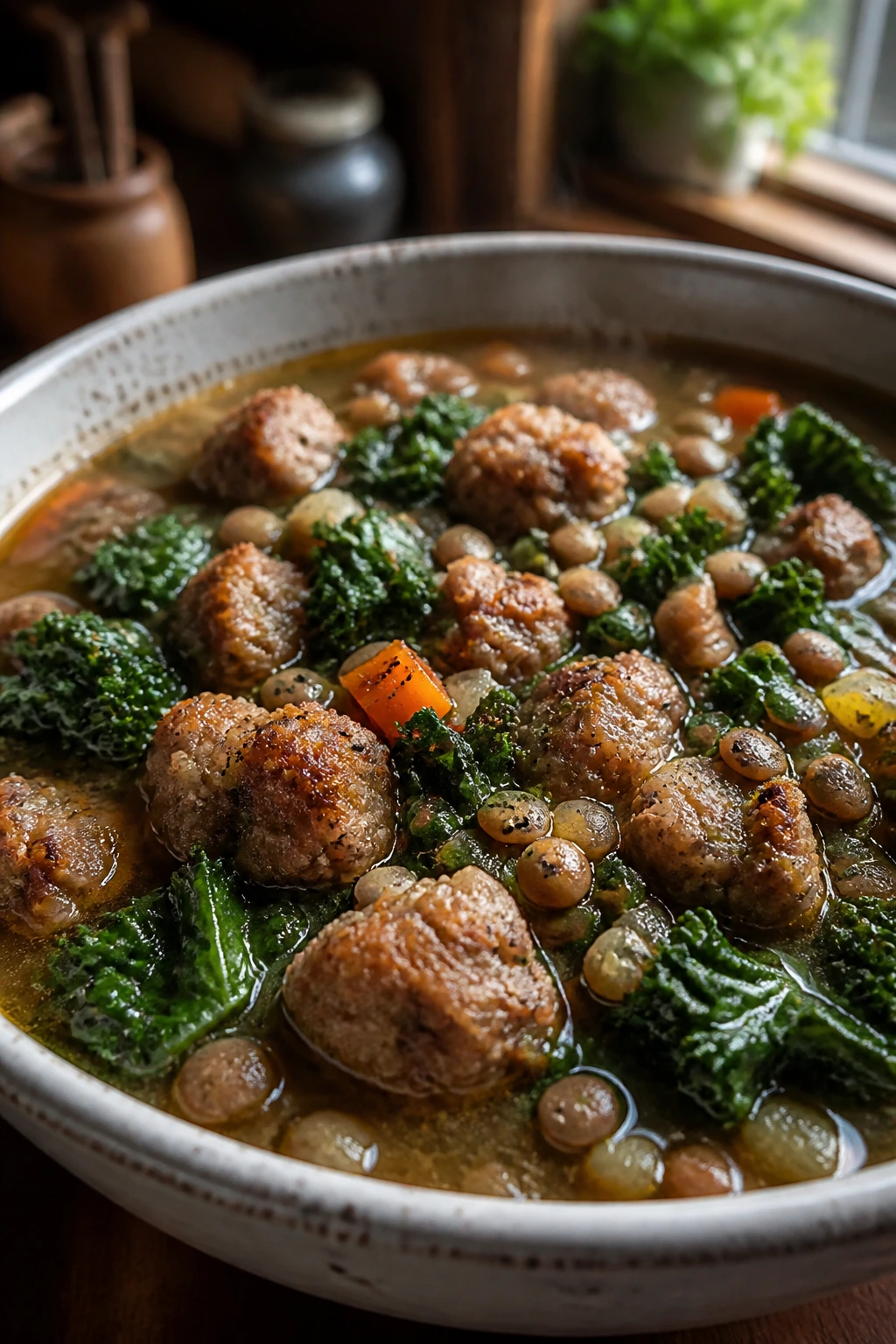
4. Sausage, Kale, and Lentil Soup
Sausage, kale, and lentil soup brings more depth than its ingredient list suggests. The sausage perfumes the broth, the lentils keep their shape, and the kale softens just enough to lose its bitterness without turning swampy. This is a sturdy soup with a clean finish, which makes it a useful one when you need to feed a lot of people and still care what’s in the bowl.
Why It Works:
Browned sausage gives the slow cooker a head start because the fat carries seasoning through the whole pot. Brown or green lentils hold up better than red lentils, which would break down too fast here. Tomatoes and broth make the base broad and savory, while kale goes in late so it stays green and a little chewy. It’s a nice balance. Not delicate, not heavy.
Key Ingredients:
- 1 1/2 lbs Italian sausage, casings removed — hot or mild, your call.
- 1 large onion, diced — the sweet base.
- 2 carrots, diced — enough to add body.
- 2 celery stalks, diced — for that soup-house flavor.
- 3 garlic cloves, minced — don’t skip it.
- 1 1/2 cups brown or green lentils, rinsed — the soup’s backbone.
- 1 can (14.5 oz) diced tomatoes — adds brightness.
- 6 cups chicken or vegetable broth — low-sodium is easiest to manage.
- 1 teaspoon dried oregano — fits the sausage.
- 1 bay leaf — quiet but useful.
- 4 cups chopped kale, tough stems removed — add late.
- Grated Parmesan — for serving.
Quick Steps:
- Brown the sausage: Cook the sausage in a skillet over medium-high heat for 6 to 8 minutes, breaking it up until it’s no longer pink. Drain excess fat if needed.
- Add the base: Transfer sausage to the slow cooker. Stir in onion, carrots, celery, garlic, lentils, tomatoes, broth, oregano, and bay leaf.
- Cook until tender: Cover and cook on LOW for 7 to 8 hours or HIGH for 4 to 5 hours, until the lentils are soft but still hold their shape.
- Add the kale late: Stir in the kale during the last 20 to 30 minutes of cooking so it stays deep green.
- Taste and season: Remove the bay leaf, add pepper and salt if needed, and finish with Parmesan.
- Serve hot: Ladle into bowls while the broth is still bright.
Equipment for This Recipe:
- Large skillet — sausage needs browning first.
- 6-quart slow cooker — keeps the lentils from crowding.
- Wooden spoon — for breaking up sausage and stirring.
- Knife and cutting board — for kale and vegetables.
- Ladle — for serving.
How to Serve This Dish:
A thick slice of garlic bread makes sense here, and so does a simple arugula salad with lemon. The soup serves 6 to 8 as a meal, and it gets a little more elegant with a shower of Parmesan and black pepper at the table.
Pro Tips for This Recipe:
- Use brown or green lentils, not red. Red lentils disappear into mush.
- Add the kale near the end or it will go dull and bitter.
- If the sausage is very fatty, drain most of the grease after browning. Leave a tablespoon or two for flavor.
- A splash of red wine vinegar at the end sharpens the broth in a nice way.
Variations on This Dish:
- Spicy Sausage Pot: Use hot Italian sausage and add a pinch of red pepper flakes.
- Chicken Sausage Version: Swap in chicken sausage if you want a leaner bowl.
- Bean-and-Lentil Stretch: Add 1 can of white beans for a bigger, softer soup.
Common Mistakes to Avoid with This Dish:
- Adding kale at the start: It goes olive-colored and limp. Stir it in near the end.
- Using red lentils: They vanish and thicken the soup too much.
- Not browning the sausage: You lose most of the savory depth right away.
5. Loaded Potato Chowder
Loaded potato chowder is one of those crockpot soups that feels almost suspiciously generous. Potatoes turn soft and buttery, bacon adds smoke and salt, and the cheddar melts into the broth like it was always supposed to be there. If you want a crowd to go quiet for a minute, hand them bowls of this.
Why It Works:
Russet potatoes break down enough to thicken the chowder naturally, especially if you mash a few against the side of the slow cooker. Bacon gives you a salty base without needing a lot of extra seasoning. A bit of celery and onion keeps the bowl from tasting like pure starch. The milk and cheese go in at the end, which is the difference between a silky chowder and a split one.
Key Ingredients:
- 6 medium russet potatoes, peeled and diced — the chowder’s body.
- 1 large onion, diced — sweet and soft.
- 2 celery stalks, diced — adds a clean savory note.
- 6 slices bacon, chopped — save the drippings.
- 4 cups chicken broth — low-sodium keeps the salt in check.
- 1 teaspoon kosher salt — start small because bacon and cheese add more.
- 1/2 teaspoon black pepper — enough to show up.
- 2 cups whole milk — added at the end.
- 1 cup shredded sharp cheddar — melts better than pre-shredded.
- 1/2 cup sour cream — gives the chowder a little tang.
- Chopped chives — for serving.
Quick Steps:
- Cook the bacon: Brown the chopped bacon in a skillet over medium heat until crisp, then transfer it to the slow cooker. Keep 1 tablespoon of drippings if you want extra flavor.
- Add the vegetables: Stir in potatoes, onion, celery, broth, salt, and pepper.
- Cook until soft: Cover and cook on LOW for 7 to 8 hours or HIGH for 4 to 5 hours, until the potatoes mash easily.
- Thicken the chowder: Mash about a third of the potatoes against the side of the crock or use an immersion blender for a few quick pulses.
- Add dairy at the end: Stir in milk, cheddar, and sour cream. Cover and cook for 10 to 15 minutes more, just until hot. Do not boil after the dairy goes in.
- Finish with chives: Ladle into bowls and top with extra bacon, cheese, and chives.
Equipment for This Recipe:
- 6-quart slow cooker — gives the potatoes room.
- Skillet — for the bacon.
- Potato masher or immersion blender — for texture.
- Ladle — for serving.
- Box grater — if you’re shredding cheddar from the block.
How to Serve This Dish:
Serve with a simple green salad and a thick piece of toast. The chowder is rich enough that smaller bowls work better than giant ones. It feeds 6 to 8 as a main, and the toppings are not optional in my book.
Pro Tips for This Recipe:
- Dice the potatoes evenly so they cook at the same pace.
- Use block cheddar if you can. It melts cleaner than bagged shreds.
- If the chowder looks too thick, stir in 1/2 cup more broth before the dairy goes in.
- A spoonful of hot sauce at the table works better than adding heat to the whole pot.
Variations on This Dish:
- Corned Bacon Chowder: Add 1 cup frozen corn for more sweetness and texture.
- Dairy-Light Version: Replace half the milk with evaporated milk for a lighter finish.
- Smoked Paprika Twist: Add 1 teaspoon smoked paprika with the broth for deeper color.
Common Mistakes to Avoid with This Dish:
- Adding milk too early: It can curdle or split after hours of heat. Wait until the end.
- Leaving the potatoes in giant chunks: They take longer and the chowder stays thin.
- Using pre-shredded cheese only: It often clumps instead of melting smoothly.
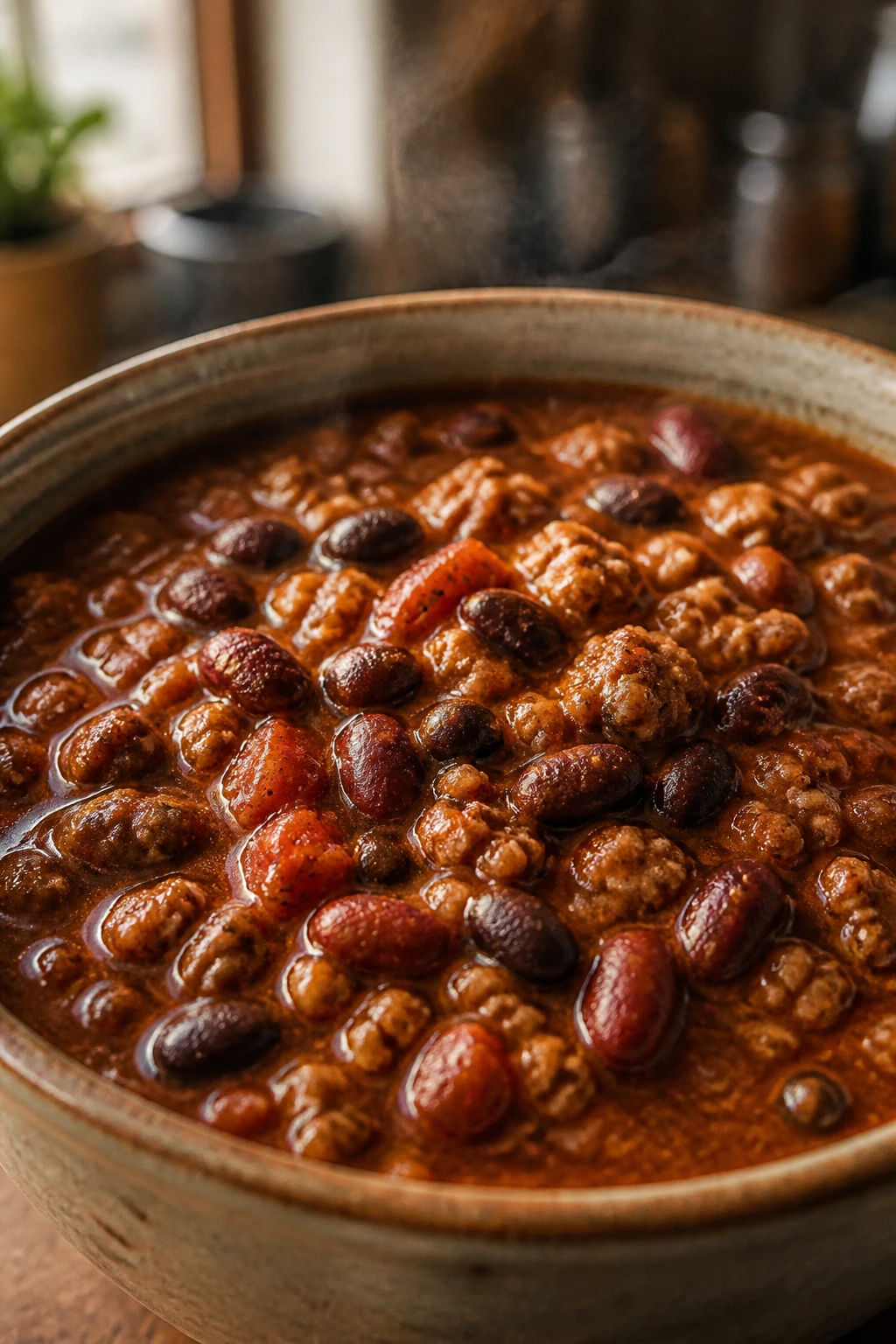
6. Turkey Chili with Beans
Turkey chili earns its keep when you need a pot that feels hearty but not heavy. The tomatoes get a little sweet, the beans make the chili thick enough to stand up on a spoon, and the turkey takes on the cumin and chili powder without fighting back. A good crockpot chili has a certain slow burn to it, and this one is built for a crowd that likes a bowl with some substance.
Why It Works:
Ground turkey is lean, so it benefits from a brief browning step before it enters the slow cooker. That step gives the chili a better texture and keeps it from tasting boiled. Beans and crushed tomatoes bring body, and a little cocoa or espresso powder adds a round, dark note that people can’t always identify but always seem to like. The long cook lets the spices settle into the base instead of sitting on top of it.
Key Ingredients:
- 2 lbs ground turkey — 93% lean is a good middle ground.
- 1 large onion, diced — the base layer.
- 1 red bell pepper, diced — adds sweetness and color.
- 4 garlic cloves, minced — fresh, not powdered.
- 2 cans (15 oz each) kidney beans, rinsed and drained — a big chunk of the body.
- 1 can (15 oz) black beans, rinsed and drained — gives variety in texture.
- 2 cans (14.5 oz each) crushed tomatoes — the chili’s liquid base.
- 2 cups chicken broth — enough to keep it spoonable.
- 2 tablespoons chili powder — the main seasoning.
- 2 teaspoons ground cumin — earthy and warm.
- 1 teaspoon smoked paprika — a little depth.
- 1 teaspoon kosher salt — add more at the end if needed.
- 1 teaspoon unsweetened cocoa powder — optional, but worth it.
- Shredded cheddar, sour cream, and scallions — for serving.
Quick Steps:
- Brown the turkey: Cook the ground turkey in a skillet over medium-high heat for 5 to 6 minutes, breaking it up, until it loses its pink color and starts to pick up a little browning.
- Build the pot: Transfer turkey to the slow cooker. Add onion, bell pepper, garlic, beans, tomatoes, broth, chili powder, cumin, paprika, salt, and cocoa.
- Cook the chili: Cover and cook on LOW for 6 to 7 hours or HIGH for 3 to 4 hours, stirring once if you can.
- Adjust texture: If the chili looks too loose, leave the lid slightly ajar on HIGH for 15 to 20 minutes near the end.
- Taste and finish: Add more salt or a splash of vinegar if the flavor feels flat.
- Serve with toppings: Ladle into bowls and pile on cheese, sour cream, and scallions.
Equipment for This Recipe:
- Skillet — for browning turkey.
- 6-quart slow cooker — chili gets thick.
- Wooden spoon — for breaking up meat.
- Ladle — for serving.
- Can opener and colander — the practical stuff.
How to Serve This Dish:
This chili likes cornbread, tortilla chips, or baked potatoes. It serves 8 comfortably, and it’s easy to stretch with rice if the crowd is bigger than expected. The bowl looks best when you add cold sour cream and sharp scallions right before serving.
Pro Tips for This Recipe:
- Brown the turkey or the chili can taste oddly pale.
- Taste for salt at the end, especially if your broth and beans are not low-sodium.
- A tiny splash of vinegar wakes up the beans and tomatoes.
- If you want more heat, add diced jalapeño with the onion instead of dumping in chili flakes at the end.
Variations on This Dish:
- White Turkey Chili: Swap the red beans and tomatoes for white beans, green chiles, and chicken broth.
- Smoky Bacon Turkey Chili: Add 4 strips of bacon with the onion for more depth.
- Bean-Heavy Pantry Chili: Use three kinds of beans and cut the turkey to 1 lb for a cheaper pot.
Common Mistakes to Avoid with This Dish:
- Not browning the turkey: It tastes flat and grainy. Five minutes in a skillet helps a lot.
- Too much broth too early: Chili should be thick enough to mound on a spoon.
- Forgetting acid at the end: Tomatoes need a little lift or the flavor stays dull.
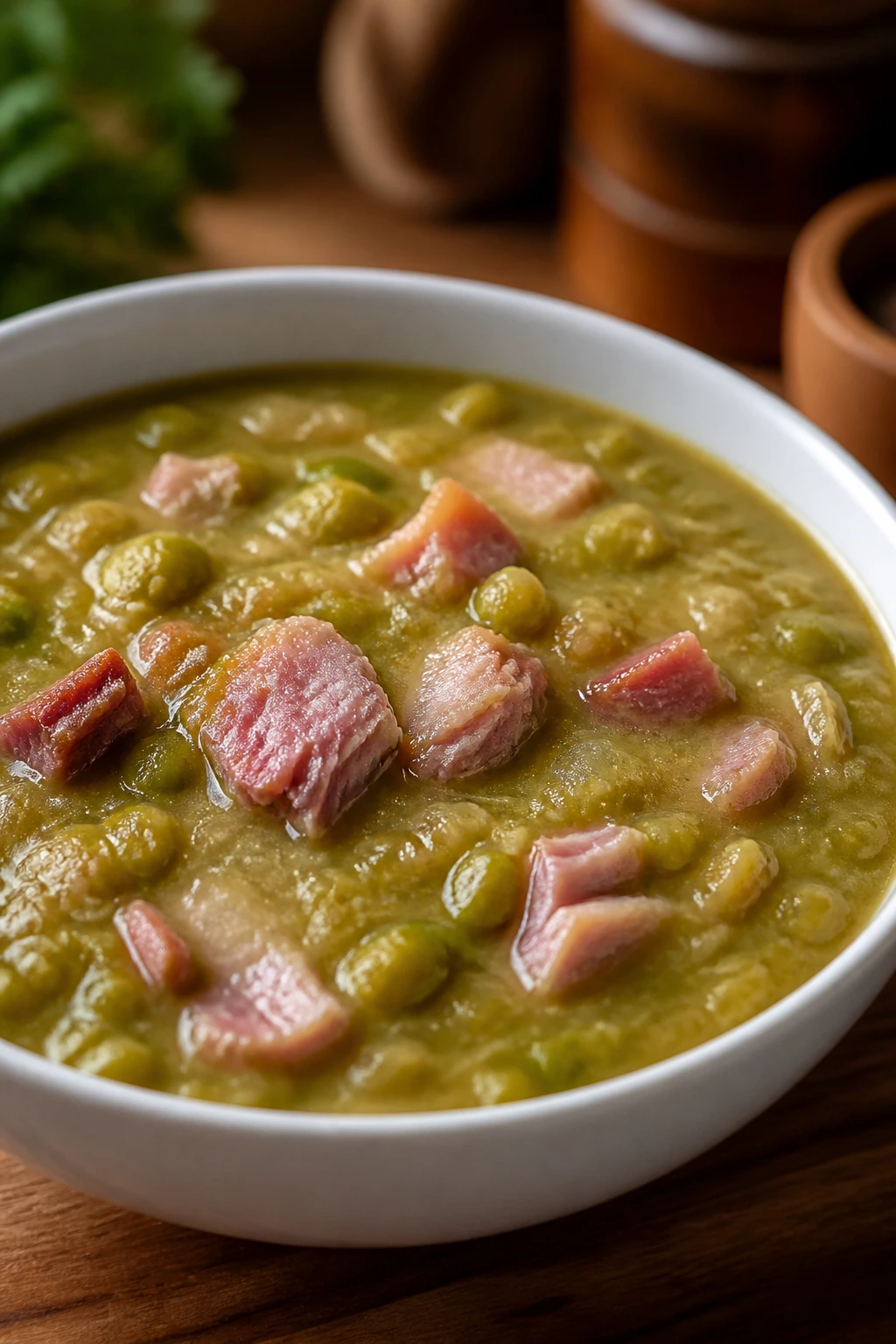
7. Split Pea Soup with Smoked Turkey
Split pea soup has a green, humble look that hides how filling it is. Once the peas break down, the broth turns thick and velvety, and the smoked turkey gives the whole pot a deep, savory smell that hangs around in the best way. This is a slow cooker soup that feels like thrift and comfort shaking hands.
Why It Works:
Split peas cook down without needing a roux or cream, which makes them ideal for a crowd. Smoked turkey leg or wing gives the broth enough richness that the soup does not taste sparse. The vegetables soften into the background, and the peas do the heavy lifting all on their own. It’s one of the simplest soups here, but not a simple flavor.
Key Ingredients:
- 1 lb dried green split peas, rinsed — the soup’s body.
- 1 smoked turkey leg or 2 smoked turkey wings — the flavor anchor.
- 1 large onion, diced — adds sweetness.
- 2 carrots, diced — softens the smokiness.
- 2 celery stalks, diced — classic base.
- 3 garlic cloves, minced — enough to round it out.
- 6 cups low-sodium chicken broth or water — broth gives more depth.
- 1 bay leaf — keeps the flavor from getting flat.
- 1 teaspoon dried thyme — a good match for smoke.
- 1/2 teaspoon black pepper — enough to notice.
- 1 tablespoon lemon juice — optional, for the finish.
Quick Steps:
- Rinse the peas: Run the split peas under cold water and pick out any tiny stones or debris.
- Load the crock: Add peas, turkey leg, onion, carrots, celery, garlic, broth, bay leaf, thyme, and pepper.
- Cook until broken down: Cover and cook on LOW for 8 to 9 hours or HIGH for 5 to 6 hours, until the peas have fallen apart and the soup is thick.
- Shred the turkey: Remove the leg, cool slightly, and pull the meat from the bone. Return the meat to the pot.
- Adjust thickness: Add a splash of hot water if it thickens too much. Stir well.
- Finish bright: Add lemon juice if the soup tastes a little heavy, then ladle into bowls.
Equipment for This Recipe:
- Large slow cooker — split peas swell.
- Colander — for rinsing.
- Forks or tongs — to shred turkey.
- Ladle — thick soup needs it.
- Knife and board — for the base vegetables.
How to Serve This Dish:
Serve it with rye toast, grilled cheese, or a simple spoon of mustard on the side if you like that old diner edge. It feeds 8 or more, and it’s even better when it’s thick enough to sit on the spoon instead of running off it.
Pro Tips for This Recipe:
- Rinse the peas well or the soup can taste dusty.
- A ham hock works if you don’t have smoked turkey, but the turkey keeps the soup leaner.
- Stir near the end so the peas don’t settle and scorch at the bottom.
- If the soup gets too thick in the fridge, loosen it with broth when reheating.
Variations on This Dish:
- Ham-and-Pea Version: Swap the smoked turkey for a ham hock or diced ham.
- Lemon Herb Finish: Add fresh dill or parsley at the end for a brighter bowl.
- Extra-Garlicky Pot: Add 2 more cloves of garlic if you want the broth sharper.
Common Mistakes to Avoid with This Dish:
- Using old split peas: They take forever to soften. Fresh peas cook more evenly.
- Adding too much liquid at the start: The soup needs room to thicken on its own.
- Skipping the finish acid: A little lemon makes the smoky flavor pop.
8. Moroccan Chickpea Stew
Moroccan chickpea stew smells like cumin, ginger, and sweet tomato first, then everything else follows. The chickpeas stay intact, the sweet potato softens into the broth, and the apricots or raisins bring small bursts of sweetness that keep each spoonful interesting. It’s one of the best meatless crockpot stews for a crowd because it tastes layered without asking much from you.
Why It Works:
Chickpeas bring body that survives a long cook. Sweet potato thickens the stew without flour, while tomatoes and broth keep it spoonable. Warm spices like cumin, cinnamon, and coriander do not taste like dessert here; they just add a little perfume and warmth. A squeeze of lemon at the end keeps the whole thing from drifting too sweet.
Key Ingredients:
- 2 cans (15 oz each) chickpeas, rinsed and drained — the stew’s main structure.
- 1 large sweet potato, peeled and cubed — softens into the broth.
- 1 large onion, diced — the base.
- 2 carrots, sliced — gives more body.
- 3 garlic cloves, minced — fresh and bright.
- 1 can (14.5 oz) diced tomatoes — the acid backbone.
- 4 cups vegetable broth — low-sodium is ideal.
- 2 teaspoons ground cumin — essential here.
- 1 teaspoon ground coriander — subtle citrus note.
- 1/2 teaspoon ground cinnamon — just enough warmth.
- 1/4 teaspoon cayenne — optional, for heat.
- 1/3 cup chopped dried apricots or golden raisins — a little sweetness.
- 2 cups baby spinach — stir in near the end.
- Lemon wedges and cilantro — for serving.
Quick Steps:
- Add the stew base: Combine chickpeas, sweet potato, onion, carrots, garlic, tomatoes, broth, cumin, coriander, cinnamon, cayenne, and dried fruit in the slow cooker.
- Cook until tender: Cover and cook on LOW for 6 to 7 hours or HIGH for 3 to 4 hours, until the sweet potato is soft and the carrots are tender.
- Stir in spinach: Add the spinach in the last 10 minutes so it wilts but stays green.
- Check the seasoning: Taste and add salt and lemon juice. The stew should taste warm, not sugary.
- Serve with herbs: Ladle into bowls and finish with cilantro.
- Add bread or couscous: Either one works if you want to stretch the meal.
Equipment for This Recipe:
- Slow cooker — a 6-quart size works well.
- Cutting board and knife — for the sweet potato.
- Ladle — for serving.
- Citrus juicer — optional, but useful.
- Measuring spoons — the spices matter.
How to Serve This Dish:
Spoon it over couscous, rice, or a thick slab of warm pita. It serves 6 to 8 as a main course, and it looks best with a green herb finish and a wedge of lemon on the side. The bowl should smell bright and earthy, not heavy.
Pro Tips for This Recipe:
- Do not overdo the cinnamon. Too much and the stew tastes like dessert.
- Lemon at the end is not optional if you want the spices to sing.
- If you want a thicker stew, mash a few chickpeas against the side of the crock.
- Chopped almonds or pumpkin seeds make a nice crunchy top.
Variations on This Dish:
- Harissa Heat Version: Stir in 1 tablespoon harissa paste for a deeper, warmer kick.
- Butternut Swap: Replace sweet potato with butternut squash if that’s what you have.
- Protein Boost: Add cooked shredded chicken at the end if you want a meat-and-chickpea pot.
Common Mistakes to Avoid with This Dish:
- Using too much dried fruit: The stew turns sweet fast. Keep it restrained.
- Skipping lemon: The flavor flattens without acid.
- Cooking spinach all day: It collapses into dark ribbons. Add it late.
9. Corn and Bacon Chowder
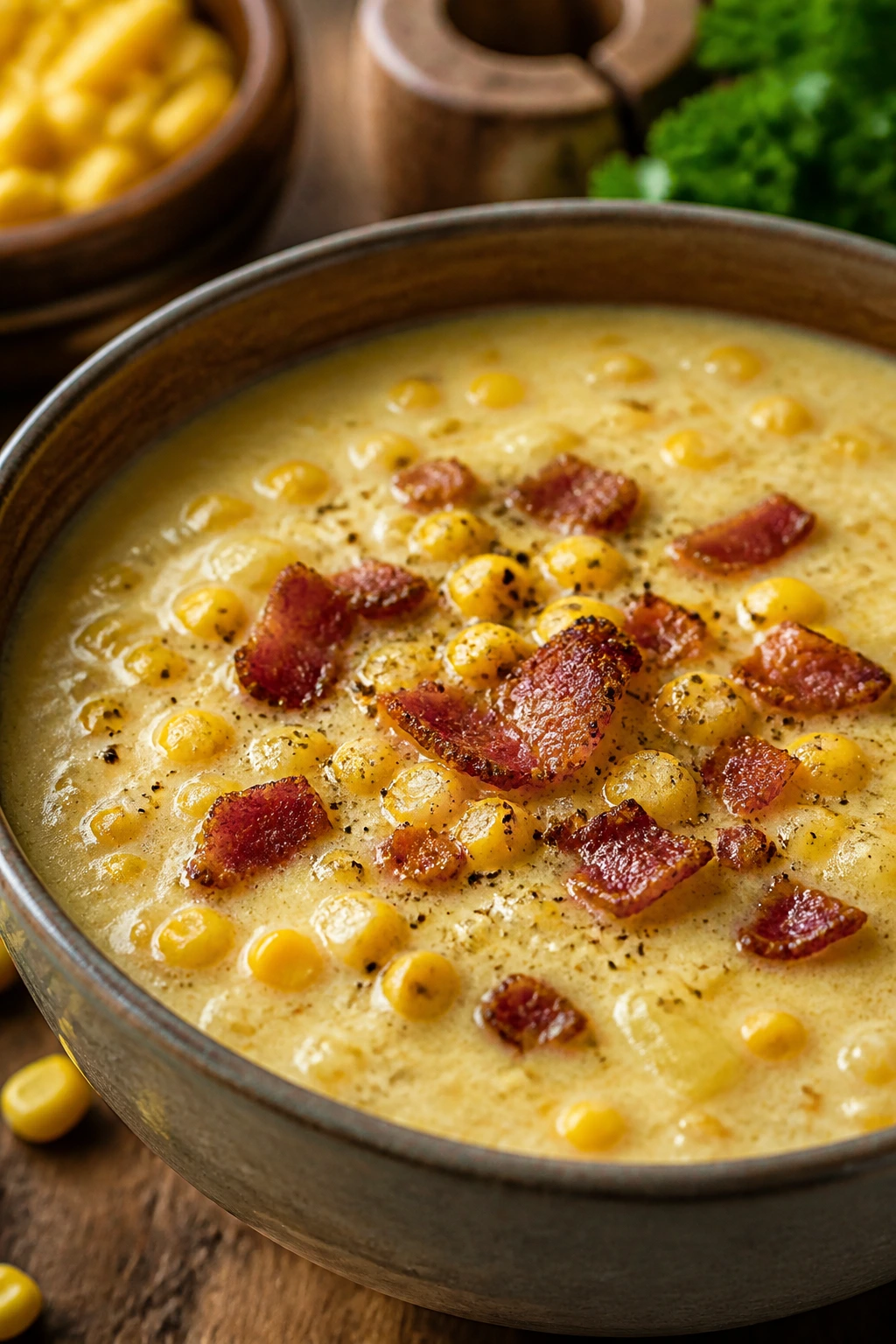
Corn and bacon chowder has a sweet-salty pull that makes people come back for seconds before they’ve finished the first bowl. The corn stays bright, the bacon gives the chowder a smoky backbone, and the potatoes make it thick enough to feel like a meal. This is the kind of soup that smells like a summer pantry and a cold-weather appetite meeting in the middle.
Why It Works:
Frozen corn works beautifully here because it keeps its sweetness and texture. Bacon renders enough fat to give the onions and celery a head start in flavor. Potatoes thicken the chowder naturally, and milk gets stirred in at the end so it stays smooth. A little thyme keeps it from tasting one-dimensional.
Key Ingredients:
- 6 slices bacon, chopped — the smoky base.
- 1 large onion, diced — softens in the bacon fat.
- 2 celery stalks, diced — keeps the chowder from feeling flat.
- 4 medium Yukon Gold potatoes, diced — creamy and sturdy.
- 4 cups frozen corn — sweet and easy.
- 4 cups chicken broth — low-sodium works best.
- 2 cups whole milk — added near the end.
- 1 teaspoon dried thyme — a little savory lift.
- 1 teaspoon kosher salt — go slowly.
- 1/2 teaspoon black pepper — enough to show up.
- 1 cup shredded cheddar — optional, but good.
- Chopped parsley or chives — for the top.
Quick Steps:
- Cook the bacon: Brown the bacon in a skillet until crisp, then transfer it to the slow cooker. Leave a spoonful of fat behind if you want more flavor.
- Build the chowder base: Add onion, celery, potatoes, corn, broth, thyme, salt, and pepper.
- Cook until tender: Cover and cook on LOW for 6 to 7 hours or HIGH for 3 to 4 hours, until the potatoes are soft.
- Thicken the pot: Mash some of the potatoes with a spoon or pulse an immersion blender a few times.
- Add milk last: Stir in milk and cheddar, if using, and warm for 10 to 15 minutes. Do not let it boil.
- Serve with herbs: Top with bacon and chopped parsley or chives.
Equipment for This Recipe:
- Skillet — for the bacon.
- Slow cooker — 6-quart is a safe size.
- Potato masher or immersion blender — for texture.
- Ladle — for serving.
- Sharp knife — for the potatoes.
How to Serve This Dish:
A slice of sourdough or a warm biscuit turns this into a full dinner fast. It serves 6 to 8, and it’s the sort of chowder that looks best with a little extra bacon and a green herb on top. Keep the bowls warm if you can; this one feels better steaming.
Pro Tips for This Recipe:
- Use Yukon Gold potatoes if you want a smoother, silkier body.
- Add cheese only after the heat drops a bit so it melts instead of clumping.
- Frozen corn is fine — maybe even better than canned here.
- If you want a thicker chowder, leave the lid off for the last 20 minutes.
Variations on This Dish:
- Smoked Paprika Corn Chowder: Add 1 teaspoon smoked paprika with the broth.
- Ham-and-Corn Version: Swap some bacon for diced ham if you want a meatier pot.
- Dairy-Light Bowl: Use evaporated milk instead of whole milk for a lighter finish.
Common Mistakes to Avoid with This Dish:
- Boiling after the milk goes in: That’s how chowder splits.
- Using russet potatoes only: They can get mealy fast. Yukon Golds hold better.
- Skipping the bacon fat entirely: You lose a lot of flavor if you drain everything.
10. French Onion Beef Soup
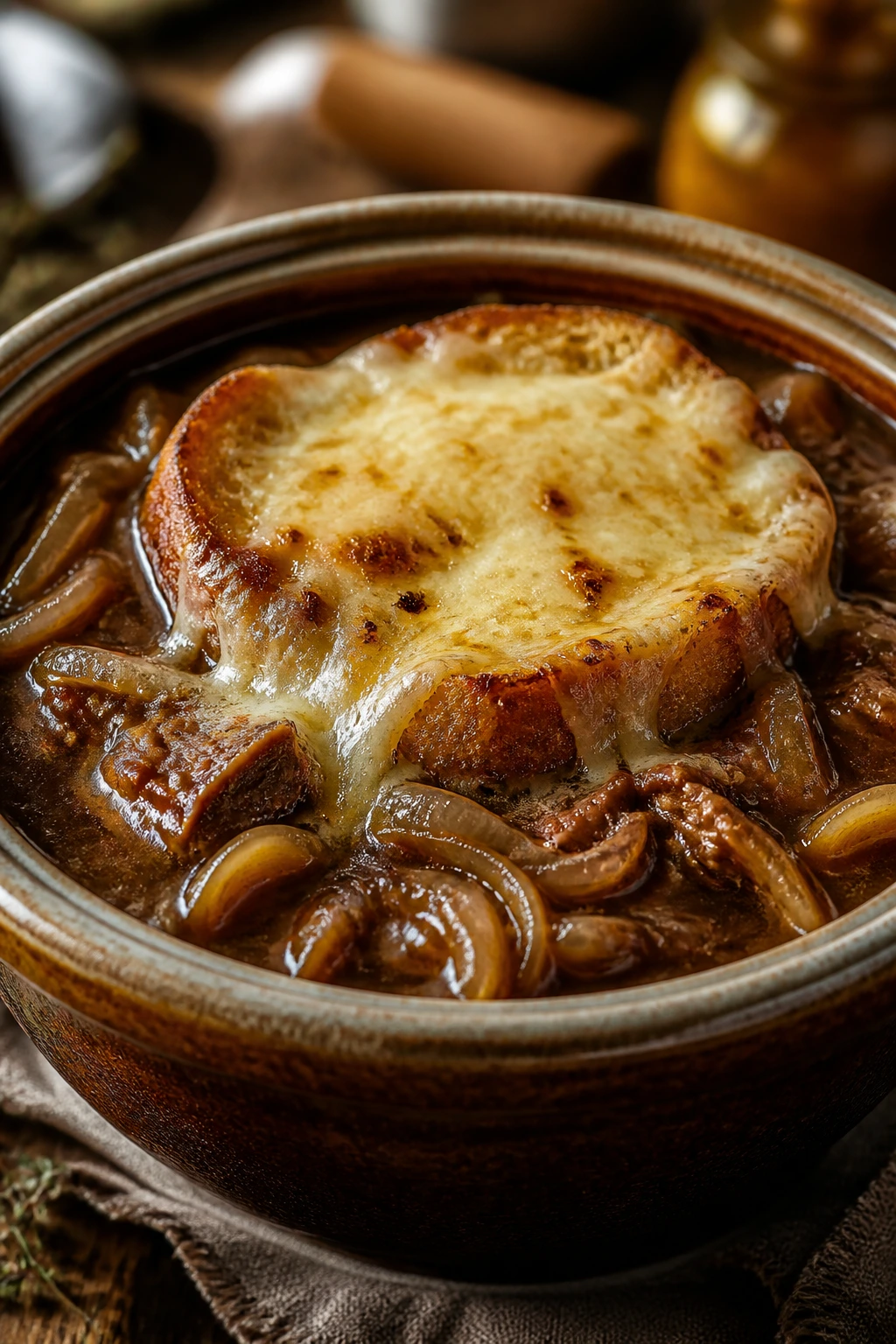
French onion beef soup takes the slow cooker idea and gives it a polished edge. The onions get soft and deeply savory, the beef turns tender, and the broth carries a dark, almost winey flavor that tastes like it took more work than it did. With toasted bread and melted cheese on top, this is a showpiece soup that still behaves like a practical one-pot meal.
Why It Works:
Onions are the whole story here. They need time to collapse, sweeten, and darken until the broth tastes round instead of sharp. Beef stew meat gives the soup substance, while Worcestershire sauce and thyme build that French onion depth people expect. The slow cooker can handle the long onion cook, but a quick pre-brown makes the final bowl much better.
Key Ingredients:
- 2 lbs beef stew meat — chuck-based stew meat is best.
- 4 large yellow onions, thinly sliced — the star of the show.
- 3 garlic cloves, minced — just enough.
- 6 cups beef broth — low-sodium keeps the salt under control.
- 1/2 cup dry sherry or dry white wine — optional, but useful.
- 2 tablespoons Worcestershire sauce — darkens the broth.
- 1 tablespoon tomato paste — tiny amount, big depth.
- 2 teaspoons fresh thyme leaves or 1 teaspoon dried thyme — classic.
- 2 bay leaves — not flashy, just right.
- 1 baguette, sliced and toasted — for the top.
- 2 cups grated Gruyère or Swiss cheese — for melting.
Quick Steps:
- Brown the beef: Sear the beef in a hot skillet for 3 to 4 minutes per side until browned, then transfer to the slow cooker.
- Soften the onions: Cook the onions in the skillet with a little butter or oil for 10 to 12 minutes, stirring until they’re glossy and starting to bronze. Add garlic and tomato paste for 1 minute.
- Build the broth: Add onions, broth, sherry, Worcestershire, thyme, and bay leaves to the slow cooker.
- Slow cook the soup: Cover and cook on LOW for 7 to 8 hours or HIGH for 4 to 5 hours, until the beef is tender and the onions are very soft.
- Assemble the top: Spoon soup into oven-safe bowls, add toasted baguette slices, and cover with cheese.
- Melt and serve: Broil for 2 to 3 minutes until the cheese is bubbly and browned in spots.
Equipment for This Recipe:
- Skillet — for beef and onions.
- Slow cooker — 6-quart or bigger.
- Oven-safe bowls — if you want the cheesy top.
- Baking sheet — for toasting bread.
- Tongs — for handling the baguette.
How to Serve This Dish:
Serve it as the center of the meal with a simple green salad and extra bread. It feeds 6 to 8 as a hearty dinner, and the cheese cap makes each bowl look like it came from a restaurant, even if the whole thing was mostly hands-off.
Pro Tips for This Recipe:
- Slice onions thinly so they melt into the broth instead of staying stringy.
- If you skip the wine, add an extra splash of broth and a teaspoon of vinegar.
- Toast the bread well or it will collapse under the cheese.
- Broil just until the cheese bubbles; a minute too long and the soup can lose some of its clean onion flavor.
Variations on This Dish:
- Short Rib Upgrade: Use boneless short ribs if you want a richer, more luxurious version.
- No-Wine Version: Replace wine with extra broth and 1 teaspoon balsamic vinegar.
- Mushroom Onion Twist: Add 8 ounces sliced mushrooms with the onions for more earthiness.
Common Mistakes to Avoid with This Dish:
- Leaving the onions too thick: They won’t melt into the broth properly.
- Using weak bread: Soft bread gets soggy and sad under the cheese.
- Skipping the browning: The soup tastes flatter without that dark base.
11. Tuscan White Bean Soup
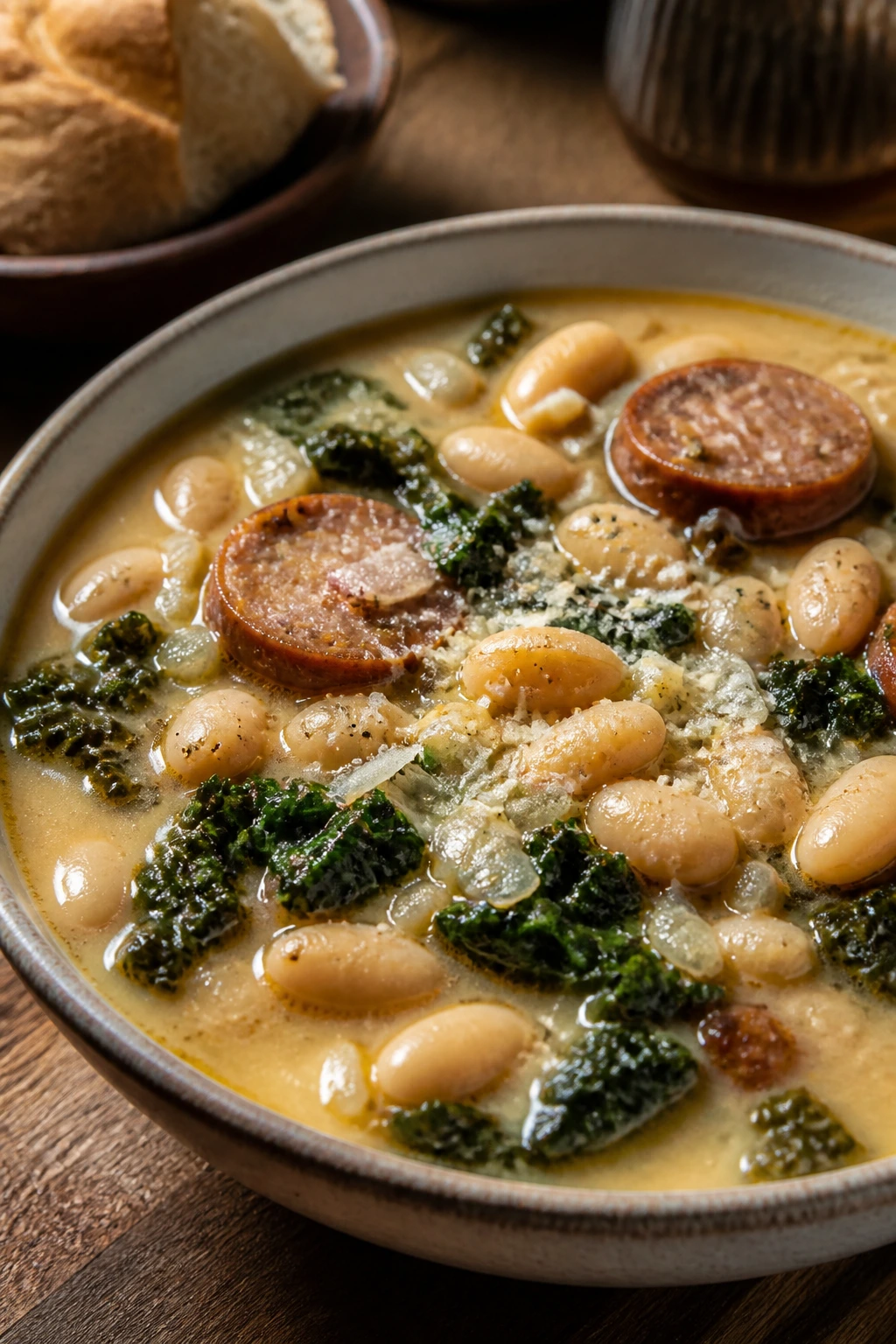
Tuscan white bean soup feels like the kind of bowl that should come with a small piece of olive oil drizzle and a loud loaf of bread. The beans go creamy, the sausage or pancetta brings savory fat, and the kale gives the soup a little chew. It’s sturdy without being heavy, which is a useful trick when the pot has to feed a lot of people.
Why It Works:
Cannellini beans are mild enough to soak up rosemary, garlic, and sausage without disappearing. A Parmesan rind, if you have one, gives the broth a salty, savory finish that tastes slow-cooked in the best sense. Kale goes in near the end so it stays lively. This is a soup where the last 10 minutes matter more than the first hour.
Key Ingredients:
- 1 lb Italian sausage — mild or hot, depending on your crowd.
- 2 cans (15 oz each) cannellini beans, rinsed and drained — the creamy base.
- 1 onion, diced — the backbone.
- 2 carrots, diced — a little sweetness.
- 2 celery stalks, diced — classic balance.
- 4 garlic cloves, minced — fresh and plenty.
- 6 cups chicken broth — low-sodium preferred.
- 1 Parmesan rind — optional, but excellent.
- 1 teaspoon dried rosemary — a little goes a long way.
- 1 bay leaf — quiet depth.
- 4 cups chopped kale — add late.
- Olive oil and black pepper — to finish.
Quick Steps:
- Brown the sausage: Cook the sausage in a skillet, breaking it up, until no pink remains. Drain excess grease.
- Build the pot: Add sausage, beans, onion, carrots, celery, garlic, broth, Parmesan rind, rosemary, and bay leaf to the slow cooker.
- Cook until blended: Cover and cook on LOW for 6 to 7 hours or HIGH for 3 to 4 hours.
- Add kale late: Stir in the kale during the last 20 minutes so it keeps its color and bite.
- Finish and adjust: Remove the rind and bay leaf. Taste, then add black pepper and a small drizzle of olive oil.
- Serve hot: Ladle into bowls with bread for dipping.
Equipment for This Recipe:
- Skillet — for the sausage.
- Slow cooker — a 6-quart size is ideal.
- Wooden spoon — for breaking up sausage.
- Ladle — for serving.
- Knife and cutting board — for all the vegetables.
How to Serve This Dish:
Serve it with toasted ciabatta, garlic bread, or a thick slice of sourdough. It makes 6 to 8 servings, and it tastes especially good when a little olive oil and black pepper hit the surface right before the bowl reaches the table.
Pro Tips for This Recipe:
- A Parmesan rind adds more depth than extra salt ever will.
- If using salty sausage, hold back on added salt until the end.
- Chop kale into bite-size pieces so it softens evenly.
- A splash of lemon at the end keeps the beans from tasting heavy.
Variations on This Dish:
- Chicken Tuscan Bowl: Use shredded chicken thighs instead of sausage for a lighter version.
- Tomato-Heavy Version: Add 1 can diced tomatoes if you want a redder, sharper broth.
- Creamy Finish: Stir in 1/2 cup half-and-half at the end for a softer texture.
Common Mistakes to Avoid with This Dish:
- Adding kale too early: It overcooks and turns flat.
- Forgetting the Parmesan rind: The soup loses a lot of savory depth.
- Over-salting before the broth reduces: Sausage and cheese already bring salt.
12. Vegetable Minestrone
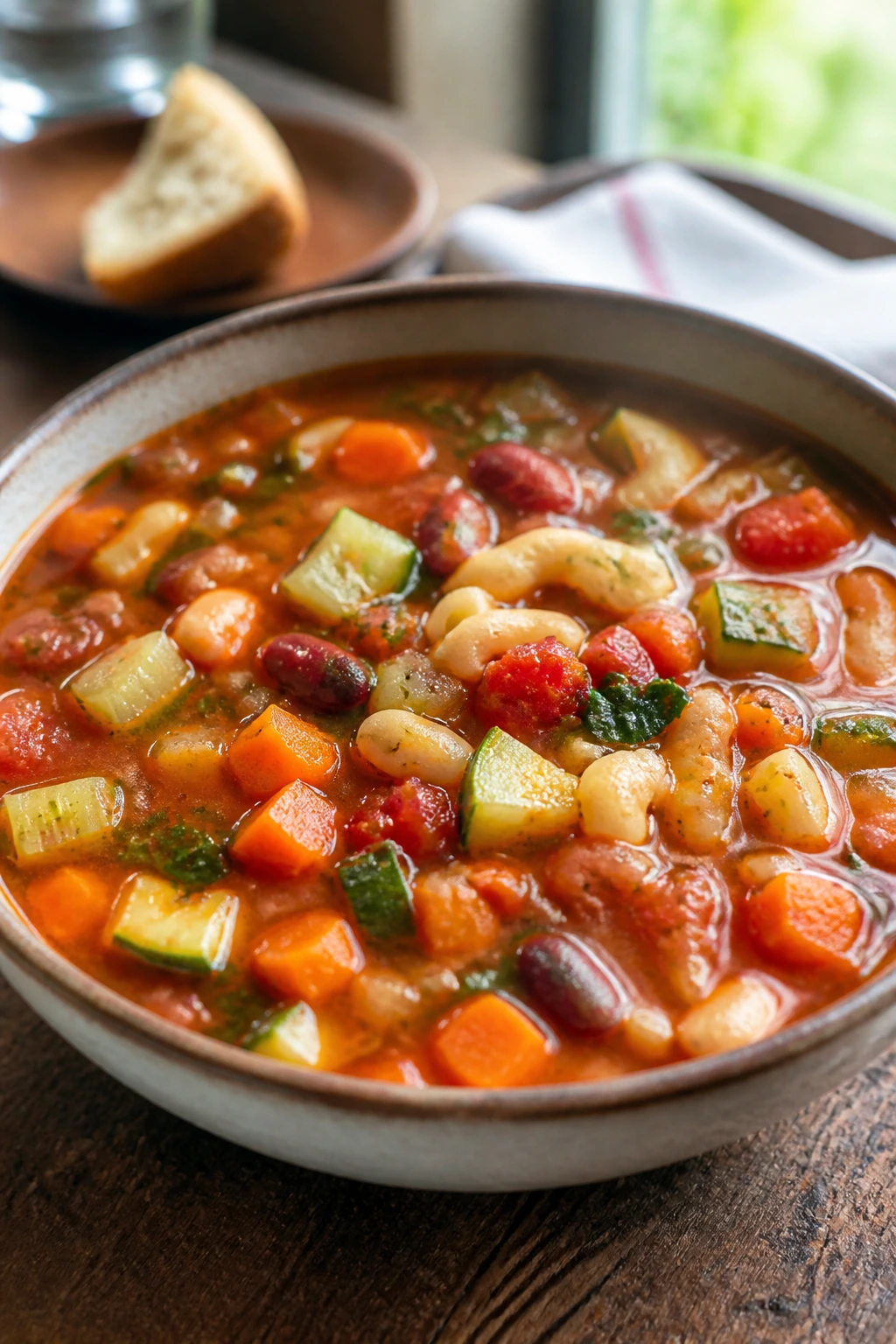
Vegetable minestrone is the sort of soup that makes a pantry feel organized. Beans, tomatoes, carrots, zucchini, and a little pasta turn into a pot that can feed a crowd without leaning on meat at all. The trick is keeping the vegetables distinct enough that the soup tastes layered instead of like a blur.
Why It Works:
Minestrone needs contrast. The carrots and celery form the base, zucchini goes in later so it doesn’t vanish, and the beans plus pasta make it filling enough for dinner. A tomato-rich broth gives the soup body, while spinach or kale at the end keeps the color fresh. The slow cooker does the long work, but the final pasta step keeps the texture where it should be.
Key Ingredients:
- 1 onion, diced — the start of almost everything good.
- 2 carrots, diced — sweet and sturdy.
- 2 celery stalks, diced — for balance.
- 2 zucchini, chopped — add later.
- 2 cans (14.5 oz each) diced tomatoes — the broth’s red base.
- 1 can (15 oz) kidney beans, rinsed and drained — for body.
- 1 can (15 oz) cannellini beans, rinsed and drained — for creaminess.
- 6 cups vegetable broth — low-sodium is best.
- 1 tablespoon Italian seasoning — easy and effective.
- 1 cup small pasta, like ditalini — add near the end.
- 2 cups spinach or chopped kale — last-minute greens.
- Grated Parmesan — optional for serving.
Quick Steps:
- Start the base: Add onion, carrots, celery, tomatoes, beans, broth, and Italian seasoning to the slow cooker.
- Cook the vegetables: Cover and cook on LOW for 6 to 7 hours or HIGH for 3 to 4 hours.
- Add zucchini later: Stir in the zucchini for the last 45 minutes so it stays intact.
- Cook the pasta separately or in the pot: If cooking in the crock, add it during the last 20 to 25 minutes and watch closely.
- Finish with greens: Stir in spinach or kale during the last 10 minutes.
- Taste and serve: Adjust salt, pepper, and a little olive oil before ladling.
Equipment for This Recipe:
- Slow cooker — 6-quart works well.
- Knife and board — for the vegetables.
- Small saucepan — if you prefer to cook pasta separately.
- Ladle — for serving.
- Colander — handy if draining pasta.
How to Serve This Dish:
Serve with pesto toast, garlic bread, or a crisp Italian salad. It makes 8 modest servings or 6 larger ones, and it looks nicest when you drizzle a little olive oil over the top and finish with Parmesan.
Pro Tips for This Recipe:
- Keep zucchini late or it turns mushy.
- Pasta soaks up broth fast, so if you plan leftovers, cook it separately.
- A spoonful of pesto on each bowl changes the whole thing.
- If the soup tastes thin, mash a few beans against the side of the pot.
Variations on This Dish:
- Pasta-Free Version: Skip the noodles and add extra beans or potatoes.
- Pesto Finish: Stir in 2 tablespoons pesto right before serving.
- Winter Minestrone: Swap zucchini for diced butternut squash or sweet potato.
Common Mistakes to Avoid with This Dish:
- Adding pasta too early: It breaks down and steals broth.
- Cooking every vegetable the same amount of time: Zucchini will not thank you.
- Under-seasoning the broth: Beans and pasta soak up a lot of flavor.
13. Mushroom Wild Rice Stew
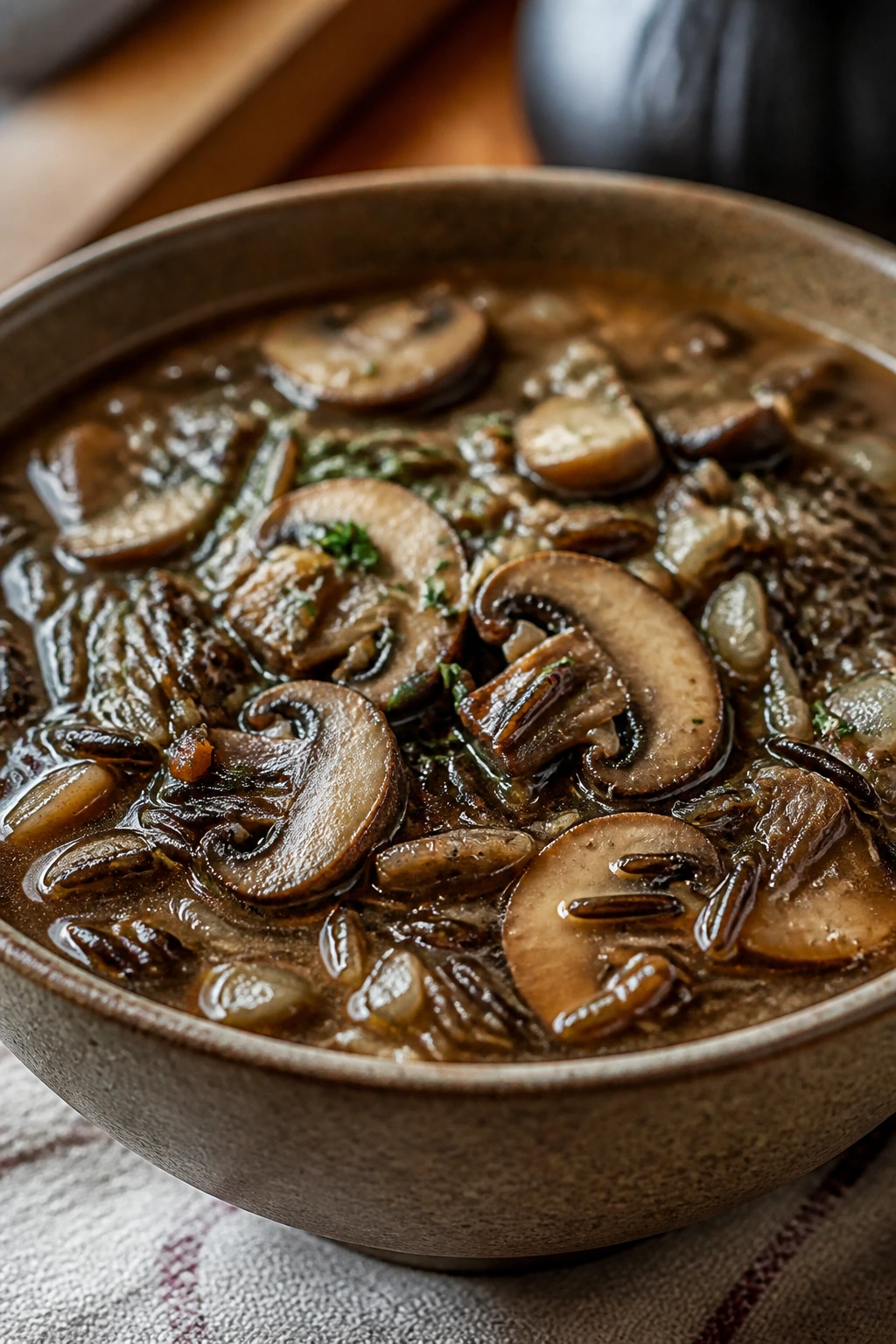
Mushroom wild rice stew is deep, earthy, and a little brooding in the best possible way. The mushrooms release enough flavor to make the broth taste like it has been simmering for hours, and the wild rice gives each spoonful a nutty chew. This is a meatless crockpot stew that still feels substantial enough for a table full of hungry people.
Why It Works:
A mix of mushrooms gives more depth than a single type. Cremini mushrooms bring the familiar savory note, while a few chopped portobellos push the broth darker and meatier. Wild rice holds up better than white rice during a long slow cook, so the stew stays textured. A little cream at the end rounds out the edges without making the broth heavy.
Key Ingredients:
- 1 lb cremini mushrooms, sliced — the main mushroom flavor.
- 8 oz portobello mushrooms, chopped — deeper and meatier.
- 1 onion, diced — gives the base some sweetness.
- 2 carrots, diced — keeps the stew from getting too dark.
- 2 celery stalks, diced — classic support.
- 3 garlic cloves, minced — don’t leave them out.
- 3/4 cup wild rice, rinsed — holds up well over time.
- 6 cups vegetable or chicken broth — low-sodium is ideal.
- 1 teaspoon dried thyme — fits the mushrooms.
- 1 tablespoon soy sauce — adds umami without much fuss.
- 1/2 cup half-and-half or coconut milk — at the end.
- Chopped parsley — for the finish.
Quick Steps:
- Build the pot: Add mushrooms, onion, carrots, celery, garlic, wild rice, broth, thyme, and soy sauce to the slow cooker.
- Cook slowly: Cover and cook on LOW for 7 to 8 hours or HIGH for 4 to 5 hours, until the rice is tender and the mushrooms have collapsed.
- Add cream last: Stir in half-and-half or coconut milk during the final 15 minutes.
- Taste and adjust: Add salt, black pepper, and a little more soy sauce if needed.
- Finish with herbs: Sprinkle parsley over the top before serving.
- Serve hot: The stew thickens as it stands, so don’t let it sit too long before ladling.
Equipment for This Recipe:
- Slow cooker — 6-quart or larger.
- Knife and cutting board — for mushrooms and vegetables.
- Wooden spoon — for stirring.
- Ladle — essential for stew.
- Measuring cups — wild rice needs a real measure.
How to Serve This Dish:
Serve it with crusty bread or a soft roll, because the broth is the part people will want to chase. It feeds 6 to 8, and it looks especially good with parsley and cracked pepper on top. A simple green salad keeps the meal from feeling too dense.
Pro Tips for This Recipe:
- Use a mix of mushrooms for the best flavor.
- Wild rice needs time; white rice will turn to mush here.
- Stir in the dairy only at the end so it stays smooth.
- A squeeze of lemon or a splash of sherry vinegar can wake the stew up.
Variations on This Dish:
- Creamier Forest Stew: Increase the half-and-half to 3/4 cup for a richer bowl.
- Herb-Forward Version: Add rosemary or sage with the thyme.
- Vegan Pot: Use coconut milk instead of cream and vegetable broth instead of chicken broth.
Common Mistakes to Avoid with This Dish:
- Using only one mushroom type: The flavor gets one-note fast.
- Adding cream too soon: It can lose its smooth texture.
- Using quick-cooking rice: It won’t hold up to the long cook.
14. Coconut Curry Chicken Stew
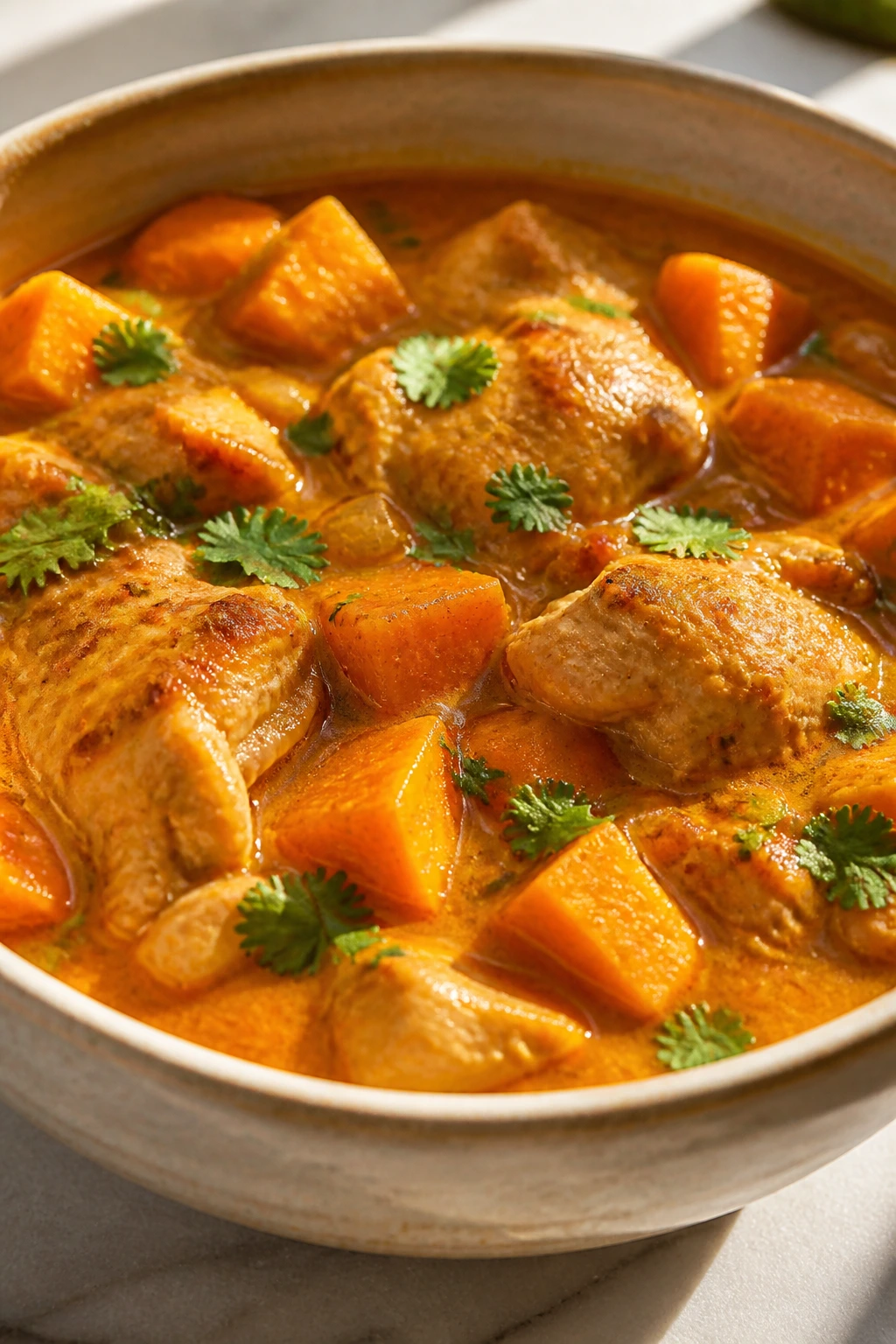
Coconut curry chicken stew smells like ginger, garlic, and curry paste before it smells like chicken. The coconut milk gives the broth a soft richness, the sweet potato breaks down into a silky body, and the chicken thighs stay juicy enough to shred without turning stringy. This is one of the few crowd-size crockpot recipes that feels bright and rich at the same time.
Why It Works:
Chicken thighs are the right cut here because they stay tender in a coconut-based broth. Curry paste brings heat, spice, and color in one shot, which saves time and keeps the flavor concentrated. Coconut milk softens the edges, while sweet potato and carrots add enough body that the stew eats like a full meal. Lime at the end is non-negotiable. It keeps the whole pot from feeling heavy.
Key Ingredients:
- 2 lbs boneless, skinless chicken thighs — best texture for the slow cooker.
- 1 large sweet potato, peeled and cubed — sweet and thickening.
- 2 carrots, sliced — adds more body.
- 1 onion, diced — the base.
- 3 garlic cloves, minced — fresh garlic matters here.
- 1 tablespoon grated fresh ginger — sharp and warm.
- 2 to 3 tablespoons red or yellow curry paste — adjust heat to taste.
- 1 can (13.5 oz) coconut milk — full-fat is better.
- 2 cups chicken broth — gives the stew enough liquid.
- 1 tablespoon fish sauce or soy sauce — for salt and depth.
- 1 lime, juiced — the finish.
- Fresh cilantro — for serving.
Quick Steps:
- Add the aromatics: Put sweet potato, carrots, onion, garlic, ginger, curry paste, chicken thighs, coconut milk, broth, and fish sauce into the slow cooker.
- Cook until tender: Cover and cook on LOW for 6 to 7 hours or HIGH for 3 to 4 hours, until the chicken is cooked through and the sweet potato is soft.
- Shred or chunk the chicken: Remove the thighs if you want a shredded texture, then return them to the pot.
- Finish with lime: Stir in lime juice after the heat is off or right before serving.
- Taste and adjust: Add salt or more curry paste if the flavor needs more punch.
- Serve with cilantro: Top each bowl with fresh herbs.
Equipment for This Recipe:
- Slow cooker — 6-quart size gives room for the coconut milk.
- Microplane or grater — for the ginger.
- Two forks — for shredding chicken.
- Ladle — for serving.
- Sharp knife — for the sweet potato.
How to Serve This Dish:
Serve it over jasmine rice or with warm naan so the broth has something to cling to. It feeds 6 to 8, and the bowl looks best with cilantro and a lime wedge on top. If you want a cleaner plate, serve the rice separately and spoon the stew over it.
Pro Tips for This Recipe:
- Use full-fat coconut milk or the broth can taste thin.
- Add lime at the end so the flavor stays bright.
- If the curry paste is mild, add more at the start rather than trying to fix heat later.
- A few basil leaves at the finish can change the whole bowl.
Variations on This Dish:
- Green Curry Version: Swap red curry paste for green curry paste and add bell pepper.
- Vegetable-Heavy Bowl: Add cauliflower florets during the last 90 minutes.
- Peanut Finish: Stir in 2 tablespoons peanut butter for a richer, satay-like flavor.
Common Mistakes to Avoid with This Dish:
- Using light coconut milk only: The stew loses body fast.
- Adding lime too early: The fresh flavor gets muted.
- Overcooking the chicken breasts if you swap them in: Thighs are easier and more forgiving.
15. Pork and Green Chile Stew
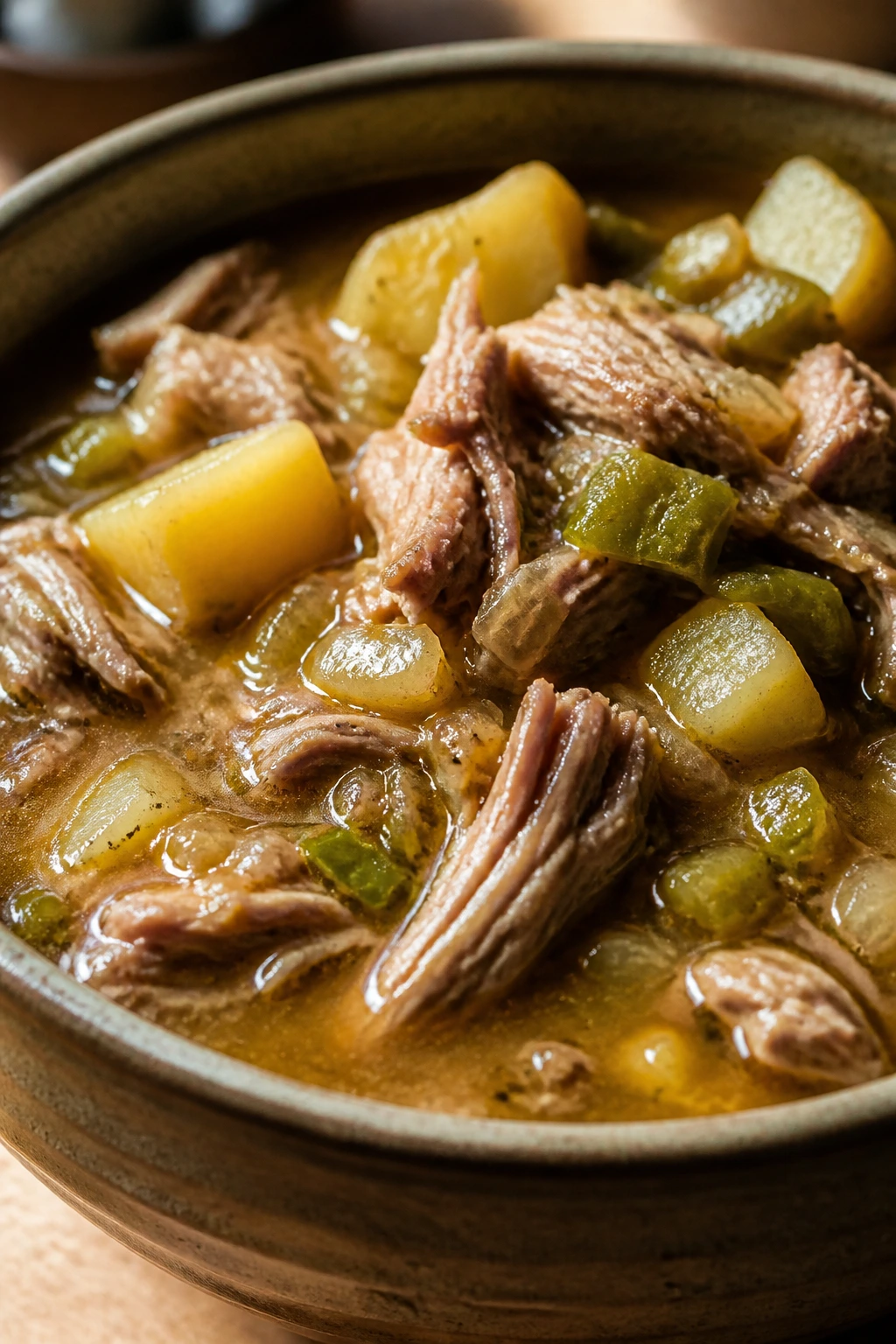
Pork and green chile stew smells like roasted peppers and warm cumin, and the first spoonful usually tells you whether you made the right call on the cut of meat. Pork shoulder breaks down into soft shreds, the potatoes soak up the chile broth, and the whole pot tastes a little smoky, a little tangy, and very satisfied with itself. It’s a strong crowd recipe because it eats like a meal, not a side.
Why It Works:
Pork shoulder has enough fat to stay tender after a long cook. Green chiles bring heat and brightness without making the broth burn. Potatoes give the stew body, and a touch of tomatillo or lime keeps the flavor sharp enough to stay interesting through a second bowl. This is one of those recipes that gets better after a short rest.
Key Ingredients:
- 2 1/2 lbs pork shoulder, cut into 1-inch chunks — best for shredding.
- 1 large onion, diced — the sweet base.
- 3 garlic cloves, minced — gives the stew depth.
- 2 cans (4 oz each) diced green chiles — the main chile flavor.
- 1 can (10 oz) diced tomatillos or 1/2 cup salsa verde — optional, but good.
- 4 medium Yukon Gold potatoes, diced — sturdy and creamy.
- 4 cups chicken broth — low-sodium if possible.
- 1 teaspoon ground cumin — warm, earthy.
- 1 teaspoon dried oregano — especially good with pork.
- 1 teaspoon kosher salt — more at the end if needed.
- 1 lime, juiced — bright finish.
- Chopped cilantro — for serving.
Quick Steps:
- Brown the pork: Sear pork chunks in a skillet over medium-high heat for 3 to 4 minutes per side until lightly browned.
- Load the crock: Add pork, onion, garlic, green chiles, tomatillos or salsa verde, potatoes, broth, cumin, oregano, and salt.
- Cook slowly: Cover and cook on LOW for 7 to 8 hours or HIGH for 4 to 5 hours, until the pork is tender and the potatoes are soft.
- Shred if you like: Break the pork into chunks or shred it a bit with forks.
- Finish with lime: Stir in lime juice at the end and taste for salt.
- Serve with cilantro: Ladle into bowls and top with herbs.
Equipment for This Recipe:
- Skillet — for browning pork.
- Slow cooker — 6-quart or larger.
- Tongs or forks — for shredding.
- Ladle — for serving.
- Knife and board — for potatoes and onion.
How to Serve This Dish:
This stew is excellent with warm flour tortillas or a pile of tortilla chips. It feeds 6 to 8 and tastes especially good topped with cilantro, a little sour cream, and maybe a spoonful of salsa on the side. If you want it to look more finished, add thin-sliced radishes for crunch.
Pro Tips for This Recipe:
- Pork shoulder works better than pork loin. Loin can dry out.
- Keep the lime at the end or the broth will taste flatter.
- If you want more heat, add a diced jalapeño with the onion.
- A handful of chopped cilantro stems in the pot adds a green, peppery note.
Variations on This Dish:
- Smokier Hatch-Style Version: Use roasted green chiles if you can get them.
- Bean Stretch: Add 1 can white beans for a larger, thicker bowl.
- Corned Corn Version: Stir in 1 cup frozen corn during the last hour for sweetness.
Common Mistakes to Avoid with This Dish:
- Using pork loin instead of shoulder: It gets dry and stringy.
- Skipping the lime: The stew tastes heavier and less lively.
- Cutting potatoes too small: They can vanish before the pork is ready.
16. Three-Bean Vegetarian Chili
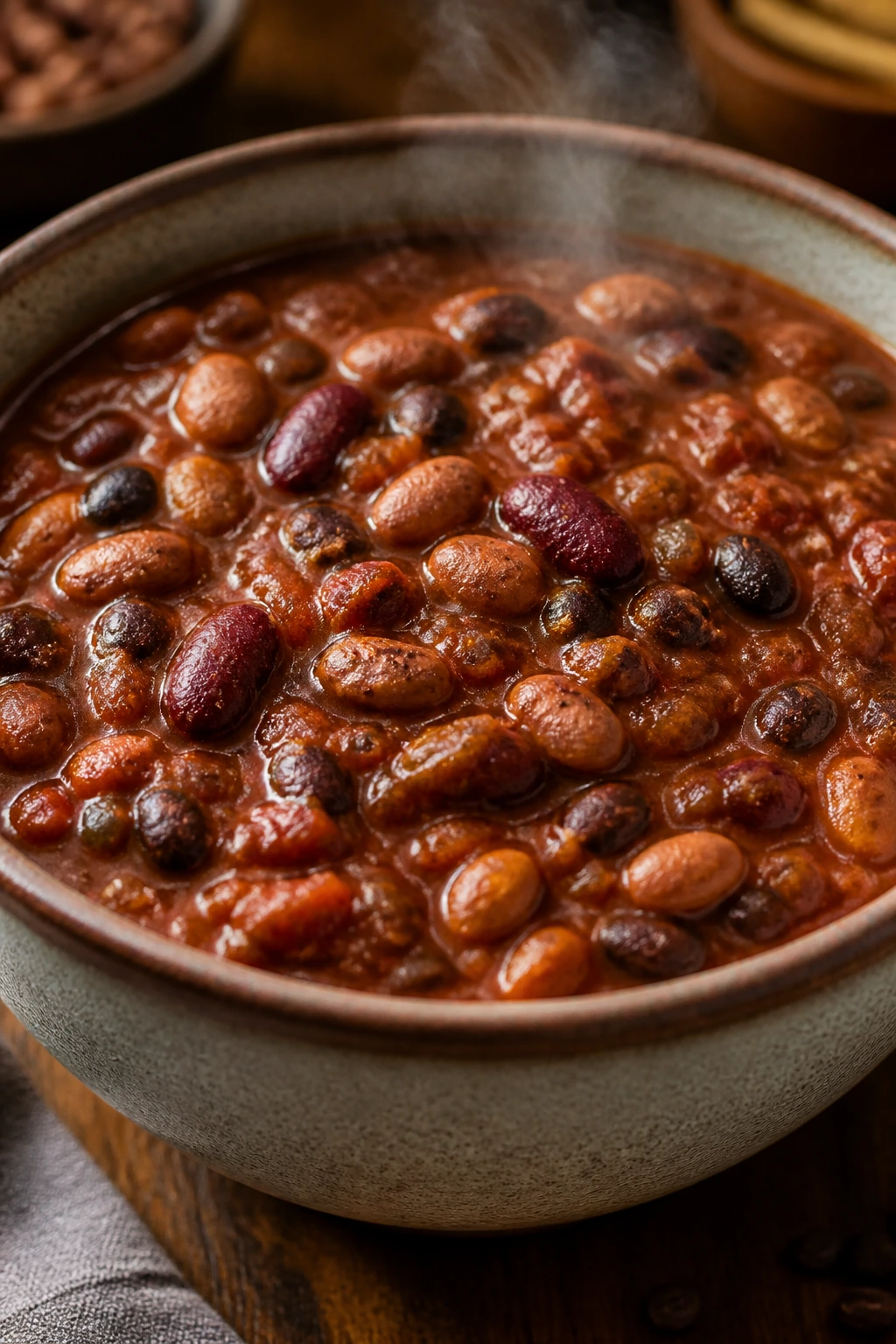
Three-bean vegetarian chili has to do more work than a meat chili, so I like it best when it leans into deep tomato flavor and a little smoke. The beans make it thick and filling, the vegetables bring texture, and the chili powder keeps it from tasting like a can of tomatoes with manners. For a crowd, it’s practical, cheap, and easy to scale.
Why It Works:
Three kinds of beans give you three textures, which matters more than it sounds. Kidney beans stay firm, black beans go creamy at the edges, and pinto beans settle somewhere in the middle. A long cook lets the tomatoes and spices settle together, while a little cocoa or smoked paprika gives the chili a deeper color and a rounder flavor. You don’t miss the meat if the seasoning is handled well.
Key Ingredients:
- 1 onion, diced — the base.
- 1 red bell pepper, diced — sweetness and color.
- 3 garlic cloves, minced — keeps it lively.
- 1 can (15 oz) kidney beans, rinsed and drained — firm texture.
- 1 can (15 oz) black beans, rinsed and drained — softer texture.
- 1 can (15 oz) pinto beans, rinsed and drained — middle ground.
- 2 cans (14.5 oz each) crushed tomatoes — the body.
- 1 1/2 cups vegetable broth — enough to keep it spoonable.
- 2 tablespoons chili powder — the main spice.
- 1 teaspoon cumin — earthy support.
- 1 teaspoon smoked paprika — gives a little fire.
- 1 teaspoon kosher salt — adjust at the end.
- 1 teaspoon unsweetened cocoa powder — optional, for depth.
- Scallions, avocado, and cheddar or vegan toppings — for serving.
Quick Steps:
- Combine the base: Add onion, bell pepper, garlic, beans, tomatoes, broth, chili powder, cumin, smoked paprika, salt, and cocoa to the slow cooker.
- Cook the chili: Cover and cook on LOW for 6 to 7 hours or HIGH for 3 to 4 hours.
- Check the thickness: If it looks too loose, remove the lid for the last 20 minutes on HIGH.
- Taste and adjust: Add more salt, a splash of vinegar, or more chili powder if needed.
- Serve with toppings: Ladle into bowls and pile on the cold stuff.
- Let it sit a bit: A 10-minute rest helps the beans settle into the sauce.
Equipment for This Recipe:
- Slow cooker — 6-quart is enough for a crowd.
- Colander — for rinsing beans.
- Wooden spoon — for stirring.
- Ladle — for serving.
- Knife and cutting board — for the vegetables.
How to Serve This Dish:
This chili loves cornbread, rice, or baked potatoes. It serves 8 as a main dish, and it looks best when you use a bright topping like avocado or scallions to break up the dark red base. A squeeze of lime is good too, even if it sounds small.
Pro Tips for This Recipe:
- Rinse canned beans unless you want a saltier, heavier pot.
- Add a little vinegar at the end to sharpen the tomatoes.
- If you want more body, mash a cup of beans against the side of the pot.
- Don’t be shy with the toppings; vegetarian chili needs contrast.
Variations on This Dish:
- Smoky Chipotle Bean Chili: Add 1 chopped chipotle in adobo.
- Pumpkin Chili: Stir in 1 cup pumpkin purée for a thicker, rounder bowl.
- Kid-Friendly Version: Cut the chili powder in half and add extra corn.
Common Mistakes to Avoid with This Dish:
- Under-seasoning the tomato base: Beans need help or the chili tastes dull.
- Adding too much water: Chili should be thick enough to cling to a spoon.
- Forgetting acid at the end: A splash of vinegar or lime wakes the pot up.
17. Butternut Squash and Apple Soup
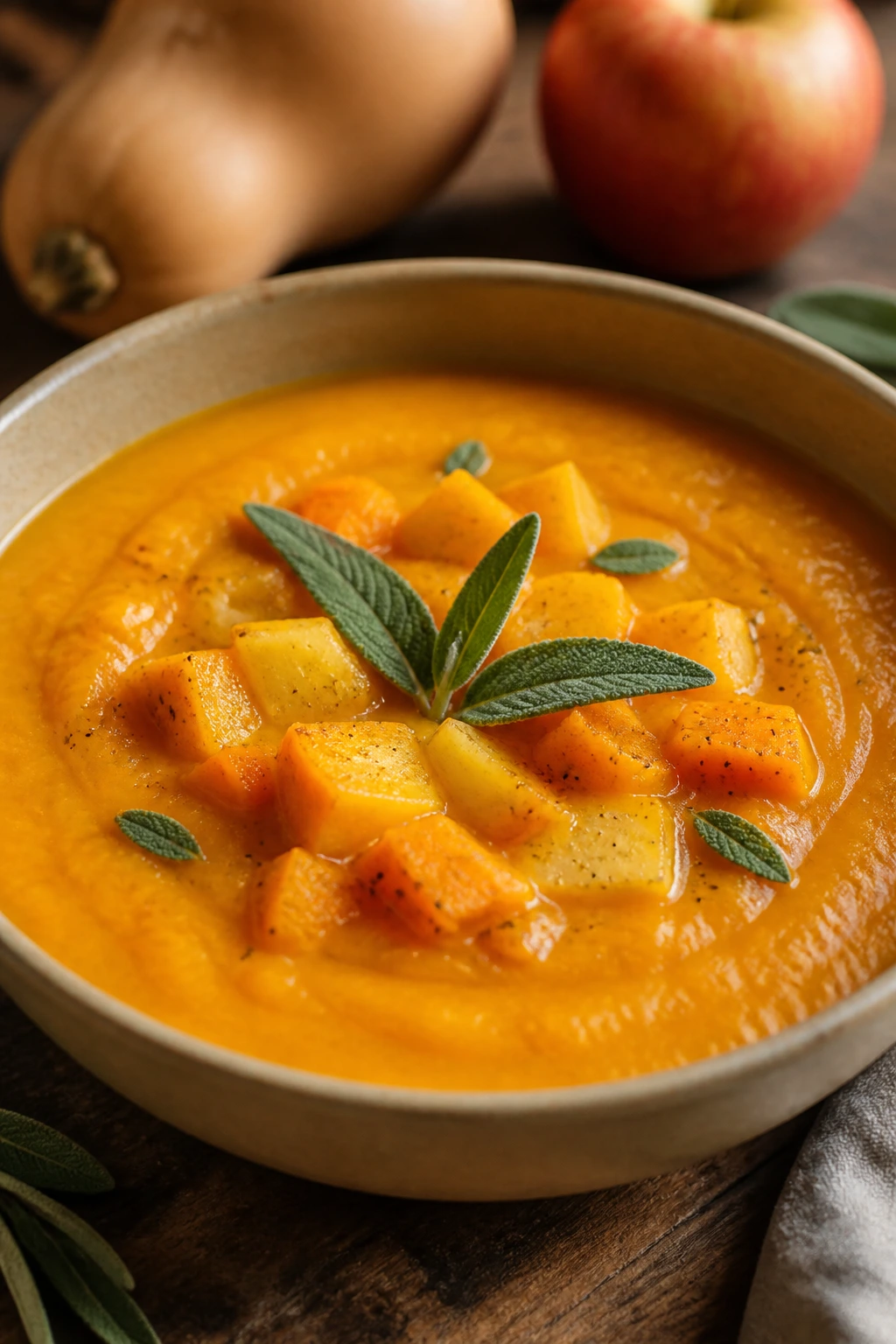
Butternut squash and apple soup walks a fine line between savory and sweet, and the best versions keep one foot firmly on the savory side. The squash turns velvety, the apples soften into the broth, and a little sage or nutmeg keeps the pot from tasting like dessert in disguise. It’s a bright, smooth option when you need a crowd soup that feels a little lighter.
Why It Works:
Butternut squash breaks down into a naturally creamy texture, which means the soup does not need much dairy to feel full. Apples add a soft sweetness and a little tartness, depending on what you choose. Onion and broth keep the base grounded, while sage or thyme pushes the soup back toward dinner territory. A splash of apple cider vinegar at the end can save the balance if the apples run sweet.
Key Ingredients:
- 1 large butternut squash, peeled and cubed — the main body.
- 2 apples, peeled and chopped — choose tart apples if you can.
- 1 onion, diced — savory base.
- 3 garlic cloves, minced — just enough.
- 4 cups vegetable or chicken broth — low-sodium preferred.
- 1 teaspoon dried sage — classic with squash.
- 1/2 teaspoon nutmeg — optional, but useful.
- 1 teaspoon kosher salt — adjust after blending.
- 1/2 cup heavy cream or coconut milk — for finishing.
- Apple cider vinegar or lemon juice — to balance sweetness.
- Pumpkin seeds or croutons — for topping.
Quick Steps:
- Load the slow cooker: Add squash, apples, onion, garlic, broth, sage, nutmeg, and salt.
- Cook until tender: Cover and cook on LOW for 6 to 7 hours or HIGH for 3 to 4 hours, until the squash is soft.
- Blend until smooth: Use an immersion blender in the crock or transfer carefully in batches to a blender.
- Stir in cream: Add heavy cream or coconut milk and warm for 10 minutes.
- Balance the flavor: Taste and add vinegar or lemon juice if the soup leans too sweet.
- Serve with crunch: Top with pumpkin seeds or croutons.
Equipment for This Recipe:
- Slow cooker — 6-quart works well.
- Immersion blender or countertop blender — for a smooth finish.
- Peeler and knife — squash prep matters here.
- Ladle — for serving.
- Measuring spoons — spices need some precision.
How to Serve This Dish:
Serve it in smaller bowls with a piece of crusty bread or a sharp salad on the side. It feeds 6 to 8 as a starter, or 6 as a light main when you add bread and cheese. A drizzle of cream and a few pumpkin seeds make it look finished without fuss.
Pro Tips for This Recipe:
- Use tart apples if you want the soup to stay savory.
- Blend carefully; hot squash can spit if you rush it.
- Coconut milk works well if you want a dairy-free finish.
- A pinch of cayenne can sharpen the sweetness without making the soup spicy.
Variations on This Dish:
- Roasted Garlic Version: Add 1 head of roasted garlic for a deeper, sweeter base.
- Carrot-Squash Blend: Replace one apple with 2 carrots if you want it less sweet.
- Maple Finish: Add 1 teaspoon maple syrup only if the squash is bland and under-ripe.
Common Mistakes to Avoid with This Dish:
- Using overly sweet apples only: The soup can drift into dessert territory.
- Skipping acid at the end: The flavor needs a small sharp edge.
- Blending without checking texture: Leave it slightly rustic if you like more body.
18. Beef Stroganoff Soup
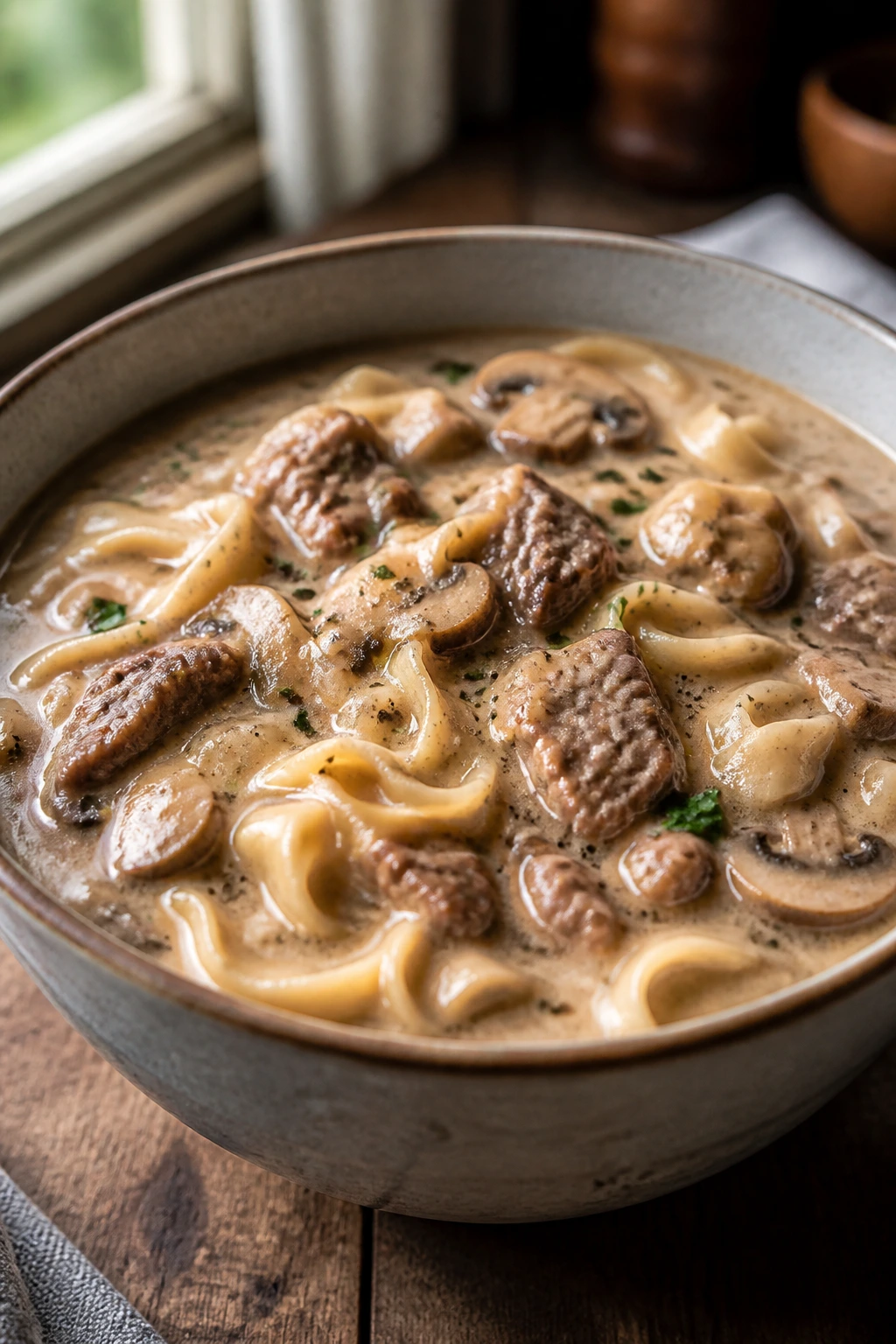
Beef stroganoff soup tastes like the casserole version decided to loosen up and become easier to eat. The beef turns tender, the mushrooms lend a deep savory note, and the sour cream gives the broth that classic stroganoff tang. It’s rich, yes, but in a way that still makes sense for a crowd because everyone gets a bowl instead of a heavy plate.
Why It Works:
Chuck or stew meat becomes tender in long moist heat, which is exactly what this soup needs. Mushrooms add their own earthy stock-like flavor, while Worcestershire sauce and paprika push the broth toward that familiar stroganoff profile. Egg noodles make the soup feel complete, but they should go in late so they don’t overcook into mush. Sour cream is the finishing move, not a starting ingredient.
Key Ingredients:
- 2 lbs beef stew meat — chuck-based pieces are best.
- 8 oz mushrooms, sliced — cremini or button both work.
- 1 onion, sliced — sweet and soft.
- 3 garlic cloves, minced — the base flavor.
- 6 cups beef broth — low-sodium keeps control in your hands.
- 2 tablespoons Worcestershire sauce — big flavor, tiny amount.
- 1 teaspoon paprika — classic stroganoff note.
- 1 bay leaf — background support.
- 8 oz egg noodles — add near the end.
- 3/4 cup sour cream — stirred in off heat.
- Chopped parsley — for serving.
Quick Steps:
- Brown the beef: Sear the stew meat in a skillet over medium-high heat until browned on all sides.
- Build the soup base: Add beef, mushrooms, onion, garlic, broth, Worcestershire, paprika, and bay leaf to the slow cooker.
- Cook until tender: Cover and cook on LOW for 7 to 8 hours or HIGH for 4 to 5 hours, until the beef is soft.
- Add the noodles late: Stir in egg noodles during the last 20 to 30 minutes, or cook them separately and add at the end.
- Finish with sour cream: Turn off the heat and stir in sour cream slowly so it stays smooth.
- Serve with parsley: Top with chopped parsley and black pepper.
Equipment for This Recipe:
- Skillet — for browning beef.
- Slow cooker — 6-quart or larger.
- Wooden spoon — for stirring noodles gently.
- Ladle — for serving.
- Small bowl — for tempering sour cream if needed.
How to Serve This Dish:
Serve it with buttered egg noodles if you didn’t cook them in the pot, or just spoon it into deep bowls with rye bread. It feeds 6 to 8 generously, and a little extra black pepper on top makes the whole thing smell sharper and more finished.
Pro Tips for This Recipe:
- Add noodles late or they’ll go soft fast.
- Stir sour cream in off heat to prevent curdling.
- Brown the beef well; pale meat means pale flavor.
- If you want more body, add a teaspoon of Dijon mustard with the Worcestershire.
Variations on This Dish:
- Creamy Mushroom Version: Double the mushrooms and cut the beef slightly for a lighter bowl.
- No-Noodle Bowl: Serve over mashed potatoes instead of using egg noodles.
- Mustard-Sour Cream Finish: Add 1 teaspoon Dijon to the sour cream for a sharper tang.
Common Mistakes to Avoid with This Dish:
- Adding sour cream while boiling: It can split. Stir it in at the end.
- Cooking noodles too early: They turn mealy and fall apart.
- Skipping the beef browning: The broth loses a lot of its depth.
Why the Slow Cooker Wins on Big Soup Days
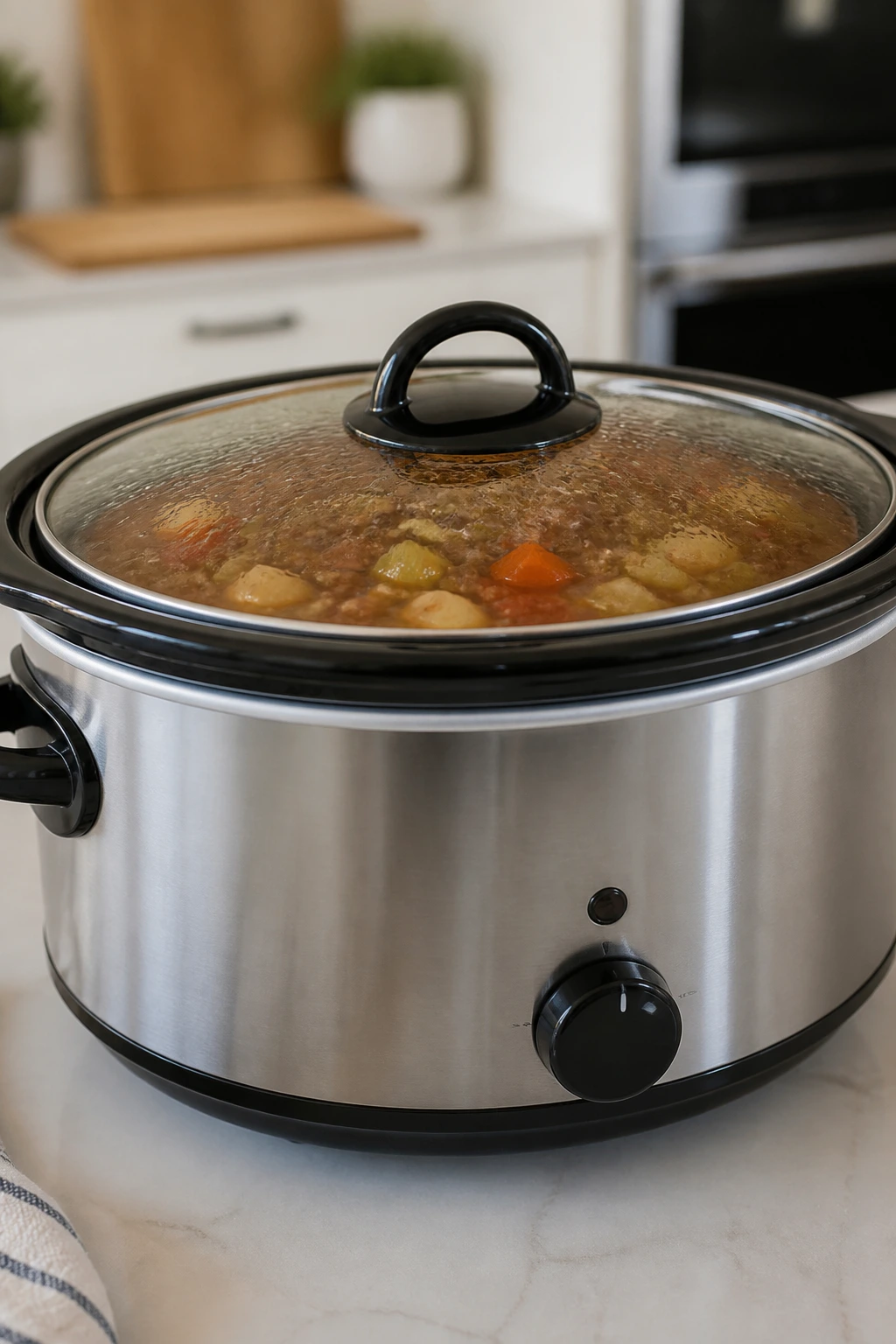
A slow cooker does its best work when the ingredient list is full of parts that need time more than heat. Tough cuts of meat relax. Dried beans soften. Onions stop tasting raw and start tasting sweet. That kind of transformation is exactly why crockpot soups and stews work so well for a crowd.
There’s also a practical reason I keep coming back to it: a slow cooker stays out of the way. It does not demand stirring every ten minutes or a babysitter on the stove. The lid traps moisture, which keeps broth from evaporating too fast, and that means your pot stays generous instead of shrinking into a concentrate before dinner even starts.
A few recipes in this collection do better with a quick browning step first. I’d argue that’s not extra work so much as flavor insurance. Ten minutes in a skillet can turn an ordinary beef or sausage soup into something that tastes like somebody cared.
And yes, the slow cooker has limits. It’s not the place for delicate pasta, quick greens, or dairy at the beginning of the cook. But give it ingredients that enjoy a long, gentle bath, and it will do the heavy lifting without complaint.
Essential Equipment for These Recipes
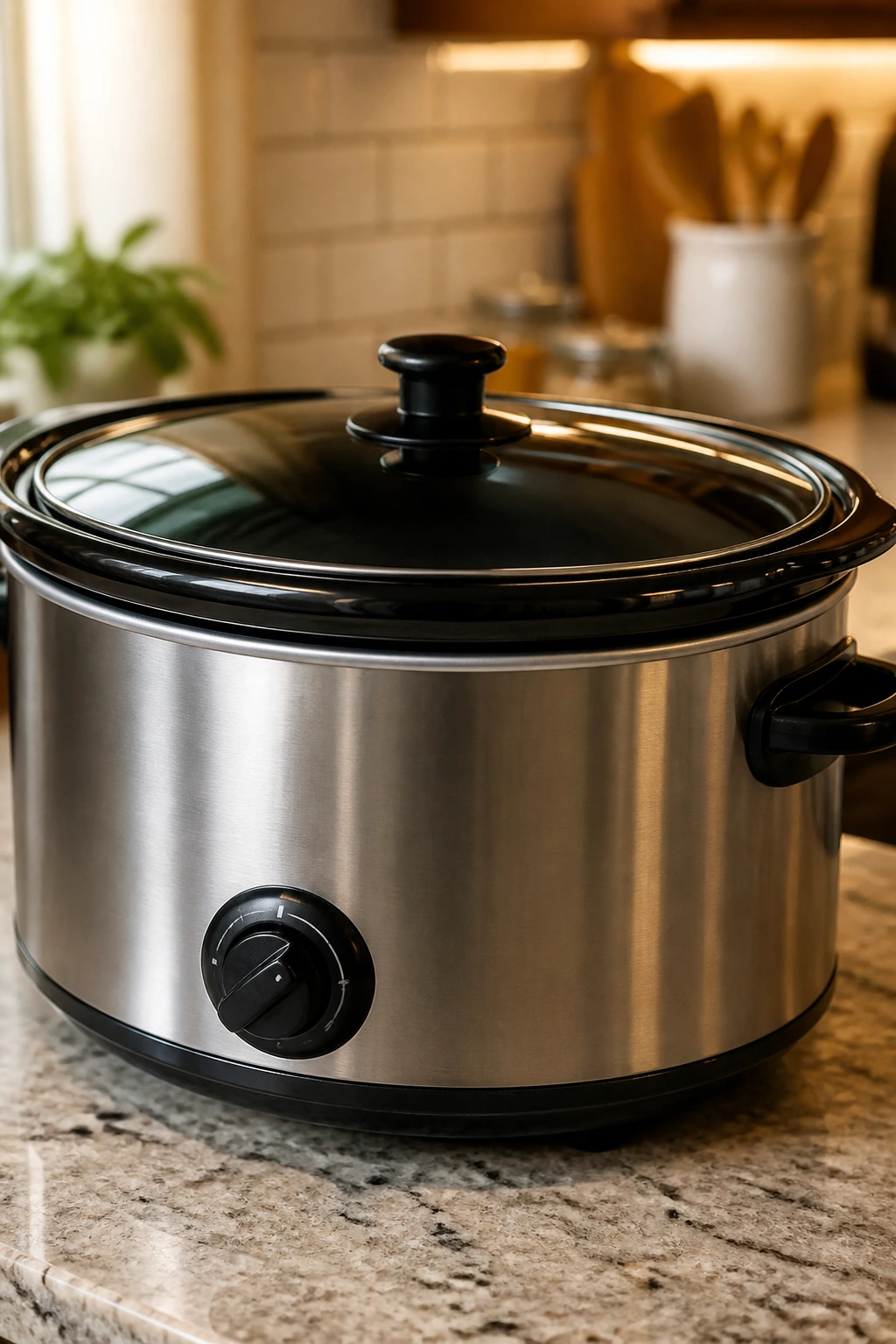
- 6-quart or 8-quart slow cooker: Most of these soups need room to bubble gently without crowding the lid.
- Large skillet: Browning meat, sausage, bacon, or onions in a skillet adds depth before the slow cook starts.
- Chef’s knife: Clean, even cuts help potatoes, carrots, and squash cook at the same pace.
- Cutting board: A sturdy board keeps prep fast and safe; a damp towel underneath stops slipping.
- Wooden spoon or heatproof spatula: Useful for stirring and scraping browned bits from the skillet.
- Ladle: The simplest tool in the kitchen, and the one you’ll actually reach for at serving time.
- Immersion blender: Worth owning if you like chowders, squash soups, or silky bean soups.
- Colander: Handy for rinsing beans, lentils, split peas, and pasta.
- Airtight storage containers: Choose shallow ones so leftovers cool faster and reheat more evenly.
- Tongs or forks: Needed for shredding chicken, pork, or beef right in the pot.
Smart Shopping and Ingredient Tips
Buy the cut the soup wants, not the cut that looks leaner on paper. Beef chuck, pork shoulder, chicken thighs, ham hocks, and smoked turkey pieces all bring flavor because they have fat, connective tissue, or both. Sirloin and chicken breasts can work in some soups, but they dry out more quickly in a long slow cook.
Broth matters more than most people think. Use low-sodium stock or broth so you can control the salt after the beans, cheese, ham, sausage, or Worcestershire sauce are in the pot. If you start with fully salted broth and also use salty cured meat, you’ll spend the rest of the cook trying to back out of a problem that was avoidable in the first place.
Canned beans are your friend here. Rinse them unless the recipe leans on the canning liquid for texture or flavor. Frozen corn is excellent, canned corn is fine, and frozen spinach or kale can save time when the fresh greens look tired. Dried beans are doable, but slow cookers are not forgiving with every bean variety, so follow a recipe that was written for them.
For dairy, wait until the end. Milk, cream, sour cream, and cheese all behave better when the soup is already cooked and the heat is lower. The same goes for pasta, rice, and tender greens. They go in late because they cook fast. That’s not a trick. It’s just the difference between a bowl with texture and a pot of glue.
How to Serve These Recipes
Presentation:
Use wide, shallow bowls for thick stews and deeper bowls for brothy soups. A clean spoonful of herbs, a swirl of cream, a handful of cheese, or a few tortilla strips changes the whole look. Keep the rim wiped down. It makes even the most rustic bowl feel intentional.
Accompaniments:
Crusty bread, biscuits, cornbread, garlic toast, and crackers all make sense across this collection. For the richer soups, a crisp green salad with lemony dressing keeps the meal from feeling heavy. For chili and tortilla soup, add rice, baked potatoes, or warm tortillas if you want the table to feel fuller.
Portions:
Plan on 1 1/2 to 2 cups per serving for a main-course soup and closer to 2 1/2 cups for a thick stew or chowder. A 6-quart crockpot usually feeds 6 to 8 people well, and an 8-quart insert can stretch to 10 or 12 if you’ve got bread and toppings. If the crowd is unpredictable, make the soup a little thicker and put the bread on the table.
Beverage Pairing:
Sparkling water with citrus works with nearly everything here. So do dry cider, a light lager, or unsweetened iced tea. For the richer beef and mushroom soups, a glass of red wine fits. For chicken tortilla soup or chili, cold beer and lime feels right.
Additional Tips and Flavor Boosters
Flavor Enhancement:
A splash of acid at the end changes the whole pot. Lemon juice, lime juice, red wine vinegar, or sherry vinegar can sharpen a stew that tastes sleepy after hours of cooking. If you remember one thing, remember this one.
Customization:
Use grains to stretch a pot farther. Barley, wild rice, rice, and pasta all add heft, but they should be timed carefully. Greens, corn, bell peppers, and extra beans are easy ways to make a crowd recipe bigger without making it feel thin.
Serving Suggestions:
Finish with something fresh and crunchy whenever you can. Scallions, cilantro, chives, parsley, toasted seeds, croutons, tortilla strips, and crisp bacon all give the final bowl shape. A soup without a final texture often tastes flatter than it should.
Make-It-Yours:
For dairy-free bowls, coconut milk, olive oil, or even a potato mash can stand in for cream in the right recipes. For gluten-free versions, use rice, beans, potatoes, or cornstarch instead of flour-thickened bases and skip the bread garnish. For vegetarian versions, mushrooms, soy sauce, miso, and Parmesan rind can bring the savory depth people often miss.
Make-Ahead, Storage, and Reheating Guidance
Most of these soups and stews keep well in the fridge for 3 to 4 days, and a few taste even better on day two because the seasoning settles in. Cool them quickly in shallow containers rather than leaving a giant hot pot on the counter for hours. That matters for both texture and food safety.
Freezing works best when the soup does not contain pasta, rice, potatoes in huge chunks, or a lot of dairy. Freeze the base for up to 2 to 3 months in airtight containers, leaving a little space at the top for expansion. If you know a recipe includes noodles or sour cream, freeze the soup before those ingredients go in and add them fresh after thawing.
Reheat gently. On the stovetop, use medium-low heat and stir every few minutes so the bottom does not catch. In the slow cooker, warm on LOW until hot, then switch to KEEP WARM for serving. If the soup was frozen, thaw it overnight in the fridge first if you can; if not, reheat slowly with a splash of broth or water.
For cream soups and chowders, never boil after the dairy goes in. A low, slow reheat keeps the texture smooth. For bean soups and chili, a short rest after reheating helps the pot taste more rounded, which sounds fussy until you taste the difference.
Variations and Adaptations to Try

Gluten-Free Bowls:
Most of these recipes are naturally close to gluten-free already. The main places to watch are Worcestershire sauce, broth, and any noodles or bread on the side. Use cornstarch or potato for thickening, and keep a separate gluten-free topping bowl so nobody has to guess.
Dairy-Free Swaps That Still Taste Rich:
Coconut milk works better than people expect in curry, squash, and chowder-style soups. Olive oil can replace butter in the base, and a mashed potato or bean purée can stand in for cream in bean-heavy pots. Skip the cheese garnish or use a dairy-free version that melts cleanly.
Lower-Sodium Pots:
Start with low-sodium broth, rinse canned beans, and keep cured meats in smaller amounts. Taste only after the soup has cooked long enough for the flavors to settle; early adjustments can be misleading. Acid and fresh herbs help a lower-salt pot taste alive without asking for more salt.
Vegetarian Crowd Feeders:
Beans, lentils, mushrooms, tomatoes, potatoes, squash, and wild rice are the backbone here. Miso, soy sauce, tomato paste, Parmesan rind, and roasted vegetables can build the savory layer you’d usually get from meat. The trick is to layer those flavors before the long cook, not after.
Heat It Up or Pull It Back:
If your crowd likes spice, add jalapeños, chipotle, cayenne, or hot sauce earlier in the cook. If they don’t, keep the base mild and let people add heat at the table. That’s almost always the better move for a mixed group, because one person’s “just a little spicy” is another person’s fire alarm.
Common Mistakes to Avoid
-
Overfilling the slow cooker: Soup needs room to bubble gently and move. If you fill it to the top, it can spill, cook unevenly, or never quite thicken. Stick to about two-thirds full unless the recipe says otherwise.
-
Adding pasta, rice, or delicate greens too soon: They go mushy or disappear. Toss them in late, or cook them separately and stir them in before serving.
-
Forgetting to brown meat or sausage: You lose the browned bits that give beef, pork, turkey, and sausage a deeper taste. Ten minutes in a skillet often changes the whole pot.
-
Using too much salt at the start: Ham, bacon, sausage, broth, cheese, and canned goods all bring their own salt. Taste near the end and adjust then.
-
Adding dairy over high heat: Milk, sour cream, and cream can split into grainy streaks if they boil hard. Stir them in off heat or at the very end on low.
-
Ignoring acid: A pot can taste full and still feel flat. Lemon, lime, vinegar, or even a splash of wine can sharpen the edges in a way salt alone cannot.
Frequently Asked Questions
Can I double these crockpot soups and stews for a bigger crowd?
Sometimes, yes, but only if your slow cooker has the room. Most 6-quart models should not be filled past about two-thirds once everything is added. If you need a much larger batch, make two separate pots or use an 8-quart cooker.
Do I really need to brown the meat first?
Not every recipe demands it, but it helps more often than not. Browning creates the dark, savory base that a long slow cook cannot fake later. If you skip it, the soup will still work — it just won’t taste as deep.
Can I use frozen chicken or frozen meat in the slow cooker?
No. That’s a food safety problem. Frozen meat can spend too long in the temperature danger zone before it heats through, so thaw it first in the fridge.
How do I thicken a soup without flour?
Mash some beans or potatoes against the side of the crock, blend a small portion, or leave the lid off for the last 15 to 20 minutes. Cornstarch slurry also works for some recipes, but a little natural starch is usually better in a crockpot soup.
Why does my soup taste flat even after hours of cooking?
It usually needs salt, acid, or both. The slow cooker can mellow flavors so much that the pot tastes round but sleepy. Try a squeeze of lemon, a splash of vinegar, or a small spoonful of Worcestershire before adding more salt.
Can I add dairy at the beginning if I’m cooking on low?
I wouldn’t. Even low heat can make milk, sour cream, and cheese separate over time. Add them near the end, when the soup is already hot and the cooking is basically finished.
What if the soup gets too thick while it sits?
Add warm broth or water a little at a time and stir well. Barley, rice, beans, and pasta all keep absorbing liquid, especially in leftovers. That’s normal, not a failure.
Can I keep soup warm in the crockpot for a party?
Yes, if it’s fully cooked and you keep it on KEEP WARM or low enough to stay above 140°F. Stir it every so often and add a splash of broth if it tightens up. For cream soups, warm them gently and avoid holding them too long at high heat.
Bowls Worth Reaching For Again
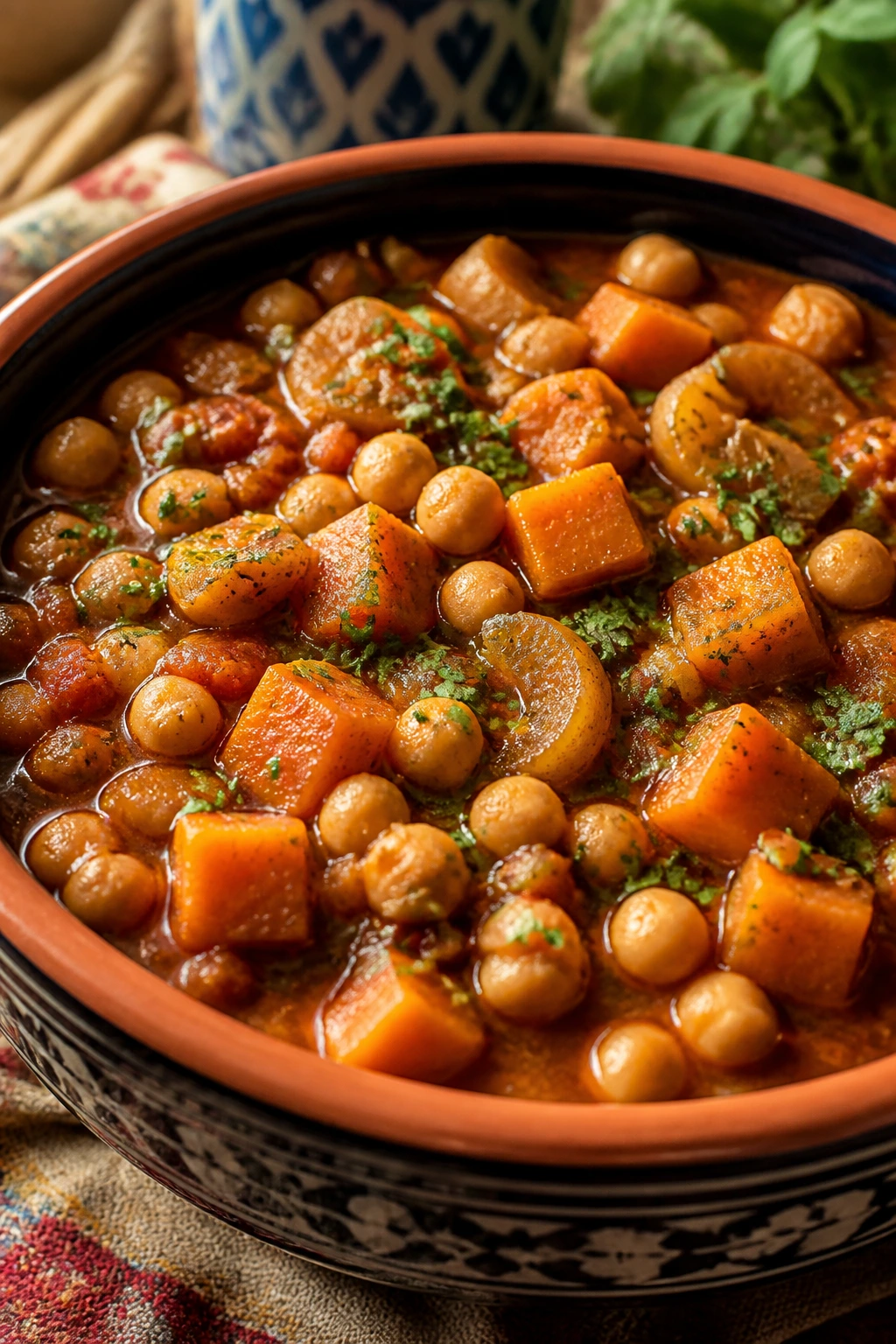
A full slow cooker changes the mood of dinner. You’re not standing over a stove, and you’re not trying to time six side dishes at once. You’ve got one pot doing real work, and that pot can feed a room without sounding like it’s asking for applause.
Pick the stew with beef when you want deep, brown comfort. Pick the chili when the table needs something you can top a dozen ways. Pick the bean soups, the chowders, the curry, the minestrone — any of them — when you want dinner to feel abundant before anyone has even sat down.
Keep one or two of these in rotation and crowd-size meals stop feeling like a problem to solve. They start feeling like a habit you can trust.