



A slow-cooked holiday crockpot ham solves one of the messiest problems in a packed kitchen: the oven is already spoken for, but the main course still needs to come out glossy, warm, and worth carving. Put the ham in the slow cooker, make the glaze on the stove, and the whole room starts smelling like maple, mustard, orange, and clove before anyone asks whether the rolls are done.
The part I like most is how civilized it feels. A spiral-cut ham is already doing half the work for you, because the slices open like little channels for the glaze, and the slow cooker keeps the meat hot without turning the outer edges leathery. That matters more than people think. Holiday ham can go from juicy to tired fast if you blast it in the oven too long.
One important note: this method is for a fully cooked ham marked “ready to eat,” not a raw fresh ham. The goal is gentle reheating and glazing, with the center brought up to a safe serving temperature of 140°F for hot ham. If that sounds almost too easy, good. Easy is the point here—just not sloppy easy.
Why This Holiday Ham Works So Well
-
Oven Space You Get Back: The ham sits in the crockpot while potatoes, rolls, or pie take the oven, which is the whole trick on a crowded cooking day.
-
Juicy Slices, Not Dry Edges: Fully cooked spiral ham only needs gentle heat, and low slow-cooker heat keeps the cut surfaces from tightening up.
-
Glaze That Actually Sticks: Maple, Dijon, pineapple, and orange reduce into a syrup that clings to the slices instead of running off into the bottom of the pot.
-
No Mid-Morning Babysitting: Once the ham is loaded, you only need to check temperature and brush on the glaze near the end.
-
Leftovers With a Job: Cold slices work in breakfast casseroles, grilled sandwiches, fried rice, or split pea soup without getting weird or stringy.
-
Looks More Complicated Than It Is: A little orange zest and a glossy finish make the platter look deliberate, even if the slow cooker did most of the work.
The Ingredient List That Belongs in the Cart
A good holiday ham does not need a cast of twenty ingredients. It needs a fully cooked ham with enough surface area for glaze to slip into the slices, a little cider for humidity, and a glaze that tastes sharp before it tastes sweet. If the ham label says “cook before eating” or “raw,” stop and pick another method. The slow cooker is for warming and glazing a ready-to-eat ham, not for turning a raw roast into safe dinner.
Yield: Serves 12
Prep Time: 20 minutes
Cook Time: 3 to 4 hours
Total Time: 4 hours 20 minutes
Difficulty: Beginner — the ham is fully cooked, and the slow cooker does most of the work.
Chill/Rest Time: 15 minutes
Best Served: Warm, after a short rest
For the Ham and Pan:
- 1 fully cooked spiral-cut bone-in ham, 7 to 8 pounds, labeled “ready to eat”
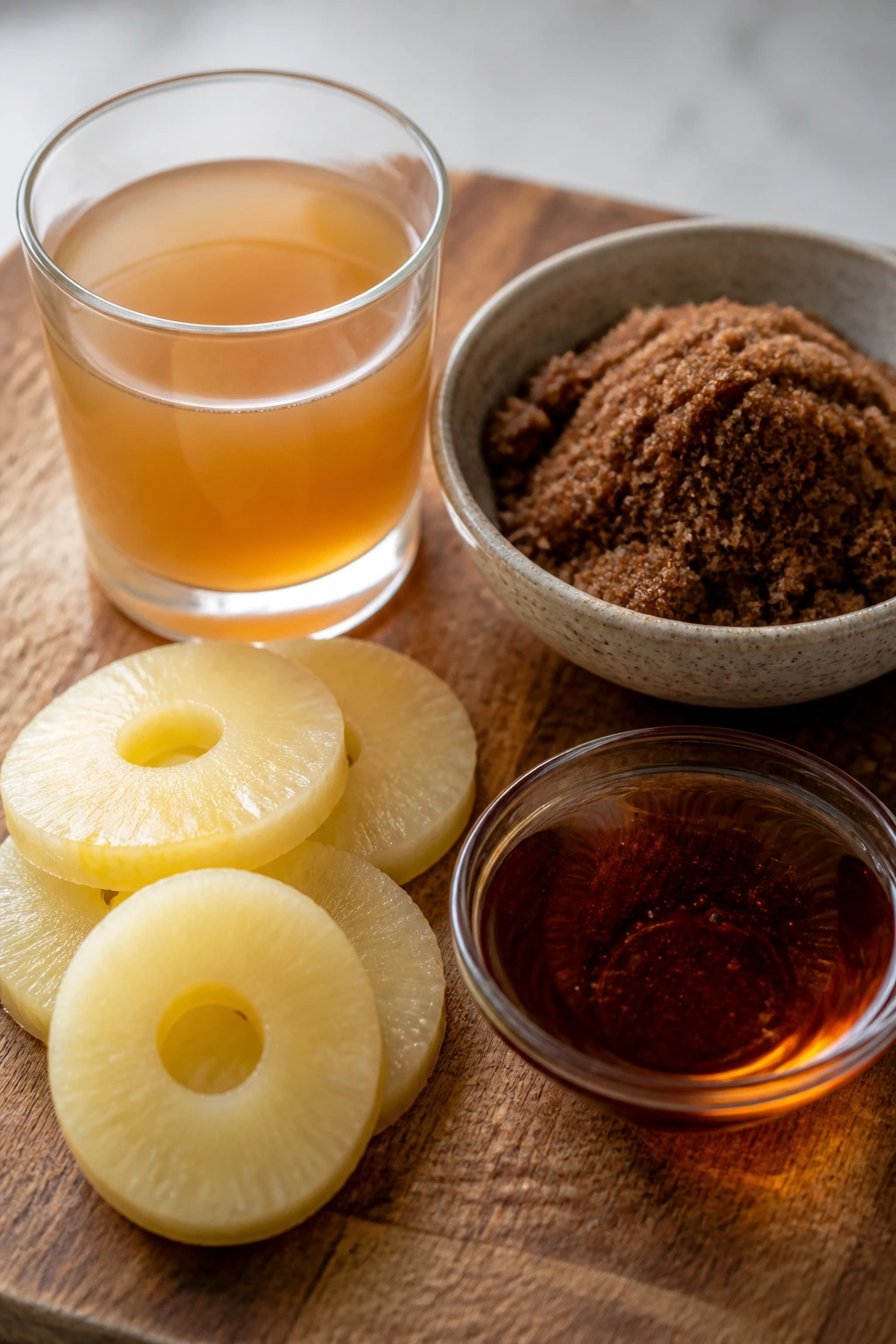
- 8 pineapple rings, drained
- 1 cup apple cider
For the Maple-Dijon Glaze:
- 1 cup pineapple juice
- 1/2 cup packed dark brown sugar
- 1/3 cup pure maple syrup
- 3 tablespoons Dijon mustard
- 1 tablespoon whole-grain mustard
- 2 tablespoons apple cider vinegar
- 2 tablespoons unsalted butter
- 1 teaspoon orange zest
- 1 teaspoon ground cinnamon
- 1/2 teaspoon ground cloves
- 1/4 teaspoon freshly ground black pepper
For Serving:
- 2 tablespoons chopped parsley or thyme
- Orange slices or extra pineapple rings, for the platter
Why These Ingredients Work Together
The Ham
What to use: 1 fully cooked spiral-cut bone-in ham, 7 to 8 pounds, labeled “ready to eat.” A bone-in ham has better flavor and cleaner slices than a boneless one, and the spiral cuts give the glaze places to settle.
Preparation: If the ham has a thick rind or a hard outer fat cap, score it lightly in shallow 1-inch diamonds. Separate a few slices near the top so the glaze has somewhere to go once the ham starts warming.
Substitutions: A boneless fully cooked ham in the 4- to 5-pound range works, but it cooks faster and looks flatter on the platter. If you only find a smoked picnic ham, that is a different cut with more connective tissue and a rougher slice.
Tips: Buy a ham that says “fully cooked” or “ready to eat.” A slow cooker can reheat and glaze; it cannot safely rescue a raw ham, and that distinction matters.
The Fruit and Cider Base
What to use: 8 pineapple rings, drained, and 1 cup apple cider. That thin layer of liquid keeps the bottom from scorching and gives the glaze something to mingle with.
Preparation: Drain the pineapple well, but do not rinse it. The sticky edge that stays on the rings helps the glaze cling once the ham starts releasing its own juices.
Substitutions: Orange slices or thin apple slices can stand in for pineapple if you want a less tropical note. Unsweetened orange juice can replace the cider if that is what you have in the fridge.
Tips: Do not drown the cooker. A shallow layer of liquid is enough. Too much and the ham tastes steamed, which is the opposite of what you want from a holiday centerpiece.
The Maple-Dijon Glaze
What to use: 1 cup pineapple juice, 1/2 cup dark brown sugar, 1/3 cup maple syrup, 3 tablespoons Dijon, 1 tablespoon whole-grain mustard, 2 tablespoons apple cider vinegar, 2 tablespoons butter, 1 teaspoon orange zest, 1 teaspoon cinnamon, 1/2 teaspoon cloves, and 1/4 teaspoon black pepper.
Preparation: Whisk everything together in a small saucepan before heating. Bring it to a gentle boil, then simmer until it looks glossy and slightly thick, about 6 to 8 minutes.
Substitutions: Honey can replace maple syrup if that is what you keep around. Stone-ground mustard can replace whole-grain mustard, and cider vinegar can be swapped for white wine vinegar in a pinch.
Tips: Make the glaze on the stove, not inside the slow cooker. You want it reduced a little before it ever touches the ham, because a glaze that is already syrupy will cling instead of washing off into the juices.
The Garnish and Finish
What to use: 2 tablespoons chopped parsley or thyme, plus orange slices or extra pineapple rings for the platter. These are not just decoration; they give the finished ham a brighter, fresher edge.
Preparation: Chop herbs right before serving so they stay green and sharp. Lay the orange slices on the platter first, then fan the ham on top or beside them.
Substitutions: Rosemary sprigs work if you want a more savory look. Pomegranate arils can replace some of the citrus if you want a sharper, jewel-toned finish.
Tips: Add the garnish after cooking, not during. Herbs left in the heat of a slow cooker go dark and sad fast, and nobody wants that.
The Tools That Keep the Crockpot Simple
-
6- to 8-quart slow cooker: A 7- to 8-pound ham fits best in an 8-quart model, but a roomy 6-quart can work if the lid sits flat.
-
Instant-read thermometer: This is the only reliable way to know the ham is heated through without drying it out.
-
Small saucepan: The glaze needs a real simmer on the stove, not a warm bath in the slow cooker.
-
Silicone pastry brush or spoon: Either one works for brushing glaze between the spiral slices.
-
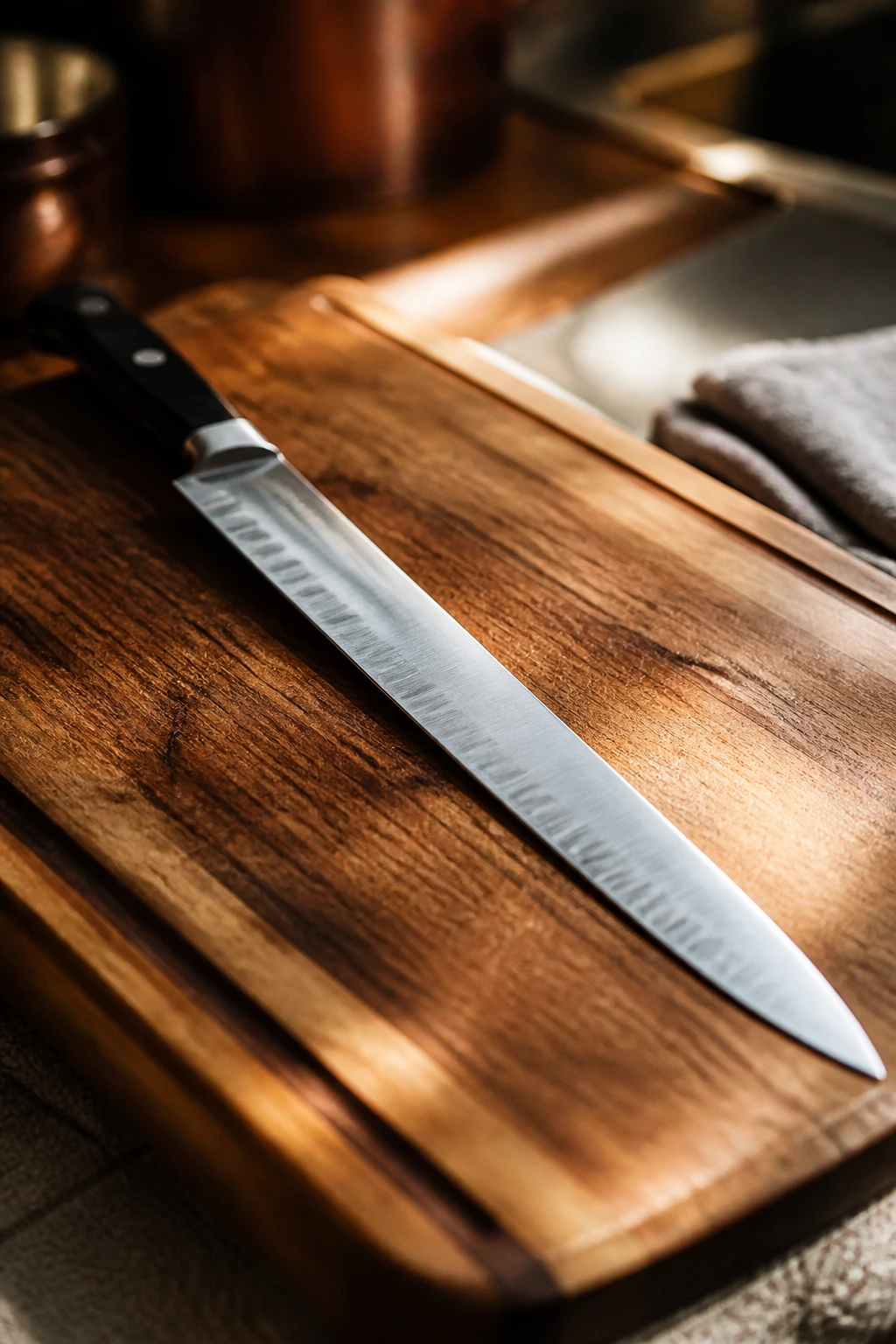
Large carving knife: A long, sharp knife gives you clean slices without tearing up the spiral.
-
Cutting board with a juice groove: Ham leaks less than raw meat, but it still benefits from a board that catches the drips.
-
Rimmed sheet pan or large platter: Use this for the final transfer and for any optional broil finish.
-
Slow cooker liner or foil sling, optional: Not required, but either one makes cleanup easier if your insert stains easily.
Picking the Right Ham and Slow Cooker Size
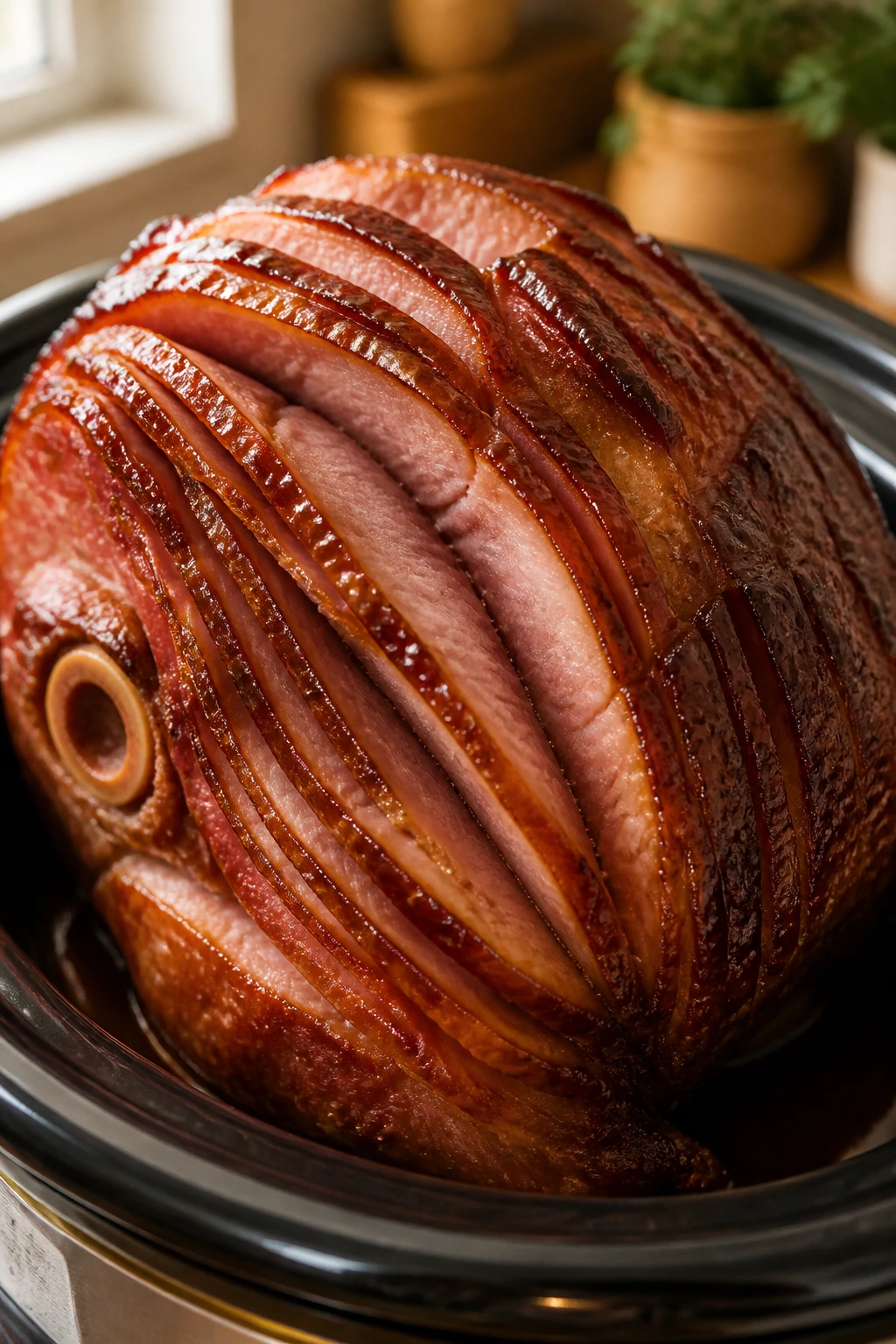
A spiral-cut bone-in ham is the smart buy here. The bone adds flavor, the cut surfaces open up for the glaze, and the slices fan out cleanly when you move the ham to the platter. I almost always choose bone-in for this recipe. It gives the ham more structure, which matters when you are lifting it from the cooker after a few hours of gentle heat.
A boneless ham is still usable, but it changes the whole feel of the dish. It cooks a little faster, slices more like deli meat, and tends to lose that dramatic, holiday-table look once you carve it. If that is what your store has, go ahead and make it. Just start checking it earlier.
Size matters more than people think. A 7- to 8-pound ham fits best in an 8-quart slow cooker because the lid sits flatter and steam can move around the meat instead of getting trapped under a tilted cover. A 6-quart cooker can handle a smaller 6- to 7-pound ham if the shape is compact. If the lid rocks or presses hard against the top of the ham, that is your sign to stop and use a different vessel.
Do not force a huge ham into a tiny cooker. Seriously. If the lid is sitting crooked, heat escapes and the whole point of the method starts falling apart. I would rather see you trim a thin slice from the flat end of the ham or choose a smaller roast than try to make an oversized one behave in a cramped insert.
The Glaze That Carries the Whole Dish
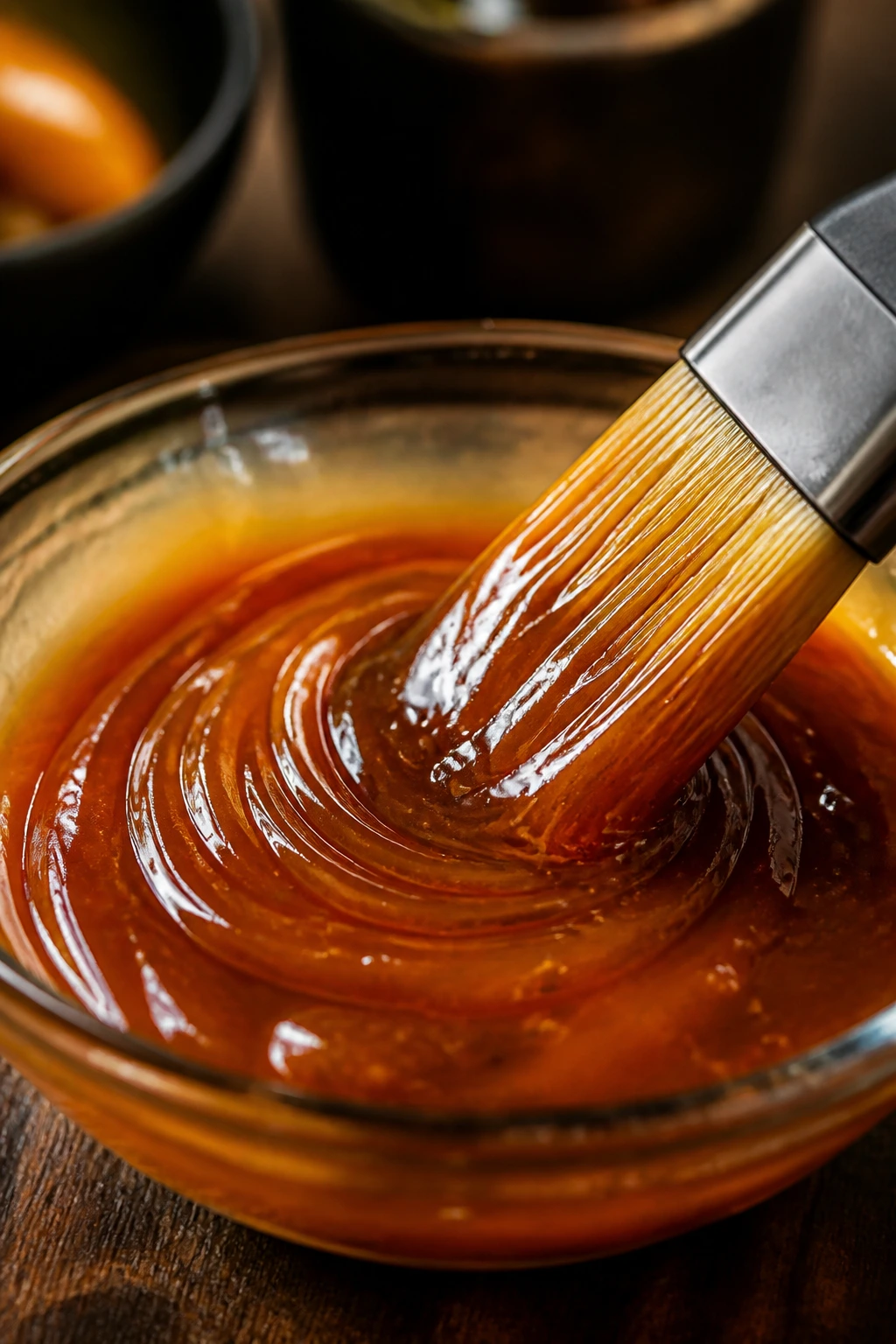
The glaze is where this recipe earns its keep. Brown sugar brings molasses depth, maple syrup gives round sweetness that does not taste sharp, Dijon cuts through the richness, and pineapple juice gives you a little tang and a little body once it simmers down. The whole thing should taste balanced before it ever hits the ham.
Sweetness With Structure
I prefer dark brown sugar here, not light. The deeper molasses note plays better with maple, and it keeps the glaze from reading like candy. A full half cup is enough for a 7- to 8-pound ham because the glaze is not trying to coat every slice like frosting. It is there to give the surface a sticky sheen and a little burnished edge.
Acid Keeps It Honest
The apple cider vinegar is not decorative. It keeps the glaze from becoming one-note sweet, especially once the ham juices start mixing into the pot. If you taste the glaze and it seems flat, do not reach for more sugar. Add another teaspoon of vinegar or a spoonful of Dijon, then taste again.
Spice That Smells Like the Season
Cinnamon and cloves do a lot of work with very little quantity. Half a teaspoon of cloves is plenty; more than that and the whole dish starts smelling like potpourri. The orange zest matters, too. It brightens the glaze in a way bottled juice never does, and the aroma hits you the moment you lift the lid.
The Texture You Want
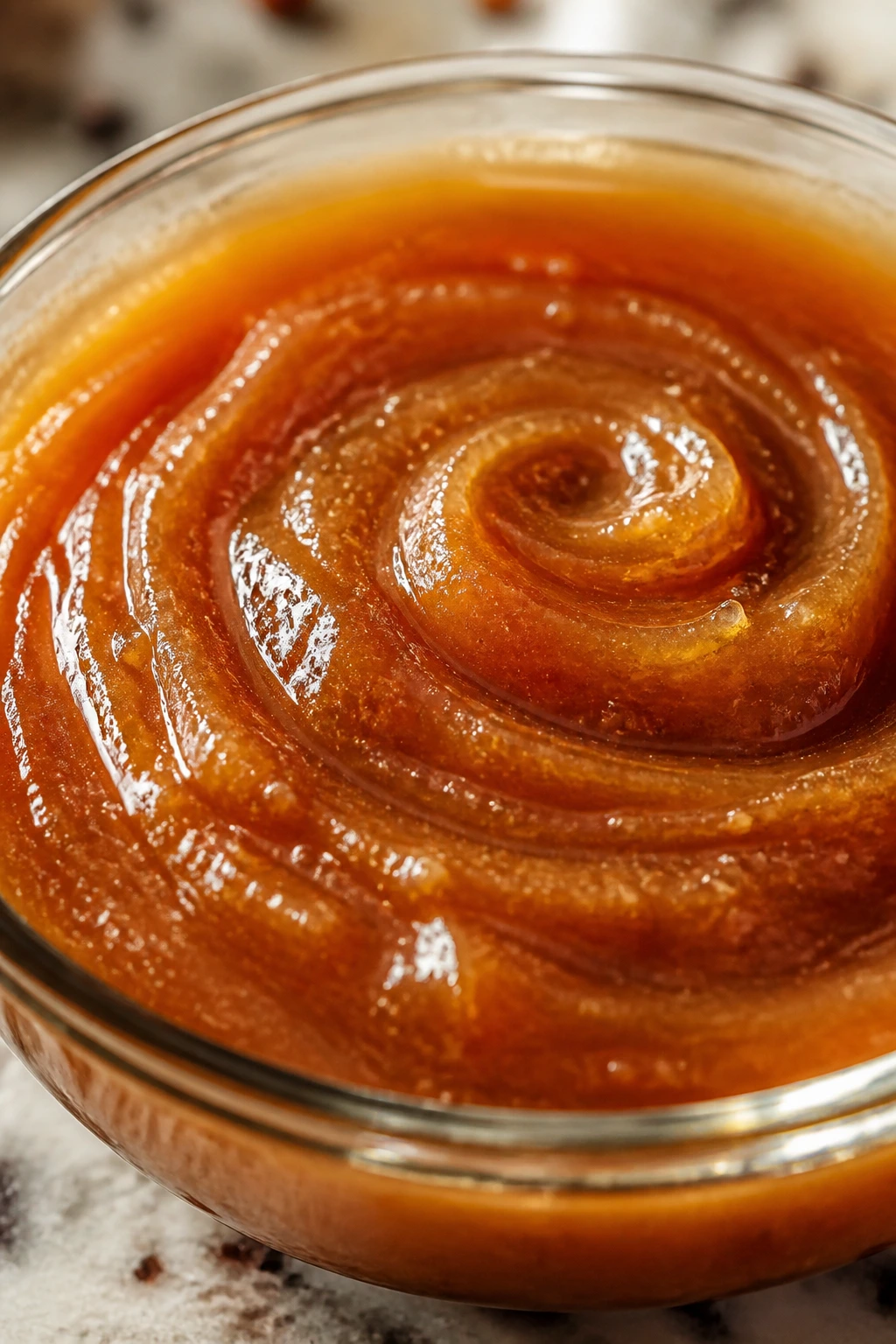
Simmer the glaze until it lightly coats the back of a spoon. Not paste-thick. Not watery. You want it glossy, with enough body to cling to a spiral cut and a little wobble when you tip the spoon. It will thicken again as it cools, so if it looks slightly looser than honey in the pan, that is the right neighborhood.
Step-by-Step: From Fridge to Serving Platter
Prep the Ham and Cooker
-
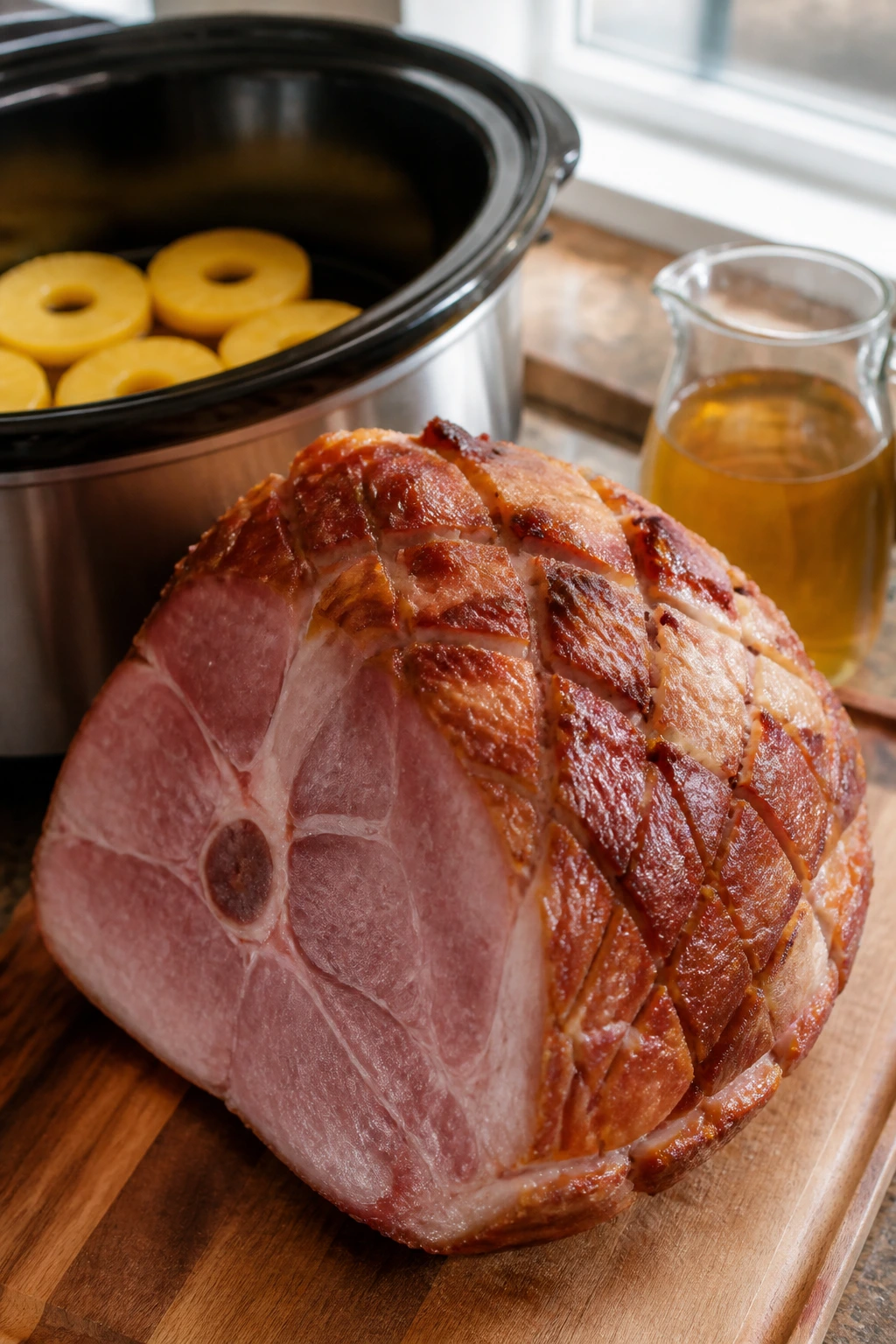
Let the ham sit at room temperature for 20 to 30 minutes while you gather everything else. Unwrap it, pat it dry with paper towels, and score any thick rind or fat cap in shallow 1-inch diamonds if it is not already spiral-cut.
-
Lay the pineapple rings in a single layer across the bottom of the slow cooker, then pour in the 1 cup of apple cider around the rings. Set the ham on top, cut-side down if possible, and tuck a few slices open near the top so the glaze can slip inside later. If the ham is too tall for the lid to close flat, trim a thin slice from the flat end rather than forcing it.
Make the Glaze
-
In a small saucepan, whisk together the pineapple juice, brown sugar, maple syrup, Dijon mustard, whole-grain mustard, apple cider vinegar, butter, orange zest, cinnamon, cloves, and black pepper. Set the pan over medium heat and bring it just to a gentle boil, stirring often so the sugar does not stick to the bottom.
-
Reduce the heat and simmer for 6 to 8 minutes, until the glaze looks glossy and slightly syrupy. It should coat a spoon and leave a faint trail when you drag a finger across the back of it. Do not boil it hard; too much heat makes the sugar taste blunt instead of rounded.
Cook Low and Slow
-
Spoon or brush about half of the glaze over the ham, working it into the spiral cuts as much as you can. Cover and cook on LOW for 3 to 4 hours, until the center of the ham reaches 135 to 140°F on an instant-read thermometer. Do not switch to HIGH to save time. The outer slices dry out long before the middle warms through.
-
During the last 30 minutes, brush the ham with the remaining glaze every 10 to 15 minutes. If you want a darker edge, transfer the ham to a foil-lined sheet pan and broil it for 2 to 3 minutes, watching every second. Sugar burns fast. Very fast.
Rest and Serve
- Move the ham to a cutting board and let it rest for 15 minutes. Spoon a little of the slow-cooker juices over the slices, then carve along the spiral lines and transfer everything to a warmed platter. The finished ham should look lacquered, not wet.
How to Tell the Ham Is Ready Without Guessing
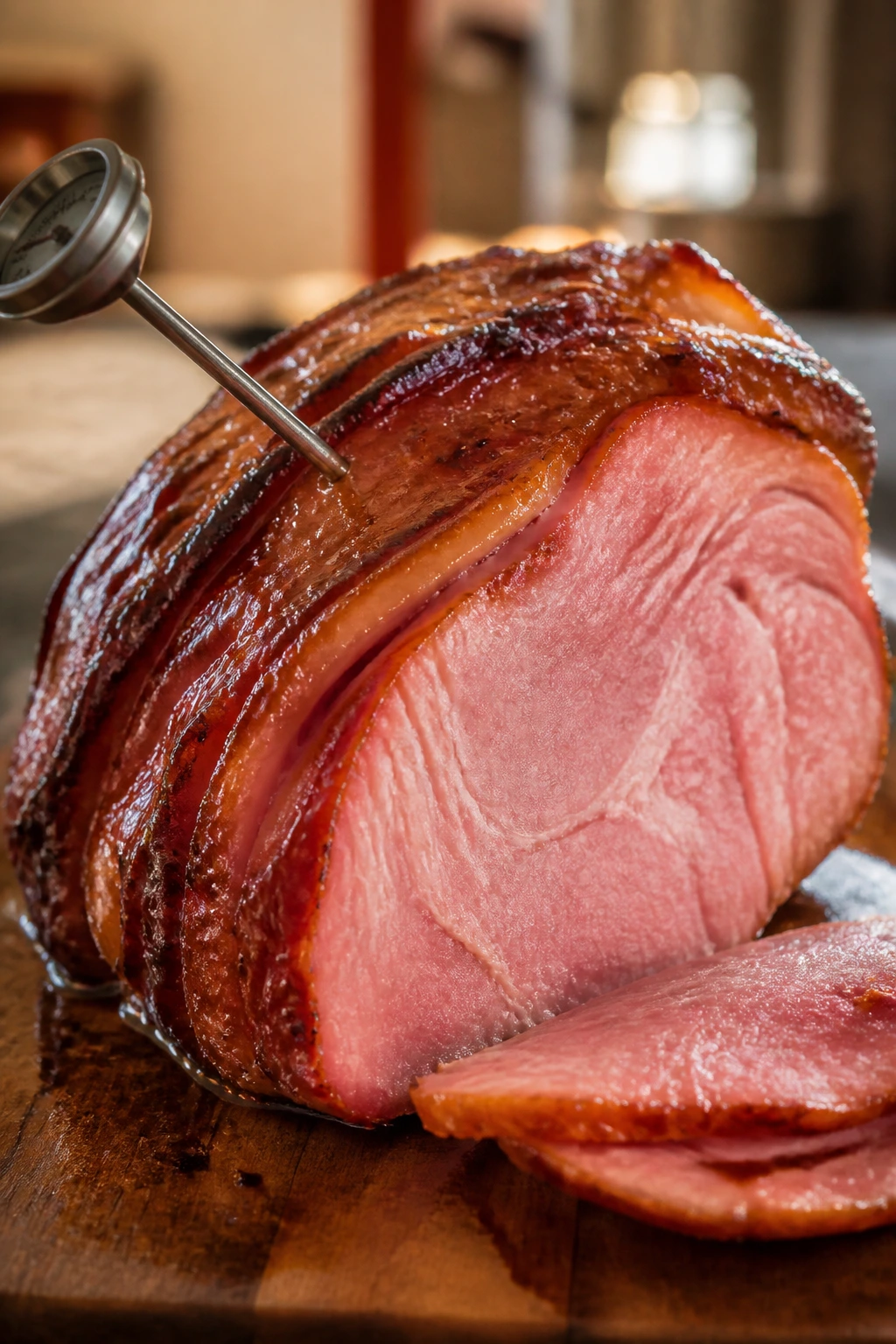
A thermometer ends the argument. The center of a ready-to-eat ham should hit 140°F when you want to serve it hot, and that number matters more than the clock or the smell coming from the cooker. Ham can smell done long before it is actually warm in the middle.
Put the probe into the thickest part of the meat, not against the bone. Bone throws off the reading, and spiral cuts sometimes fool people because the outer slices get hot first. If the ham reads 135°F and the glaze looks right, you can pull it. The resting time will nudge it up the last few degrees.
If it goes a little past 140°F, do not panic. A ham at 145°F is not ruined. It is just a touch hotter and a touch less juicy than ideal. The real danger is letting it climb much higher than that, especially in a slow cooker where the edges keep warming while you are distracted with side dishes.
There is another cue worth watching: the glaze should look sticky and shiny, and the fat near the edge should turn translucent. If the ham still looks pale and the glaze is thin, it probably needs more time. If the edges are very hot and the center is still lagging, trust the thermometer and keep going.
How to Plate the Ham and What to Serve Beside It
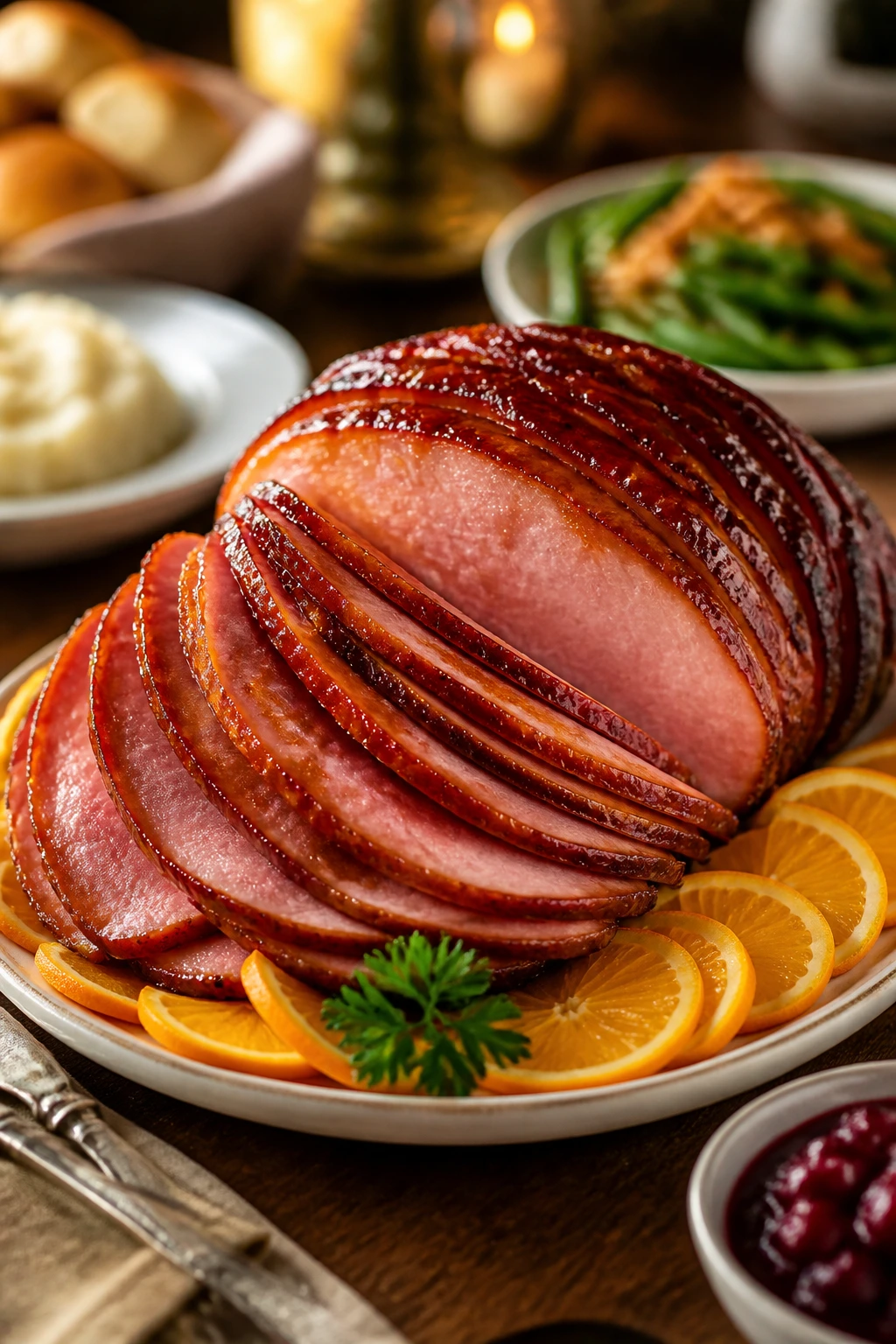
Presentation: Move the rested ham to a warmed platter or cutting board and fan the slices into a loose arc. Spoon a little of the reduced slow-cooker juices over the top, then tuck orange slices or pineapple rings around the base so the glaze has something bright to land on. A small scatter of chopped parsley or thyme keeps the whole thing from looking too brown.
Accompaniments: Keep the sides honest. Scalloped potatoes, mashed potatoes, green beans with a little butter, roasted carrots, soft dinner rolls, and a tart cranberry relish all make sense here. I like one creamy side, one green side, and one sharp side. If every dish leans sweet, the plate gets muddy fast.
Portions: A 7- to 8-pound bone-in ham usually feeds 12 people with sensible portions, or 10 if a few guests are ham people who keep circling back for more. If you are serving a spread with lots of sides, smaller slices go further than you think. If the ham is the star and the table is modest, carve thicker slices and plan for seconds.
Beverage Pairing: Sparkling cider is the safest crowd-pleaser, and it likes the maple-orange glaze. If you are serving wine, dry Riesling or Chenin Blanc handles the sweetness without getting sticky. For beer, an amber ale or a light brown ale has enough malt to sit beside the ham without bulldozing it. Water with sliced citrus is not a bad choice either. Sometimes the food already did the heavy lifting.
Extra Tips That Keep the Texture Tender
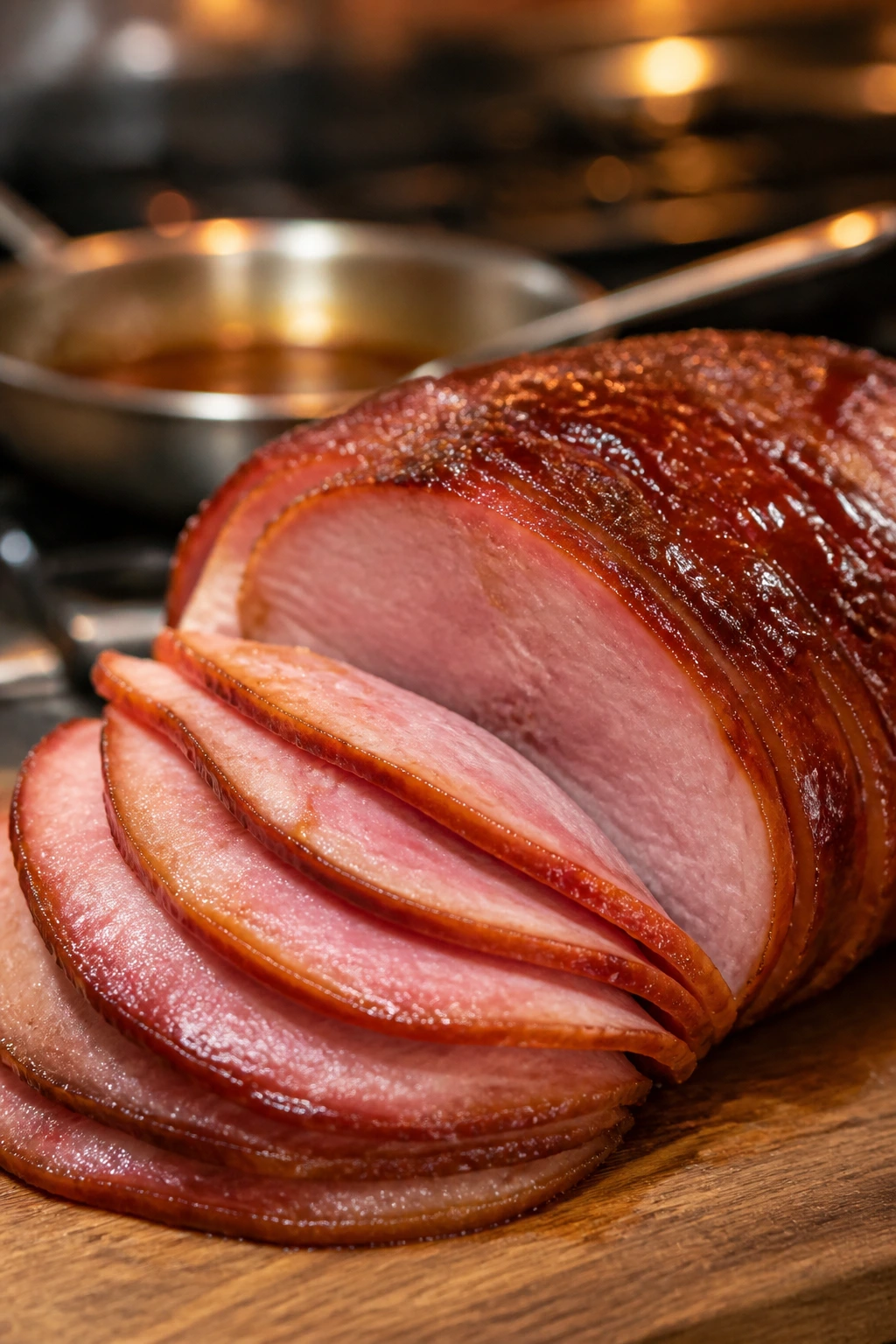
Flavor Enhancement: Reduce the slow-cooker juices in a small saucepan after carving. Five to eight minutes on medium heat turns the liquid into a darker, stickier sauce that tastes richer than the original glaze. Spoon that over the cut ham and the whole platter suddenly feels more finished.
Time-Saver: Make the glaze up to 3 days ahead and keep it in a jar in the fridge. Rewarm it over low heat until it pours again, then brush it on when the ham is almost done. That one move saves you from juggling too many pans on the day itself.
Texture Control: Keep the lid closed. Every peek steals heat and adds 10 to 15 minutes to the cook time, which matters more than people want to admit. The ham does not need stirring, flipping, or a surprise audience.
Make-It-Yours: If you want a brighter version, swap part of the maple syrup for honey and add another teaspoon of orange zest. If you want a more savory edge, cut the brown sugar to 1/3 cup and increase the Dijon by 1 tablespoon. If you are cooking for kids, keep the cloves where they are and skip the broil finish so the glaze stays softer and less caramelized.
Mistakes That Make Holiday Ham Dry or Bland
-
Buying a raw ham and expecting the slow cooker to fix it. The symptom is a pale, tight texture with no real glaze payoff. The fix is simple: buy a fully cooked ham marked “ready to eat” and use the slow cooker only for reheating and flavor.
-
Pouring in too much liquid. If the ham tastes steamed and the glaze looks thin and washed out, you overdid the cider. A shallow 1-cup base is enough because the ham will release its own juices as it warms.
-
Cooking on HIGH. The outer slices go dry while the center still needs time, which is the exact wrong trade. LOW is slower, but it protects the texture and gives the glaze time to settle into the slices.
-
Glazing from the start and forgetting about it. Sugar dissolves into the juices if it sits too long, and you lose that lacquered finish. Save at least half the glaze for the last 30 minutes so it can cling to the surface instead of disappearing.
-
Skipping the thermometer. Timing alone is a guess, and spiral hams vary more than people expect. The fix is to probe the thickest part of the meat and pull it once it reaches 135 to 140°F.
-
Carving it immediately. Hot ham looks fine for the first minute, then the slices fall apart on the board. A 15-minute rest lets the juices settle so the platter stays neat instead of slippery.
Variations That Fit Different Tables
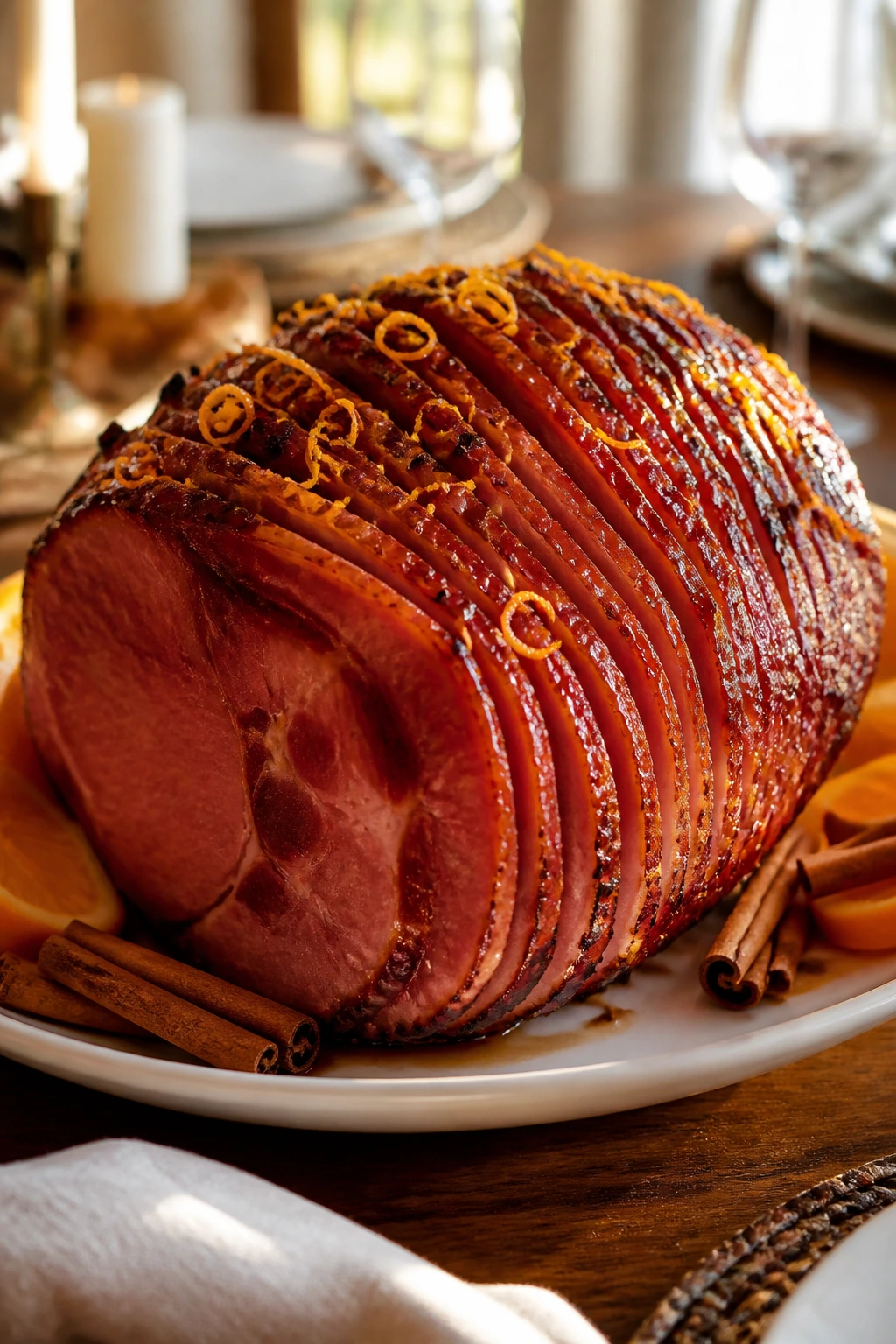
Orange-Clove Brunch Ham: Swap the pineapple juice in the glaze for fresh orange juice and add an extra teaspoon of orange zest. The flavor lands brighter and a little less tropical, which is nice if the ham is going next to biscuits, eggs, and coffee.
Bourbon Maple Glaze: Stir 3 tablespoons bourbon into the glaze after it simmers, then cook it 1 minute more so the alcohol cooks off a little. You get a warm, deeper finish that feels more grown-up without turning the ham into a whiskey bomb.
Savory Mustard-Forward Ham: Reduce the brown sugar to 1/3 cup and add 1 extra tablespoon Dijon plus 1 teaspoon chopped thyme. This version plays better when the rest of the table is already sweet with cranberry sauce and glazed vegetables.
Cherry-Pineapple Holiday Ham: Swap half the pineapple rings for drained maraschino cherries and use a spoonful of the cherry juice in the slow cooker. It leans a little retro, but if you like that glossy red-and-gold holiday look, this one earns its keep.
Lower-Sugar Glazed Ham: Cut the maple syrup to 2 tablespoons and replace the pineapple juice with unsweetened apple juice. The glaze will be less sticky and more restrained, but the mustard and vinegar still keep it from tasting flat.
Make-Ahead, Storage, and Reheating
Refrigerator Storage
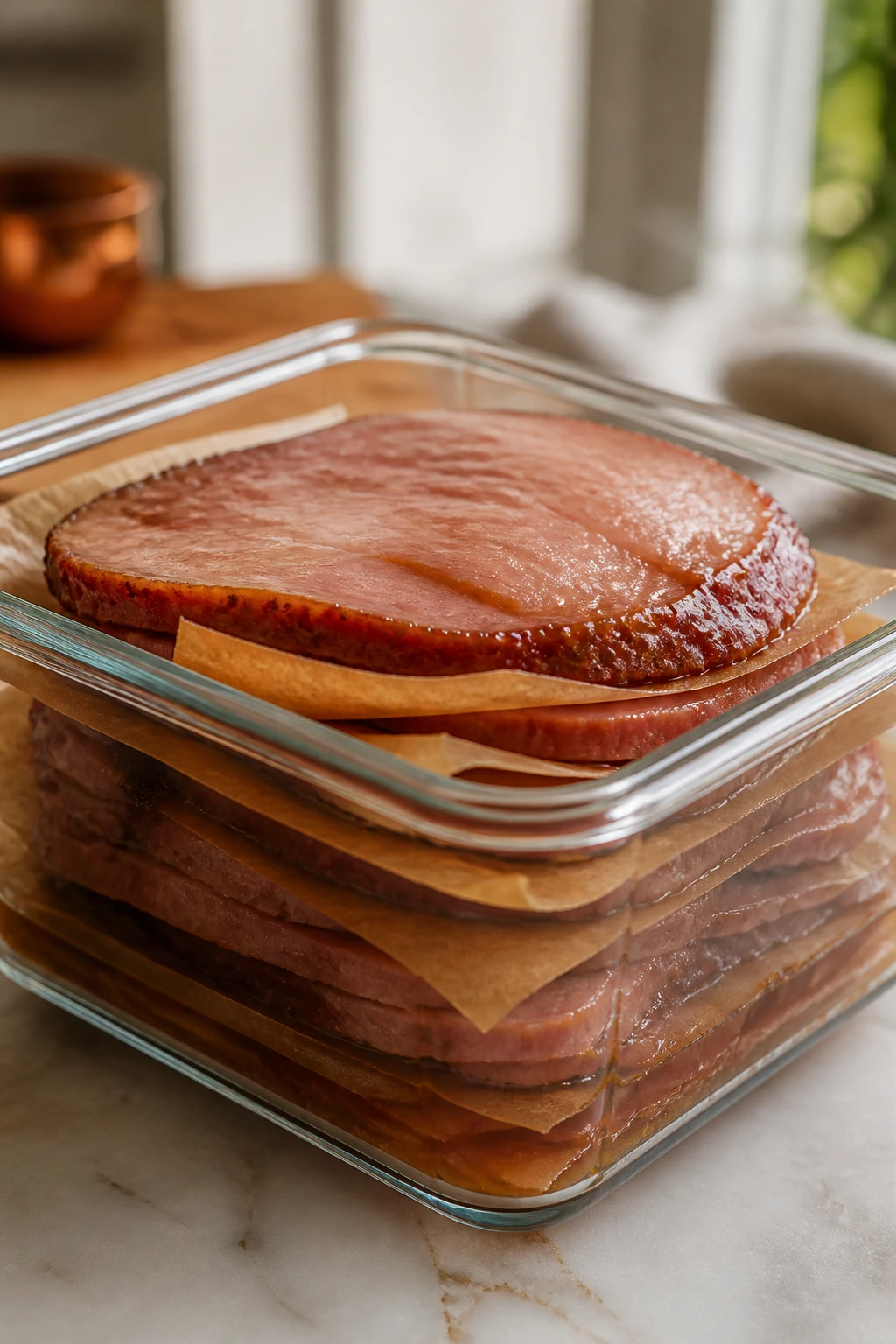
Leftover ham keeps in the refrigerator for 3 to 4 days when sealed in an airtight container. Slices stay juicier if you tuck a spoonful of the pan juices or leftover glaze in with them. If you are stacking slices, put parchment between layers so they do not glue themselves together.
Do not leave the ham out on the counter for more than 2 hours. If the room is warm and the platter is sitting under bright lights or near the stove, one hour is the safer ceiling.
Freezer Storage
Ham freezes well for up to 2 months, and sliced portions are easier to manage than one giant chunk. Pack the meat in freezer bags or airtight containers, press out as much air as you can, and freeze it flat so it stacks cleanly later. A little glaze or juice in each packet helps protect the texture.
I would not freeze the garnish, and I would not freeze a huge mass of slices unless you enjoy wrestling with one frozen brick. Smaller portions thaw faster and reheat more evenly.
Reheating Slices and Larger Pieces
For single servings, the best method is a covered skillet over low heat with 1 to 2 tablespoons of water, cider, or pan juices. Heat until the slices are hot through and glossy again. If you use the microwave, keep the bursts short and cover the dish so the edges do not dry out.
For a bigger portion, wrap the ham in foil and warm it in a 275°F oven with a splash of liquid in the foil packet. That slower method keeps the slices from tightening up. If you need it hot enough for a buffet, bring it all the way back to steaming hot before serving.
Make-Ahead Game Plan
The glaze can be made 3 days ahead and refrigerated. The ham can be unwrapped and patted dry a day ahead, then wrapped again and chilled in the fridge until cooking time. I would not assemble the whole thing in the slow cooker the night before; the ham is ready-to-eat, but it still belongs in the fridge until you turn the heat on.
The nice thing about this recipe is that it does not get worse overnight. The flavors settle. The slices hold together. Leftovers may even taste a little better the next day because the glaze has had time to sink into the cut edges.
Questions People Ask Before They Start
Can I use a boneless ham instead of bone-in?
Yes, but it cooks a little faster and the slices look flatter on the platter. Start checking a 4- to 5-pound boneless ham at about 2 to 2 1/2 hours on LOW, then pull it once the center reaches 140°F.
Do I need to add water to the slow cooker?
No deep bath, please. A cup of apple cider or juice is enough because the ham will release more liquid as it warms, and too much fluid washes the glaze away.
Can I cook this on HIGH to save time?
You can, but I would not. HIGH heat makes the outer slices dry before the center warms, which defeats the whole purpose of using a slow cooker in the first place.
What if my ham is already spiral-cut and a little fragile?
Handle it gently and leave the bone in place if you can. The pineapple rings underneath help support the slices, and a 15-minute rest before carving keeps the whole thing from slumping apart on the board.
Can I make the glaze ahead of time?
Absolutely. Make it up to 3 days in advance, chill it in a jar, and warm it over low heat until it pours smoothly again. If it thickens too much in the fridge, whisk in a tablespoon of cider.
What if I do not have pineapple juice?
Apple cider is the easiest swap, and orange juice works if you want a brighter finish. Pineapple adds a little tang and body, but the glaze still works without it.
How do I thicken the leftover juices after cooking?
Pour them into a saucepan and simmer for 5 to 10 minutes until they coat a spoon. Skim off a little fat if needed; the sauce should look shiny and taste concentrated, not greasy.
Can I keep the ham on warm while everyone eats?
For a short stretch, yes. Warm is fine for about an hour, but if it sits much longer the edges start drying and the glaze gets sticky in the wrong way.
A Holiday Main That Lets You Breathe
The nicest thing about this slow-cooked holiday ham is not that it is easy. It is that it lets the rest of the meal behave. The oven can do potatoes. The stovetop can do sauce. The people in the kitchen can stop asking when dinner is ready every seven minutes.
That is worth something.
Make it once, and you start treating the slow cooker like real holiday insurance: steady heat, glossy slices, one less thing to panic about. And once you have a platter that smells like maple, mustard, and orange with a little clove in the background, it is hard to go back to the old chaos.
Maple-Dijon Slow-Cooked Holiday Ham — Recipe Card
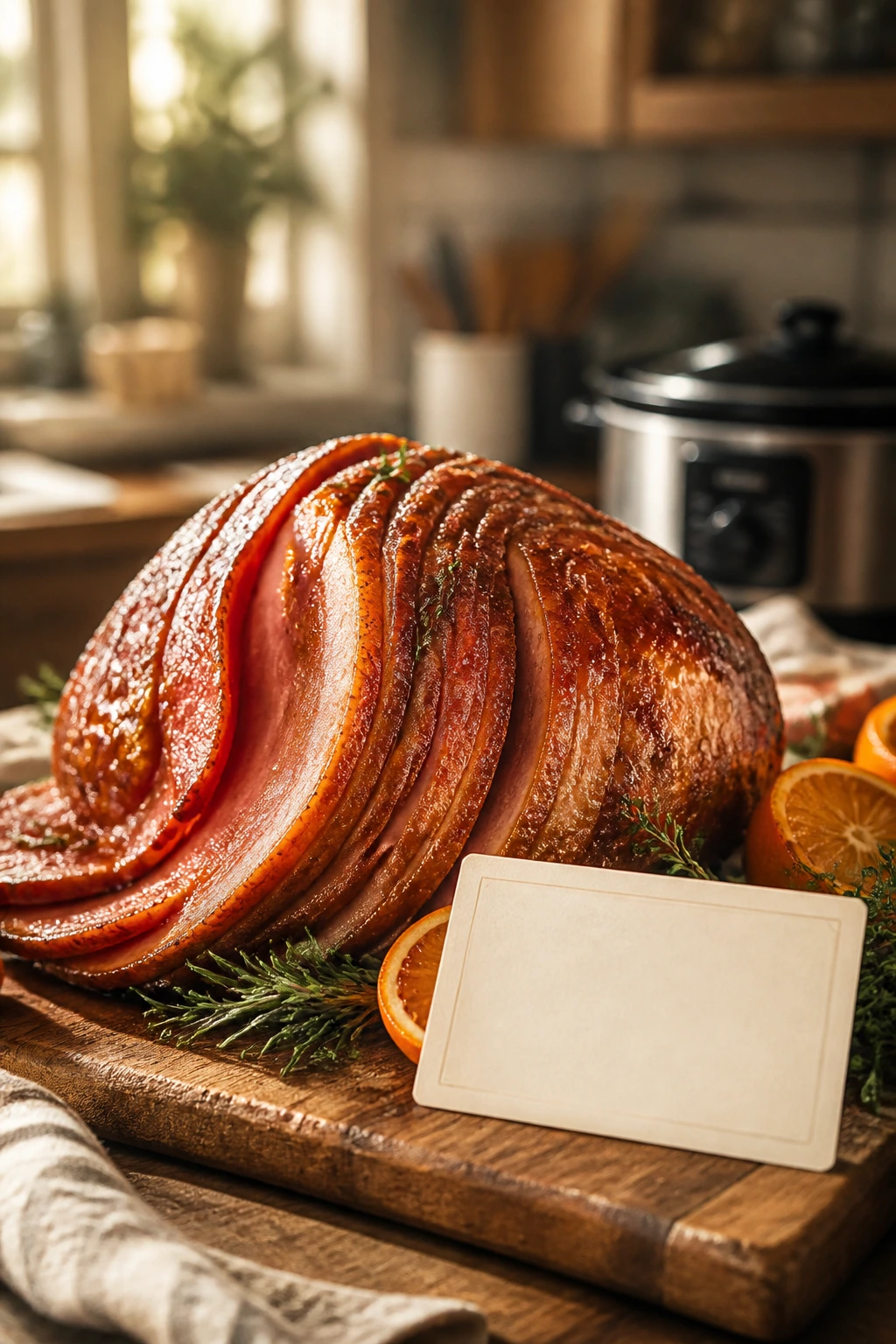
- Recipe Name: Maple-Dijon Slow-Cooked Holiday Ham
- Description: A fully cooked spiral-cut ham warmed low and slow with pineapple, apple cider, maple, Dijon, orange, and warm spice until glossy and tender. The glaze settles between the slices and leaves the platter sticky, fragrant, and easy to carve.
- Prep Time: 20 minutes
- Cook Time: 3 to 4 hours
- Total Time: 4 hours 20 minutes
- Course: Main Course
- Cuisine: American
- Servings: 12
- Calories: Approximately 410 kcal per serving
Ingredients
For the Ham and Pan:
- 1 fully cooked spiral-cut bone-in ham, 7 to 8 pounds, labeled “ready to eat”
- 8 pineapple rings, drained
- 1 cup apple cider
For the Maple-Dijon Glaze:
- 1 cup pineapple juice
- 1/2 cup packed dark brown sugar
- 1/3 cup pure maple syrup
- 3 tablespoons Dijon mustard
- 1 tablespoon whole-grain mustard
- 2 tablespoons apple cider vinegar
- 2 tablespoons unsalted butter
- 1 teaspoon orange zest
- 1 teaspoon ground cinnamon
- 1/2 teaspoon ground cloves
- 1/4 teaspoon freshly ground black pepper
For Serving:
- 2 tablespoons chopped parsley or thyme
- Orange slices or extra pineapple rings, for the platter
Instructions
-
Unwrap the ham, pat it dry, and score any thick rind lightly if needed. Place the pineapple rings in the bottom of a 6- to 8-quart slow cooker and pour in the apple cider.
-
Set the ham on top, cut-side down if possible. In a small saucepan, whisk together the pineapple juice, brown sugar, maple syrup, Dijon, whole-grain mustard, vinegar, butter, orange zest, cinnamon, cloves, and black pepper.
-
Bring the glaze to a gentle boil over medium heat, then simmer for 6 to 8 minutes until glossy and lightly thickened.
-
Spoon or brush about half of the glaze over the ham, getting some between the spiral slices. Cover and cook on LOW for 3 to 4 hours, until the center reaches 135 to 140°F.
-
Brush the ham with the remaining glaze during the last 30 minutes of cooking. If you want more color, transfer it to a foil-lined sheet pan and broil for 2 to 3 minutes, watching closely.
-
Rest the ham for 15 minutes before carving. Spoon a little of the slow-cooker juices over the slices, garnish with parsley or thyme, and serve warm.
Notes: For a thicker sauce, simmer the slow-cooker juices in a saucepan for 5 to 10 minutes after carving. Store leftovers in the fridge for 3 to 4 days, or freeze in portions for up to 2 months.