



A package of ground beef can rescue a weeknight in a way chicken breast rarely does. It browns fast, takes seasoning without fuss, and turns into a proper dinner before you’ve had time to stare at the fridge and feel personally betrayed by it. That’s why ground beef dinners show up on so many real home-cook rotation lists: they’re fast, filling, and forgiving in a way that feels almost unfair.
The best part is how far one pound can stretch. Stir it into rice, tuck it into pasta, simmer it in soup, fold it into a casserole, or pile it into buns with enough sauce to make the whole thing worth the napkin count. If you know how to season it in layers, drain it without washing away flavor, and pair it with the right starch or vegetable, ground beef becomes less of a backup plan and more of a dinner strategy.
Busy nights need food that behaves. They need meals that hold up when the onions are a little unevenly chopped, the broccoli is from the freezer, and the clock says you’ve got 35 minutes before people start asking what happened to dinner. That’s the lane these recipes live in — practical, flexible, and sturdy enough to handle a distracted cook without falling apart.
Why These Ground Beef Dinners Earn a Spot on Busy Nights
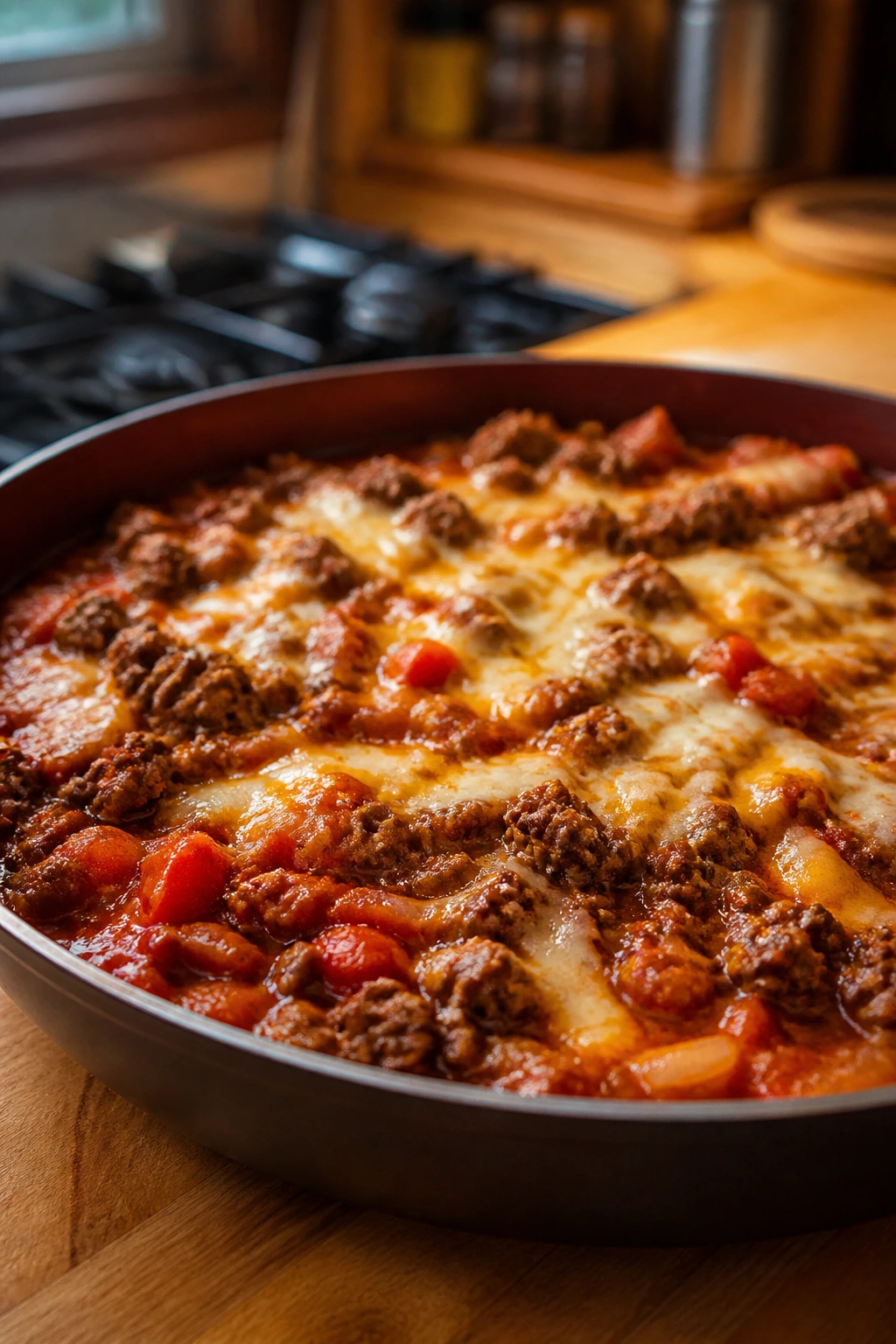
- Fast Browning: Ground beef cooks in a single layer in a hot pan, so you can build dinner around it in 10 minutes or less.
- Budget Control: One pound can feed 4 to 6 people when you pair it with rice, pasta, beans, potatoes, or tortillas.
- Pantry-Friendly: Canned tomatoes, broth, onions, garlic, pasta, rice, and cheese do most of the heavy lifting here.
- Family Flexibility: The same base can go mild, cheesy, spicy, or extra saucy without changing the whole dinner plan.
- Leftover Value: Many of these dishes taste even better after a night in the fridge, when the sauce settles and the seasoning evens out.
- One-Pan Relief: Several of the recipes keep cleanup down to a skillet, Dutch oven, or casserole dish, which matters more than people admit.
1. One-Pan Taco Rice Skillet
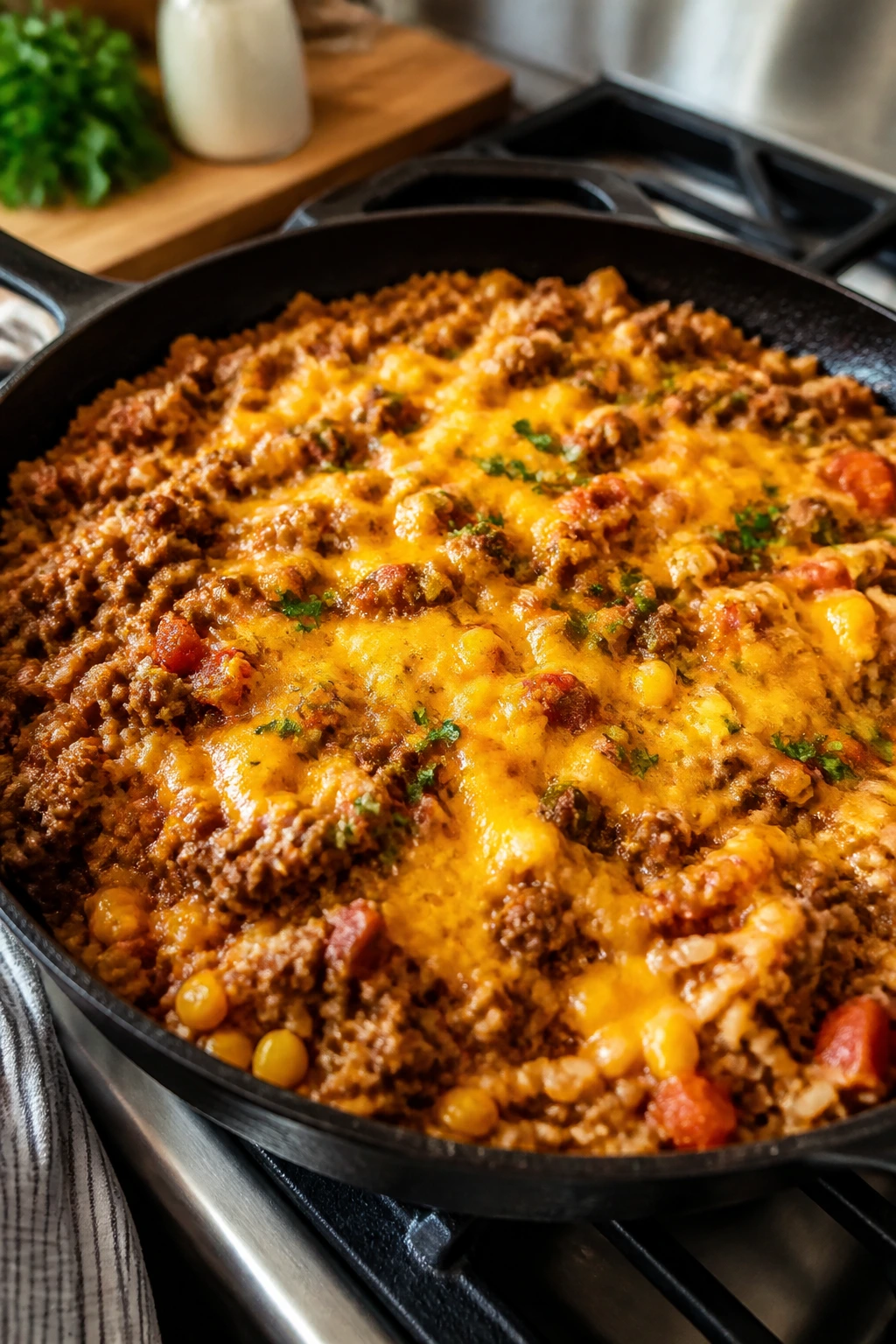
A taco rice skillet is the kind of dinner that smells like relief. The beef gets browned with onion and garlic, the rice cooks right in the seasoned tomato broth, and the whole pan ends up looking like a cross between taco night and comfort food. It’s bright, savory, and a little cheesy in the best way.
Why It Works:
Rice cooked with the beef absorbs the taco seasoning instead of sitting underneath it like an afterthought. That means every bite tastes balanced, not like plain rice next to seasoned meat. The corn adds sweetness, the tomatoes keep things juicy, and a final blanket of cheddar melts into the rice so the skillet comes out cohesive instead of scattered. It also holds well for a few minutes on the stove, which is more useful than it sounds when people wander into the kitchen late.
Key Ingredients:
- 1 pound ground beef
- 1 small yellow onion, finely diced
- 3 cloves garlic, minced
- 1 tablespoon olive oil, if your beef is very lean
- 1 cup long-grain white rice, rinsed
- 1 packet taco seasoning or 2 tablespoons homemade taco seasoning
- 1 can (14.5 ounces) diced tomatoes, undrained
- 2 cups low-sodium beef broth
- 1 cup frozen corn
- 1 cup shredded cheddar cheese
- 2 tablespoons chopped cilantro, for finishing
- Sour cream and salsa, for serving
Quick Steps:
- Brown the Beef: Heat a large skillet over medium-high heat. Add the ground beef and onion, breaking the meat into small pieces, and cook for 6 to 8 minutes until the beef is browned and the onion is soft.
- Add the Garlic and Seasoning: Stir in the garlic and taco seasoning and cook for 30 seconds, just until fragrant. Do not let the garlic scorch; it turns bitter fast.
- Build the Rice Base: Add the rice, diced tomatoes, broth, and corn. Stir well, scraping up any browned bits stuck to the pan.
- Simmer Until Tender: Bring the pan to a boil, then reduce to low, cover, and cook for 18 to 20 minutes until the rice is tender and the liquid is absorbed.
- Finish with Cheese: Turn off the heat, sprinkle the cheddar over the top, cover for 2 minutes, then fluff the rice and top with cilantro.
Tips and Variations:
- Use rotisserie chicken seasoning if you want a less spicy, more herby profile.
- Add a handful of black beans in the last 5 minutes for a thicker, more filling skillet.
- If the rice sticks, add 2 tablespoons of broth and let it sit covered for 3 minutes before fluffing.
2. One-Pot Spaghetti with Ground Beef
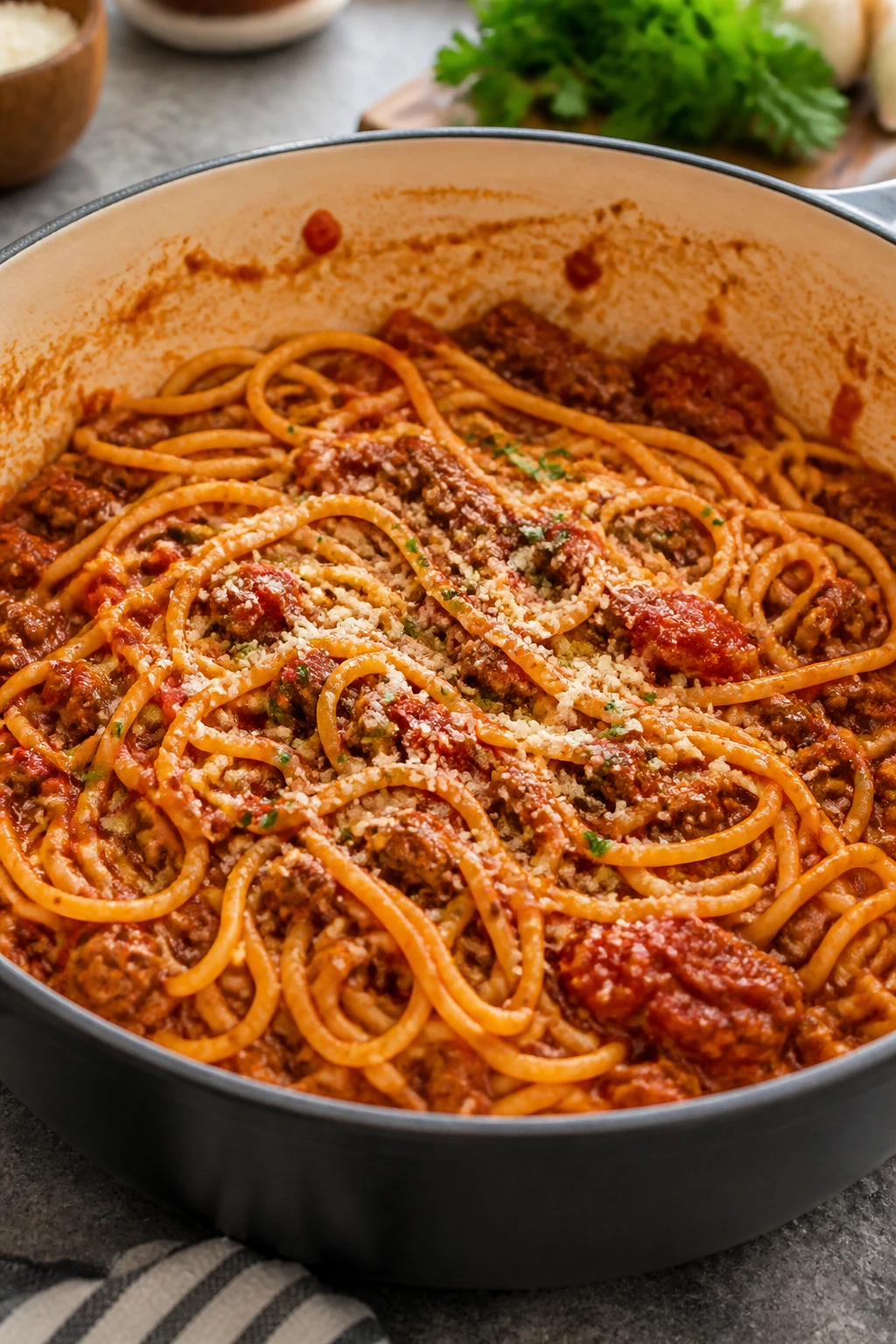
This is the dinner that smells like childhood and an empty sink. The pasta cooks right in the sauce, which means the starch thickens everything naturally and the noodles pick up more flavor than they would in a separate pot of plain water. It’s saucy, red, and unapologetically practical.
Why It Works:
Ground beef, onion, garlic, crushed tomatoes, and broth create a sauce that does double duty: it seasons the pasta while it cooks and turns into dinner without extra steps. The trick is enough liquid to keep the spaghetti moving, but not so much that the sauce turns watery. A small splash of milk or a knob of butter at the end softens the acidity and gives the sauce a rounder finish. That little move matters.
Key Ingredients:
- 1 pound ground beef
- 1 small onion, diced
- 4 cloves garlic, minced
- 2 tablespoons tomato paste
- 1 can (28 ounces) crushed tomatoes
- 3 cups low-sodium beef broth
- 12 ounces spaghetti, broken in half
- 1 teaspoon dried oregano
- 1 teaspoon dried basil
- 1/2 teaspoon red pepper flakes, optional
- 1 tablespoon butter
- 1/4 cup grated Parmesan cheese, plus more for serving
- Fresh basil, for finishing
Quick Steps:
- Sauté the Beef Base: In a deep skillet or Dutch oven, cook the beef and onion over medium-high heat for 7 minutes until the beef is browned and the onion is soft.
- Stir in the Flavor Builders: Add garlic and tomato paste, then cook for 1 minute until the paste darkens slightly and smells sweet.
- Add Liquid and Pasta: Pour in the crushed tomatoes, broth, oregano, basil, and red pepper flakes. Add the spaghetti and press it down so it’s mostly submerged.
- Simmer Until the Pasta Is Tender: Cook uncovered over medium heat for 11 to 13 minutes, stirring often so the noodles do not clump or stick to the bottom. The sauce should thicken and cling to the pasta.
- Finish Smoothly: Stir in the butter and Parmesan, then rest for 2 minutes before serving with basil on top.
Tips and Variations:
- A splash of pasta water from another pot can loosen the sauce if it tightens too fast.
- Use penne or rotini if that’s what you have; cook time stays close.
- If the sauce tastes flat, add a pinch of sugar or a teaspoon of vinegar.
3. Cheeseburger Pasta Skillet
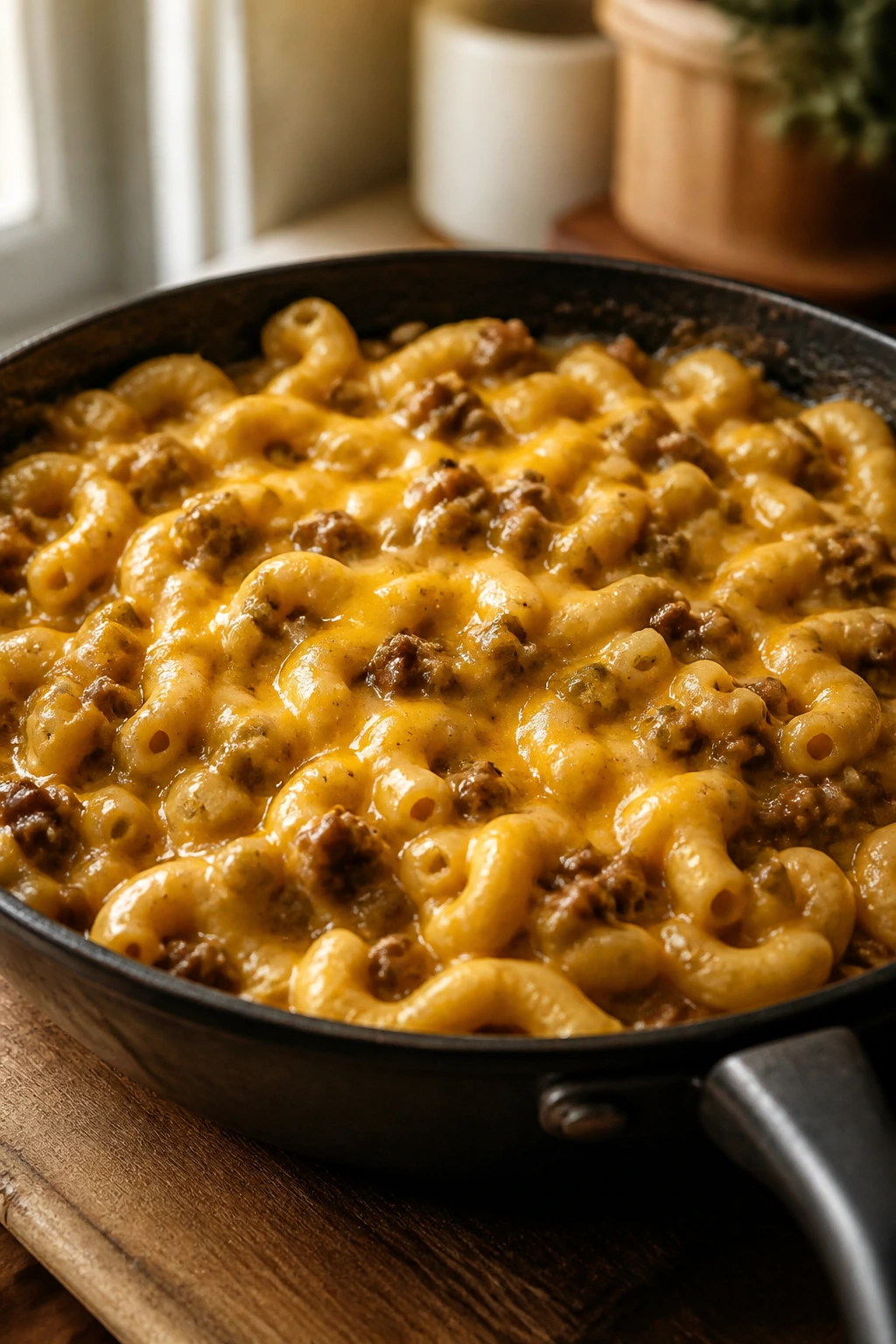
If you’ve ever wanted the flavor of a diner cheeseburger without turning on the grill, this is your move. It’s creamy, beefy, a little tangy, and loaded with cheddar so the pasta finishes looking glossy instead of heavy. Pickles on top are optional, but I’m firmly in favor of them.
Why It Works:
This dish takes the familiar burger combination — beef, onion, mustard, ketchup, cheese — and stretches it across pasta for a dinner that feels fun but still grounded. The broth cooks the macaroni directly in the skillet, and the milk plus cheese give the sauce that glossy, clingy texture people expect from a good comfort food pasta. The mustard sharpens the flavor enough to keep the cheese from turning dull. That’s the move.
Key Ingredients:
- 1 pound ground beef
- 1 small onion, diced
- 2 cups elbow macaroni
- 2 1/2 cups beef broth
- 1 cup whole milk
- 2 tablespoons ketchup
- 1 tablespoon yellow mustard
- 1 teaspoon Worcestershire sauce
- 2 cups shredded sharp cheddar cheese
- 1 tablespoon butter
- Dill pickle slices, for topping
- Chopped parsley, optional
Quick Steps:
- Cook the Beef: Brown the beef and onion in a deep skillet over medium-high heat for 6 to 8 minutes, then drain off excess fat if needed.
- Build the Burger Sauce Base: Stir in ketchup, mustard, Worcestershire sauce, and butter. Let it bubble for 30 seconds so the flavor rounds out.
- Add Pasta and Liquid: Pour in the macaroni, broth, and milk. Bring the pan to a simmer.
- Cook Until Creamy: Reduce the heat to medium-low and cook for 10 to 12 minutes, stirring often, until the pasta is tender and the sauce has thickened around it.
- Melt the Cheese: Turn off the heat, add the cheddar, and stir until smooth. Top with pickles and parsley.
Tips and Variations:
- Swap cheddar for a cheddar-jack blend if you want a softer melt.
- A spoonful of relish in the sauce gives it a more classic burger-shop taste.
- If you want extra veg, stir in diced sautéed mushrooms with the onion.
4. Shepherd’s Pie Skillet
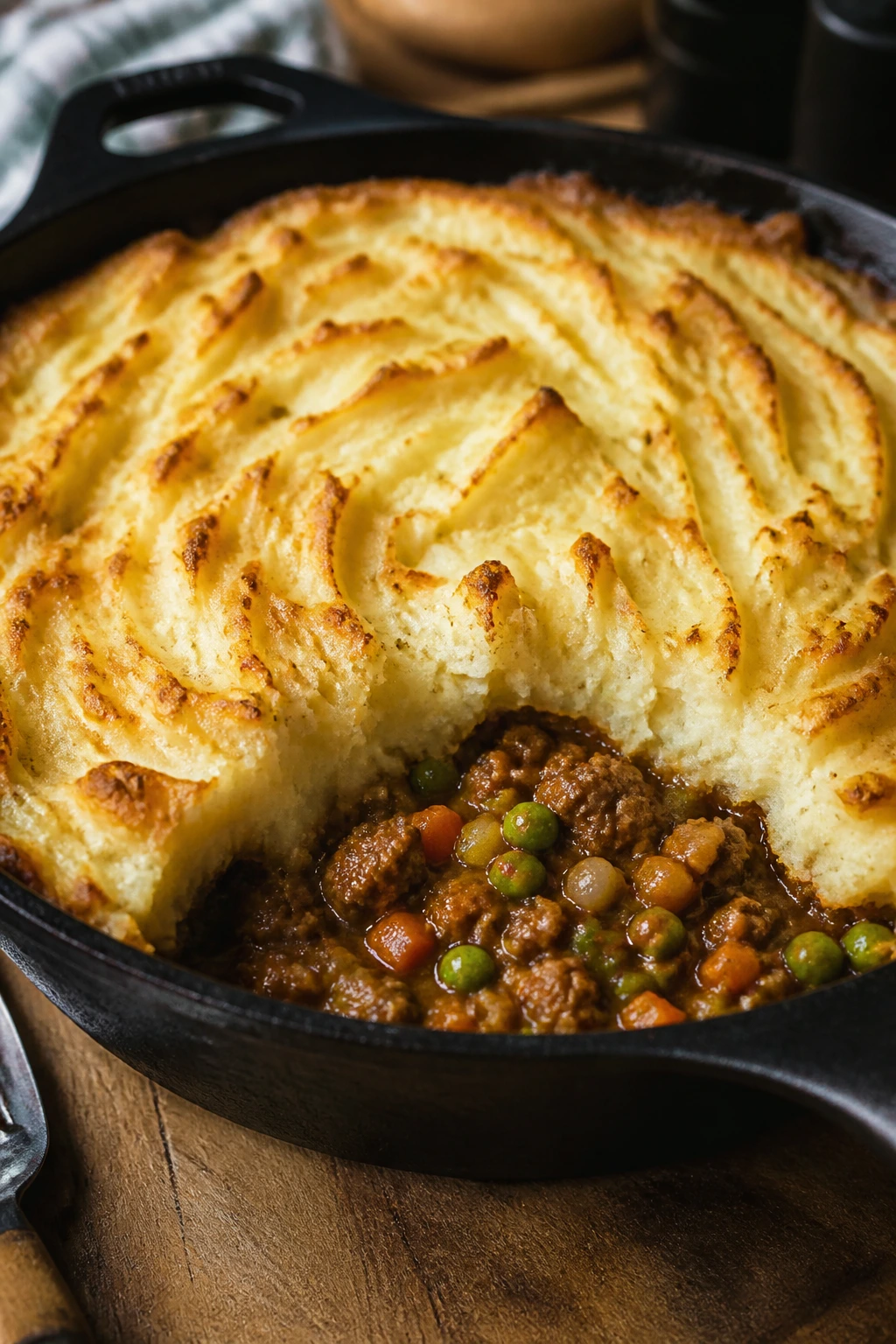
Shepherd’s pie has a reputation for being fussy, but the skillet version is built for people who need dinner to happen without ceremony. The beef filling turns savory and rich, the peas and carrots bring color, and the mashed potato topping browns just enough to get those crisp edges everyone fights over.
Why It Works:
The filling is basically a fast braise: browned beef, tomato paste, Worcestershire, broth, and vegetables simmer together until the sauce tightens. The mashed potatoes act like a lid, sealing in steam while the bottom stays soft and the top takes on a little color. Using already-cooked potatoes keeps the whole thing weeknight-friendly. Cold leftover mash works especially well because it spreads cleanly over the skillet.
Key Ingredients:
- 1 pound ground beef
- 1 small onion, diced
- 2 carrots, diced small
- 1 cup frozen peas
- 2 tablespoons tomato paste
- 1 tablespoon Worcestershire sauce
- 1 cup beef broth
- 2 tablespoons all-purpose flour
- 3 cups prepared mashed potatoes
- 1 tablespoon butter, for the potato top
- Salt and black pepper
- Chopped chives, optional
Quick Steps:
- Cook the Filling: Brown the beef, onion, and carrots in a skillet over medium-high heat for 8 minutes until the carrots begin to soften.
- Thicken the Sauce: Stir in tomato paste and flour and cook for 1 minute, then add Worcestershire sauce and broth. Simmer until the mixture looks glossy and lightly thickened.
- Add the Peas: Stir in the peas and season with salt and pepper.
- Top with Potatoes: Spoon the mashed potatoes over the filling in rough mounds, then smooth them with the back of a spoon. Dot the top with butter.
- Brown and Finish: Bake at 425°F for 15 minutes, then broil for 2 to 3 minutes until the peaks are golden. Watch it closely.
Tips and Variations:
- Use leftover mashed potatoes that are already seasoned; plain mash needs more salt than people expect.
- Add a little shredded cheddar between filling and potatoes for a richer version.
- If the skillet is too full, move it to a baking dish before topping.
5. Korean Beef and Broccoli Bowls
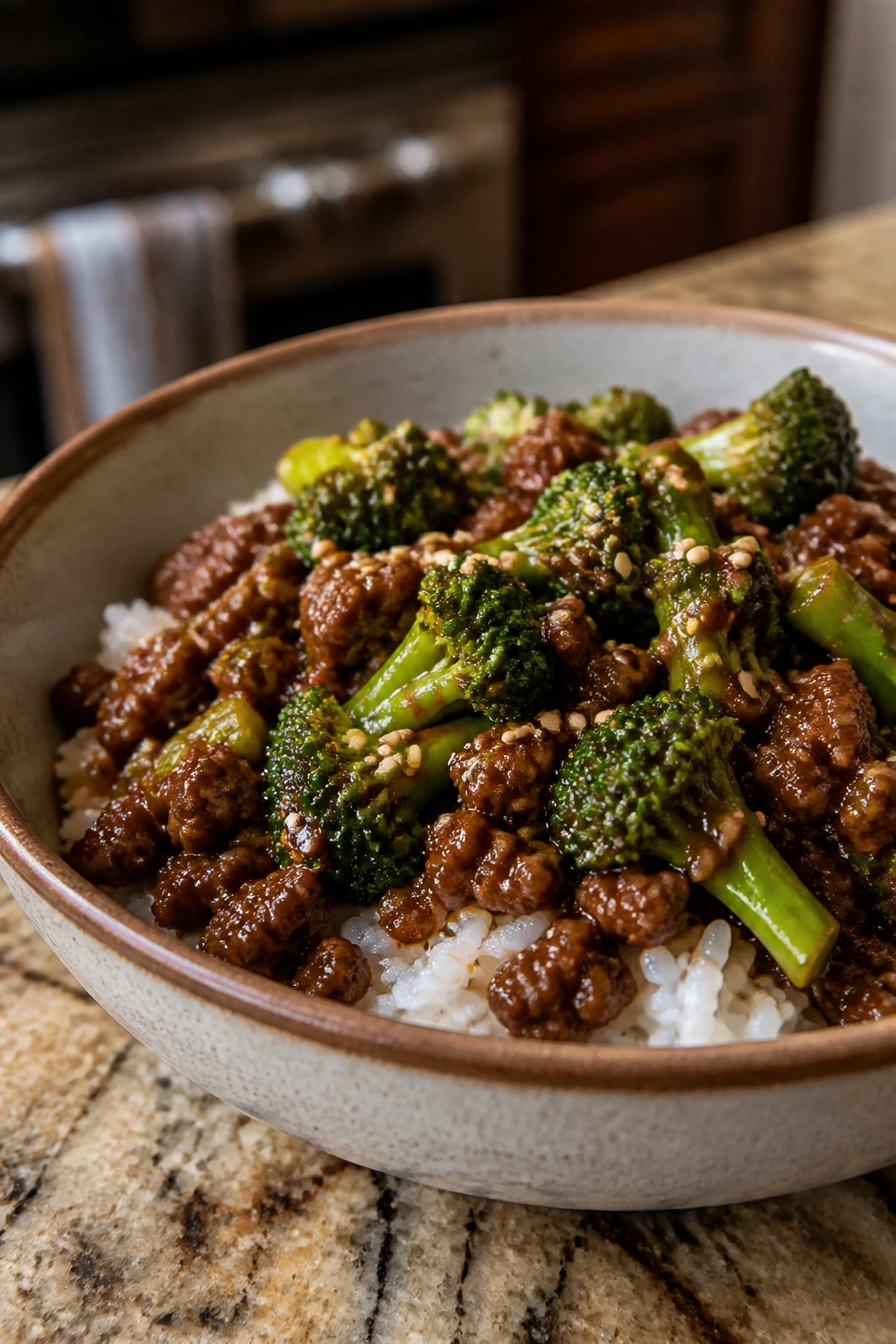
This one smells like garlic, sesame, and steam, which is to say it smells like dinner moving quickly. The sauce is sweet-salty with a little bite, the broccoli keeps its color, and the whole thing lands on rice in a way that feels polished without asking for much effort. It’s fast. Really fast.
Why It Works:
Ground beef cooks faster than sliced beef, so it fits a stir-fry style meal without any marinating. A sauce built from soy sauce, brown sugar, garlic, ginger, and sesame oil clings to the crumbled beef instead of pooling at the bottom of the pan. Broccoli works because it can be cooked just until bright green and still keep a little crunch. That texture contrast keeps the bowl from tasting mushy.
Key Ingredients:
- 1 pound ground beef
- 4 cups broccoli florets
- 3 cloves garlic, minced
- 1 tablespoon fresh ginger, grated
- 1/4 cup low-sodium soy sauce
- 2 tablespoons brown sugar
- 1 tablespoon sesame oil
- 1 tablespoon rice vinegar
- 1 teaspoon cornstarch mixed with 2 tablespoons water
- Cooked white rice, for serving
- Sliced scallions and sesame seeds, for topping
Quick Steps:
- Brown the Beef: Cook the ground beef in a large skillet over medium-high heat for 6 to 7 minutes until it’s browned and crumbly.
- Add Aromatics: Stir in garlic and ginger and cook for 30 seconds.
- Steam the Broccoli Briefly: Add the broccoli and 2 tablespoons of water. Cover for 3 minutes until the florets turn bright green and just tender.
- Glaze the Pan: Mix soy sauce, brown sugar, sesame oil, vinegar, and cornstarch slurry, then pour it over the beef and broccoli. Stir for 1 to 2 minutes until the sauce turns shiny and lightly thickened.
- Serve Over Rice: Spoon over hot rice and finish with scallions and sesame seeds.
Tips and Variations:
- Frozen broccoli works, but thaw and drain it first so the sauce stays clean.
- Add a fried egg on top if you want the bowl to feel bigger without adding much work.
- A squeeze of lime can wake up the whole dish at the table.
6. Stuffed Pepper Casserole
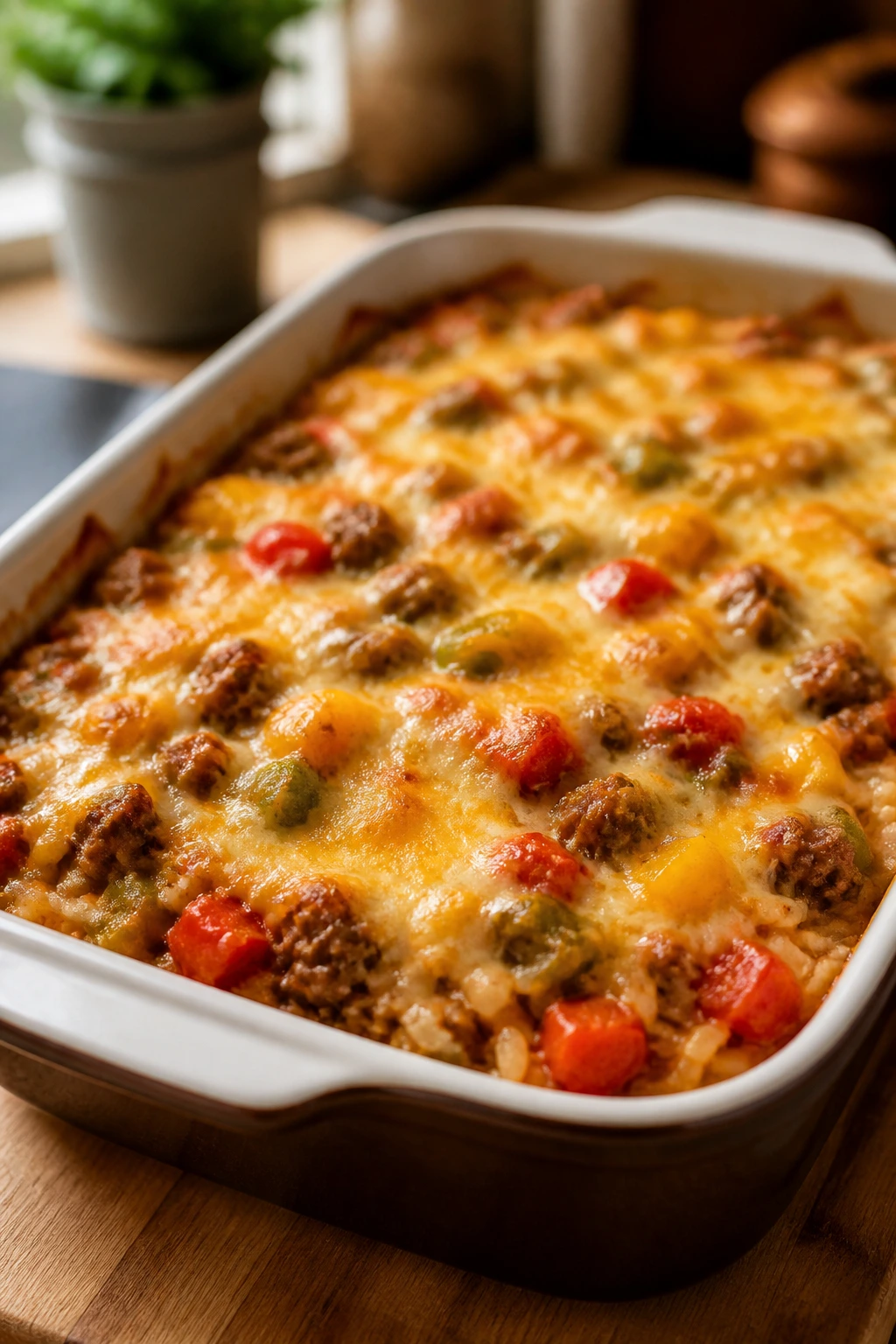
Stuffed peppers are delicious, and also a little annoying on a Tuesday. This casserole gives you the same sweet pepper, beef, tomato, and rice flavor without making you hollow out vegetables like it’s a craft project. It bakes into a soft, cozy pan with enough cheese on top to keep everyone quiet for a minute.
Why It Works:
The peppers cook directly into the rice and tomato mixture, so you get the flavor of stuffed peppers in every forkful, not just in the shell. The rice absorbs the tomato sauce while the beef seasons the whole pan. A final layer of cheese seals the deal and keeps the top from drying out. If you want a dinner that reheats well, this is one of the safest bets in the bunch.
Key Ingredients:
- 1 pound ground beef
- 3 bell peppers, diced
- 1 small onion, diced
- 3 cloves garlic, minced
- 1 cup uncooked long-grain rice
- 1 can (15 ounces) tomato sauce
- 1 can (14.5 ounces) diced tomatoes
- 2 cups beef broth
- 1 teaspoon Italian seasoning
- 1 1/2 cups shredded mozzarella or cheddar
- Salt and black pepper
Quick Steps:
- Cook the Beef and Vegetables: Brown the beef, onion, and peppers in a large skillet or Dutch oven over medium-high heat for 8 minutes.
- Add Garlic and Seasoning: Stir in garlic and Italian seasoning for 30 seconds.
- Add Rice and Tomatoes: Pour in the rice, tomato sauce, diced tomatoes, and broth. Stir well and season with salt and pepper.
- Bake Covered: Transfer to a casserole dish if needed, cover tightly, and bake at 375°F for 35 minutes until the rice is tender.
- Top with Cheese: Uncover, scatter cheese over the top, and bake 5 more minutes until melted and bubbling.
Tips and Variations:
- Chop the peppers small if you want them to soften more completely.
- A handful of chopped parsley at the end keeps the casserole from tasting too heavy.
- Use brown rice only if you’re willing to add extra liquid and cooking time.
7. Sloppy Joes That Don’t Taste Flat
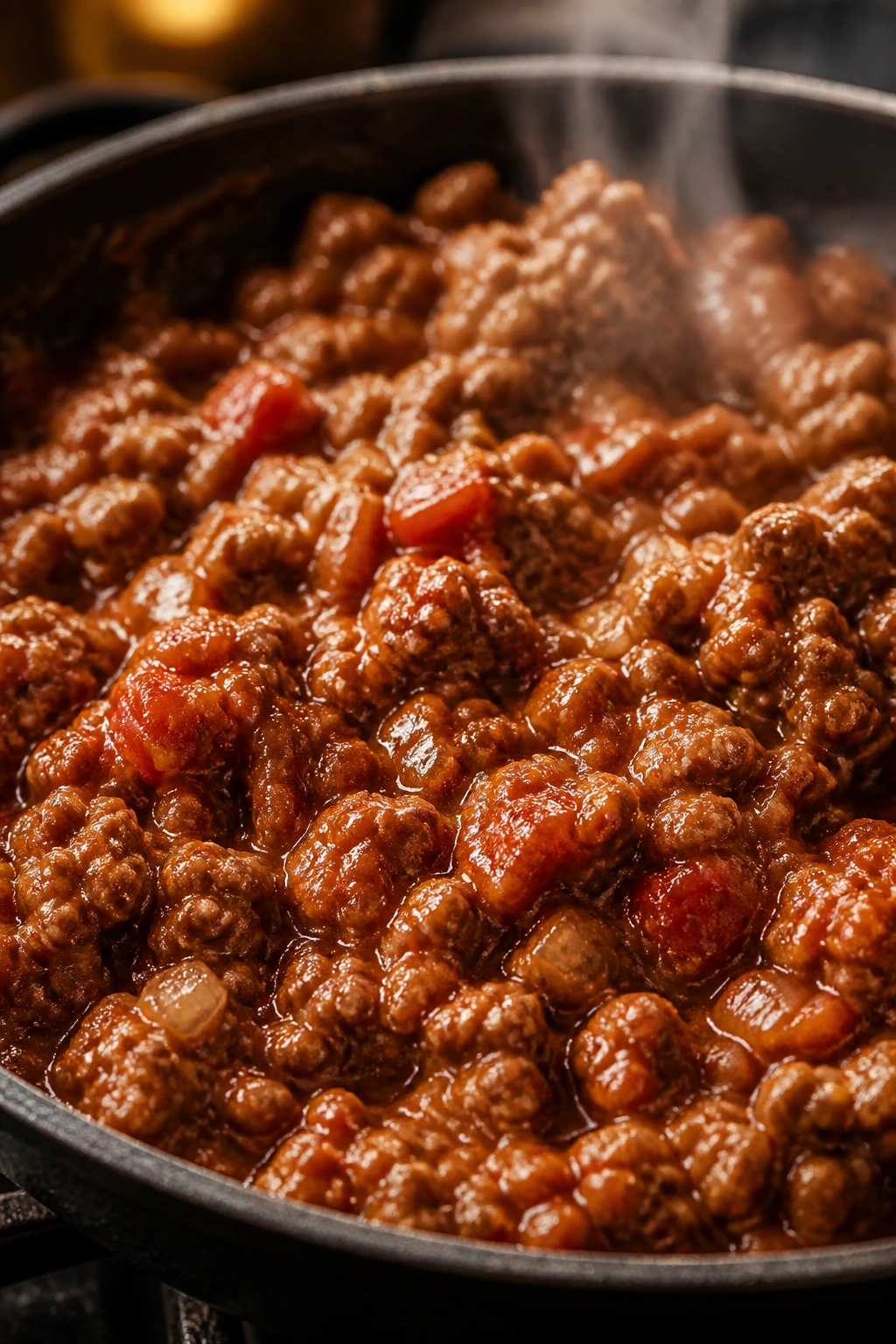
Sloppy joes get dismissed way too easily. When they’re done well, they’re sticky, tangy, sweet, and messy in a deliberate way that feels like a release valve at dinner. The sauce should coat the beef, not drown it, and the bun should hold together for at least three bites.
Why It Works:
The combination of tomato paste, ketchup, Worcestershire, mustard, and a little brown sugar gives sloppy joes depth instead of one-note sweetness. Simmering the sauce for a few minutes lets it tighten and cling to the beef, which matters more than most people think. A soft brioche bun or toasted hamburger bun keeps the whole thing from collapsing. If you toast the buns cut-side down in a skillet, they hold up better and taste better. Simple fix.
Key Ingredients:
- 1 pound ground beef
- 1 small onion, finely diced
- 1/2 green bell pepper, finely diced, optional
- 2 tablespoons tomato paste
- 1/2 cup ketchup
- 1 tablespoon Worcestershire sauce
- 1 tablespoon yellow mustard
- 1 tablespoon brown sugar
- 1/2 cup water
- 4 to 6 hamburger buns
- Dill pickle chips, for serving
Quick Steps:
- Brown the Beef: Cook the beef, onion, and bell pepper in a skillet over medium-high heat for 7 minutes until the beef is fully browned.
- Add the Sauce Base: Stir in tomato paste, ketchup, Worcestershire sauce, mustard, brown sugar, and water.
- Simmer Until Thick: Lower the heat and cook for 5 to 7 minutes, stirring often, until the sauce looks glossy and no longer runs thin across the pan.
- Toast the Buns: Split the buns and toast them in a dry skillet or under the broiler for a minute or two.
- Assemble: Spoon the beef mixture onto the buns and top with pickles.
Tips and Variations:
- Add a pinch of smoked paprika if you want a deeper, barbecue-style flavor.
- The filling is good on baked potatoes too.
- If the sauce gets too thick, stir in 1 to 2 tablespoons of water.
8. Hearty Ground Beef Vegetable Soup
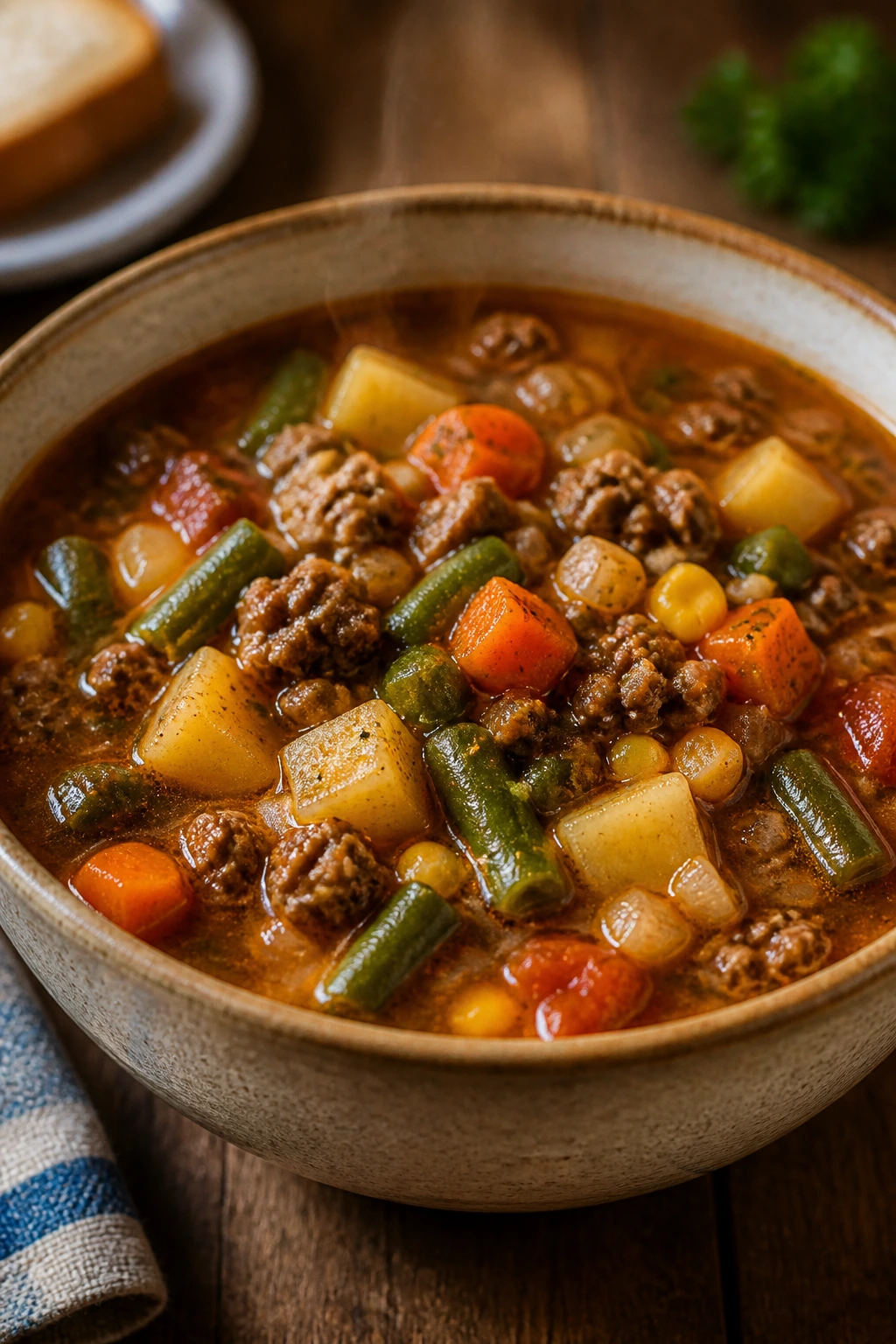
A good beef soup should taste like it has been working all afternoon, even when it hasn’t. This one gets there by simmering beef with carrots, celery, potatoes, and tomatoes until the broth turns savory and full-bodied. It’s not delicate. That’s the point.
Why It Works:
Ground beef gives the soup a richer base than a plain vegetable broth can manage, and the tomato adds enough acidity to keep the flavor bright. Potatoes make it filling, while green beans or peas bring a soft sweetness. Because everything simmers in one pot, the broth picks up little bits of flavor from each vegetable as it goes. A splash of vinegar at the end wakes the whole thing up, which is a trick worth remembering.
Key Ingredients:
- 1 pound ground beef
- 1 small onion, diced
- 2 carrots, sliced
- 2 celery stalks, sliced
- 2 medium potatoes, diced
- 1 cup green beans, cut into 1-inch pieces
- 1 can (14.5 ounces) diced tomatoes
- 6 cups beef broth
- 1 teaspoon dried thyme
- 1 bay leaf
- 1 tablespoon red wine vinegar
- Salt and pepper
Quick Steps:
- Brown the Beef: Cook the beef and onion in a soup pot over medium-high heat for 6 to 8 minutes. Drain excess fat if needed.
- Build the Vegetable Base: Stir in carrots and celery and cook for 3 minutes.
- Add Liquids and Potatoes: Pour in broth, tomatoes, thyme, bay leaf, and potatoes. Bring to a boil.
- Simmer Until Tender: Lower the heat and cook for 20 minutes, then add green beans and cook 10 minutes more until all the vegetables are tender.
- Finish Brightly: Stir in vinegar, salt, and pepper. Remove the bay leaf before serving.
Tips and Variations:
- Add a handful of small pasta shapes in the last 10 minutes if you want it closer to a meal-in-a-bowl.
- Leftover soup thickens overnight, so loosen it with a splash of broth when reheating.
- A spoonful of pesto at the table is a sneaky good finish.
9. Beef Enchilada Bake
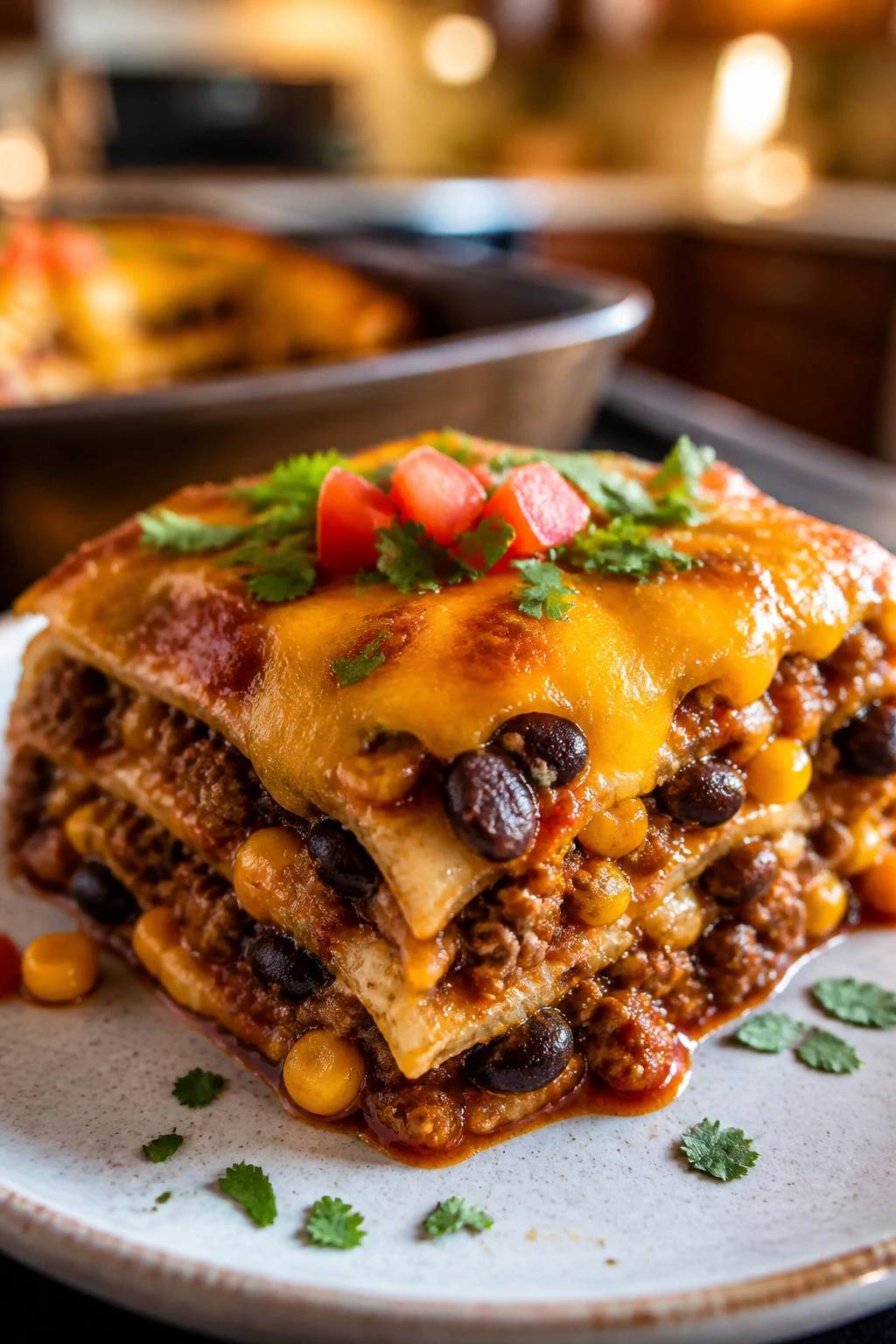
This is the casserole you make when taco night needs to become a little sturdier. Layers of tortillas, seasoned beef, enchilada sauce, beans, and cheese bake into something sliceable, saucy, and satisfyingly loud with flavor. It’s messy in a controlled way.
Why It Works:
The tortillas absorb enchilada sauce as they bake, so the casserole turns soft and cohesive instead of dry and crumbly. Ground beef plus black beans gives enough heft that one square feels like a meal, not a side dish. Cheese on top creates a browned lid that traps moisture underneath. That means leftovers hold together better than a lot of baked pasta dishes, which is a nice thing to know before you make a pan of it.
Key Ingredients:
- 1 pound ground beef
- 1 small onion, diced
- 2 tablespoons taco seasoning
- 1 can (15 ounces) enchilada sauce
- 1 can (15 ounces) black beans, drained and rinsed
- 1 cup frozen corn
- 8 small flour or corn tortillas, cut into strips
- 2 cups shredded Mexican cheese blend
- 1/4 cup chopped cilantro
- Sour cream, for serving
Quick Steps:
- Cook the Beef Filling: Brown the beef and onion in a skillet over medium-high heat for 7 minutes, then stir in taco seasoning.
- Add Beans and Corn: Mix in black beans, corn, and half the enchilada sauce. Let it simmer for 2 minutes.
- Layer the Casserole: Spread a little sauce in a baking dish, add tortilla strips, then beef mixture, then cheese. Repeat once more.
- Bake Until Bubbly: Pour the remaining sauce over the top and bake at 375°F for 20 to 25 minutes until the edges bubble and the cheese melts.
- Rest Before Cutting: Let it sit for 10 minutes so the layers firm up, then top with cilantro and sour cream.
Tips and Variations:
- Use red or green enchilada sauce depending on the flavor you want.
- Add diced jalapeños to the filling if you like more heat.
- This one slices cleaner the next day than it does hot from the oven.
10. Beef Stroganoff for a Weeknight
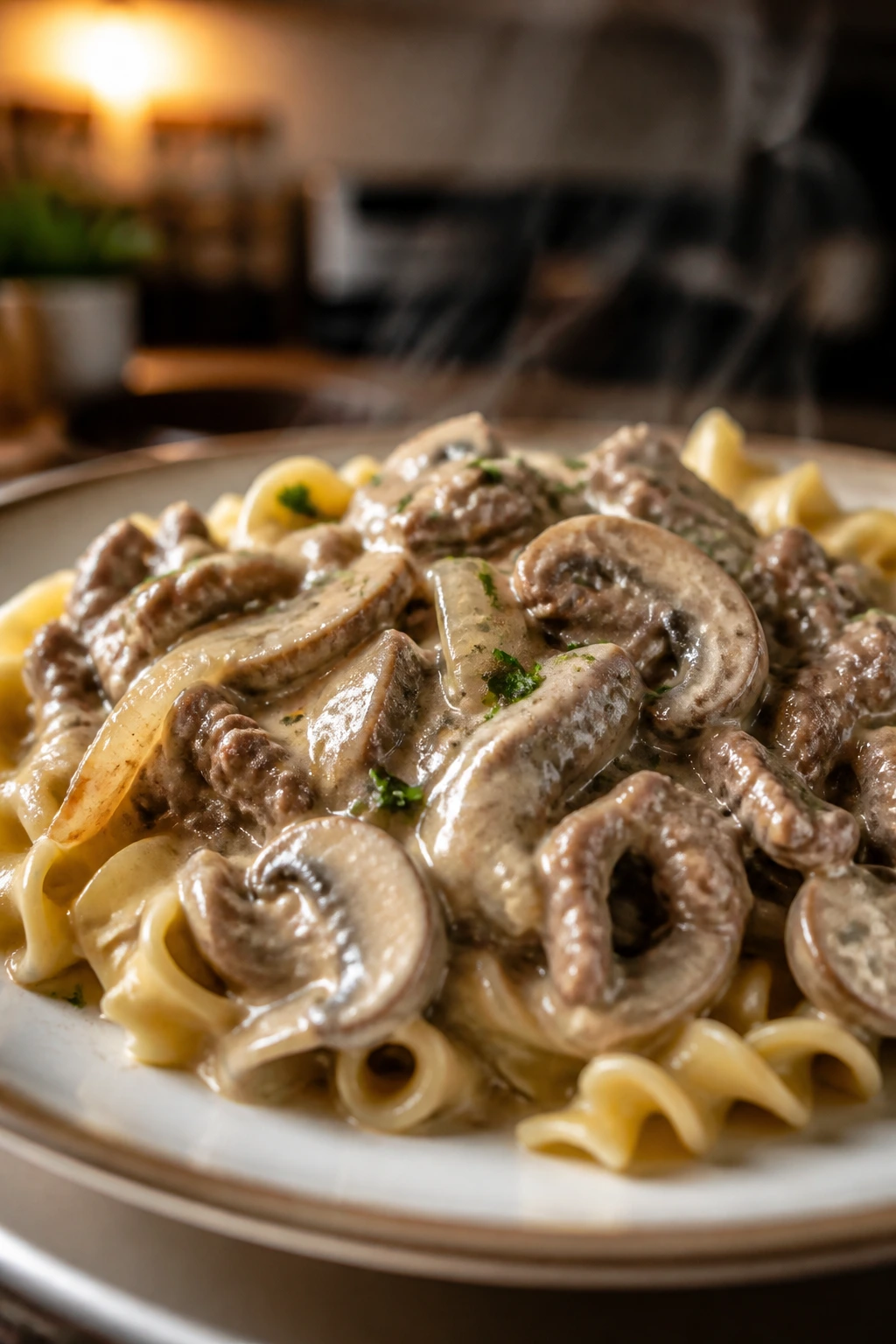
Stroganoff sounds fancier than it is. On a weeknight, it’s mostly browned beef, mushrooms, onions, and a sour cream sauce that wraps itself around egg noodles. Creamy, earthy, and a little tangy. It’s the sort of dinner that feels calm while you’re making it.
Why It Works:
Ground beef makes stroganoff faster because you skip the slicing and searing of whole cuts. Mushrooms add the deep, savory flavor that keeps the sauce from tasting like cream alone, and Dijon plus Worcestershire sharpen the whole thing so it doesn’t slump. Stirring sour cream in off the heat keeps it smooth. If the pan is too hot, the sauce can split, and nobody wants that little drama on a Wednesday.
Key Ingredients:
- 1 pound ground beef
- 8 ounces mushrooms, sliced
- 1 small onion, diced
- 3 cloves garlic, minced
- 2 tablespoons flour
- 2 cups beef broth
- 1 tablespoon Worcestershire sauce
- 1 teaspoon Dijon mustard
- 1/2 cup sour cream
- 12 ounces egg noodles
- Butter, salt, and pepper
Quick Steps:
- Cook the Beef and Mushrooms: Brown the beef, mushrooms, and onion in a skillet over medium-high heat for 8 minutes until the mushrooms release their moisture and begin to brown.
- Add Garlic and Flour: Stir in garlic and flour and cook for 1 minute.
- Build the Sauce: Pour in beef broth, Worcestershire sauce, and Dijon. Simmer for 4 to 5 minutes until slightly thickened.
- Cook the Noodles: Boil egg noodles in salted water until just tender, then drain.
- Finish with Sour Cream: Remove the skillet from the heat, stir in sour cream, then serve over noodles with black pepper and a little butter.
Tips and Variations:
- If you want more sauce, add an extra 1/2 cup broth.
- Egg noodles can be swapped for mashed potatoes or rice.
- Keep the heat low when adding sour cream. Low. Not warm-ish. Low.
11. Taco Soup That Eats Like a Meal
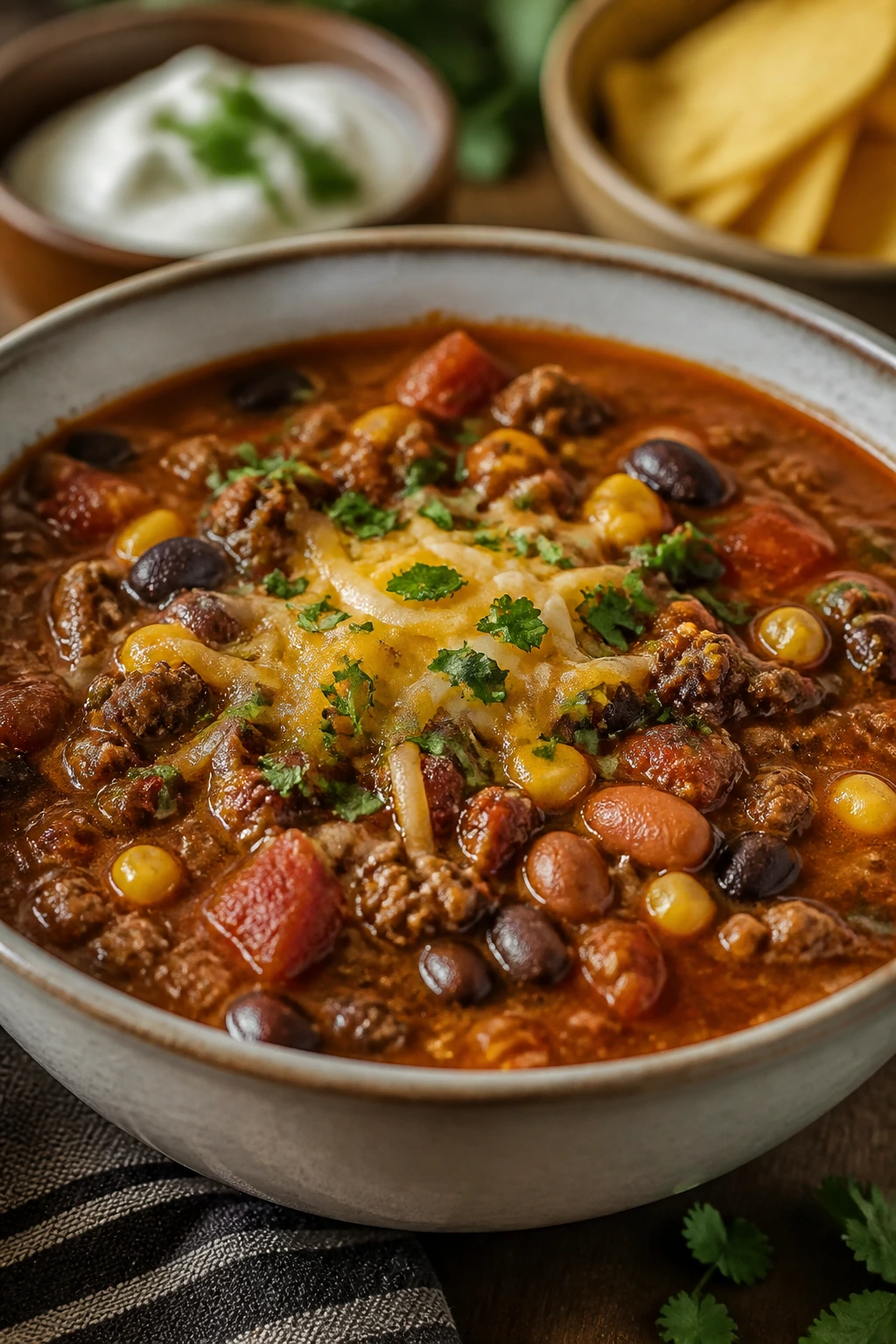
Taco soup is what happens when you want taco flavors but don’t want to assemble anything. It’s brothy, bean-heavy, and big on toppings, which means each bowl can feel a little different depending on who’s eating. It’s also one of the easiest meals to stretch for a crowd.
Why It Works:
Ground beef gives taco soup a savory base, but the beans, corn, salsa, and tomatoes do the real stretching. The broth keeps it spoonable, and the seasoning from salsa and taco spice means you’re not building flavor from scratch. It’s one of those soups that benefits from a toppings bar — tortilla chips, avocado, cheese, and sour cream all make sense here. That small bit of customization makes a simple pot feel less repetitive.
Key Ingredients:
- 1 pound ground beef
- 1 small onion, diced
- 1 packet taco seasoning
- 1 can (15 ounces) black beans, drained and rinsed
- 1 can (15 ounces) kidney beans, drained and rinsed
- 1 can (14.5 ounces) diced tomatoes
- 1 cup corn, frozen or canned
- 1 jar (16 ounces) salsa
- 4 cups beef broth
- Tortilla chips, shredded cheese, and avocado, for topping
Quick Steps:
- Brown the Beef: Cook the beef and onion in a soup pot over medium-high heat for 7 minutes, then drain if needed.
- Season the Base: Stir in taco seasoning and cook for 30 seconds.
- Add the Soup Ingredients: Pour in beans, tomatoes, corn, salsa, and broth.
- Simmer: Bring to a boil, then lower the heat and simmer for 20 minutes so the flavors settle together.
- Serve with Toppings: Ladle into bowls and finish with cheese, avocado, and crushed tortilla chips.
Tips and Variations:
- If your salsa is very chunky, the soup will be thicker and more stew-like.
- Add a squeeze of lime right before serving.
- Leftover taco soup freezes well, but keep the toppings separate.
12. Creamy Beef and Shells
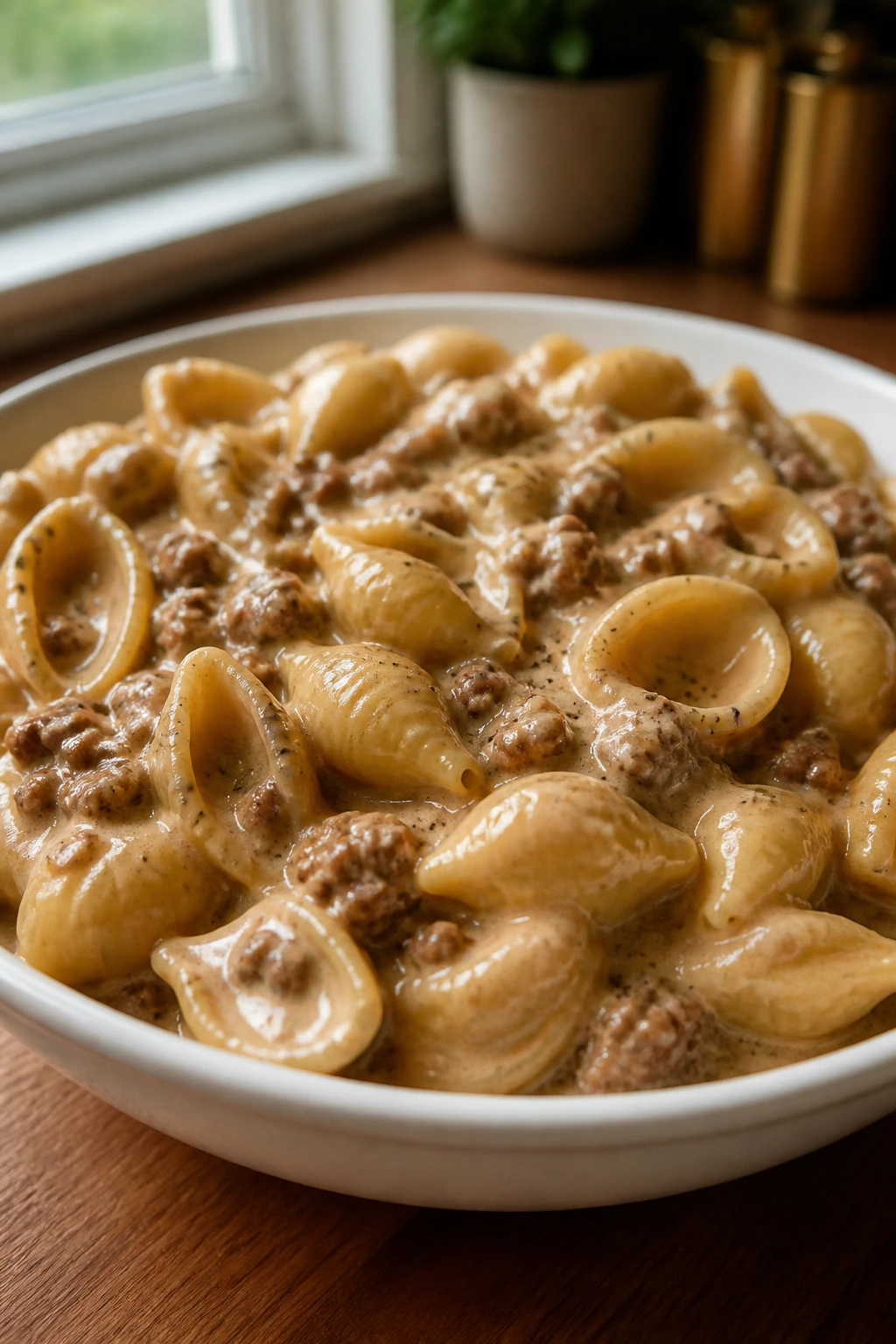
This is the skillet version of the pasta dinner people quietly hope will show up again. The shells catch the creamy sauce in little pockets, the beef gives it backbone, and the tomato keeps it from becoming too rich. It’s fast, a little indulgent, and deeply weeknight-friendly.
Why It Works:
Shells are one of the best pastas for a creamy beef sauce because they trap bits of meat and cheese in every curve. The sauce starts with beef, onion, garlic, tomato paste, broth, and a little cream or milk, then gets finished with cheddar so it turns silky. Cooking the pasta right in the sauce makes the starch work for you, not against you. If you prefer something closer to a skillet meal than a bowl of pasta, this is the one.
Key Ingredients:
- 1 pound ground beef
- 1 small onion, diced
- 3 cloves garlic, minced
- 2 tablespoons tomato paste
- 2 cups beef broth
- 1 cup milk or half-and-half
- 8 ounces medium pasta shells
- 1 1/2 cups shredded cheddar cheese
- 1 teaspoon paprika
- Salt and pepper
- Chopped parsley, optional
Quick Steps:
- Brown the Beef: Cook the beef and onion in a deep skillet for 6 to 8 minutes until browned.
- Add Garlic and Tomato Paste: Stir in garlic, tomato paste, and paprika, then cook for 1 minute.
- Cook the Shells in the Sauce: Add broth, milk, and pasta shells. Bring to a simmer and cook for 10 to 12 minutes, stirring often.
- Melt in the Cheese: When the shells are tender and the sauce has thickened, turn off the heat and stir in cheddar.
- Rest and Serve: Let it sit for 2 minutes so the sauce settles, then top with parsley.
Tips and Variations:
- A pinch of mustard powder adds a subtle cheeseburger note.
- If the sauce gets too tight, splash in 1/4 cup broth.
- Use rotini if shells aren’t in the pantry.
13. Beef and Cabbage Skillet
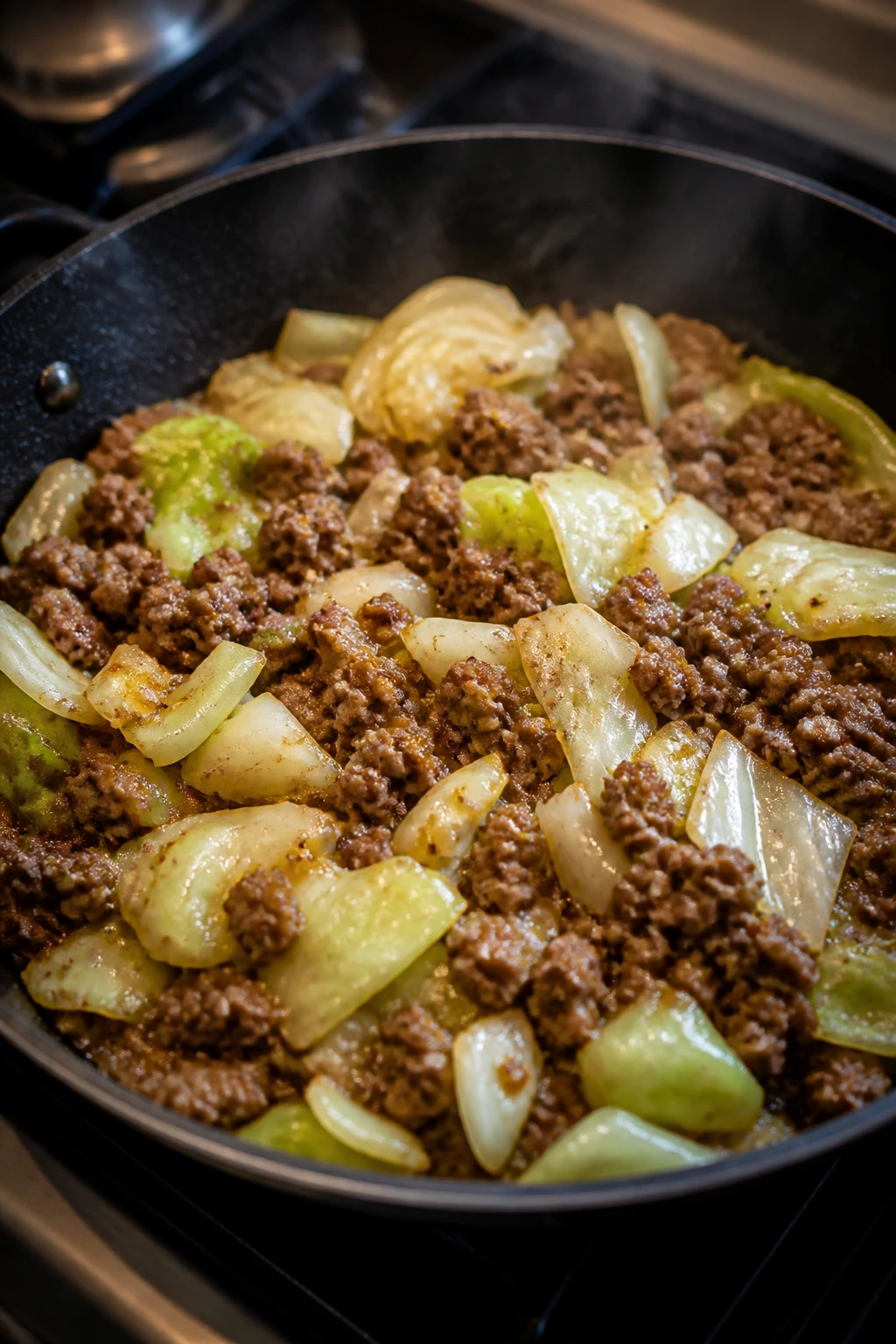
Cabbage is one of the most underused weeknight vegetables, and it loves ground beef. The leaves soften into something sweet and tender, the beef brings salt and savor, and a little soy sauce or vinegar keeps the whole skillet from tasting muddy. Cheap food can still taste sharp and good.
Why It Works:
Cabbage cooks down a lot, so a big-looking pan turns into a proper dinner without much cost. Ground beef browns quickly, then the cabbage softens in the rendered fat and picks up flavor from the pan. A small splash of vinegar at the end brightens the dish and cuts through the richness. That sharp finish is what keeps people going back for a second serving.
Key Ingredients:
- 1 pound ground beef
- 1 small onion, sliced
- 1 small head green cabbage, thinly sliced
- 2 cloves garlic, minced
- 1 carrot, julienned or shredded
- 2 tablespoons soy sauce
- 1 tablespoon apple cider vinegar
- 1/2 teaspoon black pepper
- 1 tablespoon butter or oil
- Cooked rice, optional
Quick Steps:
- Brown the Beef: Cook the beef and onion in a large skillet over medium-high heat for 6 to 7 minutes.
- Add the Cabbage: Stir in cabbage, carrot, and garlic. Add butter or oil if the pan looks dry.
- Cook Until Tender: Cook for 8 to 10 minutes, stirring often, until the cabbage softens and the edges take on a little color.
- Season: Add soy sauce, vinegar, and black pepper. Stir and cook for 1 minute more.
- Serve: Spoon into bowls on its own or over rice.
Tips and Variations:
- A pinch of red pepper flakes gives it a sharper edge.
- Add cooked egg noodles if you want it more like a skillet stir-fry.
- Savoy cabbage works, but green cabbage holds its shape better.
14. Teriyaki Beef Noodle Skillet
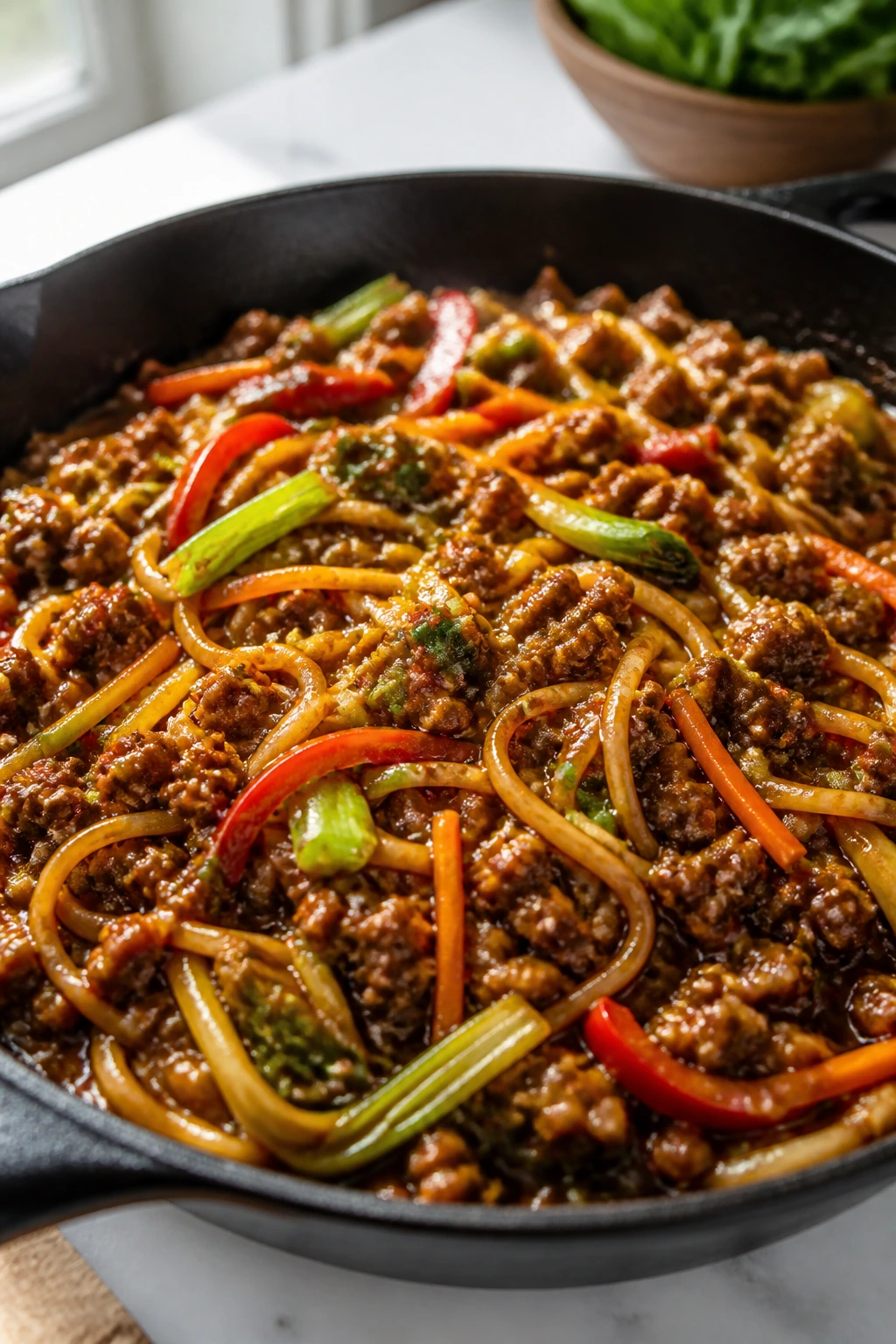
This one has the pace of a stir-fry and the comfort of noodles twirled through a glossy sauce. The beef gets coated in teriyaki, the vegetables stay bright, and the noodles catch the sweet-salty glaze so every forkful tastes like it was finished on purpose. Which is nice, because it was.
Why It Works:
Ground beef absorbs teriyaki sauce faster than sliced meat, so the flavor comes together fast. Noodles turn this into a full dinner without needing rice on the side, and a little cornstarch thickens the sauce so it clings instead of sliding off. Frozen stir-fry vegetables are a smart shortcut here because they cook quickly and bring color without prep. Busy nights need that kind of grace.
Key Ingredients:
- 1 pound ground beef
- 1 small onion, sliced
- 3 cups frozen stir-fry vegetables
- 8 ounces lo mein noodles or spaghetti
- 1/3 cup soy sauce
- 3 tablespoons honey or brown sugar
- 2 tablespoons water
- 2 cloves garlic, minced
- 1 teaspoon grated ginger
- 1 teaspoon cornstarch mixed with 2 tablespoons water
- Sliced scallions, for serving
Quick Steps:
- Cook the Noodles: Boil the noodles until just tender, then drain and set aside.
- Brown the Beef: Cook the beef and onion in a large skillet over medium-high heat for 6 to 8 minutes.
- Add Vegetables: Stir in the frozen vegetables and cook for 4 minutes until hot and no longer icy.
- Pour in the Sauce: Add soy sauce, honey, water, garlic, and ginger. Stir in the cornstarch slurry and cook for 1 to 2 minutes until glossy.
- Toss with Noodles: Add the noodles and toss until coated. Top with scallions.
Tips and Variations:
- A spoonful of peanut butter in the sauce gives it a nuttier finish.
- If the noodles are clumping, loosen them with 1 to 2 tablespoons of water.
- Use rice noodles if that’s what you’ve got, but add them at the very end.
15. Chili Mac with Ground Beef
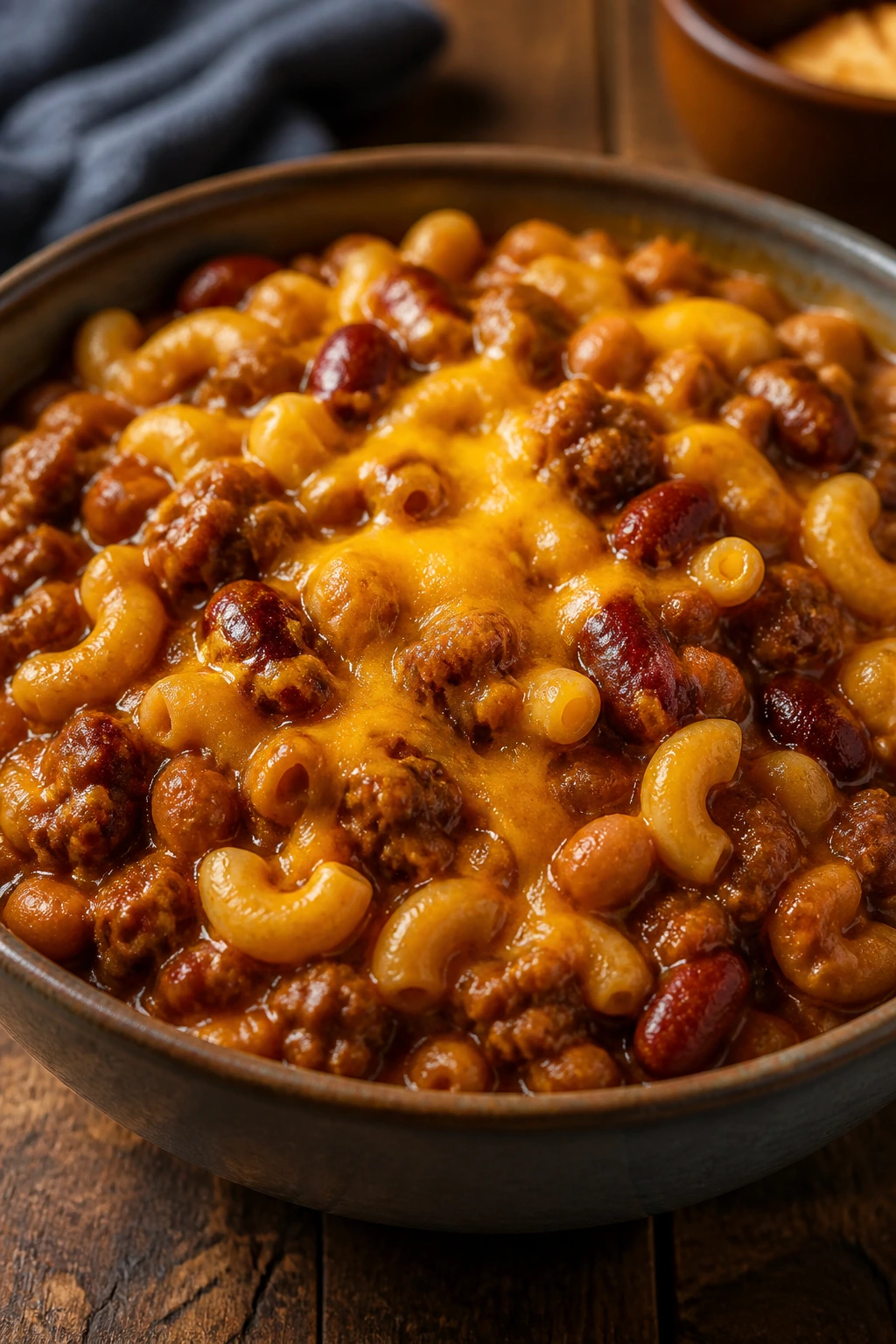
Chili mac is a two-for-one dinner that doesn’t feel like compromise. You get the warm spice and beaniness of chili, the comfort of pasta, and a melting layer of cheese tying it all together. It’s big, filling, and slightly old-school in the best way.
Why It Works:
Chili and macaroni are both practical foods, so combining them makes a kind of sense that’s almost suspicious. The beef, beans, tomatoes, and chili powder create a thick sauce that coats the pasta rather than drowning it. The macaroni softens just enough to hold up, and cheese melts into the gaps between the noodles. If you want one pot to feed a lot of people without complaint, this is a solid bet.
Key Ingredients:
- 1 pound ground beef
- 1 small onion, diced
- 2 tablespoons chili powder
- 1 teaspoon cumin
- 1 can (15 ounces) kidney beans, drained and rinsed
- 1 can (14.5 ounces) diced tomatoes
- 2 cups beef broth
- 2 cups elbow macaroni
- 1 cup shredded cheddar cheese
- Salt and pepper
- Sour cream and sliced scallions, for topping
Quick Steps:
- Brown the Beef: Cook the beef and onion in a large pot over medium-high heat for 7 minutes.
- Toast the Spices: Stir in chili powder and cumin for 30 seconds.
- Build the Pot: Add beans, tomatoes, broth, and macaroni. Bring to a simmer.
- Cook Until Thick: Simmer for 10 to 12 minutes, stirring often, until the pasta is tender and the liquid has thickened.
- Add the Cheese: Stir in cheddar, then serve with sour cream and scallions.
Tips and Variations:
- A chopped chipotle in adobo gives the pot a smoky kick.
- If you like it looser, add an extra 1/2 cup broth.
- Leftovers make a great baked pasta the next day.
16. Mediterranean Beef and Orzo Skillet
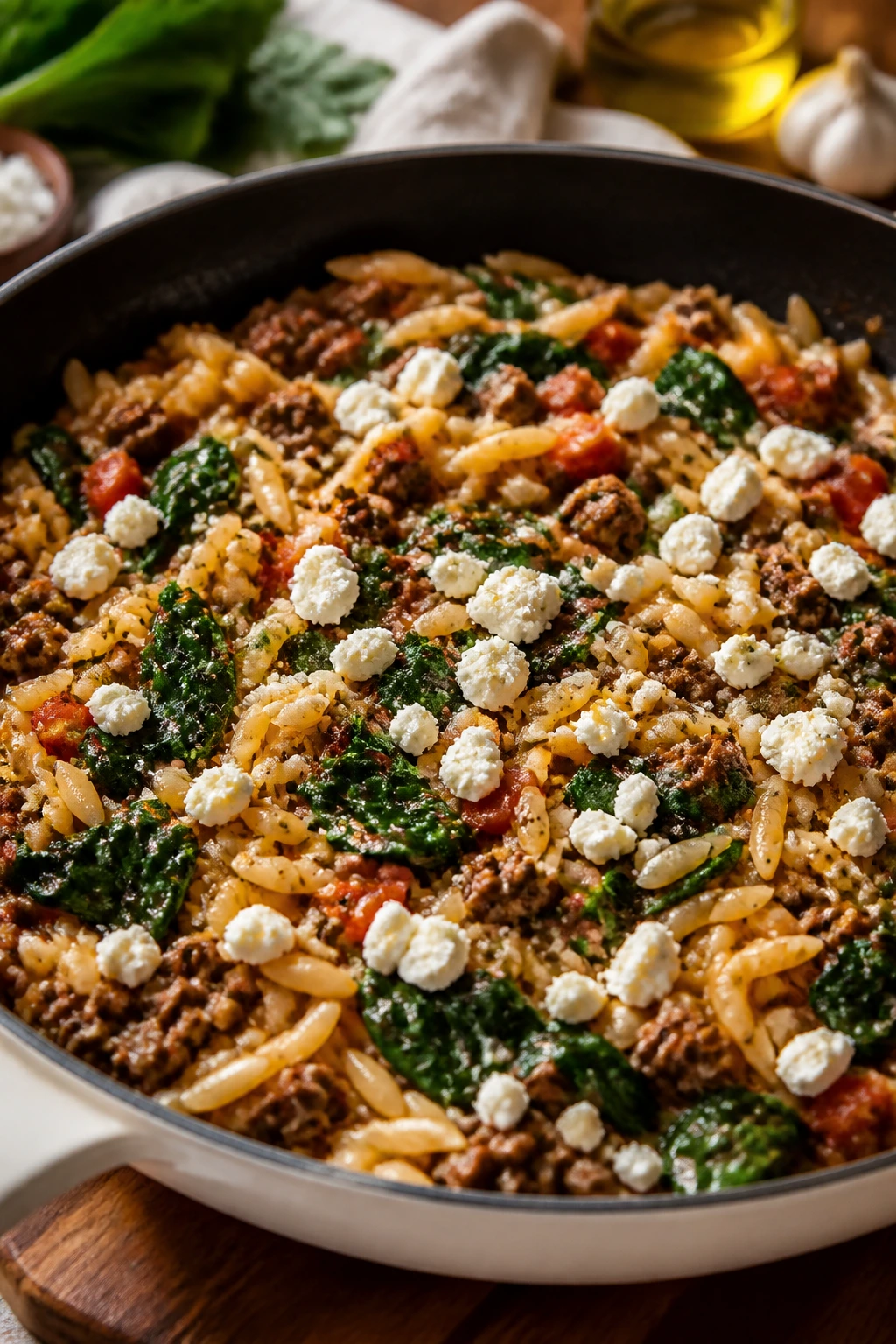
This skillet has a lighter feel without becoming skimpy. The beef is seasoned with oregano and garlic, the orzo cooks in broth and tomatoes, and spinach plus feta lift the whole thing at the end. It’s the dinner version of getting your act together without trying too hard.
Why It Works:
Orzo cooks fast, which makes it ideal for a weeknight skillet, and it picks up flavor from the broth the same way rice does. Tomatoes and spinach keep the dish from feeling dense, while feta adds salt and a little tang that wakes up the beef. Kalamata olives are optional, but they bring a briny punch that plays well with oregano. This is one of those meals that tastes smarter than the amount of work it takes.
Key Ingredients:
- 1 pound ground beef
- 1 small onion, diced
- 3 cloves garlic, minced
- 1 cup orzo
- 1 can (14.5 ounces) diced tomatoes
- 2 1/2 cups beef broth
- 2 cups fresh spinach
- 1 teaspoon dried oregano
- 1/2 cup crumbled feta cheese
- 1/4 cup sliced olives, optional
- Black pepper
Quick Steps:
- Brown the Beef: Cook the beef and onion in a skillet over medium-high heat for 7 minutes.
- Add Garlic and Orzo: Stir in garlic and orzo, then cook for 1 minute so the pasta gets lightly toasted.
- Simmer: Add tomatoes, broth, oregano, and black pepper. Bring to a simmer and cook for 10 to 12 minutes, stirring often.
- Wilt the Spinach: Stir in spinach and cook for 1 minute until just wilted.
- Finish: Top with feta and olives.
Tips and Variations:
- Add chopped roasted red peppers for more sweetness.
- If you want a creamier result, stir in 2 tablespoons Greek yogurt off the heat.
- Serve with lemon wedges; a little acid makes the dish sing.
17. Salisbury Steak Meatballs and Gravy
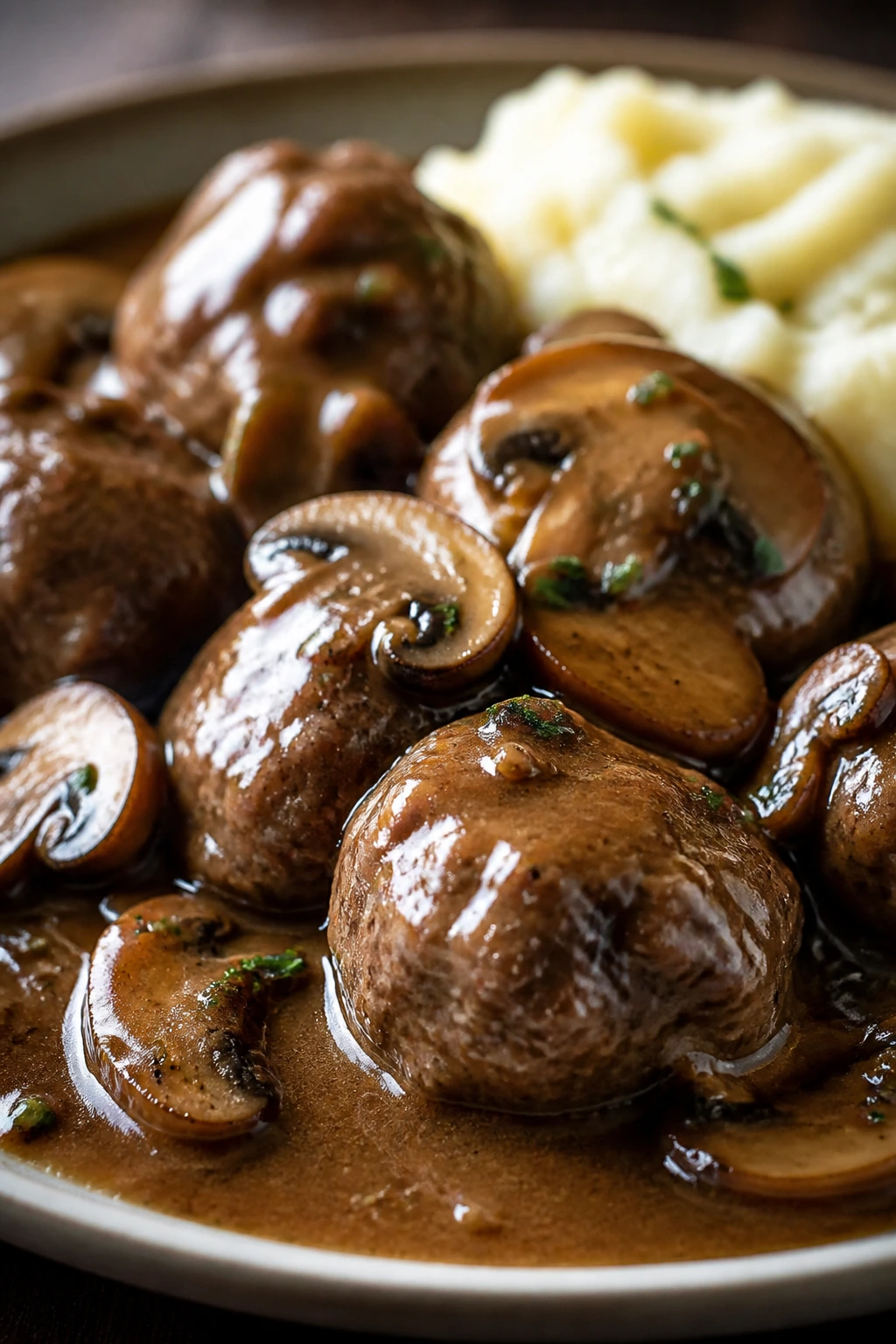
This one lands somewhere between diner comfort and Sunday supper, which is exactly why it works on a busy night if you batch the meatballs right. The gravy is brown, savory, and mushroomy, the beef is tender, and the whole thing begs for mashed potatoes. Nobody complains when this shows up.
Why It Works:
Salisbury steak flavor is mostly about the gravy, and gravy is where a weeknight dinner can win or lose people. Beef broth, onions, mushrooms, and Worcestershire make a sauce that tastes slow-cooked without actually being slow. Turning the steak mix into meatballs speeds everything up and gives more surface area for browning. More browning means more flavor. That part never gets old.
Key Ingredients:
- 1 pound ground beef
- 1/3 cup breadcrumbs
- 1 egg
- 1 teaspoon onion powder
- 1 teaspoon garlic powder
- 1 tablespoon Worcestershire sauce
- 8 ounces mushrooms, sliced
- 1 small onion, sliced
- 2 cups beef broth
- 1 tablespoon flour
- 2 tablespoons butter
- Mashed potatoes, for serving
Quick Steps:
- Mix the Meatballs: Combine beef, breadcrumbs, egg, onion powder, garlic powder, and 1 teaspoon Worcestershire sauce. Form into 12 meatballs.
- Brown the Meatballs: Cook the meatballs in butter over medium-high heat for 6 to 8 minutes, turning so they brown on several sides. Remove to a plate.
- Cook the Vegetables: In the same pan, sauté mushrooms and onion until soft and browned at the edges.
- Make the Gravy: Sprinkle flour over the vegetables, stir for 1 minute, then slowly add broth and remaining Worcestershire. Simmer until thick.
- Finish the Dish: Return meatballs to the gravy and simmer 5 minutes until cooked through. Serve over mashed potatoes.
Tips and Variations:
- Ground turkey works, but the gravy needs a little extra butter to feel rich.
- If the sauce gets lumpy, whisk in the broth slowly.
- A spoonful of Dijon in the gravy gives it a sharper edge.
18. Zucchini Beef Lasagna Skillet
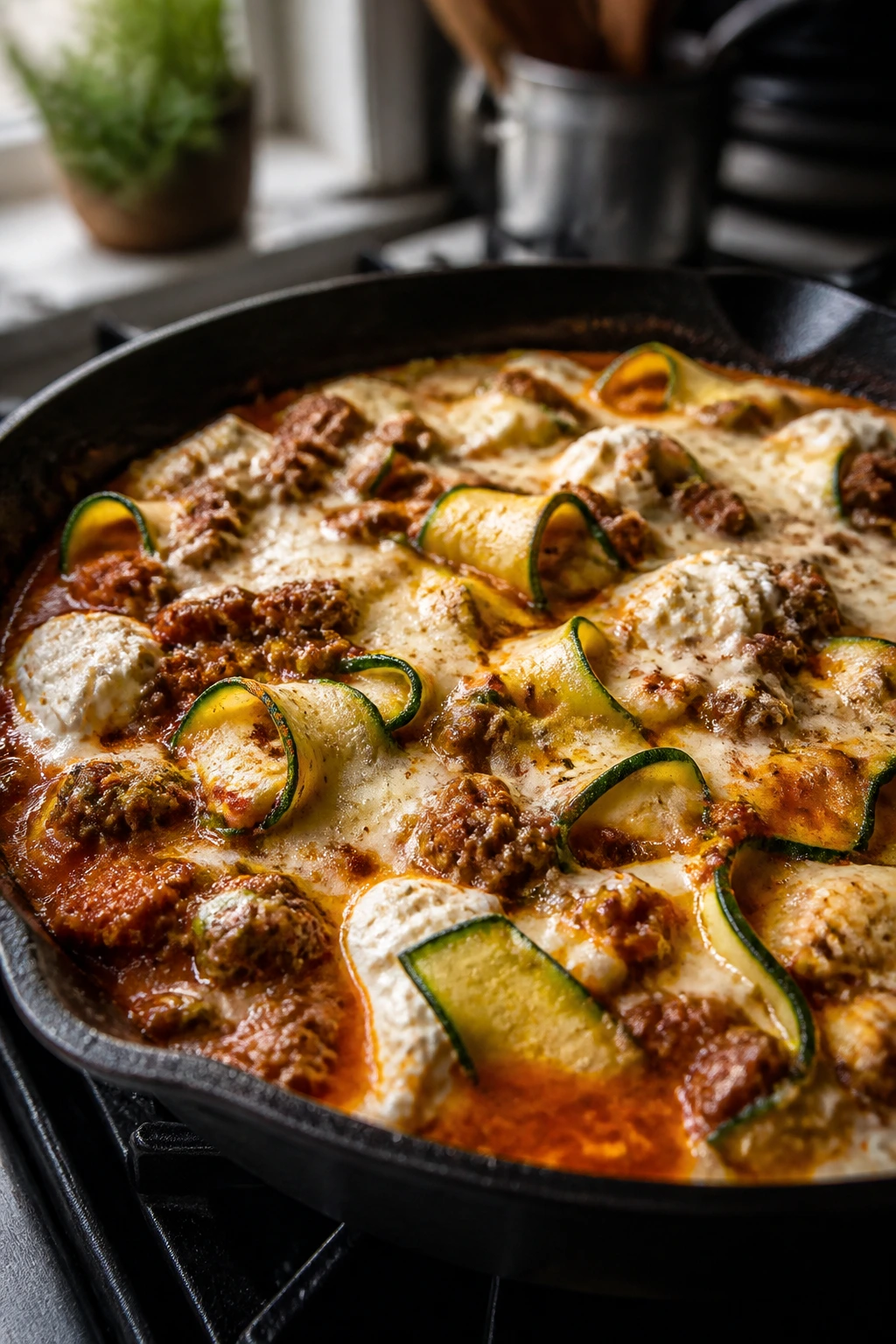
This is lasagna without the stack, the wait, or the casserole dish drama. The zucchini softens into the sauce, the beef gives it backbone, and the ricotta and mozzarella turn the skillet into something creamy and browned at the edges. It’s a smart way to use summer squash without pretending dinner is a project.
Why It Works:
Zucchini releases moisture as it cooks, so it helps the skillet stay saucy instead of dry. Ground beef, marinara, garlic, and Italian seasoning create a fast red sauce that tastes deeper once the ricotta and mozzarella melt through it. You still get lasagna cues — tomato, cheese, herbs, and a soft bite — without layering noodles. It’s not exactly classic, and that’s fine. It’s easier.
Key Ingredients:
- 1 pound ground beef
- 1 small onion, diced
- 3 cloves garlic, minced
- 2 medium zucchini, diced
- 1 jar (24 ounces) marinara sauce
- 1 teaspoon Italian seasoning
- 1/2 cup ricotta cheese
- 1 1/2 cups shredded mozzarella
- 1/4 cup grated Parmesan
- Salt and pepper
- Fresh basil, for serving
Quick Steps:
- Brown the Beef: Cook the beef and onion in a large oven-safe skillet over medium-high heat for 7 minutes.
- Add Garlic and Zucchini: Stir in garlic and zucchini, cooking for 4 minutes until the zucchini softens slightly.
- Add Sauce: Pour in marinara and Italian seasoning. Simmer for 5 minutes so the sauce thickens a little.
- Add the Cheeses: Dollop ricotta over the top, then scatter mozzarella and Parmesan evenly.
- Bake or Broil: Bake at 400°F for 10 minutes, or broil 2 to 3 minutes until the cheese bubbles and browns in spots. Finish with basil.
Tips and Variations:
- If your zucchini is watery, salt it lightly first and blot it dry.
- Use cottage cheese in place of ricotta if that’s what’s in the fridge.
- Serve with garlic bread if you want the meal to feel bigger.
Why Ground Beef Wins on Busy Nights
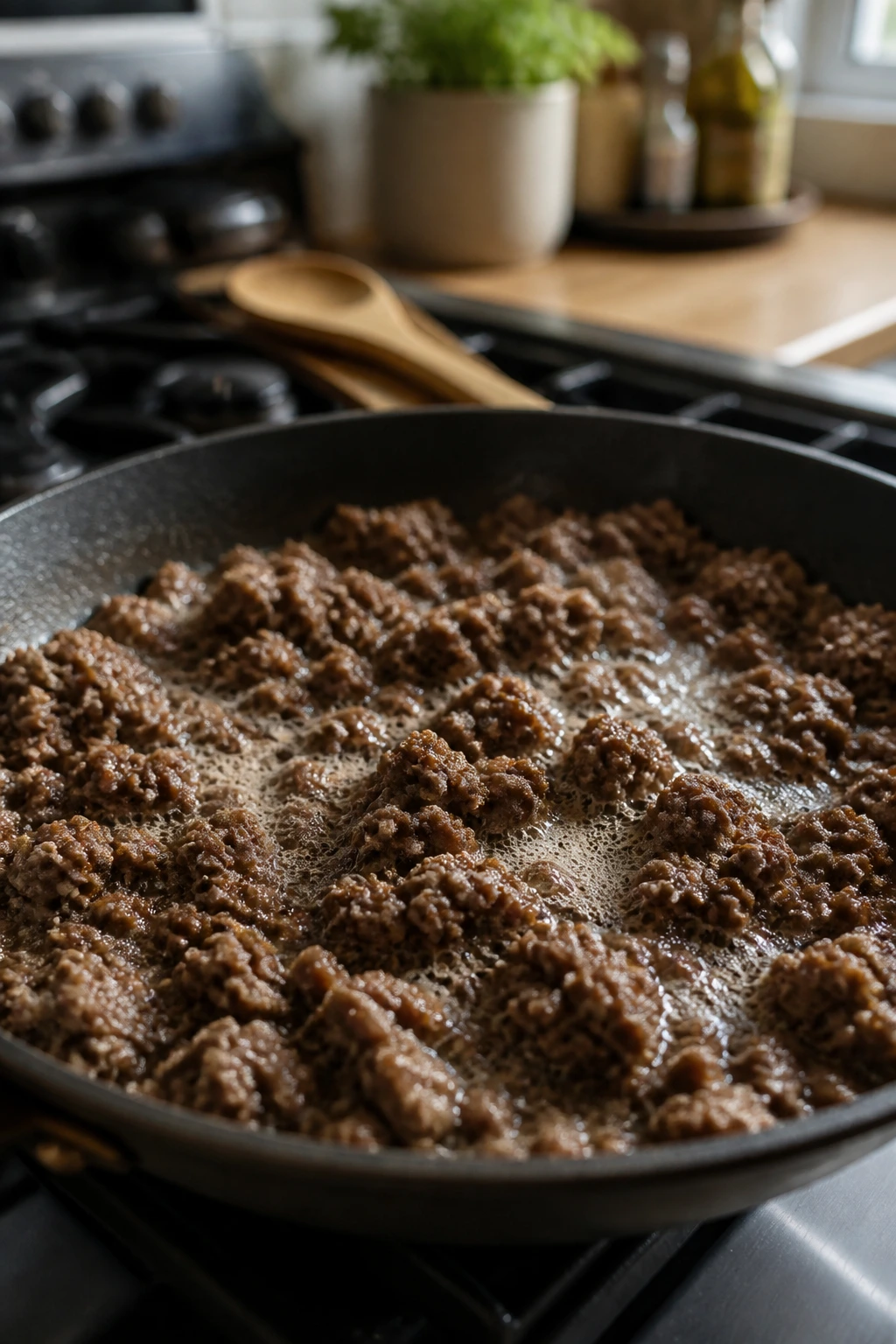
Ground beef is one of those ingredients that rewards simple technique. Give it a hot pan, enough space to brown instead of steam, and a little seasoning early in the cook, and it turns from plain mince into a dinner base with real personality. That’s the reason it works across so many formats — skillet meals, soups, pasta, casseroles, bowls, and sandwiches all benefit from the same basic move.
The fat matters, too. An 80/20 blend gives more flavor and a softer texture; a leaner blend like 90/10 keeps things lighter but may need a spoonful of oil to prevent the pan from drying out. Drain excess fat when it pools, but do not rinse the meat. Rinsing strips away flavor and makes the texture strange. People still do it. It still makes the food worse.
Ground beef also plays nicely with pantry staples that already live in most kitchens: canned tomatoes, broth, rice, pasta, beans, onions, garlic, and cheese. That’s why it feels so useful on nights when planning collapsed before 4 p.m. You can build a complete dinner with almost no specialist shopping, which is a bigger deal than a lot of shiny recipes admit.
Essential Equipment for These Recipes
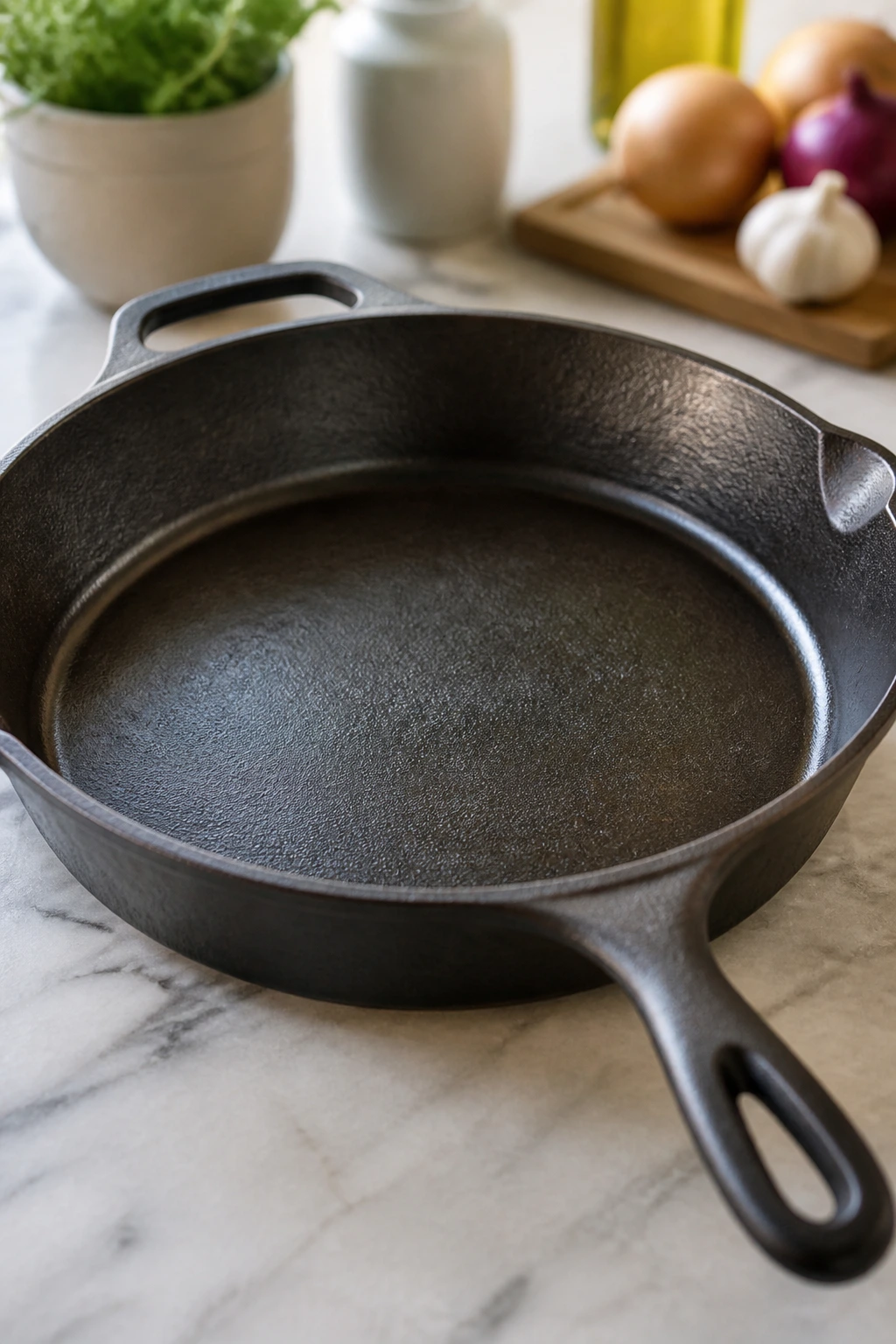
- Large skillet or sauté pan: A 12-inch pan gives ground beef enough room to brown properly instead of steaming.
- Dutch oven or deep pot: Best for soups, chili, and one-pot pasta because the higher sides reduce splatter.
- Wooden spoon or sturdy spatula: Useful for breaking up beef and scraping browned bits off the pan.
- Chef’s knife: A sharp knife makes onion, pepper, and cabbage prep much faster and safer.
- Cutting board: Use one large enough that diced vegetables do not slide off the edge.
- Measuring cups and spoons: Worth using here because rice, broth, and seasoning ratios matter.
- Box grater: Helpful for cheese that melts better than the pre-shredded bag stuff.
- Colander: Needed for pasta-heavy dinners and any recipe that calls for draining beans.
- 9×13-inch baking dish: Handy for casseroles and baked pasta-style dinners.
- Lid or foil: Lets rice, sauce, or casserole steam without drying out.
- Instant-read thermometer: Optional, but good for checking that ground beef reaches 160°F safely.
Smart Shopping and Ingredient Tips
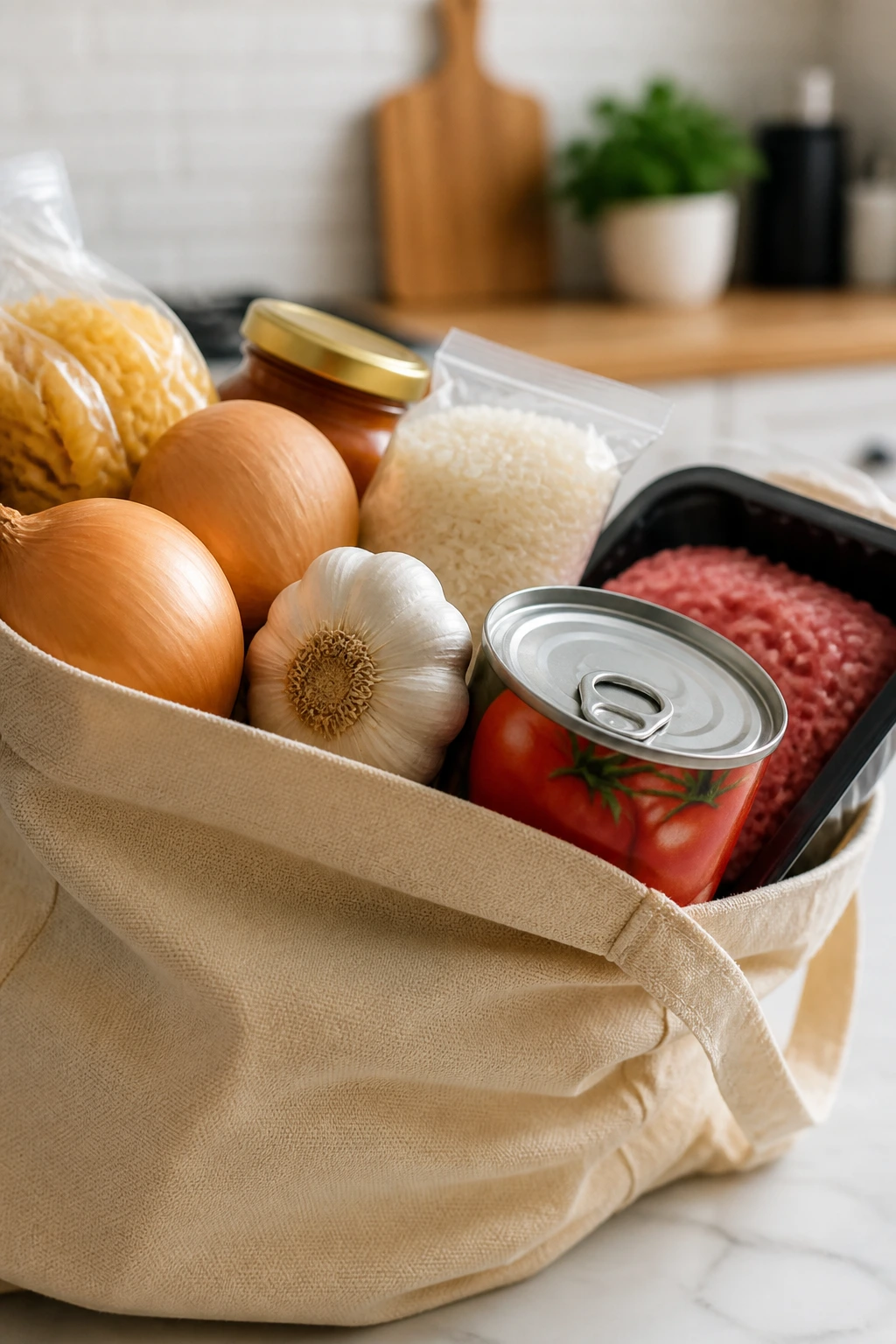
Start with the beef itself. For most of these ground beef dinners, 80/20 ground beef gives the best flavor because the fat helps the meat brown and keeps the final dish from tasting dry. If you prefer a leaner skillet or soup, 90/10 works fine, but you may want a teaspoon or two of oil in the pan. Pre-packaged beef is convenient; fresh ground beef from the butcher is nice when available, but the label matters more than the romance of the purchase.
Choose onions that feel heavy and firm, with dry outer skins and no soft spots. A sweet onion is great in sloppy joes or stroganoff, while yellow onions do the broadest job across the whole collection. Garlic should smell sharp and clean when you cut into it. If it smells dusty or fermented, skip it.
For canned tomatoes, pick what matches the texture you want. Diced tomatoes keep some shape in skillet meals and soups. Crushed tomatoes work better for pasta sauce, chili, and casseroles because they give a smoother base. Low-sodium broth is the safer buy because you can season up from there; oversalted broth leaves less room to fix a dish.
Pasta and rice both deserve attention. Long-grain white rice cooks more predictably in one-pot meals than short-grain rice, which can turn sticky. For pasta, choose shapes that catch sauce: shells, elbows, rotini, and noodles. If you only have spaghetti, break it in half and stir more often. It’s not elegant. It works.
Cheese should be shredded from a block if you want a smoother melt. Pre-shredded cheese carries anti-caking starch that can make sauces a little grainy. Frozen vegetables are often the smartest shortcut in these recipes, especially broccoli, corn, peas, and stir-fry blends. They save time without making dinner taste like you took a shortcut.
How to Serve These Recipes
Presentation:
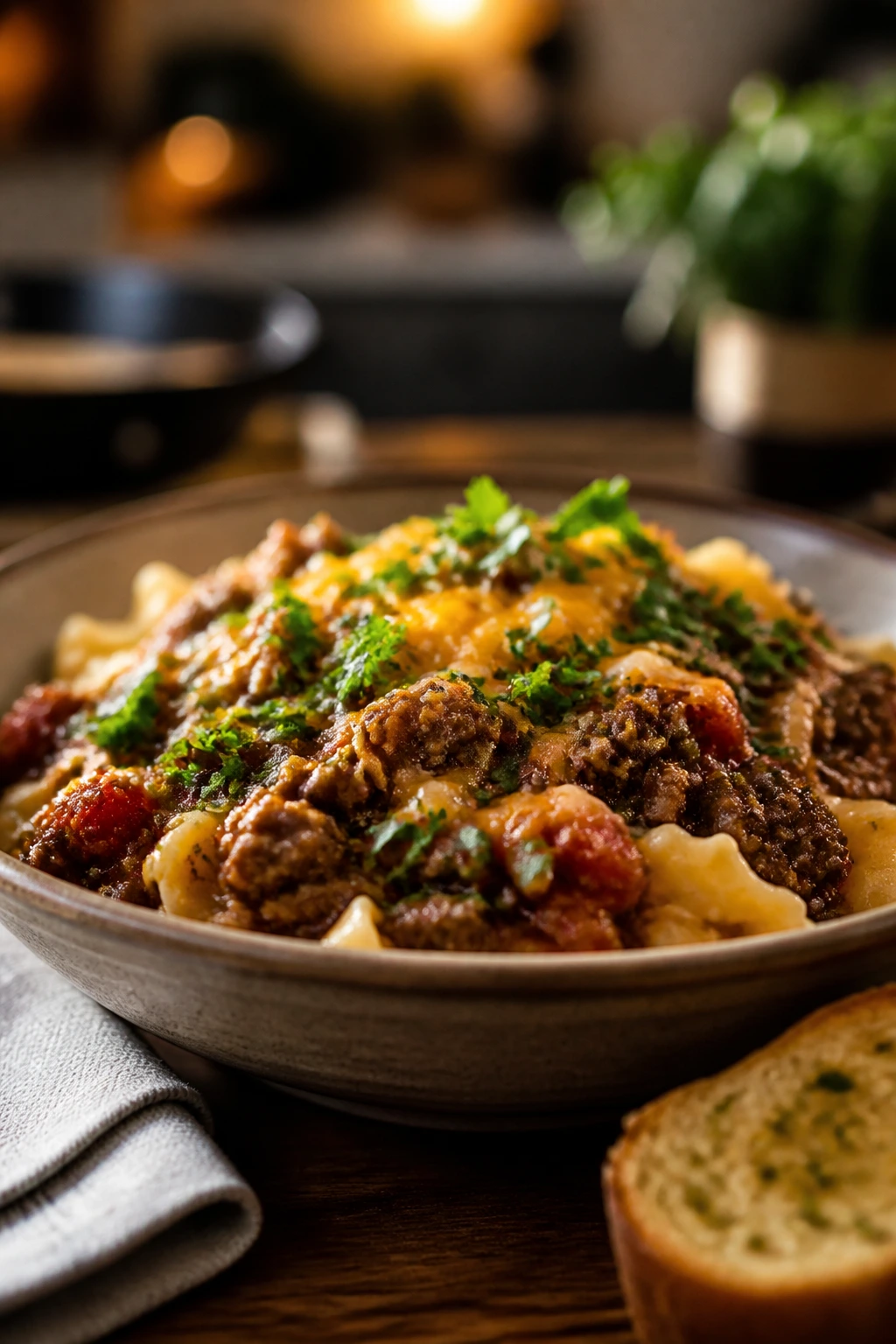
Serve skillet dinners straight from the pan for a casual look, but finish them with one fresh thing — herbs, scallions, shredded cheese, or a squeeze of lime. Soups and chili look better in wide bowls than in deep mugs, because the toppings have room to spread. Casseroles slice cleaner after a 10-minute rest, so give them that pause.
Accompaniments:
Garlic bread, green salad, tortilla chips, steamed green beans, buttered peas, roasted broccoli, and simple cucumber salad all fit somewhere in this collection. Rice bowls want something crisp on the side. Pasta dishes usually need only a salad and maybe bread if you’re feeding hungry people.
Portions:
Most of these recipes serve 4 to 6, and the ones with beans, rice, pasta, or potatoes can stretch farther than they look. If you’re feeding adults with big appetites, plan on 6 ounces of beef for 2 to 3 servings only if there’s a sturdy starch alongside it. When scaling up, use a wider pan or a pot with more surface area so the meat still browns.
Beverage Pairing:
Cold iced tea, sparkling water with lime, a crisp lager, or a simple red wine like a young Merlot all work across the collection. For the spicier dinners, keep the drink clean and cold. For the creamy ones, something with a little bite through the richness is usually better.
Additional Tips and Flavor Boosters
Flavor Enhancement:
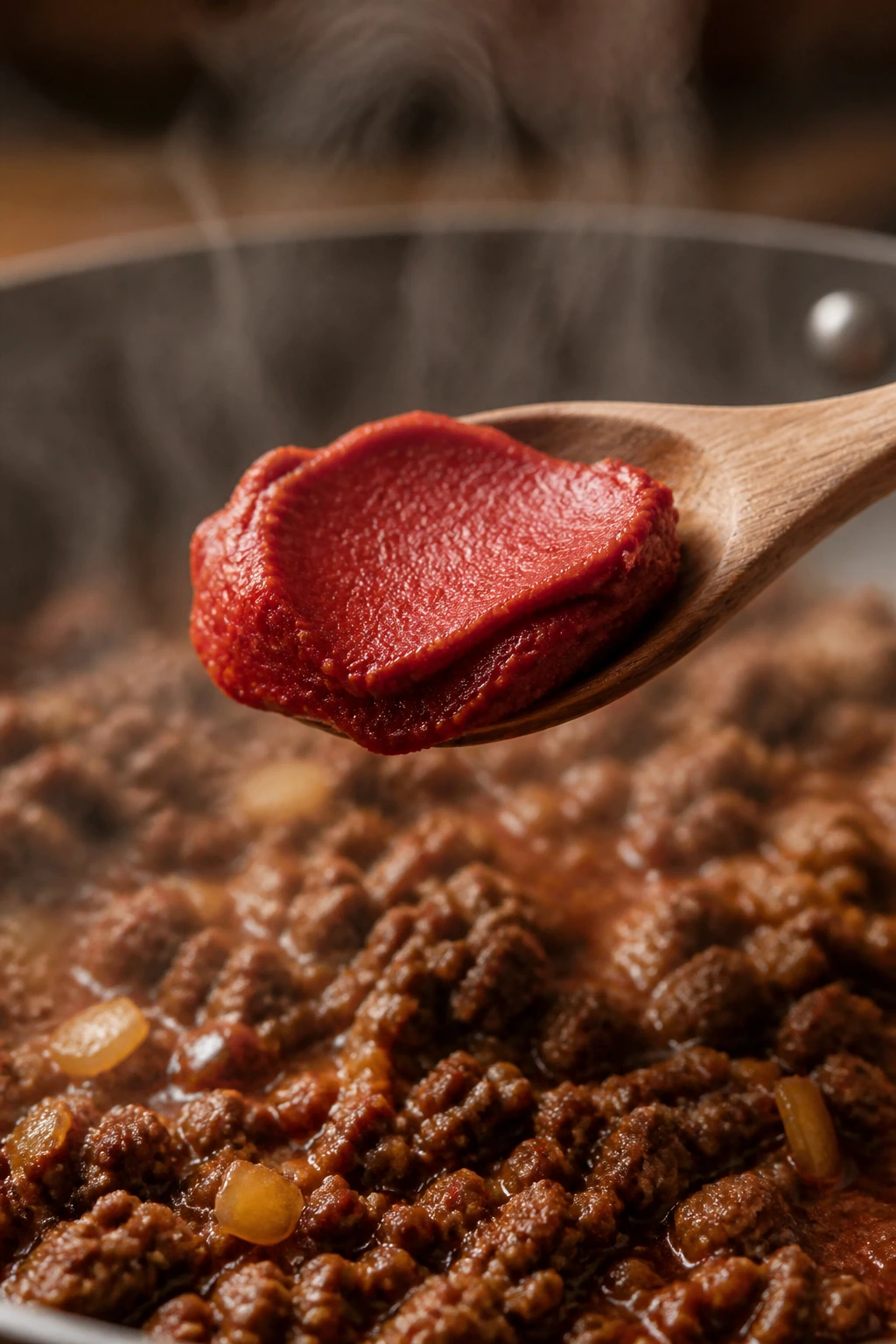
A spoonful of tomato paste cooked for 30 to 60 seconds before adding liquid deepens almost every beef skillet. So does a tiny splash of vinegar, lemon juice, or Worcestershire at the end. That finishing acid is the difference between “fine” and “I’d make this again.”
Customization:
If you want more vegetables, add chopped mushrooms, shredded carrots, spinach, peas, zucchini, or bell peppers early enough for them to soften. For more heat, use crushed red pepper, chipotle in adobo, or hot sauce at the table instead of dumping heat into the whole pan. That keeps the dinner flexible.
Serving Suggestions:
Fresh herbs matter more than people give them credit for. Parsley, cilantro, basil, or scallions can cut through beefy richness and make a skillet look alive. A dollop of sour cream, a scatter of cheese, or a little crunchy topping — tortilla chips, fried onions, toasted breadcrumbs — gives texture you can feel.
Make-It-Yours:
For dairy-free plates, skip the cheese and finish with olive oil, herbs, or avocado. For lower-carb dinners, lean into cabbage, zucchini, cauliflower rice, or lettuce cups. For a kid-friendly version, keep the spice mild and put the hot sauce on the table where it belongs.
Make-Ahead, Storage, and Reheating Guidance
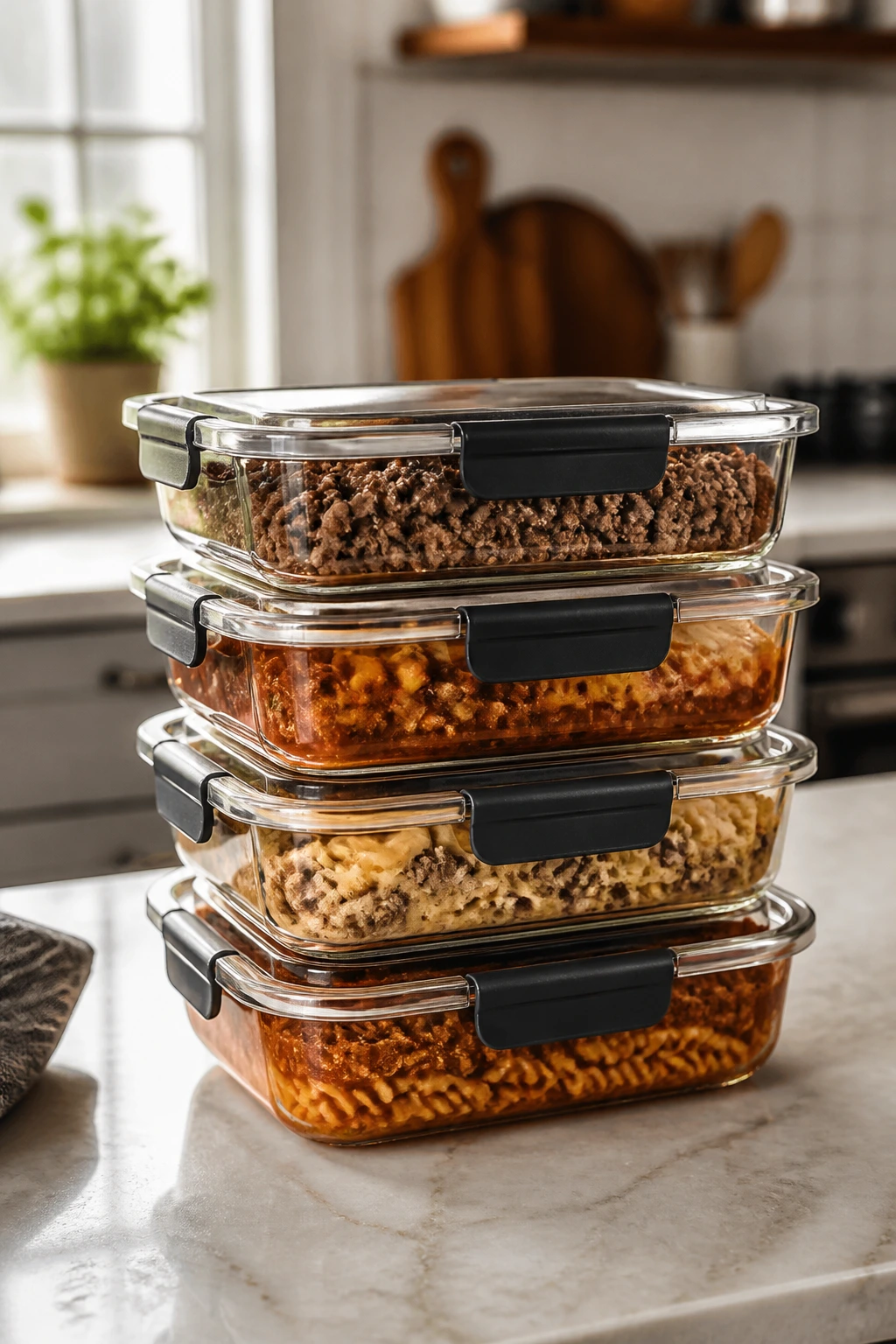
Most cooked ground beef dinners keep well in the refrigerator for 3 to 4 days in airtight containers. Soups, chili, and saucy skillet meals often taste even better on day two because the seasoning settles in. Keep anything with rice, pasta, or potatoes refrigerated within 2 hours of cooking.
Freezing works well for many of these dishes for up to 2 to 3 months, especially chili, taco soup, stuffed pepper casserole, sloppy joe filling, and beef vegetable soup. Pasta-heavy dishes can still be frozen, but the texture softens a bit after thawing. If you know a dish will be frozen, undercook the pasta by 1 to 2 minutes so it has a little cushion later.
Reheat on the stovetop over medium-low heat with a splash of broth, water, or milk, depending on the recipe. The goal is gentle warming, not a hard boil. Casseroles reheat well in the oven at 350°F covered with foil until hot in the center. Microwave reheating is fine for single servings, but stir halfway through so the edges do not turn leathery.
Make-ahead wise, chopped onions, peppers, mushrooms, and cabbage can be prepped a day early and stored in sealed containers. Browned beef can also be cooked ahead, cooled, and refrigerated for a day or frozen for a month. That one move shortens weeknight dinner time by a surprising amount.
Variations and Adaptations to Try
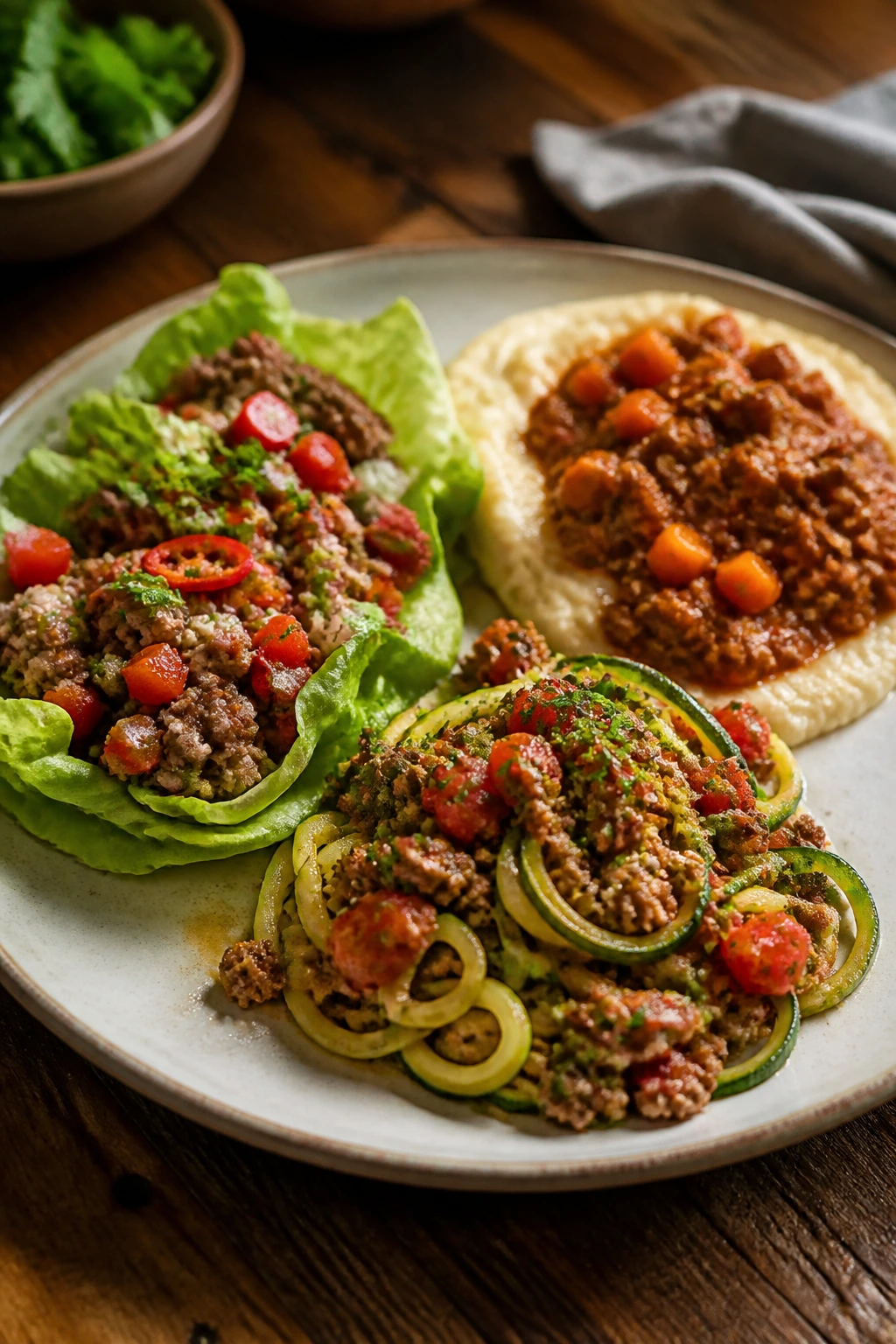
The Leaner Lane:
Use 90/10 ground beef, then add a teaspoon of oil only if the pan looks dry. This version works well in soups, pasta, and skillet bowls where you do not want much grease. Add a little more seasoning because leaner beef carries less flavor on its own.
Lower-Carb Skillet Night:
Swap rice, pasta, and tortillas for cabbage, zucchini, cauliflower rice, or shredded lettuce. Taco bowls, beef and cabbage skillet, and stroganoff over sautéed cabbage all fit here without much fuss. Keep the sauces a little thicker so the plates still feel finished.
Dairy-Light Dinner Rotation:
Skip cheese-heavy finishes and rely on broth reduction, herbs, olives, tomato paste, and lemon to keep flavor strong. The Mediterranean beef skillet and taco soup work especially well this way. A drizzle of olive oil at the end gives back some richness.
Mild Kid Mode:
Leave out chili flakes, jalapeños, and hot salsa, then serve heat on the side for adults. Cheeseburger pasta, creamy beef and shells, and sloppy joes are the easiest places to soften the spice level. Kids usually care more about sauce, cheese, and shape than anything else.
Extra-Spicy Pantry Fix:
Add chipotle, hot paprika, cayenne, or a spoonful of sambal oelek to the beef while it browns. That works best in taco rice, chili mac, enchilada bake, and Korean beef bowls. Start small; you can always add more heat, and you cannot pull it back.
Common Mistakes to Avoid
Crowding the Pan:
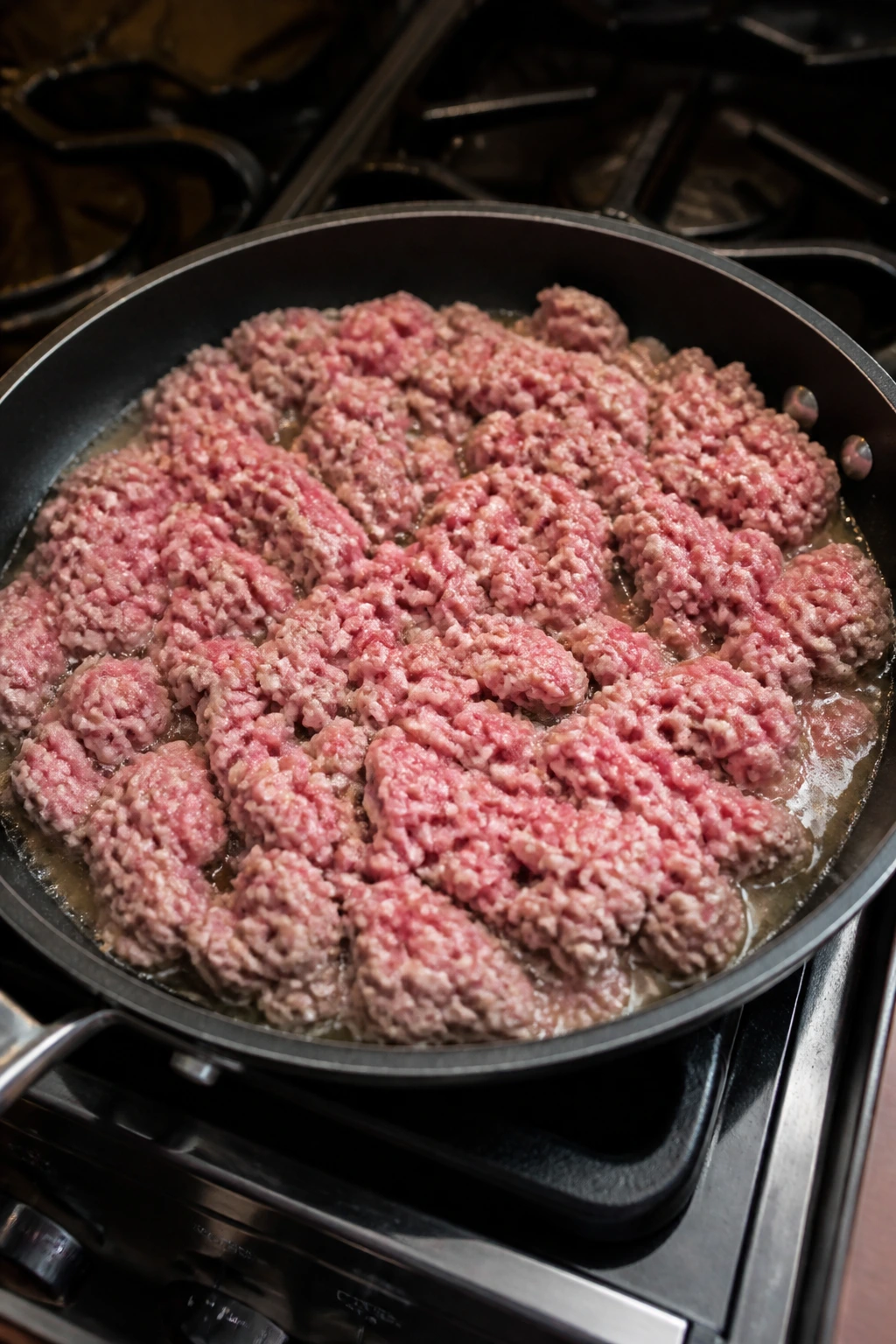
If the beef sits in a thick layer, it steams instead of browns. The symptom is pale meat with gray juices in the bottom of the pan. Use a wider skillet or cook in batches if needed.
Skipping the Drain, or Draining Too Much:
Too much grease makes the final dish heavy and slick. But draining the pan until it’s bone dry can leave the food tasting flat. Leave a thin sheen of fat for flavor, then blot off the excess if necessary.
Underseasoning the Beef Itself:
A lot of people wait until the sauce is done to salt the dish, then wonder why it tastes hollow. Season the beef as it browns, season the sauce, and taste again at the end. That layered approach matters.
Overcooking Pasta or Rice in the Pan:
One-pot dinners can go from tender to mushy fast if you walk away. The symptom is broken noodles or rice that has turned pasty around the edges. Stir often, keep the simmer gentle, and check early rather than late.
Forgetting an Acidic Finish:
Creamy, cheesy, or tomato-heavy dishes often need a sharp last note. A little vinegar, mustard, lemon, pickle brine, or Worcestershire sauce can lift the whole pan. Without that, the food can taste heavy even when the texture is fine.
Using the Wrong Pan Size:
A shallow skillet is great for browning, but not for soups, casseroles, or one-pot pasta. If the liquid runs too close to the rim, you’ll be chasing spills instead of cooking dinner. Use a deep pot when the recipe asks for one.
Frequently Asked Questions

Can I use frozen ground beef in these dinners?
Yes, but thaw it safely first in the refrigerator or under cold running water if you need it sooner. Trying to brown a solid frozen block leaves the outside overcooked before the inside breaks apart. Once thawed, blot off excess moisture so it can brown.
What’s the best lean-to-fat ratio for weeknight cooking?
80/20 is the most forgiving because it tastes rich and stays juicy in pasta, casseroles, and skillets. If you’re making soup or a sauce with a lot of cheese or cream, 85/15 or 90/10 works well too. Leaner beef may need a touch of oil.
How do I keep ground beef from tasting bland?
Salt it early, brown it properly, and build flavor in layers with onion, garlic, tomato paste, broth, soy sauce, Worcestershire, mustard, or spices. A small finish of acid — vinegar, lemon, or lime — makes a bigger difference than people expect. Bland beef usually means underbrowned meat or weak seasoning.
Can I swap in ground turkey or chicken?
You can in most of these recipes, though the flavor will be lighter and the texture a little drier. Add a tablespoon of oil when browning lean poultry and be generous with seasoning. Recipes with sauce, cheese, or broth tend to adapt the easiest.
Which of these freeze best?
Chili, taco soup, sloppy joe filling, beef vegetable soup, enchilada bake, and stuffed pepper casserole all freeze well. Pasta-heavy dishes freeze fine too, but the noodles soften a bit after thawing. If freezing a pasta dish, slightly undercook the pasta first.
What if my sauce turns out too thin?
Let it simmer uncovered for 3 to 5 minutes longer, or stir in a slurry of 1 teaspoon cornstarch mixed with 1 tablespoon cold water. In creamy dishes, a little extra cheese also helps. The trick is to thicken slowly instead of dumping in flour and hoping.
What side dishes go with most of these meals?
A green salad, roasted broccoli, garlic bread, steamed green beans, or buttered corn fit across almost the whole collection. For saucy meals, bread matters more than people admit. For casserole and skillet dinners, something crisp or acidic on the side keeps the plate balanced.
Can I double these recipes for meal prep?
Usually yes, but use a larger pot or two pans so the beef browns instead of steams. Soups, chili, and casseroles double most easily. One-pot pasta and rice dishes need a little extra attention because the liquid-to-grain ratio gets trickier at scale.
A Weeknight Rotation Worth Keeping
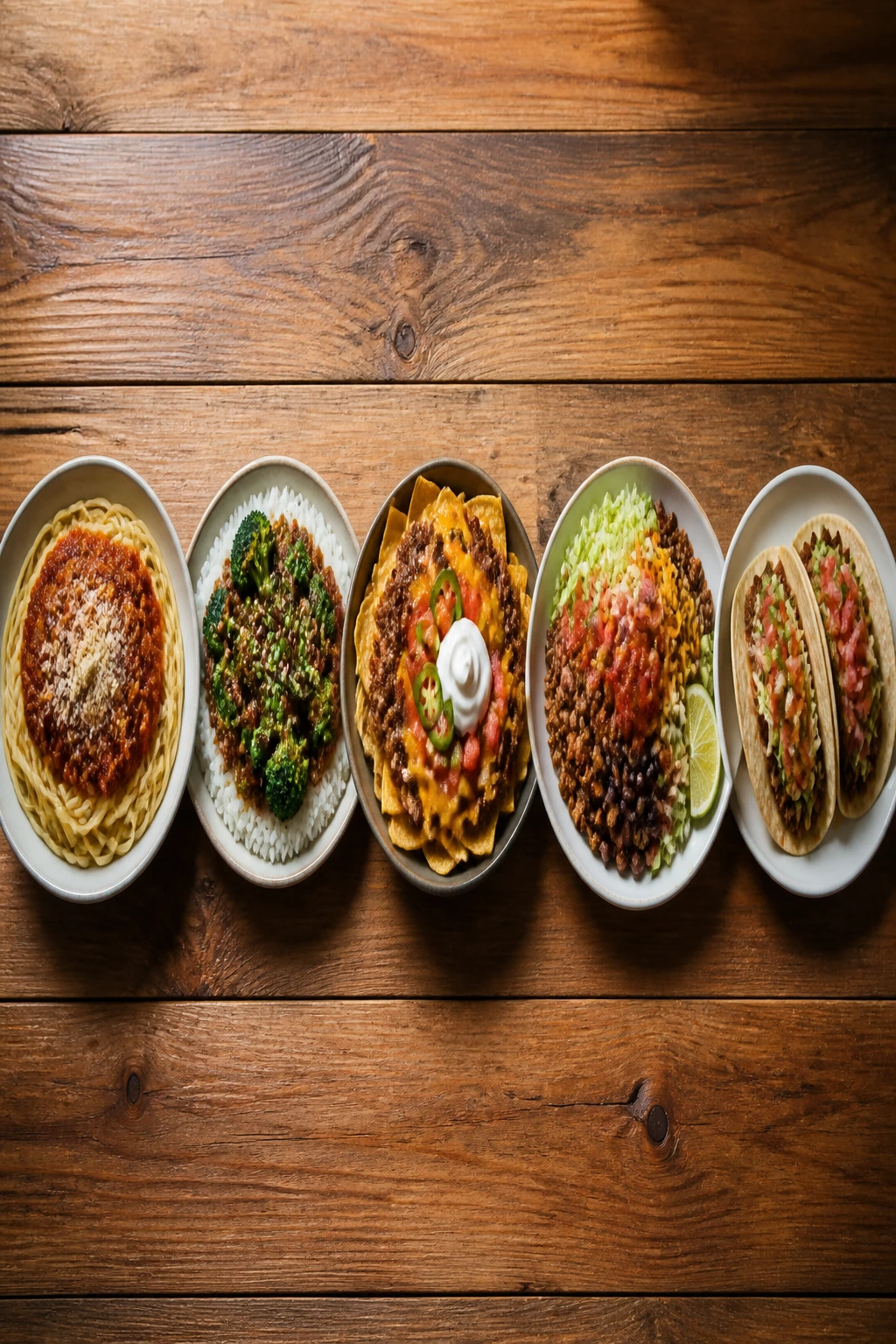
The best ground beef dinners are the ones that don’t ask for perfection. They ask for a hot pan, a few good pantry staples, and enough attention to brown the meat before you start adding liquid. That’s a fair trade on a busy night.
Keep a few of these in your regular rotation and dinner stops feeling like a nightly emergency. Some are cheesy and heavy, some are brothy and light, some are the kind of skillet meals that disappear before the pan reaches the table. That range is the real value here.