



When you need spaghetti dinners kids will eat without a dinner-table negotiation, the answer is rarely a fancier noodle or a more complicated sauce. It’s usually a familiar flavor, a texture that isn’t slippery or sharp, and enough cheese or meat to make the bowl feel complete on the first forkful.
Spaghetti has a sneaky advantage. It can be plain and soothing, or rich and saucy, or baked until the edges go a little crisp. Kids tend to trust it because the shape is familiar and the flavor can stay in the mild lane if you keep the garlic modest and the pepper light. That matters more than people admit. A plate of noodles with sauce that clings beats a bowl of wet pasta every single time.
The recipes here lean hard into that idea. Some hide vegetables in the sauce. Some bring the comfort of meatballs, casserole, or chicken Parmesan. One goes full taco night, because family dinner doesn’t need to be solemn to work. They’re the kinds of spaghetti dinners kids will eat because they taste like food children already recognize, just made a little smarter.
Why Spaghetti Dinners Kids Will Eat Usually Win on Texture
- Familiar Shapes Matter: Spaghetti feels known, and that matters to kids who side-eye anything with a weird curve, a crunchy topping, or a sauce that looks too busy.
- Thicker Sauces Help: A sauce that coats the noodles—rather than puddling under them—usually gets more twirls and fewer complaints.
- Small Proteins Sell Better: Meatballs, crumbled sausage, chopped chicken, and tiny bits of beef are easier for kids to accept than big slices of mystery meat.
- Mild Flavor Builds Trust: Tomato, butter, cheese, and a little garlic stay in the lane most kids already like, which keeps dinner from turning into a negotiation.
- Leftovers Stay Useful: Tomato-based spaghetti holds up well the next day if you store it right and add a splash of water or broth when reheating.
- Veggies Can Hide In Plain Sight: Grated carrots, zucchini, spinach, and onion can disappear into sauces without making the plate look like a science experiment.
1. Classic Skillet Spaghetti and Meatballs
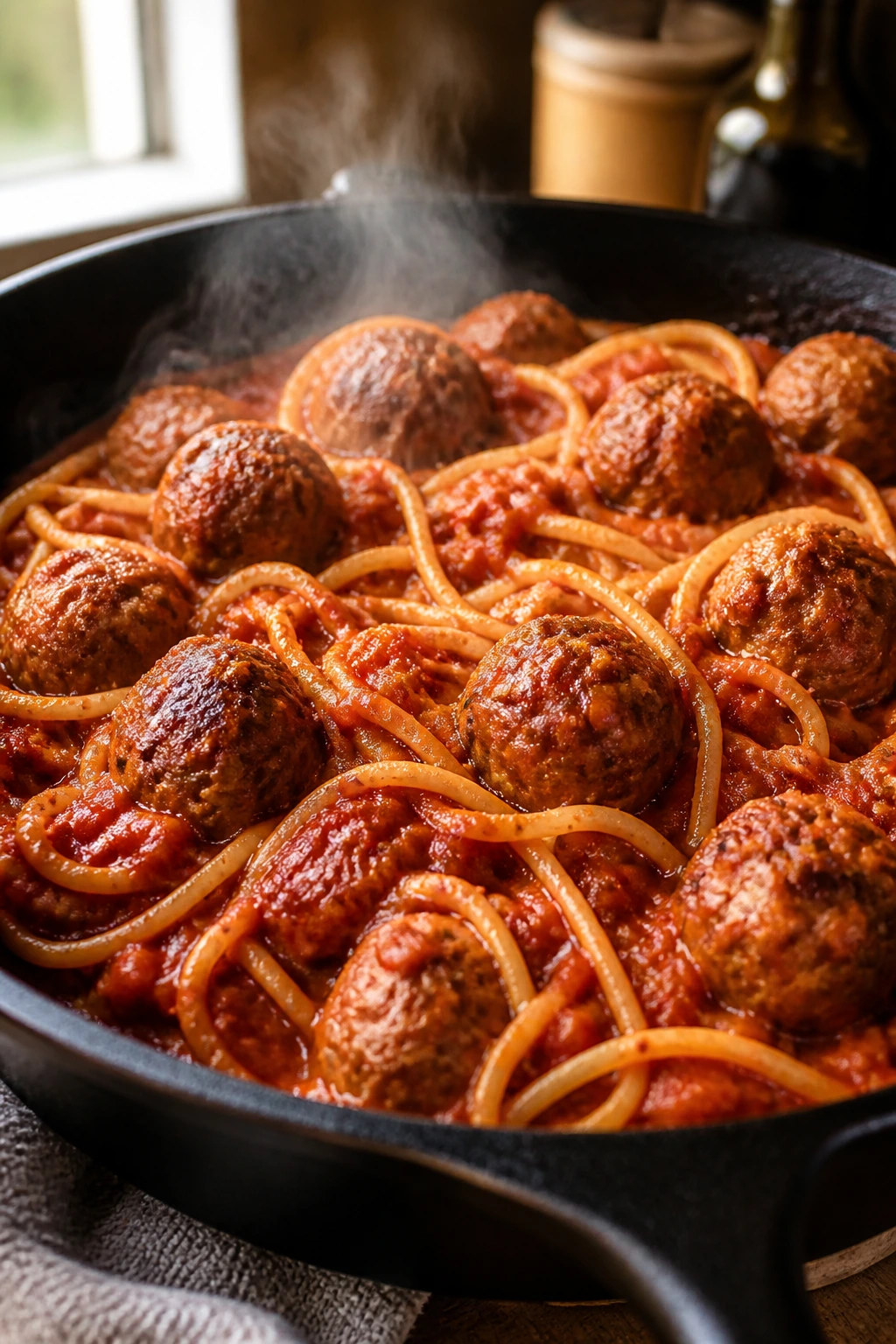
This is the bowl of spaghetti that tastes like the version kids already have in their heads. Soft meatballs, a bright tomato sauce, and noodles that catch just enough Parmesan make the whole thing feel comforting without being heavy.
The nice part is that it behaves well on a weeknight. You can keep the meatballs small so they cook fast, and you can let them finish in the sauce so they stay juicy instead of dry and bouncy. That little move—the simmer in sauce—does more for the final texture than extra seasoning ever will.
Why It Works
Kids usually go for foods that look contained and predictable, and meatballs do that job neatly. One meatball, a nest of spaghetti, a spoon of sauce. No fuss. Browning them first gives you flavor, but finishing them in the marinara keeps the inside tender, which matters more than a crusty exterior here.
The other win is sauce thickness. If you use a jarred marinara that’s already on the thicker side, or simmer your own sauce for 10 to 15 minutes, it clings better to the pasta. That means fewer plain bites and fewer complaints about “too much red stuff.”
Key Ingredients
- 12 ounces spaghetti
- 1 pound ground beef
- 1/2 cup fine breadcrumbs
- 1 large egg
- 1/4 cup grated Parmesan
- 2 cloves garlic, minced
- 1 teaspoon salt
- 1/2 teaspoon black pepper
- 1 small onion, finely diced
- 1 jar marinara sauce, 24 ounces
- 2 tablespoons olive oil
- 2 tablespoons chopped parsley, optional
Quick Steps
- Mix the meatballs: In a bowl, combine the ground beef, breadcrumbs, egg, Parmesan, garlic, salt, and pepper until just mixed. Form 16 small meatballs, about 1 1/2 inches wide.
- Brown them fast: Heat the olive oil in a large skillet over medium heat and cook the meatballs for 5 to 6 minutes, turning gently until browned on most sides. They do not need to be cooked through yet.
- Build the sauce: Add the onion to the skillet and cook for 2 to 3 minutes until softened. Pour in the marinara and 1/2 cup water, scraping the pan so the browned bits dissolve into the sauce.
- Finish the meatballs: Cover and simmer for 10 to 12 minutes over low heat until the meatballs are cooked through and the sauce is glossy and slightly thickened.
- Cook the pasta: Boil the spaghetti in salted water for 8 to 10 minutes, until al dente. Reserve 1/2 cup pasta water before draining.
- Toss and serve: Add the spaghetti to the sauce and toss with a splash of pasta water if needed. Top with parsley and extra Parmesan.
Tips and Variations
- Mini version: Make the meatballs smaller, about 1 inch wide, if your kids prefer bite-size pieces they can spear with a fork.
- Swap the meat: Ground turkey works, but add 1 tablespoon olive oil to the mix so the meatballs don’t lean dry.
- Leftover trick: Store the spaghetti and meatballs together for up to 4 days refrigerated; reheat with a spoonful of water over low heat.
2. Cheesy Baked Spaghetti Casserole
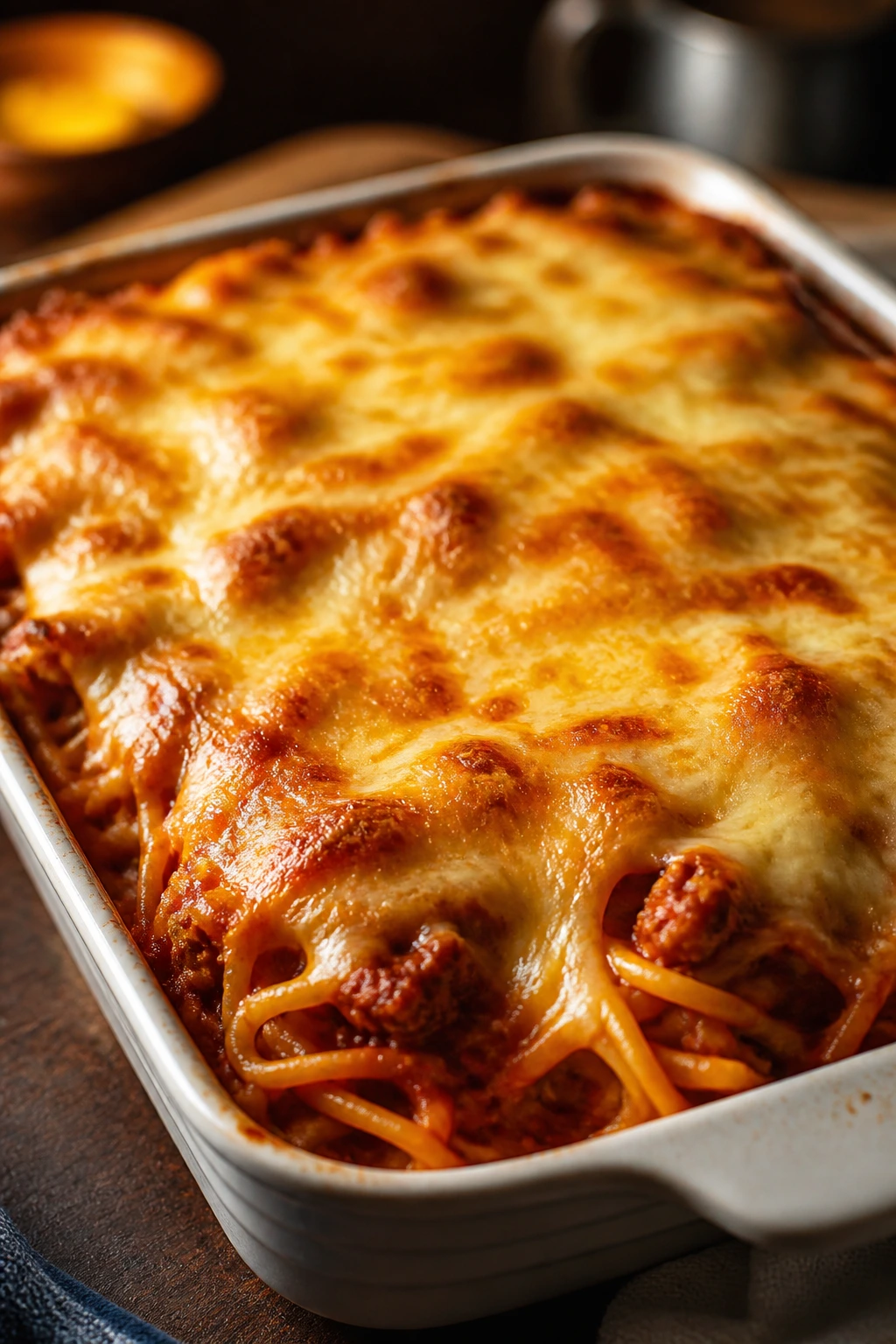
If your kid lights up at the word “baked,” this is the one to keep close. It’s spaghetti tucked into a cheesy casserole dish, with a top that turns golden and a middle that stays soft and saucy.
Baked spaghetti changes the mood of dinner. It feels a little more like a special meal, but it still uses plain ingredients you can find almost anywhere. The edges get a tiny bit of chew, the cheese melts into the noodles, and the whole pan slices into neat squares that are easier for some kids to handle than a loose bowl of pasta.
Why It Works
A casserole is sneaky in the best way. You can mix the sauce, noodles, and cheese together so every bite gets the same flavor. That matters for picky eaters who reject surprise ingredients halfway through the bowl.
The ricotta or cottage cheese also softens the tomato sauce and gives the pasta a creamy middle without making it heavy. Bake it at 375°F for about 25 minutes, then let it rest for 10 minutes before serving. That short rest firms the layers and keeps the first scoop from collapsing into a cheese slide.
Key Ingredients
- 12 ounces spaghetti
- 1 pound ground turkey or ground beef
- 1 small onion, diced
- 2 cloves garlic, minced
- 1 jar marinara sauce, 24 ounces
- 1 cup ricotta cheese or cottage cheese
- 1 large egg
- 2 cups shredded mozzarella
- 1/2 cup grated Parmesan
- 1 teaspoon Italian seasoning
- 1 tablespoon olive oil
- Salt and black pepper, to taste
Quick Steps
- Cook the pasta: Boil the spaghetti for 1 minute less than the package says, then drain. You want it slightly firm so it holds up in the oven.
- Make the meat sauce: Heat the olive oil in a skillet over medium heat. Cook the onion for 3 minutes, add the garlic for 30 seconds, then brown the meat until no pink remains.
- Stir in the sauce: Add the marinara and Italian seasoning, then simmer for 5 minutes so the flavors settle.
- Mix the filling: In a large bowl, whisk the ricotta and egg together. Add the spaghetti and half the meat sauce, then toss until coated.
- Assemble the casserole: Spread half the spaghetti mixture in a greased 9×13-inch dish, spoon the remaining sauce on top, then finish with mozzarella and Parmesan.
- Bake and rest: Bake at 375°F for 20 to 25 minutes until the cheese is melted and bubbling. Rest for 10 minutes before cutting.
Tips and Variations
- Make it ahead: Assemble the casserole up to 24 hours in advance, cover it, and refrigerate. Add 5 to 10 minutes to the bake time if it goes into the oven cold.
- Add a vegetable: Stir in 1 cup thawed peas or finely chopped spinach before baking.
- Sharp cheese warning: Don’t overdo the Parmesan if your kids are sensitive to salty cheese; the mozzarella should carry most of the top layer.
3. Hidden-Veggie Beef Spaghetti Sauce
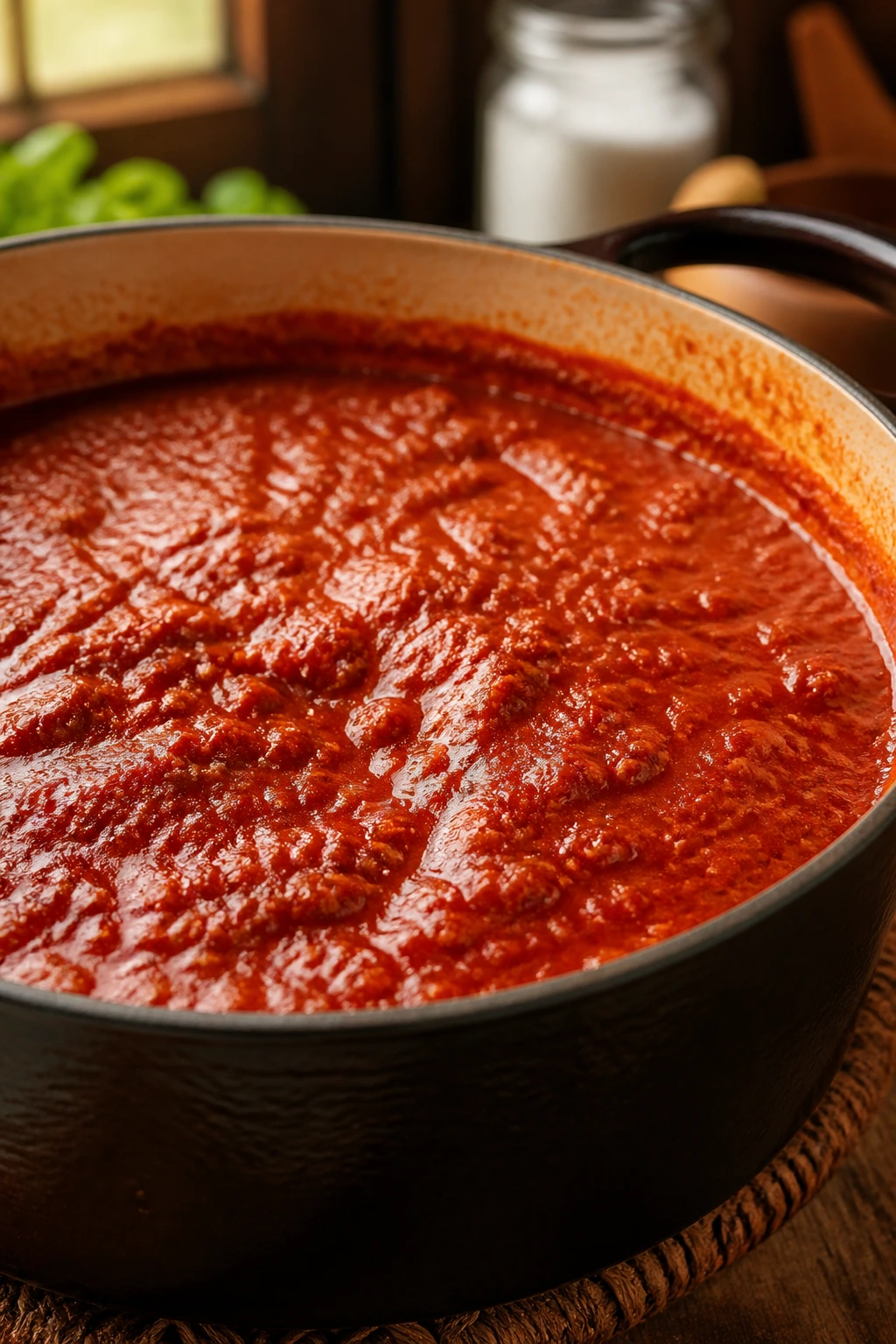
This is the sauce for the kid who claims to hate vegetables and somehow eats them when they are finely grated and simmered into beef. Carrots and zucchini disappear into the pot, leaving behind sweetness, body, and a sauce that tastes deeper than a standard jarred marinara.
It’s a practical little trick, not a magic trick. The vegetables need to be grated small enough to melt into the sauce, and they need enough time on the heat to soften completely. If you rush that part, you’ll end up with visible vegetable shreds, and kids are astonishingly good at spotting those.
Why It Works
A good hidden-veggie sauce depends on texture, not secrecy alone. When carrots, zucchini, and onion are grated or chopped very fine, they break down into the tomato base and make the sauce thicker without a floury taste. That thicker texture sticks to spaghetti better than a thin, watery sauce ever will.
The ground beef gives the sauce enough richness to feel like dinner, not an apology. A 20-minute simmer also mellows the tomato acidity, and if you taste it at the end, you’ll usually notice that it needs less sugar than you think. A little goes a long way.
Key Ingredients
- 1 pound ground beef
- 12 ounces spaghetti
- 1 medium carrot, grated
- 1 medium zucchini, grated and squeezed dry
- 1 small onion, finely minced
- 2 cloves garlic, minced
- 2 tablespoons tomato paste
- 1 can crushed tomatoes, 28 ounces
- 1 teaspoon Italian seasoning
- 1 teaspoon olive oil
- 1 teaspoon sugar, optional
- Salt and black pepper, to taste
Quick Steps
- Prep the vegetables: Grate the carrot and zucchini on the small holes of a box grater. Squeeze the zucchini in a clean towel so it doesn’t water down the sauce.
- Soften the base: Heat the olive oil in a skillet over medium heat. Cook the onion, carrot, and zucchini for 4 to 5 minutes until softened and fragrant.
- Brown the beef: Add the ground beef and garlic, then cook for 5 to 6 minutes, breaking the meat into small crumbles as it browns.
- Build the sauce: Stir in the tomato paste for 1 minute, then add the crushed tomatoes and Italian seasoning. Simmer uncovered for 15 to 20 minutes until thickened.
- Cook the spaghetti: Boil the pasta in salted water until al dente, then drain well.
- Serve and adjust: Taste the sauce, add a pinch of sugar if needed, then spoon over the spaghetti with Parmesan on top.
Tips and Variations
- Blend if needed: If your child spots vegetables instantly, use an immersion blender before adding the beef for a smoother finish.
- Make it milder: Skip the black pepper and keep the garlic light if your household likes very soft flavor.
- Freezer win: The sauce freezes well for up to 3 months; freeze it without the pasta for the best texture.
4. Creamy Chicken Spaghetti with Cheddar
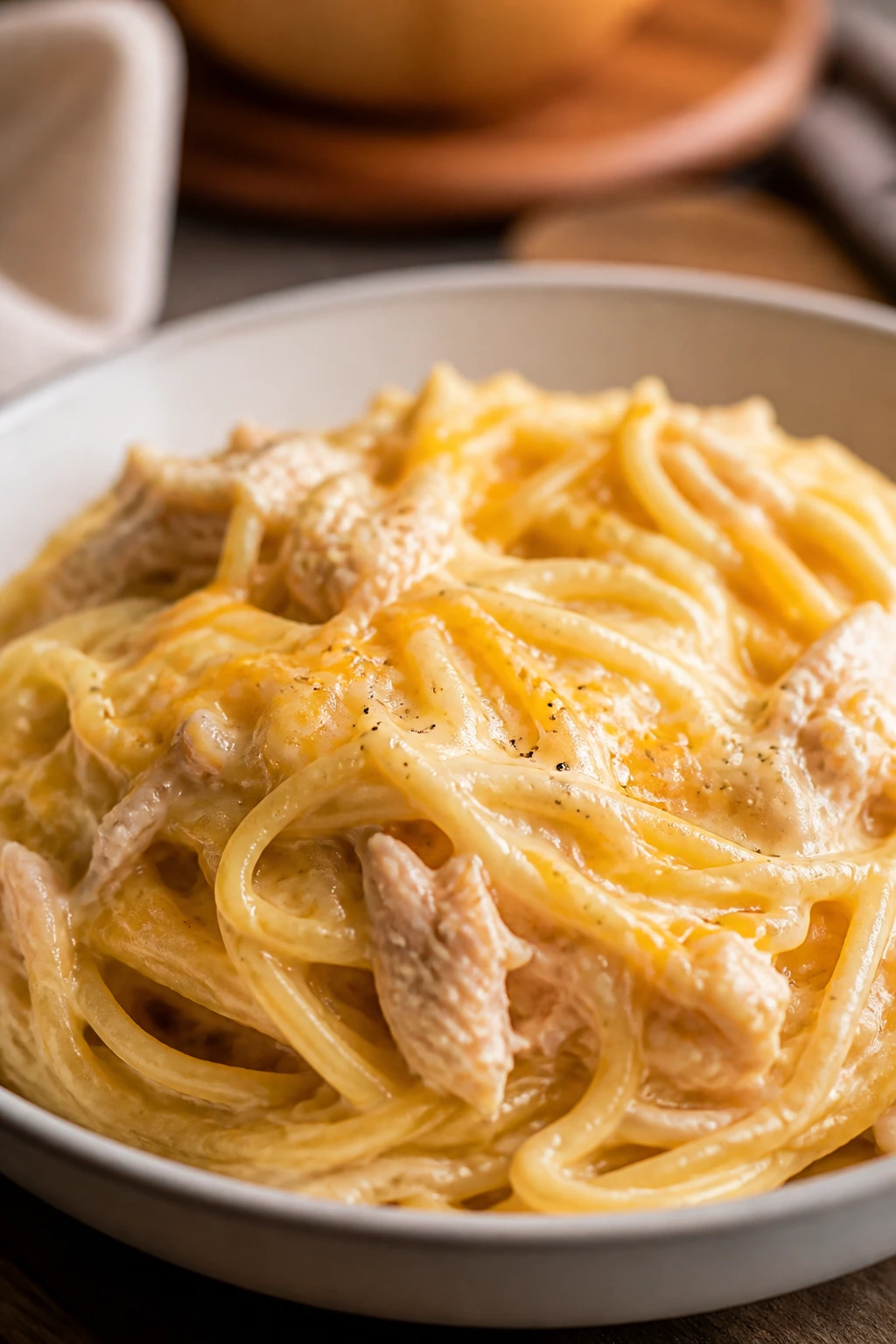
Creamy spaghetti has a different kind of appeal. It’s softer, milder, and a little more forgiving than tomato-heavy sauces, which makes it a smart move for kids who run hot and cold on red sauce.
The cheddar here does most of the work. It melts into a sauce that coats every strand, and the chicken gives the dish enough substance to count as a full dinner. If you use cooked shredded chicken—rotisserie is fine—this one moves fast enough to save a real weeknight.
Why It Works
Cream sauces calm pasta down. That sounds silly, but it’s true. The flavor is rounder and less sharp than tomato, and the chicken broth plus cream cheese combo gives the sauce body without making it gluey. A roux—just butter and flour cooked for a minute—keeps it from separating.
Peas are optional, but they’re useful here because they disappear into the pale sauce and add color without making the bowl look busy. If your kids object to green bits, leave them out and the recipe still works.
Key Ingredients
- 12 ounces spaghetti
- 2 cups cooked shredded chicken
- 2 tablespoons butter
- 1 small onion, diced
- 2 cloves garlic, minced
- 2 tablespoons all-purpose flour
- 2 cups chicken broth
- 1 cup milk
- 4 ounces cream cheese
- 1 cup shredded cheddar
- 1 cup frozen peas, optional
- 1/2 teaspoon salt
- 1/4 teaspoon black pepper
Quick Steps
- Cook the spaghetti: Boil the pasta until just al dente, then drain and set aside.
- Start the base: Melt the butter in a large skillet over medium heat. Add the onion and cook for 3 minutes, then stir in the garlic for 30 seconds.
- Make the sauce: Sprinkle in the flour and cook for 1 minute, stirring constantly. Slowly whisk in the broth and milk until smooth.
- Melt and thicken: Add the cream cheese, salt, and pepper. Stir until the sauce is smooth and lightly thickened, about 3 to 4 minutes.
- Finish the filling: Stir in the shredded chicken, cheddar, and peas. Cook for 2 to 3 minutes until the cheese melts and the peas are hot.
- Toss and serve: Add the spaghetti to the skillet and toss until every strand is coated. Serve warm with extra cheddar on top.
Tips and Variations
- Shortcut: Use cooked chicken from the deli counter if you’re in a hurry, but shred it finely so it blends into the sauce.
- Creamier version: Add 2 tablespoons of sour cream at the end for a softer, tangier finish.
- Watch the heat: Don’t boil the sauce hard once the cheese goes in; keep it at a gentle bubble so it stays smooth.
5. One-Pot Taco Spaghetti
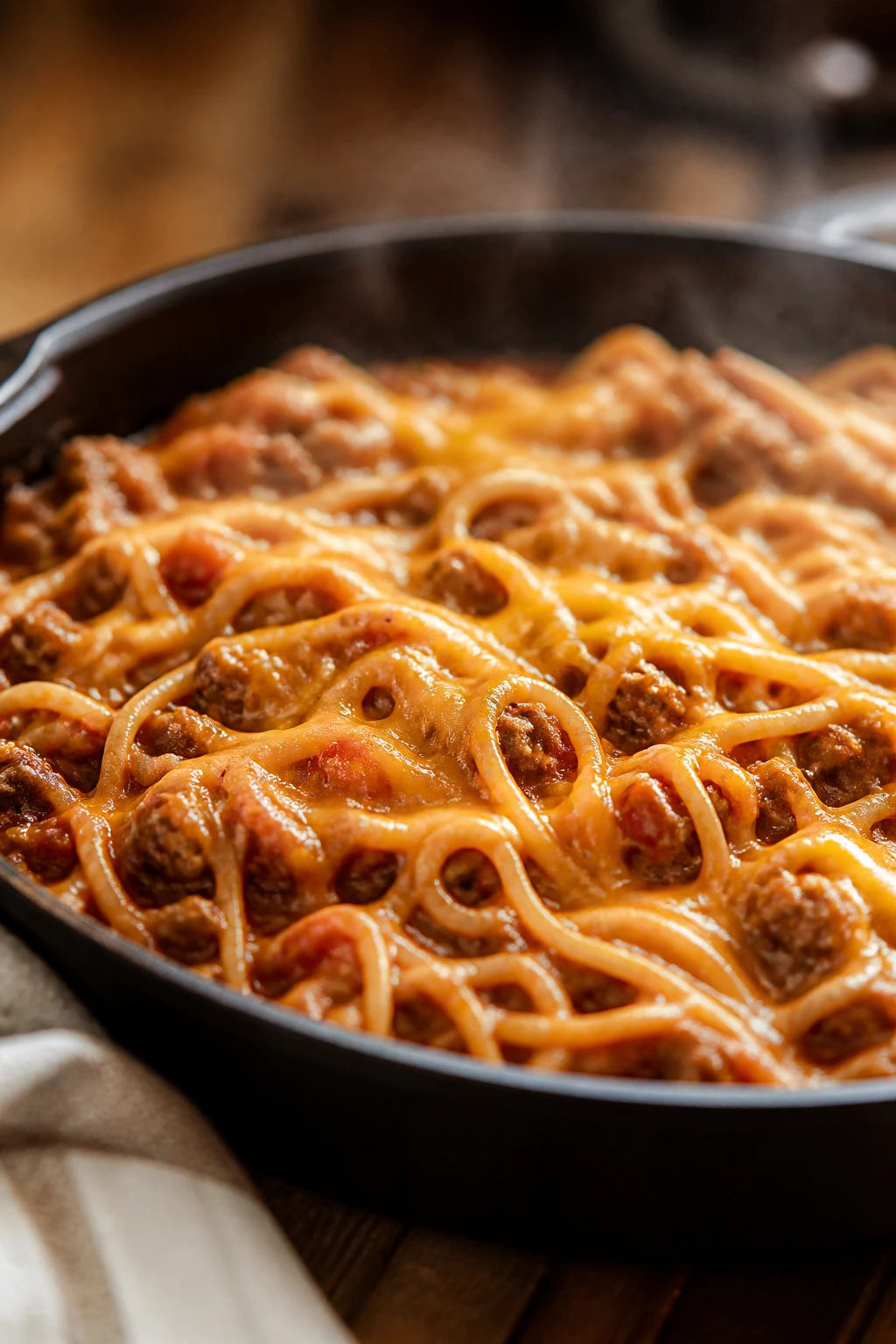
Taco night and spaghetti night shouldn’t be treated like separate species. Put them together, and you get a pan full of cheesy, mild, tomato-salsa flavor that kids usually accept faster than they admit.
This one is built for speed. The noodles cook right in the seasoned liquid, which means the starch helps thicken the sauce as it simmers. You end up with a dinner that feels closer to a skillet meal than a big production, and that matters when the clock is rude.
Why It Works
One-pot spaghetti works because the pasta drinks the sauce while it cooks. That gives the whole pan a slightly richer texture than boiled pasta tossed with sauce at the end. Broken spaghetti fits better here than long strands, and it cooks more evenly in the liquid.
The taco seasoning should stay mild. If your packet runs salty or hot, use 2 teaspoons instead of the full amount and finish with shredded cheddar, not jalapeños. Kids usually like the familiar tomato-cheese flavor more than actual taco heat.
Key Ingredients
- 1 pound ground beef or ground turkey
- 12 ounces spaghetti, broken in half
- 1 small onion, diced
- 1 tablespoon taco seasoning
- 1 jar salsa, 16 ounces
- 2 1/2 cups chicken broth or water
- 1 cup frozen corn
- 1 cup shredded cheddar
- 1 tablespoon olive oil
- Sour cream, optional
- Chopped cilantro, optional
Quick Steps
- Brown the meat: Heat the olive oil in a large deep skillet or Dutch oven over medium heat. Cook the onion and meat for 6 to 7 minutes until the meat is browned and the onion is soft.
- Season the pan: Stir in the taco seasoning and cook for 30 seconds so it blooms in the fat.
- Add liquid and pasta: Pour in the salsa and broth, then add the broken spaghetti. Push it down so most of the noodles sit under the liquid.
- Simmer gently: Cook uncovered for 10 to 12 minutes, stirring every couple of minutes, until the pasta is tender and the sauce has thickened.
- Finish with corn and cheese: Stir in the corn for the last 2 minutes, then add the cheddar and let it melt.
- Serve warm: Spoon into bowls and top with sour cream or cilantro if your family likes them.
Tips and Variations
- Too thick? Add 1/4 cup water at a time if the pan dries out before the spaghetti is tender.
- Mild kid version: Use plain tomato salsa instead of chunky salsa with peppers.
- Leftover note: This reheats well, but it gets drier in the fridge; add a splash of broth when warming it back up.
6. Garlic Butter Parmesan Chicken Spaghetti
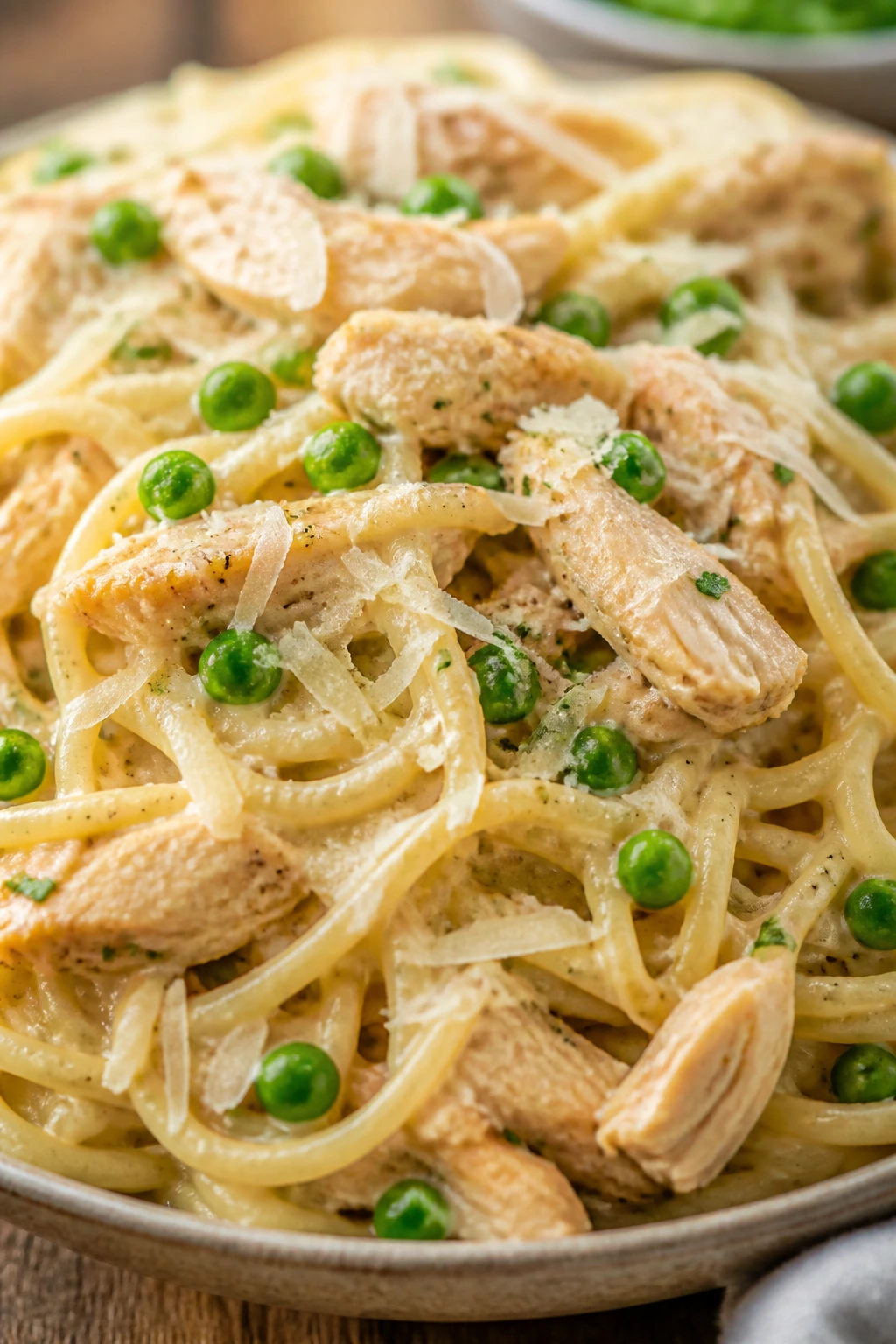
Sometimes the smartest spaghetti dinner is the one that refuses to try too hard. This is buttery, mild, and fast, with enough Parmesan to make it taste finished and enough chicken to keep it from feeling like a side dish.
Kids who resist red sauce often go for this kind of pasta because it tastes like noodles dressed up for dinner, not noodles pretending to be something else. The sauce is basically butter, garlic, cheese, and a little pasta water, which sounds plain until you toss it properly and realize how much flavor lives in those few ingredients.
Why It Works
Butter and Parmesan are almost unfair together. The fat carries the garlic and the cheese clings to the noodles, while the starchy pasta water helps everything emulsify into a glossy sauce. That slick, shiny coating matters. Plain dry noodles rarely win over picky eaters.
Adding peas keeps the color from looking one-note and gives you a small vegetable that doesn’t fight the rest of the bowl. If peas are a no, use chopped spinach and let it wilt in for 30 seconds. If both are a no, leave the vegetables out and nobody will feel betrayed.
Key Ingredients
- 12 ounces spaghetti
- 1 1/2 cups cooked shredded chicken
- 4 tablespoons unsalted butter
- 3 cloves garlic, minced
- 1 cup frozen peas
- 1/2 cup reserved pasta water
- 1 cup finely grated Parmesan
- 1/2 teaspoon salt
- 1/4 teaspoon black pepper
- 1/4 teaspoon dried Italian seasoning, optional
Quick Steps
- Boil the pasta: Cook the spaghetti in salted water until al dente. Reserve 1/2 cup pasta water before draining.
- Melt the butter: Put a large skillet over medium-low heat and melt the butter until foamy, not browned.
- Cook the garlic: Stir in the garlic and cook for 30 to 45 seconds until fragrant. Do not let it brown.
- Warm the chicken and peas: Add the shredded chicken, peas, salt, pepper, and optional seasoning. Stir for 2 minutes until hot.
- Build the sauce: Add the spaghetti and 1/4 cup pasta water, then toss in the Parmesan a handful at a time until the sauce turns glossy and coats the pasta.
- Adjust and serve: Add more pasta water if needed and serve right away with extra cheese.
Tips and Variations
- Lemon optional: A tiny squeeze of lemon at the end brightens the whole dish, but skip it if your kids dislike anything tangy.
- Use what’s cooked: Rotisserie chicken makes this one nearly instant, which is useful on the nights when the stove feels like too much.
- Don’t overcook the garlic: Browned garlic tastes sharp and bitter; pale and fragrant is what you want.
7. Mini Meatball Mozzarella Skillet Spaghetti
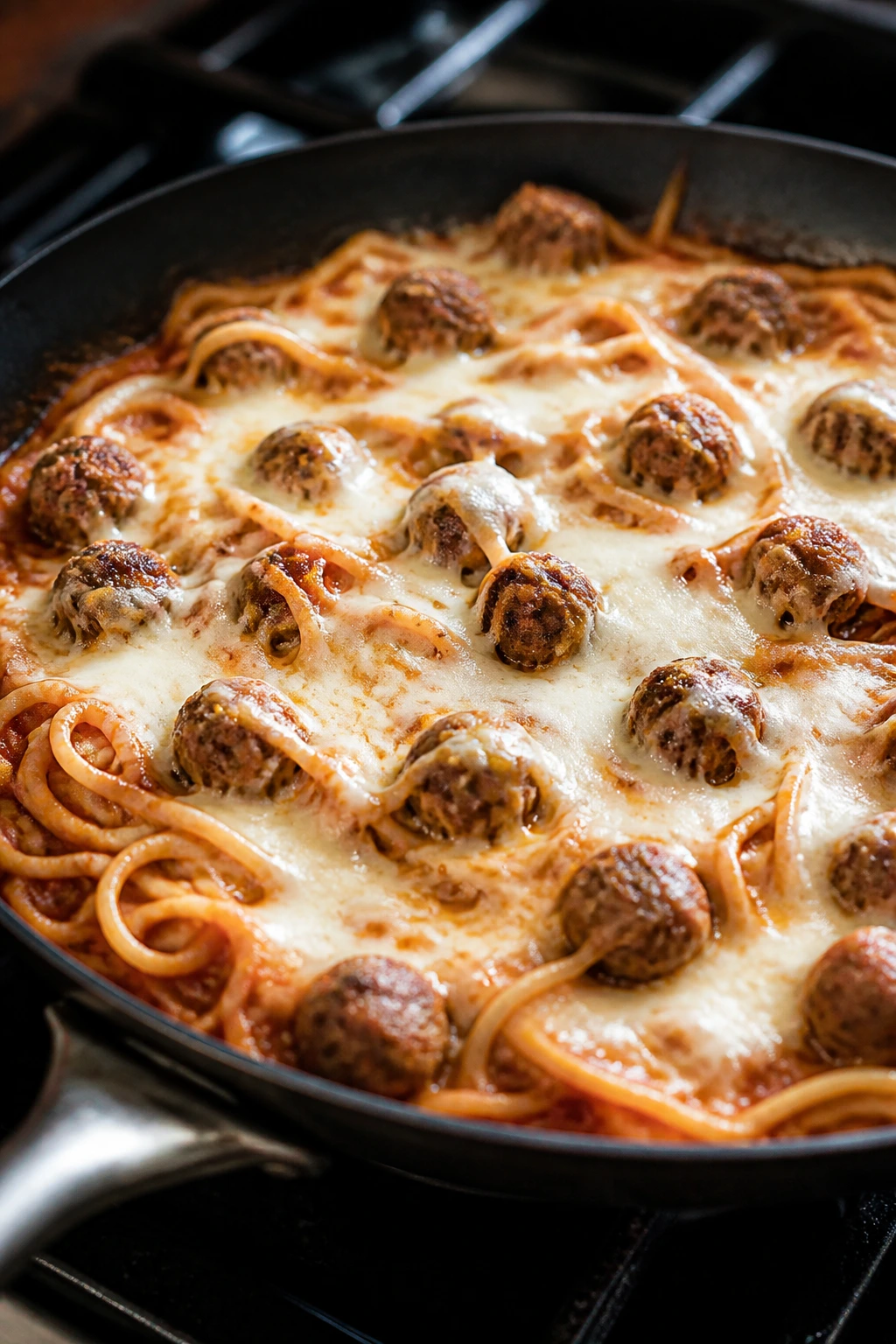
Mini meatballs change the tone of dinner. They’re softer in the hand, faster in the skillet, and somehow more fun for kids than larger meatballs, even when the flavor is exactly the same.
This version leans into the skillet finish. You simmer the tiny meatballs in sauce, toss them with spaghetti, then scatter mozzarella over the top so it melts into little stretchy pockets. It’s not fancy. It is, however, the sort of pan that disappears fast.
Why It Works
Small meatballs cook more evenly and stay tender because they don’t need a long oven stay. That helps on a busy night and keeps the texture soft enough for younger kids who aren’t fans of chewy meat. The mozzarella on top gives the dish a pizza-adjacent pull, which is not a bad place to be with children.
The skillet finish also helps the spaghetti absorb a little sauce before serving. That means you’re not serving noodles on one side and sauce on the other. The whole pan turns into one thing, which is the goal.
Key Ingredients
- 12 ounces spaghetti
- 1 pound ground turkey or ground beef
- 1/3 cup breadcrumbs
- 1 large egg
- 1/4 cup grated Parmesan
- 24 ounces marinara sauce
- 1 cup shredded mozzarella
- 1 tablespoon olive oil
- 1 teaspoon Italian seasoning
- 1/2 teaspoon salt
- 1/4 teaspoon pepper
Quick Steps
- Form tiny meatballs: Mix the meat, breadcrumbs, egg, Parmesan, seasoning, salt, and pepper. Roll into 20 to 24 small meatballs, about 1 inch wide.
- Brown them lightly: Heat the olive oil in a deep skillet over medium heat. Brown the meatballs for 4 to 5 minutes, turning gently so they keep their shape.
- Add the sauce: Pour in the marinara and 1/2 cup water. Cover and simmer for 10 minutes until the meatballs are cooked through.
- Cook the pasta: Boil the spaghetti until al dente, then drain.
- Combine in the skillet: Toss the spaghetti into the sauce and meatballs. Stir gently so the meatballs stay intact.
- Melt the cheese: Scatter mozzarella over the top, cover for 2 minutes, or broil briefly until melted and spotty.
Tips and Variations
- Kid-size win: The smaller the meatballs, the easier they are to eat with a fork or even a spoon.
- Cheese swap: Use provolone if you want a slightly stretchier top.
- Meal prep: The meatballs can be formed a day ahead and kept covered in the fridge.
8. Pizza-Style Spaghetti Bake
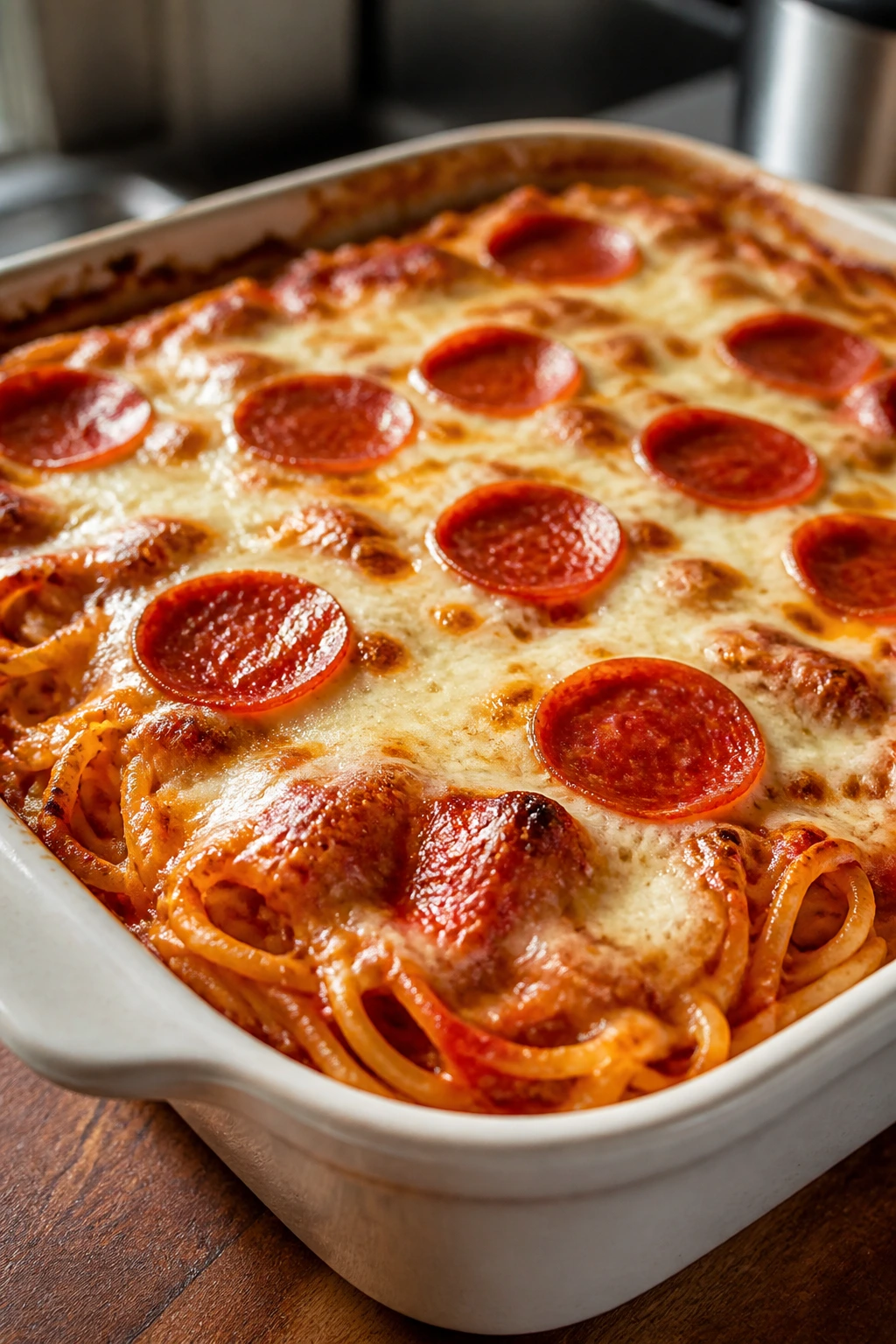
This is the recipe for the kid who orders pizza with the confidence of a tiny landlord. Pepperoni, mozzarella, tomato sauce, and spaghetti all land in one baking dish, and somehow it feels exactly right.
The flavor reads like pizza night in pasta form. That’s the whole trick. You keep the sauce simple, add enough cheese to please, and let the oven do the heavy lifting until the top is bubbling and the pepperoni edges curl a little.
Why It Works
Children trust pizza flavors. They just do. When you carry those same flavors into spaghetti, the dinner feels familiar even if the shape changed. The pepperoni adds salty little bursts, and the mozzarella turns into the stretchy layer that keeps the casserole from tasting plain.
This one is best baked hot and eaten soon after, when the cheese is still soft and the noodles are not overbaked. A 20-minute oven stay at 375°F usually does the job, but if the top needs more color, a short broil at the end is enough. Keep an eye on it. Cheese goes from perfect to scorched fast.
Key Ingredients
- 12 ounces spaghetti
- 1 1/2 cups marinara sauce
- 1/2 cup pizza sauce
- 1 cup mini pepperoni or chopped pepperoni
- 2 cups shredded mozzarella
- 1/2 cup grated Parmesan
- 1 teaspoon Italian seasoning
- 1 tablespoon olive oil
- 1/2 teaspoon garlic powder
- Optional sliced mushrooms or olives
Quick Steps
- Cook the spaghetti: Boil until just al dente, then drain well.
- Mix the base: In a large bowl, toss the spaghetti with the marinara, pizza sauce, Italian seasoning, garlic powder, and pepperoni.
- Build the pan: Grease a 9×13-inch baking dish with olive oil, then spread the spaghetti mixture inside.
- Add the cheese: Top with mozzarella and Parmesan, plus mushrooms or olives if using.
- Bake: Cook at 375°F for 20 to 25 minutes until the cheese is melted and the edges are bubbling.
- Rest briefly: Let it sit for 5 to 10 minutes so the slices hold together better.
Tips and Variations
- More pizza feel: Add a few sliced black olives after baking if your kids like them.
- Less salty: Use plain marinara and keep the pepperoni modest if the cheese already gives you enough salt.
- Lunch leftovers: Reheat single portions in the microwave with a damp paper towel over the bowl so the pasta stays soft.
9. Mild Turkey Bolognese Spaghetti
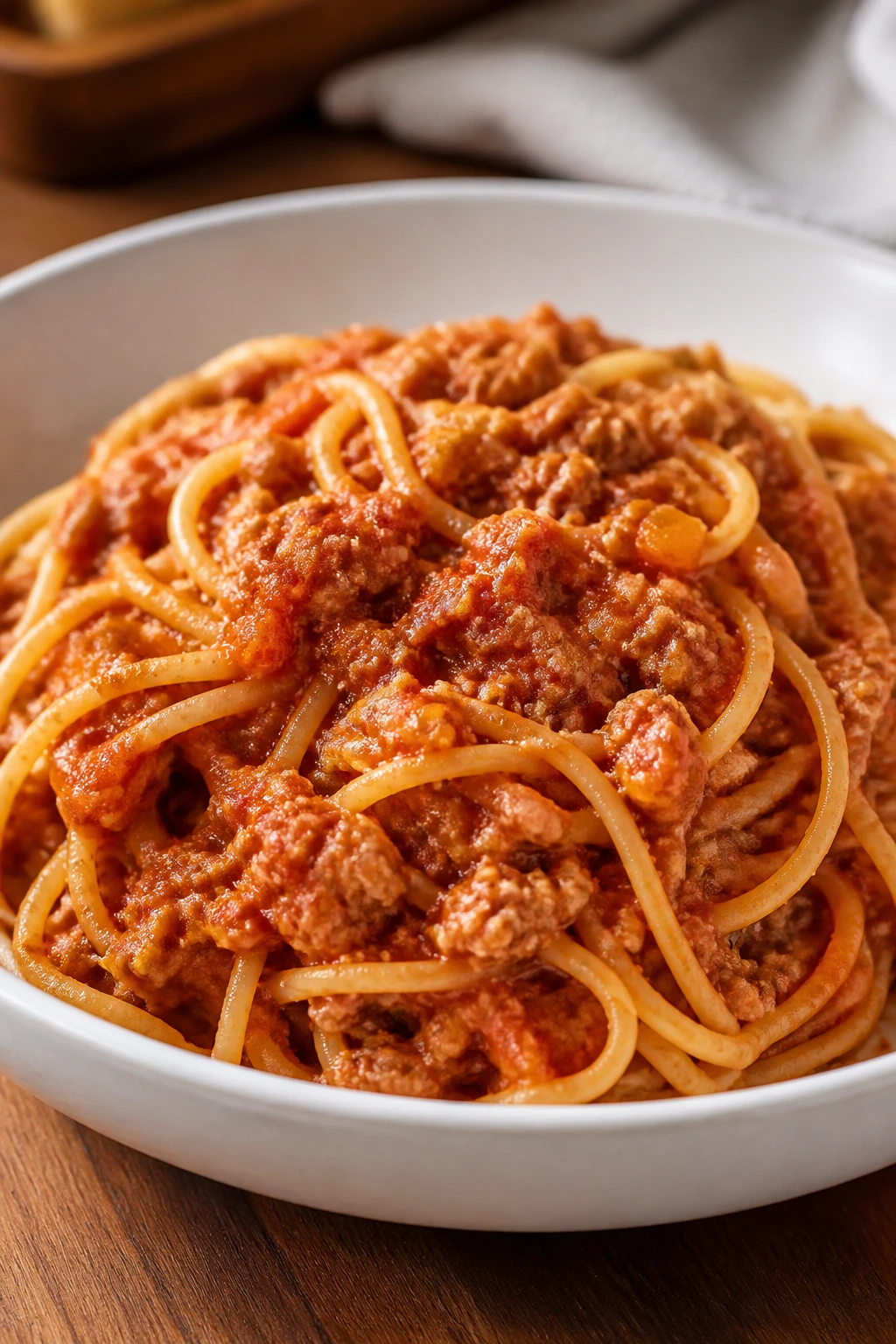
Turkey bolognese sounds a little grown-up, but if you keep the seasoning gentle and let the vegetables melt into the sauce, it becomes a very manageable family dinner. It’s meat sauce with more body, not a lecture.
The carrot, celery, and onion base gives the sauce a deeper taste without making it spicy or fussy. Kids often accept it because the sauce isn’t sharp; it feels smooth, full, and a little richer than a plain jar of marinara. The milk at the end softens the tomatoes and takes the edge off the acidity.
Why It Works
Bolognese works because it has time on its side. Even 20 to 25 minutes of slow simmering helps the meat and vegetables turn into one sauce instead of separate pieces in a pot. That unified texture matters more than the exact spice mix.
The milk or a splash of cream is not decorative. It changes the way the sauce tastes on the tongue, making it rounder and less tart. If your kids reject “tomato burn,” this is a good path around it.
Key Ingredients
- 1 pound ground turkey
- 12 ounces spaghetti
- 1 small onion, finely chopped
- 1 carrot, finely chopped
- 1 celery stalk, finely chopped
- 2 cloves garlic, minced
- 2 tablespoons tomato paste
- 1 can crushed tomatoes, 28 ounces
- 1/2 cup milk
- 1 teaspoon oregano
- 1 tablespoon olive oil
- Salt and black pepper, to taste
Quick Steps
- Build the vegetable base: Heat the olive oil in a skillet over medium heat. Cook the onion, carrot, and celery for 5 minutes until softened.
- Brown the turkey: Add the turkey and garlic. Cook for 5 to 6 minutes, breaking up the meat until it turns pale and no pink remains.
- Deepen the flavor: Stir in the tomato paste and cook for 1 minute.
- Simmer the sauce: Add the crushed tomatoes, oregano, salt, and pepper. Lower the heat and simmer for 20 to 25 minutes.
- Finish with milk: Stir in the milk and cook for 2 more minutes. The sauce should look smoother and a little creamier.
- Serve over spaghetti: Toss with cooked spaghetti or spoon the sauce on top and add Parmesan.
Tips and Variations
- Smoother sauce: Pulse the cooked vegetables in a blender before adding the meat if you want them to disappear even more.
- Budget move: Ground turkey thighs taste richer than very lean turkey breast and usually stay juicier.
- Freezer friendly: Freeze the sauce separately from the pasta for up to 3 months.
10. Mild Italian Sausage and Spinach Spaghetti
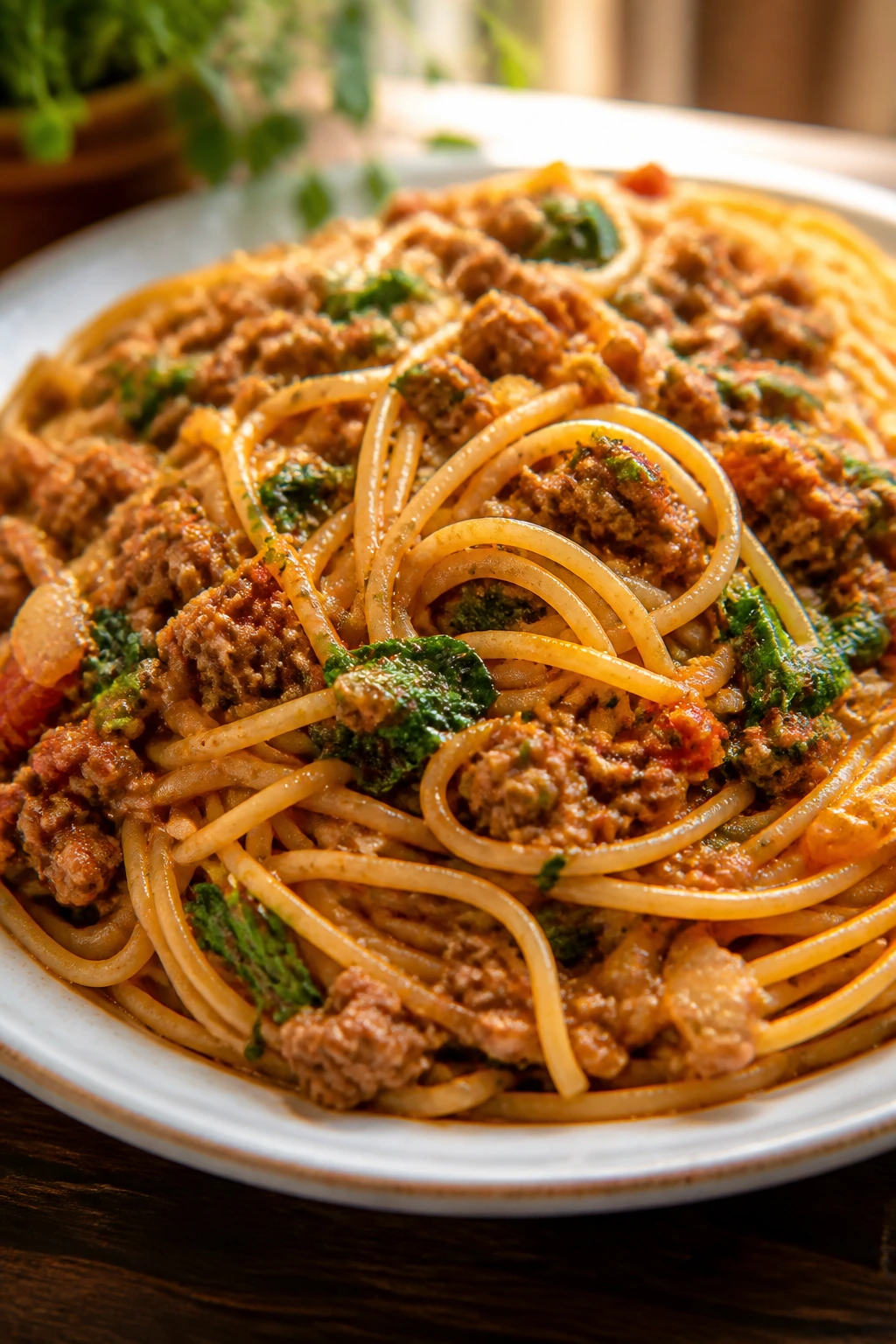
This is the one for families who want a little more flavor without crossing into “too much spice” territory. Mild Italian sausage brings a gentle fennel note, the spinach fades into the sauce, and the whole pan tastes more finished than the ingredient list suggests.
Spinach is useful here because it wilts down to almost nothing. If your kids scan for green things, chop it fine and fold it in at the end when the sauce is already hot. It disappears fast enough that the only real evidence is the color, and even that softens under the sauce.
Why It Works
Mild sausage gives you built-in seasoning. You do not need a lot of extra herbs or pepper once the sausage is in the pan, which keeps the flavor balanced for kids. The fat from the sausage also helps the sauce cling to the pasta in a way lean meat sometimes cannot.
Spinach works because it cooks in seconds. A big pile turns into a few small strands, which is about as invisible as vegetables get. If you want a dinner that feels more substantial than plain marinara, this is a strong middle ground.
Key Ingredients
- 1 pound mild Italian sausage, casings removed
- 12 ounces spaghetti
- 1 small onion, diced
- 2 cloves garlic, minced
- 24 ounces marinara sauce
- 3 cups baby spinach
- 1/2 cup reserved pasta water
- 1/4 cup grated Parmesan
- 1 tablespoon olive oil, if needed
- Salt and pepper, lightly
Quick Steps
- Brown the sausage: Heat the oil in a skillet over medium heat if needed. Cook the sausage and onion for 6 to 7 minutes, breaking the meat into crumbles.
- Add garlic: Stir in the garlic and cook for 30 seconds until fragrant.
- Pour in sauce: Add the marinara and a splash of pasta water, then simmer for 5 minutes.
- Wilt the spinach: Add the spinach in handfuls and stir until it collapses into the sauce, about 1 minute.
- Cook and toss the pasta: Boil the spaghetti until al dente, drain, and toss it into the sauce.
- Finish with cheese: Add Parmesan and enough reserved pasta water to make the sauce glossy.
Tips and Variations
- Spinach hiding trick: Chop the spinach before adding it if your kids notice long green ribbons too easily.
- No sausage option: Ground turkey with 1 teaspoon fennel seed and a pinch of garlic powder gives a similar flavor profile.
- Better reheating: Rewarm over low heat with 2 to 3 tablespoons water so the sauce loosens again.
11. Slow Cooker Tomato Basil Beef Spaghetti
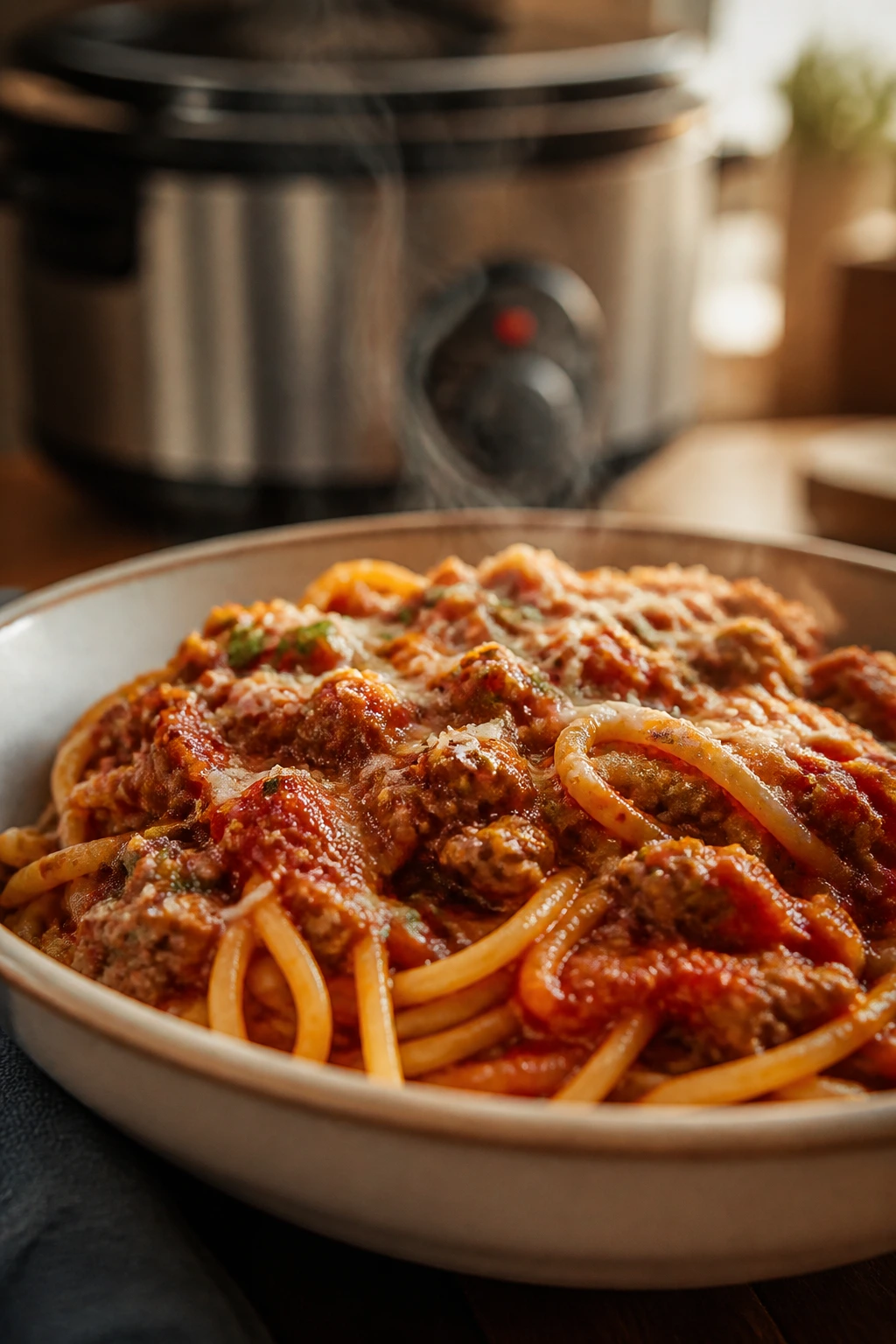
This is the dinner you make when the rest of the day has already eaten your patience. The slow cooker handles the sauce, the house smells like tomatoes and garlic by late afternoon, and the pasta only needs a quick boil before serving.
It’s a smart recipe for families because the sauce gets a deeper, rounder flavor from the long cook. The beef softens into the tomatoes, the onions melt, and basil makes everything smell like you did more than you actually did. I appreciate a recipe that doesn’t demand performance.
Why It Works
Slow cooking gives tomato sauce time to settle. The sharp edges fade, the beef flavor spreads through the whole pot, and the sauce thickens enough to sit nicely on spaghetti. Brown the beef first if you can. It adds color and depth that the slow cooker alone won’t provide.
Because the pasta is cooked separately, you also avoid the gummy texture that happens when noodles sit in hot sauce for hours. That alone is reason enough to keep the spaghetti out of the crock at the start. Soft noodles are fine. Mushy noodles are not.
Key Ingredients
- 1 pound ground beef
- 12 ounces spaghetti
- 1 small onion, diced
- 3 cloves garlic, minced
- 1 can crushed tomatoes, 28 ounces
- 1 can tomato sauce, 15 ounces
- 2 tablespoons tomato paste
- 1 teaspoon dried basil
- 1 teaspoon dried oregano
- 1 teaspoon sugar
- 1/2 cup water
- Salt and pepper, to taste
Quick Steps
- Brown the beef: Cook the beef and onion in a skillet over medium heat until the meat is no longer pink. Drain excess fat if needed.
- Load the slow cooker: Transfer the beef and onion to the slow cooker. Add the garlic, crushed tomatoes, tomato sauce, tomato paste, basil, oregano, sugar, water, salt, and pepper.
- Cook low and slow: Cover and cook on low for 6 to 7 hours or high for 3 to 4 hours until the sauce is thick and rich.
- Taste and adjust: Stir well and taste for salt. Add a pinch more sugar if the tomatoes still taste sharp.
- Cook the spaghetti: Boil the pasta near serving time until al dente, then drain.
- Serve together: Spoon the sauce over the spaghetti and finish with Parmesan.
Tips and Variations
- Extra smooth: If your kids dislike onion pieces, chop them very fine or grate them before cooking.
- Make it meatier: Add 1/2 pound of finely chopped mushrooms to the skillet with the beef.
- Storage note: The sauce keeps well in the fridge for 4 days and freezes for up to 3 months.
12. Chicken Parmesan Spaghetti Bake
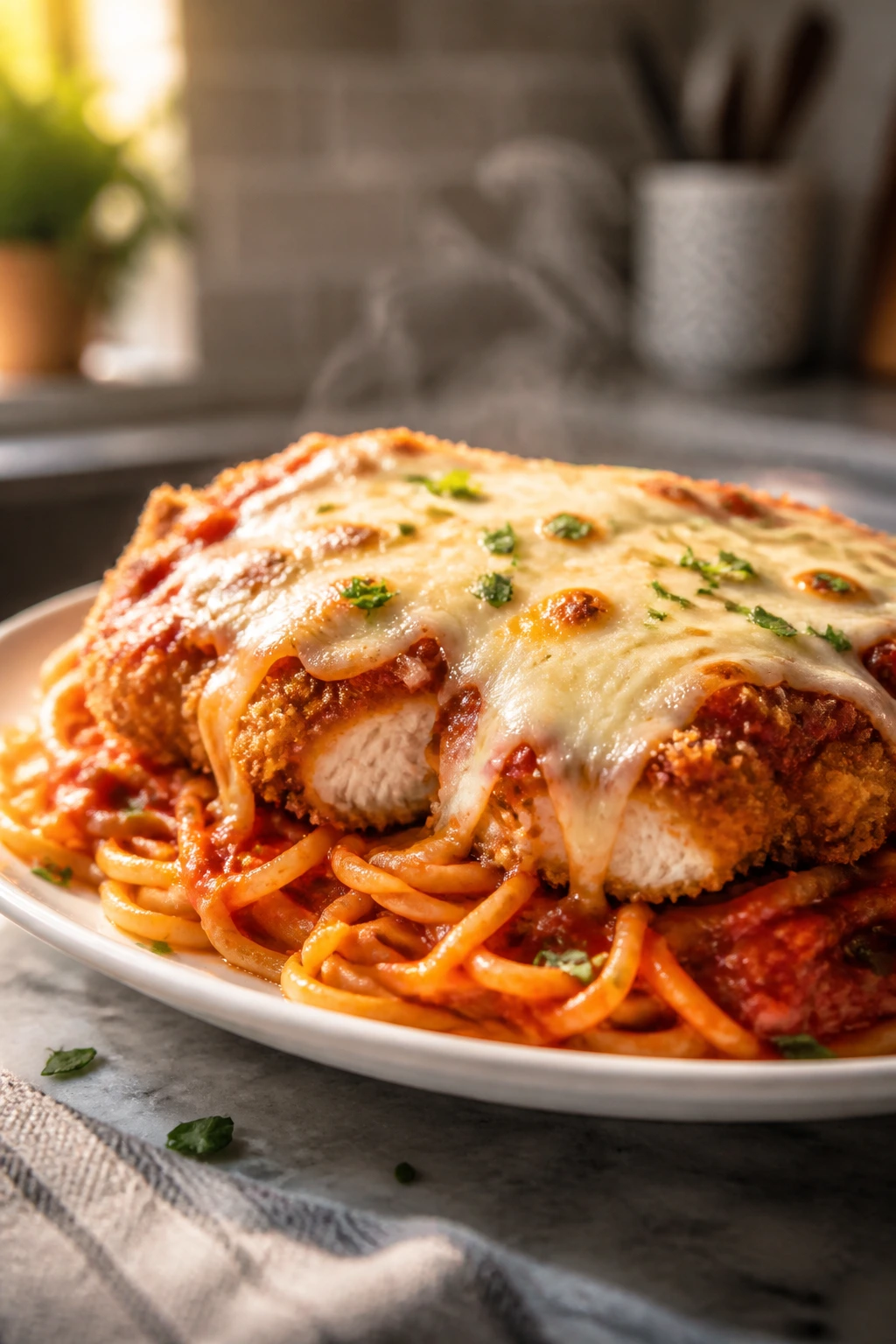
Chicken Parmesan already has strong kid appeal: breaded chicken, tomato sauce, melted cheese. Put those same flavors on spaghetti and bake them together, and you get a pan that feels both familiar and a little more festive than a normal bowl.
This one takes a little more effort than the others, but the payoff is obvious. The chicken stays crisp enough to feel like the star, the spaghetti holds the sauce underneath, and the cheese stretches across the top in the way kids always seem to notice before they notice anything else.
Why It Works
Chicken Parmesan works in pasta form because it gives kids more than one texture to grab onto. You get crisp breading, tender chicken, soft noodles, and melted cheese. That mix keeps the plate from feeling monotonous, which is a bigger deal than it sounds.
The key is not drowning the chicken. Keep enough sauce for the noodles and the bottom of the pan, but leave the top pieces peeking out so they stay a little crisp. If you cover everything in red sauce, you end up with a casserole that tastes fine but loses the chicken Parm personality.
Key Ingredients
- 12 ounces spaghetti
- 1 1/2 pounds thin chicken cutlets or chicken tenders
- 1/2 cup all-purpose flour
- 2 large eggs
- 1 cup breadcrumbs
- 1/2 cup grated Parmesan, divided
- 2 cups shredded mozzarella
- 24 ounces marinara sauce
- 2 tablespoons olive oil
- 1 teaspoon salt
- 1/2 teaspoon black pepper
Quick Steps
- Bread the chicken: Season the chicken with salt and pepper. Dredge each piece in flour, dip in beaten eggs, then coat with breadcrumbs mixed with 1/4 cup Parmesan.
- Cook the chicken: Heat the olive oil in a skillet over medium heat and cook the chicken for 3 to 4 minutes per side until golden. Transfer to a plate.
- Boil the pasta: Cook the spaghetti until al dente, then drain.
- Assemble the bake: Toss the spaghetti with the marinara and spread it in a greased baking dish. Lay the chicken on top.
- Add the cheese: Scatter mozzarella and the remaining Parmesan over the chicken and pasta.
- Bake: Bake at 375°F for 15 to 20 minutes until the cheese melts and the sauce bubbles around the edges.
Tips and Variations
- Easier version: Use baked frozen chicken tenders if you want the flavor without breading from scratch.
- Best texture: Let the bake rest for 5 minutes so the spaghetti doesn’t slide apart when you serve it.
- Sauce control: Warm the marinara first so it doesn’t cool down the chicken before baking.
Why This Pasta Night Approach Saves Sanity
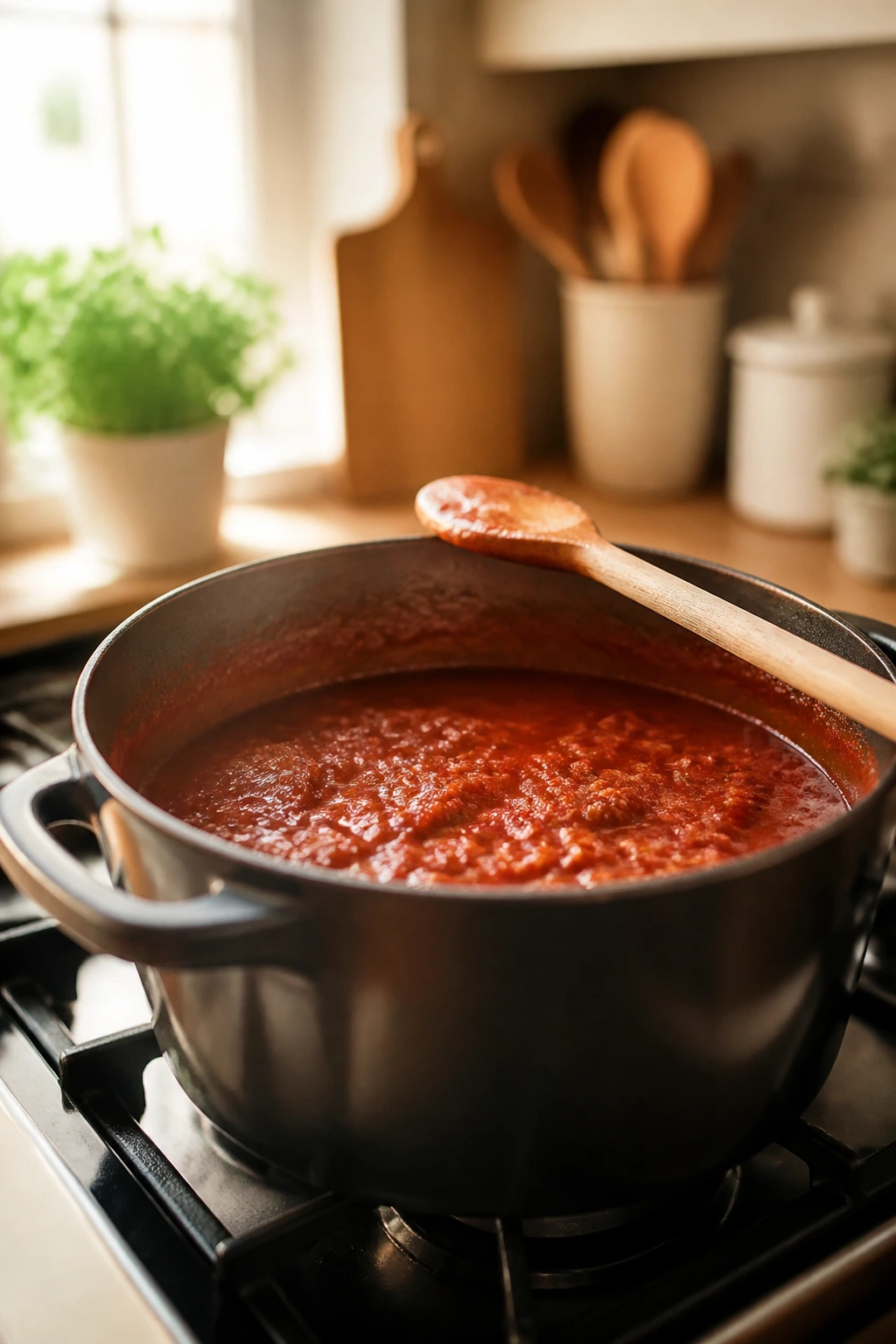
Spaghetti is forgiving in a way that other dinners rarely are. If you overcook a little, add cheese. If the sauce tastes flat, simmer it a bit longer. If a child refuses one version, another one on this list probably lands better because the flavor stays familiar even when the method changes.
That flexibility is the real strength here. One night calls for a skillet, another night wants a casserole, and sometimes the slow cooker is the only reason dinner happens on time. A family can get bored of the same bowl of red sauce very quickly, but the basic shape of spaghetti gives you enough room to keep things useful without making dinner feel like a project.
Essential Equipment for These Recipes
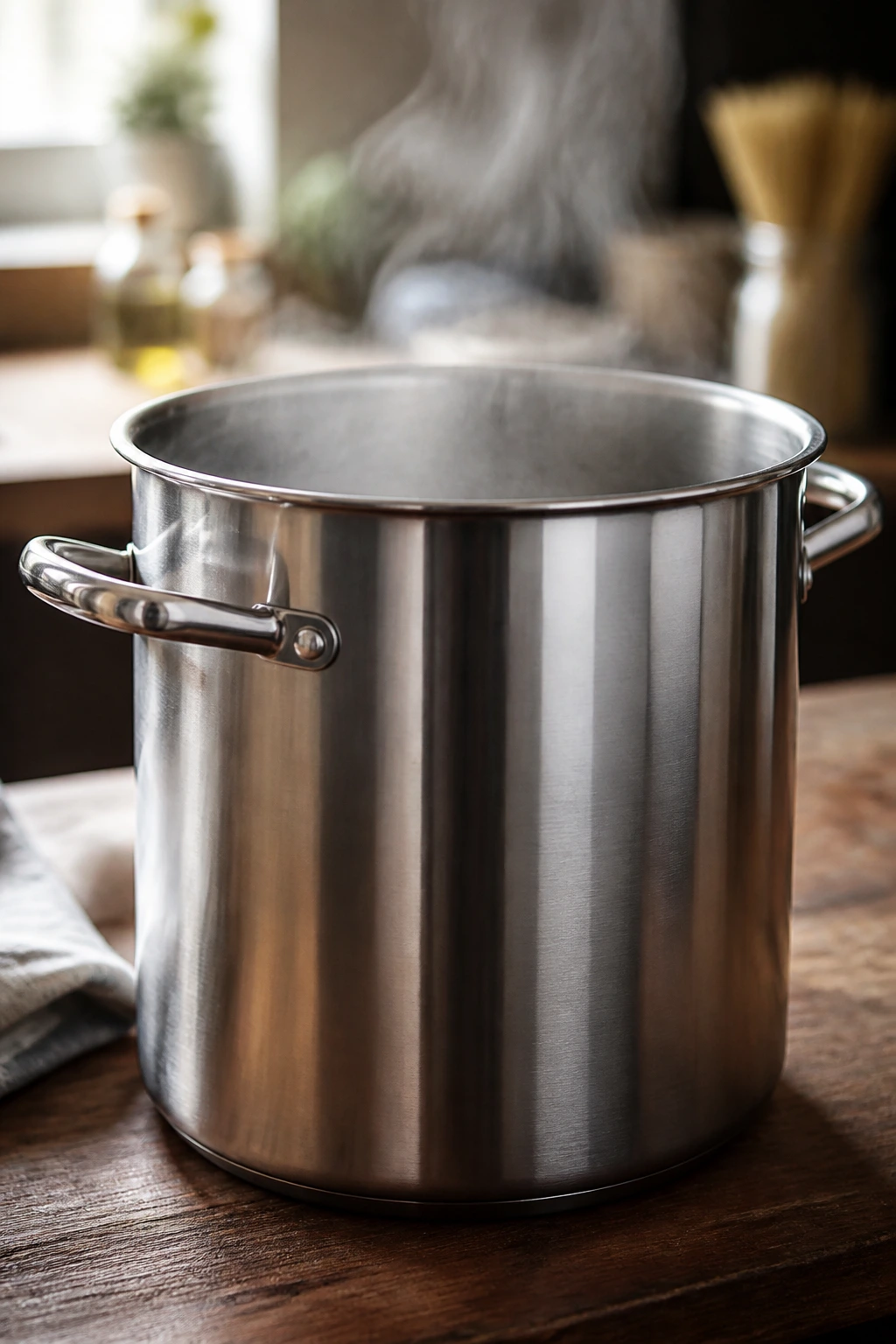
- Large pot for pasta: A 6- to 8-quart pot gives the spaghetti room to move so it cooks evenly.
- Deep skillet or sauté pan: Essential for meat sauces, one-pot pasta, and anything that needs room to simmer.
- 9×13-inch baking dish: The right size for baked spaghetti casseroles and pizza-style pasta bakes.
- Wooden spoon or heatproof spatula: Better than a whisk for breaking up meat and stirring thick sauce.
- Colander: Useful for draining pasta quickly without overcooking it in the pot.
- Box grater: Handy for Parmesan, mozzarella, carrots, zucchini, and other ingredients that need to disappear into the sauce.
- Slow cooker: Only needed for the slow cooker beef spaghetti, but worth using if you like hands-off meals.
- Tongs: Easier than a spoon for tossing spaghetti with sauce and moving cutlets or meatballs around.
- Ladle: Makes it easier to portion sauce without dumping too much liquid at once.
Smart Shopping for Spaghetti Dinners Kids Will Eat
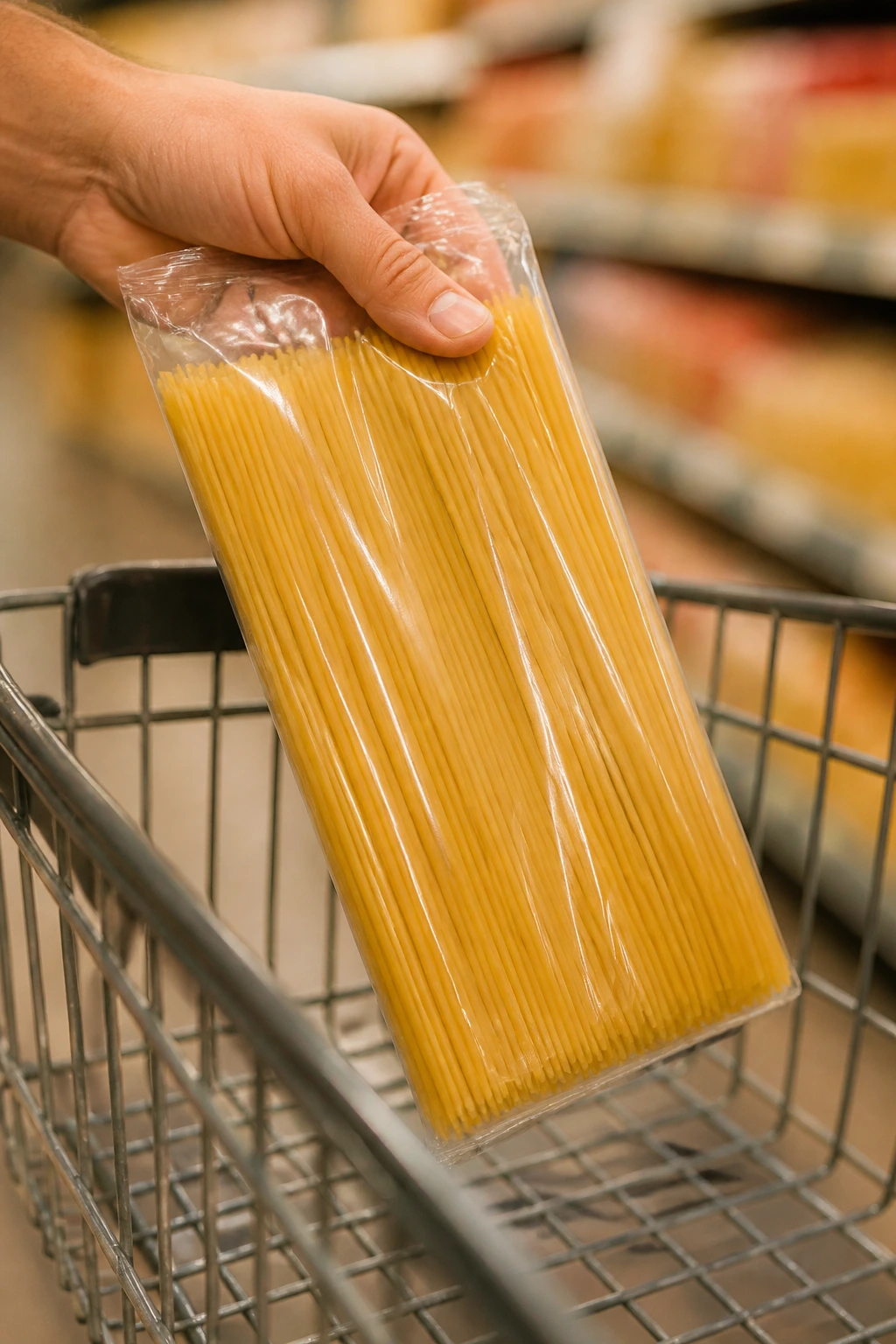
A good spaghetti dinner starts with decent pasta and a sauce that tastes like tomato, not sugar water. For the spaghetti itself, regular dried spaghetti works just fine, though thin spaghetti cooks a touch faster and tends to feel softer on the fork. If you’re feeding younger kids, that can help. For baked dishes, standard spaghetti usually holds its shape better.
For jarred sauce, look at the ingredient list. Shorter is usually better: tomatoes, olive oil, garlic, onion, basil, salt. You don’t need a sauce with a dessert-level sugar count to make it kid-friendly. If the sauce tastes sharp out of the jar, a pinch of sugar or a spoonful of cream can smooth it out better than more salt ever will.
Meat choices matter more than people think. Ground turkey works best when it isn’t ultra-lean, because a bit of fat keeps it from turning chalky. Ground beef with an 85/15 mix gives richer flavor for meatballs and baked dishes. Mild Italian sausage is a strong pick when you want built-in seasoning without real heat. Rotisserie chicken saves time on the creamy and Parmesan-style dishes, and it’s perfectly fine to use here.
Cheese is another place where buying the right thing helps. A block of Parmesan grated fresh tastes better than the sandy shelf-stable stuff, and shredded mozzarella melts more smoothly if it’s low-moisture. Ricotta, cream cheese, and cottage cheese all have their place, but I’d avoid overloading the pan with too many dairy ingredients at once. Kids may like creamy food, but they still want to taste the pasta and meat underneath.
Vegetables should be chosen for stealth, not show. Carrots, zucchini, onions, spinach, celery, and peas all work because they either melt down or hide under sauce. If you want to use frozen vegetables, that’s fine. Thaw peas and spinach first so they don’t dump extra water into the pan.
How to Serve These Recipes
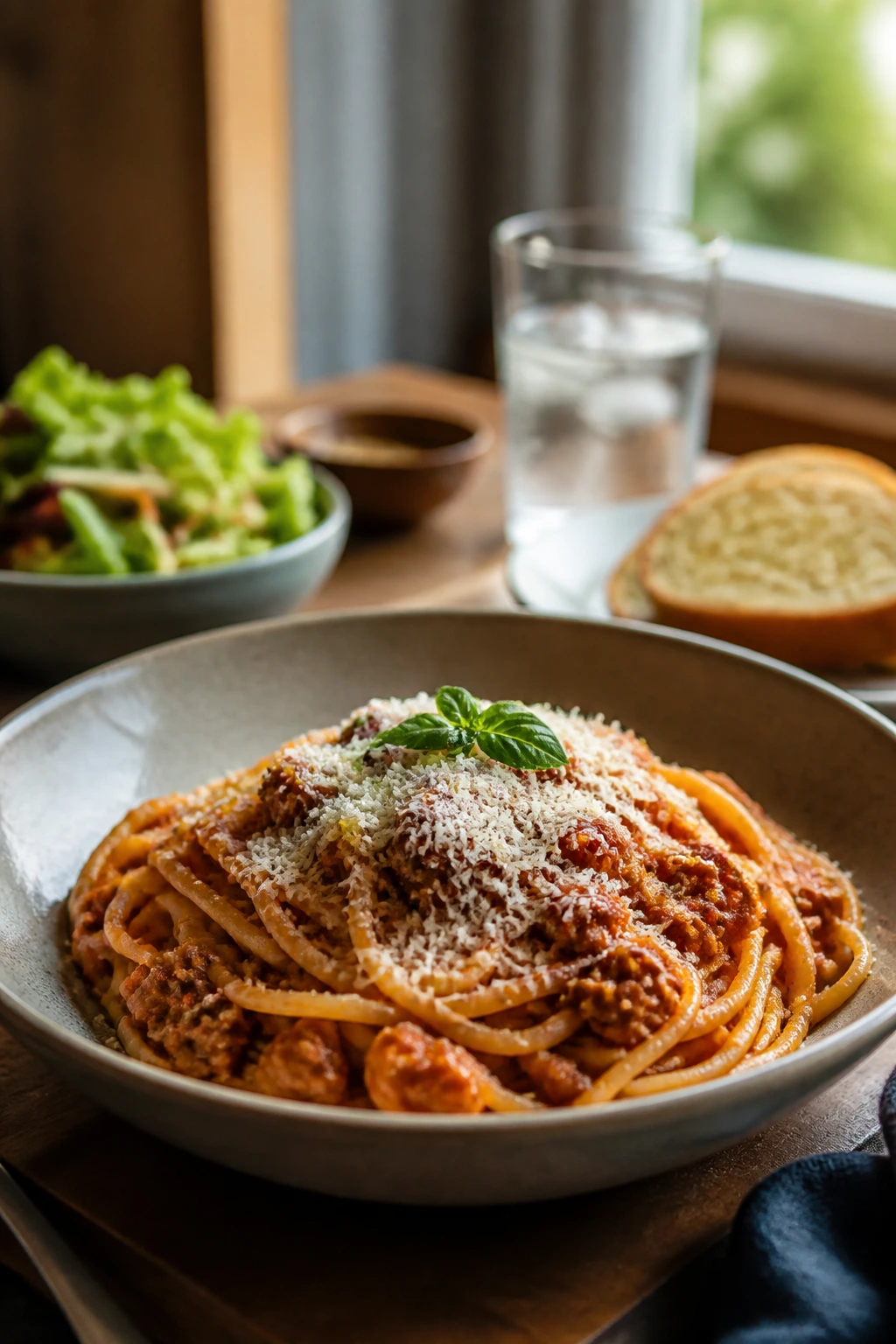
Presentation: Serve spaghetti in shallow bowls when you want sauce to sit neatly on top, or in squares from a casserole dish when you want the meal to feel structured and easy to serve. A last pinch of Parmesan and a few chopped herbs go further than you’d think.
Accompaniments: Garlic bread is the obvious answer, but a simple green salad, cucumber slices, roasted broccoli, or soft breadsticks work just as well. For the creamy recipes, I like something crisp and plain on the side so the plate doesn’t turn heavy.
Portions: A standard dinner portion is about 2 ounces dry spaghetti per child and 3 ounces per adult, plus sauce and protein. For bigger appetites, add bread on the side rather than piling on another mountain of pasta. It keeps the texture better.
Beverage Pairing: Milk is still the undefeated kid pairing for many of these. For a non-dairy option, try cold water with lemon slices or a very lightly sweetened iced tea if the sauce is on the savory side. Tomato-heavy dishes also work nicely with sparkling water, because the bubbles cut through the cheese.
Additional Tips and Flavor Boosters
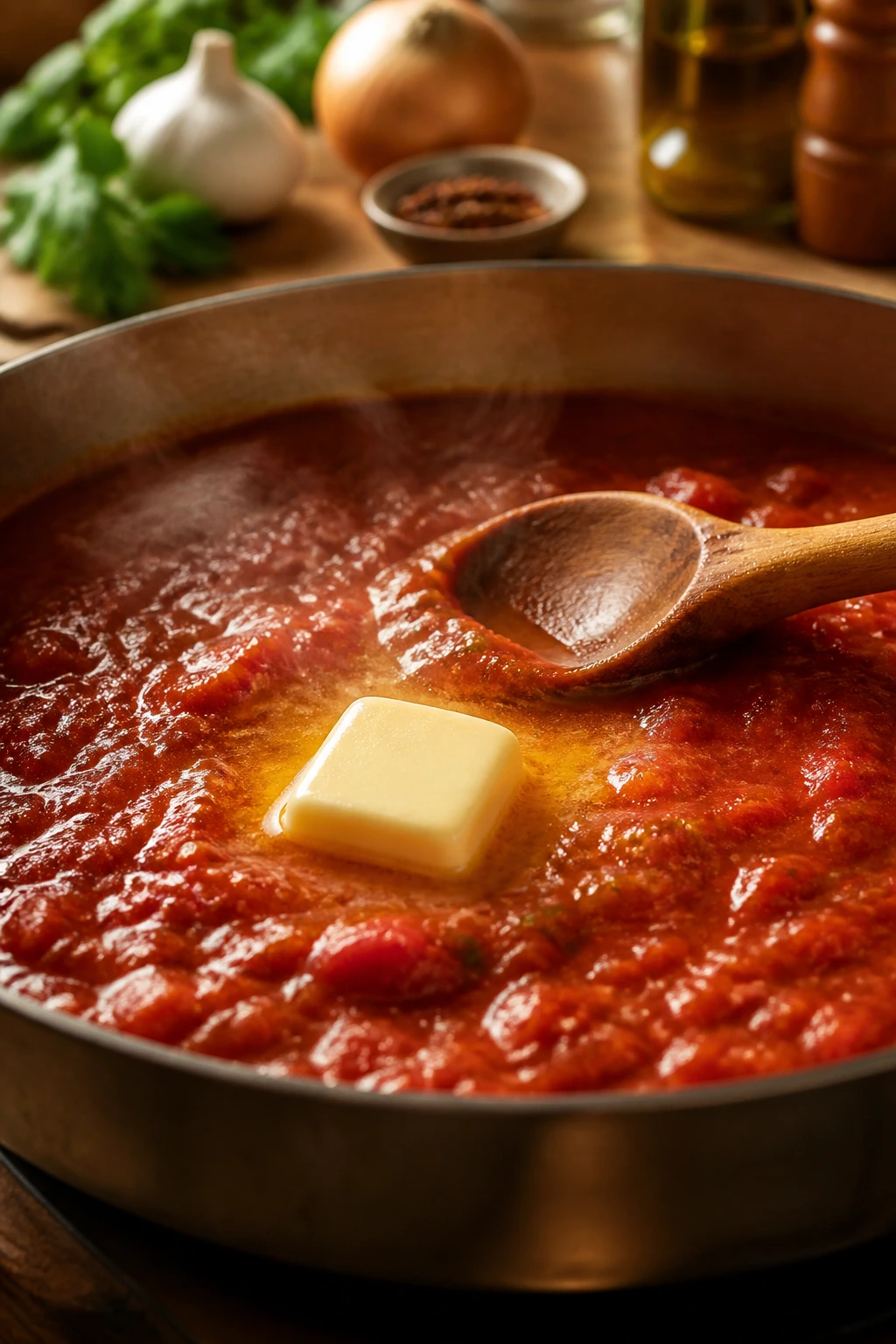
Flavor Enhancement: A finishing knob of butter stirred into tomato sauce right before serving makes the whole bowl taste rounder and less sharp. It’s an old trick, and it still works.
Customization: If one child likes meat and another likes cheese, split the pan at the end. Add extra mozzarella to one half, extra meatballs or chicken to the other, and let the bowl settle the argument for you.
Serving Suggestions: Keep a small bowl of grated Parmesan, red pepper flakes, and chopped parsley on the table. Adults can build their own spice level while the kids stay in the safe zone.
Make-It-Yours: For a dairy-free version, use olive oil instead of butter, skip the cheese-heavy finish, and lean on tomato sauce with extra garlic and herbs. For gluten-free needs, use gluten-free spaghetti and undercook it by 1 minute so it doesn’t collapse.
Busy-Night Upgrade: If you want to make any of these feel more finished, warm the serving bowls for 2 minutes in a low oven. Hot bowls help sauce stay glossy longer. Small detail. Big difference.
Make-Ahead, Storage, and Reheating Guidance
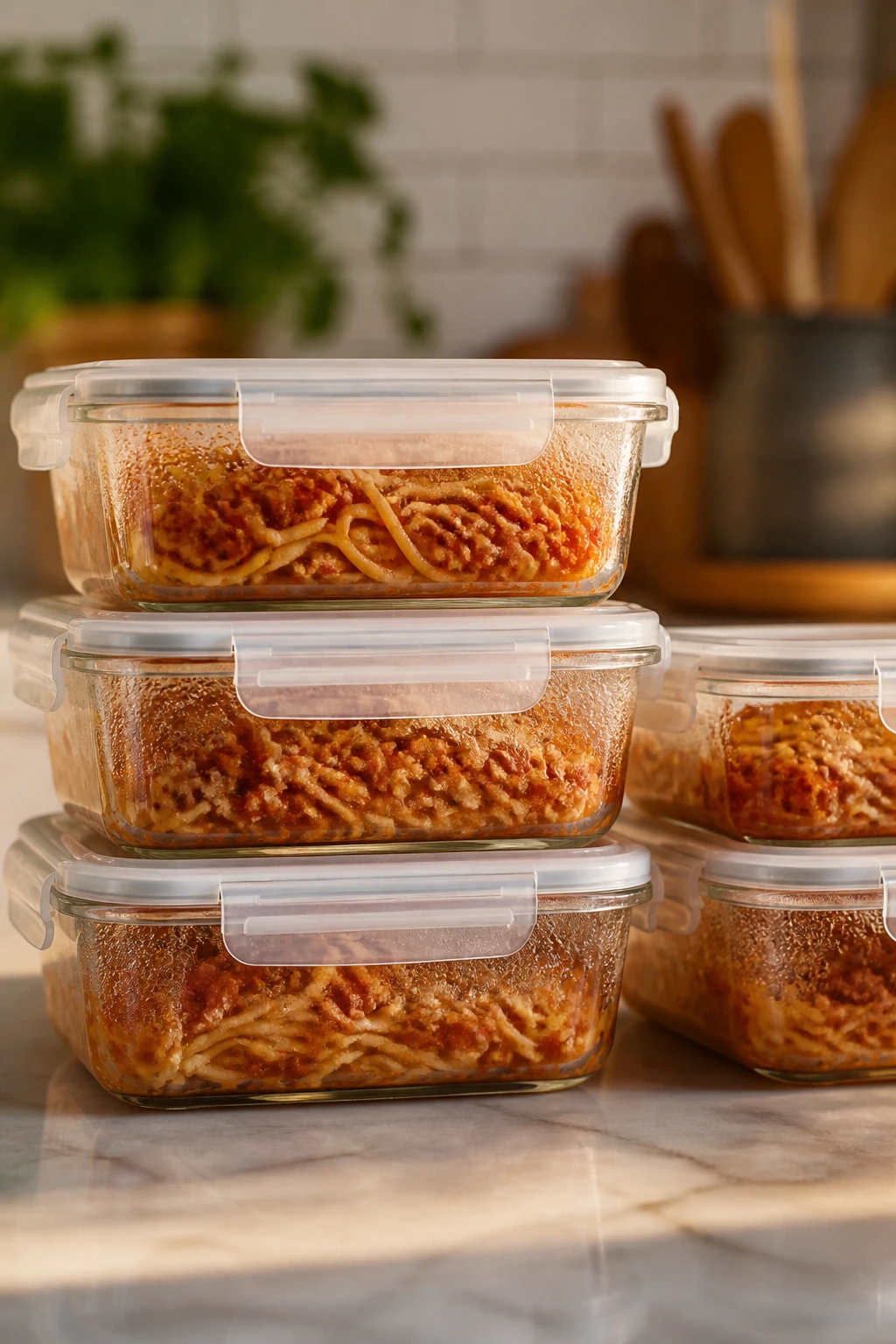
Most of these spaghetti dinners keep well for 3 to 4 days in the refrigerator, provided you get them into the fridge within 2 hours of cooking. That’s the food-safety window that matters. Tomato sauces and meat sauces usually freeze well for up to 3 months, while creamy dishes are best frozen for no more than 2 months because the texture can change a little.
If you can, store sauce and pasta separately. I know that’s not always realistic, especially with baked casseroles, but separate storage keeps the noodles from drinking up every drop of liquid overnight. If the pasta is already mixed in, add a teaspoon or two of olive oil before refrigerating to help the strands stay loose.
Reheat stovetop dishes over low heat with a splash of water, broth, or milk depending on the recipe. Tomato sauces usually need 2 to 4 tablespoons of water to loosen up. Cream sauces do better with milk or broth added slowly, then stirred until smooth. Microwave reheating works too, but cover the bowl with a loose lid or damp paper towel and stop to stir every 45 seconds so the middle heats evenly.
Baked spaghetti casseroles reheat best in the oven at 325°F, covered with foil for 15 to 20 minutes, then uncovered for 5 minutes if you want the top to crisp again. If a casserole seems dry after refrigeration, spoon 2 to 3 tablespoons of sauce around the edges before reheating. It helps more than more cheese does.
Variations and Adaptations to Try
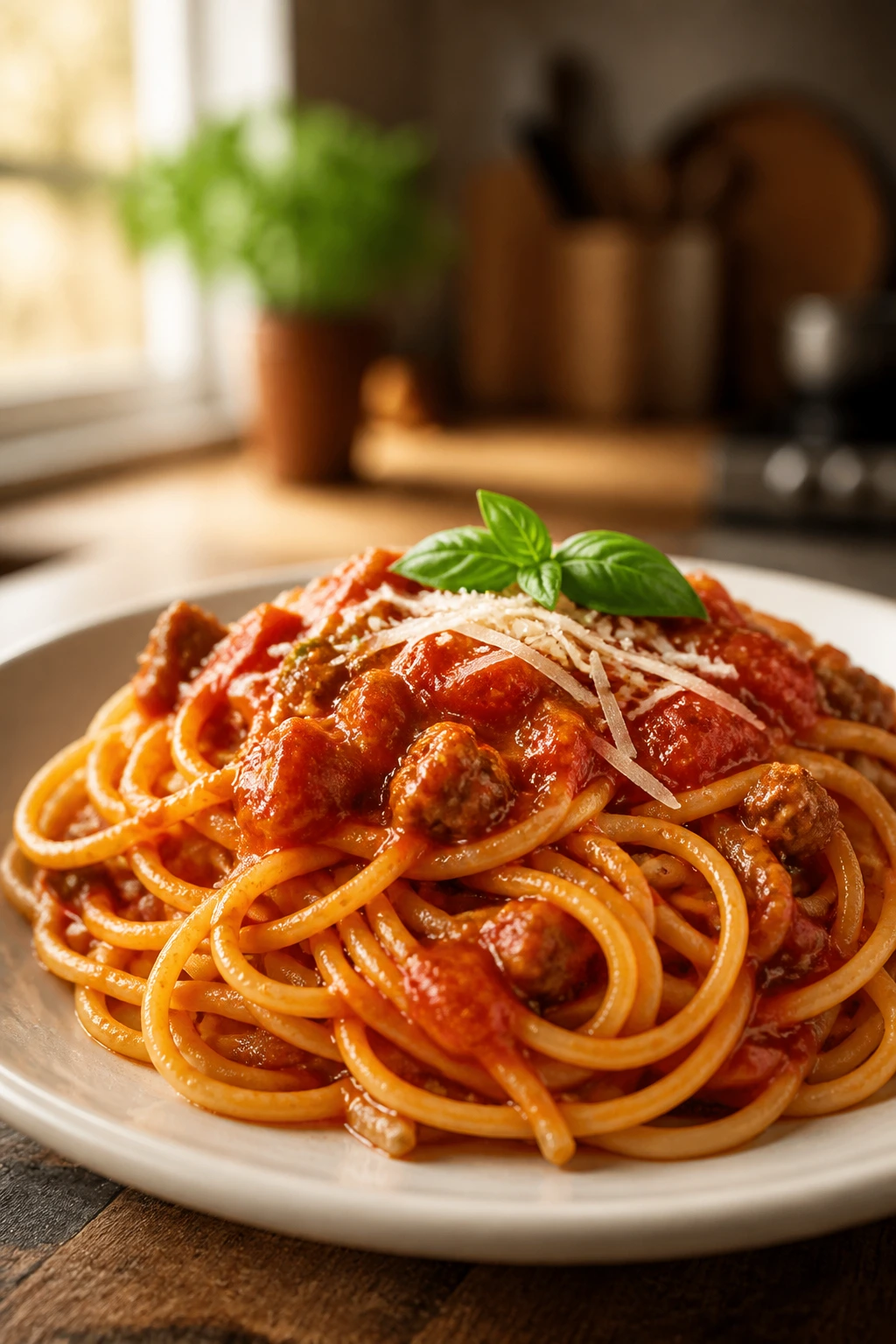
Gluten-Free Spaghetti Night: Use gluten-free spaghetti and reduce the initial boil by 1 minute. Gluten-free pasta softens fast, so it needs a little more attention and a sauce that’s ready to meet it right away.
Dairy-Free Comfort Bowl: Swap butter for olive oil, skip the cream cheese and ricotta, and use a dairy-free shredded cheese if your family likes it. Tomato-based recipes handle this switch best because the sauce still has plenty of body.
Veggie-Hidden Sauce: Grate carrot, zucchini, and onion into almost every tomato sauce on this list. They melt down fast and add sweetness, which helps you cut back on added sugar.
Mild-to-Zesty Split: Make the base recipe mild, then set out red pepper flakes or hot sauce at the table for the adults. That avoids cooking two separate pans and keeps the kids out of the heat zone.
Higher-Protein Swap: Use ground turkey, extra chicken, or a mix of meat and white beans in the tomato sauces. It keeps the meal filling without making it heavy.
Crunchy Top Twist: For baked recipes, mix a little panko with Parmesan and olive oil before sprinkling it over the top. It gives you a crisp finish without changing the whole dish.
Common Mistakes to Avoid
Overcooking the pasta first: Spaghetti keeps cooking after it hits the sauce, especially in casseroles. Pull it a minute early so it stays tender instead of turning soft and tired.
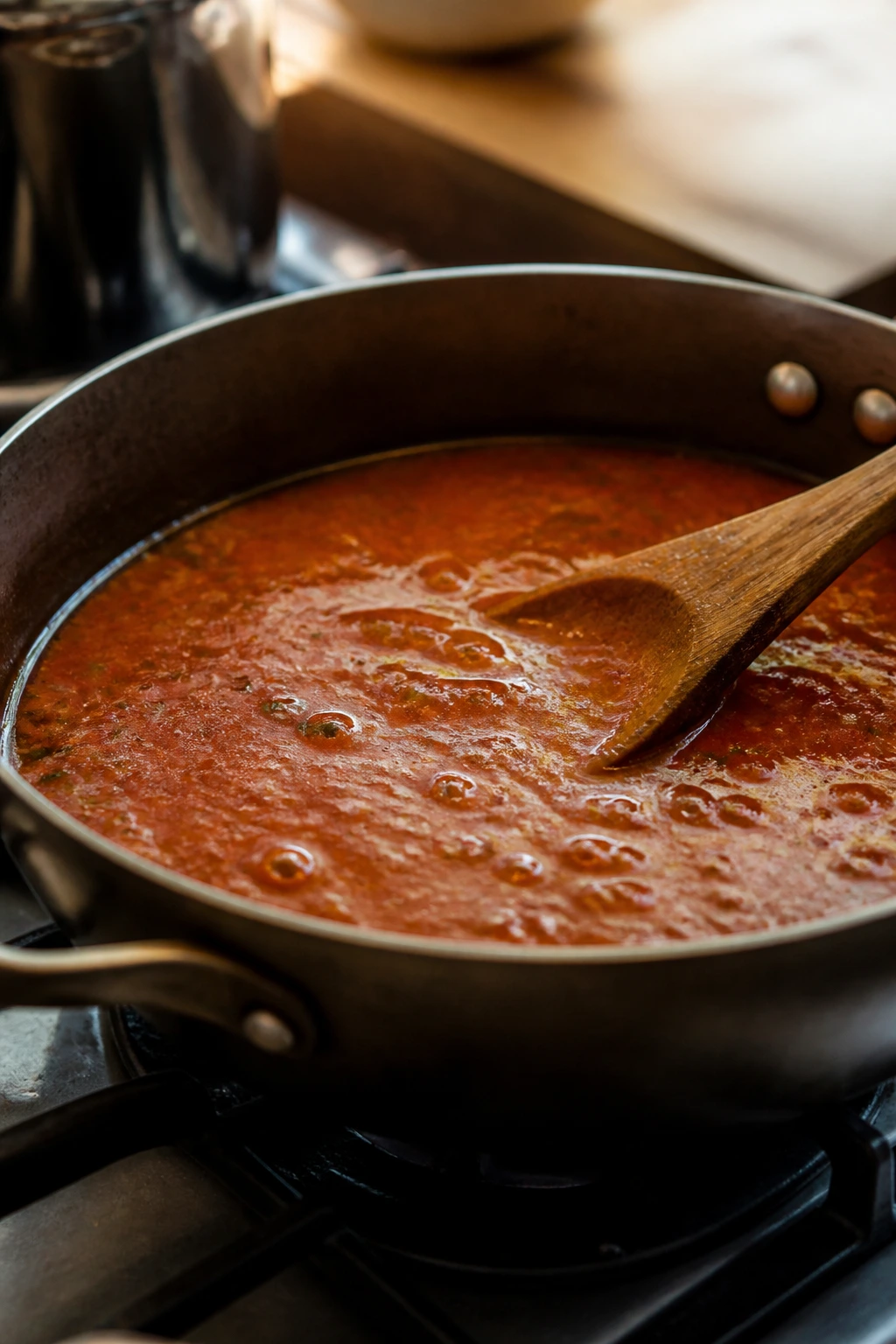
Making the sauce too thin: A watery sauce slides off the noodles and leaves plain pasta behind. Simmer long enough for the sauce to thicken, or reserve pasta water to help the sauce cling instead of splitting.
Skipping the browning step: Ground meat that goes straight into sauce tastes flat. Brown it first and let the bits stick to the pan a little before adding liquid; those browned bits are flavor, not mess.
Using too much garlic or pepper: Adults often add heat because they’re bored, then wonder why the kids complain. Keep the seasoning gentle, then offer extra at the table for the grownups.
Dumping cheese into boiling liquid: High heat can make cheese stringy or grainy. Lower the flame before adding Parmesan, cream cheese, or mozzarella so the sauce stays smooth.
Not tasting at the end: Tomato sauce changes a lot after simmering. Taste it before serving and adjust with salt, a little sugar, or a dab of butter if the flavor needs rounding out.
Frequently Asked Questions

Can I use jarred sauce for all of these recipes?
Yes, and for some of them that’s the smart move. Choose a sauce with a short ingredient list and a flavor that isn’t too sweet, then build from there with meat, cheese, or vegetables.
What kind of spaghetti works best for kids?
Regular spaghetti is the safest choice, but thin spaghetti is easier for little mouths and smaller forks. If your kids struggle with long noodles, break them in half before boiling.
How do I hide vegetables without changing the flavor too much?
Grate vegetables as finely as you can, then cook them with onion until they’re soft before the sauce goes in. Carrots, zucchini, and spinach are the easiest vegetables to bury in a tomato base.
Can I make these recipes with gluten-free pasta?
You can, but cook it carefully and keep a close eye on texture. Gluten-free spaghetti goes from firm to soft faster than regular pasta, so undercook it slightly and serve it right away.
What’s the best way to keep baked spaghetti from getting mushy?
Undercook the pasta by 1 minute, use enough sauce to coat but not drown it, and let the casserole rest before serving. That rest lets the noodles settle instead of sliding apart.
Which recipes are the fastest on a weeknight?
The garlic butter Parmesan chicken spaghetti and the taco spaghetti are the quickest from start to finish. Both can be on the table in about 30 minutes if your chicken is already cooked.
Can I freeze the leftovers?
Yes for most tomato-based sauces and meat-based recipes. Creamy dishes freeze less gracefully, so if you plan to freeze, keep the sauce lighter and reheat slowly with a splash of milk or broth.
What if my kid only eats plain noodles?
Start with the garlic butter Parmesan version or the creamy chicken spaghetti. Those two are mild enough that they often pass the plain-noodle test while still counting as dinner.
The Dinner Table That Finally Settles Down
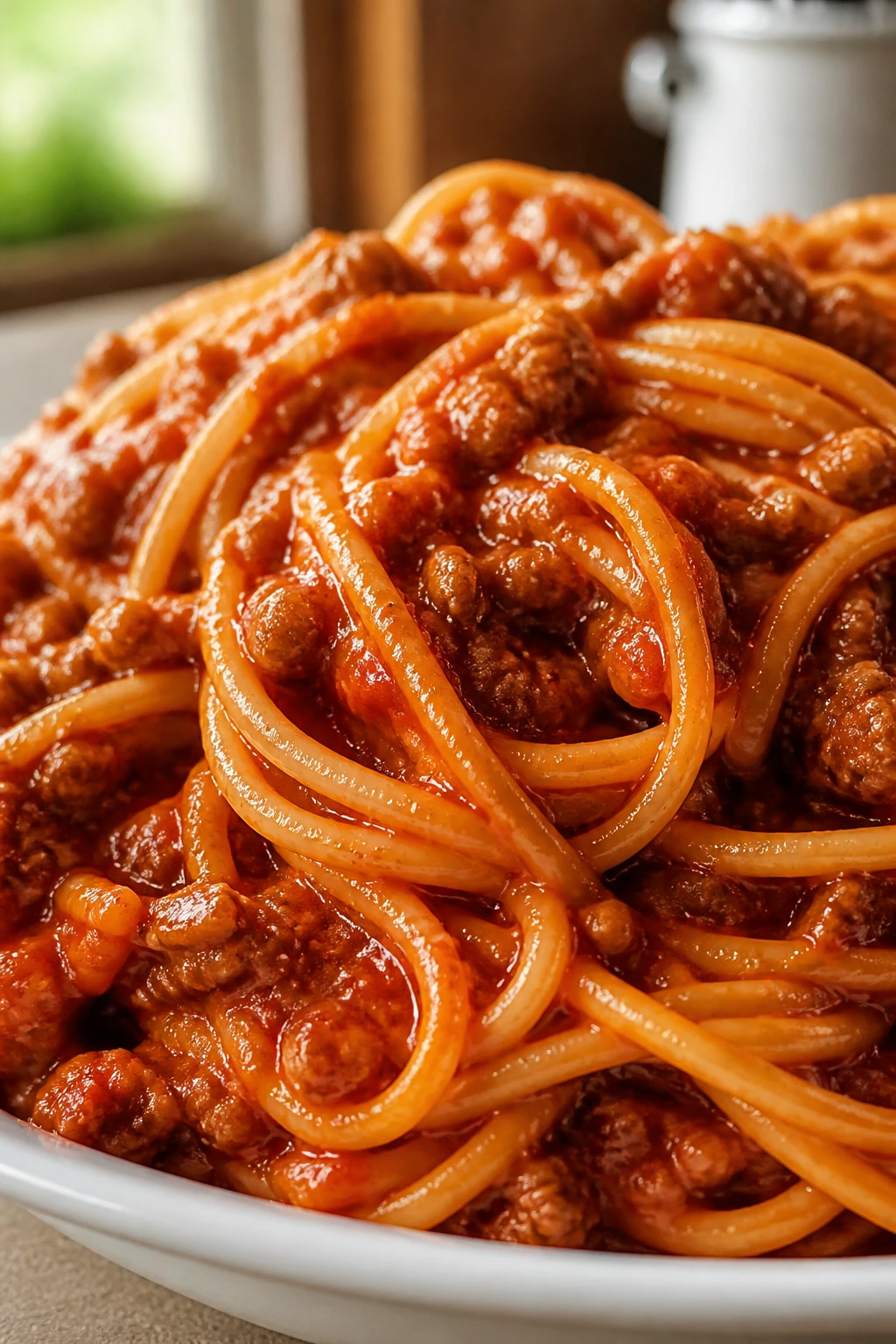
The best spaghetti dinners for kids are not the ones that try to impress anybody. They’re the ones that hit the same pleasant notes over and over: soft noodles, a sauce that clings, cheese that melts without drama, and protein that feels familiar.
Once you know that, the rest is just choosing the version that fits the night. Meatballs when you want classic comfort. Taco spaghetti when everyone’s restless. Baked casserole when you need something that can sit for a few minutes and still taste right. That’s the real value here: not variety for its own sake, but a small stash of dinners that make the table quieter.