



A box of couscous can save a wrecked evening.
That’s not a dramatic claim. It’s just the truth. Couscous dinners have a way of turning a bare-bones pantry, a tired protein, and a few vegetables into something that feels put together, even when you started cooking on fumes. The magic is in the speed. Regular Moroccan couscous goes from dry pellets to fluffy dinner base in about five minutes. Pearl couscous gives you a little chew and still stays firmly in the weeknight lane.
What I love most is that couscous doesn’t act like a diva. It takes on broth, spices, lemon, tomato juices, pan drippings, herb oil, and the salty bite of feta without arguing. It plays nicely with chicken thighs, shrimp, chickpeas, sausage, tuna, salmon, and whatever vegetables are lingering in the crisper drawer. That makes it one of the rare dinner staples that feels flexible without becoming boring.
Why These Couscous Dinners Earn a Spot in the Rotation
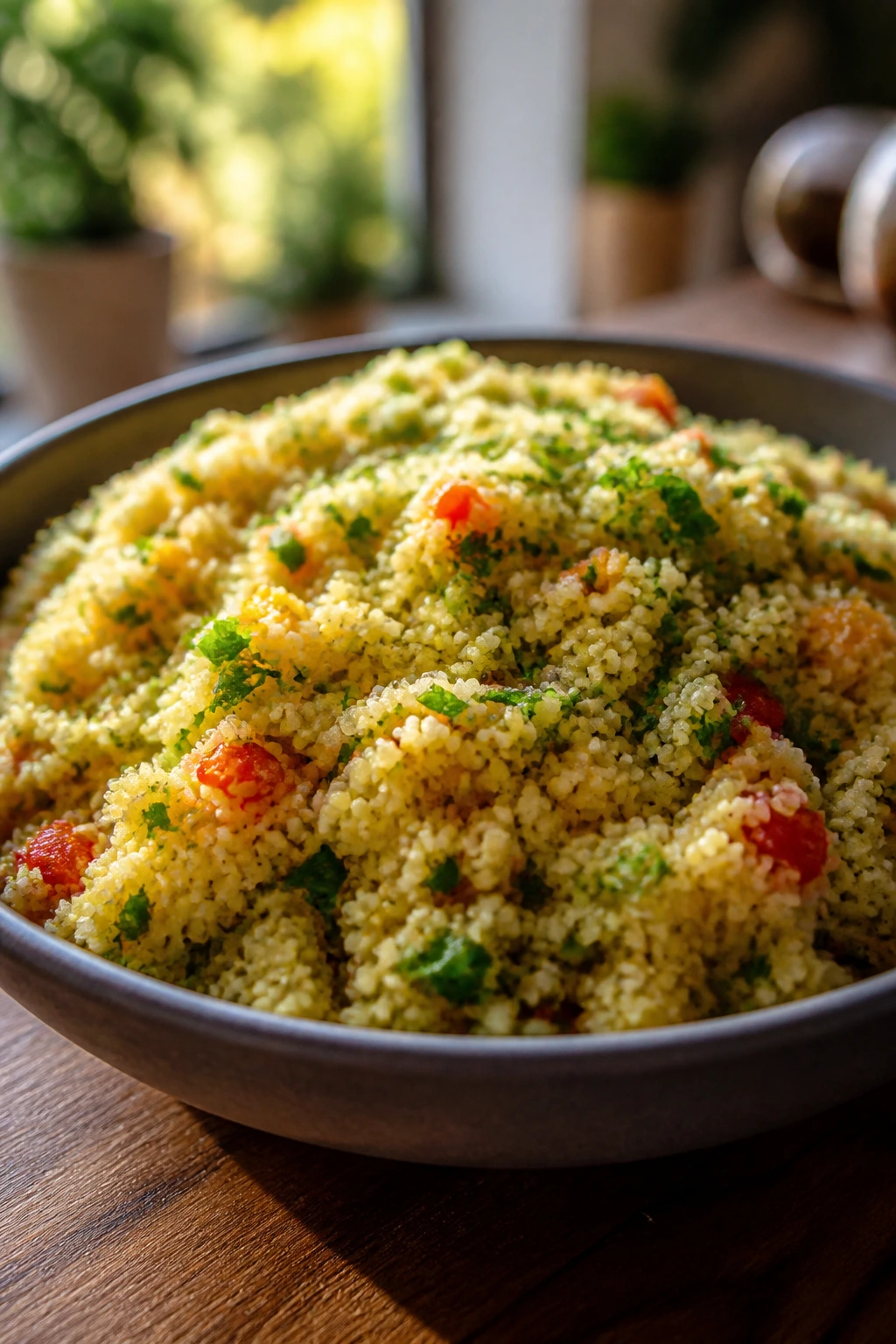
- Fast without feeling rushed: Most of these dishes finish in 20 to 35 minutes, which is the sweet spot between “cooked” and “I ordered takeout because I lost the thread.”
- Built for pantry and fridge leftovers: Couscous, canned beans, broth, onions, garlic, tomatoes, and herbs carry a lot of these meals, so you don’t need a perfect shopping trip.
- Easy to make taste intentional: A squeeze of lemon, a spoonful of tahini, or a handful of herbs changes couscous from plain to layered in a hurry.
- One pan does a lot of work: Several of these dinners keep cleanup lean by using the same skillet for browning, simmering, and finishing.
- Works with meat, seafood, or none at all: The lineup covers chicken, shrimp, turkey, sausage, beef, lamb, fish, and vegetarian options, so the collection fits a real household with real preferences.
- Leftovers hold up well: Couscous softens a bit in the fridge, but it rarely turns heavy or gluey the way some starches do.
1. Lemon-Garlic Chicken Couscous Skillet
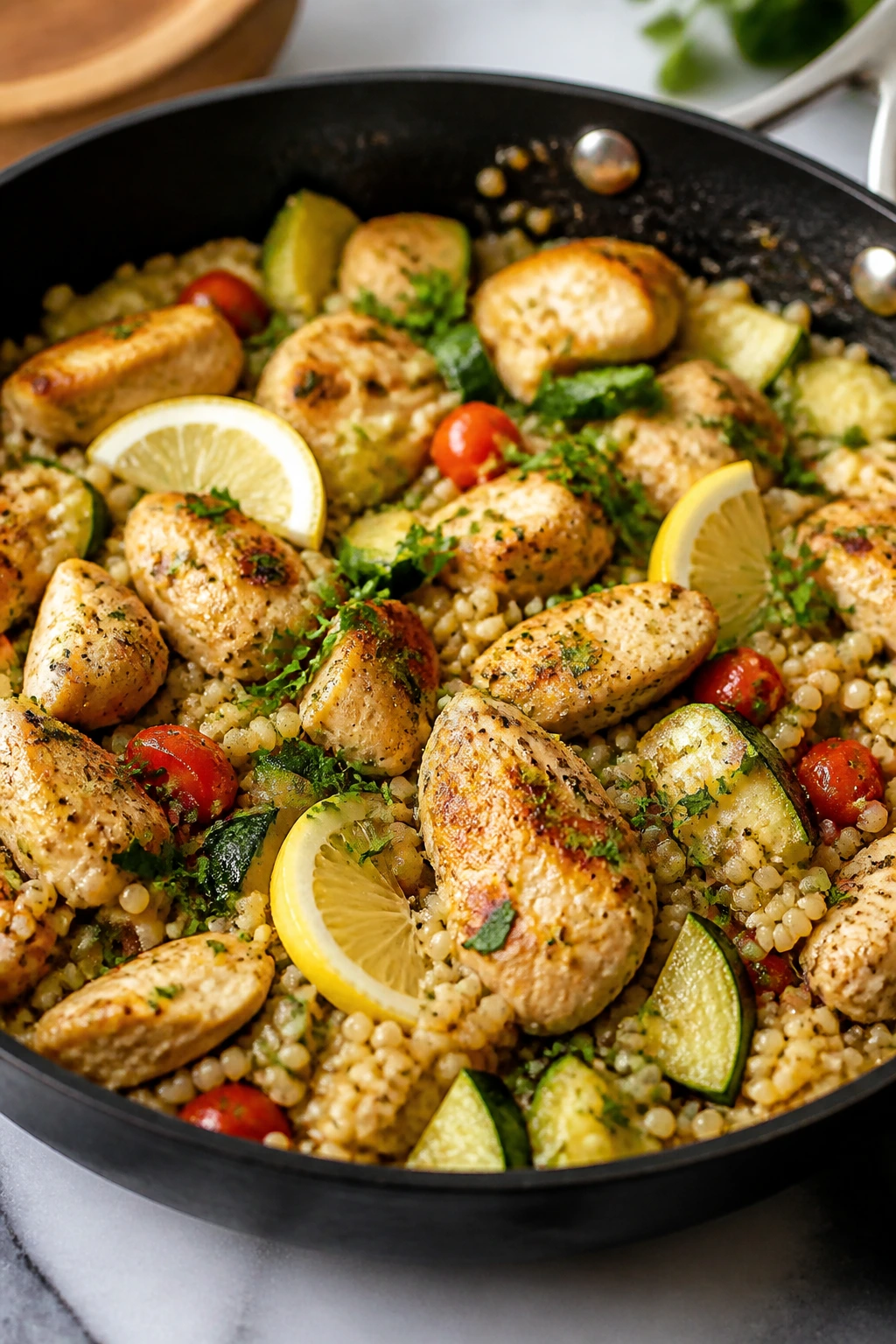
Chicken and couscous have an easy, practical kind of chemistry. The chicken brings the savory backbone, the lemon keeps the whole skillet from getting sleepy, and the couscous soaks up every drop of garlic-scented broth like it was waiting for it. This is the sort of dinner that looks casual in the pan and tastes like someone paid attention.
The spinach wilts right at the end, which gives you a little green lift without turning the dish into a salad. I prefer boneless chicken thighs here because they stay juicy even if your timing slips by a minute or two. Breasts work, but thighs forgive more, and on a weeknight that matters.
Why It Works:
This skillet works because every part cooks at a speed that matches the others. Chicken thighs brown quickly, Moroccan couscous steams in five minutes, and spinach softens in the residual heat instead of collapsing into something muddy. The lemon goes in late, which keeps it bright instead of bitter, and the broth gives the couscous more depth than plain water ever could. You get one pan, but it doesn’t taste like a compromise.
Key Ingredients:
- 1 pound boneless, skinless chicken thighs, trimmed of excess fat
- 1 tablespoon olive oil
- 1 small yellow onion, finely diced
- 3 garlic cloves, minced
- 1 teaspoon dried oregano
- 1 cup Moroccan couscous
- 1 3/4 cups low-sodium chicken broth
- 2 cups baby spinach
- 1 lemon, zested and juiced
- 2 tablespoons chopped fresh parsley
- 1/4 teaspoon red pepper flakes, optional
Quick Steps:
- Brown the chicken: Pat the chicken thighs dry, season them with salt and pepper, and sear in 1 tablespoon olive oil over medium-high heat for 4 to 5 minutes per side, until deep golden and cooked through. Move the chicken to a plate.
- Cook the onion and garlic: Lower the heat to medium. Add the diced onion and cook for 3 to 4 minutes, stirring often, until softened and lightly translucent. Stir in the garlic and oregano for 30 seconds.
- Build the couscous base: Pour in the chicken broth and bring it to a lively simmer. Stir in the couscous, then cover the skillet, turn off the heat, and let it stand for 5 minutes until the liquid is absorbed.
- Fluff and fold: Fluff the couscous with a fork. Add the spinach, lemon zest, lemon juice, and parsley, and stir until the spinach just wilts.
- Return the chicken: Slice or chunk the chicken, then nestle it back into the pan with any juices. Heat for 1 minute, just enough to warm it through.
- Finish and serve: Taste for salt, add red pepper flakes if you want a little heat, and serve right away while the couscous is soft and fragrant.
Tips and Variations:
- If you want a creamier finish, stir in 2 tablespoons of plain Greek yogurt off the heat.
- Kale works in place of spinach, but slice it thin and give it a minute longer in the pan.
- Leftover rotisserie chicken can be added at the end; just skip the searing step and warm it through with the couscous.
2. Chickpea, Tomato, and Feta Couscous
This is the vegetarian dinner I reach for when the fridge looks a little thin but not empty. The tomatoes soften into a jammy sauce, the chickpeas bring body, and the feta gives you that salty little snap that makes the whole bowl feel complete. It eats like comfort food, but it stays light enough that you don’t sink into the couch afterward.
Cherry tomatoes are the smart move here because they collapse into sweetness faster than chopped standard tomatoes. If you have a few olives or a handful of arugula, they fit in without making the dish fussy. I like this one with a glass of something cold and a sharp knife for the red onion.
Why It Works:
Couscous is a sponge in the best sense. Once the tomatoes start to burst, their juices and the vegetable broth coat the grains without needing a separate sauce. Chickpeas add protein and enough chew to keep the bowl from feeling soft all the way through, while feta finishes the dish with salt and creaminess. Cumin and smoked paprika pull the flavors in a warmer direction, so it doesn’t taste like a random pile of pantry items.
Key Ingredients:
- 1 cup Moroccan couscous
- 1 3/4 cups vegetable broth
- 1 tablespoon olive oil
- 1 small red onion, thinly sliced
- 2 garlic cloves, minced
- 1 teaspoon ground cumin
- 1/2 teaspoon smoked paprika
- 2 cups cherry tomatoes
- 1 can (15 ounces) chickpeas, drained and rinsed
- 1/2 cup crumbled feta
- 2 tablespoons chopped fresh parsley
- 1 lemon, cut into wedges
Quick Steps:
- Soften the onion: Warm the olive oil in a large skillet over medium heat. Add the red onion and cook for 3 minutes, until it starts to lose its bite.
- Bloom the spices: Stir in the garlic, cumin, and smoked paprika for 30 seconds, just until the spices smell warm and toasted.
- Cook the tomatoes and chickpeas: Add the cherry tomatoes and chickpeas. Cook for 4 to 5 minutes, stirring occasionally, until the tomatoes begin to burst and the chickpeas take on a glossy coating.
- Steam the couscous: Pour in the broth and bring it to a boil. Stir in the couscous, cover the pan, and remove it from the heat. Let it stand for 5 minutes.
- Fluff and finish: Fluff the couscous with a fork, then fold in the feta and parsley. Add a squeeze of lemon.
- Taste and adjust: If the mixture feels flat, add another pinch of salt or a second squeeze of lemon. Serve while warm.
Tips and Variations:
- Swap feta for torn mozzarella or shaved parmesan if that’s what you have.
- A handful of baby arugula stirred in at the end gives the bowl a peppery edge.
- If your tomatoes are bland, add 1 teaspoon of tomato paste with the garlic to deepen the flavor.
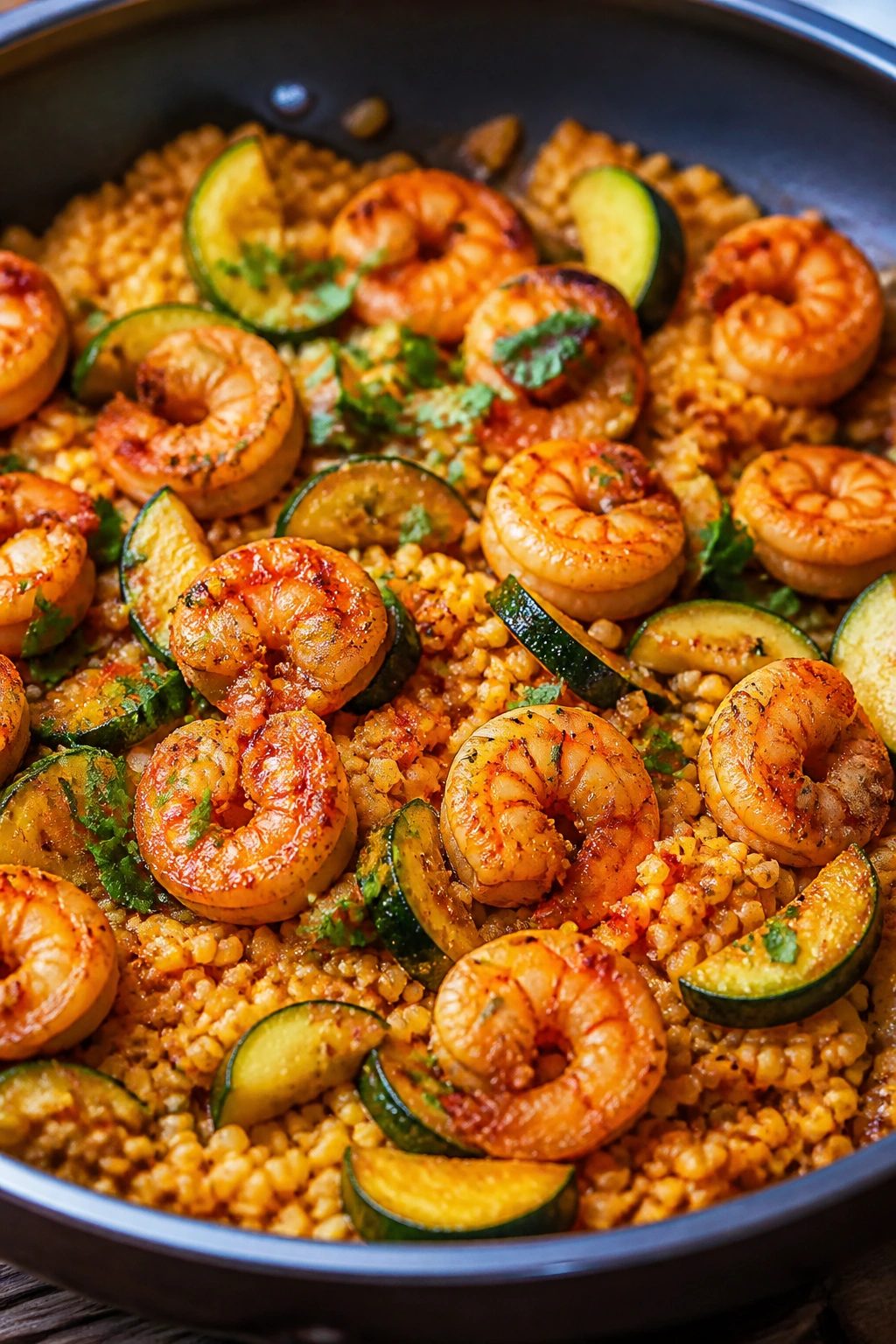
3. Harissa Shrimp Couscous with Zucchini and Herbs
What happens when spicy harissa meets sweet shrimp and tender zucchini? You get a dinner that tastes brighter than the effort it asks from you. Shrimp is one of the few proteins that can go from raw to done in a few minutes without losing its shape, which makes it a very good partner for couscous on a busy night.
This dish leans warm, smoky, and a little floral if your harissa paste has rose or caraway in it. That’s not a problem. It’s the point. The fresh herbs at the end keep it from feeling heavy, and the lemon cuts through the heat so the bowl stays balanced.
Why It Works:
Shrimp cooks fast enough to stay juicy while the rest of the pan is coming together. Zucchini softens without turning mushy if you keep the heat up and avoid crowding the skillet. Harissa blooms in oil, which means the flavor spreads through the whole dish instead of sitting in one spicy pocket. Couscous catches that seasoned liquid and turns it into dinner instead of a side dish.
Key Ingredients:
- 1 cup Moroccan couscous
- 1 3/4 cups low-sodium chicken or vegetable broth
- 1 pound large shrimp, peeled and deveined
- 1 tablespoon olive oil
- 1 tablespoon harissa paste
- 1 small shallot, thinly sliced
- 2 garlic cloves, minced
- 1 medium zucchini, diced into 1/2-inch pieces
- 1 lemon, zested and juiced
- 2 tablespoons chopped cilantro
- 2 tablespoons chopped parsley
Quick Steps:
- Season the shrimp: Toss the shrimp with half the harissa paste, a pinch of salt, and a little pepper. Let them sit while you prep the pan.
- Cook the zucchini and shallot: Heat the olive oil in a large skillet over medium-high heat. Add the shallot and zucchini and cook for 4 to 5 minutes, until the zucchini starts to turn golden at the edges.
- Add garlic and remaining harissa: Stir in the garlic and the rest of the harissa paste. Cook for 30 seconds, just until the spice smells toasty.
- Cook the shrimp: Push the vegetables to the side of the skillet, add the shrimp, and cook for 1 to 2 minutes per side until pink and curled. Remove them to a plate so they do not overcook.
- Steam the couscous: Pour in the broth and bring it to a boil. Stir in the couscous, cover the pan, and remove from the heat. Rest for 5 minutes.
- Finish and serve: Fluff the couscous, return the shrimp to the pan, and add lemon zest, lemon juice, cilantro, and parsley. Stir once or twice and serve right away.
Tips and Variations:
- Use a mild harissa if you want the flavor without much heat.
- A spoonful of plain yogurt on top cools the spice and makes the bowl feel richer.
- If zucchini is too watery, salt it lightly and let it sit for 10 minutes, then pat it dry before cooking.
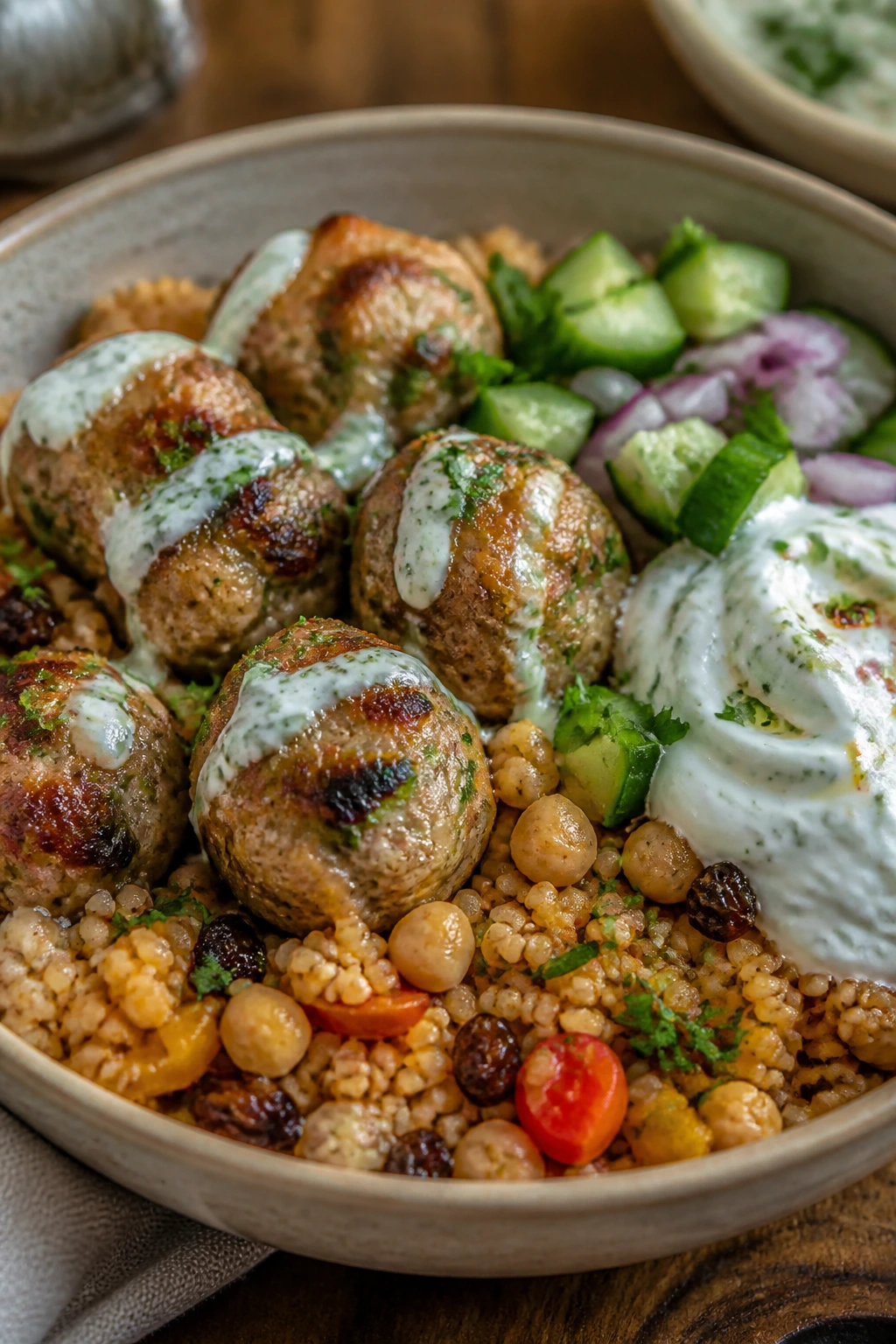
4. Turkey Meatball Couscous Bowls with Herb Yogurt
Turkey meatballs sound like more work than they are, especially if you keep them small. The little ones cook fast, brown well, and give you a tender bite that sits comfortably over couscous. Add a cool herb yogurt sauce and some chopped cucumber, and the bowl starts to feel like something you’d happily repeat.
I like this one because it gives you a complete dinner in a way that still feels fresh. There’s protein, starch, crunch, and a cold sauce to pull it all together. It’s the sort of meal that keeps lunch leftovers interesting instead of sad.
Why It Works:
Ground turkey can go dry if you overcook it, so small meatballs are the better move. They brown quickly in a skillet or hot oven, which keeps the exterior flavorful while the center stays soft. The yogurt sauce brings moisture and tang, and that matters because couscous itself doesn’t contribute much richness. A little cumin and coriander give the meatballs a warm, savory edge without making them taste heavy.
Key Ingredients:
- 1 pound ground turkey
- 1/3 cup plain breadcrumbs
- 1 large egg
- 2 garlic cloves, minced
- 1 teaspoon ground cumin
- 1/2 teaspoon ground coriander
- 1 cup Moroccan couscous
- 1 3/4 cups chicken broth
- 1 cucumber, diced
- 1/2 cup plain Greek yogurt
- 2 tablespoons chopped dill
- 1 tablespoon lemon juice
Quick Steps:
- Mix the meatball base: In a bowl, combine the turkey, breadcrumbs, egg, garlic, cumin, coriander, salt, and pepper. Mix gently until evenly combined.
- Shape the meatballs: Form the mixture into 16 to 18 meatballs, each about 1 1/2 inches wide. Keep them small so they cook through fast.
- Cook the meatballs: Heat a lightly oiled skillet over medium heat and cook the meatballs for 8 to 10 minutes, turning every couple of minutes, until browned on all sides and cooked through.
- Steam the couscous: While the meatballs cook, bring the broth to a boil in a small saucepan. Stir in the couscous, cover, and remove from the heat for 5 minutes. Fluff with a fork.
- Make the yogurt sauce: Stir together the Greek yogurt, dill, lemon juice, and a pinch of salt. Add a splash of water if you want it thinner.
- Assemble the bowls: Spoon couscous into bowls, top with meatballs and diced cucumber, then drizzle with the yogurt sauce.
Tips and Variations:
- If you want less hands-on time, bake the meatballs at 425°F for about 12 minutes instead of pan-cooking them.
- Ground lamb works beautifully in place of turkey if you want a richer bowl.
- A handful of chopped mint makes the yogurt sauce feel brighter.
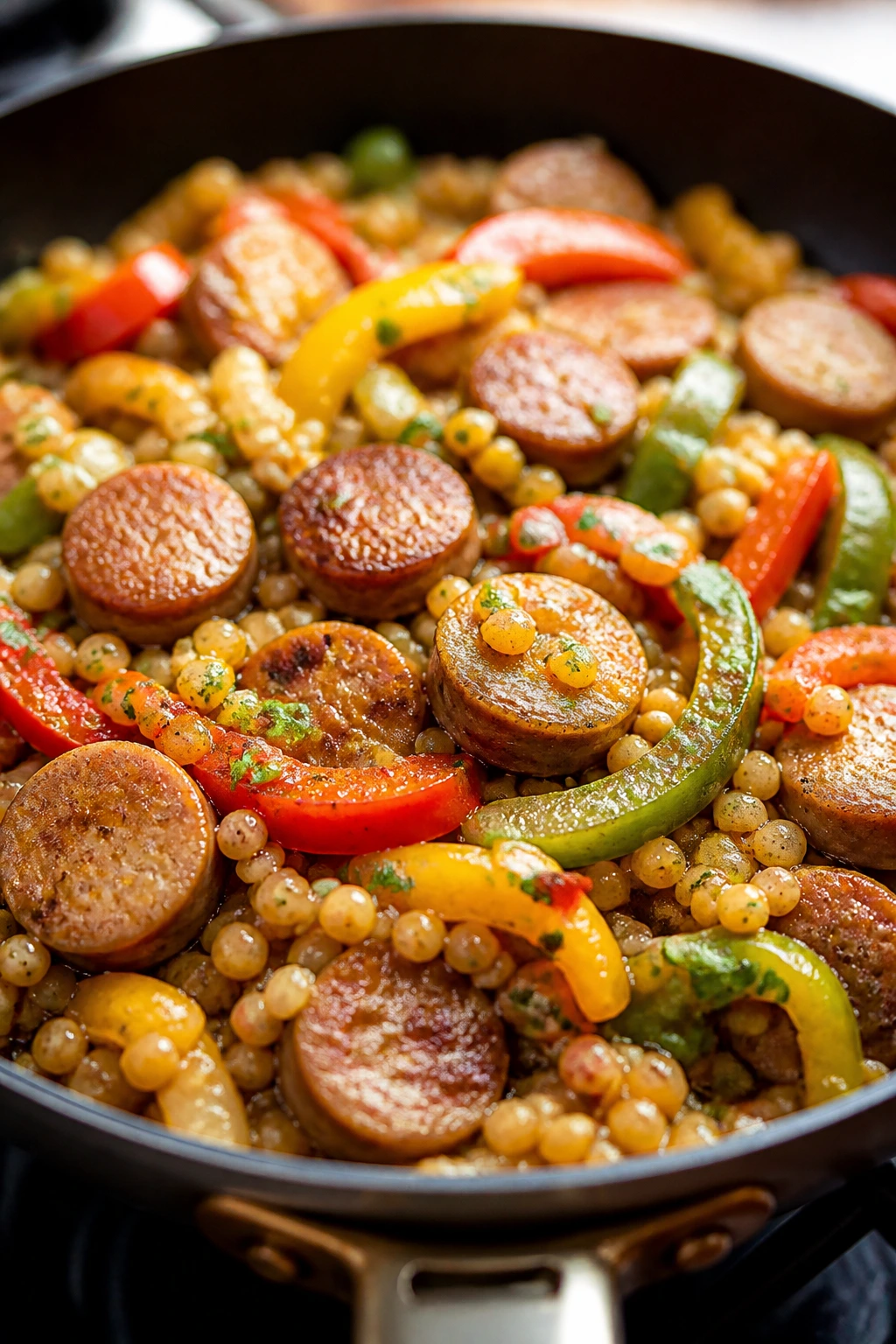
5. Sausage, Peppers, and Pearl Couscous Skillet
Pearl couscous gives this skillet a little more chew, which is exactly what you want when sausage is in the mix. The peppers soften into sweet ribbons, the sausage leaves behind seasoned drippings, and the tomato paste ties the whole thing together. It smells like a dinner that knows what it’s doing.
This is one of the most forgiving recipes in the bunch. Chicken sausage, pork sausage, sweet peppers, hot peppers, red onions, yellow onions — they all work. The pearl couscous stays sturdy enough to handle a hearty pan sauce, so you don’t end up with something mushy by the time everyone sits down.
Why It Works:
Sausage is doing more than supplying protein here. It seasons the pan from the first minute, which means the peppers, onions, and couscous all absorb those drippings. Pearl couscous takes a few minutes longer than the fine kind, but that extra time gives the starch enough structure to stand up to the sausage and vegetables. Tomato paste deepens the color and flavor without turning the pan into a red sauce.
Key Ingredients:
- 12 ounces Italian sausage, sliced into 1/2-inch rounds
- 1 tablespoon olive oil, if needed
- 2 bell peppers, sliced into strips
- 1 medium yellow onion, sliced
- 2 garlic cloves, minced
- 1 tablespoon tomato paste
- 1 cup pearl couscous
- 1 3/4 cups chicken broth
- 1/2 teaspoon fennel seeds, optional
- 2 cups baby spinach
- 2 tablespoons grated parmesan
- 1 tablespoon chopped parsley
Quick Steps:
- Brown the sausage: Heat a large skillet over medium-high heat. Add the sausage slices and cook for 4 to 5 minutes, until browned on both sides. Remove to a plate.
- Cook the vegetables: If the pan looks dry, add 1 tablespoon olive oil. Add the peppers and onion and cook for 5 to 6 minutes, until softened and lightly caramelized.
- Toast the tomato paste: Stir in the garlic, tomato paste, and fennel seeds, if using. Cook for 30 seconds until the paste darkens slightly and smells sweet.
- Add broth and couscous: Pour in the broth, bring it to a simmer, and stir in the pearl couscous. Cover and cook for 8 to 10 minutes, stirring once halfway through, until the couscous is tender and most of the liquid is absorbed.
- Finish the skillet: Return the sausage to the pan along with the spinach. Stir for 1 minute until the spinach wilts and the sausage is hot.
- Serve: Sprinkle with parmesan and parsley, then serve while the couscous is still glossy and loose.
Tips and Variations:
- A spoonful of ricotta on top makes the skillet richer and softer.
- Use hot Italian sausage if you want the meal to carry more heat on its own.
- If you only have chicken broth, that’s fine; the sausage provides enough flavor to carry the dish.
6. Roasted Vegetable and Halloumi Couscous with Tahini
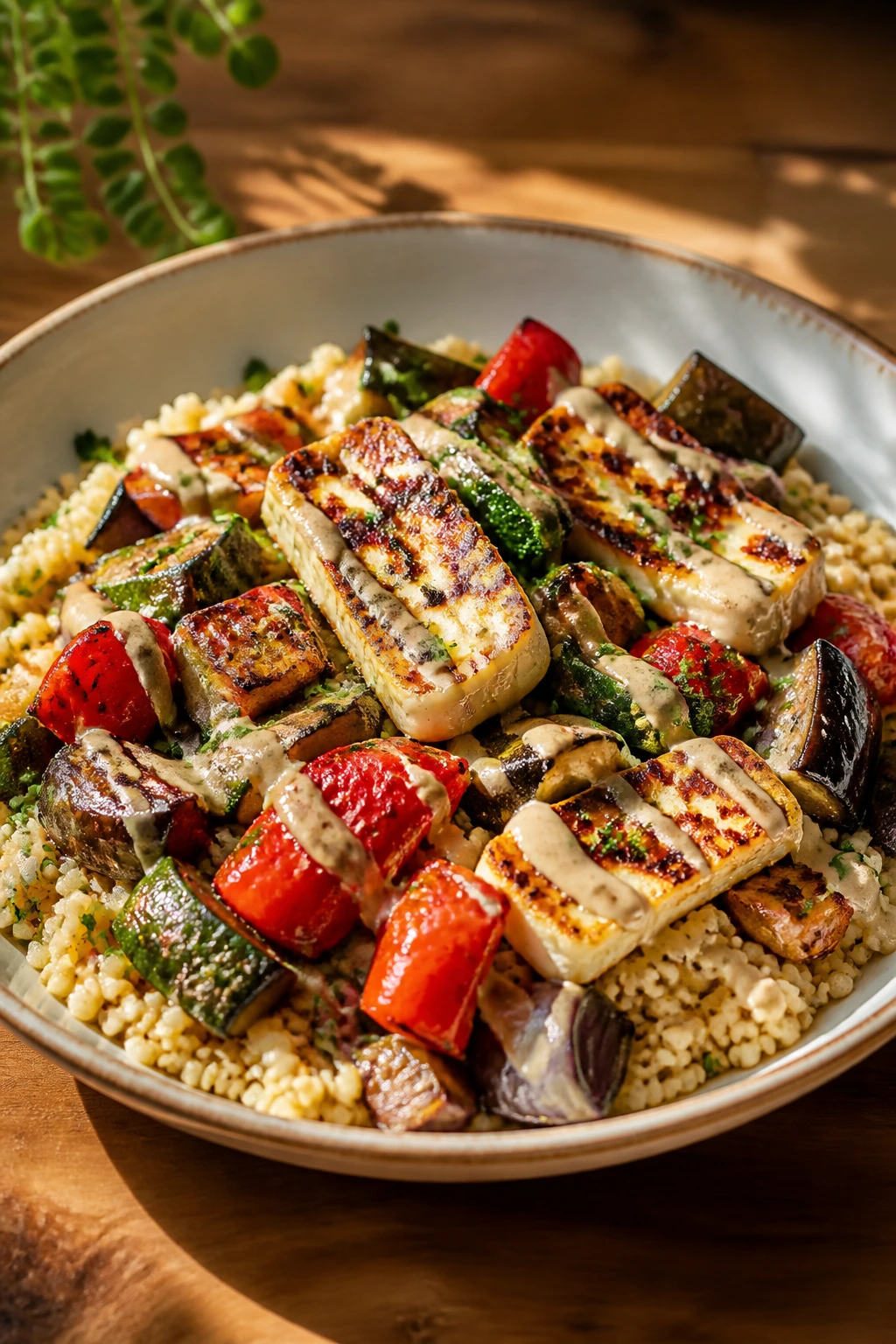
This one has the kind of plate you want to eat with a fork and a little bit of impatience. Roasted vegetables bring caramelized edges, halloumi gives you salty chew, and tahini pulls everything together with a nutty, lemony finish. It’s meatless without feeling sparse, which is a trick worth keeping.
Halloumi behaves differently than feta or mozzarella. It browns instead of melting, and that gives the dish some needed texture against the soft couscous and tender vegetables. If you like meals with contrast, this one earns its keep.
Why It Works:
Roasting vegetables at high heat concentrates their flavor, especially with zucchini, bell pepper, red onion, and eggplant. Halloumi sears in a hot pan or oven and holds its shape, so you get something chewy rather than creamy. Tahini works as the bridge: it coats the couscous, softens the edges of the vegetables, and gives the whole bowl a richer taste without needing dairy-heavy sauce.
Key Ingredients:
- 1 zucchini, cut into half-moons
- 1 red bell pepper, chopped
- 1 small eggplant, cut into 1-inch cubes
- 1 small red onion, cut into wedges
- 2 tablespoons olive oil
- 1 cup Moroccan couscous
- 1 3/4 cups vegetable broth
- 8 ounces halloumi, sliced into 1/2-inch slabs
- 2 tablespoons tahini
- 1 lemon, juiced
- 2 tablespoons chopped parsley
- 1 tablespoon toasted pine nuts, optional
Quick Steps:
- Roast the vegetables: Heat the oven to 425°F. Toss the zucchini, bell pepper, eggplant, and red onion with olive oil, salt, and pepper, then spread them on a sheet pan. Roast for 20 to 25 minutes, stirring once, until browned at the edges.
- Cook the couscous: Bring the broth to a boil, stir in the couscous, cover, and remove from the heat for 5 minutes. Fluff with a fork.
- Mix the tahini sauce: Stir the tahini with lemon juice, 2 tablespoons of warm water, and a pinch of salt until smooth and pourable.
- Brown the halloumi: While the vegetables roast, sear the halloumi in a dry skillet over medium heat for 1 to 2 minutes per side until golden.
- Assemble the bowls: Spoon couscous into bowls, top with the roasted vegetables and halloumi, then drizzle with tahini sauce.
- Finish: Scatter parsley and pine nuts over the top if you want extra crunch.
Tips and Variations:
- If eggplant isn’t your thing, use mushrooms or more zucchini.
- Canned chickpeas can be roasted with the vegetables for extra protein.
- A pinch of chili flakes in the tahini sauce gives the bowl more edge.
7. Beef and Mushroom Couscous with Parsley
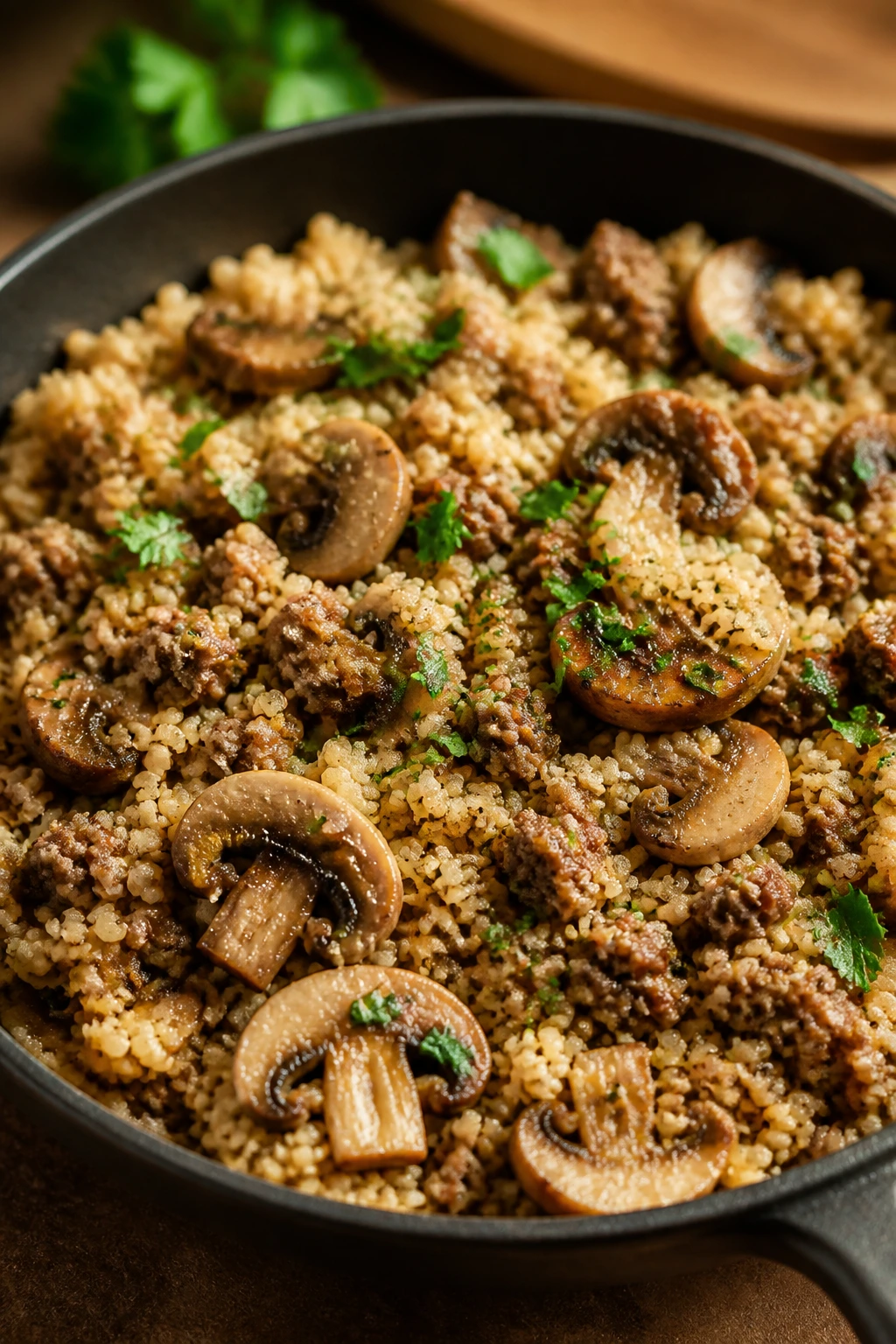
Ground beef and mushrooms make sense together in a skillet. The beef gives you depth, the mushrooms soak up the drippings, and couscous turns the whole thing into a meal that feels richer than the ingredient list suggests. This is a very good answer to the “I need dinner and I need it to taste like dinner” problem.
I like cremini mushrooms here because they’re earthy without being aggressive. A touch of Worcestershire sauce and thyme pushes the dish into savory territory fast. Nothing about it is flashy. That’s part of the appeal.
Why It Works:
The mushrooms take on the flavor of the beef, garlic, and broth, which makes the whole skillet taste layered even though the method is short. Couscous absorbs that broth in minutes, so you don’t need to simmer the pan for half an hour. A little parsley at the end keeps the dish from getting too brown and too heavy, which is exactly the balance a beef dinner needs on a weeknight.
Key Ingredients:
- 1 pound ground beef, preferably 90/10
- 8 ounces cremini mushrooms, sliced
- 1 medium yellow onion, diced
- 2 garlic cloves, minced
- 1 teaspoon dried thyme
- 1 tablespoon Worcestershire sauce
- 1 cup Moroccan couscous
- 1 3/4 cups beef broth
- 2 tablespoons chopped parsley
- 2 tablespoons sour cream, optional
Quick Steps:
- Brown the beef: Heat a large skillet over medium-high heat and cook the ground beef for 4 to 5 minutes, breaking it up with a spoon, until no pink remains. Drain off excess fat if needed.
- Add the mushrooms and onion: Stir in the mushrooms and onion. Cook for 5 to 6 minutes until the mushrooms shrink and the onion softens.
- Build the flavor base: Add the garlic, thyme, and Worcestershire sauce. Cook for 30 seconds.
- Steam the couscous: Pour in the broth and bring it to a boil. Stir in the couscous, cover, and remove from the heat. Rest for 5 minutes.
- Fluff and finish: Fluff the couscous with a fork, then fold in the parsley. If you want a softer, richer finish, stir in the sour cream off the heat.
- Serve: Taste for salt and pepper, then serve while warm.
Tips and Variations:
- A splash of balsamic vinegar at the end gives the skillet a sharper edge.
- If you use very lean beef, add a little extra olive oil when cooking the mushrooms.
- Frozen peas can be stirred in during the last minute if you want a little green in the bowl.
8. Moroccan-Spiced Ground Lamb Couscous with Apricots
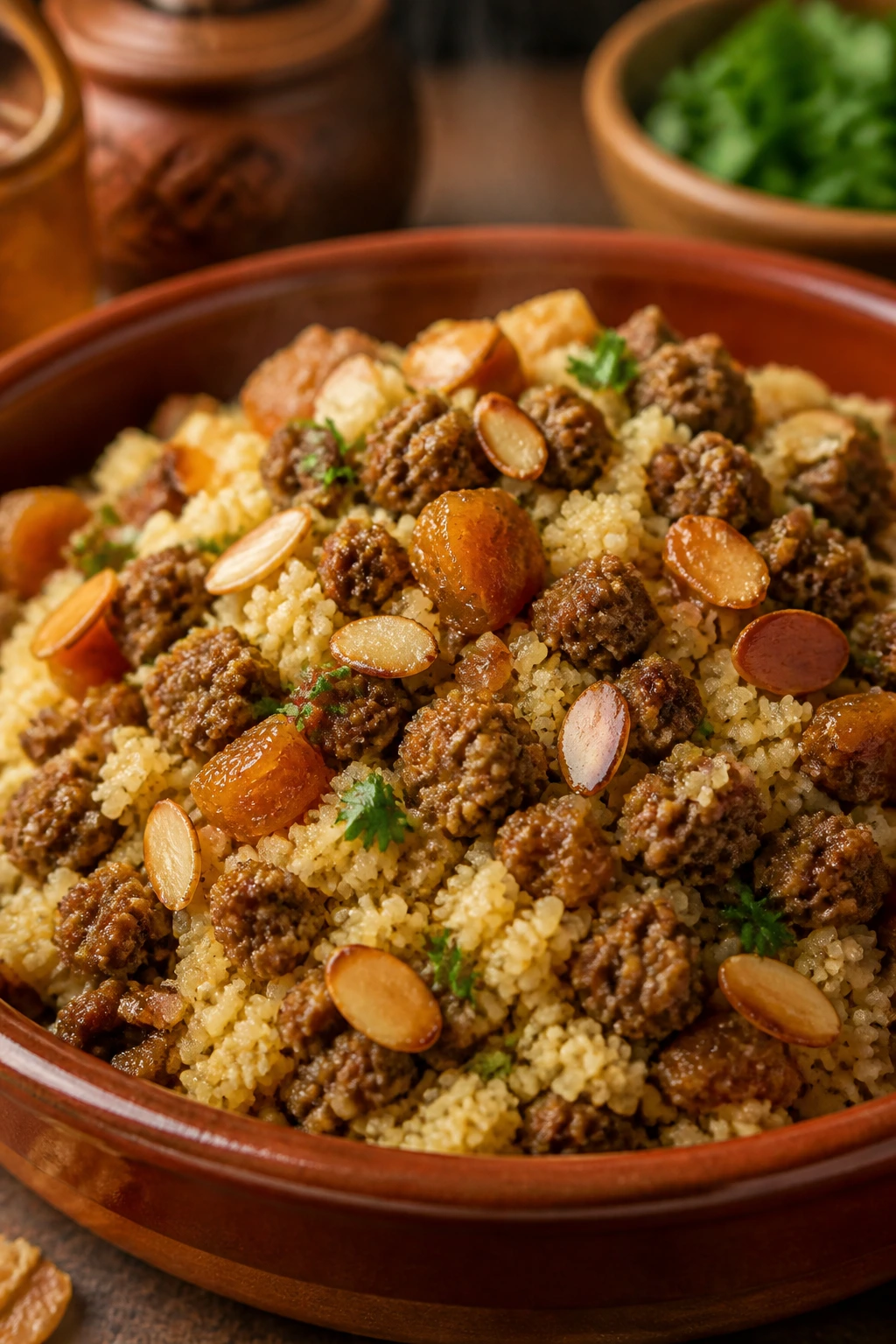
Ground lamb brings a warm, savory depth that plays beautifully with cinnamon, cumin, and coriander. Add chopped apricots and toasted almonds, and the bowl gets those little sweet-salty surprises that keep each bite from feeling repetitive. It’s the most fragrant recipe in the set, and I mean that as a compliment.
This is the one I make when I want the kitchen to smell alive. Not loud. Alive. The lamb cooks quickly because it’s ground, the spices bloom fast in the pan, and the apricots soften just enough to feel sticky and plush.
Why It Works:
Lamb has enough fat to carry warming spices without drying out, which is why it pairs so well with cumin, coriander, and a small hit of cinnamon. Dried apricots add sweetness that keeps the dish from leaning too savory, and the couscous picks up the spiced broth without needing extra sauce. Toasted almonds add crunch at the end, which matters because the rest of the bowl is soft and tender.
Key Ingredients:
- 1 pound ground lamb
- 1 small yellow onion, finely diced
- 2 garlic cloves, minced
- 1 teaspoon ground cumin
- 1 teaspoon ground coriander
- 1/2 teaspoon ground cinnamon
- 1 cup Moroccan couscous
- 1 3/4 cups chicken broth
- 1/3 cup chopped dried apricots
- 1/4 cup sliced almonds, toasted
- 2 tablespoons chopped mint
- 2 tablespoons chopped parsley
- 1 lemon, cut into wedges
Quick Steps:
- Brown the lamb: Heat a skillet over medium-high heat. Add the lamb and cook for 4 to 5 minutes, breaking it up as it browns.
- Cook the onion and spices: Add the onion and cook for 3 minutes, then stir in the garlic, cumin, coriander, and cinnamon. Cook for 30 seconds until fragrant.
- Add the apricots: Stir in the chopped apricots so they soften in the pan and pick up the spice.
- Steam the couscous: Pour in the broth and bring it to a boil. Stir in the couscous, cover, and remove from the heat. Let it sit for 5 minutes.
- Fluff and garnish: Fluff the couscous, fold in the mint and parsley, and top with toasted almonds.
- Finish: Serve with lemon wedges and let people squeeze as much or as little as they want.
Tips and Variations:
- A spoonful of plain yogurt on top cools the spices and works well if you like the bowl a little creamier.
- Ground turkey can replace lamb if you want a lighter version.
- Don’t overdo the cinnamon; it should hum in the background, not take over the pan.
9. Tuna, White Bean, and Caper Couscous
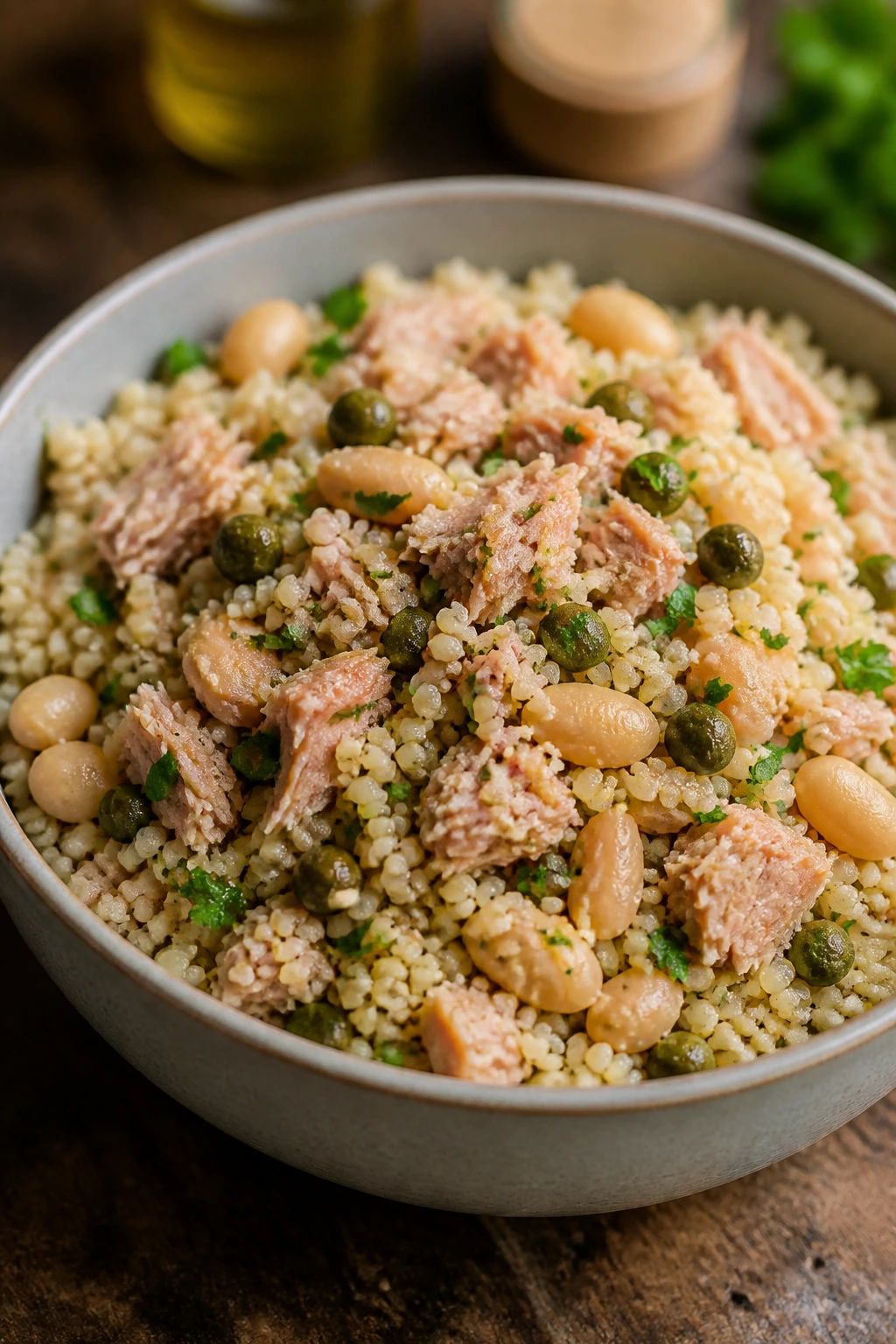
This is pantry dinner with enough personality to avoid feeling like a rescue mission. Tuna and white beans bring protein, capers bring salt and brightness, and couscous gives the whole thing enough bulk to count as dinner instead of a snack pretending to be one. It’s good warm, but it’s also one of the few couscous dinners that doesn’t mind being served at room temperature.
I like using tuna packed in olive oil when I can get it. The texture is softer and the flavor is rounder, which helps if the rest of the bowl is built from pantry staples. A handful of parsley and a squeeze of lemon make the difference between “fine” and “I’d make that again.”
Why It Works:
Canned tuna and white beans don’t need much cooking, which makes them natural partners for couscous. Capers, lemon, and red onion sharpen the flavor so the bowl doesn’t go flat. Because the couscous absorbs the lemony dressing and any olive oil from the tuna, every bite gets seasoned instead of leaving you with dry patches at the bottom of the bowl. This is also one of the best recipes here for lunch leftovers.
Key Ingredients:
- 1 cup Moroccan couscous
- 1 3/4 cups vegetable or chicken broth
- 2 cans tuna, 5 ounces each, drained
- 1 can (15 ounces) white beans, drained and rinsed
- 2 tablespoons capers, drained
- 1 cup cherry tomatoes, halved
- 1/4 small red onion, thinly sliced
- 2 tablespoons olive oil
- 1 lemon, juiced
- 2 tablespoons chopped parsley
- 1 handful arugula, optional
Quick Steps:
- Cook the couscous: Bring the broth to a boil, stir in the couscous, cover, and remove from the heat for 5 minutes. Fluff with a fork.
- Build the salad base: In a large bowl, combine the tuna, white beans, capers, tomatoes, and red onion.
- Season the mixture: Add the olive oil, lemon juice, salt, and pepper, then toss gently so the tuna stays in decent-sized flakes.
- Add the couscous: Fold the warm couscous into the tuna mixture so it soaks up the dressing.
- Finish with herbs: Stir in the parsley and arugula, if using.
- Serve: Taste again for lemon and salt. Serve warm or at room temperature.
Tips and Variations:
- Kalamata olives fit neatly into this bowl if you want more briny bite.
- If red onion feels too sharp, soak the slices in cold water for 5 minutes before adding them.
- This one holds up well for lunch, but add arugula right before serving so it stays crisp.
10. Salmon, Asparagus, and Dill Couscous
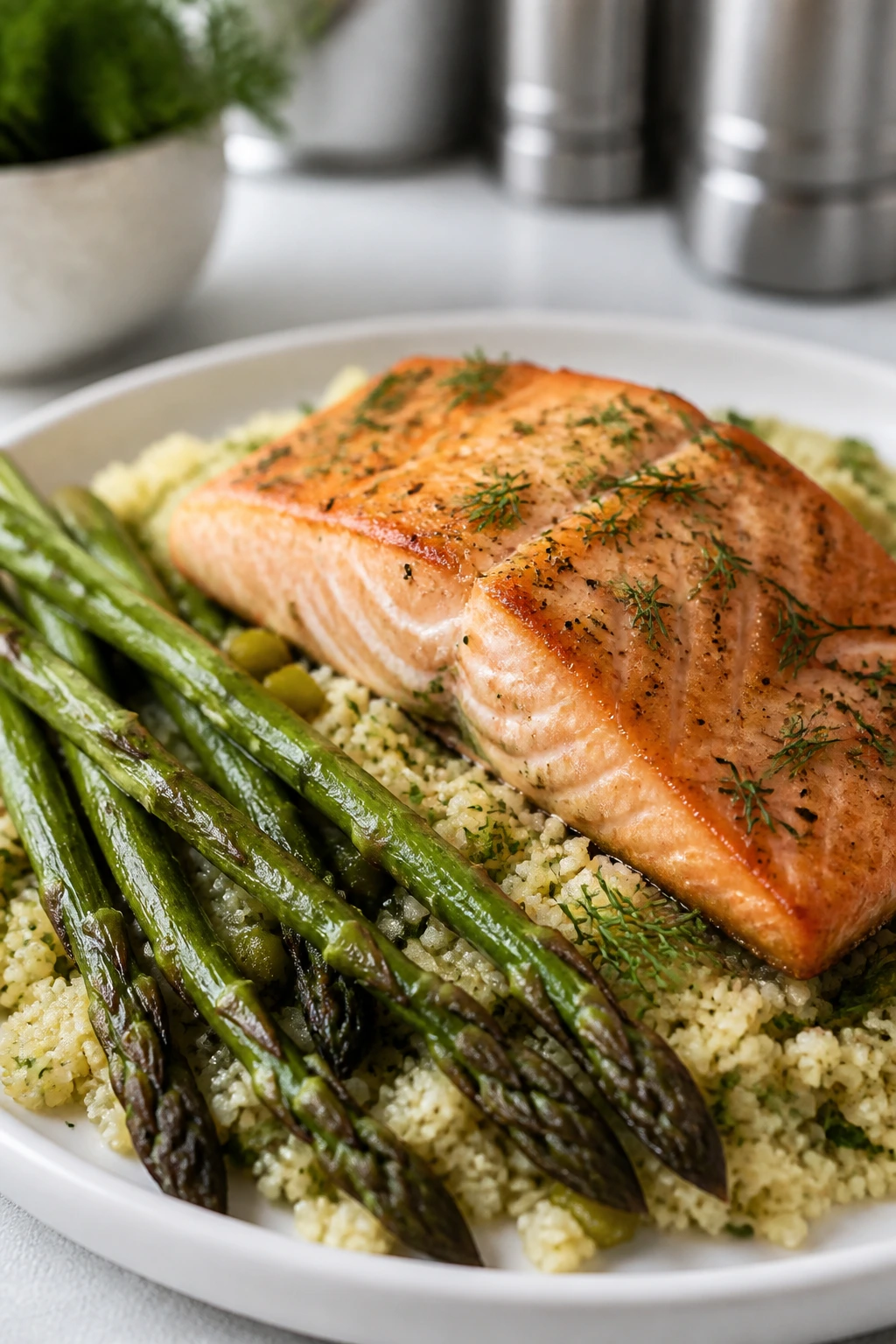
Salmon and couscous make a clean, elegant weeknight pairing without asking you to fuss around the stove for an hour. The asparagus roasts quickly, the salmon gets a crisp edge in the oven, and the dill brings that fresh, grassy note that makes the whole plate feel lighter. It’s a smart dinner when you want something that looks composed but behaves like a 30-minute meal.
The nice part here is that the salmon can rest while the couscous finishes. That tiny overlap is what makes the timing work. If you have a little plain yogurt, it turns into a quick sauce with lemon and dill, and that’s a finish I never get tired of.
Why It Works:
Salmon and asparagus both roast in the same narrow window, so they can share the oven without anyone getting overdone. Couscous cooked in broth absorbs the small amount of fat and lemon juice that ends up on the plate, which makes it taste richer than the ingredient list suggests. Dill is the right herb here because it likes salmon’s clean flavor; parsley works too, but dill has more lift.
Key Ingredients:
- 4 salmon fillets, about 5 to 6 ounces each
- 1 bunch asparagus, tough ends trimmed
- 1 tablespoon olive oil
- 1 cup Moroccan couscous
- 1 3/4 cups vegetable or chicken broth
- 1 lemon, zested and cut into wedges
- 2 tablespoons chopped fresh dill
- 1/2 teaspoon garlic powder
- 1/2 cup plain Greek yogurt, optional
- Salt and black pepper
Quick Steps:
- Heat the oven: Preheat the oven to 425°F and line a sheet pan with parchment.
- Prep the salmon and asparagus: Arrange the salmon and asparagus on the sheet pan. Drizzle with olive oil, season with salt, pepper, and garlic powder, and scatter a little lemon zest over the top.
- Roast: Bake for 10 to 12 minutes, until the salmon flakes at the edges and the asparagus is tender with browned tips.
- Cook the couscous: While the fish roasts, bring the broth to a boil. Stir in the couscous, cover, and remove from the heat for 5 minutes. Fluff with a fork.
- Make the dill finish: Stir the dill and a spoonful of lemon juice into the Greek yogurt, if using, or just finish the plate with extra lemon juice and a little olive oil.
- Serve: Spoon couscous onto plates, top with salmon and asparagus, and add the dill yogurt or lemon wedges on the side.
Tips and Variations:
- Thin asparagus cooks faster; thick spears may need an extra 2 minutes in the oven.
- A spoonful of capers on the finished plate gives the salmon a sharper edge.
- If you prefer a richer finish, swap the yogurt for a small pat of butter stirred into the couscous.
Why Couscous Works So Well on a Weeknight
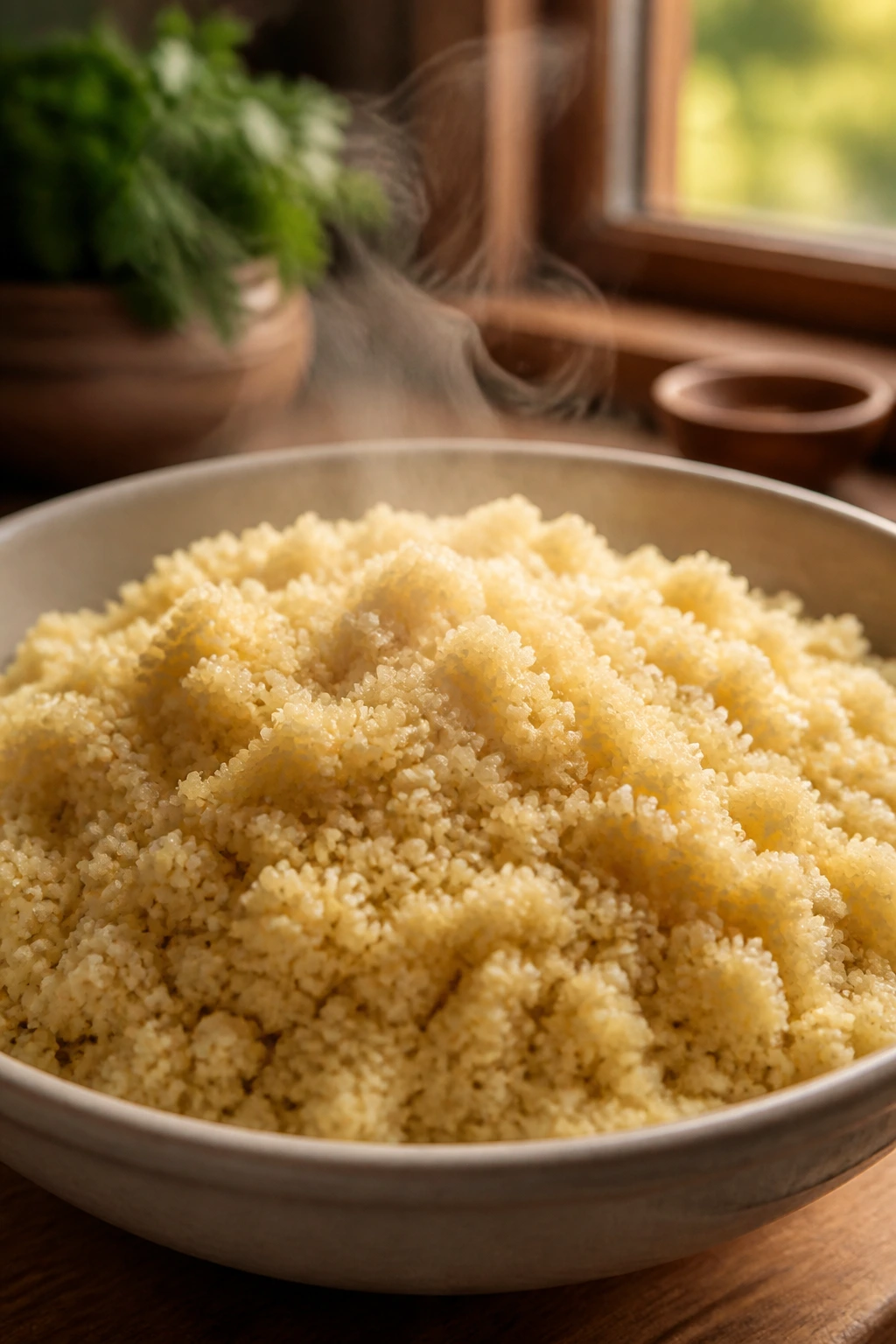
Couscous gets treated like a side dish by people who haven’t cooked with it enough. That’s a mistake. Moroccan couscous is tiny semolina pasta that steams in hot liquid, which means it can absorb flavor fast and get dinner on the table before you’ve lost patience. Pearl couscous is larger and chewier, so it brings more bite when you want the bowl to feel sturdier.
The speed matters, but the texture matters too. Couscous doesn’t need a long boil, a rinse, or a lot of supervision. You cover the pan, wait a few minutes, and fluff. That leaves room to focus on the part that actually makes dinner taste good: browning the meat, softening the onions, blooming the spices, or finishing with lemon and herbs.
It also carries flavors better than a lot of people expect. Broth, tomato juice, pan drippings, olive oil, tahini, butter, yogurt, and herb oils all cling to the grains or pearls instead of sliding off. That makes couscous useful in a way that plain rice sometimes isn’t. Rice can be excellent, sure. Couscous just asks for less and gives back more quickly.
There’s another quiet advantage: couscous feels finished even when the rest of the meal is rustic. A skillet of sausage and peppers over couscous looks intentional. Chickpeas and tomatoes over couscous look intentional. Even canned tuna becomes a real dinner once you fold it into warm couscous with lemon and herbs. That’s a small thing on paper. It’s a big thing at 6:30.
Essential Equipment for These Recipes
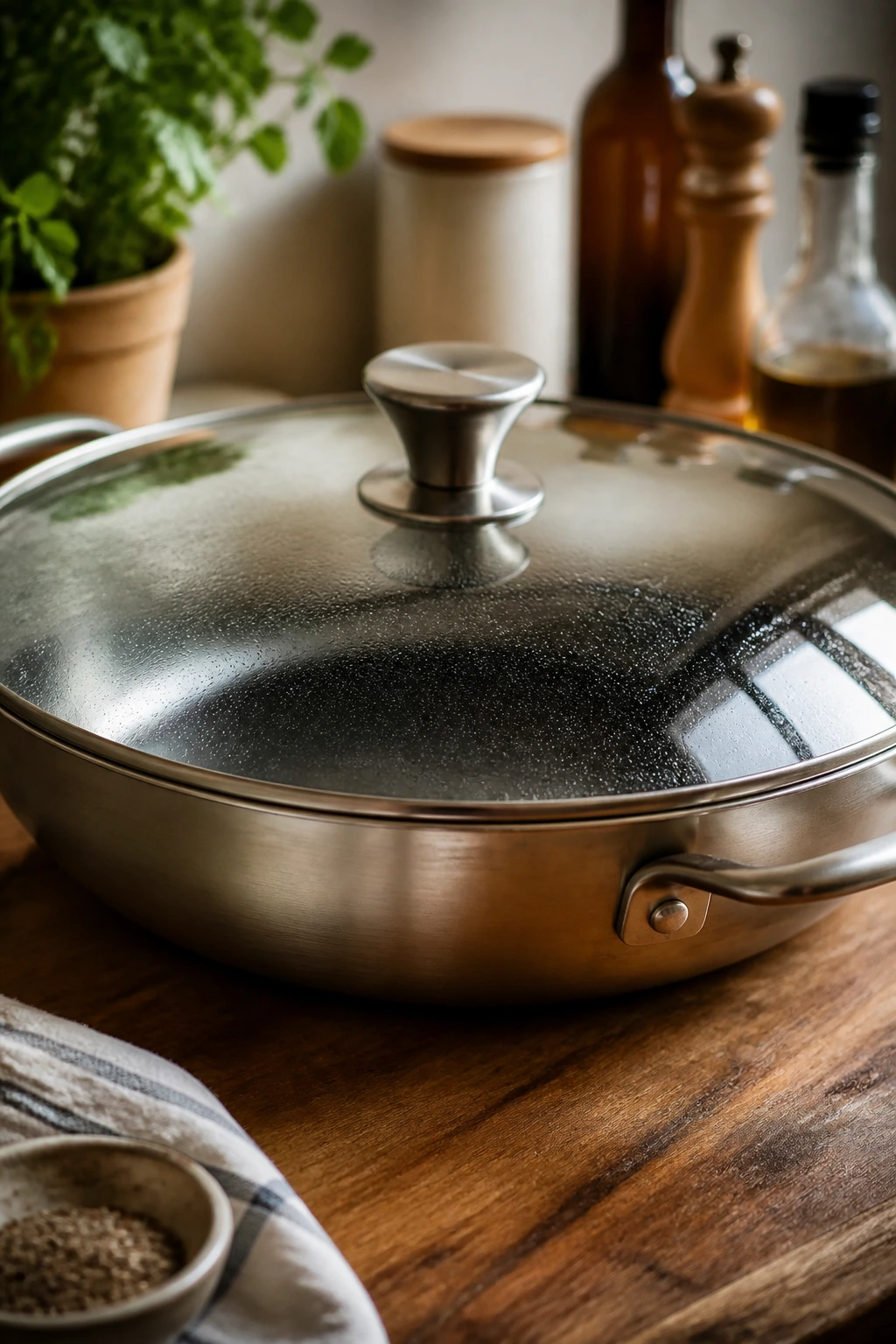
- Large skillet with a lid: The workhorse for one-pan couscous dinners, especially the chicken, sausage, beef, and lamb recipes.
- Medium saucepan: Handy for steaming Moroccan couscous in broth when the main pan is already busy.
- Sheet pan: Useful for roasted vegetable bowls and the salmon dinner.
- Fine-mesh strainer: Makes rinsing chickpeas, beans, and capers less messy.
- Chef’s knife: A sharp one saves more time than another gadget ever will.
- Cutting board: Pick a large board so onions, herbs, and vegetables don’t crowd each other.
- Wooden spoon or silicone spatula: Better for scraping up browned bits without scratching the pan.
- Fork: Couscous needs fluffing, and a fork does the job better than a spoon.
- Measuring cups and spoons: Especially useful for broth ratios and spice balance.
- Tongs: Helpful for turning shrimp, sausage, or salmon without tearing the food.
- Instant-read thermometer: Optional, but useful for chicken, turkey meatballs, and salmon so you don’t guess.
- Airtight storage containers: Leftovers keep better when they cool quickly and seal tightly.
Smart Shopping and Ingredient Tips
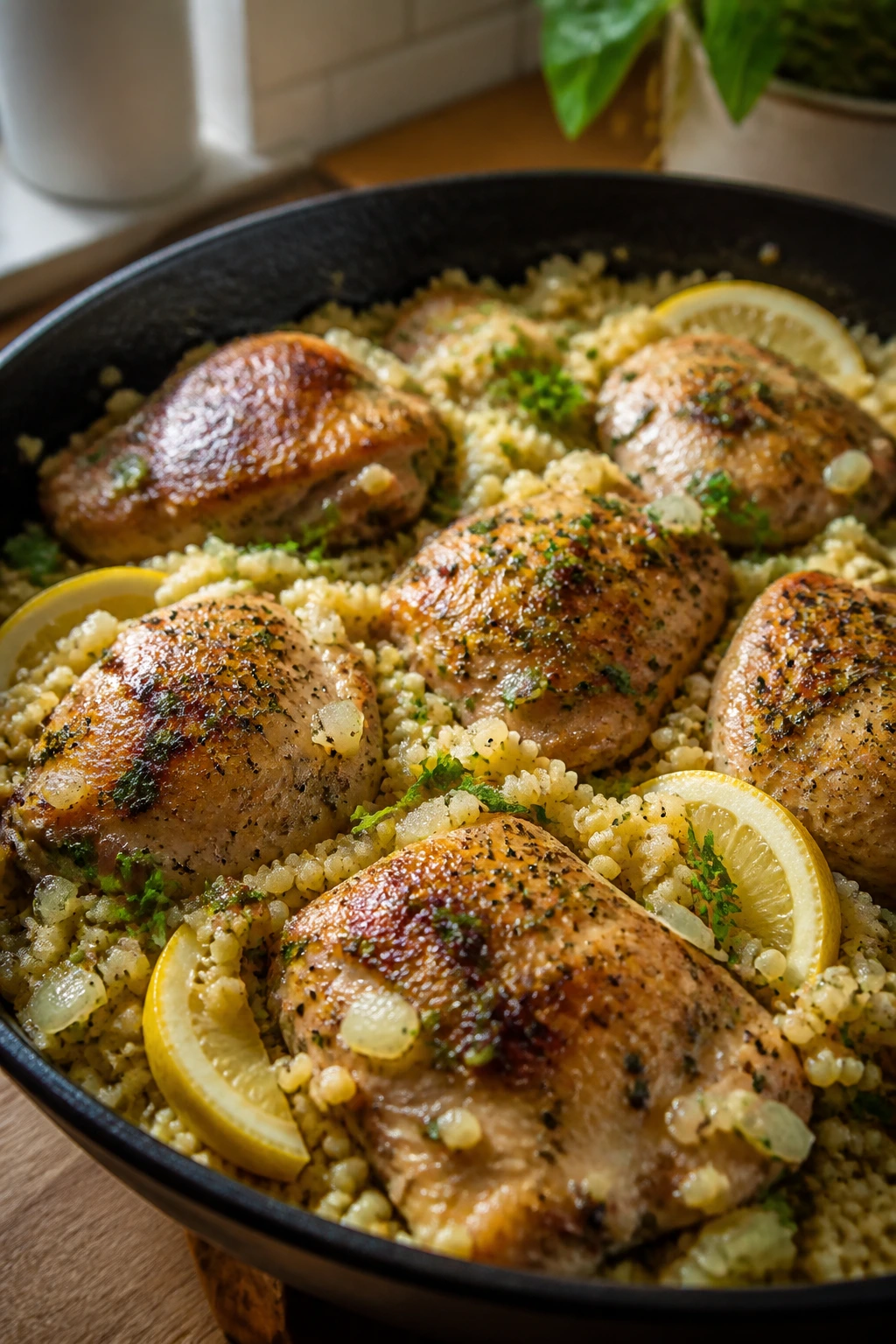
The first thing to buy well is the couscous itself. Moroccan couscous cooks fastest and gives you the fluffiest texture, while pearl couscous takes a little longer and holds up better in saucier dishes. If you want a light, loose bowl, reach for the smaller kind. If you want something a bit more chew-forward, pearl couscous is the better fit.
Broth matters more than people think. A bland broth makes couscous taste flat, and no amount of parsley will rescue that. Choose a broth you’d actually sip if you had to, because the couscous will carry its flavor directly. Low-sodium broth gives you more room to season with salt, lemon, capers, feta, or parmesan without pushing the whole dish too far.
For proteins, go for the cut that matches the pace of the meal. Boneless chicken thighs are forgiving. Shrimp should be large or extra-large so they don’t vanish in the pan. Ground turkey and beef should be well seasoned and cooked just until done, not left to dry out in the skillet. Salmon fillets with skin are a decent choice if you like a bit of crispness.
Vegetables can be fresh or a little practical. Cherry tomatoes, spinach, zucchini, peppers, onions, asparagus, and mushrooms all work because they cook fast and taste good after a short heat. Canned chickpeas, white beans, and tuna are more than fallback ingredients; they’re part of why these meals can happen on a Thursday without a special trip. If you’re buying feta, halloumi, or yogurt, choose the best version you can get close to home. You’ll taste the difference.
Herbs and finishing ingredients are worth the extra few dollars. Parsley, dill, mint, cilantro, lemon, capers, tahini, and toasted nuts all change the tone of a couscous dinner from “assembled” to “thought through.” That’s the part people usually miss. Not the protein. Not the starch. The finish.
How to Serve These Recipes
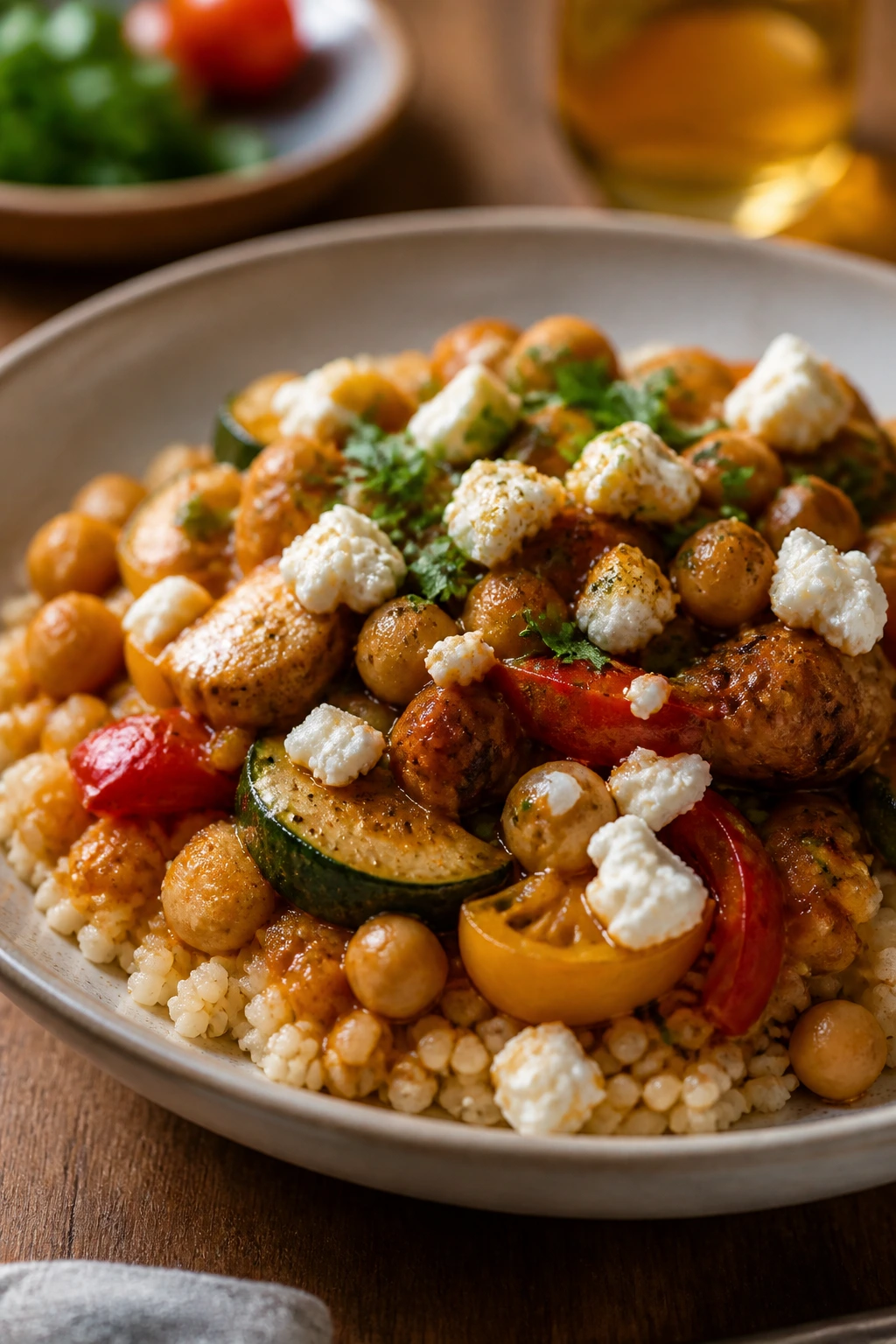
Presentation: Serve couscous dinners in wide bowls when the recipe is saucy and on shallow plates when the toppings are meant to stand out. A last-minute scatter of herbs, lemon zest, crumbled feta, or toasted nuts makes the food look alive instead of flat.
Accompaniments: A simple cucumber salad, butter lettuce, roasted carrots, or warm pita fits most of these meals without fighting them. For the richer dishes, a sharp side like pickled onions or quick-pickled cucumbers helps cut through the fat.
Portions: Most of these recipes feed 4 adults, with pearl couscous dishes leaning a little heartier than the fine-grain versions. If you’re serving bigger appetites, add one extra cup of vegetables or a second small protein portion rather than doubling the couscous and making the texture heavy.
Beverage Pairing: Sparkling water with lemon works across the board, which is helpful when the food already has plenty going on. A dry white wine suits the salmon, shrimp, and chickpea bowls, while mint tea or iced black tea feels right with the spiced lamb and harissa recipes.
Additional Tips and Flavor Boosters
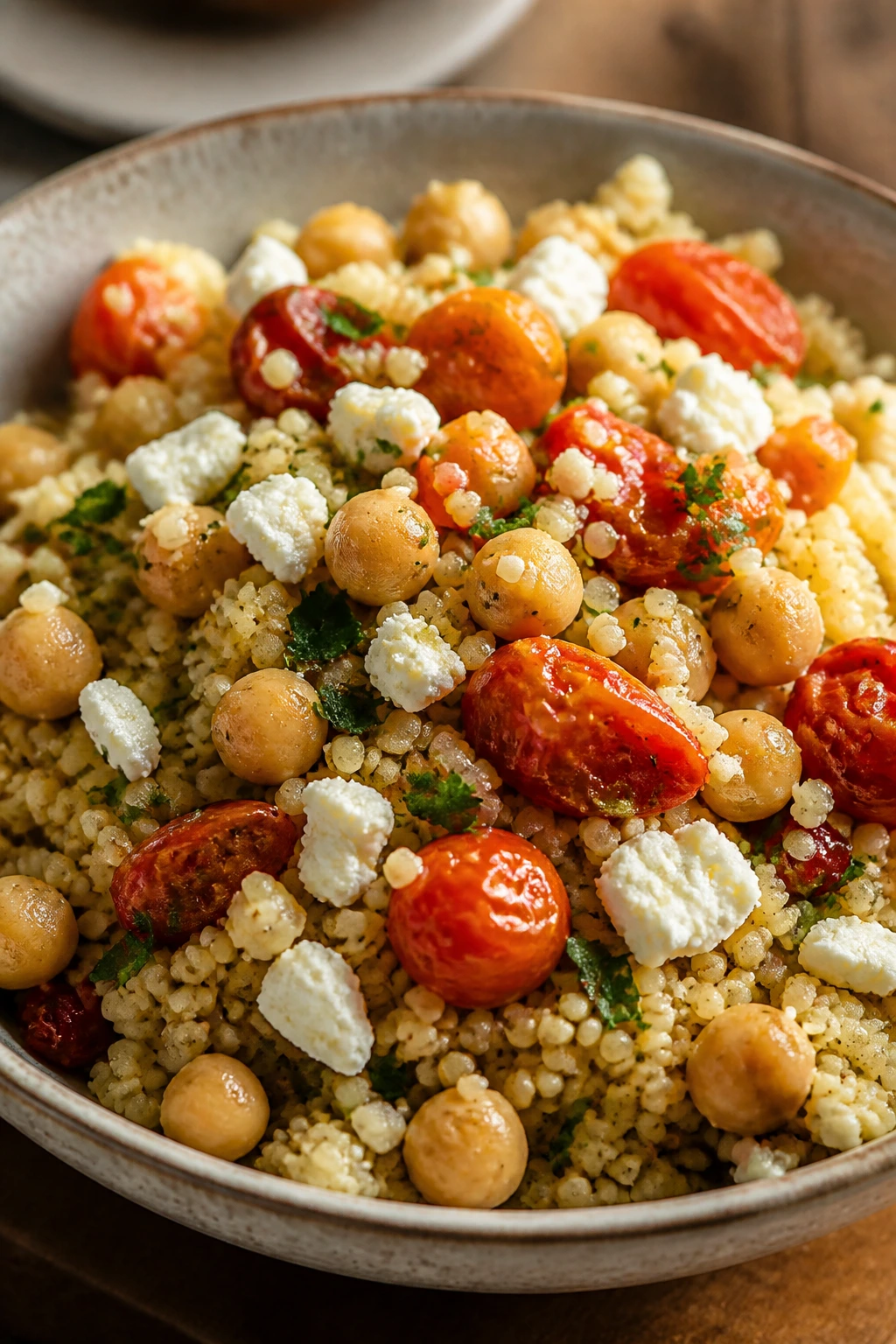
Flavor Enhancement: Toast the dry couscous in a teaspoon of olive oil or butter for 1 to 2 minutes before adding broth. It adds a nutty edge that makes the whole dish taste a little more deliberate.
Customization: Keep a jar of chopped olives, capers, preserved lemon, or roasted red peppers in the fridge. A spoonful dropped into the pan at the end can shift a bowl from plain to lively without extra cooking.
Serving Suggestions: Finish with something that has texture. Toasted almonds on the lamb, pine nuts on the roasted vegetables, crispy shallots on the chicken, or even a spoonful of za’atar oil over chickpeas all make the dish feel more layered.
Make-It-Yours: For a richer bowl, stir in yogurt or tahini off the heat. For a dairy-free version, use olive oil, tahini, or avocado. For a brighter finish, add lemon zest at the very end instead of only juice; zest gives you aroma that juice alone can’t supply.
Make-Ahead, Storage, and Reheating Guidance
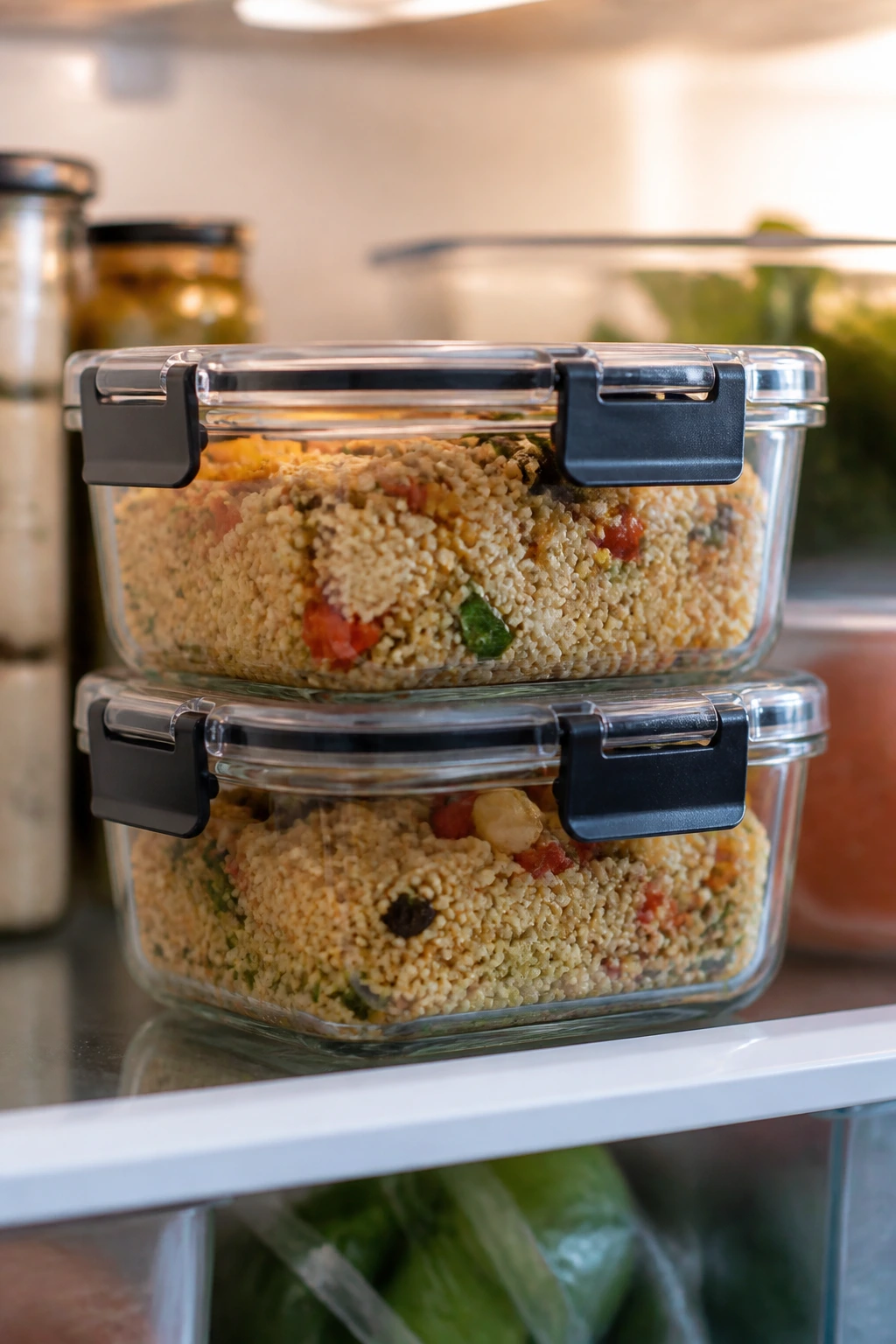
Couscous dinners hold up better than people expect, but the way you store them matters. Most chicken, beef, sausage, lamb, and vegetarian couscous bowls keep well in the refrigerator for 3 to 4 days in airtight containers. Shrimp and salmon versions are better eaten within 2 days, since seafood gets dry and a little tired faster. If a recipe includes yogurt sauce, keep that separate when you can and stir it in after reheating.
Freezing is useful for the heartier dishes. Chicken, beef, sausage, and lamb couscous bowls can usually be frozen for up to 2 months, though the vegetables may soften a bit after thawing. Pearl couscous handles freezing better than fine couscous, which can lean softer when reheated. Seafood dishes are not my first pick for the freezer; the texture tends to slide downhill.
For reheating, the stovetop gives the best result. Add a splash of broth or water, cover, and warm over medium-low heat until the couscous loosens and the protein is hot. A microwave works too, but stop halfway through to stir and break up the clumps. If the bowl feels dry, drizzle in 1 to 2 teaspoons of olive oil or lemon juice before heating. That small move helps more than people realize.
Make-ahead prep is where these dinners get even easier. Chop onions, peppers, zucchini, herbs, and garlic 1 to 2 days ahead. Mix spice blends and yogurt sauces a day ahead. If you want to get ahead on the couscous itself, undercook it by a minute, cool it fast, and toss it with a little olive oil before refrigerating. That keeps it from packing down into a dense brick.
Variations and Adaptations to Try
Gluten-Free Grain Swap: Couscous itself is made from wheat, so it is not gluten-free. If you need that swap, use quinoa, millet, or rice-shaped gluten-free pasta in the same flavor setups, then keep the broth, lemon, herbs, and toppings the same.
Creamy Finish Night: Stir a spoonful of Greek yogurt, labneh, or tahini into the finished bowl just before serving. It works especially well with the chicken, chickpea, and lamb recipes, where a creamy note softens the spices and brings the pan together.
Heat-Lover’s Version: Add more harissa, red pepper flakes, or a chopped fresh chili to the pan early so the heat has time to spread. The shrimp and sausage recipes take this well, and the chickpea bowl can handle more spice than it first appears to.
Pantry-First Shortcut: Use canned chickpeas, canned tuna, frozen shrimp, jarred roasted peppers, and boxed broth to keep the shopping list short. This works best for the tuna, chickpea, and sausage bowls, where the method does the heavy lifting and the pantry ingredients do not taste like a compromise.
Kid-Calm Bowl: Keep the spices light, leave the harissa or chili on the side, and serve the sauce separately. Chicken, turkey, beef, and salmon versions tend to be the easiest starting point because they can be built with familiar flavors and a soft, fluffy couscous base.
Herb-Heavy Mediterranean Turn: Add mint, dill, parsley, and lemon zest more aggressively, then finish with olives or capers. That adjustment works well across the whole collection, but it makes the tuna, salmon, and halloumi versions taste especially bright.
Common Mistakes to Avoid
- Using too much liquid: Couscous wants the right ratio, not a flood. If the pan looks soupy after steaming, you’ve gone past the point where fluffing can save it. Fix it by letting the couscous sit uncovered for a minute or two, then fork it up gently.
- Letting proteins overcook while the couscous rests: Shrimp turns rubbery fast, chicken breasts dry out, and salmon goes chalky at the edges. Set the protein aside if needed and bring it back to the pan only at the end.
- Underseasoning the base: Plain couscous tastes plain. Season the broth, not just the finished dish, and use enough salt, lemon, and herbs to keep the starch awake.
- Skipping the fluffing step: A fork breaks the grains apart and releases steam. If you spoon directly into a bowl without fluffing, the middle stays compact and a little gummy.
- Crowding the pan with vegetables: Peppers, zucchini, mushrooms, and onions need space to brown. If the skillet is packed, they steam instead of caramelize, and the flavor gets flat.
- Adding delicate herbs too early: Parsley, mint, dill, and cilantro lose their edge if they cook too long. Stir them in after the heat is off, or save them for the top.
Frequently Asked Questions
Can I use pearl couscous instead of Moroccan couscous in these recipes?
Yes, but the liquid and timing need a small adjustment. Pearl couscous usually takes a few minutes longer and likes a bit more broth, so watch it until it is tender but still springy.
Is couscous actually a grain?
Not exactly. Most couscous is made from semolina, which comes from durum wheat, so it behaves more like tiny pasta than a whole grain. That’s why it cooks so fast and soaks up broth the way it does.
How do I keep couscous from clumping?
Use the right liquid ratio, cover it while it steams, and fluff it with a fork as soon as the rest time ends. A small drizzle of olive oil after cooking helps separate the grains if you’re making it ahead.
Can I make these dinners ahead for lunch?
Yes, especially the chicken, chickpea, beef, sausage, and tuna versions. Keep herbs, yogurt sauces, and delicate greens separate when possible, then add them after reheating so the texture stays better.
What should I do if my couscous comes out mushy?
Spread it on a sheet pan or wide plate for a few minutes so steam escapes, then fluff it again. Next time, reduce the liquid slightly and pull the pan off the heat as soon as the couscous has absorbed the broth.
Can I make these recipes dairy-free?
Most of them can be adjusted easily. Skip feta, halloumi, parmesan, yogurt, or sour cream, then replace the creamy finish with tahini, olive oil, lemon juice, or a spoonful of dairy-free yogurt.
What’s the best protein if I want the fastest dinner?
Shrimp and canned tuna are the quickest, followed by chicken thighs cut small and sausage slices. Ground turkey, beef, and lamb still fit the weeknight window, but they need a few more minutes in the pan.
Can I use water instead of broth?
You can, but the dish will taste flatter. If broth is unavailable, add extra salt, a bay leaf, a little garlic, or a bouillon cube to the cooking liquid so the couscous has some backbone.
Do these couscous dinners work with leftover cooked protein?
Absolutely. Rotisserie chicken, leftover salmon, cooked sausage, and even steak strips can be folded in at the end. Just warm them gently so they don’t dry out while the couscous finishes.
A Weeknight Habit Worth Keeping
Couscous doesn’t need to be dramatic to be useful. That’s why it works so well. It gives you speed, texture, and a blank canvas that actually improves when you season it well. Once you start treating couscous as the center of dinner instead of a side note, the whole pantry opens up a little.
The best part is the range. One night can lean lemony and light. Another can go smoky, spiced, briny, or rich. Keep a box of couscous on hand, and the odds of landing on a decent dinner go up fast.
Recipe Collection Quick Reference Table
| Recipe | Prep Time | Cook Time | Total Time | Servings | Standout Detail |
|---|---|---|---|---|---|
| Lemon-Garlic Chicken Couscous Skillet | 15 minutes | 20 minutes | 35 minutes | 4 | Bright lemon finish with juicy chicken thighs |
| Chickpea, Tomato, and Feta Couscous | 12 minutes | 18 minutes | 30 minutes | 4 | Pantry-friendly vegetarian bowl with salty feta |
| Harissa Shrimp Couscous with Zucchini and Herbs | 15 minutes | 15 minutes | 30 minutes | 4 | Fast shrimp dinner with smoky heat |
| Turkey Meatball Couscous Bowls with Herb Yogurt | 20 minutes | 18 minutes | 38 minutes | 4 | Tender meatballs and cool dill yogurt |
| Sausage, Peppers, and Pearl Couscous Skillet | 15 minutes | 20 minutes | 35 minutes | 4 | Hearty skillet with chewy pearl couscous |
| Roasted Vegetable and Halloumi Couscous with Tahini | 20 minutes | 25 minutes | 45 minutes | 4 | Salty halloumi and nutty tahini sauce |
| Beef and Mushroom Couscous with Parsley | 15 minutes | 20 minutes | 35 minutes | 4 | Savory mushroom skillet with rich beef flavor |
| Moroccan-Spiced Ground Lamb Couscous with Apricots | 15 minutes | 20 minutes | 35 minutes | 4 | Warm spices and sweet dried apricots |
| Tuna, White Bean, and Caper Couscous | 10 minutes | 10 minutes | 20 minutes | 4 | Pantry dinner that works warm or room temp |
| Salmon, Asparagus, and Dill Couscous | 15 minutes | 12 minutes | 27 minutes | 4 | Sheet-pan salmon with fresh dill finish |