



A pot of soup changes the whole house. Onion softens in butter, broth starts to steam, thyme perfumes the kitchen, and suddenly the room feels less like a place you pass through and more like a place you want to stay. Savory soups for cozy Sundays do that better than almost any other dinner: they turn a slow afternoon into something you can taste by the spoonful.
Not every Sunday bowl needs to be creamy. Some should be brothy and clean, with carrots and celery still giving a little bite. Others should be thick enough to leave a light trail on the back of a spoon, or topped with toast so the crust goes soft at the edges while the cheese blisters in the oven. The trick is knowing which pot fits the mood, because chicken noodle, French onion, and clam chowder all ask for different handling, different heat, and a different amount of patience.
That patience pays off. Beans get silkier after a good simmer, onions turn sweet instead of sharp, and even a plain vegetable soup starts tasting rounded if you give the aromatics time to sweat before the liquid goes in. That’s the thread running through these bowls: each one is built for a slow, comfortable afternoon, and each one comes with the kind of leftovers that make Monday lunch feel unusually kind.
Why These Bowls Earn a Sunday Spot
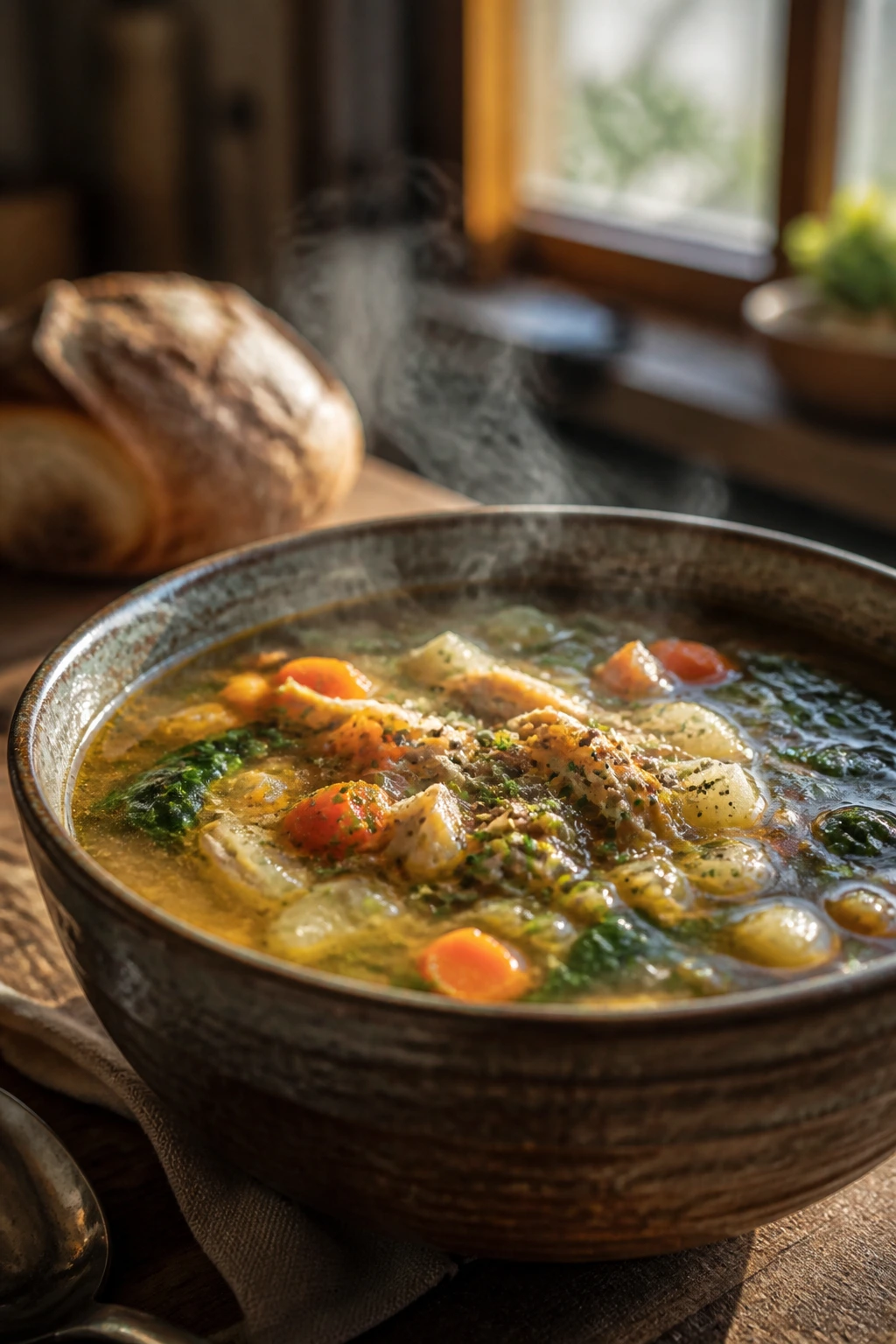
- Low-and-slow flavor matters: Each soup starts with onions, garlic, or leeks cooked until they smell sweet and lose their raw edge, which gives the broth a deeper backbone than a quick boil ever could.
- Pantry ingredients carry a lot of weight: Beans, lentils, canned tomatoes, broth, pasta, and potatoes show up repeatedly, so several of these can be built from what’s already in the cupboard.
- Different moods, same comfort: You get clear broths, creamy chowders, tomato-based bowls, and a few brothy-but-hearty pots, which makes it easy to match the soup to the weather and the appetite.
- Leftovers work in your favor: Lentil, bean, and beef soups usually taste even better the next day after the salt and herbs settle in.
- Bread has a job here: These recipes were chosen with baguette, sourdough, crackers, grilled cheese, or a pile of toast in mind. A Sunday soup should not arrive alone.
- There’s room for a real supper: Several of these bowls eat like dinner, not an opener, which is exactly what you want when you’d rather linger at the table than fuss with five side dishes.
1. Classic Chicken and Rice Soup
The best chicken and rice soup tastes clean and homey, but not thin. You want broth that carries the sweetness of onion and carrot, plus rice that stays tender instead of collapsing into starch. This version leans on chicken thighs, because they stay juicy through the simmer and shred into soft, generous pieces.
Why It Works:
Chicken thighs give the broth more body than breasts, and a short simmer keeps them tender. Adding the rice near the end is the whole trick here; if it goes in too early, you get a pot of porridge. Lemon at the finish sharpens the broth without turning it sour, and parsley keeps the bowl from tasting heavy.
Key Ingredients:
- 2 tablespoons olive oil
- 1 medium yellow onion, diced
- 2 carrots, peeled and sliced
- 2 celery stalks, sliced
- 3 garlic cloves, minced
- 8 cups low-sodium chicken broth
- 1 pound boneless skinless chicken thighs
- 3/4 cup long-grain white rice, rinsed
- 1 bay leaf
- 1 teaspoon kosher salt
- 1/2 teaspoon black pepper
- 2 tablespoons lemon juice
- 2 tablespoons chopped parsley
Quick Steps:
- Soften the vegetables: Heat olive oil in a large pot over medium heat. Add onion, carrots, and celery, then cook for 6 to 8 minutes until the onion looks translucent and the carrots start to soften.
- Build the broth: Stir in garlic for 30 seconds, then add broth, chicken thighs, bay leaf, salt, and pepper. Bring to a gentle boil, then lower to a steady simmer and cover loosely.
- Cook the chicken: Simmer for 18 to 20 minutes, until the chicken reaches 165°F and pulls apart easily with a fork.
- Add the rice: Remove the chicken, shred it, and return the meat to the pot. Stir in the rinsed rice and simmer uncovered for 15 to 18 minutes, until the rice is tender.
- Finish cleanly: Discard the bay leaf, stir in lemon juice and parsley, then taste and add another pinch of salt if the broth needs it.
Equipment for This Recipe:
- Large soup pot or Dutch oven
- Cutting board and sharp knife
- Tongs or a slotted spoon
- Wooden spoon
- Measuring cups and spoons
How to Serve This Dish:
Ladle it into wide bowls so the rice settles in a visible layer and the chicken sits on top instead of sinking. Serve with saltines, buttered toast, or a torn piece of sourdough for dipping. A few extra parsley leaves on top make the bowl look fresh, and a lemon wedge on the side gives sharpness if the broth feels mellow.
Pro Tips for This Recipe:
- Use thighs, not breasts, if you want chicken that stays juicy after the simmer.
- Rinse the rice briefly to remove dust, but don’t soak it; that changes the cooking time.
- If the soup thickens after sitting, add 1/2 cup broth or water when reheating.
- Keep the simmer gentle. Hard boiling makes the chicken stringy.
Variations on This Dish:
- Wild Rice Sunday Bowl: Swap the white rice for 3/4 cup wild rice blend and simmer 25 to 30 minutes longer.
- Gingered Chicken Soup: Add 1 tablespoon grated fresh ginger with the garlic for a sharper, warmer broth.
- Extra-Green Version: Stir in 2 cups baby spinach during the last 2 minutes for a softer, greener finish.
Common Mistakes to Avoid with This Dish:
- Adding rice too early: The soup turns thick and gluey. Fix it by cooking the rice separately if you want to hold the soup longer.
- Boiling the chicken hard: That makes the meat dry and stringy. Keep the pot at a lazy simmer.
- Under-seasoning the broth: Chicken and rice need more salt than people expect, so taste after the rice goes in and again after lemon.
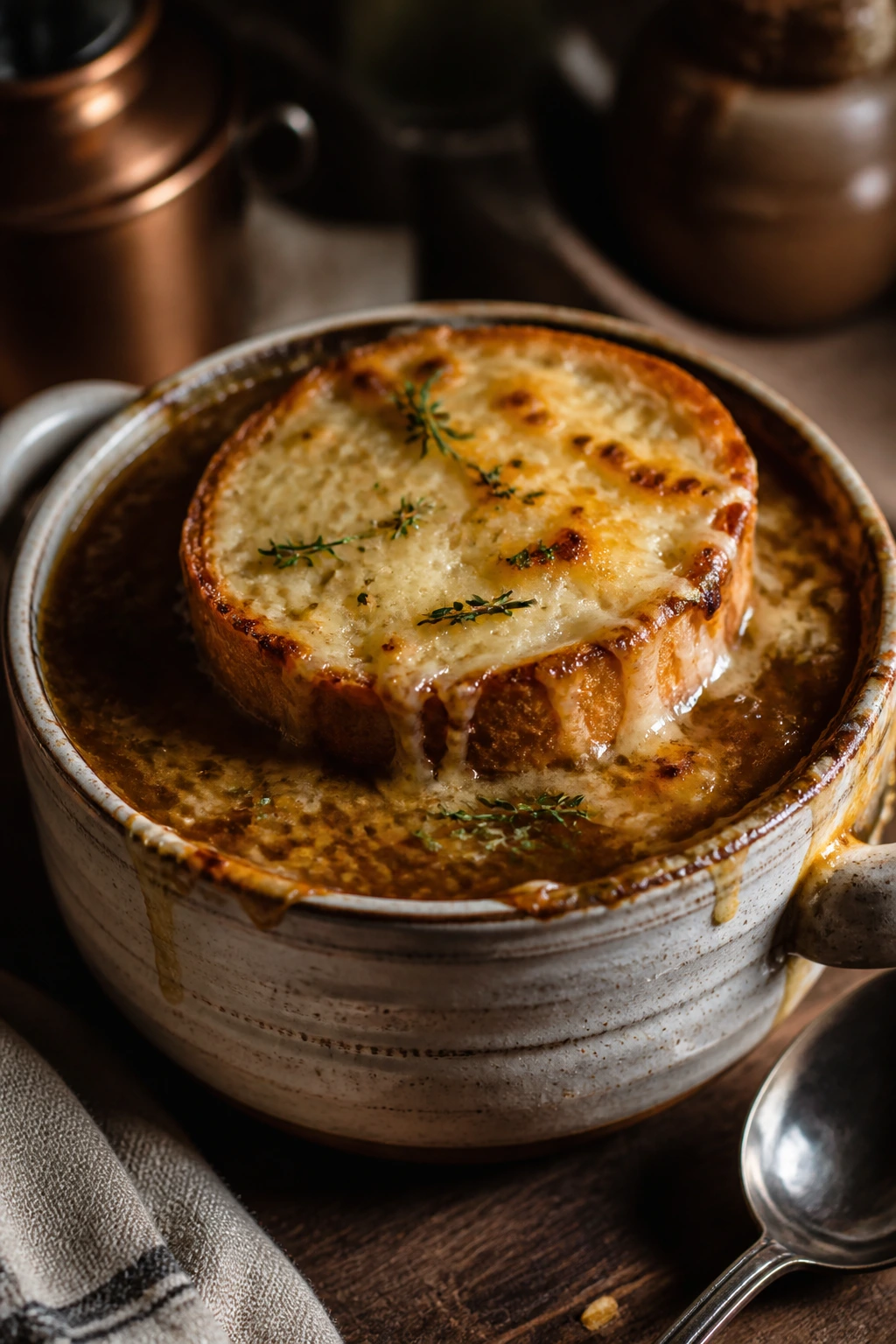
2. French Onion Soup with Gruyère Toast
French onion soup is all about patience. The onions need time to turn copper-brown and sweet, and the broth needs enough depth to stand up to a thick lid of bread and cheese. If the onions still taste sharp, the soup isn’t ready. That’s the blunt version.
Why It Works:
A slow caramelization gives the soup its body, not just its color. White wine loosens the brown bits stuck to the pot, and beef broth keeps the flavor anchored instead of watery. Gruyère melts into that glossy, stretchy top that everyone expects, and a crisp baguette slice gives the bowl some structure so it doesn’t dissolve right away.
Key Ingredients:
- 4 large yellow onions, thinly sliced
- 3 tablespoons unsalted butter
- 1 tablespoon olive oil
- 1 teaspoon granulated sugar
- 2 garlic cloves, minced
- 1/2 cup dry white wine
- 8 cups beef broth
- 2 teaspoons fresh thyme leaves
- 1 bay leaf
- 1 baguette, sliced into 8 thick rounds
- 2 cups grated Gruyère cheese
- Kosher salt and black pepper
Quick Steps:
- Caramelize the onions: Melt butter with olive oil in a Dutch oven over medium heat. Add the onions, sugar, and a pinch of salt, then cook for 35 to 45 minutes, stirring often, until they turn deep golden brown.
- Add the aromatics: Stir in garlic and thyme for 30 seconds, then pour in the white wine. Scrape up the browned bits and simmer until the wine almost disappears.
- Build the soup: Add broth and bay leaf, then simmer uncovered for 20 minutes. Taste and season with salt and pepper.
- Toast the bread: Arrange baguette slices on a baking sheet and toast at 400°F for 6 to 8 minutes until the edges are crisp.
- Finish under the broiler: Ladle soup into broiler-safe bowls, top with bread and Gruyère, then broil 2 to 4 minutes until the cheese bubbles and spots turn brown.
Equipment for This Recipe:
- Heavy Dutch oven
- Broiler-safe soup bowls
- Rimmed baking sheet
- Wooden spoon
- Sharp knife for slicing onions
How to Serve This Dish:
This one wants a bowl with a wide rim so the cheese can spread slightly beyond the soup. Serve it with a simple green salad dressed in lemon and olive oil, since the soup already brings plenty of richness. One bowl is usually enough for a light dinner; two if you’re doing nothing else.
Pro Tips for This Recipe:
- Slice the onions evenly so they caramelize at the same pace.
- Don’t rush the browning by turning up the heat; dark onions with a burnt edge taste bitter, not sweet.
- Use a good baguette with a sturdy crust. Soft sandwich bread goes limp too fast.
- If the soup tastes flat, add a teaspoon of sherry vinegar right before serving.
Variations on This Dish:
- Sherry-Deepened Onion Soup: Replace half the wine with dry sherry for a nuttier finish.
- Vegetarian Mushroom Onion Soup: Use mushroom broth instead of beef broth and add 8 ounces sautéed mushrooms.
- Fontina Topper: Swap Gruyère for Fontina if you want a softer, milder melt.
Common Mistakes to Avoid with This Dish:
- Stopping the onions too soon: Pale onions make a thin soup. Keep cooking until they’re walnut-colored.
- Using bowls that aren’t broiler-safe: That’s a disaster waiting to happen. Check the dish before it goes under heat.
- Skipping the bread toast: Un-toasted bread turns soggy in under a minute.
3. Creamy Mushroom Soup with Thyme
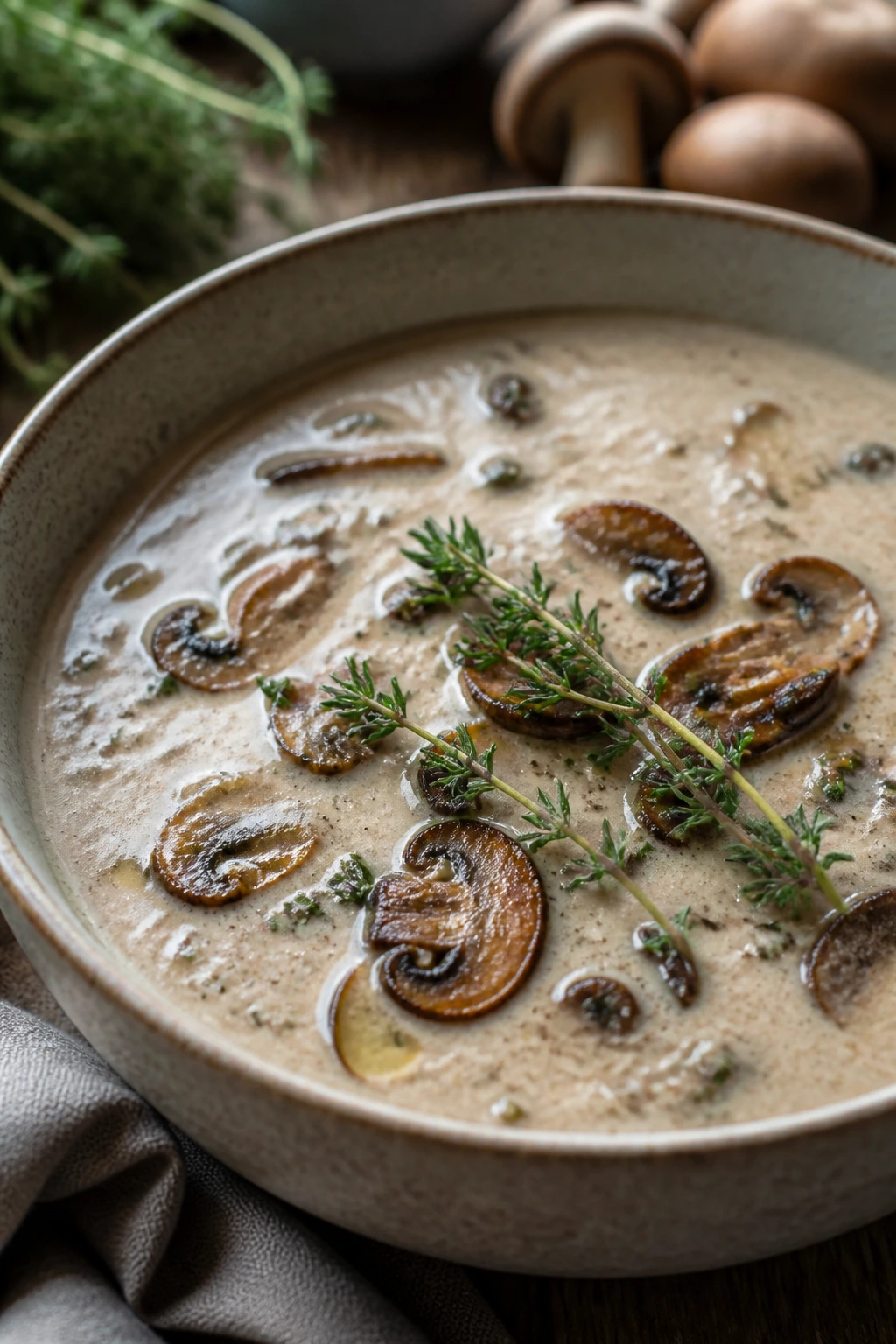
Mushroom soup should taste like the pan, not like a carton. That means browned mushrooms, a little thyme, and a broth that keeps its earthiness instead of getting buried under cream. Cremini mushrooms give the best everyday flavor here, though a few shiitakes make the bowl smell even woodier.
Why It Works:
Browning the mushrooms in batches matters because they need room to release moisture and then sear. Once that happens, the soup gets a roasted edge that plain sautéing can’t give you. A small splash of soy sauce deepens the savoriness without making the soup taste Asian or salty, and milk plus cream give you body without turning the bowl into gravy.
Key Ingredients:
- 1 pound cremini mushrooms, sliced
- 2 tablespoons butter
- 1 tablespoon olive oil
- 1 shallot, minced
- 3 garlic cloves, minced
- 3 tablespoons all-purpose flour
- 4 cups vegetable broth
- 1 cup whole milk
- 1/2 cup heavy cream
- 1 teaspoon fresh thyme leaves
- 1 tablespoon soy sauce
- 1/2 teaspoon black pepper
- Chopped parsley, for serving
Quick Steps:
- Brown the mushrooms: Heat butter and oil in a pot over medium-high heat. Add the mushrooms in two batches and cook for 8 to 10 minutes total, until browned and most of the liquid has cooked off.
- Add the aromatics: Stir in shallot and garlic and cook for 1 minute, just until fragrant.
- Make the base: Sprinkle in flour and stir for 1 minute so it stops tasting raw, then slowly whisk in the broth.
- Simmer and blend: Add thyme, soy sauce, and black pepper. Simmer for 10 minutes, then blend partially with an immersion blender if you want a creamier texture, or leave it chunky if you prefer more bite.
- Finish with dairy: Stir in milk and cream over low heat. Warm until steaming, not boiling, then taste and adjust salt.
Equipment for This Recipe:
- Large soup pot
- Immersion blender or countertop blender
- Wooden spoon
- Whisk
- Measuring cups and spoons
How to Serve This Dish:
A bowl of mushroom soup wants a slick of olive oil or a spoonful of crème fraîche on top, plus black pepper ground right before serving. Pair it with toasted sourdough or a sharp cheese sandwich. It’s rich enough to stand alone, but a crisp salad keeps the meal from feeling heavy.
Pro Tips for This Recipe:
- Don’t crowd the mushrooms. If the pan looks crowded, cook them in smaller batches.
- Blend only part of the soup if you want pieces of mushroom to stay visible.
- Add cream at the end and keep the heat low so the dairy doesn’t split.
- A parmesan rind simmered with the broth adds a salty edge, but remove it before blending.
Variations on This Dish:
- Wild Mushroom Version: Use a mix of cremini, shiitake, and oyster mushrooms for a deeper, woodier flavor.
- Dairy-Free Mushroom Soup: Swap the milk and cream for unsweetened oat milk and 1/4 cup cashew cream.
- Garlic-Thyme Heavy Hand: Double the garlic and thyme if you want the soup to smell sharper and more herb-forward.
Common Mistakes to Avoid with This Dish:
- Skipping the browning step: Pale mushrooms make a pale soup with little flavor.
- Boiling after adding cream: That can make the soup grainy. Heat it gently.
- Using too much flour: The soup turns pasty instead of silky.
4. Broccoli Cheddar Soup

Broccoli cheddar soup can go two directions: thin and sad, or thick enough to cling to the spoon. The version worth making leans on a proper roux, sharp cheddar, and broccoli that still has some structure. If the florets turn olive-green and mushy, you’ve gone too far.
Why It Works:
A butter-and-flour roux gives the soup body before the cheese goes in, which keeps the texture smooth instead of stringy. Sharp cheddar matters because mild cheese gets lost under the milk. The broccoli goes in after the base is built, so it cooks just enough to soften without losing all bite.
Key Ingredients:
- 4 tablespoons unsalted butter
- 1 medium onion, diced
- 2 carrots, grated or finely diced
- 2 celery stalks, finely diced
- 3 garlic cloves, minced
- 1/4 cup all-purpose flour
- 3 cups chicken broth or vegetable broth
- 3 cups broccoli florets, chopped into bite-size pieces
- 2 cups whole milk
- 2 cups sharp cheddar cheese, freshly shredded
- 1 teaspoon Dijon mustard
- 1 pinch ground nutmeg
- Salt and black pepper
Quick Steps:
- Cook the vegetables: Melt butter in a pot over medium heat. Add onion, carrots, and celery, then cook for 6 to 7 minutes until softened.
- Build the roux: Stir in garlic, then sprinkle in flour and cook for 1 minute, stirring constantly so it doesn’t clump.
- Add broth and broccoli: Whisk in the broth slowly, then add broccoli, Dijon, nutmeg, salt, and pepper. Simmer for 12 to 15 minutes until the broccoli is tender but still bright.
- Add milk and cheese: Lower the heat, stir in the milk, then add the cheddar a handful at a time. Stir until melted and smooth.
- Taste and adjust: Add more pepper or a pinch of salt, then serve right away while the soup is thick and glossy.
Equipment for This Recipe:
- Large saucepan or Dutch oven
- Whisk
- Box grater
- Cutting board and knife
- Ladle
How to Serve This Dish:
A thick bowl of broccoli cheddar likes a crusty roll or a piece of grilled sourdough. Sprinkle extra cheddar and a few broccoli florets on top so the bowl looks like it means business. One generous bowl works as lunch; two cups is enough for a lighter supper.
Pro Tips for This Recipe:
- Grate your own cheddar. Pre-shredded cheese often melts less smoothly because of the coating on it.
- Keep the heat low when the cheese goes in so it doesn’t turn grainy.
- Chop the broccoli small enough that each spoonful has a little of everything.
- If you want it thicker, mash a few broccoli pieces against the side of the pot before adding cheese.
Variations on This Dish:
- Cauliflower-Broccoli Blend: Replace half the broccoli with cauliflower florets for a softer flavor.
- Smoky Cheddar Version: Add 1/2 teaspoon smoked paprika with the broth.
- Gluten-Free Bowl: Use 2 tablespoons cornstarch mixed with cold milk instead of the flour roux.
Common Mistakes to Avoid with This Dish:
- Adding cheese to boiling soup: That’s how you get a broken, grainy texture.
- Using watery, weak cheddar: The flavor disappears under the broccoli.
- Overcooking the florets: They should be tender, not olive drab.
5. Potato Leek Soup
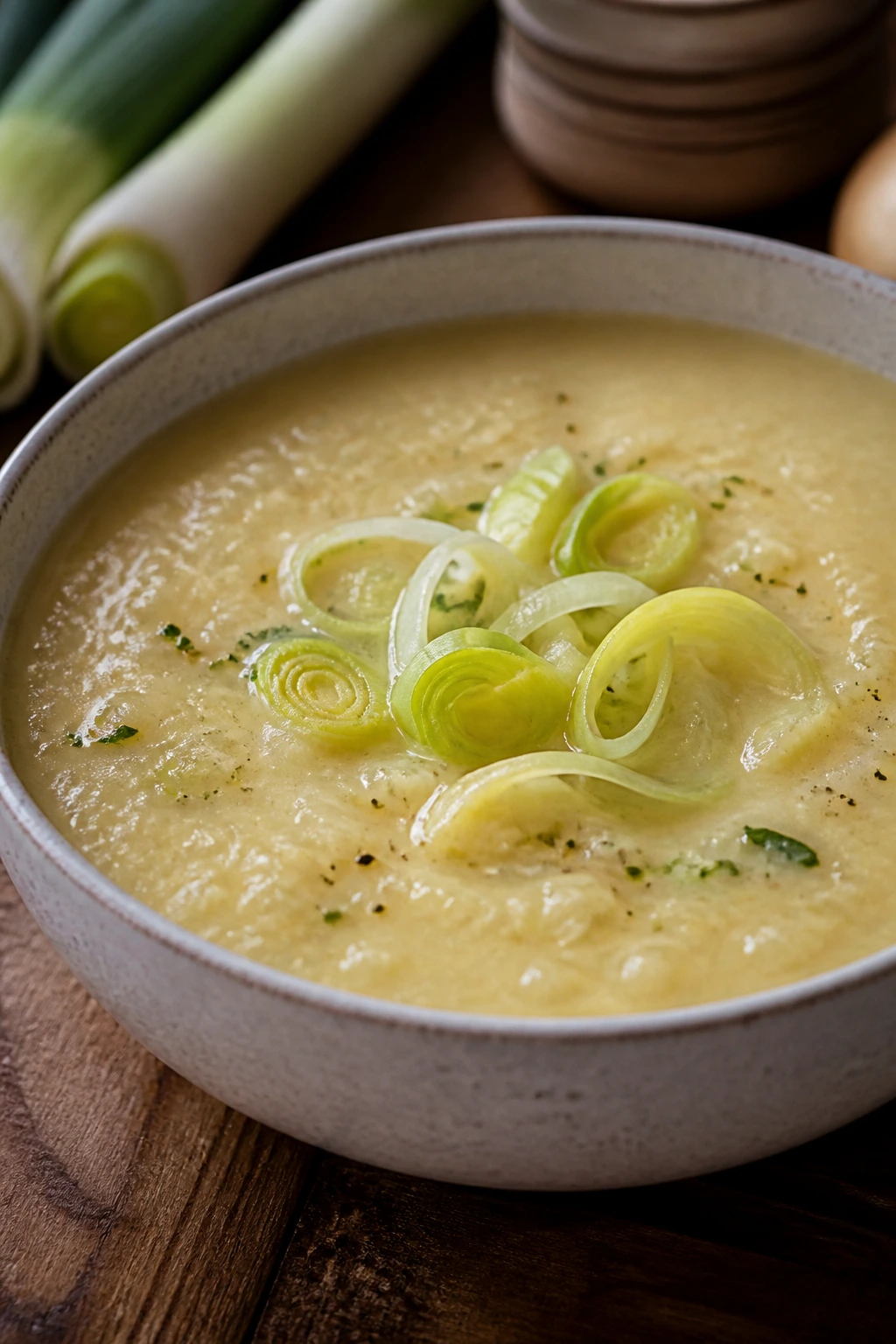
Potato leek soup looks plain until the first spoonful lands. Then the gentle onion flavor from the leeks, the creaminess from the potatoes, and the butter underneath all show up at once. Yukon Gold potatoes are the sweet spot here; they mash into something silky without turning gummy.
Why It Works:
Leeks bring a softer, sweeter allium flavor than onions, and they need to be washed well because grit hides between the layers. The potatoes thicken the soup naturally once they break down, which means you don’t need much flour or starch. A quick blend turns the whole pot velvety, but leaving a few potato chunks is fine if you like more texture.
Key Ingredients:
- 3 large leeks, white and light green parts only, cleaned and sliced
- 2 tablespoons butter
- 1 tablespoon olive oil
- 2 pounds Yukon Gold potatoes, peeled and cubed
- 4 cups chicken broth or vegetable broth
- 1 bay leaf
- 1 cup whole milk or heavy cream
- 1 teaspoon kosher salt
- 1/2 teaspoon black pepper
- 2 tablespoons chopped chives, for serving
Quick Steps:
- Clean and soften the leeks: Melt butter with oil in a Dutch oven over medium heat. Add the leeks with a pinch of salt and cook for 8 to 10 minutes, until soft but not browned.
- Add the potatoes and broth: Stir in potatoes, broth, bay leaf, salt, and pepper. Bring to a boil, then reduce to a simmer and cover.
- Cook until tender: Simmer for 18 to 22 minutes, until the potatoes break easily with the tip of a knife.
- Blend the soup: Remove the bay leaf, then blend with an immersion blender until smooth or mostly smooth.
- Finish with dairy: Stir in milk or cream over low heat, warm through, and top with chives.
Equipment for This Recipe:
- Dutch oven
- Immersion blender or countertop blender
- Potato peeler
- Sharp knife
- Large bowl for washing leeks
How to Serve This Dish:
Serve potato leek soup in shallow bowls with chives, black pepper, and a spoonful of sour cream if you want extra tang. It works well with rye toast or a cheese toastie on the side. The soup is filling enough that a bowl and bread often count as the whole meal.
Pro Tips for This Recipe:
- Wash leeks in a bowl of cold water after slicing; grit is stubborn and unpleasant.
- Use Yukon Golds if you want a smoother texture with less starch than russets.
- Don’t brown the leeks. Sweet, soft leeks taste better than caramelized ones here.
- If the soup is too thick, add broth in 1/2-cup splashes.
Variations on This Dish:
- Bacon-Backed Version: Crisp 4 slices of bacon first and crumble them on top before serving.
- Vegan Leek Soup: Use olive oil instead of butter and unsweetened oat milk in place of cream.
- Chunky Country Style: Mash only half the potatoes and leave the rest in visible cubes.
Common Mistakes to Avoid with This Dish:
- Skipping the leek wash: One gritty bite ruins the whole bowl.
- Using high heat on the leeks: They can brown too fast and taste harsh.
- Blending scalding liquid without venting: If you use a blender, do it in batches and leave the lid slightly open.
6. Beef Barley Soup
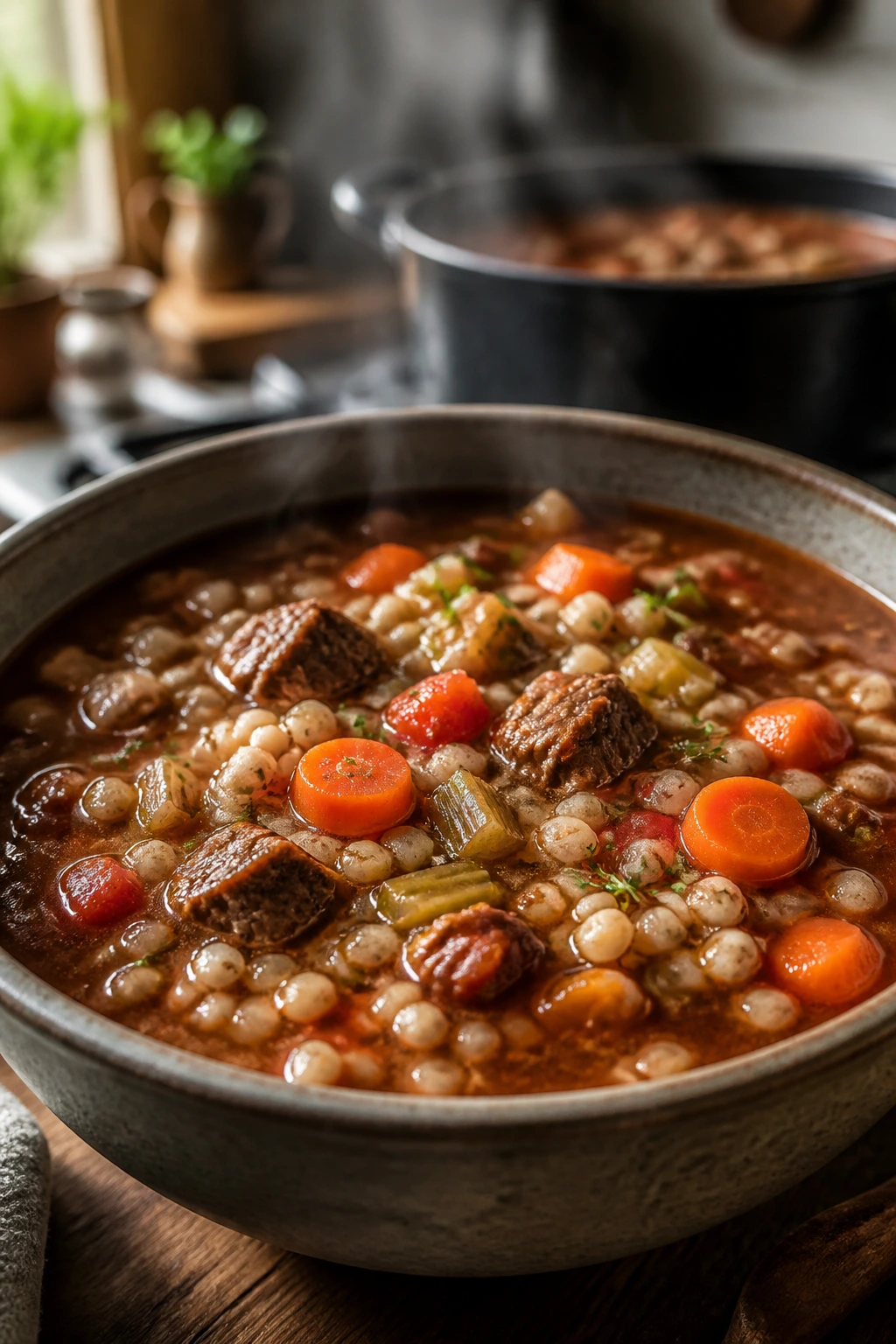
This is the soup you make when you want dinner to feel rooted and steady. Beef chuck, carrots, celery, tomatoes, and barley all go into the same pot, but each ingredient plays a different role. The barley gives chew, the beef gives body, and the tomato quietly keeps the broth from tasting flat.
Why It Works:
Chuck roast has enough connective tissue to turn tender during a long simmer without drying out. Pearl barley absorbs broth and thickens the soup naturally, which is why this bowl tastes fuller after half an hour on the stove. A small amount of tomato adds acidity, and that prevents the beef from tasting dull.
Key Ingredients:
- 1 1/2 pounds beef chuck, cut into 1-inch cubes
- 2 tablespoons all-purpose flour
- 2 tablespoons neutral oil
- 1 large onion, diced
- 2 carrots, sliced
- 2 celery stalks, sliced
- 3 garlic cloves, minced
- 8 cups beef broth
- 3/4 cup pearl barley, rinsed
- 1 can (14.5 ounces) diced tomatoes
- 1 bay leaf
- 1 teaspoon dried thyme
- Salt and black pepper
Quick Steps:
- Sear the beef: Toss the beef with flour, salt, and pepper. Brown it in oil over medium-high heat for 4 to 5 minutes per side, working in batches.
- Cook the vegetables: Add onion, carrots, and celery to the pot and cook for 5 minutes, until softened and scraping up the browned bits.
- Build the soup: Stir in garlic, broth, barley, tomatoes, bay leaf, and thyme. Return the beef to the pot.
- Simmer slowly: Bring to a boil, then lower to a gentle simmer and cover loosely for 75 to 90 minutes, until the beef is fork-tender and the barley is soft.
- Finish and season: Remove the bay leaf, taste, and add more salt or pepper. If the soup is thicker than you want, stir in up to 1 cup hot water or broth.
Equipment for This Recipe:
- Heavy stockpot or Dutch oven
- Tongs
- Wooden spoon
- Sharp knife and cutting board
- Ladle
How to Serve This Dish:
Serve it in deep bowls with coarse bread or buttered rye. A spoonful of chopped parsley or dill makes the surface look fresher and cuts through the richness. It’s a full meal on its own, though a simple green salad keeps the plate from feeling too heavy.
Pro Tips for This Recipe:
- Brown the beef in batches; crowded meat steams instead of searing.
- Rinse the barley once so the broth stays clear and not dusty.
- If you want a darker broth, let the onions catch a little color before the liquid goes in.
- The soup will thicken as it sits, so don’t panic if it looks loose early.
Variations on This Dish:
- Mushroom Barley Beef Soup: Add 8 ounces sliced mushrooms with the vegetables.
- Tomato-Forward Version: Stir in 2 tablespoons tomato paste with the garlic.
- Slow Simmer Adaptation: Transfer everything to a slow cooker after searing and cook on low for 7 to 8 hours.
Common Mistakes to Avoid with This Dish:
- Skipping the sear: Unbrowned beef tastes flat.
- Adding too much barley: The soup turns into a grain bowl by the next day.
- Boiling it hard for hours: Long, violent heat makes the beef stringy.
7. Lentil and Spinach Soup
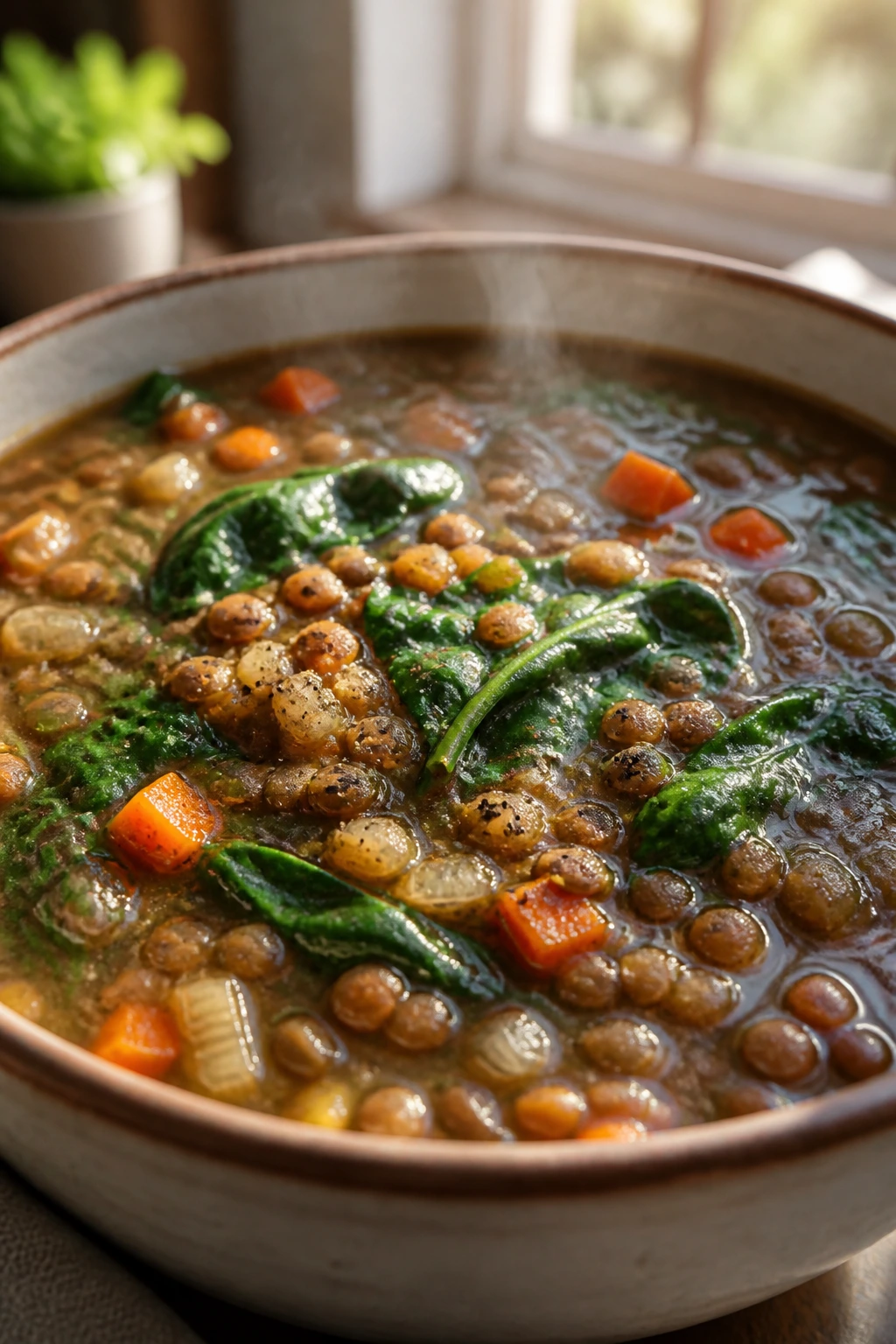
Lentil soup is one of those humble pots that gets better the longer it sits, but only if you handle the lentils with a little care. Brown lentils hold their shape and make a bowl that eats more like dinner than puree. Spinach goes in at the end so it stays green and soft instead of dragging the whole pot down.
Why It Works:
Lentils cook fast enough for a Sunday afternoon, but they still build a deep, earthy base. Cumin and thyme give the broth a warm edge, and tomatoes add enough acidity to keep the lentils from tasting dusty. A squeeze of lemon at the end sharpens the whole pot in a way that feels clean, not tart.
Key Ingredients:
- 2 tablespoons olive oil
- 1 medium onion, diced
- 2 carrots, diced
- 2 celery stalks, diced
- 3 garlic cloves, minced
- 1 1/2 cups brown lentils, rinsed
- 6 cups vegetable broth
- 1 can (14.5 ounces) diced tomatoes
- 1 teaspoon ground cumin
- 1 teaspoon dried thyme
- 1 bay leaf
- 3 cups fresh spinach, loosely packed
- 2 tablespoons lemon juice
- Salt and black pepper
Quick Steps:
- Cook the base: Heat oil in a pot over medium heat. Add onion, carrots, and celery and cook for 6 minutes until softened.
- Add flavor: Stir in garlic, cumin, thyme, and lentils for 1 minute so the spices bloom in the oil.
- Simmer the soup: Add broth, tomatoes, bay leaf, salt, and pepper. Bring to a boil, then reduce to a simmer and cook for 30 to 35 minutes.
- Check the lentils: They should be tender but not split into mush. If they need more time, cook 5 minutes longer.
- Finish fresh: Stir in spinach until wilted, then add lemon juice and taste for seasoning.
Equipment for This Recipe:
- Medium or large soup pot
- Wooden spoon
- Measuring cups and spoons
- Fine-mesh strainer for rinsing lentils
- Ladle
How to Serve This Dish:
This soup loves a dollop of plain yogurt or a spoon of olive oil on top, plus warm pita or crusty bread. A crumble of feta works too if you want more salt. It serves well as a main bowl with a slice of bread, or as a first course before roasted chicken.
Pro Tips for This Recipe:
- Rinse the lentils well so you don’t get cloudy broth.
- Add the spinach at the end or it turns drab and limp.
- Taste after the lentils are tender; they soak up salt as they cook.
- If you like a smoother soup, blend one cup and stir it back in.
Variations on This Dish:
- Smoky Lentil Soup: Add 1/2 teaspoon smoked paprika with the cumin.
- Turkey Lentil Version: Stir in 1 cup shredded cooked turkey at the end.
- Tomato-Free Bowl: Replace the tomatoes with 1 extra cup broth and 1 tablespoon lemon juice.
Common Mistakes to Avoid with This Dish:
- Overcooking the lentils: They can go from tender to grainy quickly.
- Adding spinach too early: The leaves lose color and texture.
- Forgetting acid at the end: Without lemon, the soup can taste dull.
8. White Bean Kale Soup with Parmesan
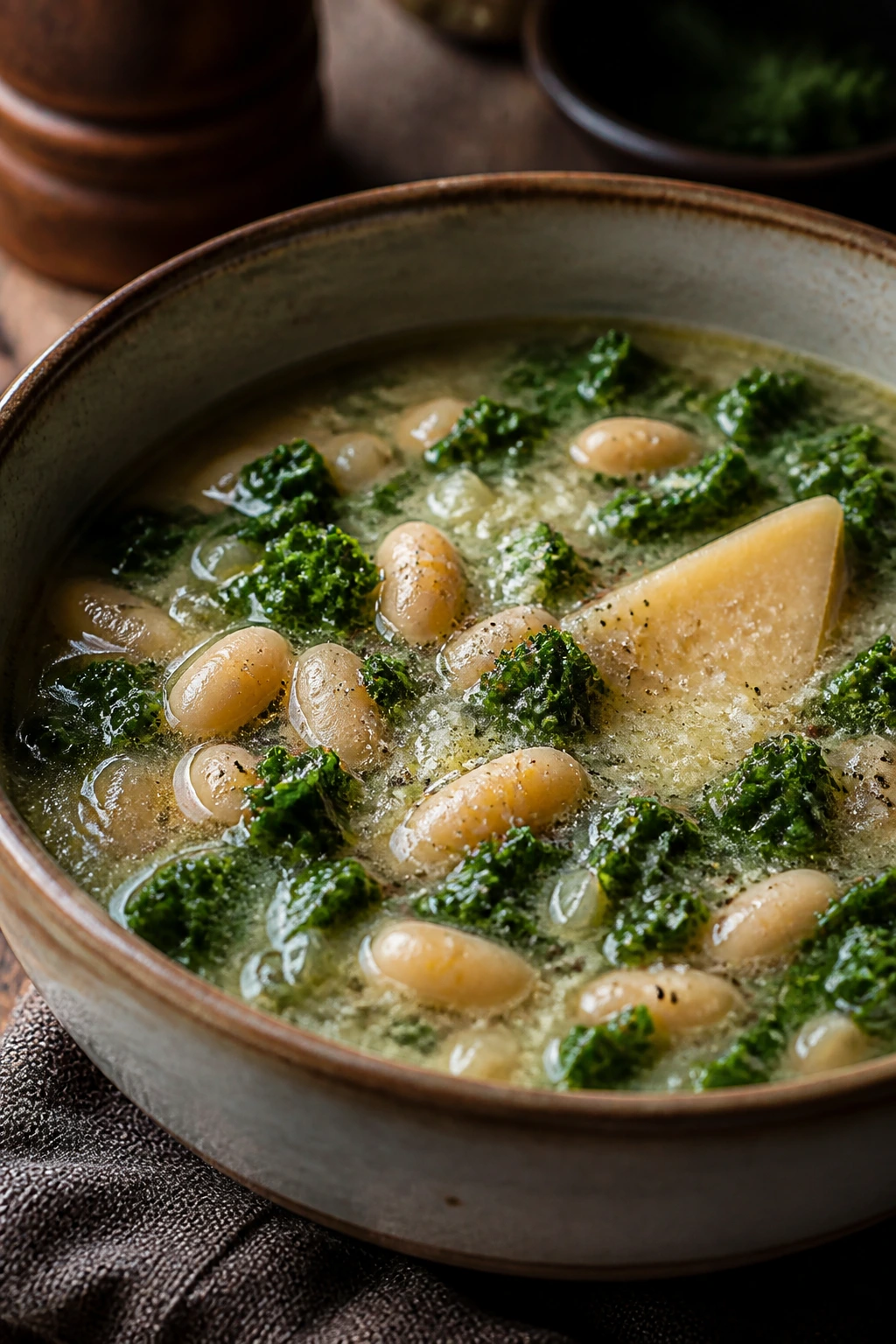
White bean and kale soup tastes like a pantry meal that dressed up for dinner. The beans make it creamy without much fuss, the kale adds a sturdy green bite, and a Parmesan rind in the pot gives the broth a salty, savory depth that plain stock doesn’t have on its own.
Why It Works:
Cannellini beans are soft enough to blend a little into the broth if you mash a few against the side of the pot. That gives you body without cream. Kale needs time to soften but not so much that it disappears, so it goes in after the beans have already done their work. The Parmesan rind quietly seasons the soup from the inside.
Key Ingredients:
- 2 tablespoons olive oil
- 1 onion, diced
- 2 carrots, diced
- 3 garlic cloves, minced
- 2 cans cannellini beans, drained and rinsed
- 5 cups chicken broth or vegetable broth
- 1 Parmesan rind
- 1 teaspoon chopped rosemary
- 1 bunch kale, stems removed and leaves chopped
- 1 tablespoon lemon juice
- Salt and black pepper
- Grated Parmesan, for serving
Quick Steps:
- Start the vegetables: Heat oil in a pot over medium heat. Cook onion and carrots for 6 to 7 minutes until softened.
- Add the garlic and beans: Stir in garlic for 30 seconds, then add beans, broth, Parmesan rind, rosemary, salt, and pepper.
- Simmer and thicken: Bring to a simmer and cook for 15 minutes. Mash about 1 cup of the beans against the side of the pot for a creamier broth.
- Add the kale: Stir in kale and simmer 5 to 7 minutes until the leaves are tender but still green.
- Finish bright: Remove the Parmesan rind, add lemon juice, and taste for salt before serving.
Equipment for This Recipe:
- Soup pot
- Wooden spoon
- Potato masher or sturdy spoon
- Sharp knife
- Ladle
How to Serve This Dish:
Serve with shaved Parmesan on top and a hunk of toasted bread for dunking. It pairs especially well with a light salad dressed in vinaigrette because the soup is already earthy and savory. One large bowl is enough for supper if the bread is doing its job.
Pro Tips for This Recipe:
- Rinse canned beans well or the broth gets cloudy and a little metallic.
- Save Parmesan rinds in the freezer; they’re one of the cheapest ways to add depth.
- Strip the kale from the stems before chopping, or you’ll get chewy bites.
- Don’t skip lemon. Beans and greens need the lift.
Variations on This Dish:
- Italian Sausage Version: Brown 1/2 pound sausage with the onion.
- Creamier Blend: Blend half the soup before adding kale.
- Garlic-Rosemary Heavy Pot: Double the garlic and rosemary for a sharper herb profile.
Common Mistakes to Avoid with This Dish:
- Adding kale too early: It turns dull and loses all bite.
- Skipping the rind or seasoning: The soup can taste polite instead of deep.
- Using dry, unseasoned beans: Canned beans work best here because they’re already tender and dependable.
9. Tomato Basil Tortellini Soup
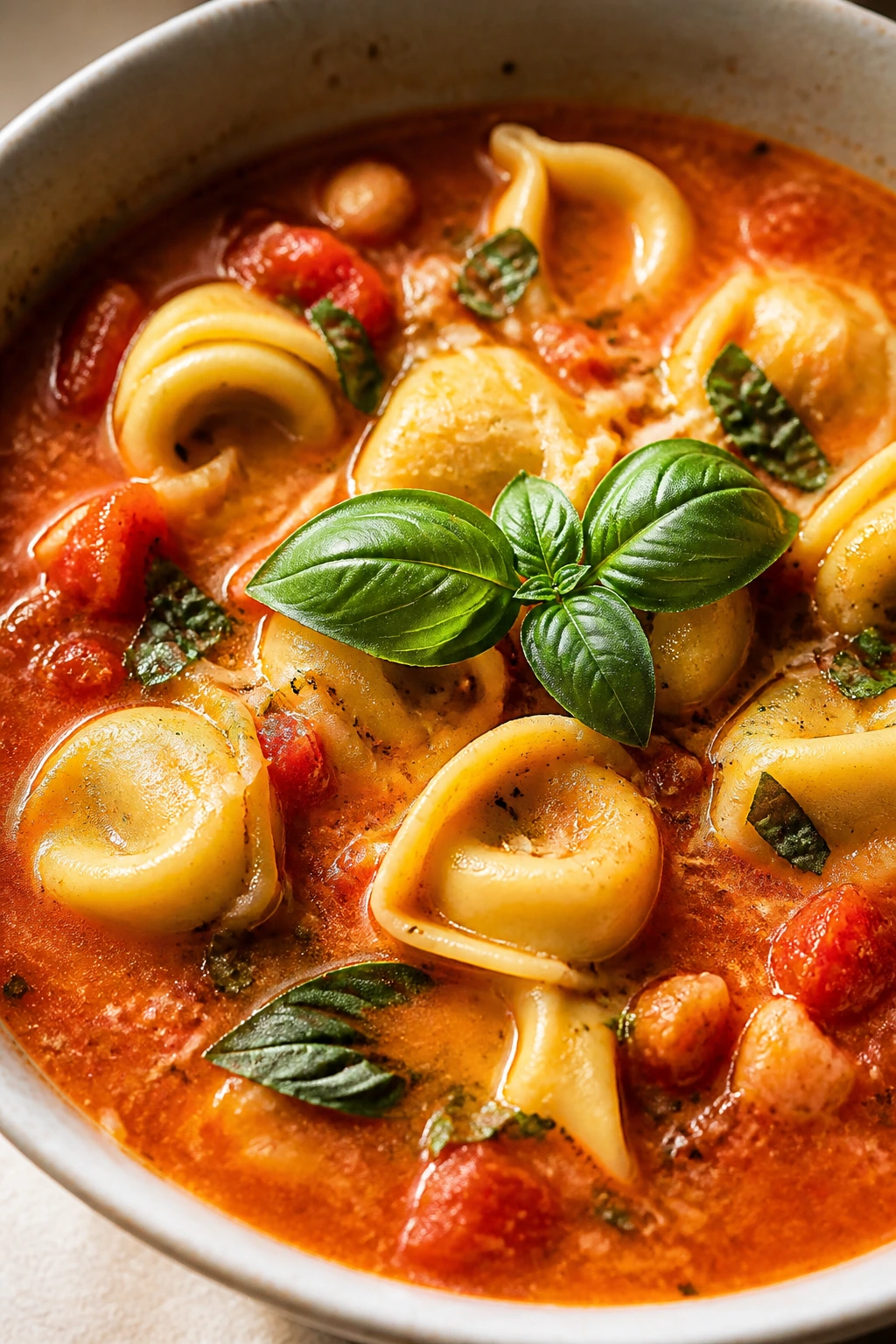
This is the bowl that tastes like comfort with a little weekend theater. The tomato broth should be bright and a touch creamy, the tortellini should stay plump, and the basil needs to smell fresh the second it hits the pot. If the tortellini goes mushy, the whole thing gets muddy.
Why It Works:
Crushed tomatoes make a smoother, more soup-like base than chunky tomatoes do. A little sugar rounds the acid, but only enough to take the edge off—not enough to make it taste sweet. Tortellini cooks directly in the broth, which makes the soup feel complete and keeps you from boiling a separate pot of pasta water.
Key Ingredients:
- 2 tablespoons butter
- 1 small onion, diced
- 3 garlic cloves, minced
- 1 can (28 ounces) crushed tomatoes
- 4 cups chicken broth or vegetable broth
- 1 teaspoon sugar
- 1 teaspoon Italian seasoning
- 1 package (10 ounces) cheese tortellini, fresh or refrigerated
- 1/2 cup heavy cream
- 1/4 cup chopped fresh basil
- Salt and black pepper
- Grated Parmesan, for serving
Quick Steps:
- Cook the onion base: Melt butter in a pot over medium heat. Add onion and cook for 5 to 6 minutes until soft.
- Add garlic and tomatoes: Stir in garlic for 30 seconds, then add crushed tomatoes, broth, sugar, Italian seasoning, salt, and pepper.
- Simmer the broth: Bring to a gentle simmer and cook for 15 minutes so the tomato flavor softens and deepens.
- Cook the tortellini: Add tortellini and simmer for 4 to 6 minutes, just until they float and turn tender.
- Finish with cream and basil: Stir in cream and basil off the heat, then taste and adjust seasoning.
Equipment for This Recipe:
- Medium soup pot
- Wooden spoon
- Measuring cups and spoons
- Ladle
- Small bowl for basil
How to Serve This Dish:
Top each bowl with Parmesan and a few torn basil leaves. Serve it with garlic bread or a crisp Caesar salad if you want a full meal. The broth should be loose enough to spoon but thick enough to coat the tortellini.
Pro Tips for This Recipe:
- Cook tortellini right before serving so it doesn’t swell and break apart.
- If using jarred pasta sauce instead of crushed tomatoes, thin it with broth or the soup gets too heavy.
- Keep the cream out until the end so it doesn’t separate.
- Fresh basil tastes brighter than dried basil here; the dish depends on that lift.
Variations on This Dish:
- Sausage Tomato Tortellini: Brown 1/2 pound Italian sausage with the onion.
- Spicy Red Pepper Bowl: Stir in 1/4 teaspoon red pepper flakes with the garlic.
- Dairy-Free Tomato Tortellini: Use coconut cream or omit the cream and add extra basil.
Common Mistakes to Avoid with This Dish:
- Overcooking the tortellini: It turns soft fast.
- Adding basil too early: The flavor fades.
- Boiling after cream goes in: Gentle heat keeps the broth smooth.
10. Chicken Tortilla Soup

Chicken tortilla soup needs contrast: smoky broth, bright lime, tender chicken, and something crisp on top. Without the crunch of tortilla strips, the bowl can feel one-note. That’s why the toppings matter as much as the soup itself.
Why It Works:
Toasting the spices in oil wakes up the chili powder and cumin before any broth goes in. Black beans and corn add texture, while shredded chicken makes it filling enough for dinner. Lime and cilantro at the end sharpen the whole bowl and keep the tomato base from tasting heavy.
Key Ingredients:
- 2 tablespoons vegetable oil
- 1 medium onion, diced
- 1 jalapeño, seeded and minced
- 3 garlic cloves, minced
- 1 teaspoon ground cumin
- 1 teaspoon chili powder
- 1 can (14.5 ounces) diced tomatoes
- 6 cups chicken broth
- 2 cups cooked shredded chicken
- 1 can black beans, drained and rinsed
- 1 cup corn kernels, fresh or frozen
- 2 tablespoons lime juice
- Tortilla strips, avocado, and cilantro for serving
- Salt and black pepper
Quick Steps:
- Build the spice base: Heat oil in a pot over medium heat. Cook onion and jalapeño for 5 minutes, then add garlic, cumin, and chili powder for 30 seconds.
- Add the broth: Stir in tomatoes and broth, then bring to a simmer for 15 minutes.
- Add the fillings: Stir in chicken, black beans, and corn. Simmer for 10 more minutes until everything is hot and the flavors mingle.
- Brighten the soup: Add lime juice and taste for salt. The broth should taste smoky first and fresh at the end.
- Finish with crunch: Ladle into bowls and top with tortilla strips, avocado, and cilantro.
Equipment for This Recipe:
- Soup pot
- Cutting board and knife
- Wooden spoon
- Ladle
- Baking sheet if you’re making homemade tortilla strips
How to Serve This Dish:
Serve the soup with all the toppings on the table so everyone can build their own bowl. A little extra lime on the side helps if the tomatoes taste heavy. If you want it more filling, add a scoop of rice, but keep the tortilla strips on top so they stay crisp.
Pro Tips for This Recipe:
- Toast homemade tortilla strips in the oven at 400°F for 8 to 10 minutes.
- Use rotisserie chicken when you want the soup to come together fast.
- Add avocado at the end so it stays fresh and doesn’t melt into the broth.
- If the soup tastes flat, salt first, then add more lime. Acid alone won’t fix weak seasoning.
Variations on This Dish:
- Creamy Tortilla Soup: Stir in 1/2 cup cream or crema at the end.
- Vegetarian Black Bean Version: Skip the chicken and use extra beans plus vegetable broth.
- Smoky Chipotle Bowl: Add 1 minced chipotle in adobo for deeper heat.
Common Mistakes to Avoid with This Dish:
- Using soggy chips instead of tortilla strips: They disappear into the soup.
- Forgetting the lime: The broth needs that sharp finish.
- Cooking the chicken too long: Already-cooked chicken only needs warming.
11. Sausage, Fennel, and White Bean Soup
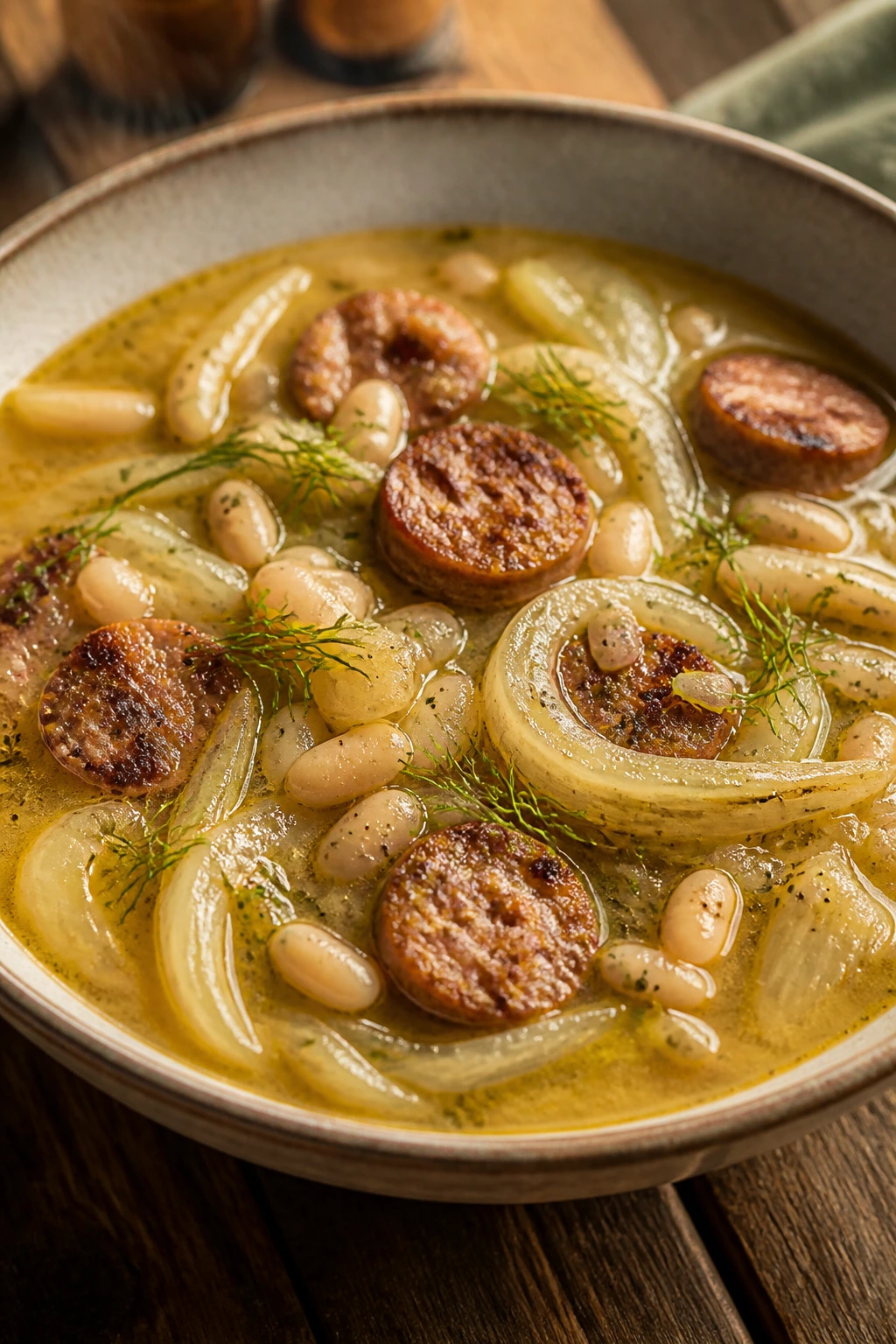
This soup tastes like it came from a kitchen that knows how to use fennel instead of fearing it. The fennel softens into something sweet and aromatic, the sausage adds fat and spice, and white beans give the broth a creamy, spoon-coating quality without any actual cream.
Why It Works:
Italian sausage seasons the entire pot from the start, so you don’t have to build flavor in layers the same way you do with a plain vegetable soup. Fennel softens the richness and adds a light licorice note that becomes gentler after simmering. White beans do the thickening, and kale or escarole brings just enough bitterness to keep the bowl balanced.
Key Ingredients:
- 1 pound Italian sausage, casings removed
- 1 tablespoon olive oil
- 1 fennel bulb, trimmed and thinly sliced
- 1 onion, diced
- 3 garlic cloves, minced
- 2 cans white beans, drained and rinsed
- 6 cups chicken broth
- 1/2 cup dry white wine
- 1 teaspoon red pepper flakes
- 1 bunch kale or escarole, chopped
- 1 tablespoon lemon juice
- Salt and black pepper
- Grated Parmesan, for serving
Quick Steps:
- Brown the sausage: Heat oil in a Dutch oven over medium heat. Cook the sausage for 6 to 8 minutes, breaking it into pieces until browned.
- Soften the fennel: Add fennel and onion to the pot and cook for 7 minutes until tender and lightly golden.
- Add the garlic and liquids: Stir in garlic and red pepper flakes, then pour in wine and scrape up the browned bits. Add broth and beans.
- Simmer the soup: Cook for 20 minutes, then mash a few beans against the side of the pot for extra body.
- Finish with greens: Stir in kale or escarole and cook for 5 minutes, then add lemon juice and taste for seasoning.
Equipment for This Recipe:
- Dutch oven
- Wooden spoon
- Sharp knife
- Cutting board
- Ladle
How to Serve This Dish:
This one is best with crusty bread and a heavy snowfall of Parmesan on top. A drizzle of olive oil at the table helps if you want more richness. Serve it in deep bowls; the sausage and beans deserve room to settle.
Pro Tips for This Recipe:
- Slice fennel thin so it softens before the sausage gets overcooked.
- Use hot or sweet sausage depending on how much kick you want.
- Mash some beans to thicken the broth without flour.
- Lemon at the end keeps the sausage flavor from feeling greasy.
Variations on This Dish:
- Turkey Sausage Version: Use turkey sausage and add 1 extra tablespoon oil.
- Tomato Broth Version: Stir in 1 can diced tomatoes with the broth for a brighter pot.
- Herb-Heavy Bowl: Add rosemary or thyme if you want the soup to lean more rustic.
Common Mistakes to Avoid with This Dish:
- Overcooking the greens: They should be tender and still green.
- Skipping the lemon: Rich sausage soup needs acid.
- Using fennel cut too thick: It stays crunchy longer than you want.
12. Minestrone with Pesto Swirl
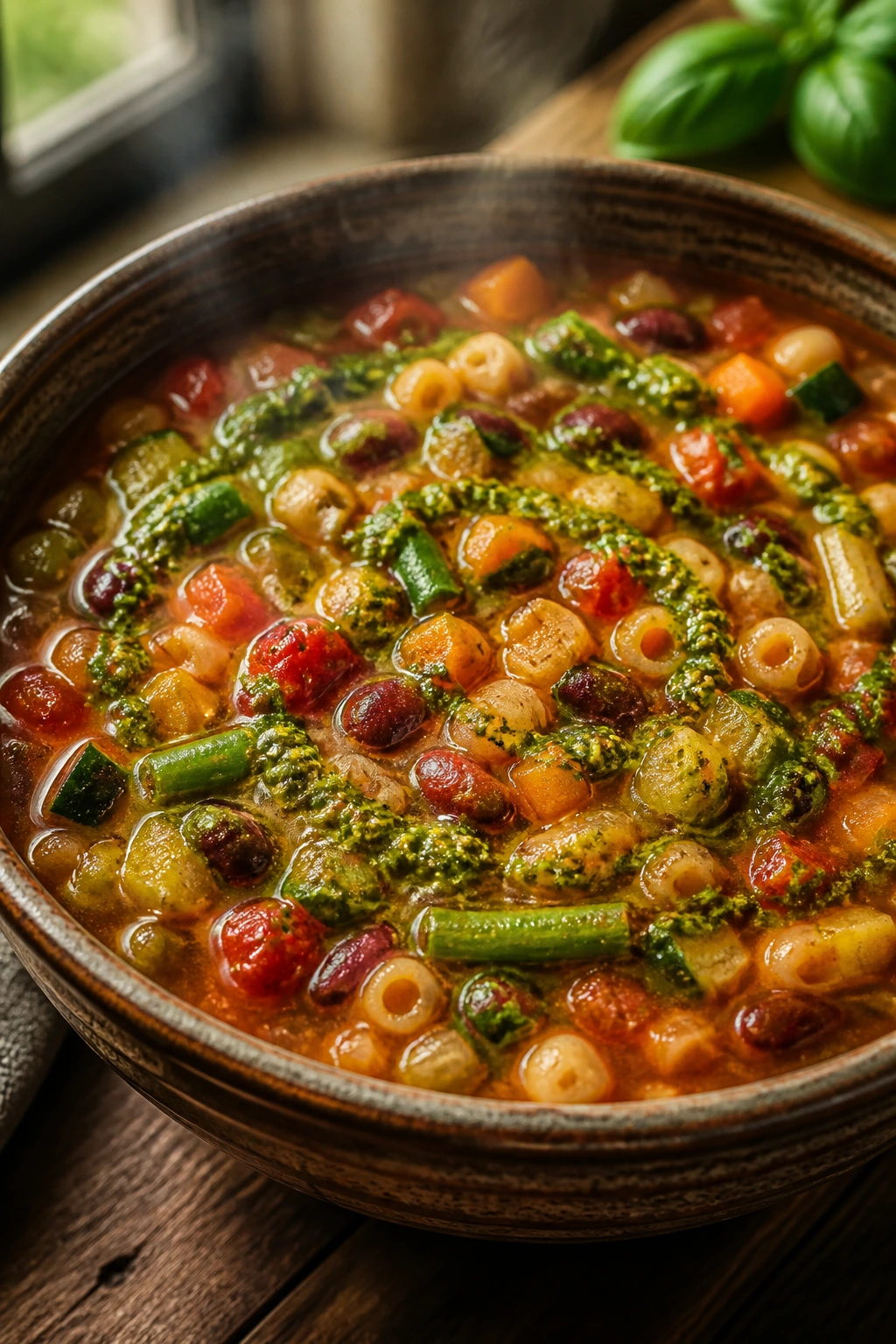
Minestrone should feel like a bowl with movement: beans, pasta, green beans, zucchini, tomatoes, and a little pesto stirred in at the end. The flavor changes with every spoonful, which is exactly why it works so well for a long Sunday lunch.
Why It Works:
The soup is built in layers, starting with the classic onion-carrot-celery base and ending with a spoon of pesto that wakes up the tomatoes. Beans give heft, small pasta makes it filling, and green vegetables keep the bowl from turning muddy. The trick is not overcooking the pasta if you want leftovers that still hold shape.
Key Ingredients:
- 2 tablespoons olive oil
- 1 onion, diced
- 2 carrots, diced
- 2 celery stalks, diced
- 1 zucchini, diced
- 3 garlic cloves, minced
- 1 can kidney beans, drained and rinsed
- 1 can cannellini beans, drained and rinsed
- 1 can (14.5 ounces) diced tomatoes
- 6 cups vegetable broth
- 1 cup small pasta, such as ditalini
- 1 cup green beans, trimmed and cut into 1-inch pieces
- 2 cups spinach
- 1/4 cup basil pesto
- Salt and black pepper
Quick Steps:
- Cook the vegetable base: Heat oil in a pot over medium heat. Add onion, carrots, celery, and zucchini, then cook for 8 minutes until softened.
- Add garlic and simmering liquid: Stir in garlic, beans, tomatoes, broth, salt, and pepper. Bring to a simmer for 10 minutes.
- Add pasta and green beans: Stir in pasta and green beans and cook until the pasta is just tender, usually 8 to 10 minutes.
- Finish with spinach and pesto: Stir in spinach until wilted, then swirl in pesto off the heat.
- Taste and serve: Add more salt if needed. The pesto should taste bright, not buried.
Equipment for This Recipe:
- Large soup pot
- Wooden spoon
- Cutting board and knife
- Ladle
- Small spoon for pesto
How to Serve This Dish:
Serve with extra pesto on the side and grated Parmesan on top. Garlic bread fits naturally here, but a slice of focaccia is even better. Because this soup has pasta, it works as a full dinner with no other plate required.
Pro Tips for This Recipe:
- Cook the pasta to just shy of done so it doesn’t go mushy.
- If making ahead, store the pasta separately and add it when reheating.
- Use a thick pesto so it doesn’t disappear into the broth.
- A Parmesan rind simmered with the broth gives the soup a deeper base.
Variations on This Dish:
- Pasta-Free Minestrone: Skip the pasta and add extra beans or diced potatoes.
- Sausage Minestrone: Brown 1/2 pound sausage with the vegetables.
- Gluten-Free Version: Use rice pasta or omit the pasta entirely.
Common Mistakes to Avoid with This Dish:
- Overcooking the pasta: It turns soft and swells in the broth.
- Using too many watery vegetables: The soup can lose shape and taste diluted.
- Adding pesto while the soup is boiling: The basil flavor gets dull.
13. Split Pea Soup with Ham
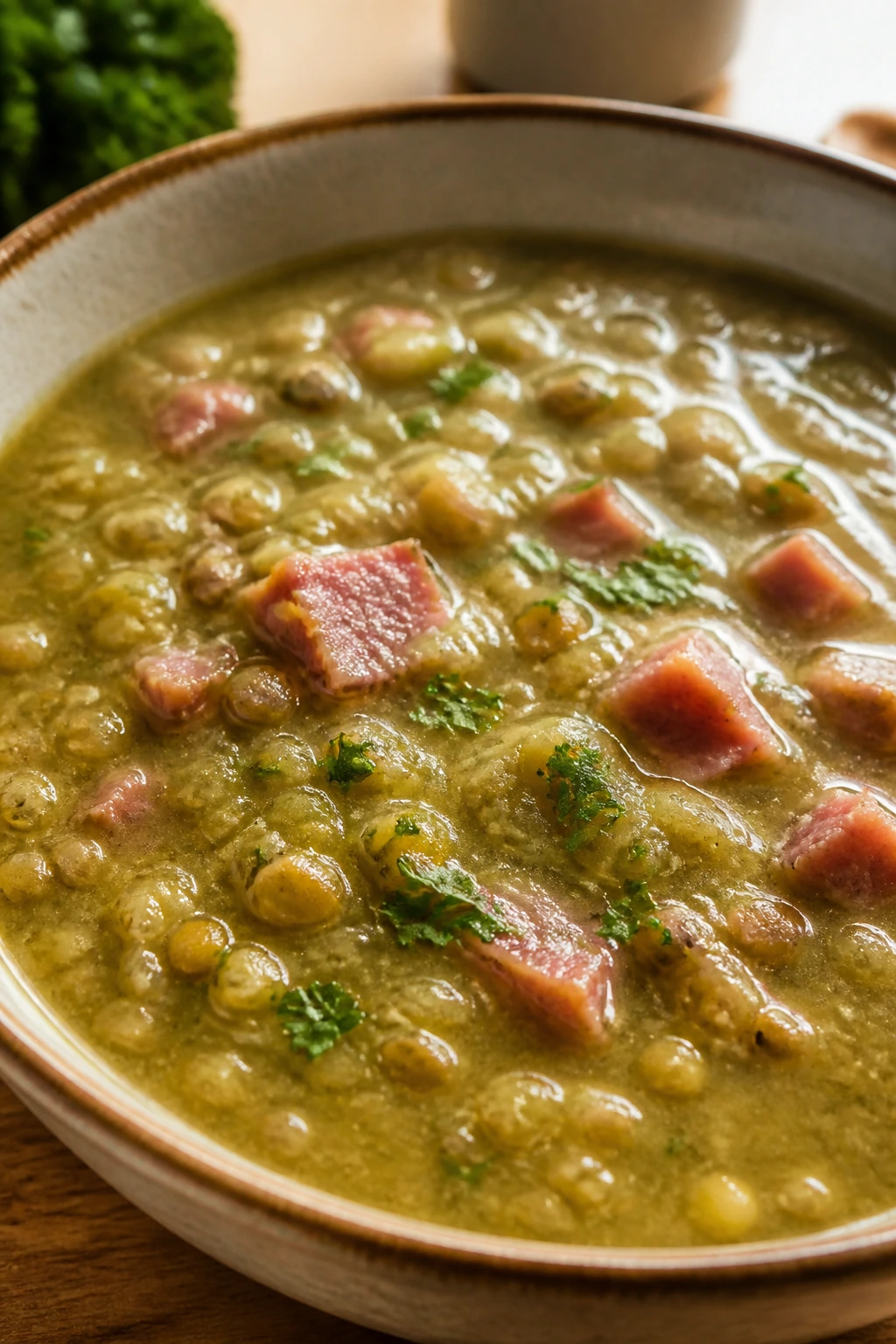
Split pea soup has a way of looking plain right up until it tastes like smoke, salt, and old-fashioned comfort in the best sense. The peas break down into a thick, spoonable pot, and the ham gives it a savory backbone that plain broth can’t fake.
Why It Works:
Split peas fall apart as they cook, which is exactly what makes the soup so thick without flour. A ham hock or meaty ham bone adds collagen and salt, and that makes the broth taste rounded. The vegetables keep the soup from becoming one-note, and a little parsley at the end cuts through the density.
Key Ingredients:
- 1 pound green split peas, rinsed
- 1 tablespoon olive oil
- 1 onion, diced
- 2 carrots, diced
- 2 celery stalks, diced
- 2 garlic cloves, minced
- 1 ham hock or 1 1/2 pounds diced ham
- 8 cups chicken broth or water
- 1 bay leaf
- 1 teaspoon dried thyme
- Black pepper
- Chopped parsley, for serving
Quick Steps:
- Start the aromatics: Heat oil in a stockpot over medium heat. Add onion, carrots, and celery, then cook for 6 to 7 minutes until softened.
- Add the peas and ham: Stir in garlic, split peas, ham hock or diced ham, broth, bay leaf, thyme, and pepper.
- Simmer long enough: Bring to a boil, then reduce to a very gentle simmer and cook for 60 to 90 minutes, stirring now and then, until the peas break apart and the soup thickens.
- Shred the ham: If using a ham hock, remove it, pull off the meat, and return the meat to the pot.
- Finish and taste: Discard the bay leaf, add more pepper if needed, and serve with parsley.
Equipment for This Recipe:
- Large stockpot
- Wooden spoon
- Ladle
- Cutting board and knife
- Bowl for the ham bone
How to Serve This Dish:
Split pea soup likes buttered rye bread or a warm biscuit. It’s thick enough to eat almost like stew, so use a wide bowl and a sturdy spoon. A little vinegar on the table can help if the pot tastes heavy.
Pro Tips for This Recipe:
- Rinse the split peas until the water runs mostly clear.
- Stir more often near the end because the thick soup can catch on the bottom.
- Ham hock adds more depth than diced ham alone.
- If you want a smoother soup, blend half and leave the rest chunky.
Variations on This Dish:
- Smoky Vegetarian Split Pea Soup: Skip the ham and add smoked paprika plus a splash of soy sauce.
- Chunky Ham and Pea Bowl: Keep the peas less broken down by shortening the simmer a bit.
- Pressure Cooker Shortcut: Cook on high pressure for about 18 minutes with natural release.
Common Mistakes to Avoid with This Dish:
- Not stirring enough near the end: The thick soup can stick and scorch.
- Using too much water without seasoning: The broth gets flat fast.
- Serving without acid: A small splash of vinegar or lemon helps the soup wake up.
14. Thai Coconut Curry Noodle Soup
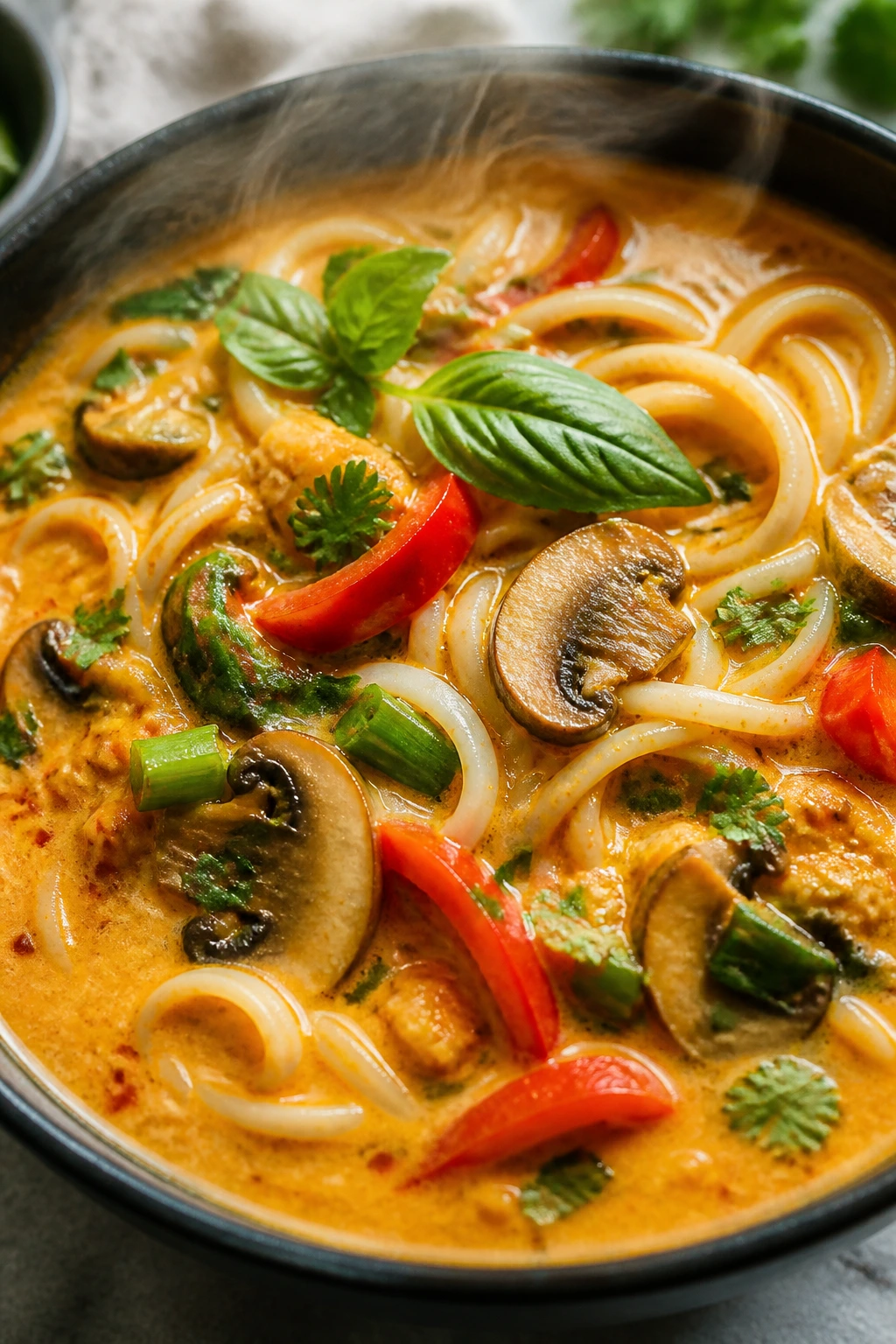
This soup is the loudest one in the group, and I mean that in a good way. Coconut milk gives it silk, red curry paste brings heat and spice, and lime at the end keeps it from feeling heavy. The noodles make it feel like a meal, not a starter.
Why It Works:
Curry paste needs to bloom in a little heat before the liquids go in, or it stays sharp and raw. Coconut milk smooths the broth and carries the spice, while mushrooms and bell pepper add texture. Cooking the noodles separately is the one move that saves leftovers from turning into a thick, sticky tangle.
Key Ingredients:
- 2 tablespoons red curry paste
- 1 tablespoon neutral oil
- 1 shallot, sliced
- 1 tablespoon grated ginger
- 2 garlic cloves, minced
- 1 can coconut milk
- 5 cups chicken broth or vegetable broth
- 1 cup mushrooms, sliced
- 1 red bell pepper, thinly sliced
- 8 ounces rice noodles
- 1 cup shredded cooked chicken, tofu, or shrimp
- 1 tablespoon fish sauce or soy sauce
- 2 tablespoons lime juice
- Fresh basil or cilantro, for serving
Quick Steps:
- Bloom the curry paste: Heat oil in a pot over medium heat. Stir in curry paste, shallot, ginger, and garlic for 1 minute until fragrant.
- Add the liquids: Pour in coconut milk and broth, then stir until smooth.
- Simmer the vegetables: Add mushrooms, bell pepper, and fish sauce or soy sauce. Cook for 8 to 10 minutes until the vegetables are tender.
- Cook the noodles separately: Prepare rice noodles in hot water according to the package, then drain and divide into bowls.
- Finish the soup: Add chicken, tofu, or shrimp just long enough to warm through, then stir in lime juice and ladle over the noodles. Top with herbs.
Equipment for This Recipe:
- Soup pot
- Small pot or heatproof bowl for noodles
- Wooden spoon
- Measuring cups and spoons
- Ladle
How to Serve This Dish:
Put the noodles in the bowl first, then spoon the broth and vegetables over them so the noodles stay springy. Serve with lime wedges, herbs, and a little chili oil if you want more heat. It’s a full bowl by itself, though cucumber salad on the side works well.
Pro Tips for This Recipe:
- Don’t boil coconut milk hard; it can split or get oily.
- Keep the noodles separate if you want leftovers that still have texture.
- Taste the broth before serving and adjust lime, fish sauce, or soy slowly.
- Shrimp need only a few minutes in the hot broth; don’t overcook them.
Variations on This Dish:
- Green Curry Bowl: Swap the red curry paste for green curry paste and add snap peas.
- Veggie-Heavy Pot: Add baby spinach, carrots, or broccoli florets.
- Peanut Finish: Stir in 1 tablespoon peanut butter for a richer, satiny broth.
Common Mistakes to Avoid with This Dish:
- Cooking noodles in the soup pot: They absorb too much broth and turn gummy.
- Adding lime too early: The bright finish fades if it simmers too long.
- Using too little curry paste: The broth tastes thin and coconut-heavy.
15. Miso Ginger Udon Soup

Miso soup can be as simple as you want, but it should never taste careless. The broth needs ginger, a little garlic, and enough salt from the miso to feel grounded. Fresh udon gives the bowl a soft, chewy texture that dry noodles can’t quite match.
Why It Works:
Miso should be stirred in off the heat, because boiling it kills the flavor and can turn the soup murky. Ginger and garlic give the broth some lift before the miso goes in, and mushrooms add an earthy note that plays nicely with tofu. Udon noodles make the bowl feel substantial without needing a long simmer.
Key Ingredients:
- 6 cups dashi or light vegetable broth
- 1 tablespoon grated fresh ginger
- 2 garlic cloves, minced
- 6 ounces mushrooms, sliced
- 3 tablespoons white miso paste
- 2 tablespoons soy sauce
- 8 ounces fresh or vacuum-packed udon noodles
- 6 ounces firm tofu, cubed
- 2 scallions, sliced
- 1 teaspoon sesame oil
- Handful of spinach or baby bok choy
Quick Steps:
- Simmer the broth base: Bring broth, ginger, garlic, and mushrooms to a gentle simmer in a pot for 8 minutes.
- Cook the udon: Add udon noodles and cook according to the package, usually 2 to 4 minutes for fresh noodles.
- Dissolve the miso: Scoop some hot broth into a small bowl, whisk in miso until smooth, then stir it back into the pot off the heat.
- Add the tofu and greens: Stir in tofu and spinach or bok choy just until warmed and wilted.
- Finish cleanly: Add soy sauce and sesame oil, then top with scallions.
Equipment for This Recipe:
- Soup pot
- Small bowl for the miso
- Whisk or chopsticks
- Ladle
- Cutting board and knife
How to Serve This Dish:
Serve immediately, while the udon is still springy and the broth smells of ginger. A few sesame seeds and scallions on top are enough; this soup doesn’t need much fuss. If you want extra richness, a soft-boiled egg fits neatly here.
Pro Tips for This Recipe:
- Never boil the miso after it goes in.
- Use fresh udon if you can; it has a better bite than dry noodles.
- Slice mushrooms thin so they soften fast.
- If the broth tastes too salty, add a splash more hot water instead of more soy sauce.
Variations on This Dish:
- Chicken Udon Version: Add shredded cooked chicken with the tofu.
- Spicy Chili Crisp Bowl: Finish with chili crisp and a little extra sesame oil.
- Gluten-Free Swap: Use rice noodles and certified gluten-free miso.
Common Mistakes to Avoid with This Dish:
- Boiling the miso: The flavor dulls fast.
- Letting udon sit in broth too long: It gets bloated.
- Skipping ginger: The broth loses its clean, warming edge.
16. Corn Chowder with Bacon
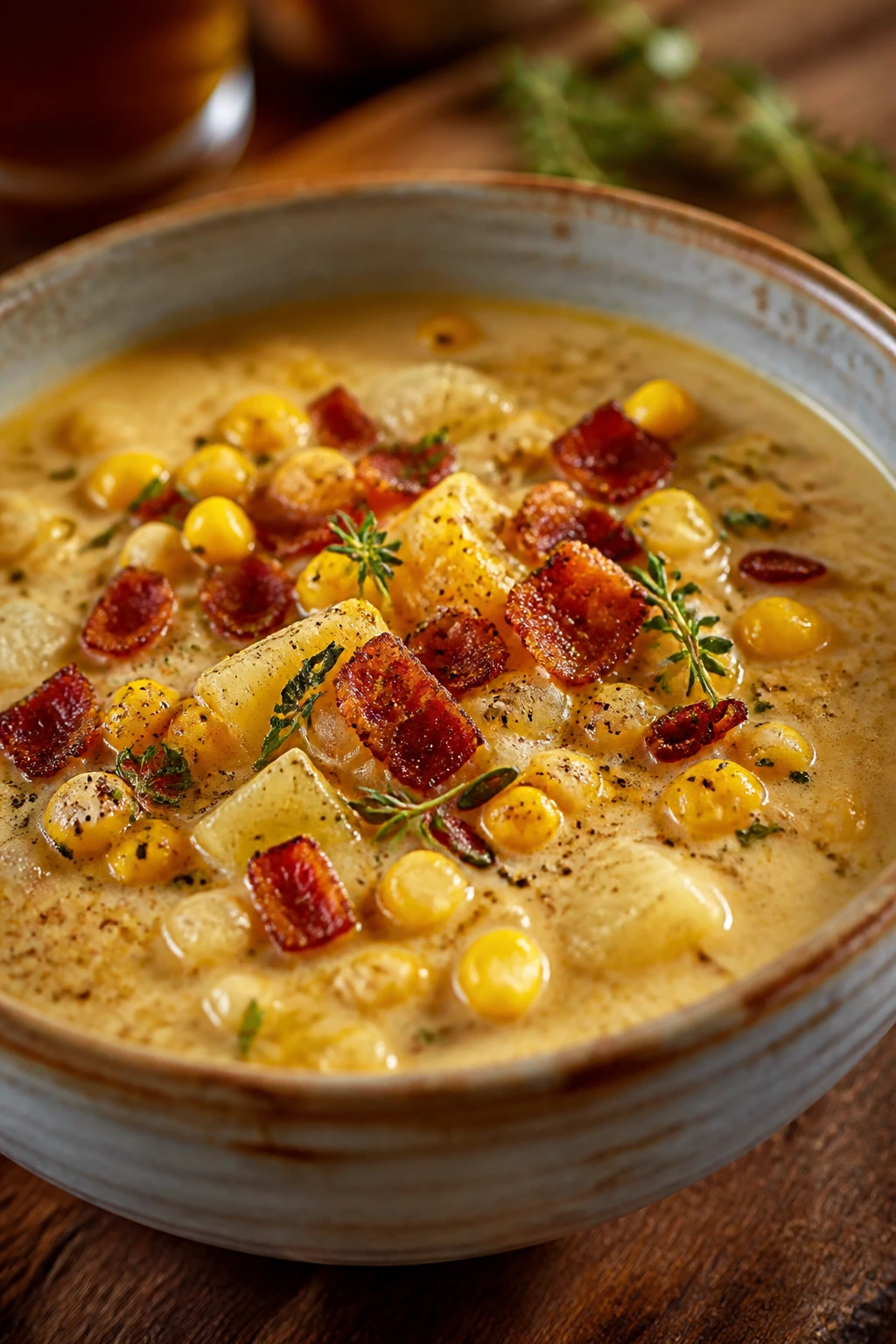
Corn chowder should taste like sweetness, smoke, and cream all meeting in one spoon. Bacon gives you the smoky base, potatoes give the chowder its body, and corn brings little bursts of pop that keep the bowl lively. This is not the place for timid seasoning.
Why It Works:
Bacon fat carries the onion and celery, which makes the base richer before any dairy goes in. A flour-thickened broth keeps the chowder from feeling thin, while potatoes break down just enough to add body. Corn kernels, especially if you scrape the cob, give natural sweetness and a little extra corn flavor.
Key Ingredients:
- 6 slices bacon, chopped
- 1 onion, diced
- 2 celery stalks, diced
- 2 tablespoons all-purpose flour
- 2 cups diced Yukon Gold potatoes
- 4 cups chicken broth
- 3 cups corn kernels, fresh or frozen
- 1 cup whole milk
- 1 cup heavy cream
- 1 teaspoon fresh thyme leaves
- Salt and black pepper
- Chopped chives, for serving
Quick Steps:
- Render the bacon: Cook bacon in a heavy pot over medium heat until crisp, about 6 to 8 minutes. Remove it, leaving 2 tablespoons fat in the pot.
- Cook the vegetables: Add onion and celery to the bacon fat and cook for 5 minutes until soft.
- Thicken the base: Stir in flour and cook for 1 minute, then slowly whisk in broth.
- Simmer with potatoes: Add potatoes and thyme, then simmer for 15 minutes until the potatoes are tender.
- Finish with corn and dairy: Stir in corn, milk, and cream. Warm gently for 5 minutes, return the bacon, and season to taste.
Equipment for This Recipe:
- Heavy soup pot
- Slotted spoon
- Whisk
- Cutting board and knife
- Ladle
How to Serve This Dish:
Top each bowl with chives, black pepper, and a little extra bacon. Oyster crackers or warm biscuits fit the chowder’s texture better than a crusty baguette. It’s rich enough that a smaller bowl can go a long way.
Pro Tips for This Recipe:
- Use fresh corn if it’s in your kitchen, but frozen corn works well.
- Don’t boil after adding cream or the texture gets rough.
- If the chowder is too thick, loosen it with a splash of broth.
- Scrape the corn cobs with the back of your knife if you’re using fresh ears; the milk adds sweetness.
Variations on This Dish:
- Smoked Paprika Chowder: Add 1/2 teaspoon smoked paprika with the flour.
- Clam-and-Corn Twist: Stir in chopped clams at the very end.
- Vegetarian Corn Chowder: Skip the bacon and use butter plus smoked paprika.
Common Mistakes to Avoid with This Dish:
- Using too much bacon fat: The chowder turns greasy.
- Boiling after dairy goes in: The cream can split.
- Underseasoning the potatoes: They absorb salt and need more than you think.
17. Roasted Butternut Squash and Sage Soup
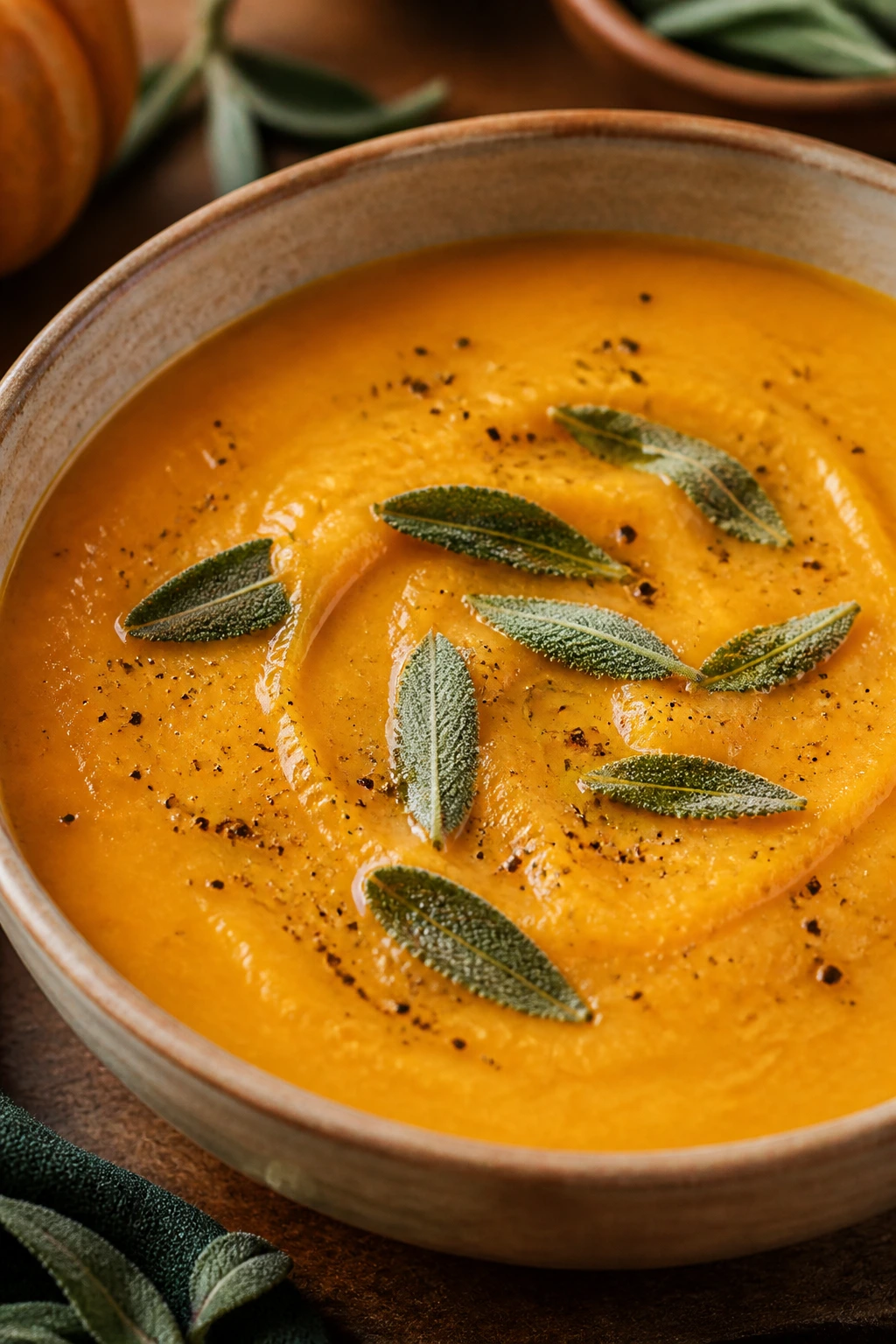
Roasted squash soup has one job: taste like autumn without leaning into dessert. The squash should be savory, the sage should smell warm and a little piney, and the finish should stay bright enough that you want another spoonful. A tart apple in the pot helps pull that off.
Why It Works:
Roasting the squash caramelizes its edges and gives the soup a deeper flavor than boiling ever can. Onion and garlic build the base, sage gives the soup a woodsy note, and apple adds a quiet tang that keeps the squash from tasting flat. A little cream or coconut milk smooths the texture without hiding the roast flavor.
Key Ingredients:
- 2 1/2 pounds butternut squash, peeled and cubed
- 2 tablespoons olive oil
- 1 large onion, sliced
- 3 garlic cloves, smashed
- 4 cups vegetable or chicken broth
- 1 tart apple, peeled and chopped
- 1 tablespoon chopped fresh sage
- 1/2 cup heavy cream or coconut milk
- Salt and black pepper
- Toasted pepitas, for serving
Quick Steps:
- Roast the squash: Toss squash with 1 tablespoon olive oil, salt, and pepper. Roast at 425°F for 25 to 30 minutes until browned at the edges.
- Cook the base: Heat the remaining oil in a pot and cook onion for 6 minutes until soft. Add garlic for 30 seconds.
- Simmer the soup: Add roasted squash, broth, apple, and sage. Simmer for 10 to 12 minutes until the apple is soft.
- Blend until smooth: Puree with an immersion blender or in batches in a countertop blender.
- Finish and season: Stir in cream or coconut milk, taste, and adjust with salt, pepper, or a small splash of vinegar if needed.
Equipment for This Recipe:
- Sheet pan
- Large soup pot
- Immersion blender or blender
- Sharp peeler and knife
- Ladle
How to Serve This Dish:
Serve with toasted pepitas and a drizzle of olive oil or cream in a spiral. The soup works with grilled cheese, but a sharp cheddar biscuit is even better. Use a shallow bowl if you want the orange color to show well.
Pro Tips for This Recipe:
- Roast until the squash has browned spots; pale squash makes a flat-tasting soup.
- A tart apple helps more than a sweet one.
- Add a tiny splash of vinegar if the soup tastes too sweet.
- Blend carefully in batches because hot squash soup expands fast.
Variations on This Dish:
- Carrot-Squash Blend: Replace 1 pound of squash with carrots for a brighter flavor.
- Coconut Sage Bowl: Use coconut milk and finish with lime.
- Spice-Forward Version: Add 1/4 teaspoon cayenne or curry powder.
Common Mistakes to Avoid with This Dish:
- Boiling instead of roasting the squash: You lose the browned flavor.
- Using sweet apple varieties: The soup can taste oddly sugary.
- Forgetting acid at the end: A little vinegar or lemon keeps it from feeling heavy.
18. New England Clam Chowder
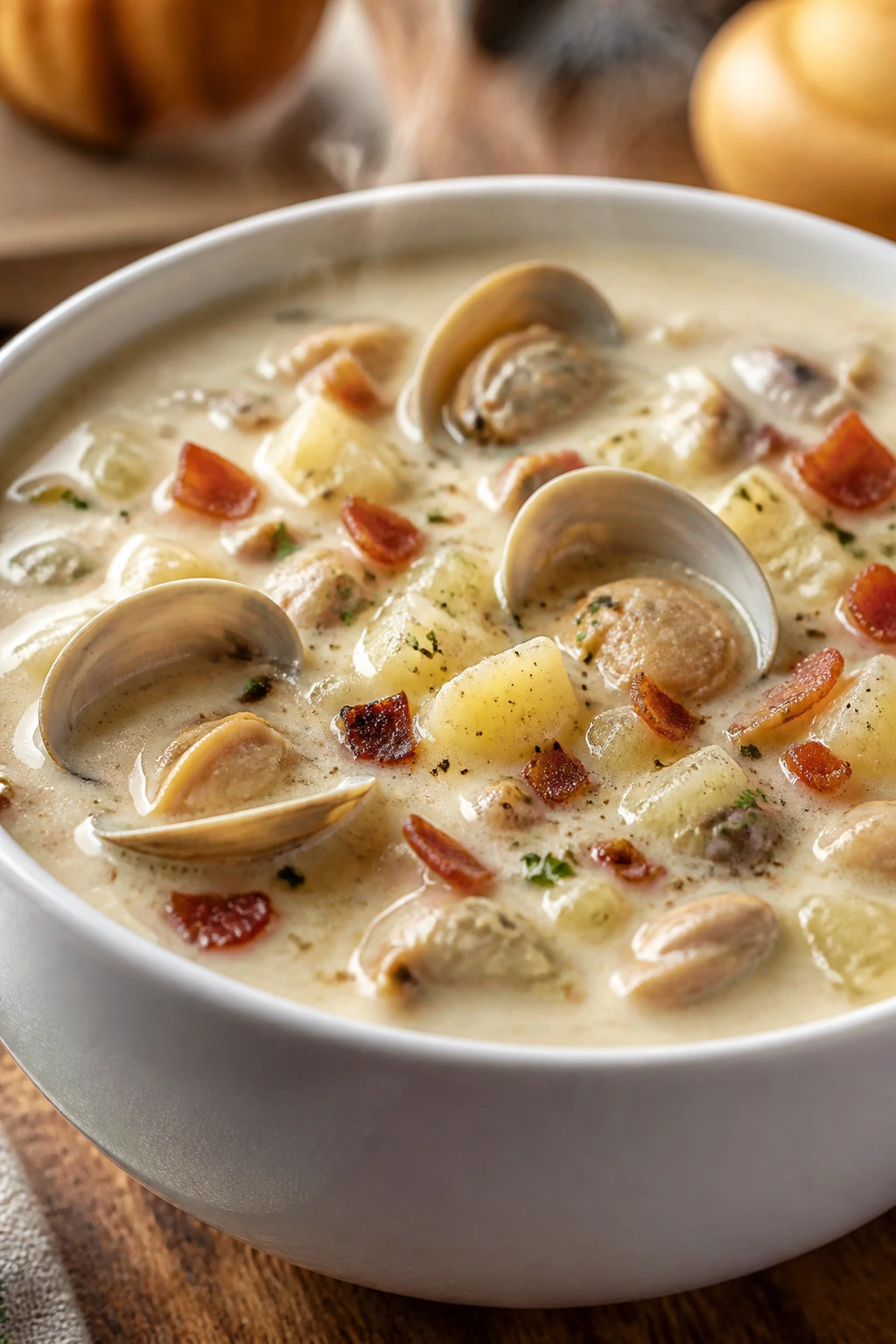
Clam chowder should taste creamy, briny, and a little smoky from bacon. The potatoes need to be tender but still intact, and the clams should be added at the end so they stay soft instead of turning rubbery. This is a soup where timing matters more than drama.
Why It Works:
Bacon and butter give the chowder its first layer of richness, while clam juice brings the ocean flavor that makes the bowl taste like itself. Flour thickens the broth just enough to coat a spoon, and the dairy goes in gently so it stays smooth. The clams only need warming; if you cook them hard, they’ll go tough fast.
Key Ingredients:
- 6 slices bacon, chopped
- 1 onion, diced
- 2 celery stalks, diced
- 2 tablespoons unsalted butter
- 2 tablespoons all-purpose flour
- 2 cups diced Yukon Gold potatoes
- 2 cups clam juice
- 1 can chopped clams, about 10 ounces, drained with liquid reserved
- 1 cup whole milk
- 1 cup heavy cream
- 1 teaspoon dried thyme
- Black pepper
- Chopped parsley, for serving
Quick Steps:
- Render the bacon: Cook bacon in a pot over medium heat until crisp, then remove it and leave about 2 tablespoons fat in the pot.
- Soften the vegetables: Add onion and celery to the bacon fat with butter and cook for 5 to 6 minutes until tender.
- Make the chowder base: Stir in flour and cook for 1 minute, then whisk in clam juice and the reserved clam liquid.
- Cook the potatoes: Add potatoes and thyme. Simmer for 15 to 18 minutes until the potatoes are tender.
- Finish with dairy and clams: Stir in milk, cream, and clams. Warm gently for 3 to 4 minutes, then add pepper and parsley.
Equipment for This Recipe:
- Heavy saucepan or Dutch oven
- Whisk
- Slotted spoon
- Cutting board and knife
- Ladle
How to Serve This Dish:
Serve it with oyster crackers or a split-top roll, not a loaf that fights the chowder. A little extra bacon and parsley on top makes the bowl look finished. One generous bowl is plenty for lunch; two smaller bowls work if it’s the center of dinner.
Pro Tips for This Recipe:
- Add the clams at the very end so they stay tender.
- Yukon Gold potatoes hold shape better than russets here.
- If the chowder gets too thick, loosen it with a splash of milk or clam juice.
- Taste carefully before adding salt; clam juice and bacon already bring plenty.
Variations on This Dish:
- Maine-Style Chunky Chowder: Leave the potatoes in bigger cubes and use more bacon.
- Dairy-Light Version: Replace half the cream with milk.
- Corn-and-Clam Chowder: Stir in 1 cup corn kernels for a sweeter bowl.
Common Mistakes to Avoid with This Dish:
- Boiling the clams: They turn chewy fast.
- Adding salt too early: The bacon and clam juice already carry a lot of salinity.
- Using the wrong potatoes: Waxy potatoes hold their shape best; russets can break down too much.
Why a Sunday Soup Pot Works So Well
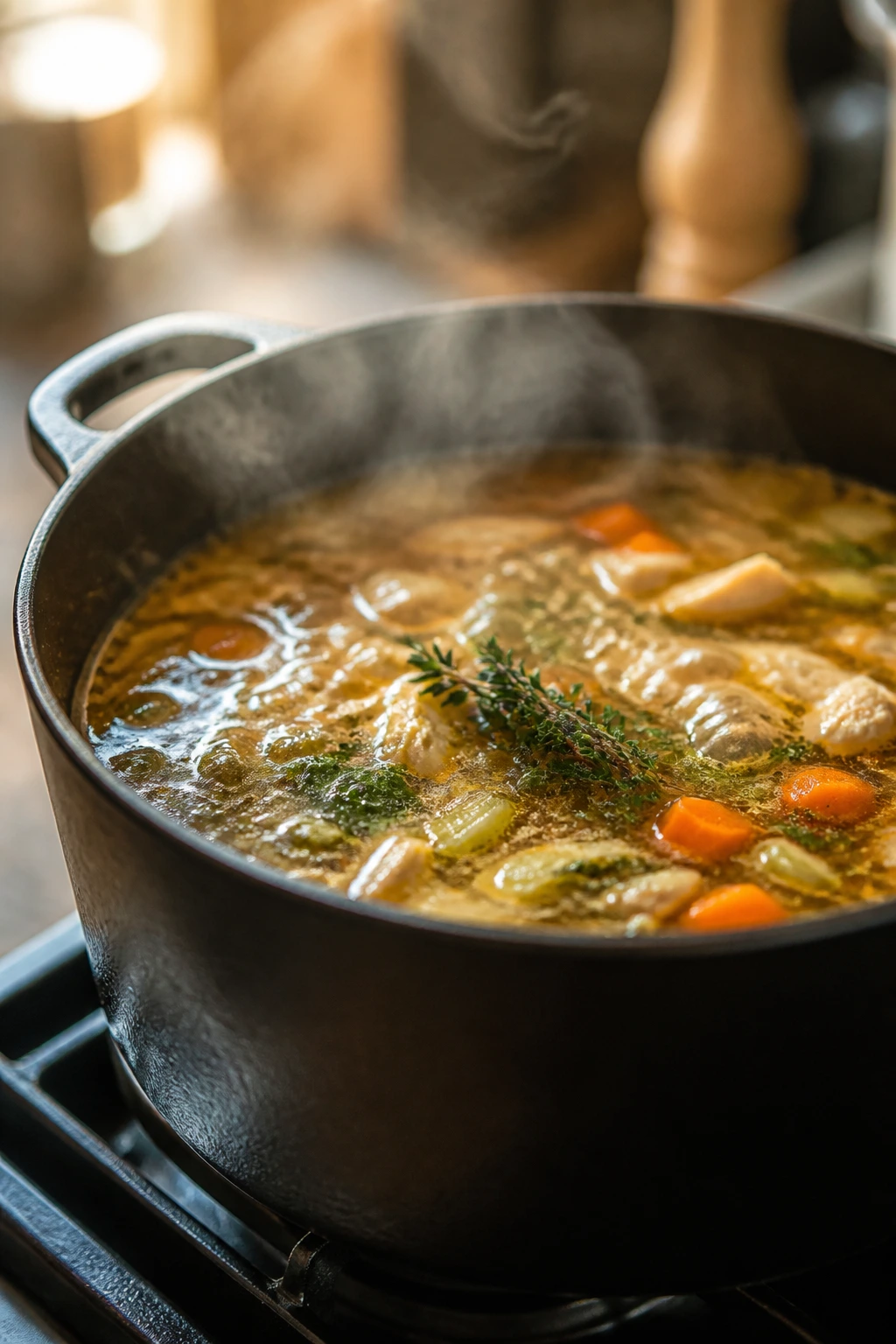
A good Sunday soup pot does more than feed people. It slows the room down. Onion gets its time, broth gets layered, and the first spoonful usually tastes better than anything rushed on a Tuesday night, because the cook actually had space to let the ingredients talk to each other.
That’s why the best bowls in this collection cover so much ground. Some are built on stock and noodles. Others lean on beans, barley, or potatoes. A few need cream, a few don’t, and the ones with the longest simmer usually reward you with leftovers that thicken and deepen overnight. That isn’t an accident. It’s the whole point.
Essential Equipment for These Recipes
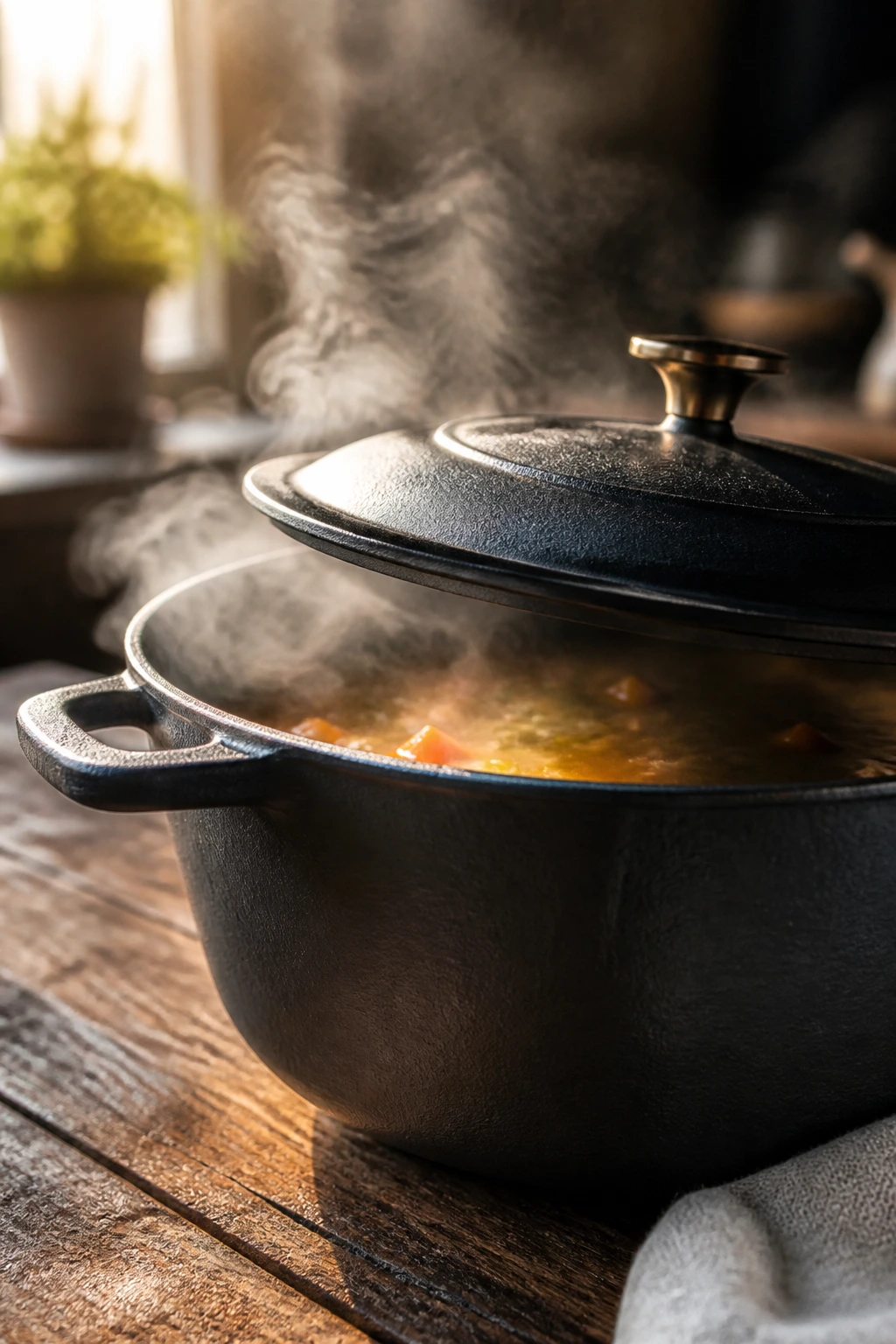
- Large Dutch oven or soup pot, 5 to 8 quarts: This handles caramelized onions, beans, chowders, and broth-based soups without crowding.
- Sharp chef’s knife: Onion, leek, fennel, and vegetable prep goes faster when the knife can cut cleanly.
- Cutting board with a damp towel underneath: Keeps the board from sliding when you’re slicing a pile of onions.
- Wooden spoon: Better than a whisk for thick soups, and gentler on the bottom of the pot.
- Whisk: Useful for roux-based soups like broccoli cheddar and chowder.
- Immersion blender: Handy for potato leek, mushroom, and squash soups.
- Countertop blender: Good for very smooth soups; just work in batches and vent the lid carefully.
- Ladle: Saves you from splashing hot broth all over the stove and your sleeves.
- Rimmed baking sheet: Needed for croutons, tortilla strips, and bread toasts.
- Fine-mesh strainer: Useful for rinsing lentils, beans, and leeks.
- Broiler-safe soup bowls: Essential for French onion soup and helpful for cheesy toppings.
- Airtight storage containers: Shallow containers cool soup faster and store more neatly.
Smart Shopping and Ingredient Tips
The broth makes or breaks a soup long before the garnish does. Low-sodium stock gives you room to season properly, and it’s a lot easier to add salt than to rescue a soup that started off too salty. If you have homemade broth, use it. If not, buy a carton that tastes clean on its own; you should be able to sip it and know whether it needs more body.
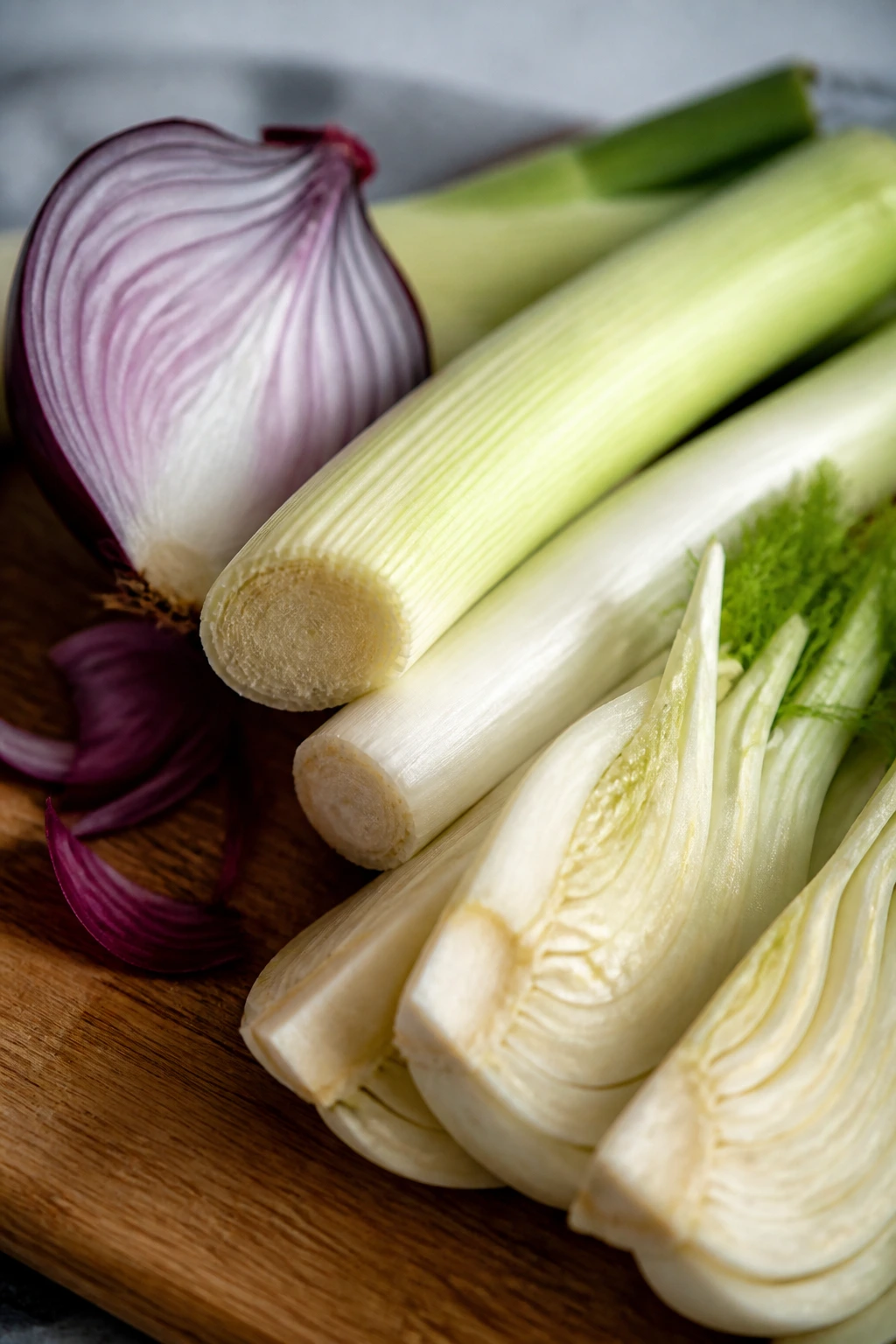
Onions, leeks, and fennel deserve a quick inspection before they hit the pot. Onions should feel firm, not soft around the stem. Leeks need to be washed after slicing because grit hides in the layers, and fennel should have pale, crisp stalks rather than brown, floppy fronds. For French onion soup, choose large yellow onions, because their sweetness develops better than white onions do.
Beans and lentils are where a little shopping care pays off. Canned beans are dependable for weeknight comfort soups; rinse them well so the broth tastes cleaner and less metallic. Dry lentils and barley should be checked for freshness and stored away from heat. If they smell dusty or stale, they’ll cook up dull too. For soups with pasta, buy small shapes that keep some bite—ditalini, tortellini, or small shells—because oversized noodles swallow broth and make the bowl feel clumsy.
Cheese is another place where shortcuts can backfire. For broccoli cheddar and French onion, grating your own cheese usually gives you a smoother melt. Pre-shredded cheese can be convenient, but the coating on it sometimes leaves the soup grainy. On the other hand, for topping soup with Parmesan, the pre-grated stuff is fine if that’s what you have; it’s not doing the same job.
For creamy soups and chowders, pick dairy with the recipe’s texture in mind. Whole milk gives a lighter body, cream gives thickness, and coconut milk gives silk with a different flavor edge. If you’re freezing a soup, hold back the cream until reheating when you can. That one small move keeps the texture from splitting later.
How to Serve These Soups
Presentation:
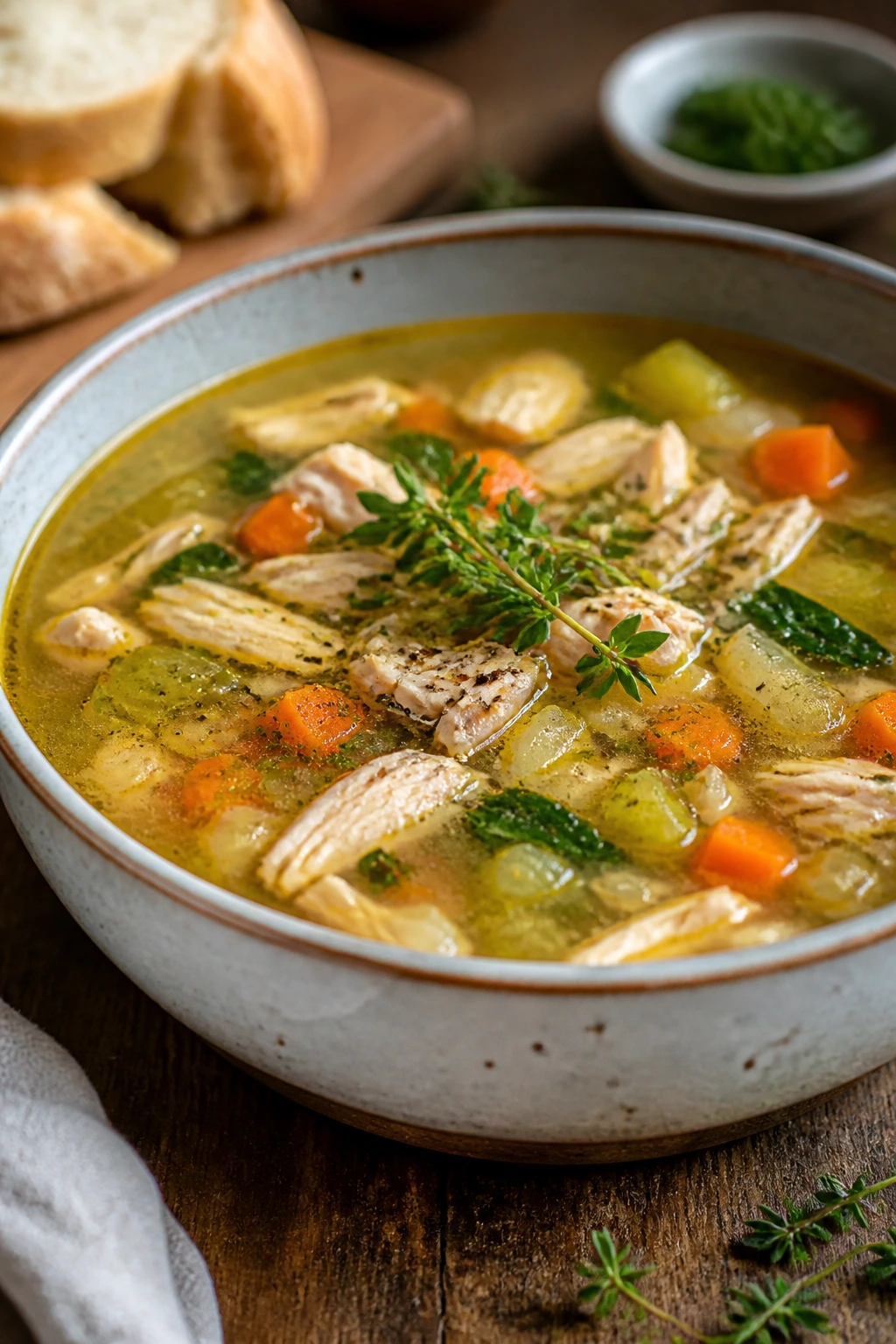
Use wide bowls for chunky soups and deeper bowls for brothy ones. A spoonful of herbs, a few crumbled crackers, a drizzle of olive oil, or a snowfall of grated cheese gives the surface a finished look without cluttering it. French onion and clam chowder want their toppings to be obvious; lentil, bean, and squash soups look better with a cleaner surface and one clear garnish.
Accompaniments:
Sourdough toast, baguette, cheddar biscuits, grilled cheese, crackers, rye bread, and simple green salads show up again and again because they fit the texture of soup instead of fighting it. Brothy soups love bread for dipping. Chowders and cream soups are better with something sharp or crunchy on the side so the meal doesn’t feel too soft. Tomato-based bowls work especially well with garlic toast or a panini.
Portions:
For light lunches, count on 1 1/2 cups per person. For dinner, 2 cups is a good starting point, especially if bread or salad is part of the table. Heavier soups like beef barley, split pea, and chowder can stand as the main event with no second course. Lighter bowls like miso udon or chicken rice often need a bigger ladleful if they’re carrying the whole meal.
Beverage Pairing:
A dry hard cider works across a surprising number of these bowls, especially French onion, corn chowder, and tomato soups. A light lager or pilsner also makes sense with bacon, cheese, and tortilla toppings because it clears the palate without weighing the meal down. If you want a nonalcoholic pick, unsweetened iced tea with lemon or sparkling water with a splash of citrus keeps the table feeling bright.
Additional Tips and Flavor Boosters

Flavor Enhancement:
A spoonful of acid at the end changes a soup more than people expect. Lemon juice, lime juice, sherry vinegar, or even a tiny splash of cider vinegar can wake up beans, potatoes, chicken, or cream-based bowls without making them sour. Parmesan rinds, a bay leaf, and a little soy sauce are the quiet background players I reach for when a pot tastes good but not fully awake.
Customization:
If you want more body, mash a cup of beans or potatoes against the side of the pot. If you want more freshness, add herbs at the end instead of early, when the heat will flatten them. For extra protein, stir in shredded chicken, white beans, or cooked sausage near the finish so they stay intact and don’t dry out.
Serving Suggestions:
Top creamy soups with cracked pepper, chopped chives, or toasted pepitas. Brothy soups like chicken rice and miso udon do well with scallions, sesame oil, or a little chili crisp. A final drizzle of olive oil over lentil or bean soup gives the bowl a nicer sheen and a richer smell right at the table.
Make-It-Yours:
For dairy-free bowls, use olive oil, coconut milk, oat milk, or cashew cream depending on the flavor profile. For gluten-free versions, skip flour roux and thicken with blended potatoes, cornstarch, or pureed beans. For a lower-sodium version, use unsalted stock and season in stages instead of dumping salt in all at once. For extra heat, add red pepper flakes early or chili oil at the end; both work, but they taste different.
Make-Ahead, Storage, and Reheating Guidance
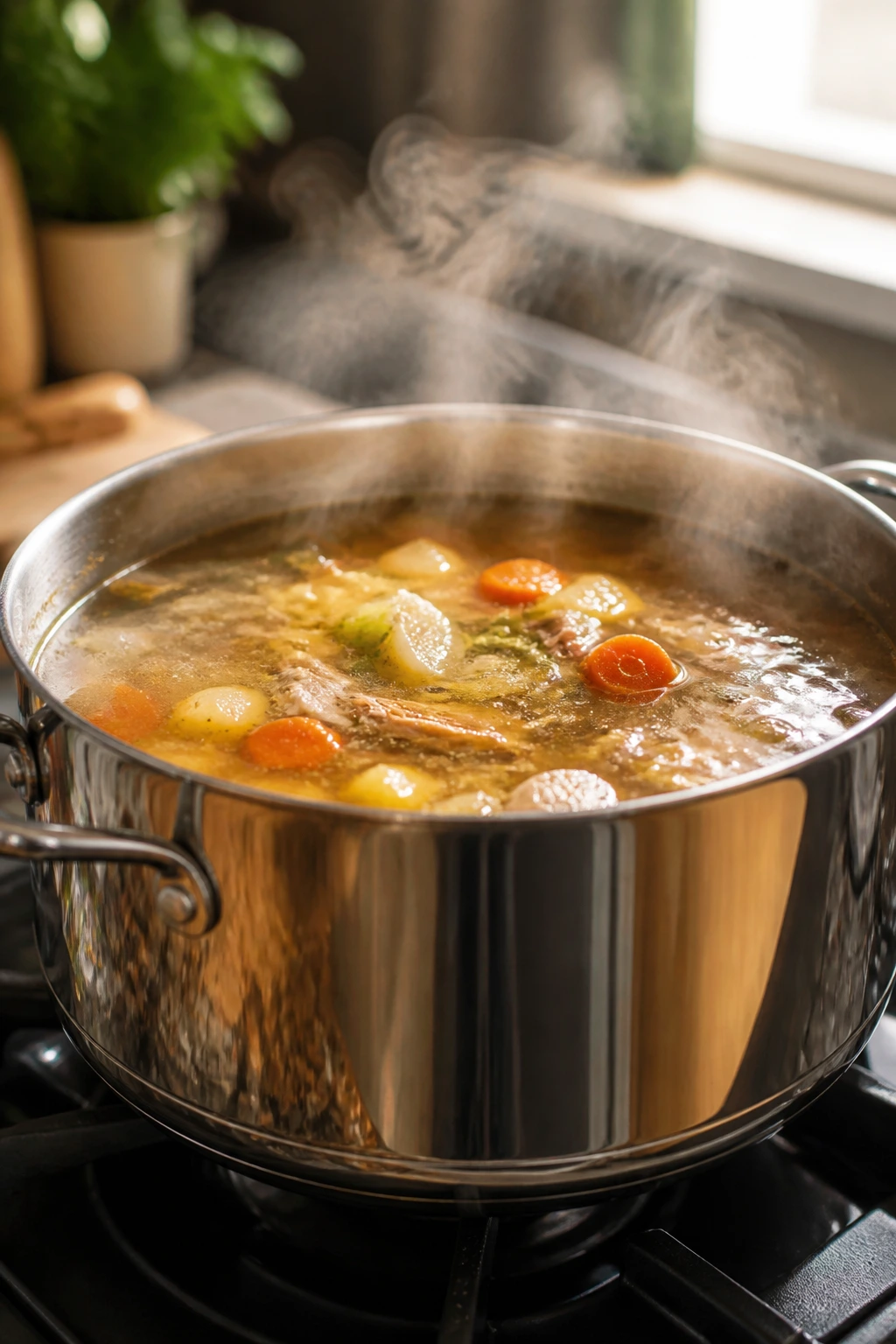
Most of these soups keep well in the refrigerator for 3 to 4 days if they’re cooled and stored in shallow airtight containers. Cool them within 2 hours of cooking so they don’t sit in the warm zone too long. Bean soups, lentil soups, beef barley, and split pea soup usually hold up best overnight, while noodle and rice soups need a little extra broth when reheated because the starch keeps absorbing liquid.
Freezing works well for broth-based soups and bean soups for up to 3 months. Creamier soups, chowders, and anything with a lot of dairy freeze a little less gracefully; they’re still usable, but the texture can separate slightly. If you know you’ll freeze a chowder or creamy mushroom soup, leave the cream out and stir it in after reheating. That keeps the texture smoother and saves you from that grainy, broken look.
For reheating, use low to medium-low heat on the stovetop and stir often. Soup should come up to a steady simmer, not a hard boil. If you’re reheating chicken soups or anything with poultry, aim for 165°F in the center. Add broth, water, or a splash of milk as needed to loosen the texture. Noodle soups and tortellini soups are best reheated with the starch stored separately if you can manage it; if not, expect to add more liquid.
French onion soup is best fresh, but you can make the onion base ahead and broil the bread and cheese right before serving. Broccoli cheddar, chowder, and mushroom soup are also better when the final dairy finish happens at the end of reheating instead of days earlier. A little planning here saves the bowl from turning tired.
Variations and Adaptations to Try

Dairy-Free Sunday Bowls:
Use coconut milk in squash, curry, and some tomato soups, or oat milk in potato leek and mushroom soup. For creaminess without dairy, blended white beans or cashews work well in vegetable-based bowls. Skip the cheese toppings and lean harder on herbs, lemon, and olive oil for the finish.
Gluten-Free Pot Adjustments:
Swap flour roux for cornstarch slurry, potato starch, or a blended-potato base. Use rice noodles, rice pasta, or no pasta at all in soups that normally rely on wheat noodles. The flavor stays the same; the texture just needs a different thickener.
Vegetable-First Versions:
Take out the meat and build around mushrooms, beans, lentils, or extra vegetables. White bean kale, lentil spinach, mushroom soup, squash soup, and minestrone all carry this switch well. The key is using enough broth and enough salt so the bowl still tastes finished.
Spice-Lover Treatment:
Add chili flakes, chipotle, cayenne, harissa, or chili crisp, depending on the base. Tomato soups and tortilla soup like smoke and heat. Coconut curry soup can take a lot of spice, while chowders and cream soups are better with just enough heat to keep them from feeling flat.
Slow Cooker Sunday Pots:
Beef barley, split pea, chicken soup, and bean soups adapt well to slow cooking. Brown the onions, sausage, or beef first if you want a deeper flavor, then let the cooker do the long middle part. Add pasta, dairy, and delicate greens near the end so they don’t turn soft and gray.
Regional Twists:
Move French onion toward sherry and thyme, nudge chowder toward smoked paprika, or give minestrone extra basil and cannellini beans. A few small choices can shift a soup from one family of flavors to another without turning it into a different dish.
Common Mistakes to Avoid
Underseasoning the broth:
Soup tastes flat when the liquid never gets enough salt, not because the idea was wrong. Taste early and again near the end, because broth, potatoes, beans, and rice all pull salt out of the pot as they cook.
Overcooking pasta, rice, or noodles:
Starch turns soft fast, then keeps absorbing liquid after the heat is off. If you want leftovers that still have shape, cook the starch separately or pull the pot off the heat the second it turns tender.
Adding dairy too hard or too early:
Boiling cream, milk, or cheese can split the soup or turn it grainy. Lower the heat first, then add dairy slowly and stir without rushing it.
Ignoring acid at the finish:
A small squeeze of lemon or lime is not decoration. It wakes up beans, greens, chicken, tomatoes, and chowder in a way salt alone can’t do.
Crowding the pot with vegetables:
Too many vegetables can water down the broth and make the texture clumsy. Keep an eye on ratios; a soup should still taste like a soup, not a vegetable bin.
Skipping browning where it matters:
Onions, mushrooms, sausage, and beef all need color if you want a deeper result. Pale ingredients make a pale pot, and no amount of garnish will fix that.
Frequently Asked Questions
Can I freeze creamy soups and chowders?
Yes, but the texture may shift a little when they thaw. If you know a soup has heavy cream, milk, or a cheese base, freeze the broth portion only and add the dairy after reheating for a smoother result.
How do I thicken soup without flour?
Blend a portion of the soup, mash beans or potatoes against the side of the pot, or simmer it uncovered a little longer. Cornstarch works too, but a blended potato or bean base usually tastes more natural in savory bowls.
What’s the best broth for savory soups?
Use the broth that matches the main flavor: chicken broth for chicken, beef broth for beef and onion, vegetable broth for bean and vegetable soups, and clam juice for chowder. Low-sodium versions give you more control.
How do I keep noodles from going mushy?
Cook them separately and add them to each bowl right before serving. If that’s not practical, stop cooking the soup the moment the noodles turn tender and store leftovers with extra broth.
Can I make these soups in a slow cooker?
Several of them work well, especially beef barley, split pea, bean soups, and chicken rice. Brown the vegetables or meat first when you can, then add pasta, cream, cheese, and delicate greens near the end.
Why does my soup taste flat even after salt?
It probably needs acid, not only salt. Lemon, lime, vinegar, or a spoon of tomato paste can bring the flavors into focus without making the bowl taste sharp.
What if my soup got too salty?
Add more broth, a splash of water, or a peeled potato and simmer briefly, then remove the potato. Acid can help the flavor feel more balanced, but dilution is usually the real fix.
Which soups taste better the next day?
Bean soups, lentil soup, beef barley, split pea, and many vegetable soups deepen overnight. French onion and chowder are best finished fresh, while rice and noodle soups often need extra liquid after resting.
Can I use frozen vegetables instead of fresh?
Yes, especially for corn, peas, spinach, and mixed vegetables in minestrone. Frozen veg can be better than tired produce because it’s picked and packed quickly; just don’t overcook it, or it loses shape fast.
A Quiet Finish for the Weekend Pot
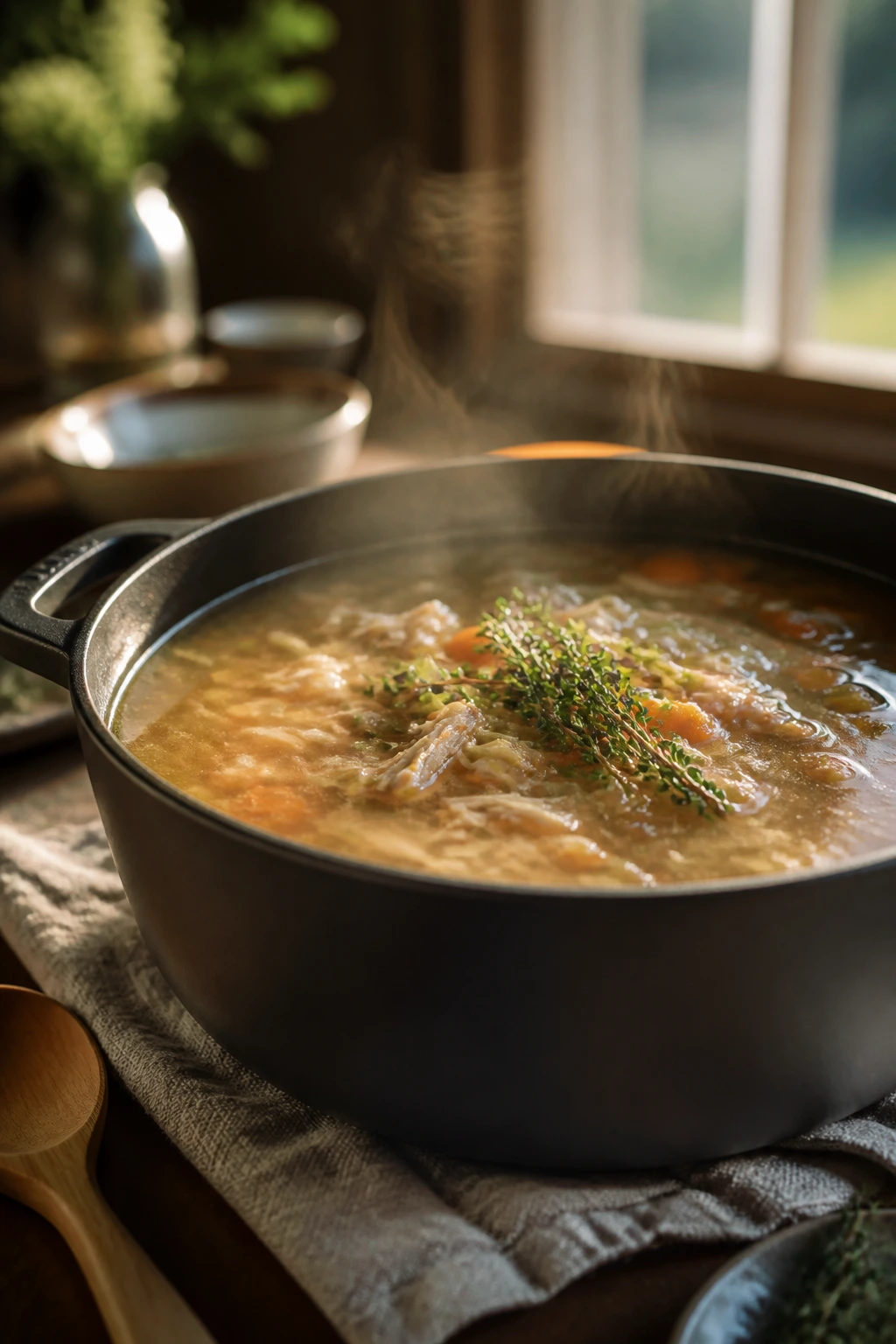
A Sunday soup doesn’t need drama. It needs a pot, a little patience, and the judgment to know when to stop fussing. Once the onions are sweet, the broth tastes full, and the bowl has something crisp or creamy on top, you’ve already done the hard part.
What makes these savory soups for cozy Sundays worth keeping around is how differently they solve the same problem. Some fill the kitchen with cheese and toast. Some lean on beans, barley, or lentils. Some are bright with lime, some are smoky with bacon, and a few are the sort of plain-looking bowls that disappear fast because they taste better than they look.
Pick one, then another. A good soup habit has a way of sneaking into the week with you, and that’s not a bad thing at all.