



A good winter soup should do two jobs at once: feed you tonight and save your future self from cooking tomorrow. The best winter soups that freeze well do exactly that. They lean on broth, beans, lentils, sturdy vegetables, or a purée that stays smooth after thawing. They do not depend on cream, pasta, or a pile of delicate herbs that turn tired after a trip through the freezer.
That’s why some soups earn permanent freezer space and others do not. A bean soup often tastes deeper after a night in the freezer. A lentil soup keeps its shape if you don’t overcook the lentils. A tomato soup, a squash soup, a barley soup, even a good chicken soup can all survive the cold if you build them with the freezer in mind. The troublemakers are usually obvious: noodles that go mushy, dairy that splits, potatoes that turn grainy, and toppings that should be added fresh.
I keep coming back to this topic because soup is one of the few things that rewards making extra without turning dinner into a project. One pot, two meals. Or three. Freeze it flat in a bag, thaw it in the fridge overnight, and you’ve got a bowl that tastes like you spent more time on it than you did. That’s the sweet spot, and the soups below live there comfortably.
Why These Soups Earn Freezer Space
- Broth-based first: Soups built on stock, tomatoes, beans, or puréed vegetables hold texture far better than dairy-heavy chowders.
- Sturdy starches win: Wild rice, barley, lentils, and hominy keep their shape after freezing; floppy pasta does not.
- Flexible finishes: A splash of cream, a handful of herbs, or a squeeze of lemon can wait until the reheat, which keeps the soup brighter.
- Big-batch payoff: Most of these soups taste better the next day, so making a double pot does not feel wasteful.
- Easy to portion: These freeze cleanly in 2-cup or 4-cup containers, which is handy when you want dinner for one instead of another giant pot.
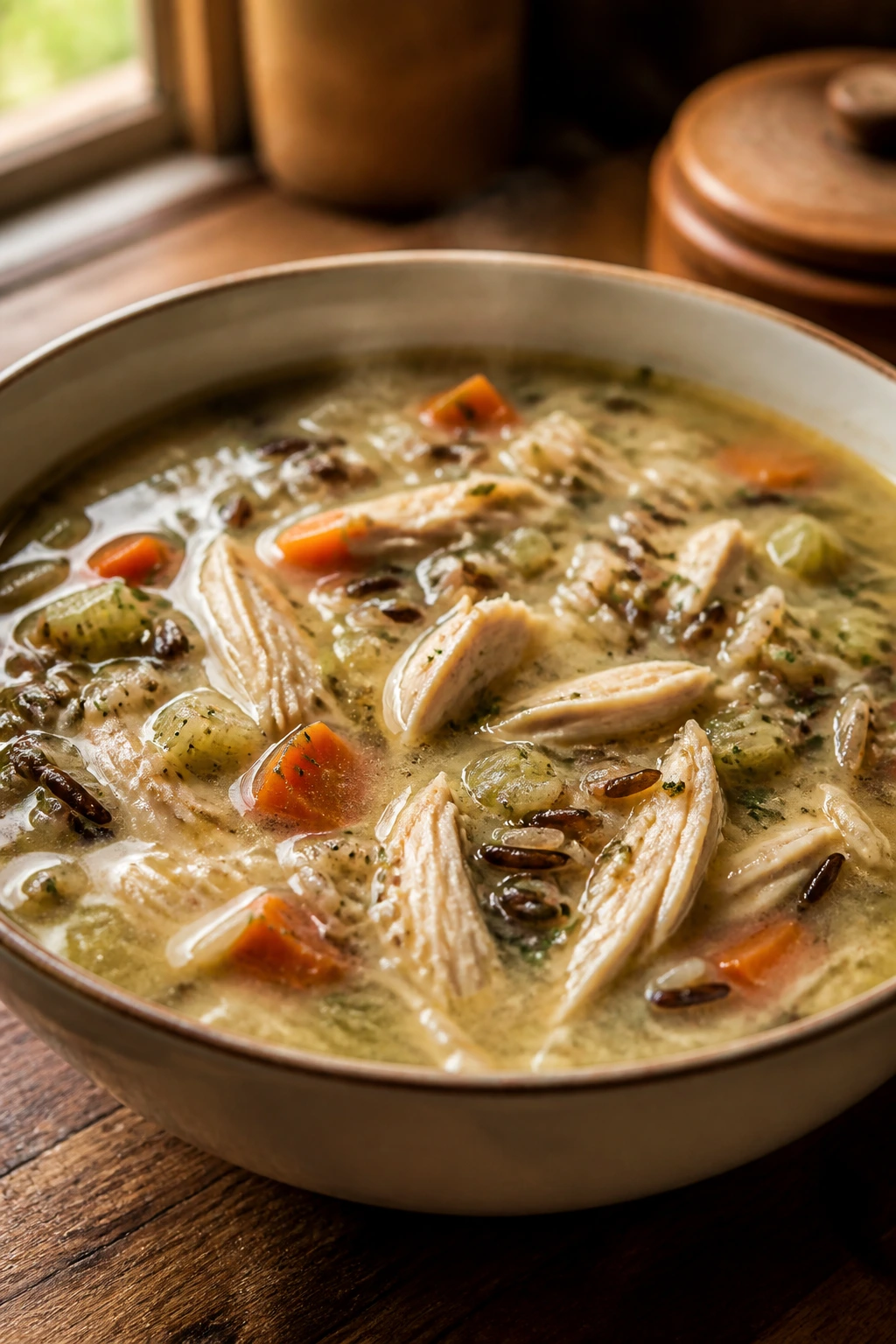
1. Chicken and Wild Rice Soup
A bowl of chicken and wild rice soup has a quiet, woodsy kind of comfort. The broth turns golden from the chicken and herbs, and the wild rice keeps that nutty chew even after a trip through the freezer. I like this one because it doesn’t collapse into mush the way rice soups often do.
Why It Works:
Wild rice blend is the key. It holds its shape, so the soup still has texture after thawing. The base is broth-heavy, which means freezing does not wreck the structure, and you can add milk or half-and-half after reheating if you want a softer finish. I’d freeze this one without extra dairy, then brighten it with parsley and lemon at the end.
Key Ingredients:
- 1 tablespoon olive oil
- 1 medium yellow onion, diced
- 2 carrots, diced
- 2 celery stalks, diced
- 3 cloves garlic, minced
- 8 cups low-sodium chicken stock
- 1 cup wild rice blend, rinsed
- 2 cups cooked shredded chicken
- 1 teaspoon dried thyme
- 1 bay leaf
- 1 cup milk or half-and-half, optional
- 2 tablespoons chopped parsley, for finishing
Quick Steps:
- Heat the olive oil in a 6-quart Dutch oven over medium heat. Add the onion, carrots, and celery, and cook for 6 to 8 minutes until the onion turns translucent.
- Stir in the garlic and thyme for 30 seconds, just until fragrant. Do not let the garlic brown.
- Pour in the chicken stock, add the rice and bay leaf, then bring to a boil. Reduce to a gentle simmer and cook for 40 to 45 minutes, until the rice is tender but still has bite.
- Stir in the shredded chicken and cook for 5 minutes more, until hot throughout. Remove the bay leaf.
- If using milk or half-and-half, lower the heat and stir it in after the soup is off the boil. Season with salt, pepper, and parsley.
Equipment for This Recipe:
- 6-quart Dutch oven
- Wooden spoon
- Chef’s knife and cutting board
- Measuring cups and spoons
How to Serve This Dish:
Ladle it into deep bowls and finish with black pepper and a little parsley. A thick slice of sourdough or a simple green salad turns it into a real dinner, not just a bowl of soup.
Pro Tips for This Recipe:
- Cook the wild rice until it is tender but not split open; overcooked rice gets soft after freezing.
- Keep the dairy out of the freezer step and add it when reheating.
- Shred the chicken into larger pieces so it stays visible and doesn’t disappear into the broth.
Variations on This Dish:
- Mushroom Wild Rice: Add 8 ounces sliced cremini mushrooms with the vegetables for a deeper, earthier broth.
- Lemon Herb Finish: Stir in 1 tablespoon lemon juice and extra parsley right before serving for a brighter bowl.
- Turkey Swap: Use cooked shredded turkey instead of chicken, which is ideal after a holiday roast.
Common Mistakes to Avoid with This Dish:
- Freezing it with too much dairy: The soup can separate and look curdled. Freeze the broth base, then add milk on reheating.
- Overcooking the rice: Soft rice turns gummy after thawing. Stop when the grains still have a little structure.
- Using fast-cook white rice instead of wild rice blend: It breaks down fast and gives you a mushy bowl.
2. Hearty Lentil Vegetable Soup
Lentil soup is one of the easiest soups to freeze because lentils act like they were built for it. They stay intact, they absorb seasoning without going dull, and they make the broth thicker in the best way. Add carrots, celery, and tomatoes, and you get a soup that tastes even calmer after a day in the freezer.
Why It Works:
Brown or green lentils keep a firm bite after reheating, which is why this soup works better than anything made with split lentils or soft beans that collapse. The tomato base helps the flavor hold up, and a splash of vinegar at the end wakes everything back up. I like to freeze this before adding tender greens so the kale or spinach stays fresh-looking when it goes into the bowl.
Key Ingredients:
- 2 tablespoons olive oil
- 1 yellow onion, diced
- 2 carrots, diced
- 2 celery stalks, diced
- 4 cloves garlic, minced
- 1 1/2 cups brown or green lentils, rinsed
- 1 can (14.5 ounces) diced tomatoes
- 8 cups vegetable broth
- 1 teaspoon ground cumin
- 1 bay leaf
- 2 cups chopped spinach or kale
- 1 tablespoon red wine vinegar
Quick Steps:
- Warm the oil in a stockpot over medium heat. Cook the onion, carrots, and celery for 7 minutes, until glossy and softened.
- Add the garlic and cumin, and stir for 30 seconds.
- Add the lentils, tomatoes, broth, and bay leaf. Bring to a boil, then reduce to a simmer and cook for 30 to 35 minutes, until the lentils are tender but not falling apart.
- Stir in the spinach or kale during the last 2 minutes, just until wilted.
- Remove the bay leaf and stir in the vinegar. Taste and adjust salt and pepper.
Equipment for This Recipe:
- Large stockpot
- Fine-mesh strainer for rinsing lentils
- Wooden spoon
- Ladle
How to Serve This Dish:
Serve it with crusty bread or a spoonful of plain yogurt on top if you want a cool contrast. A sprinkle of parsley or dill makes the bowl look finished without turning it fussy.
Pro Tips for This Recipe:
- Use brown or green lentils, not red ones; red lentils break down into a puree.
- Add greens at the end, not at the beginning, so they keep some color.
- Freeze in 2-cup portions if you want lunch-sized servings.
Variations on This Dish:
- Smoky Pantry Version: Add 1/2 teaspoon smoked paprika and a pinch of chili flakes for a deeper, campfire-like flavor.
- Mediterranean Twist: Stir in chopped oregano, a little lemon zest, and crumbled feta after reheating.
- Carrot-Forward Bowl: Increase the carrots to 4 and skip the tomatoes for a sweeter, softer soup.
Common Mistakes to Avoid with This Dish:
- Salting too early and too aggressively: Lentils absorb salt as they cook. Season in stages and taste again after thawing.
- Letting the lentils go mushy: They should be tender with some shape left. Mushy lentils get grainy after freezing.
- Skipping the acid: Vinegar or lemon at the end keeps the soup from tasting flat.
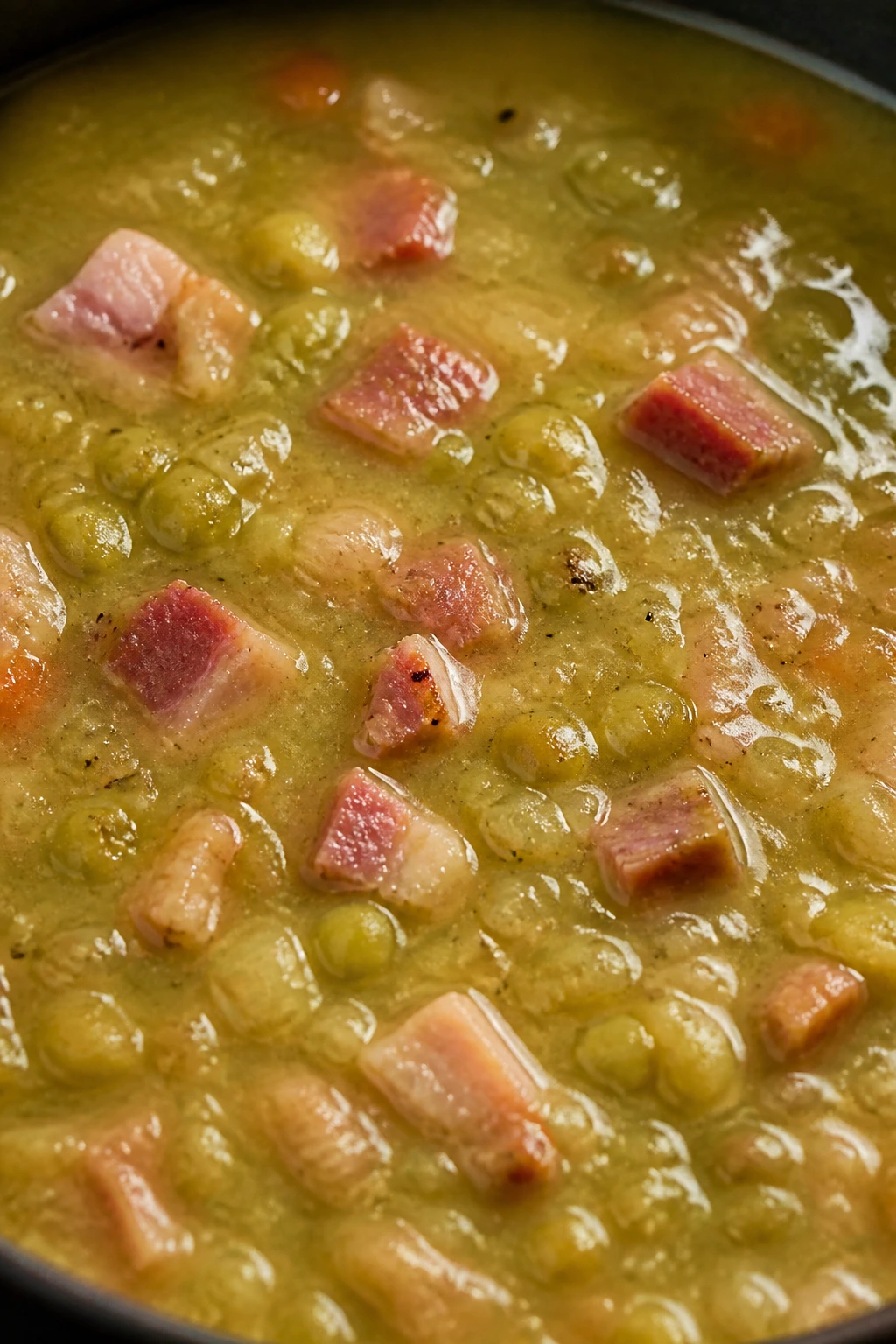
3. Split Pea Soup with Ham
Split pea soup gets better at rest, which is why the freezer suits it so well. The peas thicken the broth into something almost velvety, and ham gives it a smoky edge that stands up to reheating. This is a soup that doesn’t need a lot of ornament.
Why It Works:
Green split peas are dense and starchy, so they freeze into a creamy texture without needing cream. Ham hock or diced ham adds salt and smoke that stay present after thawing. If you want a smoother bowl, you can blend half of it after cooking, but I usually leave some texture because it feels more honest.
Key Ingredients:
- 1 tablespoon butter or olive oil
- 1 onion, diced
- 2 carrots, diced
- 2 celery stalks, diced
- 3 cloves garlic, minced
- 1 pound green split peas, rinsed
- 8 cups chicken stock
- 1 ham hock or 2 cups diced ham
- 1 bay leaf
- 1 teaspoon dried thyme
- Black pepper, to taste
Quick Steps:
- Melt the butter in a soup pot over medium heat. Add onion, carrots, and celery, and cook for 6 minutes until softened.
- Stir in garlic, thyme, and black pepper for 30 seconds.
- Add the split peas, stock, ham hock or diced ham, and bay leaf. Bring to a boil.
- Lower the heat and simmer for 60 to 75 minutes, stirring now and then, until the peas have broken down and the soup thickens.
- Remove the ham hock if using, shred any meat from the bone, and stir it back in. Remove the bay leaf and season to taste.
Equipment for This Recipe:
- Heavy soup pot
- Wooden spoon
- Tongs for the ham hock
- Ladle
How to Serve This Dish:
A slice of rye bread or buttered toast works better here than fancy bread. The soup is thick enough to stand a spoon in, so keep the toppings simple: black pepper, chopped parsley, maybe a few croutons.
Pro Tips for This Recipe:
- Rinse the split peas well to remove dust and keep the broth cleaner.
- If the soup gets too thick after freezing, loosen it with hot stock or water, not cream.
- Ham hock gives the deepest flavor, but diced ham is easier if you want quick cooking.
Variations on This Dish:
- Smoked Paprika Pea Soup: Add 1 teaspoon smoked paprika if you want more smoke without a ham bone.
- Vegetarian Split Pea: Skip the ham and use vegetable broth plus 1 tablespoon soy sauce for depth.
- Chunkier Style: Hold back 1 cup of the cooked peas and stir them in at the end for more texture.
Common Mistakes to Avoid with This Dish:
- Using yellow split peas by accident: They work, but the flavor shifts. Green peas give the classic taste.
- Cooking on high heat: The bottom can catch and scorch. Keep it at a lazy simmer.
- Freezing without enough liquid: Split pea soup thickens in the freezer. Leave it a little looser than you think you want.
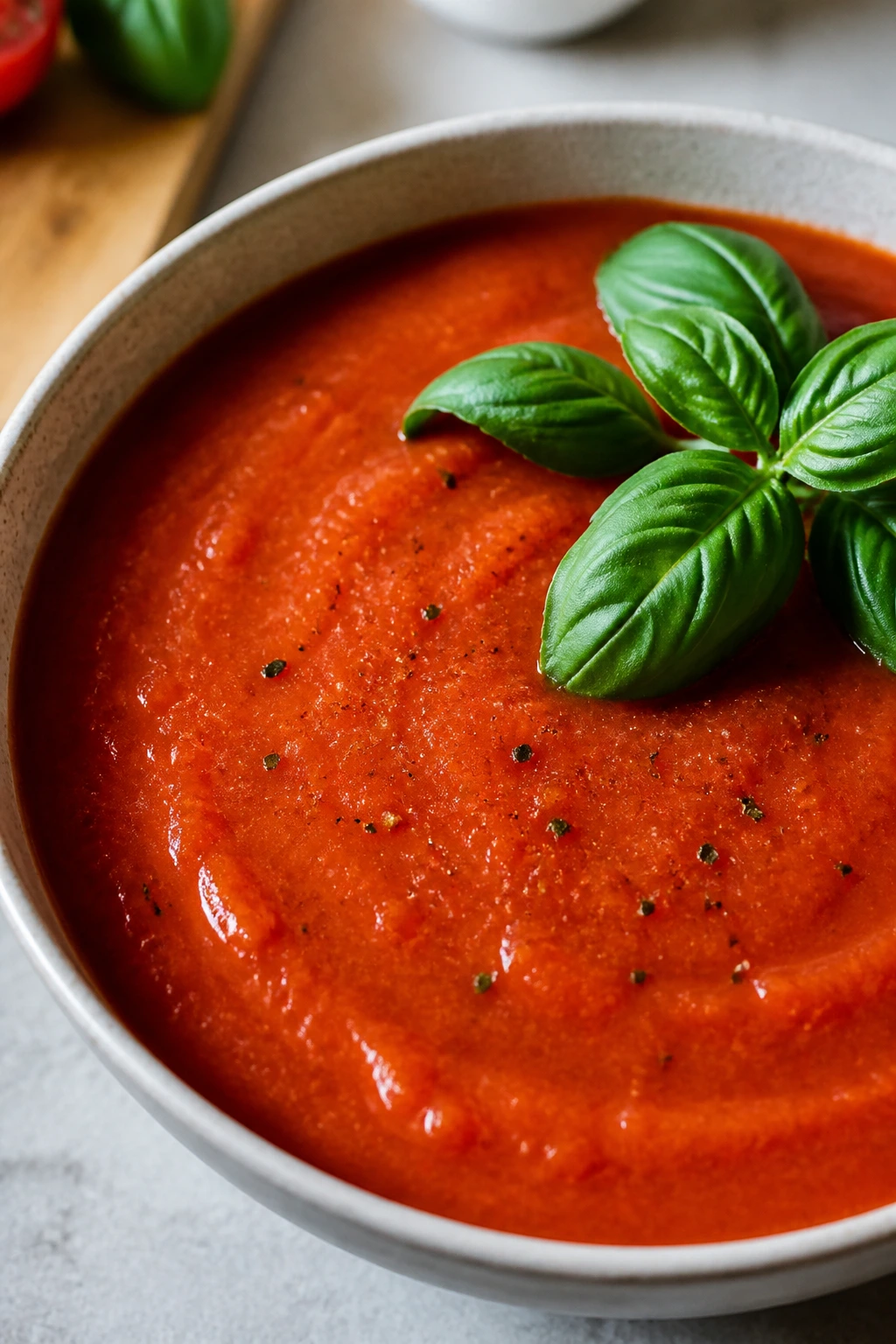
4. Roasted Tomato Basil Soup
Tomato soup is one of those dishes that seems too simple until you roast the tomatoes and taste what happens. The edges turn sweet, the broth turns red-gold, and basil keeps it from feeling heavy. It freezes beautifully because the structure is all broth and tomato, not cream.
Why It Works:
Roasting takes the sharp edge off the tomatoes and gives the soup a deeper, almost jammy flavor. I freeze this soup before adding any cream, then stir in a little after reheating if I want it softer. Tomato soups also tolerate a long simmer better than most vegetable soups, which makes them excellent batch-cooking material.
Key Ingredients:
- 2 pounds ripe plum tomatoes, halved
- 1 onion, sliced
- 1 head garlic, top sliced off
- 3 tablespoons olive oil
- 2 tablespoons tomato paste
- 4 cups vegetable broth
- 1 teaspoon sugar, optional
- 1/2 cup fresh basil leaves
- 1/2 cup heavy cream or coconut milk, optional
- Salt and black pepper
Quick Steps:
- Heat the oven to 425°F (220°C). Put the tomatoes, onion, and garlic on a sheet pan, drizzle with olive oil, and roast for 30 to 35 minutes until the edges caramelize.
- Scrape the roasted vegetables into a pot. Squeeze the garlic cloves from their skins.
- Stir in the tomato paste and broth, then simmer for 15 minutes.
- Blend until smooth with an immersion blender. Add basil and optional sugar, then season well.
- Stir in cream only after reheating if you want a richer soup.
Equipment for This Recipe:
- Rimmed sheet pan
- Large soup pot
- Immersion blender or countertop blender
- Tongs
- Measuring spoons
How to Serve This Dish:
This one wants grilled cheese, and it wants a good one. Pour the soup into shallow bowls, drizzle with olive oil, and add torn basil or black pepper.
Pro Tips for This Recipe:
- Use plum tomatoes if you can; they roast down with less water.
- A little sugar is only there if your tomatoes taste flat. Don’t add it blindly.
- Freeze the puréed soup in flat bags for fast thawing.
Variations on This Dish:
- Creamy Finish: Stir in 1/2 cup cream after reheating for a smoother bowl.
- Smoky Tomato Soup: Add a pinch of smoked paprika before blending.
- Basil-Pesto Swirl: Spoon a little pesto on top after serving, not before freezing.
Common Mistakes to Avoid with This Dish:
- Adding cream before freezing: It can separate and look odd when thawed.
- Skipping the roast: Boiled tomato soup tastes thinner and flatter.
- Under-seasoning after blending: Pureeing softens flavors, so taste again before serving.
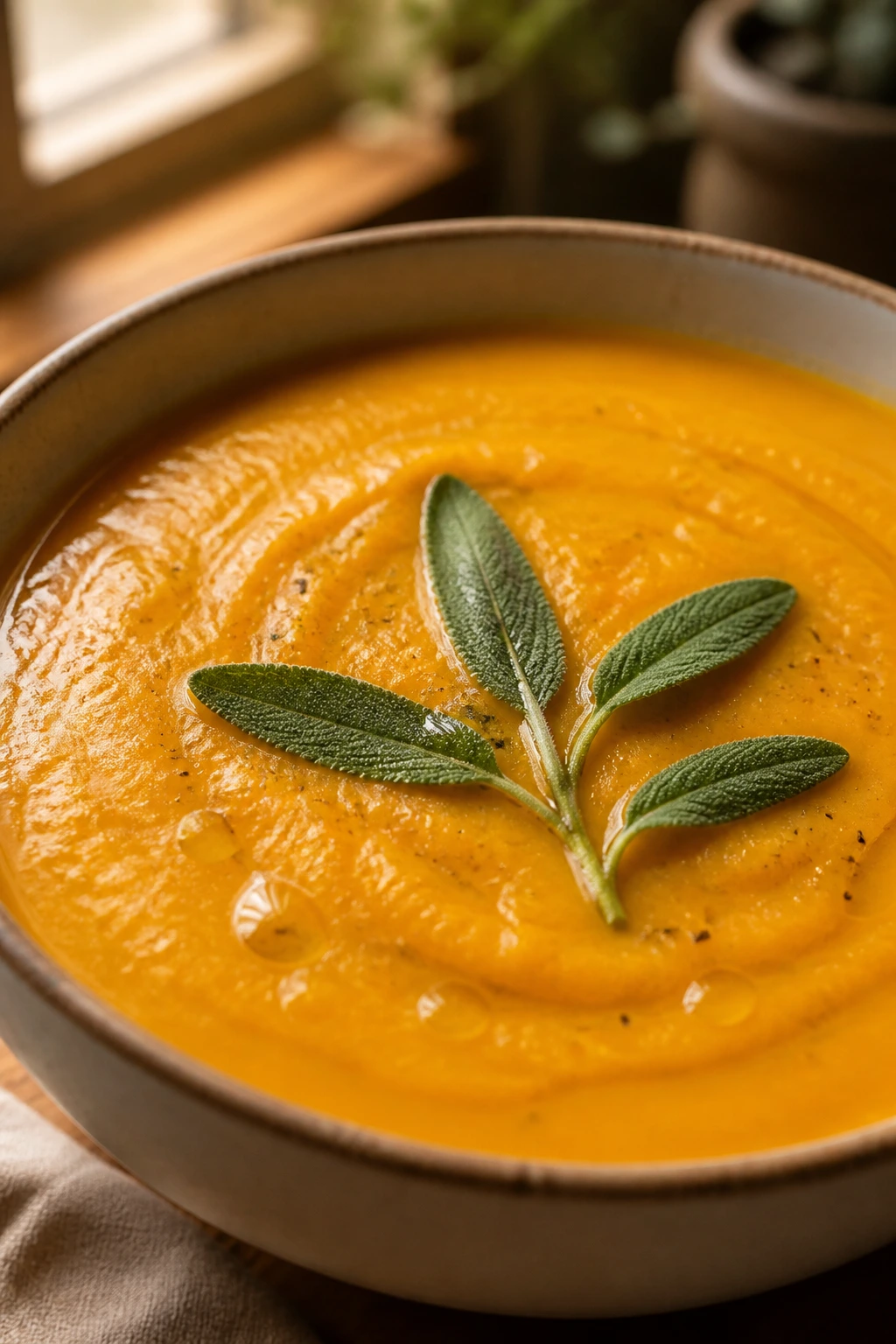
5. Butternut Squash Soup with Sage
Butternut squash soup has a mellow sweetness that feels made for cold weather. The squash turns silky when pureed, and sage gives it that woodsy smell that hits the nose before the spoon reaches the bowl. It freezes into one of the cleanest textures on this list.
Why It Works:
Pureed squash soups freeze well because there’s no grain, bean, or noodle structure to lose. The starch in the squash keeps the body of the soup intact, and sage or nutmeg carries through the freeze better than tender herbs. If you want to use coconut milk or cream, add it after thawing so the color and texture stay smooth.
Key Ingredients:
- 1 large butternut squash, peeled and cubed
- 1 onion, chopped
- 2 cloves garlic, minced
- 2 tablespoons olive oil
- 4 cups chicken or vegetable broth
- 1 teaspoon chopped fresh sage or 1/2 teaspoon dried sage
- 1/4 teaspoon nutmeg
- 1/2 cup coconut milk or cream, optional
- Salt and black pepper
- Pumpkin seeds, for serving
Quick Steps:
- Heat the olive oil in a pot over medium heat. Cook the onion for 5 minutes until soft.
- Add the garlic, squash, sage, and nutmeg, and stir for 1 minute.
- Pour in the broth, bring to a boil, then lower to a simmer. Cook for 20 to 25 minutes until the squash is completely tender.
- Blend until smooth. Stir in coconut milk or cream only if using.
- Season with salt and pepper, then cool and freeze in portions.
Equipment for This Recipe:
- Large pot
- Immersion blender
- Vegetable peeler
- Sharp chef’s knife
How to Serve This Dish:
Serve it with toasted pepitas and a slice of brown bread. I like a tiny swirl of yogurt or coconut milk on top, but only after the soup is in the bowl.
Pro Tips for This Recipe:
- Cut the squash into even cubes so it cooks at the same pace.
- If the squash tastes weak, a little salt and nutmeg wake it up fast.
- Freeze it before adding cream for the cleanest thaw.
Variations on This Dish:
- Apple-Sage Version: Add 1 peeled apple to the pot for a softer sweetness.
- Ginger Squash Soup: Add 1 tablespoon grated ginger with the garlic.
- Dairy-Free Bowl: Use coconut milk and a squeeze of lime at the end.
Common Mistakes to Avoid with This Dish:
- Under-cooking the squash: If it isn’t soft all the way through, the soup will stay grainy.
- Adding too much nutmeg: It should smell warm, not perfumed.
- Freezing with toppings mixed in: Keep seeds, yogurt, and herbs separate.
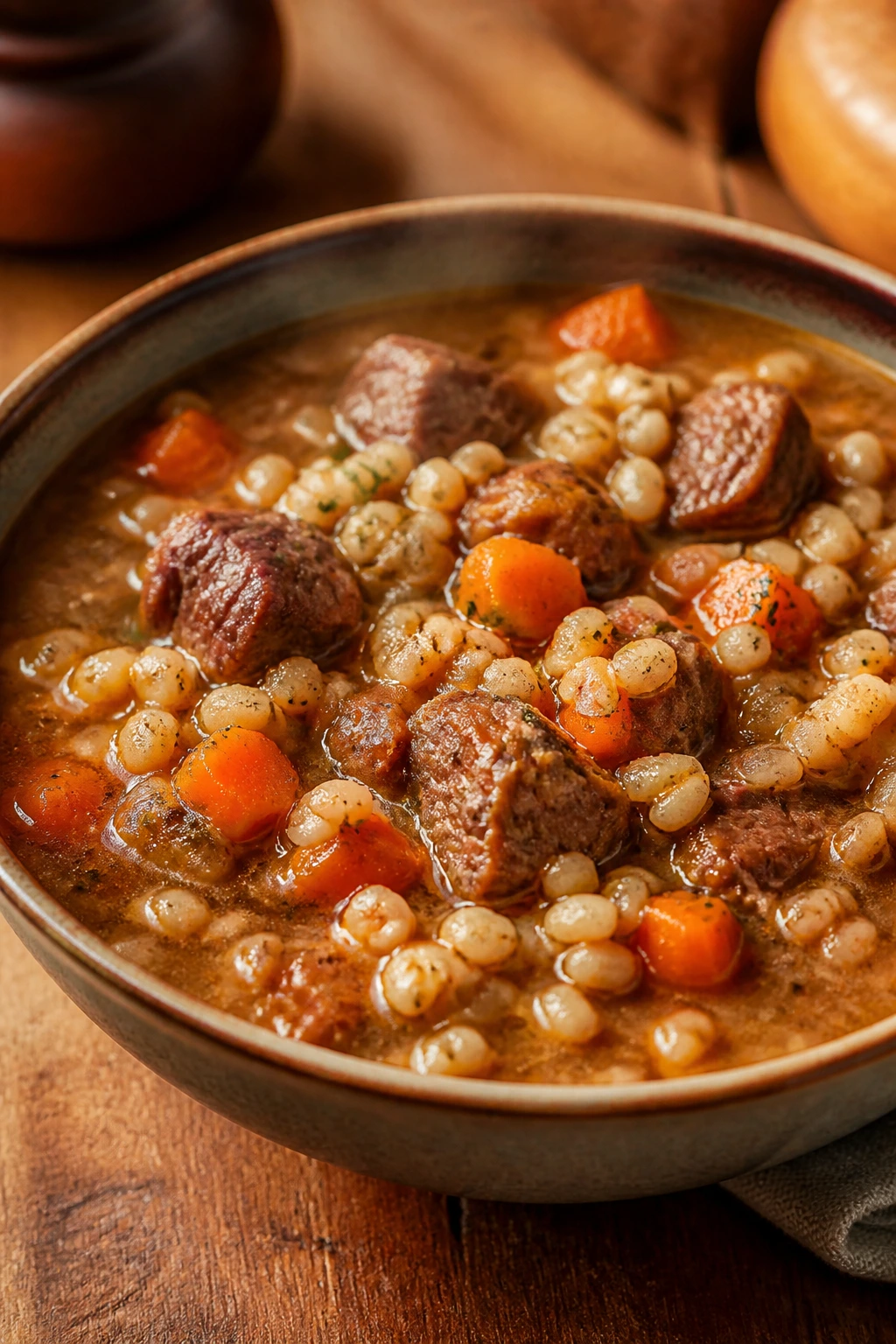
6. Beef Barley Soup
Beef barley soup is the kind of soup that feels sturdy enough to carry a meal by itself. The beef gets tender, the barley thickens the broth, and the carrots turn sweet without falling apart. It freezes with a kind of deep satisfaction that watery soups never quite reach.
Why It Works:
Pearl barley handles freezing better than pasta and gives the soup body without turning it into glue. Beef chuck or stew meat braises long enough to pick up flavor, and tomato paste adds a darker note that survives the freezer. I like this soup best when it is a touch brothier than I want it to be on day one; the barley drinks some liquid as it rests.
Key Ingredients:
- 1 1/2 pounds beef chuck, cut into 1-inch cubes
- 2 tablespoons oil
- 1 onion, chopped
- 2 carrots, chopped
- 2 celery stalks, chopped
- 3 cloves garlic, minced
- 2 tablespoons tomato paste
- 8 cups beef broth
- 3/4 cup pearl barley, rinsed
- 1 bay leaf
- 1 teaspoon dried thyme
- 1 tablespoon Worcestershire sauce
Quick Steps:
- Heat the oil in a Dutch oven over medium-high heat. Brown the beef in batches for 6 to 8 minutes total.
- Add the onion, carrots, and celery, and cook for 5 minutes.
- Stir in the garlic and tomato paste for 1 minute.
- Add the broth, barley, bay leaf, thyme, and Worcestershire sauce. Bring to a boil, then reduce to a simmer and cook for 60 to 75 minutes, until the beef is tender and the barley is cooked through.
- Remove the bay leaf, taste, and season before cooling.
Equipment for This Recipe:
- Dutch oven
- Slotted spoon
- Wooden spoon
- Measuring cups and spoons
How to Serve This Dish:
A bowl of beef barley soup wants something plain beside it: rye bread, a buttered roll, or nothing at all. It is already heavy enough to stand alone.
Pro Tips for This Recipe:
- Brown the beef well; those browned bits matter.
- Freeze this soup in slightly looser form because barley keeps absorbing liquid.
- Cut the vegetables large enough that they do not disappear after reheating.
Variations on This Dish:
- Mushroom Beef Barley: Add 8 ounces sliced mushrooms with the vegetables.
- Tomato-Rich Version: Increase the tomato paste to 3 tablespoons for a darker broth.
- Turkey Barley Soup: Use diced turkey thigh if you want a lighter version.
Common Mistakes to Avoid with This Dish:
- Skipping the browning step: The soup tastes thin without it.
- Overloading with barley: Too much barley turns the pot into porridge after freezing.
- Freezing it too thick: Barley keeps soaking up broth, so leave room to thin it later.
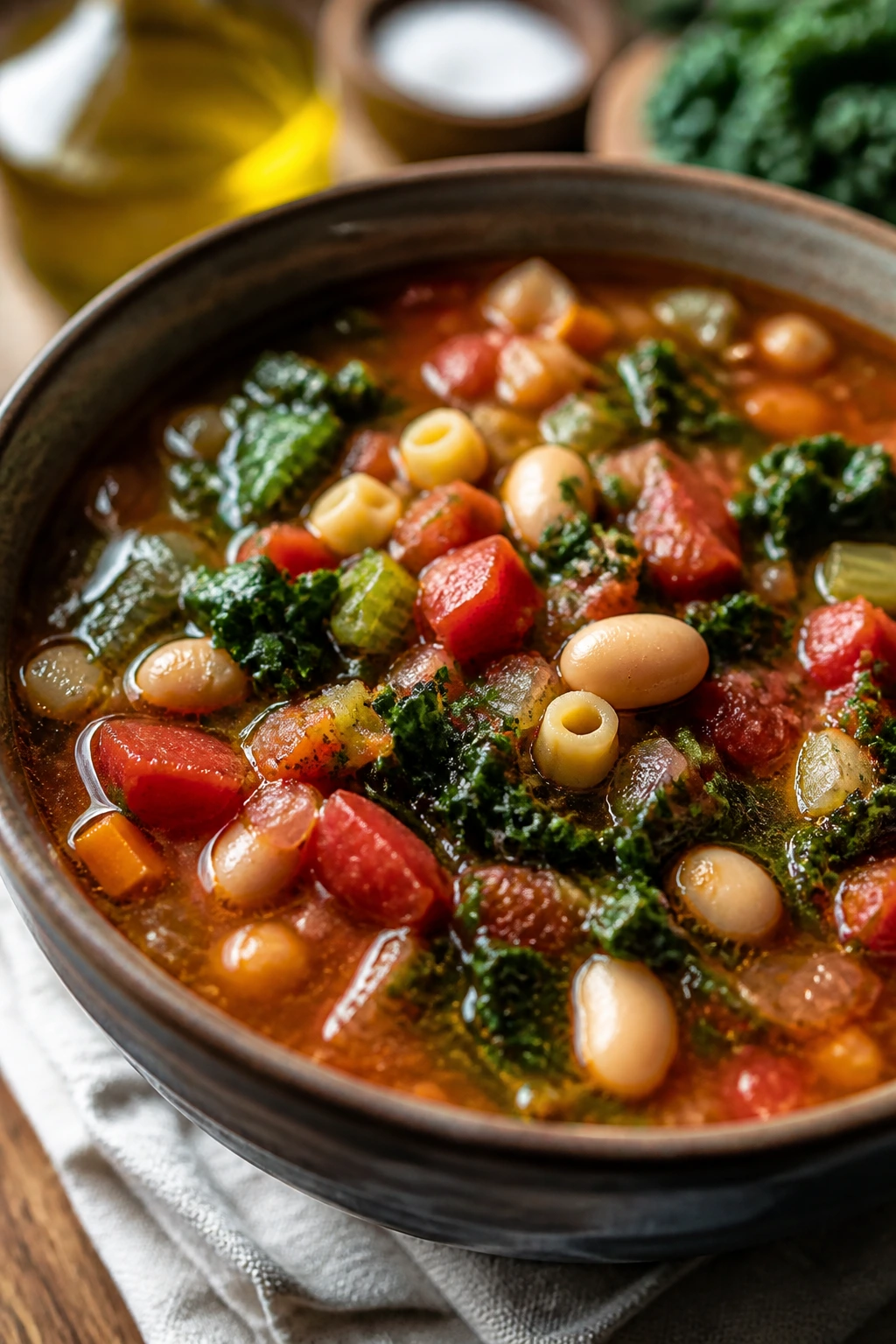
7. Minestrone Soup with Beans and Kale
Minestrone is the soup I reach for when I want vegetables to feel less like a compromise. Beans, tomatoes, and kale make the broth hearty enough to freeze, and if you keep the pasta separate, the texture stays honest. This is one of the easiest ways to turn the freezer into a backup plan.
Why It Works:
The big move here is freezing the soup without the pasta. Pasta soaks up broth like a sponge and goes soft after thawing, while beans and tomatoes hold up just fine. Kale is sturdy enough to go in near the end, and the soup keeps enough acid from the tomatoes to taste bright after a long freeze.
Key Ingredients:
- 2 tablespoons olive oil
- 1 onion, diced
- 2 carrots, diced
- 2 celery stalks, diced
- 3 cloves garlic, minced
- 1 can (28 ounces) diced tomatoes
- 6 cups vegetable broth
- 1 can cannellini beans, drained and rinsed
- 1 can kidney beans, drained and rinsed
- 2 cups chopped kale
- 1 teaspoon Italian seasoning
- 1 cup small pasta, cooked separately
- Parmesan, for serving
Quick Steps:
- Heat the oil in a soup pot over medium heat. Cook onion, carrots, and celery for 7 minutes.
- Add garlic and Italian seasoning, and stir for 30 seconds.
- Pour in tomatoes, broth, beans, and a pinch of salt. Simmer for 20 minutes.
- Stir in the kale and cook for 3 minutes, until wilted but still green.
- Cook pasta separately and add it to bowls, not the freezer container.
Equipment for This Recipe:
- Soup pot
- Colander
- Wooden spoon
- Separate saucepan for pasta
How to Serve This Dish:
Ladle the hot soup over a spoonful of pasta in each bowl and finish with Parmesan. A chunk of bread on the side is enough; this soup already brings beans, greens, and broth to the table.
Pro Tips for This Recipe:
- Keep the pasta out of the freezer container.
- If you want thicker minestrone, mash a few beans against the side of the pot.
- Add a splash of red wine vinegar after reheating to sharpen the tomato flavor.
Variations on This Dish:
- Pasta-Free Batch: Skip the pasta entirely and serve with garlic bread instead.
- Pesto Bowl: Stir in a spoonful of pesto after reheating for a fresh basil note.
- Winter Root Version: Swap the zucchini you see in some minestrone recipes for diced parsnips or turnips.
Common Mistakes to Avoid with This Dish:
- Freezing with pasta already mixed in: It turns soft and swollen.
- Under-salting the broth: Beans need seasoning or they taste flat.
- Adding all the kale too early: It will go dull and limp.
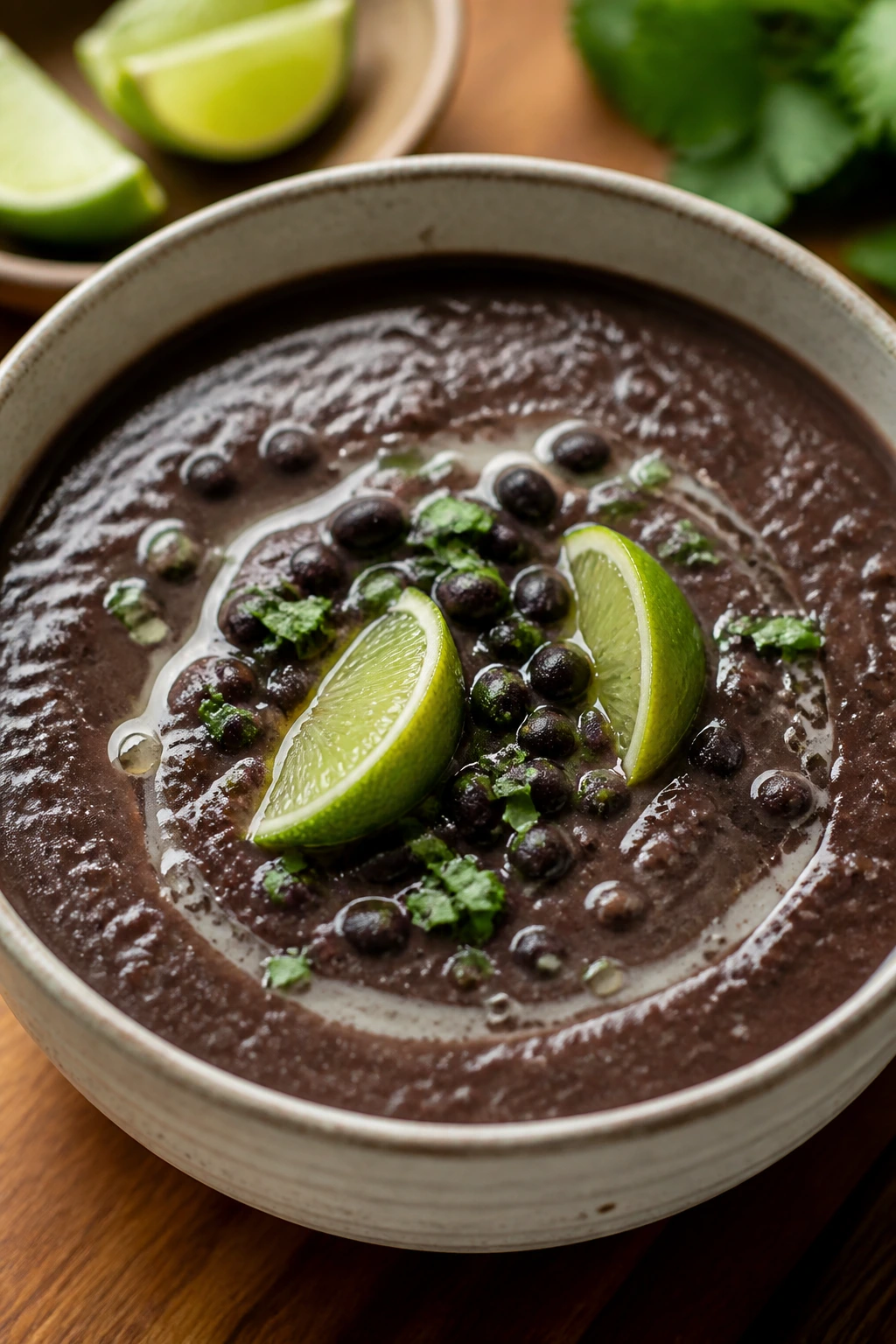
8. Black Bean Soup with Lime
Black bean soup is thick, dark, and deeply forgiving. It freezes without complaint because the beans hold the body of the soup, and lime at the end snaps the flavor back into place. If you like a soup that feels almost silky without cream, this is the one.
Why It Works:
Black beans puree into a dense, smooth texture that survives freezing well. Cumin and smoked paprika stay bold after thawing, and lime juice added at the end keeps the bowl from tasting muddy. I usually blend half the pot and leave the rest chunky, because that gives you body without turning it into dip.
Key Ingredients:
- 2 tablespoons olive oil
- 1 onion, chopped
- 1 bell pepper, chopped
- 4 cloves garlic, minced
- 2 teaspoons ground cumin
- 1 teaspoon smoked paprika
- 4 cans black beans, drained and rinsed
- 6 cups vegetable broth or chicken stock
- 1 can diced tomatoes
- 1 tablespoon lime juice
- Cilantro, for serving
Quick Steps:
- Heat the oil over medium heat. Cook the onion and bell pepper for 6 minutes until soft.
- Stir in garlic, cumin, and smoked paprika for 30 seconds.
- Add the beans, broth, and tomatoes. Simmer for 20 minutes.
- Blend 1 to 2 cups of the soup until smooth, then stir it back in.
- Finish with lime juice and cilantro.
Equipment for This Recipe:
- Heavy pot
- Immersion blender
- Can opener
- Ladle
How to Serve This Dish:
Serve with tortilla chips, chopped onions, or a spoonful of sour cream if you want a cool finish. It also works well over rice if you want a larger bowl.
Pro Tips for This Recipe:
- Blend only part of the soup if you want texture.
- Add lime after reheating so it stays bright.
- A little extra broth is useful because black bean soup thickens in the freezer.
Variations on This Dish:
- Chipotle Version: Add 1 chopped chipotle in adobo for heat and smoke.
- Creamy Finish: Stir in a little sour cream when serving, not before freezing.
- Corn Add-In: Add frozen corn during the last 5 minutes for sweetness and bite.
Common Mistakes to Avoid with This Dish:
- Freezing it too thick: It turns almost paste-like after thawing.
- Adding all the lime before freezing: The flavor fades.
- Skipping the blend step: A partly smooth texture gives the soup its body.
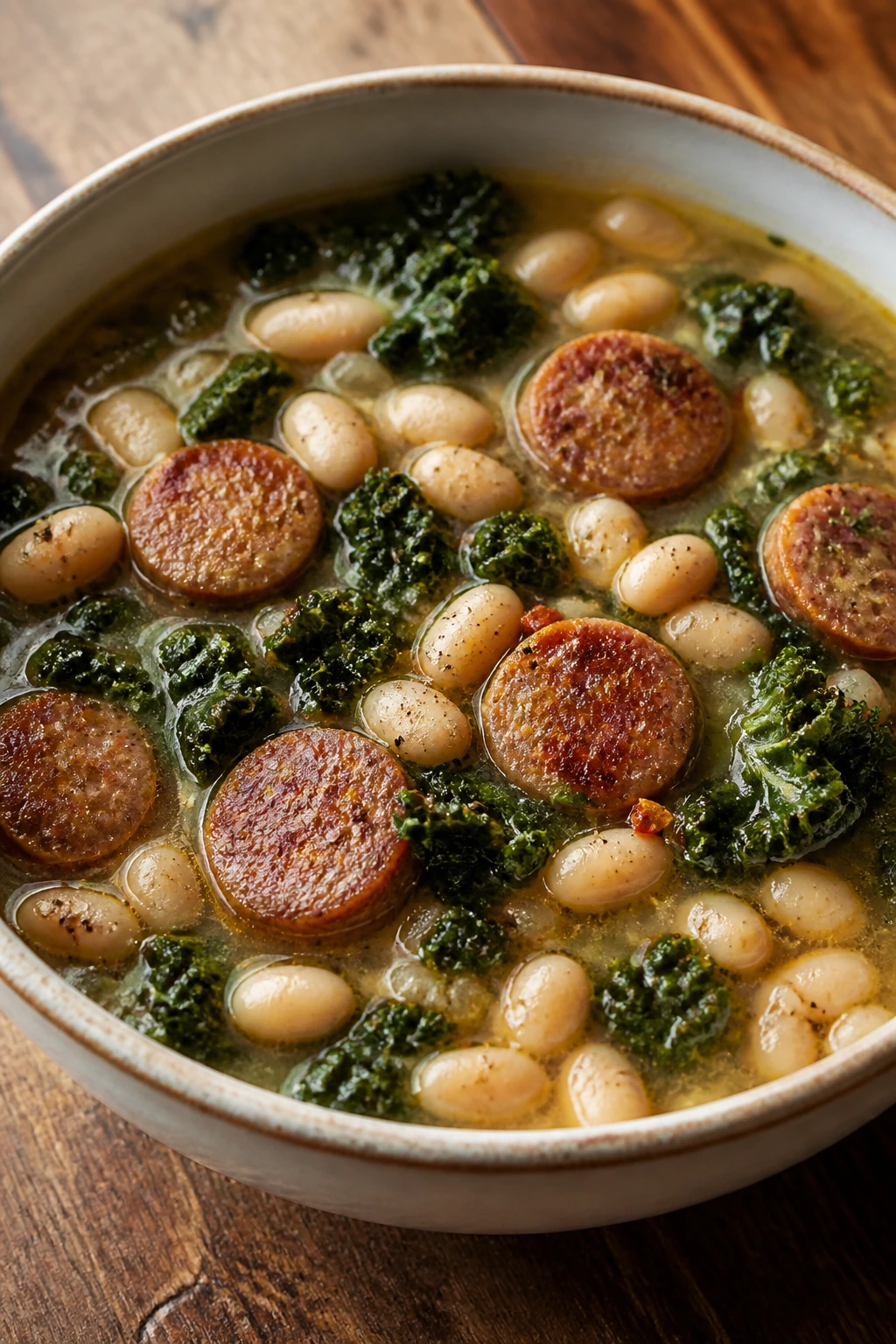
9. White Bean, Kale, and Sausage Soup
This is the soup I make when I want dinner to feel complete without opening another package. White beans give it substance, sausage brings the seasoning, and kale stays sturdy enough to freeze and reheat without going limp in a sad way. It tastes better the next day, and that matters here.
Why It Works:
Cannellini or great northern beans freeze well because they keep their shape and creaminess. Sausage adds fat and spice that carry the flavor through the cold, and kale is one of the few greens that does not throw a tantrum after reheating. I freeze this in broth-heavy batches and add Parmesan at the bowl if I want it richer.
Key Ingredients:
- 1 pound Italian sausage, casings removed
- 1 tablespoon olive oil
- 1 onion, diced
- 2 carrots, diced
- 3 cloves garlic, minced
- 2 cans cannellini beans, drained and rinsed
- 6 cups chicken broth
- 1 teaspoon dried rosemary
- 4 cups chopped kale
- 1/2 teaspoon red pepper flakes
- Parmesan, for serving
Quick Steps:
- Brown the sausage in a soup pot over medium heat, breaking it up, for 6 to 8 minutes.
- Add olive oil, onion, and carrots, and cook for 5 minutes.
- Stir in garlic, rosemary, and red pepper flakes for 30 seconds.
- Add beans and broth, then simmer for 20 minutes.
- Stir in kale for the last 3 minutes, until wilted.
Equipment for This Recipe:
- Soup pot
- Wooden spoon
- Knife and cutting board
- Ladle
How to Serve This Dish:
Serve it with crusty bread and a shower of Parmesan. The broth should be hot and a little peppery, with beans visible in the bowl.
Pro Tips for This Recipe:
- Brown the sausage well so the soup gets some fond in the pot.
- Keep the kale in rough pieces; tiny shreds disappear.
- If you like a thicker soup, mash a few beans against the side of the pot.
Variations on This Dish:
- Turkey Sausage Version: Use turkey sausage for a leaner pot.
- Tomato-Centered Bowl: Add 1 can diced tomatoes if you want more broth acidity.
- Spicy Version: Increase the red pepper flakes and finish with chili oil.
Common Mistakes to Avoid with This Dish:
- Using sweet sausage without adjusting seasonings: It can taste flat. Add more rosemary or pepper.
- Overcooking the kale: It should still look green and a little bouncy.
- Freezing without enough broth: Beans keep absorbing liquid.
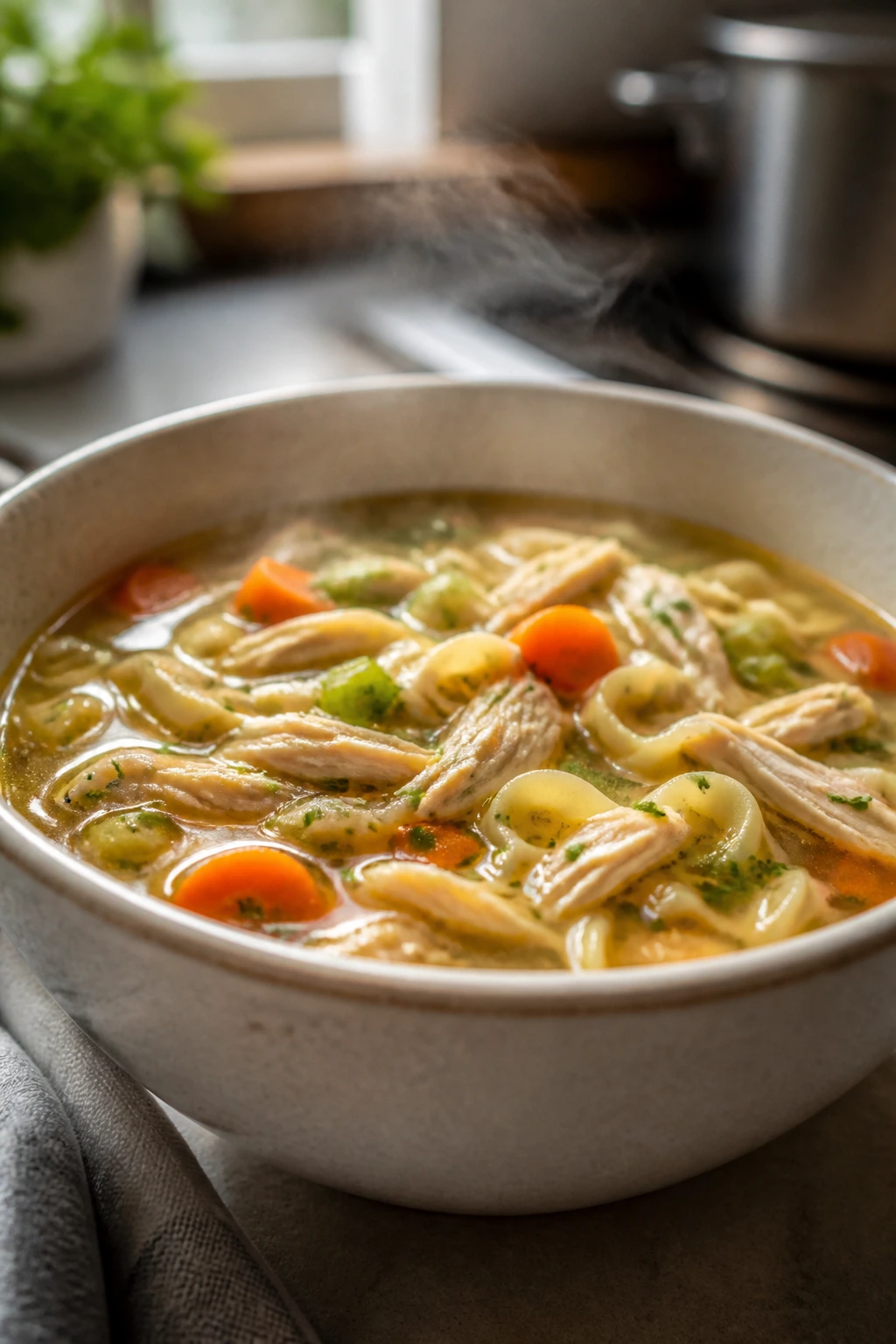
10. Chicken Noodle Soup for the Freezer
Chicken noodle soup is comforting, but only if the noodles are handled with some care. Freeze the broth and chicken, not the noodles, and you get a much better bowl later. That one change is the whole difference between a smart freezer soup and a sad one.
Why It Works:
Broth, chicken, carrots, celery, and herbs freeze neatly. Egg noodles do not. They soak up liquid, swell, and go soft in all the wrong ways, so I cook them separately and add them when serving. That keeps the soup tasting like chicken noodle soup instead of chicken paste.
Key Ingredients:
- 2 tablespoons olive oil
- 1 onion, diced
- 2 carrots, sliced
- 2 celery stalks, sliced
- 3 cloves garlic, minced
- 8 cups chicken broth
- 3 cups cooked shredded chicken
- 1 teaspoon dried thyme
- 1 bay leaf
- 6 ounces egg noodles, cooked separately
- 2 tablespoons chopped parsley
Quick Steps:
- Heat the oil over medium heat. Cook the onion, carrots, and celery for 6 to 7 minutes.
- Stir in garlic and thyme for 30 seconds.
- Add broth and bay leaf, then simmer for 20 minutes.
- Stir in the shredded chicken and cook for 5 minutes.
- Cook noodles separately, then add them to each bowl when you serve.
Equipment for This Recipe:
- Soup pot
- Separate saucepan for noodles
- Ladle
- Strainer
How to Serve This Dish:
Put noodles in the bowl first, then ladle the hot soup over them so they do not overcook. A little parsley on top is enough.
Pro Tips for This Recipe:
- Freeze the broth and chicken together; keep the noodles out.
- If you want more richness, add a spoonful of butter after reheating.
- Slightly undercook the carrots if you know the soup will be reheated later.
Variations on This Dish:
- Rice Version: Swap in cooked rice instead of noodles, added at serving.
- Lemon Chicken Soup: Add lemon juice and dill for a brighter bowl.
- Herb-Heavy Version: Use parsley, thyme, and a little tarragon for a sharper finish.
Common Mistakes to Avoid with This Dish:
- Freezing noodles in the broth: They turn bloated and slippery.
- Overcooking the chicken: Shredded breast can dry out; add it late.
- Forgetting to season after reheating: Frozen broth often needs one more salt check.
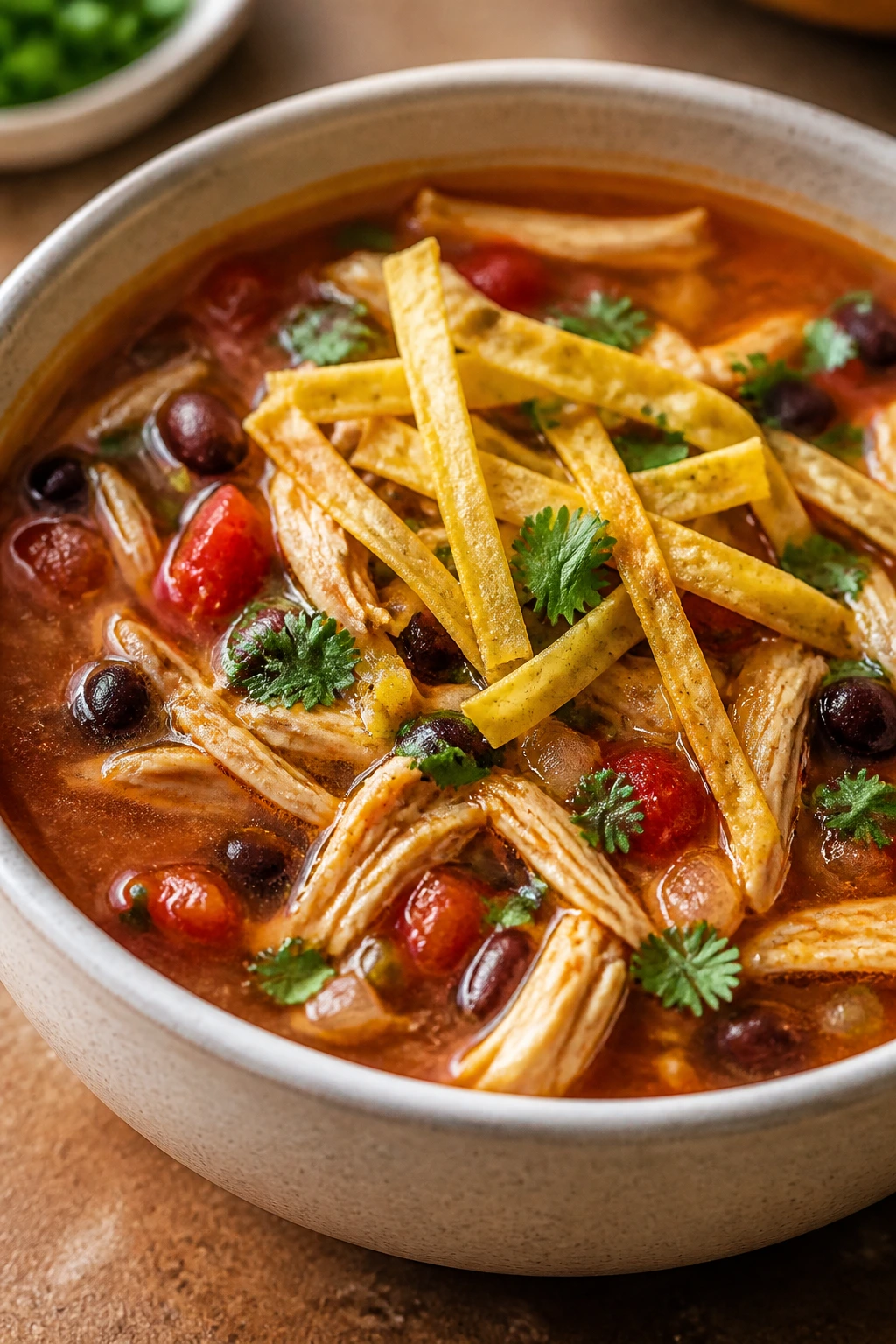
11. Chicken Tortilla Soup
Chicken tortilla soup is one of the easiest soups to freeze because the base is sturdy and the fun parts come later. Tortilla strips, avocado, and cheese belong on top, not in the freezer container. That keeps the texture sharp and the bowl lively.
Why It Works:
Tomatoes, broth, beans, and shredded chicken all handle freezing well. The tortilla strips stay crisp only if they are added at the end, and the lime gives the soup the lift it needs after reheating. I like this soup a little smoky and a little sharp, not sweet.
Key Ingredients:
- 1 tablespoon olive oil
- 1 onion, diced
- 3 cloves garlic, minced
- 1 can diced tomatoes
- 6 cups chicken broth
- 2 cups cooked shredded chicken
- 1 can black beans, drained and rinsed
- 1 cup corn
- 2 teaspoons chili powder
- 1 teaspoon cumin
- 1 tablespoon lime juice
- Tortilla strips, avocado, and cheese for serving
Quick Steps:
- Heat the oil in a soup pot over medium heat. Cook onion for 5 minutes, then add garlic.
- Stir in chili powder and cumin for 30 seconds.
- Add tomatoes, broth, chicken, beans, and corn. Simmer for 20 minutes.
- Stir in lime juice, then taste and adjust salt.
- Ladle into bowls and top with tortilla strips, avocado, and cheese.
Equipment for This Recipe:
- Soup pot
- Wooden spoon
- Can opener
- Sharp knife for toppings
How to Serve This Dish:
Use a wide bowl so the toppings have room. A pile of tortilla strips in the middle and a few avocado cubes on the side look better than burying everything under cheese.
Pro Tips for This Recipe:
- Freeze the soup base without the toppings.
- Lime juice goes in at the end, not before the freezer.
- If you want more body, mash a few beans into the broth.
Variations on This Dish:
- Smoky Version: Add a chipotle pepper in adobo for heat and depth.
- Bean-Forward Bowl: Double the black beans and reduce the chicken a little.
- Slow-Simmer Style: Let it cook a bit longer to deepen the tomato base before freezing.
Common Mistakes to Avoid with This Dish:
- Adding tortilla strips early: They dissolve fast.
- Skipping the acid: Lime is what keeps the soup from tasting muddy.
- Using too much cheese in the freezer container: Add cheese at the table.
12. French Onion Soup
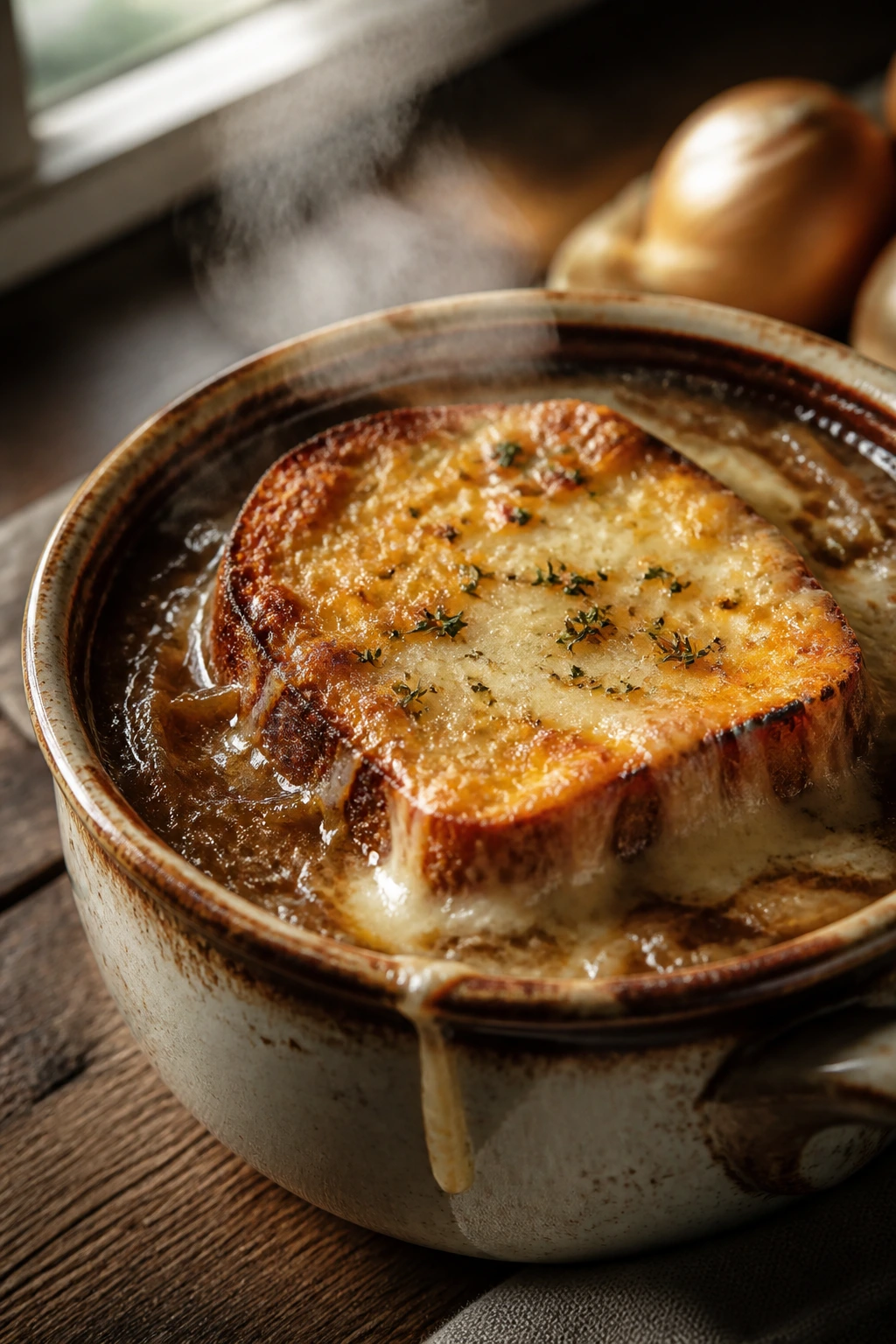
French onion soup freezes better than people expect, as long as you freeze the onion broth before adding the bread and cheese. The onions turn jammy and dark, the broth turns savory, and the whole thing becomes a neat freezer project instead of a last-minute restaurant imitation.
Why It Works:
Caramelized onions and beef broth are both good freezer partners. The bread topping is the weak point, so keep that part fresh. Gruyère melts beautifully on top, but it should be broiled at serving time, not frozen into the soup itself.
Key Ingredients:
- 4 large yellow onions, thinly sliced
- 3 tablespoons butter
- 1 tablespoon olive oil
- 2 cloves garlic, minced
- 1/4 cup dry sherry or white wine
- 8 cups beef broth
- 2 teaspoons thyme leaves
- 1 bay leaf
- 1 baguette, sliced
- 2 cups grated Gruyère
Quick Steps:
- Cook onions with butter and oil over medium-low heat for 35 to 45 minutes, stirring often, until deep golden brown.
- Add garlic and deglaze with sherry or wine, scraping the pot.
- Add broth, thyme, and bay leaf. Simmer for 20 minutes.
- Cool and freeze the soup base.
- To serve, reheat, top with toasted baguette slices and Gruyère, and broil until bubbly.
Equipment for This Recipe:
- Heavy-bottomed soup pot
- Wooden spoon
- Broiler-safe bowls
- Sheet pan for toasting bread
How to Serve This Dish:
This soup wants a broiler kiss. Ladle it into oven-safe bowls, set the baguette on top, bury it in cheese, and watch the top bubble into a golden lid.
Pro Tips for This Recipe:
- Caramelize the onions slowly; rushing this step leaves you with sharp, raw onion flavor.
- Freeze only the broth and onions.
- Use sturdy bowls that can handle the broiler.
Variations on This Dish:
- Red Wine Version: Swap the sherry for a splash of red wine.
- Vegetarian Onion Soup: Use rich vegetable stock instead of beef broth.
- Herb Upgrade: Add a sprig of rosemary with the thyme if you want a more piney edge.
Common Mistakes to Avoid with This Dish:
- Burning the onions: Dark is good; black is not.
- Adding bread before freezing: It turns soggy and collapses.
- Using flimsy bowls under the broiler: They can crack.
13. Carrot Ginger Soup
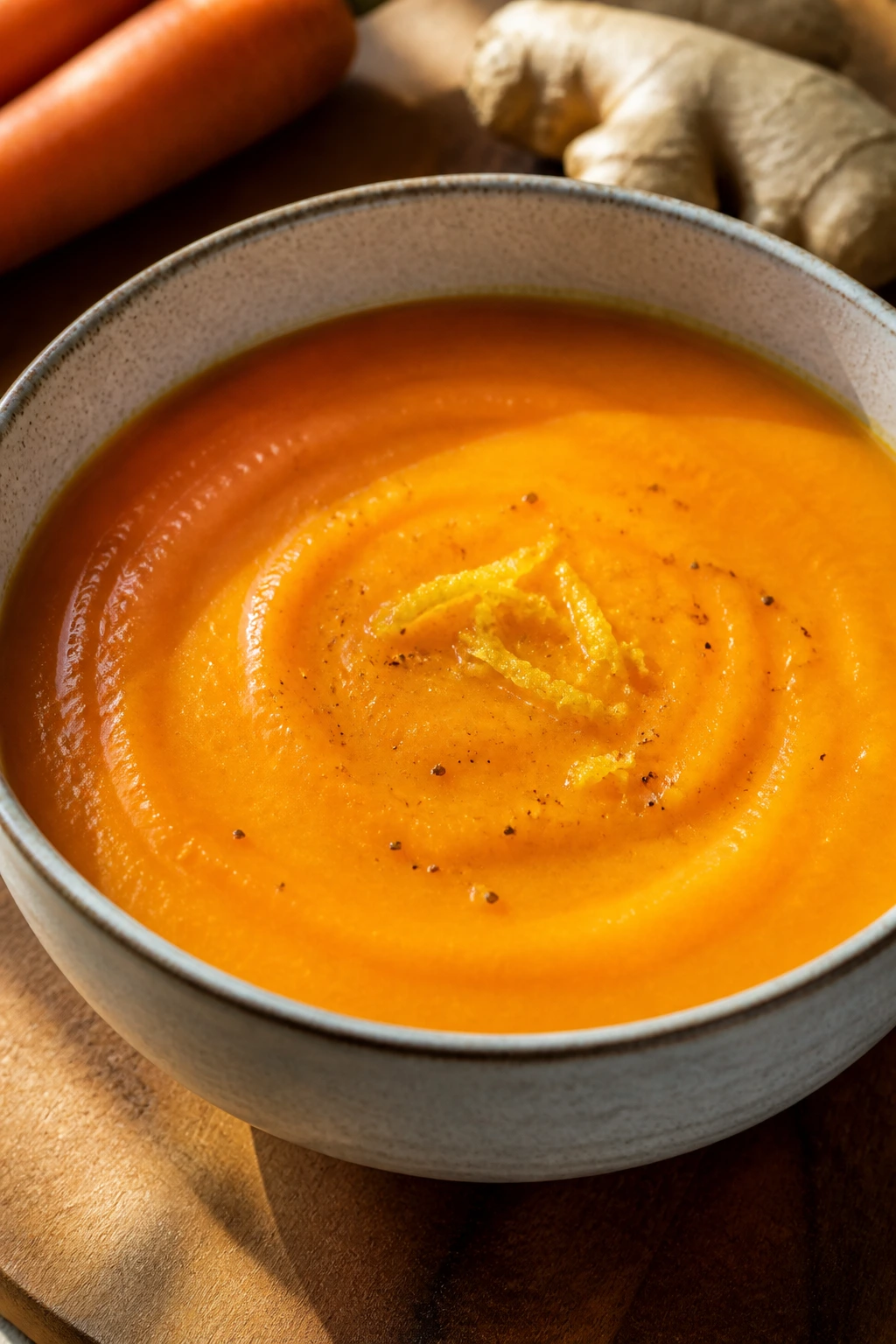
Carrot ginger soup is bright in a way that most winter soups are not. The carrots bring sweetness, the ginger gives a clean bite, and the final bowl tastes fresh even after freezing. I like this one when I want something simple that still feels awake.
Why It Works:
Carrots puree into a smooth base that freezes neatly. Ginger holds onto its aroma better than delicate herbs, and a little citrus at the end keeps the soup from leaning too sweet. Coconut milk works here, but I’d still add it after thawing if I wanted the smoothest texture.
Key Ingredients:
- 2 tablespoons olive oil
- 1 onion, chopped
- 2 pounds carrots, chopped
- 2 tablespoons fresh ginger, grated
- 3 cloves garlic, minced
- 6 cups vegetable broth
- 1/2 teaspoon ground cumin
- 1/2 cup coconut milk, optional
- 1 tablespoon orange juice or lemon juice
- Salt and black pepper
Quick Steps:
- Heat the oil over medium heat and cook onion for 5 minutes.
- Add carrots, ginger, garlic, and cumin, and stir for 1 minute.
- Pour in the broth, bring to a boil, then simmer for 25 to 30 minutes, until the carrots are soft.
- Blend until smooth. Stir in coconut milk if using.
- Finish with orange or lemon juice and season well.
Equipment for This Recipe:
- Soup pot
- Blender or immersion blender
- Peeler
- Measuring spoons
How to Serve This Dish:
Serve it with a dollop of yogurt or coconut cream and a few toasted seeds. A small green salad on the side keeps the meal from feeling one-note.
Pro Tips for This Recipe:
- Fresh ginger tastes cleaner than dried here.
- A little citrus at the end keeps the carrot sweetness in line.
- Freeze in flat portions for quick thawing.
Variations on This Dish:
- Curried Carrot Soup: Add 1 teaspoon curry powder with the ginger.
- Apple-Carrot Version: Add 1 peeled apple for a rounder sweetness.
- Dairy-Free Bowl: Skip yogurt and finish with olive oil and herbs.
Common Mistakes to Avoid with This Dish:
- Boiling the ginger too long: It can turn sharp and woody.
- Leaving the soup too sweet: Acid fixes that fast.
- Forgetting to blend fully: A grainy carrot soup is never as good.
14. Mushroom Barley Soup
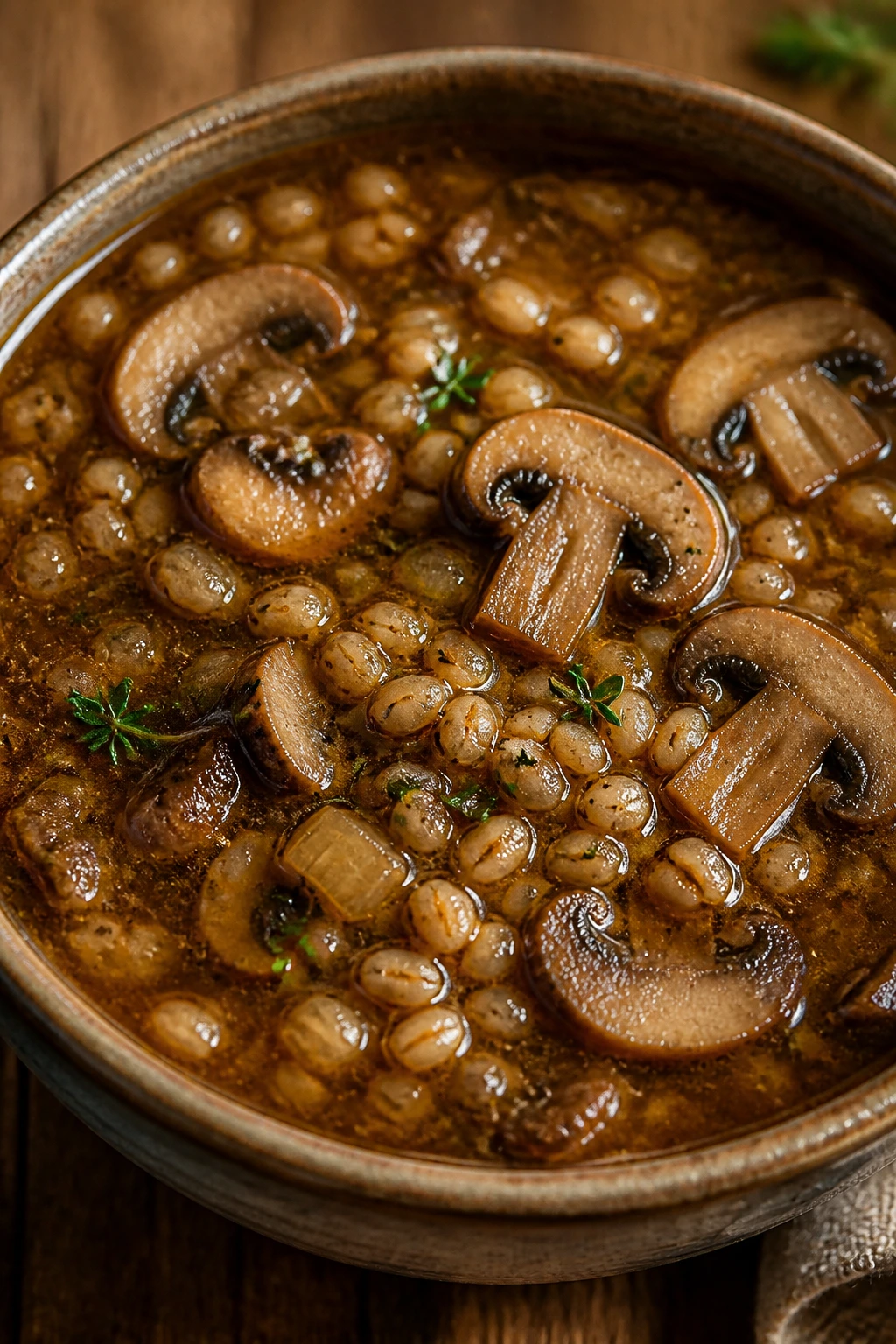
Mushroom barley soup has a dark, savory smell that fills the kitchen before the bowl reaches the table. Mushrooms bring depth, barley brings chew, and the whole pot freezes into something almost stew-like in the best way. This is a soup for people who like their broth with backbone.
Why It Works:
Barley keeps its shape better than pasta, and mushrooms bring umami that gets deeper after freezing. Soy sauce or Worcestershire helps the broth stay bold, which matters because freezing can flatten a quiet soup. I often use a mix of cremini and shiitake for a broader mushroom flavor.
Key Ingredients:
- 2 tablespoons olive oil
- 1 onion, diced
- 2 carrots, diced
- 2 celery stalks, diced
- 1 pound mushrooms, sliced
- 3 cloves garlic, minced
- 3/4 cup pearl barley, rinsed
- 8 cups vegetable broth or beef broth
- 1 tablespoon soy sauce
- 1 teaspoon thyme
- 1 bay leaf
- Parsley, for serving
Quick Steps:
- Heat the oil in a soup pot over medium heat. Cook onion, carrots, and celery for 6 minutes.
- Add mushrooms and cook for 8 minutes, until they release moisture and start to brown.
- Stir in garlic, thyme, and barley for 30 seconds.
- Add broth, soy sauce, and bay leaf. Simmer for 45 to 50 minutes, until the barley is tender.
- Remove the bay leaf and finish with parsley.
Equipment for This Recipe:
- Large soup pot
- Wooden spoon
- Mushroom brush or damp towel
- Ladle
How to Serve This Dish:
A bowl of mushroom barley soup wants simple bread and maybe a little cracked black pepper. If you want to make it a full meal, add a side salad with sharp vinaigrette.
Pro Tips for This Recipe:
- Brown the mushrooms enough to lose their raw edge.
- Barley thickens the soup after freezing, so keep extra broth nearby.
- Use a mix of mushrooms if you want more depth.
Variations on This Dish:
- Beefy Version: Swap in beef broth and add shredded roast beef.
- Miso Mushroom Soup: Stir in 1 tablespoon miso after reheating for extra savoriness.
- Herb-Heavy Bowl: Add dill or parsley at the end for a fresher finish.
Common Mistakes to Avoid with This Dish:
- Overloading with barley: It keeps absorbing broth after freezing.
- Skipping the mushroom browning: That step is where the flavor lives.
- Using too little salt: Mushrooms need it or they taste dull.
15. Cabbage Roll Soup
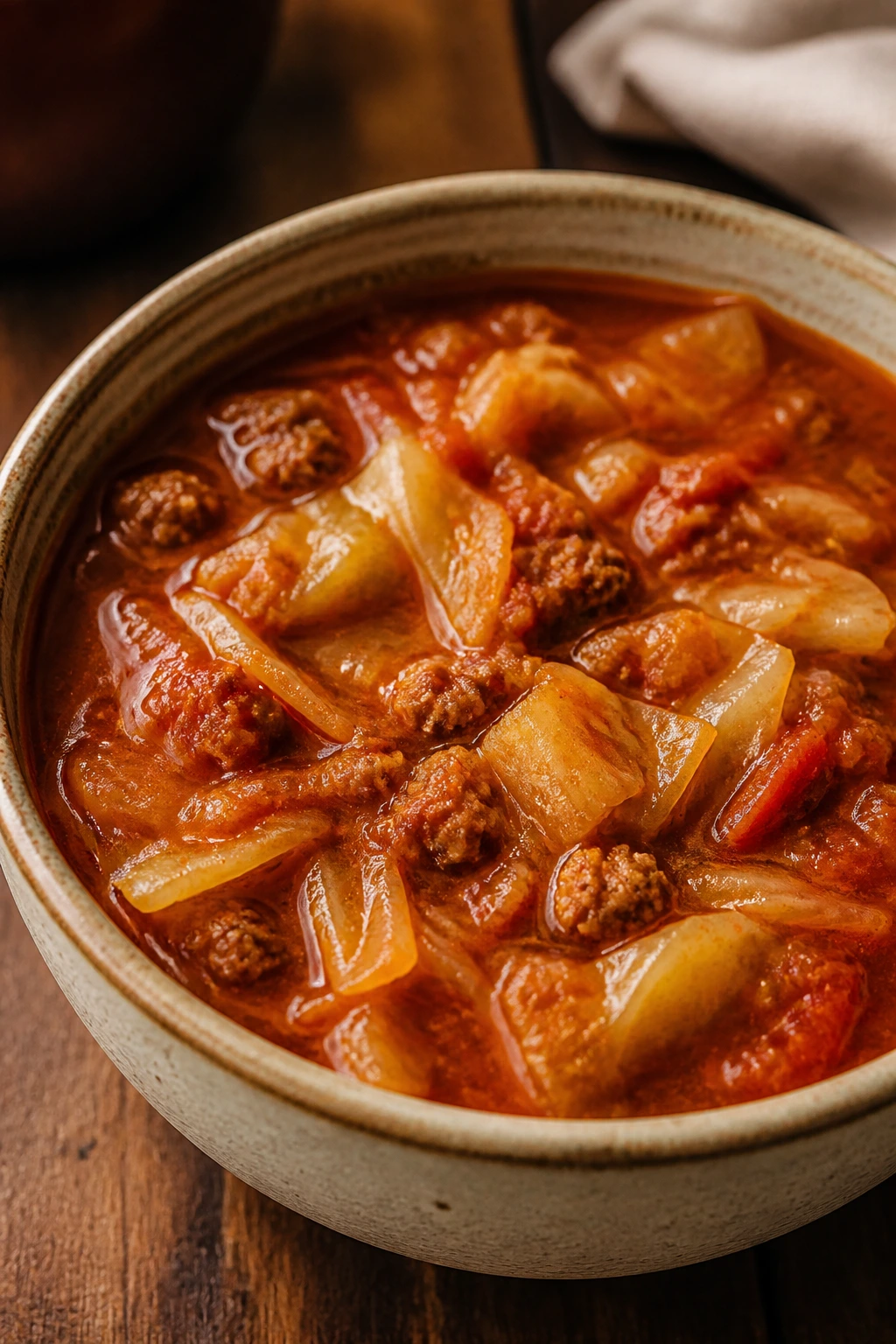
Cabbage roll soup tastes like the long-cooked cousin of stuffed cabbage, minus the fiddly wrapping. The cabbage softens into the broth, the tomato gives it structure, and the beef or turkey makes it feel like dinner. It freezes well because the whole point is slow, tender simmering.
Why It Works:
Cabbage stays useful after freezing because it is already cooked down, and tomato-based broth holds flavor without splitting. I prefer to keep rice separate or undercook it slightly if I want it in the pot, because rice can get very soft after thawing. The soup works best when the cabbage is cut into sturdy strips instead of tiny shreds.
Key Ingredients:
- 1 tablespoon olive oil
- 1 pound ground beef or turkey
- 1 onion, diced
- 3 cloves garlic, minced
- 1 small head green cabbage, chopped
- 1 can diced tomatoes
- 1 can tomato sauce
- 6 cups beef broth
- 1 teaspoon paprika
- 1 teaspoon dried oregano
- 1 cup cooked rice, added when serving or lightly undercooked in the pot
Quick Steps:
- Brown the meat in a soup pot over medium heat for 6 to 8 minutes.
- Add onion and cook for 4 minutes, then stir in garlic.
- Add cabbage, tomatoes, tomato sauce, broth, paprika, and oregano.
- Simmer for 30 to 35 minutes, until the cabbage is tender and the broth tastes round.
- Stir in rice at the end or add it to bowls when serving.
Equipment for This Recipe:
- Large soup pot
- Wooden spoon
- Knife and cutting board
- Ladle
How to Serve This Dish:
Serve it in deep bowls with a spoonful of sour cream if you want a little coolness. Rye bread or a plain roll works fine. The soup is already doing a lot.
Pro Tips for This Recipe:
- Chop the cabbage into broad ribbons so it keeps some presence.
- Freeze the rice separately if you want the best texture.
- A splash of vinegar at the end makes the tomatoes taste brighter.
Variations on This Dish:
- Vegetarian Cabbage Roll Soup: Use lentils instead of meat and vegetable broth instead of beef broth.
- Smoky Style: Add a little smoked paprika and cracked pepper.
- Rice-Free Version: Skip the rice and serve the soup with bread instead.
Common Mistakes to Avoid with This Dish:
- Cutting the cabbage too fine: It vanishes into the broth.
- Adding too much rice before freezing: It will soak up liquid and soften.
- Under-seasoning the tomato base: It should taste savory, not flat.
16. Pozole Rojo
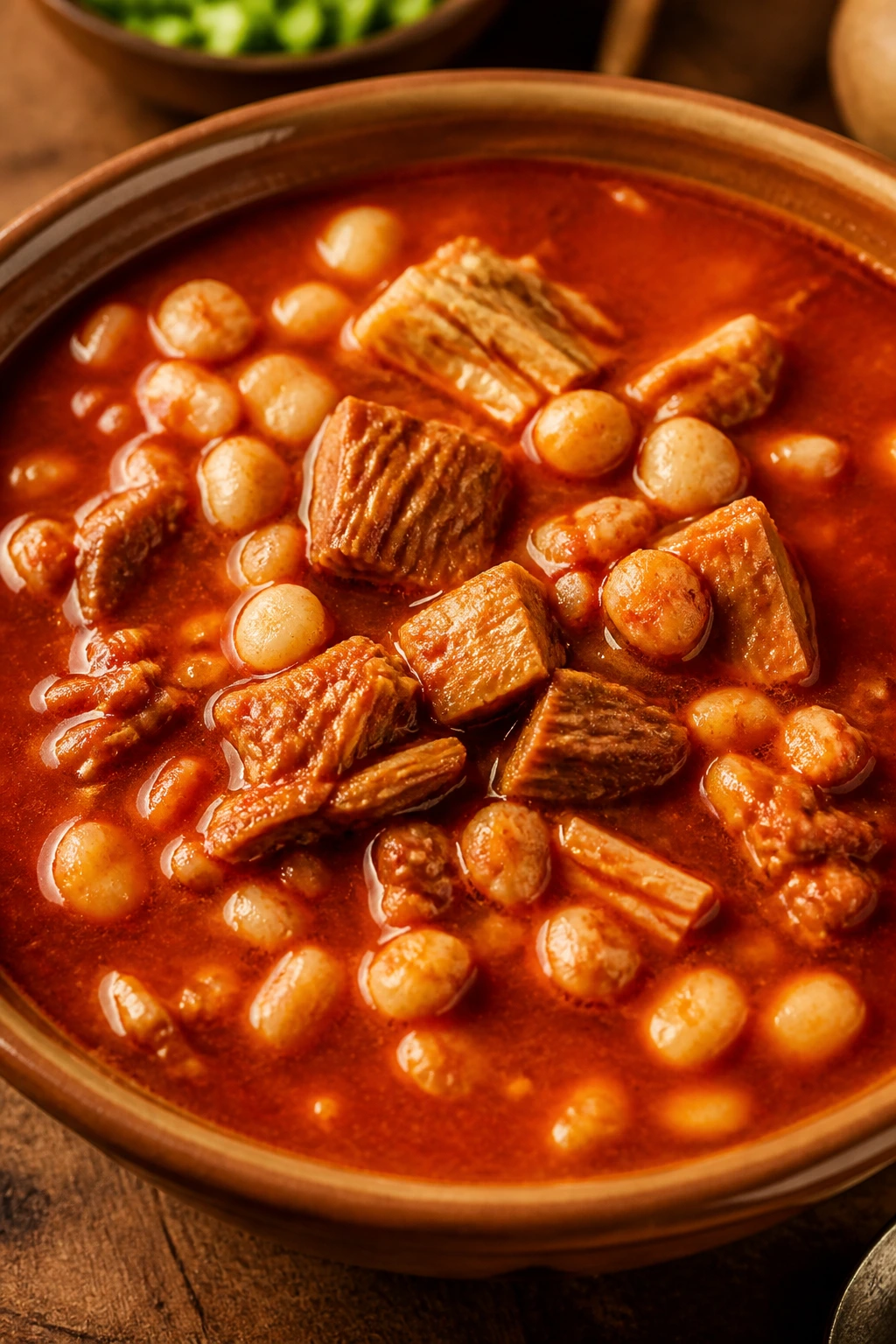
Pozole rojo is one of the best freezer soups in the whole lot because the broth, pork, and hominy all hold up beautifully. The dried chile base gives it color and depth, and the toppings stay separate until serving, which means nothing gets soggy. It is one of those soups that feels like a celebration, even from the freezer.
Why It Works:
Hominy is a freezer-friendly starch because it keeps its chew. Pork shoulder braises until tender and then stays moist in broth, while the chile puree gets deeper after a rest. I freeze pozole without the toppings, then add cabbage, radish, onion, oregano, and lime after reheating so the bowl still has contrast.
Key Ingredients:
- 2 pounds pork shoulder, cut into chunks
- 1 onion, quartered
- 4 cloves garlic
- 4 dried guajillo chiles, stemmed and seeded
- 2 dried ancho chiles, stemmed and seeded
- 8 cups chicken broth
- 2 cans hominy, drained and rinsed
- 1 teaspoon dried oregano
- 1 bay leaf
- Salt
- Shredded cabbage, radish, onion, lime, and cilantro for serving
Quick Steps:
- Toast the dried chiles in a dry skillet for 20 seconds per side, just until fragrant.
- Simmer the pork, onion, garlic, broth, oregano, and bay leaf for 45 minutes, until the pork begins to soften.
- Blend the softened chiles with a cup of hot broth until smooth, then stir the puree into the pot.
- Add hominy and simmer for 30 to 40 minutes more, until the pork shreds easily.
- Remove the bay leaf, season, and serve with toppings.
Equipment for This Recipe:
- Large Dutch oven
- Blender
- Slotted spoon
- Fine-mesh strainer, optional for a smoother chile sauce
How to Serve This Dish:
Set up the toppings at the table. A big bowl of pozole wants cabbage for crunch, radish for sharpness, and a heavy squeeze of lime. That contrast is the whole point.
Pro Tips for This Recipe:
- Toast the chiles briefly; burn them and the broth goes bitter.
- Freeze the soup base without toppings.
- If you want a smoother broth, strain the chile puree before adding it.
Variations on This Dish:
- Green Pozole: Swap in tomatillos, jalapeños, and cilantro for the red chiles.
- Chicken Pozole: Use shredded chicken thighs instead of pork shoulder.
- Spicier Bowl: Add one dried chile de árbol with the guajillos.
Common Mistakes to Avoid with This Dish:
- Skipping the chile soak/blend: The broth will lack depth.
- Adding toppings before freezing: They turn limp and watery.
- Boiling the pork hard: A gentle simmer keeps it tender.
17. Smoky Red Lentil Soup
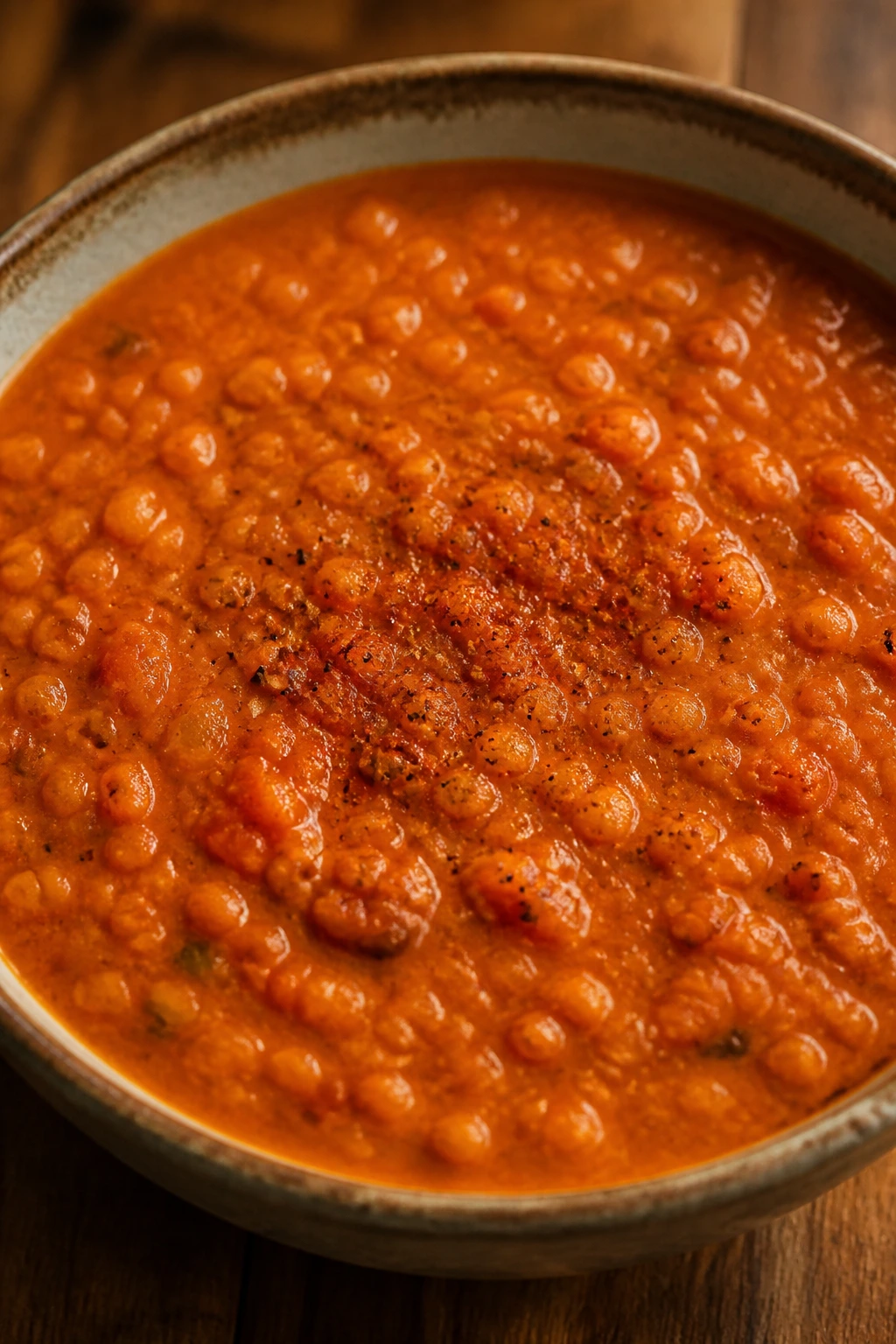
Red lentil soup is fast, thick, and freezer-ready, but it needs a careful hand. Red lentils break down quickly, which is useful if you want a smooth bowl and not so useful if you overcook them. Smoked paprika gives this version a deeper edge that survives freezing much better than delicate herbs.
Why It Works:
Red lentils dissolve into a creamy base, so the texture comes back nicely after thawing. Tomato and smoked paprika hold the flavor together, and a squeeze of lemon at the end keeps the bowl from feeling heavy. This is one of those soups that tastes more complex than the ingredient list suggests.
Key Ingredients:
- 2 tablespoons olive oil
- 1 onion, diced
- 2 carrots, diced
- 3 cloves garlic, minced
- 1 tablespoon smoked paprika
- 1 teaspoon cumin
- 1 1/2 cups red lentils, rinsed
- 1 can diced tomatoes
- 6 cups vegetable broth
- 2 cups chopped spinach
- 1 tablespoon lemon juice
Quick Steps:
- Heat the oil over medium heat and cook onion and carrots for 6 minutes.
- Add garlic, smoked paprika, and cumin for 30 seconds.
- Stir in lentils, tomatoes, and broth. Bring to a boil, then simmer for 20 minutes.
- Add spinach for the last 2 minutes.
- Finish with lemon juice and season to taste.
Equipment for This Recipe:
- Soup pot
- Wooden spoon
- Fine-mesh strainer for rinsing lentils
- Ladle
How to Serve This Dish:
Serve it with flatbread, pita chips, or a spoonful of yogurt. A drizzle of olive oil on top makes the bowl look finished in a plain, honest way.
Pro Tips for This Recipe:
- Red lentils cook fast; watch them closely.
- Lemon at the end matters more than you think.
- Freeze in shallow containers so it thaws evenly.
Variations on This Dish:
- Coconut Version: Stir in coconut milk after reheating for a softer finish.
- Herb Finish: Add cilantro or parsley right before serving.
- Heat-Lover’s Bowl: Add cayenne or chili flakes with the paprika.
Common Mistakes to Avoid with This Dish:
- Overcooking the lentils: They can turn gluey.
- Freezing with too little liquid: The soup becomes paste-like.
- Skipping the acid: Lemon keeps the soup from tasting one-note.
18. Ham and Bean Soup
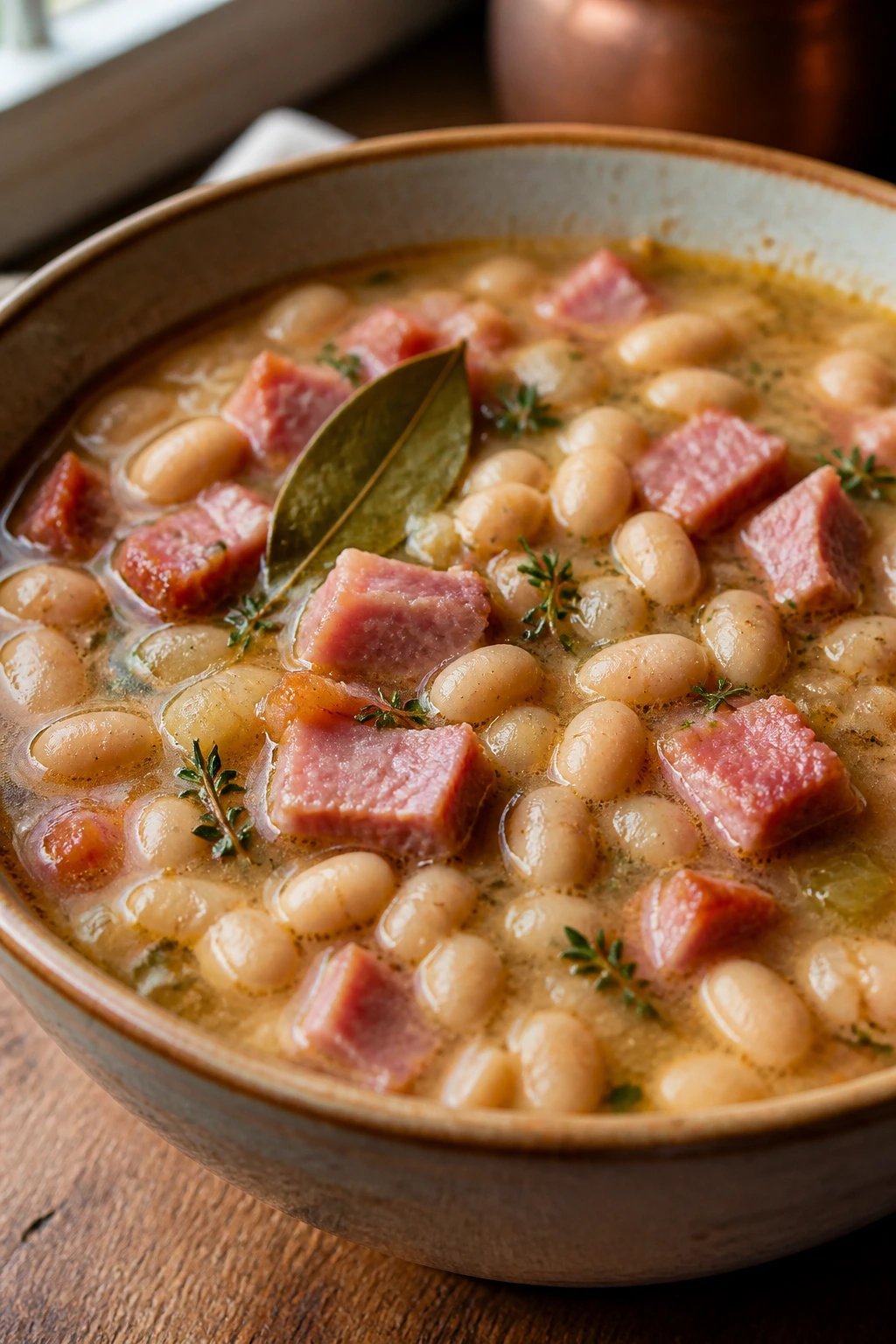
Ham and bean soup is one of the classic winter soups that freeze well because both the ham and the beans keep their character under cold storage. Navy beans soften into the broth, ham brings salt and smoke, and the whole pot ends up richer after a rest. This is freezer cooking without a lot of drama.
Why It Works:
Beans freeze well when they’re cooked to tender, not blown apart. Ham bone or diced ham adds depth that holds up after thawing, and the broth thickens naturally without cream. I like this soup with a bay leaf and thyme because the flavor stays clear even after a week in the freezer.
Key Ingredients:
- 1 tablespoon olive oil
- 1 onion, diced
- 2 carrots, diced
- 2 celery stalks, diced
- 3 cloves garlic, minced
- 1 pound dried navy beans, soaked overnight and drained
- 1 ham hock or 2 cups diced ham
- 8 cups chicken broth
- 1 bay leaf
- 1 teaspoon dried thyme
Quick Steps:
- Heat the oil over medium heat. Cook onion, carrots, and celery for 6 minutes.
- Add garlic and thyme for 30 seconds.
- Stir in beans, ham hock or ham, broth, and bay leaf.
- Simmer gently for 1 1/2 to 2 hours, until the beans are creamy and the ham is tender.
- Remove the bay leaf and ham hock, shred the meat if needed, and season well.
Equipment for This Recipe:
- Large soup pot or Dutch oven
- Wooden spoon
- Colander
- Ladle
How to Serve This Dish:
Serve with cornbread or a thick slice of country bread. A few cracks of black pepper and a little parsley are enough; this soup does not need decoration.
Pro Tips for This Recipe:
- Soak the beans so they cook evenly and freeze better.
- If the broth is too thick after freezing, loosen it with stock.
- Ham hock gives more depth than chopped ham, but both work.
Variations on This Dish:
- Smoked Turkey Bean Soup: Use a smoked turkey leg instead of ham.
- Tomato Bean Version: Add a small can of diced tomatoes for a brighter broth.
- Spicy Bean Bowl: Stir in red pepper flakes or hot sauce at the end.
Common Mistakes to Avoid with This Dish:
- Undercooking the beans: They should be creamy, not chalky.
- Using too much salt before thawing: Ham already brings salt to the pot.
- Freezing with the ham bone still in the soup: Remove it first so storage is easier.
19. Vegetable Beef Soup
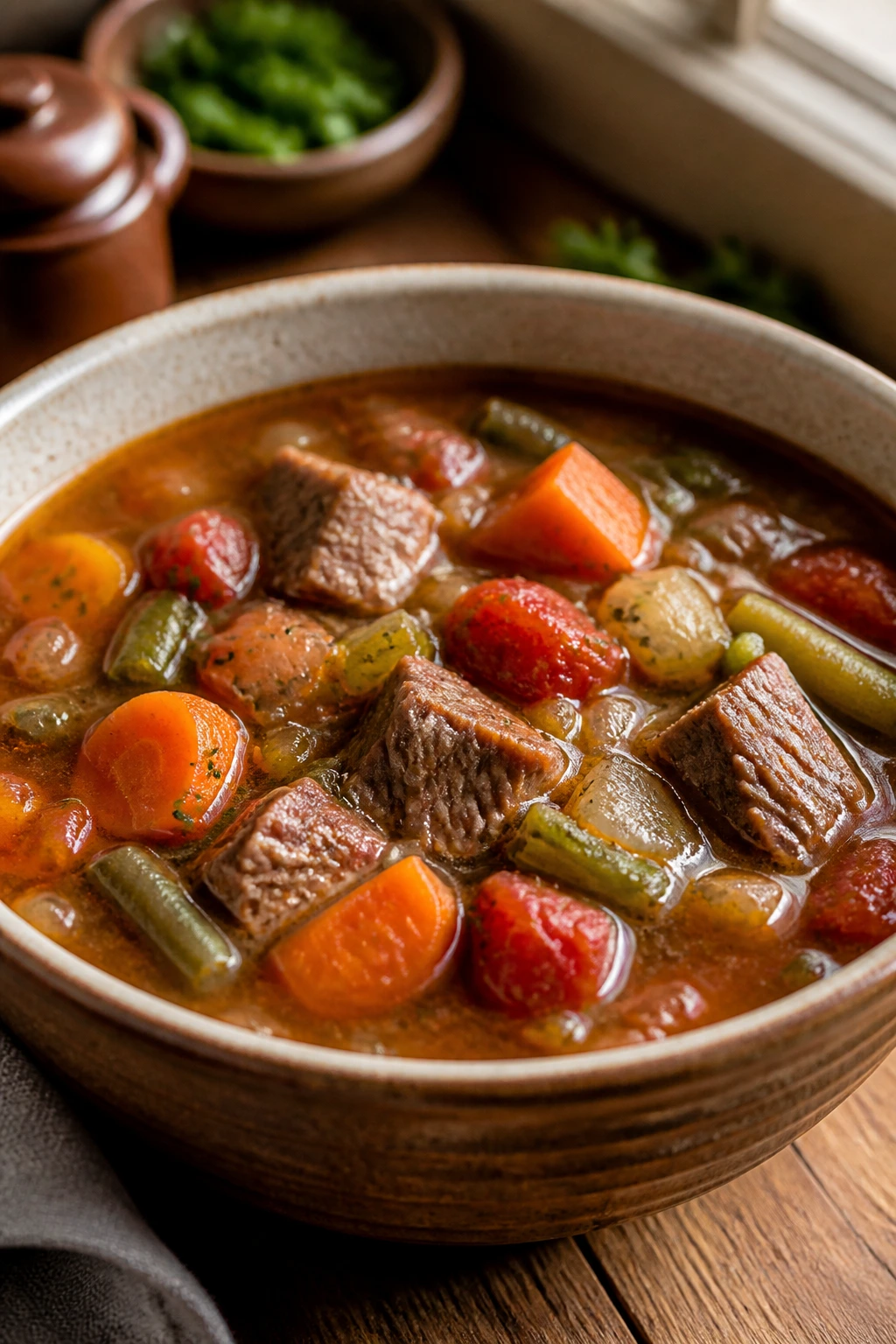
Vegetable beef soup has a straightforward kind of usefulness. It freezes neatly because the broth is simple, the beef stays sturdy, and the vegetables are cut large enough to survive reheating. I like this one when I want a freezer meal that doesn’t try too hard.
Why It Works:
Beef chuck or stew meat braises into tender bites that hold up well. Carrots, celery, green beans, and tomatoes keep their shape better than soft vegetables like zucchini, which is why this version freezes more cleanly than some versions you may have had. If you want potatoes, use small chunks and expect them to soften a little.
Key Ingredients:
- 1 1/2 pounds beef stew meat
- 2 tablespoons oil
- 1 onion, chopped
- 2 carrots, chopped
- 2 celery stalks, chopped
- 2 cups green beans
- 1 can diced tomatoes
- 8 cups beef broth
- 1 teaspoon dried thyme
- 1 bay leaf
- 1 cup peas, added near the end
Quick Steps:
- Brown the beef in oil over medium-high heat for 6 to 8 minutes.
- Add onion, carrots, and celery, and cook for 5 minutes.
- Stir in tomatoes, broth, thyme, and bay leaf. Simmer for 60 minutes.
- Add green beans and peas for the last 10 minutes.
- Remove the bay leaf and season to taste.
Equipment for This Recipe:
- Heavy soup pot
- Wooden spoon
- Slotted spoon
- Ladle
How to Serve This Dish:
This soup is easy to serve with crackers, bread, or nothing at all. The broth should stay clear enough to see the vegetables, not so thick that it turns into stew.
Pro Tips for This Recipe:
- Brown the beef in batches if needed; crowding the pan steams it.
- Cut the vegetables into similar sizes so they cook evenly.
- Freeze before adding any fresh herbs.
Variations on This Dish:
- Barley Version: Add pearl barley if you want extra body.
- Potato-Rich Bowl: Add potatoes if you’re fine with a softer texture after freezing.
- Herbed Version: Finish with parsley and a little rosemary.
Common Mistakes to Avoid with This Dish:
- Using tiny vegetable cuts: They break down too fast.
- Skipping the browning step: The flavor gets thin.
- Overcooking the peas: They should go in at the end.
20. Curried Cauliflower Soup
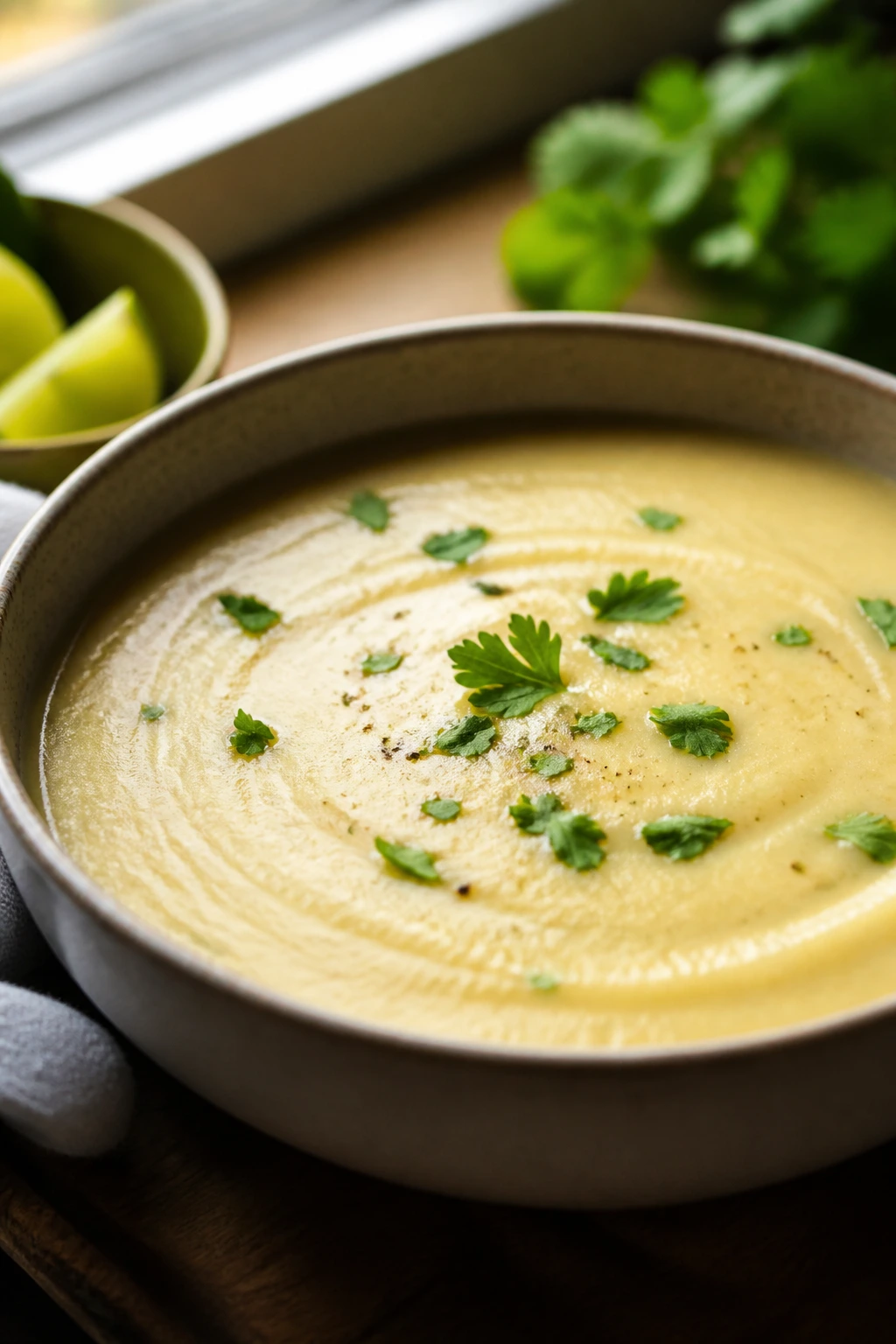
Curried cauliflower soup freezes into a smooth, pale bowl that tastes far less plain than the ingredient list suggests. Curry spices, ginger, and coconut milk give it enough body to stay interesting after thawing. It’s the sort of soup that gets better when you remember to add acid at the end.
Why It Works:
Cauliflower puree holds its texture after freezing, and coconut milk keeps the soup from tasting flat or watery. Curry powder and ginger are sturdy flavors, so they survive the freezer better than fragile herbs. I like to finish this soup with lime because the citrus pulls the whole bowl back into focus.
Key Ingredients:
- 1 large head cauliflower, chopped
- 1 onion, chopped
- 3 cloves garlic, minced
- 1 tablespoon fresh ginger, grated
- 2 tablespoons curry powder
- 4 cups vegetable broth
- 1 can coconut milk
- 1 tablespoon lime juice
- Salt and black pepper
- Cilantro, for serving
Quick Steps:
- Cook onion in a little oil over medium heat for 5 minutes.
- Add garlic, ginger, and curry powder, and stir for 30 seconds.
- Add cauliflower and broth, bring to a boil, then simmer for 20 minutes until tender.
- Blend until smooth, then stir in coconut milk.
- Finish with lime juice and season.
Equipment for This Recipe:
- Soup pot
- Blender or immersion blender
- Ladle
- Measuring spoons
How to Serve This Dish:
Serve it with rice, naan, or toasted pita. A sprinkle of cilantro and a squeeze of lime keep the bowl from feeling heavy.
Pro Tips for This Recipe:
- Add coconut milk after blending for the smoothest finish.
- Use a good curry powder; bland powder makes a bland soup.
- Freeze in portions so you can thaw only what you need.
Variations on This Dish:
- Roasted Cauliflower Version: Roast the cauliflower first for a deeper flavor.
- Spicy Curry Bowl: Add chili flakes or hot curry paste.
- Lemongrass Finish: Add a little lemongrass paste if you want a more Southeast Asian note.
Common Mistakes to Avoid with This Dish:
- Skipping the lime: The soup needs that bright edge.
- Using too much water: It makes the texture thin after freezing.
- Pureeing while the soup is still raging hot: Let it calm down a minute so you do not steam-blast the lid off the blender.
21. Chickpea and Spinach Soup
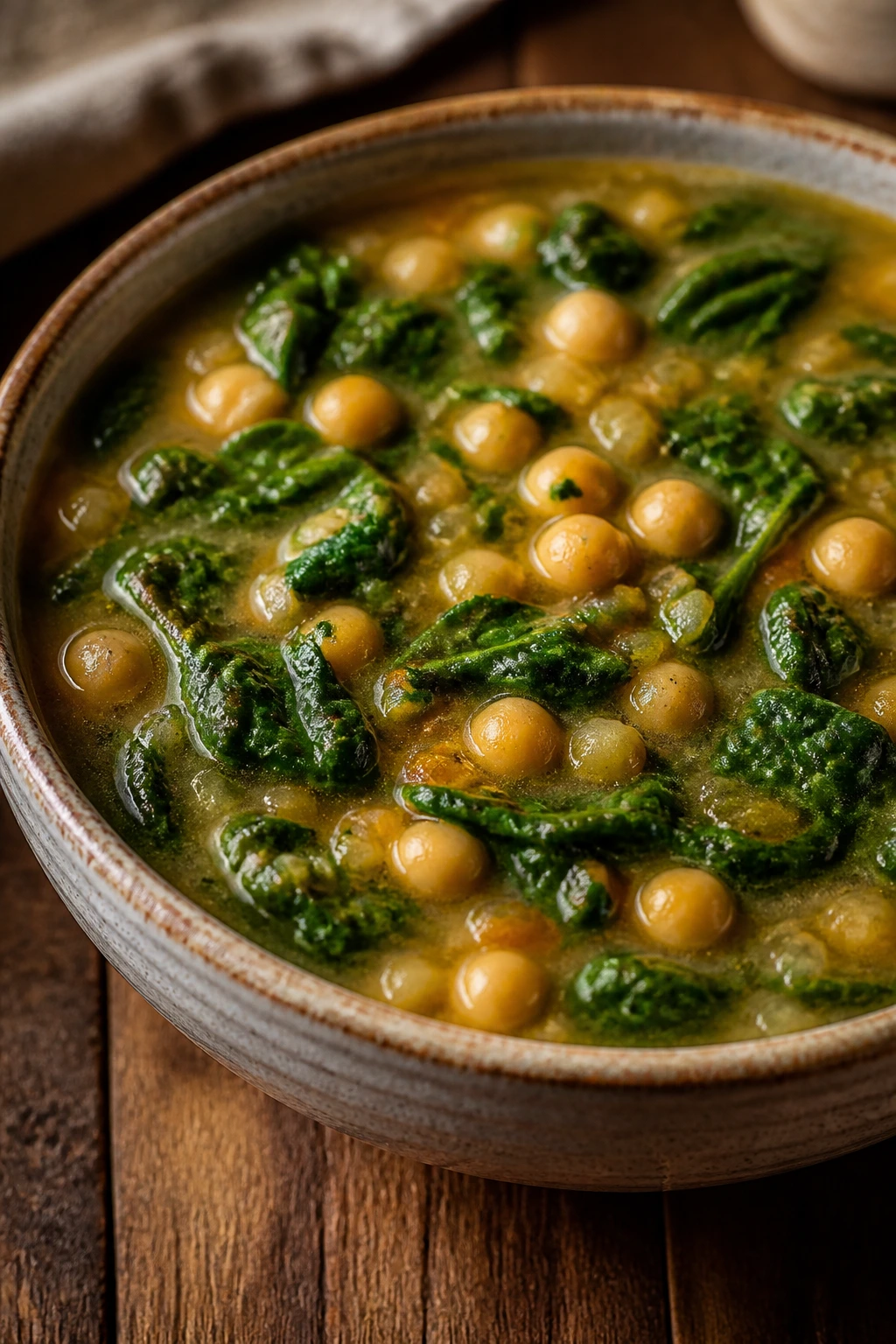
Chickpea and spinach soup is one of the easiest freezer soups to keep in rotation because both the chickpeas and the broth hold up so cleanly. Spinach goes in near the end, which keeps it from turning olive and tired. The broth is simple, but the result is sturdy and useful.
Why It Works:
Chickpeas keep their shape after freezing, especially if you don’t overcook them. Tomatoes or a little lemon help the broth stay alive after thawing, and spinach is best added near the end so it looks green in the bowl. I like this soup with garlic, cumin, and a little olive oil because the flavor stays clear.
Key Ingredients:
- 2 tablespoons olive oil
- 1 onion, chopped
- 2 carrots, chopped
- 3 cloves garlic, minced
- 1 teaspoon ground cumin
- 2 cans chickpeas, drained and rinsed
- 1 can diced tomatoes
- 6 cups vegetable broth
- 4 cups spinach
- 1 tablespoon lemon juice
Quick Steps:
- Heat the oil and cook onion and carrots for 6 minutes.
- Add garlic and cumin, stirring for 30 seconds.
- Add chickpeas, tomatoes, and broth, then simmer for 20 minutes.
- Stir in spinach for the last 2 minutes.
- Finish with lemon juice and taste for salt.
Equipment for This Recipe:
- Soup pot
- Colander
- Wooden spoon
- Ladle
How to Serve This Dish:
Serve with toasted bread or pita. A little grated Parmesan or a spoonful of yogurt works if you want to round it out.
Pro Tips for This Recipe:
- Add spinach at the very end so it stays bright.
- Mash a few chickpeas for a thicker broth.
- Lemon after reheating keeps the flavor sharper.
Variations on This Dish:
- Harissa Version: Stir in a spoonful of harissa paste for heat.
- Tomato-Heavy Bowl: Add more diced tomatoes if you want a brighter red broth.
- Herby Finish: Use parsley and dill if you want a greener taste.
Common Mistakes to Avoid with This Dish:
- Overcooking the spinach: It should wilt, not disappear.
- Freezing without enough liquid: Chickpeas soak up broth as they sit.
- Skipping the acid: Lemon helps the soup taste finished.
22. Pho-Style Beef Soup
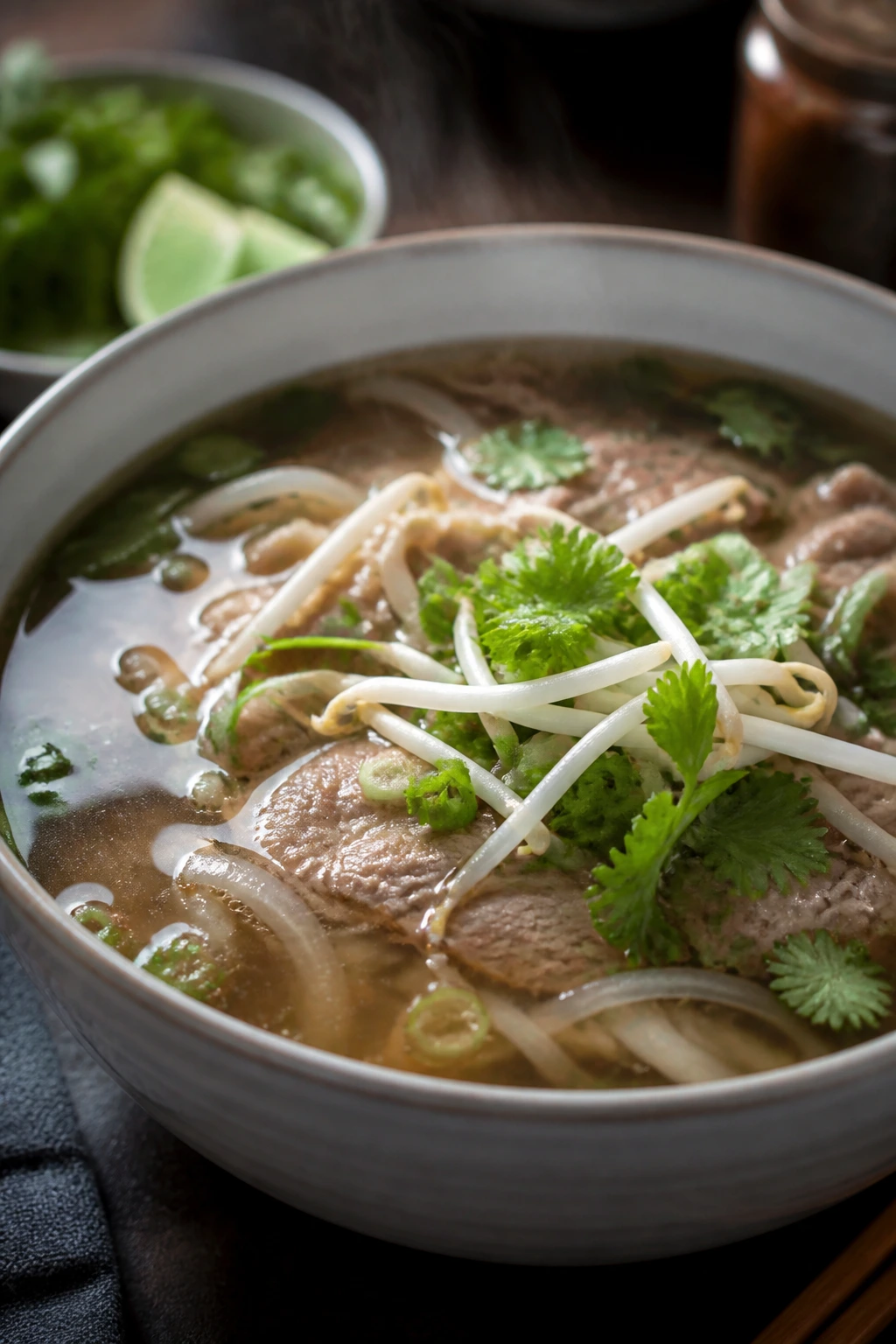
Pho-style beef soup is one of the smarter freezer soups because the broth is the star and the noodles can stay separate. The broth needs time and aromatics, but once it’s made, it freezes beautifully. The bowl comes back to life with herbs, lime, and a few fresh toppings.
Why It Works:
Star anise, cinnamon, ginger, and onion give the broth enough depth that freezing does not flatten it. Rice noodles are the weak link, so cook them fresh when serving. Thin slices of beef can be added to the hot broth at the end, which keeps them tender instead of chewy.
Key Ingredients:
- 2 pounds beef bones or beef shank
- 1 onion, halved
- 1 piece ginger, sliced and lightly charred
- 2 star anise
- 1 cinnamon stick
- 4 cloves
- 8 cups water or beef stock
- 1 tablespoon fish sauce
- 8 ounces rice noodles, cooked separately
- Thin-sliced raw beef sirloin or flank, optional
- Bean sprouts, basil, lime, and jalapeño for serving
Quick Steps:
- Char the onion and ginger in a dry skillet or under the broiler for a few minutes.
- Simmer bones, onion, ginger, star anise, cinnamon, cloves, and water for 2 to 3 hours.
- Strain the broth and stir in fish sauce.
- Freeze the broth. Reheat, then pour over noodles and raw beef if using.
- Finish with basil, lime, bean sprouts, and jalapeño.
Equipment for This Recipe:
- Large stockpot
- Fine-mesh strainer
- Tongs
- Separate pot for noodles
How to Serve This Dish:
Build each bowl at the table so the herbs stay fresh and the noodles stay slippery, not soggy. A squeeze of lime and a pile of basil are not optional here; they are the point.
Pro Tips for This Recipe:
- Freeze only the broth.
- Char the aromatics enough to smell sweet and smoky, not burnt.
- Keep the noodles separate until the last minute.
Variations on This Dish:
- Chicken Pho Style: Use a chicken broth base if you want a lighter version.
- Spicier Bowl: Add sliced chili or chili oil at serving.
- Short-Cut Broth: Use good beef stock and a shorter simmer if you do not want a long bones project.
Common Mistakes to Avoid with This Dish:
- Freezing noodles in the broth: They go mushy fast.
- Under-seasoning the broth: Pho needs salt and fish sauce to wake up.
- Skipping the aromatics: That ginger-anise-cinnamon note is what makes it pho-style.
23. Pumpkin Coconut Soup
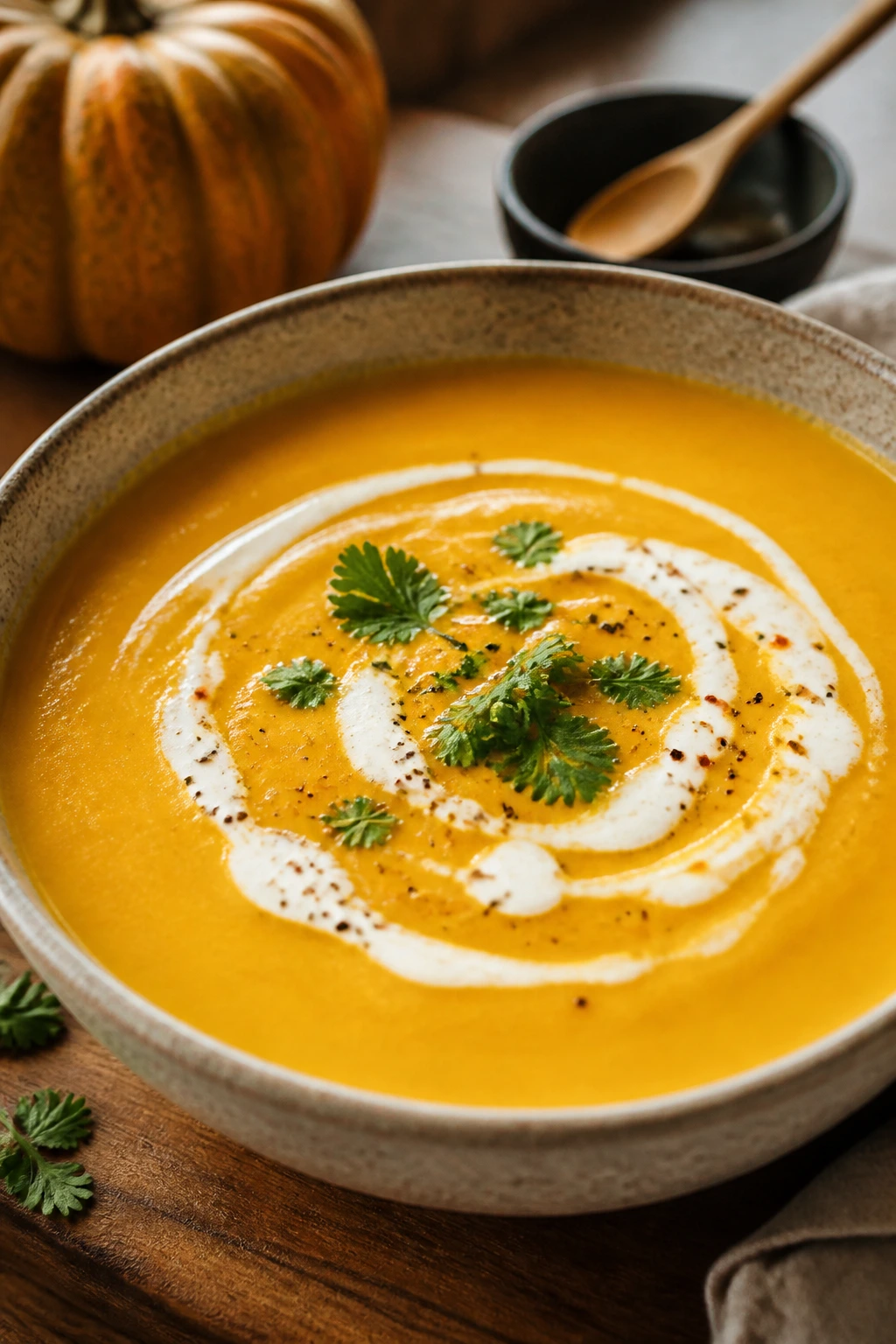
Pumpkin coconut soup is smooth, soft, and very freezer-friendly. The pumpkin gives it body, the coconut milk keeps it creamy without relying on dairy, and a little spice stops it from tasting like baby food in a bowl. This is one of the easiest soups to portion and reheat.
Why It Works:
Pureed pumpkin holds up well after freezing, especially when it is paired with broth and coconut milk. Ginger and curry paste or warm spices survive the freezer better than fresh herbs. I like a little lime or maple at the end depending on whether I want the soup brighter or sweeter.
Key Ingredients:
- 1 tablespoon coconut oil or olive oil
- 1 onion, chopped
- 3 cloves garlic, minced
- 1 tablespoon grated ginger
- 1 can pumpkin purée
- 4 cups vegetable broth
- 1 can coconut milk
- 1 teaspoon curry powder or 1/2 teaspoon cinnamon
- Salt and black pepper
- Lime juice, for finishing
Quick Steps:
- Heat the oil over medium heat and cook onion for 5 minutes.
- Add garlic and ginger for 30 seconds.
- Stir in pumpkin, broth, and curry powder or cinnamon, then simmer for 15 minutes.
- Blend if needed, then stir in coconut milk.
- Finish with lime juice and season well.
Equipment for This Recipe:
- Medium soup pot
- Blender or immersion blender
- Wooden spoon
- Measuring cups
How to Serve This Dish:
Serve it with toasted pepitas or crusty bread. A swirl of coconut milk makes it look polished without trying too hard.
Pro Tips for This Recipe:
- Use pure pumpkin purée, not pumpkin pie filling.
- Coconut milk goes in after the simmer for the smoothest texture.
- Freeze in small portions because the soup is rich.
Variations on This Dish:
- Savory Curry Bowl: Add more curry powder and a pinch of chili.
- Sweeter Version: Add a teaspoon of maple syrup.
- Roasted Garlic Finish: Stir in roasted garlic for a deeper flavor.
Common Mistakes to Avoid with This Dish:
- Using pie filling: The spices and sugar are wrong for soup.
- Skipping the salt: Pumpkin tastes flat without it.
- Boiling hard after adding coconut milk: Keep the heat gentle.
24. Italian Wedding Soup
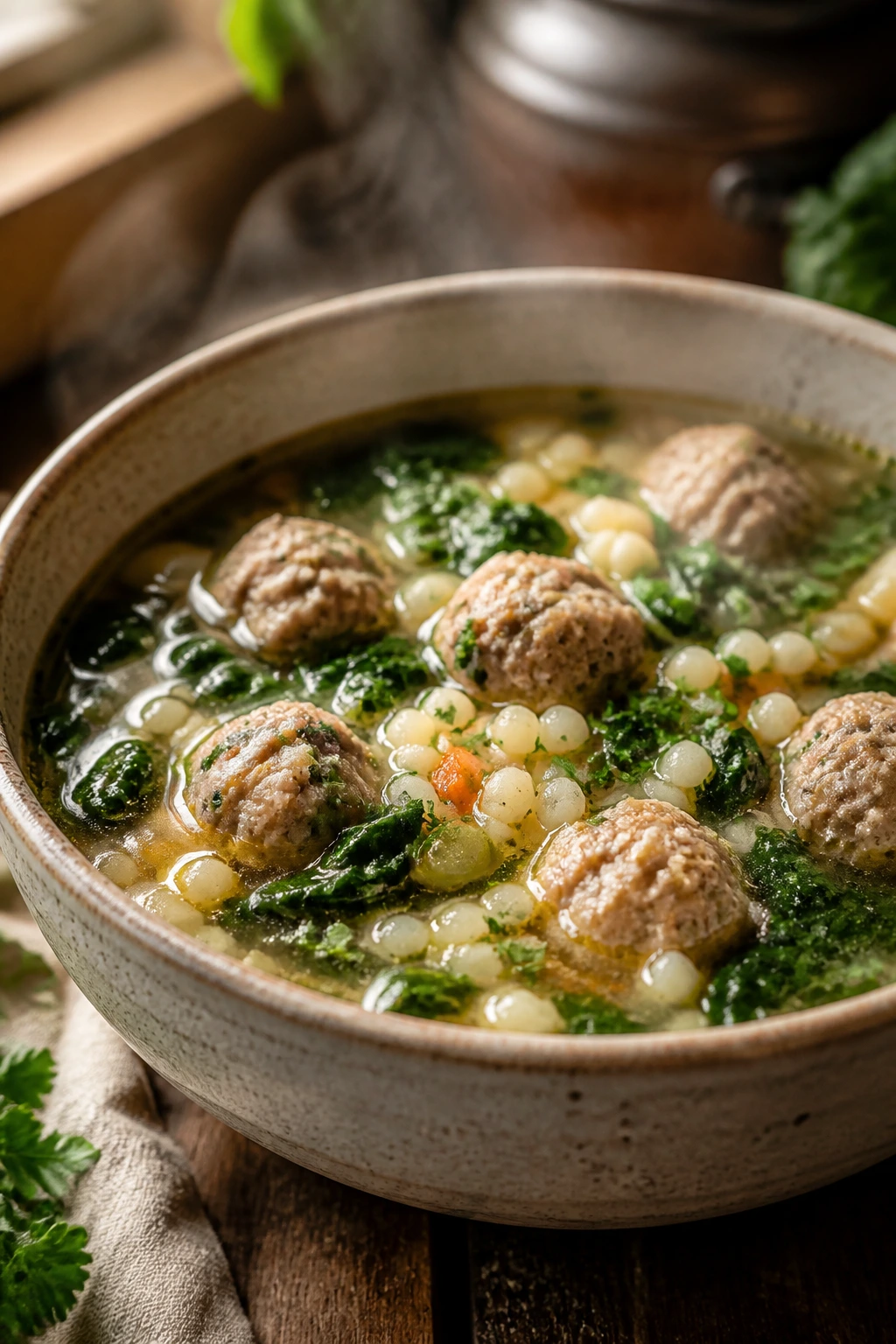
Italian wedding soup freezes well if you respect the noodles. The broth, meatballs, and greens are sturdy enough, but the tiny pasta should be added when serving or cooked separately and kept apart. That one adjustment keeps the soup bright and avoidably sticky.
Why It Works:
Meatballs freeze well because they are compact and already bound. Chicken broth, carrot, celery, and spinach make a clean base, and tiny pasta like acini di pepe or orzo is the weak point, so it should not sit in the freezer container. I like this soup with a little Parmesan in the meatballs because it holds flavor after thawing.
Key Ingredients:
- For the Meatballs:
- 1 pound ground beef or beef/pork mix
- 1/2 cup breadcrumbs
- 1 egg
- 1/4 cup grated Parmesan
- 2 cloves garlic, minced
- 1 tablespoon chopped parsley
- For the Soup:
- 1 tablespoon olive oil
- 1 onion, diced
- 2 carrots, diced
- 2 celery stalks, diced
- 8 cups chicken broth
- 4 cups spinach
- 1/2 cup acini di pepe or orzo, cooked separately
Quick Steps:
- Mix the meatball ingredients and form 1-inch balls.
- Brown the meatballs in a pot or skillet for 4 to 5 minutes total; they do not need to be cooked through.
- Sauté onion, carrots, and celery in olive oil for 5 minutes.
- Add broth and simmer the meatballs for 15 to 20 minutes until cooked.
- Stir in spinach at the end and serve with separately cooked pasta.
Equipment for This Recipe:
- Large soup pot
- Mixing bowl
- Sheet pan or plate for raw meatballs
- Slotted spoon
How to Serve This Dish:
Put pasta in the bowl first, then ladle soup and meatballs over it. A little extra Parmesan on top is enough; the soup already tastes complete.
Pro Tips for This Recipe:
- Freeze the broth and meatballs without the pasta.
- Keep meatballs small so they reheat evenly.
- Add spinach only in the last minute or two.
Variations on This Dish:
- Turkey Meatball Version: Use ground turkey for a lighter version.
- Escarole Swap: Replace spinach with chopped escarole for a slightly bitter edge.
- Broth-Heavy Style: Add more broth if you want a lighter bowl.
Common Mistakes to Avoid with This Dish:
- Freezing pasta in the soup: It turns mushy.
- Making meatballs too large: They reheat unevenly.
- Overcooking spinach: It should still look fresh.
25. Tuscan Chickpea and Escarole Soup
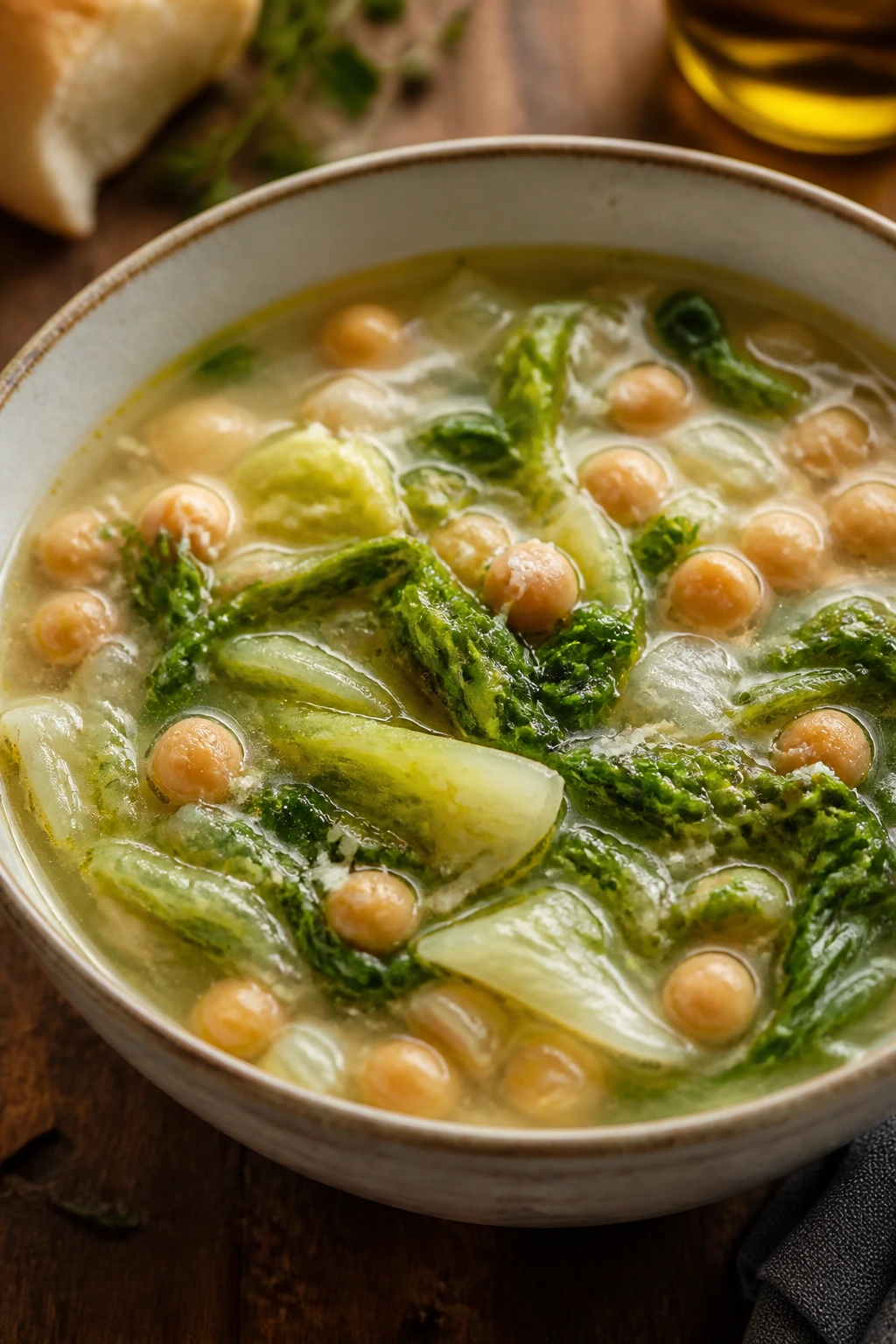
Tuscan chickpea and escarole soup is one of my favorite quiet freezer soups because it feels balanced from the first spoonful. Chickpeas give it substance, escarole brings a gentle bitterness, and the broth stays clean and savory. It does not need cream, and that is part of the charm.
Why It Works:
Chickpeas freeze well, escarole is sturdy enough to hold shape if you add it near the end, and the broth is simple enough to keep its clarity. A parmesan rind can deepen the pot without making it heavy, which is the move I like here. Lemon at the end keeps the soup from tasting too beige, which some bean soups absolutely do.
Key Ingredients:
- 2 tablespoons olive oil
- 1 onion, chopped
- 2 carrots, chopped
- 3 cloves garlic, minced
- 2 cans chickpeas, drained and rinsed
- 6 cups chicken broth or vegetable broth
- 1 parmesan rind, optional
- 1 teaspoon dried rosemary
- 1 head escarole, chopped
- 1 tablespoon lemon juice
- Salt and black pepper
Quick Steps:
- Heat the oil over medium heat and cook onion and carrots for 6 minutes.
- Stir in garlic and rosemary for 30 seconds.
- Add chickpeas, broth, and parmesan rind if using. Simmer for 20 minutes.
- Add escarole and cook for 3 to 4 minutes, just until wilted.
- Remove the rind, finish with lemon juice, and season well.
Equipment for This Recipe:
- Soup pot
- Wooden spoon
- Knife and cutting board
- Ladle
How to Serve This Dish:
Serve it with toasted bread rubbed with garlic or a simple olive-oil toast. A little Parmesan over the top is enough to make the bowl feel finished.
Pro Tips for This Recipe:
- Add escarole near the end so it stays pleasantly green.
- A parmesan rind gives the broth a rounder flavor if you have one.
- Freeze this soup in 2-cup portions for quick lunches.
Variations on This Dish:
- Sausage Version: Add browned Italian sausage for a heavier bowl.
- Tomato Touch: Stir in a small can of diced tomatoes if you want more acidity.
- Lemony Bowl: Increase the lemon if you like a brighter finish.
Common Mistakes to Avoid with This Dish:
- Cooking the escarole too long: It should wilt, not disappear.
- Skipping the lemon: The soup needs a lift at the end.
- Using too much broth reduction before freezing: Keep it a little looser so reheating stays easy.
Why the Freezer Works So Well for These Soups
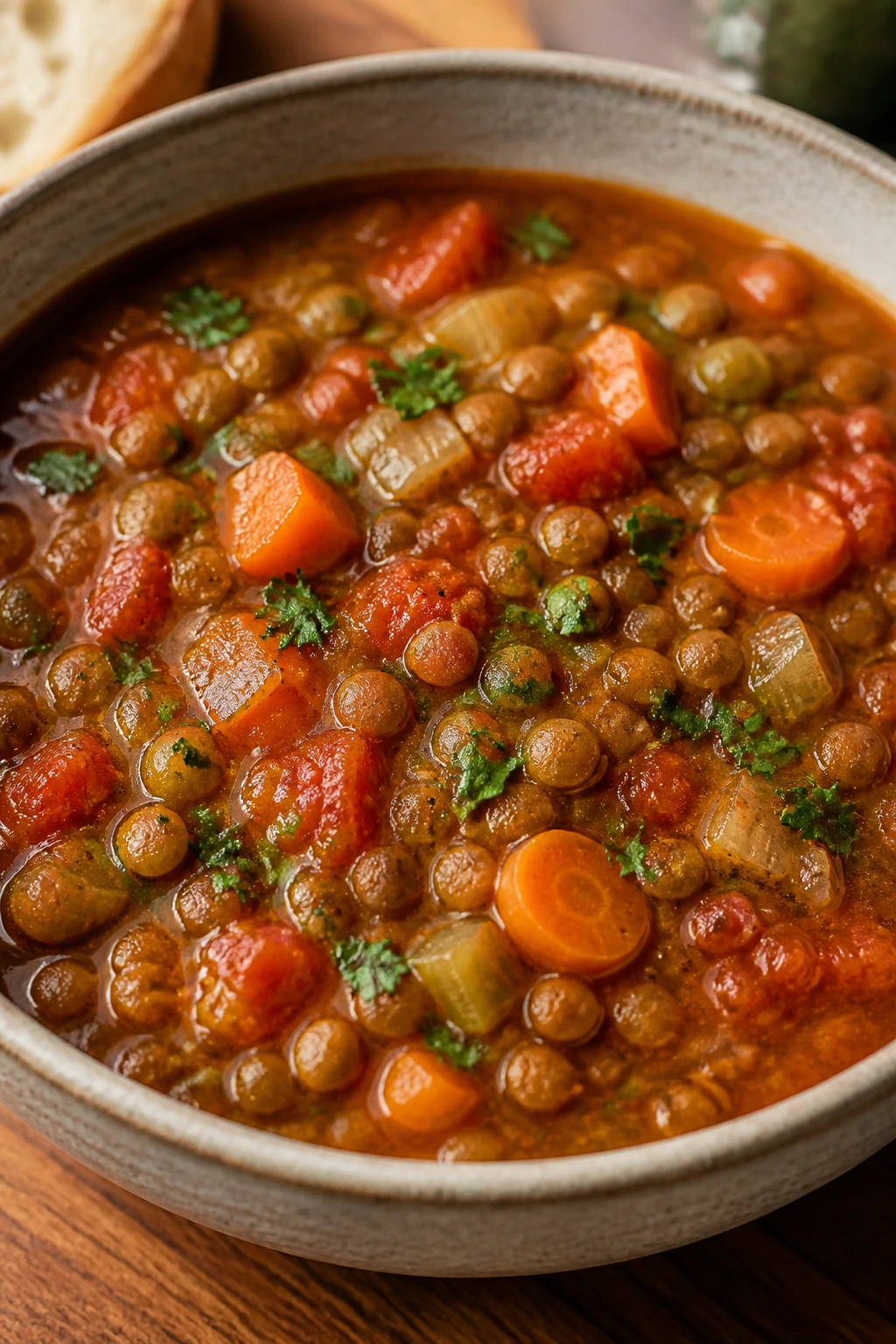
The freezer is kinder to soup than people think, but only if the soup is built with that cold trip in mind. Brothy soups, bean soups, lentil soups, and purées all have one thing in common: their structure stays stable after thawing. That is why a pot of chicken and wild rice survives with dignity while a cream-heavy chowder can split into a grainy mess. The ingredients matter, but the finish matters too.
The quiet trick is to keep fragile things out of the pot until serving. Noodles, fresh herbs, croutons, cheese, and cream all make more sense on top of the bowl than in the freezer container. A soup that tastes a little blunt before freezing often tastes rounder after it has rested, and that is not luck. It is the result of choosing ingredients that can sit still for a few weeks without losing themselves.
I also like soups that can be portioned in a way that makes sense for real life. A 2-cup container for lunch. A 4-cup container for two people. A flat freezer bag if shelf space is tight. If a soup can be frozen in useful portions and reheated without a rescue mission, it earns a place in my kitchen.
Essential Equipment for These Recipes
- 6- to 8-quart Dutch oven or stockpot: Big enough for batch cooking and stirring without splashing broth all over the stove.
- Sharp chef’s knife: Most of the work here is chopping onions, carrots, celery, squash, or herbs cleanly.
- Cutting board with a damp towel underneath: Keeps the board from sliding while you move fast through a pile of vegetables.
- Immersion blender: Worth owning if you make tomato, squash, carrot, cauliflower, or black bean soup often.
- Fine-mesh strainer: Handy for rinsing lentils, draining beans, or straining a smooth broth like pho.
- Ladle: Makes portioning into containers less messy.
- Freezer-safe containers or zip-top bags: Flat freezer bags save space and thaw faster than tall tubs.
- Labels and marker: Write the soup name and date on the bag. Frozen mystery soup is not a personality trait.
Smart Shopping and Ingredient Tips
The best freezer soups start with ingredients that already know how to behave. Buy broth that tastes good straight from the carton, because a thin stock gets thinner after reheating. If you have the time, choose low-sodium broth so you can season the soup yourself; frozen soups often need a final salt check after they thaw.
For vegetables, sturdier is usually better. Carrots, onions, celery, cabbage, kale, cauliflower, squash, and mushrooms all handle freezing well if you cook them properly first. Very soft vegetables are trickier. Zucchini, spinach, and fresh tomatoes can still work, but they do better when added late or used in pureed soups where texture is less of a concern.
Beans and lentils are your best friends here. Dried beans cooked from scratch give you the most control, but canned beans are fine when you want speed. Lentils are even easier because they cook fast and freeze cleanly. Rice and pasta need more caution. Wild rice and barley behave well; regular noodles should usually be kept out of the freezer container and added fresh.
Cream, milk, yogurt, and cheese should be treated as finishers, not freezer ingredients, unless the soup is specifically designed for it. Coconut milk is a little more forgiving, but even there I prefer to stir it in after thawing if I can. That tiny extra step makes the soup taste cleaner and keeps the texture smooth.
How to Serve These Recipes
Presentation:
Use deep bowls for broth-heavy soups and wide, shallow bowls for puréed soups. A quick finish of chopped herbs, black pepper, or a drizzle of olive oil makes the bowl look cared for without turning it fussy.
Accompaniments:
Crusty sourdough, rye toast, garlic bread, saltines, cornbread, or a simple green salad fit most of these soups. For richer bowls like French onion or pozole, I’d keep the side simple so the soup stays the focus.
Portions:
Plan on about 2 cups per person for lunch and 2 1/2 to 3 cups for dinner if bread is the only side. For thicker soups, 1 1/2 cups can be enough, especially if beans, barley, or rice are already doing the heavy lifting.
Beverage Pairing:
A dry cider, light lager, or sparkling water with lemon works across most of these soups. For the deeper bean or beef soups, black tea or a simple red wine feels right; for tomato or squash soups, I reach for sparkling water or a crisp white wine.
Additional Tips and Flavor Boosters
Flavor Enhancement: A spoonful of acid at the end—lemon juice, lime, red wine vinegar, or sherry vinegar—can rescue a soup that tastes fine but sleepy. Frozen soups often need that sharp edge to wake the broth back up.
Customization: If you want more body, blend one cup of the soup and stir it back in. If you want more freshness, add chopped herbs or a handful of greens only after reheating. Those two moves change the texture without forcing you to rewrite the recipe.
Serving Suggestions: Toasted seeds on squash or carrot soup, Parmesan on bean or barley soup, tortilla strips on tortilla soup, and a dollop of yogurt on lentil or chickpea soup all give you a little contrast. Crunch matters. It always does.
Make-It-Yours: For dairy-free cooking, finish with coconut milk or olive oil instead of cream. For gluten-free bowls, keep pasta out and use rice, beans, or potatoes that you know you can trust. For extra protein, add shredded chicken, sausage, or extra beans at the end, not during freezing.
Make-Ahead, Storage, and Reheating Guidance
Cool soup fast before it goes into the fridge or freezer. I spread it into shallow containers so steam can escape, then cover once it stops raging hot. Soup should not sit out all afternoon; the usual safe habit is to get it into the fridge within 2 hours.
Most of these soups keep 3 to 4 days in the refrigerator and up to 3 months in the freezer if they are broth-based or bean-based. Pureed vegetable soups usually freeze well for the full stretch too. Soups with meatballs, sausage, or shredded chicken do fine if they are cooled and packed tightly. Noodle soups are the exception: freeze the broth and solids, but keep the noodles separate if you can.
For reheating, thaw overnight in the fridge when possible. Reheat gently on the stove over medium-low heat until steaming and hot all the way through; a slow simmer is fine, but a hard boil can make vegetables go soft and can split soups that contain dairy or coconut milk. If the soup is too thick, add a splash of broth or water. If it tastes flat after thawing, add salt in small pinches and finish with acid.
Flat freezer bags are useful when storage space is tight. Lay them on a sheet pan in the freezer until solid, then stand them up like files. That one habit saves an absurd amount of space.
Variations and Adaptations to Try
Dairy-Free Deepening: Use olive oil, coconut milk, or a cashew blend instead of cream in squash, carrot, tomato, or cauliflower soups. You keep the body without risking separation.
Gluten-Free Swaps: Skip pasta, or use rice, wild rice, barley alternatives, or extra beans depending on the soup. Most of the soups here are already close to gluten-free if you check the broth.
Low-Sodium Batch Cooking: Buy unsalted broth and season at the end. Ham, sausage, cheese, and bouillon can push salt levels up quickly, so taste after reheating rather than before freezing.
Vegetarian Anchor: Replace meat with beans, lentils, mushrooms, or extra vegetables in lentil soup, minestrone, white bean soup, carrot soup, and chickpea soup. If you want deeper flavor, add soy sauce, miso, tomato paste, or a parmesan rind.
Extra-Spicy Bowl: Stir in chili flakes, chipotle, jalapeño, cayenne, or hot sauce at the table. Heat levels are easier to adjust when each bowl is already portioned.
Noodle-Free Storage: For any soup that usually carries pasta, keep the noodles out of the container and cook them fresh. That one adaptation saves you from the soft, swollen texture that ruins an otherwise fine soup.
Common Mistakes to Avoid
- Freezing dairy too early: Cream, milk, and yogurt can split after thawing. Freeze the base, then add the dairy when you reheat.
- Packing in noodles or pasta too soon: They absorb broth and go soggy. Cook them separately or leave them out entirely.
- Over-thickening before freezing: Lentil, barley, bean, and pea soups usually thicken more in the cold. Leave them a little looser than you think.
- Not cooling the soup first: Hot soup in a freezer container creates condensation and ice crystals, which rough up the texture.
- Forgetting the final acid check: Lemon, lime, vinegar, or sherry can make a reheated soup taste alive again.
- Using fragile toppings in the freezer container: Tortilla strips, croutons, herbs, and cheese belong at serving time, not storage time.
Frequently Asked Questions
Which soups from this list freeze the best?
Bean soups, lentil soups, tomato soups, split pea soup, squash soup, and broth-based chicken soups are the safest bets. They keep their texture and flavor with very little fuss. The only real caution is to keep pasta, dairy, and crunchy toppings out of the freezer container.
Can I freeze soup with cream or milk in it?
You can, but I would not if you have a choice. Dairy can separate and look grainy after thawing, especially in soups with a thin broth base. The cleaner move is to freeze the soup without dairy and stir it in after reheating.
Should I cook noodles before freezing soup?
Only if you enjoy mush. For chicken noodle soup, Italian wedding soup, and minestrone, cook the noodles separately or leave them out and add them when serving. The broth stays cleaner, and the texture stays intact.
How long can frozen soup stay in the freezer?
Most of these soups keep well for about 3 months in airtight freezer-safe containers. After that, they can still be safe if kept frozen, but the flavor and texture start slipping. Flat freezer bags help a lot because they freeze faster and stay fresher-looking.
What’s the best way to thaw a frozen soup?
The cleanest method is overnight in the fridge, then reheating on the stove over medium-low heat. If you are in a rush, you can thaw it gently in a pot with a lid and a splash of water or broth, stirring now and then. I would avoid blasting it on high heat, especially with soups that contain dairy or coconut milk.
Can I freeze soup in glass jars?
Yes, but only if the jars are freezer-safe and you leave headspace at the top. Soup expands when it freezes, and a jar packed too full can crack. I still prefer freezer bags or plastic containers for anything I plan to store for more than a few weeks.
Why does my soup taste bland after freezing?
Cold storage dulls salt, acid, and spice a little. The fix is usually simple: warm the soup, taste it, then add salt in small pinches and finish with a little lemon, lime, or vinegar. That final check matters more than most people think.
Can these soups be made in a slow cooker?
Some of them can, especially split pea, lentil, bean, and beef soups. I would still handle pasta separately and add greens near the end. For roasted tomato, French onion, or anything that depends on browning, the stovetop usually gives better flavor.
How do I keep vegetables from turning mushy after reheating?
Cut them a little larger than you think you need, and stop cooking when they are just tender rather than falling apart. Also, cool the soup before freezing so it does not overcook from trapped heat in the container. That one detail saves a lot of carrots and celery.
A Freezer Full of Soup
A freezer full of soup is not glamorous, which is part of the appeal. It is practical in the cleanest sense: a bag of broth and beans becomes dinner with almost no effort, and a container of lentil soup can rescue a night that was going nowhere fast. The soups here work because they respect texture. They know what can freeze and what should wait.
If you start thinking of soup as a system—base now, toppings later—you get much better results. That is the difference between a batch that feels useful and one that feels like leftovers you are trying to get through. The freezer should feel like an extra pantry, not a graveyard.
Make the pot. Freeze the extra. And next time you are too tired to cook, open the freezer and let dinner be already waiting.