



A good Christmas soup does something the rest of the holiday spread rarely manages: it makes the kitchen smell finished before the meal even starts. Butter, onion, thyme, roasted squash, a little smoke from bacon or ham — those scents drift through the house and make the whole place feel warmer. The bowl matters too. A proper winter soup should land hot, slightly thick, and salted enough to wake up after a long stretch of sweet cookies and rich sauces.
Christmas soup also earns its keep because it fixes the awkward parts of holiday cooking. The oven is crowded. The turkey needs resting time. Someone arrives early and wants something to sip that isn’t a glass of eggnog. Soups solve that with less drama than almost any other dish, and the better ones actually improve after a short rest. Wild rice softens, onions mellow, broth gets rounder. That’s the kind of quiet work I trust.
Some bowls lean creamy and lush. Others stay brothy and sharp with lemon, herbs, or a hit of chili oil. A few are built for leftovers — turkey, ham, roast beef, that last heel of Parmesan. The trick is matching the soup to the moment, which is why the right holiday pot can be as useful as a carving knife. And that is where the good ones start.
Why These Bowls Earn a Spot on the Christmas Table
-
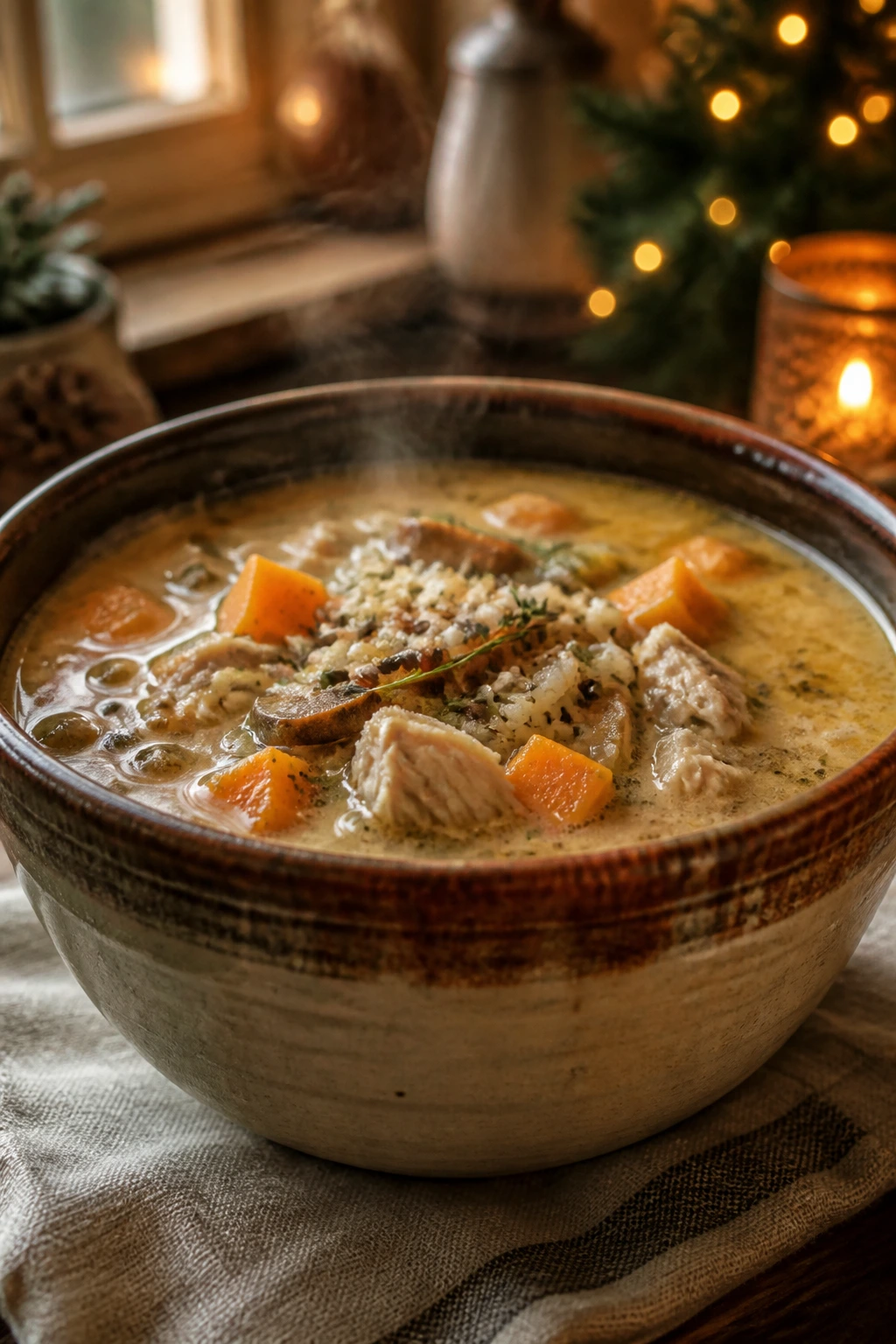
Leftovers finally have a plan: Turkey, ham, roast beef, and even a stray Parmesan rind all get a second life instead of sitting in the fridge and fading out.
-
Most of these soups hold heat well: Brothy, bean-based, and root-vegetable soups stay warm in the pot while people drift back for seconds.
-
Creamy or brothy, your call: A rich bisque can sit next to roast potatoes without feeling heavy, while a lighter soup keeps the meal from turning into a brick.
-
They’re friendly to make-ahead cooking: Several of these taste better after a night in the fridge because the onions, herbs, and spices settle in.
-
Holiday sides fit right in: Crusty bread, biscuits, toasted cheese, and little salad plates all work without a fight.
-
They feed a crowd without fuss: Soup stretches farther than most mains, and it scales up cleanly when you need one more bowl for the cousin who shows up late.
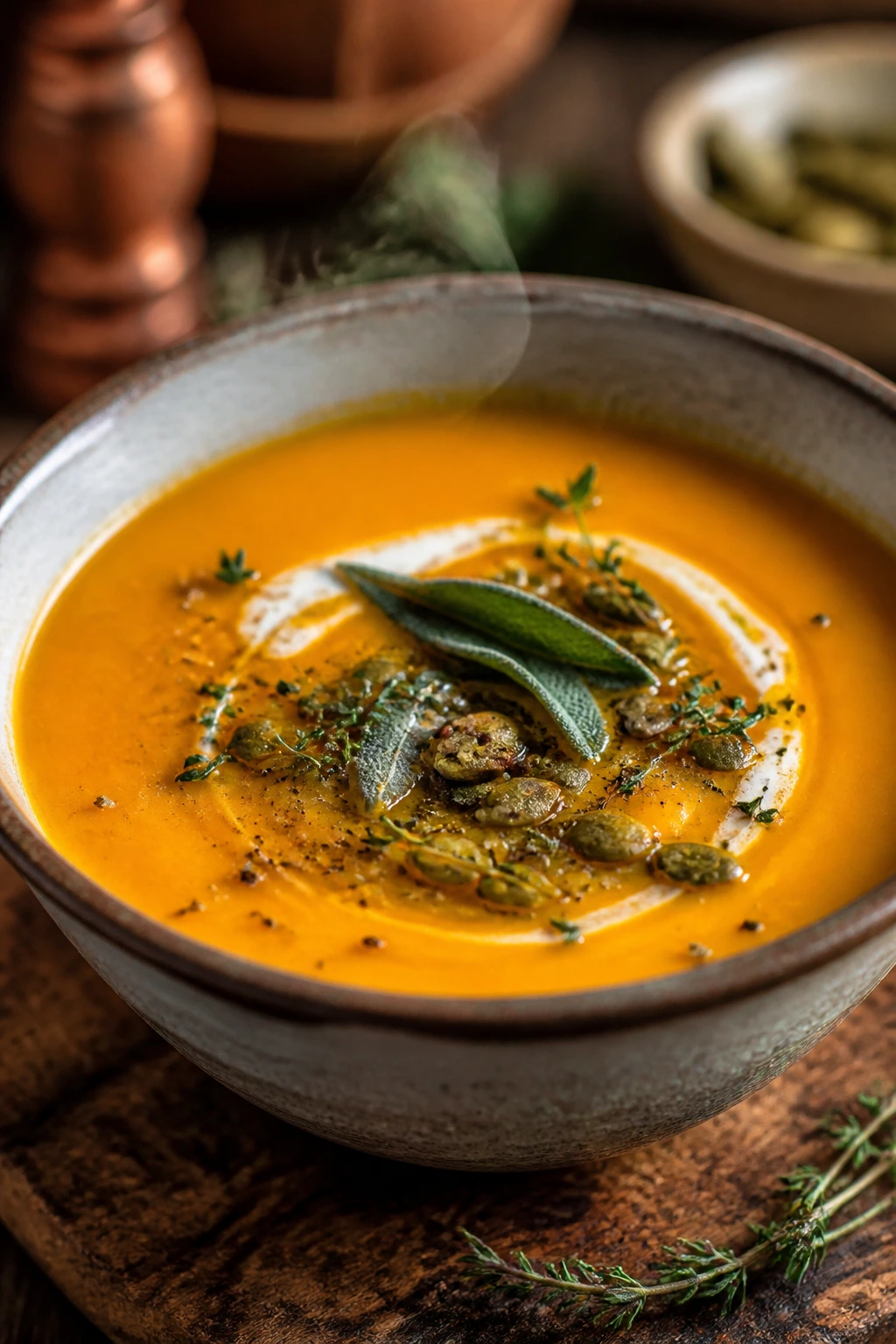
1. Roasted Butternut Squash Soup with Sage
This is the bowl that smells like the holidays have started. The squash turns sweet in the oven, the sage goes crisp in butter, and the whole thing ends up silky without tasting like dessert.
Why It Works: Roasting the squash at high heat gives it browned edges and a deeper, nuttier taste than boiling ever could. A little cream and a sage-butter finish keep it polished, but not fussy.
Key Ingredients:
- 2 1/2 lb butternut squash, peeled and cut into 1-inch cubes
- 2 tbsp olive oil
- 1 medium yellow onion, chopped
- 2 garlic cloves, minced
- 4 cups low-sodium chicken broth
- 1/2 cup heavy cream, or full-fat coconut milk
- 1/4 tsp ground nutmeg
- 6 sage leaves
- Salt and black pepper
Quick Steps:
- Preheat the oven to 425°F and toss the squash with olive oil, salt, and pepper.
- Roast for 25 to 30 minutes, until the edges are caramelized and a fork slides in without resistance.
- Sauté the onion and garlic in a Dutch oven for 5 minutes, until soft and fragrant.
- Add the roasted squash, broth, and nutmeg, then simmer for 10 minutes.
- Blend until smooth, stir in the cream, and finish with sage leaves fried in butter for 30 to 45 seconds.
Equipment for This Recipe:
- Rimmed sheet pan
- Dutch oven or soup pot
- Immersion blender or countertop blender
How to Serve This Dish: Ladle it into warm bowls and swirl a little cream on top if you want a cleaner look. A buttered slice of sourdough or a sharp cheddar toast keeps the sweetness in check.
Pro Tips for This Recipe:
- Roast the squash in a single layer; crowded cubes steam and taste flatter.
- Warm the cream before adding it so the soup stays smooth.
- Taste after blending. Squash needs more salt than most people think.
Variations on This Dish:
- Maple-Chili Squash: Add 1 tsp maple syrup and a pinch of chili flakes at the end for a little sweet heat.
- Dairy-Free Velvet: Use coconut milk and finish with lime zest instead of cream.
Common Mistakes to Avoid with This Dish:
- Don’t boil the soup hard after adding cream. It can split.
- Don’t skip the roast step. That’s where the flavor lives.
2. Chestnut and Mushroom Soup
Chestnuts and mushrooms make a quiet, woodsy pair. The broth tastes like a cold walk back indoors, with a faint sweetness from the chestnuts and deep savory notes from browned mushrooms.
Why It Works: Mushrooms build the base with umami, while cooked chestnuts give the soup a soft, almost buttery body. A splash of sherry at the end keeps it from tasting heavy.
Key Ingredients:
- 1 lb cremini mushrooms, sliced
- 1 cup cooked chestnuts, roughly chopped
- 1 medium onion, diced
- 2 celery stalks, diced
- 1 tbsp fresh thyme leaves
- 4 cups vegetable broth
- 1/2 cup half-and-half
- 1/4 cup dry sherry
- 2 tbsp butter
- Salt and pepper
Quick Steps:
- Melt butter in a soup pot and brown the mushrooms over medium-high heat for 8 to 10 minutes.
- Add onion and celery, then cook until soft.
- Stir in thyme, chestnuts, and broth, and simmer for 15 minutes.
- Blend half the soup for a creamy texture, leaving some pieces whole.
- Stir in half-and-half and sherry right before serving.
Equipment for This Recipe:
- Large soup pot
- Knife and cutting board
- Immersion blender
How to Serve This Dish: Spoon it into shallow bowls and top with a few mushroom slices cooked separately in butter. Toasted rye or a crisp baguette gives the broth something to lean on.
Pro Tips for This Recipe:
- Let the mushrooms brown, not just soften.
- Use chestnuts packed in a vacuum pouch if you want speed; they’re softer and easier to chop.
- Hold the sherry until the end so it stays bright.
Variations on This Dish:
- Truffle Finish: A few drops of truffle oil at the table make this feel more formal.
- Vegan Version: Swap the butter for olive oil and use oat cream.
Common Mistakes to Avoid with This Dish:
- Don’t rush the mushrooms. Pale mushrooms make a pale soup.
- Don’t blend it completely unless you want a paste-like texture.
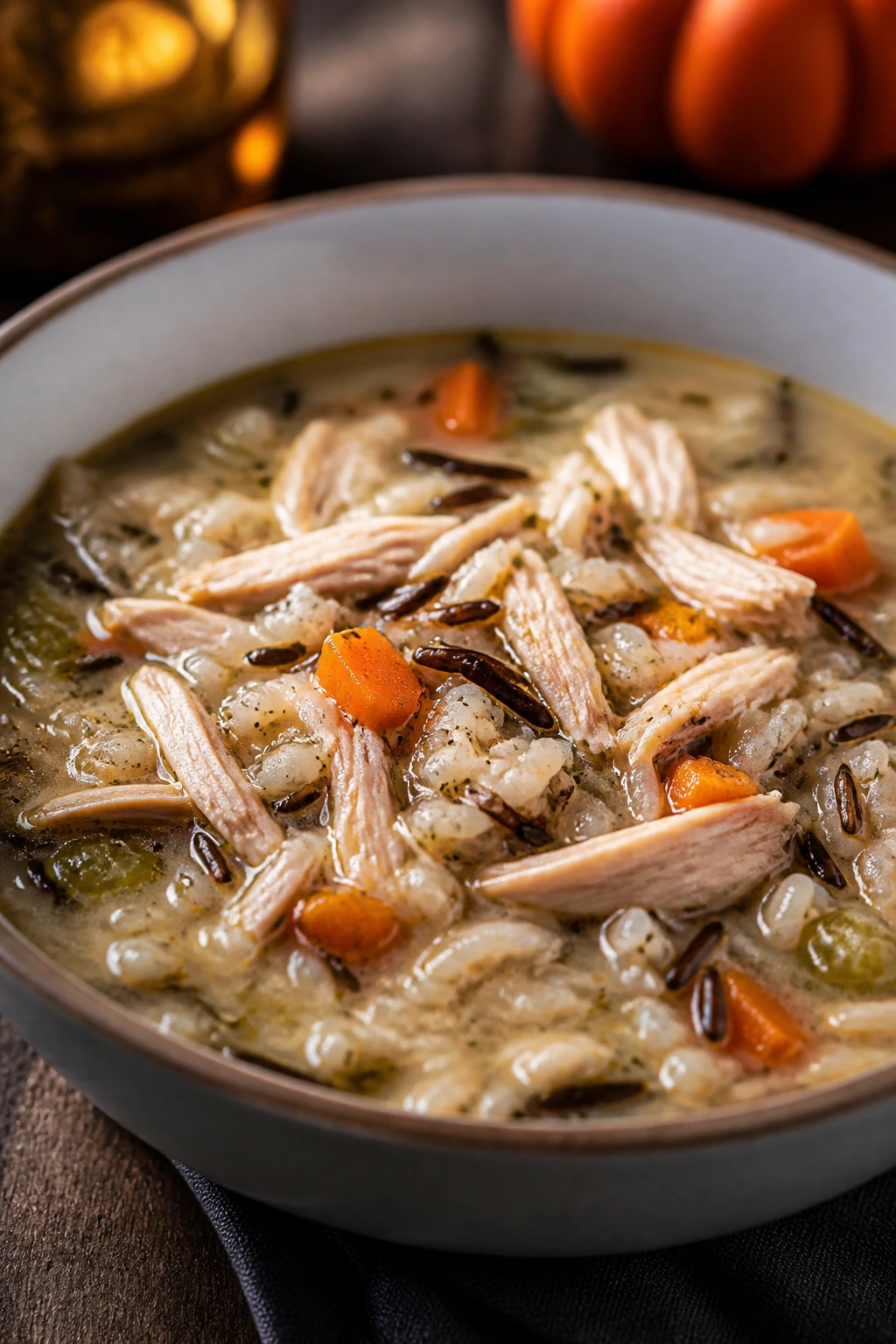
3. Turkey and Wild Rice Soup
This is the best use for leftover turkey I know. The wild rice brings a chewy bite, the carrots and celery give the broth shape, and the turkey stays tender instead of dry and stringy.
Why It Works: Wild rice takes longer than white rice, so it gets a head start and gives the soup a nutty edge. Leftover turkey goes in near the end, which keeps it from turning chalky.
Key Ingredients:
- 1 cup wild rice blend, rinsed
- 8 cups turkey or chicken stock
- 2 cups cooked turkey, shredded
- 2 carrots, diced
- 2 celery stalks, diced
- 1 medium onion, chopped
- 2 tbsp butter
- 1 tsp dried thyme
- 1 bay leaf
- 1/2 cup cream, optional
Quick Steps:
- Simmer the rice in stock for 35 to 45 minutes, until the grains split and turn tender.
- In another pot, cook onion, carrots, and celery in butter for 6 to 8 minutes.
- Add thyme, bay leaf, and the cooked rice with its broth.
- Stir in the turkey and simmer for 10 minutes.
- Finish with cream if you want a softer, richer bowl.
Equipment for This Recipe:
- Large stockpot
- Fine mesh strainer
- Wooden spoon
How to Serve This Dish: Serve it with cranberry sauce on the table if this is part of a leftover holiday meal; the tartness wakes up the broth. A few chopped parsley leaves on top help the bowl look less beige.
Pro Tips for This Recipe:
- Cook the rice separately if you want the cleanest texture.
- Add the turkey at the end so it stays juicy.
- If the soup thickens overnight, loosen it with a splash of stock.
Variations on This Dish:
- Lemon-Thyme Turkey Soup: Add 1 to 2 tbsp lemon juice at the end for more lift.
- Mushroom Turkey Bowl: Sauté 8 oz mushrooms with the vegetables for extra body.
Common Mistakes to Avoid with This Dish:
- Don’t add the turkey too early. It dries out fast.
- Don’t undercook the rice; it keeps tasting gritty if you rush it.
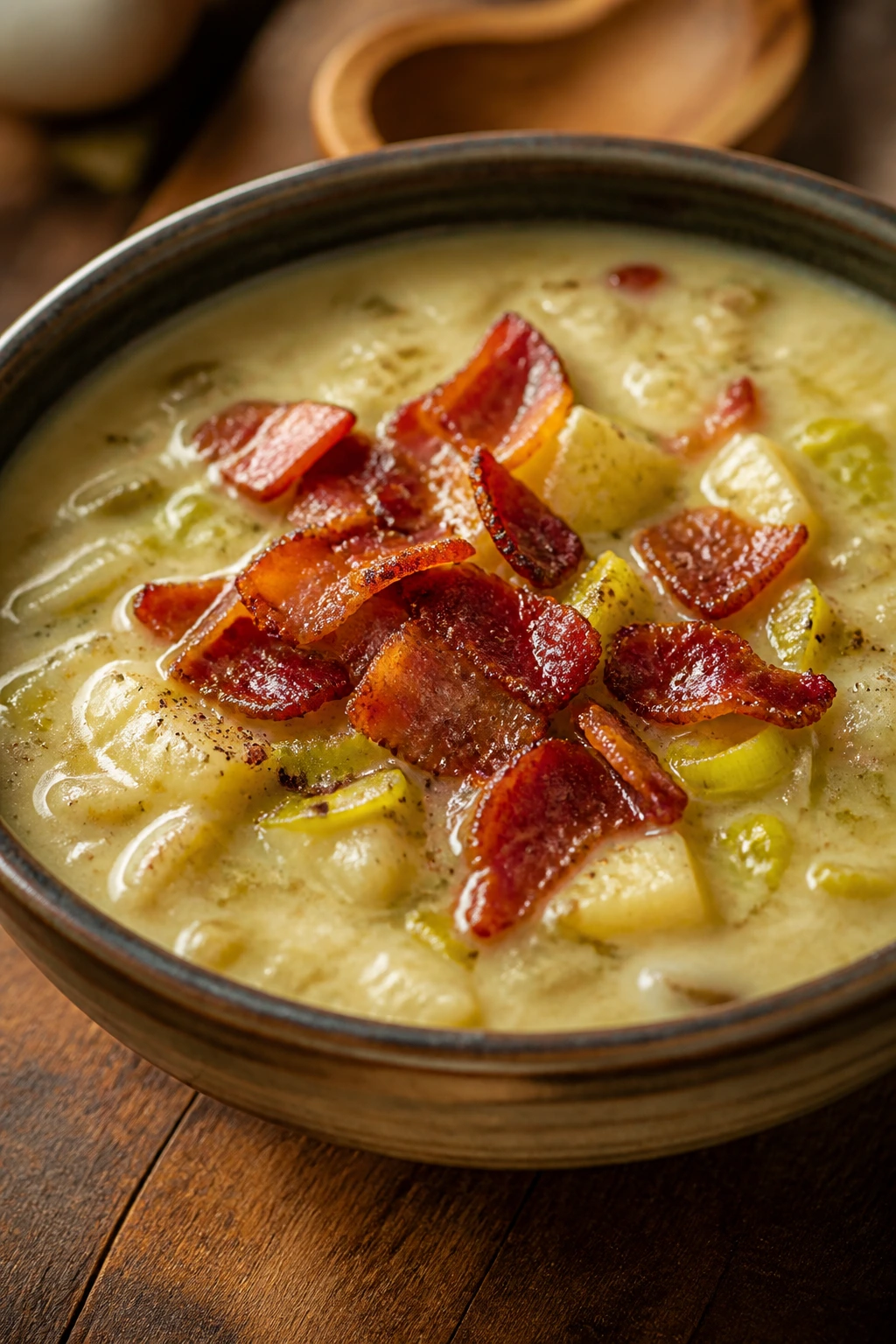
4. Potato Leek Soup with Crispy Bacon
Potato leek soup is soft, mellow, and a little old-school in the best way. Bacon on top gives it a salty snap that keeps the bowl from going sleepy.
Why It Works: Leeks melt into the broth and leave behind sweetness, while Yukon Gold potatoes give the soup its body without needing much cream. The bacon adds a sharp contrast that makes each spoonful feel finished.
Key Ingredients:
- 4 slices bacon, chopped
- 3 large leeks, white and light green parts only, sliced and rinsed
- 2 lb Yukon Gold potatoes, peeled and cubed
- 4 cups chicken broth
- 1 cup milk or half-and-half
- 2 tbsp butter
- 1 bay leaf
- Salt and pepper
Quick Steps:
- Cook the bacon in a soup pot until crisp, then remove it and keep the fat in the pot.
- Sauté the leeks in butter and bacon fat for 8 minutes, until soft.
- Add potatoes, broth, bay leaf, salt, and pepper.
- Simmer for 20 minutes, until the potatoes break apart easily.
- Blend partially, stir in the milk, and top with the bacon.
Equipment for This Recipe:
- Heavy soup pot
- Immersion blender
- Slotted spoon
How to Serve This Dish: A bowl of this soup wants a chive shower and a slice of buttered toast. It also works well beside a simple green salad if the rest of the meal is rich.
Pro Tips for This Recipe:
- Rinse leeks well; grit hides between the layers.
- Leave some potato chunks if you like a more rustic texture.
- Warm the milk before stirring it in.
Variations on This Dish:
- Smoked Sausage Swap: Use sliced smoked sausage instead of bacon for a meatier version.
- No-Dairy Bowl: Use olive oil and broth only, then finish with a spoonful of olive oil on top.
Common Mistakes to Avoid with This Dish:
- Don’t let the leeks brown hard; they should soften, not toast.
- Don’t overblend or the soup can turn gluey.
5. Ham and White Bean Soup with Thyme
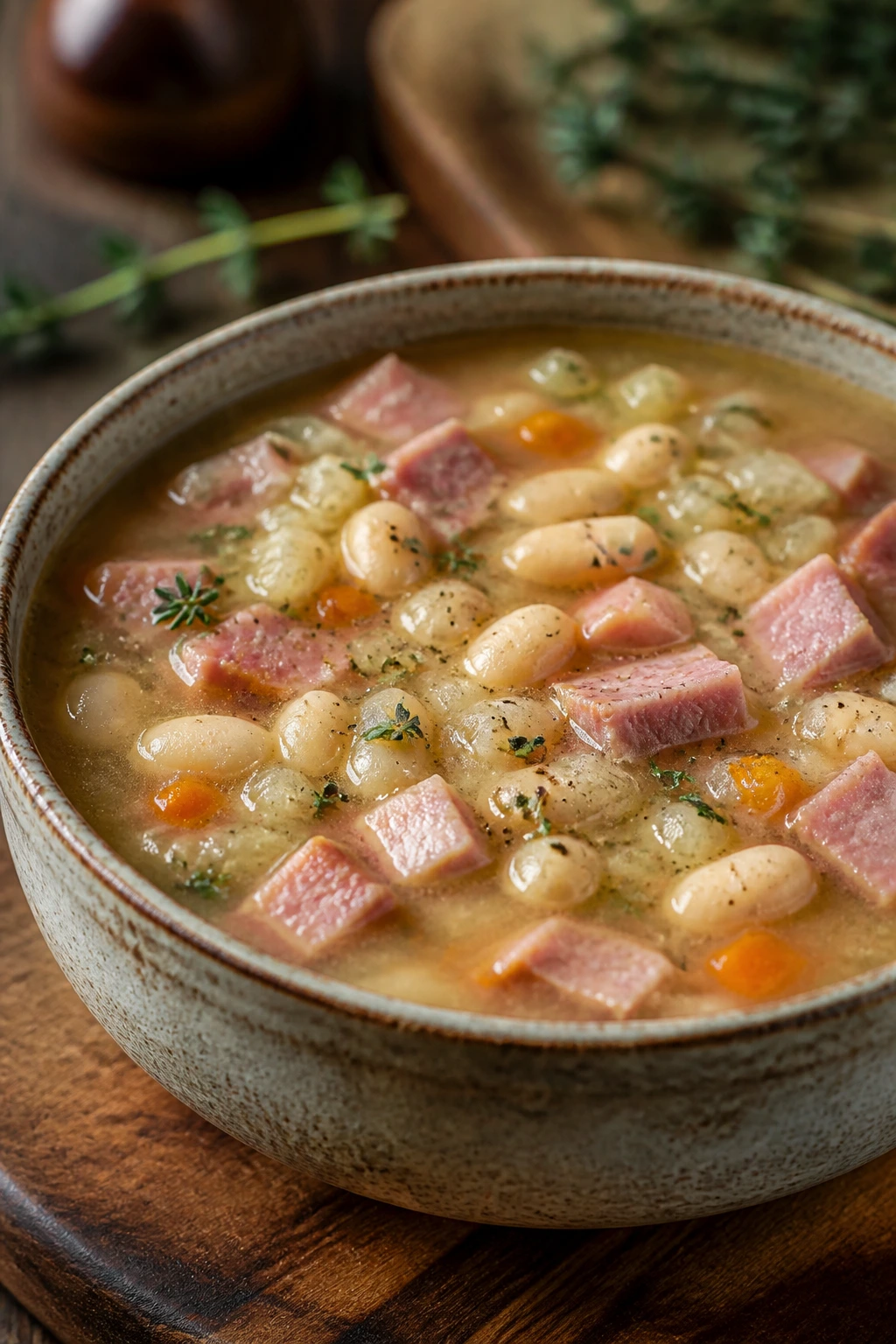
If you’ve got a ham bone or a few cups of diced holiday ham, this is where they should go. White beans make the broth creamy without actual cream, and thyme keeps the whole thing tasting clean.
Why It Works: Beans thicken the soup naturally as they simmer and break down a little. Ham brings salt and smoke, so you do not need a heavy hand with extra seasoning at the start.
Key Ingredients:
- 3 cans cannellini beans, drained and rinsed
- 2 cups diced ham
- 1 medium onion, chopped
- 2 carrots, diced
- 2 celery stalks, diced
- 4 cups chicken broth
- 2 cups water
- 2 tsp fresh thyme, or 1 tsp dried
- 1 bay leaf
- Black pepper
Quick Steps:
- Sauté onion, carrots, and celery in olive oil for 6 minutes.
- Add ham, beans, broth, water, thyme, and bay leaf.
- Simmer for 20 minutes, stirring now and then.
- Mash a cup of beans against the side of the pot to thicken the soup.
- Remove the bay leaf and adjust salt only after the ham has had time to flavor the broth.
Equipment for This Recipe:
- Soup pot
- Potato masher or wooden spoon
- Ladle
How to Serve This Dish: Serve it with cornbread or a crusty roll that can catch the bean broth. A drizzle of good olive oil on top gives the bowl a nicer finish than you might expect.
Pro Tips for This Recipe:
- Rinse canned beans well to keep the broth from tasting tinny.
- If your ham is very salty, use more water and less broth.
- Let the soup sit for 10 minutes off the heat before serving; it thickens a touch.
Variations on This Dish:
- Smoky Paprika Version: Add 1 tsp smoked paprika with the onions.
- Greens Added: Stir in chopped kale during the last 5 minutes.
Common Mistakes to Avoid with This Dish:
- Don’t salt early unless you’ve tasted the ham first.
- Don’t skip the mash step if you want a fuller texture.
6. French Onion Soup with Gruyère
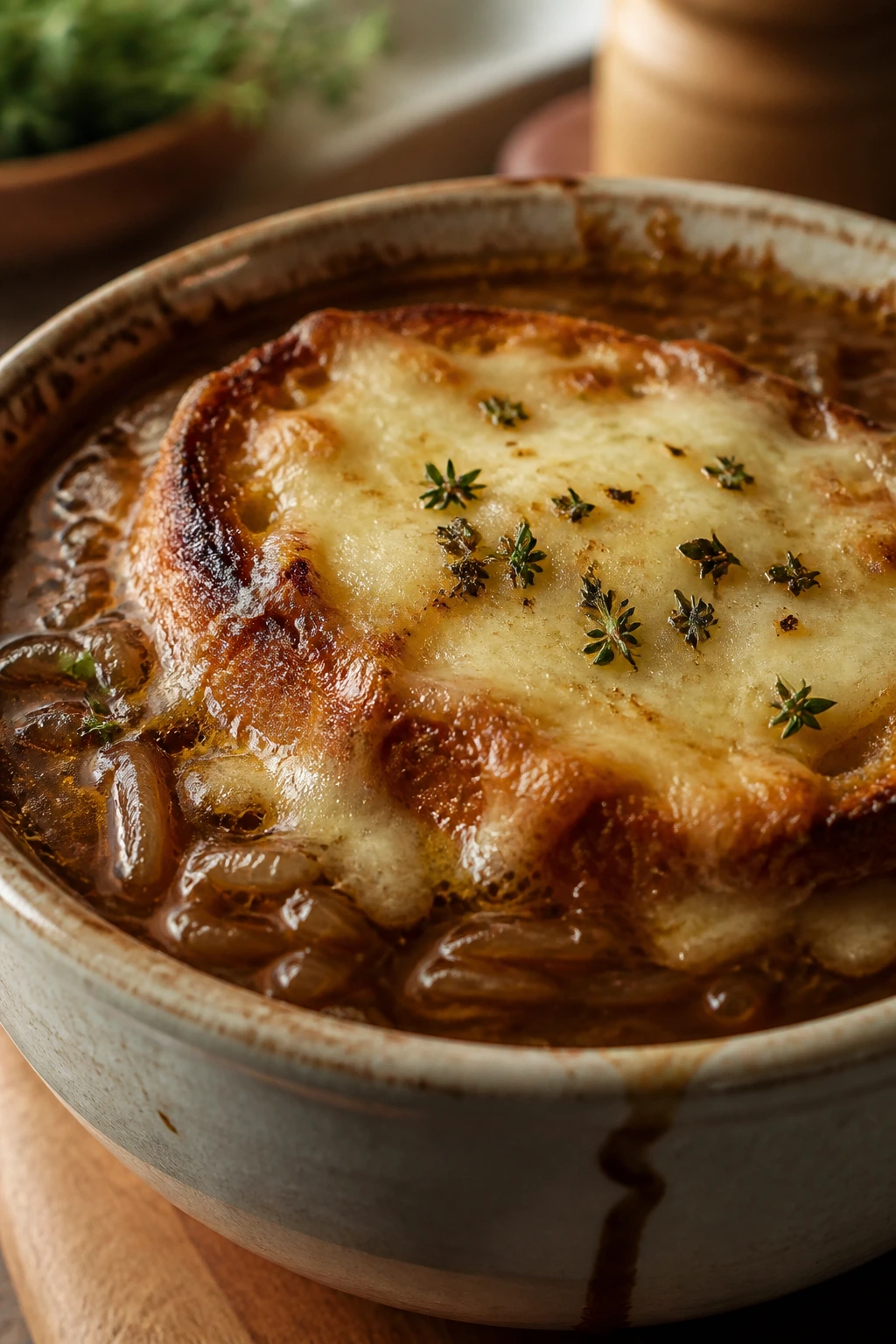
This one is all about patience. The onions slowly turn deep brown, the broth turns glossy, and the bread cap soaks up just enough to go soft under the cheese.
Why It Works: Slow-cooked onions carry the whole bowl; the broth only supports them. Gruyère melts into a nutty blanket, and the toasted bread gives you the best kind of spoon resistance.
Key Ingredients:
- 5 large yellow onions, thinly sliced
- 3 tbsp butter
- 1 tbsp olive oil
- 1/2 cup dry sherry
- 8 cups beef broth
- 1 tsp fresh thyme leaves
- 1 baguette, sliced
- 2 cups grated Gruyère
- Salt and black pepper
Quick Steps:
- Cook the onions in butter and oil over medium-low heat for 35 to 45 minutes, until deep brown.
- Stir in sherry and scrape the pot clean.
- Add broth and thyme, then simmer for 20 minutes.
- Toast baguette slices, top with Gruyère, and broil until bubbling.
- Float the cheesy toast on the soup and serve immediately.
Equipment for This Recipe:
- Heavy Dutch oven
- Broiler-safe bowls
- Baking sheet
How to Serve This Dish: This soup is built for individual bowls with the cheese toast perched on top. A dry cider or a glass of red wine fits the caramelized onion flavor better than something sweet.
Pro Tips for This Recipe:
- Keep the heat low enough that the onions soften before they scorch.
- Use real Gruyère if you can; pre-shredded cheese melts less cleanly.
- Broil the bowls on a sheet pan so spills don’t become a kitchen problem.
Variations on This Dish:
- Beefy Upgrade: Add a splash of Worcestershire to the broth.
- Vegetarian Version: Use mushroom broth and keep the thyme heavy.
Common Mistakes to Avoid with This Dish:
- Don’t rush the onions. Pale onions make a weak soup.
- Don’t add the bread too early or it turns to mush before serving.
7. Carrot Ginger Soup with Orange

Bright, warm, and a little sharp, this soup gives the table a break from all the brown food. The orange zest keeps it festive without making it taste like juice.
Why It Works: Carrots become sweet when cooked down, and ginger adds heat that lingers at the back of the throat. Orange juice and zest lift the flavor so the soup stays lively even with cream or coconut milk.
Key Ingredients:
- 2 lb carrots, peeled and sliced
- 1 medium onion, chopped
- 2 tbsp fresh ginger, grated
- 4 cups vegetable broth
- 1 orange, zested and juiced
- 1/2 cup coconut milk or cream
- 1 tbsp olive oil
- Salt and pepper
- Pinch of cumin, optional
Quick Steps:
- Sauté onion and ginger in olive oil for 3 minutes.
- Add carrots, broth, and cumin, then simmer for 20 minutes.
- Blend until smooth.
- Stir in orange zest, orange juice, and coconut milk.
- Taste and add salt at the end so the citrus stays bright.
Equipment for This Recipe:
- Soup pot
- Blender
- Microplane or fine grater
How to Serve This Dish: Top each bowl with a few cilantro leaves or chopped parsley. A toasted pita wedge or a thin slice of rye works better than a sweet bread here.
Pro Tips for This Recipe:
- Add the orange at the end; boiling it too long mutes the flavor.
- Slice the carrots evenly so they soften at the same pace.
- Coconut milk makes the soup richer, but cream gives it a rounder finish.
Variations on This Dish:
- Harissa Heat: Stir in 1 tsp harissa paste for a smoky kick.
- Apple-Carrot Version: Replace half the carrots with peeled apples for a sweeter bowl.
Common Mistakes to Avoid with This Dish:
- Don’t overdo the ginger; it can turn harsh.
- Don’t skip the acid. Without orange, the soup can taste flat.
8. Parsnip and Apple Soup

Parsnips and apples have a quiet sweetness that feels right for a cold evening. The parsnips bring earthiness, the apples bring a clean tart note, and together they make a soup that tastes more layered than it looks.
Why It Works: Parsnips roast or simmer into a creamy texture that needs very little help. Apple keeps the flavor from leaning too far into root-vegetable heaviness.
Key Ingredients:
- 1 1/2 lb parsnips, peeled and chopped
- 2 tart apples, peeled and chopped
- 1 onion, chopped
- 4 cups vegetable broth
- 1/2 cup cream
- 2 tbsp butter
- 1/4 tsp nutmeg
- Salt and pepper
Quick Steps:
- Cook onion in butter for 5 minutes.
- Add parsnips, apples, broth, and nutmeg.
- Simmer for 25 minutes, until the parsnips are soft.
- Blend until silky.
- Stir in cream and season carefully; parsnips can take more salt than people expect.
Equipment for This Recipe:
- Soup pot
- Blender
- Peeler
How to Serve This Dish: A little parsley or chive on top keeps the color from looking too pale. Serve it with a grilled cheese on sourdough if you want the soup to act like a full meal.
Pro Tips for This Recipe:
- Choose tart apples, not sweet dessert apples.
- Parsnips with a firm center taste better than woody oversized ones.
- A squeeze of lemon at the end wakes it up fast.
Variations on This Dish:
- Curry Version: Add 1 tsp mild curry powder with the onions.
- Bacon Finish: Top with crisp bacon bits for a salty edge.
Common Mistakes to Avoid with This Dish:
- Don’t let the apples dominate. They should support, not shout.
- Don’t serve it underseasoned; root soups can taste dull if you stop early.
9. Sausage, Kale, and White Bean Soup
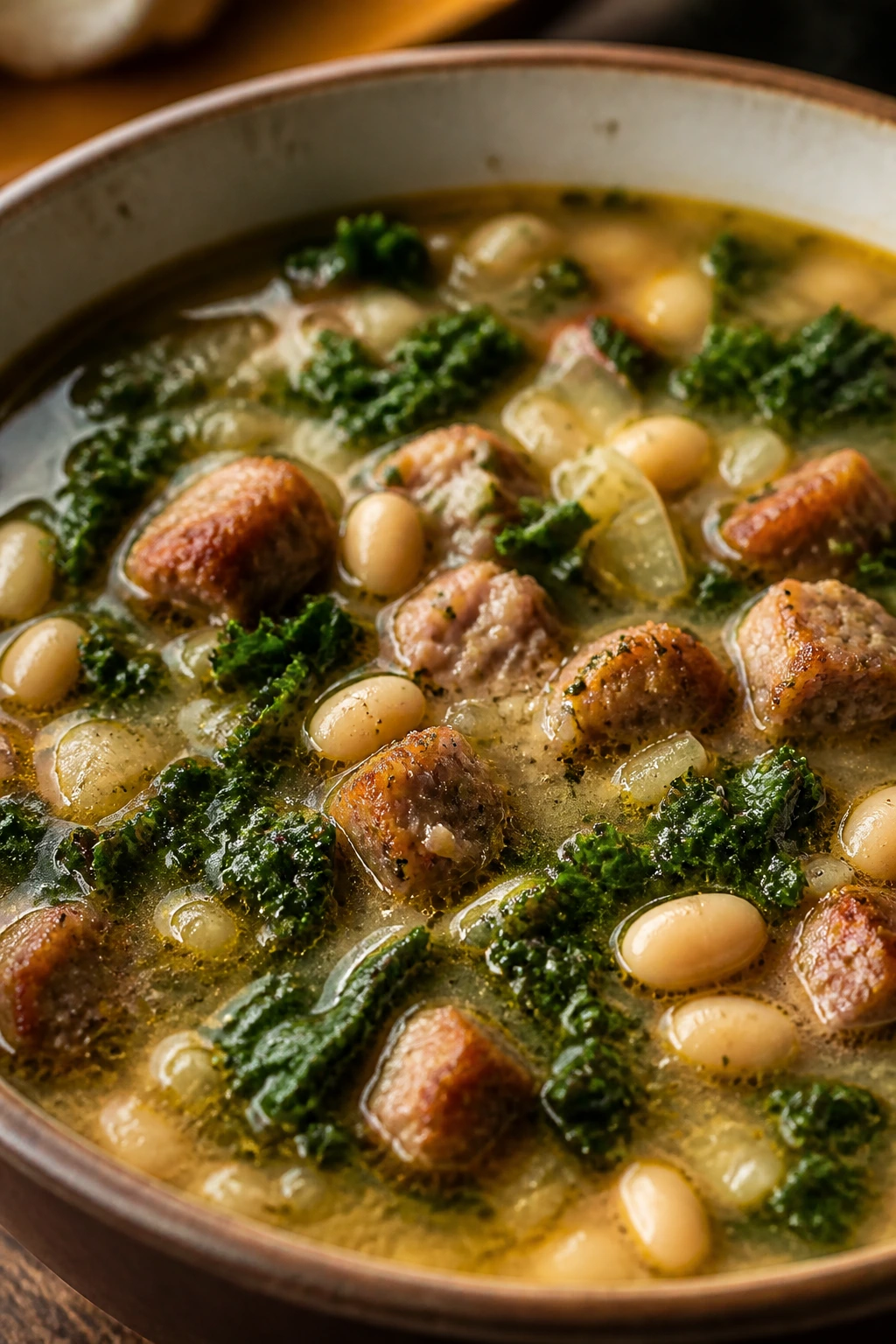
This is the kind of soup that shows up hungry and leaves people quiet for a minute. The sausage gives it body, the kale keeps it from feeling too soft, and the beans stretch it into a proper meal.
Why It Works: Browned sausage flavors the pot from the start, and white beans thicken the broth without flour. Kale holds up better than spinach, so the soup stays textured.
Key Ingredients:
- 1 lb Italian sausage, casings removed
- 1 medium onion, chopped
- 2 carrots, diced
- 2 cans cannellini beans, drained and rinsed
- 6 cups chicken broth
- 1 bunch kale, ribs removed and chopped
- 1 tsp dried rosemary
- 1/4 tsp red pepper flakes
- Salt and black pepper
Quick Steps:
- Brown the sausage in a soup pot, breaking it into chunks.
- Add onion and carrots and cook until softened.
- Stir in rosemary, beans, and broth.
- Simmer for 15 minutes, then add kale and cook 5 more minutes.
- Taste and finish with black pepper and a tiny squeeze of lemon if needed.
Equipment for This Recipe:
- Large soup pot
- Wooden spoon
- Sharp knife
How to Serve This Dish: Serve it in deep bowls with a chunk of crusty bread to catch the broth. If you want the plate to feel more festive, grate a little Parmesan over the top.
Pro Tips for This Recipe:
- Use hot or mild sausage depending on the table.
- Add the kale near the end so it stays green and a little chewy.
- If the sausage is very lean, cook it with a spoonful of oil.
Variations on This Dish:
- Turkey Sausage Version: Lighter, but still plenty satisfying.
- Tomato-Red Bowl: Add 1 cup crushed tomatoes for a more rustic broth.
Common Mistakes to Avoid with This Dish:
- Don’t overcook the kale; floppy kale tastes tired.
- Don’t drain all the sausage fat unless there’s too much of it.
10. Broccoli Cheddar Soup

Broccoli cheddar soup lives or dies by the cheese. Done right, it’s thick, salty, and a little sharp, with broccoli that still tastes like broccoli instead of mush.
Why It Works: A flour-thickened milk base holds the cheddar in place so it melts smoothly. The broccoli goes in late enough to stay green and a little firm, which keeps the texture interesting.
Key Ingredients:
- 4 cups broccoli florets, chopped small
- 1 medium carrot, grated
- 1 small onion, diced
- 3 tbsp butter
- 3 tbsp flour
- 2 cups milk
- 2 cups chicken or vegetable broth
- 3 cups sharp cheddar, grated
- 1/2 tsp mustard powder
- Salt and pepper
Quick Steps:
- Sauté onion and carrot in butter for 5 minutes.
- Stir in flour and cook for 1 minute.
- Whisk in milk and broth until smooth.
- Simmer with broccoli and mustard powder for 10 minutes.
- Turn off the heat, then stir in cheddar until melted.
Equipment for This Recipe:
- Soup pot
- Whisk
- Box grater
How to Serve This Dish: Serve it with a toasted baguette or a soft pretzel roll. A few broccoli florets left whole on top tell the eater what they’re getting before the first spoonful.
Pro Tips for This Recipe:
- Grate the cheese yourself if you want a cleaner melt.
- Keep the soup below a boil after the cheese goes in.
- Chop broccoli small enough that every spoon gets some.
Variations on This Dish:
- Smoky Version: Add a pinch of smoked paprika.
- Cauliflower Swap: Replace half the broccoli with cauliflower for a milder bowl.
Common Mistakes to Avoid with This Dish:
- Don’t boil the cheese sauce or it can turn grainy.
- Don’t leave the broccoli in huge stalky pieces unless you like a rough texture.
11. Tomato Basil Bisque with Parmesan Toast
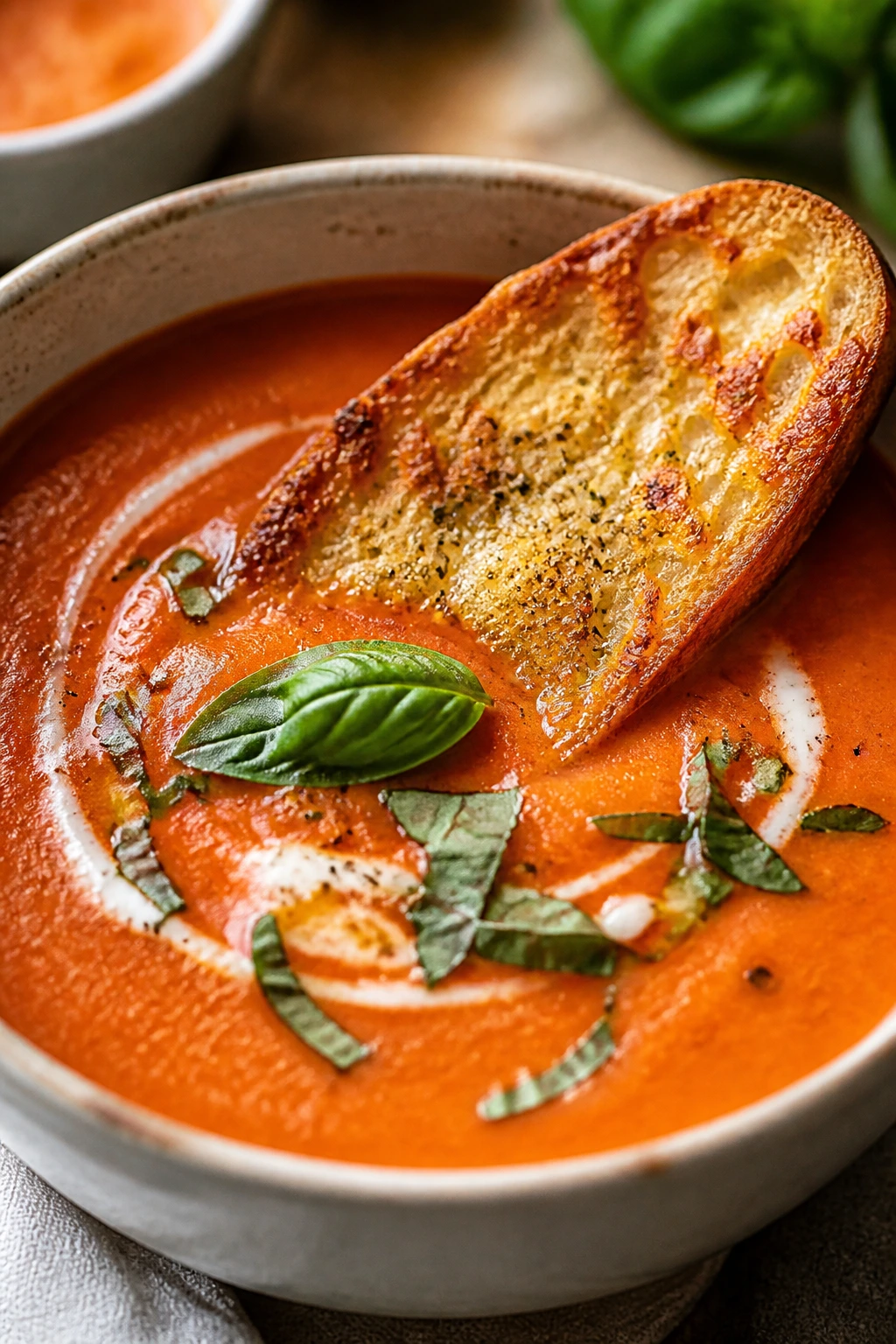
Tomato soup can be plain. Bisque should not be plain. A little cream, good canned tomatoes, and basil at the end turn it into something that tastes like a cold night in a red bowl.
Why It Works: Sweet canned tomatoes cook down fast and bring enough acid to keep the soup from feeling heavy. Parmesan toast gives the bowl crunch, salt, and a quick hit of umami.
Key Ingredients:
- 2 tbsp butter
- 1 medium onion, chopped
- 2 garlic cloves, minced
- 2 cans whole peeled tomatoes, crushed by hand
- 2 cups chicken or vegetable broth
- 1/2 cup heavy cream
- 1/4 cup fresh basil, torn
- 1 tsp sugar
- Salt and black pepper
- 4 slices bread and 1/2 cup grated Parmesan for toast
Quick Steps:
- Cook onion and garlic in butter until soft.
- Add tomatoes, broth, and sugar, then simmer for 20 minutes.
- Blend until smooth.
- Stir in cream and basil.
- Top toasted bread with Parmesan and broil until melted and browned.
Equipment for This Recipe:
- Soup pot
- Blender
- Baking sheet
How to Serve This Dish: Serve with one Parmesan toast per bowl, cut on the diagonal. A small green salad or a few olives on the side helps cut through the cream.
Pro Tips for This Recipe:
- Use whole peeled tomatoes; they taste fuller than thin sauce.
- Tear the basil instead of chopping it to keep the aroma intact.
- Add a pinch of sugar only if the tomatoes taste sharp.
Variations on This Dish:
- Roasted Garlic Bisque: Roast the garlic first for a sweeter finish.
- Dairy-Free Bowl: Replace cream with oat cream or coconut milk.
Common Mistakes to Avoid with This Dish:
- Don’t use watery tomatoes if you can help it.
- Don’t skip the basil at the end; cooked basil loses its punch.
12. Chicken and Dumpling Soup
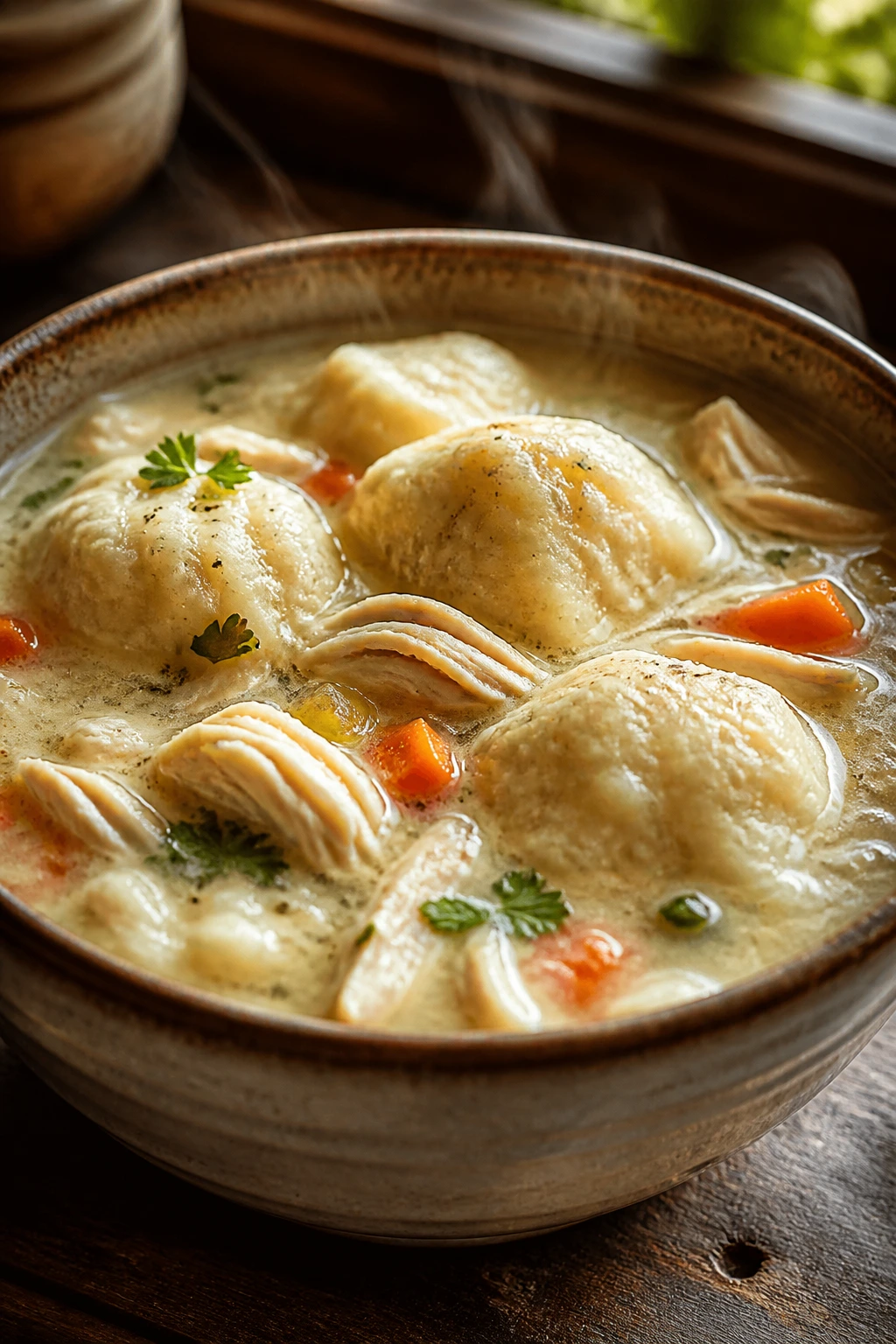
This is the bowl people ask for seconds of before they’ve finished the first one. The broth is rich, the chicken is tender, and the dumplings steam into soft little clouds right on top.
Why It Works: The soup base cooks first, so the dumplings can rise in steady heat without dissolving. A covered pot traps the steam, which is the whole trick behind dumpling texture.
Key Ingredients:
- 1 1/2 lb boneless chicken thighs
- 2 carrots, diced
- 2 celery stalks, diced
- 1 medium onion, chopped
- 6 cups chicken broth
- 1 tsp thyme
- 2 tbsp butter
- Salt and pepper
For the Dumplings:
- 1 cup flour
- 2 tsp baking powder
- 1/2 tsp salt
- 2 tbsp butter, melted
- 1/2 cup milk
Quick Steps:
- Simmer chicken, carrots, celery, onion, broth, thyme, salt, and pepper for 20 minutes.
- Remove the chicken, shred it, and return it to the pot.
- Mix the dumpling ingredients just until combined; the dough should look rough.
- Drop spoonfuls onto the simmering soup.
- Cover tightly and cook 15 minutes without lifting the lid.
Equipment for This Recipe:
- Wide soup pot with lid
- Mixing bowl
- Two spoons for shaping dumplings
How to Serve This Dish: Serve it as the main event with nothing more complicated than a green salad. The dumplings should sit half above the broth, glossy on top and soft underneath.
Pro Tips for This Recipe:
- Keep the soup at a gentle simmer, not a rolling boil.
- Don’t overmix the dumpling dough or they’ll turn dense.
- Use thighs, not breasts, if you want chicken that stays juicy.
Variations on This Dish:
- Herb Dumplings: Stir chopped parsley or chives into the dough.
- Creamy Version: Add 1/2 cup cream to the broth before the dumplings go in.
Common Mistakes to Avoid with This Dish:
- Don’t lift the lid while the dumplings steam.
- Don’t make the broth too thin; dumplings need something with body.
13. Red Lentil Soup with Cumin and Lemon
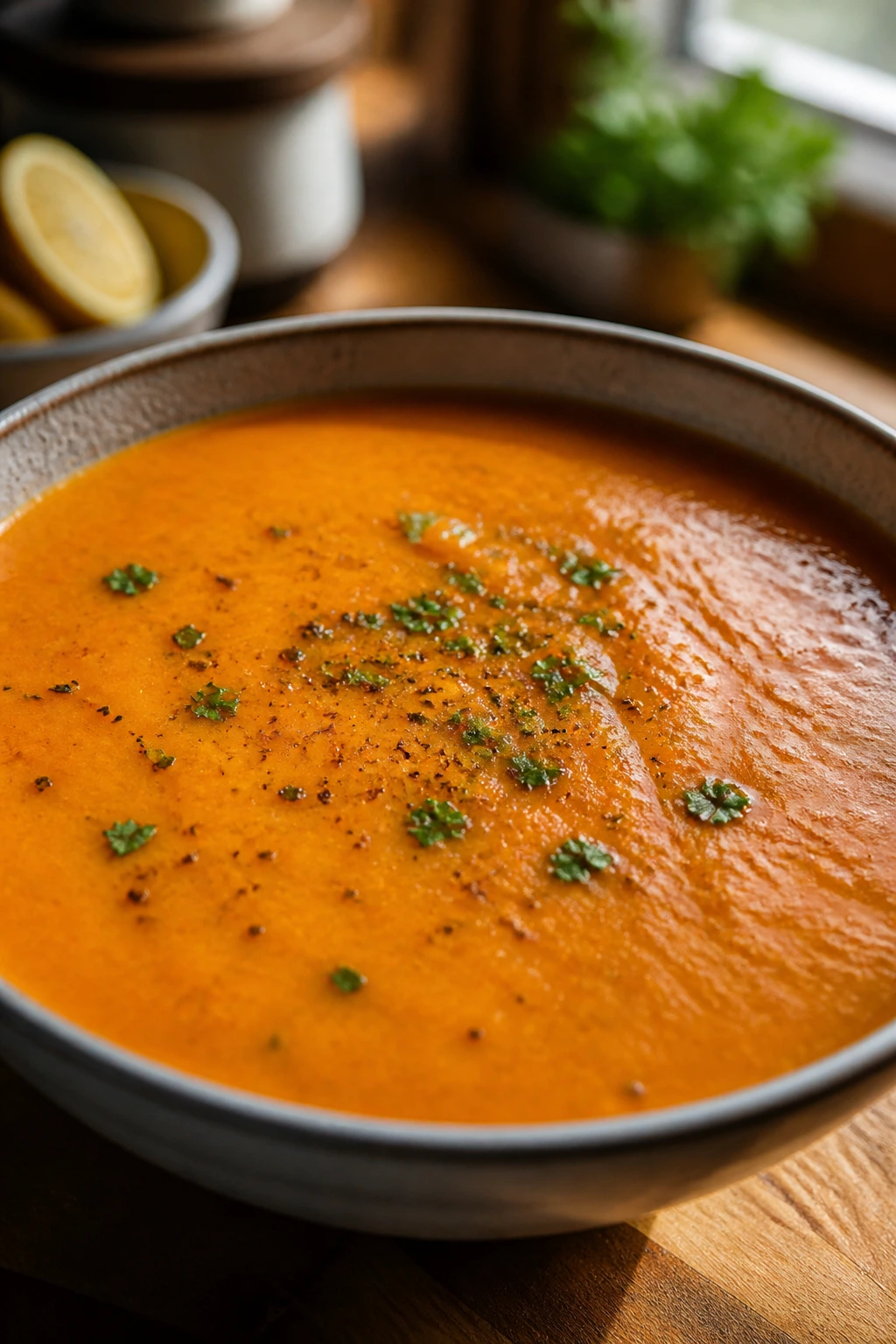
Red lentils turn soft fast, which makes this a smart soup for a crowded day. Cumin gives it warmth, lemon keeps it from tasting heavy, and the whole pot smells far bigger than the ingredient list.
Why It Works: Red lentils break down into a creamy base without any cream at all. A squeeze of lemon at the end sharpens the spice and keeps the soup from going muddy.
Key Ingredients:
- 1 1/2 cups red lentils, rinsed
- 1 medium onion, chopped
- 2 carrots, diced
- 2 garlic cloves, minced
- 1 tsp cumin
- 1/2 tsp coriander
- 6 cups vegetable broth
- 1 lemon, juiced
- 2 tbsp olive oil
- Salt and pepper
Quick Steps:
- Cook onion and carrots in olive oil for 5 minutes.
- Stir in garlic, cumin, and coriander for 30 seconds.
- Add lentils and broth, then simmer for 20 minutes.
- Blend part of the soup if you want a smoother texture.
- Stir in lemon juice and season at the end.
Equipment for This Recipe:
- Soup pot
- Immersion blender
- Citrus juicer, optional
How to Serve This Dish: Top it with chopped herbs or a spoonful of yogurt. Warm flatbread or pita works well because the soup likes something soft to soak into.
Pro Tips for This Recipe:
- Rinse the lentils well so the broth stays clean.
- Add lemon only after the lentils are fully cooked.
- A pinch of chili flakes gives the bowl more lift.
Variations on This Dish:
- Tomato Lentil Bowl: Add 1 cup crushed tomatoes for deeper color.
- Spinach Finish: Stir in a few handfuls of spinach right before serving.
Common Mistakes to Avoid with This Dish:
- Don’t walk away and let the lentils scorch on the bottom.
- Don’t salt too early if your broth is already salty.
14. Cabbage Roll Soup
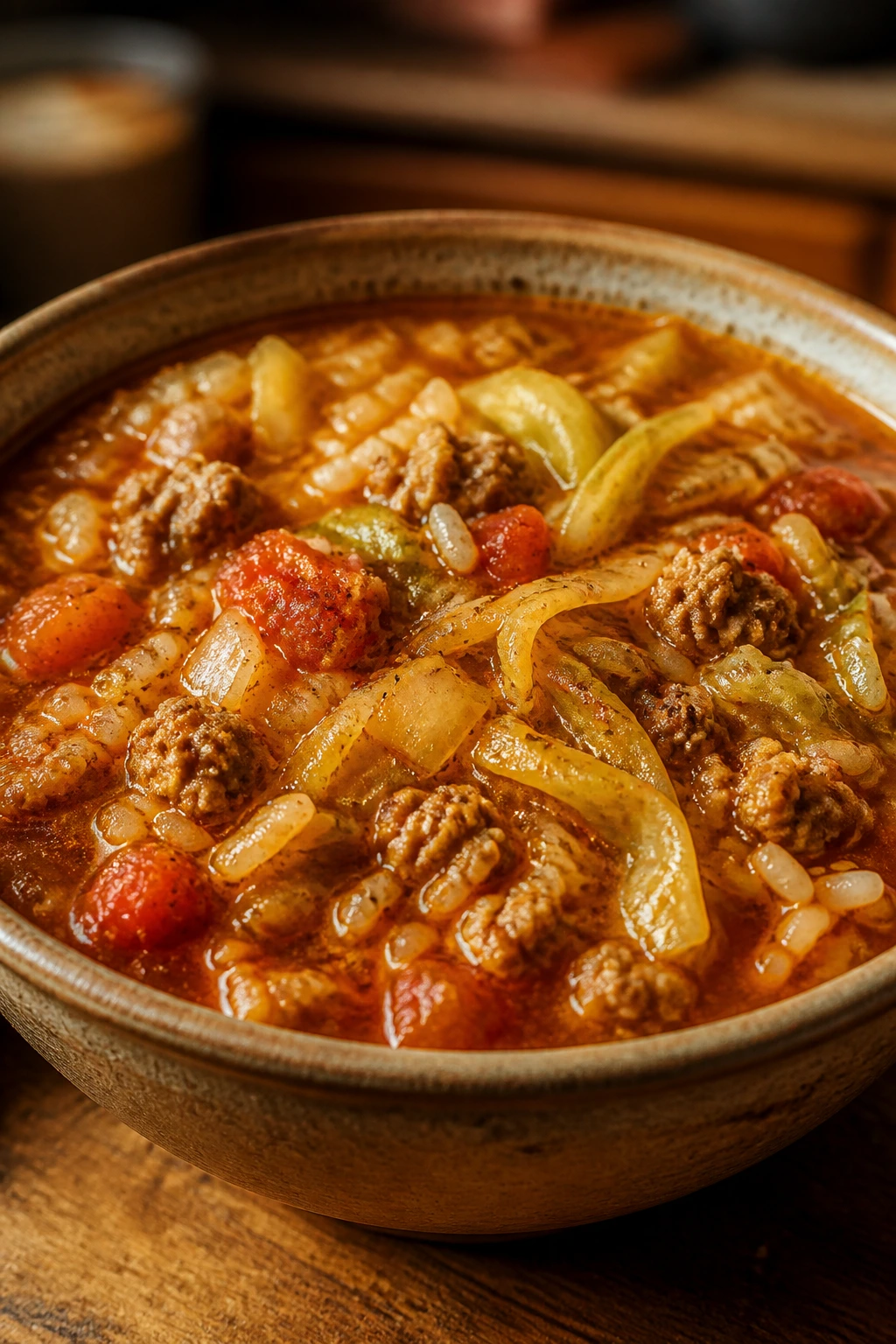
This tastes like cabbage rolls without the folding, rolling, and general annoyance. You get the beef, rice, tomatoes, and cabbage in one pot, which is the whole point.
Why It Works: Everything cooks together, so the broth picks up the flavor of the meat and tomato while the cabbage turns sweet. Using cooked rice at the end keeps it from bloating into mush.
Key Ingredients:
- 1 lb ground beef or turkey
- 1 medium onion, chopped
- 3 cloves garlic, minced
- 1 small head green cabbage, chopped
- 1 can crushed tomatoes
- 6 cups beef broth
- 1 cup cooked rice
- 1 tsp paprika
- 1 tbsp Worcestershire sauce
- Salt and pepper
Quick Steps:
- Brown the meat in a soup pot, then add onion and garlic.
- Stir in cabbage, tomatoes, broth, paprika, and Worcestershire.
- Simmer for 25 minutes, until the cabbage is soft.
- Stir in cooked rice and warm through.
- Taste and adjust salt after the cabbage has finished cooking.
Equipment for This Recipe:
- Soup pot
- Wooden spoon
- Sharp knife
How to Serve This Dish: Serve it in deep bowls with rye bread or a buttered roll. A spoonful of sour cream on top can calm the tomato edge if you like a softer flavor.
Pro Tips for This Recipe:
- Chop the cabbage in bite-size pieces so it feels like soup, not stew.
- Use cooked rice to avoid a thick, gummy pot.
- Let the soup rest for 10 minutes before serving; the flavors settle.
Variations on This Dish:
- Pork Version: Ground pork gives it a sweeter, richer taste.
- Herbed Bowl: Add dill near the end for a brighter finish.
Common Mistakes to Avoid with This Dish:
- Don’t add uncooked rice unless you’re ready to add more broth.
- Don’t overseason before the tomatoes and cabbage have had time to cook.
15. Creamy Corn Chowder with Smoked Paprika

Corn chowder is sweet, smoky, and a little stubborn in the best way. Smoked paprika gives it a fireside note, and the potatoes turn the broth into something spoonable and soft.
Why It Works: Corn and potato both lend natural starch, so the chowder thickens without much flour. Smoked paprika gives the bowl a winter edge that plain corn soup lacks.
Key Ingredients:
- 4 cups corn kernels, fresh or frozen
- 2 medium potatoes, diced
- 1 medium onion, chopped
- 2 celery stalks, diced
- 4 slices bacon, optional
- 4 cups chicken broth
- 1 cup milk or half-and-half
- 1 tsp smoked paprika
- 2 tbsp butter
- Salt and pepper
Quick Steps:
- Cook bacon if using, then sauté onion and celery in the drippings with butter.
- Add potatoes, corn, broth, and paprika.
- Simmer for 20 minutes, until the potatoes are tender.
- Stir in milk and cook gently for 5 minutes.
- Mash a few potatoes in the pot if you want it thicker.
Equipment for This Recipe:
- Soup pot
- Potato masher
- Sharp knife
How to Serve This Dish: A few bacon bits and chopped chives on top make the bowl look finished. Serve with cornbread or oyster crackers if you want extra crunch.
Pro Tips for This Recipe:
- Frozen corn works well and saves the hassle of shucking.
- Smoke the bowl with paprika, not with too much bacon, or it gets muddy.
- Don’t let the milk boil once it’s in.
Variations on This Dish:
- Vegetarian Chowder: Skip bacon and use olive oil.
- Jalapeño Corn Bowl: Add minced jalapeño with the onions.
Common Mistakes to Avoid with This Dish:
- Don’t cut the potatoes too small or they vanish.
- Don’t overload the pot with cream; corn should still taste like corn.
16. Seafood Chowder with Old Bay
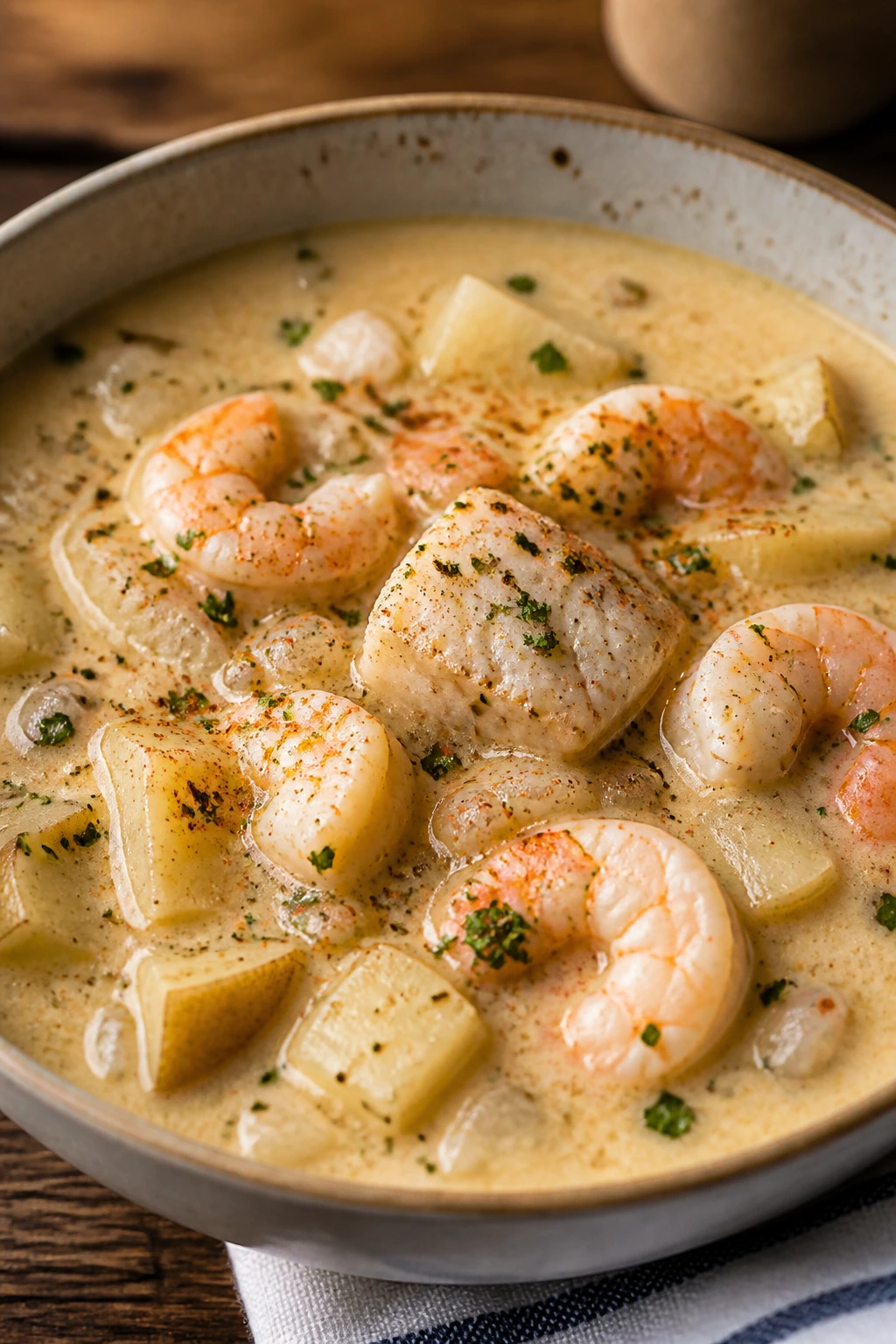
Seafood chowder should taste like the coast in a snowstorm. Old Bay does the heavy lifting, potatoes give it body, and the fish goes in at the very end so it stays tender.
Why It Works: A creamy potato base supports delicate seafood without burying it. The seasoning mix brings enough salt and spice that you don’t need a lot of extras.
Key Ingredients:
- 4 slices bacon, chopped
- 1 medium onion, diced
- 2 celery stalks, diced
- 2 medium potatoes, diced
- 4 cups fish stock or clam juice mixed with water
- 1 lb white fish fillets, cut into chunks
- 8 oz shrimp, peeled
- 1 cup milk or cream
- 1 1/2 tsp Old Bay seasoning
- Salt and pepper
Quick Steps:
- Cook bacon, then soften onion and celery in the drippings.
- Add potatoes, stock, and Old Bay, and simmer until the potatoes are tender.
- Stir in milk or cream.
- Add fish and shrimp and cook 5 to 7 minutes, just until opaque.
- Season carefully at the end and serve right away.
Equipment for This Recipe:
- Soup pot
- Slotted spoon
- Sharp knife
How to Serve This Dish: Serve with saltines, buttered rolls, or a piece of crusty bread. A little chopped parsley and a crack of black pepper keep the bowl from looking too pale.
Pro Tips for This Recipe:
- Cut the seafood into even pieces so it cooks at the same pace.
- Keep the heat low once the seafood goes in.
- If you use clam juice, taste before salting; it can be briny.
Variations on This Dish:
- Lobster Treat Version: Fold in cooked lobster at the end.
- Corn and Seafood Chowder: Add 1 cup corn for sweetness.
Common Mistakes to Avoid with This Dish:
- Don’t boil seafood chowder hard after the fish is added.
- Don’t let the potatoes turn to mush before the seafood goes in.
17. Mushroom Barley Soup
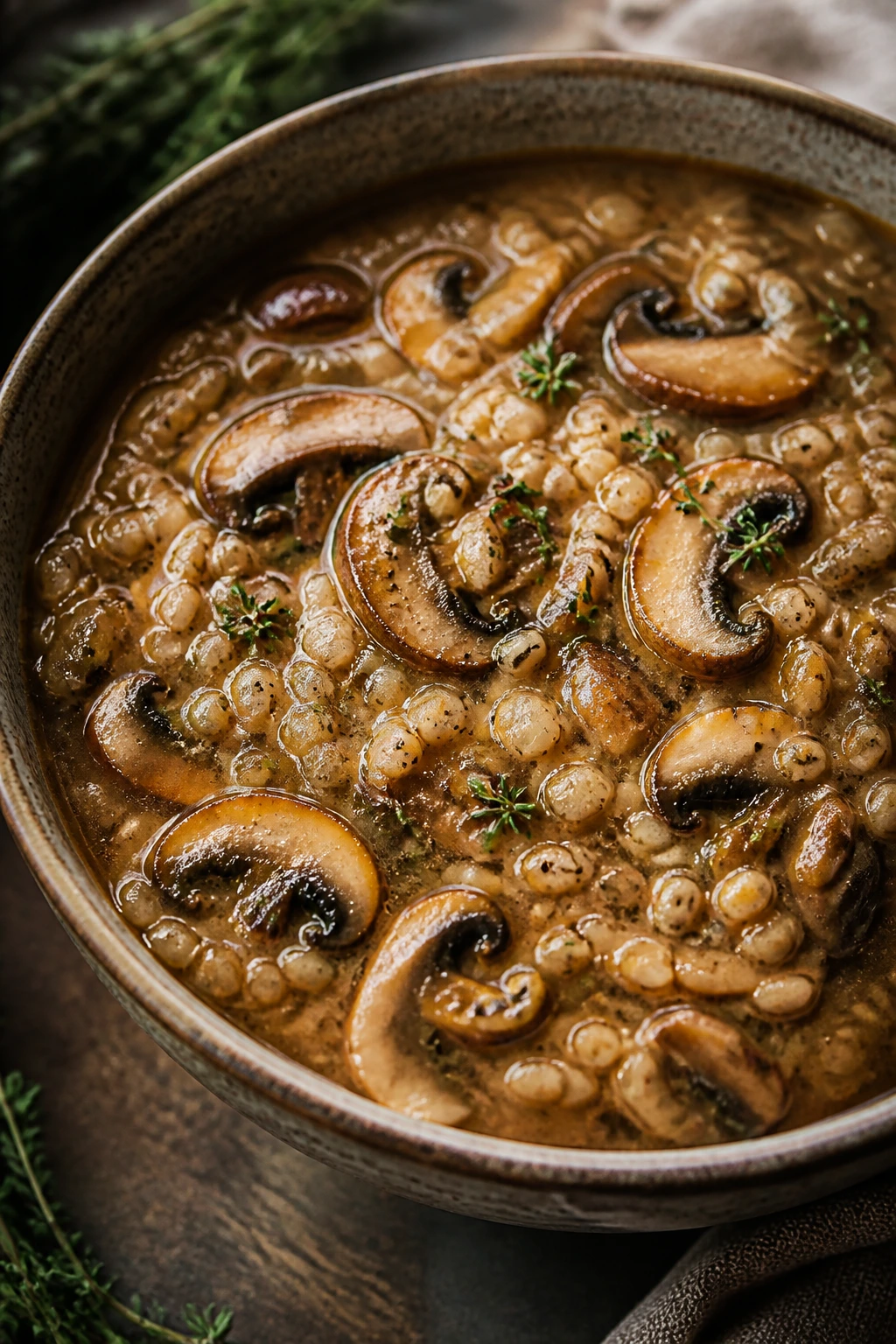
This is the sort of soup that feels older than the menu. Barley gives it a chewy backbone, mushrooms bring depth, and the broth stays dark and honest.
Why It Works: Pearl barley thickens the soup as it cooks, which means the broth turns round without flour. Mushrooms add a meaty taste, even when the pot is fully vegetarian.
Key Ingredients:
- 1 lb mushrooms, sliced
- 3/4 cup pearl barley, rinsed
- 1 medium onion, chopped
- 2 carrots, diced
- 2 celery stalks, diced
- 6 cups vegetable or beef broth
- 1 tsp thyme
- 2 tbsp butter or olive oil
- Salt and pepper
- 2 tbsp parsley, chopped
Quick Steps:
- Brown the mushrooms in butter or oil for 8 minutes.
- Add onion, carrots, and celery and cook until softened.
- Stir in barley, thyme, and broth.
- Simmer for 35 to 40 minutes, until the barley is tender.
- Finish with parsley and extra pepper.
Equipment for This Recipe:
- Soup pot
- Wooden spoon
- Measuring cup
How to Serve This Dish: Serve it with dark bread or a slice of toast rubbed with garlic. The bowl looks especially good with parsley scattered across the top, because the green breaks up the brown.
Pro Tips for This Recipe:
- Let the mushrooms brown before adding broth.
- Rinse barley first so it cooks evenly.
- If the soup thickens too much, thin it with hot stock.
Variations on This Dish:
- Beefy Mushroom Bowl: Use beef broth and a splash of Worcestershire.
- Herby Winter Version: Add rosemary with the thyme.
Common Mistakes to Avoid with This Dish:
- Don’t undercook the barley; it should be tender, not chalky.
- Don’t expect it to stay thin after chilling. Barley keeps drinking broth.
18. Minestrone with Parmesan Rind
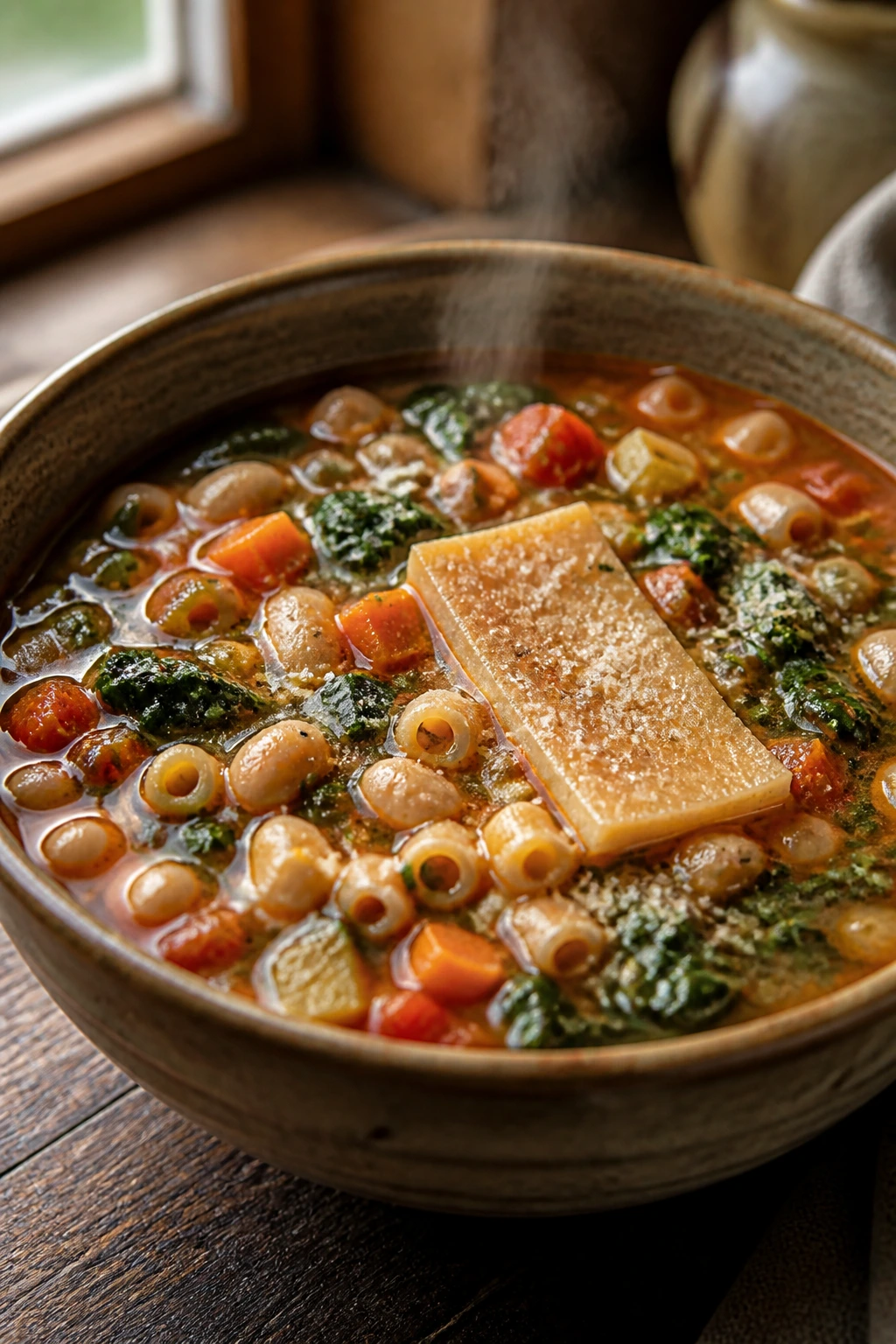
Minestrone earns its place because it uses small things well. Beans, pasta, vegetables, and a Parmesan rind all work together to make a bowl that tastes much bigger than it looks.
Why It Works: The Parmesan rind melts flavor into the broth over time, giving the soup a round, savory finish. Beans and pasta make it filling without feeling heavy.
Key Ingredients:
- 2 tbsp olive oil
- 1 onion, diced
- 2 carrots, diced
- 2 celery stalks, diced
- 1 can diced tomatoes
- 6 cups vegetable broth
- 1 can cannellini beans, drained and rinsed
- 1 cup small pasta
- 1 Parmesan rind
- 2 cups chopped kale or spinach
- Salt and pepper
Quick Steps:
- Sauté onion, carrots, and celery in olive oil for 6 minutes.
- Add tomatoes, broth, beans, and Parmesan rind.
- Simmer for 15 minutes.
- Stir in pasta and cook until just tender.
- Add greens at the end and remove the rind before serving.
Equipment for This Recipe:
- Soup pot
- Ladle
- Vegetable peeler, optional
How to Serve This Dish: Serve it with extra grated Parmesan and a drizzle of olive oil. A slab of toasted bread turns it from starter into dinner without much effort.
Pro Tips for This Recipe:
- Keep the pasta a little firm or it goes soft in the bowl.
- Save Parmesan rinds in the freezer; they’re useful for soups like this.
- Add greens at the very end so they stay bright.
Variations on This Dish:
- Bean-Heavy Version: Add a second can of beans if you want more heft.
- Pasta-Free Bowl: Leave out the pasta and add diced potatoes instead.
Common Mistakes to Avoid with This Dish:
- Don’t leave the rind out if you want real depth.
- Don’t overcook the pasta in the soup pot; it keeps softening after the heat is off.
19. Spinach Tortellini Soup with Nutmeg Cream
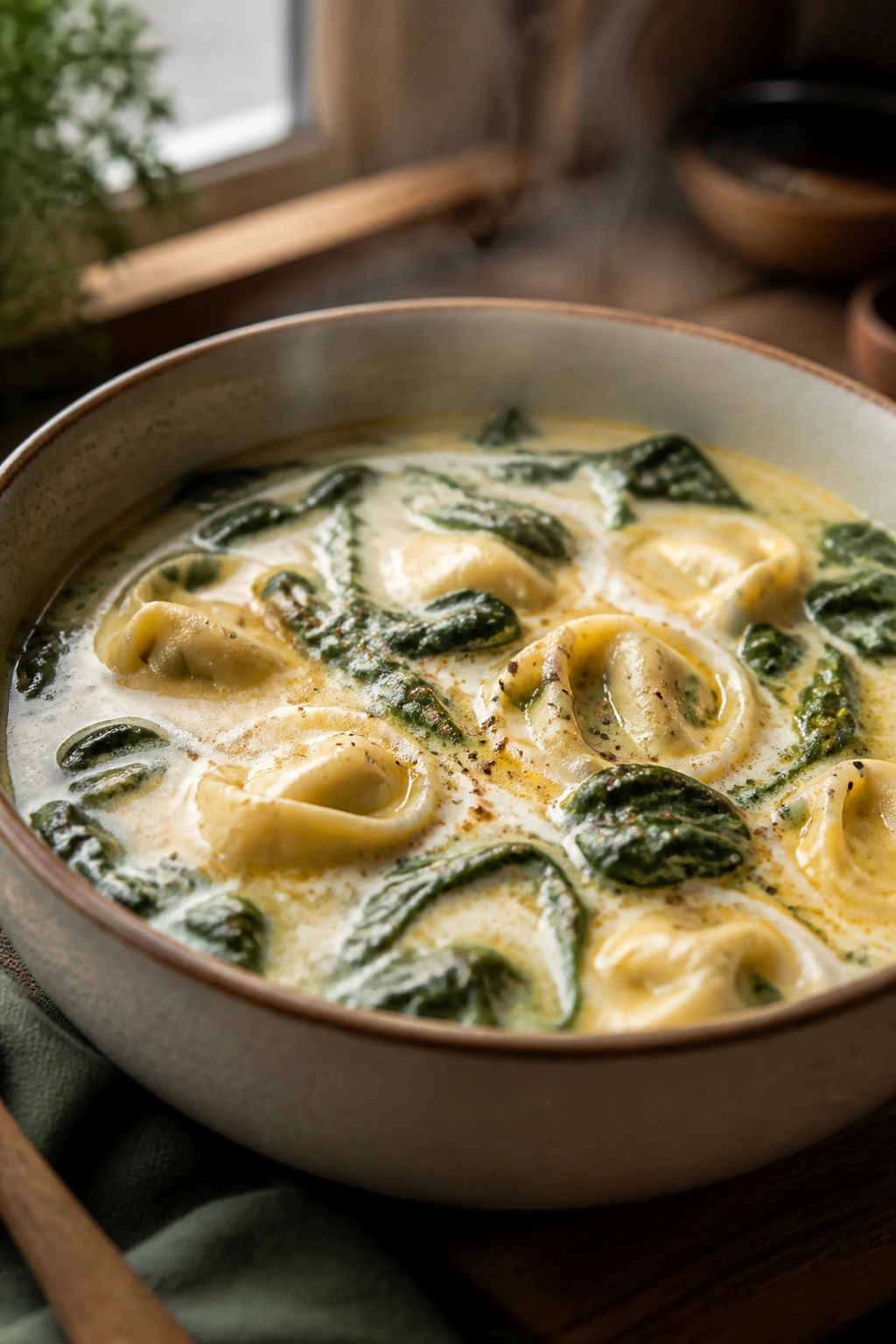
Cheese tortellini makes this soup feel richer than the ingredient list suggests. Spinach keeps it fresh, and a tiny bit of nutmeg in the cream gives the broth a holiday edge.
Why It Works: Tortellini cooks quickly and turns the soup into a meal in minutes. Nutmeg is subtle, but it makes cream taste warmer and more suited to cold weather.
Key Ingredients:
- 1 tbsp butter
- 1 medium onion, chopped
- 2 garlic cloves, minced
- 6 cups chicken or vegetable broth
- 1 package cheese tortellini, about 10 to 12 oz
- 4 cups fresh spinach
- 1/2 cup cream
- 1/8 tsp ground nutmeg
- 1/4 cup grated Parmesan
- Salt and pepper
Quick Steps:
- Cook onion and garlic in butter until soft.
- Add broth and simmer for 10 minutes.
- Stir in tortellini and cook according to the package, usually 3 to 5 minutes.
- Add spinach and let it wilt.
- Stir in cream, nutmeg, and Parmesan off the heat.
Equipment for This Recipe:
- Soup pot
- Wooden spoon
- Slotted spoon, optional
How to Serve This Dish: Serve immediately while the tortellini is plump and the spinach still looks green. A little extra Parmesan on top is enough; the soup already does a lot.
Pro Tips for This Recipe:
- Add the tortellini only when the soup is almost ready.
- Use fresh spinach, not frozen, if you want the best texture.
- Nutmeg should stay in the background; a pinch is plenty.
Variations on This Dish:
- Sausage Tortellini Soup: Brown Italian sausage with the onion.
- Tomato-Tortellini Style: Add 1 cup crushed tomatoes for a red broth.
Common Mistakes to Avoid with This Dish:
- Don’t let tortellini sit in the pot too long or it bloats.
- Don’t overdo the nutmeg; it should whisper, not shout.
20. Pumpkin Soup with Coconut Milk and Chili Oil
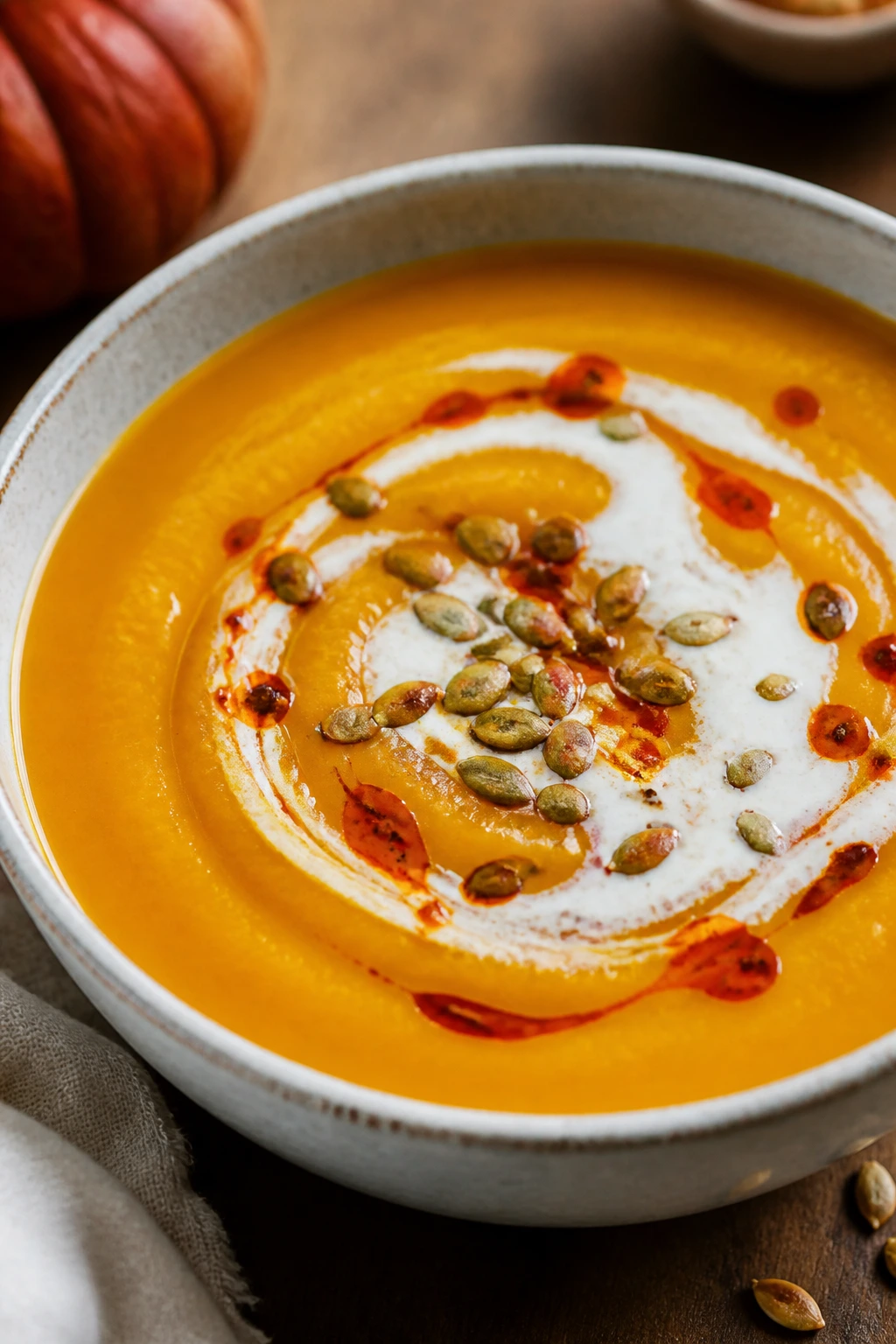
Pumpkin soup can go dull fast if you don’t give it a point of view. Coconut milk smooths out the edges, ginger and garlic add warmth, and chili oil finishes the bowl with a little spark.
Why It Works: Pumpkin puree gives a fast, creamy base without long cooking. Coconut milk keeps it lush, while chili oil cuts the sweetness and keeps each spoonful interesting.
Key Ingredients:
- 2 tbsp olive oil
- 1 onion, chopped
- 2 garlic cloves, minced
- 1 tbsp fresh ginger, grated
- 2 cans pumpkin puree
- 4 cups vegetable broth
- 1 can coconut milk
- 1 tsp curry powder or ground cinnamon
- Chili oil, for serving
- Salt and pepper
Quick Steps:
- Cook onion, garlic, and ginger in olive oil for 4 minutes.
- Stir in pumpkin puree and curry powder.
- Add broth and simmer for 15 minutes.
- Blend if needed, then stir in coconut milk.
- Serve with a few drops of chili oil on top.
Equipment for This Recipe:
- Soup pot
- Blender, optional
- Microplane or grater
How to Serve This Dish: A swirl of coconut milk and a thin trail of chili oil make the bowl look finished. Toasted pepitas or sesame seeds add crunch without getting in the way.
Pro Tips for This Recipe:
- Use pure pumpkin puree, not pumpkin pie filling.
- Add chili oil at the table so people can control the heat.
- A pinch of salt matters more here than extra spice.
Variations on This Dish:
- Apple Pumpkin Bowl: Add 1 diced apple with the onion.
- Ginger-Heavy Version: Double the ginger for a brighter bite.
Common Mistakes to Avoid with This Dish:
- Don’t use sweetened canned filling.
- Don’t skip salt; pumpkin needs it badly.
21. White Chicken Chili with Roasted Poblanos

This soup leans smoky, creamy, and a little bright from lime. Roasted poblanos give it depth, and white beans keep it thick enough to eat with a spoon, not a fork.
Why It Works: Poblanos taste better once roasted and peeled, and they give the broth a mellow heat rather than a sharp one. Chicken thighs stay tender through the simmer, which matters here more than people think.
Key Ingredients:
- 1 1/2 lb boneless chicken thighs
- 2 poblano peppers
- 1 medium onion, chopped
- 3 garlic cloves, minced
- 2 cans white beans, drained and rinsed
- 4 cups chicken broth
- 1 tsp cumin
- 1/2 tsp oregano
- 4 oz cream cheese
- 1 lime, juiced
Quick Steps:
- Roast poblanos under the broiler until blistered, then peel and chop.
- Sauté onion and garlic in a soup pot.
- Add chicken, beans, broth, cumin, oregano, and poblanos.
- Simmer until the chicken is cooked through, then shred it.
- Stir in cream cheese and lime juice until the broth turns smooth.
Equipment for This Recipe:
- Broiler-safe pan
- Soup pot
- Forks for shredding chicken
How to Serve This Dish: Top with cilantro, sliced avocado, or crushed tortilla chips. It sits nicely beside warm cornbread if you want the meal to feel complete.
Pro Tips for This Recipe:
- Roast the poblanos until the skins are deeply blistered.
- Add lime at the end so the flavor stays fresh.
- If you want a thicker chili, mash some beans in the pot.
Variations on This Dish:
- Rotisserie Shortcut: Use shredded rotisserie chicken and cut the simmer time.
- Extra Heat Bowl: Add a chopped jalapeño with the onion.
Common Mistakes to Avoid with This Dish:
- Don’t skip peeling the peppers if you want a smooth soup.
- Don’t boil hard after the cream cheese goes in.
22. Roast Beef and Barley Soup
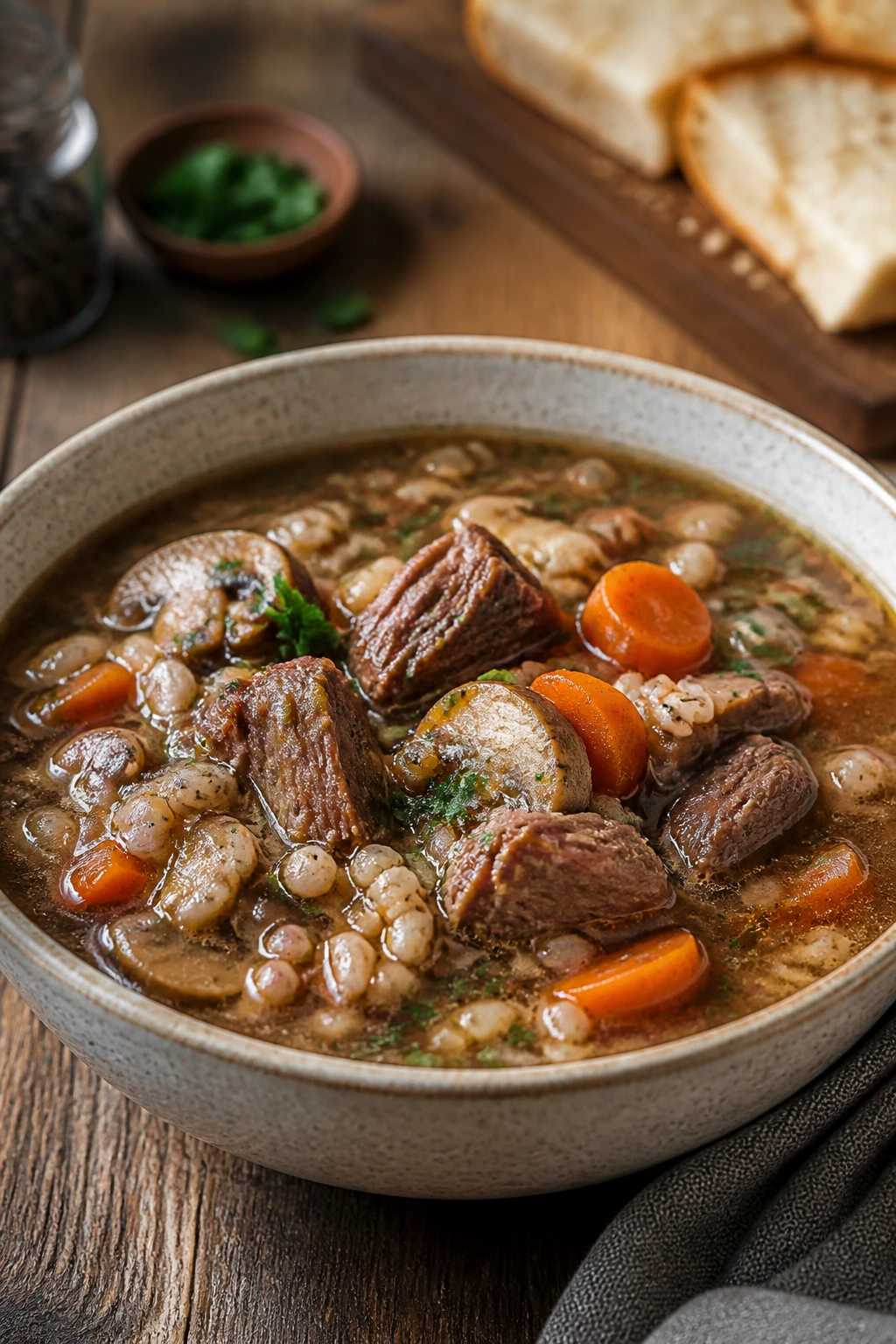
This is Christmas leftover soup with real backbone. The roast beef brings depth, the barley gives chew, and the broth picks up all the browned, savory bits that usually get left behind on the board.
Why It Works: Barley makes the soup thick and filling without cream. Roast beef goes in near the end so it stays tender and doesn’t turn leathery.
Key Ingredients:
- 2 cups cooked roast beef, sliced or chopped
- 3/4 cup pearl barley, rinsed
- 1 medium onion, chopped
- 2 carrots, diced
- 2 celery stalks, diced
- 1 cup mushrooms, sliced
- 6 cups beef broth
- 1 tbsp tomato paste
- 1 tsp thyme
- 1 tbsp Worcestershire sauce
Quick Steps:
- Sauté onion, carrots, celery, and mushrooms in a soup pot.
- Stir in tomato paste, thyme, and Worcestershire sauce.
- Add barley and broth, then simmer for 35 minutes.
- Stir in roast beef and cook 5 minutes more.
- Taste and add pepper at the end so the beef flavor stays front and center.
Equipment for This Recipe:
- Large soup pot
- Wooden spoon
- Measuring cups
How to Serve This Dish: Serve it with horseradish on the table if you want a sharper edge. A buttered roll or a slice of rye turns it into a proper winter lunch.
Pro Tips for This Recipe:
- Add the beef late so it stays tender.
- Tomato paste adds color and roundness; don’t skip it.
- If the roast is very lean, a spoonful of drippings or butter helps.
Variations on This Dish:
- French Onion Twist: Top each bowl with a toasted baguette slice.
- Root Vegetable Version: Add parsnips or turnips with the carrots.
Common Mistakes to Avoid with This Dish:
- Don’t overcook leftover beef in the broth.
- Don’t forget to rinse the barley; it helps the broth stay clean.
Why Christmas Soup Works So Well for a Crowd
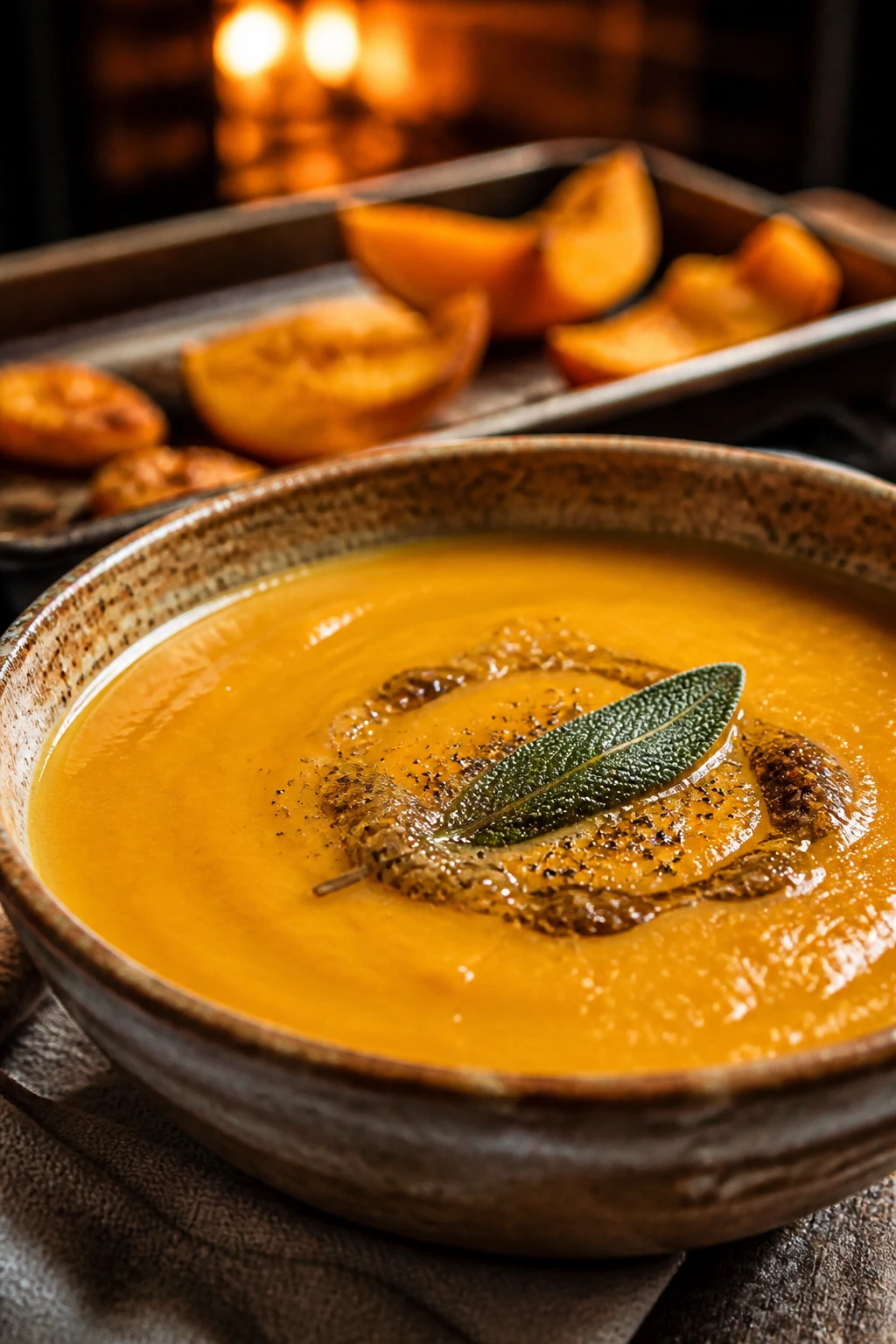
Soup has a strange advantage at a holiday table: it behaves. A roast needs carving, a pan of potatoes needs space, and dessert has opinions. Soup mostly just sits there and gets better while you do other things. That matters when the sink is already full and the oven is arguing with three different casseroles.
A good pot also solves timing. You can keep it warm on low heat, ladle it out in waves, and top each bowl differently if you want the meal to feel more deliberate than it really was. Cream swirls for one bowl. Crispy onions for another. A little parsley, some croutons, maybe a wedge of lemon. Suddenly the same batch feels personal.
I like soups for holiday meals because they give the cook room to breathe. You can make one the day before, then spend the next day worrying about the roast instead of the starter. That’s not glamorous. It is useful. And useful food tends to be the food people remember when the night starts to blur together.
Essential Equipment for These Recipes
-
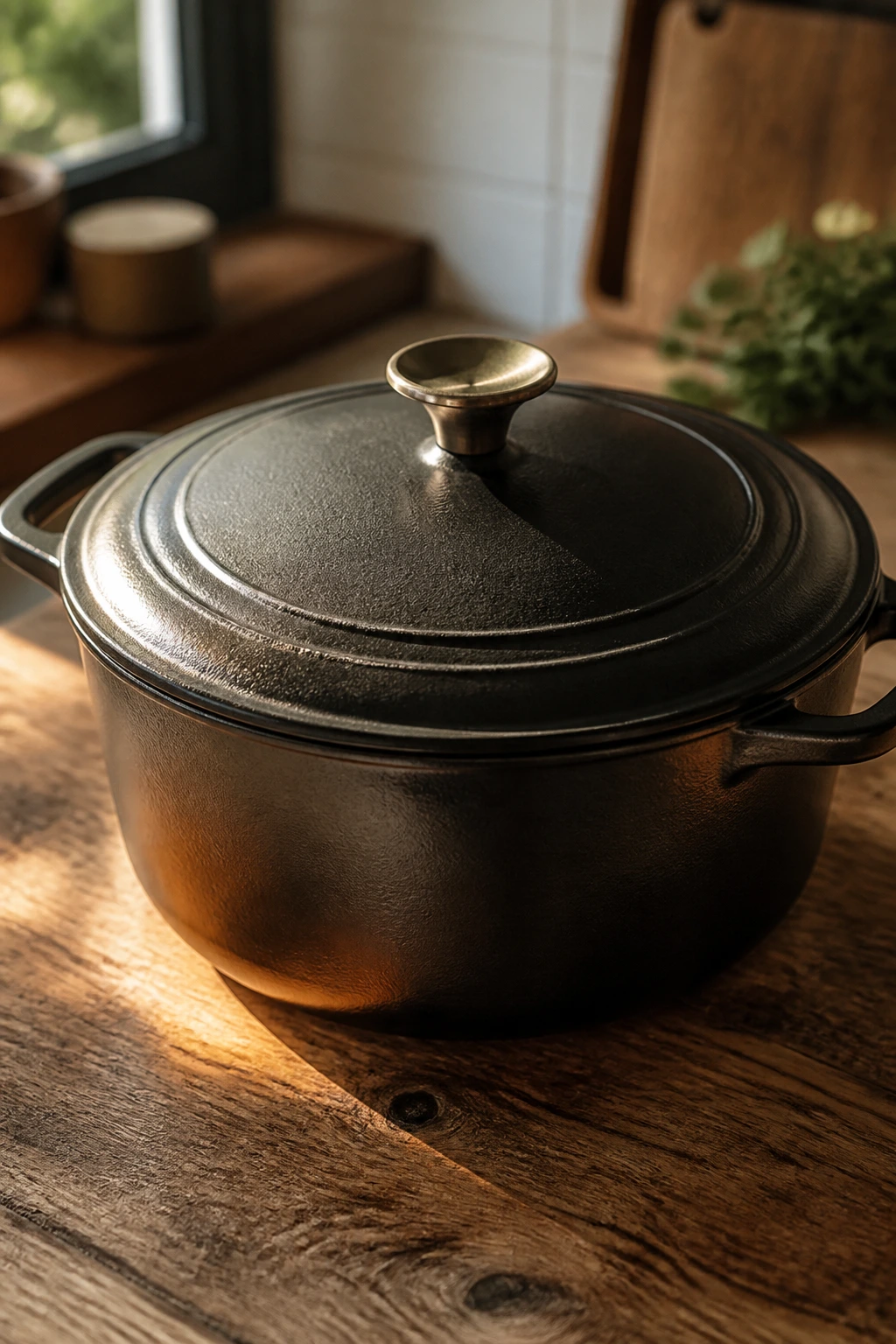
Large Dutch oven or soup pot: The heavy bottom keeps onions, beans, and dairy from scorching while the pot stays on the stove for a long simmer.
-
Immersion blender: Worth owning if you make squash, carrot, or tomato soups; it saves you from hot-liquid transfers.
-
Countertop blender: Better for very smooth bisques, but blend in batches and vent the lid with a towel.
-
Sharp chef’s knife: A dull knife makes leeks, squash, and cabbage miserable to prep.
-
Rimmed baking sheet: Needed for roasting squash, carrots, peppers, croutons, or toast.
-
Fine grater or microplane: Best for ginger, nutmeg, lemon zest, and hard cheese.
-
Wooden spoon and whisk: The spoon handles browning and stirring; the whisk keeps cream soups smooth.
-
Ladles and measuring cups: Not glamorous, but they keep portions and broth ratios steady.
-
Broiler-safe bowls: Essential for French onion soup and handy for any cheesy toast topping.
-
Airtight storage containers: Flat, shallow containers cool soups faster and store leftovers without mystery spills.
Smart Shopping and Ingredient Tips
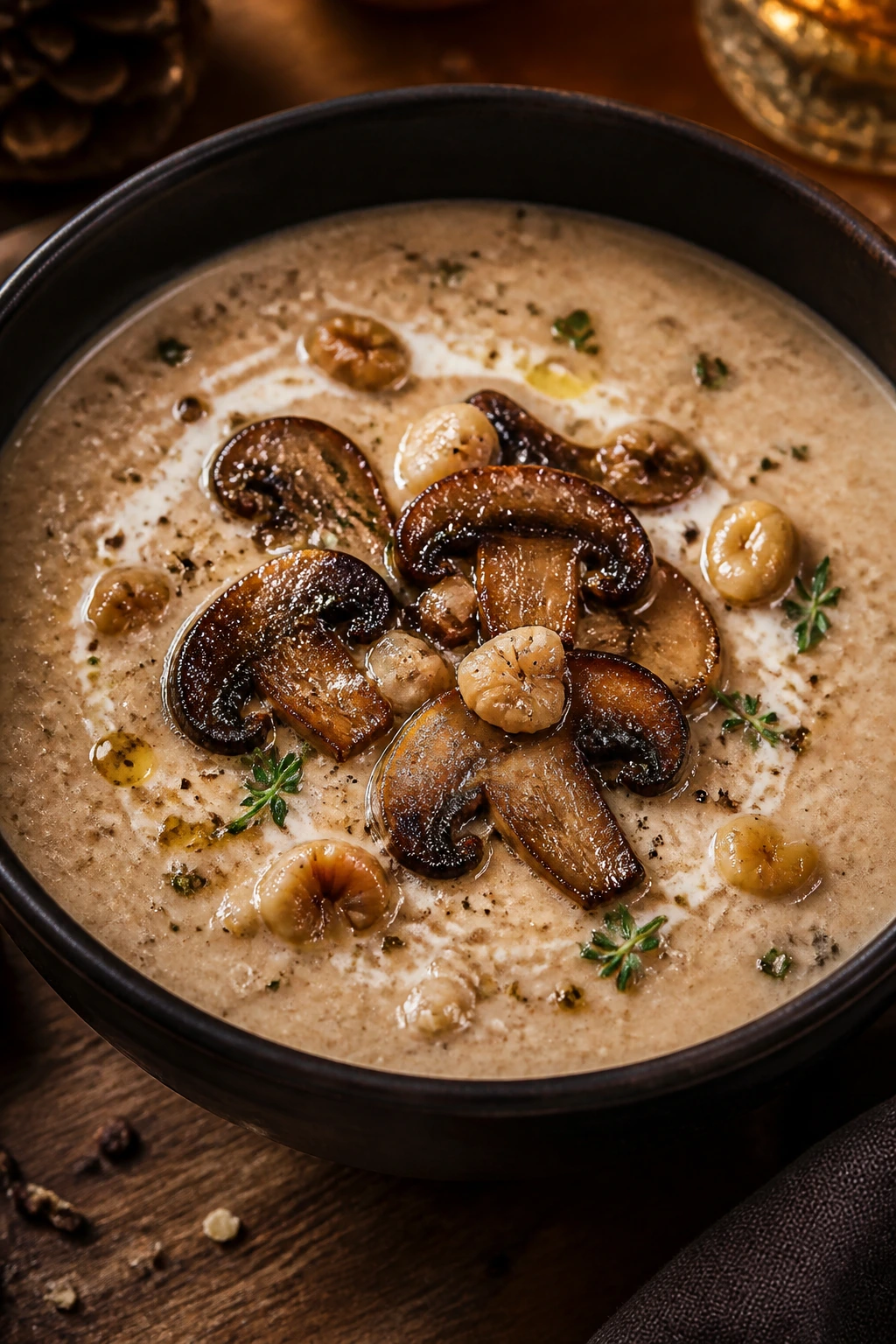
Good soup starts at the store, not at the stove. Buy squash that feels heavy for its size, onions with tight dry skins, and leeks with firm white stalks and no slimy outer layers. If you’re buying mushrooms, choose ones that look dry and closed, not damp and bruised; they brown better and keep their shape longer.
Broth is worth tasting before you pour it in. Some cartons are salty enough to season the pot on their own, while others taste thin and need extra thyme, bay, or a Parmesan rind. For creamy soups, buy blocks of cheese and grate them yourself. Pre-shredded cheese carries anti-caking powder, and that powder can make a sauce grainy when the heat is high.
Frozen vegetables are not a compromise here. Frozen corn, spinach, and even some chopped squash can be fine when the recipe is already building flavor in the pot. Canned beans should be rinsed unless you want a cloudy, slightly tinny broth. Seafood, on the other hand, should smell clean and faintly oceanic; if it smells sharp or fishy before it hits the pan, skip it.
How to Serve These Christmas Soup Recipes
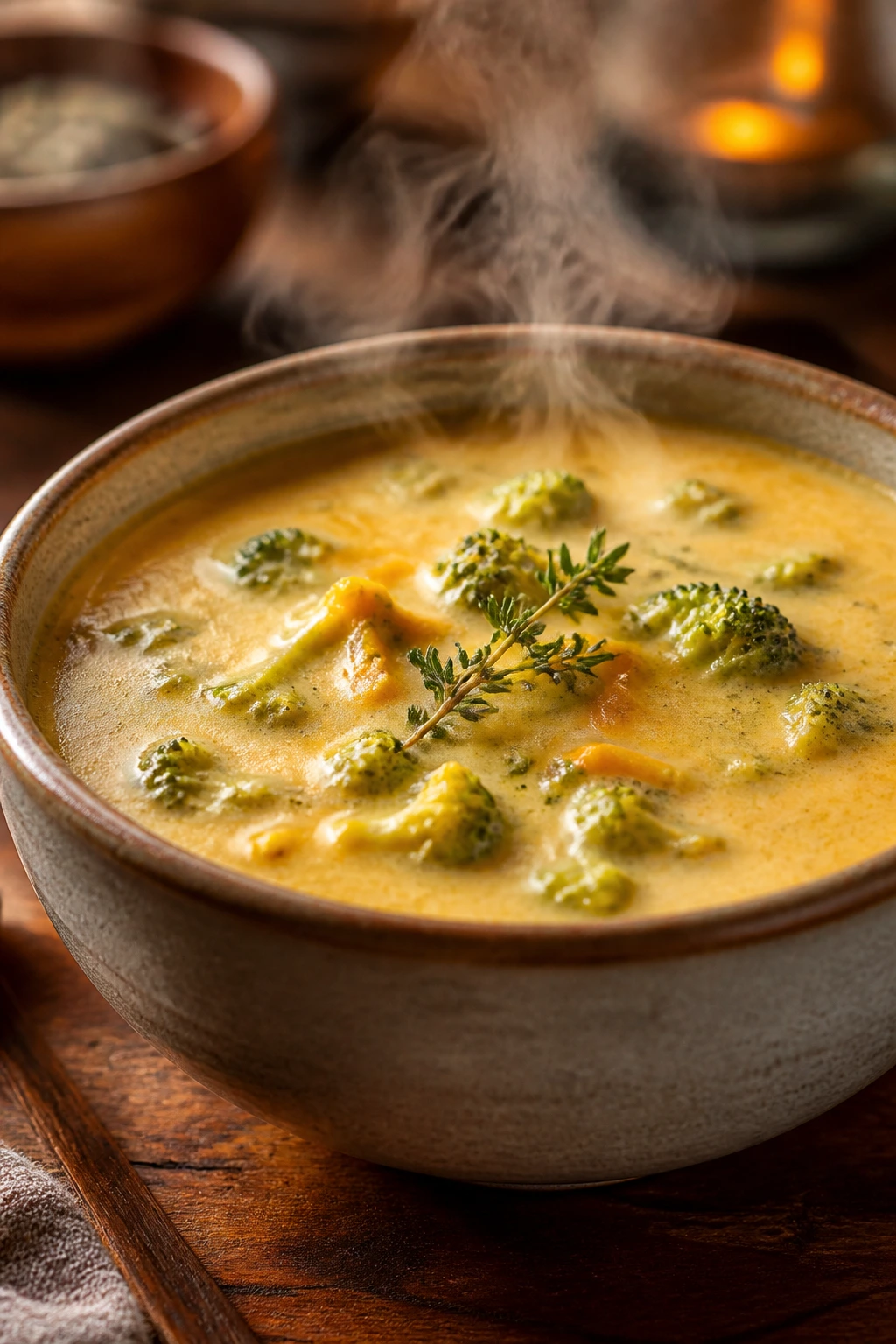
Presentation: Warm the bowls first if you can. A hot soup in a cold bowl loses steam fast, and steam is part of the whole appeal. Finish with one sharp garnish — herbs, cream, croutons, bacon, cheese, chili oil — instead of piling on three at once.
Accompaniments: Crusty sourdough, rye toast, buttered rolls, biscuits, and simple green salads all work across this collection. French onion wants bread under the cheese. Broccoli cheddar likes pretzel rolls. Tomato bisque can carry garlic toast without any help.
Portions: For a starter, plan on 1 to 1 1/2 cups per person. For a main course, 2 cups is the honest amount, with extra bread if the crowd is hungry. Creamy soups feel richer, so smaller bowls often work better than huge ones.
Beverage Pairing: Dry cider, sparkling water with citrus, a light beer, or a not-too-sweet white wine all fit the range here. For a nonalcoholic table, hot apple cider with a little lemon peel plays nicely beside the richer bowls.
Additional Tips and Flavor Boosters
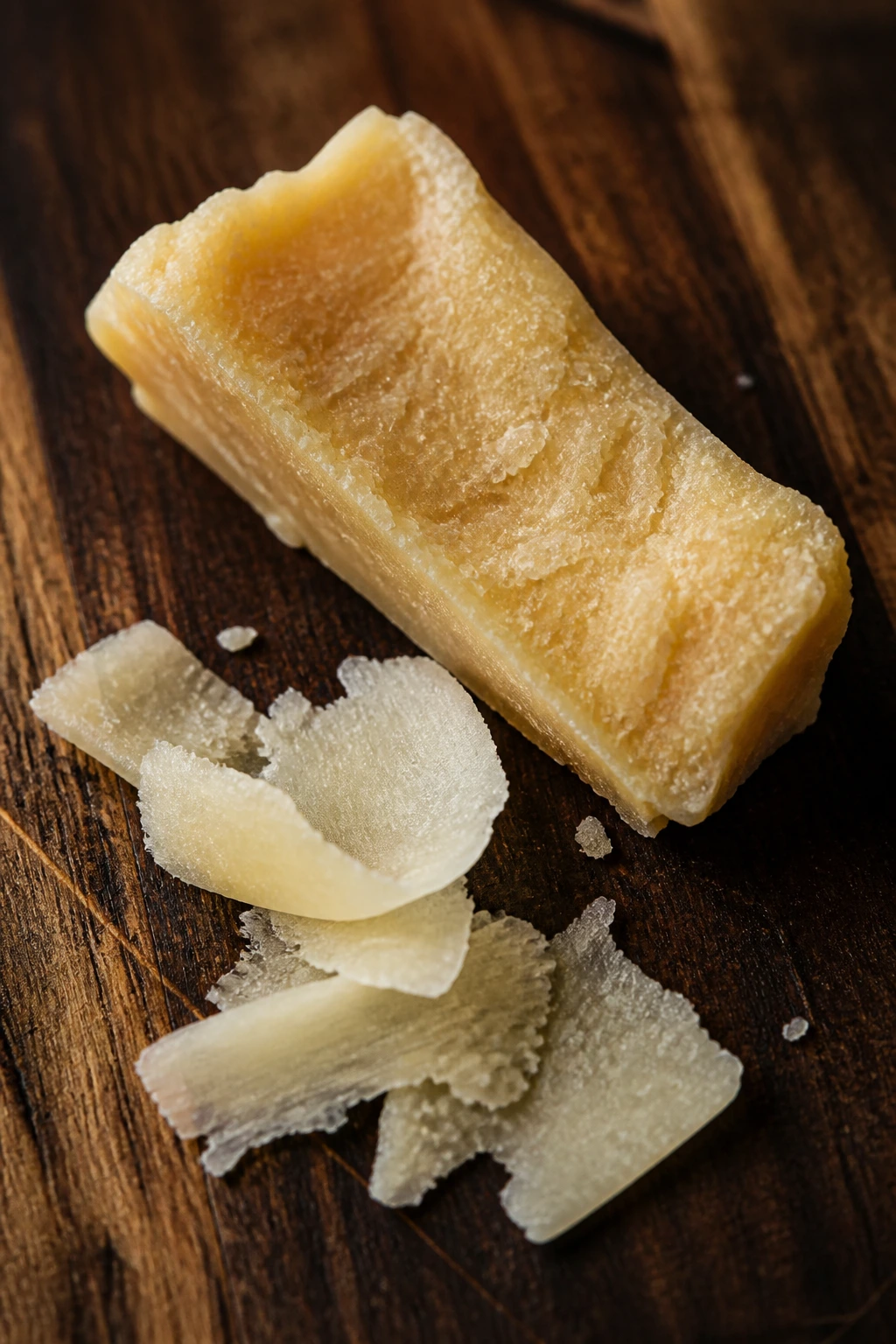
Flavor Enhancement: Keep a Parmesan rind, a splash of sherry, or a squeeze of lemon nearby. One of those three can rescue a soup that tastes flat after simmering.
Customization: Add cooked sausage to vegetable soups, stir spinach into bean soups, or toss in a handful of cooked rice if you need the pot to stretch farther. These are small moves, not full rewrites.
Serving Suggestions: Herbed oil, chopped parsley, chives, toasted pepitas, or a few drops of chili oil do more for the bowl than another ladle of broth. Use one garnish that gives contrast in color or texture.
Make-It-Yours: For dairy-free bowls, use coconut milk or oat cream in place of heavy cream. For gluten-free servings, swap barley and pasta for rice, potatoes, or extra beans. For a lower-salt pot, build flavor with herbs, onion, garlic, and acid before you reach for the shaker.
Make-Ahead, Storage, and Reheating Guidance
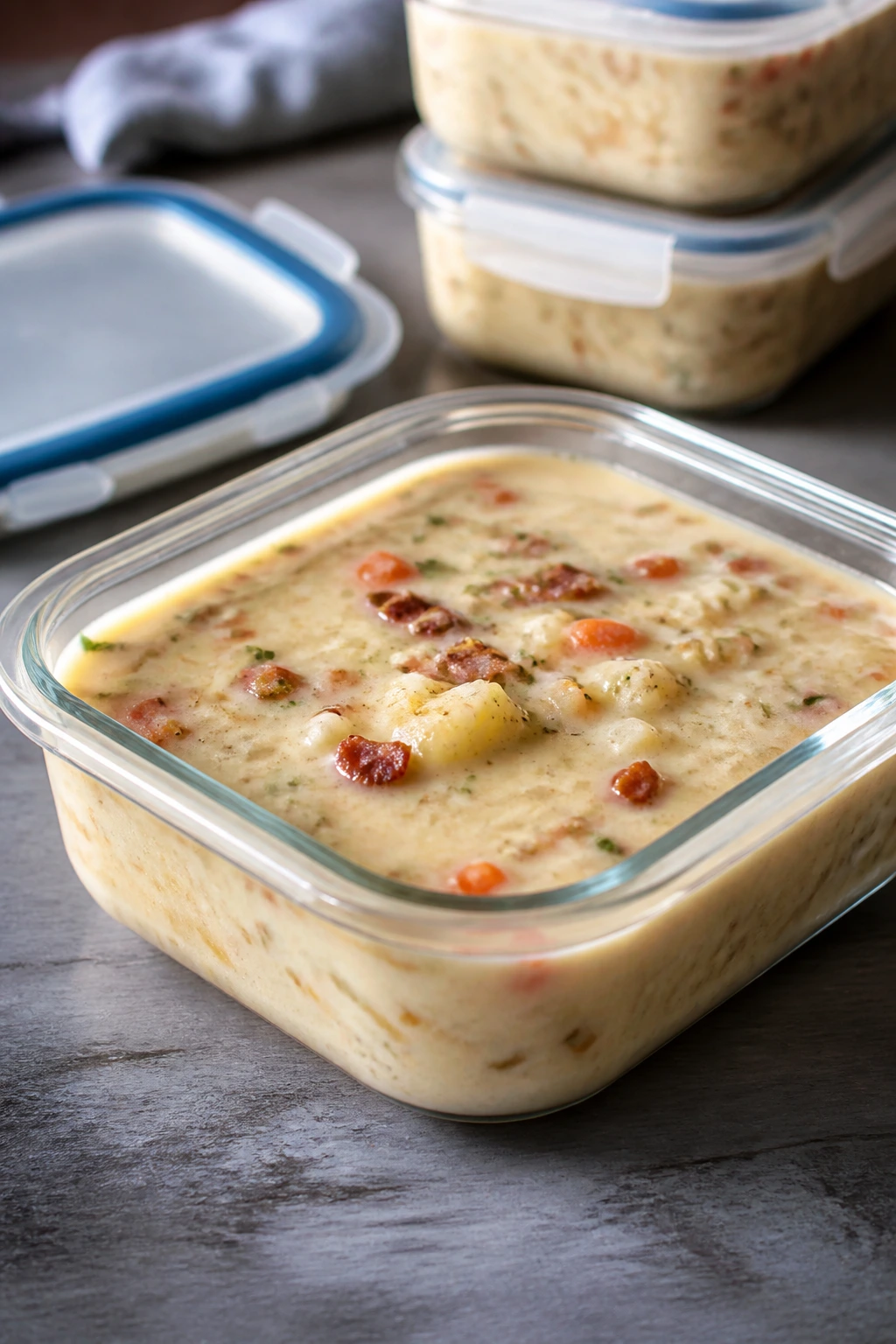
Most of these soups keep well in the refrigerator for 3 to 4 days in sealed containers, and bean, vegetable, or turkey soups can often stretch to 4 to 5 days if they were cooled quickly and handled cleanly. Seafood chowders are different; they’re best eaten within 2 days. Dumpling soup should be eaten fresh or the next day, because the dumplings keep soaking up broth and going soft.
Freeze brothy soups, bean soups, tomato soups, and most vegetable soups for up to 2 months. Creamy soups freeze better if you leave the cream out and stir it in after reheating, which keeps the texture smoother. Seafood chowder and cheese-heavy soups can freeze, but they’re touchier; I’d freeze the base only, then add the dairy and seafood fresh when possible.
Reheat slowly on the stove over medium-low heat, stirring now and then so the bottom doesn’t catch. If the soup thickened overnight, add a splash of stock or water to loosen it. Microwaving works for a bowl, but use short bursts and stir between them so the hot spots don’t overcook the dairy or the seafood.
Cool leftovers in shallow containers within 2 hours of cooking. That’s the boring food-safety step that saves you from a sad, overly sour soup later.
Variations and Adaptations to Try
Vegetarian Holiday Pot: Use vegetable broth, skip bacon or ham, and lean on mushrooms, Parmesan rind, beans, and herbs for depth. This works especially well with squash, minestrone, lentil, and mushroom soups.
Dairy-Free Creaminess: Coconut milk, oat cream, or blended white beans can replace heavy cream in squash, carrot, pumpkin, and tomato soups. Add them at the end and keep the heat gentle.
Gluten-Free Swap: Leave out barley, wheat pasta, and dumplings made with flour, then use rice, potatoes, or extra beans instead. The texture changes, but the soups stay full and satisfying.
Leftover Turkey and Ham Rescue Plan: Turkey slips into wild rice, noodle, or vegetable soups; ham belongs in bean, cabbage, or potato pots. Dice it small and add it near the end so it doesn’t toughen.
Spice-Level Adjustment: Keep the base mild, then set chili oil, hot sauce, red pepper flakes, or jalapeños on the table. That’s cleaner than over-spicing the whole pot and making half the room reach for water.
Richer Table Soup: Stir in a spoonful of cream, butter, or grated cheese at the end and top with toasted bread. This works best for French onion, broccoli cheddar, mushroom barley, and potato leek.
Common Mistakes to Avoid
-
Underseasoning after blending: Smooth soups often taste weaker than they did in chunks. Taste after blending and add salt, pepper, or lemon before you call it done.
-
Boiling dairy soups too hard: Cream, milk, and cheese can split or turn grainy if the heat is reckless. Keep the pot at a gentle simmer once dairy goes in.
-
Overcooking delicate add-ins: Seafood, tortellini, chicken breast, and dumplings all punish impatience. Add them late and watch the clock.
-
Skipping the browning step: Mushrooms, onions, sausage, and bacon need color before they hit broth. Pale aromatics make pale soup.
-
Letting starch take over: Barley, rice, pasta, and potatoes keep absorbing liquid. If the soup feels thick on day one, thin it before storing what’s left.
-
Using bland broth: A weak broth makes every other ingredient work too hard. Taste the base before you season the whole pot.
Frequently Asked Questions
Can I make Christmas soup a day ahead?
Yes, and in many cases you should. Bean soups, squash soups, lentil soups, and turkey soups often taste better after a night in the fridge because the broth has time to settle around the herbs and vegetables.
Which soups freeze the best?
Roasted squash, lentil, bean, tomato, and vegetable soups freeze well. Soups with lots of dairy, seafood, dumplings, or pasta are fussier, so freeze the base and add the fragile parts fresh if you can.
How do I keep cream soups from splitting?
Lower the heat before adding milk, cream, or cheese, and don’t let the pot boil afterward. If the soup has already been blended smooth, warm it slowly and stir often.
What if my soup tastes flat?
First, add salt in small amounts. Then try acid — a squeeze of lemon, a splash of sherry, or a little vinegar — because flat soup usually needs brightness more than more fat.
Can I use leftover turkey in place of chicken?
Absolutely. Turkey fits well in wild rice soup, noodle soup, vegetable soup, and even white chili. Add it late so it stays tender and doesn’t dry out.
What should I serve with soup for a Christmas meal?
Bread is the obvious answer, but a sharp salad or a plate of cheese and pickles can be even better if the rest of the menu is heavy. French onion wants toast, chowders want rolls, and brothy soups like minestrone love a good crust.
How do I thicken soup without flour?
Mash some beans or potatoes in the pot, blend a portion of the soup, or simmer it uncovered for a few extra minutes. Those fixes keep the texture smooth without making the broth taste pasty.
What if I only have canned broth and not homemade stock?
That’s fine. Use a decent canned or boxed broth, then build flavor with onion, garlic, herbs, a Parmesan rind, or browned meat. Good soup comes from layering, not from one perfect ingredient.
A Bowl Worth Passing Around
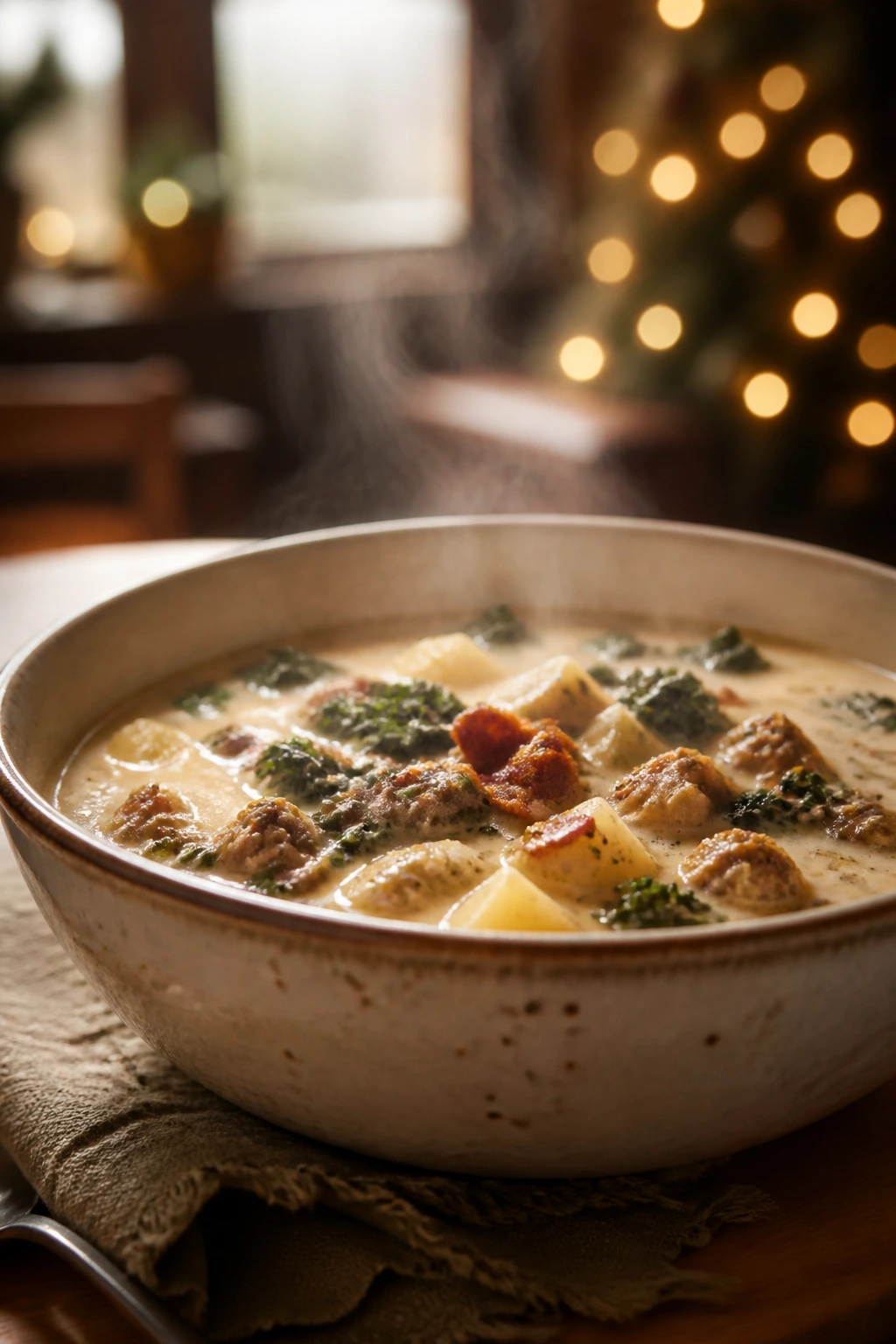
Holiday meals can get loud and shiny fast. Soup has a different rhythm. It sits in the middle of the table, sends up steam, and gives everyone a minute to slow down before the roast, the sides, and the dessert stampede begins.
That’s what makes these bowls worth keeping around. Some lean creamy and soft. Others use leftovers with a little more backbone. All of them bring warmth to a table without asking for much ceremony, which is a trait I’ve come to respect more every year.
Pass the bread. Keep the pot low. Let the bowls do their work.