



A bowl of sour soup can do something plain chicken soup never quite manages. The first spoonful should hit warm, brothy, and a little sharp, then the potatoes and chicken settle in behind it so the whole bowl feels steady instead of sleepy. That sour edge matters. It keeps the soup awake.
On a cold winter night, that brightness is the difference between “nice dinner” and “I want another bowl.” A good sour soup should steam up the windows, perfume the kitchen with dill and onion, and leave a clean, lemony finish on the tongue instead of the dull heaviness you get from broths that lean too far toward cream. The goal is not puckering tang. The goal is a hot, savory bowl with a lively backbone.
What I love about this version is the layering. Lemon gives the first spark, vinegar sharpens the broth, and sour cream rounds the edges without turning the whole pot into a dairy cloud. If you’ve ever had sour soup that tasted flat, watery, or curdled the second the dairy went in, the fix is mostly timing and heat control, not a shopping spree. That part is mercifully simple.
Why This Sour Soup Works When the Air Turns Sharp
This soup earns its keep because the sourness is deliberate, not accidental. The acid goes in at the end, so the broth tastes bright instead of cooked-out and tired. That last-minute finish also means the lemon and vinegar stay clean on the palate instead of disappearing into a long simmer.
Chicken thighs do the heavy lifting here. They stay tender after a 20-minute simmer, which is exactly the kind of insurance a winter soup needs. Breasts can work in a pinch, but thighs give you that soft, slightly rich bite that holds up against cabbage and potatoes.
The potatoes are not filler. They give the broth body, and if you mash a few cubes against the side of the pot, the soup gets that gentle, velvety thickness without flour or cream roux. I prefer that to a thickened soup that sits like gravy.
Cabbage does something sneaky and useful. It softens into ribbons, but it still has enough shape to give the bowl a bit of chew. That means the soup doesn’t collapse into mush after ten minutes on the stove.
Tempered sour cream is the trick that keeps the whole thing civilized. Stir it straight into boiling soup and it can split into grainy little bits. Whisk it with hot broth first, and you get a smooth, pale swirl that makes each spoonful feel fuller.
A little dill at the end keeps the soup from tasting heavy. Dill can go muddy if you cook it too long, so the fresh stuff belongs at the finish, when the pot is already off the heat and the soup smells like a real meal.
From Pantry Pot to Winter Staple
Sour soups show up in more kitchens than people realize. Across Central and Eastern Europe, cooks have long used vinegar, fermented brine, lemon, sour cream, or a tart broth base to wake up a pot of vegetables, meat, and starch. The logic is plain enough: if you’re cooking through a cold month, you want something that feels warming but not dull. Acid keeps a soup honest.
This version borrows that idea and strips away the fuss. No oddball pantry hunt. No hunting for a specialty base. Just a good pot, a few vegetables, chicken thighs, stock, and a careful finish. The flavor lands somewhere between chicken soup and a lighter potato stew, with a sharper edge than either one.
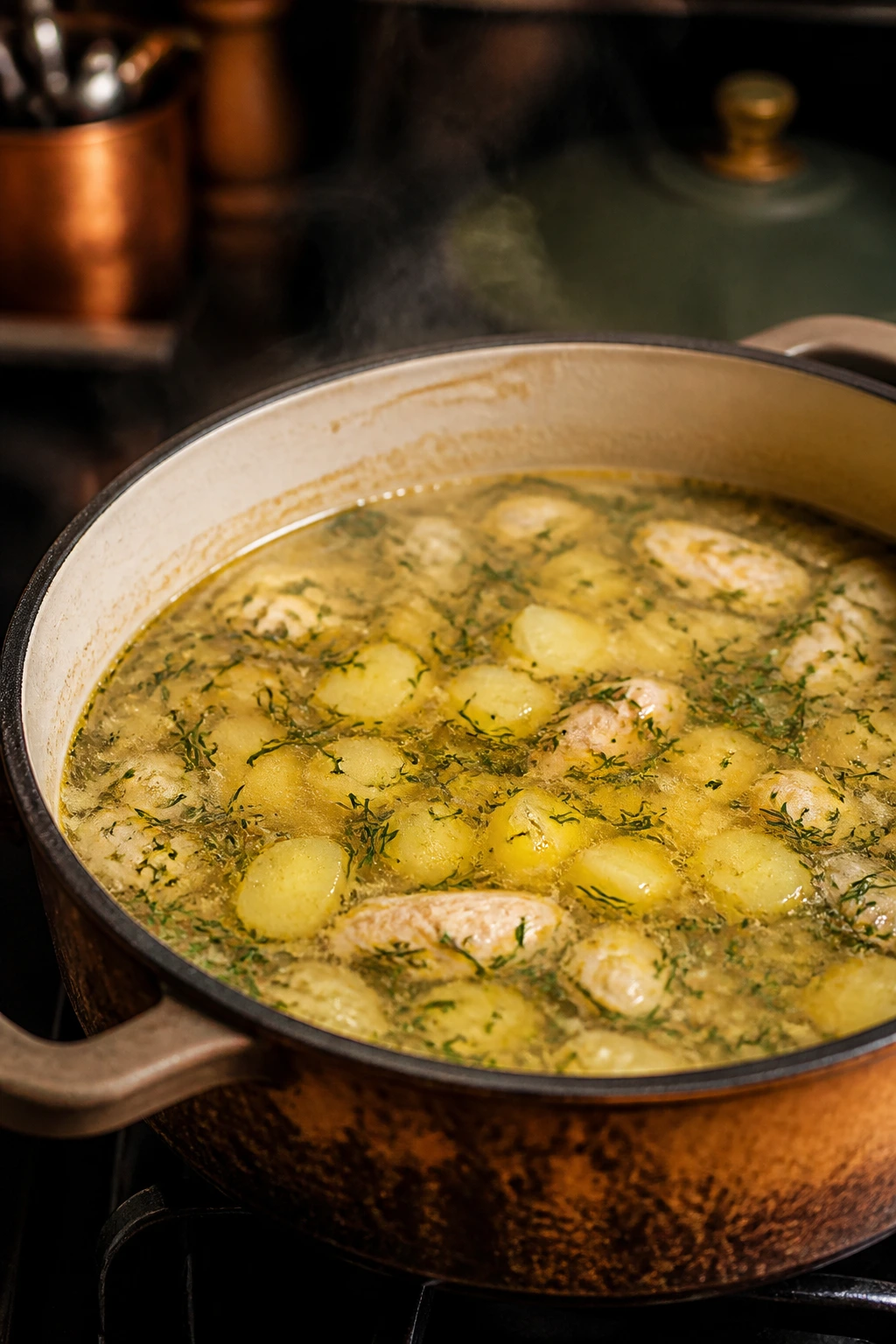
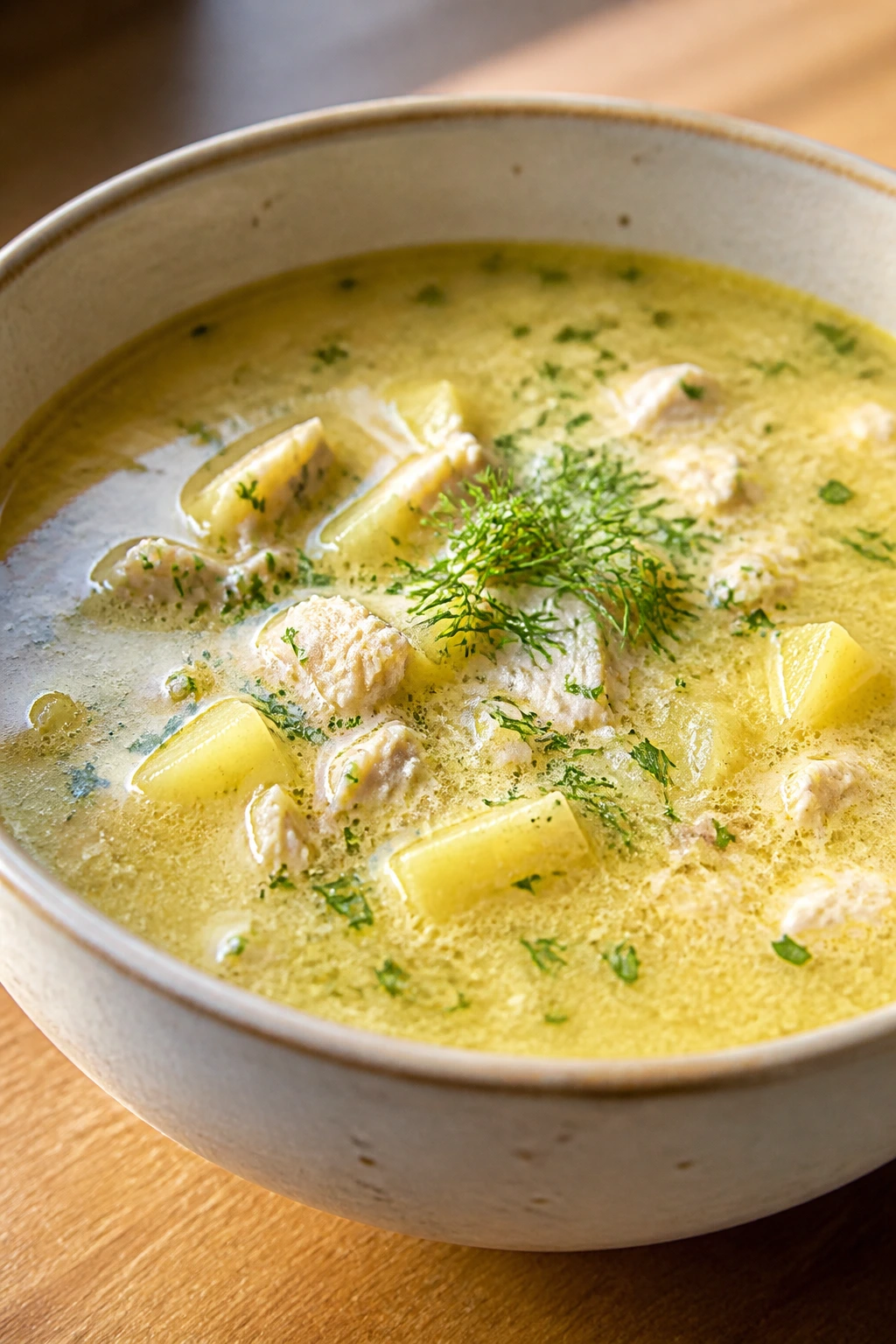
I like that it doesn’t behave like a show-off. The broth is pale gold with green dill flecks, not flashy red or thick with cream. The smell is the first clue that you’re close: onion, butter, chicken, and a little tang rising off the pot when the lid comes off. It’s the kind of soup that makes the kitchen feel warmer before the bowls even hit the table.
There’s also a practical reason this style sticks around. Potatoes, cabbage, onion, and stock are everyday ingredients. Add a handful of herbs and a little dairy, and suddenly you’ve got a bowl that tastes much more deliberate than the ingredient list suggests.
Yield, Timing, and the Shape of the Bowl
Yield: Serves 6 generous bowls
Prep Time: 20 minutes
Cook Time: 45 minutes
Total Time: 1 hour 5 minutes
Chill/Rest Time: 10 minutes, for the flavors to settle before serving
Difficulty: Intermediate — the steps themselves are straightforward, but the soup asks for a little care when you temper the sour cream and balance the final acid.
Best Served: Hot, with a thick slice of bread and a final scatter of dill
What Goes Into the Pot
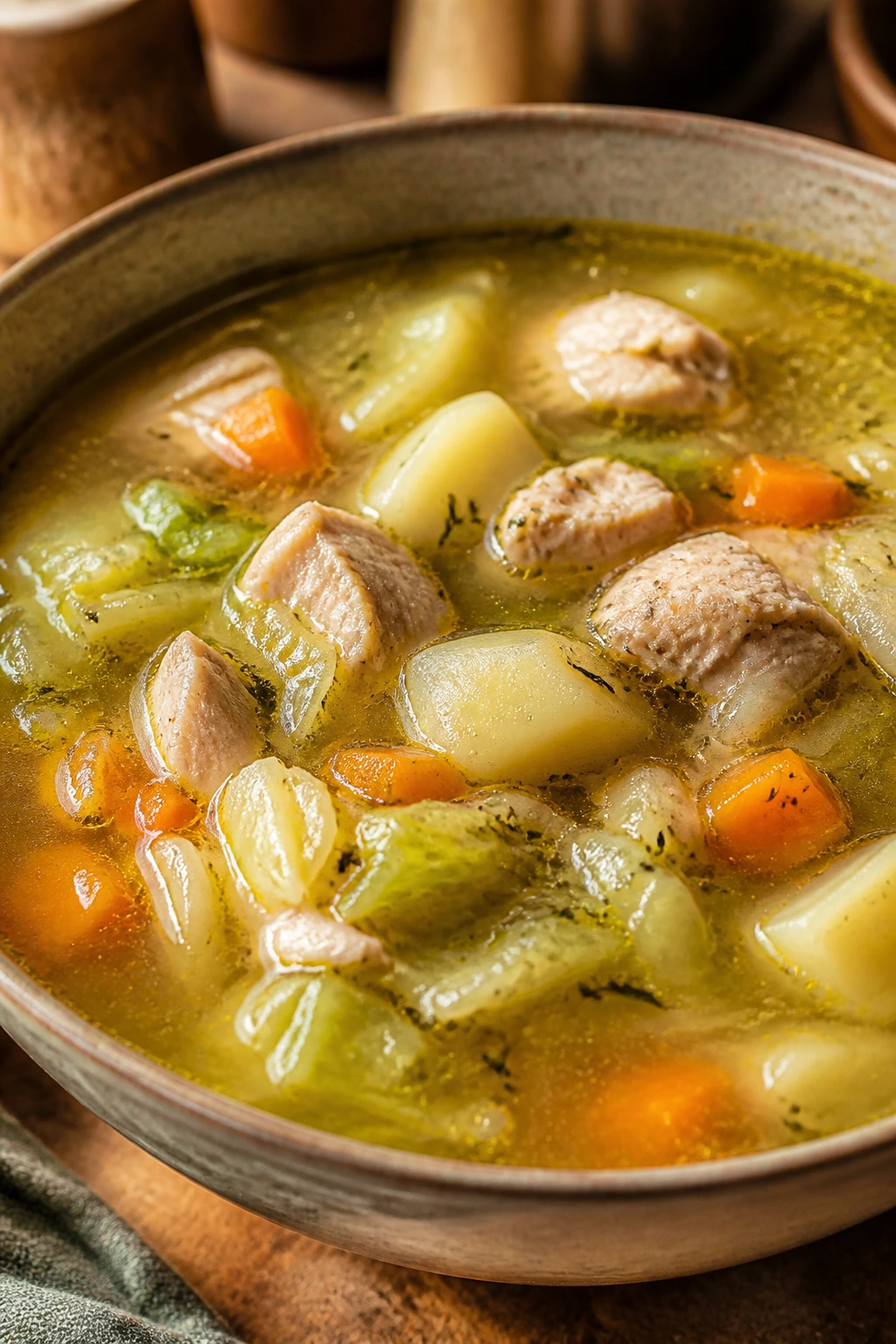
For the Soup:
- 2 tablespoons unsalted butter
- 1 tablespoon olive oil
- 1 1/2 pounds boneless, skinless chicken thighs, trimmed and cut into 1-inch pieces
- 1 1/2 teaspoons kosher salt, divided
- 3/4 teaspoon black pepper, divided
- 1 medium yellow onion, diced
- 2 medium carrots, diced
- 2 celery stalks, diced
- 3 cloves garlic, minced
- 1 tablespoon tomato paste
- 1 teaspoon sweet paprika
- 1 teaspoon dried thyme
- 1 bay leaf
- 8 cups low-sodium chicken stock
- 1 1/2 pounds Yukon Gold potatoes, peeled or scrubbed and cut into 3/4-inch cubes
- 3 cups green cabbage, thinly sliced
- 1 cup sour cream, at room temperature
- 3 tablespoons fresh lemon juice
- 1 tablespoon apple cider vinegar
- 1/2 cup fresh dill, chopped
- 2 tablespoons chopped fresh parsley
- 1 teaspoon sugar, optional
- Extra dill and black pepper, for serving
Why Each Ingredient Matters in a Sour Soup
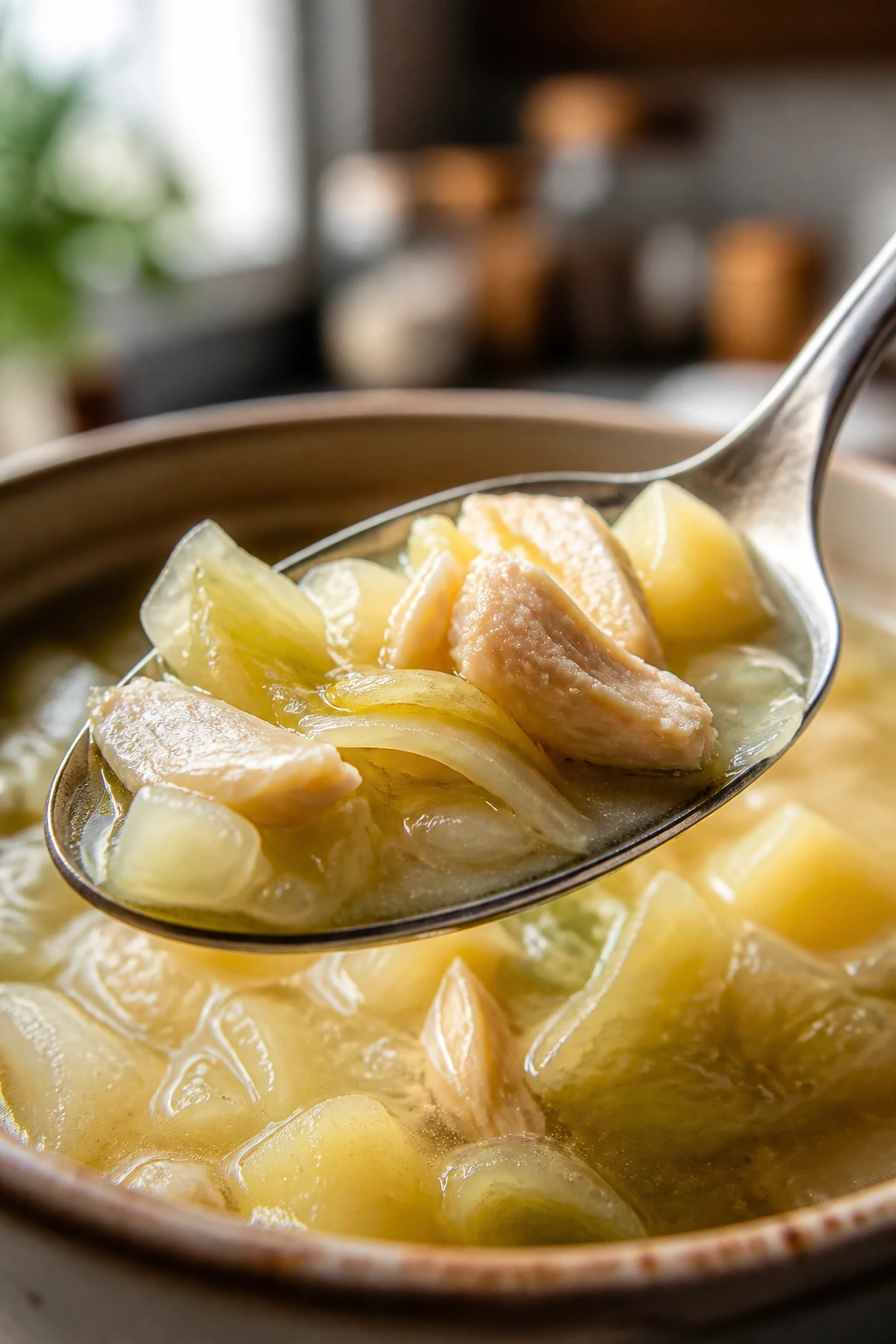
Chicken and Stock
What to use: 1 1/2 pounds boneless, skinless chicken thighs and 8 cups low-sodium chicken stock.
Preparation: Trim off any loose fat, cut the chicken into 1-inch pieces, and pat it dry before it hits the pot. That dryness helps it brown instead of steaming.
Substitutions: Chicken breast can replace the thighs if you shorten the simmer, and shredded rotisserie chicken works if you want a faster soup. If you go the rotisserie route, add it near the end so it doesn’t dry out.
Tips: Use stock that tastes good on its own. If the stock is thin and salty, the whole soup will inherit that problem, and there’s no clever garnish that fixes it.
Potatoes, Cabbage, and the Vegetable Base
What to use: 1 1/2 pounds Yukon Gold potatoes, 3 cups green cabbage, 1 onion, 2 carrots, and 2 celery stalks.
Preparation: Cut the potatoes into even 3/4-inch cubes so they cook at the same pace, and slice the cabbage into thin ribbons. Dice the onion, carrots, and celery small enough to soften in the time it takes the potatoes to turn tender.
Substitutions: Russet potatoes work, but they break down more and make the broth cloudier. Savoy cabbage gives a softer texture, and Napa cabbage can work if you want a lighter result.
Tips: Yukon Golds are my pick because they hold shape but still give the broth a little body. If your cabbage has thick ribs, trim the toughest part out so it doesn’t stay chewy in the finished soup.
The Sour Finish
What to use: 1 cup sour cream, 3 tablespoons lemon juice, and 1 tablespoon apple cider vinegar.
Preparation: Let the sour cream sit at room temperature before cooking, then whisk it with hot broth before it goes back into the pot. That tempering step keeps it smooth.
Substitutions: Greek yogurt can stand in for sour cream, though it tastes sharper and needs the same tempering treatment. White wine vinegar can replace apple cider vinegar if that’s what you have.
Tips: Add the lemon and vinegar at the end, not midway through simmering. Acid added too early fades, and the soup ends up tasting oddly flat even though it technically has enough souring.
Herbs and Seasoning
What to use: 1 tablespoon tomato paste, 1 teaspoon sweet paprika, 1 teaspoon dried thyme, 1 bay leaf, 1/2 cup fresh dill, 2 tablespoons parsley, and 1 teaspoon sugar if the pot needs softening.
Preparation: Measure the dried herbs before you start. Once the onions are sweating and the garlic is ready, you want to move fast so the spices bloom without burning.
Substitutions: Smoked paprika gives the soup a darker, cozier edge, and fresh thyme can replace dried thyme if you use a bit more. Parsley is flexible; dill is not. Dill is part of the soup’s personality.
Tips: Taste after the final acid goes in. Sometimes the soup needs salt; sometimes it needs a pinch of sugar to round the edge. Sugar is not there to make the soup sweet — it just smooths the sour note if it lands too sharply.
The Tools That Make the Process Easy
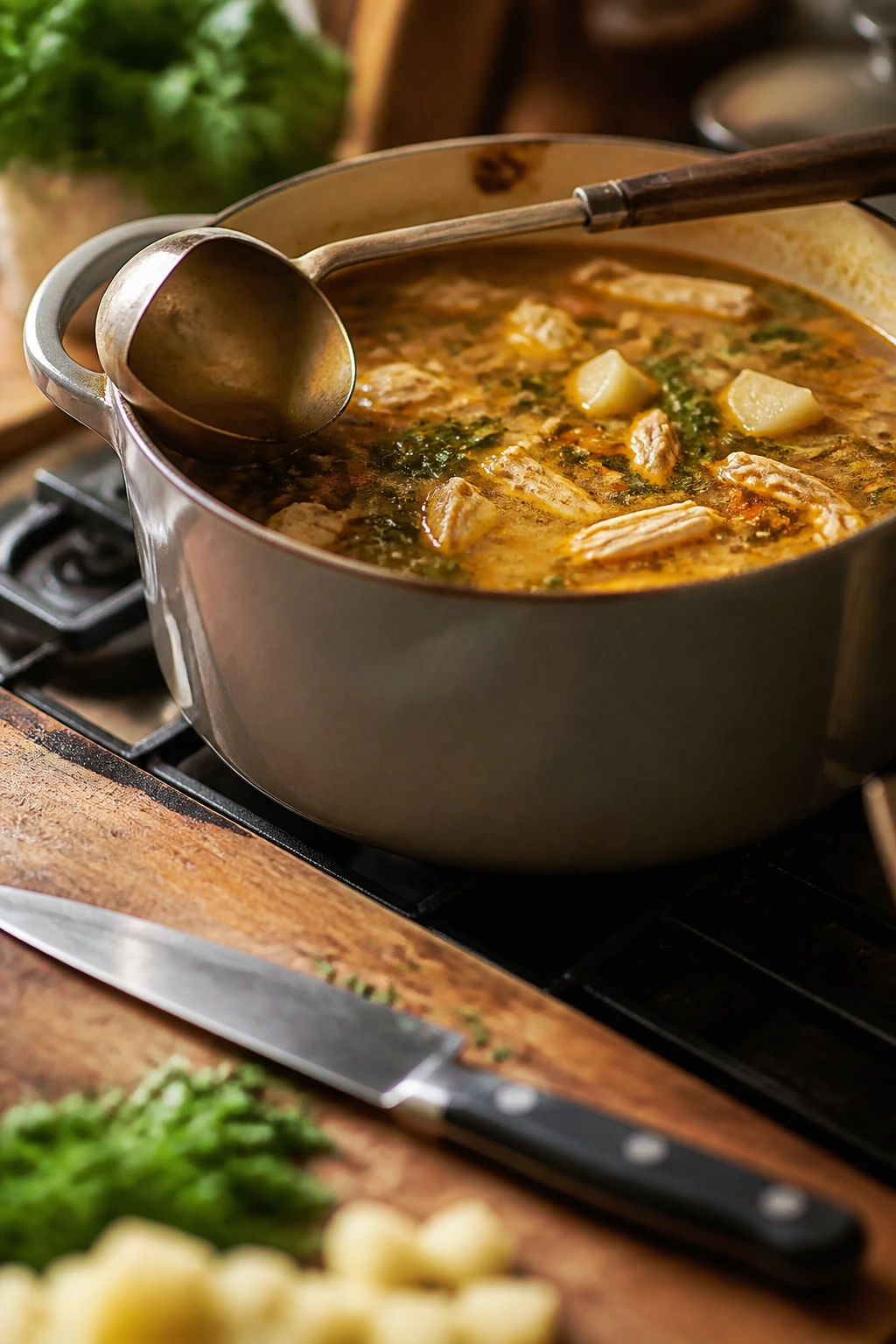
A soup like this does not need fancy gear, but the right pot and a few small tools make the whole thing calmer.
- 6-quart Dutch oven or heavy soup pot: The wide bottom gives you enough space to brown the chicken and soften the vegetables without crowding.
- Chef’s knife: You’ll use it for the onion, carrots, celery, cabbage, potatoes, and herbs, so a sharp one makes the prep much faster.
- Cutting board: A sturdy board with enough room for all the chopped vegetables keeps the work from feeling cramped.
- Wooden spoon or heatproof spatula: You need something that can scrape up the browned bits from the bottom of the pot.
- Ladle: Helpful for serving and, more important, for pulling a little hot broth to temper the sour cream.
- Medium heatproof bowl and whisk: The bowl is for smoothing the sour cream with hot broth before it goes back into the soup.
- Measuring cups and spoons: The acid and dairy need real measurements, not guesswork.
- Citrus juicer or small strainer: Useful for catching seeds when you squeeze the lemon.
- Instant-read thermometer: Optional, but handy if you want to check that the chicken is fully cooked without overcooking it.
Browning, Simmering, and Finishing the Pot
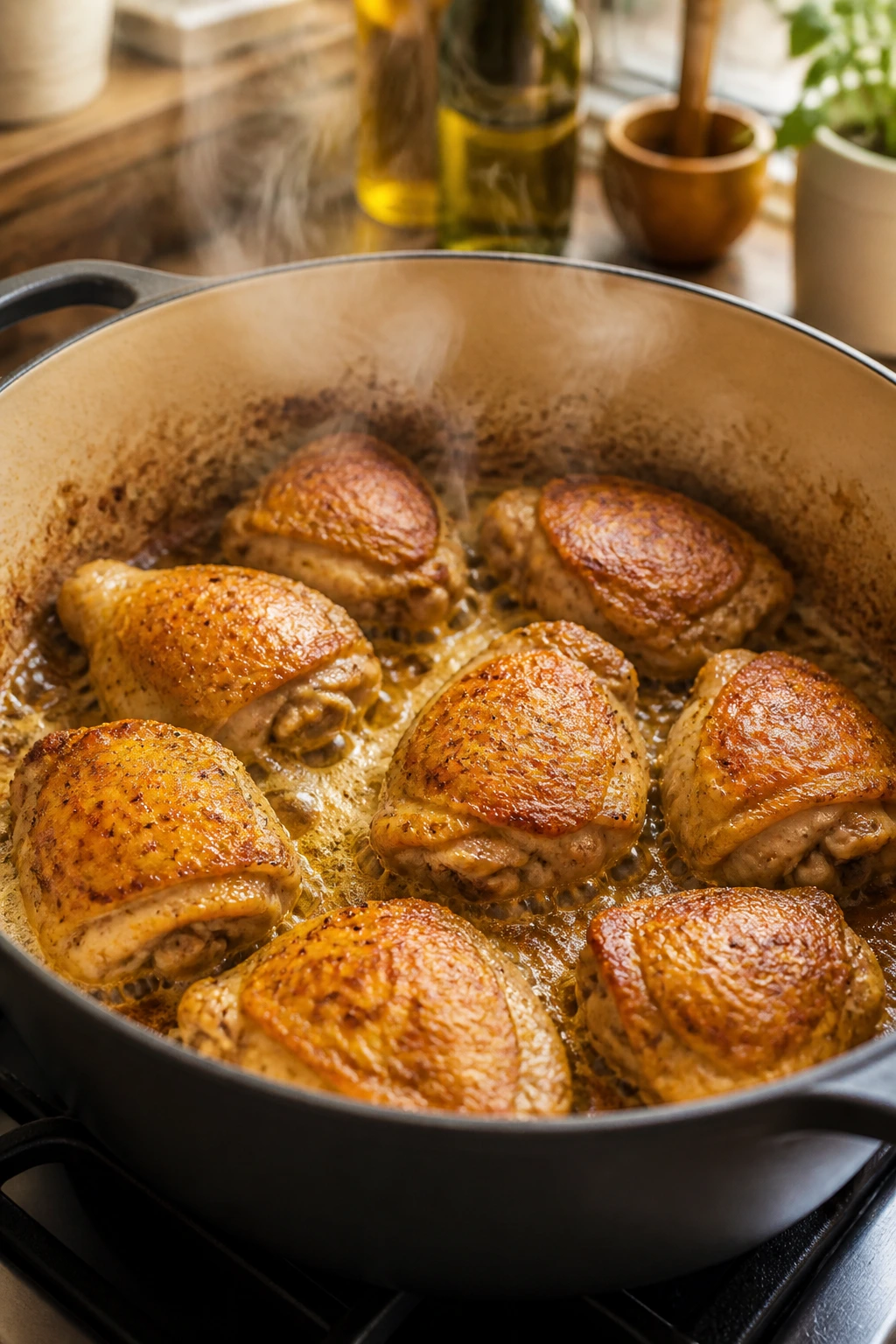
Brown the Chicken
-
Pat the chicken pieces dry with paper towels, then season them with 1 teaspoon of the kosher salt and 1/2 teaspoon of the black pepper.
-
Heat the butter and olive oil in a heavy soup pot over medium-high heat until the butter foams and the fat shimmers.
-
Add the chicken in a single layer and cook for 2 to 3 minutes per side, until the edges turn golden. Do not try to cook every piece through here — you want color, not dryness. Transfer the chicken to a plate.
Build the Broth
-
Lower the heat to medium. Add the onion, carrots, celery, and the remaining salt and pepper. Cook for 5 to 6 minutes, stirring now and then, until the onion turns translucent and the carrots soften at the edges.
-
Stir in the garlic, tomato paste, paprika, thyme, and bay leaf. Cook for 1 minute, just until the tomato paste darkens a shade and the garlic smells sweet instead of sharp.
-
Pour in the stock and scrape the bottom of the pot with a wooden spoon to release the browned bits. Add the potatoes and bring the pot up to a boil over high heat.
-
Drop the heat to a steady simmer and cook for 12 minutes, uncovered or partially covered, until the potatoes are starting to turn tender but still hold their shape.
-
Add the cabbage and return the browned chicken, along with any juices on the plate, to the pot. Simmer for 10 to 12 minutes more, until the chicken reaches 165°F and the potatoes are tender all the way through.
Finish Without Curdling
-
Ladle 1 cup of hot broth into a medium bowl. Whisk in the sour cream until smooth, then stir that mixture back into the pot. This is the moment that keeps the soup creamy instead of grainy.
-
Stir in the lemon juice, vinegar, dill, parsley, and sugar if you’re using it. Taste the broth, then adjust with more salt, pepper, or a small extra squeeze of lemon if it needs more lift.
-
Turn off the heat and let the soup rest for 10 minutes before serving. The broth settles, the potatoes relax, and the flavor stops tasting separate and starts tasting like one bowl.
How to Serve Sour Soup for a Real Winter Meal
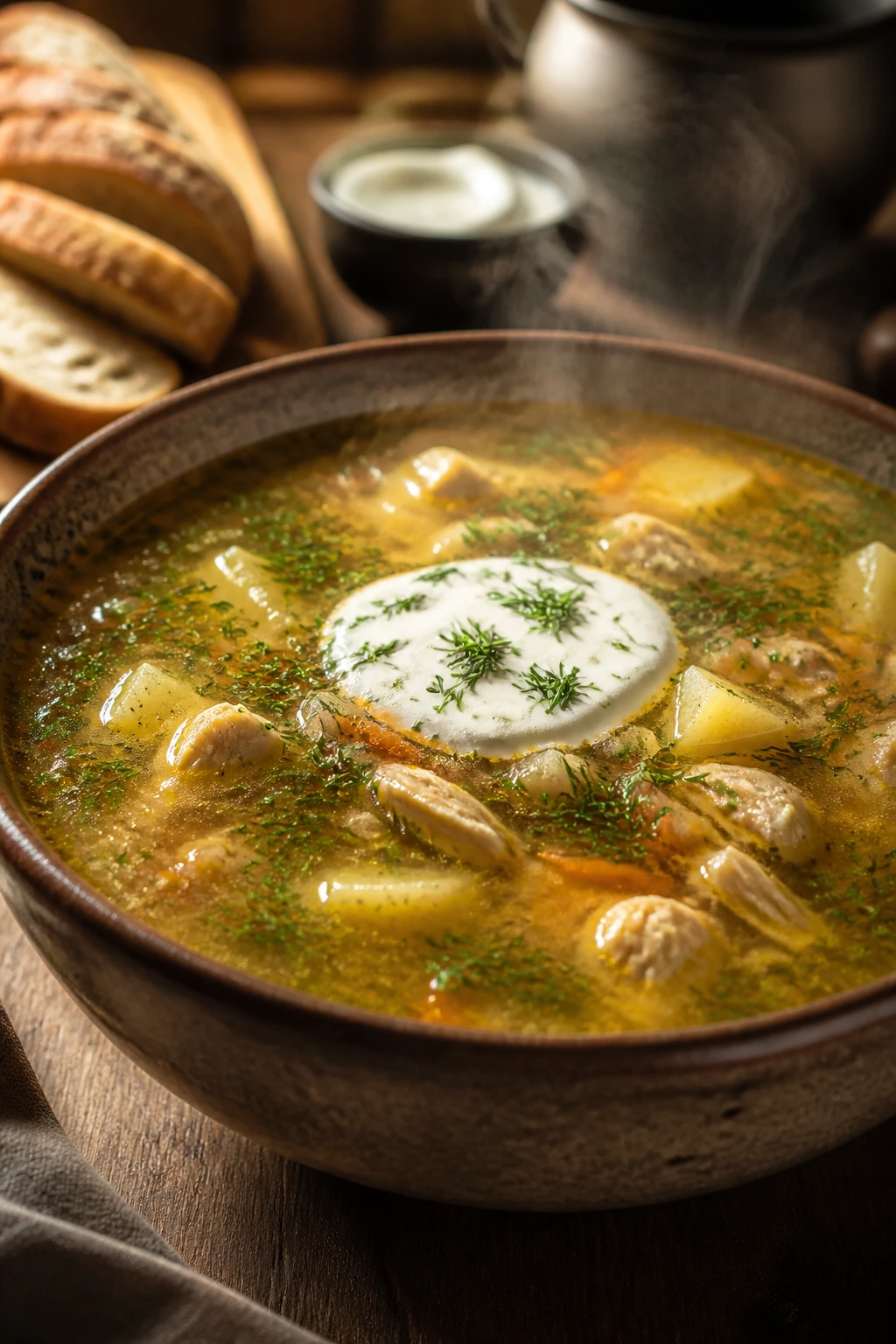
Presentation: Ladle the soup into warmed bowls so it stays hot to the last spoonful. A small spoonful of sour cream in the center, a little chopped dill on top, and a few cracks of black pepper make the bowl look finished without fuss.
Accompaniments: Thick rye bread is my first choice, especially if it has a dark crust and a chewy middle. Crusty sourdough works too. If you want something fresher on the side, a sliced cucumber salad with salt and vinegar is a sharp, clean partner for the broth.
Portions: Plan on 1 1/2 to 2 cups per person for dinner, depending on how much bread you’re serving with it. For a starter, 1 cup is enough — more than that and you risk spoiling the main meal.
Beverage Pairing: A dry cider works well because its crisp edge follows the lemon in the soup. A light lager is also a smart choice. If you want something non-alcoholic, black tea with a squeeze of lemon or sparkling water with citrus both fit the bowl without crowding it.
Small Moves That Change the Whole Bowl

Flavor Enhancement: If you want a deeper, old-world note, add 1 teaspoon of caraway seeds with the onions. They smell faintly like rye bread once they hit the hot fat, and they give the broth a darker, warmer edge without turning it heavy.
Time-Saver: Rotisserie chicken is a real shortcut here. Skip the browning step, shred about 3 cups of cooked chicken, and stir it into the pot during the last 5 minutes of simmering so it warms through without drying out.
Pro Move: Mash 4 or 5 potato cubes against the side of the pot before you add the tempered sour cream. That little move gives the soup a silkier body and makes it taste fuller, even though you never touched flour.
Cost-Saver: Keep the chicken at the full 1 1/2 pounds only if it’s on hand or on sale. The soup still feels generous with a little less meat because potatoes, cabbage, and broth carry the structure.
Bright Finish: If the soup tastes rich but slightly sleepy, add a pinch of lemon zest right at the end. Not a lot. Half a lemon’s worth is usually enough, and too much zest can turn the finish bitter.
Mistakes That Flatten the Broth
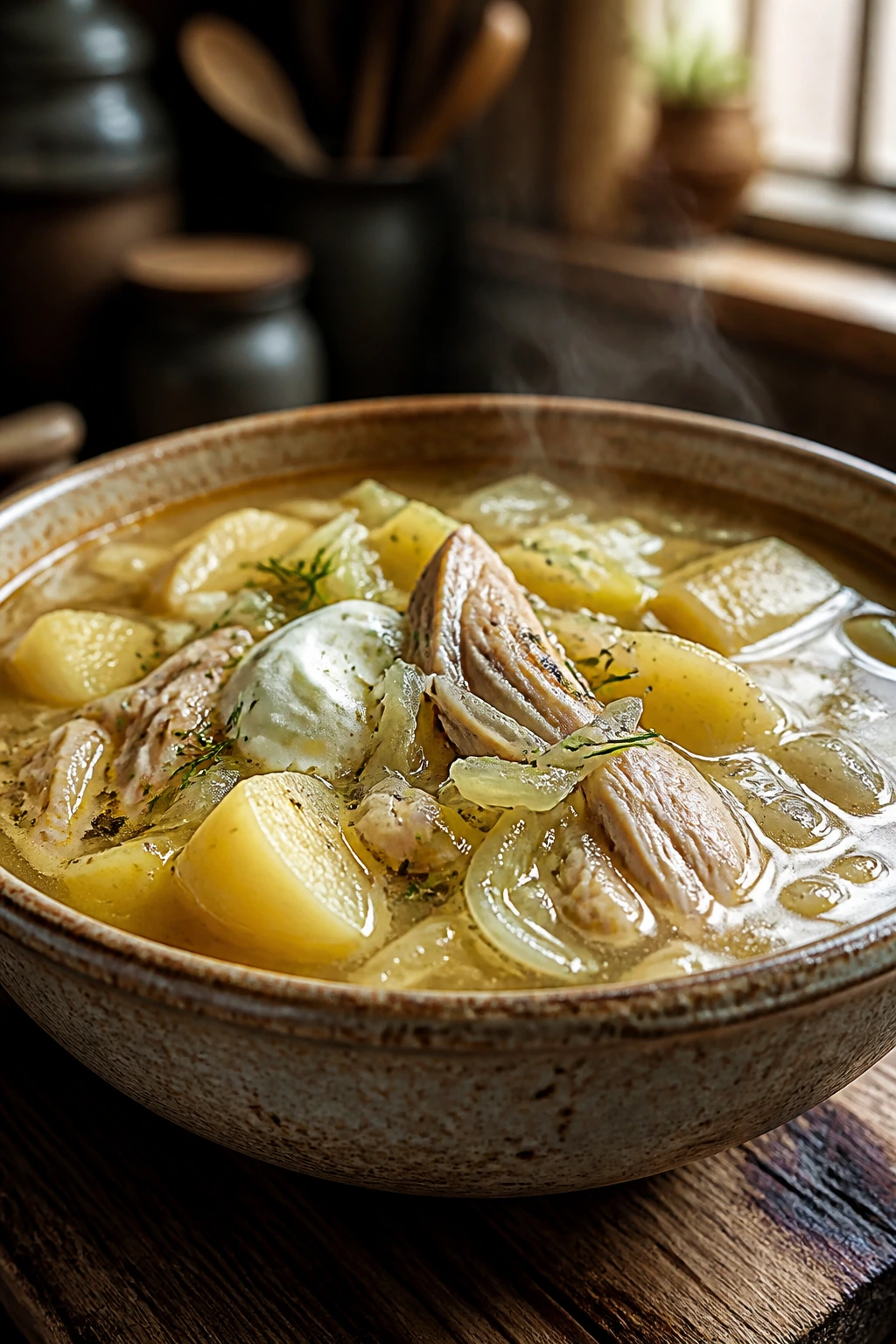
Adding sour cream to a boiling pot. That’s the fastest way to get little grainy bits floating through the soup. The fix is simple: temper it with hot broth first, then add it after the pot comes off the heat or drops to the barest simmer.
Souring the soup too early. Lemon and vinegar lose their snap if they cook too long. If the broth tastes oddly dull after a long simmer, it’s usually because the acid was added before the rest of the soup was ready.
Cutting the potatoes too small. Tiny cubes dissolve before the cabbage is done, and then the soup goes from bright and brothy to muddy. Stick to a consistent 3/4-inch dice so the potatoes soften evenly and still hold a little shape.
Crowding the pan during the chicken browning step. If every piece sits on top of the others, you’ll steam the chicken instead of browning it. Brown in one layer, even if that means two batches. The fond at the bottom is worth the extra few minutes.
Underseasoning because the broth already tastes sour. Acid can mask salt in a strange way. Taste after the final lemon and vinegar go in, then adjust in small pinches. If the soup tastes lively but thin, it probably needs salt, not more lemon.
Overcooking the cabbage. Once cabbage goes past tender, it starts to smell sulfurous and the texture turns limp in a hurry. Add it late, simmer until just soft, and stop there.
Variations for Different Kitchens and Different Tastes
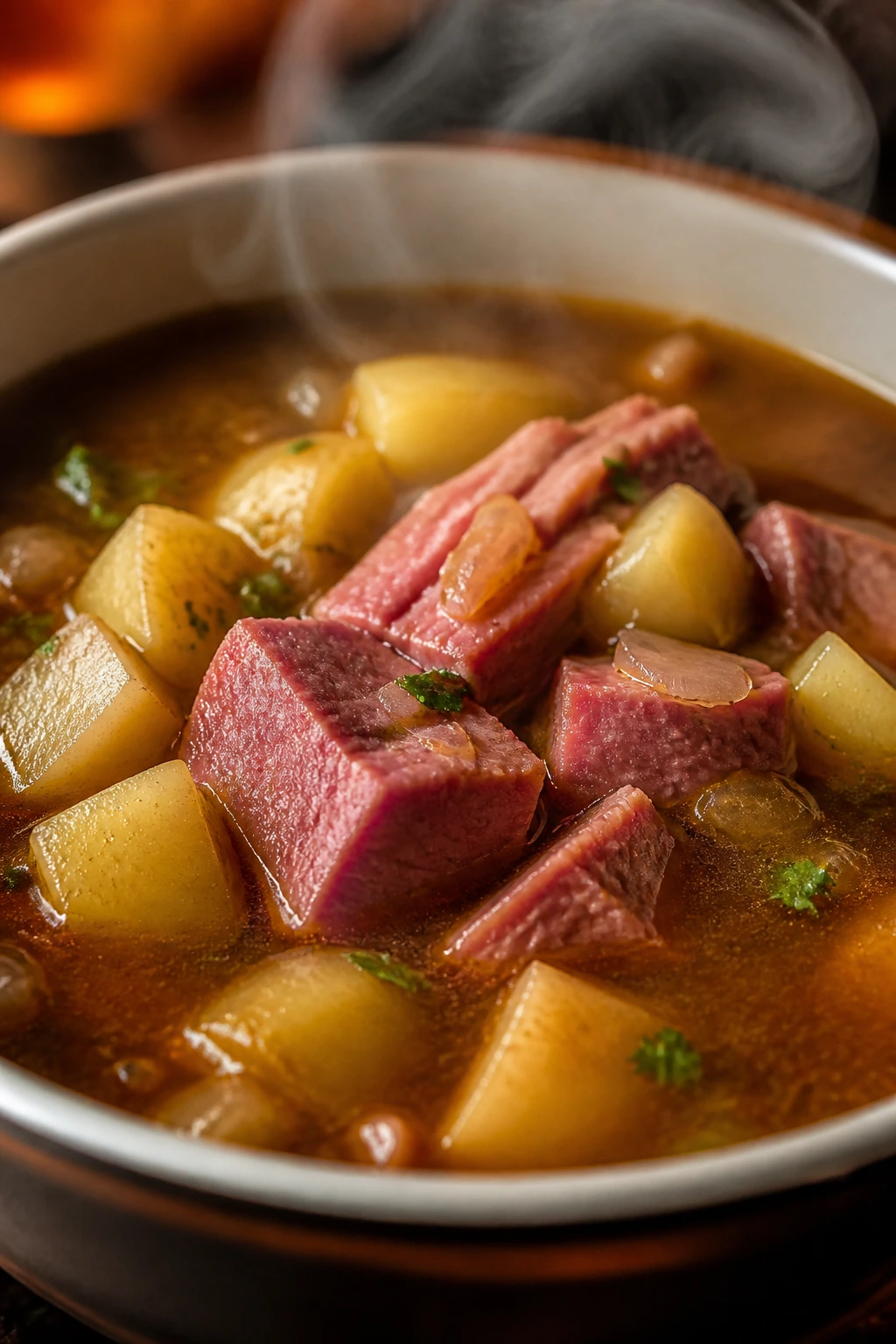
Smoky Ham-and-Potato Version
Stir 6 ounces diced smoked ham into the pot with the onions, and swap the sweet paprika for smoked paprika. The ham brings a salty edge that plays nicely against the sour finish, and the broth turns deeper and a little more rustic.
Vegetarian Mushroom and White Bean Version
Use vegetable stock instead of chicken stock, skip the chicken, and brown 12 ounces sliced cremini mushrooms in the butter and oil before the onions go in. Add 1 can of drained white beans with the potatoes for body. The soup lands earthy rather than meaty, but the lemon, dill, and sour cream still do the same bright work.
Lighter Lemon-Dill Bowl
Replace the sour cream with 3/4 cup full-fat Greek yogurt and use an extra tablespoon of lemon juice. Temper the yogurt the same way you would sour cream, and keep the soup off direct heat when you stir it in. The bowl tastes sharper and lighter, with less richness on the finish.
Fermented Tang Version
If you like a brinier sour note, add 1/4 cup sauerkraut brine or dill pickle brine at the very end and cut the lemon juice back to 2 tablespoons. That gives the soup a deeper, more fermented edge. Start small; brine can take over fast.
Extra-Hearty Grain Bowl
Stir in 1/2 cup cooked pearl barley or farro near the end if you want the soup to feel more like a full meal. The grains soak up the broth in a good way, but they also mute some of the brightness, so you may want an extra squeeze of lemon at the table.
Make-Ahead, Storage, and Reheating
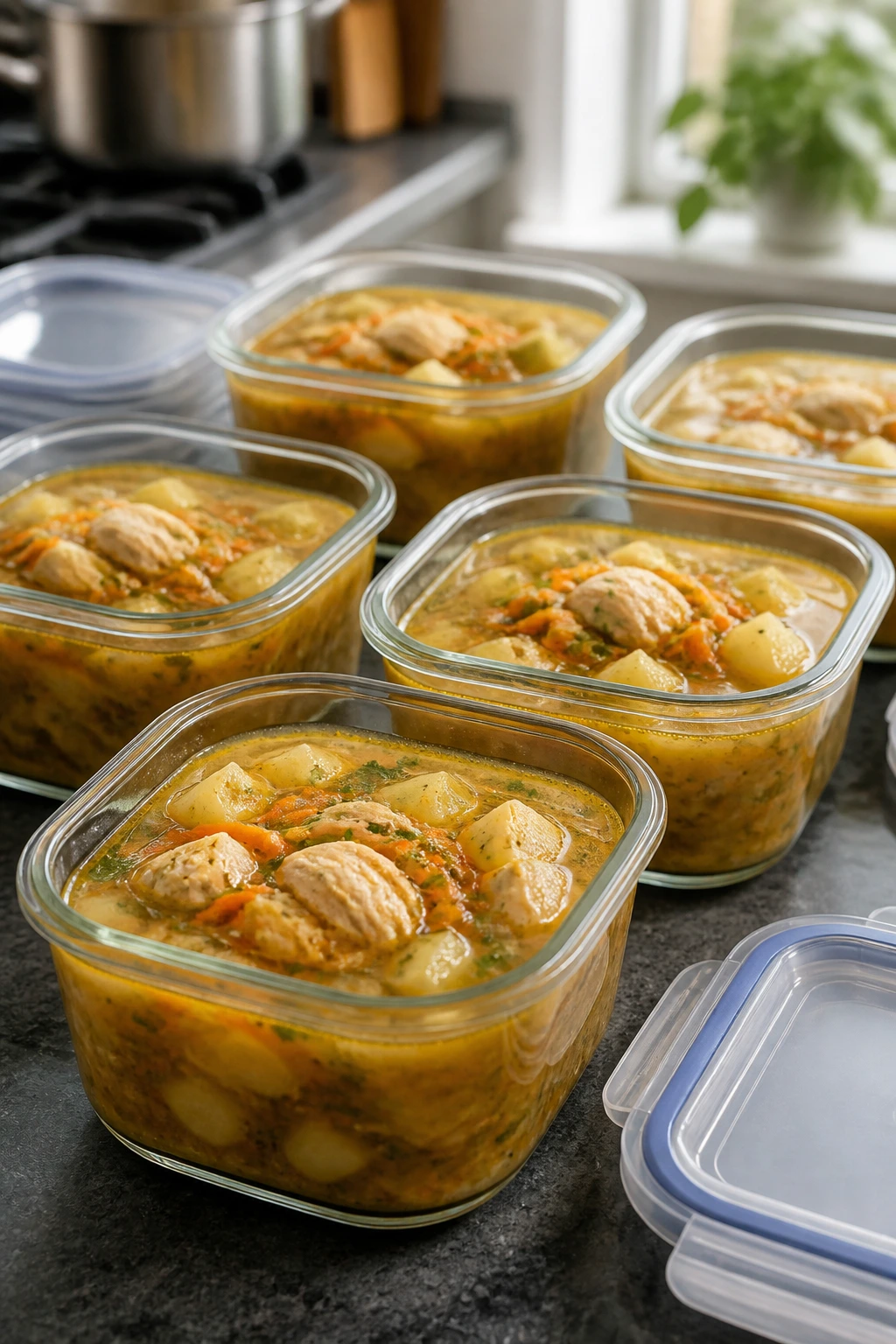
Leftovers are worth planning for here, but the dairy changes the rules a little.
In the Refrigerator
Cool the soup in shallow containers and get it into the fridge within 2 hours. Stored this way, it keeps for 3 to 4 days. If you know you’ll want leftovers, I’d actually keep the sour cream out until reheating, because the soup stays cleaner in texture that way.
In the Freezer
The best freezing method is to freeze the soup before you add the sour cream, lemon, and dill. The base — chicken, potatoes, cabbage, broth, and seasonings — keeps for up to 2 months in airtight containers or freezer bags laid flat. If you freeze the finished soup with sour cream already mixed in, it may separate a bit when thawed. It still tastes fine, but the texture won’t be as smooth.
Reheating
Reheat the soup gently over medium-low heat on the stovetop until it’s steaming and the chicken is hot all the way through. Do not boil it hard after the sour cream has gone in. If you froze the base soup, thaw it overnight in the fridge, warm it slowly, and then add the sour cream, lemon, vinegar, dill, and parsley at the end.
Make-Ahead Plan
You can make the soup base through the end of the chicken-and-potato simmer the day before serving. Cool it, refrigerate it, and finish it the next day with the sour cream and acid. In practice, that often tastes better because the broth gets a little more settled and the cabbage and potatoes absorb more flavor overnight.
Questions Home Cooks Ask About Sour Soup
Can I use chicken breast instead of thighs?
Yes, but keep the simmer shorter. Chicken breast dries out faster, so add it later in the process or cube it larger, and pull the soup off the heat as soon as the meat reaches 165°F. Thighs are still my first pick because they stay softer.
How sour should sour soup taste?
It should taste bright and clean, not sharp enough to wrinkle your face. The broth should still read as savory chicken soup first, with lemon and vinegar making the flavor snap awake near the end.
Can I make it without sour cream?
You can, though the soup will be lighter and less plush. Use extra lemon, a splash more stock, and maybe a small knob of butter at the end. If you want a dairy-free version, skip the sour cream entirely and lean harder on herbs and acid.
What if my sour cream starts to look grainy?
Turn the heat off right away and whisk in a few spoonfuls of warm broth. In a lot of cases, that smooths the texture enough to save it. If the soup has already boiled hard, the curdling is harder to fully undo, which is why the tempering step matters so much.
Can I make this in a slow cooker?
Yes, but brown the chicken and soften the onions first if you want the broth to taste deep instead of flat. Cook the soup on low until the potatoes are tender, then stir in the tempered sour cream, lemon, vinegar, and herbs right at the end.
What if the soup tastes too sharp?
Add a little more stock and a pinch of sugar, then taste again before you touch the salt. Sharpness often needs rounding, not more richness. If the broth still feels edgy, another spoonful of sour cream usually softens it.
Can I make this vegetarian without losing the sour flavor?
Absolutely. Use vegetable stock, brown mushrooms for depth, and keep the lemon, vinegar, dill, and sour cream finish exactly as written. The tang comes from the finishing acid, not the meat, so the structure still holds.
Does this soup need bread on the side?
Need? No. Want? Very much yes. Bread gives the broth something to cling to, and once the soup cools a little, that crusty edge from the bread is one of the best parts of the meal.
A Bowl Worth Making Twice
A good sour soup doesn’t ask for much, but it does ask for timing. Let the vegetables soften, let the chicken stay tender, and let the acid go in at the end where it can still taste sharp. That’s the whole trick, and it’s why the bowl feels lively instead of heavy.
The nicest part is how forgiving it becomes once you know the rhythm. After one pot, you start to hear when the onions are ready, when the potatoes need another few minutes, and when the broth wants just a touch more lemon. Keep a lemon, a tub of sour cream, and a good stock on hand, and the rest is mostly waiting for the pot to do its work.
Comforting Sour Soup — Recipe Card

Recipe Name: Comforting Sour Soup
Description: A brothy chicken, potato, and cabbage soup finished with tempered sour cream, lemon, dill, and a small splash of vinegar. It tastes warm, sharp, and deeply satisfying on a cold night.
Prep Time: 20 minutes
Cook Time: 45 minutes
Total Time: 1 hour 5 minutes
Course: Soup, Main Course
Cuisine: Eastern European-inspired
Servings: 6 servings
Calories: About 360 kcal per serving
Ingredients
For the Soup:
- 2 tablespoons unsalted butter
- 1 tablespoon olive oil
- 1 1/2 pounds boneless, skinless chicken thighs, trimmed and cut into 1-inch pieces
- 1 1/2 teaspoons kosher salt, divided
- 3/4 teaspoon black pepper, divided
- 1 medium yellow onion, diced
- 2 medium carrots, diced
- 2 celery stalks, diced
- 3 cloves garlic, minced
- 1 tablespoon tomato paste
- 1 teaspoon sweet paprika
- 1 teaspoon dried thyme
- 1 bay leaf
- 8 cups low-sodium chicken stock
- 1 1/2 pounds Yukon Gold potatoes, peeled or scrubbed and cut into 3/4-inch cubes
- 3 cups green cabbage, thinly sliced
- 1 cup sour cream, at room temperature
- 3 tablespoons fresh lemon juice
- 1 tablespoon apple cider vinegar
- 1/2 cup fresh dill, chopped
- 2 tablespoons chopped fresh parsley
- 1 teaspoon sugar, optional
- Extra dill and black pepper, for serving
Instructions
-
Pat the chicken dry and season it with 1 teaspoon salt and 1/2 teaspoon black pepper.
-
Heat the butter and olive oil in a Dutch oven over medium-high heat, then brown the chicken for 2 to 3 minutes per side. Transfer it to a plate.
-
Lower the heat to medium. Add the onion, carrots, celery, and remaining salt and pepper; cook 5 to 6 minutes until softened.
-
Stir in the garlic, tomato paste, paprika, thyme, and bay leaf; cook 1 minute.
-
Add the stock and potatoes, scraping the bottom of the pot. Bring to a boil, then simmer 12 minutes.
-
Add the cabbage and chicken. Simmer 10 to 12 minutes more, until the chicken reaches 165°F and the potatoes are tender.
-
In a bowl, whisk the sour cream with 1 cup hot broth until smooth, then stir it back into the pot off the heat or over very low heat.
-
Stir in the lemon juice, vinegar, dill, parsley, and sugar if using. Taste and adjust the seasoning.
-
Rest 10 minutes before serving.
Notes: Add the lemon, vinegar, and sour cream at the end for the cleanest flavor and smoothest texture. If you want to freeze the soup, freeze the base before the dairy goes in.