



A dinner plate does not have to look tiny to stay under 500 calories. A bowl of lemon chicken, quinoa, and roasted vegetables can still feel like dinner-dinner, not the sad little afterthought that so many “light” meals turn into when someone gets stingy with the food. The difference lives in the build: lean protein, enough vegetables to bring crunch and volume, and one measured starch or fat so the whole thing tastes finished.
That’s the sweet spot of clean eating meals under 500 calories. Not starvation. Not endless lettuce. Real food, portioned with a little discipline, and seasoned hard enough that you don’t miss the usual pile-on of cheese, cream, or heavy sauces. When it’s done well, a 430-calorie meal can feel larger than a 650-calorie one that leans on limp pasta and a dull sauce.
The recipes below all live in that lane. Some are bright and fast, some are warm and spoonable, a few are meal-prep friendly, and a couple are the sort of thing you make once and immediately wonder why you ever paid for a takeout bowl in the first place. They’re built to keep the calorie count honest without shrinking the pleasure, and that’s the part most lists get wrong.
Why These Meals Earn a Spot on the Weekly Menu
Protein-first builds: Each dish anchors the plate with chicken, fish, turkey, tofu, eggs, beans, or lentils, which keeps the meal from feeling like a side dish in disguise.
Vegetables do the heavy lifting: Roasted broccoli, cauliflower rice, cabbage, greens, peppers, and zucchini add volume and texture, so the portions look generous even when the calorie count stays modest.
Measured fats, not free-poured fats: Olive oil, avocado, feta, and yogurt all show up in amounts that make sense on the plate, not in a glug-and-hope approach that turns a 450-calorie meal into a 700-calorie one.
Useful for real life: A few are sheet-pan dinners, a few are skillet meals, and several reheat cleanly enough that you can make lunch while you’re already cooking dinner.
Variety without weird ingredients: The collection stays with groceries most kitchens can handle—rice, quinoa, canned beans, Greek yogurt, salmon, shrimp, lentils, and plenty of produce that doesn’t need a food lab.
Flavor stays front and center: Lemon, garlic, ginger, cumin, dill, salsa, and vinegar show up often enough to keep these meals lively, which matters when you’re not leaning on heavy sauces for backup.
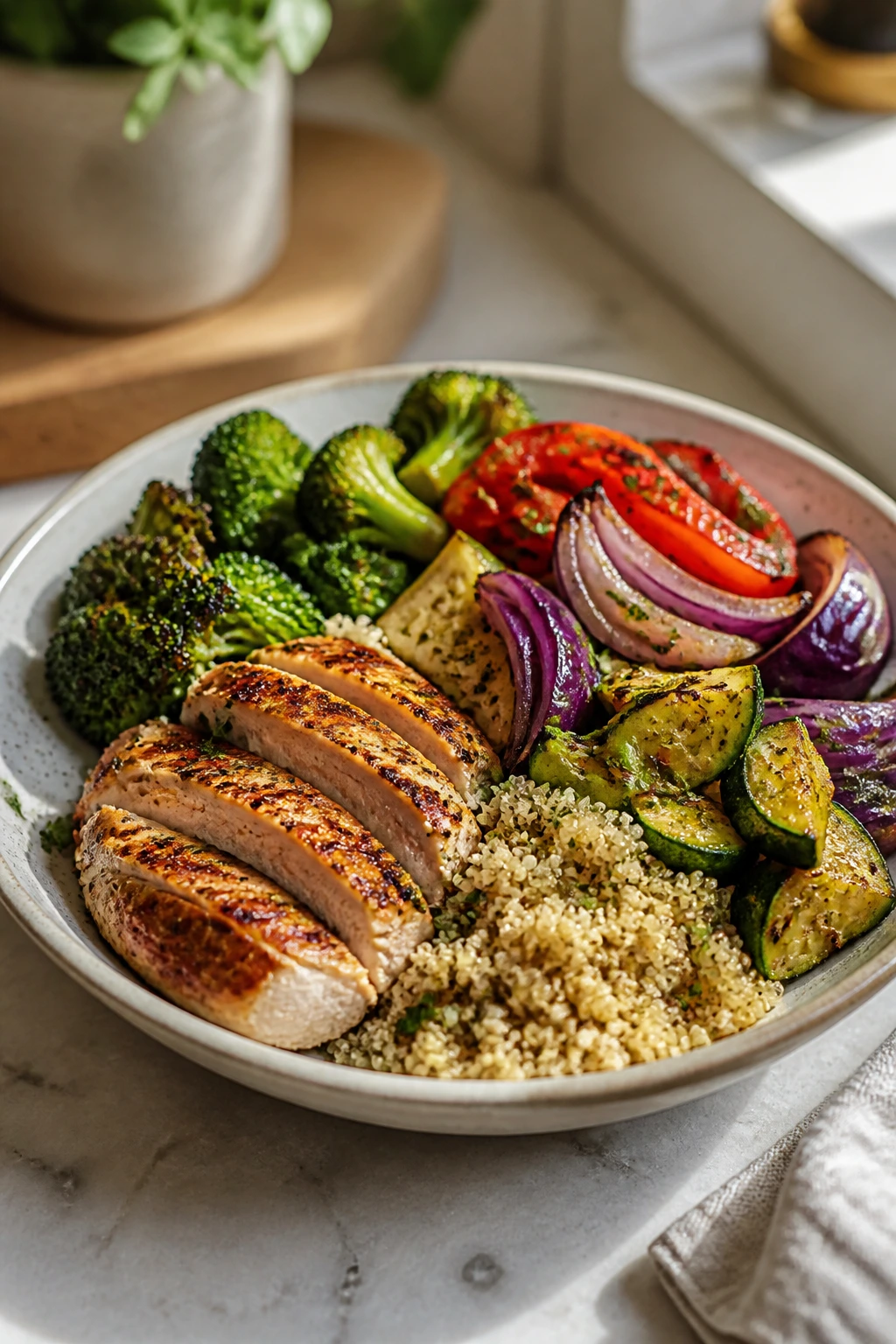
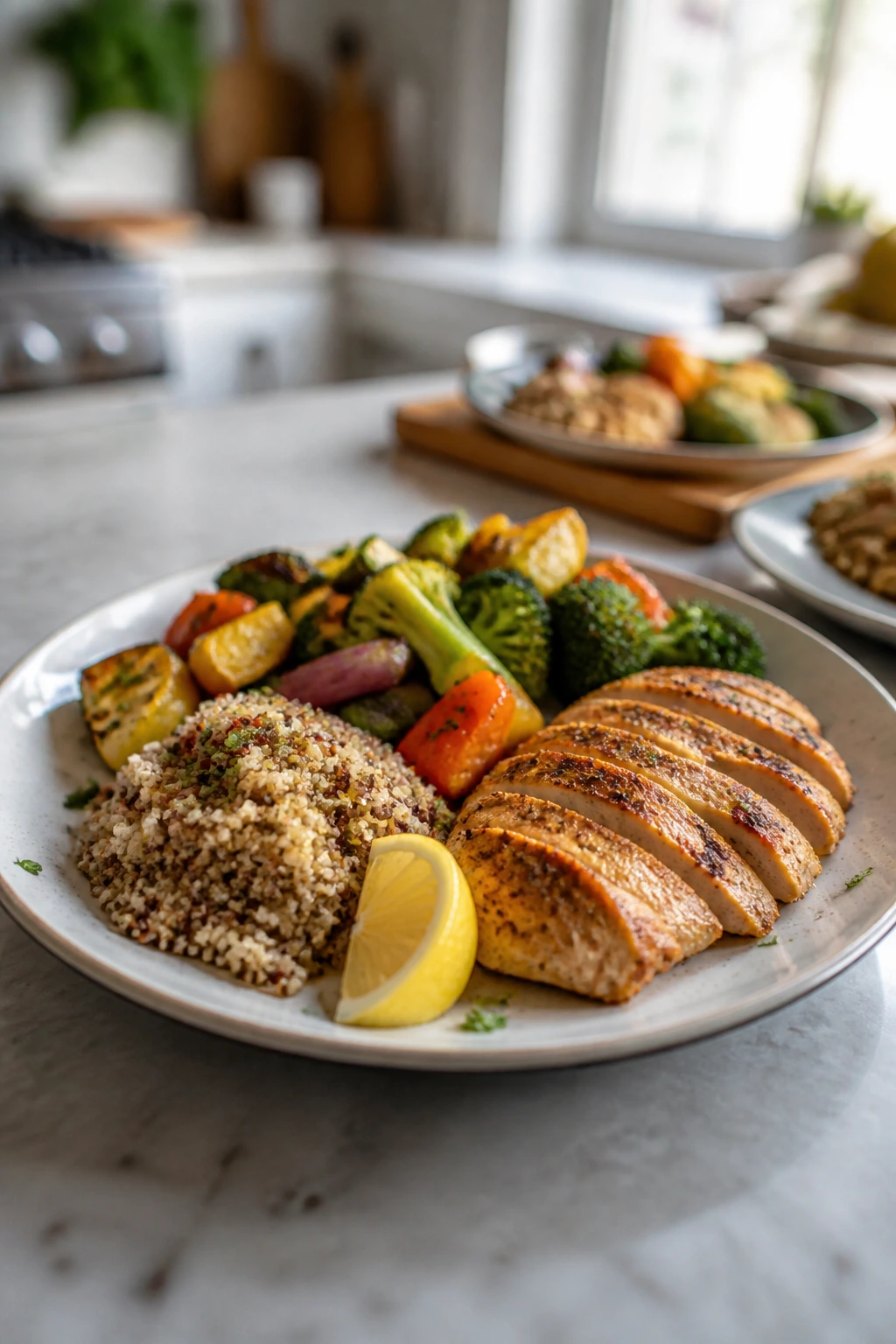
1. Lemon Garlic Chicken Quinoa Bowls
A good chicken quinoa bowl should not taste like “health food.” It should taste bright, savory, and clean at the edges, with roasted vegetables picking up a little char and the yogurt sauce bringing a cool, tangy finish. This version lands around 430 calories per serving, and it earns every one of them.
Why It Works:
The bowl checks the three boxes that matter most in a lower-calorie dinner: lean protein, a measured grain, and enough roasted vegetables to make the plate feel full. Quinoa brings a nutty base that doesn’t need much help, and the lemon-garlic chicken keeps the whole thing from tasting flat. A spoonful of yogurt sauce gives you creaminess without the weight of a mayo or cream dressing.
Key Ingredients:
For the Bowls
- 1 lb boneless, skinless chicken breast, cut into 1-inch pieces
- 1 cup quinoa, rinsed well
- 2 cups broccoli florets
- 1 red bell pepper, sliced
- 1 zucchini, sliced into half-moons
- 2 tablespoons olive oil, divided
- 3 cloves garlic, minced
- 1 lemon, zested and juiced
- 1/2 teaspoon kosher salt
- 1/4 teaspoon black pepper
For the Yogurt Sauce
- 1/3 cup plain Greek yogurt
- 1 tablespoon lemon juice
- 1 tablespoon chopped parsley
- Pinch of salt
Quick Steps:
- Preheat the oven to 425°F (220°C) and line a rimmed sheet pan with parchment.
- Toss the broccoli, pepper, and zucchini with 1 tablespoon olive oil, half the garlic, salt, and pepper. Roast for 18 to 20 minutes, until the edges are lightly browned.
- Cook the quinoa in 2 cups water according to the package, then fluff with a fork.
- Season the chicken with the remaining oil, garlic, lemon zest, salt, and pepper. Sear in a large skillet over medium-high heat for 5 to 7 minutes, stirring once or twice, until cooked through and lightly browned.
- Stir together the yogurt, lemon juice, parsley, and pinch of salt. Spoon the quinoa into bowls, top with chicken and vegetables, and finish with the sauce.
Equipment for This Recipe:
- Rimmed sheet pan
- Large skillet
- Medium saucepan with lid
- Mixing bowl
- Citrus zester or fine grater
How to Serve This Dish:
Pile the quinoa on the bottom first, then arrange the chicken and vegetables in separate little patches so the colors stay visible. A lemon wedge on the side is worth the extra second. It makes the bowl taste fresher with no extra calories worth counting.
Pro Tips for This Recipe:
- If your chicken breasts are thick, slice them in half horizontally before dicing. They cook more evenly and stay juicier.
- Roast the vegetables on the hot side of the oven. If they pale out, they taste steamed instead of roasted.
- Make the yogurt sauce loose enough to drizzle. A teaspoon or two of water helps.
- Cook an extra cup of quinoa. Cold leftovers hold up well for lunch.
Variations on This Dish:
- Herby Mediterranean Bowl: Add chopped dill, cucumber, and a few olives, then swap parsley for mint.
- Spicy Lemon Bowl: Stir 1/2 teaspoon red pepper flakes into the chicken seasoning and finish with hot sauce.
- Dairy-Free Finish: Skip the yogurt and use a quick lemon-tahini drizzle instead.
Common Mistakes to Avoid with This Dish:
- Crowding the chicken: If the pieces are packed together, they steam. Use a wide skillet or cook in two batches.
- Under-seasoning the quinoa: Plain quinoa can taste hollow. Salt the cooking water well.
- Skipping the acid: Without lemon, the bowl reads heavy. The citrus is not optional here.
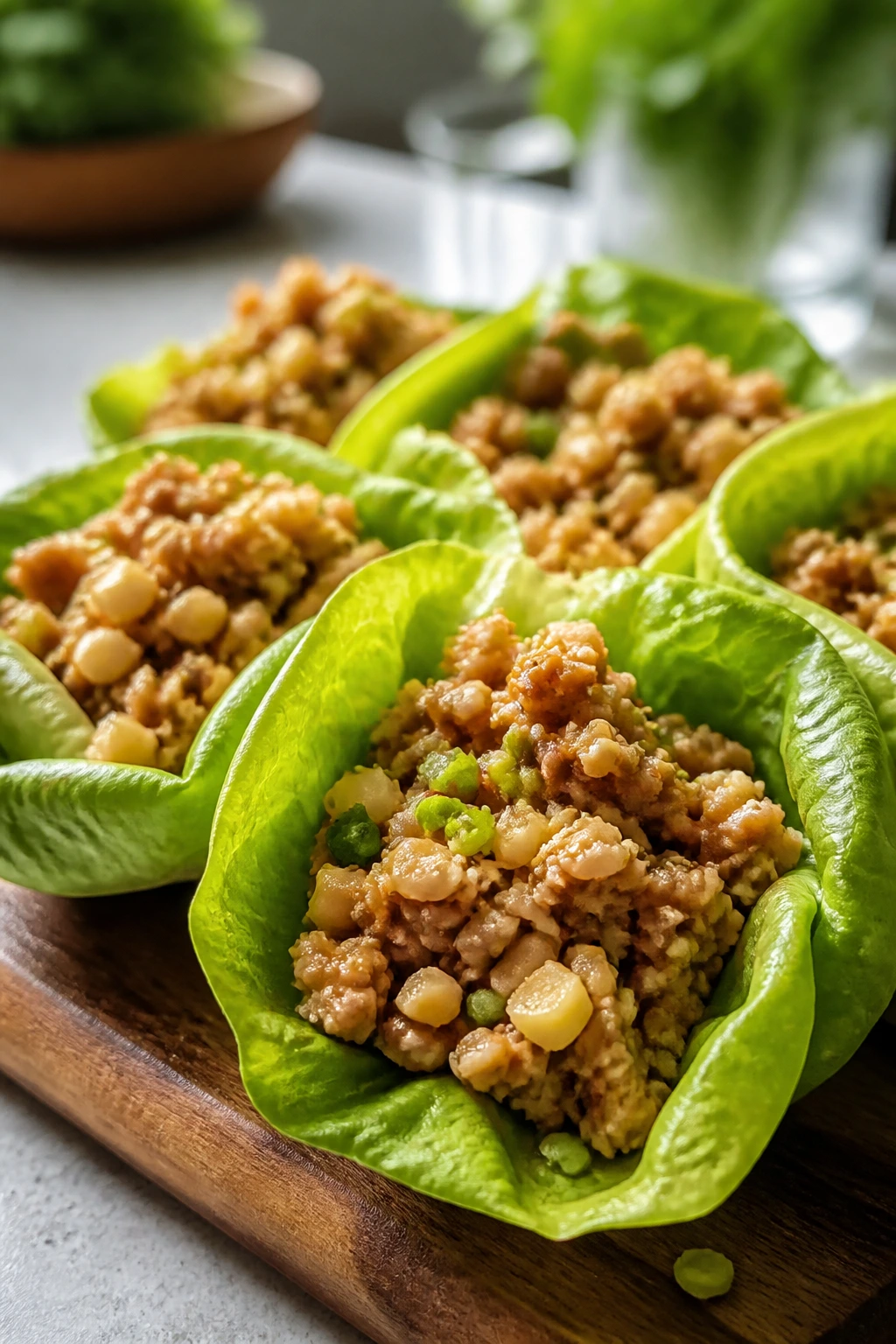
2. Turkey Lettuce Wraps with Ginger and Water Chestnuts
These wraps are crisp, salty, a little sweet, and very fast. They come in around 310 calories for a generous serving, which leaves room for a snack later without making dinner feel skimpy. The water chestnuts matter more than people think; they give the filling that sharp little crunch you notice in the first bite.
Why It Works:
Ground turkey takes on flavor fast, especially when you build it with ginger, garlic, tamari, and a touch of rice vinegar. Butter lettuce turns the whole thing into handheld food without adding much to the calorie count. This is the kind of meal that tastes better when you eat it hot from the pan, with the filling still glossy and the lettuce leaves cold.
Key Ingredients:
For the Filling
- 1 lb 93% lean ground turkey
- 1 tablespoon avocado oil
- 3 green onions, thinly sliced
- 1 tablespoon fresh ginger, grated
- 2 cloves garlic, minced
- 1/2 cup diced water chestnuts, drained
- 1 small carrot, shredded
- 2 tablespoons low-sodium tamari
- 1 tablespoon rice vinegar
- 1 teaspoon toasted sesame oil
- 1 tablespoon sesame seeds
For Serving
- 8 to 10 butter lettuce leaves
- Lime wedges, for squeezing
Quick Steps:
- Heat the avocado oil in a large skillet over medium-high heat.
- Add the turkey and cook for 5 to 6 minutes, breaking it up with a spoon, until no pink remains.
- Stir in the green onions, ginger, garlic, water chestnuts, and carrot. Cook for 2 minutes, until fragrant and the carrot softens slightly.
- Add the tamari, rice vinegar, and sesame oil. Cook for 1 more minute until the filling looks glossy.
- Spoon into lettuce leaves, sprinkle with sesame seeds, and serve with lime.
Equipment for This Recipe:
- Large skillet
- Wooden spoon or spatula
- Microplane or small grater
- Measuring spoons
- Serving platter
How to Serve This Dish:
Set the lettuce leaves out like little cups and let people build their own. A side of sliced cucumbers or a quick cabbage slaw fits perfectly if you want more crunch. Three or four wraps make a full meal.
Pro Tips for This Recipe:
- Dry the lettuce leaves well. Wet lettuce makes the filling slide around.
- Use 93% lean turkey, not extra-lean, or the pan can go dry before the aromatics are done.
- Add the sesame oil at the end. It smells best when it stays fresh and uncooked.
- If the filling looks bland, it probably needs another splash of vinegar rather than more salt.
Variations on This Dish:
- Mushroom Booster: Swap half the turkey for finely chopped mushrooms to add bulk and keep the calorie count low.
- Spicy Chili Version: Stir in chili garlic paste or crushed red pepper.
- Crunchier Wraps: Add chopped celery or jicama for a colder, sharper bite.
Common Mistakes to Avoid with This Dish:
- Using iceberg instead of sturdy leaves: Iceberg shatters and leaks. Butter lettuce or romaine hearts hold the filling better.
- Adding sesame oil too early: It loses its nutty smell when cooked hard.
- Letting the pan dry out: If the turkey sticks before the veggies go in, lower the heat and add a tablespoon of water.
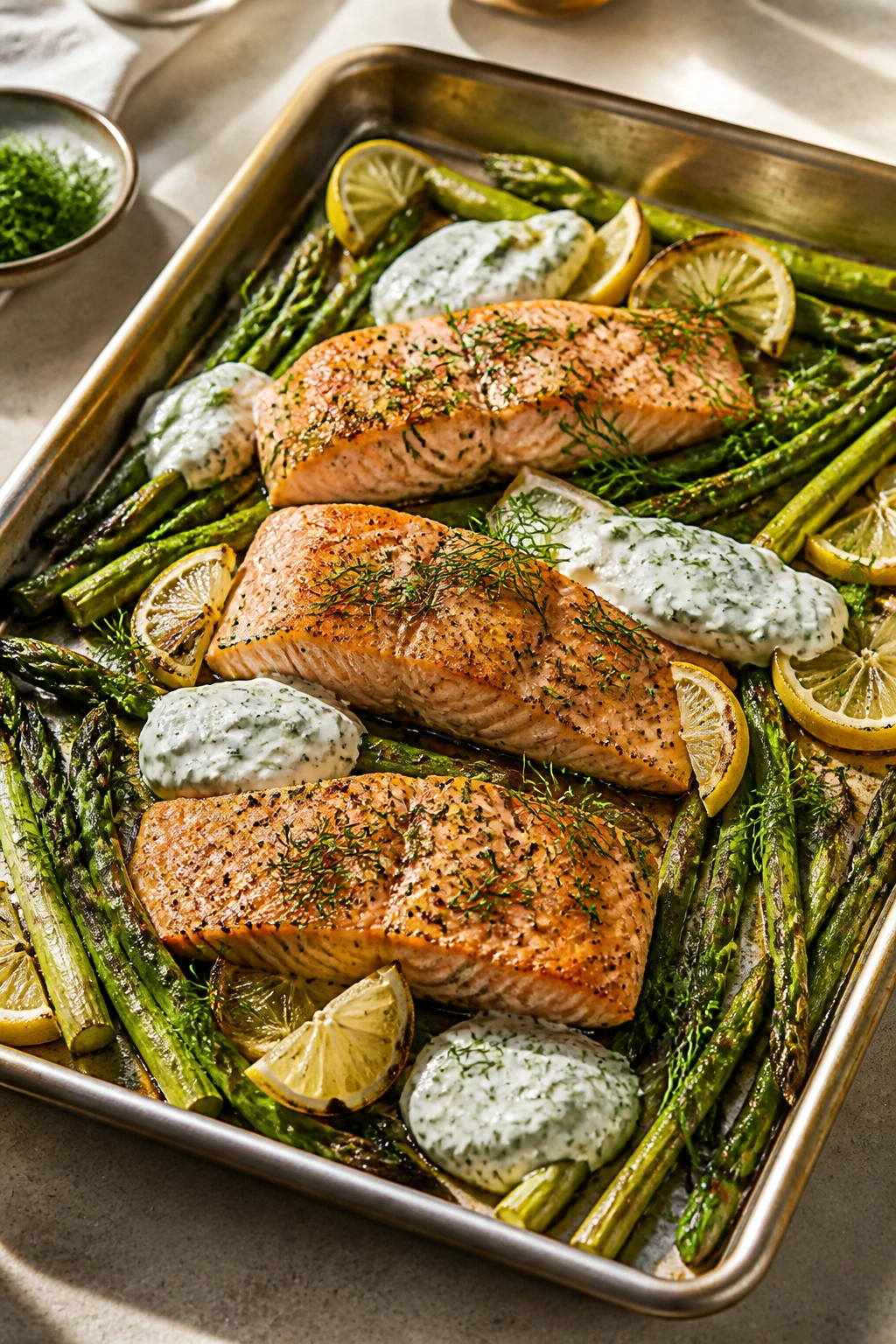
3. Sheet-Pan Salmon with Asparagus and Dill Yogurt
Salmon does a lot of work in a 500-calorie meal because a small portion still tastes rich. Paired with asparagus, baby potatoes, and dill yogurt, this dinner lands around 470 calories and eats like a restaurant plate that happened to go through a sensible filter.
Why It Works:
You get the fat and flavor of salmon, but the rest of the plate stays light and green. Baby potatoes make the meal feel complete without pushing it into heavy territory, and asparagus cooks fast enough that the whole tray finishes together. Dill and lemon keep the fish from tasting rich in a sleepy way.
Key Ingredients:
For the Sheet Pan
- 4 salmon fillets, about 5 oz each
- 1 lb baby potatoes, halved
- 1 lb asparagus, trimmed
- 1 tablespoon olive oil
- 1 teaspoon kosher salt
- 1/2 teaspoon black pepper
- 1 lemon, sliced
For the Dill Yogurt
- 1/2 cup plain Greek yogurt
- 1 tablespoon fresh dill, chopped
- 1 tablespoon lemon juice
- 1 small garlic clove, grated
- Pinch of salt
Quick Steps:
- Heat the oven to 400°F (205°C).
- Toss the baby potatoes with olive oil, salt, and pepper. Roast on a lined sheet pan for 15 minutes.
- Push the potatoes to one side, add the salmon and asparagus, and tuck lemon slices around them.
- Roast for 12 to 14 minutes more, until the salmon flakes easily and the asparagus is bright green with browned tips.
- Stir the dill yogurt together and serve on the side.
Equipment for This Recipe:
- Large rimmed sheet pan
- Mixing bowl
- Small bowl for sauce
- Tongs
- Fish spatula, if you have one
How to Serve This Dish:
Put the potatoes down first so the salmon can sit slightly above them, then lean the asparagus against the fish. The sauce belongs in a spoonful on the side, not dumped all over the top. That way, every bite can switch between creamy, salty, and bright.
Pro Tips for This Recipe:
- Cut the potatoes small enough to finish on time. Big chunks will lag behind the fish.
- Pull the salmon when the center still looks slightly translucent. Carryover heat finishes it.
- If the asparagus is thin, add it in the last 8 minutes instead of 12.
- Use skin-on salmon if you like a firmer texture. It helps the fillet hold together.
Variations on This Dish:
- Lemon-Caper Finish: Add capers and a squeeze of extra lemon for a briny edge.
- Herb-and-Garlic Version: Mix parsley and chives into the yogurt for a greener sauce.
- No Potato Plate: Swap the potatoes for cauliflower florets if you want an even lighter tray.
Common Mistakes to Avoid with This Dish:
- Overcooking the salmon: Dry salmon wastes the whole point. Watch for flaking, not for a hard timer alone.
- Crowding the tray: If the vegetables pile up, they steam and go soft.
- Skipping seasoning on the potatoes: They need salt before they hit the oven, not after.
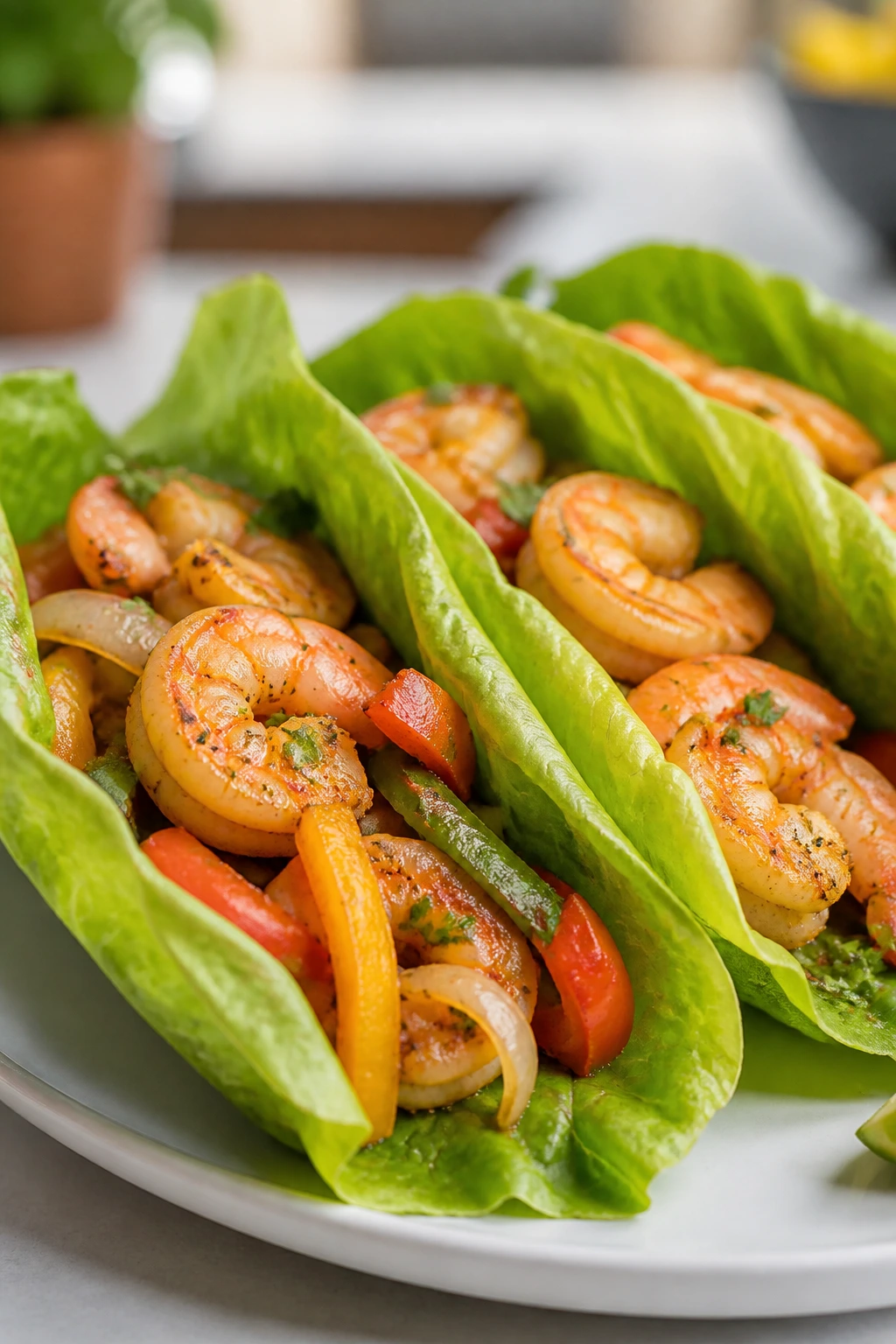
4. Shrimp Fajita Lettuce Tacos
This is the dinner you make when you want something bright and fast with a little char at the edges. At roughly 290 calories per serving, the meal stays light enough for a big second cup of tea or a piece of fruit later, but the spice and lime keep it from feeling demure.
Why It Works:
Shrimp cook in minutes, which means the peppers and onions get just enough time to soften and blister without turning limp. Lettuce cups bring crunch and volume. A spoonful of salsa or yogurt crema on top gives you the saucy element most low-calorie taco plates forget.
Key Ingredients:
For the Shrimp Fajita Filling
- 1 lb raw shrimp, peeled and deveined
- 1 red bell pepper, sliced
- 1 yellow bell pepper, sliced
- 1 small red onion, sliced
- 1 tablespoon olive oil
- 1 teaspoon chili powder
- 1 teaspoon ground cumin
- 1/2 teaspoon smoked paprika
- 1/2 teaspoon kosher salt
- 1 lime, juiced
For Serving
- 8 romaine or butter lettuce leaves
- 1/2 avocado, sliced
- 1/3 cup salsa
- Fresh cilantro
Quick Steps:
- Toss the shrimp with chili powder, cumin, paprika, and salt.
- Heat the olive oil in a wide skillet over medium-high heat. Add the peppers and onion and cook for 4 to 5 minutes until the edges soften and brown.
- Push the vegetables aside, add the shrimp, and cook for 2 minutes per side until pink and curled.
- Squeeze in the lime juice and toss everything together.
- Spoon into lettuce leaves and top with avocado, salsa, and cilantro.
Equipment for This Recipe:
- Large skillet
- Tongs
- Cutting board and knife
- Citrus juicer
- Serving tray
How to Serve This Dish:
Lay out the lettuce leaves first, then pile the shrimp filling high enough that the taco looks substantial. A little avocado goes a long way here. Serve with extra lime wedges if you like sharp, bright food.
Pro Tips for This Recipe:
- Don’t overcook the shrimp. The moment they curl into tight C shapes, they’re done.
- Slice the peppers thin so they soften fast enough to match the shrimp.
- Warm salsa tastes better than cold salsa here. Give it 20 seconds in the microwave if you want it looser.
- If you like heat, add sliced jalapeño at the end rather than cooking it.
Variations on This Dish:
- Chipotle Smoke Version: Add a pinch of chipotle powder for a deeper, smokier finish.
- Cabbage Taco Cups: Use shredded cabbage instead of lettuce for extra crunch.
- Black Bean Boost: Add 1/2 cup rinsed black beans if you want more staying power.
Common Mistakes to Avoid with This Dish:
- Cooking shrimp and peppers together from the start: The shrimp overcook before the vegetables soften. Give the vegetables a head start.
- Using watery lettuce: Dry the leaves first or the tacos slip apart.
- Too much avocado: A few slices are enough; a whole avocado can tip the calorie math fast.
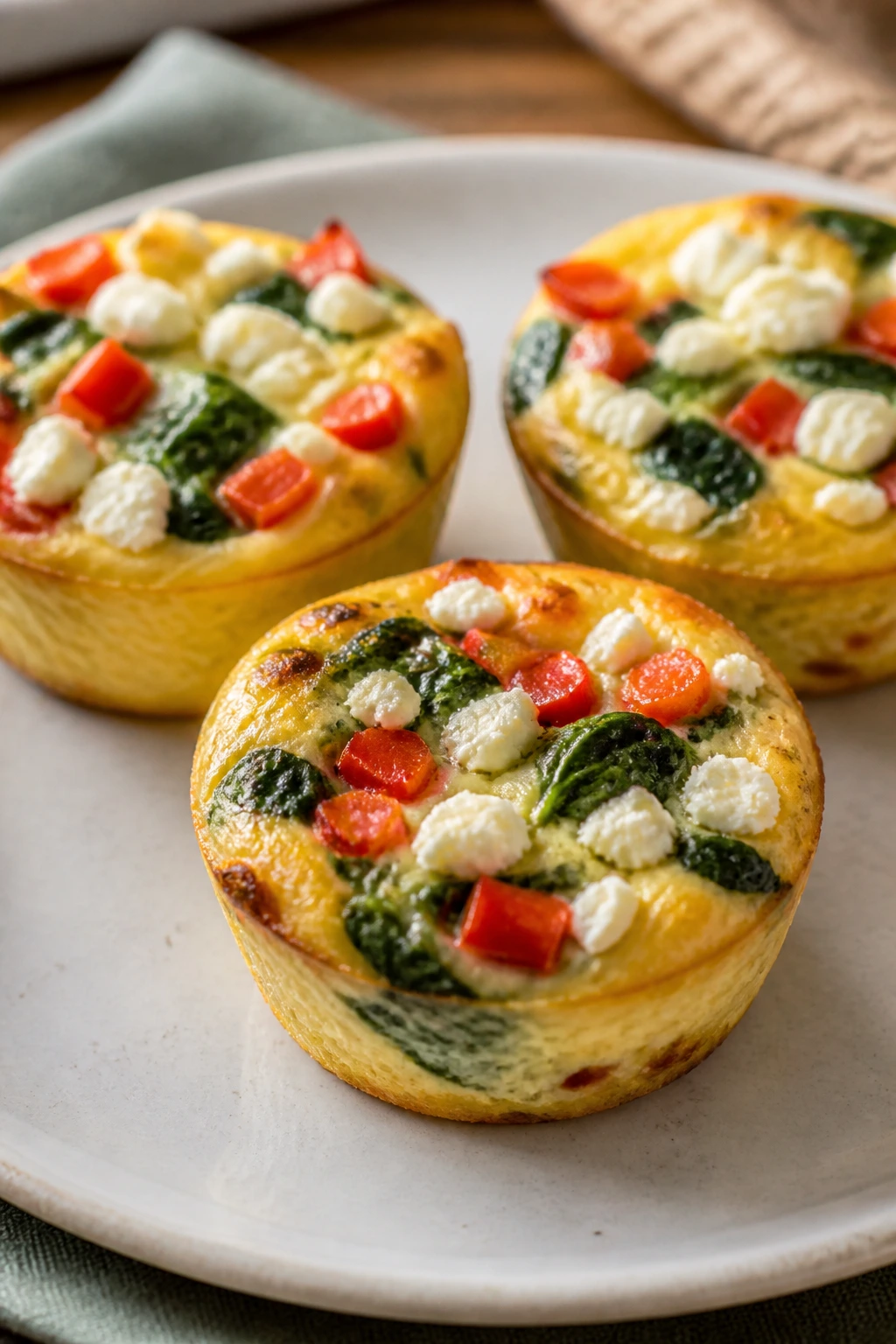
5. Spinach, Pepper, and Feta Egg Muffin Cups
These are tiny, savory breakfast cups with the texture of a soft omelet and the convenience of a muffin tin. Two or three hold you over without blowing the calorie count—about 230 calories for three cups, depending on the feta you use. They also reheat cleanly, which is rare enough to be worth saying plainly.
Why It Works:
Eggs carry protein, spinach and peppers bring color and bulk, and feta adds enough salt that you do not need much else. Muffin cups portion themselves, which is half the battle when you’re trying to keep breakfast controlled without making it feel punishing. They’re easy to pair with fruit, toast, or a simple salad if you want them to stand in for lunch.
Key Ingredients:
For the Muffins
- 8 large eggs
- 4 egg whites
- 1/2 cup milk or unsweetened almond milk
- 1 cup baby spinach, chopped
- 1/2 red bell pepper, diced
- 1/4 cup green onions, sliced
- 1/3 cup crumbled feta
- 1/2 teaspoon kosher salt
- 1/4 teaspoon black pepper
- Cooking spray
Quick Steps:
- Heat the oven to 350°F (175°C) and grease a 12-cup muffin tin.
- Whisk the eggs, egg whites, milk, salt, and pepper until smooth.
- Divide the spinach, bell pepper, green onions, and feta among the cups.
- Pour the egg mixture over the vegetables, filling each cup about 3/4 full.
- Bake for 18 to 22 minutes, until the tops are set and the centers no longer jiggle.
- Cool for 5 minutes before lifting them out.
Equipment for This Recipe:
- 12-cup muffin tin
- Mixing bowl
- Whisk
- Measuring cup
- Silicone spatula
How to Serve This Dish:
Serve warm with sliced berries, a piece of whole-grain toast, or a handful of cherry tomatoes if you want the meal to feel more like brunch. Three cups with fruit makes a tidy breakfast. Four cups can stand alone if you’re heading into a long morning.
Pro Tips for This Recipe:
- Press the spinach dry after washing it. Extra water makes the muffins spongy.
- Chop the vegetables small so they stay suspended in the egg instead of sinking to the bottom.
- Let the muffins cool before removing them or the bottoms can tear.
- Use silicone liners if your tin tends to hold onto eggs.
Variations on This Dish:
- Mushroom and Herb Cups: Replace the peppers with sautéed mushrooms and parsley.
- Dairy-Free Cups: Skip the feta and add chopped olives for salt.
- Southwest Cups: Add a spoonful of salsa and a pinch of cumin to the egg mix.
Common Mistakes to Avoid with This Dish:
- Overfilling the tin: The eggs puff and spill if the cups are packed to the top.
- Undercooking the center: Tap the middle. If it still jiggles hard, give it a few more minutes.
- Skipping the cooling time: Hot egg cups are fragile and fall apart too easily.
6. Greek Chicken Salad with Cucumber and Feta
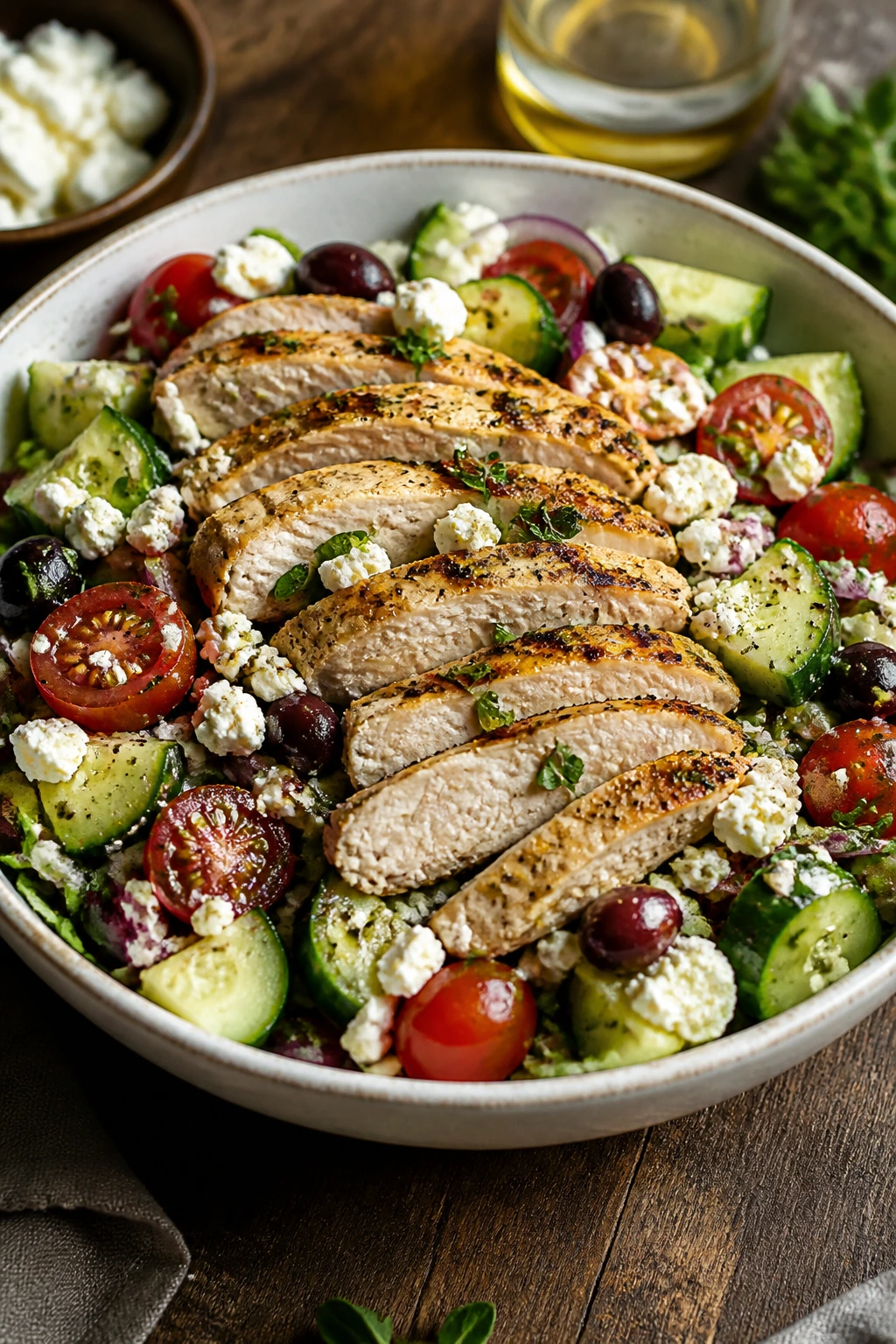
This salad eats like a proper meal because it’s built with pieces that do their own job: juicy chicken, cool cucumber, ripe tomato, briny olives, and just enough feta to make the bowl feel finished. One serving lands around 400 calories, depending on how much olive oil you use in the dressing.
Why It Works:
Greek salad flavors are already good at staying light without feeling sparse. The chicken supplies the muscle, the vegetables bring volume, and the dressing needs only a little oil because lemon and red wine vinegar do part of the work. This is one of those meals that gets better if the tomatoes sit in the dressing for 5 or 10 minutes.
Key Ingredients:
For the Salad
- 1 lb boneless, skinless chicken breast
- 1 large English cucumber, chopped
- 2 cups cherry tomatoes, halved
- 1/2 red onion, thinly sliced
- 1/3 cup Kalamata olives, pitted and halved
- 3 cups romaine or mixed greens
- 1/3 cup crumbled feta
For the Dressing
- 2 tablespoons olive oil
- 1 tablespoon red wine vinegar
- 1 tablespoon lemon juice
- 1 teaspoon dried oregano
- 1 small garlic clove, grated
- Salt and pepper
Quick Steps:
- Season and cook the chicken in a skillet or on a grill pan until the center reaches 165°F.
- Let it rest for 5 minutes, then slice thinly.
- Whisk the dressing ingredients in a small bowl.
- Toss the greens, cucumber, tomatoes, onion, olives, and feta with enough dressing to coat lightly.
- Top with sliced chicken and spoon on a little more dressing if needed.
Equipment for This Recipe:
- Skillet or grill pan
- Sharp knife
- Large salad bowl
- Small whisking bowl
- Cutting board
How to Serve This Dish:
Build the salad in a wide bowl so the ingredients don’t all fall to the bottom. Put the chicken on top in slices rather than chunks; it looks better and eats better. A piece of toasted pita on the side fits if you want a little starch without going overboard.
Pro Tips for This Recipe:
- Salt the cucumbers lightly if they taste watery. Ten minutes on a paper towel helps.
- Don’t drown the salad in dressing. You want shine, not soup.
- Use good feta. The dry, crumbly kind tastes dull fast.
- If you’re meal prepping, keep the dressing separate until serving time.
Variations on This Dish:
- Lemon-Dill Chicken Salad: Swap oregano for dill and add chopped parsley.
- Grain Bowl Version: Add 1/2 cup cooked farro or quinoa per serving.
- Vegetarian Greek Bowl: Replace the chicken with chickpeas and roasted zucchini.
Common Mistakes to Avoid with This Dish:
- Using too little salt on the chicken: Salad dressing cannot rescue bland protein.
- Cutting the vegetables too small: The bowl loses texture and starts to eat soft.
- Adding the dressing too early if packing lunches: Greens wilt fast.
7. Turkey Meatballs with Zucchini Noodles
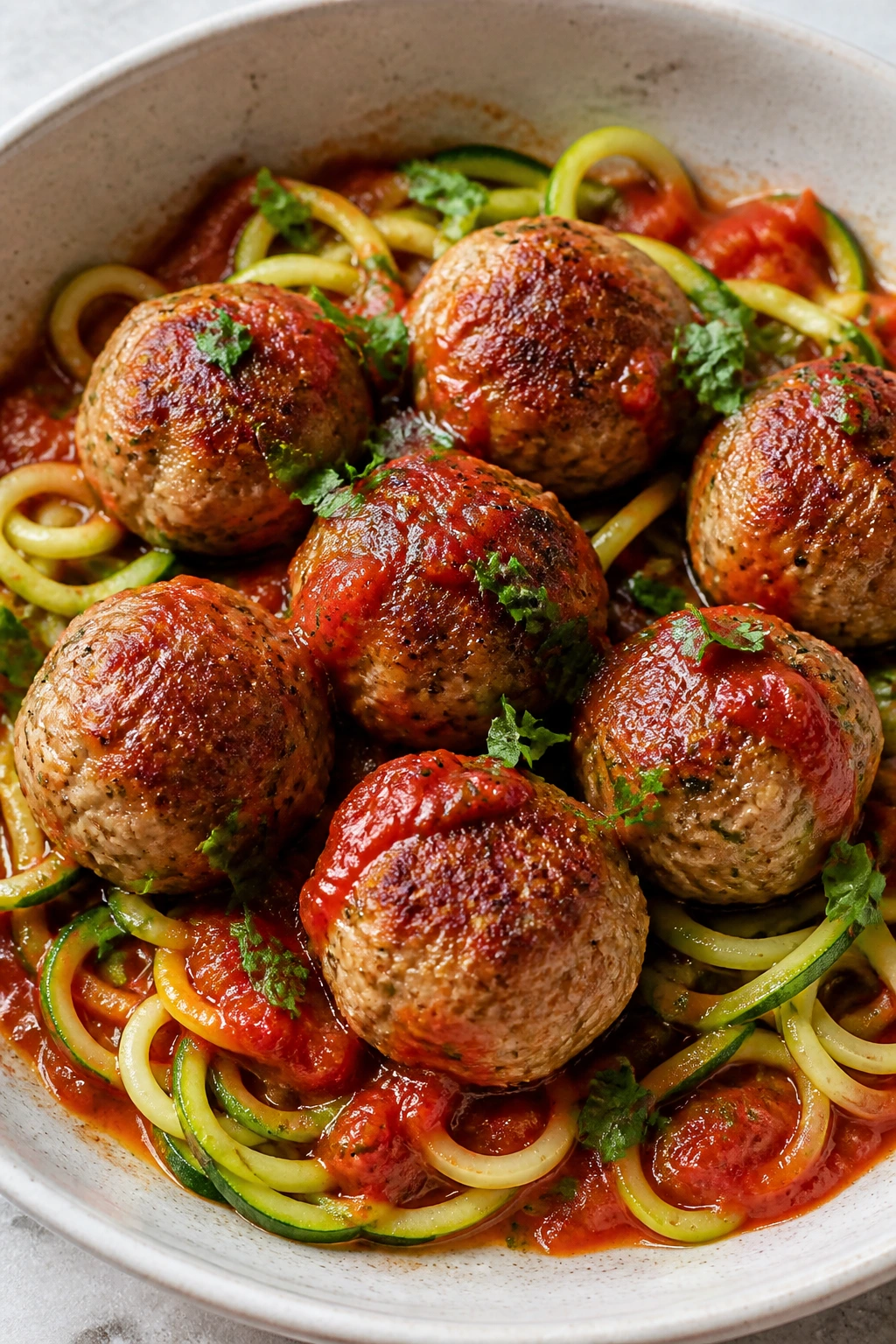
These meatballs are soft inside, browned on the outside, and just saucy enough to feel comforting without tipping into heavy pasta territory. With zucchini noodles underneath, the plate stays around 390 calories and still looks like a full bowl of dinner.
Why It Works:
Lean turkey keeps the meatballs light, while egg and almond flour give them enough structure to stay tender. Zucchini noodles cook in about two minutes, which keeps them from turning watery and sad. A simple tomato sauce coats everything without needing cream or a pile of cheese.
Key Ingredients:
For the Meatballs
- 1 lb 93% lean ground turkey
- 1 egg
- 1/4 cup almond flour
- 2 tablespoons grated Parmesan
- 2 cloves garlic, minced
- 1 teaspoon dried Italian seasoning
- 1/2 teaspoon kosher salt
- 1/4 teaspoon black pepper
For the Bowl
- 4 medium zucchini, spiralized
- 1 1/2 cups marinara sauce
- 1 tablespoon olive oil
- Fresh basil, for finishing
Quick Steps:
- Heat the oven to 400°F (205°C) and line a sheet pan.
- Mix the turkey, egg, almond flour, Parmesan, garlic, seasoning, salt, and pepper until just combined.
- Form into 16 small meatballs and bake for 14 to 16 minutes, until cooked through.
- Warm the marinara in a skillet. Add the zucchini noodles and toss for 1 to 2 minutes, just until they soften slightly.
- Nest the meatballs over the zucchini and spoon sauce on top.
Equipment for This Recipe:
- Rimmed sheet pan
- Mixing bowl
- Large skillet
- Spiralizer
- Spoon or small scoop
How to Serve This Dish:
Serve it in shallow bowls so the sauce stays pooled around the edges instead of disappearing. A little basil on top makes the whole thing smell like you did more work than you did. If you want extra substance, add roasted mushrooms on the side.
Pro Tips for This Recipe:
- Mix the turkey gently. Overworking it makes the meatballs dense.
- Make the meatballs small so they cook evenly and stay tender.
- Salt the zucchini noodles lightly after cooking if they taste flat.
- Use a thicker marinara so the bowl doesn’t turn watery.
Variations on This Dish:
- Spicy Arrabbiata Version: Add red pepper flakes to the sauce.
- Beef-Turkey Blend: Use half lean beef, half turkey for a richer flavor.
- Pesto Finish: Swirl in a teaspoon of pesto right before serving.
Common Mistakes to Avoid with This Dish:
- Overcooking the zucchini noodles: They should still have a little bite.
- Making giant meatballs: Bigger ones dry out before the center cooks.
- Using watery sauce: Thin sauce slides off the noodles and leaves the bowl flat.
8. Tofu and Broccoli Stir-Fry with Brown Rice
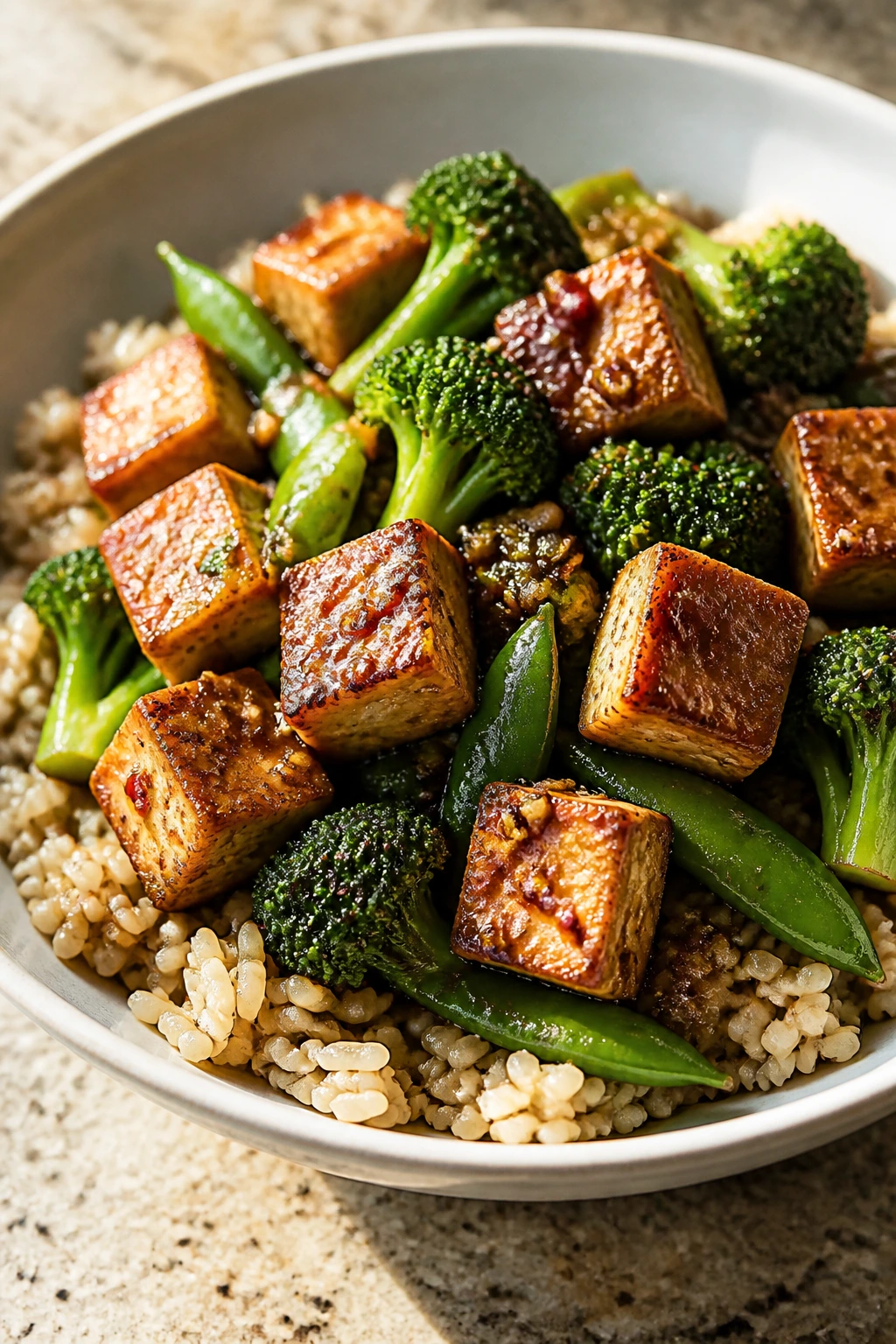
This is the kind of stir-fry that makes tofu look like it has a personality. The edges crisp, the broccoli stays bright, and the sauce clings without turning syrupy. At about 440 calories per serving, it’s a sturdy dinner with enough rice to feel grounded.
Why It Works:
Extra-firm tofu gives you protein and a good chew when it’s pressed and seared properly. Broccoli and snap peas bring crunch, while a ginger-garlic sauce keeps the whole pan moving. Brown rice adds a little bite and enough starch to make the bowl feel like a meal instead of a pile of vegetables with ambition.
Key Ingredients:
For the Stir-Fry
- 14 oz extra-firm tofu, pressed and cubed
- 3 cups broccoli florets
- 1 cup snap peas
- 1 small carrot, thinly sliced
- 1 tablespoon avocado oil
- 2 cloves garlic, minced
- 1 tablespoon fresh ginger, grated
For the Sauce
- 3 tablespoons low-sodium tamari
- 1 tablespoon rice vinegar
- 1 teaspoon maple syrup
- 1 teaspoon toasted sesame oil
- 2 tablespoons water
For Serving
- 2 cups cooked brown rice
- 1 tablespoon sesame seeds
Quick Steps:
- Press the tofu for 15 minutes, then cube it.
- Whisk the sauce ingredients together.
- Heat the avocado oil in a large skillet or wok over medium-high heat. Sear the tofu for 8 to 10 minutes until the sides are golden.
- Add the broccoli, snap peas, carrot, garlic, and ginger. Stir-fry for 4 to 5 minutes until the broccoli turns bright green and the carrot softens slightly.
- Pour in the sauce and toss until everything glistens. Serve over brown rice with sesame seeds.
Equipment for This Recipe:
- Wok or large skillet
- Tofu press or clean kitchen towel
- Mixing bowl
- Measuring spoons
- Rice cooker or saucepan
How to Serve This Dish:
Spoon the rice into the bowl first, then mound the stir-fry on top so the sauce trickles through. A sprinkle of sesame seeds and a few sliced scallions add crunch and freshness. If you like heat, keep chili crisp on the table and add it by the teaspoon.
Pro Tips for This Recipe:
- Press tofu longer than you think you need. Extra moisture ruins the sear.
- Don’t crowd the tofu in the pan. Brown it in batches if needed.
- Cut the broccoli into small florets so it cooks before the sauce reduces too much.
- Keep the sauce light. A heavy hand with tamari makes the dish taste salty instead of balanced.
Variations on This Dish:
- Peanut Ginger Version: Add 1 tablespoon peanut butter to the sauce.
- Cauliflower Rice Swap: Replace half or all of the brown rice with cauliflower rice.
- Mushroom Upgrade: Add sliced cremini mushrooms for a deeper savory note.
Common Mistakes to Avoid with This Dish:
- Skipping the tofu press: Wet tofu steams and goes soft.
- Using a weak pan: A thin skillet drops heat fast and prevents browning.
- Drowning the vegetables in sauce: The dish gets soggy fast.
9. Sheet-Pan Cod with Sweet Potatoes and Green Beans
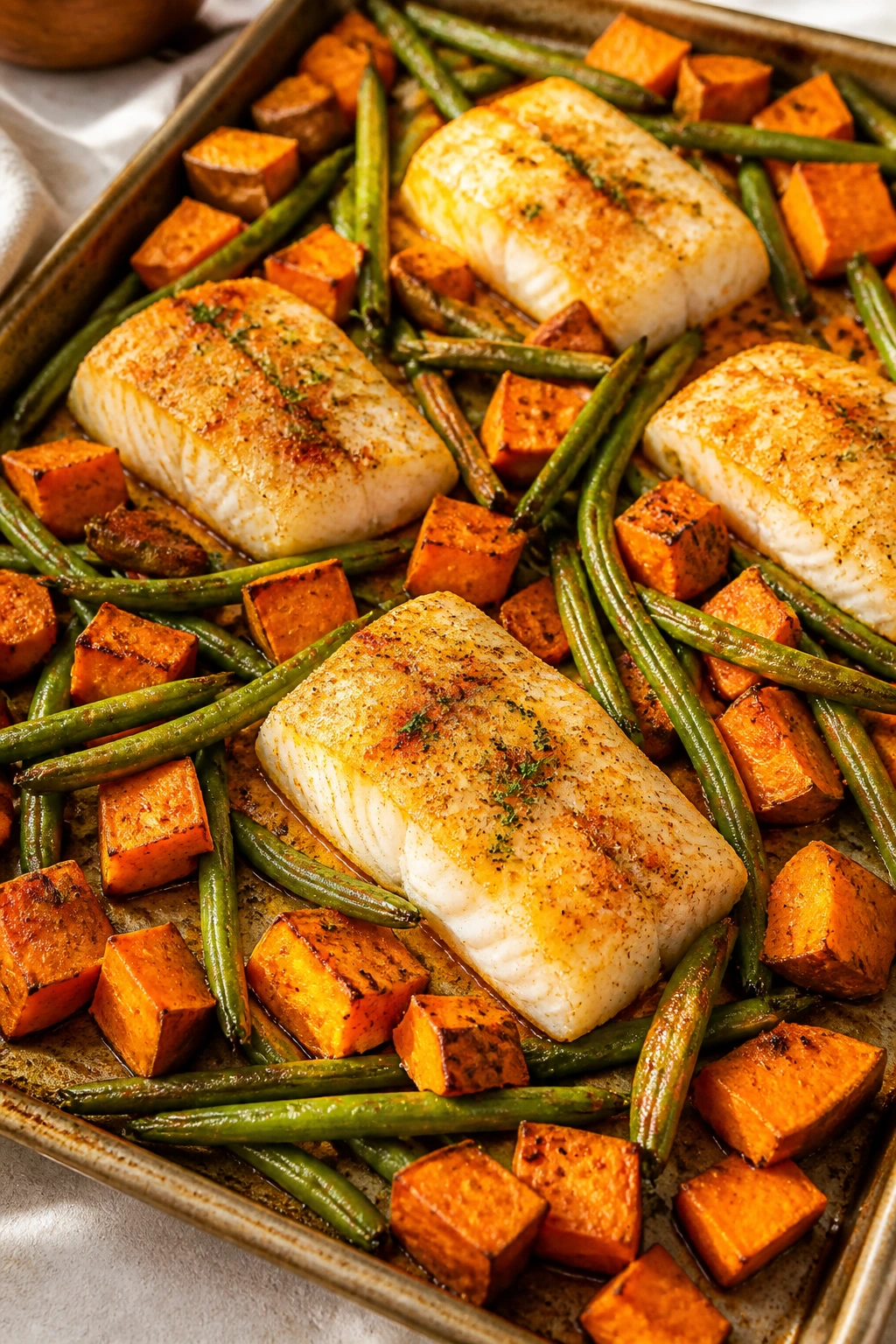
Cod is delicate, which is exactly why this sheet-pan dinner works so well. It stays light, clean, and mild, while sweet potatoes and green beans keep the plate from feeling bare. One serving comes in around 410 calories, depending on the fish size.
Why It Works:
You get a solid base of vegetables, a starchy side that actually belongs on the plate, and a lean white fish that picks up seasoning fast. The sheet pan does the cooking without needing a second pan to babysit anything. Lemon and paprika keep cod from tasting timid.
Key Ingredients:
For the Pan
- 4 cod fillets, about 5 oz each
- 2 medium sweet potatoes, peeled and cubed
- 12 oz green beans, trimmed
- 2 tablespoons olive oil, divided
- 1 teaspoon paprika
- 1/2 teaspoon garlic powder
- 1 teaspoon kosher salt
- 1/4 teaspoon black pepper
- 1 lemon, sliced
Quick Steps:
- Heat the oven to 425°F (220°C).
- Toss the sweet potatoes with 1 tablespoon olive oil, paprika, garlic powder, salt, and pepper. Roast for 15 minutes.
- Add the green beans and toss lightly with the remaining oil.
- Nestle the cod fillets on the pan, season them with a little more salt and pepper, and lay lemon slices over the top.
- Roast for 10 to 12 minutes, until the cod flakes easily and the sweet potatoes are tender.
Equipment for This Recipe:
- Rimmed sheet pan
- Mixing bowl
- Fish spatula
- Parchment paper
- Sharp knife
How to Serve This Dish:
Move the sweet potatoes to one side and let the cod sit front and center; it’s a mild fish, so a neat plate helps it feel more deliberate. A squeeze of lemon just before eating wakes up the whole tray. If you want a sauce, a spoonful of yogurt with dill works without derailing the calorie count.
Pro Tips for This Recipe:
- Cut the sweet potatoes into small, even cubes or they’ll lag behind.
- Dry the cod well before seasoning so it roasts instead of steaming.
- Use parchment for easier cleanup, but don’t let it lift and cover the fish.
- Pull the cod the second it flakes. White fish goes from tender to dry fast.
Variations on This Dish:
- Smoky Paprika Version: Add a pinch of smoked paprika to the fish itself.
- Herb-Crusted Fish: Scatter chopped parsley and dill over the cod before roasting.
- Different Veg Swap: Try broccoli or zucchini when green beans aren’t on hand.
Common Mistakes to Avoid with This Dish:
- Overcrowding the pan: The vegetables soften unevenly and never brown.
- Leaving the skin on lemon slices too long under heat: They can turn bitter if sliced too thick.
- Overbaking the cod: A dry fillet is the easiest way to ruin a light dinner.
10. Hearty Lentil Vegetable Soup
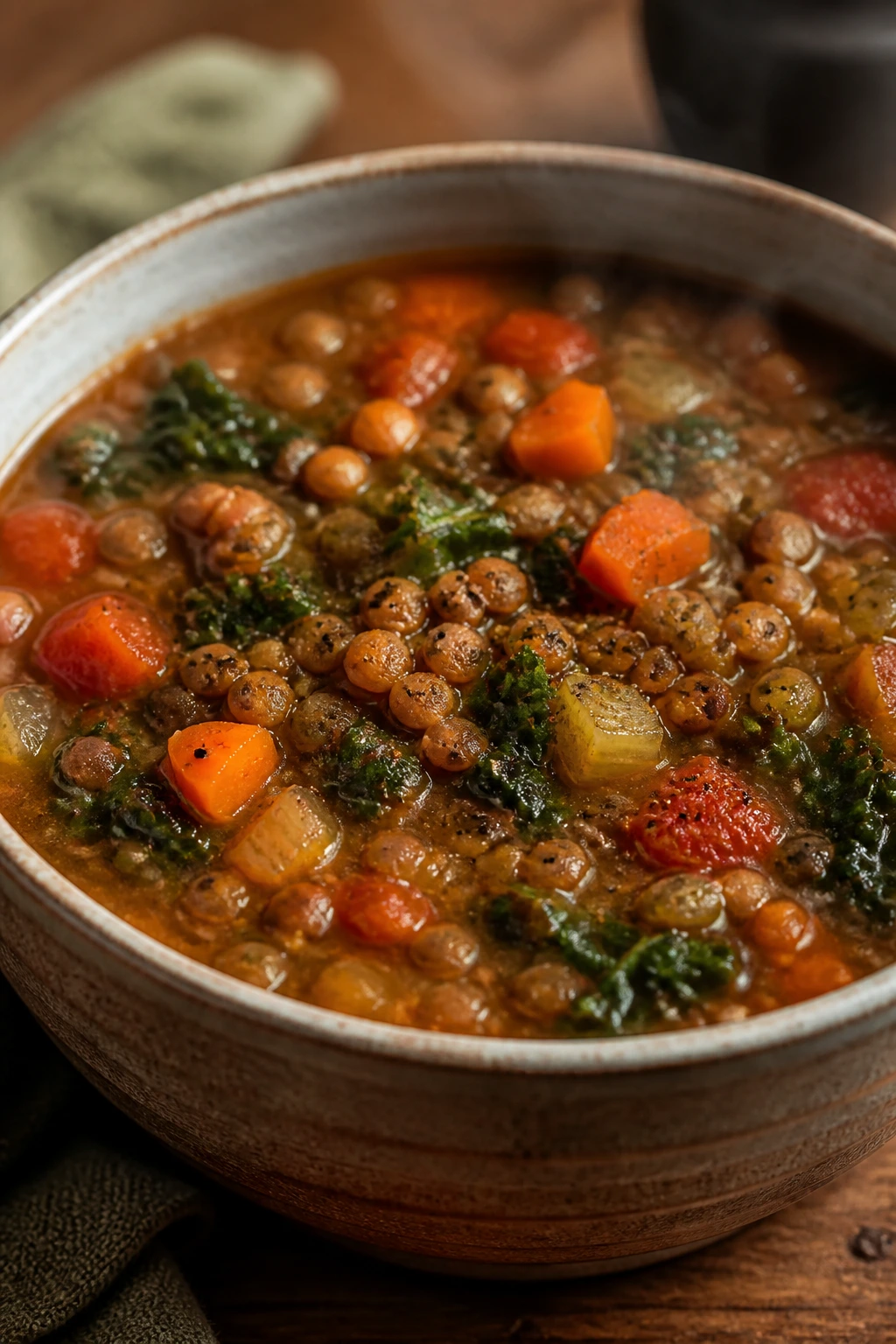
This soup is thick enough to eat with a spoon that stands up for itself, and it comes in around 330 calories per bowl. Lentils do the protein work, the vegetables bring sweetness and texture, and a squeeze of lemon at the end sharpens everything. It’s the kind of meal that tastes even better after the first bowl has sat for ten minutes.
Why It Works:
Lentils are the quiet hero here. They hold shape, absorb seasoning, and make a broth feel substantial without needing meat. Onion, carrot, celery, and tomatoes build a base that tastes slow-cooked even when the pot comes together fairly fast.
Key Ingredients:
For the Soup
- 1 tablespoon olive oil
- 1 yellow onion, diced
- 2 carrots, diced
- 2 celery stalks, diced
- 3 cloves garlic, minced
- 1 1/2 cups brown or green lentils, rinsed
- 1 can diced tomatoes, 14.5 oz
- 6 cups low-sodium vegetable broth
- 1 teaspoon dried thyme
- 1 bay leaf
- 2 cups chopped kale or spinach
- Salt and black pepper
- 1 lemon, juiced
Quick Steps:
- Heat the olive oil in a Dutch oven over medium heat.
- Add the onion, carrots, and celery. Cook for 6 to 8 minutes until softened.
- Stir in the garlic, lentils, tomatoes, broth, thyme, and bay leaf.
- Simmer for 30 to 35 minutes, until the lentils are tender but not mushy.
- Stir in the kale or spinach for the last 3 minutes, season well, and finish with lemon juice.
Equipment for This Recipe:
- Dutch oven or large soup pot
- Wooden spoon
- Ladle
- Cutting board and knife
- Measuring cups
How to Serve This Dish:
Ladle it into wide bowls and add black pepper at the table. A slice of toasted whole-grain bread fits nicely if you want something to dip. If you like a creamier finish, a spoonful of Greek yogurt on top works better than cream.
Pro Tips for This Recipe:
- Rinse the lentils well or the broth can taste dusty.
- Salt in layers, not just at the end.
- Add the greens late so they stay green and do not turn swampy.
- If the soup thickens overnight, loosen it with broth or water.
Variations on This Dish:
- Italian Herb Version: Add oregano and a Parmesan rind while it simmers.
- Spicy Red Lentil Soup: Swap in red lentils and add chili flakes.
- Tomato-Free Bowl: Use extra broth and a little more carrot if you want a softer flavor.
Common Mistakes to Avoid with This Dish:
- Boiling the soup hard: That can split the lentils and turn the texture pasty.
- Skipping the acid: Lemon or vinegar sharpens the whole pot.
- Undercooking the vegetables at the start: A raw onion note can stay with you for the whole bowl.
11. Burger Bowl with Special Sauce and Pickles
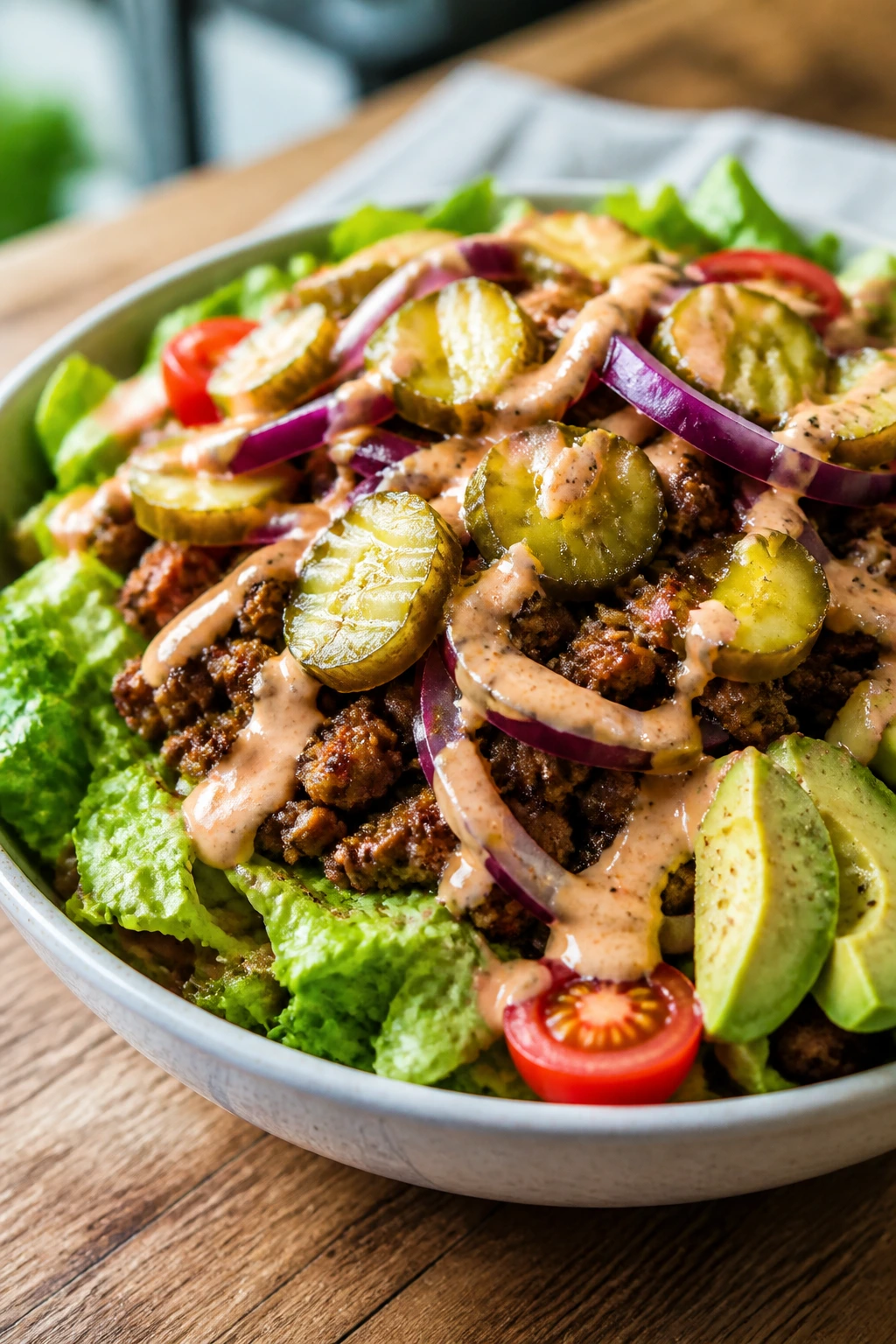
If you like cheeseburgers but don’t want the bun doing all the calorie damage, this bowl scratches the itch. It lands around 440 calories, and the special sauce gives you the same salty-tangy pleasure you’d want from a drive-thru version, just with better lettuce and no soggy wrapper.
Why It Works:
A burger bowl works because it keeps the good parts and drops the filler. Lean beef provides the savory base, pickles and mustard bring acid, and a small amount of potato or avocado makes the bowl feel complete without bloating the calorie count. The sauce matters. If the sauce is good, the rest follows.
Key Ingredients:
For the Burger Meat
- 1 lb 93% lean ground beef
- 1 teaspoon kosher salt
- 1/2 teaspoon black pepper
- 1 teaspoon garlic powder
- 1 teaspoon onion powder
- 1 teaspoon smoked paprika
For the Bowl
- 6 cups chopped romaine
- 1 cup cherry tomatoes, halved
- 1/2 cup dill pickle slices
- 1/4 cup thinly sliced red onion
- 1/2 avocado, sliced
For the Special Sauce
- 1/4 cup plain Greek yogurt
- 1 tablespoon ketchup
- 1 tablespoon yellow mustard
- 1 teaspoon pickle relish
- Pinch of paprika
Quick Steps:
- Mix the beef with salt, pepper, garlic powder, onion powder, and paprika.
- Form into 4 small patties or cook it loose in a skillet for a chopped-burger bowl.
- Cook over medium-high heat for 4 to 5 minutes per side, or until browned and cooked through.
- Whisk the sauce ingredients together.
- Layer the lettuce, tomatoes, pickles, onion, avocado, and burger meat in bowls. Drizzle with sauce.
Equipment for This Recipe:
- Cast-iron or nonstick skillet
- Mixing bowl
- Whisk
- Serving bowls
- Spatula
How to Serve This Dish:
Serve it with the sauce in a little streak over the top rather than mixed through the whole bowl. That keeps the lettuce crisp. If you want a side, roasted broccoli or a few sweet potato wedges fit without turning the meal into a binge dinner.
Pro Tips for This Recipe:
- Shape patties a little wider than you think. They shrink in the pan.
- Don’t overmix the beef. A rough hand keeps it tender.
- Drain excess fat if your pan pools; otherwise the lettuce turns slick.
- Pickles are not garnish here. They’re part of the flavor balance.
Variations on This Dish:
- Cheeseburger Bowl: Add 1 oz shredded cheddar if you want a richer finish.
- Turkey Burger Version: Swap in lean ground turkey and add a touch more seasoning.
- Spicy Sauce Bowl: Stir hot sauce into the yogurt sauce.
Common Mistakes to Avoid with This Dish:
- Treating it like a salad with a burger on top: The meat should be seasoned like a burger, not just sautéed.
- Using too much sauce: It should accent the bowl, not flood it.
- Skipping the pickles: Without them, the bowl tastes oddly flat.
12. Stuffed Bell Peppers with Lean Turkey and Cauliflower Rice
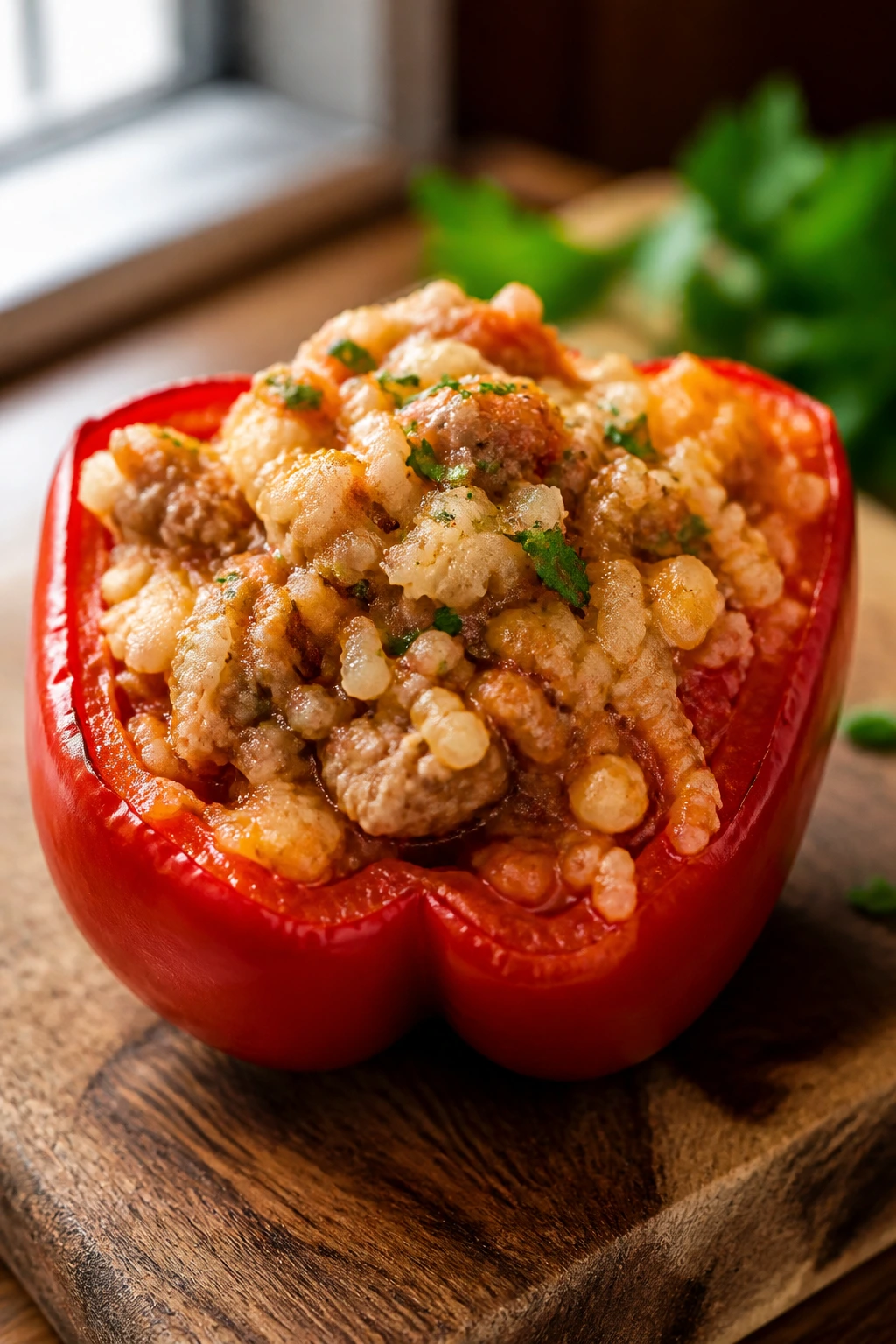
Stuffed peppers can go heavy fast, but this version keeps the filling tidy and the seasoning bright. One pepper half lands around 380 calories, and the cauliflower rice cuts bulk without making the filling feel skinny. The tomato sauce bakes into everything and gives the peppers their best kind of edge.
Why It Works:
Bell peppers are already built like edible containers, which helps with portion control. Lean turkey, cauliflower rice, and tomato sauce make a filling that tastes like a classic comfort dish but finishes lighter. A little cheese on top adds enough richness to matter without burying the vegetables.
Key Ingredients:
For the Peppers
- 4 large bell peppers, halved and seeded
- 1 lb lean ground turkey
- 1 tablespoon olive oil
- 1 small onion, diced
- 2 cloves garlic, minced
- 2 cups cauliflower rice
- 1 cup marinara sauce
- 1 teaspoon Italian seasoning
- 1/2 teaspoon kosher salt
- 1/4 teaspoon black pepper
- 1/2 cup shredded mozzarella or part-skim cheese
Quick Steps:
- Heat the oven to 375°F (190°C).
- Roast the pepper halves cut-side up for 10 minutes so they start softening.
- Cook the onion, garlic, and turkey in olive oil until the turkey is browned.
- Stir in the cauliflower rice, marinara, seasoning, salt, and pepper. Cook for 3 minutes.
- Fill the peppers, top with cheese, and bake for 20 minutes until bubbly and tender.
Equipment for This Recipe:
- 9×13-inch baking dish
- Skillet
- Spoon for filling
- Foil
- Knife and cutting board
How to Serve This Dish:
Serve two pepper halves per person with a simple side salad if you want more volume. The peppers should still hold their shape when you lift them, not collapse into sauce. A little chopped parsley on top helps the tray look fresh.
Pro Tips for This Recipe:
- Pre-roasting the peppers keeps them from tasting raw at the center.
- Drain the turkey if it releases a lot of liquid.
- Use thick marinara so the filling doesn’t go watery.
- Let them sit for 5 minutes after baking so the filling sets.
Variations on This Dish:
- Mexican-Style Peppers: Use cumin, chili powder, and salsa instead of Italian seasoning.
- No-Cheese Version: Skip the mozzarella and finish with parsley and lemon.
- Beef-and-Turkey Mix: Use half lean beef for a deeper flavor.
Common Mistakes to Avoid with This Dish:
- Underbaking the peppers: The shells should be tender enough to cut easily.
- Overstuffing: The filling spills out and the peppers lose their shape.
- Using thin sauce: It puddles in the pan and makes the peppers soggy.
13. Chicken Fajita Cauliflower Rice Bowls
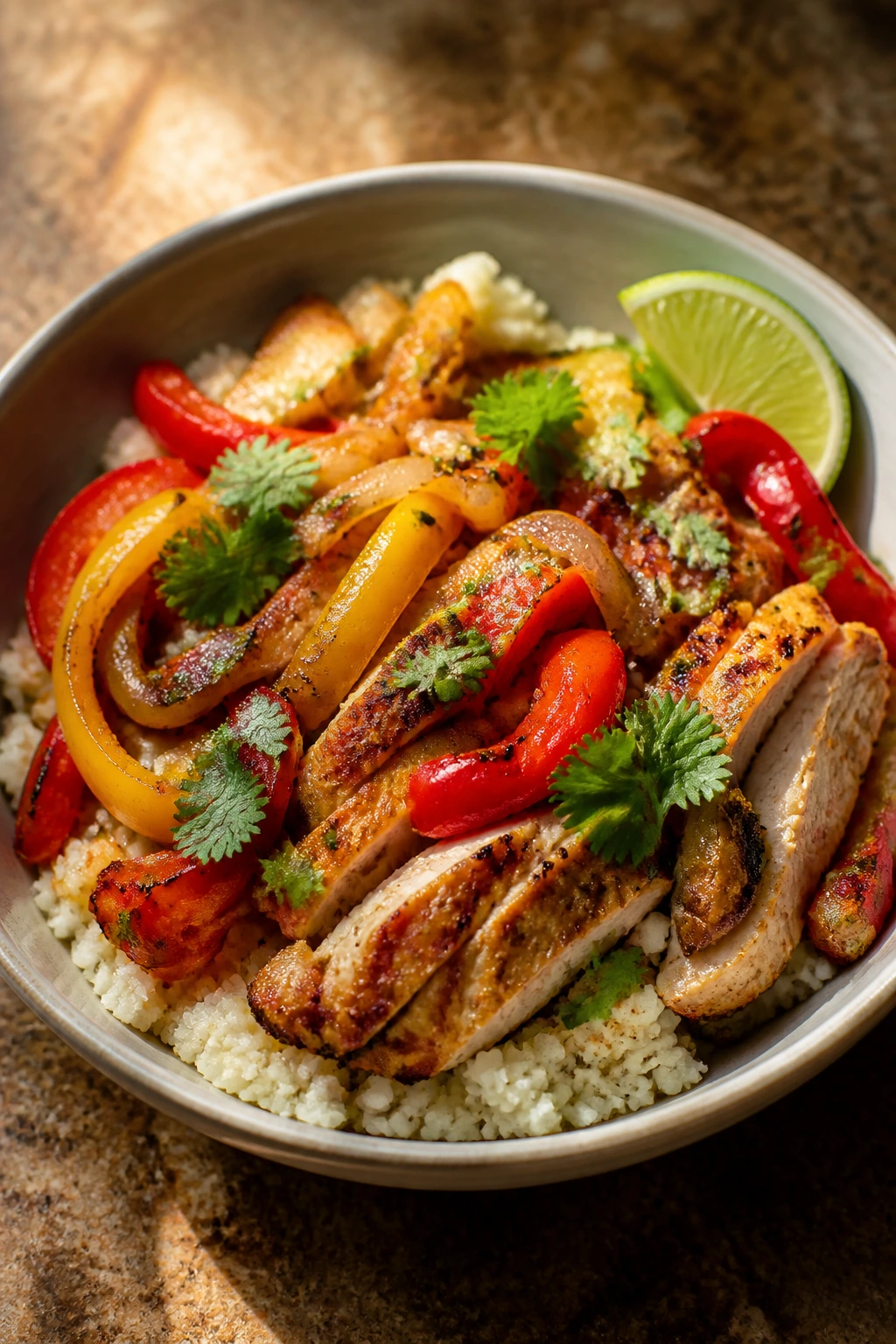
This is the bowl version of a fajita skillet, and it keeps all the good stuff: charred peppers, seasoned chicken, lime, and a cool avocado finish. It lands around 390 calories per serving, which gives you room for a substantial plate without fussing over every bite.
Why It Works:
Cauliflower rice is the key move here because it takes on flavor and keeps the bowl light. The chicken and peppers cook in the same pan, which means the spice mix picks up little browned bits from the bottom. A little avocado and salsa keep the bowl from feeling austere.
Key Ingredients:
For the Fajita Bowl
- 1 lb boneless, skinless chicken breast, sliced
- 1 tablespoon olive oil
- 1 red bell pepper, sliced
- 1 yellow bell pepper, sliced
- 1 small onion, sliced
- 3 cups cauliflower rice
- 1 teaspoon chili powder
- 1 teaspoon ground cumin
- 1/2 teaspoon garlic powder
- 1/2 teaspoon kosher salt
- 1 lime, juiced
For Topping
- 1/2 avocado, sliced
- 1/3 cup salsa
- Fresh cilantro
Quick Steps:
- Season the chicken with chili powder, cumin, garlic powder, and salt.
- Heat the oil in a large skillet and cook the chicken for 4 to 5 minutes until browned.
- Add the peppers and onion and cook for 4 minutes more until softened and a little charred.
- Stir in the cauliflower rice and cook for 3 minutes, just until hot.
- Finish with lime juice and serve with avocado, salsa, and cilantro.
Equipment for This Recipe:
- Large skillet
- Wooden spoon
- Knife and cutting board
- Citrus juicer
- Serving bowls
How to Serve This Dish:
Spoon the cauliflower rice into the bowl first so it can soak up the juices. Keep the avocado sliced thick enough to taste. If you want extra texture, a few pumpkin seeds work better than cheese here.
Pro Tips for This Recipe:
- Slice the chicken evenly so every piece cooks at the same speed.
- Don’t thaw cauliflower rice into a wet pile. Use it straight from the bag or pat it dry.
- Let the peppers sit in the hot pan long enough to blister a little.
- Lime at the end makes the bowl taste brighter than lime cooked into the pan.
Variations on This Dish:
- Shrimp Fajita Bowl: Swap the chicken for shrimp and cut the skillet time way down.
- Black Bean Bowl: Add 1/2 cup black beans for extra fiber.
- Cheddar Finish: A tablespoon or two of shredded cheese works if you can spare the calories.
Common Mistakes to Avoid with This Dish:
- Using too much oil: Cauliflower rice soaks it up fast.
- Cooking the chicken too long before the vegetables go in: It turns dry.
- Forgetting the lime: The whole bowl needs that final sharp note.
14. Tuna Avocado Cucumber Boats
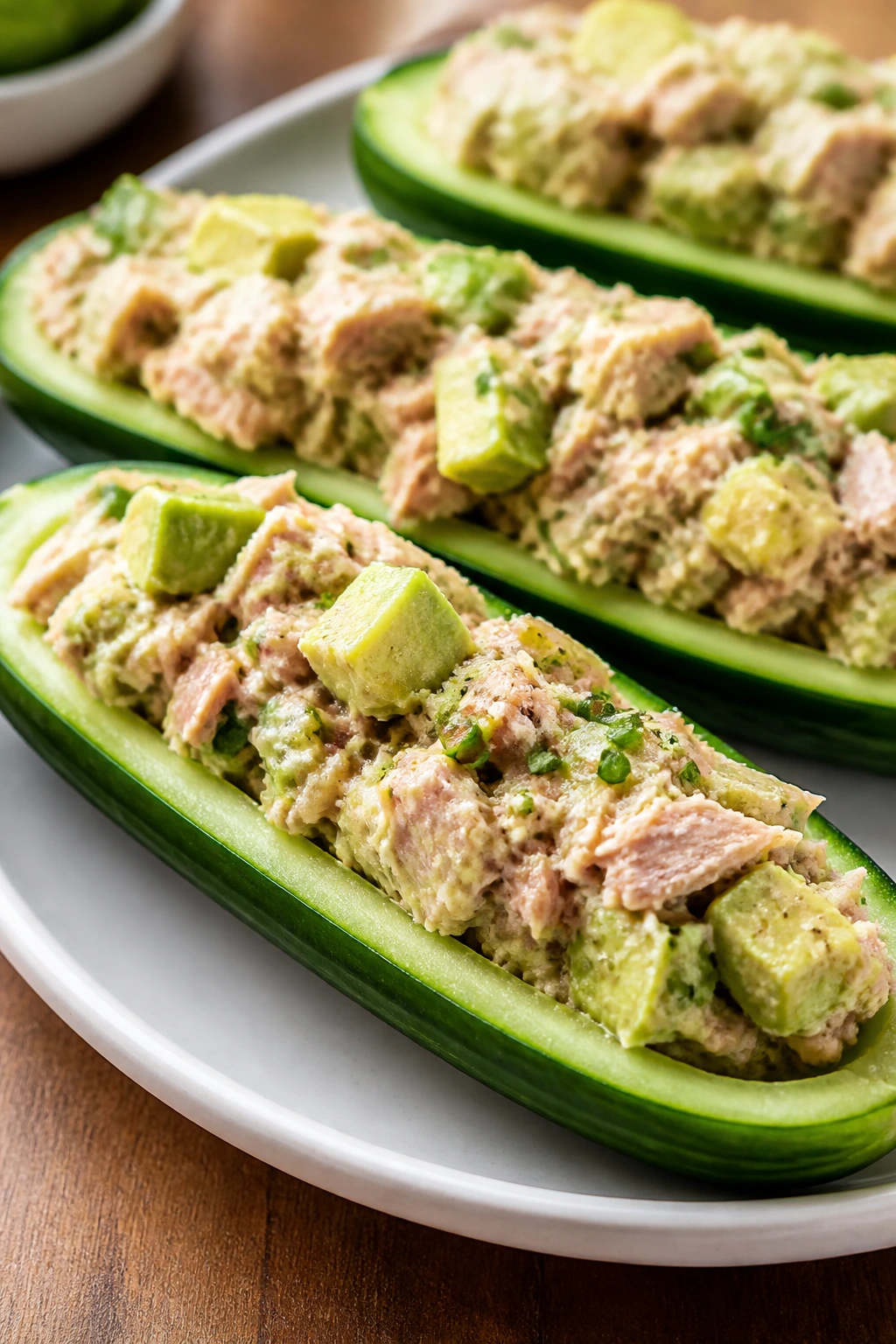
This is the kind of lunch that feels cold, crisp, and oddly luxurious for how little cooking it requires. Around 280 to 320 calories, depending on the avocado, it’s light enough to sit comfortably inside a day that still has other meals to come. The cucumber boats keep the tuna salad from getting muddy and heavy.
Why It Works:
Tuna brings protein without much fat, avocado gives the filling a creamy edge, and Greek yogurt keeps the mix bright instead of mayo-heavy. Cucumber is a smart base because it has structure and water, so each bite stays fresh. This is not a recipe that wants heat. It wants sharpness and chill.
Key Ingredients:
For the Tuna Salad
- 2 cans tuna in water, drained
- 1/2 avocado, mashed
- 2 tablespoons plain Greek yogurt
- 1 stalk celery, finely chopped
- 1 tablespoon red onion, minced
- 1 tablespoon lemon juice
- 1 teaspoon Dijon mustard
- 1 tablespoon chopped dill
- Salt and black pepper
For Serving
- 2 large cucumbers, halved and seeded
- Mixed greens or extra cucumber slices, optional
Quick Steps:
- Mix the tuna, avocado, Greek yogurt, celery, onion, lemon juice, mustard, dill, salt, and pepper.
- Split the cucumbers lengthwise and scoop out a narrow channel down the center.
- Spoon the tuna mixture into the cucumber halves.
- Slice each half into two or three pieces, or serve whole with greens on the side.
Equipment for This Recipe:
- Mixing bowl
- Spoon
- Knife
- Cutting board
- Can opener
How to Serve This Dish:
Serve the cucumber boats cold, straight from the fridge if possible. A handful of greens on the side makes the plate feel fuller. If you need more calories for a bigger lunch, add whole-grain crackers rather than doubling the avocado.
Pro Tips for This Recipe:
- Seed the cucumbers enough that the filling doesn’t slide out.
- Drain the tuna well or the mixture tastes watery.
- Add the dill last so it stays fresh and sharp.
- If the avocado is very ripe, reduce the yogurt a touch.
Variations on This Dish:
- Mediterranean Tuna Boats: Add chopped parsley, capers, and a little cucumber pulp back into the filling.
- Egg Boost Version: Fold in chopped hard-boiled egg for a richer, higher-protein lunch.
- Spicy Tuna Boats: Add sriracha or chili crisp sparingly.
Common Mistakes to Avoid with This Dish:
- Leaving too much cucumber flesh in place: The boats turn watery and shallow.
- Using dry tuna straight from the can: You need enough moisture to make the filling spoonable.
- Overloading the boats: They split if you pack them too high.
15. Cauliflower Fried Rice with Chicken and Peas
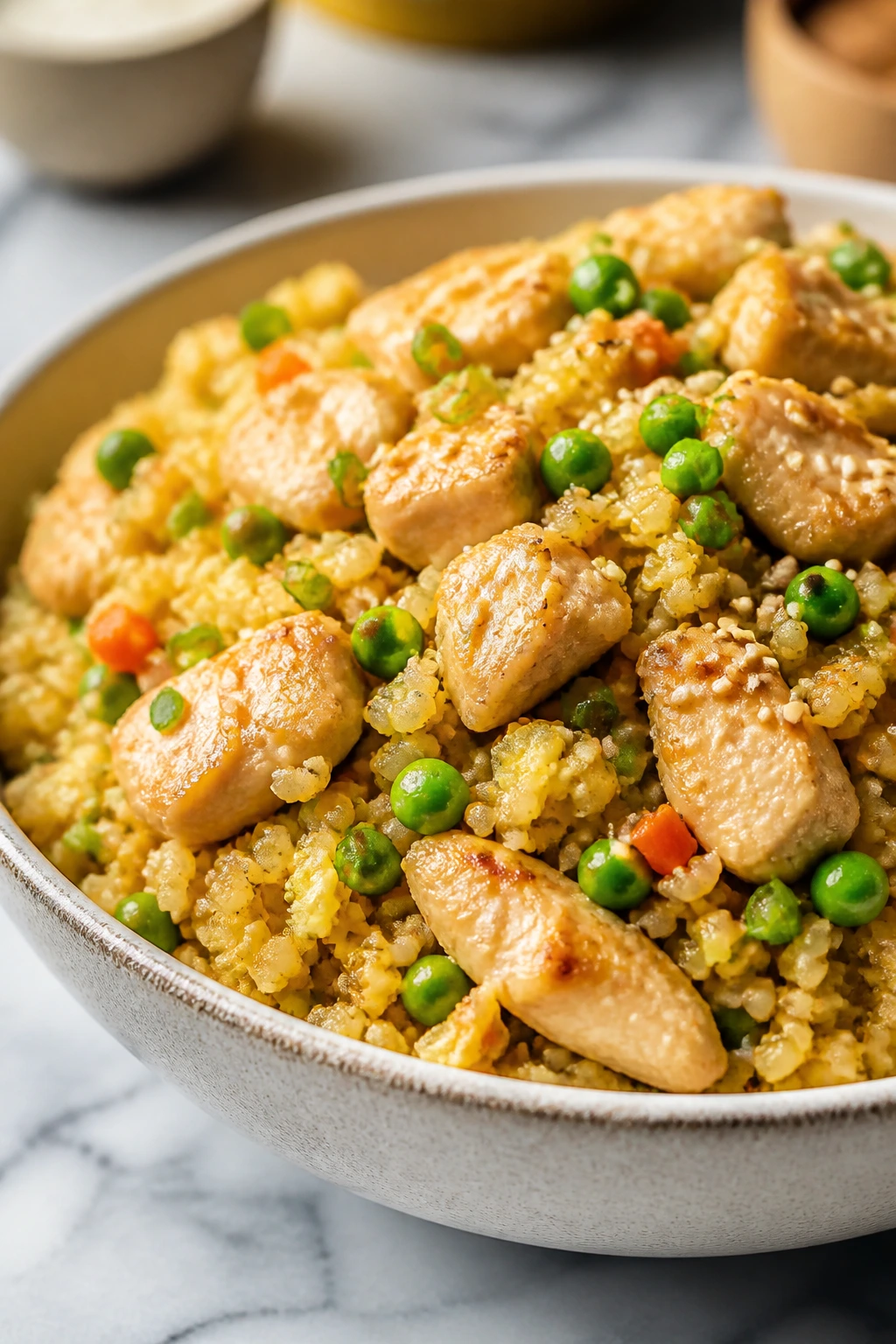
This is the clean-eating version of takeout fried rice that still scratches the same itch. It’s savory, a little nutty from sesame oil, and full enough to sit around 410 calories per serving. The cauliflower rice picks up the sauce fast, which is why this dish works better than people expect.
Why It Works:
A hot skillet is doing a lot of the work here. Chicken, peas, carrots, eggs, and cauliflower rice all cook quickly, and the tamari binds them together without a heavy sauce. It feels like fried rice because of the method, not because it’s loaded with oil.
Key Ingredients:
For the Fried Rice
- 1 lb boneless, skinless chicken breast, diced
- 4 cups cauliflower rice
- 1 cup frozen peas and carrots
- 2 eggs, lightly beaten
- 2 cloves garlic, minced
- 1 tablespoon fresh ginger, grated
- 2 tablespoons low-sodium tamari
- 1 teaspoon toasted sesame oil
- 1 tablespoon avocado oil
- 2 green onions, sliced
Quick Steps:
- Heat the avocado oil in a large skillet over medium-high heat and cook the chicken until browned and cooked through.
- Push the chicken to one side, add the eggs, and scramble them until just set.
- Stir in the garlic, ginger, peas, carrots, and cauliflower rice. Cook for 4 to 5 minutes until the cauliflower softens and the water cooks off.
- Add tamari and sesame oil, then toss until everything is evenly coated.
- Finish with green onions.
Equipment for This Recipe:
- Large skillet or wok
- Spatula
- Small bowl for eggs
- Measuring spoons
- Cutting board
How to Serve This Dish:
Serve it in a warm bowl with the green onions on top and a splash of chili sauce on the side. It’s filling enough on its own, but a cucumber salad or miso soup turns it into a fuller meal. Keep the plate simple. This dish already carries itself.
Pro Tips for This Recipe:
- Use cauliflower rice that isn’t soaking wet. Pat it dry if needed.
- Cook over enough heat to keep things moving. A lazy pan gives you mush.
- Scramble the eggs quickly and leave them a little tender.
- Add sesame oil at the end or it gets lost.
Variations on This Dish:
- Shrimp Fried Rice: Swap the chicken for shrimp and cook even faster.
- Pineapple Version: Add a few pineapple chunks if you like sweet-salty contrast.
- Vegetarian Bowl: Use tofu and extra peas instead of chicken.
Common Mistakes to Avoid with This Dish:
- Using too much cauliflower rice at once: The pan cools down and the rice steams.
- Going light on the aromatics: Garlic and ginger are what keep it from tasting like vegetables in a bowl.
- Using old eggs that smell strong: Fried rice has nowhere to hide that.
16. Turkey Chili with Beans
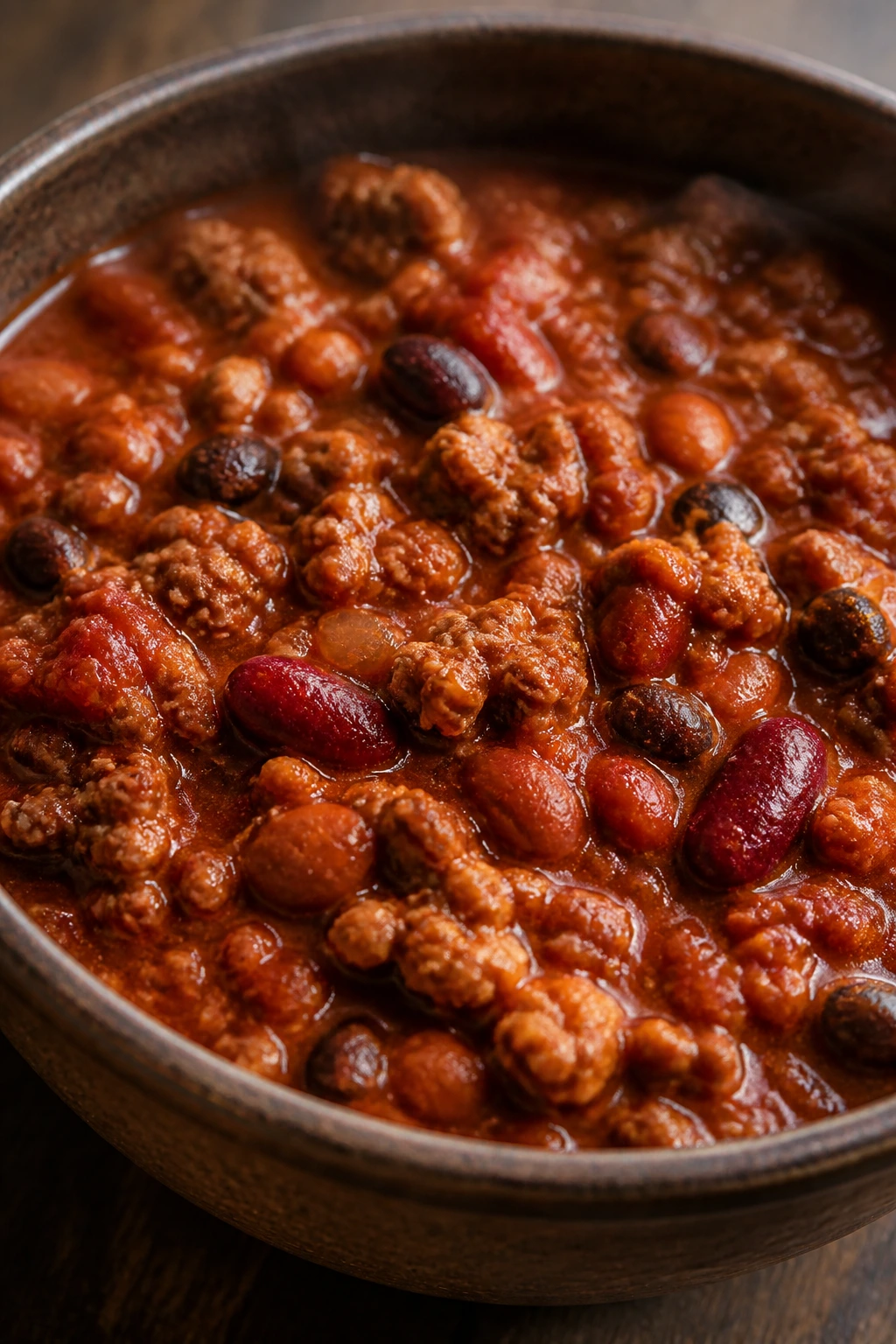
This chili is thick, spoonable, and comforting without the usual heavy load of beef fat or cheese. It lands around 360 calories per bowl, which leaves room for a little Greek yogurt or a few crushed tortilla chips if you want a finish. It’s the kind of pot you’ll keep eating from even when you’re not trying to.
Why It Works:
Lean turkey keeps the chili lighter, but beans give it enough body that you don’t miss the extra fat. Tomatoes, peppers, onion, and chili powder build a deep enough base that it tastes like it simmered all day. It freezes well, which is always a nice bonus when the pantry starts to look serious.
Key Ingredients:
For the Chili
- 1 lb lean ground turkey
- 1 tablespoon olive oil
- 1 yellow onion, diced
- 1 red bell pepper, diced
- 3 cloves garlic, minced
- 2 tablespoons chili powder
- 1 teaspoon ground cumin
- 1 can diced tomatoes, 14.5 oz
- 1 can tomato sauce, 8 oz
- 2 cans beans, rinsed and drained
- 2 cups low-sodium chicken broth
- Salt and black pepper
Quick Steps:
- Heat the olive oil in a large pot and cook the onion and pepper for 5 minutes until softened.
- Add the turkey and cook until browned.
- Stir in the garlic, chili powder, and cumin for 30 seconds.
- Add the tomatoes, tomato sauce, beans, and broth. Simmer for 25 to 30 minutes until thick.
- Season and serve hot.
Equipment for This Recipe:
- Large soup pot or Dutch oven
- Wooden spoon
- Ladle
- Can opener
- Measuring cups
How to Serve This Dish:
Ladle it into deep bowls and top with chopped cilantro or a spoonful of yogurt if you want creaminess. A side of sliced avocado works too, but keep it measured. This is one of the few dinners where a simple bowl is enough.
Pro Tips for This Recipe:
- Brown the turkey well so the flavor has a base.
- Rinse canned beans to cut the sodium and keep the broth cleaner.
- Simmer uncovered if you want it thicker.
- Add a splash of vinegar or lime at the end if it tastes sleepy.
Variations on This Dish:
- White Turkey Chili: Use white beans, green chiles, and cumin-heavy seasoning.
- Extra Veg Chili: Add zucchini or corn in the last 10 minutes.
- Bean-Heavy Version: Use one less can of turkey? No—use one less can of beans? Better: use extra beans and half the meat if you want a cheaper pot.
Common Mistakes to Avoid with This Dish:
- Skipping the browning step: Pale turkey gives you pale chili.
- Adding too much liquid: Chili should coat a spoon, not pour like soup.
- Forgetting to taste after simmering: Beans soak up salt fast.
17. Chickpea Coconut Curry with Spinach
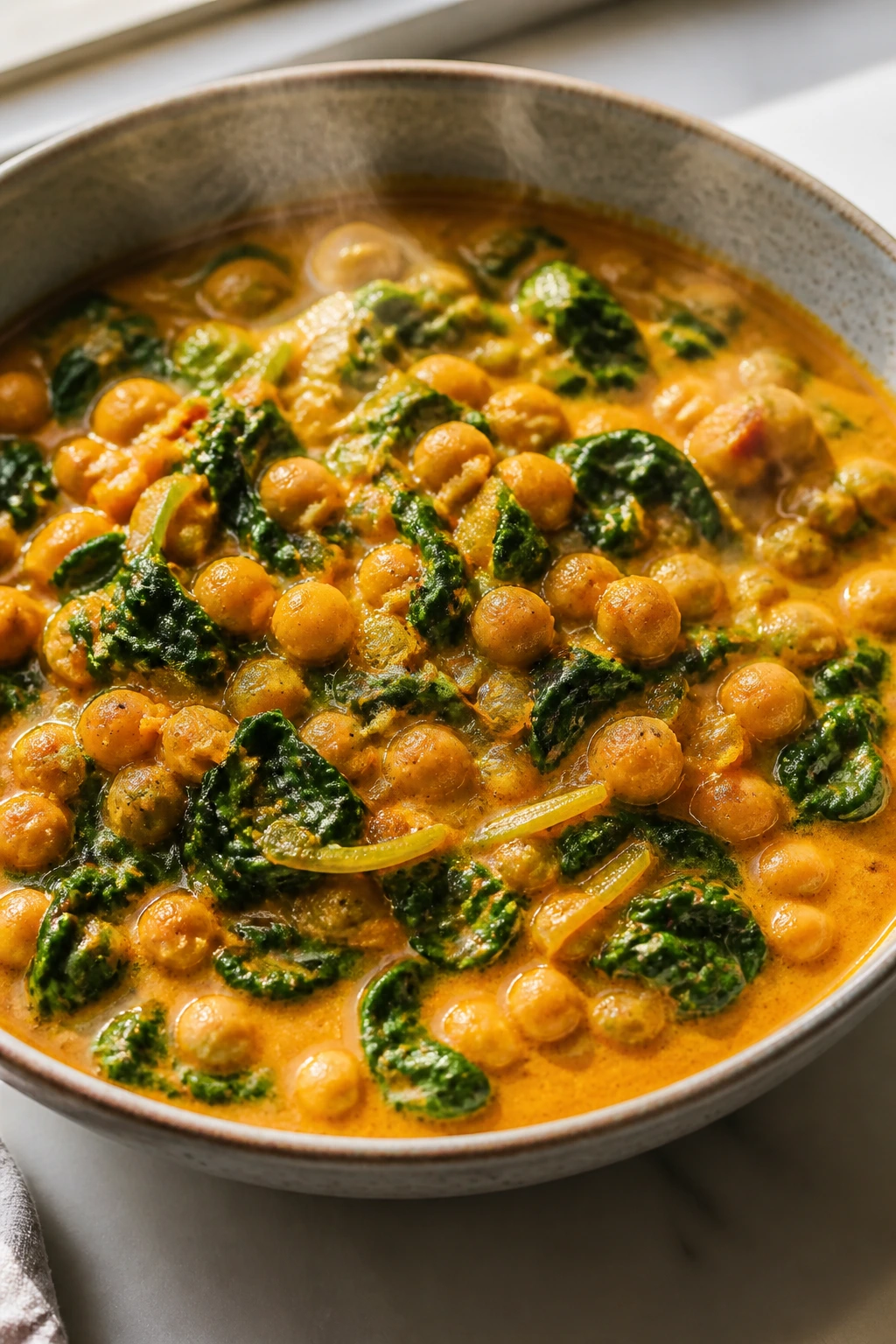
This curry is creamy enough to feel lush and still stays around 440 calories when you keep the coconut milk measured. Chickpeas bring the heft, spinach melts down into the sauce, and the curry powder carries the whole pan. Serve it over cauliflower rice or a small portion of basmati if you want a little grain.
Why It Works:
Light coconut milk gives you body without turning the curry into a calorie bomb. Chickpeas supply fiber and protein, so the bowl stays satisfying even when the sauce is relatively lean. Spinach disappears into the pot in the best possible way, which means you get more vegetables without extra fuss.
Key Ingredients:
For the Curry
- 1 tablespoon olive oil
- 1 yellow onion, diced
- 3 cloves garlic, minced
- 1 tablespoon fresh ginger, grated
- 2 tablespoons curry powder
- 1 can chickpeas, rinsed and drained
- 1 can light coconut milk, 13.5 oz
- 1 cup diced tomatoes
- 2 cups spinach
- Salt and lime juice
For Serving
- 2 cups cauliflower rice or 1 cup cooked basmati rice
- Fresh cilantro
Quick Steps:
- Heat the olive oil in a skillet or saucepan over medium heat.
- Cook the onion for 5 minutes until soft.
- Stir in the garlic, ginger, and curry powder for 30 seconds.
- Add the chickpeas, coconut milk, and tomatoes. Simmer for 12 to 15 minutes until the sauce thickens.
- Stir in the spinach until wilted and finish with salt and lime.
Equipment for This Recipe:
- Large skillet or saucepan
- Wooden spoon
- Measuring spoons
- Rice cooker or saucepan, if using rice
- Serving bowls
How to Serve This Dish:
Ladle the curry over cauliflower rice if you want to keep it lighter, or choose a half-cup of rice if you want more starch. Cilantro and lime are not decorative here; they brighten the coconut. A little chili oil works if you want heat.
Pro Tips for This Recipe:
- Fry the curry powder in the oil for a short moment before adding liquid. The flavor blooms.
- Don’t boil the sauce too hard or the coconut milk can separate.
- Use fresh lime at the end, not bottled juice.
- If the curry tastes thin, simmer another few minutes uncovered.
Variations on This Dish:
- Thai-Inspired Curry: Add a spoonful of red curry paste and use basil instead of cilantro.
- Sweet Potato Curry: Add diced sweet potato early so it softens in the sauce.
- Dairy-Free Green Curry: Use green curry paste and extra spinach.
Common Mistakes to Avoid with This Dish:
- Using full-fat coconut milk without adjusting portions: The calories climb fast.
- Skipping the onion base: The curry tastes flat without it.
- Adding spinach too early: It turns swampy and loses color.
18. Baked Tilapia with Mango Salsa
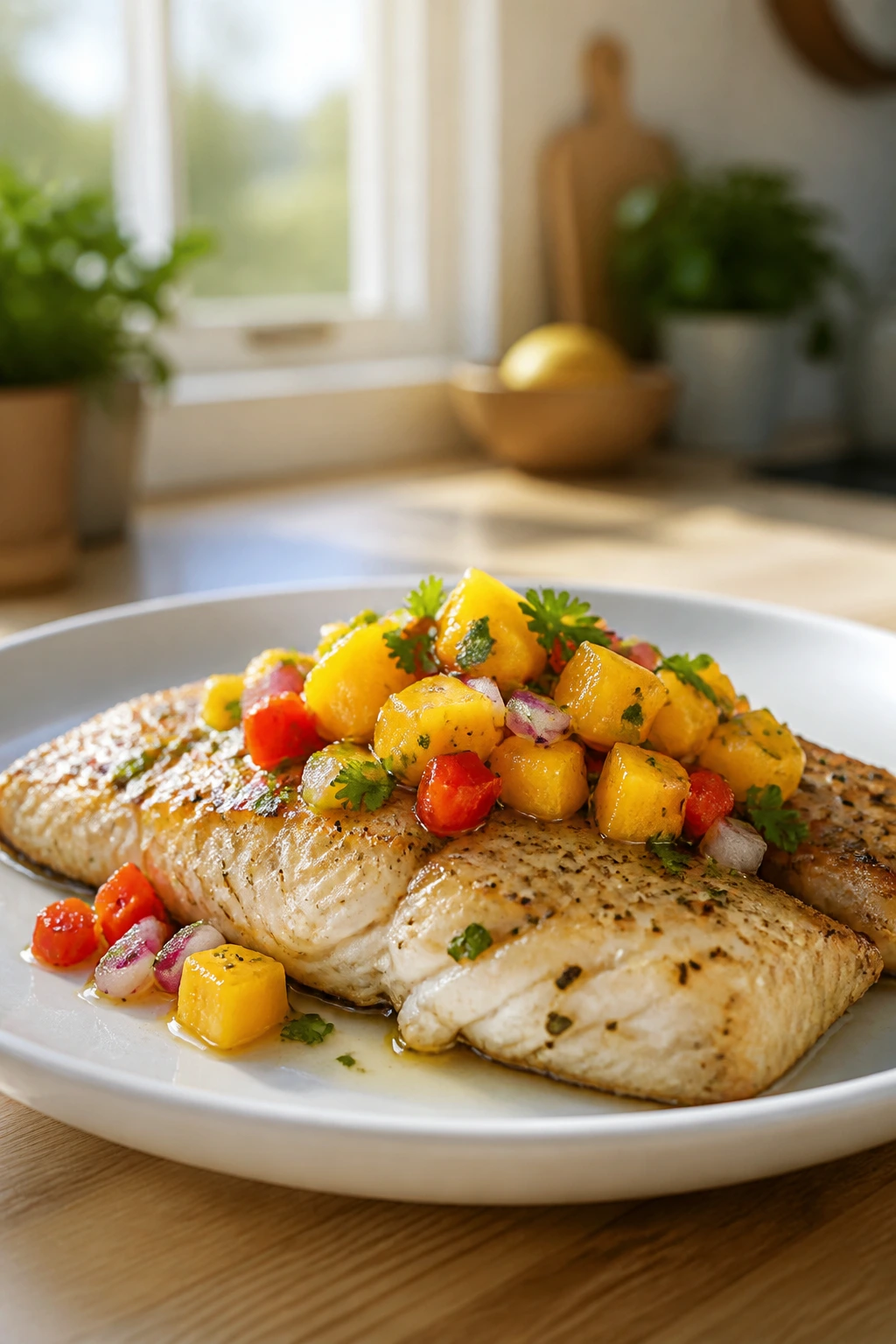
Tilapia is mild, which makes it a good blank canvas when you give it something sharp and juicy on top. The mango salsa brings sweetness, lime, and a little bite from red onion, and the whole plate stays around 360 calories. It’s light, clean, and not at all boring if you season the fish properly.
Why It Works:
A lean white fish needs contrast, and the salsa gives it exactly that. You get soft fish, juicy fruit, crisp onion, and bright citrus in one forkful. Because the fish is baked instead of fried, the calories stay low enough to leave room for a side of greens or a small scoop of rice if you need it.
Key Ingredients:
For the Fish
- 4 tilapia fillets, about 5 oz each
- 1 tablespoon olive oil
- 1 teaspoon paprika
- 1/2 teaspoon garlic powder
- 1/2 teaspoon kosher salt
- Black pepper
For the Mango Salsa
- 1 ripe mango, diced
- 1/4 red onion, finely diced
- 1/2 jalapeño, minced
- 1 tablespoon cilantro, chopped
- 1 lime, juiced
- Pinch of salt
Quick Steps:
- Heat the oven to 400°F (205°C).
- Place the tilapia on a lined sheet pan, brush with olive oil, and season with paprika, garlic powder, salt, and pepper.
- Bake for 10 to 12 minutes, until the fish flakes easily.
- Mix the mango, onion, jalapeño, cilantro, lime juice, and salt.
- Spoon the salsa over the fish just before serving.
Equipment for This Recipe:
- Sheet pan
- Mixing bowl
- Knife and cutting board
- Fish spatula
- Citrus juicer
How to Serve This Dish:
Serve the fish on a wide plate with the salsa piled over the center so the colors stay bright. A side of steamed green beans or cabbage slaw fits neatly beside it. If you want more substance, add half a cup of rice and keep the rest of the plate vegetable-heavy.
Pro Tips for This Recipe:
- Pat the tilapia dry first so it bakes with a little edge.
- Use a ripe mango with a slight give, not a hard one.
- Chop the salsa ingredients small so they stay together.
- Add the salsa right before serving so the fish doesn’t get watery.
Variations on This Dish:
- Pineapple Salsa Swap: Use pineapple if mango isn’t sweet enough.
- Blackened Tilapia: Increase the paprika and add cayenne for a spicier fish.
- Taco Bowl Version: Flake the fish into lettuce with rice and salsa.
Common Mistakes to Avoid with This Dish:
- Overbaking the fish: Tilapia dries out fast.
- Using under-ripe mango: The salsa tastes stiff and sour.
- Putting salsa on too early: The fish loses its clean texture.
19. Spaghetti Squash Bolognese
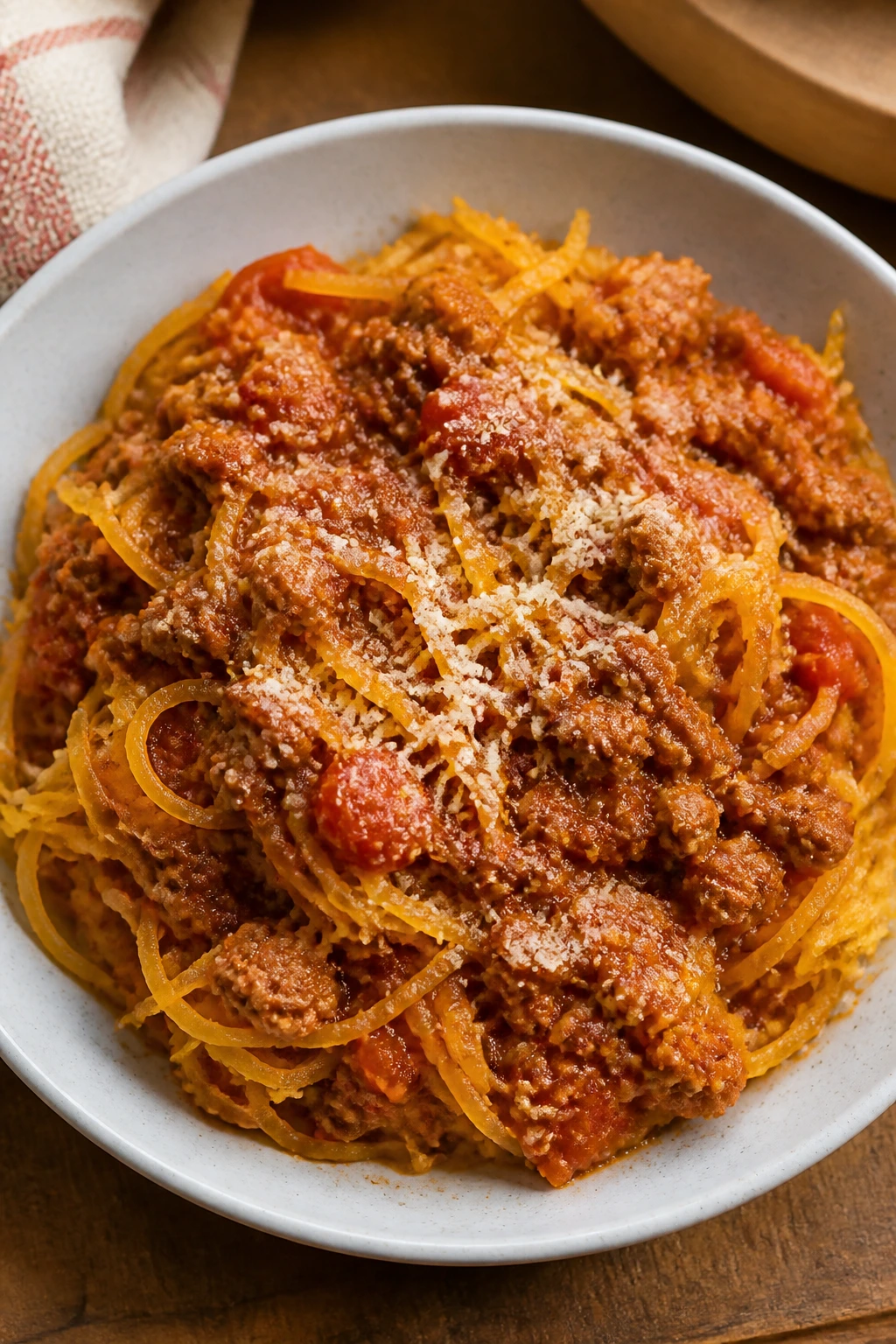
This is the dish for people who want the comfort of a red-sauce dinner without the heaviness of a giant pasta bowl. It comes in around 390 calories per serving, and the squash strands hold the sauce better than they have any right to. The meat sauce is the real workhorse here.
Why It Works:
Spaghetti squash gives you volume and a little sweetness, while lean ground turkey or beef keeps the sauce substantial. Carrot and onion add body to the bolognese without needing a long simmer. A modest sprinkle of Parmesan finishes the plate with enough salt to matter.
Key Ingredients:
For the Squash
- 1 large spaghetti squash
- 1 tablespoon olive oil
- Salt and black pepper
For the Bolognese
- 1 lb lean ground turkey or 93% lean beef
- 1 tablespoon olive oil
- 1 small onion, diced
- 1 carrot, finely diced
- 2 cloves garlic, minced
- 1 1/2 cups crushed tomatoes
- 1/2 cup tomato sauce
- 1 teaspoon Italian seasoning
- 1/4 teaspoon red pepper flakes
- 2 tablespoons grated Parmesan
Quick Steps:
- Heat the oven to 400°F (205°C). Cut the squash in half, scoop out the seeds, oil lightly, and roast cut-side down for 35 to 40 minutes.
- Cook the onion and carrot in olive oil for 5 minutes.
- Add the meat and brown it.
- Stir in the garlic, crushed tomatoes, tomato sauce, seasoning, and red pepper flakes. Simmer for 15 minutes.
- Scrape the squash into strands, top with sauce, and finish with Parmesan.
Equipment for This Recipe:
- Sheet pan
- Large skillet or saucepan
- Fork for shredding squash
- Sharp knife
- Spoon for scooping seeds
How to Serve This Dish:
Pile the squash strands into a shallow bowl first so the sauce has somewhere to land. A little Parmesan is enough; too much and the squash gets buried. A side salad with sharp vinaigrette is the natural companion if you want extra volume.
Pro Tips for This Recipe:
- Roast the squash cut-side down. That keeps it from drying out.
- Simmer the sauce long enough for the carrot to disappear into it.
- Don’t over-salt before the Parmesan goes on.
- If the squash looks watery, let it sit cut-side up for a minute before plating.
Variations on This Dish:
- Mushroom Bolognese: Add chopped mushrooms for a deeper savoriness.
- Turkey and Basil Version: Stir in fresh basil at the end.
- No Meat Sauce: Use lentils instead of meat for a vegetarian pan.
Common Mistakes to Avoid with This Dish:
- Roasting the squash too little: Then you’re scraping out tough threads.
- Making the sauce too thin: It slides off the squash and pools badly.
- Forgetting to season the squash strands: They need salt too, not just the sauce.
20. Breakfast Burrito Bowl with Eggs and Black Beans
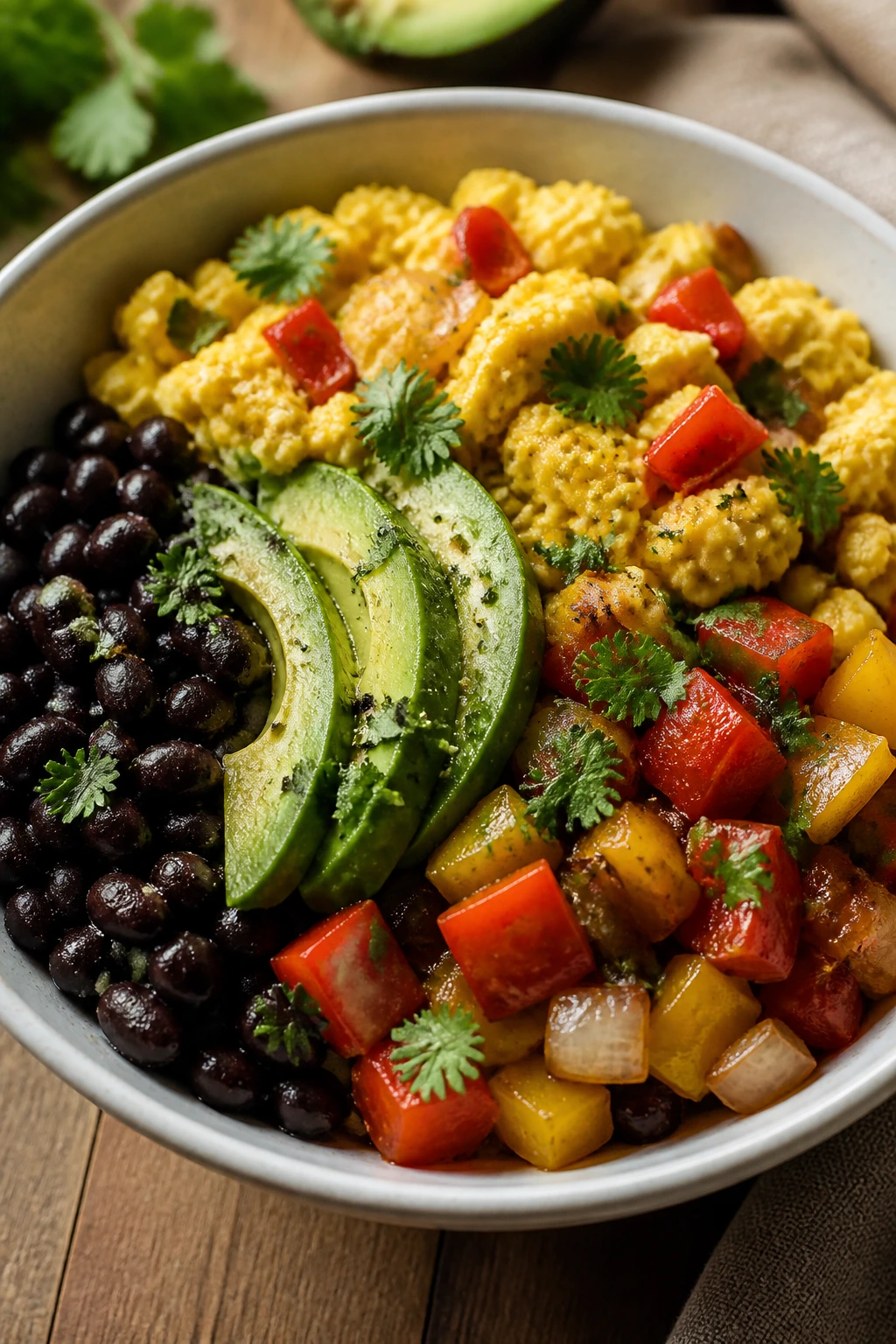
This bowl brings breakfast energy without the tortilla overhead. It’s warm, savory, and lands around 420 calories, depending on how much avocado you use. The black beans and eggs give you staying power, and the salsa keeps the bowl from feeling like a pile of beige protein.
Why It Works:
Eggs, beans, peppers, and a little avocado create a mix of protein, fiber, and fat that holds up well through the morning. It’s a bowl, so the portions stay visible instead of disappearing into a wrapped tortilla. The clean-eating part here is mostly about restraint with the toppings, not about stripping away the flavor.
Key Ingredients:
For the Bowl
- 8 large eggs
- 4 egg whites
- 1 tablespoon olive oil
- 1 red bell pepper, diced
- 1 small onion, diced
- 1 can black beans, rinsed and drained
- 1 teaspoon ground cumin
- 1/2 teaspoon kosher salt
- 1/4 teaspoon black pepper
- 1 cup roasted potatoes, optional but measured
- 1/2 avocado, sliced
- 1/3 cup salsa
- Fresh cilantro and lime
Quick Steps:
- Heat the olive oil in a skillet and cook the onion and bell pepper for 5 minutes until softened.
- Stir in the cumin, black beans, salt, and pepper. Warm through for 2 minutes.
- Beat the eggs and egg whites, then scramble them in a separate pan or push the bean mixture aside and cook the eggs in the same skillet.
- Spoon the eggs, bean mixture, and potatoes into bowls.
- Finish with avocado, salsa, cilantro, and lime.
Equipment for This Recipe:
- Large skillet
- Mixing bowl
- Whisk or fork
- Spatula
- Serving bowls
How to Serve This Dish:
Use a broad bowl so the toppings sit in separate pockets rather than collapsing into one mushy mass. Salsa on the side works if you like to keep the eggs fluffy. A hot sauce bottle nearby is never a bad idea.
Pro Tips for This Recipe:
- Scramble the eggs softly. Dry, tight eggs make the bowl feel heavier than it is.
- Warm the beans well so they don’t cool the whole dish.
- Keep the avocado portion measured. Half an avocado is plenty for one bowl.
- If you want more volume, add spinach with the peppers.
Variations on This Dish:
- Southwest Chicken Bowl: Add shredded chicken for a stronger lunch-style version.
- Vegetarian Power Bowl: Add extra beans and sautéed spinach instead of eggs.
- Cheesy Brunch Bowl: Add a tablespoon or two of shredded cheddar if the calories allow.
Common Mistakes to Avoid with This Dish:
- Overloading the avocado: The bowl gets rich fast.
- Cooking the peppers until they collapse: They should still have some bite.
- Leaving the beans bland: They need cumin and salt or they disappear.
Why Clean Eating Meals Under 500 Calories Feel Bigger Than Their Calorie Count
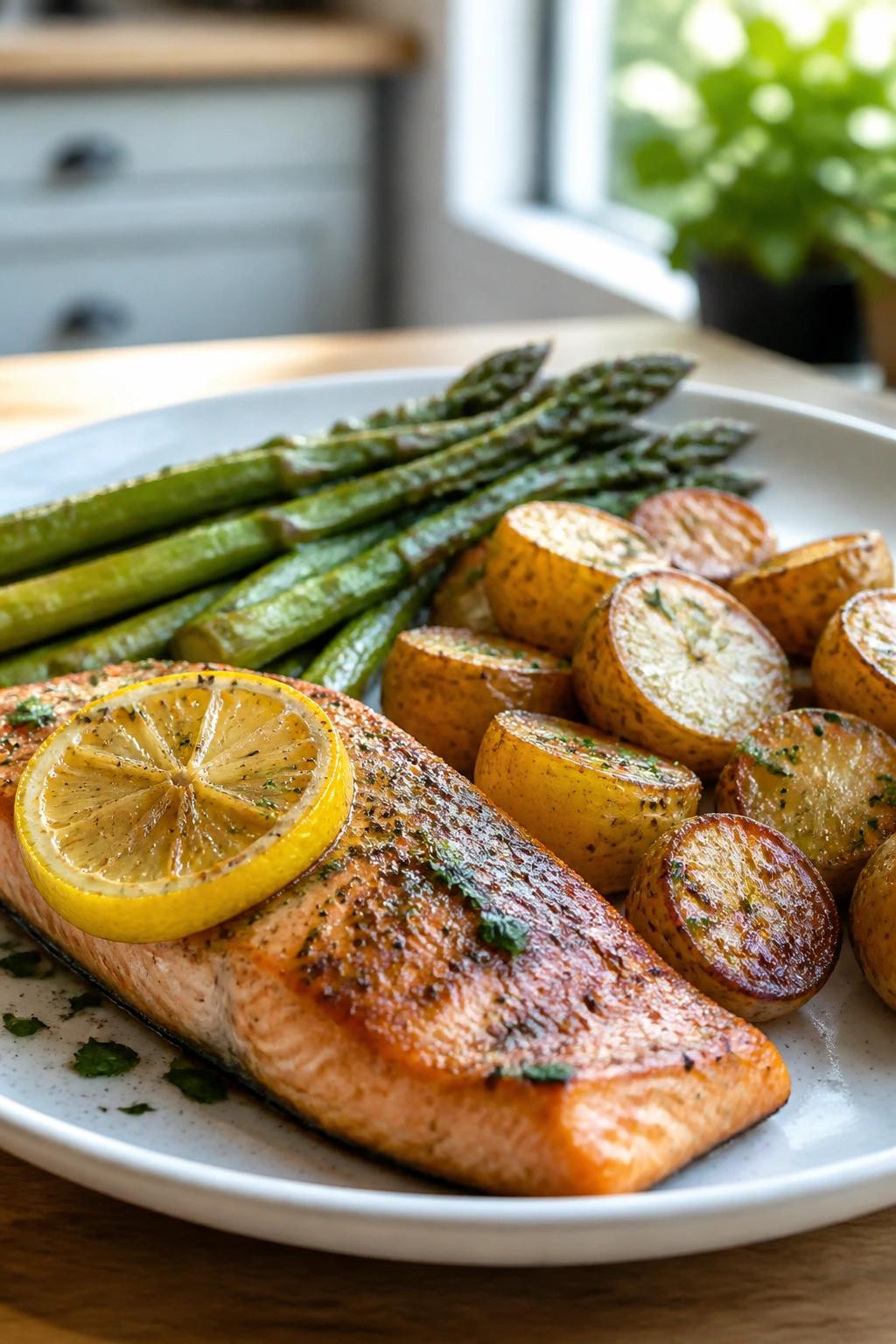
A light meal feels satisfying when it has structure. Protein gives it shape, vegetables give it volume, and a measured starch or bean portion gives it enough body that your brain reads the plate as complete. That’s why a salmon tray with potatoes and asparagus can feel more satisfying than a giant pile of pasta that happens to be the same calorie count.
The other piece is contrast. Crunch matters. Acid matters. A little salt at the right time matters more than people want to admit. Lemon over chicken, lime over shrimp, dill in yogurt, vinegar in a turkey filling—these are small moves, but they stop a lower-calorie dinner from tasting muted.
Texture is the part most home cooks underestimate. A crisp lettuce wrap, a browned chicken cube, a roasted carrot edge, or a cool spoon of yogurt sauce can change the way a meal lands. That’s why these recipes lean on searing, roasting, and fresh finishing touches instead of soft food all the way through.
Essential Equipment for These Recipes
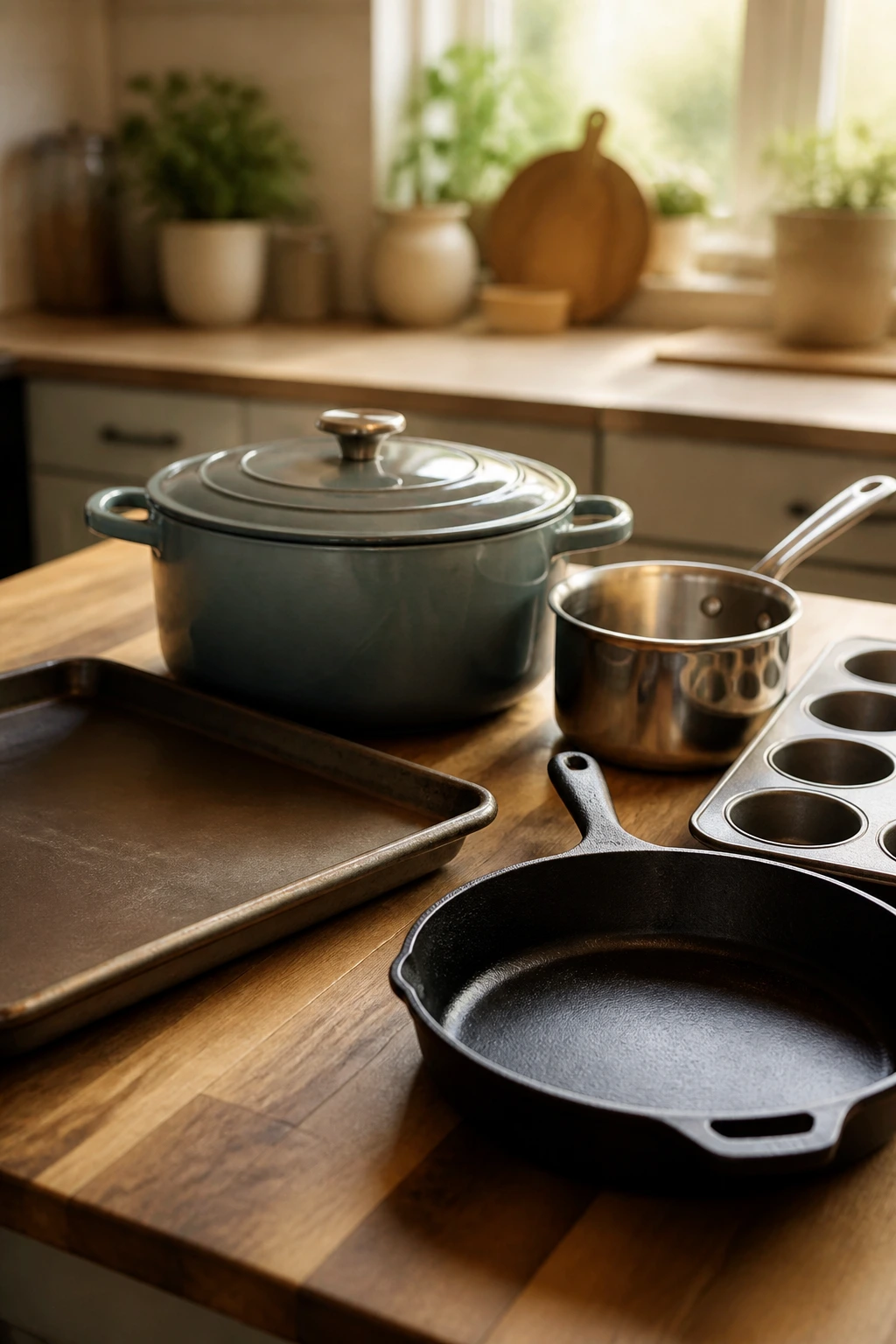
- Rimmed sheet pans: Roast vegetables, salmon, cod, and stuffed peppers without crowding the food.
- Large skillet or sauté pan: Best for chicken bowls, turkey wraps, stir-fries, and burger meat.
- Dutch oven or soup pot: Essential for chili and lentil soup because the wide base handles browning and simmering.
- Medium saucepan with lid: Good for quinoa, brown rice, and quick soups.
- Muffin tin: Needed for the egg cups, and a nonstick one makes life easier.
- Mixing bowls: At least two sizes, one for dressings and one for protein mixes.
- Sharp chef’s knife: Thin slicing matters for peppers, onions, zucchini, and lettuce.
- Cutting board with a damp towel underneath: Keeps it from sliding when you’re dicing quickly.
- Instant-read thermometer: Helps with chicken, salmon, and turkey so you do not guess wrong.
- Microplane or fine grater: Handy for garlic, lemon zest, and ginger.
- Tongs and spatula: One for turning proteins, one for scooping and serving.
- Meal prep containers: Glass containers with tight lids keep bowls, soups, and grains from drying out.
Smart Shopping and Ingredient Tips
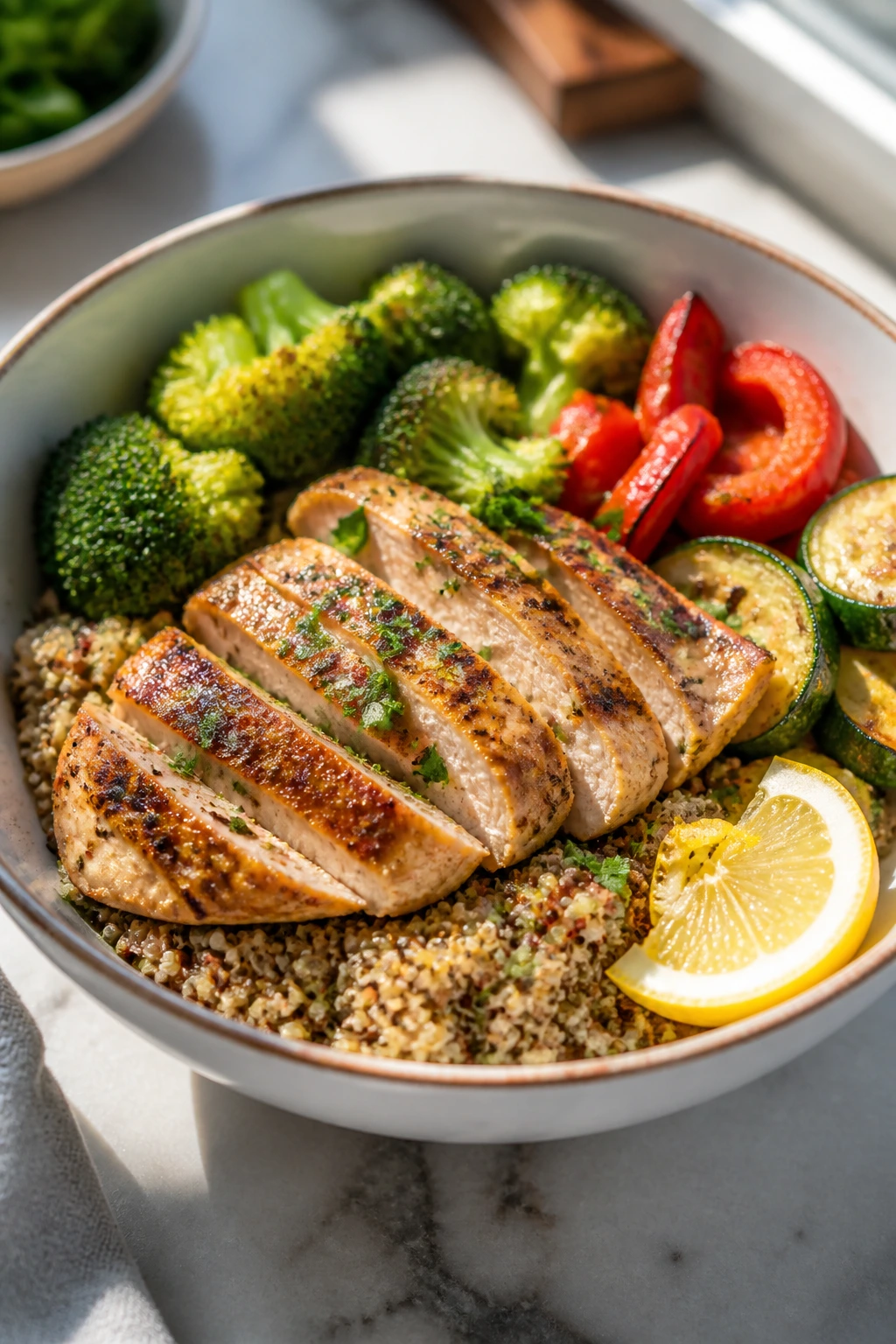
Buy lean proteins that still have enough fat to taste like something. Chicken breast, 93% lean turkey, shrimp, cod, tilapia, eggs, tuna, tofu, and lentils all fit this collection well. Salmon is the one richer choice here, and that’s fine because the portion is measured. You do not need to fear fat; you just need to stop pouring it with abandon.
Frozen vegetables are not a compromise. Frozen broccoli, cauliflower rice, peas, green beans, and shrimp often perform better than tired fresh versions sitting in the back of the produce drawer. For soups and stir-fries, frozen is often the smarter buy because texture matters less once the heat hits.
Watch the condiments. Low-sodium tamari, broth, mustard, salsa, yogurt, vinegar, and marinara can make a clean eating meal feel bright without piling on calories. Canned beans should be rinsed. Jarred pickles should be drained. Greek yogurt should be plain unless you want your dinner sauce to taste like breakfast.
And yes, avocado, feta, olive oil, sesame oil, and Parmesan all belong here. They just belong in measured amounts. A teaspoon of sesame oil or a tablespoon of feta changes the whole dish; a loose hand with either one changes the calorie math fast.
How to Serve These Recipes
Presentation:
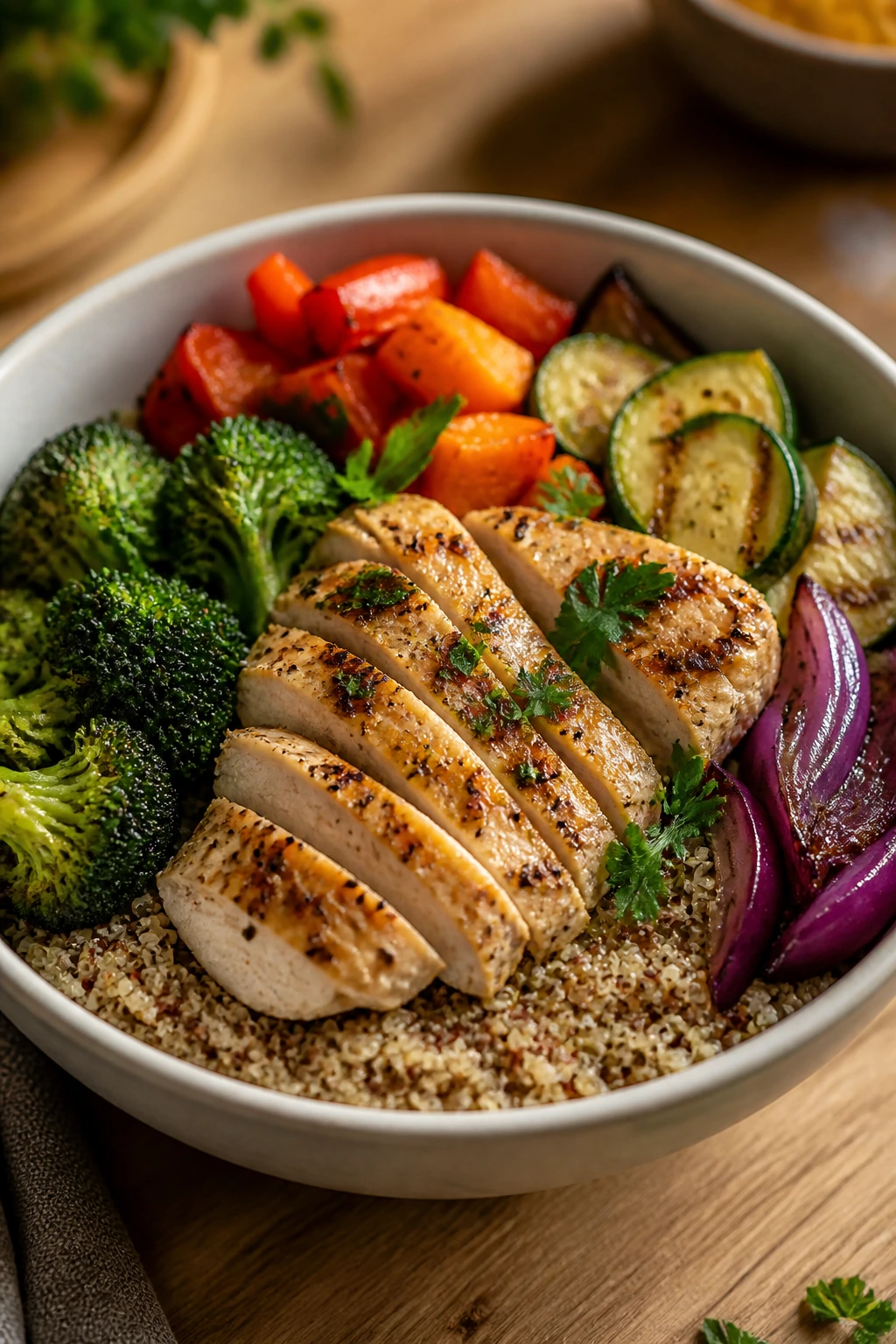
Bowls look best when you keep the elements separate for a moment before eating—grain or greens at the base, protein on top, vegetables around the edges, sauce finished last. Sheet-pan dinners look better when the fish or chicken is centered and the vegetables are arranged in a loose border rather than dumped together. Even a quick stir-fry benefits from a clean bowl and a final scatter of herbs or seeds.
Accompaniments:
A simple side salad, fruit, sliced cucumbers, roasted broccoli, steamed green beans, or a small piece of whole-grain bread can round out the meals without pushing them into another calorie bracket. For bowls and soups, lime wedges, extra herbs, chili sauce, or a spoonful of yogurt make easy finishing moves. Keep sides light and sharp rather than buttery and heavy.
Portions:
Most of these recipes are built for 4 servings, which usually means a protein portion of 4 to 5 ounces, about 1/2 to 3/4 cup of cooked grain or beans, and 2 cups or more of vegetables. If you need fewer calories, trim the grain first, not the protein. If you need more, add vegetables or a little extra lean protein before you add another pile of starch.
Beverage Pairing:
Sparkling water with lime fits almost everything here. Unsweetened iced tea works with the bowls, salads, and lettuce wraps. For breakfast and brunch plates, black coffee or hot tea keeps the meal feeling crisp and clean rather than heavy.
Extra Tips and Flavor Boosters
Flavor Enhancement:
A finishing squeeze of lemon or lime changes more plates than another pinch of salt ever will. Fresh herbs—parsley, dill, cilantro, basil, or chives—do the same job in a softer way. If a bowl tastes a little flat, acid is usually the fix, not more oil.
Customization:
Swap quinoa for brown rice, cauliflower rice, or farro when the recipe gives you room. Use chicken, tofu, turkey, shrimp, or beans in the same general bowl structure and the meal still works. Once you understand the ratio—protein, vegetables, measured starch, sharp sauce—you can mix and match without wrecking the calorie count.
Serving Suggestions:
Toasted seeds, sliced scallions, pickled onions, chopped cucumbers, crushed red pepper, and a spoon of yogurt all make these plates feel more finished. Keep a few of those around and you can change the mood of the same base meal three different ways. That matters when you are eating at home a lot.
Make-It-Yours:
Dairy-free eaters can lean on tahini, salsa, guacamole, or lemon-forward dressings. Gluten-free cooks are already in good shape with most of these recipes, as long as they use tamari instead of soy sauce and watch the marinades. If you want more calories, add more rice, potatoes, or avocado; if you want fewer, start by cutting the starch and keep the protein and vegetables steady.
Make-Ahead, Storage, and Reheating Guidance
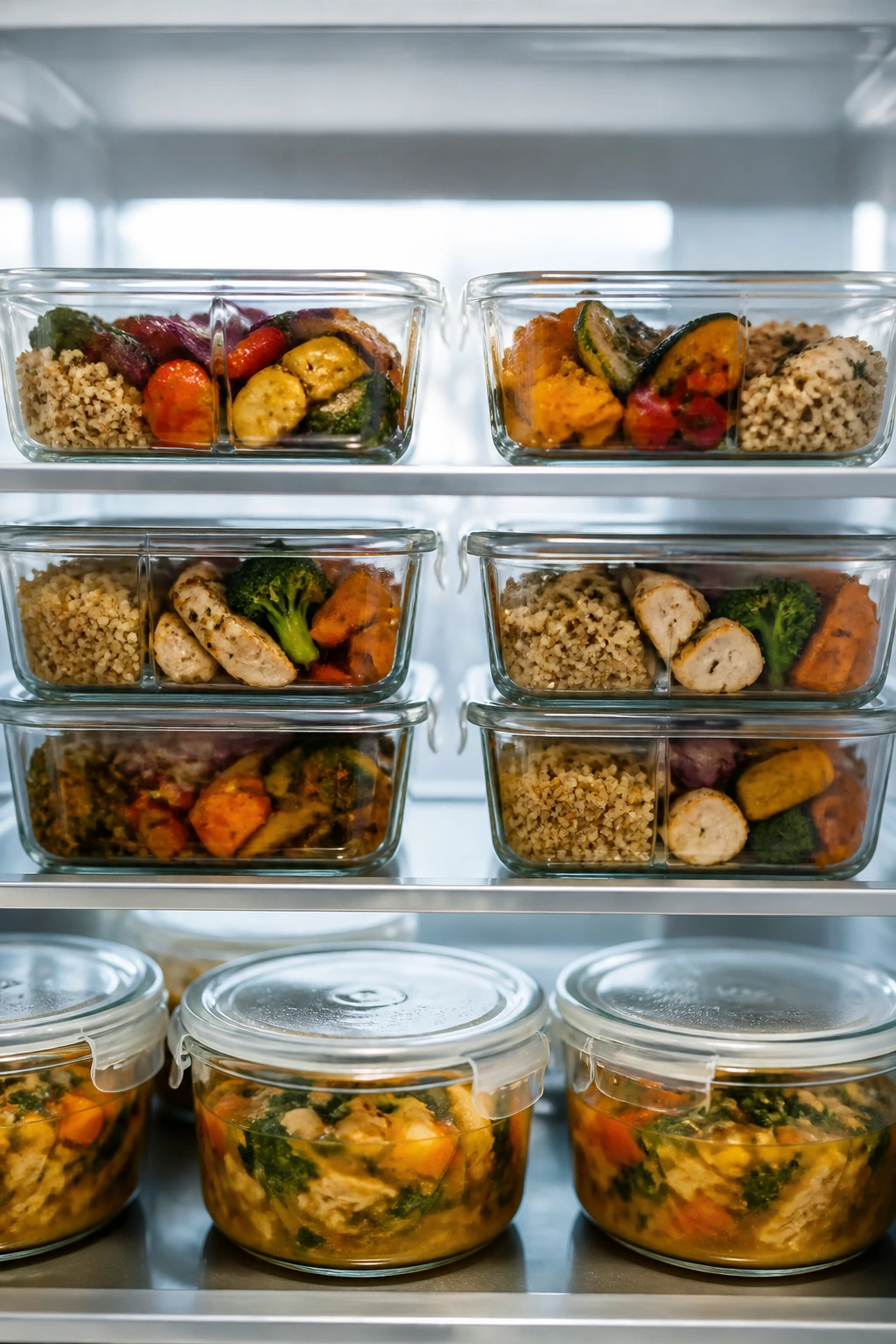
Most cooked bowls, soups, chili, meatballs, and sheet-pan meals keep well in the refrigerator for 3 to 4 days. Soup and chili usually stretch to 5 days if they were cooled quickly and stored in shallow containers. Egg muffin cups also do well for 4 days in the fridge, and they freeze for about 2 months if you wrap them tightly.
Fish is the exception. Salmon, cod, and tilapia are best eaten within 2 days, and the texture slides if you push them much farther than that. If you know you’ll be eating leftovers, cook the fish plain and reheat it gently at 300°F, covered loosely with foil, until just warm. Overheating turns white fish dry fast.
For bowls and stir-fries, the skillet is usually better than the microwave. Add a teaspoon or two of water or broth, cover for a minute, and warm over medium heat until the food loosens. Soups and chili can go straight back to the stove over medium-low heat, stirring now and then so the bottom does not scorch. Rice bowls also reheat well in the microwave at 50 to 70 percent power, which keeps the chicken and vegetables from turning rubbery.
Store sauces separately when you can. Yogurt dressings, salsa, and avocado-based toppings keep the rest of the meal fresher if they stay in their own containers. Fresh cucumber boats, lettuce wraps, and chopped salads should be assembled the same day or at most the next day; once the greens or cucumbers sit under the filling, they lose their snap and the whole meal gets limp.
Variations and Adaptations to Try
The Gluten-Free Grain Switch:
Most of these meals already lean gluten-free if you use tamari instead of soy sauce and keep an eye on packaged condiments. Swap in quinoa, brown rice, cauliflower rice, or potatoes whenever a recipe needs a starch. The plate still feels balanced, and the calorie count stays easy to manage.
The Dairy-Light Finish:
Skip feta, Parmesan, and yogurt sauces where you want a dairy-free plate, then replace the creaminess with tahini, avocado, salsa, or a splash of olive oil and lemon. The meals won’t lose their shape, but they will taste leaner and a little sharper. That works especially well in bowls, tacos, and sheet-pan dinners.
The Vegetarian Pantry Shift:
Lentils, chickpeas, tofu, black beans, eggs, and dairy can cover almost the whole list without much redesign. When you replace meat, add one more vegetable or a little extra seasoning so the bowl still feels full-bodied. Tofu and chickpeas take sauce well, so they’re the easiest swap to build around.
The Lower-Sodium Reset:
Choose low-sodium broth, tamari, beans, and canned tomatoes when you can find them. Then lean harder on lemon, vinegar, herbs, garlic, and onion for flavor. If you remove salt without replacing the brightness, the food goes dull fast.
The Kid-Friendly Mild Plate:
Pull back the chili powder, jalapeño, and red pepper flakes, then put the spicy stuff on the table instead of in the pan. A little cheese, a familiar grain, and simple roasted vegetables often work better for kids than a mixed sauce bowl. Let them build their own plates; that does half the convincing.
The Higher-Protein Add-On:
If one of these meals needs to carry you longer, add extra egg whites, another ounce or two of chicken, more Greek yogurt, or a side of edamame rather than doubling the starch. Protein tends to keep a meal honest without blowing the calorie count. That’s useful on days when lunch came up short or the evening is going to run long.
Mistakes That Make a Light Meal Feel Small
Free-pouring the oil:
Olive oil, sesame oil, and avocado oil are all useful, but they are also fast. The symptom is a meal that tastes richer on paper than it does on the plate, because the calories disappear into the pan instead of the food. Measure it. A tablespoon really is enough in most of these recipes.
Treating vegetables like decoration:
If the peppers, broccoli, greens, or zucchini are just sitting there in a limp pile, the meal shrinks visually and emotionally. Give them real seasoning, real heat, and enough salt to matter. Browning and char are not just for looks; they make vegetables taste like part of dinner.
Under-seasoning the protein:
Chicken, turkey, tofu, fish, and beans all need different amounts of salt and acid. A bland protein makes the whole plate taste thin even if the portions are generous. Season early, season in layers, and finish with a squeeze of citrus or a spoon of sauce.
Overcooking lean proteins:
This is the easiest way to ruin a low-calorie meal. Dry chicken, rubbery shrimp, chalky tofu, or flaky fish that has gone past tender all read as disappointment, not restraint. Watch the texture closely and pull the food when it is just done, not when it has been punished into submission.
Making the carb portion too small:
People often cut the rice, potatoes, or quinoa until the plate looks apologetic. Then they wonder why they’re hungry an hour later. The fix is simple: keep the protein and vegetables steady, and give yourself a real, measured starch when the dish calls for it.
Skipping the bright finish:
Lemon, lime, vinegar, pickles, herbs, salsa, yogurt, and mustard all matter because they wake up a lower-calorie plate. Without one of those sharp notes, meals can taste muddy and one-note. If the food feels flat, reach for acid before you reach for more salt.
Questions Home Cooks Ask All the Time
How do I keep a 500-calorie meal filling?
Use protein as the anchor, then build around vegetables that take up space on the plate. A measured starch or bean portion helps too, especially in bowls and soups. The big mistake is cutting the calories by cutting everything at once.
Can I use chicken thighs or salmon and still stay under 500 calories?
Yes, but the portion needs to be tighter and the extras more measured. Chicken thighs and salmon are richer than chicken breast or cod, so pair them with vegetables and keep the starch smaller. That trade is worth it if the flavor matters to you.
Which of these recipes are best for meal prep?
Turkey chili, lentil soup, egg muffin cups, turkey meatballs, chicken quinoa bowls, and stir-fries reheat well. Fish, lettuce wraps, and cucumber boats are more of a same-day choice. If you want to prep smart, cook the base and keep the fresh elements separate.
Can I swap brown rice for cauliflower rice in almost any bowl?
Usually, yes. Cauliflower rice works especially well in fajita bowls, stir-fries, and curry plates, but it needs a good sauce or seasoning because it won’t carry flavor by itself. Brown rice gives you more staying power; cauliflower rice gives you room for bigger vegetables or richer toppings.
What if I need these meals to be dairy-free?
Skip the yogurt sauces, feta, and Parmesan, then finish with tahini, avocado, salsa, lemon, or a drizzle of olive oil. Most of the recipes still work cleanly with those swaps. The only thing to watch is keeping the sauce element bright enough to replace the lost creaminess.
How can I make these meals less spicy for kids?
Leave out the hot peppers and flakes, then let adults add heat at the table. Mild cumin, garlic, lemon, and a little cheese usually work well in family plates. The structure stays the same even if the spice changes.
Do I need an instant-read thermometer for these recipes?
You can cook without one, but it helps a lot with chicken and fish. Chicken is done at 165°F, salmon and cod should flake cleanly, and shrimp should turn pink and curl. The thermometer saves you from guessing, which matters when the food is lean.
Why do my “light” meals taste flat even when the ingredients are good?
Usually because the plate is missing acid, salt, or browning. A roasted vegetable that never got color, or a chicken breast that never got enough seasoning, will taste muted no matter how clean the ingredient list looks. Fix the flavor mechanics first.
A Rotation You Can Actually Keep Up With
The best part of a meal list like this is not the calorie number. It’s the fact that you can repeat the pattern without getting bored: protein, vegetables, a measured starch, and something sharp at the end. Once that rhythm is in your hands, dinner stops feeling like a negotiation.
Pick two sheet-pan meals, two bowls, one soup, and one breakfast-for-dinner option, and you’ve got a week that can absorb real life. A late meeting, a tired night, a random grocery run—all of it becomes easier when the food on your list already knows how to behave.
Keep the sauces bright, the portions honest, and the vegetables doing their share, and these clean eating meals under 500 calories will earn a permanent place in the rotation. Start with one bowl, one skillet, and one soup, and the rest takes care of itself.