



The side dish is where a big meal can wobble.
The turkey or ham comes out fine, the main casserole does its job, and then the potatoes, beans, greens, or corn have to hold heat while people drift back for seconds. That is exactly where crockpot side dishes earn their keep, because a slow cooker can sit on the counter and keep a whole batch hot without hogging oven space.
I like slow cooker sides for crowds because they solve an actual kitchen problem. A 6-quart or 8-quart crockpot can handle mashed potatoes for a holiday table, beans for a barbecue, or creamed corn for a potluck, and it does it with less babysitting than almost anything on the stove. The trick is knowing which vegetables stay sturdy, which dairy-based dishes need a light hand, and which recipes need a stir halfway through instead of a shrug.
Some side dishes do better in the crockpot than others. Potatoes, beans, corn, greens, squash, and braises with plenty of liquid can take the heat. Delicate things like broccoli or mushrooms need shorter cooking windows, and rice needs more attention than most people expect. Once you get that rhythm, the slow cooker stops being a backup tool and becomes the easiest way to feed a crowd without running the kitchen flat.
Why These Crockpot Side Dishes Earn Their Place on the Table
- They hold heat without drama: A slow cooker keeps mashed potatoes, beans, or corn hot for serving windows that stretch past the first round of plates.
- They free up oven space: That matters when the oven is packed with a roast, a casserole, and a pan of rolls that all need different temperatures.
- They scale well: Most of these recipes make 8 to 12 servings, and several can be doubled in an 8-quart cooker if you keep the lid on and the liquid balanced.
- They forgive timing: Beans, greens, and potatoes can sit on warm for a while without turning cold and sad on the buffet.
- They travel well: A covered crockpot in a carrier beats a casserole dish that sloshes in the car.
- They feed mixed crowds: There’s enough variety here to cover meat-heavy dinners, holiday spreads, and potlucks where someone wants something creamy while someone else wants something vinegary.
1. Garlic Butter Mashed Potatoes
A slow cooker turns mashed potatoes into something plush and steady, not fussy. Yukon Golds give you that creamy, almost buttery texture without the gluey stretch that can show up when the wrong potato gets overworked.
Why It Works: The potatoes cook in broth first, so they pick up seasoning as they soften. Warm cream and butter go in at the end, which keeps the mash silky instead of heavy, and the whole batch stays hot for the meal without drying out on the stove.
Key Ingredients:
- 5 lb Yukon Gold potatoes, peeled and cut into 1 1/2-inch chunks — they mash creamy and hold together well.
- 1 cup low-sodium chicken broth or vegetable broth — enough liquid to help the potatoes cook without watering them down.
- 1 cup heavy cream, warmed — cold cream cools the potatoes too fast.
- 1/2 cup unsalted butter, cubed — the butter coats the starch and gives the mash body.
- 6 garlic cloves, minced — use fresh; the flavor stays round and sweet.
- 1 1/2 teaspoons kosher salt — potatoes need more salt than most people think.
- 1/2 teaspoon black pepper — enough to keep the flavor from flattening.
- 4 ounces cream cheese, softened, optional — for a tangier, slightly denser finish.
- 2 tablespoons chopped chives — a fresh finish that cuts the richness.
Quick Steps:
- Add the potatoes, broth, garlic, salt, and pepper to a 6-quart slow cooker.
- Cover and cook on low for 6 to 7 hours or on high for 3 to 4 hours, until the potatoes fall apart when pressed with a spoon.
- Drain off any extra liquid if it looks soupy, then add the warm cream, butter, and cream cheese if using.
- Mash until fluffy and spoonable, then fold in the chives and taste for salt before serving.
Equipment for This Recipe:
- 6-quart slow cooker — big enough for a holiday-size batch.
- Potato masher — better than a blender, which turns mash pasty.
- Measuring cups and spoons — the cream and broth need to stay balanced.
- Wooden spoon or silicone spatula — useful for folding in butter and cream.
How to Serve This Dish: Pile the potatoes into a warm bowl and make a shallow well in the center for gravy. They sit well beside roast chicken, ham, turkey, or meatloaf, and they also carry a spoonful of chives or black pepper without looking dressed up beyond reason.
Pro Tips for This Recipe:
- Warm the cream before adding it. Cold dairy makes the mash seize for a minute, and nobody needs that.
- If the potatoes look wet after cooking, leave the lid off for 10 minutes before mashing.
- Use Yukon Golds instead of russets if you want a smoother, richer texture.
- Salt again after mashing. Potatoes always ask for more.
Variations on This Dish:
- Roasted Garlic Mash: Swap the minced garlic for 1 head of roasted garlic squeezed into the potatoes.
- Sour Cream Chive Version: Replace the cream cheese with 1/2 cup sour cream and add extra chives at the end.
- Dairy-Free Bowl: Use olive oil and unsweetened oat milk, then finish with extra pepper.
Common Mistakes to Avoid with This Dish:
- Don’t use an immersion blender. The potatoes turn sticky fast.
- Don’t drown them in broth. Too much liquid makes the mash loose and dull.
- Don’t skip the tasting step at the end. Potatoes need the final salt adjustment more than most side dishes do.
2. Cheesy Crockpot Mac and Cheese
Mac and cheese from a slow cooker has to earn its place. The good version is creamy, glossy, and a little spoonable; the bad version clumps at the edge and goes grainy in the middle.
Why It Works: Pre-cooking the pasta keeps the noodles from going chalky in the crockpot. The evaporated milk and whole milk make a stable sauce, and the cheddar-Monterey Jack mix melts without turning into an oily puddle if you keep the heat gentle.
Key Ingredients:
- 1 lb elbow macaroni, cooked 4 minutes shy of package directions and drained — the pasta finishes in the sauce.
- 4 cups whole milk — needed for a rich sauce that still pours.
- 1 can (12 oz) evaporated milk — adds body without extra sugar.
- 4 tablespoons unsalted butter, cubed — keeps the sauce smooth.
- 3 cups sharp cheddar, freshly shredded — sharper cheese gives the dish backbone.
- 1 cup Monterey Jack, freshly shredded — helps the sauce melt evenly.
- 1 teaspoon dry mustard — a quiet lift that keeps the cheese from tasting flat.
- 1 teaspoon kosher salt — more may be needed after cooking.
- 1/2 teaspoon paprika — a little color and warmth.
- Hot sauce, optional — a few dashes brighten the whole bowl.
Quick Steps:
- Butter the inside of the slow cooker, then whisk together the milk, evaporated milk, dry mustard, salt, paprika, and butter.
- Stir in the cooked macaroni and both cheeses.
- Cover and cook on low for 1 1/2 to 2 hours, stirring every 30 minutes, until the sauce is smooth and clings to the pasta.
- Taste, then add salt or a few dashes of hot sauce before serving.
Equipment for This Recipe:
- 6-quart slow cooker — gives the pasta room to stir.
- Large pot — for boiling the macaroni.
- Box grater — freshly shredded cheese melts cleaner.
- Whisk — helps the milk mixture stay smooth.
How to Serve This Dish: Spoon it into a wide shallow bowl so the cheese sauce stays glossy on top instead of sinking into a deep mound. It sits next to barbecue, fried chicken, baked ham, or a roast, and it disappears fast when the buffet line gets moving.
Pro Tips for This Recipe:
- Shred the cheese yourself. Bagged shreds carry coatings that can make the sauce a little grainy.
- Stir at the 30-minute mark, not later. That first stir keeps the edges from cooking faster than the center.
- If it thickens too much, splash in 1/4 cup warm milk and stir.
- Keep the lid closed as much as possible. Each peek releases heat and slows the melt.
Variations on This Dish:
- Bacon Jalapeño Version: Stir in 1/2 cup cooked crumbled bacon and 1 minced jalapeño.
- Three-Cheese Bowl: Swap Monterey Jack for Gruyère or fontina.
- Gluten-Free Fix: Use a sturdy gluten-free elbow pasta and cut the first cook by a minute.
Common Mistakes to Avoid with This Dish:
- Don’t use uncooked pasta unless the recipe is built for it; it can go mushy before the sauce finishes.
- Don’t let the sauce boil hard. High heat makes the cheese split.
- Don’t walk away from it for two hours straight. Mac and cheese wants a couple of stirs.
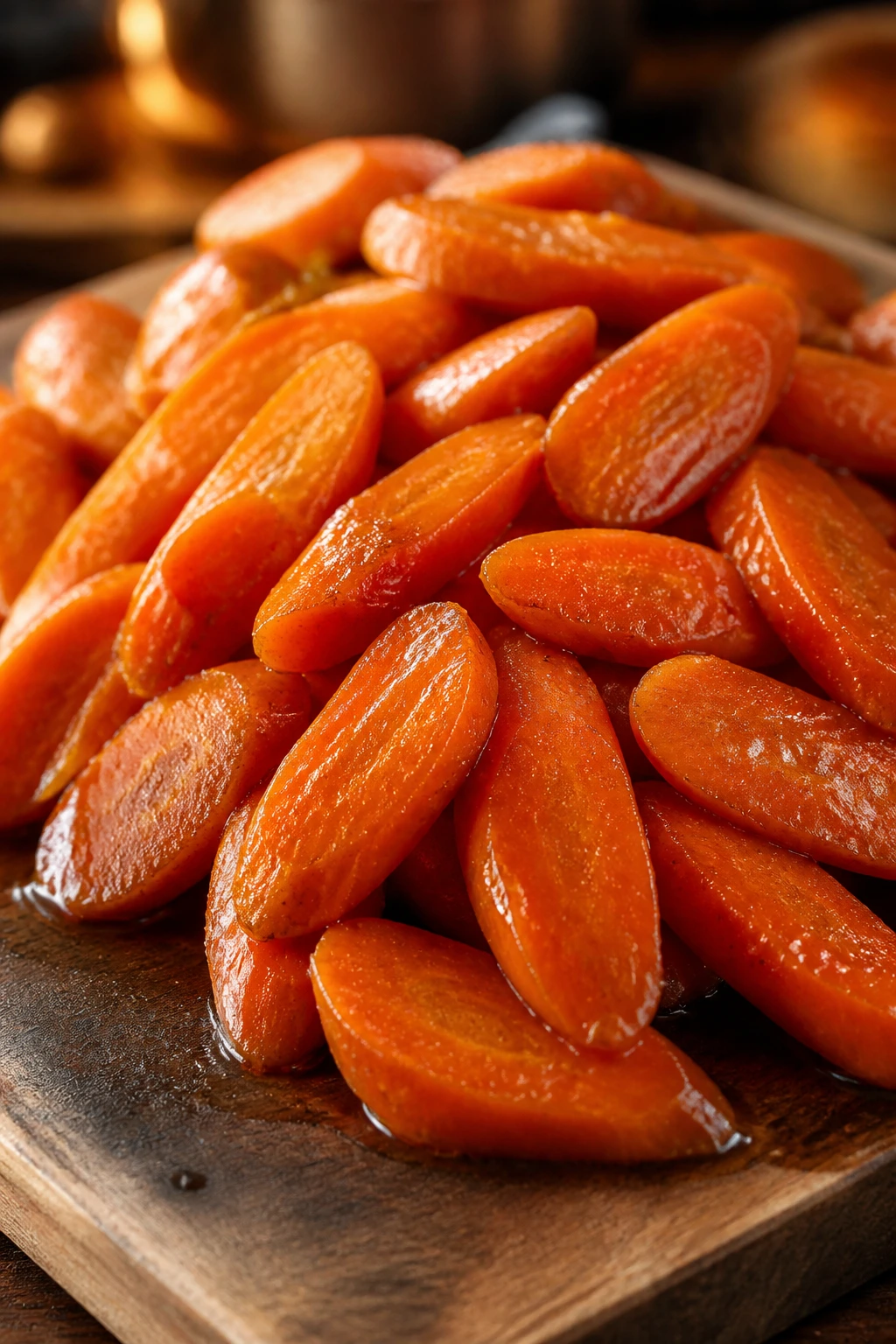
3. Brown Sugar Glazed Carrots
These carrots come out glossy and soft at the edges, with a sweet glaze that tastes like butter first and sugar second. They’re the kind of side dish that sits quietly beside a roast and still gets noticed.
Why It Works: Carrots hold up well in the slow cooker, especially when they’re cut on a diagonal so the edges get a little more glaze. Brown sugar and maple syrup make a thin coating instead of a sticky shell, and a small hit of salt keeps the sweetness from turning flat.
Key Ingredients:
- 3 lb carrots, peeled and sliced on the bias into 1/2-inch pieces — the angled cut helps them cook evenly.
- 1/2 cup unsalted butter — forms the base of the glaze.
- 1/3 cup packed brown sugar — gives the carrots a deep caramel note.
- 2 tablespoons maple syrup — adds a round finish.
- 1 teaspoon kosher salt — essential for balance.
- 1/2 teaspoon cinnamon — use a light hand.
- 1 tablespoon orange zest, optional — brightens the glaze.
- 2 tablespoons chopped parsley — for color and freshness.
Quick Steps:
- Put the carrots, butter, brown sugar, maple syrup, salt, cinnamon, and orange zest in the slow cooker.
- Cover and cook on low for 3 to 4 hours, stirring once halfway through, until the carrots are tender but still hold their shape.
- Uncover for the last 15 minutes if the glaze looks thin.
- Finish with parsley and serve warm.
Equipment for This Recipe:
- Slow cooker — a 4-quart or larger size works well.
- Vegetable peeler — worth it for clean, smooth carrots.
- Sharp knife — bias-cut slices cook more evenly.
- Spoon — for stirring the glaze halfway through.
How to Serve This Dish: Put the carrots in a low bowl so the glaze pools around the edges and makes the plate look bright. They work with ham, turkey, pork loin, or a roast chicken, and they play well with salty mains that need a sweeter side.
Pro Tips for This Recipe:
- Cut the carrots the same size so they don’t go soft in patches.
- If your carrots are old and dry, add 2 tablespoons of water to help them start cooking.
- Taste before serving; some carrots need an extra pinch of salt to wake up the glaze.
- Don’t overdo the cinnamon. Too much and the dish starts tasting like dessert.
Common Mistakes to Avoid with This Dish:
- Don’t slice the carrots paper-thin. They can go limp fast.
- Don’t add a cup of water. The carrots release enough liquid on their own.
- Don’t forget the salt. Sweet carrots without salt taste one-note.
Variations on This Dish:
- Honey Thyme Carrots: Swap the maple syrup for honey and add 1 teaspoon fresh thyme.
- Ginger Citrus Carrots: Add 1 tablespoon grated fresh ginger and more orange zest.
- Savory Dill Carrots: Skip the cinnamon and finish with dill instead.
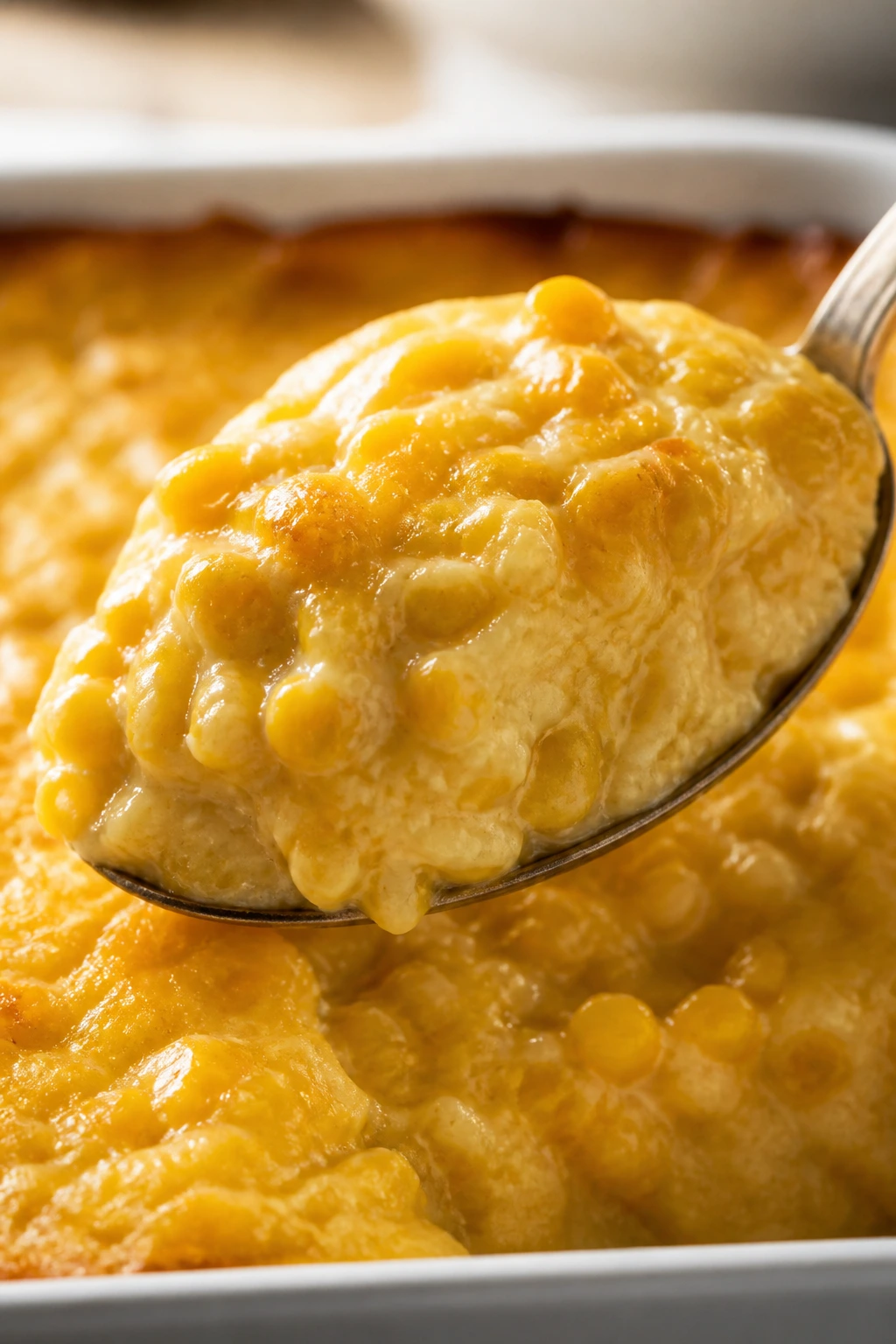
4. Creamy Corn Casserole
A good corn casserole should wobble a little when it’s spooned and then settle into a soft, spoonable square on the plate. This version is rich enough for a holiday spread, but it still tastes like corn instead of just butter and dairy.
Why It Works: Cream-style corn gives the dish moisture, whole-kernel corn gives it texture, and cornbread mix gives it a gentle set without making you build a batter from scratch. The slow cooker keeps the center tender while the edges stay soft instead of hardening the way they can in the oven.
Key Ingredients:
- 2 cans (15 oz each) whole kernel corn, drained — adds texture.
- 1 can (14.75 oz) cream-style corn — brings the custardy base.
- 1 box (8.5 oz) cornbread mix — the quick binder.
- 1 cup sour cream — keeps the casserole rich.
- 1/2 cup unsalted butter, melted — for flavor and softness.
- 2 large eggs — help it set.
- 1 cup shredded cheddar — optional, but useful if you want a savory edge.
- 1/2 teaspoon kosher salt — seasons the sweet corn.
- 1/2 teaspoon black pepper — keeps it from tasting flat.
Quick Steps:
- Grease the slow cooker well.
- Stir all the ingredients together in a large bowl, then pour into the crockpot.
- Cover and cook on low for 2 1/2 to 3 hours, until the center is set and the edges pull away slightly.
- Let it rest for 10 minutes before serving so it settles cleanly.
Equipment for This Recipe:
- Slow cooker — a 5- or 6-quart size works well.
- Large mixing bowl — enough room to stir without making a mess.
- Whisk or spoon — either works for combining the batter.
- Rubber spatula — useful for scraping every bit into the pot.
How to Serve This Dish: Scoop it with a large spoon rather than trying to cut tidy squares. It belongs beside ham, turkey, ribs, or fried chicken, and it looks best when the top stays pale gold instead of deeply browned.
Pro Tips for This Recipe:
- Grease the crockpot thoroughly or the edges can stick and tear.
- If you want more structure, use 1 extra egg and cook the full 3 hours.
- Stir in 1 minced jalapeño if you want a little heat.
- Don’t overbake it. A dry corn casserole is a sad one.
Variations on This Dish:
- Bacon Corn Casserole: Add 1/2 cup cooked chopped bacon.
- Jalapeño Cheddar Corn: Stir in 1 to 2 minced jalapeños and extra cheddar.
- Gluten-Free Version: Use a gluten-free cornbread mix with the same ingredient list.
Common Mistakes to Avoid with This Dish:
- Don’t keep lifting the lid. Steam loss slows the set.
- Don’t dump in extra milk. The casserole will stay loose.
- Don’t try to crisp the top in the slow cooker; that’s not its job.
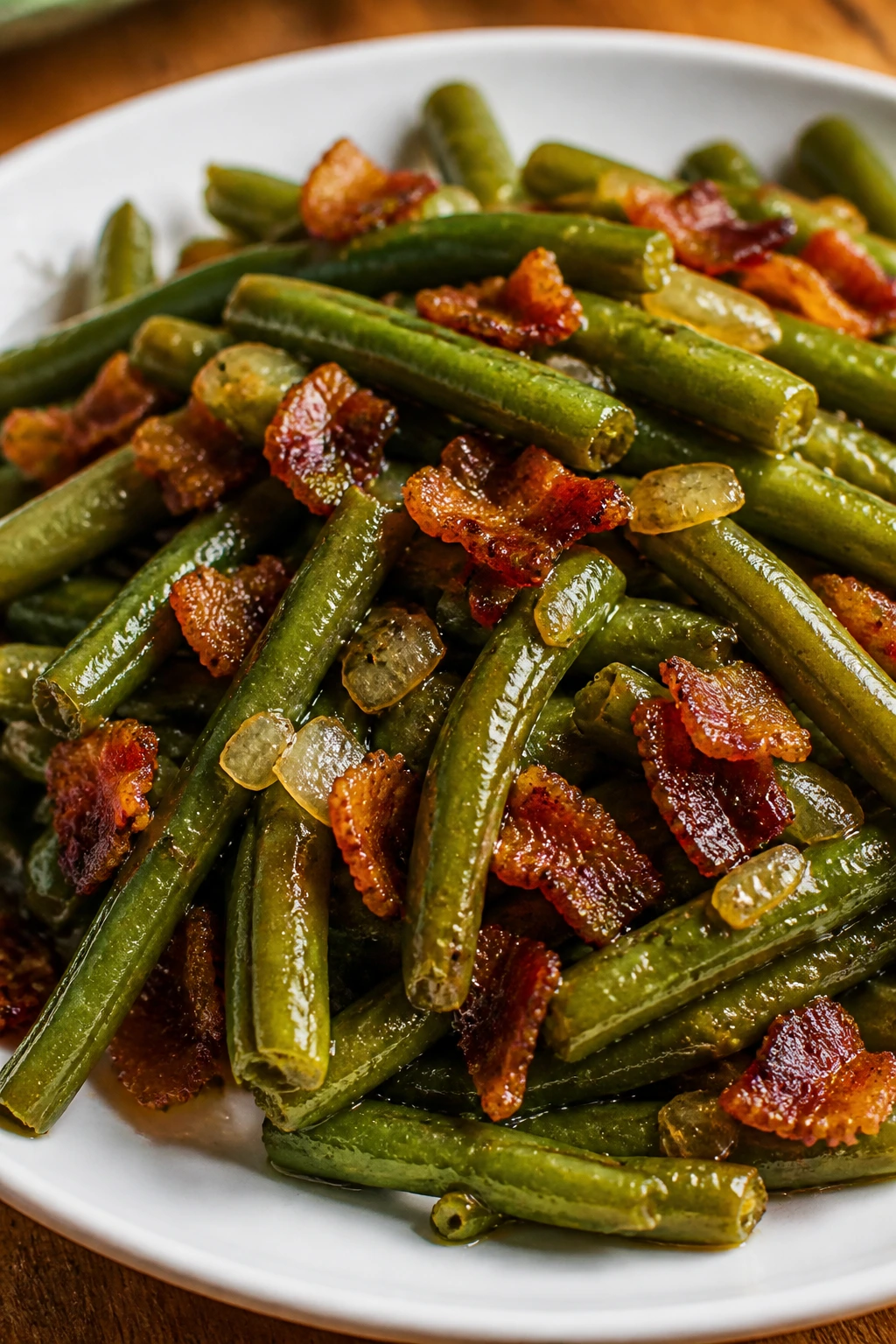
5. Bacon Green Beans
Green beans in the crockpot can go one of two ways: tender and savory, or dull and overcooked. Bacon, onion, and a splash of vinegar pull them toward the first camp.
Why It Works: Fresh beans stay sturdy enough for the long cook, and the bacon fat seasons the broth as it runs through the pot. A little vinegar at the end keeps the beans bright, which matters because slow-cooked vegetables can lose their shape and their spark at the same time.
Key Ingredients:
- 2 1/2 lb fresh green beans, trimmed — fresh beans hold up better than canned.
- 8 slices bacon, chopped — flavor and fat in one move.
- 1 small onion, diced — gives the broth sweetness.
- 3 garlic cloves, minced — rounds out the savory flavor.
- 1 cup chicken broth — keeps the beans from drying out.
- 1 tablespoon unsalted butter — for a softer finish.
- 1 teaspoon kosher salt — start here and adjust later.
- 1/2 teaspoon black pepper — enough for a little edge.
- 1 teaspoon sugar, optional — useful if your beans are very sharp.
- 1 tablespoon apple cider vinegar — added at the end for brightness.
Quick Steps:
- Cook the bacon in a skillet over medium heat for 5 minutes, just until some fat renders.
- Transfer the bacon to the slow cooker with the green beans, onion, garlic, broth, butter, salt, pepper, and sugar if using.
- Cover and cook on low for 4 to 5 hours, until the beans are tender but still a little firm.
- Stir in the vinegar right before serving.
Equipment for This Recipe:
- Skillet — for getting the bacon started.
- Slow cooker — a 6-quart size is ideal.
- Slotted spoon — handy for moving the bacon.
- Sharp knife and cutting board — for trimming the beans and dicing the onion.
How to Serve This Dish: Bring these to the table in a long shallow bowl so the bacon bits stay visible. They fit next to ham, turkey, roast beef, or pulled pork, and they’re one of the few vegetables that still taste alive after a long cook.
Pro Tips for This Recipe:
- Use fresh beans, not canned. Canned beans fall apart.
- Add the vinegar at the end, not at the start.
- If the beans look dry halfway through, add 1/4 cup broth.
- Let the bacon stay slightly chewy; it gets lost if it’s cooked to rubble.
Variations on This Dish:
- Ham Hock Beans: Swap the bacon for a ham hock and cook a little longer.
- Tomato Green Beans: Add 1 cup diced tomatoes for a softer, slightly tangy bowl.
- Garlic Almond Version: Finish with toasted sliced almonds instead of bacon.
Common Mistakes to Avoid with This Dish:
- Don’t use frozen green beans unless you want a softer texture.
- Don’t drown the pot in broth. Beans should steam and braise, not swim.
- Don’t skip the acid at the end. It makes the whole dish taste fresher.
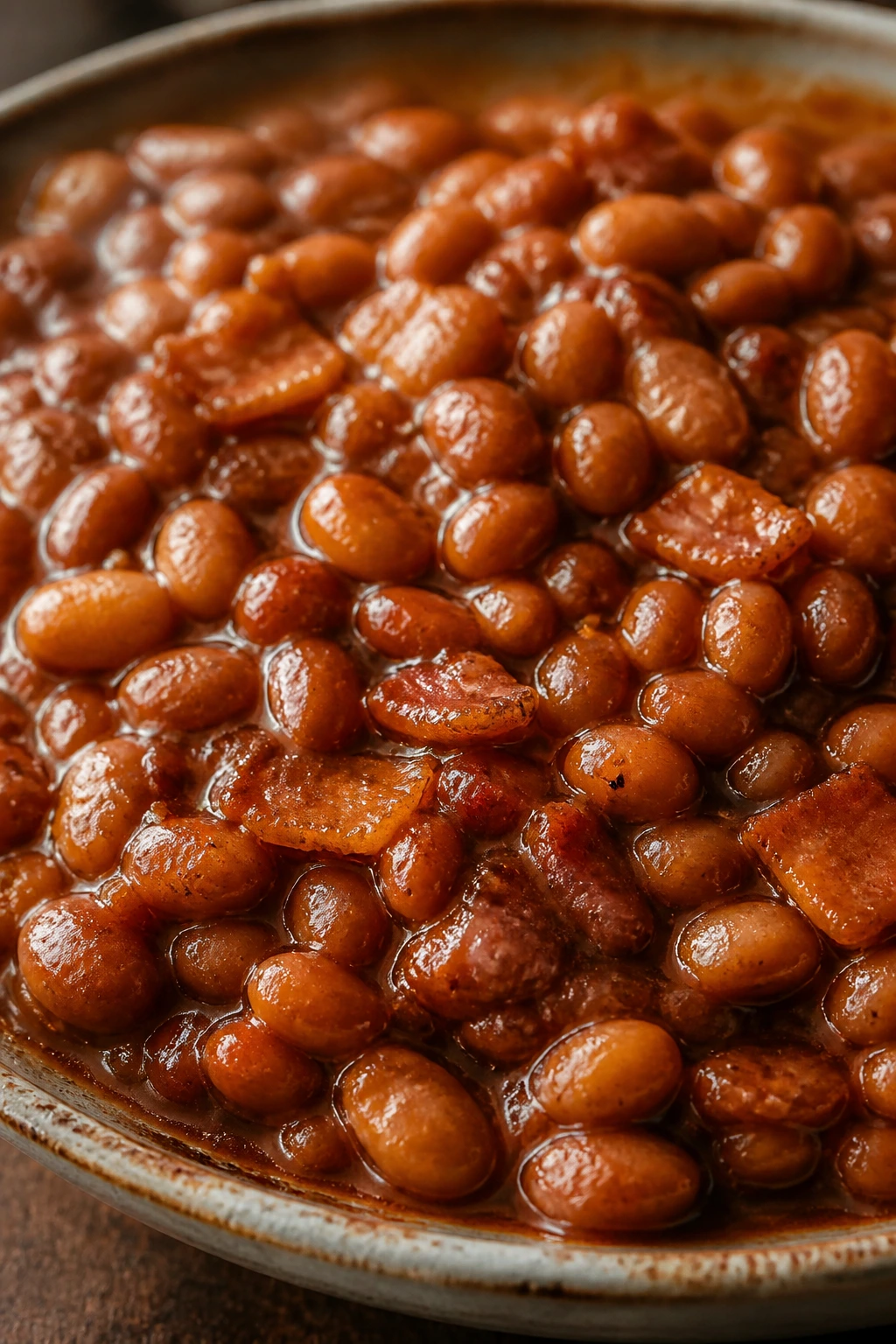
6. Sweet and Tangy Baked Beans
These beans are thick, smoky, and sticky at the edges in the best way. They belong next to barbecue, but they also work beside a holiday ham when you want something with a little more backbone than plain canned beans.
Why It Works: Canned beans give the slow cooker a head start, and the bacon-onion base builds real flavor before the molasses and ketchup go in. The long, gentle cook lets the sauce thicken until it clings to the beans instead of pooling around them.
Key Ingredients:
- 2 cans navy beans, drained and rinsed — the classic small-bean base.
- 1 can pinto beans, drained and rinsed — adds a creamier texture.
- 1 can kidney beans, drained and rinsed — gives color and body.
- 8 slices bacon, chopped — smoky richness.
- 1 onion, diced — sweetens as it cooks.
- 1 cup ketchup — builds the sauce.
- 1/2 cup molasses — the deep flavor that makes baked beans taste like baked beans.
- 1/2 cup packed brown sugar — for sweetness and gloss.
- 2 tablespoons yellow mustard — cuts through the sweetness.
- 1 tablespoon apple cider vinegar — adds lift.
- 1 teaspoon smoked paprika — a low-key smoky note.
- 1/2 teaspoon black pepper — keeps the flavor awake.
Quick Steps:
- Cook the bacon and onion in a skillet over medium heat for 6 to 7 minutes, until the onion softens.
- Stir the beans, bacon mixture, ketchup, molasses, brown sugar, mustard, vinegar, paprika, and pepper into the slow cooker.
- Cook on low for 6 to 8 hours, stirring once or twice, until the sauce is thick and glossy.
- If it looks loose near the end, uncover for the last 20 minutes.
Equipment for This Recipe:
- Skillet — for the bacon and onion.
- Slow cooker — 6-quart or larger.
- Wooden spoon — useful for stirring a thick sauce.
- Can opener and colander — for draining and rinsing the beans.
How to Serve This Dish: Spoon the beans into a bowl with enough depth to hold the sauce. They’re especially good with pulled pork, ribs, baked chicken, or sliced brisket, and they hold nicely for a buffet where people come back after the first plate.
Pro Tips for This Recipe:
- Rinse the beans well so the sauce doesn’t turn muddy.
- Taste before serving; some canned beans need a small pinch more salt.
- If you want a deeper smoke note, add 1 teaspoon Worcestershire sauce.
- Let the lid stay on most of the day. The sauce thickens as steam stays trapped.
Variations on This Dish:
- Maple Bourbon Beans: Replace half the brown sugar with maple syrup and add 2 tablespoons bourbon.
- Spicy BBQ Beans: Add 1 teaspoon chipotle powder or a diced jalapeño.
- Vegetarian Pot: Skip the bacon and add 1 tablespoon olive oil plus 1 extra teaspoon smoked paprika.
Common Mistakes to Avoid with This Dish:
- Don’t serve them too soon. The sauce needs time to thicken.
- Don’t forget to rinse the canned beans.
- Don’t make them so sweet that the molasses disappears; mustard and vinegar need room to work.
7. Slow Cooker Scalloped Potatoes
Scalloped potatoes in a slow cooker are creamy, layered, and a little old-fashioned in the best way. They’re the side dish people hover over while pretending they’re saving room.
Why It Works: Thin slices of potato absorb cream as they cook, so the dish sets into tender layers instead of turning into a loose soup. Using Gruyère or cheddar gives the sauce a more assertive flavor, which matters because potatoes can mute seasoning if you let them.
Key Ingredients:
- 4 lb Yukon Gold potatoes, peeled and sliced 1/8-inch thick — uniform slices matter here.
- 1 onion, thinly sliced — sweetens as it softens.
- 3 cups heavy cream — the base of the sauce.
- 1 1/2 cups whole milk — keeps the texture from becoming too heavy.
- 4 tablespoons unsalted butter — for the sauce and the pan.
- 1/4 cup all-purpose flour — helps the cream thicken.
- 3 cups shredded Gruyère or sharp cheddar — the main flavor.
- 1 1/2 teaspoons kosher salt — potatoes need a strong hand.
- 1/2 teaspoon black pepper — enough to wake up the dairy.
- 1 teaspoon thyme — a little herb note that suits the potatoes.
Quick Steps:
- Whisk the cream, milk, flour, salt, pepper, and thyme together.
- Butter the slow cooker, then layer potatoes, onion, and cheese, repeating until everything is used.
- Pour the cream mixture over the top, cover, and cook on low for 6 to 7 hours.
- Let the potatoes rest for 15 minutes before serving so the layers settle.
Equipment for This Recipe:
- Slow cooker — a 6-quart model works well.
- Mandoline or sharp knife — for even potato slices.
- Whisk — to smooth out the sauce.
- Box grater — if you’re shredding cheese yourself.
How to Serve This Dish: Scoop it with a wide serving spoon so the layers stay visible. It pairs with ham, roast beef, turkey, or baked chicken, and it looks especially good when the top is golden and the edges are creamy rather than crusted.
Pro Tips for This Recipe:
- Slice the potatoes evenly or the dish will cook unevenly.
- Butter the crock well; starch and cream can stick at the edges.
- Resting time matters. Straight-from-the-pot potatoes slump.
- If the sauce seems thin, keep cooking until a knife slips through the center with no resistance.
Variations on This Dish:
- Garlic Rosemary Bake: Add 3 minced garlic cloves and 1 teaspoon chopped rosemary.
- Au Gratin Style: Swap half the cheddar for Parmesan.
- Lighter Layer: Use half-and-half instead of heavy cream, but expect a looser set.
Common Mistakes to Avoid with This Dish:
- Don’t cut the potatoes too thick. They’ll stay firm in the middle.
- Don’t stir once layered. That muddies the texture.
- Don’t rush the rest at the end. The sauce tightens as it cools.
8. Classic Herbed Stuffing
Stuffing in a crockpot is less about crisp edges and more about a soft, savory middle that stays warm for hours. If you like the spoonable part of stuffing best, this method is your friend.
Why It Works: Day-old bread holds the custard without turning to paste, and the slow cooker gives the herbs time to bloom into the broth. A little paper towel under the lid helps catch condensation, which keeps the top from going soggy.
Key Ingredients:
- 16 cups day-old bread cubes, about 1-inch pieces — dry bread is what makes stuffing hold together.
- 1/2 cup unsalted butter — for the vegetables and richness.
- 1 onion, diced — the base flavor.
- 3 celery stalks, diced — classic stuffing crunch and aroma.
- 2 1/2 cups low-sodium broth — enough to moisten without flooding.
- 2 large eggs, beaten — helps it set.
- 1 tablespoon dried sage — the flavor most people expect.
- 2 teaspoons dried thyme — gives the stuffing a woodsy note.
- 1 teaspoon dried parsley — for color and balance.
- 1 teaspoon kosher salt — more may be needed if your bread is very plain.
- 1/2 teaspoon black pepper — keeps it savory.
Quick Steps:
- Cook the onion and celery in butter over medium heat for 6 to 7 minutes until soft.
- Toss the bread cubes with the vegetables, herbs, salt, and pepper in a large bowl.
- Stir in the broth and eggs, then transfer to a greased slow cooker.
- Cook on low for 4 to 5 hours, until the center is hot and set but still soft.
Equipment for This Recipe:
- 6-quart slow cooker — plenty of room for the bread.
- Large skillet — for the vegetables.
- Big mixing bowl — stuffing needs space.
- Wooden spoon — useful for folding without crushing the bread.
How to Serve This Dish: Spoon it onto the plate rather than cutting it into neat squares. It belongs next to roast turkey, chicken, pork, or ham, and it’s a good choice when you want stuffing that stays warm through a long buffet line.
Pro Tips for This Recipe:
- Use bread that’s dry, not stale and hard like a crouton.
- Add broth slowly so the bread turns moist, not soggy.
- If you want a firmer stuffing, cook the last 20 minutes with the lid slightly cracked.
- Fresh herbs can replace dried; just use about three times as much.
Variations on This Dish:
- Apple Sage Stuffing: Add 1 1/2 cups diced apple for a sweeter edge.
- Sausage Herb Stuffing: Brown 1 lb breakfast sausage with the onion and celery.
- Cornbread Version: Swap half the bread cubes for cornbread.
Common Mistakes to Avoid with This Dish:
- Don’t soak the bread until it collapses. It should be moist, not mushy.
- Don’t use fresh soft bread straight from the bag.
- Don’t expect a crust. The slow cooker gives texture in the middle, not on top.
9. Creamed Corn with Cream Cheese
Creamed corn in a slow cooker tastes like a gentler version of the casserole dish you grew up seeing on holiday tables. It’s thick, sweet, and rich enough to sit with ham or fried chicken without stealing the show.
Why It Works: Frozen corn holds its shape and gives the dish texture, while cream cheese and butter melt into the kernels and thicken the sauce. A little sugar makes the corn taste fuller, not dessert-like, if you keep the amount modest.
Key Ingredients:
- 6 cups frozen corn — the easiest crowd-size base.
- 8 ounces cream cheese, cubed and softened — gives the sauce body.
- 1/2 cup unsalted butter — makes the corn taste round and rich.
- 1 cup heavy cream — loosens the sauce to spoonable thickness.
- 2 tablespoons sugar — just enough to sharpen the corn flavor.
- 1/2 teaspoon kosher salt — balances the sweetness.
- 1/4 teaspoon black pepper — a light savory note.
- 1 tablespoon chopped chives, optional — for a fresh finish.
Quick Steps:
- Put the corn, cream cheese, butter, cream, sugar, salt, and pepper into the slow cooker.
- Cover and cook on low for 2 to 3 hours, stirring once or twice, until the cream cheese melts and the sauce looks glossy.
- Stir well just before serving so the sauce coats the corn evenly.
- Finish with chives if you want a green note on top.
Equipment for This Recipe:
- Slow cooker — a medium-large one works fine.
- Silicone spatula — better than a whisk once the cream cheese softens.
- Measuring cups and spoons — the balance matters.
- Serving spoon — for scooping the thick sauce.
How to Serve This Dish: Serve it in a shallow dish so the sauce doesn’t disappear under the corn. It works with barbecue, roast turkey, pork chops, or a simple baked ham, and it’s one of those sides that tends to vanish from the bowl before the main dish is halfway gone.
Pro Tips for This Recipe:
- Let the cream cheese soften first or you’ll be chasing lumps for half an hour.
- Use frozen corn instead of canned. The texture stays brighter.
- If the sauce is too thick, add 2 to 3 tablespoons of cream.
- Stir before serving, not just after cooking; the sauce settles.
Variations on This Dish:
- Jalapeño Corn: Add 1 minced jalapeño for a little heat.
- Parmesan Corn: Stir in 1/2 cup grated Parmesan at the end.
- Dairy-Light Bowl: Swap heavy cream for evaporated milk and use 1 less tablespoon of butter.
Common Mistakes to Avoid with This Dish:
- Don’t overcook it until the corn breaks down.
- Don’t skip the stir at the end.
- Don’t use all sugar and no salt; the flavor will go flat.
10. Candied Sweet Potatoes
Sweet potatoes in the slow cooker turn soft and glossy, with the edges almost lacquered. The dish has that familiar holiday sweetness, but it still tastes like actual sweet potato instead of orange syrup.
Why It Works: Thick slices of sweet potato soften without collapsing when they cook slowly in butter, sugar, and maple syrup. Orange zest lifts the whole pan and keeps the flavor from getting heavy.
Key Ingredients:
- 4 lb sweet potatoes, peeled and sliced 1/2-inch thick — thicker slices hold their shape better.
- 1/2 cup unsalted butter — the glaze starts here.
- 3/4 cup packed brown sugar — the main sweetness.
- 1/3 cup maple syrup — gives the glaze a deeper note.
- 1 teaspoon cinnamon — enough to be warm, not loud.
- 1/4 teaspoon nutmeg — a small amount goes far.
- 1/2 teaspoon kosher salt — keeps the sweetness grounded.
- 1 tablespoon orange zest — freshens the glaze.
Quick Steps:
- Layer the sweet potatoes in the slow cooker.
- Mix the butter, brown sugar, maple syrup, cinnamon, nutmeg, salt, and orange zest, then pour it over the potatoes.
- Cover and cook on low for 5 to 6 hours, stirring once halfway through, until the potatoes are tender and shiny.
- Spoon them gently into a serving bowl so the slices stay intact.
Equipment for This Recipe:
- Slow cooker — 6-quart works well.
- Vegetable peeler — for clean slices.
- Sharp knife — sweet potatoes are tough if you rush.
- Small bowl and spoon — for the glaze.
How to Serve This Dish: These sit nicely beside ham, turkey, roast pork, or grilled chicken. They’re rich enough to hold their own, so you don’t need much else on the plate besides a salty main and maybe a green vegetable.
Pro Tips for This Recipe:
- Cut the slices evenly or the smaller ones will melt before the bigger ones soften.
- Stir gently so you don’t mash the potatoes.
- If the glaze seems thin, uncover for the last 20 minutes.
- A pinch of salt at the end wakes up the brown sugar.
Variations on This Dish:
- Pecan Finish: Sprinkle chopped toasted pecans on top before serving.
- Ginger Sweet Potatoes: Add 1 tablespoon grated fresh ginger.
- Marshmallow Top: Add mini marshmallows during the last 15 minutes if you want the classic holiday look.
Common Mistakes to Avoid with This Dish:
- Don’t cut the slices too thin or they’ll fall apart.
- Don’t pour in water unless the pot looks dry; the potatoes release moisture.
- Don’t let the cinnamon take over the bowl.
11. Cheddar Grits
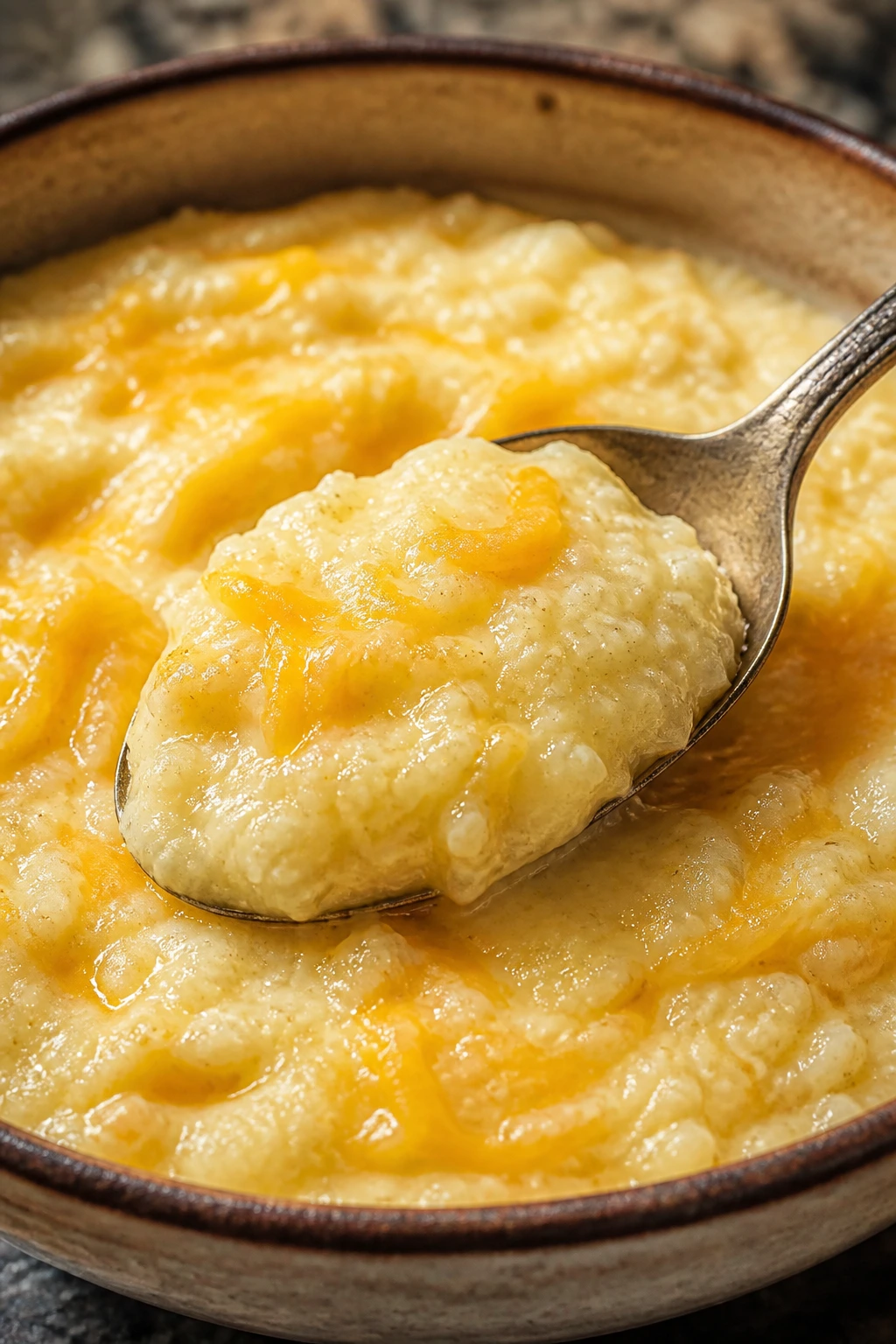
Slow cooker grits are a patience dish, and that’s a good thing. The long, gentle cook gives you a creamy bowl that stays soft instead of seizing up the second you stop stirring.
Why It Works: Stone-ground grits need time to swell and soften, and the crockpot handles that without scorching the bottom. Butter and cheddar go in at the end, which keeps the cheese smooth and the texture supple.
Key Ingredients:
- 2 cups stone-ground grits — instant grits won’t give you the same texture.
- 8 cups water or low-sodium broth — the liquid base.
- 1 cup whole milk — adds creaminess.
- 4 tablespoons unsalted butter — richens the final bowl.
- 2 cups shredded cheddar — sharp cheese gives the best flavor.
- 1 teaspoon kosher salt — more if your broth is very mild.
- 1/2 teaspoon black pepper — for a little edge.
- Pinch of cayenne, optional — useful if you want a small kick.
Quick Steps:
- Whisk the water or broth, milk, grits, salt, pepper, and cayenne in the slow cooker.
- Cover and cook on low for 3 to 4 hours, stirring every 45 minutes, until the grits are thick and no longer grainy.
- Stir in the butter and cheddar.
- Cook uncovered for 10 more minutes if needed, then serve hot.
Equipment for This Recipe:
- Slow cooker — a 4- or 6-quart model works.
- Whisk — helps the grits start smoothly.
- Wooden spoon — useful for the thicker final stir.
- Measuring cups — the liquid ratio matters a lot.
How to Serve This Dish: Spoon the grits into a bowl and top with black pepper or a little extra cheddar. They’re built for barbecue, shrimp, ham, or roasted vegetables, and they do especially well at brunch-style buffets where people want something soft and savory.
Pro Tips for This Recipe:
- Use stone-ground grits, not instant. The texture is the point.
- Stir often enough to prevent the bottom from sticking.
- Add liquid if they get too thick before they’re tender.
- Keep the cheese for the end so it melts cleanly.
Variations on This Dish:
- Garlic Grits: Stir in 2 minced garlic cloves with the liquid.
- Parmesan Polenta-Style Bowl: Swap the cheddar for Parmesan and add sage.
- Bacon Cheddar Version: Fold in 1/2 cup crisp bacon bits.
Common Mistakes to Avoid with This Dish:
- Don’t leave them unattended for hours. Grits can stick at the bottom.
- Don’t use too little liquid.
- Don’t add cheese too early or the texture can turn dull.
12. Southern Collard Greens
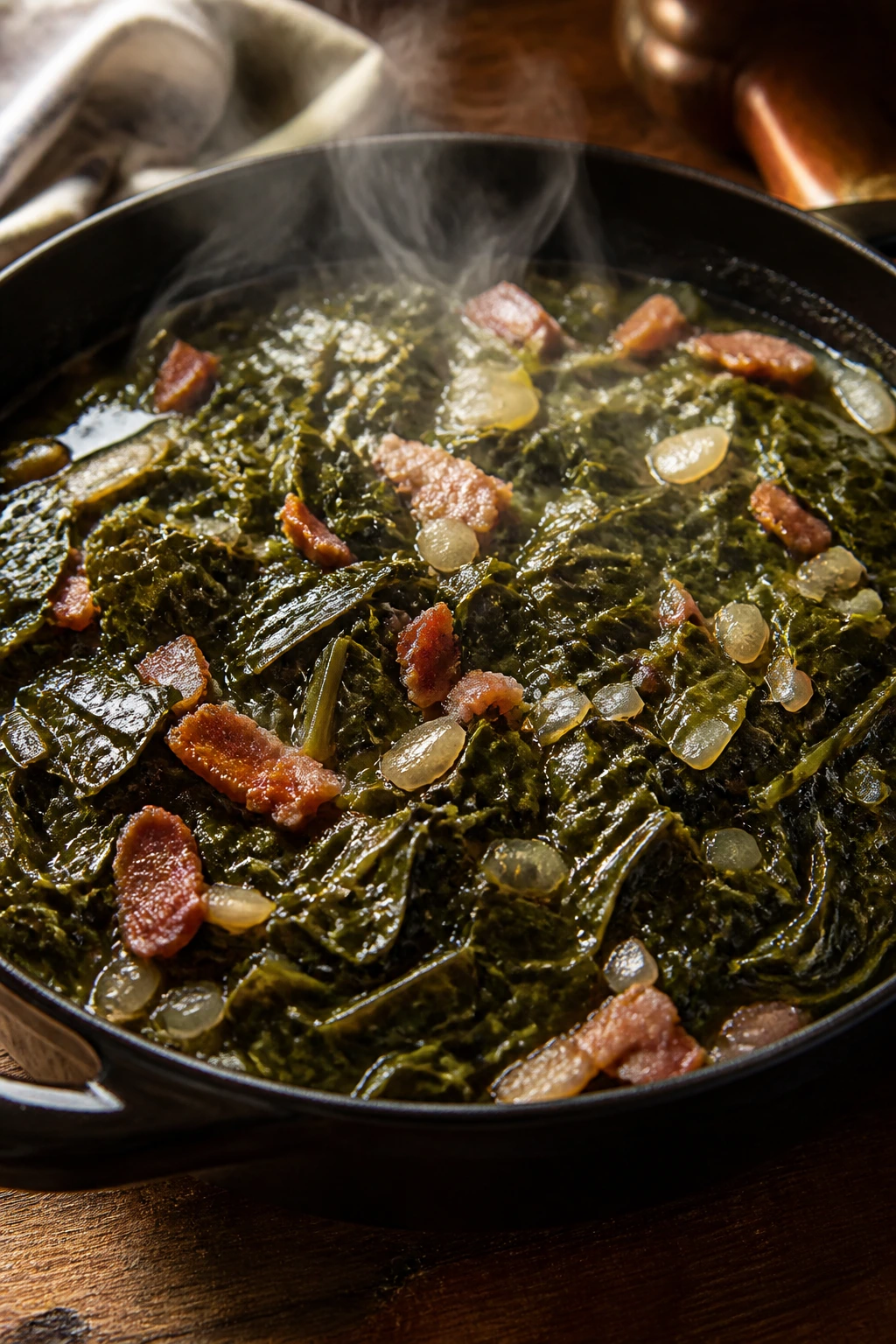
Collards need time, and the slow cooker gives them exactly that. The leaves turn tender and savory, with a pot likker that tastes like bacon, onion, and patience.
Why It Works: Collard greens are sturdy enough to handle a long cook, and the broth pulls the smoky bacon flavor through every bite. Vinegar at the end sharpens the greens so they taste alive instead of muddy.
Key Ingredients:
- 2 large bunches collard greens, stems removed and chopped — about 12 to 14 cups packed.
- 8 slices bacon, chopped — the smoky base.
- 1 onion, diced — sweetens the broth.
- 4 garlic cloves, minced — deepens the flavor.
- 4 cups chicken broth — enough to braise the greens.
- 1 tablespoon apple cider vinegar — added at the end for brightness.
- 1 teaspoon kosher salt — start modestly; bacon adds salt too.
- 1/2 teaspoon black pepper — for balance.
- 1/4 teaspoon red pepper flakes — a gentle heat.
- 1 teaspoon sugar, optional — useful if the greens run bitter.
Quick Steps:
- Cook the bacon in a skillet over medium heat for 6 minutes, then add the onion and cook for 3 more minutes.
- Put the greens, garlic, broth, vinegar, salt, pepper, red pepper flakes, and sugar if using into the slow cooker.
- Add the bacon and onion mixture, then cook on low for 7 to 8 hours, until the greens are tender.
- Taste and adjust salt or vinegar before serving.
Equipment for This Recipe:
- Slow cooker — a 6-quart size is ideal.
- Large skillet — for the bacon and onion.
- Sharp knife — greens need a good trim.
- Slotted spoon — handy for moving the bacon.
How to Serve This Dish: Serve the greens with a little broth in the bowl so they don’t dry out. They’re a strong match for ham, cornbread, barbecue, or fried chicken, and they give a big meal a savory green note that keeps the plate from feeling heavy.
Pro Tips for This Recipe:
- Trim out the thick stem ribs. They stay chewy.
- Wash the greens well; grit has no business in the bowl.
- Add vinegar at the end so it stays bright.
- If you want the broth richer, add a ham hock with the bacon.
Variations on This Dish:
- Ham Hock Pot: Use a ham hock instead of bacon.
- Spicy Greens: Add more red pepper flakes and a splash of hot sauce.
- Vegan Greens: Skip the bacon and use olive oil plus smoked paprika.
Common Mistakes to Avoid with This Dish:
- Don’t rush them. Collards need hours, not minutes.
- Don’t skip the rinse.
- Don’t over-salt before tasting; bacon can already carry a lot of salt.
13. Wild Rice and Mushroom Pilaf
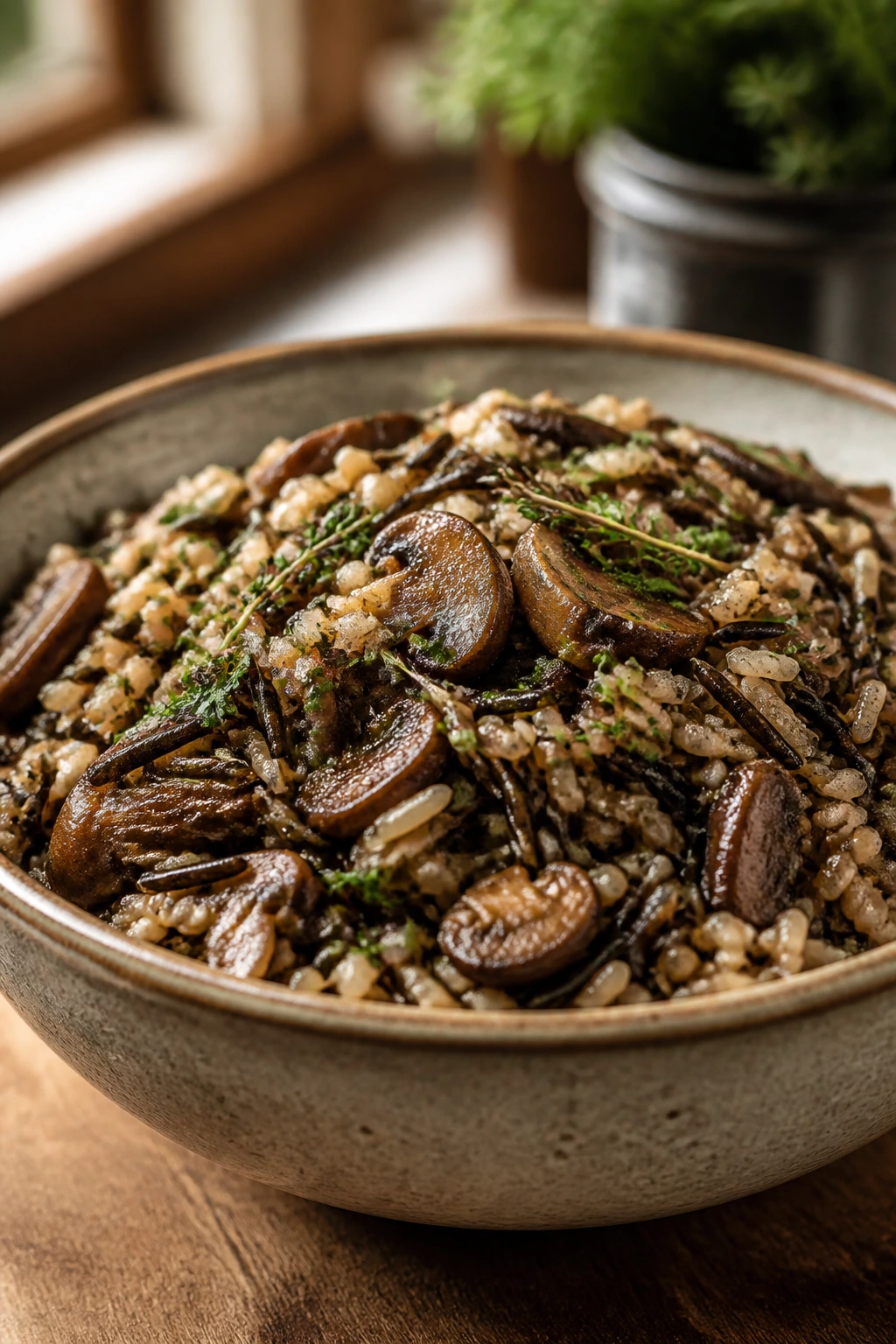
Wild rice brings a nutty chew that regular white rice can’t fake. With mushrooms, celery, and thyme, it feels earthy and calm, which makes it a smart side for richer meats.
Why It Works: A wild rice blend cooks more predictably in the slow cooker than pure wild rice alone, and the mushrooms release moisture as they soften. Butter at the start and parsley at the end give the pilaf shape and freshness.
Key Ingredients:
- 2 cups wild rice blend, rinsed — a mix with brown rice helps the texture.
- 8 ounces cremini mushrooms, sliced — they add body and umami.
- 1 onion, diced — the flavor base.
- 2 celery stalks, diced — adds a little crunch and aroma.
- 5 cups low-sodium vegetable broth — enough for the grains to cook.
- 4 tablespoons unsalted butter — coats the grains.
- 1 teaspoon dried thyme — works well with mushrooms.
- 1 bay leaf — remove it before serving.
- 1 teaspoon kosher salt — adjust at the end if needed.
- 2 tablespoons chopped parsley — for a fresh finish.
Quick Steps:
- Put the rice blend, mushrooms, onion, celery, broth, butter, thyme, bay leaf, salt, and pepper in the slow cooker.
- Cover and cook on low for 4 to 5 hours, until the rice is tender and most of the liquid is absorbed.
- Remove the bay leaf and fluff with a fork.
- Fold in parsley and serve warm.
Equipment for This Recipe:
- Slow cooker — 5- or 6-quart works.
- Fine-mesh strainer — for rinsing the rice.
- Fork — for fluffing.
- Cutting board and knife — for the vegetables.
How to Serve This Dish: Spoon it beside roast chicken, turkey, pork loin, or a mushroom gravy. It looks nicest when the grains stay separate and the mushrooms are visible, not buried in a wet pile.
Pro Tips for This Recipe:
- Rinse the rice so the grains don’t go gummy.
- If the mixture looks dry at the halfway point, add 1/4 cup broth.
- Don’t use delicate white rice here; it won’t hold up.
- Fluff with a fork, not a spoon, or the grains compact.
Variations on This Dish:
- Herb Garden Pilaf: Add rosemary and dill along with the thyme.
- Cranberry Walnut Finish: Stir in dried cranberries and toasted walnuts after cooking.
- Mushroom-Only Bowl: Double the mushrooms and use mushroom broth.
Common Mistakes to Avoid with This Dish:
- Don’t use a rice-only recipe with the wrong cook time; wild rice needs more patience.
- Don’t stir too often once it’s cooking.
- Don’t skip the bay leaf if you want that old-school pilaf note.
14. Cabbage with Bacon and Onion
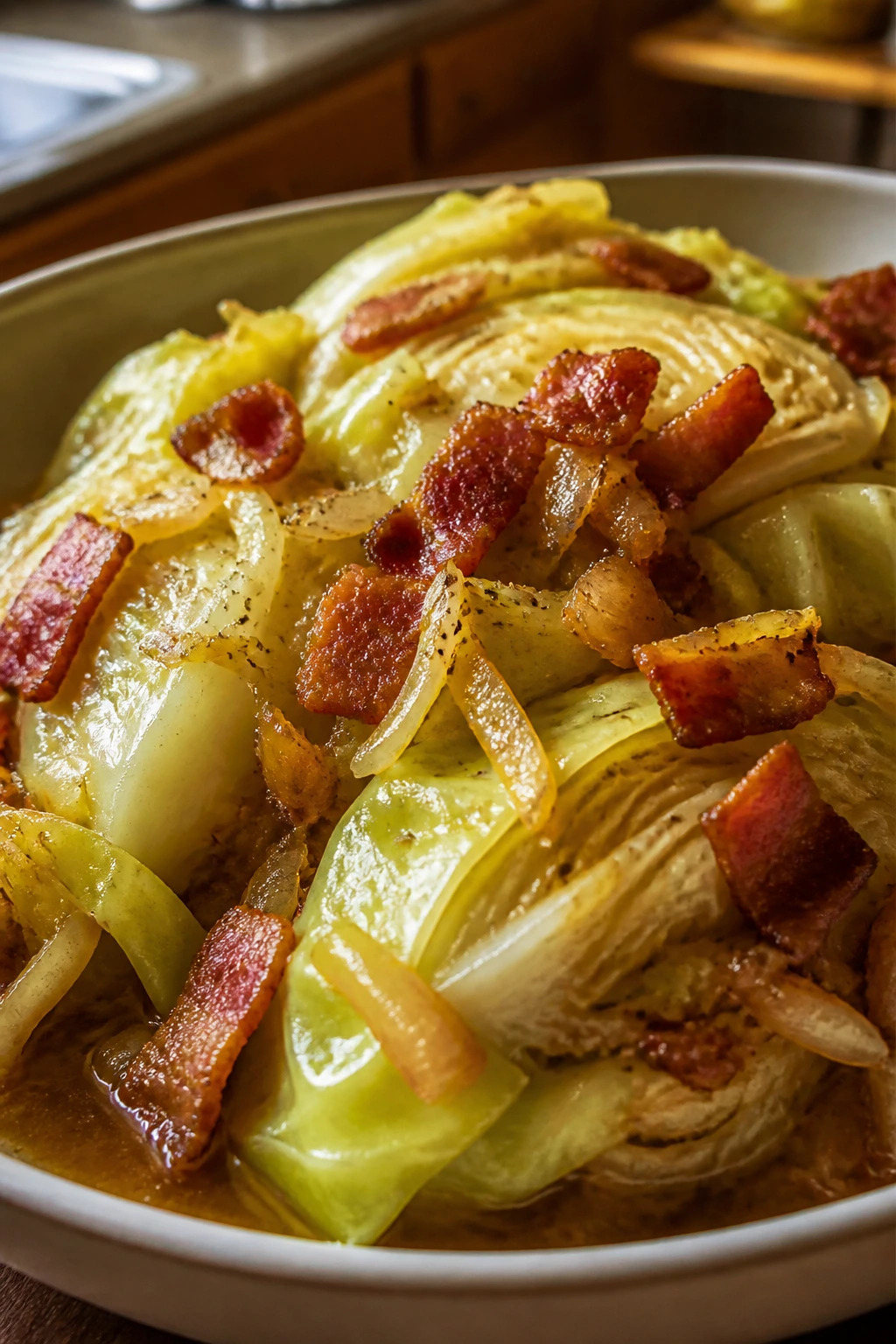
Cabbage turns silky in the slow cooker when it gets enough time with bacon and onion. It’s not flashy. It’s the side dish people go back for because it tastes deeply savory and costs almost nothing to make.
Why It Works: Cabbage has enough structure to braise slowly without disappearing, and bacon fat flavors every layer. A splash of vinegar at the end keeps the dish from tasting too soft or too sweet.
Key Ingredients:
- 1 large green cabbage, cored and cut into 2-inch wedges or thick ribbons — both work, but wedges keep more texture.
- 8 slices bacon, chopped — the main flavor base.
- 1 onion, sliced — sweetens and softens.
- 2 garlic cloves, minced — a little edge.
- 1 cup chicken broth — enough moisture for braising.
- 1 tablespoon apple cider vinegar — added at the end.
- 1 teaspoon caraway seeds, optional — a classic cabbage flavor.
- 1 tablespoon unsalted butter — for a richer finish.
- 1 teaspoon kosher salt — go lighter if the bacon is salty.
- 1/2 teaspoon black pepper — enough to balance the richness.
Quick Steps:
- Cook the bacon in a skillet for 5 minutes, then add the onion and cook until it starts to soften.
- Put the cabbage, garlic, broth, vinegar, caraway seeds if using, butter, salt, pepper, and bacon mixture into the slow cooker.
- Cover and cook on low for 4 to 5 hours, until the cabbage is tender but not falling apart.
- Stir gently and serve hot.
Equipment for This Recipe:
- Slow cooker — 6-quart or larger.
- Skillet — for the bacon base.
- Large knife — cabbage is easier to handle in wedges.
- Tongs — helpful for moving the cabbage.
How to Serve This Dish: Serve it with a slotted spoon so a little of the broth stays behind. It’s especially good with sausage, pork roast, ham, or corned beef, and it gives a heavy plate a sharp, savory counterpoint.
Pro Tips for This Recipe:
- Keep the cabbage pieces large if you want some structure.
- Add the vinegar at the end so it stays bright.
- If you like a sweeter pot, add 1 teaspoon sugar.
- For extra color, use red cabbage, though the flavor is softer.
Variations on This Dish:
- Caraway Cabbage: Keep the seeds and add a little more black pepper.
- Smoked Ham Cabbage: Swap the bacon for diced ham.
- Apple Cabbage Pot: Add 1 peeled chopped apple for a sweeter finish.
Common Mistakes to Avoid with This Dish:
- Don’t cut the cabbage too fine or it turns mushy.
- Don’t skip the acid.
- Don’t over-salt before tasting because bacon can be salty.
15. Brussels Sprouts with Bacon and Balsamic
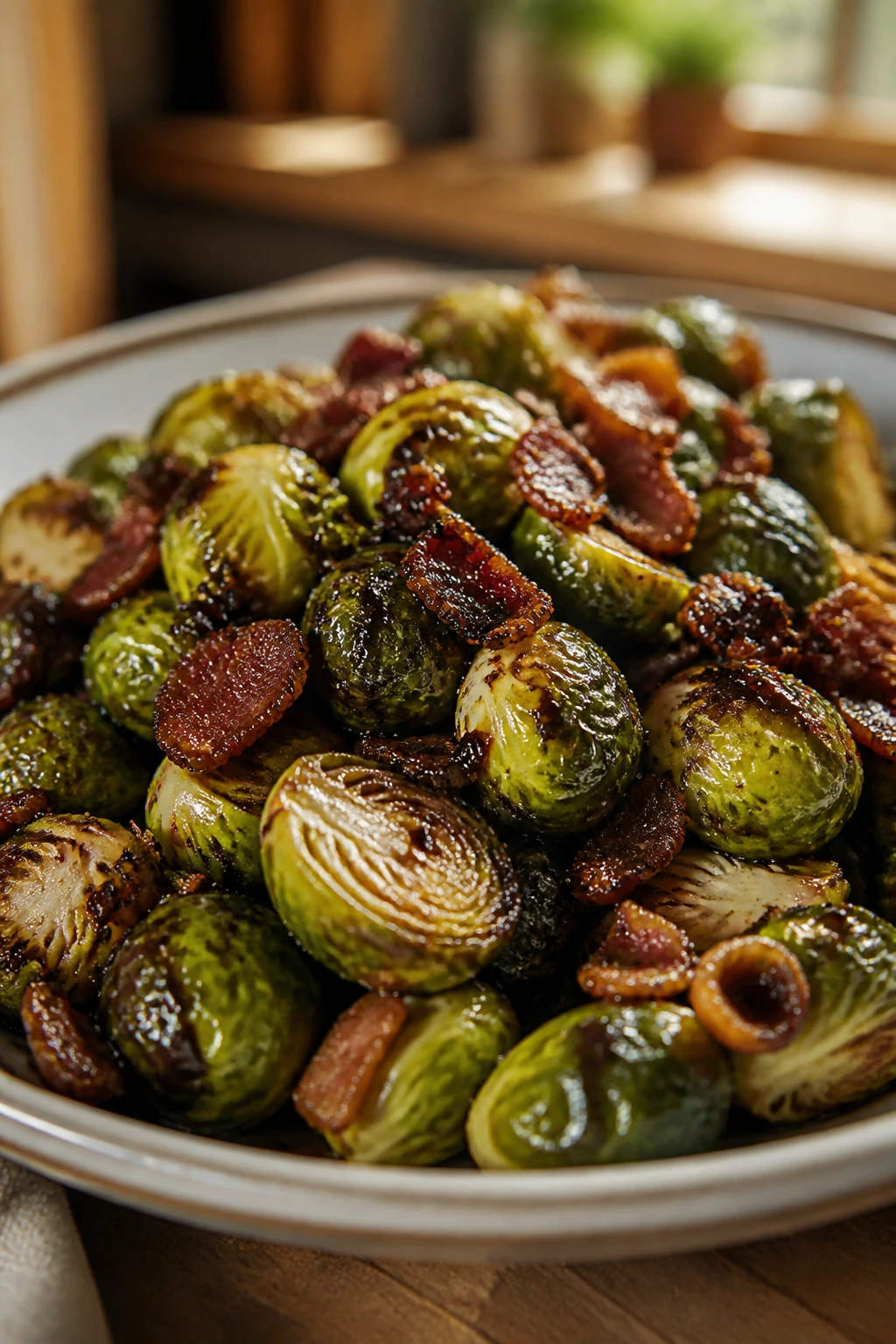
Brussels sprouts in the slow cooker need shorter time than most vegetables, but when they’re handled right they come out tender and a little sweet, with bacon and balsamic giving them a sharp, smoky edge.
Why It Works: Brussels sprouts are small enough to cook through fast, and balsamic vinegar keeps them from tasting flat or cabbage-like. Bacon adds fat, which helps the sprouts carry flavor without needing a long roast in the oven.
Key Ingredients:
- 2 lb Brussels sprouts, trimmed and halved — trim the stems so they cook evenly.
- 6 slices bacon, chopped — the smoky base.
- 1 shallot, thinly sliced — softer than onion and more elegant here.
- 1/4 cup balsamic vinegar — the bright finish.
- 2 tablespoons maple syrup — rounds out the vinegar.
- 1/2 cup chicken broth — keeps the sprouts braising instead of steaming dry.
- 1 tablespoon olive oil — helps coat the sprouts.
- 1/2 teaspoon kosher salt — adjust after cooking.
- 1/2 teaspoon black pepper — enough for a clean finish.
Quick Steps:
- Cook the bacon in a skillet for 4 to 5 minutes, then stir in the shallot for 1 minute.
- Add the sprouts, broth, olive oil, salt, and pepper to the slow cooker.
- Pour in the bacon mixture, cover, and cook on low for 2 1/2 to 3 hours, until the sprouts are tender.
- Stir in the balsamic and maple syrup right before serving.
Equipment for This Recipe:
- Slow cooker — 4- or 5-quart size is enough.
- Skillet — for the bacon and shallot.
- Sharp knife — for trimming the sprouts.
- Wooden spoon — gentle stirring keeps them intact.
How to Serve This Dish: Put the sprouts in a serving bowl with the bacon visible on top. They work with roast chicken, pork tenderloin, beef, or a holiday spread that needs a green side with a little attitude.
Pro Tips for This Recipe:
- Keep the sprouts halved, not quartered, or they’ll overcook too fast.
- Add balsamic at the end so it doesn’t disappear into the steam.
- If you want more caramel note, uncover for the last 15 minutes.
- Use fresh sprouts; older ones can taste bitter.
Variations on This Dish:
- Honey Balsamic Sprouts: Swap maple syrup for honey.
- Garlic Parmesan Sprouts: Add 1/2 cup Parmesan at the end.
- Vegetarian Sprouts: Skip the bacon and use olive oil plus smoked paprika.
Common Mistakes to Avoid with This Dish:
- Don’t cook them all day. Brussels sprouts need a shorter window.
- Don’t overdo the liquid.
- Don’t forget the final splash of balsamic, because it changes everything.
16. Mexican Street Corn Casserole
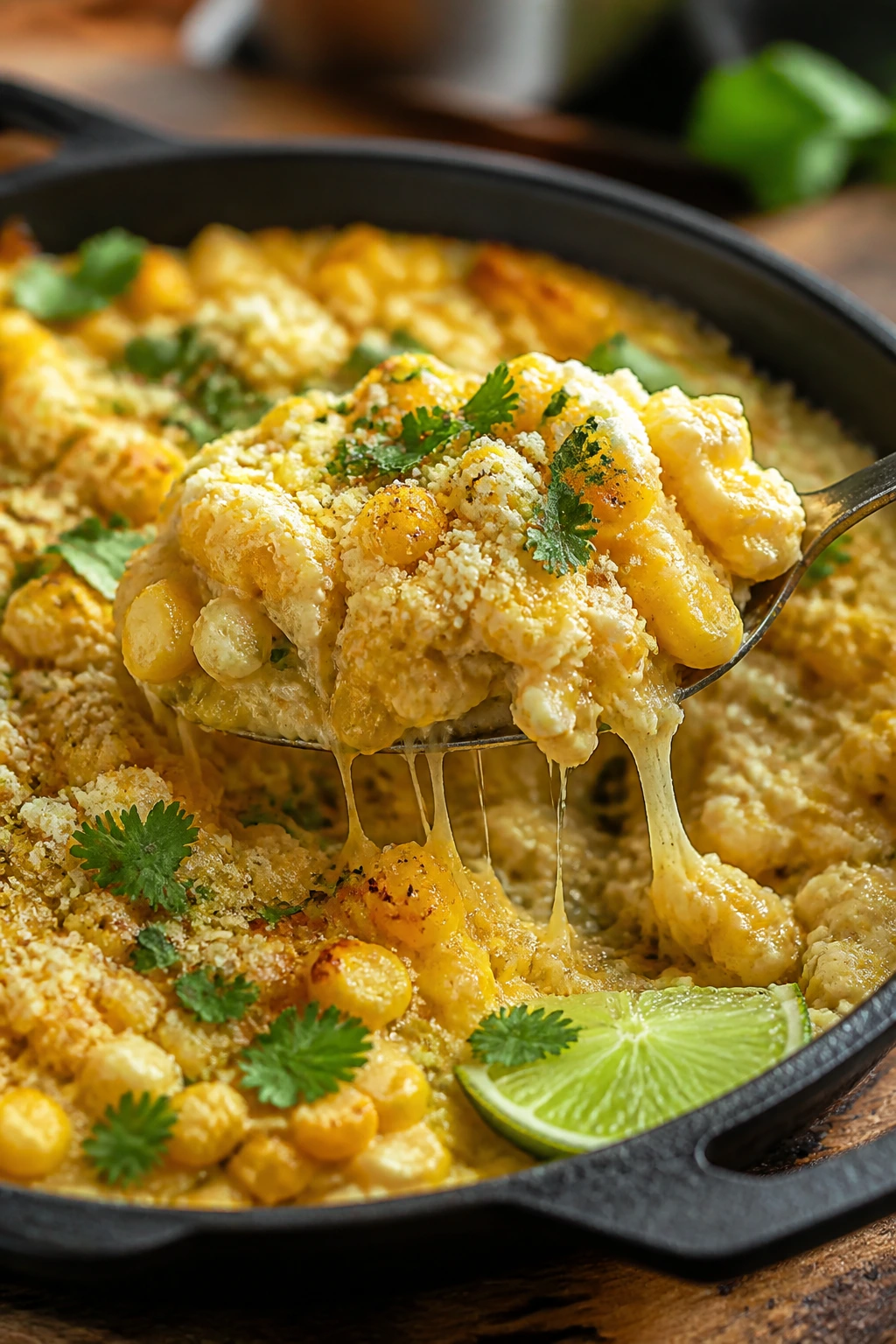
This is the slow cooker version of the side people always reach for first at a cookout. It tastes like corn, lime, and cheese, with enough chili powder to keep it from drifting into plain creamy territory.
Why It Works: Frozen corn holds texture, sour cream and mayo make a rich base, and cotija gives the dish a salty bite that stands up to barbecue or tacos. Lime juice at the end keeps the whole thing bright instead of heavy.
Key Ingredients:
- 6 cups frozen corn — no need to thaw fully.
- 1 cup sour cream — adds tang and body.
- 1 cup mayonnaise — helps the sauce cling.
- 2 cups cotija or feta, crumbled — the salty top note.
- 4 tablespoons unsalted butter, melted — for richness.
- 1 to 2 jalapeños, minced, optional — if you want heat.
- 1 tablespoon chili powder — the warm spice base.
- 1 teaspoon ground cumin — adds depth.
- 2 tablespoons lime juice — added at the end.
- 2 tablespoons chopped cilantro — for freshness.
- 1/2 teaspoon kosher salt — taste before adding more.
Quick Steps:
- Stir the corn, sour cream, mayo, half the cheese, butter, jalapeños if using, chili powder, cumin, and salt together.
- Put the mixture in the slow cooker and cook on low for 2 to 3 hours, until hot and creamy.
- Stir in the lime juice.
- Top with the remaining cheese and cilantro before serving.
Equipment for This Recipe:
- Slow cooker — 5- or 6-quart.
- Mixing bowl — for combining the sauce.
- Spoon — for stirring once or twice.
- Citrus juicer — optional, but handy.
How to Serve This Dish: Serve it beside tacos, grilled chicken, pulled pork, or brisket. It looks best with a little cilantro and cheese scattered over the top, not buried under a blanket of more ingredients than you need.
Pro Tips for This Recipe:
- Lime juice goes in at the end, not the start.
- Use frozen corn for better texture.
- If you want more body, add another 1/2 cup cheese.
- Don’t overcook it or the dairy can go grainy.
Variations on This Dish:
- Chipotle Corn: Add chopped chipotle in adobo for smoke.
- Lighter Corn Bowl: Use Greek yogurt in place of half the sour cream.
- Elote Cup Style: Finish with extra cotija and a dusting of chili powder.
Common Mistakes to Avoid with This Dish:
- Don’t use too much lime early on; it can throw the dairy.
- Don’t skip the salt.
- Don’t let it sit uncovered too long before serving or it thickens fast.
17. Butternut Squash with Sage Butter
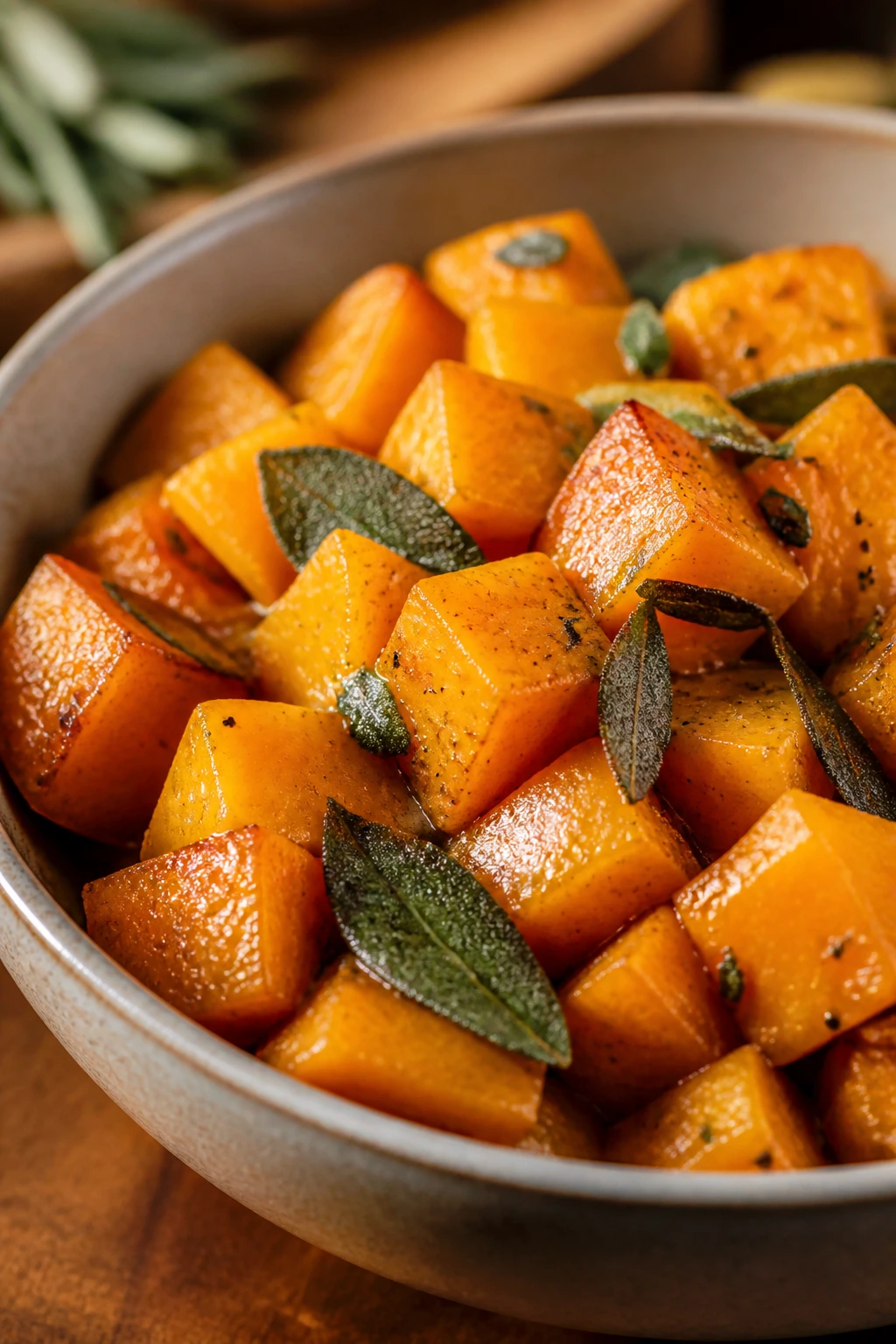
Butternut squash softens into a silky, spoonable side when it gets enough time with butter and sage. The flavor stays warm and a little sweet, which makes it a clean fit for roast meat and holiday tables.
Why It Works: The squash cubes hold their shape if they’re cut evenly, and sage gives the dish a savory note that keeps it from tasting like pie filling. A small amount of maple syrup or brown sugar rounds the edges without turning it into dessert.
Key Ingredients:
- 4 lb butternut squash, peeled and cut into 1-inch cubes — even pieces matter.
- 1/2 cup unsalted butter — the sauce base.
- 2 tablespoons maple syrup — just enough sweetness.
- 1 tablespoon chopped fresh sage — the best herb for this dish.
- 1/2 teaspoon cinnamon — optional, but works in a small amount.
- 1 teaspoon kosher salt — important for balance.
- 1/2 teaspoon black pepper — keeps it savory.
- Pinch of nutmeg — a small background note.
Quick Steps:
- Place the squash cubes in the slow cooker.
- Stir together the butter, maple syrup, sage, cinnamon, salt, pepper, and nutmeg, then pour over the squash.
- Cover and cook on low for 3 to 4 hours, until the squash is tender but not collapsing.
- Stir gently and serve warm.
Equipment for This Recipe:
- Slow cooker — 6-quart is a good fit.
- Sharp vegetable peeler — butternut squash is easier with the right tool.
- Heavy knife — cutting the squash safely matters.
- Spoon — for folding the squash at the end.
How to Serve This Dish: Spoon it into a warm bowl and let a little of the butter collect around the edges. It sits well beside pork, turkey, chicken, or a bean-heavy vegetarian plate that needs a sweet-savory balance.
Pro Tips for This Recipe:
- Cube the squash evenly or you’ll get half mush and half firmness.
- Fresh sage beats dried here, though dried can work in a pinch.
- If the dish looks wet, uncover for the last 15 minutes.
- A tiny extra pinch of salt makes the maple taste cleaner.
Variations on This Dish:
- Brown Butter Sage Squash: Brown the butter on the stove first.
- Orange Sage Squash: Add orange zest for a brighter finish.
- Savory Herb Bowl: Skip the maple and add rosemary instead.
Common Mistakes to Avoid with This Dish:
- Don’t cut the squash too large; it won’t soften evenly.
- Don’t turn the sweetener up too high.
- Don’t mash it unless you want a purée, because the texture is part of the charm.
18. Garlic Parmesan Mushrooms
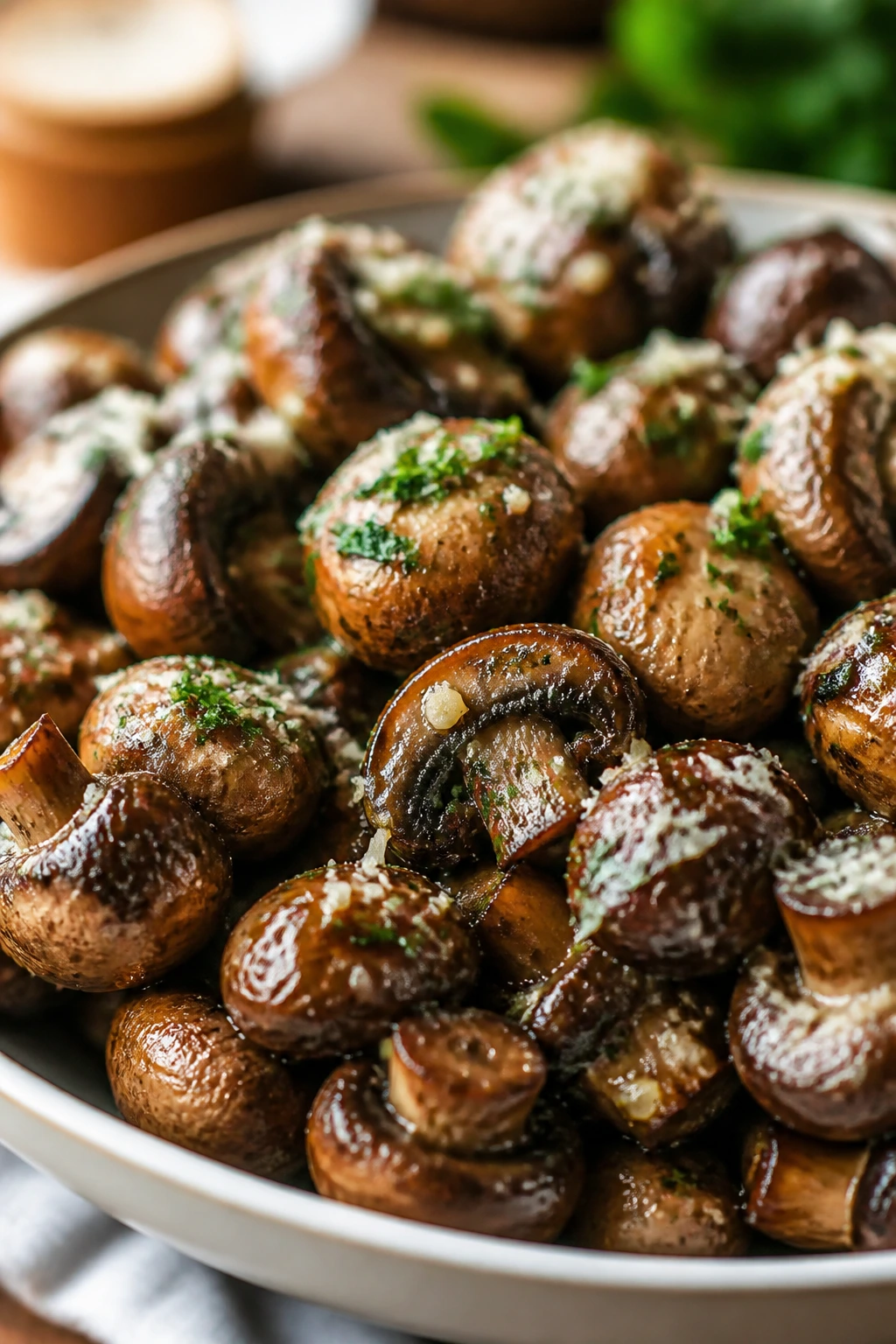
Mushrooms in the slow cooker are tricky, but not impossible. Treat them like a brief braise instead of an all-day project, and they come out juicy, garlicky, and full of broth-slick flavor.
Why It Works: Cremini mushrooms release enough liquid to keep themselves moist, and a short cook on high prevents them from turning rubbery. Parmesan and parsley go in at the end so the flavor stays sharp instead of melting into the broth.
Key Ingredients:
- 2 lb cremini mushrooms, cleaned and trimmed — keep them whole if they’re small.
- 4 tablespoons unsalted butter — the flavor base.
- 2 tablespoons olive oil — helps coat the mushrooms.
- 4 garlic cloves, minced — fresh garlic gives the bowl its backbone.
- 1 teaspoon dried thyme — a good mushroom herb.
- 1/2 teaspoon kosher salt — add more after cooking if needed.
- 1/2 teaspoon black pepper — enough to balance the butter.
- 1/2 cup grated Parmesan — added near the end.
- 2 tablespoons chopped parsley — for freshness.
- 1 tablespoon lemon juice — brightens the mushrooms.
Quick Steps:
- Put the mushrooms, butter, olive oil, garlic, thyme, salt, pepper, and 2 tablespoons of water into the slow cooker.
- Cook on high for 2 to 3 hours, stirring once or twice, until the mushrooms are tender and glossy.
- Uncover for the last 20 minutes if there’s a lot of liquid.
- Stir in Parmesan, parsley, and lemon juice before serving.
Equipment for This Recipe:
- Slow cooker — 4-quart works well.
- Soft brush or damp towel — for cleaning mushrooms.
- Garlic press or knife — either works.
- Slotted spoon — useful if you want to serve them without too much broth.
How to Serve This Dish: Spoon these beside steak, roast chicken, pork chops, or a big pan of potatoes. They also work with pasta or polenta if you want a second use for the same batch.
Pro Tips for This Recipe:
- Don’t wash mushrooms under running water for long; they soak up moisture.
- Keep the cook short. Mushrooms need tenderness, not hours of punishing heat.
- Lemon juice at the end matters more than people think.
- Salt after cooking if the liquid reduced a lot.
Variations on This Dish:
- Sherry Mushrooms: Add 2 tablespoons dry sherry near the end.
- Rosemary Mushrooms: Swap thyme for rosemary.
- Creamy Mushroom Side: Stir in 1/4 cup cream at the end.
Common Mistakes to Avoid with This Dish:
- Don’t leave them in for half a day.
- Don’t skip the uncovering step if there’s too much liquid.
- Don’t add Parmesan too early or it can disappear into the broth.
19. Apple Cranberry Compote
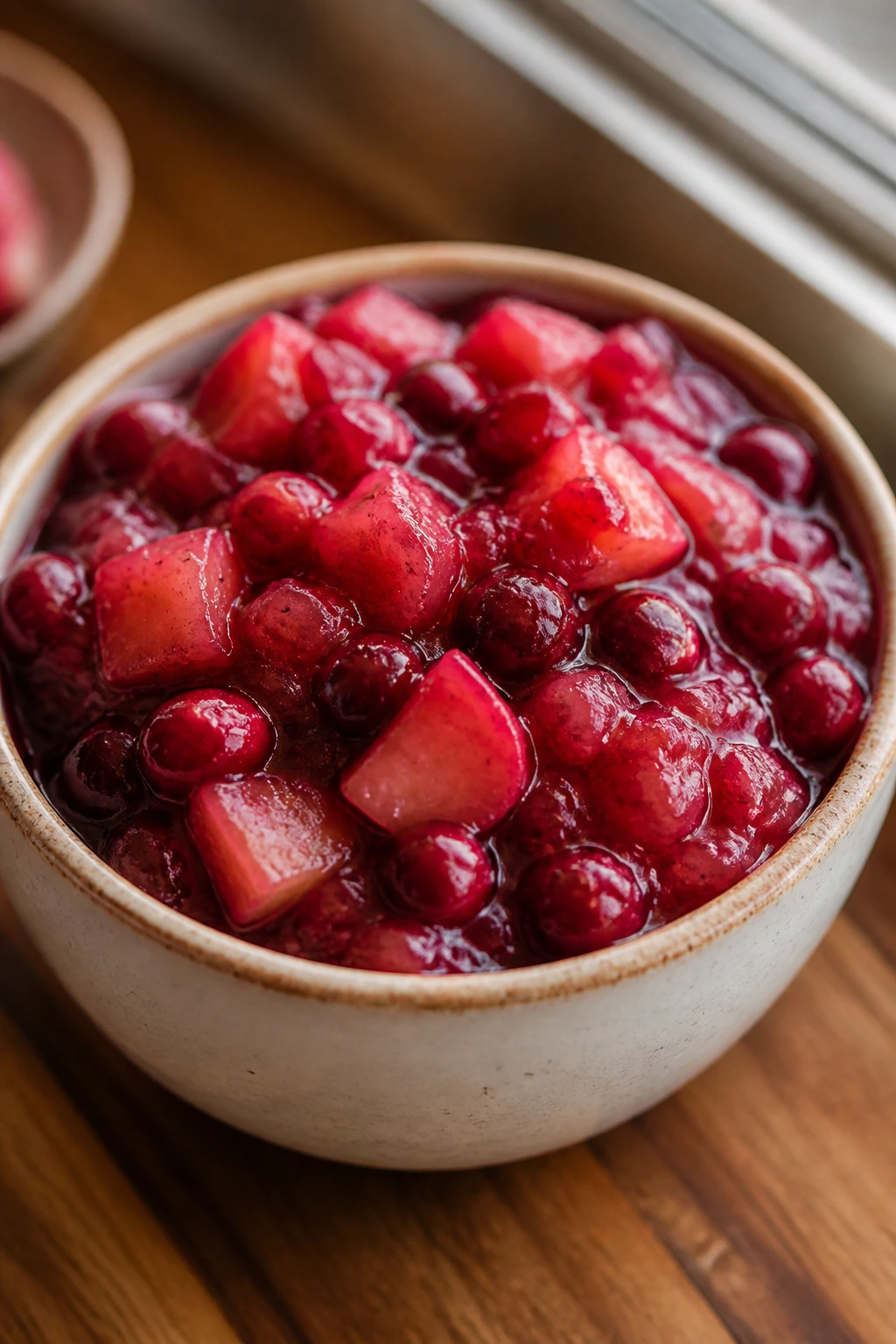
This side tastes like the bridge between savory dinner and the sweet thing people make room for anyway. Apples and cranberries soften into a glossy compote that works with pork, turkey, or a holiday plate with more than one rich dish on it.
Why It Works: Apples break down enough to make the sauce, while cranberries keep their tart edge and give the compote body. Orange juice and zest make it taste fresher than a jarred sauce ever could.
Key Ingredients:
- 6 apples, peeled, cored, and chopped — use a firm variety like Honeycrisp or Granny Smith.
- 2 cups fresh or frozen cranberries — they bring the tart snap.
- 1/2 cup packed brown sugar — enough sweetness to balance the fruit.
- 1/4 cup orange juice — the liquid base.
- 1 teaspoon cinnamon — warm and familiar.
- 1/4 teaspoon nutmeg — just a little.
- Pinch of salt — keeps the fruit from tasting flat.
- 1 tablespoon lemon juice — for brightness.
- 1 teaspoon orange zest — extra lift.
Quick Steps:
- Put everything into the slow cooker and stir once.
- Cover and cook on low for 2 to 3 hours, stirring once halfway through, until the apples are soft and the cranberries have burst.
- Mash lightly if you want a smoother sauce.
- Let it cool slightly before serving so it thickens.
Equipment for This Recipe:
- Slow cooker — even a smaller one works.
- Peeler and knife — for the apples.
- Wooden spoon — for gentle stirring.
- Potato masher, optional — if you want a smoother compote.
How to Serve This Dish: Serve it warm in a small bowl on the side of roast pork, turkey, ham, or baked chicken. A spoonful also works across mashed potatoes if your table likes sweet-and-savory combinations.
Pro Tips for This Recipe:
- Use firm apples or the compote will turn watery.
- Add more sugar only after tasting; cranberries can change a lot as they cook.
- Stir lightly if you want chunks of apple left in place.
- A pinch of salt is not optional here.
Variations on This Dish:
- Pear Cranberry Compote: Swap half the apples for pears.
- Ginger Fruit Pot: Add 1 tablespoon grated ginger.
- Less Sweet Version: Cut the sugar to 1/3 cup and let the fruit lead.
Common Mistakes to Avoid with This Dish:
- Don’t use soft apples that collapse into water.
- Don’t over-mash unless you want a sauce.
- Don’t forget the lemon juice; it keeps the fruit from tasting thick and sleepy.
20. Pinto Beans with Ham Hock
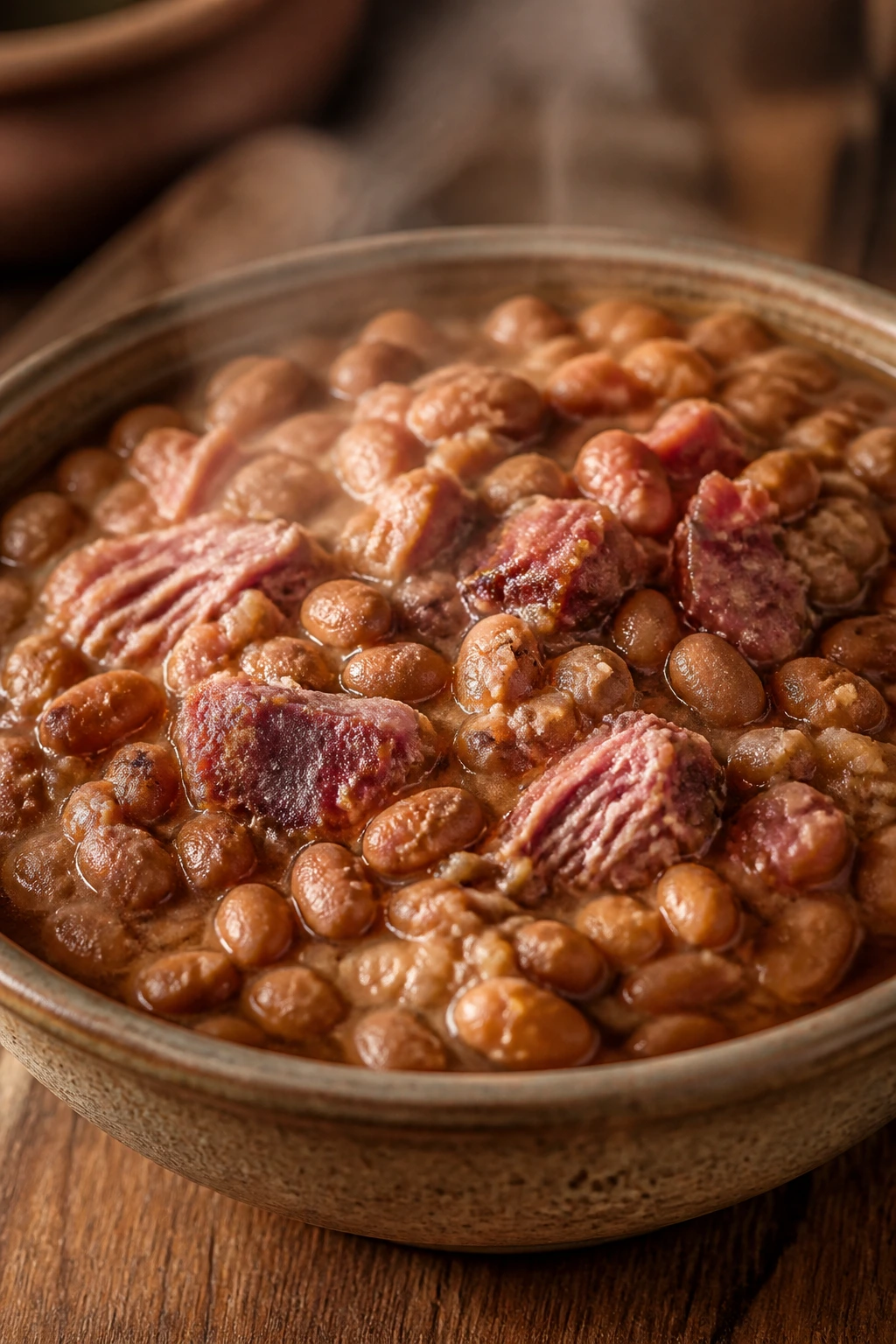
Few crockpot sides feed a crowd as cheaply and reliably as pinto beans. They’re rich, creamy, and sturdy enough to sit next to barbecue without getting embarrassed by it.
Why It Works: Dried beans absorb the ham hock’s salty smoke over a long cook, and the slow simmer breaks them down into a creamy pot without constant stirring. A vinegar finish keeps the beans from tasting muddy after hours in the pot.
Key Ingredients:
- 2 lb dried pinto beans, sorted and rinsed — remove rocks and broken bits.
- 1 ham hock or 2 cups diced ham — the flavor anchor.
- 1 onion, diced — the first layer of sweetness.
- 4 garlic cloves, minced — more depth.
- 8 cups water or low-sodium broth — enough to cover the beans by a few inches.
- 2 bay leaves — remove before serving.
- 1 teaspoon cumin — a little earthiness.
- 1 teaspoon kosher salt — start here, then taste later.
- 1/2 teaspoon black pepper — for balance.
- 1 tablespoon apple cider vinegar — stir in at the end.
Quick Steps:
- Soak the beans overnight if you can, then drain and rinse.
- Put the beans, ham hock, onion, garlic, water or broth, bay leaves, cumin, salt, and pepper into the slow cooker.
- Cook on low for 8 to 10 hours, until the beans are creamy and the ham is falling apart.
- Stir in the vinegar, pull out the ham hock, and shred any meat back into the pot.
Equipment for This Recipe:
- Large slow cooker — 6- to 8-quart.
- Colander — for rinsing soaked beans.
- Measuring cups — water level matters.
- Fork or tongs — for handling the ham hock.
How to Serve This Dish: Ladle the beans into a bowl with a bit of the cooking liquid. They belong with cornbread, barbecue, smoked meat, or a simple plate of rice, and they feed people without asking much in return.
Pro Tips for This Recipe:
- Soak the beans if you can; they cook more evenly.
- Don’t salt too hard at the start because ham hock can be salty.
- Add vinegar at the end, not the beginning.
- If the beans seem dry late in the cook, add 1 cup hot water.
Variations on This Dish:
- Smoky Bacon Beans: Use bacon instead of ham hock.
- Texas-Style Beans: Add chili powder and a little more cumin.
- Vegetarian Pot: Skip the meat and add smoked paprika plus a Parmesan rind.
Common Mistakes to Avoid with This Dish:
- Don’t skip sorting the beans.
- Don’t undercook them; pinto beans should turn creamy.
- Don’t add too much vinegar early or the beans can stay firm.
21. Ranch Baby Potatoes
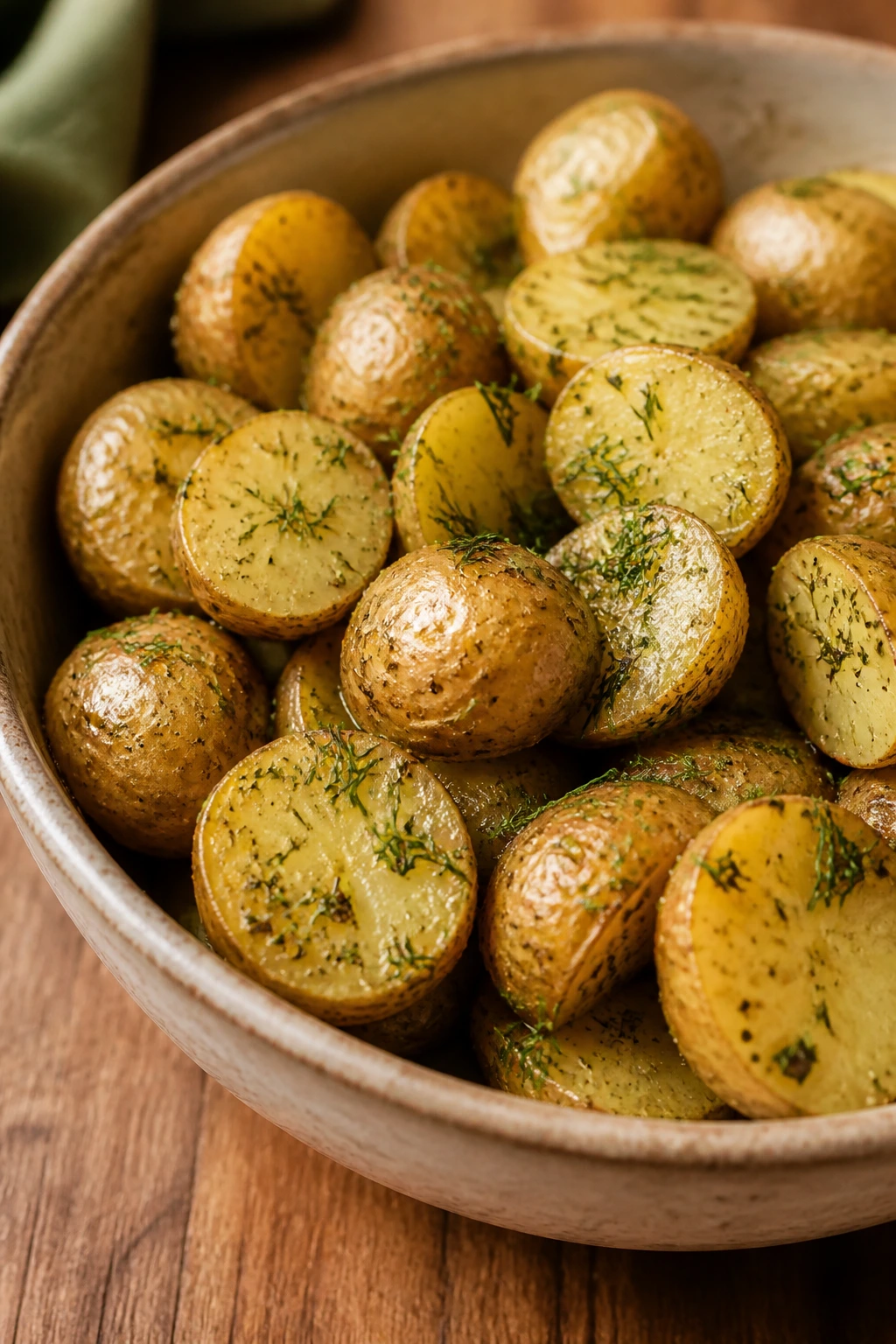
Baby potatoes in a slow cooker are a low-stress side with enough seasoning to keep them interesting. Ranch mix, butter, and garlic give you a salty, herby bowl that works with almost anything on a crowded table.
Why It Works: Small potatoes cook evenly and keep their shape, which matters because bigger chunks can split before the center softens. The broth keeps the pot from drying out, while ranch seasoning adds a built-in mix of herbs and salt that needs very little extra help.
Key Ingredients:
- 5 lb baby red or Yukon Gold potatoes, halved if large — smaller ones can stay whole.
- 1/2 cup unsalted butter, melted — coats the potatoes.
- 1 packet ranch seasoning mix, about 1 oz — the main flavoring.
- 4 garlic cloves, minced — gives the seasoning more depth.
- 1 cup chicken broth — helps the potatoes cook.
- 2 tablespoons chopped dill or parsley — freshens the bowl.
- 1/2 teaspoon black pepper — only a little is needed.
Quick Steps:
- Toss the potatoes with the butter, ranch seasoning, garlic, broth, and pepper.
- Put them in the slow cooker and cook on low for 4 to 5 hours, until fork-tender.
- Stir once near the end so the seasoning coats all the potatoes.
- Finish with dill or parsley and serve hot.
Equipment for This Recipe:
- Slow cooker — 5- or 6-quart.
- Mixing bowl — for tossing the potatoes.
- Measuring spoons — ranch mix is salty, so stay accurate.
- Spoon or spatula — for the final toss.
How to Serve This Dish: Pile them into a bowl while they’re still glossy from the butter. They work with roast chicken, pork chops, steak, ham, or a buffet where you need one side that doesn’t need extra explanation.
Pro Tips for This Recipe:
- Use potatoes of similar size so they cook at the same pace.
- If the potatoes are very small, keep them whole.
- Add herbs at the end so they stay fresh.
- Don’t add extra salt until you taste them; ranch mix already carries plenty.
Variations on This Dish:
- Sour Cream Ranch Potatoes: Stir in 1/2 cup sour cream at the end.
- Loaded Ranch Version: Add bacon bits and shredded cheddar.
- Dill Potato Pot: Use fresh dill instead of parsley for a sharper flavor.
Common Mistakes to Avoid with This Dish:
- Don’t use huge potato chunks. They cook unevenly.
- Don’t drown them in broth.
- Don’t expect crisp edges from a crockpot; this is a tender potato dish.
22. Broccoli Cheddar Casserole
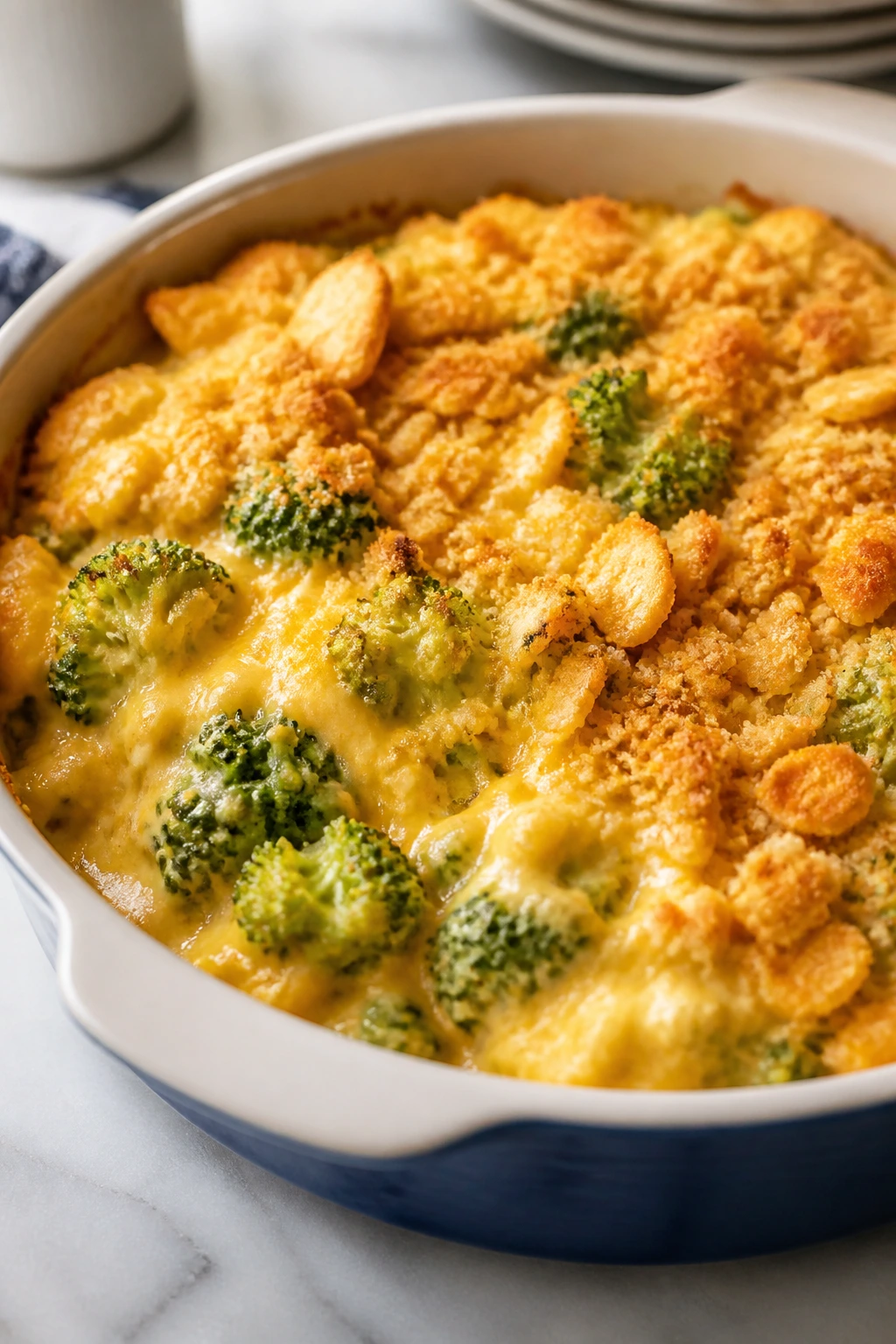
Broccoli in the slow cooker needs a shorter window and a little respect. Keep the cook brief, use thawed frozen florets, and it turns into a creamy casserole that still tastes like broccoli instead of a mystery mash.
Why It Works: Frozen broccoli has already lost some moisture, which helps it hold texture in the crockpot. Sour cream, mayonnaise, and cheddar make a thick coating that clings to the florets and sets into a side dish that feeds a crowd without much work.
Key Ingredients:
- 8 cups frozen chopped broccoli, thawed and squeezed dry — dry broccoli means less watery casserole.
- 1 cup sour cream — gives the sauce tang.
- 1 cup mayonnaise — adds body.
- 2 cups shredded cheddar — the main cheese.
- 1 cup crushed buttery crackers — for a soft topping.
- 1/2 cup milk — loosens the sauce.
- 1 teaspoon garlic powder — keeps the flavor savory.
- 1/2 teaspoon kosher salt — taste after cooking.
- 1/2 teaspoon black pepper — for balance.
Quick Steps:
- Mix the sour cream, mayo, cheddar, milk, garlic powder, salt, and pepper in a bowl.
- Fold in the broccoli, then spoon the mixture into the slow cooker.
- Top with the cracker crumbs.
- Cover and cook on low for 2 to 3 hours, until hot and set.
Equipment for This Recipe:
- Slow cooker — 4- or 5-quart.
- Mixing bowl — for the sauce.
- Spatula — gentle folding keeps the broccoli intact.
- Colander or towel — for squeezing the broccoli dry.
How to Serve This Dish: Serve it with a spoon rather than cutting it like a firm casserole. It sits well beside ham, chicken, turkey, or even a plain baked potato when the table needs another green dish.
Pro Tips for This Recipe:
- Squeeze the broccoli dry or the casserole turns loose.
- Cook only until hot; broccoli gets soft fast.
- Add a little mustard powder if you want a stronger cheese flavor.
- Cracker crumbs can be added at the end if you want more texture.
Variations on This Dish:
- Jalapeño Cheddar Broccoli: Add diced jalapeño and extra cheese.
- Gluten-Free Bowl: Use gluten-free crackers on top.
- Extra-Savory Version: Add 1 teaspoon Dijon mustard to the sauce.
Common Mistakes to Avoid with This Dish:
- Don’t use wet broccoli straight from the freezer bag.
- Don’t overcook it into a green paste.
- Don’t skip the topping if you want a little texture on the spoon.
23. Loaded Cauliflower Mash
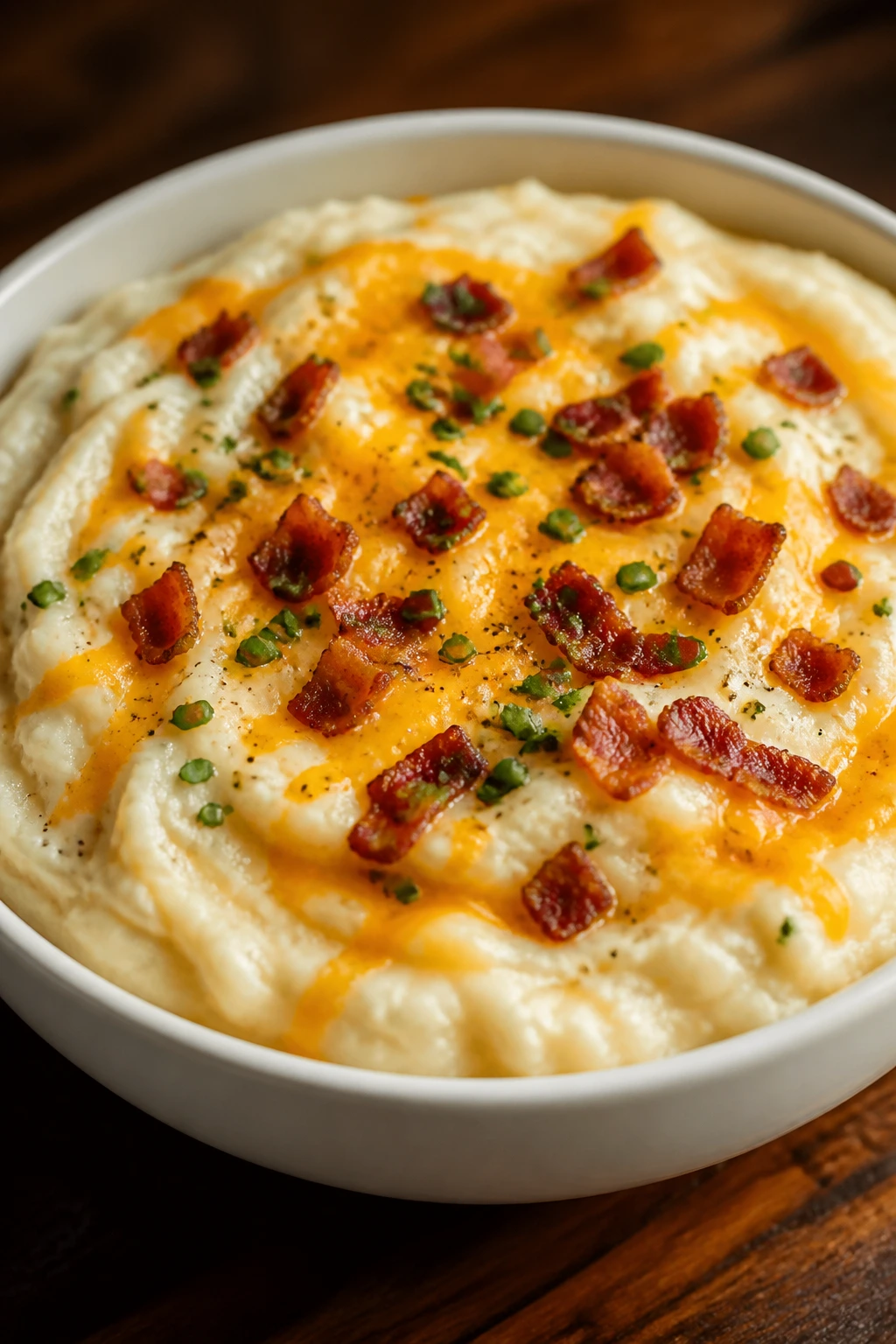
Cauliflower mash in the crockpot is the sort of side that works best when you treat it like a vegetable purée with attitude. Cream cheese, sour cream, cheddar, and chives give it the loaded-baked-potato feeling without the starch.
Why It Works: Cauliflower softens quickly, so the slow cooker only needs to get it tender before the dairy goes in. Draining it well matters more than almost anything else, because watery cauliflower makes the mash thin and sad.
Key Ingredients:
- 2 large heads cauliflower, cut into florets — about 10 to 12 cups.
- 1/2 cup water — just enough steam to soften the cauliflower.
- 4 ounces cream cheese, softened — for body.
- 1/2 cup sour cream — adds tang.
- 1/2 cup shredded cheddar — the loaded flavor.
- 4 tablespoons unsalted butter — richness.
- 2 garlic cloves, minced — a little savory backbone.
- 1 teaspoon kosher salt — cauliflower needs it.
- 1/2 teaspoon black pepper — for balance.
- Chopped chives and bacon bits, optional — classic finish.
Quick Steps:
- Put the cauliflower florets and water into the slow cooker.
- Cook on low for 2 to 3 hours, until the cauliflower is very tender.
- Drain well, then add the cream cheese, sour cream, cheddar, butter, garlic, salt, and pepper.
- Mash until smooth or leave a few small bits if you prefer more texture.
Equipment for This Recipe:
- Slow cooker — 5-quart or larger.
- Colander — for draining the cauliflower.
- Potato masher — for a rustic mash.
- Handheld blender, optional — if you want a smoother finish.
How to Serve This Dish: Serve it like mashed potatoes and top it the same way you would a baked potato. It sits beside steak, roast chicken, pork chops, or a vegetarian main that needs a soft, savory side.
Pro Tips for This Recipe:
- Drain the cauliflower very well before mashing.
- Warm the cream cheese first so it blends smoothly.
- Taste after mashing; cauliflower needs more salt than people expect.
- Bacon bits on top add crunch, but they’re optional.
Variations on This Dish:
- Garlic Herb Mash: Add rosemary or thyme.
- Extra-Cheesy Bowl: Swap cheddar for smoked gouda.
- Dairy-Free Version: Use olive oil and unsweetened cashew cream.
Common Mistakes to Avoid with This Dish:
- Don’t leave too much water in the pot.
- Don’t over-blend unless you want a very smooth puree.
- Don’t compare it to potato mash and expect the same starch response.
24. Slow Cooker Cheesy Polenta
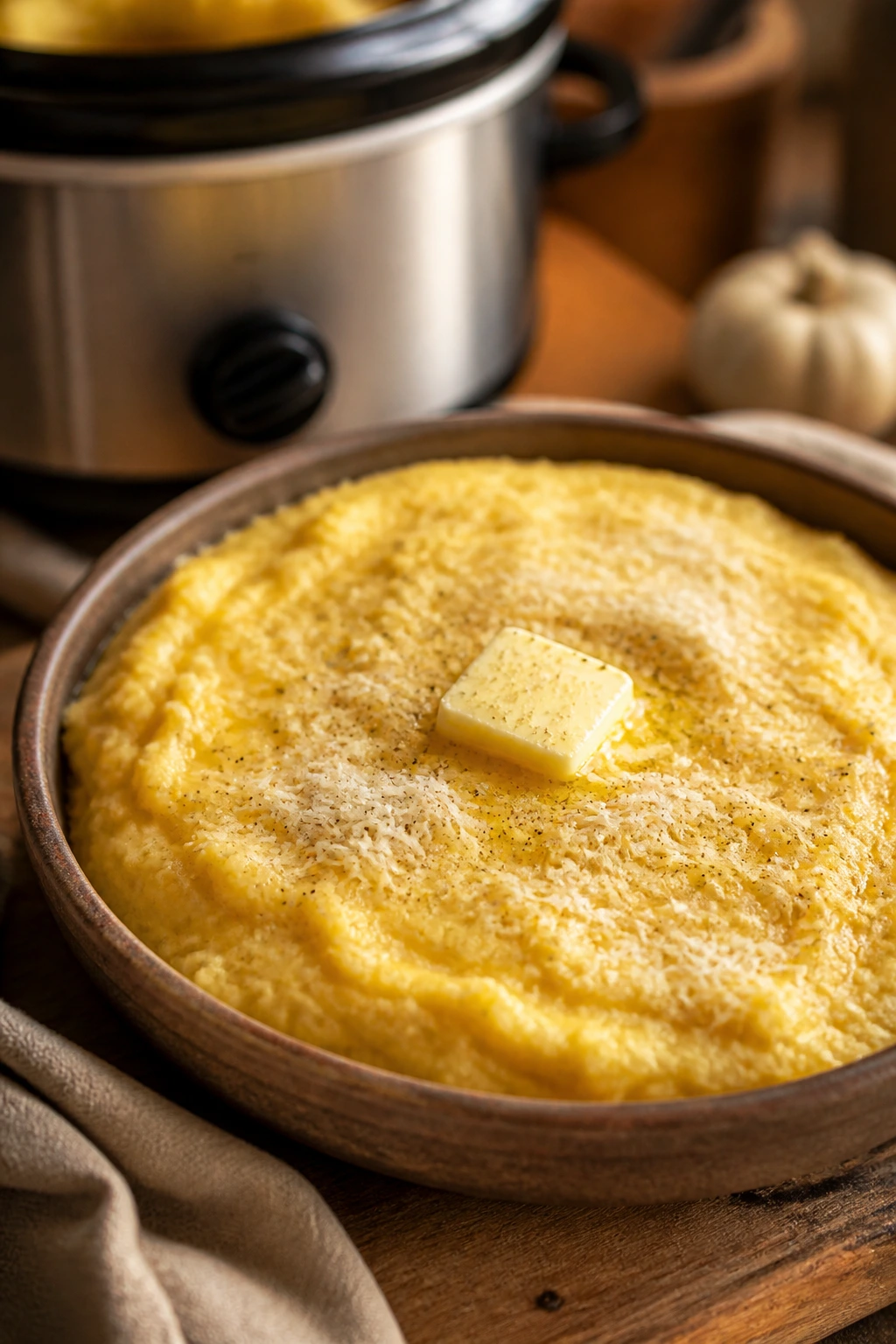
Polenta from the slow cooker is creamy, comforting, and far less demanding than a pot on the stove. It’s a smart side for a crowd because it stays soft for a long stretch and takes on whatever sauce or meat lands on top.
Why It Works: Coarse cornmeal needs time to hydrate, and the slow cooker gives it that without constant whisking. Butter and Parmesan go in at the end so the texture stays silky and the cheese doesn’t get lost in the pot.
Key Ingredients:
- 2 cups coarse cornmeal or polenta — not instant.
- 8 cups water or low-sodium broth — the cooking liquid.
- 1 cup whole milk — adds creaminess.
- 4 tablespoons unsalted butter — richness.
- 1 1/2 cups grated Parmesan — the salty finish.
- 1 teaspoon kosher salt — season as it cooks.
- 1/2 teaspoon black pepper — for balance.
- 1 tablespoon chopped sage, optional — a good match with corn.
Quick Steps:
- Whisk the cornmeal, water or broth, milk, salt, and pepper in the slow cooker.
- Cover and cook on low for 3 to 4 hours, whisking after the first hour and every 30 minutes after that.
- Stir in the butter, Parmesan, and sage if using.
- Serve right away, or keep on warm with an extra splash of milk.
Equipment for This Recipe:
- Slow cooker — 4- or 6-quart.
- Whisk — essential for keeping the polenta smooth.
- Wooden spoon — for the thicker final stir.
- Measuring cups — the liquid ratio keeps it creamy.
How to Serve This Dish: Spoon it under braised meats, roasted mushrooms, or sautéed greens. It works especially well when you want one side dish that can carry sauce instead of fighting it.
Pro Tips for This Recipe:
- Whisk early so the cornmeal doesn’t clump.
- Add milk if the polenta gets too thick before serving.
- Parmesan at the end keeps the flavor sharp.
- Use broth instead of water if you want a deeper savory bowl.
Variations on This Dish:
- Garlic Polenta: Add minced garlic at the start.
- Creamy Herb Bowl: Stir in thyme and parsley.
- Soft Cheddar Polenta: Swap Parmesan for cheddar if you want a different cheese profile.
Common Mistakes to Avoid with This Dish:
- Don’t use instant cornmeal and expect the same result.
- Don’t skip whisking early.
- Don’t let it dry out on warm without a splash of milk now and then.
25. Savory Bread Pudding with Cheddar and Herbs
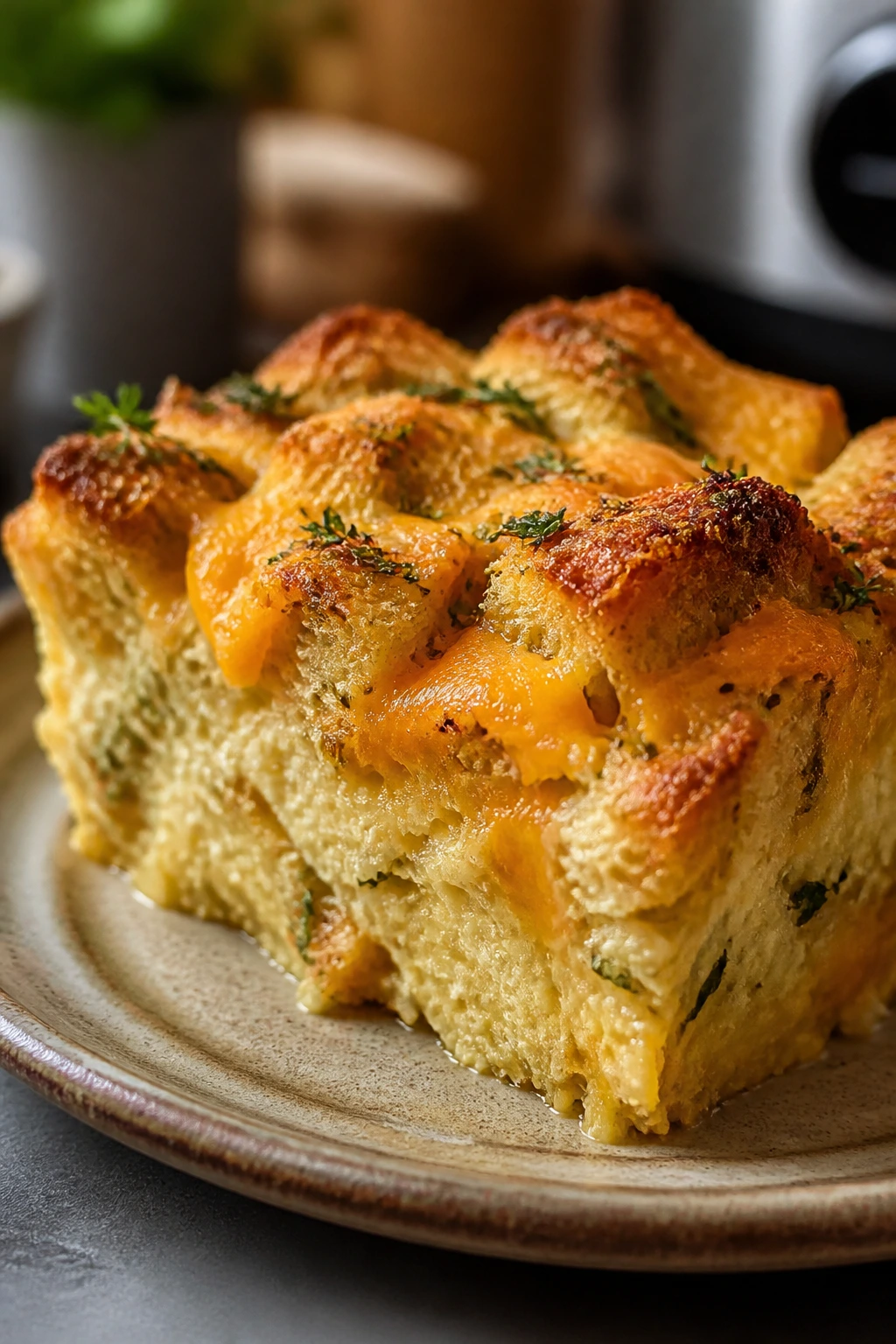
This is the side dish for people who like stuffing but want something a little richer and more custardy. Bread cubes, eggs, milk, herbs, and cheddar turn into a spoonable casserole that sits happily on a crowded table.
Why It Works: Day-old bread drinks in the custard without collapsing, and the slow cooker keeps the center soft while the top stays tender rather than crisp. Onion, celery, and thyme give it enough backbone that it can sit next to turkey, ham, or roasted vegetables without fading out.
Key Ingredients:
- 14 cups day-old bread cubes, about 1-inch pieces — stale enough to absorb custard.
- 4 large eggs — the binder.
- 3 cups whole milk — the main liquid.
- 1 cup heavy cream — makes the pudding rich.
- 2 cups shredded cheddar — for flavor and melt.
- 1 onion, diced and sautéed — better flavor than raw.
- 2 celery stalks, diced and sautéed — the classic savory base.
- 2 teaspoons thyme — herb backbone.
- 1 tablespoon chopped parsley — for freshness.
- 1 teaspoon kosher salt — more if the bread is very plain.
- 1/2 teaspoon black pepper — keeps it savory.
- 4 tablespoons unsalted butter, melted — adds richness and helps prevent sticking.
Quick Steps:
- Grease the slow cooker well.
- Whisk the eggs, milk, cream, butter, salt, pepper, and thyme in a large bowl.
- Fold in the bread cubes, onion, celery, cheddar, and parsley, then let the mixture sit for 10 minutes.
- Cook on low for 4 to 5 hours, until the center is set and the edges are lightly browned.
Equipment for This Recipe:
- Slow cooker — 6-quart works well.
- Large mixing bowl — needed for the bread and custard.
- Skillet — for the onion and celery.
- Whisk and spatula — for the custard and folding.
How to Serve This Dish: Spoon it onto the plate in generous chunks so the custard holds together. It sits well beside roast chicken, turkey, ham, or a roast vegetable platter, and it’s one of those sides that feels more substantial than the name suggests.
Pro Tips for This Recipe:
- Use bread that’s dry, not fresh and soft.
- Sauté the onion and celery first or the flavor stays flat.
- Let the bread soak for 10 minutes before cooking so the custard gets inside.
- If the top looks too wet near the end, uncover for the last 20 minutes.
Variations on This Dish:
- Sage and Onion Bread Pudding: Swap thyme for sage.
- Ham and Cheddar Version: Add 1 cup diced ham.
- Mushroom Herb Bowl: Add sautéed mushrooms and a little rosemary.
Common Mistakes to Avoid with This Dish:
- Don’t use soft fresh bread. It turns gummy.
- Don’t overdo the custard or the pudding won’t set.
- Don’t expect a crisp top; the slow cooker gives a soft, tender finish.
Why the Slow Cooker Wins When the Oven Is Full
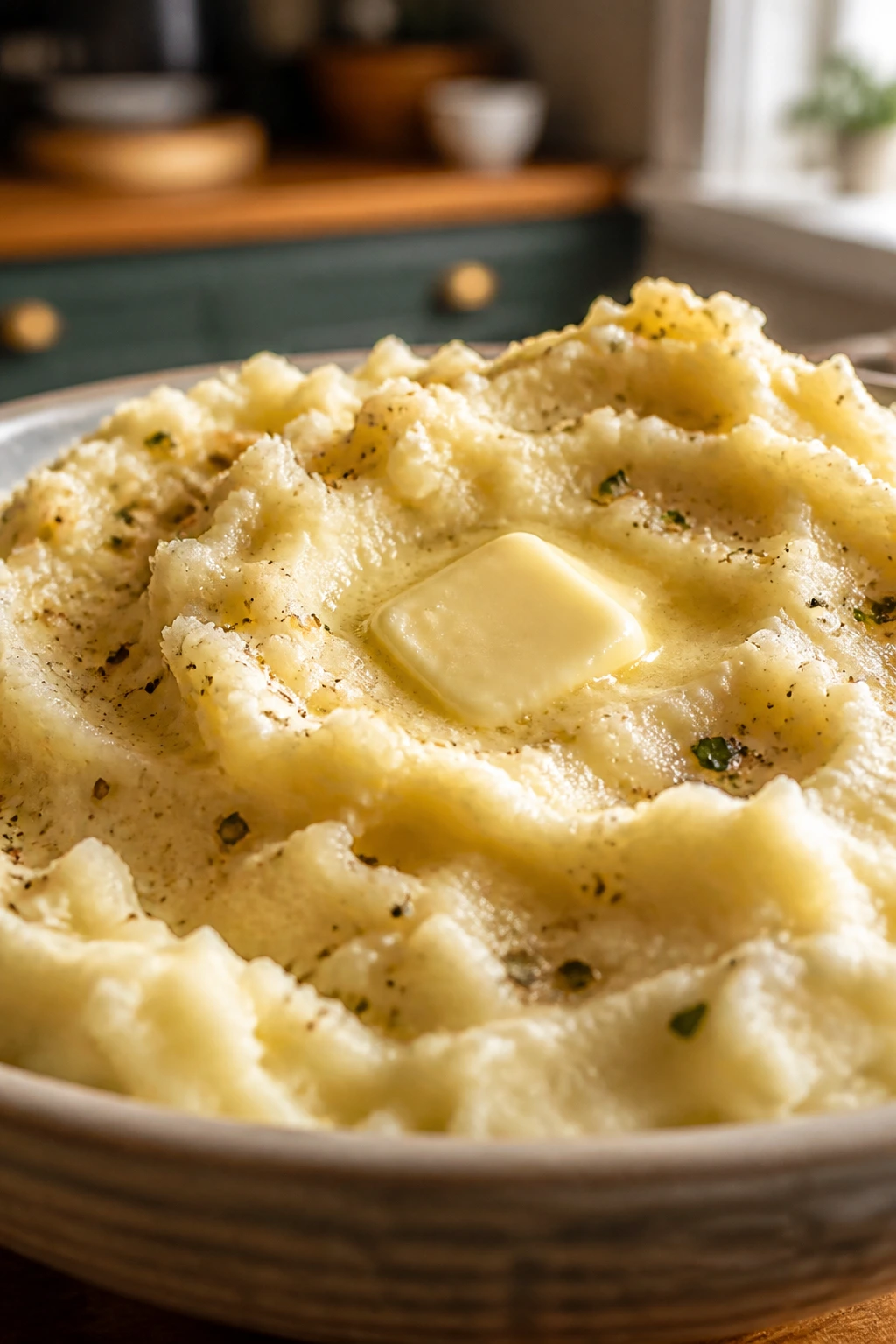
A crockpot side dish does a different job from a roasted side. It doesn’t try to brown, crisp, or blister. It stays calm, stays hot, and lets you stack the meal around it instead of timing the whole dinner on one oven rack.
That matters more than people admit. A crowd meal has a lot of moving parts, and side dishes are usually the first thing to get squeezed into the margins. The slow cooker fixes that by turning beans, potatoes, corn, greens, squash, and grains into something that can wait. If the roast is late, the side waits. If guests arrive in waves, the side still holds.
There’s a hidden bonus too: the slow cooker protects texture in dishes that would dry out on a sheet pan or scorch in a skillet. Mashed potatoes stay soft. Beans stay creamy. Greens stay braised. Even dishes that need shorter cooks, like mushrooms or Brussels sprouts, benefit from a controlled heat source that doesn’t punish you for being distracted by the rest of the meal.
Essential Equipment for These Recipes

- 6-quart slow cooker: The safest size for most of these crowd-size sides; 4-quart models work for mushrooms, compote, or broccoli casseroles.
- 8-quart slow cooker: Useful when you want mashed potatoes, beans, or stuffing for a larger group without crowding the pot.
- Sharp chef’s knife: Chops onions, trims greens, and cuts potatoes and squash without fighting you.
- Cutting board with a damp towel underneath: Keeps the board from sliding when you’re cutting a mountain of vegetables.
- Large mixing bowls: Needed for corn casseroles, bread pudding, mac and cheese, and anything you want to combine before it hits the pot.
- Whisk: Helps with creamy bases, polenta, and grits so the texture stays smooth.
- Potato masher: Better than a blender for mashed potatoes and cauliflower.
- Skillet: Useful for bacon, onions, and any base that tastes better when it gets a little color first.
- Colander or fine-mesh strainer: Handy for rinsing beans, draining broccoli, or drying cauliflower before mashing.
- Measuring cups and spoons: Slow cooker sides live or die by liquid balance.
- Serving spoon and ladle: Big-batch sides need tools that move volume cleanly, not tiny spoons that slow the line down.
- Airtight storage containers: Essential for leftovers, because almost every side here keeps better once it’s cooled and packed away properly.
Smart Shopping and Ingredient Tips
The easiest way to improve crockpot side dishes is to buy ingredients that can take gentle heat without falling apart. Yukon Gold potatoes are the sweet spot for mash and scalloped potatoes because they stay creamy; russets can work, but they’re fussier and can turn gluey if you mash too hard. For sweet potatoes and squash, look for firm pieces with intact skin and no soft spots, because bruised produce turns watery faster.
Frozen vegetables are often the better buy here. Frozen corn, frozen chopped broccoli, and even frozen green beans can be practical when the store’s fresh produce looks tired. Corn holds texture well in the crockpot, while broccoli needs a shorter cook and should be thawed and dried before it goes in. Fresh green beans and Brussels sprouts still make the best side when you want them to keep a little bite.
Beans deserve their own attention. Canned beans are the easiest route for baked beans, while dried pinto beans are worth the longer cook for a more rustic pot. If you use dried beans, sort and rinse them first. If the beans are old, they may take longer than the recipe says, and that’s not a failure so much as a reminder that dried beans are a living pantry item, not a fixed clock.
Dairy matters too. Full-fat sour cream, whole milk, heavy cream, and block cheese melt more predictably than low-fat substitutes. Pre-shredded cheese can work in a pinch, but it often melts less smoothly because of the coating on the shreds. Freshly grated cheese gives you a silkier sauce in mac and cheese, corn casserole, scalloped potatoes, and cheesy polenta. That extra minute at the grater buys you a better pot.
For herbs and finishing ingredients, buy the bright stuff last. Parsley, chives, dill, cilantro, lemon, lime, and vinegar do their best work at the end, and they don’t need to cost much. Their job is to keep a long-cooked side from tasting sleepy.
How to Serve These Recipes
Presentation: Use wide bowls for mashed potatoes, corn, beans, greens, and polenta so the surface stays visible and the steam can escape a little. Tall deep bowls trap heat too long and make creamy sides look heavier than they are. For layered dishes like scalloped potatoes and bread pudding, let them rest before scooping so the serving spoon cuts cleanly instead of dragging the whole pan apart.
Accompaniments: These sides pair easily with roast turkey, baked ham, fried chicken, pulled pork, brisket, and simple grilled meats. For a full plate, add one starchy side, one vegetable side, and one bright piece — apple cranberry compote beside pork, or collards with corn casserole and mashed potatoes. A basket of cornbread or dinner rolls works across almost every recipe here, which is why it keeps showing up at big meals.
Portions: Most of these recipes make 8 to 12 servings, with potatoes and beans leaning toward the top end and richer sides like mac and cheese or bread pudding feeding a little less per person because people take smaller portions. For a potluck, plan on 1/2 to 3/4 cup per person for creamy sides and a little less for heavier dishes. If you’re serving a buffet, keep the first batch in the crockpot and refill from a warm backup dish if you made one.
Beverage Pairing: I like unsweetened iced tea with vinegar-based sides, especially greens and beans. For sweeter dishes like candied sweet potatoes or corn casserole, sparkling water with lemon keeps the plate from feeling heavy. Beer works well with BBQ sides — a lager with beans, a pale ale with mac and cheese, or something darker with collards and ham.
Additional Tips and Flavor Boosters
Flavor Enhancement: A splash of acid at the end — vinegar, lemon juice, lime juice, or even a little pickle brine — keeps long-cooked sides from tasting flat. It’s the easiest fix in the whole list, and it changes beans, greens, corn, mushrooms, and potatoes more than most people expect.
Customization: Stir in cooked bacon, chopped herbs, sautéed onions, roasted garlic, or shredded cheese near the end instead of at the start. That gives you sharper flavor and more texture than if everything spends all day in the pot. For crowds with different tastes, keep the main batch mild and set out hot sauce, extra herbs, grated cheese, or fried onions on the side.
Serving Suggestions: A handful of chives on mashed potatoes, parsley on carrots, cilantro on street corn, and dill on ranch potatoes can make the dish look fresher without changing the recipe. A light dusting of paprika over mac and cheese or cheddar grits also helps the bowl read as finished instead of just cooked.
Make-It-Yours: For gluten-free guests, stick with naturally gluten-free sides like potatoes, beans, greens, corn, squash, and polenta, then swap in a gluten-free cornbread mix or crackers where needed. For dairy-free plates, use olive oil, broth, and unsweetened plant milk in dishes that don’t depend on cream cheese or cheddar for structure. For lower-salt cooking, lean on herbs, garlic, vinegar, and citrus first, then season at the table.
Make-Ahead, Storage, and Reheating Guidance
Most of these crockpot side dishes keep well in the refrigerator for 3 to 4 days, with beans, greens, mashed potatoes, and fruit compote usually holding up the best. Creamy dishes like mac and cheese, scalloped potatoes, corn casserole, and broccoli cheddar casserole can also be refrigerated for that same window, though their texture may tighten a little overnight.
Freezing is more selective. Beans, greens, compote, mashed potatoes, and even some polenta freeze well for up to 2 months if you pack them in airtight containers with as little extra air as possible. Mac and cheese, corn casserole, and dairy-heavy potato dishes can freeze, but they tend to lose a little silkiness when reheated. If texture matters more than saving leftovers, keep those in the fridge and eat them within a few days.
For reheating, use the method that matches the texture. Mashed potatoes, grits, and polenta do well in a saucepan over low heat with a splash of milk or broth stirred in every minute or two. Beans and greens can go back into a small pot or the slow cooker on low, covered, until hot. Casseroles and scalloped potatoes reheat best in a 300°F oven, covered loosely with foil, until the center is hot. A microwave works in a pinch, but stir halfway through and add a spoonful of liquid so the edges don’t dry out.
Make-ahead prep is worth it for this whole collection. Chop vegetables the night before and keep them sealed in the fridge. Mix dry seasoning blends ahead of time. For bean dishes, soaking overnight gives you a head start. For potatoes, cut them the same day if you can and keep them submerged in cold water for a few hours so they don’t brown. The crockpot still does the hard part; you’re just removing the panic before dinner.
Variations and Adaptations to Try
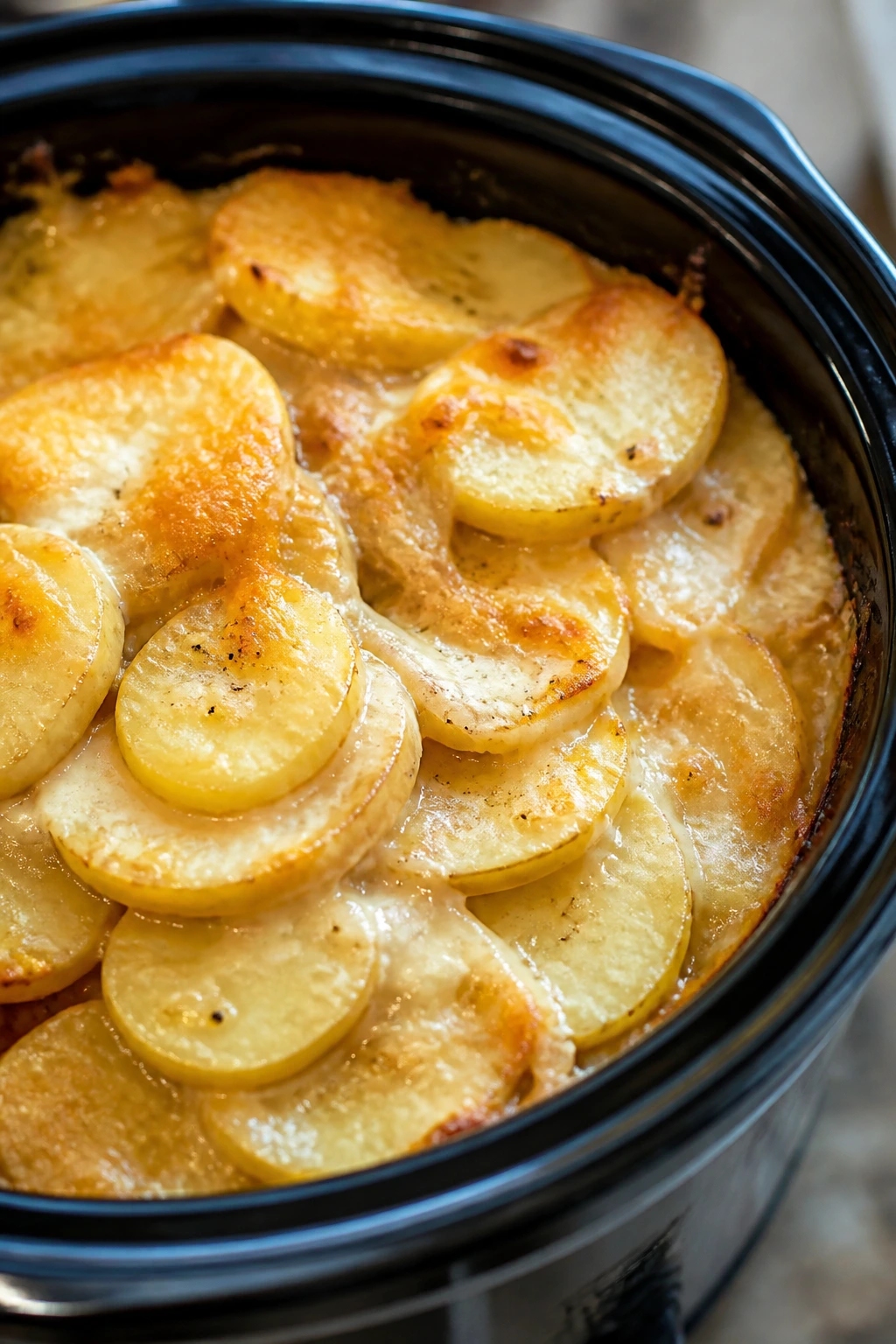
The Dairy-Light Table: Use olive oil, broth, and a little plant milk in dishes like potatoes, squash, and polenta. The texture won’t mimic the full-dairy versions exactly, but it still reads as rich if you season well and finish with herbs or vinegar.
Gluten-Free Crowd: Lean on the naturally gluten-free recipes here — beans, greens, potatoes, corn, carrots, mushrooms, compote, squash, and polenta — then swap in gluten-free cornbread mix or crackers for corn casserole and broccoli casserole. Nothing about the crockpot itself cares either way.
Heat-First Pot: Add jalapeños, red pepper flakes, chipotle powder, or hot sauce to beans, corn, mac and cheese, or Brussels sprouts. The trick is to add heat in layers rather than dumping in a huge dose at the beginning, because slow cooking flattens spice a little.
Holiday Herb Swap: Sage, thyme, parsley, dill, rosemary, and chives can steer these sides toward different meals. Sage and thyme make potatoes and stuffing feel classic; dill freshens carrots and ranch potatoes; rosemary is stronger and better for mushrooms or potatoes in smaller amounts.
Southwest Turn: Use cumin, chili powder, lime, cilantro, cotija, and jalapeño across corn casserole, pinto beans, sweet potatoes, and even mashed cauliflower. The line between a potluck side and a Tex-Mex side dish is often just two ingredients and a squeeze of lime.
Lower-Sodium Fix: Choose low-sodium broth, rinse canned beans, salt in layers, and use acid and herbs to do more of the flavor work. Bacon, ham, cheese, ranch mix, and broth all carry salt, so tasting before the final adjustment matters a lot here.
Common Mistakes to Avoid
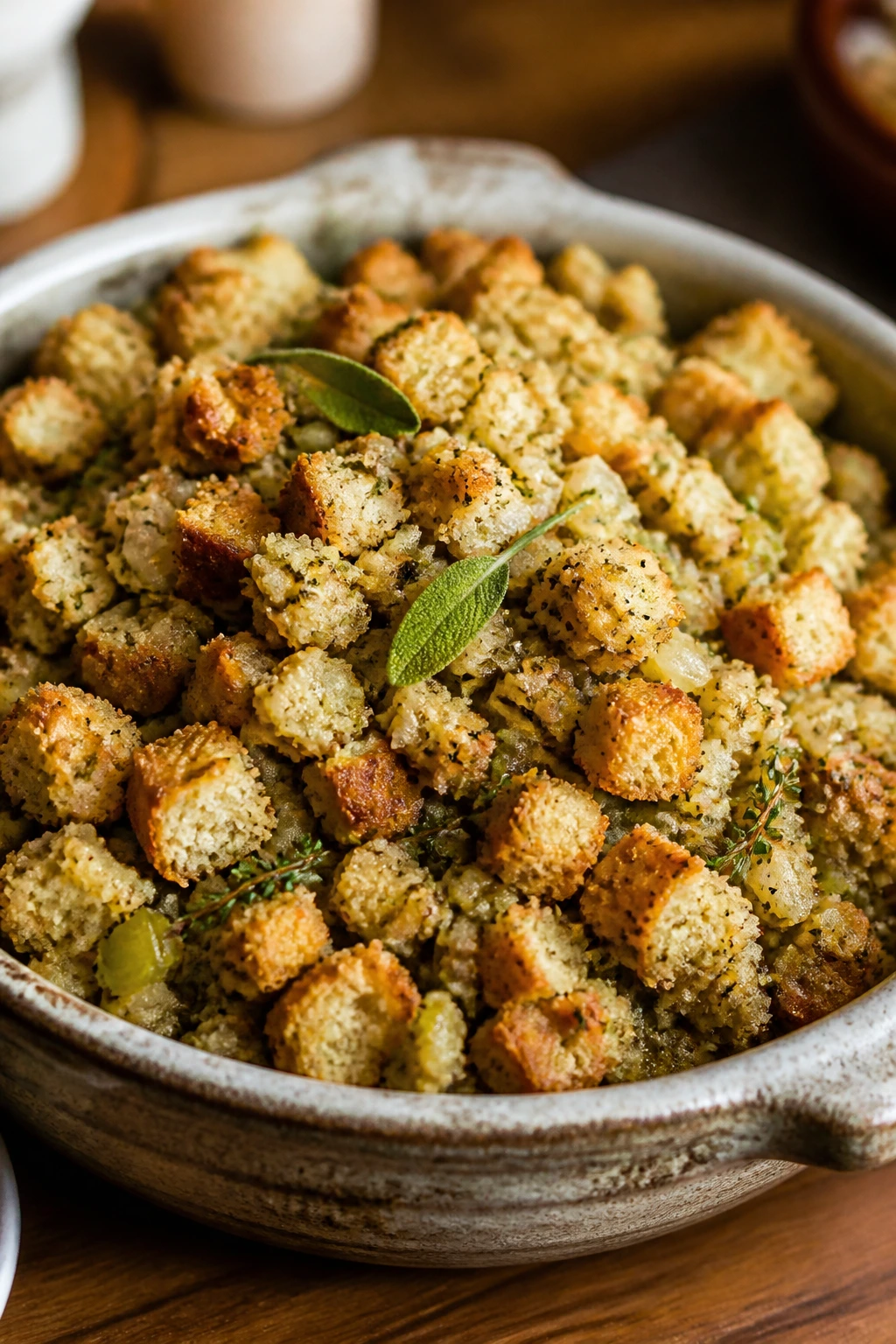
Choosing the wrong vegetable shape: Thin carrot coins, tiny potato cubes, and shredded squash all go soft faster than you think. Bigger, even cuts give you the texture you want by the time the meal starts. If a vegetable usually roasts quickly in the oven, it probably needs a more careful hand in the crockpot.
Adding too much liquid: Slow cookers trap steam. That means the sauce you add at the start usually goes farther than it would in a pot on the stove. When the dish looks wet halfway through, wait before adding more — many of these sides thicken as they sit.
Treating every recipe like it needs an all-day cook: Mushrooms, Brussels sprouts, broccoli casseroles, and some corn dishes only need a few hours. Leave them too long and they lose shape and taste. Bigger, tougher ingredients like beans, collards, and dried grains are the ones that can take a longer shift.
Letting dairy boil hard: Cream cheese, sour cream, and shredded cheese can break if the pot gets too hot or if the lid stays off and the edges cook too aggressively. Keep the heat gentle, stir once or twice, and add delicate dairy toward the end when the recipe calls for it.
Skipping the finishing step: A lot of slow cooker food tastes fine but dull if you stop at the cook time. Vinegar, lemon juice, lime juice, pepper, chives, parsley, and extra salt are not decorative here. They’re the difference between “hot side dish” and “the bowl people remember.”
Lifting the lid every ten minutes: Each peek dumps heat and steam. The crockpot is slow on purpose, so trust the process and check only when the recipe says to. A quick stir halfway through is enough for most of these dishes.
Frequently Asked Questions About Crockpot Side Dishes
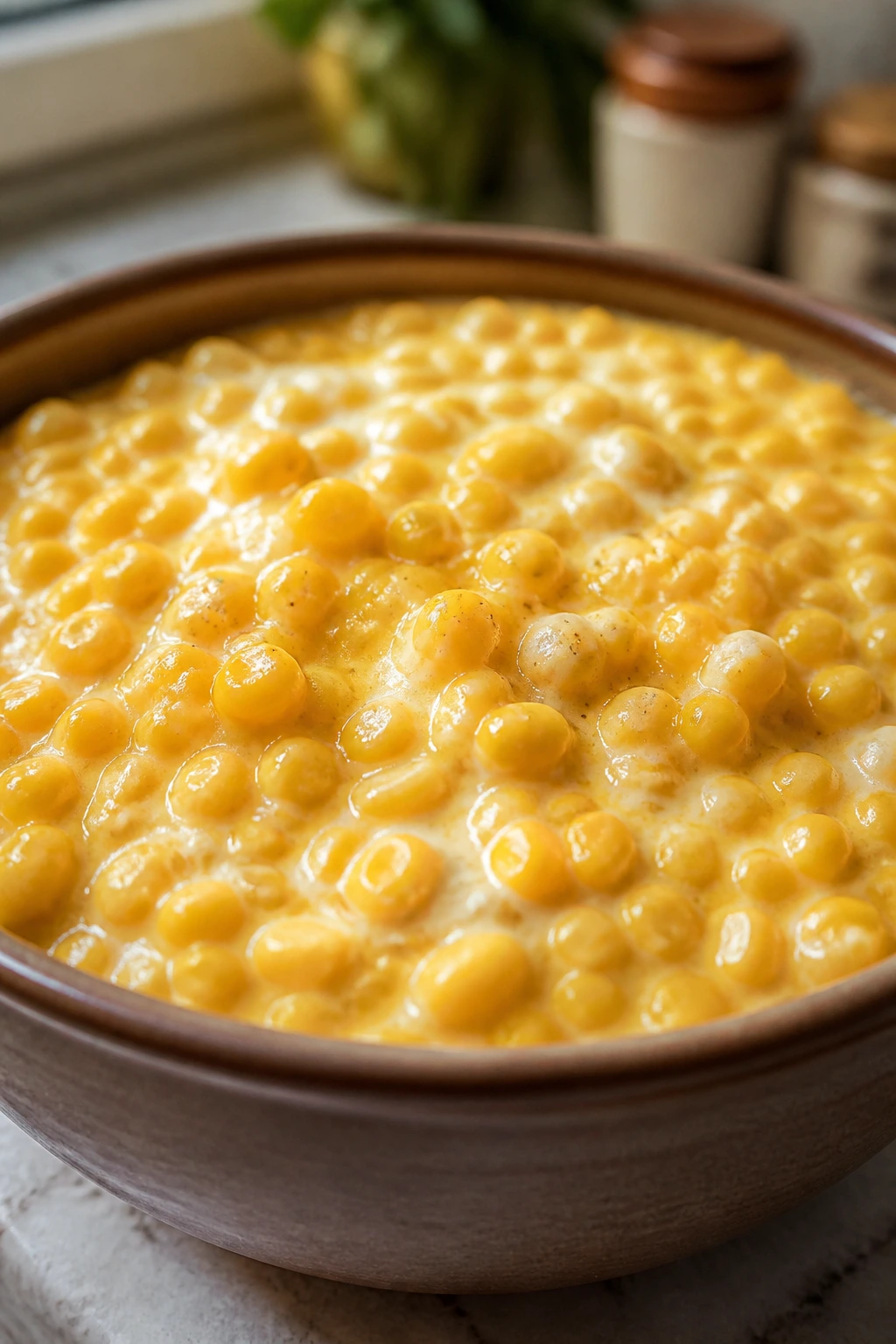
Can I double these recipes for a bigger crowd?
Usually, yes, but only if your slow cooker has room for the food to heat evenly. A 6-quart cooker handles most single batches well; an 8-quart model is better for doubled mashed potatoes, beans, or greens. If the pot is packed to the rim, the center cooks slowly and the edges cook too fast.
What crockpot size works best for side dishes?
A 6-quart slow cooker is the sweet spot for most of these recipes. It’s big enough for crowd-sized portions without making a shallow layer so thin that it dries out. Smaller dishes like mushrooms, compote, or creamed corn can fit in a 4-quart unit.
Which side dishes can sit on warm for a long time?
Mashed potatoes, beans, greens, corn, and polenta are the easiest to hold on warm for a couple of hours. Keep a lid on them and stir every so often if the texture starts to thicken. Dairy-heavy casseroles are better kept warm for a shorter stretch so they don’t dry out around the edges.
Can I use frozen vegetables instead of fresh?
Absolutely for corn, broccoli, and sometimes green beans, provided you watch the cook time. Frozen vegetables are often picked at a good stage of ripeness, and they save prep time. Just don’t treat them like fresh vegetables with the same timing; they usually need less cook time and more drainage.
Why did my mashed potatoes turn gluey?
That usually happens when the potatoes are overmixed or blended too hard. A potato masher gives you control, while a blender or food processor can make the starch turn sticky fast. Yukon Golds also behave better than russets if you want a creamy bowl without a lot of fuss.
What if my side dish comes out too watery?
Take the lid off for the last 15 to 30 minutes and let some steam escape. That helps carrots, corn, mushrooms, cabbage, and squash tighten up a little. For mashed dishes or casseroles, you can also stir in a little more cheese, breadcrumbs, or mashed potato to absorb excess moisture.
Do these recipes travel well to a potluck?
Most of them do, and that’s one of the strongest reasons to use a slow cooker in the first place. Carry the crock in an insulated bag or with the lid clipped tightly shut, then plug it back in at the destination and set it to warm. Beans, potatoes, corn, and greens are especially reliable for transport.
Can I prep anything the night before?
Yes. Chop onions, carrots, celery, and herbs ahead of time, and rinse beans or trim greens before bed. For potatoes, keep peeled chunks in cold water in the fridge for a few hours, then drain and dry before cooking so they don’t brown.
How do I keep a buffet from getting boring if I’m serving several of these?
Mix textures and flavors on purpose. Pair one creamy side like mac and cheese with one sharp side like collards or apple cranberry compote, then add one starchy anchor and one vegetable. A good buffet feels balanced when not every bowl is sweet, soft, or heavy.
The Quiet Hero of the Buffet Table
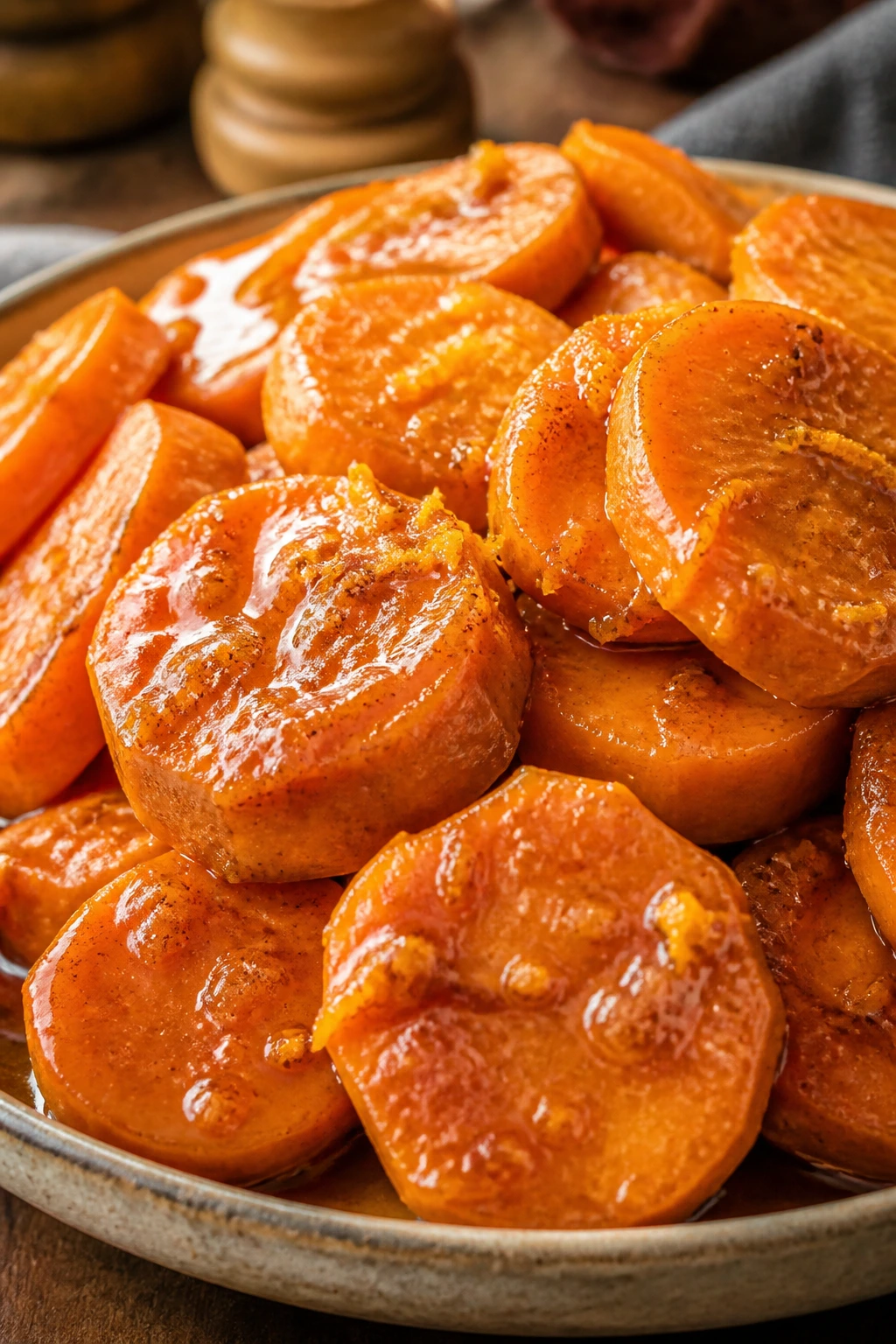
The best crockpot side dishes don’t shout. They sit there, steady and hot, doing the boring job that keeps the whole meal calm while the main course gets all the attention.
That’s why I keep coming back to them for crowded dinners. A big table needs one dish that can wait, one dish that can stretch, and one dish that doesn’t need its own oven timetable to succeed. These recipes do that job with potatoes, beans, corn, greens, squash, grains, and a few sweeter sides that know when to step in and when to stay out of the way.
Set one of them going before the kitchen gets busy, and the rest of the meal has room to breathe.