



Smoke and picnic baskets are a better pair than people give them credit for. The best picnic menu ideas for the grill this weekend are the ones that keep their shape after a walk to the blanket, still taste good when the first person reaches for a second helping, and don’t turn limp in the bottom of a cooler. That means chicken thighs instead of dry breast meat, buns toasted just enough to hold their own, and vegetables with enough char to taste like they meant it.
A grill solves a problem that oven food never quite does. It gives you heat and smoke at the same time, which is why a peach half can taste like dessert before you even add honey, and a tray of corn can go from plain to sharp, sweet, and a little salty in ten minutes flat. I like picnic food that has edges — browned, blistered, a little messy. It eats better outside.
Some of these recipes lean into hand-held portions. Others are the kind of side dish you set down next to paper plates and watch disappear. All of them are built to travel, which matters more than people think. Food that looks good in the kitchen but wilts by the time you unpack the blanket is not picnic food. The next few sections keep that problem from showing up.
Why These Grill Picks Earn a Spot on the Picnic Table
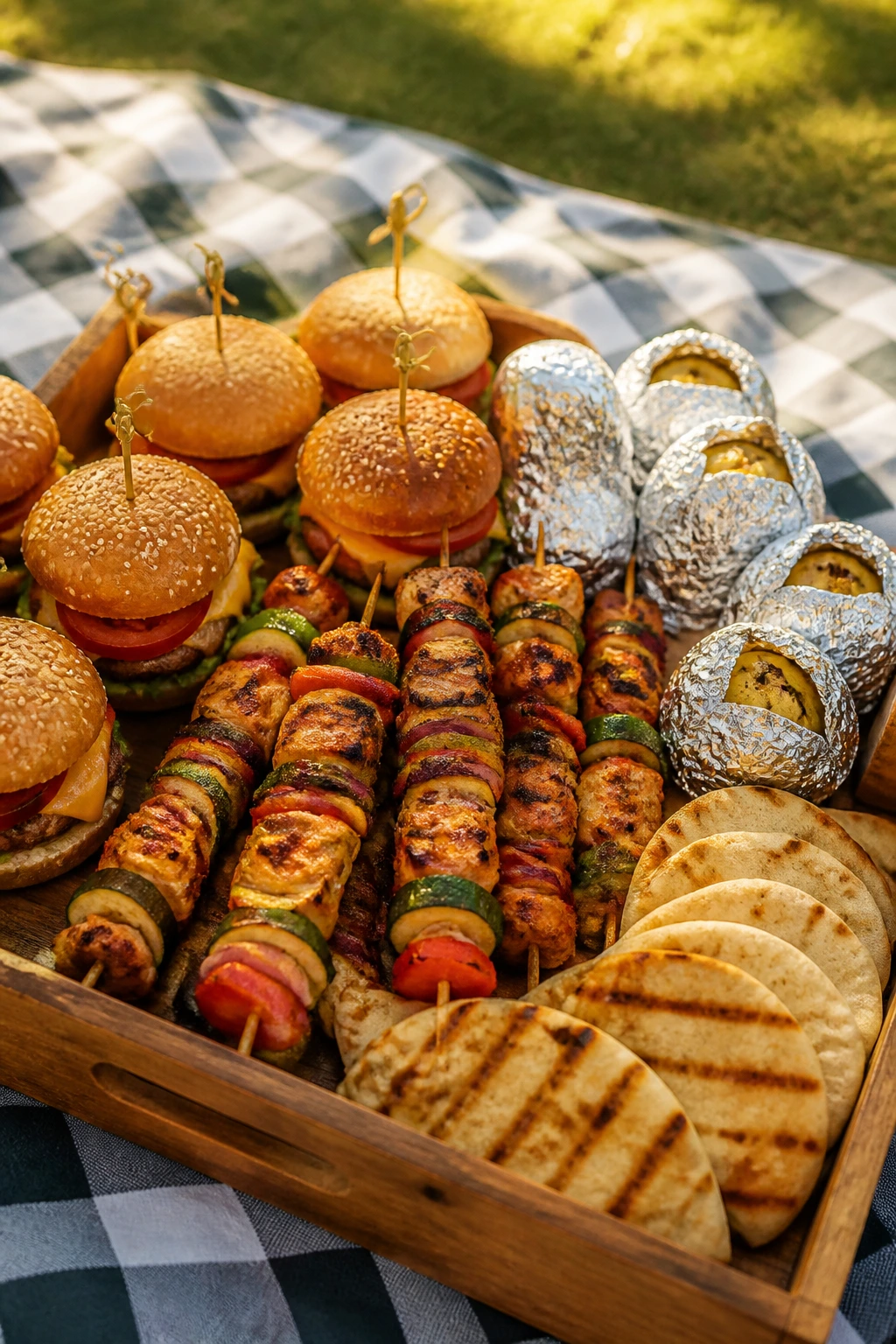
- Portable: Every recipe here moves from grill to tray, bun, skewer, or foil packet without falling apart in the first 10 minutes.
- Mixed Temperatures: You get hot mains, warm sides, and room-temp dishes, which makes the table feel full without making the food fight each other.
- Char Does the Heavy Lifting: A little browning on onions, corn, flatbread, or peaches gives the whole spread more depth than a plain stovetop meal can manage.
- Easy to Scale: Skewers, sliders, packets, and flatbreads are simple to double when one more person shows up with chips and an opinion.
- Less Fuss Outdoors: Most of these recipes need one sauce, one cutting board, and a stack of napkins. That’s the right amount of chaos for a picnic.
- Good After the First Bite: A lot of grill food falls apart after five minutes on the table. These dishes keep their shape, keep their texture, and still taste worth reaching for.
1. Lemon-Garlic Chicken Thigh Skewers
Bright lemon, sweet garlic, and the little singe you only get from a hot grate make these skewers smell like somebody actually paid attention at the grill. Chicken thighs are the right cut here — not the lean, nervous kind that dries out if you look at it wrong, but the forgiving kind that stays juicy even after a few minutes of resting in a foil tray. These are picnic food with structure.
Why It Works:
Chicken thighs handle medium-high heat better than breasts because the extra fat protects the meat while the surface browns. A short marinade gets lemon and garlic onto the outside fast, and the 1-inch pieces cook evenly in about 10 to 12 minutes. Pull them at 175°F, not earlier, or the texture stays a little rubbery instead of plush.
Key Ingredients:
- 2 lbs boneless, skinless chicken thighs, cut into 1-inch pieces
- 3 tbsp olive oil
- 3 tbsp lemon juice
- 3 garlic cloves, grated
- 1 tsp kosher salt
- 1 tsp smoked paprika
- 1/2 tsp black pepper
- 2 tbsp chopped parsley
- 1 lemon, sliced into rounds
Quick Steps:
- Soak the Skewers: Soak 8 wooden skewers in water for 30 minutes, or use metal skewers if that’s what you own.
- Mix the Marinade: Whisk olive oil, lemon juice, garlic, salt, paprika, and black pepper in a bowl.
- Marinate the Chicken: Toss the chicken thighs in the marinade and let them sit for 20 minutes to 2 hours.
- Thread and Preheat: Thread the chicken onto skewers, leaving a little space between pieces, then preheat the grill to medium-high, about 425°F.
- Grill the Skewers: Oil the grates and grill for 5 to 6 minutes per side until the edges are charred and the centers reach 175°F.
- Rest and Finish: Rest 5 minutes, then scatter parsley and squeeze the grilled lemon over the top.
Equipment for This Recipe:
- Grill, gas or charcoal
- 8 skewers, wooden or metal
- Mixing bowl
- Tongs
- Instant-read thermometer
How to Serve This Dish:
Pile the skewers onto a platter with lemon wedges and a bowl of yogurt sauce or chimichurri if you want extra zip. They sit nicely next to potato salad, grilled corn, or a chopped cucumber salad. Two skewers per person is a solid picnic serving, though people tend to take a third if the lemon is loud enough.
Pro Tips for This Recipe:
- Pat the chicken dry before marinating if it seems wet from the package; excess moisture keeps the browning from happening cleanly.
- Don’t pack the pieces too tightly on the skewer. A little air gap means more char and less steaming.
- If your grill runs hot, move the skewers to a cooler zone for the last 2 minutes so the garlic doesn’t scorch.
- Save a spoonful of the marinade only if it never touched raw chicken; otherwise, make a fresh drizzle.
Variations on This Dish:
- Herb Garden Skewers: Swap parsley for chopped dill and mint, then finish with a little extra lemon zest.
- Smoky Chipotle Version: Add 1 teaspoon chipotle powder and a spoonful of adobo sauce for a deeper, warmer heat.
- Garlic-Yogurt Version: Brush the cooked skewers with garlic yogurt right before serving and serve with pita.
Common Mistakes to Avoid with This Dish:
- Cutting the chicken too large: Big chunks char outside before the middle cooks. Stick to 1-inch pieces.
- Using a weak flame: If the grill is barely warm, the chicken steams and turns pale. You want a real sear.
- Skipping the rest: Slice too soon and the juices flood the tray. Five minutes matters here.
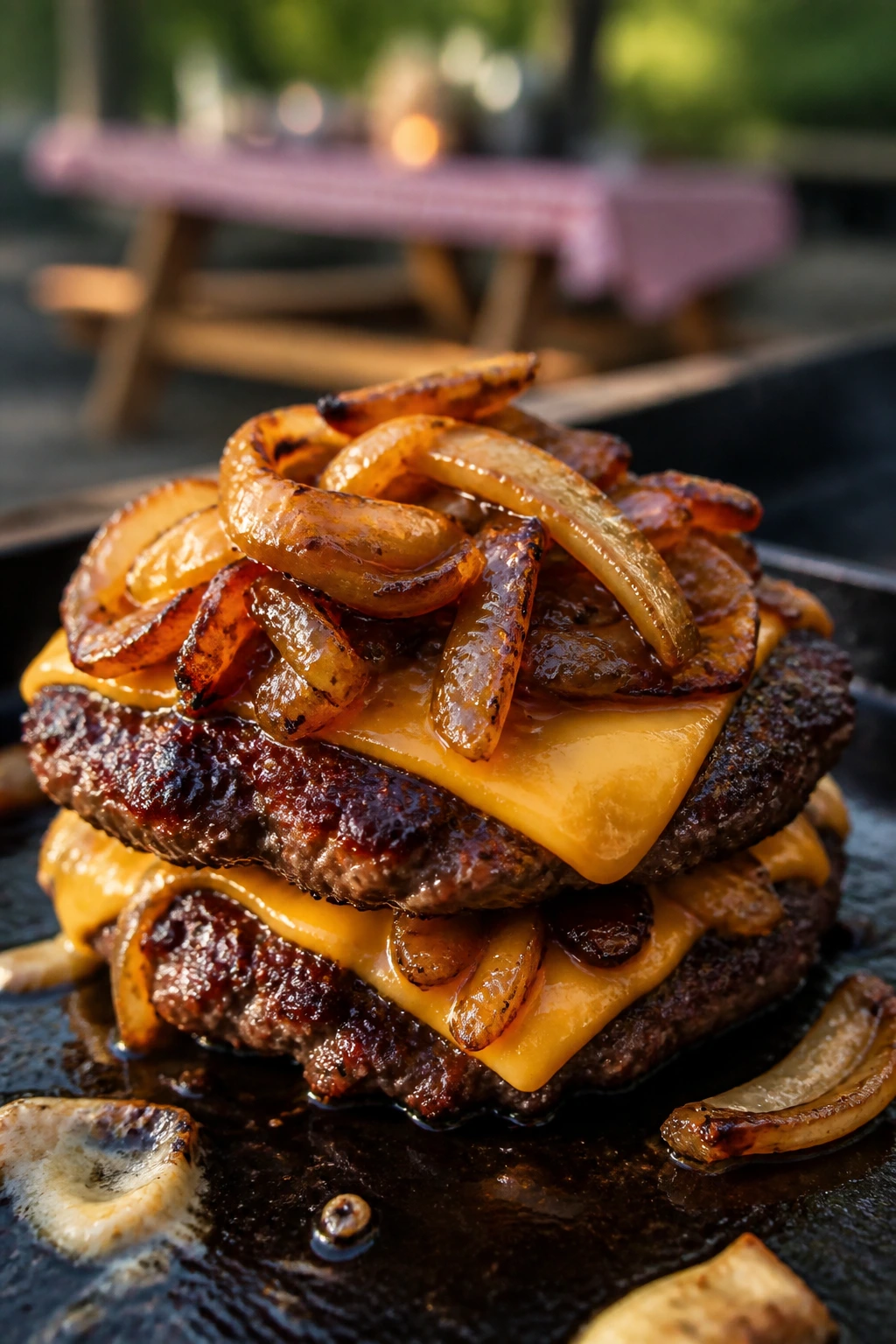
2. Double-Stack Smash Burgers with Griddled Onions
A smash burger is not subtle. That’s the point. The edges go lacy and crisp, the center stays juicy, and the onions turn sweet enough that you start thinking maybe you don’t need ketchup at all. For a picnic spread, these work because they’re fast, loud, and gone before anybody can fuss over them.
Why It Works:
Thin patties cook in minutes, which means you can build a burger with a hard sear instead of a dry, gray interior. The cast-iron griddle on the grill gives you a flat surface for onions and buns, and 80/20 beef keeps the double stack moist. A slice of American cheese melts in that clean, drapey way that cheddar rarely manages on a hot burger.
Key Ingredients:
- 1 1/2 lbs ground beef chuck (80/20)
- 1 tsp kosher salt
- 1/2 tsp black pepper
- 1 tbsp neutral oil
- 1 large yellow onion, thinly sliced
- 1 tbsp butter
- 4 slices American cheese
- 4 burger buns, split
- 8 dill pickle chips
- 2 tbsp burger sauce or mayonnaise
Quick Steps:
- Heat the Griddle: Preheat the grill to medium-high, about 450°F, and set a cast-iron skillet or griddle on top.
- Cook the Onions: Melt the butter with the oil, then cook the onion slices for 8 to 10 minutes until they turn brown at the edges and soft in the center.
- Form the Beef: Divide the beef into 8 loose balls, about 3 ounces each, and keep them cold until cooking time.
- Smash and Sear: Place the beef balls on the hot griddle and smash them flat with a sturdy spatula. Season with salt and pepper right away, then cook 1 1/2 to 2 minutes.
- Flip and Cheese: Flip the patties, top with cheese, and cook 30 to 60 seconds until the cheese melts.
- Toast and Assemble: Toast the buns on the griddle, then stack two patties per burger with onions, pickles, and burger sauce.
Equipment for This Recipe:
- Grill with lid
- Cast-iron skillet or griddle
- Heavy spatula
- Tongs
- Instant-read thermometer, optional but useful
How to Serve This Dish:
Wrap the burgers in parchment or foil if they need to travel a few minutes to the picnic spot. They play nicely with kettle chips, slaw, and a dill pickle spear tucked beside the bun. One double-stack per person is enough for most appetites, though I’d keep extra onions nearby because people always want more.
Pro Tips for This Recipe:
- Don’t let the beef warm up too much before smashing; colder meat holds together better and browns harder.
- Salt the patties after smashing, not before. Salting the raw beef too early can tighten the texture.
- Toast the buns cut-side down for 30 to 45 seconds. Soft buns go soggy fast once the sauce hits.
- If you want a more picnic-friendly burger, make slider-size patties and stack them on split rolls.
Variations on This Dish:
- Spicy Burger Shack Style: Add sliced pickled jalapeños and a spoonful of hot sauce to the burger sauce.
- Mushroom-Swiss Version: Replace the onions with sautéed mushrooms and use Swiss cheese for a softer, earthier finish.
- Lettuce-Wrapped Version: Skip the bun and wrap the double stack in sturdy romaine leaves for a lighter, less messy plate.
Common Mistakes to Avoid with This Dish:
- Pressing the patties after the flip: That squeezes out the juices. Smash once, then leave them alone.
- Using extra-lean beef: It makes dry burgers. 80/20 is the sweet spot.
- Skipping the hot surface: A lukewarm griddle gives you gray patties instead of crisp edges.
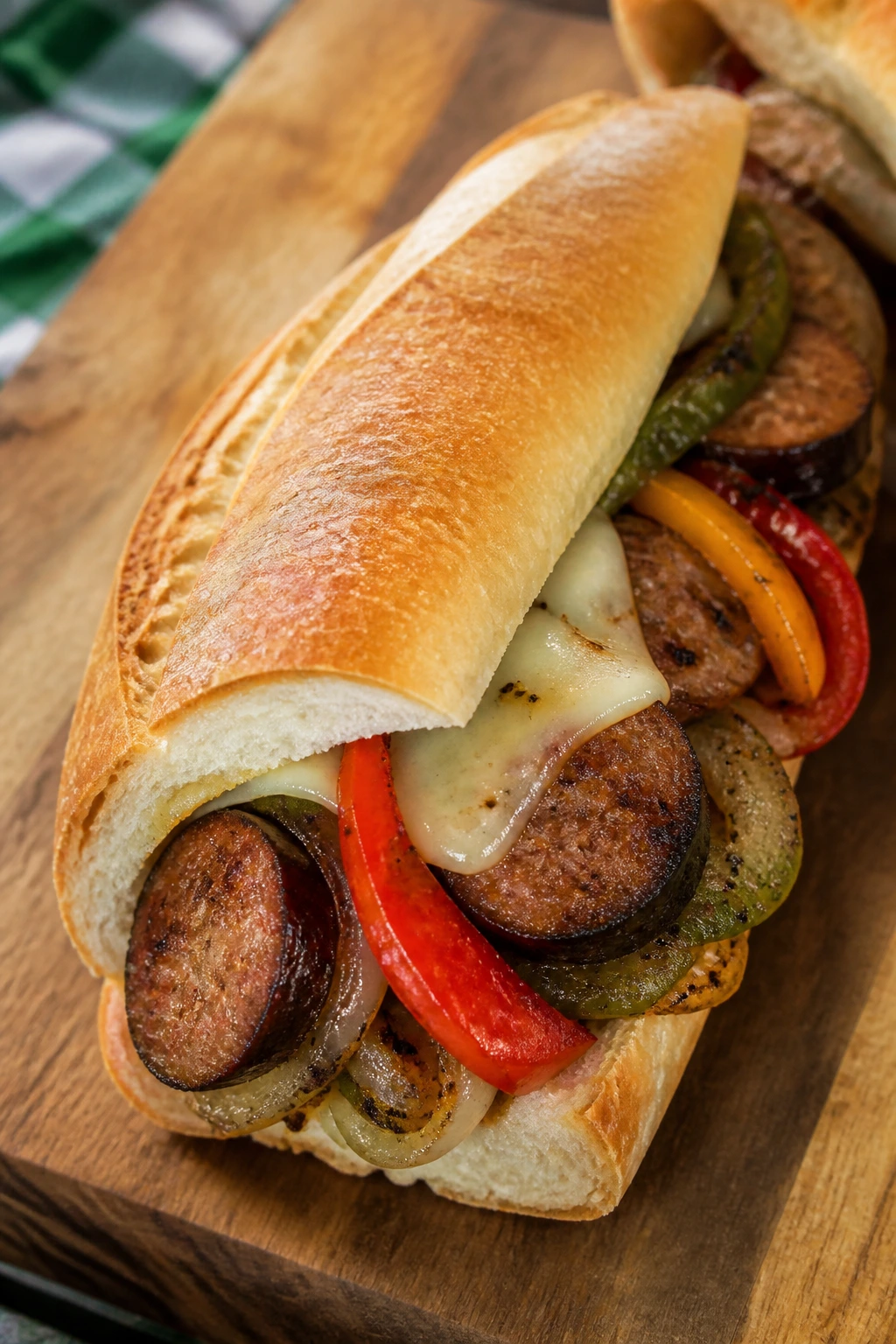
3. Charred Sausage and Pepper Subs
This is the kind of grill recipe that makes the whole yard smell like the cookout is already winning. The sausage blisters, the peppers soften and sweeten, and the onions pick up a little char that cuts through the richness. Pile it into a roll and it becomes the sort of picnic sandwich people eat standing up, which is usually the sign of a good one.
Why It Works:
Italian sausage carries enough fat to stay juicy over direct heat, and the peppers and onions benefit from the same hot grill that cooks the meat. A hoagie roll gives you a sturdy shell that can handle sauce without collapsing. A slice of provolone melts cleanly over the sliced sausage and ties the whole sandwich together.
Key Ingredients:
- 6 Italian sausage links, about 1 1/2 lbs
- 3 bell peppers, sliced
- 1 large onion, sliced
- 2 tbsp olive oil
- 1 tsp kosher salt
- 1 tsp Italian seasoning
- 4 hoagie rolls
- 4 slices provolone
- 2 tbsp red wine vinegar or pickled pepper brine
Quick Steps:
- Oil the Vegetables: Toss the peppers and onion with olive oil, salt, and Italian seasoning.
- Preheat the Grill: Bring the grill to medium-high, about 400°F.
- Grill the Sausage: Cook the sausage links for 10 to 12 minutes, turning every few minutes, until browned and the centers reach 160°F.
- Char the Vegetables: Grill the peppers and onions in a basket or on a tray for 8 to 10 minutes until they soften and pick up dark edges.
- Slice and Fill: Slice the sausage on a bias, tuck it into the rolls, and top with peppers, onions, provolone, and a splash of vinegar.
- Melt and Serve: Return the filled subs to the grill for 1 minute with the lid closed if you want the cheese to melt.
Equipment for This Recipe:
- Grill
- Grill basket or rimmed foil tray
- Tongs
- Sharp knife
- Serving platter
How to Serve This Dish:
These subs are strong enough to carry a whole picnic lunch. Put out mustard, hot peppers, and extra vinegar on the side so people can tilt them toward sharp or spicy. Half a sub per person works if you’ve got sides; a whole one is the move if you’re not serving much else.
Pro Tips for This Recipe:
- Start the sausage over medium heat if your grill runs fierce. Direct flame can burst the casings before the inside cooks.
- Slice the peppers thick so they don’t turn mushy on the grill.
- A quick splash of vinegar at the end keeps the sandwich from tasting heavy.
- If you want cleaner eating, split the sausage links after grilling and build smaller sandwiches.
Variations on This Dish:
- Hot Cherry Pepper Sub: Add chopped cherry peppers and use sharp provolone.
- Sweet Pepper Version: Swap in red and yellow peppers and finish with a touch of honey.
- Sausage-Only Plates: Skip the rolls and serve the sausage and peppers over grilled polenta or potato packets.
Common Mistakes to Avoid with This Dish:
- Cooking the rolls too long: They dry out fast. One minute is plenty.
- Crowding the vegetable tray: Packed peppers steam instead of char.
- Serving sausage straight off the flame: Let it rest 3 minutes so the juices settle.
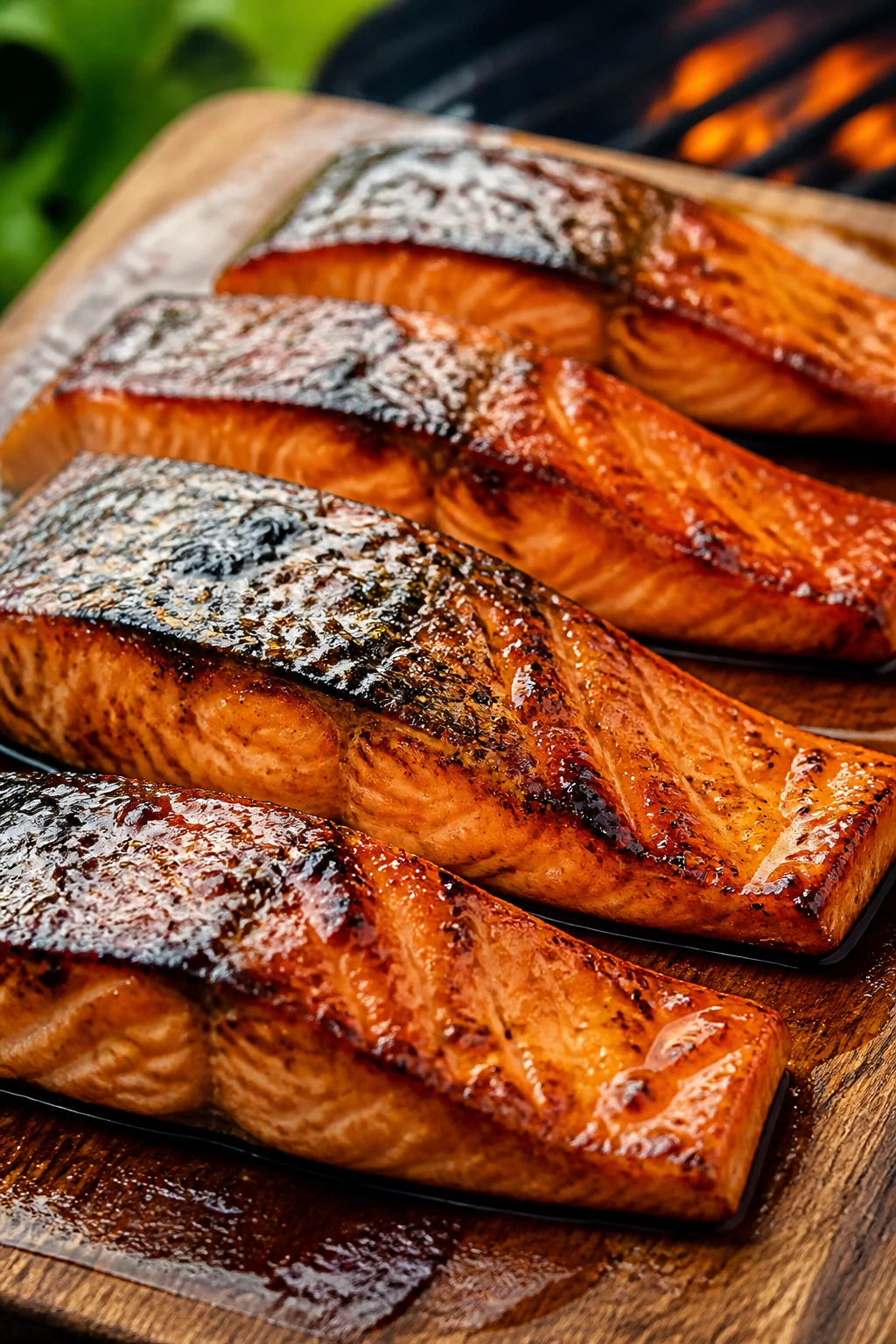
4. Honey-Soy Grilled Salmon Fillets
There’s a clean, shiny look to salmon that’s been brushed with honey and soy and then kissed by a hot grill. The glaze darkens at the edges, the flesh turns opaque and glossy, and the whole thing lands somewhere between picnic dinner and backyard takeout, which is a nice place to be. It’s fast, too. Fast matters.
Why It Works:
Salmon fillets are thin enough to cook before the glaze burns, but fatty enough to stay moist over direct heat. Soy sauce brings salt and depth, honey gives the surface a little shine, and rice vinegar keeps the glaze from clamping down too sweet. When you grill skin-side down first, the skin shields the flesh and gives you a stable base.
Key Ingredients:
- 4 salmon fillets, 6 oz each, skin-on if possible
- 3 tbsp soy sauce
- 2 tbsp honey
- 1 tbsp rice vinegar
- 1 tbsp sesame oil
- 2 garlic cloves, grated
- 1 tsp grated fresh ginger
- 2 scallions, sliced
- 1 tsp sesame seeds
Quick Steps:
- Mix the Glaze: Whisk soy sauce, honey, rice vinegar, sesame oil, garlic, and ginger in a small bowl.
- Marinate Briefly: Coat the salmon with half the glaze and let it sit for 10 to 15 minutes.
- Heat the Grill: Preheat to medium-high, about 400°F, and oil the grates well.
- Grill Skin-Side Down: Place the fillets skin-side down and cook for 4 to 5 minutes without moving them.
- Flip Carefully: Turn the fillets and grill 2 to 3 minutes more, brushing with the remaining glaze near the end.
- Finish and Rest: Sprinkle with scallions and sesame seeds, then rest 2 minutes before serving.
Equipment for This Recipe:
- Grill
- Small bowl
- Silicone brush
- Tongs or fish spatula
- Instant-read thermometer
How to Serve This Dish:
Salmon likes cold crunch around it, so pair it with cucumber salad, grilled rice, or a cabbage slaw with a sharp dressing. It’s good warm, but it also holds nicely at room temperature for a picnic if you don’t overcook it. I’d plan on one fillet per person, maybe half if you’ve got a heavy spread of sides.
Pro Tips for This Recipe:
- Don’t marinate the fish for hours. The acid in the glaze starts changing the surface texture if you go too long.
- Oil the grates well or use a fish basket if your grill tends to stick.
- Brush with glaze near the end, not at the beginning, or the honey can burn before the fish is done.
- Pull the salmon when the center is just opaque and flakes with a fork.
Variations on This Dish:
- Garlic-Lime Version: Swap the rice vinegar for lime juice and add cilantro at the end.
- Miso-Honey Version: Replace half the soy sauce with white miso for a deeper, saltier glaze.
- Peppery Version: Add 1/2 teaspoon cracked black pepper and serve with quick pickled cucumbers.
Common Mistakes to Avoid with This Dish:
- Flipping too early: The fish needs a little crust first or it tears.
- Using too much glaze too soon: Honey scorches fast on open flame.
- Overcooking for the sake of safety: Salmon gets dry in a hurry. Use a thermometer and trust the flakes.
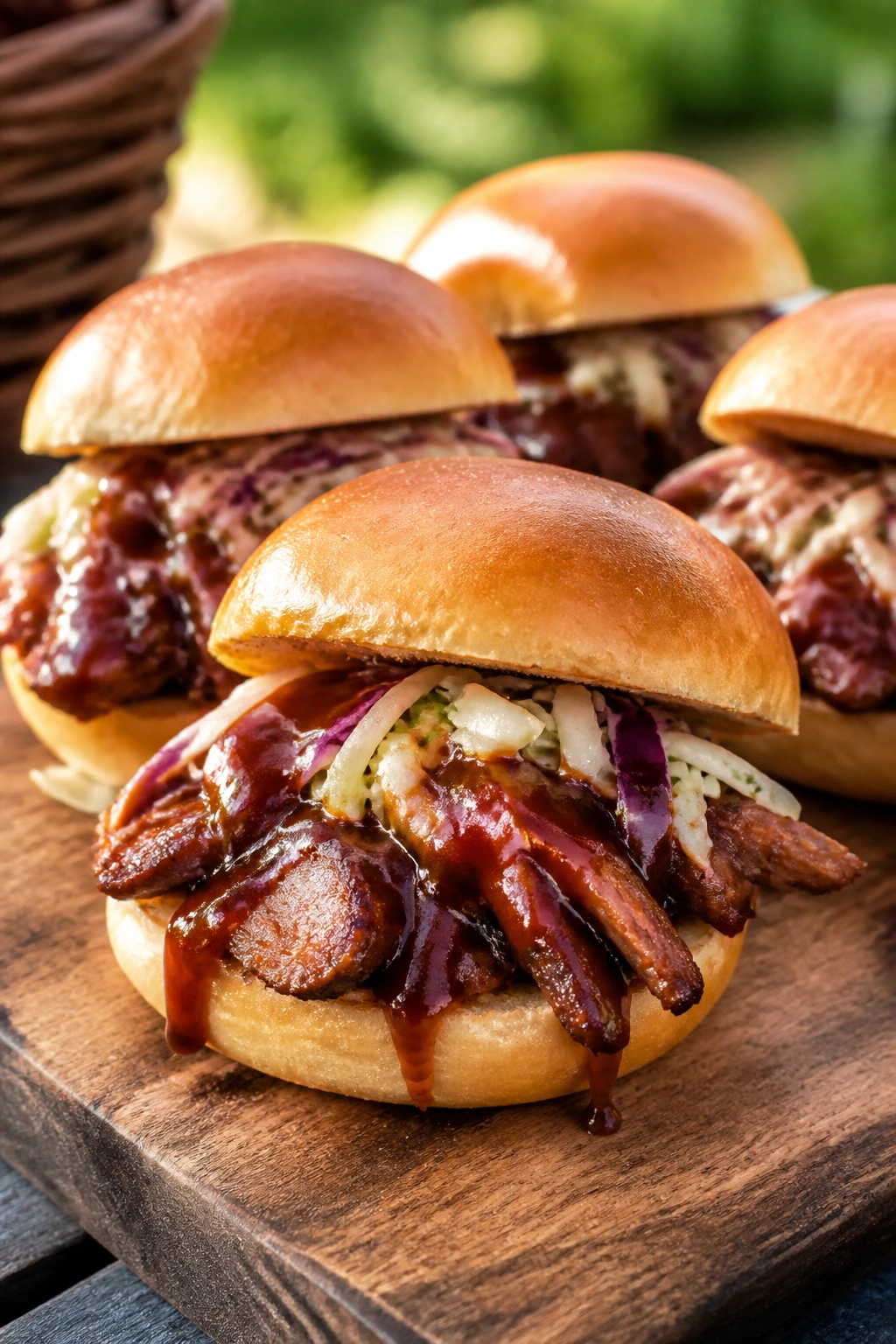
5. BBQ Pork Tenderloin Sliders
Pork tenderloin is one of those cuts people forget until the grill reminds them how useful it is. It takes rubs well, cooks quickly, and slices into neat pieces that fit a slider bun without a fight. Add BBQ sauce and a spoonful of coleslaw, and you get that sweet-sharp-salty thing that disappears before the drinks are even cold.
Why It Works:
Tenderloin is lean, so the trick is high heat and a short cook time. A brown sugar and paprika rub builds a crust, while BBQ sauce gets brushed on late enough that it caramelizes instead of burning. Sliders are picnic gold because they’re easy to hold and easier to stack on a tray.
Key Ingredients:
- 2 lbs pork tenderloin, trimmed
- 1 tbsp paprika
- 1 tsp kosher salt
- 1 tsp brown sugar
- 1/2 tsp garlic powder
- 1 cup BBQ sauce
- 12 slider buns
- 1 cup coleslaw
- 2 tbsp pickle chips
Quick Steps:
- Season the Pork: Rub the tenderloins with paprika, salt, brown sugar, and garlic powder.
- Preheat the Grill: Heat the grill to medium-high, about 425°F.
- Sear and Turn: Grill the tenderloins for 8 to 10 minutes total, turning every 2 to 3 minutes until browned on all sides.
- Brush with Sauce: In the last 2 minutes, brush on BBQ sauce and let it set into a sticky glaze.
- Check the Temperature: Pull the pork at 145°F and rest it 5 to 10 minutes before slicing.
- Build the Sliders: Slice thin, tuck into buns, and top with coleslaw and pickle chips.
Equipment for This Recipe:
- Grill
- Tongs
- Pastry brush
- Sharp slicing knife
- Cutting board with a groove
How to Serve This Dish:
These sliders are strongest when they’re served in batches, not piled into one towering stack. Put the pork on a platter with sauce on the side, then let people build their own. Two to three sliders per person is a fair picnic count if you’ve got potatoes, slaw, or corn nearby.
Pro Tips for This Recipe:
- Don’t overcook the tenderloin. It goes from juicy to chalky faster than pork shoulder ever would.
- Slice across the grain so each piece stays tender.
- Use a thicker BBQ sauce if you want the sliders to hold together better in a paper wrap.
- Toast the buns lightly; you only need enough color to keep them from soaking through.
Variations on This Dish:
- Carolina-Style Slider: Swap the thick BBQ sauce for vinegar sauce and add a little mustard slaw.
- Spicy Peach Version: Mix peach preserves into the BBQ sauce and add sliced jalapeños.
- Pulled Slice Style: Cut the cooked tenderloin into thin strips instead of rounds for a looser, less neat slider.
Common Mistakes to Avoid with This Dish:
- Slicing too soon: Resting matters here. Ten minutes keeps the juices in the meat.
- Cooking over a roaring flame the whole time: The outside blackens before the middle catches up.
- Using soft sandwich buns: They collapse. Slider buns with some structure do better.
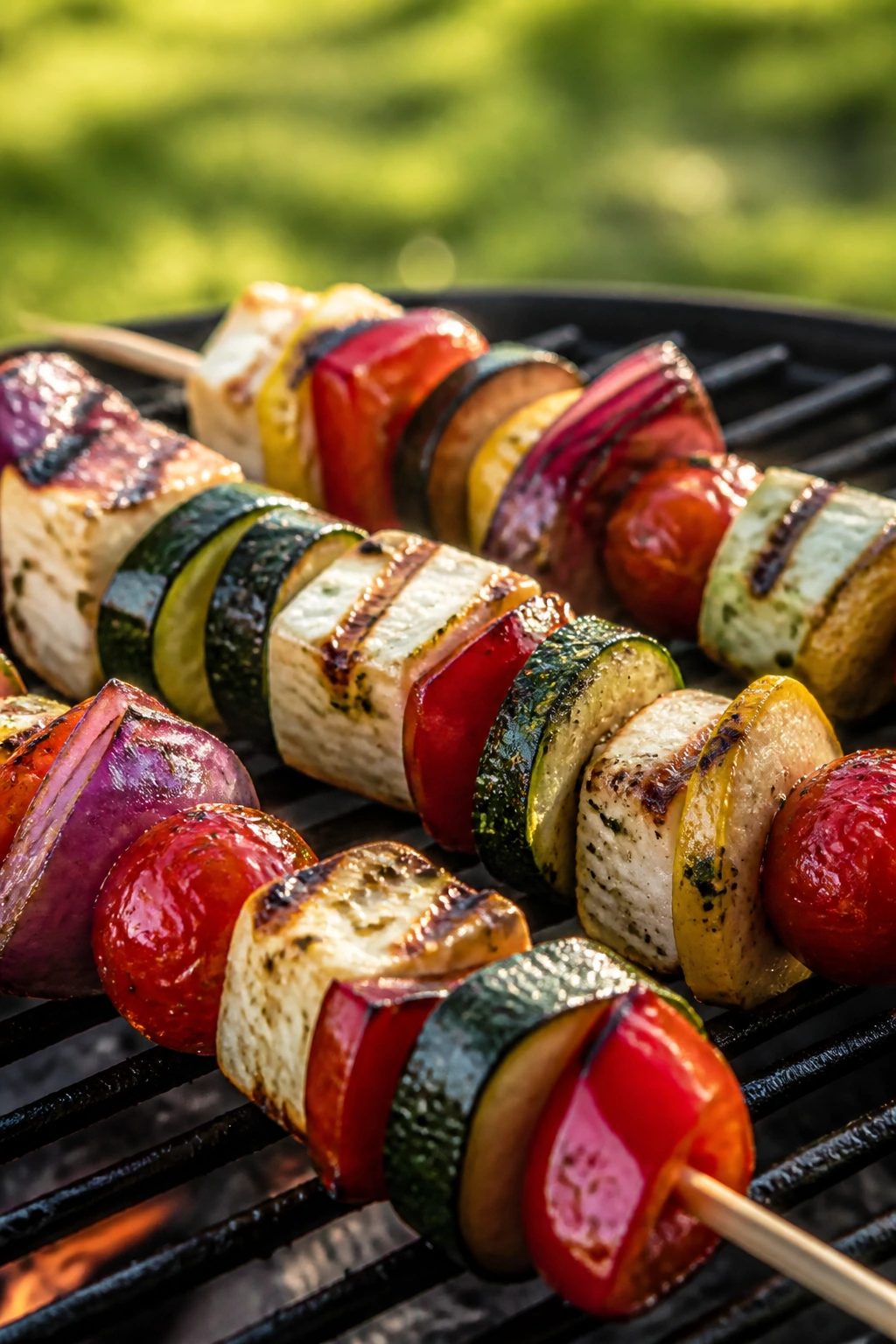
6. Halloumi and Summer Vegetable Skewers
Halloumi on the grill is a tiny piece of theater. It squeaks, then it browns, then it picks up those dark grill marks that make people reach for it first even if they claim they’re “saving room.” Pair it with zucchini, peppers, and onion and you’ve got a vegetarian skewer that doesn’t feel like a backup plan.
Why It Works:
Halloumi has a firm texture and a high enough melting point to survive the grill without becoming a puddle. The vegetables bring sweetness and moisture, and the lemon-oregano finish keeps the whole skewer from tasting heavy. Because everything is cut to the same rough size, it cooks evenly and moves well from grate to platter.
Key Ingredients:
- 8 oz halloumi, cut into 1-inch cubes
- 1 zucchini, cut into thick rounds
- 1 yellow squash, cut into thick rounds
- 1 red bell pepper, cut into 1-inch pieces
- 1 red onion, cut into wedges
- 12 cherry tomatoes
- 3 tbsp olive oil
- 1 tbsp lemon juice
- 1 tsp dried oregano
- 1/2 tsp kosher salt
- 1/4 tsp black pepper
Quick Steps:
- Prep the Skewers: Soak wooden skewers for 30 minutes if needed.
- Season Everything: Toss the vegetables and halloumi with olive oil, lemon juice, oregano, salt, and pepper.
- Thread the Skewers: Alternate cheese and vegetables, leaving a little space so the heat can move around.
- Preheat the Grill: Bring the grill to medium-high, about 400°F, and oil the grates.
- Grill and Turn: Cook the skewers for 8 to 10 minutes, turning every couple of minutes until the vegetables soften and the cheese is browned on at least two sides.
- Serve Warm: Finish with extra lemon juice if you want a sharper edge.
Equipment for This Recipe:
- Grill
- Skewers
- Mixing bowl
- Tongs
- Small serving platter
How to Serve This Dish:
These skewers fit next to rice salad, hummus, or grilled flatbread. They can sit at room temperature for a bit without falling apart, which makes them a good picnic choice. Plan on 2 skewers per person if they’re a side, 3 if they’re the main event.
Pro Tips for This Recipe:
- Pat the halloumi dry before tossing it with oil. Wet cheese browns poorly.
- Use vegetable pieces thick enough to stay on the skewer and not split when turned.
- If your halloumi is very salty, cut the added salt down to 1/4 teaspoon.
- A squeeze of lemon right before serving makes the cheese taste cleaner and less dense.
Variations on This Dish:
- Mediterranean Herb Skewers: Add basil and mint, then finish with tzatziki.
- Spicy Zucchini Version: Dust the vegetables with chili flakes and a little garlic powder.
- No-Cheese Version: Swap halloumi for extra-firm tofu that’s been pressed and marinated.
Common Mistakes to Avoid with This Dish:
- Using soft cheese: Halloumi is the point. Mozzarella turns into a mess.
- Packing the skewers too tightly: The vegetables need room to char.
- Skipping the drying step: Halloumi browns better when the surface is dry.
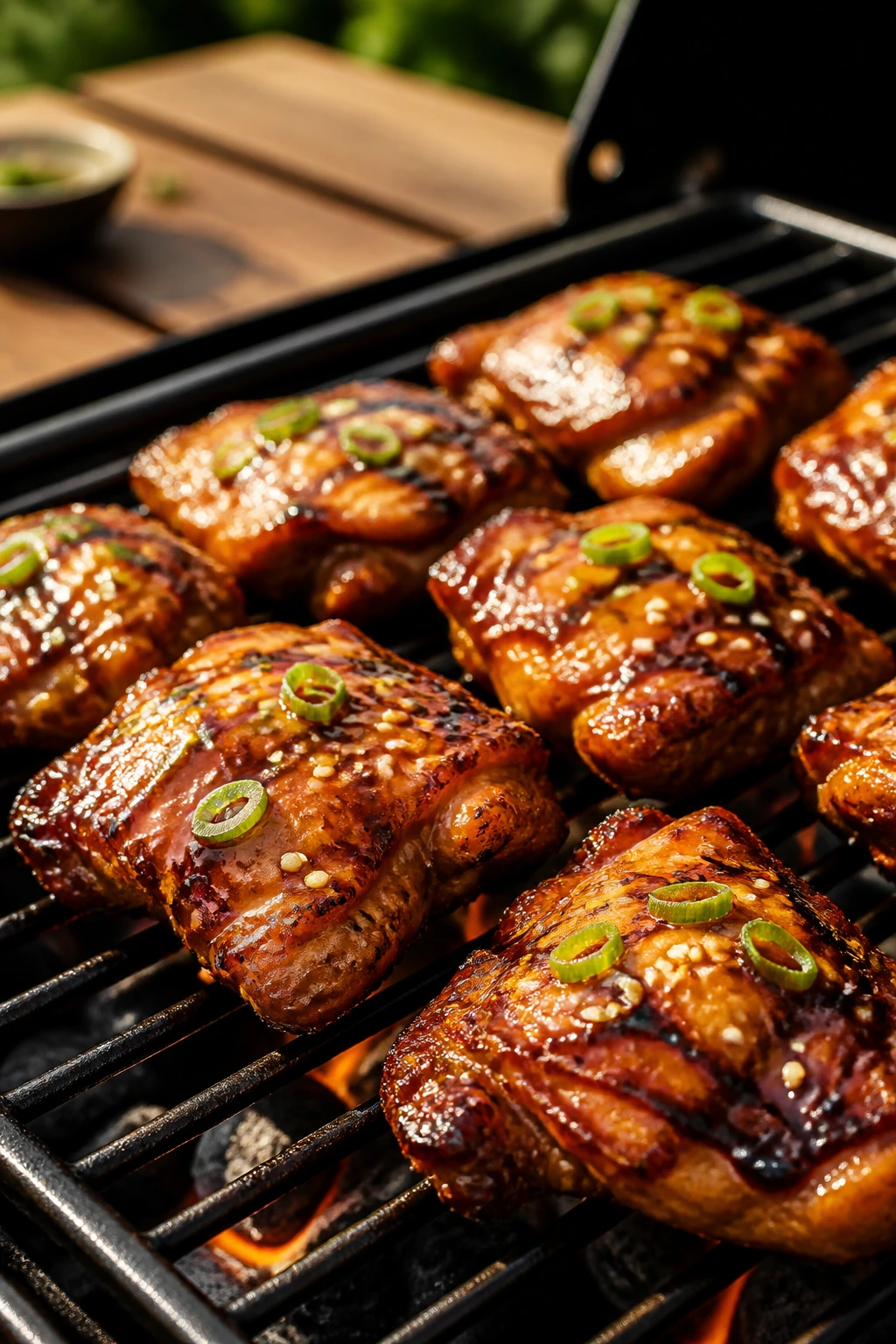
7. Teriyaki Chicken Thighs on the Grill
Teriyaki chicken thighs bring that glossy, sticky finish people usually expect from takeout, except the grill gives it a little smoke and a dark edge at the skinless corners. The sauce clings, the scallions soften, and the chicken stays juicy enough that you can set it on a platter without worrying about the meat going stringy. That’s useful when you’re feeding people outdoors and nobody wants to fuss with a knife.
Why It Works:
Chicken thighs absorb marinade well and stay tender over high heat. Soy sauce, brown sugar, ginger, and garlic build a glaze that tastes richer once it hits the grill, and sesame oil gives the finish a nutty smell that carries across the table. Because the thighs are boneless, they cook quickly and evenly.
Key Ingredients:
- 2 lbs boneless, skinless chicken thighs
- 1/3 cup soy sauce
- 3 tbsp brown sugar
- 2 tbsp rice vinegar or mirin
- 2 tbsp water
- 2 garlic cloves, minced
- 1 tsp grated ginger
- 1 tsp sesame oil
- 2 tbsp sesame seeds
- 2 scallions, sliced
Quick Steps:
- Make the Marinade: Whisk soy sauce, brown sugar, vinegar, water, garlic, ginger, and sesame oil until the sugar dissolves.
- Marinate the Chicken: Coat the thighs and let them sit for 30 minutes to 4 hours.
- Preheat the Grill: Heat the grill to medium-high, about 425°F, and oil the grates.
- Grill the Thighs: Cook 5 to 6 minutes per side until browned and the internal temperature reaches 175°F.
- Glaze at the End: Brush with leftover marinade that has been boiled separately or reserved cleanly.
- Rest and Garnish: Let the chicken rest 5 minutes, then top with sesame seeds and scallions.
Equipment for This Recipe:
- Grill
- Mixing bowl
- Whisk
- Tongs
- Instant-read thermometer
How to Serve This Dish:
Slice the thighs into strips and serve them over rice, in buns, or alongside grilled broccoli and corn. For a picnic, they travel well in a foil tray because the glaze keeps the meat moist. A few strips per person is plenty if you’re also serving sides.
Pro Tips for This Recipe:
- Don’t marinate overnight unless the sauce is low in salt. Soy can make the texture a little too firm if it sits too long.
- Boil any reserved marinade before using it as a glaze.
- A quick rest after grilling keeps the juices from running into the tray.
- If the glaze is getting dark too fast, move the thighs to a cooler part of the grill for the last minute.
Variations on This Dish:
- Pineapple Teriyaki: Add 2 tablespoons pineapple juice to the marinade and serve with grilled pineapple.
- Ginger-Sesame Version: Increase the ginger to 2 teaspoons and finish with toasted sesame oil after grilling.
- Spicy Teriyaki: Stir in chili paste or sriracha for heat that hangs around.
Common Mistakes to Avoid with This Dish:
- Using the marinade straight from the raw bowl as sauce: That’s a food-safety problem. Reserve clean glaze or boil it.
- Pulling the thighs too early: Thighs do better a little hotter than breast meat.
- Burning the sugar: Watch the last minutes closely because the glaze darkens fast.
8. Chili-Lime Shrimp Skewers
Shrimp need very little help to feel festive. A little lime, a little chili, a little char, and they’re suddenly the first thing people pick up with their fingers while pretending they’ll save the buns for later. These are fast, bright, and mercifully light after heavier burgers and sausage.
Why It Works:
Shrimp cook in minutes, which makes them useful when the grill is already hot and people are hovering. Lime juice and chili powder give the shrimp a sharp, smoky edge, but the marinade is short so the acid doesn’t turn the texture mushy. Skewers keep the shrimp from slipping through the grates and make flipping much easier.
Key Ingredients:
- 1 1/2 lbs large shrimp, peeled and deveined
- 2 tbsp olive oil
- 2 tbsp lime juice
- 1 tsp chili powder
- 1/2 tsp ground cumin
- 2 garlic cloves, minced
- 1 tsp kosher salt
- 2 tbsp chopped cilantro
- Lime wedges for serving
Quick Steps:
- Mix the Marinade: Whisk olive oil, lime juice, chili powder, cumin, garlic, and salt.
- Coat the Shrimp: Toss the shrimp in the marinade and let them sit for 10 to 20 minutes.
- Thread the Skewers: Skewer the shrimp in pairs so they stay flat and cook evenly.
- Preheat the Grill: Heat to medium-high, about 425°F.
- Grill Quickly: Cook 2 to 3 minutes per side until the shrimp are pink, opaque, and lightly charred.
- Finish and Serve: Sprinkle with cilantro and add lime wedges.
Equipment for This Recipe:
- Grill
- Skewers
- Mixing bowl
- Tongs
- Small platter
How to Serve This Dish:
Set these out with tortillas, avocado, and a crunchy cabbage slaw if you want them to become tacos. They also work as a light main next to corn and potato packets. I’d plan on 5 to 6 shrimp per person for a picnic menu where other food is landing on the table too.
Pro Tips for This Recipe:
- Buy shrimp that are already peeled and deveined if you’re grilling outdoors. No one wants to be cleaning shrimp in the yard.
- Don’t leave them in lime juice too long. The surface starts to firm up before the grill even gets involved.
- Thread the shrimp through two spots if they’re big; they stay put better when flipped.
- Pull them the second they turn opaque. A minute too long and they go springy.
Variations on This Dish:
- Garlic-Butter Shrimp: Swap the chili powder for melted butter, garlic, and parsley.
- Smoky Taco Shrimp: Add chipotle powder and a little orange zest for a deeper finish.
- Skewer-Free Version: Grill the shrimp in a basket if you don’t want to mess with threading.
Common Mistakes to Avoid with This Dish:
- Over-marinating: Shrimp are not chicken. They only need a short soak.
- Using tiny shrimp: They cook too fast and dry out before you can blink.
- Walking away from the grill: Shrimp go from done to curled tight in a hurry.
9. Grilled Corn with Chili-Lime Butter
Corn on the grill has a smell that makes people drift toward the fire without needing an invitation. The kernels sweeten, the butter melts into the grooves, and the chili-lime finish keeps every bite from tipping into candy territory. It’s the easiest side on this list and maybe the one that earns the most empty cobs.
Why It Works:
Grilling corn pulls sweetness forward while adding a little smoke on the kernels that touched the grate. Butter carries the chili powder and lime zest, so the seasoning lands in the right places instead of sliding off in a puddle. If you grill corn in the husk, it stays juicy; if you shuck it first, you get more char.
Key Ingredients:
- 6 ears corn, husked
- 4 tbsp unsalted butter, softened
- 1 lime, zested and juiced
- 1 tsp chili powder
- 1/2 tsp kosher salt
- 1/4 cup cotija or feta cheese
- 2 tbsp chopped cilantro
Quick Steps:
- Make the Butter: Mash the softened butter with lime zest, 1 tablespoon lime juice, chili powder, and salt.
- Preheat the Grill: Heat to medium-high, about 400°F.
- Grill the Corn: Cook the ears directly on the grates for 8 to 10 minutes, turning every couple of minutes, until the kernels are spotted with brown and the corn smells sweet.
- Brush and Roll: Coat the hot corn with chili-lime butter while it’s still steaming.
- Finish It Off: Sprinkle cotija and cilantro over the top.
- Serve Right Away: Corn is best the minute the cheese starts to soften.
Equipment for This Recipe:
- Grill
- Small bowl
- Butter knife or spoon
- Tongs
- Serving tray
How to Serve This Dish:
Corn fits beside almost everything in this menu, which is why I keep coming back to it. It sits easily next to burgers, pork sliders, shrimp, or chicken skewers, and it’s sturdy enough to eat with one hand while you hold a drink in the other. Plan on one ear per person, or half an ear if the table is already crowded.
Pro Tips for This Recipe:
- Shuck the corn just before grilling if you want the char to be stronger.
- Don’t salt the corn too heavily before grilling or the butter won’t shine through.
- Keep a few lime wedges on the tray. People always want more acid.
- If cotija is hard to find, feta brings the same salty crumble.
Variations on This Dish:
- Garlic-Lime Corn: Add a grated garlic clove to the butter.
- Smoked Paprika Version: Replace the chili powder with smoked paprika for a softer heat.
- Herb Butter Corn: Swap cilantro for chives and parsley if you want a greener finish.
Common Mistakes to Avoid with This Dish:
- Leaving the corn too long on one side: Rotate it so the kernels char evenly.
- Using cold butter straight from the fridge: It won’t melt into the corn as well.
- Skipping the final acid: Lime wakes up the sweetness. Don’t leave it out.
10. Cedar-Plank Salmon with Dill Yogurt
Cedar-plank salmon has a smell that feels like the grill learned how to wear a clean shirt. The wood gives the fish a soft smoky note, the dill yogurt cools it down, and the salmon comes off the plank in neat, silky pieces. If you want one dish that looks calm while the rest of the picnic gets noisy, this is it.
Why It Works:
The soaked plank acts like a gentle buffer, so the salmon cooks more evenly and picks up cedar aroma without drying out. A simple salt-and-oil seasoning keeps the fish from getting fussy, and dill yogurt adds a cool, tangy finish that suits picnic food better than a heavy sauce would. Because the salmon cooks on the plank, it’s easier to move and serve cleanly.
Key Ingredients:
- 1 cedar plank, soaked in water for 1 hour
- 2 lbs salmon fillet or 4 center-cut fillets
- 2 tbsp olive oil
- 1 tsp kosher salt
- 1/2 tsp black pepper
- 1 cup plain Greek yogurt
- 2 tbsp chopped dill
- 1 tbsp lemon juice
- 1 tsp lemon zest
- 1 small cucumber, grated and squeezed dry
Quick Steps:
- Soak the Plank: Keep the cedar plank submerged in water for at least 1 hour.
- Mix the Sauce: Stir together yogurt, dill, lemon juice, lemon zest, and cucumber.
- Season the Salmon: Brush the salmon with olive oil and season with salt and pepper.
- Heat the Grill: Preheat to medium, about 375°F, and set the plank on the grill for 2 minutes to start warming it.
- Cook on the Plank: Place the salmon on the plank, close the lid, and grill for 15 to 20 minutes until the fish flakes and looks opaque through the thickest part.
- Serve with Yogurt: Spoon dill yogurt over the top or serve it on the side.
Equipment for This Recipe:
- Grill with lid
- Cedar plank
- Mixing bowl
- Fish spatula
- Small grater
How to Serve This Dish:
Serve the salmon in large spooned pieces with cucumber salad, grilled potatoes, or flatbread. It’s one of the few picnic dishes here that can be served straight from the plank if you set it on a tray. I like it with more lemon than people expect; the acid keeps the cedar flavor from getting sleepy.
Pro Tips for This Recipe:
- Soak the plank longer if your grill runs very hot.
- Keep the lid closed while the salmon cooks so the wood smoke can do its job.
- If the plank starts to scorch, move it to a cooler spot on the grill.
- Chill the yogurt sauce until serving so it stays fresh against the warm fish.
Variations on This Dish:
- Maple-Dill Version: Add 1 tablespoon maple syrup to the yogurt for a softer edge.
- Mustard-Herb Version: Replace cucumber with a teaspoon of Dijon and extra dill.
- Herb-Crusted Version: Sprinkle chopped parsley and chives over the salmon before grilling.
Common Mistakes to Avoid with This Dish:
- Skipping the soak: Dry planks can flare. Water matters.
- Overcooking the fish: Salmon keeps cooking after it leaves the heat.
- Using watery yogurt sauce: Squeeze the cucumber dry or the sauce turns thin.
11. Portobello Mushroom Burgers
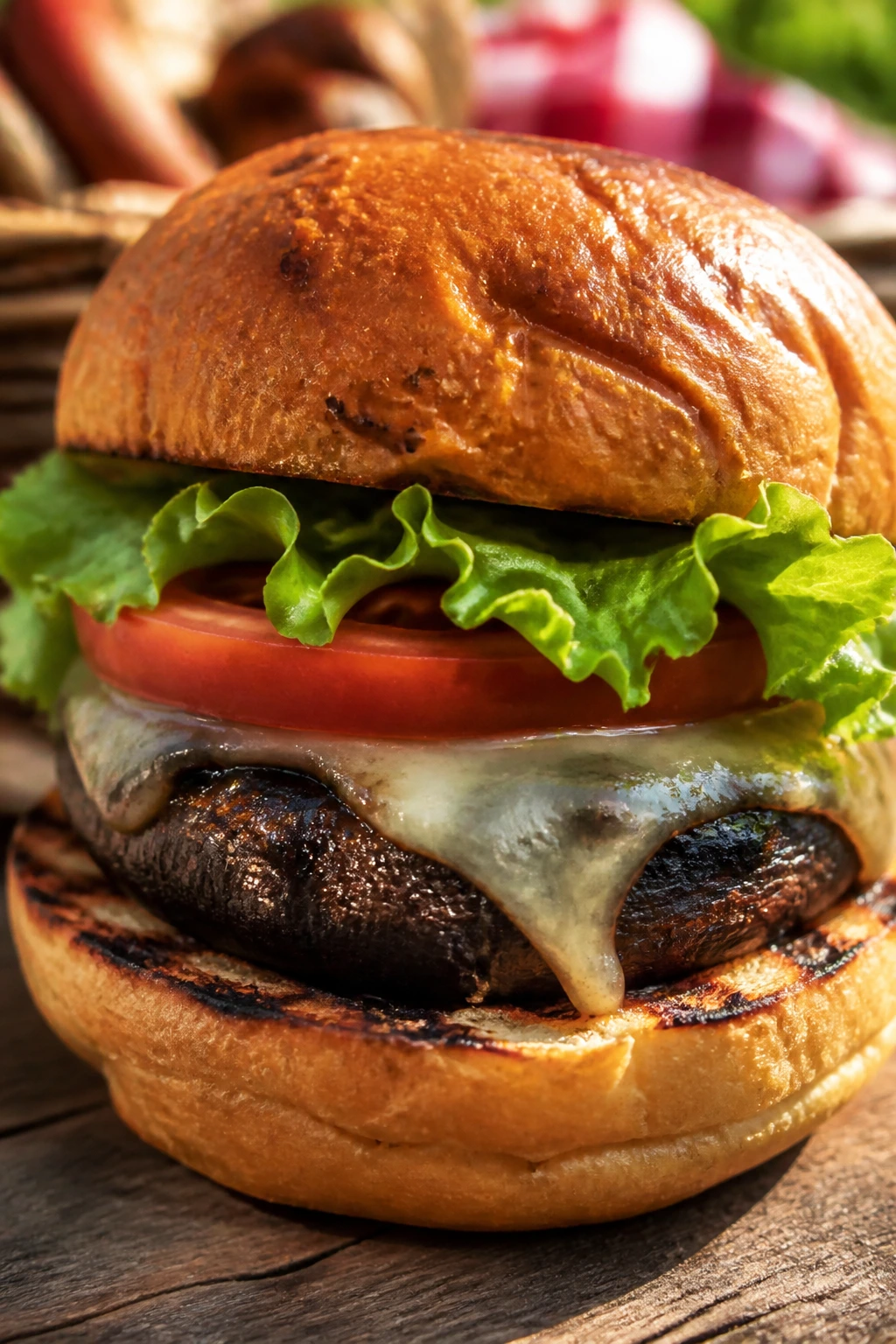
Portobello caps on the grill have a meaty smell that makes even the burger people pause. They soak up balsamic and garlic like they were waiting for it, and the edges wrinkle into a deep brown that does half the work for you. These are not a consolation prize. They’re a proper grilled sandwich.
Why It Works:
Portobellos are thick enough to stay juicy and wide enough to behave like a burger patty without falling through the grates. A short marinade gives them flavor all the way through, and a toasted bun keeps the structure from going soft. Melted cheese helps the mushroom feel more complete if you want the sandwich to eat like a main dish.
Key Ingredients:
- 4 large portobello caps, stems removed
- 3 tbsp olive oil
- 2 tbsp balsamic vinegar
- 2 garlic cloves, minced
- 1 tsp kosher salt
- 1/2 tsp black pepper
- 4 burger buns
- 4 slices provolone or Swiss
- Lettuce and tomato slices
- 2 tbsp mayonnaise or mustard
Quick Steps:
- Clean the Caps: Wipe the portobellos clean and remove the stems.
- Mix the Marinade: Stir olive oil, balsamic vinegar, garlic, salt, and pepper together.
- Marinate Briefly: Brush the mushrooms with the marinade and let them sit for 15 to 20 minutes.
- Preheat the Grill: Heat the grill to medium-high, about 400°F.
- Grill the Mushrooms: Cook 4 to 5 minutes per side until soft, browned, and glossy.
- Build the Burgers: Toast the buns, add cheese to the mushrooms, and stack with lettuce, tomato, and mayo or mustard.
Equipment for This Recipe:
- Grill
- Basting brush
- Tongs
- Knife
- Cutting board
How to Serve This Dish:
Serve these on toasted buns with a stack of pickles and a cold slaw on the side. They hold together well, so they’re one of the easier hands-on picnic sandwiches to carry. One mushroom cap per person is a good baseline, though big caps can stand in for a meat burger on their own.
Pro Tips for This Recipe:
- Don’t soak the mushrooms in marinade for too long or they get floppy.
- Scrape out the dark gills if you want a cleaner look and a milder flavor.
- Grill them gill-side down first if you want a little extra texture.
- A slice of cheese helps hold everything together if you’re serving these to a mixed crowd.
Variations on This Dish:
- Blue Cheese Mushroom Burger: Add a thin smear of blue cheese dressing and arugula.
- Garlic-Herb Version: Skip the balsamic and use rosemary, thyme, and lemon zest.
- Lettuce Wrap Version: Use butter lettuce leaves instead of buns for a lighter picnic plate.
Common Mistakes to Avoid with This Dish:
- Leaving the mushrooms dirty: Wipe them clean; don’t rinse them under water.
- Overcooking until collapse: They should be tender, not shriveled.
- Serving on a dry bun: Toasting helps, but a little mayo or mustard keeps the sandwich from feeling empty.
12. Charred Peach, Burrata, and Basil Salad
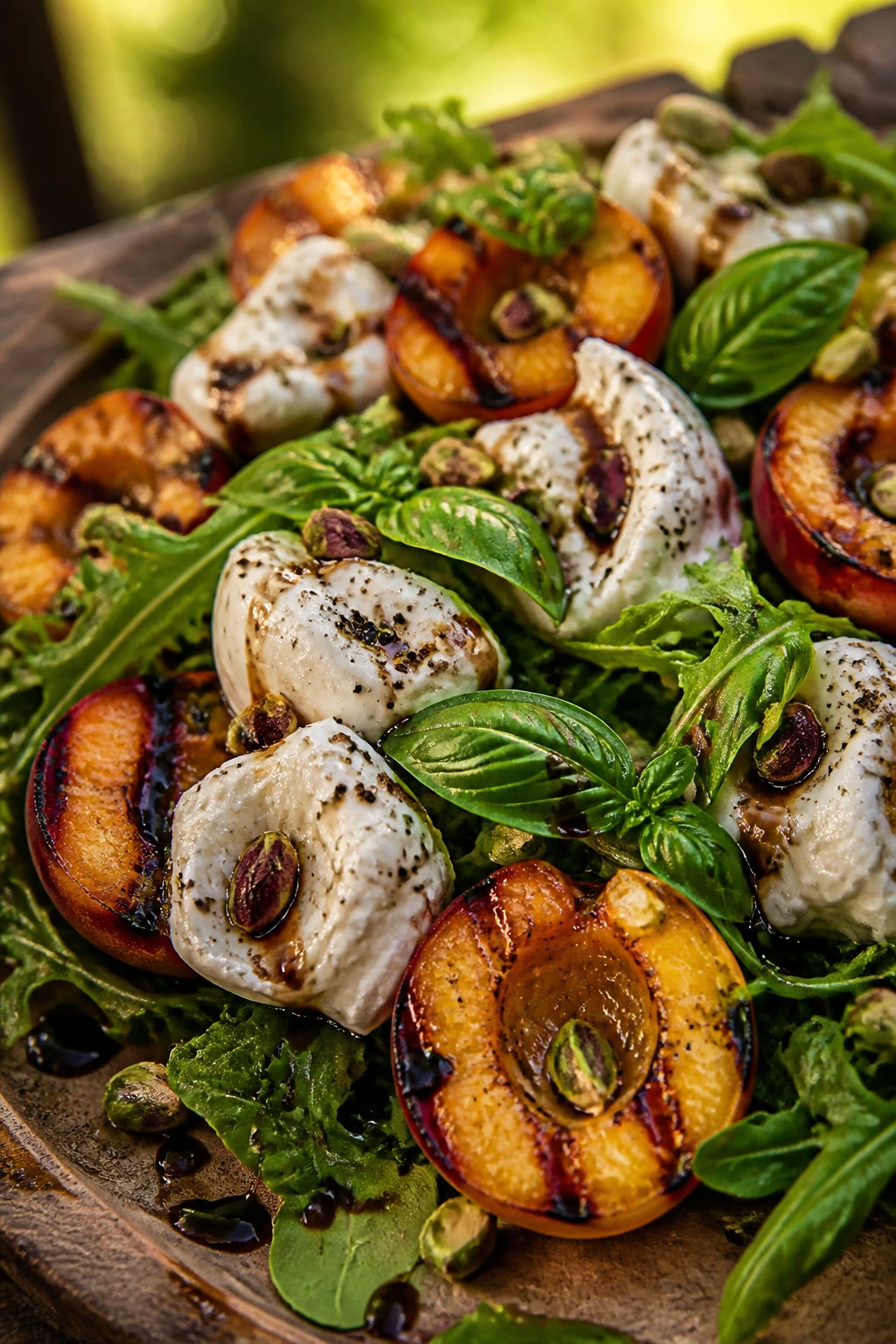
This is the dish that makes people quiet for a second when they taste it. The peaches get hot and syrupy at the edges, the burrata breaks into cream, and the basil keeps the whole thing from tipping into dessert territory. It’s picnic food with enough polish to make a paper plate look deliberate.
Why It Works:
Peaches that are ripe but still firm hold their shape on the grill and pick up caramelized edges in just a few minutes. Burrata brings richness without heaviness, and arugula gives the salad pepper and snap. A light honey-balsamic drizzle ties sweet and savory together without drowning the fruit.
Key Ingredients:
- 4 peaches, halved and pitted
- 2 tbsp olive oil
- Pinch of salt
- 5 oz arugula
- 2 burrata balls, torn
- 1/4 cup fresh basil leaves
- 1/4 cup chopped pistachios
- 1 tbsp honey
- 1 tbsp balsamic vinegar
Quick Steps:
- Prep the Peaches: Brush the cut sides with olive oil and a pinch of salt.
- Grill the Fruit: Cook the peaches cut-side down on a medium-hot grill for 2 to 3 minutes until marked and soft at the edges.
- Mix the Drizzle: Stir honey and balsamic vinegar together.
- Build the Salad: Spread arugula on a platter, then add the peaches and torn burrata.
- Finish It: Scatter basil and pistachios over the top and drizzle with the honey-balsamic mix.
- Serve Right Away: Burrata is best when the peaches are still warm.
Equipment for This Recipe:
- Grill
- Tongs
- Basting brush
- Serving platter
- Small bowl
How to Serve This Dish:
This works as a first course, a side, or the thing people keep returning to after the burgers are gone. It likes grilled bread on the side and does well next to salty meats because the fruit cools everything down. Plan on one peach half per person if it’s a side, two if it’s the thing everyone came for.
Pro Tips for This Recipe:
- Choose peaches that give slightly when pressed but aren’t soft enough to smear.
- Let the burrata sit at room temperature for 15 minutes before serving.
- Toast the pistachios lightly if you want more crunch and aroma.
- Assemble at the last second so the arugula stays crisp.
Variations on This Dish:
- Plum and Ricotta Version: Swap peaches for plums and burrata for ricotta.
- Tomato-Peach Version: Add sliced heirloom tomatoes for a saltier, juicier plate.
- Mint Finish: Use mint instead of basil if the peaches are very sweet.
Common Mistakes to Avoid with This Dish:
- Using overripe peaches: They fall apart and turn to jam on the grill.
- Drowning the salad in dressing: The burrata already brings plenty of richness.
- Assembling too early: Warm fruit plus cold cheese waits for no one.
13. Pesto-Tomato Grilled Flatbread
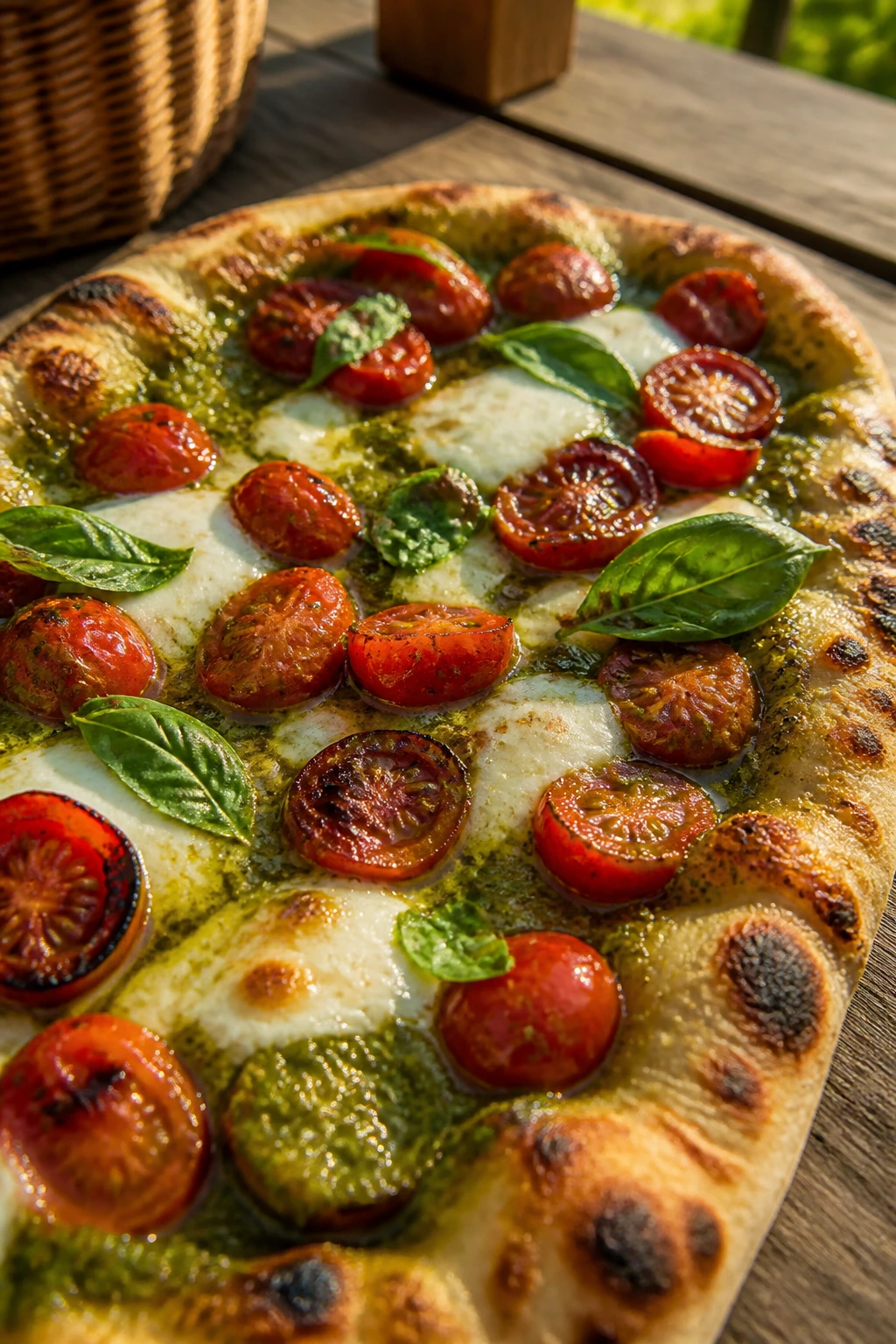
Flatbread is the picnic menu item that disappears by the corner first. The dough gets smoky and crisp, the pesto clings in green streaks, and the tomatoes soften just enough to burst under a fork. It’s easy to carry, easy to cut, and easy to make look like you tried harder than you did.
Why It Works:
Store-bought pizza dough or naan keeps this recipe low-fuss, and the grill gives the bread the blistered bottom that an oven never quite imitates. Pesto carries basil and garlic across the whole surface, while tomatoes and mozzarella bring moisture without turning the crust soggy. This is a fast cook with a high payoff.
Key Ingredients:
- 1 lb pizza dough or 2 large naan breads
- 1/3 cup pesto
- 1 cup cherry tomatoes, halved
- 8 oz mozzarella, shredded or torn
- 2 tbsp olive oil
- 1/2 tsp kosher salt
- 1/4 tsp red pepper flakes
- Fresh basil leaves for finishing
Quick Steps:
- Preheat the Grill: Heat to medium-high, about 425°F.
- Oil the Dough: Brush the dough or naan with olive oil.
- Grill the First Side: Place it on the grill and cook 2 to 3 minutes until marked and firm enough to flip.
- Add the Toppings: Flip the bread, spread pesto over the cooked side, then add tomatoes and mozzarella.
- Melt and Finish: Close the lid and cook 3 to 4 minutes until the cheese melts and the bottom is browned.
- Slice and Serve: Finish with salt, red pepper flakes, and basil.
Equipment for This Recipe:
- Grill
- Pizza peel or rimless baking sheet
- Tongs
- Sharp knife or pizza cutter
- Brush
How to Serve This Dish:
Cut the flatbread into narrow strips for a picnic board or wider squares if it’s the main plate. It sits nicely next to salad, grilled chicken, or a cold bowl of marinated olives. I like it warm, not blazing hot; that gives the pesto time to smell like basil instead of just garlic.
Pro Tips for This Recipe:
- Keep the dough oiled so it releases cleanly from the grate.
- Don’t overload the top with tomatoes or the center softens too much.
- If your grill is very hot, move the flatbread to a cooler zone after topping it.
- A handful of arugula added after grilling gives it a sharper finish.
Variations on This Dish:
- White Pizza Version: Swap pesto for ricotta and garlic oil.
- Roasted Pepper Version: Add grilled peppers and skip the tomatoes.
- No-Dough Version: Use thick naan or flatbread if stretching dough sounds like a chore.
Common Mistakes to Avoid with This Dish:
- Trying to flip dough that isn’t ready: It tears. Wait until it firms up.
- Using too much sauce: The crust needs room to crisp.
- Walking away during the final melt: Cheese can go from perfect to oily in a minute.
14. Dry-Rub Chicken Drumsticks
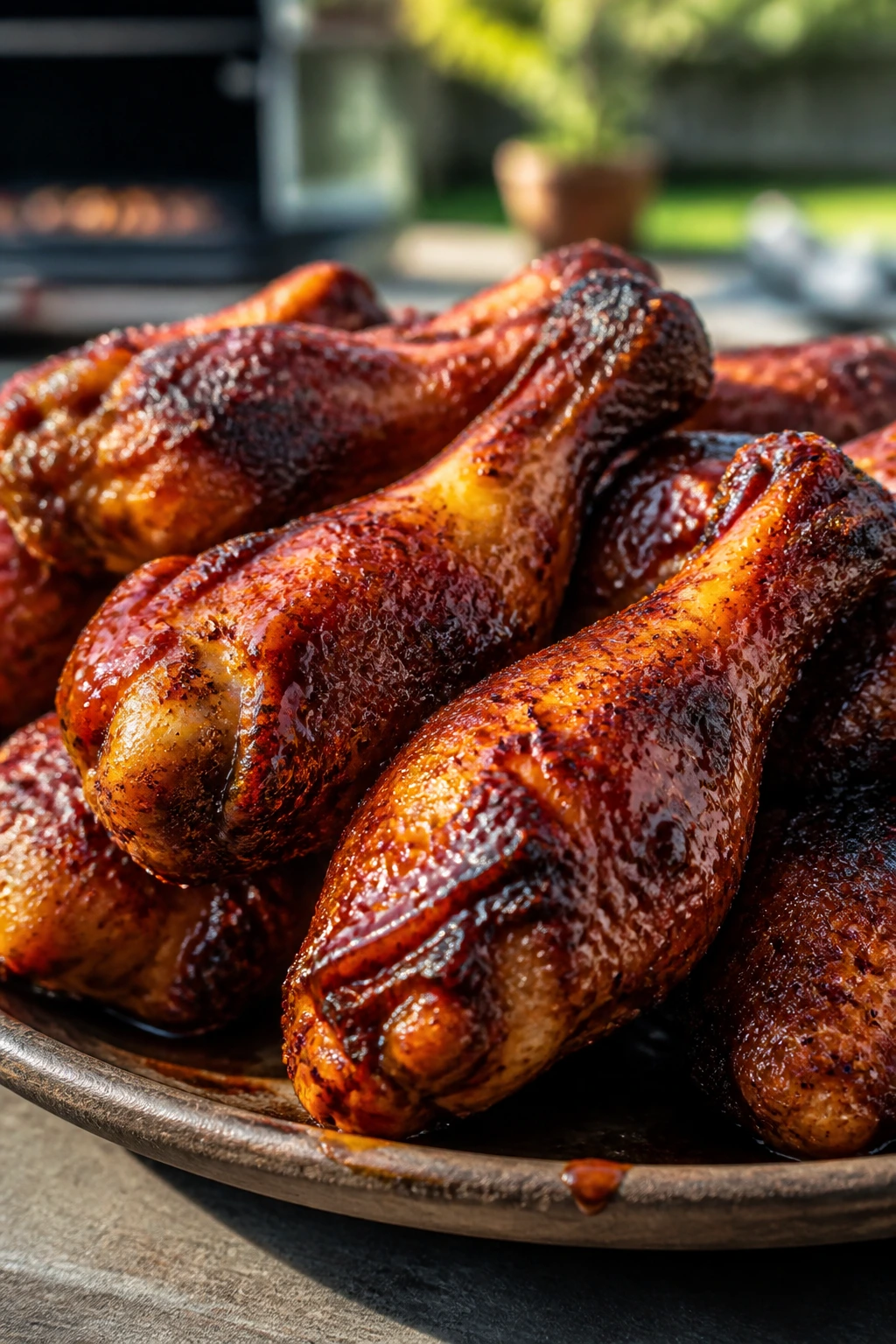
Chicken drumsticks are picnic food in the old-fashioned sense: easy to hold, easy to pass around, and impossible to eat politely. A dry rub gives them color before the sauce goes on, and the skin picks up the kind of sticky edge that makes people lick their fingers without shame. This is the messy, welcome kind of grill food.
Why It Works:
Drumsticks handle longer grilling better than lean cuts because there’s more fat and connective tissue to work with. A brown sugar and paprika rub builds a crust, then BBQ sauce finishes the surface in the last few minutes so it caramelizes instead of burning. Cooking them over indirect heat keeps the skin from scorching before the meat reaches the right temperature.
Key Ingredients:
- 3 lbs chicken drumsticks
- 2 tbsp olive oil
- 1 tbsp paprika
- 1 tbsp brown sugar
- 2 tsp kosher salt
- 1 tsp garlic powder
- 1 tsp onion powder
- 1/2 tsp cayenne, optional
- 1/2 cup BBQ sauce
Quick Steps:
- Season the Chicken: Rub the drumsticks with olive oil, paprika, brown sugar, salt, garlic powder, onion powder, and cayenne if using.
- Preheat for Indirect Heat: Set the grill to medium, about 375°F, with one cooler zone.
- Start the Cook: Place the drumsticks on the cooler side and grill for 25 to 30 minutes, turning once or twice.
- Check the Color: The skin should deepen from red-orange to a deep burnished brown.
- Sauce at the End: Move the drumsticks closer to the heat, brush with BBQ sauce, and grill 5 to 10 minutes more until the internal temperature reaches 175°F.
- Rest Before Serving: Let them sit 5 minutes before moving to the tray.
Equipment for This Recipe:
- Grill
- Tongs
- Basting brush
- Meat thermometer
- Foil-lined tray
How to Serve This Dish:
Serve the drumsticks with slaw, corn, and potato packets because all three help keep the plate balanced. They’re picnic-friendly enough that people can eat them one-handed without a knife. Two drumsticks per person is a safe starting point.
Pro Tips for This Recipe:
- Pat the skin dry before seasoning so the rub sticks and browns.
- If the sauce has a lot of sugar, wait until the end to brush it on.
- Rotate the drumsticks so the skin cooks evenly on all sides.
- A short rest keeps the juices from leaking out when the first bite lands.
Variations on This Dish:
- Honey-Mustard Drumsticks: Swap the BBQ sauce for honey mustard in the last 5 minutes.
- Smoky Chili Version: Add chipotle powder and a pinch of cumin to the rub.
- Garlic-Butter Finish: Brush with melted garlic butter instead of sauce for a cleaner, less sweet finish.
Common Mistakes to Avoid with This Dish:
- Using direct heat the whole time: The skin burns before the center is done.
- Saucing too early: Sticky sauce can scorch into bitterness.
- Serving without enough napkins: Honestly, there’s no fix for this besides planning ahead.
15. Classic Grilled Hot Dogs with Relish Bar
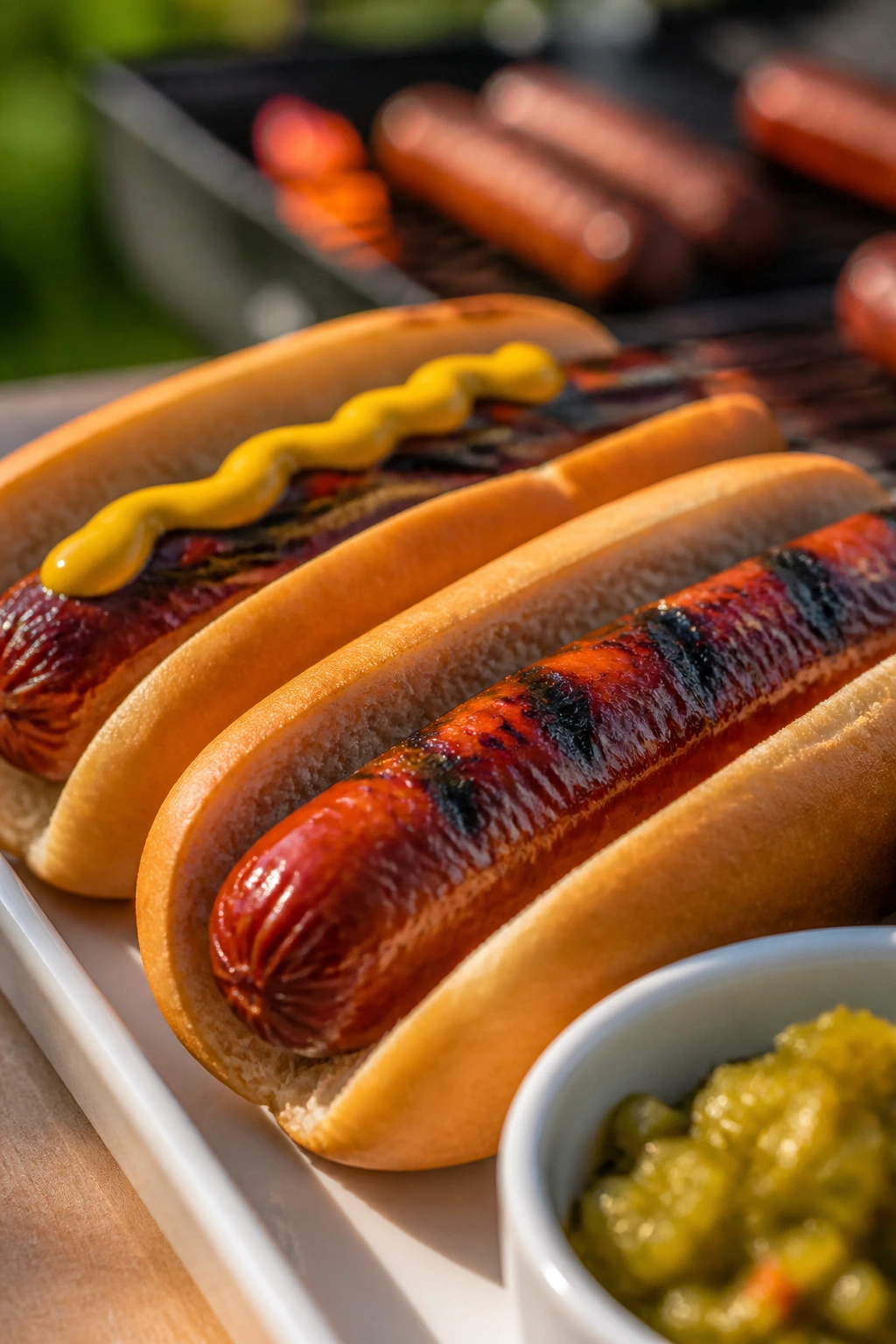
Hot dogs are not trying to be fancy, and that’s one reason they work so well at a picnic. The skin blisters, the mustard bites back, and the bun warms just enough to smell like the grill itself. If you set up a good topping bar, people start building their own and suddenly the whole meal feels more relaxed.
Why It Works:
Hot dogs are quick, cheap, and reliable over direct heat. They don’t need much more than a little browning, and the snap of a good dog changes noticeably once the casing blisters. A topping bar keeps the food moving and lets everyone steer their own plate, which is half the point of picnic eating.
Key Ingredients:
- 8 beef hot dogs
- 8 split-top hot dog buns
- 1/2 cup relish
- 1/2 cup diced onion
- 1/2 cup sauerkraut
- 1/4 cup mustard
- 1/4 cup ketchup, optional
- Pickled peppers or sport peppers, optional
Quick Steps:
- Heat the Grill: Preheat to medium-high, about 400°F.
- Grill the Hot Dogs: Cook 5 to 6 minutes, turning until they’re blistered and marked.
- Toast the Buns: Place the buns cut-side down on the grill for 30 to 45 seconds.
- Set Out the Toppings: Spoon the relish, onion, sauerkraut, mustard, and other extras into small bowls.
- Build and Serve: Nestle each hot dog into a warm bun and let people top them how they like.
Equipment for This Recipe:
- Grill
- Tongs
- Small bowls for toppings
- Serving tray
- Buns or bun basket
How to Serve This Dish:
Put the dogs on a platter and the toppings on a separate board so the whole setup doesn’t collapse into one messy pile. They go well with chips, baked beans, or a cold potato salad. Two hot dogs per person is a solid picnic number, though one heavy eater can change the math fast.
Pro Tips for This Recipe:
- Choose dogs with a snappy casing if you can. They brown better.
- Don’t overcook them. Hot dogs only need enough time to get color and warmth.
- Toast the buns lightly so they don’t split when loaded.
- A little acid from relish or sauerkraut keeps the whole thing from tasting flat.
Variations on This Dish:
- Chicago-Style Build: Add tomato, pickle spear, neon relish, and celery salt.
- Chili Dog Version: Spoon warm chili over the dog and finish with onions.
- Plain-But-Good Version: Mustard only. Some people prefer the quiet route.
Common Mistakes to Avoid with This Dish:
- Using buns straight from the bag: They feel flimsy. A little toast helps a lot.
- Loading too many wet toppings: The bun will give up.
- Ignoring the topping bar: That’s the part that makes hot dogs feel like a menu, not an afterthought.
16. Grilled Meatballs with Marinara Dip
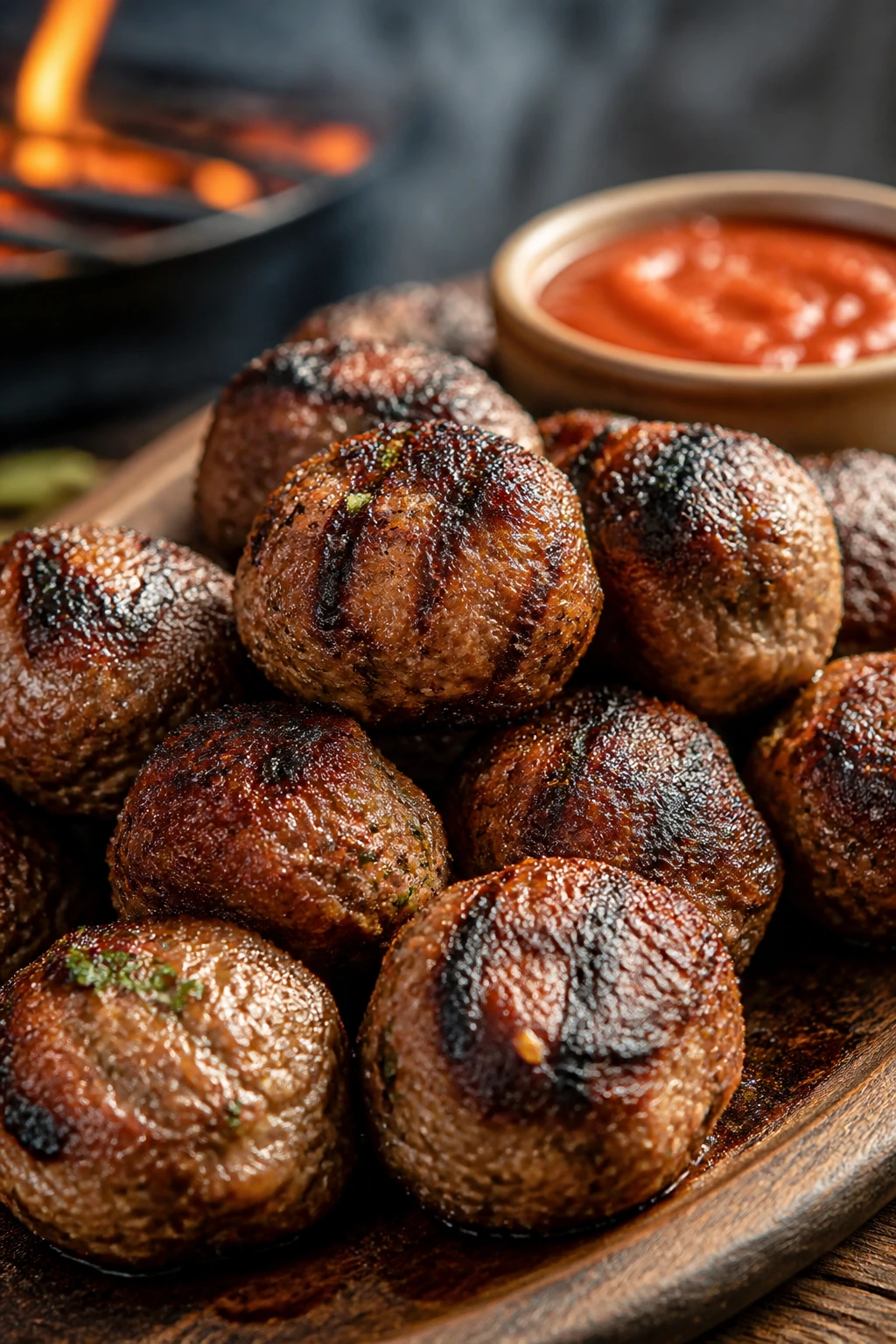
Meatballs on the grill sound a little unusual until you taste one and notice the browned crust they pick up from the heat. They stay juicy inside, pick up smoke outside, and work well on skewers or in a tray. For a picnic, that means a warm, shareable bite that doesn’t need plates the size of dinner plates.
Why It Works:
A mix of beef and pork gives the meatballs enough fat to stay tender while grilling. Breadcrumbs and egg hold the mixture together, and a foil tray or skewers keeps the smaller pieces from disappearing into the fire. Marinara on the side gives you a familiar finish without forcing the sauce onto the grill too soon.
Key Ingredients:
- 1 lb ground beef
- 1 lb ground pork
- 1/2 cup breadcrumbs
- 1 egg
- 1/4 cup grated Parmesan
- 2 garlic cloves, minced
- 1 tbsp chopped parsley
- 1 tsp kosher salt
- 1/2 tsp black pepper
- 1 cup marinara sauce
Quick Steps:
- Mix the Meatballs: Combine the beef, pork, breadcrumbs, egg, Parmesan, garlic, parsley, salt, and pepper.
- Shape the Balls: Form into 18 to 20 meatballs, about 1 1/2 inches wide.
- Preheat the Grill: Heat to medium, about 375°F.
- Grill Carefully: Place the meatballs in a grill basket, foil tray, or on skewers and cook 10 to 12 minutes, turning until browned and cooked through.
- Warm the Sauce: Heat marinara in a small pan or on the grill in a foil cup.
- Serve Hot: Spoon sauce on the side or drizzle lightly over the meatballs.
Equipment for This Recipe:
- Grill
- Grill basket or foil tray
- Mixing bowl
- Tongs
- Small saucepan or foil cup
How to Serve This Dish:
These fit nicely beside grilled bread, polenta, or a salad that can handle a little tomato sauce. They’re one of the better finger foods on the list, especially if you leave toothpicks nearby. Figure 4 or 5 meatballs per person if they’re an appetizer, more if you’re making them the main bite.
Pro Tips for This Recipe:
- Chill the shaped meatballs for 15 minutes before grilling so they hold together.
- Don’t make them too large or the outside will brown before the middle is done.
- A tray is easier than direct grates if your meatballs are soft.
- Keep the marinara warm, not boiling, or it loses its sweet edge.
Variations on This Dish:
- Italian Herb Version: Add oregano, basil, and a little fennel seed.
- Turkey Meatball Version: Swap in ground turkey and add a spoonful of olive oil for moisture.
- Spicy Arrabbiata Style: Use a spicy marinara and add red pepper flakes.
Common Mistakes to Avoid with This Dish:
- Overmixing the meat: That makes the texture tight and springy.
- Grilling directly over an open flare: The outside burns before the inside cooks.
- Skipping the rest: Meatballs need a minute to settle or they leak when you move them.
17. Steak Fajita Foil Packets
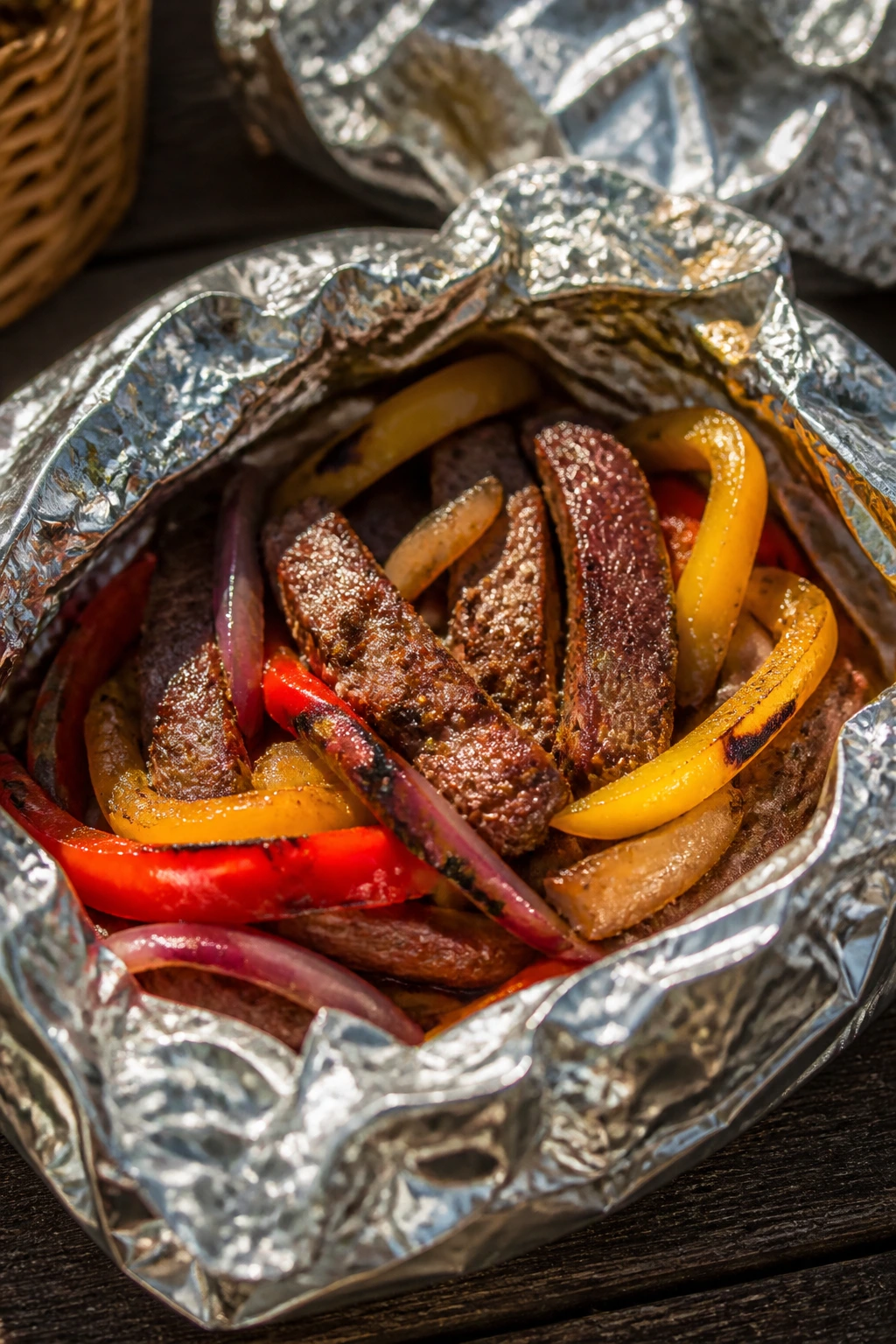
Foil packets are picnic problem-solvers. They hold juices, they keep onions soft and sweet, and they’re easy to carry from grill to table without chasing peppers around a tray. Add steak and tortillas and you’ve got the kind of dinner that feels casual on purpose.
Why It Works:
Flank steak cooks fast when it’s sliced thin against the grain, and the foil packet keeps the meat close to the peppers and onions so the flavors mingle. Lime juice and fajita seasoning wake up the whole thing, while the packet itself protects the vegetables from drying out. It’s a good one for groups because each packet can feed a few people cleanly.
Key Ingredients:
- 1 1/2 lbs flank steak, thinly sliced against the grain
- 3 bell peppers, sliced
- 1 large onion, sliced
- 2 tbsp oil
- 2 tbsp lime juice
- 2 tbsp fajita seasoning
- 8 small tortillas
- 1 avocado, sliced
- Salsa for serving
Quick Steps:
- Season the Filling: Toss steak, peppers, onion, oil, lime juice, and fajita seasoning together.
- Build the Packets: Divide into two large foil packets and seal them well.
- Preheat the Grill: Heat to medium-high, about 425°F.
- Cook the Packets: Grill for 12 to 15 minutes, turning once, until the steak is cooked and the vegetables are tender with browned edges.
- Open Carefully: Let the steam escape away from your face.
- Serve with Tortillas: Spoon the filling into warm tortillas and top with avocado and salsa.
Equipment for This Recipe:
- Heavy-duty foil
- Grill
- Tongs
- Cutting board
- Sharp knife
How to Serve This Dish:
Serve the packets family-style so people can fill their own tortillas. Sour cream, pickled onions, and chopped cilantro fit right in. Three to four tacos per person works if you’ve got side dishes; if not, people will keep building them until the tortillas are gone.
Pro Tips for This Recipe:
- Slice the steak thin so it stays tender after the quick grill time.
- Use heavy-duty foil or double layers so the packets don’t tear.
- Don’t overfill them; steam needs a little room to move.
- Warm the tortillas on the grill for 20 seconds per side if you want them soft and flexible.
Variations on This Dish:
- Chicken Fajita Packets: Swap the steak for boneless chicken thighs and cook a few minutes longer.
- Mushroom Fajita Version: Use portobellos and extra peppers for a vegetarian packet.
- Smoky Chipotle Version: Add chipotle powder and a spoonful of adobo for deeper heat.
Common Mistakes to Avoid with This Dish:
- Using steak cut too thick: It will stay chewy.
- Ignoring the steam when opening: It’s hot enough to sting.
- Overcooking the peppers into mush: They should still have some shape.
18. Grilled Romaine Caesar
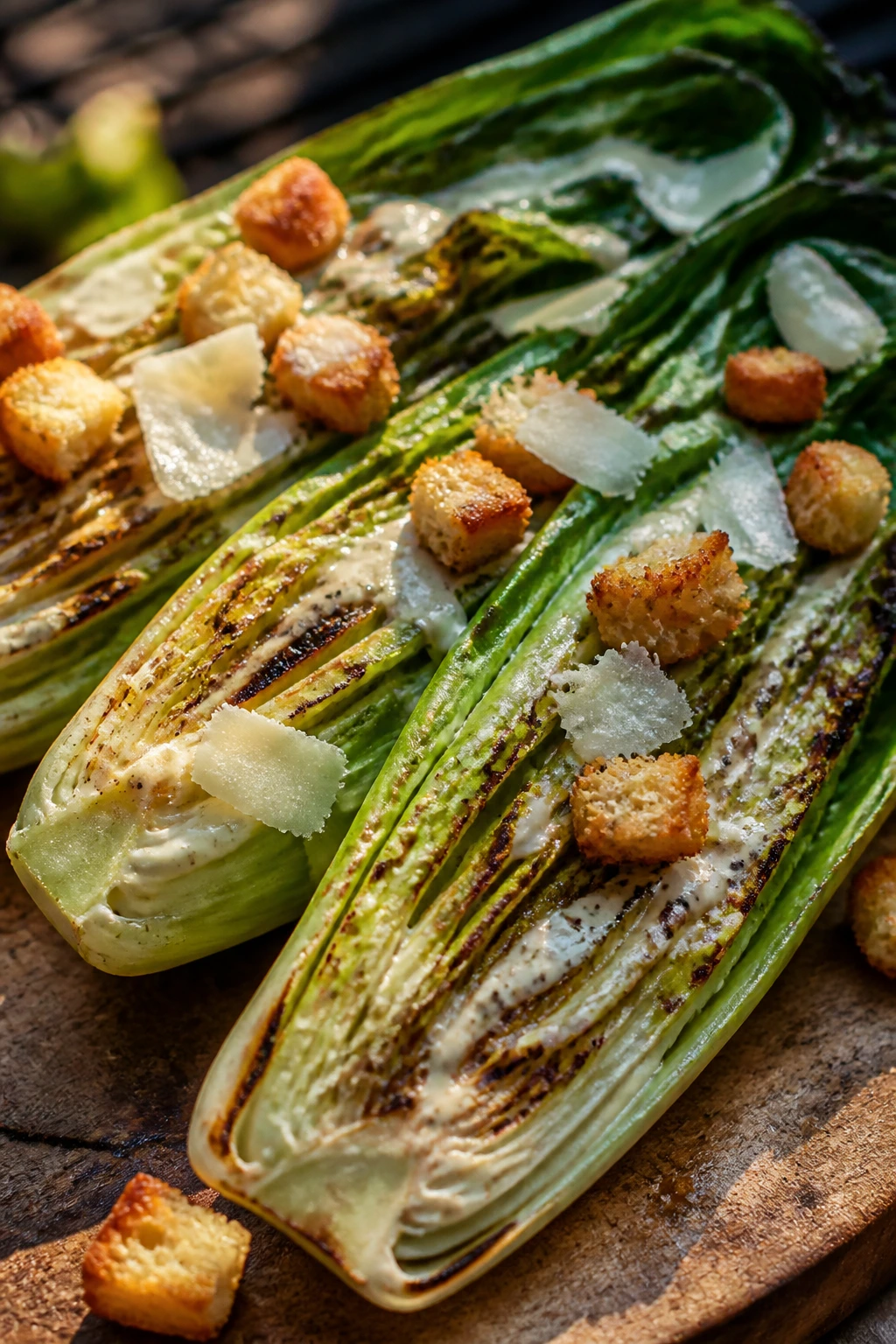
Grilled romaine sounds odd until the first bite lands. The outer leaves char just enough to taste smoky, the inner leaves stay crisp, and the Caesar dressing turns from cold to creamy against the heat of the lettuce. It’s a side dish that behaves like it has a better editor than most salads.
Why It Works:
Romaine hearts are sturdy enough to take direct heat for a minute or two without collapsing. Grilling brings a little bitterness to the surface, which makes Caesar dressing taste sharper and more alive. Croutons or grilled bread crumbs add crunch that holds up better than soft toppings.
Key Ingredients:
- 3 romaine hearts, halved lengthwise
- 2 tbsp olive oil
- 1/2 tsp kosher salt
- 1/4 tsp black pepper
- 1/3 cup Caesar dressing
- 1/4 cup grated Parmesan
- 1 cup croutons or grilled bread crumbs
- 1 lemon, cut into wedges
Quick Steps:
- Oil the Lettuce: Brush the cut sides of the romaine with olive oil and season with salt and pepper.
- Heat the Grill: Preheat to medium-high, about 425°F.
- Grill Briefly: Place the romaine cut-side down for 1 to 2 minutes until marked and slightly wilted at the edges.
- Plate the Salad: Arrange on a platter and drizzle with Caesar dressing.
- Add the Crunch: Top with Parmesan and croutons.
- Finish with Lemon: Give each portion a squeeze of lemon before serving.
Equipment for This Recipe:
- Grill
- Tongs
- Basting brush
- Serving platter
- Sharp knife
How to Serve This Dish:
Serve the romaine as a side with burgers, steak packets, or sausage subs. Keep the dressing separate if you’re traveling to the picnic so the leaves stay crisp until the last minute. One half-head per person is a good portion when the table is already loaded.
Pro Tips for This Recipe:
- Grill the lettuce fast. You want marks, not a wilted pile.
- Use a thicker Caesar dressing so it clings instead of running to the bottom of the platter.
- Grilled bread cut into chunks can stand in for store-bought croutons.
- Add anchovy or capers if you want the dressing to punch harder.
Variations on This Dish:
- Bacon Caesar: Scatter crisp bacon over the top.
- Avocado Caesar: Add sliced avocado for a softer, richer finish.
- Lemon-Herb Caesar: Mix chopped parsley and dill into the dressing.
Common Mistakes to Avoid with This Dish:
- Leaving the lettuce on the grill too long: It turns limp fast.
- Dressing too early: The leaves soften before they hit the table.
- Using tiny romaine leaves: You want hearts with enough backbone to hold up.
19. Campfire Potato Packets
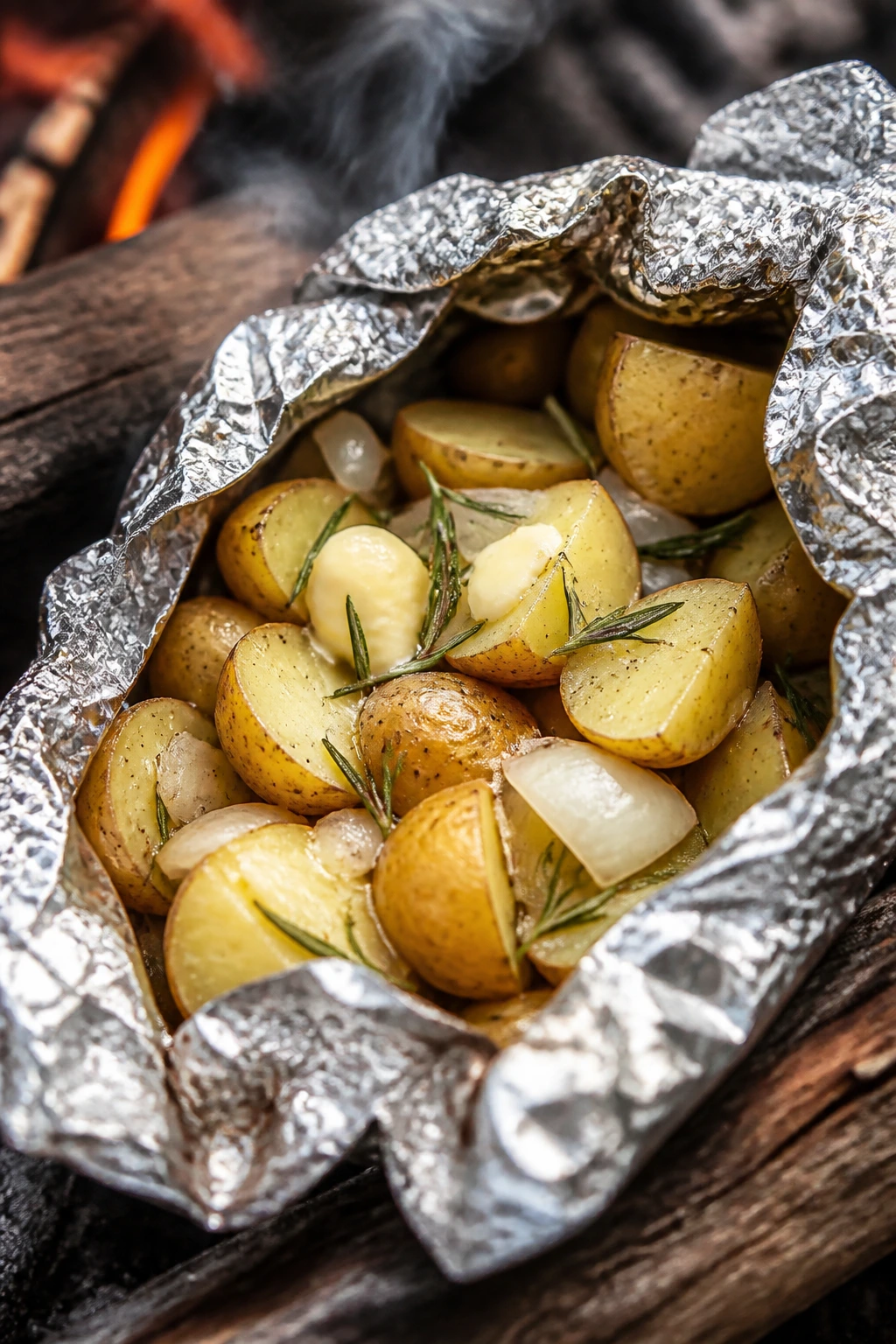
Potato packets are the quiet workhorse of a grill picnic. They don’t ask for much, they hold heat well, and they come out buttery, garlicky, and deeply satisfying without stealing attention from the mains. A little rosemary and onion turn them from filler into something people keep scooping with their fingers.
Why It Works:
Baby potatoes cook evenly when quartered, and foil traps steam so the centers get tender while the edges soak up butter and oil. Onion softens into the potatoes, garlic perfumes the whole packet, and rosemary keeps the flavor from tasting flat. This is one of the easiest make-ahead sides in the bunch.
Key Ingredients:
- 2 lbs baby potatoes, quartered
- 1 small onion, diced
- 3 tbsp unsalted butter, cut into pieces
- 1 tbsp olive oil
- 2 garlic cloves, minced
- 1 tsp kosher salt
- 1/2 tsp black pepper
- 1 tsp chopped rosemary
- 2 tbsp chopped chives
Quick Steps:
- Toss the Potatoes: Combine potatoes, onion, butter, olive oil, garlic, salt, pepper, and rosemary in a bowl.
- Wrap the Packets: Divide into two large foil packets and seal tightly.
- Preheat the Grill: Heat to medium, about 375°F.
- Cook the Packets: Grill for 25 to 30 minutes, turning once, until the potatoes are tender when pierced.
- Open Carefully: Let steam escape before opening fully.
- Finish with Chives: Sprinkle chives over the hot potatoes and serve.
Equipment for This Recipe:
- Heavy-duty foil
- Grill
- Mixing bowl
- Tongs
- Fork for testing doneness
How to Serve This Dish:
These potatoes go with almost every grilled protein on the table, which is why I always keep them in the mix. They’re sturdy enough to sit in a serving bowl for a while and still taste good warm. Plan on about 1/2 pound per person if they’re serving as a true side.
Pro Tips for This Recipe:
- Cut the potatoes the same size so they finish together.
- If you want extra browning, open the packet for the last 5 minutes and let some steam escape.
- Use more rosemary sparingly; too much can turn piney.
- A spoonful of sour cream at serving time turns them into a bigger side fast.
Variations on This Dish:
- Cheddar-Scallion Version: Add shredded cheddar in the last 5 minutes.
- Smoky Paprika Potatoes: Swap rosemary for smoked paprika and thyme.
- Lemon-Dill Version: Add lemon zest and dill after grilling.
Common Mistakes to Avoid with This Dish:
- Making the packets too small: The potatoes need room to steam evenly.
- Using paper-thin foil: It tears and leaks.
- Pulling them too soon: A knife should slide in with little resistance.
20. Grilled Pineapple with Honey and Lime
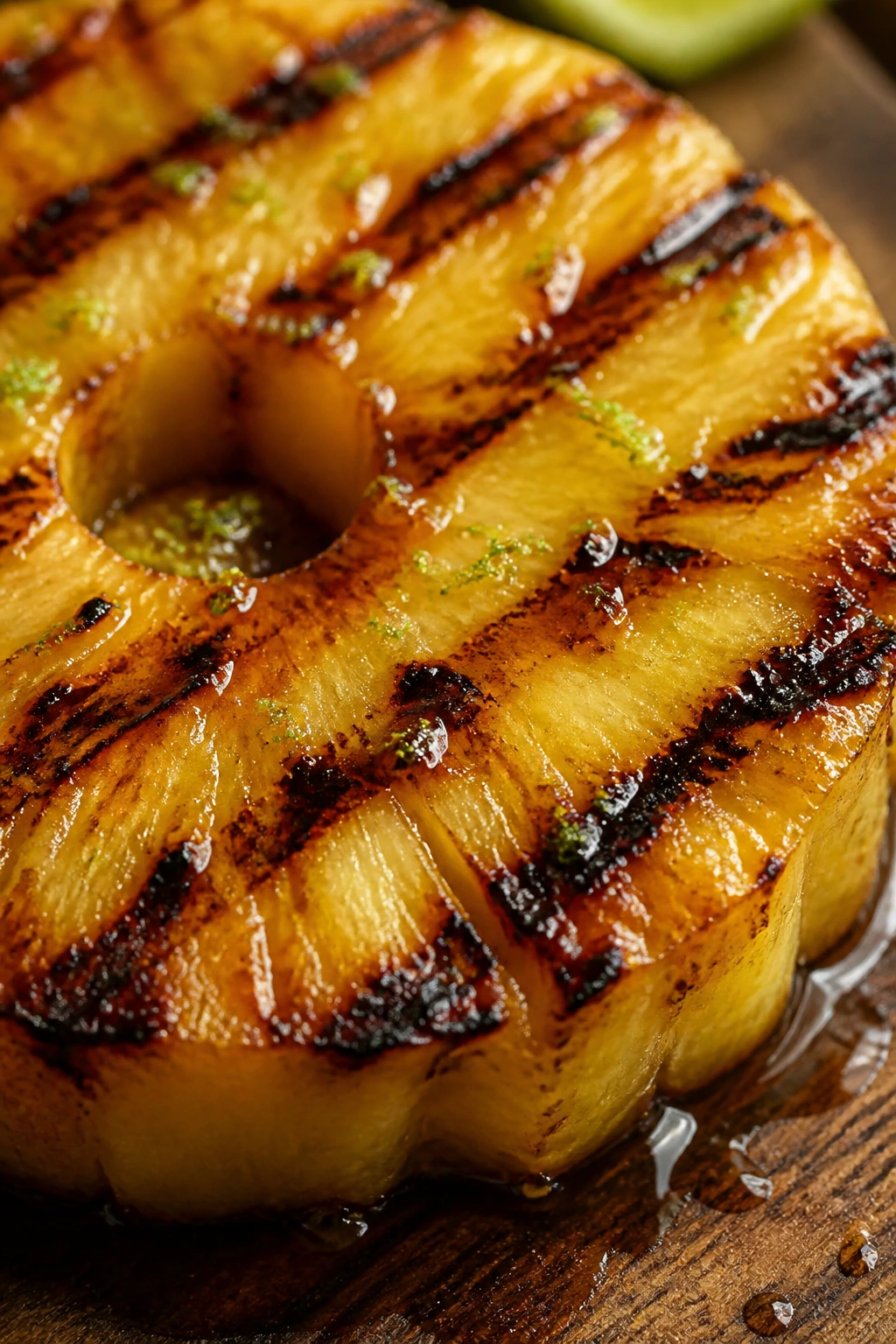
Pineapple on the grill is what happens when fruit learns how to wear a little smoke. The edges caramelize, the center stays juicy, and the honey-lime finish gives you a sharp sweet-tart bite that feels like dessert with its shoes off. It’s the easiest warm finish on the table.
Why It Works:
Pineapple already has enough sugar to brown quickly, and the grill intensifies that sweetness without needing much help. A light brush of honey and butter speeds up caramelization, while lime keeps the fruit from tasting one-note. This recipe is useful because it can be served plain, with ice cream, or beside salty grilled meat.
Key Ingredients:
- 1 pineapple, peeled, cored, and cut into rings or wedges
- 2 tbsp melted butter
- 2 tbsp honey
- 1 tbsp lime juice
- 1/2 tsp ground cinnamon
- Pinch of salt
- Vanilla ice cream or coconut yogurt, optional
Quick Steps:
- Mix the Glaze: Stir melted butter, honey, lime juice, cinnamon, and salt together.
- Preheat the Grill: Heat to medium-high, about 400°F.
- Brush the Pineapple: Coat the fruit lightly on both sides.
- Grill the Pieces: Cook 2 to 3 minutes per side until browned with dark grill marks.
- Serve Warm: Spoon over more honey if you want it sweeter, or add ice cream if you want dessert to show off.
Equipment for This Recipe:
- Grill
- Basting brush
- Tongs
- Cutting board
- Sharp knife
How to Serve This Dish:
Serve the pineapple on its own after the main course or with grilled pound cake if you want something more formal. It also works as a side next to pork or spicy chicken because the sweetness cools heat fast. Two rings or a handful of wedges per person is plenty.
Pro Tips for This Recipe:
- Choose pineapple with a sweet smell at the base and no soft spots.
- Pat the fruit dry before brushing so the glaze sticks.
- Don’t over-char it; you want caramel edges, not burnt sugar.
- A tiny pinch of flaky salt at the end makes the flavor pop harder.
Variations on This Dish:
- Rum-Butter Version: Add a teaspoon of dark rum to the glaze.
- Chili-Lime Pineapple: Swap cinnamon for chili powder and add extra lime.
- Pineapple Sundae Bowl: Serve with toasted coconut and vanilla yogurt.
Common Mistakes to Avoid with This Dish:
- Using underripe pineapple: It tastes sharp in a bad way.
- Leaving the fruit on too long: Sugar burns fast.
- Skipping the salt: A tiny pinch keeps the sweetness from flattening out.
21. Tomato-Basil Bruschetta on the Grill
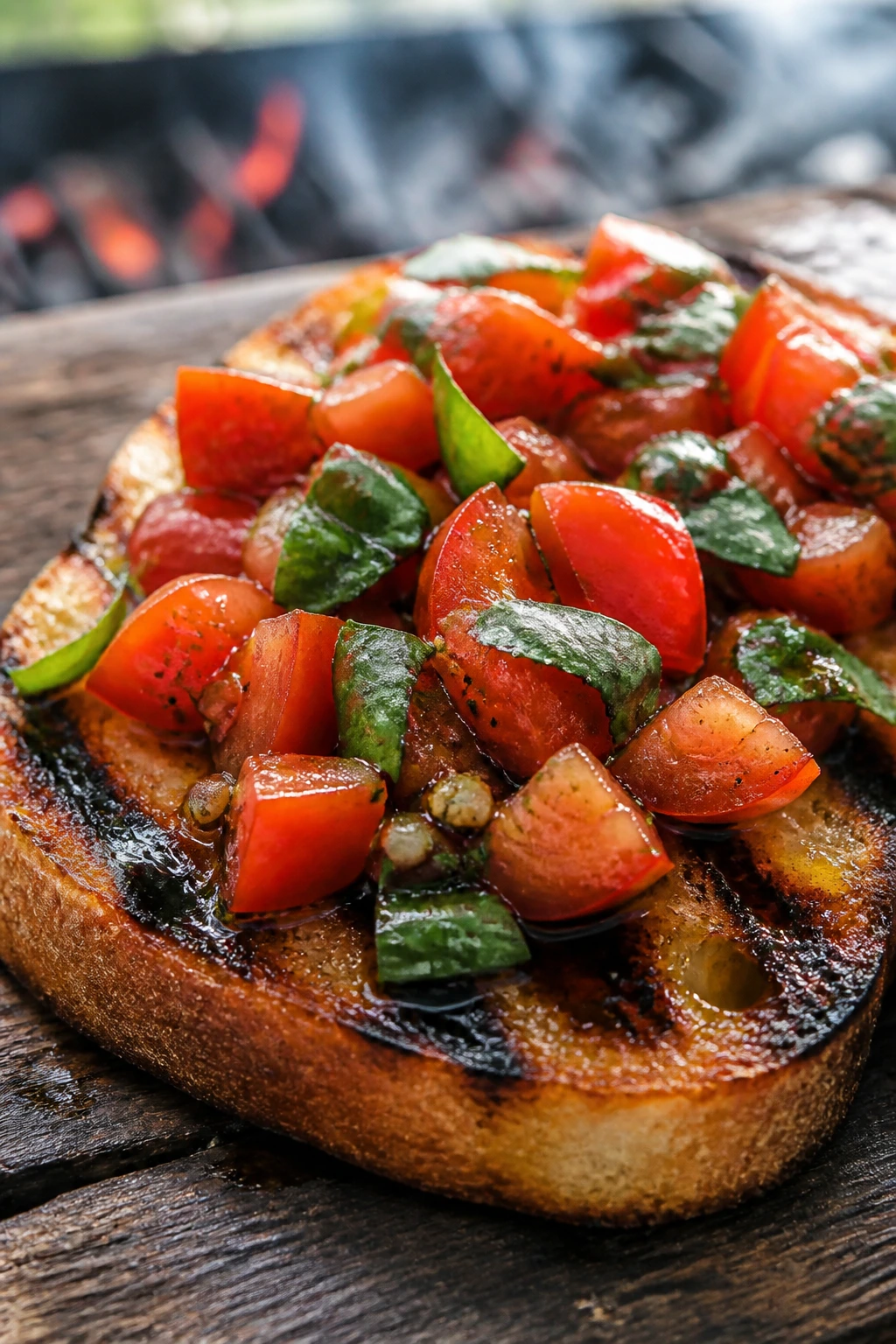
Bruschetta belongs on a grill menu because the bread loves heat almost as much as tomatoes do. The slices get smoky and crisp, the garlic rub sinks into the toast, and the tomato topping stays fresh enough to feel like summer even if the rest of the meal is heavy. I like this dish because it disappears in the time it takes to set down the tray.
Why It Works:
Grilled bread holds up better than soft toasted bread because the fire dries the surface fast and gives it structure. Juicy tomatoes, basil, olive oil, and a little vinegar keep the topping lively, and burrata or ricotta can make it feel richer if you want it to serve as a starter. It’s a smart picnic move because the topping can be made ahead and spooned on at the last second.
Key Ingredients:
- 1 baguette, sliced into 1/2-inch pieces
- 2 tbsp olive oil
- 2 garlic cloves, cut in half
- 3 cups ripe tomatoes, chopped
- 1 tbsp balsamic vinegar
- 1/4 cup fresh basil, sliced
- 1/2 tsp kosher salt
- 1/4 tsp black pepper
- 8 oz burrata or ricotta, optional
Quick Steps:
- Mix the Topping: Combine tomatoes, balsamic vinegar, basil, salt, and pepper.
- Brush the Bread: Coat the baguette slices with olive oil.
- Grill the Bread: Cook over medium heat for 1 to 2 minutes per side until toasted with dark stripes.
- Rub with Garlic: While warm, rub one side of each slice with the cut garlic clove.
- Top and Serve: Spoon the tomato mixture over the toast and add burrata or ricotta if using.
Equipment for This Recipe:
- Grill
- Tongs
- Mixing bowl
- Sharp knife
- Serving tray
How to Serve This Dish:
Set the bruschetta out as a starter or a side with grilled chicken, steak, or sausage. It’s best assembled right before eating so the toast stays crisp. Plan on two pieces per person if it’s one part of a bigger picnic spread, more if it’s the only bread on the table.
Pro Tips for This Recipe:
- Salt the tomatoes lightly and let them drain for 10 minutes if they’re very juicy.
- Grill the bread just until it firms up; too much time and it becomes brittle.
- A drizzle of good olive oil at the end makes the tomato topping taste rounder.
- Use ripe but not mushy tomatoes so the topping keeps some texture.
Variations on This Dish:
- Whipped Ricotta Version: Spread the toast with whipped ricotta before the tomato topping.
- Peach-Bruschetta Version: Add grilled peach chunks with the tomatoes.
- Heirloom Version: Mix red, yellow, and green tomatoes for a sharper, sweeter blend.
Common Mistakes to Avoid with This Dish:
- Assembling too early: The bread goes soft fast.
- Using watery tomatoes without draining them: The topping floods the toast.
- Skipping the garlic rub: That little step is the difference between toast and bruschetta.
22. Banana Boats with Chocolate and Pecans
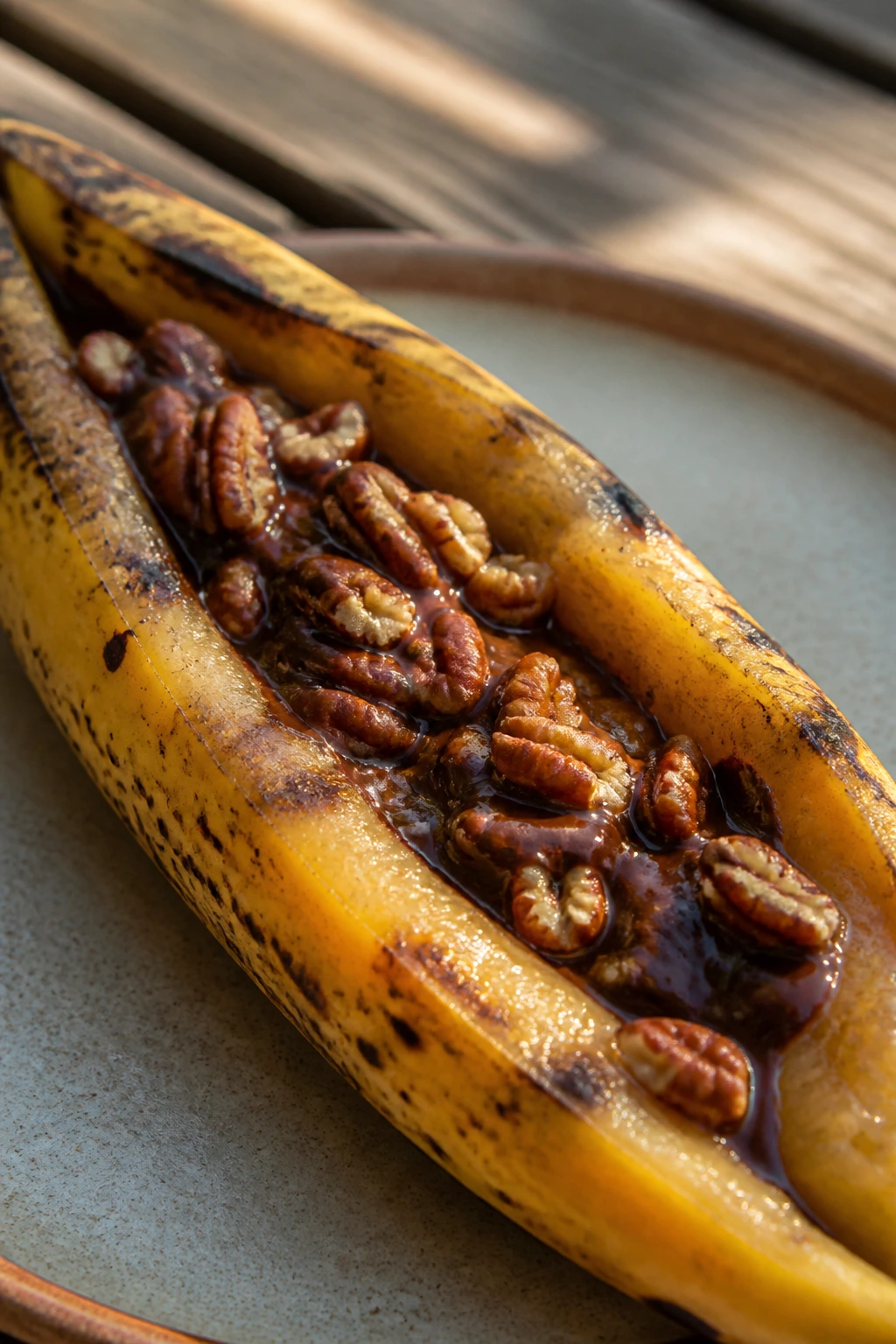
Banana boats are the dessert that makes adults grin like kids and kids ignore their napkins entirely. The banana turns soft and sweet, the chocolate melts into the slit, and the pecans give you crunch against all that gooey heat. They’re messy in the right way, which feels honest after a grill meal.
Why It Works:
Bananas already contain enough sugar to caramelize a little under heat, and the foil packet keeps them from collapsing into the grates. Chocolate chips melt neatly inside the banana cavity, marshmallows puff if you want them, and pecans bring a toasted finish. It’s a low-effort dessert that still feels like you planned something.
Key Ingredients:
- 4 bananas, unpeeled
- 1/2 cup chocolate chips
- 1/2 cup mini marshmallows
- 1/4 cup chopped pecans
- 1 tbsp brown sugar
- 1/2 tsp cinnamon
- Heavy-duty foil
Quick Steps:
- Slice the Bananas: Cut a slit lengthwise through the peel and partway into the fruit, but do not cut all the way through.
- Fill Them Up: Open the slit and stuff in chocolate chips, marshmallows, pecans, brown sugar, and cinnamon.
- Wrap in Foil: Close the bananas back up and wrap each one in foil.
- Grill Gently: Place on a medium grill, about 350°F, and cook for 5 to 7 minutes until the bananas are soft and the chocolate is melted.
- Unwrap and Serve: Open carefully and eat with spoons.
Equipment for This Recipe:
- Grill
- Heavy-duty foil
- Knife
- Small spoon
- Tongs
How to Serve This Dish:
Serve banana boats as a finish after the grill cools down a little. A scoop of vanilla ice cream makes them feel more like a dessert course, while coconut yogurt keeps them lighter. One banana boat per person is plenty unless you’re feeding people with a very sweet tooth.
Pro Tips for This Recipe:
- Use bananas that are ripe with some freckles, not so soft that they split apart.
- Double-wrap the foil if your grill grate is wide.
- If you want less sweetness, skip the marshmallows and use only chocolate and pecans.
- Let them sit for a minute after grilling so the melted filling doesn’t burn anybody’s mouth.
Variations on This Dish:
- Peanut Butter Cup Version: Add a spoonful of peanut butter with the chocolate chips.
- S’mores Version: Use mini marshmallows and a handful of crushed graham crackers.
- Tropical Version: Add shredded coconut and chopped pineapple instead of pecans.
Common Mistakes to Avoid with This Dish:
- Cutting the banana all the way through: The filling falls out.
- Using too much heat: The peel blackens before the fruit softens.
- Skipping the foil: The bananas need a safe little pocket to cook in.
Why the Grill Makes Picnic Food Taste Brighter
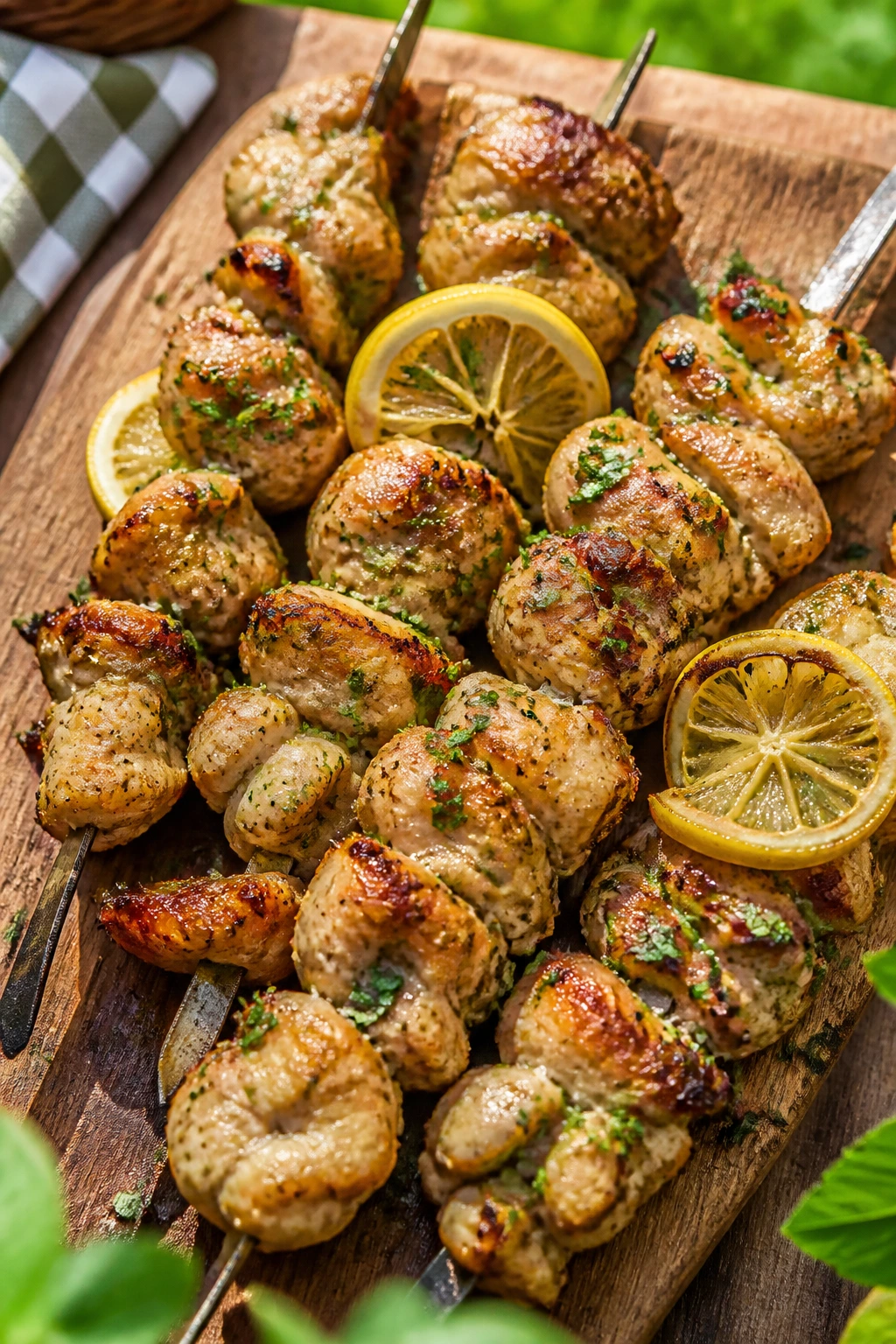
A grill gives picnic food the one thing a cooler, a casserole dish, or a stovetop skillet can’t fake: browned edges with smoke attached. That matters because picnic food lives outside the kitchen, and outside food needs a little extra punch to stay interesting once it cools a notch. A grilled peach tastes sweeter because the cut surface caramelizes. A grilled onion tastes softer and deeper because the surface sugars change. A grilled chicken thigh tastes fuller because the fat renders and bastes the meat from the inside.
There’s also the practical side, which I care about almost as much as flavor. Grilled food often starts with a structure that can travel: skewers, sliders, foil packets, bread, potatoes, corn. You can move those from fire to tray without turning them into soup. That’s why a good picnic menu doesn’t try to be delicate. It takes the heat, holds its shape, and still tastes like it belongs on the table after a five-minute walk.
The other reason the grill earns its keep is timing. You can cook in batches without making the whole house hot, and you can keep the flavors separate until serving. That makes it easier to lay out a spread that has contrast — smoky meat, cold salad, crisp bread, buttery potatoes, something sweet at the end. Picnic food gets boring when everything tastes the same. The grill fixes that faster than almost anything else.
Essential Equipment for These Recipes
- Gas or charcoal grill: Either one works; charcoal gives more smoke, while gas gives easier temperature control.
- Long-handled tongs: You’ll use them constantly for turning, moving, and rescuing food from flare-ups.
- Instant-read thermometer: Worth it for chicken, pork, salmon, and steak. Guessing is how dry food happens.
- Cast-iron skillet or griddle: Useful for smash burgers, onions, flatbread, and anything that needs a flat surface.
- Heavy-duty foil: Essential for potato packets, fajita packets, banana boats, and holding warm food.
- Grill basket: Keeps shrimp, meatballs, vegetables, and sliced peppers from falling through the grates.
- Skewers, wooden or metal: Needed for chicken, shrimp, and vegetable kebabs. Soak the wooden ones.
- Silicone brush: Better than a cheap bristle brush when you’re glazing and basting.
- Sharp knife and sturdy cutting board: Picnic prep means slicing meat, peppers, onions, bread, and fruit without a wobbling board.
- Serving trays and rimmed sheet pans: They make transport easier and keep juices from running everywhere.
- Small bowls for sauces and toppings: Hot dogs, sliders, corn, and burgers all benefit from separate toppings.
- Cooler with ice packs: If the food has to travel, keep cold parts cold and raw ingredients away from the grill zone.
- Aluminum tray or foil pan: Handy for holding cooked food warm or carrying it to the picnic table.
Smart Shopping and Ingredient Tips
For grill-friendly picnic food, fat and firmness matter more than fancy labels. Chicken thighs beat breast meat here because they stay juicy when the flames get a little impatient. Pork tenderloin is lean but quick, sausage needs enough fat to stay supple, and ground beef around 80/20 gives burgers and meatballs the structure they need without tasting dry. If you’re buying salmon, look for fillets with even thickness so they cook at the same pace. For shrimp, choose large or jumbo so they don’t disappear after two minutes on the grate.
Vegetables should have some backbone. Pick zucchini and squash that feel firm, peppers with smooth skin, onions that are heavy for their size, and corn with bright green husks if you’re buying it still wrapped. Peaches should yield slightly at the stem but not collapse when pressed. Tomatoes for bruschetta need to be ripe and fragrant, but not so juicy that the topping turns into soup after a minute on the board. Halloumi should feel firm and springy, not crumbly.
Bread matters more than people think. Slider buns, hoagie rolls, and baguettes should all have enough structure to survive a little sauce and a little steam. Flimsy bread falls apart outdoors faster than it does in a kitchen. If you can, buy buns the day before and toast them briefly on the grill. That extra step helps them hold up, and it smells good enough to pull people closer.
For condiments and dairy, choose the sturdiest version. Thick yogurt stands up better than thin. A good barbecue sauce should be pourable but not watery. Mozzarella for flatbread wants to be low-moisture unless you’re prepared for a soft center. Burrata is rich and lovely, but it belongs on a platter at the last second, not buried under a mountain of toppings. And when a recipe uses acid — lemon, lime, vinegar, balsamic — buy the real thing, not a sweet shortcut bottle that tastes like candy with a shrug.
How to Serve These Recipes Together
Presentation:
Build the picnic like a layered board instead of a pile of unrelated dishes. Put the hot mains — skewers, burgers, sliders, sausages — on one tray, then tuck bright sides like corn, potato packets, or grilled romaine around them. Keep desserts and fruit-based dishes slightly separate so they don’t pick up smoke they don’t want.
Accompaniments:
A good spread usually needs one heavy thing, one crisp thing, and one cool thing. Potato packets, slaw, cucumber salad, grilled romaine, and flatbread cover most of the bases. Pickles, mustard, hot sauce, lemon wedges, and extra sauce bowls keep people from standing around wishing the food had another gear.
Portions:
For bigger mains, plan on one serving of chicken, pork, or salmon per person plus one side. For sliders, figure two to three per person if you’re also grilling corn or potatoes. For snacks and sides like corn, bruschetta, or halloumi skewers, count on people taking more than they admit to at the start. They usually do.
Beverage Pairing:
Cold iced tea with lemon handles almost everything on this menu. A dry lager or pilsner works well with burgers, sausage, and hot dogs, while sparkling water with cucumber or lime keeps the seafood and vegetable dishes clean on the palate. If you want one wine that can follow the whole spread, a chilled rosé stays flexible without crowding the food.
Additional Tips and Flavor Boosters
Flavor Enhancement:
A small finishing drizzle changes grilled food more than people expect. Lemon oil over chicken skewers, herb butter on corn, or a spoonful of balsamic reduction on peaches brings the whole dish into focus. Use finishing salt too — flaky salt on tomatoes, corn, or pineapple wakes up the surface without making things louder.
Customization:
Turn almost any item here into skewers, sliders, or packets if you need easier picnic handling. Chicken can become a bun filling, shrimp can become tacos, and steak can slide into tortillas or foil packets. If you need a milder menu, lean on corn, potatoes, flatbread, and pineapple. If you want heat, add jalapeños, chipotle, or pickled peppers and stop pretending the grill didn’t invite them.
Serving Suggestions:
Keep a few bright extras on the table: chopped herbs, lime wedges, pickled onions, and extra sauce. They make the same dish feel different on the second pass. A bowl of cold cucumbers or a simple slaw also helps the heavier food feel more balanced, which matters once the burgers and drumsticks start taking over the tray.
Make-It-Yours:
For gluten-free guests, use tamari instead of soy sauce, skip the buns where needed, and lean harder on skewers, potatoes, and foil packets. For dairy-free eaters, skip the burrata and yogurt sauce and use olive oil, lemon, and herbs instead. For vegetarians, the halloumi, portobello, corn, potato, flatbread, bruschetta, and grilled romaine recipes already do most of the heavy lifting.
Make-Ahead, Storage, and Reheating Guidance
A lot of grilled picnic food can be made a little ahead, which is the only reason a spread this large stays sane. Chicken, pork, beef, and sausages keep well in the fridge for 3 to 4 days once cooked and cooled. Seafood is shorter — plan on 2 days refrigerated for salmon or shrimp. Grilled vegetables, corn, and potatoes usually hold for 3 to 4 days, while fruit desserts are best within a day or two. Anything with burrata or dressed lettuce should be eaten the same day if you want the texture to stay clean.
For make-ahead work, prep the marinades, dry rubs, chopped vegetables, sauces, and toppings the day before. You can even skewer the chicken or shrimp a few hours ahead and keep them covered in the fridge. Flatbread dough, burger sauces, and potato packet fillings all benefit from early prep. What doesn’t help is fully assembling wet sandwiches too far in advance. Soggy buns and wilted greens are not a picnic memory you need to keep.
Reheating depends on what you’re working with. Chicken, pork, and meatballs do well in a 300°F oven, covered loosely with foil, until just hot through. Salmon likes a gentler 275°F oven or a quick warm-up in a covered skillet with a spoonful of water. Shrimp is touchy; I’d eat it cold or barely warmed rather than risk rubber. Potatoes and foil packets can go back on a low grill or into a hot oven for 10 to 15 minutes. Flatbread reheats well in a dry skillet for a minute or two per side. Corn is best rewarmed wrapped in foil with a dab of butter.
Room temperature is where picnic food lives, but don’t leave it out forever. Cold foods should stay cold in a cooler, and cooked meat shouldn’t sit in the sun for hours. If you’re carrying food to a park or backyard, use shallow containers so the center cools faster and keep the heavy sauces separate until serving. That little bit of discipline saves a lot of limp lettuce.
Variations and Adaptations to Try
Gluten-Free Basket:
Swap in gluten-free buns, use tamari instead of soy sauce, and lean on skewers, foil packets, potatoes, and grilled fruit. The menu barely changes; the bread does. Flatbread can become grilled lettuce cups or simply disappear from the plate.
Dairy-Free Spread:
Skip burrata, yogurt sauces, butter-heavy corn toppings, and cheese on the burgers if needed. Use olive oil, lemon, herbs, tahini, or avocado instead. The menu still has enough smoke and texture to feel complete, which is the part that matters most outdoors.
Heat-Lover’s Picnic:
Add chipotle powder to the chicken rub, jalapeños to the sliders, and chili flakes to the flatbread. A little hot sauce on the side keeps people happy without forcing heat onto the whole table. If you’re using barbecue sauce, choose one with some pepper in it already.
Kid-Friendly Build:
Keep the seasoning milder, cut skewers into smaller pieces, and give kids the dishes that are easy to grab: hot dogs, potato packets, corn, pineapple, and banana boats. A separate sauce bowl helps, because some kids like to dip everything and others want nothing to do with anything green.
Vegetarian-Forward Menu:
Stack the spread around halloumi skewers, portobello burgers, grilled romaine, corn, potatoes, bruschetta, flatbread, peaches, and banana boats. That combination feels complete enough to satisfy a full table without needing a meat substitute to do the emotional work.
Make-It-Ahead Transport Menu:
If the food has to travel far, favor recipes that stay good warm or at room temperature: sliders, sausages, potatoes, corn, skewers, and grilled fruit. Skip anything that depends on a crisp leaf or a very soft cheese right at serving time. Outdoor food is already juggling enough.
Common Mistakes to Avoid
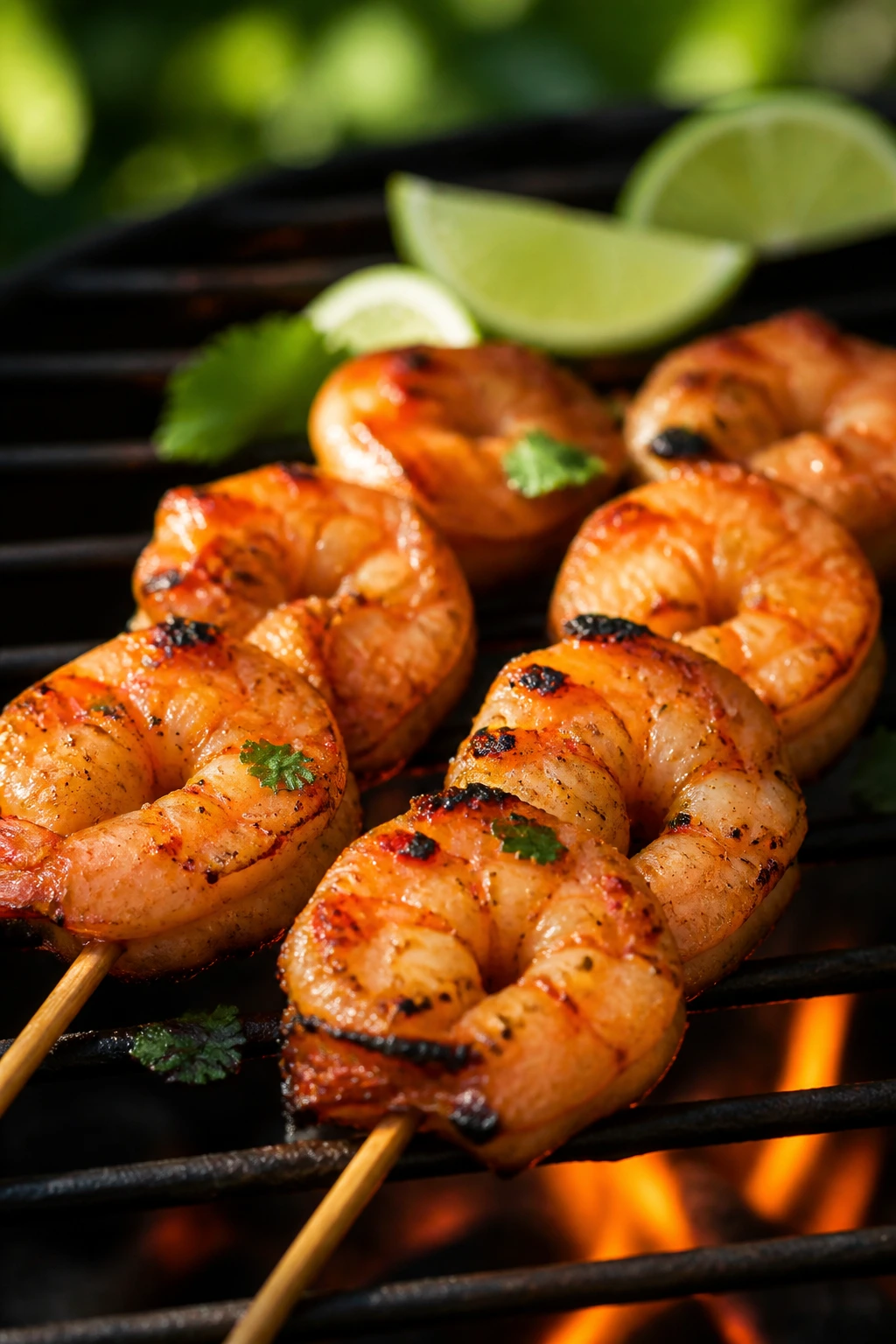
- Crowding the grill: When every inch of grate is covered, the food steams instead of browns. Cook in batches if you need to. The color is worth the extra round.
- Choosing only lean cuts: Chicken breast, extra-lean beef, and dry pork can all go chalky fast. Fat is not the enemy on a grill; it’s what keeps the meat from tasting like regret.
- Saucing too early: Sugar-heavy sauces can burn before the food cooks through. Brush glaze on near the end so it caramelizes instead of turning bitter.
- Packing hot food in sealed containers: Steam softens bread, lettuce, and crusts. Let food cool a little, or at least vent the container, before you close it up.
- Forgetting temperature control: A grill that’s too hot can scorch shrimp, salmon, or flatbread before the center finishes. Use zones. Use your eyes. Use the thermometer.
- Trying to assemble everything before leaving the house: Some dishes can be prepped ahead, but a burger, bruschetta, or romaine salad needs a last-minute finish. The final assembly is where the texture stays alive.
Frequently Asked Questions
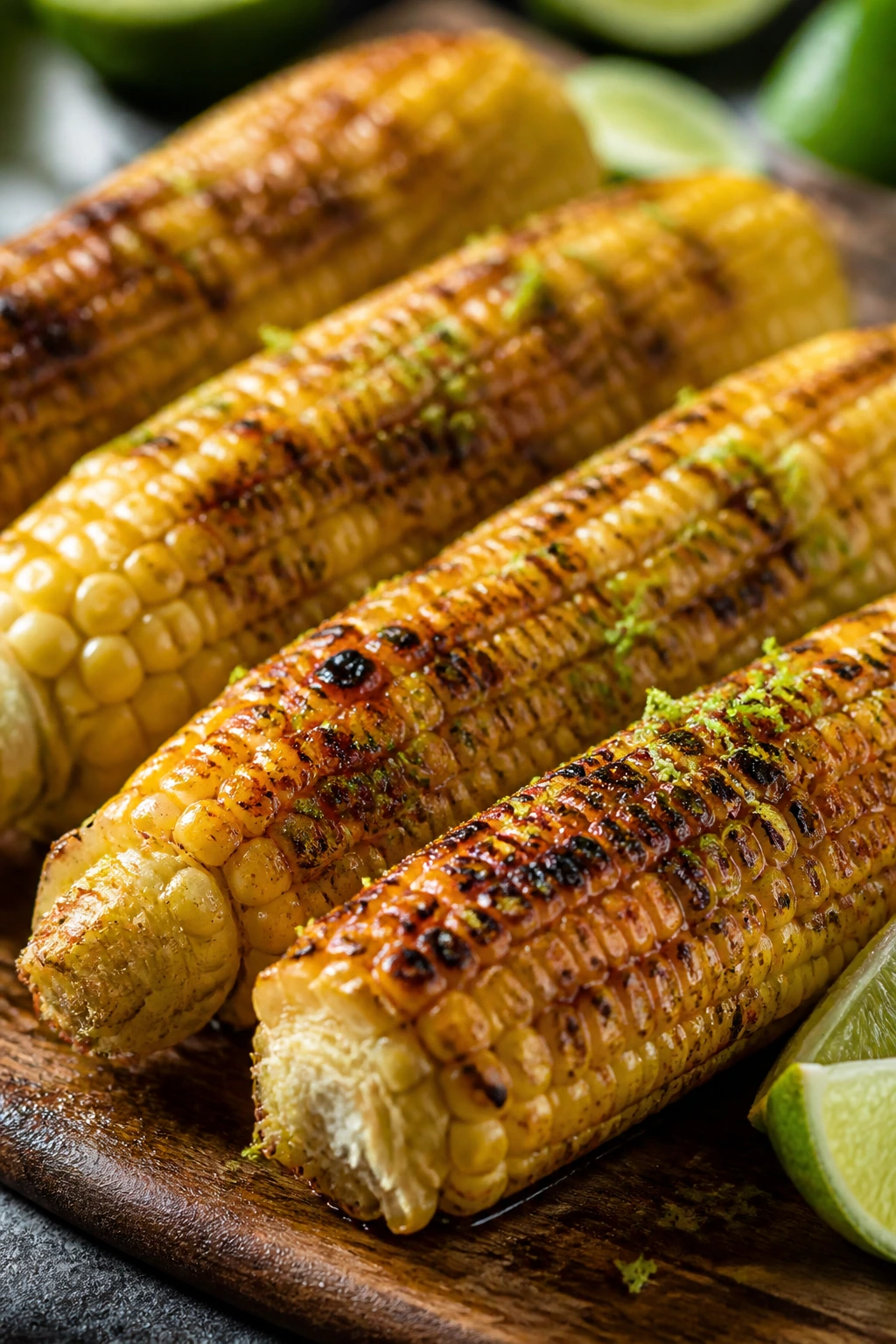
Can I make most of these recipes on a gas grill and a charcoal grill?
Yes. Gas gives you easier control for shrimp, fish, and flatbread, while charcoal gives you a deeper smoky edge on chicken, sausage, and corn. The recipes work on both; you’ll just manage the heat a little differently.
Which dishes hold up best if I need to transport them to a park?
Skewers, sliders, sausage subs, potato packets, corn, meatballs, and banana boats travel the easiest. Dishes with leafy greens or soft cheese should be finished on site, not before the drive.
How do I keep grilled food safe at a picnic?
Keep hot food hot in insulated containers or a covered tray, and keep cold food in a cooler with ice packs until serving. Don’t leave meat, seafood, or dairy dishes sitting out for hours in direct sun. If the food has a short life at room temperature, serve it sooner.
Can I prep the marinades and sauces ahead of time?
Absolutely. Most sauces and marinades can be mixed 1 to 2 days ahead and kept chilled. If a marinade touched raw meat or fish, do not use it as a sauce unless you boil it first or reserve a clean portion from the start.
What if my grill runs hotter than I expect?
Move delicate food to a cooler side of the grill and close the lid if needed. Shrimp, flatbread, and salmon need close attention because they can go from perfect to dry fast. For thicker cuts, indirect heat is your friend.
Can I use grill pans or a stovetop griddle instead?
You can, especially for smash burgers, peppers, onions, corn, and flatbread. You’ll miss some of the smoke, but the browning still happens. For shrimp and salmon, a grill basket or hot skillet does the job well enough.
Which recipes are easiest for someone who doesn’t want a lot of cleanup?
The foil packets, skewers, corn, hot dogs, and banana boats keep the mess down. They need less flipping, fewer bowls, and fewer sauce splashes. That’s usually what people mean when they say they want an easy picnic — not easy cooking, easy cleanup.
How do I keep burgers and sandwiches from getting soggy?
Toast the buns, keep wet toppings separate until the last minute, and let cooked meat rest before stacking. A thin layer of mayo, mustard, or sauce on the bun acts like a barrier. It’s a small move that saves the sandwich.
Can I make this whole menu vegetarian?
You can get close without losing the grill spirit. Halloumi skewers, portobello burgers, grilled romaine, corn, potato packets, bruschetta, flatbread, peaches, and banana boats make a full table on their own. Add a bean salad or extra slaw and nobody will feel shortchanged.
Smoke, Sun, and the Table Between
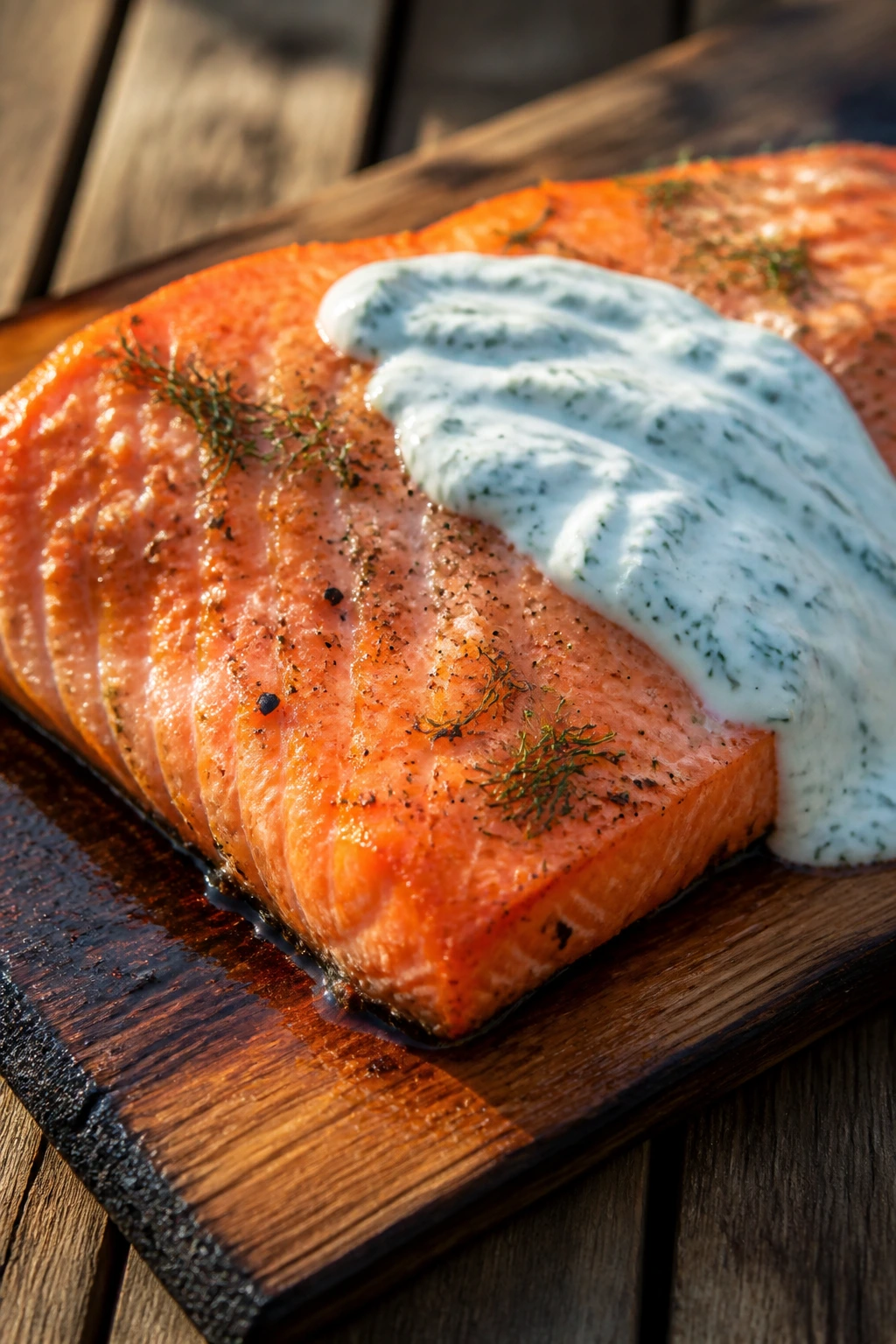
The right picnic spread doesn’t need to be delicate. It needs to hold up to a tray, a pair of tongs, a little sun, and a crowd that starts eating before everybody has found a seat. That’s the charm of grilled picnic food: the char keeps it awake, the smoke gives it direction, and the timing stays loose enough for real life.
What I like best about these picnic menu ideas for the grill this weekend is that they cover the whole table without feeling fussy. You can build around one or two big mains, then fill in the gaps with corn, potatoes, flatbread, fruit, and something sweet at the end. That’s a better use of a grill than trying to make it behave like a kitchen stove.
Pick a few recipes that suit your crowd, keep the sauces separate until serving, and don’t be shy about char. The picnic blanket will look better for it, and so will the food.