



Grill smoke changes picnic food in a way a kitchen stove never quite manages. Chicken gets a thin lacquer of char, corn sweetens at the edges, and even a plain bun picks up that toasted, slightly bitter snap that makes you reach for another bite before you’ve finished the first.
Picnic foods for the grill work because they solve a real problem: you want dishes that can travel in a cooler, sit on a blanket, and still taste like somebody paid attention. That means sturdy proteins, make-ahead sides, and a few grilled fruit and bread ideas that don’t collapse the moment they leave the grate.
A good picnic basket should feel generous, not fussy. The recipes below lean on ingredients that like heat, carry well, and don’t turn soggy if they sit for a few minutes while everyone hunts for napkins. Start with the ones that match your grill setup, then build the rest of the spread around them.
Why This Collection Works on a Picnic Blanket
-
Built for transport: These recipes are sturdy enough to pack in foil, cling film, or insulated containers without falling apart before the food reaches the park.
-
Grill-friendly textures: Charred chicken, blistered corn, crisped flatbread, and caramelized fruit all taste better after a few minutes over live heat.
-
Good at room temperature: Several of these dishes are made to be served warm or not hot at all, which matters when a picnic table is far away and the sun keeps changing the pace.
-
Easy to portion: Drumsticks, skewers, burgers, pitas, and crostini are simple to hand out without a carving knife or a stack of plates.
-
Flexible for a mixed crowd: Meat eaters, vegetarians, and the person who only wants corn, bread, and dessert all get something worth going back for.
-
A grill does the heavy lifting: The fire adds smoke, color, and a bit of edge, so the rest of the picnic can stay relaxed instead of overworked.
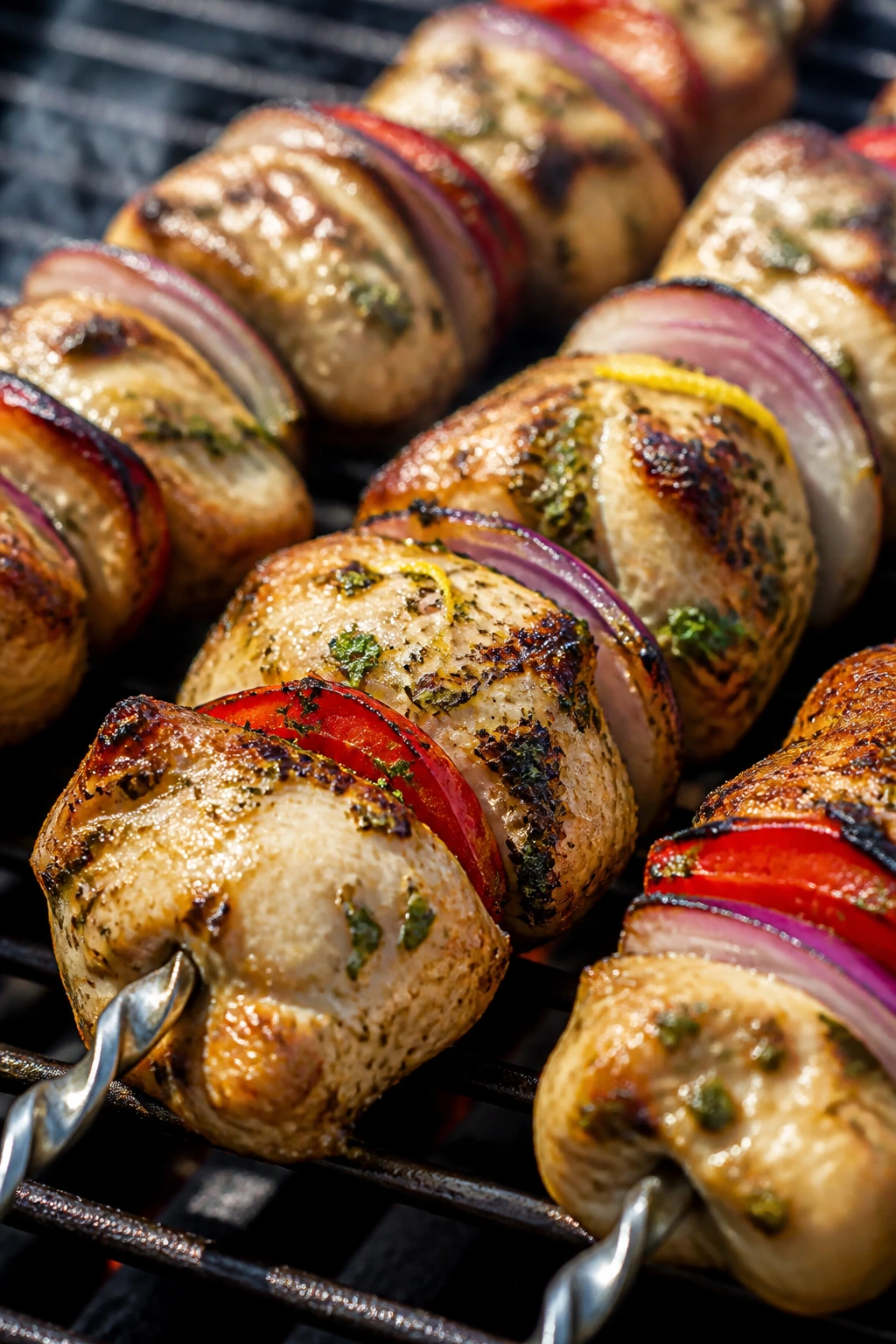
1. Lemon-Herb Chicken Skewers
Intro: Chicken thighs are the smart move here. They stay juicy over open heat, take on lemon and garlic without getting pushy, and pick up those dark, savory marks that make skewers worth threading in the first place. The onion softens, the peppers sweeten, and the whole tray smells like somebody knew what they were doing.
Why It Works: Boneless thighs have enough fat to handle direct grill heat, which means you get char without the dry, stringy texture that can happen with chicken breast. A short marinade of lemon, oregano, and garlic gives the meat a bright edge, but it also helps the surface brown faster. The vegetables on the same skewer catch some of the chicken drippings, which is half the fun.
Key Ingredients:
- 2 pounds boneless, skinless chicken thighs, cut into 1½-inch pieces
- 3 tablespoons olive oil
- 2 tablespoons fresh lemon juice
- 1 tablespoon lemon zest
- 4 garlic cloves, minced
- 1 tablespoon chopped fresh oregano
- 1 tablespoon chopped parsley
- 1 teaspoon kosher salt
- 1 teaspoon black pepper
- 1 red bell pepper, cut into 1½-inch pieces
- 1 red onion, cut into chunks
Quick Steps:
- Whisk the olive oil, lemon juice, lemon zest, garlic, oregano, parsley, salt, and pepper in a bowl. Add the chicken and toss well, then chill for 30 minutes to 4 hours.
- Thread the chicken, bell pepper, and onion onto skewers, leaving a little room between pieces so the heat can move around them.
- Preheat the grill to medium-high, about 425°F. Oil the grates.
- Grill the skewers for 10 to 12 minutes, turning every 2 to 3 minutes, until the chicken reaches 165°F and the edges are browned.
- Move the skewers to a platter and rest them for 5 minutes before serving.
Equipment for This Recipe:
- Metal skewers or soaked wooden skewers
- Grill with medium-high heat
- Long tongs
- Mixing bowl
- Instant-read thermometer
How to Serve This Dish: Serve the skewers over warm pita or alongside a cold cucumber salad and a scoop of potato salad. They also work well wrapped in foil for a picnic blanket lunch, because the chicken stays tender even after the steam settles.
Pro Tips for This Recipe:
- Cut the chicken into even pieces so the skewers finish at the same time.
- If you’re using wooden skewers, soak them for at least 30 minutes so they don’t scorch.
- Don’t drown the chicken in lemon for hours and hours; the acid can make the surface mushy.
- Give the onions and peppers a bit of space. Packed skewers steam instead of char.
Variations on This Dish:
- Greek-Style Skewers: Add 1 teaspoon dried dill and serve with tzatziki.
- Spicy Lemon Skewers: Stir 1 teaspoon crushed red pepper into the marinade for a sharper finish.
- Veg-Heavy Version: Swap in zucchini chunks and cherry tomatoes if you want more vegetables and less meat.
Common Mistakes to Avoid with This Dish:
- Using chicken breast cut too small: It dries fast. Thighs give you a wider timing window.
- Grilling over flare-ups: Burnt lemon tastes bitter, not smoky. Move the skewers to a cooler zone if the fire jumps.
- Skipping the rest: Those 5 minutes keep the juices inside the chicken instead of on the board.
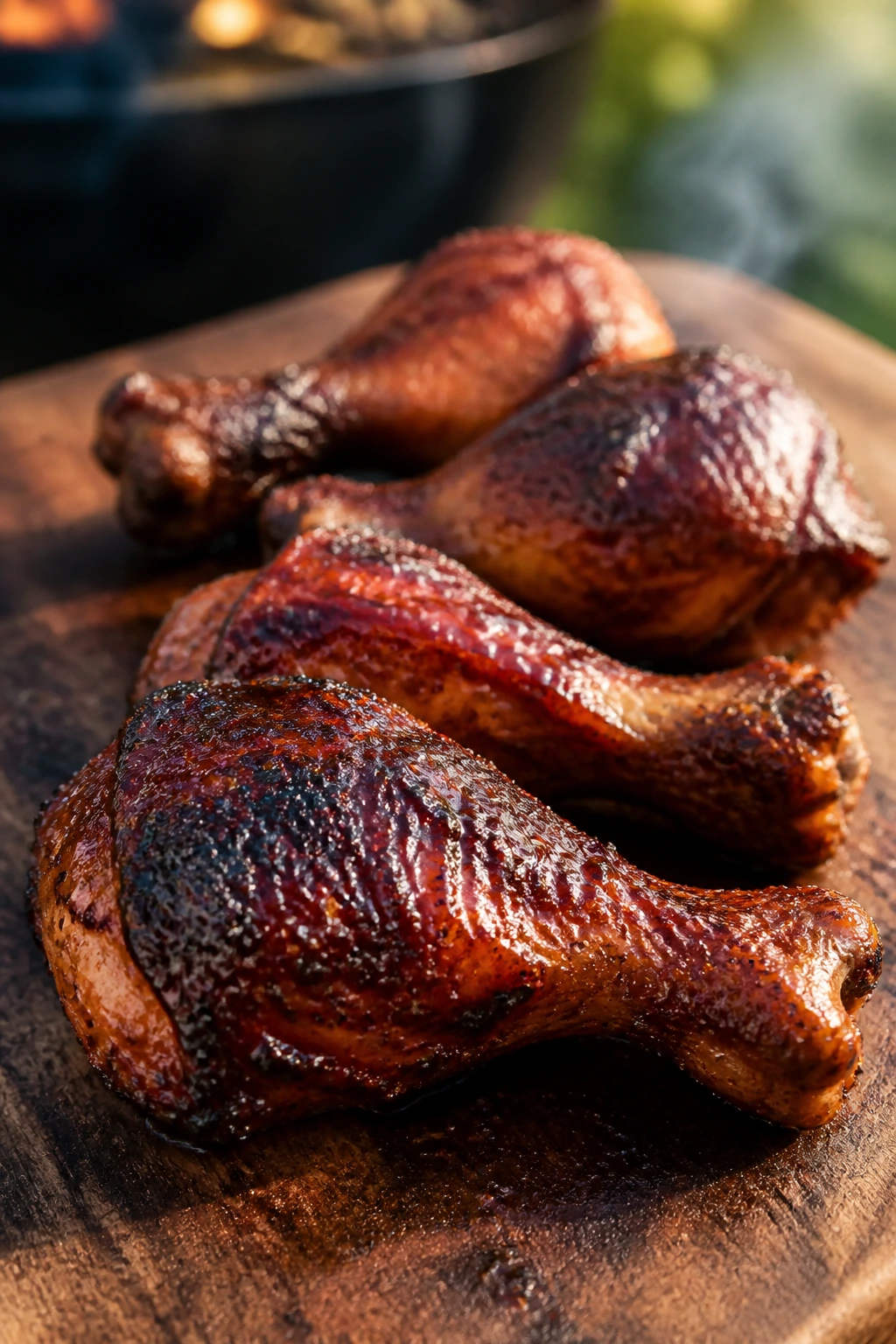
2. Smoked Paprika BBQ Chicken Drumsticks
Intro: Drumsticks are picnic chicken with manners. People can pick them up with one hand, the meat stays moist, and the skin gives you a little chew before it softens under a sticky glaze. The brown sugar and smoked paprika rub leaves a bark that tastes like summer cookout smoke without needing a complicated sauce situation.
Why It Works: Dark meat keeps more moisture than white meat, so drumsticks tolerate a longer grill time. A dry rub creates a seasoned crust before the barbecue sauce goes on, which matters because sugar burns fast on a hot grate. Cooking them over indirect heat first keeps the skin from blackening before the meat reaches temperature.
Key Ingredients:
- 3 pounds chicken drumsticks
- 2 tablespoons olive oil
- 2 tablespoons brown sugar
- 2 teaspoons smoked paprika
- 1 teaspoon garlic powder
- 1 teaspoon onion powder
- 1 teaspoon kosher salt
- 1 teaspoon black pepper
- 1 cup barbecue sauce
- 1 tablespoon apple cider vinegar
Quick Steps:
- Pat the drumsticks dry with paper towels, then rub them with olive oil.
- Mix the brown sugar, smoked paprika, garlic powder, onion powder, salt, and pepper in a bowl. Coat the drumsticks all over.
- Preheat the grill for two-zone cooking: medium heat on one side, lower or no direct flame on the other, about 375°F.
- Grill the drumsticks over indirect heat for 25 to 30 minutes, turning once or twice.
- Brush on the barbecue sauce mixed with apple cider vinegar, then move the drumsticks briefly over direct heat for 3 to 4 minutes to set the glaze.
- Pull them when the thickest part reaches 165°F and the juices run clear. Rest for 5 to 10 minutes.
Equipment for This Recipe:
- Grill with two heat zones
- Basting brush
- Tongs
- Sheet pan or tray for carrying
- Instant-read thermometer
How to Serve This Dish: Pile the drumsticks into a lined basket with coleslaw and cornbread on the side. For a picnic, wrap each drumstick in parchment or foil so the glaze stays on the chicken instead of on the napkins.
Pro Tips for This Recipe:
- Dry skin browns better. Wet chicken just steams.
- Sauce late. Sauce early, and the sugars scorch.
- If the skin looks pale after the indirect cook, give it a quick kiss of direct heat, not a long blast.
- A tiny splash of vinegar in the sauce keeps the glaze from feeling heavy.
Variations on This Dish:
- Carolina Tang: Use a thinner vinegar-based sauce instead of a sticky one.
- Hot Honey Drumsticks: Mix 1 to 2 tablespoons hot honey into the barbecue sauce.
- Dry-Rub Only: Skip the glaze and finish with chopped parsley and flaky salt.
Common Mistakes to Avoid with This Dish:
- Putting sauce on too early: The glaze burns before the chicken cooks through.
- Using only high heat: The outside turns dark while the inside stays underdone.
- Overcrowding the grate: Give each drumstick room, or the skin stays soft.
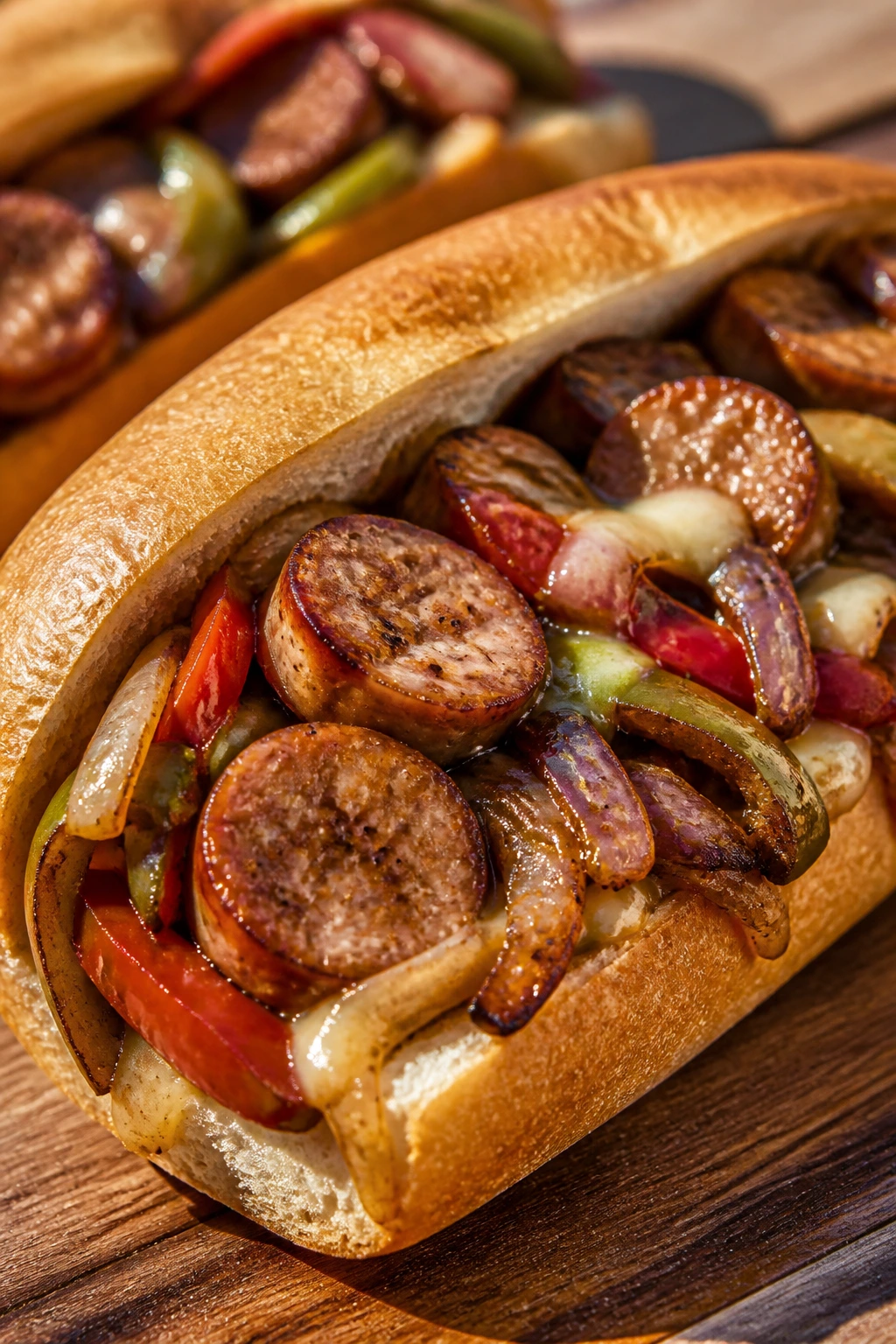
3. Sausage, Pepper, and Onion Hoagies
Intro: This is the sandwich that makes a picnic feel more like a street fair. The sausage grills until the casing tightens and blisters, the peppers sweeten, and the onions go soft enough to drape over the meat instead of bouncing off it. Put all of that in a toasted roll and the whole thing feels louder than the ingredient list.
Why It Works: Sausage already has fat and seasoning, which makes it one of the easiest things to grill for a crowd. Peppers and onions love the same heat, especially when they’re cooked in a grill basket where they can caramelize without falling through the grate. Toasting the rolls keeps them from collapsing under the juices.
Key Ingredients:
- 2 pounds sweet or hot Italian sausage links
- 3 bell peppers, sliced into strips
- 2 yellow onions, sliced into thick strips
- 2 tablespoons olive oil
- 1 teaspoon kosher salt
- 1 teaspoon dried oregano
- 1/2 teaspoon black pepper
- 6 hoagie rolls
- 6 slices provolone
- 1 tablespoon red wine vinegar
Quick Steps:
- Toss the peppers and onions with olive oil, salt, oregano, and pepper.
- Preheat the grill to medium, about 400°F.
- Grill the sausage links for 10 to 12 minutes, turning every few minutes until they reach 160°F.
- Cook the peppers and onions in a grill basket or heavy foil pan for 12 to 15 minutes, stirring once or twice, until softened and browned at the edges.
- Split the rolls and toast them cut-side down for 1 minute.
- Slice the sausage, tuck it into the rolls with peppers and onions, add provolone, and drizzle with red wine vinegar if you want a sharper finish.
Equipment for This Recipe:
- Grill basket or foil pan
- Tongs
- Sharp knife
- Sheet tray
- Grill thermometer
How to Serve This Dish: Wrap the hoagies in foil if you’re carrying them to a park, then slice them in half once the rolls have settled. A simple mustard, pickles, or a vinegar slaw on the side keeps the sandwich from feeling too dense.
Pro Tips for This Recipe:
- Use thick-cut peppers so they don’t melt away on the grill.
- Keep a cooler zone on the grill in case the sausage casing starts to burst.
- Toast the roll. Do not skip that part.
- A splash of vinegar at the end wakes up the onions after they’ve gone sweet.
Variations on This Dish:
- Chicken Sausage Hoagies: Swap in chicken sausage links for a leaner version.
- Spicy Giardiniera Style: Top with chopped pickled peppers for heat and crunch.
- Cheesy Melt Version: Add the provolone during the last minute and close the grill lid.
Common Mistakes to Avoid with This Dish:
- Slicing sausage before it rests: The juices run straight out onto the board.
- Using thin sandwich rolls: They go soggy under the fillings.
- Burning the onions: Char is good; bitter black edges are not.
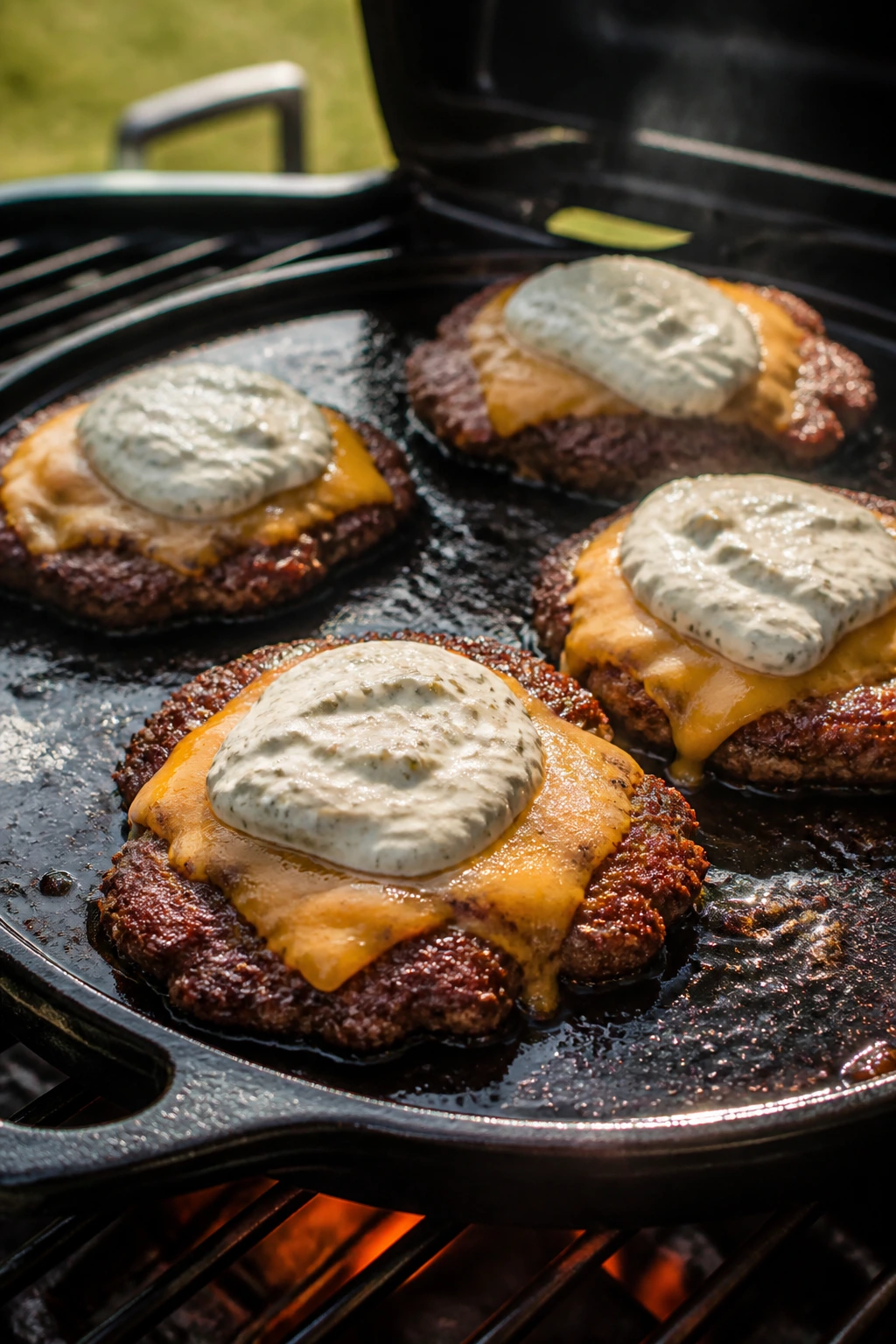
4. Smash Burgers with Pickle-Dill Sauce
Intro: Smash burgers are loud food. They hiss the second beef hits a hot surface, and that thin crust gives you more flavor than a thick patty ever could in the same amount of time. Add a pickle-dill sauce and sharp American cheese, and the sandwich lands between diner comfort and picnic chaos in the best way.
Why It Works: Ground chuck with enough fat—80/20 is the sweet spot—creates a crusty edge when it gets smashed against a ripping-hot cast-iron griddle or plancha. Thin patties cook fast, which keeps the interior juicy. The pickle-dill sauce cuts through the beef fat, and toasted buns stop the bottom half from turning limp.
Key Ingredients:
- 2 pounds ground chuck, 80/20
- 1 1/2 teaspoons kosher salt
- 1 teaspoon black pepper
- 8 burger buns
- 8 slices American cheese
- 1/2 cup mayonnaise
- 2 tablespoons dill pickle relish
- 1 tablespoon yellow mustard
- 1 teaspoon chopped dill
- 1 small onion, very thinly sliced
Quick Steps:
- Divide the beef into 8 loose balls, about 4 ounces each. Do not pack them tight.
- Mix the mayonnaise, pickle relish, mustard, and dill for the sauce. Set it aside.
- Preheat a cast-iron griddle or heavy skillet on the grill until smoking hot.
- Add the beef balls, season with salt and pepper, and smash each one flat with a spatula lined with parchment.
- Cook for 2 minutes, flip, add cheese, and cook 1 minute more until the cheese melts and the edges are crisp.
- Toast the buns, spread on the sauce, add the burgers and onions, and serve right away.
Equipment for This Recipe:
- Cast-iron griddle or heavy skillet
- Sturdy metal spatula
- Parchment squares
- Tongs
- Small bowl for sauce
How to Serve This Dish: Serve the burgers with potato chips, sliced tomatoes, and a pile of dill pickles. For a picnic, wrap each burger in parchment so the sauce stays where it belongs.
Pro Tips for This Recipe:
- Keep the beef cold until the last minute. Cold fat makes a better crust.
- Smash once, and only once.
- American cheese melts faster and smoother than most block cheeses here.
- Slice the onion paper-thin so it doesn’t fight the burger.
Variations on This Dish:
- Cheddar Smash: Use sharp cheddar if you want a more aggressive cheese flavor.
- Lettuce-Wrapped Version: Skip the bun and use large leaves of iceberg for a lighter handheld bite.
- Jalapeño Burger: Mix finely chopped pickled jalapeños into the sauce.
Common Mistakes to Avoid with This Dish:
- Pressing the burger after the flip: That squeezes out the juices.
- Using lean beef: You lose the crust and the moisture.
- Building the burger too early: Hot, sauced buns get messy fast.
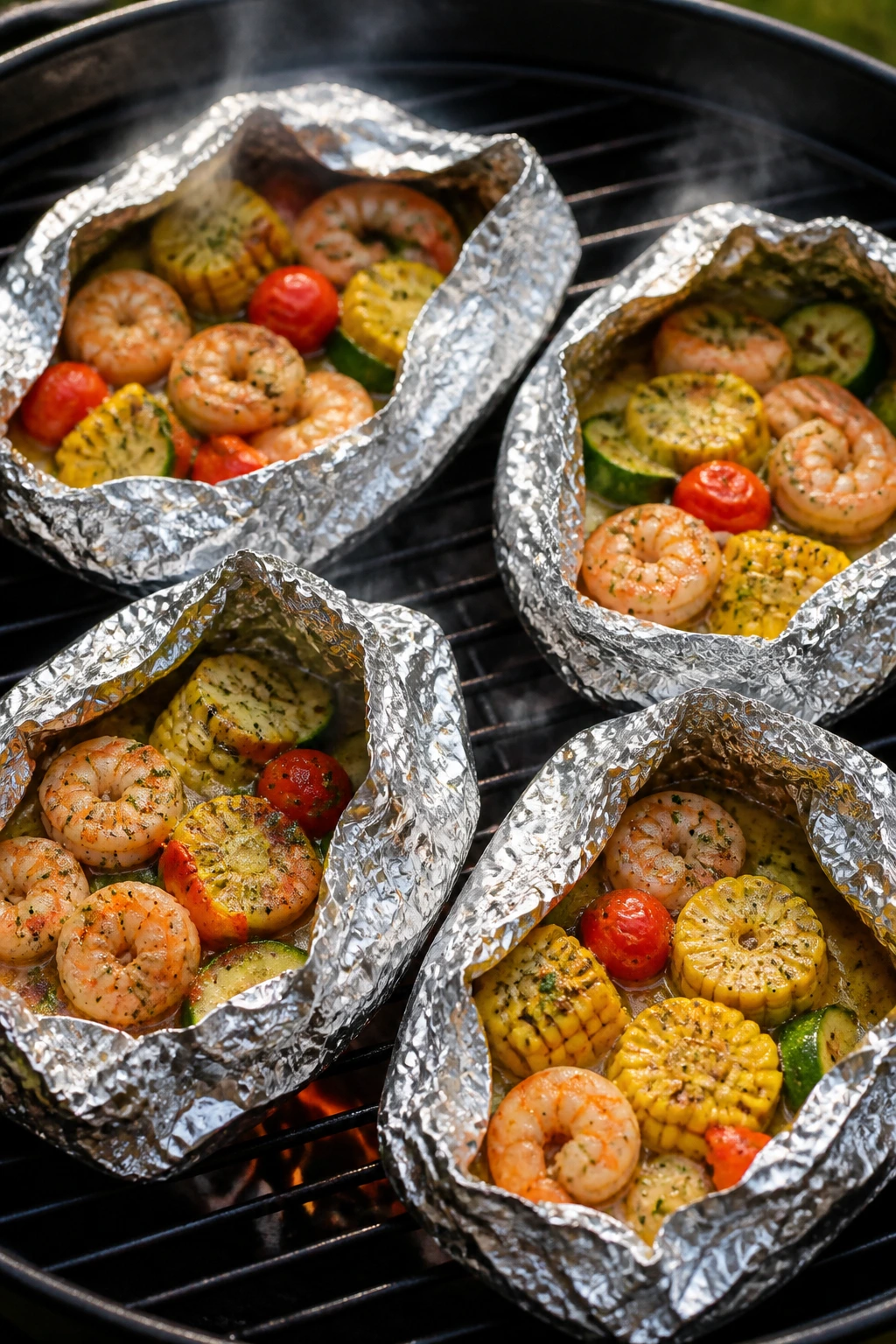
5. Garlic Butter Shrimp Foil Packs
Intro: Foil packets are picnic gold because they solve three problems at once: cleanup, transport, and timing. Shrimp cooks fast, corn brings sweetness, and butter plus garlic turns the whole packet into something that smells like you opened a restaurant kitchen over the grill.
Why It Works: Shrimp only needs a few minutes of heat, which makes it ideal when you don’t want to babysit a grill for half an hour. The foil traps steam just enough to keep the shrimp juicy while the corn and zucchini soften. Butter carries garlic better than oil alone, and lemon at the end keeps the packet from tasting flat.
Key Ingredients:
- 2 pounds large shrimp, peeled and deveined
- 4 tablespoons unsalted butter, melted
- 2 tablespoons olive oil
- 4 garlic cloves, minced
- 2 cups corn kernels
- 2 zucchini, sliced into half-moons
- 1 pint cherry tomatoes
- 1 teaspoon paprika
- 1 teaspoon kosher salt
- 1/2 teaspoon black pepper
- 1 lemon, cut into wedges
- 2 tablespoons chopped parsley
Quick Steps:
- Tear four large sheets of heavy-duty foil.
- Toss the shrimp, corn, zucchini, tomatoes, melted butter, olive oil, garlic, paprika, salt, and pepper in a bowl.
- Divide the mixture among the foil sheets and fold the packets shut, crimping the edges tightly.
- Grill over medium heat, about 400°F, for 8 to 10 minutes until the shrimp are pink and opaque.
- Open the packets carefully, squeeze on lemon, and finish with parsley.
Equipment for This Recipe:
- Heavy-duty foil
- Grill
- Mixing bowl
- Tongs
- Lemon juicer or fork
How to Serve This Dish: Spoon the contents over rice, or bring crusty bread to soak up the garlicky juices. At a picnic, serve the packets on a rimmed tray so nobody loses the butter on the way to the blanket.
Pro Tips for This Recipe:
- Use large shrimp so they don’t overcook in the foil.
- Don’t overfill the packets; steam needs room to move.
- Seal the foil well, but leave a little air space inside.
- Lemon goes on at the end. If it goes in too early, the flavor fades.
Variations on This Dish:
- Cajun Packet: Swap paprika for Cajun seasoning and add sliced andouille.
- Dairy-Free Version: Use more olive oil and a spoonful of olive brine for depth.
- Lemony Herb Pack: Add dill and chives for a brighter, greener finish.
Common Mistakes to Avoid with This Dish:
- Using tiny shrimp: They overcook before the vegetables are done.
- Poking holes in the foil: The butter leaks out and burns.
- Letting packets sit too long after grilling: Shrimp keeps cooking from the trapped heat.
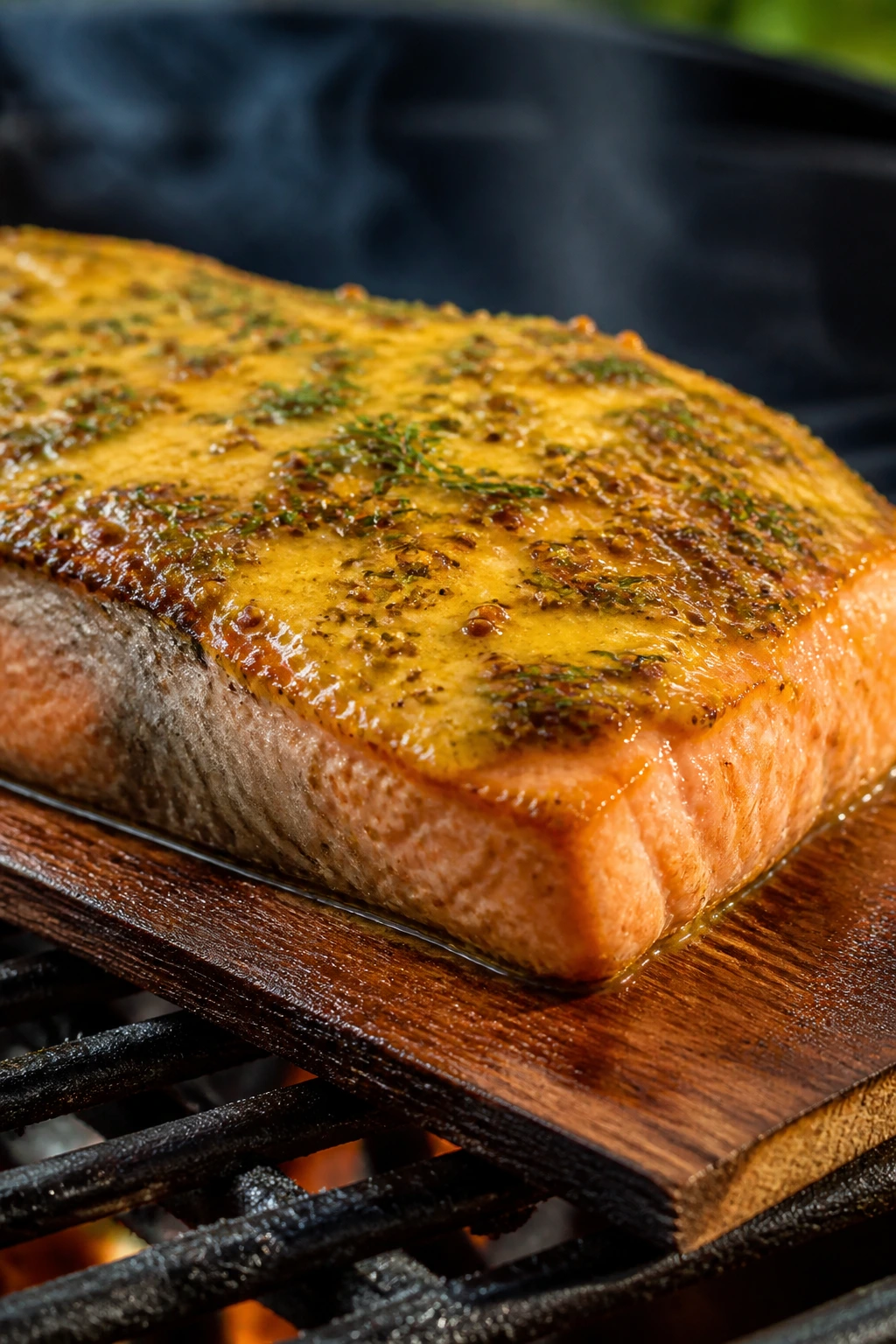
6. Cedar-Plank Salmon with Mustard-Dill Glaze
Intro: Cedar-plank salmon is the sort of thing that makes a picnic spread look deliberate without being fussy. The plank adds a soft wood smoke, the salmon stays moist, and the mustard-dill glaze gives every slice a bright, savory edge that feels right with cold salads and bread.
Why It Works: Salmon is rich enough to stand up to smoke, but delicate enough that a plank helps buffer the heat. The mustard and honey glaze browns without turning into burnt sugar when you keep the heat moderate. A center-cut fillet cooks evenly, which matters because the thin tail end can dry out before the thicker center is done.
Key Ingredients:
- 2 pounds salmon fillet, skin on
- 1 cedar plank, soaked in water for at least 1 hour
- 2 tablespoons Dijon mustard
- 1 tablespoon honey
- 1 tablespoon olive oil
- 2 tablespoons chopped dill
- 1 lemon, half sliced and half juiced
- 1 teaspoon kosher salt
- 1/2 teaspoon black pepper
Quick Steps:
- Soak the cedar plank in water for at least 1 hour, weighted down so it stays submerged.
- Mix the Dijon, honey, olive oil, dill, lemon juice, salt, and pepper.
- Pat the salmon dry and place it skin-side down on the soaked plank. Spread the glaze over the top.
- Preheat the grill to medium, about 375°F, and place the plank over indirect heat.
- Grill for 12 to 15 minutes, until the salmon flakes easily and reaches about 125°F for medium or 145°F if you like it fully cooked.
- Finish with lemon slices and a little extra dill.
Equipment for This Recipe:
- Cedar plank
- Grill with a lid
- Fish spatula or wide turner
- Small bowl
- Instant-read thermometer
How to Serve This Dish: Serve the salmon with cucumber salad, grilled bread, or a bowl of potato salad. It slices neatly once it rests for a few minutes, which makes it easy to portion at a picnic table.
Pro Tips for This Recipe:
- Buy skin-on fillet if you can. It holds together better on the plank.
- If the plank starts to smoke hard, move it to a cooler area of the grill.
- Don’t overdo the honey; too much sugar can darken before the fish cooks.
- A little cold dill stirred in after grilling keeps the herb flavor sharper.
Variations on This Dish:
- Maple-Dijon Salmon: Swap honey for maple syrup.
- Lemon-Pepper Salmon: Skip the dill and lean on lemon zest and cracked pepper.
- Herb-Crusted Version: Add chopped parsley and chives to the glaze.
Common Mistakes to Avoid with This Dish:
- Using a dry plank: It can catch too fast and taste harsh.
- Cooking over direct flame: The skin and glaze can char before the fish cooks through.
- Moving the salmon too soon: Let it sit so the flesh stays in broad flakes, not broken bits.
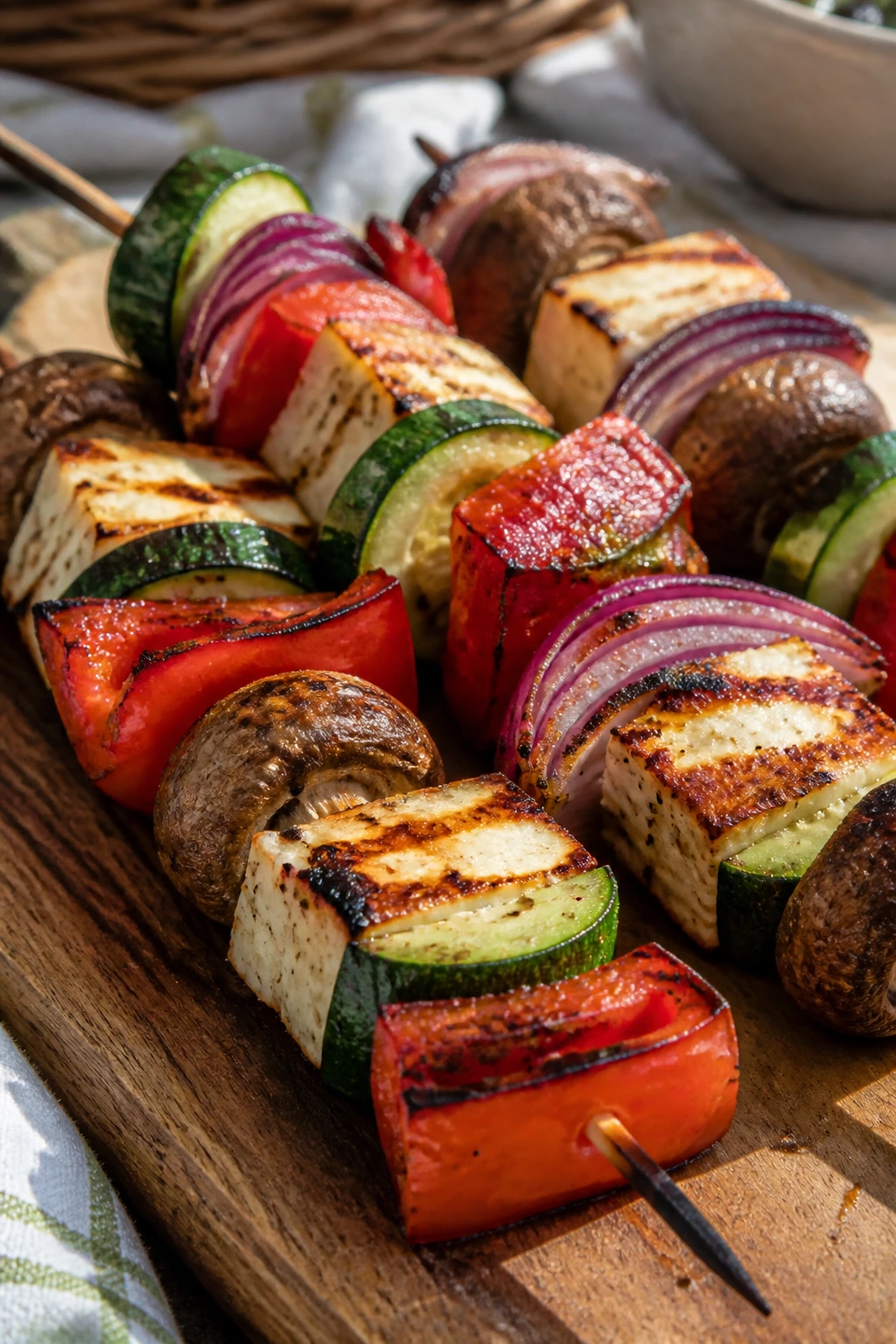
7. Halloumi and Vegetable Skewers
Intro: Halloumi is one of those ingredients that acts like it was invented for the grill. It tightens, browns, and gets a salty, squeaky bite that plays beautifully against zucchini, peppers, and mushrooms. You can carry the skewers in a container and they still taste like you planned ahead.
Why It Works: Halloumi holds its shape under high heat, so it browns before it melts. That makes it a useful vegetarian protein for a picnic spread where you still want something hearty enough to eat with your hands. The vegetables roast quickly on the skewer, and the lemon-oregano dressing keeps the whole thing from feeling heavy.
Key Ingredients:
- 14 ounces halloumi, cut into 1-inch cubes
- 2 zucchini, cut into thick half-moons
- 1 red bell pepper, cut into squares
- 1 red onion, cut into wedges
- 8 ounces mushrooms, stems trimmed
- 3 tablespoons olive oil
- 1 tablespoon lemon juice
- 1 teaspoon dried oregano
- 1/2 teaspoon black pepper
- 1 lemon, cut into wedges for serving
Quick Steps:
- Toss the vegetables and halloumi gently with olive oil, lemon juice, oregano, and pepper.
- Thread the halloumi and vegetables onto skewers, alternating colors so the skewers cook evenly and look lively on the platter.
- Preheat the grill to medium-high, about 425°F.
- Grill the skewers for 8 to 10 minutes, turning every 2 minutes, until the halloumi is browned and the vegetables have charred edges.
- Finish with lemon wedges.
Equipment for This Recipe:
- Metal or soaked wooden skewers
- Grill basket or standard grill grate
- Tongs
- Mixing bowl
- Knife
How to Serve This Dish: Serve these with pita, hummus, or a bowl of tzatziki. They also make a good room-temp picnic bite, especially if you tuck them into a container with a little extra lemon on the side.
Pro Tips for This Recipe:
- Dry the halloumi with a paper towel before skewering so it browns instead of steaming.
- Cut the zucchini thick enough to stay on the skewer.
- Keep the grill hot. Halloumi likes a firm sear.
- Soak wooden skewers well or they’ll scorch at the tips.
Variations on This Dish:
- Chili-Honey Halloumi: Drizzle with hot honey after grilling.
- Tofu Swap: Use extra-firm tofu, pressed dry and cut into cubes, if you need a vegan version.
- Mediterranean Mix: Add cherry tomatoes and olives after grilling.
Common Mistakes to Avoid with This Dish:
- Over-salting the vegetables: Halloumi already brings plenty of salt.
- Grilling too gently: You need heat for browning.
- Packing the skewers too tight: Airflow helps the edges crisp.
8. Chili-Lime Elote
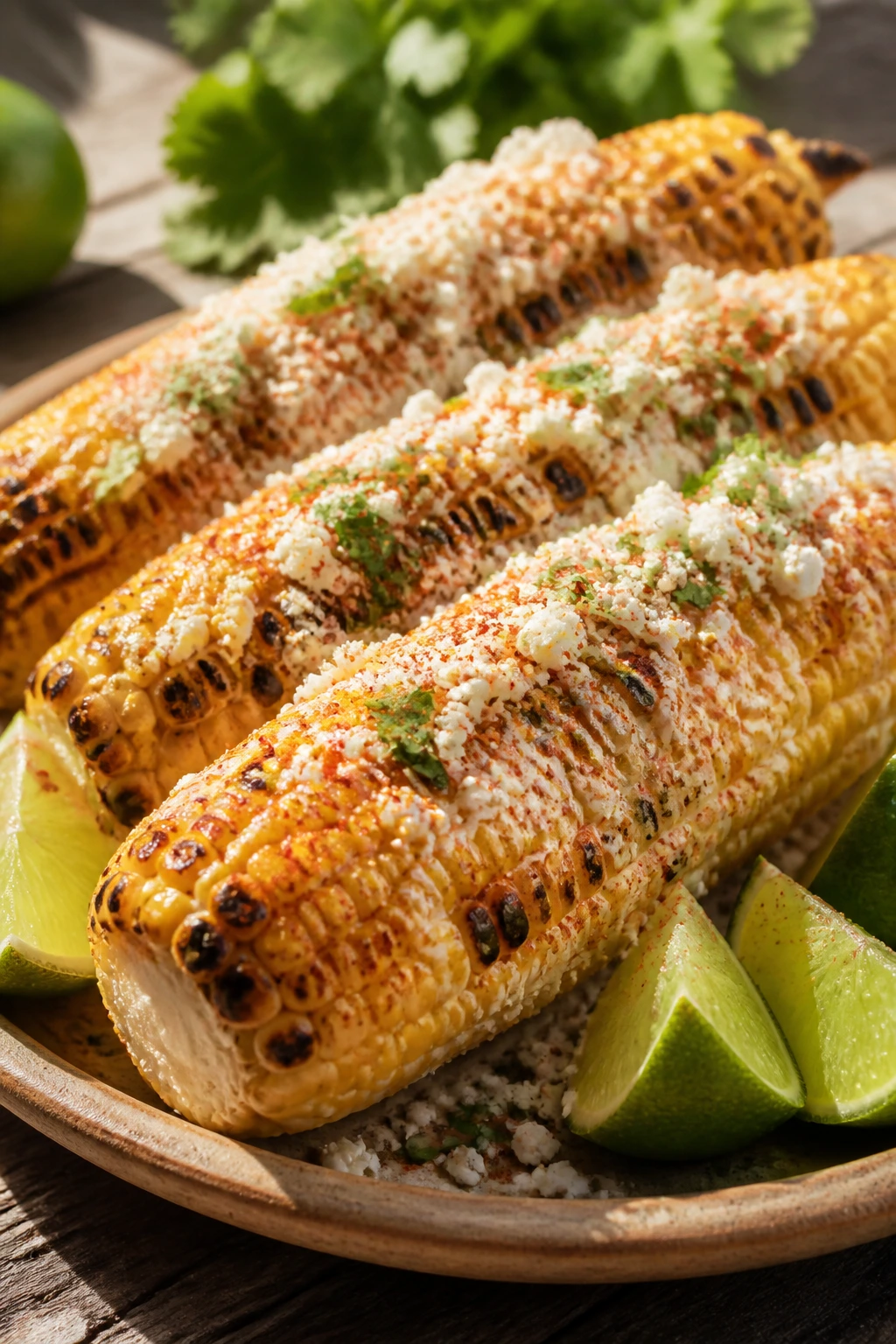
Intro: Elote belongs on a picnic table. The corn is sweet enough to need only a little help, and once it gets charred and dressed with chile, lime, and cotija, you end up with the kind of side dish people finish before the mains are ready.
Why It Works: Fresh corn has enough sugar to caramelize on the grill, so you get a sweet, smoky bite without much effort. The mayonnaise-and-sour-cream coating gives the seasoning something to cling to. Cotija adds a salty crumble that keeps each bite from tasting one-note.
Key Ingredients:
- 6 ears corn, husked
- 1/2 cup mayonnaise
- 1/4 cup sour cream
- 1 lime, juiced
- 1 teaspoon chili powder
- 1/2 teaspoon smoked paprika
- 1/2 cup cotija cheese, crumbled
- 2 tablespoons chopped cilantro
- 1/2 teaspoon kosher salt
Quick Steps:
- Preheat the grill to medium-high, about 425°F.
- Grill the corn directly on the grates for 10 to 12 minutes, turning every few minutes until browned in spots.
- Stir the mayonnaise, sour cream, lime juice, chili powder, paprika, and salt in a bowl.
- Brush or spoon the mixture over the hot corn.
- Finish with cotija and cilantro, then serve with lime wedges.
Equipment for This Recipe:
- Grill
- Pastry brush or spoon
- Small bowl
- Tongs
- Serving platter
How to Serve This Dish: Serve the ears whole with napkins, or cut each cob into thirds for easier picnic handling. If you want a less messy option, shave the kernels off after grilling and toss everything into a bowl.
Pro Tips for This Recipe:
- Keep some husk on the bottom of the ear if you want a built-in handle.
- Grill the corn until you see real browning, not just heat marks.
- Cotija is worth buying here; feta works in a pinch, but the texture is different.
- Lime goes on both the sauce and the finish if you want the sharpest flavor.
Variations on This Dish:
- Tajín Corn: Use Tajín instead of chili powder.
- Garlic-Lime Elote: Add 1 grated garlic clove to the creamy sauce.
- Dairy-Free Version: Use vegan mayo and a spoonful of cashew cream.
Common Mistakes to Avoid with This Dish:
- Under-charring the corn: Pale corn tastes boiled, not grilled.
- Drowning the ears in sauce: You want a coating, not a slip hazard.
- Waiting too long to dress it: Hot corn grabs the sauce best.
9. Grilled Potato Salad with Dijon Vinaigrette
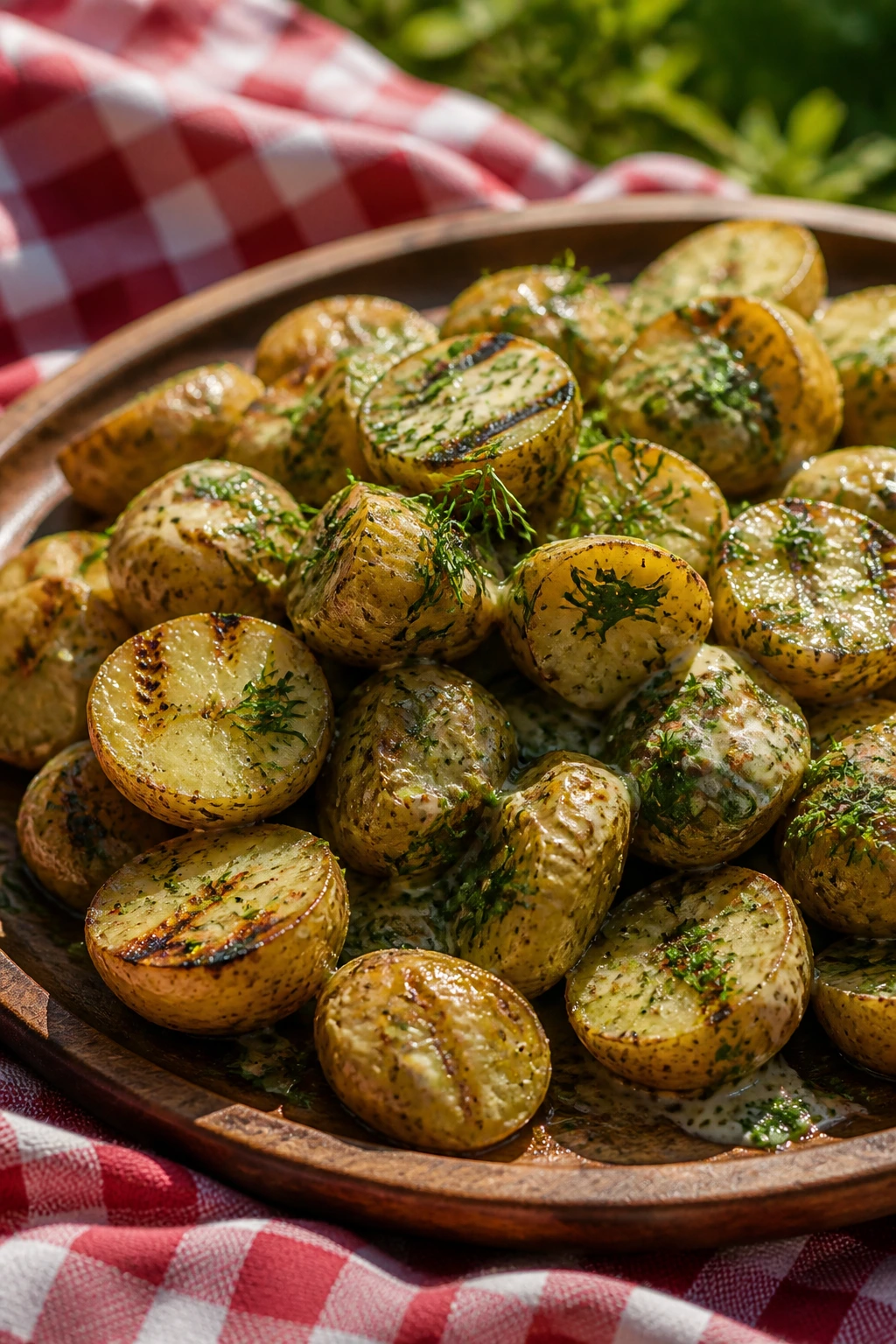
Intro: Potato salad does not have to be a cold, bland bowl of mayo waiting on the edge of the picnic blanket. Grill it, and the potatoes pick up smoky edges while staying creamy inside. The vinaigrette keeps the whole thing sharp enough to hold its own beside ribs, burgers, or salmon.
Why It Works: Waxy baby potatoes keep their shape after boiling and grilling, which makes them better than russets here. A Dijon vinaigrette clings to the warm potatoes and soaks in as they cool, so the salad tastes seasoned all the way through instead of only on the surface. Grilling the cut sides adds texture without turning the potatoes dry.
Key Ingredients:
- 2 1/2 pounds baby Yukon Gold or red potatoes
- 3 tablespoons olive oil
- 1 teaspoon kosher salt
- 1/4 cup olive oil
- 3 tablespoons Dijon mustard
- 2 tablespoons apple cider vinegar
- 1 small shallot, minced
- 2 tablespoons chopped dill
- 2 tablespoons chopped parsley
- 1/2 teaspoon black pepper
Quick Steps:
- Boil the potatoes in salted water for 10 to 12 minutes until just tender. Drain and let them steam dry for 5 minutes.
- Halve the potatoes, toss them with 3 tablespoons olive oil and the salt, and place them cut-side down in a grill basket or on a tray that can handle heat.
- Grill over medium heat for 6 to 8 minutes, until the cut sides are browned.
- Whisk the remaining olive oil, Dijon, vinegar, shallot, dill, parsley, and black pepper.
- Toss the warm potatoes with the vinaigrette and let them sit for 10 minutes before serving.
Equipment for This Recipe:
- Large pot
- Colander
- Grill basket or grill-safe tray
- Mixing bowl
- Whisk
How to Serve This Dish: Serve it warm, room temp, or slightly chilled. That flexibility is why it shows up so often next to grilled meat at a picnic.
Pro Tips for This Recipe:
- Salt the boiling water generously so the potatoes season from the inside.
- Let the potatoes steam dry before grilling or they’ll stick.
- Dress them while they’re still warm. That’s when they soak up the vinaigrette best.
- Fresh dill makes this salad taste sharper than dried dill ever will.
Variations on This Dish:
- Bacon-Dijon Salad: Fold in crumbled cooked bacon at the end.
- Herby Green Version: Add chopped chives and tarragon.
- Mustard-Free Version: Use olive oil, lemon juice, and a spoon of grainy mustard if Dijon is too assertive for your crowd.
Common Mistakes to Avoid with This Dish:
- Using floury potatoes: They break apart and go chalky.
- Overboiling: The potatoes should be tender, not collapsing.
- Throwing on dressing when they’re cold: Cold potatoes do not absorb flavor the same way.
10. Tomato-Mozzarella Basil Flatbreads
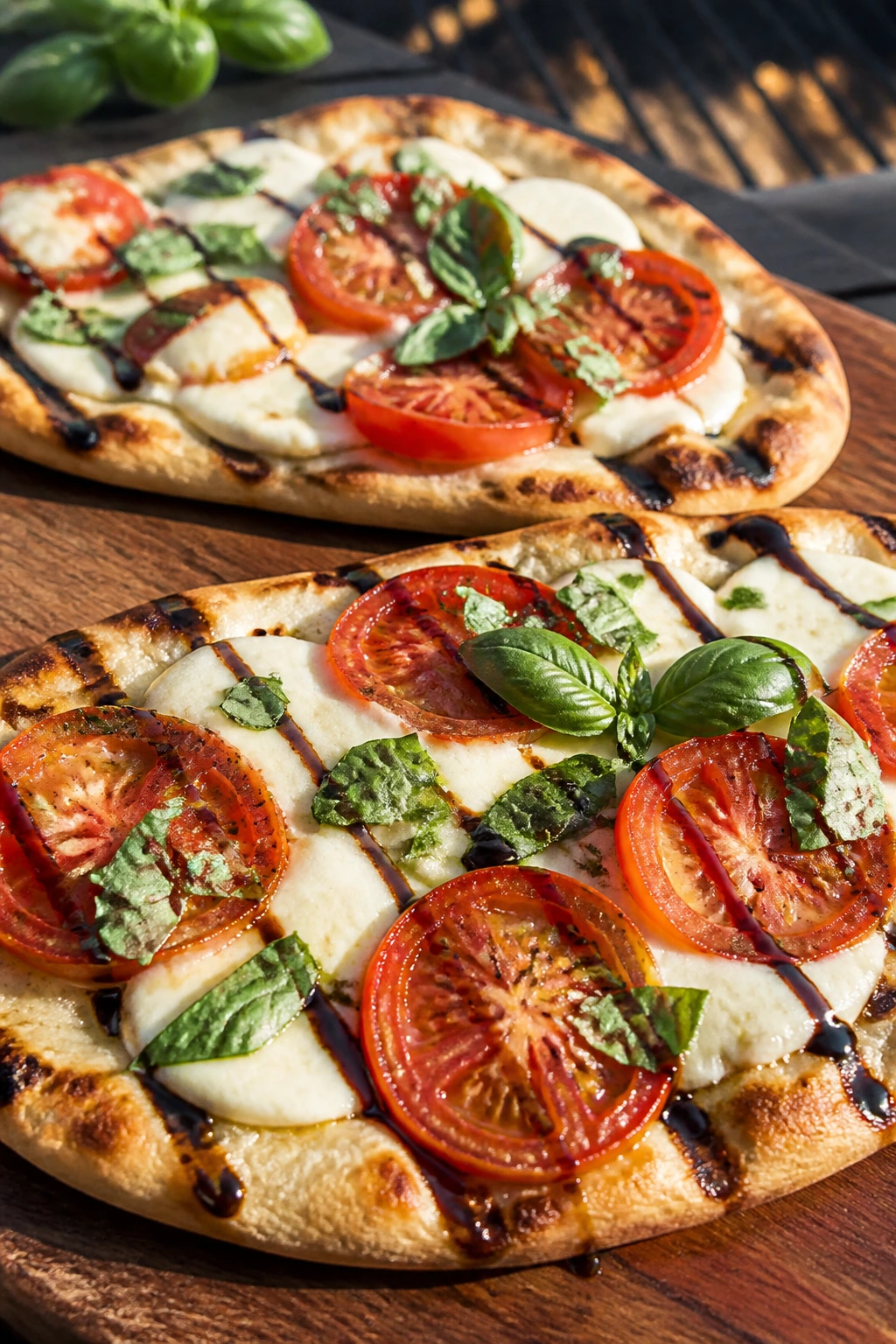
Intro: Flatbread on the grill is one of those tricks that feels fancier than it is. The bread gets crisp, the mozzarella melts in soft puddles, and the tomatoes soften just enough to taste sweeter without losing their shape. It’s a picnic appetizer that can disappear before you’ve set down the tray.
Why It Works: Store-bought naan or flatbread gives you a built-in head start. A short grill time crisps the surface while the topping melts in place, so you get pizza-like satisfaction without needing an oven. Drying the tomatoes keeps the bread from turning wet and sad.
Key Ingredients:
- 2 pieces naan or flatbread
- 1 cup shredded mozzarella
- 2 plum tomatoes, thinly sliced
- 1 garlic clove, peeled
- 2 tablespoons olive oil
- 1/2 teaspoon kosher salt
- 1/4 teaspoon black pepper
- 1/4 cup fresh basil leaves
- 1 to 2 tablespoons balsamic glaze
Quick Steps:
- Preheat the grill to medium, about 400°F.
- Brush the flatbreads lightly with olive oil and grill for 1 minute per side until marked.
- Rub the warm bread with the garlic clove, then top with mozzarella and tomato slices.
- Close the grill lid and cook for 2 to 3 minutes until the cheese melts.
- Finish with basil, salt, pepper, and balsamic glaze.
Equipment for This Recipe:
- Grill
- Tongs or a spatula
- Cutting board
- Sharp knife
- Small brush
How to Serve This Dish: Slice into strips or squares and serve as an appetizer before the burgers come off the grate. It also holds up well at room temperature, which makes it useful when the rest of the picnic is still getting organized.
Pro Tips for This Recipe:
- Pat the tomato slices dry. Water is the enemy here.
- Add basil after grilling so it stays bright.
- Use mozzarella that melts well; fresh mozzarella is tasty, but it can release a lot of water.
- Don’t walk away from the bread. The jump from crisp to scorched is fast.
Variations on This Dish:
- Pesto Flatbread: Swap balsamic glaze for pesto.
- Prosciutto Finish: Add thin slices after grilling.
- Dairy-Free Version: Use a good melting plant-based cheese and a touch more olive oil.
Common Mistakes to Avoid with This Dish:
- Loading it with too many wet toppings: The bread gets soggy.
- Using high heat: The bottom burns before the cheese melts.
- Slicing too soon: Give the cheese a minute to settle.
11. Portobello Mushroom Burgers
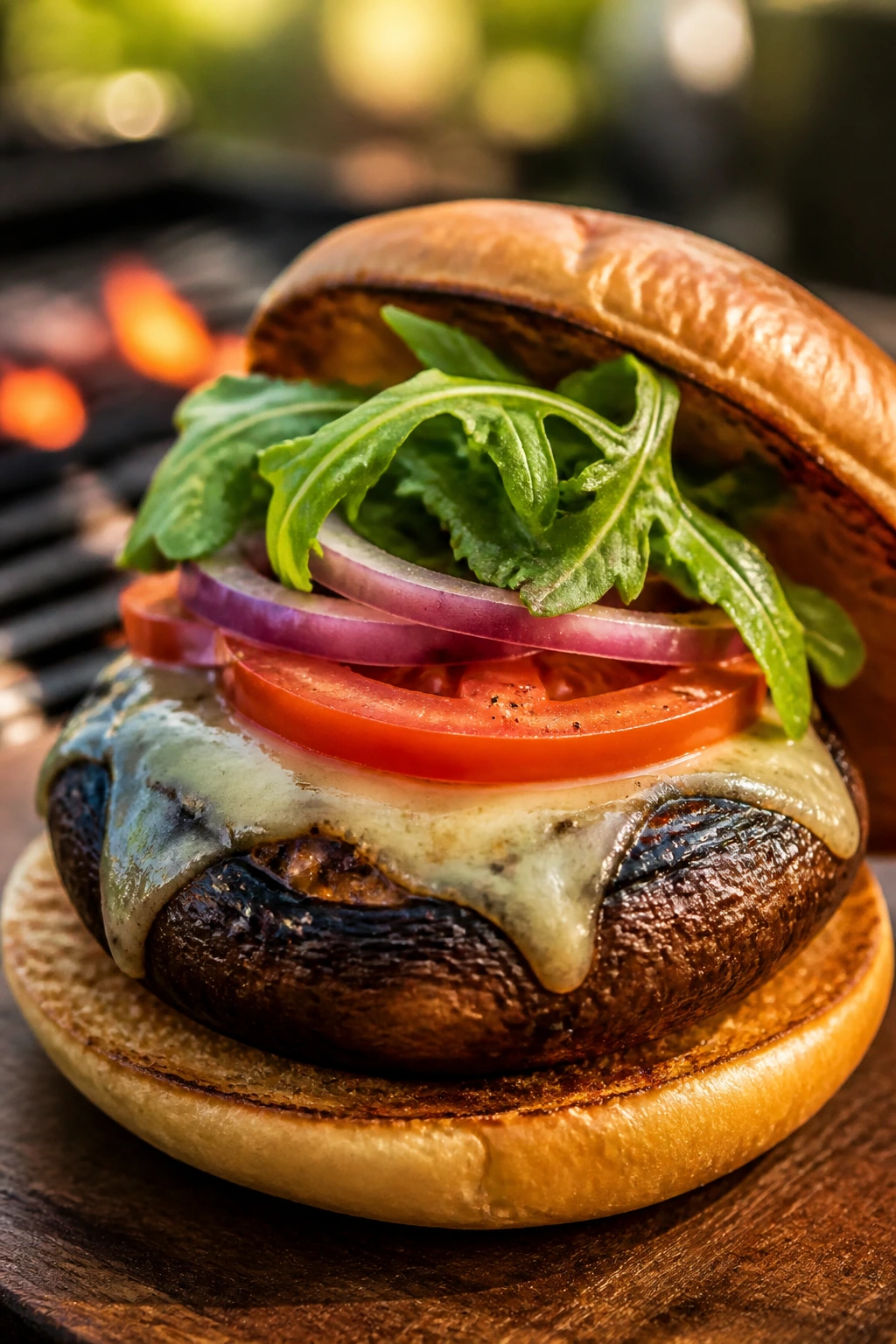
Intro: A good portobello burger should feel hearty, not apologetic. The mushroom cap gets meaty over heat, the balsamic marinade gives it a dark, savory edge, and the bun catches all the juices in a way that makes you forget you’re not eating beef.
Why It Works: Portobellos have enough surface area to take on marinade and enough density to hold up on the grill. A quick cook over medium heat softens the mushroom without making it limp. Toasted buns and a little cheese help the burger feel complete, not like a compromise.
Key Ingredients:
- 4 large portobello mushroom caps
- 3 tablespoons olive oil
- 2 tablespoons balsamic vinegar
- 2 garlic cloves, minced
- 1 teaspoon soy sauce
- 1/2 teaspoon black pepper
- 4 burger buns
- 4 slices provolone
- Lettuce and tomato for serving
Quick Steps:
- Remove the stems and gently scrape out the gills if you want a cleaner look.
- Whisk the olive oil, balsamic vinegar, garlic, soy sauce, and pepper. Brush it over both sides of the mushroom caps and let them sit for 15 minutes.
- Preheat the grill to medium, about 400°F.
- Grill the mushrooms for 4 to 5 minutes per side until tender and browned.
- Add the provolone during the last minute, toast the buns, and build the burgers with lettuce and tomato.
Equipment for This Recipe:
- Grill
- Pastry brush
- Tongs
- Small bowl
- Knife
How to Serve This Dish: Serve the burgers with slaw, fries, or grilled corn. They travel well if you keep the mushrooms and buns separate until the last minute.
Pro Tips for This Recipe:
- Don’t marinate for hours. Mushrooms can get soggy if they sit too long.
- Pat the caps dry before grilling if they look wet.
- Choose large, firm caps with tight, clean gills.
- A little cheese helps the burger feel richer without burying the mushroom.
Variations on This Dish:
- Caprese Portobello: Add tomato slices and basil after grilling.
- Vegan Burger: Use hummus or avocado instead of cheese.
- Blue Cheese Version: Crumble blue cheese on top for a sharper finish.
Common Mistakes to Avoid with This Dish:
- Using tiny mushrooms: They shrink too fast.
- Over-marinating: The caps turn soft and lose texture.
- Skipping the toast on the buns: That’s how you get a soggy bottom.
12. Teriyaki Chicken Thighs
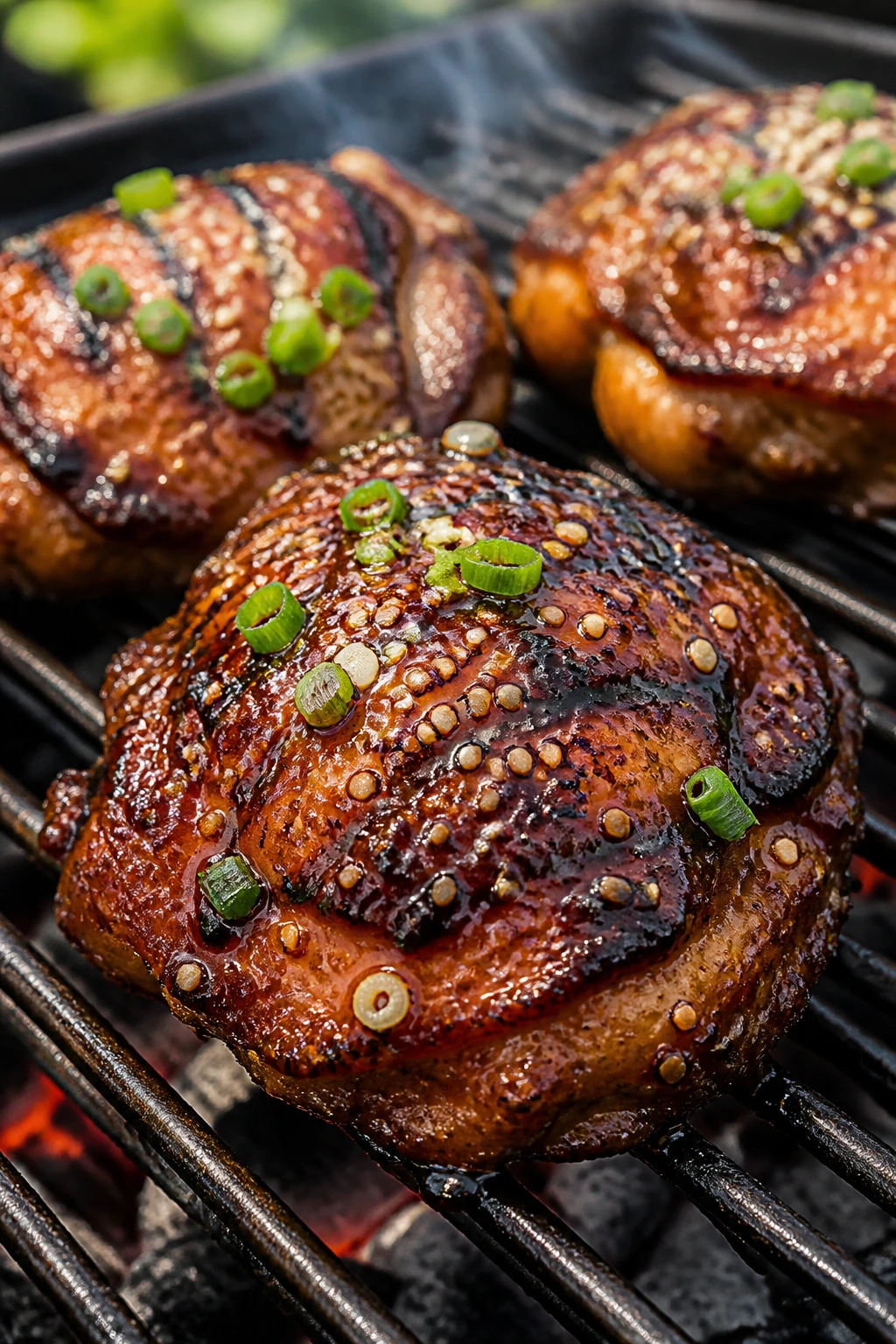
Intro: Teriyaki belongs on the grill because the sugar in the sauce caramelizes around the edges and gives the chicken a sticky finish that tastes like it took more work than it did. Thighs hold onto that glaze without drying out, and the sesame-scallion finish makes the dish feel complete.
Why It Works: Chicken thighs stay juicy over medium-high heat, which matters when the marinade contains brown sugar. The sauce reduces into a shiny glaze if you brush it on near the end instead of at the start. Ginger and garlic cut through the sweetness so the chicken doesn’t taste like candy.
Key Ingredients:
- 2 pounds boneless chicken thighs
- 1/2 cup soy sauce
- 1/4 cup brown sugar
- 2 tablespoons rice vinegar
- 1 tablespoon grated fresh ginger
- 2 garlic cloves, minced
- 1 tablespoon sesame oil
- 2 tablespoons water
- 2 scallions, sliced
- 1 tablespoon sesame seeds
Quick Steps:
- Whisk the soy sauce, brown sugar, rice vinegar, ginger, garlic, sesame oil, and water.
- Add the chicken thighs and marinate for 30 minutes to 4 hours.
- Preheat the grill to medium-high, about 425°F.
- Grill the chicken for 5 to 6 minutes per side until browned and the internal temperature reaches 165°F.
- Brush with a little extra sauce during the last 2 minutes, then rest for 5 minutes and finish with scallions and sesame seeds.
Equipment for This Recipe:
- Mixing bowl
- Grill
- Tongs
- Small saucepan or brush
- Thermometer
How to Serve This Dish: Serve the thighs sliced over rice, tucked into lettuce cups, or packed cold with cucumber salad. The glaze holds up well, which is why leftovers are useful the next day.
Pro Tips for This Recipe:
- Reserve some sauce before adding the raw chicken if you want extra for basting.
- Keep the heat steady. Sugar burns when the flame gets too hot.
- Thighs are forgiving, but don’t let them go dry past the 165°F mark.
- A few sesame seeds go a long way; too many just scatter off the plate.
Variations on This Dish:
- Pineapple Teriyaki: Add 1/4 cup pineapple juice to the marinade.
- Spicy Gochujang Version: Stir in 1 tablespoon gochujang for heat and depth.
- Gluten-Free Swap: Use tamari instead of soy sauce.
Common Mistakes to Avoid with This Dish:
- Brushing raw marinade on at the end: That’s a food safety problem unless you boil it first.
- Grilling too hot: The sugars blacken before the chicken is cooked.
- Cutting right away: The juices need a few minutes to settle.
13. Grilled Chicken Quesadillas
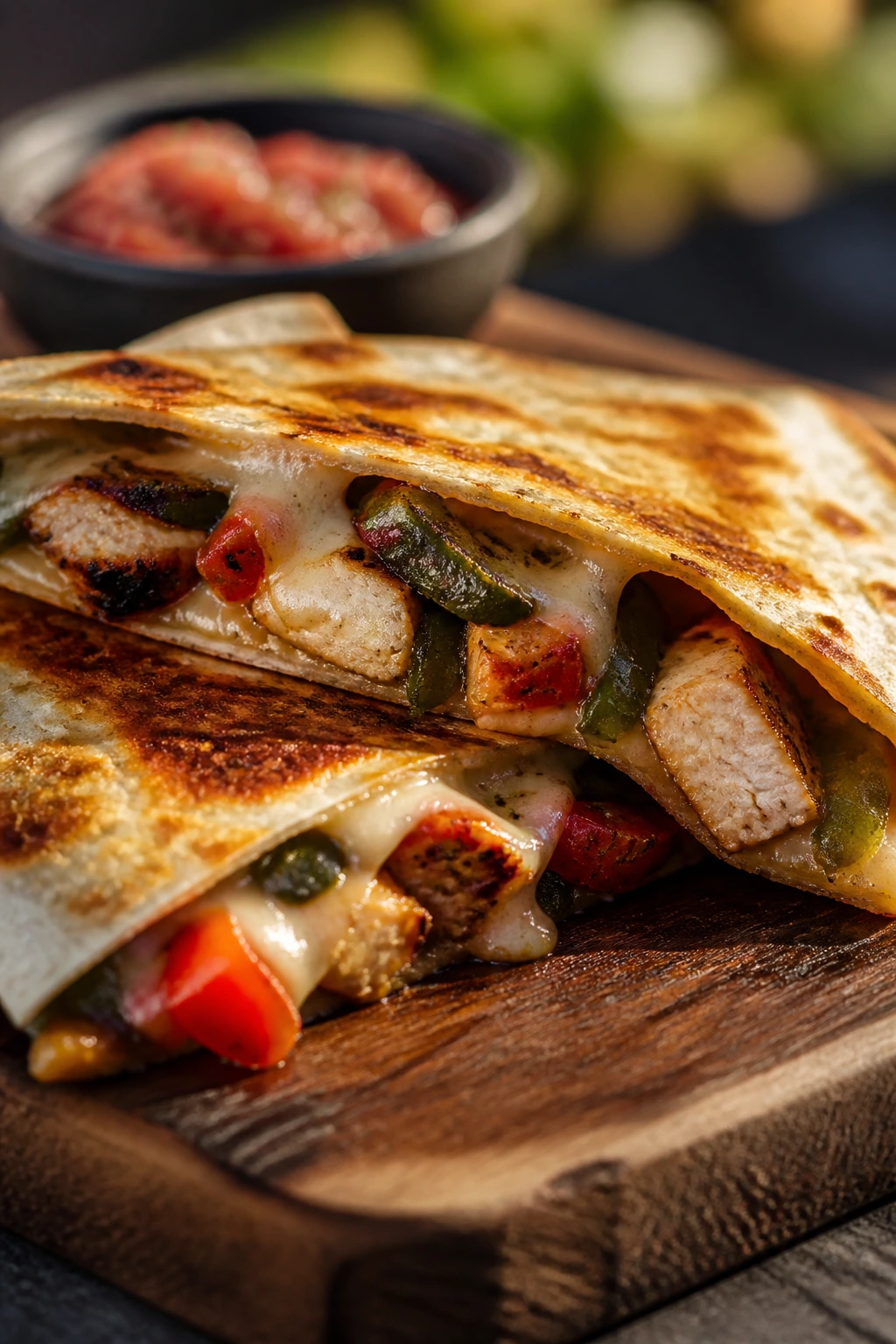
Intro: Quesadillas are picnic food that doesn’t ask for much. Grill the chicken, char the pepper, melt the cheese, and you’ve got a folded meal that can be sliced into wedges or eaten from the foil. They’re sturdy, cheesy, and a little smoky in a way that suits outdoor eating.
Why It Works: Grilled chicken and charred poblano bring flavor that plain shredded chicken can’t match. Monterey Jack melts cleanly, which gives the tortilla a sealed edge and helps the filling stay put. A short grill time on the finished quesadilla crisps the outside without drying out the chicken.
Key Ingredients:
- 1 pound boneless chicken thighs or breasts
- 2 tablespoons olive oil
- 1 teaspoon ground cumin
- 1 teaspoon chili powder
- 1 teaspoon kosher salt
- 4 large flour tortillas
- 2 cups shredded Monterey Jack cheese
- 1 cup grilled corn kernels
- 1 poblano pepper, grilled and diced
- 1/4 cup chopped cilantro
- Salsa or sour cream for serving
Quick Steps:
- Rub the chicken with olive oil, cumin, chili powder, and salt.
- Grill the chicken over medium-high heat for 5 to 7 minutes per side until cooked through, then rest and chop.
- Grill the poblano until blistered, then dice it.
- Lay two tortillas flat, sprinkle on cheese, chicken, corn, poblano, and cilantro, then top with more cheese and another tortilla.
- Grill each quesadilla for 2 to 3 minutes per side over medium heat until crisp and the cheese melts.
- Rest for 1 minute, then cut into wedges.
Equipment for This Recipe:
- Grill or grill-safe skillet
- Spatula
- Knife and cutting board
- Tongs
- Sheet pan
How to Serve This Dish: Pack the wedges in foil and serve with salsa, lime wedges, and cold sour cream. They’re easy to hold, which is part of the appeal when picnic tables are full or nonexistent.
Pro Tips for This Recipe:
- Let the chicken cool slightly before chopping so it doesn’t steam the tortilla from the inside.
- Cheese on both the top and bottom helps “glue” the quesadilla together.
- Don’t overload the filling or the tortilla will split.
- Medium heat is enough. High heat gives you a dark tortilla and cold cheese.
Variations on This Dish:
- Steak Quesadilla: Swap in grilled skirt steak.
- Black Bean Version: Add rinsed black beans for more heft.
- Jalapeño Cheese: Mix sliced pickled jalapeños into the filling.
Common Mistakes to Avoid with This Dish:
- Filling with wet salsa: It leaks and softens the tortilla.
- Skipping the resting minute: The cheese will slide out.
- Using too much heat: The outside crisps faster than the inside melts.
14. Honey-Mustard Pork Chops
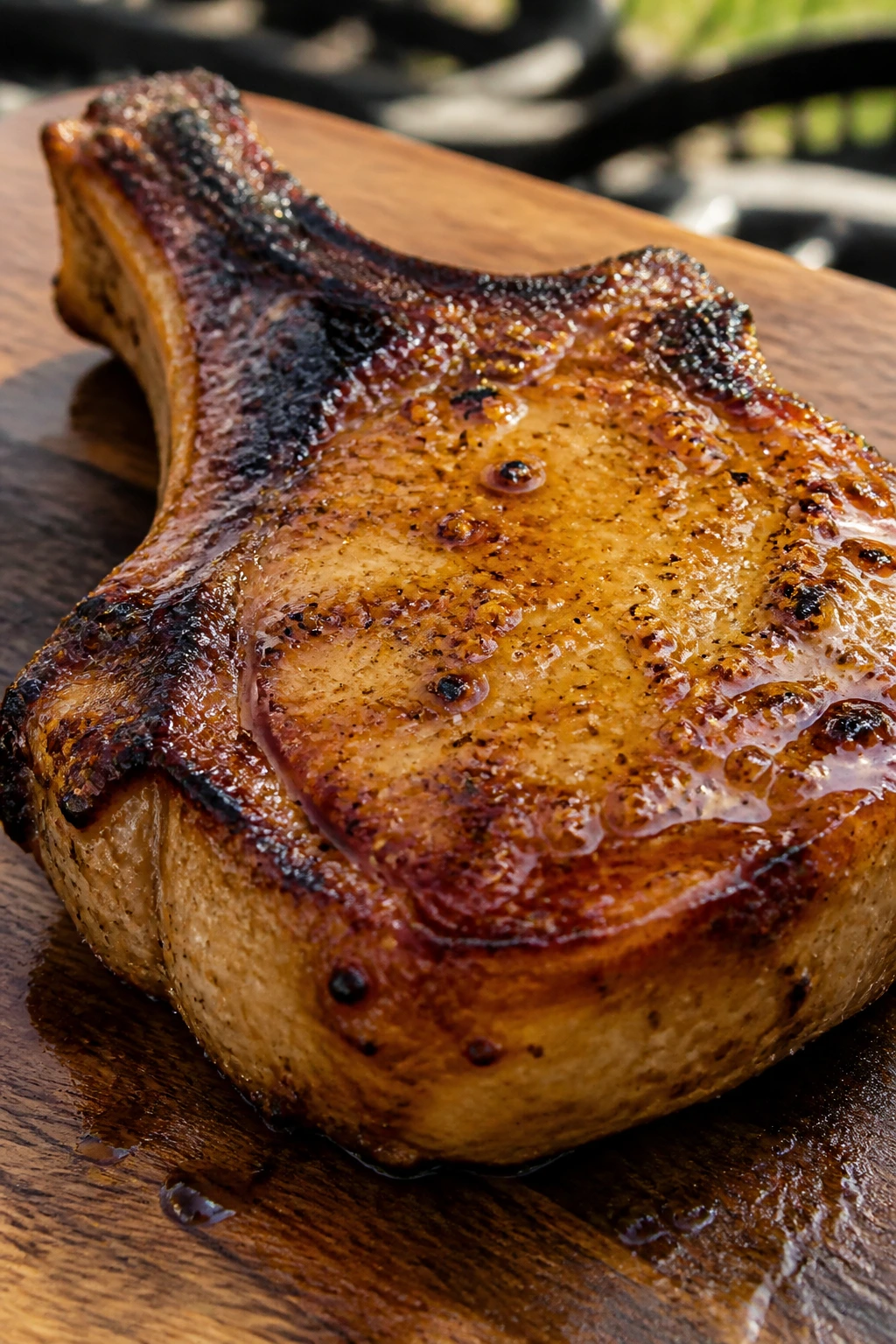
Intro: Pork chops are underrated on the grill when they’re handled with a little care. Bone-in chops keep their shape, honey and mustard build a glossy glaze, and the final result lands somewhere between sharp and sweet without turning syrupy.
Why It Works: Bone-in chops cook more evenly than thin boneless ones because the bone slows the heat just enough to keep the center juicy. Dijon mustard gives the glaze backbone, while honey helps the surface brown. A short rest after grilling keeps the meat from drying out when you cut into it.
Key Ingredients:
- 4 bone-in pork chops, about 1 inch thick
- 2 tablespoons Dijon mustard
- 2 tablespoons honey
- 1 tablespoon apple cider vinegar
- 1 tablespoon olive oil
- 2 garlic cloves, minced
- 1 teaspoon chopped thyme
- 1 teaspoon kosher salt
- 1/2 teaspoon black pepper
Quick Steps:
- Whisk the Dijon, honey, vinegar, olive oil, garlic, thyme, salt, and pepper.
- Brush the chops with half the glaze and let them sit for 15 to 30 minutes.
- Preheat the grill to medium-high, about 425°F.
- Grill the chops for 4 to 6 minutes per side, brushing with the remaining glaze during the last 2 minutes.
- Pull them when the thickest part hits 145°F, then rest for 5 minutes.
Equipment for This Recipe:
- Grill
- Tongs
- Basting brush
- Thermometer
- Small bowl
How to Serve This Dish: Pair the chops with grilled apples, potato salad, or a crisp cabbage slaw. They slice neatly once rested, which makes them easier to portion if the picnic crowd wants to share.
Pro Tips for This Recipe:
- Bone-in chops are easier to keep juicy. Thin chops overcook in a blink.
- Brush the glaze near the end so the honey doesn’t burn.
- Let the chops sit at room temperature for about 20 minutes before grilling.
- Pull at 145°F and rest; don’t chase a dry, gray center.
Variations on This Dish:
- Spicy Mustard Chops: Add a teaspoon of hot sauce to the glaze.
- Orange-Herb Version: Swap vinegar for orange juice and use rosemary.
- Boneless Swap: Use 3/4-inch boneless chops and shorten the cooking time.
Common Mistakes to Avoid with This Dish:
- Cooking past 145°F: Pork dries out quickly once you go much higher.
- Glazing too soon: The honey scorches.
- Flipping every minute: Let the chops sear before you move them.
15. Charred Corn and Black Bean Salad
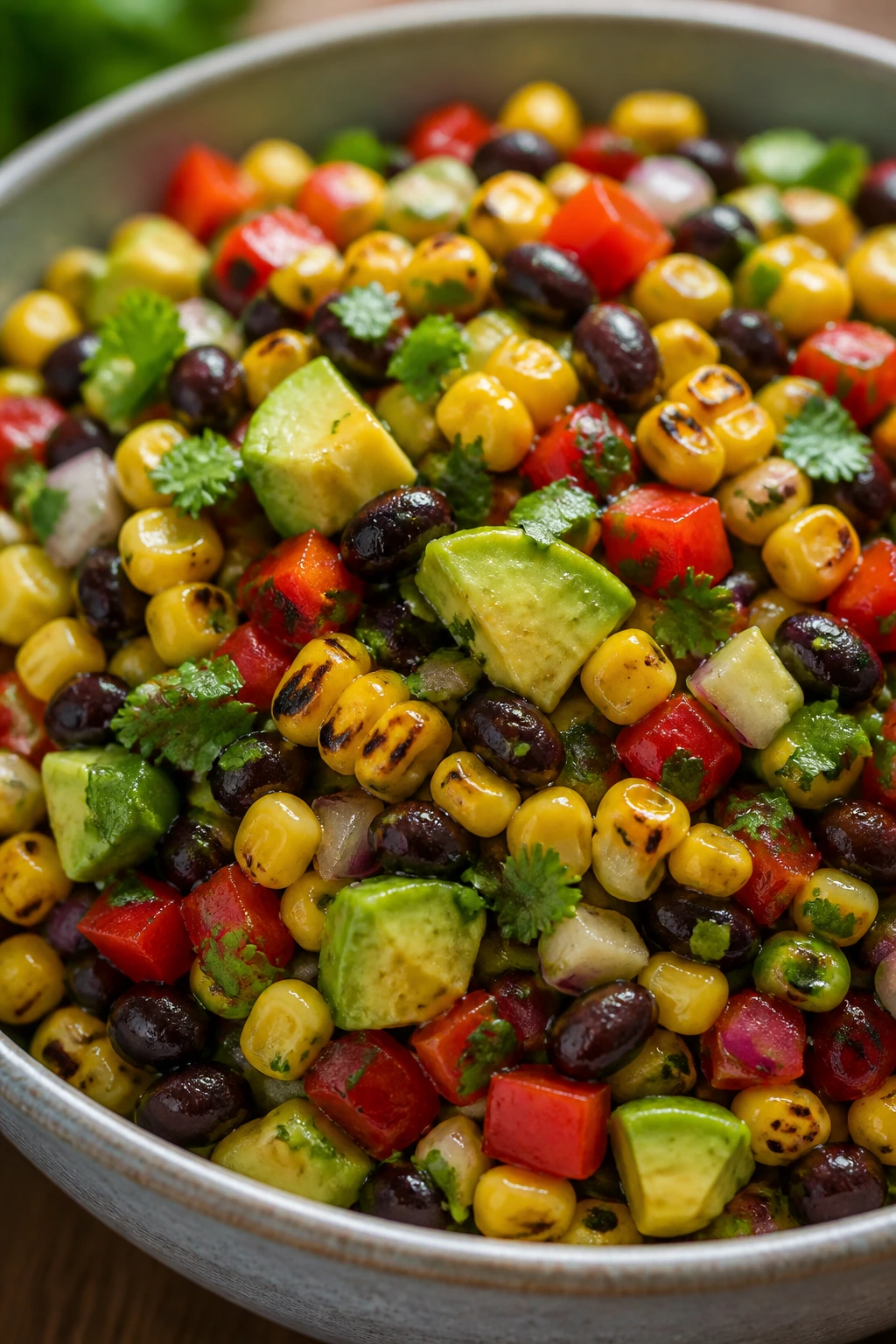
Intro: A bowl of beans and corn can sound plain until the grill gets involved. Char adds depth, lime wakes up the beans, and avocado makes the whole thing feel like a side dish that can stand beside tacos, chicken, or salmon without getting lost.
Why It Works: Grilling corn concentrates its sweetness, and charred red pepper adds a little bitterness that keeps the salad from tasting sugary. Black beans bring heft and protein, which makes this salad do double duty as a side or a light lunch. Lime juice and cumin make the whole bowl taste brighter and cleaner.
Key Ingredients:
- 4 ears corn, husked
- 1 can black beans, drained and rinsed
- 1 red bell pepper
- 1 avocado, diced
- 1/4 cup chopped cilantro
- 3 tablespoons lime juice
- 2 tablespoons olive oil
- 1 teaspoon ground cumin
- 1 jalapeño, minced
- 1 teaspoon kosher salt
Quick Steps:
- Grill the corn and red pepper over medium-high heat until charred in spots, about 10 minutes for the corn and 8 minutes for the pepper.
- Let them cool, then cut the kernels from the cob and dice the pepper.
- Toss the corn, pepper, black beans, cilantro, lime juice, olive oil, cumin, jalapeño, and salt in a bowl.
- Fold in the avocado at the end so it stays in chunks.
- Chill for 15 minutes or serve right away.
Equipment for This Recipe:
- Grill
- Sharp knife
- Mixing bowl
- Cutting board
- Spoon or spatula
How to Serve This Dish: Serve it with tortilla chips, spooned over grilled chicken, or alongside burgers. It also works cold from a lidded container, which is useful when the picnic basket is already crowded.
Pro Tips for This Recipe:
- Add the avocado last so it doesn’t turn mushy.
- Taste after chilling; cold food needs a little more salt and lime.
- Char the corn well enough to taste it, not just see it.
- Rinse the beans until the liquid runs clear so the salad doesn’t taste metallic.
Variations on This Dish:
- Feta Finish: Add crumbled feta for extra salt.
- Quinoa Bowl: Fold in 2 cups cooked quinoa.
- Smoky Chipotle Version: Add 1 teaspoon minced chipotle in adobo.
Common Mistakes to Avoid with This Dish:
- Using uncharred corn: You lose the whole point of grilling it.
- Adding avocado too early: It breaks down and browns.
- Skipping the acid: Lime is what keeps the bowl awake.
16. Grilled Hot Dogs with Onion Relish
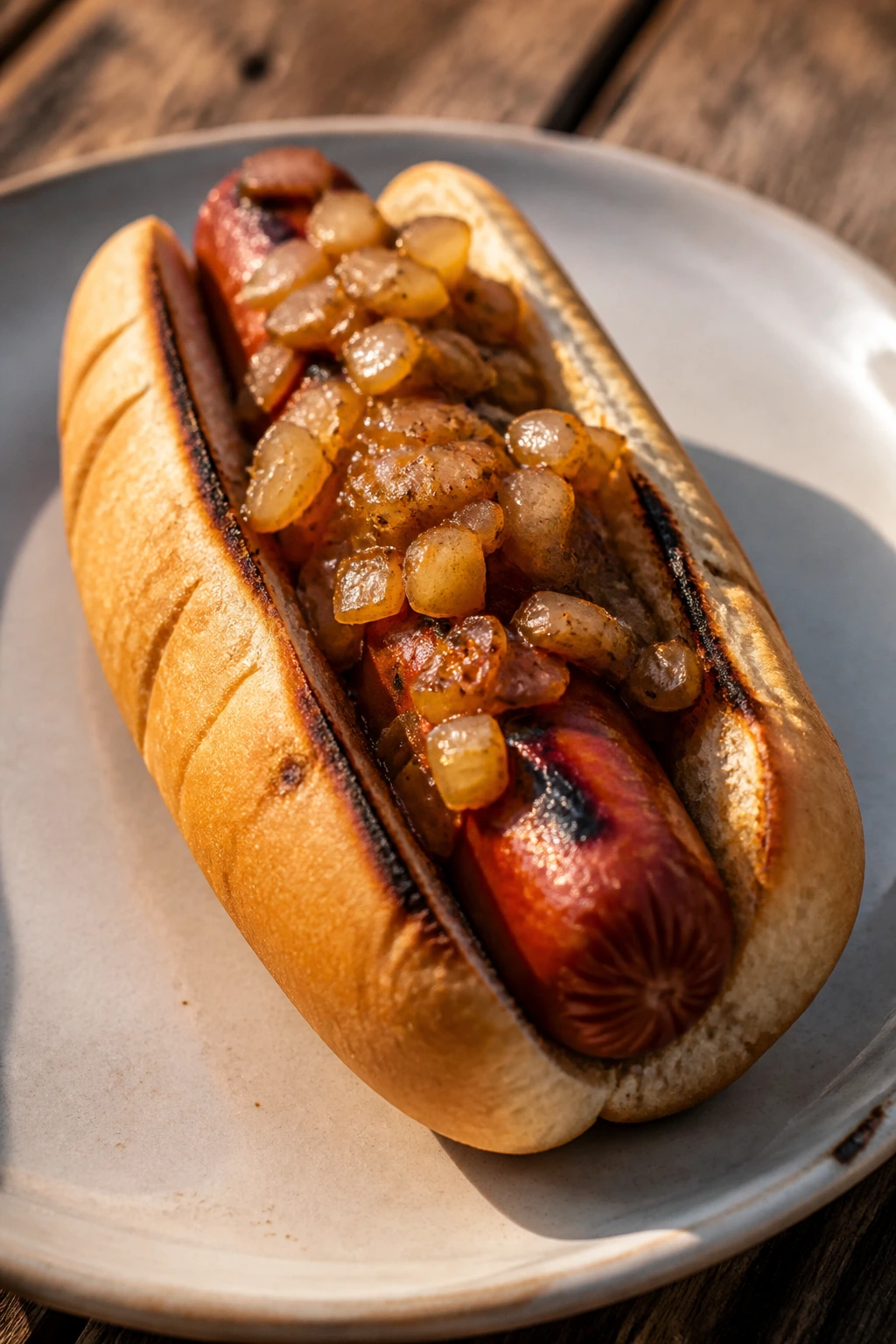
Intro: Hot dogs may be the simplest thing on this list, and that’s exactly why they belong here. A grill gives them blistered skins, toasted buns, and a little theater. The onion relish brings sweet and tangy notes so the whole thing feels cared for, not tossed together.
Why It Works: Hot dogs cook fast, which frees up space on a busy grill. Toasted buns keep their shape under mustard, ketchup, or relish. The onion topping gets a jump from the grill or skillet and tastes deeper than raw onion ever could.
Key Ingredients:
- 8 all-beef hot dogs
- 8 hot dog buns
- 2 yellow onions, thinly sliced
- 1 tablespoon butter
- 1 tablespoon brown sugar
- 2 tablespoons apple cider vinegar
- 1 tablespoon Dijon mustard
- 1/2 teaspoon kosher salt
- Mustard, ketchup, and pickle relish for serving
Quick Steps:
- Cook the onions with butter in a cast-iron skillet on the grill over medium heat for 12 to 15 minutes, stirring often, until soft and golden.
- Stir in the brown sugar, vinegar, Dijon, and salt, then cook 2 minutes more.
- Grill the hot dogs over medium-high heat for 6 to 8 minutes, turning until marked and heated through.
- Toast the buns cut-side down for 30 to 60 seconds.
- Pile on the onion relish and any other condiments you like.
Equipment for This Recipe:
- Grill
- Cast-iron skillet
- Tongs
- Spatula
- Tray or platter
How to Serve This Dish: Serve hot dogs wrapped in parchment or foil if you’re packing them for a picnic. Put the relish in a separate container so the buns don’t soften before anyone gets to eat.
Pro Tips for This Recipe:
- Split the onions thin so they soften instead of staying crunchy.
- Toast the buns even if you’re in a hurry. It matters more than it looks.
- A hot dog looks better with a few grill marks than with a long stay on the grate.
- Keep condiments on the side for a cleaner picnic setup.
Variations on This Dish:
- Chili Dog Style: Top with thick chili and shredded cheddar.
- Bratwurst Swap: Use bratwurst links and cook them more slowly over medium heat.
- Sauerkraut Finish: Add drained sauerkraut for a sharper bite.
Common Mistakes to Avoid with This Dish:
- Charring the buns beyond rescue: They should be toasted, not brittle.
- Skipping the relish: Plain hot dogs can feel flat fast.
- Cooking over raging heat: The skins split before the inside heats through.
17. Zucchini and Feta Pitas
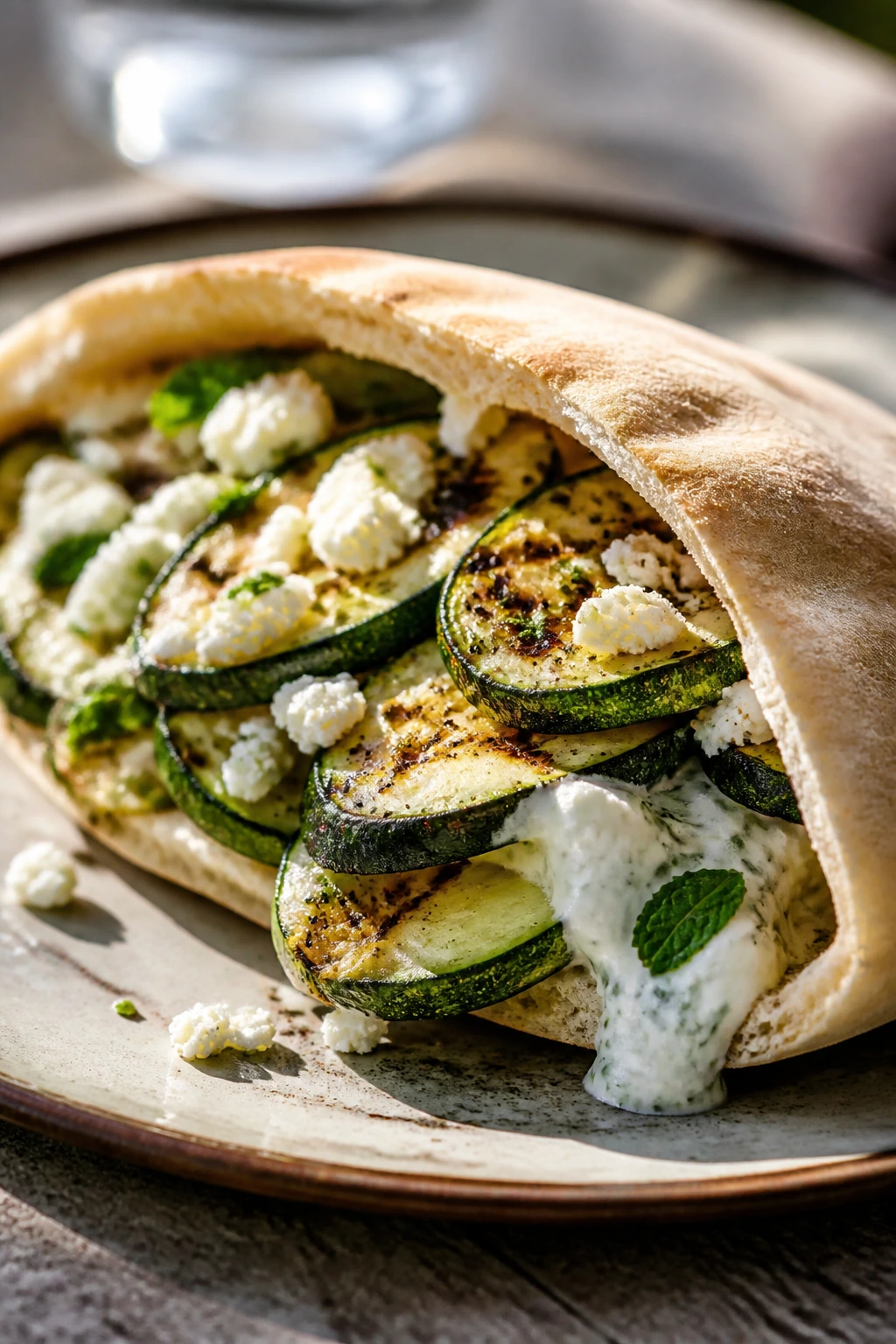
Intro: Pitas stuffed with grilled zucchini are the kind of picnic food that disappears because it’s easy to hold and not messy in the wrong way. The zucchini picks up smoke, the feta brings salt, and the yogurt sauce cools the whole thing down so each bite feels balanced instead of bulky.
Why It Works: Zucchini grills quickly and takes on color without much oil. Feta gives you salty richness, while yogurt and lemon pull the filling into something bright enough to stand on its own. Warm pitas make the whole package pliable, which matters when you’re eating outside and trying not to drop half your lunch into the grass.
Key Ingredients:
- 3 medium zucchini, sliced lengthwise into planks
- 2 tablespoons olive oil
- 1 teaspoon dried oregano
- 1 teaspoon kosher salt
- 1/2 teaspoon black pepper
- 4 pitas
- 1 cup feta, crumbled
- 1/2 cup Greek yogurt
- 1 tablespoon lemon juice
- 1 garlic clove, grated
- 1/4 cup chopped mint
Quick Steps:
- Toss the zucchini with olive oil, oregano, salt, and pepper.
- Grill over medium-high heat for 2 to 3 minutes per side until tender with dark marks.
- Stir the yogurt, lemon juice, garlic, and mint for the sauce.
- Warm the pitas on the grill for 30 seconds per side.
- Fill each pita with zucchini, feta, and a spoonful of yogurt sauce.
Equipment for This Recipe:
- Grill or grill pan
- Tongs
- Small bowl
- Knife
- Spoon
How to Serve This Dish: Serve the pitas whole or cut into halves for sharing. They’re especially good with olives, tomato salad, or grilled chicken if you want to stretch the meal a little further.
Pro Tips for This Recipe:
- Grill the zucchini hot and fast so it stays a little firm.
- Warm the pitas just enough to bend, not enough to dry out.
- Use feta that crumbles cleanly; overly soft feta turns the filling mushy.
- Mint and lemon keep the yogurt sauce from tasting heavy.
Variations on This Dish:
- Hummus Layer: Spread hummus inside the pita before filling.
- Chicken Add-In: Add sliced grilled chicken for a larger lunch.
- Tahini Version: Swap the yogurt sauce for lemon-tahini if you want dairy-free.
Common Mistakes to Avoid with This Dish:
- Overcooking the zucchini: It turns limp and watery.
- Stuffing cold, stiff pita: It tears before you eat it.
- Using too much salt with the feta: The filling can get harsh fast.
18. Grilled Pineapple with Cinnamon Sugar and Lime
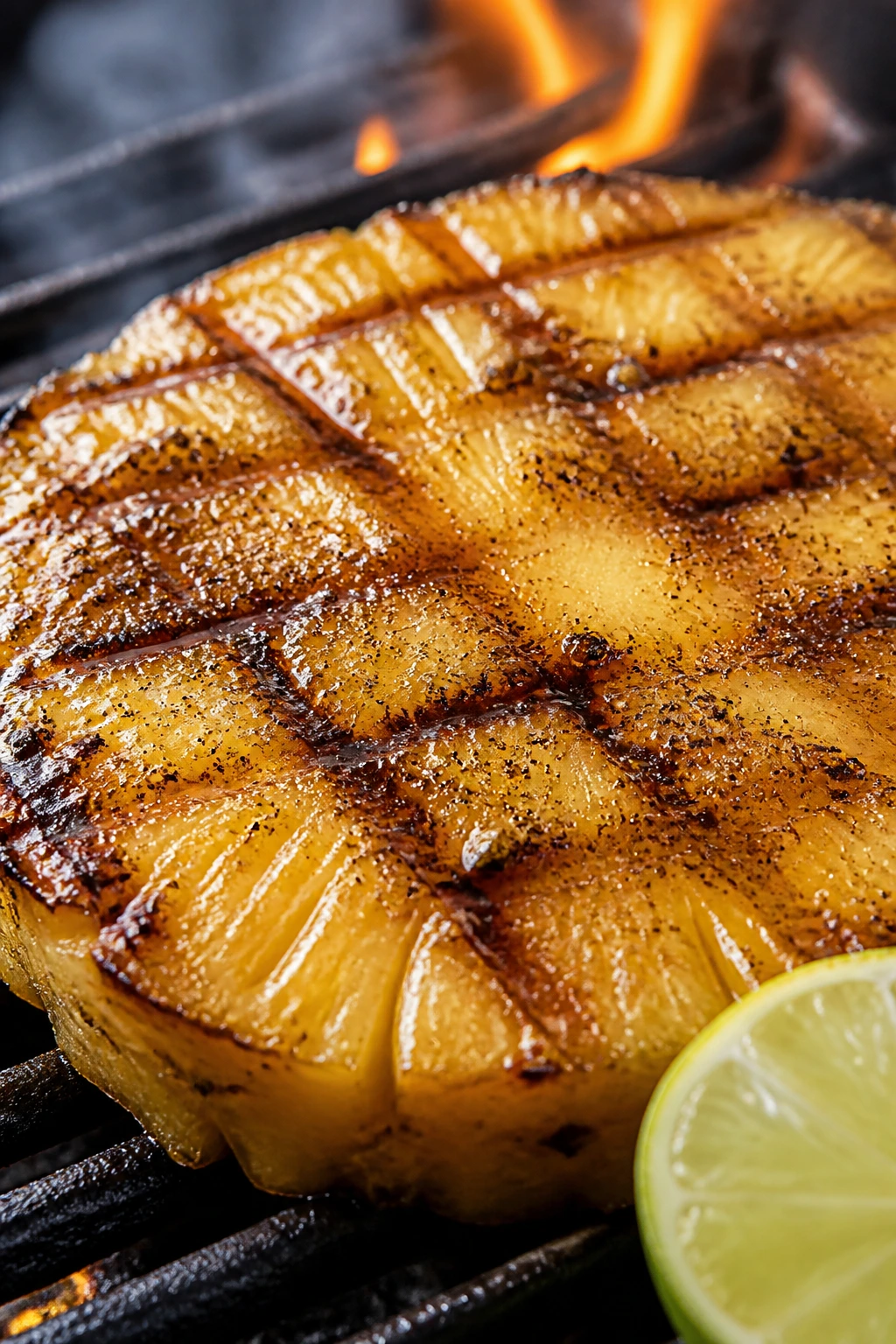
Intro: Pineapple on the grill is one of the easiest ways to make dessert smell like a plan instead of an afterthought. The sugar caramelizes, the fruit softens just enough, and a squeeze of lime keeps the sweetness from turning sticky in a dull way.
Why It Works: Pineapple already has enough sugar to brown under direct heat, so it needs very little help. Grilling concentrates the fruit’s juice and gives the edges a caramel note that tastes better than plain raw pineapple. Cinnamon and butter help the surface color faster, while lime cuts through the sweetness at the end.
Key Ingredients:
- 1 ripe pineapple, peeled, cored, and sliced into rings or spears
- 2 tablespoons brown sugar
- 1 teaspoon ground cinnamon
- 1 tablespoon melted butter or coconut oil
- 1 lime, cut into wedges
- Pinch of kosher salt
- Vanilla yogurt or ice cream for serving, if you want it
Quick Steps:
- Mix the brown sugar and cinnamon.
- Brush the pineapple with melted butter or coconut oil, then sprinkle with the cinnamon sugar and a pinch of salt.
- Preheat the grill to medium-high, about 425°F.
- Grill the pineapple for 2 to 3 minutes per side until marked and softened.
- Finish with lime juice and serve warm.
Equipment for This Recipe:
- Grill
- Basting brush
- Knife
- Tongs
- Serving plate
How to Serve This Dish: Serve the pineapple warm on its own, over yogurt, or with a scoop of ice cream if the picnic has a dessert moment. It also chops nicely into smaller pieces for a fruit bowl after the fact.
Pro Tips for This Recipe:
- Choose a pineapple that smells sweet at the base and gives slightly when pressed.
- Thick slices are easier to flip without breaking.
- Don’t walk away. Pineapple goes from caramelized to scorched fast.
- A little salt makes the sweetness taste cleaner.
Variations on This Dish:
- Chile-Lime Pineapple: Add a pinch of chile powder after grilling.
- Rum-Caramel Version: Drizzle with a teaspoon of dark rum mixed into melted butter.
- Coconut Finish: Top with toasted coconut flakes.
Common Mistakes to Avoid with This Dish:
- Using underripe fruit: It tastes sharp and fibrous.
- Too much sugar: The surface burns before the fruit softens.
- Cutting slices too thin: They fall apart on the grates.
19. Peach and Burrata Crostini on Grilled Bread
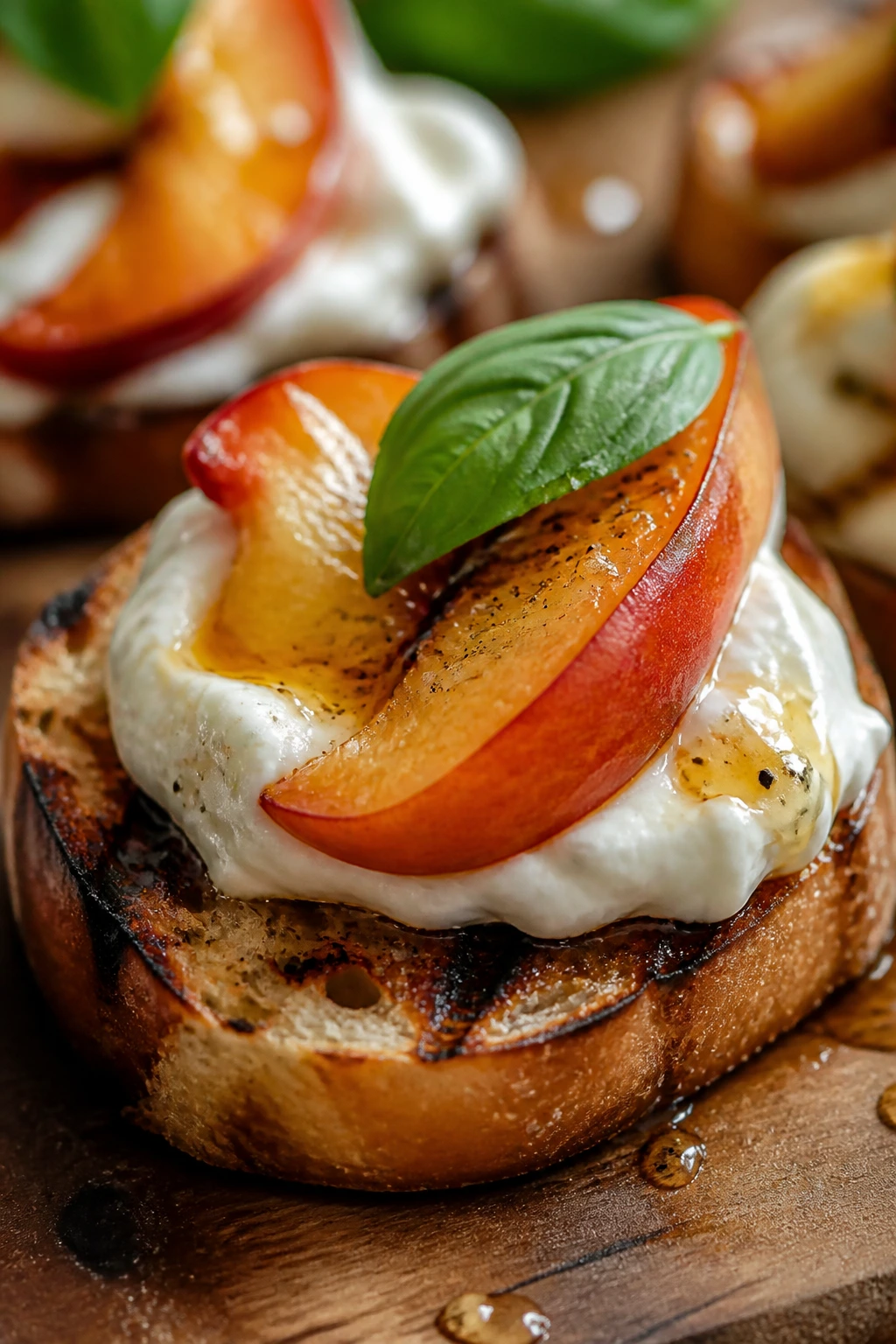
Intro: This is the picnic appetizer that disappears because it feels fancy without being delicate. Grilled bread, ripe peaches, and burrata create a mix of crisp, juicy, and creamy that looks polished in a paper-lined tray and still tastes relaxed enough for a blanket lunch.
Why It Works: Peaches caramelize fast over heat, which pulls out their sweetness and gives them a little edge. Burrata brings a cool, soft center that balances the warm fruit and smoky bread. Because the components are simple, every detail matters: good bread, ripe fruit, and enough salt to keep the flavors awake.
Key Ingredients:
- 4 ripe but firm peaches, halved and pitted
- 1 loaf ciabatta, sliced
- 2 tablespoons olive oil
- 8 ounces burrata
- 1 tablespoon honey
- 1/4 cup basil leaves
- Flaky salt
- Black pepper
Quick Steps:
- Brush the peach halves and bread slices with olive oil.
- Grill the peaches for 2 to 3 minutes per side and the bread for 1 to 2 minutes per side until marked.
- Tear the burrata and spread it over the grilled bread.
- Slice the peaches and arrange them on top.
- Drizzle with honey, scatter basil, and finish with flaky salt and pepper.
Equipment for This Recipe:
- Grill
- Tongs
- Pastry brush
- Knife
- Cutting board
How to Serve This Dish: Arrange the crostini on a tray and serve them soon after assembling so the bread stays crisp. They work as a starter, a snack, or a light side when the picnic leans more toward grazing than heavy eating.
Pro Tips for This Recipe:
- Use peaches that yield slightly but don’t collapse in your hand.
- Grill the bread first so it has enough crunch under the cheese.
- Add basil at the end so it doesn’t bruise.
- A small pinch of salt matters more than a second drizzle of honey.
Variations on This Dish:
- Prosciutto Addition: Lay a thin slice of prosciutto under the peaches.
- Ricotta Swap: Use whipped ricotta if burrata is hard to find.
- Nectarine Version: Nectarines grill the same way and have a slightly firmer bite.
Common Mistakes to Avoid with This Dish:
- Using overripe peaches: They fall apart on the grates.
- Assembling too early: The bread softens under the cheese and fruit.
- Skipping the salt: Sweet fruit needs a sharp edge.
20. Banana Boats with Chocolate and Peanuts
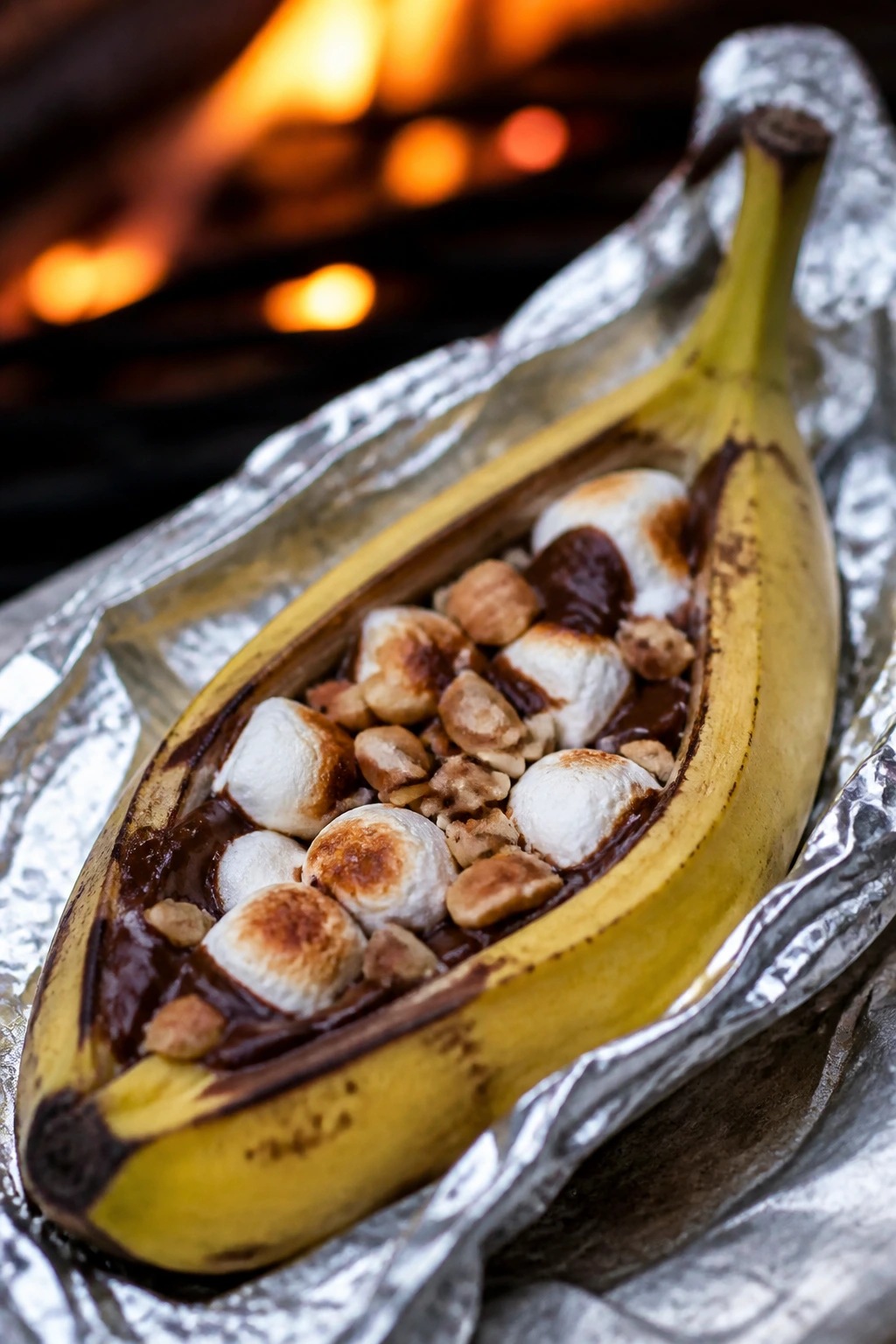
Intro: Banana boats are the dessert equivalent of a campfire grin. You slit the fruit, tuck in chocolate and marshmallows, wrap it in foil, and let the grill turn everything soft and molten. The result is messy, warm, and exactly the kind of thing people hover around at the end of a picnic.
Why It Works: Bananas soften quickly and their natural sugar intensifies in heat, which makes them ideal for a short grill finish. Chocolate melts into the fruit, marshmallows puff, and peanuts add crunch so the whole thing isn’t just sweet sludge. Foil keeps the banana intact and makes cleanup trivial.
Key Ingredients:
- 4 bananas, peel on
- 1/2 cup chocolate chips
- 1/2 cup mini marshmallows
- 1/4 cup chopped peanuts
- 2 tablespoons peanut butter
- 4 squares heavy-duty foil
- Optional: crushed graham crackers for topping
Quick Steps:
- Slice a deep lengthwise slit in each banana without cutting through the bottom peel.
- Open the slit slightly and stuff in chocolate chips, marshmallows, peanuts, and a spoonful of peanut butter.
- Wrap each banana in foil and crimp the edges closed.
- Grill over medium heat for 6 to 8 minutes until the chocolate is melted and the banana is soft.
- Open carefully, sprinkle with graham crackers if using, and eat with a spoon.
Equipment for This Recipe:
- Heavy-duty foil
- Grill
- Tongs
- Small spoon
- Plate or tray
How to Serve This Dish: Serve the bananas hot from the foil with spoons and extra napkins. They’re best when the grill meal is over and people want something sweet without a separate baking step.
Pro Tips for This Recipe:
- Choose bananas with yellow peel and a few brown spots, not fully soft fruit.
- Don’t overfill the slit or the filling leaks out.
- Keep the foil seam on top so the melted chocolate stays inside.
- Serve immediately. Banana boats lose their texture if they sit.
Variations on This Dish:
- S’mores Version: Add mini marshmallows and crushed graham crackers.
- Dark Chocolate Almond: Swap peanuts for almonds and use chopped dark chocolate.
- Dairy-Free Treat: Use coconut oil instead of butter and dairy-free chocolate chips.
Common Mistakes to Avoid with This Dish:
- Using bananas that are too ripe: They turn mushy fast.
- Tearing the foil: The filling escapes and scorches.
- Letting them cool too long: The whole point is the molten middle.
Why the Grill Belongs at the Center of a Picnic Spread
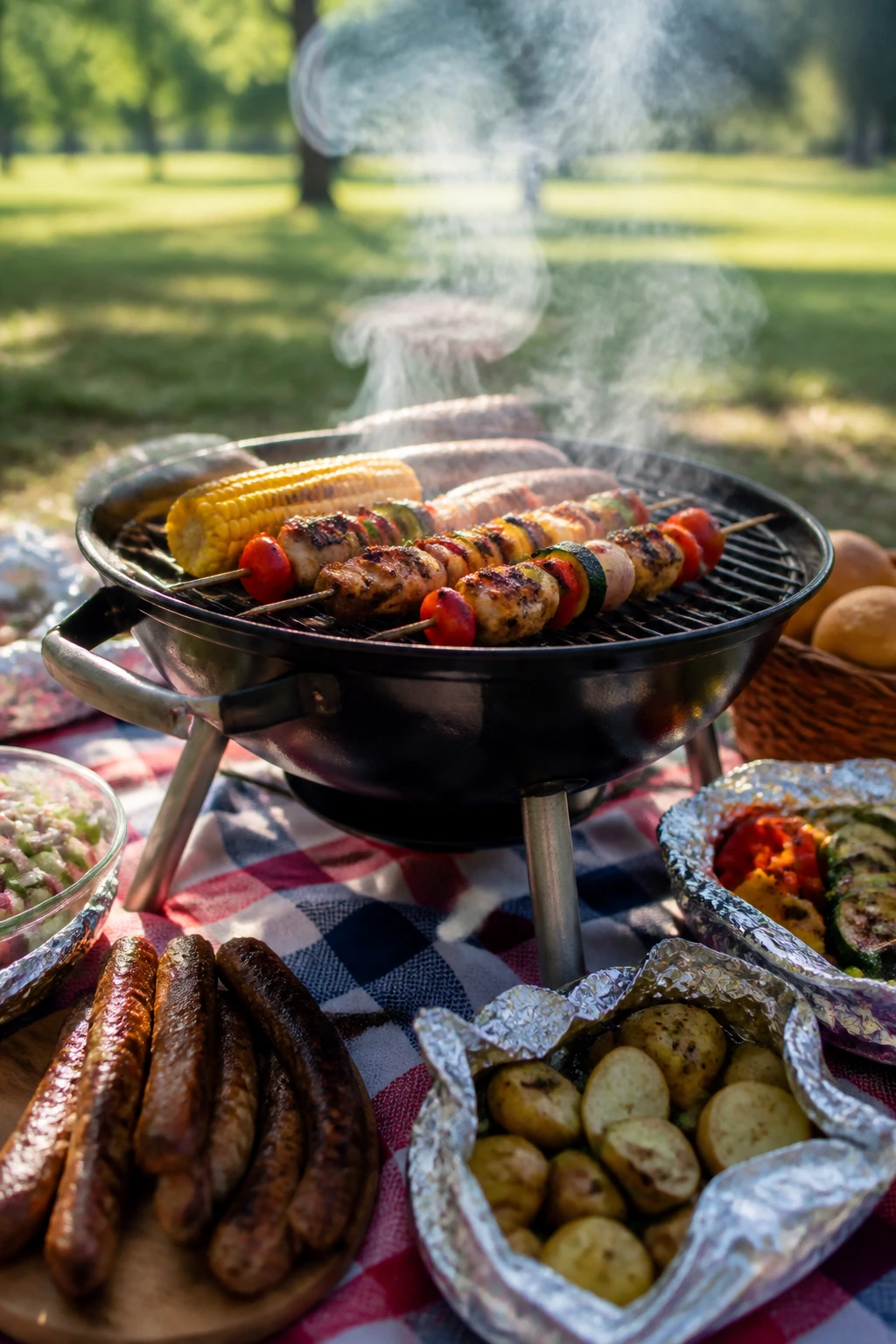
A grill gives picnic food a shape it does not get any other way. It adds smoke, yes, but it also fixes small texture problems: bread gets a little crunch, corn loses its raw edge, peaches caramelize, and chicken skin firms up instead of going soft in a cooler. That matters because picnic food has to travel through a few stages—cookout, wrap-up, transport, unpacking, eating—and the grill helps each stage hold together.
There’s also a practical reason to build around the grate. You can cook a lot of these foods in batches, then serve them at room temperature or warm, which takes pressure off the clock. That’s the quiet genius of picnic cooking: nobody wants to stand over a stove while the rest of the group is already spreading out the blanket. The grill lets you cook once, pack smart, and eat without babysitting the food every minute.
I’ve always liked picnic dishes that have a little boundary to them. Skewers, foil packets, burgers, pitas, crostini, drumsticks—they already know how to behave. You can hand them around, fold them up, or lay them on a tray, and they still look like dinner rather than a collection of leftovers.
Essential Equipment for These Recipes
-
Gas or charcoal grill: Either one works; charcoal brings a little more smoke, gas gives you better temperature control.
-
Long-handled tongs: You’ll use them constantly for turning skewers, burgers, corn, and flatbreads without burning your knuckles.
-
Instant-read thermometer: The quickest way to keep chicken, pork, shrimp, and salmon from overcooking.
-
Cast-iron skillet or griddle: Useful for smash burgers, onion relish, or anything too small for the grate.
-
Grill basket: A smart fix for potatoes, peppers, onions, and other pieces that would otherwise fall through.
-
Heavy-duty foil: Foil packets, banana boats, and emergency wraps all depend on it.
-
Mixing bowls: One for marinades, one for sauces, and one for the finished food keeps your workflow sane.
-
Basting brush: Best for barbecue sauce, teriyaki glaze, and oiling bread or fruit before grilling.
-
Sharp knife and cutting board: Clean cuts matter for skewers, peppers, peaches, and potatoes.
-
Sheet pans or trays: They make carrying raw ingredients outside and carrying cooked food back inside much easier.
Smart Shopping and Ingredient Tips
Chicken thighs beat chicken breast in most of these recipes because they stay juicy under grill heat and forgive a few extra minutes over the fire. If you want drumsticks or pork chops, buy pieces that look even in thickness so they finish together. That one detail saves more dry meat than any fancy marinade.
Corn should feel heavy for its size with tight green husks if you’re buying it intact. If you’re shucking at home, use it the same day if possible; the sugars drop as the ears sit. For potatoes, choose waxy varieties like baby Yukon Golds or reds. They hold their shape after boiling, grilling, and tossing with dressing, which is exactly what a picnic salad needs.
For the bread-based recipes, buy buns and flatbreads that have a little structure. Soft sandwich bread can be pleasant, but it surrenders to moisture fast. Ciabatta, naan, hoagie rolls, and sturdy buns handle sauce, cheese, and heat much better. If the bakery loaf feels airy enough to collapse under one tomato slice, it will not survive the picnic.
Seafood needs extra care. Buy shrimp that smell clean, not fishy, and salmon with firm flesh that springs back when pressed. Halloumi should be in a block with a squeaky, dense texture; if it’s crumbly in the package, leave it there. Peaches and pineapple should be ripe but not mushy. You want fruit that softens on the grill, not fruit that turns to syrup before it reaches the grate.
How to Serve These Recipes
Presentation: Use parchment-lined trays, shallow baskets, or a wooden board with sections for hot and cold food. Skewers, drumsticks, burgers, and quesadillas look best when you keep the shapes intact instead of chopping everything into anonymous piles.
Accompaniments: Cold cucumber salad, potato salad, chips, slaw, pickles, grilled bread, and a simple green salad all fit this collection without stealing attention. I like one creamy side, one sharp side, and one crunchy side so the plate doesn’t lean too far in one direction.
Portions: Count on 2 skewers or 2 drumsticks per person, 1 burger or hot dog per adult, 1 salmon portion around 6 ounces, and 1 to 2 scoops of salad or potatoes. Dessert portions can be smaller than people expect; grilled fruit and banana boats feel richer than they look.
Beverage Pairing: Lemonade with a splash of sparkling water fits nearly everything here, and a dry rosé or a cold pilsner works well with the smoky, salty dishes. For nonalcoholic options, iced tea with lime keeps the menu from feeling too sweet.
Additional Tips and Flavor Boosters
Flavor Enhancement: Finish grilled meats and vegetables with a quick hit of acid—lemon juice, lime juice, or a vinegar-based drizzle—right before serving. It sharpens the char and keeps richer dishes from flattening out.
Customization: If you’re feeding mixed eaters, keep sauces separate. A bowl of pickle-dill sauce, yogurt sauce, barbecue sauce, or hot honey lets people steer their own plate without making four separate recipes.
Serving Suggestions: Fresh herbs do more than decorate. Dill on salmon, basil on flatbread, mint on zucchini pitas, and cilantro on elote all lift the food in a way that chopped parsley alone cannot. If the herb looks like an afterthought, it probably tastes like one.
Make-It-Yours: For a lower-dairy spread, lean harder on olive oil, mustard, salsa, and herb vinaigrettes. For a vegetarian-heavy table, double the halloumi skewers, portobello burgers, and grilled potato salad. For kids, keep one or two items mild and let the heat sit in a side sauce.
Make-Ahead, Storage, and Reheating Guidance
Most of these recipes can be prepped the day before, and that is where picnic food gets easier. Chicken marinades, pork glazes, potato salad dressing, elote sauce, and teriyaki sauce all hold well in the refrigerator for 24 hours. Chop the vegetables, mix the sauces, and keep raw proteins separate in sealed containers so you’re not doing knife work at the grill.
Cooked chicken, pork, burgers, sausage, potatoes, and grilled vegetables keep for 3 to 4 days in the refrigerator. Shrimp and salmon are shorter-lived and are best eaten within 2 days. Flatbreads and quesadillas hold for about 2 days, but they’re happiest on the day they’re cooked. Fruit desserts like grilled pineapple or banana boats are best fresh, though leftover pineapple can be chilled and tossed into yogurt the next morning.
For reheating, use a 350°F oven or a covered skillet over medium-low heat. Chicken, pork, sausage, and potatoes reheat well this way because the gentle heat warms them through without toughening the surface. Add a splash of water or a light foil cover if the food looks dry. Seafood needs a softer touch; warm it only until it’s heated through, not piping hot, or it turns rubbery fast.
If you’re packing food for a picnic, keep hot items in an insulated container or wrapped in towels inside a thermal bag, and keep cold items on ice packs. Foods that should stay chilled—potato salad, sauces with dairy, fruit, and anything with mayo—need to stay cold until serving. If a dish is meant to be room temperature, let it cool safely first, then pack it without trapping too much steam.
Variations and Adaptations to Try
-
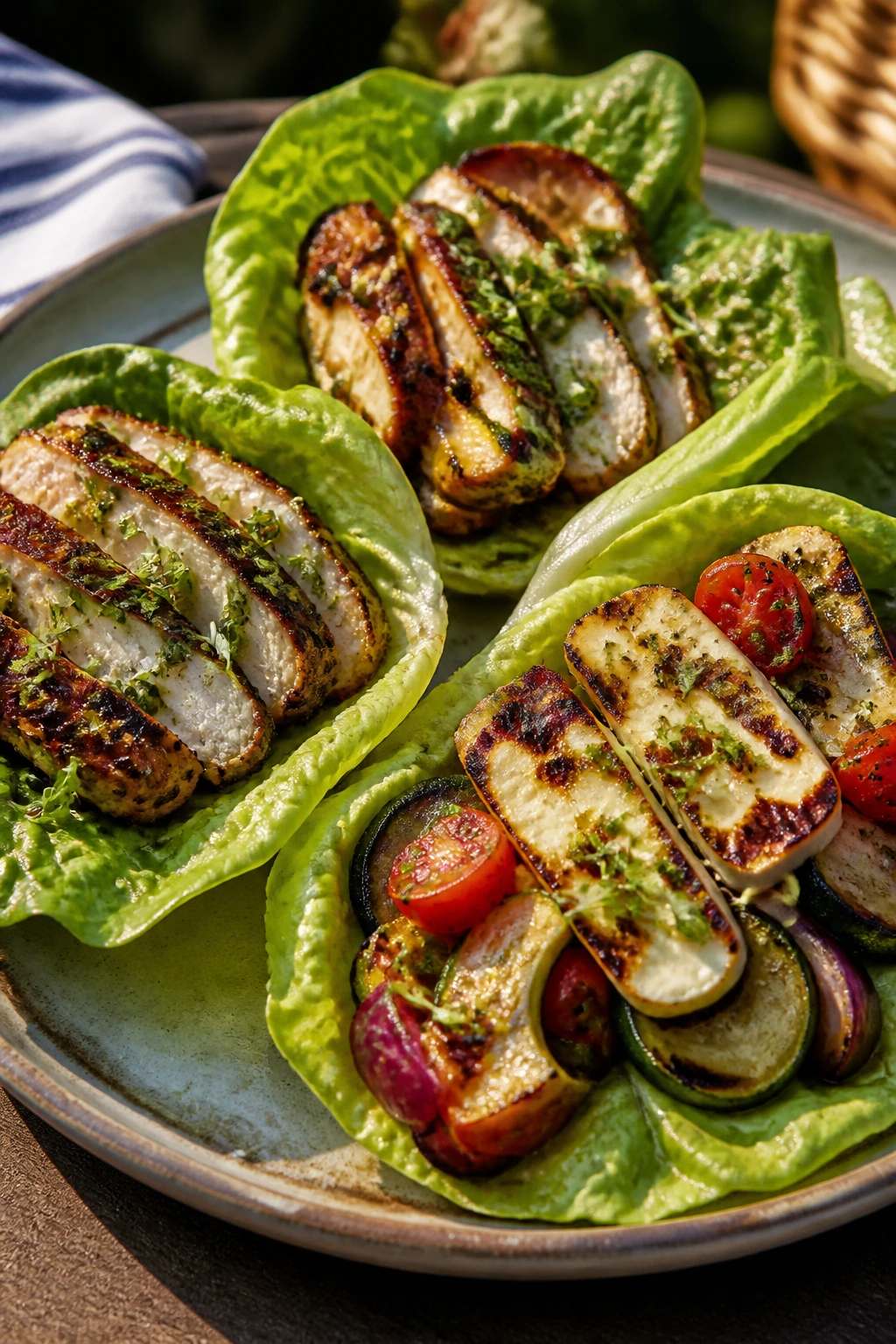
Gluten-Free Picnic Plate: Use gluten-free buns, naan-style flatbread, or lettuce wraps where bread shows up. The grilled proteins and salads already do most of the work, so the swap is mostly about the wrapper.
-
Dairy-Free Grilling: Skip burrata, halloumi, and creamy sauces, then lean on olive oil, mustard, tahini, and vinaigrettes. You can still get richness from charred vegetables, avocado, and a good finishing oil.
-
Mild-Kid Version: Pull back on chile powder, hot honey, and jalapeños. Kids usually care more about shape and hand-held food than subtle spice, which is why burgers, hot dogs, quesadillas, and skewers tend to disappear first.
-
Big-Crowd Setup: Pick three anchor dishes—one chicken, one vegetable or potato side, and one bread or dessert—then double them instead of trying to cook every item. That gives the grill a rhythm and keeps you from juggling too many hot surfaces at once.
-
Char-Lover’s Edition: If your group likes the dark edges, push the grill marks a little further on corn, peaches, flatbreads, and pineapple. Just keep a cooler zone on the grill so the food can finish without scorching.
Common Mistakes to Avoid
-
Crowding the grill: The food steams when pieces are jammed together. Leave space so the heat can actually hit the surface.
-
Saucing too early: Sweet barbecue sauce, teriyaki, and honey glazes burn fast. Put them on near the end unless the recipe says otherwise.
-
Skipping the thermometer: Guessing works until it doesn’t. Chicken, pork, shrimp, and salmon all behave better when you know the temperature instead of trusting the clock alone.
-
Packing food while it’s still steaming: Condensation softens bread, fries crust, and turns crisp vegetables limp. Let food cool a little before sealing it.
-
Ignoring carryover heat: Meat keeps cooking after it comes off the grill. Pull it a touch early and rest it, especially for chicken, pork chops, and salmon.
-
Using only one texture: A picnic spread of all soft food gets dull fast. Mix crisp, juicy, creamy, and crunchy items so every plate feels different.
Frequently Asked Questions
Can I make these picnic foods on a gas grill and a charcoal grill?
Yes. Gas gives you easier control for chicken thighs, salmon, and quesadillas, while charcoal adds a deeper smoke note to corn, sausage, and fruit. The recipes work on either one as long as you pay attention to hot and cooler zones.
Which dishes can sit out for a little while at a picnic?
Grilled chicken, sausage, burgers, potatoes, corn salad, and vegetable skewers handle room temperature better than seafood or dairy-heavy dishes. Anything with mayo, burrata, or shrimp should stay cold until serving or be eaten fairly quickly.
How do I keep grilled food from getting soggy in the cooler?
Let it cool for a few minutes before packing, but don’t leave it out too long. Wrap bread separately, keep wet sauces in small containers, and line trays with paper towels if the food gives off steam.
Can I prep the marinades and sauces the night before?
Absolutely. In fact, it helps. Teriyaki sauce, mustard glaze, elote sauce, pickle-dill sauce, and herb dressings all taste fine after a night in the fridge, and some taste better once the flavors settle.
What if my grill runs hotter than I expect?
Use a two-zone setup. Move chicken, pork, or salmon to the cooler side if the surface starts darkening too fast, and pull bread or fruit back the second they pick up color. A hot grill is useful; a wild one is just messy.
Can I cook these inside if the weather changes?
Yes, several of them adapt well to a grill pan, cast-iron skillet, or oven broiler. Smash burgers, sausage and peppers, quesadillas, and flatbreads are the easiest indoor swaps. Salmon and chicken can move to the oven if you keep an eye on the temperature.
What should I make first if I want the easiest picnic spread?
Start with one protein, one side, and one fruit or dessert. Chicken skewers, grilled potato salad, and pineapple dessert give you a full table without asking you to manage a dozen burners at once.
How do I feed a bigger group without losing my mind at the grill?
Choose recipes that cook in batches and stay good at room temperature. Drumsticks, skewers, burgers, flatbreads, and potato salad are easier to scale than delicate seafood. Do not try to make everything at the last second; grill in waves and let the cooler do the holding.
A Picnic Worth Lifting the Lid For
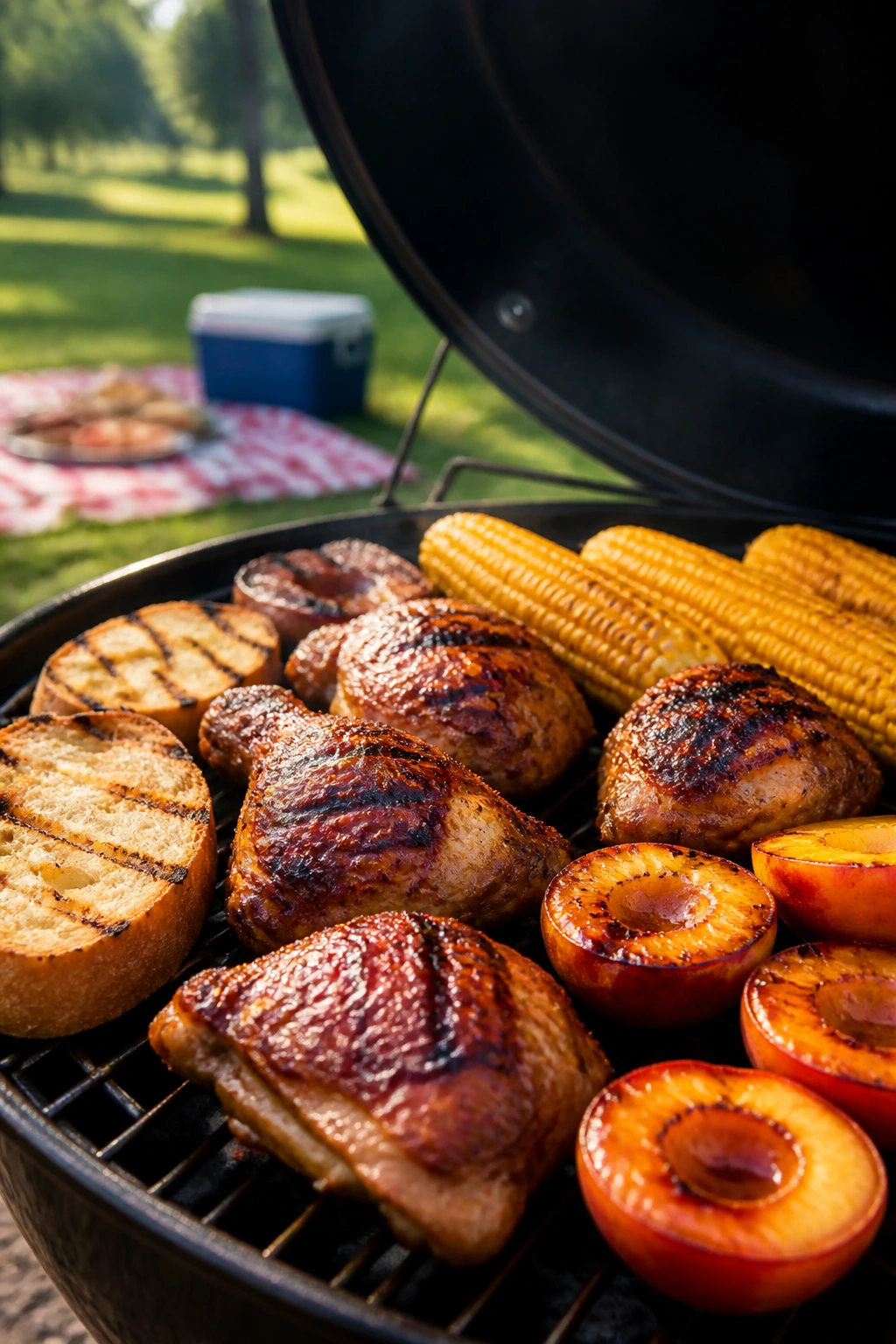
A good grill picnic doesn’t need ten different tricks. It needs a few foods that know how to take heat, hold their shape, and still taste good after a short ride in the cooler. That is what gives the whole spread a little confidence. The food looks relaxed, but it was built with enough thought to keep the bread crisp, the chicken juicy, and the fruit from collapsing into syrup.
If I were packing a basket from this list, I’d choose one smoky main, one sharp salad, one bread item, and one sweet thing with char on it. That mix covers most appetites and keeps the grill from feeling repetitive. A cooler, a bag of ice, and one hot grate can carry a long way when the food is this practical.
Pick three or four of these recipes, light the grill, and let the weekend do the rest.