



The weeknight dinner problem is rarely about cooking skill. It’s about the gap between a half-empty fridge and the moment everyone starts asking what’s for dinner. That’s where quick weeknight dinners earn their keep: not with fancy technique, but with smart combinations that come together before your energy disappears.
I’m talking about meals that use a short ingredient list, a hot skillet, and a few pantry staples you probably already have — rice, pasta, tortillas, beans, eggs, frozen vegetables, a lemon, a block of cheese. The best budget-friendly dinners don’t feel like punishment food. They smell good as they cook. They leave a pan that’s easy to wash. And they still look like someone made an effort, which matters more than people admit.
There’s a reason these meals show up over and over in real kitchens. They don’t ask you to marinate chicken for half a day or babysit a sauce for an hour. They reward a sharp knife, a decent skillet, and a little confidence at the stove. By the time the onions start turning golden or the cheese melts into the pasta, the pressure comes down a notch. That’s the whole point.
Why These Dinners Earn a Spot in Your Rotation
-
Short ingredient lists: Each meal leans on 6 to 10 practical ingredients, which keeps grocery bills from creeping up one “small extra” at a time.
-
Fast cooking methods: Most of these use a skillet, sheet pan, or one pot, so you spend more time eating and less time scraping baked-on sauce.
-
Flexible leftovers: Several of these taste even better the next day, especially the pasta bakes, soups, and rice bowls that hold sauce well.
-
Easy swaps: Chicken can become turkey, broccoli can become green beans, and rice can become tortillas without wrecking the dish.
-
Low-waste cooking: Frozen vegetables, canned beans, and pantry pasta show up for a reason. They’re cheap, dependable, and they don’t go limp in the crisper drawer.
-
Actual weeknight flavor: These aren’t “eat it because it’s Tuesday” meals. They use garlic, lemon, soy sauce, salsa, pesto, curry powder, and browned meat to make the kitchen smell like dinner is happening.
1. Garlic Butter Chicken Skillet
A hot skillet of chicken, butter, and garlic is one of those smells that makes a house feel fed before the first bite. This version keeps the sauce light and glossy, with browned chicken on the outside and enough lemon at the end to keep the butter from feeling heavy.
Why It Works: Boneless chicken thighs stay juicy even when you cook them hard in a skillet, which is exactly what a weeknight needs. A quick dusting of flour helps the sauce cling, and the butter-garlic pan sauce comes together in minutes instead of simmering forever. The lemon juice wakes up the whole pan.
Key Ingredients:
- 1½ lb boneless, skinless chicken thighs, sliced into strips
- 1 teaspoon kosher salt
- ½ teaspoon black pepper
- 1 teaspoon paprika
- 2 tablespoons all-purpose flour
- 2 tablespoons olive oil
- 3 tablespoons unsalted butter
- 4 garlic cloves, minced
- ½ cup low-sodium chicken broth
- 1 tablespoon lemon juice
- 2 tablespoons chopped parsley
Quick Steps:
- Pat the chicken dry, then season it with salt, pepper, paprika, and flour.
- Heat olive oil in a large skillet over medium-high heat and brown the chicken for 4 to 5 minutes per side, until deeply golden and cooked through.
- Lower the heat to medium, add the butter and garlic, and stir for 30 seconds until the garlic smells sweet.
- Pour in the chicken broth and lemon juice, scraping up the browned bits, and let the sauce bubble for 1 to 2 minutes.
- Return the chicken to the pan, toss with parsley, and serve while the sauce is still glossy.
Equipment for This Recipe:
- 12-inch skillet
- Tongs
- Cutting board and sharp knife
- Measuring spoons
How to Serve This Dish: Spoon it over rice, buttered noodles, or mashed potatoes so the sauce has somewhere to go. A pile of steamed green beans or a simple salad on the side keeps the plate from feeling too rich.
Pro Tips for This Recipe:
- Dry the chicken first: Wet chicken steams. Dry chicken browns.
- Don’t rush the sear: If the pan is too cool, the chicken releases liquid and turns pale instead of golden.
- Add lemon at the end: Lemon added too early loses its sharp edge.
- Use thighs if you can: They stay tender better than breasts on a busy night.
Variations on This Dish:
- Mushroom Butter Chicken: Add 8 ounces sliced mushrooms after the chicken browns, then cook until they release their liquid.
- Creamy Finish: Stir in ¼ cup heavy cream at the end for a richer sauce.
- Spicy Garlic Version: Add ½ teaspoon red pepper flakes with the garlic.
Common Mistakes to Avoid with This Dish:
- Crowding the skillet: Too much chicken at once traps steam. Cook in two batches if needed.
- Burning the garlic: Garlic only needs 30 seconds in butter. Any longer and it turns bitter.
- Skipping the pan scrape: Those browned bits are the base of the sauce. Leave them behind and the dish tastes flat.
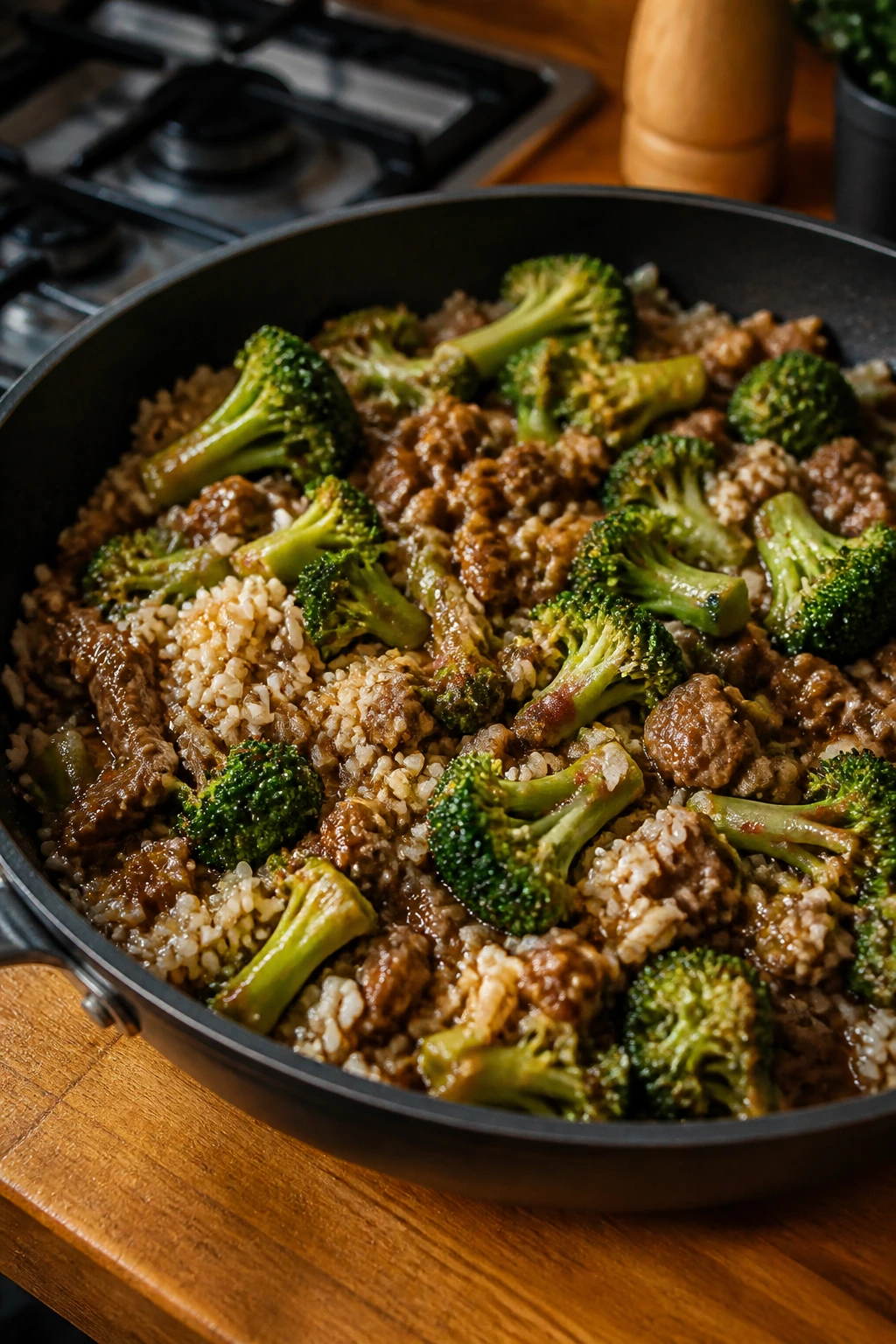
2. One-Pan Beef and Broccoli Rice Bowls
This is the kind of dinner that tastes like takeout but behaves like a pantry meal. The sauce is salty, a little sweet, and thick enough to coat every piece of beef and broccoli without turning the rice soggy.
Why It Works: Ground beef cooks quickly, which saves you from fussing with slicing or tenderizing. Broccoli softens in the same pan with a splash of water, so you don’t need to dirty a second pot. The soy sauce, brown sugar, garlic, and ginger give you that classic stir-fry flavor with almost no downtime.
Key Ingredients:
- 1 lb lean ground beef
- 4 cups broccoli florets
- 2 cups cooked white rice
- ¼ cup soy sauce
- 2 tablespoons brown sugar
- 1 tablespoon cornstarch
- ½ cup water
- 2 garlic cloves, minced
- 1 teaspoon fresh grated ginger
- 1 tablespoon neutral oil
Quick Steps:
- Whisk soy sauce, brown sugar, cornstarch, water, garlic, and ginger in a small bowl.
- Heat oil in a large skillet over medium-high heat and cook the beef for 5 to 6 minutes, breaking it into crumbles until browned.
- Add the broccoli and 2 tablespoons water, cover for 2 minutes, and let the florets turn bright green and just tender.
- Pour in the sauce, stir well, and cook for 1 to 2 minutes until it turns shiny and thick.
- Serve the beef and broccoli over warm rice.
Equipment for This Recipe:
- Large skillet with lid
- Small bowl for sauce
- Wooden spoon
- Measuring cups
How to Serve This Dish: Pack the rice into bowls first, then spoon the beef and broccoli on top so the sauce runs into the rice instead of pooling at the edge. A few sesame seeds or sliced scallions finish it cleanly.
Pro Tips for This Recipe:
- Use frozen broccoli if that’s what you have: It works, but reduce the covered cook time so it doesn’t go soft.
- Make the sauce before you start cooking: Once the beef is browned, everything moves fast.
- Drain excess fat if needed: Too much grease can make the sauce slide off the beef.
Variations on This Dish:
- Turkey Swap: Ground turkey works with the same sauce; add an extra teaspoon of oil so it doesn’t dry out.
- Spicy Version: Stir in 1 teaspoon chili garlic sauce.
- Cauliflower Rice Bowl: Serve over cauliflower rice, but keep the sauce a little thicker so it doesn’t water out.
Common Mistakes to Avoid with This Dish:
- Adding the sauce too late: The cornstarch needs heat to thicken. Pour it in while the pan is still hot.
- Overcooking the broccoli: You want tender-crisp florets, not olive-drab mush.
- Using raw rice: Cooked rice is the whole point here; raw rice won’t catch up on a weeknight.
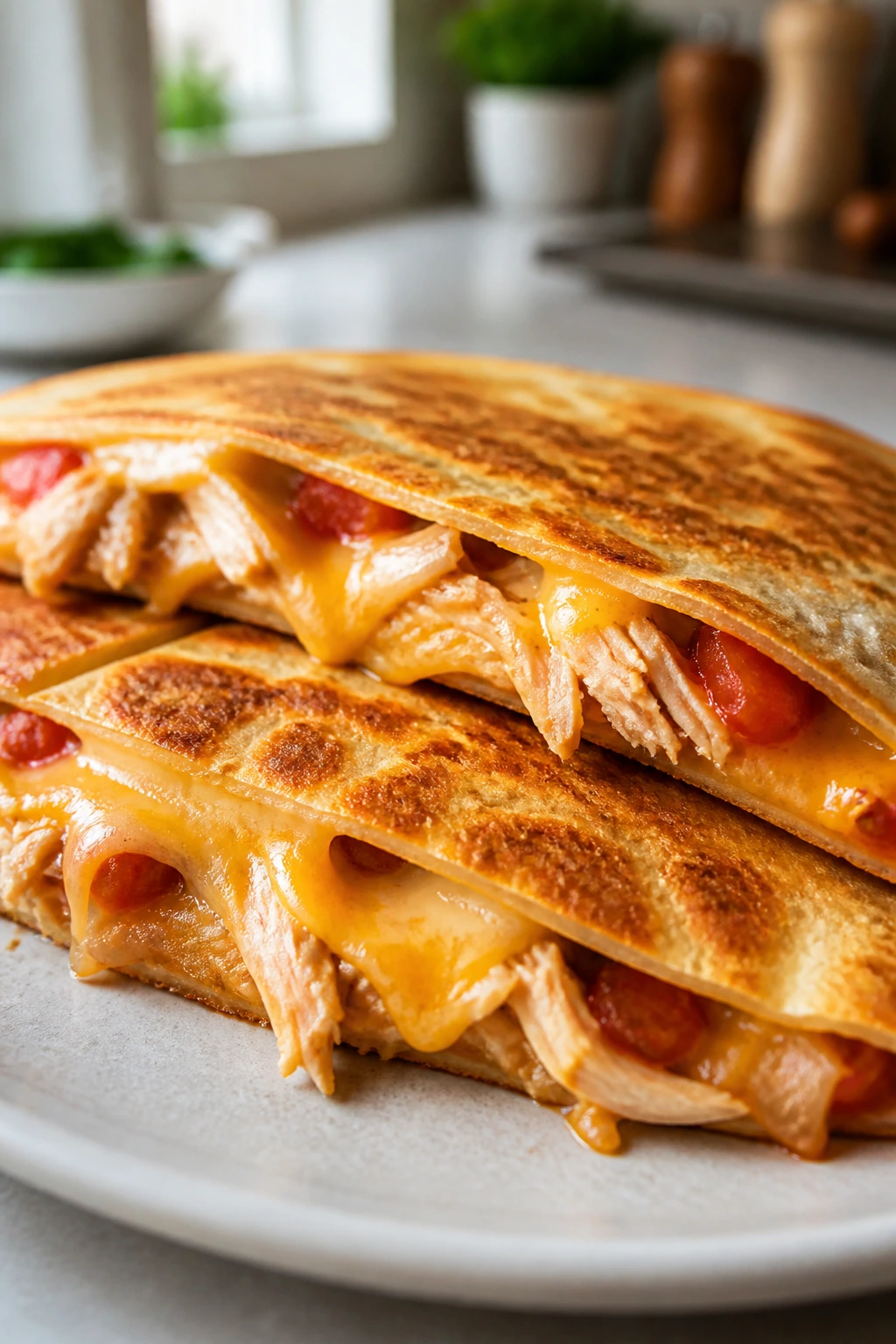
3. Cheesy Rotisserie Chicken Quesadillas
If you keep a rotisserie chicken in the fridge, you’re already halfway to dinner. These quesadillas come out crisp on the outside, melty in the middle, and a little messy in the good way — the kind that needs a napkin, not a knife.
Why It Works: Shredded rotisserie chicken skips the longest part of dinner, which is cooking the protein from scratch. Salsa adds moisture and seasoning at the same time, and a mix of cheddar and Monterey Jack melts into a stretchy layer that holds the filling together. The skillet does the rest.
Key Ingredients:
- 2 cups shredded rotisserie chicken
- 1½ cups shredded Monterey Jack or cheddar
- ½ cup salsa
- ¼ cup sliced green onions
- 8 medium flour tortillas
- 1 tablespoon neutral oil
- ½ teaspoon cumin
Quick Steps:
- Mix chicken, salsa, green onions, and cumin in a bowl.
- Heat a skillet over medium heat and wipe it lightly with oil.
- Lay down one tortilla, sprinkle cheese over half, add a layer of chicken filling, then top with more cheese and fold.
- Cook for 2 to 3 minutes per side until the tortilla is golden and the cheese is fully melted.
- Rest for 1 minute before slicing so the filling stays put.
Equipment for This Recipe:
- Large nonstick skillet
- Spatula
- Mixing bowl
- Chef’s knife or pizza cutter
How to Serve This Dish: Cut each quesadilla into wedges and serve with sour cream, pico de gallo, or a little extra salsa. A side of sliced cucumber or a simple green salad keeps the meal from feeling too heavy.
Pro Tips for This Recipe:
- Don’t overload the filling: Too much chicken squeezes out the sides and burns on the pan.
- Use medium heat: High heat browns the tortilla before the cheese melts.
- Let it rest briefly: One minute matters here. The cheese settles and the slices hold together better.
Variations on This Dish:
- Bean Boost: Add ½ cup drained black beans to stretch the filling.
- Pepper Jack Heat: Swap in Pepper Jack for a little kick.
- Breakfast Quesadilla: Add scrambled eggs and skip the salsa for a morning version.
Common Mistakes to Avoid with This Dish:
- Using too much oil: You want a crisp tortilla, not a greasy one.
- Filling only the center: The cheese should run edge to edge so the quesadilla seals.
- Cutting too soon: Hot melted cheese runs everywhere if you slice immediately.
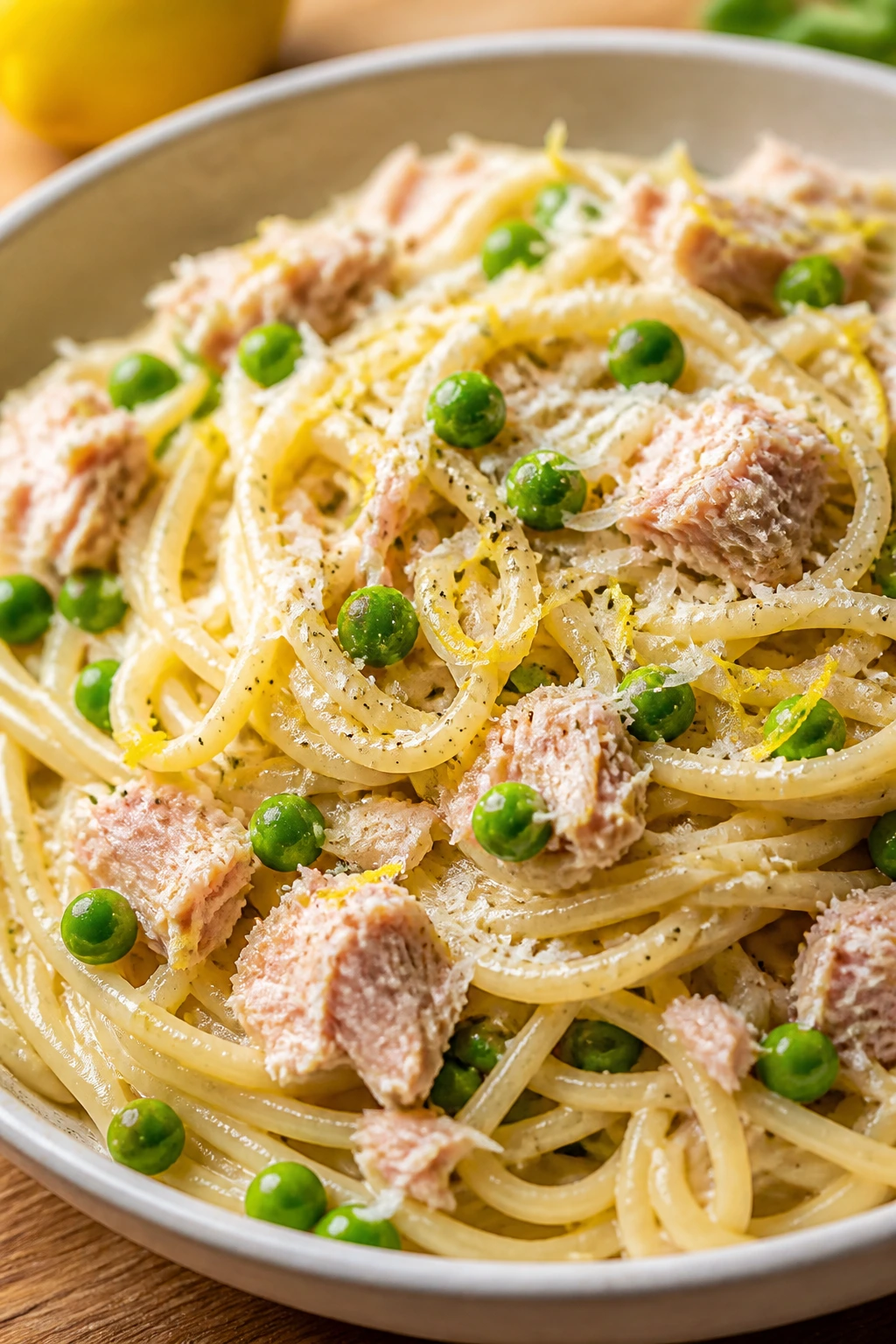
4. Lemon Tuna Pasta with Peas
This is a sharp, bright pasta that tastes far more deliberate than the ingredient list suggests. The tuna stays savory, the peas bring little pops of sweetness, and the lemon keeps the whole bowl from feeling canned or dull.
Why It Works: Tuna from a can is cheap, fast, and already cooked, which makes it ideal for weeknights. Pasta water turns the olive oil, lemon juice, and Parmesan into a loose sauce that clings to the noodles. Frozen peas slip into the pot during the last minute and behave like they were always meant to be there.
Key Ingredients:
- 12 oz spaghetti or penne
- 2 cans tuna in water, drained
- 1 cup frozen peas
- 2 tablespoons olive oil
- 3 garlic cloves, minced
- 1 lemon, zested and juiced
- ½ cup grated Parmesan
- ½ teaspoon red pepper flakes
- Salt and black pepper
Quick Steps:
- Boil the pasta in salted water until al dente, adding the peas during the last 1 minute.
- Reserve 1 cup pasta water, then drain.
- Warm olive oil in the pot over medium heat, add garlic and red pepper flakes, and stir for 30 seconds.
- Add tuna, lemon zest, lemon juice, ½ cup pasta water, and Parmesan, stirring until it looks saucy.
- Toss in the pasta and peas, adding more pasta water if needed until the noodles are glossy.
Equipment for This Recipe:
- Large pot
- Colander
- Microplane or fine grater
- Wooden spoon
How to Serve This Dish: Finish with extra black pepper and a few more Parmesan shavings. A toasted piece of garlic bread is welcome here, but a simple side salad works just as well.
Pro Tips for This Recipe:
- Salt the pasta water well: The sauce depends on that seasoning.
- Use good tuna if you can: Solid tuna in olive oil tastes richer, but water-packed tuna still works.
- Keep pasta water nearby: It’s the glue that makes this dish feel like dinner instead of a pantry rescue.
Variations on This Dish:
- Capers and Olive Version: Add 2 tablespoons capers and a handful of sliced olives.
- Creamy Tuna Pasta: Stir in 2 tablespoons cream cheese with the Parmesan.
- No-Dairy Option: Skip the Parmesan and add a splash more lemon plus 1 tablespoon olive oil.
Common Mistakes to Avoid with This Dish:
- Overcooking the pasta: Soft noodles turn the sauce heavy.
- Dumping the tuna in dry: A little pasta water keeps it from tasting chalky.
- Forgetting the lemon zest: Juice gives acid, zest gives the fragrant part.
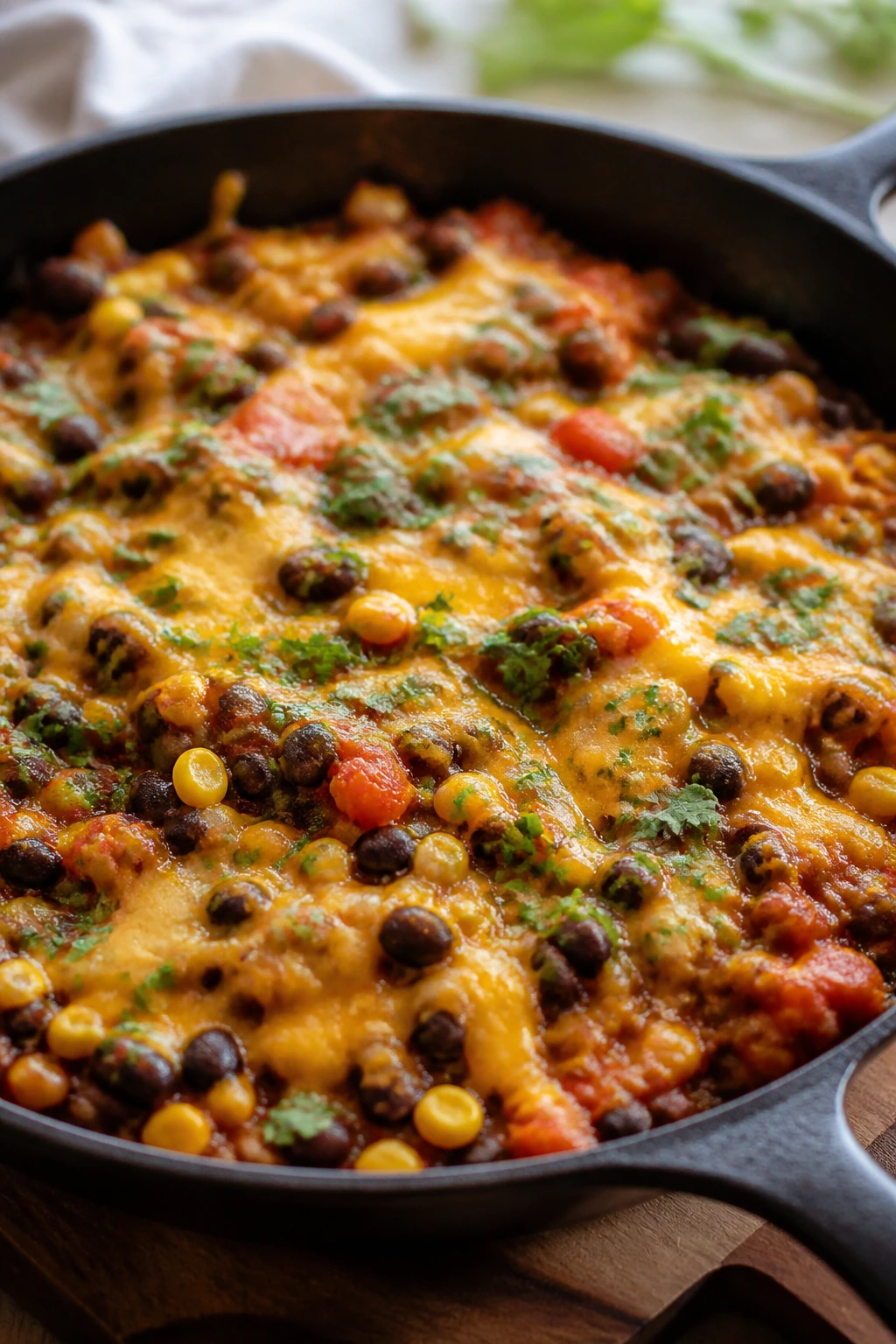
5. Black Bean and Corn Taco Skillet
A good taco skillet should smell like onions, cumin, and hot salsa the second the lid comes off. This one is hearty enough to stand on its own, but it also works as a filling for tortillas, bowls, or nachos if that’s what the evening needs.
Why It Works: Canned black beans are cheap, filling, and ready in minutes. Corn brings sweetness and a little crunch, while salsa acts as both seasoning and sauce. Melting cheese over the top gives the whole pan a taco-night finish without heating a separate stack of tortillas unless you want them.
Key Ingredients:
- 1 tablespoon olive oil
- 1 small yellow onion, diced
- 1 bell pepper, diced
- 2 cans black beans, drained and rinsed
- 1½ cups frozen corn
- 1 cup salsa
- 2 teaspoons taco seasoning
- 1 cup shredded cheddar or Mexican blend cheese
- 2 tablespoons chopped cilantro
- Tortillas or cooked rice, for serving
Quick Steps:
- Heat oil in a large skillet over medium heat and cook the onion and bell pepper for 4 to 5 minutes until softened.
- Stir in the black beans, corn, salsa, and taco seasoning.
- Cook for 5 minutes, stirring now and then, until the mixture is hot and the sauce has thickened a little.
- Sprinkle the cheese over the top, cover, and cook for 1 to 2 minutes until melted.
- Top with cilantro and serve with tortillas or rice.
Equipment for This Recipe:
- Large skillet with lid
- Wooden spoon
- Can opener
- Cutting board and knife
How to Serve This Dish: Scoop it into warm tortillas with a spoonful of sour cream, or serve it over rice with crushed tortilla chips for crunch. If you want it to look less like a scramble and more like dinner, a lime wedge and cilantro do the trick.
Pro Tips for This Recipe:
- Rinse the beans: It cuts down on the canned taste and keeps the skillet from turning muddy.
- Use salsa with some texture: A watery salsa makes the pan runny.
- Add cheese off the heat if your stove runs hot: That keeps it from sticking and toughening.
Variations on This Dish:
- Smoky Chipotle Version: Stir in 1 minced chipotle in adobo.
- Extra Hearty Bowl: Add 1 cup cooked rice directly to the skillet.
- Breakfast Taco Skillet: Top with fried eggs instead of cheese.
Common Mistakes to Avoid with This Dish:
- Adding too much salsa: The pan should be spoonable, not soupy.
- Skipping the sauté on the onion: Raw onion keeps the whole dish sharp in a bad way.
- Using no salt at all: Taco seasoning varies; taste before serving.
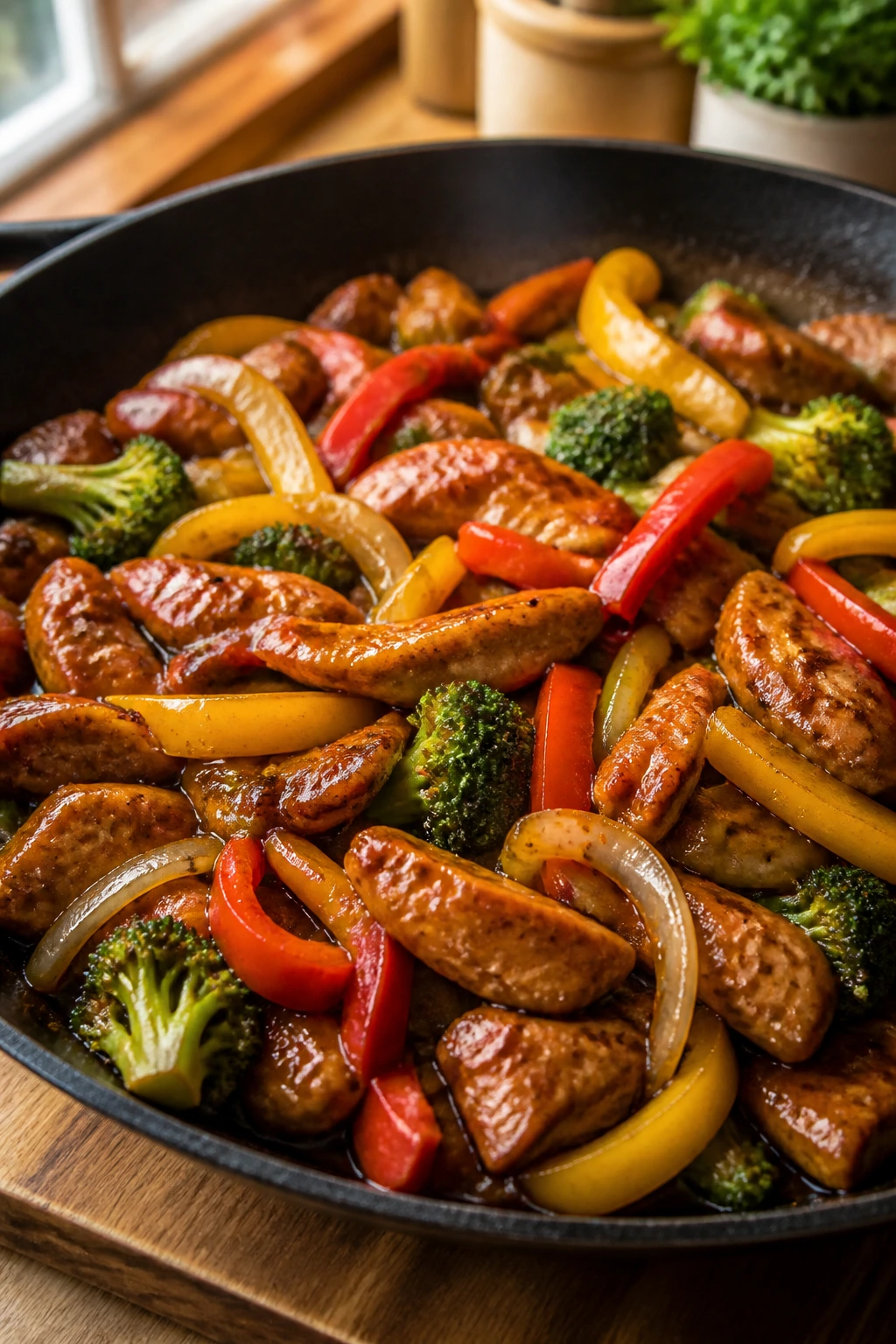
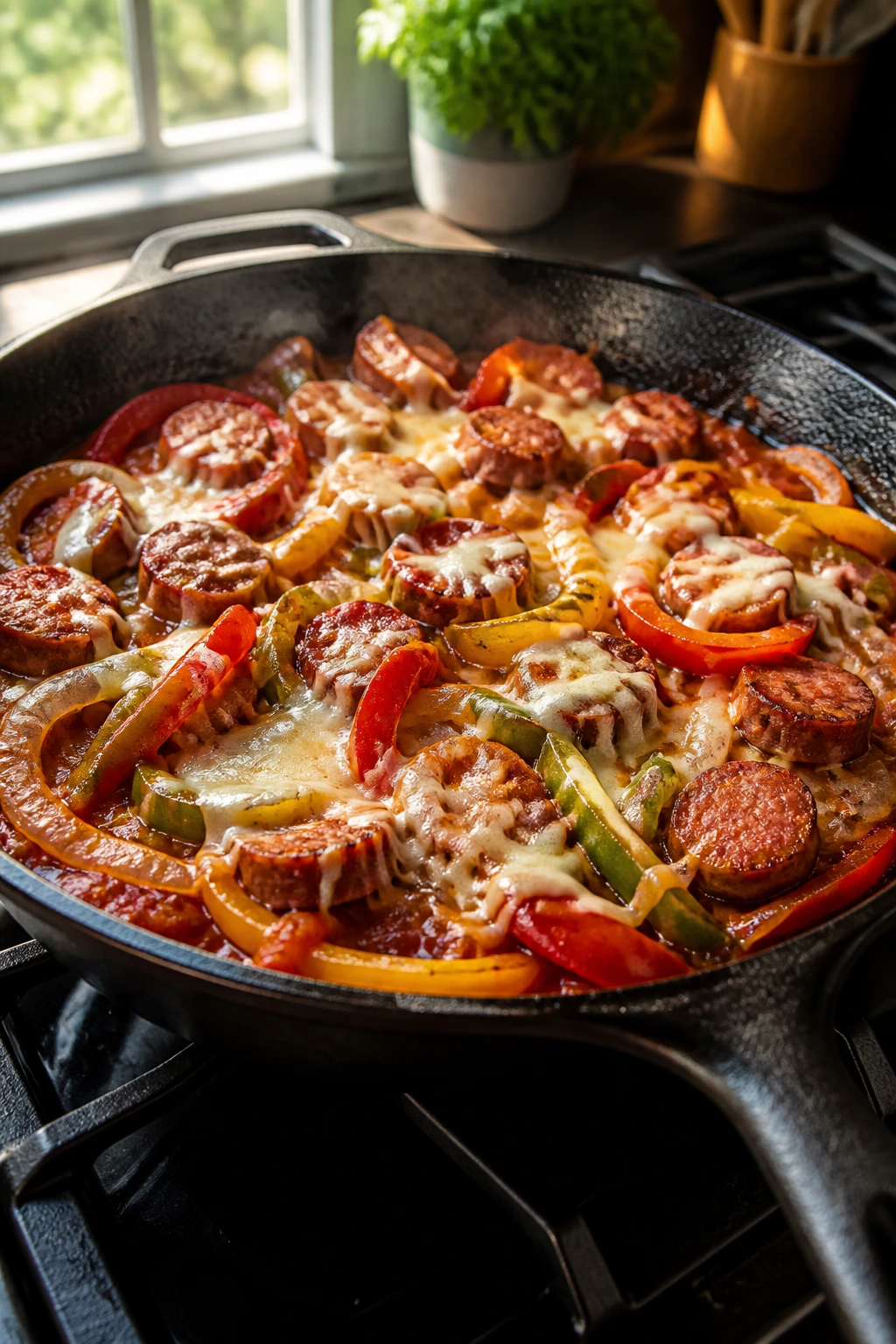
6. Sausage and Pepper Hoagie Skillet
This is all the parts of a sausage sandwich without the awkward oven juggling. The peppers turn soft and sweet, the sausage browns at the edges, and the marinara ties it together so the whole thing feels like a sandwich shop special.
Why It Works: Smoked sausage is already cooked, so dinner moves fast once it hits the pan. Bell peppers and onions soften in the sausage drippings and pick up a little char, which gives the filling more depth than a plain stovetop warm-up. Hoagie rolls catch the juices better than regular bread.
Key Ingredients:
- 1 lb smoked sausage, sliced into coins
- 2 bell peppers, sliced
- 1 large onion, sliced
- 1 cup marinara sauce
- ½ teaspoon Italian seasoning
- 4 hoagie rolls
- 4 slices provolone or mozzarella
- 1 tablespoon olive oil
Quick Steps:
- Heat oil in a large skillet over medium-high heat and brown the sausage for 3 to 4 minutes.
- Add peppers and onion and cook for 6 to 8 minutes until softened with some browned edges.
- Stir in marinara and Italian seasoning, then simmer for 2 minutes until everything looks glossy.
- Split the hoagie rolls, fill with the sausage mixture, and top with cheese.
- Broil for 1 to 2 minutes until the cheese melts and the edges of the rolls toast.
Equipment for This Recipe:
- Large oven-safe skillet
- Sheet pan or broiler-safe setup
- Spatula
- Knife and cutting board
How to Serve This Dish: Serve the sandwiches open-faced for less mess, then close them once the cheese softens. A handful of potato chips or a crisp pickle spear is enough on the side.
Pro Tips for This Recipe:
- Use an oven-safe skillet if possible: Broiling the cheese right in the pan saves dishes.
- Slice the peppers evenly: Thin strips cook at the same pace as the onions.
- Don’t drown the filling: Too much marinara makes the rolls soggy fast.
Variations on This Dish:
- Spicy Italian Style: Swap in hot sausage and add red pepper flakes.
- Cheese-Stuffed Version: Put cheese under and over the filling for more melt.
- Sub Bowl: Serve the filling over rice instead of bread.
Common Mistakes to Avoid with This Dish:
- Cooking the sausage too long: It only needs browning, not a long simmer.
- Using soft sandwich bread: Hoagie rolls or sturdy sub buns hold up better.
- Skipping the broiler finish: That last minute gives the cheese the right stretch.
7. Creamy Tomato Tortellini Soup
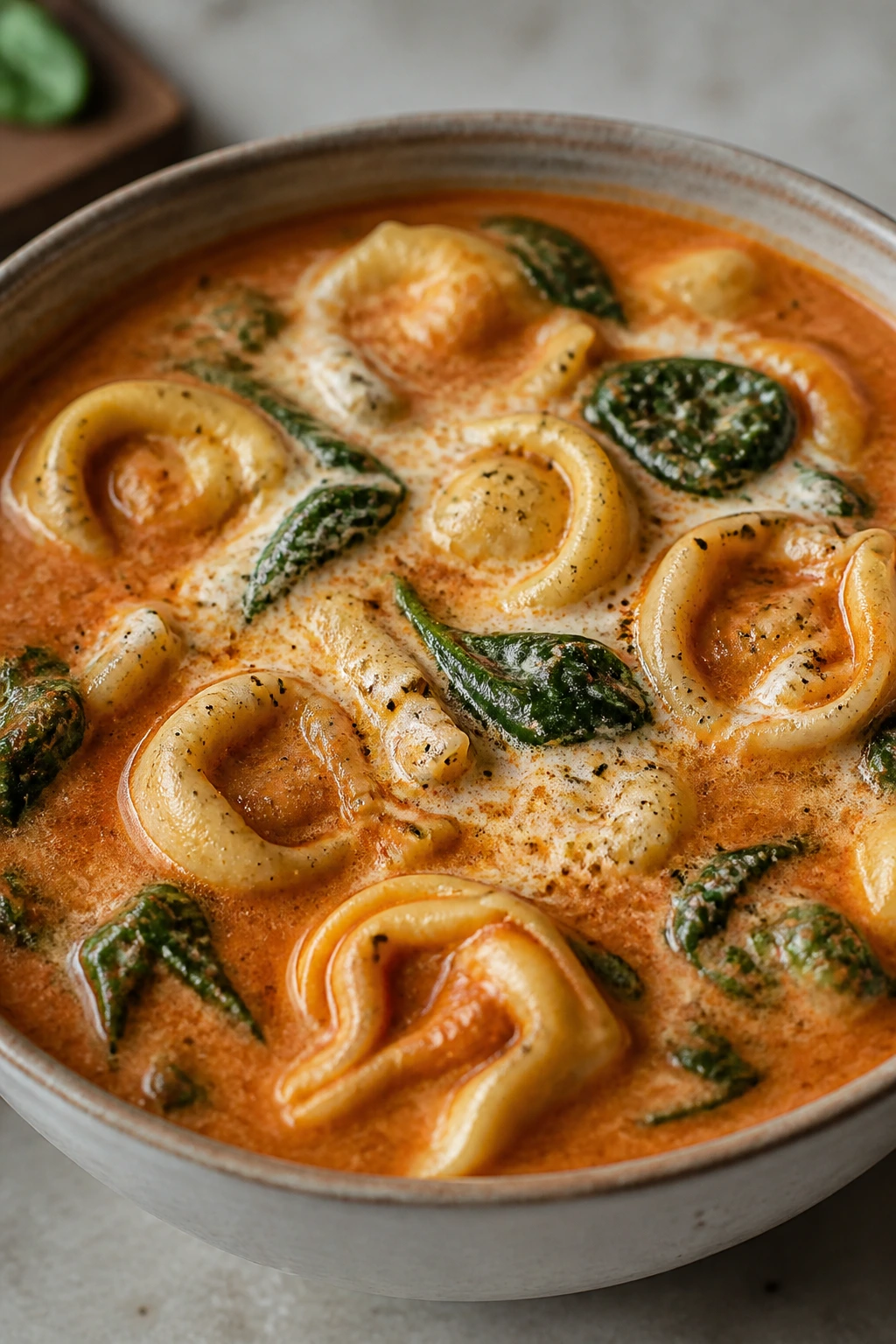
This soup tastes like the shortcut version of a slow-simmered tomato bowl, and I mean that as a compliment. The tortellini makes it filling enough for dinner, while the cream and spinach soften the sharp edges of the tomatoes.
Why It Works: Canned crushed tomatoes and broth build a fast base, and cheese tortellini cooks directly in the soup, which means no separate pot of water. A small amount of cream at the end rounds out the acidity without turning the soup heavy. Spinach melts into the pot with almost no effort.
Key Ingredients:
- 1 tablespoon olive oil
- 1 small onion, diced
- 2 garlic cloves, minced
- 1 can crushed tomatoes, 28 oz
- 3 cups low-sodium vegetable or chicken broth
- 1 package cheese tortellini, 9 to 12 oz
- ½ cup half-and-half or cream
- 2 cups baby spinach
- ¼ cup grated Parmesan
- Salt and black pepper
Quick Steps:
- Heat olive oil in a soup pot over medium heat and cook the onion for 4 minutes until translucent.
- Add garlic and cook for 30 seconds.
- Pour in tomatoes and broth, then simmer for 10 minutes.
- Add tortellini and cook according to package time, usually 3 to 5 minutes.
- Stir in cream, spinach, and Parmesan, then cook until the spinach wilts.
Equipment for This Recipe:
- Medium soup pot
- Wooden spoon
- Ladle
- Measuring cups
How to Serve This Dish: Ladle it into warm bowls and finish with more Parmesan and cracked black pepper. A slice of crusty bread is almost mandatory if you have it.
Pro Tips for This Recipe:
- Watch the tortellini closely: Overcooked stuffed pasta splits and turns the broth cloudy.
- Use half-and-half for a lighter bowl: Cream gives more body, but half-and-half still smooths the tomatoes well.
- Taste at the end: Some canned tomatoes are saltier than others.
Variations on This Dish:
- Meaty Version: Add 1 cup browned Italian sausage with the onion.
- Spicy Tomato Soup: Add ½ teaspoon crushed red pepper flakes.
- Dairy-Free Bowl: Skip the cream and finish with a drizzle of olive oil instead.
Common Mistakes to Avoid with This Dish:
- Boiling after the cream goes in: Keep it at a gentle simmer so the soup stays smooth.
- Using too much broth: The tortellini needs a soup that feels full, not watery.
- Adding spinach too early: It disappears if it cooks for long.
8. Sheet-Pan Sausage, Potatoes, and Green Beans
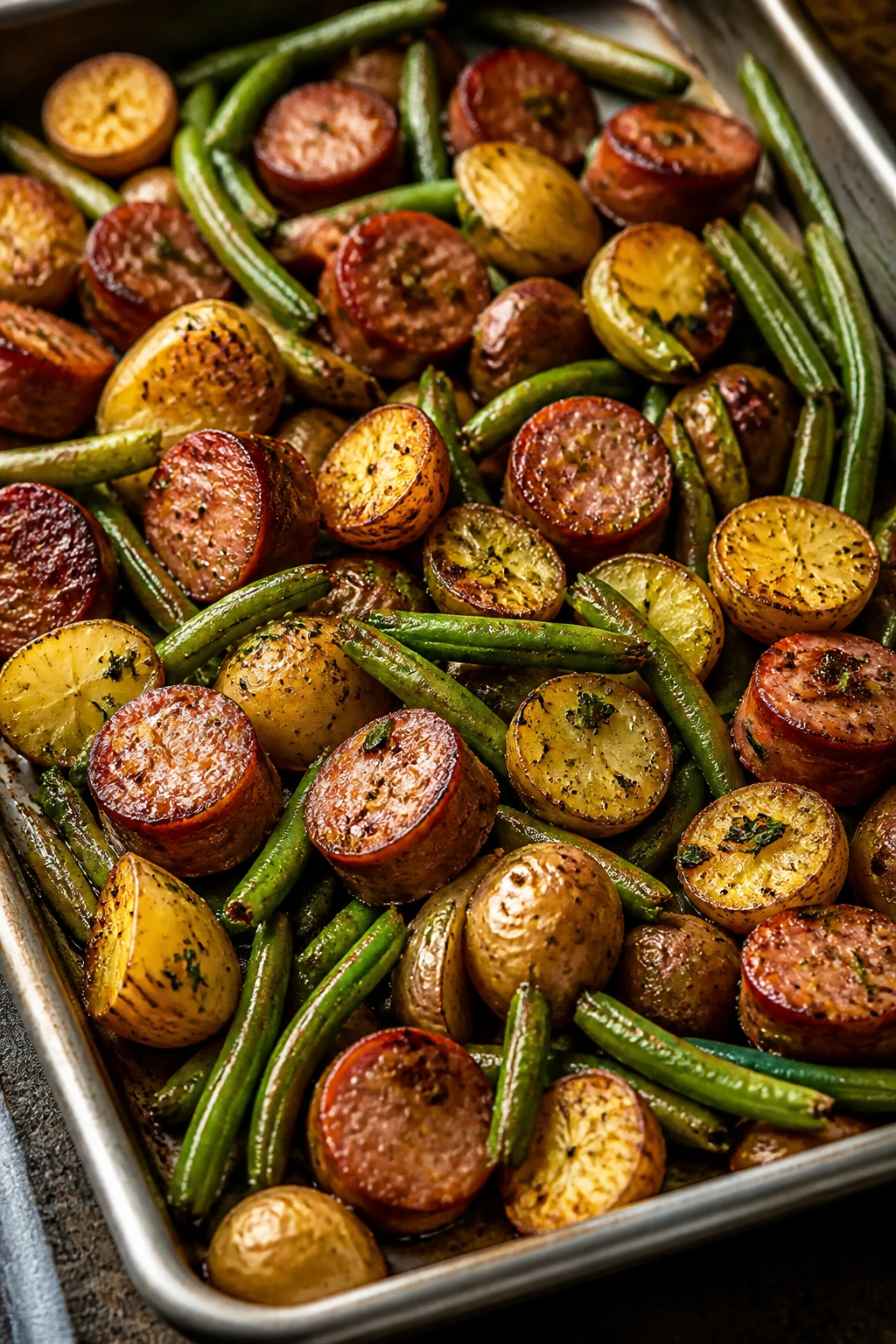
Sheet-pan dinners live or die by timing, and this one gets the timing right. Potatoes roast first, sausage browns around the edges, and green beans go in late so they stay snappy instead of wrinkled and sad.
Why It Works: Smoked sausage brings fat and seasoning, which helps the potatoes taste like more than roasted starch. Baby potatoes cook quickly when cut in half, and green beans only need a short blast in the oven to soften. One pan means dinner and cleanup both stay simple.
Key Ingredients:
- 1 lb smoked sausage, sliced
- 1½ lb baby potatoes, halved
- 12 oz green beans, trimmed
- 2 tablespoons olive oil
- 1 teaspoon garlic powder
- 1 teaspoon paprika
- 1 teaspoon kosher salt
- ½ teaspoon black pepper
Quick Steps:
- Heat the oven to 425°F and line a sheet pan with foil or parchment.
- Toss potatoes with 1 tablespoon oil, garlic powder, paprika, salt, and pepper.
- Roast potatoes for 20 minutes.
- Add sausage and green beans tossed with the remaining oil, then roast for another 15 to 18 minutes until the potatoes are tender and the green beans have browned spots.
- Toss once before serving so the sausage juices coat everything.
Equipment for This Recipe:
- Rimmed sheet pan
- Large mixing bowl
- Spatula
- Sharp knife
How to Serve This Dish: Serve it right from the tray if the night is chaotic. If you want a cleaner plate, add a spoonful of mustard or a dollop of sour cream on the side.
Pro Tips for This Recipe:
- Cut the potatoes evenly: Small pieces finish fast; big ones lag behind.
- Don’t add green beans too soon: They’ll shrivel before the potatoes are done.
- Give the pan space: If it looks crowded, use two pans. Crowding kills browning.
Variations on This Dish:
- Herby Version: Add 1 teaspoon rosemary or thyme with the potatoes.
- Spicy Sausage Tray: Use hot sausage and a pinch of cayenne.
- Mustard Finish: Toss the hot tray with 1 tablespoon Dijon and 1 teaspoon vinegar.
Common Mistakes to Avoid with This Dish:
- Using giant potato chunks: They won’t finish on time.
- Skipping the toss halfway: Uneven roasting leaves some pieces pale and some overdone.
- Using a flimsy pan: Thin pans can warp at 425°F and cook unevenly.
9. Turkey Sloppy Joes
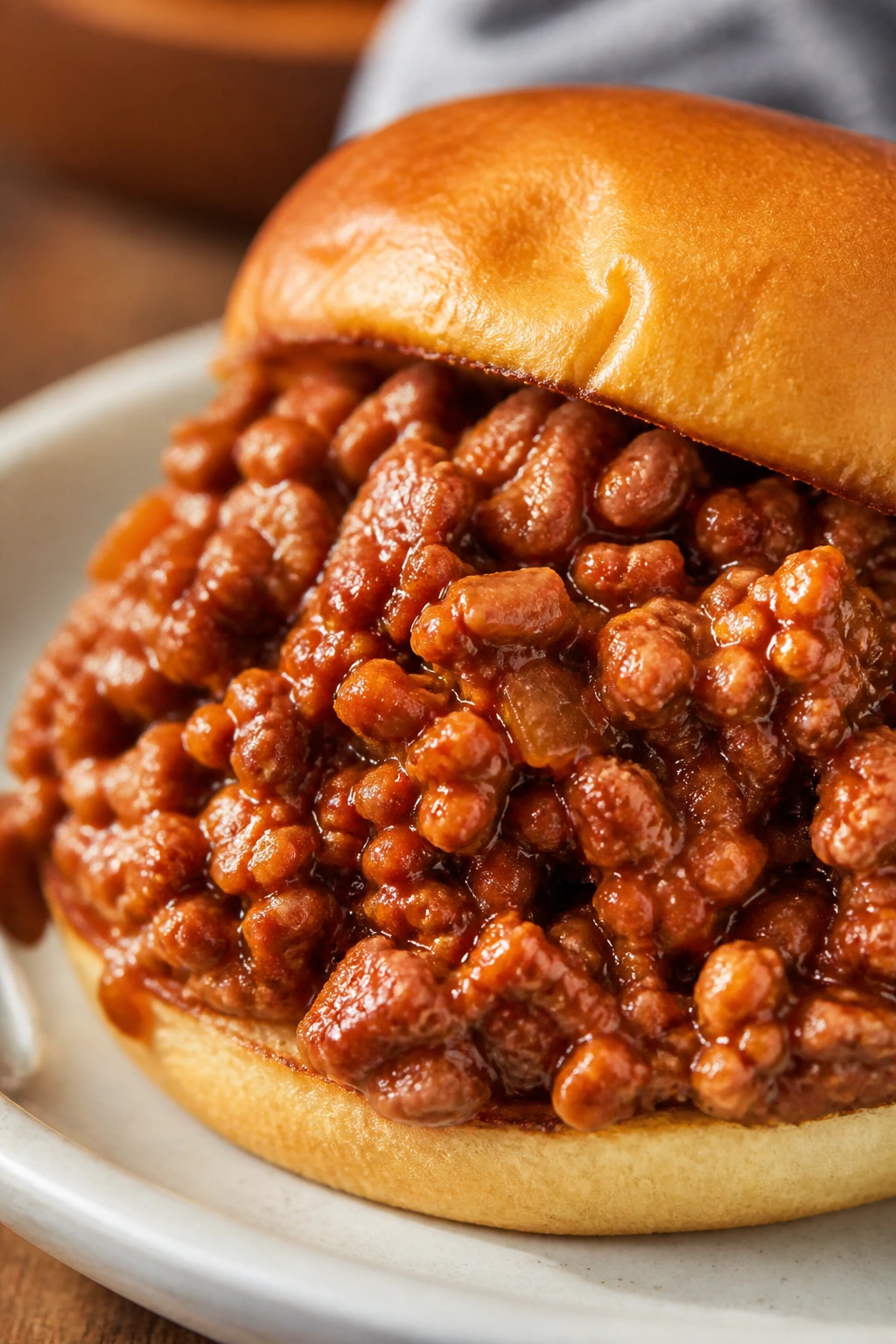
There’s a reason sloppy joes survive in so many home kitchens. They’re saucy, fast, and forgiving. This turkey version keeps the sweet-tangy profile but feels a little lighter and easier to eat on a weeknight.
Why It Works: Ground turkey cooks quickly and soaks up the sauce without much effort. Ketchup, tomato paste, Worcestershire, and mustard give you the familiar sloppy joe flavor in one pan. The mixture thickens fast, which is useful when everyone is already in the kitchen asking when dinner is ready.
Key Ingredients:
- 1 lb ground turkey
- 1 small onion, diced
- 2 garlic cloves, minced
- ¾ cup ketchup
- 2 tablespoons tomato paste
- 1 tablespoon Worcestershire sauce
- 1 tablespoon brown sugar
- 1 teaspoon yellow mustard
- 4 hamburger buns
- Salt and black pepper
Quick Steps:
- Cook the onion in a skillet over medium heat for 3 minutes until soft.
- Add turkey and garlic, breaking the meat apart until no pink remains.
- Stir in ketchup, tomato paste, Worcestershire, brown sugar, mustard, salt, and pepper.
- Simmer for 5 minutes, stirring often, until thick and glossy.
- Spoon onto toasted buns.
Equipment for This Recipe:
- Large skillet
- Wooden spoon
- Small bowl
- Toasting tray or toaster
How to Serve This Dish: Toast the buns if you can; it keeps them from turning to paste under the filling. Coleslaw, dill pickles, or corn on the side all fit the sandwich without asking much.
Pro Tips for This Recipe:
- Brown the turkey well: Pale turkey tastes flat. A little color adds depth.
- Toast the buns: Soft buns collapse fast under saucy filling.
- Taste before serving: Some ketchup brands are sweeter than others, and a pinch of salt can fix that.
Variations on This Dish:
- BBQ Joe: Replace half the ketchup with barbecue sauce.
- Pepper Version: Add diced bell pepper with the onion.
- Open-Face Style: Serve over toasted bread for a fork-and-knife dinner.
Common Mistakes to Avoid with This Dish:
- Too much liquid: Sloppy joes should mound, not run.
- Undercooking the onion: Raw onion bits stay sharp and distracting.
- Serving on cold buns: Warm bread holds the filling better and tastes better too.
10. Egg Fried Rice with Frozen Vegetables
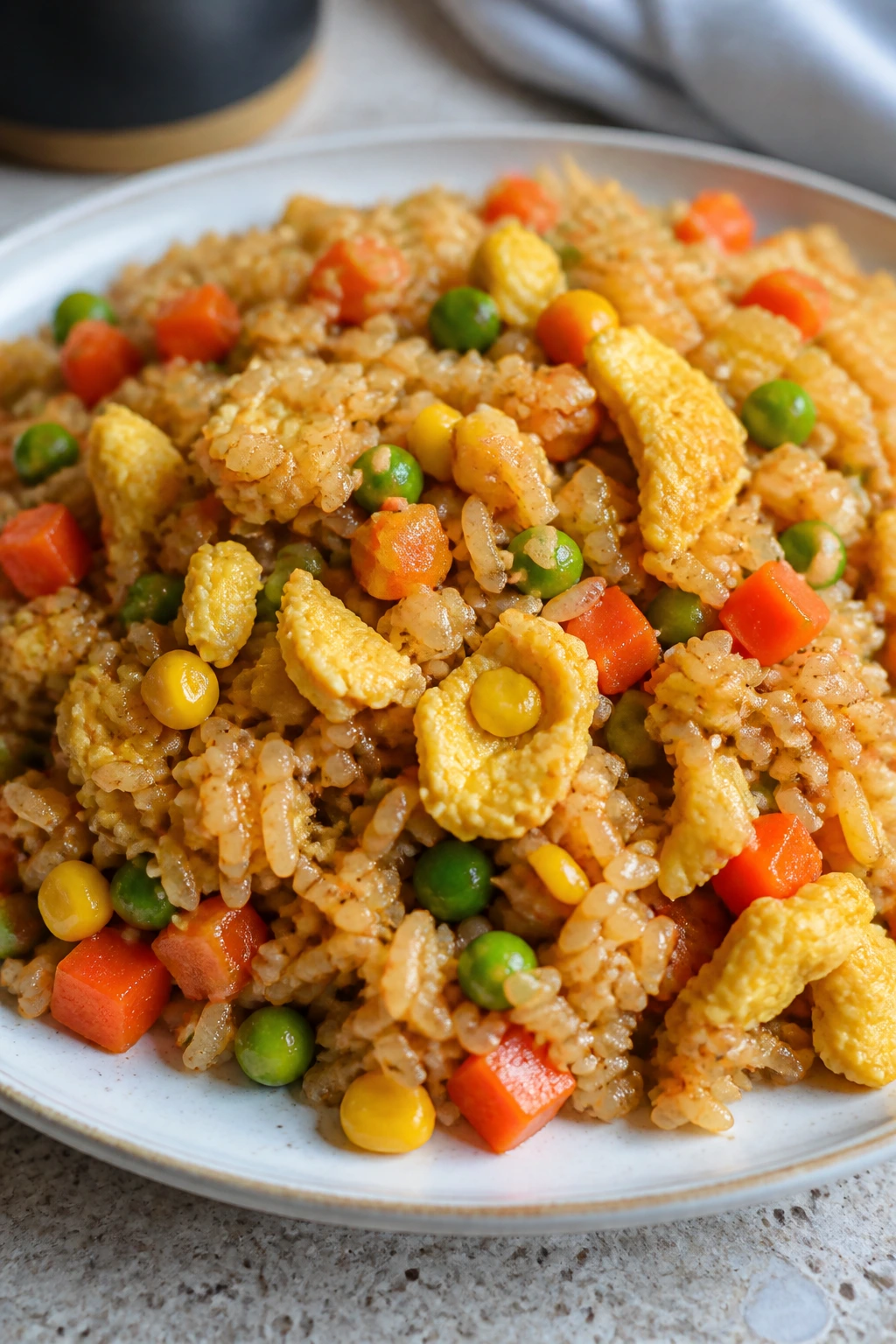
Fried rice is what happens when last night’s rice gets a second job. The grains stay separate, the eggs add richness, and frozen vegetables slide in without any chopping drama.
Why It Works: Cold cooked rice dries out a little in the fridge, which helps it fry instead of steaming. Eggs coat the rice with a soft richness, while soy sauce and sesame oil give the dish its savory backbone. Frozen mixed vegetables keep the prep short and the cost down.
Key Ingredients:
- 3 cups cold cooked rice
- 4 large eggs, beaten
- 2 cups frozen mixed vegetables
- 2 green onions, sliced
- 2 tablespoons soy sauce
- 1 tablespoon sesame oil
- 1 tablespoon neutral oil
- 1 teaspoon minced garlic
- Salt, if needed
Quick Steps:
- Heat neutral oil in a large skillet or wok over medium-high heat.
- Scramble the eggs for about 1 minute, then move them to a plate.
- Add garlic and frozen vegetables, cooking for 3 to 4 minutes until hot.
- Add the rice, breaking up clumps, and stir-fry for 3 minutes until the grains are hot and a little toasted.
- Return the eggs, add soy sauce and sesame oil, and toss with green onions.
Equipment for This Recipe:
- Large skillet or wok
- Spatula
- Bowl for beaten eggs
- Measuring spoons
How to Serve This Dish: Serve it in shallow bowls with extra green onions on top. If you want to stretch it, a fried egg on each portion makes the dish feel more complete.
Pro Tips for This Recipe:
- Use cold rice: Fresh rice is too soft and turns sticky.
- Keep the pan hot: Fried rice needs heat to pick up that toasty edge.
- Season at the end: Soy sauce varies a lot, so taste before adding salt.
Variations on This Dish:
- Ham Fried Rice: Add 1 cup diced cooked ham with the vegetables.
- Vegetable-Heavy Bowl: Use 3 cups frozen vegetables if that’s what you need to use up.
- Spicy Garlic Fried Rice: Add chili oil at the end.
Common Mistakes to Avoid with This Dish:
- Using fresh rice: It clumps and goes soft.
- Adding too much soy sauce at once: The rice can turn dark and soggy.
- Crowding the pan: If the rice steams, it won’t fry.
11. Pesto Gnocchi with Cherry Tomatoes
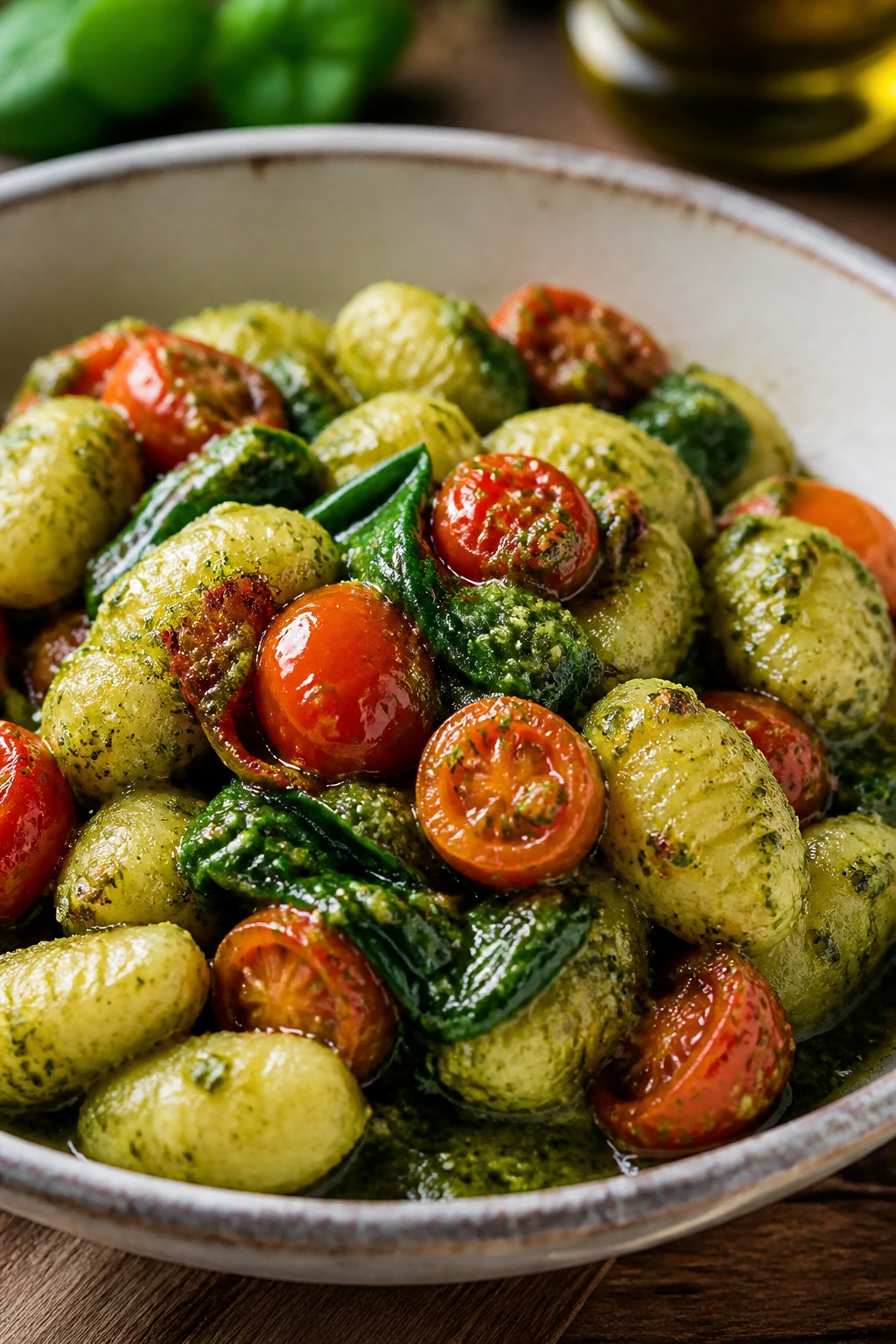
Soft gnocchi, blistered tomatoes, and basil pesto make a dinner that looks fancier than the actual work involved. The potatoes in the gnocchi give the dish a cozy chew, and the tomatoes burst into little pockets of sweetness.
Why It Works: Shelf-stable gnocchi cooks in minutes, which makes it one of the fastest starches you can buy. Tomatoes blister in the pan and release juice that thins the pesto into a proper sauce. Spinach disappears into the mix without much fuss, so you get more vegetable presence with little extra work.
Key Ingredients:
- 1 lb shelf-stable gnocchi
- 2 tablespoons olive oil
- 2 cups cherry tomatoes
- ½ cup basil pesto
- ⅓ cup reserved pasta water
- 2 cups baby spinach
- ½ cup shredded mozzarella or grated Parmesan
- Salt and black pepper
Quick Steps:
- Heat oil in a skillet over medium-high heat and cook the gnocchi for 4 to 5 minutes until lightly golden.
- Add cherry tomatoes and cook for 3 minutes until they blister and split.
- Stir in pesto and pasta water until the sauce loosens.
- Add spinach and cook just until wilted.
- Finish with cheese and black pepper.
Equipment for This Recipe:
- Large skillet
- Wooden spoon
- Measuring cup
- Colander, if boiling gnocchi first
How to Serve This Dish: Spoon it into shallow bowls so the pesto coats everything instead of disappearing. A little extra Parmesan and a green salad are enough to round it out.
Pro Tips for This Recipe:
- Don’t overcook the gnocchi: It turns mushy fast.
- Use the pan you started with: The browned bits from the gnocchi add flavor.
- Thin the pesto carefully: A splash of pasta water makes it silky, not oily.
Variations on This Dish:
- Chicken Pesto Gnocchi: Add 1½ cups shredded cooked chicken.
- Creamy Pesto Version: Stir in 2 tablespoons cream cheese.
- Sun-Dried Tomato Swap: Replace half the cherry tomatoes with chopped sun-dried tomatoes.
Common Mistakes to Avoid with This Dish:
- Using too much pesto: It can turn heavy and greasy.
- Skipping the tomato blistering: That quick browning gives the sauce character.
- Serving it dry: Gnocchi needs a little sauce to feel finished.
12. Chickpea Curry with Spinach
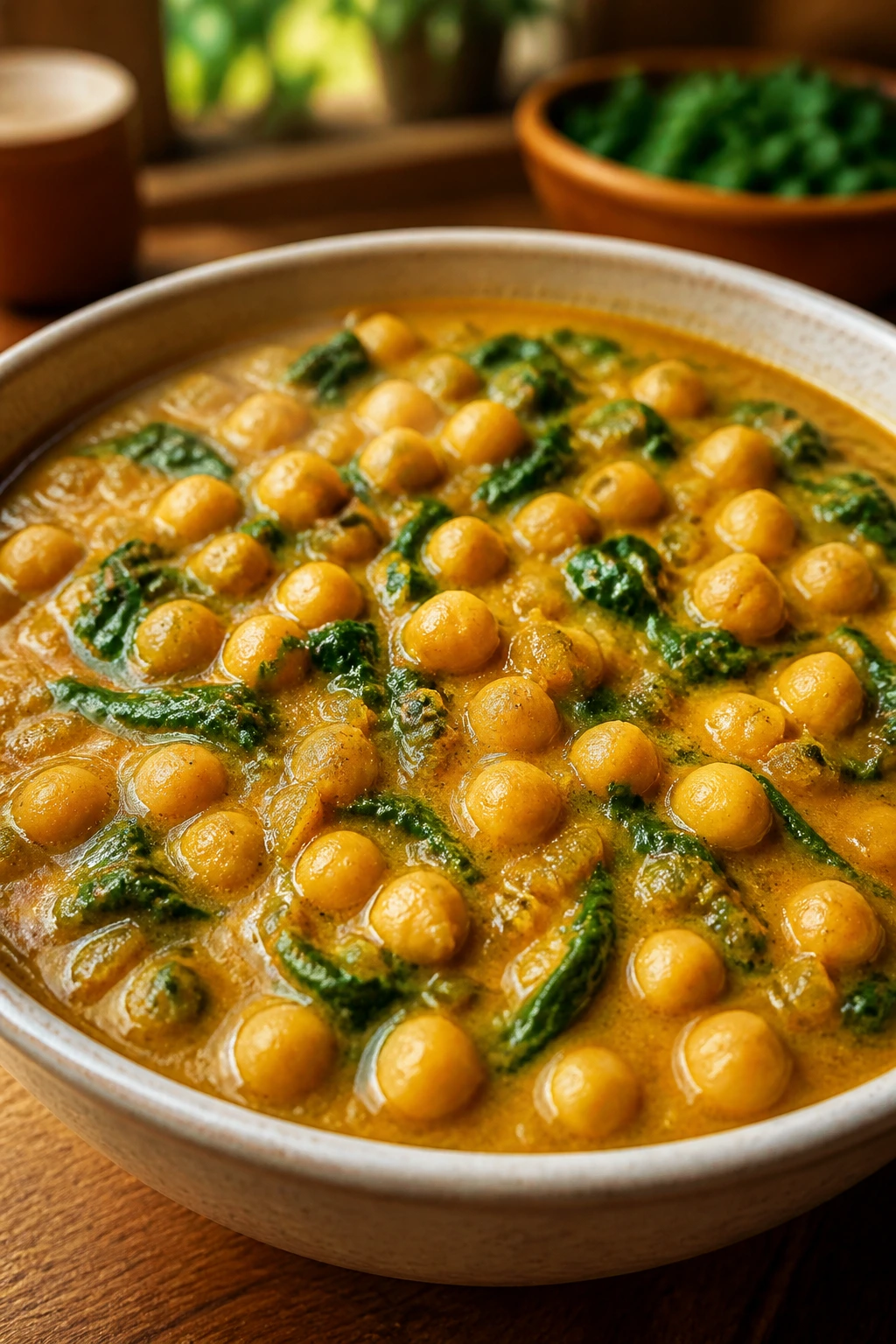
This is the vegetarian dinner I reach for when the fridge looks thin and the clock looks mean. Chickpeas give it body, curry powder gives it warmth, and spinach wilts in at the end like it was never a burden.
Why It Works: Canned chickpeas are already tender, so the curry only needs enough simmer time to marry the flavors. Coconut milk gives the sauce a creamy base, and tomato paste deepens the color and flavor without a long cook. A handful of spinach makes the pot look fuller and taste fresher.
Key Ingredients:
- 1 tablespoon oil
- 1 small onion, diced
- 2 garlic cloves, minced
- 1 tablespoon curry powder
- 1 tablespoon tomato paste
- 2 cans chickpeas, drained and rinsed
- 1 can coconut milk, 13.5 oz
- ½ cup vegetable broth
- 4 cups baby spinach
- Salt to taste
Quick Steps:
- Cook onion in oil over medium heat for 4 minutes until soft.
- Add garlic, curry powder, and tomato paste, stirring for 30 seconds.
- Add chickpeas, coconut milk, and broth, then simmer for 10 minutes.
- Stir in spinach and cook until just wilted.
- Taste and salt as needed, then serve hot.
Equipment for This Recipe:
- Medium saucepan or deep skillet
- Wooden spoon
- Can opener
- Measuring spoons
How to Serve This Dish: Serve over rice or with warm naan so the sauce doesn’t sit lonely in the bowl. A squeeze of lime sharpens the richness if you want a little more edge.
Pro Tips for This Recipe:
- Bloom the curry powder: Stirring it into oil wakes up the spices.
- Use full-fat coconut milk if possible: It gives the sauce a smoother body.
- Don’t boil hard after adding coconut milk: Gentle simmer keeps it creamy.
Variations on This Dish:
- Sweet Potato Curry: Add 1 cup diced sweet potato and simmer until tender.
- Extra Green Version: Stir in chopped kale instead of spinach.
- Peanut Curry: Add 1 tablespoon peanut butter for a thicker, nuttier sauce.
Common Mistakes to Avoid with This Dish:
- Undercooking the onion: It should be soft, not crunchy.
- Adding spinach too early: It turns dark and stringy.
- Using too little salt: Chickpeas need seasoning to wake up.
13. Salmon Rice Bowls with Cucumber
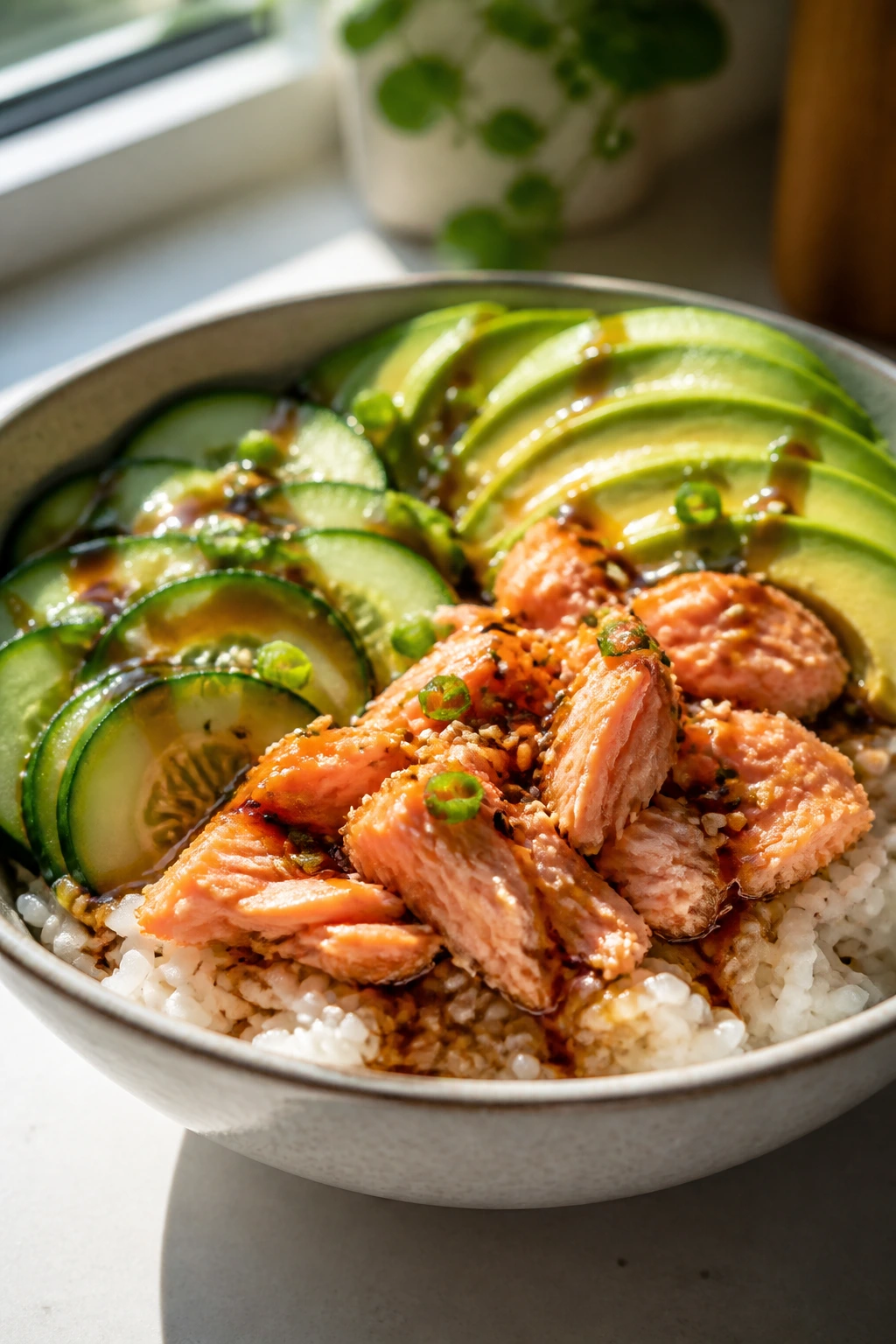
This bowl tastes cool, salty, and clean, which is a nice change after a heavy day. The salmon flakes into the rice, the cucumber keeps things crisp, and a simple soy-vinegar drizzle does more work than most bottled sauces.
Why It Works: Salmon cooks fast in the oven or skillet, and rice gives the bowl a sturdy base that soaks up seasoning. Cucumber and avocado keep the texture varied, which matters when the whole meal lives in one bowl. A little mayo or yogurt sauce adds richness without turning it into a project.
Key Ingredients:
- 1 lb salmon fillets
- 2 cups cooked rice
- 1 cucumber, thinly sliced
- 1 avocado, sliced
- 2 tablespoons soy sauce
- 1 tablespoon rice vinegar
- 1 tablespoon mayonnaise or plain yogurt
- 1 teaspoon sesame seeds
- Salt and black pepper
Quick Steps:
- Season salmon with salt and pepper, then bake at 400°F for 12 to 15 minutes or pan-sear until it flakes easily.
- Whisk soy sauce, rice vinegar, and mayo or yogurt.
- Divide rice between bowls.
- Top with salmon, cucumber, and avocado.
- Drizzle with sauce and finish with sesame seeds.
Equipment for This Recipe:
- Baking sheet or skillet
- Small bowl for sauce
- Sharp knife
- Rice cooker or saucepan
How to Serve This Dish: Build the bowls just before eating so the cucumber stays crisp and the avocado doesn’t brown. A few pickled onions or shredded carrots are easy add-ins if you want more color.
Pro Tips for This Recipe:
- Check the salmon early: It dries out fast if you wait for a dramatic color change.
- Use warm rice: Cold rice makes the bowl feel flat.
- Slice the cucumber thin: It folds into the bowl better and eats cleaner.
Variations on This Dish:
- Spicy Mayo Bowl: Add sriracha to the sauce.
- Teriyaki Version: Swap the soy-vinegar drizzle for teriyaki sauce.
- Tuna Bowl: Use canned tuna if salmon is out of reach.
Common Mistakes to Avoid with This Dish:
- Overcooking the salmon: It should flake, not turn chalky.
- Using too much sauce: A bowl should be dressed, not flooded.
- Skipping the acid: Vinegar or lemon keeps the bowl from tasting heavy.
14. Ground Pork Lettuce Wraps
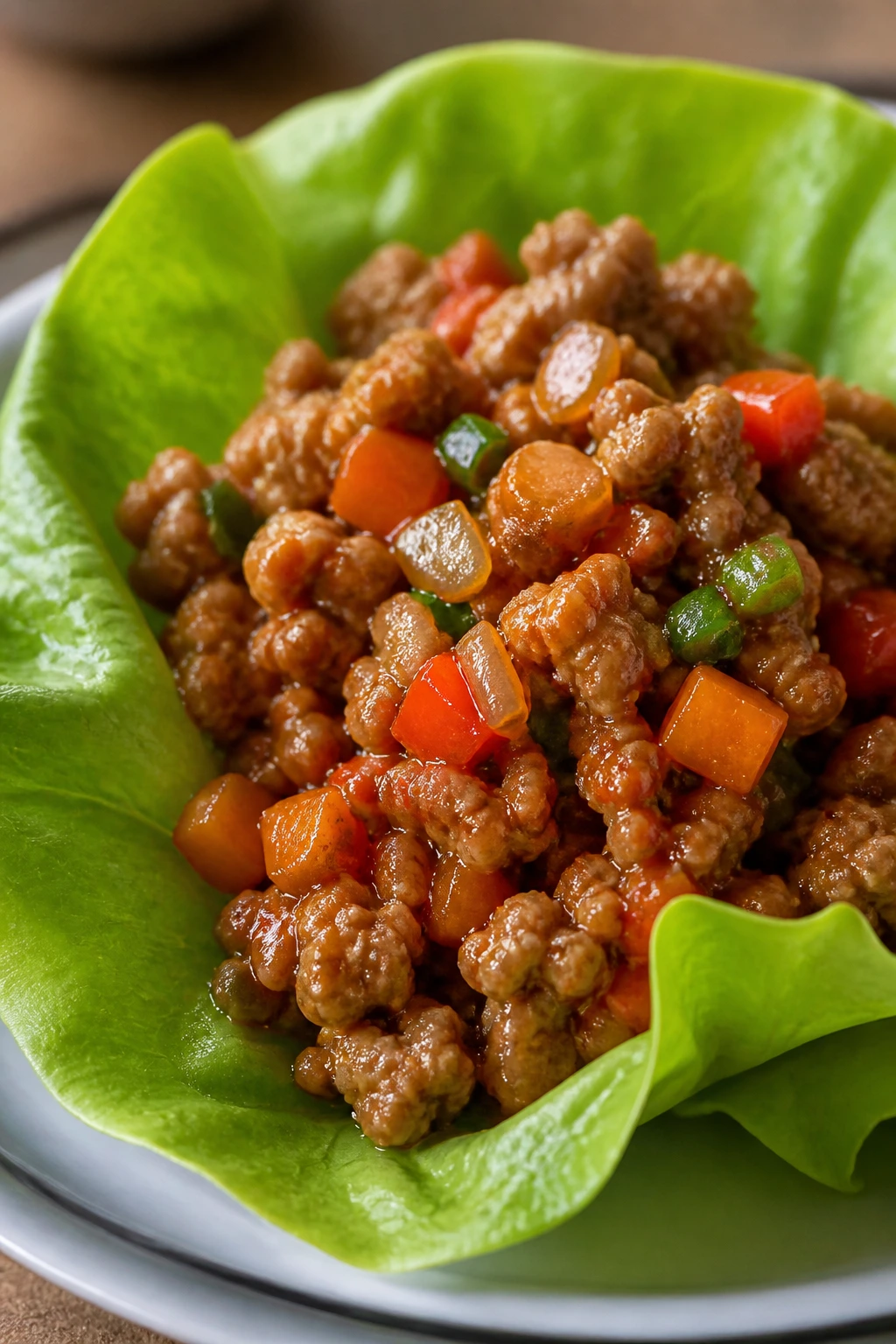
These wraps are crisp, salty, and fast enough that you can make them before the hunger gets rude. The filling hits that sweet spot between savory and slightly sticky, and the lettuce cups keep each bite cool and crunchy.
Why It Works: Ground pork cooks in minutes and carries sauces well, which makes it a good fit for this kind of dinner. Garlic, soy sauce, and hoisin build a punchy filling without a long ingredient list. Crisp lettuce gives you texture that bread can’t match on a hot night.
Key Ingredients:
- 1 lb ground pork
- 1 carrot, finely diced
- 1 bell pepper, finely diced
- 3 garlic cloves, minced
- 2 tablespoons soy sauce
- 1 tablespoon hoisin sauce
- 1 tablespoon rice vinegar
- 1 head butter lettuce or romaine, leaves separated
- 2 green onions, sliced
- 1 teaspoon neutral oil
Quick Steps:
- Heat oil in a skillet over medium-high heat and cook pork for 5 minutes, breaking it up.
- Add carrot, bell pepper, and garlic, cooking for 3 minutes.
- Stir in soy sauce, hoisin, and rice vinegar, then cook until the mixture looks sticky and glossy.
- Spoon into lettuce leaves.
- Top with green onions and serve right away.
Equipment for This Recipe:
- Large skillet
- Spoon or spatula
- Cutting board and knife
- Serving platter
How to Serve This Dish: Put the lettuce leaves on a big plate and the filling in a warm bowl so everyone can build their own wraps. A side of rice makes the meal more filling without much extra work.
Pro Tips for This Recipe:
- Dice the vegetables small: They cook faster and pack better into the lettuce.
- Dry the lettuce leaves well: Water makes the wraps slip apart.
- Use butter lettuce for the softest bite: Romaine works, but it’s less forgiving.
Variations on This Dish:
- Turkey Wraps: Ground turkey works if you add a little more oil.
- Cashew Version: Toss in ¼ cup chopped cashews at the end.
- Spicy Garlic Wraps: Add chili paste or red pepper flakes.
Common Mistakes to Avoid with This Dish:
- Overfilling the leaves: Two tablespoons too much and the wrap tears.
- Skipping the vinegar: The dish needs brightness.
- Letting the filling cool too much: Warm filling tastes better and stays more cohesive.
15. Baked Ziti with Cottage Cheese
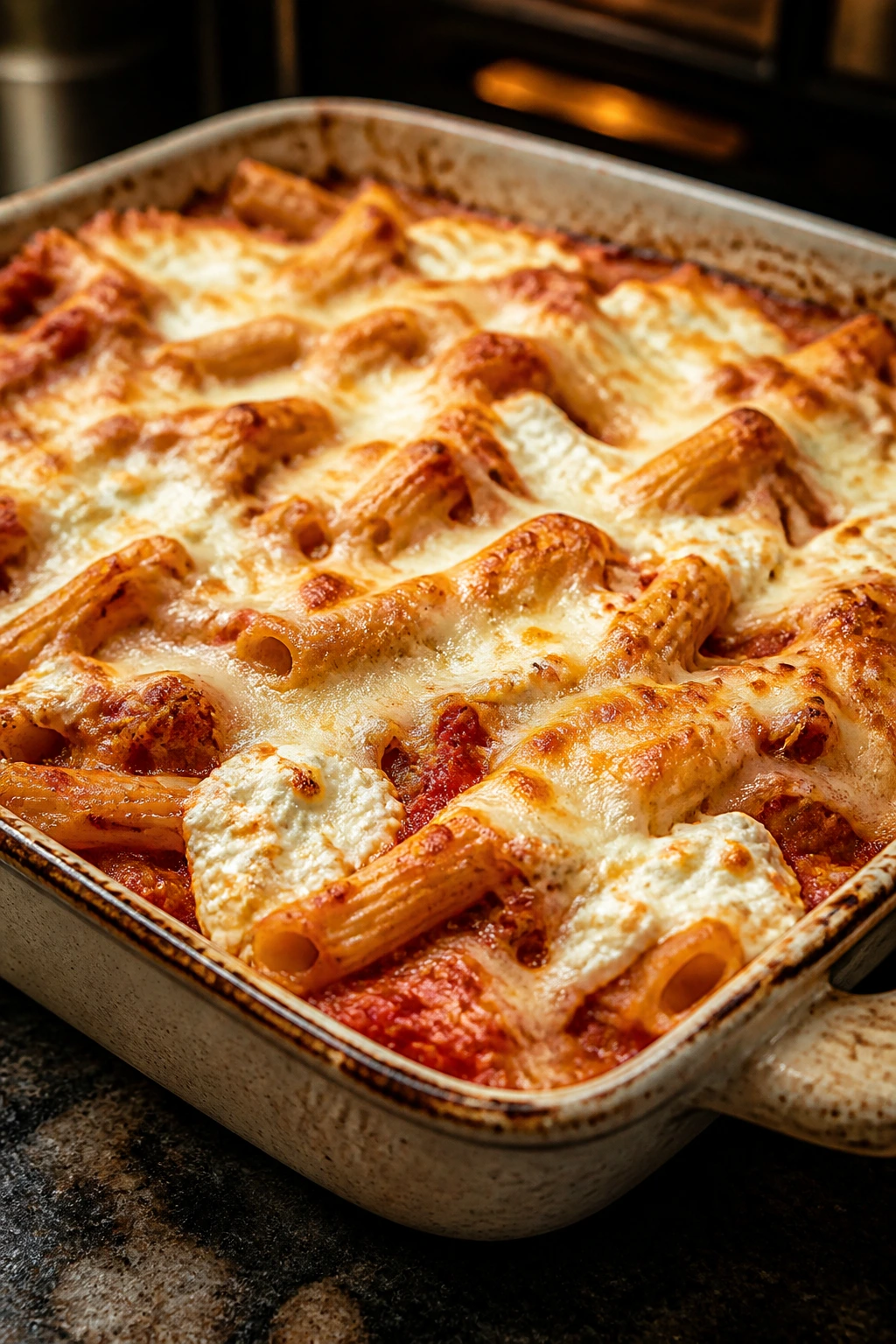
Baked ziti is usually a weekend dish, but this version trims the mess and keeps the oven time short. Cottage cheese stands in for part of the ricotta, which gives you a creamy, tangy filling without paying ricotta prices.
Why It Works: Pasta and tomato sauce are a natural quick dinner base, and cottage cheese blends into the bake without feeling grainy when you use it correctly. Mozzarella melts into the top, while the oven finishes the pasta all at once. If you need to feed more than two people without drama, this is a useful pan.
Key Ingredients:
- 12 oz ziti or penne
- 1 tablespoon olive oil
- 1 jar marinara sauce, about 24 oz
- 2 cups cottage cheese
- 2 cups shredded mozzarella
- ½ cup grated Parmesan
- 2 cups baby spinach, chopped
- 1 teaspoon Italian seasoning
Quick Steps:
- Boil the pasta until just under al dente, then drain.
- Stir pasta with marinara, cottage cheese, spinach, and Italian seasoning.
- Spread into a greased baking dish.
- Top with mozzarella and Parmesan.
- Bake at 400°F for 20 minutes until bubbling and lightly browned.
Equipment for This Recipe:
- Large pot
- 9×13-inch baking dish
- Mixing bowl
- Wooden spoon
How to Serve This Dish: Let it sit for 5 minutes before serving so the pasta settles. A crisp Caesar salad or roasted broccoli cuts through the richness.
Pro Tips for This Recipe:
- Don’t fully cook the pasta first: It finishes in the oven and stays firm.
- Use cottage cheese with small curds: It blends more smoothly in the bake.
- Let the dish rest after baking: The slices hold together better.
Variations on This Dish:
- Meat Sauce Version: Brown 1 lb ground beef with the sauce.
- Veggie Ziti: Add sautéed mushrooms or zucchini.
- Spicy Bake: Stir in red pepper flakes and a little hot sauce.
Common Mistakes to Avoid with This Dish:
- Overcooking the pasta before baking: It turns mushy in the oven.
- Using too little sauce: Dry ziti is the worst version of ziti.
- Cutting immediately: It needs a short rest to set.
16. Teriyaki Meatball Bowls
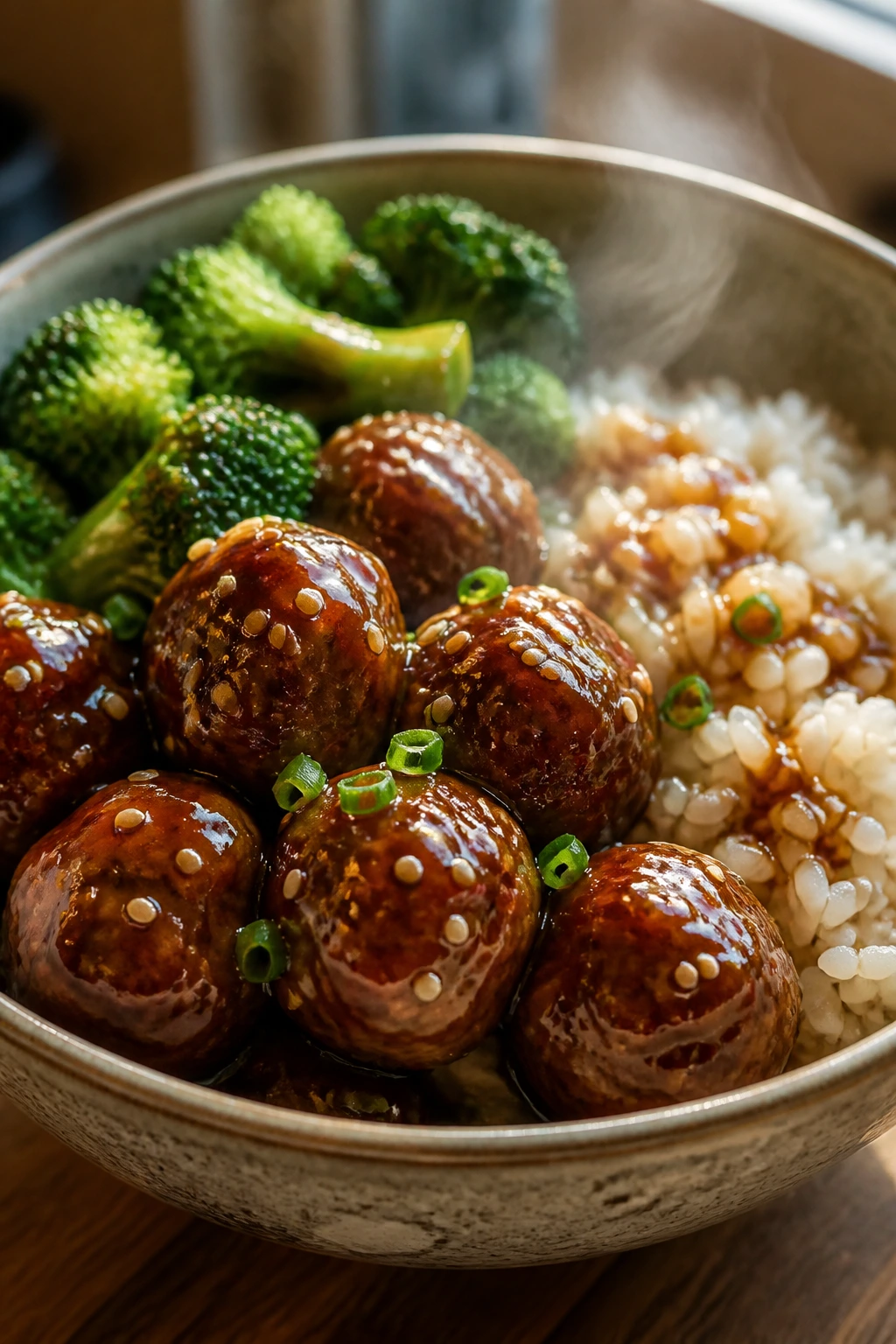
Frozen meatballs are one of those freezer items that feel a little plain until they save your evening. With rice, broccoli, and teriyaki sauce, they turn into a bowl that tastes far more put together than it should.
Why It Works: Meatballs are already seasoned and shaped, which removes a full layer of work. Teriyaki sauce clings to both meat and broccoli, and rice gives the bowl enough body to count as dinner. The whole thing can be on the table in the time it takes to steam a vegetable.
Key Ingredients:
- 1 lb frozen meatballs
- 2 cups cooked rice
- 2 cups broccoli florets
- ½ cup teriyaki sauce
- 1 tablespoon water
- 1 teaspoon sesame seeds
- 2 green onions, sliced
- 1 tablespoon neutral oil
Quick Steps:
- Heat oil in a skillet over medium heat and add the meatballs with water.
- Cover and cook until hot through, about 8 to 10 minutes.
- Add broccoli and a splash more water, cover again for 3 minutes.
- Pour in teriyaki sauce and stir until everything is coated and glossy.
- Serve over rice with sesame seeds and green onions.
Equipment for This Recipe:
- Large skillet with lid
- Spatula or spoon
- Small bowl
- Rice cooker or saucepan
How to Serve This Dish: Use wide bowls so the sauce can soak into the rice instead of sliding off the sides. A few cucumber slices or a quick side salad keep the meal from feeling too brown.
Pro Tips for This Recipe:
- Use good frozen meatballs: Bigger, better-seasoned meatballs hold up better than tiny ones.
- Add broccoli late: You want it bright, not soft and gray.
- Warm the sauce in the pan: Cold sauce can make the meatballs feel underheated.
Variations on This Dish:
- Pineapple Teriyaki: Add ½ cup pineapple chunks.
- Spicy Bowl: Stir in chili paste or sriracha.
- Sesame Ginger Version: Add 1 teaspoon grated ginger to the sauce.
Common Mistakes to Avoid with This Dish:
- Oversteaming the broccoli: It should still have bite.
- Using too much sauce for the rice: The bowl gets soggy fast.
- Skipping the lid: The meatballs need steam to heat through quickly.
17. Chili Crisp Peanut Noodles
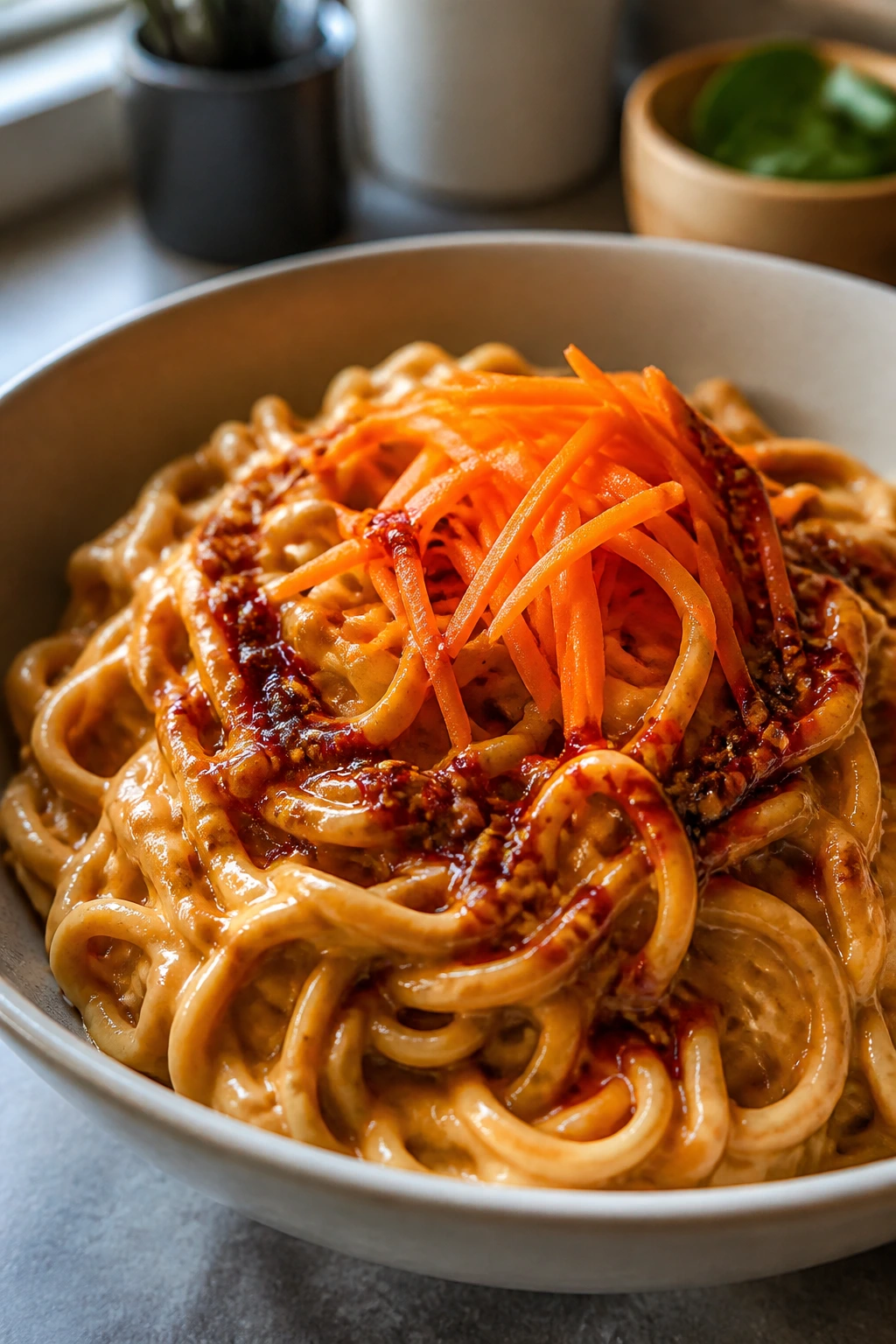
These noodles land somewhere between pantry dinner and takeout craving, which is a useful place to be. They’re salty, nutty, a little spicy, and fast enough that you can make them without losing momentum.
Why It Works: Peanut butter and soy sauce build a thick sauce without cream or cheese. Chili crisp brings heat and texture in one spoonful, and vinegar keeps the peanut sauce from going flat. Cold noodles or freshly cooked noodles both work, which helps when you’re trying to use what you already have.
Key Ingredients:
- 12 oz noodles or spaghetti
- 3 tablespoons peanut butter
- 2 tablespoons soy sauce
- 1 tablespoon chili crisp
- 1 tablespoon rice vinegar
- 1 teaspoon honey
- 1 cup shredded carrots
- 2 scallions, sliced
- ½ cup cucumber, thinly sliced
Quick Steps:
- Cook noodles until tender, then drain.
- Whisk peanut butter, soy sauce, chili crisp, rice vinegar, honey, and 2 tablespoons hot water until smooth.
- Toss noodles with the sauce.
- Add carrots, scallions, and cucumber.
- Taste and add more hot water if the sauce feels too thick.
Equipment for This Recipe:
- Pot for noodles
- Mixing bowl
- Whisk or fork
- Colander
How to Serve This Dish: Serve it at room temperature or slightly warm, which lets the sauce cling better. A handful of crushed peanuts on top gives it a little extra crunch if you have them.
Pro Tips for This Recipe:
- Thin the sauce gradually: Peanut butter changes fast; add water one spoonful at a time.
- Salt the noodle water: The sauce is bold, but the noodles still need seasoning.
- Use whatever noodles you have: Spaghetti, linguine, soba, or ramen all work.
Variations on This Dish:
- Chicken Noodles: Toss in shredded cooked chicken.
- Sesame Cucumber Version: Add more cucumber and a splash of sesame oil.
- Noodle Salad: Chill it and serve cold the next day.
Common Mistakes to Avoid with This Dish:
- Using dry peanut butter straight from the jar: It needs water to loosen.
- Forgetting acid: Vinegar keeps the sauce from tasting heavy.
- Overloading with chili crisp: Heat should support the noodles, not overpower them.
18. Skillet Enchilada Pasta
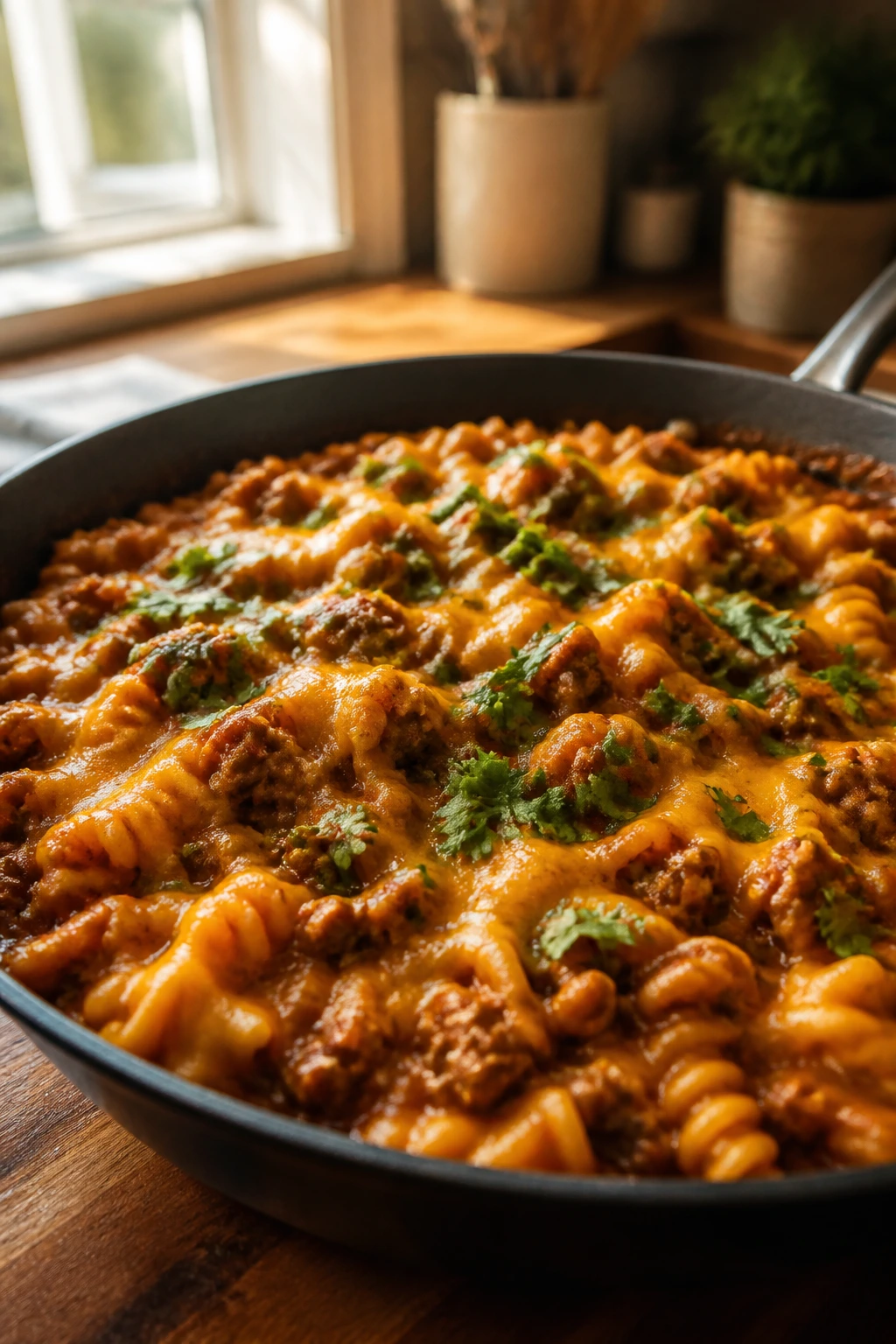
This is the kind of mashup that sounds lazy until you taste it. Pasta catches the enchilada sauce in all the right places, and the cheese melts into a skillet dinner that feels more substantial than plain noodles.
Why It Works: Ground meat cooks fast and gives the sauce something savory to cling to. Pasta absorbs enchilada sauce better than you’d expect, especially when the noodles simmer in broth instead of being boiled separately. One skillet keeps the meal from turning into a dish mountain.
Key Ingredients:
- 1 lb ground beef or ground turkey
- 1 small onion, diced
- 1 packet taco seasoning
- 8 oz short pasta
- 2 cups enchilada sauce or salsa roja
- 2 cups chicken broth
- 1 cup shredded cheddar
- 1 cup canned black beans, drained
- 2 tablespoons chopped cilantro
Quick Steps:
- Brown the meat and onion in a deep skillet over medium-high heat.
- Stir in taco seasoning, pasta, enchilada sauce, broth, and black beans.
- Bring to a simmer, cover, and cook until the pasta is tender, about 12 minutes, stirring once or twice.
- Uncover, sprinkle with cheese, and let it melt.
- Top with cilantro and serve hot.
Equipment for This Recipe:
- Deep skillet or Dutch oven
- Wooden spoon
- Lid
- Measuring cups
How to Serve This Dish: Dish it up while it’s still saucy; it thickens as it sits. A spoonful of sour cream or sliced jalapeños works well if you want more contrast.
Pro Tips for This Recipe:
- Use a deep pan: Pasta needs room to simmer without sticking.
- Stir once while cooking: It keeps the noodles from clumping together.
- Add cheese at the end: If it cooks too long, it gets stringy instead of melty.
Variations on This Dish:
- Veggie Enchilada Pasta: Leave out the meat and add extra beans.
- Creamier Version: Stir in 2 ounces cream cheese before the cheddar.
- Spicy Bake: Add diced green chiles or hot sauce.
Common Mistakes to Avoid with This Dish:
- Not using enough liquid: The pasta needs enough broth to cook through.
- Using a shallow skillet: The sauce can splash and the pasta can crowd.
- Walking away for too long: One-pot pasta needs a little attention.
19. Greek Chicken Pitas
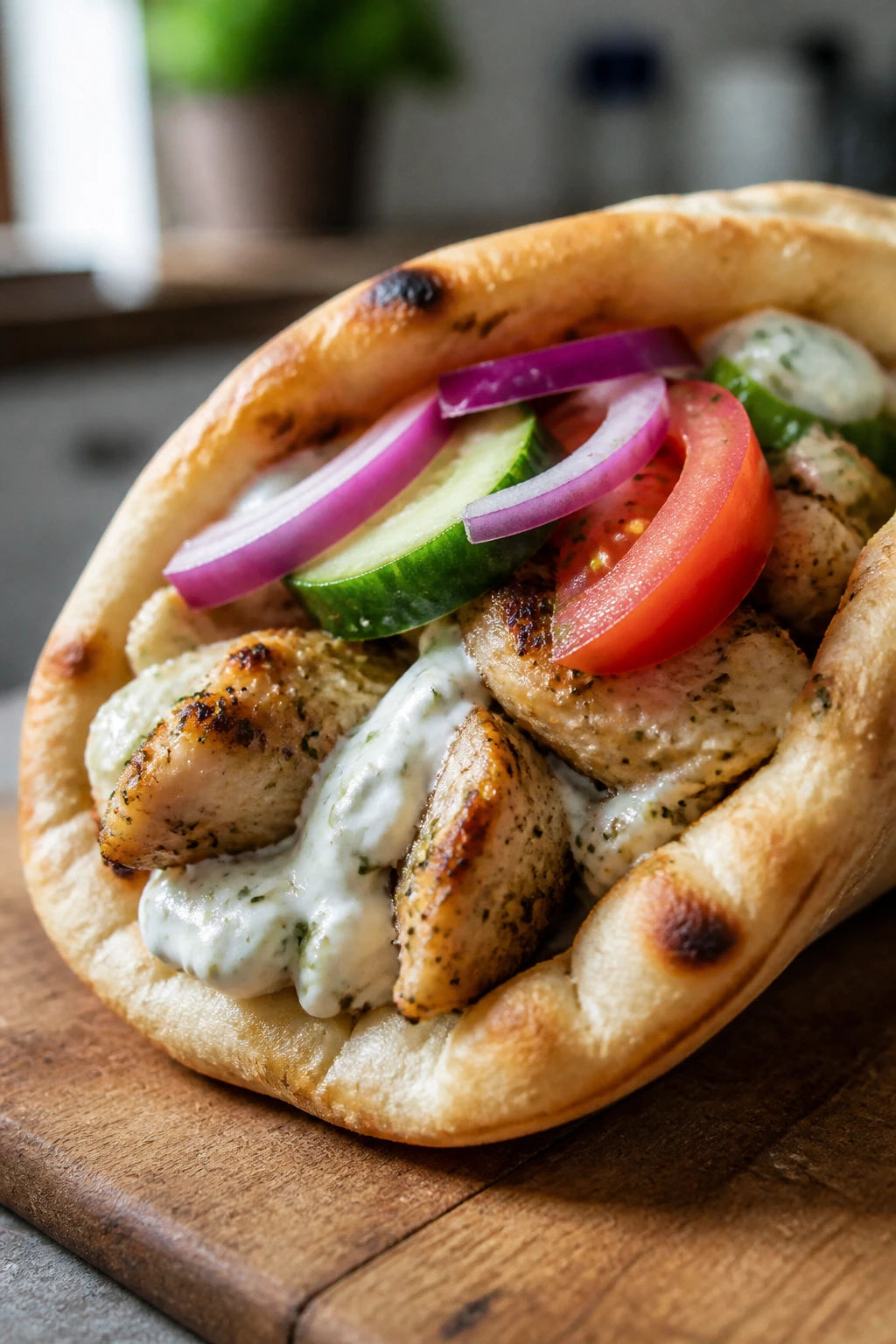
These pitas taste like lunch from a deli counter, but they’re fast enough for dinner. The chicken gets browned with oregano and garlic, then tucked into warm pita with cool vegetables and a yogurt sauce that does the job of a full dressing.
Why It Works: Thin chicken pieces cook quickly and absorb seasoning fast. Cucumber, tomato, and red onion add the cold, crisp contrast that makes the whole pita feel complete. Greek yogurt gives you a creamy sauce without having to whisk up a complicated dressing.
Key Ingredients:
- 1 lb chicken breast cutlets or thin-sliced thighs
- 1 teaspoon dried oregano
- 2 garlic cloves, minced
- 1 tablespoon olive oil
- 4 pita breads
- 1 cucumber, diced
- 1 tomato, diced
- ½ red onion, thinly sliced
- 1 cup plain Greek yogurt
- ¼ cup crumbled feta
Quick Steps:
- Season chicken with oregano, garlic, salt, and pepper.
- Cook in olive oil over medium-high heat for 4 to 5 minutes per side until browned and cooked through.
- Stir yogurt with a pinch of salt and a splash of water if you want it looser.
- Slice the chicken and tuck it into warm pitas with cucumber, tomato, onion, yogurt, and feta.
- Serve right away.
Equipment for This Recipe:
- Skillet
- Cutting board and knife
- Small bowl
- Tongs
How to Serve This Dish: Wrap the pitas in parchment if you want them easier to hold. A pile of olives or a simple rice side makes the plate feel fuller without changing the flavors much.
Pro Tips for This Recipe:
- Thin chicken cooks faster: Cutlets are easier on a weeknight than thick breasts.
- Warm the pita: Cold pita tears more easily.
- Salt the yogurt lightly: It keeps the sauce from tasting flat.
Variations on This Dish:
- Chicken Gyro Bowl: Serve everything over rice instead of in pita.
- Lemony Version: Add lemon juice and a little dill to the yogurt.
- Vegetarian Pita: Swap chicken for chickpeas roasted with oregano.
Common Mistakes to Avoid with This Dish:
- Overcooking the chicken: Thin pieces dry out fast.
- Stuffing cold pita: Warm bread folds better.
- Using watery tomatoes without draining: The pita turns soggy in minutes.
20. White Bean and Sausage Stew
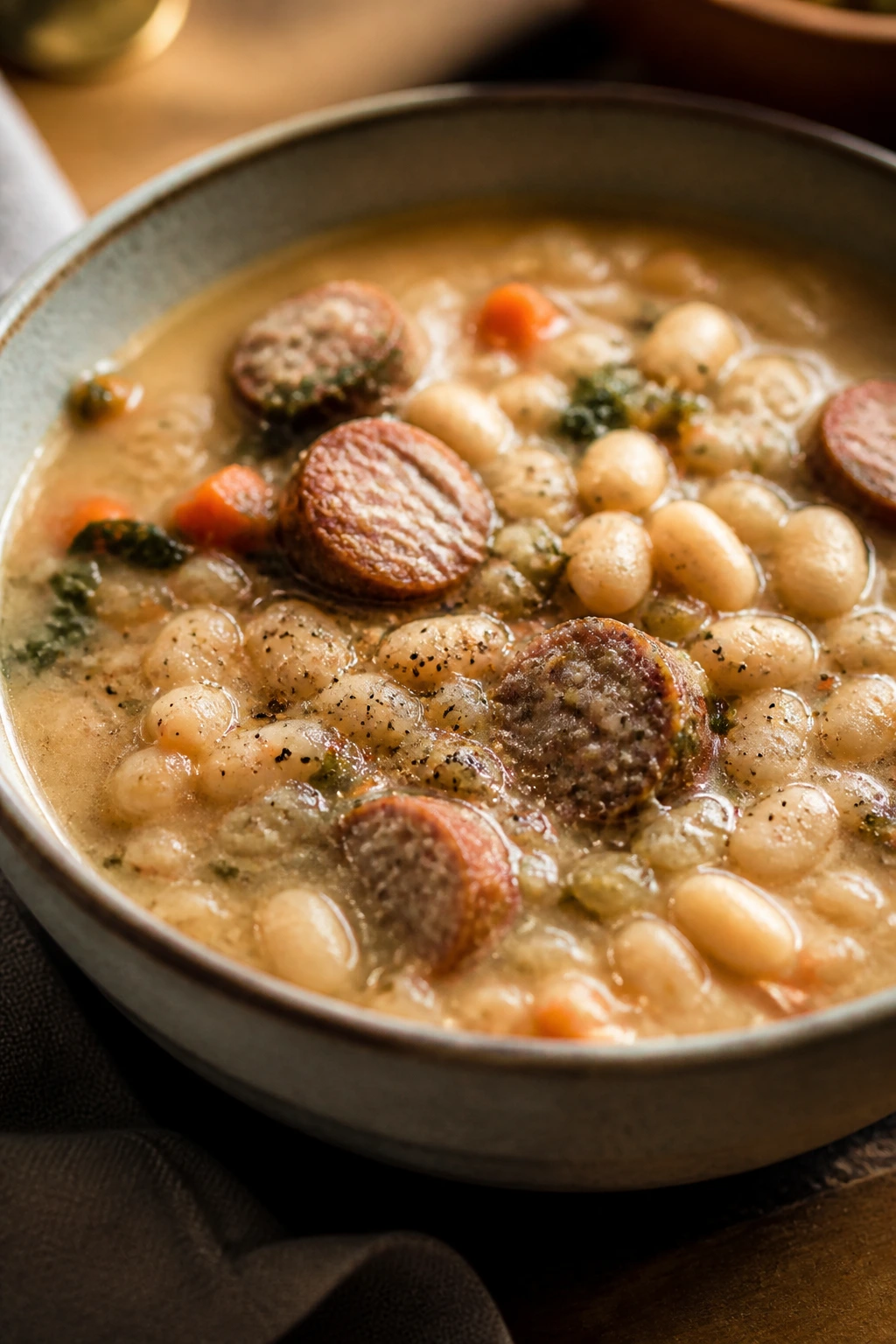
This stew tastes like it took longer than it did, which is always a nice trick on a weeknight. The beans make it creamy without cream, and the sausage gives the pot enough richness that you won’t miss a long simmer.
Why It Works: Canned white beans are soft enough to thicken the broth when you mash a few against the pot. Italian sausage brings fat, fennel, and seasoning in one ingredient. Kale or spinach can go in at the end without stealing the spotlight.
Key Ingredients:
- 1 lb Italian sausage, casings removed if needed
- 1 small onion, diced
- 2 carrots, diced
- 2 cans cannellini beans, drained and rinsed
- 3 cups chicken broth
- 1 teaspoon dried rosemary
- 2 cups chopped kale or spinach
- 1 tablespoon olive oil
- Salt and black pepper
Quick Steps:
- Brown the sausage in olive oil over medium heat, breaking it into crumbles.
- Add onion and carrots and cook for 5 minutes until softened.
- Stir in beans, broth, and rosemary, then simmer for 10 minutes.
- Mash a few beans against the side of the pot to thicken the broth.
- Stir in kale or spinach and cook until wilted.
Equipment for This Recipe:
- Soup pot or Dutch oven
- Wooden spoon
- Potato masher or fork
- Cutting board and knife
How to Serve This Dish: Ladle it into deep bowls and finish with black pepper and a drizzle of olive oil. Toasted bread is the best side here because the broth deserves to be soaked up.
Pro Tips for This Recipe:
- Mash a few beans, not all of them: You want body, not paste.
- Use mild sausage if cooking for kids: The seasoning still carries the dish.
- Add greens at the end: They stay bright and don’t turn limp.
Variations on This Dish:
- Tomato Bean Stew: Add 1 cup crushed tomatoes for a redder broth.
- Spicy Sausage Pot: Use hot sausage and red pepper flakes.
- Herb Version: Add thyme or sage with the rosemary.
Common Mistakes to Avoid with This Dish:
- Boiling too hard: Gentle simmer keeps the sausage tender.
- Skipping the bean rinse: Canned liquid can make the broth murky.
- Adding too much broth: The stew should be thick enough to eat with a spoon.
21. Garlic Shrimp and Grits
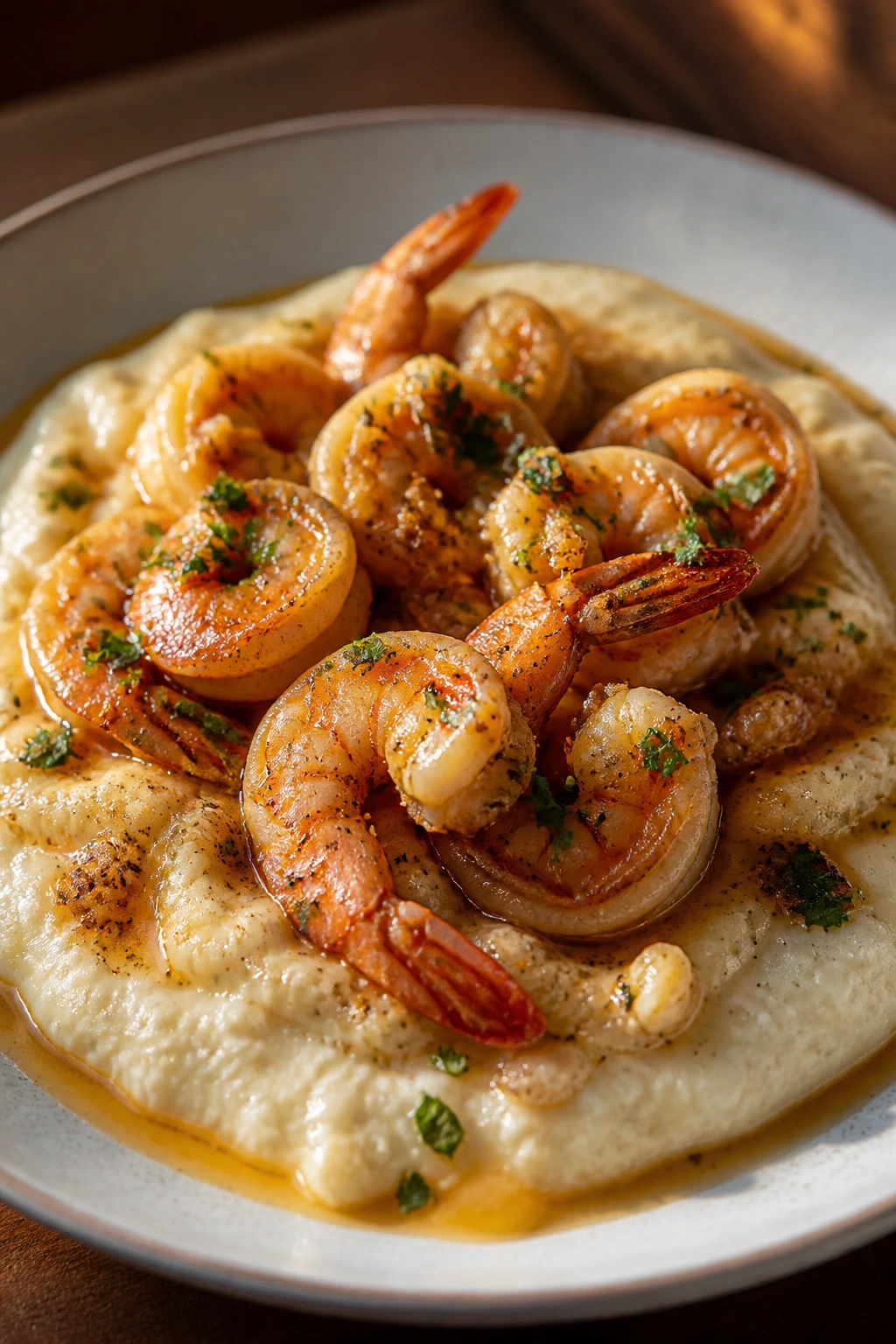
Shrimp and grits can sound like brunch food, but there’s no rule saying it can’t show up at dinner. The shrimp cook in minutes, the grits turn creamy, and the garlic butter sauce ties the whole thing together.
Why It Works: Quick-cooking shrimp are perfect when you need dinner before everyone starts circling the kitchen. Instant or quick grits finish in the same window, which keeps the meal from dragging. A little butter, garlic, and lemon gives the shrimp enough personality to carry the plate.
Key Ingredients:
- 1 lb peeled shrimp, deveined
- 1 cup quick grits
- 3 cups water or broth
- 2 tablespoons butter
- 2 garlic cloves, minced
- 2 cups baby spinach
- 1 tablespoon lemon juice
- ¼ cup grated Parmesan
- Salt and black pepper
Quick Steps:
- Bring water or broth to a boil, whisk in grits, and cook according to package directions until creamy.
- Stir in butter and Parmesan.
- Season shrimp with salt and pepper.
- Cook shrimp in a skillet over medium-high heat for 2 to 3 minutes per side until pink and opaque.
- Add garlic and spinach, cook for 30 seconds, then finish with lemon juice.
- Spoon the shrimp over the grits.
Equipment for This Recipe:
- Saucepan
- Skillet
- Whisk
- Wooden spoon
How to Serve This Dish: Build the grits first, then nest the shrimp and sauce on top so the butter runs into the bowl. A few extra black pepper grinds and sliced scallions make it feel finished.
Pro Tips for This Recipe:
- Don’t overcook the shrimp: They go from tender to rubbery fast.
- Whisk the grits well at the start: That keeps them smooth.
- Use broth if you want more savory depth: Water works, but broth tastes fuller.
Variations on This Dish:
- Cheesy Grits Bowl: Add cheddar instead of Parmesan.
- Tomato Shrimp Version: Stir in chopped tomatoes with the garlic.
- Spicy Cajun Style: Season shrimp with Cajun spice before cooking.
Common Mistakes to Avoid with This Dish:
- Walking away from the grits: They can thicken fast and stick.
- Cooking shrimp on low heat: They need enough heat to sear.
- Serving dry grits: Add enough liquid so they stay soft and spoonable.
22. Veggie Frittata with Potatoes
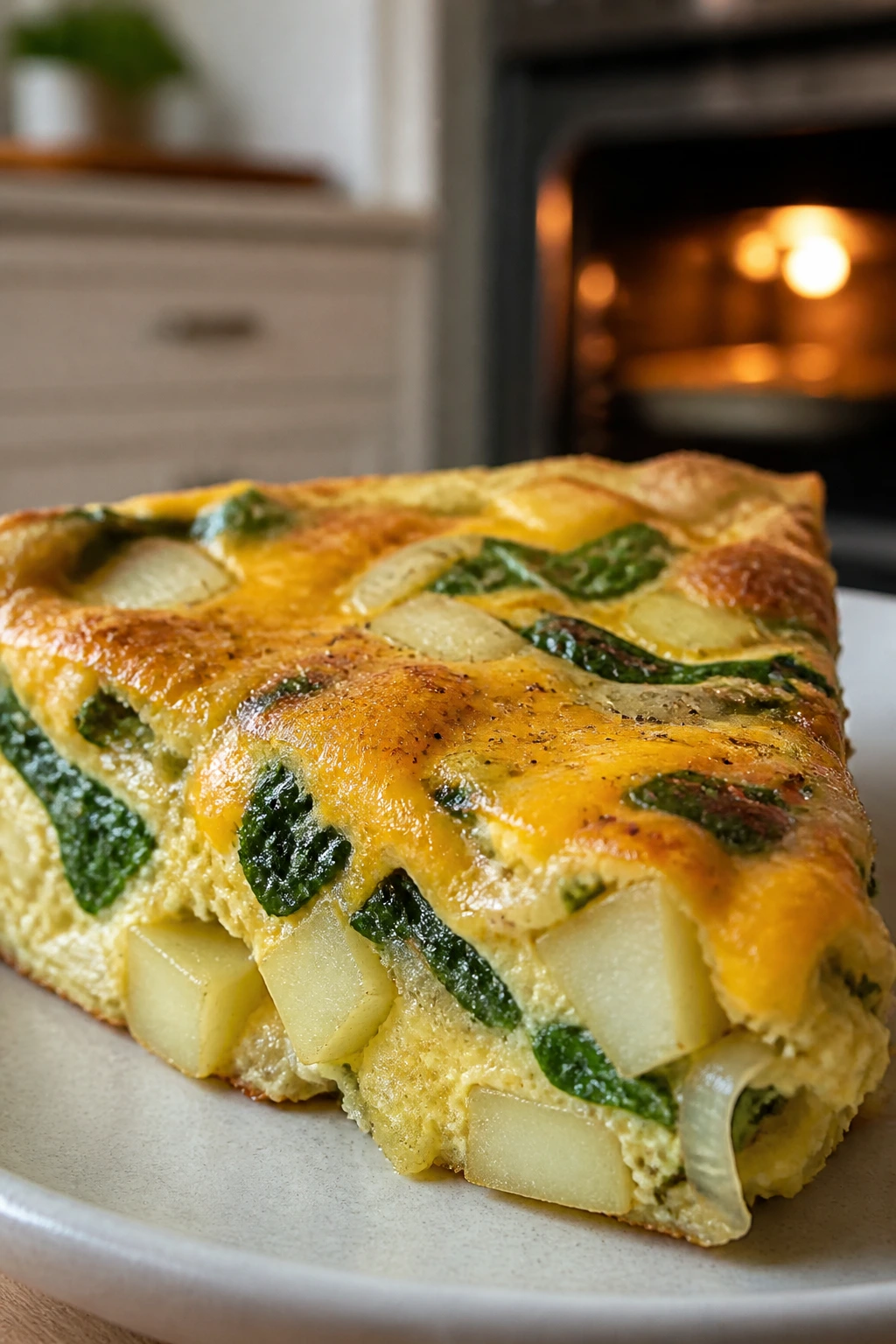
A frittata is what you make when the fridge has eggs, a little cheese, and one or two vegetables hanging on by a thread. It’s not flashy. It doesn’t need to be. It sets up in the oven, slices neatly, and turns scraps into dinner.
Why It Works: Eggs are cheap protein, and potatoes make the frittata feel like a real meal instead of a snack. Cooking the vegetables first keeps the final texture from going watery. Since the pan goes from stove to oven, the cleanup stays small.
Key Ingredients:
- 8 large eggs
- 2 cups cooked diced potatoes or thawed hash browns
- 1 cup chopped spinach
- ½ onion, diced
- 1 cup shredded cheddar
- 2 tablespoons milk
- 1 tablespoon olive oil
- Salt and black pepper
Quick Steps:
- Heat the oven to 375°F.
- Sauté onion and potatoes in olive oil over medium heat until the potatoes are lightly crisped.
- Stir in spinach until wilted.
- Whisk eggs with milk, salt, and pepper, then pour into the skillet.
- Sprinkle cheese on top and cook on the stove for 2 minutes.
- Transfer to the oven and bake for 10 to 12 minutes until the center is just set.
Equipment for This Recipe:
- Oven-safe skillet
- Whisk
- Mixing bowl
- Spatula
How to Serve This Dish: Let it rest for 5 minutes, then slice into wedges. A tomato salad or a piece of toast makes the plate feel more like dinner and less like a late breakfast.
Pro Tips for This Recipe:
- Use an oven-safe skillet: It saves you from transferring a half-set egg mixture.
- Cook the potatoes first: Raw potatoes won’t soften in time.
- Pull it when the center still has a tiny wobble: It finishes setting from carryover heat.
Variations on This Dish:
- Mushroom Frittata: Add sautéed mushrooms with the onions.
- Ham and Cheese Version: Stir in 1 cup diced ham.
- Herb Frittata: Add parsley, dill, or chives at the end.
Common Mistakes to Avoid with This Dish:
- Overbaking: Eggs turn rubbery fast.
- Using watery vegetables raw: They can loosen the custard.
- Skipping the rest: The slices hold together better after a few minutes.
Why a Fast Dinner Formula Works Better Than Random Guessing
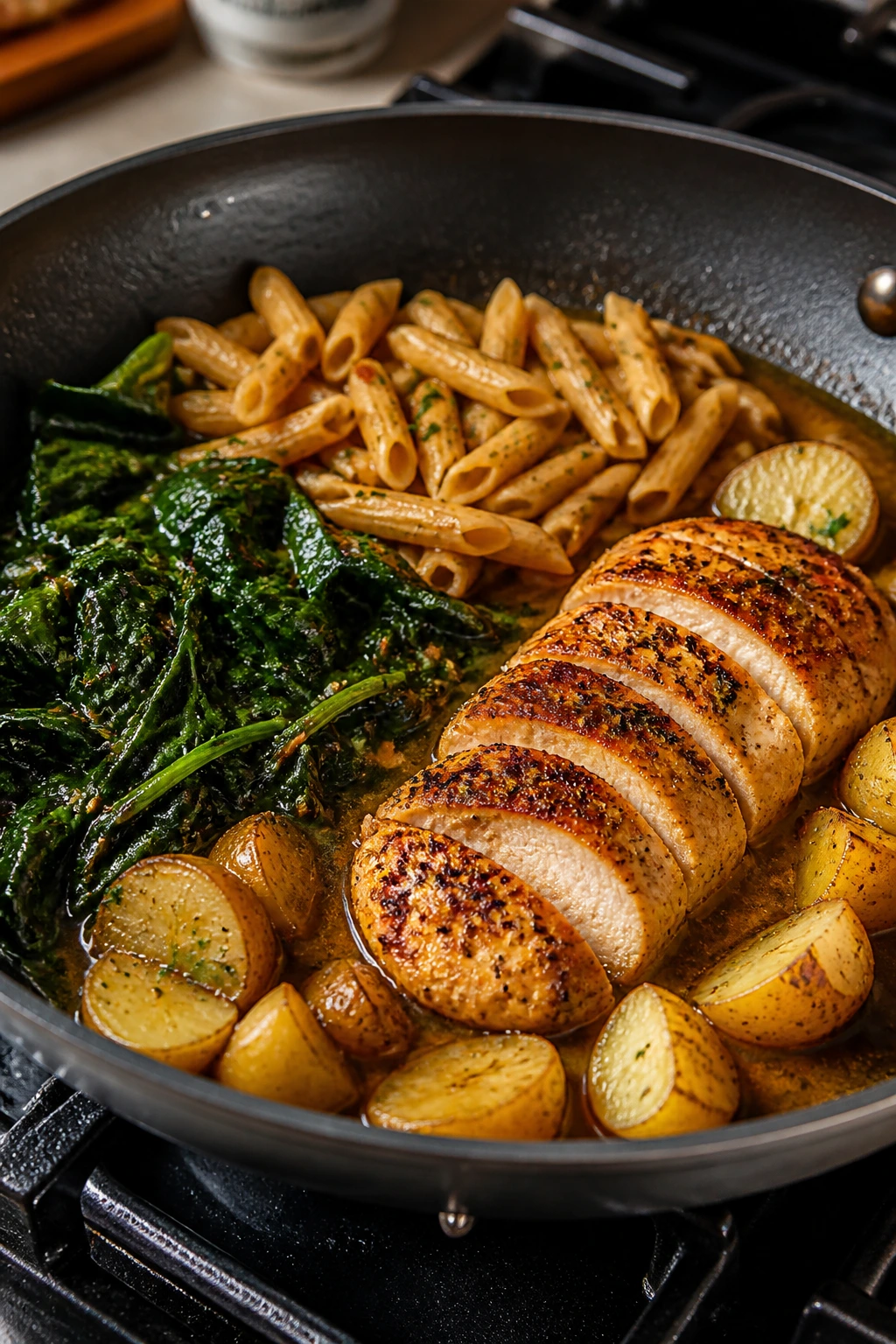
The best quick weeknight dinners usually follow the same quiet pattern: one protein, one starch, one vegetable, one sauce, one pan. That’s not glamour. It’s structure. And structure is what keeps dinner from turning into a scavenger hunt when your brain is tired and the clock is rude.
I’ve always liked dinners that let one ingredient do double duty. Rotisserie chicken becomes quesadillas. Beans thicken stew. Pasta water turns oil and cheese into sauce. Frozen vegetables fill gaps without demanding apology. That’s the difference between a meal that feels improvised and one that feels built.
You do not need a separate plan for every night of the week. You need a few combinations that work with the grocery bag you can actually carry home.
Essential Equipment for These Recipes
-
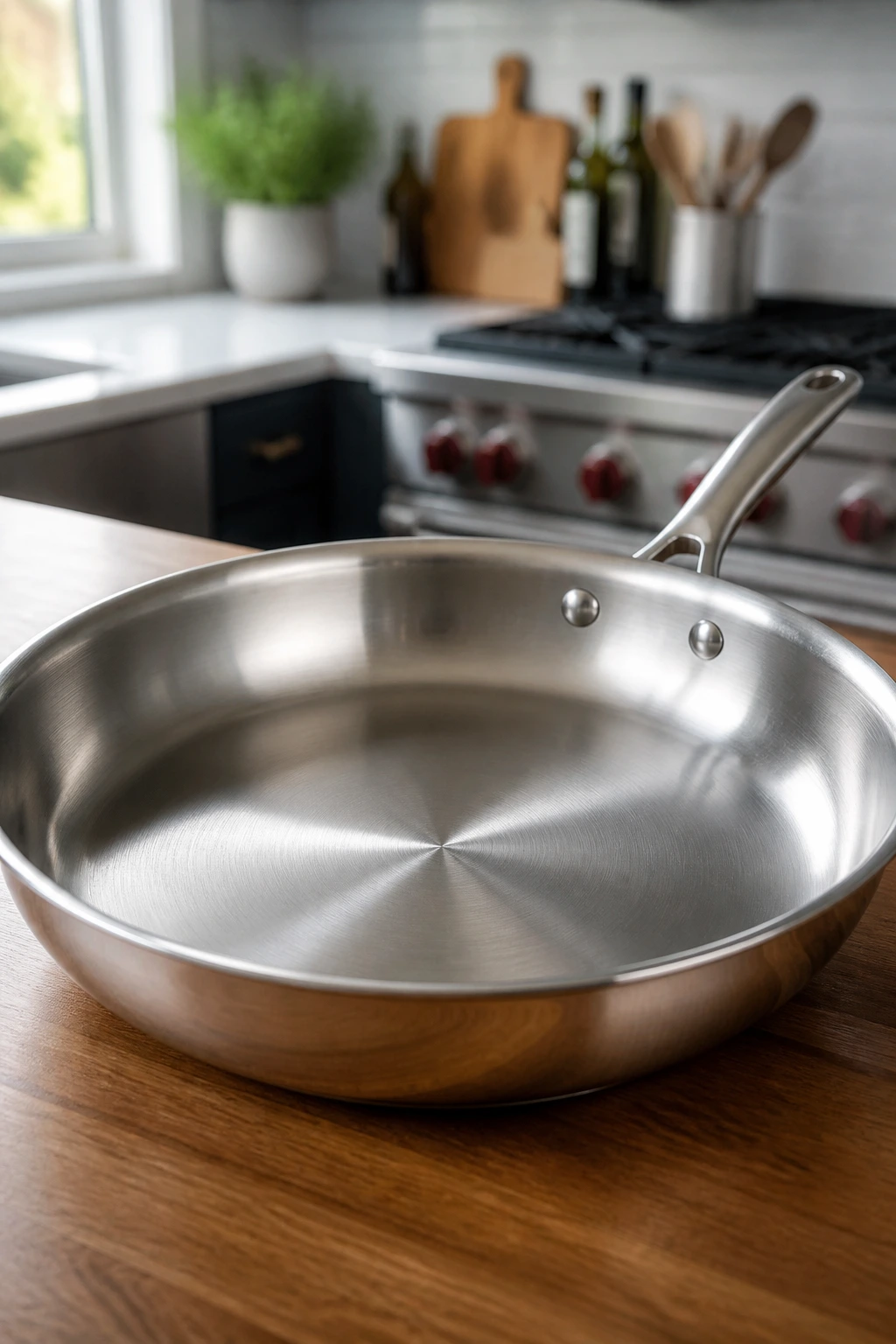
12-inch skillet: The most useful pan here; big enough for browning, saucing, and tossing without overflow.
-
Large pot or Dutch oven: Best for soups, pasta, and one-pot meals that need a little room to move.
-
Rimmed sheet pan: Keeps sheet-pan dinners from sliding around and catches the oil before it hits the oven floor.
-
Sharp chef’s knife: Saves more time than a fancy gadget because these meals still depend on decent chopping.
-
Cutting board: Use a stable board; a damp towel underneath keeps it from skating around.
-
Wooden spoon or spatula: Better control for scrapes, flips, and stirring sauces without scratching pans.
-
Tongs: Useful for chicken, sausage, shrimp, and anything that needs a fast turn in a hot pan.
-
Measuring cups and spoons: A lot of fast dinners rely on sauces, and those need enough accuracy to taste balanced.
-
Colander: Pasta and rice bowl dinners move faster when draining is simple.
-
Lid for skillet or pot: A lid helps broccoli steam, meatballs heat through, and beans soften without extra liquid.
Smart Shopping for Fast Dinners on a Budget
The cheapest dinner isn’t always the one with the lowest price tag at the register. It’s the one where you use the whole package and don’t throw half of it away in four days. That’s why the best budget weeknight meals lean on ingredients with a long shelf life: rice, pasta, tortillas, canned beans, canned tomatoes, frozen vegetables, broth, eggs, and cheese that you can shred yourself.
For proteins, choose the cut that suits the cooking speed. Chicken thighs are cheaper than breasts in many shops and far less forgiving in a hot skillet. Ground turkey and ground beef are useful because they brown fast and stretch with beans or pasta. Rotisserie chicken costs more than raw chicken by the pound, but it buys you time, and time is part of the budget too. Frozen shrimp can be a smart buy if you thaw only what you need under cold running water.
Canned goods deserve a closer look than most shoppers give them. Black beans, cannellini beans, tuna, and tomatoes should be low in added salt if you want control over the final flavor. If the store brand is cheaper, fine — just read the label for sodium and sugar. Frozen vegetables are often better than limp produce, especially broccoli, peas, corn, and mixed vegetables that go straight into the pan.
How to Serve These Recipes
Presentation: Keep the plate or bowl simple. A sprinkle of herbs, sliced scallions, black pepper, or sesame seeds is usually enough to make a fast dinner look intentional. Bowls work better than flat plates for saucy dishes because they hold the sauce where you want it.
Accompaniments: The best side dishes for these meals are the ones that don’t steal time: bagged salad, toasted bread, microwave rice, cucumber slices, pickles, steamed green beans, or a handful of tortilla chips. If the main dish already has starch, add a crisp vegetable instead of another heavy side.
Portions: Most of these dinners feed 4 adults, but the portion size shifts fast depending on whether the dish leans on pasta, beans, or vegetables. For hungrier eaters, add bread, rice, or a fried egg. For lighter meals, pair the main with a salad and serve a smaller scoop of starch.
Beverage Pairing: I like sparkling water with lemon for the lighter bowls and soups, and iced tea or a dry cider for the richer skillet meals. If you’re keeping it simple, cold water with lime is still a better match than a sugary drink that blunts the salt and acid.
Additional Tips and Flavor Boosters
Flavor Enhancement: A squeeze of lemon, a splash of vinegar, or a spoonful of hot sauce at the end can change a meal more than another pinch of salt. Fast dinners benefit from a bright finish because quick cooking can flatten flavor a little.
Customization: Keep a few “stretchers” around — beans, rice, tortillas, pasta, frozen peas, spinach, and shredded cheese. Those ingredients let you make the same dinner feel different three nights in a row without extra shopping.
Serving Suggestions: Fresh herbs aren’t required, but they do a lot for the look and smell of a fast meal. Parsley on chicken, cilantro on taco skillet, green onions on rice bowls, dill on fish — those little green finishes make the food feel cared for.
Make-It-Yours: For dairy-free dinners, lean on olive oil, lemon, and broth instead of cream and cheese. For higher-protein versions, add an egg, extra beans, or a little more meat. For a lower-cost plate, use more starch and vegetables, then season harder so the meal still tastes finished.
Make-Ahead, Storage, and Reheating Guidance
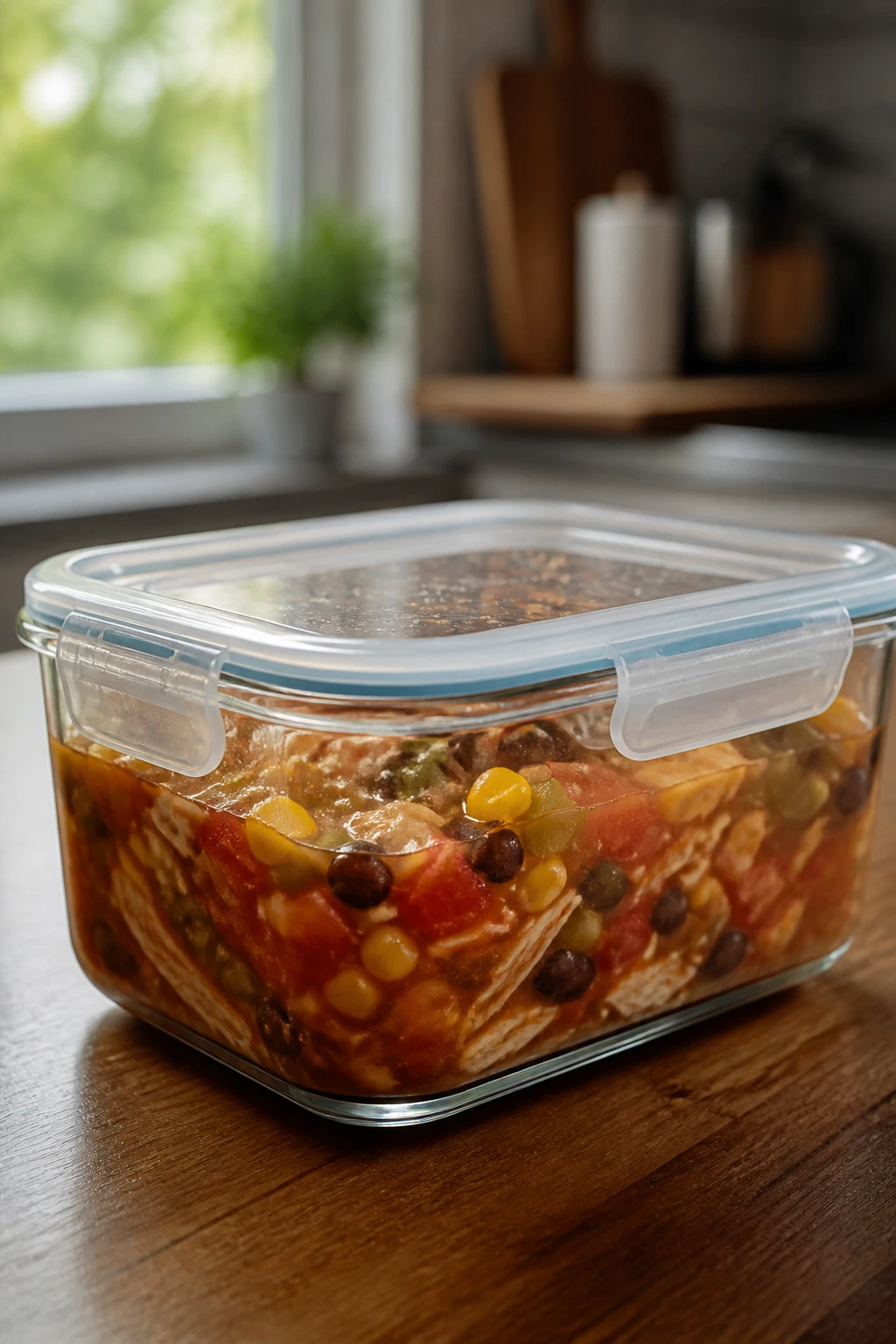
Most of these dishes hold well for 3 to 4 days in the refrigerator if you cool them promptly and store them in airtight containers. Soups, stews, pasta bakes, and bean-based meals usually keep the best because the sauce protects the texture. Crispy items — quesadillas, sheet-pan sausage, and chicken cutlets — lose their edge faster, but they still reheat fine if you use the oven or a skillet instead of the microwave.
For freezing, the winners are the saucier dishes: turkey sloppy joes, chili-like skillet meals, white bean stew, and some pasta bakes. Freeze them for up to 2 months in flat, labeled containers so they thaw more evenly. I would not freeze cucumber bowls, lettuce wraps, or anything that depends on a crisp fresh texture; those are better assembled the day you eat them.
Reheat chicken, sausage, pasta, and rice dishes in a skillet over medium heat with 1 to 2 tablespoons of water or broth to bring the moisture back. Soups and stews reheat gently on the stove over medium-low heat until steaming. For sheet-pan dinners, a 375°F oven for 10 to 15 minutes usually does a better job than the microwave, which tends to toughen sausage and potatoes. Fish and shrimp are the trickiest; reheat them briefly and stop as soon as they’re hot so they do not go rubbery.
Variations and Adaptations to Try
The Pantry Clean-Out Night: Swap the fresh produce in these recipes for whatever frozen vegetables, canned beans, or leftover greens are hanging around. This works especially well for skillet meals and soups, where small substitutions don’t wreck the texture.
The Extra-Veggie Swap: Double the vegetables in rice bowls, pasta skillets, and casseroles. A second cup of broccoli, spinach, peppers, or green beans usually slides in without forcing you to change the seasoning much.
The Lower-Dairy Version: Use olive oil, broth, and a little pasta water instead of cream, then finish with lemon or vinegar. Recipes like chicken skillet, tuna pasta, and chickpea curry still taste complete without a heavy dairy finish.
The Meatless Shift: Replace chicken, turkey, beef, or sausage with chickpeas, white beans, tofu, or extra vegetables. The key is to keep the sauce bold enough to carry the missing meatiness — tomato paste, soy sauce, curry powder, and pesto all help here.
The Spicy Table: Keep chili crisp, red pepper flakes, hot sauce, or diced jalapeños on the table so each person can sharpen their own bowl. That’s easier than cooking every dish hot from the start, and it keeps the base meal more flexible.
The Kid-Soft Version: Pull back on garlic, red pepper, and strong herbs, then lean on cheese, mild sauce, and familiar shapes like pasta, rice, quesadillas, and meatballs. Children tend to meet dinner halfway when the texture is familiar and the spice doesn’t ambush them.
Common Mistakes to Avoid
The first mistake is trying to save time by crowding the pan. That usually backfires. Chicken steams, broccoli softens into mush, and sausage stops browning. If your ingredients won’t fit in a single layer, split the batch or use a bigger pan.
Another common miss is underseasoning the base layer. People often rely on the sauce alone, but onions, meat, beans, and potatoes need salt while they cook. Taste at the end, yes, but season as you go or the whole dish stays flat.
Overcooking the protein shows up a lot in quick dinners because people are afraid of underdone food. Shrimp turn rubbery fast, chicken breast dries out, and fish becomes chalky if you keep waiting for some magical extra minute. A thermometer helps, but so does pulling the pan off heat the moment the center is ready.
A lot of home cooks also skip texture contrast. They make a dish that is all soft, all the time. Add cucumber to bowls, toasted bread to soups, green onions to rice, or a crisp salad next to a pasta bake. That crunch or freshness keeps dinner from feeling heavy.
The last mistake is using too much sauce in the first place. Saucy meals need balance, not flooding. Start with less, simmer until it clings, then add another splash if the pan looks dry. You can always add more. Taking it back out is the hard part.
Frequently Asked Questions
Can I swap chicken breasts for thighs in most of these dinners?
Yes, and you usually should if you want a little more forgiveness. Thighs stay juicier in skillet and sheet-pan recipes, while breasts need tighter timing and a thermometer so they don’t dry out.
What’s the best pantry shortcut for weeknight dinners?
Canned beans, jarred marinara, frozen vegetables, rotisserie chicken, and quick-cooking rice or pasta do the heavy lifting. If you keep those five things around, you can build a real dinner without starting from zero.
How do I make these meals cheaper without making them bland?
Lean on beans, eggs, potatoes, pasta, and rice, then season them well with garlic, onion, lemon, soy sauce, mustard, or curry powder. Cheap food goes flat when it’s underseasoned, not when it’s simple.
What if my family is picky about vegetables?
Use vegetables that blend in instead of standing out too hard. Spinach disappears into pasta and egg dishes, peas work in rice, and finely diced carrots or onions melt into sauces without getting in the way.
Can I make these recipes ahead for the next day?
Several of them hold well overnight, especially soups, stews, rice bowls, sloppy joes, pasta bakes, and skillet pasta dishes. Keep crispy toppings separate and add fresh herbs or acid after reheating so the leftovers don’t taste dull.
What’s the easiest way to reheat rice-based meals without drying them out?
Add a tablespoon or two of water, cover loosely, and warm them in a skillet or microwave in short bursts. Rice reheats best when it gets a little steam instead of sitting uncovered and drying into grains.
How do I stop pasta dishes from turning gluey?
Cook the pasta just until al dente, save some pasta water, and don’t drown the noodles in sauce. If the dish thickens too much, loosen it with a splash of the starchy water before serving.
What should I do if my sauce tastes flat?
Add salt first, then acid. A small squeeze of lemon or a splash of vinegar often wakes up tomato sauce, chicken skillet sauce, bean stews, and peanut noodles faster than another spoonful of the main seasoning.
The Dinners That Save the Evening
A useful weeknight dinner does a few things at once: it keeps the grocery bill sensible, it respects the clock, and it tastes like somebody paid attention. That’s why these kinds of meals keep showing up in real kitchens. They’re not delicate. They’re dependable.
The best part is how little ceremony they need. A skillet, a pan, a can opener, maybe a lemon or a handful of cheese. That’s enough to turn a tired Tuesday into a plate that actually feels like dinner, which is more than enough most nights.