



A Thanksgiving vegetable crockpot recipe earns its keep the minute the oven starts looking crowded. Turkey in one corner. Stuffing in another. Rolls, a pie, maybe two trays of something bubbling at the edges. The vegetables are usually the first thing to get shoved aside or rushed, and that’s a shame, because the right mix of root vegetables, herbs, and a little sweet-tart finish can hold the whole table together.
What I like about this slow-cooked version is that it doesn’t pretend to be roasted. That matters. Crockpots are not ovens, and vegetables cooked in one need a different plan: larger cuts, less liquid, stronger seasoning, and a late hit of crunch at the end. Do that, and you get soft sweet potatoes, tender carrots, buttery squash, and Brussels sprouts that still look like vegetables instead of giving up and turning into mush.
The flavor here leans warm and savory-sweet without crossing into dessert territory. Maple, sage, thyme, tamari, and cider vinegar do the heavy lifting, while mushrooms and onions bring depth that keeps the whole dish from tasting one-note. If you’ve ever tasted a vegetable side that felt oddly flat after an hour in the slow cooker, this is the fix. It’s all about timing, and a little restraint.
Why This Thanksgiving Vegetable Crockpot Recipe Earns a Spot on the Table
-
It saves oven space when every rack is spoken for. The vegetables stay out of the oven entirely, which means the turkey, stuffing, and pie can all do their thing without a scheduling fight.
-
The seasoning reaches every bite. Maple, tamari, vinegar, and herbs coat the vegetables as they cook, so the flavor doesn’t sit on top like an afterthought.
-
It handles the holiday table without getting fussy. The method is calm and predictable: cut the vegetables to the right size, add the sturdy ones first, then bring in the more delicate pieces later.
-
The texture stays in the “tender” zone instead of the “collapse” zone. Brussels sprouts and mushrooms go in late, which keeps them from turning dull and soft.
-
You can prep most of it ahead. The chopping can happen the day before, and the crunchy topping stays crunchy if you add it at the end, not in the pot.
-
It works for mixed eaters. The dish sits happily beside turkey and gravy, but it also holds up as a vegetarian side because the mushrooms, herbs, and tamari give it enough backbone.
How Slow Cooking Fits the Holiday Table
Thanksgiving is one of the few meals where the vegetables are expected to do a lot of emotional work. They need to look generous, taste seasonal, and not steal the show from the turkey. That’s a strange job for a side dish, and the slow cooker turns out to be one of the better tools for it.
Roasting gives you caramelized edges, which is lovely, but roasting also demands oven space, attention, and a little luck with timing. A slow cooker gives you a different result: softer edges, a more blended seasoning profile, and vegetables that stay hot for serving without another round of babysitting. That’s why this recipe leans into vegetables that can take steady heat—sweet potatoes, squash, carrots, parsnips, onions, and mushrooms—while keeping more delicate Brussels sprouts for the later part of the cook.
There’s also a practical benefit that gets overlooked. Slow cookers mute sweetness and salt a little as food cooks, so the seasoning has to be a notch more assertive than you might expect. That’s where the maple, cider vinegar, tamari, and herbs come in. The maple gives a round note, the vinegar keeps it from feeling heavy, the tamari adds savory depth, and the herbs make it smell like the kind of table people linger at after the plates are cleared.
I keep coming back to one rule: if a vegetable would turn to paste in a soup after four hours, it probably doesn’t belong in the crockpot from the beginning. That’s why zucchini is out. Green beans are out. Tender spinach is out. This dish is built around vegetables that get better when they sit in steam and seasoned liquid for a while, then it finishes with enough texture to feel deliberate.
Yield, Timing, and the Best Serving Window
Yield: Serves 8 to 10 as a side dish
Prep Time: 25 minutes
Cook Time: 4 hours on LOW
Total Time: 4 hours 25 minutes
Difficulty: Beginner — the chopping takes the time, but the slow cooker does the steady work.
Best Served: Warm, with the pecans and parsley added at the table
If your slow cooker runs hot, start checking the vegetables a little earlier. A few models push closer to a simmer than a gentle cook, and that can shave 20 to 30 minutes off the total. The sweet spot is tender roots with enough shape left that a spoon doesn’t smash them flat.
The Ingredient List for a Savory-Sweet Vegetable Medley
For the Vegetable Base:
- 2 tablespoons unsalted butter, melted
- 1 tablespoon olive oil
- 1 large yellow onion, cut into 1/2-inch wedges
- 3 medium carrots, peeled and cut into 1/2-inch coins
- 2 medium parsnips, peeled and cut into 1/2-inch coins
- 1 large sweet potato, about 1 1/2 pounds, peeled and cut into 3/4-inch cubes
- 1 small butternut squash, about 2 pounds peeled and seeded, cut into 1-inch cubes
- 2 ribs celery, sliced 1/2-inch thick
- 8 ounces cremini mushrooms, halved if small or quartered if large
- 12 ounces Brussels sprouts, trimmed and halved
- 3 cloves garlic, minced
- 2 bay leaves
For the Holiday Seasoning Liquid:
- 3/4 cup low-sodium vegetable broth
- 2 tablespoons pure maple syrup
- 1 tablespoon apple cider vinegar
- 1 tablespoon low-sodium tamari or soy sauce
- 1 1/2 teaspoons kosher salt
- 1/2 teaspoon black pepper
- 1 1/2 teaspoons fresh thyme leaves
- 1 teaspoon finely chopped fresh sage
- 1/2 teaspoon finely chopped rosemary
For the Finish:
- 1/2 cup dried cranberries
- 1/2 cup pecans, toasted and chopped
- 2 tablespoons chopped fresh parsley
Why Each Vegetable, Herb, and Finishing Touch Matters
Root Vegetables
What to use: The sweet potato, carrots, parsnips, and butternut squash form the base of the dish. Together they make up the bulk of the pot and give you that soft, autumnal texture people expect from a holiday side.
Preparation: Cut the sweet potato into 3/4-inch cubes and the squash into 1-inch cubes so they cook through at the same pace. The carrots and parsnips can stay at 1/2-inch coins because they’re denser and less likely to crumble.
Substitutions: Yukon Gold potatoes can stand in for some of the sweet potato if you want a less sweet flavor, and acorn squash can replace butternut if that’s what you have on hand. If you skip parsnips, add a few extra carrots so the dish doesn’t lose body.
Tips: Keep the pieces fairly even. Uneven chunks are one of the fastest ways to end up with a pot where half the vegetables are tender and the other half still bite back.
Brussels Sprouts and Mushrooms
What to use: These are the late additions. Brussels sprouts bring a green note and a little structure, while mushrooms add deep savoriness and soak up the seasoned liquid.
Preparation: Trim the sprouts and halve them so the exposed cut side can take on flavor. Halve or quarter the mushrooms depending on size; if they’re tiny, you don’t need to do much beyond wiping them clean.
Substitutions: Cauliflower florets can take the place of Brussels sprouts if that’s easier, though they soften faster and need an even shorter cook. Cremini mushrooms can be swapped for baby bellas or a mixed wild mushroom pack if you want a richer taste.
Tips: Don’t put these in at the start. They need less time than the root vegetables, and if you let them sit in the crockpot for the full cook, they lose shape and start tasting tired.
Seasoning Liquid
What to use: Vegetable broth, maple syrup, cider vinegar, tamari, salt, pepper, thyme, sage, rosemary, and bay leaves make the sauce that clings to the vegetables.
Preparation: Whisk everything together before it goes into the pot so the maple syrup and tamari don’t sit in one sweet-salty puddle. That small step makes the seasoning more even from the first minute.
Substitutions: If you don’t have tamari, regular soy sauce works fine. If you want a sharper edge, swap the cider vinegar for a teaspoon or two of sherry vinegar, though I still think cider vinegar fits Thanksgiving better.
Tips: Keep the broth modest. Slow cooker vegetables release their own liquid, and too much broth turns the bottom into a weak soup instead of a glossy sauce.
Finishers
What to use: Dried cranberries, toasted pecans, and parsley bring chew, crunch, and a fresh green note right at the end.
Preparation: Toast the pecans in a dry skillet until they smell nutty and start to darken at the edges. Chop the parsley just before serving so it stays bright.
Substitutions: Walnuts work if pecans aren’t available, though they read a little more bitter. Pumpkin seeds are a clean nut-free swap that still give you a little snap.
Tips: Add the cranberries in the final stretch so they plump without dissolving, and keep the pecans out of the crockpot until the last minute. Steam turns them soft in a hurry.
The Crockpot Setup That Keeps the Vegetables From Going Soft
The biggest mistake people make with slow cooker vegetables is treating them like a stew. They’re not a stew. They need just enough liquid to carry flavor, not enough to drown the texture. If you get that wrong, the whole pot goes muddy.
Put the dense vegetables where the heat can reach them
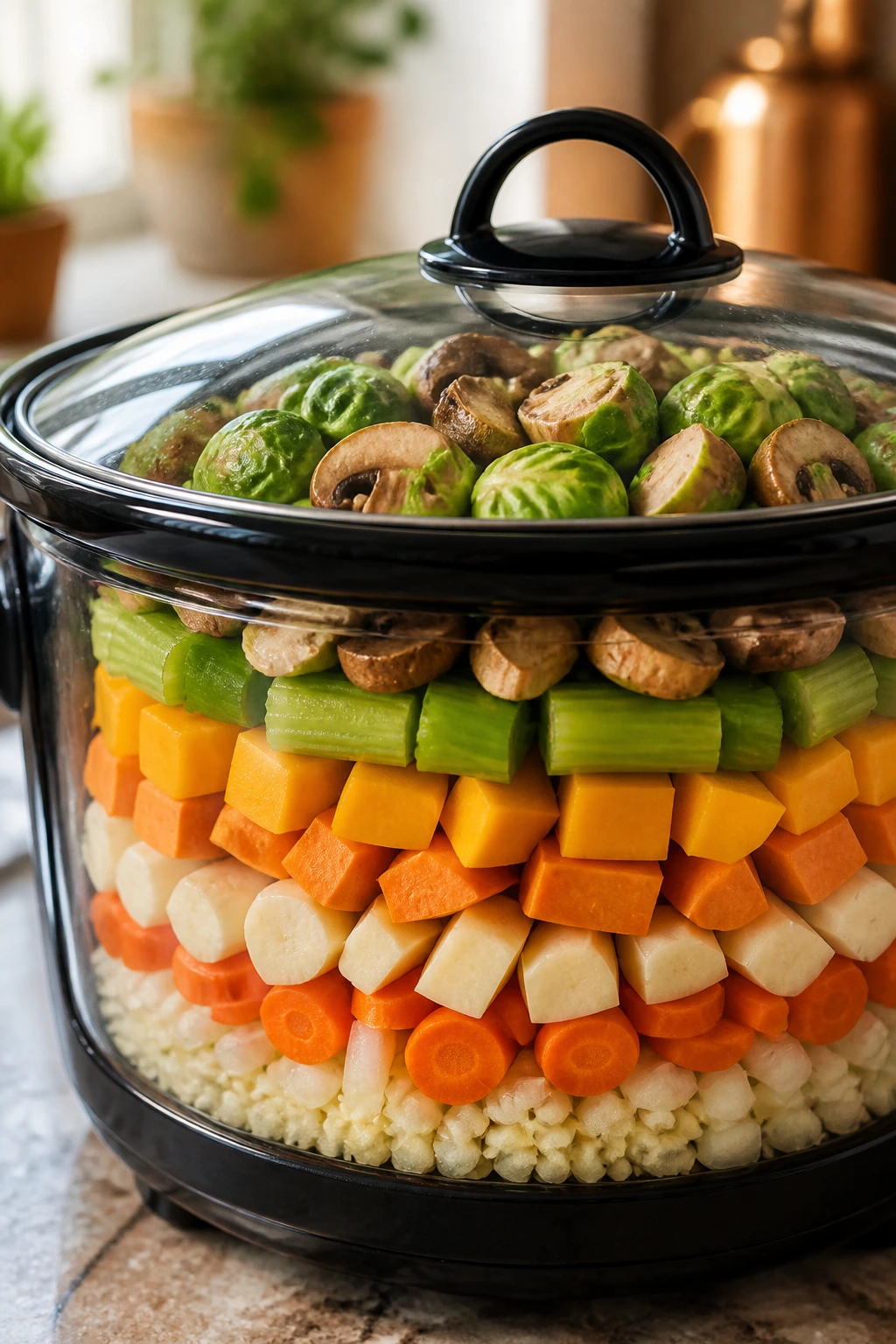
Start with the onion, carrots, parsnips, sweet potato, butternut squash, celery, garlic, and bay leaves. These are the vegetables that can handle several hours of gentle heat. The slow cooker bottom does the most work, so the denser chunks belong there.
Keep tender vegetables on a shorter leash
Brussels sprouts and mushrooms should wait until the root vegetables are partly tender. That staged approach is the difference between a finished dish that still has shape and one that looks like it got left out in the rain. If you’re cooking on the hotter side of LOW, reduce the second stage by about 15 minutes and check early.
Use the lid as a tool, not a habit
Every time you lift the lid, you let heat escape and extend the cook. That sounds minor. It isn’t. If you keep peeking, the vegetables spend more time softening in a wet environment, and that’s exactly how you lose control of the texture.
Think in layers, not a toss-and-pray pile
A quick toss is fine after the liquid goes in, but don’t stir it every 20 minutes. Slow cooker vegetables need calm. You want the seasoned liquid to work through the pot slowly, and you want the vegetables to hold their place long enough to finish with some shape.
Step-by-Step: Cooking the Vegetables Without Turning Them Mushy
Prep the Pot and the Seasoning
-
Grease the slow cooker insert with a little of the melted butter or the olive oil. Use a 6-quart slow cooker or larger; this recipe needs room for the vegetables to settle without heaping over the rim.
-
Whisk the seasoning liquid in a small bowl: vegetable broth, maple syrup, apple cider vinegar, tamari, salt, pepper, thyme, sage, and rosemary. Stir until the maple syrup disappears and the mixture looks even and a little glossy.
-
Load the sturdy vegetables first by adding the onion, carrots, parsnips, sweet potato, butternut squash, celery, garlic, and bay leaves to the insert. Pour in the melted butter and olive oil, then pour the seasoning liquid over the top. Toss gently with a spoon or your hands until the vegetables look lightly coated. Do not fill the pot past the top third of the insert with liquid. The vegetables will give off moisture as they cook.
Slow Cook in Stages
-
Cover and cook on LOW for 2 1/2 hours. The vegetables should start to soften around the edges, and the onion should look translucent rather than raw. If your cooker runs hot, check at the 2-hour mark.
-
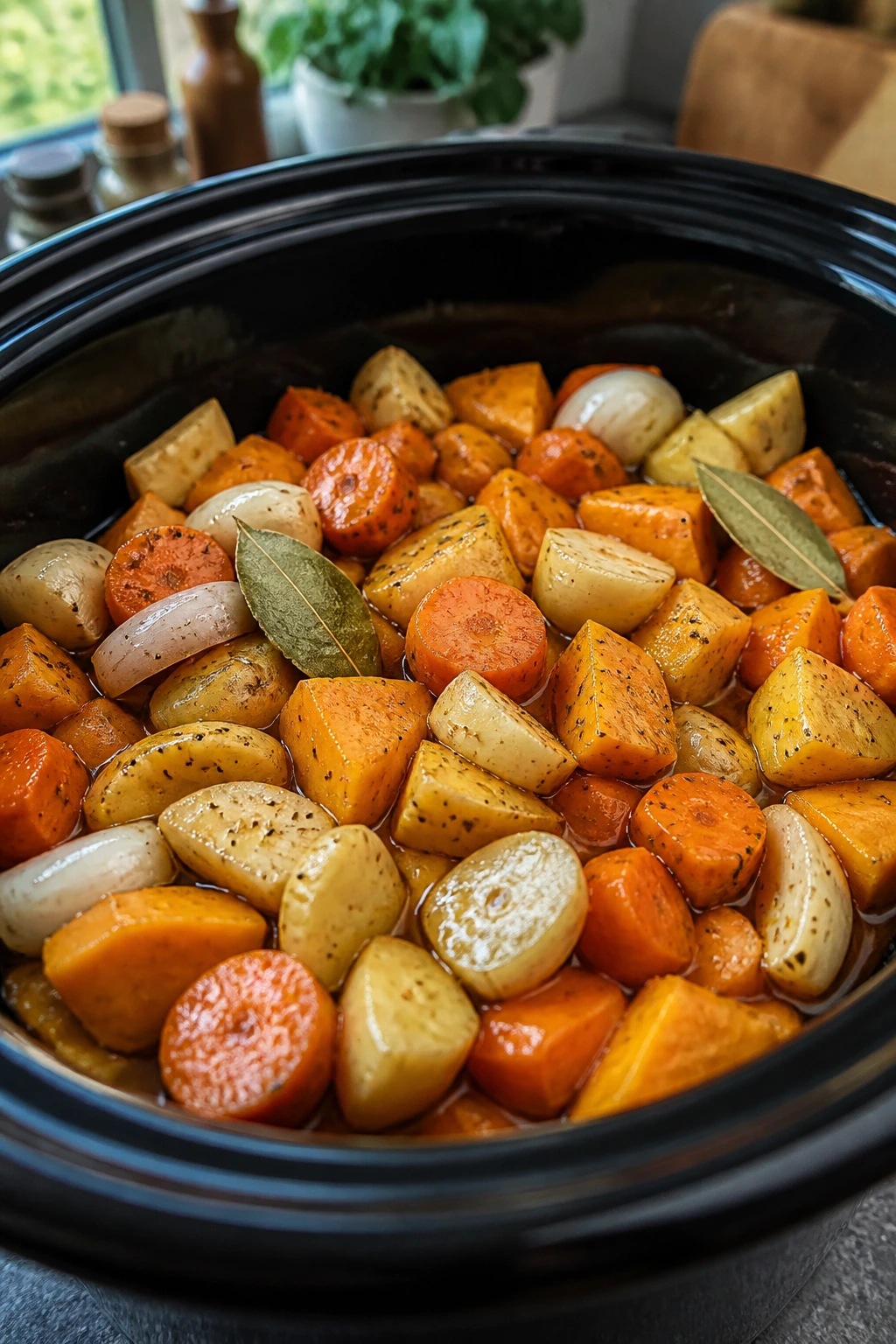
Stir in the Brussels sprouts and mushrooms once the root vegetables are partway tender. Fold them in gently so they settle into the pot without getting smashed. Re-cover and cook on LOW for 1 to 1 1/2 hours more, until the carrots and parsnips are tender when pierced with a paring knife but still hold their shape. The squash should be soft, but not collapsing into a puree.
Finish and Serve
-
Sprinkle the dried cranberries over the top during the final 15 minutes of cooking. They’ll plump a little from the steam and pick up some of the sauce without dissolving into the vegetables.
-
Remove the bay leaves, then taste and adjust. Add a pinch more salt if the vegetables taste flat, or another teaspoon of vinegar if the dish leans too sweet. This is the moment that fixes the whole pot. Slow-cooked vegetables can taste a little sleepy until you sharpen them at the end.
-
Fold in the parsley and top with the pecans just before serving. If the cooking liquid looks thin, uncover the pot and cook on HIGH for 10 to 15 minutes until the sauce reduces to a glossy coating. Serve warm, not piping hot and not lukewarm.
How to Serve It at a Thanksgiving Table
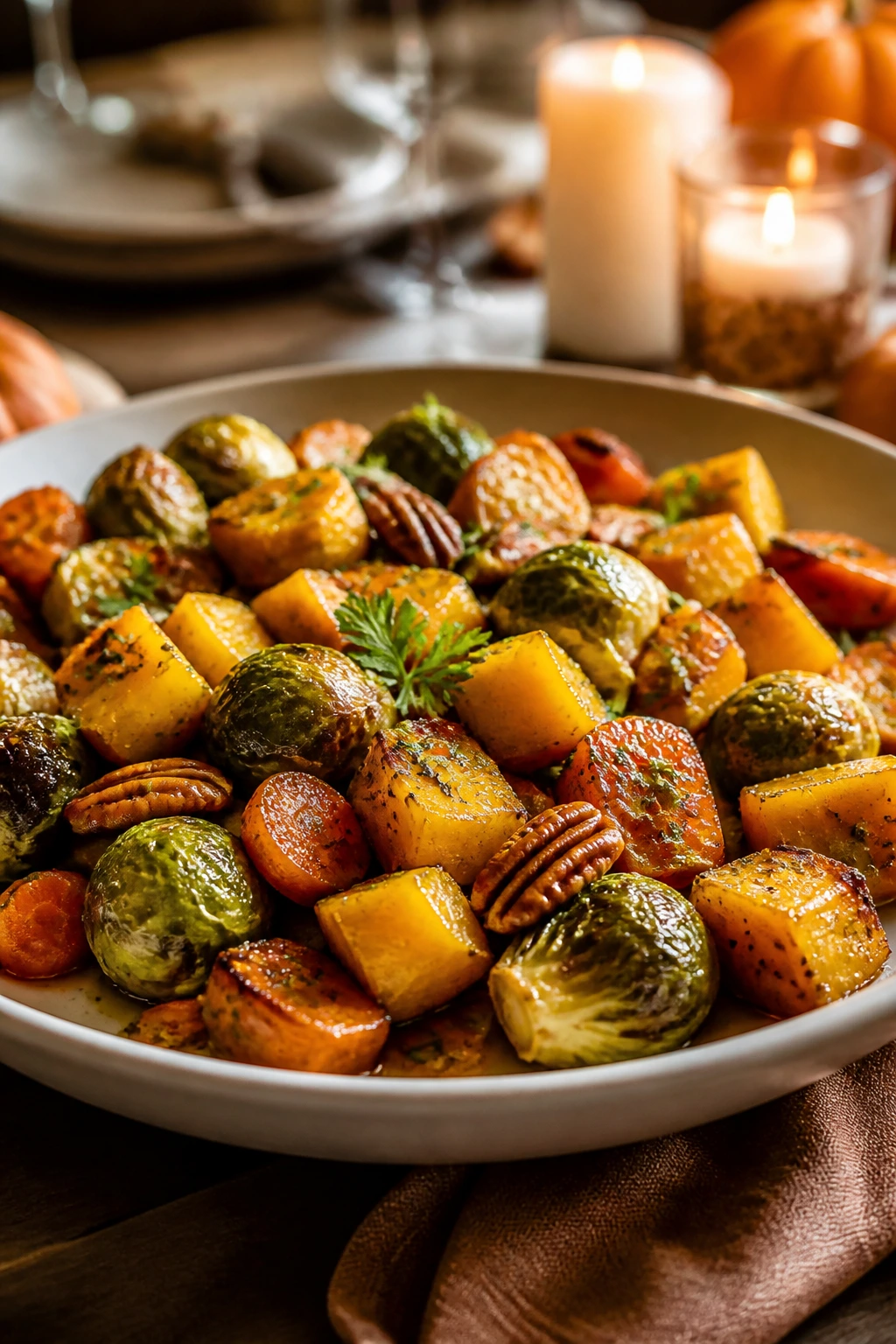
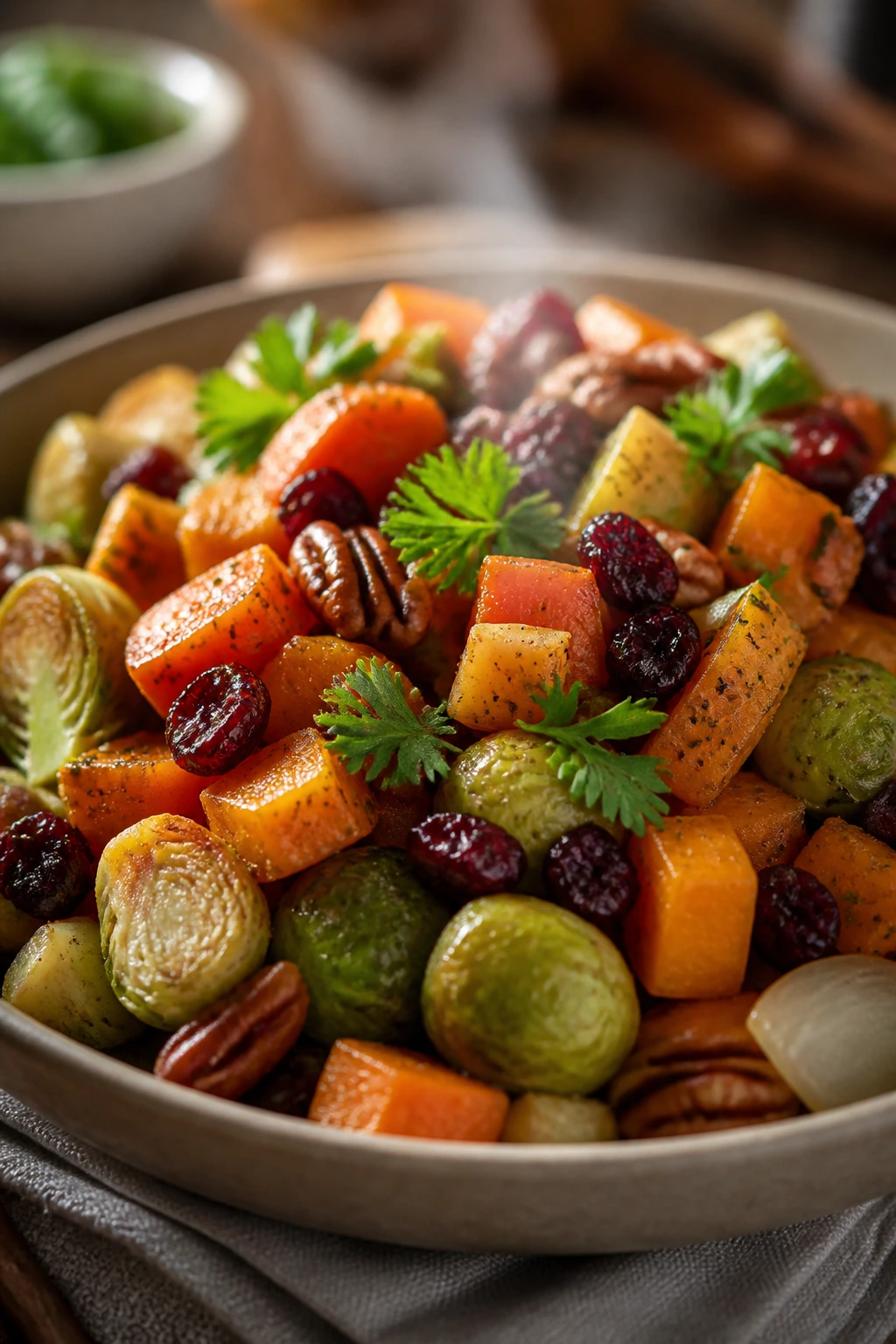
Presentation: Spoon the vegetables into a wide shallow bowl so the squash, carrots, and Brussels sprouts sit in a visible layer instead of sinking into a heap. Drizzle a little of the glossy cooking liquid over the top, then scatter the pecans and parsley across the surface so the dish looks finished, not dumped.
Accompaniments: This belongs beside roast turkey, stuffing, gravy, and rolls, but it also works with mashed potatoes if you’re building a second starch-heavy side. If you want a brighter plate, add cranberry sauce on the side; the tang keeps the sweet maple notes from feeling too soft.
Portions: Figure on about 1 to 1 1/4 cups per person as a side dish. If you’re serving a smaller meal, the same batch stretches farther because the vegetables are dense and satisfying. If you want to turn it into a vegetarian main, serve it over farro, wild rice, or buttered noodles and bump the portion closer to 2 cups.
Beverage Pairing: Dry hard cider is my first pick because it echoes the maple and cider vinegar without making the meal sweeter. If you’d rather pour wine, choose something crisp and not too oaky, like a dry white. Sparkling water with lemon is the nonalcoholic answer that never feels like an afterthought.
Additional Tips and Flavor Boosters
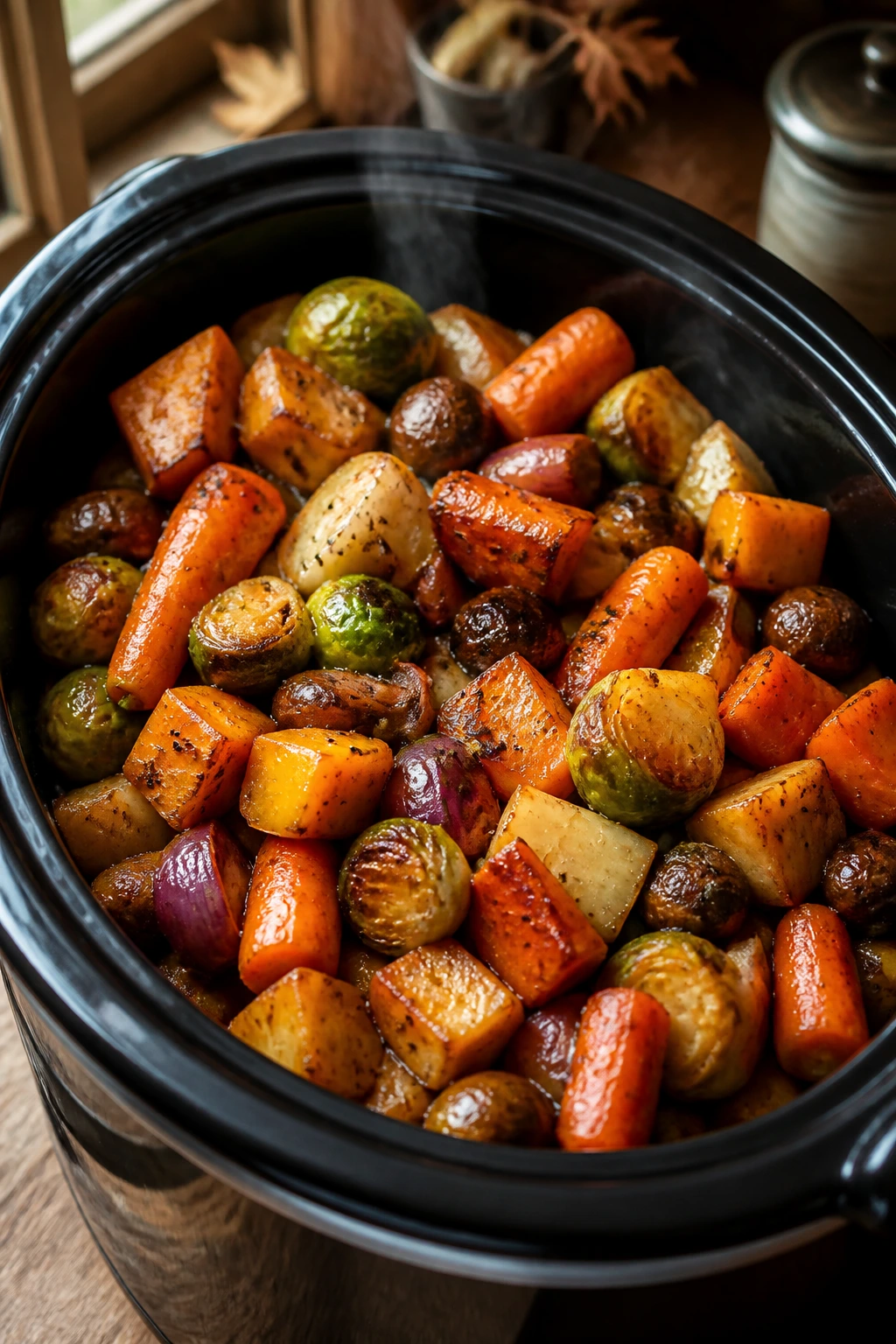
Flavor Enhancement: A tiny finishing splash of cider vinegar right before serving wakes the whole dish up. You do not need much—half a teaspoon can be enough if the vegetables have gone sweet in the pot.
Time-Saver: Buy pre-cut butternut squash if the knife work is the part you dread, but still cut the sweet potato yourself so the pieces match. Uneven size is the real enemy here, not convenience.
Pro Move: Toast the pecans in a dry skillet for 3 to 4 minutes until they smell rich and warm, then chop them while they’re still slightly warm. The aroma sounds like a small thing, but it changes the last bite.
Texture Fix: If the vegetables are done before the liquid has thickened, uncover the pot and let it cook on HIGH for 10 to 15 minutes. The sauce should cling lightly to the vegetables, not pool around them.
Make-It-Yours: For a dairy-free version, use all olive oil or a plant butter you trust. For a nut-free version, swap the pecans for toasted pumpkin seeds. For a lower-sodium bowl, use no-salt vegetable broth and scale back the tamari, then season at the end with a salt pinch if needed.
Common Mistakes That Make Slow-Cooked Vegetables Fall Apart
-
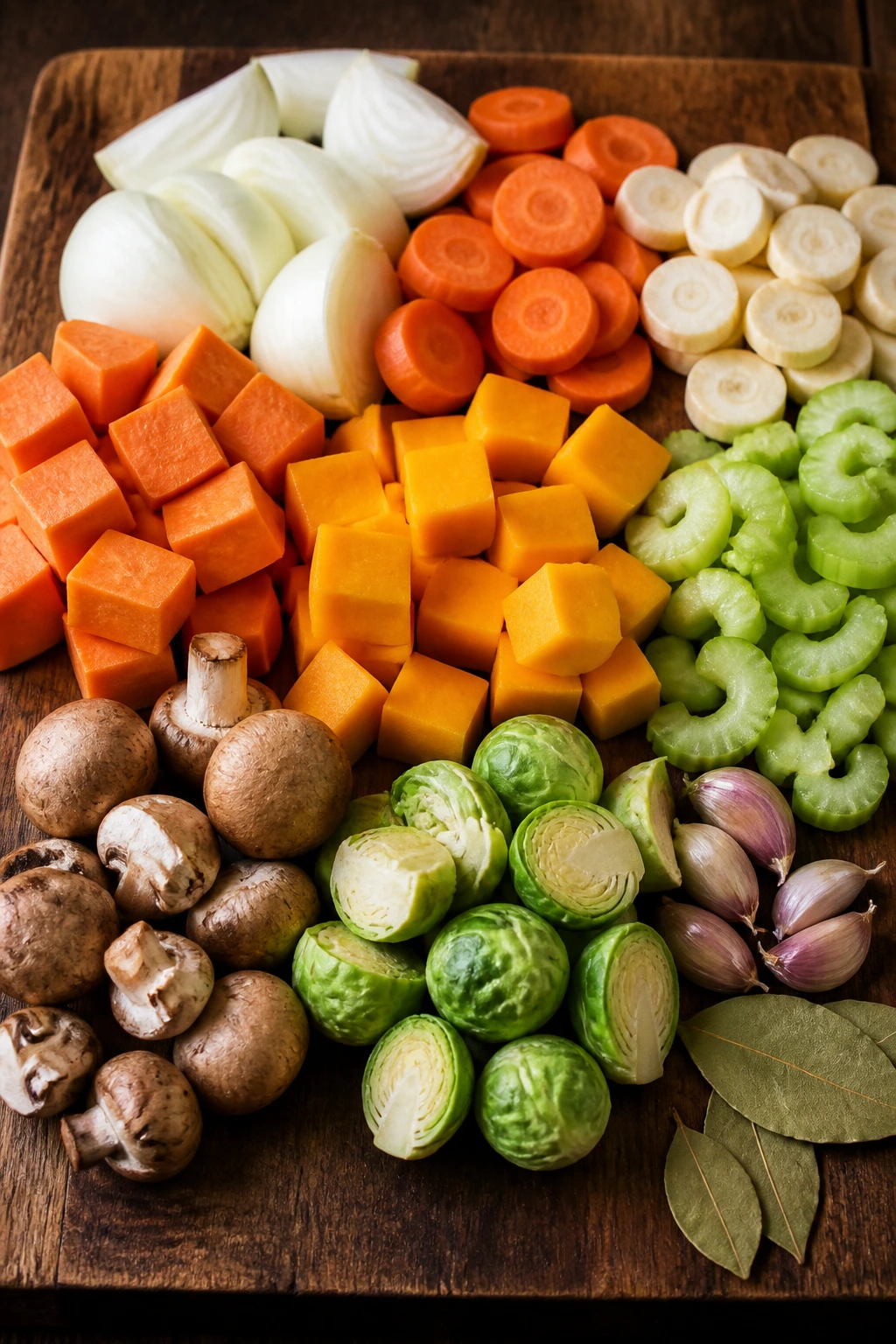
Cutting the vegetables too small. Tiny cubes turn to paste before the sweet potato and squash finish. Keep the sweet potato at 3/4-inch and the squash at 1-inch so the pieces can survive the long heat.
-
Adding Brussels sprouts at the start. They go olive-drab, soft, and faintly sulfurous if they sit in the pot for hours. Add them after the root vegetables have already started to tenderize.
-
Using too much broth. If the insert looks like soup before it cooks, the seasoning gets diluted and the vegetables stew instead of soften. Stick to the 3/4 cup broth amount unless your slow cooker is unusually dry or the vegetables are unusually large.
-
Skipping the final seasoning check. Slow cooking dulls the edges of salt and acid. If you do not taste at the end, the dish can come out sweet, flat, and oddly sleepy.
-
Adding the pecans too early. They lose their crunch fast. Keep them dry until the very last minute or serve them on the side so people can sprinkle them over their own portion.
-
Cooking on HIGH from start to finish. A few slow cookers can handle it, but most will make the root vegetables soft before the Brussels sprouts have had a chance to behave. LOW gives you more room to control the texture.
Variations That Fit Different Tables and Diets
Maple-Pecan Classic
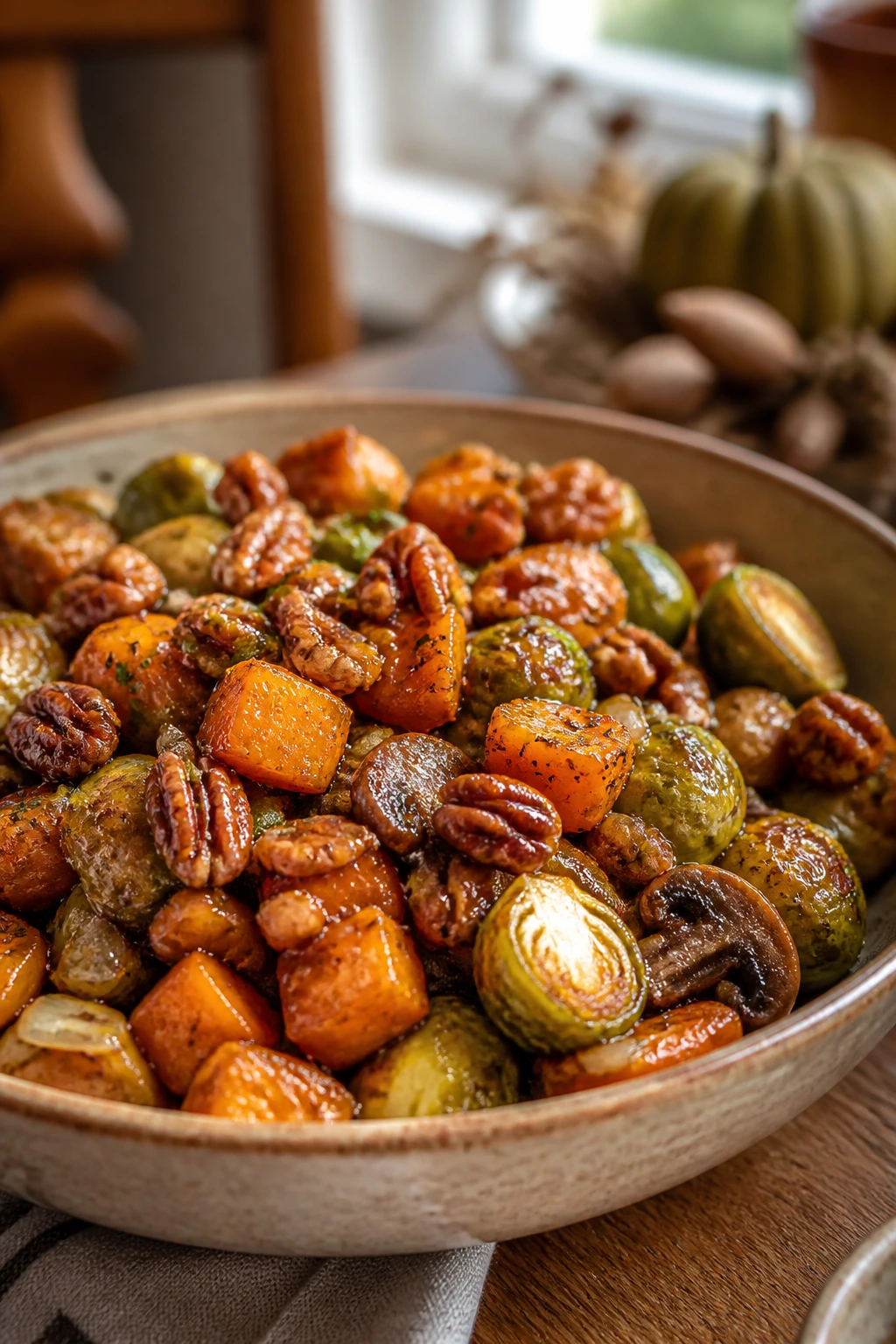
If your table leans toward sweet-savory, add 1 extra tablespoon of maple syrup and use pecans as the only topping. This version tastes closest to traditional holiday vegetables with a polished finish, and it pairs especially well with salty gravy.
Garlic-Sage Mushroom Version
Double the mushrooms to 16 ounces and add 2 more cloves of garlic, then bump the sage to 1 1/2 teaspoons. The result is darker, earthier, and less sweet, which suits anyone who wants the vegetables to lean savory instead of glazed.
Apple-Cider Orchard Version
Replace half the vegetable broth with unsweetened apple cider and add 1 small apple, peeled and cut into 3/4-inch chunks, during the final hour. The apple softens into the sauce and gives the whole pot a gentle orchard note without turning it into dessert.
Vegan Pantry Swap
Use olive oil or plant butter instead of dairy butter, keep the tamari, and finish with pumpkin seeds instead of pecans if you need a nut-free option too. The texture stays the same, and the mushroom-tamari base carries enough savory weight that nobody misses the butter much.
Tools and Equipment You’ll Want Nearby
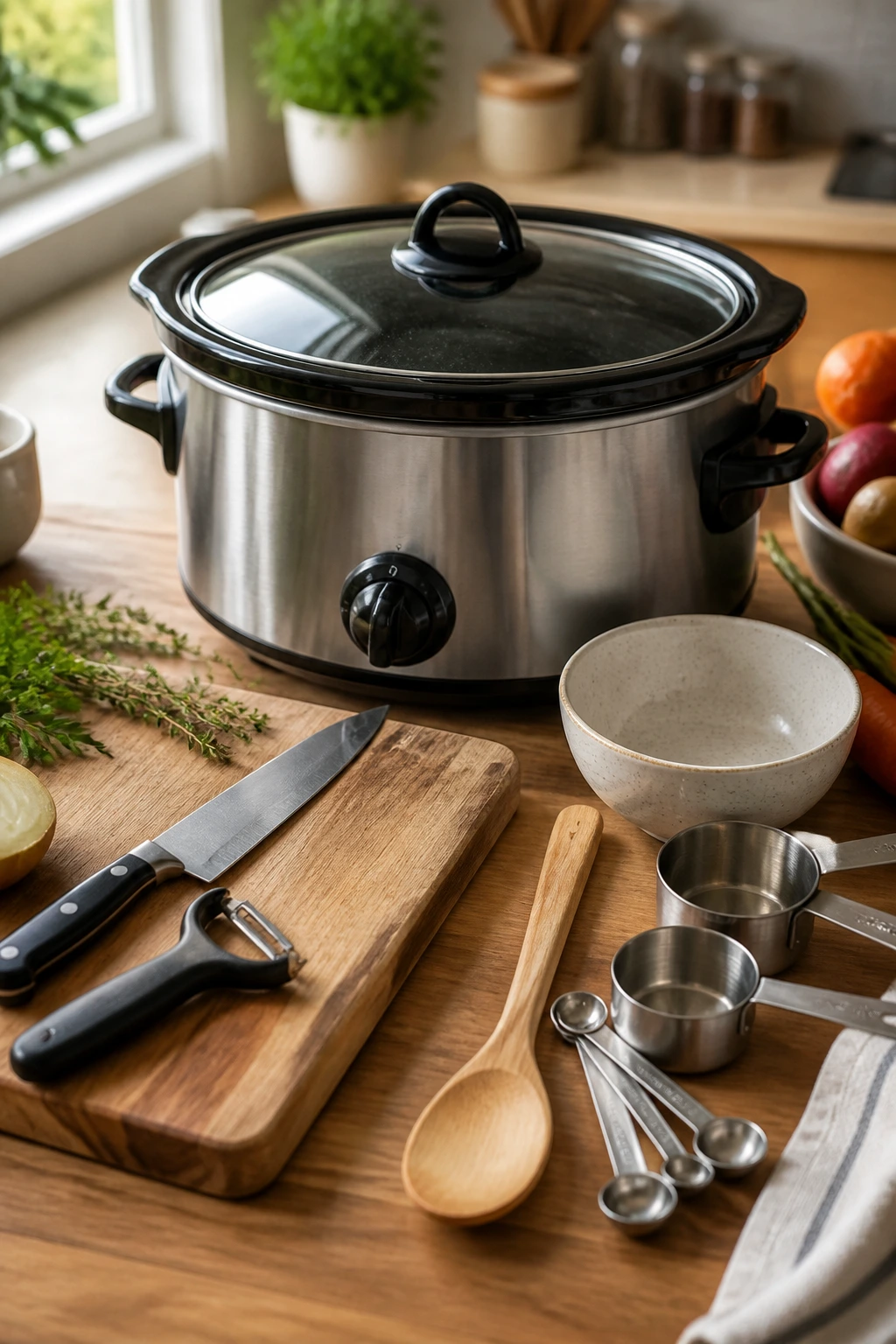
- 6-quart slow cooker with lid — The size gives the vegetables room to settle without overflowing the insert.
- Chef’s knife — A sharp knife matters here because the recipe depends on even cubes, not decorative chopping.
- Vegetable peeler — Worth using for the sweet potato, parsnips, and butternut squash so the finished texture stays smooth.
- Large cutting board — The squash needs space, and you do not want it rolling around while you work.
- Measuring cups and spoons — The liquid balance is part of what keeps the dish from turning watery.
- Small mixing bowl — Handy for whisking the seasoning liquid before it goes into the pot.
- Wooden spoon or silicone spatula — Use this to fold the vegetables without crushing the softer pieces.
- Dry skillet, optional — Useful for toasting the pecans right before serving.
- Shallow serving bowl — Better than a deep bowl if you want the vegetables to look deliberate on the table.
Make-Ahead, Storage, and Reheating Notes
Make-Ahead
The easiest advance move is chopping the vegetables a day ahead. Keep the sweet potato, carrots, parsnips, and squash in separate airtight containers if you can, or at least keep the squash from sitting on top of wetter vegetables. The mushrooms should be stored on their own, ideally in a paper towel-lined container, because they release moisture and get slippery fast.
You can also whisk the seasoning liquid up to 3 days ahead and keep it covered in the fridge. When it’s time to cook, everything goes in cold except the melted butter and oil, and the recipe still works.
Refrigerating
Cool leftovers within 2 hours, then store them in shallow airtight containers. The dish keeps well for 3 to 4 days in the refrigerator. If you’ve already added the pecans, they’ll soften, so I prefer to keep the topping separate and add it after reheating.
Freezing
Freeze portions for up to 2 months in airtight containers or freezer bags pressed flat. The texture softens after thawing, especially in the mushrooms and Brussels sprouts, so I treat frozen leftovers more like a ready-made side for a weekday meal than a pristine holiday remake.
Reheating
For the best texture, reheat the vegetables in a covered baking dish at 325°F (165°C) for 15 to 20 minutes, with a splash of broth if they look dry. A skillet over medium-low heat also works well; just stir gently and keep the lid on for part of the time so the squash doesn’t scorch.
Microwaving is fine in a pinch, but use short bursts and stir in between so the sweet potato doesn’t go from tender to paste. Add the pecans after reheating, not before. Crunch should stay crunchy.
Questions People Ask About Slow-Cooked Thanksgiving Vegetables
Can I make this the day before Thanksgiving?
Yes, and this is one of the few vegetable sides that behaves well with a little advance work. Cook it fully, cool it, and refrigerate it without the pecans; then reheat it covered in the oven and finish with the topping right before serving.
Can I use frozen vegetables?
I wouldn’t use frozen Brussels sprouts or mushrooms here if you care about texture. Frozen cubes of squash or sweet potato can work in a pinch, but they release extra water and soften more than fresh vegetables, so the finished dish will be looser.
How do I keep the vegetables from getting mushy?
Cut them a little larger than you think you need, keep the broth modest, and add the Brussels sprouts halfway through rather than at the start. The other part of the fix is not stirring constantly; every stir breaks down the softer vegetables a little more.
Can I cook it on HIGH instead of LOW?
You can, but the texture gets harder to control. If you must use HIGH, shorten the total time and check the root vegetables early; otherwise the sweet potato and squash can go too soft before the Brussels sprouts catch up.
What if I only have a smaller slow cooker?
A 4-quart cooker is tight for this full batch. Either halve the recipe or reduce the total volume by trimming one of the root vegetables out; otherwise the vegetables pack too tightly and steam unevenly.
Can I make it vegan or nut-free?
Yes. Swap the butter for olive oil or plant butter and use pumpkin seeds instead of pecans. The rest of the dish already leans vegetarian, so those are easy changes without rewriting the recipe.
What if the finished dish tastes flat?
Add a pinch more salt first, then a small splash of cider vinegar. Slow-cooked vegetables often need one sharp note at the end to make the sweetness and herbs taste complete.
A Side Dish That Holds Its Shape
A good Thanksgiving vegetable dish should do more than sit quietly on the table. It should taste like it belongs there. This one does that without demanding oven space, extra pans, or a last-minute scramble while the turkey rests and the gravy refuses to thicken.
The real trick is balance: sturdy vegetables at the start, delicate ones later, and a finishing layer that still has a little crunch. Once you’ve done it this way, the old habit of dumping vegetables into a crockpot and hoping for the best feels hard to defend. Set it up right, and the slow cooker becomes a dependable part of the holiday lineup.
Slow-Cooked Thanksgiving Vegetable Crockpot Recipe — Recipe Card
Recipe Name: Slow-Cooked Thanksgiving Vegetable Crockpot Recipe
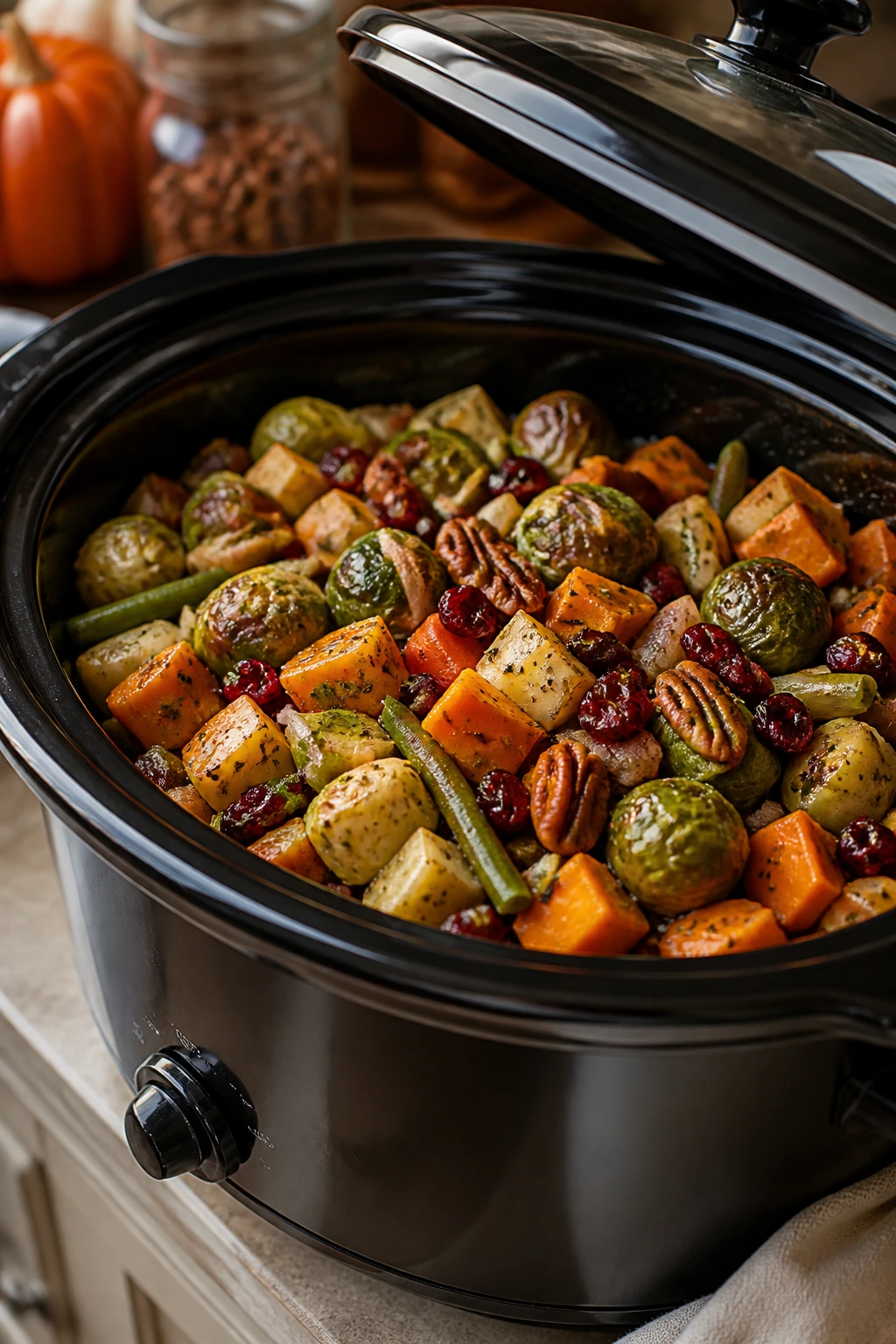
Description: A savory-sweet medley of sweet potato, butternut squash, carrots, parsnips, Brussels sprouts, and mushrooms cooked gently in a maple-herb broth. Dried cranberries and toasted pecans finish the dish with chew and crunch so it tastes festive, not soft and one-note.
Yield: Serves 8 to 10
Prep Time: 25 minutes
Cook Time: 4 hours on LOW
Total Time: 4 hours 25 minutes
Course: Side Dish
Cuisine: American
Servings: 8 to 10 servings
Calories: About 190 kcal per serving
Ingredients
For the Vegetable Base:
- 2 tablespoons unsalted butter, melted
- 1 tablespoon olive oil
- 1 large yellow onion, cut into 1/2-inch wedges
- 3 medium carrots, peeled and cut into 1/2-inch coins
- 2 medium parsnips, peeled and cut into 1/2-inch coins
- 1 large sweet potato, about 1 1/2 pounds, peeled and cut into 3/4-inch cubes
- 1 small butternut squash, about 2 pounds peeled and seeded, cut into 1-inch cubes
- 2 ribs celery, sliced 1/2-inch thick
- 8 ounces cremini mushrooms, halved if small or quartered if large
- 12 ounces Brussels sprouts, trimmed and halved
- 3 cloves garlic, minced
- 2 bay leaves
For the Holiday Seasoning Liquid:
- 3/4 cup low-sodium vegetable broth
- 2 tablespoons pure maple syrup
- 1 tablespoon apple cider vinegar
- 1 tablespoon low-sodium tamari or soy sauce
- 1 1/2 teaspoons kosher salt
- 1/2 teaspoon black pepper
- 1 1/2 teaspoons fresh thyme leaves
- 1 teaspoon finely chopped fresh sage
- 1/2 teaspoon finely chopped rosemary
For the Finish:
- 1/2 cup dried cranberries
- 1/2 cup pecans, toasted and chopped
- 2 tablespoons chopped fresh parsley
Instructions
-
Grease the slow cooker insert with a little of the butter or olive oil. Use a 6-quart slow cooker or larger.
-
Whisk together the broth, maple syrup, vinegar, tamari, salt, pepper, thyme, sage, and rosemary in a small bowl.
-
Add the onion, carrots, parsnips, sweet potato, butternut squash, celery, garlic, and bay leaves to the slow cooker. Pour in the melted butter and seasoning liquid, then toss gently to coat.
-
Cover and cook on LOW for 2 1/2 hours, until the root vegetables begin to soften around the edges.
-
Stir in the Brussels sprouts and mushrooms. Re-cover and cook on LOW for 1 to 1 1/2 hours more, until the vegetables are tender but still hold their shape.
-
Add the dried cranberries during the final 15 minutes of cooking.
-
Remove the bay leaves, taste, and adjust with extra salt or a small splash more vinegar if needed. If the liquid is thin, cook uncovered on HIGH for 10 to 15 minutes until lightly reduced.
-
Fold in the parsley and top with the toasted pecans just before serving.
Notes: Keep the pecans out of the slow cooker until the end so they stay crunchy. For make-ahead prep, chop the vegetables and whisk the liquid a day in advance.