



The house changes when a slow cooker beef stew is working away on the counter. First comes the smell of browned meat and onions softening in beef fat, then the deeper note of thyme, pepper, and tomato paste getting pulled into the broth. By dinner, the kitchen smells like someone hovered over a pot for hours, even though the real work happened in one skillet and a long, quiet cook.
That’s why this kind of stew still matters. Not because it is fancy. Because it is stubbornly practical. Chuck roast turns silky when it gets enough time, carrots hold their shape if you cut them big enough, and the broth thickens into something that clings to a spoon instead of running across the bowl like soup that got lost on the way to dinner.
I keep coming back to this style of stew because it forgives a messy day. You can brown the beef while the coffee is still hot, load the crock, and let time do the heavy lifting. The trick is knowing which shortcuts help and which ones flatten the whole pot. That’s where the details start to matter.
Why This Slow Cooker Beef Stew Tastes Deep Instead of Flat
- Browning earns its keep: A hard sear on the beef gives you the dark, roasted edges that a slow cooker cannot create on its own, and those browned bits melt into the broth later.
- Chuck roast behaves better than lean beef: The fat and connective tissue in chuck break down over hours, which is why the meat turns spoon-tender instead of dry and stringy.
- Big-cut vegetables stay intact: Cutting the carrots and potatoes into 1 1/2-inch chunks keeps them from turning to paste after 8 hours on low.
- The broth gets layered, not one-note: Tomato paste, Worcestershire, soy sauce, and a splash of red wine build a deeper base than broth alone ever will.
- It finishes like stew, not soup: A cornstarch slurry at the end gives the liquid that glossy, coat-the-spoon texture people want when they say “beef stew.”
- Leftovers are worth keeping: The flavors settle overnight, and the next-day bowl tastes rounder, darker, and a little more settled.
The Clock Looks Different When a Slow Cooker Is Doing the Work
Yield: Serves 6 generous bowls
Prep Time: 25 minutes
Cook Time: 8 to 9 hours on Low, or 4 to 5 hours on High
Total Time: About 8 hours 25 minutes to 9 hours 25 minutes on Low, or 4 hours 25 minutes to 5 hours 25 minutes on High, including browning and finishing
Difficulty: Intermediate — the method itself is straightforward, but browning in batches and seasoning the liquid properly are what separate a muddy stew from a good one.
Chill/Rest Time: 10 minutes before serving
Best Served: Warm and freshly finished, or reheated the next day after the broth has had time to settle
What Goes Into a Stew That Eats Like a Meal
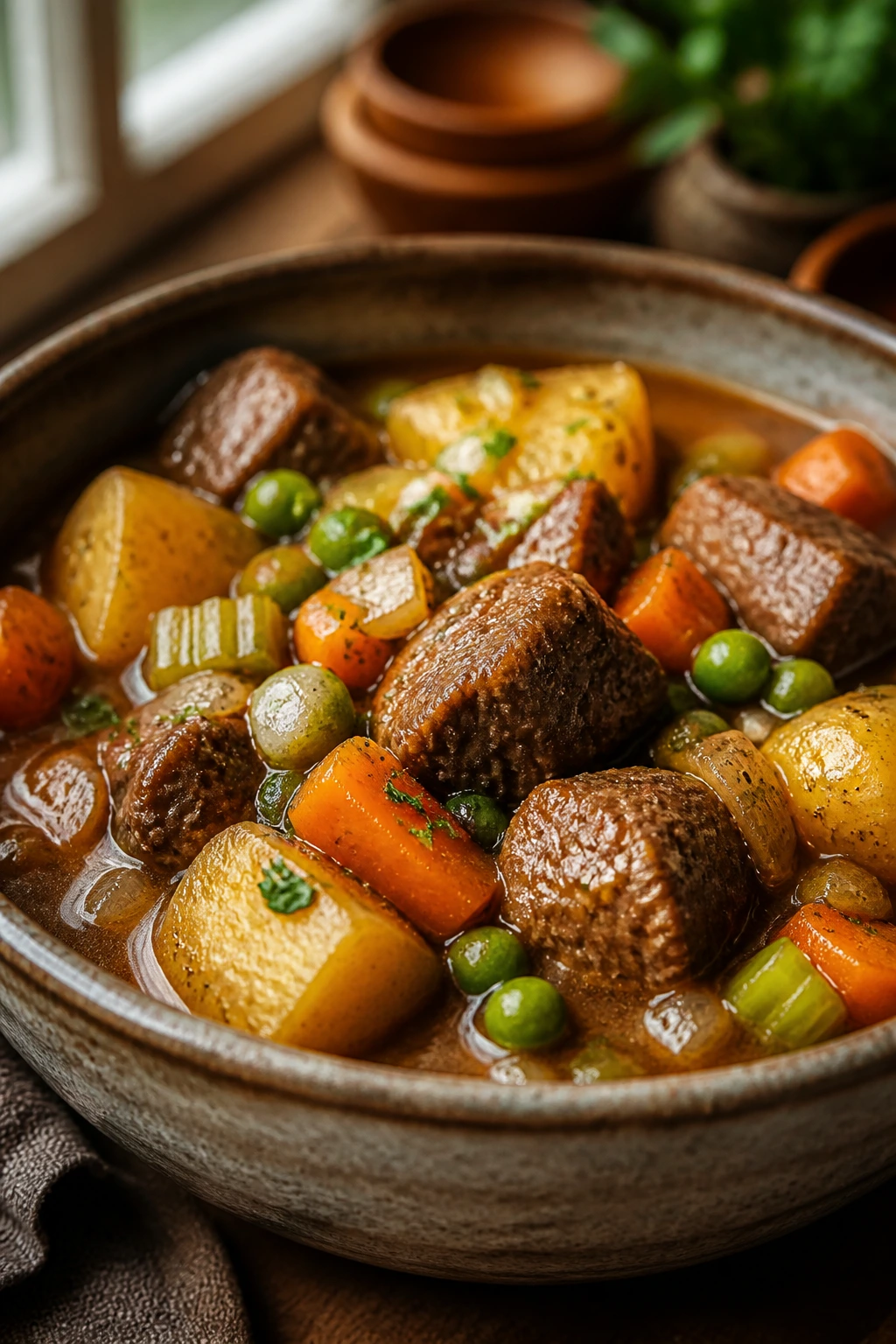
For the Beef and Vegetables:
- 2 1/2 lbs beef chuck roast, trimmed and cut into 1 1/2-inch cubes
- 1/4 cup all-purpose flour
- 1 1/2 teaspoons kosher salt, plus more to taste
- 1 teaspoon black pepper
- 2 tablespoons vegetable oil or avocado oil
- 1 large yellow onion, chopped
- 3 medium carrots, peeled and cut into 1-inch chunks
- 2 celery stalks, sliced
- 4 garlic cloves, minced
- 1 1/2 lbs Yukon Gold potatoes, cut into 1 1/2-inch chunks
- 1 cup frozen peas
- 2 tablespoons chopped fresh parsley, for finishing
For the Braising Liquid:
- 2 tablespoons tomato paste
- 1 cup dry red wine, or 1 cup additional beef broth plus 1 teaspoon balsamic vinegar
- 3 cups low-sodium beef broth
- 1 tablespoon Worcestershire sauce
- 1 teaspoon soy sauce
- 2 teaspoons dried thyme, or 4 fresh thyme sprigs
- 2 bay leaves
For Thickening:
- 2 tablespoons cornstarch
- 2 tablespoons cold water
What Each Ingredient Is Doing in the Pot
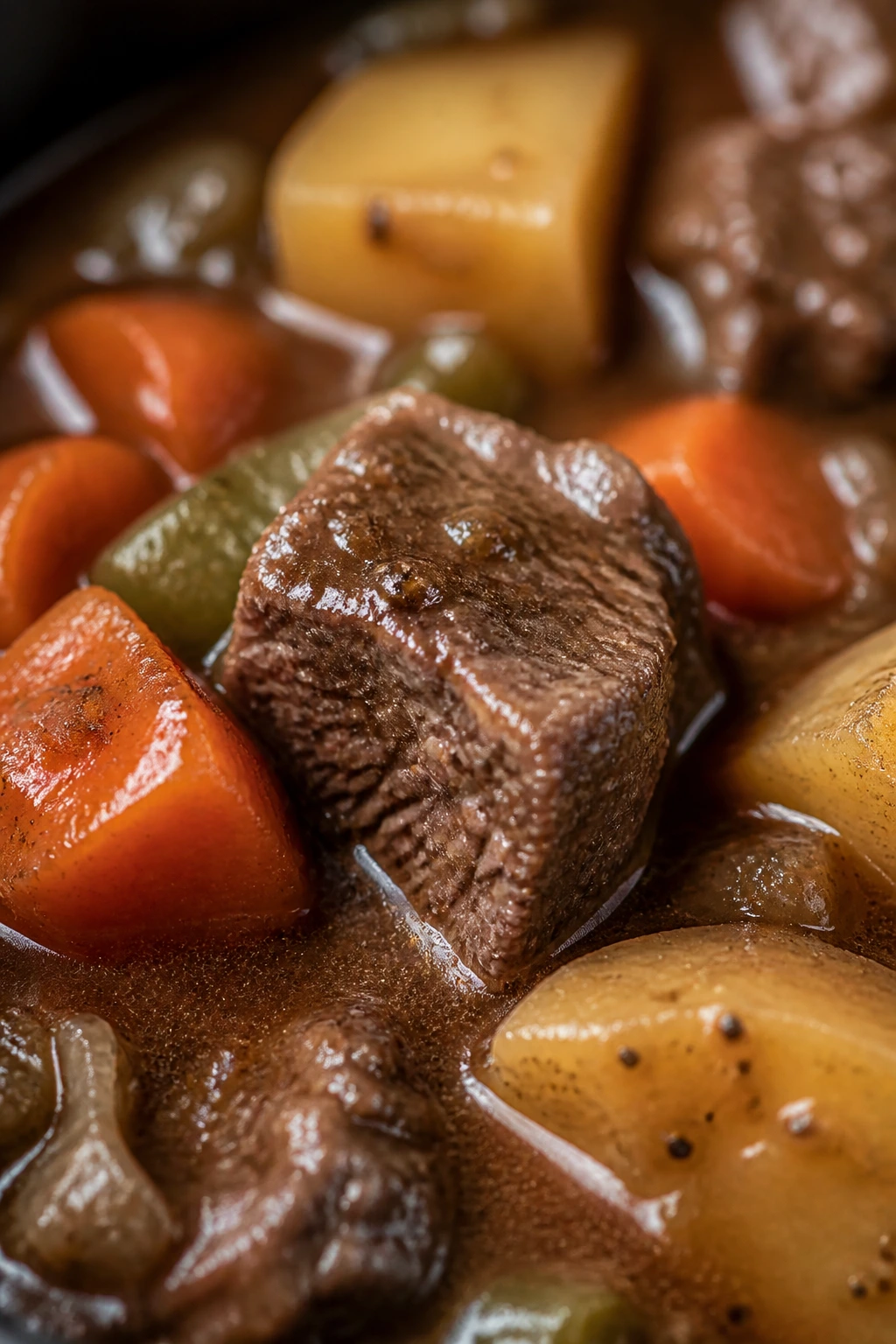
The Beef That Needs Time, Not Sympathy
What to use: 2 1/2 pounds of beef chuck roast cut into even 1 1/2-inch cubes.
Preparation: Trim away any hard exterior fat, then pat the cubes dry before seasoning. Dry meat browns; damp meat steams, and steaming is the enemy here.
Substitutions: Bottom round can work if it’s cut thick and cooked long enough, though it won’t get quite as plush. Brisket is richer and fattier, while packaged stew meat is fine only if it comes from chuck or shoulder.
Tips: I always buy chuck as a whole roast and cut it myself. The pieces are more even, and the texture is better than the random scraps you sometimes get in pre-cut stew meat.
Vegetables That Need Space to Breathe
What to use: 1 large yellow onion, 3 medium carrots, 2 celery stalks, 1 1/2 pounds Yukon Gold potatoes, and 1 cup frozen peas.
Preparation: Keep the onion roughly chopped, slice the celery into half-moons, and cut the carrots and potatoes into pieces that are large enough to survive the cook. The peas stay frozen until the end.
Substitutions: Parsnips can replace some or all of the potatoes if you want a sweeter root note. Turnips or rutabaga give the stew a firmer, earthier feel, and mushrooms can slide in with the onions if you want a deeper, more savory bowl.
Tips: Small vegetable chunks disappear. Big ones soften without surrendering, and that’s the difference between stew and brown gravy with bits in it.
Liquids and Umami Builders That Make the Broth Taste Darker
What to use: 2 tablespoons tomato paste, 1 cup dry red wine, 3 cups low-sodium beef broth, 1 tablespoon Worcestershire sauce, 1 teaspoon soy sauce, 2 teaspoons dried thyme, and 2 bay leaves.
Preparation: Whisk the broth, wine, Worcestershire, soy sauce, and tomato paste together after you’ve browned the meat and vegetables. The tomato paste needs heat in the skillet for a minute or two so it darkens from brick red to rust red.
Substitutions: If you do not want wine, use another cup of broth plus 1 teaspoon balsamic vinegar. A dry red you’d actually drink works better than cooking wine, which brings a sharp, stale note you can smell before you taste it.
Tips: Low-sodium broth gives you room to adjust the salt at the end. Once the stew reduces a little and the potatoes release some starch, the broth tightens up fast.
Herbs and Finishers That Keep the Pot from Feeling Heavy
What to use: 4 garlic cloves, 2 teaspoons dried thyme, 2 bay leaves, 2 tablespoons cornstarch, 2 tablespoons cold water, and 2 tablespoons chopped parsley.
Preparation: Mince the garlic finely, keep the bay leaves whole so they can be removed later, and whisk the cornstarch with cold water before it ever touches the hot stew. Parsley goes on last so it stays bright.
Substitutions: Fresh rosemary works if you want a more piney edge, though I use it lightly because it can take over fast. Arrowroot can replace cornstarch, but it thickens a touch more softly.
Tips: The finish matters. A spoonful of parsley and a little black pepper do more than decoration; they wake the broth back up after hours of slow heat.
The Tools Worth Having on the Counter
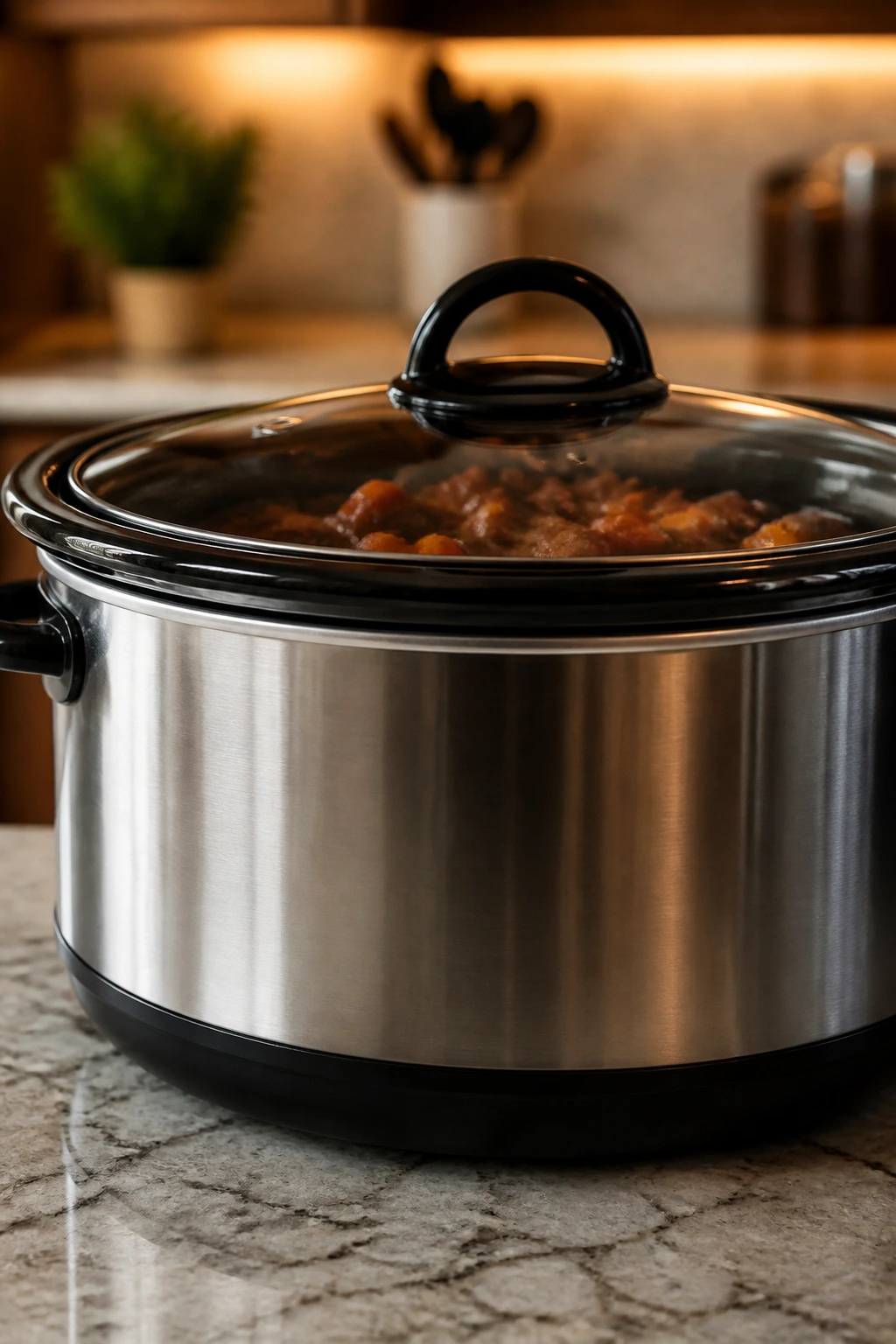
- 6-quart slow cooker — Big enough for this recipe without crowding the lid or squeezing the vegetables into a tight stack.
- 12-inch skillet or large Dutch oven — Needed for browning the beef and building the flavor base before everything goes into the crock.
- Tongs — Helpful for turning the beef without tearing the surface.
- Wooden spoon or flat spatula — Best for scraping browned bits from the skillet bottom.
- Chef’s knife and sturdy cutting board — You’ll be cutting beef, onions, carrots, celery, and potatoes, so stability matters.
- Measuring cups and spoons — Especially useful for the broth, wine, and cornstarch slurry.
- Ladle — Makes serving easier and keeps the bowl neat.
- Airtight containers — For leftovers, freezer portions, or a make-ahead base.
How to Build the Stew, Step by Step
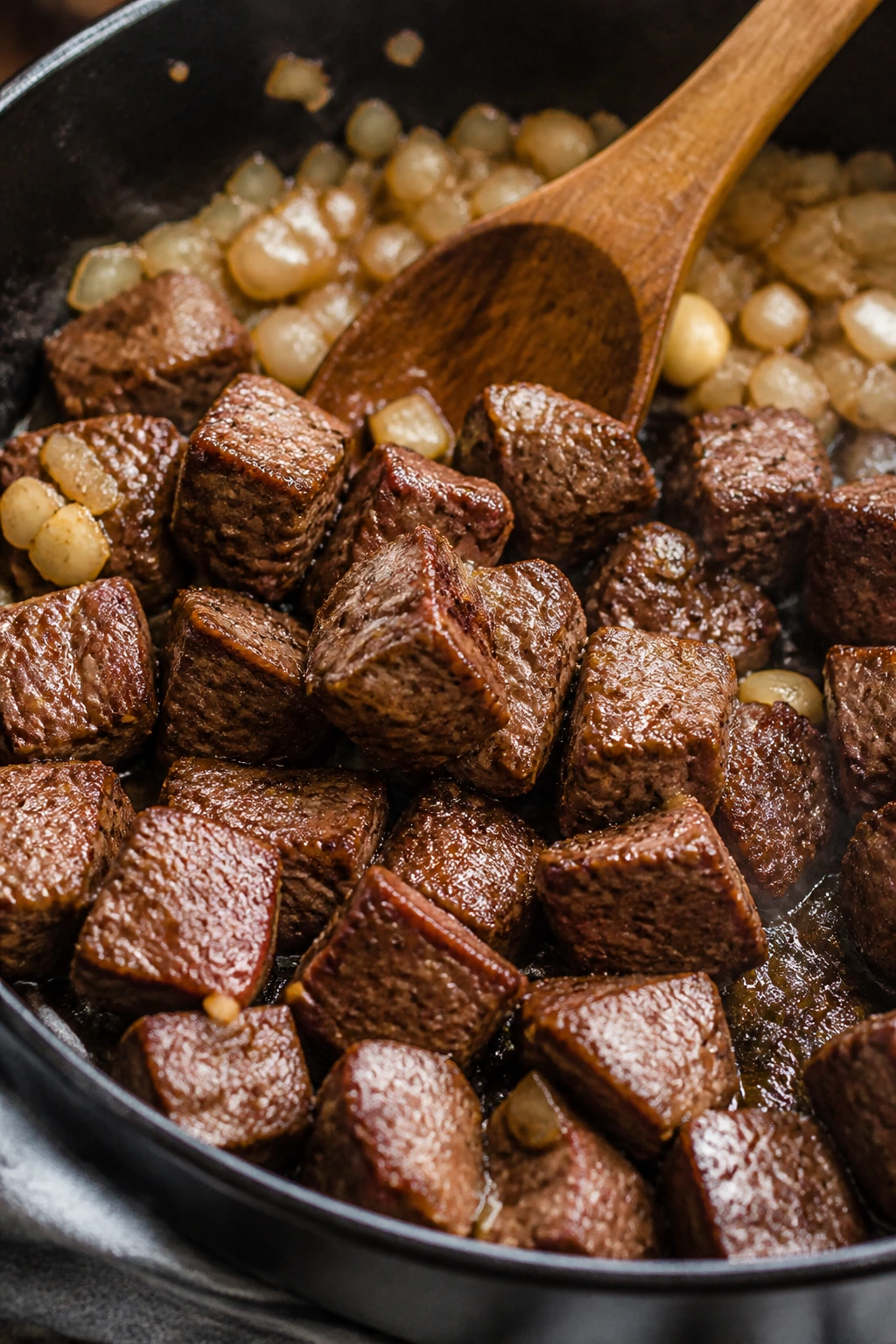
Prep and Brown the Beef
-
Pat and season the beef: Dry the 2 1/2 pounds of chuck roast cubes with paper towels, then toss them in a large bowl with the flour, kosher salt, and black pepper until the surfaces are lightly coated. You want a thin dusting, not a paste.
-
Heat the skillet until the oil shimmers: Warm 2 tablespoons of vegetable oil in a large skillet over medium-high heat. The oil should look loose and glossy, not smoking hard.
-
Brown the beef in batches: Add the beef in a single layer and leave space between the pieces. Cook for 2 to 3 minutes per side, turning until the cubes are dark brown on several faces. Crowding the pan traps steam, and steam kills browning.
-
Move the browned beef to the slow cooker: Transfer the meat to the insert as soon as each batch is done. Do not wait for the whole pan to finish cooling, or the browned crust softens in the skillet.
-
Cook the onions, carrots, and celery: Drop the onion, carrots, and celery into the same skillet and cook for 4 to 5 minutes, stirring once or twice, until the onion starts to turn translucent and the edges of the carrots pick up a little color.
-
Add the garlic and tomato paste: Stir in the garlic and tomato paste and cook for 1 minute, until the garlic smells sweet and the tomato paste darkens slightly. If the tomato paste still looks raw and bright red, give it another 30 seconds.
Build the Broth in the Crock
-
Deglaze the skillet: Pour in the red wine and scrape the bottom with a wooden spoon, lifting every browned bit into the liquid. Let it bubble for 1 to 2 minutes so the sharp alcohol smell softens.
-
Load the slow cooker: Pour the skillet mixture over the beef in the slow cooker, then add the potatoes, beef broth, Worcestershire sauce, soy sauce, thyme, and bay leaves. Stir once or twice to settle everything, but do not stir so hard that the potatoes break.
-
Set and cook until the beef relaxes: Cover and cook on Low for 8 to 9 hours or High for 4 to 5 hours, until the beef falls apart with a fork and the carrots can be pierced without resistance. Do not keep lifting the lid; every peek adds time.
Thicken and Finish
-
Add the peas near the end: Stir in the frozen peas during the last 10 to 15 minutes of cooking. They need only enough heat to turn bright green and hot all the way through.
-
Thicken the broth: Whisk the cornstarch with the cold water until smooth, then stir it into the stew. Cover and cook on High for another 10 to 15 minutes, or until the broth turns glossy and coats the back of a spoon.
-
Taste, rest, and serve: Remove the bay leaves, taste for salt and pepper, and add a little more if the broth tastes flat. Let the stew sit for 10 minutes before ladling it into bowls so the gravy settles and clings better.
How I’d Put This Bowl on the Table
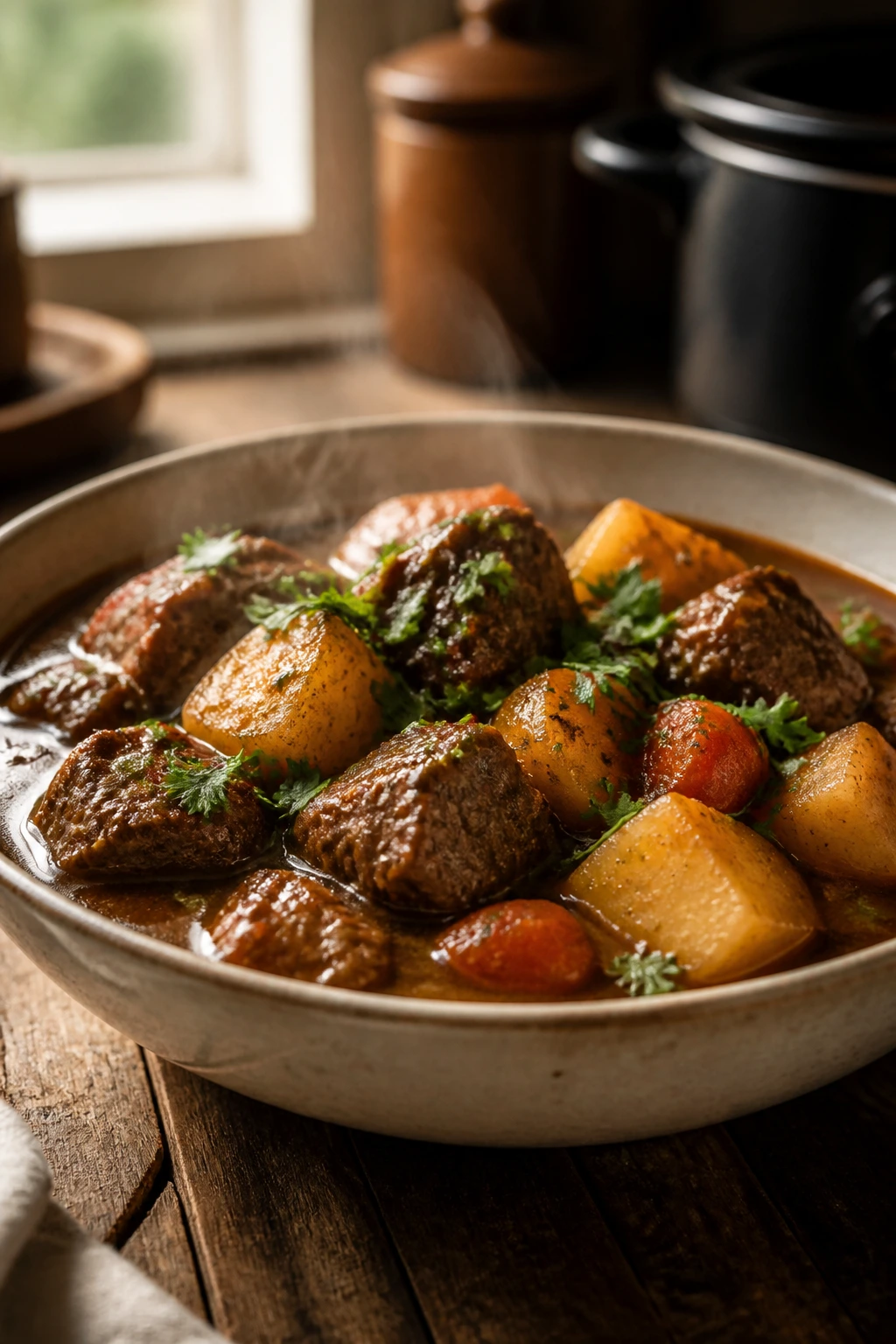
The nicest version of this stew is the one served in a wide, shallow bowl so the gravy can pool around the potatoes and beef instead of disappearing under them. A spoonful of parsley and a hard grind of black pepper go a long way here. That little green finish keeps the bowl from looking brown and heavy.
Presentation: Warm the bowls if you can, then ladle the stew so each serving gets at least two beef chunks, several potato pieces, and a good amount of broth. A torn piece of parsley on top looks casual in the best way.
Accompaniments: Crusty sourdough, buttered toast, or a slice of country bread is the easiest answer. If you want a side that cuts through the richness, make a simple green salad with lemon vinaigrette or serve steamed green beans with salt and butter. Egg noodles work too, though I’d only do that if you want the stew to lean toward extra-hearty rather than rustic.
Portions: This makes 6 generous bowls, or 8 smaller servings if you’re pairing it with bread and a salad. If you’re serving it over mashed potatoes, the stew stretches farther because the mash catches the broth.
Beverage Pairing: A dry red wine like Cabernet Sauvignon or Merlot matches the browned beef and tomato paste nicely. If you want beer, reach for a brown ale or a porter. Nonalcoholic, a strong black tea or sparkling water with lemon keeps the meal from feeling heavy.
Small Tweaks That Make the Bowl Better
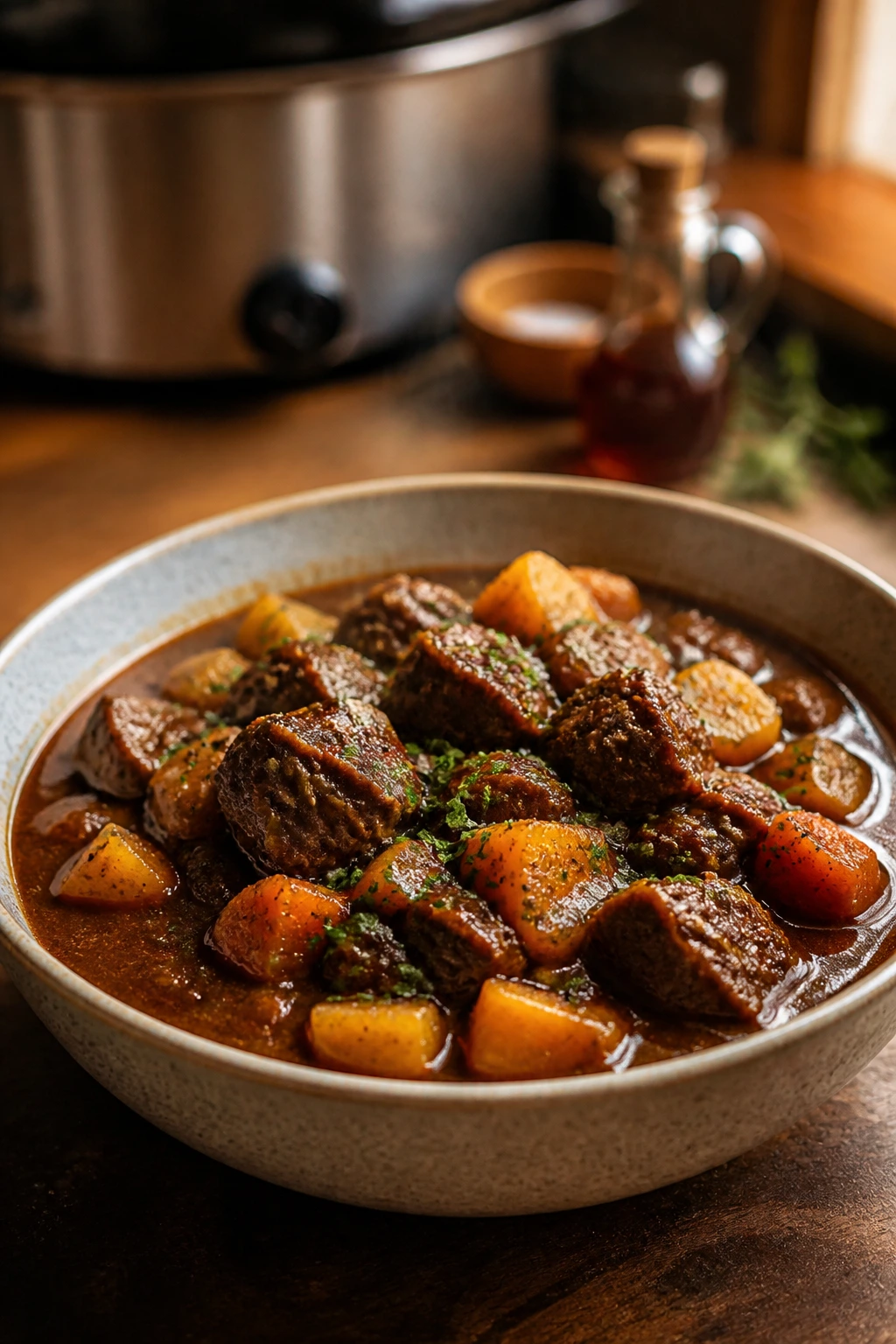
Flavor Enhancement: Stir in 1 teaspoon of red wine vinegar or a small splash of balsamic right at the end. It doesn’t make the stew taste sour; it sharpens the beef flavor and keeps the broth from feeling tired after hours of cooking.
Time-Saver: Brown the beef and sauté the onion, carrot, and celery the night before, then chill them separately and dump them into the slow cooker in the morning. The flavor takes the same route, and the actual morning prep drops to a few minutes.
Texture Control: If you like a thicker stew without adding much slurry, mash 3 or 4 potato chunks against the side of the crock with the back of a spoon. The starch from the potatoes will thicken the broth in a softer way than cornstarch does.
Cost-Saver: Buy a whole chuck roast when it’s priced well and cut it yourself. Pre-cut stew meat often includes tiny scraps that cook unevenly, while one solid roast gives you cleaner cubes and usually better value.
Make-It-Yours: A spoonful of grainy mustard stirred in at the end adds a faint sharpness that works well if you’re serving the stew with bread. If you like a darker, deeper profile, a teaspoon of smoked paprika with the garlic gives the broth a warmer edge without turning it into barbecue.
Where Slow Cooker Stew Usually Goes Wrong
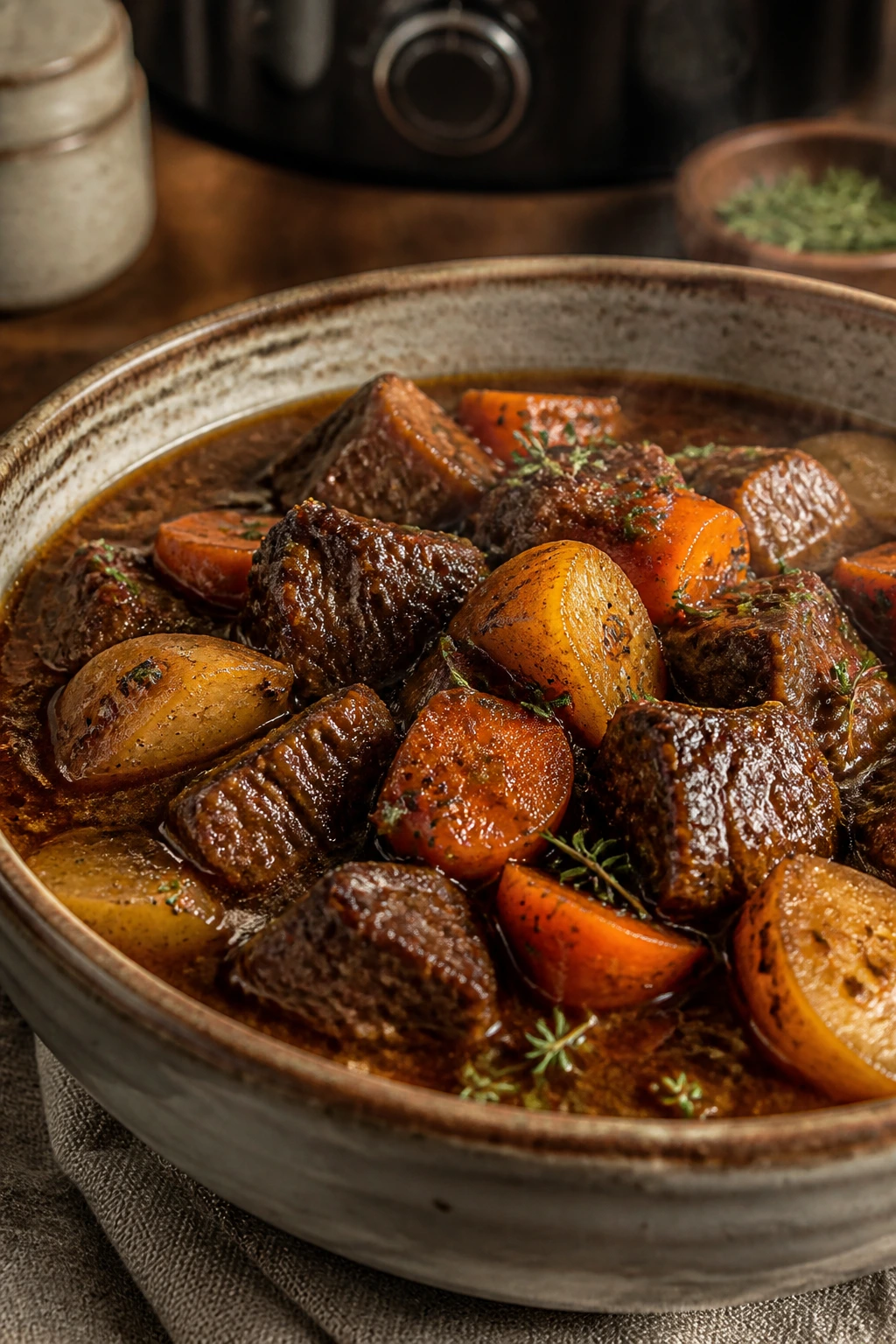
A stew like this does not fail in dramatic ways. It usually slips a little, and those little slips show up as a bowl that tastes thinner, greasier, or duller than it should.
-
Using the wrong cut of beef: Lean round or sirloin can end up dry and stringy after a long cook. Chuck roast has the fat and connective tissue that melt into tenderness, so if the meat looks very lean at the store, leave it there.
-
Skipping the browning step: Gray beef in a pile gives you a broth that tastes cooked but not roasted. The fix is simple: brown in batches, scrape up the fond, and treat those skillet bits like they matter — because they do.
-
Cutting the vegetables too small: Tiny carrot coins vanish, and little potato chunks turn soft at the edges long before the beef is done. Use larger, chunky pieces so the stew still looks like stew at the end.
-
Adding peas and parsley too early: Frozen peas turn dull and limp if they sit in hot broth for hours, and parsley loses its color fast. They belong in the last stretch, when the rest of the pot is already finished.
-
Pouring in too much liquid: Slow cooker beef stew should be brothy, not watery. If the broth looks thin at the end, thicken it then; don’t start with extra liquid and hope the pot will fix it for you.
-
Lifting the lid every hour: Every peek dumps heat and adds cooking time. On some slow cookers, one long lid lift can set dinner back 15 to 20 minutes. Trust the clock and check tenderness near the end instead.
A Few Ways to Change the Flavor Without Losing the Plot
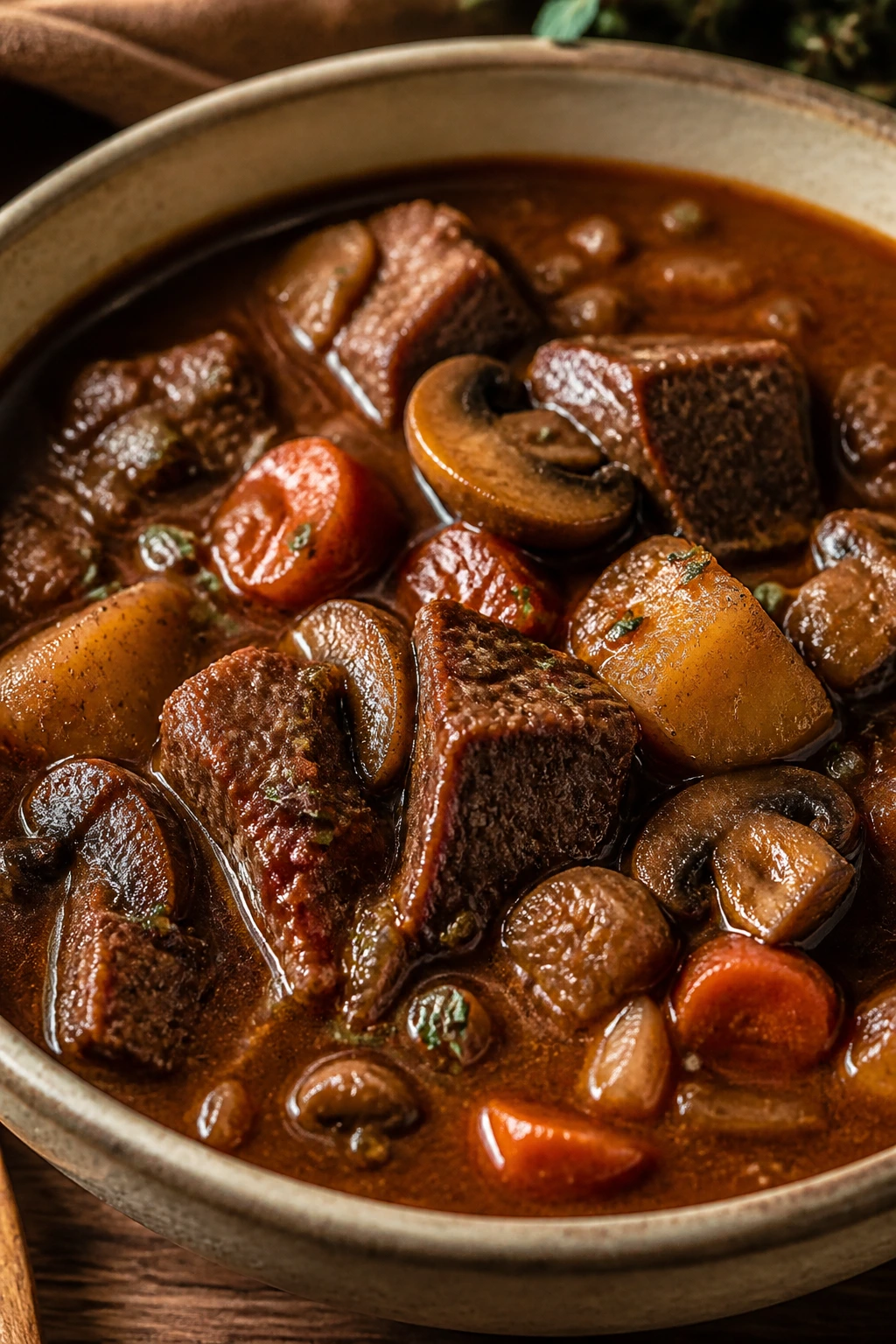
Mushroom and Thyme Pot: Add 8 ounces of sliced cremini mushrooms when you sauté the onion, carrot, and celery. They soak up the beef drippings and make the broth taste earthier, which is the version I’d make if I wanted the stew to lean more savory than sweet.
No-Wine Pantry Stew: Replace the wine with another cup of beef broth plus 1 teaspoon balsamic vinegar. You still get that faint edge of acidity that helps the broth taste rounded, and you never have to open a bottle.
Smoked Paprika Bowl: Stir 1 teaspoon smoked paprika and 1/2 teaspoon sweet paprika into the skillet with the garlic and tomato paste. The stew will look a shade darker and taste a little warmer, which works well when you want a broth with more back-note than brightness.
Root-Vegetable Swap: Replace half the potatoes with parsnips, turnips, or rutabaga. Parsnips bring a sweet edge, turnips stay a little firmer, and rutabaga gives the stew an old-school, wintry feel without needing much else.
Gluten-Free Finish: Skip the flour dredge and brown the beef plain, then thicken only with the cornstarch slurry at the end. The broth comes out a little clearer and less velvety at first, but the flavor stays steady and the stew works well for anyone avoiding wheat.
Keeping the Leftovers Worth Eating Tomorrow
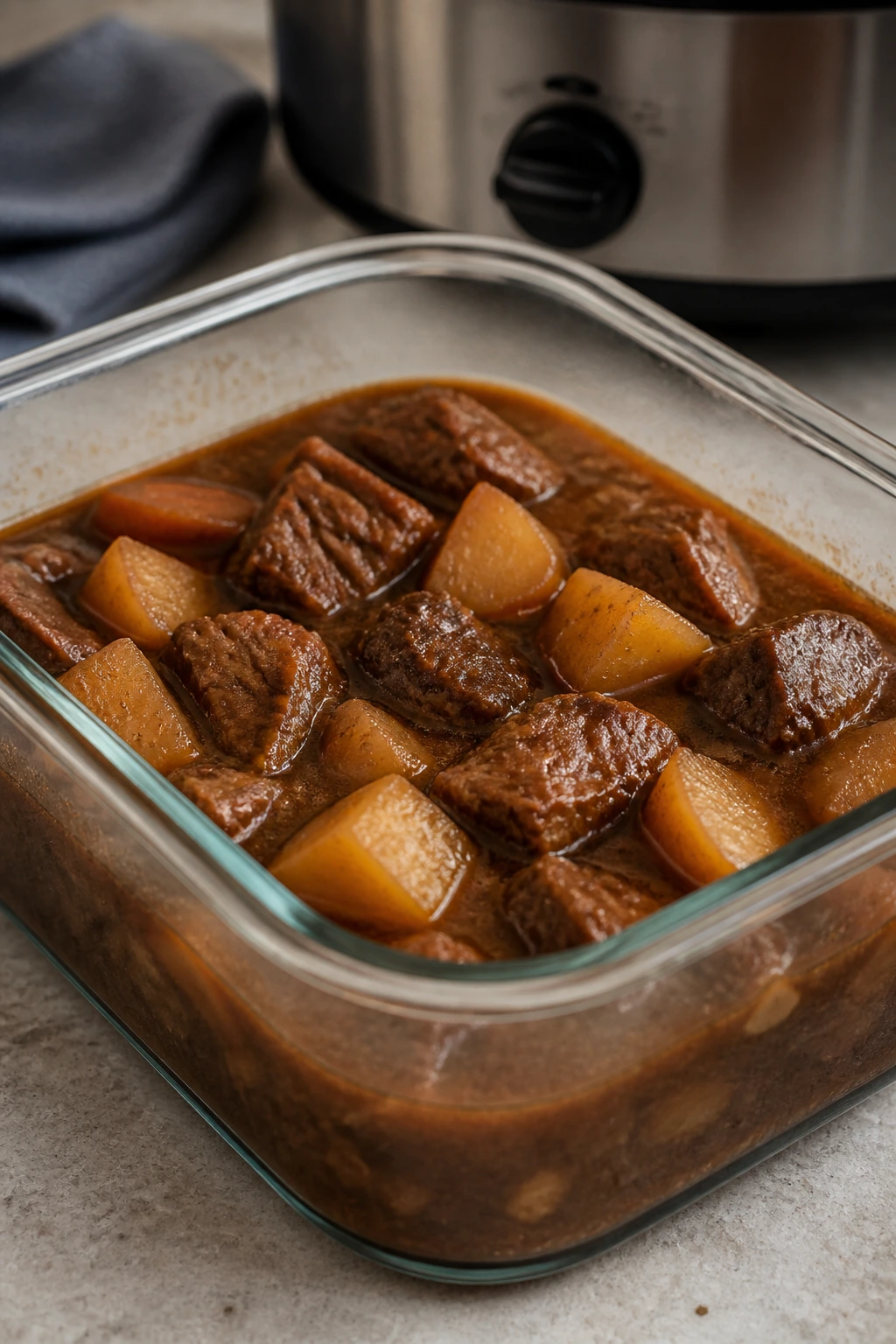
Cooked beef stew keeps well, but only if you treat it like food, not a hot pot you forgot on the stove. Cool it fairly quickly, transfer it to shallow containers, and get it into the refrigerator within 2 hours. That time frame lines up with standard food safety guidance and keeps the broth from hanging out in the warm zone too long.
In the fridge, the stew keeps for 3 to 4 days. The flavor usually gets deeper by the next day, and the broth often looks even better after it has rested overnight. Reheat it gently on the stovetop over medium-low heat, stirring once or twice and adding a splash of broth or water if the gravy has tightened too much. In the microwave, use 2-minute bursts and stir between each one so the center does not stay cold while the edges overcook.
Freezing works too, with one caveat: potatoes soften. If you know you’ll freeze half the pot, undercook the potatoes slightly or freeze portions before adding them, then add fresh cooked potatoes when you reheat. In the freezer, the stew keeps for up to 2 to 3 months in airtight containers or heavy freezer bags laid flat. Label the container with the date, because frozen beef stew all looks the same after a week.
For make-ahead work, chop the vegetables up to a day in advance and keep them covered in the fridge. You can cube the beef ahead of time too, but store it separately so it stays cold and dry enough to brown properly. If you brown the beef and sauté the vegetables ahead, let them cool before refrigerating; then the morning dump into the crock takes almost no time at all.
Questions People Ask Before They Start

Can I skip browning the beef?
You can, but the stew loses a chunk of its depth. The broth will still be edible and the meat will still soften, yet the flavor will be flatter because you skipped the browned crust and the fond in the skillet.
What cut of beef works best for slow cooker stew?
Chuck roast is the one I trust most. It has enough marbling and connective tissue to go from firm to silky over a long cook, while lean cuts tend to dry out or stay a little ropey.
Can I use frozen beef?
Not for the slow cooker. Frozen meat takes too long to get through the safe temperature range, which is why food safety guidance says to thaw beef first before using a crockpot. Thaw it in the refrigerator, not on the counter.
Why is my stew watery even after hours of cooking?
Usually the culprit is too much broth or vegetables that released more liquid than expected. Fix it at the end with a cornstarch slurry, or mash a few potato pieces into the broth for a softer, more natural thickening.
Can I make this without wine?
Yes. Use an extra cup of beef broth and add 1 teaspoon of balsamic vinegar or a little extra Worcestershire sauce. You still get the bright edge that keeps the broth from tasting heavy.
How do I keep the potatoes from falling apart?
Cut them into large 1 1/2-inch chunks and use Yukon Golds or another waxy potato. Russets can break down faster and make the broth cloudier, which is fine if that’s what you want, but it changes the texture a lot.
Can I thicken the stew without flour?
Absolutely. Skip the flour on the beef, brown the cubes plain, and use the cornstarch slurry at the end. If you want a cleaner broth, that version is actually easier to control.
Can I make this on the stovetop or in the oven instead?
Yes. On the stovetop, simmer it covered on low for about 2 1/2 to 3 hours, stirring now and then; in the oven, braise it covered at 325°F until the beef is tender. The slow cooker still wins on convenience, but the flavor stays in the same family.
A Stew Worth Leaving Alone
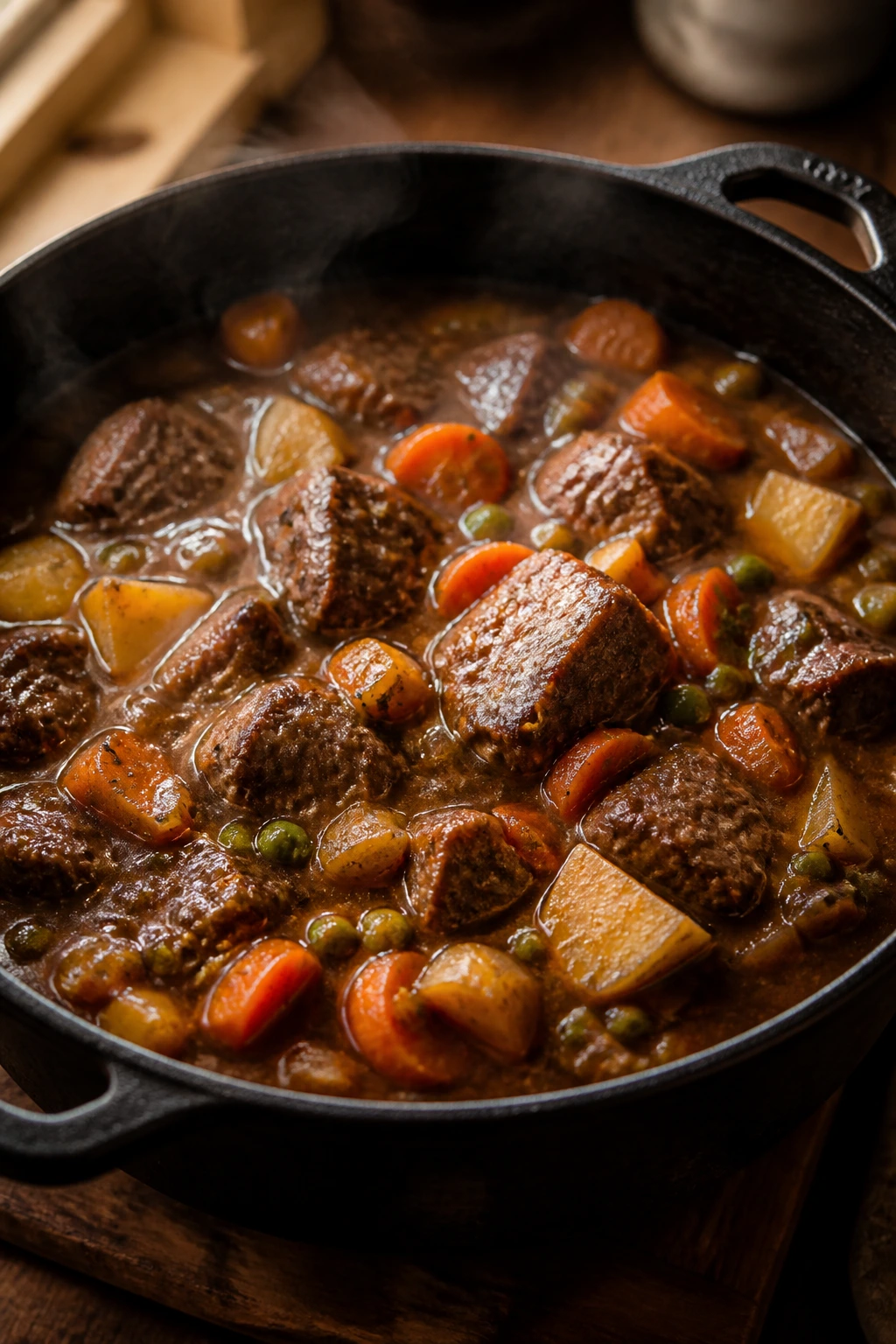
A good beef stew does not need to be loud. It needs time, a heavy hand with the browning, and enough salt and acid to keep the broth from going dull. Chuck roast takes the long heat beautifully, and the carrots, potatoes, and peas keep the bowl from feeling one-dimensional.
That’s the part I like most. You do a few deliberate things early, then the pot settles into its own rhythm. When you come back, dinner is waiting in a way that feels almost stubbornly old-fashioned, which is exactly why it still works.
The next time the day looks too full for standing over a stove, this is the kind of pot worth starting first.
Slow-Cooked Beef Stew — Recipe Card
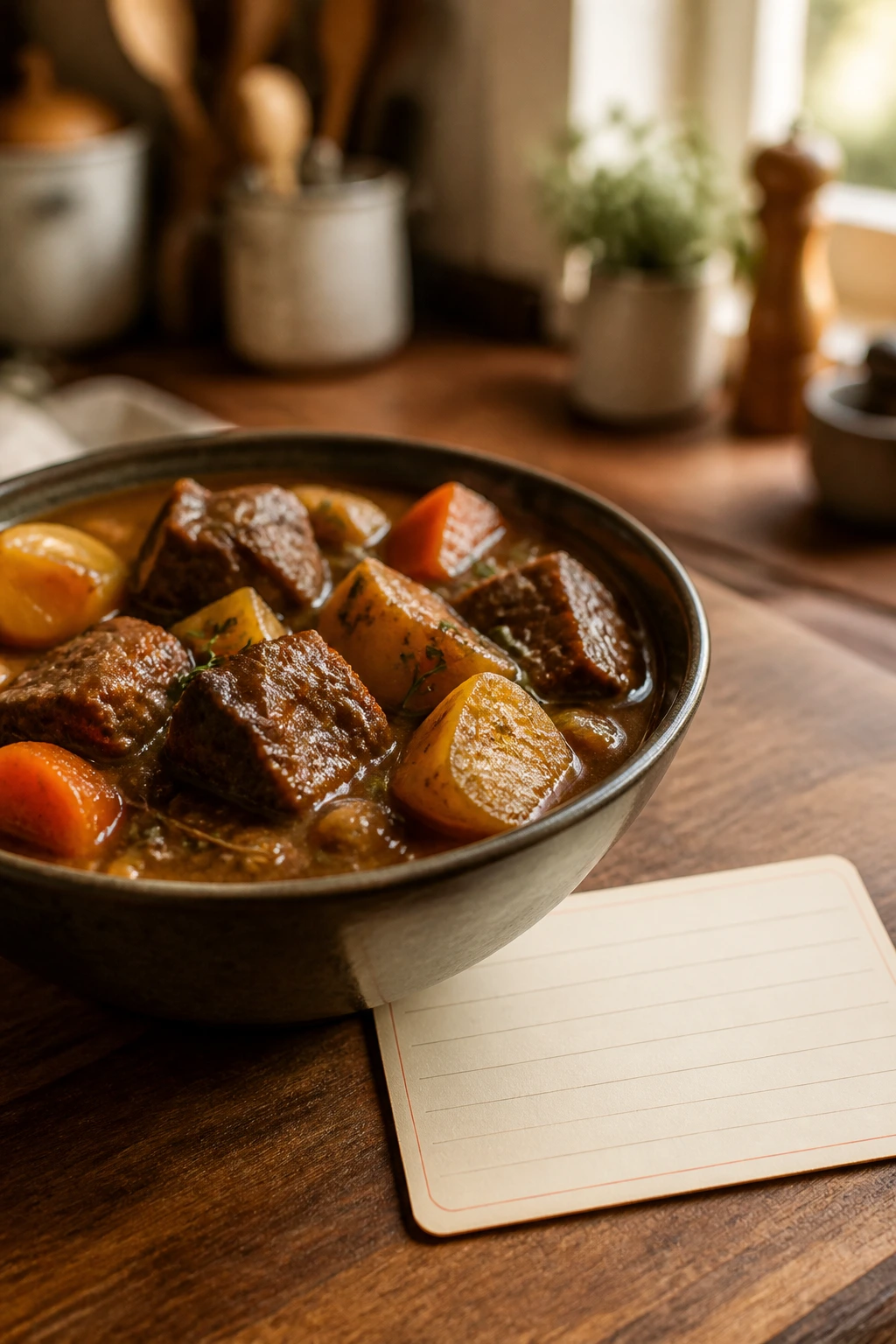
Recipe Name: Slow-Cooked Beef Stew
Description: A rich, slow cooker beef stew made with chuck roast, carrots, potatoes, thyme, and a glossy brown gravy that tastes like it simmered all day. Browning the beef first gives the broth depth, while a cornstarch finish keeps the texture spoon-coating rather than thin.
Prep Time: 25 minutes
Cook Time: 8 to 9 hours on Low, or 4 to 5 hours on High
Total Time: About 8 hours 25 minutes to 9 hours 25 minutes on Low, or 4 hours 25 minutes to 5 hours 25 minutes on High
Course: Main Course, Dinner
Cuisine: American
Servings: 6 servings
Calories: About 420 kcal per serving
Ingredients
For the Beef and Vegetables:
- 2 1/2 lbs beef chuck roast, trimmed and cut into 1 1/2-inch cubes
- 1/4 cup all-purpose flour
- 1 1/2 teaspoons kosher salt, plus more to taste
- 1 teaspoon black pepper
- 2 tablespoons vegetable oil or avocado oil
- 1 large yellow onion, chopped
- 3 medium carrots, peeled and cut into 1-inch chunks
- 2 celery stalks, sliced
- 4 garlic cloves, minced
- 1 1/2 lbs Yukon Gold potatoes, cut into 1 1/2-inch chunks
- 1 cup frozen peas
- 2 tablespoons chopped fresh parsley, for finishing
For the Braising Liquid:
- 2 tablespoons tomato paste
- 1 cup dry red wine, or 1 cup additional beef broth plus 1 teaspoon balsamic vinegar
- 3 cups low-sodium beef broth
- 1 tablespoon Worcestershire sauce
- 1 teaspoon soy sauce
- 2 teaspoons dried thyme, or 4 fresh thyme sprigs
- 2 bay leaves
For Thickening:
- 2 tablespoons cornstarch
- 2 tablespoons cold water
Instructions
- Pat the beef dry, then toss it with the flour, salt, and pepper.
- Brown the beef in batches in hot oil over medium-high heat, then transfer it to the slow cooker.
- Sauté the onion, carrots, and celery in the same skillet for 4 to 5 minutes; stir in the garlic and tomato paste for 1 minute.
- Deglaze the skillet with the wine, scraping up the browned bits.
- Add the skillet mixture to the slow cooker with the potatoes, broth, Worcestershire sauce, soy sauce, thyme, and bay leaves.
- Cook on Low for 8 to 9 hours or High for 4 to 5 hours, until the beef is fork-tender.
- Stir in the frozen peas during the last 10 to 15 minutes.
- Whisk the cornstarch and cold water together, stir it into the stew, and cook until thickened and glossy.
- Remove the bay leaves, adjust the seasoning, and finish with parsley.
Notes: For a thicker stew, mash a few potato pieces into the broth before serving. If skipping wine, replace it with broth plus balsamic vinegar. Refrigerate leftovers within 2 hours and reheat gently with a splash of broth.