



By the time the kitchen window fogs over and the air outside starts to sting your face, a bowl of cozy cauliflower soup needs to feel like more than a polite puree. It should have browned edges, a sweet onion backbone, and enough body to coat a spoon instead of sliding off it. That’s the difference between a soup you tolerate and a soup you keep thinking about while you wash the pot.
Most cauliflower soups fail in the same dull way: the cauliflower gets boiled, the broth stays thin, and the final bowl tastes like steamed vegetables trying to impersonate dinner. This version doesn’t do that. Roasting the florets first gives you nutty depth, a potato folds in quiet starch so the texture turns plush, and a little lemon at the end keeps the whole thing from settling into the kind of heaviness that makes you stop after one bowl.
Cauliflower is a funny ingredient. On paper, it looks like a blank slate. In practice, it needs help. Give it heat, salt, a little fat, and something sweet like leeks, and it turns into a soup with actual presence — not flashy, not fussy, just deeply satisfying in the way good cold-weather cooking should be.
Why This Cauliflower Soup Belongs on a Cold Night
-
Roasted Flavor: The cauliflower gets 425°F heat before it ever hits the pot, and those browned edges create a nutty note you cannot fake with broth alone.
-
Silky Texture: A peeled potato gives the soup body without flour, so the final bowl feels velvety instead of gluey.
-
Flexible Finish: Whole milk, half-and-half, or a splash of cream all work here, which means you can make the soup lighter or richer without changing the base method.
-
Good Leftovers: The leeks, thyme, and roasted cauliflower settle together overnight, so the second bowl often tastes more rounded than the first.
-
Short Ingredient List: One cauliflower, one potato, a couple of aromatics, and a carton of broth carry the whole dish. That’s handy when you want dinner to feel thoughtful without a long shopping list.
The Pot of Soup I Wanted Cauliflower to Become
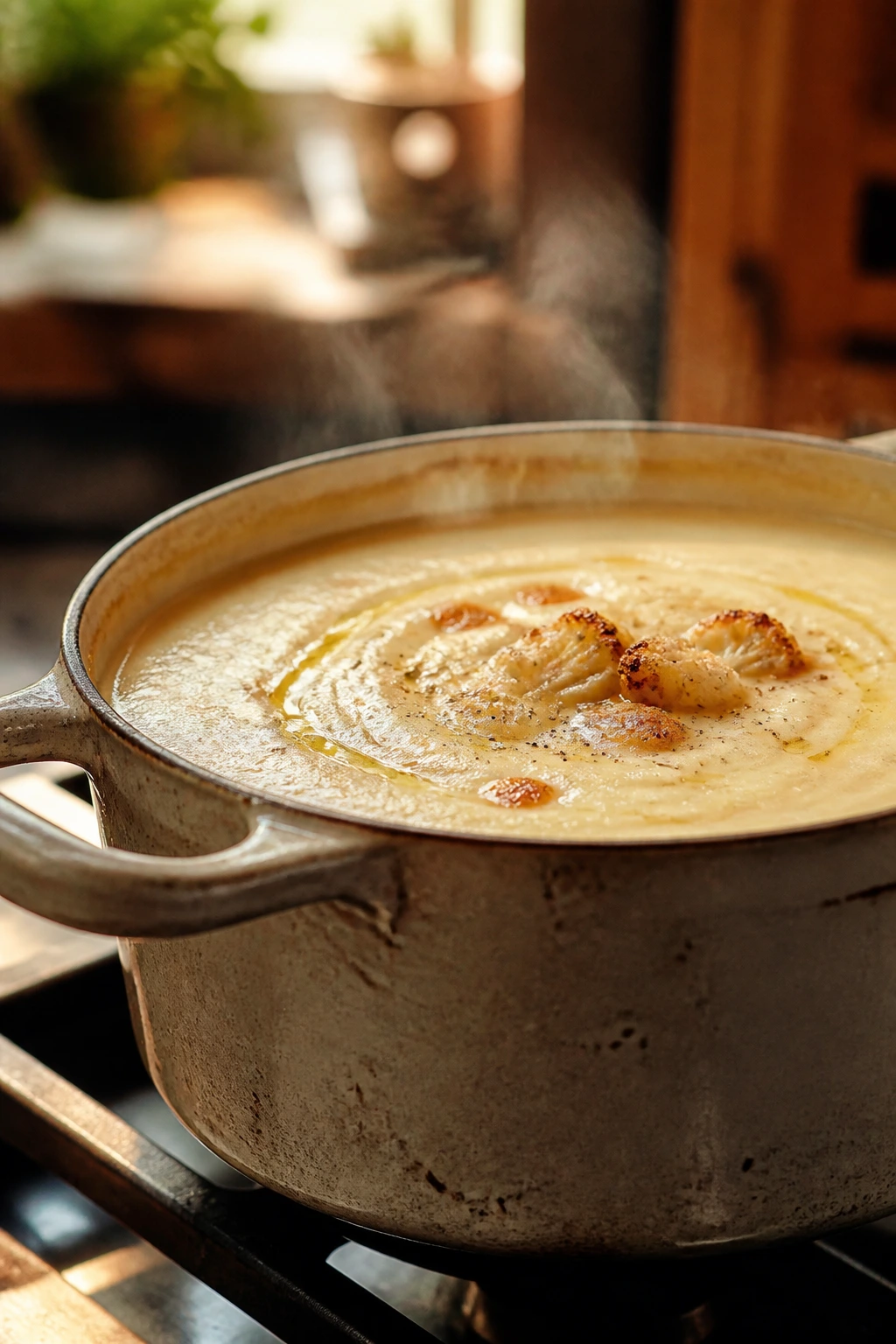
Cauliflower soup has a reputation for being mild, and that reputation is partly earned. If you just simmer the florets until they collapse, you get softness, but not much personality. The vegetable has a faint brassica bite, a little sweetness, and not much else unless you build around it with care. That’s why this version starts with the oven instead of the pot.
Roasting changes everything. The tops of the florets pick up brown, almost toasted edges, and the flavor moves from pale and watery to something with depth. You can smell it before you hear it hit the spoon — a little sweet, a little nutty, a little like the good part of roasted broccoli but gentler. That browned note matters more here than in some soups because cauliflower doesn’t come with built-in drama. You have to give it drama.
I also like the potato in this bowl because it behaves quietly. It thickens the soup without turning it into mashed vegetables, and it helps the blender do its job. Flour can make cauliflower soup feel pasty. Heavy cream alone can make it taste flat. Potato gives you body and a clean finish, which is a better trade.
Leeks do a lot of the soft work. Onion gives you foundation, garlic gives you edge, but leeks bring sweetness without shouting. They smell almost buttery once they sweat down properly, and that sweetness keeps the roasted cauliflower from tasting stern. I use thyme because it stays tidy in the pot, and a pinch of nutmeg because cauliflower loves a tiny warm note. Tiny. Not dessert-level spice. Just enough to make the bowl feel rounded.
Batch Size, Timing, and the Ingredient List

Yield: Serves 6
Prep Time: 20 minutes
Cook Time: 45 minutes
Total Time: 1 hour 5 minutes
Difficulty: Beginner — the chopping is straightforward, and the only part that asks for extra care is blending hot soup safely.
Chill/Rest Time: None
Best Served: Hot, with a final drizzle of olive oil or a handful of chives.
For the Roasted Cauliflower:
- 1 large head cauliflower, about 2 pounds, trimmed and cut into 1½-inch florets
- 2 tablespoons olive oil
- 1/2 teaspoon kosher salt
- 1/4 teaspoon black pepper
For the Soup Base:
- 2 tablespoons unsalted butter
- 1 tablespoon olive oil
- 1 medium yellow onion, diced
- 2 medium leeks, white and light green parts only, thinly sliced and rinsed very well
- 3 cloves garlic, minced
- 1 medium Yukon Gold potato, peeled and cut into 1/2-inch cubes
- 4 cups low-sodium vegetable broth or chicken broth
- 1 cup water
- 1 teaspoon kosher salt, plus more to taste
- 1/2 teaspoon black pepper
- 1 teaspoon fresh thyme leaves or 1/2 teaspoon dried thyme
- 1 bay leaf
- 1/4 teaspoon ground nutmeg
For Finishing:
- 3/4 cup whole milk or half-and-half
- 1/2 cup heavy cream, optional for a richer soup
- 1 to 2 teaspoons fresh lemon juice
- 1/4 cup finely grated parmesan, optional
- 2 tablespoons chopped chives or parsley, for serving
- Toasted bread, croutons, or a drizzle of olive oil, for garnish
What Each Ingredient Is Doing in the Bowl
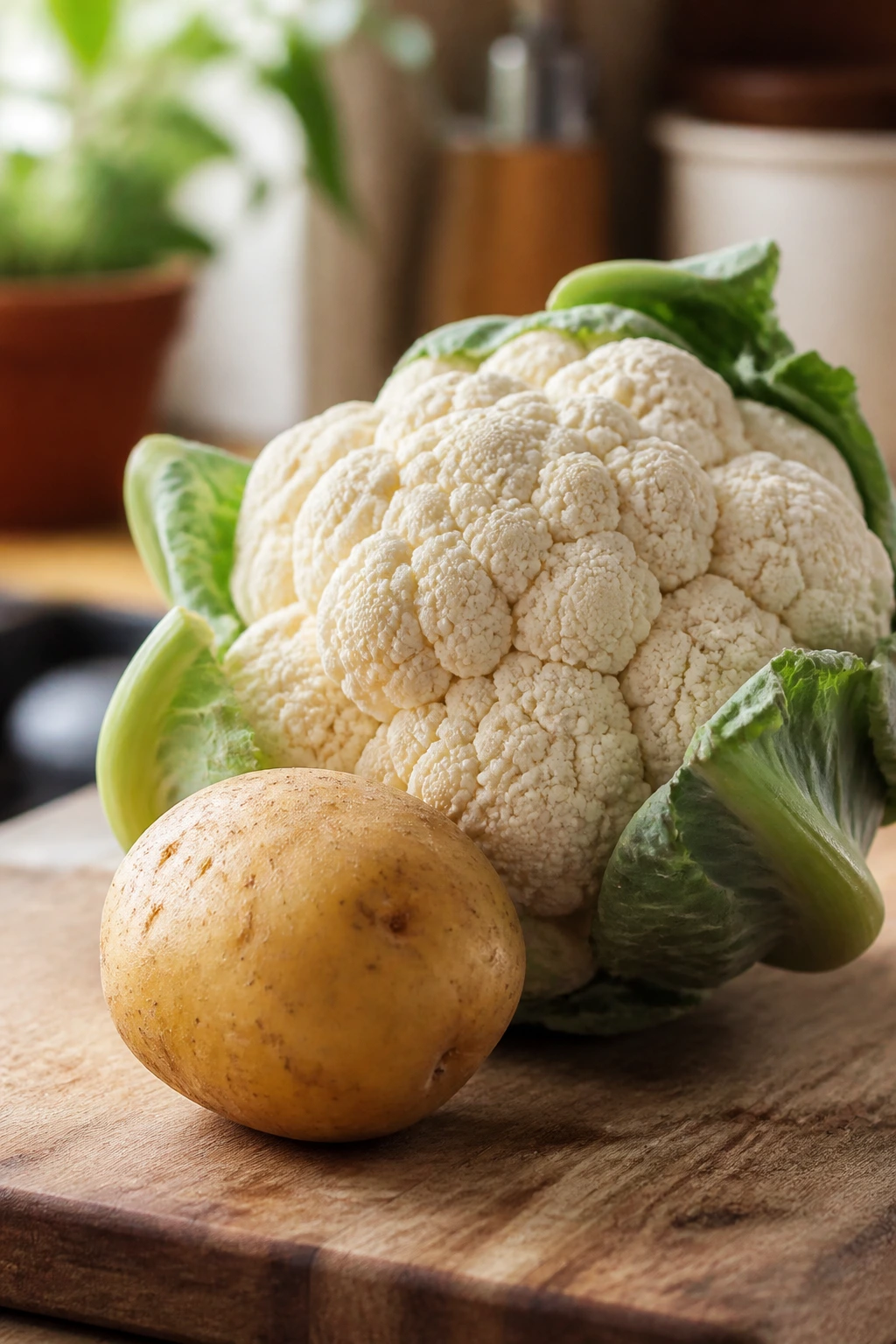
The ingredient list is short, but the job each piece does is pretty specific. If you swap carelessly, the soup can still work, but it will move in a different direction — thinner, sweeter, sharper, or less rich. Knowing what each part is doing makes it easier to adjust the pot to your taste without guessing.
Cauliflower and Potato
-
What to use: 1 large head cauliflower, about 2 pounds, plus 1 medium Yukon Gold potato. The cauliflower is the main flavor, and the potato quietly builds body so the soup feels plush.
-
Preparation: Cut the florets into 1½-inch pieces so the edges can brown without the stems staying crunchy. Dice the potato into 1/2-inch cubes so it cooks through at the same pace as the simmering cauliflower.
-
Substitutions: Russet potato gives a slightly fluffier texture, while a parsnip or a handful of white beans can fill in if you want to skip the potato. Frozen cauliflower works in a pinch, but it releases more water and won’t roast as deeply.
-
Tips: Choose cauliflower with tight, white curds and crisp green leaves; grey spots mean the flavor is already fading. Use the stems too if they’re peeled and trimmed — they soften in the soup and help stretch the batch.
Leeks, Onion, and Garlic
-
What to use: 1 medium yellow onion, 2 medium leeks, and 3 cloves garlic. This trio gives the broth sweetness, savoriness, and a mild onion flavor that doesn’t bulldoze the cauliflower.
-
Preparation: Slice the leeks into thin half-moons, then rinse them in a bowl of cold water or under running water, fanning out the layers with your fingers. Grit hiding in the folds will show up in the final soup, and nobody wants that.
-
Substitutions: If leeks are not available, use one extra onion and a small celery rib for a softer base. Shallots also work, though the flavor becomes a little more delicate.
-
Tips: Cook the onion and leeks slowly over medium heat until they’re soft and sweet, not browned. Garlic should smell fragrant after 30 to 60 seconds; if it starts to color, lower the heat immediately.
Broth, Dairy, and Water
-
What to use: 4 cups low-sodium broth, 1 cup water, 3/4 cup whole milk or half-and-half, and 1/2 cup heavy cream if you want a richer finish. The broth carries the salt and savoriness, while the dairy softens the roasted edges.
-
Preparation: Have the broth measured before you start simmering so you can add it quickly once the potato goes in. The milk or cream should wait until after blending, when the soup is no longer boiling.
-
Substitutions: Use chicken broth if you want a fuller savory note, or use vegetable broth to keep the soup vegetarian. For dairy-free soup, use unsweetened oat cream or plain cashew cream; both keep the texture smooth.
-
Tips: Low-sodium broth gives you control over seasoning, which matters because cauliflower can take more salt than people expect. Don’t boil the soup after the dairy goes in or it can split and turn grainy.
Thyme, Nutmeg, Lemon, and Parmesan
-
What to use: 1 teaspoon fresh thyme, 1 bay leaf, 1/4 teaspoon nutmeg, 1 to 2 teaspoons lemon juice, and optional parmesan for finishing. These are the quiet details that keep the bowl from tasting flat.
-
Preparation: Strip thyme leaves off the stems before they go into the pot, and grate the nutmeg finely if you’re using whole nutmeg. Lemon juice should be added at the end, not while the soup is still simmering.
-
Substitutions: Rosemary can replace thyme if you want a more piney note, though I use it sparingly because it can take over. If you skip parmesan, a tiny spoon of white miso can bring back some savory depth.
-
Tips: Nutmeg should stay in the background; if you can identify it immediately, you used too much. Lemon is there to sharpen the finish, not to make the soup taste citrusy.
The Tools That Keep the Texture Velvety
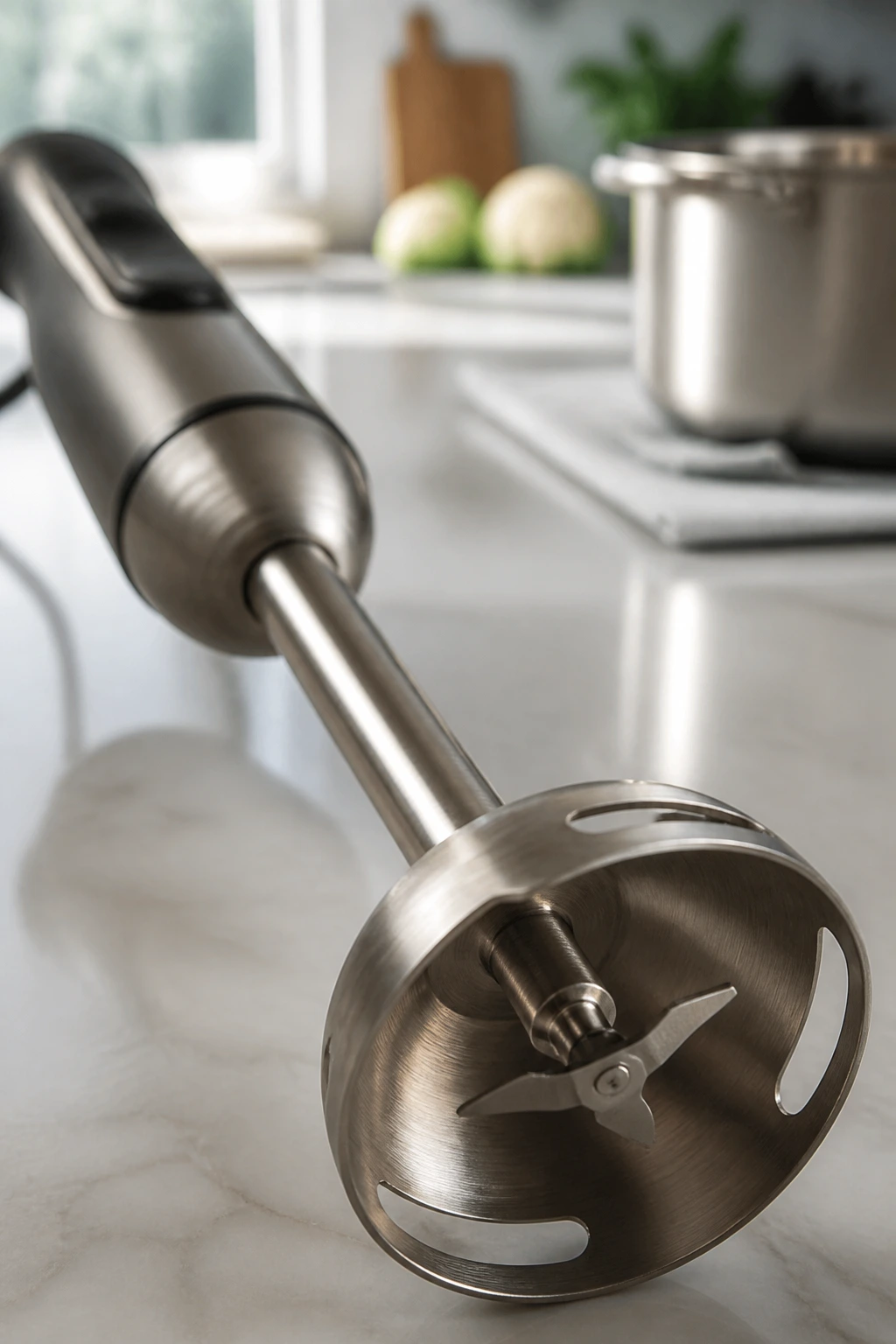
A soup like this doesn’t need much gear, but the few tools you do use matter. The difference between silky and splattery often comes down to the pot and the blender, not the recipe itself.
-
Large Dutch oven or heavy-bottomed soup pot, 5 to 6 quarts: This gives the onions enough space to soften without scorching and leaves room for simmering and blending.
-
Rimmed baking sheet: A flat, wide pan helps the cauliflower roast instead of steam. Crowded florets get soft and pale.
-
Immersion blender: My preferred tool for this soup because you can blend directly in the pot and control the texture. Leave a few tiny flecks if you like a rustic finish.
-
Countertop blender, optional: Use it if you want a very smooth soup, but work in batches and vent the lid so steam can escape. Hot soup expands. Fast.
-
Chef’s knife and cutting board: You’ll use both for the cauliflower, leeks, onion, and potato. A stable board matters more than people think when leeks are slippery.
-
Wooden spoon or heatproof spatula: Good for sweeping up the sweet browned bits from the bottom of the pot without scraping the enamel.
-
Ladle: Makes it easier to portion and serve the soup without spilling half of it down the stove.
-
Fine-mesh sieve, optional: Not necessary for this recipe, but useful if you want to catch any last bits of leek grit or make a very polished texture.
Roasting the Cauliflower Until the Edges Go Gold

A raw cauliflower floret can smell faintly grassy. Roast it, and it changes into something much better — a little nutty, a little sweet, and visibly browned in the places that matter. This first phase is the reason the soup tastes cooked instead of merely boiled.
Roast the Cauliflower:
-
Preheat the oven and prepare the pan. Set the oven to 425°F (220°C) and place a rack in the center. Line a rimmed baking sheet with parchment if you want easier cleanup, though I usually skip it if the pan is already clean and sturdy.
-
Season the florets. Put the cauliflower in a large bowl and toss it with 2 tablespoons olive oil, 1/2 teaspoon kosher salt, and 1/4 teaspoon black pepper until every piece has a thin, glossy coating. Do not drown the florets in oil; too much fat softens them before they can brown.
-
Roast until browned and tender. Spread the cauliflower in a single layer on the baking sheet and roast for 25 to 30 minutes, tossing once halfway through. The florets should show deep golden patches on the edges and feel tender when pierced with a fork.
Building the Soup Base Without Losing Sweetness

The base should smell sweet before you add the broth. If the onion and leeks are still sharp, the finished soup can taste rough around the edges, no matter how good the cauliflower is. This is the part that rewards patience.
Build the Soup Base:
-
Sweat the onion and leeks. While the cauliflower roasts, set a large Dutch oven over medium heat. Add 2 tablespoons butter and 1 tablespoon olive oil, then stir in the diced onion and sliced leeks with a pinch of salt. Cook for 8 to 10 minutes, stirring now and then, until the vegetables are soft, glossy, and sweet-smelling. If they start browning hard, lower the heat.
-
Add the garlic, thyme, nutmeg, and potato. Stir in the minced garlic, thyme, and nutmeg, then add the diced potato. Cook for 1 to 2 minutes, just until the garlic smells fragrant and the potato is coated in the fat. That tiny pause helps the spices bloom before the broth goes in.
-
Add the broth, water, bay leaf, and roasted cauliflower. Pour in 4 cups broth and 1 cup water, then add the roasted cauliflower and bay leaf. Bring the pot to a gentle boil, then lower the heat to a steady simmer and cook for 15 to 20 minutes, until the potato is completely tender and breaks apart when pressed against the side of the pot with a spoon. You want the potato soft enough to disappear into the blend.
Blending and Finishing Without a Grainy Result
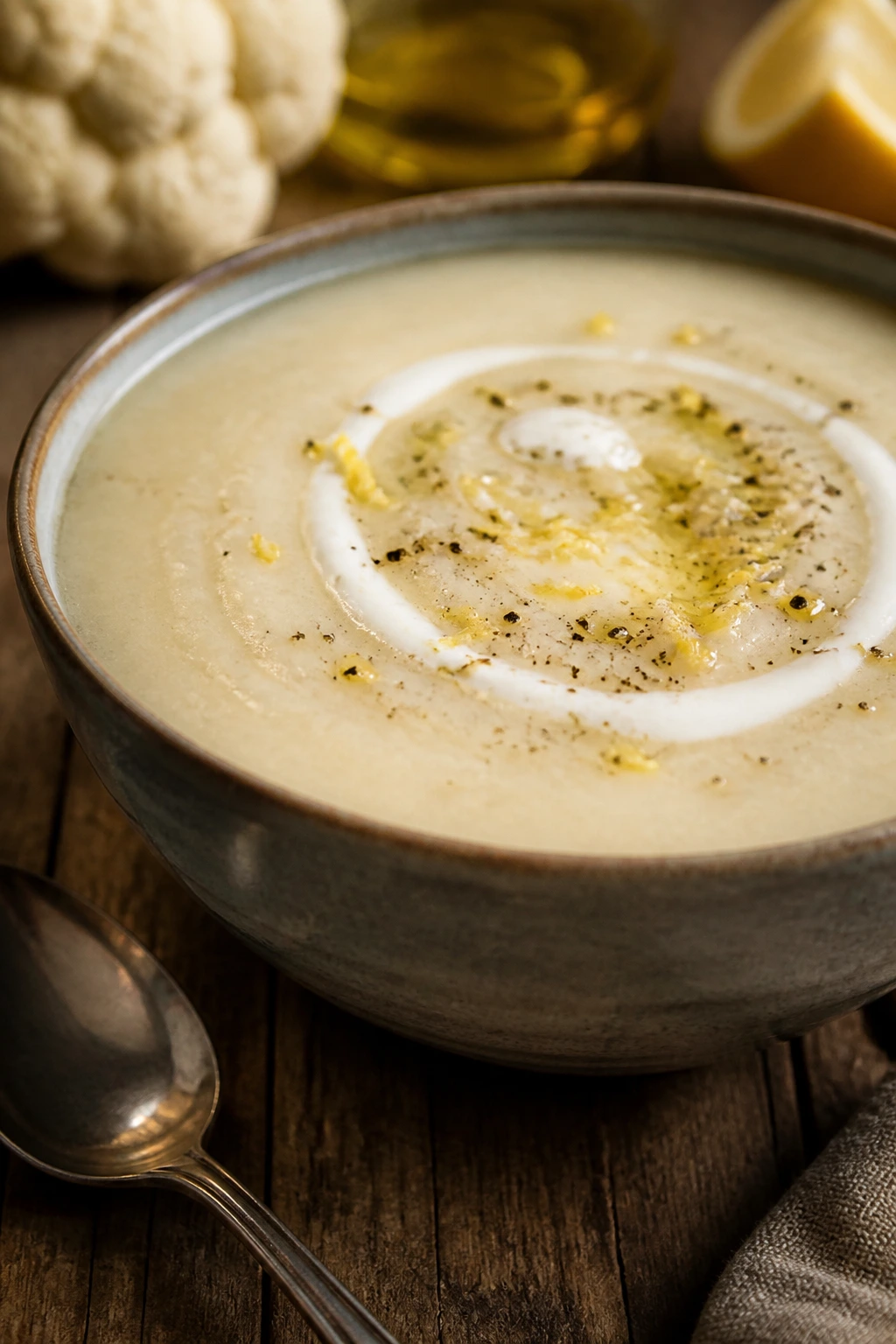
Hot soup and blenders deserve respect. That is not melodrama. Steam can build pressure fast, and a lopsided texture can happen if you rush the last 10 minutes. The good news is that the finish is easy once the base is cooked properly.
Blend and Finish:
-
Remove the bay leaf and blend the soup. Take out the bay leaf, then use an immersion blender to puree the soup directly in the pot until mostly smooth. If you want a restaurant-smooth texture, transfer it in batches to a countertop blender, filling the jar no more than halfway each time and holding the lid down with a folded kitchen towel. Never seal a blender tightly with piping hot soup inside; the steam has to escape somewhere.
-
Stir in the dairy and warm gently. Return the soup to low heat and stir in 3/4 cup whole milk or half-and-half, plus 1/2 cup heavy cream if you want a richer bowl. Add the parmesan now, if you’re using it, and warm the soup for 2 to 3 minutes without letting it boil.
-
Brighten, season, and serve. Stir in 1 to 2 teaspoons lemon juice, then taste and adjust with more salt and black pepper if needed. If the soup feels too thick, add a splash of broth or water. If it feels thin, simmer it uncovered for 3 to 5 minutes until it loosens into a thicker, spoon-coating texture. Ladle into warm bowls and finish with chives, parsley, cracked pepper, or a drizzle of olive oil.
How to Serve It So It Feels Like Dinner
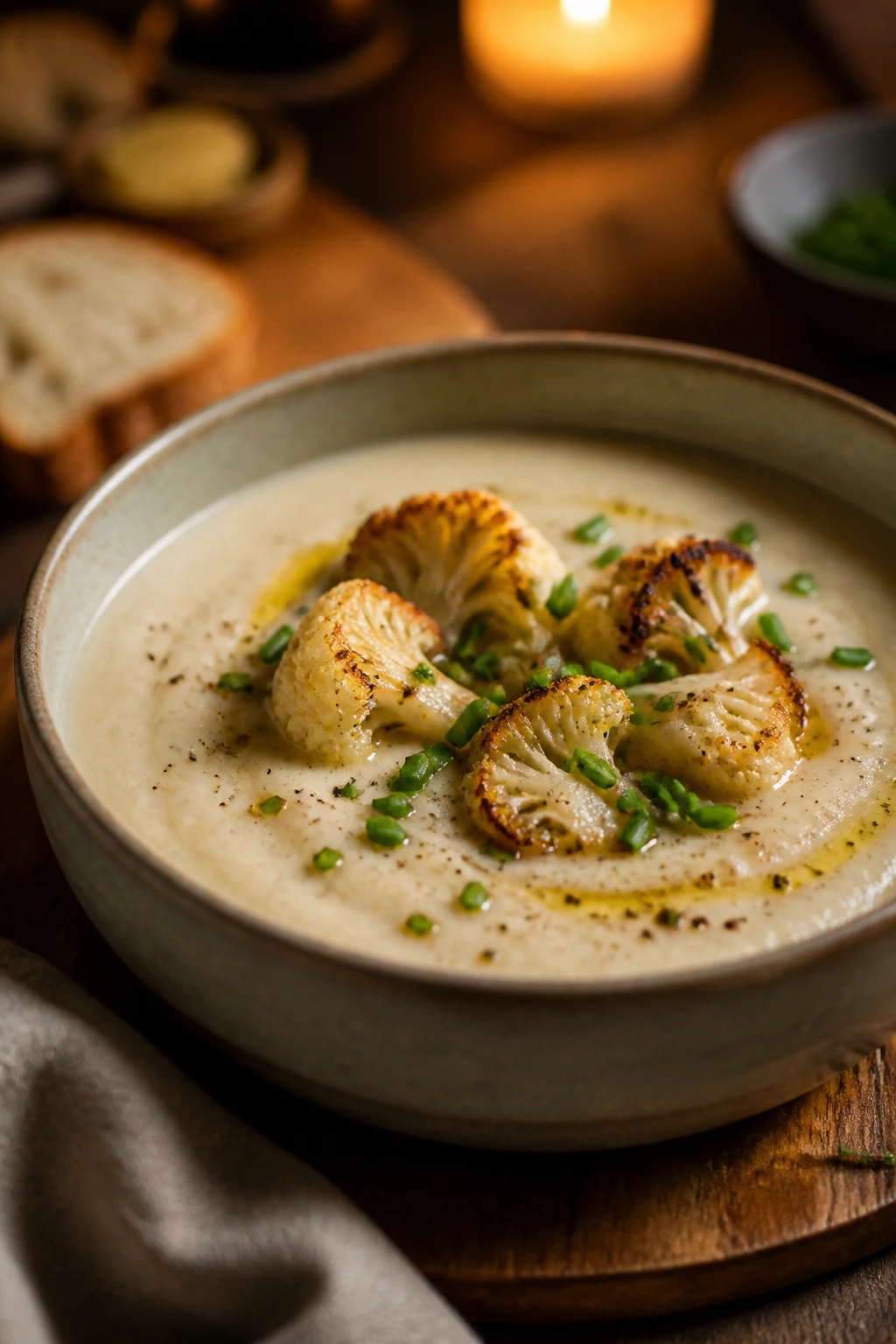
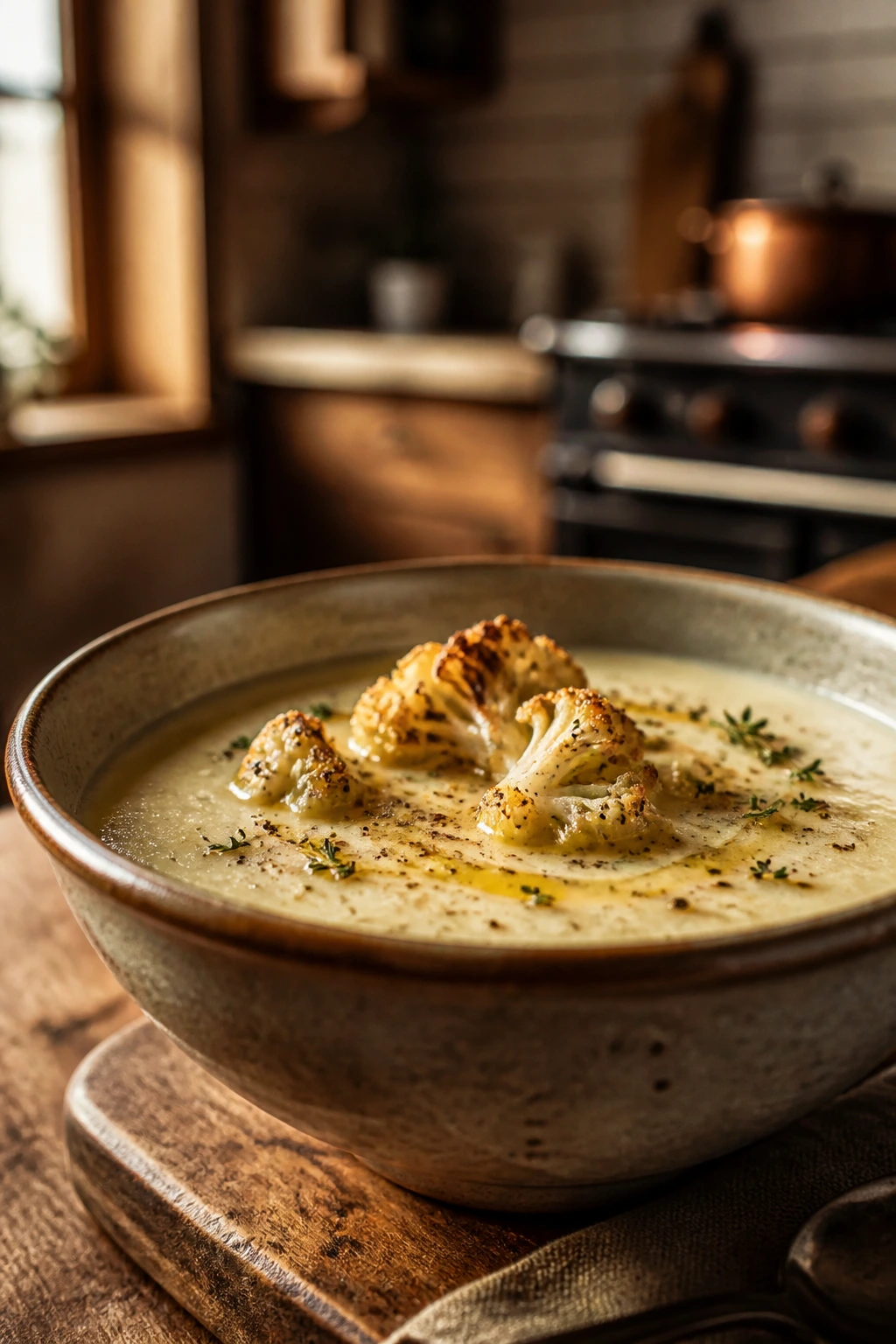
Presentation: Warm the bowls first if you can. That tiny move keeps the soup hot longer, and hot soup always tastes more composed than soup that cools too fast. Ladle it in, then top with a few roasted cauliflower florets, black pepper, and either chopped chives or parsley so the surface looks lively instead of blank.
Accompaniments: A thick slice of sourdough is the obvious choice, and I mean that as praise, not laziness. A grilled cheese with sharp cheddar turns this into a full meal, while a simple salad with lemony dressing cuts through the soup’s creaminess. If you want something sturdier, add seed crackers or toasted rye.
Portions: As a starter, 1 to 1½ cups per person is usually enough. For dinner, plan on 2 cups per person plus bread on the side. If you’re serving a mixed crowd, it scales well because the base is forgiving; just keep the ratio of broth to cauliflower steady so the texture stays in line.
Beverage Pairing: A dry apple cider works well because its fruit sharpness wakes up the cauliflower. If you prefer wine, a crisp Sauvignon Blanc or an unoaked Chardonnay gives the soup enough lift without fighting the leeks. For a nonalcoholic option, sparkling water with a strip of lemon peel keeps the meal clean and bright.
Small Fixes and Big Flavor Payoffs
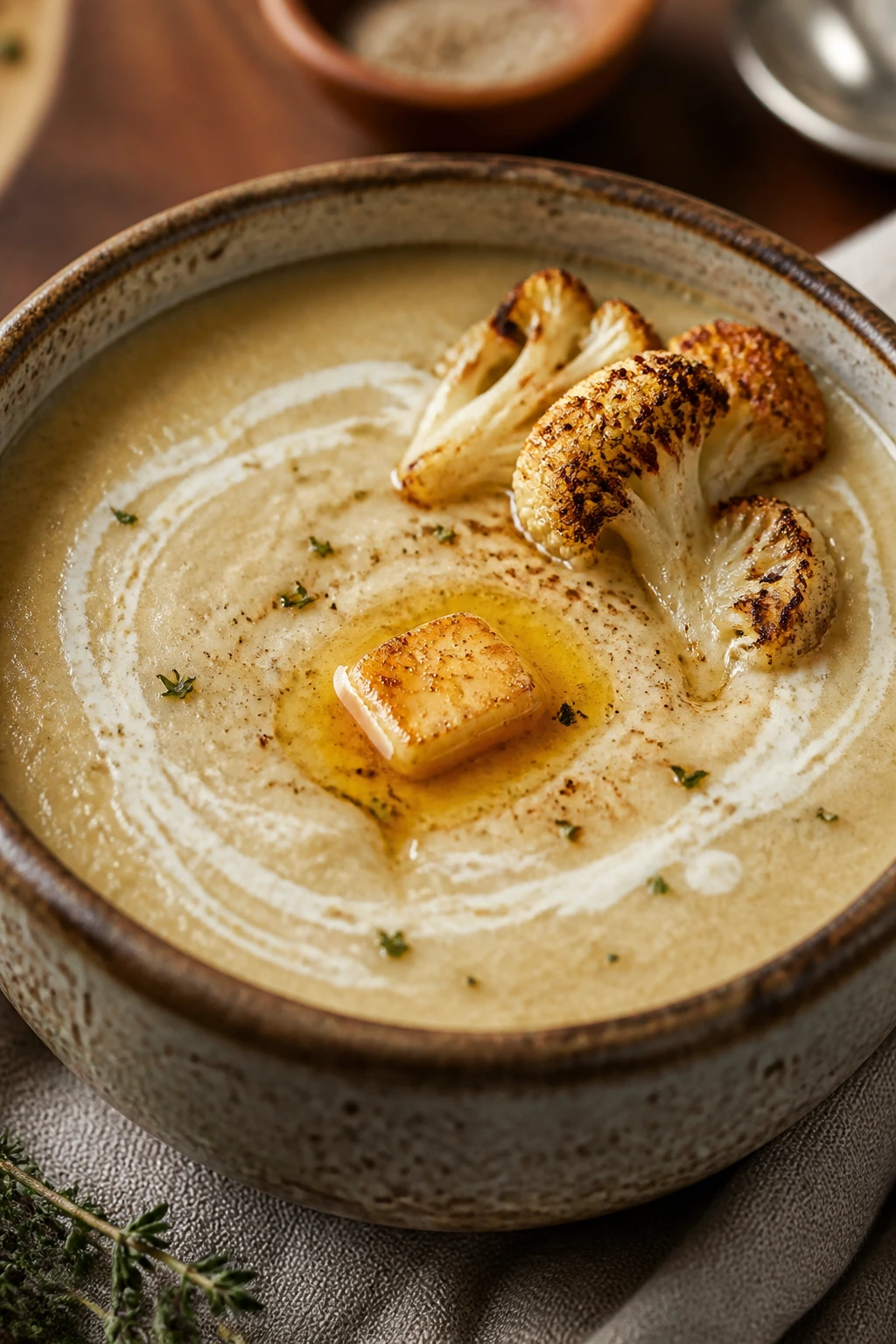
Flavor Enhancement: A teaspoon of white miso stirred into the hot soup after blending adds savory depth without making the bowl taste overtly Japanese. If you want a more old-school finish, brown the butter before adding the onion and leeks; the nutty smell carries through the entire pot.
Time-Saver: Roast the cauliflower and chop the onion while the oven heats. If your grocery store sells pre-cut florets that look dry and white, those are fine here. I would not buy wet, gray-looking cauliflower pieces just to save five minutes.
Cost-Saver: Skip the heavy cream and use whole milk only, then finish with lemon and parmesan. You still get a rich-tasting bowl because the potato and roasted cauliflower do the heavy lifting. A good broth matters more than a splash of cream anyway.
Pro Move: Reserve about 1 cup of the roasted cauliflower before blending and drop it into the bowls at the end. You get little bites of caramelized florets against the smooth soup, and that contrast keeps the texture interesting all the way through the bowl.
Make-It-Yours: A pinch of red pepper flakes adds warmth without turning the soup into spice soup. Chopped dill works if you want a greener, brighter finish, and crispy sage leaves give the bowl a winter feel that tastes more deliberate than decorative.
The Mistakes That Make Cauliflower Soup Flat or Grainy

A bland cauliflower soup usually has one of two problems: not enough browning, or not enough seasoning. A grainy soup tends to come from undercooked vegetables or rushed blending. Both are fixable, which is good news, because neither one means you ruined dinner.
Skipping the browning step: If the cauliflower goes straight from raw to broth, the soup tastes thin and vaguely steamed. The fix is the oven, or at least a hot roast pan with space between the florets. You want browned edges, not pale softness.
Cooking the leeks too fast: Leeks that brown hard can taste sharp and a little bitter. Keep the heat at medium and stir often, letting them soften until they smell sweet and almost buttery. If they start to color too quickly, splash in a tablespoon of water and scrape the pot.
Underseasoning the pot: Cauliflower drinks salt. A soup that tastes “fine” in the pot often tastes bland in the bowl. Season the vegetables early, season the broth, then taste again after blending and again after the lemon goes in.
Boiling after the dairy is added: This is where some soups split or turn grainy around the edges. Keep the heat low once the milk or cream is in, and don’t walk away from the pot. Warm is the goal. Rolling boil is not.
Blending unevenly: If the potato is still firm, the blender will leave tiny chalky bits behind. Simmer until the potato breaks apart easily before you blend, and if you use a countertop blender, do it in batches with steam space. A smooth soup should look smooth before it hits the bowl.
Flavor Swaps, Variations, and Little Twists
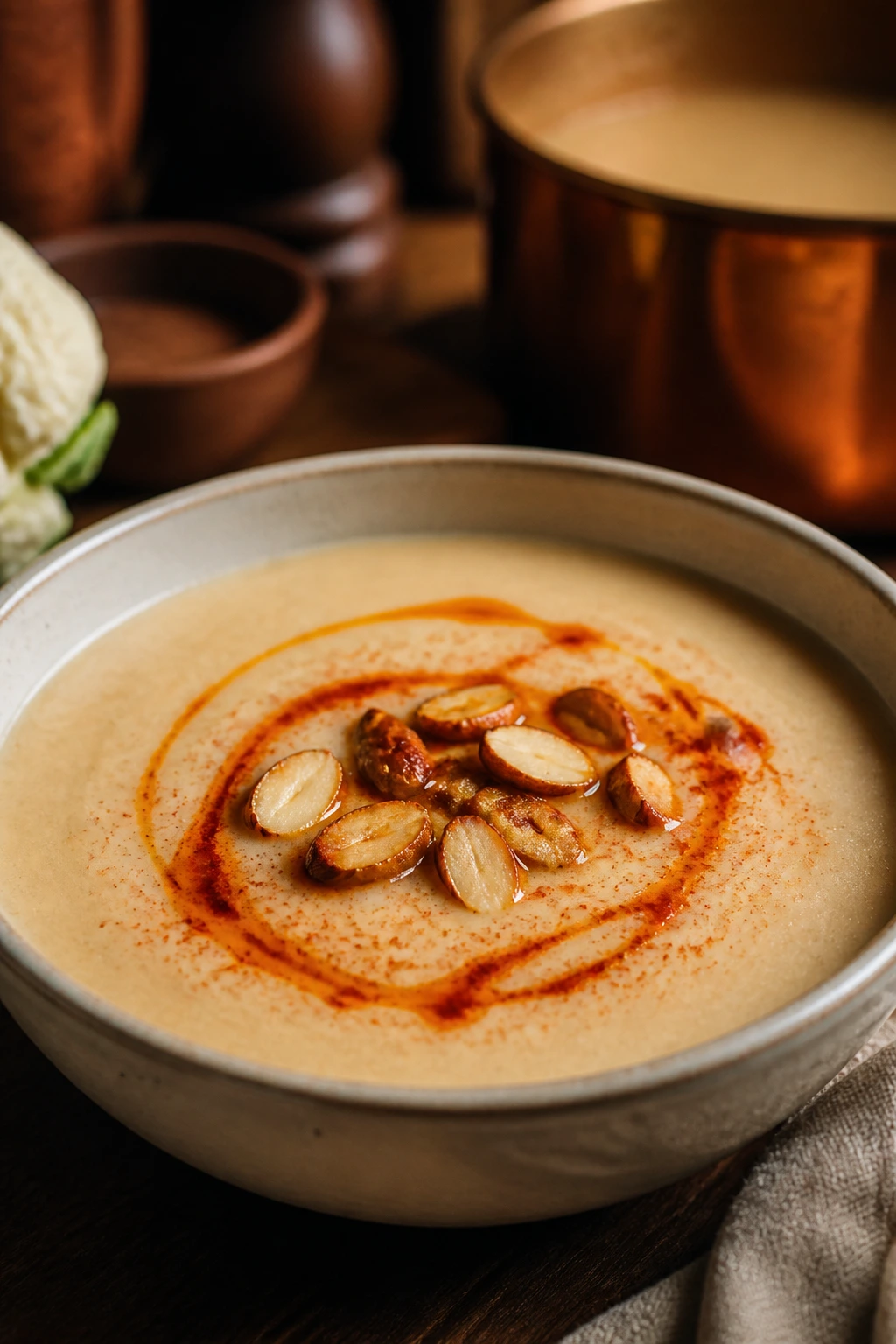
Smoky Paprika Cauliflower: Stir 1 teaspoon smoked paprika into the pot with the garlic and thyme. It gives the soup a campfire-style edge that plays nicely with toasted bread, and a few smoked almonds on top make the whole bowl feel deeper and more wintery.
Sharp Cheddar Cauliflower Soup: Skip the parmesan and stir in 1 cup finely grated sharp cheddar after blending, with the heat turned off. The cheese melts into the soup and makes it taste richer and more familiar, almost like the grown-up cousin of broccoli cheddar.
Dairy-Free Silk: Use olive oil instead of butter, broth instead of milk, and 3/4 cup unsweetened oat cream or plain cashew cream at the finish. Lemon matters a little more in this version because it keeps the soup from tasting heavy. A spoonful of nutritional yeast can bring back some of the savory depth.
Loaded Potato Cabbage-Style Bowl: Add 2 slices cooked bacon, crumbled, plus extra chives and a little cheddar on top. The bacon gives you salt and smoke, while the potato already in the soup makes the whole bowl lean into that loaded-baked-potato comfort lane.
Herb Garden Version: Add a handful of chopped parsley and dill at the end, then finish with extra lemon. The soup tastes lighter and greener, which makes sense if you want something that still feels cold-night-friendly but not especially rich.
Make-Ahead, Storage, and Reheating
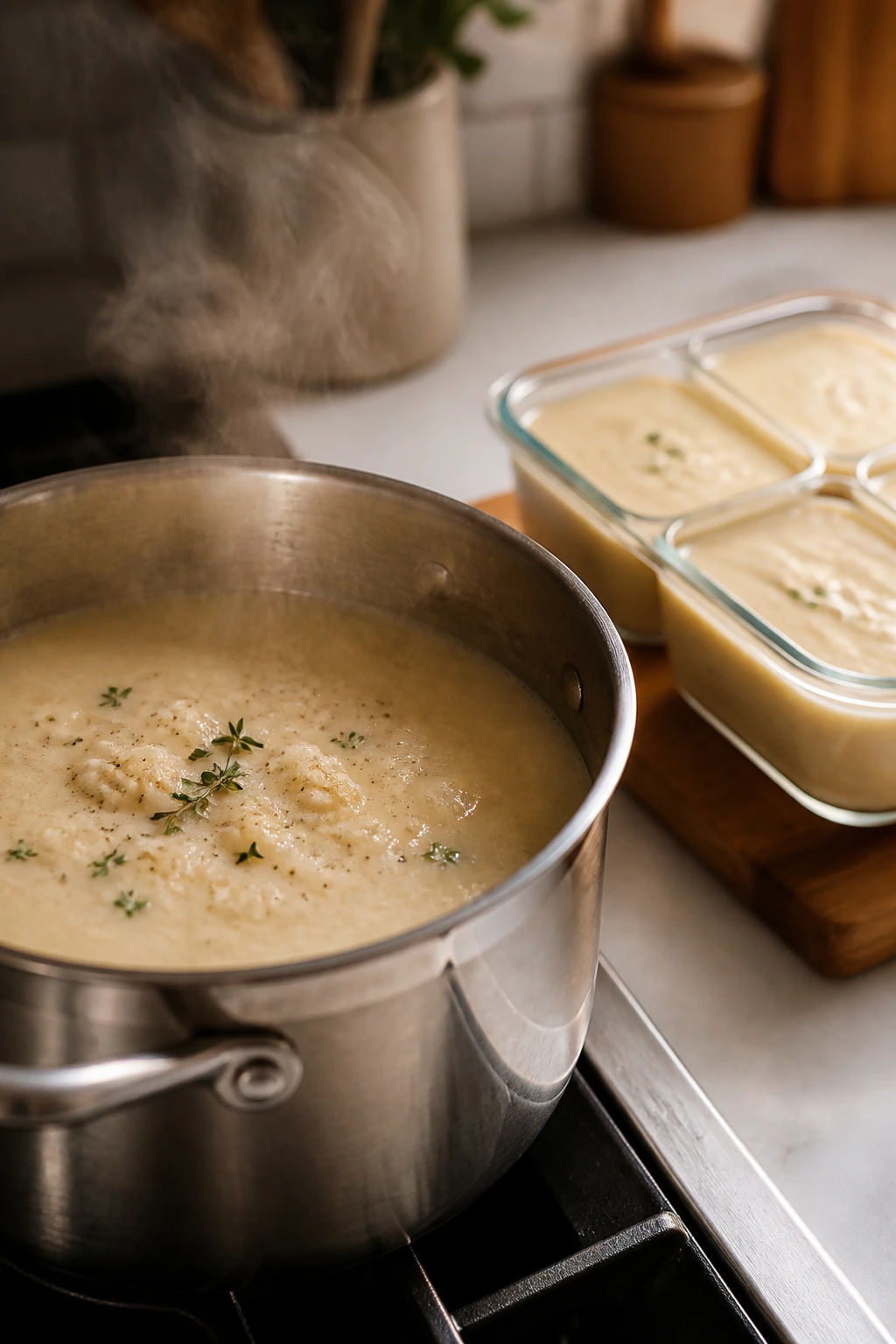
This soup holds up well, which is one of the reasons I keep coming back to it. The vegetable base can be made ahead, chilled, and reheated without much drama, and the flavor usually settles in overnight. Food-safety rules still matter, though, so don’t let it linger on the counter for hours because you got distracted by the bread.
Cool the soup within 2 hours of cooking, then transfer it to airtight containers. In the refrigerator, it keeps for 3 to 4 days. If you want to save it longer, freeze it for up to 2 months. I like to freeze it in 2-cup portions so I can thaw exactly as much as I need without dealing with a giant block of soup.
If you know you’ll freeze part of the batch, hold back the dairy and add it after reheating. That keeps the texture smoother. Soup made with cream can still freeze, but it may separate a little when thawed; a quick whisk over low heat usually brings it back together. It won’t look quite as pristine as day one, but it will still eat well.
Reheat on the stovetop over low to medium-low heat, stirring every few minutes, until it’s steaming hot. If the soup thickened in the fridge, loosen it with a splash of broth or water. In the microwave, use a microwave-safe bowl and heat in 60-second bursts, stirring between each one so the center doesn’t stay cold while the edges overcook. If you want to be strict about temperature, reheat until the soup reaches 165°F.
The make-ahead part is forgiving. You can roast the cauliflower a day ahead and keep it in the fridge, chopped and sealed. You can also dice the onion and potato ahead of time, though I’d keep the potato in cold water if it’s cut more than a couple of hours before cooking so the edges don’t brown.
Questions People Ask Before They Make It

Can I make this soup without roasting the cauliflower?
Yes, but the flavor changes. Boiled cauliflower tastes softer and flatter, while roasted cauliflower brings that nutty edge that makes the bowl memorable. If you skip roasting, let the cauliflower and potato simmer a little longer and consider adding a pinch of smoked paprika to help the soup feel less pale.
Can I use frozen cauliflower?
You can, though it’s not my first choice. Frozen florets release more water and usually won’t brown as deeply, so the soup ends up a little lighter in flavor. If frozen is what you have, thaw and pat them dry before roasting, or skip the roast and lean on extra onion, thyme, and a little more lemon at the finish.
How do I make the soup thicker without adding flour?
Use a smaller amount of broth, let the soup simmer uncovered for a few extra minutes after blending, or add another half of a peeled potato. You can also blend in a small handful of cooked white beans, which thickens the pot without changing the flavor much. Flour is not necessary here.
What if my soup tastes bland after blending?
Salt first, then acid. Cauliflower needs more seasoning than people expect, and a teaspoon or two of lemon juice can wake the whole pot up. If the soup still tastes a little sleepy, finish with parmesan, a drizzle of good olive oil, or even a tiny spoon of white miso.
Can I use an immersion blender instead of a countertop blender?
Absolutely, and I often prefer it because it’s faster and safer. The texture won’t be quite as glassy-smooth as a high-speed blender, but it’s easier to control and lets you leave a few tiny cauliflower flecks if you like a more rustic bowl. A countertop blender only makes sense if you want a very polished finish.
Why did my soup turn grainy?
The usual culprits are undercooked potatoes, boiling after the dairy goes in, or blending with a blender that never fully broke down the vegetables. Make sure the potato is soft enough to mash against the pot, keep the simmer gentle, and blend long enough for the soup to look fully unified before you add the milk or cream.
Can I add protein to make this a full meal?
Yes. Shredded chicken, crispy bacon, or a soft-poached egg all work well, and white beans are the easiest vegetarian choice. Add the protein at the end so it stays distinct and doesn’t disappear into the puree.
A Quiet Bowl for Cold Nights

There’s a reason this soup works when the weather turns sharp. It gives you sweetness from the leeks, depth from the roasting, and enough body from the potato and dairy to feel like dinner instead of a starter. No drama. No clutter. Just a bowl that tastes like someone paid attention.
Keep the method close. Roast the cauliflower until it’s actually browned, let the onions go soft before they go anywhere near broth, and finish with lemon so the last spoonful still feels alive. Make it once that way, and the plain boiled version won’t hold much appeal afterward.
Cozy Cauliflower Soup for Cold Winter Nights — Recipe Card
Recipe Name: Cozy Cauliflower Soup for Cold Winter Nights
Description: A creamy roasted cauliflower soup built with leeks, onion, potato, thyme, and a bright finish of lemon. The roasted florets add nutty depth, while the potato and dairy keep the texture silky and spoon-coating.
Prep Time: 20 minutes
Cook Time: 45 minutes
Total Time: 1 hour 5 minutes
Course: Soup, Main Course
Cuisine: American
Servings: 6 servings
Calories: 210 kcal per serving
Ingredients
For the Roasted Cauliflower:
- 1 large head cauliflower, about 2 pounds, trimmed and cut into 1½-inch florets
- 2 tablespoons olive oil
- 1/2 teaspoon kosher salt
- 1/4 teaspoon black pepper
For the Soup Base:
- 2 tablespoons unsalted butter
- 1 tablespoon olive oil
- 1 medium yellow onion, diced
- 2 medium leeks, white and light green parts only, thinly sliced and rinsed very well
- 3 cloves garlic, minced
- 1 medium Yukon Gold potato, peeled and cut into 1/2-inch cubes
- 4 cups low-sodium vegetable broth or chicken broth
- 1 cup water
- 1 teaspoon kosher salt, plus more to taste
- 1/2 teaspoon black pepper
- 1 teaspoon fresh thyme leaves or 1/2 teaspoon dried thyme
- 1 bay leaf
- 1/4 teaspoon ground nutmeg
For Finishing:
- 3/4 cup whole milk or half-and-half
- 1/2 cup heavy cream, optional for a richer soup
- 1 to 2 teaspoons fresh lemon juice
- 1/4 cup finely grated parmesan, optional
- 2 tablespoons chopped chives or parsley, for serving
- Toasted bread, croutons, or a drizzle of olive oil, for garnish
Instructions
-
Preheat and roast the cauliflower: Preheat the oven to 425°F (220°C). Toss the cauliflower florets with olive oil, salt, and pepper, then spread them in a single layer on a rimmed baking sheet. Roast for 25 to 30 minutes, tossing once halfway through, until browned at the edges and tender.
-
Sweat the onion and leeks: Melt the butter with the olive oil in a large Dutch oven over medium heat. Add the onion and leeks with a pinch of salt and cook for 8 to 10 minutes, stirring occasionally, until soft and sweet-smelling.
-
Add garlic, thyme, nutmeg, and potato: Stir in the garlic, thyme, nutmeg, and potato. Cook for 1 to 2 minutes, just until fragrant.
-
Simmer the soup: Add the broth, water, bay leaf, and roasted cauliflower. Bring to a gentle boil, then reduce to a steady simmer and cook for 15 to 20 minutes, until the potato is very tender.
-
Blend until smooth: Remove the bay leaf. Blend the soup with an immersion blender until smooth, or work in batches in a countertop blender, leaving room for steam to escape.
-
Finish with dairy and lemon: Stir in the milk or half-and-half, plus the cream and parmesan if using. Warm gently over low heat for 2 to 3 minutes without boiling.
-
Season and serve: Stir in the lemon juice, then taste and adjust with salt and pepper. Ladle into warm bowls and finish with chives, parsley, olive oil, or croutons.
Notes: For the richest flavor, keep the dairy out until the very end. If freezing, freeze before adding cream and stir it in after reheating. A little extra lemon at the finish keeps the soup from tasting heavy.